Author: vance nguyen

  • Coast Guard abruptly deletes swastika, noose entry from policy manual

    Coast Guard abruptly deletes swastika, noose entry from policy manual

    The U.S. Coast Guard on Thursday deleted language from its new workplace harassment policy that had downgraded the definition of swastikas and nooses from overt hate symbols to “potentially divisive,” an abrupt turnaround after the more lenient interpretation of those items was allowed to take effect this week despite objections from Congress.

    In a message to all Coast Guard personnel, Adm. Kevin Lunday, the service’s acting commandant, said those revisions had been “completely removed” from the policy manual. The document, a copy of which was reviewed by the Washington Post, now shows a large black bar obscuring the relevant chapter in its table of contents and a message directing readers to a separate manual outlining the Coast Guard’s civil rights policies.

    Lunday’s message also says that a separate directive he issued last month prohibiting swastikas and nooses “remains in full effect.”

    The sudden turn of events appeared to satisfy Sens. Tammy Duckworth (D., Ill.) and Jacky Rosen (D., Nev.), who said after Lunday’s announcement that they had lifted their holds on his nomination to become the service’s full-time commandant. Both cited their disapproval of the new policy when explaining earlier this week why they had taken such measures.

    Lunday’s announcement caps a tumultuous few weeks within the Coast Guard, following Washington Post reports detailing the service’s plan to include the incendiary language within its new workplace harassment manual, its vow to reverse course in the face of widespread criticism, and the wording’s surprising retention as the new manual took effect earlier this week.

    In response to the Post’s initial reporting in late November, Lunday issued an order condemning and categorically prohibiting swastikas and nooses, and said then that his directive would supersede any other policy language. But for reasons that remain unclear, Lunday’s order was never incorporated.

    Two people familiar with the policy manual overhaul said this week that the Coast Guard, which is overseen by the Department of Homeland Security, wanted to strike the “potentially divisive” wording from the document but was unable to do so. They spoke on the condition of anonymity to discuss the contentious situation.

    The Coast Guard’s hazing and harassment policy was an early focus of Lunday’s after the Trump administration, upon entering office in January, fired his predecessor, Adm. Linda Fagan — the first woman to lead a branch of the U.S. military. In announcing Fagan’s removal, officials cited among other things her “excessive focus” on diversity and inclusion initiatives.

    Within days, Lunday ordered the suspension of the policy manual that, among its other guidance, said explicitly that the swastika was among a “list of symbols whose display, presentation, creation, or depiction would constitute a potential hate incident.” Nooses and the Confederate flag also matched that description under the previous policy. Lunday was later nominated by Trump to lead the service as its commandant.

    In a statement announcing that she had lifted her hold on his nomination, Rosen said she had put another on Sean Plankey, Trump’s nominee to be the director of Homeland Security’s Cybersecurity and Infrastructure Security Agency, and “will keep that hold in place until we see that this new policy works to protect our men and women in uniform from racist and antisemitic harassment.” She also chastised leadership within the Coast Guard and at DHS who, she said, had been “evasive, misleading, and elusive” as lawmakers sought assurances the “potentially divisive” wording would be cut from the policy manual.

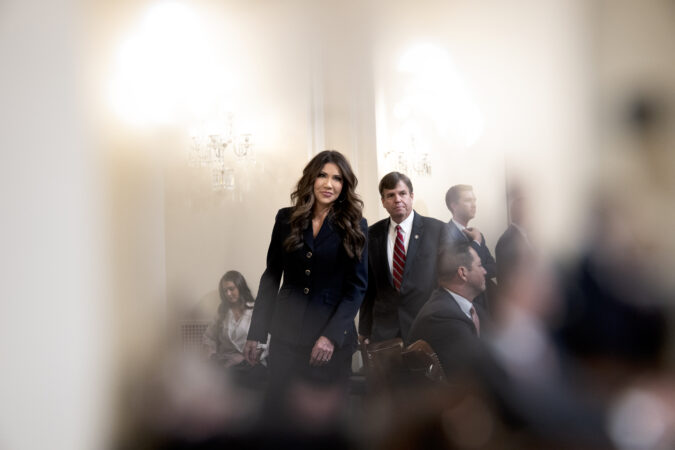
    Homeland Security Secretary Kristi L. Noem said in a social media post earlier Thursday that the language was being removed from the manual “so no press outlet, entity or elected official may misrepresent the Coast Guard to politicize their policies and lie about their position on divisive and hate symbols.”

    Neither DHS nor the Coast Guard has addressed questions seeking to understand whether Lunday, as acting commandant, was empowered to change the manual’s wording on his own or if DHS leadership had to approve it.

    The lack of action, particularly amid a rise in antisemitism, incensed an array of lawmakers, including Republicans, who said Lunday had pledged to them that the “potentially divisive” wording would be removed from the policy manual before it went into effect.

    Several expressed anger at the existence of an official U.S. government document defining swastikas, inseparable from the extermination of millions of Jews in World War II, and nooses, a symbol of racial hatred, as “potentially divisive.”

    Sen. James Lankford (R., Okla.) was among those who registered disapproval with what his office called the Coast Guard’s “conflicting policies.” A GOP aide said Lankford took his concerns directly to the Trump administration and urged officials to change the manual.
  • House Democrats release more photos from Epstein’s estate

    House Democrats release more photos from Epstein’s estate

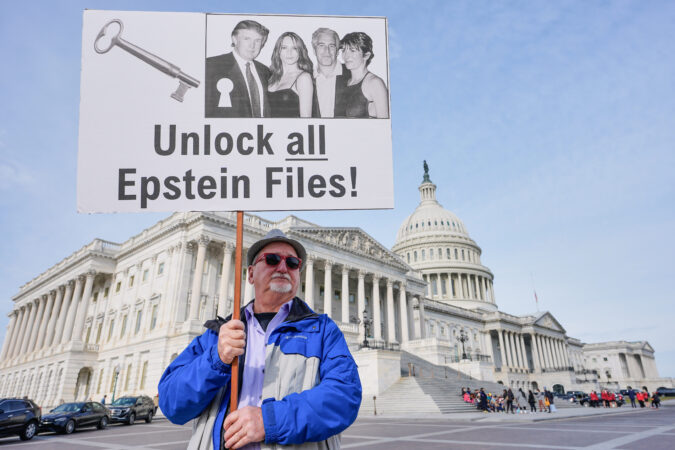
    WASHINGTON — House Democrats released several dozen more photos Thursday from the estate of the convicted sex offender Jeffrey Epstein, showing his associations with the rich and famous, as the Department of Justice faces a deadline to release many of its case files on the late financier by the end of the week.

    The photos released Thursday were among more than 95,000 that the House Oversight Committee has received after issuing a subpoena for the photos that Epstein had in his possession before he died in a New York jail cell in 2019. Congress has also passed, and President Donald Trump has signed, a law requiring the Justice Department to release its case files on Epstein, and his longtime girlfriend and confidant Ghislaine Maxwell, by Friday. Anticipation about what those files will show is running high after they have been the subject of conspiracy theories and speculation about his friendships with Trump, former President Bill Clinton, the former Prince Andrew, and others.

    House Democrats have already released dozens of photos from Epstein’s estate showing Trump, Clinton and Andrew, who lost his royal title and privileges this year amid scrutiny of his relationship with the wealthy financier. The photos released Thursday showed Epstein cooking with Sultan Ahmed bin Sulayem, an Emirati businessman. The photos also include the billionaire Bill Gates and images of a 2011 dinner of notable people and wealthy philanthropists hosted by a nonprofit group. The committee made no accusations of wrongdoing by the men in the photos.

    There were also images of passports, visas and identification cards from Russia, the Czech Republic, Ukraine, South Africa, and Lithuania with personally identifying information redacted, as well as photos of Epstein with women or girls whose faces were blacked out. The committee has said it is redacting information from the photos that may lead to the identity of victims being revealed.

    Rep. Robert Garcia, the top Democrat on the oversight panel, said in a statement that the “new images raise more questions about what exactly the Department of Justice has in its possession. We must end this White House cover-up, and the DOJ must release the Epstein files now.”

  • FIFA lays out the rules for the World Cup draw

    FIFA lays out the rules for the World Cup draw

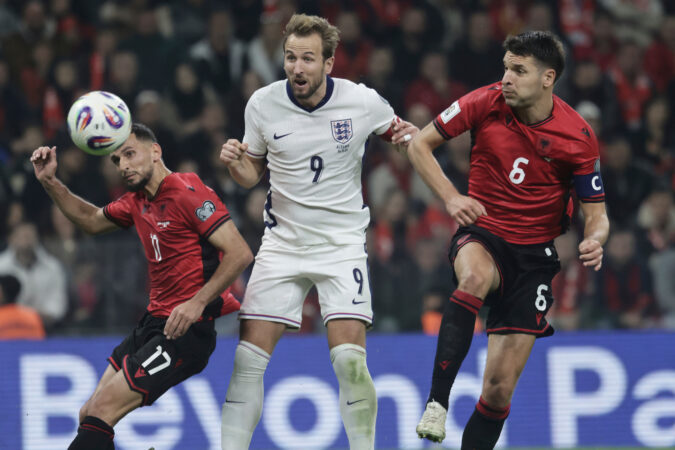
    GENEVA — The 2026 World Cup draw next week will reward the four highest-ranked teams — Spain, Argentina, France and England — who will be placed in separate sections of a new tennis-style seeded tournament bracket.

    FIFA said Tuesday the top four teams in the latest men’s rankings will, if they finish top of their respective round-robin groups, avoid each other until the semifinals of the June 11-July 19 tournament being co-hosted by the United States, Canada and Mexico.

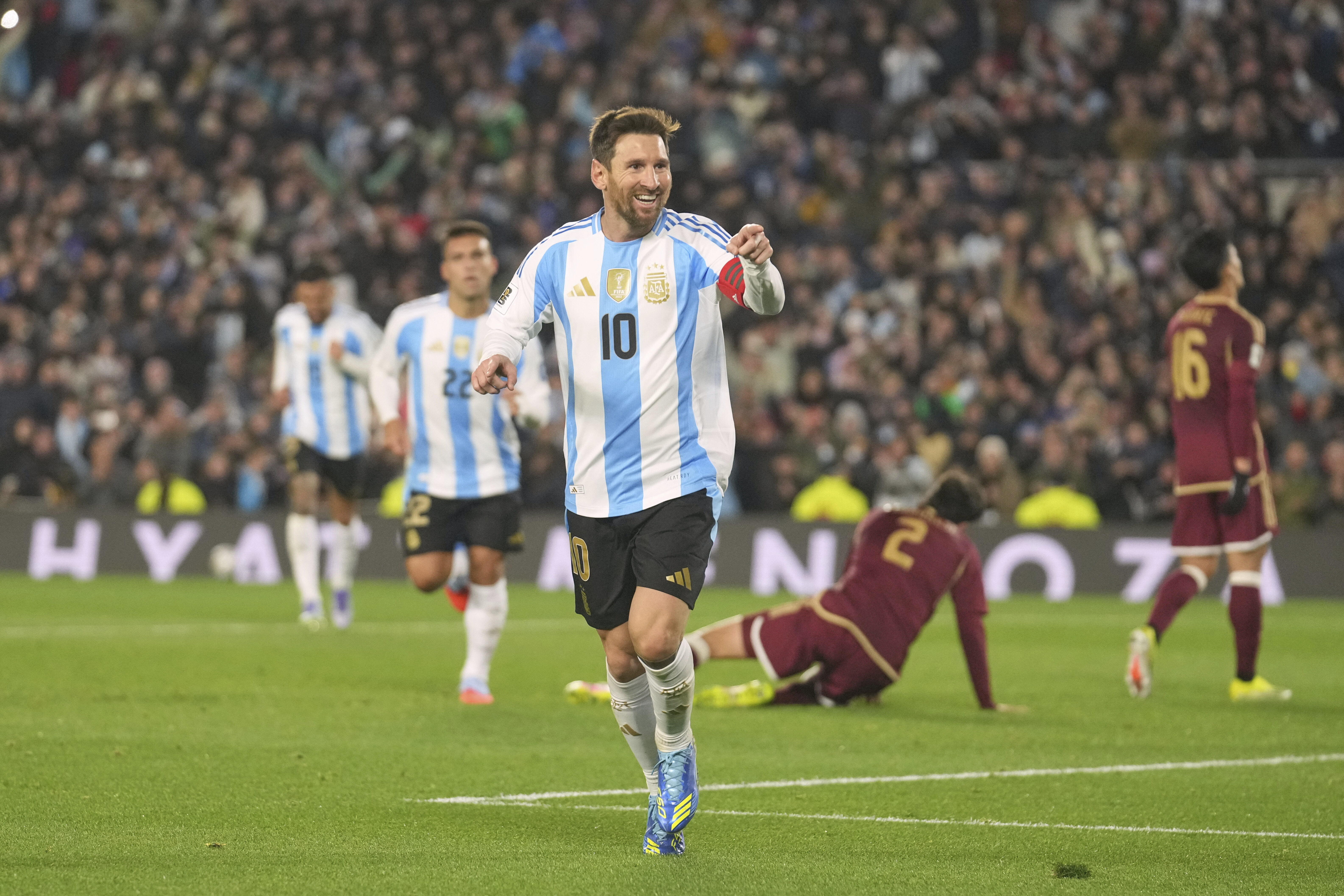
    Defending champion Argentina with Lionel Messi and top-ranked European champion Spain with Lamine Yamal therefore can ensure they do not meet until the final at MetLife Stadium near New York.

    “To ensure competitive balance, two separate pathways to the semifinals have been established,” FIFA said in a statement, aiming to reward teams whose consistent good results have raised their world ranking.

    Lionel Messi celebrates scoring a goal for Argentina in September.

    At previous World Cups, the path for teams into and through the knockout phase was decided by which group they were drawn into.

    The draw ceremony for the first 48-team World Cup will be held Dec. 5 at the Kennedy Center in Washington, D.C., in the presence of U.S. President Donald Trump.

    The 42 teams that already qualified include Iran and Haiti which FIFA expects will play exactly where they are drawn regardless of complicated politics those countries have with the U.S. The 16 host venues for the 104 games include 11 cities with NFL stadiums in the U.S., three in Mexico and two in Canada.

    The other six entries will be decided in March when European and global playoffs brackets are scheduled, and those teams all will come out of the draw pot of lowest-ranked teams.

    Spain’s Lamine Yamal (right) is the soccer world’s new superstar.

    That means four-time champion Italy could be a dangerous option in the draw on Friday of next week that will set the match schedule by placing teams in 12 round-robin groups of four teams each.

    Europe has 16 teams in the lineup and a maximum of two can be drawn into any one group. The other 32 teams in the tournament cannot be drawn in a group with a team from the same continent.

    The three co-hosts are among the 12 top seeds in the draw, which is scheduled to take about 45 minutes during a show lasting about an hour and a half, FIFA said. The U.S. will open on June 12 against a team from pot 3, then face a team from pot 2 and close the group stage against a team from pot 4.

    Kylian Mbappé led France to the 2018 World Cup title and the 2022 final.

    World Cup draw seedings

    Pot 1: Spain, Argentina, France, England, Brazil, Portugal, Netherlands, Belgium, Germany, United States, Mexico, Canada.

    Pot 2: Croatia, Morocco, Colombia, Uruguay, Switzerland, Japan, Senegal, Iran, South Korea, Ecuador, Austria, Australia.

    Pot 3: Norway, Panama, Egypt, Algeria, Scotland, Paraguay, Tunisia, Ivory Coast, Uzbekistan, Qatar, Saudi Arabia, South Africa.

    Pot 4: Jordan, Cape Verde, Ghana, Curacao, Haiti, New Zealand, European playoff winner 1, European playoff winner 2, European playoff winner 3, European playoff winner 4, Intercontinental playoff winner 1, Intercontinental playoff winner 2.