During a recent snowstorm, Philly bar owner Chris Fetfatzes dashed around the bustling bar at Sonny’s Cocktail Joint, delivering platters of burgers and fries alongside 1-ounce pours of house-made liqueurs served in tiny, cut-crystal glasses.
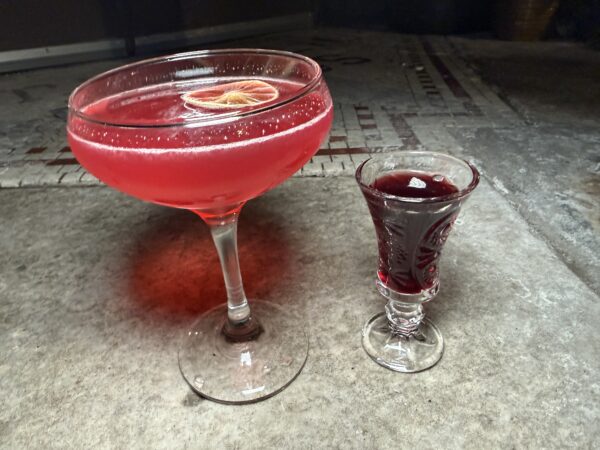
One liqueur in particular glowed ruby red, and a sip showed that it had a careful balance of sweetness and tang, its fruitiness cutting through the richness of Sonny’s cracker-thin pizzas. It served as both a pick-me-up and a digestif on a bitter-cold day.
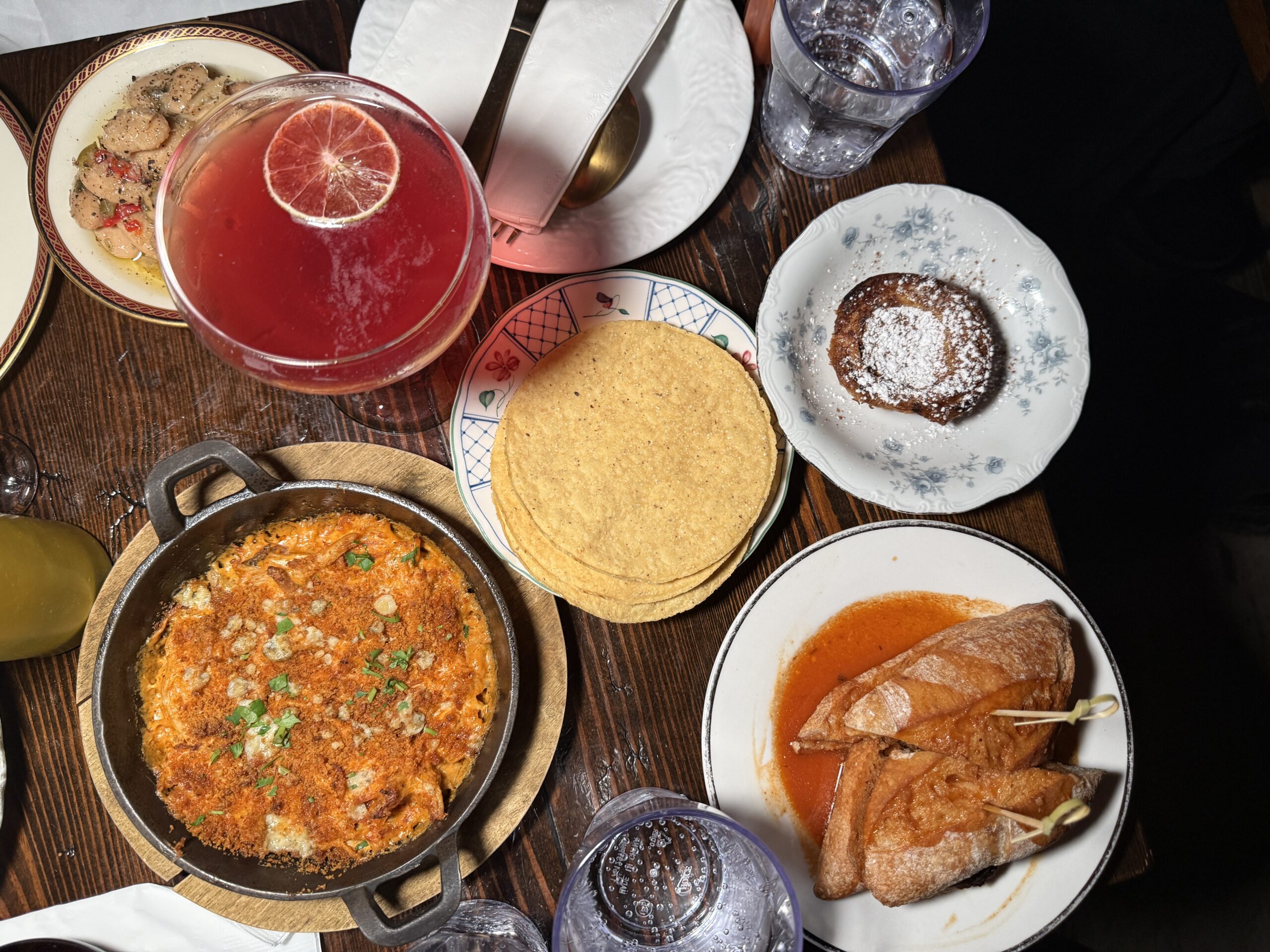
A spread of menu items at Grace & Proper with Portuguese influences: piri piri buffalo chicken dip, a bifana, pasteis de nata, gigantes, and the pink street cocktail.
This sunny spirit was a classic sour cherry Portuguese liqueur called ginjinha (“zhin-ZHEEN-yah”). In its home country, you can drink it at the sidewalk-facing counters of historic, pocket-sized stores scattered throughout Lisbon. In the Philly area, you’ll be hard-pressed to find it at most establishments — except for the bars owned and operated by Fetfatzes’ Happy Monday Hospitality: Sonny’s on South Street, Grace & Proper in Bella Vista, and WineDive in Rittenhouse.
The restaurants also make their own green alpine liqueur, chocolate liqueur, coffee liqueur, falernum, fernet, Swedish punsch, and pumpkin tequila, with more to come. (As with ginjinha and house-made amari and vermouth, these all involve steeping botanicals and produce in alcohol, not distilling fresh spirits.)
But the ginjinha is near and dear to Fetfatzes’ heart. The 44-year-old South Philadelphia native is a first-generation American whose mother was Portuguese and father was Greek, and the delicate glasses of liqueur served in his restaurant group’s establishmentsare part of a quiet legacy of Portuguese immigration to Northeast Philly.
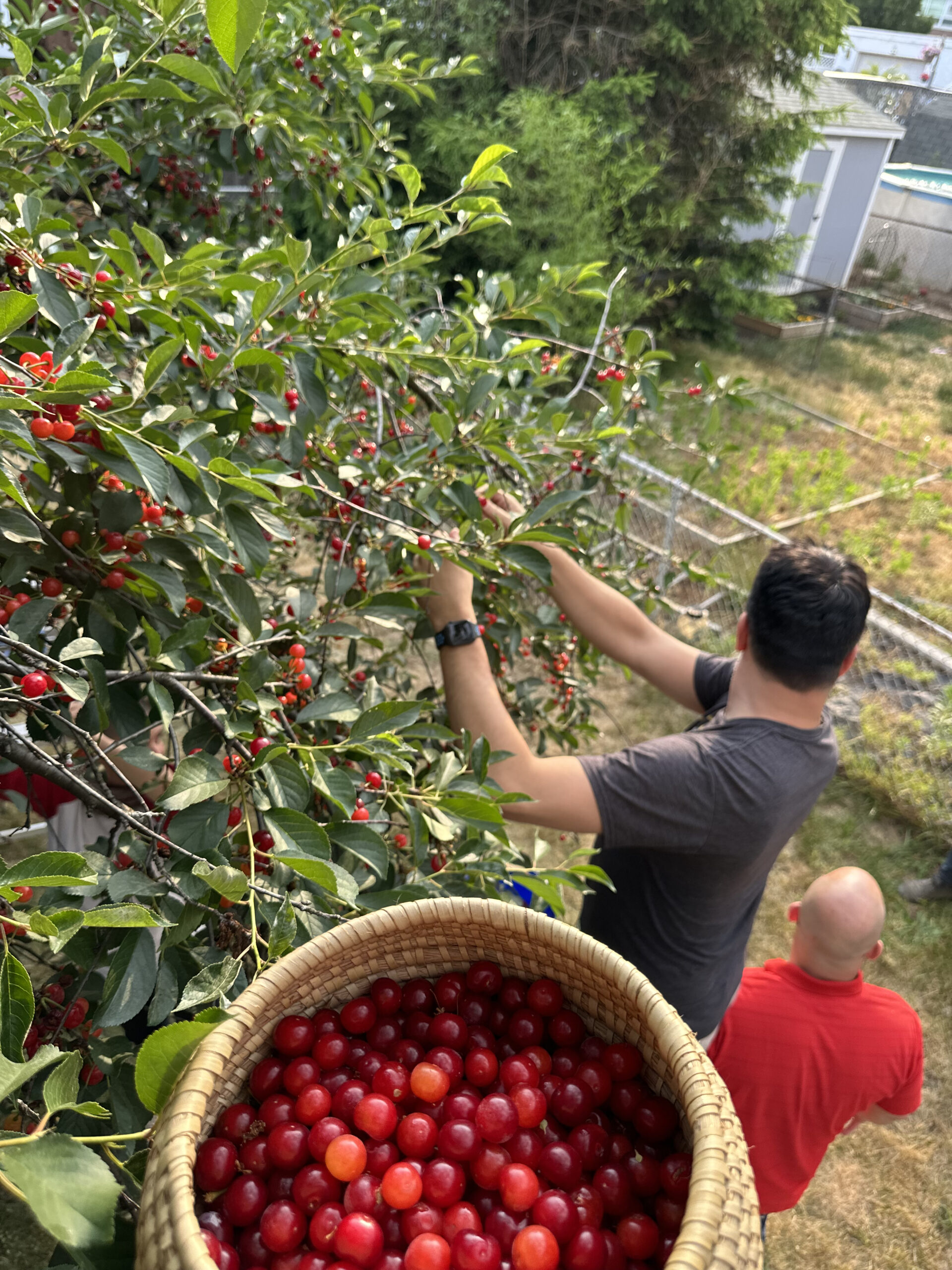
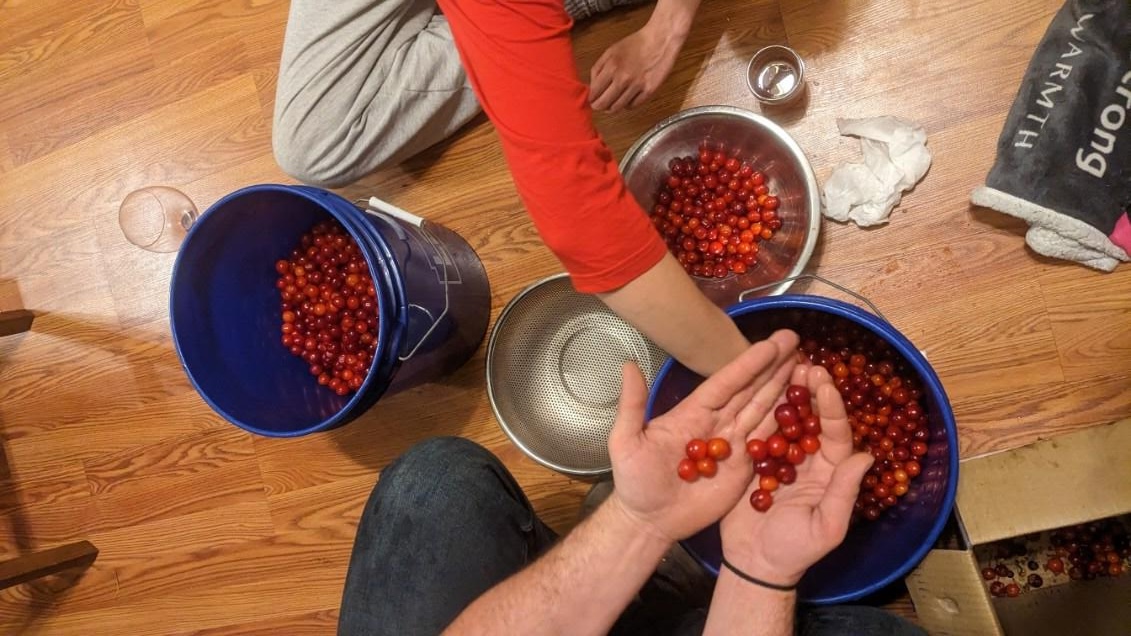
Picking morello cherries in Philly.
Happy Monday’s ginjinha contains the DNA of Fetfatzes’ original batch, made in 2023 from the fruit of a morello cherry tree that aPortuguese friend planted as a sapling in the Northeast after migrating to the U.S. Fetfatzes and his team harvested 20 gallons of cherries from the tree, grown specifically for ginjinha, in 2023. The fruit was macerated with sugar in a blend of young, unaged brandy and Portuguese red wine for several days, with the occasional agitation to redistribute the cherries.
“It’s [somewhat] like a sangria, as it is a wine-based product,” said Fetfatzes, though it is much sweeter and stronger than typical, easy-drinking Spanish sangria.
The ginjinha recipe was developed through trial and error by Fetfatzes and his beverage director, Scott Rodrigue, who is also of Portuguese descent. “We got a base, messed around with it and branched out to make it our own,” Fetfatzes said. The sour cherry liqueur conjures up the big family parties he partakes in every year when taking his own family back to his mother’s home country.
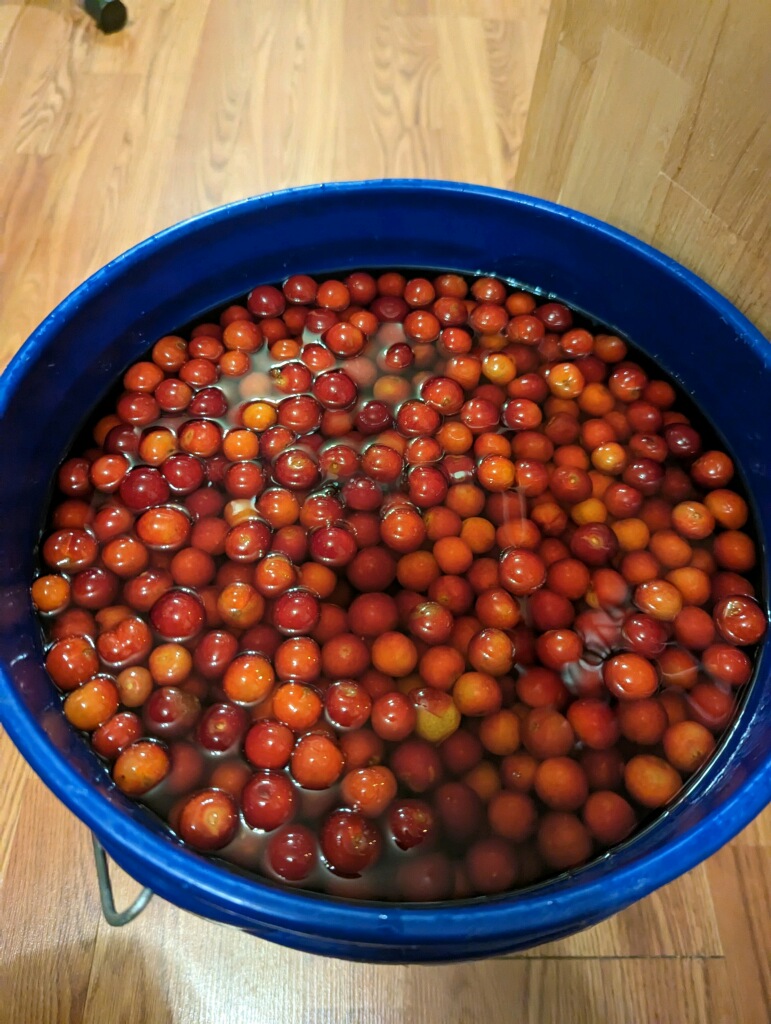
Washing freshly picked morello cherries grown in Philly.
After landing on a base recipe, subsequent batches of ginjinha — made every three weeks for Happy Monday’s bars — have used flash-frozen cherries sourced from wherever it’s cherry season, whether it’s California, Portugal, Central Europe, or the Middle East.
Fetfatzes and his staff employ the solera method of fractional blending, which is also used to make Champagne and fortified wines like sherry. The 2023 batch has become a “mother” for all of Fetfatzes’ ensuing batches, “like a starter yeast for sourdough,” he explained.
Sorting morello cherries.
“Like the Italians, we’re peasants living off the land,” said Fetfatzes, whose own mother followed a similar migration path to that of the original batch’s tree. “My mom’s village town was Vergada in the Mozules. She came over solo as a seamstress in 1974.”
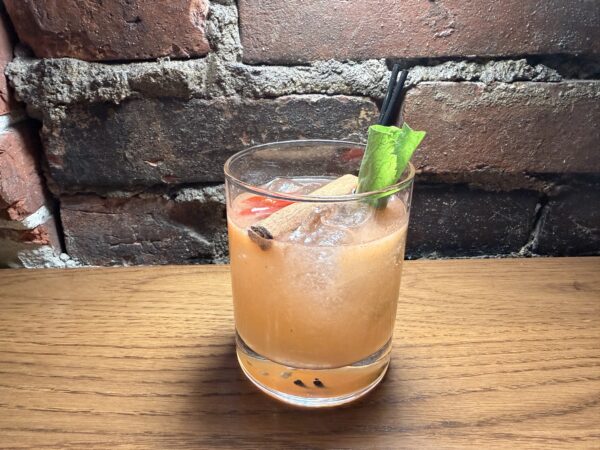
The ginjinha is popular at Sonny’s, where several customers who’ve traveled to Portugal like to order it, but it is perhaps best enjoyed at Grace and Proper, where there’s a rotation of homesick Portuguese regulars. They come in for the tiny pours of ginjinha, or have it shaken up with vodka and fresh lime juice for a cocktail called the “Pink Street” ($12), a Portuguese interpretation of a cosmopolitan, along with a bifana sandwich ($7) — one of the best sandwich deals in town — consisting of pork marinated with white wine, garlic, and paprika, and soaking through crusty Portuguese bread.
The ginjinha’a sweetness balances out the sandwich’s salt-kissed meatiness. The flavors, twisted together, balance one another. “Ginjinha has got this pomegranate-like tart-sweet punch that cuts through the garlicky richness of our bifana. It resets your palate, jiving with the bifana’s piri-piri heat and bite of mustard,” said Fetfatzes.
Del Frisco’s Double Eagle Steakhouse in Center City, with its large round tables, soaring ceilings, and big screens flashing sports games above the bar, regularly attracts many large groups of men.
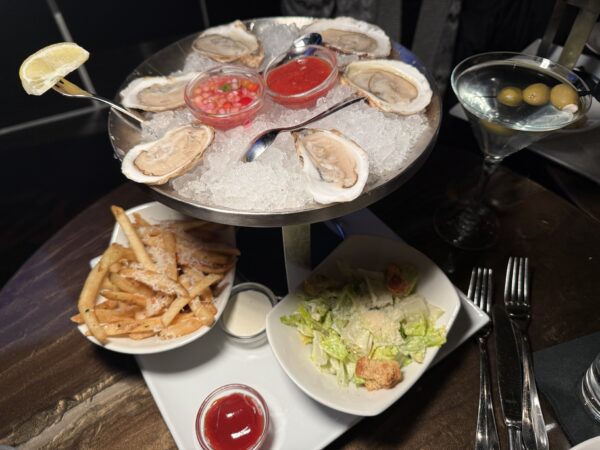
And yet, the establishment has recently gone viral, mainly among women, thanks to a bar menu item entitled “Shucked, Fried, Tossed, and Stirred.” A video of 24-year-old Philly native and influencer Hannah Sparkevicius dubbing the $39 combination — which encompasses a cocktail, half a dozen oysters, truffle fries, and a small Caesar salad — “girl dinner” currently has over 100,000 views.
Sparkevicius posts regularly about beauty trends, going out to eat in Philly, and great deals. The Shucked, Fried, Tossed, and Stirredmenu item fits the bill, standing outon a menu that otherwise features $20 cocktails and half a dozen oysters for $25. (The sampler debuted on the bar and lounge menus at all 15 Del Frisco’s Double Eagle locations last October.)
“Girl dinner” is a social media trend that took feeds by storm two years ago and it hasn’t waned since. Why? Because girl dinners have always existed. The trend simply put a name to casual, pulled-together meals that might not make sense on a restaurant menu. (You don’t have to be a girl to partake in girl dinner.)
Sparkevicius’ video has inspired legions of social media users tagging one another in her comments section, suggesting future Del Frisco’s outings. It also spurred similar posts on others, like one from the Instagram account Who What When Where Philly — which actually prompted me to gather my own girl group and head to Del Frisco’s.
My three girl friends and I made our way to Del Frisco’s 15th and Chestnut location, an ornate, cavernous 1922 lair that was formerly a First Pennsylvania Bank.Weelbowed our way past several groups of bachelor parties, snagged seats at the bar, and ordered our bar specials.
“For me, fries and salad means girl dinner,” said one of my companions. “It’s yin and yang. You have your vegetable, which is healthy and refreshing, and your fries, which are warm, salty, and comforting… If all I eat is a salad, then there’s inadequate satiation. Fries balance out that craving.”
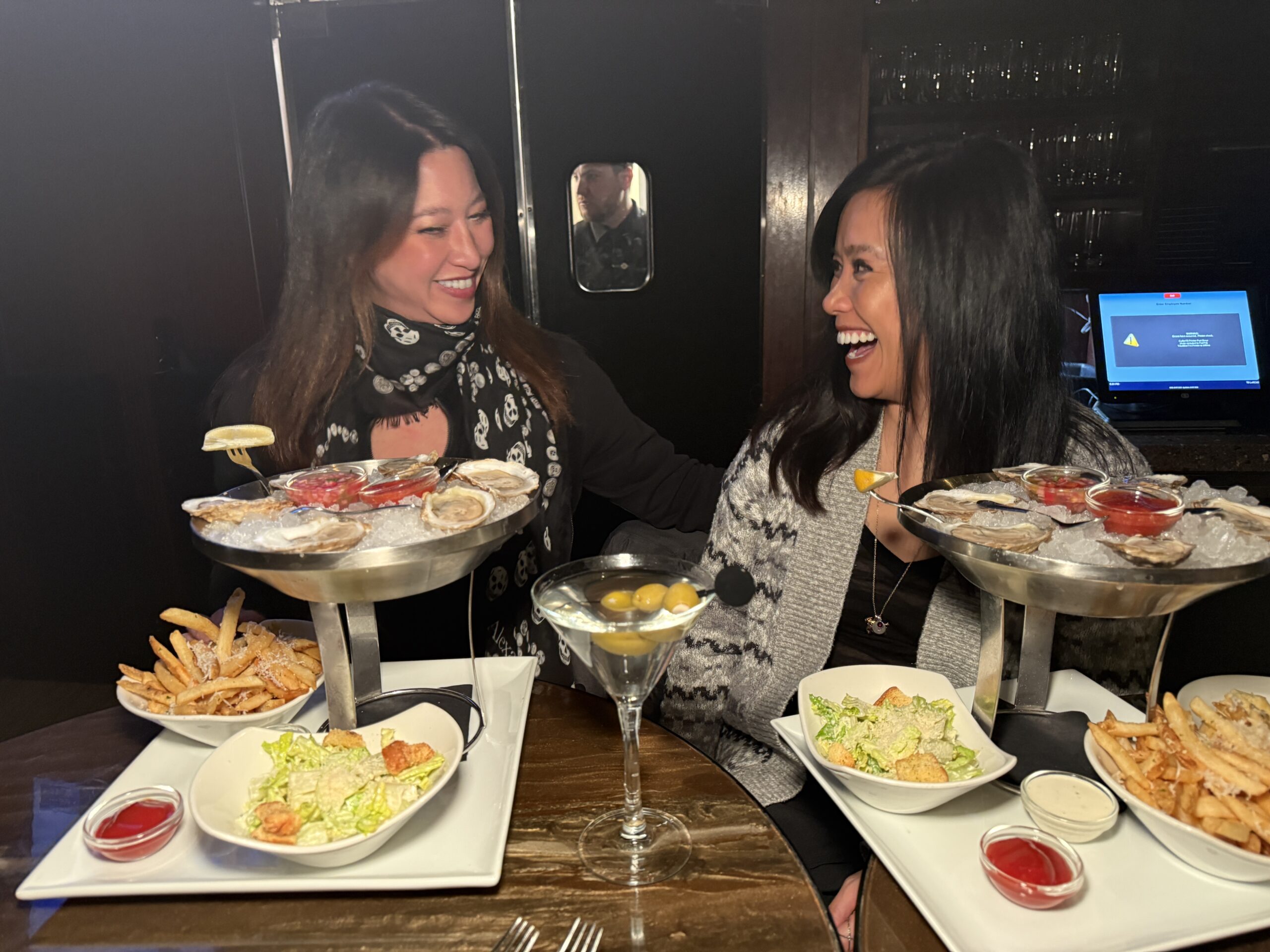
Jojo Goodwin and Bonnary Lek at Del Frisco’s on Feb. 7, enjoying what has been recast as “Girl Dinner”: Caesar salad, French fries, oysters, and martinis.
Our server, Bradley, put exceptional care into taking our orders for martinis and didn’t bat an eye when we requested multiple orders of Shucked, Fried, Tossed, and Stirred: “So that will be four girl dinners for the table?”
When he returned, he carefully arranged the oyster towers (cradling East Coast Blue Points) balanced on top of a plate holding fries, romaine Caesars, and ramekins of ketchup and extra Caesar dressing. Bradley walked around the table cracking fresh black pepper over each mini salad.
Sitting by the kitchen, I watched one girl dinner after another emerge through its double swinging doors. Bradley reported that a dozen other guests had also ordered the same special and called it “girl dinner.”
“Since the video went live, we’ve seen a noticeable increase in guests visiting specifically to request the bar special,” said Sawan Thakkar, vice president of operations for Del Frisco’s in Philly. They’ve also seen a “significant rise in new guests ordering it.”
And how does Del Frisco’s feel about their bar special being renamed?
“We love it,” said Thakkar. “We’re happy to embrace the name.”
In many cultures, Chinese New Year, which falls on Feb. 17 this year, is a holiday spent at home. It’s a time to get together with one’s family, preparing auspicious dishes that represent wealth, like spring rolls that mimic the appearance of gold bars and dumplings that are shaped like ancient gold ingots.
Here in Philadelphia, it is the perfect opportunity to get out and about within the wider Pan-Asian community. Several restaurants are joining forces to celebrate the Year of the Horse, collaborating on menus that combine different New Year’s traditions, while others have special one-offs and time-limited offerings to mark the event.
Philly observes a truly global version of Chinese New Year, whichissometimes called the Spring Festival, celebrating the end of winter and onset of spring. Chinese New Year is also known more inclusively in the U.S. as Lunar New Year, though not every East Asian or Southeast Asian community celebrates the New Year at the same time (or for the same length of time). For instance, Khmer New Year occurs between April 14 and 16 this year, and Tibetan New Year, or Losar, is Feb. 18. In Vietnam, Tết is celebrated for several weeks (longer than in most Chinese cultures).
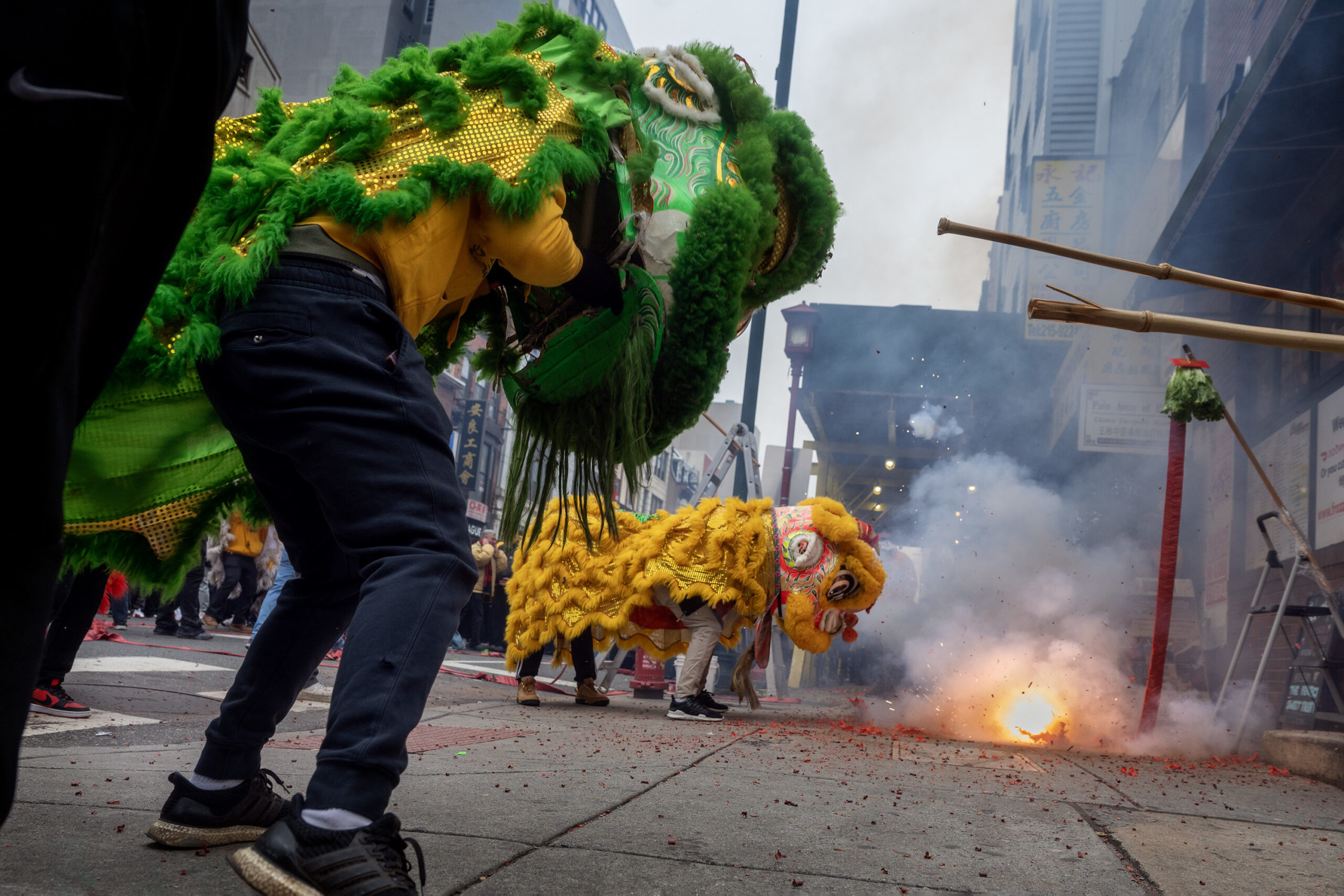
The Year of the Snake is celebrated in Chinatown Sunday, Feb. 2, 2025, bringing in the Lunar New Year with a parade, lion dancers and fireworks.
If you’re celebrating at home, Chinatown’s grocery store shelves are well-stocked with essential New Year foods like seeds and nuts for good beginnings and plants that are considered lucky, like mandarin trees and bundles of willow branches. Vendors are now selling red envelopes for lai see, or lucky money, and red scrolls denoting traditional well wishes on most Chinatown street corners. Expect some restaurants to be closed for the holiday.
Here are some noteworthy opportunities to celebrate.
This list may be updated as new information becomes available.
Dinner series and collaborations
Lunar New Year dishes for a special collaboration dinner between Gabriella’s Vietnam and Ember and Ash.
Ember & Ash and Gabriella’s Vietnam’s “Smoke meets Saigon”
Scott and Lulu Calhoun, the owners of Passyunk’s Ember & Ash, are hosting their fifth annual Lunar New Year celebration, this time welcoming Gabriella’s Vietnam chef Thanh Nguyen. There will be Vietnamese street food-inspired bites to start, then meat and fish cooked over live fire, along with noodle dishes (denoting long life) and rice and vegetable sides.
Dinner is $75 per person (not inclusive of tax and a 20% auto-gratuity) and will be served family-style starting at 5 p.m. in staggered seatings throughout the evening. Reservations, available on Resy, are strongly encouraged.
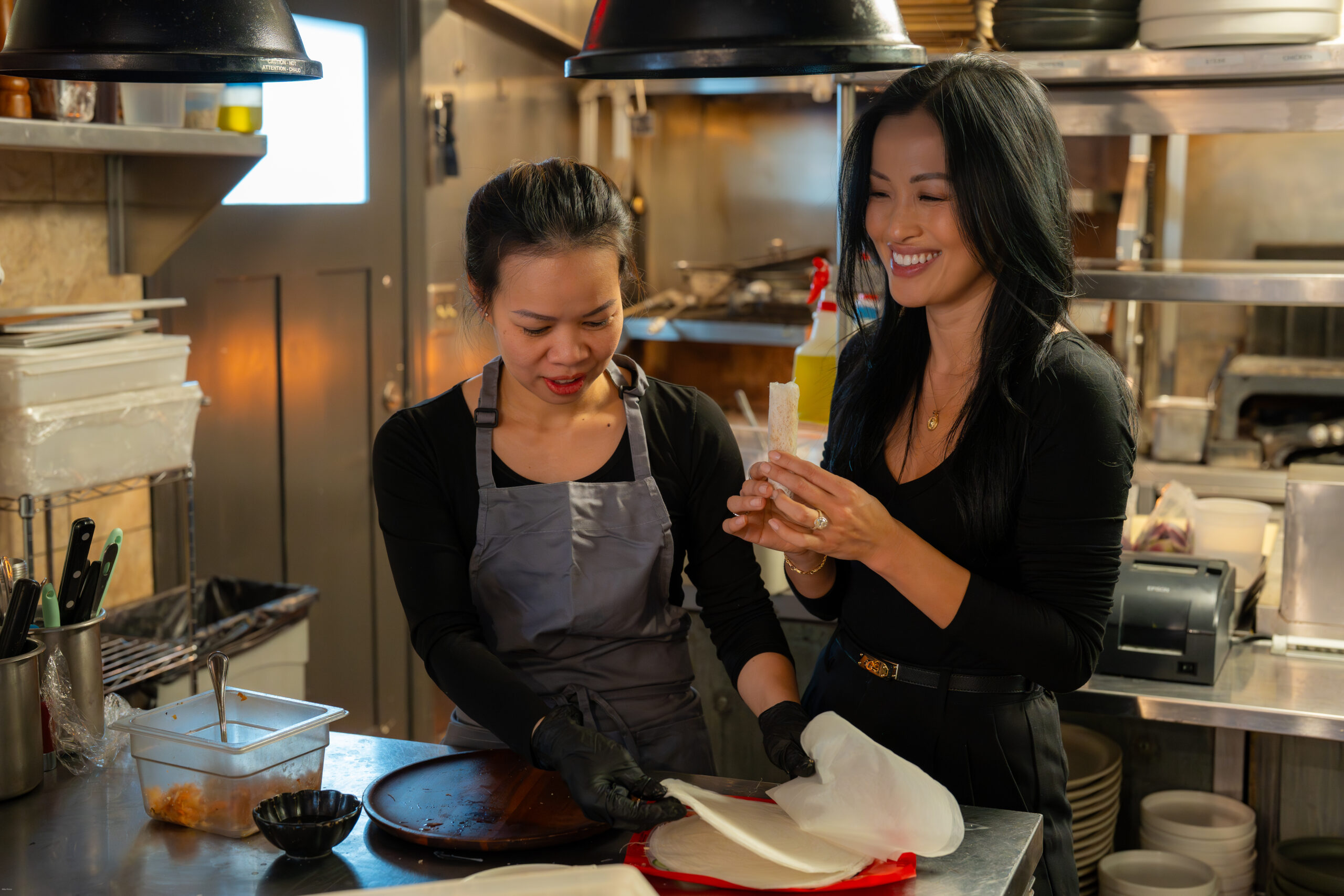
Thanh Nguyen of Gabriella’s Vietnam and Lulu Calhoun of Ember and Ash test Lunar New Year recipes.
The Muhibbah dinner at BLDG39 at the Arsenal
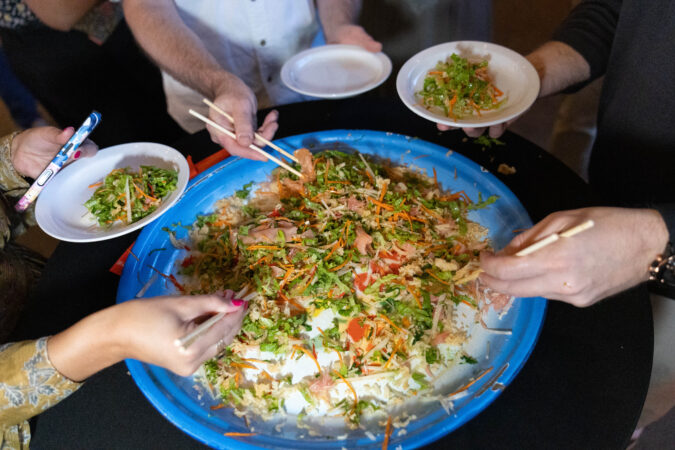
The Muhibbah Dinner series was started by chef Ange Branca of Kampar in 2017 to celebrate diversity and raise money for immigrant and refugee nonprofits in Philadelphia. Its next iteration is on Feb. 16. While it isn’t strictly a New Year’s celebration, dinner will commence with a prosperity yee sang salad, which diners traditionally toss in the air with chopsticks.
Dinner is BYOB and tickets are $170 per person. Sales will benefit Puentes de Salud, a nonprofit that promotes the health and wellness of Philadelphia’s Latinx immigrant population. Tickets are available at muhibbahdinners.org/tickets.
Feb. 16, BLDG39 at the Arsenal, 5401 Tacony St., 215-770-6698, bldg39arsenal.com
Com.unity’s Tết collaboration dinner at Yakitori Boy
Ba Le Bakery, Cafe Nhan, Le Viet, Miss Saigon, and more are teaming up for Com.unity’s third annual Tết dinner, hosted this year at Yakitori Boy in Chinatown. After dinner, guests can walk over to the Lunar New Year Parade presented by the Chinatown PCDC and the Philadelphia Suns. Áo dài, or traditional Vietnamese outfits, and other formal garment are strongly encouraged.
There will be one 60-seat seating, with doors opening at 6:30 p.m. A cash bar will be available for the LNY cocktail menu from the Yakitori Boy team. Dietary restrictions cannot be accommodated. Dinner tickets are $108 per person and can be booked via a link accessed through Com.unity’s Instagram profile.
Feb. 16, Yakitori Boy, 211 N. 11th St., 215-923-8088, yakitoriboy.com
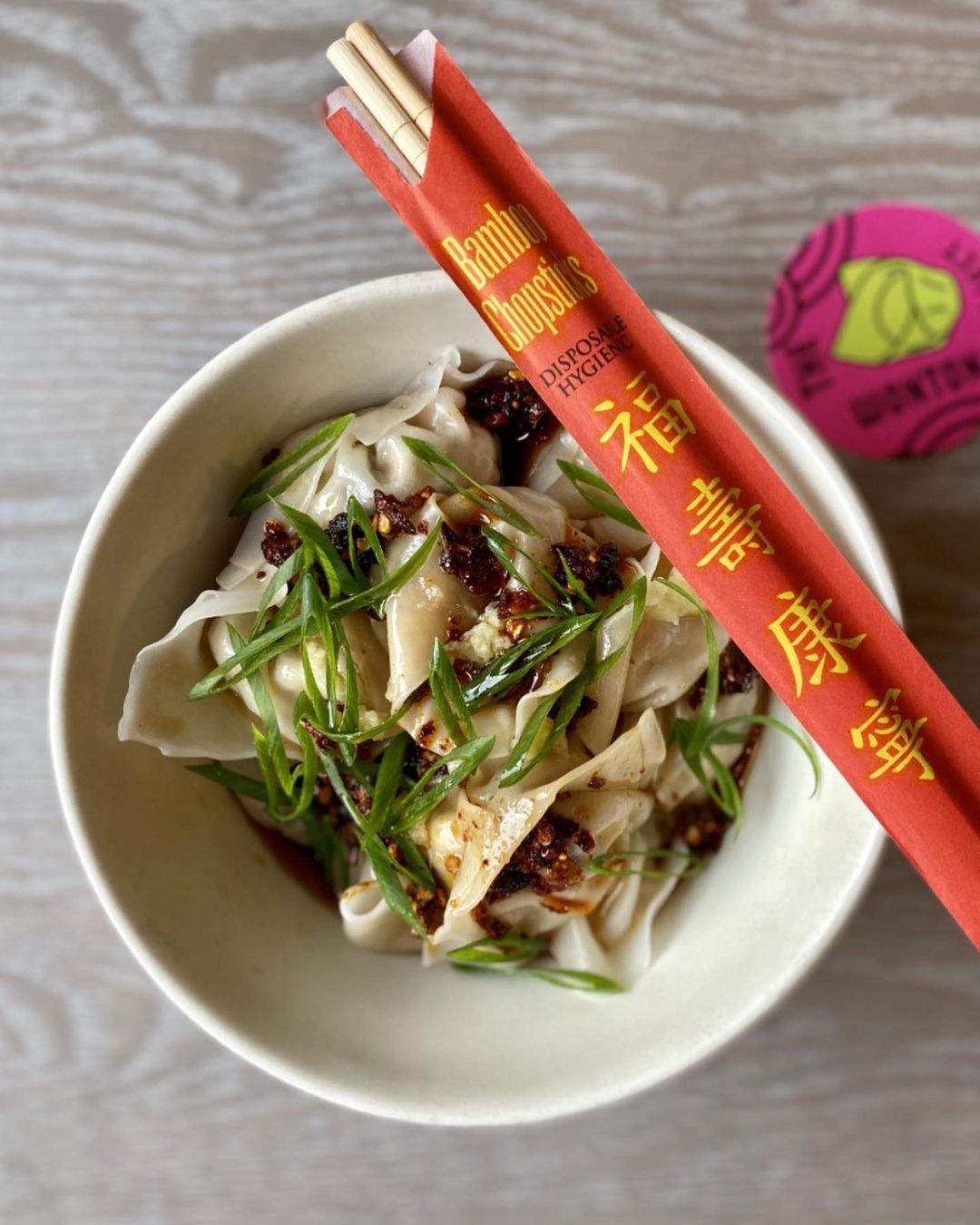
Chicken and ginger wontons from The Wonton Project by Ellen Yin.
Hot Pot at the Bread Room
Ellen Yin’s the Wonton Project will host Lunar New Year Hot Pot parties at the Bread Room for groups of six to eight ($125 per person, excluding tax and gratuity). The parties are inspired by an event the Bread Room hosted with Natasha Pickowicz, the author of the cookbook Everybody Hot Pot.
Diners will cook Lunar New Year menu staples together, such as noodles for longevity, Shanghai rice cakes, and dumplings for prosperity. There will also be whole fish on the menu and spring rolls. It will be available to book on OpenTable.
Feb. 17-21, the Bread Room, 834 Chestnut St., Suite 103, 215-419-5820, thebreadroomphl.com
Buddakan’s Lunar New Year brunch
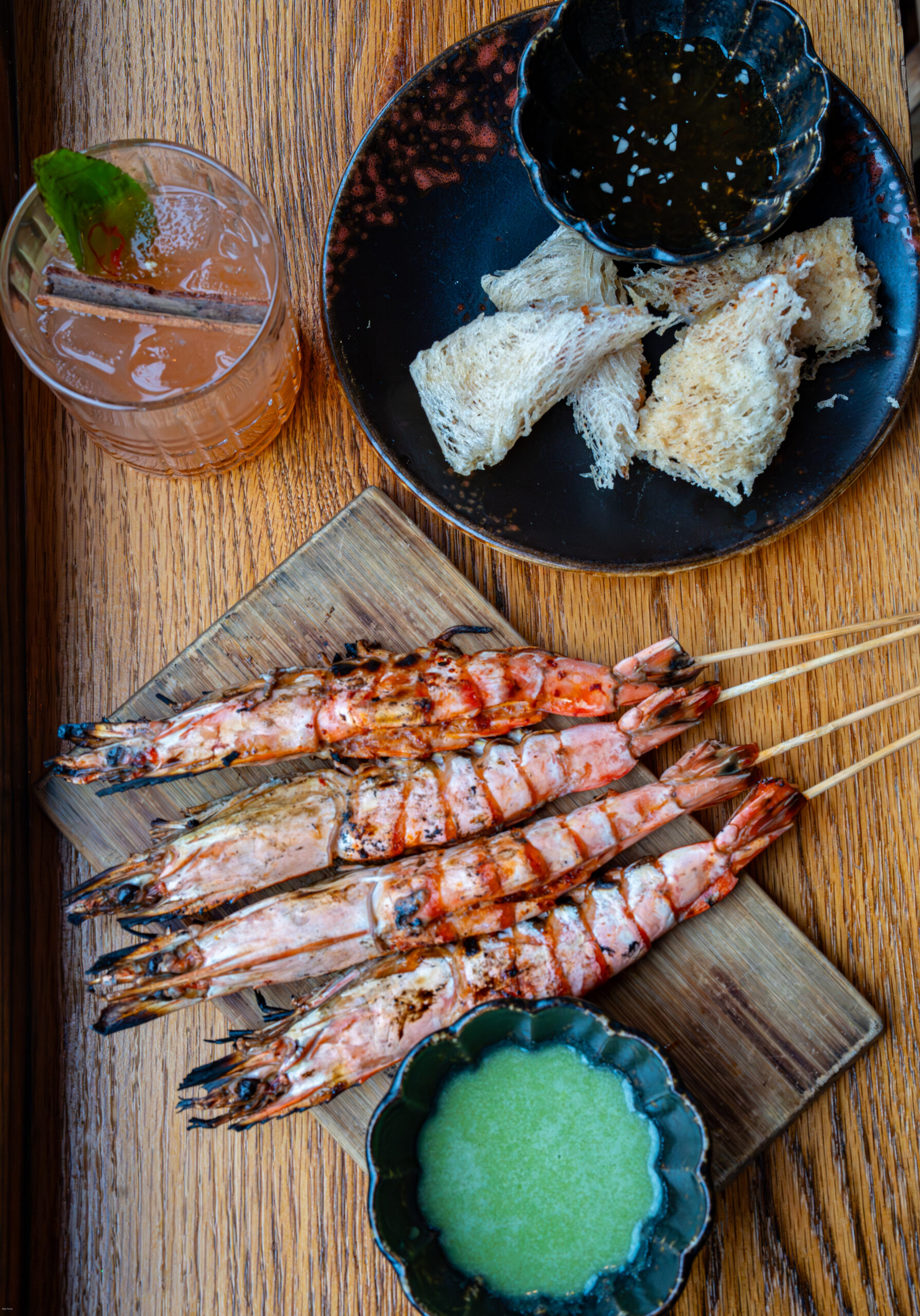
Stephen Starr’s Buddakan will be serving a tasting menu of modern interpretations of traditional Chinese New Year dishes like trotter-stuffed spring rolls, Dungeness crab longevity noodles, whole fish with black bean sauce, as well as a horse-themed dessert (for the Year of the Horse). Brunch runs from 11 a.m. to 2 p.m. Seats are $75 per person (excluding tax or gratuity), with a four-person minimum for reservations. Reservations can be made on OpenTable. The Lunar New Year menu will also be available a la carte for parties of any size.
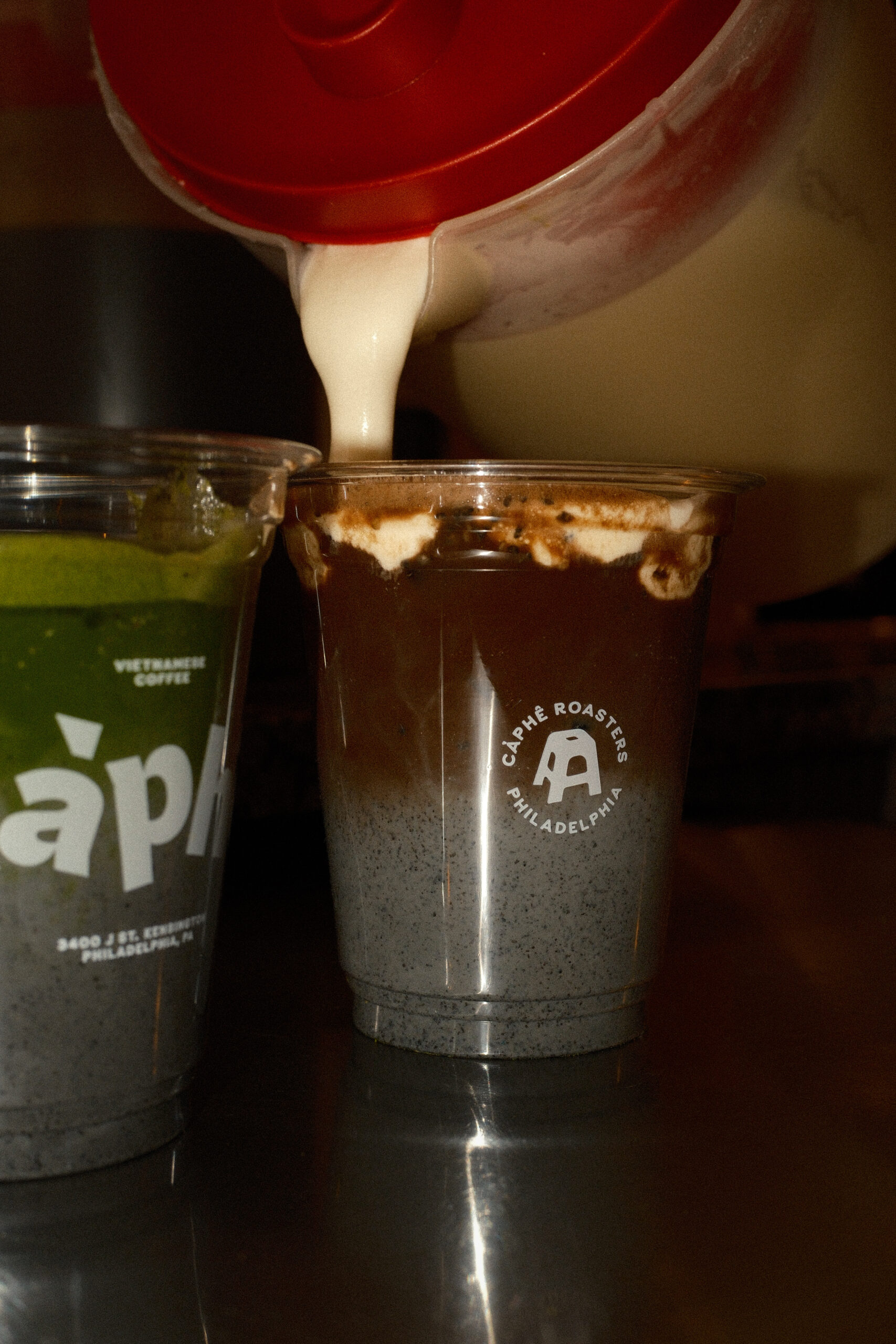
The Kensington-based Vietnamese coffee roaster and cafe will serve two specialty drinks based on Tết treats: a black sesame hojicha, consisting of black sesame paste, hojicha (roasted green tea), milk of choice, condensed milk, and topped with salted foam. “This drink reminds us of kẹo mè đen, which is a black sesame taffy usually found in the traditional Vietnamese Mứt Tết tray (the tray of dried fruits and candies),” said owner Thu Pham. They’re also making a black sesame banana matcha (black sesame paste, matcha, milk of choice, condensed milk, and topped with banana foam), reminiscent of kẹo chuối, a banana taffy also found in the traditional Vietnamese Mứt Tết candy tray.
Black sesame banana matcha and black sesame hojicha from Càphê Roasters for Lunar New Year 2026.
Luk Fu at Live! Casino
Luk Fu is serving an a la carte menu of very traditional Chinese New Year dishes such as braised pork trotters ($38), whole pompano ($48), and a New Year’s stir fry with spring vegetables and auspicious ingredients like snow peas, wood ear mushrooms, and sweet lapchong, or Chinese sausage ($28). Reservations are available on OpenTable.
At this Washington Avenue institution, you can pick up Tết essentials like the cylindrical bánh tét ($20) and square-shaped bánh chưng ($25), savory rice cakes made with mung beans and pork belly and wrapped in banana leaves. Takeout only. Order online.
Available now until Feb. 18 (or until sell-out), Ba Le Bakery, 606 Washington Ave., 215-389-4350, balebakery.com
Cocktails in Philly have been getting ever more savory, taking inspiration from pickles, salad, even soup — the last being the most seasonally timed. Several local bars like El Techo and Jerry’s Bar have even been poking fun at cocktail’s “soup season,” posting videos of people consuming their margaritas and espresso martinis with spoons, blowing on the sips as they go.
But there’s at least one soup cocktail taking the trend more seriously. Chef Thanh Nguyen’s signature pho cocktail at Gabriella’s Vietnam is a many-layered marvel. It’s not like drinking pho broth spiked with vodka. Instead, it’s warming and softly spicy — the heat hits the back of your throat and sinks into your chest — the beefiness only an umami-laden back note. It’s complex, mildly sweet, and more well-balanced than, say, a typical spicy margarita. A tiny squirt of Sriracha muddled with fresh culantro and ginger adds a soft orange hue.
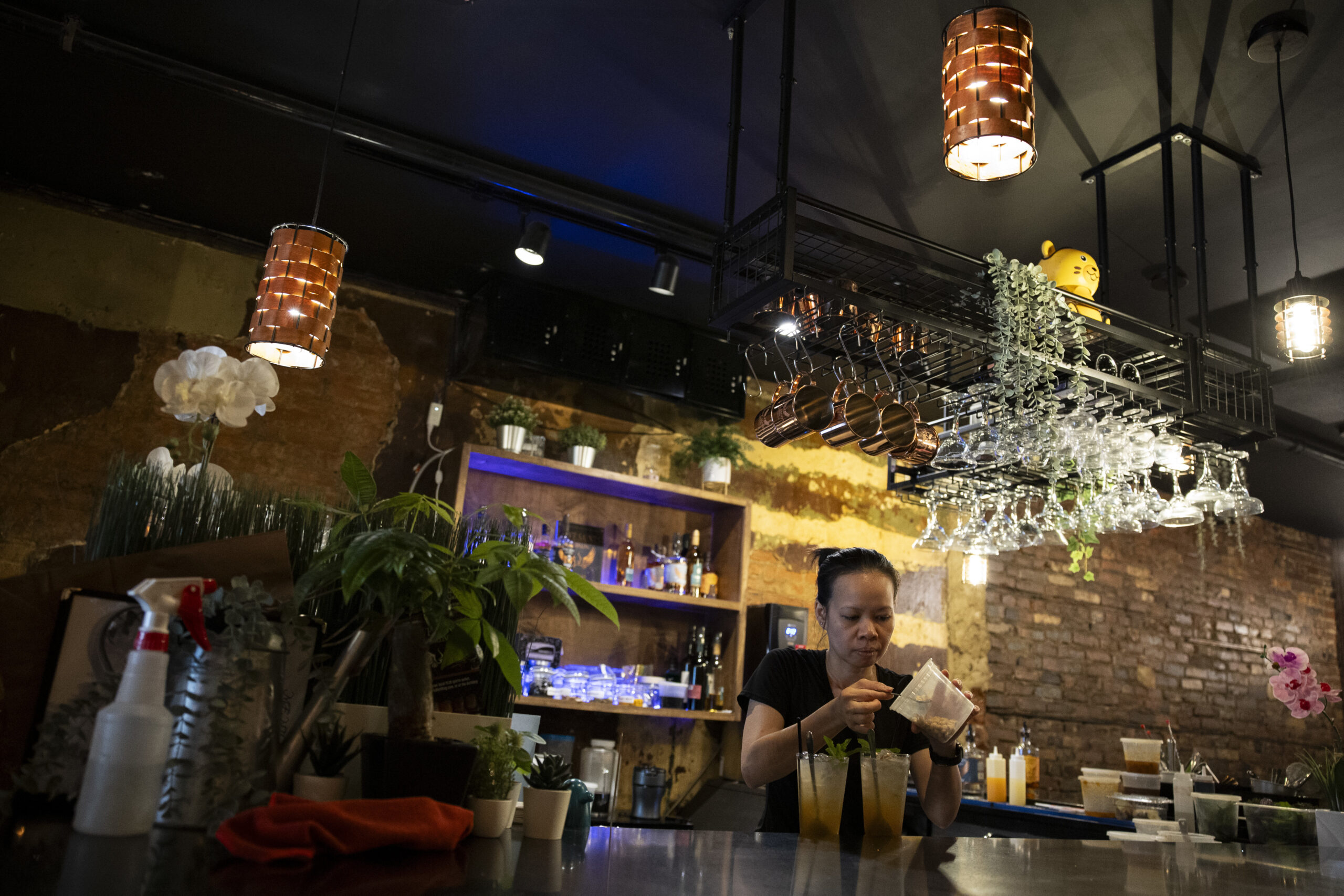
Chef Thanh Nguyen prepares drinks at Gabriella’s Vietnam in Philadelphia on Wednesday, Aug. 28, 2024.
“Culantro is what gives you the true pho flavor,” said Nguyen. “In South Vietnam, we use culantro more for pho than basil, which they do here [in Philly]. And of course, we need Sriracha.”
The cocktail is shaken up with fresh lime juice, simple syrup, and a mix of vodkas (one part pho-infused vodka, three parts plain vodka).
The liquor license at Gabriella’s (a two-time pick for The 76 most essential restaurants in Philadelphia) is a satellite license associated with Five Saints Distilling — allowing the restaurant to serve any beer, wine, and liquor made in Pennsylvania — and so the Norristown distillery’s line of spirits forms the backbone of Gabriella’s bar program.
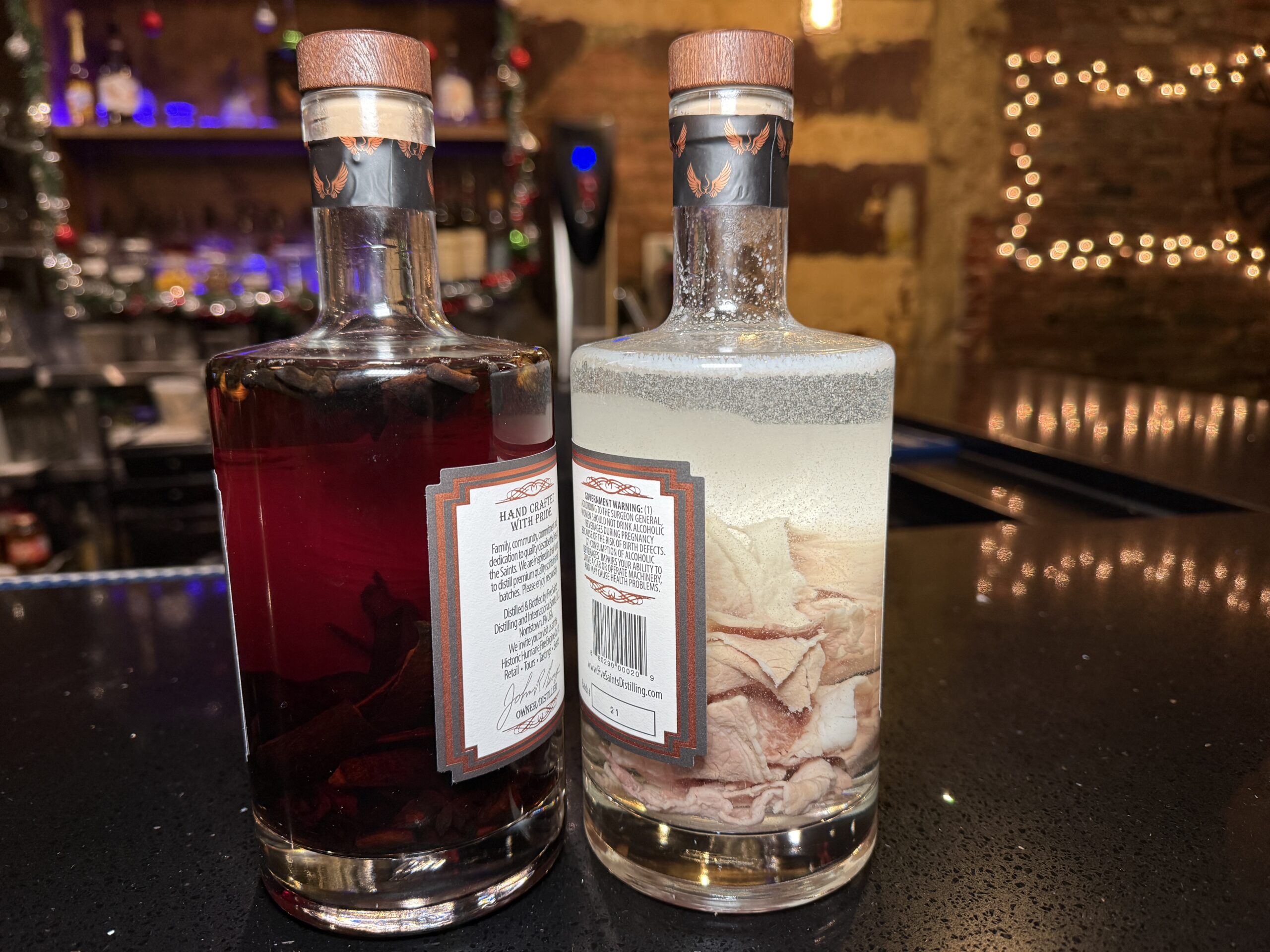
Two bottles of beef infused vodka: the one on the left has been steeping with herbs for six weeks and the one on the right has beef only and has been steeping for three weeks.
There’s actual beef steeped in the vodka that forms the base of Gabriella’s pho cocktail. Thin slices of brisket and eye of round, like the ones in a typical bowl of phở tái, are seared, then crammed into the bottles of vodka, to sit for three weeks, creating a lava-lamp effect as they release droplets of fat into the liquid. At the three-week mark, the vodka is strained multiple times through coffee filters. (Nguyen discards the beef that infuses the vodka with its meaty flavor. I tried a bite before it went in the bin, but that was all: If I had kept on eating, I risked inebriation by beef.)
Next, toasted spices are added to the bottle: fresh ginger, star anise, coriander, fennel seed, cardamon, cloves, and cinnamon. “The exact same spices for when I made pho,” said Nguyen. The concoction steeps for another three weeks, “until it’s the color of Coke,” said Nguyen.
Nguyen approaches mixing cocktails with the mind of a chef. This is most apparent in this cocktail, which is simultaneously an ode to the pho she served at her former restaurant, Melody’s Vietnam Grill in Ambler, and to the medicinal concoctions her now 94-year-old grandfather made her drink as a child and, later, as a postpartum mother.
“He would make vodka — yes, homemade vodka — and put garlic, ginseng, or ginger in it. This was his medicine. He’s never taken any other medicine in his life,” said Nguyen. “After I had my daughter, he had me drink this liquor with ginger soaked in it.”
Chef Thanh Nguyen posed for a portrait at her restaurant, Gabriella’s Vietnam on Thursday, Sept. 11, 2025 in Philadelphia.
Pho-spiced cocktails are common in bars in Vietnam, made popular at upmarket places like the Michelin-starred Anan Saigon and the Anantara Hoi An (whose pho cocktail is heavily garnished with fresh cilantro and whole star anise). The cocktail is frequently credited to Hanoi bartender Pham Tien Tiep. But each of these versions take the inspiration of pho far less literally than Nguyen does.
“I don’t want to limit myself to one thing,” Nguyen said, explaining her experimentation behind the bar. “I love cooking but I have more fun behind the bar sometimes.” And she wants there to be constant crossover between her kitchen and bar. The passion fruit that her beef carpaccio is marinated in goes into her margarita. The kumquats that appear seasonally in her salads are muddled into her Saigon smash cocktail and blended into margaritas.
As for the future of her soup-based cocktails, Nguyen is working on developing a bún bò huế-infused vodka. “I’m still trying to get shrimp paste and lemongrass flavors to come through,” she said.
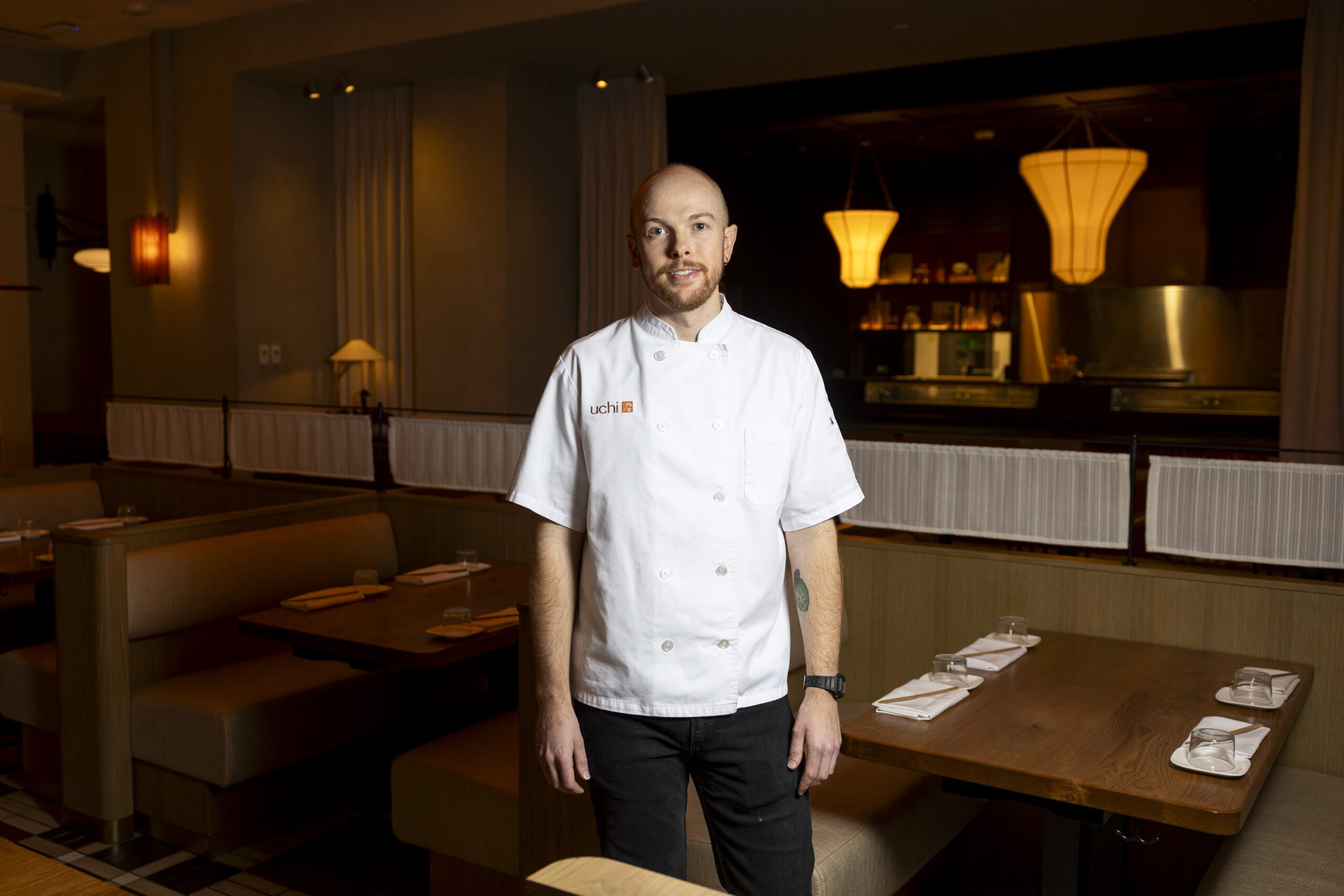
Kiki Aranita stepped into Craig LaBan’s shoes to review Uchi and followed similar critical practices — for instance, eating multiple meals over a period of time and making reservations under aliases to avoid detection. The Inquirer pays for all travel and meals eaten by its journalists.
When the fast-casual restaurant industry seized on the once-unstoppable poke trend, control over the traditionally composed dish — once marinated and prepared with a singular chef’s vision — transferred to diners, who were now free to decorate their raw fish salads with everything from carrot shavings to chicken.
A similar dynamic is at play in the omakase at Uchi, the upscale Austin-based sushi purveyor that opened a location in Rittenhouse in November. Here, the guest — not the chef, as is tradition in omakase — informs which precious dishes are presented in the restaurant’s trademark “somakase,” in which customers set a budget for their multicourse meal, spelling out their likes and dislikes. (The “s” in somakaseis for “server,” since they helpguide the order.)
You might say, “I like salmon, let’s have more salmon tonight.” The chef behind the counter, illuminated by the glow of refrigerated cases housing sushi toppings, prepares for you a number of courses selected from Uchi’s menu based on your feedback, peppering in the restaurant’s signature dishes.
The hot rock at Uchi in Philadelphia, Pa., on Thursday, Jan. 8, 2026.
The somakase is an adaptation of a traditional Japanese omakase (or “I leave it to you”), which also makes Uchi the perfect venue for those who want sushi but want to stay in their comfort zone.That appeal is furthered by its other “omakase” options: a set menu without the promise of customization, a vegetarian option, and a happy-hour omakase for two, with nine courses for $120.
Even forgoing an omakase, Uchi’s individual dishes defy culinary conventions. Because the restaurant’s approach is divorced from any notion of traditional Japanese cuisine, the choices and customization possibilities for your experience are vast. The food — and the rest of a night out here — are simply Japanese-inspired fusion.
Specials change constantly. Half the menu had completely flipped with each of my three visits, over the course of almost two months. There were some repeated duds. Both times I ordered the “ham and eggs” roll, the rice was gummy. The once-probably-crispy katsu pork was soggy and reminiscent of Chicken McNuggets; its beer-mustard dipping sauce seemed silly and overwrought. Why force these ingredients to be sushi?
The Hama Chili at Uchi in Philadelphia, Pa., on Thursday, Jan. 8, 2026.
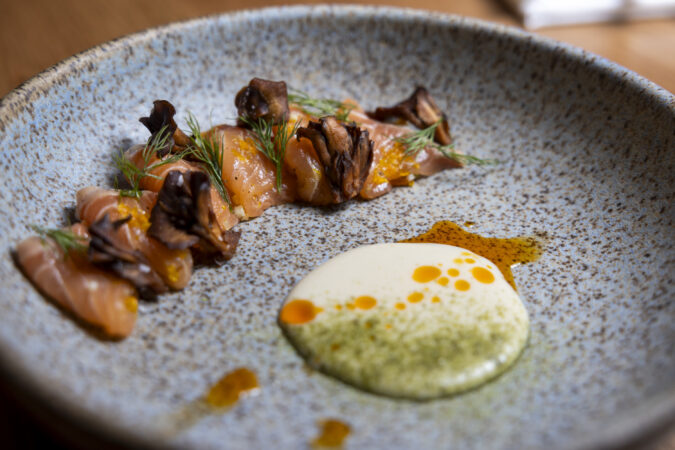
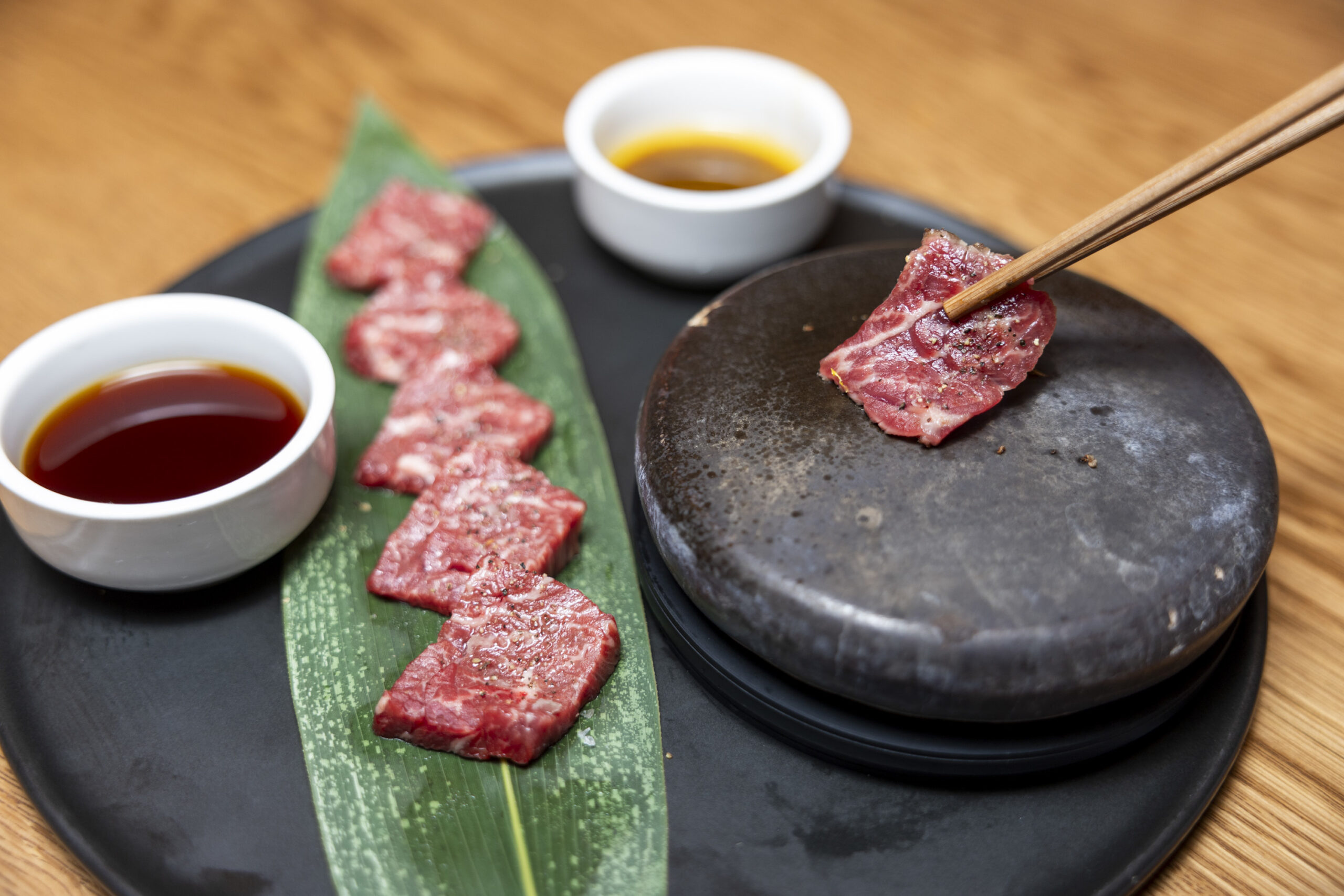
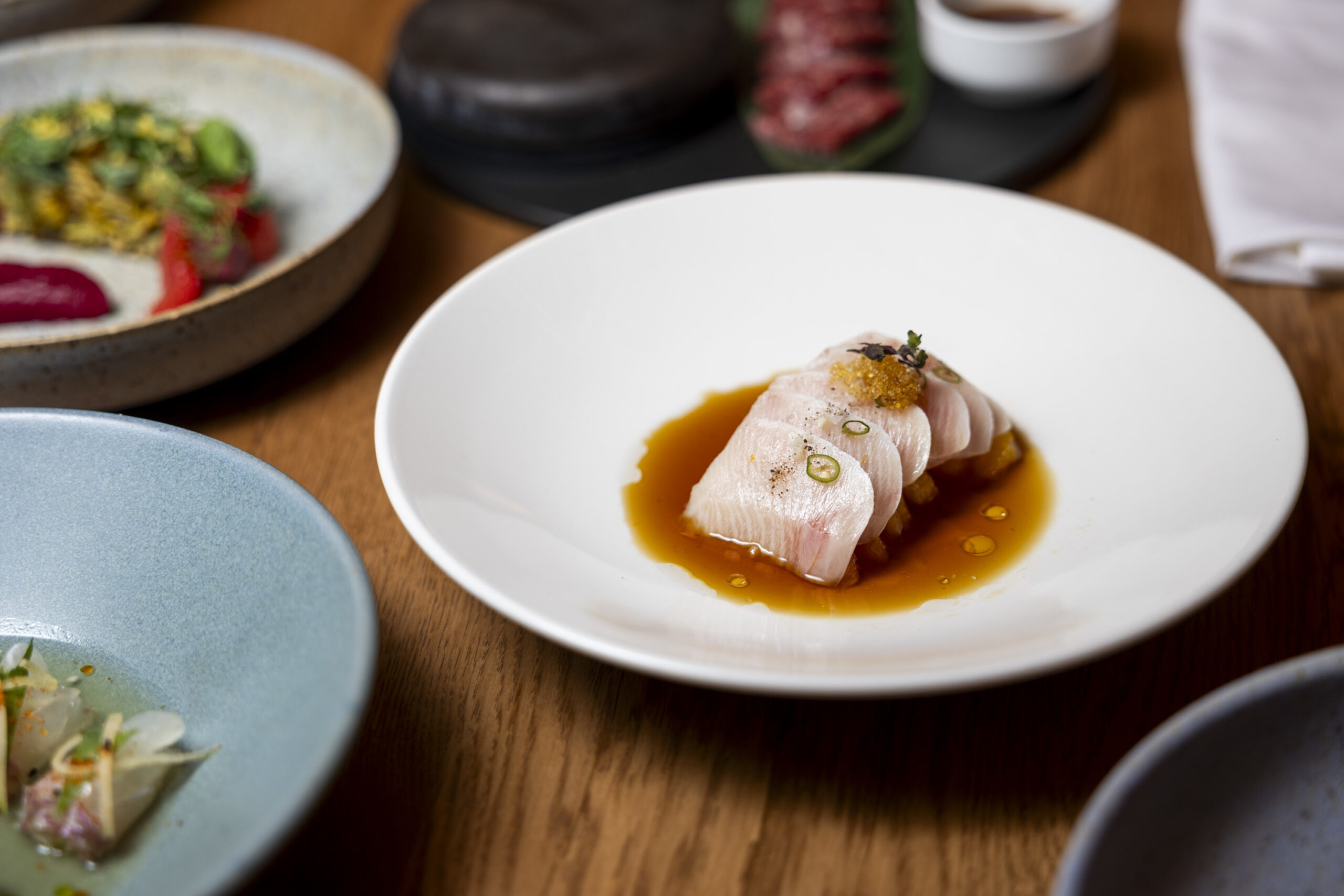
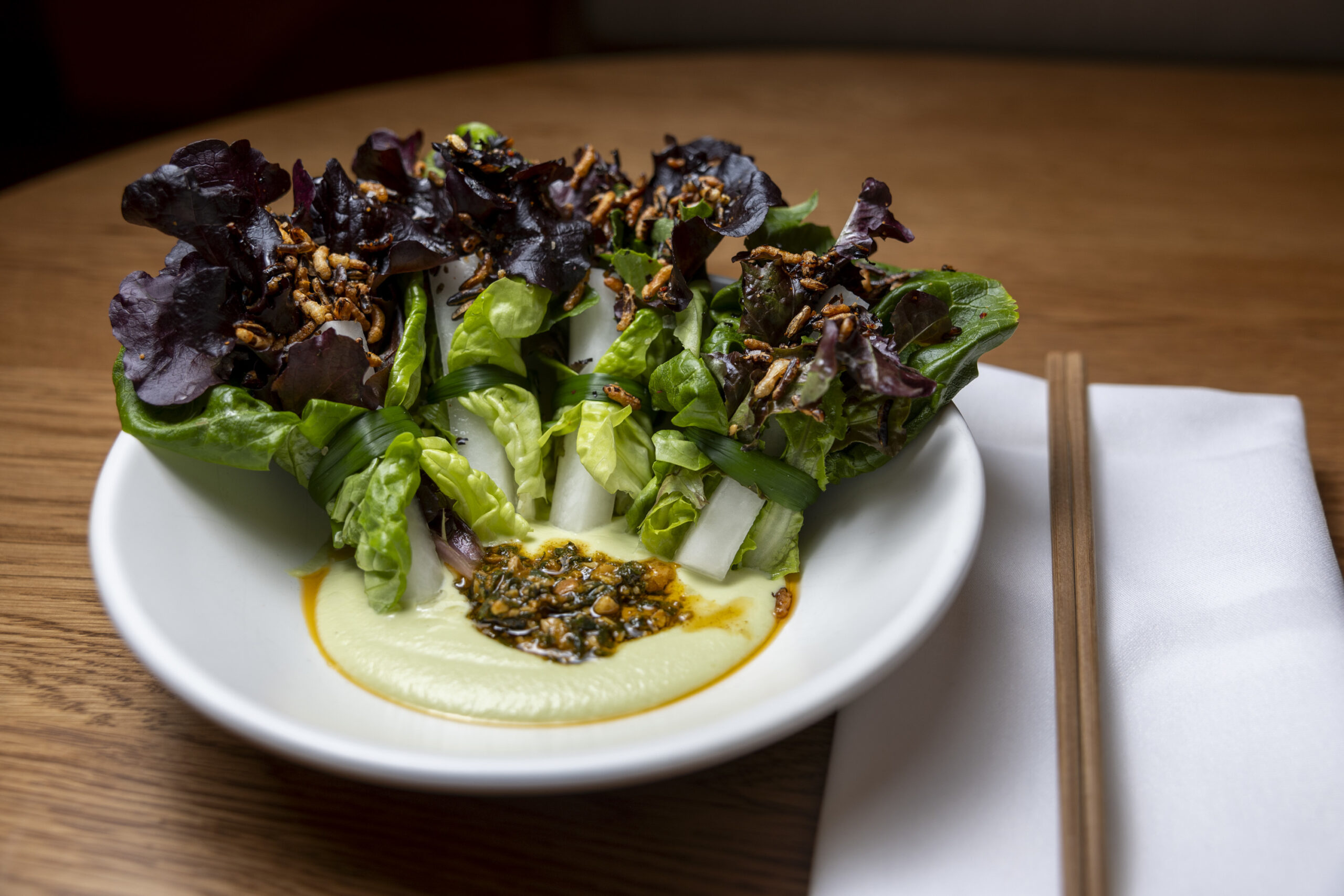
The big drawis Uchi’s core menu, including the sake tom kha, a muddling of Japanese and Vietnamese flavors. It’s a lovely balance of creamy coconut, crunchy candied maitakes, and lovely, unguent salmon. The Uchi salad consists of beautifully bundled lettuces sprinkled with puffed rice. The “hama chili” of yellowtail sashimi swims in ponzu with fresh Thai chiles and orange. And a sizzling hunk of Wagyu is presented on a blazingly hot rock with sidecars of shio koji butter and maple-laced ponzu. The rock is gimmicky, but it’s also fun. Uchi’s greatest hits really hit.
Uchi’s ownership group, Hai Hospitality,has been on an opening rampage, fueled by the 2020 investment of Denver-based private equity firm. “Uchi” means “home” in Japanese. It pays tribute to Uchi’s first location, which chef Tyson Cole opened in 2003 in a little red house in South Austin. Cole has earned scores of accolades over the years, including a James Beard Foundation Award for Best Chef: Southwest in 2011.
Uchi Philadelphia’s chef de cuisineFord Sonnenberg came up in Uchi’s Austin empire, which also includes steak house- and izakaya-inspired spinoffs. The 29-year-old chef has never been to Japan, and moving here for the job is his first time in Philly, save for a couple of events leading up to the opening.
Chef Ford Sonnenberg, poses for a portrait at Uchi in Philadelphia, Pa., on Thursday, Jan. 8, 2026.
Each Uchi location (soon there will be 11) makes some city-specific dishes. Uchi Philadelphia’s tributes miss the mark. A Wagyu-cream gyudon — a clever way of using the excellent Australian Wagyu that doesn’t get sliced for the main menu’s nigiri — is meantto evoke a cheesesteak. But the koji cream is overwhelming when paired with the fatty Wagyu, and the diner must relyon an oversize clump of turnip kimchi to cut through the richness. A broccoli rabe dish made with sesame milk, shishito relish, and pickled red pepper was overwhelmingly salty and unbalanced,an unsuccessful homage to a roast pork sandwich.
Other playfuldishes also fell flat. After biting into the maguro goat — tuna draped over apple slices with a tiny plume of goat cheese and whole pumpkin seeds — my dining companion commented, “I don’t want to eat goat cheese on tuna again.” (This was a rare example of an Uchi classic that flopped.)Curled to one side of an oversize bowl, the bok choy with tomato and cashew felt like the product of a competent focus group. Creamy? Check. Crunch? Check. A hefty price tag ($18)? Also check.
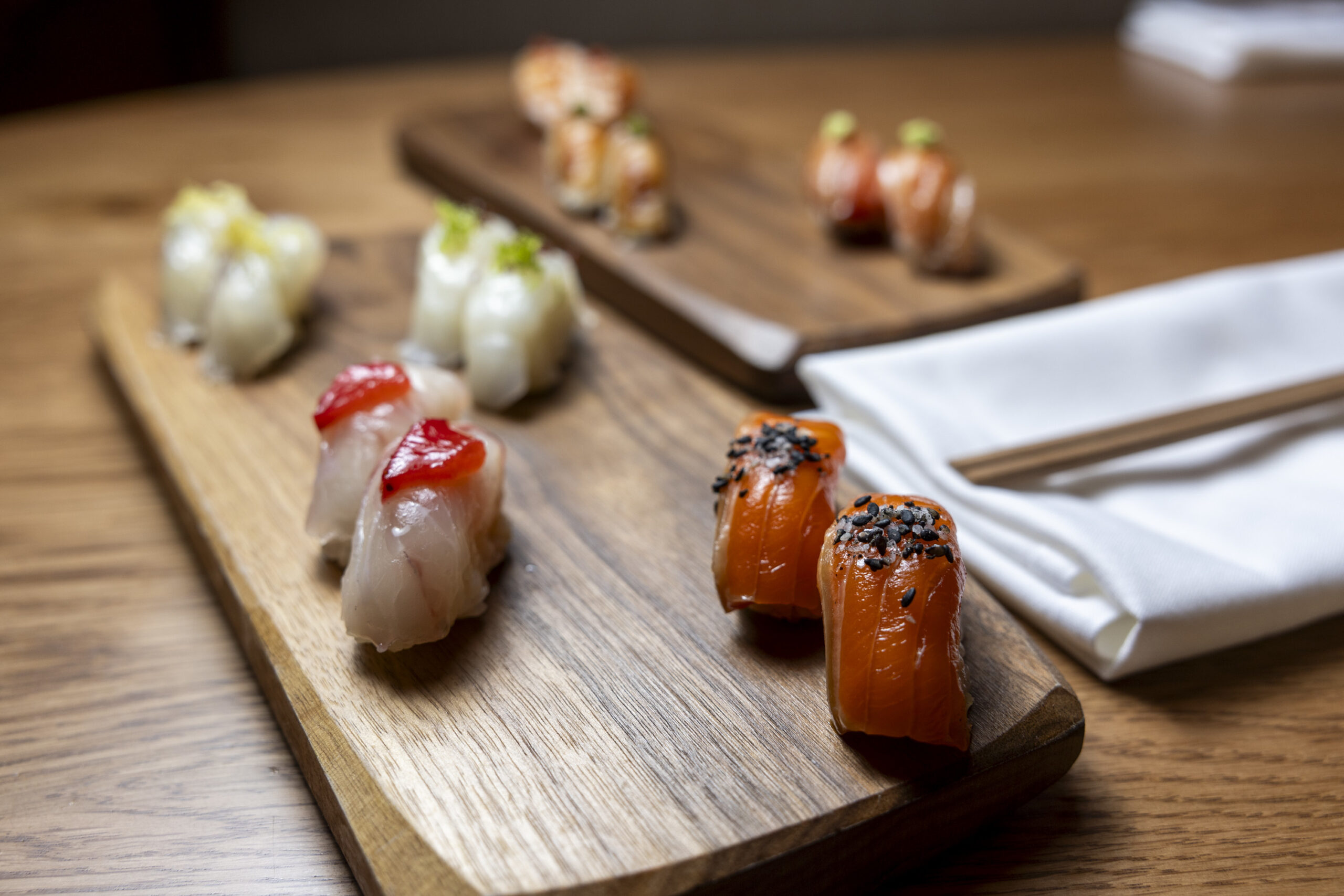
Nigiri at Uchi in Philadelphia, Pa., on Thursday, Jan. 8, 2026.
After subpar specials, my sinking spirits soared when presented with sashimi. Pristine slices of kanpachi came in a wooden box, protected from a bite of snow on artfully arranged ti leaves and a generous sprinkling of caviar-esque finger lime and flake salt. Nigiri is similarly restrained: silkenslicesof tuna brushed with tare and dotted with fresh wasabi, and buttery salmon splayed over a delicate finger of rice, its only adornment a thin shaving of radish.
This may be the key to optimizing your Uchi experience:The menu is vast, but stick to the classics and straightforward fish, and you’ll likely leave happy.
The Uchi salad at Uchi in Philadelphia, Pa., on Thursday, Jan. 8, 2026.
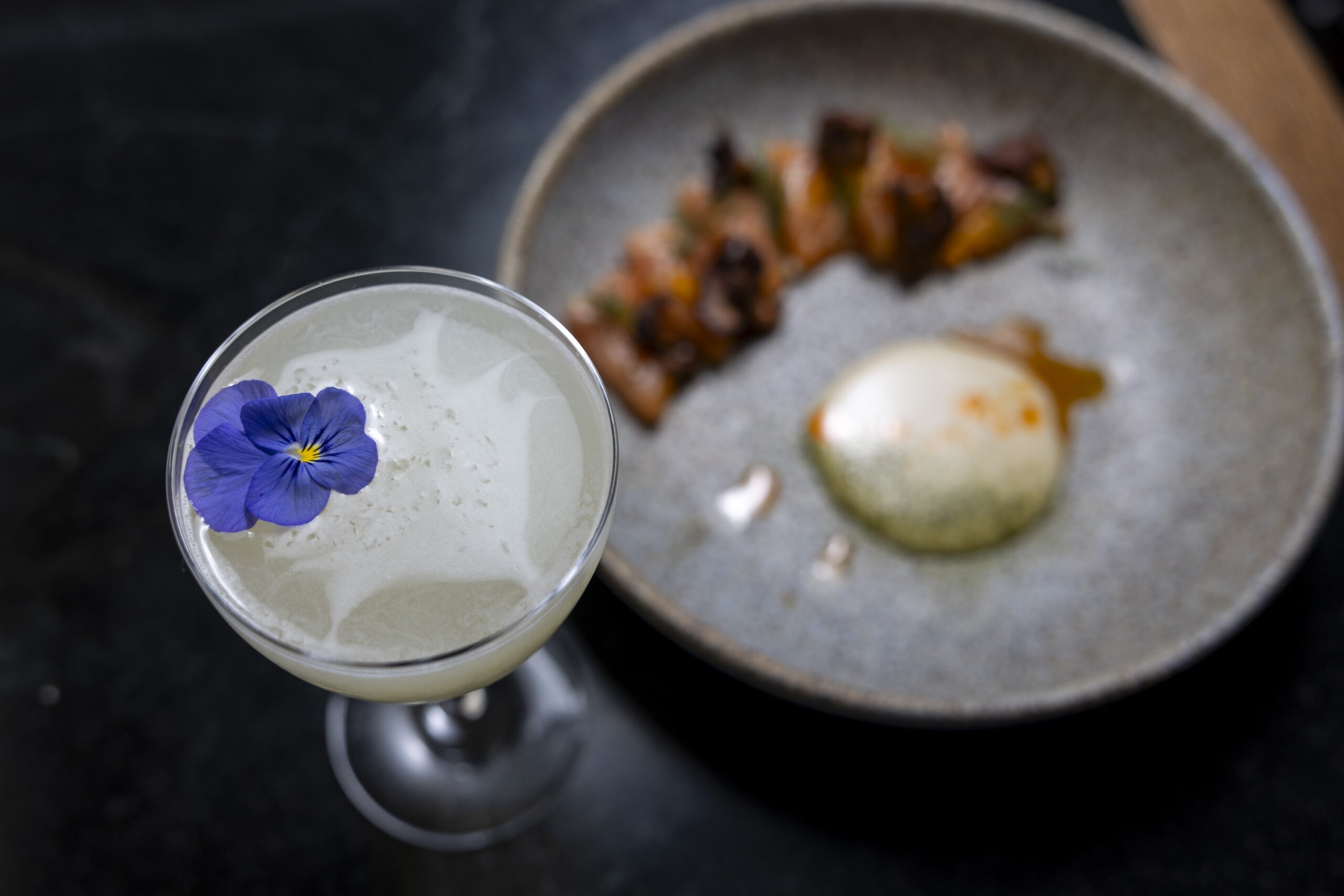
Uchi fares better when it comes todrinks, with some exceptions. The sake list is decent and servers were generally well-trained. The nikko martini, their version of a vesper martini, was spectacular, laced with savory umami bitters and decorated with cornichons and a pickled onion.
ButUchi’s adherence to traditions is haphazard. The tea selection and service were sorely lacking, consisting of tea bags steeped in lukewarm water, poured table-side into large, awkward mugs. If Uchi’s staff bothers to go through the ceremony of serving sake in a glass placed inside a wooden masu box to catch overflow — a Japanese gesture that signifies the generosity of a host — why not apply that same attention to detail to tea? Even switching to a loose-leaf brew would be an upgrade.
Desserts were well-thought-out exercises in layering flavors, temperatures, and crumbly-creamy textures. The cilantro granita on the jasmine cream dessert was both daring and delicious, and every other dessert I tasted — fried milk with vanilla custard and salted fudge, Thai tea okashi with mango and lime leaf — was simply stunning.
It’s possible to look at this restaurant purely through the lens of food, and it frequently sends out dishes that are very prettyand generally well-executed. But the fusing of different culinary traditions can create discordance on the plate, and that discordance is echoed throughout the restaurant.
A lychee martini with the sake tom kha at Uchi in Philadelphia, Pa., on Thursday, Jan. 8, 2026.
There are the enormous lanterns—lots of them,as if to signpost:“This is an Asian restaurant” — in a sleek, dark space that gets more illumination from its exit signs. Dining booths are flanked by pale wood-framed glass panes, evoking shoji screens. The design was executed by Hai Hospitality’s in-house design studio in collaboration with the architecture firm Zebra and local interior design studio Rohe Creative, a familiar name to astute Philly diners. (Rohe also decorated Dear Daphni, La Chinesca, Irwin’s, and many other vibey, immersive restaurants.)
At 4,900 square feet, the 148-seat restaurant is massive, but it doesn’t feel cavernous by virtue of how it’s cleverly subdivided into a bar, sushi bar, and dining room, which is packed with tables with thoughtful design flourishes like hidden cubbies to store menus in between ordering. Would that there were such a functional place to put one’s winter coats. The vast majority of diners on my visits were sitting on top of their jackets, making the high-end dining room feel like more like a Christmas party at someone’s house. (Oddly, this was the only time when I felt Uchi lived up to the meaning of its name.)
Service was consistently anticipatory and jovial, though unshakably corporate. Informing staff of my mild crustacean allergy meant that every dish was dropped with a standard short description plus the refrain “and no crustaceans,” even single-ingredient sashimi and dessert — thorough but tedious.
Dining area at Uchi in Philadelphia, Pa., on Thursday, Jan. 8, 2026.
Private equity has parachuted this Texas-born fusion sushi concept into Philadelphia at a curious time, in the midst of a proliferation of homegrown restaurants serving their interpretations of Japanese cuisine. Uchi is in the same neighborhood as Kissho House, and it’s steps away from Jesse Ito and Justin Bacharach’s dancerobot. Outside of Center City, more recent entries like Yanaga Kappo Izakaya, Nakama, and Javelin have put Philly in its heyday of interesting Japanese and Japanese-esque options.
I found that my enjoyment at Uchi was correlated with how much alcohol I consumed. The dinner where I tried several cocktails? Fantastic. One glass of wine and one glass of sake? Mixed feelings. Stone-cold sober? It was just OK.
This is not to say one has to imbibe in order to enjoy Uchi, but an excellent cocktail does smooth the edges. You can have a great time here if in good, raucous company. Order sashimi and all the desserts. And definitely get a couple of drinks.
Dinner daily, 4 to 10 p.m. Sunday through Wednesday, 4 to 11 p.m. Friday and Saturday. Happy hour is 4 to 6 p.m. daily.
Entrees $21-40, omakase menus $120 and up
Menu highlights: sashimi; hama chili; Uchi salad; sake tom kha; fried milk; jasmine cream
Drinks: There’s a robust menu of signature cocktails with sake integrated into the martinis. There’s also a handful of low-ABV and zero-proof mixed drinks, an international wine list, and a small, but decent sake list that leans heavily on offerings from Brooklyn Kura.
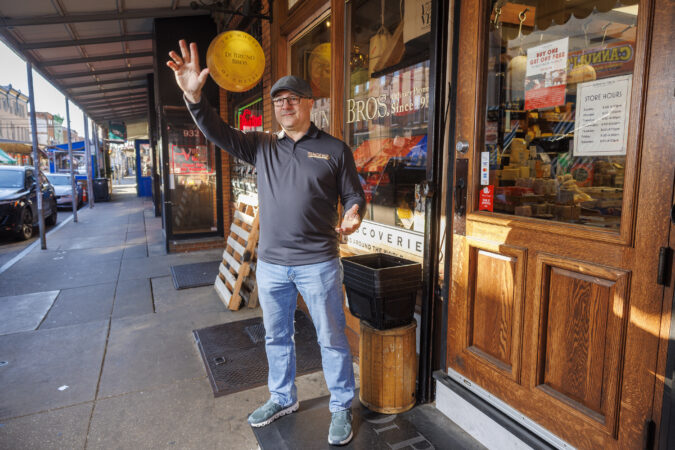
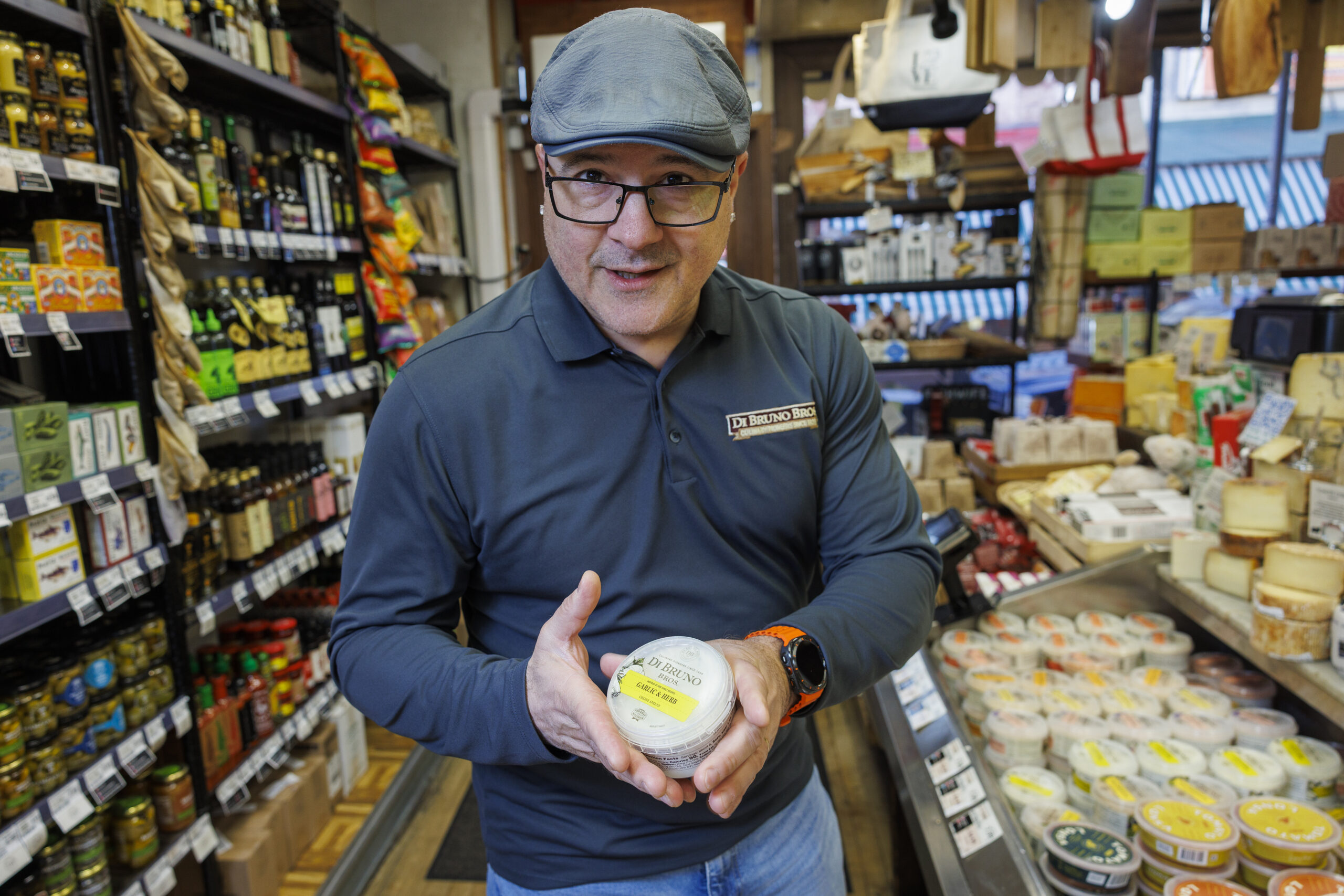
Emilio Mignucci’s name is synonymous with cheese in Philly. The third-generation Di Bruno Bros. owner-turned-vice president of the brand, now owned by Wakefern, lives in Center City but his heart is still in the Italian Market. The legendary importer and cheese connoisseur is also a sometime cheese tour guide, taking cheese-obsessed guests on culinary adventures in Europe with Cheese Journeys. But he’s just as passionate a guide in his hometown. Here are his favorite places to grab a bite on a perfect Friday in Philly.
Emilio Mignucci with a cheese spread he enjoys eating.
4:20 a.m.
My father trained me to get up this early from when I was very young. When I was a kid I used to work the produce stands in the Italian Market and we would start setting up at 4:30 or 5 a.m. I’ve always had that routine.
4:30 a.m.
Nowadays I head to the gym when I wake up. I get in a workout until about 5 or 6 a.m. and then do a five to 10 minute meditation, then practice my Italian on Duolingo, which I’ve been doing for a six-year streak.
6 a.m.
I split my week between Wakefern headquarters in Edison, N.J., and Philly. But I work from home on Mondays and Fridays, so for coffee I’ll walk over to La Jefa.
7 a.m.
I get a cappuccino with whole milk at La Jefa and a concha. They’re always filled with lavender or something cool. I also like their corn husk coffee, but if I’m getting that I skip the concha. And I love their pastrami lengua sandwich on days they do brunch, but I don’t normally eat breakfast.
7:30 a.m.
I walk to Di Brunos in Rittenhouse where I have an office. We just came out of the best season for cheese, which is fall into winter. I’ll taste cheeses with the team behind the counter, like Jasper Hill Farms’ Winnimere and Pleasant Ridge Reserve. They’re stinky and so darn good. I love Alpine-style cheeses.
Emilio Mignucci, DiBruno describes his perfect day, Friday, Jan. 16, 2025. Emilo grandson of the founders of DiBruno take a whiff of cheese.
Noon
I eat lunch around noon. If I stay in the store, I grab one of our seasonal salads, though I’m attracted to the pizzas. But the best lunch in Philly is John’s Roast Pork. There’s nothing better. I crave it. I dream about it. It’s the most succulent pork sandwich. The pork is cooked in its own juices and when you go up to the counter to order, it’s taken out of that hot pork broth. Then there’s sharp provolone and I love the bitter spinach and a single long hot pepper. I know everyone talks about cheesesteaks in this town and they’re great, but for me the best sandwich is the roast pork.
1 p.m.
I go back to work, finish up emails and meetings about product innovation and figuring out cures for the tariffs and increases in pricing because we import so much stuff.
3 p.m.
If people are visiting me, I love taking them to the Italian Market. It’s the oldest open air market in the country and it shows what Philly is all about. [Even though the immigrants have changed] it’s still a mix of really good hardworking people. When my aunts and uncles came over from Italy, they worked their tails off there. So I’ll stop for an espresso at Anthony’s for something traditional and Italian, chicory-flavored, and bitter. Then I’ll pick up stuff for my wife like fresh lettuces. She likes the sweeter ones like Bibb and romaine. I like the more bitter ones like arugula. I’ll also grab mushrooms, peppers, and onions. My wife always makes me roasted peppers.
5 p.m.
I try to sneak into Fiorella when they first open, but I also love Blue Corn. If it’s Fiorella, I try to go with three other people so we can get the whole menu and all the pastas. The pasta for me is second to none. It’s spectacularly delicate, very well made, and not overly filling. Then I have to get something sweet. Isgro’s was open late over the holidays and I have to get their ricotta cookies. A dozen of those is what my wife will get me instead of a birthday cake.
8 p.m.
There are so many good bars in Philly but a.bar is my corner bar. My wife and I go two or three times a week. I like Negronis or I’ll get a Vesper. Nothing is more perfect than a Vesper.
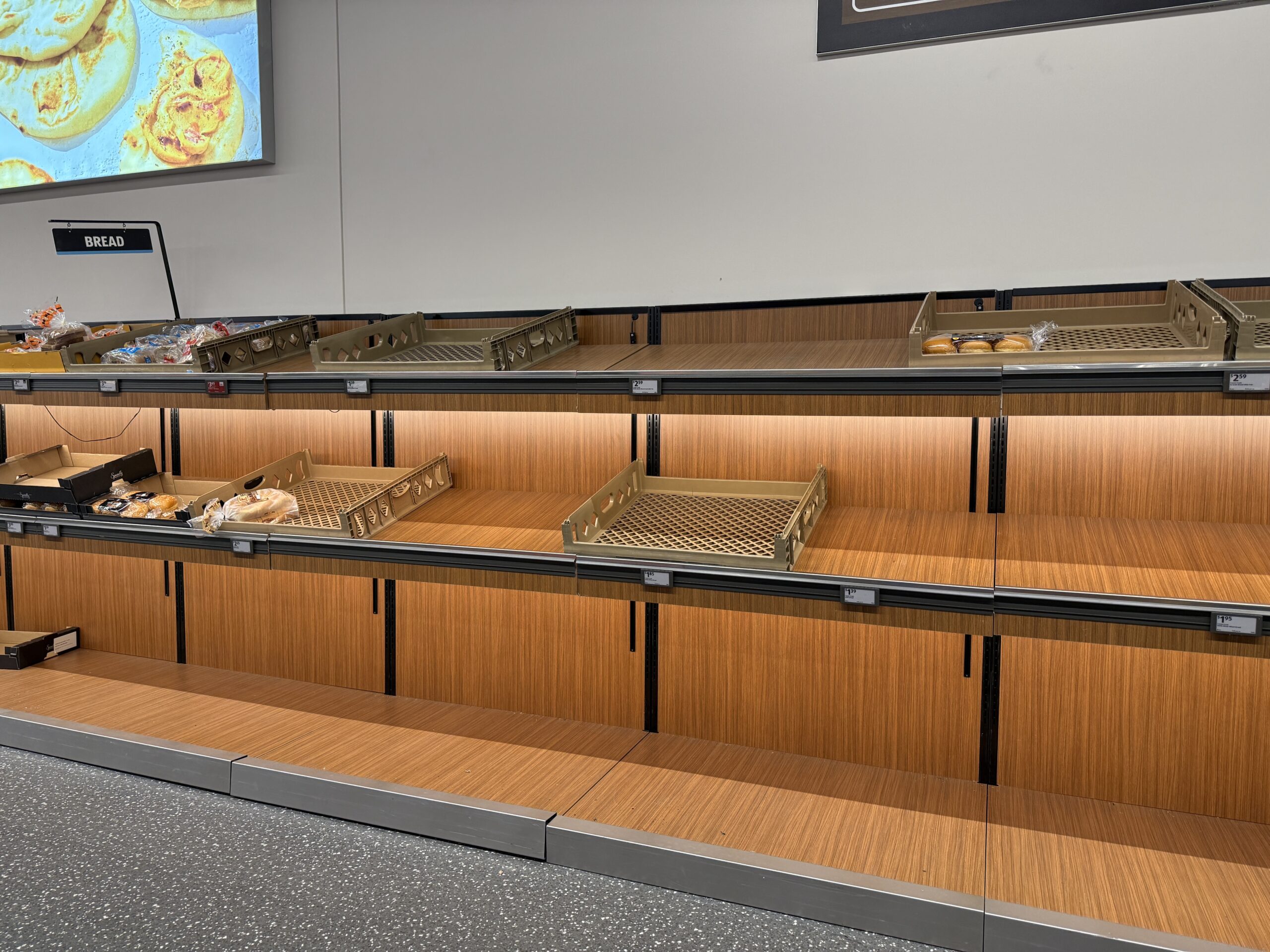
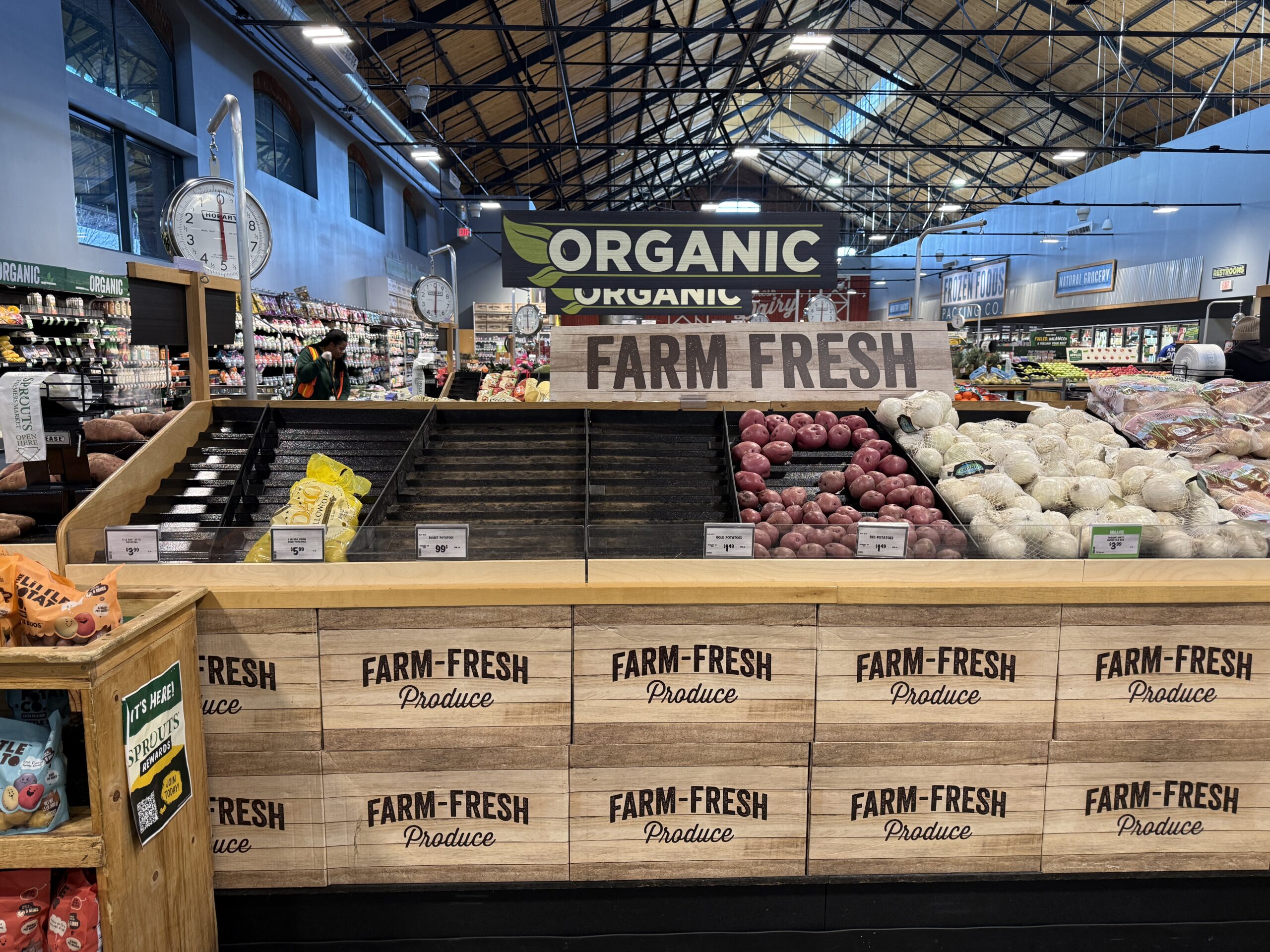
At Aldi on Washington Ave. on Thursday, the bread section contained but a few crumbs. The vegetables and bagged lettuces were almost non-existent. At Sprouts on Broad Street on the same day, the fresh produce section has also been decimated. There were also no potatoes. “Did people come in and wipe out your potatoes?” I asked my cashier. “Yes. And you’re the third person to have just asked me that,” he said.
Today and yesterday, I traversed the city on foot, from the Inquirer’s offices on Independence Mall to Point Breeze to peer into people’s baskets in grocery stores and inspect the stores’ shelves. I found that Philadelphians in these neighborhoods are clearly carb-loading, as there was nary a potato or loaf to be found, and that they were hitting the produce sections harder than any others. But unlike preparing for other disasters, it doesn’t seem like we’re in this for the long haul. And every store I checked had robustly stocked canned food aisles.
The bread section at Aldi on Washington Ave. on Thursday, January 22.
“When we see storms forecasted like this weekend, we see baking ingredients and items to make soups such as leeks and onions go quickly,” said Vincent Finazzo, 39, the owner of Riverswards Produce, with locations in Kensington and Old City. “Whole chickens and roasts get bought up, and we see big lifts on ice cream as well. And of course bread, milk, and eggs go quickly.”
The small Heirloom Market at the Gray’s Ferry Triangle on Thursday was well-stocked with produce, but there were none of their usually-abundant rotisserie chickens.
As I waited in line to purchase sour cream from South Square Market, the customers to either side of me had baskets filled with bread, sausage, bananas, and lettuce. The man in front of me bought the last bag of sidewalk salt and the line behind me emitted a collective groan. “We’ll have more tomorrow,” said the cashier, consoling everyone.
The potato section at Sprouts on Thursday, January 22.
“On the wholesale side, we’re basically getting hit hard with all the essential stuff, you know, like the staples, the lettuce, tomato, and onions, for the weekend,” said Marcello Giordano, 52, of Giordano’s Garden Groceries, which supplies both Stephen Starr restaurants like Parc and Borromini to individual households. “People are just stocking up for the weekend. I actually got a deal on some rock salt, and we put it on the website. I got 2000 pounds of salt and I’m almost sold out already,” said Giordano.
His household customers, to whom he also delivers, have been stocking up on eggs, milk, and butter in particular. “And we’re going to be delivering Monday,” he assured me. “I’m bringing in eight ATVs from our farm in Hammonton on tractor trailers so that we can make deliveries in the city.”
The fresh tofu section today at Hung Vuong on Washington Ave. was also unusually empty, save for some economy-sized packs of firm tofu. But there’s lots of fresh produce, and people of all ethnicities are buying everything from bok choy to durian. Peering into people’s baskets, I spot lots of beef bones for stew, fresh meat and fish, cabbage, and just a few pantry items. Seems like everyone is making soup.
“Instead of buying too much, I’m making everyone eat what we have in the freezer,” said Rachel Street, 42, whose household is filled with hungry teenagers. “But I’m still getting meat for the men, rice, beans, coffee, milk and eggs – if the power fails we can leave them outside.” Her grocery list also included vegetables for homemade soup, hot chocolate and baking supplies – “We’re planning on making lots of treats.” And of course, breakfast supplies. “Sleeping in means making big continental breakfasts,” said Street.
I caught Roland Bui, 40, whose blended Mexican-Vietnamese family also includes kids who will be off from school, right before a run to H Mart. His grocery list included: rice, sour cream, chicken thighs, ready-made Korean stews, frozen dumplings, hot pot ingredients like noodles, fishballs, cabbage, wood ear mushrooms and hot pot broth base, and garnishes for pho. “I always have broth in the freezer.”
Anna Kereszi, 36 posted on her Facebook wall that she was “so excited” and asked, “What’s on everyone’s snow day menus? I’m thinking beef stew and chicken pot pie, and also chicken cutlets because why not?” Her posts received dozens of responses, some of which indicated that she had inspired others to also run out for ingredients to make beef stew, chicken pot pie, and chicken cutlets.
If your neighborhood restaurant closes due to the weather, consider purchasing a gift card from them to help them recover from a day or two of loss sales – such can be detrimental for small businesses.
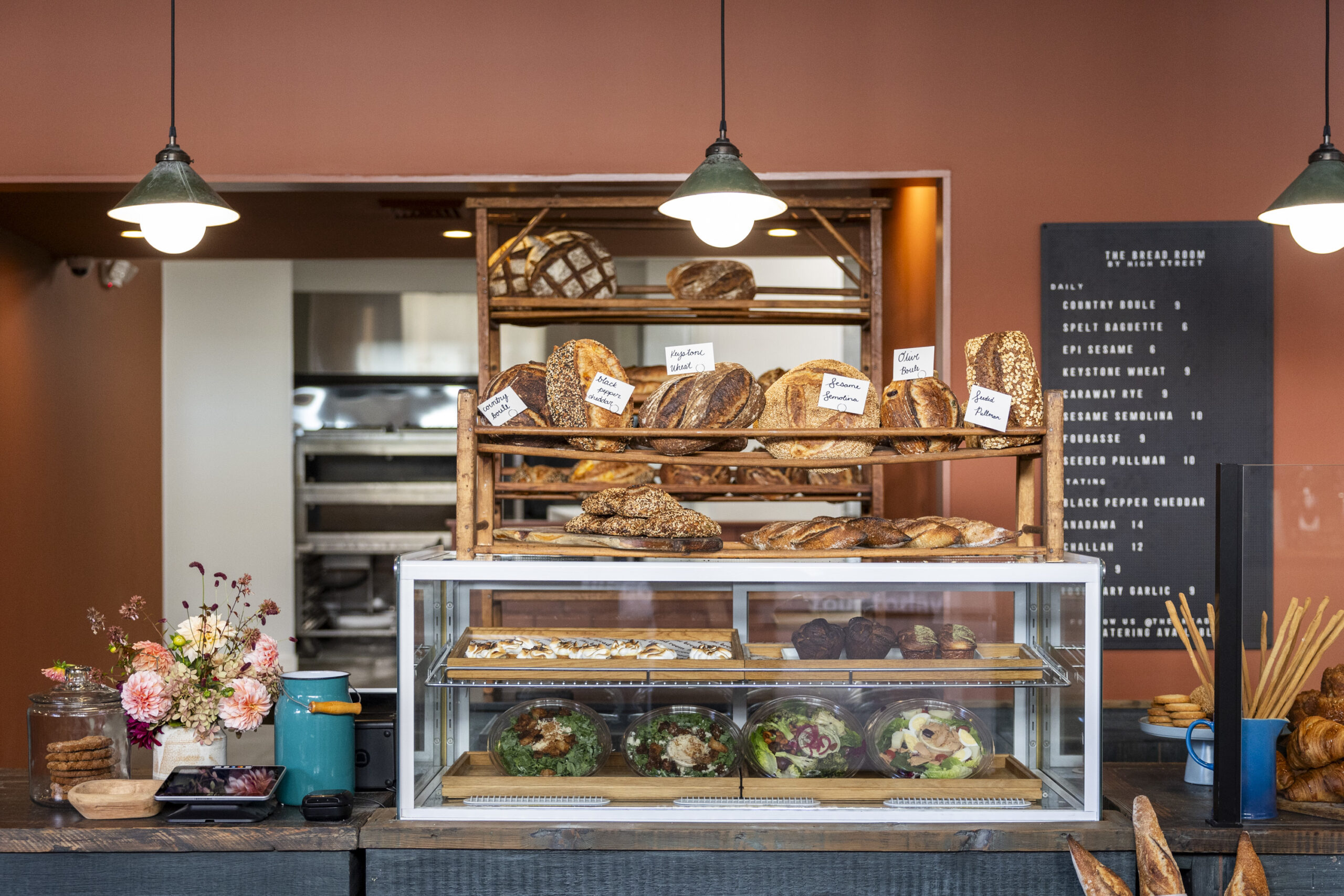
Remember that essentials can also be purchased at restaurants. On Thursday, the Bread Room’s display case was teeming with artisanal loaves and unlike grocery stores, no apparent shortages.
The display of various baked goods at the Bread Room in Philadelphia, Pa., on Wednesday, October 1, 2025.
Some restaurants are even running snow day specials, like Paffuto, which posted, “Pre-orders are OPEN until this Saturday 11am, for our snow day panzerotti boxes! $50 for a box of 4 panzerotti (Plain, Pepperoni, Egg & Cheese, and Bacon Egg & Cheese) + 2 muffins (Chocolate Chip & Crumb) 🤤 Pickup between 2pm-5pm on Saturday. Includes reheat instructions so you can enjoy at home on Sunday.”
If you’re ordering delivery from any restaurant or local business, remember to tip your delivery person extra – especially if they dash through the snow and arrive at your house on a re-purposed ATV.
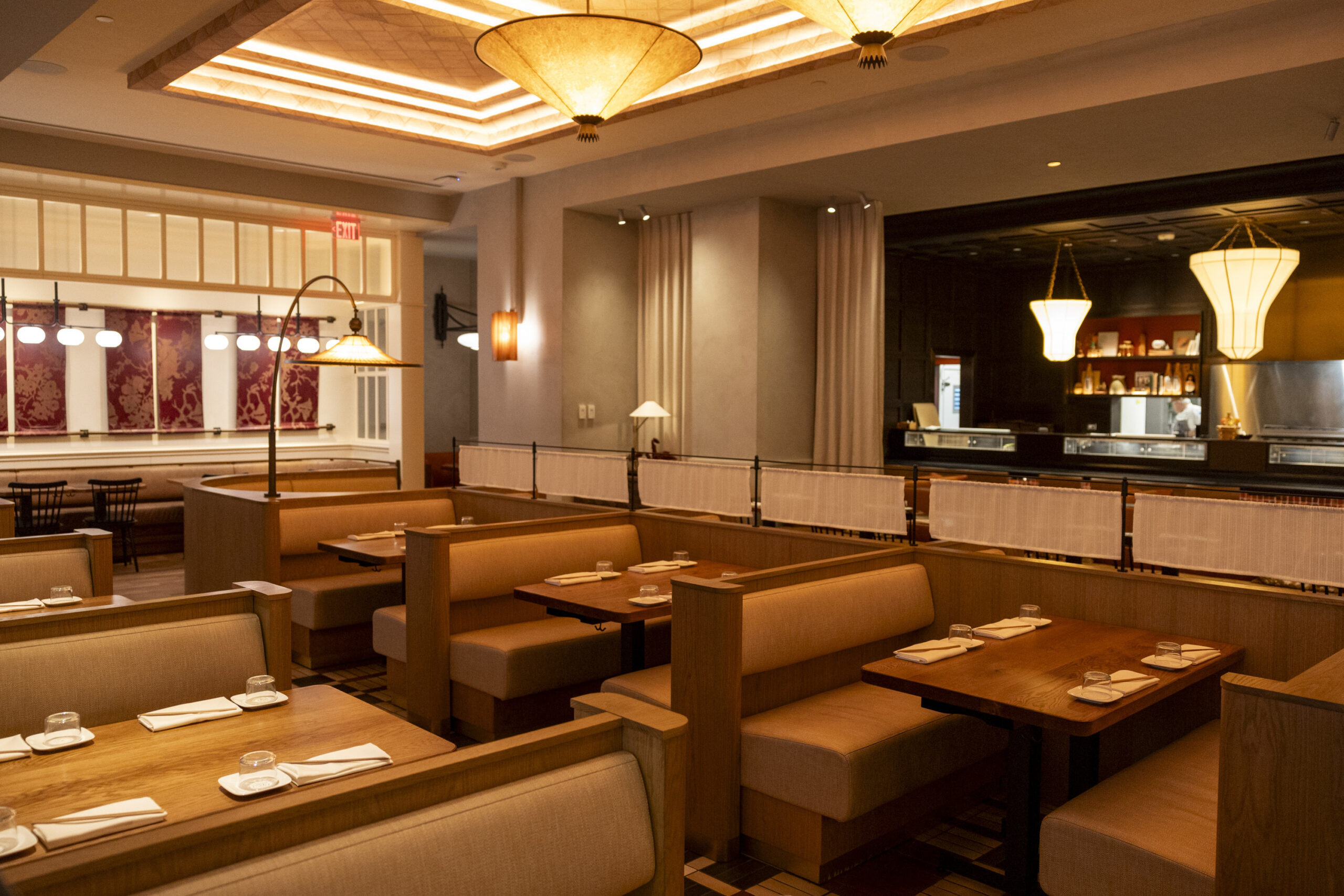
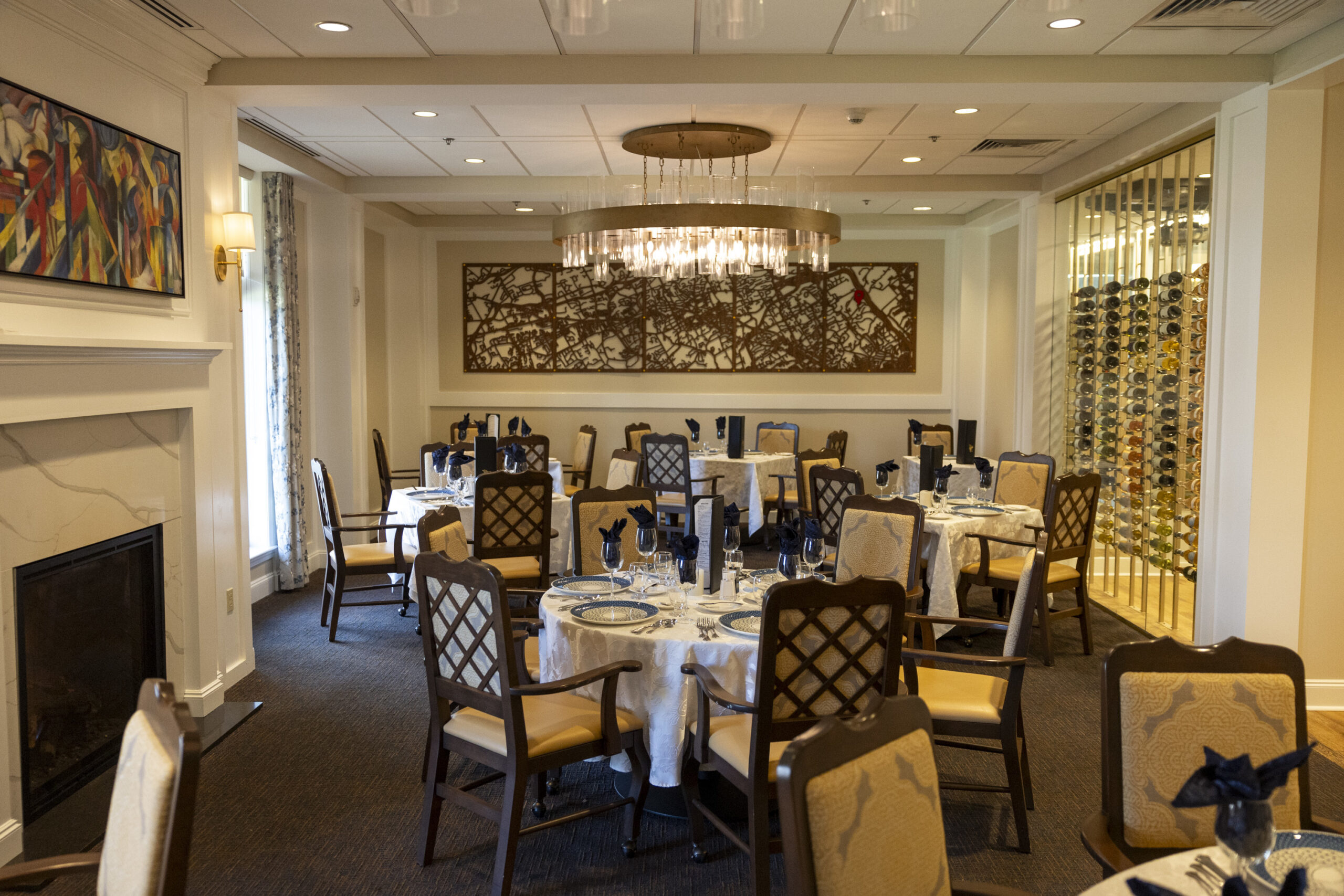
The intimate dining room is hushed but for the clinking of glasses and silverware clattering on gleaming plates. There are only 32 seats. The polished wooden chairs are plushly upholstered. The paintings and a stylized metalwork map that adorn the room are tasteful. A glass wine room, lit golden from within, casts soft light on the silver damask-swathed tables, as do the Napa winery-esque modern chandeliers.
This is Carlton Commons, the heart of senior-living, life-planning community Waverly Heights in Gladwyne.
The mansion in which this dining room is housed was once the elegant Main Line estate of a railway baron. Now, it has the air of a very quiet cruise ship, complete with a dress code: dresses for women, dinner jackets for men.
Dining room at the Waverly Heights in Gladwyne, Pa., on Tuesday, Dec. 30, 2025.
This is a restaurant that has a waiting list that’s ostensibly 710 people, about as long as Royal Sushi’s notorious Resy waitlist. But it‘s arguably far more difficult to get into. You need to be 62 years of age to be a resident (who can bring guests of any age), and the cost of admission for a one-bedroom dwelling requires a $336,000 minimum down payment. (Deluxe apartments start at over a million dollars — not a surprise for wealthy Gladwyne.)
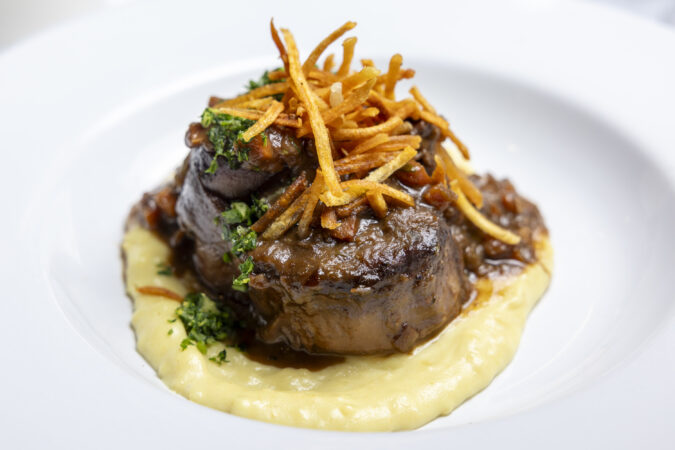
An osso buco collapses into a tangle of tender fibers at the prod of a fork, melting into the slightly tangy goat cheese polenta puddled beneath. Crunchy fried potato slivers add pleasing texture to each bite. A butternut squash risotto is just as satisfying, a master class in texture, with creamy squash trapped in distinct grains of arborio, beset with balsamic-scented curls of slow-cooked sweet onion.
If I closed my eyes, I could very well think I was dining at Le Virtù.
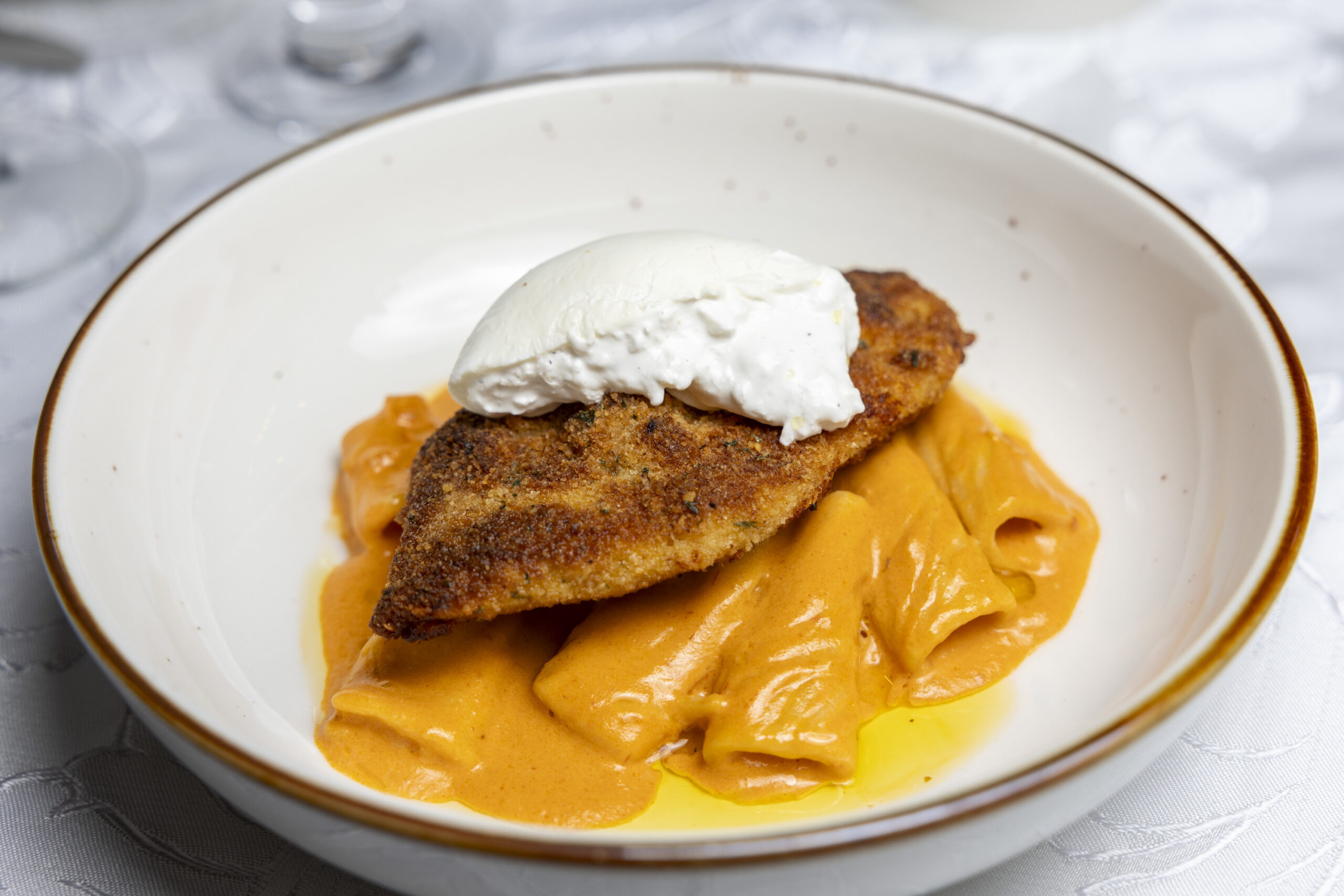
Chicken cutlet with rigatoni and vodka sauce at Waverly Heights.
There’s a perfectly al dente rigatoni alla vodka upon which a crisp chicken cutlet is nestled, then topped with an oozing cloud of burrata. (It’s almost identical to the thoroughly satisfying one I just had at Center City’s Wine Dive.)
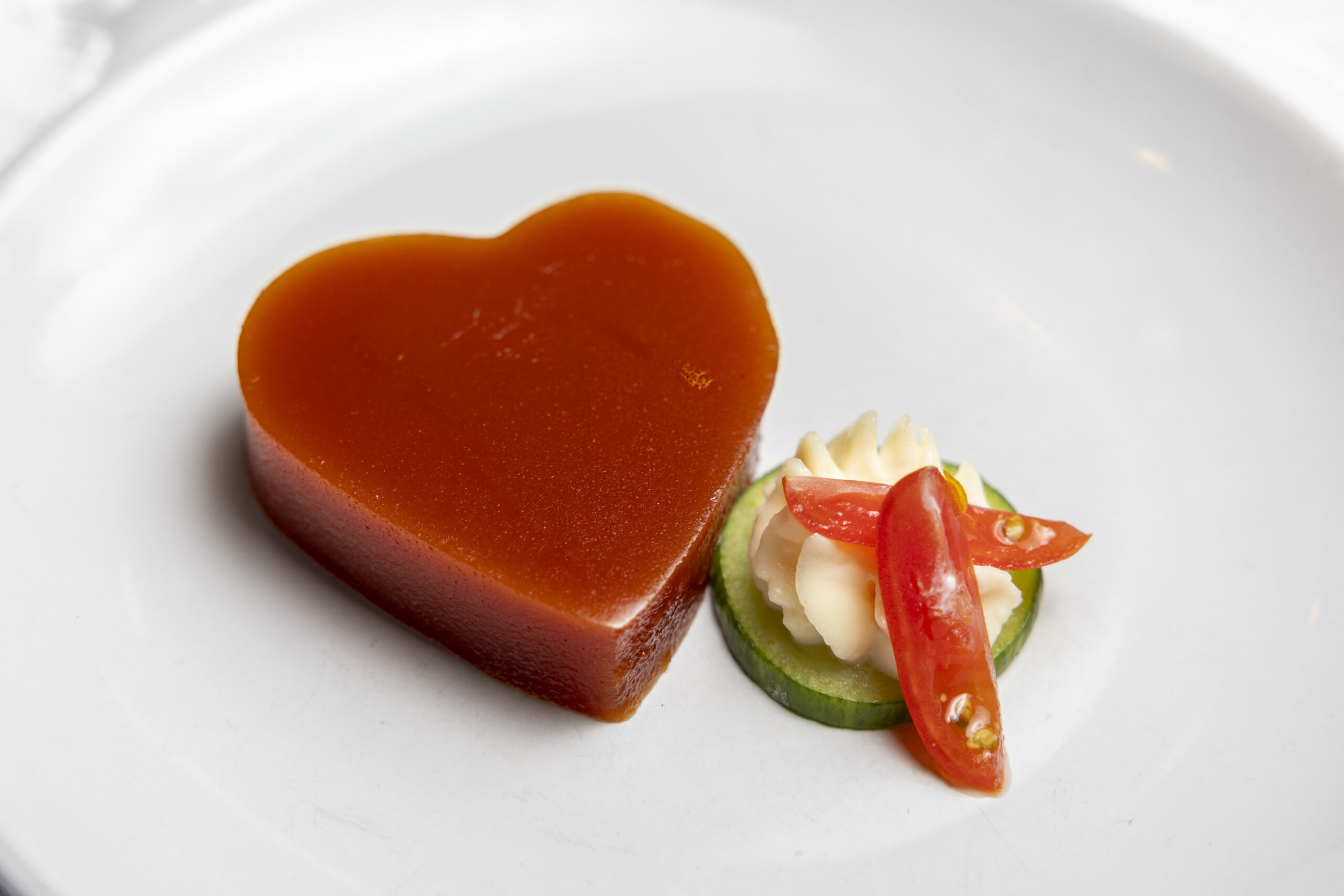
The specialty of the house is a curiously delicious tomato aspic, served with a tiny slice of cucumber and a dollop of Hellman’s mayo. No staff member was able to explain its origins, as it predated all of them. “It was always here,” said Waverly Heights’ white-toqued executive chef Michael F. Tiernan, 47. “And it is a fan favorite.”
Tomato aspic with mayo and cucumber.
When Tiernan interviewed for the position in 2017, he was expressly told to not touch the tomato aspic. He could change the shape — the kitchen’s cookie-cutter collection forms it into hearts, circles, and triangles — but he was not permitted to riff on the recipe, which consists of unflavored gelatin, tomato juice, vegetable juice, celery, onion, and olives. “It’s a very traditional, Old World-style recipe,” said CEO Tom Garvin.
Tiernan has worked at Waverly Heights for eight years, with a cumulative 18 years under his belt cooking at continuing-care facilities. In addition to managing Carlton Commons and changing its menu every three months, he cooks for a packed calendar of special events. On one of my visits, he was preparing for New Year’s Eve with poached lobster and filet mignon for a dinner that would be a prelude to dancing. The only major difference between a New Year’s party at Waverly Heights and a typical one: Their ball drops at 9 p.m. “We celebrate like we’re in Australia,” Garvin quipped.
Executive Chef Michael Tiernan at Waverly Heights in Gladwyne, Pa.
I dined at Carlton Commons twice, once as a guest of a friend’s parents who are residents and again after I contacted the life-plan community (the preferred term over retirement community, as I was informed by Garvin), who indulged my request for an interview with no small amount of incredulousness. But I loved my first meal there.
And I was deeply curious. A bookshelf in the community’s library is stacked with books written by residents, including volumes on psychology, cardiovascular disorders, and politics. Carlton Commons’ regular diners had careers as physicians, ambassadors, and scientists. How does one cook for residents like those of Waverly Heights?
Well, first, by changing the menu every 90 days, and then by packing it with global influences, frequently rendered into Italian-rooted comfort foods. And hosting lots of themed parties and events.
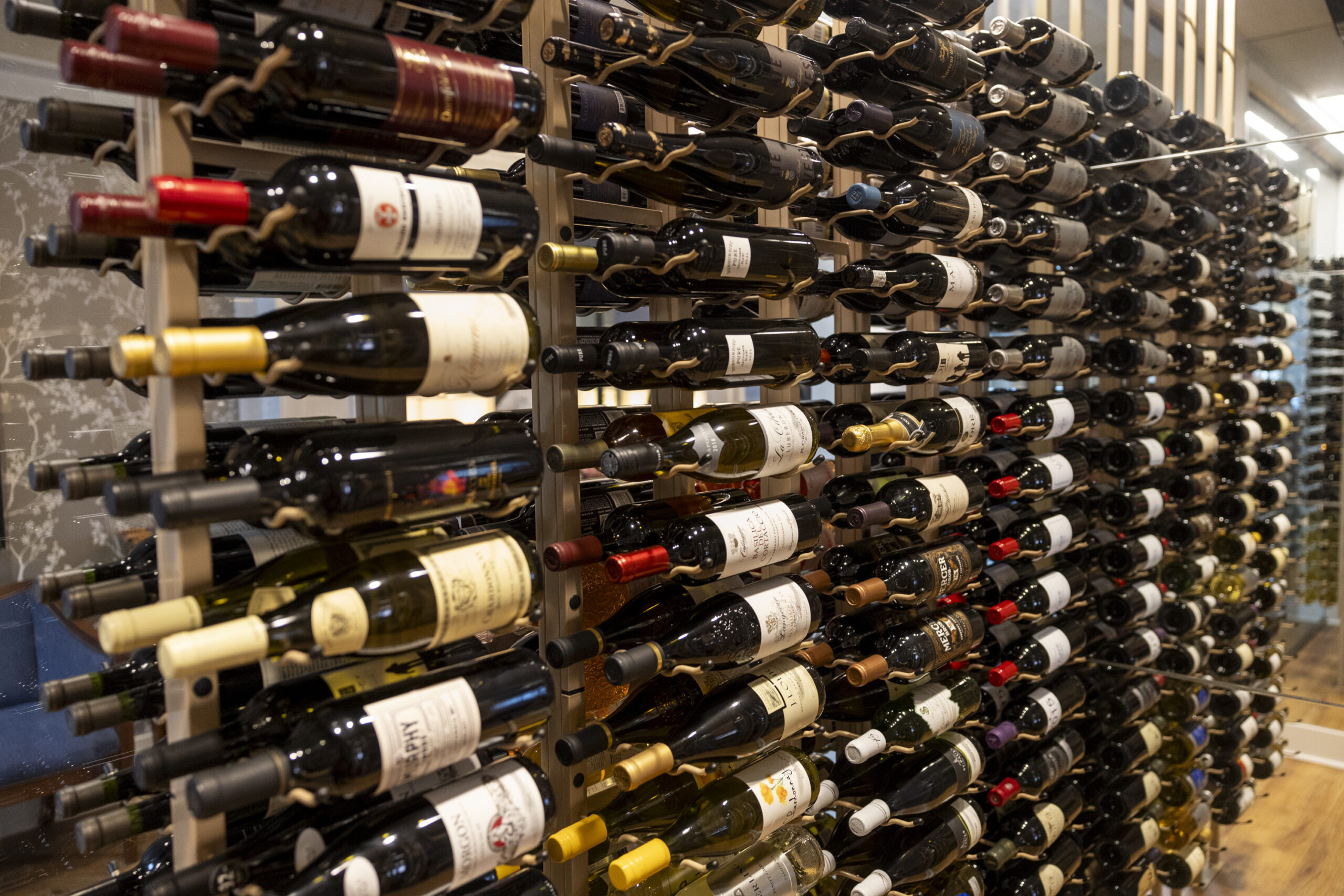
Wine cellar displayed near the entrance of the dining room at the Waverly Heights in Gladwyne, Pa., on Tuesday, Dec. 30, 2025.
The back of house is, by necessity, an institutional operation. Carlton Commons and Waverly Heights’ other dining rooms and cafes are executed in partnership with Unidine, the life-plan community’s version of Aramark, though Carlton Commons’ chef has significant creative control over the menus. The pasta that winds up on my plate tastes far less institutional at many places I’ve eaten, including the 100-layer lasagna at Borromini in Rittenhouse.
The prices for me, a single guest, are shockingly low. It’s $37.50 plus tax for a full meal, including an appetizer, soup or salad, entree, and dessert. No tipping is permitted. I am unable to pay more than $5.75 for a glass of chardonnay, and a nip of Maker’s Mark costs $4.75. (There’s no sommelier on staff, but there is a wine committee consisting of opinionated residents.)
My first dinner there had some slight hiccups. One of my dining companions ordered a steak “still pink inside” that arrived well done, but it was swiftly replaced by an appropriately cooked one. Another dining companion was startled to discover that her iced tea was presweetened, which took more than a few minutes to rectify.
The butternut squash risotto at Waverly Heights in Gladwyne, Pa., on Tuesday, Dec. 30, 2025.
My edamame dumplings swam in a too heavy-handed pour of bracingly salty soy sauce that would have worked better as a dipping sauce, but the dumplings themselves were delightful crispy golden pockets of gently mashed soybeans. My miso sea bass was pristinely roasted, flaking apart into succulent morsels with a gentle nudge.
Overall, the food is comforting, gently refined, and on trend in every which way, even to the surprise of Waverly Heights’ staff (down to the baked potatoes, available as a side every night). And the veryearly reservations — Carlton Commons seats diners between 5:30 and 7:15 p.m., and everyone is asleep by last call — reflect recent data that indicate diners are eating out earlier than ever. And I assure you, many of those residents listen to vinyl records, just like in Philly’s listening bars.
Dining at Carlton Commons reminded me that sometimes, the best meals aren’t found in the places you’d expect.
Third culture bakeries have seen a meteoric rise recently and are a significant part of the bakery boom fueled by the “little treat culture” that has swept cities from New York to London to Philly.
The linked story of Mexican conchas and Chinese bo lo bao predates “little treat culture” by hundreds of years.
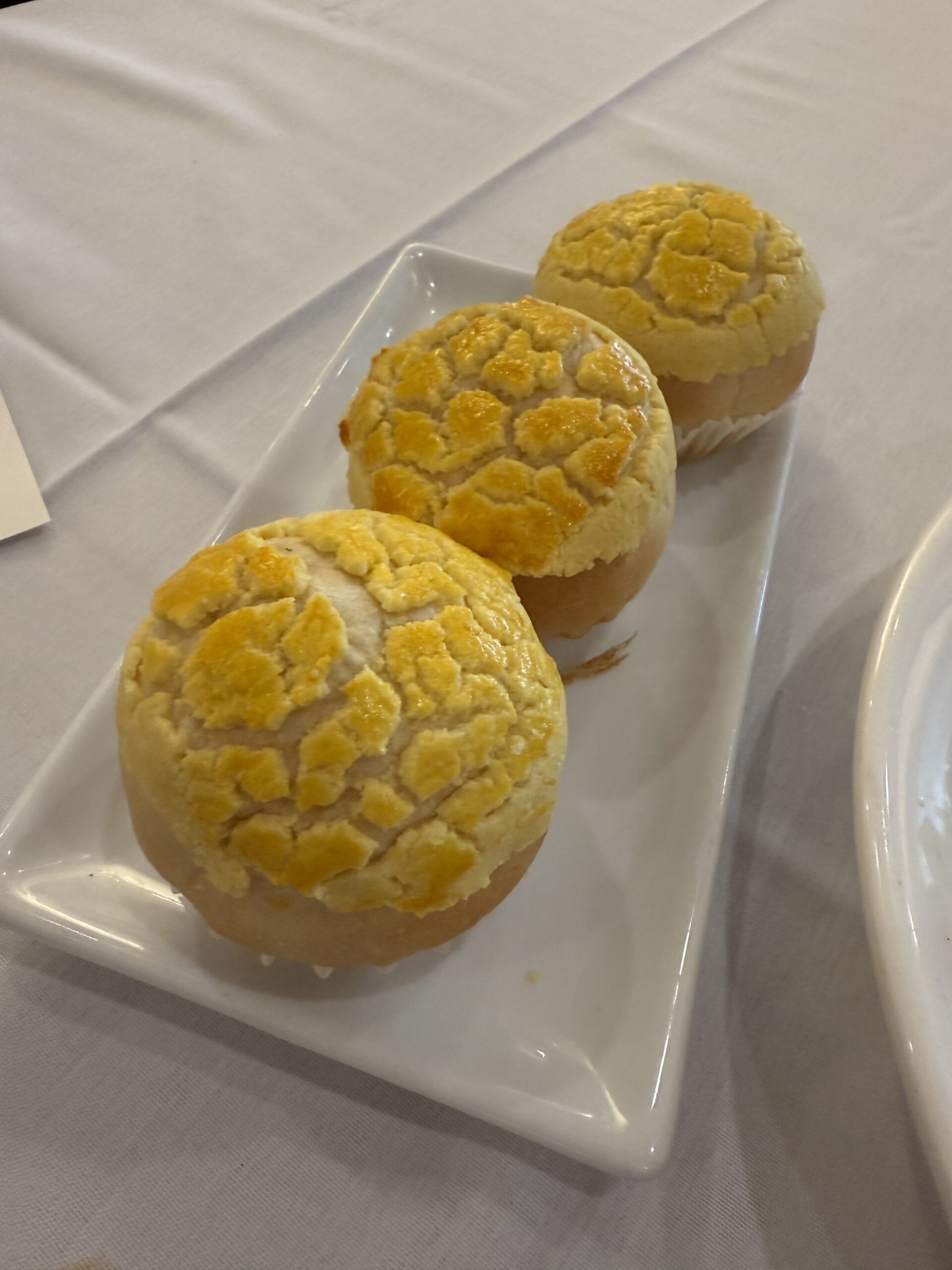
Crackled, cookie-like crusts sit on top of round, fluffy milk bread, sometimes filled with cream, jam, or custard, or char siu, a vibrant red Cantonese roast pork.
At dim sum and in Chinese bakeries, they’re the other mainstay classic, along with egg tarts. At first glance, the bo lo bao and the concha might not seem to have that much in common, aside from both being buns. Conchas are staples of the Mexican bakery, bo la bao are popular at dim sum houses.
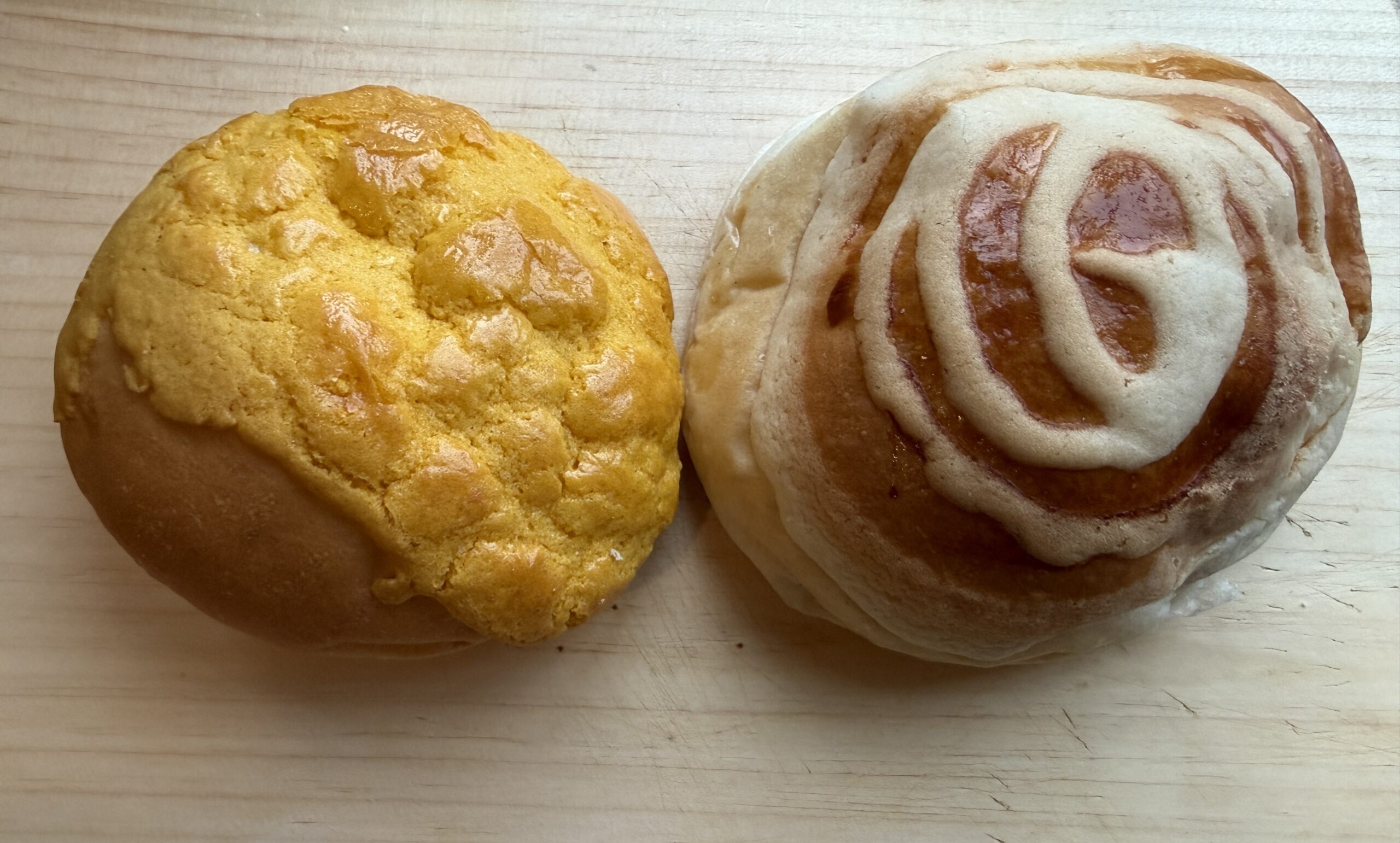
A side-by-side comparison of the “pineapple” bun and the Mexican bun at Bread Top House in Chinatown.
This popular item at East Asian-leaning bakeries, both new wave and old school, shares its origins with traditional Mexican bakeries. While in Spanish it’s the concha, named for its shell that resembles the outside of the seashell (though it also can be manipulated with crosshatching to look more like tic tac toe), in Chinese, it’s “bo lo bao,” which translates to “pineapple bun,” though the bun never contains any pineapple. Rather, its namesake gives the bun a way to describe its crusty, often cross-hatched texture.
It’s a narrative that has been trending on social media, as people of Chinese heritage dig into the origins of their favorite foods.
One theory on how these buns evolved in separate cultures is that after Chinese immigrants built railroads in Mexico in the early 1900s and returned to China, they brought conchas with them. Chinese bakeries are also heavily influenced by the Portuguese, who ruled Macao and also introduced egg tarts to Chinese cuisine.
There’s another bread narrative that has been simultaneously making waves on social media. British baker Richard Hart, co-owner and founder of the lauded Copenhagen bakery Hart Bageri and the Green Rhino bakery in Mexico City, insulted the entirety of Mexican bread culture on a podcast, dismissing it as nonexistent. His words incensed the internet. And you’ll find that by tasting through even the Mexican breads available in Philly, he’s quite incorrect.
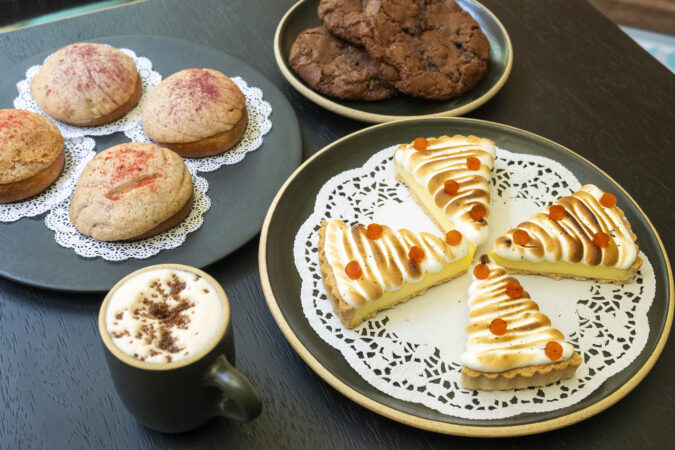
At Tequilas, an airy concha, flavored with hoja santa and filled with avocado whipped cream, is a coda to dinners of teeming molcajetes and similarly light tamales. At the adjacent La Jefa, you can pick up jam-filled concha, made by the same kitchen, to pair with your morning cappuccino. They’re the work of pastry chef Jessica Delgado, who comes from a baking family in Mexico City; the first taste of them nearly brought Tequilas founder David Suro to tears. “She said when she was a little kid, she helped her uncle deliver bread in big baskets and her pay was a concha,” he said.
In Mexico City, conchas abound. At traditional bakeries, grab a pair of tongs and heap them onto a plastic tray to bring them to a cashier. Repeat the process at any traditional bakery in Philly’s Chinatown, whether it’s Mayflower or Bread Top House (where you can get both bo lo bao and a “Mexican bun.” Dodo Bakery also makes them, though its diminutive footprint means you order from a counter).
In each case, a layer of fat (butter, shortening, or lard) is mixed with flour and sugar, and placed over a bun prior to baking. The Chinese versions are also brushed with egg yolk for a lacquered finish. The coating splits apart in the oven, sometimes eased along by delicate cuts made on it, to create the buns’ unique crusts.
The “pineapple” buns at Grand Palace Restaurant.
Some of Philly’s best versions are found at dim sum parlors like Grand Palace on Washington Ave and China Gourmet in Northeast. Go easy on the siu mai and congee during dim sum so you can save some room for bo lo bao.
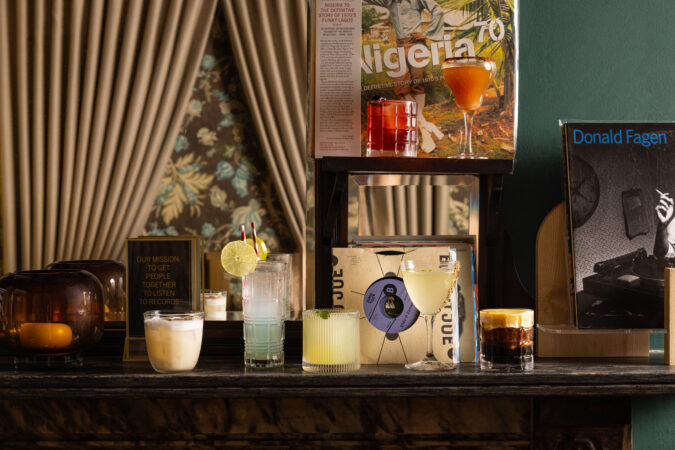
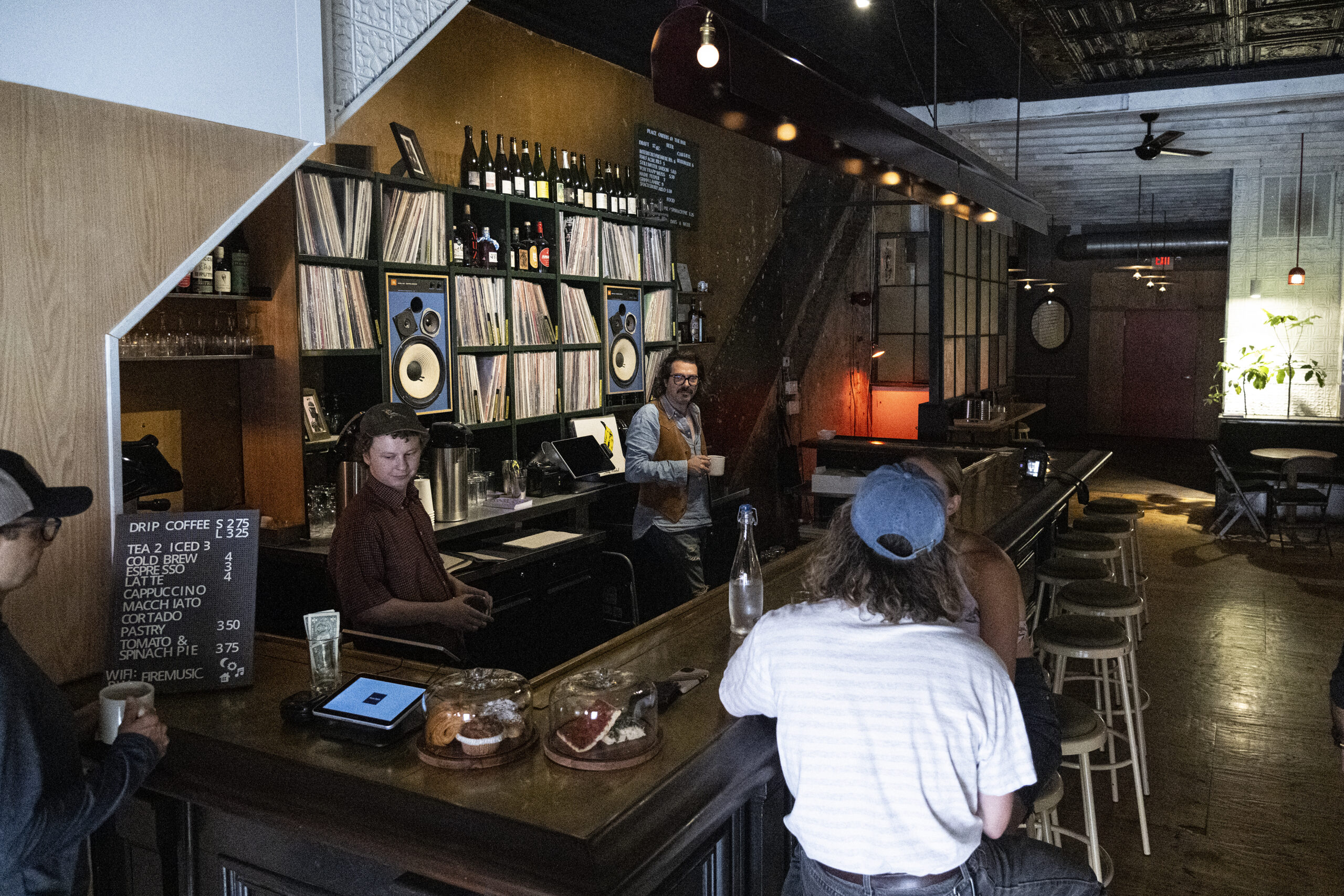
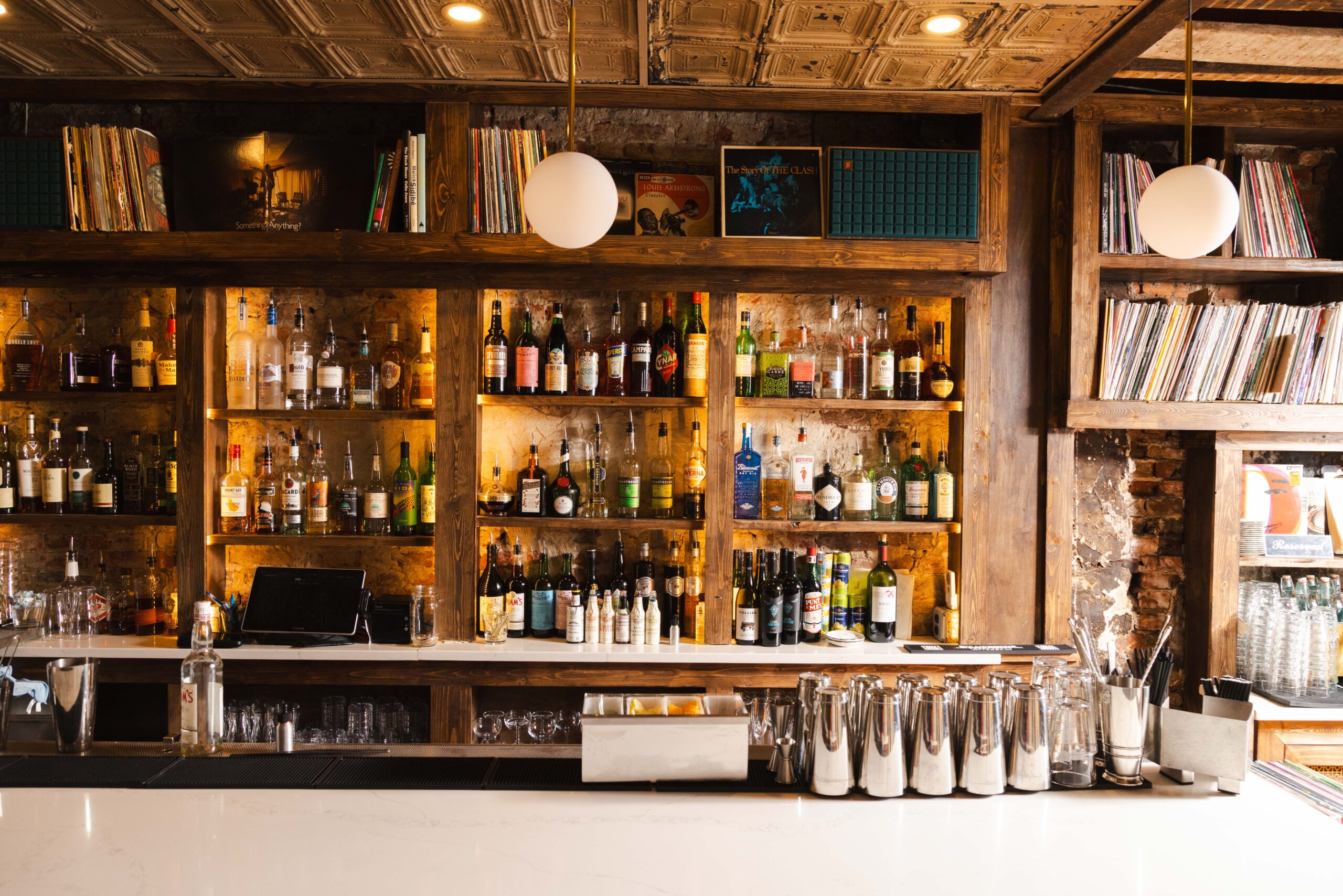
A curious thing is happening behind bars: The bottles of liquors and liqueurs are disappearing, stored somewhere unseen. Instead, the backbar shelves are stacked with vinyl records. And the sound systems are also very, very good.
In the last few years, as the speakeasy trend has waned, listening bars have popped up all over, including in Philly. The perpetually full 48 Record Bar, above Old City standby Sassafras, boasts an “ultra-high-fidelity audiophile vinyl sound system.” Solar Myth, on South Broad Street, might be one of the coolest places to grab a drink — whether you’re looking for coffee or wine — and discover music you might never have otherwise.
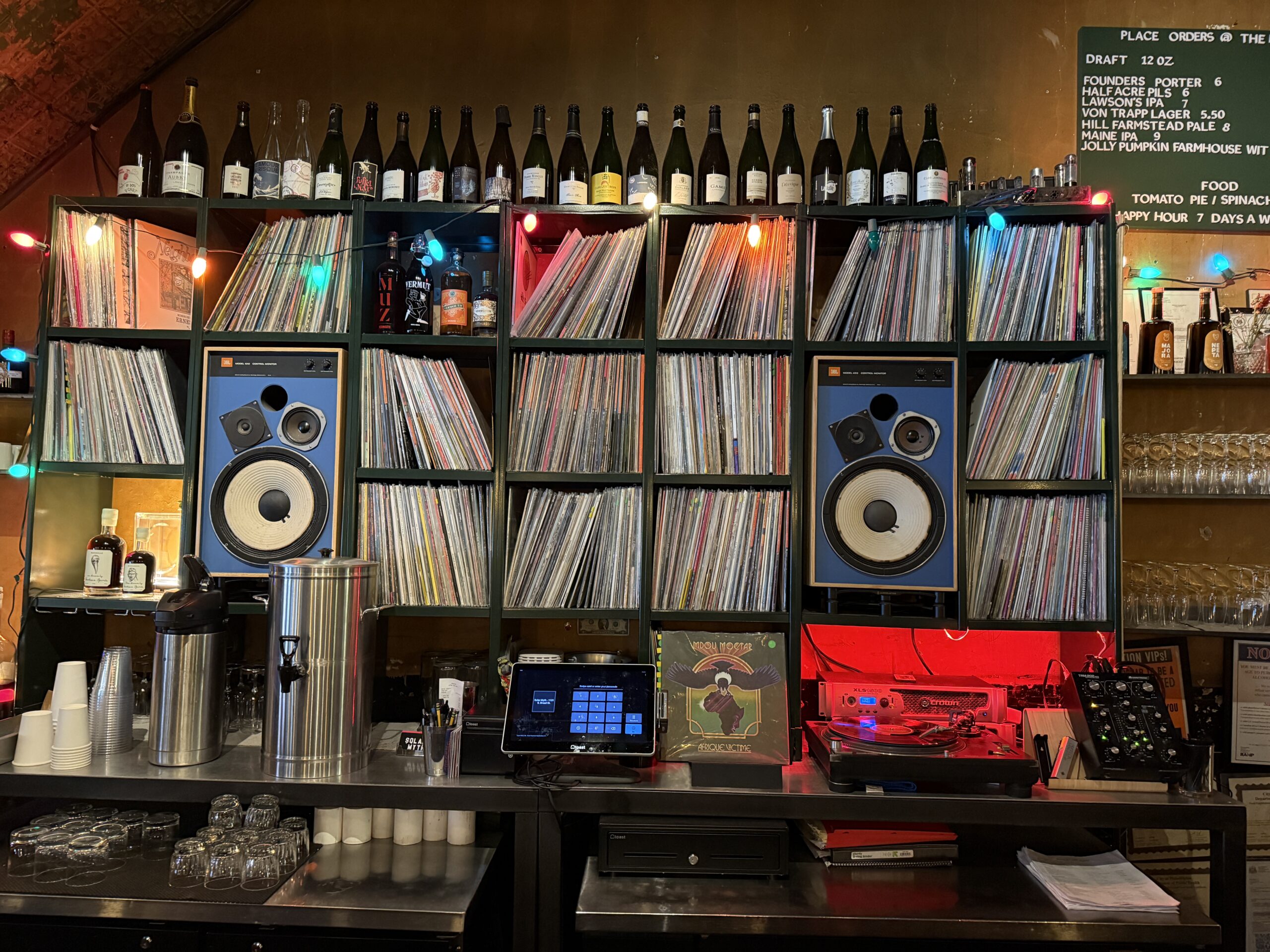
Behind the bar at Solar Myth.
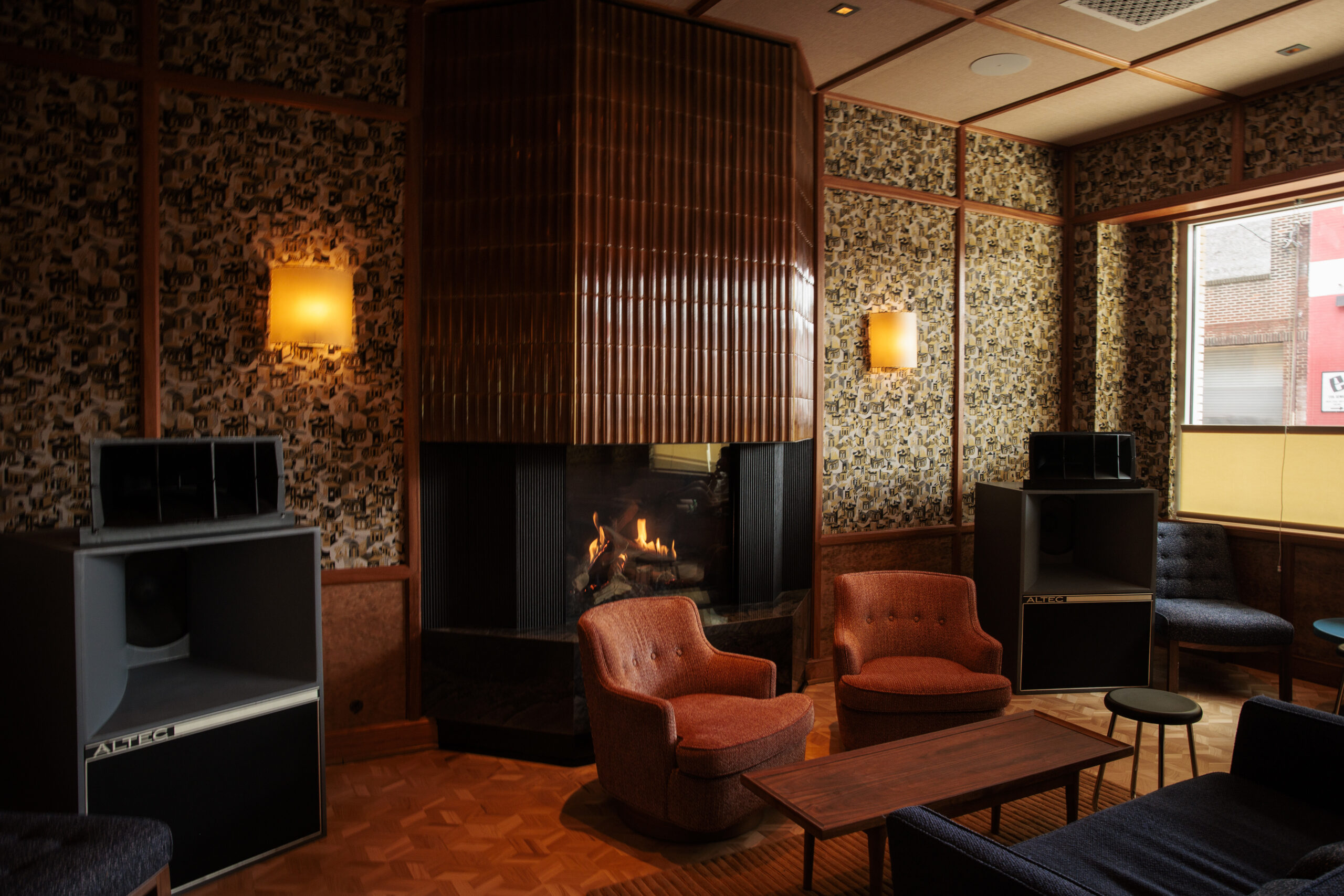
Percy, which opened in May, has a listening lounge where you can sip on their house-made wines and spirits in what looks like the set of That ’70s Show. When a DJ isn’t spinning, the staff plays vintage reggae, punk, and calypso records — including ones that co-owner Seth Kligerman’s dad collected in the ’70s and ’80s, ranging from Jimmy Cliff to The Clash.
“The first thing I did when we got our listening room speakers hooked up … I blasted the New York Dolls, my dad’s favorite band,” said Kligerman. (Percy’s speakers — four original Altec Lansing A7 Voice of the Theatre — are also from the ’70s.)
The listening room at Percy on July 31, 2025, in Philadelphia.
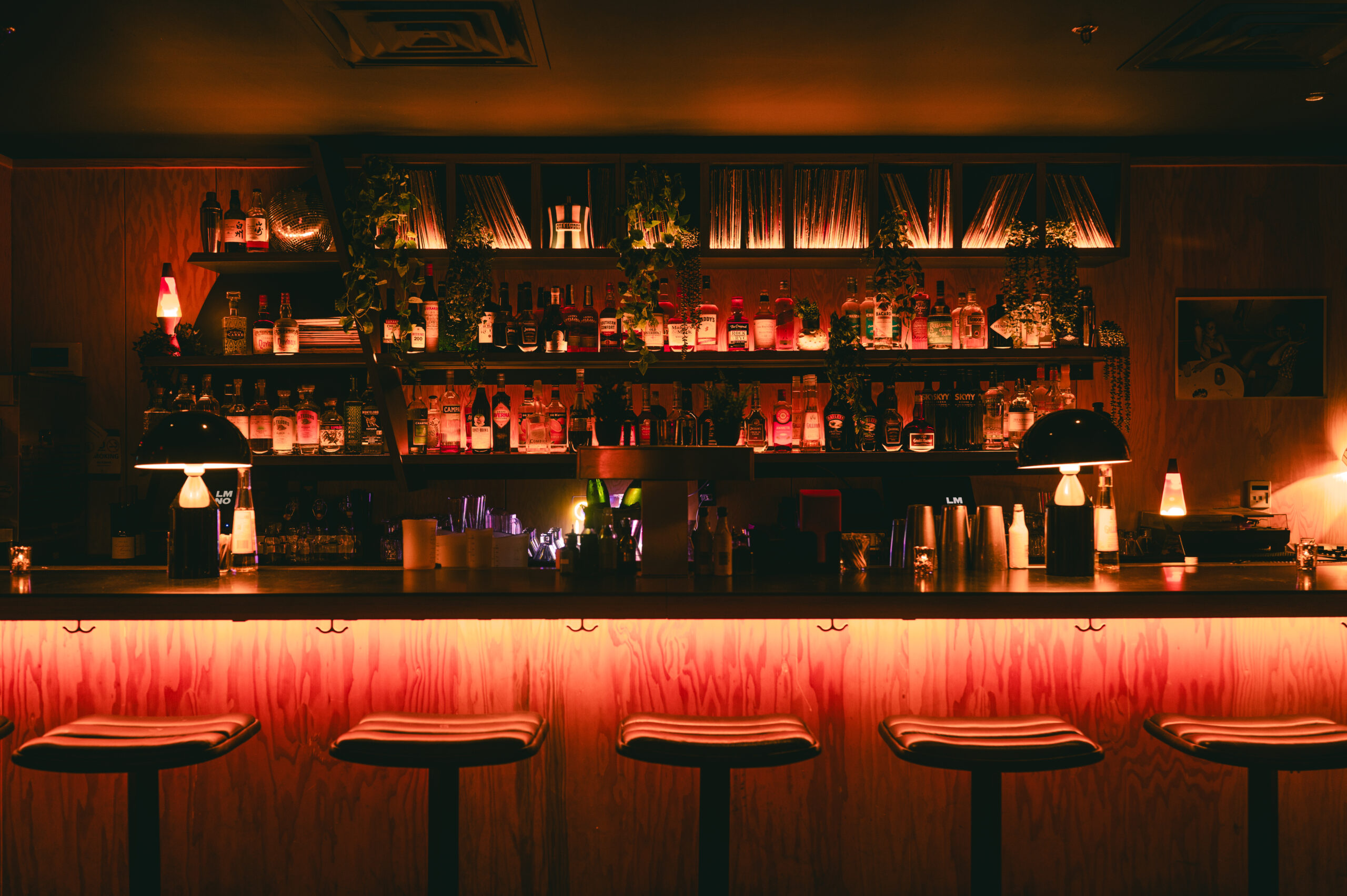
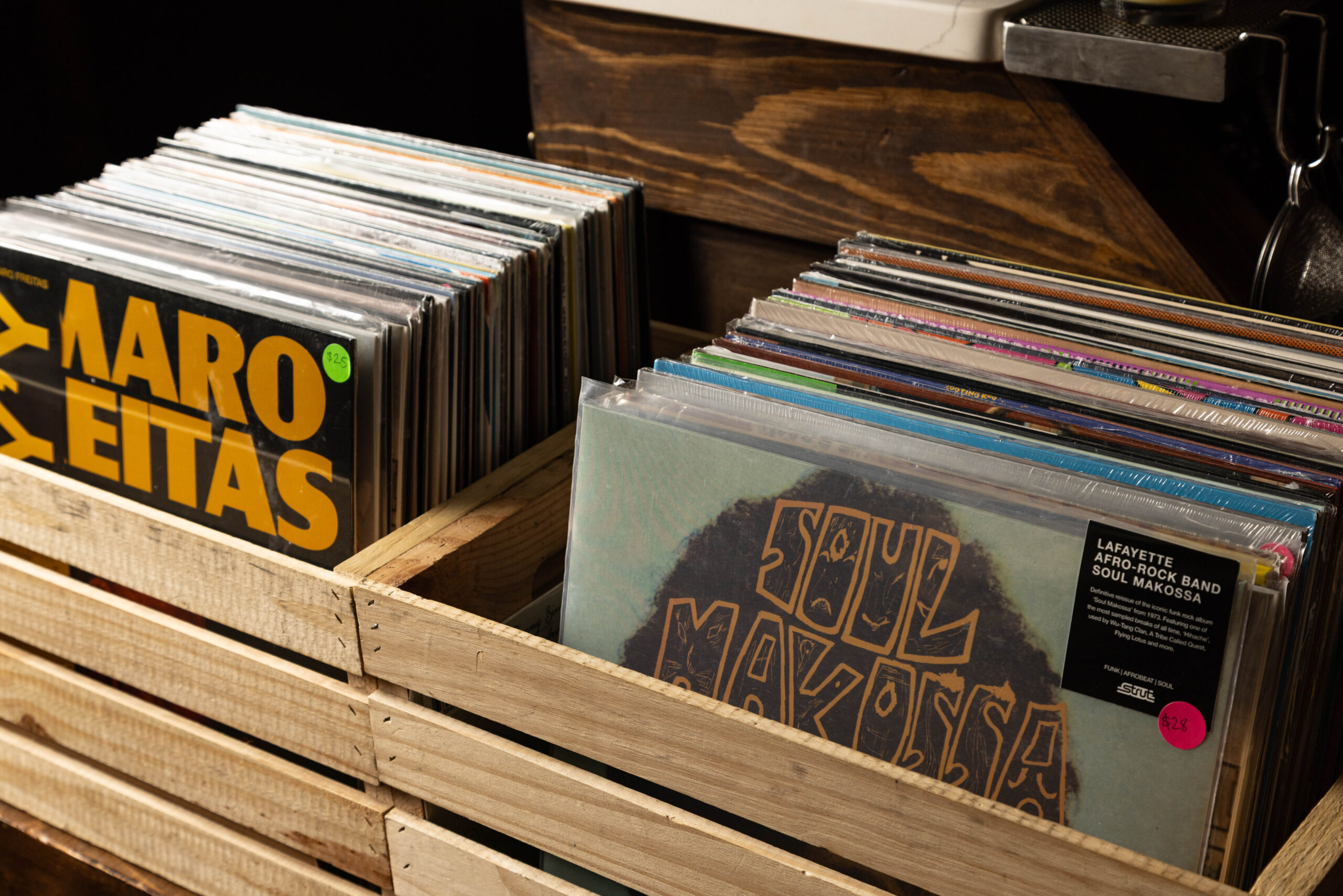
Stephen Starr’s LMNO has a listening lounge outfitted with a hi-fi sound system and record collection spanning soul, funk, disco, and Latin genres. “The focus is on immersive room sound rather than headphones — so the music feels shared, not isolated,” said Kayla Hagar, LMNO’s general manager. Programming ranges from DJ-led nights, vinyl-focused sessions, and ambient background listening. Once a week, at LMNO’s “Off the Walls” series, guests are encouraged to browse their vinyl wall and select records to be played. It draws Fishtown’s “younger creative crowd, an art and music-oriented demographic — audiophiles, record-collectors, and music lovers,” said Hagar. “Not necessarily a heavy mainstream dance-club crowd, but more niche, design-forward, scene-aware visitors.”
The listening lounge at Stephen Starr’s LMNO.
In 2024, after Milkcrate Cafe in West Philly and Fishtown called off vinyl nights, it seemed like the budding listening room boom may have been a scratch. But in the year and a half since, the concept has spread all over the country.
Listening rooms are seemingly everywhere — in New York, Chicago, Portland, and beyond. They integrate music into drinking experiences, often weaving in Japanese influences across menus. In L.A., chef Sean Brock, famous for specializing in Southern foodways, opened Darling, a hi-fi bar inspired by Japanese jazz kissas, orcafes where listening to records is central to the experience. In Austin, the Equipment Room serves record-inspired cocktail omakases, blurring the line between DJ and bartender.
At Press Club, a “record bar” in Washington, D.C., I snacked on chicken karaage and sipped an ume- and nori-infused shochu cocktail made by the same staffer who was spinning tracks. Press Club managing partner Will Patton listens to songs repeatedly to look for lyrical themes, and develops drink flavors according to rhythm and beat. (Think funky rum for a funky song, or melancholy music translating to cocktails with long, bitter finishes.) A rotating cocktail omakase menu, featuring multiple drinks paired with bites, is based on albums, most recently by Oasis and Bad Bunny.
Listening bars are starting to proliferate the way speakeasy-style cocktail bars did in the 2010s — popularizing hidden entrances and an Art Deco aesthetic so successfully that the speakeasy concept has been adapted to Italian restaurants and cookie stores.
At the listening bars, thoughtful, elevated beverages still reign, but bars are giving more and more physical space over to vinyl collections. They’re also hosting events throughout the day, often with visiting DJs.
Solar Myth opened in November 2022 in the former Boot & Saddle. The bar features not liquor bottles but a collection of records organized by vibe.
An Eater articlerecently heralded Philly’s listening lounges as the “antidote to the loneliness.” They’re community-oriented in the sense that you commune with others. (Just don’t talk too loud.)
The community-mindedness is palpable at Solar Myth, which opened in November 2022 and serves many purposes. Housed in the former Boot & Saddle, it’s still a live music venue, but it’s also a bottle shop and cafe serving pastries, tomato pie from Cacia’s Bakery, and Rival Brothers’ coffee. They have a staggering amaro list, but you wouldn’t know it by looking at the bar, which features a collection of records — organized by vibe, from chill-out to Willie Nelson, with extensive collections of Ethio-jazz and electronic krautrock. They play the music of many small, avant-garde artists. (They also sometimes employ them:A member from the Philly-based band Knifeplay works at Solar Myth. “I feel so proud playing their record,” said barista Rachel Byrd.)
Part of the record collection at 48 Record Bar.
48 Record Bar’s bar shelves feature a collection of about 300 records. At 35 seats, it’s small, with a living room vibe. Up a winding staircase from Sassafras, the space is draped in dove-gray curtains; sound panels are upholstered in the same fabric. The bar’s host doubles as a DJ, who spun Sade and the Temptations on a recent evening. “We call that the record-butler shift,” said 48 Record Bar creative director Joey Sweeney.
Japanese ingredients are sprinkled all over the cocktail menu: yuzu, kombu, genmaicha, matcha, and of course, Japanese whiskies.
The bar at 48 Record Bar features both bottles and records.
But drinks are only part of the experience, said Sweeney. “All the elements need to sing together.” The bar also hosts tiny-desk-style live music shows, author events, and deep listening events that start at 10 a.m. on some Sundays with coffee from Thank You Thank You.
But mostly the bar’s soundtrack is whatever records are playing. Seven years ago, Sweeney went to London and visited Japanese listening bars there. He and Sassafras owner Donal McCoy opened 48 Record Bar in December 2023.
“We want to honor the tradition of these Japanese listening bars without being mawkish about it, and not doing a cosplay.”
That wouldn’t suit Philadelphia. The night I went in, I could still hold a conversation at the bar over a mock milk punch. Try that in Japan and“they will shush you,” Sweeney said. “We can’t shush you. This is Philly.”