It should go without saying, perhaps, but city officials this week are saying it anyway:
Just because temperatures have dipped into the teens (or lower) in recent days, doesn’t mean it’s safe to walk, skate, or drive across the area’s frozen lakes, rivers, and waterways.
“We’re getting reports of people walking and ice skating on Philadelphia’s rivers,” the Philadelphia Police Department said in a post to X on Sunday. “This is illegal for a reason. River ice is not as thick as it looks — moving water underneath weakens it and conditions can change fast. Please stay safe and stay off the ice!”
🚨 Safety Alert 🚨 We’re getting reports of people walking and ice skating on Philadelphia’s rivers. This is illegal for a reason. River ice is not as thick as it looks – moving water underneath weakens it and conditions can change fast. Please stay safe and stay off the ice!
— Philadelphia Police Department (@PhillyPolice) February 1, 2026
Though the Philadelphia Police said Monday there had been no rescues at this point, the department has fielded more than a dozen calls already, according to Capt. Anthony LaSalle of the city’s police Marine Unit.
LaSalle said a “significant” portion of the Schuylkill was currently frozen over, something that hasn’t happened in a decade.
“In some areas, it could be thicker than other areas, and you’ve got to realize that water is flowing underneath it,” LaSalle said. “You can have six inches in some areas and one inch in another area. And if there’s debris, that makes the ice even weaker.”
It’s a sentiment echoed by City Hall, which this week also urged residents to stay off all frozen waterways for the safety of both themselves and first responders.
“Police and medical staff have been advising residents and visitors to stay off all frozen rivers, lakes and waterways,” a city spokesperson said in an email. “Ice conditions are unpredictable, and walking, skating, or driving on frozen surfaces is extremely dangerous.
“Falling through ice can become fatal within minutes and places both the public and first responders at serious risk. For everyone’s safety, the City is asking everyone to stay on solid ground and avoid all frozen waterways.”
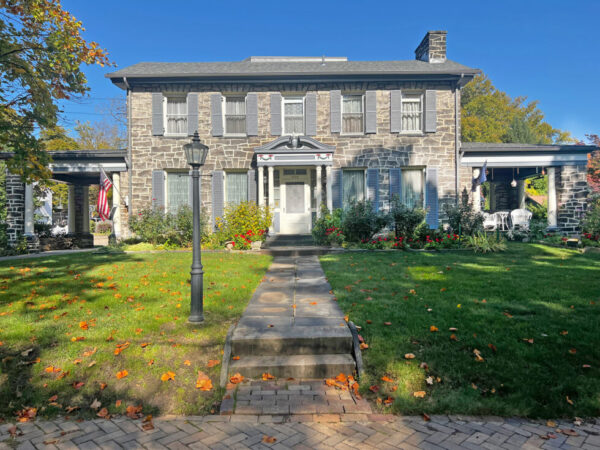
The property listing in Beaver, Pa., extolled the countless charms of the Colonial Revival. There was the “grand foyer with a handmade railing,” the built-in cabinets and “beautiful” hardwood floors, and the covered porch offering “stunning” views of the nearby Ohio River.
“This home adorns many wonderful features,” the listing read, “and outstanding details throughout.”
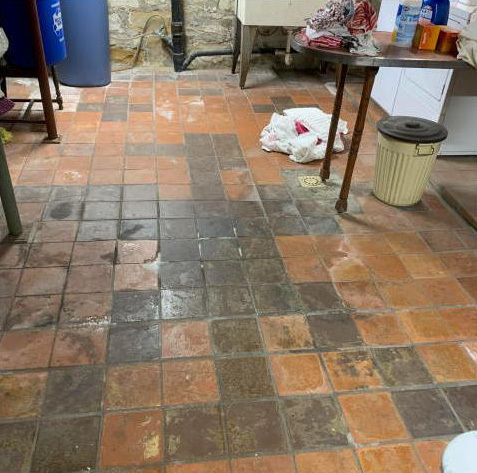
One detail, however, was notably absent from the listing: the sizable swastika arranged in permanent tile on the basement floor.
That omission has become the source of an unusual legal battle, a disturbing discovery that has weaved its way through the state court system and raised questions — legal and otherwise — about what represents a “material defect” in a property.
“I certainly have not seen [this] particular fact-pattern come up before,” said Hank Lerner, chief legal officer for the Pennsylvania Association of Realtors. “It’s a pretty specific one.”
When Daniel and Lynn Rae Wentworth closed on the five-bedroom home in 2023, for around $550,000, it was easy to see the draw. Anchored on a spacious lot, just a block from the river, the home was idyllic by just about any measure.
But shortly after moving in, the Wentworths were clearing out the basement when they discovered the grim iconography in tile — a swastika, along with, what appeared to the couple, to be an image of a Nazi eagle. (According to the Wentworths, the tiled images had been covered by rugs during the inspection of the home.)
After Daniel and Lynn Rae Wentworth purchased a home in Beaver, Pa., they discovered in the basement floor what they believed to be a tiled image of a Nazi eagle (pictured above) and a swastika.
“Mortified,” as they would later say, the Wentworths filed a complaint in Beaver County civil court, alleging the previous owner had violated the Pennsylvania Real Estate Seller Disclosure Law, and seeking monetary damages.
The Wentworths argued they would never have bought the home had they known about the tiled floor. Nor, they said, could they be expected to live in the home — or sell it — given its condition. In their complaint, the couple estimated it would cost roughly $30,000 to replace the floor.
“This … is just not something you’d ever expect to have to deal with,” said Daniel Stoner, an attorney for the Wentworths.
“They could have actual economic harm from the potential reputational damage if people thought they put it in themselves or were aware of it.”
The seller — an 85-year-old German immigrant who’d owned the home for nearly a half-century — did not share this view.
In response to the Wentworths’ suit, Albert A. Torrence, an attorney for the seller, argued in a court filing that “purely psychological stigmas do not constitute material defects of property … and a seller has no duty to disclose them.”
What’s more, he argued, the Wentworths had failed to identify any untruthful or inaccurate statements he’d made regarding the property.
In an interview, Torrence denied that the home’s previous owner was a Nazi supporter. Forty years ago, he said, the previous owner had been reading a book about the swastika symbol being co-opted by Germany’s Nazi Party; angry, he decided to include the symbol in a basement renovation project, placed a rug over it not long after, and forgot about it.
“And, of course, it fits into the narrative, ‘A Nazi lived in this house,’” said Torrence. “It’s just not the narrative that people want it to be.”
Regardless, the case raised an interesting question: When it comes to property sales, what, exactly, does rise to the level of a material defect worthy of disclosure?
Pennsylvania law requires sellers to disclose a laundry list of potential problems with a home — termites, structural or heating problems, sewage issues. “[Any] problem with a residential real property or any portion of it that would have a significant adverse impact on the value of the property or that involves an unreasonable risk to people on the property.”
Absent from that list? Hate symbols that had been permanently embedded.
In court filings, the previous owner cited an earlier case that had advanced all the way to the Pennsylvania Supreme Court.
In 2007, after a California resident purchased a Delaware County home, she learned from a neighbor that the property had been the site of a grisly — and highly publicized — murder-suicide. The new owner, Janet S. Milliken, sued.
In that case, the state’s Supreme Court ruled that the home’s unfortunate history did not represent a material defect, adding that it would be impossible to quantify the psychological impact of various events that might have occurred on a given property.
“Does a bloodless death by poisoning or overdose create a less significant ‘defect’ than a bloody one from a stabbing or shooting?” the court wrote. “How would one treat other violent crimes such as rape, assault, home invasion, or child abuse? What if the killings were elsewhere, but the sadistic serial killer lived there? What if satanic rituals were performed in the house?”
Leaning heavily upon the Supreme Court’s decision in the Milliken case, the Beaver County trial court dismissed the Wentworths’ complaint.
Unsatisfied with the ruling, the Wentworths appealed.
In a decision filed late last year, three Superior Court judges affirmed the initial ruling that the tiled imagery was not required to be disclosed in accordance with the state’s disclosure law.
“A basement that floods, a roof that leaks, beams that were damaged by termites … these are the conditions our legislature requires sellers to disclose if they are known,” the judges wrote in an 18-page ruling filed Nov. 12.
“We are not dismissive of the Wentworths’ outrage, nor their concern that the existence of the images could taint them as Nazi supporters,” the decision went on. “With this lawsuit, however, they have made a public record to counter any supposition in that regard.”
Though the couple could’ve appealed to the Pennsylvania Supreme Court, Stoner, their attorney, said this week that they had decided against doing so, citing the low likelihood that the case would’ve been heard by the court.
“I’ve only had one case in my entire career that they’ve actually taken up,” Stoner said. “So the chances of them even getting it heard weren’t the greatest.”
As for the home, Lynn Rae Wentworth told the Pittsburgh Jewish Chronicle recently that she and her husband planned to remove the tiling once they were sure the legal wrangling had concluded.
She said they were also considering approaching local legislators in hopes of changing the law, making hate symbols material defects that necessitated disclosure.
As she told the publication, “I don’t want anyone to have to go through this again.”
What’s changed for chef Nicholas Bazik in the weeks since his Society Hill restaurant, Provenance, earned a coveted star from the Michelin Guide?
Everything.
And nothing.
“There’s this strange duality to it,” says Bazik. “It’s like a complete life-changing event. … But at the same time, the day-to-day is exactly the same. It’s just a little more amplified and there’s more things to do.”
Bazik’s Provenance was one of three local restaurants to be awarded a Michelin star in November, and already, the accolade has brought lots of things: National acclaim, a rush on reservations, and a plaque (yet to be delivered) that will be displayed inside the restaurant, which opened in 2024.
Then there’s the pressure that comes with earning the culinary world’s highest honor.
“The restaurant industry in and of itself is unique, because at every step, every milestone that you get, it just means that there’s more work to do — and more pressure,” Bazik says. “Having a Michelin star means that everyone coming through the door is seeing you as that thing, so there’s no time to let [up].”
The one exception might be Sundays, when the restaurant is closed and Bazik can finally take a breath. It’s a day that, for him, revolves almost entirely around family — though food, not surprisingly, also plays a supporting role.
This interview has been lightly edited for clarity.
7:30 a.m.
I normally wake up around 7:30, which is around the time my 4-year-old son wakes up.
In my previous job, prior to me going on paternity leave, the owner gave me a gift certificate to a coffee company, saying, “You should get yourself an espresso machine because you’re going to need it.” That was one of the best, most thoughtful gifts I’ve received from an employer. It’s a Jura espresso/coffee machine, and I use that everyday.
Then we’re going to Sulimay’s. It’s as close to a perfect diner as it gets. The food is great, the service is great, the space is unique to Philadelphia. Any breakfast spot, I always get the same thing which is two eggs over easy, bacon, hash browns, and rye toast.
10 a.m.
I’ll spend some time at the farmers market at Headhouse Square, which is largely how I like to shape my menus and figure out exactly what’s seasonal, what’s on offer, what’s relevant, what’s good. My family’s with me, and I’ll do shopping there for the restaurant and I’ll also do some shopping for home.
My son and my wife will go to Three Bears Park, which is around the corner from us, and I’ll go meet up with them there, and we’ll play and then go back home for a light lunch with some of the things that we got at the market.
1 p.m.
After lunch, we’ll go to Adventure Aquarium in Camden. My son is just obsessed with everything aquatic. He has an encyclopedic knowledge of sharks and fish and whales. We love going there — it doesn’t matter if we’re looking at the same fish every single time, he loves it. So we’ll go there for an hour, and make our next move, which is somewhere outdoors.
2-4 p.m.
Ideally, we’d make two stops. We’d go to Lemon Hill, which is where my wife and I got married, and then go to Wissahickon Park — so essentially try to spend the whole afternoon in a green space.
To be able to travel from Center City and 15 minutes later be in a green, open space with trees and wildlife, it’s incredible.
5 p.m.
Because our son is 4 now, he has the full capability of selecting what he wants to eat for dinner, so we leave it up to him. And we essentially go to one of two places: Kim’s Restaurant in North Philly, which is the oldest charcoal grilled Korean barbecue spot. The other one is Mr. Joe’s restaurant, which is my son’s name for Picnic in Fishtown.
For our purposes, Picnic is the perfect restaurant. It has chicken, french fries (my son’s favorite food group), oysters, and green salad. We get the same thing every single time, and we go enough that we should have a designated table.
6 p.m.
It’s time to go home and start the bedtime routine. We do shampoo time, and it’s the only time that my son watches any sort of TV. We’ll watch 20 or 30 minutes of something — normally a deep-sea documentary or a solar system documentary.
Then from 9-10 p.m., my wife and I get to talk about what’s happening that week — what’s happening with him at school, what events are coming up that week, giving her a proper heads up on what’s happening at work, because everything happens so fast that it’s sometimes hard to keep up.
And ideally, it’s in bed by 10 p.m., and then it’s start the week the next day.
It’s hard to go wrong with Denzel Washington, Tom Hanks, and the City of Philadelphia — and the Library of Congress apparently agrees.
Philadelphia, the Oscar-winning 1993 legal drama that helped bring America’s AIDS crisis into mainstream media, was among 25 films selected Thursday for inclusion in the Library’s National Film Registry for Preservation, based on “cultural, historic or aesthetic importance.”
“When we preserve films, we preserve American culture for generations to come,” said acting Librarian of Congress Robert R. Newlen, in a statement announcing the selections. “These selections for the National Film Registry show us that films are instrumental in capturing important parts of our nation’s story.”
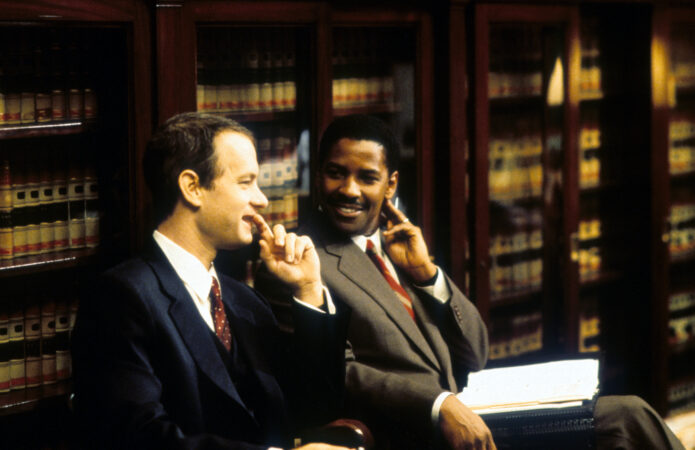
Philadelphia — which The Inquirer named the fourth on its list of best Philly movie of all-time — features Hanks as a law partner fired after it becomes known he has AIDS, with Washington as the attorney hired to fight the termination.
In addition to Philadelphia, Ten Nights in a Barroom — a 1926 film produced by the Colored Players Film Corporation of Philadelphia — was also among the selections.
A silent film adapted from an 1854 Timothy Shay Arthur novel and subsequent play, the film featured an all-Black cast and represents one of only two surviving films produced by the company.
Philadelphia and Ten Nights in a Barroom are among several Philly-tied films to be honored by the Library of Congress throughout the years, joining the 1976 Sylvester Stallone film Rocky and 1940’s The Philadelphia Story starring Cary Grant and Katharine Hepburn.
Though the 25 films announced on Thursday span more than a century of filmmaking, several contemporary films earned recognition; 11 of the 25 films selected this year were released in the 1990s or later.That includes seven films released after 2000, including Frida, The Hours, The Incredibles, Christopher Nolan’s Inception, and Wes Anderson’s The Grand Budapest Hotel.
Here’s a complete list of the 25 films selected for the 2025 National Film Registry:
Just in time for what figures to be a monumental year for local tourism, the renowned Four Seasons Hotel Philadelphia at Comcast Center has introduced a new luxury floor dedicated to what it calls personalized, “residential-style” living.
The crown jewel? A massive two-bedroom penthouse that offers countless amenities, sweeping city views, and a nightly price tag roughly equivalent to that of a new car.
A booking agent on Tuesday said the penthouse suite — which spans some 4,000 square feet and features a sizable outdoor terrace — is currently going for around $25,000 per night (plus tax).
Among the amenities included in the Four Seasons Hotel Philadelphia’s new Sky Garden floor is artwork curated by the firm Hanabi: Art and Artists.
As for what you get for that price: Guests have access to menus curated by Vernick Fish and Jean-Georges, the floor’s treatment and wellness room, and an art collection curated by the firm Hanabi: Art and Artists.
The penthouse is part of a new floor — located on the building’s 45th floor and dubbed “Sky Garden” — that features eight separate accommodations, including four guest rooms, two one-bedroom suites, and a two-bedroom suite, according to the hotel, along with the two-bedroom penthouse.
In a recent Instagram post, the hotel described the new floor as having “lush terraces and sweeping city views” that “create a true garden in the sky” — and indeed, the views included in marketing photos do appear to be sweeping.
Views from the Four Seasons Hotel Philadelphia’s new Sky Garden floor.
“This residential-style floor privileges calm over spectacle and intimacy over scale, inviting guests to experience luxury in a way that feels personal and unforced,” according to a press release announcing the new offerings.
In the off-chance the penthouse proves cost-prohibitive, the new Sky Garden level also offers other, not-quite-as-extravagant options.
The Sky Terrace Suite typically goes for around $10,000 per night, according to a booking agent, while the Sky Garden Suite goes for around $3,500, and the additional rooms go for around $1,300 to $1,400 a night.
The long-lost demo tape had always held a certain mythos in Charlotte Astor’s imagination.
For years, the Cherry Hill teen had heard stories about it, recorded about 30 years ago by her mother’s very loud, very short-lived, teenage hardcore band, Seed.
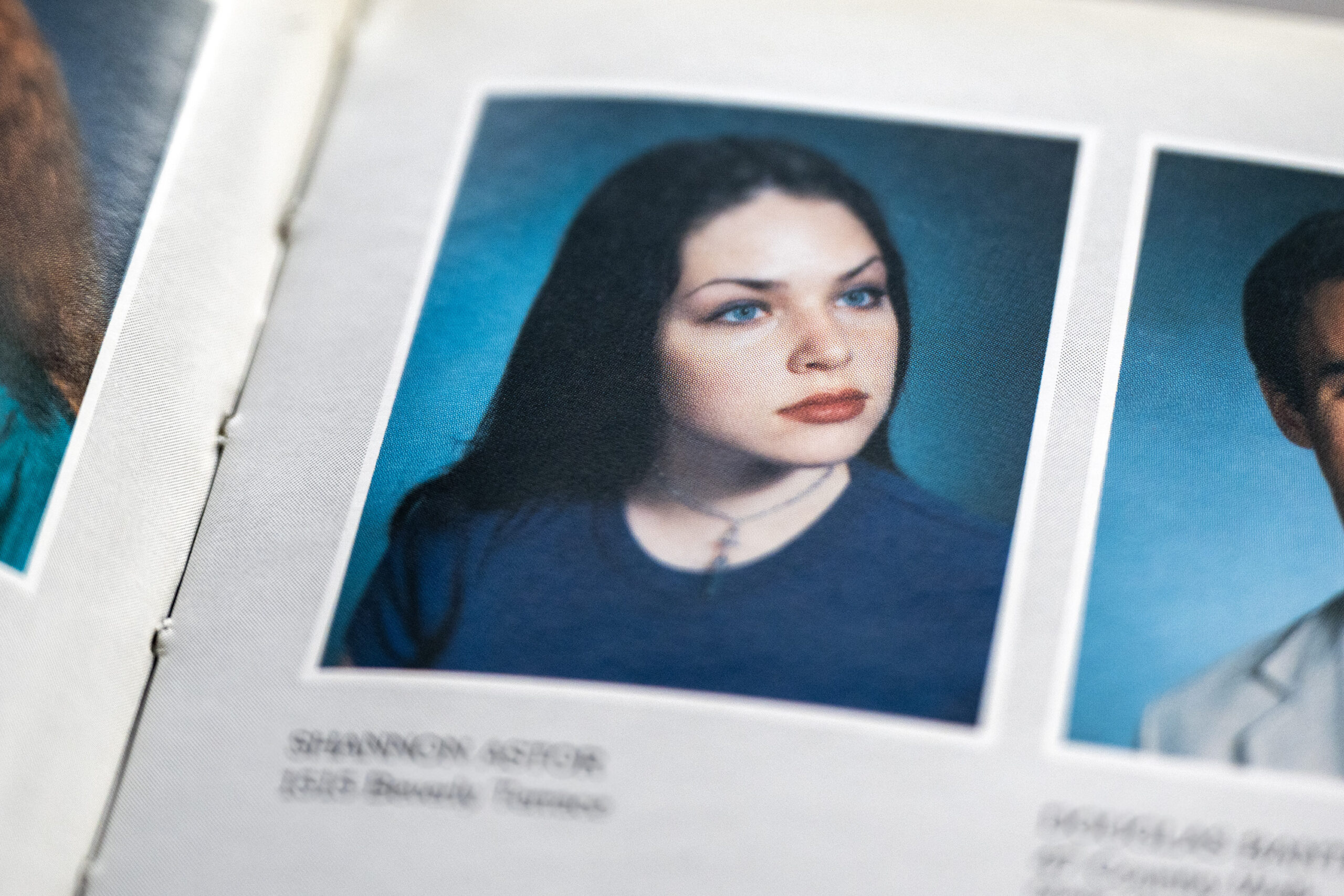
Shannon Astor, now 47, had been a vocalist for the group, just 14 or 15 years old, at a time when female representation within the genre was rare. Within a year or so, the group had disbanded — but before it did, the group, which typically practiced in a member’s parents’ basement, recorded a single demo. There had been only a few dozen copies produced back then, and they had all sold, scattering out around the South Jersey area.
For Charlotte, the tape became a kind of white whale — a relic of her mother’s hard-charging past, something the teen occasionally scoured the web for, to no avail.
She’d never heard her mother’s band. And she wanted to. Badly.
“Ninety-five percent of what I have about my mother is in the stories she tells me,” says Charlotte, 16, a junior at Cherry Hill High School East.
But a demo was something tangible. Something concrete.
“A demo,” she decided, “I can find.”
And so one night last spring, that’s what she set out to do.
She had little to go on: A rough estimate of when the demo would have been released (1993-94), a general geographic location (South Jersey), and a single lyric (“In the wind of the AM shadows cling to nearby trees as season shifts to satisfy the light from above”).
“I have been looking for this tape for 4 years,” she wrote in an appeal to her 1,000 or so Instagram followers, “… and it would mean the absolute world to me to find this tape.”
Butsomething about her search — this desire to connect with a parent, to bridge a gap three decades wide — resonated. It became, within the tight-knit confines of the hardcore music scene, a united pursuit.
At an age when most teenagers couldn’t get far enough away from their parents, here was one launching a quixotic quest to better understand hers.
A senior class photo of Shannon Astor in the 1996 Cherry Hill High School East yearbook. Now 47, Shannon was previously in a hardcore band called Seed.
Soon, strangers from across the country were digging through old boxes in basements, or tagging old running buddies from Jersey’s 1990s hardcore scene in social media posts. Some reached out to old producers from the area, wondering whether the demo might have made its way into some dusty studio corner.
Messages poured in, too — hundreds of them — with suggestions ranging from the plausible to the outlandish. Had she tried getting in touch with Bruce Springsteen’s people? You never know what the Boss might have stowed away in some mansion closet.
“I suddenly had communication with so many people who I thought I would never in my life have any connection with,” Charlotte said. “California to Jersey, and everything in between.”
The lead singer of a well-known Jersey straight-edge band of the era, Mouthpiece, joined the search, messaging Charlotte after others reached out to him about the tape. (He vaguely remembered her mother, Shannon, but not the band.)
Much of the outside help, Charlotte notes, has come from the hardcore community.
Indeed, much of Charlotte’s young life is rooted in the same hardcore music scene that her mother’s once was. Like Shannon before her, Charlotte spends many nights at hardcore shows around the area, photographing the scene for the magazine she self-publishes, “Through Our Eyes.” And like her mother previously, she’s a member of the “straight-edge” hardcore community, a group with a shared collection of ideals that includes abstaining from drinking or drugs. (Her first flirtation with teenage rebellion came when she snuck out of the house one night to go to her favorite record store.)
And though her mother does not necessarily share Charlotte’s zeal for locating the old tape — “I’m not waiting for some garage band demo to be unearthed,” Shannon joked — she understands what it would mean to her daughter to have it.
“It’s special to me only because of how much she needed to hear it,” said Shannon. “I’m just so pro-Charli and everything that she does … But this is her journey, and something that was intrinsically important to her.”
To those in the scene, meanwhile, the response has been very hardcore.
“A bunch of people banding together to help this random girl find her mom’s thing,” said Quinn Brady, 19, of New York, and a friend of Charlotte’s. “Most people assume that hardcore people are not very nice or friendly. [But] there’s this inherent kinship. It connects people across the nation in a way that not a lot of other genres of music do.”
A recent selfie by Charlotte Astor (right) and her mother, Shannon Astor, taken at Reading Terminal Market.
Those outside the hardcore scene have been no less enthralled, however.
In December, after NJ.com picked up the story, further extending its reach, a documentary filmmaker reached out about the possibility of doing a film on her quest.
Last year, after posting in some “old-head” hardcore Facebook groups about the tape, Shane Reynolds — a member of the Philly-based hardcore band God Instinct — stumbled upon what appeared to be the most promising lead yet.
“I found the guy who allegedly made the demo,” Reynolds said.
But when she got the man on the phone, Reynolds says, it proved to be a dead end.
The closest Charlotte came was last year, not long after she first posted about the demo on Instagram. Her mom’s former bandmate in Seed, convinced he must have kept something from that period, recovered from storage an old cassette that featured a recording of a single Seed practice session.
Charlotte took it home, pushed it into the stereo in her bedroom. She stared at the ceiling as the tape began to play and 30 years fell away.
For the first time, she could put a sound to the stories she grew up hearing.
“The first thing I heard was a few seconds of my mom talking,” Charlotte said. “That’s my mom, when she was 16. I’m listening to a clip of my mother, listening to her at the same age I am.”
Charlotte Astor, a junior at Cherry Hill High School East, and her vintage 35mm film Nikon camera in the school’s photography classroom.
Still, that small taste has only reinforced her devotion to unearthing the actual demo.
Charlotte remains realistic about her odds of finding it. No, it’s not likely to be found in some radio station’s studio. And no, Bruce Springsteen is almost certainly not in possession of a three-decades old demo tape from her mother’s teenage years.
But some graying hardcore fan from the ’90s, with a penchant for hoarding and a cluttered garage?
Stranger things have happened.
“I have confidence — unwavering confidence — that someone has it,” Charlotte says. “And that I will get my hands on it.”
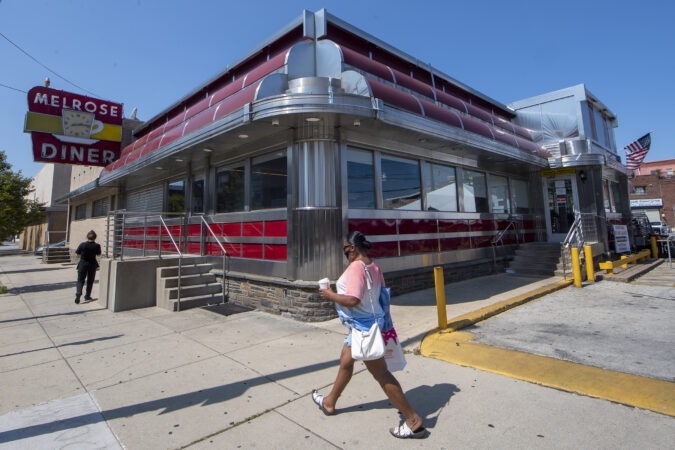
Anyone who ever hovered over a plate of waffles and bacon or a slice of apple pie with vanilla sauce at South Philly’s Melrose Diner will likely recall the restaurant’s iconic aesthetic — red and yellow, stainless steel and neon, a sizable coffee cup-slash-analog-clock.
Call it 24-hour-diner chic.
The diner, which opened at the intersection of 15th Street, West Passyunk Avenue, and Snyder Avenue in 1956, was demolished in 2023 to pave the way for a new six-story apartment building.
Now, its iconic signage can be yours, apparently. If you’re willing to pony up a sizable offer.
A Facebook Marketplace posting Monday night listed photos of various signs from the diner for sale.
“The Famous Melrose Diner,” reads the posting. “[Four] pieces of signage. Very heavy and totally cool. Sold as a set. Must pick up. Serious inquiries only please. Example, Olgas Diner sold for $12000.”
The condition is listed as “Used — Good.”
In a 2023 interview with The Inquirer, diner owner Michael Petrogiannis said he planned to put the old signage into storage, with the goal of incorporating it into a new Melrose location in the future.
Petrogiannis also joked that he’d be willing to sell the sign and other memorabilia from the diner for $1 million. “But then I’m making a new one, exactly the same thing,” he added.
He couldn’t immediately be reached for comment Tuesday about the signs’ sale.
For close to a century, the Melrose Diner was a staple of the city’s food scene, serving up pork rolls and cheesecake to families and late-night crowds. Upon its shuttering, patrons fondly recalled their memories of the place — from chance celebrity encounters to Christmas traditions to the occasional run-in with a mobster.
The diner was founded in 1935 by Dick Kubach, a German immigrant, before it was eventually sold to Petrogiannis by Kubach’s son in 2007.
The Philadelphia Superiority Complex is an occasional series of highly opinionated takes about why Philadelphia is better than other cities.
As I began in earnest my search for a Philadelphia apartment recently, I steeled myself for a tradition I assumed to be as East Coast as unnecessary honking and an unhealthy animosity toward outsiders.
I’m speaking, of course, about the broker fee.
As a native Midwesterner and perpetual renter who has spent the past decade living in Boston, I’d come to view broker fees as an inescapable part of big-city life.
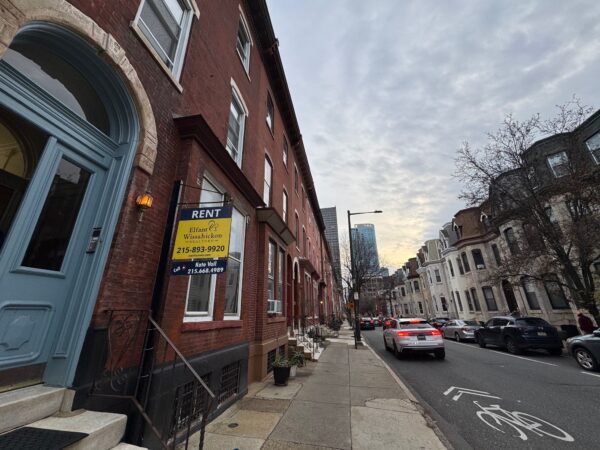
For the uninitiated, broker fees are a lot like extortion payments. Here’s how it would go in Boston: A so-called apartment broker — to this day I couldn’t tell you what a broker actually is — meets you at an available apartment, unlocks the door, and stands there while you give yourself a brief tour of the unit. In exchange for this white-glove service, and the privilege of renting the apartment, you pay the broker a one-time, nonrefundable fee typically equal to one month’s rent. In Boston, where the average rent for a one-bedroom apartments sits at around $3,500, this is no small thing.
Making matters worse, the Boston brokers always seem to be finance-bros-in-training, arriving to these brief showings in Lexuses or BMWs, hair meticulously styled and dressed head to toe in Brooks Brothers.
How refreshing it has been, then, to discover that broker fees just … don’t actually exist here?
Not once since I began responding to online apartment postings have I been asked to hand a stranger a $3,500 check in exchange for arranging a two-minute tour. I haven’t yet received a torrent of unwanted text messages from guys named Brock or Beau, demanding to know the earliest possible moment I can schedule a viewing.
And from what I can gather, I’m not going to.
As one longtime Philadelphian explained it to me recently, “There is a beauty in Philadelphia that no matter how cool it’s trying to be, it is never desirable enough to warrant something like brokers fees.”
It’s been a true revelation.
(In Boston’s defense, Massachusetts legislators recently passed a measure mandating that landlords can no longer require tenants to pay a broker fee. Of course, that doesn’t give me back the thousands of dollars I would’ve otherwise put into my retirement fund or, more likely, Uber Eats and Nerf machine guns.)
Which is not to say, certainly, that things here are perfect. An increasing number of Philly renters are cost-burdened. And the city recently ranked among the nation’s least affordable for apartment renters, according to one online real estate brokerage firm.
And as someone who is at the very beginning of the process, I’m sure there will be more disappointment in store.
I’m preparing for an upcoming weekend of apartment tours in Philly, and I have no illusions about how it’s likely to go. I’m imagining a couple days of drab leasing offices and hidden-fee horrors, one-sided rental agreements and a good ol’-fashioned scam or two.
Fine.
If it means not handing a half-month’s salary over to a smug 25-year-old in wingtips, well, then, I’m OK with all of it.
New Year’s Eve brought the much-anticipated finale of the ultrapopular Netflix series Stranger Things, marking the official conclusion of the 10-year sci-fi saga.
One detail from the series’ two-hour finale caught the ear — and imagination — of local viewers.
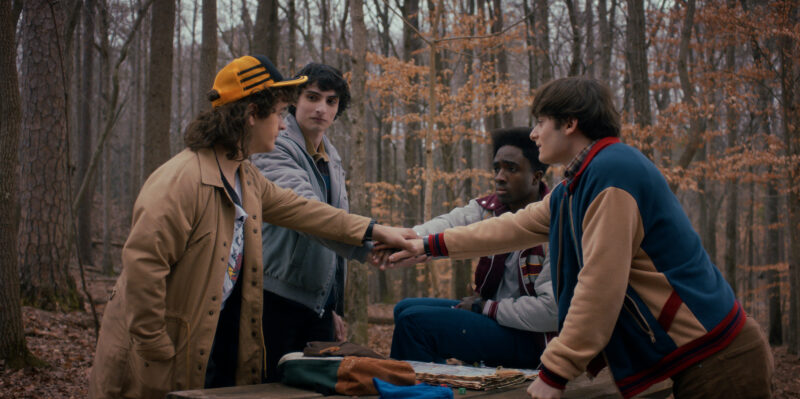
In one of the episode’s final scenes, four of the show’s main characters — Robin, Nancy, Jonathan, and Steve — discuss how to keep in touch now that many of them have departed their cursed hometown, the fictional Hawkins, Indiana.
Over beers on the rooftop of a local radio station, the characters vow to meet up once a month in a convenient location.
“What’s a city between Hawkins and Massachusetts [and] New York?” asks Nancy, who drops out of Emerson College to take a job at the Boston Herald.
“I have an uncle who lives in Philly,” replies Robin, played by Maya Hawke, who attends Smith College in Massachusetts. “He’s kind of weird, but he’s got a really big house.”
It’s an idea that Philadelphians quickly took to online, obviously.
“The closest thing to the upside down IRL would probably be Philly, so I guess that makes sense,” wrote one commenter in a Reddit thread on the topic.
“Gritty has yet to emerge so they think it’s safe,” wrote another.
Even the city’s official tourism agency got in on the action.
“Did the Stranger Things crew just say they’re meeting up in Philly?!” the Visit Philly account posted to the social media site Threads. “Where should they meet?”
(Among the suggestions: It’s Always Sunny in Philadelphia’s Paddy’s Pub.)
Inevitably, some pined for a Philly-based spinoff — or, at the very least, a crossover with another high-profile show set in the region.
“I’m pretty sure when she says Philadelphia she really means Delco which, to [an] Indiana native, would be close enough,” wrote one Reddit commenter. “And would make for a kickass spin off or team up with Mare of Easttown.”
Rex the wallaby has been found and returned to his home at a petting zoo in Williamstown, Gloucester County, the Lots of Love Farm announced shortly before 10 p.m. Tuesday.
Rex, a 3-year-old male wallaby, had been missing since late Monday from Lots of Love Farm, said the farm’s owner, Ron Layden, but was apprehended on Tuesday night at a nearby Walmart.
“He’s all good,” Layden said Wednesday. “He’s in there eating hay, and he’s nice and happy.”
Rex was captured without incident around 9:30 p.m. Tuesday, with the help of a group of teenagers who had joined the search for the missing animal, Layden said.
In a video of the capture provided by Lots of Love Farm, four young men can be seen wrangling the wallaby behind a fence near a retention pond. One is able to grab hold of it and carry it toward a waiting kennel.
“Let’s go!” one of them shouts in celebration.
The Walmart in question is located about a half-mile from Lots of Love Farm, where Layden said the agreeable wallaby had last been seen late Monday afternoon, around feeding time. Layden said Wednesday he believed an unsecured gate had allowed the animal to break free.
The capture marked the conclusion of a dizzying 24-hour period in which the 3-foot wallaby captured the hearts and imaginations of local residents, while also garnering national attention.
“My friend lives in Atlanta, and he called me up and said, ‘Yo, he’s on my TV!’“ Layden said.
Layden — whose farm includes goats, sheep, peacocks, a camel, “a zebra-donkey mix, [and] a bunch of cows” — said that while he had dealt with the occasional loose animal before, this was his farm’s first wallaby escape.
As word of the escape spread Tuesday, messages of concern and support had flooded the farm’s Facebook page, along with suggestions and reported possible sightings.
Though some tips placed Rex as far away as Sicklerville, three miles from the farm, early sightings placed him near the Walmart, which suggests Rex never wandered too far.
In a video posted online on Tuesday, an animal matching Rex’s description could be seen hopping casually around an onlooker’s vehicle in the well-lit Walmart parking lot.
“It’s a [expletive] kangaroo!” the amazed onlooker yells in the video.
As a result of the sudden notoriety, Layden said Wednesday that he plans to put Rex out over the weekend at the family’s petting zoo, which is open Saturday and Sunday from 10 a.m. to 3 p.m.
A few days ago, Layden said, no one knew Rex existed.