Author: Michelle Baruchman

  • Democrat John Fetterman launches cross-aisle fundraising committee with Republican Dave McCormick

    Democrat John Fetterman launches cross-aisle fundraising committee with Republican Dave McCormick

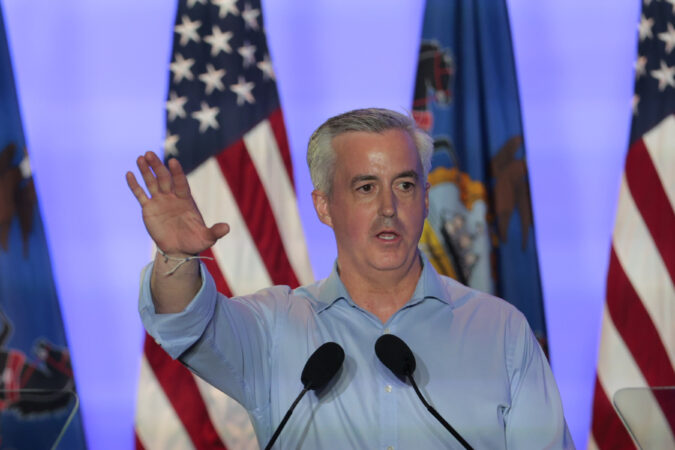
    In a rare move, Pennsylvania’s two senators have created a joint fundraising committee that would allow them to split money from donors who want to give to both of their campaigns, despite being members of different parities.

    Democratic Sen. John Fetterman’s decision to join Republican Sen. Dave McCormick in the fundraising collaboration comes as he has repeatedly dismissed speculation that he could switch parties after siding with Republicans on several key votes.

    As polls have shown him losing support among Democratic voters, he has also reported raising significantly fewer campaign funds on his own and has not said if he will run for a second term in 2028.

    Common Ground PA, which filed paperwork with the Federal Election Commission Monday, lists four beneficiaries for the joint fund: Fetterman for PA; Friends of Dave McCormick; Every Vote PAC, which lists Fetterman as the PAC sponsor; and Pennsylvania Honor, which lists McCormick as the leadership PAC sponsor.

    A joint fundraising committee, first enabled by the FEC in 1977, allows two or more candidates, PACs, or party committees to coordinate fundraising efforts to share donations and expenses.

    A donor can abide by federal contribution limits while still giving one check that can be allocated to multiple campaigns. But since these groups typically involve party committees, it’s rare for these joint ventures to be bipartisan.

    Katie Terry, who is listed as the treasurer for Team McCormick, is also the treasurer for Common Ground PA. She did not respond to a request from The Inquirer for comment.

    Mike DeVanney, a spokesperson for McCormick’s campaign, called the PAC a donor-driven effort.

    “This group of donors value the collaboration exhibited by Senators McCormick and Fetterman for Pennsylvania and want to support both of them,” he said in a statement.

    The joint fundraising committee was first reported by Politico.

    The two senators have spoken often about their cross-aisle friendship since McCormick took office in 2025, and they have repeatedly teamed up in recent months.

    They appeared alongside each other last week in Philadelphia to promote Trump Accounts, the new federally backed savings accounts for kids that became law with President Donald Trump’s signature One Big Beautiful Bill Act.

    And they also joined forces to fill Pennsylvania’s empty spot at the Great American State Fair after Gov. Josh Shapiro said state officials could not find a Pennsylvania business to sponsor the state’s booth.

    Fetterman has routinely criticized his own party, feuding with progressives on a range of issues, including Israel and immigration enforcement.

    In a fundraising email sent in May, McCormick referred to Fetterman as one of his “closest working partners,” a realization that he said surprised even him.

    In that drive, which asked donors to support his efforts to “work across the aisle to get results for the people of Pennsylvania,” McCormick praised his Democratic colleague.

    “Senator John Fetterman and I couldn’t look more different. We don’t agree on everything. But we both grew up in Pennsylvania. We both know what it means to fight for working families who feel like Washington forgot them. And we both refuse to let politics get in the way of getting things done,” he wrote.

    McCormick told reporters in May his friendship with Fetterman is the most frequent topic of conversation he hears, and he gets positive feedback from it.

    “We look for ways to work together. I think people want that,” he said.

    Individuals could donate to Fetterman or McCormick separately. But joint fundraising committees, which are used widely by both parties, pull in large checks from donors and split the money across multiple committees using a formula that adheres to federal contribution limits, according to an analysis from the watchdog group OpenSecrets.

    Typically, though, campaigns joint fundraise with their party.

    Common Ground PA is among the few coordinated efforts across the aisle. A former PAC, the Problem Solvers Patriots, fundraised for members of both parties in previous election cycles.

    Fetterman, who polls poorly with Pennsylvania Democrats, is likely to face a primary challenge if he runs for another term.

    Former U.S. Rep. Conor Lamb, who lost the Senate primary to Fetterman in 2022 and has not ruled out a run in 2028, blasted the move online as “Another betrayal from Fetterman.”

    U.S. Rep. Chris Deluzio, a Western Pennsylvania who has received “a lot of encouragement” to run for Fetterman’s seat, also questioned the creation of the PAC.

    “Helping the Republicans raise money to spend against Democrats is bad, right?” Deluzio said on X.

    However, Fetterman has been notching strong approval from Republicans, and Pennsylvania Republicans along with Trump himself said he could receive GOP support if he switched parties.

    Fetterman’s Republican support has also been growing at the bank with contributions from prominent GOP donors, particularly through his other joint fundraising committee and leadership PAC. At the same time, his fundraising has plummeted overall, raising less than half his previous annual totals in 2025.

    Staff writers Gillian McGoldrick and Sam Janesch contributed to this story.

  • Democrat Bob Harvie sends cease-and-desist letter to Rep. Brian Fitzpatrick, claiming defamation in campaign ads

    Democrat Bob Harvie sends cease-and-desist letter to Rep. Brian Fitzpatrick, claiming defamation in campaign ads

    The Democratic nominee for a crucial swing seat in Pennsylvania is accusing the Republican incumbent of making categorically false and defamatory statements, the latest move as escalating attack ads circulate in the Bucks County district.

    Attorneys representing Bob Harvie sent a cease-and-desist letter to U.S. Rep. Brian Fitzpatrick, a five-term Republican incumbent facing a competitive reelection, and his campaign for a “series of defamatory allegations” that, they say, misleadingly portray Harvie’s role in an FBI investigation.

    A lawyer representing Fitzpatrick and his campaign confirmed receipt of the letter but did not respond to additional requests for comment.

    The advertisements purport that Harvie, a Bucks County commissioner, is currently under criminal investigation for stealing taxpayer money, assertions his campaign said falsely stem from a federal case that appeared to have quieted after the grand jury met in Philadelphia in 2022. The probe was about problems related to contracts, unions, and a Pennsylvania school district.

    Harvie is not and never was under investigation, his lawyers said, nor was he the subject of the federal case, but mailers and television spots continue to blur the lines.

    The election fights are ramping up as both men compete to win Pennsylvania’s 1st Congressional district in November, and with it, decide fate over which party controls the U.S. House. It’s one of four seats in the commonwealth being targeted by both political parties during the high-stakes midterm elections. Fitzpatrick has represented the area since 2017.

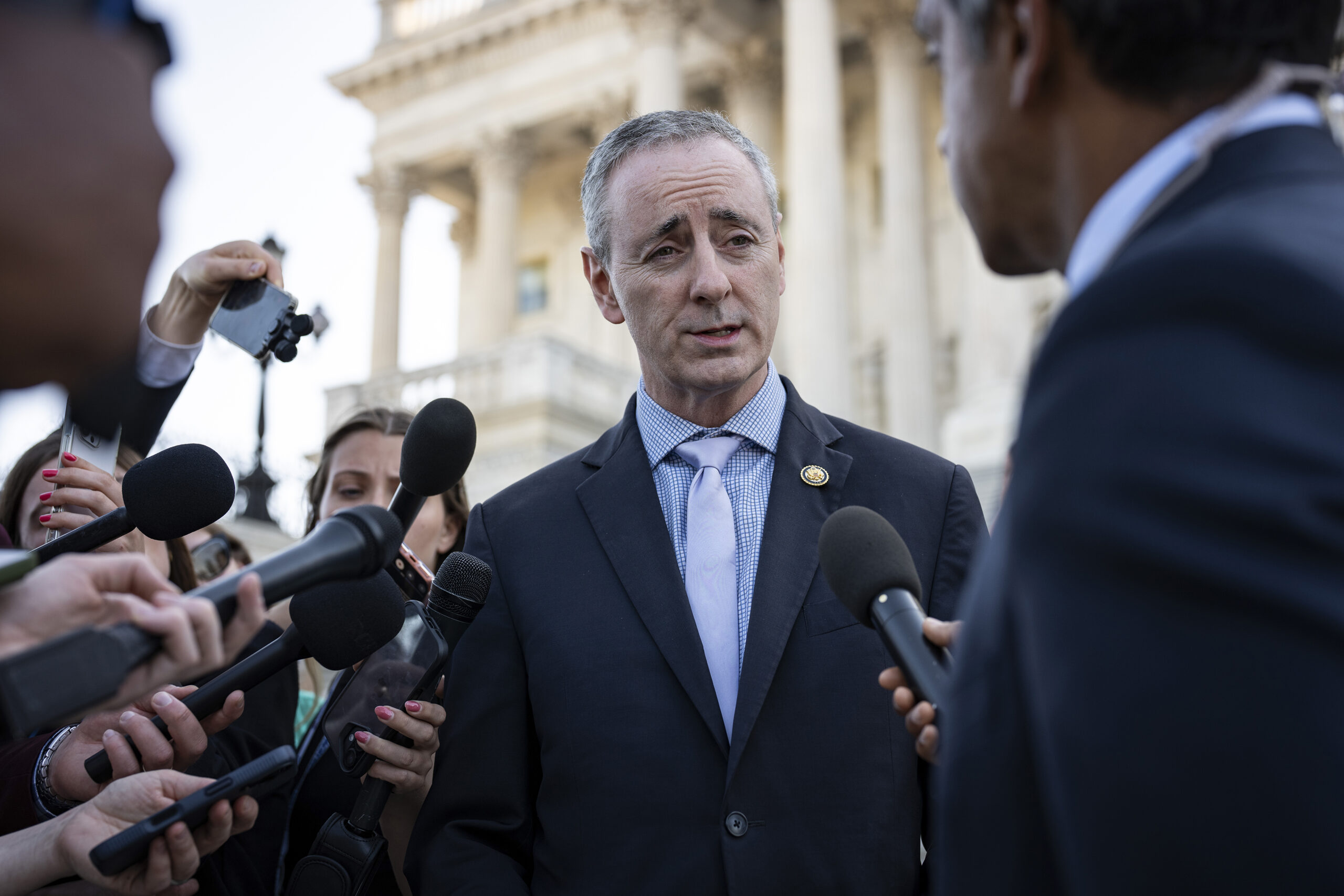
    Rep. Brian Fitzpatrick (R., Pa.) speaks to reporters on June 3 after the House passed an Iran war powers resolution.

    Harvie’s attorneys sent Fitzpatrick and his campaign the letter Thursday shortly after 5 p.m. and gave the campaign 24 hours to respond.

    “Brian Fitzpatrick’s lies are intended to deceive the voters and that’s a disgrace to this district,” Harvie said in a statement.

    Further action will depend on whether and how Fitzpatrick and his campaign proceeds, Harvie’s campaign said.

    Defending America PAC, a political action committee that supports Fitzpatrick, has also used similar language in social media posts, news releases, and video content that said Harvie is the subject of an FBI investigation. Harvie’s campaign sent Defending America PAC a cease-and-desist letter Thursday, too, around 9 a.m.

    In a statement, Chris Pack, president of the PAC, said further legal action from Harvie would be an effort “to chill protected political speech.”

    What happened with the FBI investigation?

    The FBI in 2020 interviewed several people with connections to Falls Township and the Pennsbury School District, LevittownNow reported in September 2022.

    Harvie and several other officials were among those who testified before a grand jury in the probe, which has not been active since 2022, the campaign said. But Harvie and his lawyers in the letter maintain he “is not now and has never been the subject of any criminal investigation” or stealing money from taxpayers to throw himself a party.

    Political advertisements, paid for by the Fitzpatrick campaign, suggest otherwise.

    In a television spot that has aired on three cable systems that run across the district since June 30, a man is seen asking, “Commissioner Harvie, why did you steal taxpayer money to throw yourself a party” while the words “BOB HARVIE UNDER FBI INVESTIGATION” are displayed on screen. His campaign committee, Brian Fitzpatrick for All of Us, paid for the ads.

    The letter also accuses Fitzpatrick, a former FBI agent himself, of “actual malice,” which would require proof in court that he made the advertisements with knowledge that the allegations were false or with reckless disregard to whether they were false or not.

    When similar charges were made in 2023 in a race for county commissioner, Harvie denied the claims as false.

    “There comes a line where you cannot straight up lie about folks,” said Dan McCormick, Harvie’s campaign manager.

    What other action could be taken?

    Harvie’s campaign could file a lawsuit claiming Fitzpatrick has defamed him, but that would involve likely months of subpoenas, depositions, and evidence gathering before the case potentially goes to a judge or jury — a process that could extend past November’s election.

    The Federal Election Commission, an independent agency in the U.S. government, oversees federal elections and campaign finance, but defamation is under the jurisdiction of courts, not the commission.

    The television stations that have aired the advertisements have also been alerted to the defamation claims, Harvie’s campaign said. The Federal Communications Commission, another independent U.S. agency, monitors communications by radio, television, wire, satellite, and cable. However, it also does not investigate or resolve defamation claims.

    It’s not uncommon for campaigns to trade cease-and-desist letters as elections heat up, and some are outright ignored.

    How much money has been spent on the campaign?

    A competitive U.S. House seat has drawn state and national attention, resources, and lots of dollars.

    Fitzpatrick entered April with $7 million already stored in the bank, allowing him to spend early on ads against Harvie — even before the Democrat won his May primary. Some of Fitzpatrick’s money went to attacking Harvie in his race against Lucia Simonelli, a grassroots candidate and climate policy expert.

    In total, Fitzpatrick has already spent $2.81 million from Jan. 1, 2025, to April 29, 2026, according to campaign finance reports — with roughly four months left to go before the campaign. During the entire 2024 campaign cycle, he spent $3.47 million.

    In addition to the FBI investigation ads, other TV hits and mailers have framed Harvie as a “career politician” who “voted to give himself a raise” and voted to count faulty mail ballots during a U.S. Senate recount, in violation of a state Supreme Court ruling.

    Prior to beginning his tenure as commissioner in 2020, Harvie was on the Falls Township Board of Supervisors for 17 years, and spent 12 of those as chair. As chair of the Bucks County Board of Commissioners in 2022, Harvie approved an annual 1% increase in salaries for commissioners and several other local offices.

    Fitzpatrick and the National Republican Congressional Committee have placed a joint ad buy starting Tuesday. This type of purchase was made more possible after the Supreme Court case, announced this week, that allows coordinated campaigns and direct campaigns to work more in tandem.

    Harvie, though, has his own stash of cash. He’s raised $1.45 million, according to campaign finance reports, and has released ads that connect Fitzpatrick to President Donald Trump’s agenda — even as the lawmaker has voted against Trump on numerous issues and earned his ire. The next financial disclosure will be released July 15, and Harvie’s campaign said it has now raised about $2 million.

    National Democrats have also thrown resources behind him, and the Democratic Congressional Campaign Committee has listed Harvie on its “Red to Blue” list as a key seat to flip.

    “This is a defining moment in this campaign: After nearly a decade in D.C., Fitzpatrick has been caught with egg on his face by resorting to the very kind of gutter politics that he pretends to stand against,” said DCCC spokesperson Eli Cousin.

    Harvie was one of four swing-districts Democratic candidates Gov. Josh Shapiro supported ahead of the May primary, as he looks to elevate the party in fall and help win control of Congress.

    Staff writer Fallon Roth contributed to this article.

  • The 250th anniversary gathering of Congress at Independence Hall touches on divided times, uneven history

    The 250th anniversary gathering of Congress at Independence Hall touches on divided times, uneven history

    Two days before the American revolutionaries signed the Declaration of Independence in 1776, the Second Continental Congress gathered in Philadelphia to formally vote on the matter.

    Standing in virtually the same spot 250 years later, their distant successors commemorated that historic moment while grappling, at times, with what it left out.

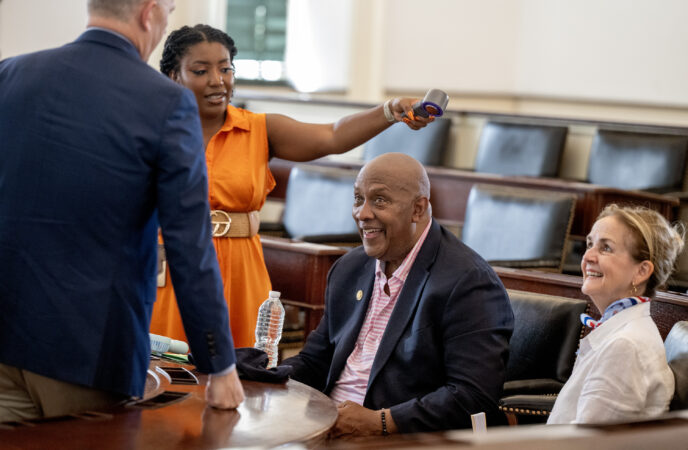
    “The fact that we have you here together is a symbol of progress,” said U.S. Rep. Dwight Evans, a retiring Democrat who’s spent more than four decades as one of Philadelphia’s central Black political leaders. “250 years ago, people like me were not fully included in the founders’ vision. … The struggle to live up to our founding ideals was hard fought.”

    More than 30 members of the 119th Congress attended the event at Independence Hall, one of many marking the Semiquincentennial in the city this week. U.S. Rep. Brendan Boyle, a Philadelphia Democrat whose district includes the historic site, had worked for years to bring his colleagues to the site to mark the nation’s founding.

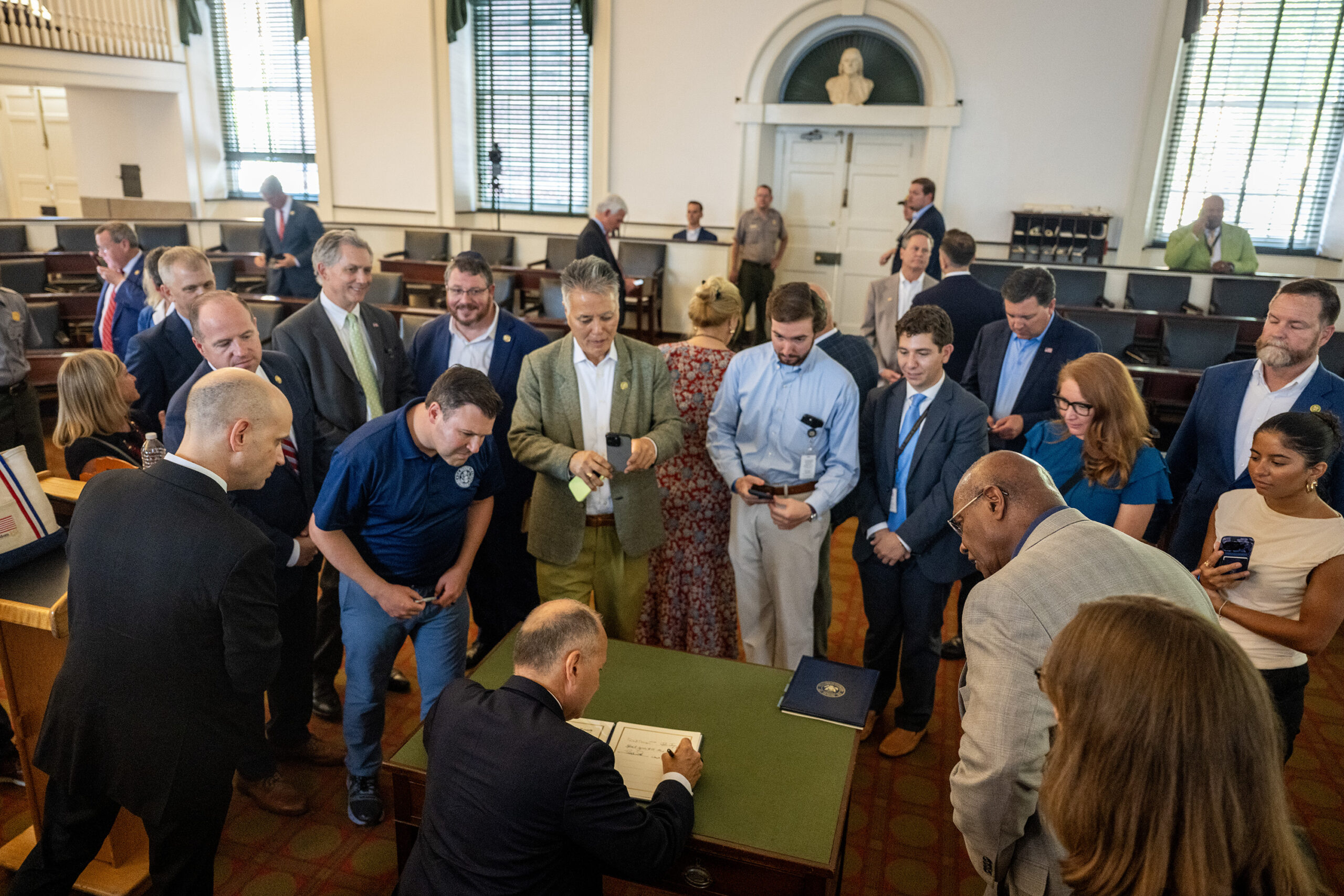
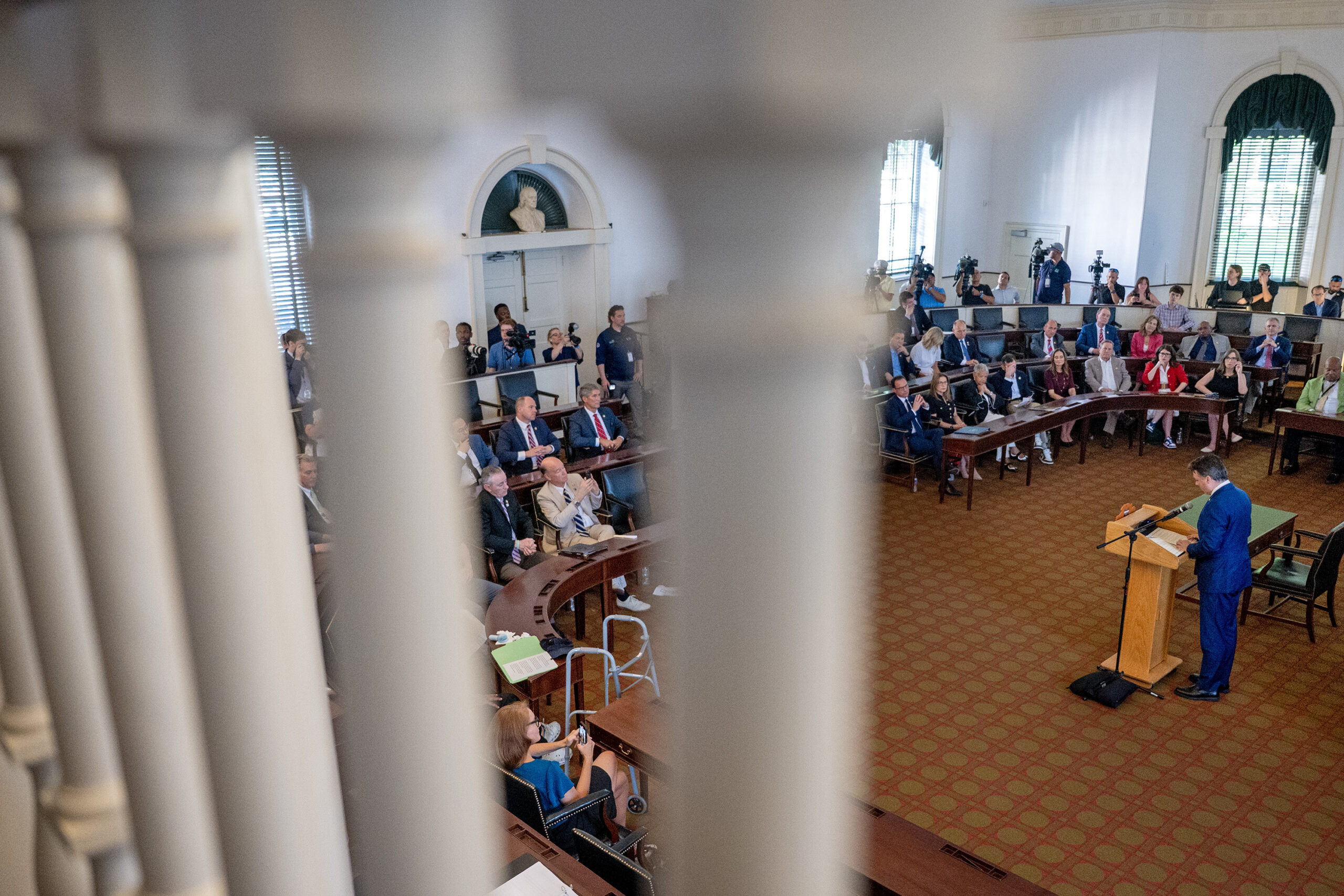
    A bust of Benjamin Franklin is above the door in the back of Congress Hall as U.S. Rep. Lloyd Smucker of Lancaster County signs a ceremonial document after the House of Representatives met at Independence Hall on Thursday.

    As Boyle and others walked through that history in Congress Hall — the room where the legislative branch convened before relocating to Washington — they referenced both the uneven history of the country and the divided, polarized times that define modern America.

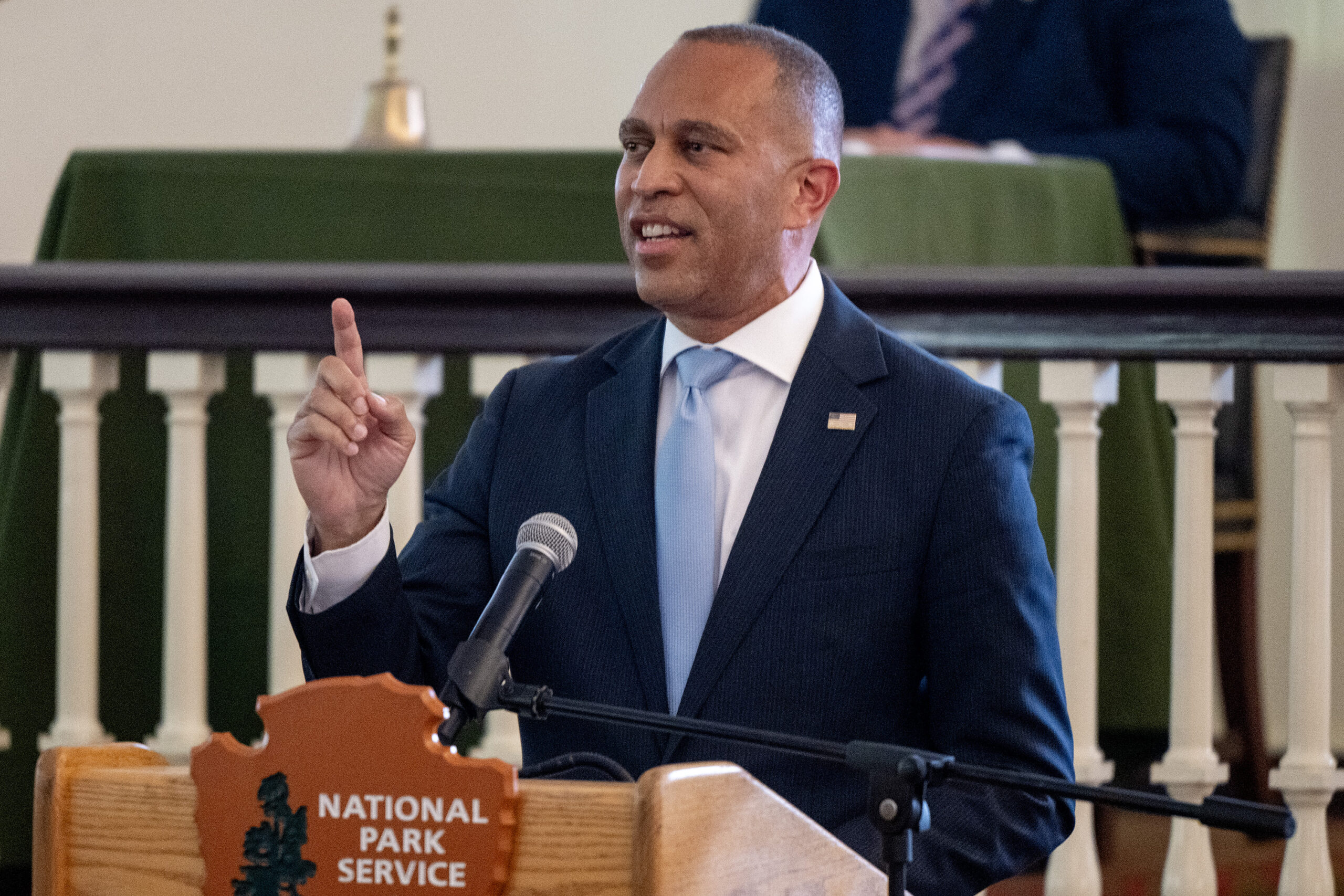
    “America has indeed struggled at times, beginning with the horrors of chattel slavery and the oppression of Native Americans, to live up to our highest ideals,” said House Minority Leader Hakeem Jeffries (D., N.Y.). “But the highminded principles, upon which this great country was born, have served as an eternal lamp post for us to continue to strive and march toward a more perfect union.”

    Jeffries’ remarks — from a high-profile lawmaker poised to become the first Black speaker of the U.S. House if his party wins control in the midterms later this year — came as President Donald Trump’s administration has tried to pull back the federal government’s references to the history of slavery, including on Independence Mall, most notably at the President’s House, a block from where the lawmakers gathered.

    The Democratic leader was one of multiple speakers, including Pennsylvania Gov. Josh Shapiro, who made veiled references to Republicans’ ceding Congress’ role as a check on Trump. The members of Congress who served at Independence Hall believed the chamber “would be separate and coequal, never subservient or co-opted,” Jeffries said.

    “Let us never forget that we don’t work for any other branch of government,” he said. “There are no kings in the United States of America. We work exclusively for the American people.”

    House Democratic Leader Hakeem Jeffries addresses the Representatives meeting in Congress Hall. He said it was important to speak about the history of slavery in America. The gathering marked the 250th anniversary of the day the Second Continental Congress voted for independence.

    U.S. Rep. Glenn “GT” Thompson, a Centre County Republican and dean of the Pennsylvania delegation, presided over the event. He said afterward that some of the remarks turned “a little political.”

    “But it is an excellent observation,” Thompson said. “We don’t have a king. We can thank George Washington for that.”

    Thompson was one of several Pennsylvania Republicans to attend the mostly Democratic event, but other top officials were noticeably absent.

    Pennsylvania’s top-ranking Republican federal official, U.S. Sen. Dave McCormick, did not attend. Neither did U.S. Sen. John Fetterman, a Democrat who has increasingly aligned himself with Trump and Republicans.

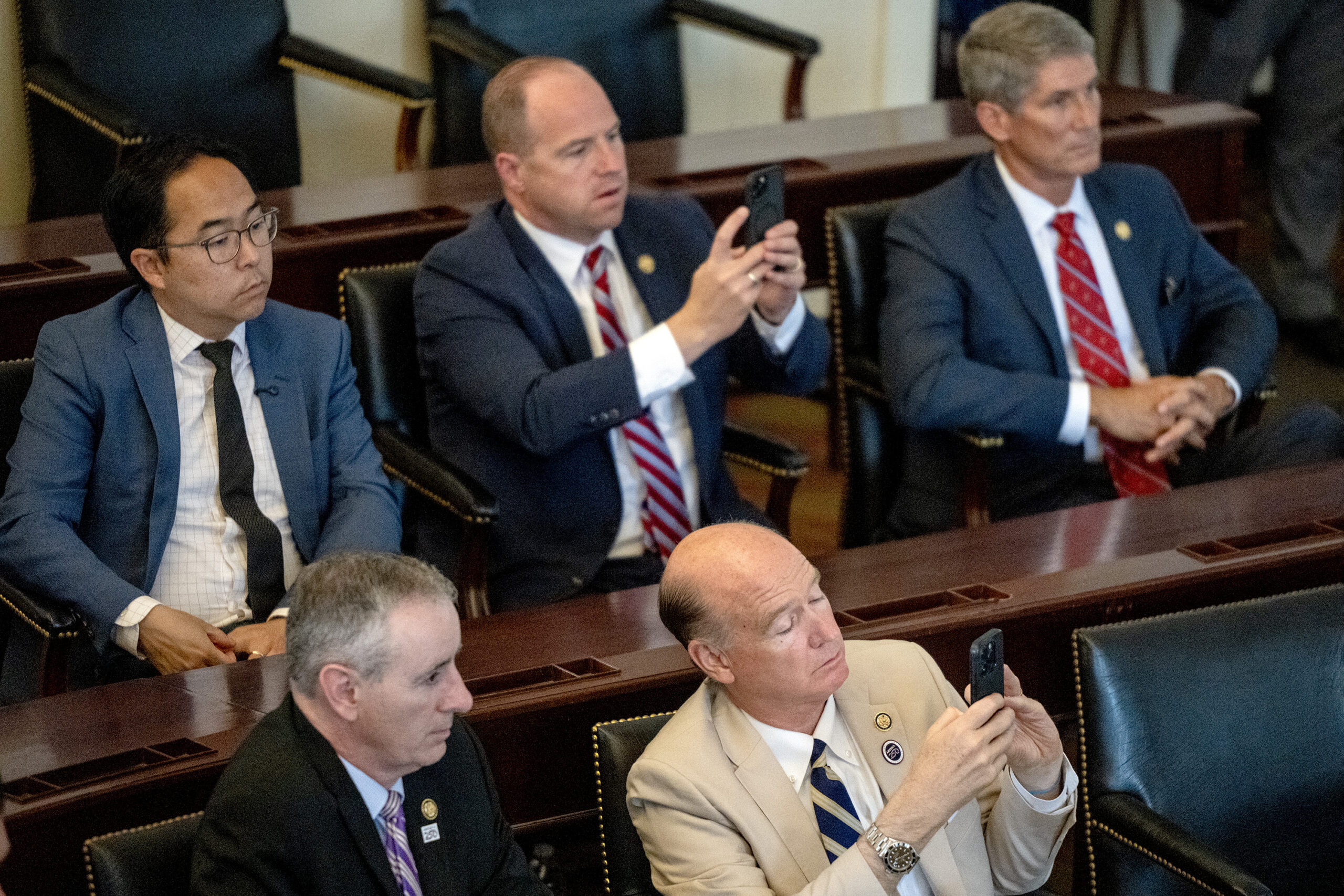
    U.S. Sen. Andy Kim (D., N.J.), who lives in nearby Burlington County, was the only senator to attend.

    U.S. Senator Andy Kim (left) of New Jersey joins House members.

    ‘Let this sacred place awaken us’

    Since 1800, Congress has met outside Washington, D.C., on only extremely rare occasions.

    In 1987, a ceremonial joint session in Philadelphia marked the 200th anniversary of the Constitution, and in September 2002, more than 300 members met in New York City for the first anniversary of 9/11.

    Thursday’s gathering in Philadelphia was considered a ceremonial event, not a formal joint session, so the lawmakers did not debate legislation or cast votes in the room where they conducted that kind of official business in the earliest days of the nation.

    There weren’t defined political parties, all those years ago.

    But the fissures that soon arose in the nation’s first capital — and that have only become more entrenched since then — were evident both in and around Thursday’s event.

    The 45-minute ceremony was a bipartisan showing. A pair of Pennsylvania Republicans in particular, Thompson and U.S. Rep. Brian Fitzpatrick (R., Bucks), kicked off the day with a call to order and invocation. Others like U.S. Reps. Ryan Mackenzie (R., Lehigh), Lloyd Smucker (R., Lancaster) and John Joyce (R., Blair) also attended.

    Fitzpatrick, a moderate Republican facing a tough reelection campaign this year, and Boyle, a moderate Democrat, were among several speakers who talked about the anniversary being a moment for Congress to recommit to its founding goals.

    “Let this sacred place awaken us, a solemn charge that flows from what was proclaimed here 250 years ago,” Fitzpatrick said.

    Among the over 30 lawmakers, though, Democrats outnumbered their colleagues across the aisle. Jeffries addressed the room, while no members of House Republican leadership, who control the chamber, made an appearance.

    ‘A great balancing act’

    The day itself came after a chaotic few weeks in Washington, even during an unusually divisive two-year term.

    The most significant bipartisan legislation produced during Trump’s second term, a comprehensive housing bill that includes a home-repair program that originated in Pennsylvania, was temporarily scuttled when the president refused to sign it. His demands for a controversial voter-ID and elections reform bill first was derided by members of both parties.

    U.S. Rep. Brendan F. Boyle speaks as members of Congress gather for the ceremonial event.

    Just 48 hours before Thursday’s gathering, that move was still causing turbulence on Capitol Hill as Republican House Speaker Mike Johnson canceled the rest of the week’s agenda because of disagreements around the legislation, known as the SAVE America Act.

    Johnson did not attend the event at Independence Hall.

    Shapiro, a Democrat and potential 2028 presidential candidate, made a veiled reference to the current Republican-led Congress’ failure to serve as a check on Trump. He said the founders set in motion “a great balancing act” that lawmakers were responsible for upholding.

    “Two and a half centuries later, we continue to work to find that balance, work that each of you is charged with taking up every single day,” Shapiro said.

    Even in the blocks around the lawmakers’ gathering, the tensions of the Trump era were evident.

    A few blocks away at the historic Christ Church, local advocates and interfaith leaders gathered before the congressional event to call out the president’s aggressive immigration enforcement tactics. One local member of Congress — U.S. Rep. Mary Gay Scanlon, a Delaware County Democrat — stood with them before joining her colleagues at Independence Hall.

    And just down the street at the President’s House, tourists saw an incomplete display after the Trump administration took down information that memorialized the nine people George Washington enslaved in Philadelphia during the nation’s founding.

    Boyle pointed to fights by “generations of Americans who refused to accept that liberty and equality belonged only to some.”

    “That struggle is not separate from the American story,” Boyle said. “It is the American story.”

  • Josh Shapiro says progressives’ wins in New York show voters ‘are channeling that pain into purpose’

    Josh Shapiro says progressives’ wins in New York show voters ‘are channeling that pain into purpose’

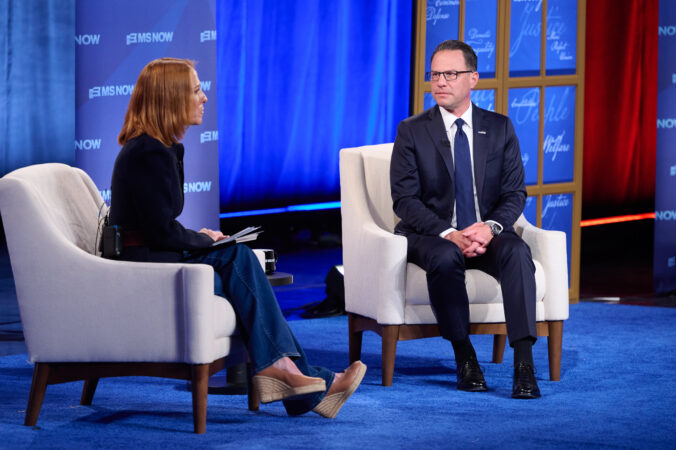
    The Democratic Party should be a big tent and welcoming to a diversity of voices, Gov. Josh Shapiro told MS NOW’s Jen Psaki in a live event in Philadelphia on Thursday.

    Following Tuesday’s primary races in New York that saw the elections of more progressive and socialist candidates, Shapiro said the results there and around the country show that voters are eager for change.

    “I appreciate the passion that we are seeing from voters all across this country,” Shapiro said during the event at the Academy of Music, part of MS NOW’s celebration of America’s 250th birthday.

    People are feeling the strain and opting to support more progressive candidates, Shapiro said, because of rising health insurance costs, struggles to purchase a house, and the feeling that their rights are being stripped away.

    “They are channeling that pain into purpose, they’re channeling that into showing up at the ballot box, they’re channeling that into showing enthusiasm,” he said. “That is a good thing.”

    But he stopped short of explicitly endorsing more left-leaning ideologies. In a separate interview with CNN on Thursday, Shapiro added that the successful candidates must now deliver results.

    “I get that there are some candidates out there that just say a lot words and attract a lot of attention but what we need to do as a party is drill down on how we take those words turn them into actions and make people’s lives better,” he said.

    In Philadelphia, voters elected Chris Rabb, the democratic socialist who has challenged the city’s political establishment, in May’s Democratic primary for Pennsylvania’s 3rd Congressional District. Shapiro did not get directly involved in Rabb’s district, despite making endorsements in other races.

    He also dodged direct criticism of Sen. John Fetterman, a fellow Pennsylvania Democrat who has become increasingly unpopular among the party’s voters, after Psaki posed some of the senator’s recent comments to Shapiro.

    Fetterman referred to the New York congressional candidates, endorsed by Mayor Zohran Mamdani, as “the dirtbag left” and “outrageous” on Fox News. (The phrase “dirtbag left” comes from the leftist podcast Chapo Trap House and refers to a strand of democratic socialism that counters the political right by mimicking its dark humor, among other tactics.)

    Shapiro said “John should answer for himself.”

    In both Philadelphia and New York, the victorious progressive candidates during their campaigns heavily criticized Israel’s war in Gaza and the United States’ role in supporting its material.

    Psaki did not ask Shapiro, who supports Israel but has been critical of Prime Minister Benjamin Netanyahu, about the issue during the event. And he did not refer to it when talking about the New York results.

    To show voters that Democrats hear their pain, the party needs to get “real stuff done to make people’s lives better,” he said.

    Sandra Dungee Glenn, who attended the event Thursday, said Shapiro could have been even more forceful against Fetterman, who is viewed unfavorably by 43% of Philadelphia residents, according to a recent poll.

    “Don’t even mention that name,” said Glenn, who lives in West Philadelphia, referring to Fetterman. “He’s a big disappointment.”

    In addition to his own reelection campaign in November, Shapiro is focused on getting Democrats elected in four competitive congressional seats and flipping the Pennsylvania state Senate, which has been under Republican control for three decades.

    Should the chamber flip, Shapiro said his immediate priority would be raising the state’s minimum wage and codifying the right to access abortion — blaming Republicans for standing in his way.

    But Shapiro, a first-term Democrat, is also looking ahead, past 2026 and Donald Trump’s presidency, as he builds a national profile and becomes a likely contender for the presidency in 2028.

    He said Congress should pass a 28th Amendment to the U.S. Constitution that guards against corruption and gerrymandering, and railed against the 2024 U.S. Supreme Court decision that gave presidents absolute immunity from criminal prosecution for actions taken within their constitutional authority, following Trump’s efforts to overturn the 2020 election.

    Shapiro said he is also open to adding more justices to the Supreme Court, which has been set at nine justices since 1869.

    “I think we’ve got to have everything on the table. We’ve got to be bold,” he said.

    Expansion has been pushed by progressives as a way to reform the court and end its conservative majority.

    Leslie Berger, 69, who attended MS NOW’s event Thursday said she supports adding more justices to the court.

    “These norms we have aren’t etched in stone,” she said. “We need to change this justice system and more justices would be a great start.”

    Democrats, Shapiro said, need to be aggressive and elevate candidates who will drive down costs, increase access to healthcare, repair the country’s standing in the world and rein in artificial intelligence.

    “We’ve got to understand that our sole mission right now is winning in these midterms and providing a check against Donald Trump at the state and the federal level,” he said. “Then as we go forward, I think we have to understand that rebuilding a federal government like it was before Donald Trump showed up cannot be the answer to the Democratic Party.”

  • Josh Shapiro is most popular politician among Philadelphia residents — by a long shot

    Josh Shapiro is most popular politician among Philadelphia residents — by a long shot

    Gov. Josh Shapiro is by far the most popular political figure among Philadelphia residents, a boost as he looks toward November and beyond.

    In a new Suffolk University/Philadelphia Inquirer CityView poll, 62% of Philadelphians have a favorable opinion of Shapiro, double digits above any other political figure included in the survey.

    Not only did the Democratic incumbent running for reelection win over three-quarters of his own party’s voters in the blue stronghold, he also got positive reviews from almost half the city’s independents and more than one-third of Republicans.

    “He has strong bona fides within his own party, 76% favorable and 11% unfavorable, but he’s also at least somewhat competitive among independents and even some Republicans, so that’s an amazing profile for a candidate who’s an incumbent these days,” said David Paleologos, the polling director at Suffolk.

    Just 16% of residents have an unfavorable view of Shapiro, and only 8% have never heard of the one-term governor, who was on former Vice President Kamala Harris’ short list of potential running mates in 2024.

    (function(){function e(){window.addEventListener(`message`,function(e){if(e.data[`datawrapper-height`]!==void 0){var t=document.querySelectorAll(`iframe`);for(var n in e.data[`datawrapper-height`])for(var r=0,i;i=t[r];r++)if(i.contentWindow===e.source){var a=e.data[`datawrapper-height`][n]+`px`;i.style.height=a}}})}e()})();

    The poll of 500 residents in the city, which was conducted by phone from June 16 to 20, had a margin of error of 4.4 percentage points. Pollsters reached residents in all 66 wards in the city.

    Shapiro clobbers his Republican opponent, Treasurer Stacy Garrity, whom just 9% of the poll’s respondents view favorably.

    That’s not unexpected in a city where Democrats outnumber Republicans 6-1. But it’s Garrity’s lack of name recognition that plays a larger role. A whopping 61% of those surveyed had never heard of Garrity, a glaring figure less than five months until the November election.

    Although the state GOP coalesced around her last year and she faced no challengers for her primary nomination this year, only 26% of Republicans had even heard of Garrity.

    (function(){function e(){window.addEventListener(`message`,function(e){if(e.data[`datawrapper-height`]!==void 0){var t=document.querySelectorAll(`iframe`);for(var n in e.data[`datawrapper-height`])for(var r=0,i;i=t[r];r++)if(i.contentWindow===e.source){var a=e.data[`datawrapper-height`][n]+`px`;i.style.height=a}}})}e()})();

    “She’s kind of a blank slate, and that works to the challenger’s advantage, but if you’re Stacy Garrity you want to start defining yourself quickly before someone else does,” Paleologos said.

    Shapiro can drive up his statewide total if voters in Philadelphia, an overwhelming Democratic electorate, turn out in large numbers — though that has been less reliable in recent years.

    His broad favorability could also help him stretch his bank account further. Shapiro, who hails from nearby Montgomery County, has spent the least amount of money so far in the Philadelphia television market and the most in Pittsburgh, which could show his campaign knows where he is already strong.

    Fetterman is far less popular in Philly, particularly among young voters

    Shapiro’s popularity in the city stands in stark contrast with the state’s other top Democrat: U.S. Sen. John Fetterman.

    In the swing state’s most Democratic city, the one-term senator is faring poorly.

    Less than one-quarter, 24%, of Philly residents have a favorable opinion of Fetterman, compared with 43% with an unfavorable view. The numbers are even worse within his own party, with just 17% of Democrats holding a favorable view of the senator, who has often feuded with progressives and repeatedly crossed party lines to cast key votes in support of President Donald Trump’s nominees.

    His numbers are particularly sour among voters ages 18 to 24 and 25 to 34.

    (function(){function e(){window.addEventListener(`message`,function(e){if(e.data[`datawrapper-height`]!==void 0){var t=document.querySelectorAll(`iframe`);for(var n in e.data[`datawrapper-height`])for(var r=0,i;i=t[r];r++)if(i.contentWindow===e.source){var a=e.data[`datawrapper-height`][n]+`px`;i.style.height=a}}})}e()})();

    A strong majority of Republican voters, 60%, view him favorably in the poll, but the Pennsylvania Democrat has repeatedly insisted he has no interest in switching parties heading into 2028, when he is likely to face a primary challenge if he runs for another term.

    While slightly more Philadelphians have a favorable view of Fetterman than his GOP colleague, U.S. Sen. Dave McCormick, a greater share of Philly voters have an unfavorable view of the Democrat.

    McCormick earned 17% favorable views compared with 25% unfavorable views, while the rest had not heard of the freshman senator or were undecided.

    But the least popular politician in Philly was Trump, who had just 12% favorability in the city.

    Ninety-two percent of Democrats view Trump unfavorably, and 31% of Philadelphia Republicans do, too. The poll also found that nearly 70% of Philly voters had grown less confident in American democracy under Trump’s presidency.

    Trump made inroads in the deep-blue city in 2024, but Harris still won Philadelphia handily with 78% of the vote.

    The president is a frequent target of Shapiro, who has blamed Trump’s tariffs and other policies for exacerbating the cost of living.

    Taking on Trump may be boosting Shapiro’s popularity as he pursues reelection. His numbers show opportunity as he continues building a national profile, likely with ambitions for higher office. In a city where voters favor liberal and left-leaning candidates, Paleologos said, the polling results could be somewhat extrapolated to a national Democratic primary for president in 2028.

    What Shapiro has going in his favor is high popularity among women, with 69% viewing him favorably. That is good news for the governor, since women consistently make up a large proportion of Democratic primary voters, according to exit surveys.

    “In a Democratic primary, you really want to be strong among women, and he is,” Paleologos said. “If 60% of women are voting a Democratic primary, that really plays to his strength.”

    He also ranks in the 70s for favorability among people ages 45 to 74.

    “Those are people who are bill payers, they’re raising children, they’re taking care of sick parents, they’re very stretched in terms of economics. Just terrific numbers,” Paleologos said.

    Shapiro’s favorability is far above that of other Democratic politicians in the city, including Mayor Cherelle L. Parker and State Rep. Chris Rabb, who won last month’s competitive primary to represent the 3rd Congressional District, which stretches from Northwest Philly to parts of South Philly.

    A majority of respondents had not heard of Rabb despite his recent win. But 26% of respondents said they had a favorable view of the progressive lawmaker, compared with only 7% with an unfavorable view.

    The mayor was viewed favorably by nearly 44% of respondents, compared with nearly 35% who viewed her unfavorably — a net positive rating but a much closer split than Shapiro.

    “There are there are pockets of strength that make her electorally strong, but I wouldn’t call it broad-based,” Paleologos said of Parker.

  • Trump was welcomed to Pa. by Stacy Garrity. He didn’t mention her at all.

    Trump was welcomed to Pa. by Stacy Garrity. He didn’t mention her at all.

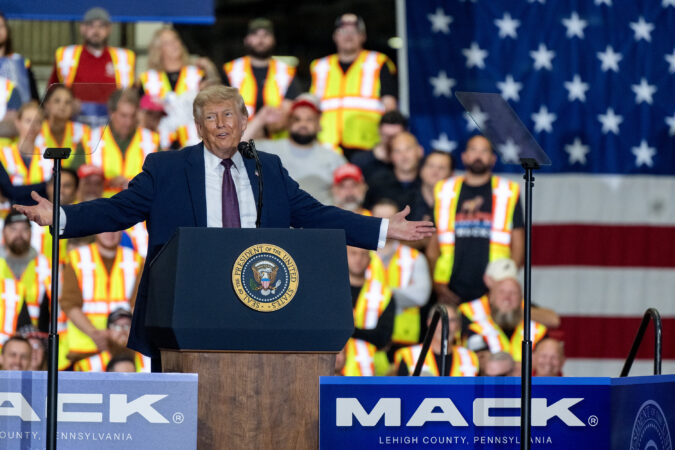
    MACUNGIE, Pa. — President Donald Trump’s speech on manufacturing in a key Pennsylvania swing district repeatedly veered into other topics and musings about elections in other states, like Maine and California.

    It took the president nearly an hour to even reference by name GOP U.S. Rep. Ryan Mackenzie, the vulnerable incumbent whose district Trump was visiting to boost his chances in this year’s midterm elections.

    And GOP gubernatorial nominee Stacy Garrity did not even get a mention during Trump’s speech to roughly 1,500 attendees, including workers at the Mack Trucks facility in Macungie in Lehigh County.

    Trump’s visit came just days after the company received $47 million through a Defense Department contract.

    And while he touted the trucks, he spent just as much time meandering about weight-loss drugs, immigration, firearms, the role of transgender athletes in women’s sports, and the UFC fight recently held on the White House lawn. He also repeated conspiracy theories about the races for Los Angeles mayor and California governor, saying he had asked the U.S. attorney in that state to investigate after conservative mayoral candidate Spencer Pratt did not advance to the general election.

    And he threw jabs at Pennsylvania Gov. Josh Shapiro amid 2028 speculation and appeared to undermine Shapiro’s Republican opponent, Garrity.

    Speaking about recent victories by democratic socialist candidates around the country, Trump quipped that “Shapiro is not that much better, to be honest with you.”

    He referenced the Democratic governor’s potential presidential aspirations, warning that “a guy like Shapiro is going to be forced on the left, otherwise he’s not going to get the nomination.”

    But though he weighed in on Shapiro, the governor’s Republican challenger’s name was noticeably absent from Trump’s list of shout-outs to GOP officials, despite the fact that Garrity spoke earlier in the event.

    Trump instead heaped praised on U.S. Rep. Dan Meuser, a Pennsylvania Republican who considered a run before ultimately opting against it and enabling the state party to coalesce around Garrity.

    “Meuser’s another great guy who was thinking about running for governor. I think he would have won. He was thinking of running for governor, and I said ‘I want you to stay in Congress,’” Trump said.

    Trump endorsed Garrity earlier this year, but the lack of acknowledgment Tuesday was striking given the election year focus of the event and Garrity’s own promises to support Trump’s agenda.

    “We need a governor in Harrisburg who will be a partner with President Trump in Washington, not an opponent in the courtrooms,” she said before Trump took the stage. “We need a governor who will fight for Pennsylvania jobs, like right here at Mack Trucks.”

    State Treasurer and Republican candidate for governor Stacy Garrity is seen on a big screen as she speaks to supporters before the arrival of President Donald Trump at Mack Trucks in Macungie Tuesday, June 23, 2026. Trump did not mention Garrity when he later spoke to the crowd in the Lehigh Valley.

    Trump restated his belief that tariffs have revitalized and would further boost the U.S. economy, though gas prices have reached new heights since he began a war with Iran, stymieing the flow of oil. (The Strait of Hormuz has reopened, following a tentative peace deal struck this month.)

    “I placed a 25% tariff on foreign automobiles and very importantly posed a 25% tariff on medium and heavy-duty trucks, so Mack Trucks could do very well with this factory in Pennsylvania,” he said.

    “They weren’t gonna come in from foreign lands and steal your jobs,” Trump added.

    However, the company cited Trump’s tariffs last year as contributing to its decision to lay off hundreds of workers at its Lehigh Valley operations center, the Pennsylvania Capital-Star reported at the time.

    Tuesday marked Trump’s fourth Pennsylvania appearance in his second term and his first this year ahead of November’s high-stakes midterm elections. The visit was billed as an official event as part of Trump’s American Workers First tour, but the event had the feel of a campaign rally.

    Four U.S. House districts in Pennsylvania are considered competitive, the most of any state, and the event took place in the 7th Congressional District, which is viewed as one of the most likely to flip to Democratic control.

    “We have to reelect a certain congressman,” Trump told the crowd.

    In 2024, Mackenzie won the seat by 1 percentage point, while Trump defeated Democrat Kamala Harris and won Pennsylvania in the presidential race.

    “Workers, like the ones here at Mack, are spearheading the great American comeback,” Mackenzie said.

    Bob Brooks, a union leader and firefighter who won the Democratic nomination to challenge Mackenzie, praised the union workers at Mack ahead of the event for building “the literal engine for the American economy,” but he blasted Trump and Mackenzie for failing to bring down prices.

    “No speech from Mackenzie can change the fact that his time in Congress has been an absolute disaster for the hardworking people of the Lehigh Valley,” Brooks said in a statement ahead of Tuesday’s event.

    Lt. Gov. Austin Davis, in a media call earlier Tuesday, said Trump’s choice to rally at Mack Trucks specifically signals he and his party recognize a “real political danger” because of Trump’s policies.

    “Donald Trump’s agenda is putting Congressman Mackenzie at serious risk,” Davis said. “They’re circling the wagons and trying to save that seat.”

    Affordability is likely to be a key issue on voters’ minds as they choose between Mackenzie and Brooks.

    Steve Leiby, 52, who works for Mack and attended Tuesday’s event, said he understands the tariffs Trump enacted are controversial, but he still supports them.

    “It’s a big risk, if we had a war, that we didn’t make a lot of war supplies in the U.S.,” he said.

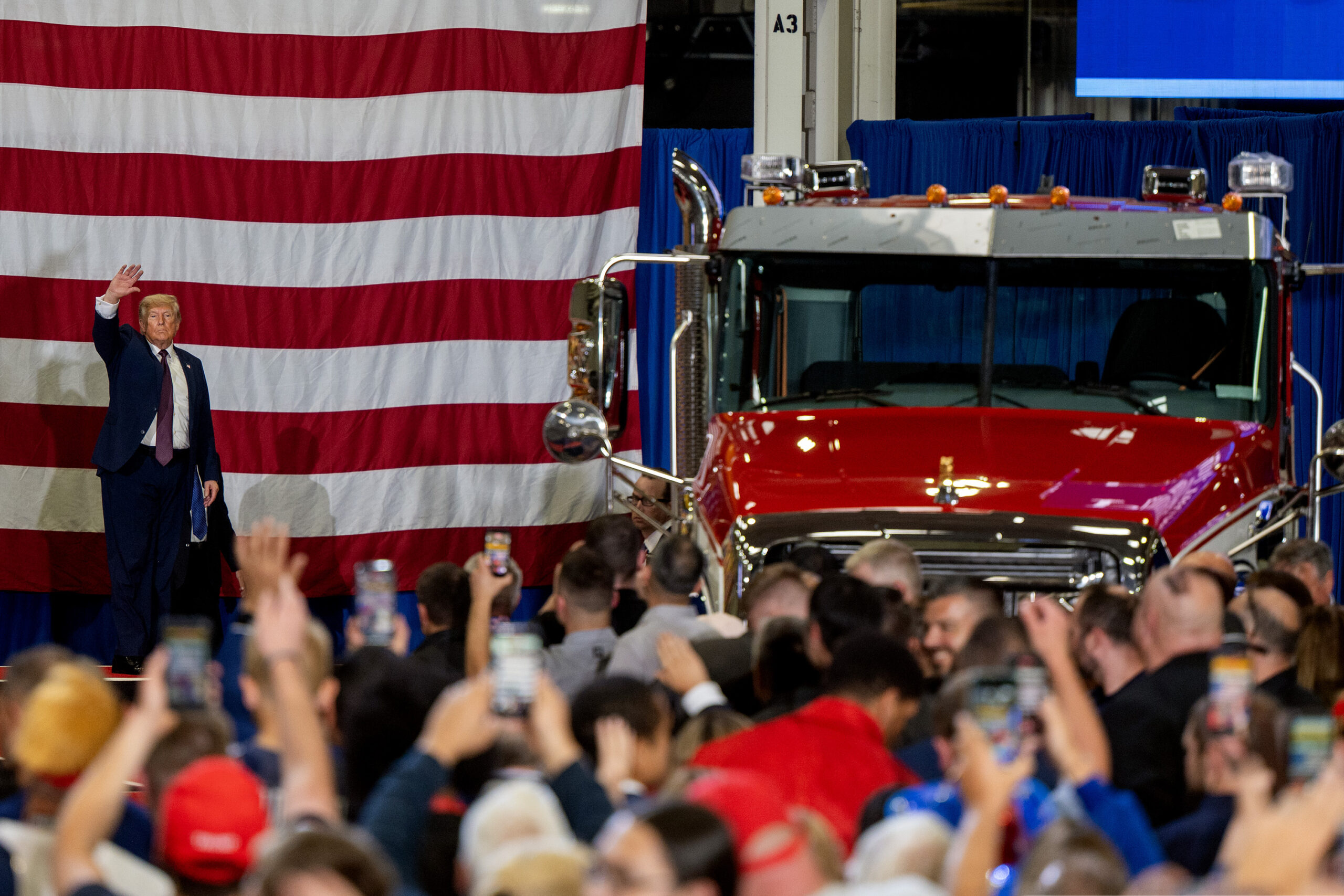
    President Donald Trump leaves after a visit to Mack Trucks in Macungie, in the Lehigh Valley Tuesday, June 23, 2026.

    Brent and Francine Stanley, both 60, from New Tripoli, said they support Mackenzie because he shares their conservative values. His office organized an elder-care symposium that Francine Stanley attended because the couple have a 23-year-old child with disabilities, and they were able to get connected to resources.

    But they both know how competitive this election is, noting the stack of pro-Brooks mailers they have already received and predicting that Democrats will be knocking on their doors as November approaches.

    “They’re really persistent, and if you don’t answer, they follow up,” Francine Stanley said. Mackenzie, she said, should consider doing the same.

    Staff reporters Andrea Padilla and Sam Janesch contributed to this article.

  • Stacy Garrity on potentially being the first female governor of Pennsylvania: ‘It’s my least favorite thing to talk about’

    Stacy Garrity on potentially being the first female governor of Pennsylvania: ‘It’s my least favorite thing to talk about’

    If elected in November, Stacy Garrity would become Pennsylvania’s first female governor in the state’s 238-year history.

    Even now, she is one of only two women in history to receive the Republican Party’s nomination for the job.

    The state has never had a woman as its governor; no woman has been elected as U.S. senator; and both times a woman ran for president, she lost the state. Over the last two centuries, Pennsylvania’s political glass ceiling has proven stubbornly resistant to cracks.

    But on the campaign trail against Democratic Gov. Josh Shapiro, Garrity, 62, said she doesn’t give that too much thought.

    “It’s my least favorite thing to talk about,” she said. “I was the oldest of four daughters, and we were just told that we were expected to work hard.”

    Navigating gender dynamics in politics can prove to be a particularly fine balance. Republicans, in particular, often emphasize that candidates should rise on their skills and talent, not personal identity.

    Garrity emphasized her attention is on issues like the power grid, education, and reining in spending, though she recognizes the historic significance of a potential win.

    “Republicans, for the most part, are based on merit, and that’s how I was raised,” said Garrity, who spent decades serving in the Army Reserve and as an executive in the manufacturing industry before becoming state treasurer. When she was reelected in 2024, she broke the record in Pennsylvania for the most number of votes cast in her favor for a statewide office, a distinction formerly held by Shapiro.

    In addition to taking on centuries of male-dominated leadership, Garrity will face other challenges in November.

    She is a Republican who has aligned herself closely with President Donald Trump — including campaigning at his Mar-A-Lago Club in Florida — at a time when Trump has been experiencing historic dissatisfaction among voters and the national political environment favors Democrats.

    And she is running against Shapiro, a Democratic incumbent with a rising national star who is popular even among independents. He has $38 million banked as of May, vastly outpacing Garrity’s $2.8 million. Shapiro is also counting on a strong showing in the midterms to help Democrats win the majority in the U.S. House.

    “I think [voters] are excited to have a first female governor, but I don’t think that is the reason anybody would vote for me,” she said.

    In Pennsylvania and 16 other states

    It is hard to be what you can’t see. And for voters who have never experienced a woman at the top of the hierarchy, it is difficult to imagine what that could look like, experts said.

    It has been 300 years since a woman led Pennsylvania — before it was a state.

    Hannah Callowhill Penn led the colony of Pennsylvania, governing first while her husband, William Penn, suffered several strokes, and then alongside a group of trustees after he died. Over 14 years, she settled boundary disputes, appointed and replaced government officials, and navigated relations with the monarchy in England.

    Other Pennsylvania women made attempts to break gender barriers but came up short. Barbara Hafer ran as a Republican against Democratic incumbent Bob Casey Sr. in the 1990 governor’s race, but lost with just 32% of the vote.

    Former U.S. Rep. Allyson Schwartz lost to Tom Wolf during the Democratic primary for governor in 2014, and Laura Ellsworth was defeated by Scott Wagner in the 2018 Republican gubernatorial primary.

    “It could just be a coincidence, but also it’s very hard to break political traditions, and one of those traditions in Pennsylvania, unfortunately, is male leadership,” said Nichola Gutgold, a professor at Pennsylvania State University’s Lehigh Valley campus, who has researched women in politics.

    Pennsylvania, however, is not alone. There are 17 states that have never had a female senator, and 17 states have never had a female governor, according to the Pew Research Center. That distinction spans geographic ranges and party control.

    Still, Pennsylvania is one of just four states that has never had either, along with Idaho, Indiana, and Colorado. Among them, only Colorado went for Democrats Hillary Clinton and Kamala Harris for president.

    “We have certain variables at play in the Commonwealth of Pennsylvania that make it more challenging for women to run for elected office,” said Dana Brown, executive director of the Pennsylvania Center for Women and Politics.

    The role of the parties on the state and county levels means they have a strong influence on recruiting candidates and pushing them up through the pipeline. Historically, recruiting tended to come from more masculine bases — such as fire stations or township supervisor positions.

    Now, though, “both sides of the aisle recognize that women can win here in Pennsylvania, and so Republicans and Democrats have been purposely recruiting more women,” she said.

    Women have made strides in other Pennsylvania elected offices.

    In Harrisburg, State Rep. Joanna McClinton (D., Philadelphia) is the first woman and second Black person to serve as speaker of the Pennsylvania House. Republican State Sen. Kim Ward of Westmoreland County is the first woman in Pennsylvania history to serve as Senate president pro tempore and Senate majority leader.

    When former Democratic U.S. Rep. Susan Wild, the first woman to represent the Lehigh Valley in Congress, was elected in 2018, “it took a real concentrated effort from [political action committees] and from groups that really wanted to see a woman win to make that happen,” Gutgold said.

    In other cases, as in neighboring New Jersey or Virginia, women have ascended with a combination of fortunate timing, skill, experience, and deft campaigning.

    When Gov. Mikie Sherrill last year became the second woman elected to lead New Jersey, Brown said, “it was a change election for New Jersey, and it was a sign of pushing back against what the federal government is doing with ICE and immigration and also with the economy.”

    Even though Sherrill, a Democrat, shares the same party as her predecessor, Phil Murphy, New Jersey’s vote for a woman represents change, Brown said. “She also worked really, really hard for it, as most women do,” she added.

    Sometimes, female candidates succeed by pushing against expected norms for women by emphasizing military experience or work in male-dominated trades, Gutgold said. Garrity has emphasized her military and business experience on the campaign trail, holding a Veterans for Garrity rally last week.

    “I think that, rhetorically speaking, it would be easier to elect a woman who appears to hold more conservative views, because of the way we, the electorate, still views women’s role in society,” Gutgold said.

    Republican women have scored victories in the Deep South by upholding conservative values such as opposition to abortion and support of gun rights. Kay Ivey holds the governor’s mansion in Alabama, and Nikki Haley previously led South Carolina for two terms. In Tennessee, U.S. Sen. Marsha Blackburn has represented the state since 2018 and publicly repudiated gender-specific titles, such as congresswoman vs. congressman.

    Garrity, on the campaign trail, has also vowed to clean up the “boys will be boys” culture in Harrisburg and has criticized Shapiro’s handling of a sexual harassment case involving a longtime aide.

    The aide, Mike Vereb, abruptly stepped down in 2023, while the administration quietly agreed to pay $295,000 to settle claims from an employee in the governor’s office that Vereb had made repeated sexual advances toward her, and made lewd claims about her and other women.

    “We don’t need to settle for a governor who will sweep sexual harassment and abuse charges under the rug. We don’t need to accept that our state government is a cesspool where intimidation is the norm and public employees fear retribution,” Garrity said during a news conference this year.

    Manuel Bonder, a spokesperson for Shapiro, rejected those accusations.

    “Governor Shapiro has a track record of taking on powerful institutions, exposing sexual abuse, and putting predators behind bars — and he continues to fight to deliver real accountability and justice for survivors here in Pennsylvania,” he said.

    Could Pa. women give Garrity a boost?

    Nationally, women voters tend to lean more toward the Democratic Party, Pew Research Center data show, so it’s unlikely that the Republican Party will attract a huge turnover — even with a female candidate on the top of the ticket.

    Sometimes, however, the gender divide can become even more entrenched. In 2024, for example, when the candidates were broadly polling neck-and-neck, Harris saw a 17-point advantage with Pennsylvania women, while Trump led with men in the state by 11 points, according to a Philadelphia Inquirer/New York Times/Siena College poll.

    Garrity said she is putting together agendas that speak to various coalitions of voters, such as veterans, Latinos, and small-business owners.

    “I don’t think we’ve done specifically females, but that might be a good idea,” she said. A campaign spokesperson added that Garrity would be rolling out women-focused events in the coming weeks.

    Campaigns can target women by speaking directly to certain issues. Democrats have often focused their message on support for reproductive access and abortion rights, especially since the 2022 Supreme Court decision overturning Roe v. Wade.

    According to a Pew Research Center report in March, 64% of women and 55% of men say abortion should be legal in all or most cases. But Garrity has been inconsistent on the issue. She said “Roe was wrong from the beginning” on the day the ruling came out and sold T-shirts on her campaign website that opposed abortion. But in an interview last September, Garrity said she would “respect” Pennsylvania’s current abortion law and would not support a state ban.

    Republicans, meanwhile, often promote public safety and have sought to make women’s sports a wedge issue in recent elections by pushing restrictions on the participation of transgender athletes.

    It is a tactic Garrity will use against Shapiro, who has called attempts to silo transgender athletes discriminatory.

    “A lot of people think that he’s moderate because he likes to be all things to all people, and they don’t understand, he is really for boys competing against girls in sports,” Garrity said.

    There are other issues women candidates are often seen as more trusted on, such as education, healthcare, and children’s needs, Gutgold said.

    Amy Widestrom, executive director of the League of Women Voters of Pennsylvania, said top of mind for members of her organization right now is the right to vote. She said some women have expressed concern that requiring documentary proof of citizenship, which Republicans say is meant to ensure immigrants in the country illegally do not vote, could affect those who change their legal name and do not have matching identification records.

    Appealing to women on these issues can pay off, as they represent a significant voting bloc. Among registered voters in Pennsylvania, 52% are female. Of registered Democrats, 59% are female, and 47% of registered Republicans are female. Roughly 40% of unaffiliated voters are female, according to Widestrom, via voter data.

    But Macy Charles of Concerned Women for America, a socially conservative political nonprofit focused on women, said candidates should speak more expansively when courting women voters.

    “It’s pretty offensive to assume that when we’re talking about issues women care about, it’s only women’s specific issues, like abortion,” said Charles, a legislative strategist. “Women care about the economy, women care about the U.S. borders. Because they have maternal instincts, they care about their families, they care about the well-being of America’s future.”

    Rather than leaning into identity, Charles said, Garrity is reinforcing her reputation of competence.

    “More than just her identity as a woman, she is willing to stand up for common sense and truth and really put families first,” she said.

    Still, Garrity recognizes the achievement her potential victory could bring.

    To be Pennsylvania’s first female governor, “I think it would be great,” she said, “but I think it will be because I am absolutely the best candidate.”