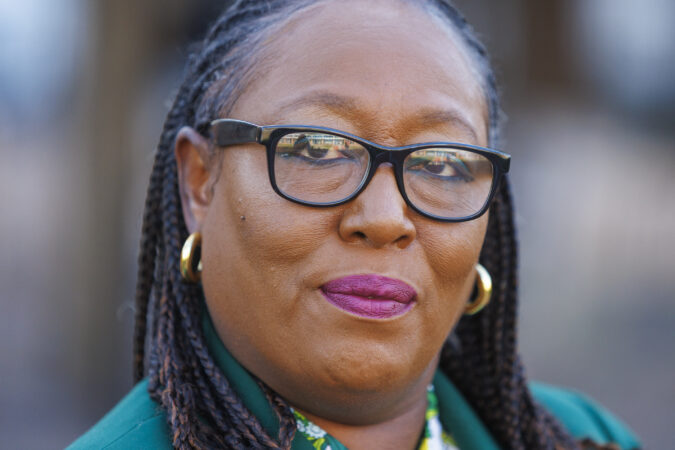
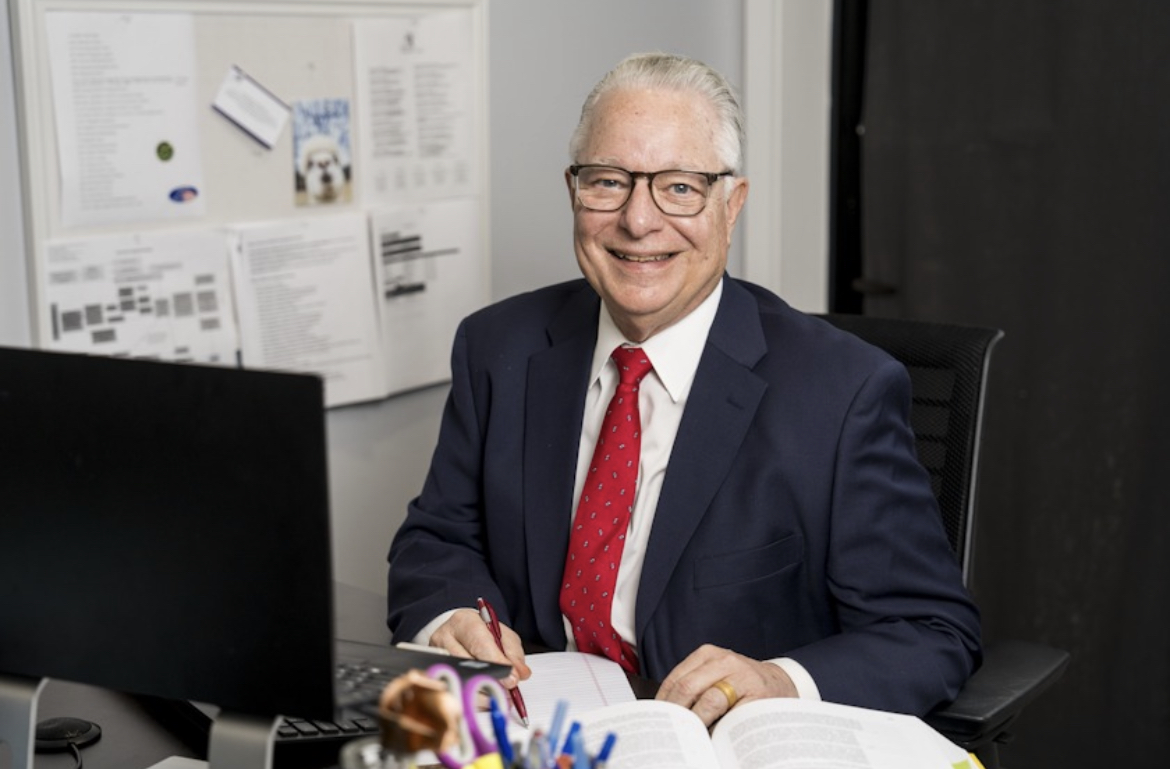
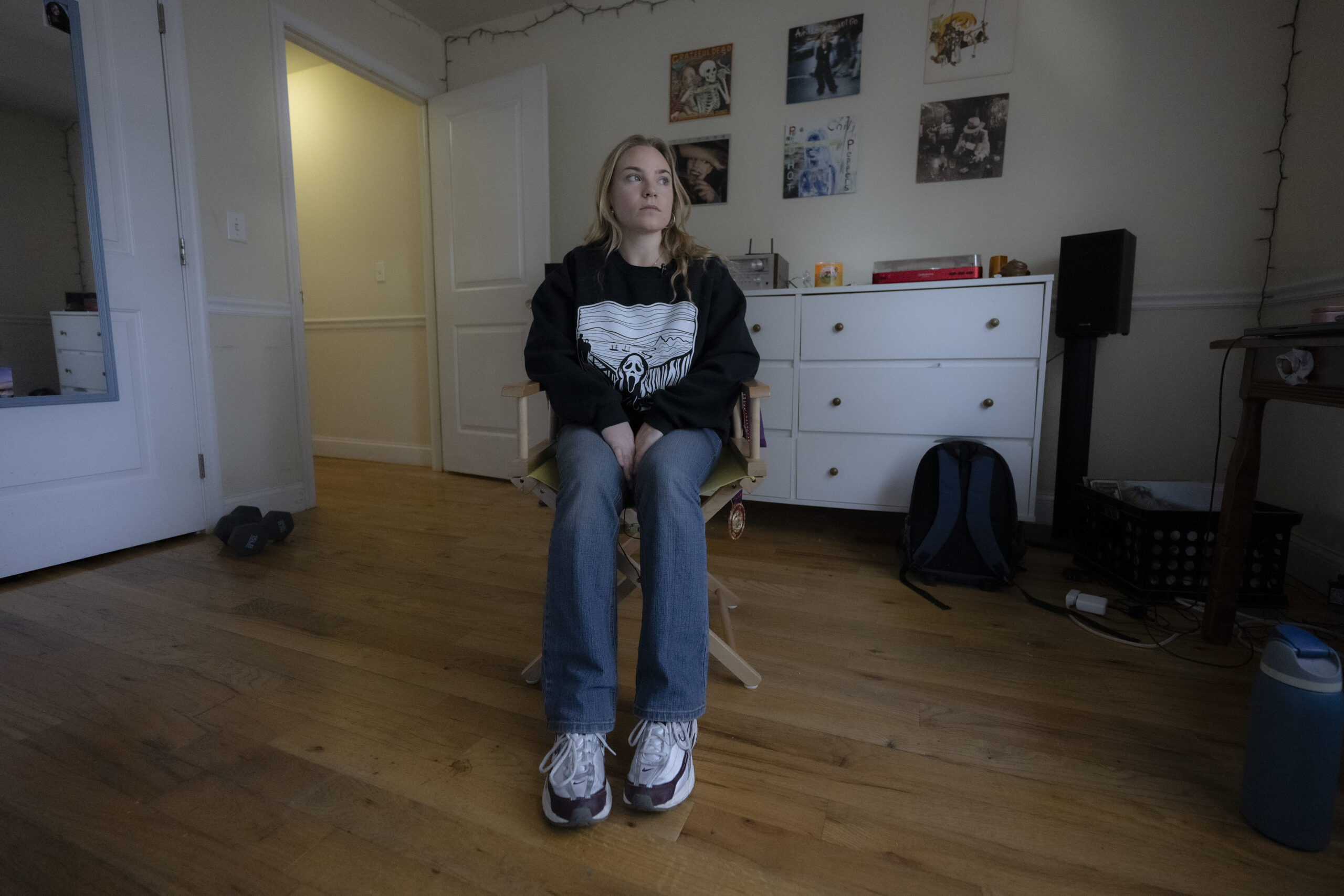
On Tuesday, the city agreed to pay $250,000 to a former clerk who, like several other register of wills employees, said he was fired after he refused to contribute to Gordon’s campaign.
Nicholas Barone alleged in a 2023 federal lawsuit that Gordon, through an intermediary, had first requested a $150 contribution in late 2021.
When Barone told his supervisor he could not afford to contribute, Gordon asked for $75, according to the lawsuit. Barone balked again.
Then, in January 2022, Barone received a termination letter, effective immediately. The letter came four days after a performance review found he was exceeding expectations, according to his suit.
“She pressured everyone to make a donation and sort of made it known, if you’re not donating, you’re not going to be employed,” said Barone’s lawyer, James Goslee.
In addition to the Barone settlement, the city has paid $400,000 to settle four other federal lawsuits brought by former Gordon staffers. They alleged that Gordon, who was elected in 2019, had essentially turned the register of wills office into an arm of her unsuccessful reelection campaign.
Patrick Parkinson, a former administrative deputy in the office, claimed in his lawsuit that Gordon “continually and relentlessly badgered” him for campaign money, then fired him in 2022 when he refused. His suit was settled in 2024 for $120,000.
Barone’s case was unusual in that it was the only one that got as far as a trial, which began Monday. Several former employees testified about how Gordon had politicized the office. Gordon testified last.
The city then agreed to settle before the jury began deliberating. Goslee said her testimony was a “disaster” for the defense.
“She just wasn’t a good witness, I’ll put it to you that way,” Goslee said. “She should not be in politics or be allowed anywhere near public office.”
Reached by phone Thursday, Gordon initially declined to comment. She called back five minutes later.
“In connection with the allegations brought against me, I maintain I did nothing wrong,” Gordon said. “Any decision to settle the case was a decision made by the City of Philadelphia.”
A spokesperson for the city’s law department declined to comment.
The register of wills office is a somewhat obscure row office in City Hall that employees approximately 100 people with an annual budget of about $5.2 million. It issues marriage licenses, processes inheritance-related records, and does other nonpolitical work.
But it also has a reputation as a Democratic patronage operation going back at least to the 1980s, with jobs being doled out to people with political connections.
Goslee said he was hoping that Barone’s case might lead to some “structural change.”
“This is a very important public interest case,” he said. “That system of entrenched, compelled patronage really needs to come to an end.”
That does not appear to be happening yet.
Gordon was defeated in the 2023 Democratic primary by John Sabatina Sr., an estate attorney and Northeast Philadelphia ward leader. He took office in January 2024.
The city has since paid out $256,000 in settlements to nine former register of wills employees who filed lawsuits alleging that Sabatina fired them to make way for his own patronage hires. Five cases are still pending.
“It was a hit list,” lawyer Timothy Creech, who is representing most of those ex-employees, said in September, comparing Sabatina to a “Tammany Hall”-style party boss, a reference to the former New York City political machine.
“It wasn’t to save money,” Creech said. “It was specifically to hire their own people.”
Register of Wills John Sabatina
Several of the 30 office employees on the list are described by their connections to Gordon, including “Tracey niece,” “Tracey’s friend, 7th Ward committee person,” “Last Tracey hire.” The suggested action for most of those employees was immediate termination.
“We have enough immediate terminations to allow us several hires in the next two weeks,” reads a note at the bottom of the spreadsheet.
Another note appears to indicate that some firings were planned before Sabatina had replacements:“We don’t have people lined up for all of these jobs and we need to make sure we use up all of the funds set aside in the budget for salary.”
Sabatina has declined to comment on those cases.
Lauren Cristella, president and CEO of the Committee of Seventy good-government group, said it is not acceptable for the city to spend more than $900,000 to settle lawsuits stemming from politics in the register of wills office.
“We can all think of a thousand better things we could do with these funds,” Cristella said. “The patronage mill better start printing money to keep up with these payouts because taxpayers in this city can no longer foot this bill. When is enough for Council and the mayor to meaningfully reform the row offices?”
Last year, the Pennsylvania Intergovernmental Cooperation Authority, Philadelphia’s fiscal watchdog, passed a resolution to recommend that City Council and Mayor Cherelle L. Parker abolish the register of wills office, along with the sheriff’s office, another row office with a long history of problems.
Neither Parker nor Council has shown any interest in taking action.
Gordon, who ran unsuccessfully for Congress in 2024, now works in the sheriff’s office as a services representative, according to city payroll records.
“Row offices are set up to create jobs for the politically connected, not serve the people of our city,” Cristella said. “It doesn’t matter who is in the office, the taxpayers are always on the hook for their abuse of power.”
Staff writer Ryan W. Briggs contributed to this article.
More than two dozen Philadelphia-area real estate professionals helped arrange $45 million worth of questionable deals around Temple University in which student rentals that had sat on the market for months abruptly sold for about double their asking prices, an Inquirer investigation has found.
In 52 settled or still-pending sales over roughly the last year, apartment buildings were listed for sale at an average price of $450,000, but found no takers. Within days of being re-listed for a higher price, the same properties sold for as much as $905,000 — at least on paper — to buyers who took out mortgages that far exceeded the original asking price.
Eight sellers or their agents now say they entered into the deals with the understanding that they would actually receive close to the original asking price — not the much higher amount that was officially listed on deeds and other public records. And an appraiser said that real estate agents on both sides of a proposed deal tried to pressure him to raise the valuation of a property.
The sales have raised concerns about possible mortgage fraud in the area around Temple, which could lead to a spate of foreclosures and affect property assessments, tax bills, and student rentals. At least one such property has gone into foreclosure over an unpaid mortgage, according to court records.
Solomon Wisenberg, a former assistant U.S. attorney in North Carolina and Texas who specialized in white-collar crime and bank fraud, said the people involved in the deals could face scrutiny from criminal investigators.
“I don’t know any fraud prosecutor who wouldn’t be interested in looking at that,” Wisenberg said. “Settlement statements have to reflect reality. If you don’t present an accurate picture to the financial institution that is financing the loan, you’ve got problems.”
Patrick C. Fay, a real estate agent in Coldwell Banker’s Old City office, was involved in every deal, representing at least seven buyers who purchased the properties through limited liability companies. One of those buyers had been convicted of an earlier mortgage fraud scheme.
Pat Fay had been one of the top real estate agents last in Coldwell Banker’s Old City office. His clients have purchased properties around Temple University — at twice the listing price.
Coldwell Banker cut ties with Fay in December, hours after The Inquirer published a story concerning 33 of his deals around Temple.
But Fay had a counterpart on the other side of every transaction. They included agents at major brokerages such as Keller Williams, Long & Foster, and eXp — as well as three agents who worked in the same Coldwell office as Fay and helped him close 13 sales.
Coldwell Banker’s national office said this month that it has launched an internal investigation into the matter.
Fay, who was one of the top agents in his Coldwell office, has denied wrongdoing. He declined to discuss specific sales.
“In my over 20 years in real estate, I have maintained an unblemished record with no ethical violations or complaints filed against me,” Fay wrote in a text message last week. “These claims are without merit.”
(function() {
var l2 = function() {
new pym.Parent(‘patfay’,
‘https://media.inquirer.com/storage/inquirer/projects/innovation/arcgis_iframe/patfay.html’);
};
if (typeof(pym) === ‘undefined’) {
var h = document.getElementsByTagName(‘head’)[0],
s = document.createElement(‘script’);
s.type = ‘text/javascript’;
s.src = ‘https://pym.nprapps.org/pym.v1.min.js’;
s.onload = l2;
h.appendChild(s);
} else {
l2();
}
})();
Steve Orbanek, a spokesperson for Temple University, said the university learned about the situation from The Inquirer’s previous report and is now investigating possible impacts on its student renters.
“It goes without saying that the university condemns any unlawful behavior, and we find these allegations deeply concerning, both for our students and neighbors who reside in the community,” he said.
‘Fat Pay’
Fay, of Moorestown, Burlington County, started arranging deals in December 2024 to purchase apartment buildings around Temple University that owners had been struggling to sell.
The value of those properties, which are largely marketed as student rentals, has fallen in recent years. A local landlords association said vacancy rates are up and rents down amid declining enrollment at the university, which has shed 10,000 students in under a decade.
Fay, who has used the handle “Fat Pay” on social media, had buyers willing to make a deal. However, in multiple cases identified by The Inquirer, that was true only after the sellers and their real estate agents agreed to sign a deed showing that the property had sold for much more than the original asking price.
Joelle Delprete, a former Temple grad student who works for the university, lives in an apartment unit that Fay helped purchase. Soon, unpaid water and trash collection bills started piling up.
Shaina Levin, a Coldwell agent who worked with Fay in his Old City office, represented a seller in one such deal on 15th Street. The property was initially listed for sale last July at $375,000. Records show Fay’s client bought it for $842,000 in September 2025 after securing a $673,600 mortgage.
“It’s a bonus when we can keep it in the Coldwell Banker family,” Levin posted on Facebook, referring to the sale. “Thanks Pat Fay for teaming up on this one. Congratulations to your buyer!”
In an interview, Levin said her client received an amount closer to the original listing price, not the $842,0000 sales price recorded on the deed.
She saidthe buyer contended that thehigher sales price was tied to a planned renovation. City permit records show no evidence of construction or renovation work on the building.
Levin said that Fay’s proposal was “totally unconventional,” but that her office manager at Coldwell Banker ran it by the company’s legal department, which signed off.
“Legal said, ‘Yep, all good,’” Levin said. She referred additional questions about the sale to her manager, who declined to comment.
Fay’s buyer in that deal was UrbanNest Acquisitions, a limited liability company created the same month as the sale by Tanjania Powell-Avery, a former real estate agent from Pottstown, Montgomery County. Federal prosecutors with the Eastern District of Pennsylvania indicted Powell-Avery and two others in 2010 for participating in a mortgage fraud ring in the Philadelphia area. She pleaded guilty and was sentenced to five years’ probation and nine months’ house arrest.
Powell-Avery declined to comment.
Two other colleagues of Fay’s at his former Old City office also brokered sales with him, according to data from the Multiple Listing Service, a shared database that real estate professionals use to track and arrange deals.
Karl Klotzbach represented sellers in eight deals with Fay over five months last year — more than any other seller’s agent, records show. The eight properties had originally been listed for a total of $3.4 million before they were each re-listed and sold for a combined $7 million.
Klotzbach did not respond to requests for comment.
Matthew Greene, another Coldwell agent, brokered four sales with Fay on North 12th Street. The properties were each listed for $450,000 last April, then re-listed at $879,000 the following month. In July, each property sold at the higher amount within days of one another, with all four sales backed by a separate $703,200 mortgage.
Greene would not discuss the sales.
“I’m happy to direct you to our legal team for any comment,” he said. Greene hung up the phone without providing any contact information.
Daryl Turner, the branch vice president at Coldwell Banker’s Old City office, referred questions to the company’s legal department. Andrea Gillespie, a national spokesperson for Coldwell Banker, which operates in 49 countries and territories, would not comment on the sales.
“We immediately disaffiliated Pat Fay and are continuing to investigate the matter internally,” Gillespie said in an email. “Coldwell Banker stands for trust and integrity, and we hold our agents to the highest ethical standards.”
‘This is my livelihood’
While sellers were eager to offload their toxic real estate investments, not every deal went smoothly.
John Sexton, an independent licensed appraiser with twenty years’ experience in the Philadelphia market, said in an interview that an appraisal company working for a lender contracted him last year to evaluate a property on North Park Avenue, near Temple’s campus. The sale was being brokered by Fay and Peter Lien, an eXp real estate agent representing the seller.
It was the kind of property common around Temple: a Victorian-era rowhouse that had been converted into a three-unit, nine-bedroom student rental. And, like similar properties in the area, it sat on the market unsold for more than two months, with no takers, at its $408,000 asking price.
The property was taken off the market in October, but then reappeared as a pending sale at $879,000, according to MLS data. Fay had found another buyer ready to pay more than double.
Sexton said he quizzed Lien about why a property that had not undergone recent renovations would suddenly jump in price. Sexton said Lien responded that an earlier broker simply “hadn’t been familiar with the real estate market” around Temple.
Sexton said the implication of these conversations was that Lien “had a person who would pay $879,000, so I should just do my job and mark it at $879,000.”
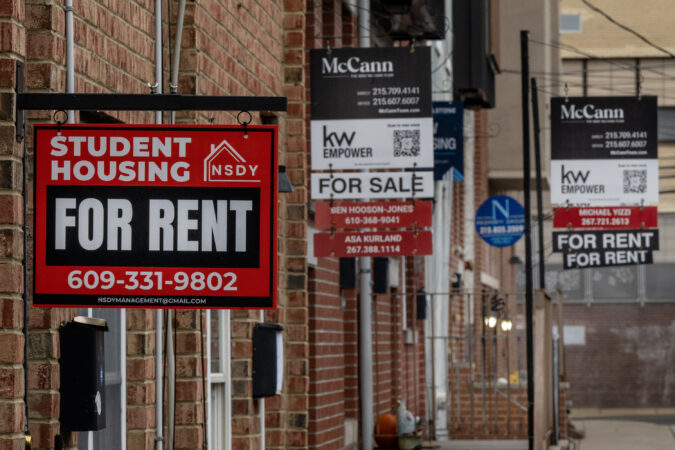
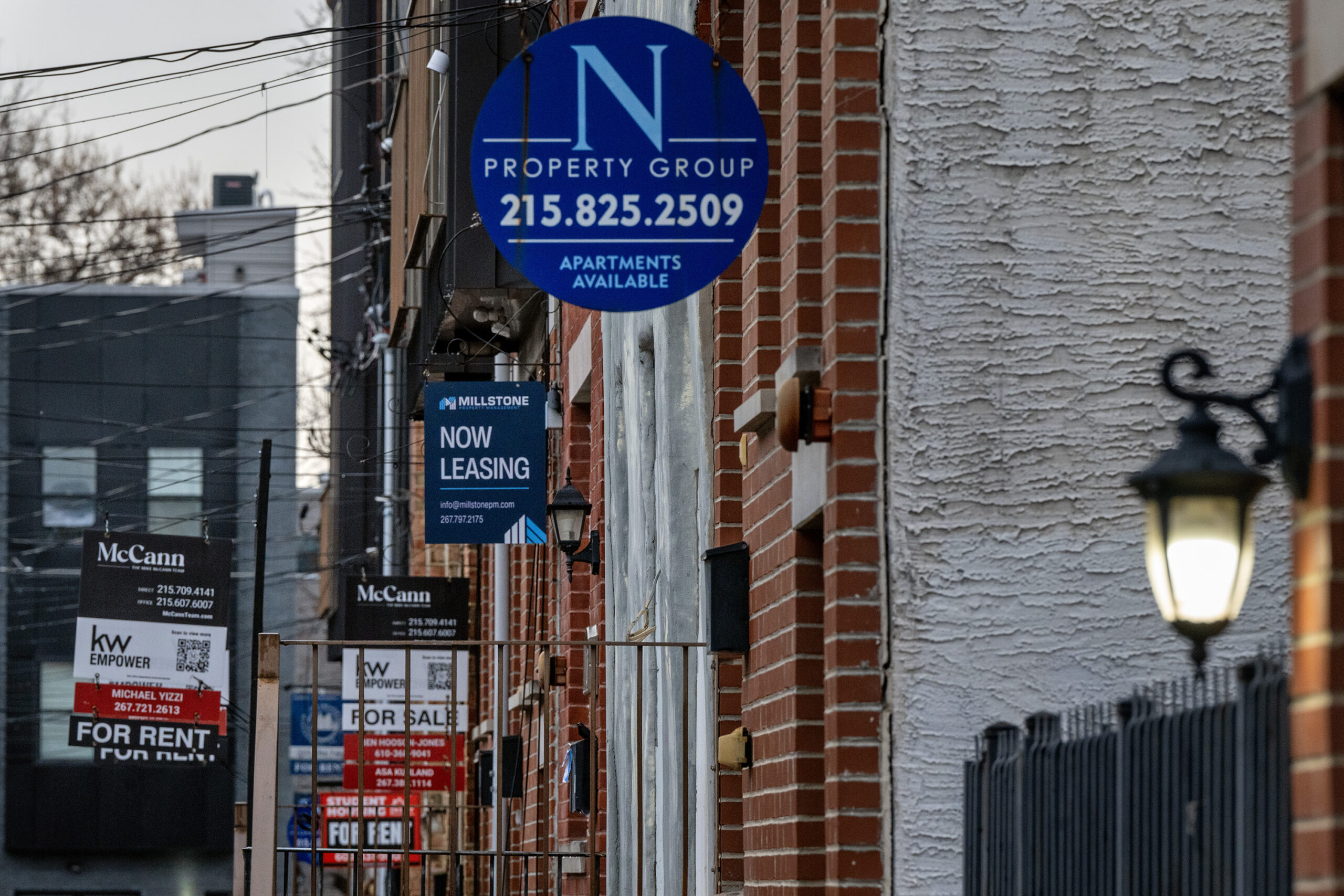
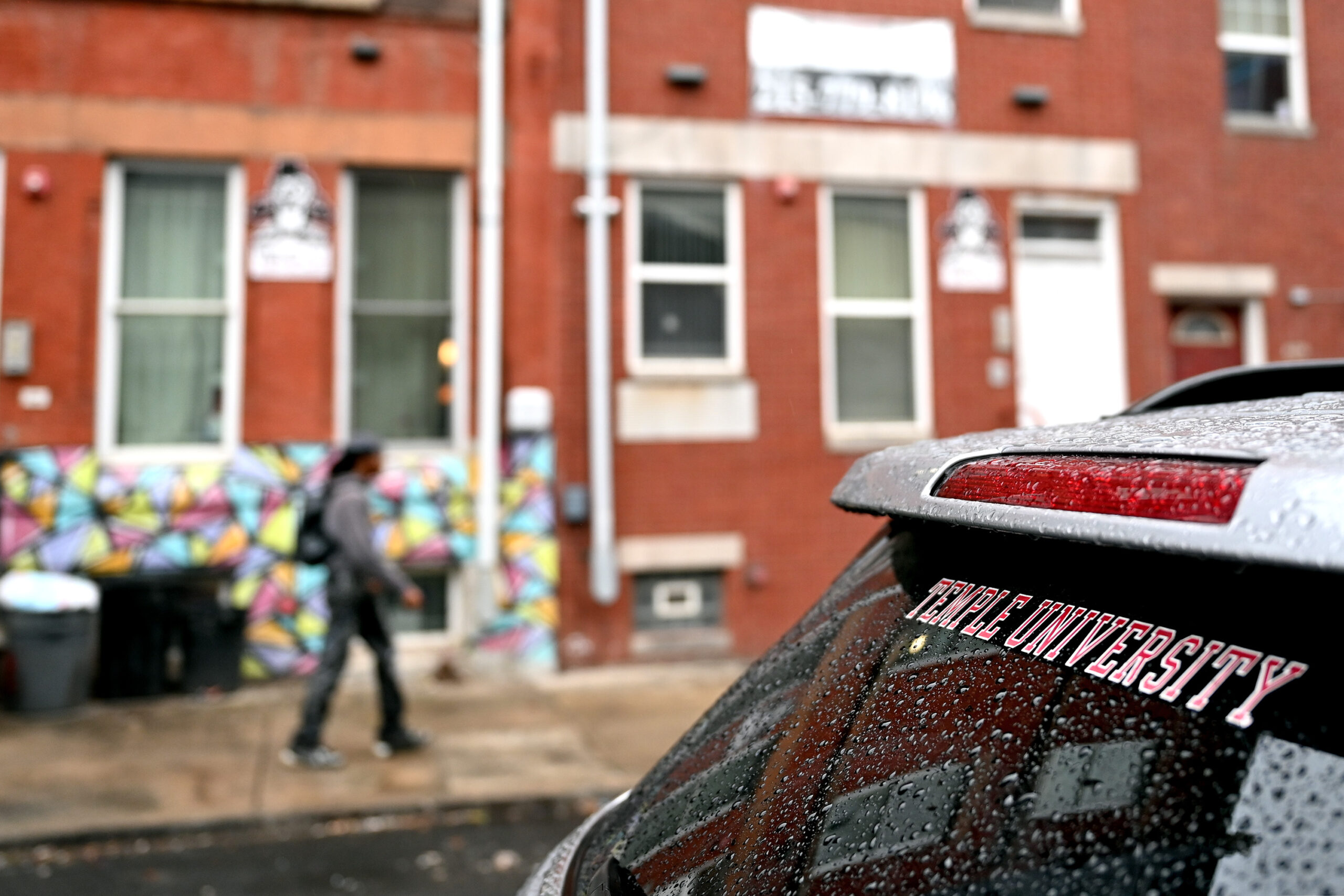
The 1700 block of Arlington St. in North Philadelphia Wednesday, Dec. 10, 2025. Buyers have snapped up $48 million in student housing around Temple University, often paying more than twice what properties were originally listed for even though rents are down and vacancies are up for student housing.
Sexton said he then received an unusual email from an individual named “Jay Jay,” who indicated he was working with Fay. The email included a list of nearby properties that had all sold in the $800,000 range, establishing that the sales price was reasonable.
Sexton looked into the comparable sales and found that they had all been brokered by Fay. “Jay Jay” also sent Sexton copies of leases for apartments in the same building, purporting to show units leasing for $2,500 a month. But when Sexton dug up sales listings for the same building from a few weeks earlier, they advertised that the units had been leased for closer to half that amount.
“Jay Jay” did not respond to an e-mailed request for comment.
Sexton said he called Fay to discuss the discrepancies, and the real estate agent accused him of being inexperienced and pushed him to approve the higher value.
“It’s a tough situation,” Sexton said. “You have two brokers pressuring you and sending you signed documents saying the sale price is valid.”
Sexton said after he told Fay he would need to further substantiate the higher asking price, Fay stopped responding.
The property never sold and is now off the market.Sexton never heard from Fay again.
“It’s infuriating to me, because he’s putting my license in jeopardy,” Sexton said. “This is my livelihood.”
In a text message, Fay denied “any claim that I have ever manipulated or influenced an appraisal in any fashion.” He did not respond to questions about the sale.
Lien said he could not comment on the failed deal.
“I was instructed by my brokerage that any press would have to go through our office, and we’re not allowed to speak on it,” said Lien, who works out of eXp’s King of Prussia office.
The manager of that eXP office did not return a request for comment.
‘Really bad stuff’
Daniel Perlman, a former prosecutor in the Maryland State’s Attorney’s Office who now practices white-collar criminal defense, said anyone who signed documents they knew to be false could potentially face legal problems.
“If there are documents that have incorrect information for a mortgage, then yeah, somebody has criminal liability,” Perlman said. “You’re under penalty of perjury for signing these documents.”
A spokesperson for the U.S. Attorney’s Office in the Eastern District of Pennsylvania said the office does not confirm or deny the existence of investigations, as did a spokesperson for the Pennsylvania State Real Estate Commission, which licenses agents.
Nick Pizzola, vice president of the Temple Area Property Association, which represents local landlords, said the COVID-19 pandemic has had a lasting negative impact on the off-campus real estate market, leaving landlords struggling to sign leases and pay their own mortgages.
Still, he said, the seller’s agents had to have known something was amiss when a buyer was offering double the asking price.
“Anyone who knows anything about real estate would have run away from those deals,” Pizzola said. “Some really bad stuff was happening.”
Most participants in Fay’s deals were reluctant to discuss their roles when contacted by The Inquirer this month. Some seller’s agents said their brokerages had instructed them to remain silent. Others claimed ignorance when it came to the details of the deals they had helped arrange.
The 1900 block of N. 18th St in North Philadelphia Wednesday, Dec. 10, 2025. Buyers have snapped up $48 million in student housing around Temple University, often paying more than twice what properties were originally listed for even though rents are down and vacancies are up for student housing.
In the March 2025 sale of an apartment building on the 2200 block of North Sydenham Street, for example, both the seller and his agent said they could not explain why the sales price did not match the amount listed on the deed.
The property initially went up for sale for $324,900 in December 2024 but was then re-listed and sold to Fay’s client in March 2025 for $789,000. The seller, Alvjod Dedaj, said he did not actually receive that higher amount. He referred further questions to his real estate agent at Long & Foster.
“I have no clue what’s going on,” Dedaj said. “I just cashed out a certain amount of money.”
Dedaj’s agent, Bob Kiziroglou, who works out of Long & Foster’s Devon office, said he, too, could not recall why the asking price suddenly jumped. He referred questions to Fay.
“Reach out to him, man, he’ll give you all the details,” Kiziroglou said.
A message left at Long & Foster’s Devon office was not returned.
The Broad Street office of Keller Williams Realty was another hub for deals involving Fay, with five of its agents representing sellers in eightsales. An office manager did not respond to requests for comment.
Wisenberg, who was a prosecutor in the Whitewater/Madison Guaranty Savings & Loan investigation, said he found it particularly suspicious that Fay arranged deals with mortgages that far exceeded the initial asking price, and with sellers receiving less than the stated purchase price.
“What’s he doing with the rest of the money?” Wisenberg asked.
Trouble brewing
Already, there are signs of trouble in the neighborhood around Temple.
In November, one lender, Easy Street Capital, filed to foreclose on a Park Avenue property that sold in late 2024 for $850,000 — more than double its value just two years prior.
While no buyer’s agent is listed in MLS data for the sale, Lien, the eXp agent, is listed as representing the seller. The buyer, Park Ave Enterprise LLC, is registered to an associate of Fay’s who participated in at least four other sales around Temple that he brokered.
According to court filings, the LLC defaulted on an $807,000 mortgage about four months after purchase.
The lenders that financed Fay’s purchases now bear the most risk of the overvalued and under-occupied rentals lapsing into foreclosure. A private lenders association in Novemberwarned its members of a “fraud scheme” operating around Temple University, and cities like Baltimore have seen hundreds of properties fall into foreclosure as a result of suspected mortgage fraud rings.
A spokesperson for City Councilmember Jeffery “Jay” Young, whose district encompasses the affected properties, said he was “not familiar with the situation.” He called mortgage fraud “a common and unscrupulous real estate practice that happens too often in our city.”
Orbanek, the Temple spokesperson, said the university is working to identify students who may be impacted by potential foreclosures and asked themto contact the university’s Essential Needs Hub, which connects student renters with supportive resources.
Joelle DelPrete, a former Temple grad student who works for the university, lives in an apartment unit that Fay helped purchase. He brokered a sale of the rental property to “18th Estates LLC” in December 2024 for $868,000. It had previously been listed for $385,000.
A few months later, DelPrete said, Fay texted her that he was the property manager, and he wanted her to sign a new lease so he could begin collecting rent.
“We assumed it was a totally legit company,” DelPrete said.
Soon, DelPrete said, unpaid water and trash collection bills started piling up, and maintenance issues went unanswered. In October, she found a document known as an Act 91 notice that was posted on an adjacent property in advance of foreclosure proceedings. It showed the owners — who had been represented in the purchase by Fay — had stopped paying its mortgage and owed roughly $25,000.
DelPrete and her three roommates are hoping to move out before her building goes into foreclosure.
“Especially living around Temple, you just gotta be careful and make sure everything is aboveboard,” she said. “If something feels off, it is off.”
Deputies from the Philadelphia Sheriff’s Office appear to have made serious tactical errors while attempting to apprehend a wanted man at his workplace in North Philadelphia on Monday morning, which enabled him to speed away in his car,according to experts in fugitive apprehension.
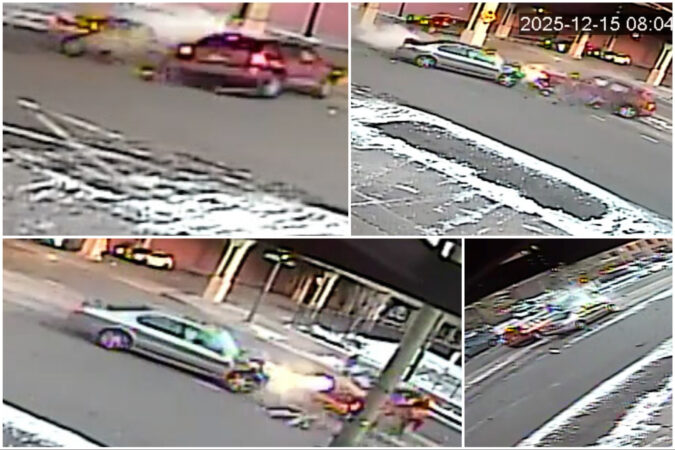
Moments later, Joseph Cini, while fleeing the deputies in his Nissan Maxima, plowed into a Jeep Patriot at Ninth Street and Girard Avenue, police say, killing an Uber passenger and seriously injuring her driver.
Cini, 35, ran from the scene but turned himself in to police Tuesday night. He is facing a slew of new charges, including homicide by vehicle.
Sheriff Rochelle Bilal has declined to answer any questions about the botched arrest. She released a short statement offering her office’s condolences to the family of Angela Cooper, the 63-year-old woman who was killed.
The Inquirer, however, was able to partially reconstruct what happened based on statements the deputies have provided to Philadelphia police.
The six-person operation by the sheriff’s office turned deadly when deputies from its warrant unit approached Cini, who was wanted for a probation violation, while he was still behind the wheel — rather than waiting until he got out of his vehicle.
Cini then backed up and, because the deputies had failed to box him in, started barreling down Girard Avenue. One member of the warrant unit, in fact, told police that he moved his unmarked vehicle to make way for the suspect’s vehicle to get by.
Four experts consulted by The Inquirer said the deputies’ statements could serve as a road map of what not to do during an apprehension. Such high-risk tactics, according to those experts, put the deputies and the public in more danger than was necessary.
“A vehicle is like a gun, almost. It can be a two-ton weapon.” said Craig Caine, a retired inspector with the U.S. Marshals Service. “And it proved to be true in this case.”
A plan gone wrong
Before sunrise Monday morning, a team of four deputies and two sergeants from the sheriff’s warrant unit laid an ambush for Cini. They had received a tip he was working at a low-slung plumbing business next to a three-way intersection on the 900 block of Watts Street, just south of Girard.
After surveilling the business, the team learned that Cini was set to arrive around 7 a.m. A sheriff’s sergeant and a deputy were outside the plumbing business, waiting to get a positive ID as others moved to block Cini’s escape paths, according to statements they later provided to police.
But when the deputies received confirmation that Cini was approaching the business, they sprang the trap before he stepped out of the car.
One deputy told police she activated the emergency lights on her car, then she and another deputy approached Cini and told him to exit his vehicle.
A sheriff’s sergeant on the team provided a similar account, telling police that the warrant unit closed in on Cini while he was still in the Maxima.
Instead of getting out of the car, Cini threw it in reverse and headed north on Watts.
As Cini backed up, a sheriff’s sergeant quickly moved his own vehicle onto Cambridge, a cross street, to avoid a collision with Cini on Watts, he later told police.
The warrant unit regrouped and began heading after Cini, but he crashed into the Jeep only five blocks away, according to the deputies.
Stephen Thompson, 51, a pastor in Kensington who was driving the Jeep for Uber, was injured in the crash and is being treated at Temple University Hospital.
The impact pinned Cooper, a Peco employee who did homeless outreach, in the back seat of the Jeep. A deputy checked her pulse and found none. She was pronounced dead at 7:24 a.m.
Days later, debris from the crash remained in the middle of Girard Avenue.
At a news conference Thursday, District Attorney Larry Krasner described Cooper as a “remarkable person” who was active with her church and “was always sacrificing for others.”
“We want the families and surviving victim to know our office will do everything we can to get justice and hold this defendant properly accountable for this terrible act,” Krasner said.
Experts on fugitive tracking and apprehension say the crash was likely preventable.
Robert Almonte, who served as U.S. marshal for the Western District of Texas during President Obama’s administration, said it is unusual for a warrant unit to confront a wanted man while he is in a car if the officers had information on where he is going to be.
“I would have waited for him to go into work and grab him there,” Almonte said. “Or, if the boss didn’t want that to happen, I’d go to Plan B: Let him walk toward the front door and grab him. But don’t let him get back to the vehicle.”
Caine, who worked on a fugitive task force in New York and New Jersey, agreed. A foot pursuit, he said, is much less dangerous than a car chase.
“Wait for him inside. Don’t have any suspicious vehicles within eyesight,” Caine said, speaking generally about best practices. “Take him at the door, or wait until he gets deeper into the building. Usually we were at the door. He comes in, boom, he’s on the ground, in handcuffs, and we take him away, no danger.”
If you have to confront a fugitive in a car, Caine said, make sure he has nowhere to go, if at all possible.
“Surround the car. Box him in nice and tight,” he said.
Krasner said Thursday that Cini may have somehow “figured out” he was about to be arrested, and then decided to flee. The deputies’ accounts to police, however, make no mention of that.
Regardless, Chris Burbank, an adviser to the Center for Policing Equity and the former police chief in Salt Lake City, said the operation was a failure that put lives at risk.
“It’s Law Enforcement Tactics 101,” Burbank said. “There is absolutely no reason to do anything while he’s mobile. This was unnecessary.”
Why was Cini wanted?
Since Monday, Philadelphia police and the sheriff’s office have provided only vague explanations of why sheriff’s deputies were attempting to arrest Cini in the first place.
Cini has a lengthy criminal history, racking up at least 24 priors in Pennsylvania and New Jersey between 2001 and 2022, including for theft, robbery, assault, and domestic abuse, according to police records.
The sheriff’s office statement on Monday said only that “deputies were attempting to serve a lawful warrant.” A police department news release on Monday described it as a “warrant for domestic assault,” leaving the impression Cini was wanted for a crime not yet prosecuted.
But two members of the warrant unit told police that they were planning to arrest Cini for a probation violation.
The Philadelphia District Attorney’s Office confirmed Thursday that Cini was being sought in connection with a 2018 casein which he had already been sentenced to jail time and probation.Assistant District Attorney Bob Wainwright said Cini was “on probation at the time for a domestic violence strangulation case” and had open warrants associated with that case.
Philadelphia law enforcement agencies have been under increased scrutiny about how they handle domestic abuse cases following the October killing of Kada Scott, allegedly by a former romantic partner.
At aCity Council hearing this month, Bilal said her office was prioritizing cases linked to domestic violence.
“We are no longer operating as a passive service agency,” she said. “We are now an active coordinator and a public safety partner in the city’s domestic violence response network.”
On Thursday, however, Bilal declined to discuss what went wrong in the Cini case.
“At this time, we cannot comment on the initial findings as the matter remains under active investigation,” Teresa Lundy, a department spokesperson, said in an email.
“Our office is conducting its own review,” Lundy said, “and will await the conclusion of the Philadelphia Police Department’s investigation before providing any further response.”
A man who allegedly injured an Uber driver and killed his passenger in North Philadelphia on Monday morning while fleeing sheriff’s deputies has turned himself in to police.
Joseph Cini, 35, surrendered at police headquarters Tuesday evening, Philadelphia police said.
Around 7:15 a.m. Monday, deputies from the Philadelphia Sheriff’s Office had attempted to serve him with a warrant on the 900 block of North Watts Street.
Cini took off in a Nissan Maxima and crashed into a Jeep Patriot at Ninth Street and Girard Avenue, killing Uber passenger Angela Cooper, 63, of the 1100 block of West Thompson Street, police said. The high-speed collision also injured the 51-year-old Uber driver.
The driver is being treated at Temple University Hospital.
Cini left the scene of the crash, but turned himself in Tuesday, police said. Charges related to Monday’s events have not yet been filed.
A spokesperson for the sheriff’s office said in an email Monday that the office was “fully cooperating with all investigative authorities” and that it was providing support services to the deputies involved.
In March 2023, Kathryn Ott Lovell, then Philadelphia’s parks and recreation commissioner, announced that the plan to build a new Carousel House in West Philly was finally coming together.
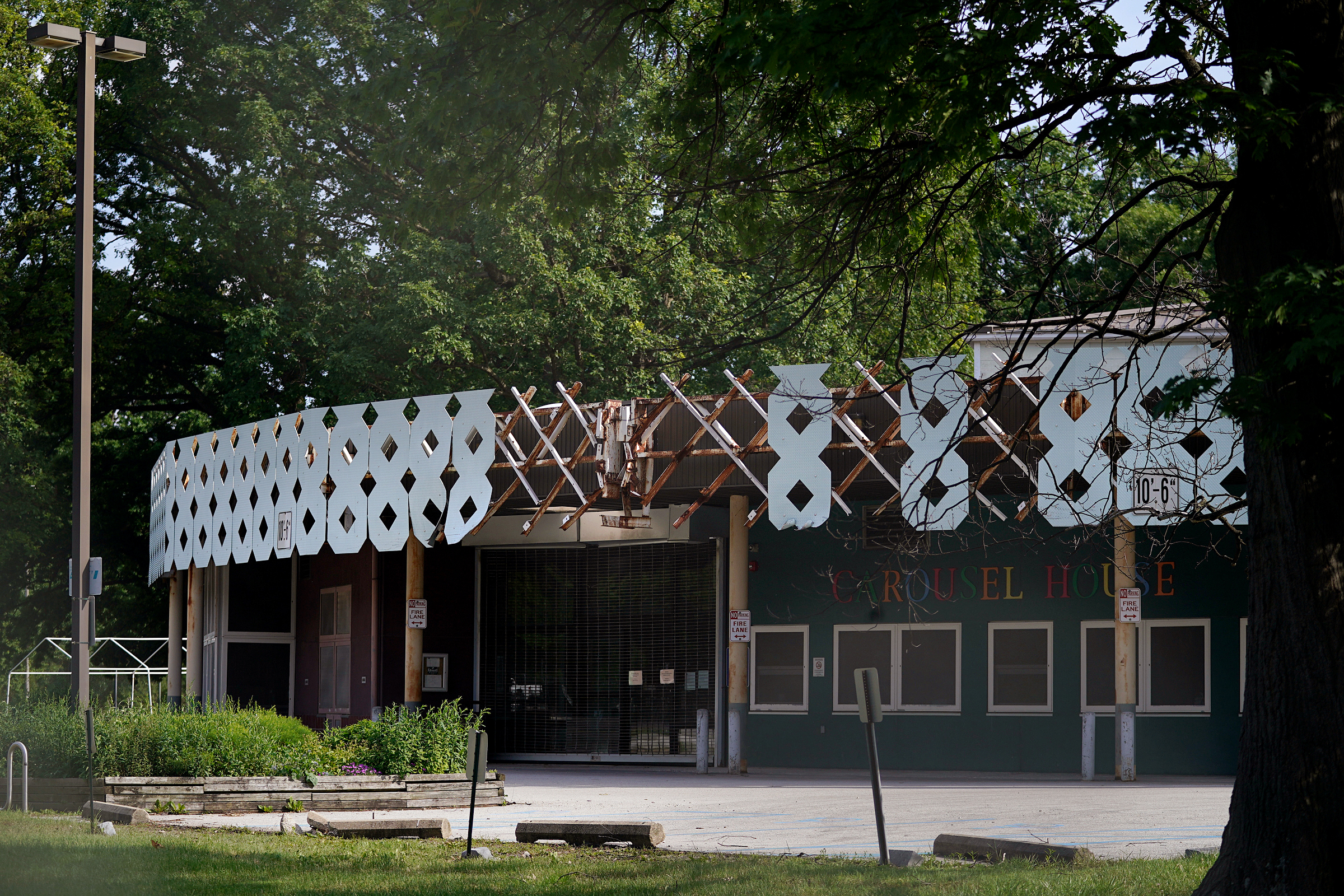
The city’s only recreation center dedicated to people with disabilities had closed its doors temporarily in 2020 during the coronavirus pandemic, then permanently in 2021. City officials said years of deferred maintenance had made it unsafe.
“I’m excited to stop talking and start doing,” Ott Lovell said during the 2023 presentation at the Please Touch Museum.
The city’s disability community was also excited to reunite at Carousel House. To many, the rec center on Belmont Avenue had become like a second home, with dances, movies, swimming, arts and crafts, and summer camp.
The city’s youth wheelchair basketball team was looking forward to returning to its home base. Since the rec center closed, the squad has been practicing in New Jersey.
Two and a half years later, however, Ott Lovell has moved on to a new job, Mayor Cherelle L. Parker has replaced Jim Kenney, and the Carousel House plan is still in the design phase.
The new ribbon-cutting date: summer 2028.
“I know this is a point of pain for many people, the timeline associated with this project,” Aparna Palantino, a deputy city managing director, acknowledged at a meeting Tuesday night announcing the “relaunch” of the project.
The previous plan called for Carousel House to reopen this year.
Palantino, who heads the city’s capital program office, said the expected cost of the project had risen from $35 million to $40 million. The work will still be funded primarily with beverage-tax proceeds, but the city had to line up grants to cover the difference, as well as conduct additional environmental and structural analyses.
“The result of all that is this amazing space that will provide so many more opportunities than the former one did,” Palantino told an audience of several dozen.
Aparna Palantino, deputy managing director of Capital Program Office, speaks with attendees during the Carousel House Rebuild Community Relaunch at the Please Touch Museum on Tuesday, Oct. 21, 2025, in Philadelphia. The Carousel House project is estimated to be completed in Summer 2028.
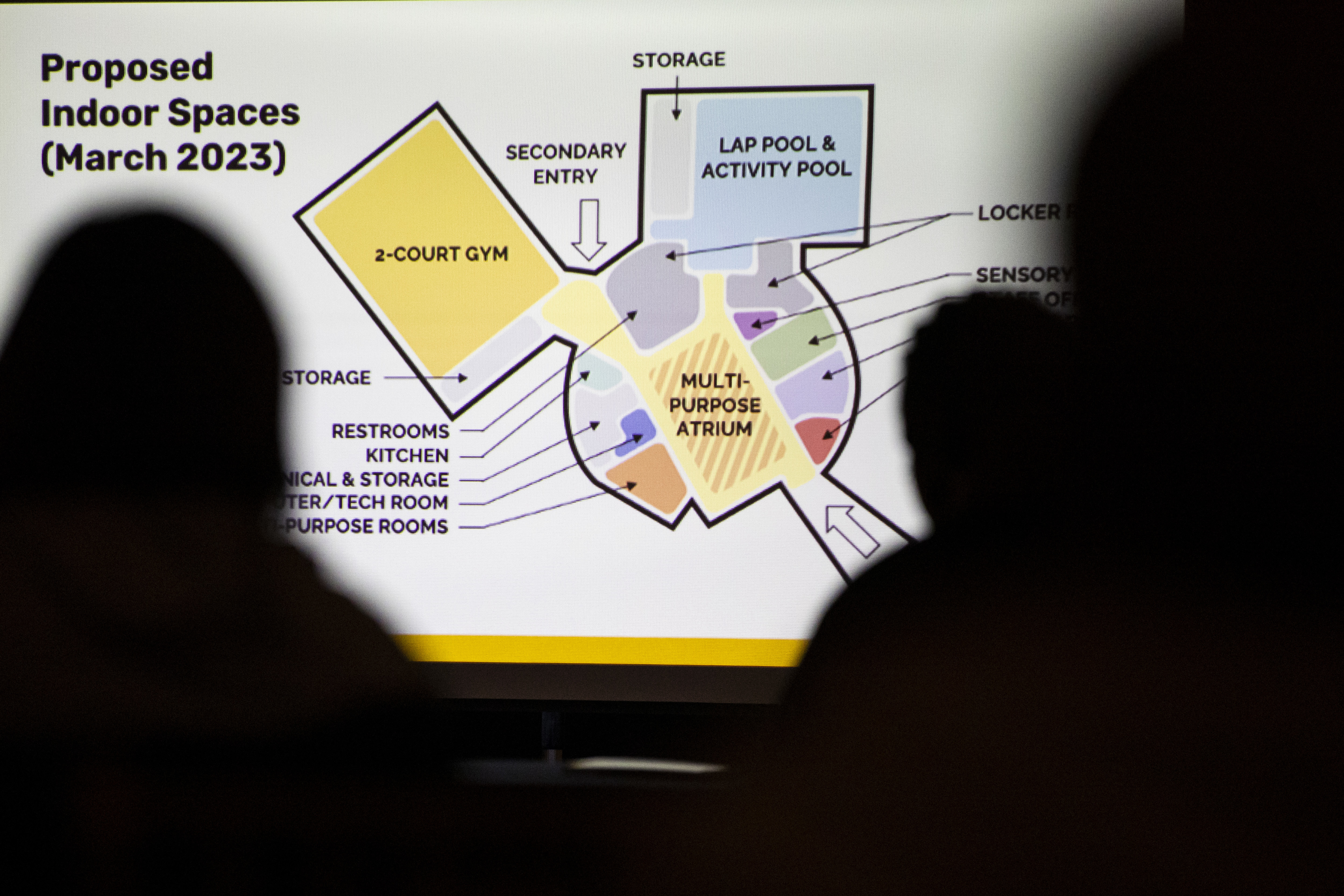
The state-of-the-art rec center will preserve some parts of the iconic Carousel House building and include two basketball courts, a heated lap pool and an activity pool with a zero-entry sloping entrance, a computer lab, a gym, a sensory room, and other amenities.
That all sounds great to people like Mike Martin, who has used a wheelchair for the last 30 years and has been going to Carousel House since the late 1990s. Such a place is needed in Philadelphia, where an estimated 17% of residents have a disability.
But the lengthy delays in the project have Martin, 74, questioning whether he will ever see the vision become a reality.
Martin and others would have preferred for the city to fix the existing building four years ago, when rec centers were reopening after the COVID-19 shutdown. A 2021 “Save the Carousel House” protest failed to sway city leaders.
“The design is way more than I think we expected, not that we’re complaining at all,” said Martin, who serves on the Carousel House advisory committee. “We’ll see what kind of political will there is to push this through. I just don’t want to get my hopes up is what it comes down to.”
Once a model
Carousel House was considered a milestone when it opened in 1987: a city-funded rec center, specifically for people with physical and cognitive limitations, three years before the Americans with Disabilities Act would be signed into law.
The Carousel House is pictured in Philadelphia’s West Fairmount Park on Wednesday, June 2, 2021. The city said it was permanently closing the recreation center for disabled people due to the facility’s deterioration.
But in recent years, disability-rights advocates, both locally and nationally, have come to view that approach as outdated and even discriminatory. How is telling people with disabilities to go to one center, they ask, any different from designating centers for Black people, LGBTQ+ people, or other identity groups?
“People with disabilities shouldn’t have to go to one place. That’s segregation, no matter how you look at it,” Fran Fulton, the late Philadelphia disability-rights activist, told The Inquirer in 2022. “There is no doubt having people who know how to work with children and adults with different types of disabilities is an advantage. But it doesn’t have to be just Carousel House.”
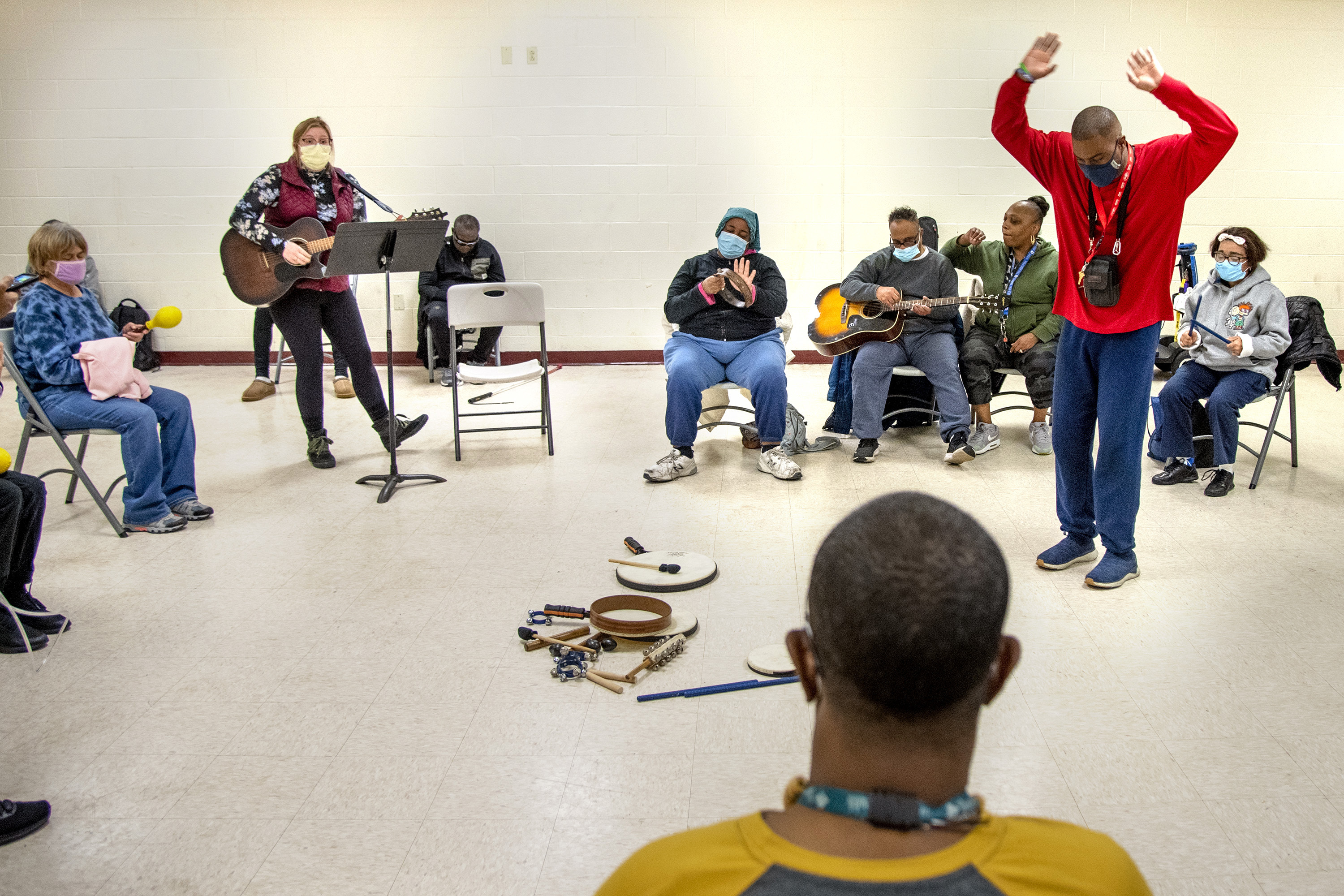
Sadiki Smith (right) stands to dance as music therapist Madison Frank (left) with her guitar leads a music therapy session at Gustine Recreation Center Tuesday, November 29, 2022. Since the closing of the Carousel House, the city’s only rec center for people with physical and intellectual disabilities, many of the programs have moved to Gustine.
The city was already moving in that direction before the pandemic with its long-term Rec for All inclusion plan. The goal is to eventually make the city’s 150 rec centers accessible to all residents. The new Carousel House will be open to all people in the surrounding neighborhoods, not just those with disabilities.
That is welcome news for Lucinda Hudson, president of the Parkside Association of Philadelphia, who attended Tuesday’s meeting.
“It’s well needed, and I think the community is pleased with how it’s coming together,” Hudson said. “We need a facility to be inclusive for all, and to support the handicapped community.”
Worth the wait?
Palantino said that while the Carousel House project has faced significant delays, city officials have continued to work behind the scenes. It is the largest project in the city’s beverage-tax funded Rebuild program, which has so far committed or spent $470 million.
She believes the new building will be worth the wait.
“It will be a universal space, so an entire family can come here and enjoy the amenities. The former Carousel House was a little more restrictive in the population it served,” Palantino said in an interview. “This will be the flagship rec center in the city when it’s completed.”
Attendees look at blueprints during the Carousel House Rebuild Community Relaunch at the Please Touch Museum on Oct. 21.
Families that frequented the Carousel House, however, are running out of patience.
The Gustine Recreation Center in East Falls has continued some of the programs for people with disabilities, including music therapy, basketball, and social groups. But that center doesn’t have the space and amenities that Carousel House provided.
“It’s just not the same,” said Tamar Riley, whose 43-year-old son had been going to Carousel House since he was 12.
“Hopefully we can get this off the ground,” Riley, president of the advisory council for Carousel House, said of the plans presented this week. “It’s been a really long time. I know it’s going to be a beautiful place once the city gets it up and running.”
The closure of Carousel House also forced Katie’s Komets, Philadelphia’s team in the National Wheelchair Basketball Association, to move its weekly practices to RiverWinds Community Center in West Deptford, Gloucester County.
As a result, there is only one Philly player on the team, according to Joe Kirlin, who with his wife, Roseann, created a fund to support the team. The team is named after their late daughter.
“The problem is city kids just can’t get over there,” Joe Kirlin said.
Caroline Fitzpatrick (right), 14, of South Jersey, talks with friends during the Philadelphia Parks & Recreation’s 24th Annual Katie Kirlin Junior Wheelchair Basketball Tournament in Philadelphia on Sunday, Jan. 23, 2022. Fitzpatrick plays on Katie’s Komets team from Philadelphia.
He said wheelchair athletes in the city are missing out on potential collegeopportunities. This year, all three high school graduates on Katie’s Komets received scholarships to play college wheelchair basketball.
“That wouldn’t have happened if they didn’t start as kids playing wheelchair basketball,” Roseann Kirlin said.
Lorraine Gomez, a community activist and president of the Viola Street Residents Association in East Parkside, said after Tuesday’s meeting that she appreciated the city’s efforts to keep the surrounding neighborhoods informed about the project.
Gomez is looking forward to being able to use the indoor pool and walking track in the winter, and said people with disabilities also deserve “to have their space back.”
“This is what the community needs,” Gomez said. “It’ll be a place where we can stay in touch with each other.”
For Hudson, of the Parkside association, the most important thing now is to break ground.
“So many things get put on the books, but don’t happen,” Hudson said. “This has got to be built.”
Robert Jordan was playing in his backyard on Aug. 15, 1975, another summer afternoon in his idyllic Delaware County neighborhood, when the panic began to spread from house to house.
Gretchen Harrington, an 8-year-old girl from his Bible camp, was missing.
“I remember being asked, ‘Have you seen Gretchen?’ and saying, ‘No, why?’” Jordan, who was 9 years old at the time, recalled this week.
The Amber Alert system wouldn’t begin for two more decades. There were no cell phones. No Facebook, Citizen or Nextdoor apps.
But through a network of suburban moms, everyone in Jordan’s Marple Township neighborhood seemed to hear the news at nearly the same time.
“It went right down the line, housewives not even getting on the phone, just going to tell each other something had happened,” Jordan said. “We knew something was happening because our mothers were so jittery.”
They sprang into action. Jordan piled into a neighbor’s Volkswagen van with his mother and four other kids. Their search began at a nearby park.
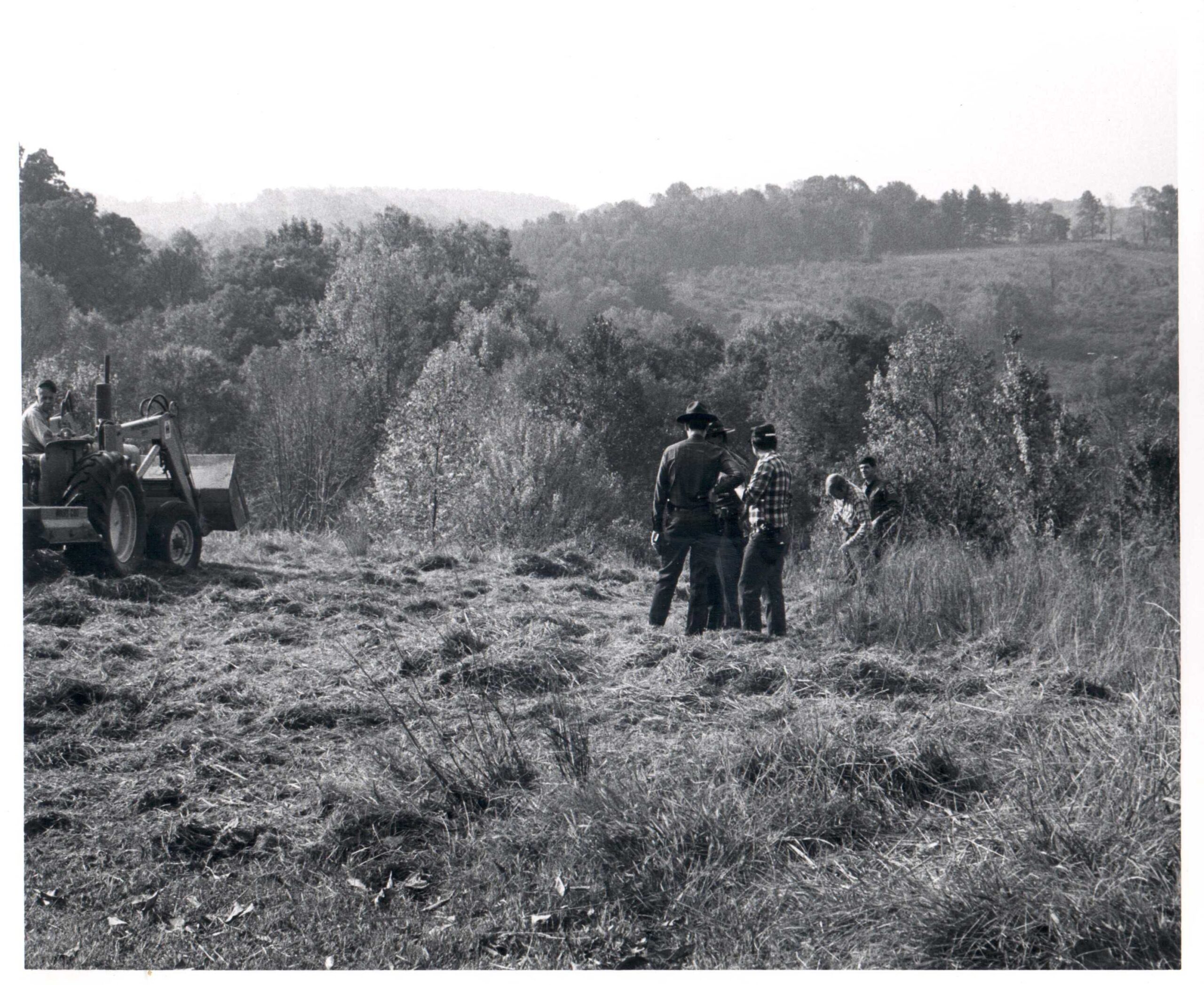
Hundreds of residents from Marple and neighboring towns would later comb wooded areas with no results. Tracking dogs were called in. Even a psychic.
“We haven’t got a thing, not a thing,” then-Broomall Fire Chief Knute Keober told The Inquirer two days after Gretchen’s disappearance. “If she’s in the area, she’s by Jesus well-hidden.”
Police search for Gretchen Harrington in 1975. Harrington was reporting missing that August, and found dead in October.
It wasn’t until Oct. 14, 1975, that a hiker found skeletal remains along a path in Ridley Creek State Park. At first, he thought they belonged to an animal.
“I looked closely and saw what I thought was fingernails,” the man told police, according to a new book on the case. The body was positively identifiedas that of Gretchen Harrington. It bore signs of blunt force trauma to her skull. Her death was ruled a homicide.
Jordan, 57, now a health care marketing executive, still thinks of Gretchen and that summer each time he drives down Lawrence Road, the last place she was seen.
He remembers the Bible camp. Hot dogs and baked beans. Kickball and Wiffle ball. Then, an abduction and a murder. It haunted families for years.
“So many young people from the ‘70s still bear that pain and anxiety today,” he said. “She was a lovely girl.”
‘It was always a dead end’
Brandon Graeff was 2 years oldwhen Gretchen Harrington’s body was found. The case had long turned cold by 1997, when he joined the Marple Township police force.
Tips had poured in early on, then slowed. Detectives pursued them all, on and off the clock.
“Everything — and I mean everything — was followed up on,” said Graeff, who became chief in 2020.
The case came up from time to time, in roll call, or when a detective would grab the folder again during a slow week.
“They’d look through it, maybe try to see something different for her,” Graeff said, “But we couldn’t. We didn’t. It was always a dead end.”
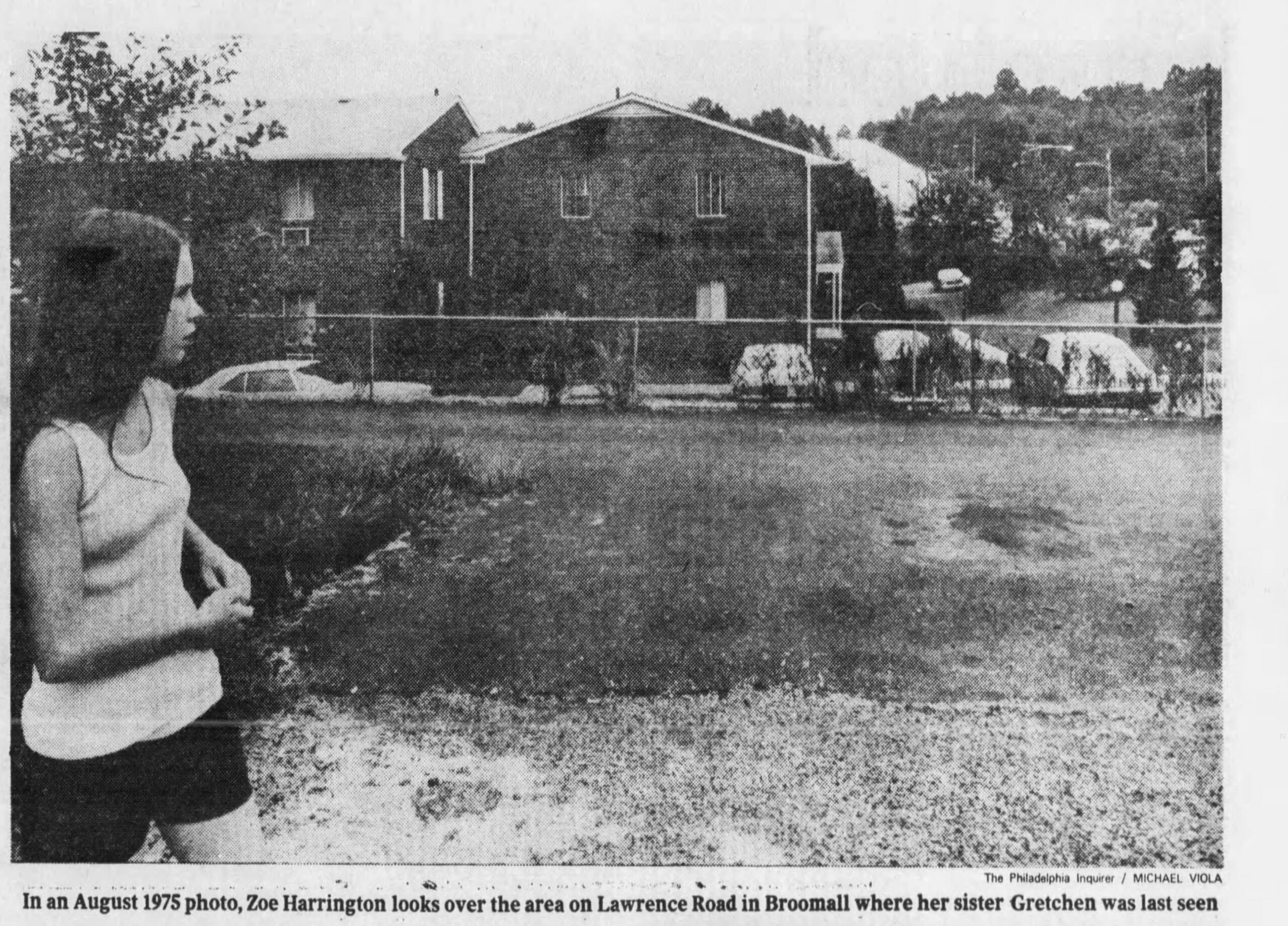
In a 1975 Inquirer photo, Zoe Harrington looks over the area on Lawrence Road in Broomall where her sister Gretchen Harrington was last seen.
Since 1975, the case has proceeded along two tracks: the abduction handled by Marple Police, and the homicide by state police, because the park in Edgmont Township is in their jurisdiction.
In early 2021, Graeff got a call from a man named Mike Mathis, who said he and another former township resident, Joanna Sullivan, were working on a book about the murder and were hoping the department would cooperate with granting them some access to the files.
With little movement in the investigation in decades, Graeff couldn’t think of a good reason to say no.
“We’re dealing with a little girl whose killer was not held to account,” he said. “My question to myself was, ‘Why not? How could it hurt?’”
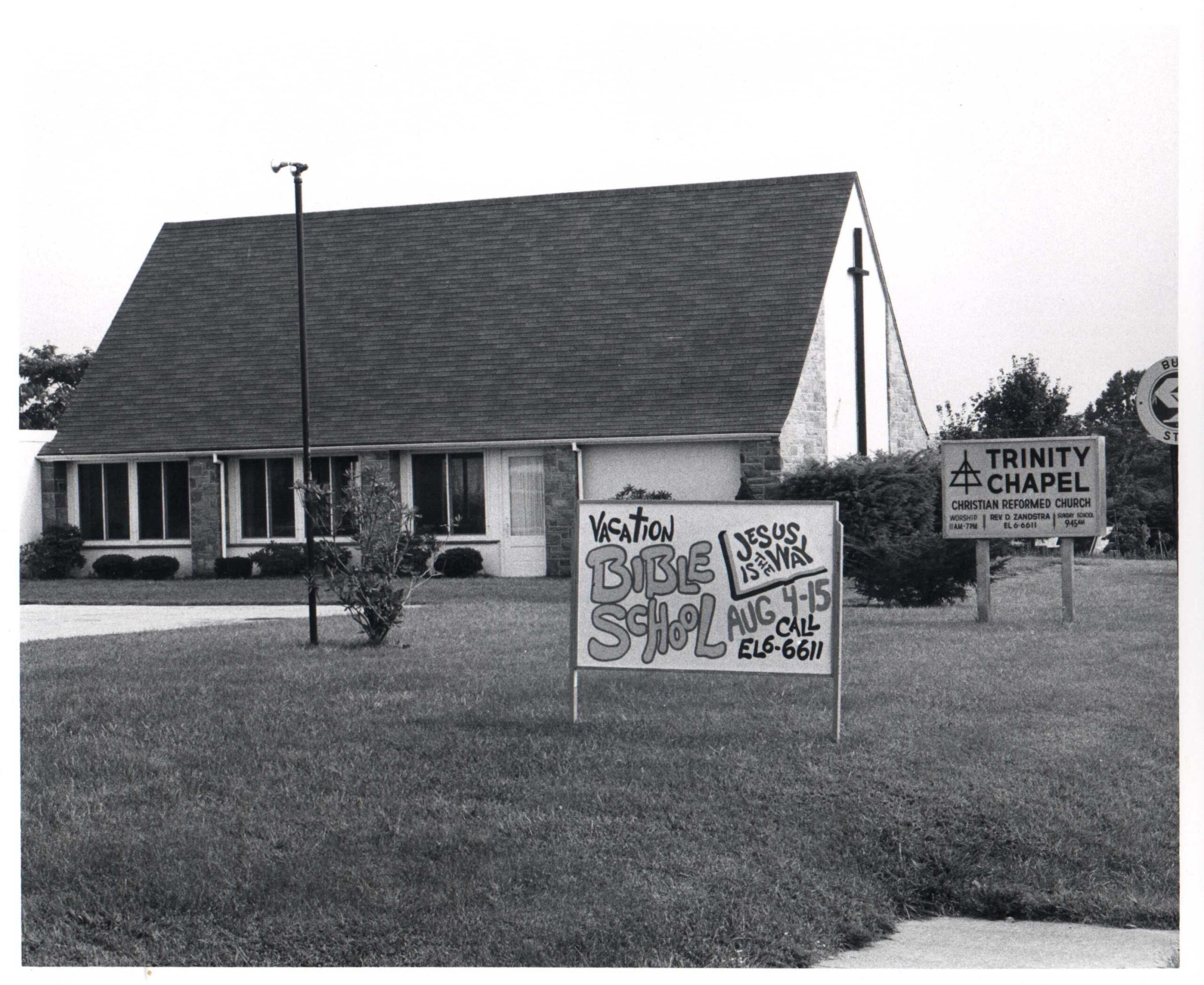
Trinity Chapel, where David Zandstra was reverend.
Sullivan, 57, remembers being at Lawrence Park Swim club the day that Gretchen disappeared. The image of a hovering helicopter was seared into her memory.
“We were just at the pool on a hot summer day and the helicopter was overhead,” she said. “We were wondering what was going on. Then we heard.”
Mathis, 58, remembers his father joining the search for Gretchen. He and Sullivan would meet a few years later at Paxon Hollow Middle School. They were editors at the student newspaper, The Hollow Log.
They kept in touch through high school and beyond. At a reunion decades later, they’d talk about writing a book together about Gretchen.
“It just stayed with me and Mike and many other kids through the years,” said Sullivan, now the editor-in-chief of the Baltimore Business Journal. “I always thought I’d like to write that story.”
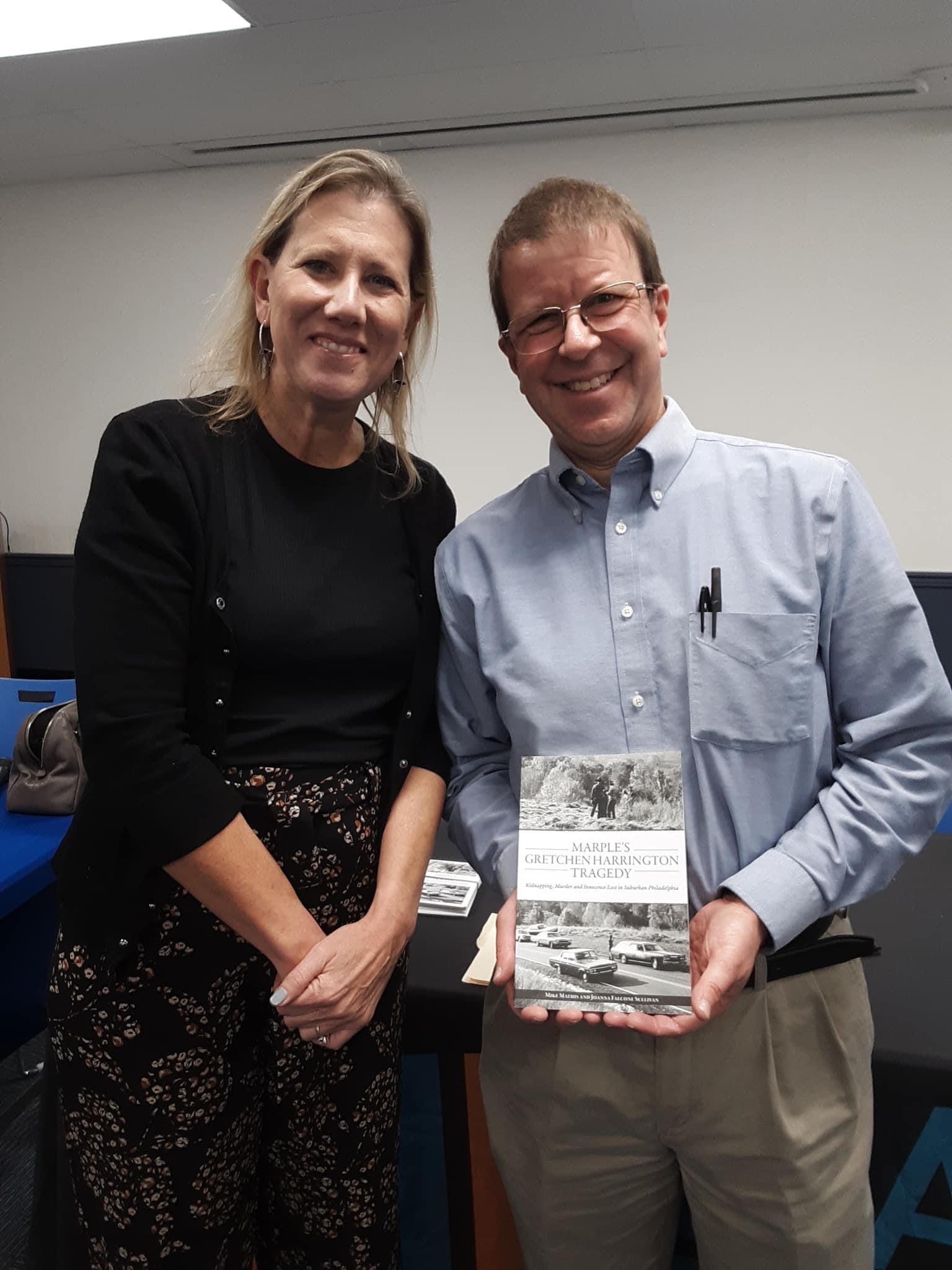
Joanna Sullivan and Mike Mathis, who worked together on the student newspaper at Paxon Hollow Middle School, released a book last year on the murder of Gretchen Harrington. Weeks later, a new witness came forward who enabled state police to elicit a confession from David Zandstra, a former reverend.
When COVID struck in 2020, Sullivan and Mathis suddenly had more time. They got started by creating a list of people they wanted to interview.
“At the top of the list,” she said, “was the Zandstra family.”
The book, Marple’s Gretchen Harrington Tragedy: Kidnapping, Murder and Innocence Lost in Suburban Philadelphia, was published in October 2022. Sullivan and Mathis did a round of public appearances in the area, including a December book signing at the Barnes & Noble in the Lawrence Park Shopping Center — just down the street fromwhere Gretchen was abducted.
They had no idea that, just a few weeks later, a woman would come forward with information that would break the case wide open.
“I think it was Mr. Z”
On Jan. 2, 2023, state police interviewed a woman later identified in court documents only by her initials. She said she’d frequently slept at the home of a local reverend named David Zandstra and his family because she was friends with his daughter.
Zandstra had served at Trinity Chapel Christian Reformed Church, one of two churches on Lawrence Road in Marple Townshipthat were used for the Bible camp that Gretchen attended. The other was the Reformed Presbyterian Church, where Gretchen’s father was the pastor.
It was Zandstra who called police and reported Gretchen missing at 11:23 a.m. on Aug. 15, 1975. He said he was calling at the request of the girl’s father.
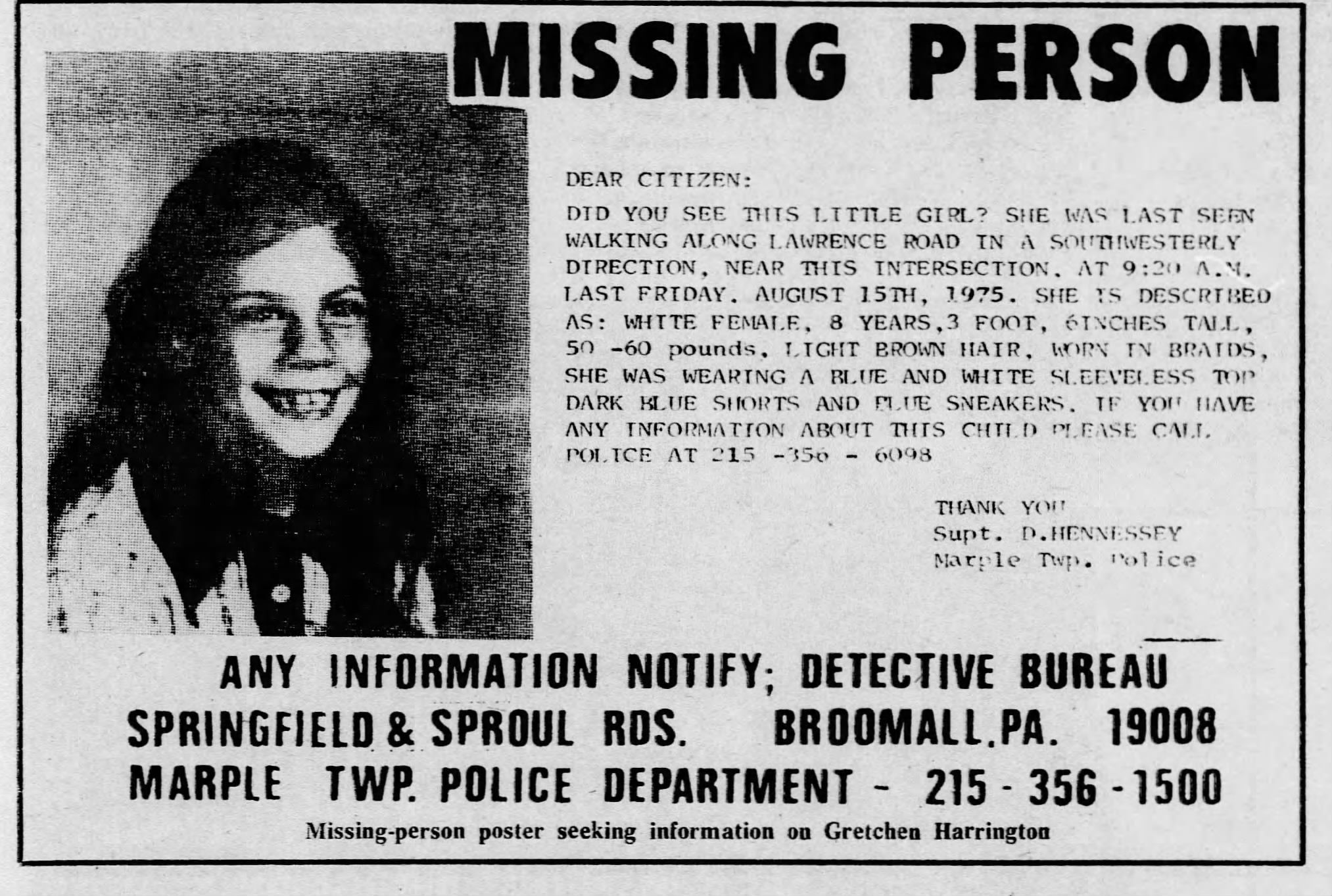
A missing person’s poster for Gretchen Harrington, 8, from a 1975 Inquirer article. The Delaware County District Attorney has announced charges against David Zandstra, currently of Marietta Ga., in Harrington’s murder.
The new witness told state investigators that during two sleepovers at the Zandstra house when she was 10 years old, she awoke to Zandstra touching her. She also showed police a childhood diary she’d kept that mentioned the sleepovers and, in September 1975, her suspicion that Zandstra might have been involved with the attempted kidnapping of a girl in her class, as well as Gretchen’s disappearance.
“It’s a secret, so I can’t tell anyone, but I think he might be the one who kidnapped Gretchen,” she wrote. “I think it was Mr. Z.”
At first, a cordial interview
Earlier this month, David Zandstra, 83 and living in Marietta, Ga., walked into an interview room at the Cobb County Police Headquarters with no reservations about speaking with police. He didn’t lawyer up. It was the department’s “soft” interview room. Couch, comfortable chairs, unlocked.
Two Pennsylvania troopers were waiting for him: Cpl. Andrew Martin, who had picked up the Harrington case about 2017, and Eugene Tray, who’d been called in recently. They’d caught a flight to Atlanta on July 17 to interview the octogenarian suspect, with thenew information in hand.
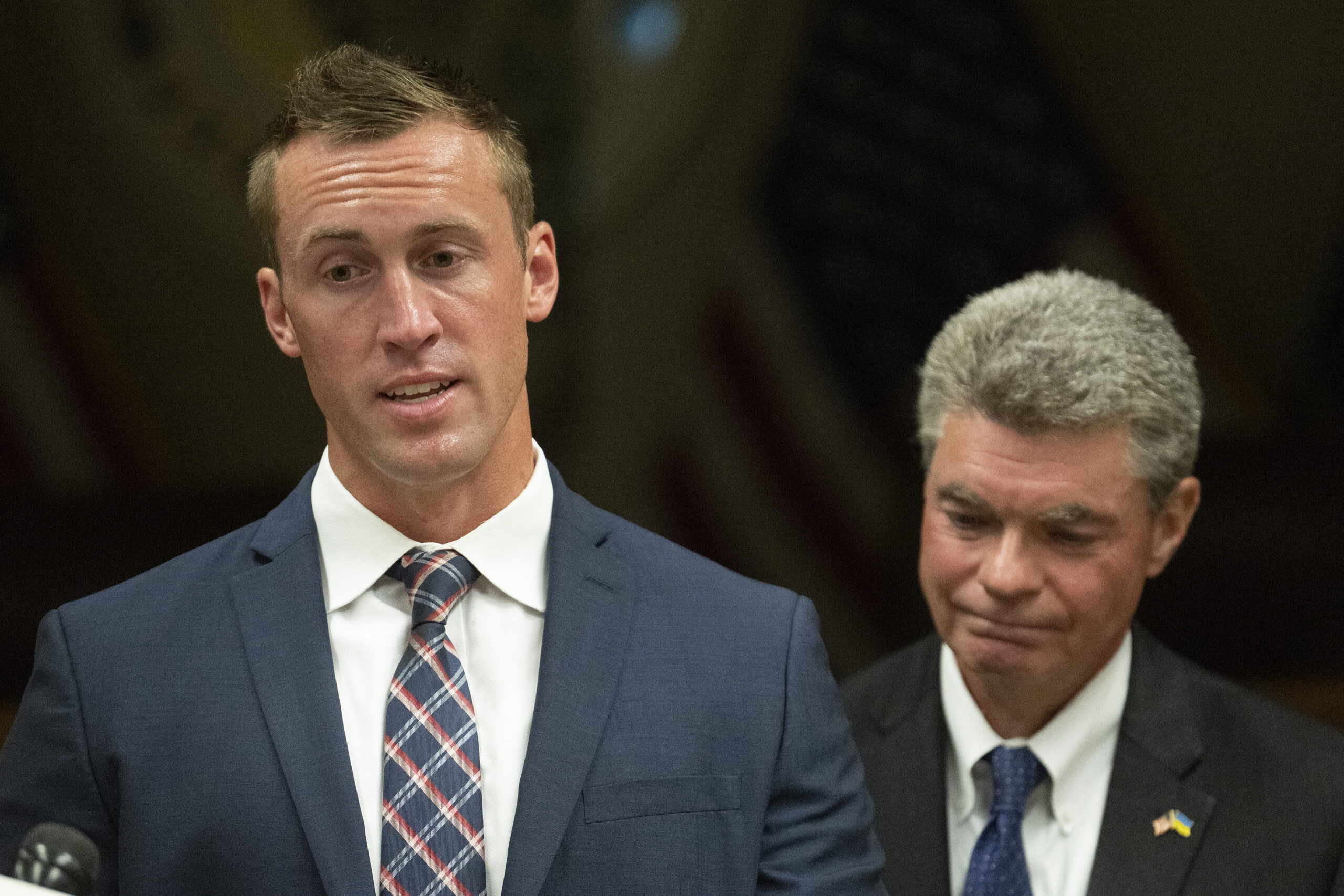
Trooper Eugene Tray, who participated in the investigation and arrest of David Zandstra, and Delaware County District Attorney Jack Stollsteimer, announcing the arrest.
If Zandstra was worried about the interviewwhen he sat down, he didn’t show it — at least not at first.
Back in 1975, police had interviewed Zandstra twice. He also spoke to Mathis for the book, which focused on a different man as the prime suspect.
“Deep down, I’m sure he was very, very concerned,” Tray said.
The conversation was almost cordial to start. Zandstra denied ever seeing Gretchen on the day she went missing.
But then police told Zandstra about the sexual assault allegations from the girl with the diary. It was the final straw placedon top of nearly a half-century of guilt. He broke down and confessed.
“We asked and he spoke,” Tray said. “He was presented with things I don’t think he expected to be presented with. Then, I think he started to think more on it. I think he just wanted his sick, twisted version of redemption, and to come clean.”
Zandstra admitted to abducting Gretchen as she was walking to Trinity Chapel for morning exercises, according to the criminal complaint. He said Gretchen asked to go home, but he drove her to a wooded area and parked. When she refused his demand to take off her clothes, he struck her in the head with his fist, court documents state.
Zandstra said he checked her pulse and believed that she had died, so he attempted to cover up her half-naked body with sticks and left the area.
“He was two different people,” Tray said of Zandstra, before and after his confession. “He was definitely relieved and happy to get that off his chest, how sick that may be.”
Searching for other victims
Zandstra left Delaware County in 1976, and worked in Texas and California before retiring to Georgia. Cops in and around Marple Township who’d worked on the case, or helped search for Gretchen in 1975, have retired and died.
The case took a toll on many of them, knowing a child killer could have gotten away with it, said Delaware County District Attorney Jack Stollsteimer, who was 12 years old when Gretchen disappeared.
“It’s important to understand law enforcement officers are moved by the trauma they see happen,” he said. “That’s why they’re in this business of trying to bring justice.”
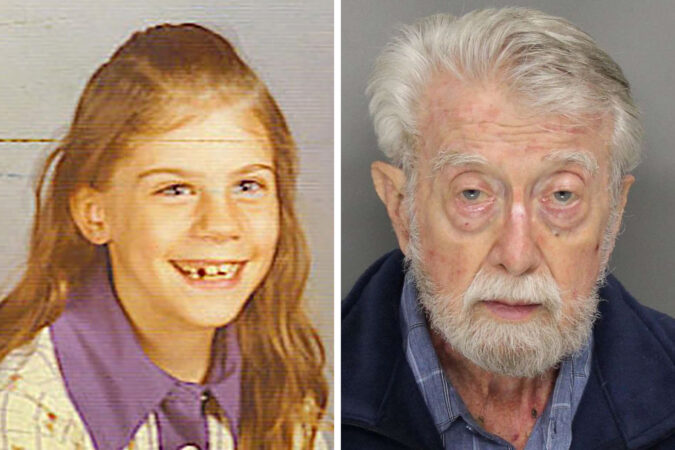
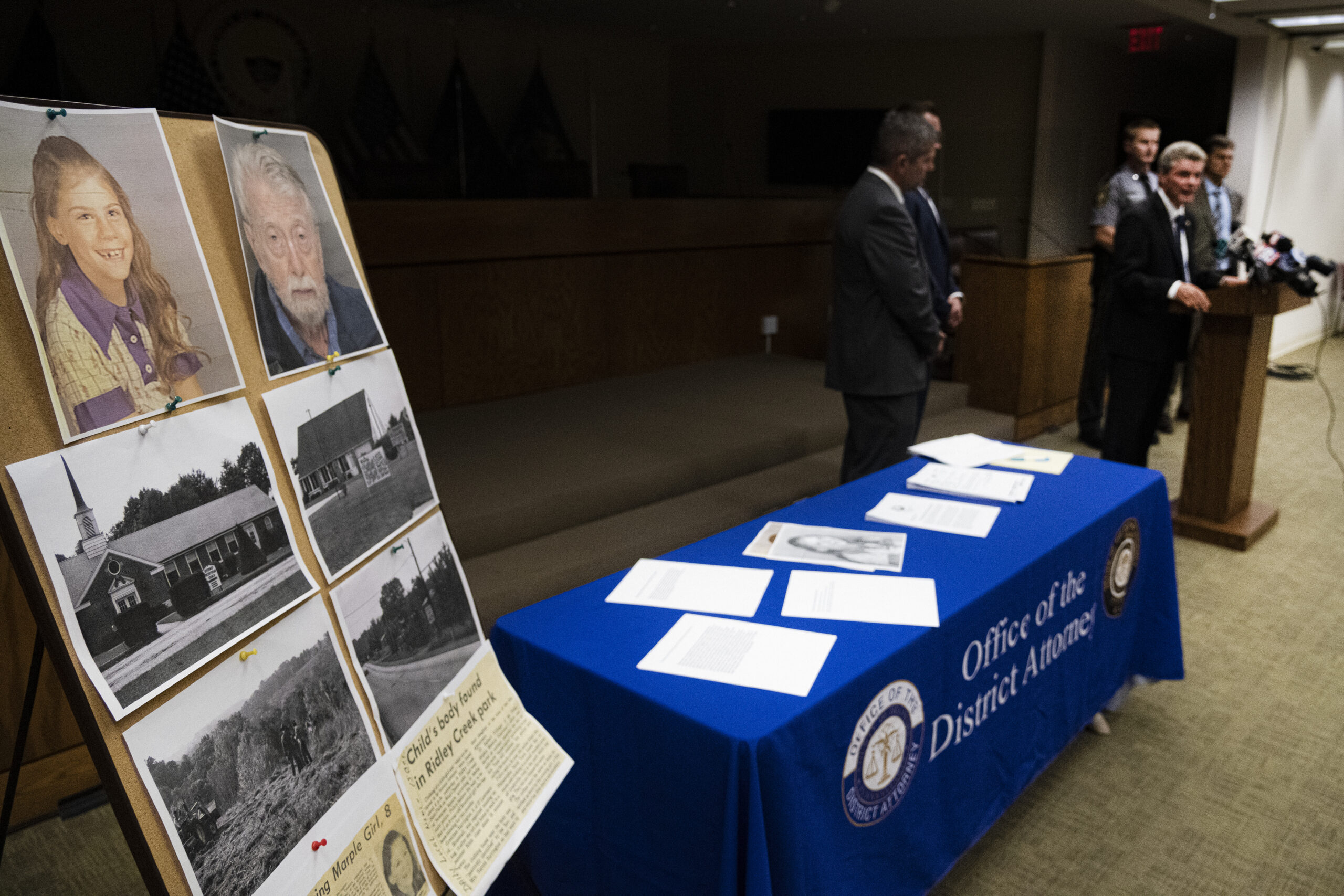
A photo of a victim and her alleged killer are shown during District Attorney Jack Stollsteimer’s news conference on Monday, July 24, 2023.
Stollsteimer described Zandstra’s arrest as a “great relief” to police in Delaware County and praised Martin, in particular, for sticking with the case.
“This is just great, old-fashioned police work,” he said.
Martin was unable to attend the news conference on Monday announcing Zandstra’s arrest and was not available for an interview this week. Tray, however, said the “case would not have been solved were it not for him.”
State police collected DNA from Zandstra when he was arrested, which could prove useful if there are additional victims in other parts of the country.
As part of that effort, the Christian Reformed Church in North America says it is reaching out to Zandstra’s former congregations. He served in Flanders, N.J.; Broomall, Pa.; Plano, Texas; and San Diego and Fairfield, Calif.
After settling in Georgia, Zandstra continued to advise clients of a pregnancy resource center, according to a 2012 religious newsletter in which he wrote a small section titled “Peace to you.” A photo shows him smiling, with gray hair and a closely cropped beard.
“The prospect of peace was and is badly needed in the uncounted and constant conflicts of our world,” he wrote. “Only believers in Jesus are able to find real peace with God.”
“Who knows? This guy was a monster,” Stollsteimer said. “Nothing would surprise me.”
Sullivan, the author of the book on the Harrington murder, has been fielding calls and Facebook messages this week from people in Marple who might have information about other cases of abuse.
“I don’t think it was an isolated case,” Sullivan said.
As for whether the book helped lead to the break in the case, that depends on whom you ask. Some law enforcement officials are convinced that it did. Others cautioned against such speculation. Regardless, a new chapter is planned if the book goes to another printing: Case solved.
On Friday, the Delco DA’s office got word that Zandstra would waive an extradition hearing and agree to be transported from Georgia to Pennsylvania. But his defense lawyer later sought to have the waiver recalled because he was not present with Zandstra when it was signed. Authorities are awaiting a judge’s ruling.
The Harrington family released a statement this week, thanking police for their work and community members for their support over the years. Gretchen’s father, Harold, died in November 2021 at the age of 94.
“If you met Gretchen, you were instantly her friend,” the family wrote. ”She exuded kindness to all and was sweet and gentle. Even now, when people share their memories of her, the first thing they talk about is how amazing she was and still is. At just 8 years old, she had a lifelong impact on those around her.”