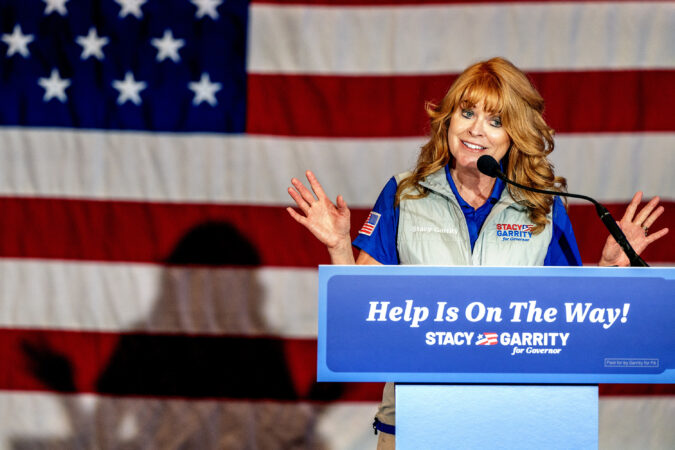
HARRISBURG — State Treasurer Stacy Garrity has been the Pennsylvania Republican Party’s endorsed candidate for governor since September, but few candidates have stepped up to run alongside her for lieutenant governor.
Only two candidates have officially thrown their hats in the ring for Republican lieutenant governor, as Garrity faces the uphill battle of running against a popular incumbent in Democratic Gov. Josh Shapiro. And despite amassing unusually early support from the state party, recruiting someone to run as her No. 2 has proven challenging, as some potential candidates have declined to run.
Garrity said Monday at the Pennsylvania Press Club luncheon she’s in talks with “a lot of people,” and she’s confident she’ll find a running mate “perfect for the ticket.”
But time is of the essence, as she has less than a month until the state GOP meets for its winter meeting, where the party is expected to endorse a lieutenant governor candidate. Whomever she picks is likely to get the nod.
“In many respects, it’s up to Stacy Garrity,” said GOP strategist Charlie Gerow. “The lieutenant governor candidate has to not only be a good political fit, but has to be a good personal fit for her. Otherwise, the ticket falls apart before you get to Election Day.”
So far, the only two GOP candidates to formally announce their campaigns for lieutenant governor are State Sen. Cris Dush (R., Jefferson), who is one of the most conservative members of the Senate GOP caucus, and Bucks County businessman and political newcomer Brian Thomas. Dush said he’d likely pursue the GOP primary nomination even if he isn’t endorsed by the state party, while Thomas announced his candidacy last week in a press release and said he is now reaching out to party leaders seeking their support.
And more far-right Republicans have publicly floated a run, teeing up a potential battle among some of the state’s most conservative members to run alongside Garrity on the November ballot.
In Pennsylvania, candidates for lieutenant governor face their own primary races separate from the candidates for governor. After the primary, the winners are joined onto one ticket and run together in the general election.
Former State Rep. Rick Saccone, who previously ran for lieutenant governor and was on U.S. Capitol grounds during the Jan. 6, 2021 riot but did not face criminal charges, has publicly stated his interest in the role. Saccone said he would not enter the race if the state party backed another candidate.
And State Sen. Doug Mastriano, a far-right Republican who lost to Shapiro in 2022 and last week ruled out a second run for the GOP nomination, later claimed on a local radio station that Garrity would need him as her running mate if she wants to win.
Few more moderate options have emerged.
Montgomery County Commissioner Tom DiBello, a Republican from Shapiro’s home county, said in an interview that he had been approached about pursuing the role. DiBello said he received a positive reception when he traveled the state contemplating a run, but he implied Monday that he’d moved on. On Tuesday night DiBello lost his bid to be the next chair of the county party to his former running mate, Liz Ferry.
“I had a lot of support out there as far as potentially running for lieutenant governor, but I’m right now very dedicated to Montgomery County,” DiBello added.
A number of other officials are rumored to have withdrawn themselves from consideration or are still in talks with Garrity’s campaign, several Republican insiders said.
This time around, the sense among Pennsylvania state party members is that Garrity should be given leeway to choose her running mate and party faithful will endorse her choice.
Many hadn’t even heard who might be in the running. But several Republicans who spoke to The Inquirer said they think Garrity needs to pick someone who will appeal to Democrats and independents who voted for Shapiro four years ago.
“We’re a purple state, and my sense is a more moderate candidate that appeals to a bigger swath of the electorate would be, if I were selecting, would be a preference here,” said Jason Richey, the chair of the Allegheny County GOP.
Or, as Val Biancaniello, a Republican state committeewoman from Delaware County, put it, a candidate needs “statewide appeal.”
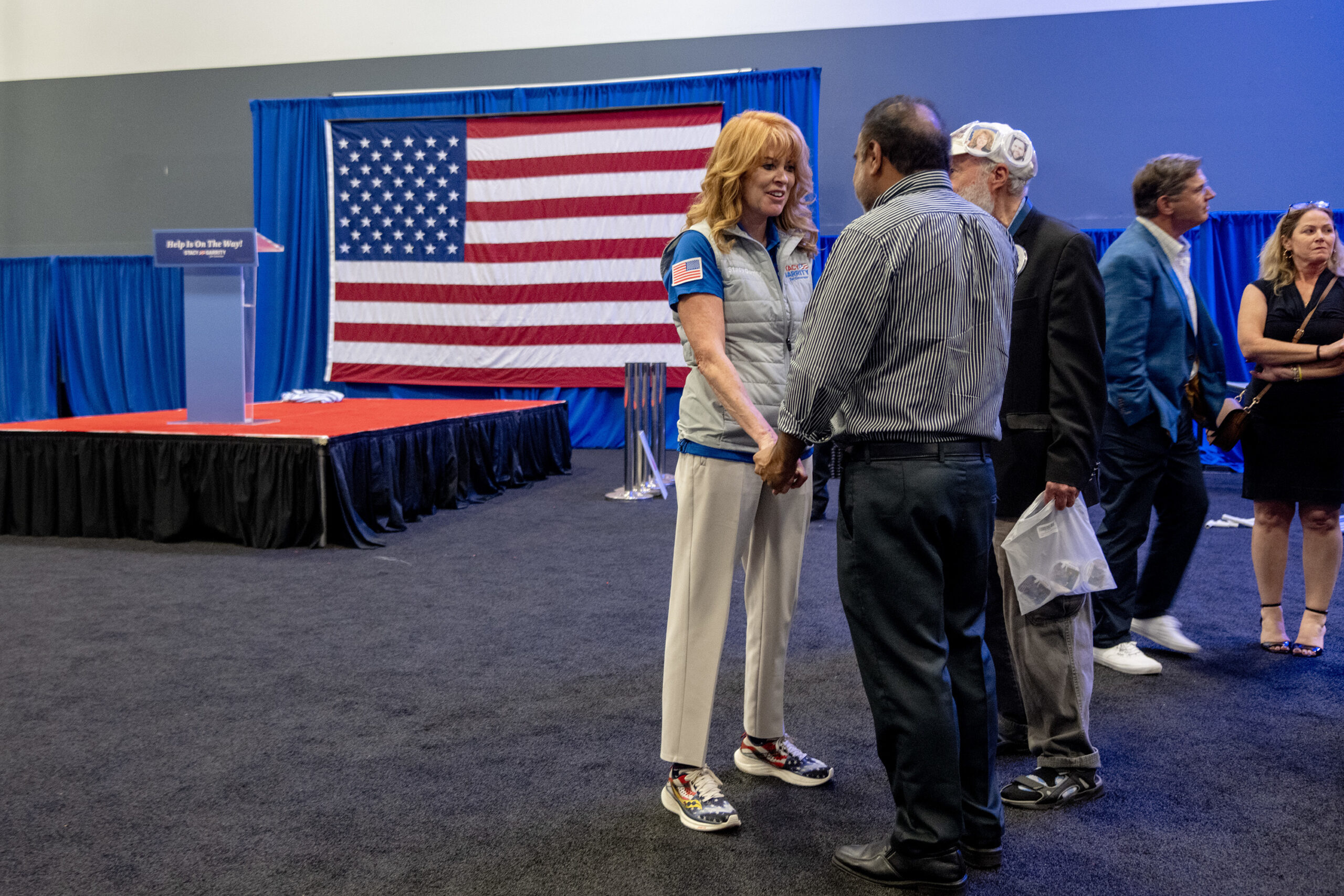
State Treasurer Stacy Garrity greets supporters following a campaign rally in Bucks County on Sept. 25, 2025. The GOP gubernatorial candidate visited the Newtown Sports & Events Center, in one of Pennsylvania’s top swing counties.
DiBello argued that Garrity’s running mate needs corporate and government experience, though he refused to name anyone else being considered behind the scenes. Garrity said she believed that DiBello was no longer “in the mix” for the job, but she did not expand further.
“I’m not putting my finger on the scale,” DiBello said before joking: “I’ve heard this Montgomery County commissioner would be awesome. I’ll put my finger on that scale.”
Garrity largely declined to comment on the candidates whose names have been circulating for her running mate, except for Mastriano.
“I didn’t even know he wasn’t running for governor until last week,” Garrity told reporters, noting her friendship with Mastriano. “We’re in discussion with a number of people, and I know that we will have the absolute best partner as lieutenant governor when the time is right.”
In his campaign launch Thursday, Shapiro tied Garrity to the extremes of her party, asking voters to choose between “getting stuff done” and “chaos.” A far-right running mate will make that message easier for Democrats as they work to secure the governor’s mansion for another four years.
Despite this, Mastriano was bullish Friday morning speaking on WEEO News Talk 103.7 FM in central Pennsylvania.
“That’s a possibility,” Mastriano said about a potential lieutenant governor run. “To be honest, that probably [is] the only way to generate some excitement for the Garrity ticket, and we know Garrity being on top of the ticket, that’s probably the only way the party would win if I did that.”
Pennsylvania’s race for governor has officially begun. And 10 months before the election, the November matchup already appears to be set.
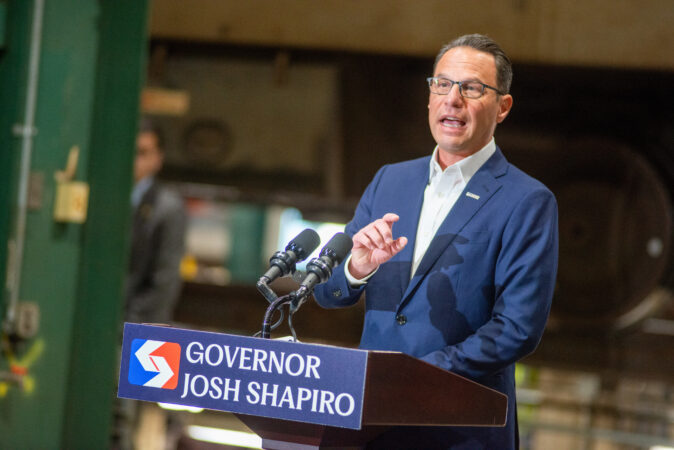
Democratic Gov. Josh Shapiro formally announced his reelection campaign Thursday — not that anyone thought he wouldn’t run. And Republicans have rapidly coalesced behind thestate party’s endorsed candidate, Pennsylvania Treasurer Stacy Garrity.
The racewilldominate Pennsylvania politics through November,but it could also havea national impact as Democrats hope Shapiro at the top of the state ticket can elevate the party’s chances in several key congressional races.
Here’s what you need to know about the high-stakes contest.
Shapiro was elected state attorney general in 2016, a year when Pennsylvania went for Republican Donald Trump in the presidential contest. The position put Shapiro in the national spotlight in 2020 when Trump sought to overturn his loss in the state that year through a series of legal challenges, which Shapiro’s office successfully battled in court.
He went on to decisively beat Trump-backed Republican State. Sen. Doug Mastriano for the governorship in 2022. Despite an endorsement from Trump, Mastriano lacked the support of much of Pennsylvania’s Republican establishment and spent the election cycle discouraging his supporters from voting by mail.
Throughout Shapiro’s first term as governor, he has highlighted his bipartisan bona fides and ability to “get stuff done” — his campaign motto — despite contending witha divided legislature. His launch video highlights the quick reconstruction of I-95 following a tanker explosion in 2023.
A strong supporter of Trump, Garrity is one of the only women that has been elected to statewide office in Pennsylvania history. If elected, she would be the first female governor in state history.
Garrity is a retired U.S. Army colonel who was executive at Global Tungsten & Powders Corp. before she was elected treasurer in 2020. Running a relatively low-key state office, Garrity successfully lobbied Pennsylvania’s General Assembly to allow her to issue checks to residents whose unclaimed property was held by her office, even if they hadn’t filed claims requesting it.
Anyone else?
While Shapiro and Garrity are the likely nominees for their parties, candidates have until March to file petitions for the race. That theoretically leaves the possibility of a primary contest open for both candidates, but it appears unlikely at this point.
The outcome of Pennsylvania’s gubernatorial race could hold wide-ranging impacts on transportation funding, election law, and education policy, among other issues.
The state’s governor has a powerful role in issuing executing actions, setting agendas for the General Assembly, and signing or vetoing new laws. The governor also appoints the secretary of state, the top Pennsylvania election official who will oversee the administration of the next presidential election in the key swing state.
Throughout the entirety of Shapiro’s first term, he has been forced to work across the aisle because of the split legislature. Throughout that time the balance of power in Harrisburg has tilted toward Democrats who hold the governor’s mansion and the Pennsylvania House. But many of the party’s goals — including expanded funding for SEPTA and other public transit — have been blocked by the Republican-held Senate.
If Garrity were to win that dynamic would shift, offering Republicans more leverage as they seek to cut state spending and expand school voucher options (while Shapiro has said he supports vouchers, the policy has not made it into any budget deals under him).
Shapiro coasted to victory against Mastriano in 2022, winning by 15 points. The 2026 election is expected to be good for Democrats with Trump becoming an increasingly unpopular president.
But Garrity is viewed as a potentially stronger opponent to take on Shapiro than Mastriano, even though her political views have often aligned with the far-right senator.
When the midterms conclude, the 2028 presidentialcycle will begin. If Shapiro can pull off another decisive win in a state that voted for Trump in 2024, it could go a long way toward aiding his national profile. But if Garrity wins, it could endthe governor’s chances of putting up a serious campaign for the presidency in 2028.
Every other race in Pennsylvania
The governor’s contest is the marquee race in Pennsylvania in 2026. Garrity and Shapiro have the ability to help or hurt candidates running for Pennsylvania’s statehouse and Congress.
The momentum of these candidates, and their ability to draw voters to the polls could play a key role in determining whether Democrats can successfully flip four competitive U.S. House districts as they attempt to take back the chamber.
Democrats also narrowly hold control of the Pennsylvania House and are hoping to flip three seats to regain control of the Pennsylvania Senate for the first time in decades. If Democrats successfully flip the state Senate blue, it would offer Shapiro a Democratic trifecta to push for long-held Democratic goals if he were to win reelection.
Strong Democratic turnout at the statewide level could drive enthusiasm down-ballot, and vice versa. Similarly, weak turnout could aid Republican incumbents in retaining their seats.
The dates
The election is still months away but here are days Pennsylvanians should put on their calendars.
May 4: Voter registration deadline for the primary election.
May 19: Primary election.
Oct. 19: Voter registration deadline for the general election.
Five years after rioters stormed the U.S. Capitol, Gov. Josh Shapiro and other Pennsylvania Democrats on Tuesday marked the anniversary of the Jan. 6, 2021, attack by sharply criticizing President Donald Trump.
Trump, who was impeached for inciting the riot in the final days of his first administration, pardoned nearly every Jan. 6 defendant and commuted sentences for a handful of violent offenders as one of his first actions upon returning to office last year.
“Law enforcement officers literally gave their lives to protect our country and our democracy — yet one of the first things Donald Trump did when he took office was pardon people who were convicted of assaulting police officers,” Shapiro said in a post on X Tuesday morning.
“The President may not respect our law enforcement officers’ courage and commitment to service — but here in Pennsylvania, we remember the sacrifices they make and will always have their backs.”
Shapiro played a key role as state attorney general in defending the 2020 election results in Pennsylvania in the weeks leading up to the attack, which took place the same day that Congress was certifying former President Joe Biden’s victory.
Trump has downplayed the events of Jan. 6, and on Tuesday the White House unveiled a webpage dedicated to the events, falsely describing the riot as a peaceful protest and blaming Capitol Police for the violence that unfolded.
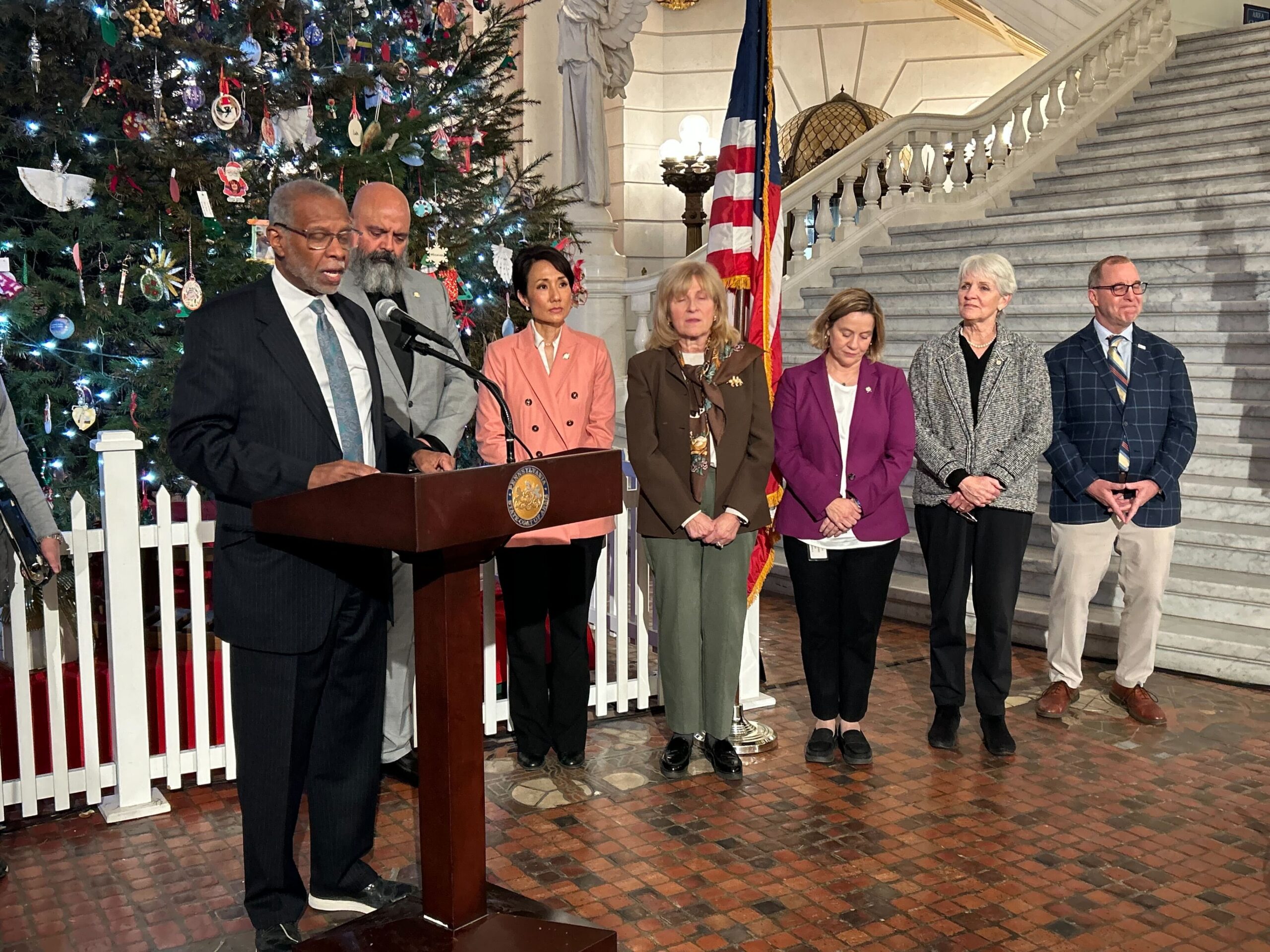
Pennsylvania Senate Democrats hold an event in the state Capitol Tuesday to commemorate the Jan. 6, 2021, attack on the U.S. Capitol.
Shapiro was one of several Democrats who marked the anniversary of the attack for the first time since Trump returned to office.
State Rep. Malcolm Kenyatta, of Philadelphia, introduced a resolution alongside other House Democrats to designate Jan. 6 as the “Democracy Observance Day for Education, Remembrance, and Vigilance.”
AndPennsylvania Senate Democratsheld an event in the state Capitol Tuesday.
State Sen. Art Haywood, who represents parts of Montgomery County and Philadelphia, described the events of Jan. 6, 2021, as an “attempted coup” orchestrated by Trump.
He recounted the events in minute-by-minute detail drawing from what has been reported about the day, from Trump’s direction to rally-goers to go to the Capitol to former Vice President Mike Pence’s evacuation from the Senate chambers and rioters’ success breaking into offices.
State Sen. Jay Costa, of Pittsburgh, said Tuesday’s anniversary eventwas aimed at drawing attention to the “lawlessness” of the day. Trump’s decision to pardon those involved, he said, was a “slap in the face” to law enforcement.
Costa contended that other incidents of political violence in the years that have followed could be traced back to Jan. 6.
“We cannot pick and choose, as our president has done, when we think about what we’re going to do and say about our law enforcement officers,” he said. “We need to stand with them all the time.”
Former U.S. Rep. Richard “Dick” Schulze, a Republican who represented the Philadelphia suburbs from 1975 until 1993, died last week at the age of 96.
Mr. Schulze, who served in the Pennsylvania General Assembly before running for Congress, died of heart failure in his home in the Washington, D.C., area on Dec. 23, according to a news release from his wife, Nancy Shulze, and former chief of staff Rob Hartwell.
During his first term in the U.S. House, Mr. Schulze led the charge to make Valley Forge, seven miles from his home at the time, a national historical park. President Gerald Ford signed the legislation Mr. Shulze authored into law on July 4, 1976, the nation’s bicentennial.
By the time he retired from the House in 1993, Mr. Schulze was a member of the powerfulHouse Ways and Means Committee. He spent his whole congressional career in the political minority, retiring shortly before Republicans retook the chamber in 1994 for the first time since the mid-50s.
“He knew what he believed and he stood for what he believed but he was not, he was not partisan,” Nancy Schulze said in an interview withTheInquirer Tuesday.
Mr. Schulze’s former employees described him as tough but fair, demanding a lot of his staff but offering them the space to achieve it.
“You really had to be at the top of your game,” said Tim Haake, a former attorney in Mr. Schulze’s congressional office who had reconnected with him in recent years. “Overall he was a very nice man, very polite, very cordial.”
Mr. Schulze,Hartwell said, “probably taught me more in my life than anybody.”
Hartwell remembered his former boss as a man willing to work across the aisle in a way that is less common in today’s politics. Mr. Schulze founded the Congressional Sportsman Caucus and served on the National Fish and Wildlife Board among other posts focused on wildlife.
Serving in the minority throughout his career, Hartwell said,Mr.Schulze was willing to make deals and work for the benefit of his district, which included portions of Montgomery, Delaware, and Chester Counties.
“He was a man of his word and he was a man who wanted to accomplish things for his district and his constituents,” Hartwell said. “Unlike today he would reach across the aisle to get those things done.”
Mr. Schulze unsuccessfully proposed a constitutional amendment imposing term limits of 18 years for members of the House of Representatives. Although the proposal did not advance, Mr. Schulze himself chose not to seek reelection in 1992 after serving 18 years in office. He went on to work as a lobbyist for a conservative firm.
“He did not cling to his role as a congressman and he did not go to occupy a seat,” Nancy Schulze said.
Nancy Schulze and Dick Schulze were married following the 1990 death of his first wife, Nancy Lockwood Schulze, after a battle with cancer, and the death of her first husband, Montana Secretary of State Jim Waltermire.
In addition to his wife, Mr. Schulze is survived by four children, seven grandchildren, and five great-grandchildren.
Nancy Schulze remembered her husband as a gentleman, an Eagle Scout who lived by the scouting oath and was dedicated to loving and serving his country, state, district and family.
“He was a man of dignity,” she said.
Services to honor Mr. Schulze are scheduled for Saturday Jan. 10 at 2 p.m. at the Great Valley Presbyterian Church in Malvern.
When U.S. Steel opted to build a new mill in Arkansas that had originally been planned for Allegheny County, then-Arkansas Gov. Asa Hutchinson jokedin 2022 that his state could have the mill built faster than Pennsylvania could have it permitted.
Three years later, Pennsylvania politicians and business leaders are hopeful that a series of permitting reforms — the latest of which were approved as part of the state’s $50.1 billion budget — have finally flippedthatdynamic.
The reforms, which are designed to expedite Pennsylvania’s Department of Environmental Protection’s permitting process to allow for quicker development, mark a major step forward in a project that has long been a goal for Democratic Gov. Josh Shapiro and Republican leaders in the General Assembly.
Pennsylvania’s Department of Environmental Protection is responsible for issuing a variety of permits for building plans to ensure they comply with state law and are environmentally safe. The latest reforms will force the agency to automatically approve certain permits relating to stormwater and groundwater within 60 days if it has not completed its review in that time period or sought an extension. For certain permits related to air quality, the changes allow for the permits to be automatically approved 30 days after submission if the DEP has not acted.
The budget, which Shapiro signed into law last month, also expanded an existing program, called SPEED, that allows companies to hire third-party inspectors for certain permits to expedite the process. And lawmakers required the state to create and maintain a database where companies can easily track the progress of their permit applications.
For Senate Majority Leader Joe Pittman (R., Indiana), the change represents a paradigm shift in the state. He recalled the 2022 loss of the U.S. Steel mill at a news conference last month.
“You cannot have economic development without shovels in the ground, and you can’t put shovels in the ground without permits,” Pittman said.
The reforms, he said, will “provide certainty,” which he called, “critical to economic development.”
A longtime goal
Amy Brinton, director of government affairs at the Pennsylvania Chamber of Business and Industry, said it has long been common for businesses to choose other states because of Pennsylvania’s arduous permitting process, and at times begin the process of building in Pennsylvania only to move out of state when permitting becomes a hurdle.
“We lose a lot of projects to Texas and Ohio because of our complicated permitting process,” Brinton said.
Remedying this through permitting reforms, as well as expedited certifications, have been among Shapiro’s top priorities as governor.
“When he took office in January 2023, Governor Shapiro promised to make state government work more efficiently and effectively for Pennsylvanians. Since then, the Shapiro Administration has delivered on that promise to get stuff done — streamlining permitting processes, reducing wait times for licenses, and cutting red tape to attract more businesses to the Commonwealth,“ Kayla Anderson, a spokesperson for Shapiro, said in a statement. ”This budget builds on the Governor’s success.”
Shapiro signed several executive orders aimed at that goal including developing a “Fast Track” program for high-priority projects. DEP has eliminated the 2,400 permit backlog that existed when Shapiro took officein 2023. Additionally, Shapiro’s office said, the average processing time for all permits dropped to 38 days in 2025 from 53 days in 2022.
Lawmakers first approved the SPEED program allowing for third-party inspectors in the 2024 budget. Shapiro’s office said the program has alreadyproduced results, cutting permit wait times in half in some cases.
These projects are a key part of Shapiro’s business-friendly approach, which he’s promoted as he bolsters his resume and bipartisan appeal ahead of a 2026 reelection campaign and a potential future presidential run.
“The permitting was awful,” Ward said in an interview last month. “Permitting now, instead of 300 days, we’re at 30 days. It’s amazing that we were able to come together and get that done.”
Brinton said she is hopeful that the combination of reforms will make it easier for businesses to choose to build in Pennsylvania because the timeline will be more predictable.
“Improved accountability, greater predictability, faster timelines — those are the key kind of drivers that we’re hoping this will continue to provide to our businesses in the hopes that when they look at Pennsylvania they won’t wince at the fact that this is going to take forever,” Brinton said.
Days before his memoir is set to hit shelves Pennsylvania Gov. Josh Shapiro will kick off his book tour at Philadelphia’s Parkway Central Library on Jan. 24.
Shapiro will swing through Philadelphia, New York and Washington, D.C., in the final week of January to promote his book Where We Keep the Light: Stories from a Life of Service, according to events posted online.
The tour and the book, set for release Jan. 27, will fuel speculation about a potential presidential run in 2028 as Shapiro works to expand his national profile as he also seeks reelection in Pennsylvania next year.
The forthcomingmemoir is expected to detail his life and political career, including the attempted arson attack on the governor’s mansion while he, and his family, slept inside earlier this year on Passover.
Shapiro, who grew up in Montgomery County and first forged his political brand there, has become a leading figure in the national Democratic Party. The memoir will delve into his vetting to serve as Vice President Kamala Harris’ running mate last year, according to the publicized summary.
The Pennsylvania governor, Harris wrote, would be unable to “settle for a role as number two” and questioned her about whether he could get Pennsylvanian’s artwork in the vice president’s residence.
The Democratic senator, who has publicly feuded with the governor, described the tension between Pennsylvania’s two top Democrats, which traces back to their time together on the Pennsylvania Board of Pardons when Fetterman was lieutenant governor and Shapiro was state attorney general.
It’s unclear whether Shapiro will discuss his relationship with Fetterman in the memoir.
Shapiro’s book tour will kick off at a 3 p.m. event at the Parkway Central Library on Jan. 24. He will also speak at the Kauffman Concert Hall in New York on Jan. 27 and Sixth and I, a historic synagogue and Jewish cultural center in Washington, D.C., on Jan. 29.
County staff had requested a 7.2% tax increase to fill the budget hole, but Democratic Commissioners Bob Harvie and Diane Ellis-Marseglia voted to increase that hike to 8%, citing inflation and uncertainty in state and federal dollars.
“It’s leaving us with a very, very small surplus in a very uncertain time,” Harvie, a candidate for Congress, said of the original request.
Republican Commissioner Gene DiGirolamo voted against the tax increase but did not say why.
The tax boost will translate to an increase of around $72 annually for the owner of a home assessed at the Bucks County average, county officials said.
Chester County’s commissioners voted Wednesday to approve a budget without a tax increase. Bucks County was the only one of Philly’s collar counties not to raise property taxes in 2025.
In this year’s budget, Bucks County committed additional funds to the local community college and library systems, officials said. And, Ellis-Marseglia said, the cost of providing services to county residents had only increased.
“It’s reasonable to think that it costs more to take care of the people in our nursing home, the people in our jail,” she said.
As a result, Ellis-Marseglia and Harvie argued for a slightly larger tax increase this year to provide a cushion for the county to lean on.
“I see things as getting really dark in the future in terms of money,” Ellis-Marseglia said.
More than two years ago, a Chester County Voter Services employee made a dire prediction.
In an eight-page grievance against Voter Services Director Karen Barsoum, the employee described a hostile work environment in which election workers were subjected to “bullying” from the department’s director.
At the time of the complaint, the employee wrote, 15 people had left the 25-person department since Barsoum was hiredin 2021.
“I have very legitimate fears that there will be a mass exodus from voter services in the coming months,” the employee, who asked not to be named for fear of retaliation, wrote in the grievance document he provided to The Inquirer. “My concern is how this will impact the 370k voters of Chester County.”
Two years later, it appears that his prediction had come true. The number of staff departures since Barsoum took over grew to 29 by November of this year, according to a Chester County spokesperson.
Election offices across the nation have experienced a high level of turnover and staff burnout in recent years in the face of election denialism and threats, but Chester County’s churn-rate is nearly double the number of departures in Montgomery and Delaware Counties’ elections departments that have lost 16 and 15 people respectively in the same time period. Both departments are larger than Chester County’s election office.
Accounts and records from three former staffers at Chester County Voters Services Department, two of whomasked not to be named, paint a picture of a hostile work environment where employees were often made to feel as though management had placed a target on their back.
These concerns have been raised to elected and non-elected county leaders for more than two years.
Barsoum saidin an interview that she couldn’t respond to allegations from employees but described her management style as collaborative.
Employees, she said, had left for a variety of reasons including jobs in other Southeast Pennsylvania election offices that pay better than Chester County. Others, she said, left to pursue other opportunities or for family reasons.
Some, she said, left because of the increased pressures of election work as state law changes and the intensity increases.
“I encourage everyone to do what is the best for them,” Barsoum saidThursday.
Though Barsoum acknowledged it was challenging for the office when people left, she said she and other managers were very hands-on in training staff and ensuring that staff members knew the ins and outs of various positions.
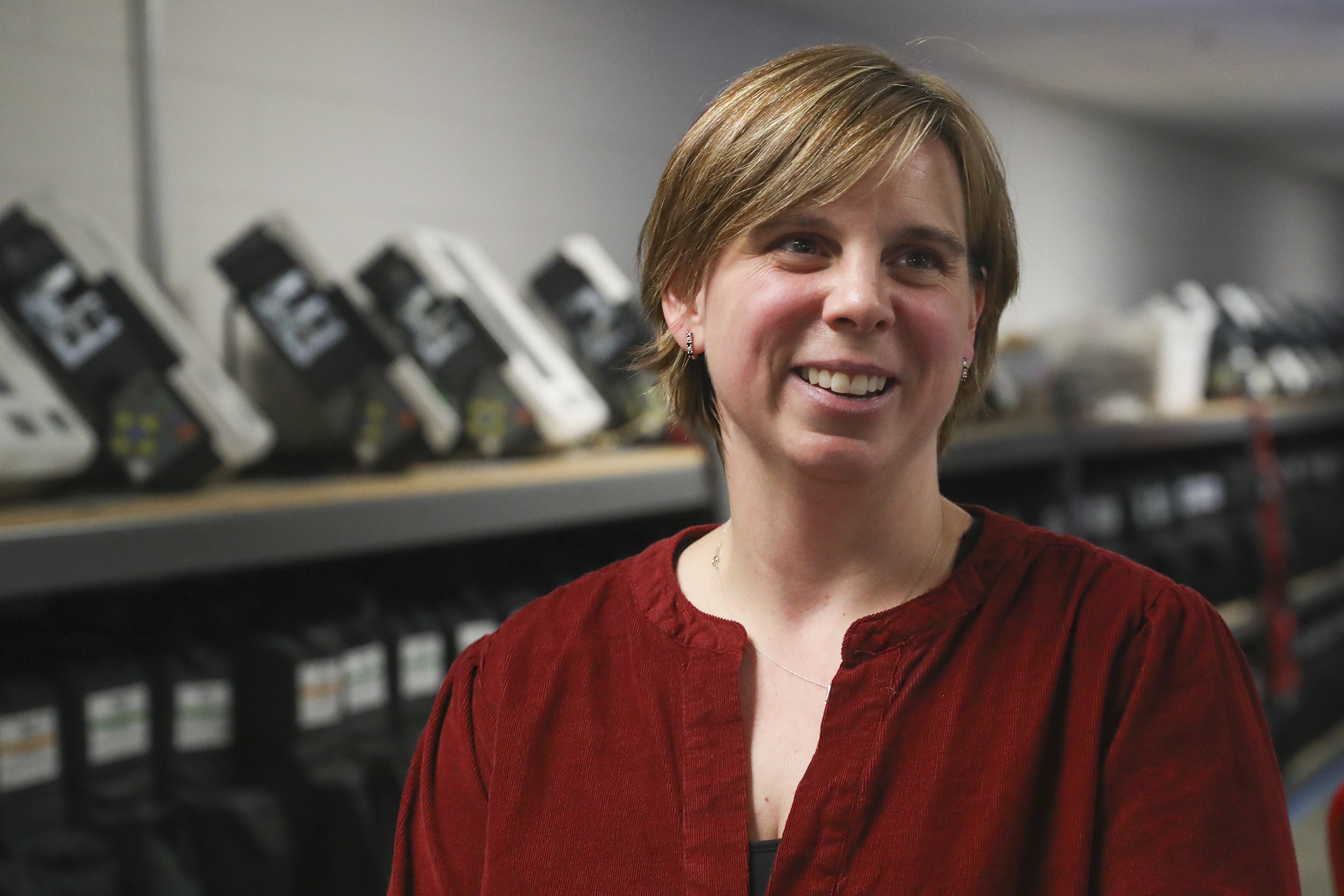
Karen Barsoum, Chester County’s director of voter services, at the Chester County Government Services Building in 2022.
The employee who filed the grievance said he feared that the attrition would leadto mistakes during the 2024 presidential election, when the eyes of the nation were on Pennsylvania.
Ultimately, everyone who wanted to vote was able to, county officials said. But the error created a chaotic scene as the county kept polls open two additional hours and more than 12,000 voters were asked to cast provisional ballots — which require more steps from election workers and voters to be counted.
The county hired a WestChester law firm to investigate how and why the poll book error occurred.
Chester County’s CEO David Byerman, the county’s top unelected official, said that turnover across all departments can be attributed to a variety of factors in the county including pay and managers.
He described working in elections today as a “pressure cooker” as a result of the political climate.
The investigation, he said, would look closely at management in the department and whether factors existed that would have hindered staff from identifying or reporting concerns.
“The very fact that we’re doing an investigation into what happened last month … indicates that we want to learn more about what happened in this particular election,” Byerman said. “Part of that investigation is looking at the performance of our management team in voter services.”
It’s unclear at this stage whether the error can be attributed to the turnover and environment in voter services, but Paul Manson, a professor at Portland State University who researches challenges faced by election workers, said the turnover seen in Chester County is unusual and alarming.
Often, Manson said, staff tends to be relatively stable in election offices because they care deeply about the work. Stressors of reduced staffing and the toxic environment described by threeformeremployees, he said, could create a dynamic that makes mistakes more likely.
“When we have these periods of turnover local election officials really sort of grit their teeth because they worry about these small errors turning into big errors,” he said.
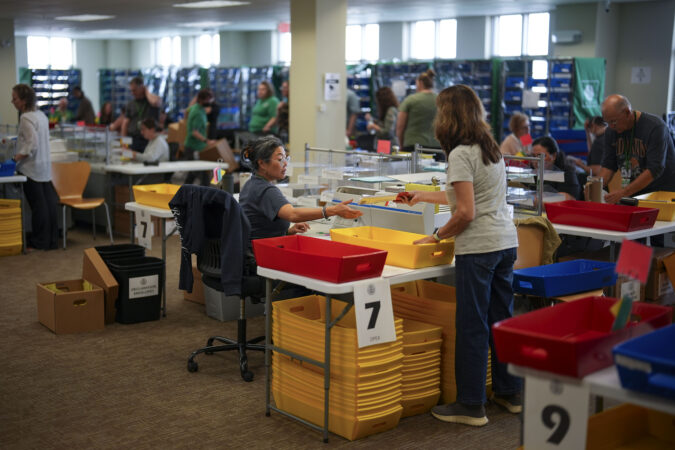
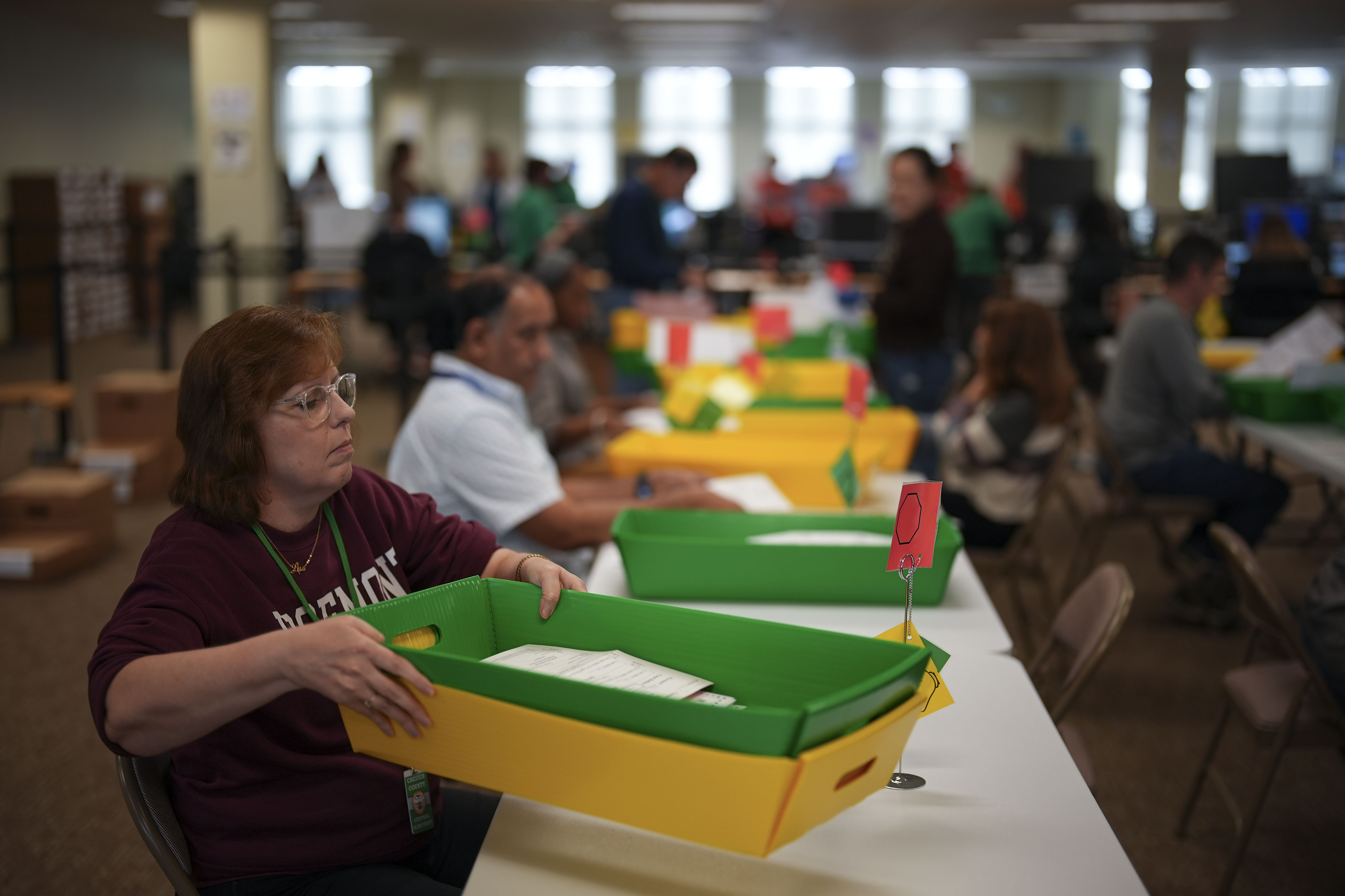
Election workers process mail ballots for the 2024 general election at the Chester County, administrative offices in West Chester. (AP Photo/Matt Slocum)
Allegations of ‘hostility’ toward staff
Barsoum, who came to Chester County from Berks County in 2021, has earned respect in the election field nationally and within Pennsylvania. Barsoum had been the assistant director in the Berks election office.
“Karen Barsoum has an extraordinary knowledge that is a resource both statewide here in Pennsylvania and has been a resource nationally. I don’t think anyone doubts her knowledge of election processes,” said Byerman, the Chester County CEO.
“At the end of the day I think any manager needs to combine two abilities. An ability to manage an office effectively and an ability to be knowledgeable and an expert.”
Byerman said each manager in the county is evaluated on these criteria regularly, but when asked whether Barsoum possessed both qualities, Byerman did not respond.
Former county employees said Barsoum’s high reputation outside Chester County did not align with what they experienced in their jobs.
The employee who filed the grievance against Barsoum said he got along with her well when she started and he received high marks on performance reviews, according to documents provided to The Inquirer.
But after a reorganization in the department in 2022, he said, he noticed that more and more staff members were leaving. The employee was promoted to a new role and during the 2022 election did that job while maintaining responsibilities from his prior role.
He said he expressed concern about being overworked and received little support in the new role. After the employee said he dropped the ball on a minor item and reported it to Barsoum, she began treating him differently.
“In Karen’s eyes you’re either 100% right or 100% wrong,” he said in an interview.
The employee filed his grievance in August of 2023 after a meeting where, he said, Barsoum listed accomplishments of staff members and refused to acknowledge any of his work.
Barsoum’s “hostility” toward him in the meeting was so noticeable, he wrote in the complaint, that eight colleagues approached him afterward to say they noticed it.
“After so many months of mistreatment and disrespect in such a hostile work environment, it eventually gets to the point that something needs to be said. If the Presidential Election were to not run smoothly next year and ChesCo voters were disenfranchised due to the Voter Services, I would forever regret not sending this grievance,” the employee wrote in his grievance.
That employee left the department the next year. He was placed on a performance-improvement plan weeks after submitting his grievance, and, after completing that plan, he was placed on another as a result of a low performance review and quit before he could be terminated.
Elizabeth Sieb, who worked at the election office for eight years before leaving in 2022, said she had similar experiences with Barsoum to those detailed in the grievance. For the past year and a half she has been telling county officials about her concerns.
In 2022, Barsoum reorganized the office to respond to the new stressors of elections and new responsibilities that come with mail voting. Since then, she said, she and staff work to evaluate after each election what worked and what didn’t so adjustments can be made.
But Sieb said Barsoum didn’t take constructive criticism well when changes were made and stifled discussion among staff members.
Sieb was fired from the department in 2022. She said she was placed on a personal-improvement plan that demanded that she seek mental health treatment and subsequently placed on a three-day unpaid suspension.
Following the suspension, Sieb said, she was directed not to speak to her colleagues if it was not directly related to her work. She said she was fired for violating that rule when she reported to a lower-level manager concerns about another manager speaking disparagingly about a job applicant in earshot of other employees.
Sieb, who at times questioned Barsoum’s decisions, said she felt that the director was threatened by long-term staff and was prone to outbursts when employees would correct her.
“She was slowly but surely wearing down and getting rid of all the people that had been there a long time,” Sieb said.
Jennifer Morrell, the CEO of the Elections Group, a company that assists local election officials, said turnover in election offices happens for a variety of reasons — including the long hours and relatively low pay civil servants receive.
She noted that training programs from state agencies and associations are designed to help prevent errors as a result of turnover and that a larger department, like Chester County, may be able to fill rolls with election workers from other counties.
“Karen is highly respected in the election community, super professional,” Morrell said. “Our hearts just ached with what happened because it could have happened to anybody.”
Commissioners respond to concerns
After leaving the department, Sieb said, she believed she suffered from PTSD related to her experience.
Beginning in 2024 she began reaching out to Republican Commissioner Eric Roe with her concerns. Roe, Sieb said, investigated the complaints and brought them to the other commissioners, Democrats Josh Maxwell and Marian D. Moskowitz. The commissioners also serve as the county’s election board.
“I have had a lot of people come to me with various concerns throughout county government, and voter services is certainly one of them,” Roe told The Inquirer, explaining that his role as minority party commissioner makes him a frequent recipient of workforce complaints.
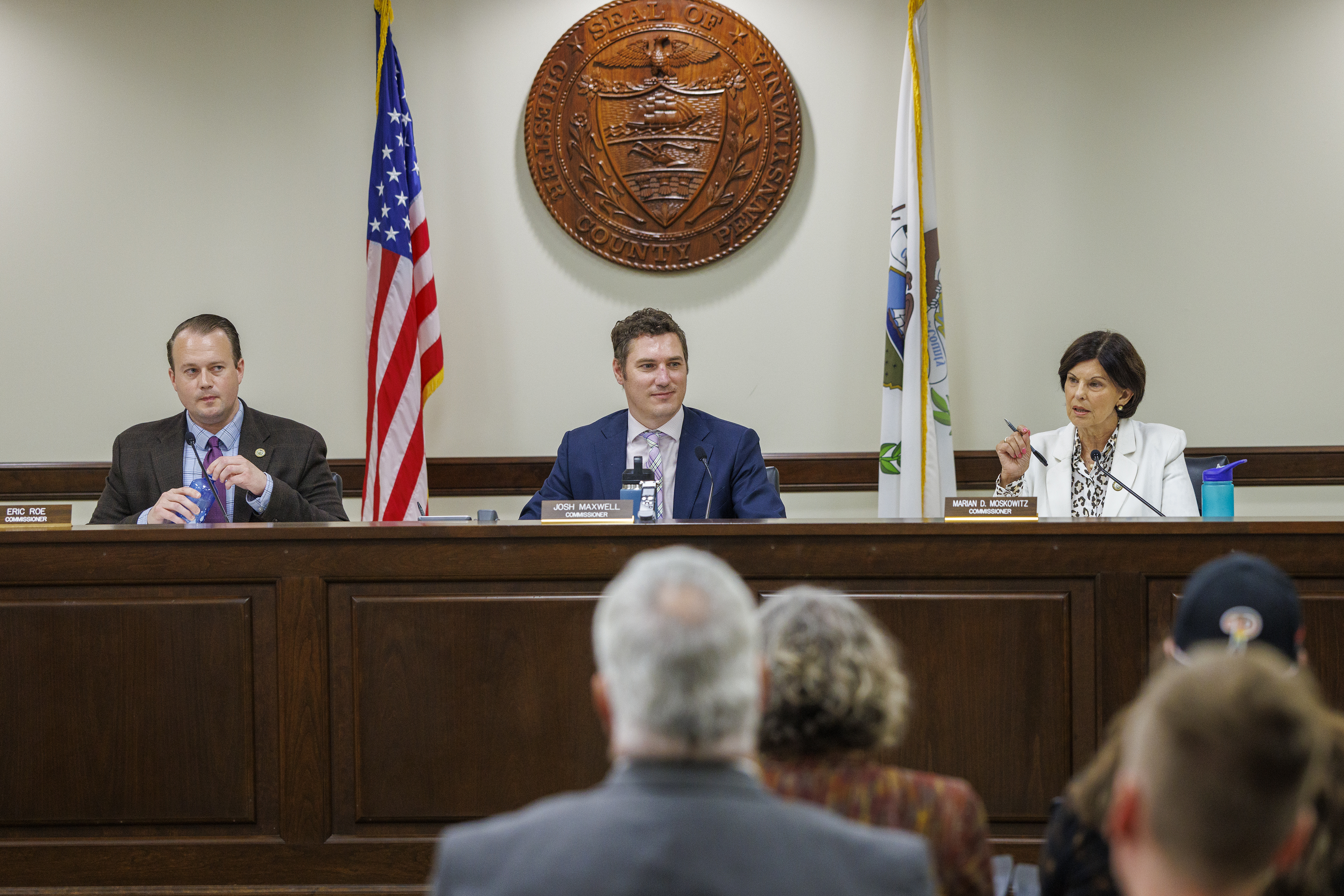
Chester County Commissioners (from left) Eric M. Roe, Josh Maxwell, and Marian D. Moskowitz at a board meeting in September.
But a year and a half later, Barsoum remained in her role and Sieb continued to hear from her former colleagues with concerns. Twice this year, Sieb went before the Chester County Election Board to raise public concerns about turnover under Barsoum.
Maxwell, who chairs the Chester County Election Board, said the county reviews reports from departments when they receive them. He said he was unable to comment on specific departments or personnel matters but said the county needed to do everything it could to support its election workers.
“We need to do a better job, I think, making sure that people feel valued. Including the folks that unfortunately we’ve lost,” he said.
Election work in Pennsylvania and elsewhere has gotten increasingly fraught. The work itself is more intense than it once was with more mail voting, and workers now deal with threats, longer hours, and a camera on them when they’re working with ballots.
“We were seen as clerical people, maybe, in the past; now we are wearing many different hats,” Barsoum said.
Moskowitz attributed much of the turnover in the county to burnout and noted the threats that election employees have faced in her years on the job.
Barsoum became emotional as she said she had worked to ensure that her staff had the resources they needed to feel safe, including mental health resources through the Human Resources department, team building outside election cycles, and a space for workers to step off camera.
“We can count on each other; we lean on each other. It’s a strong bond, a camaraderie,” she said.
When hiring new staffers, Barsoum said she warns them of what’s to come — that they’re not walking into a normal 9-to-5 job, that they won’t be able to plan vacations through about half of the year, and that they’ll be asked to take phone calls from irate people.
It’s a lifestyle, she said, that isn’t right for everyone — including some parents.
“If you’re leaning on a daycare and that is your sole, the go-to, it will be very hard to work in the department because there is 24/7 operations, and there are so many things that are going off and beyond the regular work schedule.”
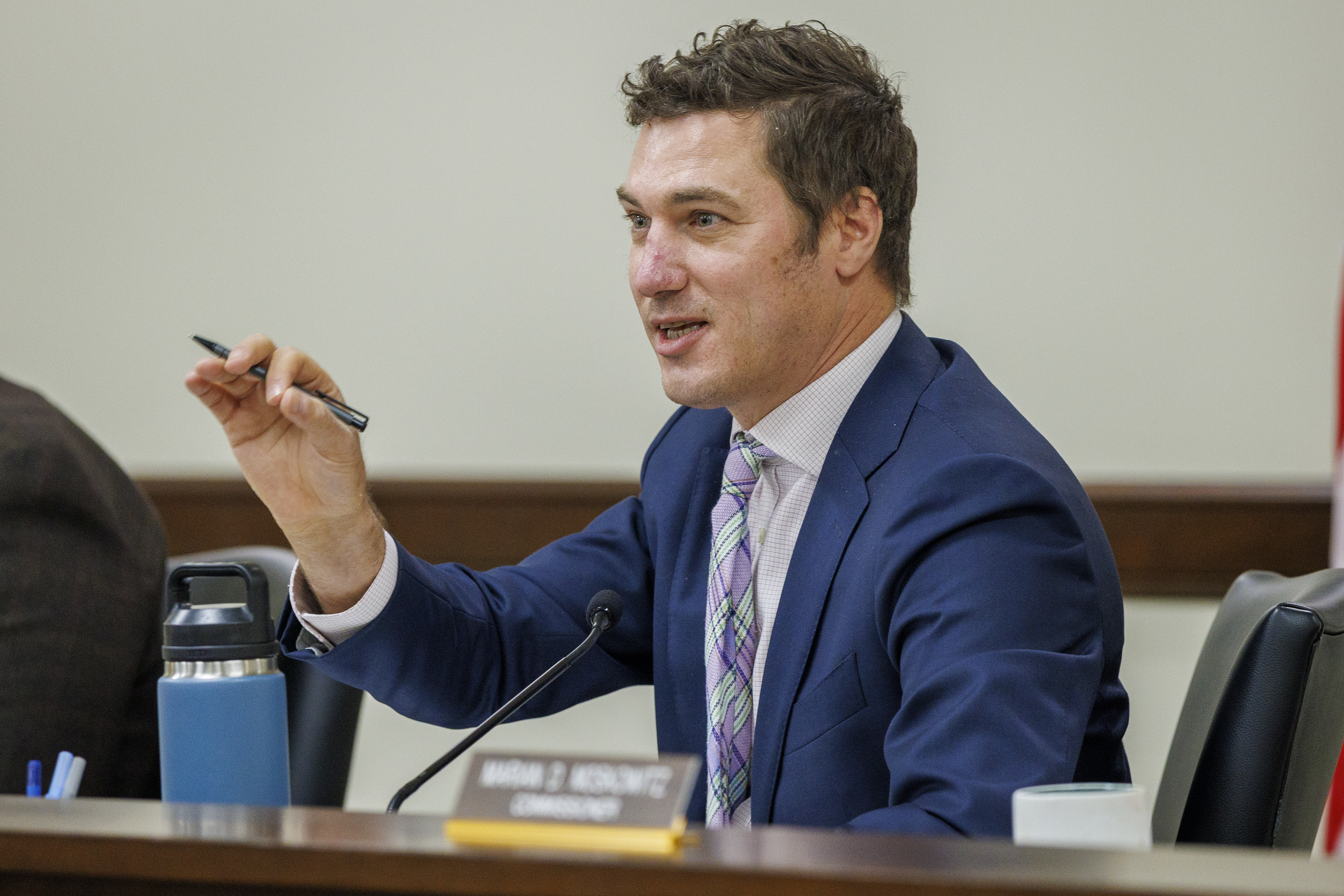
Josh Maxwell, chair of Chester County Commissioners and the county Elections Board, presides over a September commissioners meeting.
Maxwell and Moskowitz declined to comment specifically when asked if they were confident in Barsoum’s leadership, but Maxwell has repeatedly asked residents to direct their anger at November’s error at him rather than Barsoum or her staff.
“I think it’s important that we protect these folks and we empower them to make the best decisions possible,” Maxwell said at an election board meeting last week.
Speaking to The Inquirer, he reiterated that point.
“We want to make sure that people feel welcomed and empowered and are in a working environment they appreciate,” Maxwell said in an interview.
“Elections have changed so much in five years it’s not surprising to me that some people want to find something new to do.”
This suburban content is produced with support from the Leslie Miller and Richard Worley Foundation and The Lenfest Institute for Journalism. Editorial content is created independently of the project donors. Gifts to support The Inquirer’s high-impact journalism can be made at inquirer.com/donate. A list of Lenfest Institute donors can be found at lenfestinstitute.org/supporters.
Last year, the council voted to increase taxes 23% as federal COVID-19 relief dollars that had filled the county’s longstanding structural deficit began to run dry. That hike took effect in January.
The new 19% increase, which will take effect next month, will place Delaware County on stable financial footing, members of the council argued.
“Our primary responsibility is to ensure that this county is on solid financial footing. Make no mistake, absent this increase tonight that would not be the case. We would run out of money,” said Councilmember Kevin Madden, whose term on the board runs out this year.
The budget, Council Chair Monica Taylor said, would be the first truly balanced budget for the county in more than a decade.
The tax increase will translate to an additional $188 annually for the county’s average assessed home value of $255,000.
Taylor and the other council members said they didn’t take the increase lightly, but that it was a necessary step. Their Republican predecessors, they argued, went too long without substantially increasing taxes and left the county in dire straits when Democrats took control in 2020.
Amid inflation and shrinking federal funds, they said the last two years of increases were needed. And after increasing taxes 19% in 2026, they predicted taxes could be kept level in the future.
“If it comes down to it, next year rather than raise taxes I am going to be looking at cutting discretionary spending,” Councilmember Christine Reuther said Wednesday.
The proposed budget increased spending by just under 6% with the majority of new spending attributed to increased costs for employee health benefits, increased court costs, employee pay, and increases to the county’s SEPTA contribution.
“Our strategy is not just to increase revenue but to decrease expenses,” County Executive Barbara O’Malley said.
Over the course of several meetings and hearings ahead of the vote Delaware County residents showed frustration with the increase and doubt that 2026 would be the end of the hikes. They urged council members to find ways to cut the budget or to spread the increases out over more years.
“I own my home but I’m behind on my taxes because the taxes are so high,” resident Maureen Mitchell said in a Monday budget hearing. “Something’s gotta give for the seniors, we’re losing our homes.”
Although Democrats inherited a deficit when they took control of the council, residents pointed out that they also made significant expenditures in recent years, including the decision to deprivatize the prison, spending more on legal fees, and launching a health department. The majority of the health department is funded by state and federal dollars.
“Find some cuts and give taxpayers a break, then hold the line on future spending,” said Michael Straw, the chair of the Media Borough Republican Committee.
Cynthia Sabatini, an Upper Providence resident, asked council members to release a full list of what spending is discretionary and to spread the increase out over several years.
“Why does it have to be done in one fell swoop?” she asked Monday.
Councilmember Elaine Schaefer voted against the increase because she said she couldn’t justify such a steep hike during hard economic times.
“We do need to raise the revenue but in my opinion it’s too abrupt and causes too much of a hardship to do two really significant increases in a row,” Schaefer said Wednesday.
Delaware County is one of three of Philadelphia’s collar counties considering a tax increase this year. Montgomery County is poised to vote on a 4% tax increase next week while Bucks County is contemplating a tax increase to fill a $16 million deficit.
The suburban county’s all-Democratic councilvoted unanimously Wednesday evening to empower a human relations commission established earlier in the year to adjudicate claims of discrimination based on sexual orientation and gender identity and expression, barring discrimination against LGBTQ+ residents among a wide list of protected classes.
Delaware County had been working toward the ordinance for months, introducing the policy in August before hitting pause as county council members and attorneys worked through the details.
At least 79 local governments across Pennsylvania, including Philadelphia, have enacted nondiscrimination ordinances, according to the Pennsylvania Youth Congress, which advocates for LGBTQ+ youth.
“Now almost an entire half of the state is now protected by a [local] human relations commission,” Kyle McIntyre, the organizer of Delco Pride, said in an interview Thursday.
The ordinance mirrors a state policy barring discrimination and establishing a human relations commission to adjudicate complaints.
While regulations for the state commission bar discrimination based on gender identity and sexual orientation, Delaware County’s policy goes a step further to specifically prohibit such discrimination in law.
The ordinance provides Delaware County residents a local venue to bring complaints before taking concerns to the Pennsylvania Human Relations Commission.
“This ordinance reflects what good local government should be,” Monica Taylor, a Democrat who chairs the county council, said Wednesday.
Some residents, including Delaware County Controller Joanne Phillips, a council member-elect, raised concerns that the ordinance could become expensive in a county that is already looking at a potential 19% tax increase for next year.
Phillips, a Democrat, said she supported the concept of the commission but worried it would cost more than anticipated once a board began adjudicating cases.
County officials estimated the commission would cost the county just $3,000 annually and said adjustments could be made to the commission’s role if enforcement of the ordinance became too costly.
Critics of the policy on Tuesday claimed, without evidence, that the ordinance would dampen free speech in the county, allowing fines against those who say offensive things.
Charlie Alexander, a far-right activist who unsuccessfully sought the GOP nomination for the county council earlier this year, arrived in a dog costume with a rainbow blanket draped over his head. He argued the ordinance was an unconstitutional infringement on First Amendment rights.
“Don’t infringe on our rights and you won’t be made to feel very uncomfortable in your homes and neighborhoods,” he threatened the council members.
The ordinance, however, does not regulate private speech. It bars discrimination in housing, employment, education, healthcare, and public accommodations.
“This is not infringing on speech. It’s really clear what practices are deemed unlawful,” council member Kevin Madden, a Democrat, said.
Taylor said the commission, which was first approved over the summer, will be staffed with volunteers early next year and prepared to take cases by next summer.
“This ordinance provides a fair, reliable, and community-focused way to address concerns,” she said.
This story has been updated to clarify the name of the commission.