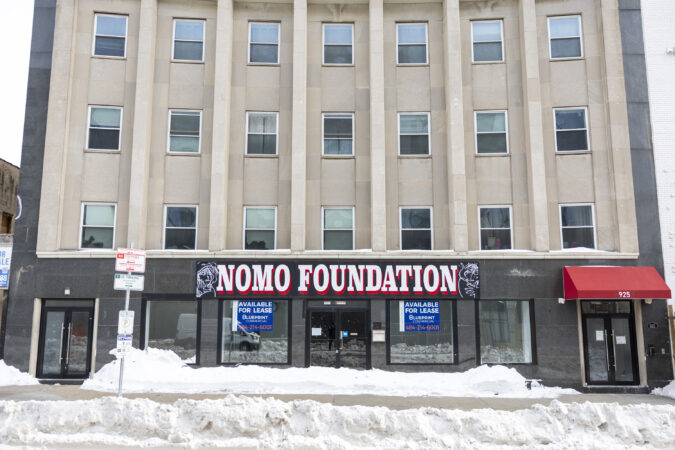
On Wednesday, an Inquirer investigation detailed how a local anti-violence group had to terminate a housing program, displace tenants, and stave off financial collapse, despite receiving millions of dollars in city, state and federal funds over several years.
City bureaucrats had raised questions about the stability of NOMO, which is short for New Options, More Opportunities Foundation, for years. But elected officials publicly promoted the group and funds kept flowing, which initially provided youth afterschool programs before taking on significant expenses to launch an affordable housing initiative.
The nonprofit became one of the city’s signature efforts to support anti-violence work. But records show earlier concerns about NOMO turned into reality as a financial crisis hit the organization in late 2024.
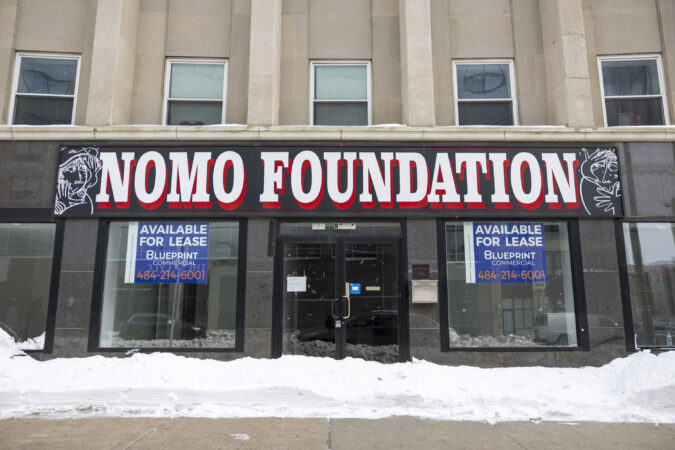
NOMO subsequently faced an IRS lien and five lawsuits over the last two years concerning hundreds of thousands of dollars in unpaid rent.
Although the group’s director says the nonprofit is now financially stable, it ended the housing program, laid off staff and curtailed its afterschool programming. And NOMO’s problems raise further questions about the city’s management of its anti-violence grants, meant to stabilize and grow similar grassroots groups.
Grant administrators noticed red flags early on — but kept funding the group
After NOMO received its first $1 million city grant in 2021, grant managers almost immediately flagged issues at the organization, records obtained by The Inquirer under the Pennsylvania Right to Know Law revealed.
One administrator warned the city about “significant weaknesses” with its financial controls, including the absence of audited financial statements and balance sheets. The administrator warned of a lack of oversight for spending decisions.
Yet the city kept pushing funding through.
Four years later, city officials still did not know who serves on NOMO’s board. Nevertheless, since 2020 the group has been awarded $2.4 million in city grants, another $2.9 million in grants funded by federal Temporary Assistance for Needy Families (TANF) money, and another $1.1 million in state public-safety grants.
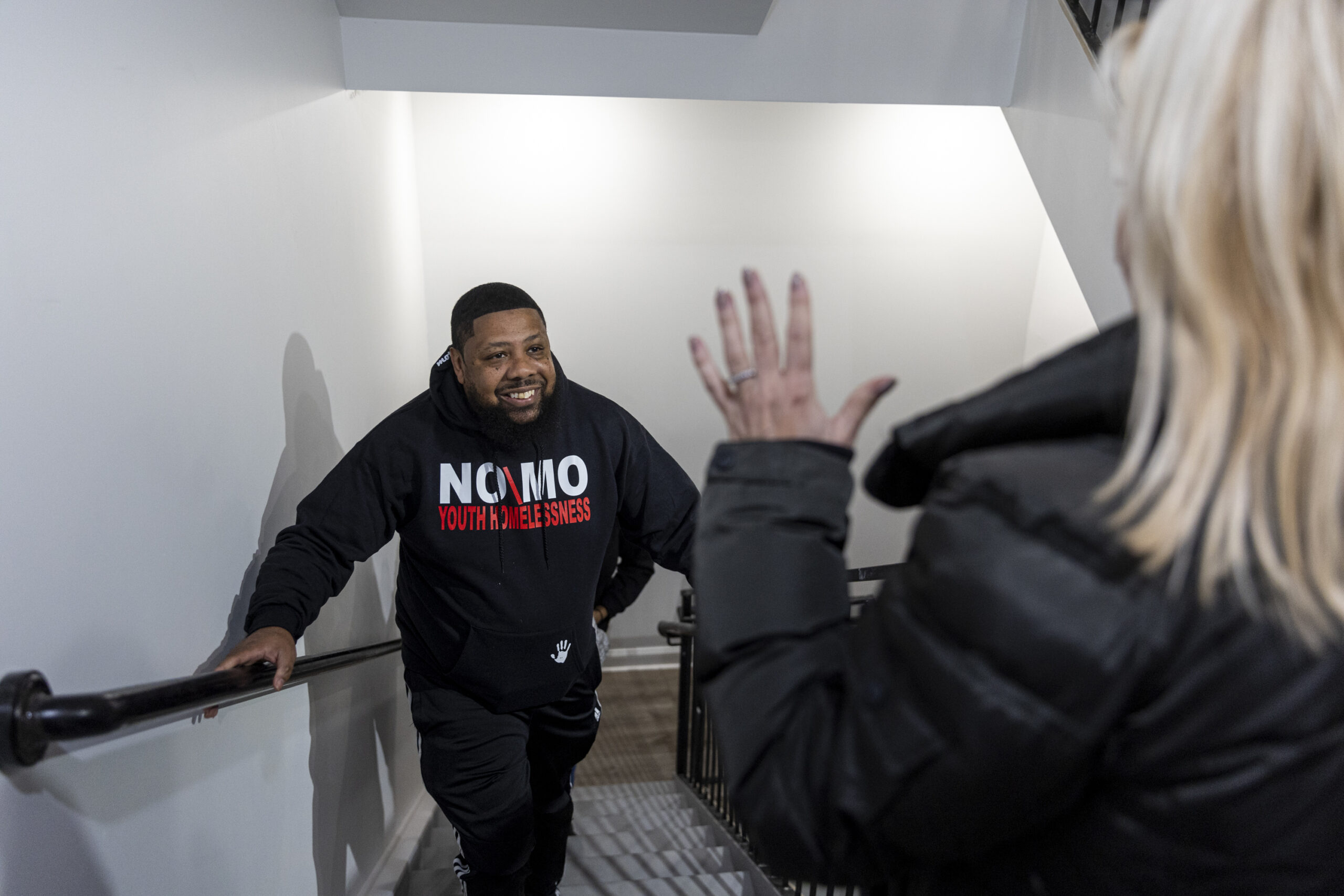
NOMO’s Rickey Duncan surprises a woman with a new apartment in a 2022 file photo.
Tenants were displaced after NOMO’s housing program failed
NOMO was initially a small nonprofit focused on anti-violence programming. But when it sought a city Community Expansion Grant, its application included one sentence proposing a housing program — which soon became the group’s largest budget item.
Its annual lease obligations totaled $750,000, which included renting an entire newly constructed apartment complex near Drexel University’s campus at a cost of more than a half-million dollars annually. Records do not show any sign that city officials questioned the wisdom of the housing program or examined how it supported the organization’s core anti-violence mission.
NOMO launched the housing effort with an apartment giveaway, in which tenants were surprised with new homes and treated to shopping sprees. It earned positive media attention, and NOMO’s executive director said the program supported 23 young women, many of them single mothers.
Just a few years later, a landlord filed to evict NOMO from the building over $418,000 in back rent.
The city sought to direct $700,000 in federal rapid rehousing funds to NOMO to save the program, but the money came with restrictions that NOMO was unable to meet. NOMO gave up the apartments, and its tenants relocated to the homes of relatives or were placed into transitional housing services.
NOMO made other questionable spending decisions
NOMO executive director Rickey Duncan tripled his own salary shortly after receiving the city grant and signed leases for new locations with large ballrooms. Duncan has said he envisioned that NOMO’s three youth centers in North, West, and South Philadelphia would become revenue generators for the nonprofit, serving as venues for baby showers, weddings, Eagles watch parties and other events.
Meanwhile, city grant administrators raised concerns as spending on NOMO’s core programming declined. Last year, as the group faced legal action over unpaid rent, Duncan sought reimbursement for a pair of Sixers season tickets. The city denied this request.
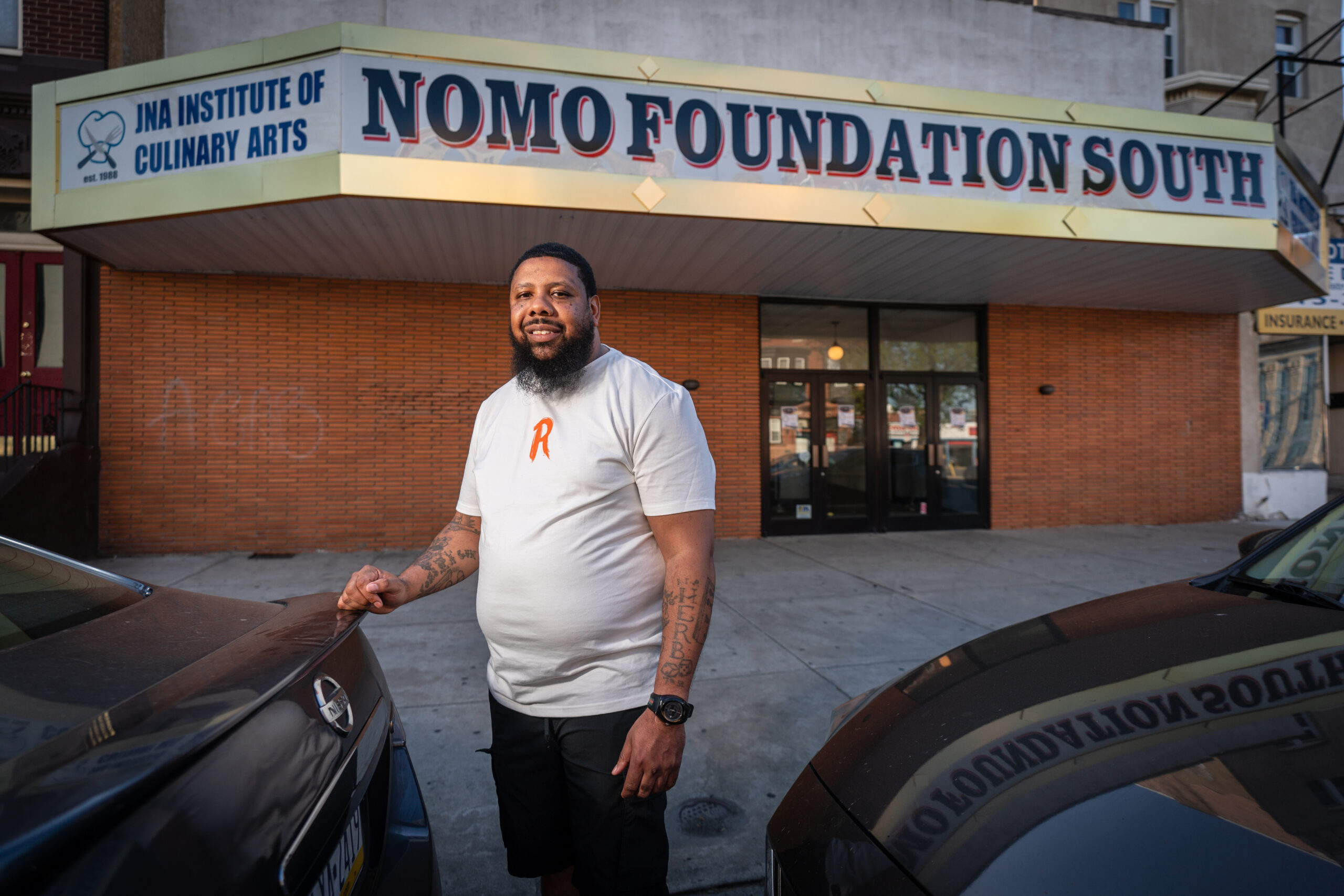
Students bounce a basketball in the ballroom at NOMO’s South Broad location in a file photograph.
NOMO laid off staff and curtailed operations last year
During the peak of NOMO’s financial crisis last spring, the city froze its funding after discovering a four-month-old federal tax lien. At the same time, the TANF funds ended. NOMO had to cut most of its staff and end its housing program.
Duncan says the group’s finances have stabilized since renegotiating its leases and cutting costs, and the lien was the result of an accounting error.
But the organization now serves about 140 children a year across its three youth centers — roughly the same as when it was operating in just one location and before the city spent millions of taxpayer dollars to expand NOMO’s reach.
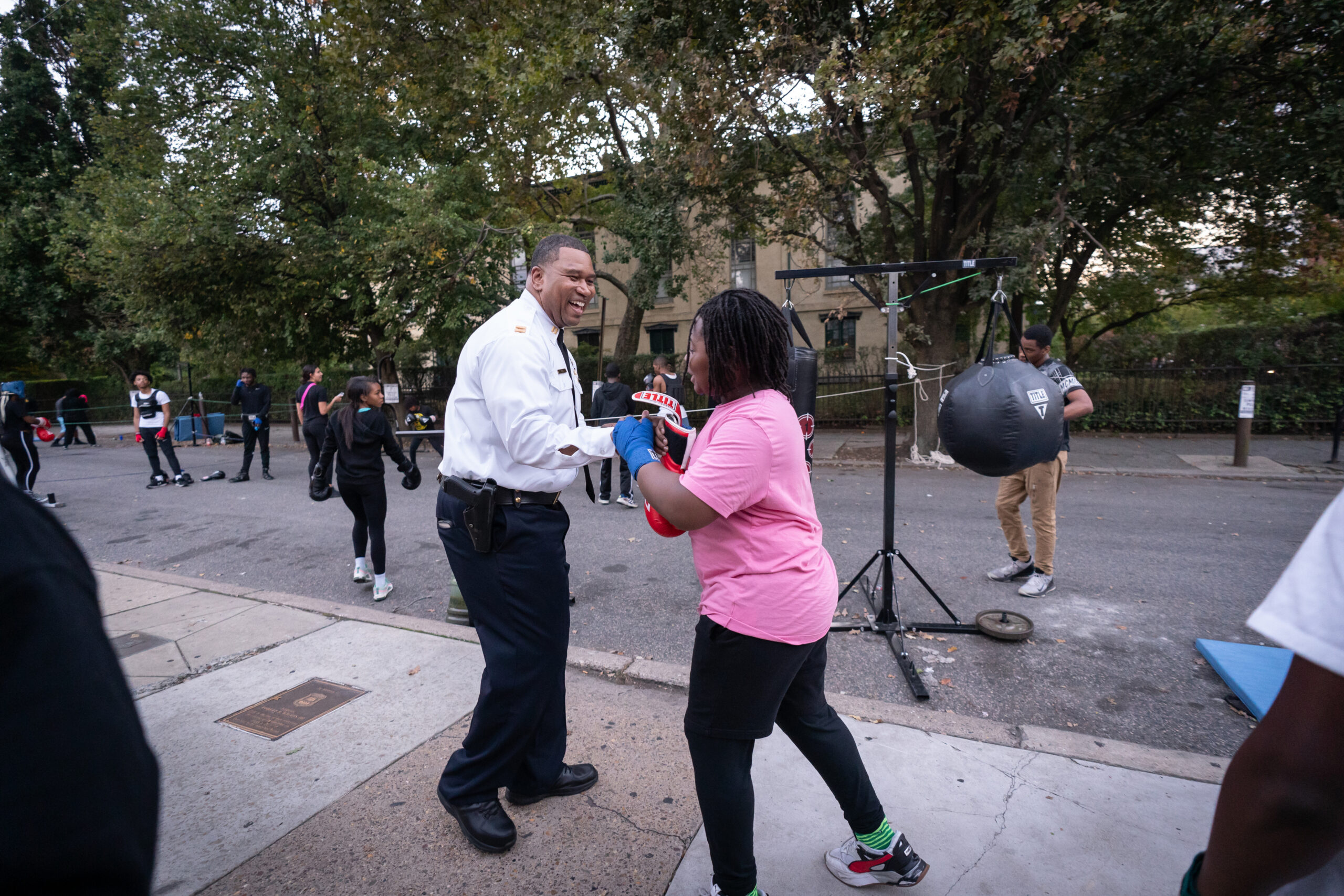
Former Philadelphia Police Captain Nashid Akil, who ran a boxing program, Guns Down Gloves Up, in a 2022 Inquirer file photograph. Following an Inquirer investigation, Akil was fired and nine police were criminal charged with theft of city grant funds.
Problems dog Philly’s anti-violence grant program
NOMO’s main city funding source, the Community Expansion Grants, has had other high profile problems.
A 2023 Inquirer report found some of the groups that had been selected for funding were poorly equipped to manage the sudden cash infusions. A city controller report the following year corroborated many of these findings.
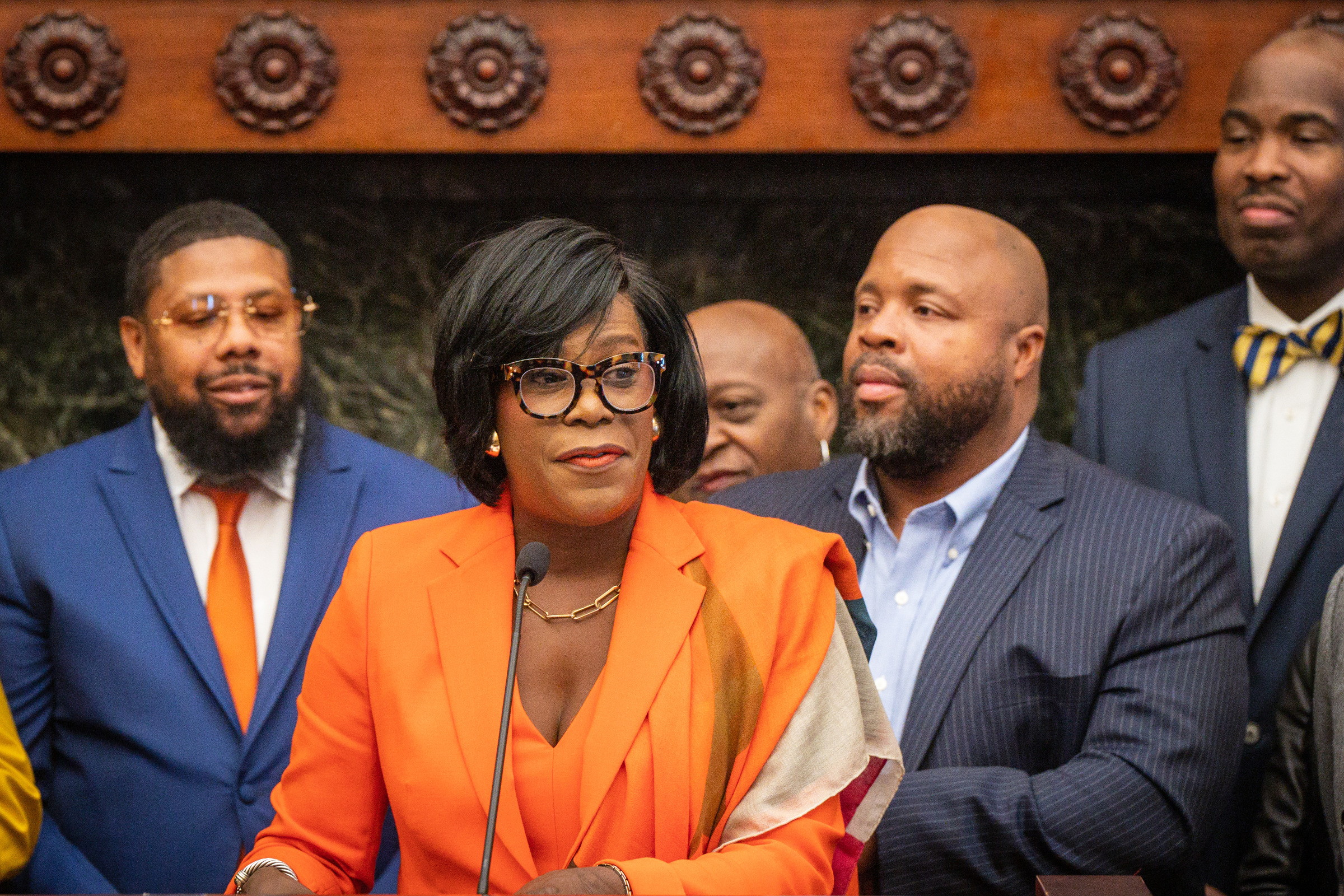
Mayor Cherelle L. Parker referred questions about NOMO to the city’s Office of Public Safety, which praised the group’s efforts.
Council President Kenyatta Johnson also praised NOMO in a statement responding to The Inquirer’s findings. He added that he expects the Office of Public Safety to “review these matters thoroughly, fairly, and professionally.”
“It is crucial that any concerns are taken seriously and examined through the proper channels, with facts guiding the outcome,” Johnson’s statement said.
ACKNOWLEDGMENT
The Inquirer’s journalism is supported in part by The Lenfest Institute for Journalism and readers like you. News and Editorial content is created independently of The Inquirer’s donors. Gifts to support The Inquirer’s high-impact journalism can be made at inquirer.com/donate. A list of Lenfest Institute donors can be found at lenfestinstitute.org/supporters.
Philadelphia and state officials awarded more than $6 million in taxpayer funds over the last five years to a politically connected but financially unstable anti-violence nonprofit, despite repeated warnings from city grant managers about improper spending and mismanagement, an Inquirer investigation has found.
The group — New Options More Opportunities, or NOMO Foundation — received city and state anti-violence grants and locally administered federal dollars to expand its youth programs and launch a new affordable housing program. The money fueled NOMO’s rapid rise from a small, grassroots outfit into a sprawling nonprofit that took on expenses it ultimately could not afford.
Mayor Cherelle L. Parker has publicly touted NOMO’s work in the community, and she further boosted its profile by naming its director to her transition team upon taking office. But behind the scenes, Parker administration staffers watched NOMO face mounting financial pressures over the last two years.
In that time, the organization has been hit with multiple eviction filings and an IRS tax lien, and had to lay off staff and suspend programming. Most significantly, NOMO had to terminate its housing initiative last year — displacing all 23 low-income households that had been its tenants.
The warning signs were evident years earlier. Records obtained under Pennsylvania’s Right to Know Law show that city grant managers expressed concerns as far back as 2021 about NOMO’s lack of financial controls, incomplete balance sheets, and chronic inability to provide basic documents. As recently as last year, the city was unaware who sat on the group’s board.
Yet records show city officials kept propping up the group with more funds, without successfully putting in place the kind of structural support that might have kept it from foundering. Last year, the city sought to award a $700,000 federal homelessness prevention contract to NOMO, but the nonprofit was unable to meet the conditions of the contract and the funds were never disbursed. Officials also proposed writing more funding to NOMO into last year’s city budget as a last-minute line item. That effort failed.
In a September interview, NOMO executive director Rickey Duncan blamed city officials for funding delays.
“I was breaking my back to make sure those young people were getting housed,” Duncan said. “We built a tab that was so big we couldn’t pay no more, because the city didn’t pay.”
Rickey Duncan surprised a group of young women with apartments in a December 2022 file photograph. Last year, NOMO gave up the leases for the apartments citing a lack of funding.
Much of the money awarded to NOMO came via Philadelphia’s Community Expansion Grant (CEG) program, launched in 2021 to respond to record gun violence and support alternatives to policing. NOMO was one of only two initial grantees to receive the maximum $1 million award, which was meant to help the group scale up its operations and serve more at-risk youth.
NOMO’s financial records detail spending that quickly led to trouble after it received the first city grant, starting with the decision to devote most of the funds to launching a costly housing initiative while opening sprawling new youth centers to expand its after-school programs to new neighborhoods.
Duncan signed annual building leases totaling $750,000, and increased his own salary from $48,000 in 2021 to $144,000 the next year. (Duncan said that his pay — now $165,000, according to the most recent tax filing — is below average for an organization of NOMO’s size and was previously lower because he was volunteering half his time.)
The records contain no evidence that city grant managers questioned the lease expenses or conducted an evaluation of whether the upstart housing program was an appropriate addition to the organization’s core mission of offering after-school programming.
By the start of last year, a tax lien and lawsuits over unpaid rent threatened NOMO’s existence. Still, Duncan asked the city in January 2025 to reimburse the roughly $9,000 cost of two Sixers season tickets he purchased a year earlier. He explained in a memo that the tickets were “an innovative tool for workforce development.”
“Season tickets to the Sixers are not an acceptable programmatic expense,” the grant program manager responded in an email.
Records show that city officials discovered in April that a $35,000 IRS lien, filed four months earlier, had rendered NOMO ineligible for grant funding. Grant administrators sent an email to NOMO staffers with a warning written in all-caps: “CEASE ALL SPENDING.”
Duncan said that the lien was the result of a missing signature on a tax form, and that it was eventually resolved at no cost. But in a June email to Public Safety Director Adam Geer and other city officials, he accused the city of pushing his organization to the brink of collapse.
“I am respectfully requesting a written response detailing how a tax [lien] escalated into a comprehensive investigation into the NOMO Foundation’s financial health,” Duncan wrote. “NOMO has been disrespected, attacked, and harassed, by members of this office on this and previous occasions.”
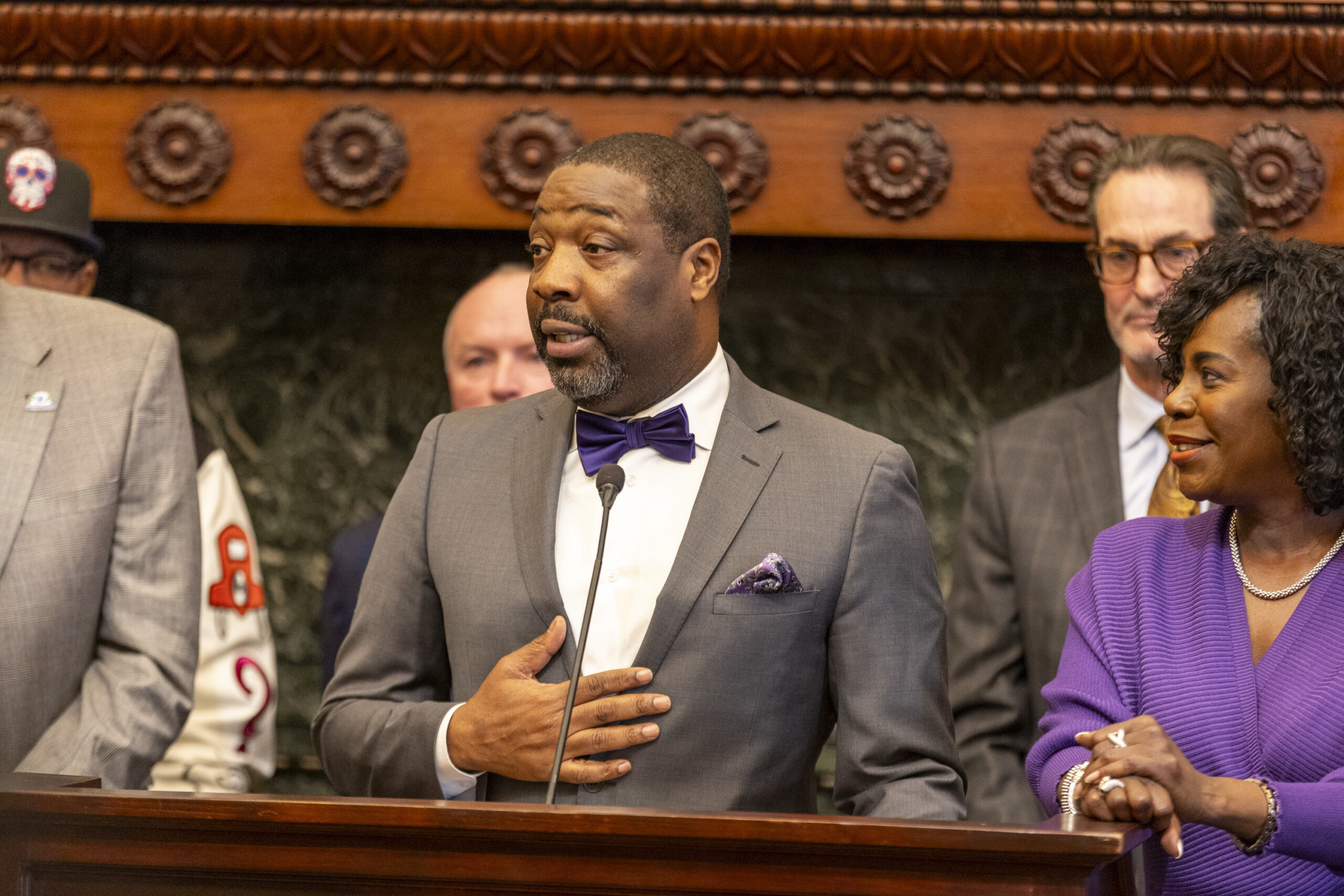
City Council President Kenyatta Johnson, speaking on Jan. 20. Regarding NOMO, he says, “It is crucial that any concerns are taken seriously.”
In a statement responding to The Inquirer’s findings, Johnson praised NOMO and credited the organization with “working with children throughout Philadelphia, intervening in cycles of violence, and literally saving lives in our community.”
Johnson, who was listed as a reference on the group’s most recent grant application, added: “Regarding any allegations raised against Mr. Duncan and NOMO, I am confident that the City of Philadelphia’s Office of Public Safety will review these matters thoroughly, fairly, and professionally. It is crucial that any concerns are taken seriously and examined through the proper channels, with facts guiding the outcome.”
A spokesperson for Parker referred questions to the Philadelphia Office of Public Safety, which manages CEG grants.
In a written response, a spokesperson for the department, Jennifer Crandall, praised NOMO’s efforts.
Rickey Duncan (left) and then Mayor-elect Cherelle Parker at a news conference that outlined Parker’s transition team and the plans that she had for her administration on Nov. 9, 2023.
“Not only has NOMO delivered on grant-funded programs, it has become an important partner on city initiatives like interventions with at-risk youth,” Crandall wrote. She cited evaluations by an unnamed third party that credited NOMO for providing “holistic support to participants … beyond the immediate program activities” and “addressing the broader social determinants of violence.”
Crandall did not respond to a follow-up request for the evaluation.
Duncan gave The Inquirer a 2023 report prepared by four nonprofit partners that evaluated CEG recipients in their first year, with the intention of documenting program goals and activities. The report states that the evaluation was based on a single site visit, interviews with staff, and a youth focus group, and that it was then too soon to evaluate impact. It noted that NOMO had retained more than half its participants over the grant cycle and had created “an environment that is welcoming and comfortable, so that participants willingly show up.”
The assessment did not address the viability of the housing program, nor did it cite any metrics that might be used to gauge whether NOMO’s programs had reduced community violence.
Duncan also sent The Inquirer written statements from two landlords indicating that their court cases against him had been resolved, and that they support NOMO’s mission.
He says NOMO is now financially stable, despite three years of tax returns showing the nonprofit in the red. He said NOMO’s programs now serve about 140 children a year across its three locations — about the same as when it was operating in just one location in 2019 and before the city awarded the expansion grants.
Laura Otten, a nonprofit consultant and former director of La Salle University’s Nonprofit Center, said it was clear the city’s grant awards to NOMO had not fulfilled their stated goals.
“It obviously didn’t work if they ended up having to evict people,” she said. “Where is the evidence that this grant has improved the capacity of the organization?”
Dawan Williams (left), vice president of restorative justice for the Nomo Foundation, and Rickey Duncan, Nomo CEO and executive director, in one of the student spaces at the foundation on South Broad Street on April 13, 2023.
‘Significant weaknesses noted’
When Parker laid out her priorities in her first budget address before City Council in spring 2024, she mentioned Duncan and NOMO by name as she praised the grassroots anti-violence organizations “working each day to lessen the pain and the trauma caused by gun violence.” She also promised to reward the various groups with an additional $24 million in grant funding.
It was another highlight of Duncan’s well-documented redemption story. By his own account, he dropped out of South Philadelphia High School in 1994 to sell drugs and promote concerts, earning the nickname “Rickey Rolex” for his flashy style. He was arrested the next year for robbery and spent more than a decade in prison. After he was released in 2015, Duncan began volunteering with NOMO, then a fledgling nonprofit, and eventually took the reins.
“My vision started off, to be honest, just wanting to help kids and give back to a city that I took from,” Duncan said in a 2023 interview with The Inquirer.
NOMO began as a largely volunteer-run effort operating in borrowed space on less than $50,000 a year, tax returns show.
In 2019, the tiny nonprofit submitted a grant application to Philadelphia Works, the city’s workforce development board, which was tasked with distributing about $6 million in federal Temporary Assistance for Needy Families (TANF) grants. NOMO proposed after-school programs that would teach up to 125 kids everything from neuroscience to software development to road construction.
Philadelphia Works awarded NOMO $209,000, skipping the standard financial review in order to disburse funds that would have otherwise expired.
“It breathed life into us,” Duncan said.
Rickey Duncan speaks with kids at a NOMO after-school program in a 2021 file photograph.
By 2021, NOMO was receiving half a million dollars annually in TANF money — enough to lease a 7,000-square-foot office space on North Broad Street and support programs for more than 100 young people. And Duncan’s star was rising as a charismatic and credible voice who came up from the same streets that he and others were working to rid of violence. Elected officials and news media alike turned to him for quotes and photo ops amid a surge in shootings.
In December 2021, then-Mayor Jim Kenney announced a $155 million investment in gun violence prevention funding. The plan included a $22 million grant program, with more than half that focused on “supporting midsized organizations with a proven track record” to “expand their reach, deepen their impact, and achieve scale.”
Duncan’s scrappy, homespun nonprofit was exactly the type of group city officials had in mind when they created the CEG program, and his grant application cited support from State Reps. Danilo Burgos and Elizabeth Fiedler. Although 30 other nonprofits received funding, NOMO was one of only two organizations awarded the maximum grant of $1 million — a transformative sum that would roughly triple NOMO’s operating budget.
In his first application for the CEG funds, Duncan pledged to expand his “trauma informed” after-school program to South Philadelphia by offering paid work experience, academic support, and intensive case management. The $1.4 million proposed budget projected the organization would spend about $1 million annually on staff salaries and participation incentives for teens, while spending $94,000 a year to cover added lease costs.
NOMO devoted just one sentence of its 15-page grant application to describing a new affordable housing initiative “to combat youth homelessness.” The proposal did not include what metrics would be used to judge that program’s success.
Despite the brief mention, the housing initiative would become the organization’s largest single budget item, by far.
After securing the city grant money, NOMO took on a $552,000 annual lease for a newly built 27,000-square-foot West Philadelphia apartment complex near 40th Street and Lancaster Avenue. It also signed a $192,000-per-year lease for a 17,000-square-foot former culinary school on South Broad Street.
The deals left NOMO with youth centers in North, South, and West Philly, each with large event spaces that could host its programming. Duncan also planned to market the venues for private events — such as weddings and Eagles watch parties — to generate additional revenue.
NOMO students bounced a basketball in the ballroom at the nonprofit’s South Broad Street youth center. The space is offered for event rentals, which Duncan said can generate crucial unrestricted income.
If city officials had concerns about NOMO’s costly expansion strategy or the viability of his plan to lease out the youth centers for parties, they are not reflected in the available records.
However, staffers at the Urban Affairs Coalition — a nonprofit the city had contracted to manage the first round of the grant program — flagged NOMO’s general lack of financial controls in a December 2021 fiscal assessment of prospective grantees.
“Significant weaknesses noted,” an Urban Affairs staffer wrote of NOMO in an email to then-anti-violence director Erica Atwood and other city officials. “No audited financials. No balance sheets presented even in the [IRS Form] 990s. Separation of Authority: Basically non-existent.”
That month, the city instructed Urban Affairs to proceed with the scheduled grant advance of $200,000 and to work with NOMO to establish a remediation plan. Instead, grant administrators wrote that they were reassured after NOMO installed a new chief operating officer — who left the organization the following year.
By the end of the grant cycle, Duncan was able to deliver a public relations win for NOMO. He appeared on Good Day Philadelphia in December 2022 to launch the housing plan with a surprise giveaway of the first of 23 brand-new apartments for young women, many of them single mothers.
Duncan said NOMO’s housing program would cover 70% of rent costs for 18 to 24 months while enrollees seek employment and eventually move out on their own.
“They’ll be getting their credit together so they can prepare to become a homeowner,” he told Fox 29. “We need money to finish doing this.”
Rickey Duncan, CEO and executive director, at Nomo on South Broad Street on April 13, 2023.
Billion-dollar dream
The city renewed NOMO’s grant in January 2024, this time for $850,000. But a tax return the same year showed the organization was already $710,000 in the red.
Months later, the nonprofit faced its first eviction suit, targeting its North Broad headquarters, and had to cut a check for $275,000 in back rent — the equivalent of one-third of its city grant money for that year.
By the fall of 2024, records show NOMO had spent only about 5% of the $150,000 initially budgeted for youth incentives, outside activities, equipment, or program supplies. The city withheld most of NOMO’s fourth-quarter grant funding, reducing the nonprofit’s award by $170,000 to a total of $680,000 for that year.
Still, the city re-upped the group for a third grant in 2025, this time for $600,000.
By January 2025, financial records show NOMO had virtually stopped spending on youth programming. It laid off most of its staff as landlords for all three youth centers took legal action against the nonprofit over hundreds of thousands of dollars of back rent.
NOMO sought to justify the expense of Sixers season tickets with a narrative submitted to the city, which denied the expense. Duncan said the majority of the tickets went to youth participants and members of the community.
Around then, NOMO received an infusion of support in the form of a $950,000 grant from the Pennsylvania Commission on Crime and Delinquency. But the TANF funds had run out, and the organization’s problems continued. City officials had NOMO submit a formal “performance enhancement plan” last July.
Duncan said in September that NOMO had cut costs, hired a new accounting firm, and was working toward “full financial stability.” It resolved two eviction cases by reducing its real estate footprint — downsizing its North Philly headquarters into basement offices and terminating its affordable housing program. Duncan said the former tenants moved in with family members or were transferred to the nonprofit Valley Youth House, which provides transitional housing.
After The Inquirer asked Duncan about the most recent lawsuit over back rent, this one for $312,000, his landlord filed notice in court that the matter was resolved. Duncan said keeping three youth centers and marketing the NOMO spaces for special events are key parts of his business plan as the organization continues to settle its debts.
The spate of lawsuits has not dampened the city’s enthusiasm for Duncan’s nonprofit. Crandall, the spokesperson for the Philadelphia Office of Public Safety, said NOMO remains eligible to receive funds when a new round of grants are awarded this year.
And with the housing initiative scrapped, NOMO is left pursuing its original mission — anti-violence programming for city youth. The organization’s renegotiated leases for its three youth centers now total $360,000 a year, roughly half what NOMO had been paying.
In a 2023 interview, Duncan acknowledged that he underestimated the financial demands of running an organization on a citywide scale.
“As a kid you think, … ‘If I can get a million dollars, I’ll be rich.’ And then you’re broke again,” he said then. “I had a billion-dollar dream. I didn’t realize it was a billion-dollar dream.”
ACKNOWLEDGMENT
The Inquirer’s journalism is supported in part by The Lenfest Institute for Journalism and readers like you. News and Editorial content is created independently of The Inquirer’s donors. Gifts to support The Inquirer’s high-impact journalism can be made at inquirer.com/donate. A list of Lenfest Institute donors can be found at lenfestinstitute.org/supporters.
Jeffrey Epstein and Sixers co-owner Josh Harris had an ongoing business relationship that included numerous phone calls and at least one visit to Epstein’s home in Manhattan, according to emails released Friday by the U.S. Department of Justice.
The emails do not contain any indication that Harris was involved with sexual misconduct. The records — buried within the three million documents made public Friday as part of the congressionally ordered release of the Epstein files — shed light on a yearslong correspondence that occurred after Epstein’s 2008 guilty plea for solicitation of prostitution with a minor, but before his 2019 arrest on child sex trafficking charges.
Harris and Epstein moved in similar circles among Wall Street financial brokers. Harris, cofounder of the investment firm Apollo Global Management, exchanged multiple emails and phone calls with Epstein between 2013 and 2016.
Jonathan Rosen, a spokesperson for Harris, noted that many of Epstein’s entreaties over the years went nowhere. He said the Sixers owner “never had an independent relationship with Jeffrey Epstein.”
“Harris sought to prevent Epstein’s attempts to develop a corporate relationship with Apollo,” he said. “As these emails indicate, Harris sought to avoid meeting with Epstein, canceling meetings and having others return his calls.”
Evidence of one meeting between Epstein and Harris was detailed in earlier records released by the DOJ, and first reported by the Daily Pennsylvanian, the student newspaper at the University of Pennsylvania. Harris is an alumnus of Penn’s Wharton School.
Exchanges about this meeting, which have not been previously reported, began with a series of emails between Epstein’s and Harris’ schedulers on plans to meet at Epstein’s home in 2013, along with former Apollo CEO Leon Black and billionaire Marc Rowan, apparently to discuss financial affairs and investments.
“Just reconfirming Leon, Josh and Marc will all go see Jeffrey at his home, 9 East 71st Street between 5th and Madison tomorrow, Tues. Oct. 22nd at 7am for a breakfast meeting,” a scheduler for Epstein wrote in an email from October 2013.
Rowan, a major University of Pennsylvania donor who also chairs the Wharton School’s advisory board, declined to comment.
It is unclear if the 2013 meeting took place. Harris later apologized to Epstein for having “rescheduled on you a few times.”
Correspondence between Harris and Epstein carried on.
Emails from January 2014 then show Epstein’s assistant following up on a request for Harris to pull together a series of organizational documents at Epstein’s request.
A June 2014 email features Epstein describing a proposed $2.4 million payment apparently from Harris to Black’s former executive assistant, Melanie Spinella.
Details surrounding the payment, or if it ever occurred, were not clear.
Later in 2014, Harris’ and Epstein’s schedulers e-mailed yet again to arrange a different visit to Epstein’s home.
This time, Epstein proposed another breakfast, involving Black, Microsoft founder Bill Gates, tech investor Reid Hoffman, and Ron Baron, the founder of Baron Capital.
“Jeffrey Epstein would like to invite Josh to breakfast on Dec. 5th at Jeffrey’s home in NY… Bill Gates will be in attendance. The breakfast will be intimate…less than 6 people,” one email invitation read.
The pair also discussed the meeting directly.
“Sorry i missed you. Crazy week,” Harris wrote to Epstein in November 2014. “U around any time from now to sunday? Whats this Bill Gates thing about? Tks for thinking about me.”
“I thought you might like to schmooze,” wrote Epstein in response, asking Harris to call him. “nothing but fun friday 5th breakfast.”
That meeting does appear to have taken place, based on subsequent emails, with Harris in attendance.
“Did you have fun at breakfast?” Epstein wrote to Harris, about a week after the meeting was scheduled to take place.
“Yes very much,” he responded. “Thank you for inviting me.”
In another typo-laden email, Epstein later bragged to Bank of America president Paul Morris about the breakfast meeting.
“as you might know I had a recent breadkfst at the hosue with ron baron. josh harris, and billgates,” he wrote in January 2015.
In September of that year, Epstein e-mailed Harris again directly asking him to call him about an unspecified issue.
“Any conversation that you prefer to stay between just us. will. its my financial confessional booth for jews,” Epstein wrote.
“Will do Jeff,” Harris responded. “Happy to catch up. Thx.”
Days later, Robert Bodian, managing partner at the Mintz law firm, reached out to Epstein, indicating he was contacting him at “Josh’s request,” apparently regarding a tax issue.
Staff writer Gina Mizell contributed to this article.
For Shane Hennen, the house of cards keeps folding.
A federal indictment unsealed Thursday accuses the Philadelphia-based professional gambler of acting as a ringleader in a sweeping sports-betting conspiracy now involving the NCAA and the Chinese Basketball Association. Hennen was first arrested last January in connection with a gambling case involving a former Toronto Raptor, and was also charged separately in an October indictment in New York focused on the NBA.
The latest charges against Hennen, known as “Sugar Shane,” brought an international angle to the existing portrait of a high-stakes gambler who prosecutors allege was willing to bribe athletes to throw games, provide devices to fix backroom card games tied to the New York mafia, and use insider betting information to place fraudulent wagers.
In all, federal prosecutors have accused Hennen of conspiring to place fraudulent bets on ex-Raptors forward Jontay Porter and NBA guard Terry Rozier, bribing the top-scoring player in the CBA to throw games, and recruiting college basketball trainers to help rig dozens of NCAA games — much of it orchestrated from Hennen’s favorite Philly casino, Rivers. On top of it all, he is also alleged to have participated in the rigging of mob-linked poker games in New York City.
And while the list of implicated players and conspirators continues to grow by the dozens, Hennen has remained a central figure to the bet-fixing scandals that have rocked the sports world over the past year.
But Hennen’s earlier record for criminality came into clearer view as result of the federal investigations. While growing up in the Pittsburgh area, he did time for drug and gambling related charges that now serve as a kind of prelude to his role in the bet-fixing scandals.
In 2006, the Washington, Pa., native received probation in Allegheny County for charges linked to a gambling scheme. According to court records, Hennen and an accomplice rented adjacent rooms in a Pittsburgh area hotel to hold underground dice games. While gambling in one room, a partner in the next room employed a magnetic device to flip loaded dice to preferred numbers.
Then, early one morning in 2009, a former Duquesne University basketball player was found bleeding from a stab wound in Pittsburgh’s South Side neighborhood, a popular nightlife area. The man survived and later told police that Hennen had stabbed him in the neck after the athlete confronted him about cheating in a card game. Hennen was also picked up on a DUI less than two weeks later, but was released.
Not long afterward, Hennen was charged with two more felonies after he was caught in a parking lot with 500 grams of cocaine down the street from the Meadows Casino, near Pittsburgh.
In subsequent court filings, Hennen revealed that he had been working with a local drug dealer for more than a year. Facing well over a decade of jail time between the drug and assault charges linked to the stabbing, Hennen agreed to testify against his dealer and participated in a federal drug sting involving a different narcotics supplier based in Detroit, court records show.
He served just less than two-and-a-half years in prison, plus four years of supervised release.
According to court transcripts published by Sports Illustrated in October, Hennen admitted five times under oath that he cheated other people out of money.
During a cross-examination, Lee Rothman, an attorney for his associate drug dealer he was testifying against, stated bluntly that Hennen made “a living out of cheating people out of things.”
“That’s correct,” Hennen said.
After his release in 2013, Hennen traveled to Pensacola, Fla., purportedly to work as a sales rep for a seafood wholesaler. Court records show he almost immediately went back to gambling, even violating his probation to travel out of state to participate in the 2014 World Series of Poker in Las Vegas.
When Hennen landed in Philadelphia in 2015, it was seemingly to start over. He leased an apartment near the Rivers Casino in Fishtown.
The small casino would become Hennen’s unlikely staging ground for a new, more lucrative gambling scheme that would come to span the globe.
From Philly to China
Local gamblers said Hennen worked the poker and baccarat tables at Rivers, using the action to build a reputation with the house and pave the way for six-figure sports bets, the kind only gamblers with money and a track record at the casino are allowed to make.
By 2022, Hennen had launched an online betting consultancy via an Instagram page called “Sugar Shane Wins.” On social media, Hennen posted his sportsbook picks along with glamorous photos jetting around to Vegas or Dubai, or sitting courtside at Sixers games.
Although he marketed bets on teams familiar to U.S. gamblers, his focus — and income — was overseas, according to federal prosecutors.
He posted courtside photos of himself at Sixers games with a Mississippi-based sports handicapper named Marves Fairley, who prosecutors say connected the gambler with Antonio Blakeney, a former Louisiana State University shooting guard who had done a brief stint on the Chicago Bulls.
Blakeney had subsequently bounced around different international teams, including Hapoel Tel Aviv, in Israel, and the Nanjing Monkey Kings and Jiangsu Dragons, both in China. According to a federal indictment, while playing for the Dragons, Hennen and Fairley bribed Blakeney to underperform in Chinese basketball games in order to fix high-stakes bets against the team and recruit others to do the same.
Suddenly, the slots parlor on the Delaware was seeing six-figure bets placed on multiple Chinese basketball games through its sportsbook, BetRivers, sometimes for upward of $200,000. Representatives for the casino declined to comment Thursday on the latest federal indictment.
The gambit proved reliably lucrative. In a 2023 text message obtained by federal authorities, Hennen reassured an accomplice who had placed big bets against Blakeney’s team.
“Nothing gu[a]rantee[d] in this world,” Hennen wrote, ”but death taxes and Chinese basketball.”
The model would also serve as a template for a similar racket the duo would orchestrate within the NCAA.
By 2024, the duo had recruited basketball trainers Jalen Smith and Roderick Winkler to help convince dozens of college basketball players to rig matches on their behalf.
Ultimately, 39 players on more than 17 Division 1 NCAA teams would participate, with bettors wagering millions on at least 29 rigged games.
Hennen took a behind-the-scenes role, authorities alleged, texting a network of straw bettors who placed big wagers on games featuring star players bribed by the trainers, and sometimes moving bribe money or splitting up winnings back in Philly.
His rising profile started to draw unwanted attention.
Shortly after Hennen relocated to Las Vegas in 2023, he was accused of rigging poker matches by Wesley “Wes Side” Fei, another professional gambler who claimed in social media posts that Hennen had scammed him out of millions.
The next year, gambling industry watchdog Integrity Compliance 360 began flagging bets placed on six Temple University basketball games. One, against Alabama-Birmingham in March 2024, saw the Borgata, in Atlantic City, cancel bets for the game due to suspicious betting activity. Before the end of 2024, the National Collegiate Athletic Association had launched an investigation into the games, as rumors swirled that federal authorities were questioning Temple player Hysier Miller as part of an alleged point-shaving scheme.
Then Porter, the Raptors center, was banned for life from the NBA, after it emerged that the league was investigating yet another bet-rigging scheme. A few months later, Porter pleaded guilty to gambling charges — the first hint at the true scope of a sprawling federal investigation that went on to consume the NCAA and NBA.
Beginning of the end
In January 2025, Hennen’s luck ran out.
Authorities stopped him in Las Vegas as he was boarding a one-way flight to Panama, en route to Colombia. He had $10,000 in his pocket and claimed he was headed to South America for dental treatment.
But investigators had already zeroed in on Hennen as the main orchestrator of the prop betting scheme involving Rozier, the former Miami Heat guard. In October, federal prosecutors in the U.S. District Court for the Eastern District of New York unsealed an indictment, accusing Hennen of working with Fairley to have Rozier throw games for a profit, sometimes using Philadelphia as a meeting point to dole out the proceeds to other bettors.
Court records show that since then, Hennen has entered plea negotiations with federal prosecutors and relocated to a residence in South Philadelphia. (His attorney did not respond to a request for comment.)
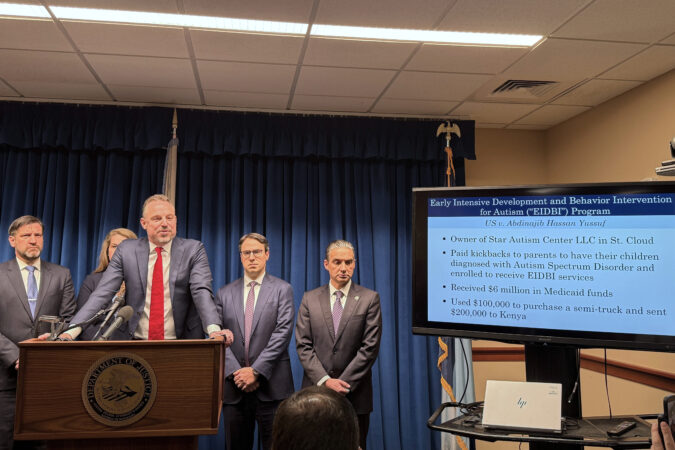
During the Thursday news conference unveiling the latest indictment, Wayne Jacobs, a special agent in charge of the FBI Philadelphia field office, said that Hennen and his conspirators’ actions had undermined faith in professional sports writ large.
“We expect athletes to embody the very best of hard work, skill, and discipline, not to sell out to those seeking to corrupt the games for their own personal benefit,” he said. “The money that’s used as a tool to influence outcomes does not just taint a single game, it tears up the trust and the results that we cherish.”
When Cherelle L. Parker was a City Council member, she championed a strict residency rule that required city employees to live in Philadelphia for at least a year before being hired.
Amid protest movements for criminal justice reform in 2020, Parker said stricter residency requirements would diversify a police force that has long been whiter than the makeup of the city, and ensure that officers contribute to the tax base.
“It makes good common sense and good economic sense for the police policing Philadelphia to be Philadelphians,” she said then.
But today, under now-Mayor Parker, more police live outside Philadelphia than ever before.
About one-third of the police department’s 6,363 full-time staffers live elsewhere. That share — more than 2,000 employees — has roughly doubled since 2017, the last time The Inquirer conducted a similar analysis.
(function() {
var l2 = function() {
new pym.Parent(‘ppd_zips’,
‘https://media.inquirer.com/storage/inquirer/projects/innovation/arcgis_iframe/ppd_zips.html’);
};
if (typeof(pym) === ‘undefined’) {
var h = document.getElementsByTagName(‘head’)[0],
s = document.createElement(‘script’);
s.type = ‘text/javascript’;
s.src = ‘https://pym.nprapps.org/pym.v1.min.js’;
s.onload = l2;
h.appendChild(s);
} else {
l2();
}
})();
Today, the percentage of nonresidents is even higher among the top brass: Nearly half of all captains, lieutenants, and inspectors live outside the city, according to a review of the most recent available city payroll data.
Even Commissioner Kevin Bethel keeps a home in Montgomery County, despite officially residing in a smaller Northwest Philadelphia house that he owns with his daughter.
Most municipal employees are still required to live within city limits. Across the city’s 28,000-strong workforce, nearly 3,200 full-time employees listed home addresses elsewhere as of last fall. Most of them — more than 2,500 — are members of the police or fire departments, whose unions secured relaxed residency rules for their workers in contract negotiations. About a quarter of the fire department now lives outside the city.
Philadelphia Mayor Cherelle L. Parker and Police Commissioner Kevin Bethel speak before the start of a news conference.
Proponents of residency rules in City Hall have long argued they improve rapport between law enforcement and the communities they serve, because officers who have a stake in the city may engage in more respectful policing.
But experts who study public safety say there is little evidence that residency requirements improve policing or trust. Some say the rules can backfire, resulting in lesser quality recruits because the department must hire from a smaller applicant pool.
A survey of 800 municipalities last year found that residency requirements only modestly improved diversity and had no measurable effect on police performance or crime rates.
“It’s a simple solution thrown at a complex problem,” said Fritz Umbach, an associate professor at John Jay College of Criminal Justice. “It doesn’t have the impact people think it will.”
Parker, a Philadelphia native who lives in the East Mount Airy neighborhood, says she would still prefer all municipal employees live in the city.
“When I grew up in Philadelphia, it was a badge of honor to have police officers and firefighters and paramedics who were from our neighborhood,” she said in a statement. “They were part of the fabric of our community. I don’t apologize for wanting that to be the standard for our city.”
‘Where they lay their heads at night’
What qualifies as “residency” can be a little pliable.
Along with his wife, Bethel purchased a 3,600-square-foot home in Montgomery County in 2017 for over a half-million dollars. Although he initially satisfied the residency rule by leasing a downtown apartment after being named commissioner by Parker in late 2023, he would not have met the pre-residency requirement the mayor championed for other city employees while she was on Council.
Today, voter registration and payroll data shows that Bethel resides in a modest, 1,800-square-foot rowhouse in Northwest Philadelphia, which he purchased with his daughter last year. While police sources said it was common for Bethel to sleep in the city given his long work hours, his wife is still listed as a voter in Montgomery County.
Police Commissioner Kevin Bethel speaks during the 22nd District community meeting at the Honickman Learning Center on Dec. 2, 2025.
Sgt. Eric Gripp, a spokesperson for the department, said in a statement that Bethel is a full-time resident of Philadelphia, and that while he owns a property outside the city, his “main residence” is the home in Northwest Philly.
Although sources say it was not unheard of for rank-and-file officers to use leased apartments to satisfy the requirement on paper, Gripp said “only a small number” of residency violations had required formal disciplinary action following an investigation by the department’s Internal Affairs Division.
That likely owes to officers’ increasing ability to reside elsewhere legally. The Fraternal Order of Police Lodge 5, which represents thousands of active and retired Philadelphia Police officers, won a contract provision in 2009 allowing officers to live outside the city after serving on the force for at least five years.
The union didn’t respond to a request for comment.
Few of the cops who left the city went very far.
While Northeast Philly and Roxborough remain the choice neighborhoods for city police, the top destinations for recent transplants were three zip codes covering Southampton, and Bensalem and Warminster Townships, according to city payroll data.
A few officers went much farther than the collar counties.
Robert McDonnell Jr., a police officer in West Philadelphia’s 19th district with 33 years on the force, has an official address at a home in rural Osceola Mills, Pa., about 45 minutes north of Altoona in Centre County.
A person who answered a phone number associated with McDonnell — who earned $124,000 last year between his salary, overtime, and bonus pay — declined to speak to a reporter.
Asked about the seven-hour round-trip commute McDonnell’s nominal residence could entail, Gripp said the department doesn’t regulate the manner in which employees travel to and from work.
“Our members serve this city with dedication every day,” he said, “regardless of where they lay their heads at night.”
A long and winding history
Versions of residency rules can be found as far back as the 19th century, when police recruits were required to live in the districts they sought to work in.
But when Mayor Joseph S. Clark pushed to reform the city charter in the 1950s, he sought to abolish the rules as an impediment to hiring, saying “there should be no tariff on brains or ability.”
Instead, City Council successfully fought to expand the restrictions. And, for more than five decades, the city required most of its potential employees to have lived in Philadelphia for a year — or obtain special waivers that, in practice, were reserved for the most highly specialized city jobs, like medical staff.
Many other big cities enacted similar measures either to curb middle-class flight following World War II or to prioritize the hiring of local residents. But the restrictions were frequently blamed for causing chronic staff shortages of certain hard-to-fill city jobs.
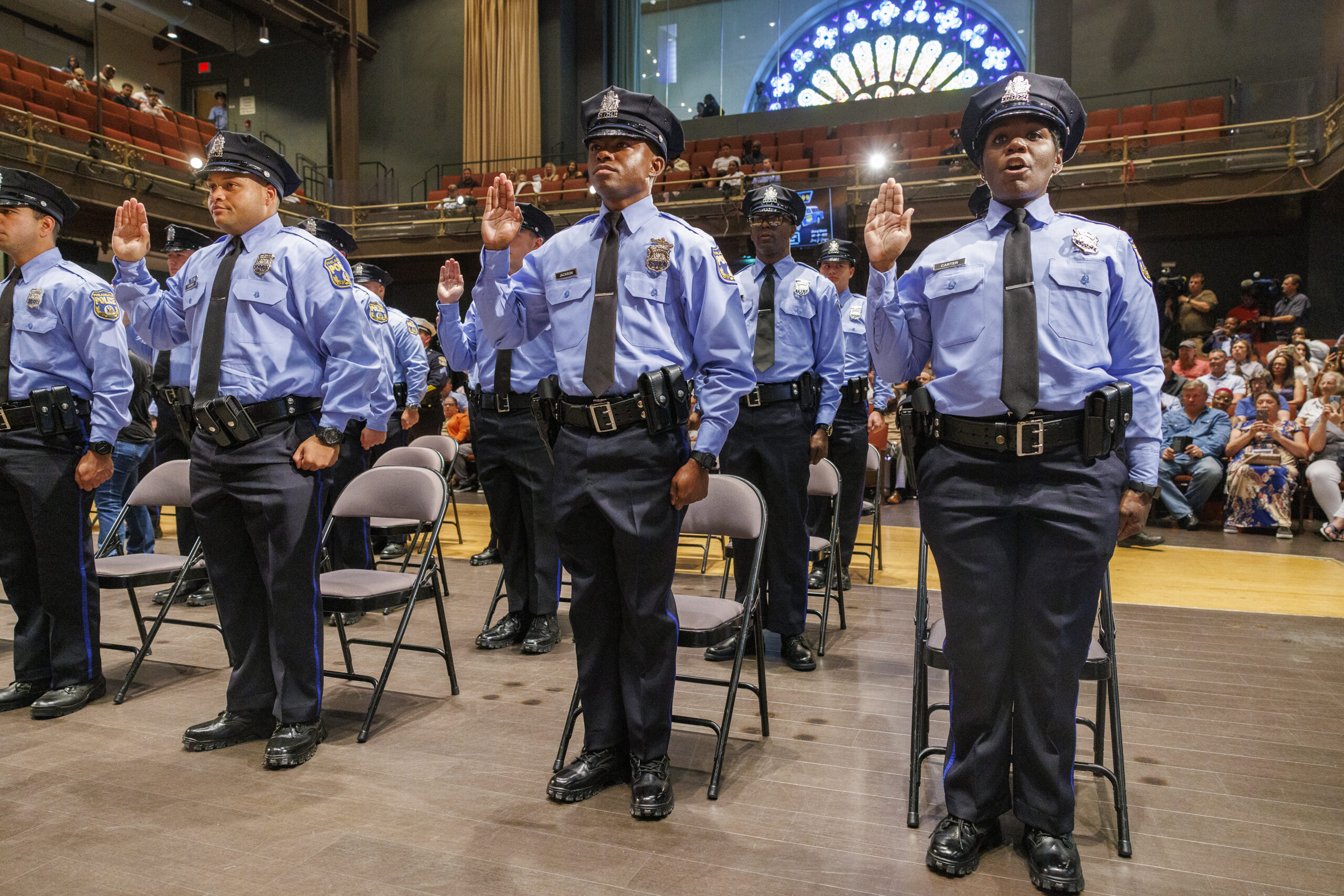
Officers Azieme Lindsey (from left), Charles T. Jackson, and Dalisa M. Carter taking their oaths in 2023.
Citing a police recruit shortage in 2008, former Mayor Michael A. Nutter successfully stripped out the prehiring residency requirement for cadets. Recruits were required only to move into the city once they joined the force.
A year later, the police union attempted to have the residency requirement struck from its contract entirely.
Nutter’s administration objected. But an arbitration panel approved a compromise policy to allow officers to live elsewhere in Pennsylvania after five years on the job. By 2016, firefighters and sheriff’s deputies secured similar concessions.
But experts say there’s little research showing that to be true.
“I am unsure if requiring officers to reside in the city is a requirement supported by evidence,” said Anjelica Hendricks, an assistant law professor at the University of Pennsylvania who worked for the city’s Police Advisory Commission. “Especially if that rule requires a city to sacrifice something else during contract negotiations.”
FOP leaders have long opposed the rule and said it was partly to blame for the department’s unprecedented recruitment crisis and a yearslong short-staffing problem that peaked in the aftermath of the COVID-19 pandemic.
In 2022, facing nearly 1,500 unfilled police jobs, former Mayor Jim Kenney loosened the prehire residency rule for the police department again, allowing the force to take on cadets who lived outside the city, so long as they moved into Philadelphia within a year-and-a-half of being hired.
Since then, recruiting has rebounded somewhat, which police officials attribute to a variety of tactics, including both the eased residency rules and hiring bonuses. The force is still short 20% of its budgeted staffing and operating with 1,200 fewer officers than it did 10 years ago.
Umbach, the John Jay professor, said the impact on recruiting is obvious: Requiring officers to live in a city where the cost of living may be higher than elsewhere amounts to a pay cut, which shrinks candidate pools.
“Whenever you lower the standards or lower the appeal of the job, you’re going to end up with people who cause you problems down the road,” he said. “A pay cut is just that.”
Two Philadelphia men are facing federal charges in Minnesota after authorities said the men had learned of the state’s lax controls around a government-funded housing program, then traveled there to learn how to exploit it — the latest development in a long-running fraud scandal that has enveloped Minnesota and drawn the ire of President Donald Trump.
Anthony Waddell Jefferson, 37, and Lester Brown, 53, were accused of fraudulently obtaining more than $3.5 million in government proceeds — funds that should have gone to Minnesota’s Housing Stabilization Services Program, prosecutors said, but were instead diverted to two companies the men oversaw in Philadelphia.
Jefferson and Brown “came [to Minnesota] not to enjoy our lakes, our beautiful summers, or our warm people,” Joseph H. Thompson, Minnesota’s first assistant U.S. attorney, said Thursday. “They came here because they knew and understood that Minnesota was a place where taxpayer money could be taken with little risk and few consequences.”
Jefferson and Brown each face one count of wire fraud and were charged by information, prosecutors said, which typically means a defendant intends to plead guilty.
Court records for their cases were not immediately available, and it was not clear if either man had retained an attorney.
Thompson cast their case as a novel twist in a scandal that he said was “swamping Minnesota” and had likely bilked taxpayers out of hundreds of millions of dollars intended for daycares, hunger programs, autism support, and other endeavors.
The state had become such a magnet for fraudsters, Thompson said, that Jefferson and Brown had effectively performed “fraud tourism,” visiting the state purely to learn how to take advantage of its reputation for having programs that were ripe for abuse.
The broader issues over the state’s lax disbursements have burst into national view in recent months as Trump and other Republicans have taken interest in the situation. Trump on social media called Minnesota a “hub of fraudulent money laundering activity” and, because many of those charged have ties to Minneapolis’ Somali community, said “Somali gangs are terrorizing the people of that great state.”
Republicans have also blamed Minnesota Gov. Tim Walz — the 2024 Democratic vice presidential nominee — for allowing the situation to unfold on his watch. And right-wing groups have questioned whether some funds were being disbursed to terrorist groups in Somalia or elsewhere in Africa.
Thompson said Thursday that he did not believe that was being done at a large scale, but that the exploitation of the programs was troubling and a phenomenon that had become uniquely common in Minnesota.
Fraud scandals targeting government programs date back at least a decade in that state. But they received renewed attention in 2022, when the FBI raided the offices of Feeding Our Future, a food relief nonprofit that had rapidly expanded through pandemic relief efforts.
Investigators later pointed to about $250 million in federal funding the group had received as part of the Department of Human Services’ Child Nutrition Program, some of which had allegedly been funneled into fraudulent claims for the Medicaid-backed meals program.
Prosecutors did not have evidence to show exactly how much they said had been misspent, but said last month 78 people had been charged in connection with the scheme, which they called one of the largest pandemic-related frauds in the country.
The Feeding Our Future investigation is just one of several schemes that have been fueling discourse over Minnesota’s government disbursements. The discussion has taken a dark turn in recent weeks, as Trump used the situation to insult Walz with a slur for people with intellectual disabilities, and to lash out at Somali immigrants, saying, “I don’t want them in our country.” During a speech in Pennsylvania this month, he called Somalia “about the worst country in the world.”
As for the Philadelphia defendants, prosecutors said the men created two companies — Chozen Runner LLC and Retsel Real Estate LLC — in order to submit “fake and inflated bills” for housing services that were never provided. The program they ripped off was intended to create housing for people with disabilities or substance abuse issues, prosecutors said.
Jefferson and Brown “repeatedly flew together from Philadelphia to Minneapolis,” purportedly to recruit beneficiaries for their LLCs from Section 8 housing or shelters, prosecutors said. But Jefferson and his employees created fake paperwork, sometimes listing bogus employees, to dupe insurance companies into reimbursing them.
In all, prosecutors said, they submitted $3.5 million worth of claims for services they said they provided to 230 people.
Thompson said the men and their companies had virtually no connections to Minnesota other than viewing the state housing funds as “easy money.”
Jefferson, a Brewerytown resident according to voter registration data, describes himself in social media profiles and an online biography as a serial entrepreneur — selling a line of perfumes, working as a gospel musician, while also serving as the CEO of “The Housing Guys,” a group that says it provides housing stabilization services. In a photo posted to social media last summer, Jefferson was pictured being presented with an honorary citation from City Council President Kenyatta Johnson.
Contacted Thursday by an Inquirer reporter, Jefferson hung up.
He was pursued earlier this year in Philadelphia courts over a $103,000 federal tax lien.
Brown formed Retsel — “Lester” spelled backward — in 2021, according to Pennsylvania corporate documents, using a mailing address in the West Oak Lane neighborhood.
Attempts to reach Brown for comment Thursday were unsuccessful.
It’s no secret that times are tough for landlords around Temple University.
An eight-bedroom rowhouse at 1734 N. Gratz St., for example, languished on the real estate market after being listed for sale, like many dormlike apartments left in the wake of a rental boom that fizzled amid declining student enrollment.
The property went up for sale in April 2024 for $475,000 — $40,000 less than the owner had paid two years prior. It sat on the market for one year with no takers.
Then real estate agent Patrick C. Fay got involved.
In April 2025, the Gratz Street rowhouse was re-listed for $875,000. The very same day, it was listed as a pending sale, with Fay representing the buyer, according to real estate data from the Realtors Multiple Listing Service.
An Inquirer review of 33 other sales Fay brokered over the last year showed a similar pattern.
After properties went unsold at lower prices, Fay stepped in as the buyer’s agent and almost immediately arranged a sale for anywhere from $290,000 to nearly $550,000 more than sellers originally asked for.
On average, Fay’s clients have paid about double the original listing.
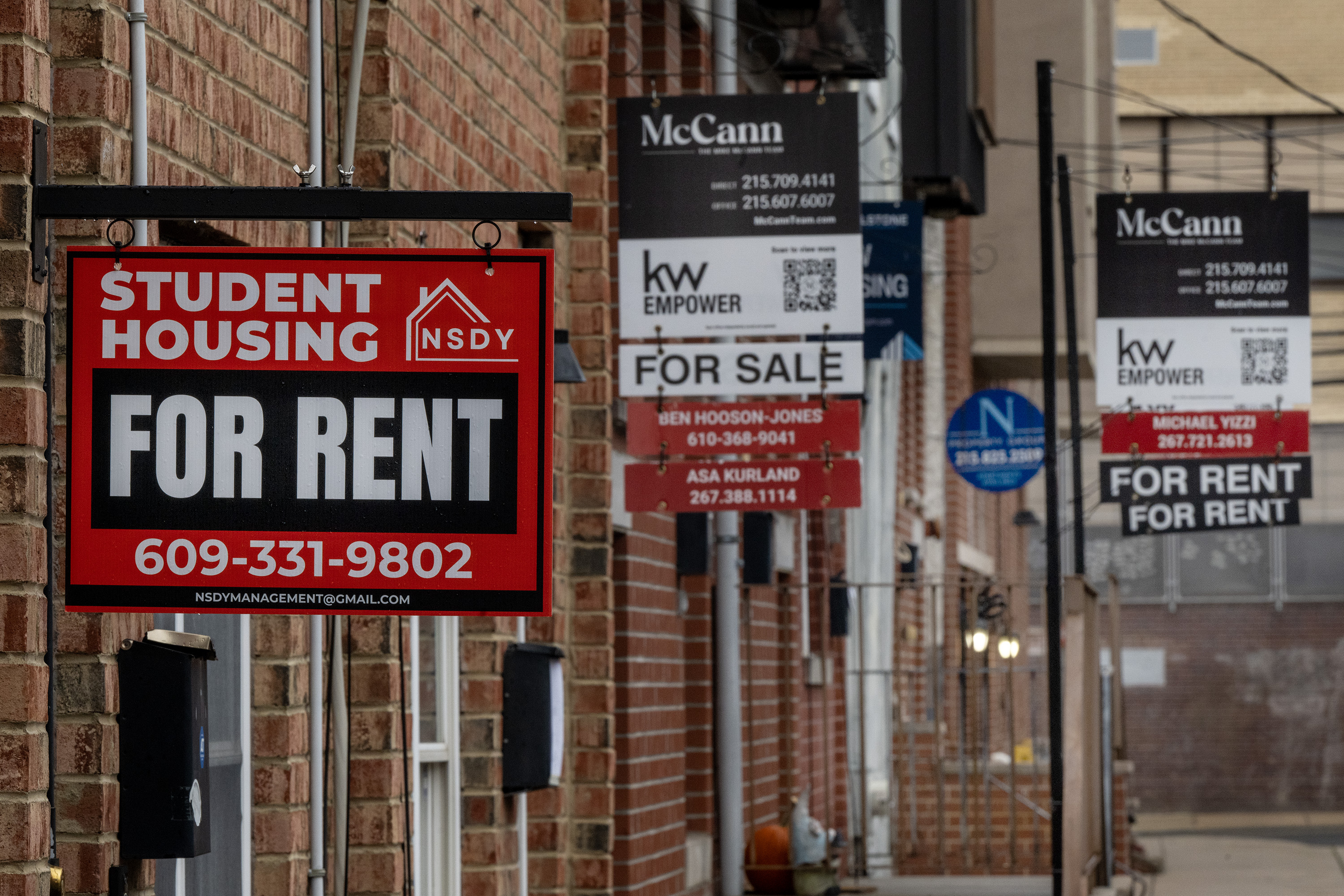
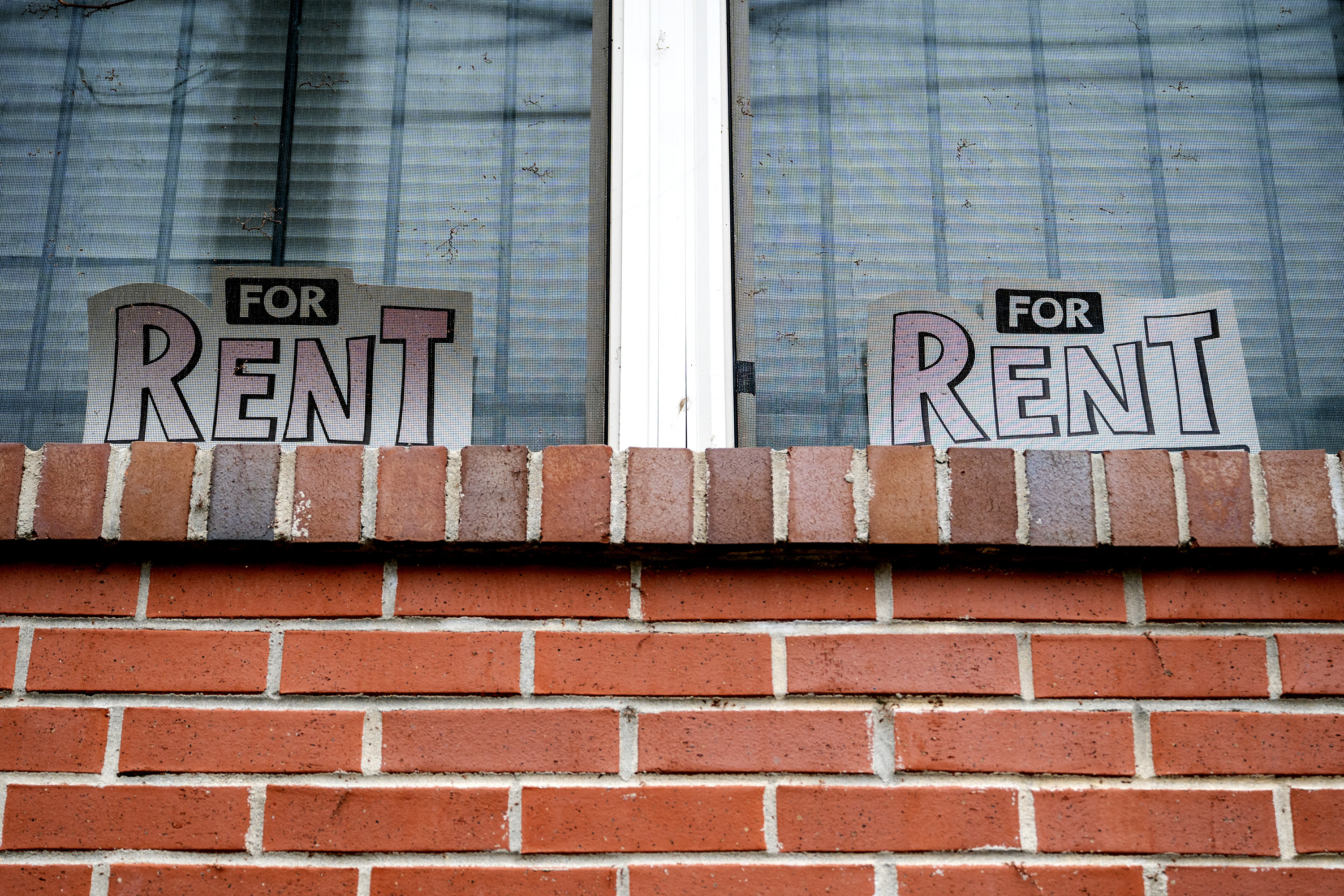
The value of rental properties around Temple has dipped in recent years. Many property owners have sold. Some blocks, like the 1700 block of Arlington St., are lined with for-rent and for-sale signs.
Fay, who worked out of Coldwell Banker’s offices in Old City and Moorestown, Burlington County, has now represented buyers in at least $40 million worth of settled or pending real estate deals involving multifamily properties around Temple.
(After this article published online Friday, the real estate firm cut ties with Fay and his biographical page was removed from its site. “The agent is no longer affiliated with Coldwell Banker Realty,” a company spokesperson said by email.)
Of about a dozen properties in the area that sold for more than $750,000 over the last 90 days, every one listed Fay as the buyer’s agent.
The Inquirer’s examination of the deals found the sales involve a small group of repeat buyers, including two linked to an earlier prosecution over a 2000s-era mortgage fraud scheme. In that case, federal investigators found that the group was involved with purchasing distressed homes using artificially inflated mortgages, pocketing the excess money and allowing the properties to lapse into foreclosure.
Fay, who is one of the top agents in his Coldwell office, said his transactions were all aboveboard. He credited the high sale prices to rebounding demand for student housing in the Temple University area.
“I think it’s a desirable area for sure,” said Fay, who lives in Moorestown. “They just had their biggest enrollment of all time.”
Pat Fay has been one of the top real estate agents this year in Coldwell Banker’s Old City office. His clients have been purchasing properties around Temple University, but at steep markups.
Actually, Temple’s head of admissions resigned last month after the university missed its annual enrollment goal. Its student population remains below 30,000, down from a high eight years ago of more than 40,000.
“This is not a good time for being a property owner around Temple,” said Nick Pizzola, vice president of the Temple Area Property Association, a group that represents many landlords and was formed to “encourage responsible development and property management” in the area.
“Rents are down, vacancies are up,” he said. “It’s a buyer’s market.”
The financing on Fay’s sales is provided by higher-risk private lenders, which grew in popularity as conventional bank lending contracted in the wake of the 2008 real estate crash.
Jon Hornik, head of the National Private Lenders Association, a trade group that represents firms like the ones that lent to Fay’s clients, recently flagged sales around Temple on a watch list the group maintains for suspicious transactions.
He had a simple explanation for these market-defying sales.
“These are bad actors inflating the value of the real estate through the sale structure, and therefore borrowing more money than they really should be able to,” Hornik said in an interview. “There’s real estate there. There’s a borrower there. But the values are off.”
Off-campus housing in North Philadelphia is still popular among some Temple students, but university President John Fry recently announced plans for a new dorm.
Fay, who describes himself on Instagram as a partnerin the upscale Center City Irish bar the Mulberry, has been pursued in New Jersey Superior Court by seven credit card companies or lenders in connection with roughly $57,000 in debts. Most were linked to unpaid credit card bills, and most have ended in default judgments.
Business records show Fay is listed as debtor to an Atlanta-based company called Real Commissions, which lets real estate agents tap into cash based solely on the promise of a forthcoming commission, so long as they have a signed agreement of sale in hand.
In an email Thursday, Fay cited several 2022 student rental sales in the $800,000 to $900,000 range to support his sale prices, insisting that “at no point did either party set or influence those values.” He did not respond to questions about why his clients would pay twice what a seller had initially been asking.
The real estate agent’s narrative of a booming rental market around Temple was also disputed by a recent seller in one of his deals.
The former property owner, who asked not to be named because he feared legal repercussions, acknowledged that he tried to unload his rental property last year but found no takers. He said his real estate agent then brought him Fay’s offer to broker a sale for $875,000, which he said was actually just the amount that would be recorded on the deed.
In reality, he said, he made the sale for only $385,000, or $15,000 less than what it was originally listed for.
The seller said he knew the deal was suspicious, but his agent advised him that he was unlikely to find a better deal.
“I had a mortgage, but I couldn’t get any renters,” the seller explained. “It’s called desperation.”
He took the deal, recording an official sale price that was more than $250,000 higher than any comparable properties recently sold on that block.
Then, anotherproperty across the street sold in June for the exact same price — $875,000 — shortly after being re-listed from $475,000.
The real estate agent on that sale: Pat Fay.
‘Strange stuff’
Historically a commuter school, Temple has long had room for just a fraction of its total student body in traditional dorms. But as Philadelphia’s fortunes improved in the 20th century and more students sought to live on or near campus, the housing shortage intensified.
Private developers stepped in. Blocks that had long served as home to mostly Black working-class residents transformed into rows of student housing units, sometimes prefabricated.
But during the pandemic, the boom in rentals came to a grinding halt. Classes went virtual, driving student renters away. Surging homicide rates — including the 2023 shooting death of a Temple police officer — drove a public-safety crisis for the university.
Recently, Temple president John Fry announced a plan to steer more students back to campus with the university’s first new dorm in years.
Today, even with homicide rates now at historic lows and enrollment creeping up again, many of the blocks once flooded with student housing are underpopulated.
For-rent and for-sale signs line both sides of the 1700 block of Arlington Street. Around the corner, on 18th Street, mailboxes overflow with unopened letters, and the chirps of dying smoke detector batteries in vacant units create an eerie birdsong.
Landlords on the 1900 block of N. 18th St and elsewhere are looking for renters. It is unclear why a small network of buyers is overpaying for nearby properties.
Pizzola said membership is down in the Temple Area Property Association as building owners have looked to get out of the rental business.
“Since COVID hit, it just turned the market upside down,” he said. “If you’re an investor who was buying off-campus housing right before COVID, you got slaughtered.”
Bart Blatstein, a developer who was heavily involved in the mid-2000s Temple-area housing boom, said the recent transactions are highly unusual.
“I’ll give you a commission if you can get twice what my properties are worth,” Blatstein joked.
Officially, more than 40 different corporations have purchased student rental buildings in sales brokered by Fay. But those companies trace back to a handful of purchasers, according to Pennsylvania corporate registries.
Some of these buyers, contacted by The Inquirer, described Fay more as a participant among a loose but unnamed group of “real estate investors,” rather than a mere agent.
Stephen L. Johnson, a Montgomery County resident, was linked to companies involved in six purchases, totaling $5.2 million. Several of the companies were registered to the home of Johnson’s mother, although in an interview she said she was unaware her rowhouse was being used as a nominal corporate headquarters and referred questions to her son.
Reached by phone, Johnson echoed Fay’s enthusiasm for the future of the real estate market around Temple, predicting a surge in values if the university seeks to expand.
“The investment was all about Temple buying up everything and making it better,” Johnson said of his purchases. “In 10 or 20 years, they’ll probably own all of North Philly.”
Johnson could not explainwhy one of his companies, 17th Street Estates LLC, had paid so much for properties like 2113 N. 17th St., which was listed for $475,000 but sold for $900,000.
“I’d have to talk to Patrick about that,” said Johnson, who referred to Fay as “the main guy.”
“It’s like a team,” he added. “We all help each other out.”
Another one of Fay’s clients, Tanjania Powell-Avery of Pottstown, Montgomery County, is a former real estate agent charged in 2010 by the U.S. Attorney’s Office as part of a mortgage fraud ring.
Prosecutors said Powell-Avery aided two men who “purchased distressed properties at low prices, found buyers for the properties at a much higher price, and submitted false documents to the mortgage lender in support of mortgage applications,” according to the federal indictment. She pleaded guilty and was sentenced to five years’ probation and nine months’ house arrest.
Despite this, and a 2012 bankruptcy, companies linked to Powell-Avery appeared in at least two recent sales around Temple, both brokered by Fay. These companies tapped $1.3 million in mortgages to close sales with a combined value of $1.6 million — each for about double its initial listing price.
Powell-Avery did not respond to a request for comment.
Her two codefendants in the 2010 federal indictment, Joseph Tookes and Othniel Tookes, also pleaded guilty. Both men are relatives of Abigail Tookes, a resident of a Norristown apartment complex who was pursued by creditors in 2020 after defaulting on a loan, leading to a $46,067 court judgment against her.
Even so, companies tied to Abigail Tookes were linked to at least $3.4 million in mortgages to finance the acquisition of at least five properties in sales involving Fay. In all five purchases, Tookes’ company recorded sale prices at double the original values.
Reached by phone, Tookes insisted the sales were “totally legitimate transactions.”
“There’s no fraudulent activity. It’s just an investment group,” she said. “There’s no story here. These are real estate transactions between the buyers and sellers. They all agreed to the sale. It doesn’t matter why.”
Other people linked to companies in Fay’s sales — Patrick M. Williams, Miles Fambro, and Angel Rodriguez — did not return calls for comment.
Many of the Temple-area sales featured the same mortgage broker: Viva Capital Group.
Reached by email, Viva president Juan Arguello said his Florida-based company operated “in full accordance with state and federal guidelines, rules, and regulations” and does “not have any contact with the sellers or their agents.”
He also said his company relied on an outside appraisal management company to approve mortgage values. He did not respond to questions about which appraiser had been used to support the Philadelphia sales.
Pizzola, who owns student-rental properties in the area, said these recent sale prices would eventually start driving up neighborhood property assessments, leading to higher tax bills, particularly on blocks where Fay’s clients have purchased multiple properties.
He said he suspects there is fraud involved.
“The fact that you’re seeing multiple sales at twice the average market value, it doesn’t pass the smell test,” he said.
Uncertain future
A prospectus for a property on Cecil B. Moore Avenue, listed for sale at $850,000 in October by several other real estate agents, included a string of Fay’s recent sales as comparable sales to justify the high asking price.
That property has yet to sell.
Over the last three weeks, at least three more properties near Temple have gone under contract — all with Fay as real estate agent.
Fay had been listed as an agent on a large apartment complex on the 1300 block of North Broad Street that was listed for sale at just under $6 million in late October. In November, the property was re-listed for $12 million.
The city has begun placing liens for unpaid water bills on the buildings in some of the earliest deals Fay arranged. Many of the properties have skipped out on biannual commercial trash hauling fees imposed by the city.
Some of the buildings do not appear to be occupied.
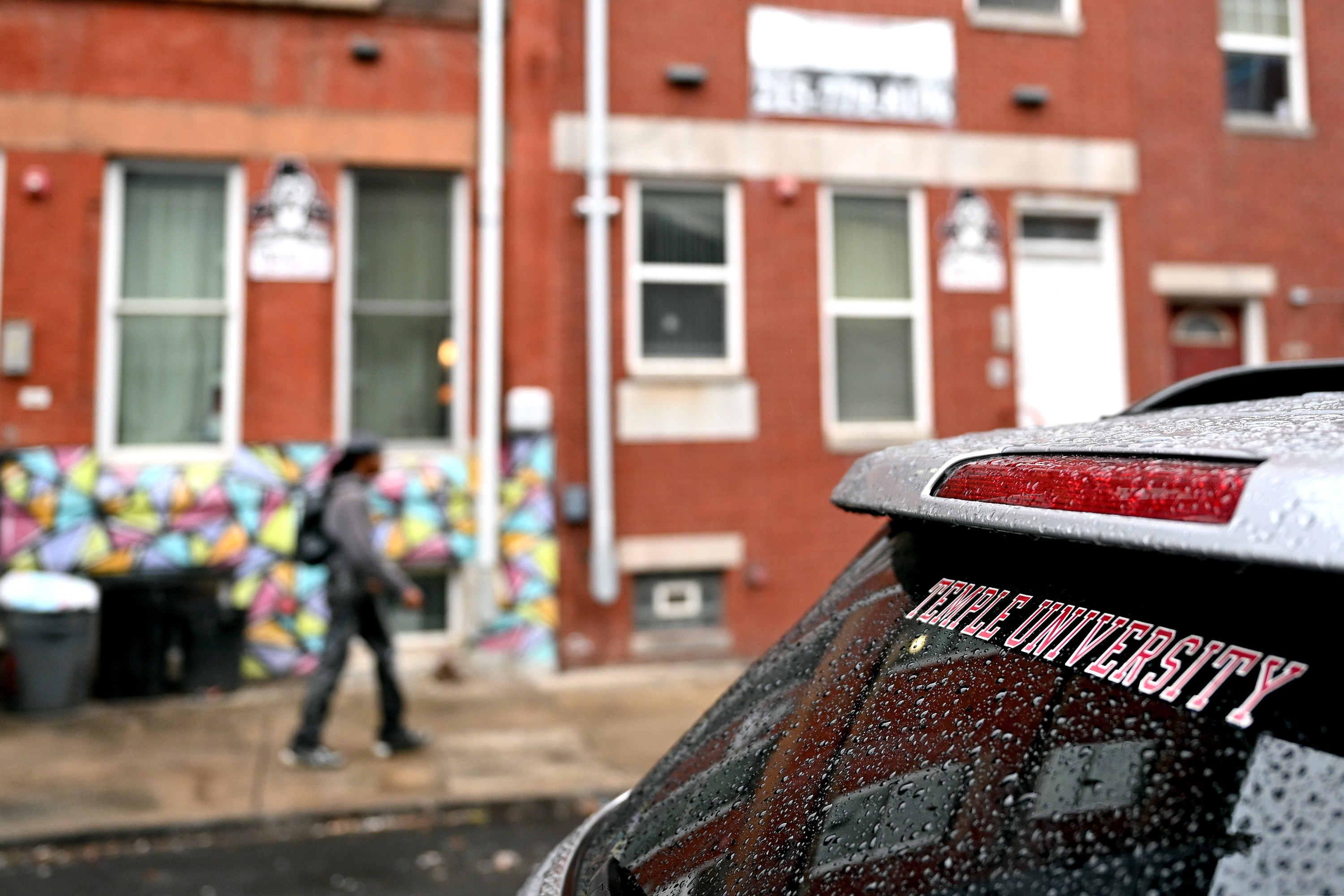
Someone appeared to have busted open a door, which was ajar with broken locks. A Temple sticker was on an upstairs window.
Hornik, from the NPLA, said that unless Fay’s purchasers figure out a way to extract enough rental income from these properties to cover mortgage costs, a mass foreclosure by lenders was likely in North Philadelphia — leaving the ownership of dozens of properties up in the air.
“If the loan goes negative, the lender has to foreclose,” he said, “and they’re not going to recover that money.”
Editor’s note: An earlier version of this story included a photograph of a woman who had been a victim of the scheme and she was identified as such in the caption. The photo was removed because the juxtaposition of the headline and the image made it appear as the victim was the perpetrator.
The Pennsylvania attorney general has issued a six-figure fine to the former CEO of ABC Capital, a failed real estate firm behind an $82 million scheme that saw overseas investors snap up hundreds of homes in the city’s poorest neighborhoods — only to leave them to rot.
During the 2010s, ABC facilitated the sales of over 1,900 distressed homes billed as “turnkey rental” opportunities to investors in Asia, Europe, and South America. The company promised to purchase, renovate, and manage the rentals in exchange for up-front cash, but often reneged — bilking investors out of their money and sometimes stranding tenants in crumbling rental homes.
Tenants rights advocates and lawsuits from investors later described the business as a “scam” or “Ponzi scheme.”
Attorney General Dave Sunday said on Tuesday that former ABC Capital CEO Jason “Jay” Walsh had violated the terms of a 2024 settlement agreement negotiated by the attorney general’s office in response to these complaints.
That agreement, which described ABC’s business practices as “deceptive and unfair,” prohibited Walsh from managing and maintaining rental properties in Pennsylvania. But a Common Pleas Court judge earlier this week ruled that Walsh violated the agreement by continuing to perform “management services for a property he owned,” communicating with tenants, and providing “inaccurate information” to the attorney general’s office.
Sunday issued a $350,000 fine in response.
“We are grateful that the Court recognized blatant breaches of this agreement, and imposed a serious penalty against Mr. Walsh,” Sunday said in a prepared statement. “We will continue to hold Mr. Walsh accountable under this agreement that clearly prohibits him from managing properties in the Commonwealth.”
Walsh could not be reached for comment. His attorney did not immediately respond to requests for information or comments.
Walsh’s crumbling empire was chronicled in 2022 reports by The Inquirer and the Baltimore Banner. His company decamped to the latter city as rising property values made the City of Brotherly Love less attractive to investors seeking cheap real estate.
But during the 2010s, ABC facilitated more than $82 million in property sales involving 600 different companies in Philadelphia alone, Inquirer reporting showed. Walsh and his partners — Israeli expats Yaron Zer and Amir Vana — later faced numerous lawsuits filed by investors alleging the company left units unfinished or fell far short of promised 40% returns on investment, leaving them saddled with debt.
Some of the homes that were ostensibly renovated, leased, or managed by ABC eventually became uninhabitable, due to either shoddy work or poor maintenance, according to tenants, investors, and the attorney general.
“It’s almost always in poor communities, with high rates of people of color,” Karla Cruel, a former staff attorney at Tenant Union Representative Network, told The Inquirer in 2022. “But they were screwing over the tenants and the investors at the same time. It was just a big old scam.”
Last September, the Banner reported, Walsh was convicted of acting as an unlicensed contractor in Baltimore and ordered to pay $20,500 in restitution — the only criminal action brought against him to date.
The Pennsylvania civil settlement — brokered by Pennsylvania Attorney General Michelle Henry in 2024 — banned Walsh and his wife, Blanca, from acting as landlords without the use of a third-party property manager. The duo, who appeared to have decamped to Aruba by 2024, were also not to have any contact with tenants for periods of 25 and 15 years, respectively.
But court filings show that Walsh violated that agreement by continuing to directly lease out and manage two properties not far from the company’s defunct headquarters in Northern Liberties.
One was his former residence, and another was a property he acquired under the moniker Nolo Investments LLC. Walsh had reported to the attorney general that while he and his wife co-owned both properties, they were managed by an outside company called “My Mega Realty.”
While Walsh did discuss such an arrangement, the company’s owner said he never completed the deal. Former tenants also reported to the attorney general that Walsh and his wife were directly managing the property and collecting rent.
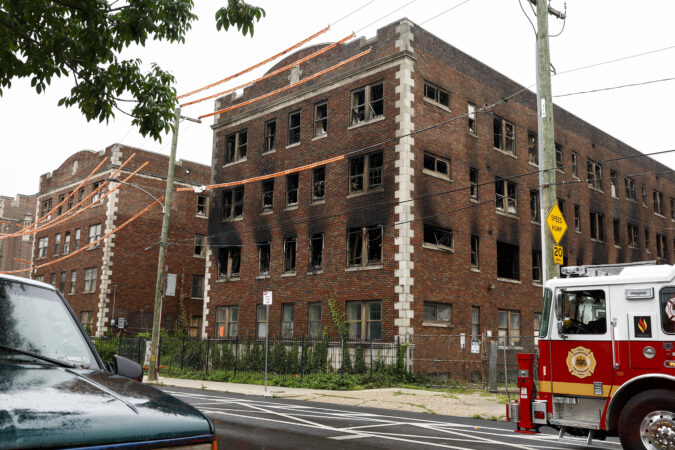
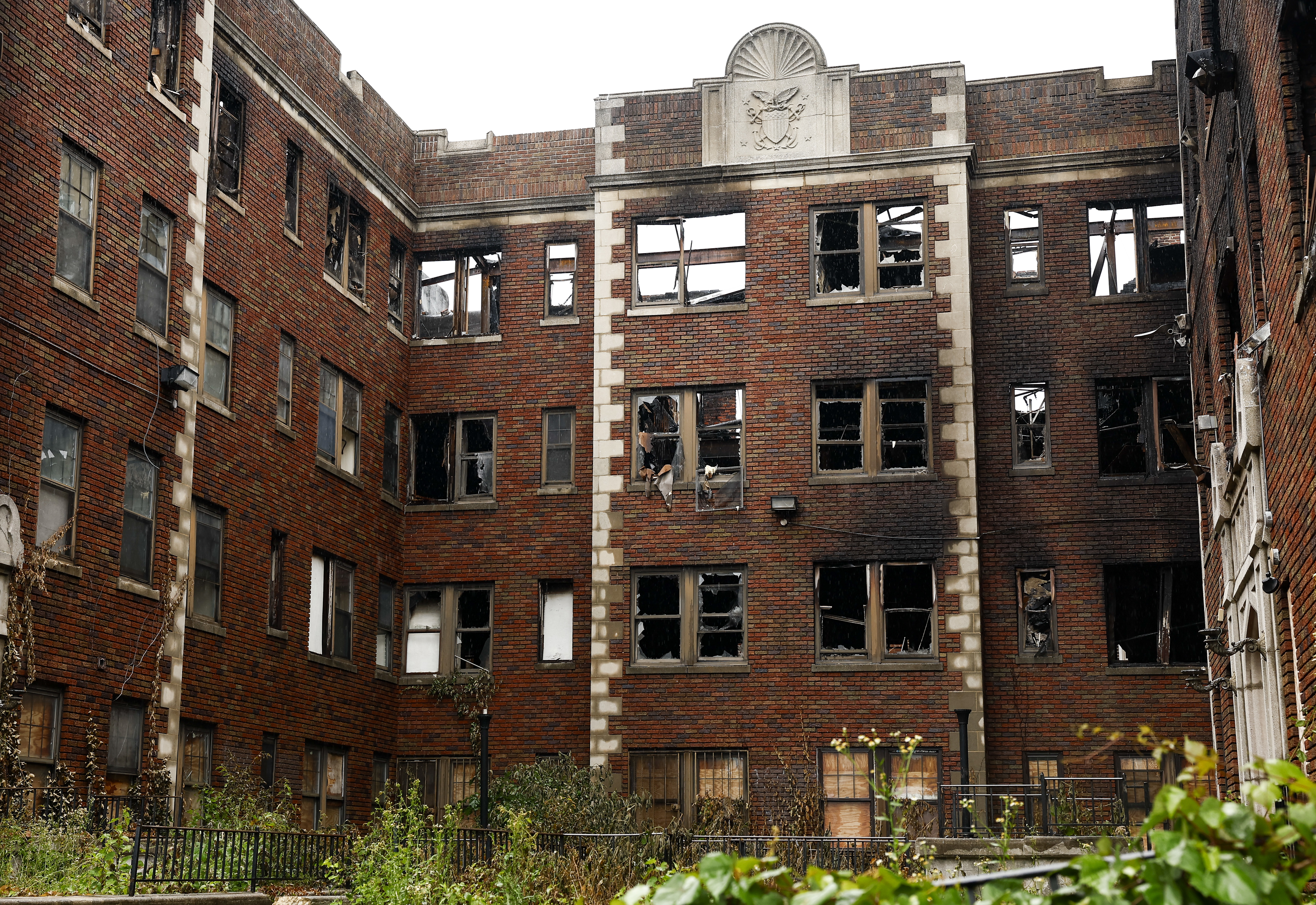
Two days before an apartment complex once hailed as a shining example of Philadelphia’s urban renewal went up in flames, its owner, embattled city landlord Phil Pulley, transferred the vacant property to a New York investment firm.
Federal investigators are treating the fire as arson.
The property’s new owner, Aureus Special Asset Management, which records show is linked to investors in South Korea and Saudi Arabia, is now demolishing the West Philadelphia structure, known as Admiral Court.
Earlier this year, Pulley faced a $29.4 million foreclosure over unpaid debts linked to a fizzled redevelopment of Admiral Court and an adjacent complex, Dorsett Court. Instead of seeing investors foreclose on the property, he agreed to transfer both apartment complexes to his lenders.
Pulley signed the deed for that transaction on June 5. Less than 48 hours later, a fire broke out at the vacant building at 48th and Locust Streets, drawing more than 150 firefighters and support personnel to the scene. About 750 neighbors temporarily lost power. No injuries were reported.
The deed transfer for Admiral Court did not become a public record until late September, when it was sent to the Philadelphia Records Department and finalized.
West Philadelphia Councilmember Jamie Gauthier, who in June called Pulley a “slumlord” and blamed him for allowing the buildings to rot, on Friday blasted the deal.
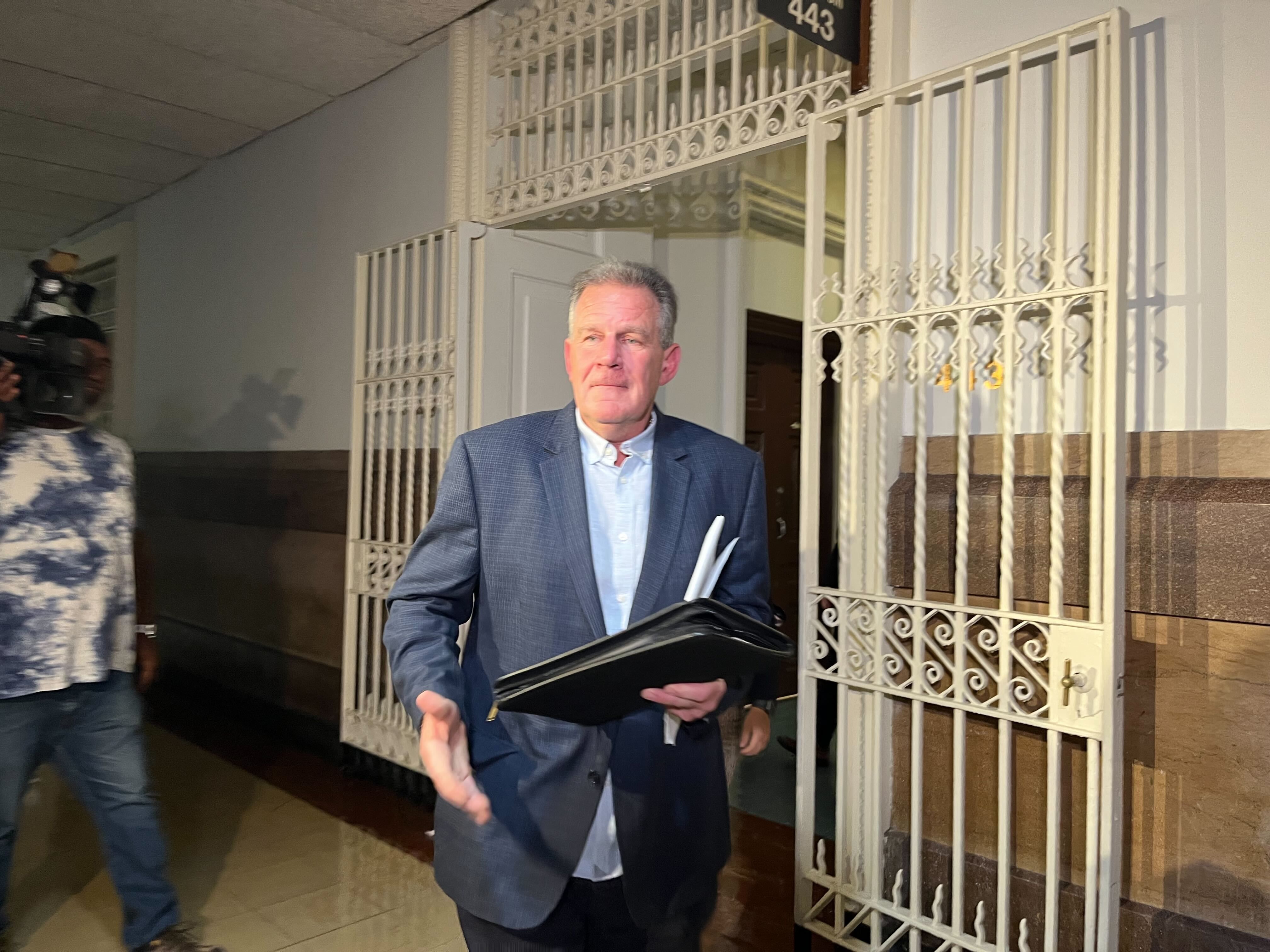
Phil Pulley outside a courtroom in September 2022 following the partial collapse of one of his buildings, Lindley Towers, in the city’s Logan section.
“The Admiral and Dorsett Court buildings could have provided affordable housing in one of West Philly’s most desirable neighborhoods. Instead, landlord Phil Pulley ignored repeated safety violations, leading to a devastating four-alarm fire,” Gauthier said in a statement. “The new owner appears to be a shell corporation with little transparency, and I’m deeply concerned that demolishing Admiral Court will create new blight and safety hazards.”
Crews started tearing down the building last week.
Pulley’s checkered history includes millions in unpaid taxes, hundreds of building code violations, and voter fraud. Two of his other apartment complexes have partially collapsed in recent years.
Pulley did not respond to requests for comment about the fire or deed transfer.
The circumstances of the blaze are now being investigated by the Bureau of Alcohol, Tobacco, Firearms and Explosives, along with Philadelphia police and fire investigators. Ben Benson, a spokesperson for the ATF’s Philadelphia field office, said the agency had “determined that this was an intentionally set incendiary fire, and no accident.” He declined to comment further.
The aftermath of a large fire at the Admiral Court apartment building at 48th and Locust Streets on Sunday, June 8, 2025 in Philadelphia.
This month, the new owner of the charred four-story apartment building, Aureus Special Asset Management, obtained a permit to demolish it, according to Philadelphia records.
Aureus does not have a digital footprint. It shares a Madison Avenue mailing address with the New York City offices of Pacific General, an investment firm specializing in “transactions covering the United States, South Korea, and the Kingdom of Saudi Arabia.”
Pacific General’s corporate officers also signed documents for Descartes Specialty Finance, a Cayman Islands company that took over the mortgage for the troubled renovation of the West Philadelphia complexes. The company took Pulley to court in 2024 over the $25 million default, adding on millions in fees.
Reached at an office number for Pacific General, an individual who declined to be identified refused to comment. An attorney for Descartes did not respond to requests for comment.
Ed Nordskog, a former arson investigator with the Los Angeles County Sheriff’s Department, said uncovering possible fraud connected to an arson is often a painstaking process. It can involve obscure insurance policies, construction loans, or hard-to-trace schemes.
“If it’s a fraud case, that can take months, if not years, to sort through the paperwork,” Nordskog said. “They are really difficult cases for local investigators.”
A history of troubled buildings
In 1989, then-U.S. Sen. John Heinz toured Admiral Court after the crumbling apartment building had been rehabbed with federal affordable-housing tax credits. He hailed the project as a symbol of Philadelphia’s revitalization.
Roughly 15 years later, Pulley acquired the building and neighboring Dorsett Court, along with a string of other affordable apartment complexes across the city.
The buildings quickly fell back into decay.
Both West Philadelphia properties have been vacant since 2018, when Pulley evicted dozens of families — many of them low-income — to make way for a planned renovation and sale.
While some work was done on Dorsett Court, on Locust Street next to Henry C. Lea Elementary School, progress stopped without explanation.
Admiral Court alone was cited 33 times by building inspectors since 2018, including several fire code violations in 2022.
“To watch them just sitting there vacant was heartbreaking for everyone involved,” said Phil Gentry, who has one child attending Lea and another who graduated. “It seems crazy, in the middle of this thriving neighborhood that desperately needs more housing, these nice-looking buildings are falling apart, catching on fire, or sitting vacant.”
Tenants have long complained about conditions in Pulley’s buildings. Two have partially collapsed in recent years.
Meanwhile, the city has continued to pursue Pulley in court over other properties.
In 2022, the facade of another Pulley complex — Lindley Towers, in Logan — collapsed, exposing a large section of the upper floors. The building was rendered uninhabitable, displacing about 100residents. The city took Pulley to court, seeking millions to cover emergency repairs and other costs. That case is pending.
In October 2024, the Darrah School Apartments — which was also run by Pulley’s main property management company, SBG Management — partially collapsed, raining debris onto a Francisville side street. No injuries were reported. The building had been cited by city inspectors more than a dozen times.
This year, the city filed a fresh lien against Pulley’s company, citing $51,000 in unpaid gas bills. The city also launched a petition seeking a court-ordered sequestrator at yet another complex in West Philadelphia owned by Pulley’s company, the Winchester Apartments. That order would empower a third party to collect rent on SBG’s behalf in order to satisfy outstanding tax and utility bills.
Pulley is also facing an ongoing consumer-protection lawsuit filed in 2023 by the Pennsylvania Attorney General’s Office. It accuses Pulley and a network of affiliated companies of mistreating tenants and a range of other “deplorable conduct.”
The families of two Mexican nationals killed in a Northeast Philly jet crash have filed a wrongful-death suit against a medical airline, alleging its negligence was responsible for the Jan. 31. disaster that killed eight people, seriously injured at least 20 more, and devastated a neighborhood.
The complaint, filed Monday in Philadelphia’s Court of Common Pleas, was brought by the estates of Raul Meza Arredondo and Lizeth Murillo Osuna against Med Jets, a Mexican air carrier that operates specialized airplanes for medical transport.
Osuna was homebound for Tijuana following her young daughter’s successful medical treatment at Shriner’s Hospital when the Learjet 55 abruptly dove about a minute after takeoff from Northeast Philadelphia Airport and slammed into Cottman Avenue.
Osuna and her daughter, 11-year-old Valentina Guzman Murillo, were killed instantly, along with the pilot, co-pilot, a paramedic, and Arredondo, a pediatrician.
The suit broadly accuses Med Jets of “carelessness, negligence, and recklessness” for failing “to ensure the aircraft was in a safe and operable condition.”
It notes details from a still-ongoing federal investigation — which revealed that the “black box” and other components on the jet were inoperable — and an earlier fatal crash involving a Med Jet plane in Mexico. It leaves open the possibility that the Tijuana-bound plane could have crashed due to pilot error.
“Today’s filing is an important step on behalf of the victims of this tragedy to hold those responsible for this deadly crash fully accountable,” said Jeffrey P. Goodman, an attorney with Saltz Mongeluzzi & Bendesky, who represents the estates of two families. “Unfortunately, given the lack of functioning onboard recording systems, much remains to be determined as to the cause of this crash.”
The complaint, which seeks unspecified compensatory damages, also names as defendants still-unidentified people “responsible for inspection, maintenance, repairs” of aircraft operated by Med Jets, and corporations involved in the manufacture of Learjet components.
A spokesperson for Med Jets did not immediately respond to a request for comment.
The crash occurred after 6 p.m. on a Friday. After plummeting 1,650 feet at more than 235 miles per hour, the jet left a crater that the suit says resembled one created by heavy military artillery. The black box was buried eight feet in the ground.
A 37-year-old Mount Airy motorist was killed when the jet’s fuel set his car ablaze.A passenger in the same vehicle was critically injured and succumbed to her injuries in April. The driver’s 9-year-old son also suffered serious burns, requiring extensive medical treatment.
The scope of damage to nearly six blocks of rowhouses and businesses near the Roosevelt Mall has already led aMexican insurer for Med Jets, which also does business as Jet Rescue Air Ambulance, to preemptively file an action in federal court, pleading that claims related to the incident would far exceed a $10 million limit on the carrier’s policy.
The city of Philadelphia alone reported more than $2.5 million in damages related to the local emergency response effort, and the case has already drawn dozens of other claimants. The insurer has requested that a federal judge oversee distribution of the limited funds.
The defective black box, referenced in the lawsuit, left National Transportation Safety Board investigators with few clues as to what occurred on board in the moments leading up to the crash.
Their efforts were further frustrated by the sheer force of the impact and an ensuing blaze, which incinerated much of the plane wreckage.