Police are seeking a suspect wanted in connection with the killing of a 93-year-old man in the city’s Logan neighborhood last week, authorities said Friday.
The victim, Lafayette Dailey, was found dead in his home on the 4500 block of North 16th Street when medics were called there around 3 p.m. on Friday, Dec. 5.
Dailey had suffered a laceration to the chest and trauma in his head, police said. A medical examination found that he died from multiple stab wounds, and his death was ruled a homicide.
Investigators are now searching for 53-year-old Coy Thomas, who police say is considered a suspect in their homicide investigation. His last known address was on Ashmead Place in Germantown, police said.
They found Dailey’s wallet, keys, and vehicle missing from his home. They later found his car, a white Chrysler 300 sedan, several days after his death.
A department spokesperson declined to comment on the circumstances around the discovery of the car, citing an active investigation.
The department is urging anyone with information on Thomas’ whereabouts to Contact the homicide unit at 215-686-3334 verified or call its anonymous tip hotline, 215-686-TIPS (8477).
MAYS LANDING, N.J. — The daughter of Atlantic City Mayor Marty Small Sr. took the stand in an Atlantic County courtroom Tuesday morning to testify against him at trial as he stands accused of physically abusing her.
As a Superior Court judge looked on, the teen told jurors her father had beaten and punched her and struck her with a broom.
“He put his hands on me,” she said.
Small, a Democrat, faces charges of child endangerment, aggravated assault, and witness tampering in connection with a series of incidents in which prosecutors say he punched, beat, and threatened his then-15-year-old daughter, largely over his disapproval of her relationship with her boyfriend. He has denied any wrongdoing, and his lawyers have challenged his daughter’s credibility.
The girl, now 17, recounted the abuse in a soft voice, calmly answering prosecutors’ questions — and rejecting suggestions by an attorney for her father that she had lied about key details.
“My dad came home and he was like, upset,” the girl said as prosecutors asked her about crimes they allege took place in the Small family home in January 2024.
She said her mother had recently gone through her phone and learned that she had sneaked her boyfriend into the house. Her father, she testified, was “mad and disappointed.” As she sat in a chair that she recalled as having a Philadelphia Flyers theme, she told the jury, he hit her with a belt and punched her in the legs.
Louis Barbone, an attorney for Small, maintained that there were inconsistencies in statements the girl gave to investigators, and he disputed her account of the incident with the broom.
Earlier in the day, prosecutors played video footage they say the teen recorded at home.
Though the camera did not show images of Small or others, it captured the sound of the girl and her parents screaming amid what prosecutors described as the chaos that descended on the home after the teen started a relationship they did not approve of.
Prosecutors also showed Instagram messages the girl exchanged with her boyfriend about the alleged abuse, including one in which she told him, ”I’m scared to get in the shower because my bruise is gonna burn.”
Small’s daughter told jurors that as her father was rousing his family one January morning to attend the Atlantic City Peace Walk, she did not have her hair done and didn’t want to go. She said she and her father argued and he pushed her, so she splashed him with laundry detergent.
Small, she said, then got a broom and struck her multiple times in the forehead. She testified that she passed out, and the next thing she remembered was her father telling her brother to get her some water.
On cross examination, Barbone returned to a theme he struck in his opening statement to the jury on Monday — that Small was a caring father who, watching his daughter’s life veer off course because of a relationship he believed to be manipulative and inappropriate, had legally disciplined a disobedient child.
He told jurors prosecutors did not have a recording of the incident involving a broom, and he said the girl had been wielding a butter knife and the injuries she sustained that day happened when she fell as the two wrestled for the broom.
Barbone said the teen had exaggerated her injuries, and he noted that when initially questioned by investigators, she told them she felt safe at home.
“I didn’t want to get taken away,” the girl said, “so I said, ‘yes.’”
The trial is expected to continue through the end of the week.
A man and woman were shot and killed Wednesday afternoon in Kensington in what police believe was a murder-suicide, according to a law enforcement source who asked not to be identified to discuss an ongoing investigation.
The two, whom police did not identify, were shot on the 3400 block of Hartville Street around 1:15 p.m., according to the department. They were pronounced dead just after 2 p.m.
Investigators believe the man shot the woman with a shotgun, according to the police source.
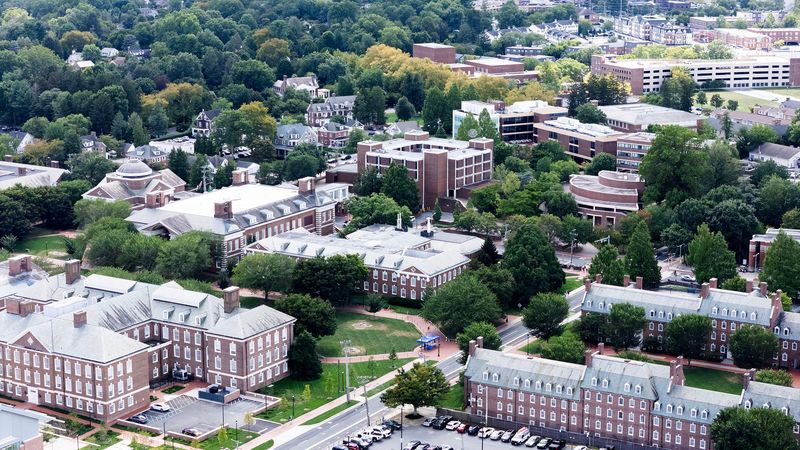
A University of Delaware student who planned to target a campus police building with firearms was arrested last week and charged with federal weapons crimes, authorities said.
Luqmaan Khan, 25, of Wilmington, vowed to “kill all” as he mapped out violent schemes in his journal — ones that involved Glock pistols, stun grenades, an assault rifle, and other “urban warfare setups,” according to a criminal complaint filed by the FBI.
New Castle County police discovered the alleged plot when, authorities say, they happened upon Khan behaving suspiciously in a disc golf park late last Monday.
When officers found Khan alone in a Toyota around midnight after the park had closed, they said, he repeatedly reached around in the vehicle and became nervous when questioned why he was there.
Khan was arrested for resisting arrest after he refused to get out of the driver’s seat. When officers searched the car, they found a loaded Glock .357 handgun, a brace for semiautomatic pistols that have been converted into machine guns, four loaded extended ammunition magazines, body armor, binoculars, and a notebook, according to the affidavit of probable cause for his arrest.
That notebook is now the center of an investigation being handled by agents with the FBI’s Wilmington office.
The marble composition book was littered with references to different firearms and the ideal scenarios for their use, the affidavit said.
Khan noted that an assault rifle was best for “open spaces,” while a Glock pistol was better for “fast transition fighting.” He suggested tear gas could be used for “room clearing,” the document said, while a sword or knife would allow for “no noise kills.”
Khan’s notebook also included a hand-drawn map of a building that federal authorities say appears to be the University of Delaware campus police station. It included notes about entry and exit points to the building at certain times of the day, the affidavit says.
Meanwhile, Khan named a University of Delaware police officer as a “specific target” according to the affidavit, which did not identify the officer.
Khan, the document said, “intended to use the weapons he amassed to commit ‘ambushes’ and ‘surprise attacks’ on targets” at the university.
Laura Carlson, the university’s interim president, said in a letter to the campus community that Khan has been “temporarily separated” from the university as the investigation continues and is barred from accessing campus buildings.
“There are no known or immediate threats to the University of Delaware community,” Carlson wrote. “However, [police described] evidence of a plan that targeted the University of Delaware Police Department (UDPD). This is frightening to all of us.”
Khan’s writings repeatedly mentioned becoming a “martyr,” authorities said. In an interview with the FBI after his arrest, the affidavit said, Khan told investigators that martyrdom was “one of the greatest things you can do.”
Khan, who was born in Pakistan and emigrated to America in his youth, is a U.S. citizen who lived alone and had no criminal convictions, federal authorities said.
Federal agents searched his residence last week and recovered an additional unregistered 9mm Glock pistol with a machine gun conversation kit, an M4 rifle with a scope and red dot sight, 10 more extended magazines, and a second body armor plate.
Federal prosecutors charged Khan with possessing a machine gun and an unregistered firearm. If convicted, he faces a maximum sentence of 10 years in prison, according to the U.S. Attorney’s Office.
Khan faces additional state charges for resisting arrest and other misdemeanors.
His lawyer,Eleni Kousoulis, was not immediately available for comment.
The Philadelphia Police Department is forming an “auxiliary” unit that may be ready as early as next year, according to a department spokesperson, adding to its ranks volunteer members who will assist officers at large public gatherings.
Auxiliary police will not carry weapons and will not be assigned typical law enforcement duties, according to Sgt. Eric Gripp, a department spokesperson. They will not be authorized to make arrests.
But the department wants the unit to act as a link between the public and police, participating in community engagement and, according to Gripp, serving as additional “eyes and ears” for officers on the ground.
As Philadelphia prepares to host a series of widely attended events in 2026 — the country’s 250th July Fourth anniversary celebration, FIFA World Cup matches, and more — the police department will be tasked with maintaining order amid an influx of visitors.
An auxiliary unit would assist police during those types of events, according to Gripp. He said the department had tasked its academy recruits with similar duties during citywide celebrations after the Eagles’ Super Bowl victory in February.
It is unclear whether the auxiliary unit will be ready in time for the summer.
The department does not have an official estimate on when it plans to introduce the unit; the idea is still in the planning stages and targeted for 2026, Gripp said. The only confirmed requirement is that recruits must be 18 years old to apply.
Police departments in municipalities large and small have used auxiliary units, sometimes called reserve units, for years.
The New York Police Department has maintained its auxiliary unit for more than half a century; major cities like Baltimore also have reserve officers, as do smaller townships like Cranford, N.J.
Criminologists and former law enforcement officers say police departments use these units to assist with traffic management, crowd control, and community engagement, and for reporting more serious issues to officers who have the authority to intervene.
Experts say the units are a boon to departments facing recruitment and retention issues, providing unpaid assistance from those who are already curious about life as a police officer and who often hail from the communities they are assigned to.
But departments must invest time, money, and adequate training into auxiliary units for them to be successful.
Joseph Giacalone, a retired NYPD sergeant and criminal justice instructor at Pennsylvania State University’s Lehigh Valley campus, said the New York department often uses its 3,700-member auxiliary unit for crowd control during “fun events” like parades and street fairs.
Most importantly, Giacalone said, departments should not view their auxiliary unit as a crime-fighting tool; members should be provided uniforms that are recognizable to the public, he said, distinct from those of actual police officers.
“We’re not talking riots,” Giacalone said of situations in which auxiliary officers are useful. “We don’t want them really identifying things such as drug dealing, dens of prostitution, things like that. We can get that from ordinary intelligence — we don’t want ordinary citizens doing that.”
Still, auxiliary members may help officers with other duties.
During Giacalone’s tenure with the department, the NYPD’s auxiliary unit proved beneficial when members reported quality-of-life issues such as abandoned vehicles and broken traffic lights, he said.
Given the potential danger that accompanies police work, Giacalone said, he hopes the Philadelphia department’s plan includes extensive training for auxiliary recruits — as well as protective gear.
The former sergeant still recalls a harrowing day in 2007 when two unarmed New York auxiliary officers were shot and killed by a gunman in the city’s Greenwich Village neighborhood while out on patrol.
Gripp, the Philadelphia department spokesperson, said the city’s auxiliary unit would not conduct foot patrols. He said members would be trained by the department’s internal staff.
Meanwhile, New York auxiliary officers must pass hours of training courses in first aid, self-defense, and patrol technique; in Giacalone’s experience, those trainings require more experienced officers to sacrifice time and energy to the project.
By the former sergeant’s estimate, for Philadelphia, “it’s going to take a while to get this up and running.”
Two Camden men were convicted of murder and related crimes Monday in the shooting death of Philadelphia Police Officer Richard Mendez at the airport in 2023.
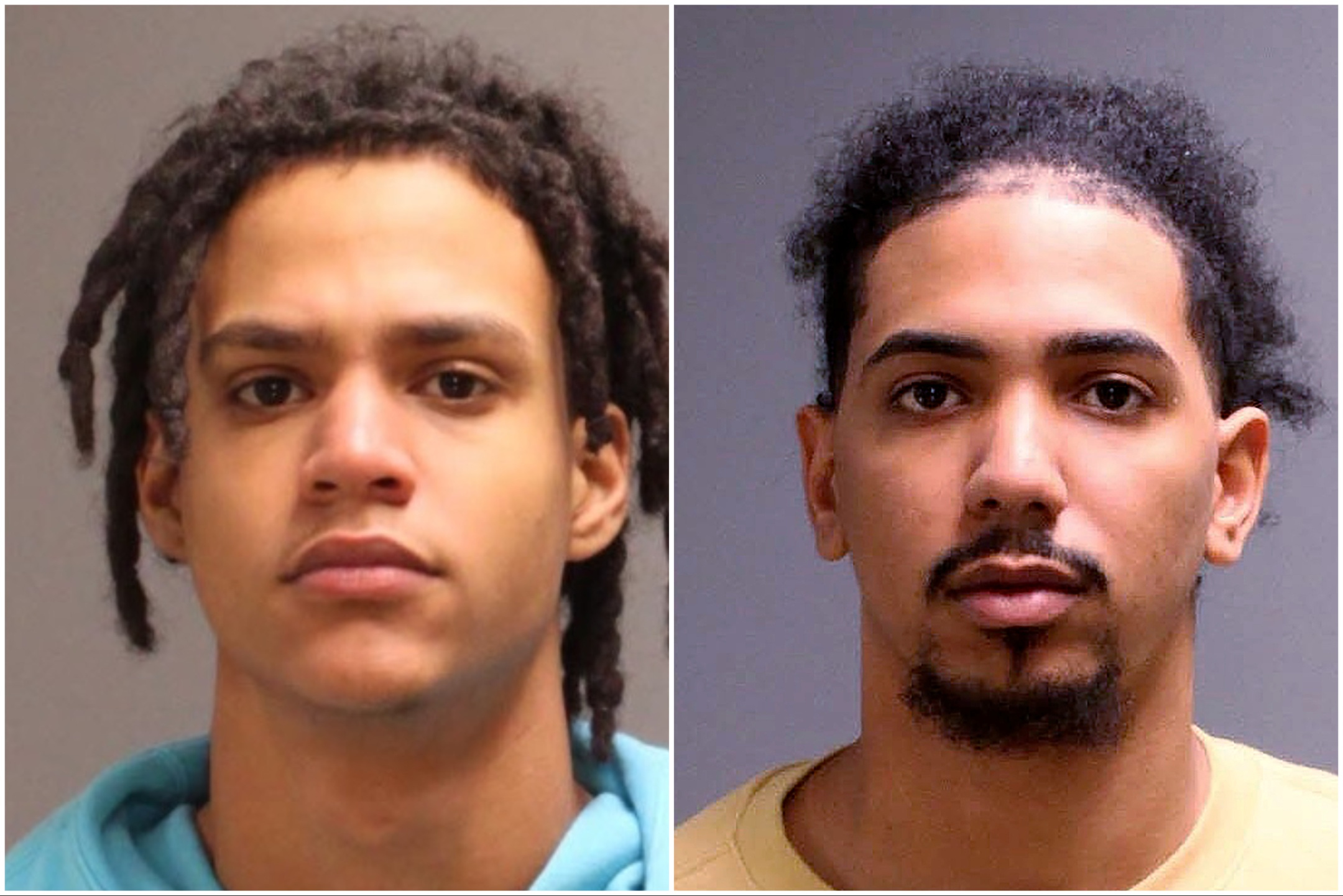
Yobranny Martinez-Fernandez, 20, who fired the fatal shots, was found guilty of first-degree murder. Hendrick Pena-Fernandez, 23, was convicted of second-degree murder because he took part in the car theft that gave rise to the fatal shooting.
Yobranny Martinez-Fernandez, left, 20, and Hendrick Pena-Fernandez, 23.
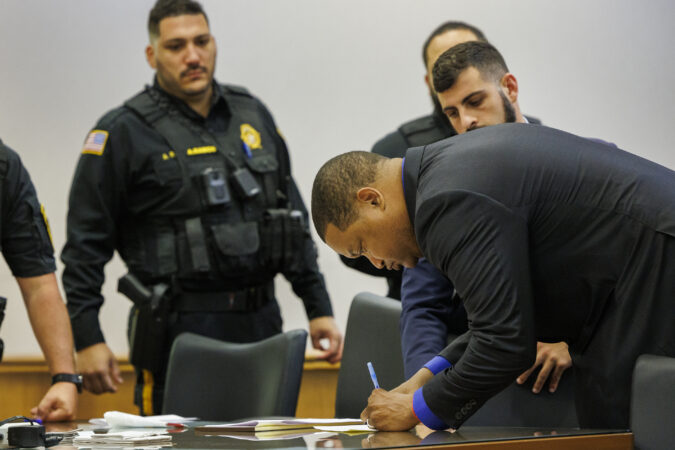
About an hour after the jury returned its verdict, both men were sentenced to life in prison without parole.
Mendez, 50, was killed after he and his partner, Raul Ortiz, tried to stop a car theft in progress in garage D at the Philadelphia International Airport. As they approached a Dodge Charger, Martinez-Fernandez opened fire as he crouched beneath the steering wheel, prosecutors said. Mendez was struck four times in the torso. Ortiz was struck once in the arm and survived his injuries.
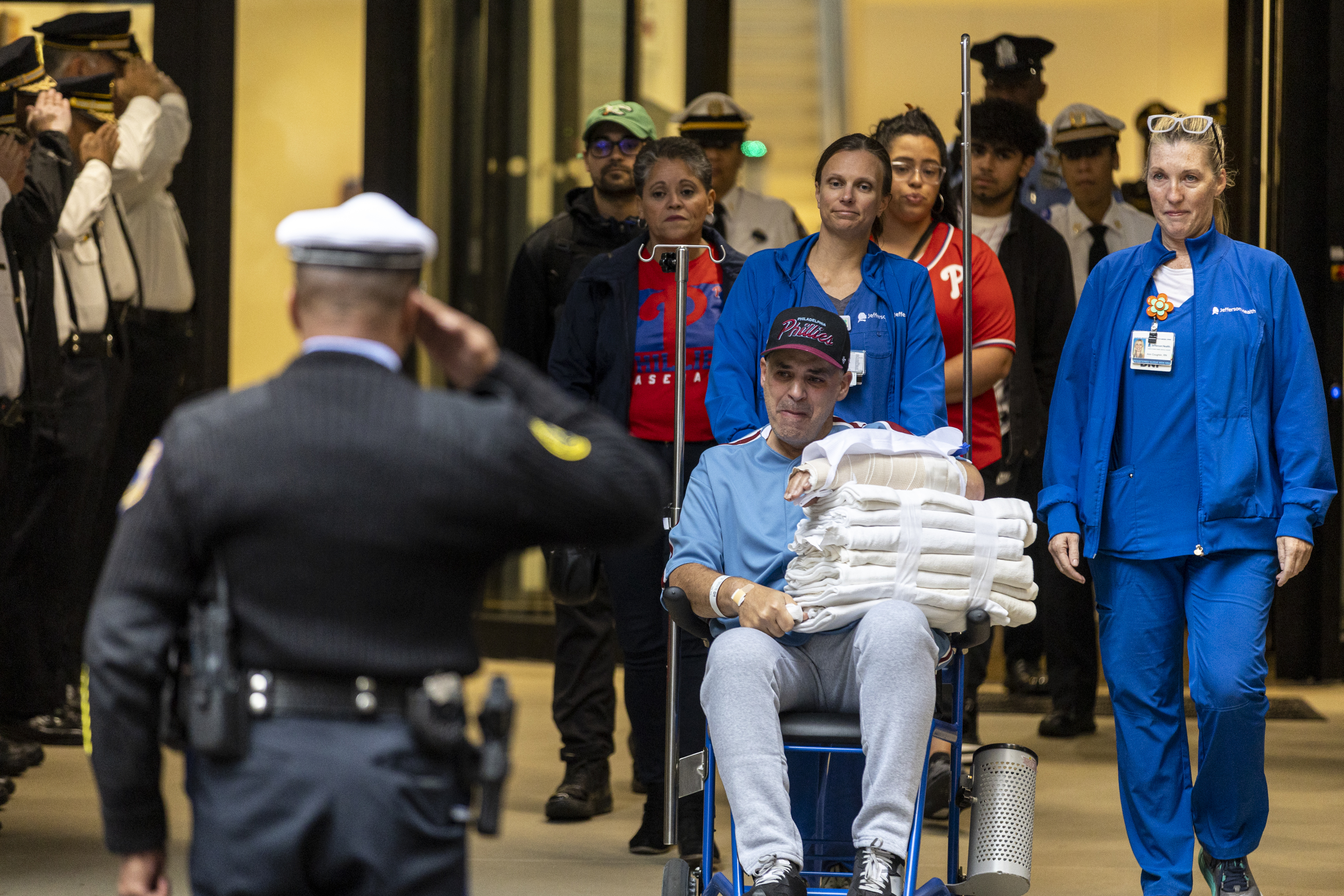
Officer Raul Ortiz, 60, approaches the entrance as fellow Philadelphia police officers stand and salute for his release from the Thomas Jefferson University Hospital on Oct. 14, 2023.
Prosecutors said Martinez-Fernandez also unintentionally shot one of his accomplices, Jesus Madera Duran, 18, who later died at a nearby hospital. The men dropped him there during a frantic escape that eventually led them to a central New Jersey warehouse where prosecutors said they burned their getaway vehicle.
Martinez-Fernandez was also found guilty of killing Duran, in addition to nearly all related charges. Meanwhile, Pena-Fernandez was found not guilty for a handful of other offenses, including third-degree murder.
Throughout nearly a week of testimony, prosecutors argued that both men were responsible for the death of Mendez, a father of two and a 22-year veteran of the police force.
For Mendez’s widow, Alex Carrero, and the couple’s daughter, Mia, the verdict capped what they described as a two-year nightmare.
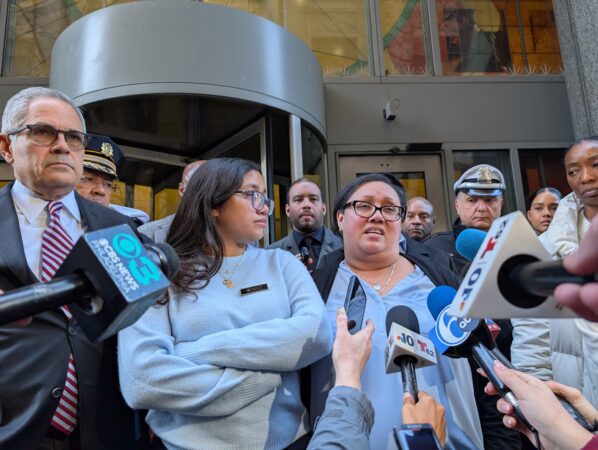
“No 19-year-old should have to pick the color of her dad’s casket,” Mia Carrero said as she addressed the judge before her father’s killers were sentenced. She wore Mendez’s police badge pinned to her sweater.
Later, she appeared outside the courthouse with her mother alongside District Attorney Larry Krasner, Police Commissioner Kevin Bethel, and other high-ranking officials.
“He was the love of my life, my soulmate,” Alex Carrero said, breaking into tears. “I have to live the rest of my life without him.”
Bethel thanked prosecutors and the jury, and told Mendez’s family their pain was “just a chapter, but it may never go away.”
“He gave his life for the safety of this city,” Bethel said of Mendez. “We will continue to carry that charge forward.”
Krasner said the sentences reflected the gravity of “a truly horrific crime.” He commended prosecutors for weathering a prolonged jury deliberation — one that lasted four days as two jurors were dismissed; one for a medical emergency and another for reasons that were not publicly disclosed.
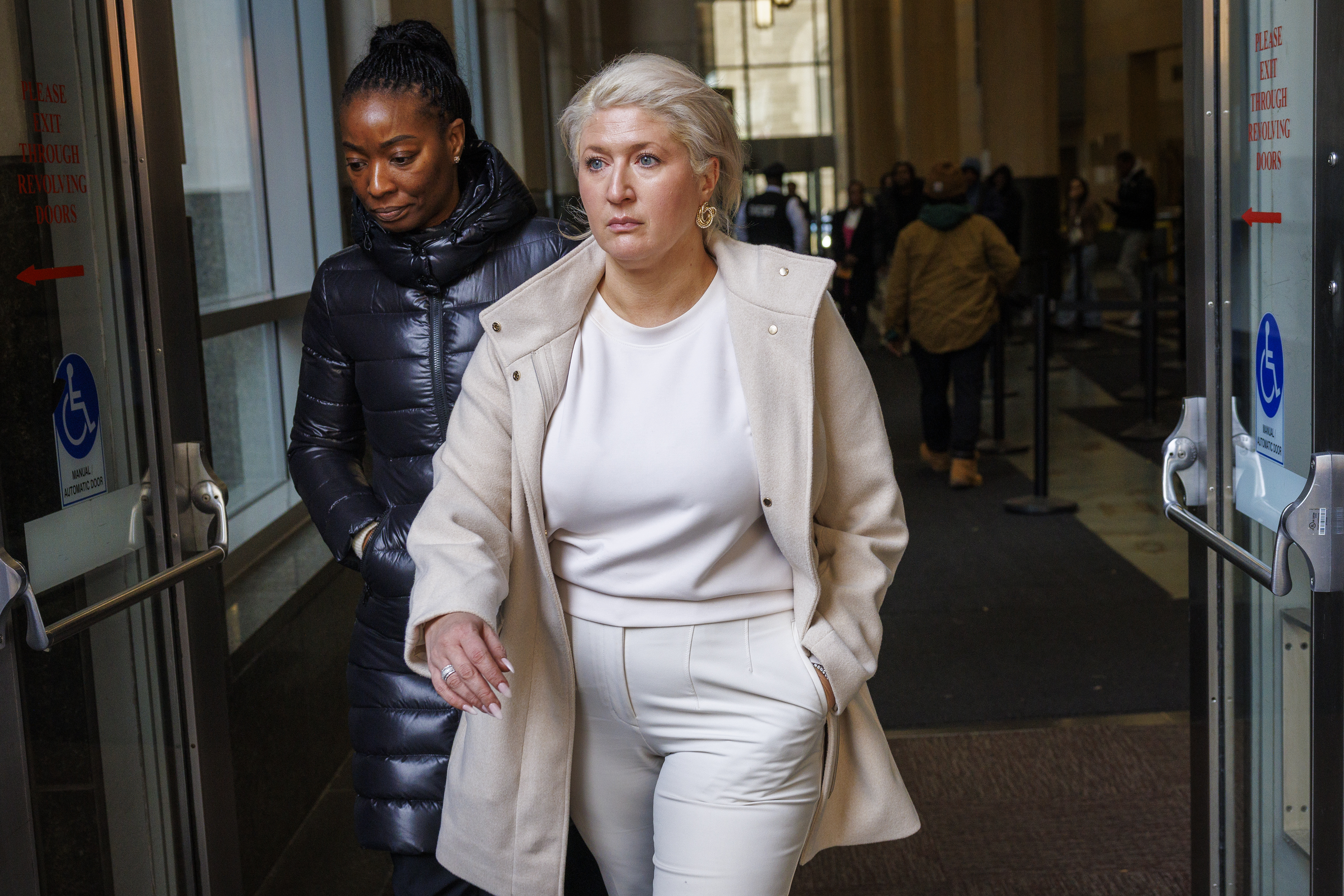
Assistant District Attorney Cydney Pope leaves Juanita Kidd Stout Center for Criminal Justice during break in the first day of trial for defendant in shooting death of Philadelphia Police Officer Richard Mendez.
Assistant District Attorney Cydney Pope’s case included cell tower data, surveillance footage, recovered DNA, and witnesses, including an accomplice to the crime who testified and implicated the two men. Taken together, Pope said, the evidence was compelling and linked the two men to the crime and its multistate scene.
“This is something that truly never had to happen,” Pope said before sentencing. Instead of pulling the trigger, she said, Martinez-Fernandez could have surrendered to Mendez and faced far more lenient consequences.
When asked if he would like to speak before the ruling, Martinez-Fernandez declined. Pena-Fernandez, barely audible, said: “I wish the best for everybody.”
Defense attorneys maintained that Pope did not prove that their clients were at the scene of the shooting. And they told jurors they should not trust prosecutors’ star witness, a man who joined in the airport theft and who pleaded guilty to lesser charges in exchange for his testimony.
Robert Gamburg, Pena-Fernandez’s attorney, said he planned to appeal the verdict.
“Of course we’re disappointed with the verdict,” Gamburg told reporters. “However, there are substantial issues which will be raised eventually on appeal.”
They sat through the presentation of evidence that included life-size mannequins of Mendez, Ortiz, and the injured accomplice, Jesus Herman Madera Duran, all with markings noting where prosecutors said 9mm bullets tore through their bodies.
Prosecutors recreated the crime scene by playing video taken by drone cameras that depicted the maze of vehicles in the concrete parking area where the shooting place. They also offered testimony from two witnesses — weary travelers who were making their way to their cars — to recount the burst of gunfire, followed by the sound of squealing tires as the men peeled out of the garage, knocking down the security gate in the process.
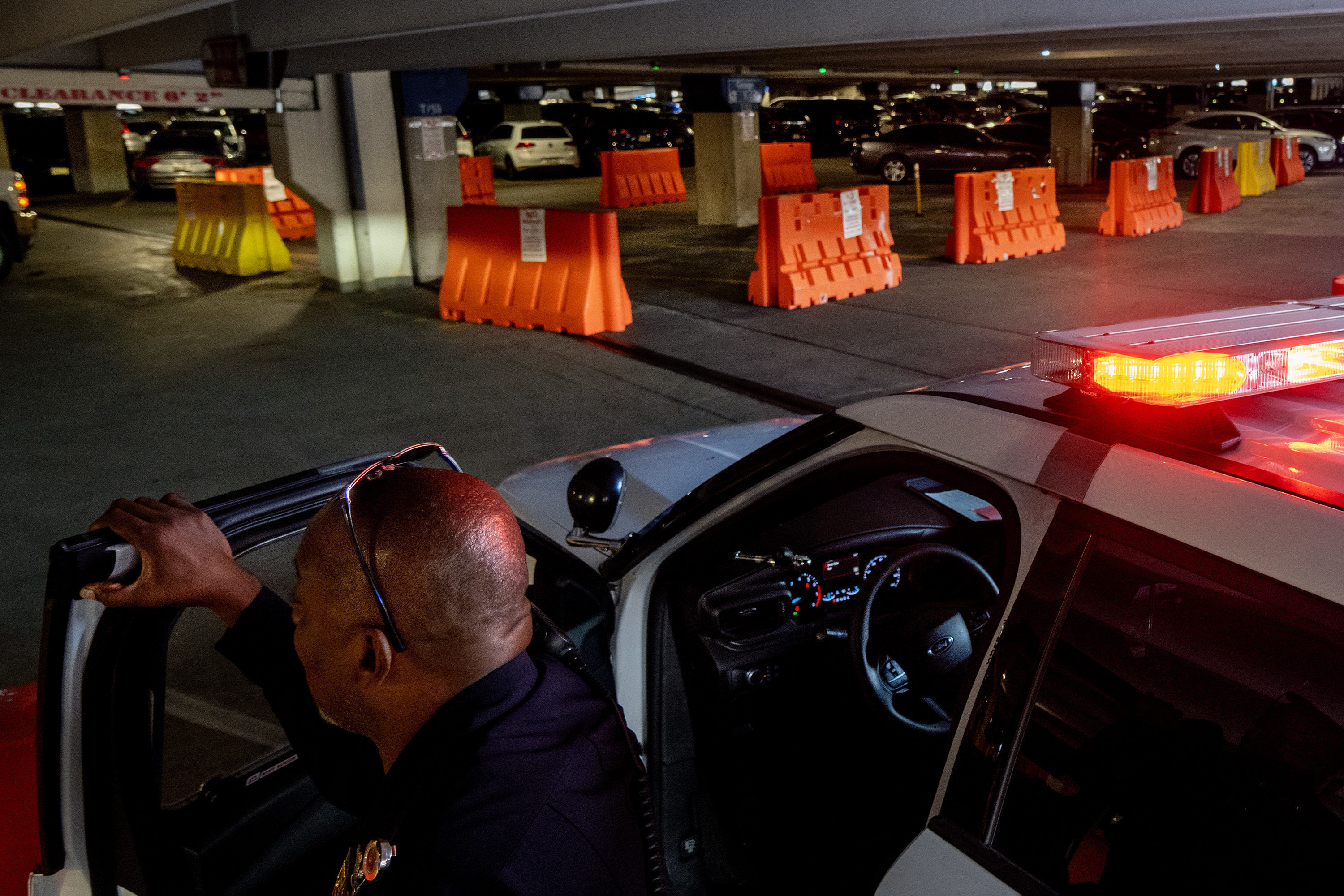
Barriers are set up to prevent parking in a section of Philadelphia International Airport Terminal D parking garage on Nov. 9 ahead of a trial for two men charged with killing Police Officer Richard Mendez and wounding Officer Raul Ortiz during a 2023 attempted car theft.
Prosecutors also played an audio recording of Ortiz screaming into his radio, “Officer down!” and saying that he, too, had been struck and could no longer feel his arm.
“I’m gonna faint,” he said, “I’m losing feeling.”
“They shot Rich,” he repeated throughout the call, his voice wavering in disbelief.
Martinez-Fernandez and Pena-Fernandez declined to testify when asked by Common Pleas Court Judge Giovanni O. Campbell whether they would like to do so. And the defense presented no witnesses of testimony.
But on cross-examination of witnesses called by prosecutors, their attorneys, Gamburg and Earl G. Kauffman, made clear that those who testified had heard — but not seen — the crime.
And Gamburg argued that his client was improperly charged with second-degree murder, a crime committed during the commission of another felony. In this case, he said, the attempted car theft was not a forceful or violent crime and should not have given rise to the more serious charge.
Gamburg told the jury Pena-Fernandez did not go out that night with the intent to kill a police officer, did not fire a weapon, and had not known that Martinez-Fernandez was carrying a gun.
The trial was also marked by jury issues that left the courtroom on edge as deliberations stretched into Monday morning.
The panel’s work was almost immediately derailed Wednesday afternoon when a juror had a medical emergency and was carried out on a stretcher. Campbell called in an alternate juror and ordered that deliberations begin anew.
Jurors appeared to be making progress Thursday as they repeatedly asked to review pieces of evidence. But Campbell later abruptly called jurors into court and told them they must approach the case with “courtesy and respect.”
No resolution came Friday, either. After nearly a full day of silence from jurors, Campbell announced that a second juror had been dismissed.
He did not explain why. And again, he ordered deliberations to start anew.
On Monday, Pope, the prosecutor, praised the jury for its diligence.
“This was a nuanced verdict,” she said. “They didn’t just go down the line and say ‘You’re guilty of all these charges.’ They went through and took their time, did the work.”
Yobranny Martinez-Fernandez, 20, and Hendrick Pena-Fernandez, 23, face life in prison without parole if they are convicted of first- and second-degree murder, respectively, in addition to attempted murder, robbery and a slew of related charges.
Last week a jury sat through prosecutors’ presentation of evidence, which included recovered DNA and cell phone tower data as well as testimony from a man who participated in the theft and identified his former accomplices before a crowded courtroom.
Defense attorneys did not put any witnesses on the stand, rebuffing prosecutors during opening and closing arguments.
But on Wednesday, about an hour after Common Pleas Judge Giovanni O. Campbell sent the jury to deliberate, confusion began to seep into the trial.
A juror suffered a medical emergency and was removed from court on a stretcher. Campbell ordered that he be replaced by an alternate juror and that deliberations begin anew.
On Thursday, jurors came back to the judge with a handful of questions, asking to see copies of DNA evidence, photographs from the scene, and the outfits Mendez and his partner wore that evening.
They also wanted to see the letters exchanged between prosecutors and their star witness, who had pleaded guilty to a lesser murder charge days before the trial got underway.
As the day wore on, Campbell brought jurors back into the courtroom. There would be no verdict, however.
For unknown reasons, the judge instead suggested that the jury operate with “courtesy and respect,” and that they approach deliberations with an “open mind.”
“We recognize it’s not easy,” Campbell said of the process.
Deliberations resumed Friday morning; courtroom observers would not see the jury until Campbell called them back into court around 4 p.m.
Campbell, without citing a reason, said a second juror had been removed. He told the court “it had nothing to do with her views on the case.”
And again, the jury was told to restart deliberations from the beginning.
Campbell dismissed the jury at 5:40 p.m. and told them to return on Monday.
As the murder trial for two men charged in the shooting death of Philadelphia Police Officer Richard Mendez drew to a close Tuesday, prosecutors and defense attorneys offered differing interpretations of what happened on that violent October 2023 evening.
Assistant District Attorney Cydney Pope said a group of men — including 20-year-old Yobranny Martinez-Fernandez and 23-year-old Hendrick Pena-Fernandez — went out that night with the goal of stealing cars, a business she said they carried out like a “well-oiled machine.” That, she said, included Martinez-Fernandez’s role of enforcer as he carried a 9mm handgun to protect the operation.
Mendez, 50, and his partner, Raul Ortiz, were shot after they interrupted the group’s attempt to steal a Dodge Charger in parking lot D at Philadelphia International Airport.
Prosecutors said Martinez-Fernandez was under the steering wheel programming a new key fob when he fired his gun, shooting Mendez multiple times through the torso and hitting Raul once in the arm. He also unintentionally shot an 18-year-old man who was one of the group’s accomplices, they said.
Martinez-Fernandez was charged with first-degree murder, robbery, and related crimes. Pena-Fernandez, who prosecutors say assisted in the crime, faces charges of second-degree murder and related crimes.
With both men facing life in prison without parole if convicted, defense attorneys Robert Gamburg and Earl G. Kauffman urged jurors to conclude that prosecutors had failed to make the case for their guilt.
For one, they said jurors should question whether prosecutors had presented sufficient evidence to prove that the men had even been at the crime scene that evening.
And they cast doubt on the account of the prosecution’s star witness — a man who was involved in the crime, and took the stand to implicate the two men after pleading guilty to lesser charges. Alexander Batista-Polanco, who the lawyers said stands to gain a lighter sentence in exchange for his cooperation with prosecutors, could not be trusted, they said.
Pope scoffed at the suggestion Batista-Polanco had lied in exchange for favorable treatment and reminded jurors that witnesses face the risk of violence to themselves, and to their families, when speaking out. She said she believed Batista-Polanco would likely be “looking over his shoulder for the rest of his life.”
Pope pointed to evidence including cell phone data and recovered DNA linking the men to the crime, which stretched from the South Philadelphia sports complex to the Cranbury, N.J., warehouse where she said the men torched the vehicle they used to flee the scene.
Gamburg, who represents Pena-Fernandez, suggested that prosecutors had erred in charging him with second-degree murder, a killing during the commission of a felony like robbery, arson, or rape. In this case, he suggested, stealing a car was more like theft, and no weapon was used to obtain the vehicle.
Pope, citing the shooting that followed and left a 22-year veteran of the force dead, disagreed.
“You can call it whatever you want,” she said, “but what this is, is robbery.”
Lee Maniatis, 58, was one of several senior employees of Mark 1 Restoration who participated in the crimes. But prosecutors said he played a central role, influencing the Amtrak project manager, Ajith Bhaskaran, to sign off on a series of additional contracts worth tens of millions of dollars.
His prison term will be followed by three years of supervised release. Maniatis has already paid a $278,000 restitution fee, though he will also be required to contribute to a restitution fund of more than $2 million alongside his former associates.
In all, Maniatis and his colleagues funneled gifts worth more than $323,000 to Bhaskaran between 2016 and 2019, buying him luxury wristwatches and cigars, pricey vacations to India and the Galápagos Islands, Bruno Mars concert tickets, lavish dinners in Center City, and rides in limousines.
In exchange, Bhaskaran helped secure tens of millions of dollars in extra government-funded work for Mark 1 Restoration, ultimately doubling the cost of what began as a $58 million project to renovate the historic train station’s limestone facade.
While the firm did legitimate work on the property, most of the gifts were effectively subsidized by the government because Mark 1 falsely inflated its invoices by $2 million to cover the bribes. And Amtrak explicitly prohibits firms from offering gifts in exchange for favorable contracts.
Prosecutors had ample evidence linking Maniatis to the bribes. Around the time of a January 2017 dinner between Maniatis, a colleague, and Bhaskaran, the Amtrak employee was considering whether to authorize an additional $13.4 million work order for the firm. Maniatis, prosecutors said, gave Bhaskaran a Tourneau worth more than $5,000 during that meeting.
Bhaskaran approved the contract days later, and “[d]inner was worth it,” Maniatis texted an associate. Later he texted his boss: “$ ding.”
Maniatis, accompanied by his wife, appeared in federal court in Philadelphia Thursday and teared up as he read a statement to U.S. District Judge Wendy Beetlestone.
“I’m completely ashamed,” he said. “I was sick about it then, I’m sick about it now.”
The judge said the former executive’s remorse was palpable. But she said Maniatis had a choice to go to authorities over those three years — and didn’t.
“Only when federal agents raided his home” in 2019 did Maniatis admit to his wrongdoing, Beetlestone said.
“He could have resigned,” she continued. “He could have reported it to the FBI.”
Theodore T. Poulos, one of Maniatis’ defense attorneys, said he still recalls the day after that raid, when the former executive told the lawyer he’d “ruined his life.”
Poulos said Maniatis had been a victim of “misguided loyalty” to Mark 1’s owner and president, Marak Snedden, who pleaded guilty to charges of conspiracy to commit bribery and making a false claim in the scheme.
Still, U.S. Attorney Jason Grenell said, Maniatis “made a choice” to siphon public taxpayer money to “line people’s pockets.”
The attorney commended Maniatis for being the first defendant in the case to plead guilty for his crimes, swiftly admitting his guilt while his coconspirators fended off the government’s allegations in court, Grenell said.
Maniatis is not the first Mark 1 employee to face prosecution.
Early this month, Snedden, was sentenced in Beetlestone’s courtroom to 7½ years in prison. The admission made Snedden the sixth person involved to face consequences for the scheme.
Bhaskaran had been charged with unrelated wire fraud in 2019 but died of heart failure a year later.
Court documents show Bhaskaran had outsized power to approve work on behalf of the transit agency — and that his signature on “substantially overbilled” work routinely corresponded with sumptuous treatment from Maniatis and Mark 1 employees.
One such instance came in December 2017, when Bhaskaran authorized an additional $5.6 million in work for the firm. That same month, court records show, Maniatis paid $9,500 for him to visit India with a relative.
Maniatis emailed Bhaskaran tickets the following year priced at $766 for a New Year’s Eve party at Stratus, a rooftop lounge at Kimpton Hotel Monaco — a purchase investigators said Maniatis had made on his own credit card.
And when Bhaskaran decided that the Tourneau watch was not to his liking, Maniatis was ready to return it and purchase Bhaskaran an even more expensive timepiece, spending $11,294.
Beetlestone denied Poulos’ request that Maniatis be allowed to spend the entirety of his sentence on probation. He will serve his term at a prison in Lewisburg, Pa.
“Lack of fortitude is not an excuse for criminal conduct,” Beetlestone said.
Staff writer Chris Palmer contributed to this article.
Three men were convicted of first-degree murder and related crimes for a 2023 shooting at a North Philadelphia playground that left three people dead and one injured, prosecutors said Wednesday.
Tyyon Bates, 21, Quaza Lopez, 22, and Eric Reid, 23, were all found guilty this week for their roles in the crime, which brought chaos to a basketball court at Eighth and Diamond Streets on a hot summer night as children played outside.
Nyreese Moore, 22, Nassir Folk, 24, and Isaiah Williams, 22, were killed. A fourth person was shot in the abdomen and survived.
In addition to murder, Bates, Lopez, and Reid were convicted of conspiracy to commit murder, recklessly endangering others, and firearms offenses, prosecutors said.
A jury found a fourth suspect, Sufyann Kinslow, not guilty of murder and related charges, court records show. And a jury could not reach a verdict in the trial of a fifth suspect, Tynel Love, on similar charges, though prosecutors say they intend to retry that case.
Prosecutors said the Aug. 11, 2023, shooting stemmed from “vengeance” over a 2018 shooting that left Bates’ brother, Tyree, dead just several blocks away at Fourth and Diamond Streets.
“The motivation was for ‘Ree,’ Tyree Bates,” said Assistant District Attorney Cydney Pope. “And Tyyon Bates made sure he got his ‘get-back’ for him — and bragged about it.”
Investigators recovered more than 100 pieces of ballistic evidence from what prosecutors said was an unusually large crime scene involving six shooters. Surveillance video from the recreation center and a nearby vacant lot helped investigators link the men to the crime, Pope said.
Bates, Lopez, and Reid were sentenced by Common Pleas Court Judge Glenn Bronson to three consecutive life sentences in prison plus an additional 24 to 48 years in custody.
Prosecutors said that their work is not finished and that they plan to bring charges against two more people involved in the crime.