The Barnes Foundation removed a precious Pierre-Auguste Renoir painting from view last year for some much-needed rehabilitation.
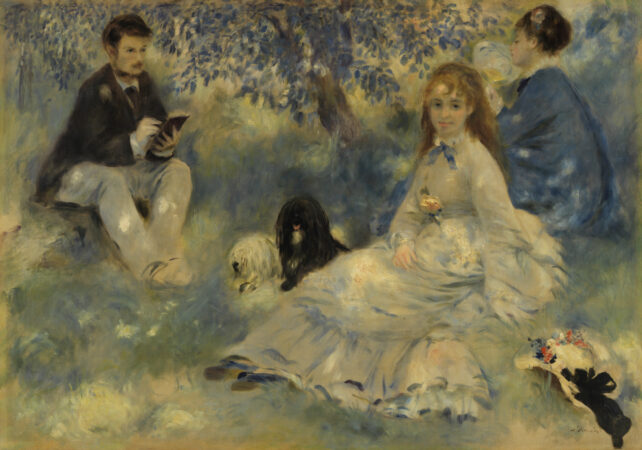
The Henriot Family (La Famille Henriot), an oil painting completed around 1875, is an impressionist work depicting three people and two long-haired dogs relaxing in a forest. A young woman in a white dress gazes directly at the viewer while a man to her right appears to be drawing her. The central figure is Henriette Henriot, one of Renoir’s frequent models, and her admirer is the painter’s brother, Edmond Renoir.
It’s one of 181 Renoir paintings that Albert C. Barnes amassed during his lifetime, leading the Barnes Foundation to hold the largest collection of Renoir artworks in the world. He purchased the piece from art dealer Etienne Bignou in 1935 for $50,000, which amounts to about $1.17 million today.
A close-up of “The Henriot Family” demonstrates the old layer of varnish that has yellowed the painting over time.
Sitting above a doorway in the museum’s main room, The Henriot Family has long been eyed for restoration, according to WHYY. The staff brought the painting into the conservation lab in February 2025.
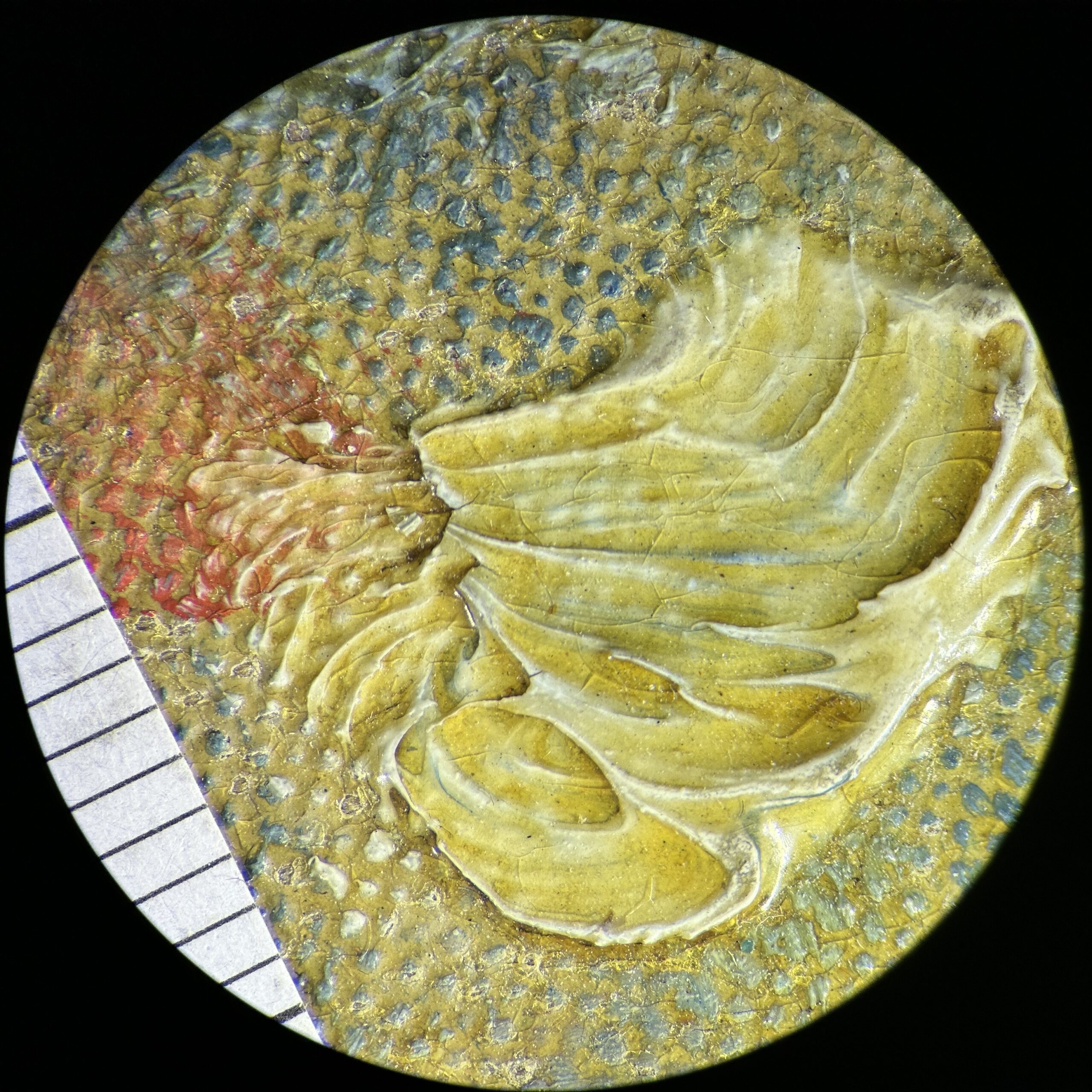
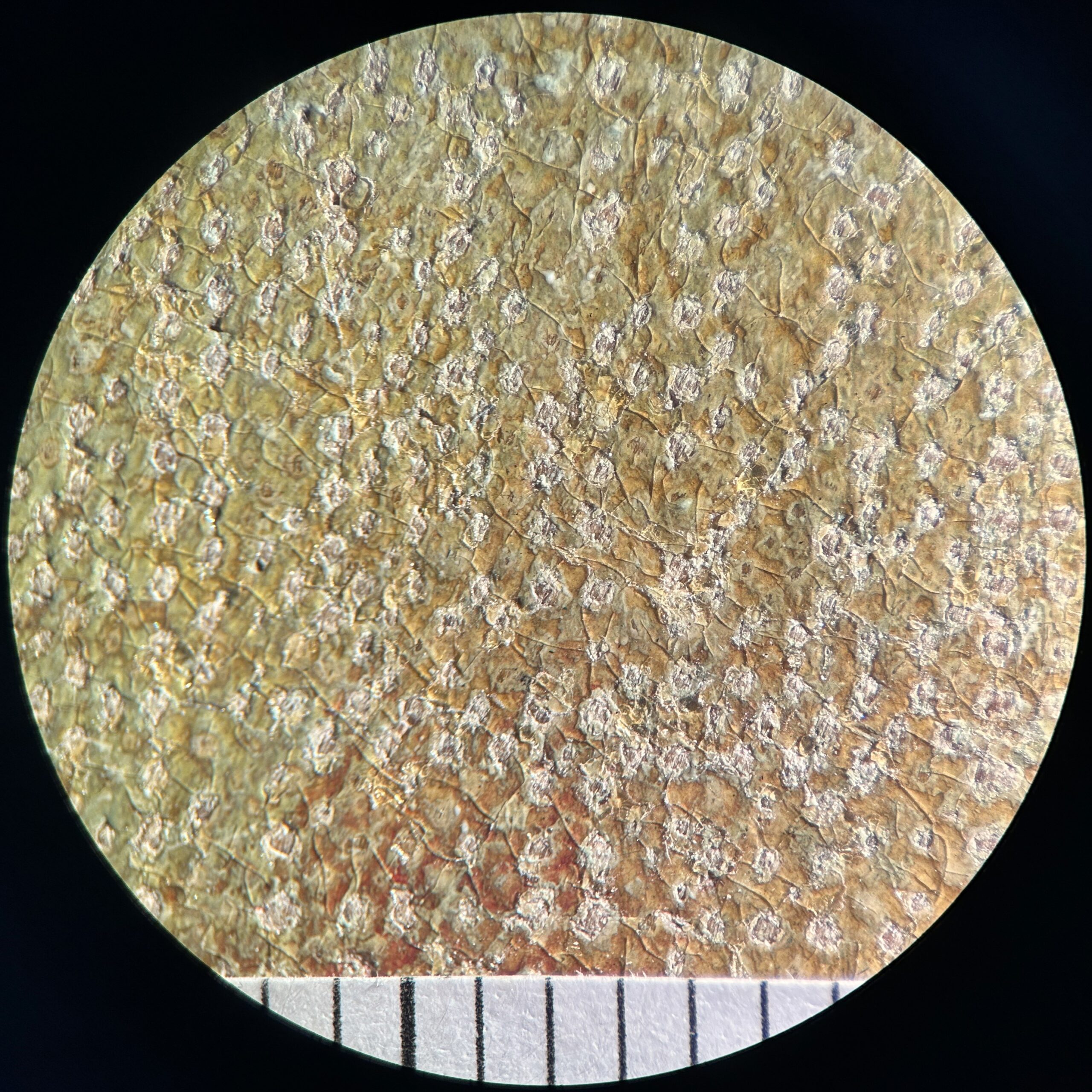
An old layer of resin varnish on the paint has altered the colors over time, turning them from blue and gray to yellow and green. On a microscopic level, the paint has also begun separating from the canvas and the base layer in a process called “micro-flaking.”
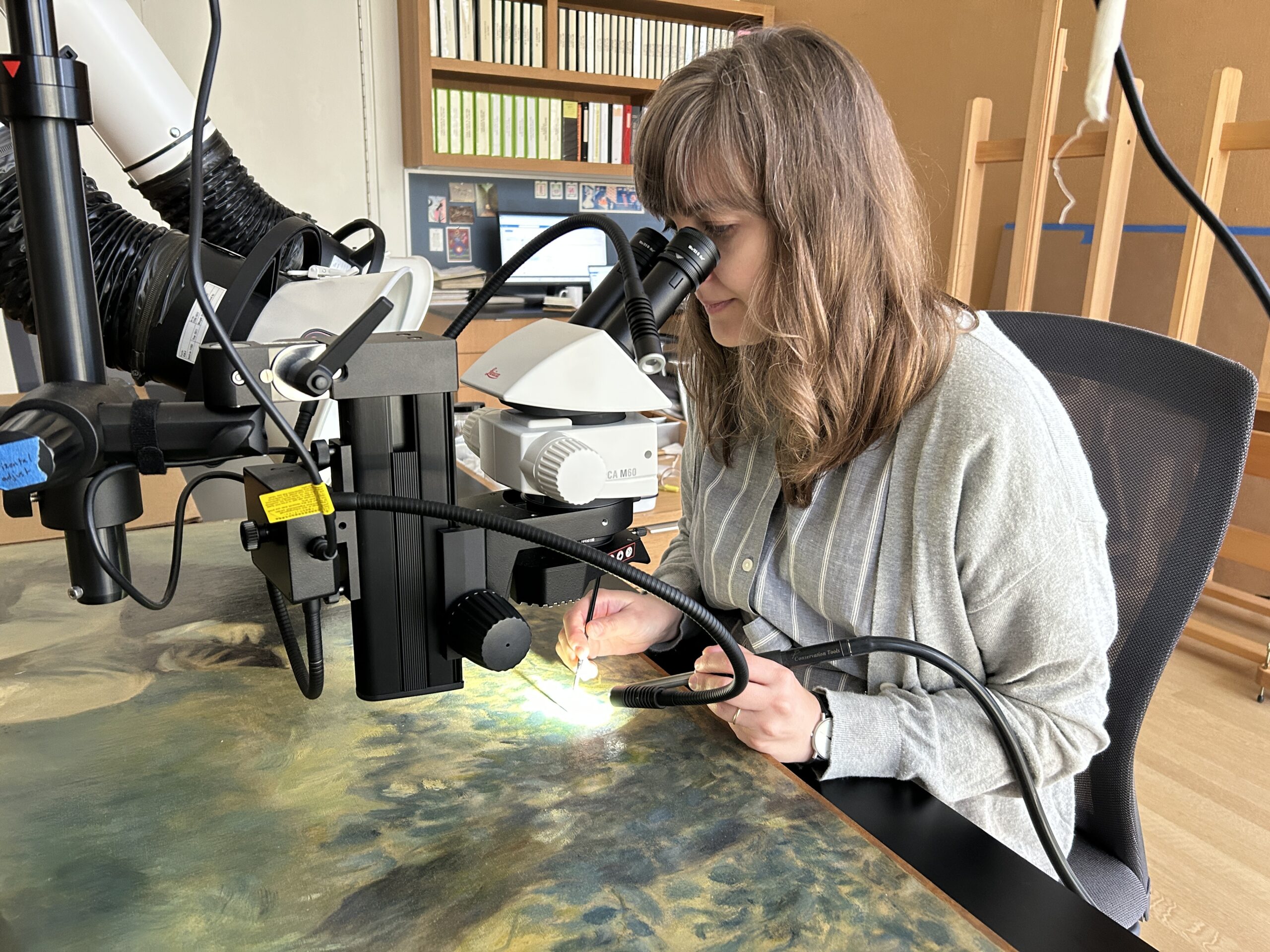
The Barnes Foundation’s associate conservator of paintings Christie Romano studies “The Henriot Family” under a microscope.
So far, Barnes’ associate conservator of paintings Christie Romano has reportedly put in some 200 hours studying the painting under a microscope to identify problematic areas.
The conservation efforts will remove the yellowing layer of resin to restore the original colors underneath and fix the areas most affected by micro-flaking using calcium carbonate. The project is funded by a grant of an undisclosed amount from Bank of America as part of its Art Conservation Project; the Barnes is one of 16 recipients worldwide.
A microscopic close-up of “The Henriot Family” painting demonstrates “micro-flaking” damage.
Cultural institutions in Philadelphia have benefited from the bank’s conservation grants in previous years. In 2019, the bank funded the restoration of The Large Bathers by Paul Cézanne at the Barnes and The Great Bathers by Renoir at the Philadelphia Art Museum. Over the past 16 years, the Art Conservation Project has issued grants for some 275 conservation projects across 40 countries.
The Henriot Family will be back on view at the Barnes sometime in February, with its gray and blue looking brand new.
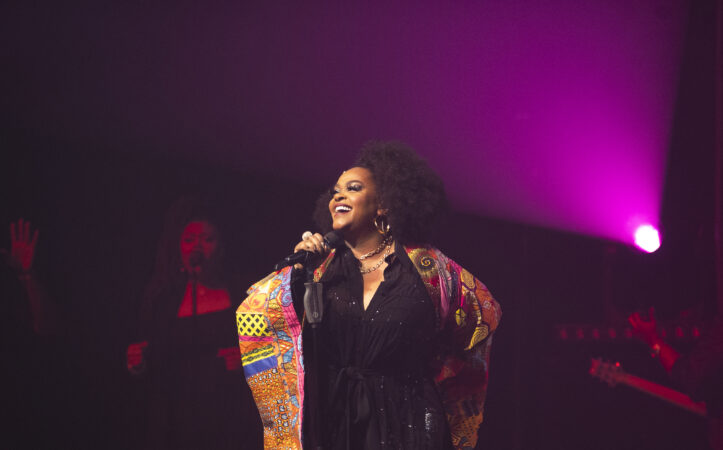
Legendary singer Jill Scott is kicking off 2026 with a special announcement: Her sixth studio album, called To Whom This May Concern, will come out on Feb. 13.
The release marks Scott’s first new album in more than a decade, following 2015’s Woman.
Coinciding with the Friday announcement, Scott also dropped her new single, “Beautiful People,” in which she croons about the power of love: “Our love is the art of war / Conquering all algorithms / And wicked, wicked systems of things.”
“THANK YOU for your patience and your listening ears,” Scott wrote on Instagram, signing off her caption with her beloved nickname, Jilly from Philly.
On To Whom This May Concern, the Philly native collaborates with fellow Philadelphian musicians including rapper Tierra Whack and music producer Adam Blackstone. Other collaborators include rappers Ab-Soul, J.I.D., and Too Short along with producers DJ Premier, Om’Mas Keith, Camper, and Andre Harris, according to Variety.
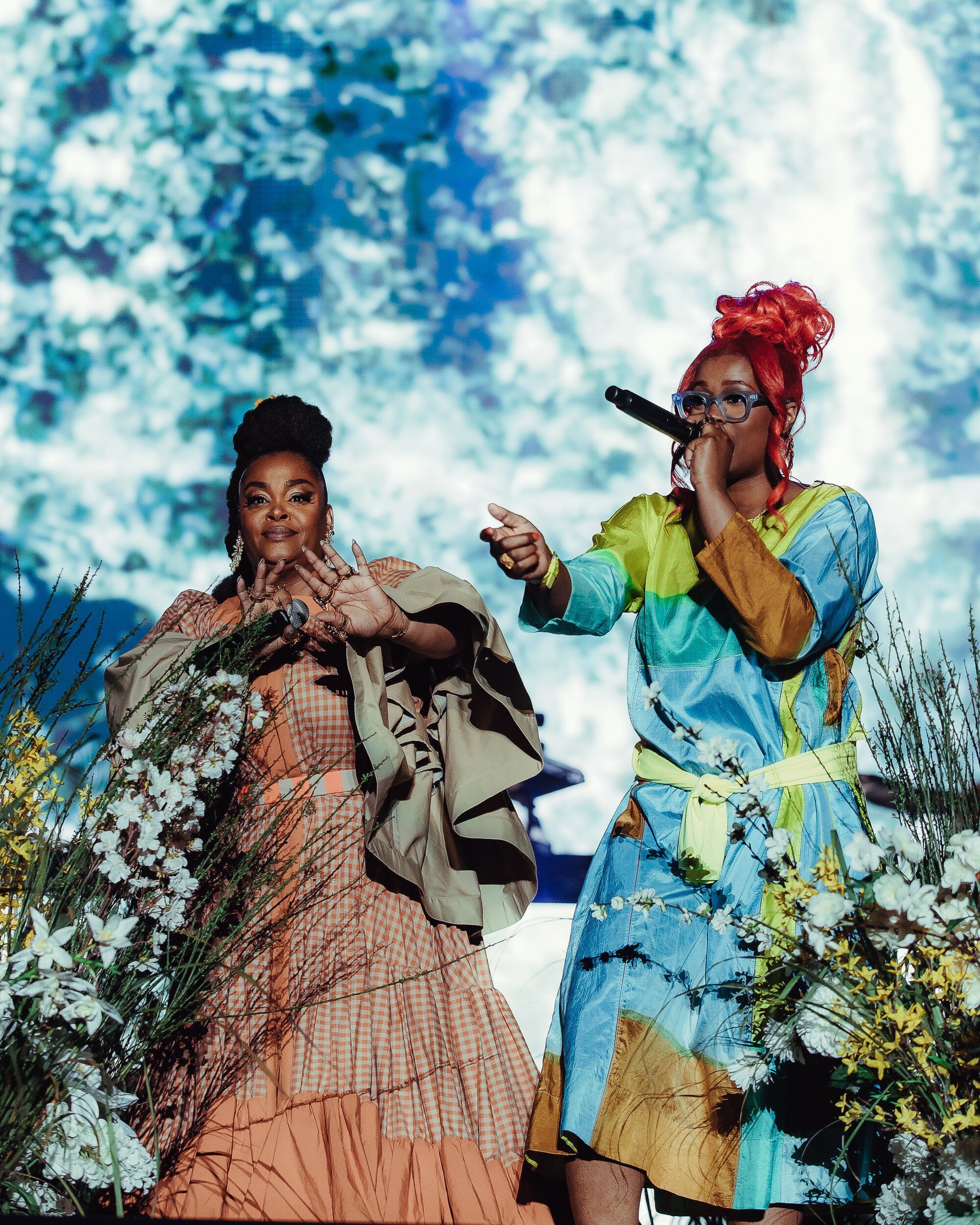
Jill Scott with Tierra Whack on the Fairmount Park Stage of The Roots Picnic at the Mann Center in June 2024.
During that show, Scott brought out Whack to debut their soon-to-be-released song, “Norf Philly.”
The To Whom This May Concern album cover features a painting by Chicago artist Marcellous Lovelace and depicts a nude Black woman with large yellow earrings and a matching collar necklace that repeats the message, “We fight.” The design includes affirmations like, “We can save ourselves,” “You cannot touch me,” and “One day we will destroy all of those who wish to harm us.”
“It’s a lot of living in this album,” Scott said about the album in a recent interview. “It’s a lot of revelation. Musically, it’s a full spectrum. Had some wonderful musicians come in. I feel touched all over, literally … The musicianship on this project and the people that gravitated towards it, I couldn’t be happier. I couldn’t have ever even imagined who is on this album.”
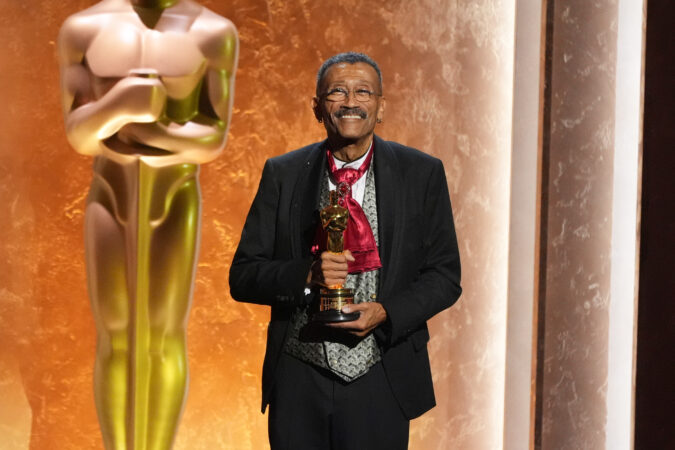
When famed production designer Wynn Thomas prepared an acceptance speech for his long-awaited Oscar at the age of 72, he wanted to highlight his own Philadelphia story.
“My journey to storytelling began as a poor Black kid in one of the worst slums in Philadelphia. There were street gangs and poverty everywhere. And to escape that world, I immersed myself in books,” Thomas told the Hollywood audience at the Governor’s Awards ceremony in November. “I would sit on my front stoop and I would travel around the world. Now, the local gangs looked down on me and called me ‘sissy.’ But that sissy grew up to work with some great filmmakers and great storytellers.”
It was a significant moment for an artist who has spent nearly 50 years behind the camera to finally step into the spotlight himself. The honorary Oscar — which also went to Tom Cruise and Debbie Allen — recognizes “legendary individuals whose extraordinary careers and commitment to our filmmaking community continue to leave a lasting impact.”
During his extensive film career, Thomas has designed epic, comedic, and dramatic worlds for filmmakers like Spike Lee (Do The Right Thing, Malcolm X), Ron Howard (A Beautiful Mind, Cinderella Man), Robert DeNiro (A Bronx Tale), Tim Burton (Mars Attacks), and Peter Segal (Get Smart).
And while at it, he broke several barriers along the way: Thomas is considered the first Black production designer in Hollywood history.
No matter how far his work took him, though, he was always proud to discuss his Philadelphia roots.
The theater kid from West Philly
Long before he worked on major feature films, Thomas grew up as one of six kids in West Philadelphia, living primarily near 35th and Spring Garden Streets. Avid reading kept him out of trouble. His mother, Ethel Thomas, wrote a permission letter to the local library so he could access the adult section, and he immersed himself in the worlds of Harper Lee, James Baldwin, William Shakespeare, and Lillian Hellman.
The young Thomas always looked forward to Saturdays, when he could spend nearly all day at a movie theater on Haverford Avenue. Occasionally, he took classes at Fleisher Art Memorial, too.
The 1961 movie Summer and Smoke, written by Tennessee Williams, he said, inspired him to pursue theater.
“I absolutely said, ‘My God, what is this?’ I think it was just the nature of the story that really affected me,” Thomas, who now lives in New York, said in a recent interview. “I couldn’t believe what I had just seen, what I had just experienced. So I went to my library and got as many Tennessee Williams plays as I could.”
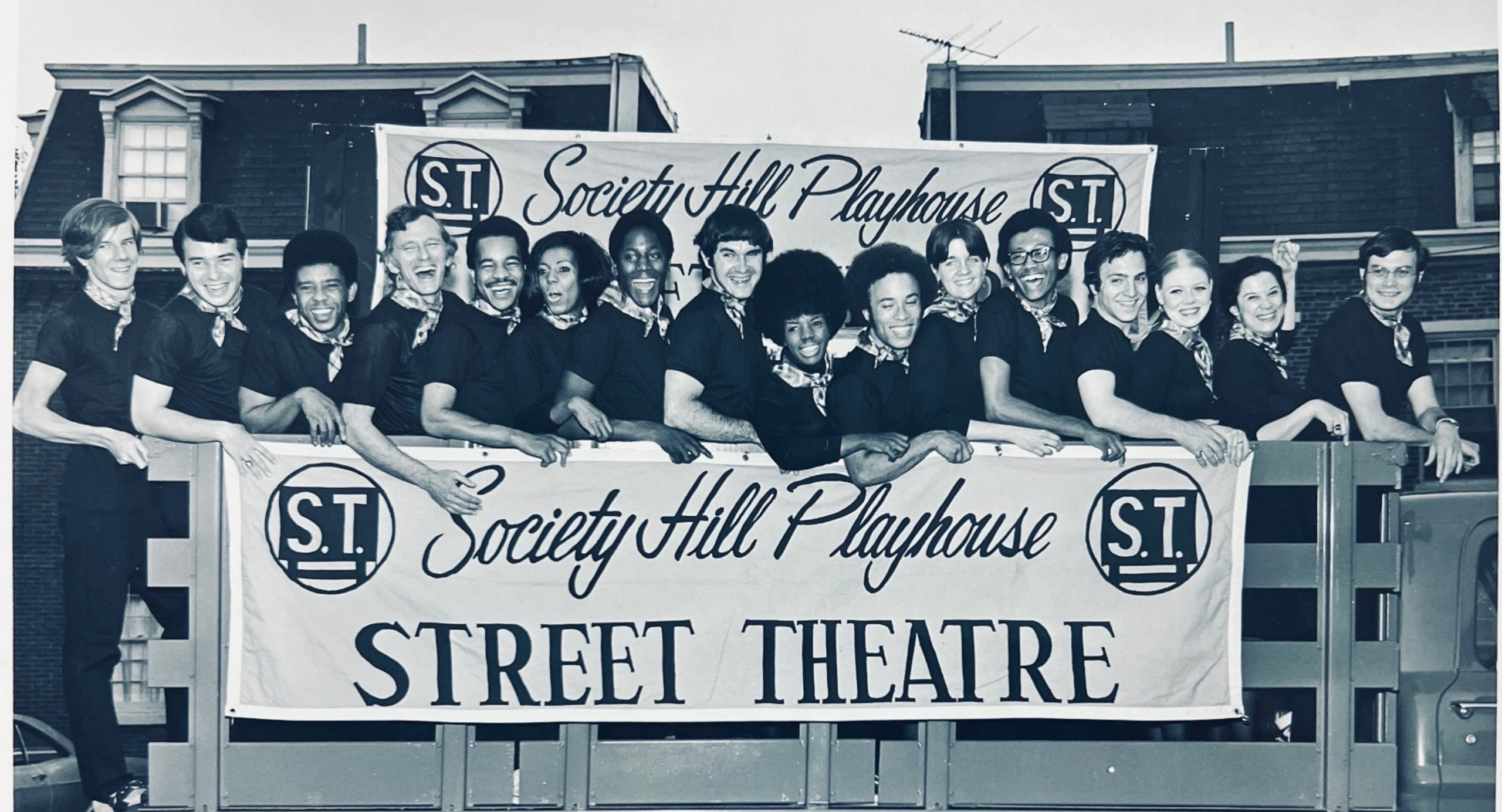
Wynn Thomas (fifth from right) at the Society Hill Playhouse as a teen in the late 1960s.
A couple of years later, Thomas heard that Society Hill Playhouse was holding open auditions. He was too young to audition himself, so he persuaded his older sister Monica to try out.
“I remember saying to her, ‘You need to do a scene from Who’s Afraid of Virginia Woolf,’” he recalled, chuckling. “Now, can you imagine being a 14-year-old kid who knows Who’s Afraid of Virginia Woolf? That’s a geek!”
She earned a spot in the company for a season and Thomas frequently tagged along, volunteering as an usher and eventually forming a close relationship with the owners, legendary Philadelphia theater couple Jay and Deen Kogan.
Throughout high school, the Overbrook High art student spent most of his after-school time across town at the playhouse. He acted, painted scenery, and served as a stage manager.
One of the final productions he stage-managed was The Great White Hope, loosely based on boxing champion Jack Johnson, who was played by Richard Roundtree — the soon-to-be Hollywood star who went on to lead the 1971 classic Shaft. While he was performing at Society Hill Playhouse, Roundtree was auditioning for the life-changing role.
“Shaft was a very important and very pivotal film for that time period,” said Thomas. “It was about a strong Black male who lived in the world under his own terms. That was not a character that was portrayed often in films.”
It was a glimpse into the worlds Thomas would help create in the future — with Black characters who had agency at the center.
Some four decades later, he worked with Roundtree once more for the 2019 remake of Shaft and they had an “incredible reunion.”
From Philly to Boston to New York
Thomas received his bachelor of fine arts in theater design from Boston University. After graduating in 1975, he returned to Philadelphia and worked as a window dresser at the Strawbridge & Clothier department store on Market Street for a few months before landing his next theater job.
For about four years, Thomas was a painter for the Philadelphia Drama Guild, operating out of the Walnut Street Theatre. He also returned to Society Hill Playhouse as a production designer.
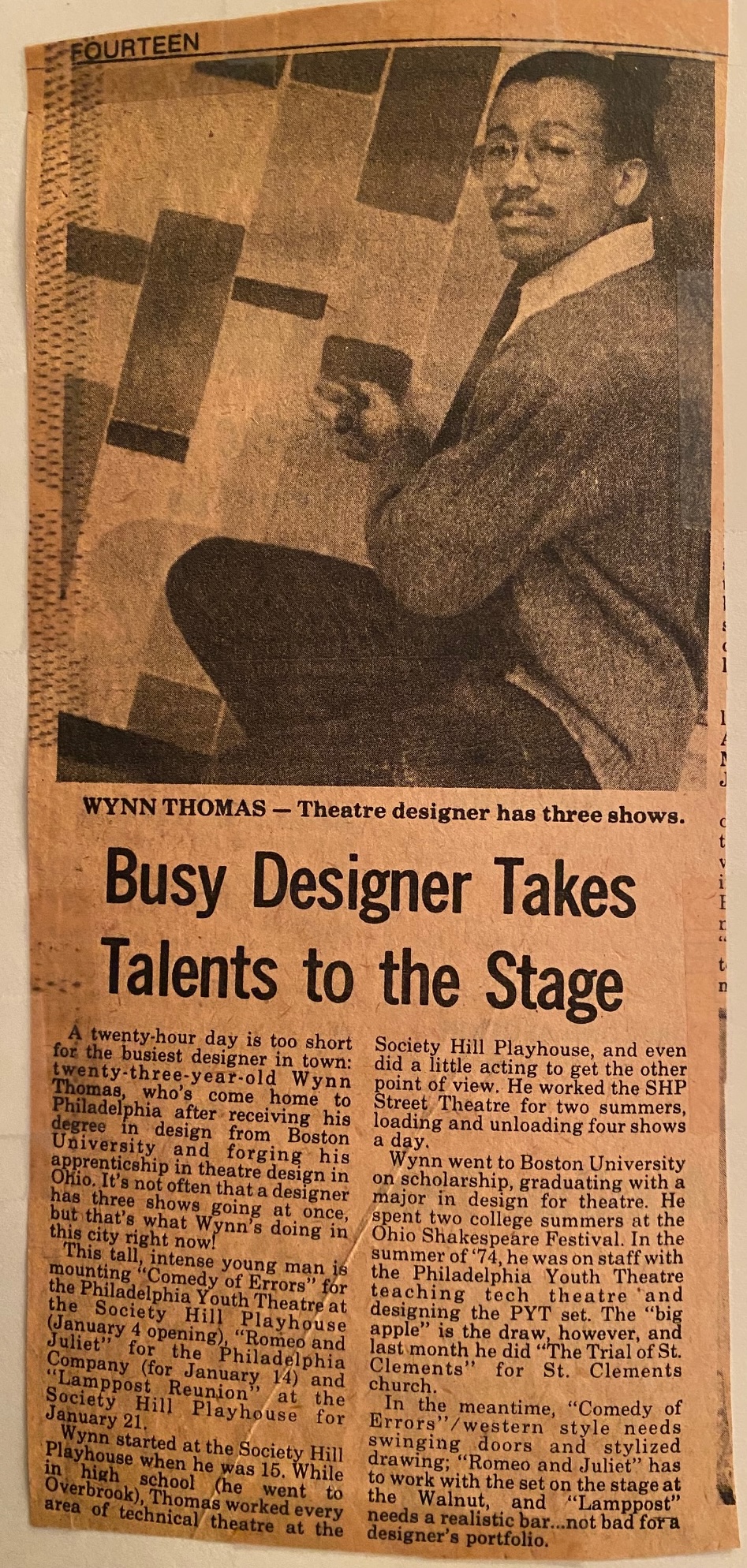
An article about Wynn Thomas when he was 23 years old and working as a theater designer in Philadelphia in the mid 1970s.
“It was a huge learning phase for my career, because I was painting all these different kinds of shows,” Thomas said.
By his mid-20s, Thomas had moved to New York and soon became the resident set designer for the legendary Negro Ensemble Company, where he worked with not-yet-famous actors from Denzel Washington to Phylicia Rashad.
“There was an actor who had auditioned for the company but did not get in. He was looking for a job and it turns out that he had carpentry skills, so I ended up hiring this actor who built my sets for my very first season at NEC,” Thomas recalled.
“That actor was Samuel L. Jackson.”
Breaking into film
Thomas loved theater but sought higher-paying work in film. After multiple job rejections, he joined the United Scenic Artists Local 829.
In an event the union organized with renowned production designer Richard Sylbert, who was working on Francis Ford Coppola’s The Cotton Club, Thomas was the sole Black person in attendance.
The next day, he called Sylbert and introduced himself: “I’m the Black guy that was in the room last night. Do you remember seeing me?”
He convinced Sylbert to hire him to build model sets, and Sylbert became a crucial reference that helped Thomas secure art director jobs, like on 1984’s Beat Street (directed by fellow Philly native Stan Lathan). That’s where he met Spike Lee, who interviewed “for the coffee-fetching position of assistant to the director,” Thomas recalled. When Lee stopped by the art department to greet a friend, the aspiring filmmaker was surprised to see Thomas.
“He said he didn’t know there were any Black people doing this [work],” Thomas said.
Filmmaker Spike Lee, center right, appears with his brother David Lee, center left, with castmembers, including Halle Berry, left, and Wesley Snipes, right, on the set of the 1991 film, “Jungle Fever.” Wynn Thomas served as production designer.
A storied career of firsts
That Beat Street encounter led to one of the most fruitful collaborative relationships of Thomas’ career: He went on to make 11 films with Lee, from She’s Gotta Have It to School Daze to Jungle Fever. Lee regularly worked with the same collaborators (“the family”) including Thomas, costume designer Ruth Carter, and cinematographer Ernest Dickerson.
“We wanted to present images of Black and brown folks that had not been seen before on the screen. We did not want to present any negative images. If you look at those films, there’s no drugs, there’s no alcohol, there’s no domestic abuse — none of that trauma that people used to associate with our communities,” said Thomas. “That was the artistic link, the journey for all of us …[and] that has been a criteria for me.”
Meanwhile, he continued to find mainstream success on commercial films, fueled by a relentless work ethic and a commitment to hiring a diverse crew of artists on his team. Later in his career, he was elected to the Academy’s Board of Governors where he pushed for expanding educational programs nationwide.
Thomas’ films showcase a breadth of world-building talent across genres like comedy (To Wong Foo, Thanks for Everything! Julie Newmar, Get Smart), romance (The Sun Is Also a Star), and dramas about other Black barrier-breakers, like King Richard (starring fellow Overbrook alum Will Smith), Hidden Figures, and the miniseries Lawmen: Bass Reeves.
It’s rare that he returns to his hometown for a job, but in 2014, he was thrilled to work on the pilot of the Philadelphia-set show How to Get Away with Murder.
Thomas believes the city holds countless rich, untold stories that he hopes will one day receive a bigger spotlight.
For now, he’s enjoying seeing the Oscar statue grace his living room.
“It really means a great deal to me, after 40-plus years of working in the business, to have my work recognized by this organization,” said Thomas. “I’ve worked on a lot of films that should have been recognized by the Academy, [for which] I should have been nominated, and it never happened. So I think this was a way for the Academy to correct that oversight.”
Philadelphia theaters have weathered a difficult year as arts organizations across the region faced deep cuts in federal funding. The numbers paint a somewhat bleak picture: The state lost $1,463,000 from the National Endowment of the Arts alone, and though some attendance figures have risen from last year, the performing arts sector has struggled overall to recapture prepandemic audiences.
This year, despite challenges, Philly’s scrappy, beloved, and award-winning theater community kept showing up and showing out on local stages with incredible productions and exciting world premieres.
Here are few of our favorites from 2025.
‘La Otra’ from 1812 Productions
Written and directed by Tanaquil Márquez, this Fringe Festival world premiere from 1812 Productions was a heartwarming comedy about three estranged sisters reuniting for their father’s 80th birthday party in Colombia. The real drama all happened in the kitchen as cousins played pranks, sisters bickered endlessly, and at one point the set exploded in a burst of tropical vines that broke into the realm of magical realism. The show fired on all cylinders, from the versatile cast in multiple roles, to its engrossing production design, to the sharp trilingual dialogue that echoed the rhythm and intimacy of a big family much like my own. (The clever use of subtitles ensured that no one got lost in translation, from English to Spanish to Vietnamese.) I laughed a lot, especially thanks to the standout performance from Yajaira Paredes. We named it one of the works with a high chance of post-Fringe Fest success, so here’s hoping to see it back on our stages soon.
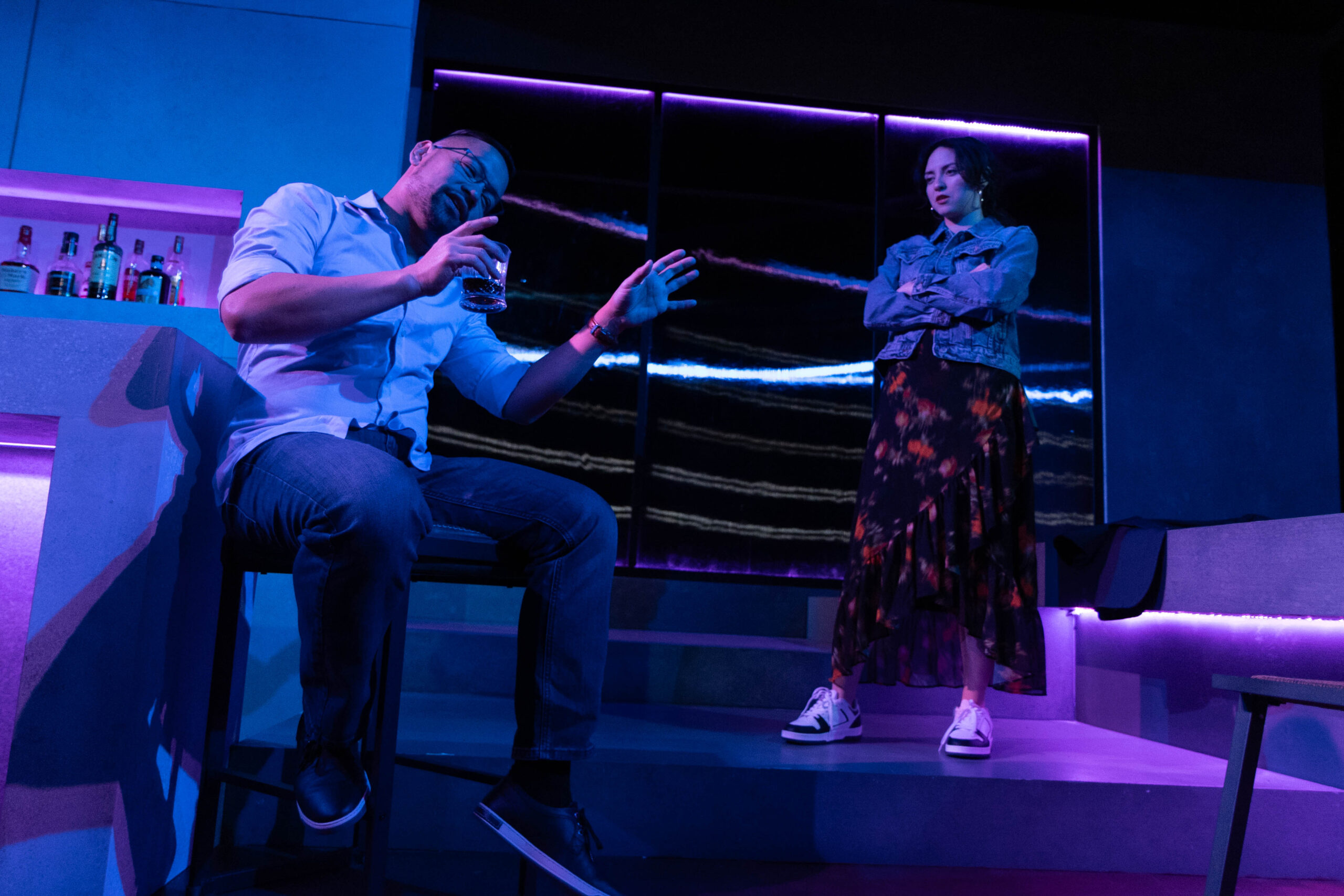
Valeria Diaz (Madeleine Garcia) and Professor Qiu (Justin Jain) in InterAct Theatre Company’s “Quixotic Professor Qiu.”
‘Quixotic Professor Qiu’ from InterAct Theatre Company
Another promising world premiere came from playwright Damon Chua with this tense, small InterAct production following a Chinese American mathematics professor accused of being a spy. Inspired by actual instances of academics suspected of espionage, the drama provided a provocative and chilling reflection of the U.S. government’s targeting of immigrants amid the ever-encroaching creep of censorship. As the titular Qiu, Justin Jain played a convincingly aggrieved intellectual who finds the entire investigation absurd. But he’s essentially left helpless at the whims of law enforcement hell-bent on punishing him, regardless of the facts. The minimalist set centered our attention on the high stakes he faces trying to clear his name, with moody lighting that heightened our sense of dread. By the end, Jain breaks the fourth wall to underscore the message: “That’s the world we live in. That’s the world you live in.”
‘King Hedley II’ at Arden Theatre Company
The Arden’s commitment to staging all of August Wilson’s Century Cycle plays is a laudable effort and each production is a major theatrical event. James Ijames directed this run with Akeem Davis playing the titular King, a struggling, formerly incarcerated man released at the height of the 1980s recession. The story depicts a harsh reality for the Black family at the center, played deftly by a well-rounded cast that pivots from warmth to fury to humor. It was not an easy watch — the tragic ending left me in tears — but it was a vital story that felt relevant, urgent, and timeless.
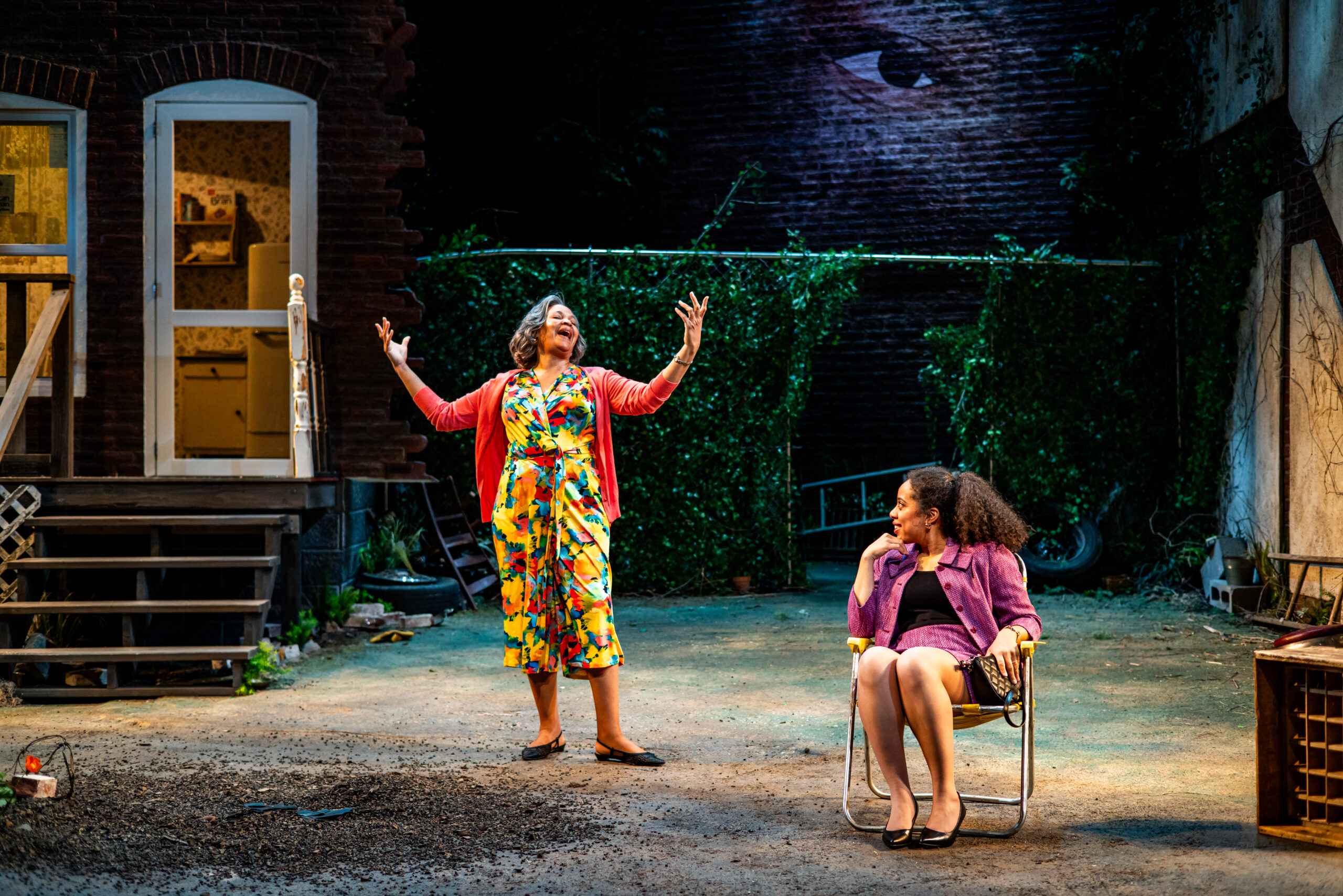
Ruby (Kimberly S. Fairbanks) and Tonya (Taysha Marie Canales) in Arden
Theatre Company’s 2025 production of August Wilson’s “King Hedley II.”
‘Back to the Future: The Musical’ at Academy of Music
At the risk of being a little corny, I had a blast seeing one of my favorite classic movies adapted into a musical — mainly because the much-hyped time-traveling DeLorean was genuinely as impressive as promised. I went in thinking that the car bit would be too gimmicky, but I was proven so wrong in the best way: The masterful production design featured illusions that (tiny spoiler) made the car fly in the air. I gasped! The show also delivered transportive scenery alternating between the 1980s and 1950s, amplified by captivating group choreography and great singing. There were certainly some questionable choices, like leaning into the whole Marty-tries-avoiding-incest plot and songs that try but fail to give depth to Marty’s family. But overall, it was a lot of fun.
‘The Goldberg Variations’ at Fringe Arts
Every year, Philly’s Fringe Fest delivers some of the strangest and most shocking productions with dazzling results. This was the craziest production I saw onstage this year and I’m still obsessed. It started as a petty PowerPoint presentation as the star/creator Clayton Lee explained that all his ex-boyfriends look like wrestler Bill Goldberg. It shifted into an interactive experience as Lee interviewed someone in the audience, flirting with him and asking sexually explicit questions. Then it evolved again into a wrestling ring, where Lee invited Goldberg doppelgängers (who were incognito in the audience) to the stage for a smackdown, complete with BDSM contraptions and a lot of body oil. It was a wild show that had the audience in sidesplitting laughter one moment and stunned silence the next.
‘Snow Queen’ at Wilma Theater
This year, the Wilma presented its first production for all ages in this adaptation of Hans Christian Andersen’s 1844 fable (from which Disney’s Frozen also draws inspiration). Seeing a weekday matinee was such a treat because the rows were filled with eager schoolchildren who responded to the actors with infectious enthusiasm. The sprawling fairy tale features a terrifying ice queen who turns hearts cold and kidnaps a young boy named Kai. His determined friend Gerda goes on a quest to save him after he has been brainwashed. Directed by Yury Urnov, the show spotlights delightful characters with an inventive and quirky production and costume design. The heartfelt, whimsical story about the power of good over evil was a visually dazzling experience, complete with musical talent and a wonderful cast.
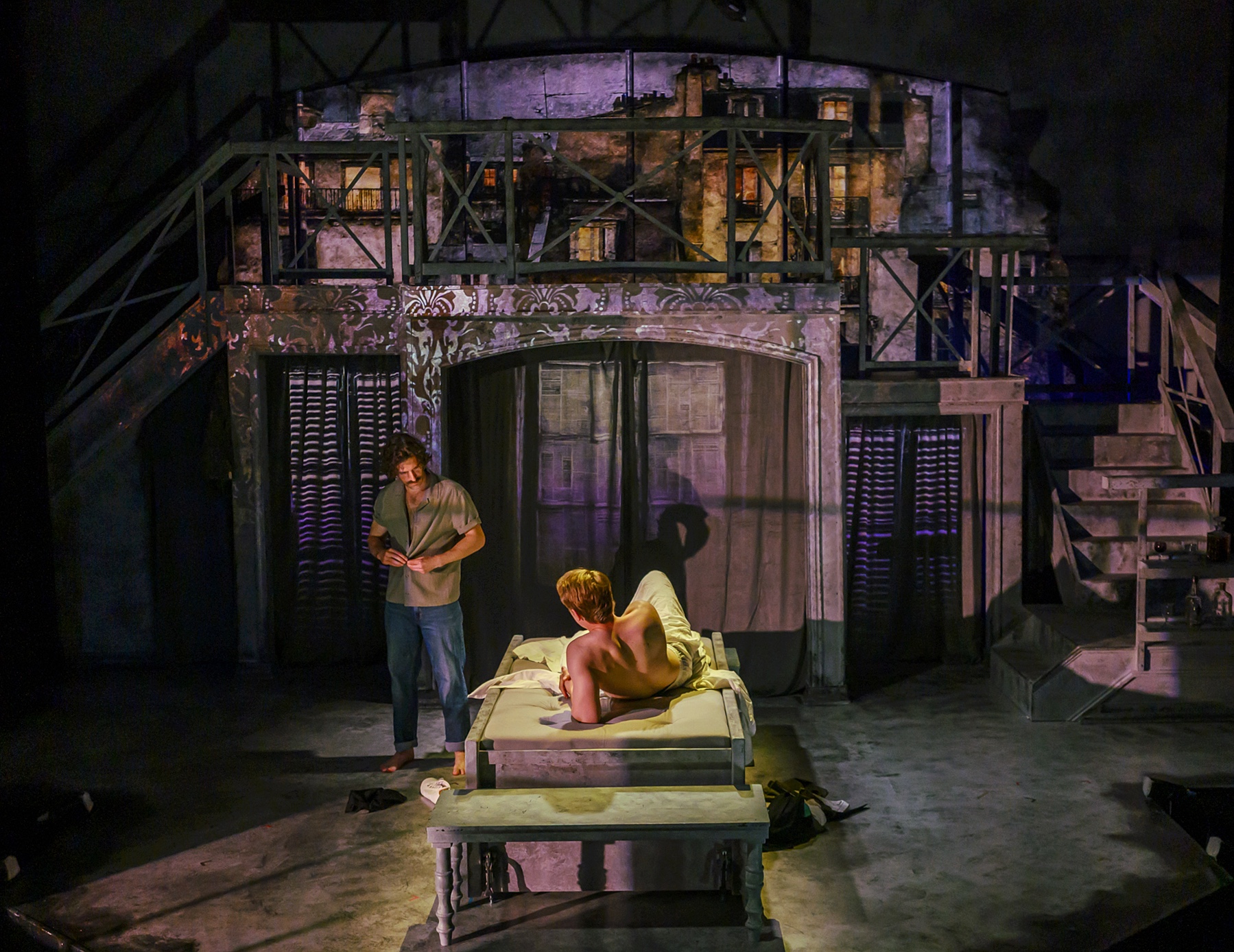
Michael Aurelio and Ethan Check in Quintessence Theatre Group’s “Giovanni’s Room.”
‘Giovanni’s Room’ from Quintessence Theatre
It may surprise people to learn that the first-ever authorized stage adaptation of James Baldwin’s classic 1956 novel Giovanni’s Room held its world premiere right here in Philadelphia. It’s certainly something to brag about: It took nearly 20 years, two rejections, and several rewrites, but actor/playwright Benjamin Sprunger and director/playwright Paul Oakley Stovall made it happen at Quintessence Theatre. The story centers on a closeted gay American who falls in love with a brash Italian bartender in Paris — and it’s no spoiler to say it ends in tragedy. The slim novel was one of Baldwin’s most popular and groundbreaking works, providing rich source material for a play. Onstage, it was a lyrical production with spellbinding light design and fascinating choreography; it was an excellent first run and I hope to see it progress in future productions, too.
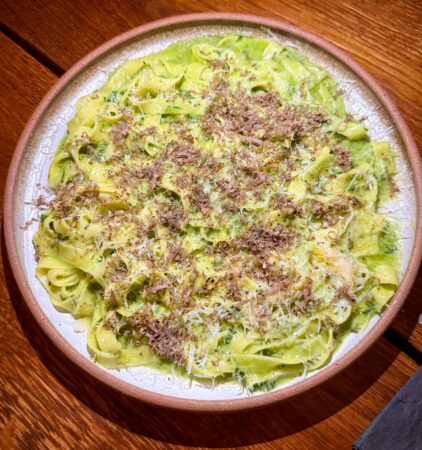
So much of the menu at Alice in the Italian Market showcases big, smoky flavors from the kitchen’s coal-fired oven. My favorite way to enjoy those dishes (don’t miss the oysters or roasted chicken!) is to punctuate them with the menu’s lighter and brighter options. Case in point is this tagliatelle with spigarello pesto, black truffle shavings, and pecorino. I had to Google “spigarello” and found that it’s an heirloom Italian green in the same family as broccoli. And that made sense: The pesto was earthy, with just the right amount of bitterness. It’s a perfect partner for fresh, bouncy pasta, which is an ideal counter to all of Alice’s smoke-kissed goodness. Alice, 901 Christian St., 215-798-6766, alicephiladelphia.com
— Evan S. Benn
The burrata toast at the Love in Rittenhouse.
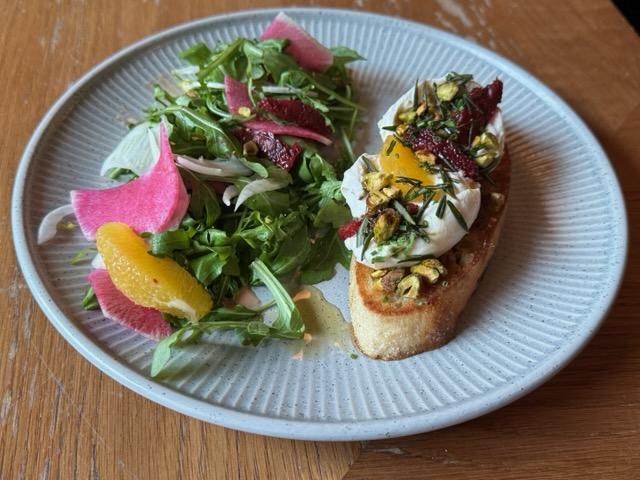
Burrata toast at the Love
This cheesy and fruity brunch appetizer was a delightfully tasty surprise on a menu full of delicious classics. It was my first time brunching at the Love and this unexpectedly memorable dish still has me daydreaming. The combination of burrata, pears, fig jam, greens, and pine nuts worked so well on a slice of soft, luscious ciabatta that I found myself enjoying something salad-y at a meal when I typically opt for eggs or sweets. (Of course, I made sure to try the cranberry-orange scones and lemon-poppy seed pancakes, too, which didn’t disappoint.) The Love, 130 S. 18th St., 215-433-1555, theloverestaurant.com
— Rosa Cartagena
PopUp Bagels grew out of an experimenter’s backyard in Connecticut.
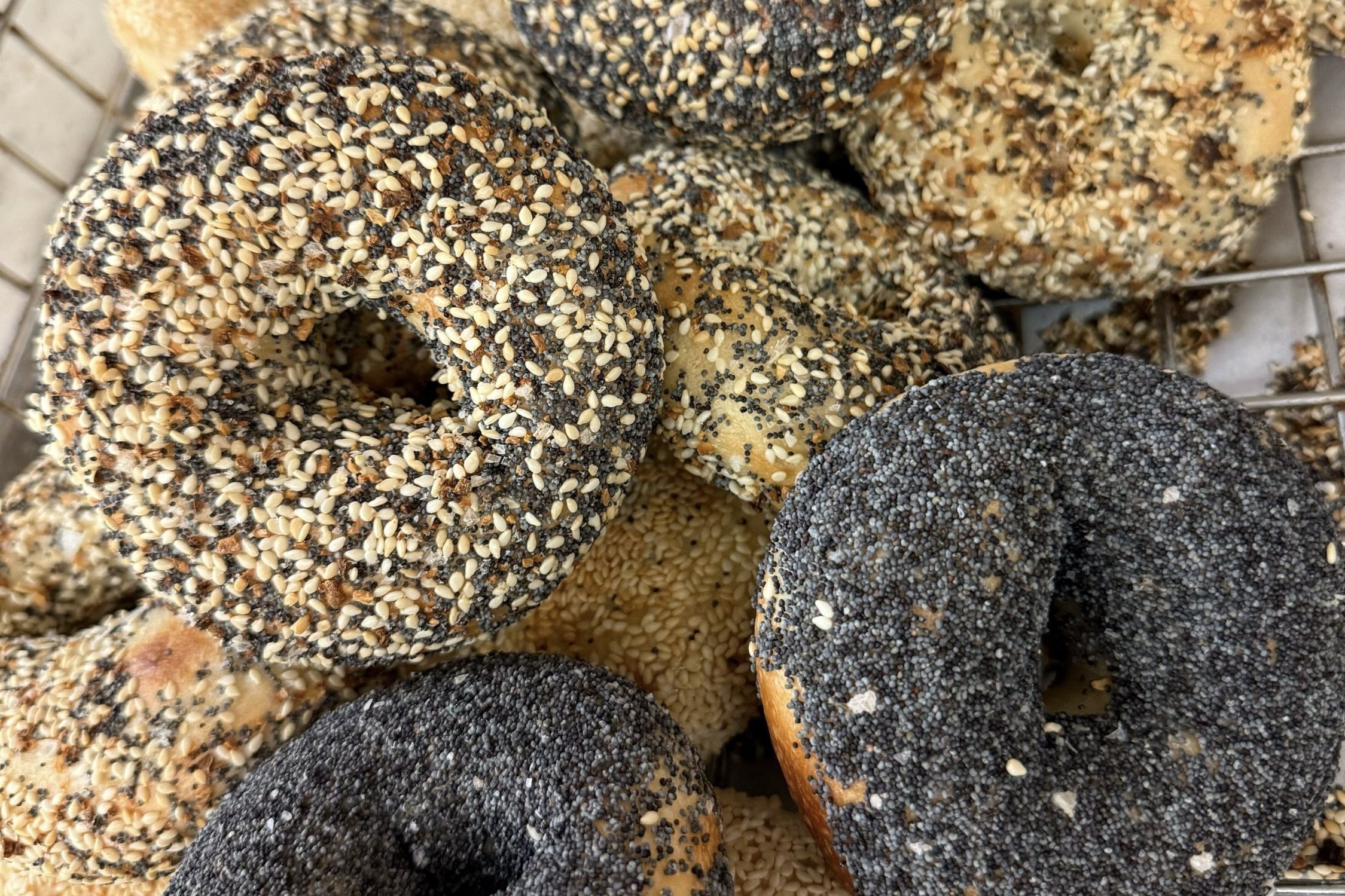
They’re good bagels! They were well-toasted on the outside and fluffy on the inside. The everything bagels were heartily seeded and seasoned. They came warm and fresh, and were thus easy to rip apart and dip in the schmear, as the brand encourages. I devoured one in its entirety within about a minute of leaving Di Bruno’s, then another at home, then another the next morning after a light spritz with water and 30 seconds in the microwave (it came out a little chewy, but it held up).
But listen — the city already has plenty of great bagels that do not come from a Connecticut-based startup. Take Knead Bagels, my Center City go-to, or Cleo Bagels, my West Philly fave, whose bagel sandwiches are so densely stuffed, you could eat them with a fork. At Cleo, you can even get a garlic za’atar bialy or a bagel topped with lavender seeds. Call it bagel maximalism.
PopUp’s first area storefront is set to open in Ardmore early next year. They’re not bagels you need to travel for, but they are the kind of simple, grab-and-go bagels you’d be excited to eat if a coworker brought a box to the office. PopUp Bagels, coming soon to 10 Coulter Ave., Ardmore, popupbagels.com
Quakertown-raised pop star Sabrina Carpenter will be part of the upcoming Met Gala 2026 celebration, Vogue announced on Wednesday.
The Grammy-winning singer will join the Met Gala host committee along with 15 other celebrities, including trailblazing ballerina Misty Copeland, K-pop icon Lisa, model Paloma Elsesser, vocalist Sam Smith, and Wednesday actor Gwendoline Christie.
Cochairs for the illustrious fashion event are Beyoncé, Nicole Kidman, Venus Williams, and, as usual, Anna Wintour, the chief content officer of Condé Nast and global editorial director of American Vogue.
The gala will honor the Metropolitan Museum of Art’s Costume Institute’s spring 2026 exhibit, “Costume Art,” which will pair the Institute’s clothing with museum artwork to explore “depictions of the dressed body across the Met’s vast collection” and “reveal the inherent relationship between clothing and the body.” It will be organized with themes like “the Pregnant Body,” “the Aging Body,” and “the Naked Body.”
The host committee has its own cochairs as well: Caught Stealing actor Zoë Kravitz and Saint Laurent creative director Anthony Vaccarello.
Sabrina Carpenter attends The Metropolitan Museum of Art’s Costume Institute benefit gala celebrating the opening of the “Superfine: Tailoring Black Style” exhibition on Monday, May 5, 2025, in New York. (Photo by Evan Agostini/Invision/AP)
Last month, she wrapped up her “Short n’ Sweet” tour, which stopped in Philadelphia last year. She’s up for six Grammy Awards in 2026, including album of the year, song and record of the year, and best video for “Manchild.”
The “Espresso” singer is known for sporting glittery strapless bodysuits onstage with blond bombshell hair that embraces an aesthetic of old Hollywood glamour. This week, she appeared on Late Night with Seth Myers wearing a vintage black and white Chantal Thomas minidress.
She’s made headlines lately for condemning President Donald Trump’s administration for using her music in a video promoting violent ICE raids that target undocumented immigrants. “This video is evil and disgusting. Do not ever involve me or my music to benefit your inhumane agenda,” she wrote on X last week.
The Bucks County star is the latest celebrity from the Philadelphia region to be part of the Met Gala festivities. Earlier this year, West Philly-raised actor Colman Domingo (who also appeared in Carpenter’s “Tears” music video) served as cochair of the Met Gala 2025, which centered Black dandyism.
Philadelphia’s FringeArts will return to offering seasonal programming, in addition to its monthlong Fringe Festival, beginning with a Winter-Spring 2026 season, the organization announced this week.
The legendary festival, known for experimental and boundary-pushing theater, previously offered year-round programming before the COVID-19 lockdown in 2020. In recent years, it has seen record-breaking audience growth, prompting producing director Nell Bang-Jensen to expand beyond the month of September.
“I’m really proud to say [Fringe Festival 2025] was actually, numbers-wise, our most successful festival ever, which just feels like a light shining, in terms of arts organizations having a win right now,” said Bang-Jensen, who took the helm last year after serving as Theatre Horizon’s artistic director. “It’s an experience that can’t be replicated on a screen, and an experience that celebrates Philly, and I think people are really here for that.”
The Philly Fringe is one of the largest festivals of its kind in the country. Based on the number of participating venues across the city, Bang-Jensen said, Philly Fringe ranks first ahead of other notable festivals in Rochester, N.Y., and Minneapolis.
The 2025 Fringe Festival was the largest-ever produced in its 29-year history with 353 shows. More than 35,000 tickets were sold during the month of September, which was a record high, and saw a 17% increase in unique ticket buyers from last year, which “means it’s not just the same people buying more tickets,” said Bang-Jensen.
She added that they have seen success in reaching younger audiences this year as well, with more than half of the audience composed of Millennials and Gen Z for the first time.
For the Winter-Spring 2026 season, FringeArts will present four productions from local and international artists at its Old City venue, along with a monthly series of Scratch Nights that invite artists to present works in progress.
Philadelphia artist Jenn Kidwell will stage her new work “we come to collect: a flirtation with capitalism” at FringeArts in January 2026.
Jenn Kidwell, the Obie Award-winning cowriter behind The Underground Railroad Game, will stage the Philadelphia premiere of her new work, we come to collect: a flirtation with capitalism (Jan. 22-24), with ASL artist Brandon Kazen-Maddox. It’s an irreverent exploration of “the pigsty of American consumerism.”
Frequent Fringe artist Lee Minora will bring back her solo show, Baby Everything (Feb. 26-28), for another run. The interactive performance follows a protagonist who doomscrolls through her anxieties about the state of the world. Minora “challenges us to see ourselves as others do, no matter how endearing or insufferable,” wrote Julie Zeglen in The Inquirer’s roundup of the best shows of Fringe Fest 2025.
Japanese artist Hiroaki Umeda is globally renowned for combining choreography and dynamic digital staging. He’s presenting two shows on a U.S. tour as a double billing: Moving State 1 and the solo performance, assimilating (March 14-15).
Lastly, FringeArts will stage Girl Dolls: An American Musical (May 8-17) from Philadelphia artists Jackie Soro and Pax Ressler, who’ve teamed up with the Bearded Ladies Cabaret for a production billed as “part tea party, part identity crisis.” They ask, “What does your favorite doll reveal about your childhood trauma?”
In addition to year-round programming, FringeArts will launch an artist-in-residency program for fostering original works. The Albert M. Greenfield Residency at FringeArts — funded by the local foundation of the same name — will invite three individuals or artist groups to develop new theatrical productions. The inaugural 2026 recipients will be selected by a panel of Philadelphia creatives.
Bang-Jensen said she’s grateful that Philly audiences have shown up for the “city of makers” every year and she hopes to continue expanding FringeArts’ reach.
“As many arts organizations are actually feeling pressure in 2025 just based on the economic environment and the political environment to do work that’s a little more mainstream, we have this wide-open field to do more for people who like things off the beaten path,” said Bang-Jensen.
Tickets for FringeArts’ Winter-Spring 2026 season go on sale to FringeArts members on Dec. 10 and the public on Dec. 12 at fringearts.com.
A new arts festival will launch in Philadelphia in 2026 as one of the major events marking the nation’s 250th anniversary. What Now: 2026 is planned to be a five-week-long festival from the nonprofit ArtPhilly. The festival aims to showcase the city’s artistry and talent for both tourists and neighbors alike.
Dozens of Philadelphia artists across disciplines will present more than 30 original works, staged from late May to July 2026 in venues around Philadelphia, coinciding with the Fourth of July and FIFA World Cup matches as part of the city’s Semiquincentennial events.
What Now: 2026 will feature new works by Philly artists such as filmmaker Walé Oyéjidé, poet Yolanda Wisher, opera singer/drag queen Cookie Diorio, photographer and pop-up book creator Colette Fu, and sculptor Pedro Ospina. Institutional collaborators in the region will include BalletX, BlackStar, Philadanco!, the Crossing, and Theatre in the X.
One highlight is The Basil Biggs Project, a new play from actor and playwright Anna Deavere Smith, an alum of Arcadia University. Her great-great-grandfather was a farmer and veterinarian in Gettysburg who, during the Civil War, took a job disinterring and reburying Union soldiers on the battlefield. Smith wrote the work using archival research on her family’s history.
The festival is the brainchild of renowned local philanthropist Katherine Sachs, a longtime trustee and benefactor of the Philadelphia Art Museum, and arts administrator Bill Adair, who previously led programs at the Pew Center for Arts & Heritage and the Rosenbach Museum & Library.
Sachs began planning What Now: 2026 in the winter of 2021 to ensure that the arts remained central to the city’s celebration. She gathered a committee of regional arts leaders including Barnes Foundation head Thom Collins, Mann Center for the Performing Arts president Cathy Cahill, and Mural Arts director Jane Golden to brainstorm meaningful ways to spotlight Philadelphia’s artists.
“I just thought we could do a better job than we did in 1976 [for the Bicentennial],” said Sachs, who serves as chair of ArtPhilly. “We want people to see what Philly has to offer every day of the year, so they come back.”
“We’re rah-rah sports. We’re rah-rah about our history and our Independence Hall, and Liberty Bell,” said Adair, ArtPhilly’s creative and executive director. “Those are amazing parts of our identity and who we are, but we know that the arts and culture sector is one of the strongest in the country and the world, and we deserve to be known for that.”
Part of the duo’s work involved creating the nonprofit organization ArtPhilly, that would provide infrastructure and allow for planning the inaugural festival in 2026 and also future years. Sachs and Adair plan for it to be a recurring festival every two or three years.
The pair fundraised about $7.5 million for ArtPhilly and the festival with support from the William Penn Foundation and the Pew Center for Arts & Heritage along with private foundations and corporate sponsors. ArtPhilly also received $750,000 from the Philadelphia Funder Collaborative for the Semiquincentennial.
Working with choreographer Tania Isaac, ArtPhilly’s curatorial and deputy director, they selected 17 Philadelphia curators who proposed 45 projects. The team narrowed down the list to 32 works that received between $20,000 to $400,000 in project funding.
“Other cities have done [festivals like] this, and the return on the investment is about six times, meaning the economic impact is really pretty great, between the hotels and restaurants, and what the artists have to build and all the people that you have involved,” said Sachs.
Los Angeles’ Pacific Standard Time festival was a helpful model. Sachs said the result led to increased attendance at institutions in the city, a major goal for Philadelphia organizations that have struggled with foot traffic since the COVID-19 lockdown.
“Artists are going to interpret this anniversary in a way that no one else can … For us, this festival isn’t a celebration of the anniversary, as much as it is a kind of marking and interrogation of the anniversary. Hence the question, ‘What now?’,” said Adair. “We feel like we’re adding something very important to the public discourse around the anniversary by having artists as the interpreters, but also the provocateurs.”
What Now: 2026 projects include:
Chinatown Pop-Up Book, a look at the neighborhood’s history through a large, hand-cranked pop-up book
In Case of Fire, Speak!, a dance collaboration between Martha Graham Dance Company and Philadanco!
Pepperpot, a combination of live music, poetry, and food surrounding the history of pepper pot soup from jazz musician V. Shayne Frederick and chef Valerie Erwin
This article was updated after receiving a revised total for the amount that the Philadelphia Funder Collaborative for the Semiquincentennial granted ArtPhilly.
This article was updated to reflect Jane Golden’s current title.
Theater communities across the globe have been mourning Tony Award-winning playwright Tom Stoppard, the beloved Czech writer who died last week at his home in Dorset, England, at 88.
Stoppard’s acclaimed dramas graced countless stages over six decades, but he had a special place in his heart for Philadelphia’s Wilma Theater, where he formed deep, longstanding friendships with founders Blanka Zizka and her late husband, Jiri.
The prolific playwright, known for irreverent, cerebral dramas with dense and rather dizzying rhetoric, was often compared to William Shakespeare and George Bernard Shaw. Some of his most popular works include Rosencrantz and Guildenstern Are Dead (a clever take on Hamlet), The Real Thing, The Coast of Utopia, and the screenplay for the 1998 Oscar-winning rom-com Shakespeare in Love.
He made Tony Award history and broke his own records, winning best play five times between 1968 (Rosencrantz and Guildenstern Are Dead) and 2023 (Leopoldstadt).
The latter beat out Pulitzer Prize-winning Fat Ham — also a clever take on Hamlet, in wildly different ways — from former Wilma co-artistic director James Ijames. (The Wilma coproduced the Broadway production that earned five Tony nominations.) A year later, the Wilma received the 2024 Regional Theatre Tony Award, becoming the first theater in Pennsylvania to earn the recognition.
But beyond his international fame, Stoppard is an integral part of the Wilma’s history and, in turn, Philadelphia theater history.
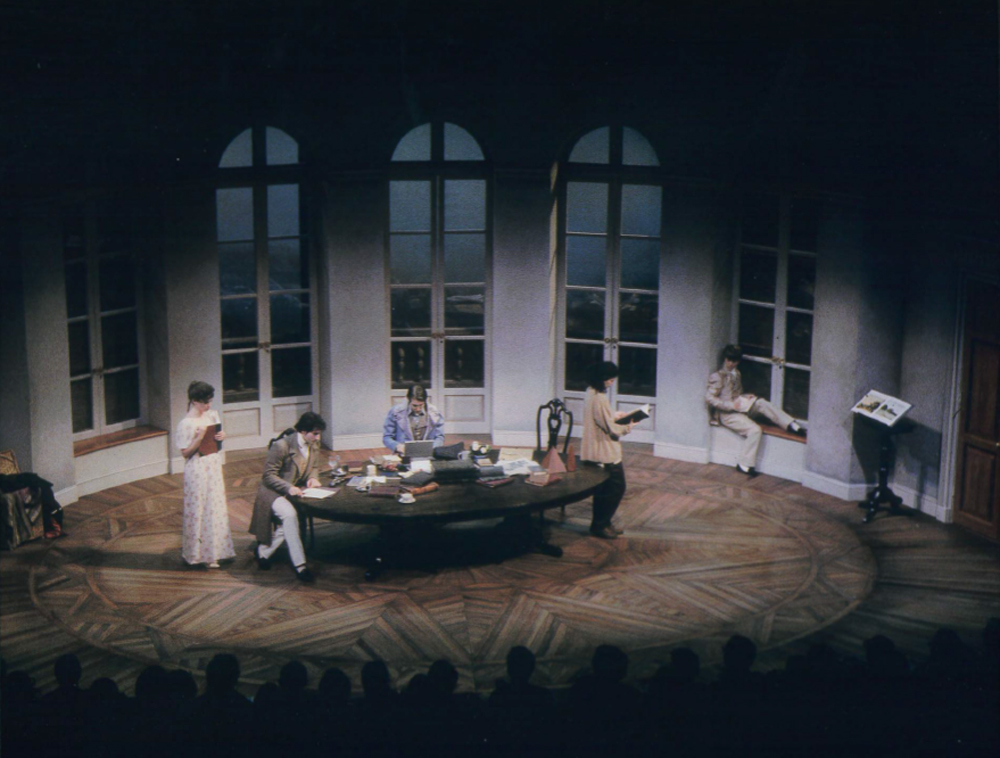
The Wilma Theater’s 1997 production of Tom Stoppard’s “Arcadia.”
Blanka Zizka first met Stoppard in 1996, when they both participated in a panel discussion at the University of Pennsylvania. The dramatist was visiting the city for a three-day residency on Penn’s campus following a symposium dedicated to his play Arcadia.
At the time, the Zizkas, political refugees also from the Czech Republic, were in the process of moving the Wilma from a small Sansom Street theater to its current larger venue on Broad Street. The first play of the season at the new location happened to be Arcadia, which they had chosen before meeting Stoppard. (The Wilma had produced his 1974 play Travesties as well.)
“He was very impressed by the fact that Jiri and I were from Prague, and we came all the way to the United States, to Philadelphia, and that we were creating a new theater,” said Zizka, who now lives in New York’s Catskills region. “He’s from Czech Republic, originally. He left when he was 2 years old, and he doesn’t speak too much Czech, but he still had a very strong connection to the country. … So for him, [ours] was just a very impressive story.”
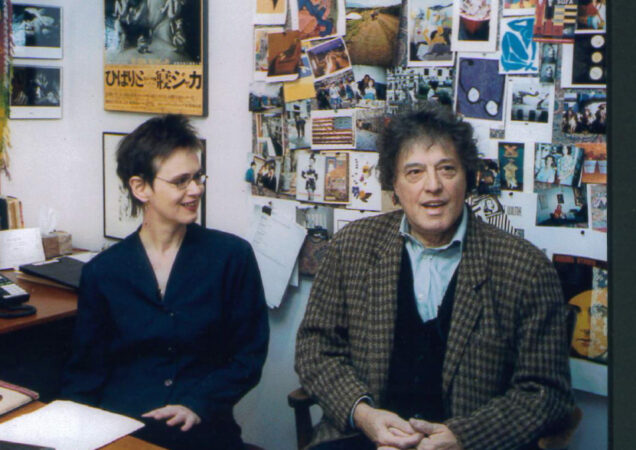
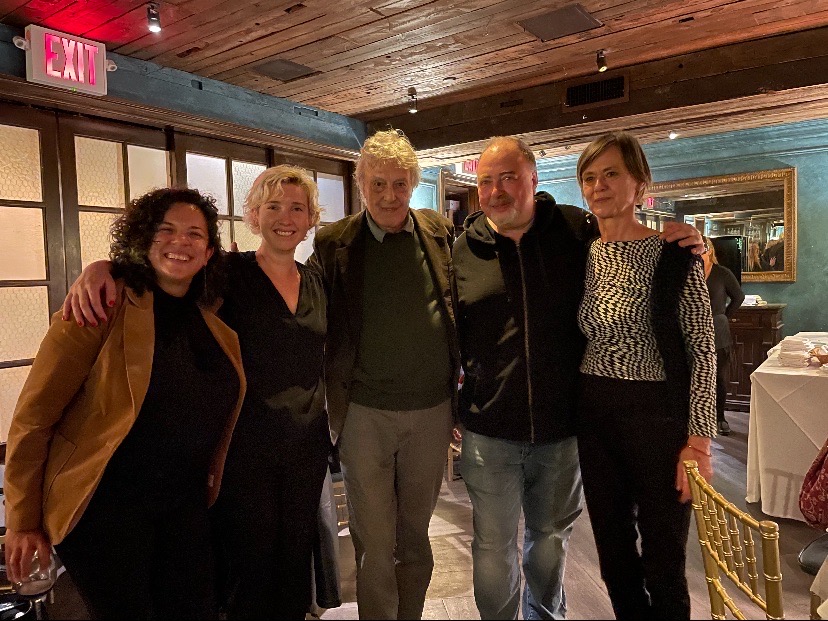
From left: Wilma managing director Leigh Goldenberg, coartistic director Morgan Green, playwright Tom Stoppard, coaristic director Yury Urnov, and founder Blanka Zizka in 2022.
Stoppard came to the Arcadia opening and became a frequent Wilma visitor over the years as the theater went on to produce 12 of his plays; he made his way to town for nearly every show and often attended rehearsals, too. He even helped with fundraising for the Wilma by visiting the homes of board members.
Zizka has happy memories of Stoppard’s visits, as well as the times he invited her to join him in New York for tea parties. Whenever she and her son traveled to England, Stoppard let them stay at his apartment and set them up with tickets to whatever shows they wanted to see. He would send her books to read and ask about not only her theater work but her other passions, like painting.
Stoppard was generous with his time, Zizka said, especially with younger theater artists and organizations like the Belarus Free Theater, which was forced to flee to England after facing political persecution for their work.
His plays provided a thrilling challenge for Zizka as a director and for the Wilma actors. She spent months preparing for brainy Stoppard shows, which the playwright meticulously researched as his characters included historical figures like Oscar Wilde, Vladimir Lenin, James Joyce, and Mikhail Bakunin.
“A lot of people consider him this intellectual playwright, but I think Tom is also full of emotions that are covered by those intellectual ideas. And for me, as a director, I didn’t have to look for the intellect … because it was there, but I had to always look for the world that is underneath the words,” she said.
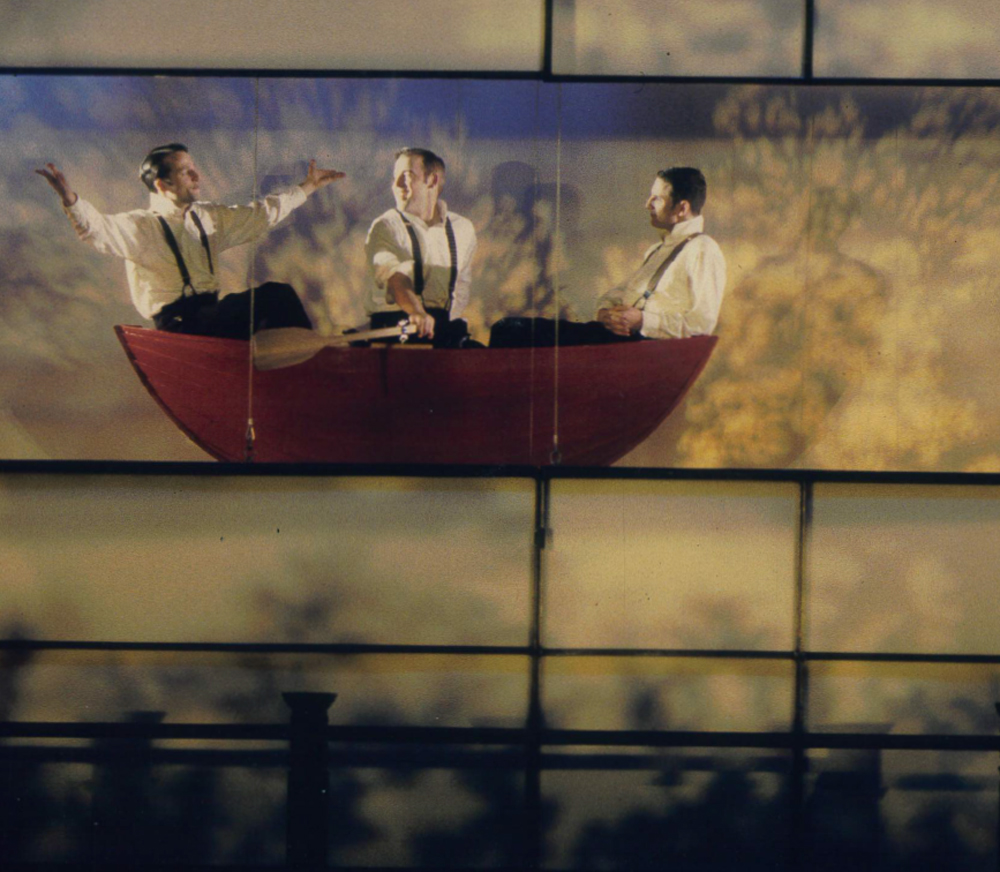
The Wilma Theater’s 2000 production of Tom Stoppard’s “The Invention of Love.”
That effort proved particularly difficult in the 2000 production of The Invention of Love, which centered on poet A.E. Housman. There’s a scene in which Housman meets a younger version of himself and the two engage in a lengthy debate over the placement of a comma — not typically the most entertaining of topics.
“It was two or three pages of dialogue, and it was so intense. … I just could not sleep over it. I felt we were in our heads, and it was boring,” said Zizka.
She had the actors try speaking in their own words to get the idea across but ultimately had a breakthrough when she asked them to perform in gibberish. The result was “an amazing, intense and exciting scene” in one of the most successful productions in Wilma history.
Gibberish helped them crack Stoppard’s code again in 2016, when the Wilma staged the U.S. premiere of The Hard Problem, which Zizka also directed. It followed a psychology student at a neuroscience research center attempting to understand the root of human consciousness.
Lindsay Smiling, now a co-artistic director at the theater, performed in the play and remembers meeting the famous dramatist in rehearsal, when they replaced Stoppard’s dialogue with nonsense words.
“It was nerve-wracking to do that in front of this playwright who is a legend,” said Smiling. “His work is so much about the language and his plays are very talky. … He was like, ‘I don’t know what you all did, but that is the scene with none of my words.’ And he was thrilled.”
As exciting as it was to discuss the work, Smiling marveled even more at Stoppard’s friendliness. After rehearsal, a group, including Zizka, went to Caribou Cafe for burgers and beer.
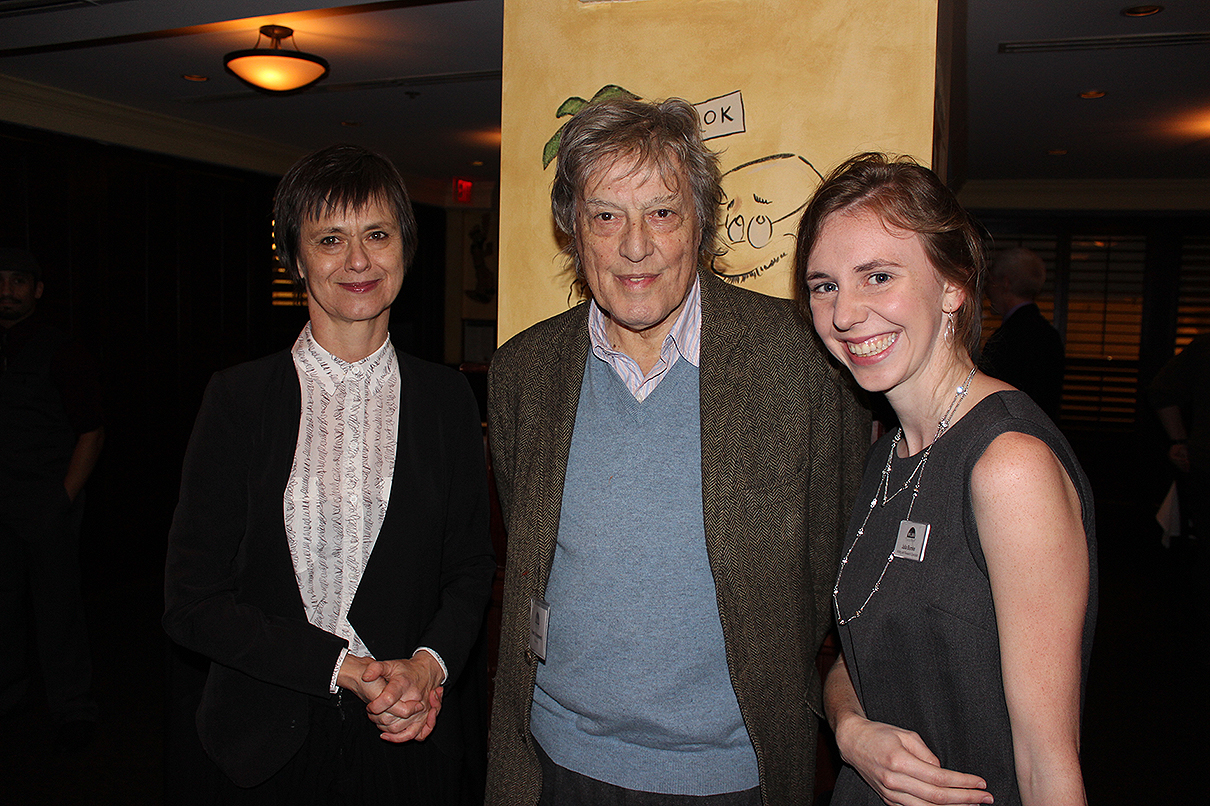
Wilma cofounder Blanka Zizka, playwright Tom Stoppard, and former Wilma staffer Julia Bumke in 2015.
“We sat outside on the sidewalk on Walnut Street and we talked about beer, we talked about history, we talked about Philadelphia,” said Smiling. “He was interested not just in theater makers and our lives … I remember him just coming back with all these conversations he’s had with random people on the street around Philadelphia.”
Though Stoppard did not spend too much time in the city, his contributions were profoundly meaningful to Philadelphia artists — and of course his work will continue to be produced across the region. Earlier this year, the Pennsylvania Shakespeare Festival stagedRosencrantz and Guildenstern Are Dead alongside Hamlet.
Of course, he’ll always be part of Wilma history.
“He was very much a strong part of what the Wilma was,” said Zizka. “We have not done any other playwright in such a big measure as we did his work.”
This article was updated with the correct release year for ‘Travesties.’
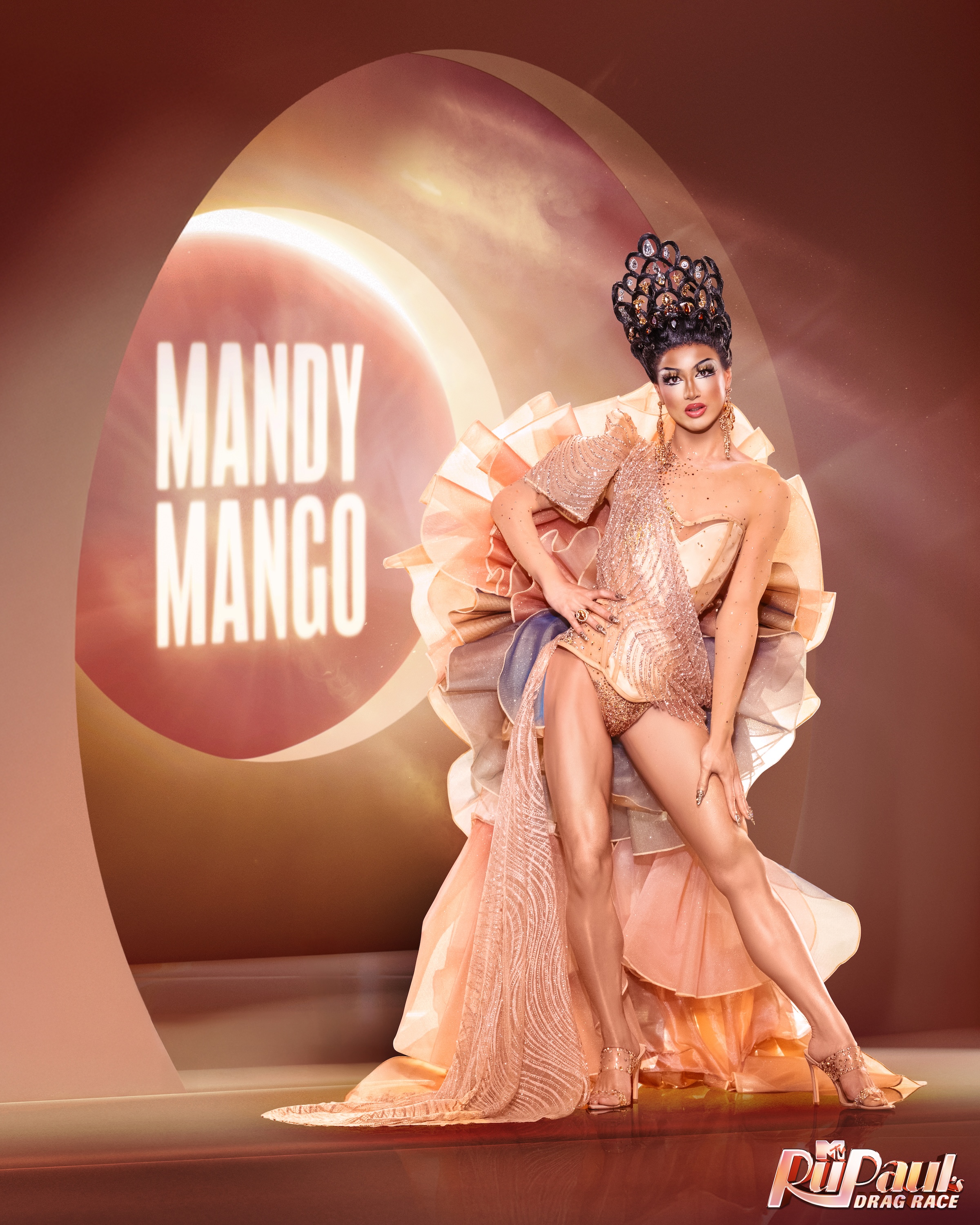
Philadelphia, start your engines — there’s another hometown star competing in the upcoming season of RuPaul’s Drag Race. Meet Mandy Mango, a first generation Filipino American who calls herself “the sweetest fruit in Philadelphia.”
Mango is one of 14 contestants announced this week who will compete in Season 18 of the legendary show that has catapulted the careers of some of the best drag performers in the country, from Trixie Mattel to Bianca Del Rio, to Bob the Drag Queen.
In the show, the queens face dance, makeup, sewing, acting, and lip sync challenges as they vie for the title of America’s Next Drag Superstar and a cash prize of $200,000.
Mango introduced herself in the show’s “Meet the Queens” Instagram post praising Philly’s drag scene, which she described as “very diverse, very eclectic.”
“We have our teeny boppers, we have our mama whoppers, we have some flippity floppers, and some daddy toppers,” she said.
She added that her biggest drag inspiration is her mother, who was a pageant queen in the Philippines in the 1980s.
Philly drag queen Mandy Mango will compete on Season 18 of ‘RuPaul’s Drag Race,’ premiering on Jan. 2 on MTV.
“Growing up [Filipino American] has always been strange, trying to figure out if I’m Filipino enough, American enough, or not enough of either, on top of being queer,” said Mango. “Drag has really guided my journey understanding my identity.”
Drag fans will likely recognize Mango’s performances on Philly stages in recent years, from the time she competed in Snatcherella, or organized a No Arena Drag Show in 2024 to protest the Sixers’ arena in Chinatown, which she called a “special place for me and my art,” according to Philadelphia Gay News.
Mandy Mango is the drag persona of Sigfried Aragona, an HIV care and community health nurse at Penn Presbyterian Infectious Diseases who advocates for LGBTQ+ healthcare. He lives in Philadelphia with his three cats, Wasabi, Sriracha, and Soy.
Aragona first performed in drag as a student at West Chester University to Chelley’s “Took the Night.” He later went on to work at AIDS Resource Alliance, a nonprofit that provides health services across Northcentral Pennsylvania.
In a 2020 TEDx talk in Williamsport, Pa., Aragona passionately explained how he blends drag performance with his healthcare work and community activism.
“With Mandy Mango, I feel powerful. I feel fulfilled. And I believe that my space in this world is finally valuable,” said Aragona. “Mandy’s drag journey seeks to blend nursing intellect and drag art to empower people similarly.”
Mango is only the second drag queen to represent Philly in Drag Race’s 16-year history, following Season 16 star Sapphira Cristál. The opera singer was a fan favorite who aced challenges all season long and ultimately placed second. Cristál earned the title of Miss Congeniality and brought home $35,000 in prize winnings.
Other contestants who have ties to the Philadelphia region are Aquaria, the winner of Season 10, who grew up in West Chester, and Season 3 competitor Mimi Imfurst, who was raised in Massachusetts and Maine, but now calls Philadelphia home. Both of them represented New York on the show.
Season 18 of ‘RuPaul’s Drag Race’ premieres at 8 p.m. on Jan. 2 on MTV.