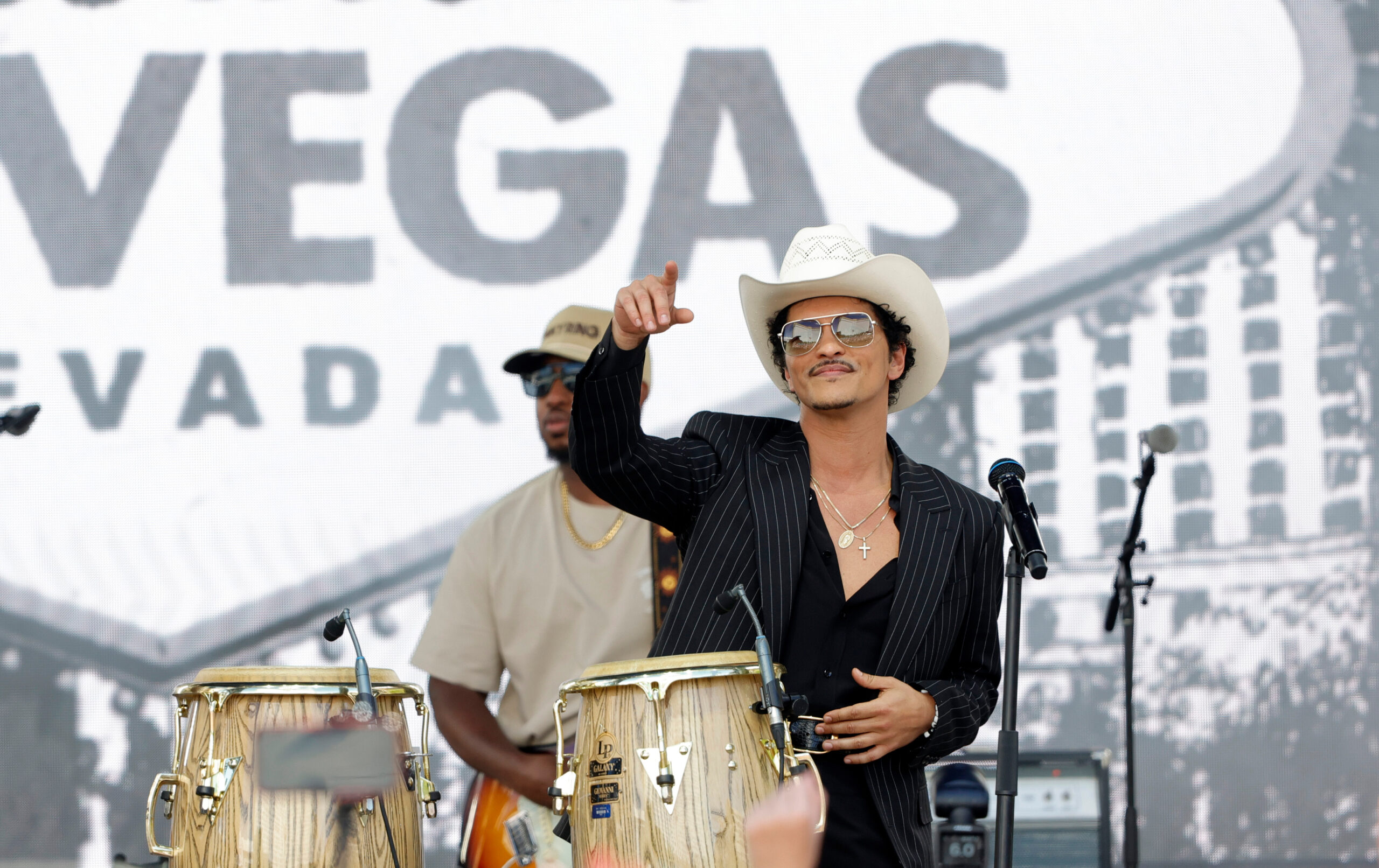
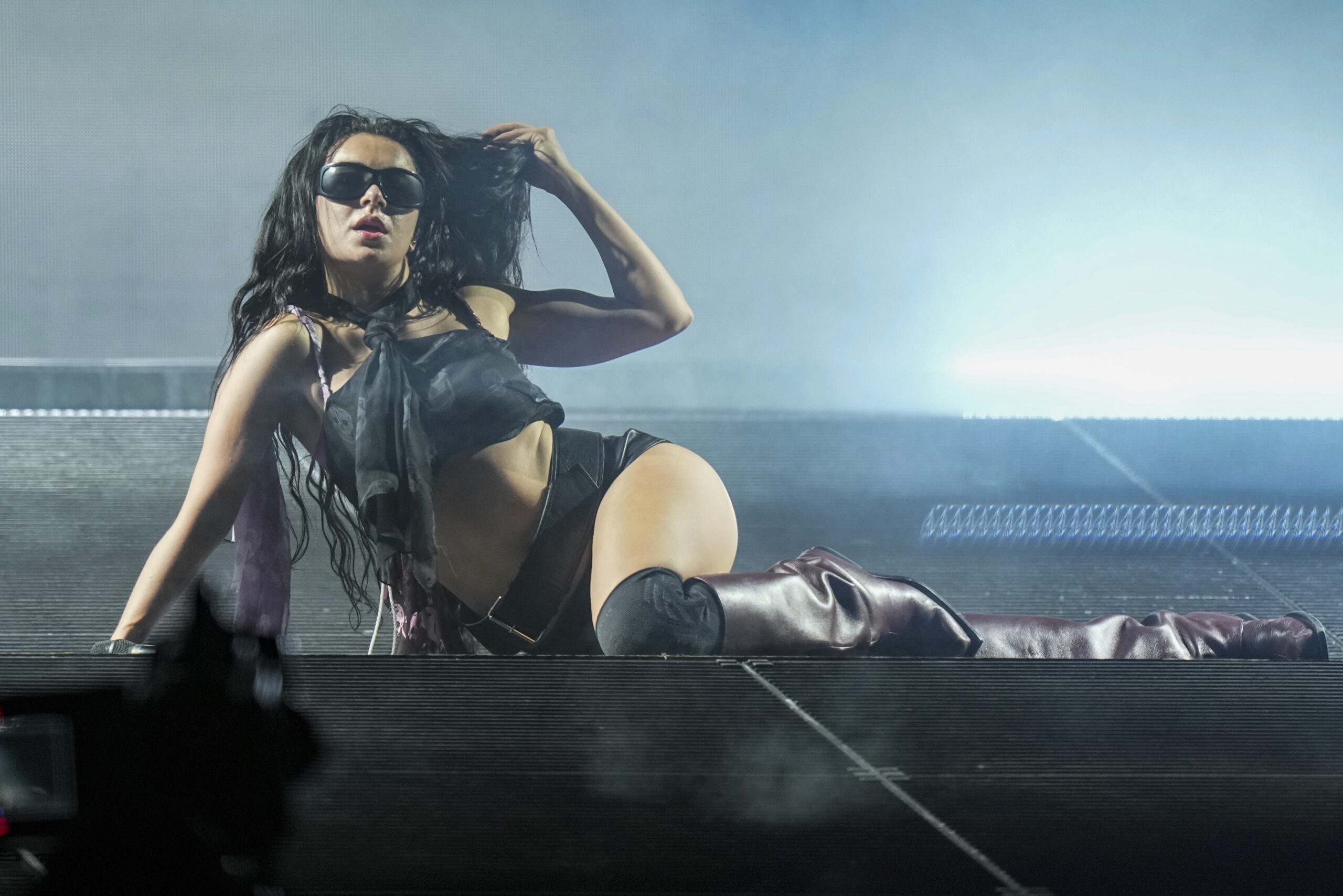
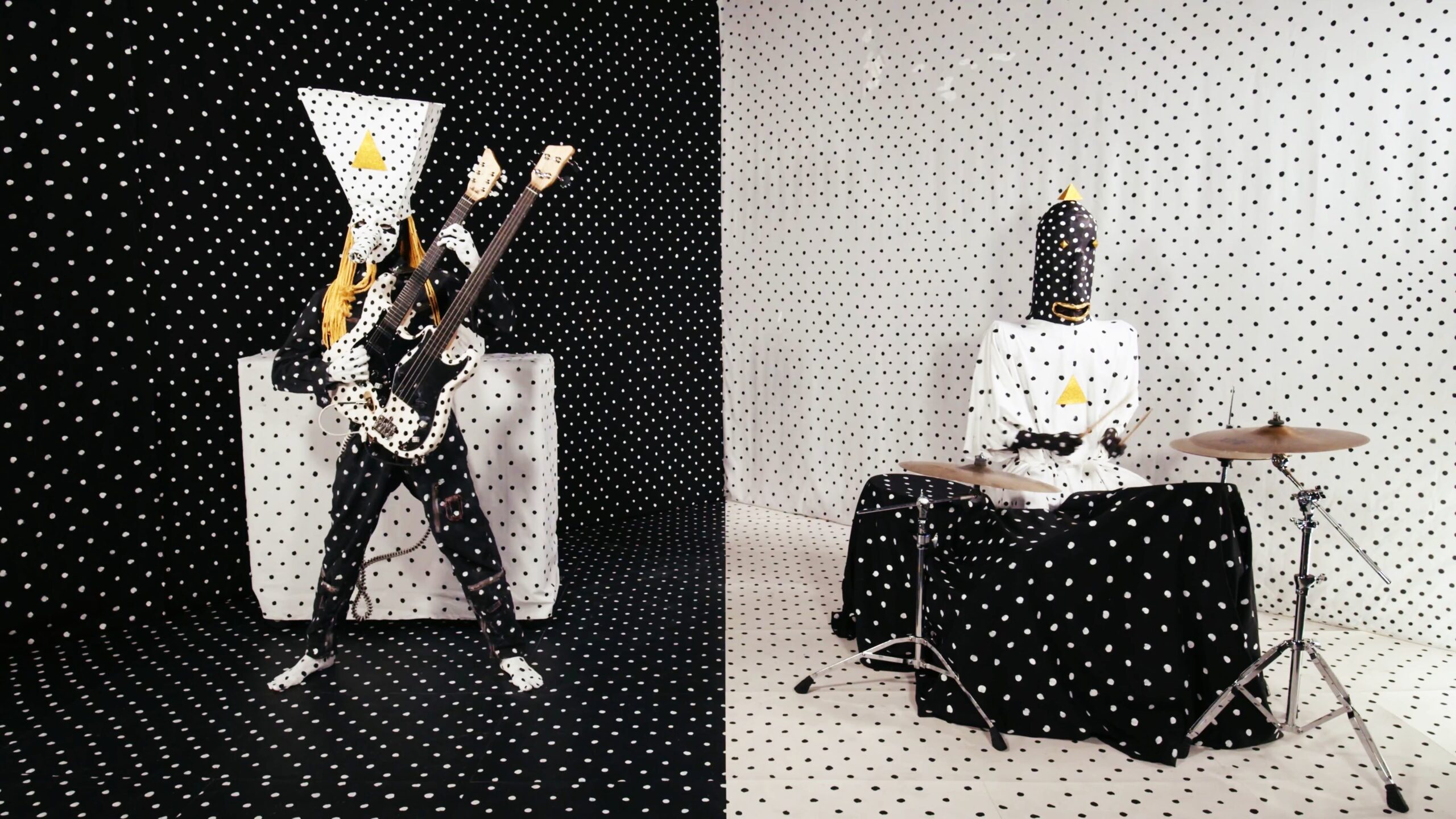
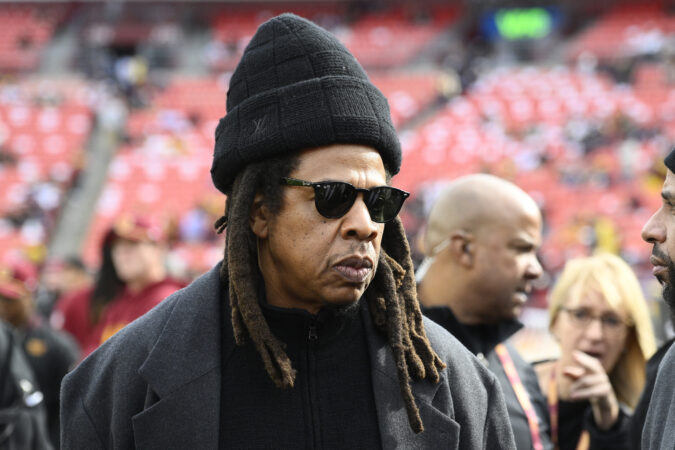
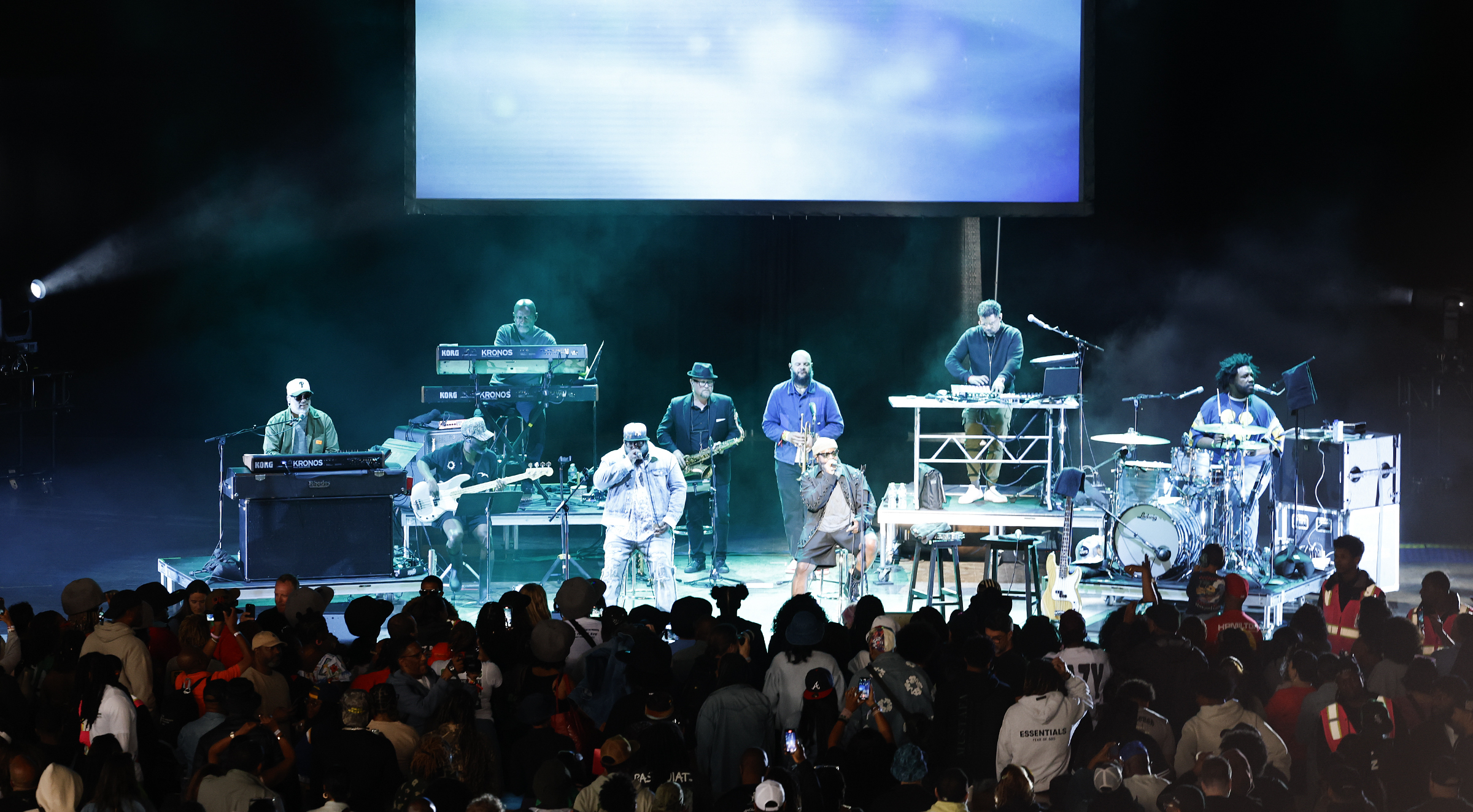
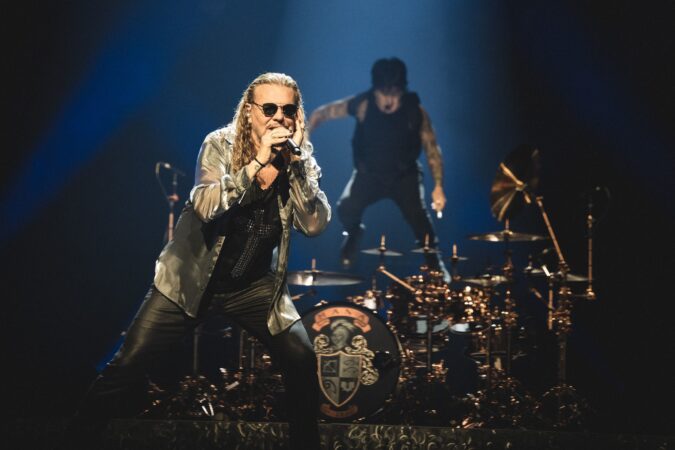
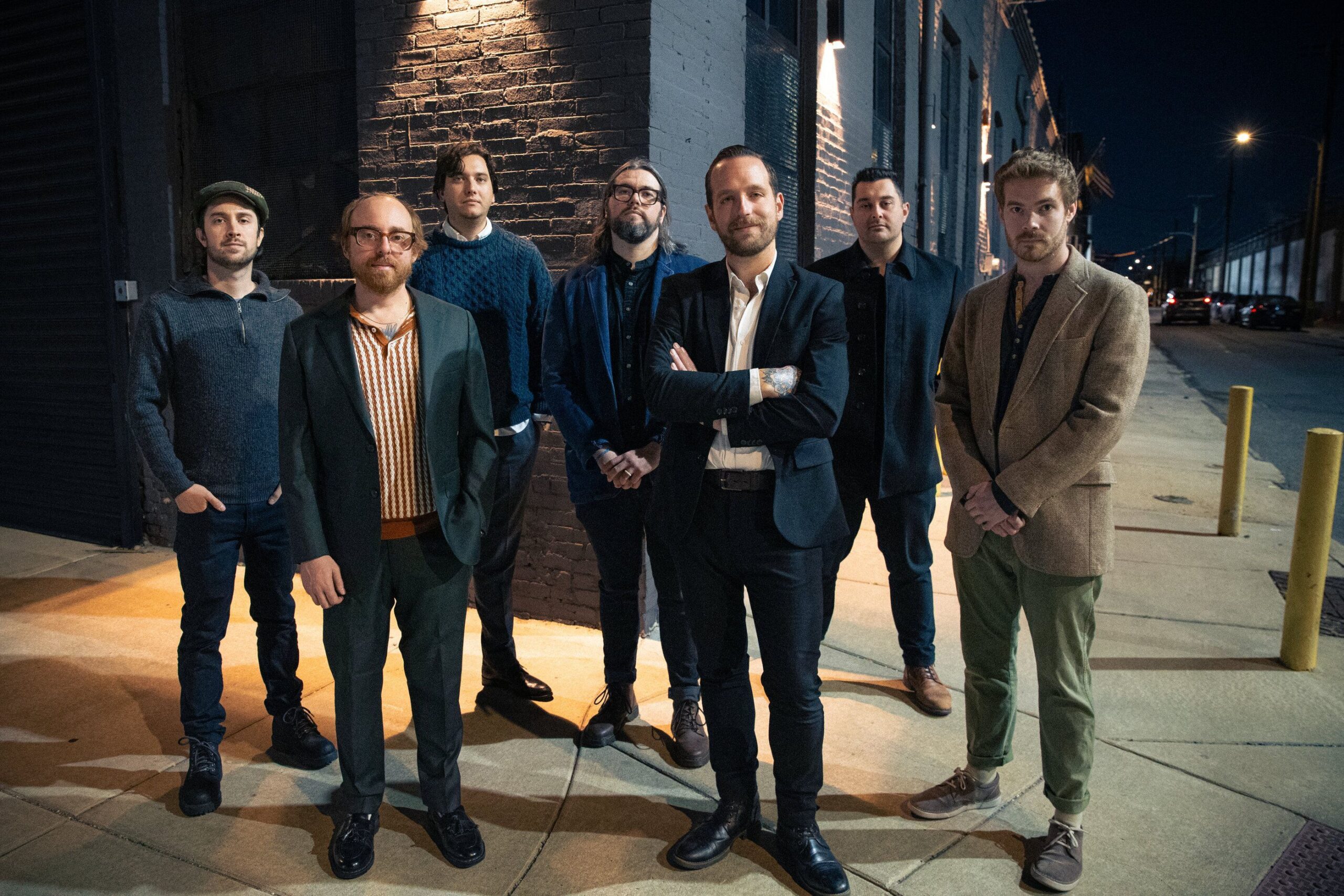
This week in Philly music features a triumvirate of legends with Patti LaBelle, Bob Dylan, and Todd Rundgren. Plus, a trio of summer arena tour headliners with Alex Warren, Megan Moroney, and Tame Impala, all coming to South Philly.
Thursday, July 9
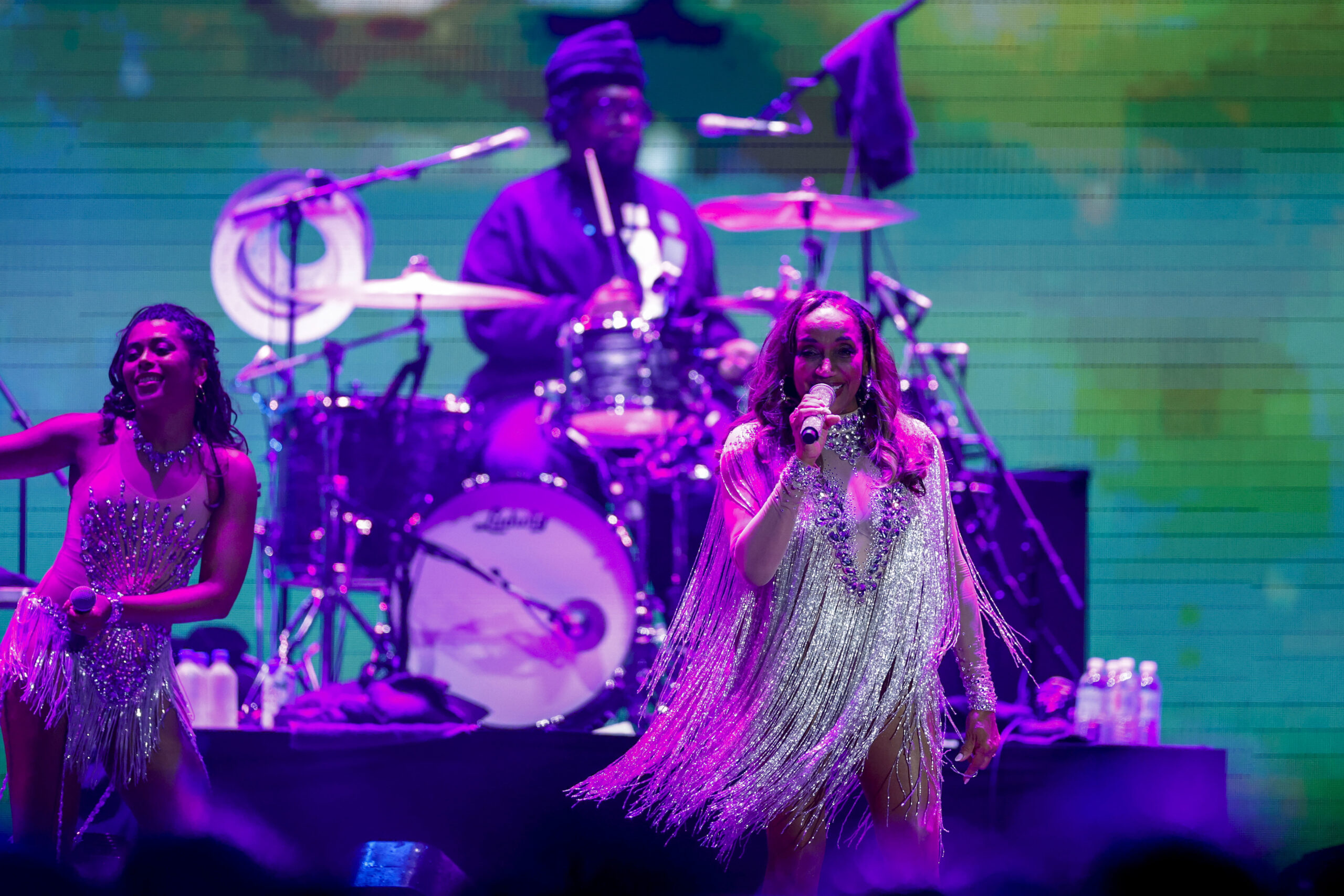
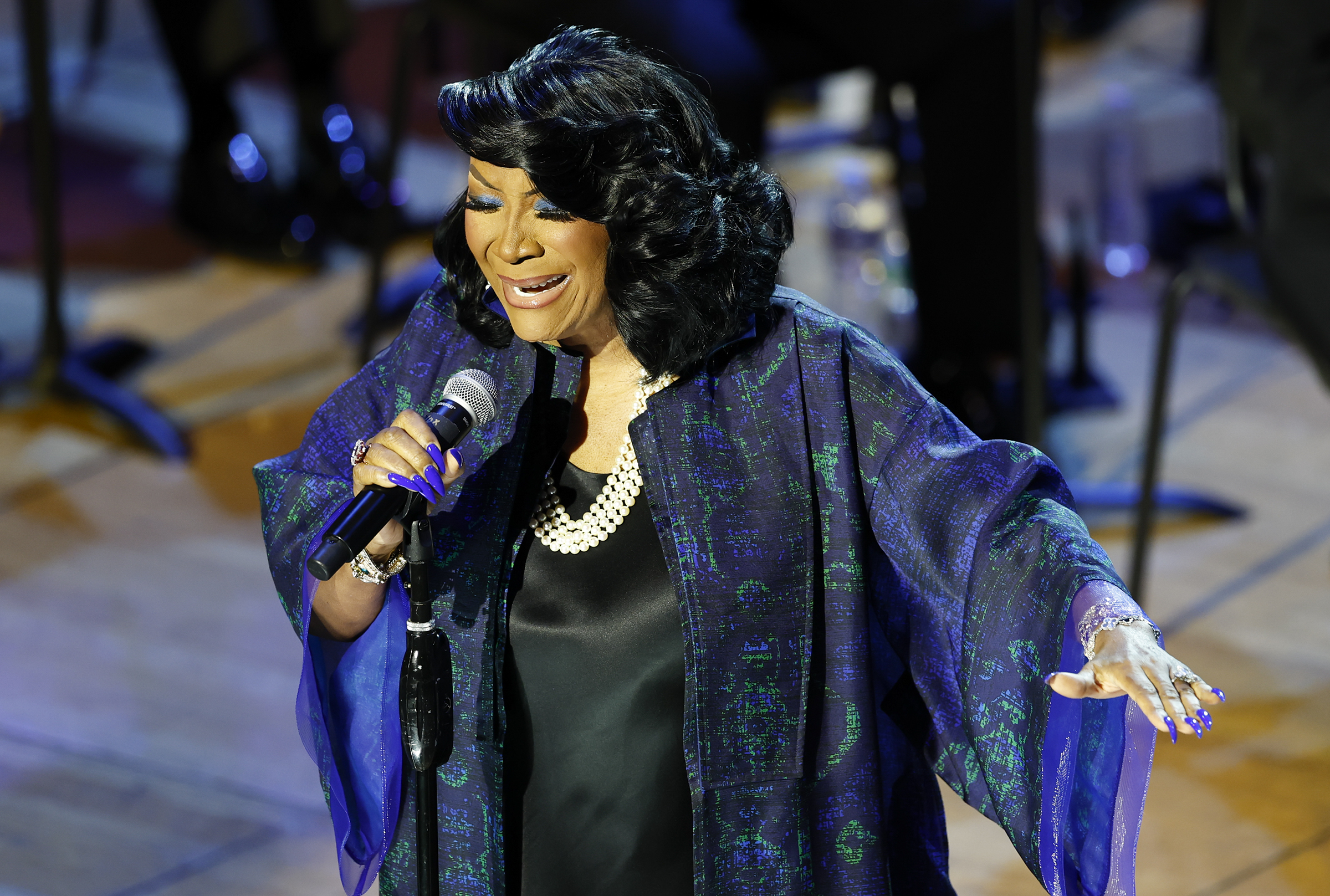
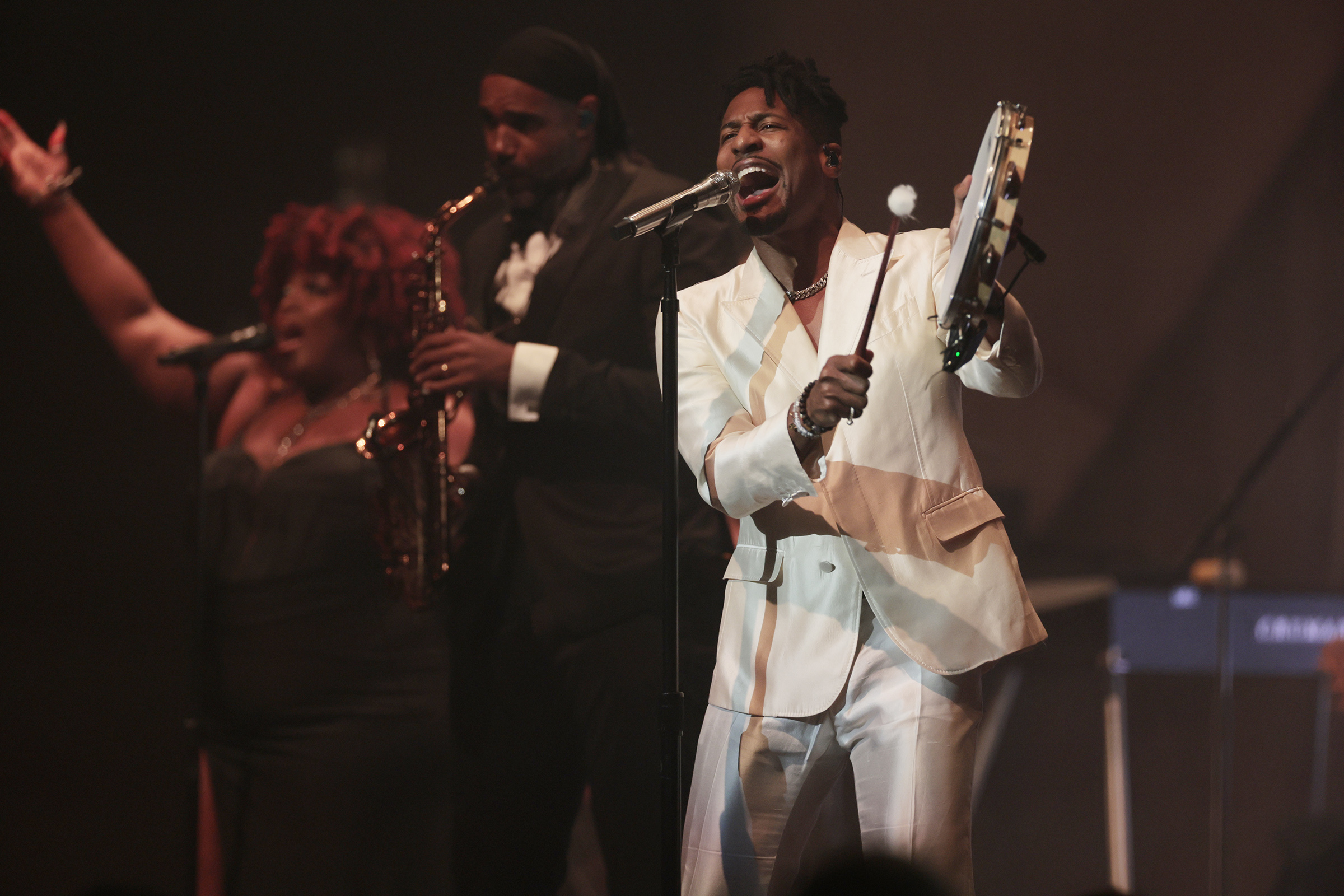
Patti LaBelle
July 4 has come and gone, but America 250 celebrations go on. Patti LaBelle headlined the Essence Festival in New Orleans on the holiday, but now she’s back in her hometown. Chester Grammy-winning singer Avery Sunshine is also on the bill along with Jeff Bradshaw and Pieces of a Dream. 7 p.m., Dell Music Center, 2400 Strawberry Mansion Drive, thedellmusiccenter.com
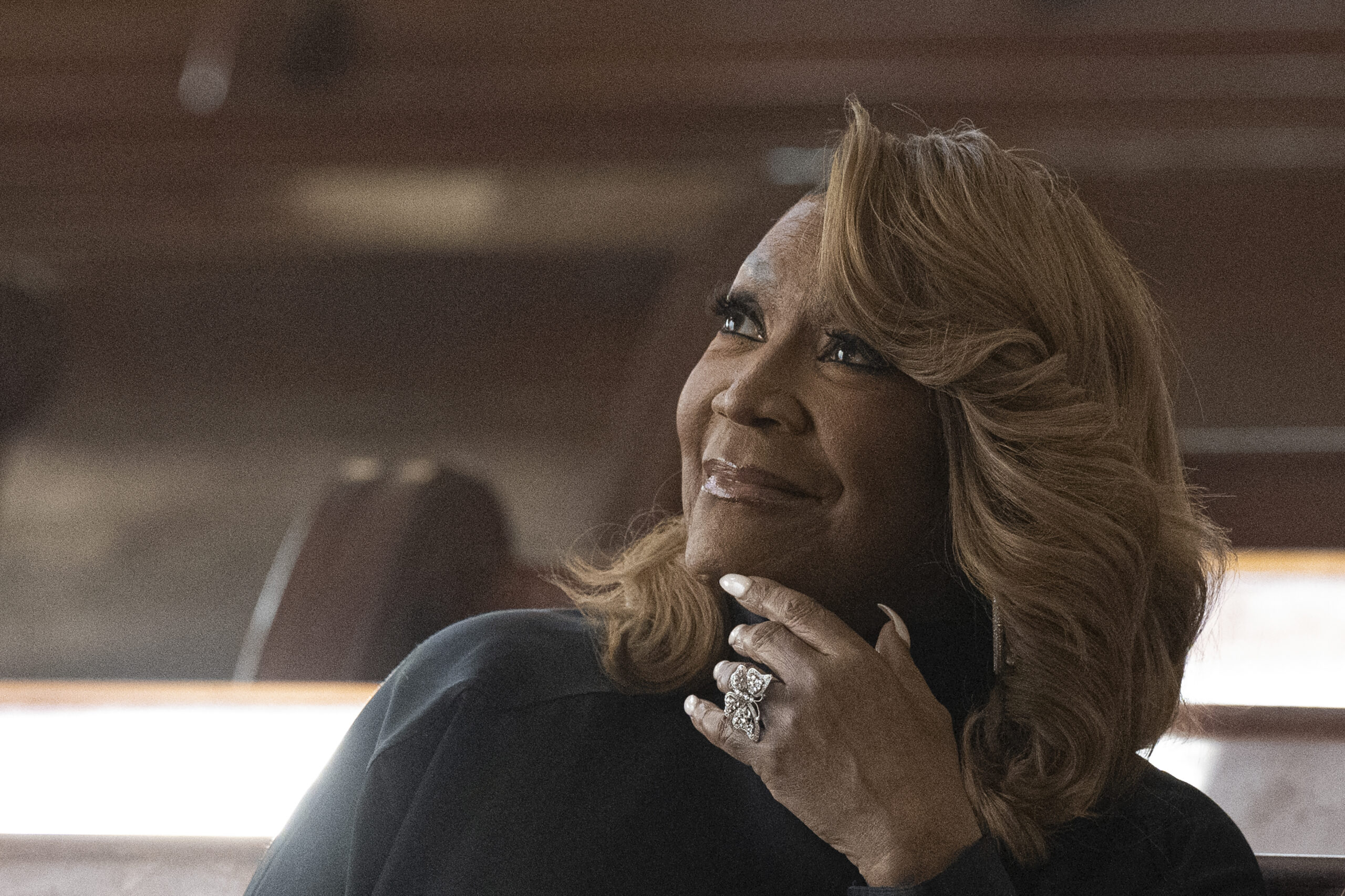
Singer Patti LaBelle is photographed at Mother Bethel AME Church in Philadelphia on Jan. 22. LaBelle will play the Dell Music Center in Strawberry Mansion in an America’s 250th birthday celebration concert July 9.
Marty Stuart & His Fabulous Superlatives
Philadelphia, Miss., native Marty Stuart and his band, which includes drummer Harry Stinson, guitarist Kenny Vaughn, and bassist, steel guitar player, and drummer Chris Scruggs, is aptly named. Among other surprises at their terrific show in Phoenixville this spring, the country-surf band sang a fab close harmony version of the Rolling Stones’ “Wild Horses.” 8 p.m., Sellersville Theater, 18 W. Temple Ave., Sellersville, st94.com
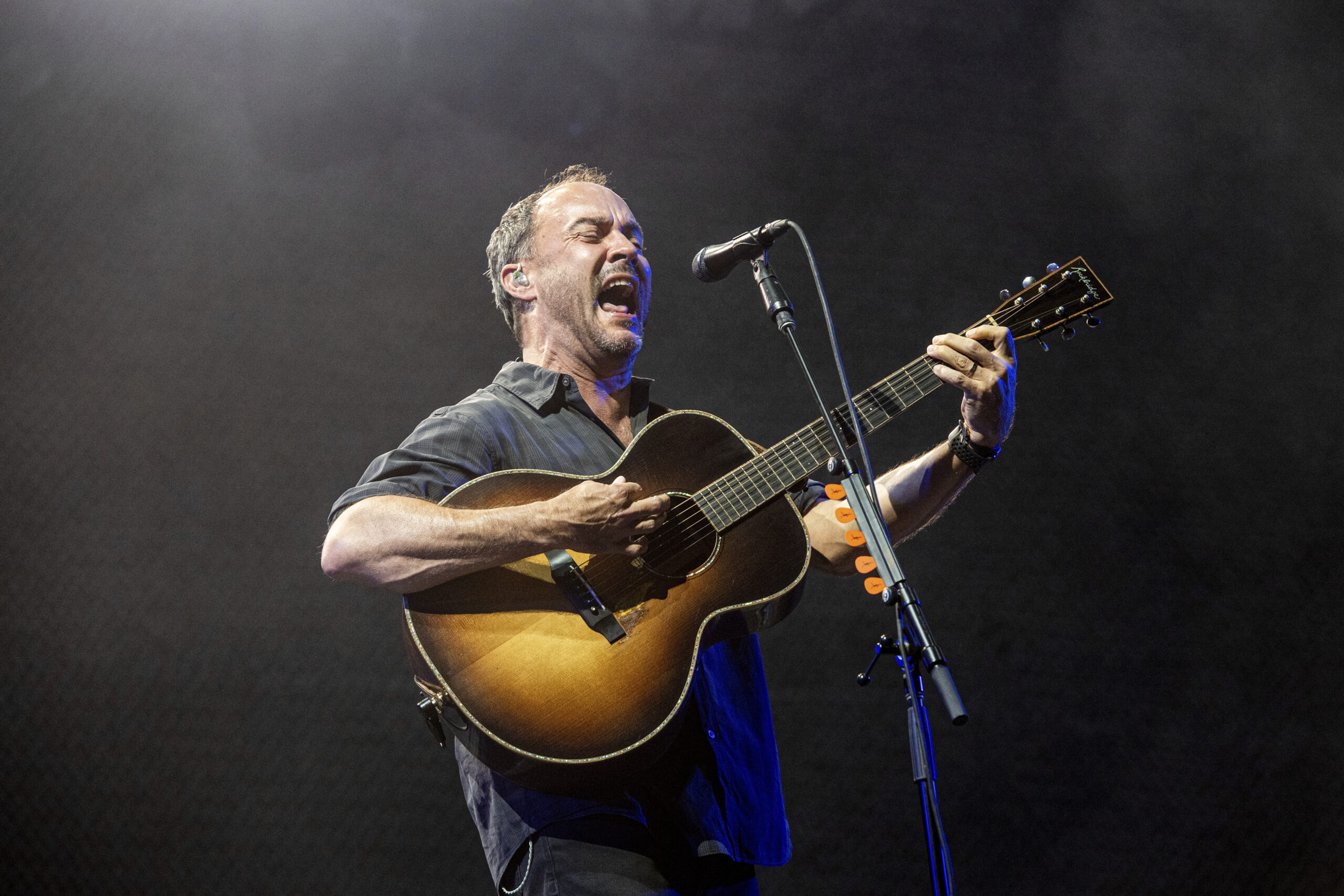
Dave Matthews of the Dave Matthews Band performs at the Railbird Music Festival in Lexington, Ky., on Aug. 29, 2021. The band plays two shows at the Freedom Mortgage pavilion in Camden this weekend. (Photo by Amy Harris/Invision/AP, File)
Friday, July 10
Dave Matthews Band
It’s time again for the annual DMB two-night summer stand in Camden. This is the third year of the environmentally conscious band’s “On the Road to Zero Waste” campaign and the group continues its work with the Nature Conservancy. Pennsylvania DMB fans take note: The Ben Franklin Bridge will be closed to celebrate its 100th birthday in the hours before the show, so if you intended to “Drive In Drive Out” to the show, make alternative plans. 8 p.m., Freedom Mortgage Pavilion, 1 Harbour Blvd, Camden. freedommortgagepavilion.com
Vince Gill
Too often country acts that aren’t the biggest mainstream stars of the moment skip Philadelphia, and play only in what the music business considers secondary markets. So if you want to see and hear Vince Gill, the 22-time Grammy winner and stellar singer and guitarist, you’ll have to go to Hershey. Now a member of the Eagles, which is doing dates at the Sphere in Las Vegas this fall, Gill is on a creative jag. He has been releasing one EP per month over the course of a year for his 50 Years From Home project. 7:30 p.m., Hershey Theatre, 15 E. Caracas Ave., Hershey, hersheytheatre.com.
Alex Warren
The winner of last year’s song of the summer sweepstakes with “Ordinary” is on his first arena tour. When the tour was initially announced, the Californian former YouTuber, whose father died when he was 9 and mother died when he was 21, called it the “Little Orphan Alex” tour. That has now been amended to the “Finding Family on the Road” tour. Warren’s third album, Wildchild, comes out in August. Noah Cyrus opens. 8 p.m., Xfinity Mobile Arena, 3601 S. Broad St., xfinitymobilearena.com
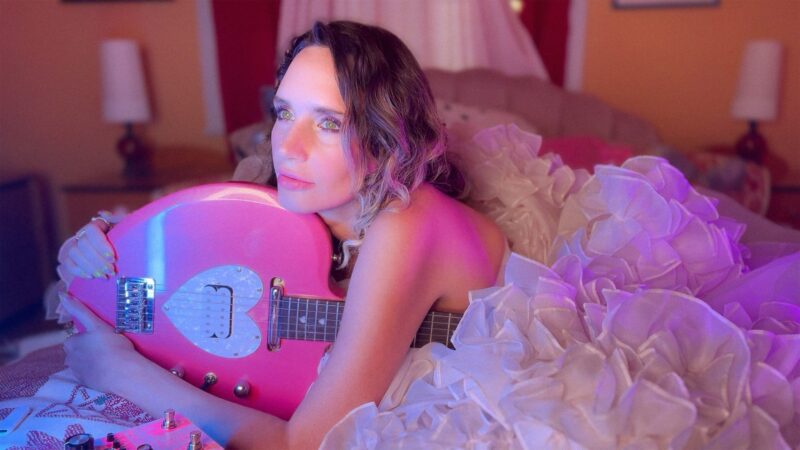
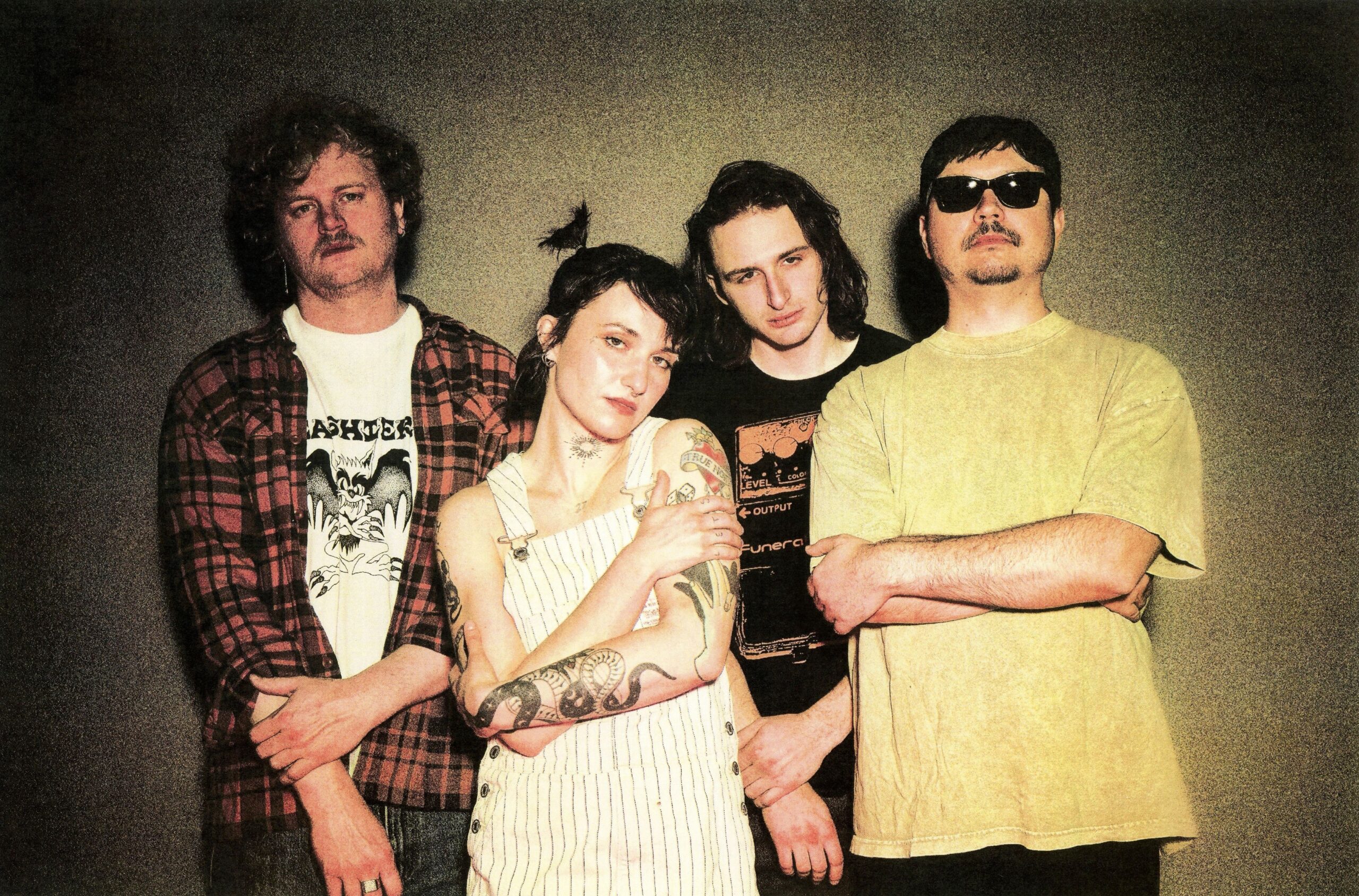
Philly band Hurry celebrates the release of their new album “Zoned Out” at Johnny Brenda’s on Friday.
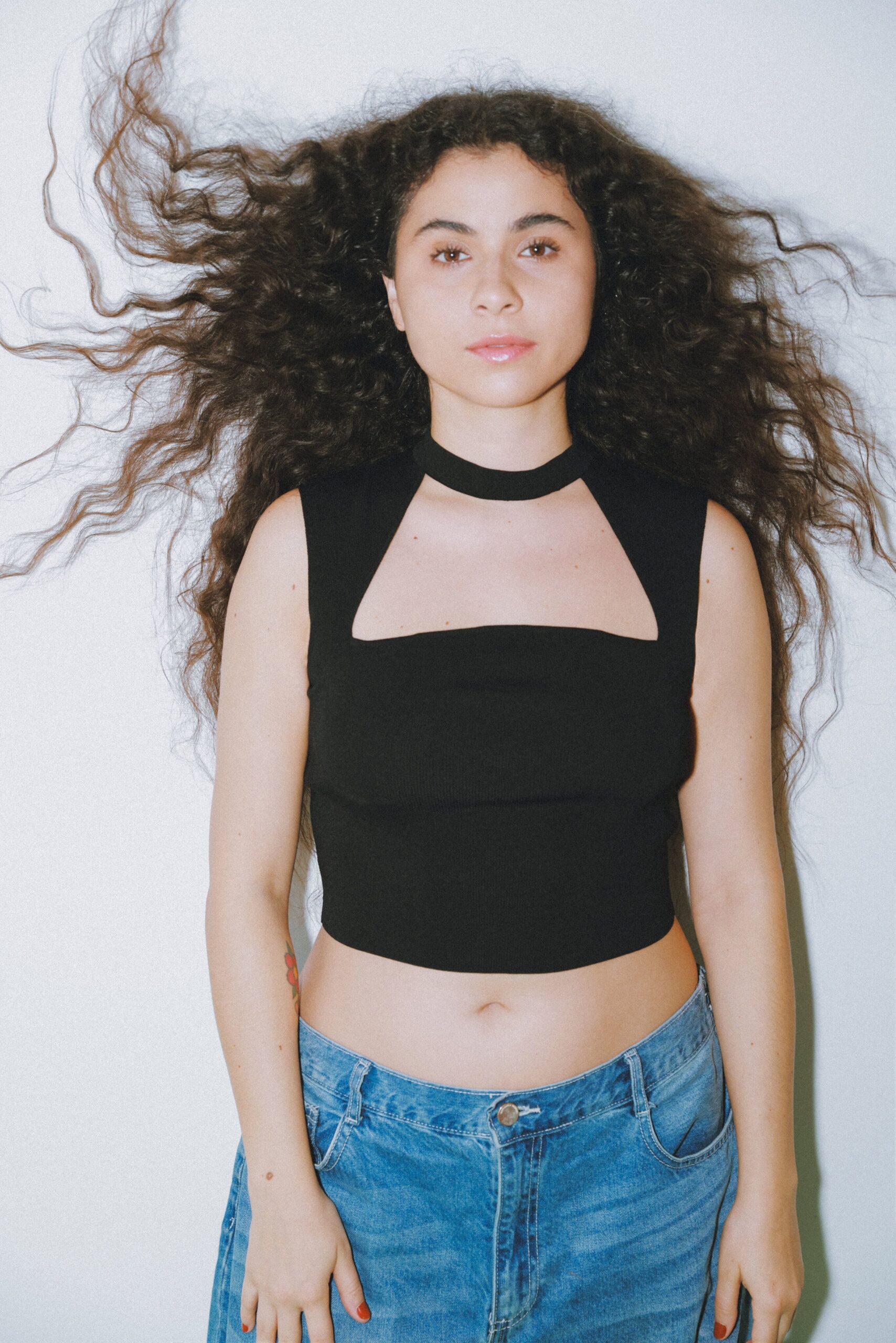
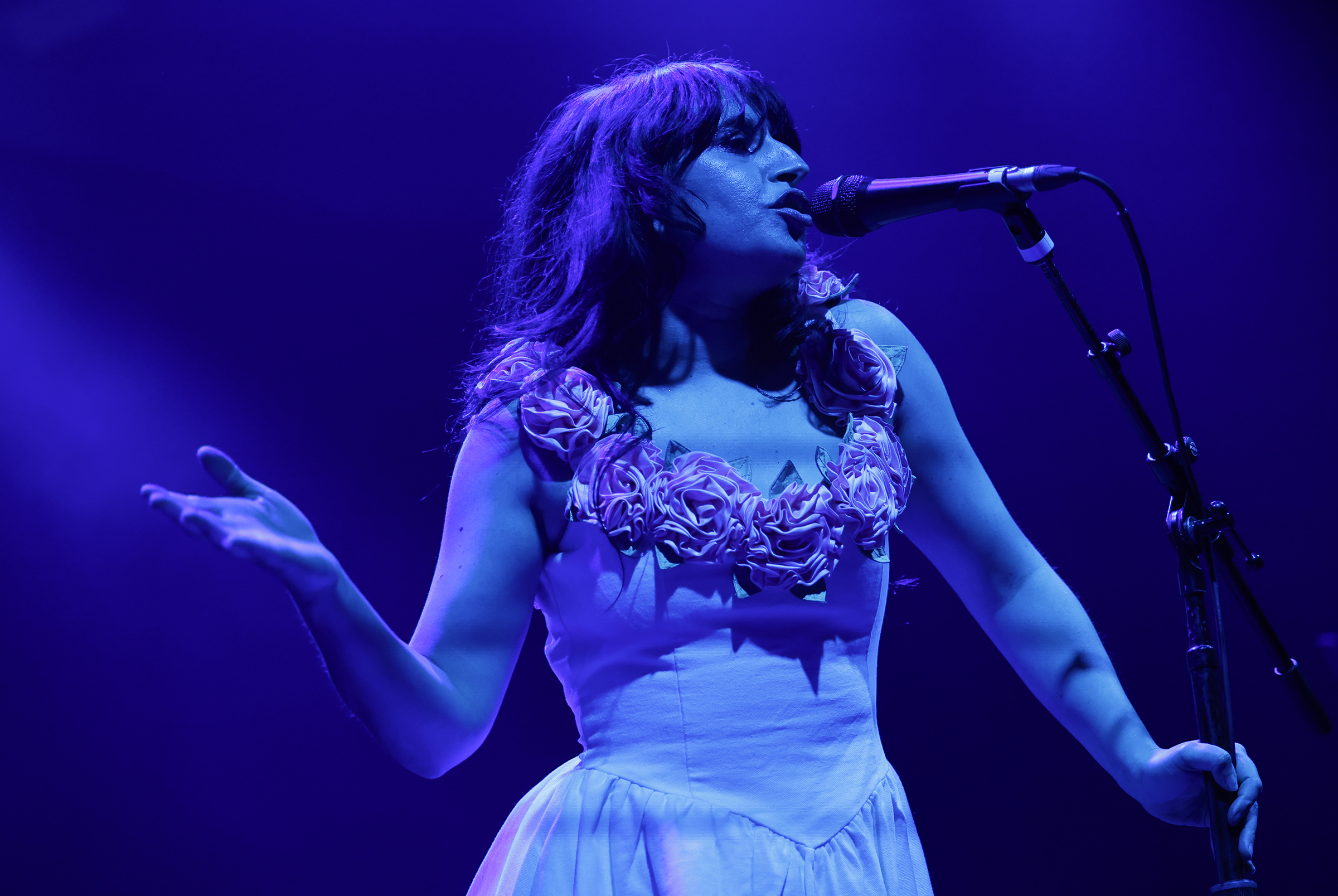
Hurry & Sad13
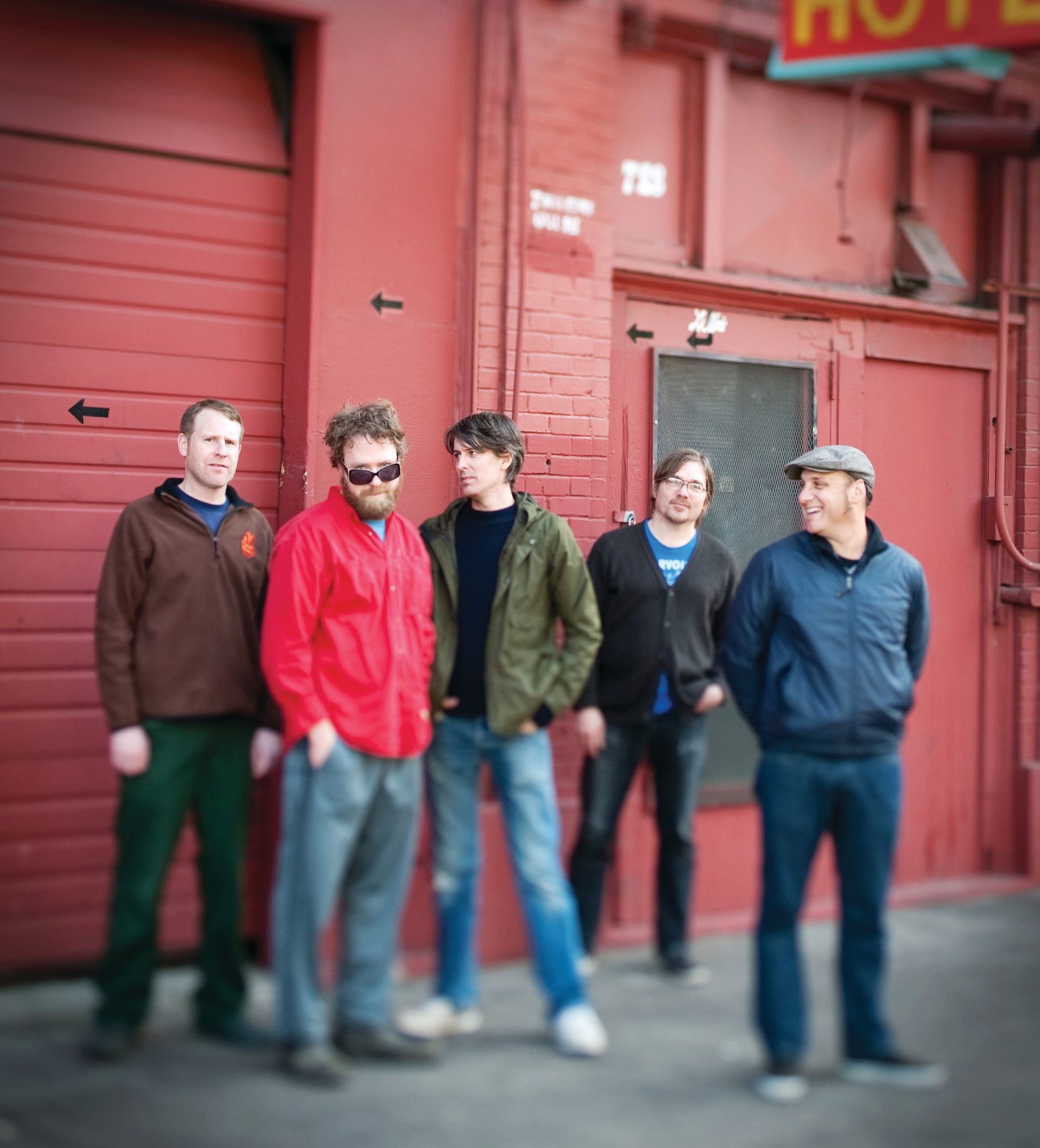
This is a double release party, with two of Philly’s most consistently rewarding acts. Headliners are Hurry, Matthew Scottoline’s formidable four-piece power-pop band, which is celebrating their sixth album, Zoned Out. It’s a 10-song platter of jangling, bittersweet bliss, that features a cameo from Gerard Love of Hurry heroes Teenage Fanclub. Love sings on “Moving After You” and refines the band’s memorably melodic attack.
Hurry will be preceded by Sad13, the solo endeavor of Speedy Ortiz leader Sadie Dupuis. Her cool, compelling new project is 1331, a 13-song, 16-minute mixtape whose concise approach finds inspiration in jingle writing and Tierra Whack, among other sources. Its synthy self-produced songs are shaped by Philadelphia: from Dupuis’ organizing efforts with the United Musicians and Allied Workers to a 2024 biking accident that broke the elbow of the guitarist that Rolling Stone named the 176th greatest of all time. 8 p.m., Johnny Brenda’s, 1201 N. Frankford Ave., johnnybrendas.com
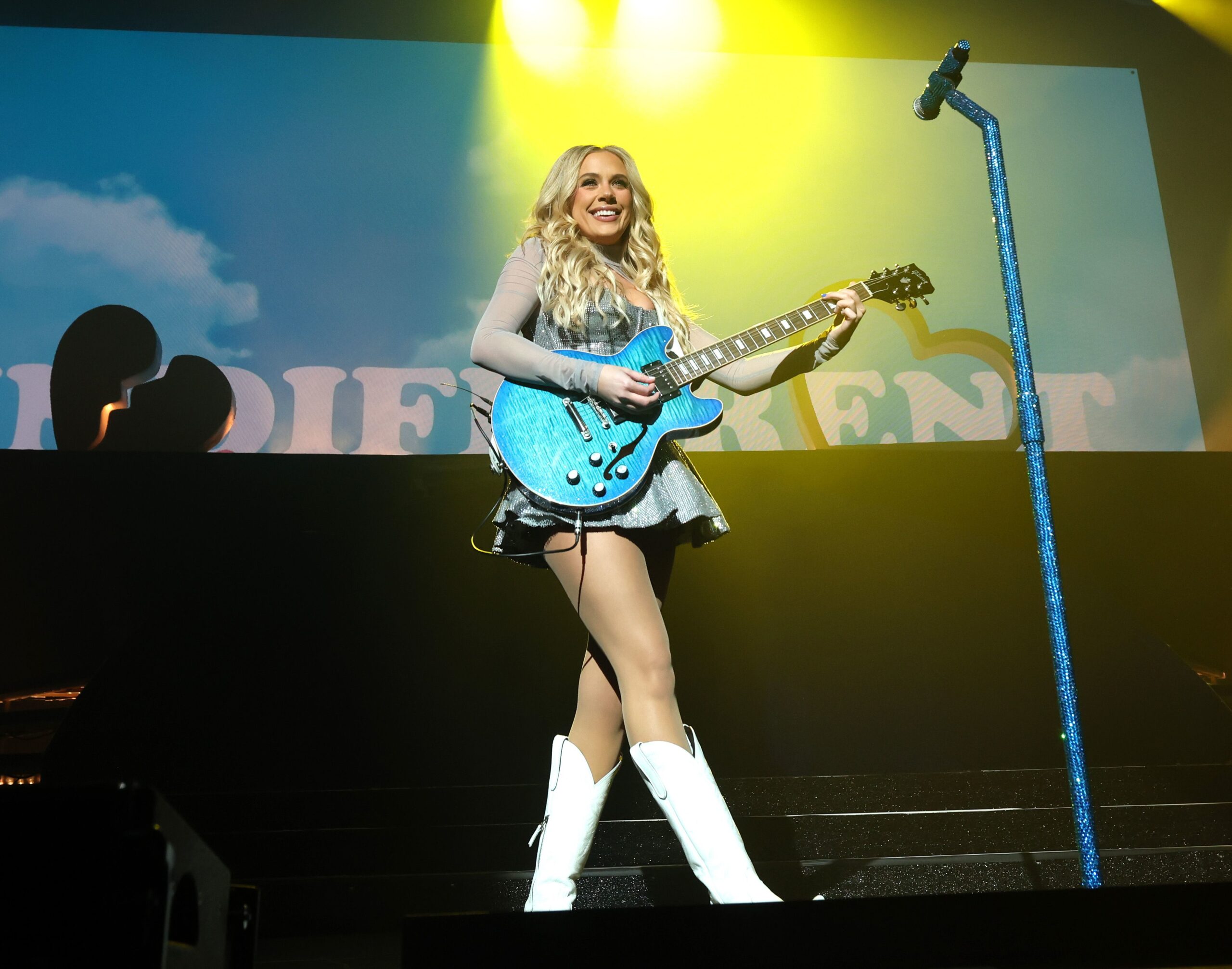
Megan Moroney performing in Nashville in 2025. The country singer plays Xfinity Mobile Arena on Saturday.
Saturday, July 11
Louis Tomlinson
Former One Direction boy band star Louis Tomlinson’s new album asks the musical question How DidI Get Here? By singing pop songs that send young fans into paroxysms of pleasure,presumably. Canadian rock band Beaches and English indie outfit Picture Parlour open. 6:30 p.m., Skyline Stage at Highmark Mann, 5201 Parkside Ave., highmarkmann.org
Megan Moroney
The country songwriter has sharp words for foolhardy dudes on songs like “Stupid” and “Medicine” on her third album, Cloud 9, featuring guest spots from Ed Sheeran and Kacey Musgraves. Openers are J.P. Saxe and Solon Holt. 8 p.m., Xfinity Mobile Arena, 3601 S. Broad St., xfinitymobilearena.com
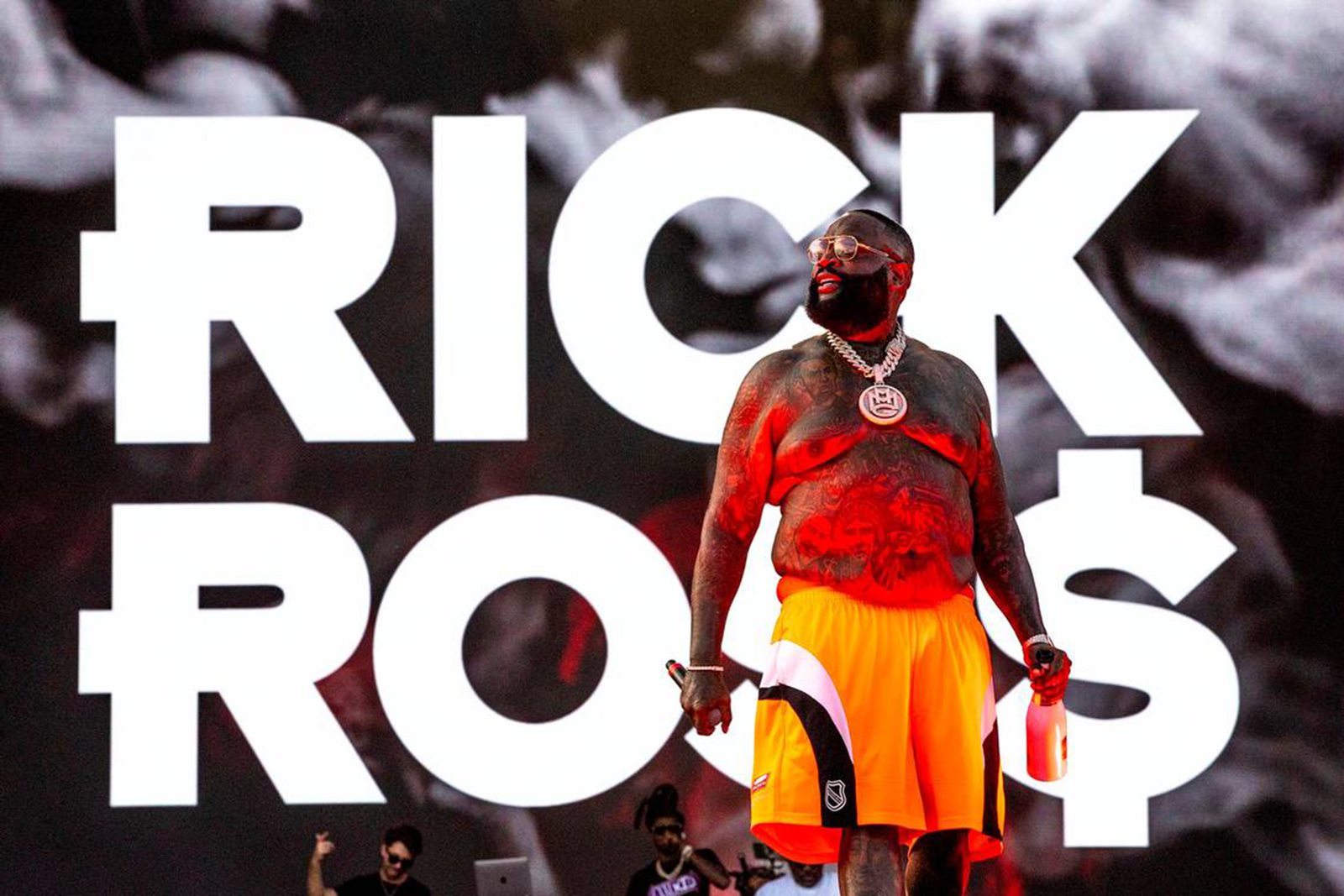
Miami rapper Rick Ross performs at Rolling Loud Miami, at Hard Rock Stadium in Miami Gardens, Florida, in July 2021. He play the Met Philly on Saturday. (Daniel A. Varela/Miami Herald/TNS)
Rick Ross & the Renaissance Orchestra
Rick Ross is celebrating the 20th anniversary of his 2006 debut album, Port of Miami, in style. The Florida man will perform reworked version of his songs with orchestral arrangements, and its billed as “Black Tie Affair,” so get dressed up. Philly State Property rappers Beanie Sigel and Freeway open, going on much earlier than they did last weekend with The Roots. Also, anytime Ricky Rozay is in town, it’s a safe bet frequent collaborator Meek Mill will show up. 8 p.m., Met Philly, 858 N. Broad St., themetphilly.com
Saturday, July 11 and Sunday, July 12
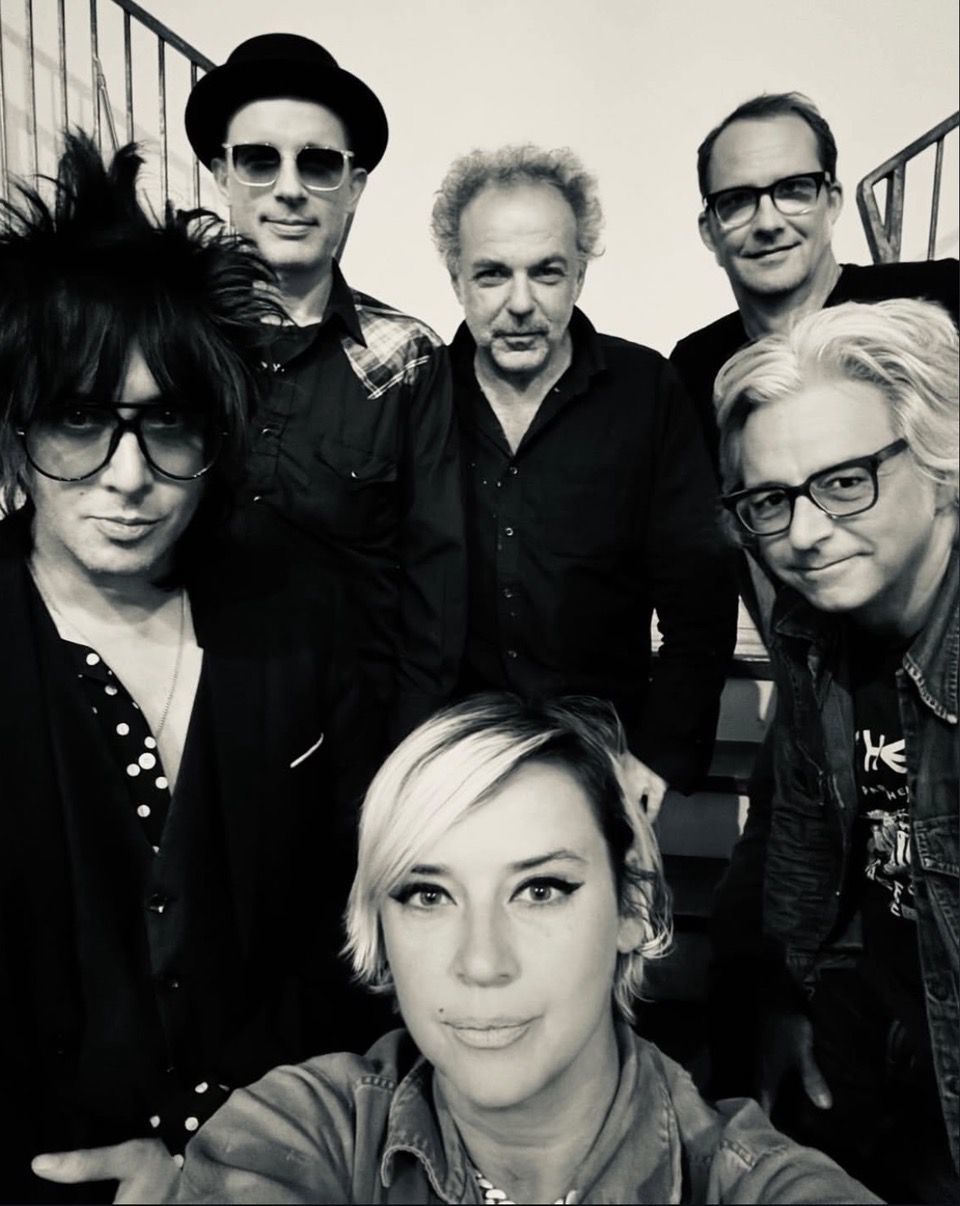
Todd Rundgren
Upper Darby’s own reluctant Rock & Roll Hall of Famer is playing the hits. The “Damned If I Do” tour is subtitled “The Fan-Favorite Classics Return,” and he’s playing with a full band as well as doing an acoustic interlude. So get ready to “bang on the drum all day.” 8 p.m., Keswick Theatre, 291 N. Keswick Ave, Glenside, KeswickTheatre.com
Sunday, July 12
Shovels & Rope
South Carolina folk and Americana band Shovels & Rope is a true duo: Married singers and songwriters Michael Trent and Cary Ann Hearst are both multi-instrumentalists who play drums, guitars, and whatever else is necessary to bring their sound to life on albums like 2024’s Something Is Happening Up Above My Head. Intriguing openers are the Golden Hours, featuring members of the David Wax Museum and the Lowland Hum. 7 p.m., Bryn Mawr Twilight Concerts, 9 S. Bryn Mawr Ave, Bryn Mawr, brynmawrtwilightconcerts.com
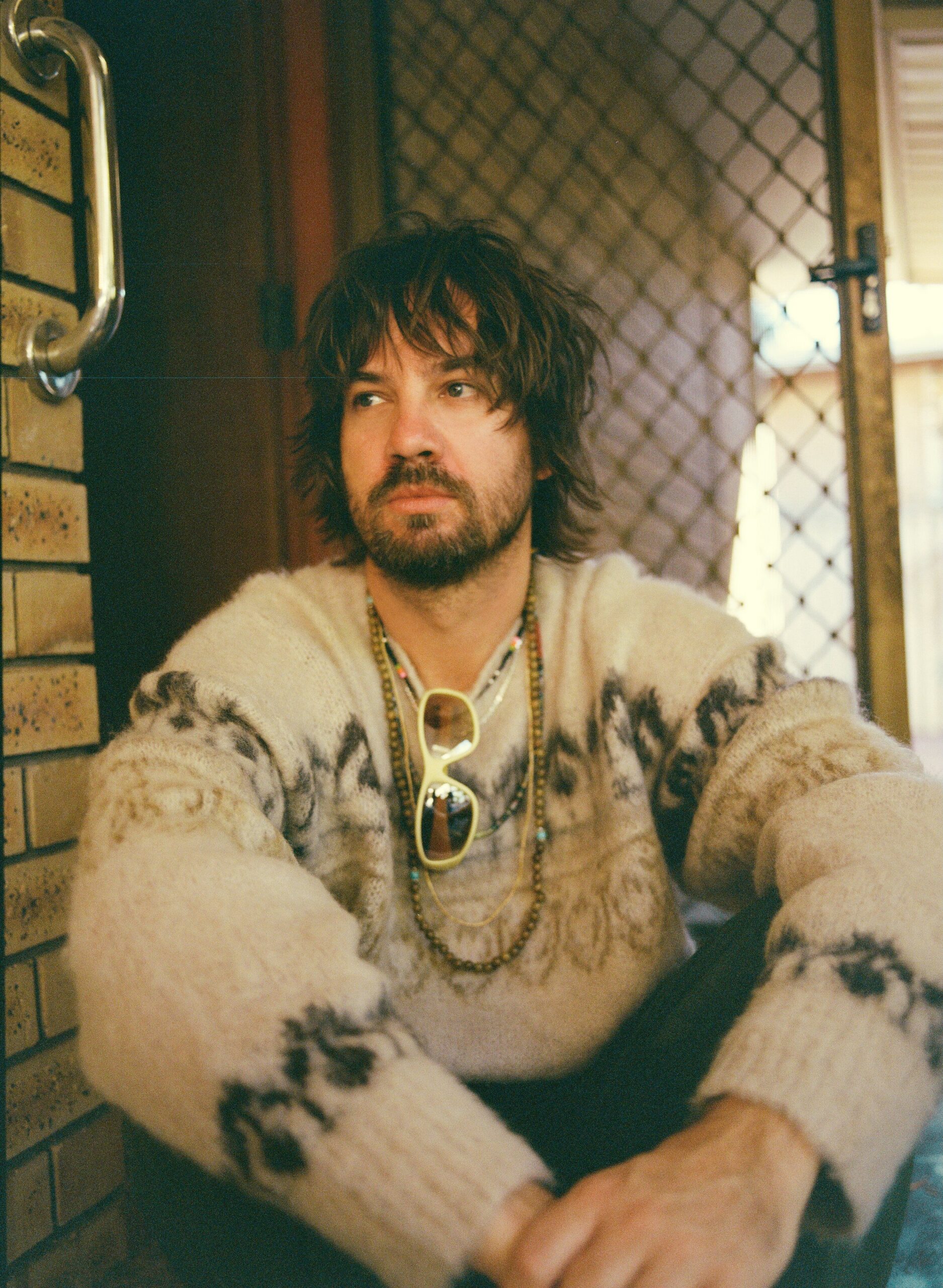
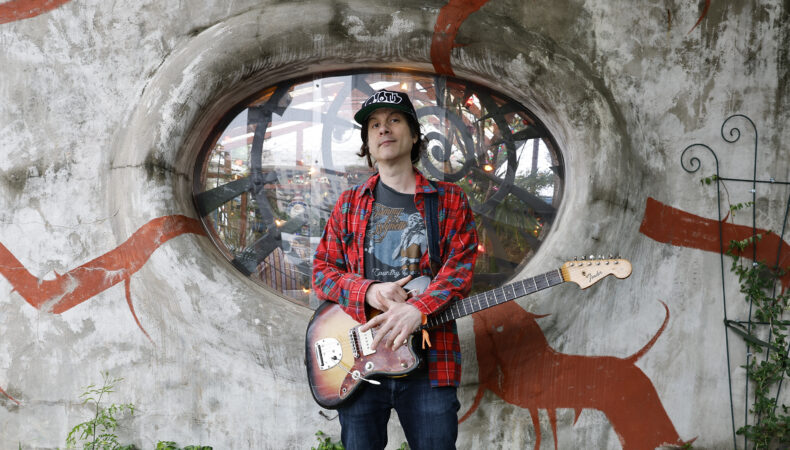
Kevin Parker of Tame Impala. He brings his “Deadbeat Tour” to Xfinity Mobile Arena on July 15.
Tuesday, July 14
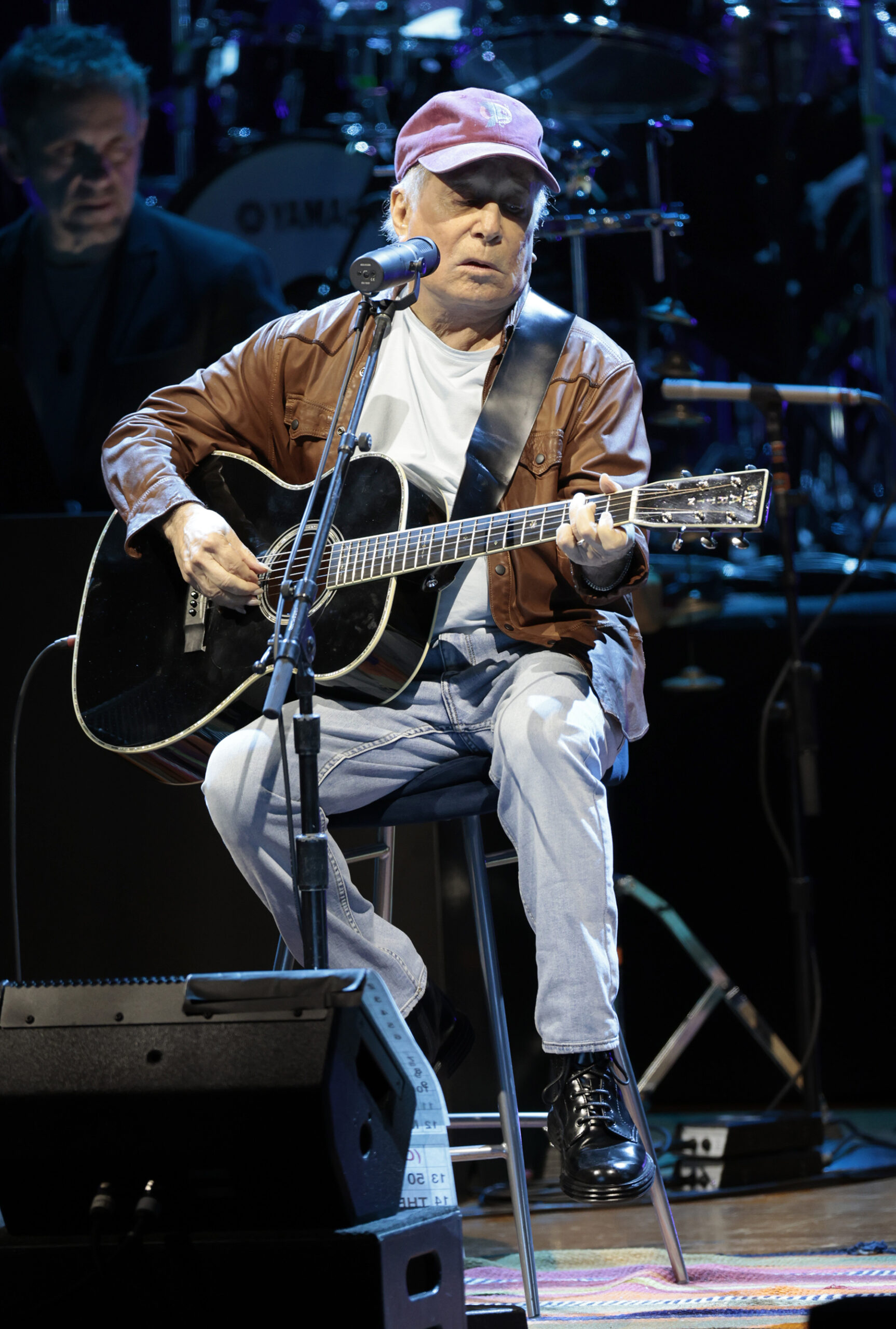
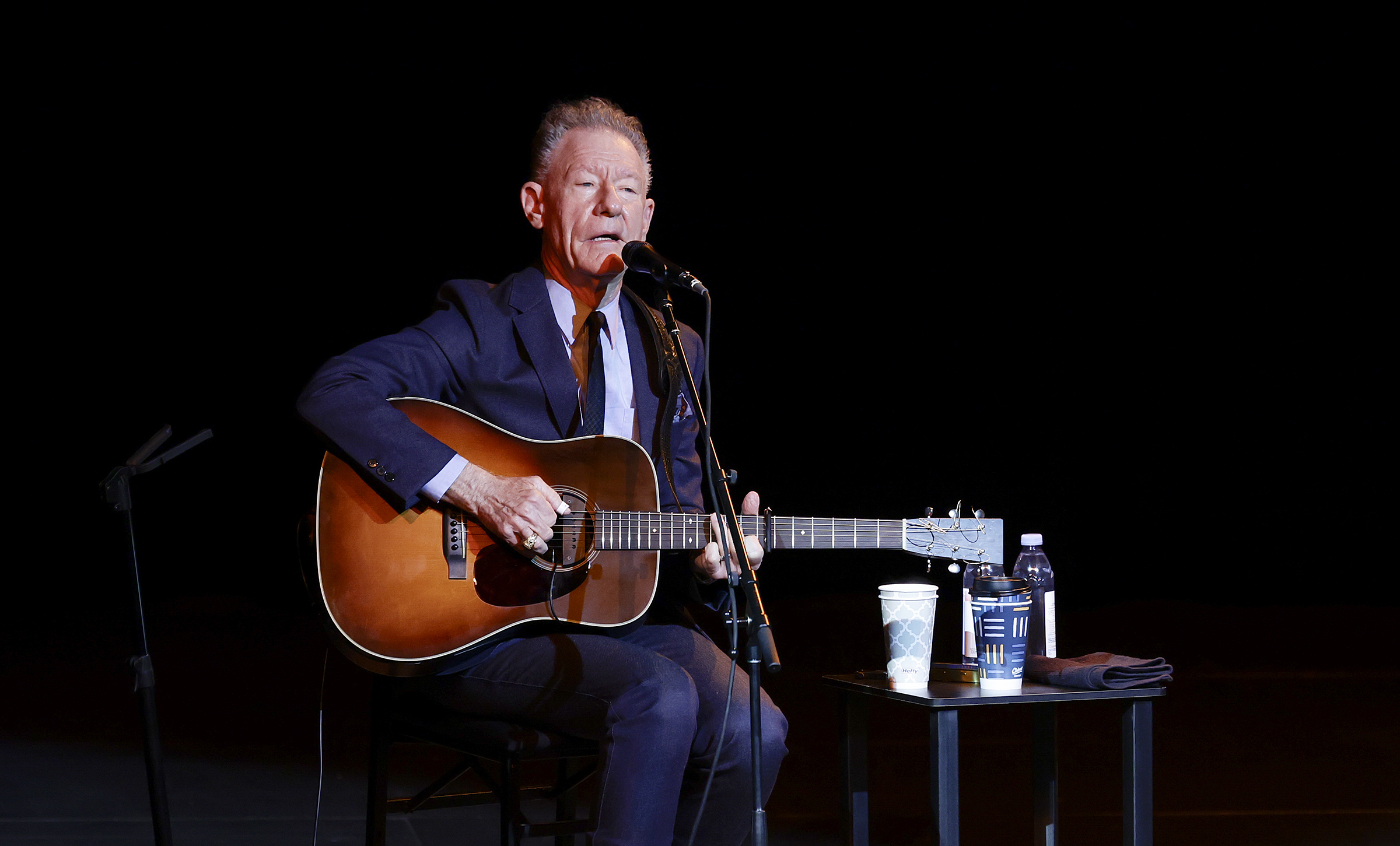
Bob Dylan
The world’s greatest living songwriter is having difficulty keeping his band together this year. Longtime guitarist Doug Lancio left the band in June, followed by the exciting news that jazz guitar standout Julian Lage joined. Then, second guitarist Bob Britt quit, replaced by Chicago blues guitarist Joel Paterson. He was the lone guitarist in the band for one gig missed by Lage, who now seems to be back in the band. Dylan has not commented. Jimmie Vaughan & the Tilt-a-Whirl Band and Brittney Spencer open. 7 p.m., TD Pavilion at the Highmark Mann, 5201 Parkside Ave., highmarkmann.org
Wednesday, July 15
Tame Impala
Australian psychedelic rock mastermind Kevin Parker is Tame Impala. And on Deadbeat, the 2025 album that was its first in five years, Tame Impala became a psychedelic disco Dad Rock band, transformed by Parker’s experience as a father, with a newfound compulsion to head to the dance floor. DJO opens. 8 p.m., Xfinity Mobile Arena, 3601 S. Broad St., xfinitymobilearena.com
On Saturday night, a violent storm seemed to spell the end of Philadelphia’s music and fireworks celebration of America’s 250th birthday on the Ben Franklin Parkway. The West Philly rapper and actor was back at his hotel, with his scheduled reunion with his musical partner DJ Jazzy Jeff seemingly called off.
Then he got a phone call from “Mrs. Mayor.”
“The mayor called and asked would we go on at midnight,” Smith said in a video posted on his Instagram account on Monday, referring to Cherelle L. Parker, whom he referred to as “Mrs. Mayor” on stage when he finally got to perform at the One Philly: Unity Concert for America.
Of course he would go on at midnight, backed by The Roots, in a special occasion hometown show. It didn’t matter that the weather wound up delaying it from July 4 to the wee hours of July 5.
“This is me,” he said, making a face, as if that would even be a question. “This is me!”
Smith’s Instagram recap of his Independence Day weekend adventures included a clip from his show-closing set — which actually began after 2 a.m. — featuring a shot of the mayor rapping along to the line in The Fresh Prince of Bel Air theme song about being “West Philadelphia, born and raised.”
During the show, which turned out to be the climactic set of the night since scheduled headliner Christina Aguilera did not perform, Smith got specific about his origins. He also spoke of the history he shares with his musical partner, whose given name is Jeffrey Townes, and Roots drummer Ahmir “Questlove’ Thompson.
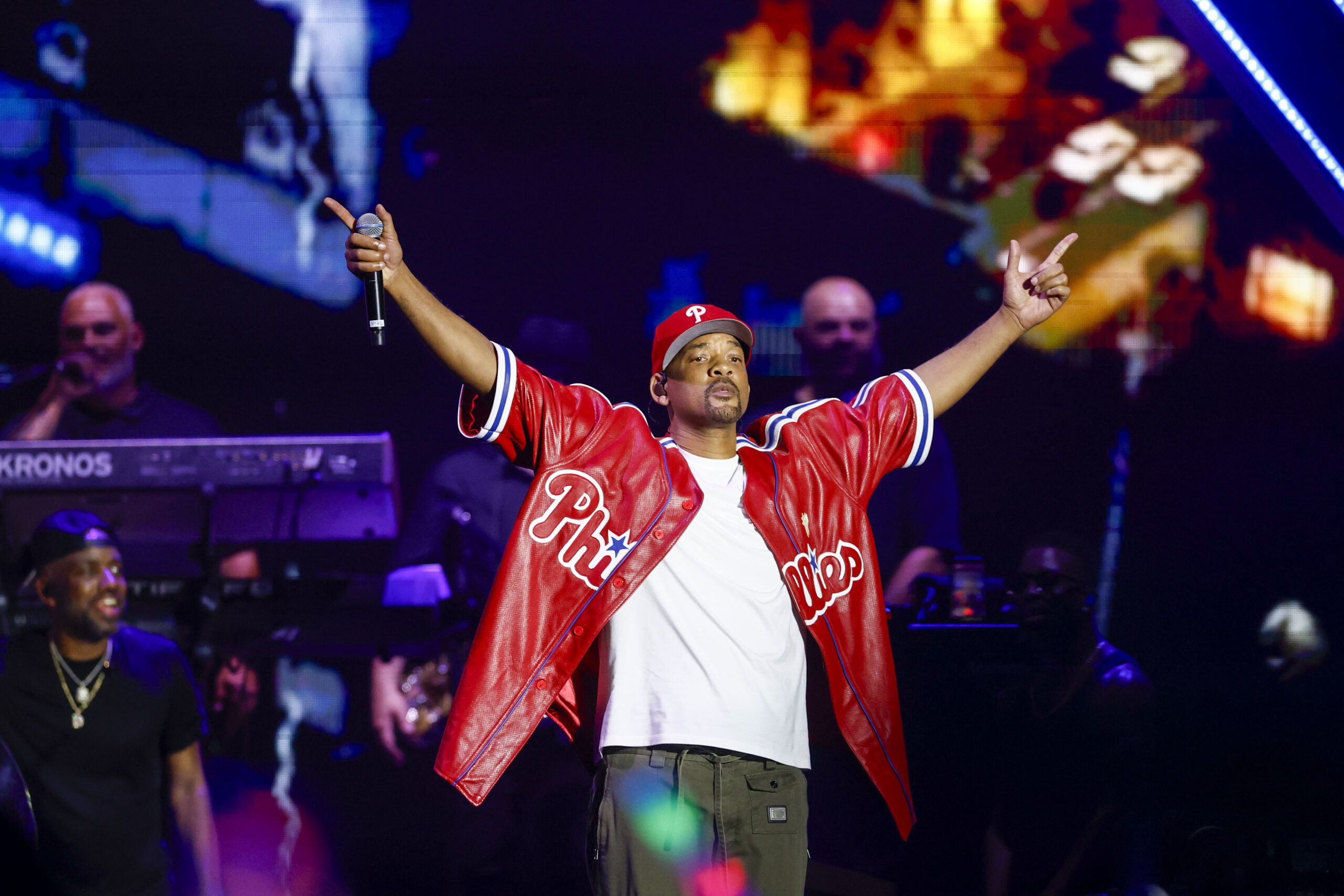
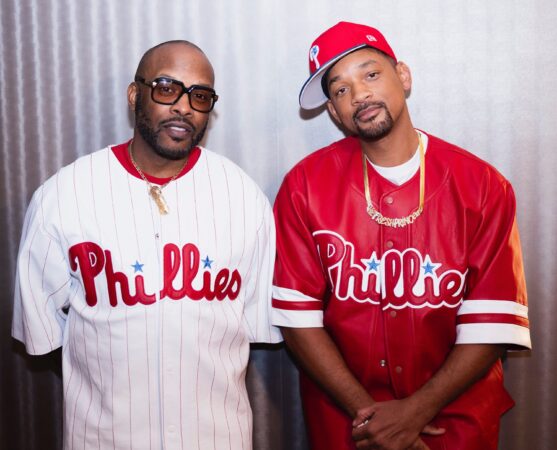
“Fifty-ninth and Woodcrest,” he said, while parading around the stage in a red Phillies cap and jersey. “I was born and raised at 59th and Woodcrest. DJ Jazzy Jeff, 57th and Rodman. Quest, 52nd and Osage.
“And only a couple thousand yards from here, the dream of this country was born. From the City of Brotherly Love and Sisterly Affection, we sent our message out to the entire world.”
Along with a closing performance of “Summertime,” the 1991 DJ Jazzy Jeff & the Fresh Prince hit and Philly seasonal anthem, the show also included a display of Townes demonstrating his unparalleled turntable skills.
While Townes dazzled, Smith played air DJ, and Questlove sat on his drum throne capturing the moment on his phone, seemingly in awe. Watch that clip below.
On Instagram, Smith also posted a photo from rehearsals with The Roots, with Townes wearing a “Respect the Architects” T-shirt.
And the rapper and star of Ali also shared a clip of his visit to the steps of the Philadelphia Museum of Art to see the newly installed statue of Philly heavy weight champion boxer Joe Frazier.
“Philly LEGEND ‘Smokin’ Joe Frazier right HERE!” he posted. “You kids have no CLUE about that left hook.”
After a three-hour-plus rain-and-lightning delay on Saturday night, the One Philly: Unity Concert for America for the nation’s 250th birthday finally resumed on Sunday morning.
Shortly before midnight, the Benjamin Franklin Parkway grounds that had been evacuated earlier in the evening due to severe weather were reopened and thousands of diehard concertgoers made their way to the front of the stage.
There DJ Aktive hyped up a crowd — younger, on average than at the earlier hour — that was a mix of Philadelphians and visiting World Cup soccer fans by spinning records by Beyoncé, Rihanna, Miley Cyrus, and Journey. (Yes, Journey.)
Then at 12:44 a.m., Mayor Cherelle L. Parker — last seen on stage with Gov. Josh Shapiro four hours earlier — came out, led the crowd in a “Ain’t no party like a Philly block party because a Philly block party don’t stop” chant, and introduced “the Legendary Roots Crew!”
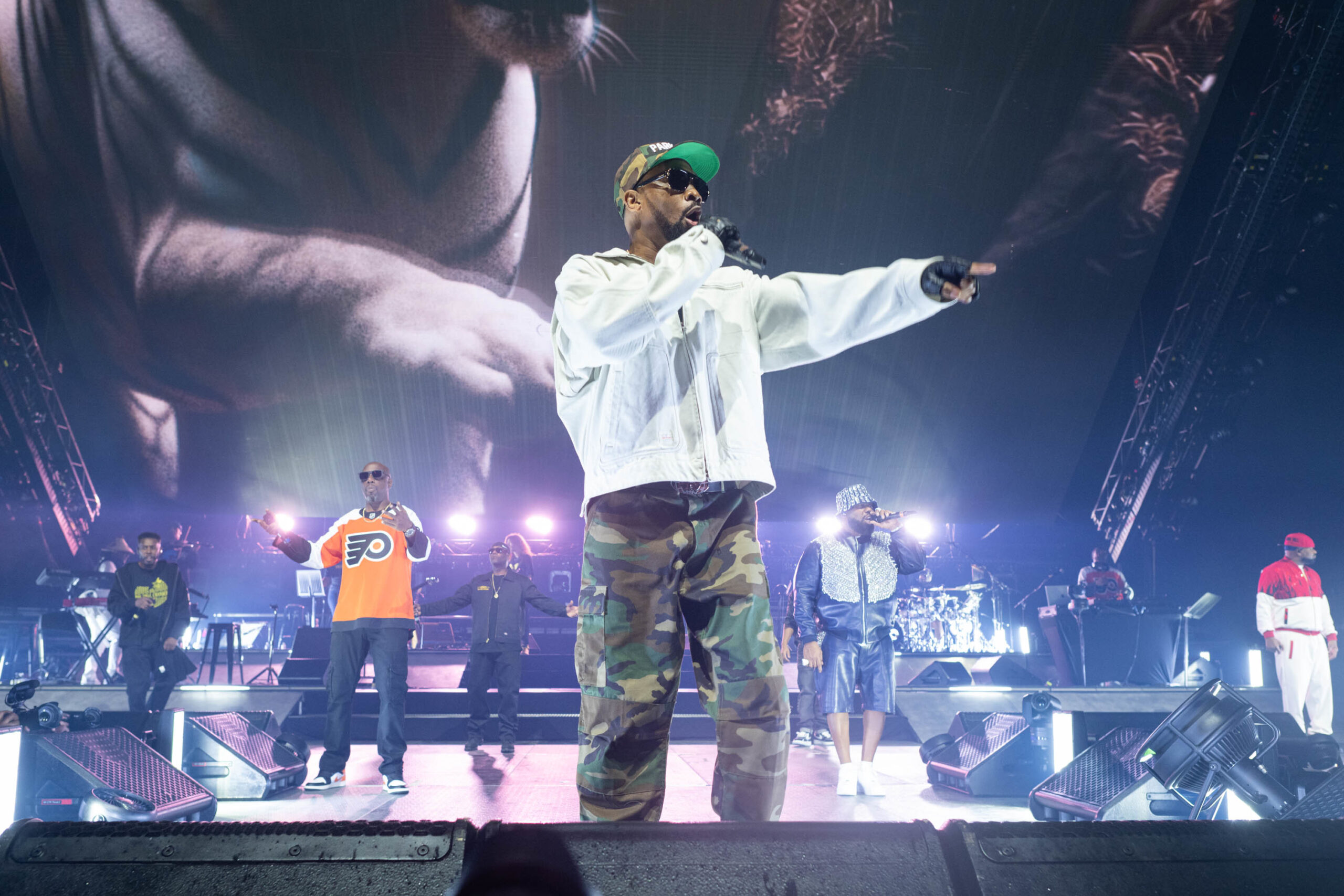
Starting with a sly intro — a few measures of Chicago’s “Saturday in the Park” — the unparalleled Philly hip-hop and Tonight Show house band then put on a musical master class. Rapper (and singer) Black Thought displayed his trademark staggering breath control as he led the band (who were accompanied by DJ Jazzy Jeff) in a 20-minute nonstop workout that pulled from a century of Black music, including the band’s own rich 30-year catalog.
It was busy day for the Roots, as well as a logistically challenging one. Before taking their positions on stage in front of the Art Museum, the Philly hip-hop crew were scheduled to headline the pregame festivities at the France-Paraguay World Cup match in South Philly.
And after the Roots, it was time for the all-Philly guest list. (Christina Aguilera, from Pittsburgh, the scheduled headliner, did not perform.)
First up was Kathy Sledge, who now performs the hits she scored with her siblings as Sister Sledge under her own name.
Kathy Sledge from Sister Sledge performs with the Roots at One Philly: Unity Concert for America on the Benjamin Franklin Parkway early Sunday, July 5, 2026, in Philadelphia.
She was accompanied by a team of dancers, and on “He’s the Greatest Dancer,” a couple of eager-to-boogie dudes brought up on stage from the crowd.
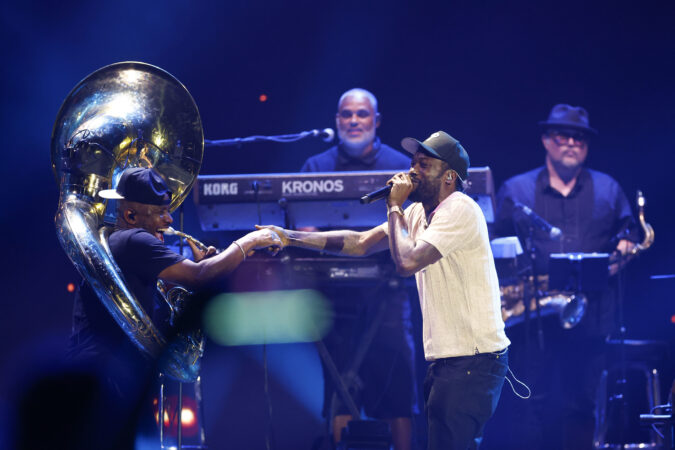
The showstopper, of course, was “We Are Family,” which with Questlove keeping the beat and sousaphone player Damon Bryson moving along with the dancers, played out as a wee-hours-of-the-morning singalong.
This year’s July Fourth pre-fireworks concert on the Parkway was managed by the City of Philadelphia, after in previous recent years being produced by Wawa Welcome America, a nonprofit established by the city. The Inquirer has reported that the city is due to pay Philly-based ESM Productions about $15.5 million for the show, considerably more than the total of $6.6 million that constituted the budget for Wawa Welcome America’s entire slate of events in 2024.
Stars from the city that ‘raised a nation’
Sledge was followed by the full complement of the State Property crew, which meant not only Beanie Sigel and Philly Freeway, but also Peedi Crakk and Chris and Neff, the duo formerly known as Yung Gunz, who provided the high point of their Roots-backed set with their ageless rap classic “Can’t Stop, Won’t Stop.”
“I’m loving the energy tonight, I’m glad we came back,” said the next guest, Meek Mill. “I was headed out of town, and I had to double back.”
With the Roots backing him, and Questlove in particular locked in, it was at once the most tightly disciplined and casually freewheeling Meek performance I’ve ever seen.
That went for throwback tracks like “ImaCQ Boss” and “House Party” as well as an especially epic “Dreams and Nightmares,” before which the rapper asked the crowd to light up the night, which they did, with phones and flames.
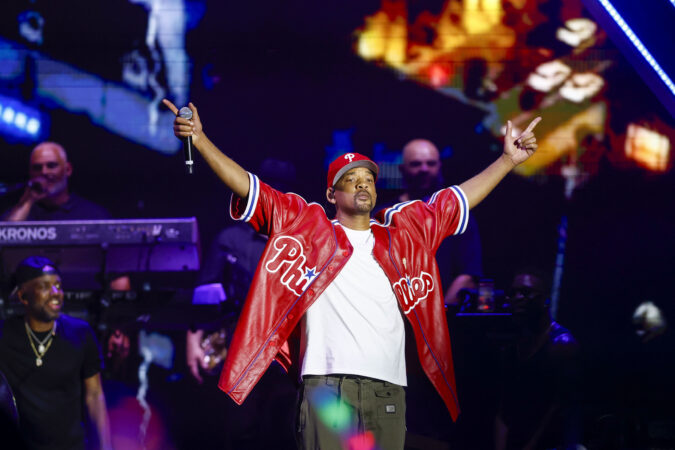
Last but not least was the Fresh Prince himself, Will Smith, who came bounding out shortly after 2 a.m. in a red Phillies cap and jacket to join the band and Jazzy Jeff, his musical partner Jeff Townes, with whom he was catapulted to stardom in the late 1980s.
Will Smith performs at the One Philly: Unity Concert for America on the Benjamin Franklin Parkway Sunday, July 5, 2026, in Philadelphia.
Smith has had a rocky time of it since he set his career back significantly by slapping Chris Rock on the Oscars in 2022, and his relatively joyless 2025 comeback rap album Based On a True Story didn’t help matters much.
But on the Parkway, Smith was in his element and back on form.
“Every dream I ever dreamed I dreamed in these streets,” Smith said. He then got into Semiquincentennial mode.
“And this city didn’t just raise me. It didn’t just raise us. It raised a nation. Two hundred fifty years ago, it all began here. So Happy Birthday, America!”
And with that, Smith, Townes, and the Roots did the song everybody wanted to hear, in this season in 2026: “Summertime.”
International superstar opening
Before the storm drama, the One Philly: Unity Concert for America celebration of the nation’s 250th birthday got going with an international superstar opening act.
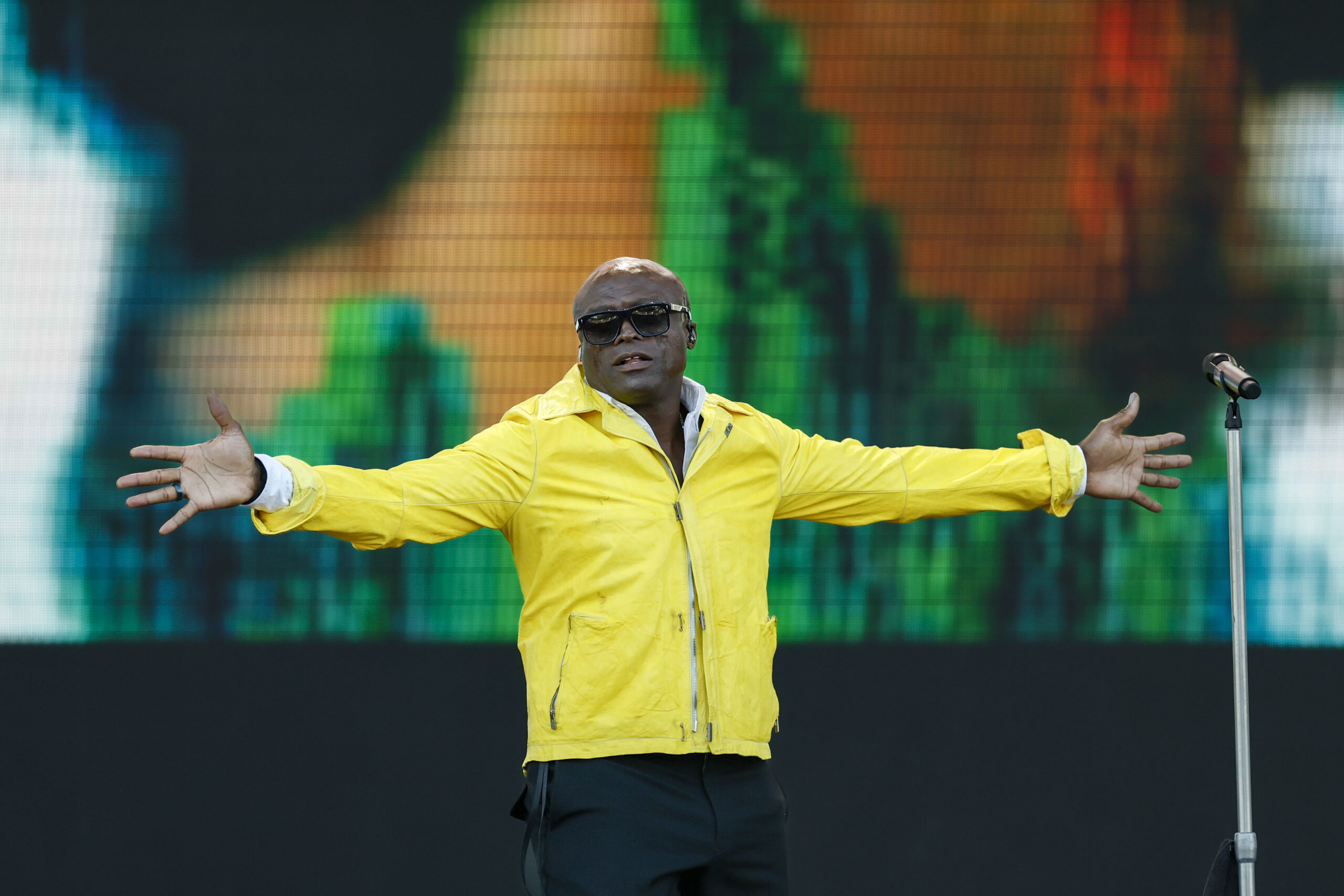
British pop-rock vocalist Seal went on at 5:45 p.m., dressed in a yellow jacket, just as the sun dipped low enough to provide a sliver of shade and some relief for the red, white, and blue crowd gathering in front of the stage.
British singer Seal performs at One Philly: Unity Concert for America on the Benjamin Franklin Parkway Saturday, July 4, 2026, in Philadelphia.
Seemingly unbothered by the heat, the London-born singer of Nigerian and Brazilian descent demonstrated that he knows how to play to a Philadelphia crowd. His second song began with the instantly recognizable “doo, doo, doo-doo doo-doo’s” of the Steve Miller Band’s “Fly Like an Eagle.”
In fine, smoky voice, he finished his version of that 1976 hit and quipped: “I know you want it to be ‘Fly, Eagles, Fly,’ but you not going to get it. Not in this lifetime.”
For Seal’s mellow, sultry summer afternoon set, he was backed by a band that included West Philly native Gail Ann Dorsey, who previously toured frequently with David Bowie.
Fast-paced country
Louisiana-born country singer Jordan Davis — who was a late add to the One Philly concert lineup — has scored a number of country hits in recent years.
His music leans slightly toward rock and roll, taking a page out of arena-sized star Eric Church’s playbook. His slick 40-minute set was fast-paced, with hits like “Tucson Too Late,” and “Turn This Truck Around” coming in rapid succession as if Davis was worried that if he slowed down, Philly hip-hop and R&B fans would start to wonder what this country guy was doing singing in their city on its big July Fourth celebration.
Jill Scott gets in the groove — and then an evacuation
The evening found its groove after comedian Wanda Sykes introduced Jill Scott, the first hometown hero to take the stage, which pictured her on a video screen image framed by the purple outline of the Liberty Bell.
The crowd — complete with a contingent of French fans fresh from their team’s World Cup victory in Philadelphia earlier in the evening — filled out the area in front of the stage.
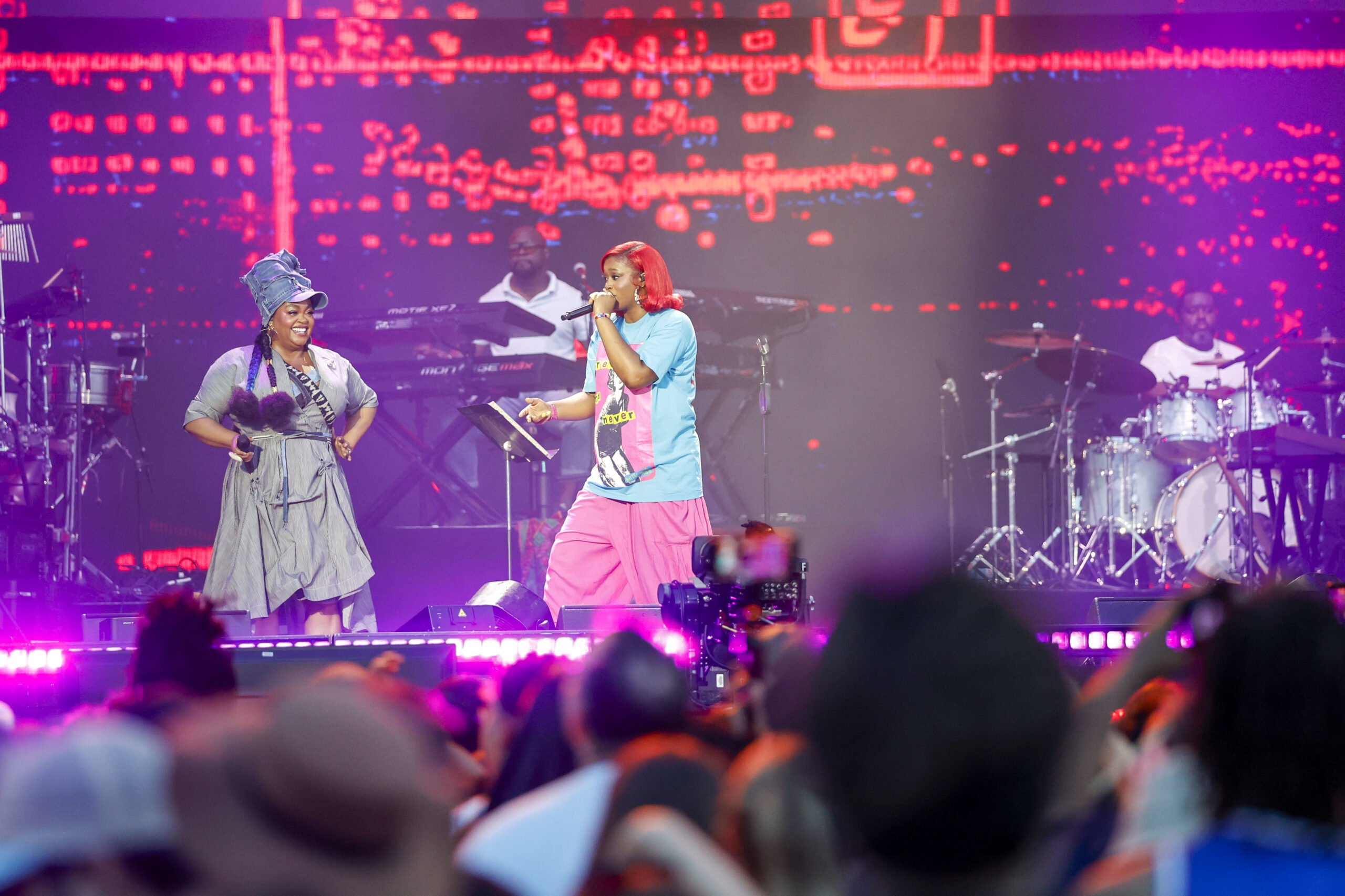
Jill Scott (left) and Tierra Whack on the stage at One Philly: Unity Concert for America on the Benjamin Franklin Parkway Saturday, July 4, 2026, in Philadelphia.
The size of the crowd, though, seemed several magnitudes smaller than the 300,000 that had been projected in advance to attend throughout the night. In fact, it was much more comfortable and less packed than during the years Jay-Z staged his Made in America festival on the Parkway, which was capped at 50,000.
Scott, who now lives in Nashville, seemed delighted to be back in her hometown. Looking radiant in a blue chambray dress and matching denim hat, Jilly from Philly thanked “the city that made me, the love that grew me, and the reason that I’m how I am right now.”
Fronting a funky eight-piece band — “This is live music,” she reminded the core at several junctures — Scott sampled classics from her catalog such as “A Long Walk.” She also shouted out Girls High and Temple University and also fondly recalled seeing Frankie Beverly & Maze perform at the Robin Hood Dell East as a girl.
She also sang a snippet of Jackie Wilson’s “(Your Love Keeps Lifting Me) Higher and Higher,” and thanked “these streets, hip-hop, a dollar cheesesteaks that kept me going.”
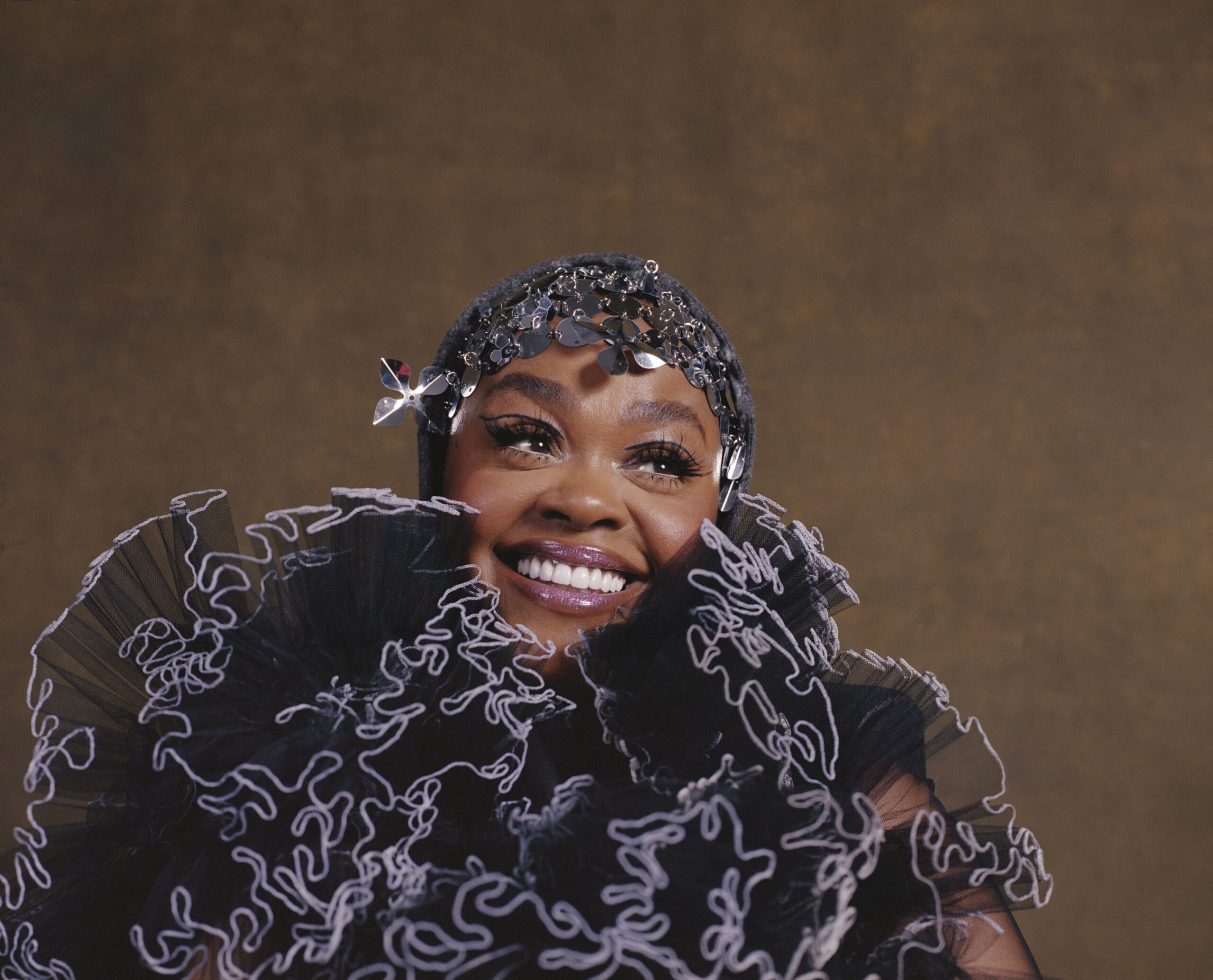
Scott’s set really caught fire when she called out “North Philly, baby!” And brought out Philly rapper Tierra Whack for a deliriously fun pas de deux on “Norf Side” from Scott’s new album, To Whom This May Concern.
At that point the crowd was looking ahead to three more hours of music before the 250th birthday fireworks scheduled for about midnight.
But instead, attendees were asked to leave the premises because of imminent severe weather.
The One Philly show was shown on NBC10 and streamed live on Paramount+.
This is the America’s 250th birthday and July 4 edition of This Week in Philly Music. Free music is all around, starting with The Roots, Jill Scott, Meek Mill, Will Smith, Jazzy Jeff, and more on the Ben Franklin Parkway. And tours featuring Molly Tuttle and Daniel Donato, Paul Simon, and Sarah McLachlan, and Allison Russell are also coming through town.
Thursday, July 2
Molly Tuttle & Daniel Donato’s Cosmic Country
Two terrific country-flavored guitarists and bandleaders team up on the co-headlining bill. Guitarist and banjo picker Tuttle is touring behind her fifth album, So Long Little Miss Sunshine, which leans into country-pop and rock without leaving bluegrass behind. The 12-song set, largely cowritten with fiancé Ketch Secor of Old Crow Medicine Show, includes a cover of Icona Pop’s ”I Love It.”
Daniel Donato’s Cosmic Country plays Heuser Park in King of Prussia on Thursday with Molly Tuttle on a co-headlining tour.
Donato is an electric guitar hero who was born in Atlantic City and moved to Nashville when he was 7. The author of The New Master of the Telecaster: Pathways to Dynamic Solos combines an affection for honky-tonk with Grateful Dead expansiveness. 6 p.m. Heuser Park, 694 West Beidler Road, King of Prussia, risingsunpresents.com/heuser-park/
Salute to Service with Queen Latifah
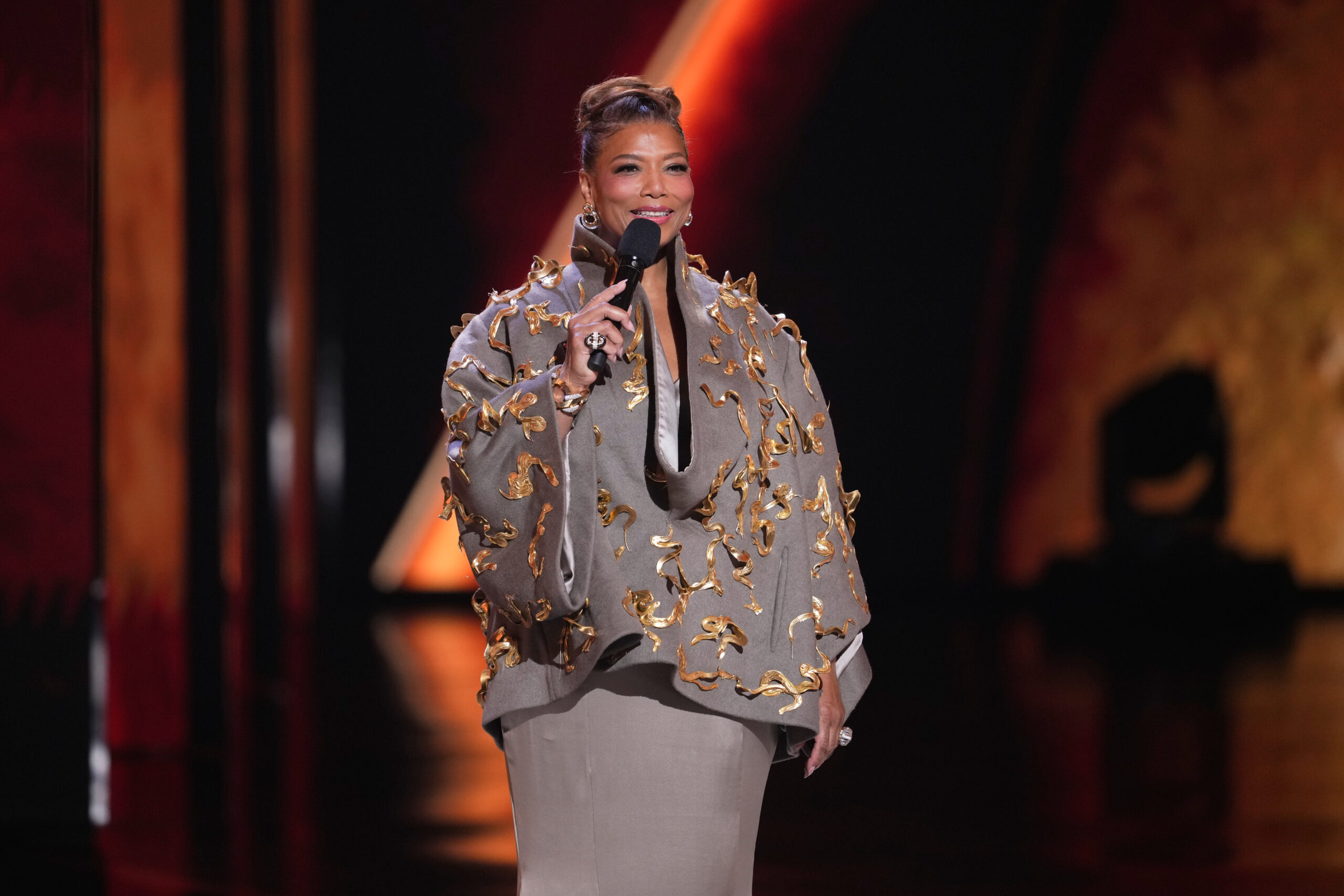
This free show has been pushed back to an 8 p.m. start to lessen the effects of the extreme heat. Along with rapper, actor, and singer Queen Latifah, it features the United States Army Field Band and Soldiers Chorus and Miss America 2026 Cassie Donegan.
Queen Latifah introduces a performance from “Chicago” during the 79th Tony Awards on Sunday, June 7, 2026, at Radio City Music Hall in New York. (Photo by Charles Sykes/Invision/AP)
The Bug Club
Welsh indie pop duo the Bug Club consists of songwriter Sam Willmet and Tilly Harris. They’ve released three albums on Seattle’s Sub-Pop label since 2024, and the most recent, Every Single Muscle, overflows with infectious energy and Welsh pride. Columbus, Ohio, family band Golomb, which records for Philly label No Quarter, opens. 8 p.m., Ukie Club, 847 N. Franklin St., 43333collective.com
Pissed Jeans
Allentown-born and Philly-based hard core punk band Pissed Jeans has been raising a ruckus for two decades, reaching back to the band’s 2005 debut, Shallow, through 2024’s raging Half-Divorced. The Matt Korvette-fronted band is playing a free show by the Delaware River waterfront. 6 p.m., Spruce Street Harbor Park, 301 S. Columbus Blvd., 4333Collective.com
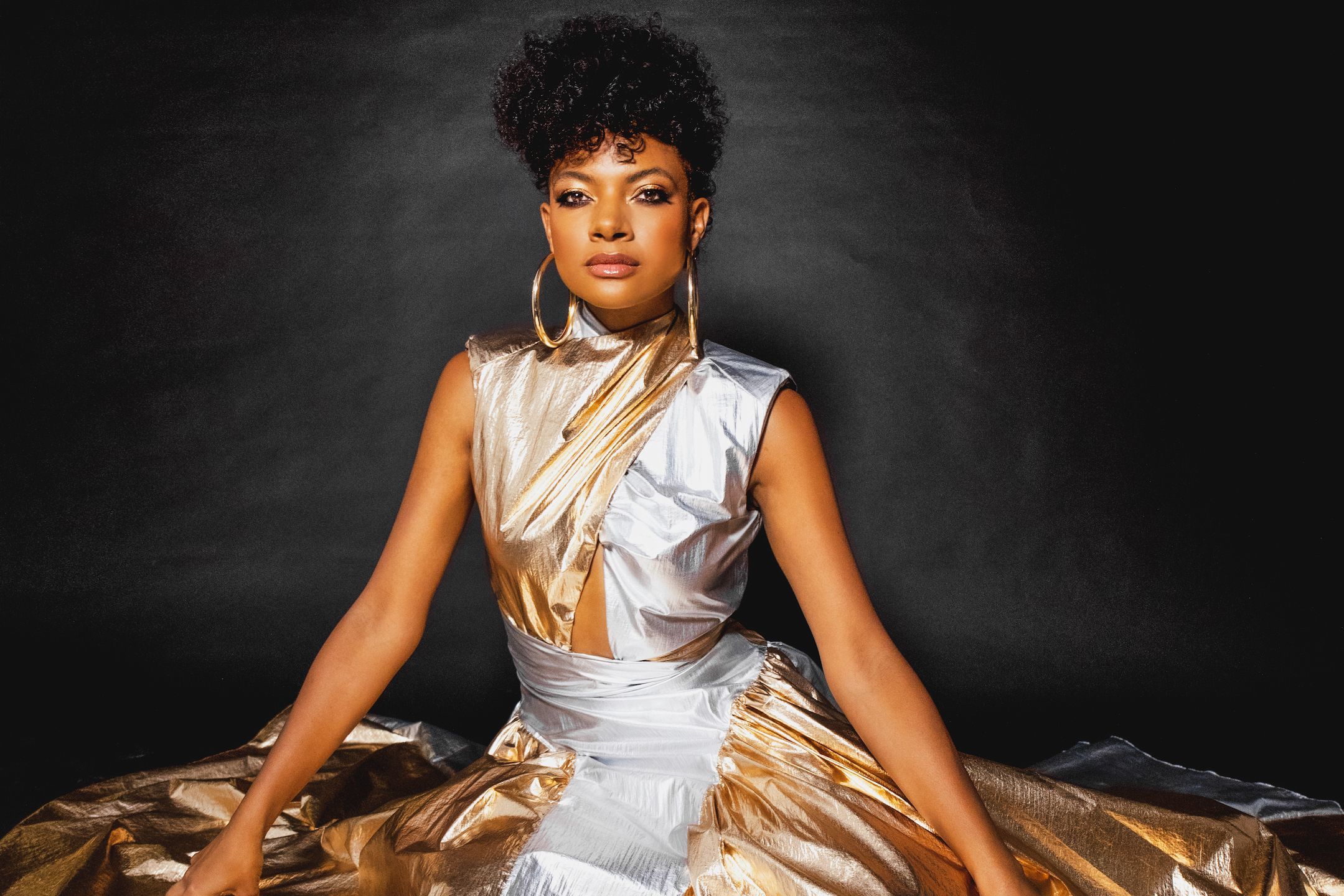
Ursula Rucker will perform as part of the Red, White, & Blue To-Do.
Red, White, & Blue To-Do
When the Continental Congress announced its independence from Britain on July 2, 1776, John Adams predicted that would be the day that future Americans would celebrate “with pomp and parade.” The Red, White and Blue To-Do will make good on that prediction with free events all throughout the historic district.
The musical component is wide ranging and meant to reflect a multicultural American mosaic. Puerto Rican Bomba band Los Bomberos de la Calle and a Balkan brass outfit play the National Constitution Center. Americana folk singer-songwriter Sug Daniels will sing in Elfreth’s Alley. Rob Curto’s Brazilian band Forró for All will perform at the Weitzman Museum of National Jewish History, and hip-hop poet Ursula Rucker will be joined by Miles Orion at Arch Street Meeting House. Times vary, Philadelphia Historic District, visitphilly.com
Friday, July 3
Pop on Independence with Idina Menzel
The Broadway star of Rent, Wicked, Frozen, If/Then, and last year’s Redwood will sing with the Philly Pops in a rare (for her) orchestral concert. “It’s the most glorious experience, just standing up there in front of 80-some musicians and performing with them,” she told my colleague Rosa Cartagena. “There’s nothing like it.” This concert has also been pushed back to a later start due to the heat. 8 p.m., Independence Mall, 615 Chestnut St., july4thphilly.com
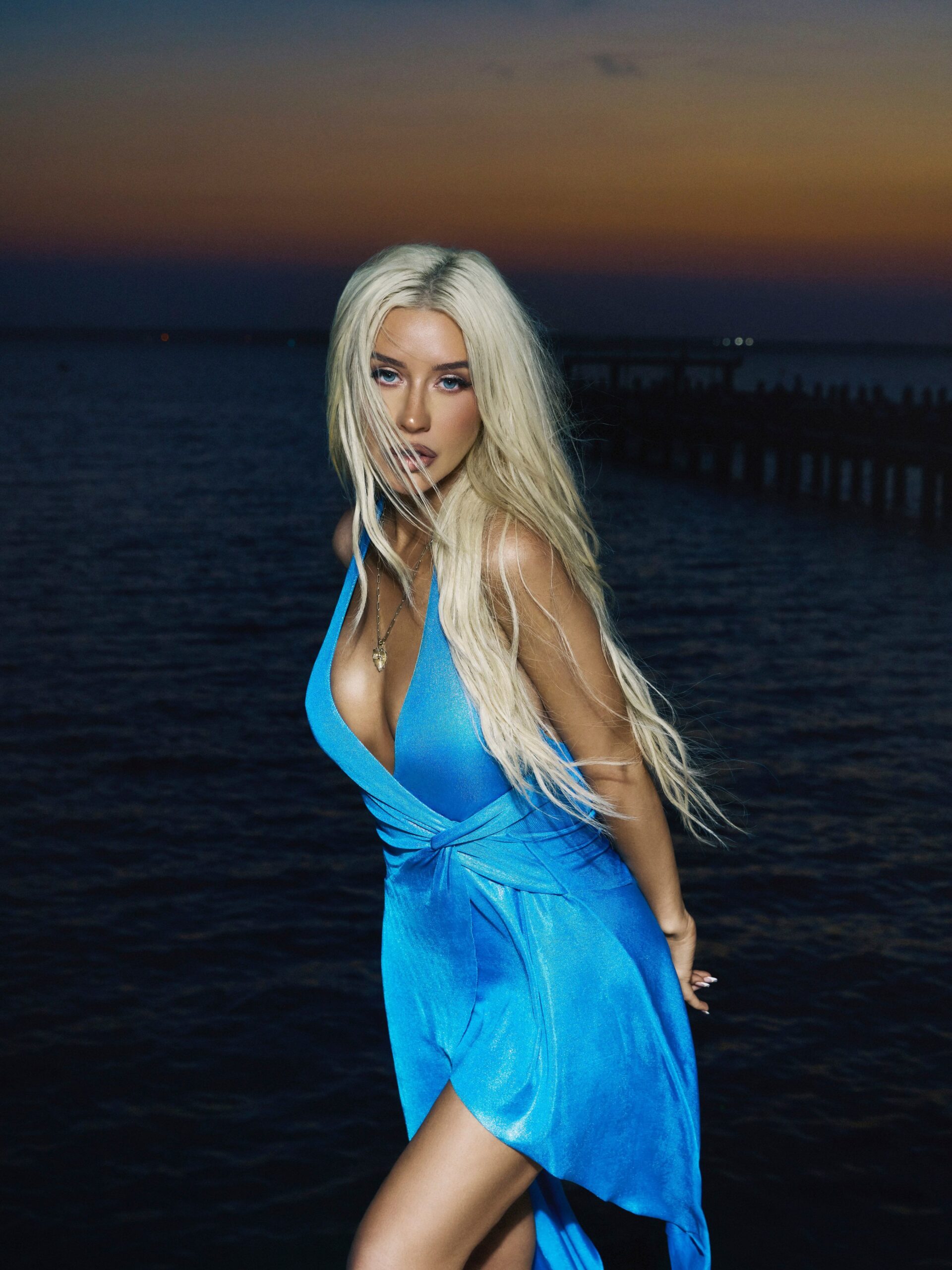
Christina Aguilera will headline the One Philly: Unity Concert for America, with Jill Scott, The Roots, Seal, Will Smith & Jazzy Jeff, and more.
Saturday, July 4
One Philly: Unity Concert for America
With France vs. Paraguay in the World Cup in South Philly and this seven-hour free show on the Ben Franklin Parkway, July 4 is an unprecedented day in Philadelphia for outsized events.
The headliner of the One Philly concert — this year produced by Philly’s ESM Productions, rather than Wawa Welcome America — is not from Philly. It’s Christina Aguilera. The Pittsburgher and former teen star is an intriguing Independence Day headliner at a time when American identity is being contested. She’s the daughter of an Ecuadorian immigrant father and has released two Spanish-language albums, including 2022’s Aguilera.
British singer Seal and rising New York family band Infinity Song are the other nonlocal acts. Other than that, it’s all Philly.
The rest — Will Smith and DJ Jazzy Jeff, Meek Mill, Beanie Sigel, and the State Property crew and Kathy Sledge of Sister Sledge — will be backed by The Roots, whose drummer Ahmir “Questlove” Thompson, is credited as an executive producer of the event. Wanda Sykes hosts, and Gillie Da King & Wallo 267 will be on hand. Special guests are expected and fireworks go off around midnight. Free, 2600 Benjamin Franklin Parkway, july4philly.com
Freedom Festival with the Commodores
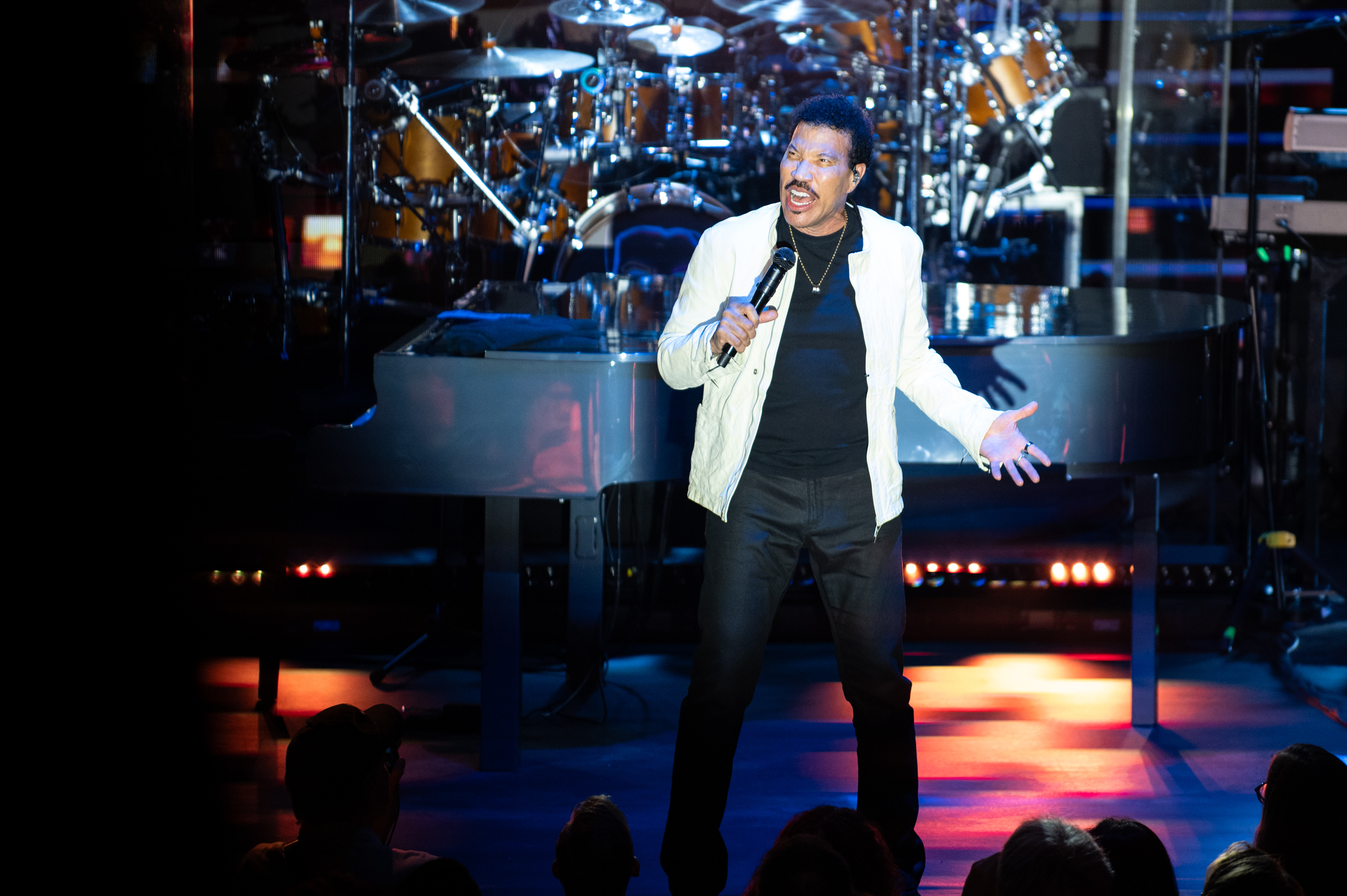
The Camden alternative to Philly’s 250th birthday celebration is a more low-key affair with the Commodores, the 1970s funk-soul and easy listening band once led by Lionel Richie, who’s been gone since 1982 (though he will be playing Xfinity Mobile Arena on July 16 with Earth, Wind & Fire). Cofounder William “WAK” King still leads the band, and he will funk it up with “Machine Gun” and “Brock House” before the fireworks go off. 6:30 p.m., Wiggins Waterfront Park, 2 Riverside Drive, Camden, america250.org
Paul Simon performs during “A Quiet Celebration” shows at the Academy of Music in June 2025.
Sunday, July 5
Paul Simon
Paul Simon had planned to play three shows on his “A Quiet Celebration” tour at the Academy of Music last year, but the last two were canceled due to his bad back. Now, he’ll return and once again begin with his 33-minute-long 2023 album Seven Psalms in its entirety, followed by a lengthy greatest hit and deep cuts set. 8 p.m., TD Pavilion at Highmark Mann, 52nd and Parkside Ave., highmarkmann.org
Jason Newsted & the Chophouse
Jason Newsted spent 15 years in Metallica, playing bass in the biggest metal band in the world from 1986 to 2001. He’s on his first-ever tour with the Chophouse Band, with whom he promises to weave rock, country, and bluegrass with metal. 7:30 p.m., 118 North, 118 N. Wayne Ave, Wayne, 118NorthWayne.com
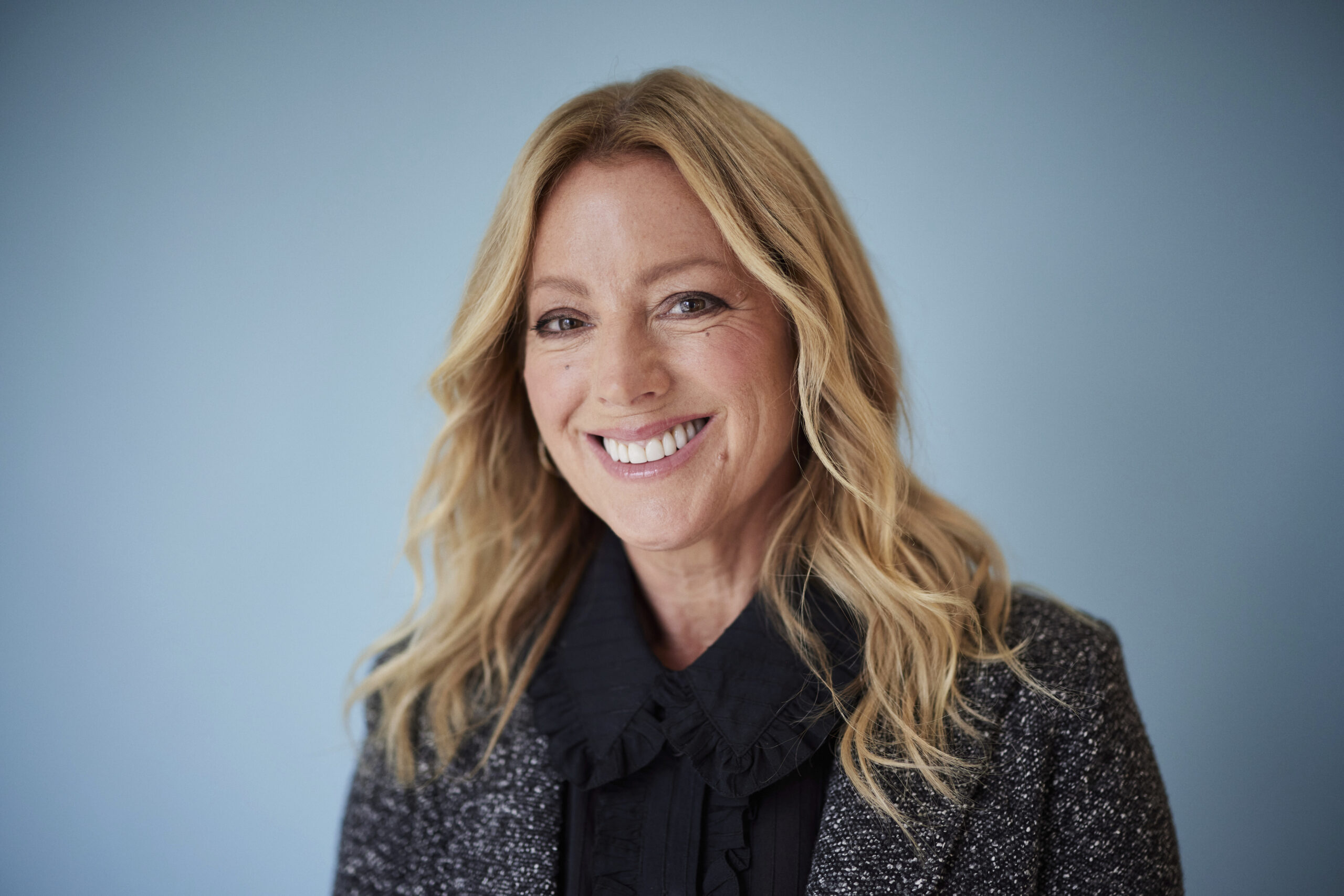
Allison Russell opens for Sarah McLachlan at the Highmark Mann on Tuesday.
Tuesday, July 7
Sarah McLachlan & Allison Russell
Lilith Fair founder and “Building A Mystery” hitmaker McLachlan returned with Better Broken, her first album in nine years, in 2025. She’s joined by Russell, the Montreal-raised songwriter who raised her profile with 2020’s stunning Outside Child, and is a member of the Our Native Daughters supergroup. Russell’s third album, In the Hour of Chaos, which features guests including Norah Jones, Brittney Spencer, and Delco’s Devon Gilfillian, is due July 10. 8 p.m., TD Pavilion at Highmark Mann, 52nd and Parkside Ave., highmarkmann.org
Madison Beer
Madison Beer first gained notice at the age of 13 in 2012, when Justin Bieber posted a link to her cover of Etta James’ “At Last.” The pop singer is enjoying her biggest success with singles like “Yes Baby” and “Bittersweet” from her new Locket. Thuy and Lulu Simon open. 7:30 p.m., Met Philly, 858 N. Broad St., themetphilly.com
Sarah McLachlan poses for a portrait on Tuesday, Sept. 16, 2025, in New York. (Photo by Matt Licari/Invision/AP)
What is Philadelphia music? If you've been following along all week, you've finally reached our answer: the top 10 songs on our list.
It’s the Sound of Philadelphia: Kenny Gamble and Leon Huff, as well as Thom Bell, their fellow songwriter-producer who completed the triumvirate known as the Mighty Three.
It’s hometown heroes like Harold Melvin & the Blue Notes and the Stylistics; out of towners pulled into the city’s orbit such as the O’Jays, Spinners, and David Bowie; and the musicians at Joe Tarsia’s Sigma Sound Studios who made the city a music mecca in the 1970s.
But of course, Philly music is much more than the rugged, sophisticated “soul music in a tuxedo” sound. It’s the street-forged rap of Schoolly D, Freeway, and Meek Mill; the luxurious strings of the Philadelphia Orchestra; and the 21st century indie rock of Kurt Vile, Dr. Dog, and Japanese Breakfast.
Philadelphia is a foundational jazz city, from South Philly’s Eddie Lang — the “Father of Jazz Guitar” — in the 1920s to John Coltrane writing Giant Steps in Strawberry Mansion in the 1950s to pianist McCoy Tyner, who’s represented with a “West Philly Tone Poem.”
Philly music means Chubby Checker and the teen idols of American Bandstand, rock singers who grew up on soul music like Hall and Oates and Todd Rundgren, soul singers par excellence like Teddy Pendergrass, Patti LaBelle, Jazmine Sullivan, Jill Scott, and irrepressible pop stars like Pink.
It’s a musician’s city that birthed the world’s greatest hip-hop band — the Roots — whose best known and loved member is the drummer. A gospel singer’s city that’s home to powerhouse vocalist Clara Ward with a concert hall named after a classical contralto — Marian Anderson — who also sang spirituals and broke racial barriers.
Timed to the celebration of the nation’s 250th birthday in the city where it was founded, what follows is an annotated list of the 76 most essential Philadelphia songs.
Are they also the best? For the most part, in my subjective opinion, yes. But along with quality, many of these songs — that are not always made by Philadelphians — are included mainly because they say something about Philadelphia, and who we are as Philadelphians.
And some are on the list due to ubiquity. They’ve become part of the fabric of daily life. You might hear them on your TV, on Broad Street on New Year’s Day, at any time of year at the sports complex, or in the summertime as an ice cream truck rounds the corner.
I made most of the decisions myself, but my colleague Peter Dobrin contributed when it came to all matters concerning classical music, and some of his choices are better described as pieces of music rather than songs, per se.
He knows far more about classical music than I do, so — like Rocky and Adrian in Rocky — we will fill each other’s gaps. So be on the lookout for Peter’s picks, and also for where the “Theme From Rocky” is going to land on the top 76.
You may think you've never heard Cliff Nobles’ “The Horse.” But if you’ve ever been to a high school football or basketball game, the pep band has probably played it.Courtesy of the artist
Cliff Nobles’ voice is not heard on his biggest song. After moving to Philadelphia, the Mobile, Ala., born singer recorded the single “Love Is All Right” for Phil-La of Soul Records in 1968. In a session at Virtue Recording on North Broad Street that Nobles didn’t attend, guitarists Bobby Eli and Norman Harris, sax player Mike Terry, bassist Ronnie Baker, and drummer Earl Young — all future members of Philadelphia International Records house band MFSB — jammed on an instrumental version of “Love Is All Right” that became the B-side. DJs preferred that version without words, and “The Horse” became a No. 2 pop hit. You might not think you know it, but if you’ve ever been to a high school football or basketball game, the pep band has probably played it.
75
Bahamadia, “Uknowhowwedu”
Antonia D. Reed, aka Bahamadia, was born in Philadelphia and started rapping when she was still in high school.Courtesy of Michael Branscom
Stone-cold classic from the underappreciated — though not by hip-hop heads — rapper Bahamadia, from her 1996 debut album Kollage. The artist born Antonia Reed made her debut with a guest verse on the Roots’ “Proceed III” in 1994. Here, she samples A Tribe Called Quest and Schoolly D and displays her verbal dexterity on a song that’s a flashback to a memorable Philly hip-hop era, as she name checks 215 rappers and DJs of the day, including the Roots, Ram Squad, Cash Money, Kolby Kolb, Cosmic Kev, and “Illadell” itself.
74
John Philip Sousa, “Liberty Bell March”
We let Monty Python’s Flying Circus borrow it for a while, but the piece is ours. Originally written for an operetta left unfinished, the piece wraps our resident bell in Sousa’s usual uplifting military garb. Tubular bells — and an optional ship’s bell — are used to suggest the famous one near Independence Hall that no longer rings. — Peter Dobrin
73
Mannequin Pussy, “Drunk II”
(Left to right) Colins “Bear” Regisford, Maxine Steen, Marisa Dabice, and Kaleen Reading, bandmates in Philly punk (and pop) band Mannequin Pussy, at Penn Treaty Park in Philadelphia on Feb. 15, 2024.Jessica Griffin / Staff Photographer
Mannequin Pussy identifies as a punk band, and for good reason. The group can whip up a righteous racket and singer Marisa Dabice’s lyrics seethe with capitalist critiques and feminist rage. But it’s also a pop band whose earworms are as musically pleasing as they are lyrically subversive. This 2019 song alternates between outer- and inner-directed anger, from a great Philly band representative of this time and place. So much so that when Mare of Easttown creator Brad Ingelsby created a fictional Delco rock band, he had them sing Mannequin Pussy songs.
72
Bill Doggett, “Honky Tonk, Parts 1 and 2”
Huge 1956 instrumental pop and R&B smash from Doggett, who was born in Philly in 1916 and played piano in Lucky Millinder’s Orchestra in the 1940s, when he cowrote “Shout, Sister, Shout!” for Sister Rosetta Tharpe, who will appear higher up on the Philly 76. Doggett was an innovator of the Hammond B-3 organ, and “Honky Tonk” was such a runaway hit that it was covered by Buddy Holly and the Beach Boys. It also pointed ahead to the great Philadelphia organ jazz tradition that includes Jimmy Smith, Jimmy McGriff, Trudy Pitts, Shirley Scott, and Papa John & Joey DeFrancesco.
71
Lee Andrews & the Hearts, “Long Lonely Nights”
Lee Andrews Thompson’s impact goes well beyond cocreating his son, Roots drummer Ahmir “Questlove” Thompson. (And his lineage goes back further: Lee Andrews’ father Beechie Thompson sang with Philly gospel greats the Dixie Hummingbirds.) In the late 1950s, when the Hearts were managed by influential Philly DJ Douglas “Jocko” Henderson, the band scored a series of heart-rending doo-wop hits. “Long Lonely Nights” is the one that hurts the most.
70
Evelyn “Champagne” King, “Shame”
The Phillie Phanatic dances with singer Evelyn "Champagne" King after she threw out the first pitch on June 21, 2013.Charles Fox / Staff Photographer
Evelyn King was discovered as a teenager singing in a bathroom at the Philadelphia International Records offices. “Champagne” was added to make her name sound less grown-up and give it the extra fizz suited to the disco explosion, which, in 1977, the song arrived in the middle of. Raymond Earl of Philly band Instant Funk plays bass, recently deceased Philadelphia International Records great Dexter Wansel plays keys, and Sam Peake is on sax.
69
Bobby Rydell, “Wildwood Days”
Bobby Rydell speaks about his experiences in Wildwood after the dedication of his “Icon of the Wildwoods” mural, in May 2014.Michael S. Wirtz / Staff Photographer
Bobby Rydell had a big 1963. Not only did the South Philly musician — originally a drummer, who played in a teenage band with guitar great Pat Martino — costar in Bye Bye Birdie, he also scored a hit with “Forget Him.” “Wildwood Days” is the summertime excursion that has stood the test of time. It’s featured in Season 2 of Upper Darby native Tina Fey’s Netflix series The Four Seasons. Sixty-three years after its release, the song still soundtracks a summer down the Shore, where “Every day’s a holiday, and every night’s a Saturday night.”
68
Woody Guthrie, “Philadelphia Lawyer”
Woody Guthrie in March 1943 with his guitar.Courtesy of Library of Congress
Woody Guthrie’s cowboy ballad is not about a personal injury attorney who advertises on billboards on I-95 and the Schuylkill Expressway luring clients with a big sack of money. But it could be: The protest and folk singer who wrote the words “This Machine Kills Fascists” on his guitars characterizes Philadelphia lawyers as slick, not to be trusted operators. So when the title character gets repaid in blood for romancing a Nevada cowboy’s sweetheart, no tears are shed. Willie Nelson and the Maddox Brothers and Rose also do fine versions.
67
Santigold, “Creator”
Santigold performs on the Rocky Stage during the Made In America Music Festival along the Benjamin Franklin Parkway on Sept. 2, 2012.Yong Kim / Staff Photographer
Mount Airy-raised Santi White is a Philly all-star going back to her days leading Stiffed, the New Wave and ska rock band she fronted in the early ‘00s. After moving to New York, she soon broke through with a 2008 album that stylishly mixed, dub, electro, punk, hip-hop, and pop and made her an avatar of 21st-century cool. “I’m the creator, thrill is to make it up,” she singjays on “Creator,” which found its audience in part through exposure on Gossip Girl and a Bud Light Lime ad.
66
Blind Willie Dunn’s Gin Bottle Four, “Jet Black Blues”
Salvatore Massaro changed his name twice. As Eddie Lang, the South Philly native was known as the Father of Jazz Guitar. Then he called himself Blind Willie Dunn so he could break the music industry color line and team with jazz and blues guitarist Lonnie Johnson at a time when Black and white players making music together was taboo. This 1929 song is important music that’s also delightful; and also tinged with tragedy as Lang would die in 1933 at age 30 from complications from a tonsillectomy that his friend Bing Crosby urged him to have.
65
McCoy Tyner, “West Philly Tone Poem”
In this July 14, 2009, file photo, jazz pianist McCoy Tyner performs during the 43rd Montreux Jazz Festival in Montreux, Switzerland.Courtesy of AP
The giant of jazz piano, known for his thunderous playing and early collaborations with John Coltrane, sounds soft and lovely here. He is accompanied on bowed bass by a Philly jazz great of a younger generation, Southwest Philly’s Christian McBride.
64
Blue Magic, “Sideshow”
Written by MFSB guitarist Bobby Eli with Vinnie Barrett, and produced by Norman Harris, “Sideshow” is an achingly beautiful song with a soaring vocal by lead singer Ted “Wizard” Mills, released on Atco Records. It demonstrates just how rich the Philly soul scene was in the 1970s, with Sigma Sound players like Eli and Harris scoring No. 1 R&B hits on Philly artists outside of the Philadelphia International family.
63
The Dovells, “Bristol Stomp”
Vocal group the Dovells pose for a portrait in 1961.Courtesy of Getty Images
Dance music culture in Philadelphia in the early days of rock and roll was at such a fever pitch that a song about a teen dance craze in Bucks County could — with the help of American Bandstand — become a No. 2 national pop hit. Len Borisoff, the lead singer of the Dovells, who also had a smash with “You Can’t Sit Down,” later went on to solo fame as Len Barry, with the divine 1965 hit “1-2-3.”
62
The Menzingers, “Anna”
Tom May, co-frontman of the Menzingers, at Union Transfer on Nov. 24, 2018, for the “After The Party Tour.”Courtesy of Kristen Balderas
Like any power pop band worth its salt, Scranton-born and Philly-based the Menzingers excel at yearning. The thing they’re longing for in 2019’s “Anna” is quality time with their significant other. “Anna, I have so much to tell ya” rhymes with “Please come back to Philadelphia.”
61
Rachmaninoff, “Symphonic Dances”
Undated photo of pianist, conductor, and composer Sergei Rachmaninoff (left) and Eugene Ormandy.Courtesy of Marston
“Unquestionably, they are the finest orchestral combination in the world,” Rachmaninoff said of the Philadelphia Orchestra in 1931. Among the works he wrote specifically for the ensemble is his Symphonic Dances, his last major work and one of the most colorful and emotionally far-reaching. — Peter Dobrin
60
Sheer Mag, “Point Breeze”
Christina Halladay (left), Hart Seely, and Kyle Seely (right), sit in their rehearsal space on Grays Avenue in Southwest Philadelphia on Tuesday, Aug. 21, 2019. The three are part of the band Sheer Mag, which was formed in Philadelphia.Margo Reed / Staff Photographer
Anti-gentrification rock and roll! The Christina Halladay-fronted hard-rock quartet draws inspiration from 1970s bands like Thin Lizzy and the Clash. “Point Breeze,” from the band’s 2014 debut EP makes pointed reference to an OCF Realty office and notes that “the streets are changing, a white breeze is blowing through.”
59
Jim Croce, “You Don’t Mess Around With Jim”
Jim Croce, a South Philly native and Villanova grad.
South Philly native and Villanova grad Jim Croce met a “pool shootin’ son of a gun” named Big Jim Walker in a West Philly bar. The title cut to Croce’s 1972 breakout album was also the blueprint for his 1973 hit “Bad, Bad Leroy Brown,” which Philly troubadour Kenn Kweder sang in tribute to Croce at the Philly Music Alliance gala this spring.
58
The American Dream, “Frankford El”
What was true in 1970 remains so today: “You can’t get to heaven on the Frankford El.” The reason why is succinctly explained on this ramshackle tune by one of the leading Philadelphia rock bands of the countercultural era, whose one and only album was the first to be produced by Todd Rundgren: “Because the Frankford El goes straight to Frankford.”
57
Lady B, “To the Beat, Y’all”
DJ Lady B in the WRNB studio in 2011, her 30th year in hip-hop.Courtesy of Laurence Kesterson
As a pioneering Power 99 DJ, Wendy Clark boosted the careers of Schoolly D, Run-DMC, and especially DJ Jazzy Jeff and the Fresh Prince. But she also made music history in 1979 when she recorded this snappy single, the first rap song released by a Philadelphia artist or female artist anywhere. In 2015, Vibe called her “maybe the most influential female in hip-hop radio history.”
56
Marah, “Christian Street”
In a photo from 1999, Serge Bielanko (right) of the group Marah goes through a sound check. To his left is his brother Dave, who is also a member of the band.Peter Tobia / Staff Photographer
A tour down the South Philly artery, from the Conshohocken-raised Bielanko brothers’ scrappy Springsteen-y band's 2000 album Kids in Philly. “Saint Paul’s is for soul salvage, 9th Street for my fennel and leek,” Dave Bielanko sings, while shouting out Rocky Balboa and Angelo Bruno. “Stop by Snockey’s for a short Amaretto, when the moon comes up rising like a giant pizelle.” From the smell of pepper and egg sandwiches to the corner payphone “for bettin’ the numbers,” the song — and entire album — teem with life and capture a fleeting turn-of-the-millennium moment.
55
Al Ham & the Hillside Singers, “Move Closer To Your World”
The Action News theme song, composed by jingle writer Al Ham, with lyrics by former 6abc exec Walt Liss, is still everyday listening in Philadelphia living rooms, 54 years after its release. Honorable mention in the category of songs that seem to be in the air, if not the wooder: the Mister Softee ice cream truck jingle, written by Les Waas, which has been omnipresent on the streets of Philadelphia since 1960.
54 to 33
54
Low Cut Connie, “Boozophilia”
Low Cut Connie’s Adam Weiner performs at the Fillmore Philadelphia on Oct. 14, 2021.Elizabeth Robertson / Staff Photographer
Barack Obama might have put this Low Cut Connie song on his inaugural presidential playlist in 2025 because Adam Weiner calls out “the South Side of Chicago.” But the raucous workout by the Philly rock and soul band — which has a patriotic protest album called Livin In the USA due July 4 — is also a song of 215 pride. “Where do we live?” Weiner asks when the band rips it up onstage. “We live in South Philly!”
53
Japanese Breakfast, “Everybody Wants To Love You”
Japanese Breakfast’s Michelle Zauner performs during the “Melancholy Tour” stop at the Met Philadelphia on May 15, 2025.Elizabeth Robertson / Staff Photographer
The coat check that Michelle Zauner once operated at Union Transfer was named in her honor in 2021, and the H Mart that gave a name to her best-selling memoir, Crying In H Mart, about grief and her Korean identity is in Elkins Park. This super sticky love song was originally recorded for Zauner’s Bryn Mawr College band Birthday Girls before finding its audience on the 2016 Japanese Breakfast album Psychopomp.
52
George Crumb's “Black Angels”
George Crumb’s “Black Angels” is absolutely hair-raising stuff.Courtesy of George Crumb
There’s a reason Crumb’s piece was dropped into The Exorcist. It is absolutely hair-raising. The Philadelphia composer, who died in 2022, was perhaps unmatched in bringing unusual sounds into Western classical music — sitar, Tibetan prayer stones, toy piano, and pretty much anything he heard and liked. Black Angels uses an electrified string quartet, and as frightening as the work was as the soundtrack to a demon presence, its original, real-life reference was even more horrifying. Written into the 1970 score are the Latin words In tempore belli (“in time of war”), a reference to the piece as a lament of the Vietnam War.
— Peter Dobrin
51
Beanie Sigel and Eve, “Remember Them Days”
Rapper Beanie Sigel performs for a crowd at the 50th Anniversary of Hip-Hop celebration hosted at Lou and Choo's Lounge in North Philadelphia on July 1, 2023.Ed Newton / For The Inquirer
This gets the nod over “Philly, Philly,” this duo’s more on-the-nose 215 track, simply because it’s a much better song. The two rappers are nostalgic for the good old days when times were bad, with a Good Times reference: “Welfare and white landlord, that life ain’t easy / The only ones movin’ up was George and Weezy.”
50
Young Gunz, “Can’t Stop, Won’t Stop”
At the Project Brotherly Love Concert, Young Neef, of the group Young Gunz, jumped into the crowd and sang during the concert.Vicki Valerio / Staff Photographer
The 2003 debut single from hip-hop duo Young Gunz — part of Beanie Sigel’s State Property crew — rides a minimalist groove and brims with youthful self-confidence. Rappers Young Chris and Neef Buck sound giddy: “The girls, the girls, they love us / ‘Cause we stay fresh to death, we the best, nothing less.” An ode to the hip-hop hustler’s life also lent its name to author Jeff Chang’s history of the culture.
49
The Intruders, “Cowboys To Girls”
The IntrudersCourtesy of the Artist
My mother would be disappointed that I didn’t pick “I’ll Always Love My Mama,” a single I’m proud to say I bought in 1973. The Intruders’ first big Gamble- and Huff-penned hit arrived in 1968 and was recorded pre-Sigma Sound at Cameo Parkway studio on South Broad Street. The group’s delicate harmonies and Bobby Martin’s gossamer arrangement are a perfect fit for the sweet innocence of the coming-of-age lyric.
48
Lee Morgan, “The Sidewinder”
American Art Blakey's Jazz Messengers with Lee Morgan, Jymie Merritt, and Art Blakey, Copenhagen, Denmark, December 1960.Courtesy of Getty Images
Named not for a venomous snake but a TV villain, “The Sidewinder” was then-25-year-old Philly trumpeter Lee Morgan’s comeback record; a jaunty, burst of soul-jazz with a boogaloo beat that put him back on track after a battle with heroin addiction. Its infectious energy and irresistible groove made it the high mark of Morgan’s career until he was tragically shot to death by his common-law wife in 1972. The song was added to the Library of Congress National Recording Registry in 2024.
47
Lil Uzi Vert, “XO Tour Llif3”
Lil Uzi Vert performs on the Liberty Stage in 2022.Heather Khalifa / Staff Photographer
“Push me to the edge, all my friends are dead”: Is that a dark look into the abyss, or a proud boast that Lil Uzi’s wallet is stuffed with Dead Presidents? The artist born Symere Woods, who grew up in the Francisville section of the city, is the only Philadelphia artist to ever release three consecutive albums to reach No. 1 on the pop charts. This dark, dreamy, addictive song sent the first of those, 2017’s Luv Is Rage 2, straight to the top.
46
Dr. Dog, “Where’d All The Time Go?”
Dr. Dog – (from left) Dmitri Matos (kneeling), Eric Slick, Scott McMicken, Frank McElroy, Zach Miller, and Toby Leaman.David Swanson / Staff Photographer
As a rock band that built a wide audience with a 1960s inspired buoyant sound, which helped put the Philly music scene on the map this century, Dr. Dog unquestionably belongs on the list. But what song from an 11-album run? This Scott McMicken-sung deep cut from 2010’s Shame, Shame cuts the band's easy charm with an undercurrent of dread. Thanks to TikTok, it’s far and away their most frequently streamed track, with over 600 million clicks. Honorable mention: “Philadelphia Lights,” by the band’s drummer, Eric Slick.
45
Billie Holiday, “Strange Fruit”
Billie Holiday singing at the Downbeat in New York, circa February 1947.Courtesy of Library of Congress
Billie Holiday was born in Philadelphia General Hospital in West Philly’s Black Bottom neighborhood in 1915. She grew up in Baltimore, but often stayed at the Douglass Hotel at 1409 Lombard St. when performing at the Showboat venue in the hotel basement. “Strange Fruit,” her harrowing anti-lynching protest song written by Abel Meeropol, was named song of the century by Time in 1999. It's also the name of a Zoe Leonard art installation at the Philadelphia Museum of Art, inspired by Holiday’s song.
44
Soul Survivors, “Expressway To Your Heart”
Soul Survivors, the soul-rock band founded by Charlie Ingui and his late brother RichieCourtesy of Getty Images
In 1967, Kenny Gamble and Leon Huff penned and produced this R&B hit for the soul-rock band founded by Charlie Ingui and his late brother Richie. Charlie still regularly performs with David Uosikkinen’s In The Pocket, whose entire repertoire consists of Philly songs like those found on this list. Inspired by I-76, the highway that bifurcates the City of Brotherly Love. Then as now: It’s much too crowded!
43
Sun Ra, “Space Is The Place”
Marshall Allen on the saxophone and vocalist Tara Middleton (right) perform during the Sun Ra Arkestra: Marshall Allen Birthday Celebration at the Lounge at World Cafe Live on May 27, 2023.Elizabeth Robertson / Staff Photographer
Interplanetary avant-jazz from the Afro-Futurist bandleader born Herman Poole Blount, who lived in Philadelphia from 1968 until his death in 1993. His steadily gigging sui generis Arkestra — fronted by the remarkable 102-year-old sax player Marshall Allen — still calls Germantown home.
42
The Orlons, “South Street”
The Orlons in the 1960s. The "South Street" singers were inducted into the Philadelphia Music Alliance Walk of Fame in 2025.Courtesy of the Artist
It’s where “the hippest,” not the hippies meet. Hippies weren’t a thing in 1963, when the Orlons released the song. The unorthodox vocal group, named after a synthetic fabric, had three female singers in lead vocalist Rosetta Hightower, Shirley Brickley, and Marlena Davis plus Stephen Caldwell. The song was written by Kal Mann and Dave Appell, who also penned hits by the Dovells and Bobby Rydell on this list.
41
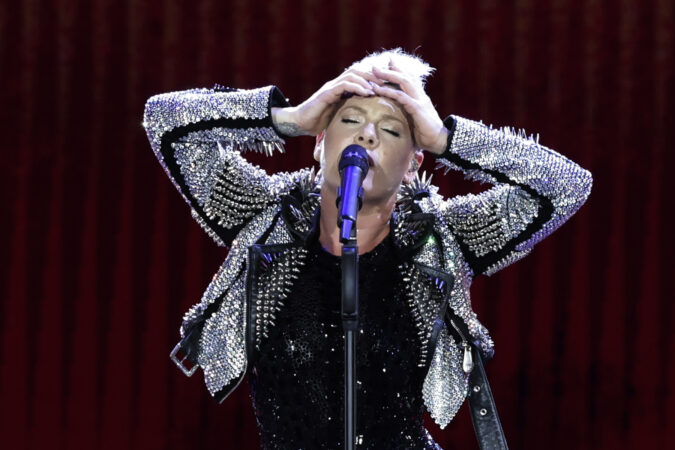
Pink, “Get The Party Started”
Pink performs at Citizens Bank Park on September 18, 2023.Steven M. Falk / Staff Photographer
Doylestown’s own Alecia Moore didn’t write this song — Linda Perry of 4 Non Blondes did. But it was a smash hit that kick-started the success of Pink’s 2001 artistic breakthrough Mizzundaztood. And its irrepressible dance-pop energy helped create the enormously likable Pink persona that’s carried her to stadium-size aerial acrobatic superstardom.
40
Sister Rosetta Tharpe, “This Train”
Sister Rosetta Tharpe jams with (from left) Hot Lips Page, Duke Ellington and Cab Calloway in August 1939 at Burris Jenkins Studio in New York City.
Sanctified gospel singer and electric guitar pioneer Sister Rosetta Tharpe was born in Cotton Plant, Ark., and scored her most influential hits, like “Strange Things Happening Every Day” and “Rock Me,” years before she moved to Philadelphia in 1960. But she resided here until her death in 1973, and is buried in Northwood Cemetery in West Oak Lane, so we’re claiming her. “This Train” was recorded in 1939 and remained a staple of her concerts through her Philly years, including the 1964 tour of Europe witnessed by British guitar heroes like Keith Richards and Jimmy Page. Take a listen to Bruce Springsteen’s “Land of Hope and Dreams” and hear the echo of “This Train.”
39
James A. Bland, “Oh, Dem Golden Slippers”
A portrait of composer and minstrel performer James A. Bland (1854–1911) at the Mummers Museum on Dec. 29, 2025.Tom Gralish / Staff Photographer
The minstrelsy song that soundtracks the Mummers Parade in Philadelphia every New Year’s Day was written by a Black man and prolific songwriter who often had to wear blackface himself while performing in minstrel shows.
Bland’s “Oh, Dem Golden Slippers” was written in 1878 as a parody of the spiritual “Golden Slippers,” popularized by the Fisk Jubilee Singers, which celebrated the finery believers expected to wear in the afterlife after ascending to heaven. Bland moved to Philadelphia in 1901 and four years later, his second most famous song — he also wrote “Carry Me Back to Old Virginny” — was first performed by parading Mummers. In 1911, he died penniless. He’s buried in Merion Memorial Park in Bala Cynwyd, where the great Mississippi bluesman Skip James is also interred.
38
Charlie Gracie, “Fabulous”
Charlie Gracie in the 1950s.Courtesy of the Charlie Gracie Family
Philadelphia’s first rock-and-roll star scored two rockabilly hits that topped the pop charts in 1957: the sweetly romantic “Butterfly” and this hiccuping gem which was a Top 10 hit in England, and had a profound effect on a 15-year-old Paul McCartney.
37
“Fly, Eagles, Fly,” “Here Come The Sixers,” and “High Hopes”
Richard Sherwood, Terry Rocap, Randy Childress, Frank McDonnell, and Joe Sherwood when they were in a rock band called Wellington Arrangement. Rocap, Childress, and Joe Sherwood later formed Fresh Aire and wrote "Here Come The Sixers."Courtesy of Randy Chi
OK, we’re cheating here. This is a Philly sports music three for one. “Fly, Eagles, Fly,” the battle cry penned by 1950s admen Charles Borelli and Roger Courtland has been covered by the Roots and Coldplay, and is sung not only at Eagles games but at concerts and other sporting events by Philadelphians eager to express their love for their Iggles and their city. It’s the musical way to say: “Go Birds!”
Catchier still is “Here Come The Sixers,” the disco-ish ditty that counts down — “10, 9, 8, 76ers! … 3, 4, 5, Sixers!” — heard at Xfinity Mobile Arena in the closing seconds of every home win. “Play the song!” means victory has been secured. And “High Hopes” is the Jimmy Van Heusen-Sammy Cahn song sung by Frank Sinatra in the 1959 A Hole In the Head, which the late Phillies announcer Harry Kalas shows up to sing on the big screen at Citizens Bank Park at the close of every win. Go Phils!
36
Clara Ward and the Ward Sisters, “How I Got Over”
Gospel singer Clara Ward (at the piano) and Gertrude Ward (left) rehearse in a studio circa 1955.Courtesy of Getty Images
The classic gospel hymn and civil rights anthem that Ward wrote in 1951 was sung by Mahalia Jackson at the March on Washington in 1963. It also inspired the title track to the Roots’ 2010 album of the same name.
35
Elton John, “Philadelphia Freedom”
English pop singer Elton John in a flamboyant stage outfit of white suit with feather trim and rhinestone encrusted glasses, circa 1973.Courtesy of Terry O’ Neil Iconic Images
It’s not the greatest Philadelphia song by a British rock superstar — that would be David Bowie’s “Young Americans.” But this one was written by John and lyricist Bernie Taupin for Billie Jean King, then player/coach of the mixed gender World Team Tennis franchise, the Philadelphia Freedoms. An inscription on the label of the 45 reads “To B.J.K. and the Soulful Sounds of Philadelphia.”
Released in 1975, it became a Bicentennial anthem, a No. 1 hit, and later, a gay pride anthem. At the time, however, John saw it as an example of his overexposure: “I wish the bloody thing would piss off,” he told an interviewer about the song. “I can see why people get sick and tired of me. In America I get sick and tired of hearing myself on AM radio.”
34
Barbara Mason, “Yes, I’m Ready”
Singer Barbara Mason at Sigma Sound Studios in the 1970s, with (left to right) Norman Harris, Bobby Eli, Earl Young, and an unknown musician.Courtesy of Arthur Stoppe
Freeway, left, and Beanie Sigel perform at Gillie Fest 2023 at Franklin Music Hall in Philadelphia on Saturday, July 29, 2023.Heather Khalifa / Staff Photographer
The lead single for the 2003 debut album by Freeway — also known as Philly Freeway, also known as Leslie Pridgen Jr. — features Jay-Z, and was produced by Just Blaze. It samples Creative Source’s 1974 “I Just Can’t See Myself Without You,” which provides the song’s memorable morally conflicted hook about carrying on with sketchy activities “even though what we do is wrong.”
32 to 11
32
MFSB, featuring the Three Degrees, “T.S.O.P. (The Sound of Philadelphia)”
Earl Young seated on the right at the front in an early 1970s photo of MFSB (Mother, Father, Sister, Brother), the group of musicians who regularly played on songs produced by Kenny Gamble, Leon Huff and Thom Bell that were recorded at Sigma Sound Studios in Philadelphia.Courtesy of Earl Young
The studio musicians based at Sigma Sound Studios, who were in essence the Philadelphia International Records house band, called themselves Mother, Father, Sister, Brother. In 1974, the band built around the rhythm section of Ronnie Baker, Norman Harris, and Earl Young topped the charts with this largely instrumental number which became the theme to Soul Train. Vocals are by the Three Degrees, the trio that scored a hit that year with “When Will I See You Again,” and who — fun fact! — was the favorite group of then Prince and now King Charles.
31
The Hooters, “All You Zombies”
The Hooters, founded by Rob Hyman and Eric Bazilian, who met in 1971 as students at the University of Pennsylvania.Courtesy of Michael Dwornik
It’s a toss-up between this and “And We Danced” for the definitive Hooters song. The Rob Hyman- and Eric Bazilian-led band, who played Live Aid and defined Philly rock in the 1980s, is still kicking it with a robust fan base today. The biblical, reggaefied “Zombies” gets the nod for sheer weirdness, and Hyman and Bazilian deserve props for other songwriting successes such as Hyman’s “Time After Time” for Cyndi Lauper and Bazilian’s Joan Osborne hit “One Of Us.”
30
The Dead Milkmen, “Punk Rock Girl”
American satirical punk rock band The Dead Milkmen perform on stage at Cabaret Metro on March 3, 1989 in Chicago, Illinois, USA. Left to right: Dean Clean (Dean Sabatino), Joe Jack Talcum (Joe Genaro), Dave Blood (Dave Schulthise, 1956 – 2004) and singer Joe Jack Talcum (Rodney Linderman).Courtesy of Getty Images
Guitarist Joe Genaro takes the lead with singer Rodney Anonymous only occasionally chiming in on this 1988 juvenile delinquent ditty that nicely encapsulates the band’s bratty aesthetic. It’s a love song about a couple who meet at Zipperhead, the famed South Street punk rock emporium that closed in 2005 (but its unzipped facade remains). They then head out in search of Mojo Nixon records as they refuse, as always, to take themselves seriously.
29
The Philadelphia Orchestra and Leopold Stokowski, “Fantasia”
Conductor Anthony Parnther leads the Philadelphia Orchestra and The Crossing during the world premiere performance of “A Hundred Years On” at the Highmark Mann Center in Philadelphia on Wednesday, June 17, 2026.Elizabeth Roberston / Staff Photographer
The Philadelphia Orchestra and Leopold Stokowski recorded most of the soundtrack to the 1940 Disney film, including the conductor’s towering orchestration of Bach's Toccata and Fugue in D Minor. Stoki made it OK to take liberties with Bach (and others), a practice that only makes the rich Philadelphia Sound more convincing as the musical herd today follows the orthodoxy of early instruments and historical accuracy. — Peter Dobrin
28
The War On Drugs, “I Don’t Live Here Anymore”
War on Drugs frontman Adam Granduciel performs during the group’s “A Drugcember To Remember" show at Johnny Brenda's in Fishtown on Friday, December 19, 2025.Yong Kim / Staff Photographer
For the most part, the War On Drugs don’t live here anymore, though keyboard player Robbie Bennett and drummer Charlie Hall reside in the area, and Hall has a major impact as a bandleader and producer. Drugs main man Adam Granduciel decamped to Los Angeles a number of years ago.
This terrific 2021 song isn’t about departing Philadelphia — it’s about moving on to new creative places. Its title does call attention, though, to a pattern that’s shaped the Philly music scene this century. (Relatively) cheap rent and a vibrant musical community created conditions for young bands to thrive. When they make it big — like the Drugs, or Japanese Breakfast — they frequently move on, but still consider themselves Philly bands, because the city crept into their DNA.
27
Samuel Barber, “Adagio for Strings”
Samuel Barber circa 1932, when he was a student at Curtis.Courtesy of Curtis Archives
It had its beginnings as one movement in a string quartet, and then the string orchestra version became our national soundtrack to grief. Barber was a product of the Curtis Institute of Music, and though he went on to make incredibly valuable contributions to American music — Knoxville: Summer of 1915 on a text of James Agee is perhaps the high point — nothing has become as ingrained in the country’s consciousness as the Adagio. Billy Joel once said: “I hope before I can’t write anymore, I can create music like that.” — Peter Dobrin
26
Bill Conti, “Gonna Fly Now (Theme From ‘Rocky’)”
Music Director for the 78th Academy Awards Bill Conti at the Capitol Records building in Hollywood during rehearsals for the 78th Academy Awards on February 27, 2006.Courtesy of Getty Images
The music that scored Sylvester Stallone’s scamper up the Art Museum steps in Rocky caps off one of the most irresistible inspirational scenes in Hollywood history. The film score composer and conductor lifted the trumpet intro from an anonymous 17th-century Italian sonatina. Fitting enough for the hortatory theme music for the Italian Stallion, and the city of Philadelphia itself.
25
The Trammps, “Disco Inferno”
The Trammps (from left) Stanley Wade, Harold Wade, Earl Young, Robert Upchurch, and Jimmy Ellis.Courtesy of Atlantic Records
This absolute burner of a disco-defining hit was inspired by the 1974 disaster movie The Towering Inferno. It features an incendiary vocal by Jimmy Ellis and archetypal four-on-the-floor drumming by drummer Earl Young, the MFSB member and Trammps founder who also sings a bass vocal on the track. It was a modest hit when it came out in 1976, but gained in popularity when a 10-minute plus version was included on the Saturday Night Fever soundtrack. Burn, baby, burn!
24
William DeVaughn, “Be Thankful For What You Got”
William DeVaughn poses for a studio portrait in 1974 in the United States.Courtesy of Gilles Petard
William DeVaughn was a one-hit wonder. But what a hit that one hit was! DeVaughn was a government employee in Washington and he paid $900 to get his song, originally called “A Cadillac Don’t Come Easy,” recorded at Joe Tarsia’s Sigma Sound with MFSB member John Davis’ Omega Sound production company.
“Be Thankful”’s simple message of gratitude is timeless, and it doesn’t hurt that DeVaughn sounds so much like Curtis Mayfield that the song is often misunderstood to be one of Mayfield’s own.
And while the 1974 song’s message is ultimately anti-materialist, its slinky groove and repeated lyric — “Diamond in the back, sunroof top, diggin’ the scene with a gangsta lean” — has made it irresistible to hip-hop producers.
It was sampled by N.W.A. in “Gangsta, Gangsta,” and scores of others, including De La Soul, A Tribe Called Quest, and A$AP Rocky. And in Bill Nicoletti’s Sigma documentary, The Philly Sound: Heard ’Round the World, Tarsia’s status as a major player in creating the Sound of Philadelphia is underscored as as he cruises around Philly with DeVaughn’s No. 1 R&B hit pumping out of the speakers.
23
The Spinners, “Could It Be I’m Falling In Love”
The Spinners’ members were from Detroit, but became one of the shining lights of Philly soul when producer-arranger Thom Bell took on the challenge of turning the journeyman vocal group into 1970s top 40 stars. He succeeded magically, perhaps never more so than with this elegant, bewitching ballad. It’s marked by Bell’s delicate musical embellishments, Bobby Smith and Philippe Wynne’s dazzling lead vocals, and backup singers including Linda Creed and the trio of Barbara Ingram, Carla Benson, and Evette Benton, who were known as the Sweethearts of Sigma.
22
Ween, “Spirit of ’76”
Ween group portrait: Dean Ween, Gene Ween, Claude Coleman Jr, and Andrew Weiss. Hof Ter Lo, Antwerp, Belgium, March 27 1995.Courtesy of Getty Images
What better way to celebrate Philadelphia’s role in the founding of the U.S. than with Gene and Dean Ween? New Hope DIY music savant duo of Aaron Freeman and Mickey Melchiondo is a master of many styles. On this single, the two create a Philly soul music pastiche that's not only highly amusing but also — as is Ween’s wont — musically on point.
The video features the duo stealing the Liberty Bell, and with Freeman’s falsetto in fine form. “Fairmount Park in the summer, lookin’ good on the street,” he sings. “Mannequin was filmed at Woolworth’s, Boyz II Men still keepin’ up the beat.”
(Mannequin was actually filmed at Wanamakers, but Boyz II Men were, in fact, doing their part…)
21
Todd Rundgren, “Hello, It’s Me”
Todd Rundgren on stage at the Spectrum, Oct. 23, 2009.David M. Warren / Staff Photographer
Upper Darby’s finest! Todd Rundgren got his start in the Philadelphia music scene in the 1960s, first with bluesy Woody’s Truck Stop and power-pop band the Nazz, whose “Open My Eyes” probably deserves a spot on this list as well.
Rundgren’s list of credits as a producer is staggering: Patti Smith, XTC, Meatloaf, the Cars. He was raised on the radio by legendary Philly DJs like Jerry Blavat, Jimmy Bishop, and Georgie Woods. “I grew up listening to the Geator,” he told an audience at a Philly Music Walk of Fame gala in 2019. “He played the music that would have been called race records at the time. And that’s why so many white kids in Philly grew up wanting to sing R&B.”
“Hello, It’s Me” introduced Rundgren to the world. It was the first song he ever wrote. Its music was shaped by Rundgren’s reaction to Philly jazz organ great Jimmy Smith’s introduction to a version of “When Johnny Comes Marching Home.” It first appeared as a Nazz song as the B-side of “Open My Eyes” in 1968 and then on a different, more uptempo version on Rundgren’s 1972 double album solo debut Something/Anything?
20
Patti LaBelle, “If Only You Knew”
American R&B singer Patti Labelle sings with emotion during the Live Aid famine relief concert at JFK Stadium in Philadelphia, Pa., July 13, 1985.Courtesy of AP
There are so many Patti LaBelle eras. Her early ‘60s days with Patti LaBelle and the Blue Belles, the 1970s “Lady Marmalade” period in the group Labelle with Sarah Dash and Nona Hendryx and New Orleans producer Allen Toussaint, as well as the trio’s contributions to Laura Nyro’s classic Philly soul album Gonna Take A Miracle.
This song, written by Dexter Wansel and Cynthia Briggs, came at a key moment in her career, when she had joined Philadelphia International Records and was in need of a hit. She got a 1983 No. 1 R&B chart-topper with this subtle love song that starts off restrained before cutting loose with full Ms. Patti force. It set the stage for “New Attitude” the next year, and her showstopping performance at Live Aid in 1985.
19
DJ Jazzy Jeff and the Fresh Prince, “Summertime”
Jazzy Jeff & the Fresh Prince, Will Smith, c. 1990Courtesy of Getty Images
A truly iconic track in Philly hip-hop culture. Why did the Roots feel compelled to move its annual festival to Belmont Plateau this year? Of course, because the Fairmount Park hilltop with a view of the Center City skyline was a favorite hip-hop hangout in the 1980s and 1990s. But also because that era was immortalized and made famous by “Summertime.”
“Back in Philly we be out in the park,” Will Smith rhymes on the breezy, laidback track, which samples “Summer Madness” by Kool & the Gang. “A place called the plateau is where everybody go.”
Smith, who was 23 at the time, was already missing his carefree youth: “As I think back, makes me wonder how the smell of the grill could spark up nostalgia.”
Now, it’s the sound of this song that does the trick.
18
Boyz II Men, “Motownphilly”
Boyz II Men members, from left, Wanya Morris, Nathan Vanderpool, Shawn Stockman and Mike McCary pose at the American Music Awards in Los Angeles, Calif., on Jan. 25, 1993.Courtesy of AP
Boyz II Men came together in the late 1980s at South Philly’s High School for the Creative and Performing Arts. (Amazingly, they overlapped at CAPA with Black Thought and Questlove, and also jazz greats Christian McBride and Joey DeFrancesco.)
Released in 1991, it was the first single from the quartet’s Cooleyhighharmony debut. It’s not the band’s biggest song — both “End Of The Road” and “One Sweet Day,” with Mariah Carey, were even bigger later in the decade. But “Motownphilly” put the band on the map. The quartet of Shawn Stockman, Michael McCary, Nathan Morris, and Wanya Morris revived the Philly vocal harmony concept that harkens back to the street-corner soul sounds of the 1950s updated as modern “doo wop-hip-hop.”
17
Kurt Vile, “Pretty Pimpin”
Kurt Vile performs during a show at Anchor Rock Club in Atlantic City, NJ on Saturday, January 15, 2022.Miguel Martinez / For The Inquirer
Kurt Vile’s stream of consciousness songwriting and guileless self-regard are at their most appealing on this single from 2015’s B’lieve I’m Goin Down. In this song, the singer-guitarist encounters his reflection in the mirror and isn’t sure who he sees. But then he carries on as always, in pursuing his raison d’etre: “All I wanted to do was have some fun, and live my life like a son of a gun.”
Vile, who has his own mural in Northern Liberties, always reps his hometown hard — his new album is called Philadelphia’s Been Good To Me.
16
Schoolly D, “P.S.K. What Does It Mean?”
Rapper Schoolly D, aka Jesse Weaver, poses inside Taylor's cafe in Philadelphia, PA on May 17, 2017.David Maialetti / Staff Photographer
P.S.K. stands for Park Side Killas, which was the name of a West Philly gang that Schoolly D (aka Jesse Weaver) was affiliated with when, along with DJ Code Money, he made the massively influential reverb-drenched single. This 1985 track and its “Gucci Time” flipside are rightly considered to be the first gangsta rap recordings.
Schoolly has gone on to have an intriguing career: scoring films for Abel Ferrara, and making music for Aqua Teen Hunger Force. But if “P.S.K. What Does It Mean?” was all he ever did, his impact would still have been enormous.
The murky, unexpurgated content opened the door for West Coast rappers like Ice-T and Eazy-E, then East Coast MCs such as Notorious B.I.G. The sheer number of acts who sampled the chilling, spooky Roland TR-909 drum machine beat is staggering; that list includes Siouxsie & the Banshees, DJ Khaled, Eminem, and more.
15
Stylistics, “You Make Me Feel Brand New”
The Stylistics were one of Philadelphia's best known groups in the 1970s. Known for their smooth ballads, The Stylistics produced such hits as "You Make Me Feel Brand New" and "Betcha By Golly, Wow."Courtesy of The Artist
The Stylistics toss-up comes down to two compositions from Thom Bell (who posthumously went into the Rock & Roll Hall of Fame in 2025) and Linda Creed (who will be inducted this year). The quandary is between this one, from 1974, and “Betcha By Golly, Wow,” which was originally recorded under another title by Connie Stevens in 1970 before the Philly vocal group led by Russell Thompkins Jr. did it two years later.
Both are sublime. But I’ll go with “You Make Me Feel Brand New,” because Thompkins and his bandmate Airrion Love, who share vocal duties, make heartfelt sentiments like “Without you, life has no reason or rhyme / Like notes to a song out of time,” ringing true as their voices float about Bell’s feathery orchestrations. And also because Creed wrote the lyrics for Bell, and it’s such a tender expression of personal connection between the two halves of one of soul music's all-time greatest songwriter teams.
14
John Coltrane, “Giant Steps”
John Coltrane started playing the saxophone at age 13, and came to Philadelphia from North Carolina after high school to try to make it in music.Courtesy of AP
John Coltrane was born in North Carolina, but spent most of the 1950s in a house on North 33rd Street in Strawberry Mansion that the former Navy seaman bought in 1952 with a grant from the G.I. Bill. It was there that he wrote much of Giant Steps, the landmark album where he pioneered the wildly expressive “sheets of sound” approach to melodic phrasing that transformed modern jazz.
Other Giant Steps classics include “Cousin Mary,” about his cousin Mary Lyerly Alexander who lived in the Strawberry Mansion house for decades after Coltrane’s death in 1967. “Naima,” written for his then-wife Juanita Naima Grubbs, is a lovely ballad that has been covered by many artists, including a gorgeous live version recorded at the Tin Angel in Old City by the Philadelphia jazz guitar virtuoso Pat Martino.
13
David Bowie, “Young Americans”
David Bowie, from "Who Can I Be Now? 1974-1976." One album in the set was recorded at Philadelphia's Sigma Sound Studios.Courtesy of David Bowie Archive
David Bowie came to Sigma Sound Studios in 1974 seeking Philadelphia soul. The English rock star, shapeshifting out of a glam-rock phase, came away with his version of the Philly sound, which he called “plastic soul.” He, however, used his own musicians, rather than the Philly musicians of MFSB.
The Bowie Sigma sessions are the stuff of legend. There was a studio visit from Bruce Springsteen, who took the bus from Jersey and whose music Bowie was enamored of at the time. Then they recorded versions of “Growin’ Up” and “It’s Hard To Be A Saint In the City.”
Then there are the “Sigma Kids,” who slept outside the 12th Street studio to get a glimpse of their hero, with Bowie eventually inviting them in. Decades later, the ardor of those fans is undiminished, with Sigma Kid Patti Brett being the force behind January’s annual Philly Loves Bowie Week.
“Young Americans” is a remarkable track, with a sashaying groove featuring Carlos Alomar’s guitar, David Sanborn’s honking saxophone, and backup vocals by a young Luther Vandross and Ava Cherry, Bowie’s girlfriend at the time.
The song’s lyrics about a honeymooning couple for whom things are not going so well — “It took him minutes, took her nowhere” — is full of stream of consciousness impressions of American culture on the eve of the celebration of the country’s 200th birthday in Philadelphia. Richard Nixon, Ford Mustang, and Soul Train all get referenced.
12
Billy Paul, “Me and Mrs. Jones”
Billy Paul, back in 1975.
“We got a thing, goin’ on….” Kenny Gamble and Leon Huff got the idea for what might be the greatest cheating song of all time when they noticed a couple cozying up on a daily basis in the downstairs bar at the Schubert Building on South Broad Street. That building is also where the songwriters met in an elevator in a chance encounter years before. (It now houses the Miller Theater.)
Paul was a veteran jazz-soul singer who had recorded first for the Gamble label and then Gamble and Huff’s Neptune label, before having success with 360 Degrees of Billy Paul, his second album for Philadelphia International. It came out in 1972 and included “Me and Mrs. Jones,” which packs an emotional wallop when the moody instrumentation drops out and Paul sounds equally tortured and enraptured as he belts out the song’s title.
“Me and Mrs. Jones” topped the pop and R&B charts and won Paul a Grammy, but its follow-up single, the Gamble and Huff-penned “Am I Black Enough For You?” was judged to be “too militant” by radio stations and was a commercial failure. Schoolly D then sampled it on a song of the same name in 1989.
11
Marian Anderson, “Deep River”
Marian Anderson sings on the steps of the Lincoln Memorial on Easter 1939. In 1936, she had been prohibited from performing in Washington's Constitution Hall by its owners, the Daughters of the American Revolution.Courtesy of AP
Deep is the operative word here — a deep (and exceedingly rare) contralto voice, and a deep well of yearning. The South Philadelphia-born Anderson brings not just introspection to the spiritual, which was arranged and popularized by Harry T. Burleigh, but also tremendous authority. When she sings of “that promised land, where all is peace,” you are there. — Peter Dobrin
10 to 1
10
Jill Scott, “A Long Walk”
Jill Scott performs at The Met on March 16, 2023.Charles Fox / Staff Photographer
Philly rowhouse culture gets spotlighted in “A Long Walk,” a standout single from Jill Scott’s 2002 debut album Who Is Jill Scott? Words & Sounds Vol.1., which established her as a multi-hyphenate singer-poet-songwriter-actress. This year, she is part of the city’s July Fourth celebration, and has three shows coming up at the Met in July.
The video to this signature song finds Jilly from North Philly getting up from her steps to contemplate the possibilities of a relationship that would include “conversation, verbal elation, stimulation,” and might be helped along by a stroll around the park in hopes of finding “a spot for us to spark.”
9
Bruce Springsteen, “Streets of Philadelphia”
Bruce Springsteen and the E Street Band perform during The River Tour (#TheRiverTour) at Citizens Bank Park in Phila.,Pa. on September 7, 2016.Elizabeth Robertson / Staff Photographer
“Streets of Philadelphia” was written for Jonathan Demme’s Tom Hanks and Denzel Washington-starring 1994 film Philadelphia, which was one of the first mainstream Hollywood movies to deal with the HIV/AIDs epidemic in the U.S.
It’s a moody Bruce number, a sturdy march with his zoned out vocals cushioned by synthesizers in a spare, somber arrangement that soundtracks a man alone, his body ravaged by disease wondering if anyone will come to his aid.
“I was bruised and battered, couldn’t tell what I felt / I was unrecognizable to myself,” Springsteen sings, with his vocal bolstered by the voice of Little Jimmy Scott, ghostly in the background. “Oh brother, are you going to leave me wastin’ away, on the streets of Philadelphia?”
The song won an Oscar — beating out Neil Young’s “Philadelphia” from the same film — as well as four Grammys. It was Springsteen’s biggest hit of the ‘90s, and though it seemed like an isolated one-off, Springsteen fans learned last year that the Boss had actually recorded an entire Streets of Philadelphia Sessions album that was included in last year’s Tracks II box.
With its video that opens with an overhead shot of City Hall and shots of the Boss walking in Port Richmond, Camden, and by the Sacks Playground in South Philly, “Streets” is an obvious choice for the Springsteen Philly song. There are other options though, like “The Fever,” the unreleased track that became a radio hit on WMMR-FM (93.3) after Springsteen’s DJ pal Ed Sciaky put it in heavy rotation. And “Atlantic City,” the down the Shore corollary to “Streets” that has become the most popular Springsteen choice for artists to cover when they come through Philly.
8
Chubby Checker, “The Twist”
Chubby Checker, 20-year-old Philadelphia entertainer who started the "Twist" dance craze that has swept the nation, shows just how it's done with a hip-swiveling demonstration at a press reception in London, England, Dec. 14, 1961.Courtesy of AP
Until it was dethroned by the Weeknd’s “Blinding Lights” in 2020, Chubby Checker’s 1960 hit “The Twist” was ranked by Billboard as the No. 1 single on its all-time Hot 100 chart.
That’s 60 years at the top for the song that democratized dance culture. As Checker — who finally was inducted into the Rock & Roll Hall of Fame in 2025 — has pointed out, the hip-swiveling anyone-can-do-it dance meant anyone could do it on their own. You didn’t need a partner to do “The Twist.”
The song’s origin story has many … well, twists. It was written by Hank Ballard and was a No. 28 hit for him and his band the Midnighters in 1960. (Though Midnighters member Lawson Smith claimed Ballard stole it from its real author, Nathaniel Bills of the Gospel Consolators.)
Baltimore TV host Buddy Deane — whose dance show inspired John Waters’ 1988 movie Hairspray — recommended the song to Dick Clark, who tried to book Ballard on American Bandstand.
When Ballard was unavailable, Clark needed a substitute and landed on the teenager called Ernest Evans. Cameo Parkway songwriter Kal Mann first noticed the kid when Evans was working at Farm Fresh Poultry in the Italian Market, and would sing to entertain customers.
When Clark’s wife Barbara heard Evans’ impression of Fats Domino, she suggested the stage name Chubby Checker. His version of “The Twist” went to No. 1 after he performed it at the Rainbow Club in Wildwood and on Bandstand in the summer of 1960. It topped the chart again in 1962 after he performed it on TheEd Sullivan Show. It wasn’t Checker’s only dance craze hit: He also scored with “The Fly,” “Litbo Rock,” and of course “Let’s Twist Again.”
7
The Roots feat. Erykah Badu and Eve, “You Got Me”
(L-R) Erykah Badu, Black Thought of the Roots, and Eve perform at the Hennessy Artistry concert series on October 14, 2010 in New York City.Courtesy of Johnny Nunez
The best known song by the Roots — second place would go to “The Seed (2.0)” with Cody Chesnutt — was very much a group effort. Not just by the Roots themselves, but also by the trio of women that gave the heady hip-hop ballad its hooky chorus and pop appeal.
The song is the first single off Things Fall Apart, the 1999 release named after the 1958 novel by Nigerian author Chinua Achebe that is widely considered to be the band’s best album, and is a collaboration with Jill Scott, Erykah Badu, and Eve.
Scott wrote the melody and the words to the song's hypnotic hook about the challenges of a long distance relationship: “Baby don’t worry you know that you got me.” But the band’s label, MCA, wanted a bigger name to sing it because she was little known outside Philly. Badu was already an established star with a blockbuster 1997 album in Baduizm, which was largely recorded with the Roots at Sigma Sound Studio in Philadelphia. So she was brought in to sing the hook.
Up and coming rapper Eve Jeffers — then known as Eve of Destruction before her debut album came out later that year — portrayed Black Thought’s love interest in the song and acquitted herself with aplomb. But because of a technical error, she wasn’t awarded a Grammy when “You Got Me” won for best rap performance in 2000. That was finally rectified when she finally got her trophy in 2026.
6
Hall and Oates, “She’s Gone”
From left, John Oates, G.E.Smith and Daryl Hall perform collectively as Hall and Oates onstage at JFK Stadium in Philadelphia Pa. for the Live Aid famine relief concert July 13, 1985.Courtesy of AP
So many hits, it’s impossible to pick.
I considered “Fall in Philadelphia” but then I thought: I can't go for that, no can do. Because that’s a song — from the duo’s 1972 debut Whole Oats — that’s really about having had enough of the City of Brotherly Love, and needing to get away from a city of “seven million people without a hope.”
Like Gamble and Huff, Daryl Hall and John Oates met in an elevator, but in their case, at the Adelphi Ballroom in West Philly. The soul-pop band went on to become the most commercially successful duo in history.
Though they are currently at odds with one another and appear to be broken up for good — they last performed together in 2022 — they had a remarkable run, scoring 16 top ten hits, with songs like “You Make My Dreams,” “Sara Smile,” and “Maneater” all bearing the influence of the Philly soul and Motown records they grew up on.
“She’s Gone” was on their 1973 album Abandoned Luncheonette and initially stiffed in as a single, but was a hit when it was re-released in 1976. The duo teamed up on the heartbroken verses, and Hall sings the chorus (which Oates wrote) with a soaring vocal that makes it sound like something cataclysmic has occurred: “She gone, and she’s gone / Oh why, what went wrong?!”
5
The Delfonics, “La-La (Means I Love You)”
The Delfonics in the late 1960s.Handout
Choosing just one song by the sweet soul singing Delfonics, who recorded for Stan Watson’s Philly Groove label, is not an easy task. Thom Bell wrote this 1968 hit with William “Poogie” Hart. The late great producer-arranger told me in 2020 that credit should also have gone to Hart’s toddler son who heard the melody and started muttering gibberish that turned into the title.
Other contenders with parenthetical titles include “Ready or Not Here I Come (Can’t Hide From Love),” which the Fugees interpolated in “Ready Or Not,” from their 1996 album The Score, released on Conshohocken’s Ruffhouse Records. Just as tender and equally great is “Didn’t I (Blow Your Mind This Time),” which has a classic needle drop moment in a fabulous scene between Robert Forster and Pam Grier in Quentin Tarantino’s 1997 crime film Jackie Brown.
4
Harold Melvin & the Blue Notes, “If You Don’t Know Me By Now”
Sharon Paige with Harold Melvin (to her right) and the Blue Notes.Courtesy of Gamble Huff Entertainment
Teddy Pendergrass grew up in North Philadelphia and was ordained as a minister when he was 10 years old. He started off as a drummer, then took over lead vocals duties for Harold Melvin & the Blue Notes after the bandleader realized the extent of his talent.
“If You Don’t Know Me By Now,” the first single from the Blue Notes 1972 Philadelphia International debut album I Miss You, was originally offered to Labelle, Patti LaBelle’s early 1970s group with Nona Hendryx and Sarah Dash. For whatever reason, they passed on it and it fell to Melvin, a journeyman band leader with a new, super talented singer.
In Pendergrass’ hands, the song became the quintessential Sound of Philly power ballad. The strings soar, the horns carry the lover’s quarrel forward, and the singer roars; a soul man whose raw, raspy power has rarely been equalled.
Fans of the song include Bob Dylan, who included a strange chapter on it in his 2022 book The Philosophy of Modern Song. LaBelle has frequently performed it in concert, and British singer Mick Hucknall of Simply Red had a No. 1 hit with it in 1989.
Pendergrass leaned further into his lover man persona after leaving the Blue Notes in 1975, including treating women to white chocolate and lollipops at his “Ladies Only” concerts. Starting with his 1977 self-titled solo album, he released five consecutive million-selling albums for PIR, becoming the first artist ever to do so.
3
Meek Mill, “Dreams and Nightmares”
Meek Mill closes day 2 of the Roots Picnic 2025 while performing on the Fairmount Park Stage at the Mann Center on Sunday, June 1, 2025.Yong Kim / Staff Photographer
It’s a city of underdogs. Since Meek Mill dramatically introduced himself by opening his debut album of the same name with “Dreams and Nightmares” in 2012, the song’s status as the ultimate statement of Philly hip-hop’s can’t stop won’t stop pride and self-determination has only grown.
It’s such a brazen way to start an album, and a career. Though to be fair, Meek — who was born Robert Rihmeek Williams and raised in South and North Philly — was already a mixtape sensation and, as the song points out, had worked with Mariah Carey.
But for his official beginning as a recording artist, Meek began with a 3 minute 50 second manifesto that begins thoughtfully and then turns into a torrent of aggression, backed by a beat from producer Tone the Beat Bully. There's no chorus, no hook, no sampled sweetness. In a genre where “realness” and authenticity are prized, you couldn’t question Meek’s seriousness of purpose.
“I used to pray for times like this, to rhyme like this,” he starts off dreamily. “So I had to grind like that, to shine like this.” Along the way, he spent some time “on some locked up s—,” he raps, not knowing at the time that he had real legal troubles ahead.
In 2017, he was sentenced to two to four years in prison for violating his parole from an earlier gun charge, and was still in prison in February 2018 when the Eagles first used “Dreams and Nightmares” as a motivational anthem before winning a Super Bowl. It worked for the team again in 2025.
He was released on bail in April of that year and went straight via helicopter from the State Correctional Institution to the Wells Fargo Center for a Sixers playoff game. There, he rang a faux Liberty Bell and “Dreams and Nightmares” pumped up the building.
And perhaps the most dramatic “Dreams and Nightmares” scenario came later that year, when Meek headlined Jay-Z’s Made In America festival on the Ben Franklin Parkway. Returning to the city’s iconic stage as a free man, he declared himself “the king of the city.” Whenever “Dreams and Nightmares” plays and everyone in the room rhymed along in unison, it feels like he is.
2
The O’Jays, “Back Stabbers”
From left: Kenny Gamble, Leon Huff and Thom Bell. The songwriters and producers, known as 'The Mighty Three,' have their stories told in the documentary 'The Sound Of Philadelphia.'Courtesy of Philadelphia International Records
Among the O’Jays’ many Sound of Philadelphia classics, which one takes the prime position, or in this case, the second spot overall on this 76 Songs list?
“For The Love of Money”? No, sorry, that one is counted out due to The Apprentice theme song overexposure. (Though the 1973 Kenny Gamble, Leon Huff, and Anthony Jackson song’s assertion that “money is the root of all evil” seems as on point as ever these days.)
How about “Love Train?” No, for all of its locomotive power, it’s too Pollyanna-ish for these fractured times. Also: too many Coors Light commercials.
Instead, it’s a song that takes a darker view of human nature. “Back Stabbers,” the title cut from the first Philadelphia International album by the O’Jays. Its members hailed from Canton, Ohio, but became synonymous with the Philly Sound as Gamble and Huff realized Eddie Levert’s gruff vocalizing was perfect for the tough yet elegant music they were producing at PIR.
The song begins with Leon Huff’s piano being joined by Thom Bell’s shimmering string arrangement and gathers steam before it comes to a halt and Levert, Walter Williams, and William Power ask a musical question: “What they do?”
The answer is “smile in your face, all the time they want to take your place.” That dead-on assessment of the duplicity that makes the world go round was partly inspired by “Smiling Faces Sometimes,” the 1971 Motown hit by the Undisputed Truth that’s alluded to in a “Back Stabbers” lyric.
1
McFadden & Whitehead, “Ain’t No Stoppin’ Us Now”
Gene McFadden and John Whitehead when they performed on the Oprah Winfrey Show in 2002.Peter Tobia / Staff Photographer
Let’s finish up this list with a little positivity.
I didn’t plan this segue, but there’s no stopping it now. Gene McFadden and John Whitehead were house songwriters at Philly International, writing “Back Stabbers” together with Leon Huff, as well as Harold Melvin & the Blue Notes’ “Wake Up Everybody,” which was later covered by John Legend and the Roots.
As the 1970s wore on, however, the duo grew frustrated with working in the background and hoped to step in the limelight. They did so, and then some, with “Ain’t No Stoppin’ Us Now,” which Gamble suggested they give to the O’Jays. But McFadden and Whitehead chose to keep it for themselves and used it as the lead track to their self-titled 1979 solo album.
Good decision.
Before his death in 2004, Whitehead said that “if anything, the song was a declaration of independence from Gamble.” But “Ain’t No Stoppin’ Us Now,” which the duo cowrote with keyboard player Jerry Cohen, plays as something musically bigger than that; as a grand, joyous declaration to let “nothing, nothing stand in your way.”
As such it stands as a perfect distillation of Philly fighting spirit, an inspirational thumper that is the flip side of “Back Stabbers” in that it refuses to stand for negativity and instead, gears up for the good times.
“We won’t let nothing hold us back,” Whitehead sings on the song that became an anthem for the Sixers’ 1983 NBA championship run and Barack Obama’s 2008 presidential campaign. “We’re gonna get ourselves together, we’re polishing up our act.”
So by the time Barbara Ingram, Carla Benson, and Evette Benton — the Sweethearts of Sigma — join in on to repeat the song's title and the promise that “we’re on the move,” there can be no doubt that indeed, nothing can stop us.
More from this series
76 neighborhood gems that make Philadelphia Philly
A collection of recommendations from people who spend their days exploring Philadelphia.
More from this series
The top ten most iconic Philly foods revealed
The countdown ends with The Inquirer's list of Philadelphia's 10 most iconic dishes — the foods, traditions, and restaurant creations that helped define the city.
story continues after advertisement
Staff Contributors
Design: Julia Duarte
Development: Julia Duarte and Charmaine Runes
Reporting: Dan DeLuca and Peter Dobrin
Editing: Ann Applegate, Bedatri D. Choudhury and Sam Ruland
Photo Editing: Jasmine Goldband
Subscribe to The Philadelphia Inquirer
Our reporting is directly supported by reader subscriptions. If you want more journalism like this story, please subscribe today
In 2020, the Philadelphia DJ and producer — then a newly hired computer music professor at University of California, San Diego — created a course called “Blacktronika: Afrofuturism in Electronic Music.”
The popular class honors “people of color who pioneered groundbreaking genres within electronic music,” citing innovators like Sun Ra, Flying Lotus, and Philadelphia poet Moor Mother. Featured guests have included Herbie Hancock, Questlove, and Nile Rodgers.
It has also grown into a music festival: Britt has presented Blacktronika events in New York, Paris, Los Angeles, and Durham, N.C. And now, as part of ArtPhilly’s festival What Now: 2026, Britt has curated the series “Blacktronika: Philadelphia Now and Then.” It is supported with a $50,000 grant.
The Southwest Philly-raised artist, who founded the Ovum Recordings label with then musical partner Josh Wink, and created the Philly house and soul music project Sylk 130 in the 1990s, has a full week worth of musical history lessons in store for his hometown.
‘Illuminate just Philly’
“This is different from any other Blacktronika festival,” said Britt, 58, speaking via Zoom from the UC San Diego campus. “At all of the other Blacktronika events, I fly people in from all over the world,” said the DJ, who was born King James Britt. “For this one, I wanted to illuminate just Philly.”
King Britt is the curator for ArtPhilly’s “Blacktronika: Philadelphia Now and Then,” taking place for seven consecutive nights starting June 23.
Britt’s personal connection to Philadelphia’s Afrofuturism goes back to when his mother, who was friendly with members of the Arkestra, would take him to rehearsals at the Sun Ra house in Germantown.
“I didn’t understand the music when I was a kid,” he said. “But I loved the costumes.”
The band members were all dressed in colorful space-age outfits.
A Central High School graduate, Britt was studying marketing at Temple when he dropped out as his career took off.
Working with Wink under the name E-Culture, the duo had an international deep house hit with “Tribal Confusion” in 1990, when Britt was the dance music buyer at the Tower Records store on South Street. He toured as DJ for the Grammy-winning hip-hop group Digable Planets early that decade and teamed with Wink for a long-running series at Fluid nightclub called “The Womb.”
Britt never thought of himself as an educator until an ex-girlfriend and his daughter, Summer Sloane-Britt, now an art professor at Occidental College, urged him to apply for the post at UC San Diego in 2019.
DJ King Britt at Filo’s downstairs club, 408 S. Second St., in 2000.
He did a Skype job interview while in Portugal for a gig, and though he doesn’t have an undergraduate degree, got hired on the basis of a lifetime of experience.
“My CV was 40 pages long,” he said. “It was crazy.”
Shortly after moving from Philly to Southern California, Britt realized that “no one was talking about Chicago house, Detroit techno, drum & bass, dub. Ninety percent of the dance music we listen to is rooted in Black culture. But the pedagogy was nonexistent. So I created Blacktronika.”
The course debuted with 20 students the first week of the COVID-19 lockdown, with guests including Greg Tate, the critic who Britt calls “my mentor.” Tate died in 2021; his seminal book Flyboy in the Buttermilk has just been reissued on Questlove’s AUWA imprint.
Now, Britt has 420 students for his virtual Blacktronika class. Interviews with guests like George Clinton, Patrice Rushen, and the Arkestra’s Allen and Knoel Scott are archived at Blacktronika.com.
He cited drummer Earl Young’s “development of the four-on-the-floor rhythmic approach that became foundational to Disco and later House music” and Dexter Wansel “expanding the sonic palette of Philadelphia International Records.”
The prof, who is working on a Blacktronika book, gives props to “the turntablism of Cash Money and Jazzy Jeff,” plus gangsta rap pioneer Schoolly D, as well as The Roots and their keyboard player James Poyser.
A homecoming
It was ArtPhilly cofounder Bill Adair who brought in Britt, says Tania Isaac, a curatorial director of the fest. Britt “is singular in terms of what he represents,” said Isaac. “Artists who are from Philly, whose work is grounded in Philly, but are global. We’re able to support artists coming home.”
Britt’s series kicks off at Fishtown cocktail lounge Margolis on Tuesday, spotlighting TastyTreats, the party hosted by Stacey “Flygirrl” Wilson. DJs Mike Nyce and Yameen Allworld will be joined by a just-announced special guest: DJ Jazzy Jeff.
Wednesday night’s Johnny Brenda’s showcase was designed as a tribute to Wansel, the songwriter and producer whose groundbreaking synth-centric album Life on Mars was released in 1976.
Wansel was scheduled to join a Philly all-star band with Black Buttafly on keys, Anthony Tidd on bass, Tim Motzer on guitar, Elliot Levin on sax, and singers Lady Alma and Tonja Dixon. Poet Ursula Rucker was also on the bill.
Wansel died last month at 75, so the inaugural Blacktronika Icon Award will be presented posthumously to his son, producer Pop Wansel. Black Music Month founder Dyana Williams will host.
On Sunday at Silk City, Tracey Moore of Jazzyfatnastees hosts a tribute to Black Lily, the neo-soul incubator that helped birth the careers of Jill Scott, John Legend, and others. That band will include many Wansel tribute players, plus punk rock skateboarder and drummer Chuck Treece.
Dozia Blakey and King Britt in Philadelphia in 1992. Britt, now a music professor at the University of California, San Diego, has curated the ArtPhilly festival “Blacktronika: Philadelphia Now and Then,” taking place over seven consecutive nights starting June 23, at venues throughout the city, including Margolis, Johnny Brenda’s, Kung Fu Necktie, Silk City, and ARS Nova Workshop at Solar Myth.
Britt will perform on Monday, when he’ll DJ and be joined by guests at Silk City, paying homage to Back2Basics, the party that blended DJs with instrumentation, which he created with Dozia Blakey in 1990.
And “Philadelphia Now and Then” is only part one of Britt’s plan to bring Blacktronika back to his hometown.
In November 2027, he’ll partner with the African American Museum in Philadelphia for “Tangible: Blacktronika Artifacts and Archives,” an exhibit funded by a $360,000 grant from the Pew Center for Arts & Heritage. That will be accompanied by a second Britt-curated Blacktronika festival, which he says will include artists “from all over the world.”
But before he brings the world to Philadelphia, “Philadelphia Now and Then” will first tell the story of how Blacktronika blossomed in his hometown.
“It’s important to honor all the parties that were pushing the sonics, the sound of electronic Blackness in Philly,” Britt said. “From Philly, born in Philly, all the musicians are Philly. Everything’s Philly.”
King Britt’s “Blacktronika: Philadelphia Now and Then” takes place daily from Tuesday, June 23, to Monday, June 29, at venues across the city. Information at artphilly.org.
Summer music is here in earnest, and the majority of the concerts on this curated list of highlights in a jam-packed season are happening outdoors.
Besides those featured below, there are still more: like Coltrane 100: Legacy featuring Ravi Coltrane with the Philadelphia Orchestra at the Highmark Mann on July 22, or Ed Sheeran on Sept. 19 and AC/DC on Sept. 29, both at Lincoln Financial Field.
Singer-songwriter Noah Kahan throws a ceremonial first pitch before a baseball game between the Boston Red Sox and the Chicago Cubs in 2024 in Boston. Kahan plays Citizens Bank Park in Philadelphia on June 26. (AP Photo/Michael Dwyer)
Noah Kahan
June 26, Citizens Bank Park
Noah Kahan broke through big-time with his 2022 album Stick Season, which the Vermont songwriter, who grew up on a tree farm, described as “a love letter to New England.” His new The Great Divide, produced with Gabe Simon and the National’s Aaron Dessner, is even huger. New Jersey’s Gigi Perez and Wayne’s Annabelle Dinda open. mlb.com/phillies/noah-kahan
River Roads Music Festival
June 27, Heuser Park
Dar Williams’ River Roads Music Festival has found a home in Heuser Park, the King of Prussia space that accommodates crowds larger than the nearby Concerts Under the Stars series (which has choice shows with Nasir Dickerson’s Coltrane tribute July 11, Preservation Hall Jazz Band on July 23, and Joan Osborne on Aug. 7). Williams co-headlines River Roads with 10,000 Maniacs, and the bill includes English punk-folk firebrand Billy Bragg and superb songwriter Amythyst Kiah. risingsunpresents.com
Freedom Mortgage Pavilion
All summer
The lineup at the Camden amphitheater with a lawn’s eye view of Center City spans genres. Hardy’s “The Country! Country! Tour!” is June 27, Dave Matthews Band’s two-night stand is July 10-11, and Tim McGraw plays July 23. Fresh from the Roots Picnic, Kehlani is Aug. 26, Chris Stapleton’s “All-American Road Show” arrives Aug. 28-29, and TLC, Salt-N-Pepa, and En Vogue team up Sept. 13. FreedomMortgagePavilion.com
DJ Jazzy Jeff during the second day of the Roots Picnic on May 31 in Philadelphia.
One Philly: Unity Concert For America
July 4, Ben Franklin Parkway
Pittsburgh-raised Christina Aguilera tops the bill of the free 250th birthday party concert, and British pop star Seal and New York family band Infinity Song are toward the bottom. Otherwise, it’s an all-Philly affair with Jill Scott, plus the Roots performing and serving as a backup band for Will Smith. Then there’s DJ Jazzy Jeff, State Property, Kathy Sledge, and more. phila.gov
Paul Simon was supposed to play three shows on his “A Quiet Celebration” tour at the Academy of Music last year, but the final two were canceled due to his bad back. Now he’s back, in a larger space, and, as always, with a stellar band. highmarkmann.org
Patti LaBelle performs during the “Victory at Sea” concert at the Temple Performing Arts Center in 2025.
Patti LaBelle
July 9, Dell Music Center
The highlight of the Dell season is this America 250 concert with hometown hero LaBelle, who will be joined by Chester, Pa., Grammy-winning R&B singer Avery Sunshine. The Isley Brothers on Aug. 6 are also standouts on the old school R&B and hip-hop calendar. DellMusicCenter.com
Camden County Concerts
All summer, Cooper River Park, Haddon Lake Park, and Wiggins Park
Across the river on the Jersey side, multiple concert series feature national and local acts. The Haddon Lake Park Sundown Music Series has Delco native Devon Gilfillian on June 24 and Young Gun Silver Fox on Aug. 12. Cooper River Park presents Color Me Badd July 9, and Al Jardine and the Pet Sounds Band on July 16. And Wiggins Park has Will Calhoun celebrating Miles Davis on Aug. 24. They’re all free. camdencounty.com
Megan Moroney performing in Nashville in 2025. The country singer will headline Xfinity Mobile Arena in South Philly in July.
Megan Moroney
July 11, Xfinity Mobile Arena
The country songwriter, with sharp words for foolhardy dudes, is on her first arena tour behind her album Cloud 9. The presence of Musgraves and Ed Sheeran on the album shows how big a star Moroney has become. XfinityMobileArena.com
Todd Rundgren
July 11-12, Keswick Theatre
Upper Darby’s own reluctant Rock & Roll Hall of Famer is playing the hits. The “Damned If I Do” tour is subtitled “The Fan-Favorite Classics Return.” So get ready to “bang on the drum all day.” KeswickTheatre.com
Bryn Mawr Twilight Concerts
All summer
Acts hitting the under-the-gazebo stage on the Main Line include Shovels & Rope on July 12, John Gorka on July 24, Larry Campbell & Teresa Williams with Mutlu on July 31, and Mdou Moctar on Sept. 11. brynmawrtwlightconcerts.com
Bob Dylan
July 14, TD Pavilion at the Highmark Mann
The world’s greatest living songwriter, who turned 85 this year, has been pulling surprises out of his hat of late, playing long-neglected songs like “You Ain’t Going Nowhere.” Jimmie Vaughan & the Tilt-A-Whirl Band and Brittney Spencer are also on the bill. highmarkmann.org
Lionel Richie at Union Transfer on March 29, 2025.
Ben Gibbard and Death Cab For Cutie sparkled at the NonCommvention this spring. The band is touring behind their excellent new I Built You a Tower, with Philly proud Michelle Zauner and Japanese Breakfast opening. HighmarkMann.org
Pavement will headline Connor Barwin’s Make The World Better Concert Weekend on Friday July 24 at the Dell Music Center.
Make The World Better Concert Weekend
July 24-25, Dell Music Center
After a year at FDR Park, former Eagle Connor Barwin’s fundraising event for his MTWB Foundation is back at the Dell. The Strawberry Mansion weekend’s bang-bang lineup features Pavement and Ratboys followed by Kurt Vile and the Violators with They Are Gutting A Body of Water and Twisted Teens. r5productions.com
Jill Scott is playing on the Ben Franklin Parkway on July Fourth and has four shows at the Met Philly later that month.
Jill Scott
July 24-25, and July 27 and July 29, The Met Philly
Multiple concerts will bring music to the Delaware River waterfront. Wild Pink plays July 23, Spirit of the Beehive is July 24, Snacktime plays Aug. 14. The 502s are Aug. 1, Ripe is Aug. 29, and Folk Bitch Trio is Sept. 26. delawareriverwaterfront.com
Morgan Wallen
July 31-Aug. 1, Lincoln Financial Field
The Sneedville, Tenn., country superstar’s South Philly weekend on his “Still The Problem” tour teams him with Brooks & Dunn on his first night at the Linc. Night two looks more enticing, with Ella Langley, whose Dandelion is the biggest country album of 2026. LincolnFinancialField.com
Dinner Party
Aug. 2, Heuser Park
Dinner Party, the supergroup that features adventurous jazz-funk-soul-hip-hop hyphenate Kamasi Washington, Robert Glasper, and Terrace Martin, have all of one date listed on their 2026 calendar. It’s in King of Prussia, with Digable Planets opening. RisingSunPresents.com/heuser-park
Lyle Lovett performs at the Lansdowne Theater on March 12.
Lyle Lovett & Esperanza Spalding
Aug. 4-6 and Aug. 25-26, City Winery
Two of the coolest, coziest indoor gigs of the summer. Lyle Lovett plays solo and tells tales in a three-night “Songs & Stories” stand. Then Esperanza Spalding, the jazz bassist and composer, plays two nights with her full band. citywinery.com/philadlelphia
Silvana Estrada plays Longwood Gardens on Aug. 13.
Arooj Aftab & Silvana Estrada
July 29 & Aug. 13, Longwood Gardens
World class global music-making women coming to Chester County. Arooj Aftab is a Pakistani American composer whose transporting 2024 album Night Reign features Chocolate Genius, Kaki King, and Philadelphians Moor Mother and Cautious Clay. Silvana Estrada, who grew up in rural Mexico, shines on Vendrán Suaves Lluvias, a luminous mixture of folk, jazz, and traditional Mexican musical forms. longwoodgardens.org
Jon Batiste performs at the Met in Philadelphia on Oct. 30, 2025.
Jon Batiste
Aug. 14, Highmark Mann
Jon Batiste’s joyous show at the Met Philly last fall ended with New Orleans’ second line parade out of the theater and onto Poplar Street. The bandleader will bring the life-affirming spirit of his 2025 album Big Money to Fairmount Park. HighmarkMann.org
Philadelphia Folk Festival
Aug. 14-16, Old Pool Farm
The storied Philly Folk Fest returns for its 63rd year with a lineup that includes progressive bluegrass innovator Sam Bush, tough-minded songwriter Mary Gauthier, brilliantly witty tunesmith Robbie Fulks, blue guitar wiz Eddie 9V, folk troubadour Tom Rush, and Philly’s the Tisburys. John Flynn will perform and emcee. FolkFest.org.
Mannequin Pussy’s Marisa Dabice performs at Union Transfer in 2024. The Philly band is scheduled to open for the Foo Fighters this summer.
Foo Fighters
Aug. 13, Lincoln Financial Field
The “Take Cover” tour brings Dave Grohl’s stadium rock band to the Linc behind the new Your Favorite Toy. It’s the band’s first time here with new drummer Ilan Rubin, who replaced Josh Freese, who briefly replaced Taylor Hawkins after his death in 2022. Openers are Queens of the Stone Age and Philly punks Mannequin Pussy, getting a deserved spot on the big stage. LincolnFinancialField.com
Rush
Aug. 21 & 23, Xfinity Mobile Arena
Rush fans are over the moon about the reunion of the Canadian prog-rock group. Core members Geddy Lee and Alex Lifeson are back, with Loren Gold on keyboards and more importantly, new drummer Anika Nilles, who has won universal praise for taking on the daunting task of stepping in for Neil Peart, who died in 2020. XfinityMobileArena.com
Bruno Mars in Las Vegas on “Bruno Mars Day.” (Steve Marcus/Las Vegas Sun via AP)
Bruno Mars
Sept. 1-2, Lincoln Financial Field
The hits never stop coming for Bruno Mars, from “Just The Way You Are” in 2010 to his “Die With A Smile” with Lady Gaga and “APT” with Rosé in 2024. Fabulous British vocalist Raye opens, as does DJ Pee .Wee, who is Mars’ Silk Sonic partner Anderson .Paak in disguise. LincolnFinancialField.com
Kacey Musgraves
Sept. 4, Xfinity Mobile Arena
The Texas singer has circled back to her country roots on her self-reflecting new album Middle of Nowhere, which features collabs with Willie Nelson, Miranda Lambert, Billy Strings, and Philadelphia-raised singer Gregory Alan Isakov. XfinityMobileArena.com
Charli xcx performs during the Glastonbury Festival in Worthy Farm, Somerset, England, Saturday, June 28, 2025. She opens her ‘Music, Fashion, Film’ tour in Philadelphia on Sept. 11. (Scott A Garfitt/Invision/AP)
Charli XCX
Sept. 11, Xfinity Mobile Arena
Charli XCX is covering all the bases with her new album Music, Fashion, Film, which represents those realms with contributions from John Cale, Marc Jacobs, and Martin Scorsese. (Yes, really.) She opens her tour for the album, which drops July 24, in Philly. XfinityMobileArena.com
Angine de Poitrine plays Underground Arts on Sept. 16.
Angine de Poitrine
Sept. 16, Underground Arts
The masked Canadian math-rockers who hide their identities but not their musical prowess, are doing a UA basement show before returning to play Franklin Music Hall on Nov. 20. UndergroundArts.org
The WXPN-FM (88.5) weekend at Wiggins Park in Camden features headliners Dawes, Little Feat, Portugal. The Man, plus S.G. Goodman, Te Vista, Cyril Neville playing the Grateful Dead, Madison Cunningham, Sierra Hull, Rebirth Brass Band, and more. xpn.org/xpnfest
Last week, we learned that the Roots Picnic is moving to Belmont Plateau, a mile away from its recent home at the Mann Center. Now, we know who the name-in-lights Saturday night headliner is for the 20th edition of the festival.
It’s Jaÿ-Z.
The rapper and head of entertainment business powerhouse Roc Nation will perform with The Roots as the closing act on May 30, the first day of the two-day festival. The Roots has a history of playing as Jaÿ-Z’s backing band before, most notably on Jay-Z: Unplugged, the 2001 live album that was part of the “MTV Unplugged” series.
And who else is playing over the course of the Picnic, whose lineup last year included over 40 acts? That is not yet known.
Tuesday’s initial announcement includes only The Roots and Jaÿ-Z. Word on the rest of the festival, which is scheduled for May 30 and 31, is expected later this week.
In a news release, Roots manager Shawn Gee, who is the president of Live Nation Urban, which produces the festival and others around the country, said that booking Jaÿ-Z and bringing the festival to Belmont Plateau both represented the fulfillment of long-time goals for the Philadelphia hip-hop and The Tonight Show house band.
“Moving the Roots Picnic to Belmont Plateau and bringing Jaÿ-Z and The Roots together to perform are both bucket-list moments for us,” Gee said in the statement.
The Roots perform on the Mann Stage during the Roots Picnic 2025 at the Mann Center on Sunday, June 1, 2025.
“After meeting with Mayor Cherelle Parker and hearing her vision for Philadelphia 250, she truly inspired us to dream even bigger,” he said, thanking Parker, Parks and Recreation commissioner Susan Slawson, and Janelle Jones, the city’s director of the office of special events. “We can’t wait to see everyone in May at the Plat.”
Jaÿ-Z, of course, is no stranger to large scale hip-hop festivals in Philadelphia. From 2012 to 2022, Roc Nation produced the Made in America festival on the Benjamin Franklin Parkway on Labor Day weekend.
Jaÿ-Z curated the festival, headlined it in 2012 and 2017, and booked his wife, Beyoncé to play it in 2013 and 2015. The festival was cancelled due to the COVID-19 pandemic in 2020, and resumed for two years. In 2023, it was planned with Lizzo and SZA as headliners and then abruptly cancelled a month ahead of time.
Roc Nation has never announced that Made in America is over, but the festival did not take place in 2024 or 2025. Jaÿ-Z headlining the Roots Picnic in Philadelphia would certainly seem to be another sign that Made in America is gone for good.
Another burning question: What’s up with the two dots — a diacritic called an umlaut — over the “y” in Jaÿ-Z’s name?
The answer is: He started stylizing it that way on all of his branding earlier this year.
What that might mean is not entirely clear. However, this is an important anniversary year for the Brooklyn rapper born Shawn Carter.
His debut album, Reasonable Doubt, was released 30 years ago, in 1996. That same year, he released the single “Dead Presidents” with his name stylized as Jaÿ-Z, which is how it was also written on the Reasonable Doubt album cover.
So, does that mean Jaÿ-Z is launching a Reasonable Doubt anniversary tour, with the Roots Picnic as his launching pad? Or will he be releasing a new album in 2026, which would be his first since 4:44 in 2017? Stay tuned for answers to those questions.
Tickets for the 2026 Roots Picnic go on sale Wednesday, March 18, at 10 a.m. at RootsPicnic.com.
This week in Philly music features two nights at the Met with electronic music artist Subtronics, Mexican pop rock band Maná in South Philly, four nights with Moe. on the Main Line, Jimmy Webb in Wilmington, and Cat Power celebrating the 20th anniversary of her The Greatest album.
Wednesday, March 4
Michael Shannon & Jason Narducy play R.E.M.
Actor Michael Shannon has played James Garfield (in Death by Lightning) and George Jones (alongside Jessica Chastain in George and Tammy) and now he’s playing Michael Stipe. Or at least singing his songs. Along with guitarist Jason Narducy, Shannon has been moonlighting in recent years in this R.E.M. tribute band. This time, the band is playing 1986’s Life’s Rich Pageant, and more. 8 p.m., Union Transfer, 1026 Spring Garden, utphilly.com
Jesse Welles
Before Bruce Springsteen’s “Streets of Minneapolis” or Billy Bragg’s “City of Heroes,” there was Jesse Welles’ “Join ICE.” The best of Welles’ many protest songs is an Immigration and Customs Enforcement recruitment satire that stings with humor. “There’s a hole in my soul that just rages,” Welles sings, “but look at me now, I’m putting folks in cages.” 8 p.m., Fillmore Philly, 29 E. Allen St., thefillmorephilly.com
Sonny Landreth & the Iguanas
It’s the in-between time between Mardi Gras and New Orleans Jazz Fest, which makes it Louisiana music season. Two top-shelf ambassadors share a bill in Bucks County, in Breaux Bridge-based slide guitar great Sonny Landreth and NOLA roots-rock band the Iguanas. 8 p.m., Wednesday, Sellersville Theater, 84 W. Temple Ave., st94.com and 8 p.m., Thursday, Elkton Music Hall, 107 North St., ElktonMusicHall.com
Thursday, March 5
Moe.
They named themselves after “Five Guys Named Moe,” the 1942 hit by swing blues greats Louis Jordan and his Tympany Five, though none of their name is actually Moe. The longstanding six-member Buffalo, N.Y., jam band is settling in for four shows, starting Thursday. 8 p.m., Ardmore Music Hall, ardmoremusichall.com
Mx Lonely play Nikki Lopez on South Street on Thursday.
Mx Lonely & Wax Jaw
Top-notch shoegaze-slash-punk rock double bill. Mx Lonely is a Brooklyn band, fronted by singer Rae Haas, who just released their musically and thematically layered debut, All Monsters on Julia’s War, the West Philly label helmed by They Are Gutting a Body of Water’s Doug Dulgarian. Openers are terrific Philly punk quartet Wax Jaw, whose 2025 album It Takes Guts! was one of the strongest local releases of the year. 8 p.m., Nikki Lopez, 304 South St., @nikkilopezphilly
Lindsey Webster
Woodstock, N.Y., vocalist Lindsey Webster, who topped the contemporary jazz charts with her 2016 hit “Fool Me Once,” has just released her seventh album, Music in Me, on New Jersey’s Shanachie label. She’s playing two nights as part of Gerald Veasley’s Unscripted Jazz series. 6:30 and 9 p.m. Thursday and 7 and 9 p.m. Friday, South Jazz Kitchen, 600 N. Broad St., southjazzkitchen.com
Philly Pogues tribute band Bar Dust play Free at Noon at World Cafe Live on Friday and Anchor Rock Club in Atlantic City on Saturday.
Friday, March 6
Bar Dust
Shane MacGowan’s spirit lives on with Bar Dust, Philadelphia’s premier Pogues tribute band, the collective featuring members of Modern Baseball, Foxtrot & the Get Down, and the Menzingers. With St. Patrick’s Day around the corner, the punk folk septet is having a busy month, starting with a Free at Noon on Friday, followed by Saturday night at Anchor Rock Club in Atlantic City, and dates at Johnny Brenda’s on March 14 and John & Peter’s in New Hope on March 17. The band has recorded two Pogues-style original songs, including the single “Three Castles Burning,” on its new Bar Dust From the Studio EP. Noon, World Cafe Live, 3025 Walnut St., xpn.org and 8 p.m., Anchor Rock Club, 247 S. New York Ave., anchorrockclub.com
No More Dysphoria VII
This benefit for the self-described “queer-run nonprofit with the goal of helping trans + nonbinary individuals financially through major aspects of their transitions” has a loaded lineup. Headliners are Oceanator, the Elise Okusami-led band whose new Things I Never Said was made with Grammy-winning Philly producer Will Yip. Also on the bill are Frances Quinlan of Hop Along, Hit Like a Girl, and Universal Girlfriend, which features guitar hero Marissa Paternoster and Augusta Koch of Gladie. 8 p.m., First Unitarian Church, 2125 Walnut St., r5productions.com
Robert Glasper performs on the Fairmount Park Stage during The Roots Picnic at the Mann Center in Philadelphia on Sunday, June 2, 2024. He plays Union Transfer on Friday.
Robert Glasper
Pianist, producer, and bandleader Robert Glasper’s music spans R&B, hip-hop, jazz, and beyond. He’s won five Grammys and released two albums in 2025. Code Derivation featured jazz instrumentalist like Keyon Harrold and Walter Smith III, and Keys to the City, Vol. 1, showcased guests Black Thought, Norah Jones, Bilal, Yebba, and MeShell Ndegeocello. You never know who might turn up at a Glasper concert. 8 p.m., Union Transfer, 1026 Spring Garden St., utphilly.com
Lindsey Webster plays two shows each night at South Jazz Kitchen on Thursday and Friday.
Baroness
Savannah, Ga.-born and Philly-based heavy rock band Baroness plays a hometown show in support of its sixth album Stone, a muscular, melodic effort that as always features bandleader John Baizley’s distinctively trippy album cover art work. Commitment and Blood Vulture open. 8 p.m. Friday, Underground Arts, 1200 Callowhill St., undergroundarts.org
Subtronics, the electronic dance music project of Philadelphia DJ-producer Jesse Kardon, plays two nights at the Met Philly this weekend.
Subtronics
Jesse Kardon doesn’t normally land on the list of the biggest music artists in Philadelphia, but he should. Kardon, who records and performs as Subtronics, is an electronic dance music phenom on an ascending career arc. The son of longtime Philly music business fixture (and former Hooters road manager) Rich Kardon, Jesse grew up in Lower Merion, lives in Chestnut Hill, and has become a major player in dubstep and EDM in general over the past decade. He’s headlined the Sphere in Las Vegas and Red Rocks in Colorado, and his two shows at the Met Philly this weekend are timed to the release of his new 10-song EP, Fibonacci Pt 2: Infinity.8 p.m. Friday and Saturday, Met Philly, 858 N. Broad St., themetphilly.com
Jimmy Webb plays the Baby Grand in Wilmington on Saturday.
Saturday, March 7
Jimmy Webb
The songwriting legend who penned “Wichita Lineman” and “By the Time I Get to Phoenix” will be singing songs and telling stories at the Baby Grand in Wilmington. And now he has a new one to tell. Alysa Liu skated to Donna Summer’s recording of Webb’s “MacArthur Park” during her gold medal-winning figure skating program at the Olympics in Italy last month, and bringing what Webb has called his “old, beat-up song,” originally recorded by Richard Harris, an audience with a new generation. 8 p.m., The Grand, 818 N. Market St., Wilmington, thegrandwilmington.org
Maná
In 2025, Maná became the first Spanish-language band nominated for the Rock and Roll Hall of Fame. The pop-rock band from Guadalajara, which has sold over 40 million records, is on the road with its “Vivir Sin Aire” tour, named for its 1992 power ballad. 8 p.m., Xfinity Mobile Arena, 3601 S. Broad St., xfinitymobilearena.com
Cat Power plays Union Transfer on Sunday.
Sunday, March 8
Cat Power
It’s been 20 years since Cat Power — the remarkable song interpreter Chan Marshall — released her greatest album, appropriately titled The Greatest. Marshall will lead a six-piece band featuring Philly guitarist, music director, and former Delta 72 leader Gregg Foreman. She’ll play the Memphis soul album in its entirety and also reach into her catalog and hopefully include her version of Prince’s “Nothing Compares 2 U” from her new EP, Redux.8 p.m., Union Transfer, 1026 Spring Garden St., utphilly.com
Philadelphia could be in for another banner year at the Rock and Roll Hall of Fame with the city’s biggest pop star, Pink, among the 17 nominees in the running to be inducted later this year.
Along with the Doylestown-born “Get the Party Started” singer, the list of potential inductees includes another artist with Philly ties in Lauryn Hill. Plus, Phil Collins, Wu-Tang Clan, Oasis, Mariah Carey, Jeff Buckley, Billy Idol, the Black Crowes, INXS, Shakira, Iron Maiden, Luther Vandross, Sade, Melissa Etheridge, Joy Division / New Order, Iron Maiden, and New Edition.
Pink — who was born Alecia Moore and has graduated to stadium-sized stardom, with recent tour dates at Lincoln Financial Fieldand Citizens Bank Park — is newly eligible for the Rock Hall this year, having released her debut album, Can’t Take Me Home, in 2000.
Ten of the artists on the list have been nominated for the first time. Pink is the only one who made the initial cut in her first year of eligibility.
Last year was a breakthrough year for Philly at the RRHOF. “The Twist” hitmaker Chubby Checker was finally inducted — although he didn’t attend the ceremony due to a scheduling conflict. Late songwriter-producer Thom Bell got in as a Musical Excellence honoree. Cyndi Lauper, who has deep Philly ties, also got in.
Ms. Lauryn Hill performs during The Roots Picnic Philadelphia at the Mann Center in Fairmount Park on June 3, 2023.
Artists hoping to be named when inductees are announced in April include Hill, the Fugees singer whose acclaimed one-and-only-studio album as a solo artist, 1998’s The Miseducation of Lauryn Hill, came out via Conshohocken’s Ruffhouse Records label.
Other nominees Philly music fans have a rooting interest in are Luther Vandross, the luxuriously voiced New York R&B singer who founded a Patti LaBelle fan club in high school and was a key contributor to David Bowie’s 1975 album Young Americans, which was recorded at Sigma Sound Studios. And Staten Island’s hip-hop Wu-Tang Clan have always claimed Philly as their second biggest market, and chose to end the farewell tour in South Philly last summer.
This year’s list is sure to irritate rock and roll purists eager to point out that the majority of acts nominated don’t primarily make rock and roll music. Instead, the list includes Shakira’s Latin pop, New Edition’s 1990s R&B, Carey’s R&B and hip-hop pop, and Sade’s silky smooth jazz-inflected R&B.
But that ship has long since sailed. With most rock and roll originators enshrined years ago, the modern RRHOF would more properly be called the Pop Music Hall of Fame.
The Cleveland institution needs to get bodies into its I.M. Pei-designed museum building. For years now, it’s been trying to do so by opening its doors to all forms of pop music and aiming to bring in still active artists who command at least a partially youngish fan base.
In that sense Pink (who stylizes her stage name as P!nk) is a perfect fit. She may have a quarter century of experience, but her persona is anything but old school and staid. Her trademark trick is to fly through the air in an aerial harness high above the crowds at her shows. If it’s vitality the Rock Hall is after, Pink could be its artist of choice.
Does that mean she’s going to get in? Not necessarily. Billboard has her odds at 8 to 1, tied with New Edition as the least likely of long shots.
There’s plenty of competition. Hill, for one. The Fugees is not in as a group, so Hill would be the first member to represent the hip-hop crew, which was a commercial and critically dominant force in the late 1990s and early 2000s. Hill is also freshly prominent this year, after impressing as the leader of the Roberta Flack-D’Angelo tribute at the Grammys this month.
Wu-Tang Clan member RZA speaks to the audience during the hip hop group’s final performance of their farewell tour, “Wu-Tang Forever: The Final Chamber,” at the Wells Fargo Center in Philadelphia on Friday, July 18, 2025.
The other artist on the list who put out only one album is Jeff Buckley, the songwriter with a sensuous voice who drowned in the Mississippi River at 30 in 1997. His 1994 Grace includes the definitive take on Leonard Cohen’s “Hallelujah,” and his story has renewed interest, thanks to Amy Berg’s 2025 doc, It’s Never Over, Jeff Buckley.
Phil Collins is a lock. The British drummer and singer — who took a Concord to Philadelphia in 1985 so he could play at Live Aid on two continents — is already in with his band Genesis. But he has also had a massively successful solo career. His health struggles, which require 24-hour care, have been widely publicized.
I’d also rate Wu-Tang Clan as a safe bet. The Rock Hall has tended to enshrine one big-name hip-hop act every year recently, with OutKast as last year’s example. And Wu-Tang, after all, is for the children and has a perfect combo of prestige and popularity.
Every year, the Rock Hall snubs many unfashionable musical greats by not including them among the nominees. The incomparable Chicano band Los Lobos is my favorite example of a group that has been unjustly ignored.
That doesn’t mean they’ll never get in, though: Last year, long-suffering fans of the late Warren Zevon were rewarded when he was honored as a Musical Influence.
Other favorites among this year’s nominees include Iron Maiden, the English band whose inclusion would address the Rock Hall’s woeful record in acknowledging the history of heavy metal.
Colombian singer Shakira — whose 2006 “Hips Don’t Lie” is the first song by a South American artist to top the Billboard pop charts — also has an excellent shot, with the Rock Hall being mindful of paying attention to more Latin pop in the age of Bad Bunny.
Singer-songwriter Jeff Buckley, who found fame from his lone solo album “Grace,” is the subject of the music documentary “It’s Never Over, Jeff Buckley.”
And Oasis — whose reunited Gallagher brothers mounted an enormously successful world tour in 2025 — would certainly be a popular choice, with the induction ceremony a rare chance to bring the famously squabbling siblings together to celebrate one of the few things they can agree on: their greatness.
Last year, only six of the nominated performers got in. Previous nominees like Carey might also have an edge on Pink, who is likely to get in eventually, if not this year.
This year’s induction ceremony will be held in the fall, though where and exactly when has not yet been announced. Inductees are chosen by over 1,200 artists, historians, and music business professionals, according to a statement.
Fans can vote for their favorite seven choices at RockHall.com, but those votes have little impact. The RRHOF condenses the total of all fan voting to just one ballot to add to over 1,200 others.