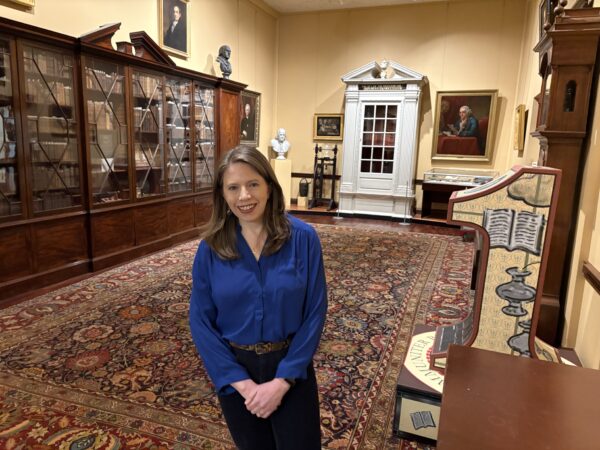
The Library Company of Philadelphia has lined up its next chief. Jessica Choppin Roney will take over the 295-year-old institution as soon as its merger with Temple University is approved by Philadelphia Orphans’ Court, leaders said this week.
Roney has existing ties to both Temple and the Library Company, as director of the program in early American economy and society at the Library Company and as an associate professor of history at Temple. She is also chair of the “integration council” that has been set up to help facilitate the amalgamation of the two groups.
“She’s been working very closely with us, so she was the obvious choice to take on the new role,” said current Library Company director John C. Van Horne, who will continue in his post until Roney takes over. Director and director-designate are already working together on the transition, he said.
Roney said this week that even with the merger, the Library Company’s mission won’t change.
“It continues to be a center of scholarly research and public-facing programming, so we’ve got work in history, in literature, science, and dance and music, and art, and on and on. That all continues and will grow and amplify with our relationship with Temple.”
The group, founded by Benjamin Franklin in 1731, owns more than 500,000 rare books, manuscripts, prints, photographs, works of art, ephemera, and other objects, mostly from the 17th through 19th centuries.
“It has always been America’s library, even before it was America,” Roney said.
The collection will continue to acquire new items, and will explore opportunities for Temple students to “make use of our collections in new ways,” she said.
Roney noted that even though the Library Company has often been powered by women — staff, trustees, shareholders, and donors — it has never had a woman at the helm.
“It’s exciting at a time of change that one of those changes is to have the first woman in charge,” she said.
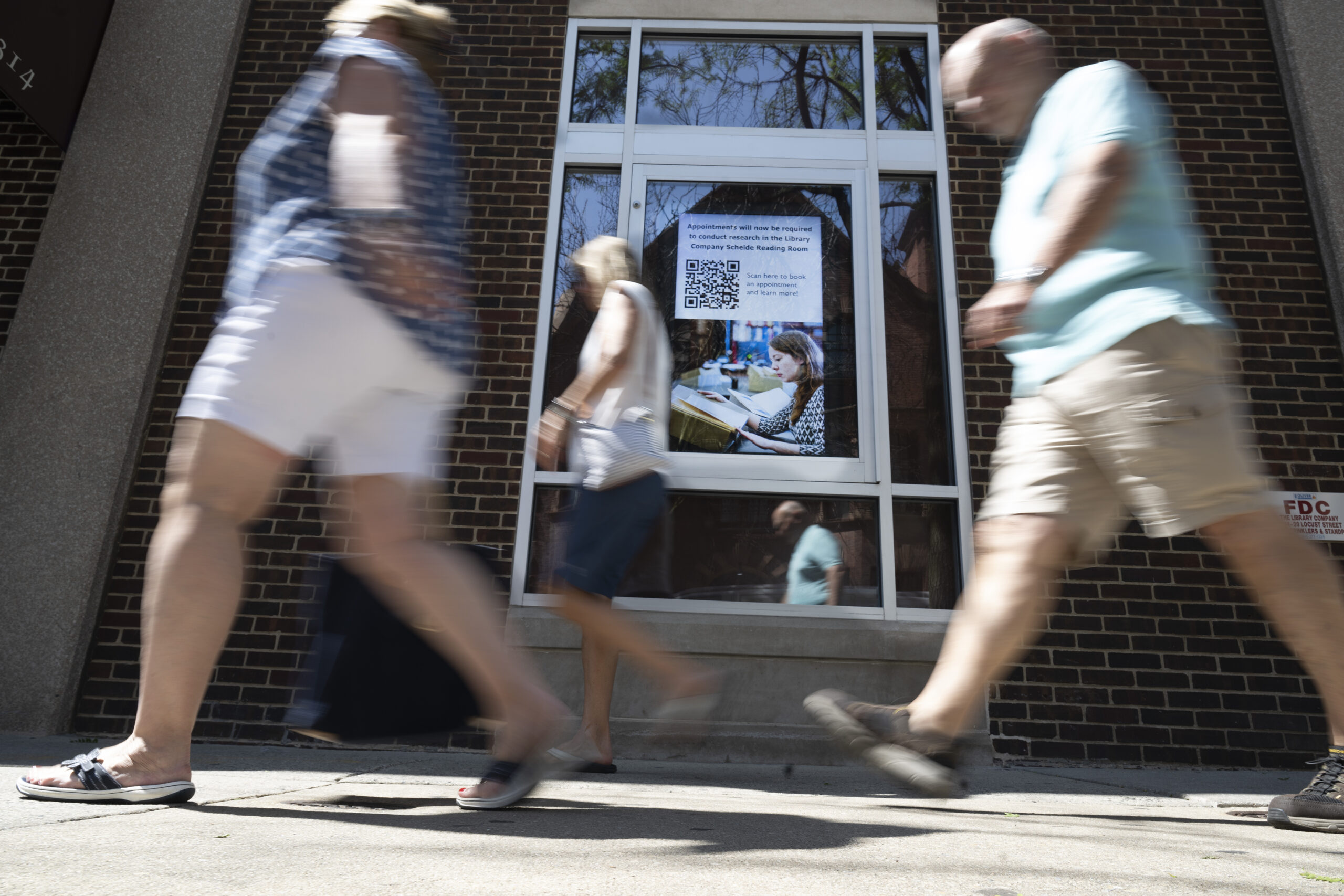
Pedestrians passing the Library Company of Philadelphia in Center City, June 25, 2025.
Facing a string of projected operating deficits, the library began to explore merger opportunities with other groups in 2024. Talks with Temple became public this past June. The boards of both organizations have approved the deal, and in December Library Company shareholders voted 174 to 33 in favor of the merger.
A potential Orphans’ Court approval — which could take weeks to years to receive, said Van Horne — would end nearly three centuries of independence for the library, whose home is on Locust Street just east of Broad, where it will remain.
Roney started as director-designate Jan. 9, and was approved for the post by the Library Company board on Jan. 22, a Temple spokesperson said. Her appointment, however, was not publicly announced until it was included in a newsletter from the group this week. Van Horne said she was chosen without a search, and no other candidates were considered.
“We thought it would be good initially since we’re just getting this relationship off the ground to have a Temple faculty person as the first director [of the merged organization], and it was fortuitous that the early Americanist at Temple was on our payroll,” said Van Horne. “She already had a foot in both camps.”
Roney, 47, earned a bachelor’s degree from Swarthmore College, a master’s from the College of William and Mary, and a Ph.D. from Johns Hopkins University. It was at the Library Company that she conducted research for her first book, Governed by a Spirit of Opposition: The Origins of American Political Practice in Colonial Philadelphia.
Van Horne was director of the Library Company from 1985 until 2014, and then returned in 2024 to help manage its financial difficulties. He has been a strong proponent of the merger, as he was for Roney’s appointment.
“She’s energetic, imaginative, and she has ideas about what we can do with Temple and others,” he said. “I’m very hopeful for the future. I think she’s going to be terrific, and I wasn’t so hopeful for the future a year ago.”
Two more Philadelphia Museum of Art senior staffers are departing as the museum continues to plot out its path after a period of institutional turmoil.
Maggie Fairs, who was promoted to chief of staff last year by former director and CEO Sasha Suda, will leave the museum at the end of the month. CFO Valarie McDuffie has also resigned, with her last day this Friday.
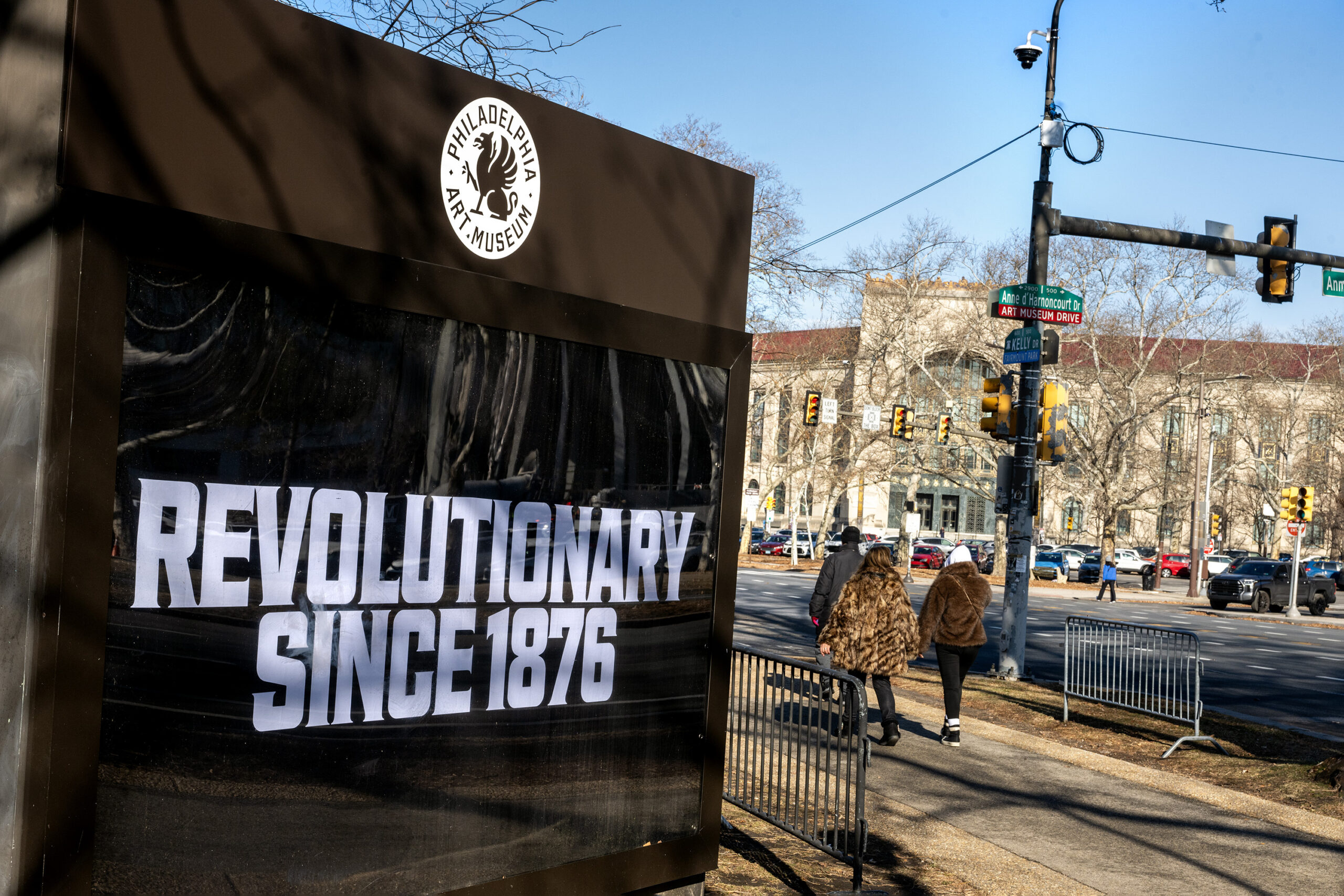
Previously, the museum parted ways with its marketing chief Paul Dien as of Feb. 1. Days later, the museum announced that it was reversing course on a renaming while keeping its new logo. Both changes were unveiled four months earlier in a rebranding overseen by Suda and Dien.
No other immediate departures are expected, though the museum is working on an “organizational review,” with more changes possible later, a spokesperson said.
Suda announced the arrival of both Fairs and McDuffie in May 2023, saying that “these two colleagues reflect the future of the institution.” Fairs was hired as vice president of communications after having worked in the United States, United Kingdom, and Canada. McDuffie had previously held several senior financial posts in secondary education.
Fairs was promoted by Suda to chief of staff in May 2025. A replacement will not be hired, as the museum is restructuring the director’s office without that position.
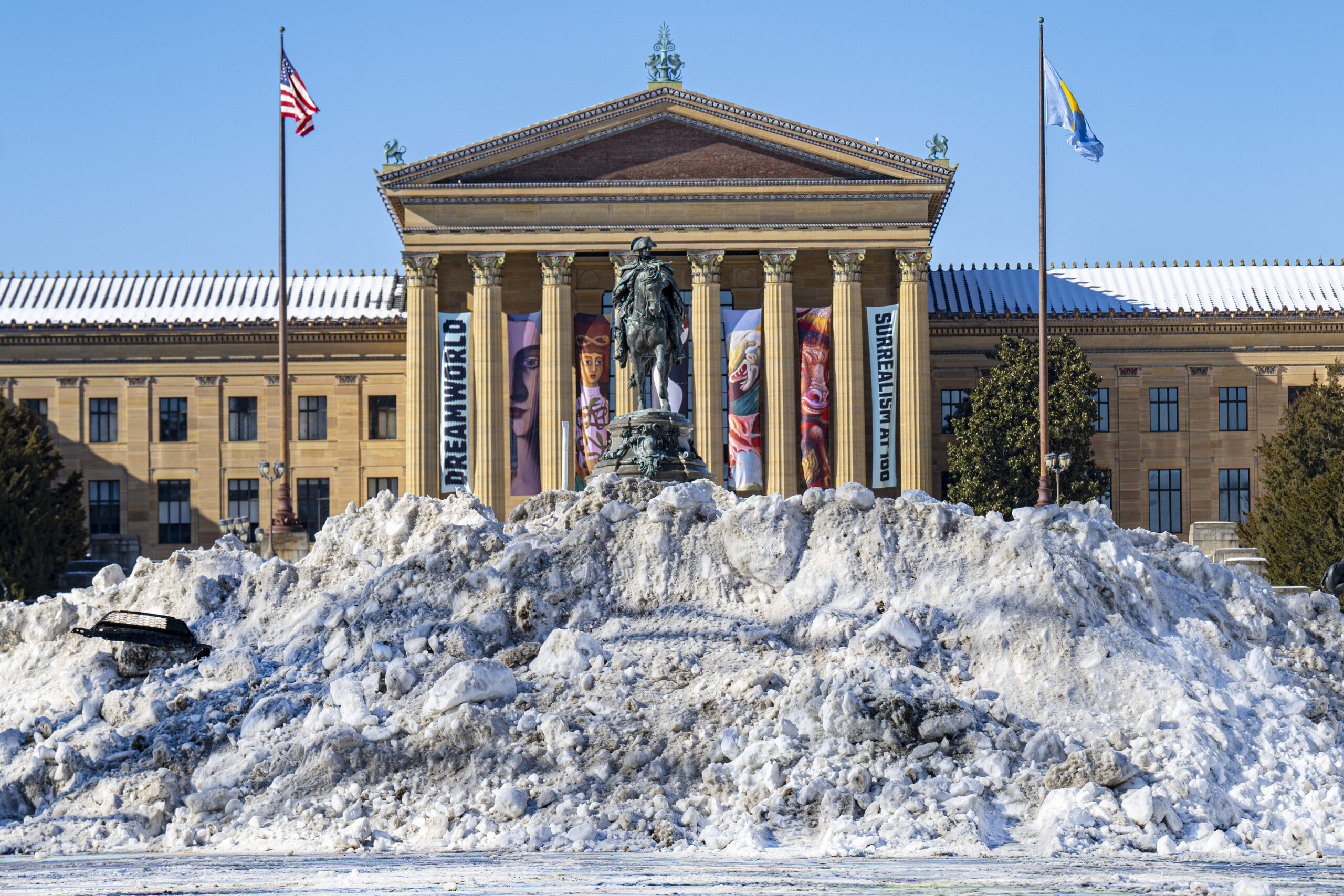
A pile of snow and ice sits on Eakins Oval in front of the Philadelphia Museum of Art on Feb. 2.
Director and CEO Daniel H. Weiss, who took over in December, said in January that the staff of the museum was “the heart and soul of the place and they need to be treasured and supported and also held accountable,” and that the museum needed “a senior management team that is available to them and transparent in its processes and also accountable.”
Asked at the time whether there would be a reorganization, he said:
“With our ambition and our mission, and as that evolves a little bit under each new leader, there needs to be careful review of how the organization serves the needs of the moment. So that’s underway.”
The museum on Monday also announced Katherine Anne Paul as new curator of Indian and Himalayan art. Paul was most recently curator of Asian Art at the Birmingham Museum of Art since 2019, and held earlier positions at the Newark Museum, the American Museum of Natural History, and the Textile Museum in Washington, D.C. She holds a Ph.D. in languages and cultures of Asia from the University of Wisconsin–Madison.
Weiss, in Monday’s announcement, singled out Paul’s scholarship and her extensive knowledge of the Philadelphia Museum of Art’s collection. She was assistant and associate curator of Indian and Himalayan art at the museum from 2002 to 2008.
A previous version of the headline misrepresented the terms of the employees’ work termination. They resigned.
Stagecraft and technology being what they are these days, one can imagine any number of ways Peter and the Wolf could be souped up. If the key to audience-building is children, Prokofiev’s children’s classic would seem to be the perfect chance to engage them with eye-popping visuals.
But the Philadelphia Orchestra is smart enough to let the piece speak for itself.
It also knows you don’t mess with success. Saturday morning in Marian Anderson Hall marked the 10th time the orchestra has presented the piece with actor-narrator Michael Boudewyns over nearly two decades, and no one should ever touch a hair on this modest production’s furry little head. In its simplicity and humor, here is one of those rare, perfect things in this world.
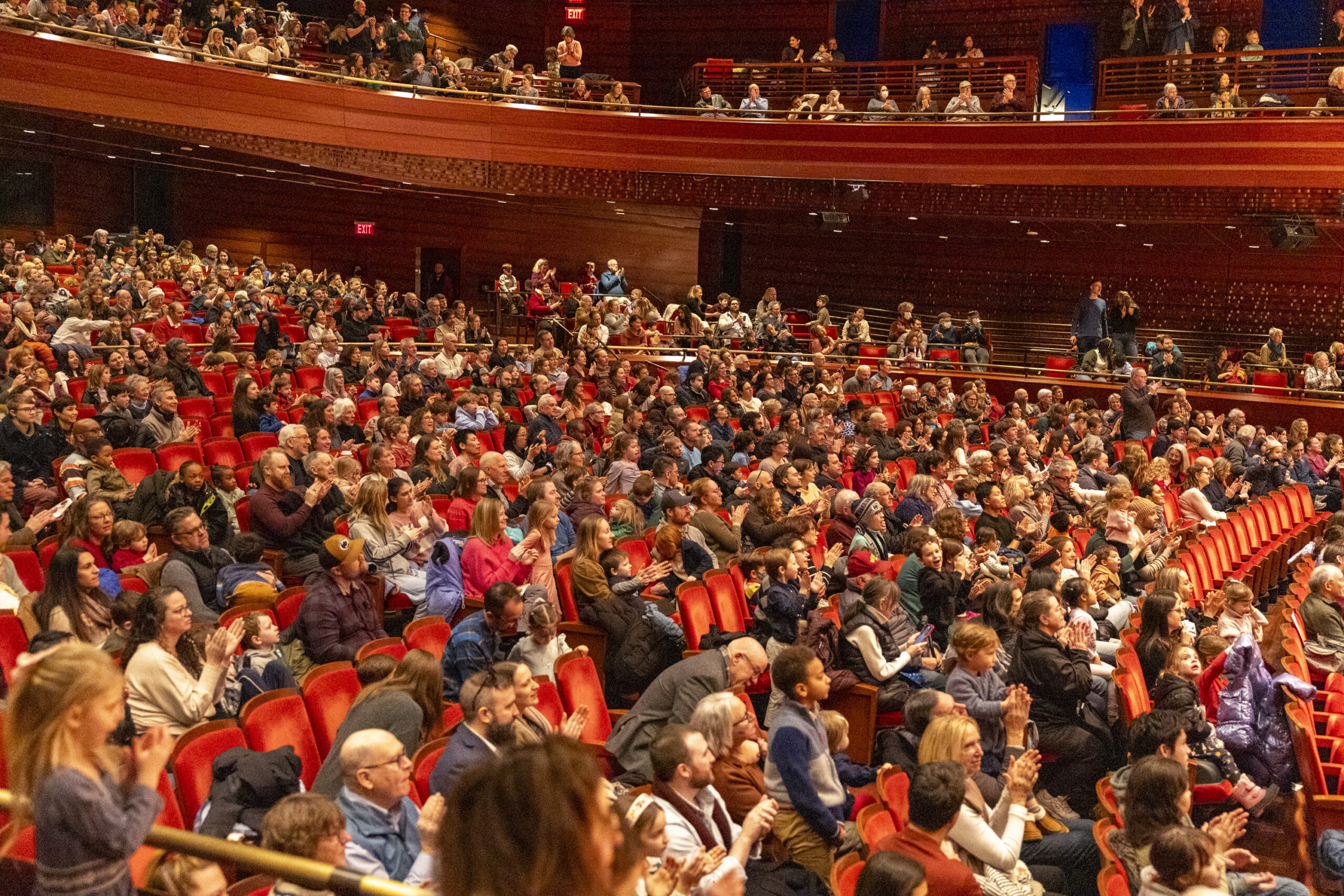
The audience applauds for the Philadelphia Orchestra’s performance of “Peter and the Wolf” Saturday in Marian Anderson Hall.
Saturday’s concert was also, judging from an audience whose ages looked to span from 2 years old to 80, a powerful generational bridge. Surely there were a few grandparents in the hall who remember going to these Philadelphia Orchestra family concerts with Leopold Stokowski on the podium.
The series continues in March with another on-ramp to classical music: Britten’s dazzling The Young Person’s Guide to the Orchestra.
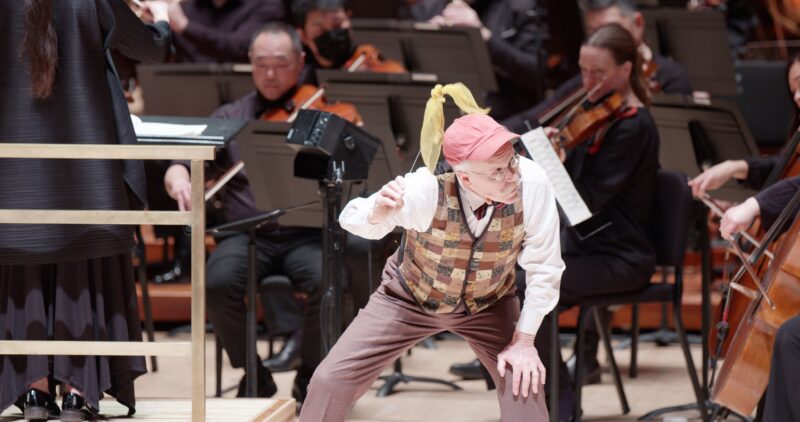
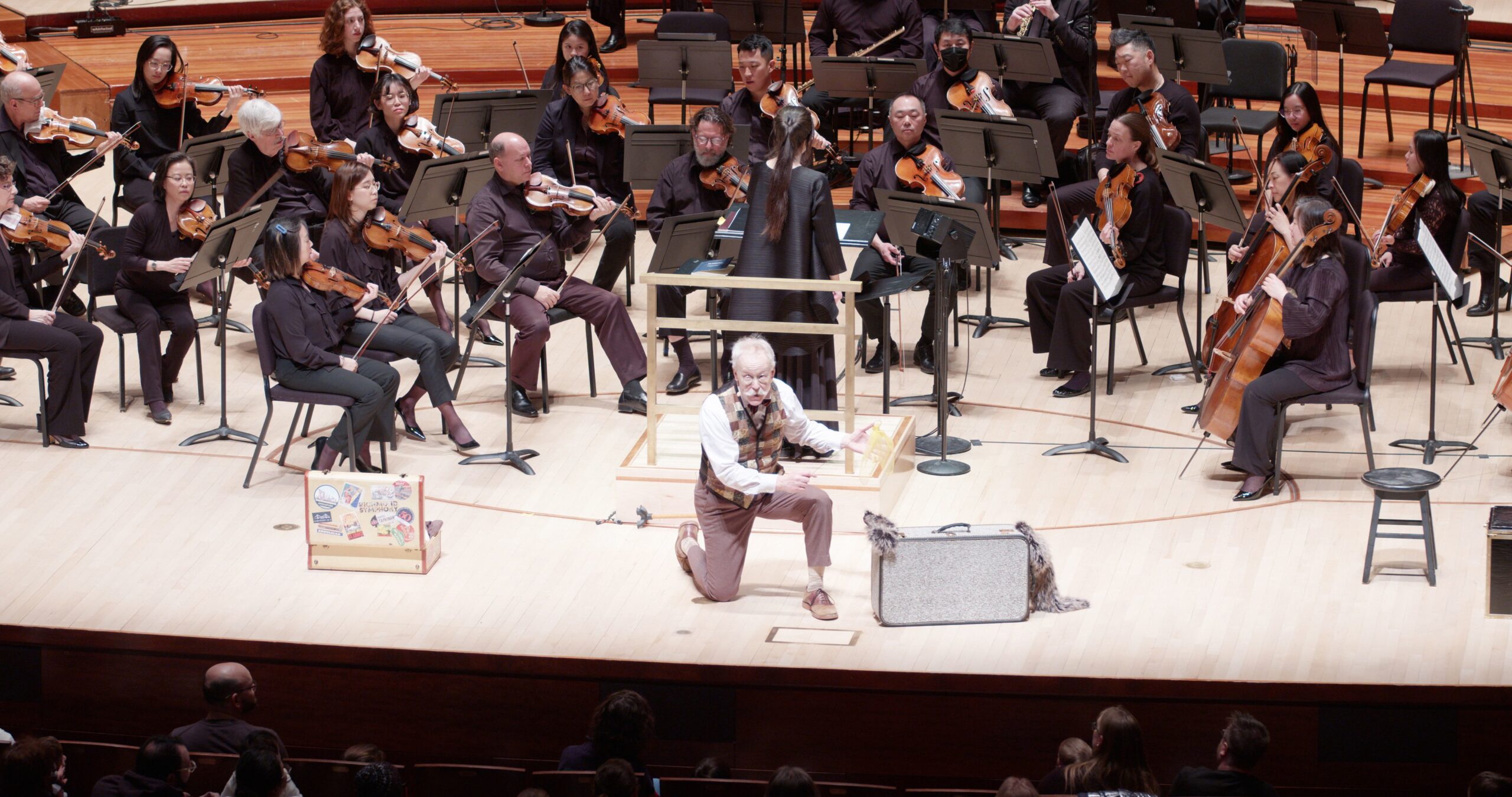
Michael Boudewyns narrating “Peter and the Wolf” with conductor Naomi Woo leading the Philadelphia Orchestra, Feb. 7, 2026, in Marian Anderson Hall.
Prokofiev’s piece — which is about to turn 90 years old — can be frightening in some productions: The French horns are as menacing as the fang-bearing wolf they depict. But Boudewyns has a grab bag of tricks so disarming that the scare factor practically disappears.
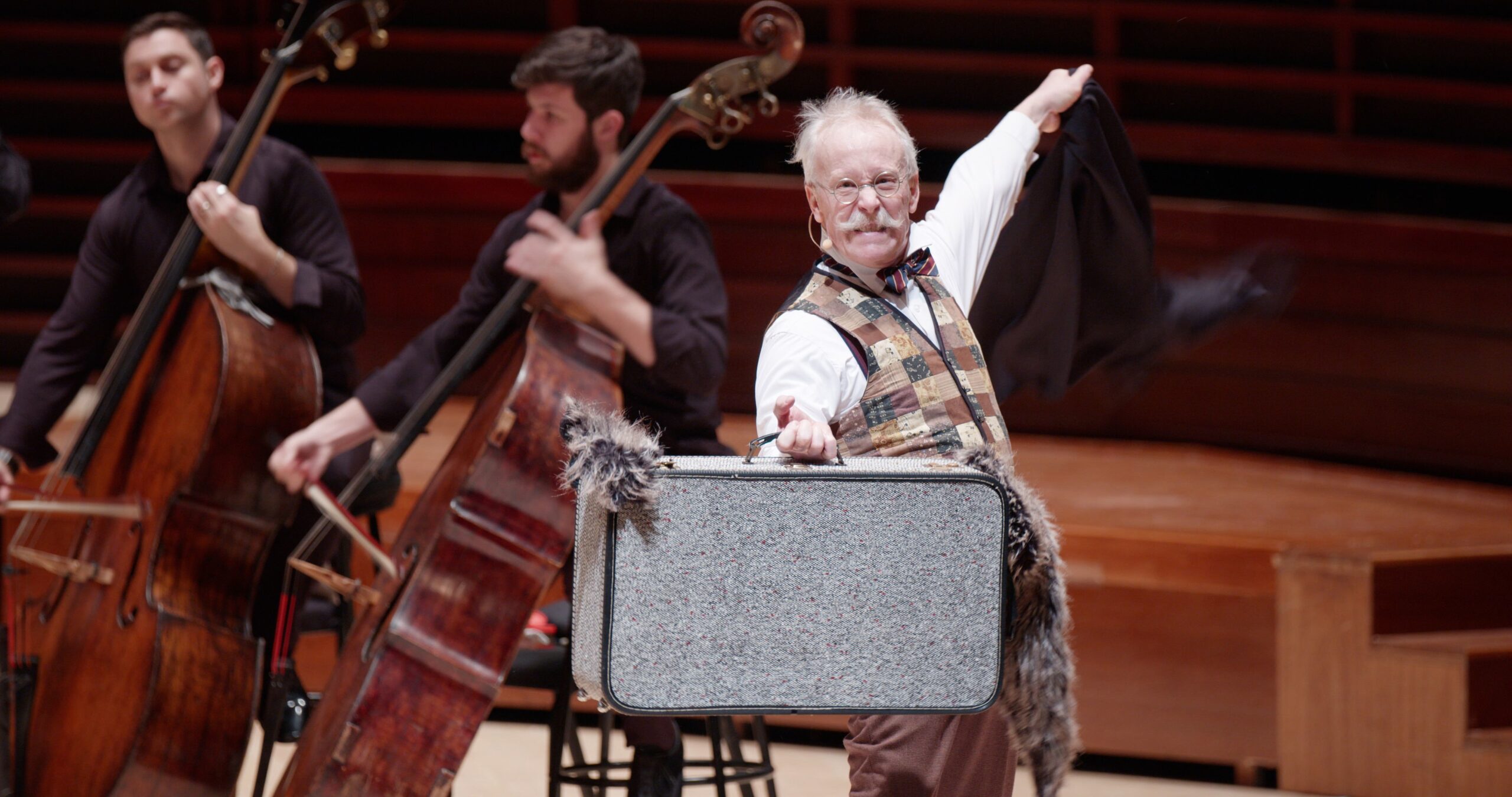
His props are drawn from household items: The duck is a feather duster, the bird a diaphanous, darting, bright yellow swatch of fabric. Who can’t help but laugh at a gun represented by a toilet plunger? Boudewyns narrates while choreographing the action in response to the changing character of the music and arc of the story. For an audience growing up in the digital thicket, here was a bright clearing. Nothing beats a good story, enticingly told and heightened by a great score.
With a suitcase as the wolf, Michael Boudewyns narrating “Peter and the Wolf” with the Philadelphia Orchestra, Feb. 7, 2026, in Marian Anderson Hall. It was his 10th time performing with work with the orchestra since his first appearance in 2007.
Naomi Woo, the orchestra’s assistant conductor, was visually engaging, leading the work and three others, including a truncated version of the first movement of Beethoven’s Symphony No. 5. These concerts are another reminder of the deep bench of talent within the orchestra beyond the principal chairs. In the Prokofiev, that meant Patrick Williams’ glossy flute sound as the bird, clarinetist Samuel Caviezel as the bouncy cat, oboist Peter Smith’s poignant duck, and the appropriately lumbering (but polished) grandfather emanating from the bassoon of Mark Gigliotti.
All deserved special recognition, and Woo gave the players bows, but no orchestra roster was published in the concert’s Playbill (even though the usual lists of board, staff, and oodles of donors were included).
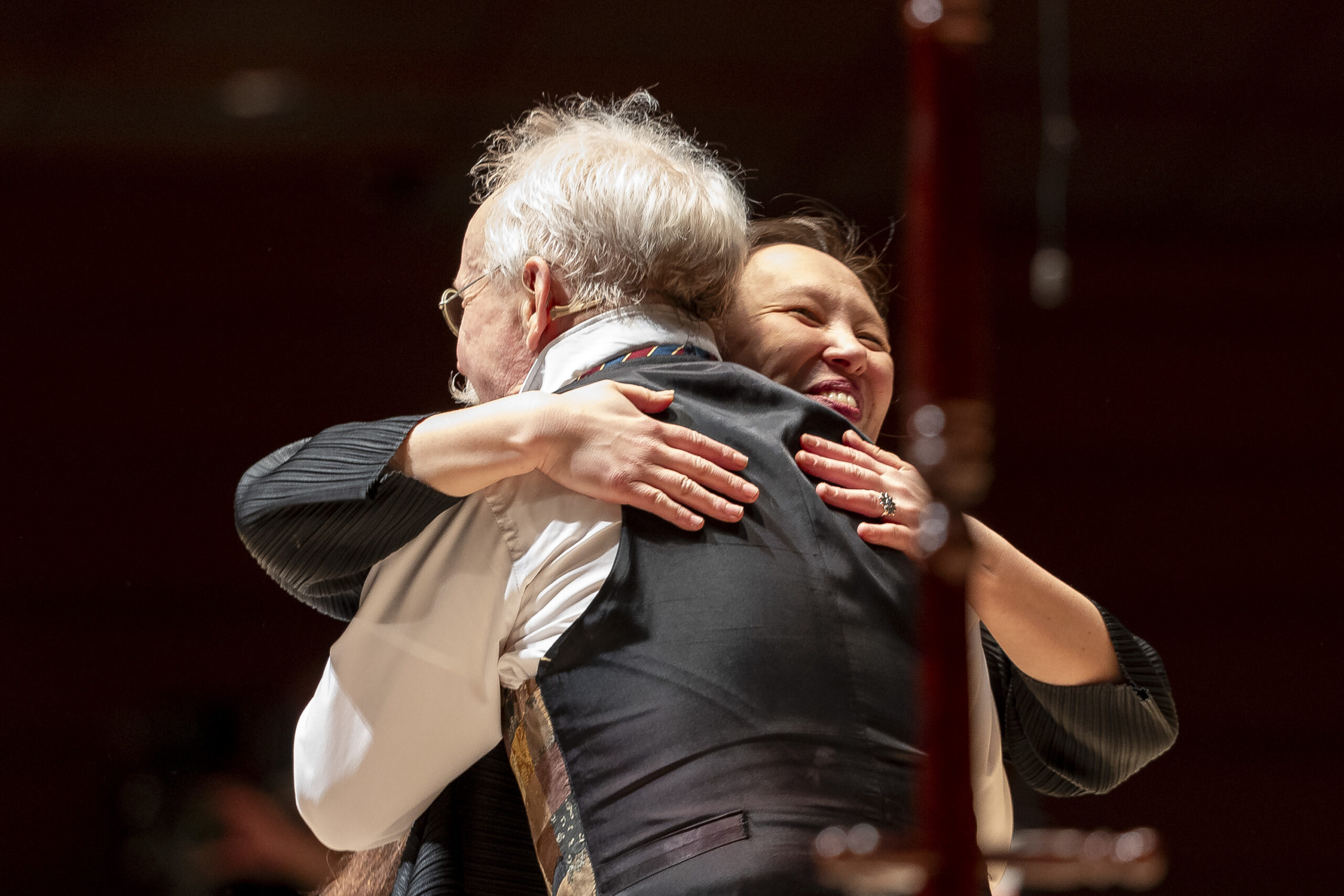
Narrator and actor Michael Boudewyns and conductor Naomi Woo embrace after their performance of “Peter and the Wolf” in Marian Anderson Hall on Saturday.
One of the unspoken truths of all art is that its effect on people is ultimately unknowable. The two children in front of me — one looked to be 3, the other even younger — were ostensibly too small to be there, and yet there’s no way of knowing what they were absorbing. The power of these concerts is in being in the presence of this orchestra, with that incredible sound. No other kind of ensemble has the same impact. And despite all the squirming and low chattering coming from the next row, there was really only one thought to which I kept returning: what lucky children.
The Philadelphia Orchestra, conductor Naomi Woo, and actor Michael Boudewyns perform Britten’s “The Young Person’s Guide to the Orchestra,” March 14, 11:30 a.m., Marian Anderson Hall, Broad and Spruce Streets. Tickets $29-$66. ensembleartsphilly.org, 215-893-1999.
About the new name for that big museum at the end of the Parkway: Never mind.
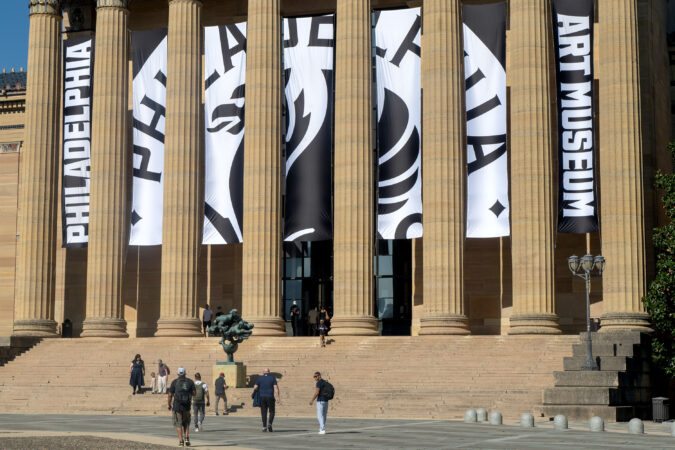
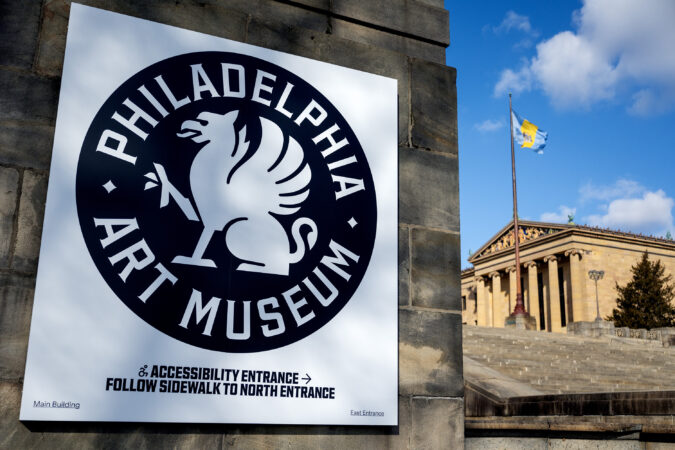
Four months after rolling out a new name with great fanfare, the Philadelphia Museum of Art is once again calling itself the Philadelphia Museum of Art. The museum’s board Wednesday afternoon voted unanimously at a special meeting to scrap the name Philadelphia Art Museum, which had been announced Oct. 8 as part of a larger rebranding.
Some signs and materials are being quickly changed over with the old-new name, while others will be reprinted or revamped in coming weeks. The new PhAM acronym used in marketing materials will be dropped, and the museum will once again refer to itself in shorthand as the PMA, as many Philadelphians long have.
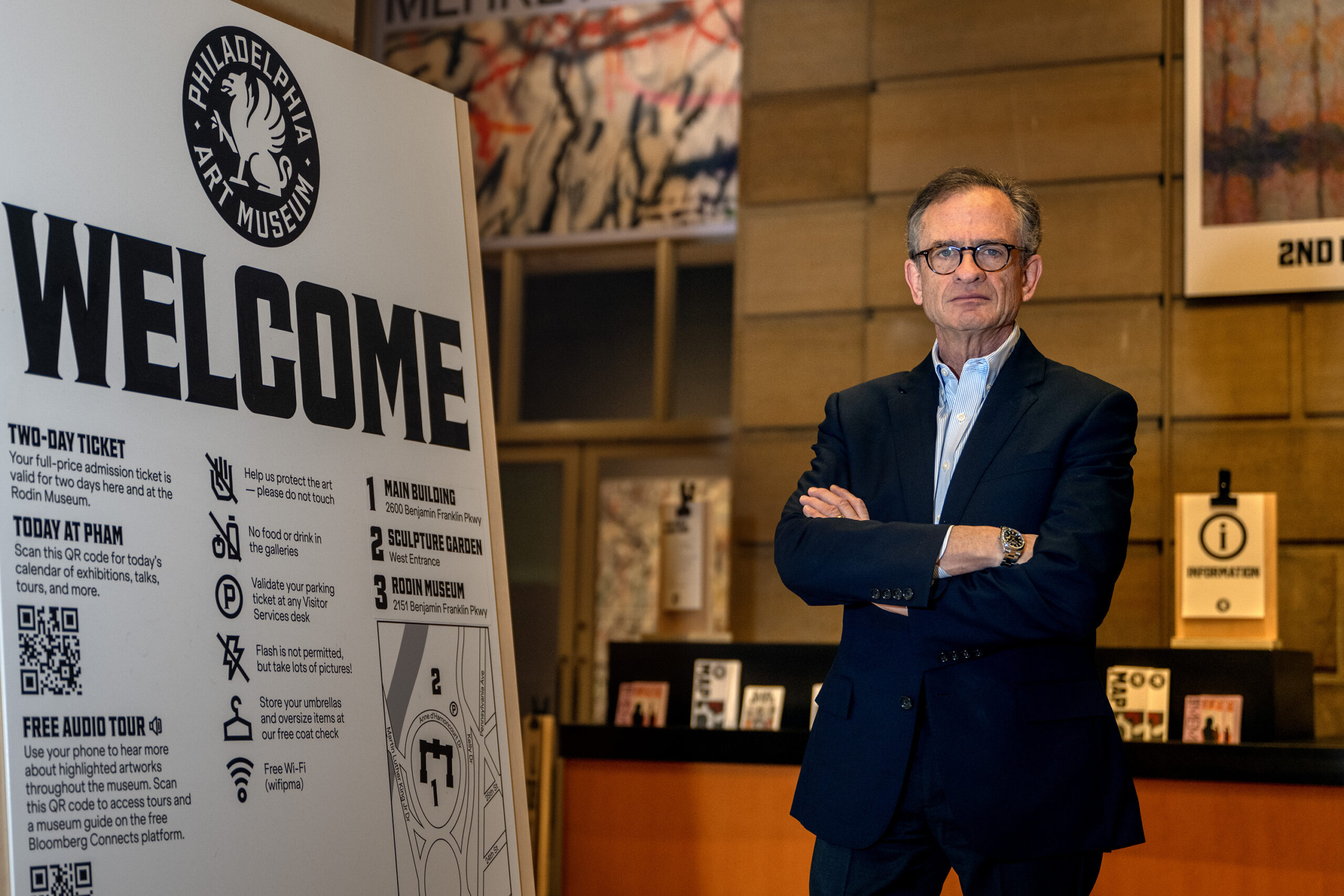
Daniel H. Weiss, director and CEO of the Philadelphia Museum of Art, in the museum lobby, Jan. 7, 2026.
The museum spent the past several weeks surveying opinions, said director and CEO Daniel H. Weiss, and “I think what we learned from our survey, and it’s not surprising, is that people who have any knowledge of the institution — donors, staff, trustees, members — they know the name and it resonates with them. It’s something distinctive, it’s who we are. And changing the name for no obvious reason created a sense of alienation and didn’t make sense to a lot of people.”
Philadelphia Museum of Art had been the name of the nearly 150-year-old institution for 87 years until the change this fall.
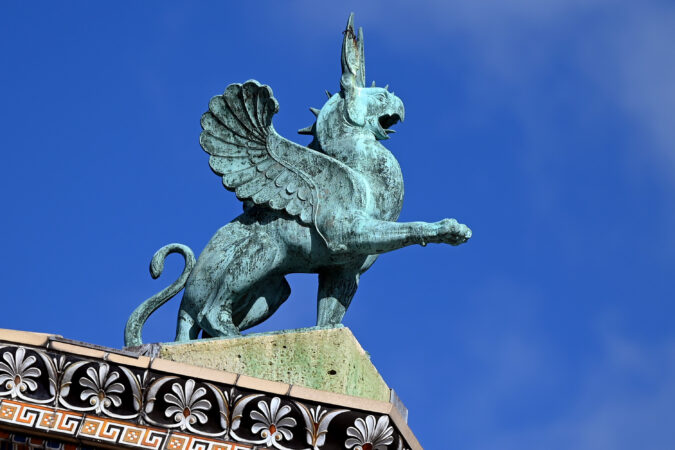
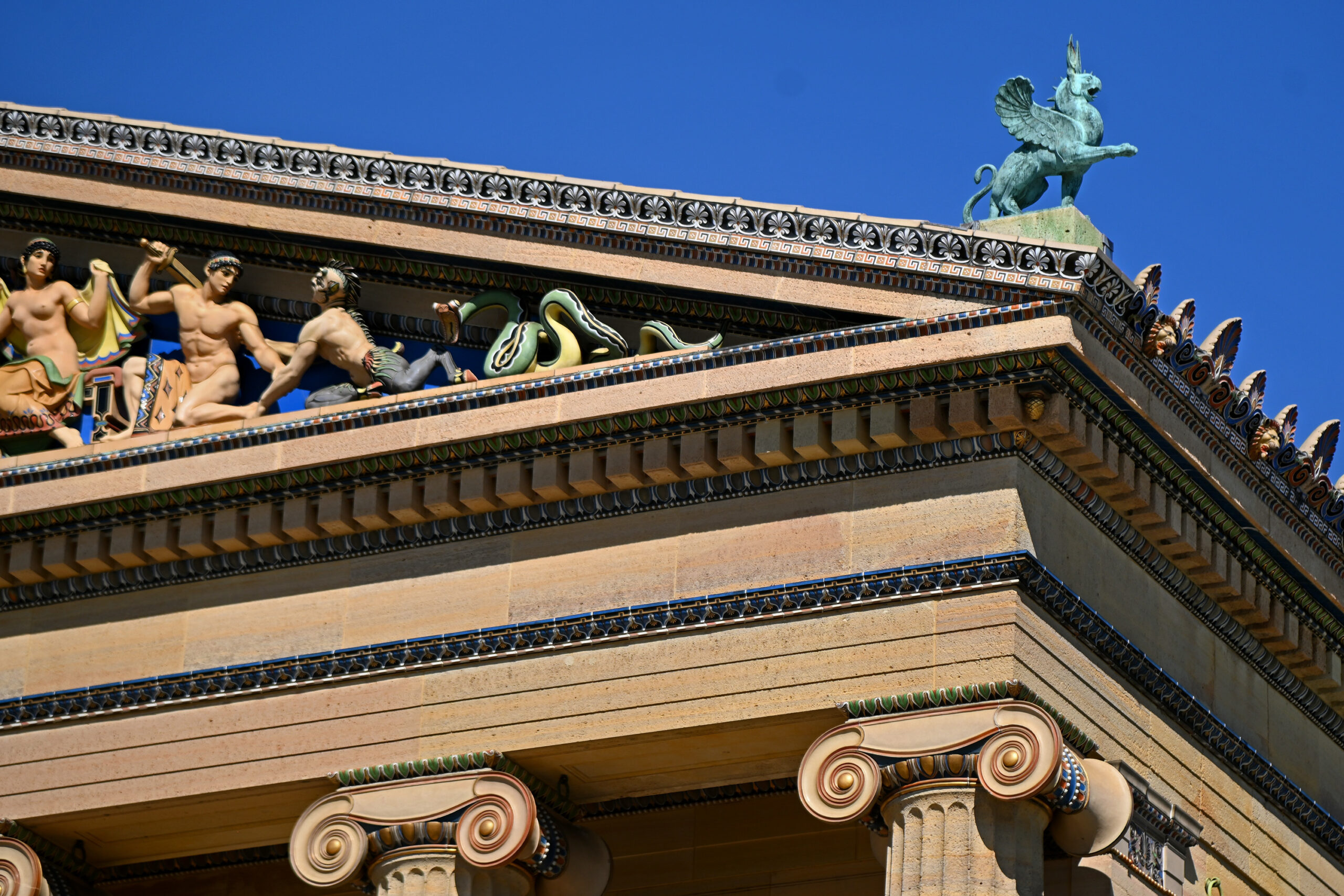
The museum will, however, keep visual elements of the larger rebranding — the logo that echoes one of the griffin figures along the roofline of the museum’s main building, and bold fonts in signage and promotional materials.
A rolling video screen above the admissions counter at the West Entrance at the Philadelphia Museum of Art Oct. 6, 2025.
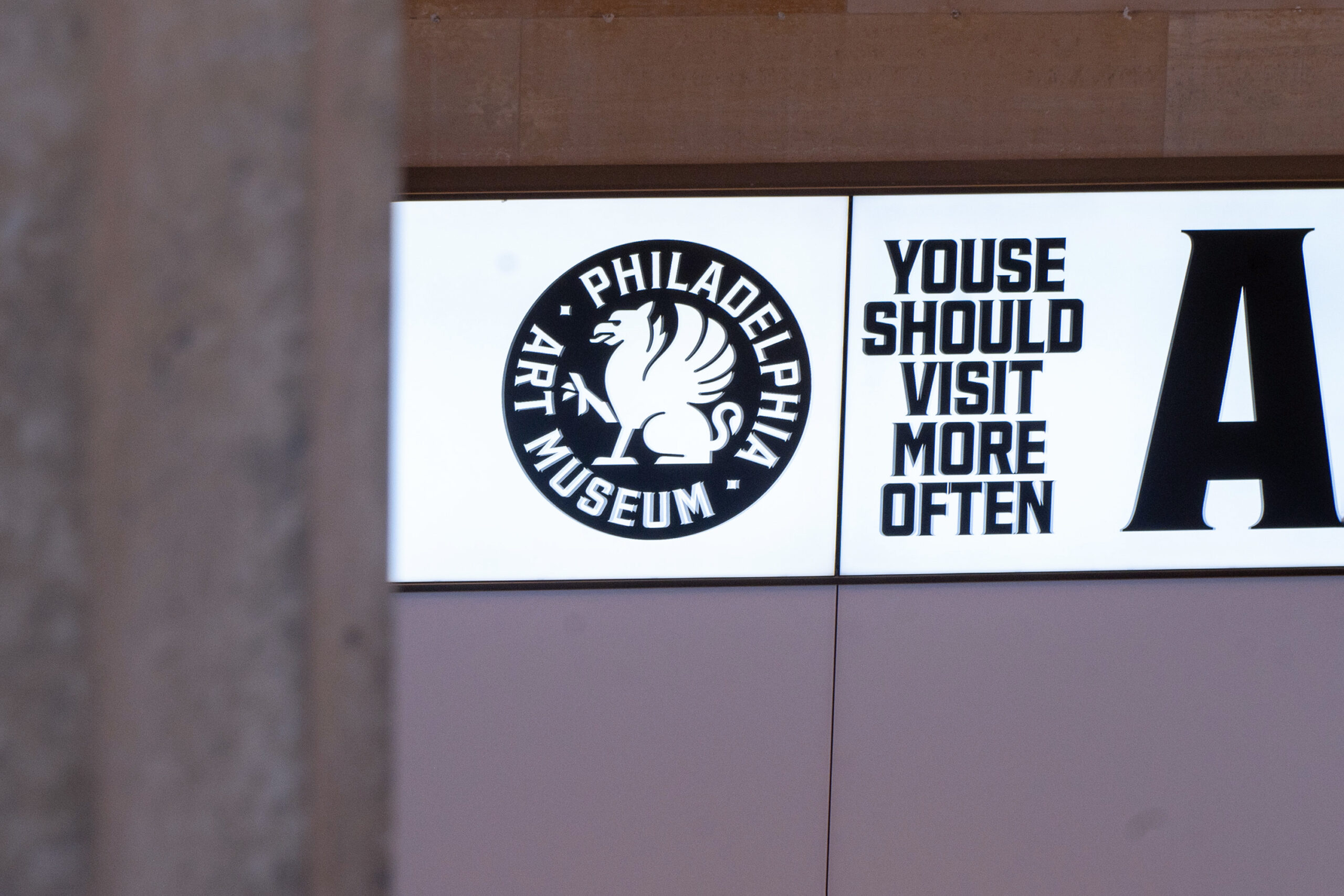
As for the continued use of slightly irreverent tag lines that came with the rebrand — phrases like “Youse should visit more often,” — “Probably not so much,” said Weiss. “We will modify those a little downstream, but the idea is to return to a slightly more aligned presentation more closely tied to our mission.”
The rebranding — which was widely, though not universally, criticized upon its rollout — was a major initiative of former director and CEO Sasha Suda and marketing chief Paul Dien.
When the museum announced the name change, Suda explained it by saying that it was “truly a reflection of what the community has called it for a long time,” and that it was “also a sort of significant way of starting a new chapter and saying, ‘Look, we’re definitely starting a new chapter here.’”
The north side of the Philadelphia Museum of Art, along Kelly Drive at 25th Street and Art Museum Drive, Jan. 7, 2026.
The decision around the controversial rebranding is the first visible test of Weiss’s leadership, and he chose the route of inquiry and shared responsibility, directing a nine-member task force to assess its reception. The original rebrand was launched after multiple internal meetings, but without final notification to the board, according to one trustee.
In a 3½-page note to staff Wednesday afternoon announcing the decision to keep the logo and reverse the name change, Weiss noted the “siloed process” in which the original rebrand was developed, and took pains to emphasize how the reconsideration of it has been, and will be, different.
“The work of the design team over the past two years was exhaustive, incorporating decades of museum history into their thinking and interviews with dozens of staff and trustees. Yet, the team did not have the benefit of a broad, interdisciplinary group to inform the work along the way, so when the final product was rolled out, many felt surprised or not sufficiently invested in the outcome,” the note reads.
A series of internal meetings with staff will explain the task force’s findings, Weiss wrote in his note.
“The task force did consider reverting completely to the prior brand, but ultimately felt strongly that the original reasons for the rebrand are compelling. It was time for the museum to update its look, and the griffin logo is a strong statement that can successfully strengthen and widen our audience.”
The museum’s new logo keeps the stylized griffin that was part of the rebrand unveiled in October 2025, but shows the return of the museum’s name to the ‘Philadelphia Museum of Art.’ The October rebrand included a renaming to ‘Philadelphia Art Museum,’ a change that has now been scrapped.
Surveys conducted in recent weeks revealed findings that “went in two very different directions,” Weiss wrote. “Staff, trustees, and members were opposed to the name change, the URL, and the look of the new brand, yet the public reacted positively to the new logo and overall look and feel.”
Art Museum fan Brian Forsyth, of Exton, said he felt “blindsided by the sudden and uncalled for rebrand,” and when it happened, he asked for (and received) a membership refund.
He disliked the rebrand in general and said that, while he sometimes called it “the art museum,” he mostly referred to it as “the PMA.”
“When they took that phrasing away from me, it hurt,” he said.
Now that the museum is changing its name back, he says he intends to restore his membership.
“I will not, however, purchase any of the new merch. I still have my classic PMA baseball cap, which I will wear into the ground, literally,” he said.
Inspiring the museum’s logo: a bronze griffin on the roof of the northern wing of the Philadelphia Museum of Art, Oct. 6, 2025.
Weiss said that the museum will not be disposing of current materials printed with the Philadelphia Art Museum name, such as brochures or maps. Rather, the change will be cycled through as items need to be replaced.
Gretel, the Brooklyn firm that designed the rebrand, is working with the museum on the current modifications.
The rebrand cost the museum about $1 million, Weiss said, and the total cost of the change-back may not exceed $50,000.
“The idea is to do this as cost-effectively as we can.”
Weiss called the entire rebrand episode “an unnecessary distraction for us. We want to move on and focus on things that matter most to our mission.”
In December, former Philadelphia Art Museum director and CEO Sasha Suda had pushed for a trial with jury to settle her wrongful-termination lawsuit against her former employer. The Art Museum argued for arbitration.
On Friday, Common Pleas Court Judge Michael E. Erdos settled the question with a ruling — in favor of arbitration. Erdos directed Suda to submit her claim against the museum in arbitration, per the terms of her employment contract.
The museum in a statement Saturday said that it was pleased with Erdos’ ruling “reaffirming the requirement to arbitrate as previously agreed to in the employment agreement, which is the best use of the resources of all — including the court’s.” The statement added that the museum “will now return to our focus on the museum’s mission of bringing art and inspiration to the people of Philadelphia.”
Suda’s lawyer, Luke Nikas of Quinn Emanuel Urquhart & Sullivan, said Saturday that “the court’s procedural, one-sentence decision requiring arbitration has no relevance to the outcome of this case.”
“We are not surprised that the museum wants to hide its illegal conduct in a confidential arbitration,” he said, “but we will hold the museum accountable wherever the case is heard.“
Sasha Suda, with the Art Museum’s Williams Forum in the background, Jan. 30, 2024.
Suda filed her lawsuit Nov. 10, less than a week after being fired by the museum, arguing that the dismissal was “without a valid basis.” The museum responded by calling the suit “without merit.”
Tensions between Suda and the board over authority in running museum matters were cited in court filings. The former director said she was hired in 2022 to “transform a struggling museum, but was later terminated when her efforts to modernize the museum clashed with a small, corrupt, and unethical faction of the board intent on preserving the status quo.”
In a court filing, the museum responded by saying Suda was dismissed after an investigation determined that she “misappropriated funds from the museum and lied to cover up her theft.”
Suda was let go Nov. 4, three years into a five-year contract. With her lawsuit, she sought two years’ pay, as well as “significant damages for the museum’s repeated and malicious violations of the non-disparagement and confidentiality clauses in her employment agreement, and an injunction enforcing the confidentiality and non-disparagement terms of her agreement,” Nikas said.
Less than three weeks after Suda’s dismissal, the museum named Daniel H. Weiss — who formerly led the Metropolitan Museum of Art — its new director.
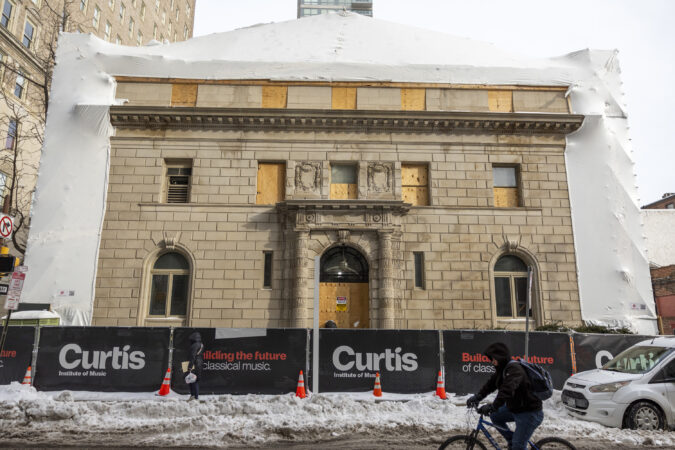
A temporary shrink-wrap covering has been draped over the Art Alliance building as damage is being assessed. The Curtis Institute of Music, which owns the historic, jewel-box structure on the southeast edge of Rittenhouse Square, is in the early stages of dreaming about the building’s eventual use.
Curtis had only recently taken over the Art Alliance, when, in the early hours of July 4, a blaze broke out that took more than 120 firefighters to extinguish. The building’s roof was largely destroyed, and other portions of the building were severely damaged by fire, smoke, and water.
The fire marshal categorized the cause of the fire as undetermined, and Curtis isn’t expecting to ever arrive at an answer.
“We haven’t thought much about it in a few months because it just hasn’t come up,” said Curtis chief financial officer Chris Dwyer, who is overseeing the building rehabilitation process. “What I’m concluding is that the damage is so bad that there’s no answer with a capital A.”
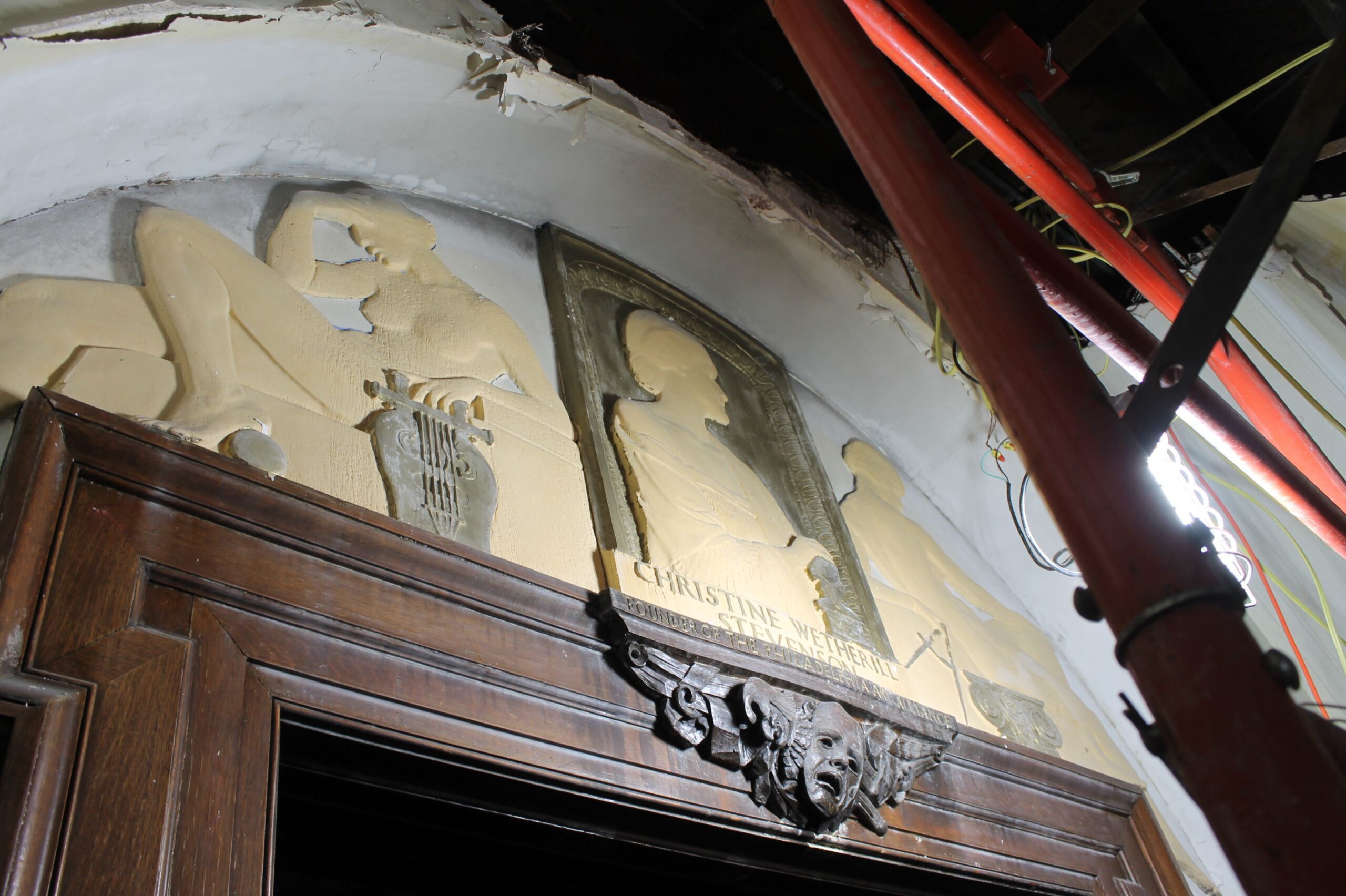
At the Art Alliance building on Rittenhouse Square, a detail of a memorial to Alliance founder Christine Wetherill Stevenson, on the first floor, Jan. 27, 2026. The building, owned by the Curtis Institute of Music, was damaged in a fire early on the morning of July 4, 2025.
At the time of the fire, Curtis was overseeing modest repairs and cleaning and transferring archival materials from the building to other institutions, with an eye toward being able to host a few small community gatherings, a school spokesperson said.
A full damage assessment is due shortly, and while it’s already clear that some historic elements of the interior survived, it is not yet known whether others were lost.
“The whole front of the building is more intact than you might have thought, but [there is] definitely a lot of water and smoke damage,” Dwyer said. “But things like the staircase is still there, the stained glass window [on the south side] is essentially intact.”
Curtis aims to incorporate the surviving historic elements into the design of a rehabilitated building, he said.
What exactly the renowned music conservatory will use the 15,000-square-foot building for is an open question at the moment.
“We’re definitely constrained as far as teaching space, rehearsal space, performance space, and places to welcome the community,” said Dwyer.
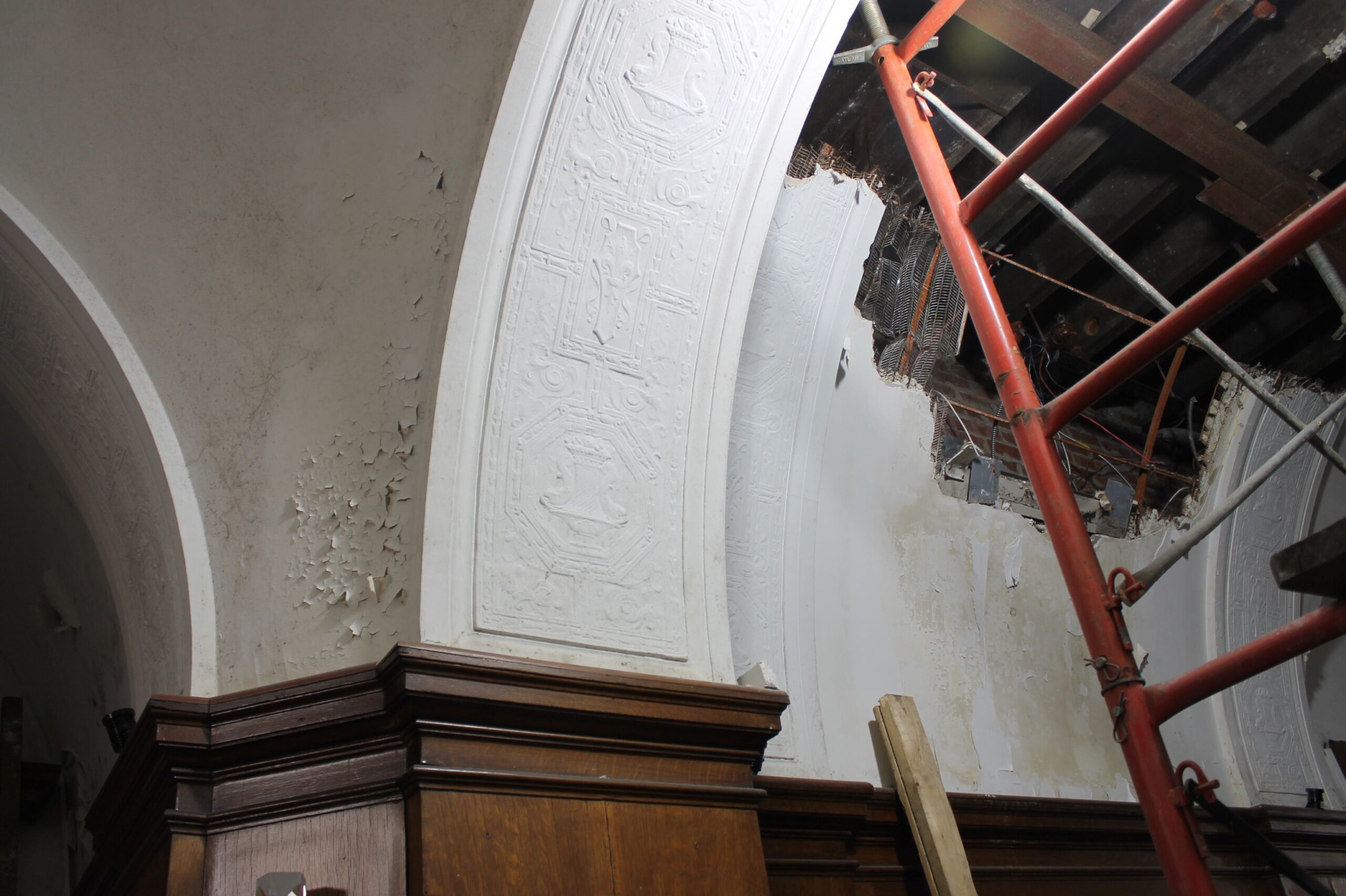
Looking through charred timbers and a destroyed section of the attic and roof to the underside of the shrink-wrap covering over the Art Alliance building, Jan. 27, 2026.
The fire has left the configuration of the building slightly changed. The third floor included an attic that was destroyed by the fire, which raises the possibility that a reconstructed third floor will offer higher ceilings than before.
VSBA Architects and Planners has been engaged to assess damage and develop some preliminary concepts for eventual reuse. The firm designed Curtis’ nearby Lenfest Hall on Locust Street, and has a long track record in historic preservation work.
Though reuse plans are still developing, some public-use element seems likely, Dwyer said.
“We’d love for the building to be used year-round. We’d be open to partnerships and rentals and maybe some new imaginative public programming. So it’s definitely on our minds that it would be public and in some way, shape, or form.”
A detail on the first floor of the Art Alliance building on Rittenhouse Square shows some historic elements saved, others damaged, Jan. 27, 2026.
A timeline is far from certain, but if various elements fell into place quickly enough, the building — which was built in 1906 — could reopen by summer or fall of 2028, leaders say.
Curtis is aware of the place the Art Alliance holds in the hearts of many — “of all the nostalgia and the memories of the building that folks in the community cherish,” said Dwyer. “I was at a wedding there in the late ’90s. It seems like everyone has been in that building at least once.”
It has a “pretty special character that we think is possible to bring back.”
Curtis conducted a special fundraising campaign to acquire the building for $7.6 million from the bankruptcy estate of the University of the Arts. The conservatory and its insurance company are working toward arriving at a payout for the damage, but Curtis may want to do more to the building than simply what the insurance would cover.
That would mean more fundraising.
“It’s hard to see how we wouldn’t need to raise funds,” said Dwyer.
The Philadelphia Orchestra’s 127th season will be a mix of standard repertoire, newly minted scores, film music, family concerts, and guest artists new and familiar.
Emanuel Ax has been dubbed “artist of distinction” for the season, the orchestra said in its announcement of 2026-27 artists and repertoire unveiled Thursday. The much-loved pianist makes both recital and concerto appearances to celebrate his half-century-plus history with the orchestra.
Several big, ambitious pieces anchor the season in Marian Anderson Hall.
The Philadelphians will perform their first-ever complete Bach Christmas Oratorio. Following on the heels of last season’s Tristan und Isolde, the orchestra takes on Wagner’s Lohengrin for the first time. Beethoven’s Symphony No. 9 is on the roster, as are four Mahler symphonies — Nos. 1, 3, 5, and 7.
Soprano Elza van den Heever.
Lohengrin, like the Tristan, will be led by music and artistic director Yannick Nézet-Séguin.
“He’s always able to attract the people that are known for these roles,” Jeremy Rothman, chief programming officer for the Philadelphia Orchestra and Ensemble Arts, said of the cast of singers. Tenor Stanislas de Barbeyrac takes the role of Lohengrin, with soprano Elza van den Heever as Elsa.
“It’s the kind of thing that really only the Philadelphia Orchestra can do — attracting this talent with Yannick conducting with this level orchestra,” said Rothman.
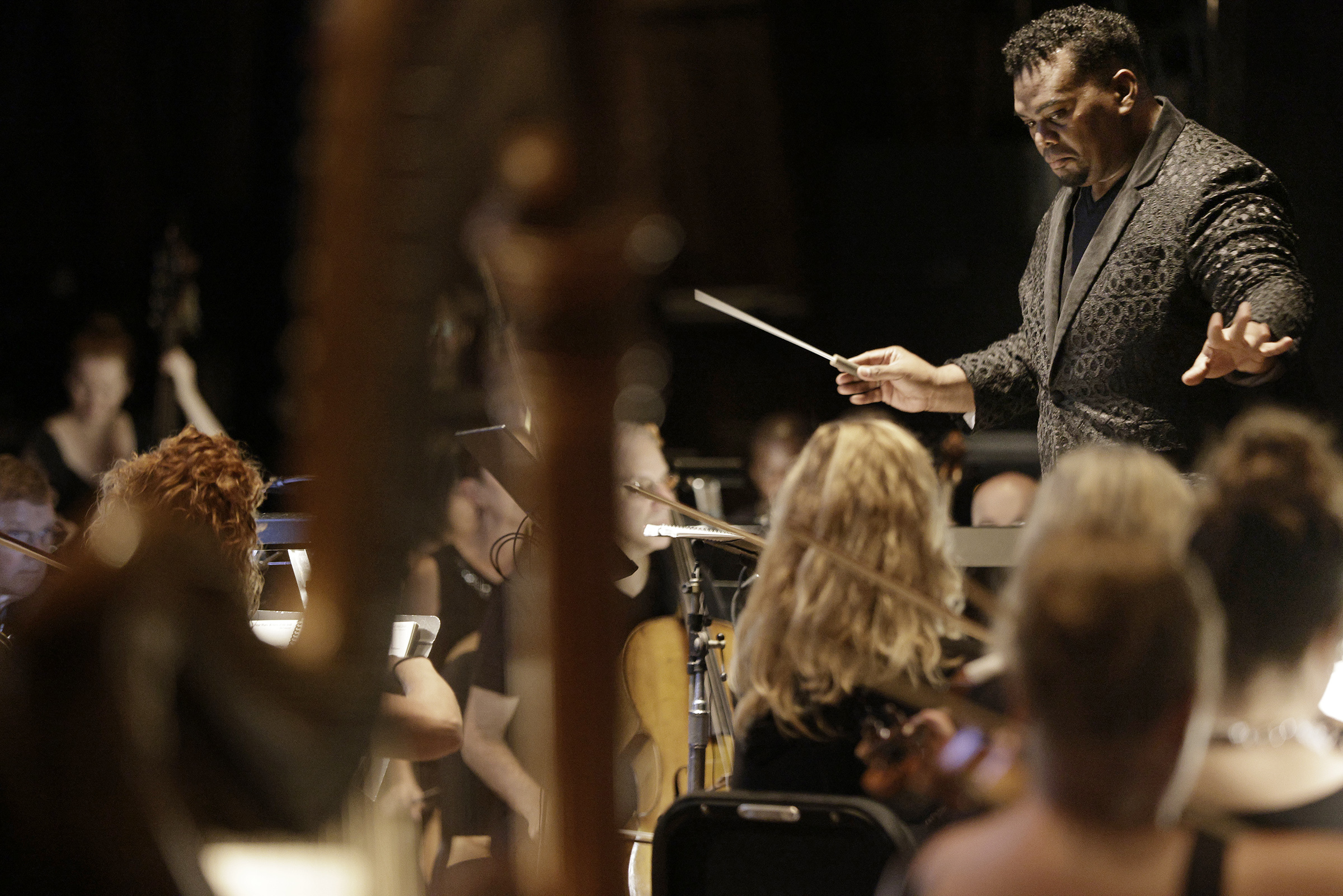
Conductor Anthony Parnther leading the Philly Pops in a live orchestra-to-screen performance of “Star Wars: Return of the Jedi” at the Mann Center on Aug. 11, 2022.
Nézet-Séguin will lead 12 weeks of programs in 2026-27 (plus special concerts), with podium appearances by Esa-Pekka Salonen, Anthony Parnther, Dima Slobodeniouk (his debut here), Jane Glover, Fabio Luisi and others.
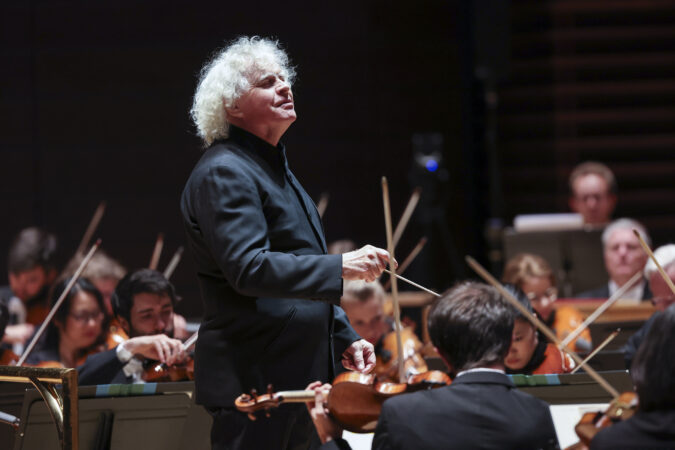
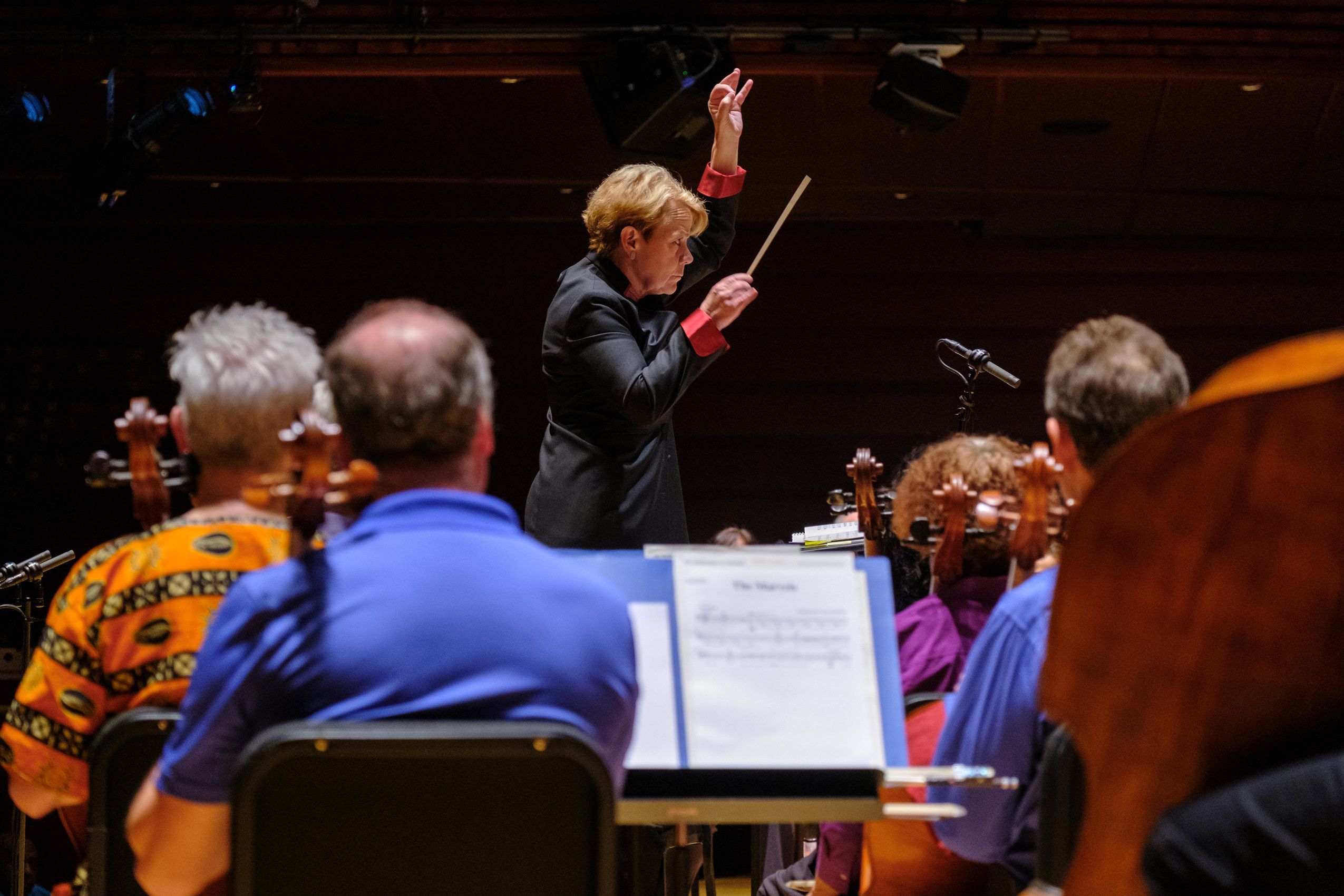
Marin Alsop, the orchestra’s principal guest conductor, leads three weeks of programs plus special concerts.
Violinist Arabella Steinbacher.
Guest soloists include pianists Yunchan Lim and Seong-Jin Cho in Rachmaninoff, Nikolaj Szeps-Znaider as both violinist and conductor, violinist Arabella Steinbacher in Beethoven, Yefim Bronfman in Schnitke and Liszt, Daniil Trifonov performing Prokofiev, and Yuja Wang in Beethoven.
The Spotlight recital series continues with artists like Yo-Yo Ma, Yuja Wang, and Itzhak Perlman.
Composer Gabriela Ortiz.
Among the premieres, or first performances by the Philadelphia Orchestra, are works by Reena Esmail, Julia Wolfe, Unsuk Chin, Anna Meredith, Erkki-Sven Tüür, Gabriela Ortiz, and Caroline Shaw.
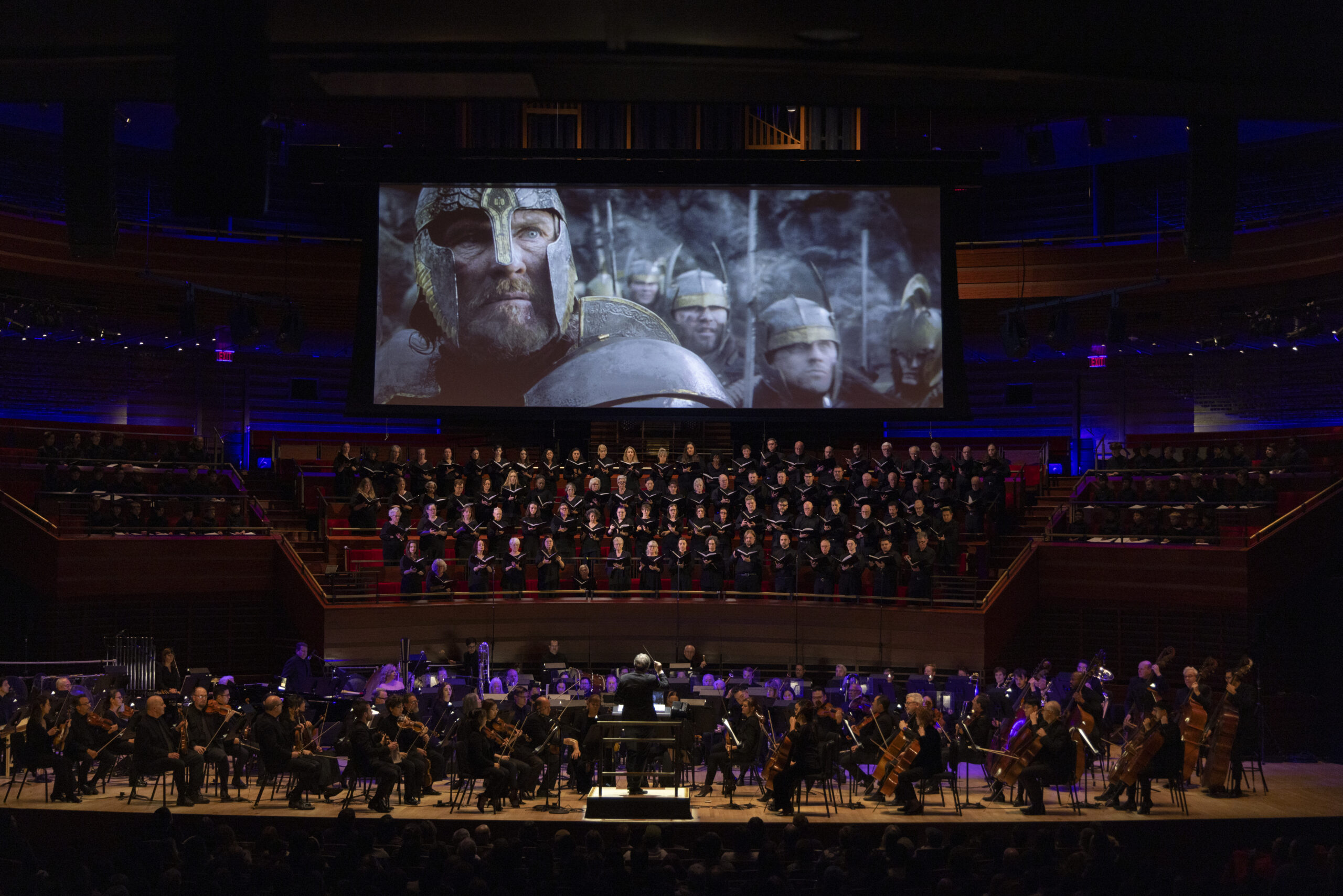
Film music once again threads throughout the season, with live orchestra-to-screen presentations of Star Wars: A New Hope and Harry Potter and the Prisoner of Azkaban. Film concerts are often a sell-out for the orchestra, but they are also a lure for new audiences who later buy tickets to regular orchestra concerts, said Ryan Fleur, president and CEO of the Philadelphia Orchestra and Ensemble Arts.
Howard Shore’s score for “Lord of the Rings: The Fellowship of the Ring” was performed live by the Philadelphia Orchestra and guest conductor Ludwig Wicki to a packed house at Marian Anderson Hall, Dec. 5, 2025.
If past statistics are a reliable guide, the orchestra will sell 6,000 tickets to next season’s Star Wars program. About 4,000 of those listeners will be people who had not bought an orchestra ticket previously. Of those, 20% will come back for a straight orchestra concert in the following year and a half.
“It’s pretty consistent data now that we’ve seen over the last few years,” said Fleur.
“Gateway” is the word the orchestra uses to describe concerts like those with film, or the shorter, informal Orchestra After 5 concerts, which also continue next season.
“It’s programs that are accessible as a first date,” said Fleur.
The season-wide average ticket price next season is increasing about 2.5% due to a higher share of premium, or special, programs, a spokesperson said.
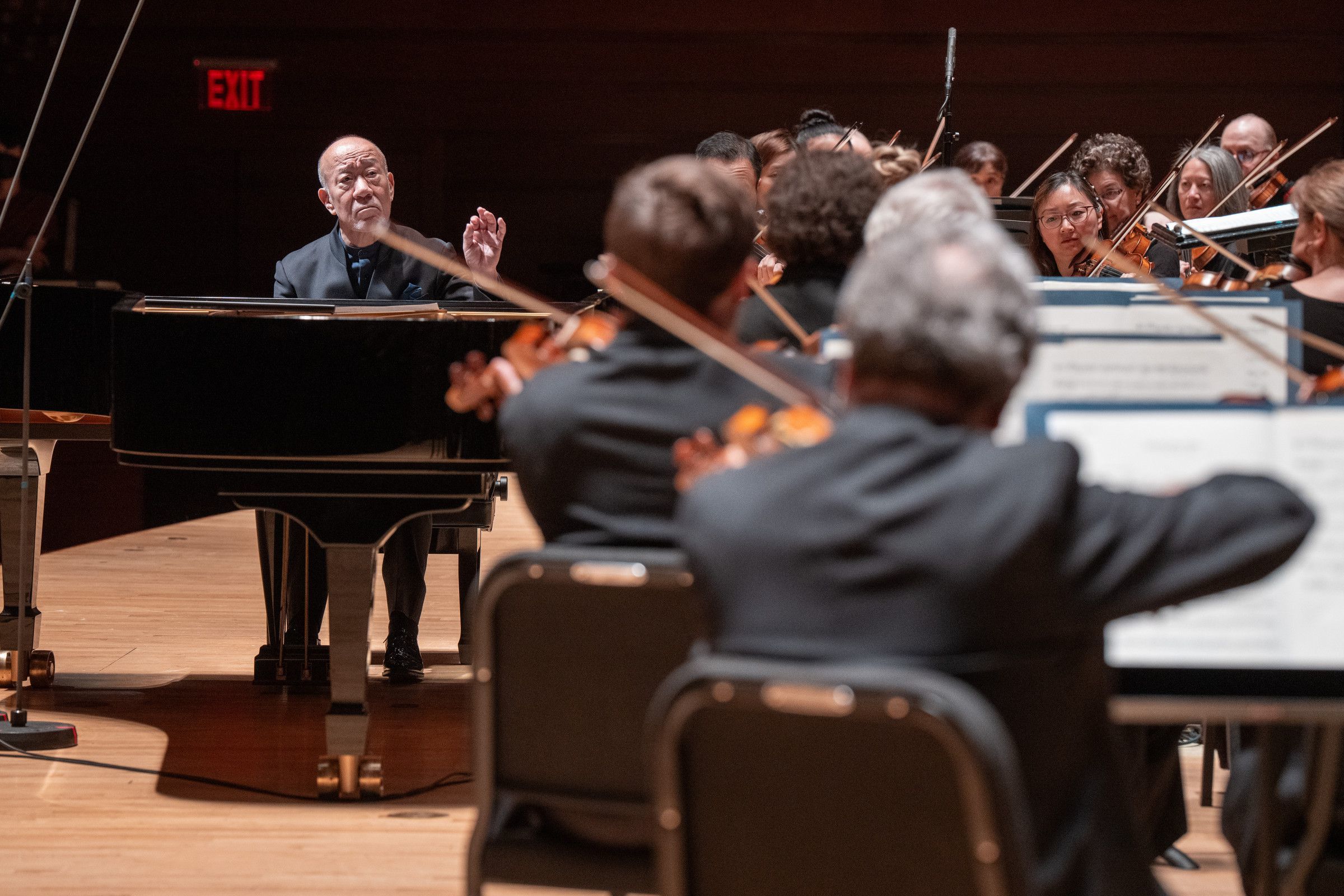
Composer and conductor Joe Hisaishi performing with the Philadelphia Orchestra at Marian Anderson Hall, June 26, 2025.
Another film-adjacent presence next year is Joe Hisaishi, the orchestra’s composer in residence best known for his work on the animated films of Hayao Miyazaki (My Neighbor Totoro, Castle in the Sky). Hisaishi’s Orbis is the very first work heard next season, prefacing Beethoven’s Symphony No. 9 on opening night, Sept. 24. In the spring, Hisaishi leads the world premiere of his own Piano Concerto with Alice Sara Ott as soloist on a program with his Concerto for Orchestra.
Rattle’s concerts, in January 2027, feature familiar territory: John Adams’ propulsive and emotional landmark work from 1985, Harmonielehre; Debussy’s La Mer; and the Ravel Daphnis et Chloé Suite No. 2.
Why these particular pieces?
“We didn’t have an in-depth discussion about it,” said Rothman. “When Simon wants to bring a program here, we trust him with what he knows [is] going to work really well with this ensemble.”
Marin Alsop conducting the Philadelphia Orchestra at its Pride Concert at the Kimmel Center in June 2023.
More novel for both performers and audience is a Marin Alsop program that includes the world premiere of The Party, a collaboration between composer Austin Fisher and conceptual artist Alex Da Corte. The artistic forces include the orchestra, a cast of singers, and life-size sculptures inspired by 1960s artist Marisol Escobar in a stop-motion film.
Rothman calls the work, which was commissioned by the orchestra, “a really novel way to present opera, where you have the singers and the orchestra live on stage, but all the action is taking place up on the screen.”
The Party is on a program with Pacific 231, Arthur Honegger’s classic 1923 depiction of a train accelerating, then grinding to a halt; and Haydn’s Symphony No. 101, “the Clock.”
“It’s a way of exploring the depiction of time,” said Rothman of the three pieces.
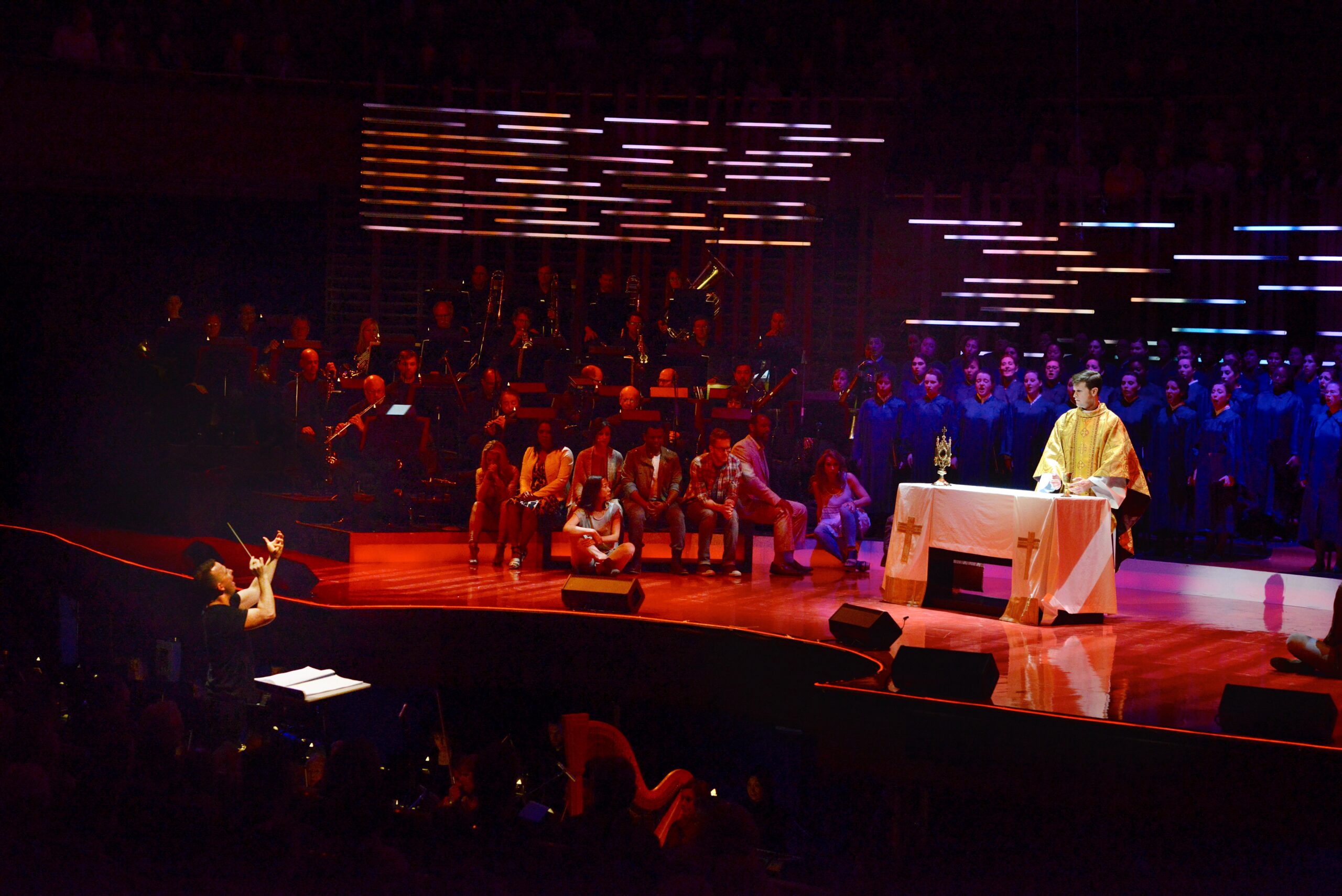
A scene from the Philadelphia Orchestra’s performance in April 2015 – in what was then named Verizon Hall – of Bernstein’s “Mass.”
Rothman was responsible for the creation of one of the season’s most intriguing creations: a “new” work by Leonard Bernstein.
“I was thinking about how Mass has some of his most beautiful music in it,” said Rothman, “but just the scope of that work means that music is rarely ever heard live because of the forces that are required to mount it.”
He conceived of a symphonic suite made of material from Mass, the musical-theatrical piece commissioned by Jacqueline Kennedy that premiered in 1971 at the opening of the John F. Kennedy Center for the Performing Arts.
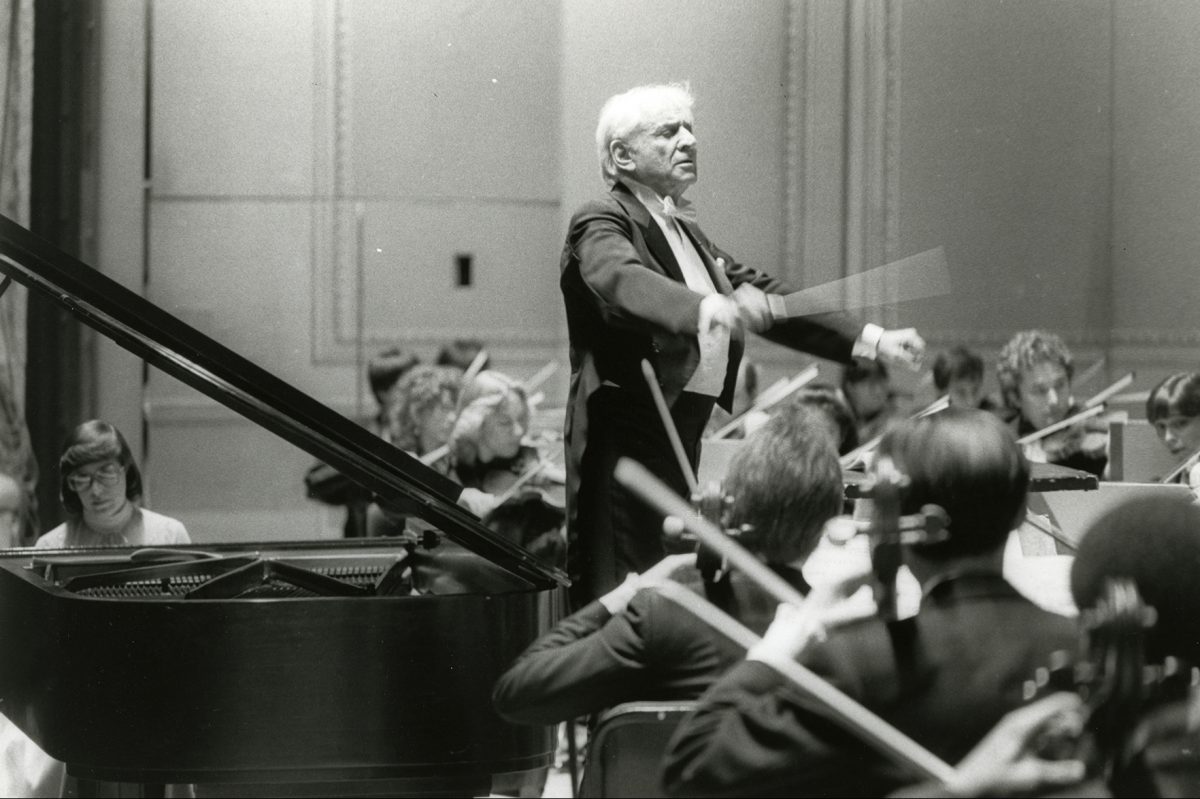
Leonard Bernstein conducts the Curtis Symphony Orchestra with soloist Susan Starr in a 1984 performance at the Academy of Music.
“So I reached out to the kids,” said Rothman, referring to Bernstein’s three children, “and I said, ‘What do you think of this idea?’ And I got back like an immediate, ‘Oh my God, we love it. Let’s do it.’”
Garth Edwin Sunderland, a composer and vice president of creative projects at the Leonard Bernstein Office, was engaged to create Symphonic Rituals from Mass, which contains about 40 minutes of music — a “new” work drawn from Bernstein’s original colorful, groovy score.
“It’s still paying homage to the sacred nature and the ritual of the piece, but bringing all that fantastic musical material into the orchestra, so no vocalists, no choirs,” said Rothman. “There will be a little bit of a rock band because that’s so essential to the core essence of the piece.”
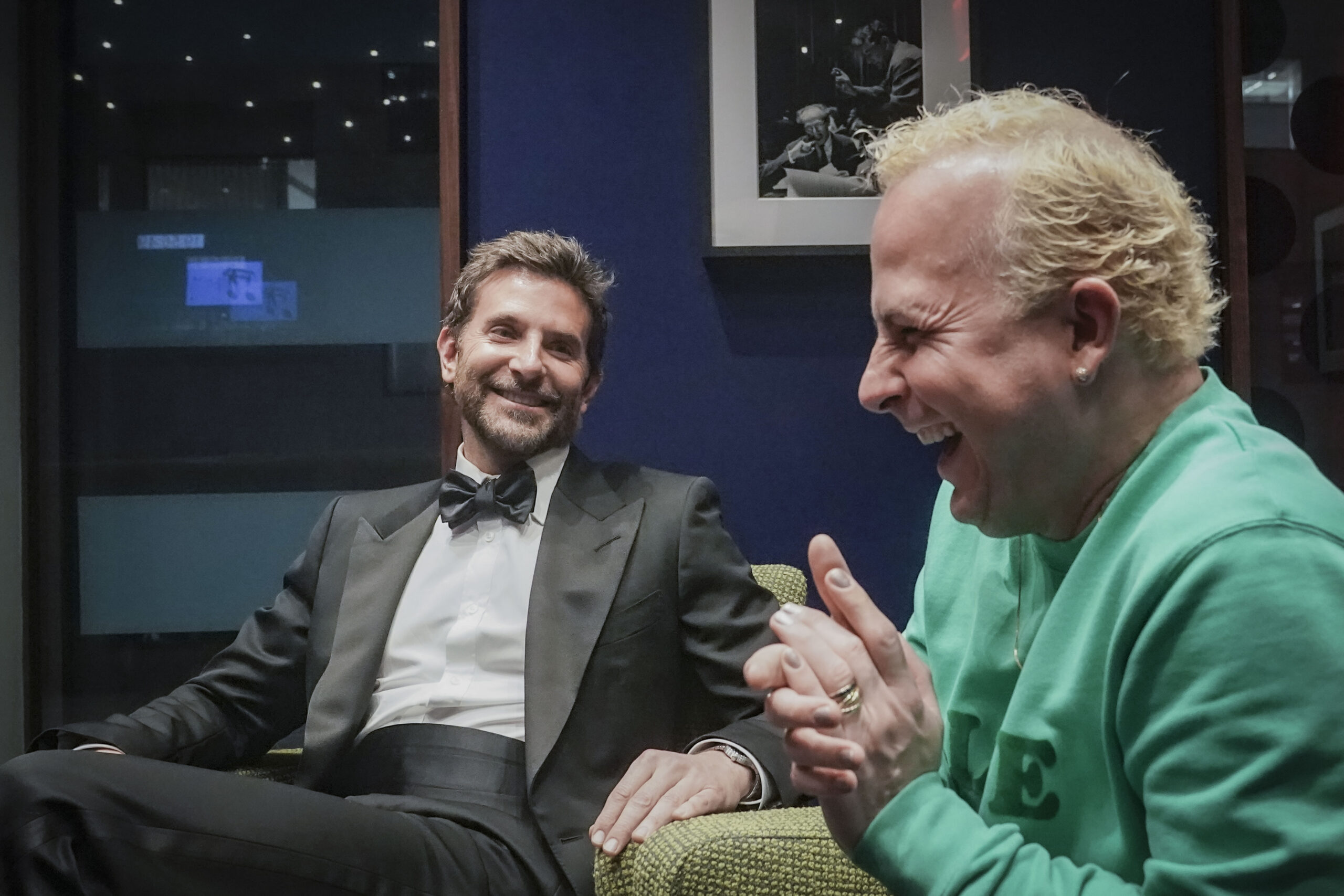
Actor and director Bradley Cooper (left) and Yannick Nézet-Séguin speak during an interview, Feb. 14, 2024, in New York.
Nézet-Séguin was, of course, the perfect choice to conduct. He’s been an enthusiastic champion of Bernstein’s music and was involved in the Bradley Cooper movie about Bernstein, Maestro.
“I texted Yannick,” said Rothman, “and I said, ‘Yannick, how would you like to give the world premiere of a piece by Leonard Bernstein?’ And he goes, ‘What? What are you talking about?’”
Philadelphia Orchestra 2026-26 subscriptions go on sale at noon Thursday, with single tickets available July 30. ensembleartsphilly.org, 215-893-1955.
Opera Philadelphia has signed an early contract extension with general director and president Anthony Roth Costanzo, the company announced Monday.
The initial deal was to have kept the renowned countertenor in the job until the end of the 2026-27 season; the extension commits him and the company to each other for two more years, through May 31, 2029.
Costanzo, 43 — who took over the financially challenged company in 2024 — has maintained an active international performing career while quickly making a mark on the Philadelphia arts scene. Under his watch, Opera Philadelphia has drawn national attention for launching a “pick-your-price” program making tickets available for as low as $11.
The company also played a key impresario and fundraising role last year in keeping the former Wanamaker Center City store space alive for several months with performances after the historic building was vacated by Macy’s. It was Costanzo who landed a $1 million gift from philanthropist and organ enthusiast Frederick R. Haas to fund the concert and film series.
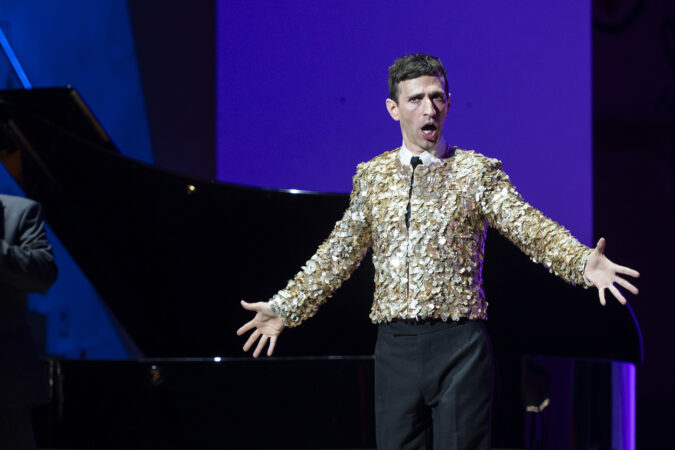
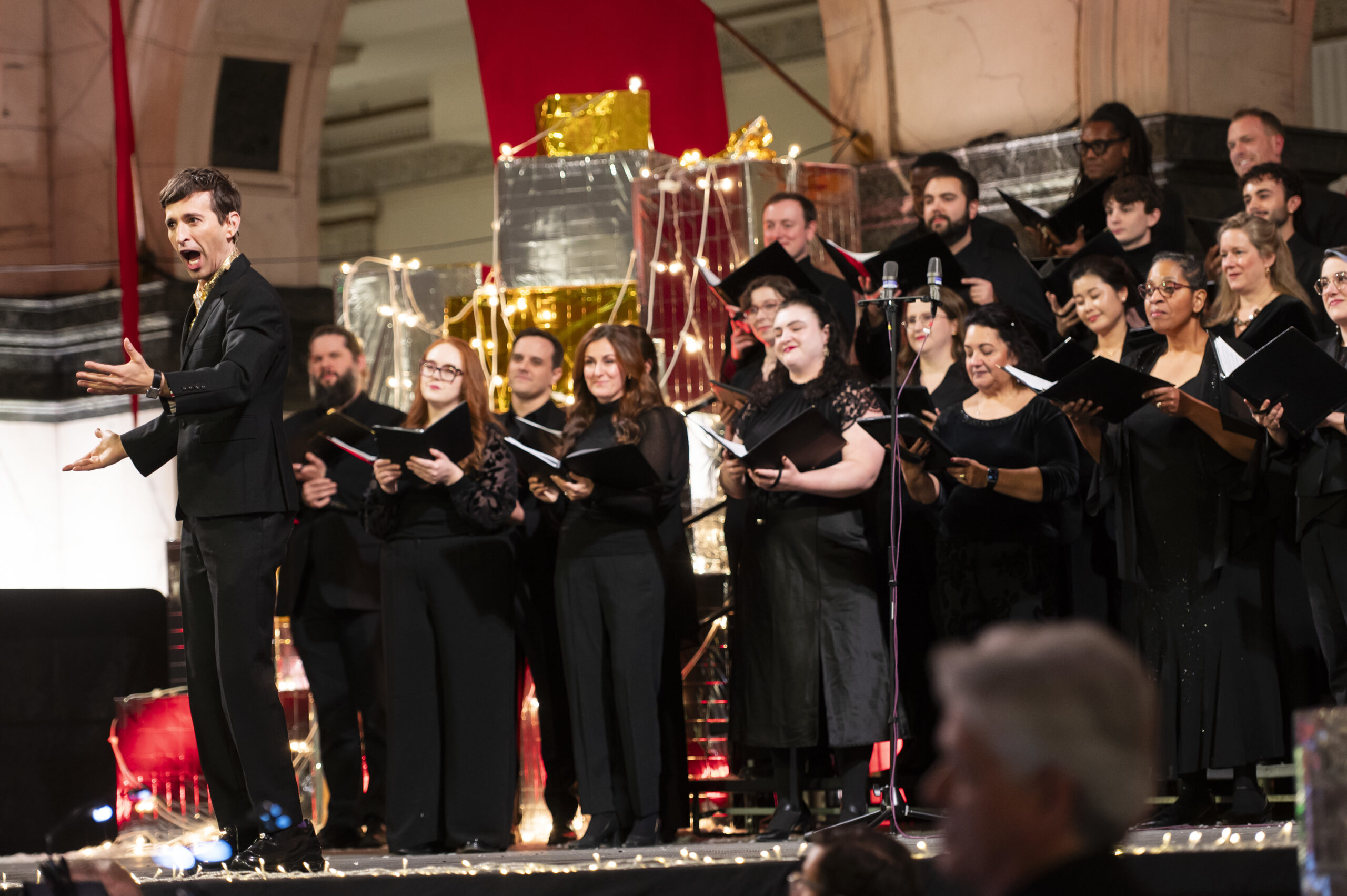
Anthony Roth Costanzo, countertenor, sings with Opera Philadelphia’s chorus during ‘Home for the Holidays’, a concert part of the ‘Pipe Up!’ series at the Wanamaker Building’s Grand Court, Dec. 2, 2025.
Costanzo is in mid-process of retooling the opera company and raising the money to do it, so extending his contract made sense, he said.
“When you’re looking at development, whether it’s of artists, patrons or new business models, those are long trajectories, and it’s been remarkable how fast we’ve been able to accomplish a lot,” Costanzo said. “But there’s a lot more that I want to do, and I think there’s a lot of ambition the board has to grow this organization and its impact.”
The troupe also announced Monday that the company and music director Corrado Rovaris have agreed to a contract extension through May 31, 2029. Costanzo has also promoted David Levy from senior vice president of artistic operations to the company’s executive vice president — making him, essentially, Costanzo’s right-hand man.
Costanzo arrived in June 2024 to a company in debt. He established a fundraising campaign, paid off the debt, and has raised $21 million toward a goal of $33 million. The campaign is expected to run through the end of next season.
“We’re not out of the woods. I don’t know if you ever will be as an opera company,” he said. “We still don’t have an endowment. It’s not that we have transformed entirely.”
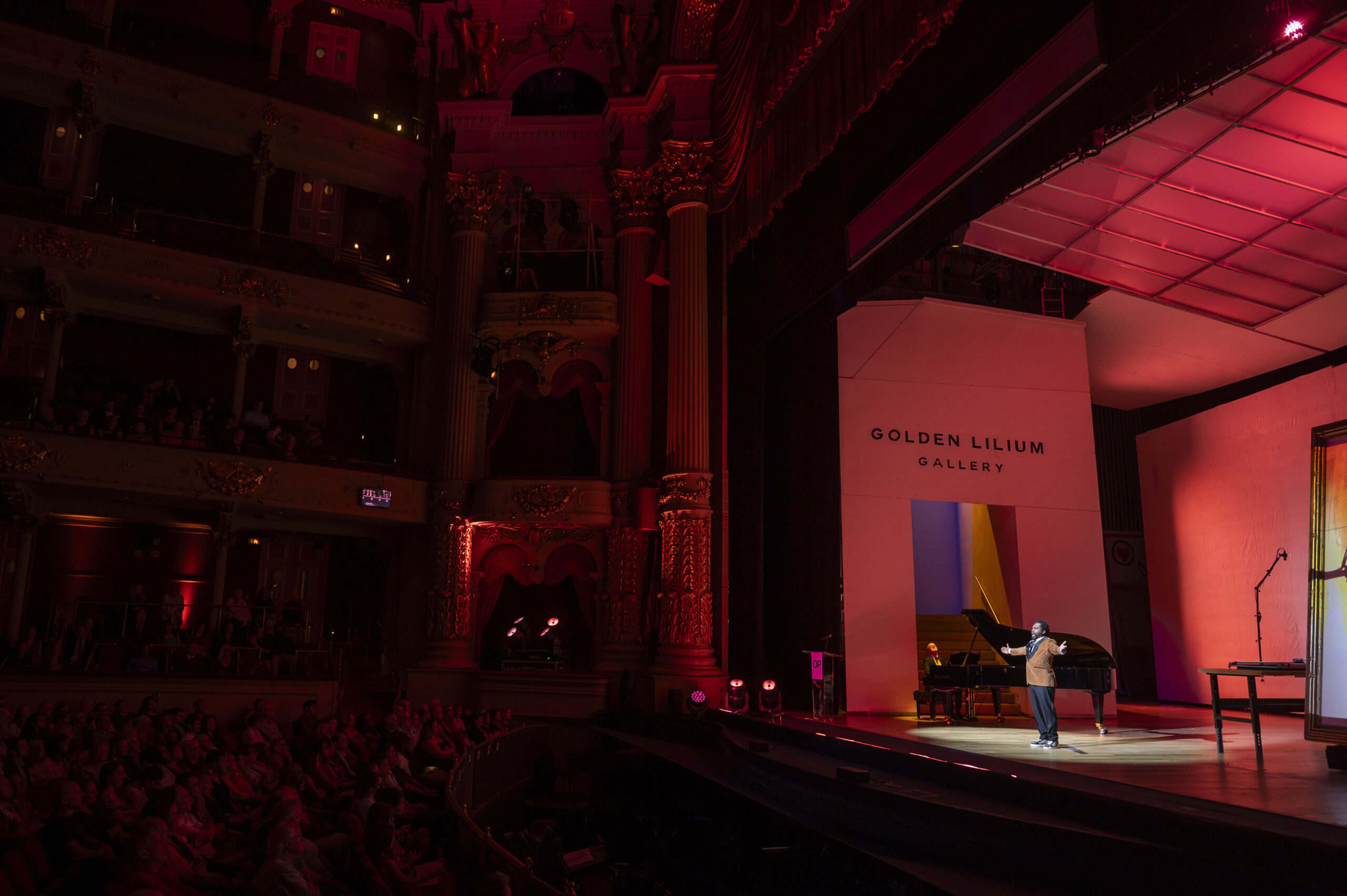
Baritone Will Liverman performing at Opera Philadelphia’s 50th anniversary gala, Vox Ex Machina, at the Academy of Music, Sept. 13, 2025, at which the company announced a $33 million fundraising campaign.
Costanzo has restored some of the company’s artistic initiative. Before he arrived, the season was down to three productions for a total of nine performances. He boosted the schedule this season to five productions and 18 performances. The company closed its 2024-25 season with a $2.1 million surplus on an $11.1 million budget, Costanzo said.
Contract extensions are often used at nonprofits engaged in fundraising campaigns to encourage confidence in the future of the institution.
“It’s good for our patrons, our supporters, our artists to know that this is a long-term commitment on everyone’s part,” said Costanzo.
The Pennsylvania Academy of the Fine Arts has named an art museum veteran to be its next leader.
Kristen Shepherd will become president and CEO of the oldest art museum and school in the U.S. effective Feb. 9, PAFA announced Thursday.
Shepherd was executive director of the Museum of Fine Arts in St. Petersburg, Fla., for more than 5½ years, and previously held posts at the Los Angeles County Museum of Art and the Whitney Museum of American Art.
She takes over PAFA as it faces financial challenges, remakes aspects of the institution, and prepares to cohost a major show this spring featuring works from the collection of Phillies managing partner John Middleton and his wife, Leigh.
Shepherd, 54, said that she had a “long-standing love affair with PAFA and its mission” that began when she was studying art history at George Washington University, where she earned her bachelor’s and master’s degrees in art history.
“I remember learning about PAFA as a student and just being absolutely floored at the idea of it. The fact that the founders, at the birth of our country practically, made an extraordinary statement about the importance of the fine arts in our young country that continues today.”
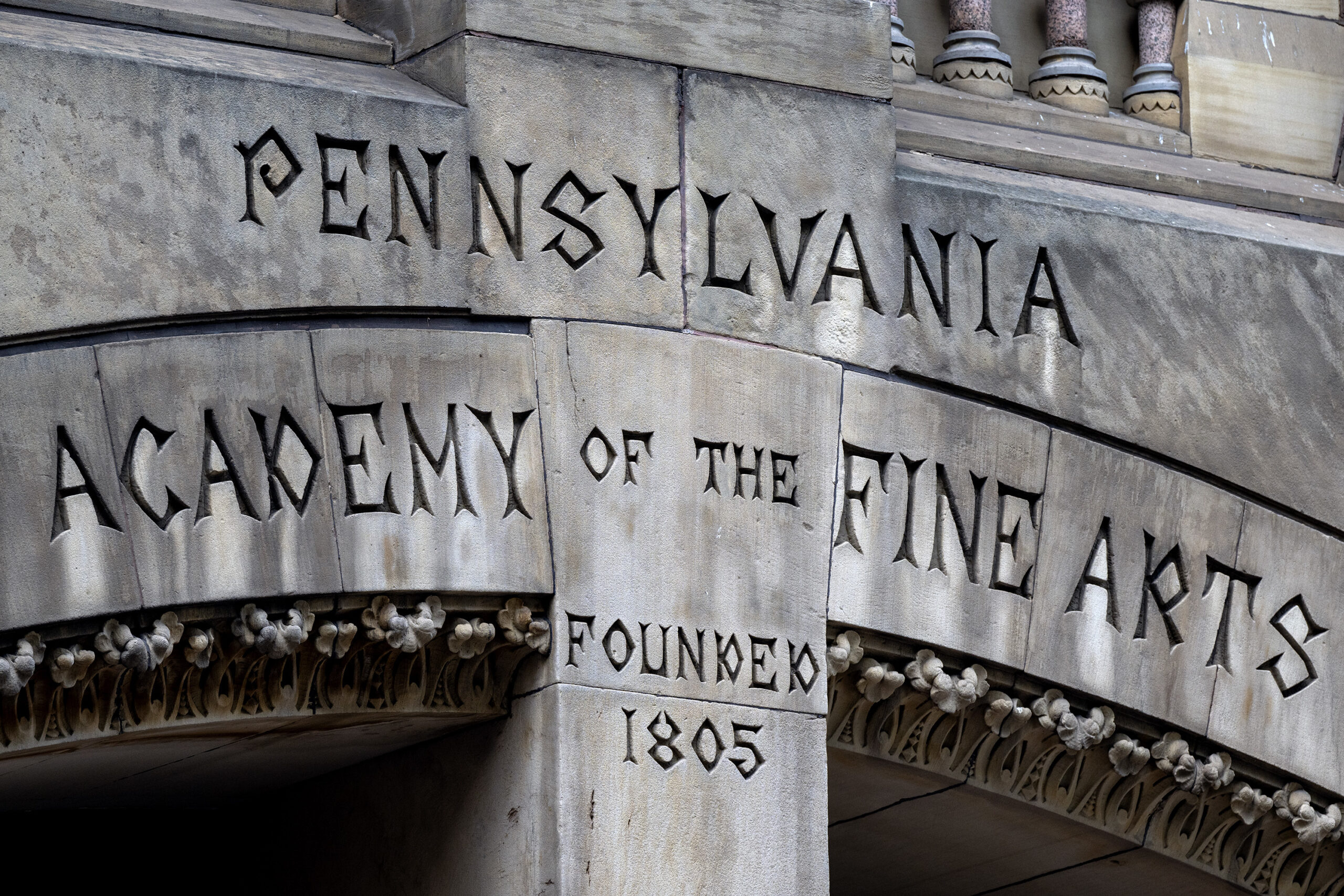
The name over the front entrance of the Pennsylvania Academy of the Fine Arts’s 1876 building at Broad and Cherry Sts., Sept. 29, 2025.
Facing a $3 million deficit and enrollment numbers that had shrunk by about half since 2017, PAFA announced in January 2024 that it would be ending its degree programs at the end of the 2024-25 school year. This past fall it launched a new certificate program that leaders hoped would net more income.
The institution — which was founded in 1805 — began drawing more heavily on its endowment than industry guidelines suggest is prudent. To boost revenue, it has marketed rental of its art-making facilities and spaces in its Samuel M.V. Hamilton Building to outside groups.
Last summer, PAFA shut down its historic North Broad Street museum building for a year to replace the HVAC system and make other improvements, and leaders have been stumping for a donation in exchange for naming rights to the building.
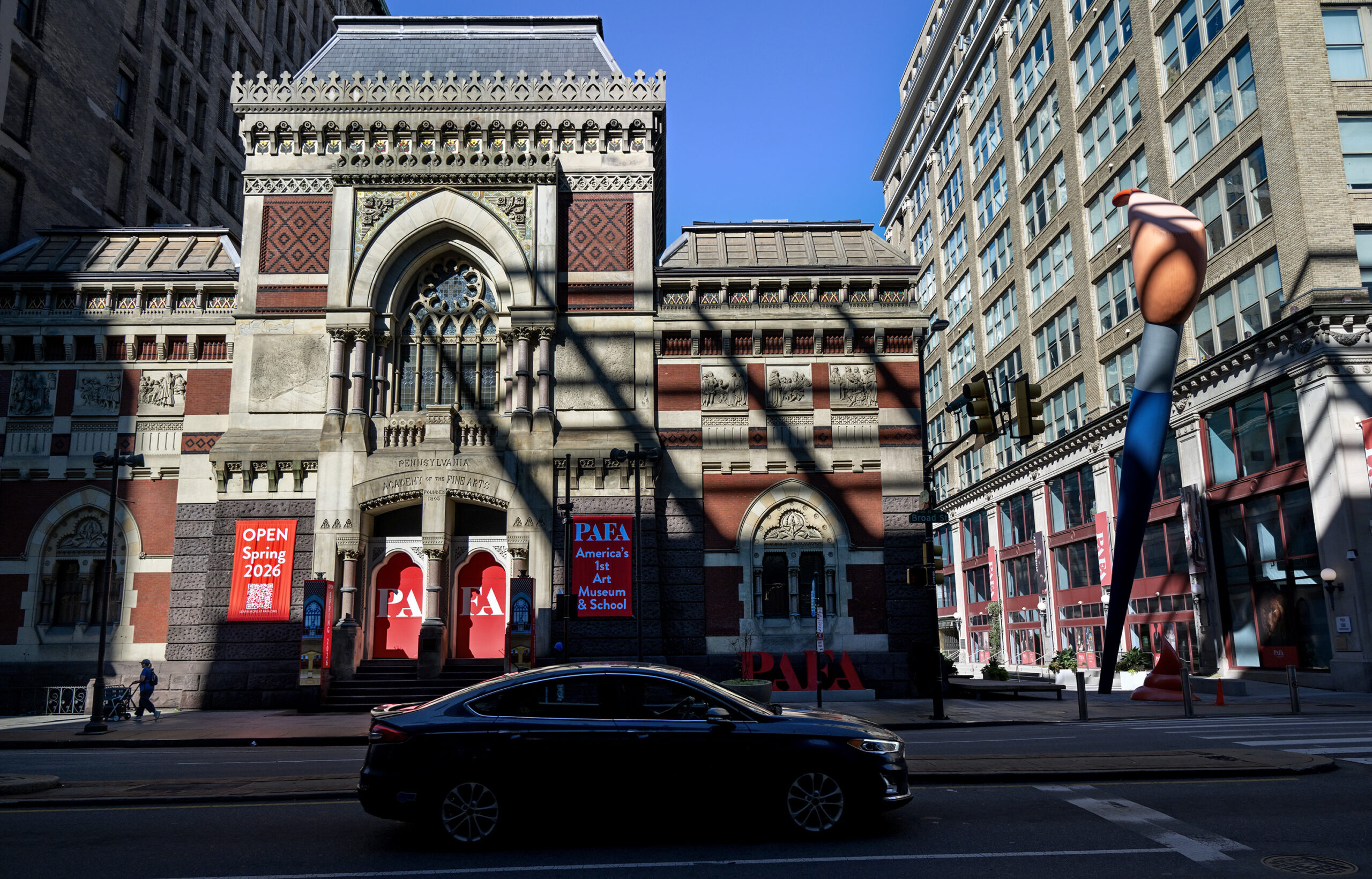
The Pennsylvania Academy of the Fine Arts Furness and Hewitt-designed building (left), with banners announcing the building’s reopening in Spring 2026, and the Samuel M.V. Hamilton Building (right) on N. Broad St., Sept. 28, 2025. In between is the 51-foot-high ‘Paint Torch’ sculpture by Claes Oldenburg.
PAFA’s previous president and CEO, Eric G. Pryor, stepped down more than a year ago, and the museum and school has been run by a team of three administrators in the interim.
Last fall, PAFA and Temple University announced a new affiliation whereby Temple leases the 10th floor of the Hamilton Building, bringing PAFA much-needed revenue. The Center City site gives Temple a home for new programs, including a curatorial studies certificate program. It also gives students access to PAFA’s art-making equipment and its important collection of American art.
Shepherd says not only was she familiar with PAFA’s challenges and ongoing retooling, but they were a factor in her interest in the post.
“That’s actually attractive to me rather than being daunting,” she said. “There’s a lot to be thought through and analyzed, from risk assessments to financial stability and how to create the right financial scenario for the institution’s longevity.”
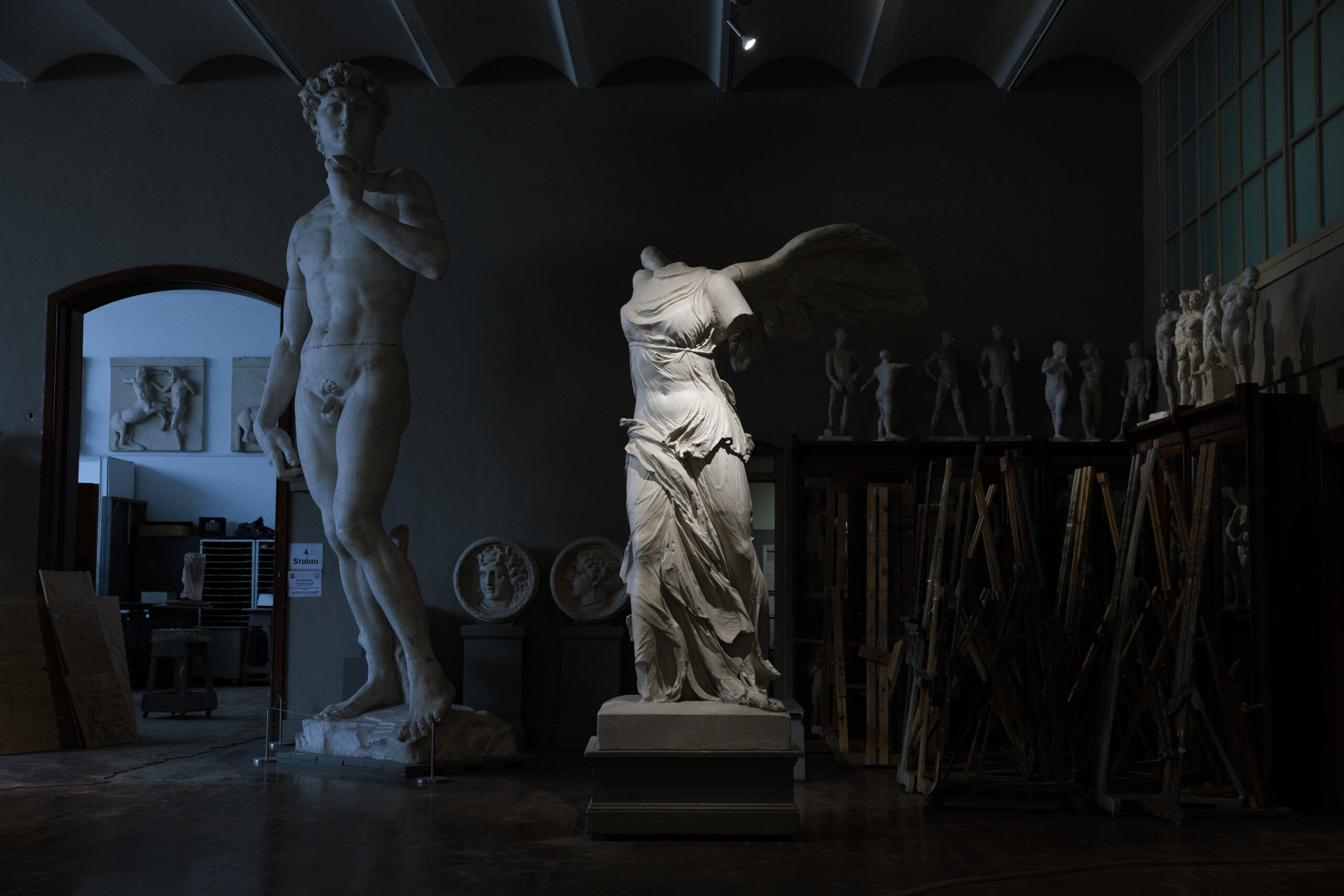
Sculptures used to instruct students at the Pennsylvania Academy of the Fine Arts, July 16, 2025.
Elliot Clark, a PAFA trustee and cochair of the search committee, said that in Shepherd, PAFA had found someone who can “expand membership and bring in new donors, new participants into the community.”
Clark said Shepherd’s “very keen financial mind” impressed PAFA’s leaders during the hiring process.
“She was a business analyst at Sotheby’s, and one of her roles was in strategic operations, and she’s very financially savvy. So she made us dance during the Q&A about financials.”
Clark called her “incredibly diplomatic — she’s a really talented communicator. She’s going to be a great ambassador both locally and nationally to the art community and the Philadelphia community.”
“And you know,” he said, “we’re not always an easy city to deal with.”
Shepherd led St. Petersburg’s relatively small Museum of Fine Arts (with a $6 million annual budget) from 2016 through 2022, and has run an arts consultancy since then with business partner Veronica Lane. At the Los Angeles County Museum of Art, she was associate vice president, head of audience strategy services. And, for 4½ years before that, she was director of the membership and annual fund program at the Whitney Museum of American Art. She worked at Sotheby’s for 9½ years in a variety of positions on the business side.
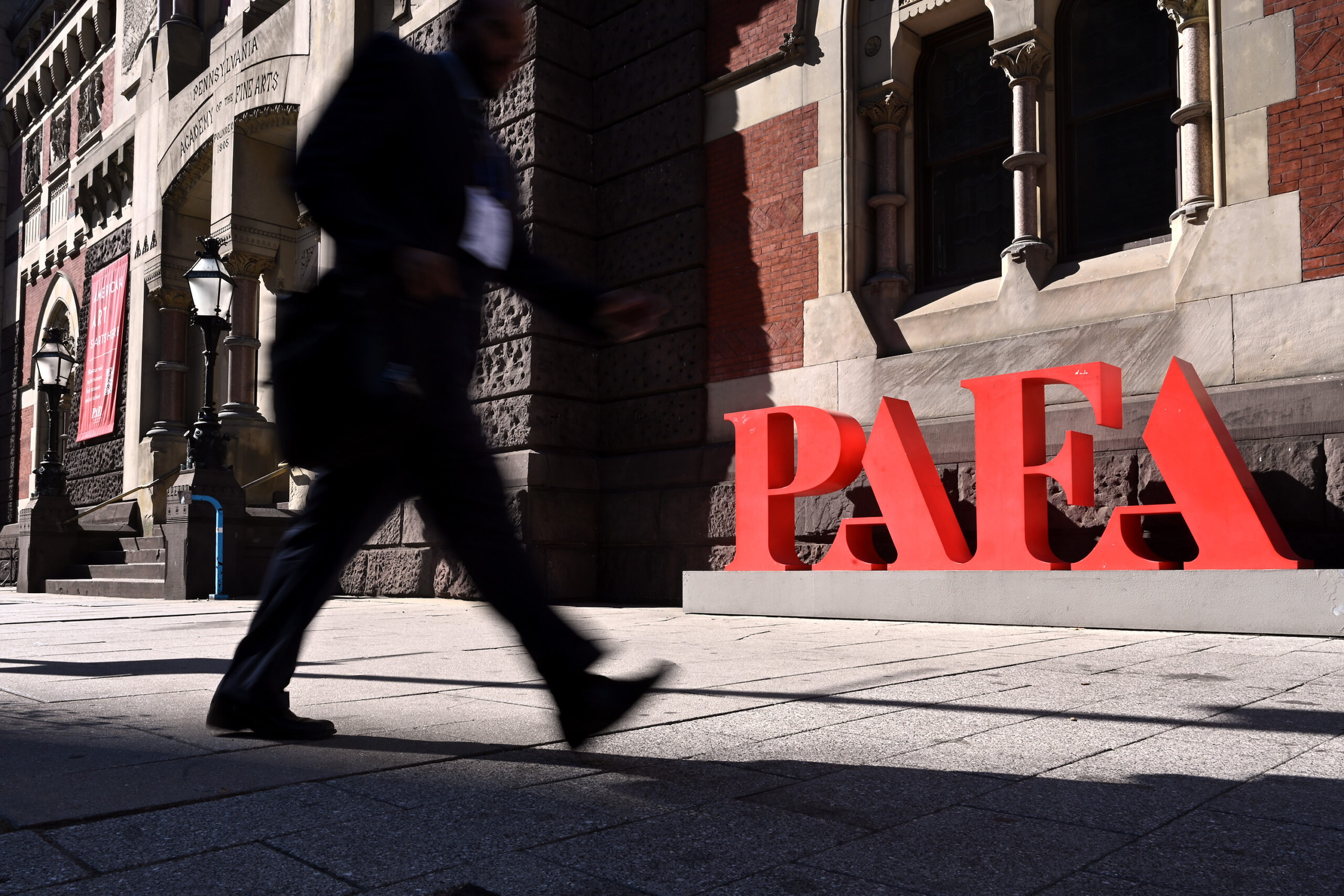
The Pennsylvania Academy of the Fine Arts, Oct. 22, 2024.
Her first few months at PAFA promise to be eventful. Clark says work on the Furness and Hewitt-designed museum building is on budget and on time; it is slated for a reopening celebration April 10. “A Nation of Artists” opens April 12.
The show, which takes place at both PAFA and the Philadelphia Art Museum, features more than 1,000 works curated by the two museums alongside those from the Middleton collection.
Temple’s programs at PAFA are expected to launch in late spring.
PAFA’s fiscal year ends June 30, which will reveal the direction of its finances.
“We’ll see where we are at the end of the year,” Clark said. “Some things have gone better, some things are not coming in as strongly as we would have liked. But overall, we’re still hopeful that we can get to break even this year.”
If the question of who gets to call the shots at the Philadelphia Art Museum was a major source of friction between its former chief and board and staff, the museum’s new director and CEO arrives as something of a salve.
Eight weeks on the job, Daniel H. Weiss is signaling a philosophy that is anything but authoritarian.
“I believe very strongly in the idea of shared governance,” Weiss said in a recent interview that represents his most extended public comments since taking over the troubled museum. “Any mission-driven institution is almost axiomatically in service to all of the people who have an interest in what it does. So I don’t really have a lot of executive authority as the director of this institution.”
And yet, Weiss obviously understands that he is the one being tasked with the turnaround of one of the city’s flagship cultural groups. He also knows he must take action quickly.
“I don’t have the luxury of saying, ‘I’m going to spend the next 12 to 18 months meeting with people and then we’ll figure out what needs to happen.’ We need to get after it.”
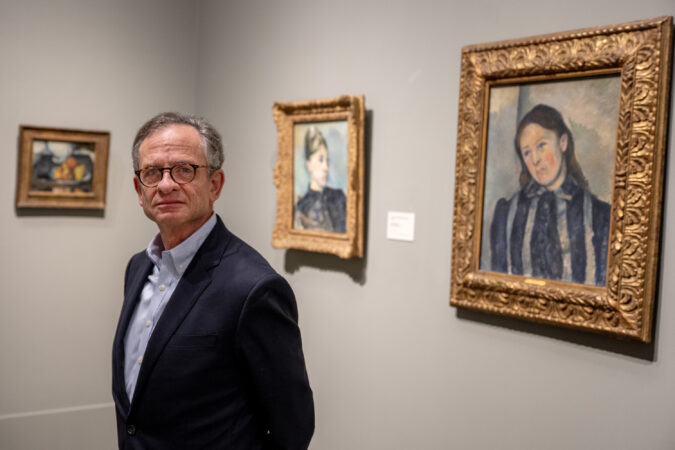
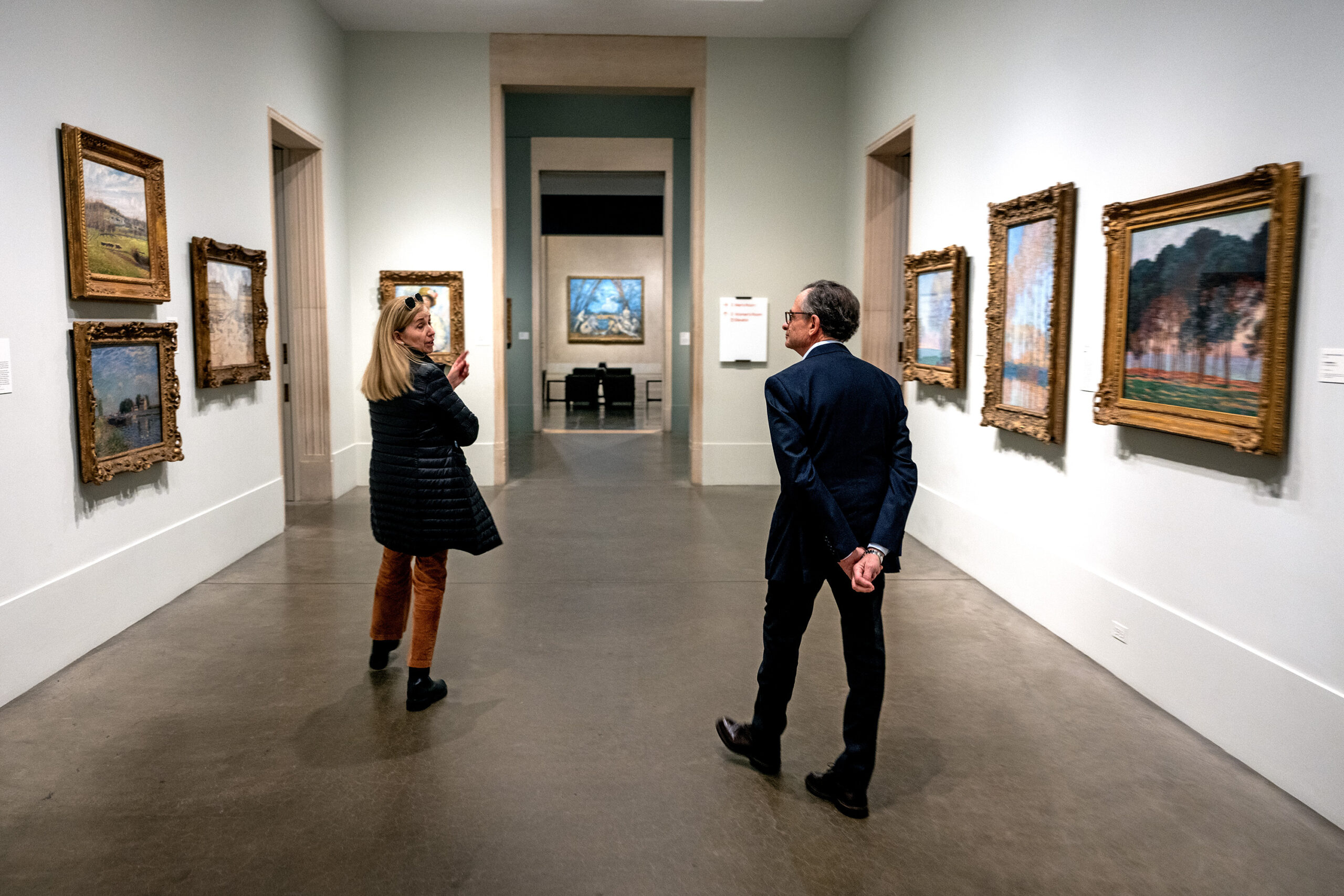
Daniel H. Weiss, director and CEO of the Philadelphia Art Museum, walks through galleries with museum staffer Laura Coogan on Jan. 7.
The listening tour
Weiss, 68, the former leader of the Metropolitan Museum of Art, is well into his listening tour, talking to staff, board members, and others about the museum’s last three years with Sasha Suda at the helm and the messy split with her still playing out in courts both legal and of public opinion.
He says the next few months are about him getting a sense for “the most present problems that need to be addressed.”
“We need to sort out the rebrand and determine whether we change it or stay with it. And we’re looking at that,” said Weiss, who has put together a task force of staff and board to consider the question.
Earlier this week, the museum confirmed that it was parting ways with the marketing chief who oversaw the rebrand.
The financial picture remains challenging.
“We have a deficit. It is not sustainable and we need to fix it. In order to do that, we need to take a larger look at the organization and build a healthy model.”
There are facilities needs that are complex and very much rooted in the reality of how to pay for them. Like, what form a proposed new education center should take; what to do about the Perelman annex, the former office building across the street that opened in 2007 after a $90 million renovation and has been closed to the public since the pandemic; and where and how to address deferred maintenance to the main building.
“We need to prioritize our list so that we can begin a thoughtful plan of following up on all the work that was done before on the core project to figure out the next chapter.”
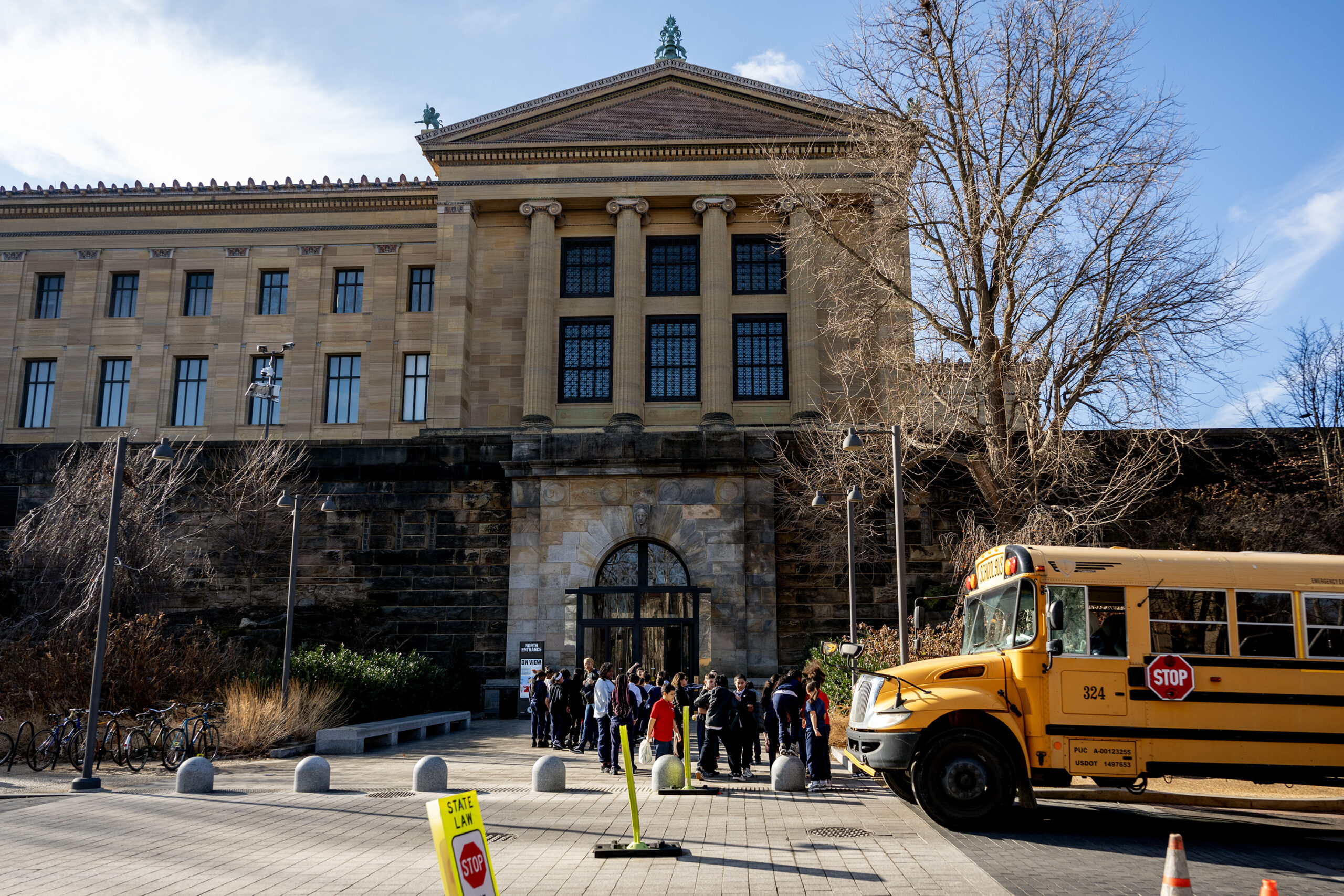
School groups at the North Entrance to the Philadelphia Art Museum on Jan. 7.
A strategic plan
The “next chapter” will eventually take shape in a new strategic plan.
In the spring and summer, Weiss hopes, conversations with board and staff will give the museum a “better sense of what our resources could be as we work our way to balance and health. And then next year, maybe early next year, we begin the process of putting together a plan.”
Weiss’ credentials in both business and art seem suited to the moment. He holds an MBA from Yale School of Management and has worked for Booz Allen Hamilton. His master’s degree in medieval and modern art and Ph.D. in Western medieval and Byzantine art were earned at Johns Hopkins University, where he is finishing up his teaching at the end of the semester.
Weiss, who has moved to Philadelphia with his wife, Sandra, sees his immediate job as reminding everyone what Philadelphia has in its museum.
The events of the last few months — the widely ridiculed rebrand, Suda’s mid-contract ouster, and the dramatic language used in her subsequent wrongful-dismissal lawsuit against the museum — have often eclipsed the art and made the main message coming out of the museum one of acrimony.
The new director is eager to change the message.
“What I’d like to do over the next six months to one year is to get everybody excited about what’s possible, what we already have. How, by supporting each other and investing excitedly in our mission, we can do something really important.”
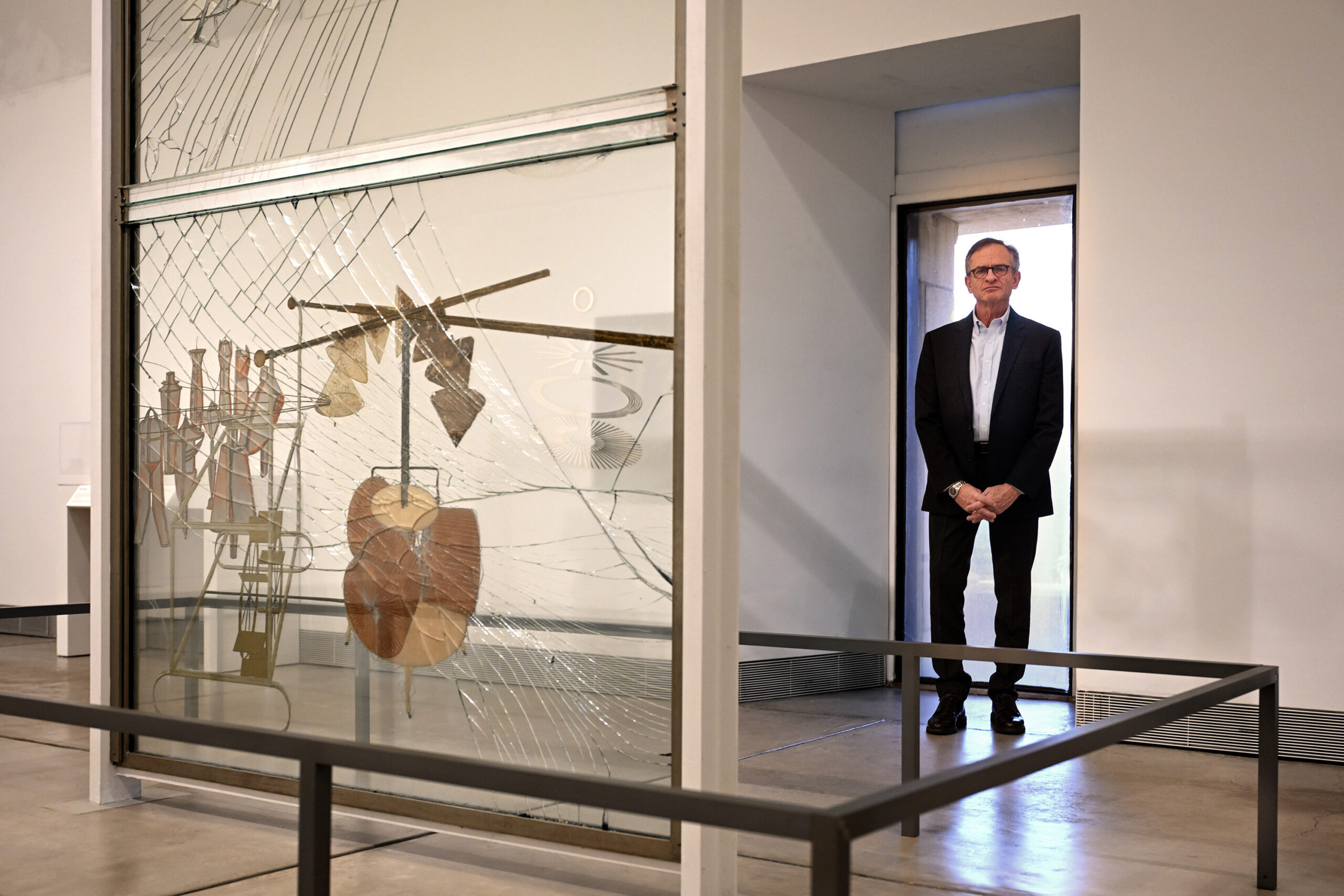
Daniel H. Weiss, director and CEO of the Philadelphia Art Museum, with “The Bride Stripped Bare by Her Bachelors, Even” (1915–1923, also called “The Large Glass”) by Marcel Duchamp.
The role of the board
Weiss also needs to consider the role of the Art Museum board, which, on the one hand, was not informed that the rebrand was final, according to some board members. On the other hand, it has been accused in Suda’s initial court filings of being overinvolved in museum matters.
“I don’t think our board needs radical restructuring … and this may seem counterintuitive in light of what you’ve been reading about in the newspapers, I think our board needs to be embraced as a real partner,” Weiss said. “And I do believe deeply in shared governance and that means the director and the senior administration have a job to do and the board has a job to do.”
“They’re different jobs but when they’re working in concert, you get much more for the institution than you do if they’re at odds with each other.”
How much of board-CEO relations is about structure, and how much is it the function of the personality of the person whose job it is to be the connective tissue? “Almost always it is more a function of the personalities than it is the structure,” he said.
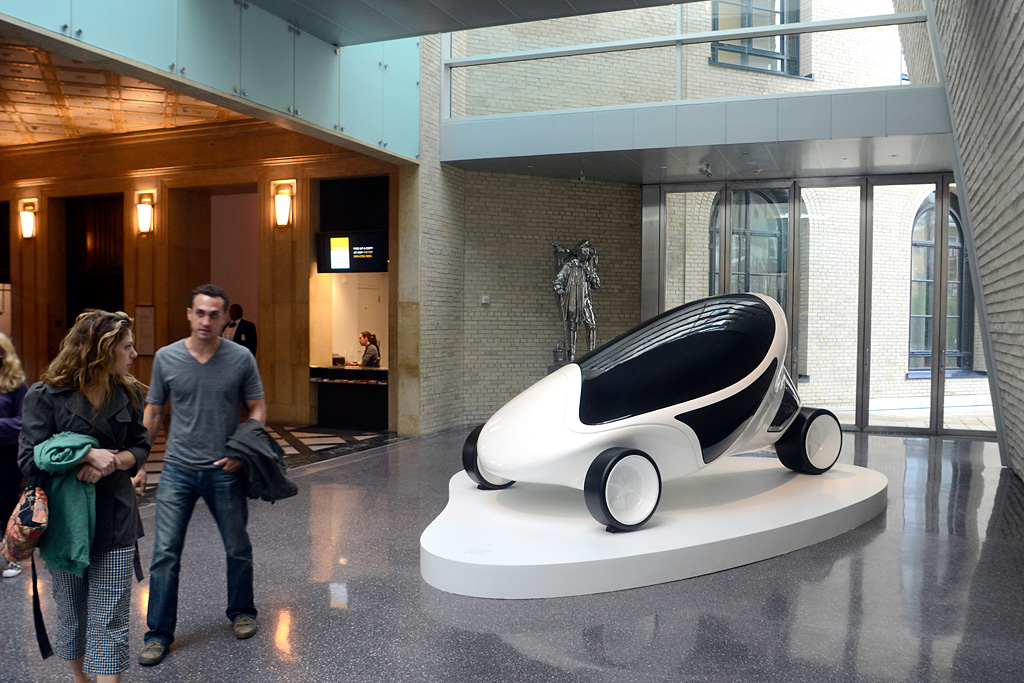
In 2011, when the museum’s Perelman building was still open to the public, visitors view a three-wheel car.
As for the involvement of one emeritus board member, Julian A. Brodsky, Weiss has to determine the future of an unannounced, but reported by Philadelphia Magazine, $20 million pledge from the Comcast cofounder toward a dreamed-of education center.
“It’s an incredible gift and we’re enormously grateful for that. I’m in the process of talking about the timing of that and all of that,” he said.
The art itself
Weiss does not dispute that the museum needs changing. But a host of questions beckon.
What about the art itself? Is the museum’s pipeline of shows — some of which are years in the planning — the right mix for the audience the museum wants to attract? Why are doors open only five days and past 5 o’clock one day a week? Is a general admission ticket of $30 too high for this city?
Daniel H. Weiss, director and CEO of the Philadelphia Art Museum, is well into his listening tour.
“Every great art museum faces the same challenge, which is that these are intimidating places by design. So how do you, on the one hand, celebrate this great magnificent institution sometimes called a castle on the hill? And at the same time [be] welcoming to schoolchildren who have never been here before? That’s not easy. We faced the same issue at the Met.”
He sees the shifting societal context in which the museum finds itself as an opportunity.
“The world is a mess,” he said. He would like the museum to be an answer to that turmoil — though clearly, given the last few months, Philadelphia’s major art museum is not cloistered from conflict.
“There are very few places in the world that are entirely to the good, and art museums are among them. We are here to enrich, to enlighten, to inspire, to build community, to invite difference to come together, to have shared learning experiences for everyone,” Weiss said.
“The world is a lot bigger, more complicated, richer, and inspiring than just the world you live in on a day-to-day basis. If everybody can have that experience, we are incrementally a more civil society than we were before people came into the institution. Those are all great things.”