Author: The Inquirer Editorial Board

  • Removal of slavery exhibit from the President’s House will not whitewash history | Editorial

    Removal of slavery exhibit from the President’s House will not whitewash history | Editorial

    Despite widespread pushback, the Trump administration and the National Park Service removed exhibits on slavery from the President’s House, a recreation of the executive residence that once housed George Washington and John Adams.

    The exhibits detailed facts about slavery in early America, including how Washington engaged in a human shell game with enslaved members of his own household. After the passage of Pennsylvania’s Gradual Emancipation Act in 1780, enslaved people were shuttled between Philadelphia and Mount Vernon every six months to obey the letter, if not the spirit, of the law.

    The exhibits, part of Independence National Historical Park, also memorialized the nine people first brought into bondage to the city with our nation’s first president. It is important to note their names and their stories.

    Austin was a waiter who died while traveling on one of those trips back to Virginia. Paris was a young stable hand whose tenure in the city was short. Hercules was a celebrated chef who eventually escaped from Mount Vernon. Christopher Sheels served as Washington’s valet. Richmond was the son of Hercules and worked various roles despite being just 11 years old. Giles drove Washington’s carriage. Oney Judge, a maid, famously fled bondage in Philadelphia, attracting the president’s ire. There was also Moll, a nanny, and Joe, a footman. Joe had to leave his wife and children behind in Virginia during his time working at the President’s House.

    Evidence shows that the people whom Washington enslaved were well aware of the hypocrisy surrounding their situation. In a nation formed on the premise that “all men are created equal,” they found themselves bound by birth to a life of servitude, working in the household of the new republic’s first leader. Their stories once adorned the President’s House. Now, blank spaces stand in their place.

    The Trump administration has cited a desire to avoid any historical marker that “inappropriately disparages Americans past or living.” Washington is one of the most admired men in U.S. history. His military leadership and willingness to cede executive power are worthy of our esteem. But Washington, like Thomas Jefferson and many other founders, fell short when it came to slavery. Removing panels cannot change that fact.
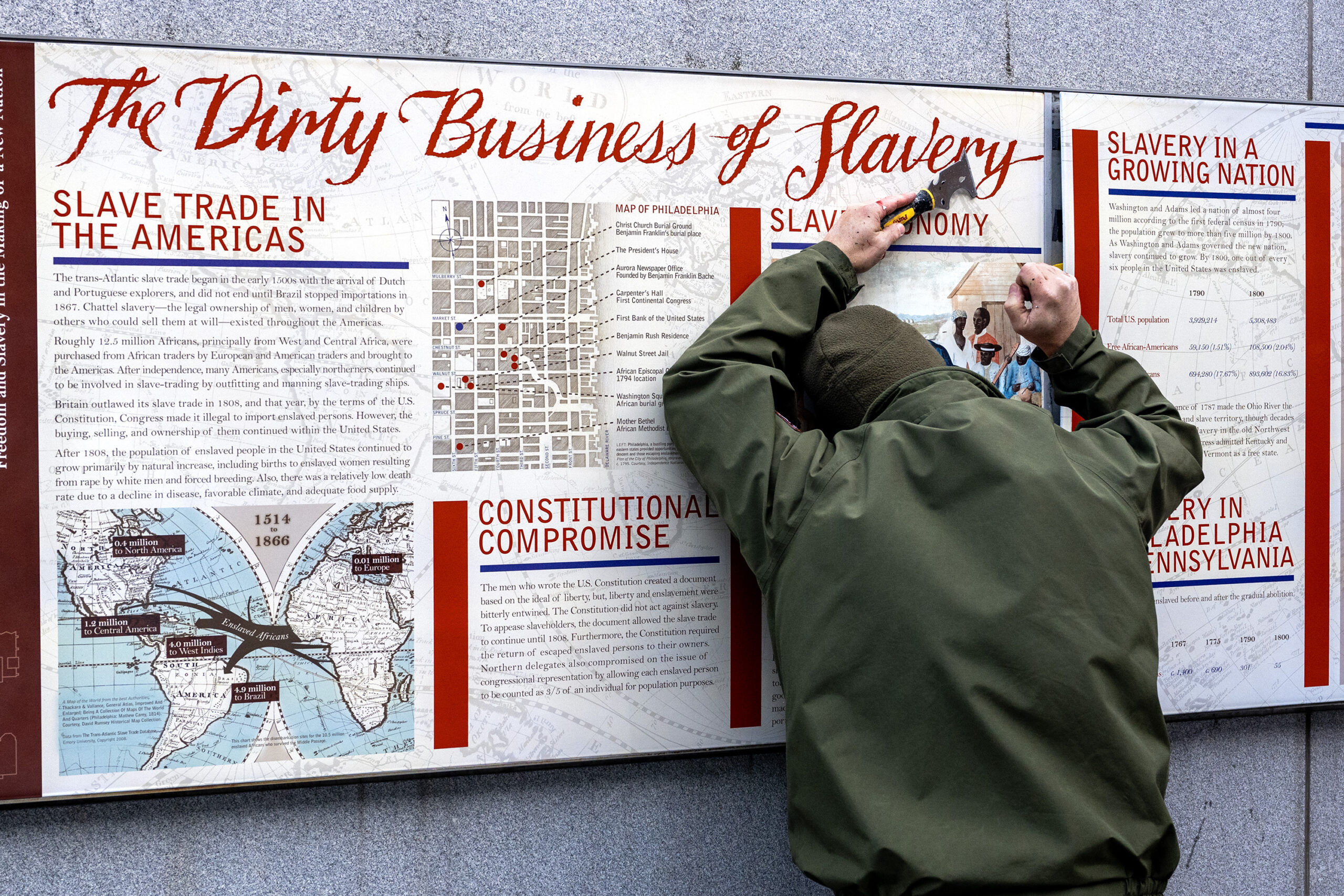
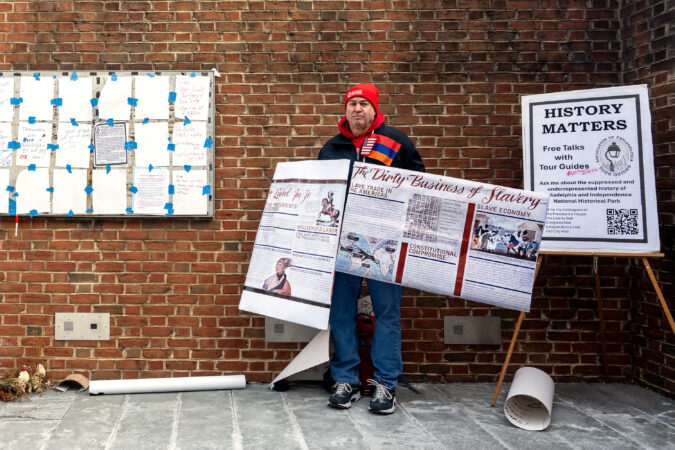
    A National Park Service worker removes panels at the President’s House site in Independence National Historical Park on Jan. 22. More than a dozen educational displays and illustrations about slavery were removed from the site.

    What the desecration of the President’s House does is disparage not just the enslaved members of Washington’s household, but the millions of Americans who, in the words of Mayor Cherelle L. Parker, “endured a great deal of pain so that America could realize its promise.” It also insults the efforts of the Philadelphians who fought to build the exhibit and have a vital part of America’s history recognized.

    Thankfully, there is a strong local effort to fight the removal.

    Parker cited a 2006 agreement between the city and the National Park Service, which her administration says requires consultation before any alterations are made. The city has filed a lawsuit to restore the panels and is hosting a public hearing on Friday. Perhaps while the court fight plays out, a temporary alternative can be installed at City Hall, by the Constitution Center, or in Fairmount Park.

    Parker’s outrage is also a welcome change. While the mayor has mostly refrained from picking fights with the White House, she chastised President Donald Trump and park service officials, saying: “You cannot erase our history. You will not erase our history!”

    Gov. Josh Shapiro has joined the city’s lawsuit. An amicus brief filed by his administration said: “There is no virtue in refusing to acknowledge certain aspects of our history because it is painful to do so. The removal of the slavery exhibit from the President’s House undermines this commitment and denies Pennsylvanians and others the opportunity to learn more about a part of our history that cannot be ignored.”

    This sentiment is the right way forward.

    As the United States celebrates its 250th anniversary, Americans will undoubtedly hear much about this country’s triumphs. That includes those who fought and died — including many who had been enslaved themselves — to keep our country united and begin to address our nation’s greatest mistake.

    Generations after the Civil War, Americans were a pivotal part of the coalition that defeated the forces of fascism in Europe. The United States has put people on the moon, helped vanquish diseases like polio, exported its diverse and vibrant culture, and inspired democratic reformers across the world.

    Failing to acknowledge our failures can only undermine that legacy.

  • Another senseless killing in Trump’s senseless war against Americans | Editorial

    Another senseless killing in Trump’s senseless war against Americans | Editorial

    “Terrible things are happening outside. At any time of night and day, poor helpless people are being dragged out of their homes … Families are torn apart; men, women and children are separated. Children come home from school to find that their parents have disappeared … Everyone is scared … No one can keep out of the conflict … the end is nowhere in sight.”

    Anne Frank, The Diary of a Young Girl

    Donald Trump’s masked marauders murdered another U.S. citizen in Minneapolis on Saturday, a senseless killing in a senseless war playing out in broad daylight on America’s streets.

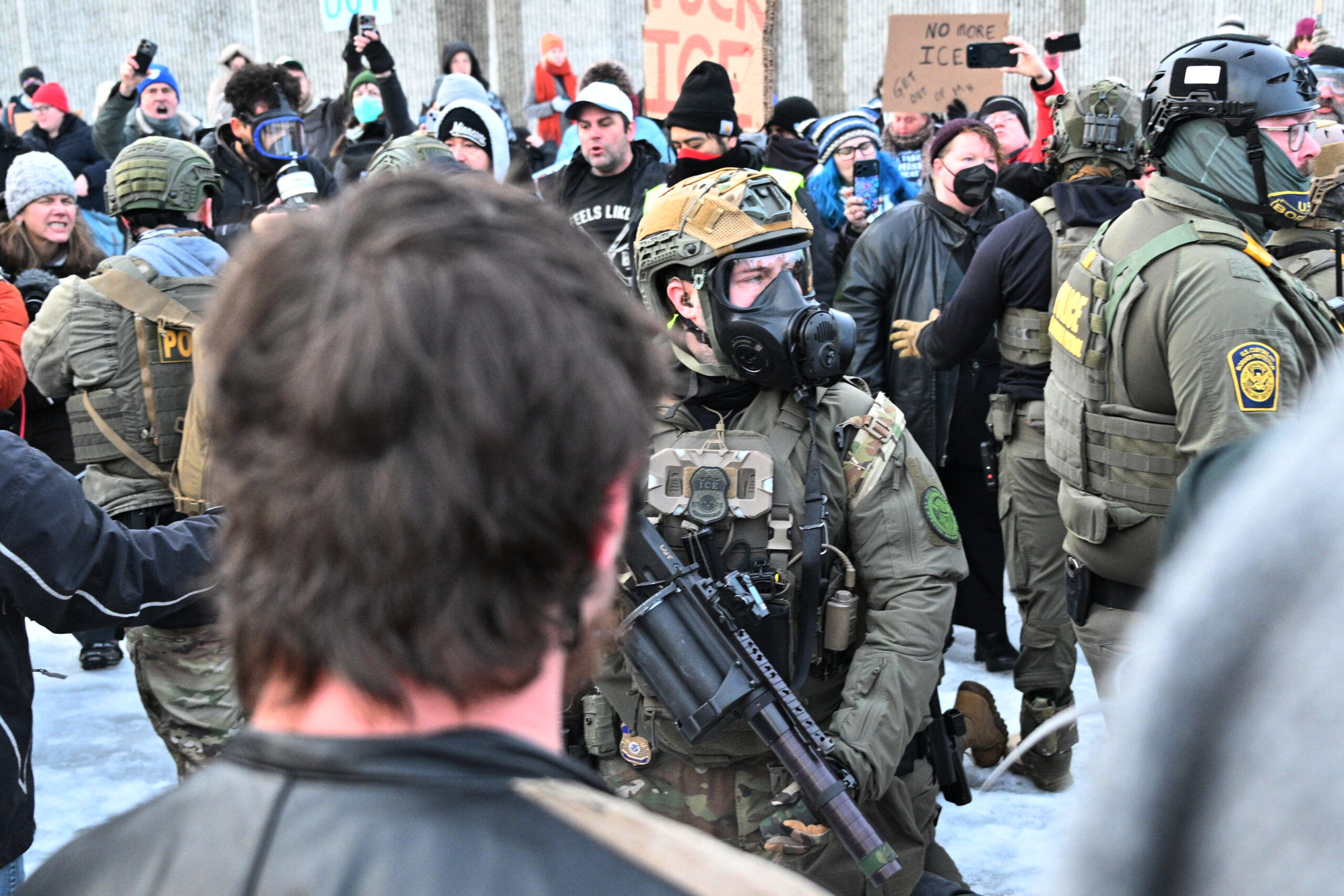
    Cell phone videos showed one of Trump’s immigration enforcement goons violently pushing a woman to the ground. As a man recording the agents tried to intervene, at least seven federal agents surrounded and dragged him to the ground as another beat him with a canister.

    As the agents struggled to subdue the man, another agent appeared to remove a gun from the scrum. A Border Patrol agent then shot the man in the back from close range. A third agent pulled out his gun as nine more shots were fired within seconds.

    Several agents scampered away as Alex Pretti, a 37-year-old U.S. citizen with no criminal record, lay motionless on the street.

    This undated photo provided by Michael Pretti shows Alex Pretti, the man who was shot by a federal officer in Minneapolis on Saturday.

    After the shooting, a crowd of protesters shouted profanities at the federal officers, calling them “cowards” and urging them to leave. One officer mockingly responded, “Boo-hoo.”

    Pretti’s killing came two weeks after a U.S. Immigration and Customs Enforcement agent in Minneapolis killed Renee Good — a mother of three and a U.S. citizen — as she tried to maneuver her SUV out of the street. A week later, a DoorDash delivery driver was shot in the leg by ICE agents in Minneapolis.

    After the two killings, Trump and his loyal lieutenants tried to blame the victims and local Democratic leaders. But cell phone videos showed the truth: Trump’s jackboots have now plainly executed two U.S. citizens.

    The American people can see the lawless mayhem with their own eyes.

    Trump has unleashed a paramilitary of ICE and Border Patrol agents into American streets with a license to arrest, confront, detain, beat, or kill anyone who gets in their way — even if it is an off-duty police officer or a 5-year-old boy.

    Any pretense of federal investigations into abuses by ICE or others doing Trump’s bidding is quickly compromised or shut down. Constitutional rights are ignored. The rule of law is now set by Trump’s morality, which appears to thrive on cruelty.

    Federal immigration agents must leave Minneapolis and end their vigilantism. But who will stop them?

    There are no checks on Trump’s power, as his administration is stocked with unqualified lackeys competing for his attention.

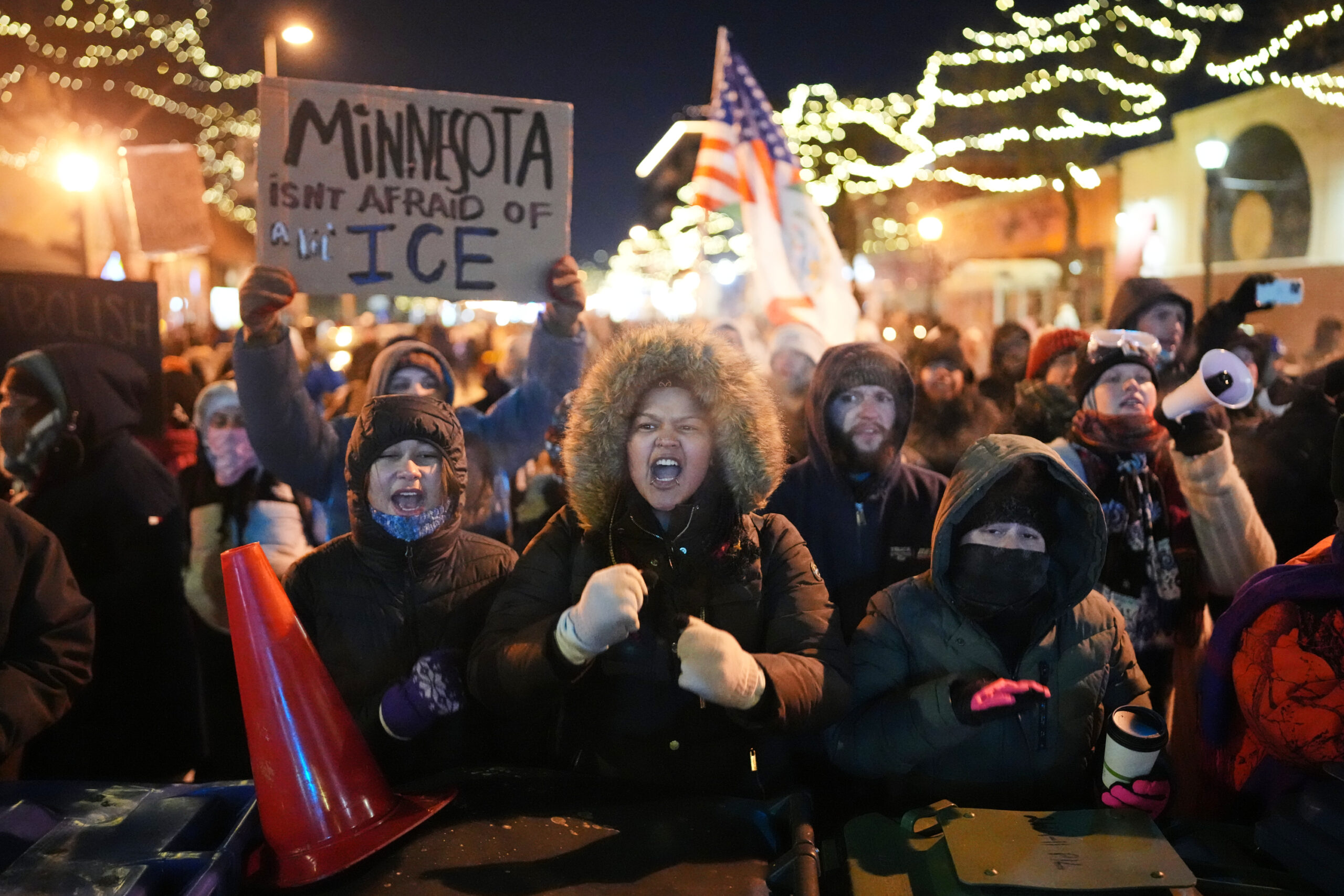
    Protesters chant and bang on trash cans Saturday as they stand behind a makeshift barricade during a protest in response to the death of 37-year-old Alex Pretti, who was fatally shot by a U.S. Border Patrol agent earlier in the day in Minneapolis.

    The Republicans who control Congress have abdicated their constitutional duty, while conservatives on the U.S. Supreme Court continue to enable the president.

    Sadly, justice left town after the U.S. Senate — including Pennsylvania’s John Fetterman and Dave McCormick — confirmed Pam Bondi, one of Trump’s personal lawyers, as attorney general.

    The FBI has been decimated by Kash Patel, an unqualified incompetent, pushing conspiracy theories and vendettas. Kristi Noem has turned the U.S. Department of Homeland Security into a Bull Connor-like police force, led by Gregory Bovino in his greatcoat.

    The architect behind the draconian ICE crackdown is Stephen Miller, an unelected and unconfirmed senior adviser and speechwriter with a history of white nationalist ties and bigotry.

    Republicans enabled the surge in ICE man power and funding when they approved Trump’s Big Beautiful Bill. If the GOP will not stop Trump, then voters must act come November.

    ICE was supposed to go after the “worst of the worst” people who entered the country illegally. Instead, Trump and his lawless administration have occupied cities, caused civil unrest, and accomplished essentially nothing.

    Tens of thousands of immigrants arrested have no criminal records. Others are collateral damage. After Good was killed, Trump said that “things happen.”

    Pretti was among the best in America. He was a nurse in an intensive care unit that served veterans. He died trying to help a woman attacked by a masked thug.

    Minneapolis Mayor Jacob Frey asked the question many want to know about the Trump administration’s growing domestic war: “How many more Americans need to die?”

  • Poverty is not only a Philadelphia problem. It’s about time suburban leaders recognized that. | Editorial

    Poverty is not only a Philadelphia problem. It’s about time suburban leaders recognized that. | Editorial

    For generations, wealth has been regionally segregated in Southeastern Pennsylvania, with Philadelphia considered until recently the poorest big city in America, while three of its four collar counties had the lowest poverty rates in the state.

    But having fewer people in poverty doesn’t mean there are none who are struggling in the suburbs. More than 180,000 people across Bucks, Chester, Montgomery, and Delaware Counties live below the poverty line, yet for too long, experts say, those communities have underserved those in need.

    Recently, however, suburban leaders have been stepping up their efforts to help those with low incomes. It’s a heartening and welcome shift in attitude.

    Poverty is not solely a big-city ailment. With median incomes in Bucks, Chester, and Montgomery Counties nearly twice what they are within Philadelphia, it’s very difficult for poor and working-class people to maintain a suburban lifestyle.

    That is especially true when it comes to issues of land use and transportation policy, which experts often treat as intertwined.

    In the suburbs, the vast majority of developable land is zoned for detached, single-family homes on large lots, and nearby transit options are often both slow and infrequent. The result is that median housing values in Bucks, Montgomery, and Chester Counties range between $432,000 and $476,000, compared with roughly $250,000 in Philadelphia. Delaware County, which is home to both more suburban areas like Swarthmore and urbanized municipalities like Chester and Upper Darby, splits the difference at $331,000.

    This so-called snob zoning doesn’t just prevent poor, working-class, and sometimes even middle-class people from moving into or remaining in many suburban areas; it also makes it harder to get around without a car, which raises the cost of living. While a monthly transit fare card costs between $1,400 and $3,000 per year, AAA estimates the average cost of car ownership is about $12,000. While roughly three-quarters of households in Philadelphia typically don’t have more than one vehicle, most suburban households have two or more. Between the cost of housing and the cost of transportation, that’s an average of more than $60,000 per year just to get by and around.

    The de facto suburban gatekeeping essentially compels low-income people to choose to live in the city — a reality that has allowed past suburban leaders to lean into the widely held perception that poverty is a Philadelphia problem. In effect, economic researchers say, that’s meant the suburban poor have basically been left to fend for themselves.

    Thankfully, there are signs that things are beginning to change.

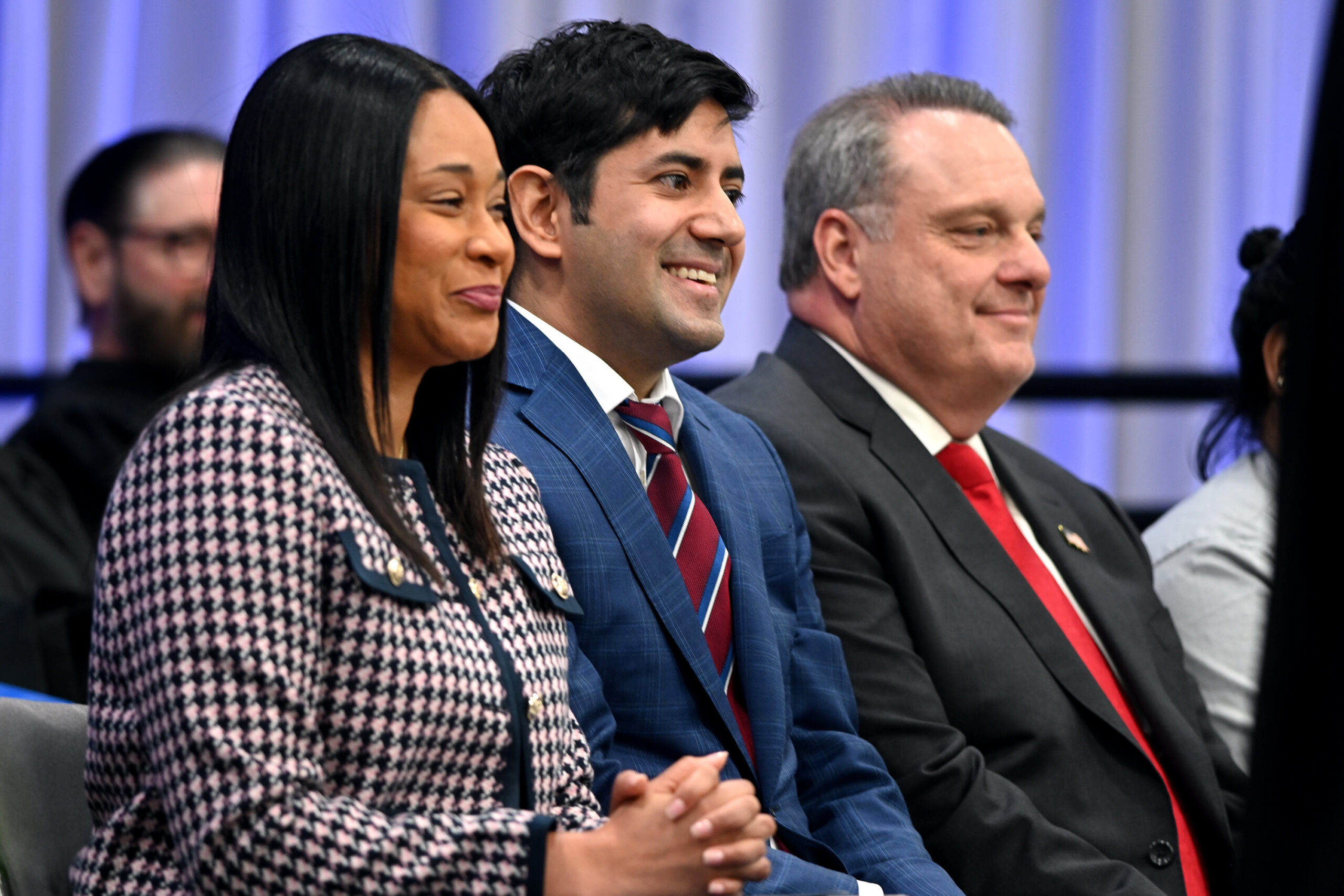
    (From left) Jamila Winder, Neil Makhija, and Tom DiBello are seated together on stage at the Montgomery County Community College gymnasium during their swearing-in as county commissioners in 2024.

    In Montgomery County, Commissioners Jamila Winder, Tom DiBello, and Neil Makhija have demonstrated a strong bipartisan commitment to address housing needs.

    While the county had zero full-time homeless shelters by the end of 2024 — even as the number of unhoused people grew — the commissioners have invested in an additional 190 short-term shelter beds, split between Pottstown, Norristown, and Lansdale. The commissioners should be commended for doing right by the wider community, even as they faced opposition from some constituents who did not want shelter space available.

    The commissioners have also attended community meetings to lobby in favor of housing plans. Makhija has also proposed creating a new grant system that would reward municipalities that opt to allow for more construction. This would help address reasonable concerns about the infrastructure needs of new residents.

    There is evidence that efforts to build more inclusive and sustainable suburbs have broadened support. Three of the five new Lower Merion Township commissioners mentioned walkability or pedestrian safety as priorities; Joi Washington — the new mayor of Media — wants to take advantage of her borough’s exceptionally strong transit connections; and Delaware County opened its first-ever health department four years ago.

    Leaders from all four suburban counties have also pledged support for new sources of revenue to support public transportation in the region, and Chester County has become a leader in housing development.

    If these efforts succeed, a future where poverty is no longer concentrated within Philadelphia — and the poorest can access the support they need, no matter where they live — may be within our grasp.

  • Trump claims he ‘won’t use force’ to seize Greenland, but his takeover efforts may shatter NATO beyond repair | Editorial

    Trump claims he ‘won’t use force’ to seize Greenland, but his takeover efforts may shatter NATO beyond repair | Editorial

    As many as 85 million deaths were caused by World War II, including more than 400,000 U.S. service members. It was the largest and deadliest conflict in history, involving more than 70 countries.

    Out of that horrific six-year battle, the United States, Canada, and 10 Western European nations forged the North Atlantic Treaty Organization to deter Soviet aggression, prevent renewed German militarism, stop the spread of communism, and ensure European security.

    For more than 75 years, NATO — backed by U.S. presidents from both parties — has maintained peace and prosperity throughout the Western world.

    But in a matter of months, Donald Trump has upended that order — bombing and threatening countries while using tariffs as an economic weapon. His latest effort to take over Greenland could shatter the NATO alliance altogether.

    Trump’s idea defies reason, especially since Greenland is an autonomous territory of Denmark — a founding member of NATO and a loyal ally of the U.S.

    Seizing Greenland without congressional approval is also unconstitutional, violates international law, flouts United Nations Charter principles, and would breach NATO’s mutual defense clause.

    Beyond that, it is reckless and could set off a perilous chain of events leading to more wars or economic disruptions. Some have urged Europe to fight back with a so-called trade bazooka that would essentially cut off economic ties with the U.S.

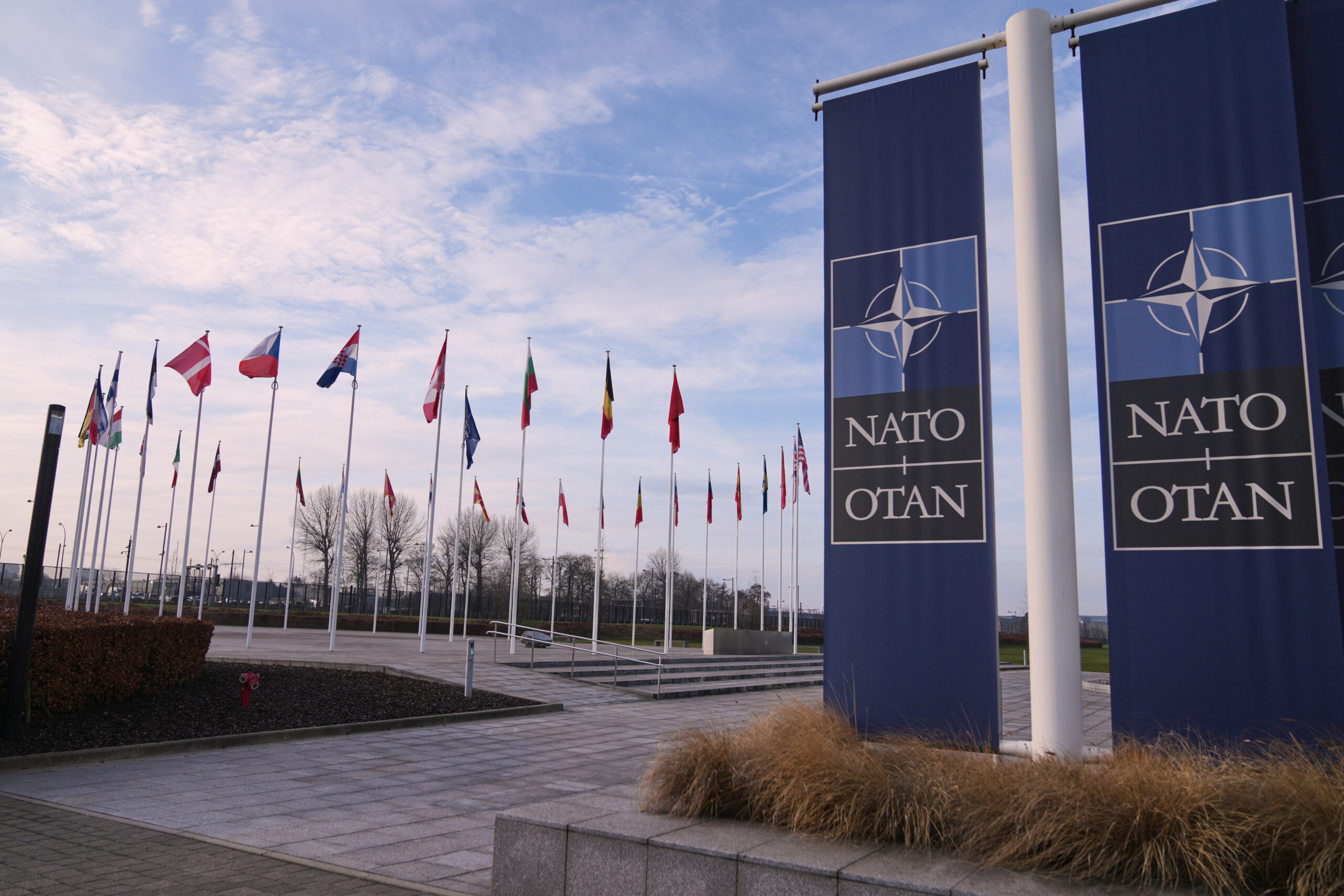
    Flags flap in the wind outside NATO headquarters in Brussels on Monday.

    Trump dialed down the rhetoric on Wednesday, claiming the U.S. “won’t use force” to take Greenland, but insisted the territory was needed for national and international security. He also backed off his tariff threat against NATO allies, claiming a framework of a deal regarding Greenland.

    But even if the latest made-up crisis is averted, Trump has already burned bridges with some of America’s closest collaborators.

    Canada’s Prime Minister Mark Carney said there was a “rupture” in the world order. “The rules-based order is fading,” he told leaders at the World Economic Forum on Tuesday.

    Ed Davey, a member of Parliament in the United Kingdom, called Trump “an international gangster” who was threatening to “trample over the sovereignty of an ally.”

    After Trump initially threatened to impose more tariffs over opposition to American control of Greenland, financial markets tumbled, and eight European countries issued a joint statement warning that transatlantic relations face a “dangerous downward spiral.”

    Trump’s threats to invade or buy Greenland add to his lawless, wrecking ball approach to both foreign and domestic affairs since his tumultuous return to the White House last year.

    Trump continues to enable Russia’s unfathomable atrocities in Ukraine, while abandoning another ally. He has strongly supported Israel’s ghastly assault on Gaza, and is now corruptly selling “peace seats” for $1 billion to pay for the rebuild. Both Vladimir Putin and Benjamin Netanyahu are wanted on war crimes charges, but Trump stands by their side.

    Trump ordered the bombing of nuclear facilities in Iran as well as military strikes in Iraq, Nigeria, Somalia, Syria, and Yemen.

    People march during a pro-Greenlanders demonstration in Copenhagen, Denmark, on Saturday.

    He approved illegal attacks on at least 35 alleged drug boats and the invasion of a sovereign country to arrest Venezuela’s leader, Nicolás Maduro.

    Trump made clear the military action was not about stopping the flow of drugs or spreading democracy, but rather all about gaining control of Venezuela’s oil.

    For added bluster, Trump also threatened attacks on Cuba, Colombia, Mexico, and Canada.

    At home, Trump continues to wage war in the streets, as U.S. Immigration and Customs Enforcement agents kill and harass — including U.S. citizens and off-duty police officers — while deporting more than 230,000 people.

    He has also abused his power, upended the federal government, investigated political enemies, weakened higher education, slashed medical research, undermined the free press, and attacked law firms, all while making America less affordable.

    Any efforts to combat climate change, famine, healthcare costs, human rights violations, civil rights, voting rights, worker safety, public corruption, or white-collar crime, and many other protections have essentially evaporated under Trump.

    The daily chaos has served as a distraction from the unreleased Jeffrey Epstein files and Trump’s profiteering of at least $1.4 billion last year.

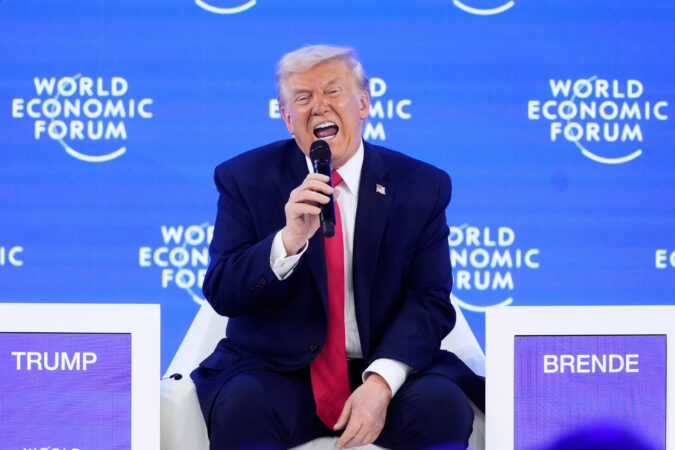
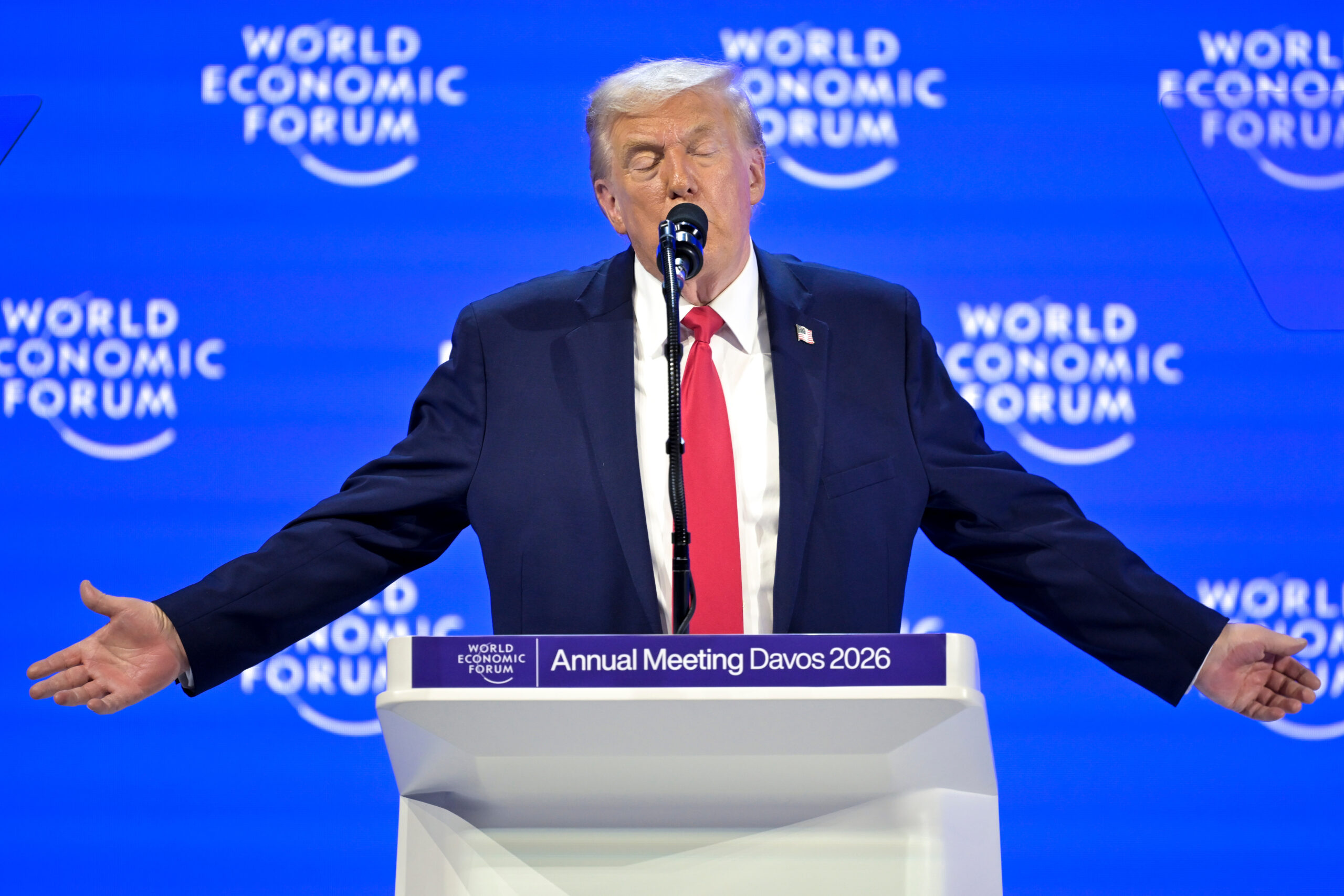
    President Donald Trump speaks during the 56th annual meeting of the World Economic Forum in Davos, Switzerland, on Wednesday.

    Through it all, Trump has acted like a petulant child, debasing the office of the president and tarnishing the global reputation of the United States.

    On social media, Trump posted a manipulated photo of himself meeting with European leaders in the Oval Office with a map showing Greenland and Canada covered with a U.S. flag.

    He also posted a fake photo of himself and two lackeys, JD Vance and Marco Rubio, planting a U.S. flag next to a sign that read: “Greenland — US Territory est. 2026.”

    Trump shared a text exchange with Norway’s prime minister, saying he no longer felt an obligation to think about peace since he did not win the Nobel Peace Prize.

    As always, everything is about Trump. The Republicans in Congress — the only ones with the power to stop him at this point — remain mostly silent as the convict in the White House mocks allies and turns the U.S. into a pariah state.

    Destroying NATO has long been Putin’s goal. Trump is doing the former KGB agent’s dirty work.

    Meanwhile, as the GOP sleeps, everything the Greatest Generation fought and died for is being casually discarded.

  • Trump’s assault on free and fair elections continues | Editorial

    Trump’s assault on free and fair elections continues | Editorial

    There are many things Donald Trump could regret about the aftermath of the 2020 election.

    Perhaps it could be his nonstop lying about voter fraud, or how he was recorded asking Georgia election officials to “find” him the votes he needed. Maybe he has remorse about inciting the mob that attacked the U.S. Capitol, violence that led to seven deaths and more than 100 injured law enforcement officers.

    But no. What the president “regrets,” as he told the New York Times recently, is not ordering the National Guard to confiscate voting machines in swing states he lost.

    If the idea of military reservists marching into Philadelphia polling places and walking out with the pesky will of the people seems far-fetched — just another of Trump’s rambling musings — then consider that he and his enablers are already laying the groundwork to undermine future elections.

    With the midterms less than a year away, local and state officials must remain steadfast in their defense of free and fair elections, and voters must demand that their rights are protected.

    The administration’s assault on the franchise began in March, when Trump issued an executive order seeking to exert control over election law that the Constitution does not grant the president, including demanding states avoid counting mail ballots postmarked by Election Day but received after.

    The courts have so far stopped the order from taking effect, but it is worth noting that a new U.S. Postal Service rule changes when a piece of mail is postmarked — no longer when it is dropped off, but when it is processed. That means procrastinating voters in states where a ballot counts if mailed by Election Day can no longer take for granted their vote will be tallied.

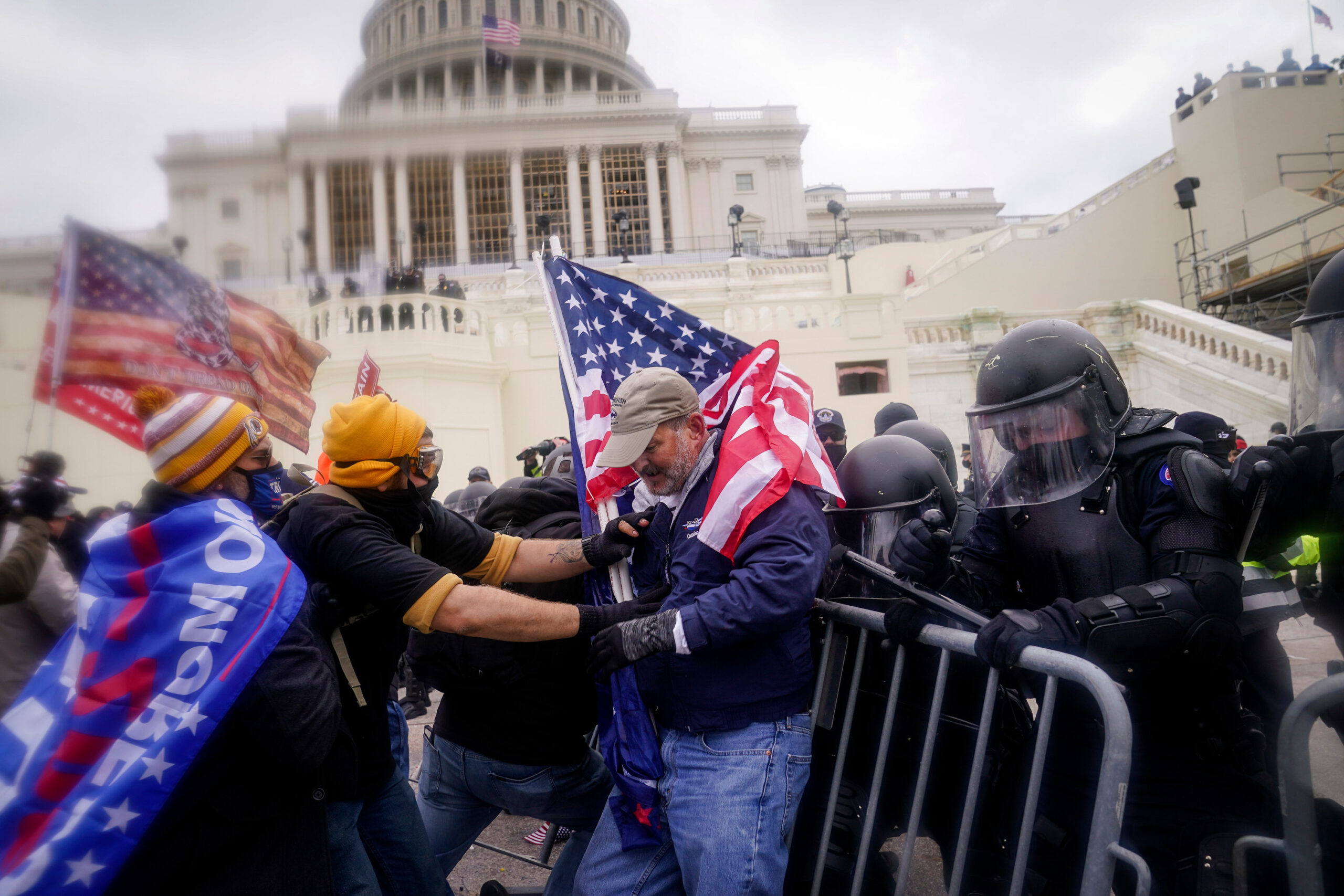
    Rioters try to break through a police barrier at the U.S. Capitol on Jan. 6, 2021.

    Trump has claimed he will target mail-in ballots and voting machines as part of his effort to “help bring HONESTY to the 2026 Midterm Elections.” He has also threatened election officials who oversaw the 2020 election with prosecution while pardoning the Jan. 6, 2021, rioters who sought to interfere with the certification of Joe Biden’s electoral victory.

    Meanwhile, starting in May, the U.S. Department of Justice demanded that states turn over their complete voter registration lists. Many states have declined to comply, including Pennsylvania, and are being sued by the government. This is sensitive data that includes Social Security numbers, dates of birth, and home addresses.

    Along with privacy concerns, there are fears that the Trump administration may seek to cast doubt on voter eligibility and pressure states to purge people from voting rolls. Already, there are examples of people being falsely identified as noncitizens by federal databases.

    It is sadly not much of a leap to imagine Trump claiming widespread voting by noncitizens requires U.S. Immigration and Customs Enforcement agents be stationed at polling places. Of course, noncitizens can’t vote, but one does not need to be an immigrant to be intimidated by gun-toting masked forces who have shown they will fire first and expect no questions later.

    The president has also successfully lobbied some Republican-controlled states to remake congressional maps to favor the GOP, regardless of their potential illegality. In Texas, the U.S. Supreme Court allowed 2025 redistricting maps to be used for the upcoming election, even as a legal challenge moves forward over racial gerrymandering. The high court’s conservative members are also likely to strike a blow against the Voting Rights Act this term, further emboldening voter suppression efforts.

    The administration’s unprecedented machinations have fortunately run into the wisdom of the founders, who charged the states with running elections, not the federal government. The same decentralization that sometimes frustrates widespread election reform and the implementation of best practices also limits a wholesale takeover.

    State election officials — Republicans and Democrats — have shown they take their charge seriously and are honor-bound to do their duty. Still, as Trump continues to consolidate power in the executive and stoke fears of widespread fraud, ensuring free and fair elections will require keeping the federal government from overstepping its authority.

  • Hahnemann redevelopment may be another victim of councilmanic prerogative | Editorial

    Hahnemann redevelopment may be another victim of councilmanic prerogative | Editorial

    Since his 2023 election, 5th District Councilmember Jeffery “Jay” Young has earned a reputation as City Council’s quarrelsome contrarian. His penchant for swooping in and obstructing projects at the last minute has upset everyone from progressive community activists to affected developers.

    Young is a single vote on Philadelphia’s 17-member legislative body, but thanks to the tradition of councilmanic prerogative — where the rest of Council yields to district representatives regarding land-use decisions — he wields absolute power over an area that includes Rittenhouse Square and City Hall to the south, Strawberry Mansion to the west, part of Northern Liberties and Fishtown to the east, and Hunting Park to the north.

    Projects impacted by his objections include a long-standing proposal to build senior housing in Strawberry Mansion, a plan to protect students with speed cameras in school zones, and the renovation of the Cecil B. Moore Library.

    Young’s latest disruptive gambit — ill-conceived and misguided — is a bill that targets the proposed redevelopment of the former Hahnemann University Hospital patient towers in Center City into hundreds of apartments.

    Established in 1885, the hospital healed generations of Philadelphians, and its south tower was the first skyscraper teaching hospital in America. Beyond the loss of medical services, when Hahnemann closed six years ago, it left a gaping hole in the heart of the city.

    Located along a stretch of North Broad Street that is heavily underutilized, the vacant buildings are begging for a new lease. Dwight City Group has proposed refilling the campus with housing. The plan would add hundreds of new residents right next to Center City and the Broad Street Line, and within walking distance of Suburban Station.

    To most housing, development, and planning experts, the idea is perfectly sound. Philadelphia would add workforce housing (around 1% of Mayor Cherelle L. Parker’s goal) in a location that already has the infrastructure and amenities residents require, and the city would not have to spend any taxpayer money to make it happen.

    And yet, Young is opposed.

    Jeffery “Jay” Young represents Philadelphia’s 5th District.

    In a statement to the Editorial Board last year, Young defended the move as being motivated by a desire to grow jobs in the city by limiting development in the area to commercial use. That’s an admirable goal. But who is going to buy the goods and services these hypothetical new businesses would offer? The redevelopment of Hahnemann into an apartment building would only increase local entrepreneurial opportunities.

    Thankfully, in this case, it looks like Young’s obstructive desires may be a moot point — at least when it comes to his proposed legislation.

    Because Council adjourned for its winter break without voting Young’s bill out of committee, the developer was able to secure zoning permits to build 361 apartments, with space for commercial use in the building’s ground floor.

    While the Dwight City Group did not want to comment, CEO Judah Angster earlier told Inquirer reporter Jake Blumgart they remain in negotiations with Young. Given the fact that the developer may have to deal with the councilmember in the future, there is a chance the Hahnemann project may be curtailed to avoid Young’s ire elsewhere.

    Were that to happen, it would mark another missed opportunity for positive growth in the city, thanks to councilmanic prerogative.

    For decades, Philadelphia has trailed peer cities in job growth and economic activity. While high business taxes, deep poverty, and other factors play a role, prerogative stands out as an impediment that is entirely self-inflicted.

    The practice — no matter how strongly it is defended by Young and his colleagues — is a constant detriment to the city. While there is merit in giving district representatives a strong voice to protect their constituents from unwanted development, councilmanic prerogative too often allows the whims of a single person to override the will of the people.

    The only thing Philadelphia would lose by eliminating councilmanic prerogative is the opportunity for Council members to grandstand and feed their egos.

  • Trump’s efforts to control the Federal Reserve put the U.S. economy in jeopardy | Editorial

    Trump’s efforts to control the Federal Reserve put the U.S. economy in jeopardy | Editorial

    Donald Trump was elected twice on a slogan to make America great, but nearly everything he does makes the country worse.

    Trump’s Big Beautiful Bill increased U.S. debt and boosted healthcare costs. His tariffs have raised prices, while cuts to regulations have left workplaces more dangerous. Trump has also weakened higher education, slashed lifesaving medical research, damaged relationships with allies, and undermined the rule of law.

    In short, many of Trump’s policies are making people sicker, poorer, and less safe. In that context comes Trump’s latest attack on the Federal Reserve, which will ultimately hurt all Americans.

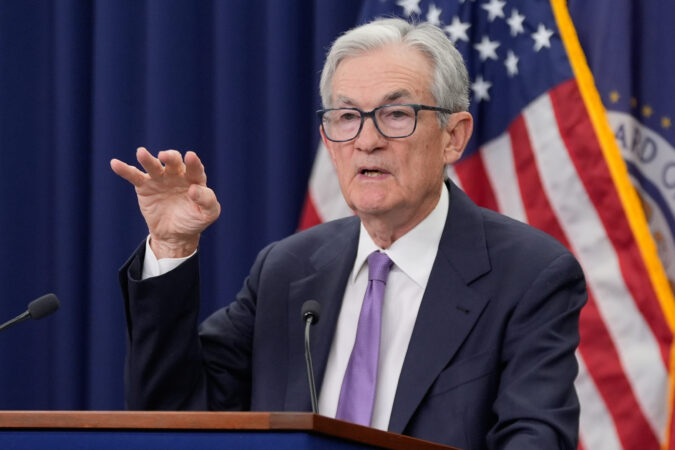
    Since returning to office last year, Trump has pressured Federal Reserve Chairman Jerome Powell to speed up interest rate cuts in an effort to boost the economy. But the Fed has moved cautiously to avoid further inflation.

    Trump’s economic approach has been reckless and shortsighted.

    In July, he threatened to fire Powell. Last month, Trump said he may sue Powell for “gross incompetence.”

    On Friday, the U.S. Department of Justice opened a criminal investigation into Powell involving his testimony before the Senate Banking Committee regarding the increased costs of renovations to the Fed’s headquarters in Washington.

    Trump claimed not to know anything about the investigation, but he had previously criticized the renovation costs. Let’s be clear: Trump’s long-running attacks on the Fed chair are the only reason Powell faces any legal trouble.

    The Powell investigation shows yet again how Trump continues to pervert the once-independent Justice Department, using it as a political tool to go after his perceived enemies.

    Attorney General Pam Bondi continues to do Trump’s bidding. She has launched bogus investigations into other public officials, including former FBI Director James Comey and New York Attorney General Letitia James.

    Add Powell to the political hit list that is making a mockery of American justice.

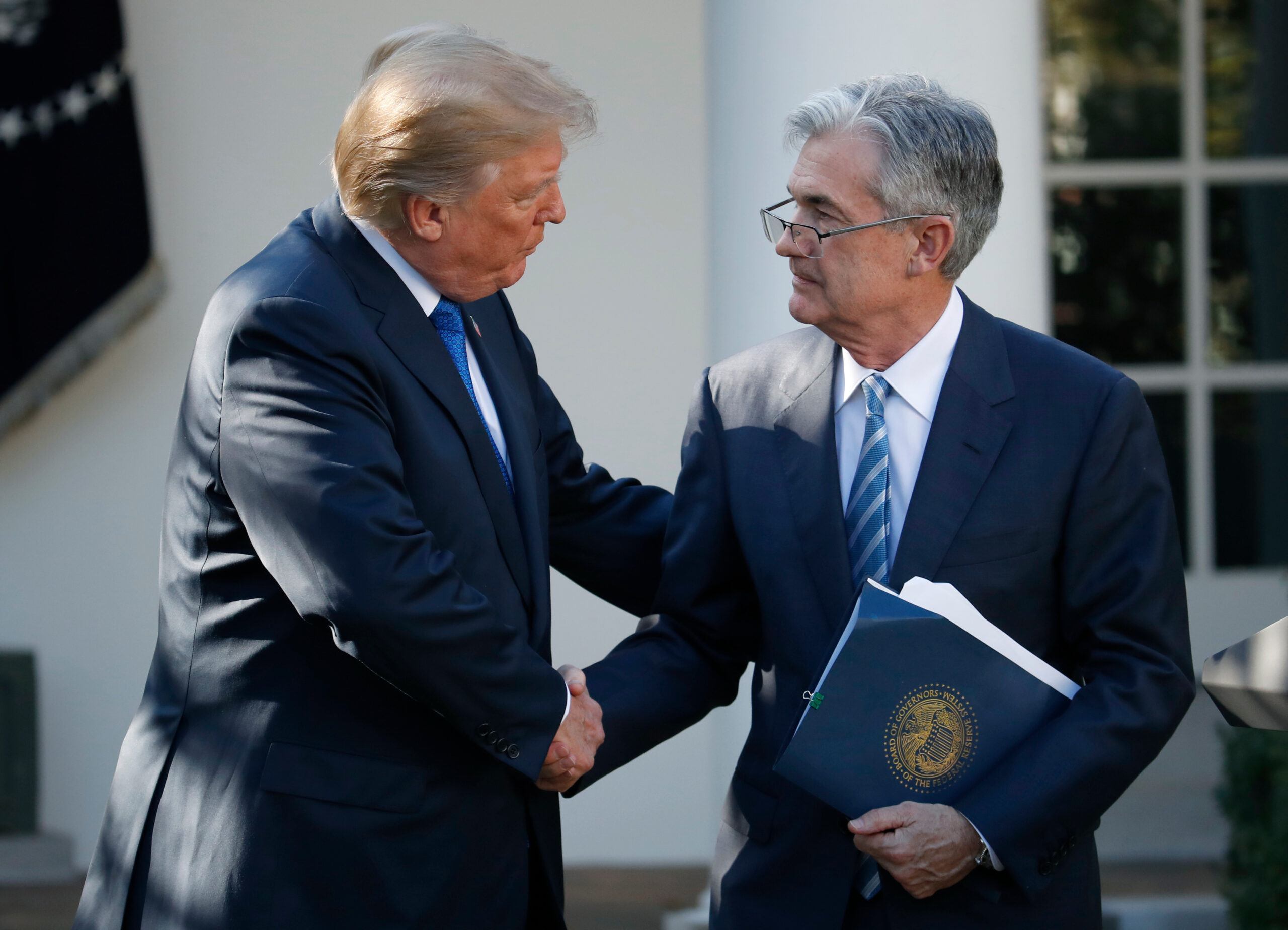
    President Donald Trump shakes hands with Federal Reserve board member Jerome Powell after announcing him as his nominee for the next chair of the Federal Reserve, in the Rose Garden of the White House in 2017.

    In a rare sign of political courage, some Republican lawmakers mustered the nerve to criticize Trump’s attack on Powell.

    Sen. Lisa Murkowski (R., Alaska) said that “the administration’s investigation is nothing more than an attempt at coercion.”

    Sen. Thom Tillis (R., N.C.) said the “independence and credibility” of the Department of Justice “are in question.” He promised to oppose the nomination of a new Fed chair until the legal issues are resolved.

    But until more Republicans stand up to the president, expect more abuses of power.

    Trump’s attack is especially petty, since Powell’s term as Fed chair ends in May, though he can remain on the board through January 2028.

    Trump actually nominated Powell to be chairman during his first term in the White House. In a sign of Powell’s independence, former President Joe Biden renominated him to a second term.

    By most accounts, Powell has done an impressive job steering monetary policy through uncharted territory involving the pandemic, followed by inflation brought on by increased government spending.

    Trump’s pressure campaign on Powell has broader repercussions on America’s financial system.

    The Fed’s independence is a cornerstone of U.S. financial markets, as it instills trust in investors, business leaders, economists, and other governments around the world that U.S. monetary policy is set without regard to political pressure.

    Without that firewall, presidents could push for rate cuts to boost the economy before an election, potentially causing higher inflation and instability down the road just for short-term political gains.

    In this instance, Trump clearly has his eye on revving up the economy before the midterms. (Trump would likely blame any subsequent inflation on Biden.)

    Politicizing the Fed creates instability and will harm investors and consumers in the long run. Reports of the Powell investigation already rattled financial markets, prompting investors to sell American stocks and bonds.

    To his credit, Powell has remained steadfast and made clear that the stakes surrounding the investigation are much bigger. “This is about whether the Fed will be able to continue to set interest rates based on evidence and economic conditions — or whether instead monetary policy will be directed by political pressure or intimidation.”

    But the damage to the Fed is already done, as Trump continues to place his political and financial interests ahead of those of the American people.

  • The killing of Renee Nicole Good and the moral rot of Trump’s reckless immigration enforcement plan | Editorial

    The killing of Renee Nicole Good and the moral rot of Trump’s reckless immigration enforcement plan | Editorial

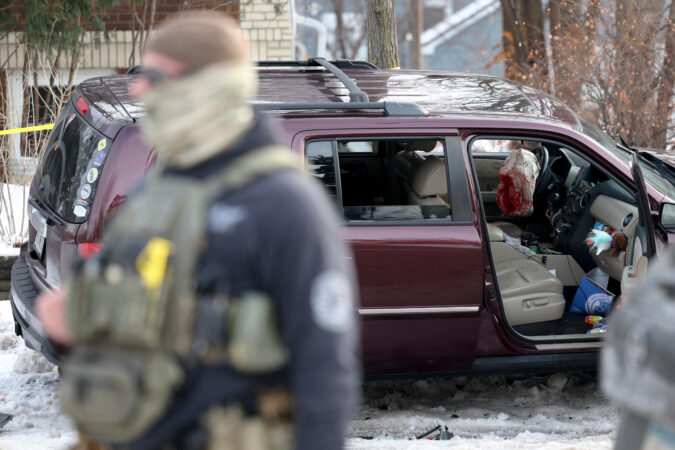
    Renee Nicole Good, 37, was shot and killed by U.S. Immigration and Customs Enforcement agents on Wednesday in Minneapolis. She is the second person killed after the Trump administration unleashed masked, armed, and increasingly unaccountable federal forces upon U.S. cities.

    Unless the government immediately changes course, she will not be the last.

    Several videos posted to social media show the deadly encounter. If you believe your eyes, Good was fatally shot as she attempted to drive away from agents who were yelling obscenities at her and violently trying to open her vehicle’s door.

    If you believe the U.S. Department of Homeland Security, Good was part of a group of “violent rioters” who “weaponized her vehicle” and tried to “run over our law enforcement officers in an attempt to kill them.” Good, according to DHS spokesperson Tricia McLaughlin, was engaged in an act of “domestic terrorism.”

    The stark disconnect is telling. The administration’s reflexive lying is emblematic of the moral rot at the heart of President Donald Trump’s militarized mass deportation efforts. It reflects a worldview where all immigrants are criminals, and all dissenters are rioters or terrorists.

    By all accounts, Good was neither. She was a mother, a neighbor, a self-described poet, writer, and poor guitar player. In death, she joins Silverio Villegas-Gonzalez, a 38-year-old Chicago resident who was killed by ICE in September during a similar incident. The Mexican immigrant was shot in the neck shortly after he dropped off one of his children at school and another at daycare.

    These deaths were as preventable as they were foreseeable.

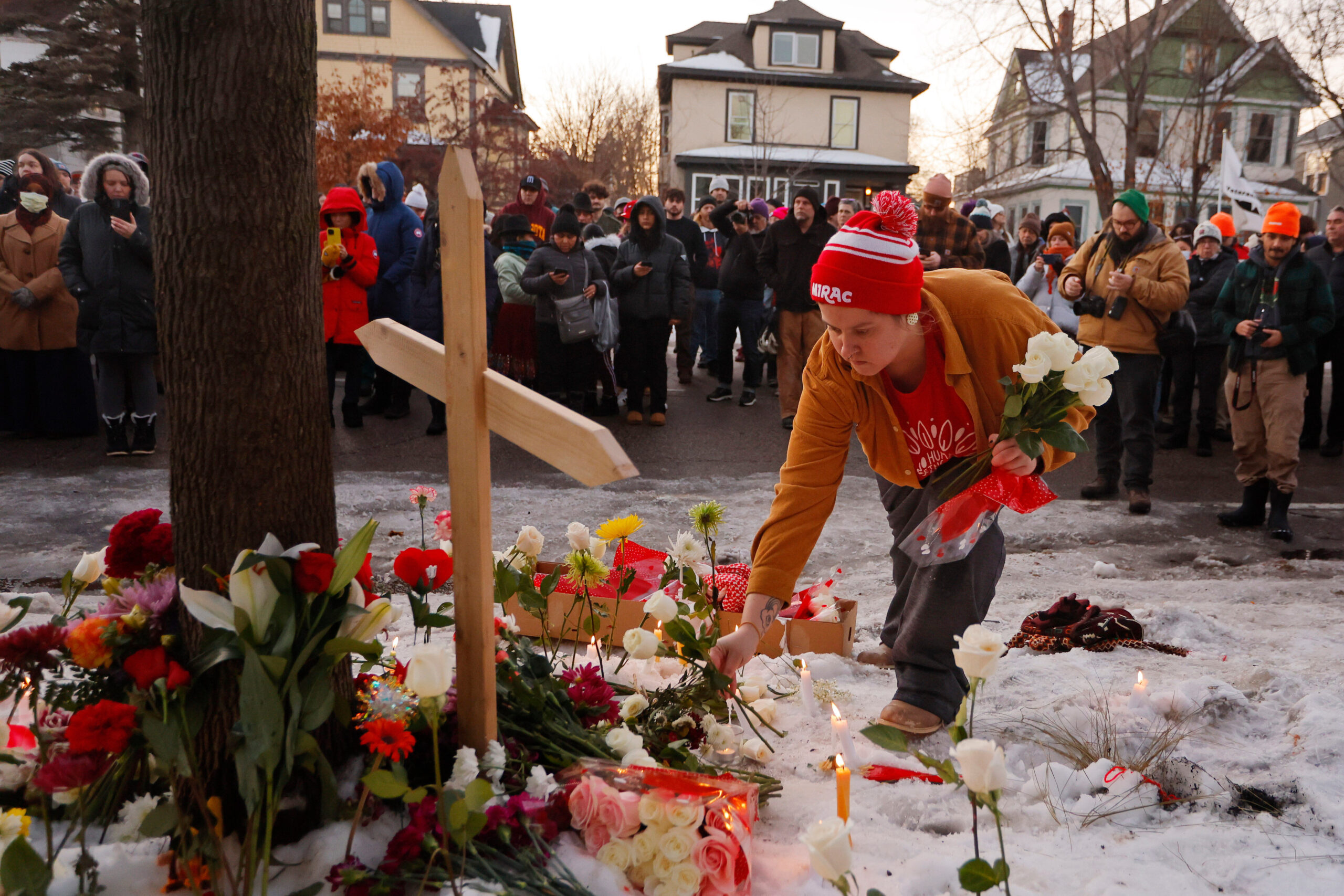
    People gather for a vigil after a U.S. Immigration and Customs Enforcement agent shot and killed a motorist earlier in the day.

    In her Nov. 20 ruling ordering federal agents to limit aggressive tactics in Chicago, U.S. District Judge Sara Ellis wrote that “agents have used excessive force in response to protesters’ and journalists’ exercise of their First Amendment rights, without justification, often without warning, and even at those who had begun to comply with agents’ orders.”

    Dozens of videos, from cities around the nation, have shown federal agents engaging in violent behavior during their enforcement duties. Any one of those incidents could have turned deadly. That more people have not been killed in the administration’s reckless and ill-advised efforts can best be attributed to providence.

    Reported close calls in California include Border Patrol agents smashing windows and firing on a truck as it drove away during a traffic stop, a man who claimed he wanted to warn agents there were children nearby was shot in the back by an ICE agent, and a TikTok streamer was shot as ICE agents smashed his car window.

    In Chicago, a woman was shot multiple times after she allegedly rammed the vehicle of a U.S. Customs and Border Protection agent. The charges against her were dismissed in the face of glaring inconsistencies in the government’s story.

    Federal agents confront protesters outside the Bishop Henry Whipple Federal Building on Thursday in Minneapolis.

    On Thursday, a day after Good’s killing, two people were reportedly shot by Border Patrol agents in Portland, Ore., after a vehicle stop. DHS once again claimed the driver “weaponized his vehicle” and attempted to run over the agents.

    The conduct of too many federal agents involved in immigration enforcement not only violates the norms of decency and order but also goes against the various agencies’ use-of-force policies and rights enshrined in the Constitution.

    All of that is meaningless, however, to an administration that has repeatedly shown disdain for the law and which has overtly condoned violence as an acceptable response to nonviolent behavior.

    It may be too late for Congress to use its power of the purse to rein in these out-of-control agencies. Republicans have already given the president $30 billion to recruit thousands more ICE agents, even as hiring requirements are lowered and training time is reduced — a recipe for disaster.

    Legislators not in thrall to the Trump administration must use every oversight opportunity they can muster to shine the spotlight on abuse and hold rogue officials accountable.

    Local and state governments must lawfully push back and protect their residents — including investigating and charging federal law enforcement with crimes. In the Good case, the former is already proving to be a challenge, as Minnesota’s attorney general notes that state law enforcement officials are being pushed aside, and that the investigation will be conducted solely by the FBI.

    Even as the president puts his thumb on the scales, the courts must stand firm and uphold the law.

    And in communities across the country, everyday Americans like Renee Nicole Good must continue to peacefully exercise and defend our civil rights against those who would use fear and intimidation to gain control. The risk has never been greater, but the stakes have never been higher.

  • Five years on, a day that should live in infamy has instead propelled Trump’s grotesque return | Editorial

    Five years on, a day that should live in infamy has instead propelled Trump’s grotesque return | Editorial

    Jan. 6, 2021, should be a date that lives in infamy, like Dec. 7, 1941, and Sept. 11, 2001.

    But five years after an angry mob stormed the U.S. Capitol, Donald Trump’s insurrection marches on.

    Instead of accountability, Trump parlayed the grotesque events that unfolded on Jan. 6 into an incomprehensible return to power and profiteering.

    And ever since, Americans have been forced to endure one battle after another.

    It began with Trump rewarding the Jan. 6 insurrectionists by pardoning more than 1,500 attackers who were convicted or charged with crimes, including many who beat police officers and some who have since been charged with new crimes.

    The blitzkrieg continued from there.

    National Guard troops stormed into cities, creating virtual police states and accomplishing little else. Masked U.S. Immigration and Customs Enforcement agents have arrested tens of thousands of immigrants — many with no criminal records — while detaining and beating some legal residents.

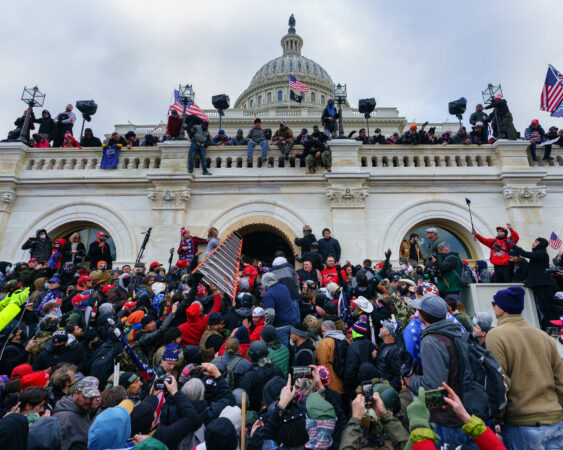
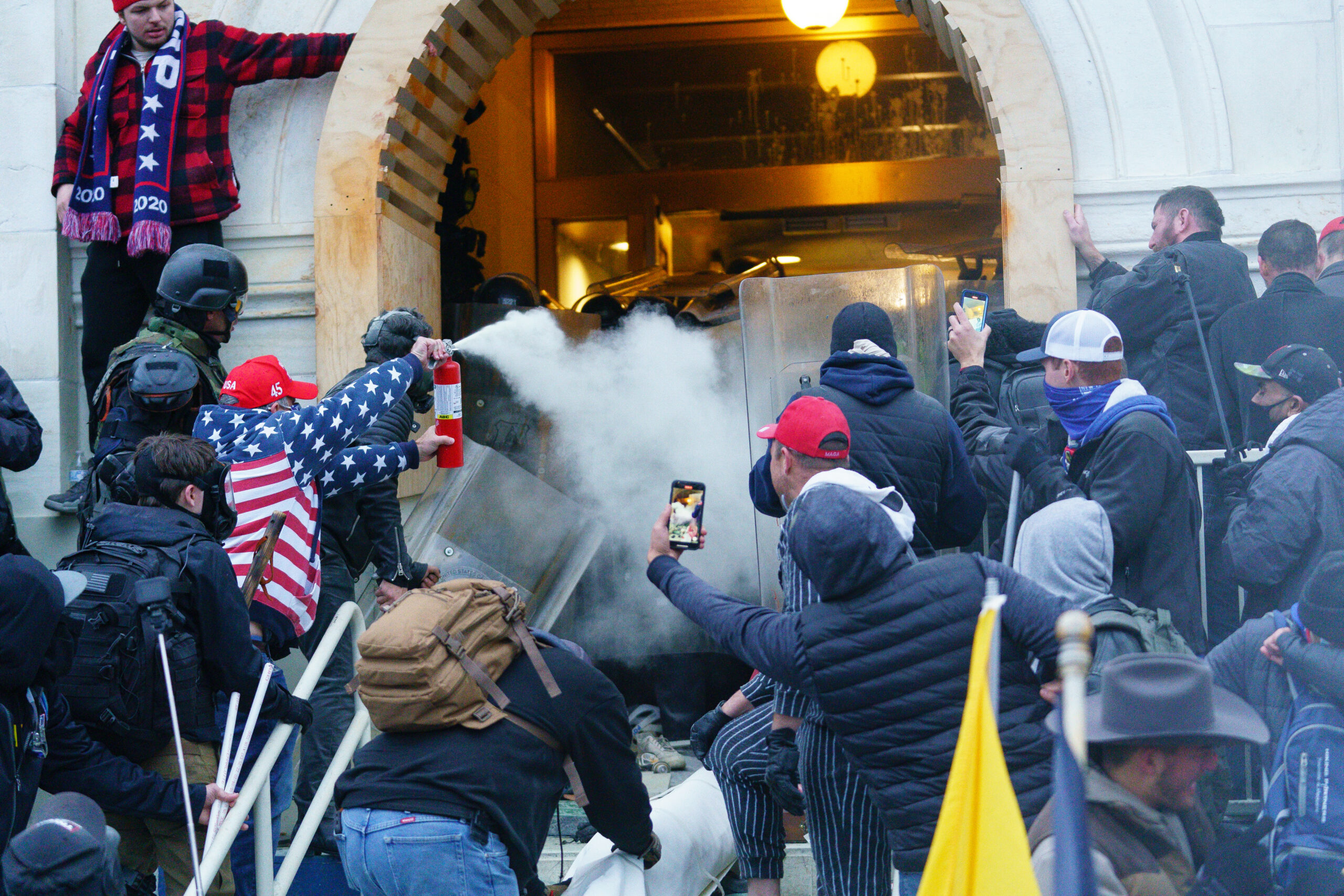
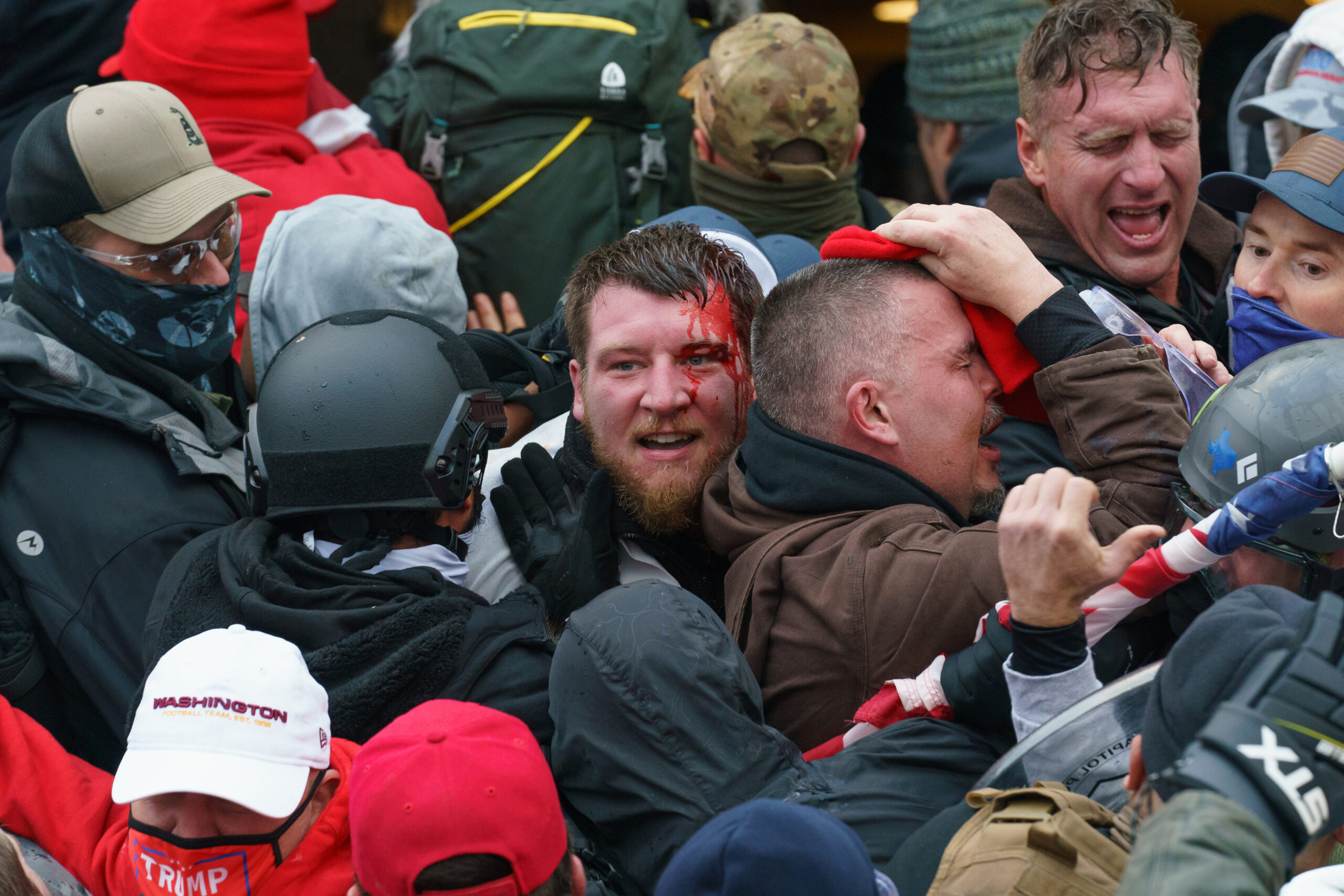
    Rioters clash with police to try to gain entry to the U.S. Capitol building during the insurrection on Jan. 6, 2021.

    Trump has continued to attack the government he swore an oath to protect, causing grave and lasting damage.

    Elon Musk’s chain saw-wielding assault on federal agencies failed to root out much fraud or waste, but it did cause massive disruptions to many departments while upending the lives of more than 300,000 workers who lost their jobs.

    Trump sicced the U.S. Department of Justice on political enemies, marshaling flimsy criminal cases against them while pardoning cronies. The rule of law — a cornerstone of American democracy — remains under assault.

    Meanwhile, the FBI shifted away from investigating terrorist groups and is now said to jokingly stand for Foolish, Belligerent, and Incompetent.

    Trump unleashed Robert F. Kennedy Jr. to “go wild” on health, medicine, and food. Since taking over the U.S. Department of Health and Human Services, Kennedy, who has no medical training, has canceled billions of dollars in contracts for medical research, fired thousands of workers, upended vaccine policies that saved millions of lives, and embraced discredited and fringe theories.

    Pro-Trump protestors grapple with police outside the U.S. Capitol on Jan. 6, 2021.

    Trump has also launched unprovoked attacks overseas, increasing tensions with allies and adversaries while likely inspiring future terrorists.

    He ambushed Ukrainian President Volodymyr Zelensky, an ally, in the Oval Office, while rolling out the red carpet for Russian leader Vladimir Putin, a wanted war criminal. Instead of aiding Ukraine, Trump is abetting Russia — an epic blunder that risks the peace in Europe that American soldiers helped to secure in World War II.

    Trump endorsed Israel’s demolition of Gaza and bombed Iran’s nuclear facilities, a move U.N. Secretary-General António Guterres called a “dangerous escalation in a region already on the edge — and a direct threat to international peace and security.”

    Trump has illegally bombed small boats in Central and South America, summarily killing more than 100 alleged drug smugglers without presenting any evidence or trials.

    Over the weekend, Trump approved a plan to snatch Venezuelan President Nicolás Maduro and his wife and bring them to the U.S. to face criminal charges.

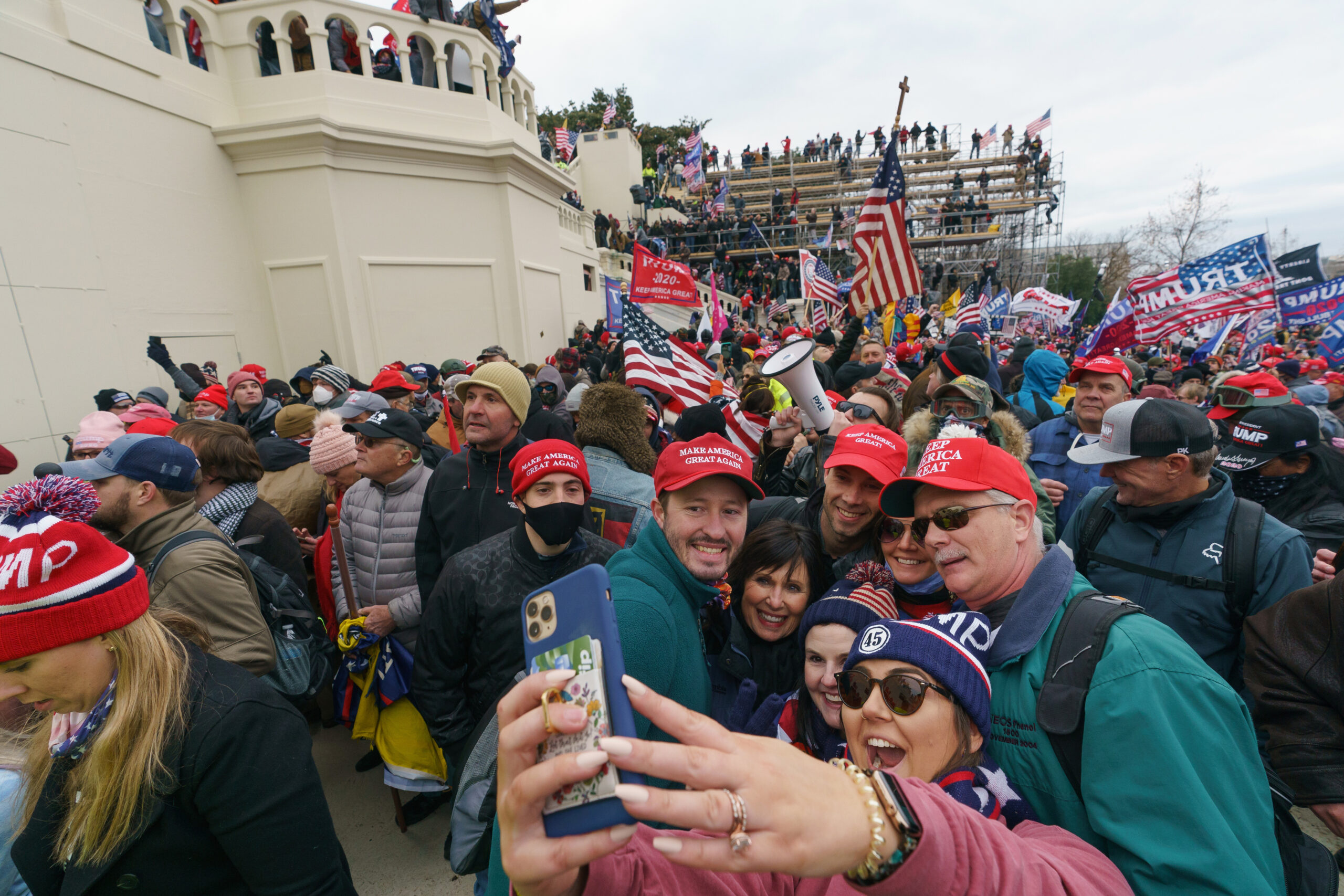
    Trump supporters take a selfie at the U.S. Capitol during the insurrection on Jan. 6, 2021.

    While no one is shedding tears for Maduro, Trump has no clear plan — or total control — for what comes next. Trump claims the U.S. is going to run Venezuela and take charge of its oil, while spouting loose talk about invading Cuba, Colombia, Mexico, and Greenland.

    That sounds like imperialism run amok.

    The U.S. is headed into dangerous and uncharted territory because of the failure of Congress, the courts, and voters to hold Trump accountable. The upshot has been to breed further lawlessness.

    Trump was impeached for inciting the Jan. 6 riot. But then-Senate Leader Mitch McConnell and most other Republicans in Congress — in a gross dereliction of their sworn duty — voted against convicting him even though many said he was liable.

    Trump was also criminally indicted for his role in attempting to overturn the 2020 election, which led to the Jan. 6 insurrection. The case was dropped after he was reelected, but special prosecutor Jack Smith recently told the House Judiciary Committee that a conviction was likely since there was “proof beyond a reasonable doubt.”

    Trump brought out the worst in America on Jan. 6. Five years later, the damage continues to grow.

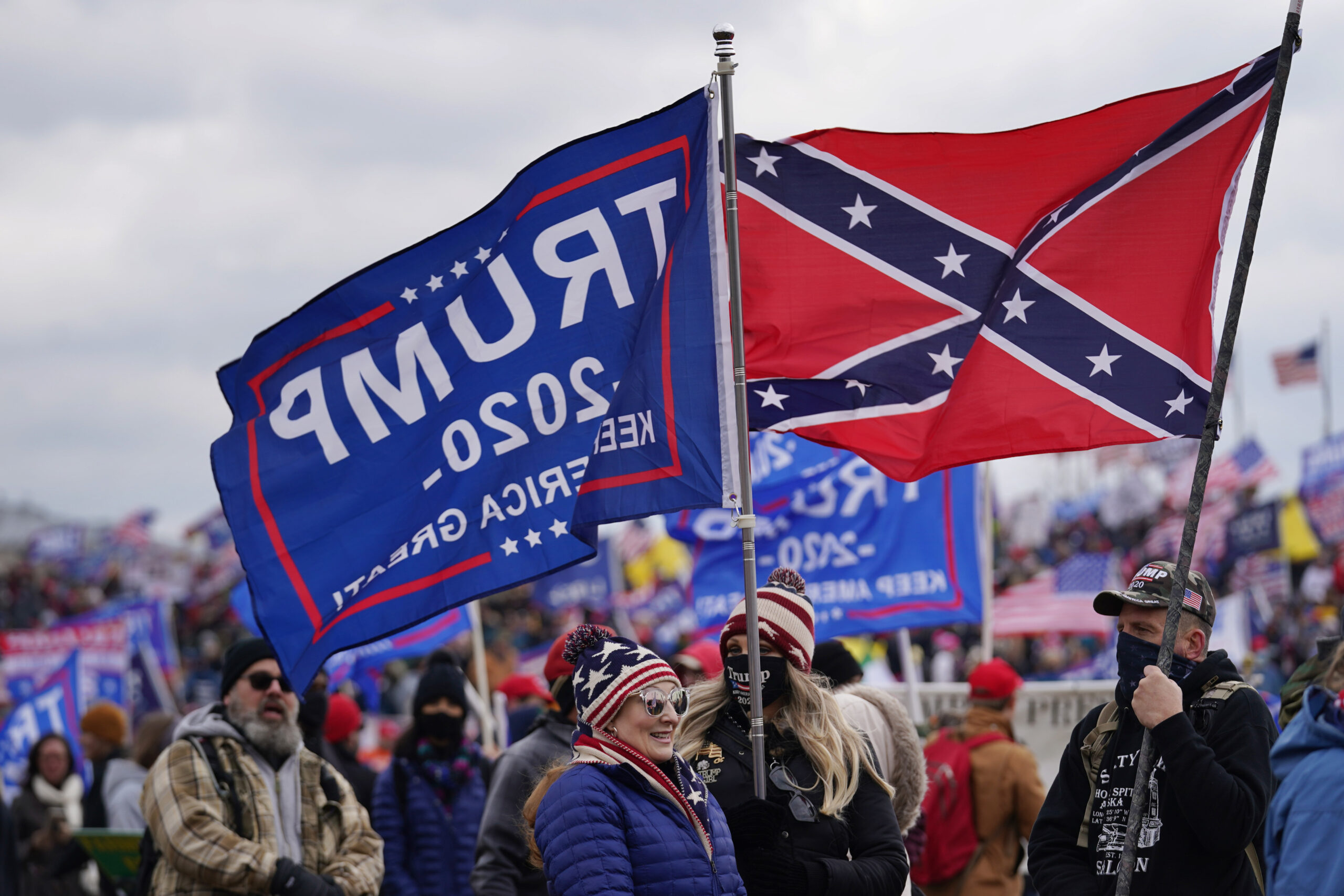
    Candria (with sunglasses) and Cynthia Crisp speak with another Trump supporter holding a Confederate flag near the Washington Monument, on Jan. 6, 2021.
  • Trump’s attack on Venezuela further flouts the Constitution he swore to uphold | Editorial

    Trump’s attack on Venezuela further flouts the Constitution he swore to uphold | Editorial

    So much for Donald the Dove.

    President Trump mounted an illegal invasion of Venezuela, kidnapping president Nicolás Maduro and his wife and spiriting them out of the country.

    The breathtaking use of military force against a sovereign state has no legal justification. It opens the door for anarchy in Venezuela and threatens to make the United States a pariah with no moral authority for other dictatorships around the globe.

    Trump acted without the authorization of Congress, in clear violation of the Constitution. But then again Trump has long mocked the Constitution he swore to uphold.

    Former President George W. Bush at least sold a phony story about weapons of mass destruction to get Congress to go along with his reckless invasion of Iraq. That catastrophic folly lasted nearly nine years, resulting in tens of thousands of needless deaths and costing taxpayers roughly $3 trillion.

    Trump once promised to avoid forever wars and claimed to be the president of peace. But without any provocation or convincing explanation, he launched a military buildup in the Caribbean and began illegally bombing small boats, killing alleged drug smugglers in Central and South America.

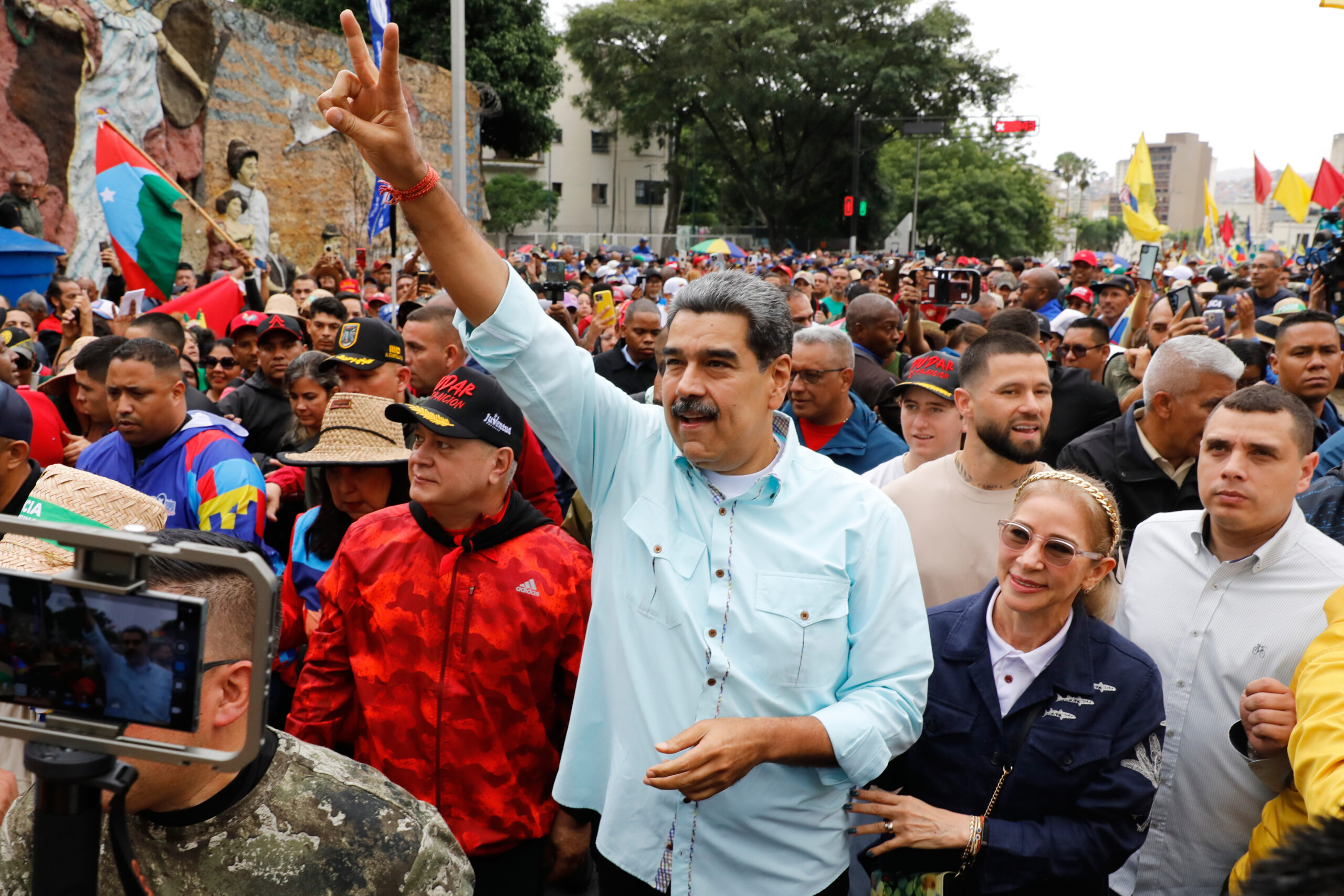
    President Nicolás Maduro joins a rally in Caracas, Venezuela, on Dec. 10, 2025. The Trump administration designated Cartel de los Soles, which it says is headed by Maduro, a foreign terrorist organization.

    Trump has offered shifting explanations — and even less evidence — for the military action ranging from wanting to stop drug trafficking to accusing Maduro of “stealing” U.S. oil and land.

    After the attack, Trump came clean on just how out of control the operation is, claiming the U.S. is ”going to run the country” and take over oil production.

    There is scant public support for Trump’s attacks in Venezuela.

    Congress, which under the Constitution, has the sole power to declare war, rejected efforts to rein in Trump’s warmongering. House Speaker Mike Johnson, a Trump puppet, praised the attack as a “justified operation that will protect American lives.”

    Sen. Andy Kim (D., N.J.) called the move “disastrous” and said Secretary of State Marco Rubio and Defense Secretary Pete Hegseth “blatantly” lied to Congress when they said the goal of the military buildup was not to topple Maduro.

    To be sure, Maduro is a corrupt and undemocratic leader who has brought economic ruin and death to Venezuela. Under his repressive regime, roughly 8 million people have fled the country.

    But if the Trump doctrine is the removal of corrupt and undemocratic leaders, where do the military actions end? How does Trump square the removal and prosecution of Maduro with his outrageous pardon last month of former Honduras President Juan Orlando Hernández, who was convicted of drug trafficking by federal prosecutors?

    Trump’s strongman act will do little to spread peace and democracy around the globe. In fact, the military actions in Venezuela may embolden China to invade Taiwan. It also signals to Russian dictator Vladimir Putin that Trump is not serious about defending Ukraine or Europe.

    It is painfully clear there is a corrupt and unrestrained madman in the White House. Yet, the conservatives on the U.S. Supreme Court and the Republicans in Congress have abandoned their role to act as checks on the executive branch, starting with the insurrection Trump fomented nearly five years ago.

    Under Trump, the American democracy that is getting ready to celebrate 250 years, is backsliding. A Harvard professor who studies democracies said flatly: “We are no longer living in a democratic regime.”

    The unauthorized attack in Venezuela is just the latest example of Trump’s growing authoritarian rule.