In professional sports, there can be a litany of reasons to make a trade, from a player being a bad fit to trying to upgrade the roster for a playoff push to a rebuilding team cashing in on a player’s value for future assets. Then there are “change-of-scenery” trades, in which teams swap players who are stuck in their organizations to see if a fresh start can benefit everyone.
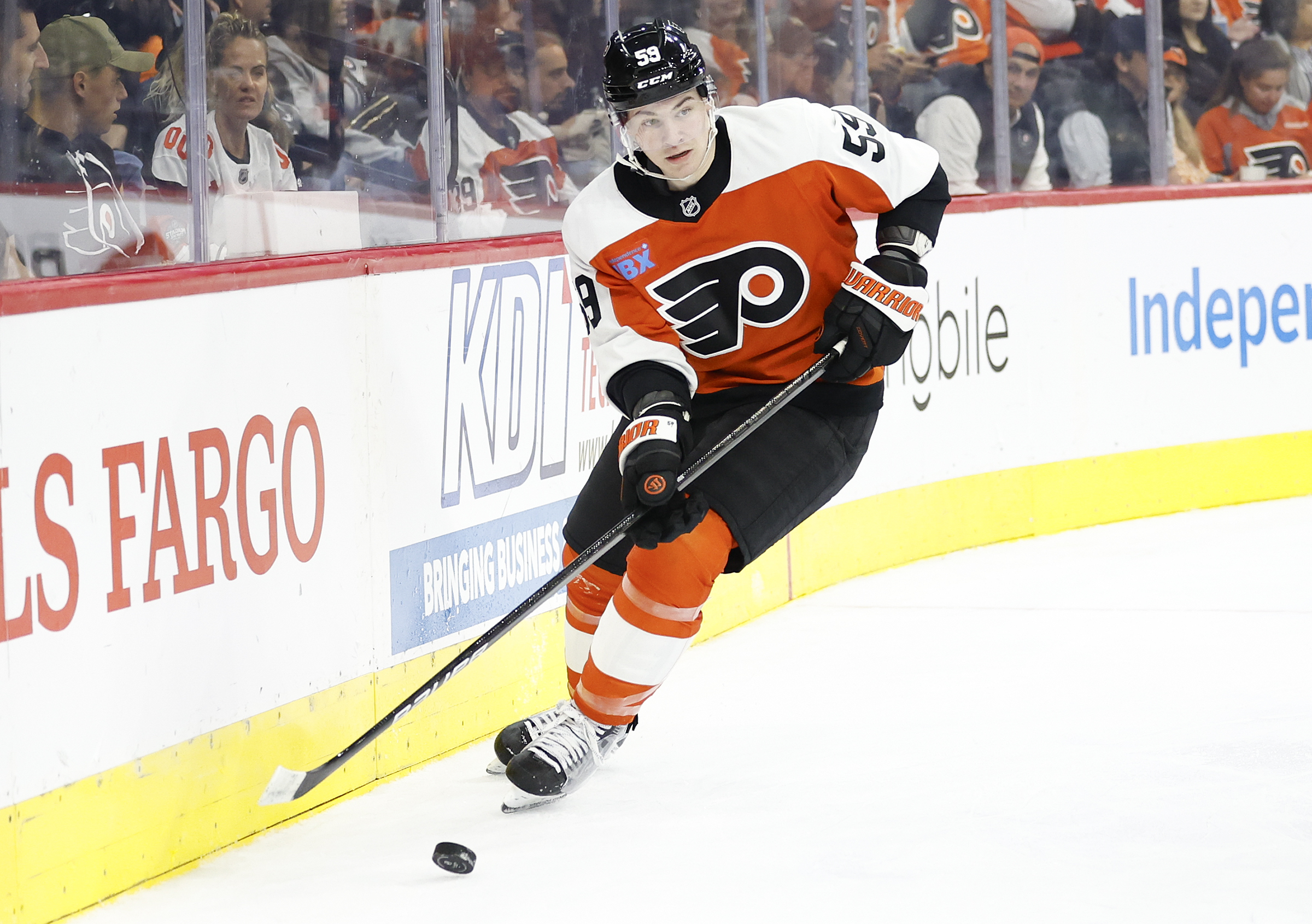
Wednesday’s Egor Zamula-for-Philip Tomasino trade between the Flyers and Pittsburgh Penguins is a prime example of a change-of-scenery deal. Zamula, 25, recently cleared waivers and has not played for the Flyers since Dec. 7, while the 24-year-old Tomasino, a 2019 first-round pick, has been buried in the minors since clearing waivers in November.
Zamula’s days in Philly had been numbered, especially since Rasmus Ristolainen returned from a triceps tendon injury on Dec. 16. The Russian defenseman was placed on waivers two days later but cleared and was sent to Lehigh Valley. Canada’s Sportsnet had also mentioned Zamula as a potential trade or buyout candidate in recent weeks.
Originally signed by the Flyers in 2018 as an undrafted free agent, Zamula has seen his career stall at the same time that other defensemen in the organization passed him. Once considered one of the organization’s top defensive prospects, he was often criticized by both John Tortorella and Rick Tocchet for not playing and processing the game quickly enough despite his skating and puck-moving abilities. It had become increasingly obvious in recent weeks that Zamula had become a surplus player and that he was seeking a fresh start to try and prove he is an everyday NHL defenseman.
It turns out that fresh start will come just 300 miles across the state in Pittsburgh with the rival Penguins. The 6-foot-3, 200-pound Zamula leaves the Flyers having tallied eight goals and 41 points with 48 penalty minutes in 168 NHL games across six seasons. He had five goals, 51 points, and 38 penalty minutes in 130 American Hockey League games for Lehigh Valley during the same time frame. This season, Zamula posted one assist in 13 games for the Flyers.
Like Zamula, Tomasino, who can play center or wing, will welcome a change of scenery as he tries to get back into the NHL. The native of Mississauga, Ontario, and former hotshot prospect has been playing with the Wilkes-Barre/Scranton Penguins since November and has five goals and 15 points in 14 games since going down to the AHL. Tomasino, who was acquired from Nashville in November 2024 for a fourth-round pick, had one assist in nine games for the Pens before his demotion.
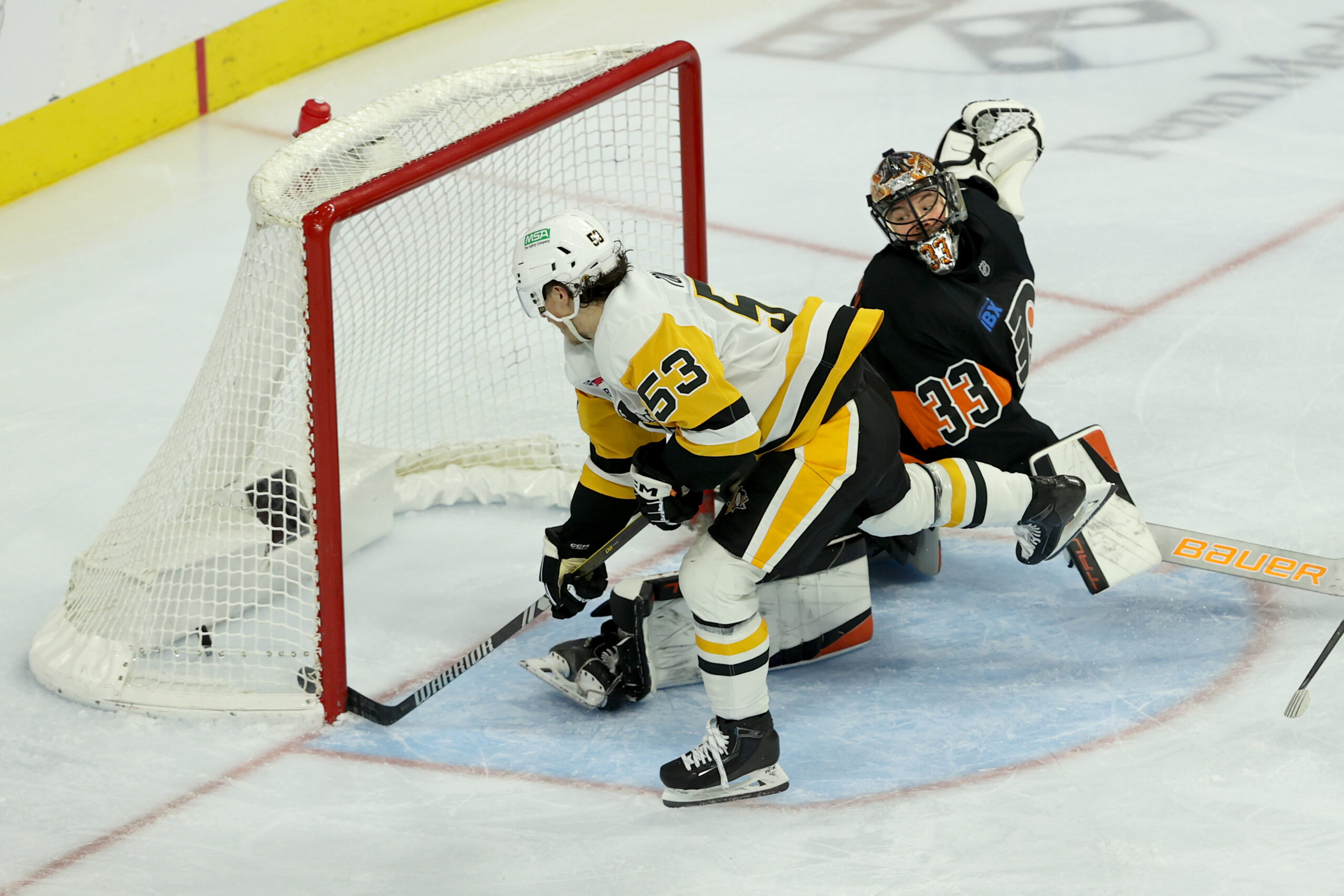
New Flyer Philip Tomasino scored last February against the Flyers.
In 218 NHL games split between Nashville and Pittsburgh, Tomasino has potted 34 goals and added 61 assists for 95 points. His best season came as a rookie in 2021-22 when he tallied 11 goals and 32 points in 76 games as a 20-year-old. Tomasino scored 11 goals and had 23 points in 50 games for the Penguins last season following the trade.
He is best known for his skating ability, as he has good speed and can provide offense on the rush. Tomasino’s also a skilled puck handler and has some deception with his shot. But his details away from the puck and a lack of strength have made him a “tweener” to this point in his career, as he hasn’t popped enough offensively to be in an NHL top six, nor is he a perfect fit on an energy third line.
While Tomasino’s draft pedigree might suggest there is some untapped potential, that remains to be seen from someone who is joining his third organization in 13 months. For now, he will report directly to Lehigh Valley, although it wouldn’t be shocking to see him in the NHL this season in a depth role if injuries mount. The forward is a restricted free agent at season’s end and is currently on a one-year, $1.75 million contract.
Tomasino represents the latest buy-low depth trade made by Flyers general manager Danny Brière. In October, Brière acquired winger Carl Grundström in a deal that saw the team rid itself of Ryan Ellis’ contract, and also flipped former second-rounder Samu Tuomaala for defenseman Christian Kyrou. Grundström has been a revelation for the Flyers with seven goals in 12 games from a depth role, while Kyrou has provided a huge boost to the blue line in Lehigh Valley with 14 points in 21 games.
While there’s always a chance Tomasino could become the organization’s latest reclamation project — see Owen Tippet, Sean Walker, Trevor Zegras, and Dan Vladař — for now Tomasino will slide into the top six in Lehigh Valley, which recently lost Alex Bump to injury and Grundström and Denver Barkey to the NHL club.
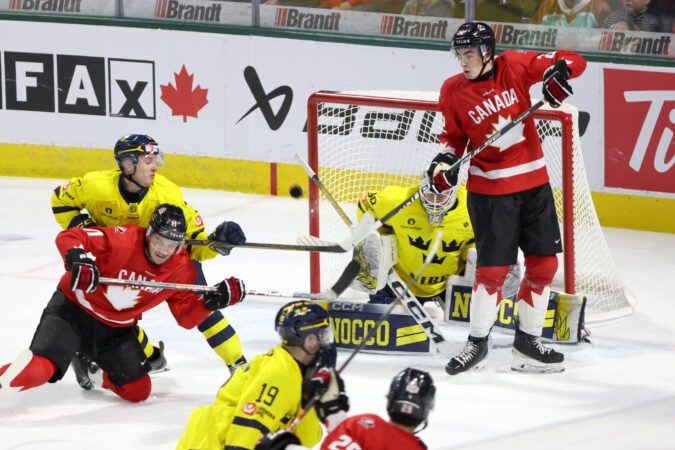
It’s the best time of the year, the holiday season, and for hockey fans, that also means the annual gift of the International Ice Hockey Federation’s World Junior Championship.
The premier under-20 hockey tournament in the world, which starts the day after Christmas each year, showcases the next wave of NHL superstars, many of whom have already been drafted and others who won’t wait long to hear their names called come June. This year’s tournament is in Minneapolis and St. Paul, Minn., and runs through Jan. 5. Here are four reasons that Flyers fans should be tuned in to NHL Network and ESPN+ over the next few weeks:
Let’s not bury the lead here. Porter Martone is the biggest reason for Flyers fans to watch this tournament, as the 6-foot-3, 208-pound power forward will be counted on as one of the key cogs and the captain for heavy favorite Canada. Martone, the No. 6 overall draft pick in June, looks poised to be a pillar of the Flyers’ future and should be ready to make the jump to the NHL next season.
The winger, who tore apart the Ontario Hockey League last year with 98 points in 57 games, has been just as dominant as a freshman in the NCAA, as he leads No. 3 Michigan State with 11 goals, 20 points, and 58 penalty minutes in 16 games. With a rare combination of size, skill, playmaking ability, scoring touch, and snarl, Martone projects as a front-line winger at the next level. Martone’s skating, while hardly a weakness, remains a work in progress, but Flyers assistant general manager Brent Flahr recently told The Inquirer that he thinks Martone “has a chance to be a special player” and that he has the “it factor.”
Martone has been playing on Canada’s top line with Michael Misa and Tij Iginla but has also seen time alongside Gavin McKenna. The World Juniors can serve as a launching pad for future NHL stars, so don’t be surprised to see the Flyers prospect have a huge tournament.
2. More Flyers prospects
While Martone is the unquestioned headliner, the Flyers will have six prospects lacing them up in the Twin Cities, including Martone and Jett Luchanko (Canada), Shane Vansaghi (United States), Jack Berglund (Sweden), and Heikki Ruohonen and Max Westergård (Finland).
Flyers prospect Jett Luchanko will be competing in his second straight World Juniors with Canada.
Luchanko and Berglund will draw the most attention, especially with the Flyers badly needing one or two of their young center prospects to pan out. The speedy Luchanko likely will play a third-line/checking role — he’s been used some on the wing in preliminary games — with Canada, but Flyers fans will want to see him utilize his playmaking skills with better players around him. Since being traded to Brantford of the OHL last month, Luchanko has two goals and eight points in six games. The Flyers want Luchanko to continue shooting the puck more, and it will be interesting to see how he’s utilized a year after Danny Brière said he wasn’t happy with his deployment at this tournament.
Berglund, meanwhile, probably is the least-talked-about prospect in the Flyers system. A big, strong centerman listed at 6-4 and 209 pounds, the Swede will have the responsibility of captaining his country at this illustrious tournament, something Emil Andrae did in 2022. After impressing at Flyers development camp and the World Junior Summer Showcase, Berglund will look to continue his momentum. The early signs are good, as the 19-year-old recently scored twice against Canada in a preliminary game. The question with Berglund will always be his skating, but Flahr believes it has steadily improved and says that Berglund’s size, strength, and details project him to be a valuable player at the next level.
The bruising but skilled Vansaghi figures to be a depth piece for the Americans, while Ruohonen, a Harvard man who also impressed at the World Junior Summer Showcase, will play in a top-six role with Finland. Westergård, 18, also earned a spot on the roster after a strong first half in Sweden at the under-20 level.
While McKenna has long been viewed as the prize of the 2026 draft, the Penn State phenom no longer seems to be a lock to go No. 1. Two of the players challenging for that spot also will be playing in the tournament: towering Canadian defenseman Keaton Verhoeff and exciting Swedish winger Ivar Stenberg.
While the Flyers, who currently are in a playoff spot, don’t look to be genuine contenders for McKenna, Verhoeff, and some of the others at the top, they surely will be scouting the tournament with a close eye. Sweden’s Viggo Björck (C) and William Håkansson (LD), USA’s Chase Reid (RD), Canada’s Carson Carels (LD), Finland’s Oliver Suvanto (C) and Juho Piiparinen (RD), and Czechia’s Adam Novotny are among the other draft-eligible players to watch.
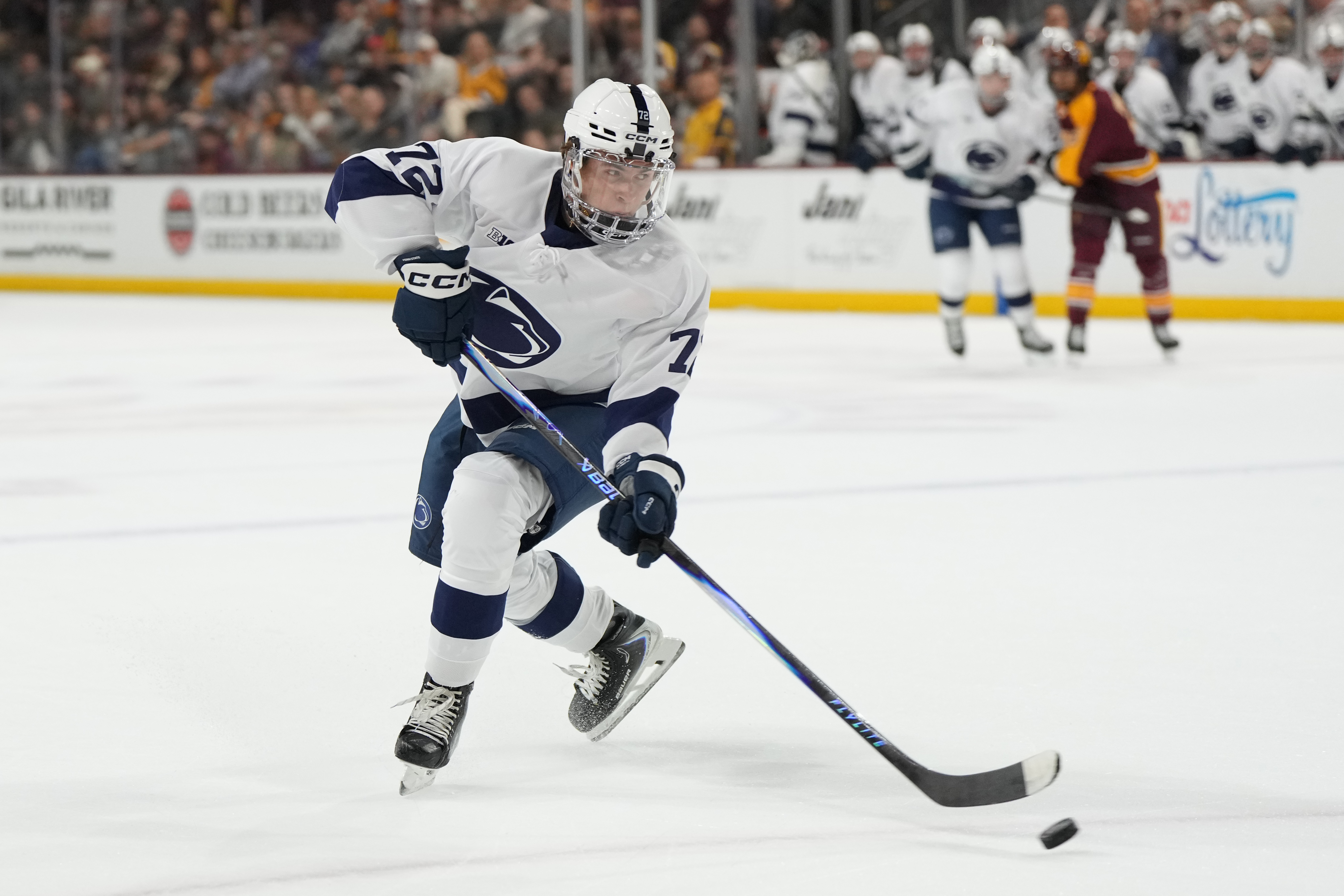
Penn State’s Gavin McKenna, once viewed as a lock to be the No. 1 pick in 2026, has a lot to prove over the next few weeks with Team Canada.
4. Team USA three-peat?
USA Hockey only won its first World Juniors gold in 2004. It has won the tournament seven times, including the last two years. So can the U.S., which had never won two in a row before last year, make it three straight?
It will be a tough task as Canada brings a star-studded roster headlined by McKenna, Misa, and Martone, not to mention a new head coach in Dale Hunter who knows what it takes to lead a group of young men to gold.
But the U.S. boasts a strong roster of its own led by James Hagens, Cole Eiserman, and Max Plante. While the depth or star power might not be at the level of past U.S. teams, the Americans will go into this tournament as the two-time defending champions and have home-ice advantage. The U.S. also is sure to have a chip on its shoulder, especially given all the “dream team” talk surrounding Canada. All the pressure is on Canada to win gold and atone for last year’s shocking quarterfinal upset. That could work to the Americans’ advantage.
A star player was available for trade. The Flyers reportedly showed some interest. The team elected not to pony up the required assets to make the deal. The star player landed elsewhere and sent the Flyers back to the drawing board.
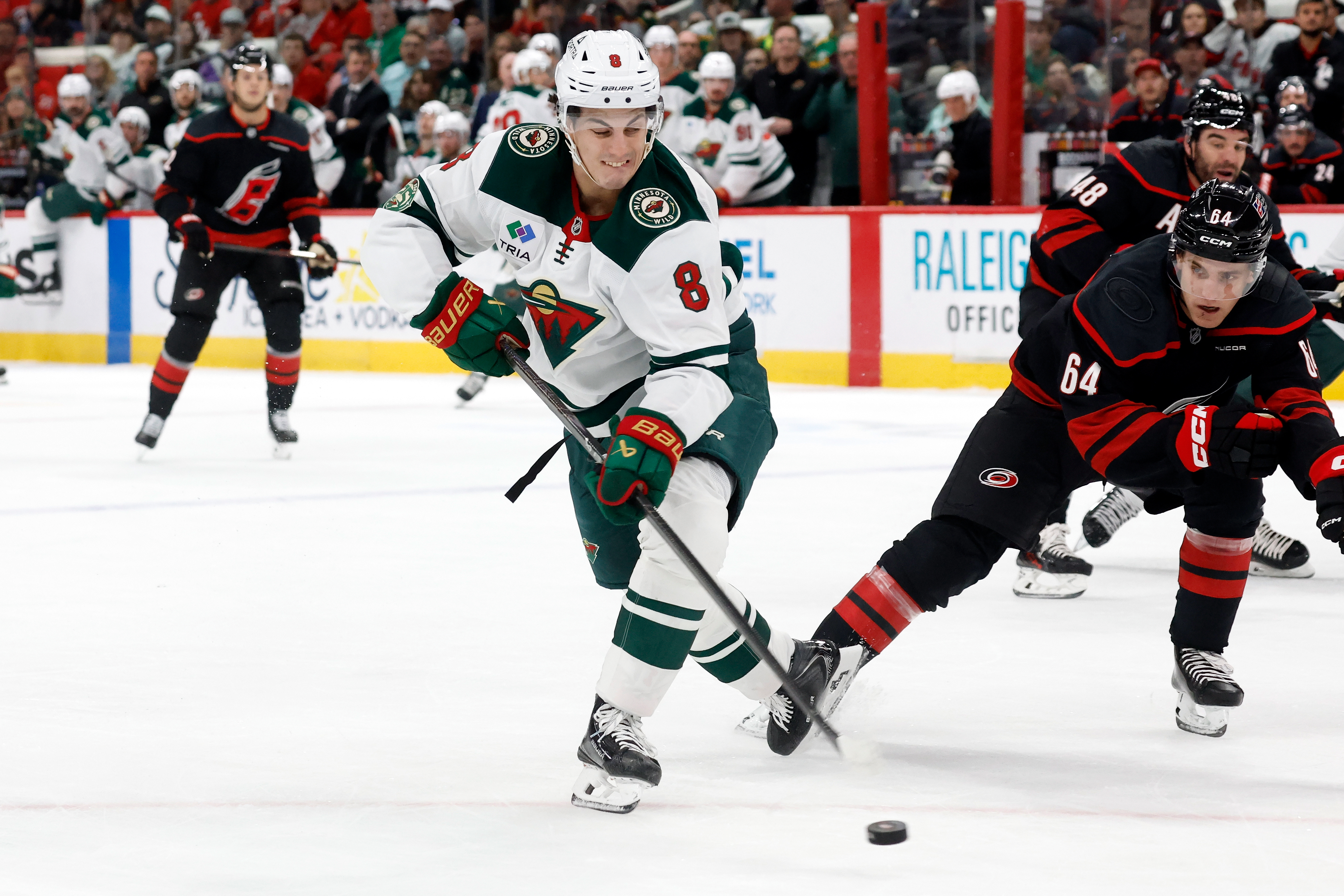
I’m obviously referring to Norris Trophy-winning defenseman Quinn Hughes being traded on Dec. 12 from Vancouver to Minnesota for a package that included blue-chip prospect Zeev Buium, middle-six center Marco Rossi, prospect Liam Öhgren, and a first-round pick. Hughes, the second-best defenseman in the world, and notably a well-documented fan of Flyers coach Rick Tocchet from their time together with the Canucks, is exactly the type of needle-moving superstar the Flyers are missing on their blue line. So why no deal?
That answer is more nuanced than “the Flyers were being cheap again,” and we will address that in a minute. Nevertheless, missing out on star talent has been an all-too-familiar and frustrating pattern for Flyers fans over the past few years as the team has carried out its rebuild and focused largely on subtraction rather than addition.
But that was all supposed to change next summer, when Danny Brière, Keith Jones, and the Flyers suggested they would pull out the checkbook and aggressively try and sign a marquee free agent. One problem: That 2026 free agent class, which was once headlined by Connor McDavid, Jack Eichel, and Kirill Kaprizov, has all but evaporated outside of soon-to-be-overpaid consolation prizes like Alex Tuch, 34-year-old Artemi Panarin, and Rasmus Andersson, none of whom play center, the gaping hole the Flyers need to address most.
With that in my mind, could/should the Flyers have pulled the trigger on a Hughes deal? And where might the team turn from here to solve its 1C problem?
The Flyers were right to pass on Hughes
To start, Hughes would have fit perfectly in Philly, as he is one of only three or four genuine game-breaking defensemen who exist in the league. One of the world’s top 10 players, his dynamic skating ability, particularly his lateral movement and ability to walk the line, and playmaking prowess would have provided a seismic jolt to an anemic offense and struggling power play, and subsequently bumped the rest of the team’s defensemen back into their appropriate slots. More simply, Hughes, while a wildly different player, would have been the team’s best defenseman since Chris Pronger’s injury-shortened spell from 2009-12.
The Flyers were interested in Quinn Hughes but reluctant to move their top two assets in Matvei Michkov and Porter Martone.
So could the Flyers have traded for him? In short, yes.
The Flyers boast a consensus top-10 prospect system, own several future first-round draft picks, and have players who would have intrigued Vancouver, namely Matvei Michkov and Michigan State phenom Porter Martone. Both of those players are viewed as untouchables for the Flyers, and not including them would have all but removed them from the Hughes sweepstakes. Some combination of Jett Luchanko, Jack Nesbitt, Tyson Foerster, Owen Tippett, Cam York, Oliver Bonk, and first-round picks, while nothing to sniff at, was not besting the return Vancouver ultimately landed, headlined by Buium.
What will infuriate Flyers fans is that the team had a chance to draft Buium just 18 months ago. Ranked No. 4 among North American prospects in 2024 according to NHL Central Scouting, the former University of Denver star slid directly into their laps in that draft, only for the Flyers to trade the pick to Minnesota and move down one spot and select Luchanko. While the Flyers still believe in the speedy Luchanko, the simple fact is the centerman is not as highly regarded a prospect as Buium leaguewide. Obviously, there is some revisionist history here, but if the Flyers had taken the consensus top player on the board in 2024, maybe they would have been in a better position to make this type of deal.
While the Flyers could have potentially pulled this deal off by including Michkov or Martone, they were right not to. But wouldn’t landing a superstar be worth the price of a promising young player or a highly regarded but unproven at the NHL level prospect? Not when you consider the Flyers’ current standing and Hughes’ current contract situation.
Hughes, 26, is only signed through the end of next season, and his agent Pat Brisson said “that under no circumstances could we guarantee a contract extension with anyone.” In other words, the Flyers, who are not ready to compete for a Stanley Cup in the next year and a half, would be rolling the dice on Hughes’ connection to Tocchet and willingness to extend beyond that point. That is far too risky for a team in their position, especially one that was already forced to punt away one high-end prospect in Cutter Gauthier, and couldn’t afford to part with another like Michkov or Martone for a one-and-a-half-year lottery ticket.
The Flyers passed on drafting Zeev Buium with the 11th pick in 2024.
So where do the Flyers go from here?
While the Flyers refuse to put a hard timeline on their rebuild and have continued to preach patience, the clock is ticking for a couple of reasons.
First, the team is 17-10-7 and more likely to earn a playoff spot than land a top-10 draft pick to select a prospective No. 1 center or No. 1 defenseman. For context, I’d count 27 players leaguewide as worthy of that true No. 1 center designation, and 15 of them were top-three picks, 19 were top-10 picks, and 24 of them were first-rounders. In other words, the Flyers either need to trade for a No. 1 center and/or hope they can uncover a gem like Robert Thomas (20th overall), Wyatt Johnston (No. 23), Tage Thompson (No. 26), Sebastian Aho (No. 35), Roope Hintz (No. 49), or Brayden Point (No. 79). Rightly or wrongly, the team is no longer constructed in a position to bottom out for that type of draft capital, and that isn’t likely to change going forward.
Second, as we mentioned earlier, there don’t seem to be any ready-made solutions left in free agency next summer. The top unrestricted free-agent center options available are Evgeni Malkin, who will turn 40 before next season if he doesn’t retire; former Flyers captain Claude Giroux, who will be 38 and has shifted mostly to wing over the latter half of his career; Nick Schmaltz, who turns 30 in February, has never reached 65 points, and is best on the wing; and Christian Dvorak, who is already a Flyer.
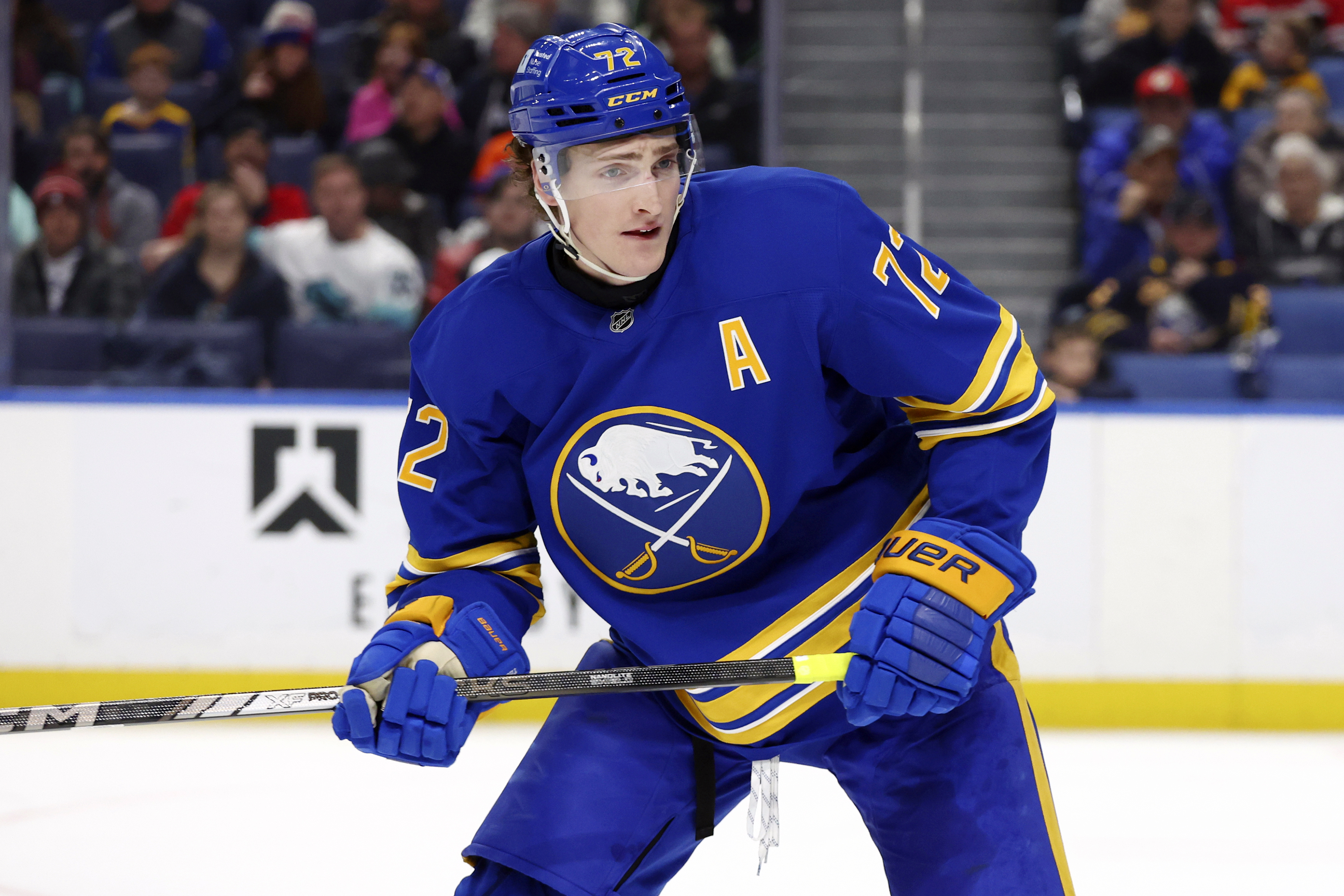
So who could be available if the Flyers are ready to deal? That conversation will always start with Thompson, who is on pace for his third 40-goal season in four years and is wasting away in Buffalo. The 28-year-old All-Star wouldn’t come cheap, but he is a unique player at 6-foot-6 and 220 pounds, and attractively, is signed for the next four years at a relative bargain price of $7.14 million.
Tage Thompson is one of the league’s premier goal scorers and would immediately fill the Flyers’ hole at 1C. He would command a Quinn Hughes-like haul though.
Buffalo, which changed general managers last week, still seems to think it can make the playoffs, but when that pipe dream is extinguished, which could be sooner rather than later, don’t be surprised to see Thompson push for a change of scenery. Buffalo and Philly make a lot of sense as trade partners, too, as Philly has some attractive young NHL pieces, prospects, and picks it could send back to Buffalo if the Sabres decide to tear it down … again. Thompson would be plug-and-play on the Flyers’ top line and bring a mixture of size, skill, and one of the league’s top shots to Broad Street.
Outside of Thompson, the path to landing a 1C or even a 2C is a lot murkier, as the Flyers would seemingly be out on guys in their mid-30s like Nazem Kadri, Brayden Schenn, and Ryan O’Reilly, with most others unavailable. Elias Pettersson, another high-end center who has been shopped in recent years, is also likely off the block now and would be an odd fit given his up-and-down time under Tocchet in Vancouver, anyway.
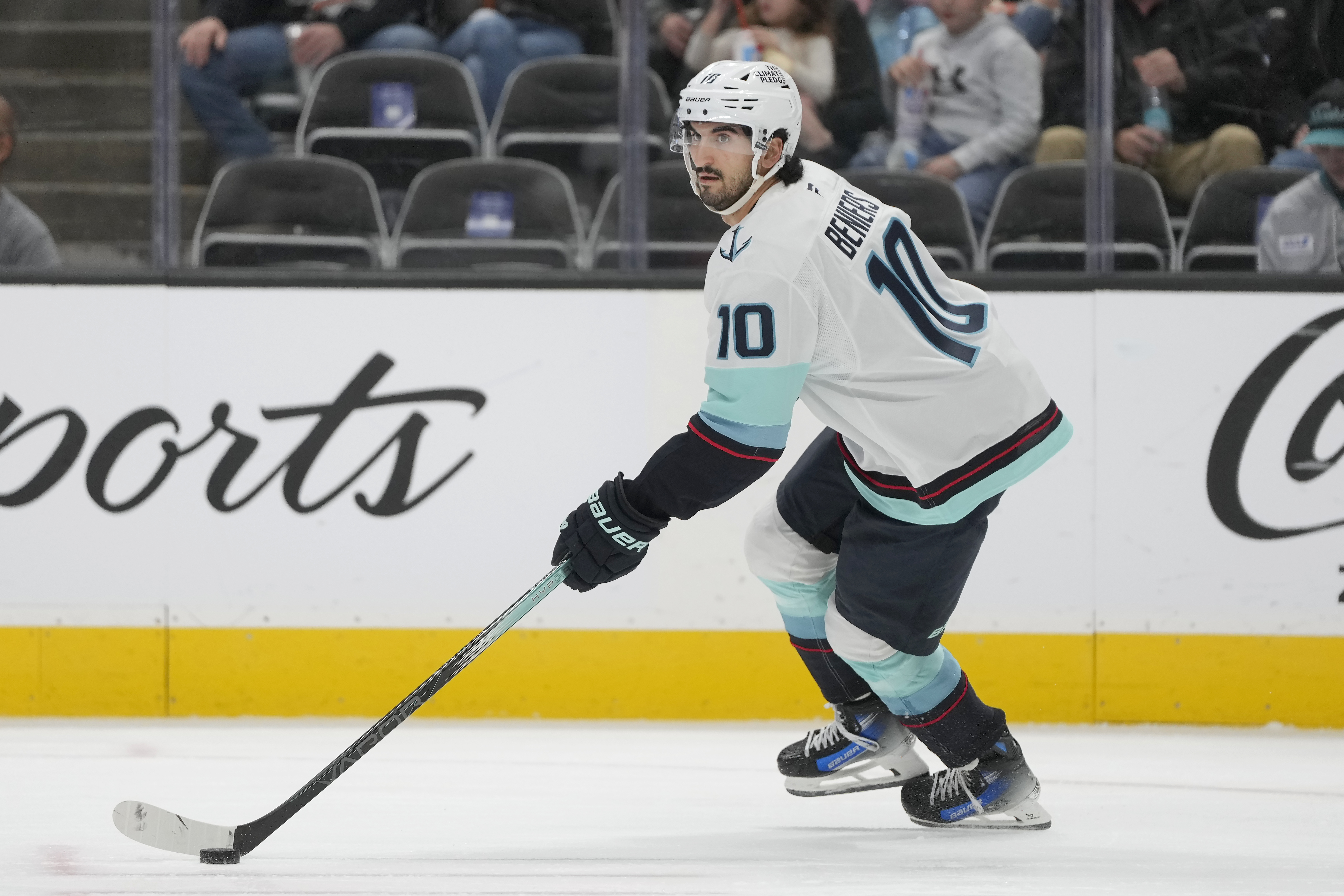
I’ve always wondered about Seattle’s Matty Beniers, who has been solid but hasn’t truly taken off offensively since being the No. 2 overall pick in 2021. With Seattle likely stuck with 31-year-old Chandler Stephenson for five more years (yikes), and centers Berkly Catton, Shane Wright, Carson Rehkopf,and Jake O’Brien rising in the system, could the Flyers pry Beniers, 23, away from the Kraken with the right offer?
St. Louis’ Robert Thomas and Toronto’s William Nylander are two others I could see becoming available for massive hauls if things break right. Detroit, which is under pressure to take a step and make the playoffs, and was also a leading contender for Hughes, might be tempted to move a young center like Marco Kasper or Nate Danielson for a package headlined by a proven top-six NHL winger.
Seattle Kraken center Matty Beniers is a young player with untapped potential.
How about a team like Minnesota, which just pushed its chips to the middle and went all-in? Would moving young Danila Yurov for immediate upgrades at wing or center, say Owen Tippett and Minnesota-born Noah Cates, make sense? Would Anaheim, which has its long-term top two centers figured out in Leo Carlsson and Mason McTavish, quickly flip 2025 No. 10 overall pick and oft-injured Roger McQueen for help at wing as it pushes for the playoffs? We know Brière and Ducks GM Pat Verbeek have each other on speed dial by now. Would Eastan Cowan, especially given his London ties, be a prospect the Flyers target if the Maple Leafs look to bolster their postseason chances?
One way or another, the Flyers’ search for a No. 1 center goes on, and there are fewer obvious solutions than ever. It’s time to act and time to get creative. Your move, Danny Brière.
The Flyers return to the ice on Saturday against the New York Rangers (12:30 p.m.), but there will be a different voice on the call for the team’s radio broadcast on flagship station 97.5 The Fanatic.
That’s because the Flyers and 97.5 have suspended play-by-play man Tim Saunders for two games after he made an inappropriate comment during the broadcast of Thursday’s Flyers-Sabres game. The comment, a lewd joke which was sexual in nature, was aimed at color analyst and former Flyer, Todd Fedoruk. It came during a TV timeout in the third period, when Saunders believed he was no longer live on the air but was picked up by a hot mic.
The Flyers announced the suspension with an official statement via X on Friday morning:
“We are aware of the inappropriate comment made during last night’s radio broadcast in the TV timeout of the Flyers-Sabres game.
“These remarks do not reflect the standards of conduct or values we expect from anyone associated with our organization.
“Effective immediately, the Flyers, along with our radio partners, 97.5 The Fanatic, have issued a two-game suspension while we address this matter with all parties involved.
“We take this matter very seriously, and sincerely apologize to our listeners, fans, and all those affected by these comments.”
“During last night’s game in Buffalo, I made an error in judgment with my comments that were made when I thought we were in a commercial break. I recognize how offensive my remarks were, and the harm it has caused.
“I take full responsibility and sincerely apologize to the Flyers, 97.5 The Fanatic and all those affected by my remarks.
“To all Flyers fans and listeners of our broadcast, I promise that I will hold myself to a higher standard moving forward to ensure our broadcast is a safe and respectful place everyone can enjoy.”
If the suspension remains at two games, Saunders, who has called the Flyers’ games on the radio since 1997, would be eligible to return to the airwaves on Tuesday for the game against the Chicago Blackhawks.
After a skid-stopping 4-1 road win Tuesday night in Montreal, the Flyers’ vibes were high.
But Wednesday brought a gut punch to the Flyers and their playoff hopes, as the team announced that winger Tyson Foerster will miss the next five months after undergoing arm surgery on Monday. Given the team’s recovery timeline, Foerster’s season likely is over.
“Tyson’s a hockey player. He’s a shooter, he’s intelligent, one of the first PK guys out there,” said coach Rick Tocchet. “He’s obviously really good on the power play; last minute of a game, he’s usually out there. So that’s a big chunk that you’re taking out of the lineup. So it’s a committee thing, and hopefully we get some guys that can step up when he’s out.”
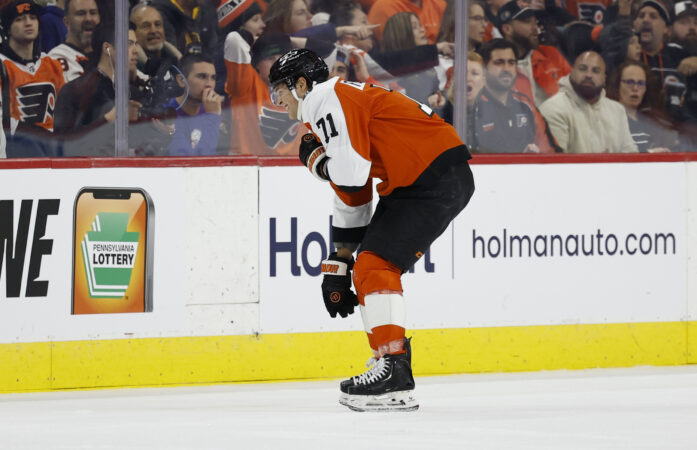
Foerster, 23, suffered the “upper-body” injury on Dec. 1 against Pittsburgh while attempting a one-timer in the second period. As Foerster followed through on his shot, he immediately dropped to the ice and winced in pain. He then skated off in noticeable pain while holding his right arm.
The Flyers placed Foerster on injured reserve on Dec. 3 and initially said the winger was expected to miss two to three months, which could have had him returning around the February Olympic break. A team source told The Inquirer then that the Flyers were hopeful that the injury would not require surgery and that it could be treated through rehab. On Wednesday, the Flyers’ statement said the decision for Foerster to undergo surgery came “after further medical consultation and diagnostic testing.”
The winger had a separate surgery in the offseason after a right elbow injury he suffered during last spring’s World Championships became infected. After some concern, he returned in time for the start of the regular season.
Before this most recent injury, Foerster was having a career season with a team-high 10 goals and 13 points in 21 games. He was second on the team with a plus-7 rating. Including the last nine games of last season, Foerster had scored 19 goals in his last 30 games, which was tied for 10th in the NHL since March 27.
“Yeah, it’s tough. He’s a big part of our lineup. He was off to a good start, too, so it’s tough to see that, but it’s next-man-up mentality,” captain Sean Couturier said Wednesday, mentioning Carl Grundström. “I think guys have stepped up in his absence. … That’s what you want to see. You want to talk about depth all the time, and you want to use it at times, so here’s an opportunity for different guys. Yeah, it’s tough news, but we’ve got to find a way to fill out that roster spot.”
As Tocchet and Couturier noted, with Foerster likely out for the season, the Flyers will need others to step up offensively, including the likes of Owen Tippett and Bobby Brink. The team also could entertain recalling prospect Alex Bump or a veteran winger like Anthony Richard from Lehigh Valley if it needs an offensive boost. Bump, 22, leads the Phantoms with 19 points (six goals, 13 assists), while the 28-year-old Richard, who tallied two goals and six points in 15 games last season for the Flyers, tops the Phantoms’ goal-scoring charts with eight.
Flyers right wing Tyson Foerster was leading the team with 10 goals before his injury on Dec. 1.
But for now, the Flyers seem content to roll with what they have, particularly with Grundström playing so well. Grundström, who was recalled from Lehigh Valley when Foerster was placed on injured reserve, was elevated to the Flyers’ top nine on Tuesday and scored his third goal in five games. The Swedish winger, who has impressed Tocchet with his skating ability, played alongside Couturier and Tippett on Tuesday and has been more effective than Nikita Grebenkin in that top-nine role thus far.
“I try to bring a lot of energy to the team and play physical and be direct. So I think that’s my style,” Grundström said Monday after morning skate, adding that the Flyers’ style of play fits his game well.
The Flyers will hope Grundström and others can continue to pitch in, as Foerster, one of the team’s top snipers and best defensive forwards, will be a big loss for a team that currently holds a playoff spot as the season approaches the halfway point.
Staff writer Jackie Spiegel contributed to this article.
It’s the time of the year to be thankful and Flyers fans have several reasons to be overflowing with gratitude.
Or at least you would think so …
The Flyers, whose front office made clear its desire for the team to take a positive step forward in its rebuild this year and be more competitive, are 15-8-3 under new coach Rick Tocchet, and have the seventh-most points and the seventh-best points percentage in the NHL. If the season ended Thursday morning, the Flyers would occupy the third spot in the Metropolitan Division based on points percentage and be in the playoffs for the first time in five seasons.
“We expect more of a fight internally, and we hope that it’s going to make us better, it’s going to hopefully make us more competitive throughout the season, and maybe push to get closer to the playoffs,” general manager Danny Brière said in September. “At the end of the day, we want to make the playoffs.”
Beyond their record, the Flyers have struck gold with inexpensive offseason acquisitions Trevor Zegras and Dan Vladař, the former flashing his puck handling wizardry and superstar potential, and the latter playing like a bona fide Vezina Trophy candidate over the first third of the season. The Flyers’ checkered history between the pipes is well documented, but maybe, just maybe, Vladař, who is 28 and signed through next year, can bring some consistency to the position for the next few seasons. And in the 24-year-old Zegras, a restricted free agent at season’s end who leads the team with 26 points, the Flyers hope they have identified part of their long-term solution down the middle.
The positives don’t end there. Zegras’ close friends Cam York (24) and Jamie Drysdale (23) have leveled up after surviving John Tortorella’s wrath, and so had fellow first-rounder Tyson Foerster (23), who had 19 goals in his last 30 games dating back to last season before suffering an upper-body injury on Monday that will sideline him for two to three months. York was banged up on Wednesday but is listed as “day-to-day.”
Owen Tippett, 26, has had more good moments than bad this season as he strives for consistency, while Matvei Michkov, who is still just 20, is coming on strong after a slow start. Noah Cates (26) and Bobby Brink (24) have also picked up where they left off last season, while the exciting Emil Andrae (23) looks to have made himself into an everyday NHL defenseman. In other words, the kids are getting better.
The Flyers have high hopes for 2025 first-round picks Porter Martone (right) and Jack Nesbitt (left).
The Flyers have more on the way as they boast a top-10 prospect pool in hockey and probably couldn’t have dreamed up better starts for their potential future stars. Porter Martone, the No. 6 overall pick in June, is dominating college hockey with Michigan State; Alex Bump and Denver Barkey are off to fast starts in their first full pro seasons with Lehigh Valley; and Egor Zavragin continues to put up historic numbers for a 20-year-old goalie in Russia. Even Jett Luchanko got the trade many felt he needed to further his development in the Ontario Hockey League. Martone, Bump, and Luchanko will all be expected to break camp with the Flyers next season.
So all is good in Flyers land, right?
Not if you scroll through X or find yourself wading through the ever dark and gloomy depths of Flyers Twitter:
“I hate Rick Tocchet hockey man…,“ tweeted @aftern_alex earlier this month.
or
“I DO NOT LIKE TOCCHET AT ALL. IF BREIRE AND JONES R ON BOARD WITH MICHKOV GETTING 13 MINUTES A GAME. FIRE THEM ALL,” wrote @Philly4everrr.
So why is a large portion of the fan base so unhappy amid the team’s surprising start? Well, it largely boils down to three things: (1) Tocchet’s style of play; (2) Michkov’s usage under Tocchet; and (3) the Flyers not tanking for a No. 1 center or No. 1 defenseman. Let’s explore those three points further.
Tocchet’s teams will never be confused with the ‘80s Edmonton Oilers, the ‘90s Pittsburgh Penguins, which he played on, or the Detroit Red Wings around the turn of the century. He’s a defensive coach first and has said as much. The Flyers are 25th in the NHL in scoring (2.85 goals per game) and are fourth-to-last in shots per game (25.2), which matches with previous Tocchet teams’ low volume of shots.
On the other hand, the Flyers are much improved defensively and have taken a lot of the “risk” out of their game. Some of that is thanks to better goaltending from Vladař, who has saved almost 11 goals above expected, per Money Puck. But the Flyers are also conceding fewer shots, high-danger chances, and rush attempts. They have allowed the eighth-fewest shots per game (26) and have surrendered the 13th-fewest high-danger shots at five-on-five (64), per Money Puck. They also rank 10th in the league in fewest expected goals against at five-on-five (54.9).
Flyers head coach Rick Tocchet has helped bring defensive stability to Broad Street.
Sure, everyone would love for the Flyers to score a few more goals and shoot a little more, but there also has to be an expected tradeoff there, as the Flyers last season were historically bad at keeping the puck out of their net (28th in goals against), and partly due to bad goalie environments had the league’s worst save percentage (.879). Tocchet’s philosophy centers around keeping opponents to the outside and allowing his goalies to see the initial shot, and the Flyers have largely executed that plan.
New coaches also tend to focus on laying a defensive foundation first and then building out from there. The Flyers, while improved, are far from a finished product offensively and weren’t this high-flying team that scored a ton of goals last year either — they averaged 2.83 goals per game. Making permanent judgments or broad assertions about Tocchet and the Flyers’ future after 26games and where the roster stands hardly seems fair.
The Michkov dilemma is probably the biggest criticism of Tocchet, as the Russian winger is ninth among Flyers in average ice time at 14 minutes, 51 seconds per game. There’s no way around saying Michkov started the season slowly — one goal in his first 13 games — as his conditioning was not up to par after an offseason ankle injury, and he made several ill-advised decisions with and without the puck. So it was hardly surprising to see him play less than other forwards.
Tocchet clearly wants the youngster to earn his ice time and kick some of his bad habits. He also wants to win games and, at times, has felt that he couldn’t trust Michkov in tight games when the team is protecting a lead. While it’s easy for fans to yell “Play Michkov more!” Tocchet has a responsibility to the rest of his players to hold everyone accountable and look out for the best interests of his team.
“I know he’s the lightning rod for everybody around here. He’s got to relax,” Tocchet said in mid-October. “He’s got to get himself into shape. He’s got to be in positions … you can’t just leave the zone. And it’s OK, he’s gotten better at it.”
Flyers right wing Matvei Michkov is coming on strong after a slow start.
Michkov has “gotten better at it” of late and has seen more ice time as a result. His better decisions with the puck and cheating less has coincided with his offensive uptick; he has four goals and seven points in his last seven games and is playing his best hockey of the season. Tocchet is rewarding Michkov’s improved play, as the Russian winger has skated at least 15:37 in three of his last four games.
While it can be frustrating to see a talent like Michkov playing less, it looks as if the message has been received and the winger will likely be better in the long run for it. That said, there needs to be a balance and Tocchet has to teach Michkov good habits without curbing his creativity or reprogramming such a talented player.
Despite what you may read online, Tocchet has no personal vendetta against Michkov or desire to see him fail. He simply wants him to play winning hockey and learn from his mistakes. While this relationship, language barrier included, remains a work in progress, don’t be surprised to see Michkov continue to get more ice time as the season wears on and for this to eventually become a whole lot of nothing.
Why aren’t they tanking?
Should the Flyers have tanked more and kept rebuilding for at least one more season, especially without obvious solutions for their future No. 1 center and No. 1 defenseman holes? This is a completely reasonable take, if not the most feasible one, considering how the roster is and was constructed.
Could the Flyers have bottomed out more and stripped their roster thinner over the past years to get more/better bites at the draft apple? I guess so, but they did largely do the latter.
Brière inherited many of the team’s salary cap problems and actually did some impressive work to get out from players like Ivan Provorov, Kevin Hayes, and Tony DeAngelo, and net high-end drafts picks and prospects in deals for Provorov, Sean Walker, Scott Laughton, Morgan Frost, Joel Farabee, and Andrei Kuzmenko. The only other three obvious and needle-moving subtractions would have been to trade well-paid veterans Sean Couturier, Travis Konecny, and Travis Sanheim. Rasmus Ristolainen is another player they might have moved, but bad injury timing has largely tied Brière’s hands there, not to mention the GM could still move him.
Flyers general manager Danny Briere has taken a patient and measured approach to rebuilding. Now, he wants the Flyers to take a step forward.
Given Couturier’s contract, which still has 4½ seasons remaining at a $7.75 million average annual value, he was and remains all but impossible to trade. Regarding Sanheim, Brière DID try to move him before his new deal kicked in but that move was nixed due to a St. Louis player opting not to waive his no-move clause. That nontrade might be the best move Brière didn’t make, as Sanheim has blossomed into a top-pairing defenseman and the Flyers’ leader on the backend. Whether the Flyers should have traded Konecny before extending him can be debated, but most teams usually try to hold onto 30-goal, almost-point-per-game players who are in their mid-20s and on an upward trajectory.
In other words, the Flyers largely carried out their rebuild the right way, they subtracted when it made sense, stockpiled assets, and didn’t jeopardize their long-term vision for short-term success, a la trading Walker amid pushing for the playoffs in 2023-24. But what about landing that all-important 1C and a 1D?
Those problems are not isolated to the Flyers, as those two holes, along with the starting goalie, are the three hardest to find. There is a shortage of true No. 1 centers across the league, and the teams that have them don’t usually like to give them up. The Flyers have also drafted centers in the top half of the past two drafts in Luchanko and Jack Nesbitt to try and address the position, and also have several young defensemen — York, Drysdale, Oliver Bonk, Spencer Gill — they believe could one day play in their top four.
Listening to Brière and president Keith Jones, the Flyers were prepared to pay up and probably envisioned finding that No. 1 center in what was once a rich 2026 free agent class. That crop has since dried up, but that doesn’t mean all hope has.
Armed with a deep prospect pool, future draft picks, including Toronto’s first in 2027, and a plethora of young wingers and defensemen, the Flyers have valuable pieces to package in a deal for a top-end center when one becomes available. Wouldn’t Tage Thompson look nice in burnt orange? Could things between William Nylander and Toronto turn sour? Might St. Louis be blown away to move on from Robert Thomas and tear it down? Is Quinton Byfield untouchable? The Flyers can bide their time for now and can feel good that they have the type of assets to compete with most offers.
Or on the backend, Norris Trophy winner Quinn Hughes, a huge fan of Tocchet from their time together in Vancouver, could soon be available. As could younger options like Bowen Byram, Brandt Clarke, and Šimon Nemec, for the right price.
The Flyers are set up well for the long term, whether they make the playoffs this season or not, so let’s just enjoy them for a while and see where this season goes. It’s been a long time since this city has had a hockey team it could be proud of. The complaining can wait.
Could Buffalo Sabres center Tage Thompson be the answer to the Flyers’ 1C conundrum?
The Lehigh Valley Phantoms will add another highly touted B-named prospect to their ranks this week, as Oliver Bonk will join the team after missing the first 20 games of the season because of an upper-body injury. The Flyers activated the defenseman from injured reserve on Tuesday before assigning him directly to their American Hockey League club.
The news is a long time coming for the 20-year-old Bonk, who suffered the injury early in rookie camp and later missed all of training camp. The 2023 first-round pick is considered the Flyers’ top defensive prospect and has a chance to make his professional hockey debut this weekend for the Phantoms.
Bonk has been rehabbing with the Flyers and has been skating with the team for the last couple of weeks. On Oct. 27, general manager Danny Brière provided an update on Bonk and said that things were “going well now” in terms of his rehab.
“We’re just hoping that there’s no setbacks,” Brière said. “We’re trying to give him the time and proper space between skates for him to feel good enough to come back and play. It’s a little tougher on a timeline with him. We’re kind of waiting on the progression and making sure there’s no setback on him.”
The Flyers have high hopes for Bonk, whom they selected with the 22nd pick in the same year they drafted Matvei Michkov at No. 7, and believe he can be a top-four NHL defenseman. A two-way blueliner with a game predicated on smarts and his ability to kill plays defensively through angles and good positioning, Bonk came in at No. 5 in The Inquirer’s annual Flyers prospect rankings.
Defenseman Oliver Bonk had designs on making the Flyers before suffering an upper-body injury in September.
Bonk was a key cog, alongside close friend Denver Barkey, with London over the last few years, leading the Knights to back-to-back Ontario Hockey League titles and the Memorial Cup crown last season. He was a first-team OHL All-Star in 2023-24 after scoring 24 goals and tallying 67 points in 60 games. Last season he was a second-team selection after posting 11 goals and 40 points in 52 games.
Carson Bjarnason and Alex Bonk are two more prospects on the Phantoms roster.
The next steps for Bonk, a steady Eddie who isn’t flashy but defends at a high level and largely keeps things simple, will be to continue to get stronger and learn to play with more pace and urgency.
“I think Bonk is going to adjust to the pace of the game in the American League,” Riley Armstrong, the Flyers’ director of player development, said in August. “I think he [and Barkey] played on a very good team in London, where you’re able to go back and break a puck out with ease, and play 30 minutes a night, and, you know, maybe not even break a sweat.
“I think that’s going to be a change for him, heading into this year where the pace is going to pick up. … Guys are going to forecheck a lot quicker and harder, finish checks on him. But I do think his brain is high-end … and I think he’s going to be able to adjust pretty quickly once you get him in that environment.”
That first pro test likely will come this weekend with Lehigh Valley.
On Monday, Flyers general manager Danny Brière pulled off yet another deal, shipping veteran defenseman Dennis Gilbert to Ottawa for defenseman Maxence Guenette. Both players were playing in the American Hockey League.
The move sees Gilbert, 29, return to Ottawa, where he finished up last season after being dealt by Buffalo at the deadline in the Dylan Cozens-Josh Norris trade. The Flyers signed the rugged blueliner to a one-year, $875,000 contract on July 1 to provide defensive depth, especially given that Rasmus Ristolainen was expected to miss the first few months of the season while recovering from triceps surgery. Gilbert had one assist and six penalty minutes in six games for AHL Lehigh Valley.
TRADE ALERT: We’ve acquired defenseman Maxence Guenette from Ottawa in exchange for defenseman Dennis Gilbert.
We have also agreed to terms with Guenette on a one-year, two-way contract. https://t.co/T6i6n9iPhj
In Guenette, the Flyers are getting back a 24-year-old defenseman with good size (6-foot-2, 209 pounds) and mobility. Ottawa’s 2019 seventh-rounder, who has played eight career NHL games, has spent the majority of the last four seasons playing for the Belleville Senators in the AHL.
An offensive defenseman, Guenette tallied nine goals and 23 points last season in 58 games. In 236 career AHL games, he has 27 goals and 116 points, twice leading Belleville’s defensemen in scoring, He had a career-high 40 points in 2022-23.
Guenette, a restricted free agent, has not played yet this season and signed a one-year, two-way contract with the Flyers following the completion of the trade. PuckPedia says that the contract is worth $775,000.
Monday’s trade is the fifth deal — most of them minor league transactions — executed by Brière since September. Last month, the Flyers traded Samu Tuomaala for Christian Kyrou. Kyrou has brought instant offense to the Phantoms’ blue line with a goal and nine points in seven games. Carl Grundström and Tucker Robertson, two other players acquired in recent deals, are also contributing regularly with the Phantoms.
Brière also has pulled off bigger deals in his two-plus years as Flyers general manager, including a shrewd move for Trevor Zegras in June and previous subtractions and future-centric moves involving Ivan Provorov, Scott Laughton, Cutter Gauthier, Jamie Drysdale, Sean Walker, Morgan Frost, Joel Farabee, and Kevin Hayes.
Don’t be surprised if Brière has a few more trades up his sleeve ahead of next offseason, as a once-promising free-agent class has all but evaporated and made a trade the most likely route if the Flyers are ready to try and acquire a star or bolster their options down the middle or on the blue line.