I’m not going to lie — I fell asleep during the rain delay in the One Philly: Unity Concert for America, on the Benjamin Franklin Parkway on July 4.
Luckily, I wasn’t on the Parkway, but at home watching it on TV. But I’d been looking forward to seeing the show featuring Philly legends like The Roots, DJ Jazzy Jeff, Will Smith, and Meek Mill.
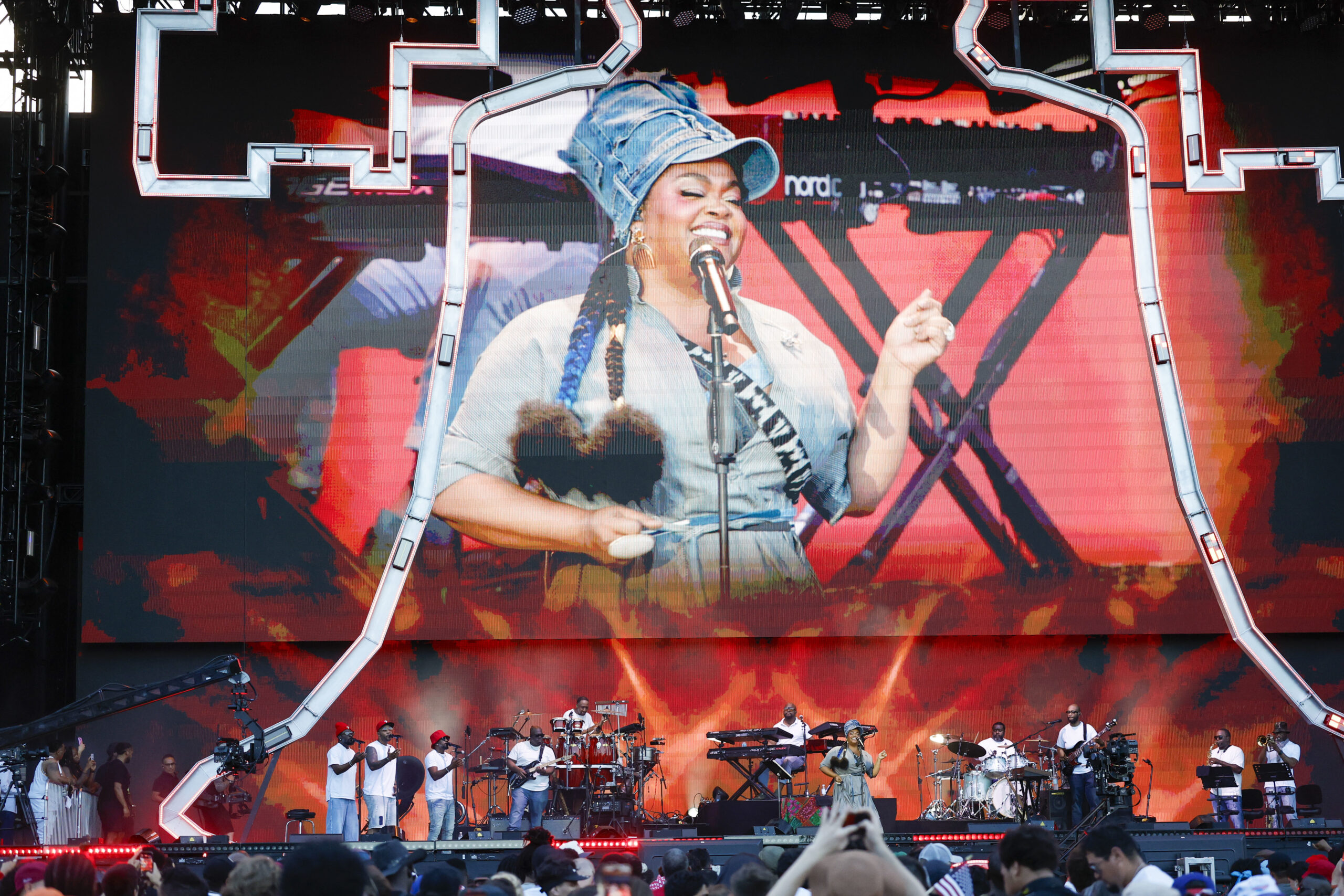
Earlier in the evening, I’d marveled at the relatively small size of the crowd in attendance for performances by Seal and Jill Scott, who took the stage before it rained. The concertgoers who did brave the 100-degree-plus temperatures in Center City that day were all huddled in what little shade there was near the stage.
I’ve covered a lot of events on the Parkway and I’d never seen it look so empty.
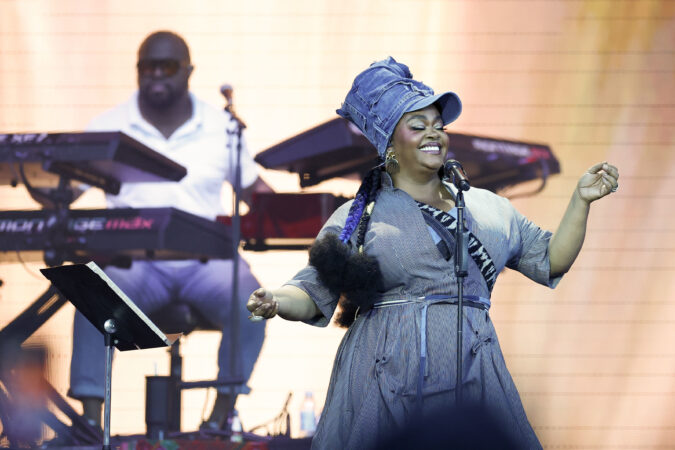
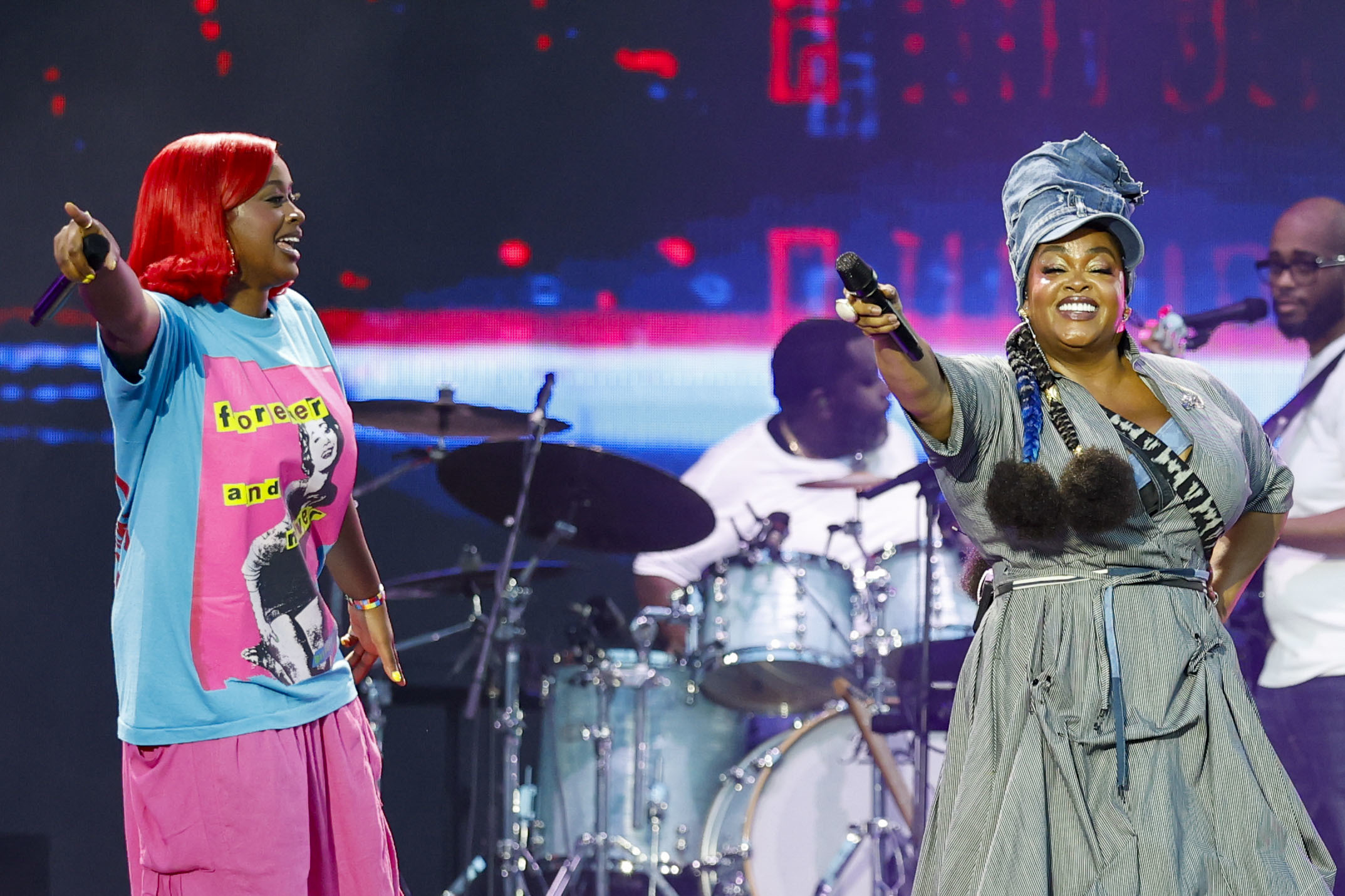
And yet, both Seal and Jilly from Philly performed like that crowd stretched all the way back to City Hall. Did I rise up in my living room with a beer in my hand and tears in my eyes as I sang “Kiss from a Rose” with Seal? Maybe. And I definitely gave Scott a standing ovation for her powerhouse performance. Not only did she bring it, she did so barefoot in a tall denim hat few others could pull off. It was golden.
Jill Scott (right) and Tierra Whack on stage Saturday at One Philly: Unity Concert for America on the Benjamin Franklin Parkway.
When I woke up the next day and realized the concert had resumed after midnight, I kicked myself for falling asleep and searched for clips of it on social media. I found quite a few, but it was a video Scott posted of herself in Philly after her performance that’s stuck with me days later.
In the video, which was filmed around dusk, Scott and her crew get out of their cars at the intersection of 17th and Wallace Streets in Spring Garden, where an open fire hydrant was spraying cool water in beautiful arches onto the road. It’s unclear if the hydrant was open when they arrived, but this Philly sprinkler scene is a classic summer tableau in almost every neighborhood in the city (even if opening hydrants is technically illegal).
Running through the cool spray of a fire hydrant on a hot day is just as much of a childhood rite of passage in Philly as climbing through the Franklin Institute’s Giant Heart. It’s a core memory, a collective experience, and a kind of joy that imprints itself on the soul.
Folks may question the quality of the water in the Delaware River, but they don’t question the magic of the city’s fire hydrant sprays — the tiny rainbows that appear in their mists, their power to bring neighbors together, and the giggles of pure joy they inspire in kids.
The video of Scott begins with laughter as she and her crew get out of a car and walk toward the hydrant. The man taking the video tries to hurry them along — “Let’s go, let’s go, let’s go!” — because their car appears to be stopped in the middle of the street (which is very Philly, too).
“Excuse me y’all I need to get by,” a motorist says off-camera to the guy taking the video, marking one of the few times in Philadelphia history someone was polite on the road.
The cameraman says to the motorist, “one second, one second,” and Scott and four others, including her son, run screaming through the open fire hydrant. The group then walks back through with beaming smiles on their faces.
“My apologies, thank you, we just got finished with a show on the Parkway,” the videographer says to the Philadelphian who wanted to get by, marking yet another rare occurrence of a motorist being polite on a Philly street. Twice in one day is probably an all-time record.
At this point in the video, Philadelphians on the sidewalk start recognizing Scott (“Oh my God!”) and she decides to take one final pass, alone, through the spray. At one point she just stands with her arms open and her face lifted to the sky, taking it all in.
“Life is frfr what you make it. I love you Philadelphia. I love you so much. Thank you. 250yrsofPhilly,” she captioned the clip.
Scott later added more context in the comments.
“I love the alignment. My 1st apartment was on 17th and Wallace. 2 bedroom. 2 bathrooms. A fireplace and a deck facing the city. Guess how much I paid … $730/ month!!! That was my block 🥰and to do THAT with my beautiful friends plus my Son was … epic. Me loving on Philly and Philly loving on me. SMH. I’m So grateful. Thanx God. Love, Jill,” she wrote.
I was completely taken that Scott — an internationally-touring, Grammy Award-winning artist — found such pure joy in such a small moment here in Philly. This is a woman who fills arenas and theaters and she seemed ecstatic to do something you and I could do any day.
Jill Scott takes to the stage for One Philly: Unity Concert for America on the Benjamin Franklin Parkway on Saturday, July 4, 2026, in Philadelphia.
She wasn’t upset that the heat had tempered crowds for her big hometown Fourth of July performance, she wasn’t worried about the water ruining her outfit, and she didn’t care if anyone saw her running through an open fire hydrant.
Scott didn’t seem anything but incredibly grateful for that moment.
Many people struggled with celebrating the nation’s 250th anniversary this year, whether because of the sweltering weather or the country’s political climate, and I did, too. But Scott reminded me that the everyday surprises Philly gives us — whether it’s an interaction with someone new, a corner of the city you’ve yet to explore, or an open fire hydrant — are an important part of the American experience, too.
So soak up that kind of Philly magic whenever you can, and no matter how old or how famous you get, I hope you can always find childlike wonder in this city, too.
If you like persnickety droids, precocious aliens, and scruffy-looking nerf herders, the Franklin Institute will be where it’s AT-AT next year when a new exhibit, “Star Wars: The Experience — A Journey Through the Galaxy,” premieres in February.
The interactive exhibit is part of the 50th anniversary celebration marking the 1977 debut of Star Wars Episode IV: A New Hope, the first film released in the sci-fi franchise.
Billed as the “largest and most comprehensive behind-the-scenes exhibition celebrating the Star Wars galaxy,” the 18,000-square-foot experience will feature more than 70 props from Lucasfilm’s archives, including Darth Vader’s costume, Darth Maul’s light-saber, and a speeder bike, according to a news release from the Franklin Institute.
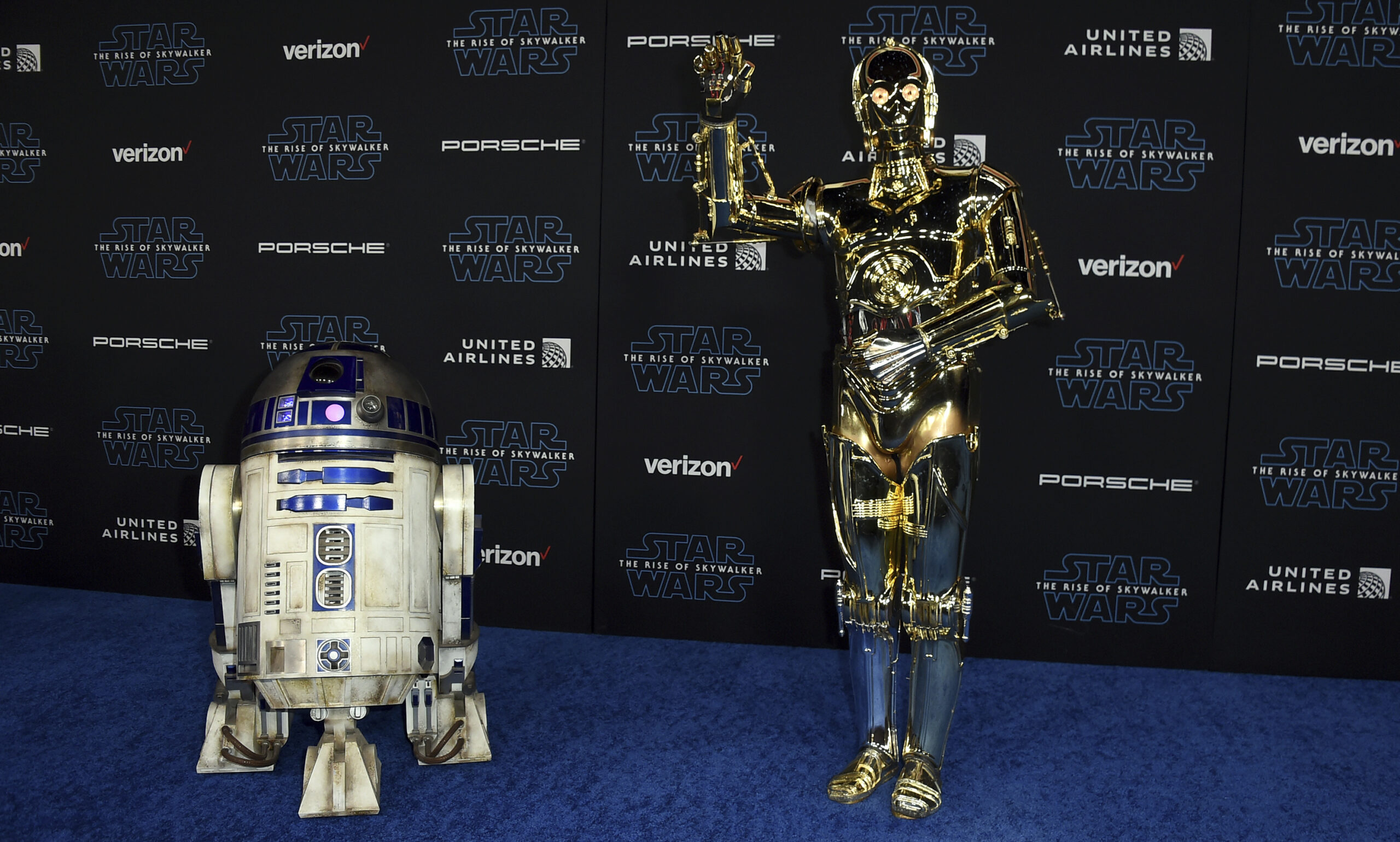
The droids you are looking for, like R2-D2 and C-3PO, will be on display, along with beloved characters like Grogu (this is the way).
R2-D2 and C-3PO at world premiere of “Star Wars: The Rise of Skywalker” in 2019 in Los Angeles.
The experience was created over more than four years by the Franklin, Lucasfilm, Disney Consumer Products, and Orlando-based experiential design firm MDSX.
Specifics about the exhibition are scant, but it will include “large immersive moments” and RFID (radio frequency identification) technology that will allow for a personalized and interactive experience, the release said. Displays will delve into sound design, costume creation, fandom, gaming, and other aspects of the Star Wars universe.
More details and renderings of the exhibit will be released during a July 24 panel at San Diego Comic-Con called “The Making of Star Wars: The Experience.” The panel will feature representatives from the Franklin, Lucasfilm, and MDSX and will be moderated by Ashley Eckstein, the voice of Ahsoka Tano in several animated series including Star Wars: The Clone Wars.
“Star Wars: The Experience” will run at the Franklin from Feb. 13 to Sept. 6, 2027, and will be in place for May 4, the unofficial Star Wars holiday. (May the Fourth be with you.)
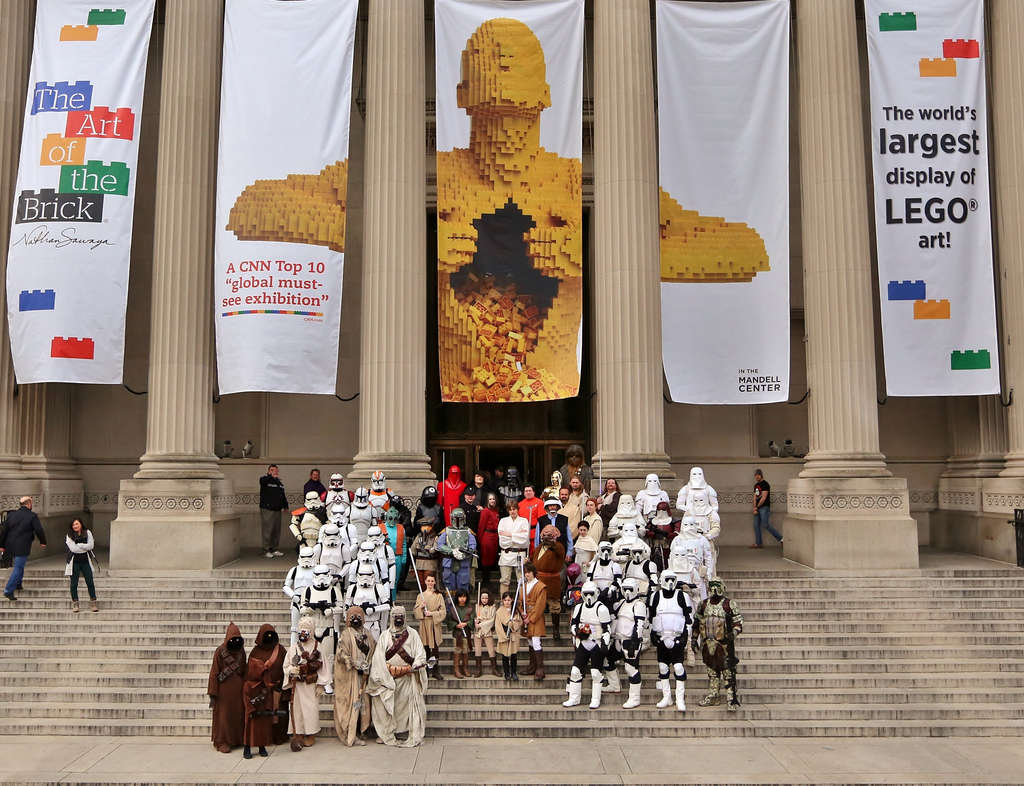
Star Wars fans gather in costume for Star Wars Day at the Franklin Institute in 2015.
After its Philly run, the exhibit will go on a five-year tour around North America.
“Star Wars created a cultural landscape that spans decades and delivers massive, undeniable global appeal,” said Larry Dubinski, president and CEO of the Franklin Institute, in a statement. “Its influence extends far beyond cinema — shaping entertainment, culture, technology, and business, while redefining how stories are created, experienced, and shared across generations.”
This is the second exhibit about the galaxy far, far, away that the Franklin has staged. Consider it Star Wars: The Franklin Strikes Back.
In 2008, the museum hosted “Star Wars: Where Science Meets Imagination,” which featured props, costumes, and a five-minute ride in a simulator of the Millennium Falcon’s cockpit. That touring exhibit was a collaboration between the Boston Museum of Science and Lucasfilm.
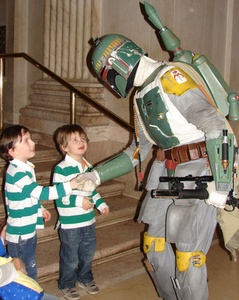
Two young padawans greet Boba Fett at the exhibit, “Star Wars: Where Science Meets Imagination,” in 2008 at the Franklin Institute.
The new experience, the Franklin says, will differ from the previous one in many ways.
“This exhibition is much larger in scale, more ambitious in scope, and powered by technologies that allow every guest to experience a custom story,” said Abby Bysshe, chief experience and strategy officer, in a statement
A lot has happened with the Star Wars franchise in the 18 years since the first exhibit was held at the Franklin. Luscasfilm was purchased by the Disney Company in 2012, there have been six new Star Wars movies, and more than a dozen new Star Wars shows.
When the last exhibit opened, Grogu wasn’t even a twinkle in Din Djarin’s eye and nobody had ever heard the name Cassian Andor.
Now, they have friends everywhere.
Tickets for “Star Wars: The Experience — A Journey Through the Galaxy” will go on sale in November.
For years, I and many others have looked forward to this week in Philadelphia, to be here in the city where our Declaration of Independence was written as our nation marks its 250th anniversary.
But Mother Nature had other plans: She reminded us that we are not as independent as we’d like to think.
Amid a 100-degree-plus heatwave, which was forecasted to continue through Saturday, numerous Seminquincentennial events were canceled. Yet locals and visitors persisted — with that consummate underdog Philadelphia spirit — and found small ways to come together to celebrate our ongoing American experiment.
I first got the feeling things weren’t going to go as planned as I walked the streets while out reporting on the Red, White & Blue To-Do Thursday and noticed something missing — people.
The crowds along the Red, White & Blue To-Do parade route were light and the audiences at WXPN’s music series — which featured 28 musicians playing at 11 historic venues — were even lighter. I was one of a dozen or so people in attendance at the Arch Street Meeting House for a free performance by the legendary poet and recording artist Ursula Rucker.
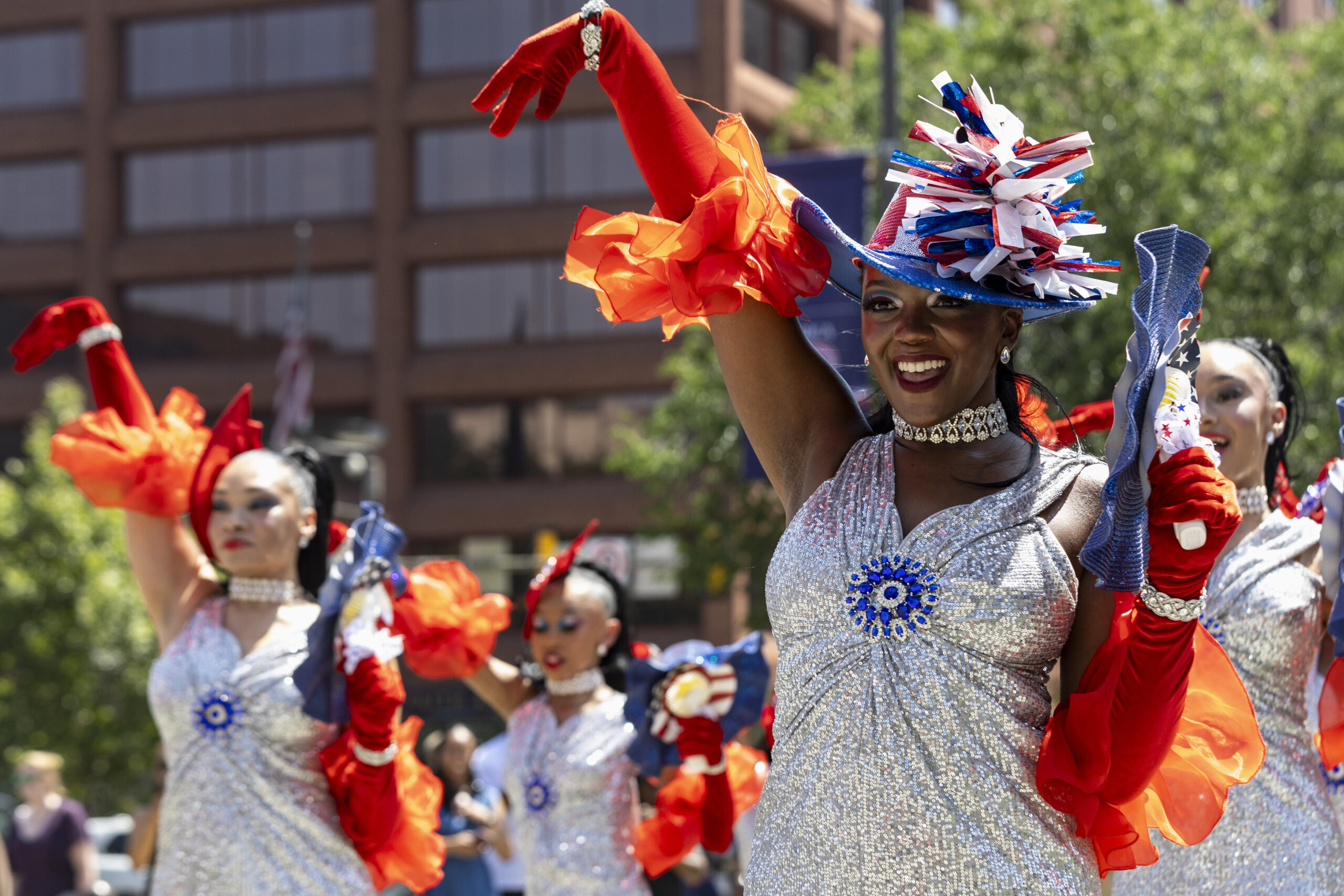
Students from Dance4Life School of the Arts in Delaware perform during the Red, White, & Blue To-Do Pomp & Parade on Thursday.
Not since the pandemic have I seen the sidewalks of Philadelphia as empty as they were Thursday, especially as the hours passed and the Salute to Service concert with Queen Latifah was canceled on Independence Mall.
To the smart alecks on my social media feeds who responded to my observation with comments like “It’s 100 degrees! Of course they are empty you raging soup fork” — I know it was hot, spork, I was out there.
I don’t blame anyone for not going outside in 103 temps, but that doesn’t mean I can’t feel bad for Philly, for those who did brave the heat, and for the visitors who came here to enjoy the festivities.
And I know it must have been heartbreaking for officials to make the call to cancel Friday’s Salute to Independence Parade, which was to be the country’s largest Semiquincentennial parade featuring more than 240 elements and marching bands from across the country.
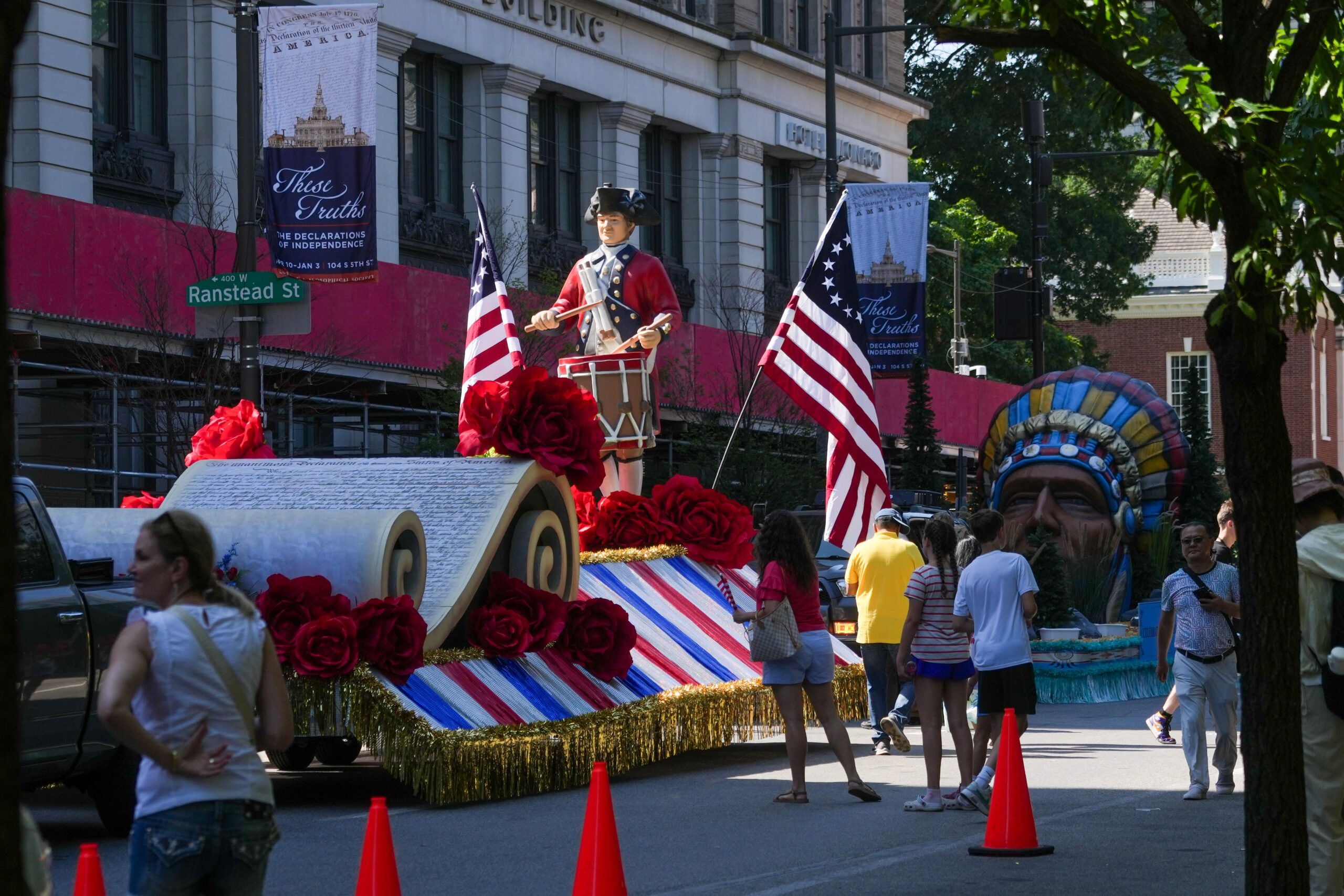
Floats that were to be in the Salute to Independence Parade are pulled through Old City.
People planned for years for the 250th. It was supposed to be the biggest week here since Pope Francis’ visit in 2015. We weren’t going to flub this Independence Day celebration up like the Bicentennial; Philly was going to bring it this time.
But this time, it wasn’t our fault. The one factor nobody can control, Mother Nature, decided to control us.
‘Rough and gritty experiences’
In May of 1776 it was so hot in Philadelphia that John Adams wrote to his wife, Abigail: “The Affairs of America, are in so critical a State, such great Events are struggling for Birth, that I must not quit this station at this Time. Yet I dread the melting Heats of a Philadelphia Summer, and know not how my frail Constitution will endure it.“
Not only did Adams’ frail constitution endure the heat, which dropped to 76 degrees by July 4, 1776, the other Founding Fathers and the people of this fledgling nation braved far worse to declare this country’s independence and create a new and monumental Constitution. Neither the people nor the product were perfect — and they still aren’t today — but they aspired to be something bigger and better.
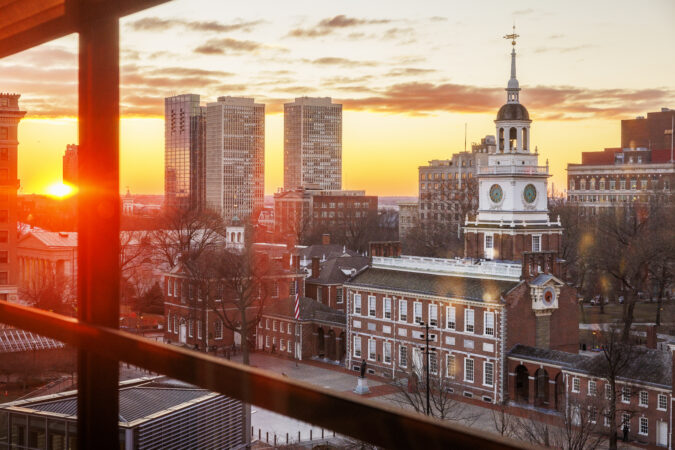
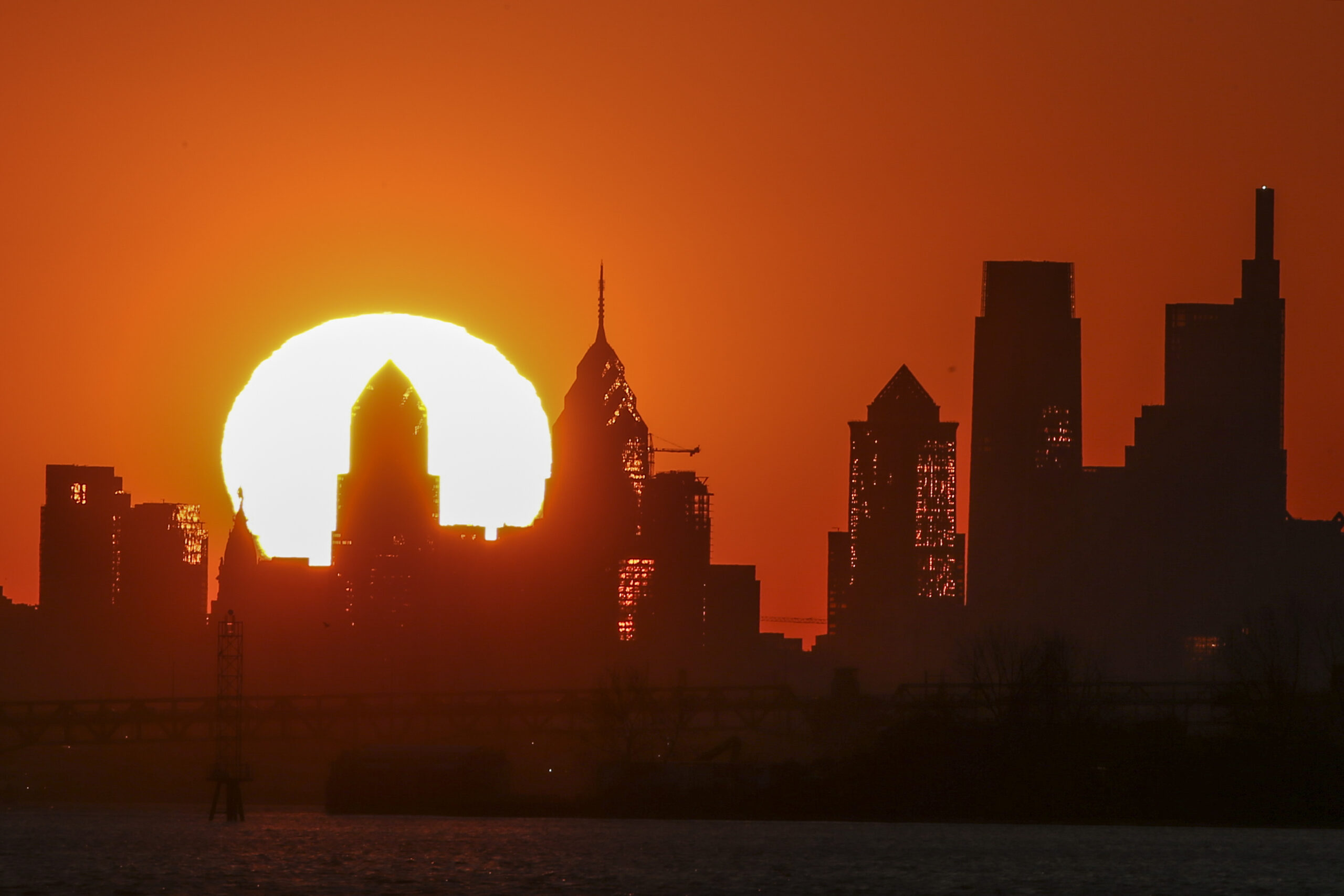
The sun sets behind the Philadelphia skyline.
In Philadelphia, we still believe in things bigger than ourselves. Sure, a large majority of the time it’s the Eagles, but not always.
We believe in each other. I see it everyday in small interactions between strangers. We believe in truth, even when it’s painful. I saw it as volunteers put up handwritten signs Thursday to replace the ones removed at the President’s House. And we believe we are capable of big things. I saw it in the planning of our 250th events.
It wasn’t just officials who were invested in the Semiquincentennial, more than 10,000 Philadelphians volunteered to undergo training and be “Phambassadors” for the 250th events and the World Cup. These may be divisive times, but it was clear we, the people, still wanted to come together.
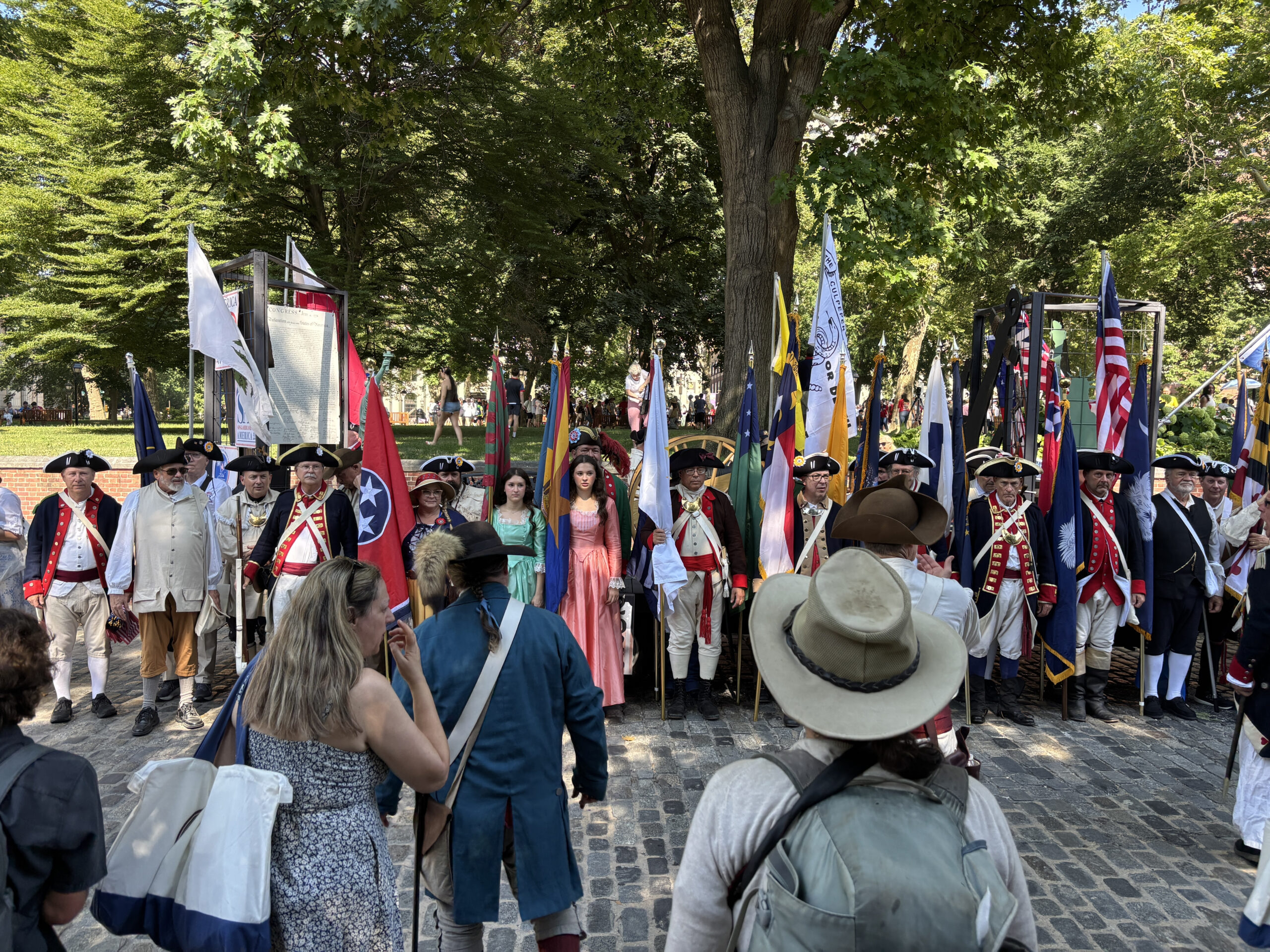
Even after Friday’s parade was canceled, people persisted and came together in informal gatherings, because that’s what we do. Marching bands, color guards, and dance troupes from across the country held informal pop-up performances at air-conditioned locations across the Historic District and colonial reenactors staged an unscheduled parade near the Liberty Bell.
With the Salute to Independence Semiquincentennial Parade cancelled reenactors muster near Independence Hall.
Just because Mother Nature decided to show her hand and remind us who’s boss — which she is totally within her right to do (thanks so much for not hitting us with an astroid!) — doesn’t mean it was all for nothing. We still had those small moments with each other, and while they’re not as flashy as the big ones, in the whole of existence, they’re still pretty unlikely and special too.
I had one of those moments during Rucker’s show at the Arch Street Meeting House. It felt like a gift to be part of such a small audience as I listened to her beautifully explore what it means to be a human and a Philadelphian.
Philly legend and poet Ursula Rucker performs with Miles Orion for a crowd of about a dozen people at the Arch Street Meetinghouse Thursday as part of WXPN’s Red, White & Blue To-Do Music Series.
“At the core I love us,” she said. “We show mutual aid. We don’t judge. We have rough and gritty experiences.”
This heat wave — temperatures were forecast to reach 104 Friday and just short of 100 Saturday, with a 60% chance of storms at night — is one of those rough and gritty experiences Philly will get through. The cancellation of events, while disappointing, is about mutual aid and concern, not just for those who would attend the celebrations, but for those who have to work them too.
Instead of cursing Mother Nature for ruining our big birthday party, maybe Philly and the country can take heed and make a new declaration that we’ll become a leader in reducing factors that lead to global warming.
I know, a girl can dream, but respect and deference to the one thing that truly governs us all seems like a pretty self-evident truth.
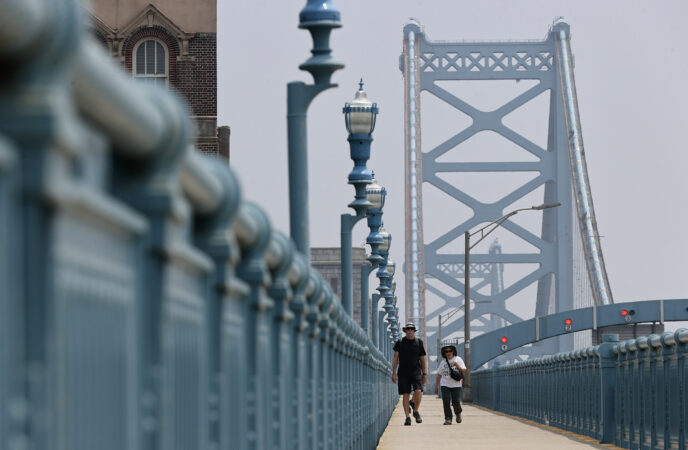
I’ve driven across the Ben Franklin Bridge countless times but until last week I’d never walked across it, and I walked across the Brooklyn Bridge once, so I’ve quietly carried that shame with me for years.
When I received a news release about the bridge turning 100 on July 1 and a subsequent anniversary party on July 11 that will close it to vehicles for public use for the first time since Pope Francis’ visit in 2015, I wanted to finally check walking across it off my Philly bucket list before the event.
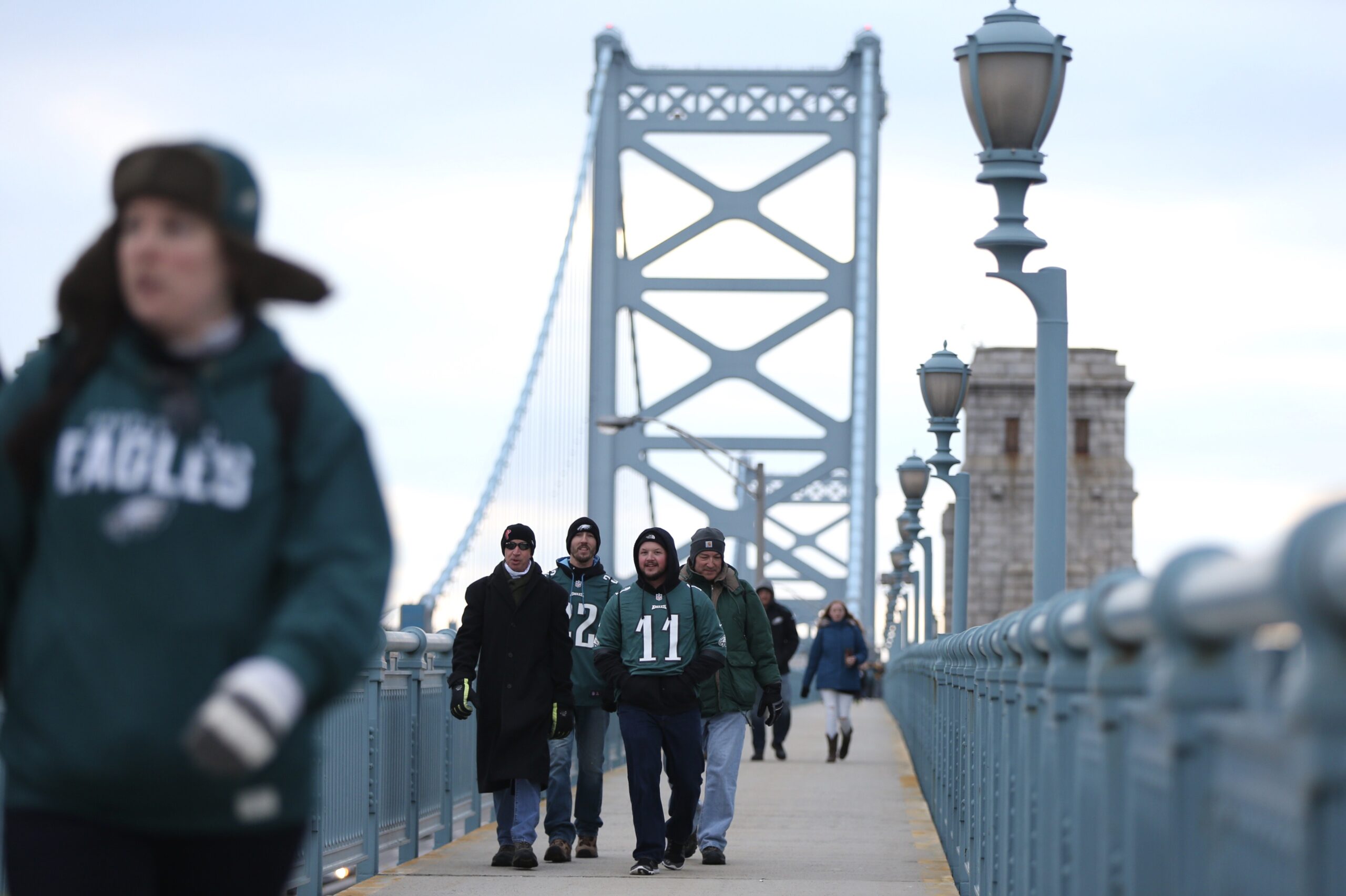
Fans cross the Ben Franklin Bridge into Philadelphia on the morning of the Eagles’ Super Bowl parade in 2018.
I was going to go it alone, but I decided to reach out to Mike Williams, spokesperson for the Delaware River Port Authority (DRPA), which manages the bridge, and he offered to schedule a walkway tour of it for me with DRPA principal engineer Michael Howard.
I met both men at Fifth and Race Streets at the base of the bridge on the Philly side, but as luck would have it, we showed up on opposite sides of the heavily-trafficked span. We waved at each other across the cars and as I tried to figure out how to Frogger my way over to them, Howard and Williams disappeared.
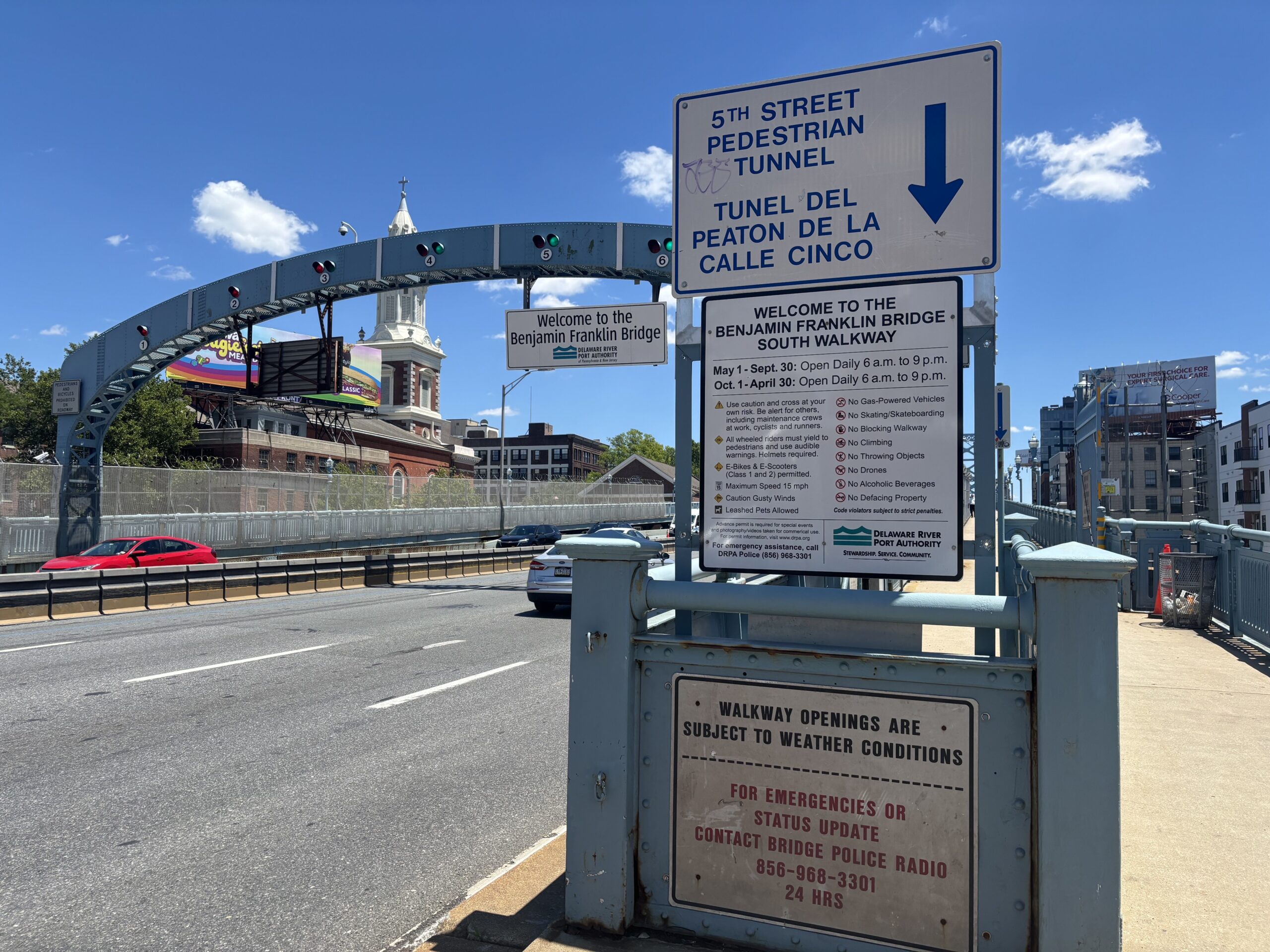
The men popped up out of a stairwell right next to me, having used the Fifth Street pedestrian tunnel under the bridge.
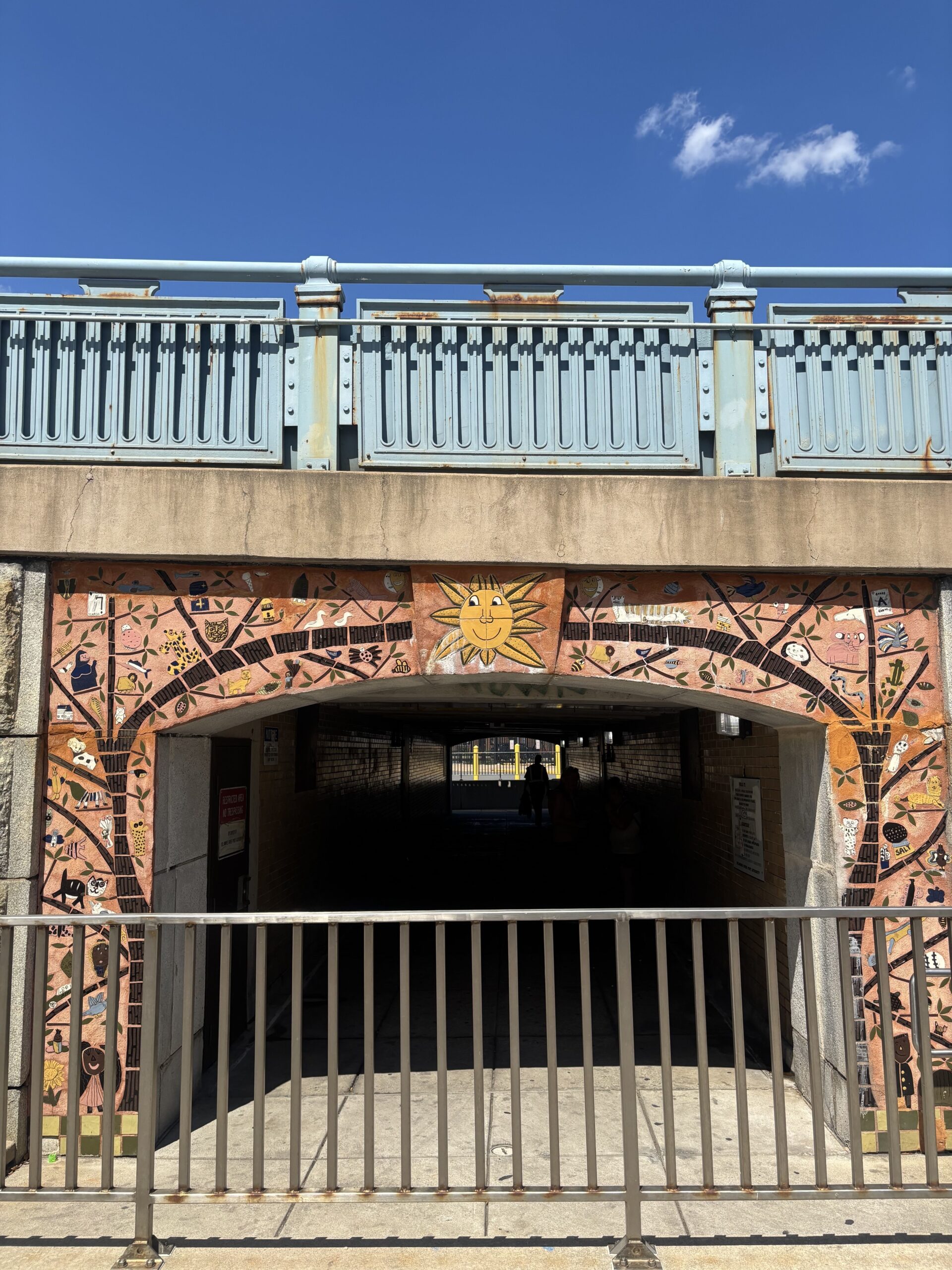
The entrance to the Fifth Street pedestrian tunnel on the south side of the Ben Franklin Bridge in Philadelphia.
“This was one of the original things that we incorporated into the bridge because we didn’t want people to try to walk across the traffic — because they would, you know,” Howard said, and I agreed.
Obviously, it was the first place I wanted to check out.
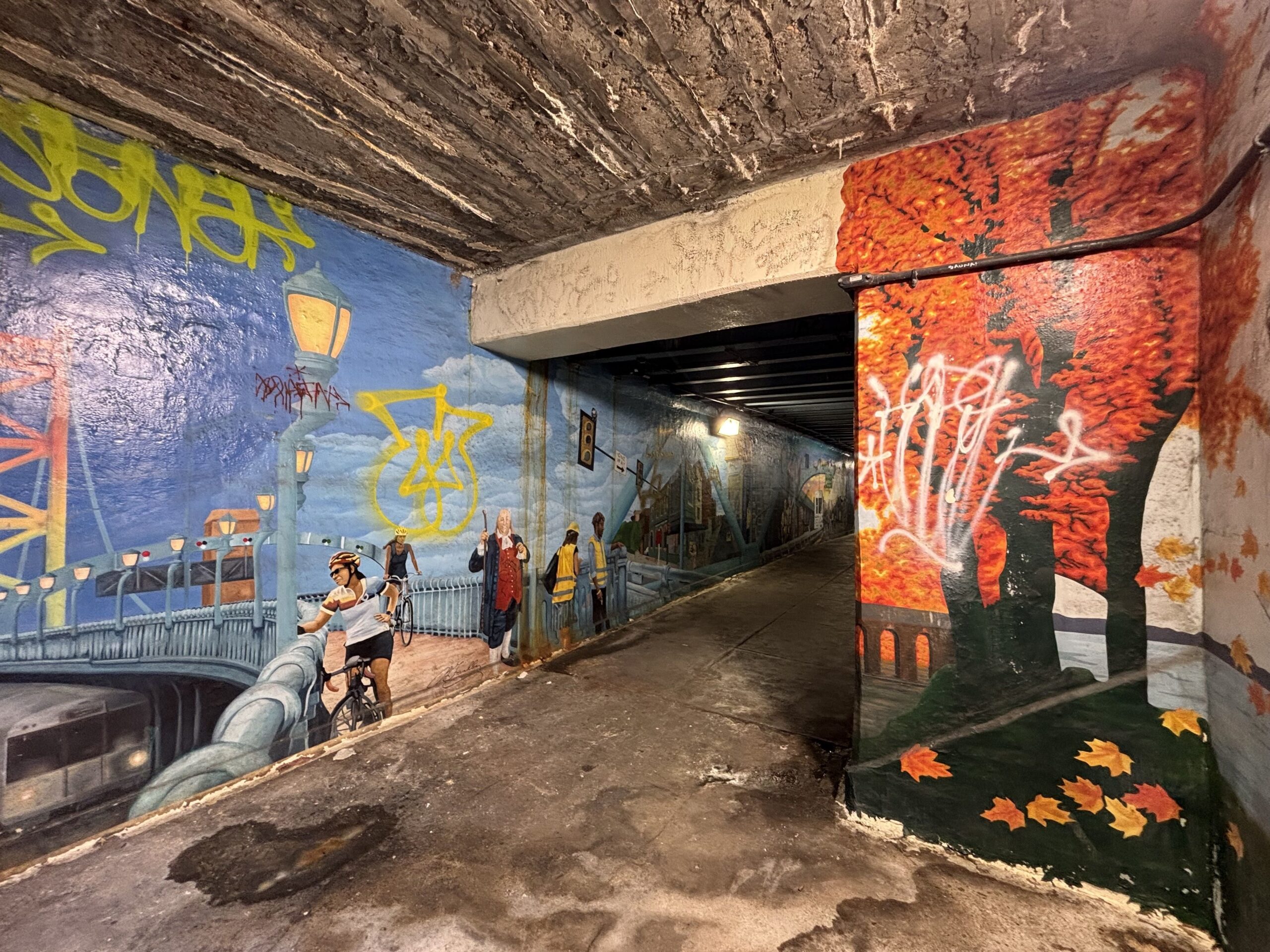
The “Building Connections through Time” mural inside of the Fifth Street pedestrian tunnel on the Philadelphia side of the Ben Franklin Bridge.
The entire length of the 91-foot-long tunnel was painted with a vibrant Mural Arts Philadelphia work by Brad Carney and Melissa Mandel. Created in 2018, Building Connections through Time shows people using the bridge, the building of it, and images of its early years. There are also paintings of Independence Hall, Benjamin Franklin, and other bridges that span the Delaware River.
Finding one of the city’s most secluded murals felt like finding one of those wonderful Philly secrets the city gives sometimes, if you never stop exploring it.
Come along with me as I explore one of Philly’s most secluded murals.
Back on the surface, Howard said that while the bridge has two pedestrian walkways, for operational reasons, only one side is open at a time and it’s usually the south side. The walkway has restricted hours, so be sure to check the signs (currently, it’s open from 6 a.m. to 9 p.m.).
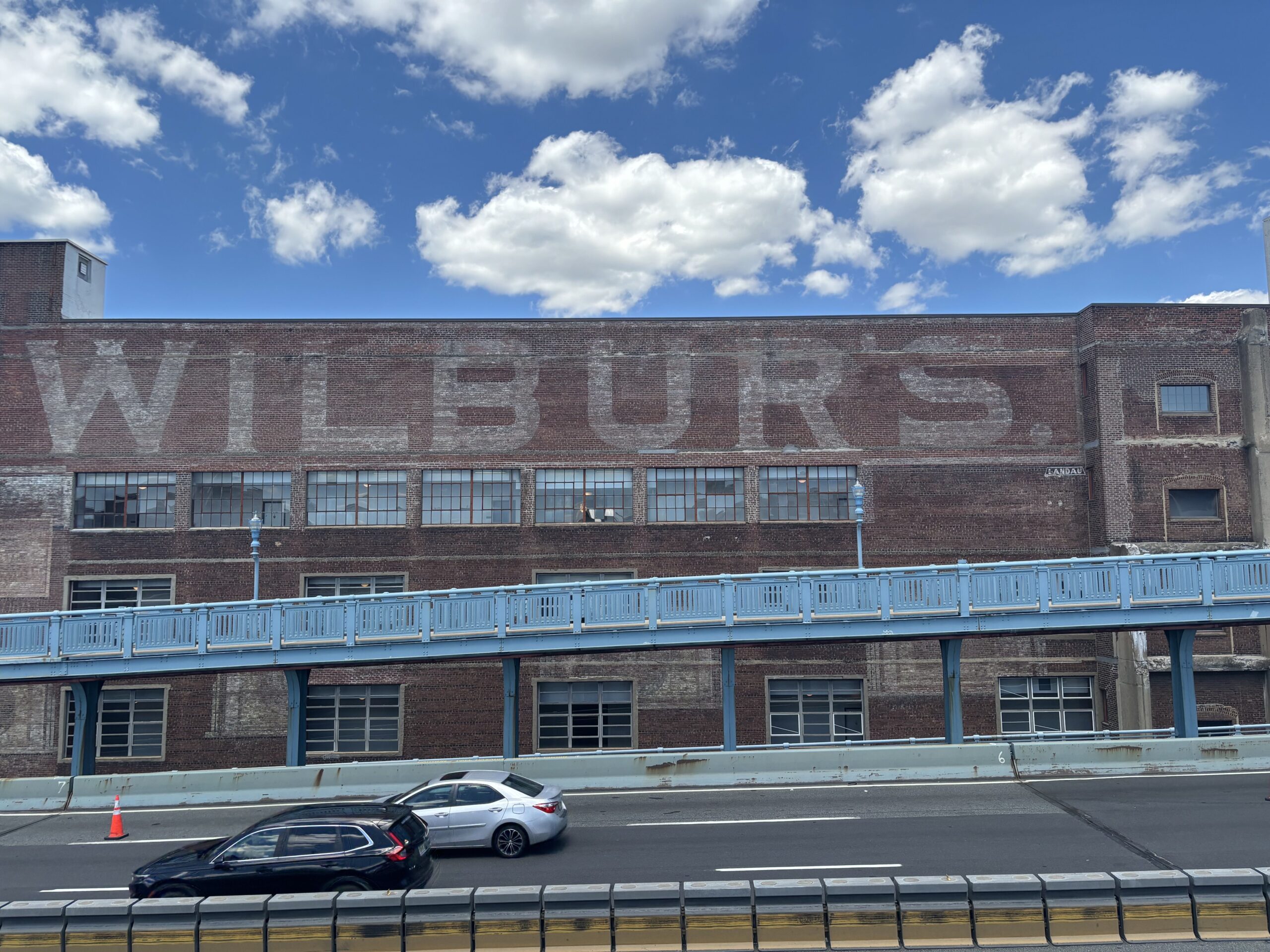
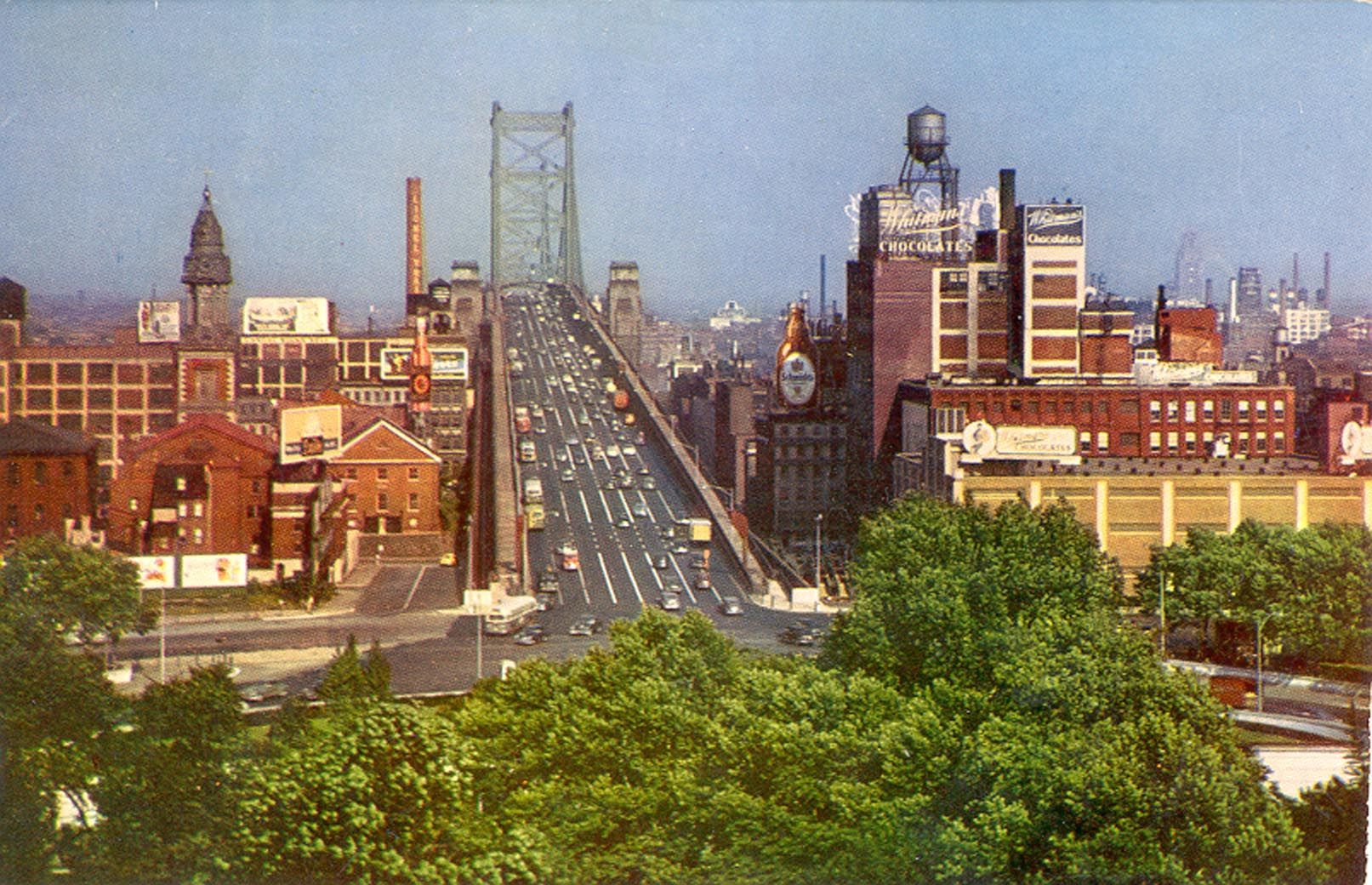
Howard pointed out the old Wilbur Chocolate factory on Third Street and explained that a part was sliced off to make way for the bridge.
“One of the things that we had to do when we were constructing was kind of take a surgeon’s scalpel to the area because you know with Old City, everything’s tightly packed and we wanted to make sure we took the bare minimum of structures,” he said.
A piece of the former Wilbur’s Chocolate Factory had to be sliced off to make way for the Benjamin Franklin Bridge.
Also under threat when the bridge was built was nearby St. George’s United Methodist Church on Fourth Street. Opened in 1769, it’s the country’s oldest Methodist church in continuous service.
“Luckily, the engineers were able to just adjust the angle of the approach ever so slightly to avoid encountering the building,” Howard said.
I marveled as I looked at the mere 14 feet that still separates St. George’s from Philly’s big Ben. The engineers left just enough room for the Holy Spirit.
‘Bridge angels’
As we began our journey across the bridge, Howard said it took about four-and-a-half years to build and it was designed by architect Paul Philippe Cret, who also designed Philly’s Rodin Museum. The bridge was constructed with eight lanes — six for traffic and two for trolleys, as well as two tracks for heavy rail.
But in the time it took to build it, trolleys went out of fashion and buses came in. The trolley tracks sat unused until the 1940s, when they were paved over. A vast, empty space for a never-opened trolley station remains under the Bolt of Lightning sculpture near the base of the bridge.
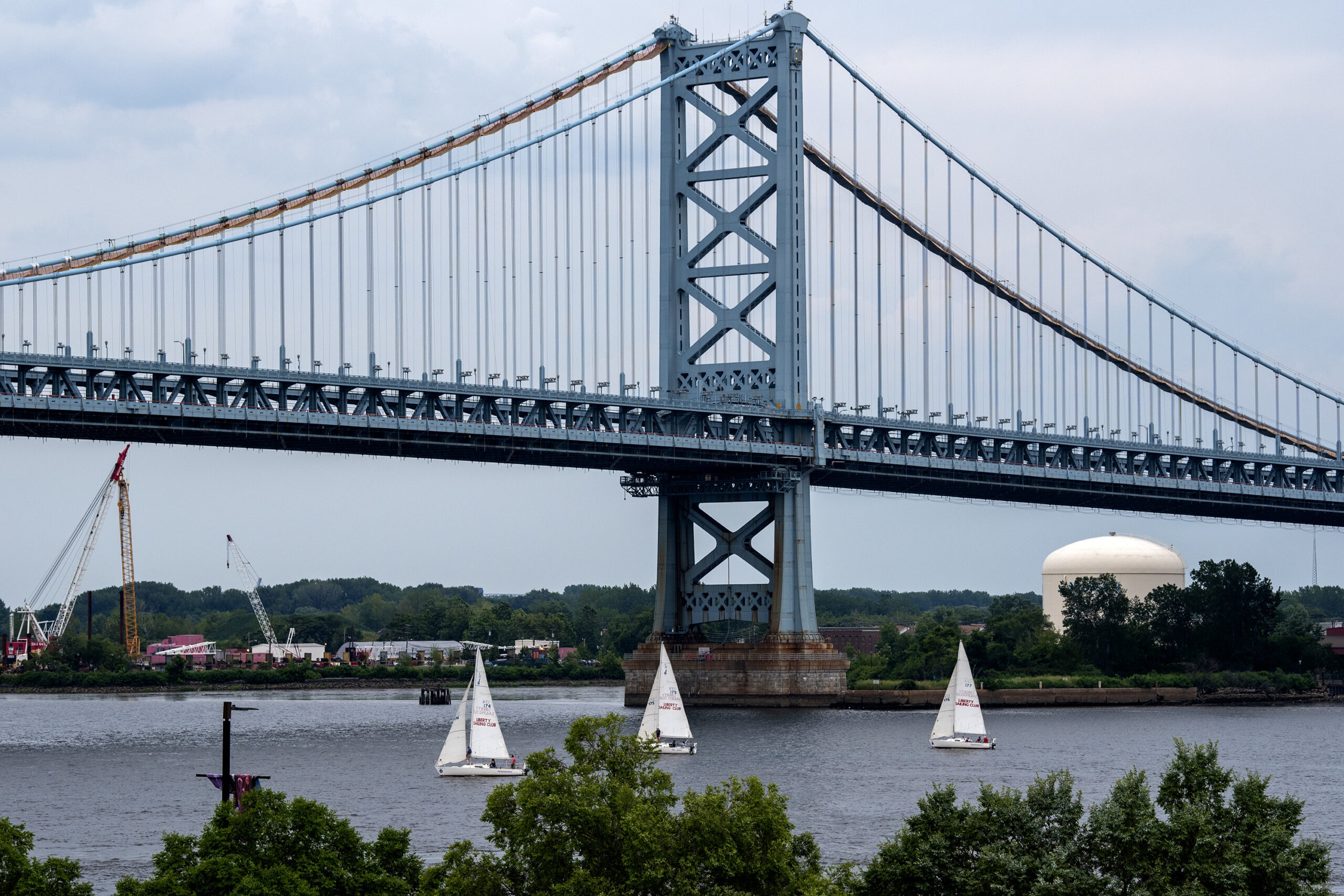
Sailboats pass under the Ben Franklin Bridge in 2020.
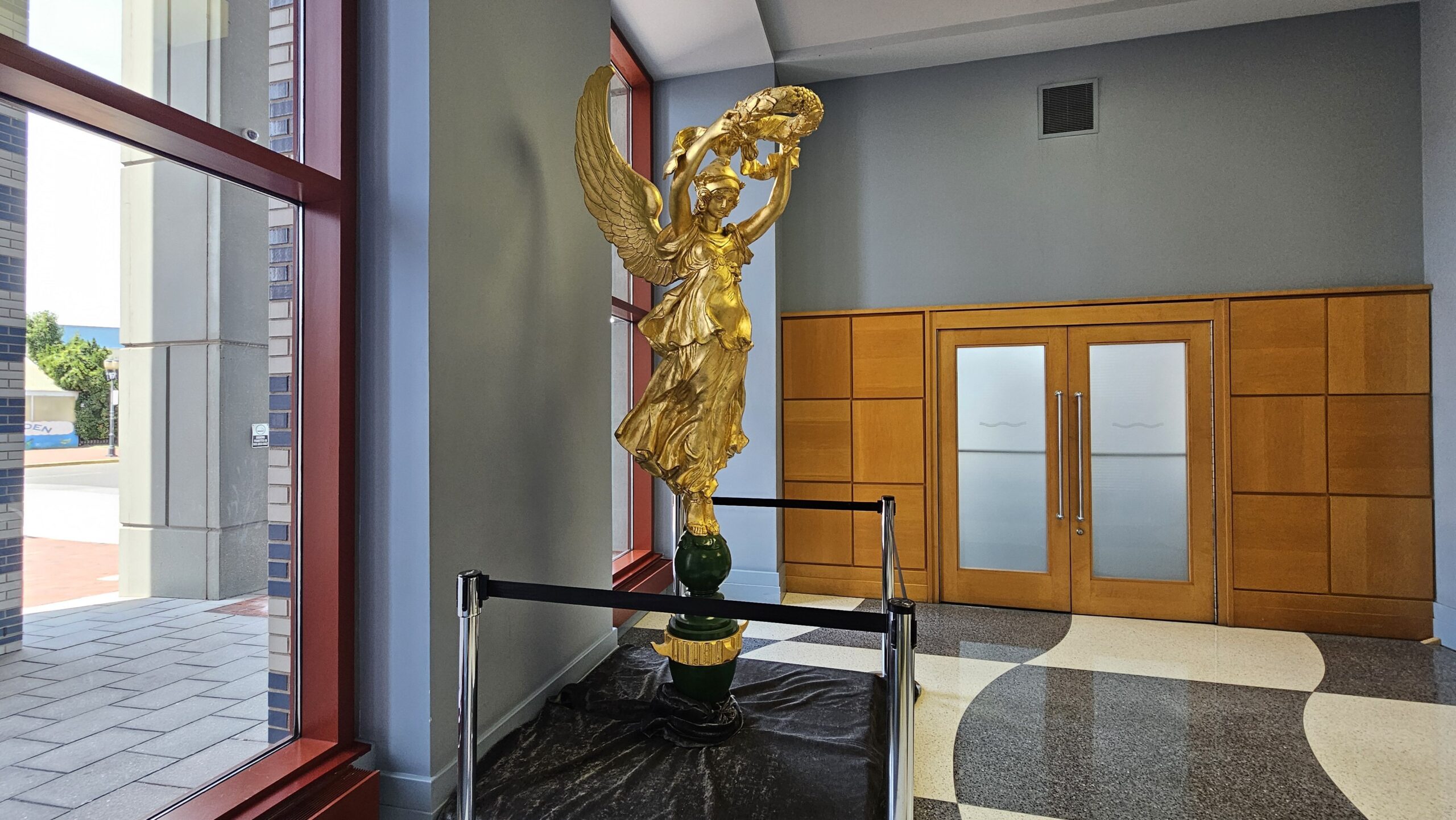
Another original component lost when the trolley tracks were paved over were four 75-foot-tall pylons — two on either side of the bridge — that were topped with bronze angel statues called Winged Victory.
One of the angel statues is in the lobby of DRPA’s headquarters and three are in storage, but one will be displayed at the upcoming 100th anniversary celebration, according to Williams.
One of the four “Winged Victory” statues that used to decorate the Ben Franklin Bridge is now on display at the Delaware River Port Authority’s headquarters.
‘A living beast’
Shortly after we began our trek on the 1.3-mile walkway, I felt a PATCO train speeding beneath my feet and the bridge move ever so slightly.
“The bridge is dynamic, almost like a living beast because the steel expands when it gets warm out and with traffic, it bounces,” Howard said.
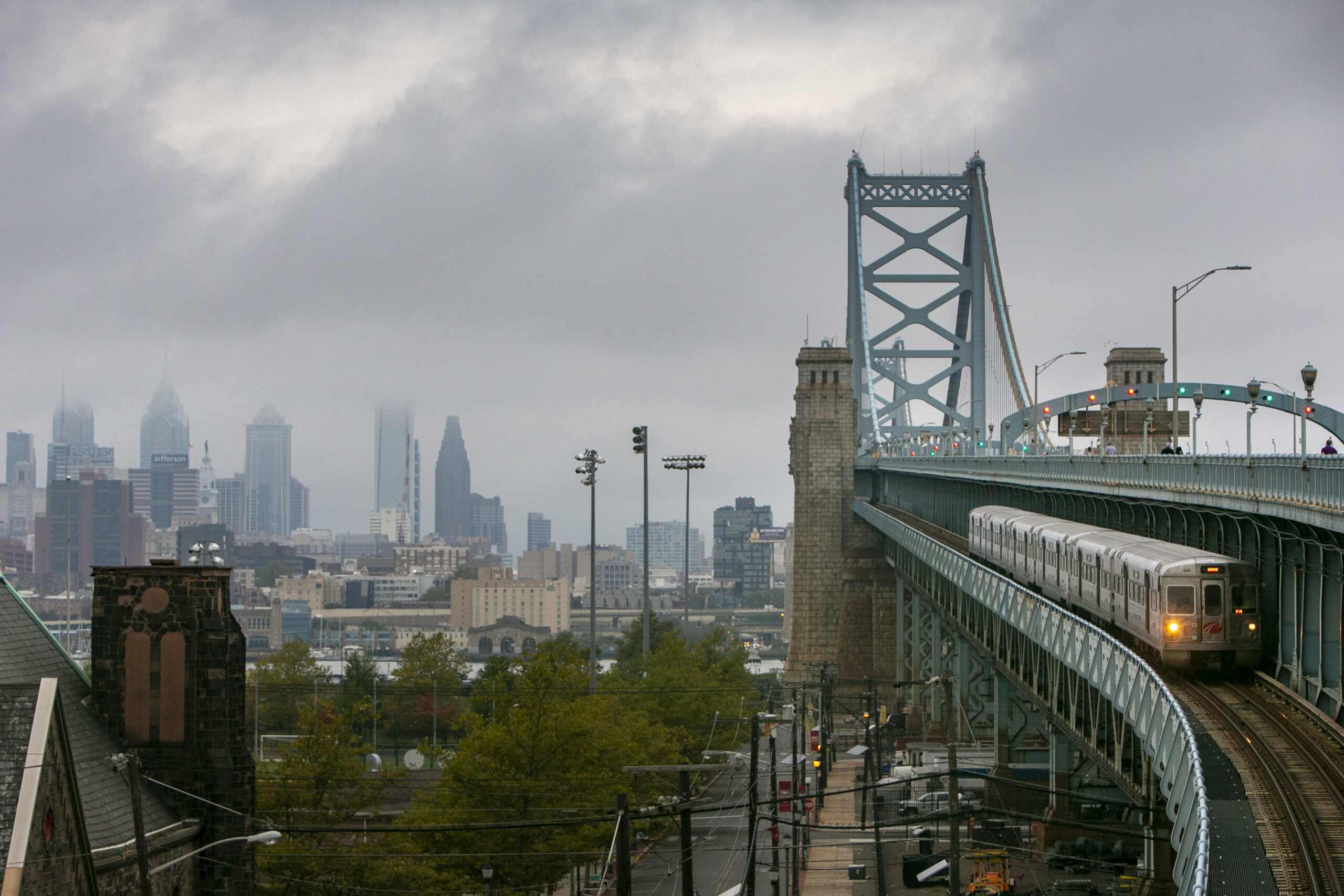
A PATCO train travels from Philadelphia to Camden underneath the pedestrian walkway of the Ben Franklin Bridge.
I got used to the sensations within minutes. That being said, I’m not afraid of heights. It could be unnerving if you are.
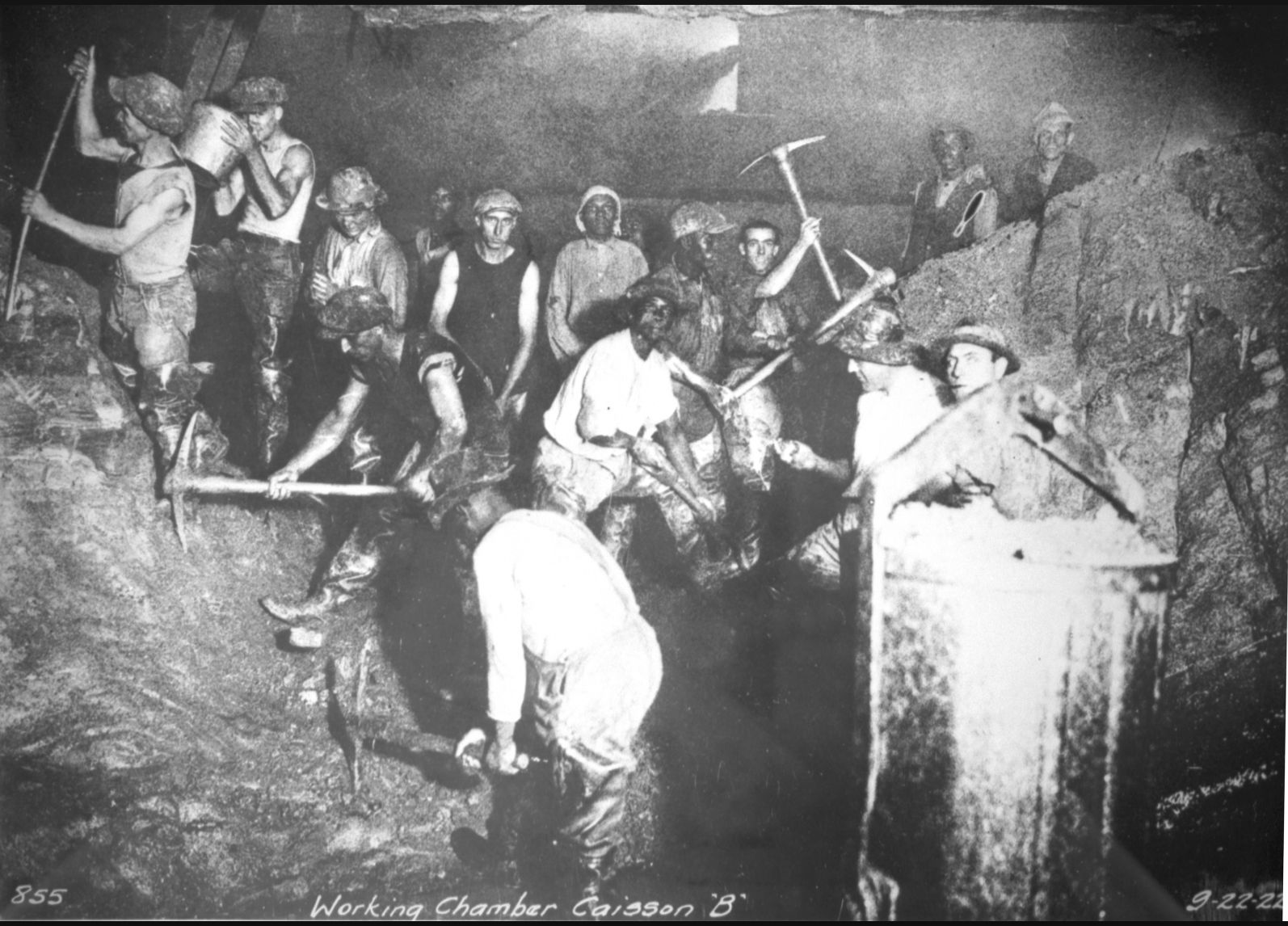
It took $36 million and 1,300 people to build the 376-foot-tall bridge that extends an additional 100 feet or so below the river, Howard said. Guys known as “sand hogs” worked in submerged watertight structures called caissons where temps sweltered into the 90s, even in winter, to dig down to the bedrock of the Delaware River.
In a photo dated 1922, men known as “sand hogs” work in a submerged watertight structure called a caisson to dig down to the bedrock of the Delaware River during the construction of the Benjamin Franklin Bridge.
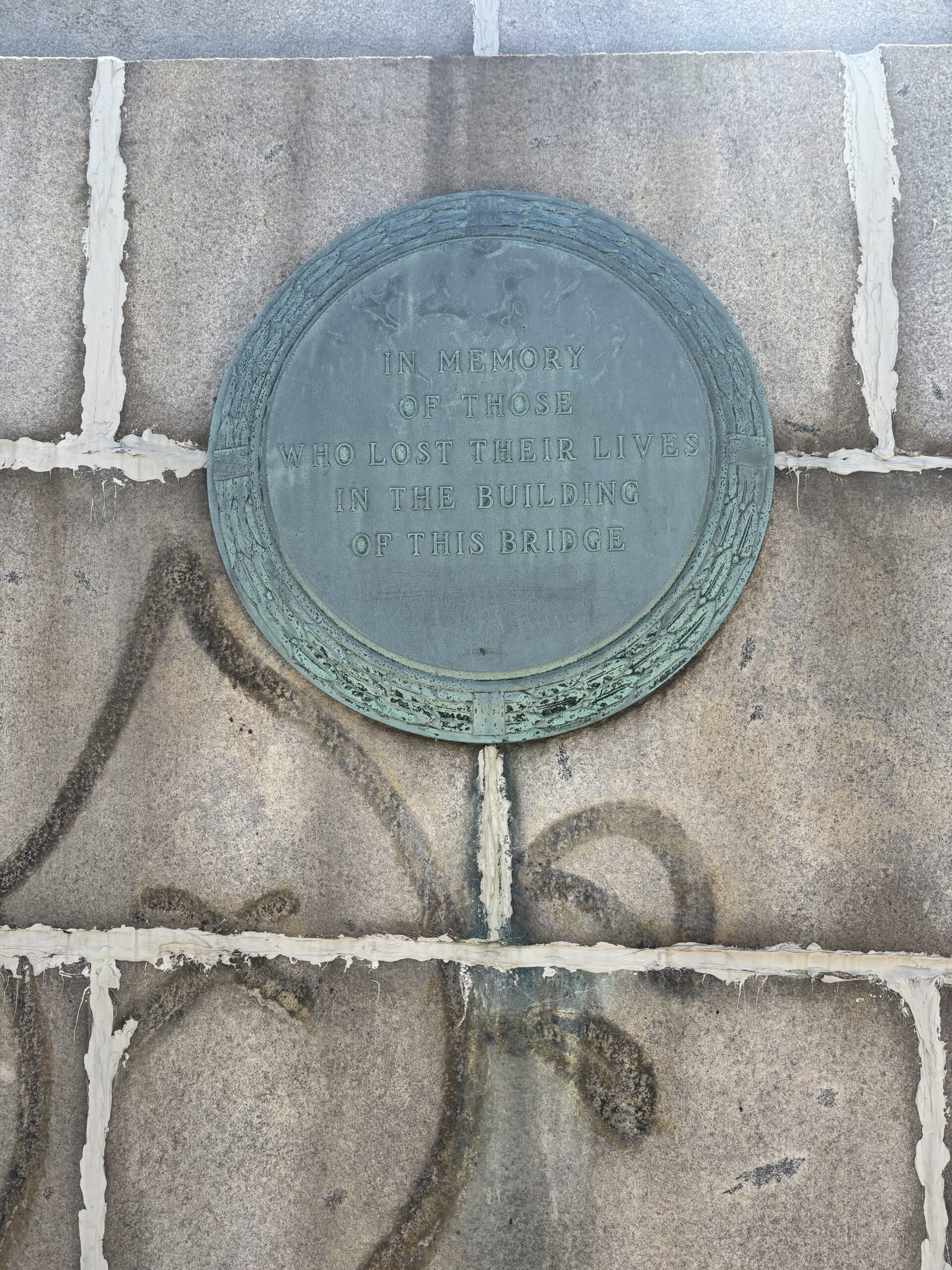
Fifteen workers died in the construction of the bridge. We passed a circular plaque in their memory as we walked. I wondered who they were, how they died, and how they lived.
“Unfortunately, the rule of thumb at the time was for every million dollars you’re spending, you expect to lose a life … so by that rationale you could have had 36 fatalities.” Howard said. “Nowadays, you know, one injury is unacceptable.”
A plaque on the Benjamin Franklin Bridge is dedicated in memory of those who lost their lives while building it.
Unique elements
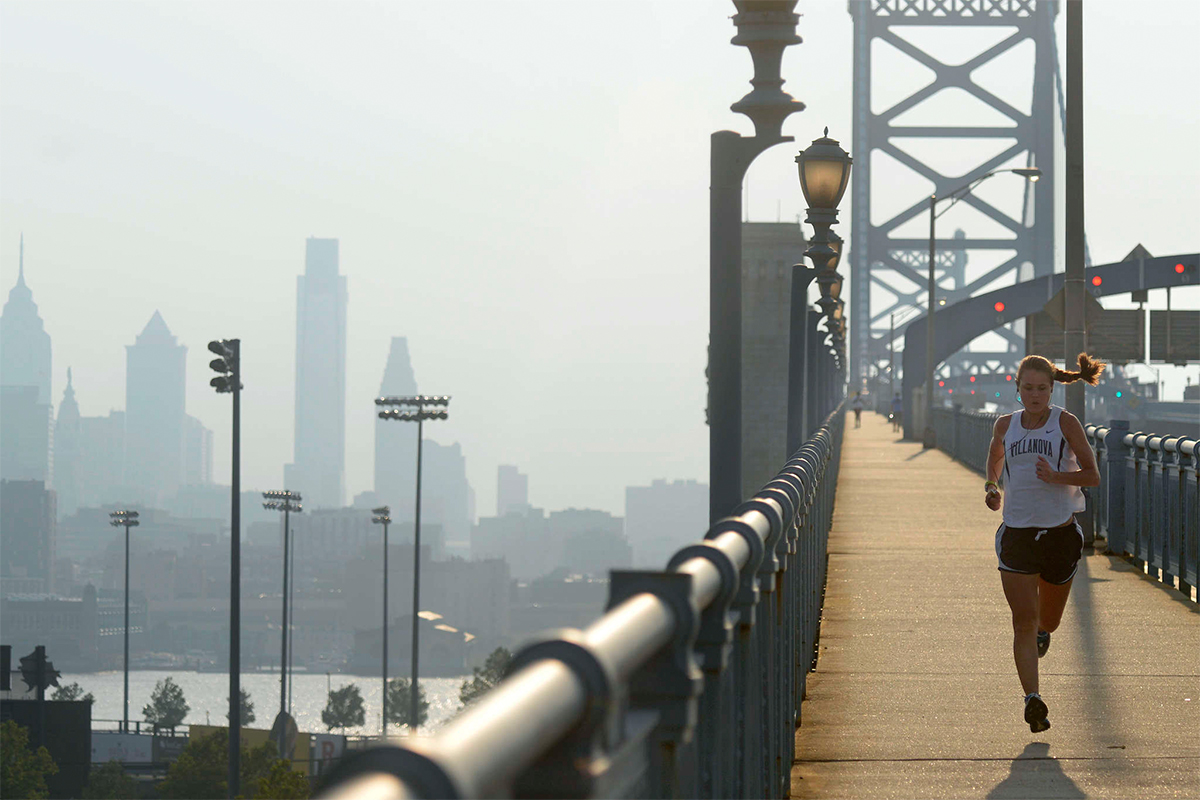
Our pace was a steady stroll, so we were often passed by runners, walkers, and cyclists. Some appeared to be having a good time, and others looked like they were going through tough times. Some talked to themselves and some stopped to take photos. It was a microcosm of Philly and Camden, suspended high above the river.
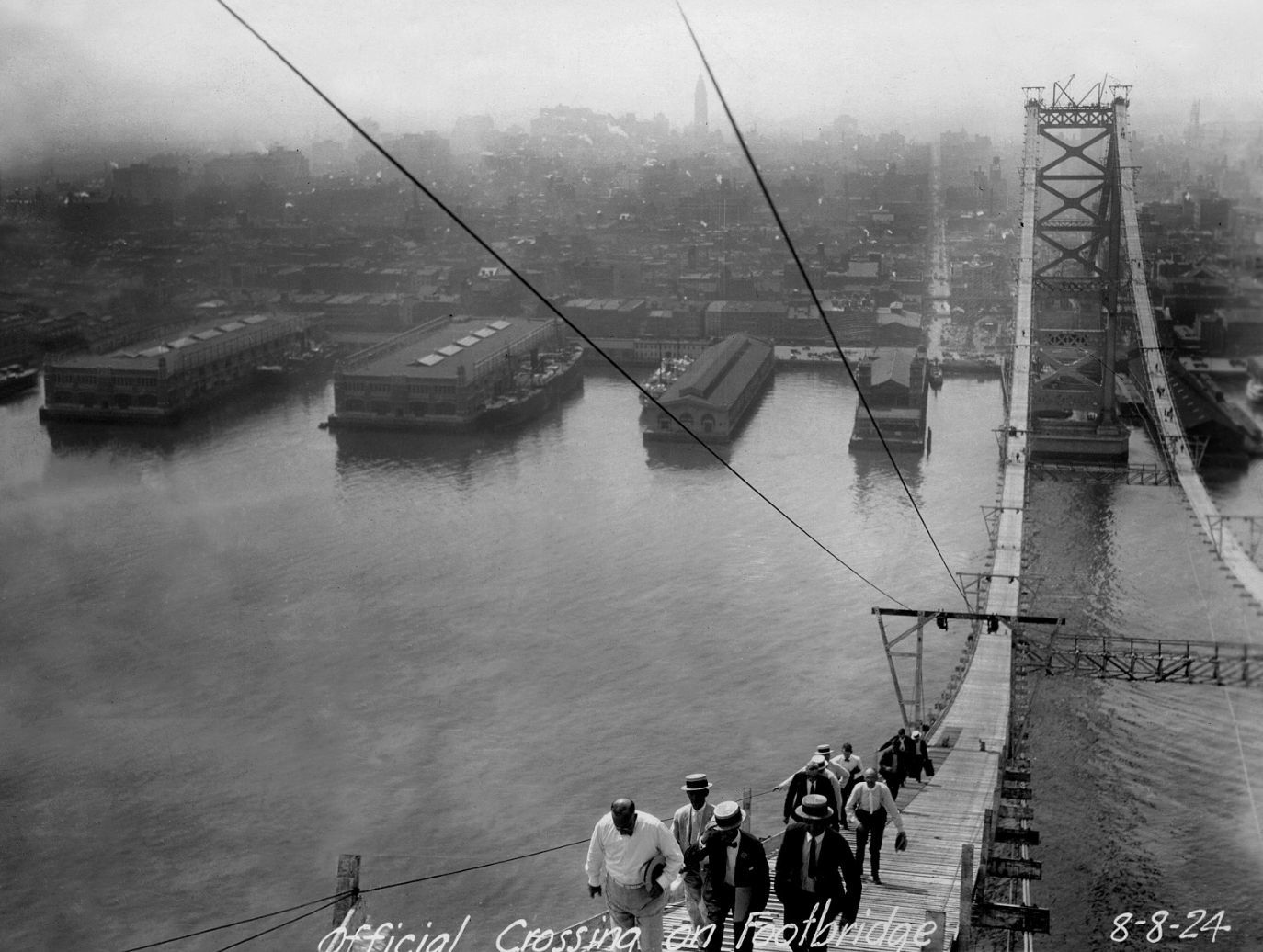
Howard said when the bridge was built, its chief engineer believed the walkways wouldn’t be used “in an increasingly or completely motorized age.”
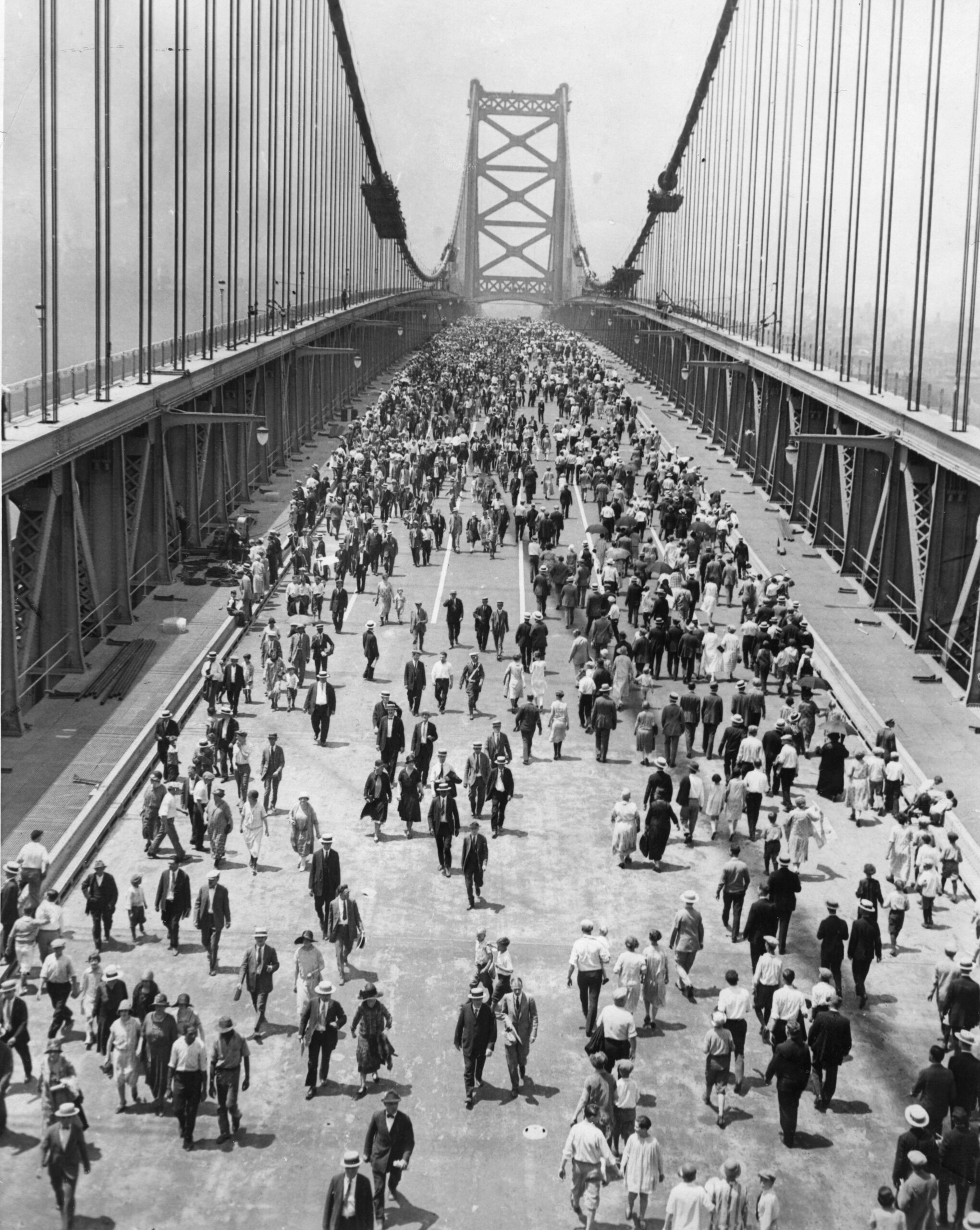
A photo dating from 1924 shows the first official crossing of the Benjamin Franklin Bridge’s pedestrian walkway prior to the 1926 opening of the bridge.
“But you see today the amount of people that are using this walkway and it’s one of the unique elements of this bridge,” he said.
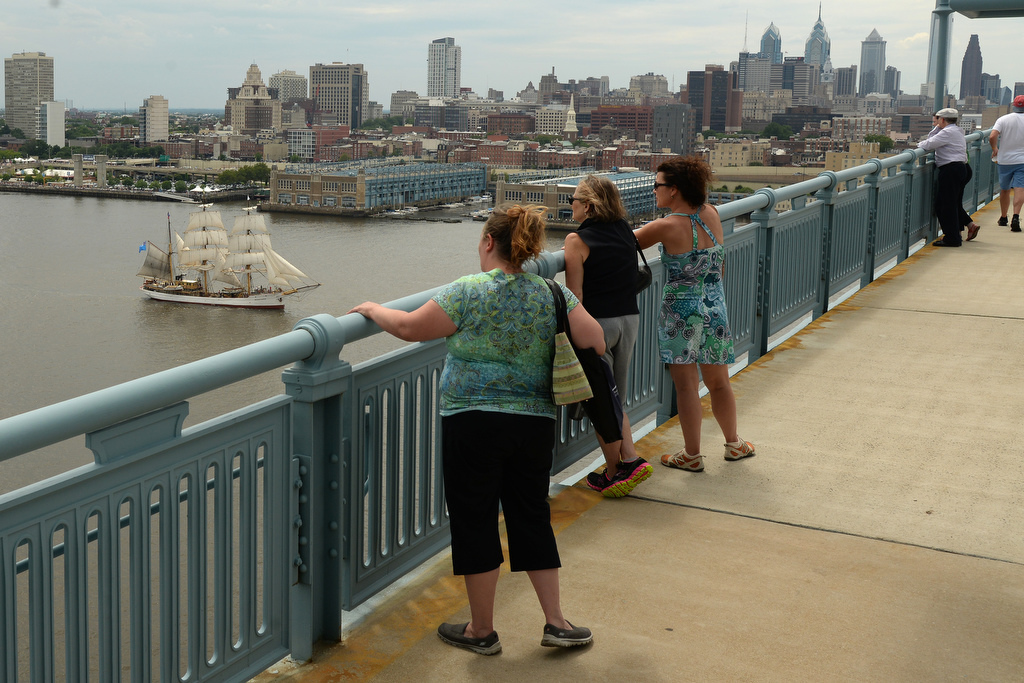
I looked ahead to Camden and then back to Philly. I was so grateful for this walkway and this view. I couldn’t imagine not having it and I couldn’t believe it took me so long to see the city from this new perspective.
Spectators watch from the Ben Franklin Bridge pedestrian walkway as the Picton Castle sails up the Delaware River in 2015 during the Parade of Tall Ships.
The only thing I found worrisome and the thing that kept all three of us looking over our shoulders, were the e-bike and e-scooter riders we didn’t always hear zooming behind us. Skateboards and rollerblades aren’t allowed, but certain classes of e-bikes and e-scooters are. Gas-powered vehicles are also prohibited on the walkway, but a guy on a dirt bike definitely zoomed by at one point.
In the bridge’s early days, horses and carriages were allowed on the main span alongside cars, according to Howard, but their slow pace proved dangerous and their excrement, troublesome, so they were banned in the 1940s.
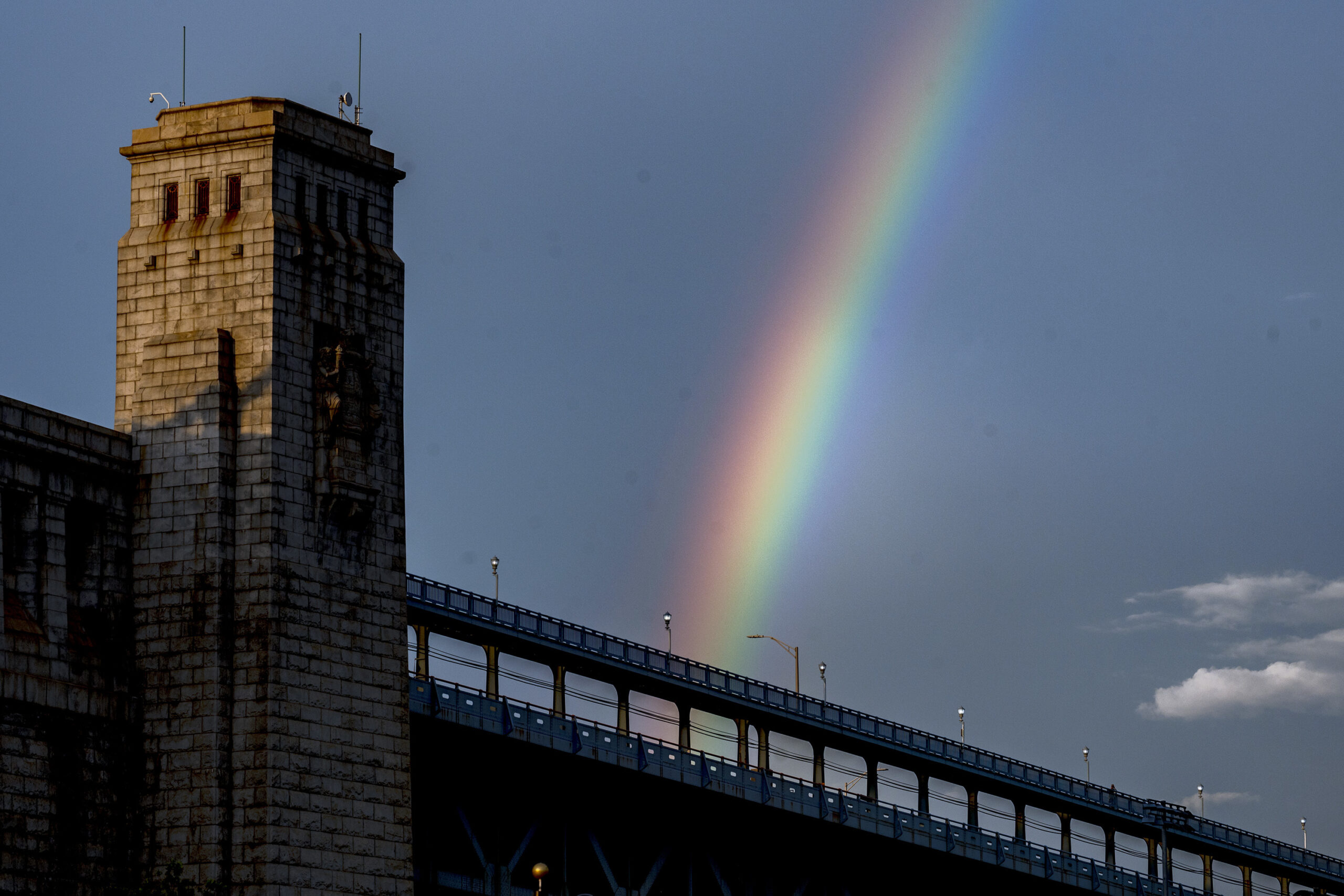
A rainbow appears behind the Camden anchorage of the Ben Franklin Bridge after an early evening rainstorm passes through.
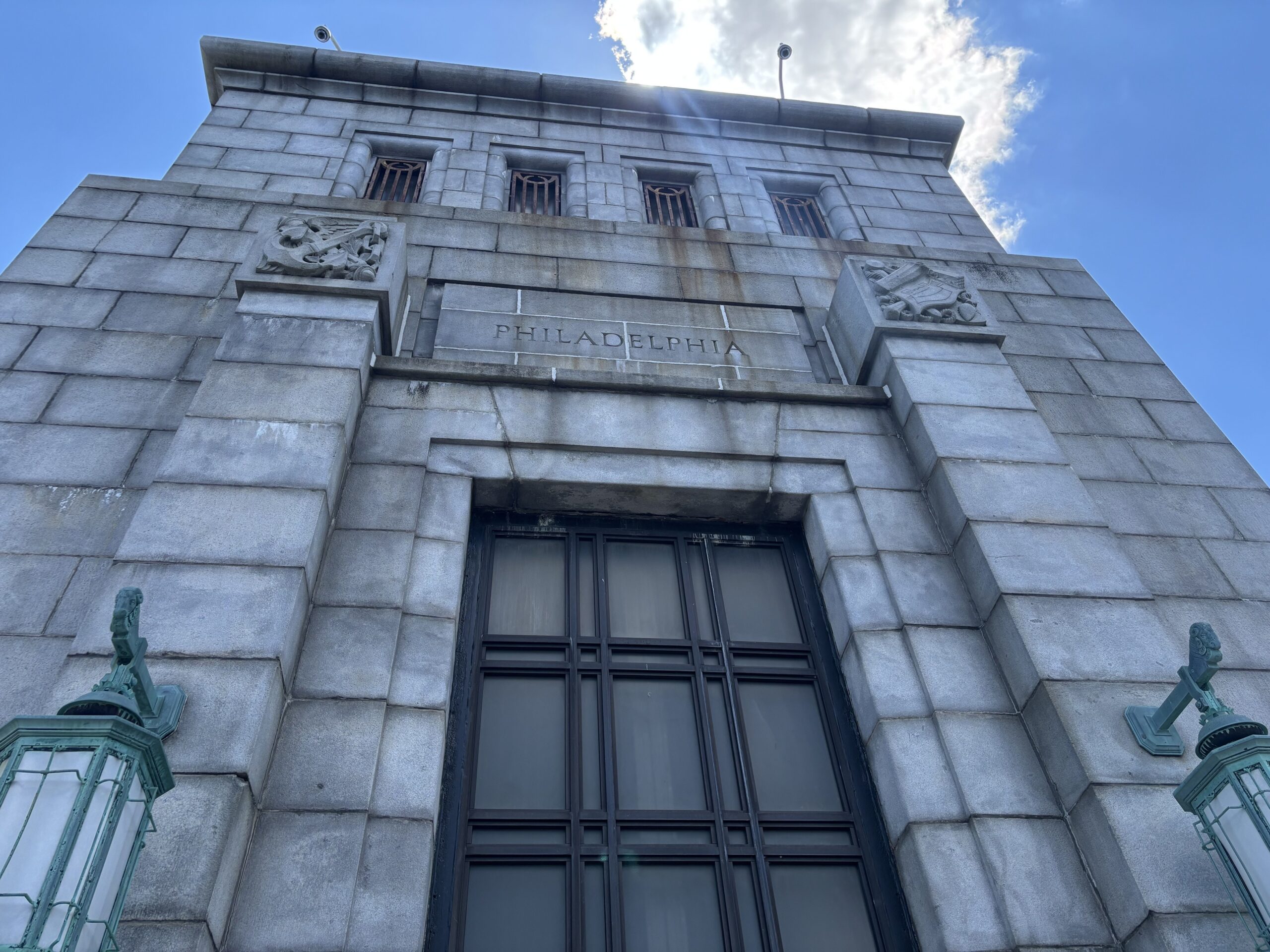
We stopped at one of the Philadelphia anchorages, the massive concrete-and-granite structures where the bridge’s cables are anchored.
These structures were made to house elevators for the trolleys. Alas, the anchorages are off-limits spaces, but Howard told me that each of the four have the same seven artistic tiles inside commemorating milestones in transportation, from one of a Conestoga wagon to one of the USS Shenandoah, the ill-fated dirigible that crashed before the bridge even opened.
One of the anchorages on the Philadelphia side of the Benjamin Franklin Bridge as seen from the pedestrian walkway.
Another name
The Ben Franklin Bridge was the longest suspension span in the world, with a distance of 1,750 feet between the two towers, when it opened on July 1, 1926.
In a front-page Inquirer report, journalist Richard J. Beamish noted 250,000 people crossed the bridge on foot opening day and that the structure was “beautiful as gossamer web and seemingly as frail.”
Pedestrian cross the Delaware River Bridge on its opening day in 1926.
Howard, who quoted that report to me, then asked: “When do you think our first accident was?”
I guessed July 2, 1926. I guessed wrong.
“It was the day it opened,” he said. “People were jockeying to be one of the first to cross the bridge, and over in Camden, you had a fender bender.”
Back then, the span also had a different name — the Delaware River Bridge. It was rechristened in 1956 to avoid confusion when the Walt Whitman Bridge was also built over the Delaware River.
A view of the Benjamin Franklin Bridge in the 1950s.
The Ben Franklin Bridge wasn’t always blue, either. It was originally gray and was repainted to its current color just ahead of the Bicentennial, Howard said.
‘Calm and serene’
As we stood talking, a man jogging by in Rocky Run T-shirt asked if we’d take a photo of him with the Philly skyline.
Jim Bach of Voorhees works in Camden and likes to run the bridge during his lunch break.
“It’s fantastic. I mean the views that you get when you’re up here, it’s just calm and serene,” he said.
I too felt serene. It was quiet and peaceful on the bridge and being atop it helped me see the city I love in a new way.
A jogger runs across the Ben Franklin Bridge in an Inquirer file photo.
Howard also helped me to see something else — the Betsy Ross, Walt Whitman, and Commodore Barry Bridges are all visible from the top of the Ben Franklin.
“All bridges essentially become monuments to the area,” he said. This was most true of the one we were standing on.
We talked about the Ben Franklin’s many appearances in television and movies, from Blow Out to 12 Monkeys.
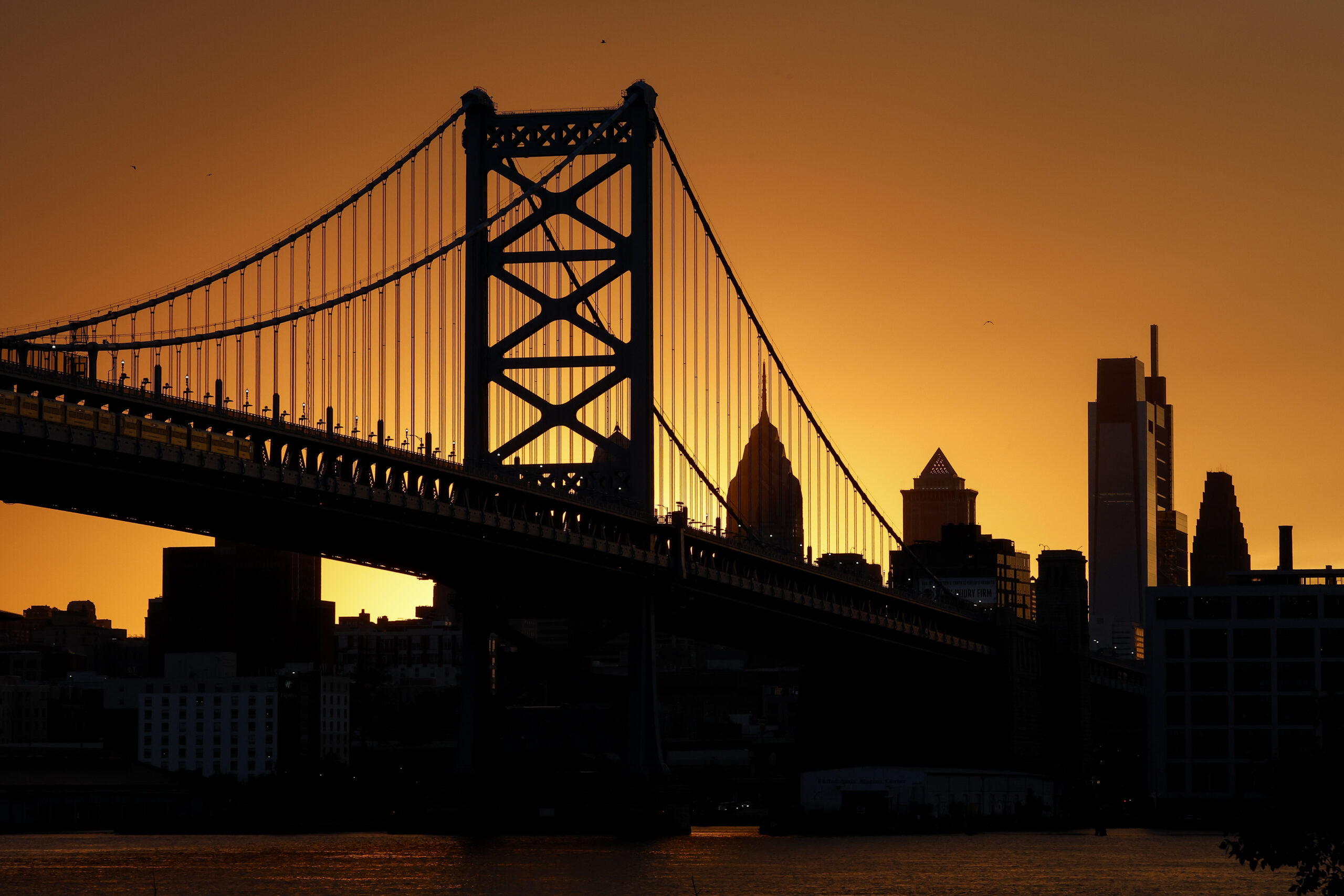
The sun sets behind the Ben Franklin Bridge, seen from Cooper’s Poynt Park on Tuesday, Sept. 30, 2025 in Camden, NJ.
“Last year they kept coming back from commercial breaks during Monday Night Football and they showed one of three things — the Liberty Bell, someone making cheesesteaks, or the bridge,” Howard said.
In its 100 years, the bridge has become a visual touchstone for the region. You see it and you know you’re in Philly, whether you’re watching a movie or coming back from a road trip. It’s given Philly its sense of place as much as the LOVE sculpture or Independence Hall.
A great connector
When we got to Camden, we walked through the pedestrian tunnel on that end, too. It doesn’t have a mural, but the exterior is decorated with a bright mosaic of birds and animals created by Camden schoolchildren in the early 2000s.
A mosaic created by Camden schoolchildren decorates the exterior of the pedestrian tunnel on the Camden side of the Benjamin Franklin Bridge.
On our return walk, I asked Howard if he had a moment on the bridge that’s stuck with him. He said a few years ago, while he was leading a tour, there was a commotion on the Philly side. A kitten found its way onto the bridge and police were called. The feline then crawled into the engine compartment of a police cruiser, which had to be taken apart to get it freed.
“I was like, ‘Yeah, so I gotta go adopt it,’” Howard said.
And so he did, and he named the furry little girl Beanie.
I thought of a poignant moment I had once on the bridge. I was a passenger in a vehicle years ago, when I looked over and saw that the car I was in was traveling at relatively the same speed as the PATCO train next to us.
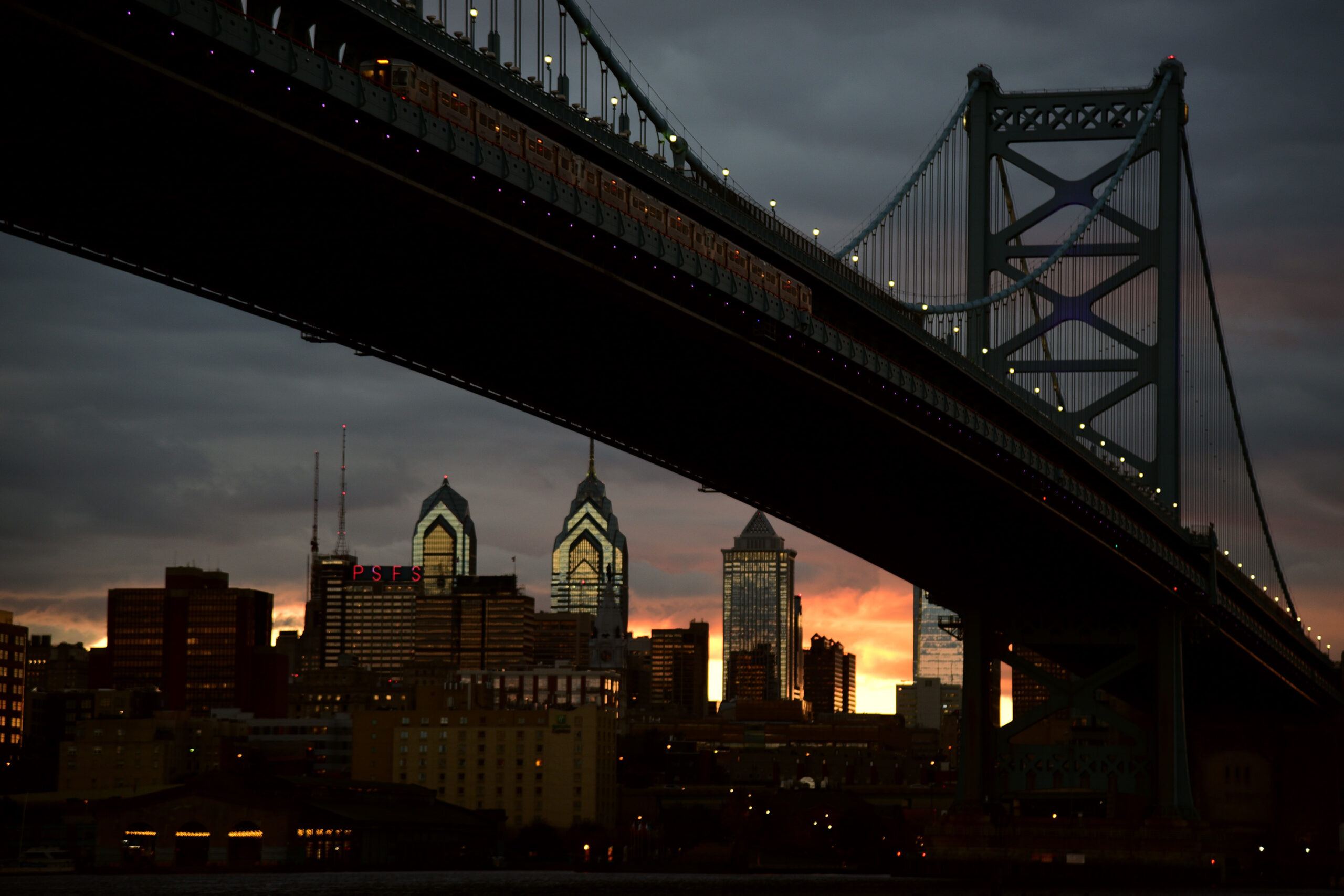
The sun sets over the Philadelphia Skyline behind the Benjamin Franklin Bridge looking southwest from Cooper’s Point Waterfront Park in Camden in this Inquirer file photo.
I locked eyes with a woman on the train, who looked a lot like me. We smiled at each other and I waved and she waved back. It’s a brief moment that’s always stuck with me. Maybe it’s because I felt like I could have been her in another life, or she could have been me.
Walking the bridge and hearing its stories, I realized that it connects so much more than just Camden and Philly. It connects all of us to each other — in big and small ways — and it connects our future with our history.
Today, I have a new story about the Benjamin Franklin Bridge, the day I walked across it. If you haven’t done so yet, I encourage you to walk it, too, and make a new memory with one of Philadelphia’s great old structures.
A man walks across the Ben Franklin Bridge towards Camden in an Inquirer file photo.
The anniversary celebration for the Ben Franklin Bridge will take place from 10 a.m. to 2:30 p.m. July 11. Details can be found at drpa.org/bfb100/.
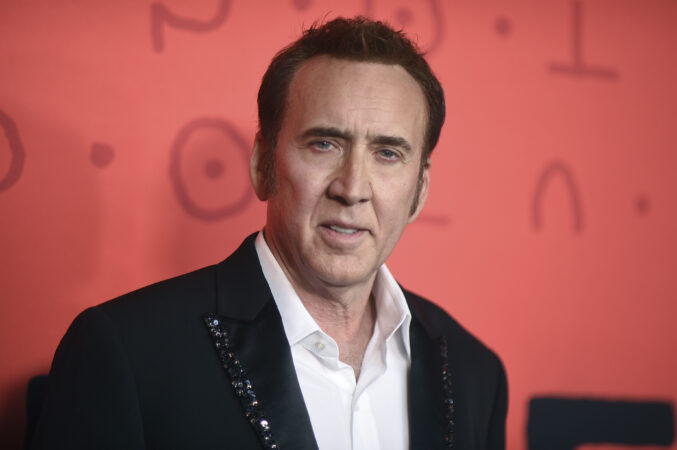
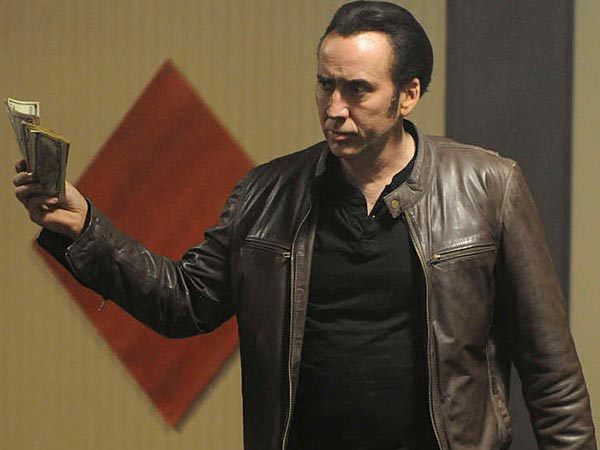
Like many, I’m big fan of Nicolas Cage’s work. How big? On my bachelorette party to New Orleans a few years ago I requested we tour St. Louis Cemetery No. 1 so I could get a pic of me and my girls with Cage’s nine-foot pyramid tomb.
Not only can the man seriously act, he can also seriously overact. As a writer who loves puns ( especially bad ones), I appreciate someone who has fun with their art form to the point it causes eye rolls.
And so, when I learned about Uncaged in Jenkintown: A Nic Cage cocktail crawl that happened on Sunday, I wanted to check it out. In some ways, it turned out to be like a lot of Cage movies — not a blockbuster, but still quirky and fun.
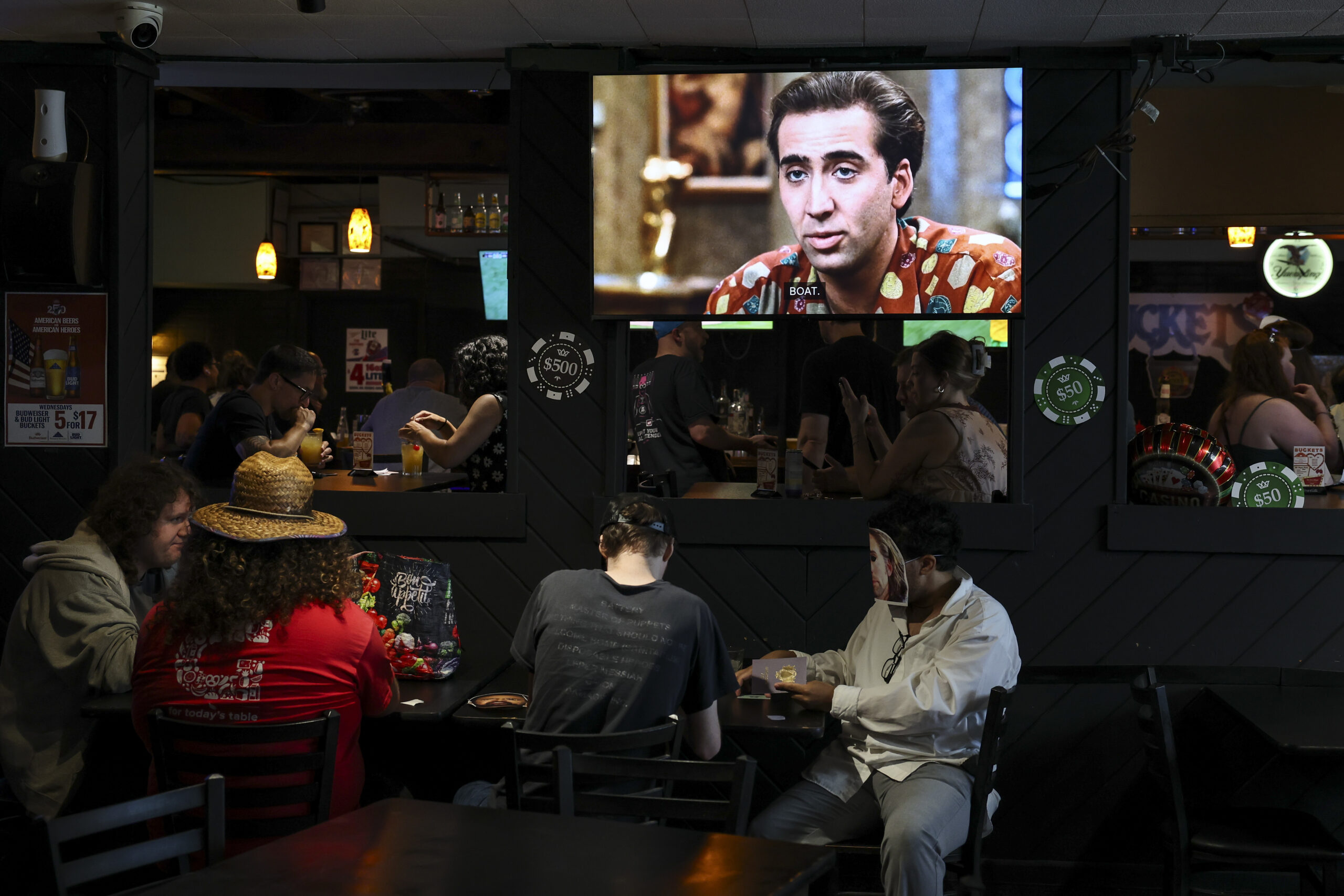
“Honeymoon in Vegas” plays at Buckets Bar during the Nic Cage cocktail crawl on Sunday in Jenkintown.
The crawl was spread across four Jenkintown bars — the Keep Easy, the Drake Tavern, Buckets Bar, and King’s Corner. Each one featured Cage-themed cocktails and hosted a “Cage match,” where participants went head-to-head in challenges based on Cage films.
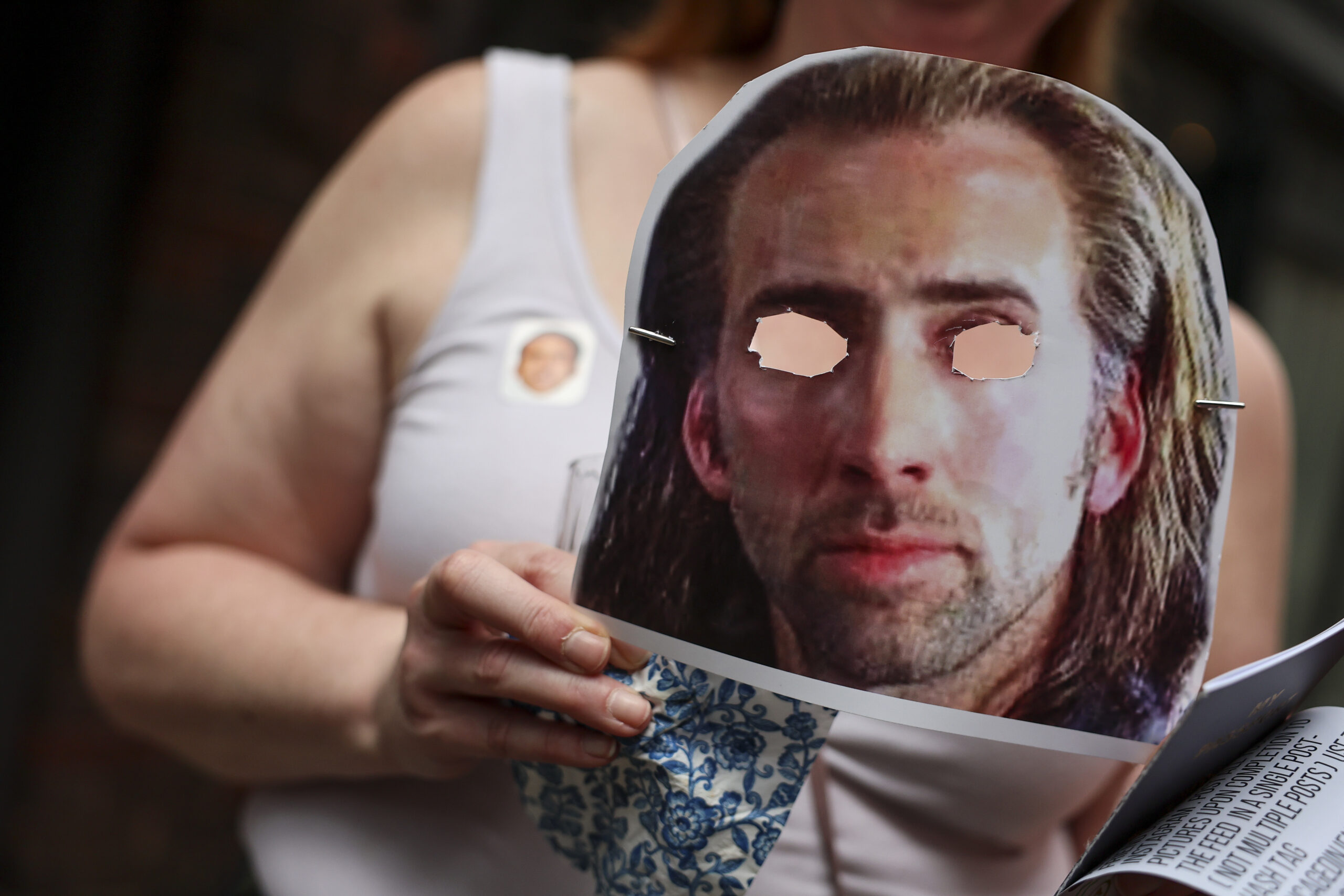
Organizer Mel Hager, an owner of the Keep Easy, said she sold out of the 50 Uncaged kits she’d prepared for $15 a pop. While the crawl was free to attend, those who bought a kit — including yours truly — received a passport book, which got you a free Cage match at each establishment (otherwise they were $2 to play); a piece of Cage cash, which was good for one shot at any of the bars (it’s a tiny dollar bill with Nic Cage’s face on it, I’m never spending that); and one of a variety of Cage masks (I felt like I won the lottery when I got the Con-Air Cage).
While I didn’t drink, I hopped around to the bars, tried my hand at the Cage matches, and talked with fellow Cage fans about what brought them out to the event. Here are five of the wackiest things I saw at the Nic Cage bar crawl.
1. H.I. fashion
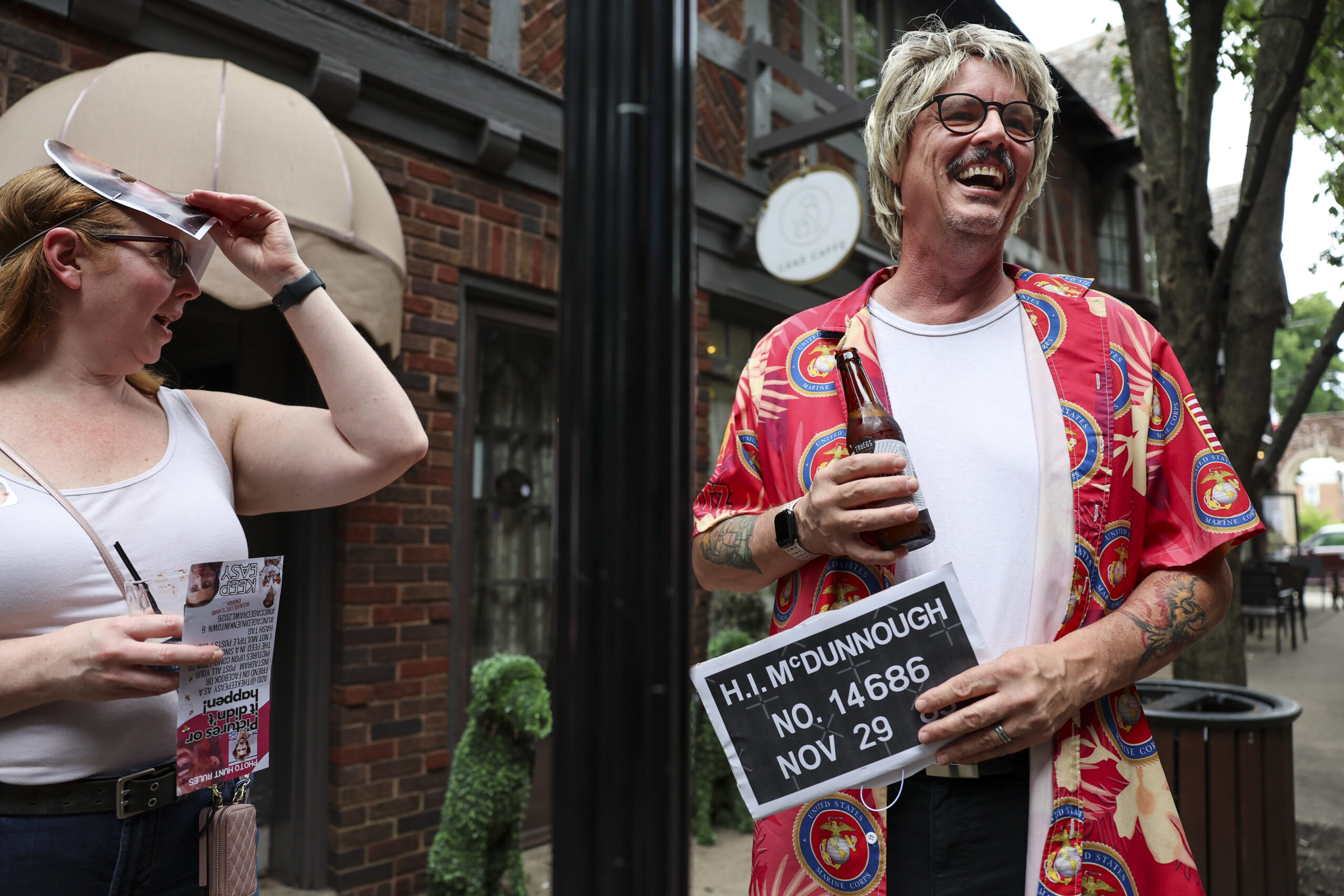
Vicky and Mike Hutz, of Huntington Valley, at the Keep Easy during the Nic Cage cocktail crawl on Sunday in Jenkintown. Mike Hutz is dressed as Cage’s character from “Raising Arizona,” H.I. McDunnough.
When H.I. McDunnough kidnaps one of the Arizona quintuplet babies in the 1987 Cohen Brothers classic, Raising Arizona, he proclaims to his wife: “I think I got the best one.”
Of the few Cage character costumes I saw Sunday — which included Ronny from Moonstruck, Cameron Poe from Con Air, and someone portraying Cage’s first role as an unnamed burger shop worker in Fast Times at Ridgemont High — Mike Hutz’s H.I. McDunnough costume was undoubtedly the best one. Hutz, of Huntingdon Valley, had the open Hawaiian shirt, a wig, and McDunnough’s mugshot board.
“What else are you going to do on a Sunday afternoon when you have a Nicolas Cage crawl option?” he said. “There’s nothing he can’t do and he does it with maximum cheesiness, which is just perfect for people who love cheesy.”
2. The faces
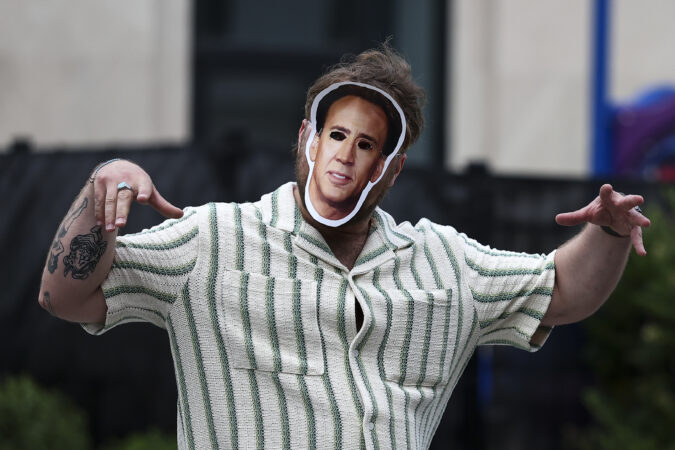
Seeing people at bars and walking the streets of Jenkintown wearing Cage face masks was both highly amusing and mildly unsettling, mainly because the eye holes were cut out wonkily, giving them a ragged, creepy edge.
Masks included Face/Off Cage, Con Air Cage, red carpet Cage, and Dracula Cage (from the movie Renfield).
Vicky Hutz, of Huntington Valley, holds a “Con-Air” Nic Cage mask at the Keep Easy during the Nic Cage cocktail crawl on Sunday.
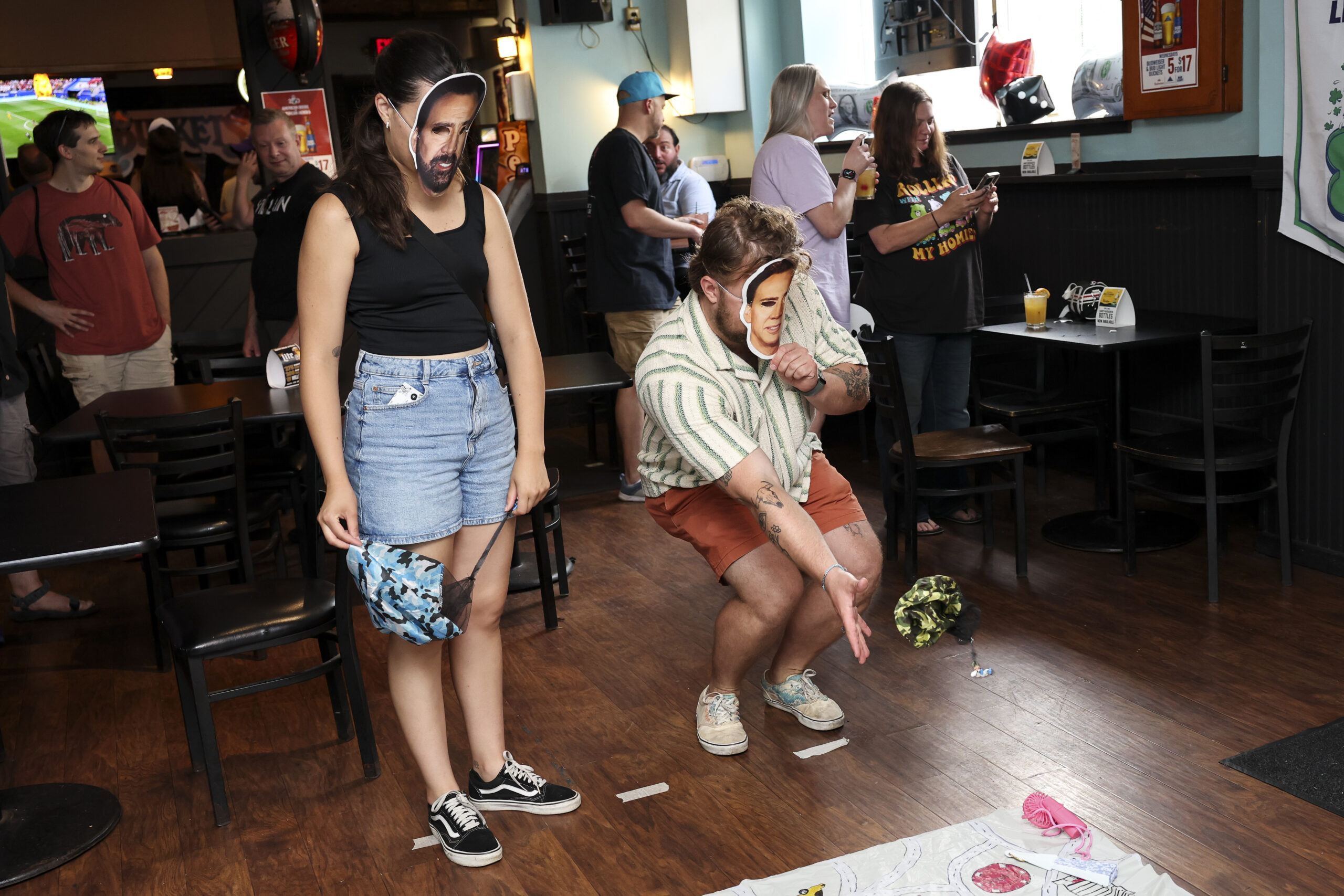
Julia Sousa and Josh Douglas traveled to the crawl from Roxborough because they love Cage and Jenkintown. Douglas walked from bar to bar with his Cage face mask on, which seemed to startle some passing motorists.
“I’m pretty sure they thought I was Michael Myers,” he said.
3. The Cage matches
The games based on Cage films, while homespun, were clever and fun. At Buckets, the game was inspired by the scene in Honeymoon in Vegas where Cage skydives with a bunch of Elvis impersonators. Contestants had to throw toy parachute soldiers that were painted to look like Elvis onto particular spots of a mock-up of the Vegas strip for points.
Julia Sousa and Josh Douglas, both of Roxborough, compete in the “Flying Elvis Cage Match,” at Buckets Bar during the Nic Cage cocktail crawl on Sunday in Jenkintown.
At King’s Corner, where the challenge was based on the movie National Treasure, participants had to solve little metal mind-bender puzzles.
For the Spider-Noir Cage match at the Drake, you had to keep a balloon bouncing in the air while putting on a cape, mask, and fedora.
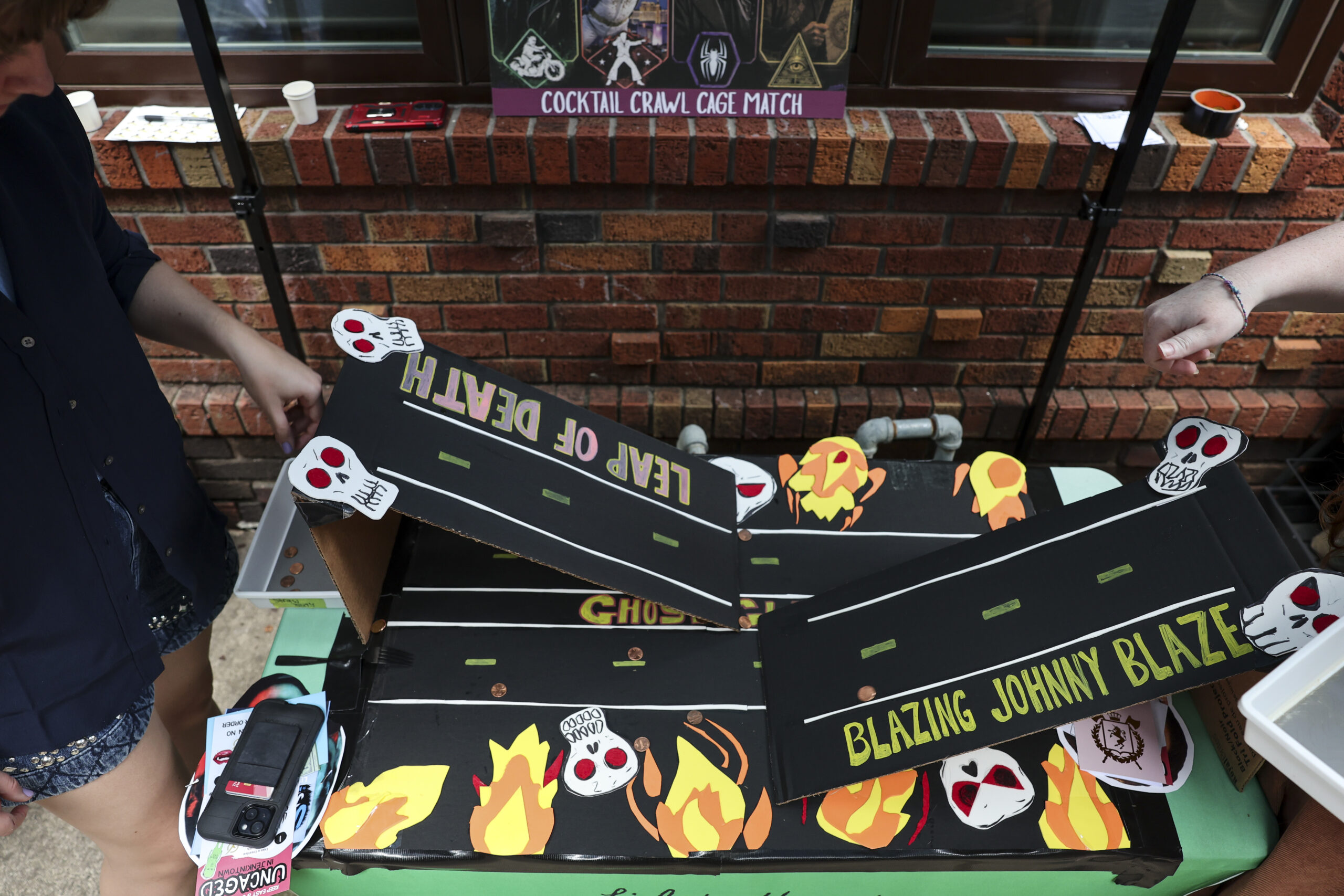
I failed spectacularly at all three of those challenges — and I was completely sober! The only one I did succeed at was called Ghost Glider. Based on the film Ghost Rider, the challenge was to to roll a penny down an inclined surface made to look like a road and into the tongs of a fork at the other end.
The “Ghost Glider” Cage match at the Keep Easy during the Nic Cage cocktail crawl on Sunday in Jenkintown.
4. Stickers and sage
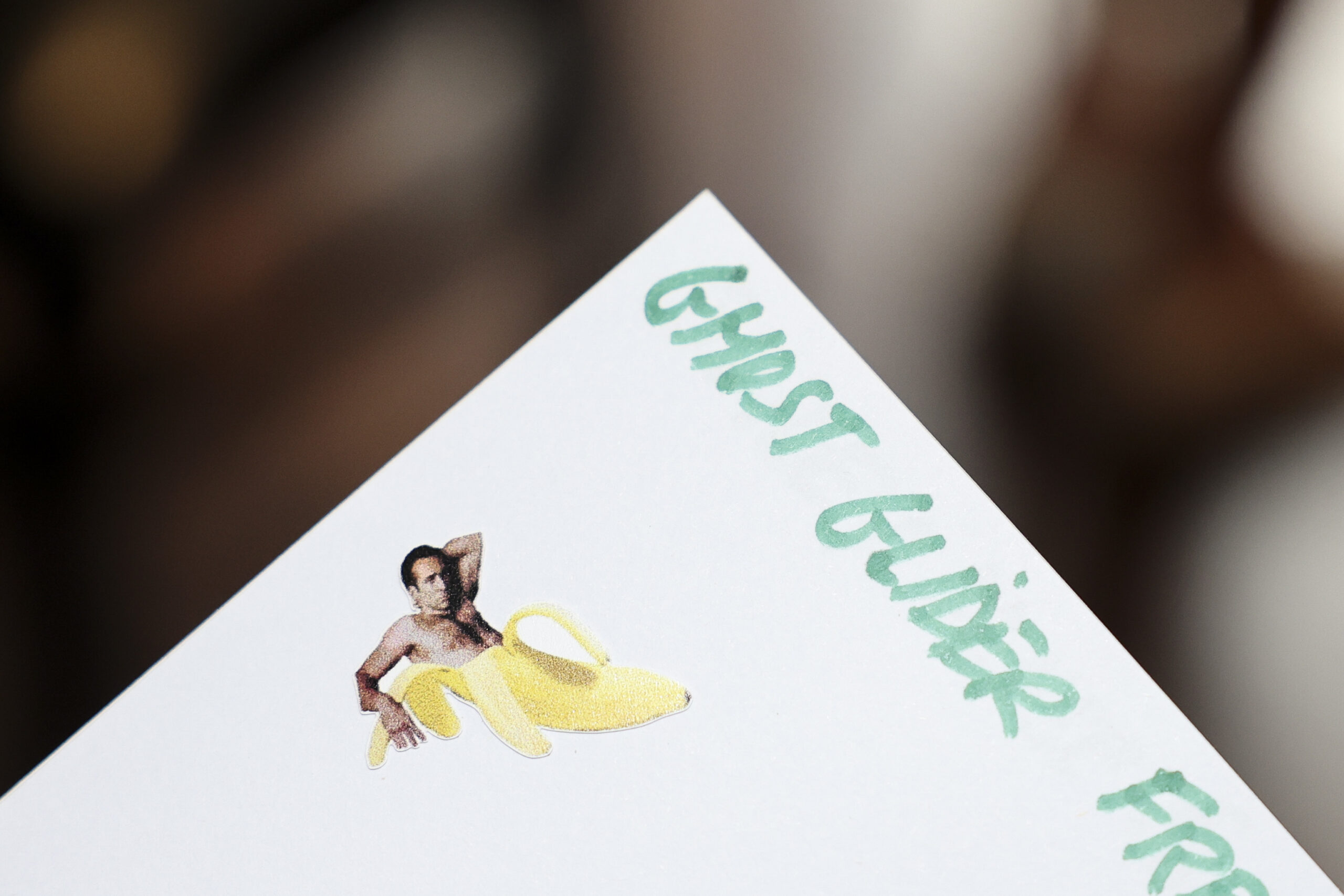
For winning the Ghost Glider challenge, I received a bundle of sage and a sticker for my passport book of a shirtless, reclining Cage coming out of a banana.
Let’s address the sage first: Nobody could tell me why this was my prize for winning the challenge, which somehow makes it even better. I have two theories — it could be because sage rhymes with Cage, or maybe it’s because you light sage and in Ghost Rider, Cage lights on fire.
Whatever the reason, I’m gonna smudge some stuff up this weekend.
An a-peeling sticker columnist Stephanie Farr received for winning a Cage match challenge at the Keep Easy during the Nic Cage bar crawl in Jenkintown Sunday.
Now onto this banana sticker — I don’t know why it exists, but I am so happy it does. Each bar gave a different sticker if you won a challenge, but this banana-Cage split one was, by far, the most a-peeling.
Later at the Drake, I met Erica Adams of Bensalem and “her only friend of whimsy,” Amanda Knop, who’d driven from Baltimore to attend the Cage crawl with her. Adams had her own stickers of Cage’s head she was handing out like friendship bracelets at a Taylor Swift concert.
“I just love his movies and doing silly, fun things,” Adams said. “Nicolas Cage himself is very unserious. He’s lived a million different lives in a short span already.”
5. Picolas Cage
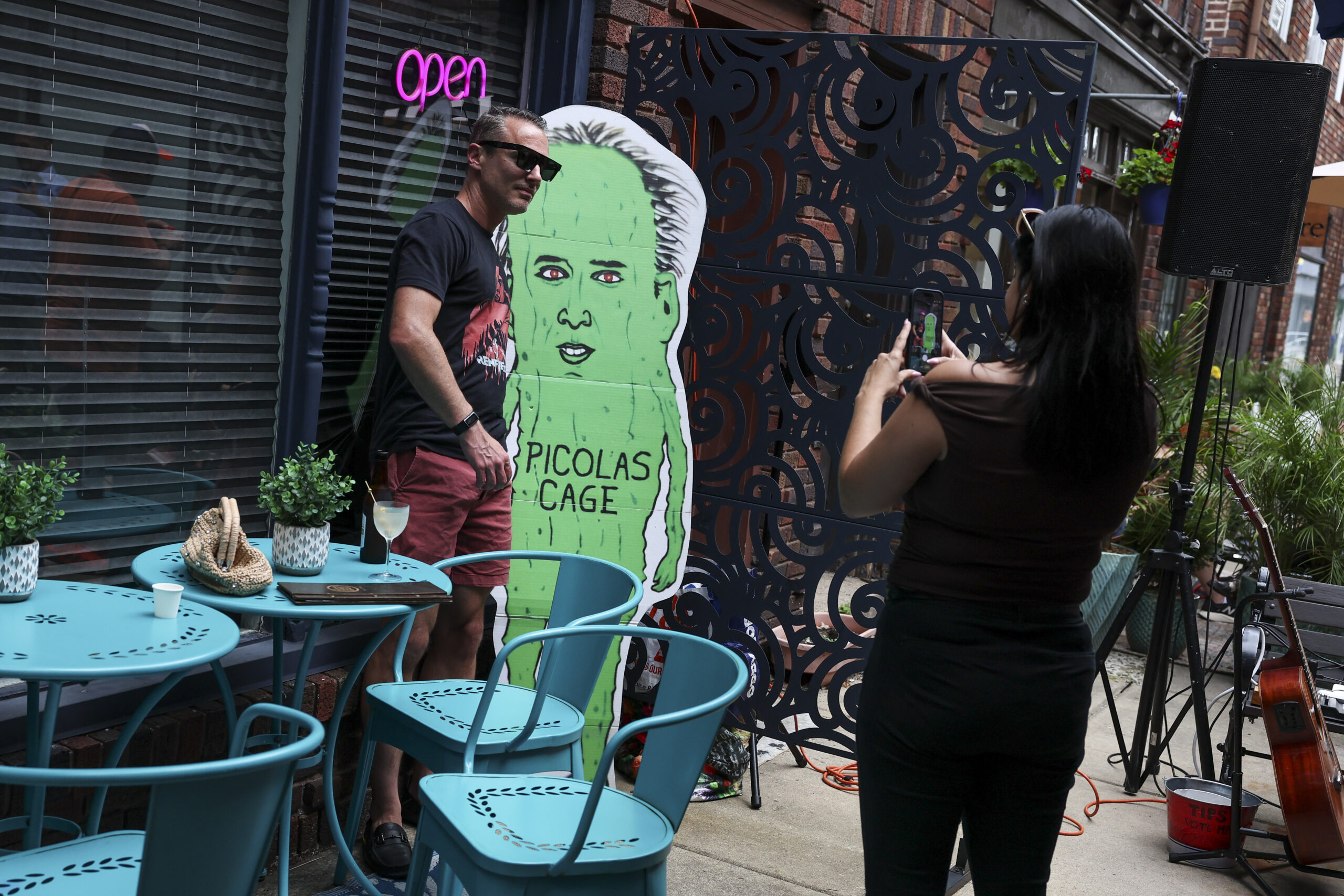
Justin Walsh poses for a photo with “Picolas Cage” as Jessica Lopez takes the photo at the Keep Easy during the Nic Cage cocktail crawl on Sunday in Jenkintown.
A giant cut-out of Cage as a pickle, aka Picolas Cage, was stationed outside of the Keep Easy during the crawl. As someone who likes Cage and cucumbers — but hates pickles — it was a jarring experience. But I saw others relishing the photo op so I didn’t make a big dill out of it.
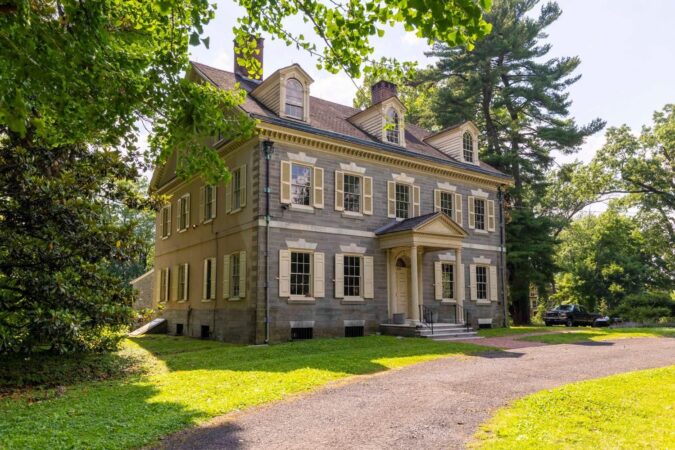
Built at the end of the 18th century on the site of a major Revolutionary War battle in Philadelphia, Upsala mansion was listed on the National Register of Historic Places in 1972.
The early Federal-style estate nestled on the border of Germantown and Mount Airy is listed at $995,000 and comes with nine bedrooms, 10 fireplaces, 15 parking spaces, and a 70-page easement agreement with a peculiar caveat — once a year, the owner must permit “a re-enactment of portions of the Battle of Germantown” on their front lawn.
“The battle reenactment is actually written into the deed. That is something any future owner of the property would be obligated to allow to happen,” said current owner Alex Aberle, who’s also a real estate agent and the property’s listing agent.
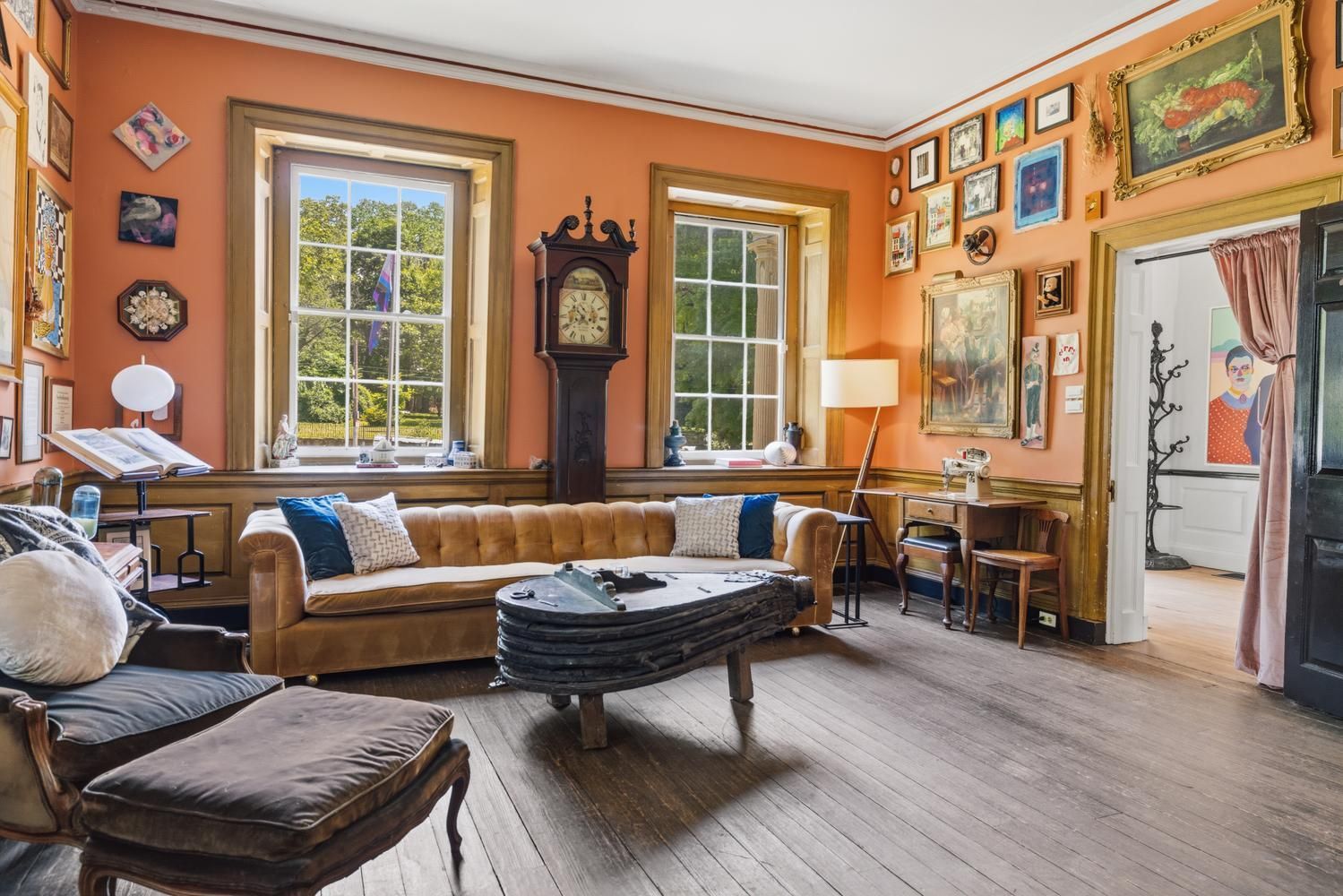
A living room in Upsala mansion, an early Federal-style building on the 6400 block of Germantown Avenue.
The easement was put in place by the National Trust for Historic Preservation when Aberle and his ex purchased the mansion on the 6400 block of Germantown Avenue in 2017 and became Upsala’s first private owners since it was converted into a historic house museum in the 1940s.
As part of the Revolutionary Germantown Festival — which commemorates the 1777 Battle of Germantown — battle reenactments were held for decades on the lawns of Upsala and Cliveden, a National Historic Trust site and mansion across the street from Upsala.
Though the mansion was built in 1798, two decades after the battle that sought to liberate Philadelphia from British control, the property served as the staging ground for the Continental Army during the Revolutionary War fight.
Aberle said he loved having the reenactments in his front yard, but Cliveden and the sites of Historic Germantown, which host the festival, haven’t held a reenactment there since 2019.
Carolyn Wallace, education director at Cliveden, said prior to the pandemic, organizers were reevaluating tactical demonstrations as part of the October festival in light of ongoing gun violence in the U.S. In 2020, organizers underwent a community engagement project called “Considering Re-enactments,” which sought to answer the question: “Is this still the best way to tell stories of the American Revolution?”
“We found it was a mixed bag so we shifted more towards living history,” she said. “We still have military personnel (reenactors), but we have not done tactical demonstrations in a number of years, though I can’t say we won’t do them again.”
And if they do, the easement still stands.
“That runs with the land — for me and for everyone else for years to come, and hopefully, forever,” Aberle said.
Built for John Johnson III, a fourth-generation descendent of the Janesen family, who were early Germantown settlers, Upsala stayed in the family until the 1940s, when it was seized due to financial issues.
Preservationists worked to save the property from demolition and from the mid-1940s until the early 2000s, it was a historic house museum before it was closed due to dwindling attendance and revenue.
The National Trust for Historic Preservation became Upsala’s owner in 2005 and Cliveden Inc., a co-stewardship organization of the National Trust, became its steward. After years of public engagement to find a new steward or use for Upsala, they put the 2.45-acre property up for sale in 2016.
Aberle and his ex, Violette Levy, beat out eight other offers by purchasing it for $550,000 cash — $51,000 more than the asking price.
They spent years doing extensive renovations like putting in central air, replacing the boiler, fixing the plumbing, and decorating.
“When we bought it, the walls were mostly varying shades of yellow and cream and now there’s no yellow left, I’m happy to report,” Aberle said.
They documented their journey on Instagram, where followers left comments about the memories they’d made at Upsala — from attending weddings there to attending a concert by the Hooters in the 1980s organized by one of the estate’s caretakers.
“I loved hearing all those stories because that’s the kind of thing you don’t see in books,” Aberle said. “It’s super special because it only comes organically.”
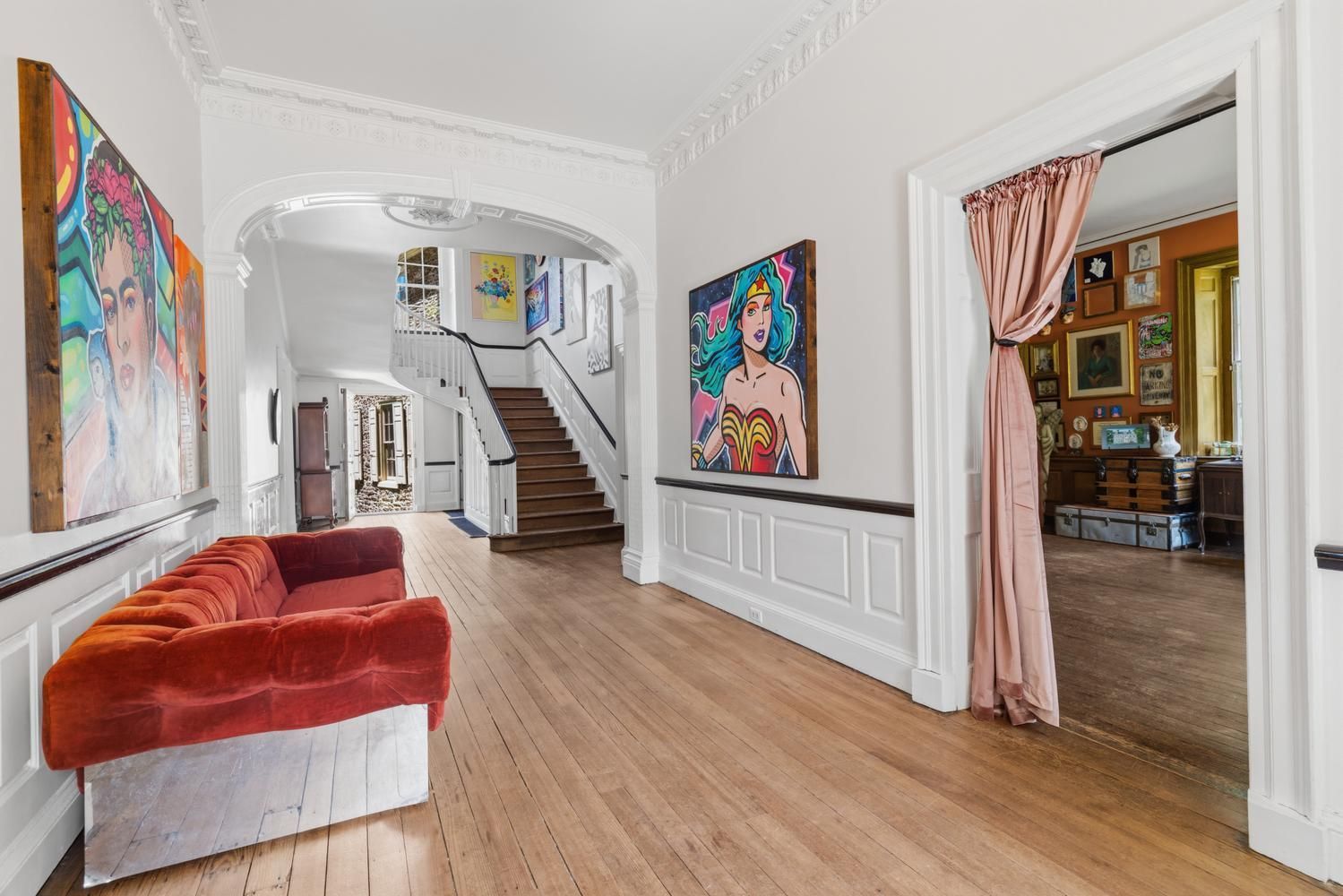
View of a hallway inside of Upsala mansion.
Aberle said he never had any intention of selling Upsala, but when his relationship with Levy ended and he became the sole owner of the home, it didn’t “really make sense to stay there as just one.”
“It’s definitely a family house and that was always sort of my dream for the house,” he said.
Aberle estimated that a little more than half of the mansion has been renovated. The back part of the house, where he’d planned to fix up the kitchen and put in a mother-in-law suite, is still in need of work, he said.
“My relationship didn’t last quite as long as my project did so the space is ready for someone else to come in and finish it for their family,” he said.
But another aspect of Aberle’s life did blossom because of Upsala. When he and his ex bought the mansion, it was listed by Louise D’Alessandro, a founding partner of Elfant Wissahickon Realtors. They invited her and others from the company to the first reenactment on Upsala’s front lawn after they took ownership of the property and within a year, Aberle left the real estate company where he worked and went to work for Elfant Wissahickon, where he remains.
Aberle said he’s fallen in love with the Germantown and Mount Airy neighborhoods and is only moving just around the corner from Upsala, so he plans to make himself available for any questions from future potential owners.
“The easement is really not as scary as the 70-page document might lead you to believe. I do mean it from the bottom of my heart. I spent nine years dealing with this document and working with this trust … and my plan is to make myself completely available to facilitate transition,” he said.
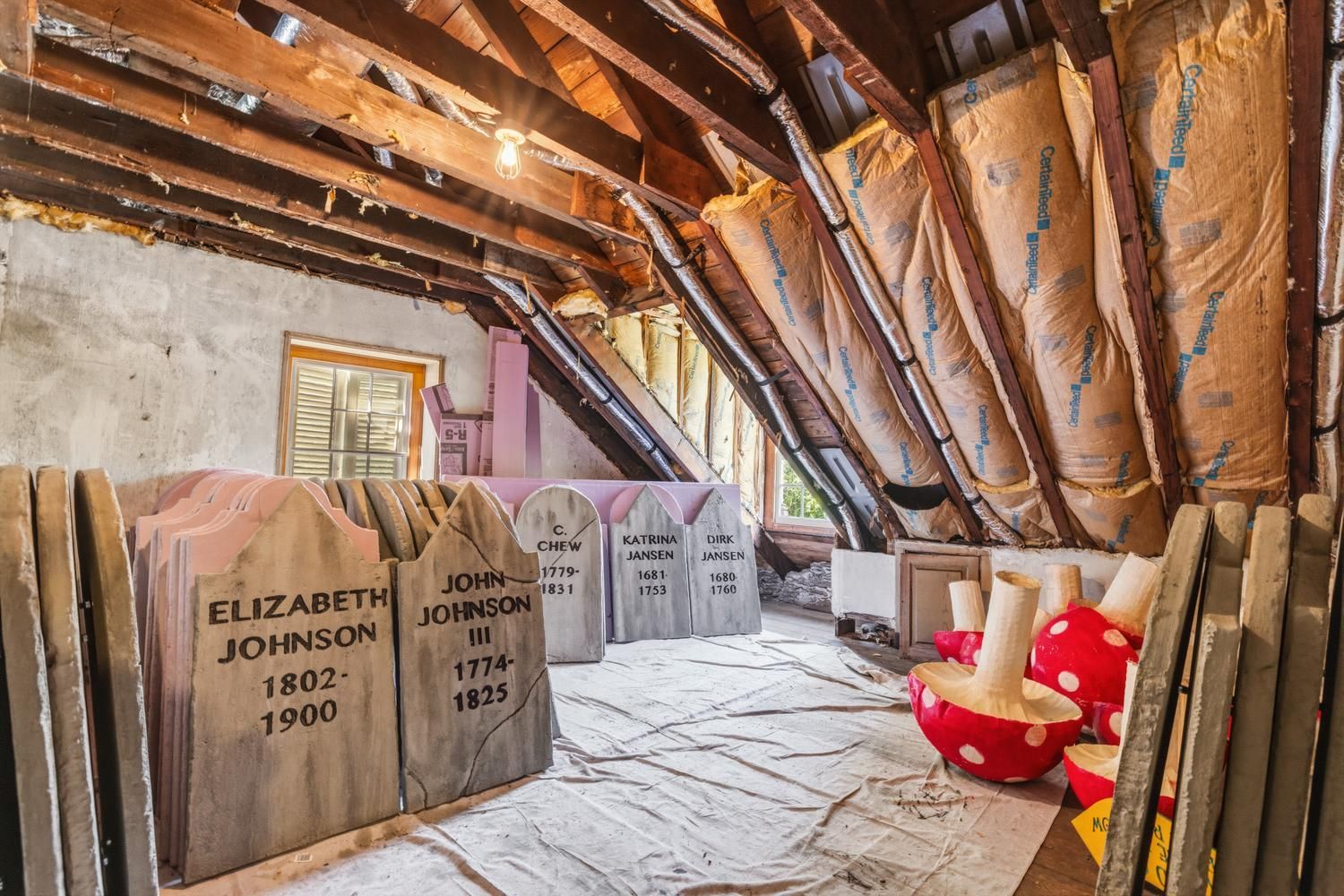
Halloween decorations, including tombstones that have the names and dates of people who once lived in or near Upsala, are stored in the attic of the property and will be sold with it.
And if you’re wondering about the listing photo that shows an attic room filled with tombstones and giant mushrooms, not to worry, those are Halloween decorations. The mushrooms are from an Alice and Wonderland-themed Halloween they did one year and the gravestones have historically-accurate names and dates on them of people who lived and died in and around Upsala.
“We set those up for a few years and added more folks each year,” Aberle said of the tombstones. “I’m leaving them in hopes someone else will carry on the tradition.”
He’s excited to see who will become Upsala’s next owner and what they will do with the historic property.
“I think the most important thing, for me, is it’s someone who will love this place as much as I do and have the desire to take care of it and love it,” Aberle said. “That’s what it deserves.”
For more information on Upsala, including the entire easement agreement, visit upsalamansion.com.
In an unbearably massive oversight, the city of Philadelphia has left National Treasure Nicolas Cage completely out of its Semiquincentennial festivities, despite the fact that he’s the only known person to have stolen the Declaration of Independence and climbed Independence Hall free solo in the last 250 years.
But fear not, for a group of suburban bars have mustered to pay homage to this chameleon king of cinema, this skin-shedding Snake Eyes of the silver screen with their revolutionary event: “Uncaged in Jenkintown: A Nic Cage cocktail crawl.”
Nic nugget: Cage has portrayed twice as many people as there were members of the First Continental Congress.
From 4 to 8 p.m. June 28, four Jenkintown bars within stumbling distance of each other — the Keep Easy, the Drake Tavern, Buckets Bar, and Kings Corner — will be featuring Cage-themed cocktails, showing Cage movies, and hosting “Cage matches.”
Songs from Cage’s films will be performed live in an alley, the local movie theater is hosting a late-night screening of a Cage film, and, for the Wild at Heart, even a tattoo parlor is getting in on the festivities.
In an Adaptation of a typical bar crawl, participants who register for this event will receive a pretty Kick Ass “Uncaged Cocktail Crawl Kit” filled with goodies that would be a Dream Scenario for any Cage fan.
Mel Hager — an owner of the Keep Easy who described her Cage fandom as “AhaHAhahAA [maniacal Cage laughter] OUTRAGEOUS OOooOO!!” — said the participating bars host a Festivus-themed crawl during the holidays and they wanted to create a summer-themed crawl too (luckily, there’s no chance of getting Snowden at this time of year).
“Who doesn’t like Nic Cage?” she said. “It’s insane how he puts in the work. Every time I turn around I’m like ‘Is he a robot? How does he do so many movies?’ He’s an enigma but yet he does seem like all of us but also maybe he’s an alien? I don’t know, but it’s fantastic.”
Nic nugget: Cage has never played an alien, but he was convinced he was one as a kid.
The event is free to attend, but participants who want to compete for Cage-themed prizes will need to either preregister online for $15 or register in person the day of at the same price to receive their Uncaged kit. Each kit contains one of five random Cage masks to be worn during face-offs against opponents in “Cage matches.”
Every bar will have its own Cage match competition that will pit two players in a tête-à-tête game based on a different Cage movie to determine who’s the Lord of War. The game at Buckets, for example, is called the “Flying Elvis” and it’s based on the scene in Honeymoon in Vegas where Cage goes skydiving with a group of Elvis impersonators. Contestants will have to throw toy parachute soldiers (hand-painted to look like Elvis) to see who can land them closest to a tiny mock-up of the Vegas strip.
For every challenge won, participants will get a stamp in their Cage pub passport, which is included with the kit. At 7:30 p.m., an awards ceremony will be held and those with the most stamps will receive Cage-themed prizes. Hey, It Could Happen to You.
Cage crawlers are also urged to get stamps in their passport for every Cage-themed beverage they consume. The Keep Easy will be serving “Mandy’s Electric Lemonade,” a reference to the surreal horror film, Mandy,that’s made with blue Curaçao, a libation just as colorful as Cage’s career.
“We’re trying to bring out his spirit in our spirits,” Hager said.
Also included in the kit is a photo scavenger hunt with challenges at every establishment, like snapping a picture with Picolas Cage, a life-size cut-out of Cage as a pickle (he’s kind of a big dill).
“We had Picolas Cage already because we had a pickle crawl one year and I love Nic Cage…so he’s making a comeback,” Hager said, gherkin out.
Those who preregister will also receive a piece of Cage cash, a very not legal form of tender with Cage’s face on it that will get you a specialty shot at one of the four participating bars, if you want to cash it in.
Nic nugget: Cage once spent $276,000 on a dinosaur skull he later had to turn over to the Mongolian government.
A Nic Cage-themed bar crawl? Just take our money now.
During the crawl, local musician Gerard Regan will Rage in nearby Yorkway Alley, playing songs from Cage movies. Prior to the festivities, Nobleheart Tattoo Gallery will have a special on Cage-themed tats from 1 to 4 p.m. And following the crawl at 9:30 p.m., the Hiway Theater will show Cage’s 1988 film, Vampire’s Kiss, if you have Time to Kill.
Costumes are encouraged and given that Cage has portrayed every kind of character from an angel to a vampire, the possibilities are endless. So get Primal with it, because you don’t want to be Left Behind.
“It’s like the whole town is getting involved,” Hager said. “Like Nic Cage would, just come on out and have fun. You deserve it.”
One of my close high school friends from central Pennsylvania came to visit me last weekend with her daughter to celebrate the girl’s 12th birthday in Philly. Admittedly, I was a little nervous. I don’t have children, I don’t know what 12-year-olds like, and I don’t want to screw up anyone’s birthday, especially a kid’s.
Luckily, her mom provided advanced intel that this preteen is currently into K-pop and hopes to study abroad in South Korea someday. So after stopping by Philadelphia’s Magic Gardens on Saturday morning (where I take all first-time Philly visitors), we decided to surprise her by going to Chinatown that afternoon.
It was my friend’s daughter’s first trip to any Chinatown anywhere, and when she began to see the signs and people and asked where we were going, she let out the kind of joyful shriek preteen girls typically reserve for boy bands. I smiled at her joy and at my pride that I hadn’t messed this up — yet.
North 10th Street in Philadelphia’s Chinatown.
I told the girl in advance that she’d see some things on the streets of Philly she doesn’t see at home and that would be hard to see: people experiencing homelessness, people who are in addiction, and people who are suffering from mental illness. Part of living in a city, I told her, is to constantly be reminded of the struggles of others. Hopefully that makes you more compassionate toward all people and grateful for what you do have, but at the very least, it forces you to face the reality of our society and how difficult life is for some people.
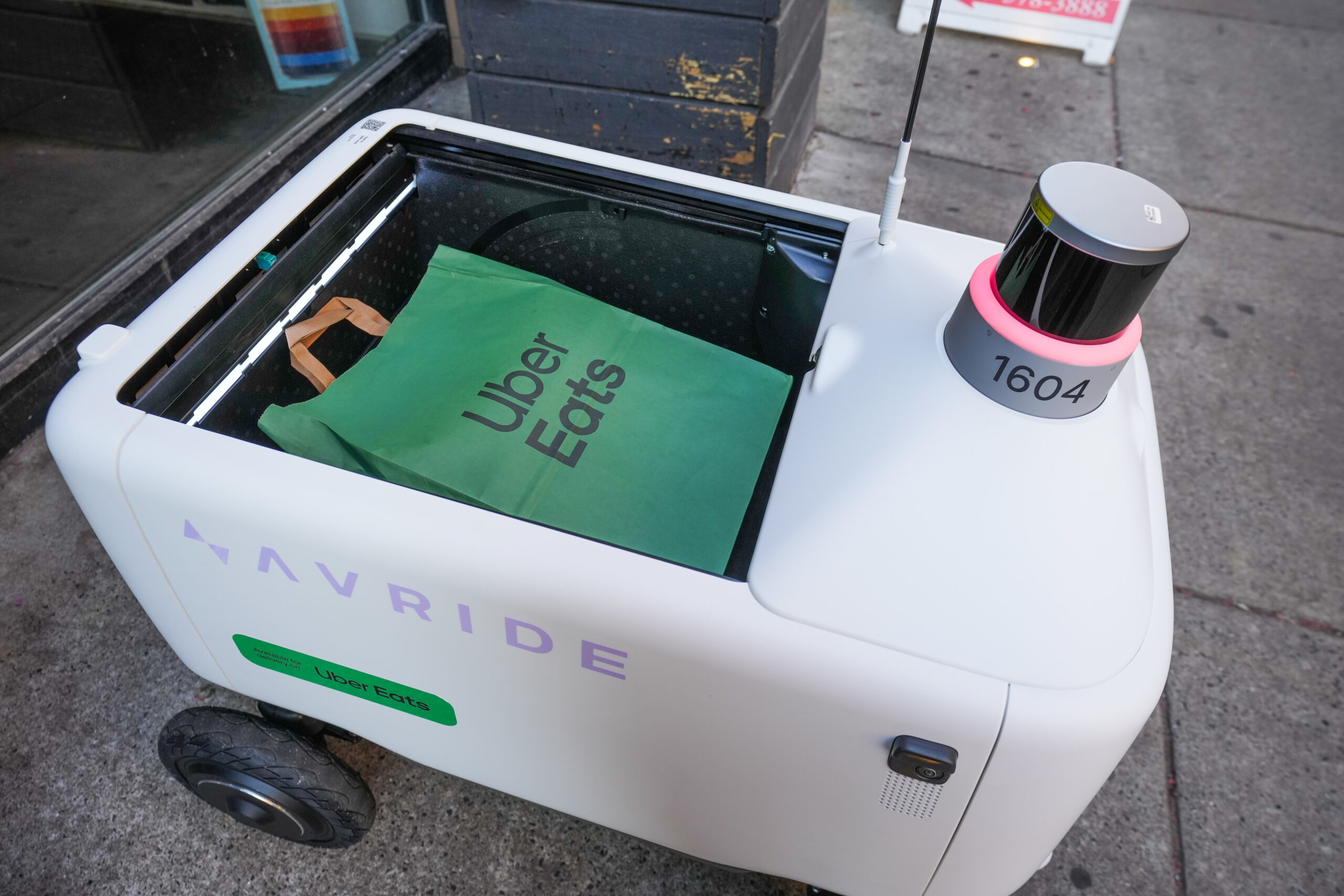
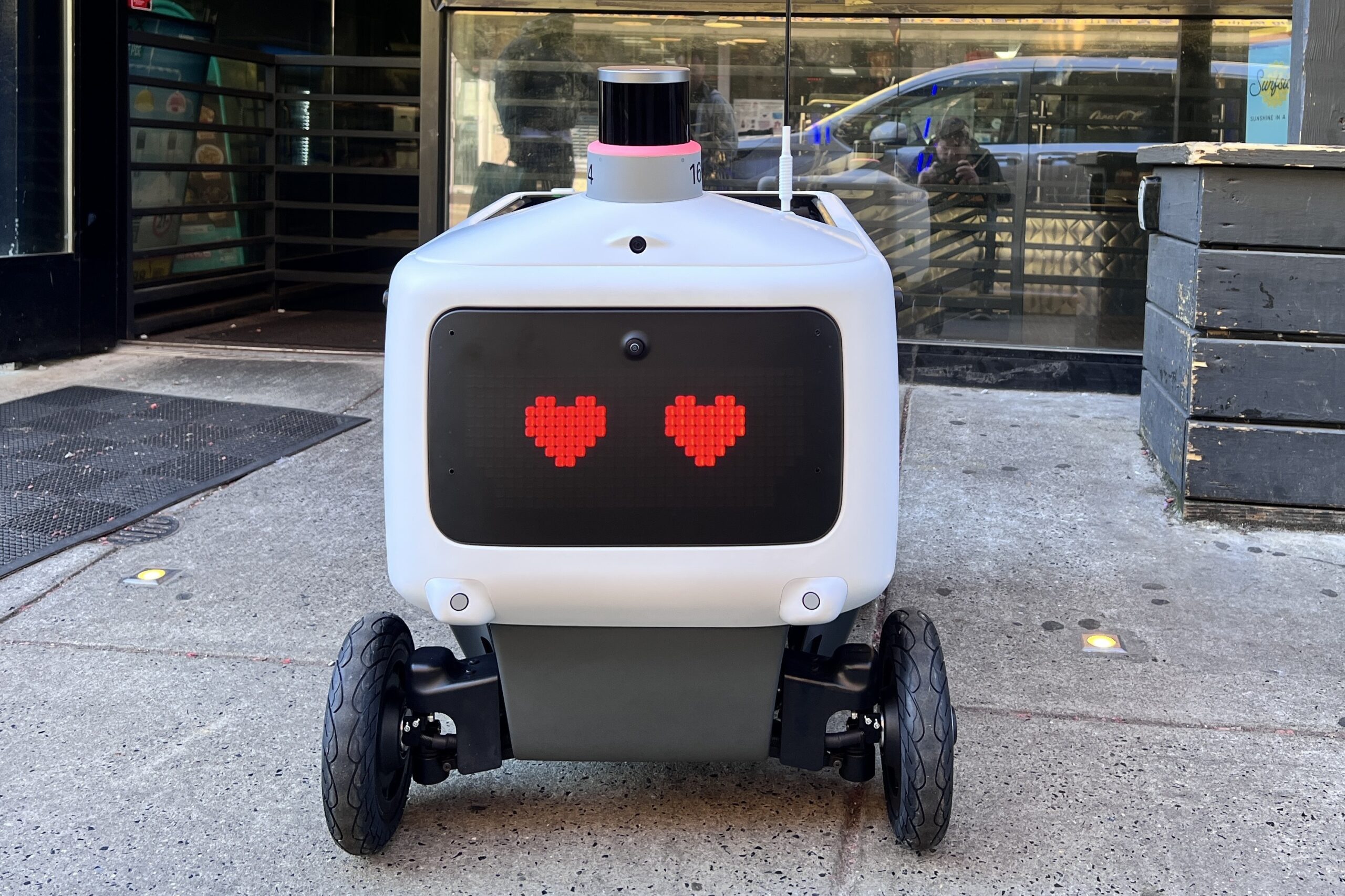
What I didn’t warn her about were the robots.
‘Bodies in the Delaware’
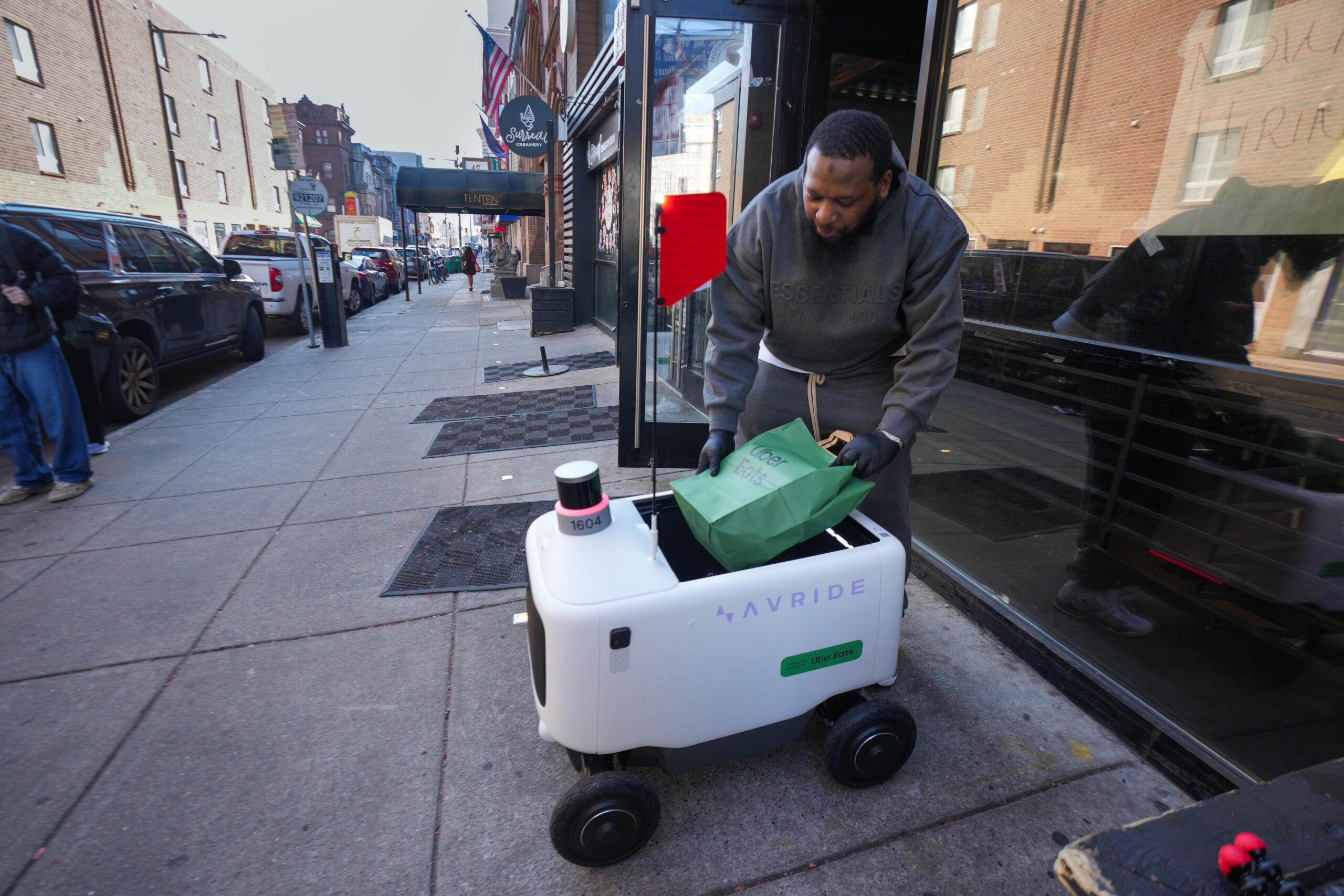
We encountered our first Uber Eats delivery robot made by Avride while walking from the Fashion District parking garage to the Chinatown Friendship Gate. Thankfully, I knew what it was because of my colleague Michael Klein’s story on them last week, and because of a post about them on the Philly subreddit that garnered very Philly responses like: “Bodies in the Delaware. Heads in the Schuylkill.”
An Uber Eats delivery robot in Philadelphia.
Even though I knew what the robot was, it was still really weird to see this boxy thing on wheels navigating around people on the sidewalk and across city streets. My guests agreed and it seemed many people around us did too, because they were pointing and laughing as it passed.
These robots were breaking folks out of their everyday and pausing people in midconversation, and not in a good Philly way, like the unexpected art that adds whimsy and beauty to our city, but in a dystopian way. I found myself creeped out by the robots and what their presence here might portend.
Sure, I’ve seen Marty the robot at Giant supermarkets and I’ve written about the robot cat servers in a few area restaurants, but those are in private businesses. These delivery bots are out in public and unavoidable. It feels different, like Philadelphia’s murder of HitchBot didn’t prevent a robotic uprising, as we’d all hoped, it only delayed it for a while.
‘DESTROY ME PLZ’
In the nine hours we walked around Chinatown and Center City, we saw three Uber Eats delivery robots. On Filbert Street near the courthouse, one was rolling along ahead of us and a woman in a red shower cap who was parked across the street in an SUV yelled out her window that they were not delivery robots, but rather police surveillance bots keeping watch on us (while nothing seems impossible today, there is no proof of that).
Philly photographer HughE Dillon captured video of a delivery bot out on the streets of Philly Saturday night while St. Patrick’s Day revelers were bar hopping with the Erin Express. One person sat on one of the robots; someone else wrote “DESTROY ME PLZ” on it.
Here’s where it gets even weirder for me, because these robots are anthropomorphized with digital eyes that blink and wink and turn into hearts, I began to feel sorry for them. Maybe these robots don’t want to be here either, I thought, maybe they didn’t even want to be invented, but now they’re stuck with us without a choice, just like we’re stuck with them. Of course I know this is all highly illogical, that these are just machines, but emotions aren’t always logical. That’s what makes us human.
Uber Eats’ delivery robot.
Philly does its thing
When I took my friend’s daughter into You & Me, the Asian toy store with the secret basement-level grocery store, she announced that she had died and gone to heaven and I took great pride in knowing that I’d impressed a 12-year-old.
But what I was even more proud of was that Philly did it’s Philly thing, as I’d hoped. Strangers continually engaged with us, whether it was a customer at a store who saw my friend’s fair skin and, unsolicited, recommended the best sunscreen she’s ever used, or the server at Nine Ting who saw us struggling with the grill and helped us navigate our first Korean barbecue experience. Three people complimented my friend’s daughter’s outfit — a cute skirt, leg warmers, and Mary Jane combo she’d obviously put a lot of thought into — and it absolutely made her day.
While we encountered robots, our best interactions were with humans.
The TLC
I hope those robots are the last thing my friend’s kid remembers about her trip to Philly and I hope I don’t look back on that lovely day as a turning point in some larger evolutionary story about humanity and robots.
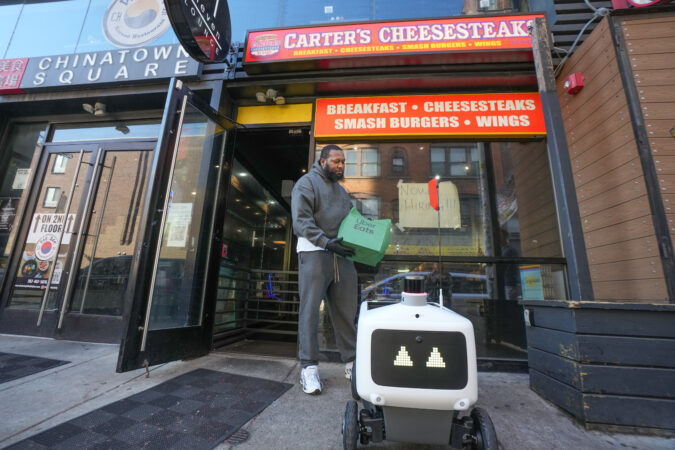
Lavelle “Garci” Peterkin, owner and CEO of Carter’s Cheesesteaks by Garci, places food inside of an Uber Eats delivery robot in Philly.
(I can hear myself now at 85, telling children in the future: “That was the first time I saw robots and humans interacting independently of one another, but it would not be the last!”)
We came home Saturday night to a homemade chocolate birthday cake with vanilla buttercream frosting my husband made. Our bellies already full, our sugar intake already high, we ate it with delight as we recounted the day. The cake dripped with what my husband says is the most important ingredient of any dish — the TLC.
A robot could never.
As I was cleaning Sunday, I found a note my friend’s daughter left in our guest room on a page she’d torn from one of my reporter’s notebooks. In the note, she talked about how thankful she was for the great cake, gifts, and wonderful day.
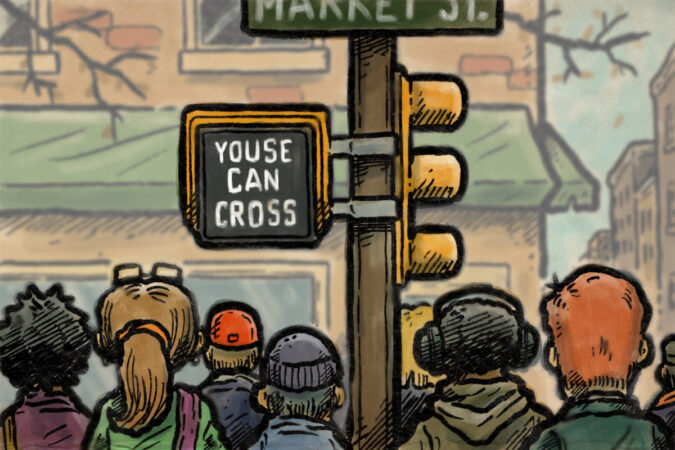
John Schaeffer was at a crosswalk on Main Street in Manayunk a few years ago when the walk sign illuminated and a prerecorded audio announcement told him it was safe to cross the street.
But what he heard, instead, stopped him dead in his tracks.
“All of a sudden it just goes, ‘Main. Wawk sign is awn ta crawss Main,’” Schaeffer said. “I was like, ‘Does this crosswalk have a Philly accent? Did I hit my head? Am I losing my mind?’”
Audible Pedestrian Signals on Philly crosswalk signs, in Philadelphia, PA, March 2, 2026.Jessica Griffin / Staff Photographer
He pulled out his phone, took a video, and sent it to a friend in Canada, who confirmed Schaeffer’s suspicions that the crosswalk indeed hadhoagiemouth.
“It feels like one of those many only-in-Philly things, of course even our crosswalks have a thick Philly accent,” Schaeffer said. “It’s mind-blowing and insanely cool. Obviously cool enough that I’ve been holding onto it for years and when you came along I thought I needed someone to get on the case and get to the bottom of this.”
Mawrket, wawk sign is awn ta crawss Mawrket.
00:00
I met Schaeffer while covering the opening of the Philly Phlush standalone public bathroom in Clark Park last year. He was the inaugural user and aftermy story published he reached out with some kind words (I’m flushed with honor that his partner got him a framed copy of the story that now hangs in his own bathroom) and with the tip about the crosswalks.
Somehow, my ears hadn’t registered the Philly accent at our crosswalks before, but that’s not a surprise. Just last weekend I asked my husband to push a button on a crosswalk sign on the Parkway only to have him tell me that it was not a button, but rather, a well-placed googly eyed sticker.
View on Threads
Once Schaeffer brought the accent to my attention though, I couldn’t stop myself from hitting the crosswalk buttons at every intersection to hear it more, like a kid on an elevator lighting up every floor.
Sampson, wawk sign is awn ta crawss Sampson.
00:00
Of course, there is no ‘p’ in Sansom Street (unless drunken revelers are celebrating an Eagles Super Bowl win), but that doesn’t stop the Philly accent from adding one because just like the people who speak it, it does whatever it wants.
I can differentiate at least two different male voices narrating these announcements, possibly three, but the enthusiasm level of all of them is like “some guy shows up at 5 a.m. with a Wawa coffee, plugs the mic in, and is like ‘Keep it moving,’” as Schaeffer so aptly put it.
No auditions
The purpose of the announcements, which are part of the city’s Audible Pedestrian Signal (APS) systems, is to let people with visual impairments know when it’s safe to cross the street.
The APS systems are administered by the Philadelphia Streets Department, whose director of operations, Thomas Buck, answered questions for me via email through a spokesperson.
Chestnut, wawk sign is awn ta crawss Chestnut.
00:00
Citywide there are 135 APS systems, but questions about exact intersections or the neighborhoods where they are located were not answered. According to Buck, intersections are chosen to receive APS systems based on upgrades, reconstruction, or “a need for enhanced pedestrian safety.”
I’m sad to report there are no tryouts to be the voice of Philadelphia’s crosswalks. The dulcet, Philly-accented audio announcements are voiced either by Streets Department employees or by staffers with the department’s equipment suppliers who are responsible for programming and assembling the APS units.
Stephanie Farr
“The individuals providing the messaging are either Philadelphia residents or in the case of the equipment suppliers, may be residents in the surrounding areas,” Buck said.
The announcements are either recorded in the traffic engineering division’s signal and sign shop in Juniata Park or in the assembly shops of the Streets Department’s respective suppliers, according to Buck.
Audible Pedestrian Signals on Philly crosswalk signs, in Philadelphia, PA, March 2, 2026.Jessica Griffin / Staff Photographer
While the intent of the message is clear, “The Philly accent was completely unintentional,” he said.
Isn’t it always.
Wooder the odds
I’ll never forget when I first heard myself say “wooder” a few years after moving here. I was so shocked I turned around to see who said it. Now, I don’t even notice when the accent comes out of me.
I was interviewed for a documentary last year and my husband’s proudest moment was when I said “mewvement” instead of “movement.” I didn’t even catch it until he pointed it out.
“You’re one of us now!” he said.
To be honest, I was proud too. The Philadelphia accent is one of the many things that gives this city such a wonderful sense of place. I never set out to procure one, it just happened through sheer osmosis of the culture over time, like becoming a Philly sports fan or bringing pretzel nugget trays to parties.
Stephanie Farr
University of Pennsylvania researchers even found that thePhiladelphia accent appears in American Sign Language , with different signs for words like ice cream, squirrel, and river being used in this region than in standard ASL.
Interestingly enough, the voice of the first APS system in the city had no Philly accent at all. In 1997, a recorded announcement telling people it was safe to cross Broad Street at Montgomery Avenue in North Philly wasvoiced by former Secretary of State Colin Powell. Over the years, Philly APS systems have also usedautomated voices and “chirping” sounds.
Earned addytood
I asked users onBluesky andThreads whose voice they’d want to convey messages to the people of Philadelphia. The clear favorite was retired 6ABC anchor Jim Gardner (no surprise there), followed closely by Eagles broadcaster Merrill Reese. Other nominees included Patti LaBelle, Terry Gross, Tariq “Black Thought” Trotter, Quinta Brunson, Jason Kelce, Gillie da King, Tina Fey, Leslie Odom Jr., Patti Jackson, Ukee Washington, Lady B, and John Kruk.
While any of them would be great, the regular Fulladulfya guys they have voicing the systems now possess a perfect mixture of Philly apathy and annoyance that I’m not sure any celebrity could duplicate — and one that certainly could never be duplicated by AI. Such an addytood can only be earned by dealing with jabronis on the streets of Philly every day.
Thurd, wawk sign is awn ta crawss Thurd.
00:00
But if the Streets Department wants to make the announcements even more beeyoodeeful, which they should, I suggest they have those who voice them start the messages off with “Gah-head” and end them with “havagudwun.”
Gah-head awn Sampson. Wawk sign is awn ta crawss Sampson. Havagudwun.
Audible Pedestrian Signals on Philly crosswalk signs, in Philadelphia, PA, March 2, 2026.Jessica Griffin / Staff Photographer
Today, looking for the Philly-accented APS systems has become “like a treasure hunt” for Schaeffer when he walks the city’s streets and he takes joy in pointing the accent out to others, all of whom think “it’s absolutely wild.”
“There’s not been a single person I’ve talked to that’s like ‘Oh yeah, that makes complete sense,’” he said.
Subscribe to The Philadelphia Inquirer
Our reporting is directly supported by reader subscriptions. If you want more journalism like this story, please subscribe today
Root systems are literal and figurative in our language — there are those you can see and touch and eat, and those invisible to the eye that connect us to the people and places that have brought us to this moment.
Both type of roots are important to our past and future and both are explored at the Philadelphia Flower Show this year by gardeners and artists whose exhibits bring to life the show’s theme, “Rooted: Origins of American Gardening.”
As the nation marks its 250th anniversary, the Flower Show celebrates its 197th year by looking back at the history of gardening in the United States. This is the “final chapter in a three-year trilogy” of themes that began in 2024 with “United by Flowers,” which explored current gardening connections, and continued last year with “Gardens of Tomorrow.”
The most notable difference at this year’s Flower Show, which runs through March 8 at the Pennsylvania Convention Center, is that the marketplace has been moved out of the main exhibition halls on the upper floor to a separate space below. It’s a welcome change that provides more space for exhibits and visitors and makes the overall experience feel less crowded and commercial.
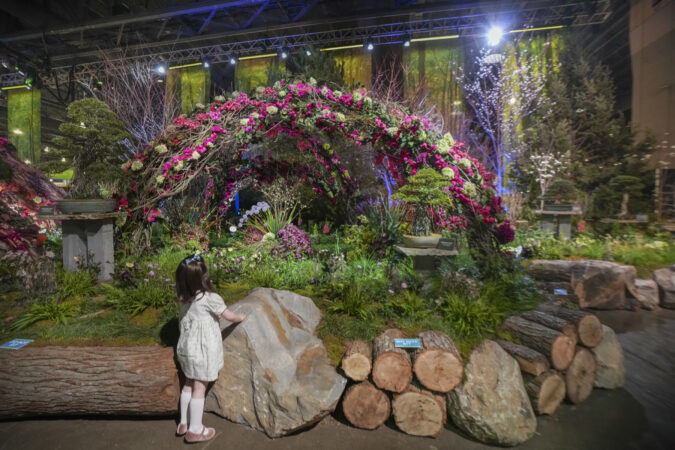
I went rooting around the Flower Show during a media and members event on Friday. As always, the entrance garden — this year’s is “The Forest Floor” — is a can’t-miss, mainly because you have to walk through it to get in. But after that, here are five other interesting things I suggest making sure to see if you visit this year’s Flower Show.
All the world’s a stage
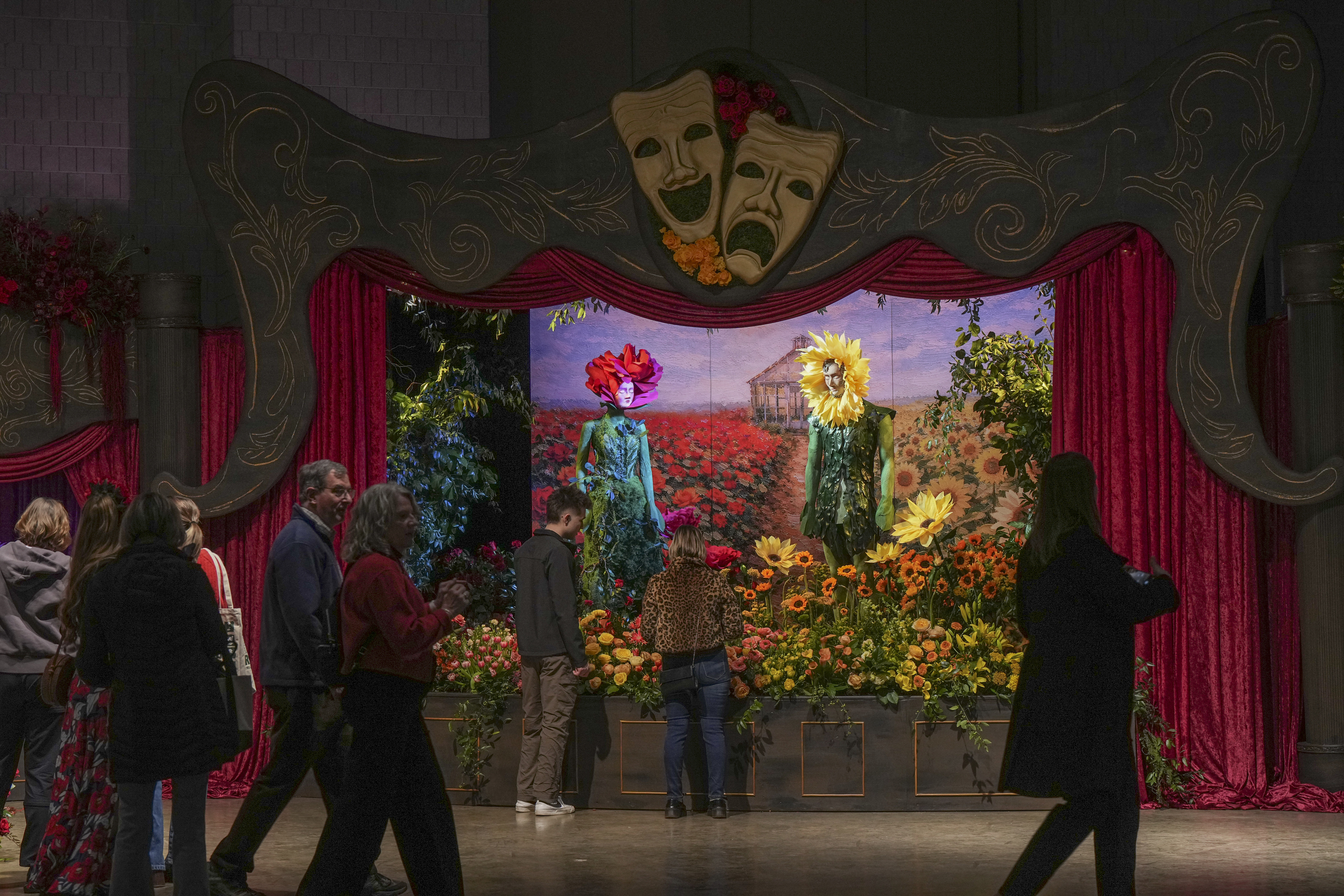
“Rooted in Love” is a theatrical floral exhibit by Jennifer Designs of Mullica Hill that brings together horticulture and Shakespeare.
That which we call a rose by any other word would smell as sweet, but what if a rose was chosen by central casting to play Juliet? How sweet would that be?
Jennifer Designs of Mullica Hill shows us in its exhibit, “Rooted in Love,” in which an anthropomorphized rose and sunflower play the star-crossed lovers in William Shakespeare’s Romeo and Juliet on a stage overflowing with flowers.
While the connection to this year’s theme is a bit tenuous — the exhibit “explores the language of horticulture and Shakespeare” — I’m giving it a pass, mostly because I love Shakespeare but also because this display is absolutely stunning.
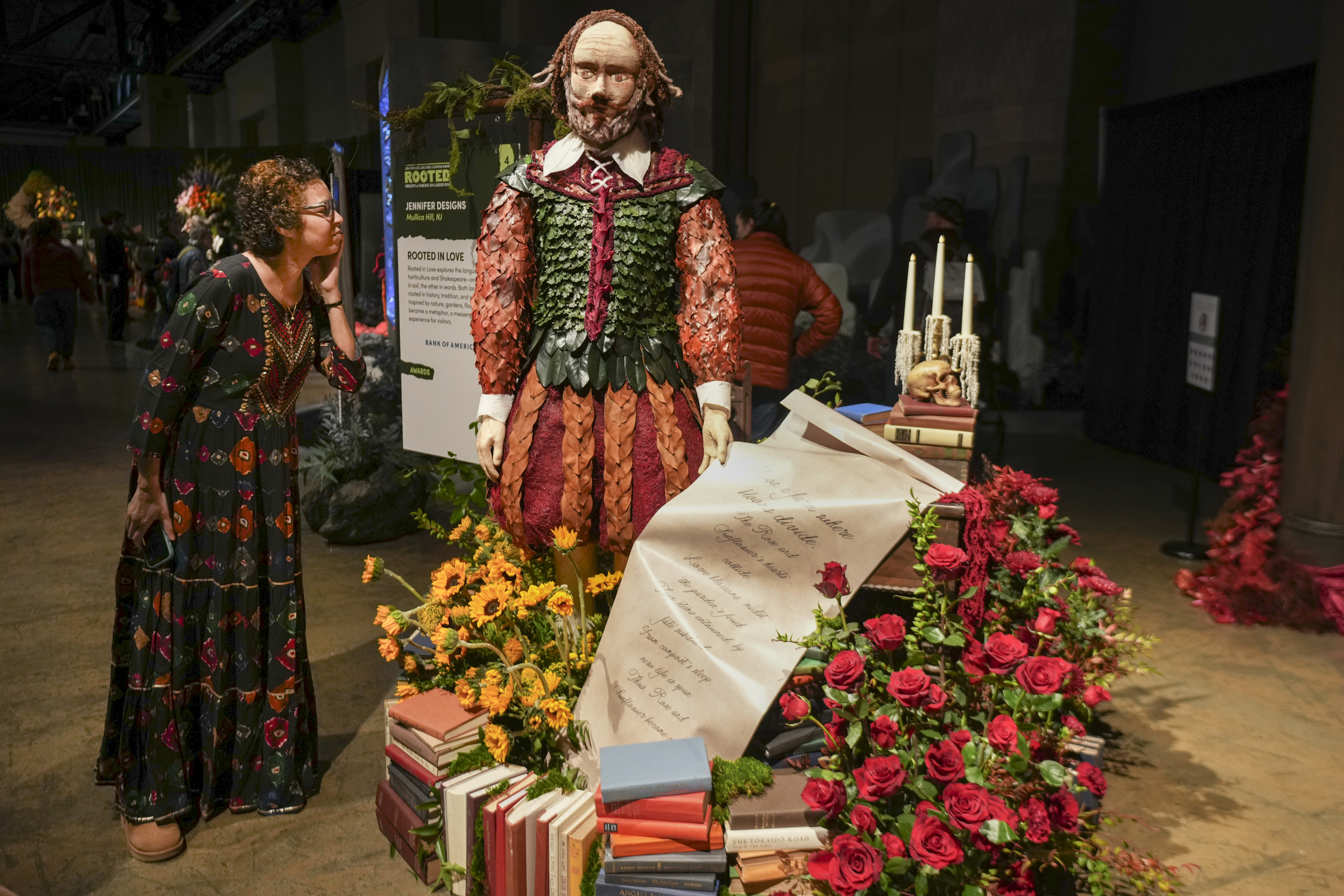
A Flower Show guest looks at William Shakespeare in the “Rooted in Love” exhibit by Jennifer Designs of Mullica Hill.
Beyond the main scene, there’s a life-size recreation of the Bard made of flowers, a “Bloombill” complete with a cast and crew list, and flower box seats on either side of the stage.
The shop around the corner
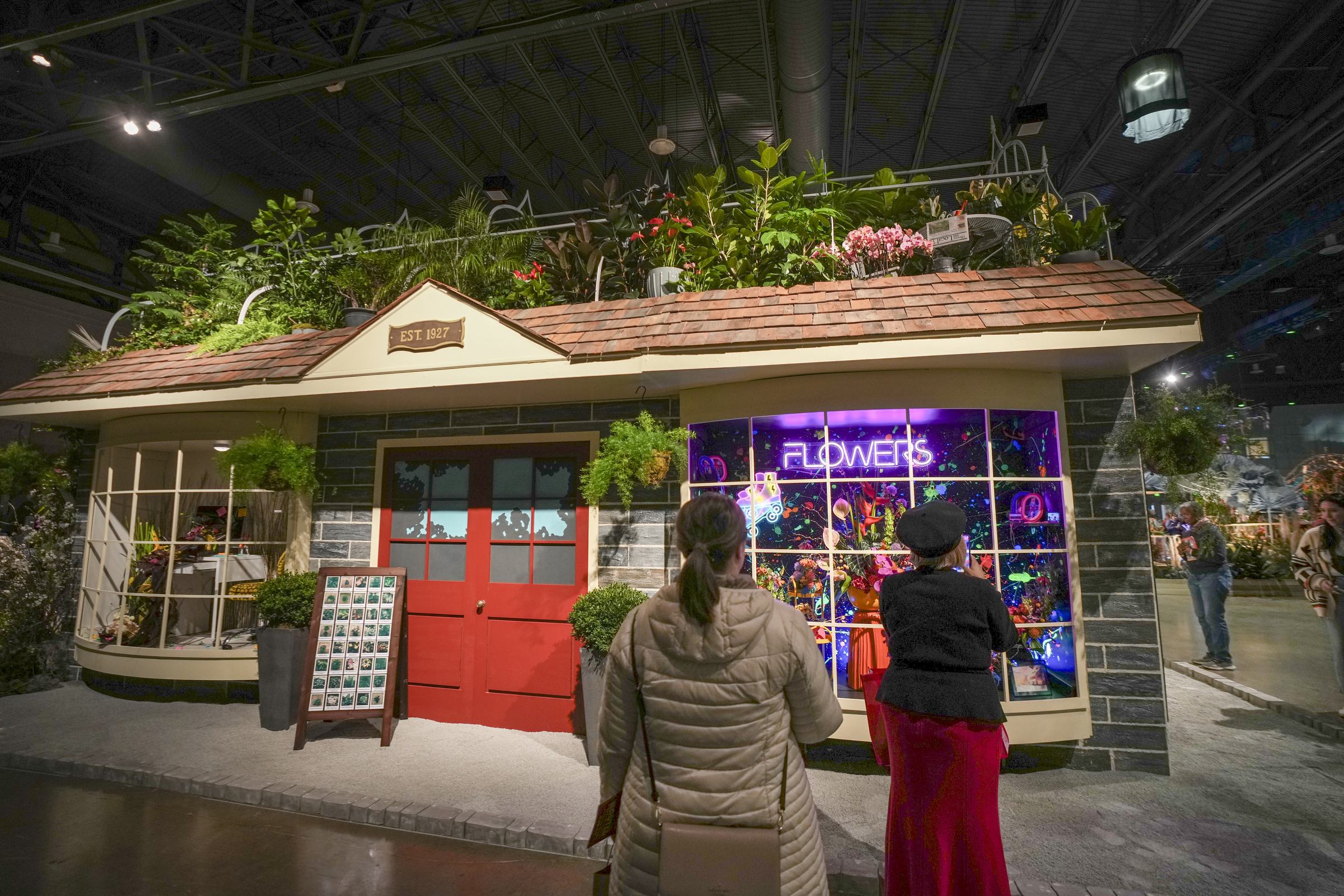
Robertson’s Flowers & Events of Wyndmoor digs into its own roots — dating back 99 years — with a charming life-size recreation of its Chestnut Hill corner store.
Each of the four window displays of the 360-degree exhibit celebrate a different era of floristry, from the formal and feather-accented styles of the early 20th century to the neon-lit early ’90s.
Visitors look at Robertson’s Flowers & Events’ “Windows into the Past,” at the Philadelphia Flower Show.
Just as impressive as the structure and display itself is the lush rooftop garden atop the entire building, which teems with orchids and greenery and metaphorically “extends its roots downward,” connecting the shop with the community.
It’s so tiny!
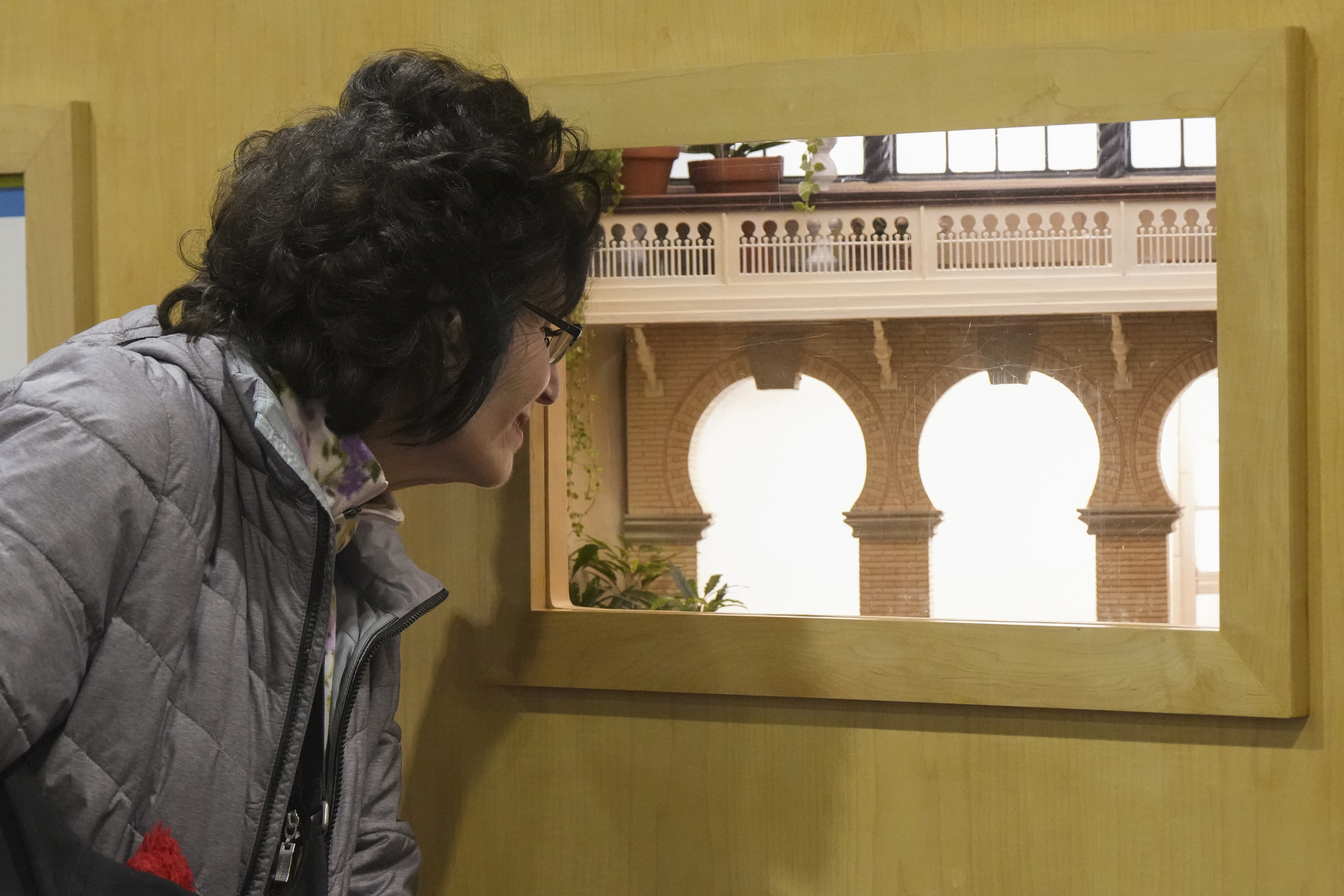
It is here I must make a confession: My favorite part of the Flower Show every year, without fail, is the “Miniature Settings” category, which I call “the dioramas.” This is because I love tiny things and because my dream when I retire is to search for seashells and make dioramas.
I’ve hesitated putting it on my must-see list in previous years because I am 110% biased and because the line to see these mini scenes is always long (I waited about 15 minutes on Friday). But this year’s — which challenged participants to create a setting for an event that happened between the prehistoric era and 1900 — truly is a must-see for Philly lovers.
A visitor to the Flower Show looks at the “Philadelphia’s Centennial Exhibition: Opening Day, 1875,” one of the exhibits in Miniature Settings category.
While some folks made scenes of the last night in Pompeii or the Roswell UFO crash site, it’s the three Philly-themed dioramas that stood out to me. There’s Benjamin Franklin’s garden, with a floating kite and key and inventive lighting effects; the interior of Independence Hall; and Horticulture Hall at Philadelphia’s Centennial exhibition.
Understood the assignment
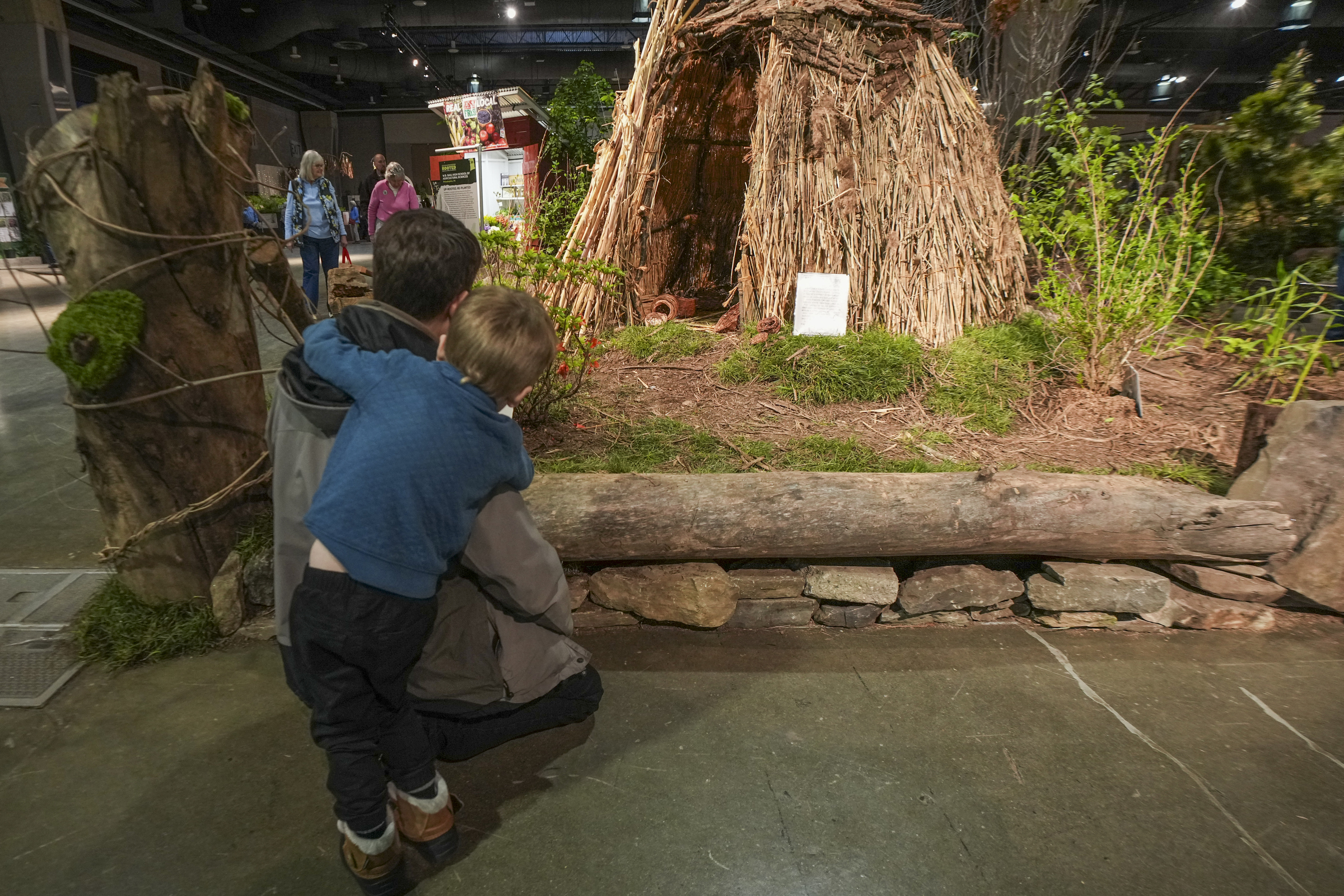
With it’s late fall setting and its stark use of flowers and color, the exhibit from W.B. Saul High School of Agricultural Sciences in Roxborough isn’t as eye-catching as many others, initially, but if you take the time to study it and read the placards, it’s by far the most moving, emotionally.
“Up-Rooted, Re-Planted,” explores the roots of our region through the Lenape people, the original Indigenous inhabitants who lived here before being uprooted by European settlers.
A babbling brook runs through a wooded autumn setting that seems just on the brink of winter. A placard in a dugout canoe tells the story of how the Lenape were forced to move westward. And a sturdy wigwam built by hand keeps the food and firewood within it dry.
Andrew Luedders and Lukas Luedders look at W.B Saul High School of Agricultural Sciences’ exhibit “Up-Rooted, Re-Planted.”
Out of all of the exhibits, this was the most on-point when it came to theme and the most profound when I spent some time with it. It’s also a really good learning moment for kids, which is particularly wonderful because it was built by students. I saw several adults kneeling down to read the placards to children and share the story of the people who first planted roots in what is now Philadelphia.
The fun is in details
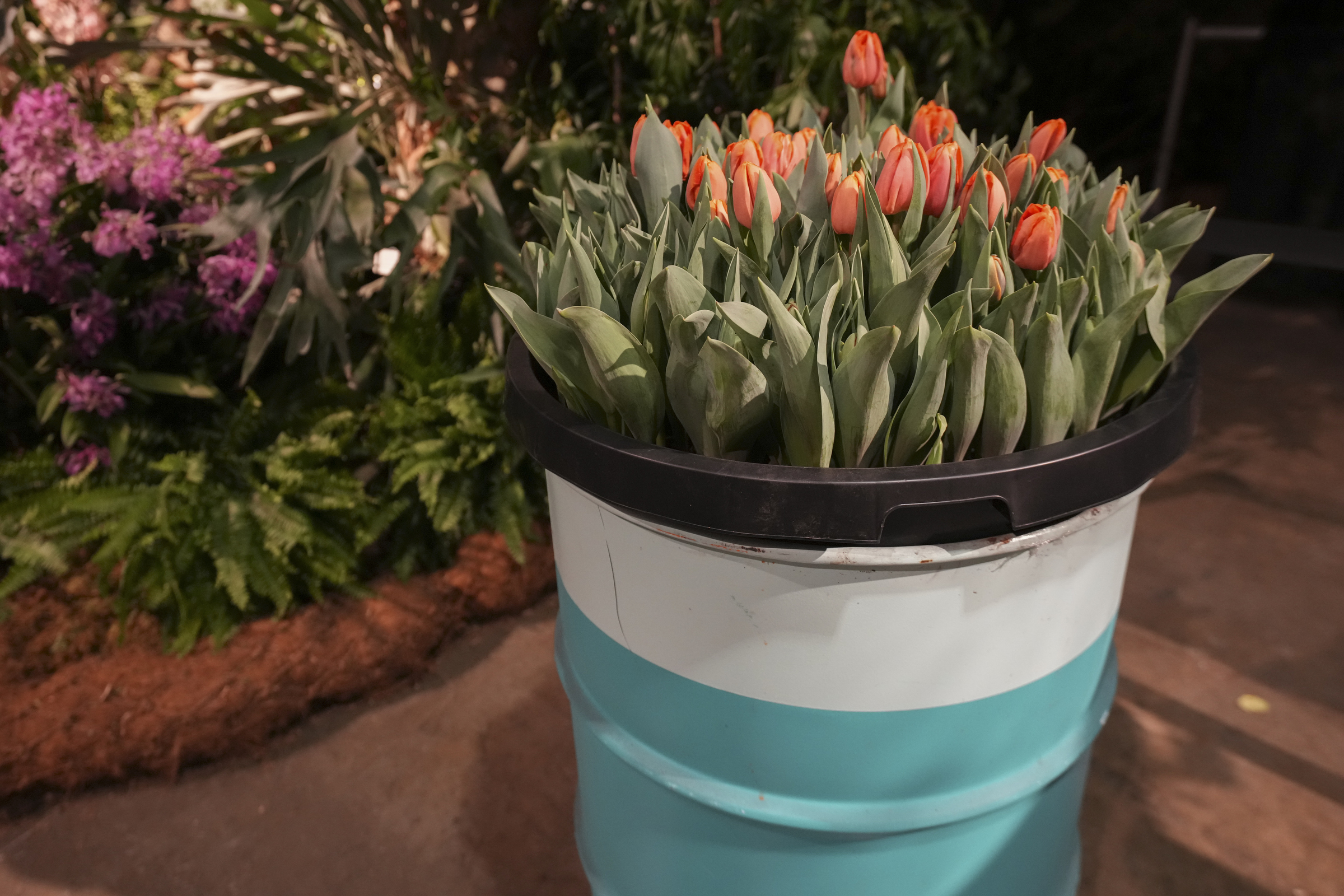
Some of my favorite moments at the Flower Show this year were small ones I didn’t expect. Throughout the event hall, there are trash cans filled not with garbage, but with daffodils, tulips, and lilacs. It’s a small but sweet touch that adds a bit of whimsy.
In the “Garden Design” section, there’s an exhibit which repurposes stone blocks as books with punny titles written on them like Where the Wild Plants Are, War and Peas, and A Kale of Two Cities.
Tulips in a trash can at the Philadelphia Flower Show.
At the American Landscape Showcase exhibit, there’s a display called “American Anemoia” featuring an overgrown ornamental garden at a vacant house. Nailed to the fading white picket fence of the house is a citation from the city of Philadelphia for weeds and mowing.
If that isn’t rooted in truth, I don’t know what is.
The Philadelphia Flower Show continues through March 8 at the Pennsylvania Convention Center, 11th and Arch Streets. Hours: 10 a.m. to 8 p.m., except until 6 p.m. on March 8. Ticket prices vary depending on person’s age and day and time of entrance. Information: phsonline.org or 215-988-8800.