Author: Nate File

  • Why Philly has so many chicken bones lying around

    Why Philly has so many chicken bones lying around

    As the cold thaws and the snow melts, one constant remains the same: There are chicken bones on the Philly streets.

    Time may be a flat circle, but that doesn’t stop us from wondering why. A reader asked through Curious Philly, The Inquirer’s forum for answering questions, why there are so many chicken bones on the sidewalks and streets of Philadelphia.

    » ASK US: Have something you’re wondering about the Philly region? Submit your Curious Philly question here.

    Two architects appear to be behind Philadelphia’s chicken-bone temple.

    First are animals, who forage through trash looking for the final scraps left on discarded bones. Whether they discover drumsticks by ripping through trash bags on the street or from dumpster diving, these animals likely drop the bones wherever they finish with them.

    The culprits most likely to blame are rats, followed by raccoons and opossums, said Rich Foreman, the owner of Dynamite Pest Control in West Philly.

    While it’s unclear if rats have a particular taste for fried chicken, the animals are among the least-picky eaters around and will take advantage of any food source, from human scraps to cannibalism. And Philadelphia is seemingly a good place to be a rat, being declared the eighth-rattiest city in the United States in 2025 by the pest-control company Orkin, measured by tracking its new residential rodent treatments.
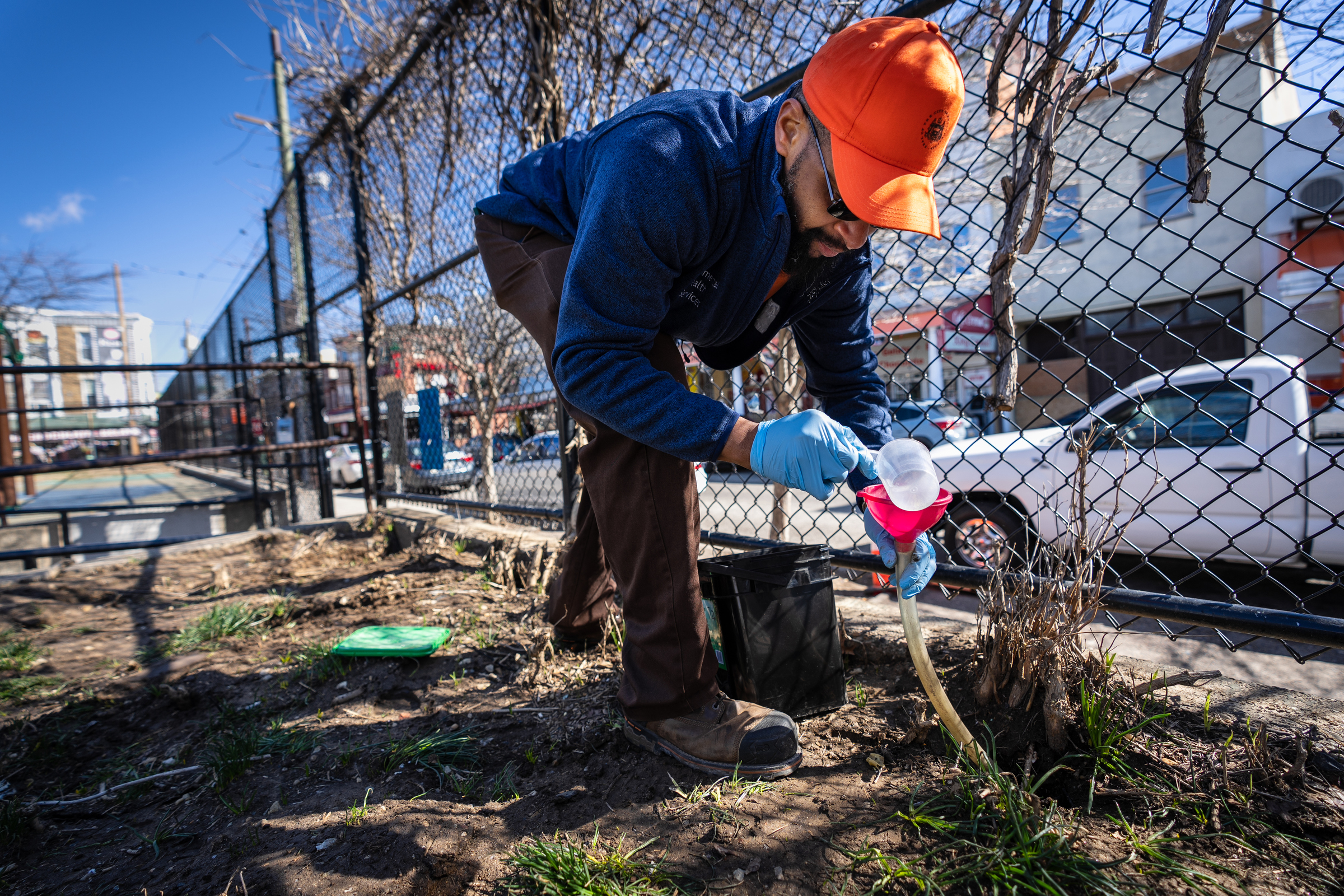
    Adrian Jordan, Vector Control Crew Chief, works keeping the rat population under control, in Philadelphia, Friday, March 7, 2025.

    Foreman sees the chicken-bone problem all over the city, as with some restaurants in Port Richmond that called Dynamite when they saw their trash all over the street. He is confident animals were behind the mess, and said he has “never seen” humans do anything of the sort.

    Foreman said the city’s twice-weekly trash pickup initiative has not helped, since it means an additional day of easily accessible trash on the street for animals.

    He said the best way for people to prevent critters from going into their garbage for bones is to get large, durable trash cans.

    “And make sure you put the lid on it,” he said.
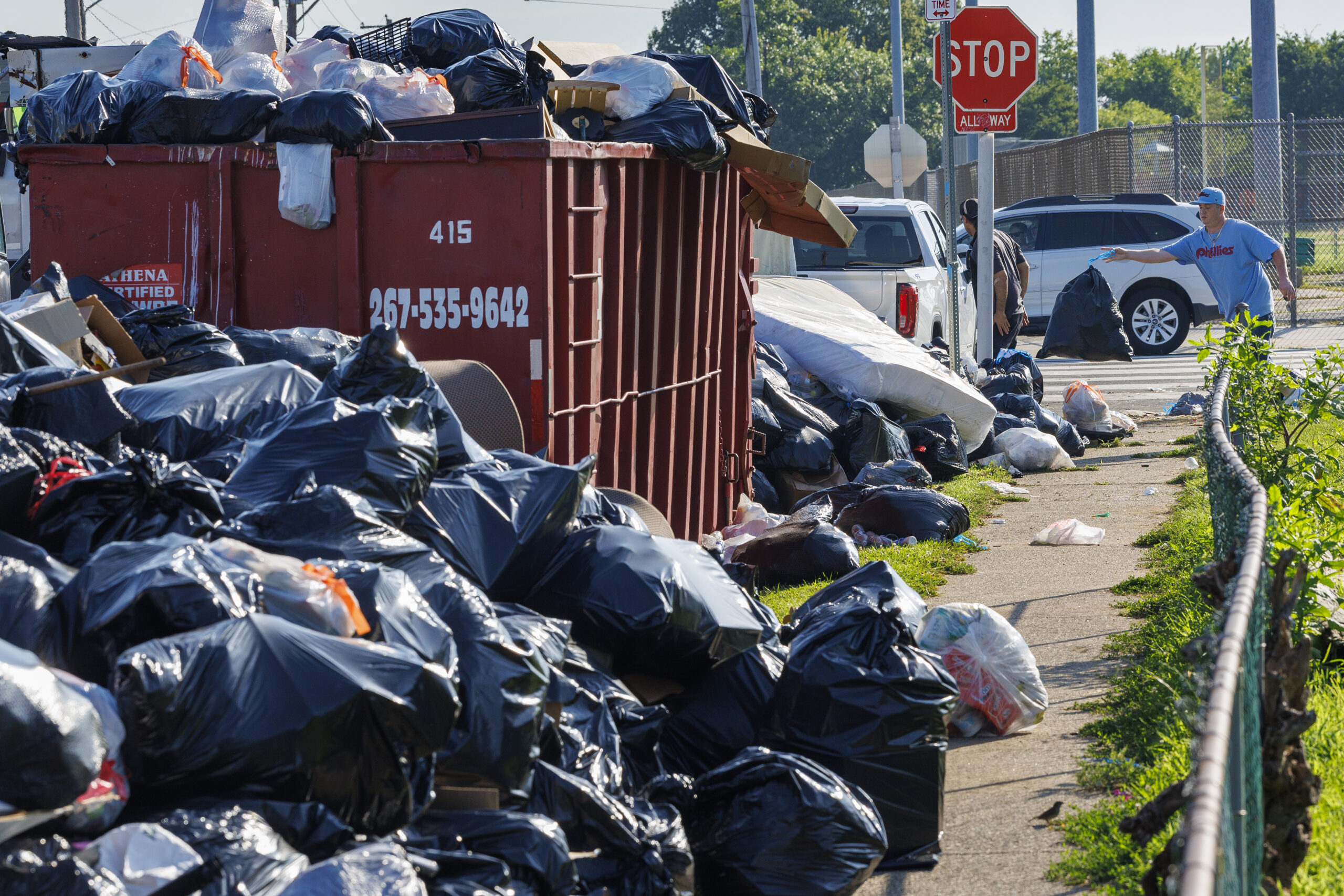
    Residents with trash arriving at garbage dump site at Caldera Road and Red Lion Road in northeast Philadelphia. AFSCME District Council 33 workers enter their second week on strike, Tuesday, July 8, 2025.

    Scavenging animals was the conclusion that the Search Engine podcast reached in a 2024 episode investigating the cause of the chicken bones littering the streets of New York City. Other cities have reported the same problem, including Chicago, Miami, and Washington.

    And yet, anecdotal evidence from residents demonstrates that human activity clearly contributes to the problem.

    Jessica Griffith has become the David Attenborough of abandoned chicken bones, documenting and appreciating the beauty of what she encounters in the wild. More than 10 years ago, when she lived in South Philly, Griffith, 46, would notice the chicken bones frequently on walks with her dog. She started photographing them and posting the pictures to Facebook, finding the bones everywhere, including a pile on a SEPTA train.

    “It was just bizarre to me. Just a phenomenon,” she said.
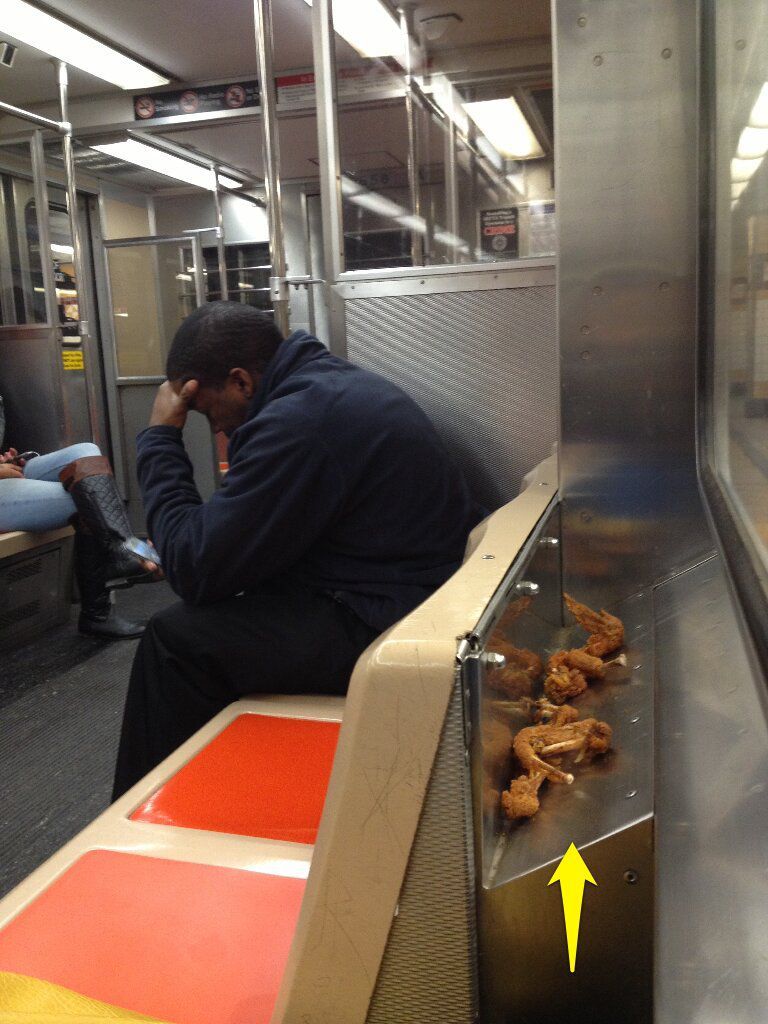
    Jessica Griffith snapped this picture of some discarded chicken bones on the Broad Street Line in 2013.

    Her documentation gathered a following, and people started to send their own submissions. Griffith received pictures from all over the globe — people in Seattle, Las Vegas, South Korea, Sweden, and the Dominican Republic all had their own pictures of discarded chicken bones to share.

    When Brian Love, 53, walks his miniature pinscher, Ziggy, through the Gayborhood, he often sees other people smiling at his dog. But then he realizes it’s because Ziggy is carrying a chicken bone in his mouth.

    Love has complained to his friends about constantly needing to tussle with Ziggy over what the dog sees as a treasure. He has watched people toss chicken bones on the ground, and recently came across a pile of four bones on a mound of snow. Love wishes his neighbors would just use trash bins.

    “It’s your food that you’ve literally just had in your mouth. Throw it in the trash,” he said.

    Stephanie Harmelin, 43, has the same problem with her dog in West Philly, and she said she accepts the bony sidewalks as part of living in a city. She has seen aggressive squirrels rifling through trash, but also has come across bones at street corners and under park benches that appear to have been dropped by humans.

    She said part of the problem is educational. Once, Harmelin pulled her dog away from a bone on the street, and two fellow walkers asked her why.

    Harmelin explained how chicken bones are unsafe for most dogs to consume. Cooked bones splinter when a dog chews on them, and the sharp fragments may cause life-threatening damage as they pass through the dog’s digestive track.

    One woman was shocked, and said she had not realized chicken bones were potentially dangerous to dogs when she had tossed them to the ground before.
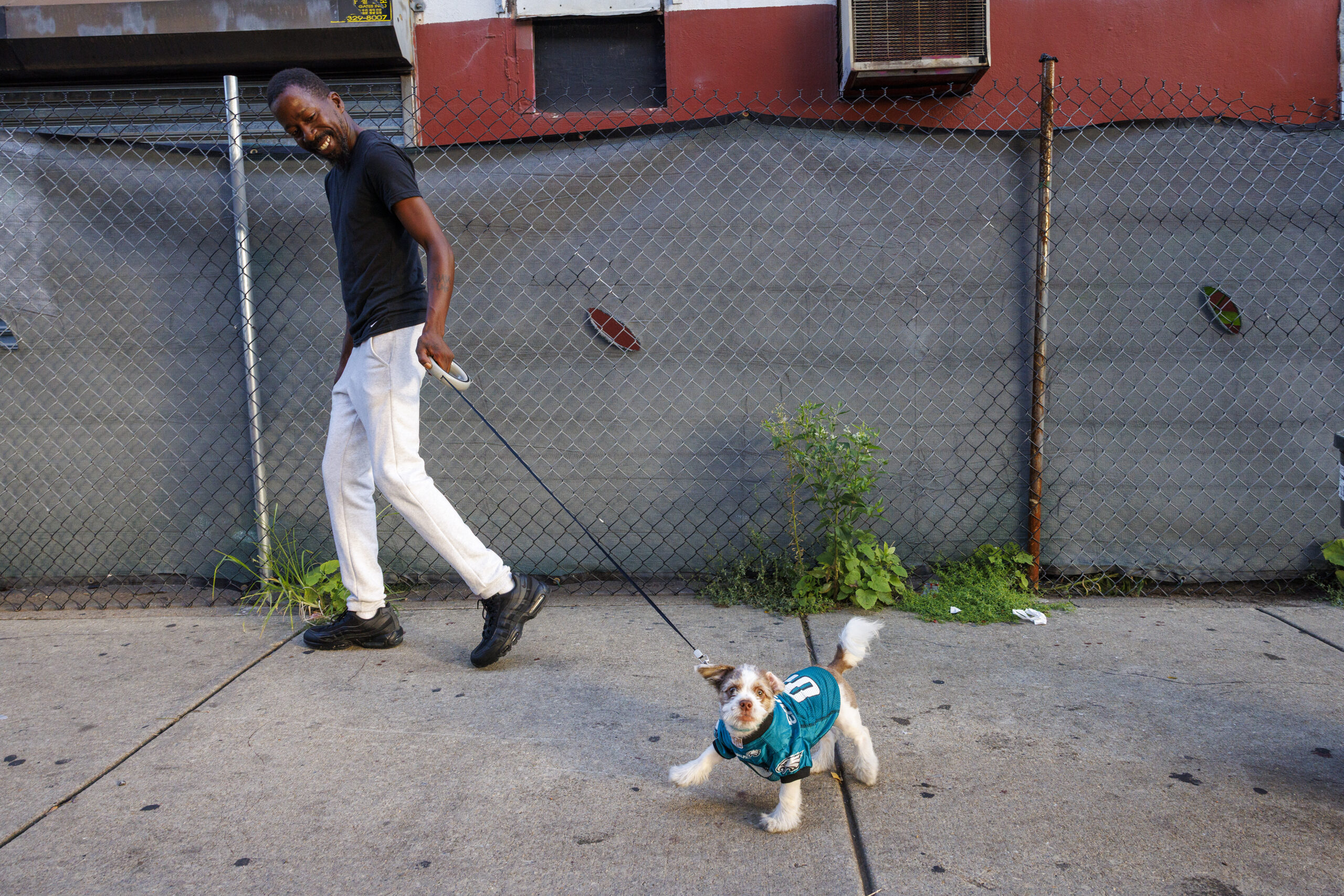
    Theo Caraway of Philadelphia walking his dog Cooper, 6 months, Shitzu/Poodle wearing his Eagles jersey along Kensington at Ontario Street on Philadelphia, Friday, September 5, 2025.

    Harmelin has had similar conversations with others who were not aware of the hazards bones create. Now, she is less likely to be frustrated at whomever has dropped the chicken bone on her street corner.

    “We’re trying to assume what other people know and intend, but we can’t,” she said.

    Even if more people get the message, though, it appears you will still be as likely to find a chicken bone on the street as a fallen leaf.

    Although they’re a gross nuisance of a sidewalk adornment, Griffith doesn’t really mind them. She said they are more of a curiosity that make Philly what it is, in a small way.

    “I think it’s kind of endearing,” she said.
  • The Philadelphia Stars Negro Leagues mural in West Philly was taken down — but a new one is planned

    The Philadelphia Stars Negro Leagues mural in West Philly was taken down — but a new one is planned

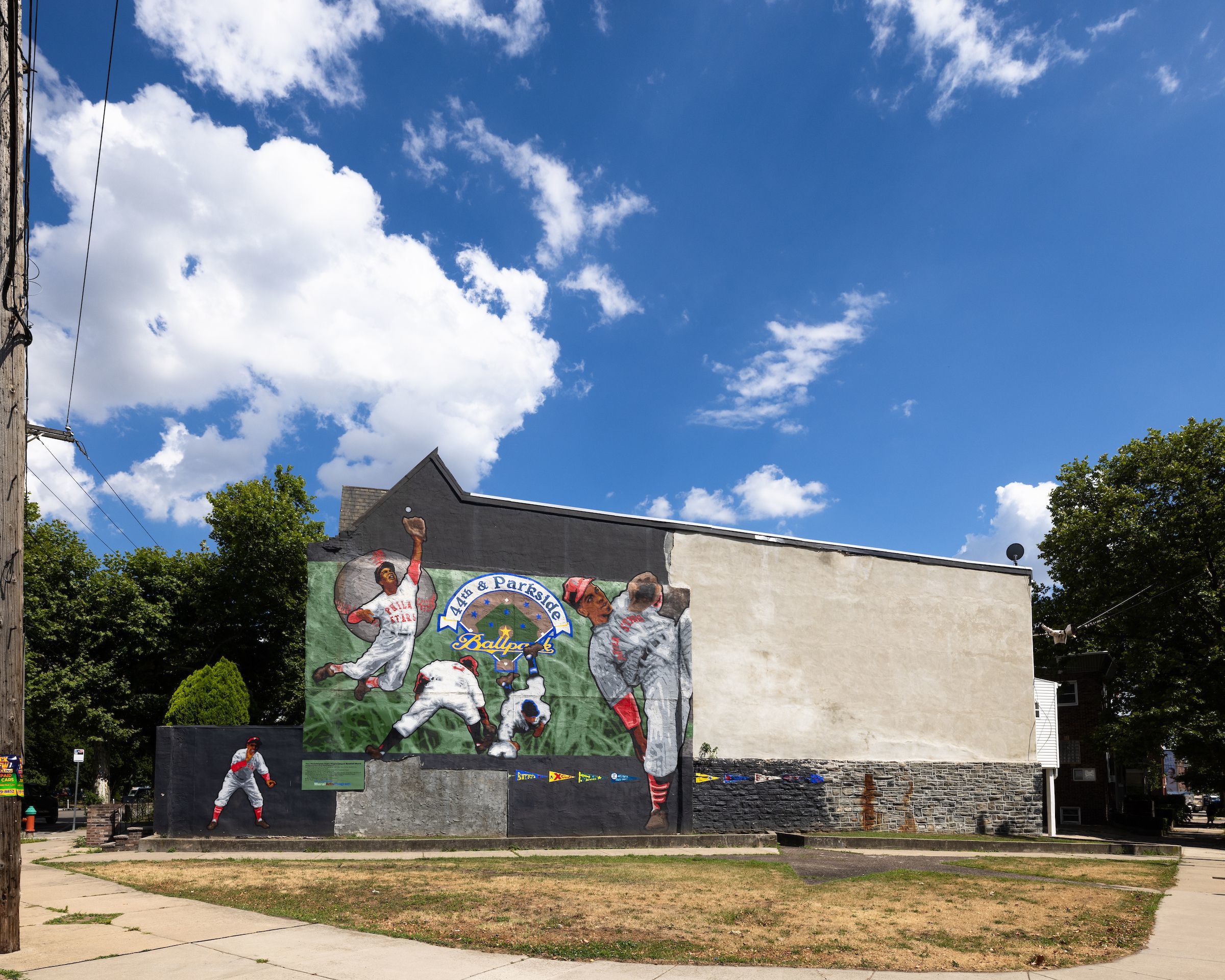
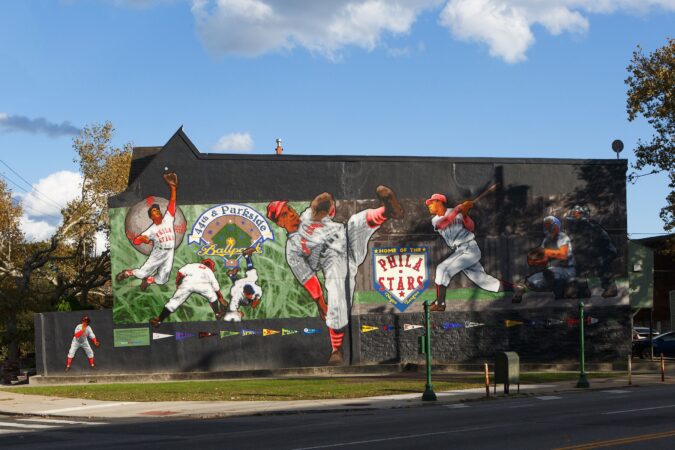
    When a West Parkside mural honoring the Philadelphia Stars and Negro Leagues baseball was taken down last month, social media commenters were outraged as the news spread, fearing that Philadelphia had lost one of its iconic odes to Black history.

    But the mural at 4304 Parkside Ave. won’t be gone for very long. In a collaboration among Mural Arts Philadelphia, Parkside community members, and the owners of its former building, a new version of the Stars mural will be re-created just across the street.

    “It was put up over 20 years ago. We’ve been working really hard to spruce it up for the next 20 years,” said Marjorie Ogilvie, the president emeritus of the West Parkside Business Association, who helped erect the first mural in 2006.

    It seemed inevitable that the two-story mural would eventually be brought down. There was roof and wall damage to the home on which it is painted, and the building partially collapsed. Those repairs required the removal of half of the mural a few years ago, and it was never replaced.

    And the possibility of development on the plot of land is now closer to being realized. The triangle-shaped grassy lot in front of the mural has been owned by developer Haverford Square Properties for several years, and it acquired the 4304 Parkside building in September.

    Half of the mural was previously removed after repairs were needed for the damaged wall and roof of the property. This photo shows what remained of the mural in 2024.

    Haverford Square planned to construct a six-story apartment building at the corner, but community members fought back, arguing that it would lead to overcrowding in the neighborhood. Haverford Square president German Yakubov said they have since reached something of a compromise on a smaller-scale development, which will include a baseball-themed coffee shop on the corner.

    But Yakubov is helping to secure the long-term future of the mural. Haverford Square has donated $30,000 and design services to the project to create a new version across Belmont Avenue.

    “I didn’t want to let it go,” he said of the mural he has been driving past since he was a student at St. Joseph’s University.

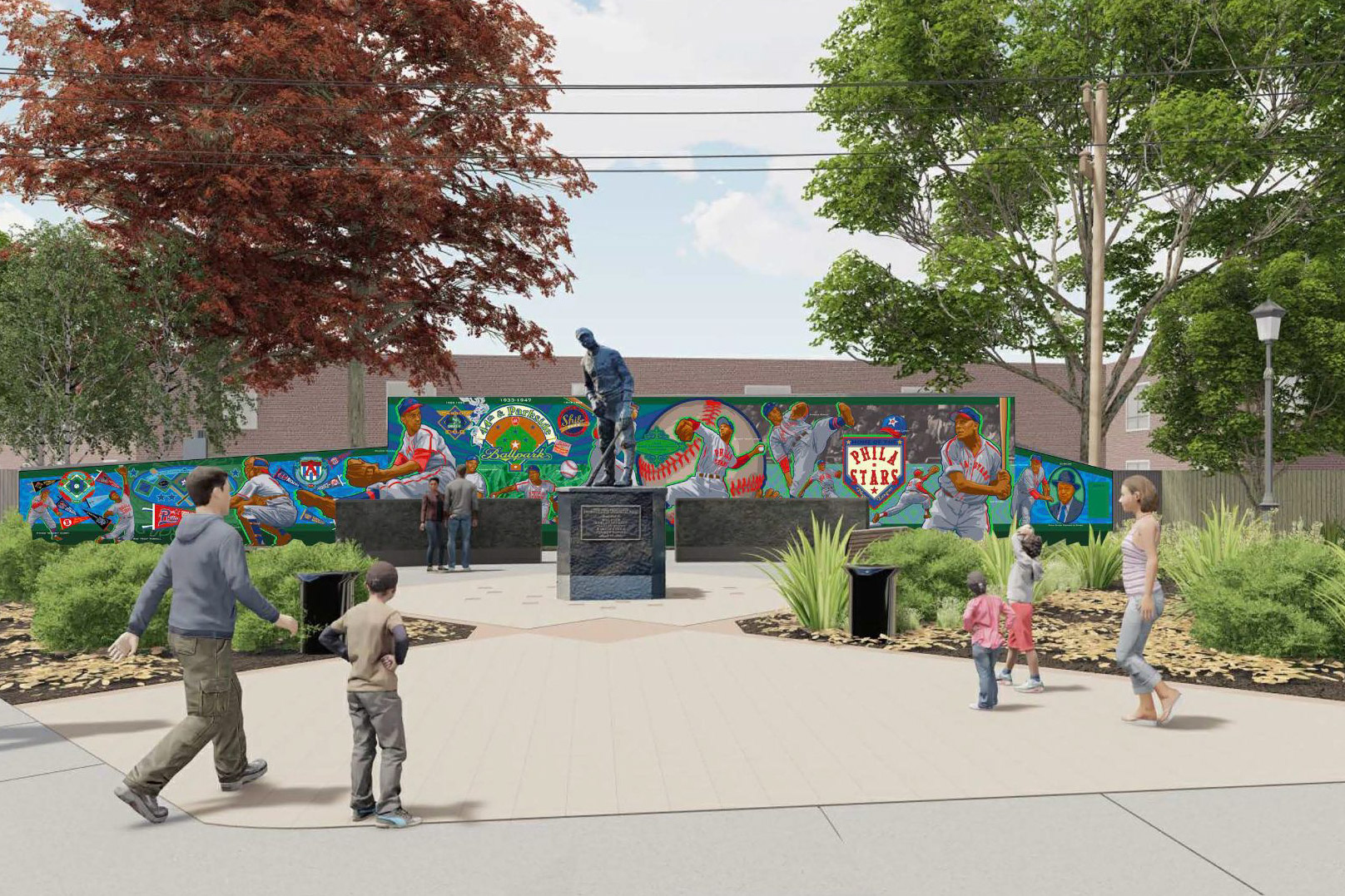
    The mural will be painted on a yet-to-be-constructed wall in the Philadelphia Stars Negro Leagues Memorial Park, at the southwest corner of Parkside and Belmont Avenues. It will look slightly different from the previous version, since the new wall will be wider and shorter than the 4304 Parkside wall was. But the designs come from the artist who worked on the original mural, David McShane.

    The park features a 7-foot bronze statue of a Negro Leagues baseball player, which was unveiled in a 2003 dedication ceremony at Veterans Stadium by five living Philadelphia Stars players — Bill Cash, Mahlon Duckett, Stanley Glenn, Harold Gould, and Wilmer Harris — before being placed at the park in 2005. The new mural will be raised behind the bronze statue.

    A rendering of the proposed mural at the Philadelphia Stars Negro League Memorial Park. The recreated design is by the same artist, David McShane, behind the original mural. The proposed project will include the construction of a new wall behind the 7-foot bronze statue of a Stars player by Phil Sumpter.

    “It’s great to see when everyone comes together to ensure that the story of the Negro League[s] and the Philadelphia Stars is not forgotten,” said Mural Arts Philadelphia executive director Jane Golden.

    Many people reached out to Mural Arts once they heard in the fall that the mural was going to be removed, Golden said. They were furious and wanted to know what the organization would do to protect it.

    Golden said she expects construction to begin early this spring after the project receives Philadelphia Art Commission approval, and for the mural to be completed by summer. Thousands of visitors are expected for numerous events in Philly, including the MLB All-Star Game in July.

    The Stars are nearing their 100th anniversary, having played their first games in 1933. They joined the Negro National League the following season and won their first and only pennant, beating the Chicago American Giants in a controversial eight-game series, 4-3-1, after game 7 ended in a tie due to the state’s blue law curfew. Satchel Paige briefly played for the Stars, as did other Negro Leagues legends like Biz Mackey and Jud Nelson.

    But after Major League Baseball was integrated in 1947, the popularity of the Negro Leagues dropped, and the Stars disbanded in 1952. They played the majority of their home games at the 44th and Parkside Ballpark, the site where the new mural will rise.

  • Local leaders and activists demand the return of slavery exhibits to the President’s House Site

    Local leaders and activists demand the return of slavery exhibits to the President’s House Site

    The Black activists and community members who brought the President’s House Site into being are not letting its history be removed quietly.

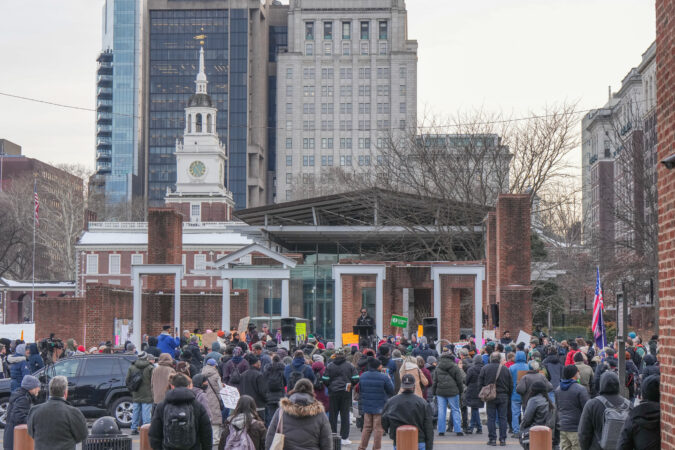
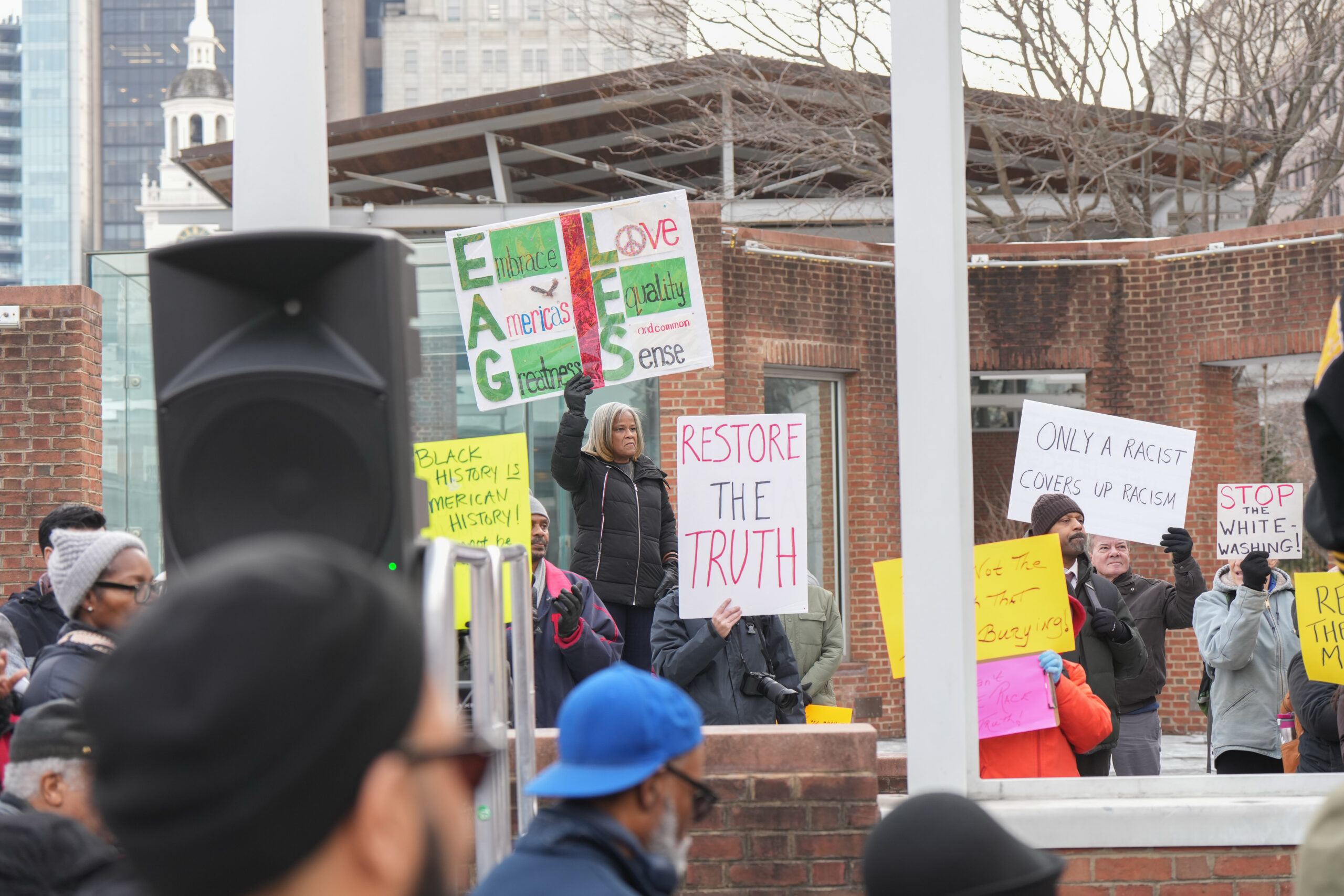
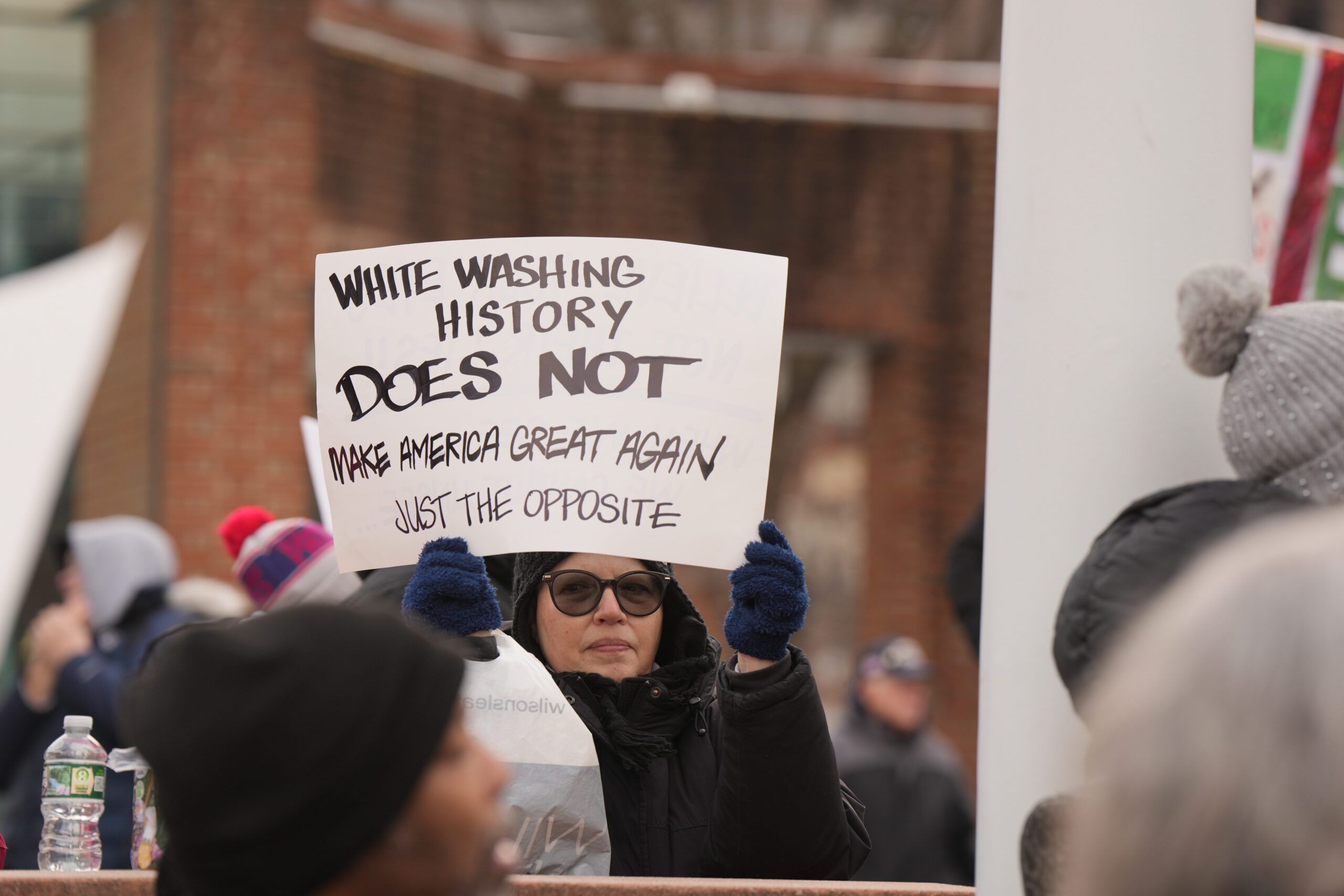
    A couple of hundred supporters and local leaders organized by the Avenging the Ancestors Coalition rallied at the President’s House Site on Tuesday afternoon to demand the restoration of its slavery memorial after the National Park Service removed all of its informational and educational materials last month.

    “History is not merely a collection of celebrated moments,” said Catherine Hicks, president of the NAACP Philadelphia Branch. “This action is a disservice to our city, our nation and denies future generations in the chance to learn from our history, fostering an environment of ignorance rather than understanding.”

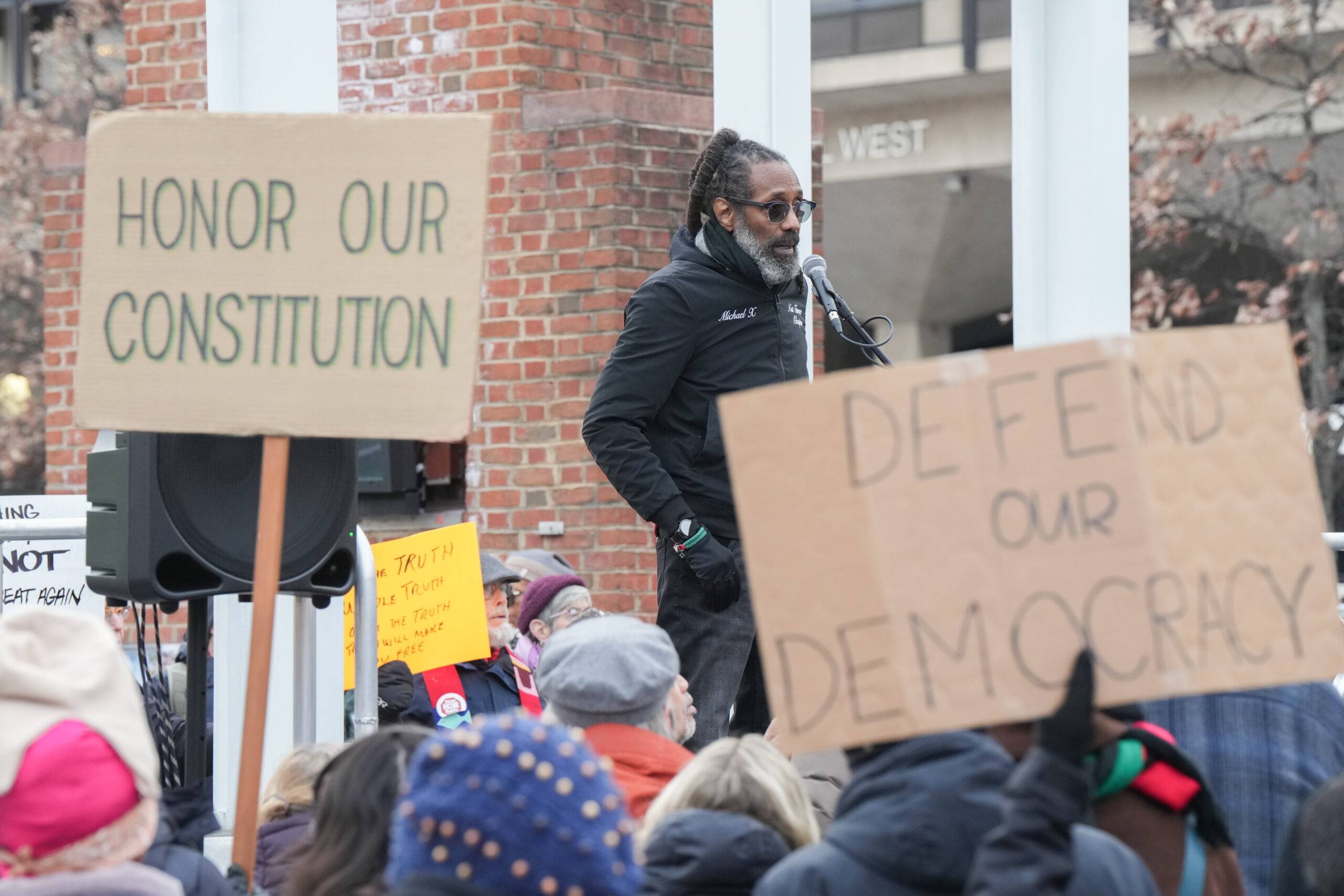
    “This site is historic, holy ground,” said Michael Coard, an attorney and founding member of ATAC. “So now what? Now, we fight the good fight.”

    Lawyer Michael Coard speaks at a rally at the President’s House Site in response to the removal of the President’s House exhibit.

    ATAC was instrumental to the creation of President’s House on Independence Mall in 2010, a site that honors the nine people enslaved by George Washington while he lived at the precursor to the White House. The structure at Sixth and Market Streets featured video displays, illustrations and text-filled panels about the Atlantic slave trade and life under slavery, and detailed Washington’s dogged support for the institution.

    Those exhibits were dismantled on Jan. 22, following directives from President Donald Trump’s administration to review and remove displays in National Parks that “inappropriately disparage Americans past or living.”

    Thirteen exhibits from the President’s House were flagged for review this summer.

    Mayor Cherelle L. Parker’s administration filed a federal lawsuit against Interior Secretary Doug Burgum and acting National Park Service Director Jessica Bowron, and their respective agencies, on the day the panels were removed. The complaint argues that dismantling the exhibits was an “arbitrary and capricious” act that violated a 2006 cooperative agreement between the city and the federal government.

    Following a Jan. 30 hearing in which District Judge Cynthia M. Rufe called the federal government’s argument that a president can unilaterally change the exhibits displayed in national parks “horrifying” and “dangerous,” and after a Feb. 2 inspection of the removed panels, as well as the President’s House site, the court ordered that the exhibits be kept safe.

    The city filed an updated lawsuit with a new injunction request for the restoration of all the exhibits to the President’s House as they were the day before their removal. The federal government has until the end of the week to respond to the new filings, and another courtroom showdown is expected to follow.

    Philadelphia’s collar counties filed on Monday a joint brief in support of the city’s lawsuit, joining previous briefs by Gov. Josh Shapiro, Democrats in Pennsylvania’s state Senate, and the advocacy groups who pushed for the creation of the exhibit.

    “Attempts to unilaterally rewrite history will deprive residents and visitors” of the collar counties “of the full and accurate picture of the nation’s founding to which they are entitled,” the brief says.

    The panels are currently being held in a storage facility owned by the National Park Service that is adjacent to the National Constitution Center, according to a legal filing by the Trump administration.

    People gather for a rally at the President’s House Site in response to the removal of the President’s House exhibit in Old City.

    Can’t hide the truth

    Ever since the panels were taken down with crowbars and wrenches, there has been an outpouring of support for the memorial to be restored, and outrage toward the Trump administration.

    “If you want to hide the truth of slavery in Philadelphia, you might as well tear down the whole city because it was built on the blood of my people. You cannot hide the truth,” said Solomon Jones, a radio host and columnist for The Inquirer.

    “To erase slavery is to erase American history. That would be to erase Mount Vernon, to erase Wall Street … because those structures were built by enslaved labor,” said Yvonne Studevan, a seventh-generation descendant of Mother Bethel AME’s Bishop Richard Allen.

    Judy Butler, a South Philadelphia resident, said she was both heartbroken and angry once she learned that the President’s House exhibits were going to be removed.

    “I felt violated, disrespected,” she said.

    Butler, 66, said she’s been inspired watching from afar as people in Minnesota have braved the frigid temperatures to protest, observe and resist ICE’s occupation of the Minneapolis area. Coming to ATAC’s rally was something she felt she had to do.

    “They’re taking down our history. … How deplorable is that?” she said.

    People gather for a rally at the President’s House Site in response to the removal of the President’s House exhibit in Old City.
  • The Schuylkill is frozen, but that doesn’t mean you can ice fish on it

    The Schuylkill is frozen, but that doesn’t mean you can ice fish on it

    Have you been looking longingly at your fishing gear during the Philadelphia winter? Are Deadliest Catch reruns not hitting the same?

    With the surface of the Schuylkill River still frozen solid and frigid temperatures returning this weekend, a reader asked through Curious Philly, The Inquirer’s outlet for answering questions, whether they were allowed to ice fish on it.

    Ice fishing, after all, is a practice that began with subarctic Indigenous peoples thousands of years ago, well before the advent of the modern fishing rod in the late 1700s. Fishing along the Schuylkill is accepted and celebrated in warmer temperatures, so what about its frozen cousin?

    Unfortunately for those Philadelphians dreaming about an Arctic lifestyle, the answer is no.

    “Ice fishing is illegal in Philly,” Philadelphia Police Department spokesperson Sgt. Eric Gripp said by email. The practice is not explicitly outlawed, but walking out onto the ice in order to carve a hole and cast a line underneath violates city rules.

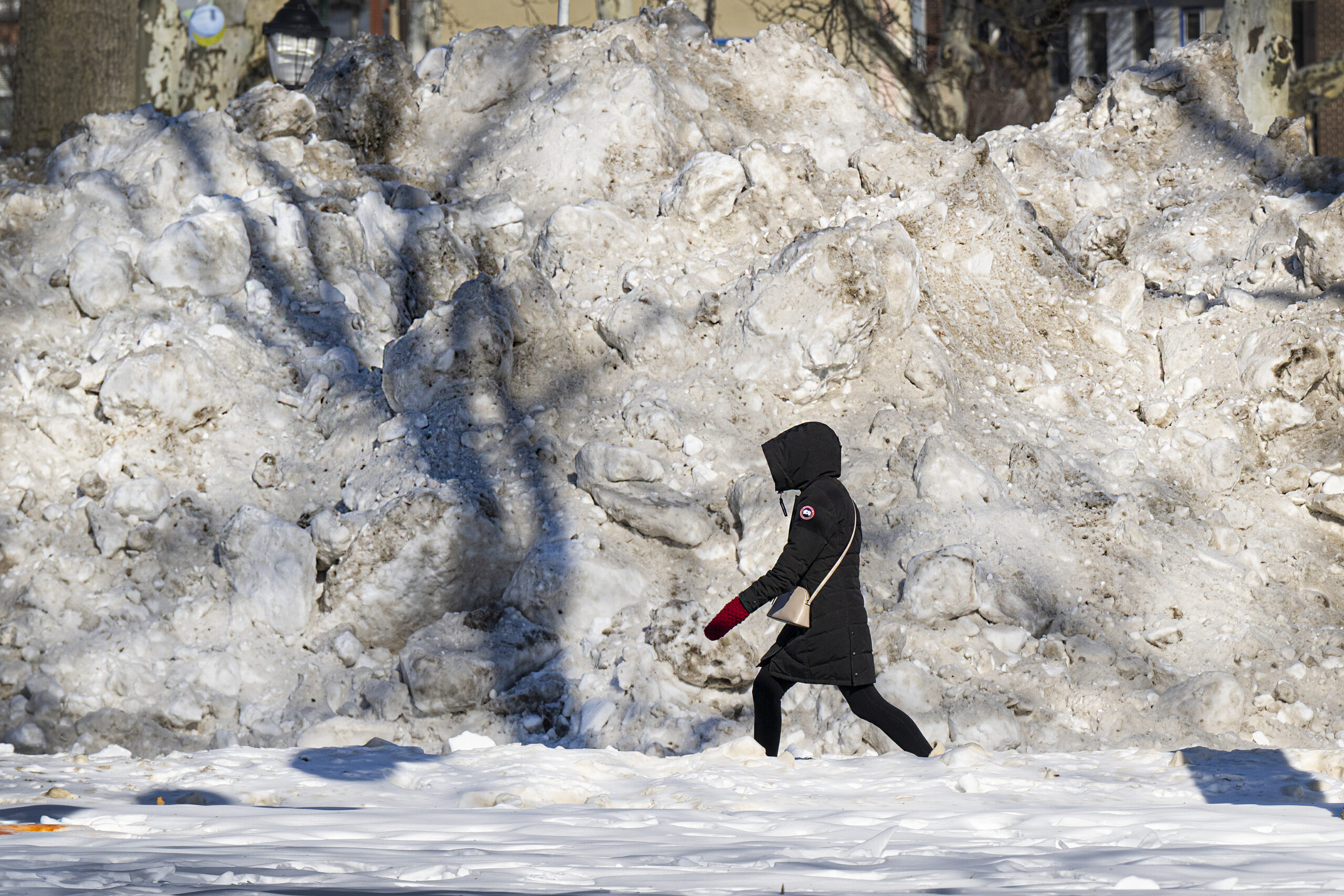
    A pedestrian walks past a large pile of snow and ice along the Benjamin Franklin Parkway on Monday.

    “You can’t walk, swim, or be in/on the waterway — unless in a vessel — regardless as to whether or not it’s frozen,” Gripp said.

    Philadelphia police began spreading the message to not venture out onto the frozen Schuylkill this week, after local CBS News video captured several adults and children walking across it Sunday. The Police Department’s directive on code violation notices lists ice skating, skiing, and sledding in some areas of Fairmount Park as potential offenses.

    Ice fishing could put you in violation of a few city ordinances, too. While you would likely be subject only to a summary offense and a $25 fine for each violation, police say you would be breaking rules about using areas managed by Parks and Recreation outside of their approved use, and risk violating the ban on “swimming” or wading out onto any Philadelphia creek, lake, river, or stream.

    » ASK US: Have something you’re wondering about the Philly region? Submit your Curious Philly question here.

    Even though the Schuylkill’s frozen surface may be several inches thick in certain locations, ice’s integrity can’t be judged based upon only how it looks, how fresh it is, or the temperature outdoors, according to the Pennsylvania Fish and Boat Commission. Ice’s strength is also informed by several other factors, including the depth of the water underneath the ice, and nearby fish activity.

    “Anyone that walks onto the Schuylkill River, … they’re taking their life into their own hands. It’s not a smart thing to do,” said commission spokesperson Mike Parker. Parker said the commission highly advises against walking on top of or fishing on the frozen surface of any moving body of water, like a river.

    “There’s no such thing as safe ice,” in those cases, he said.

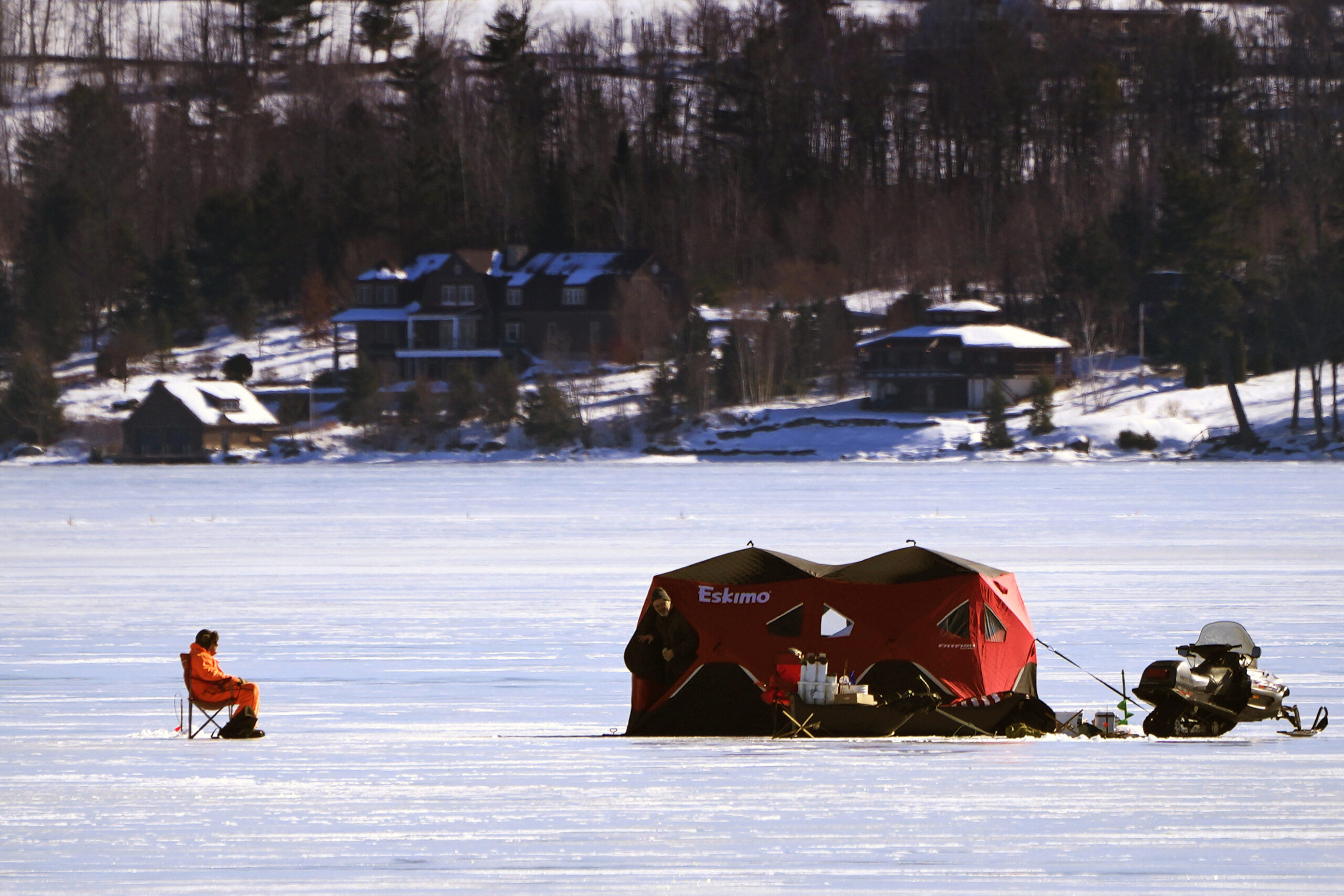
    A fisherman sits in the sun outside a pop up shelter while ice fishing on frozen Lake Wentworth in Wolfeboro, N.H.

    But ice fishing can be relatively safe on still bodies of water, like lakes and ponds. As general guidelines, the fish and boat commission advises that anglers fish only on those bodies of water when ice is at least five inches thick, and never to go out onto ice alone.

    If you are still interested in ice fishing during the region’s cold spell, the Fish and Boat Commission offers a map of approved ice fishing destinations across the state.

    The closest ones to Philadelphia include Deep Creek Dam in Montgomery County; Marsh Creek Lake, in Chester County; and Lake Galena in Bucks County.

  • A ‘vital’ Norristown day shelter is racing to find its own new home

    A ‘vital’ Norristown day shelter is racing to find its own new home

    A lifeline for Montgomery County’s low-income and homeless residents is running out of time.

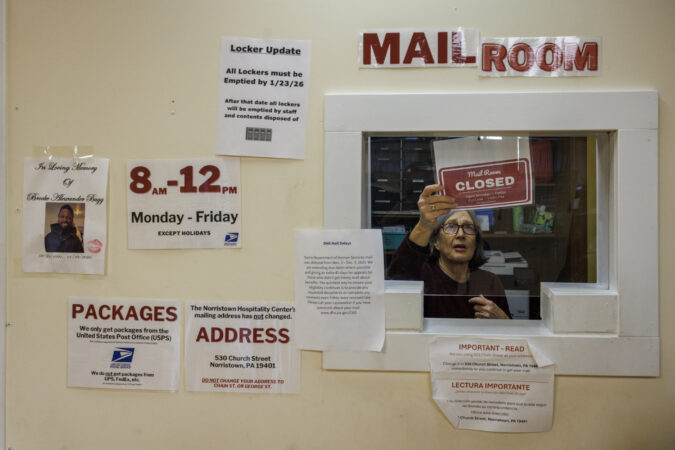
    The Norristown Hospitality Center, a nonprofit day shelter offering free meals, showers, laundry, legal aid, and other services, must move out of its home by the end of January.

    Last year, the Hospitality Center offered services to 1,400 people, roughly a third of whom lacked housing, according to executive director Sunanda Charles. No other similar day shelters offer the same array of services in the immediate area.

    “The community would be losing a very vital resource,” Charles said.

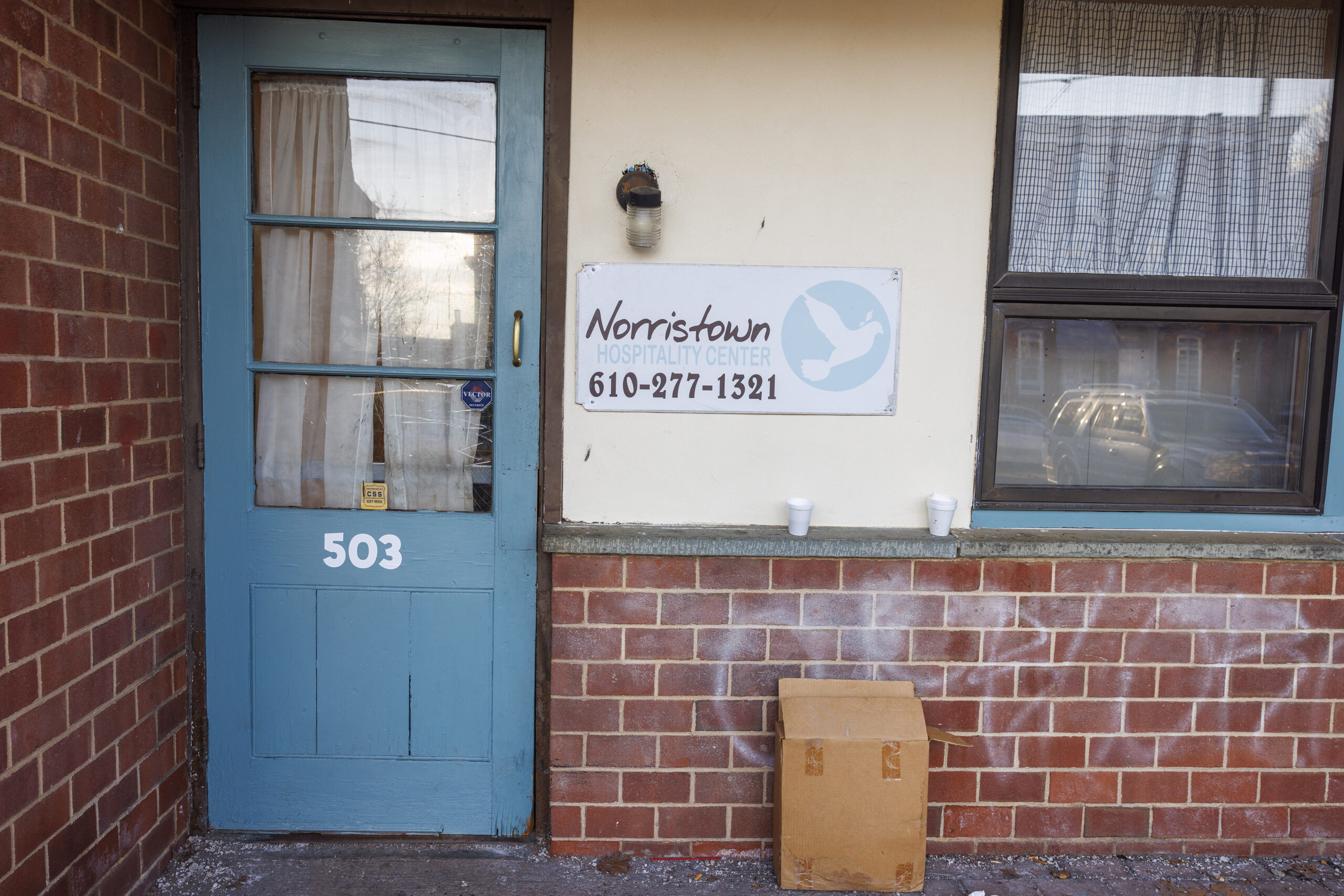
    The Norristown Hospitality Center, which provides services for the homeless, is looking for a new location.

    The Hospitality Center, which opened in 1992, has been heading toward this inflection point since it vacated its home of over two decades at 530 Church St. by the end June 2025.

    It arranged a six-month lease with the Senior Adult Activities Center of Montgomery County, originally set to expire on Dec. 31. The center was granted a one-month extension, but is still searching for its next temporary and permanent home.

    Zoning woes

    The Hospitality Center’s search for a new location has been complicated by the organization’s needs and vocal NIMBYism.

    The Hospitality Center’s longtime Church Street home was owned by St. John’s Episcopal Church, which notified the center in 2024 it needed to vacate the building. Charles said the church told them it was because of concerns about the optics of visitors loitering outside. The notice came as a surprise, she said, but they were given a year to find their next location.

    St. John’s Rev. Christopher L. Schwenk disputed Charle’s characterization of why the church required the Hospitality Center to vacate the building, and said the center did not report property damage in 2023 that required renovations, and failed to pay rent on time for seven months of that year.

    “After months of conversation with Director Sunanda Charles, and then the Center’s Board, we made the difficult decision to end their lease due to breach of contract. Director Charles’ characterization of this decision as rooted in ‘the optics of loitering’ is as disappointing as it is false. We see Christ in the faces of our neighbors living in homelessness and are proud to continue serving them right here on Church St.,” he said in a statement.

    The Hospitality Center only shut down for three days as staff moved operations to the Senior Activities Center, but they knew this home would be temporary. Charles said the Senior Activities Center received funding for extensive renovations through the American Rescue Plan Act, which would expire if they don’t begin construction soon.

    After a process of careful planning and community outreach, the Hospitality Center identified a new building at 336 E. Moore St. and entered a purchasing agreement for it in December 2024.

    Mike Kingsley, program manager at the Norristown Hospitality Center, greets clients as they enter the center for breakfast Friday.

    But doing so required a zoning variance request, which brought the matter before the Norristown Zoning Hearing Board in May. The proposed building was located in a residential area, which ignited the public. Norristown residents testified for hours both for and against the Hospitality Center’s move, with some speaking about the essential services the center provides, while others worried about those suffering from substance abuse loitering where their children are.

    The board ultimately voted 2-1 against the center’s request.

    “I get to see firsthand those who are truly living on the margins of the city of Norristown. It is extremely disappointing — the whole ‘not-in-my-backyard’ attitude — it’s disheartening,” the Rev. Andrea Gardner, board president of the Norristown Hospitality Center, told The Times Herald following the vote.

    Charles said that the Hospitality Center has learned important lessons about the regulatory process and building community support from that experience as it searches for other options.

    But most potential properties in Norristown would require a similar variance request or special exemption for the Hospitality Center to move in. When that time comes, Charles anticipates needing to argue again for the center’s existence in the heart of Norristown.

    “These are people in the community. It is the community’s responsibility as well. Everyone can make a difference. And sometimes, the difference may be in the perspective of how you view people,” she said.

    Staying in position

    Until the Hospitality Center’s future is settled, Brian Van Scoyoc plans to keep spending every day there that he can.

    Van Scoyoc, 54, has been homeless for about five years, since the Norristown home he shared with his ex-girlfriend caught fire and burned down. His ex had to pull him back from jumping into the blaze to rescue his dog, Loggie, who died in the fire.

    “I got sort of displaced and didn’t know where to go or what to do,” he said.

    He’s worked odd jobs here and there, spending his nights at a shelter or in a tent in the woods. But his visits to the Hospitality Center have been a welcome reprieve.

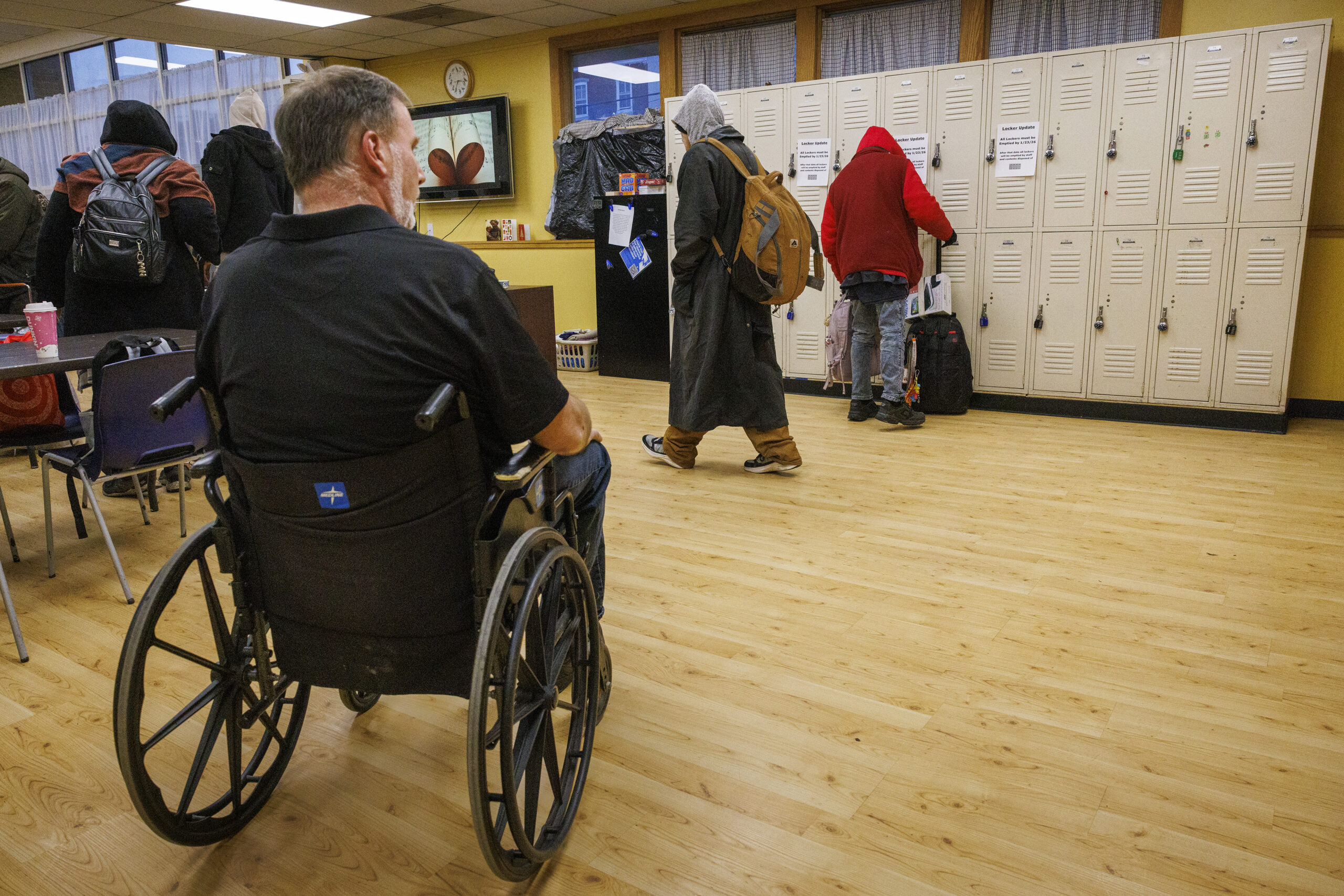
    He comes for coffee and breakfast to start his day, a pleasant escape from the cold early mornings after the overnight shelter closes its doors. He enjoys the chance to chat, watch TV, and play games with the other visitors, and appreciates the center’s laundry and legal aid services. Having a place to plug in his phone and store his belongings in a locker are helpful too, he said.

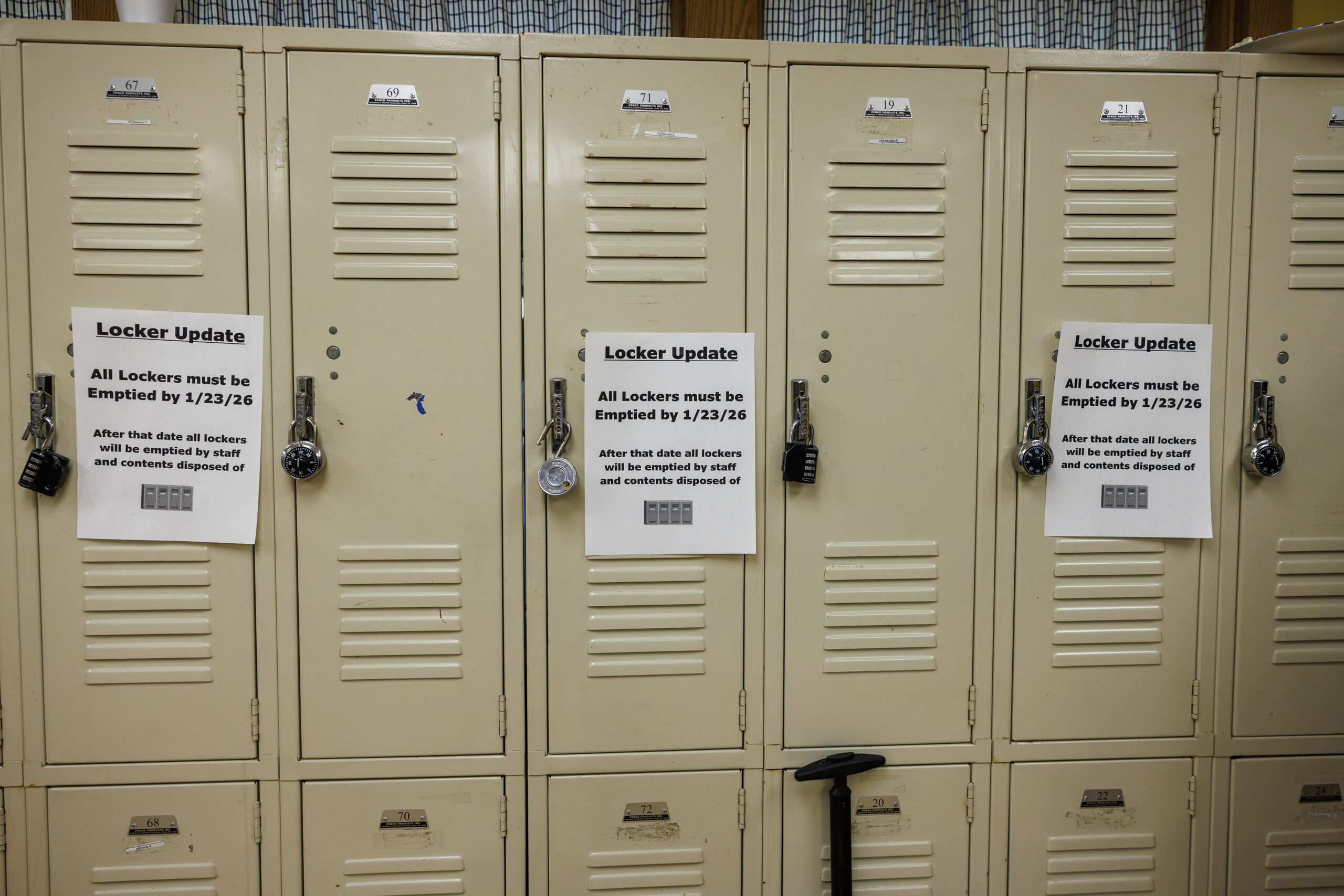
    Lockers at the Norristown Hospitality Center have been posted so clients know to empty them by Jan. 23.

    Van Scoyoc recently picked up frostbite after spending a night in his tent when he believes he didn’t let his wet feet dry properly. It’s difficult and painful for him to walk, so the center has helped arranged rides for him to get around.

    If the Hospitality Center were to close for an extended period time, Van Scoyoc said it would be a great distress.

    “It’s a great place to be. You should go check it out,” he said.

    As news has spread of the center’s plight, Charles said she’s received countless calls and emails from people who used its services in the past. They’ve expressed their support and gratitude, as well as their sadness at hearing that the center is up against the clock.

    One voicemail in particular has kept Charles motivated. A woman who spent time at the center in 2009 called her to share that she has been sober since connecting them, and is no longer homeless. She said in her message: “God is going to do a wonderful thing for you. Stay in position,” according to Charles.

    “We do believe there is a plan for us. And we are excited about it,” Charles said.

  • Philly has begun an $11.5 million beautification and anti-graffiti project before its big summer

    Philly has begun an $11.5 million beautification and anti-graffiti project before its big summer

    Philadelphia is cleaning up before the company gets here.

    Work is underway for a $11.5 million beautification and anti-graffiti project ahead of Philly’s coming summer of major events.

    The initiative will focus on major transportation gateways to the city. Each location will receive graffiti removal, new landscaping, fresh murals, and enhanced maintenance before visitors flock to Philly for the World Cup, the nation’s semiquincentennial, and the MLB All-Star Game.

    “We are ensuring that Philadelphia makes the right first impression as we prepare to welcome the nation and the world,” said Mayor Cherelle L. Parker at an event announcing the Gateways to Philadelphia initiative Friday.

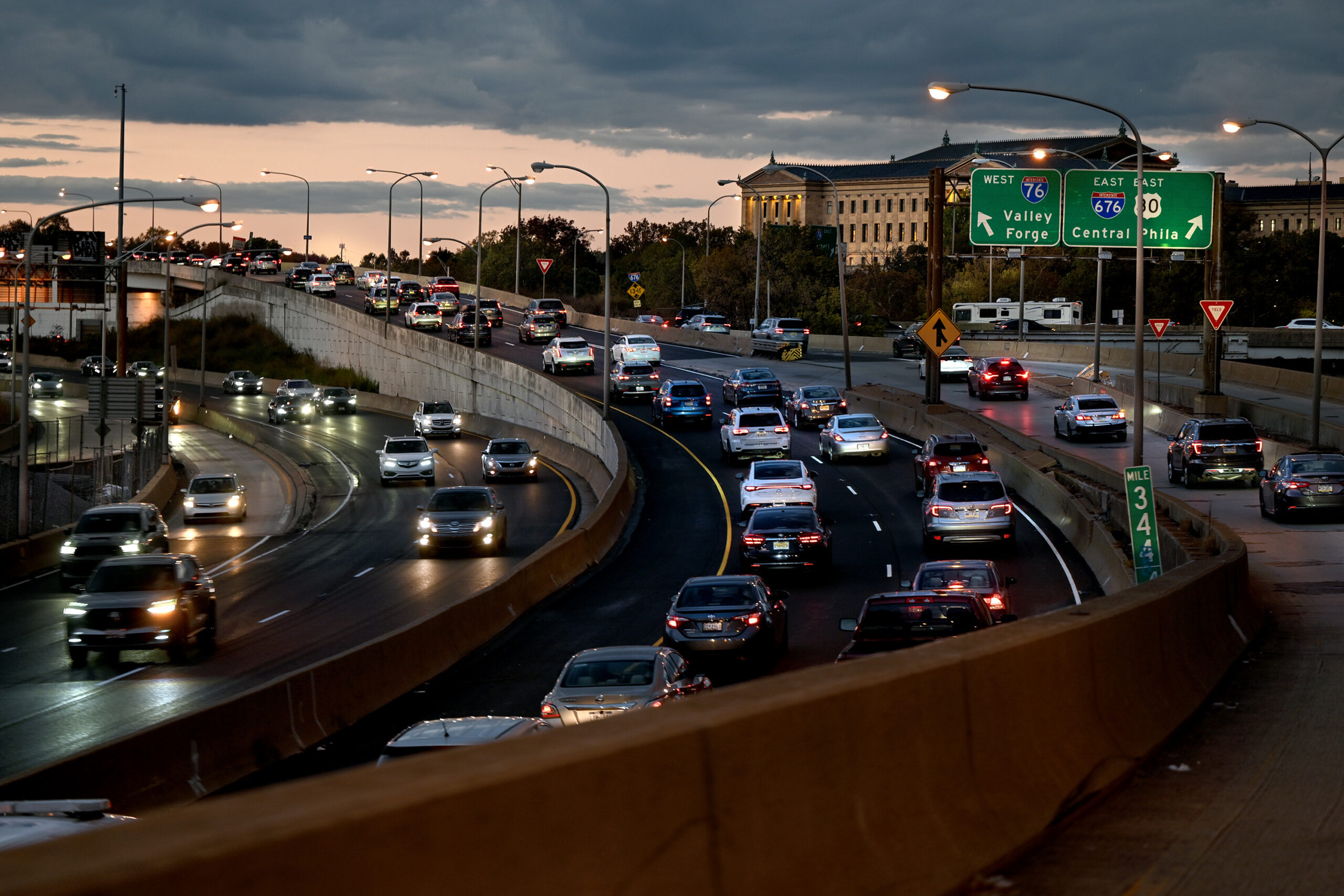
    Traffic on Interstate I-76 (Schuylkill Expressway) in Philadelphia Oct. 26, 2025. The Gateways to Philadelphia initiative will target several high traffic areas along the roadway.

    “This is our moment to make Philadelphia shine on the world’s biggest stage,” said Carlton Williams, director of the city’s Office of Clean and Green Initiatives.

    The project is led by a partnership between the city, Mural Arts Philadelphia, and the Pennsylvania Horticultural Society. It is funded by $6.5 million from the city, $3.5 million from the Pennsylvania Department of Transportation, private donations, and philanthropy.

    The beautification work will focus on seven locations in its first phase, including:

    • 26th Street at Penrose Avenue
    • South Street Bridge and ramps
    • 30th Street Station’s “honeycomb wall” and medians
    • I-76 and I-676 interchange at 15th and 16th Streets/Vine Street
    • I-76 and I-676 interchange at Sixth and Eighth Streets/Callowhill Street
    • I-76 and I-95 interchange at Second and Third Streets at Callowhill Street
    • CSX/Amtrak wall at Spring Garden Street

    Parker said that similar projects would be rolled out to other locations in the future. Work began in the fall, including the planting of 95,000 bulbs in the green spaces alongside roadways that are normally barren or filled with weeds. The project uses gold ribbons as a theme and color palette, with matching flowers and repainted walls.

    “This project is about elevating people’s experience, perception and expectations of Philadelphia, whether they live here or whether they’ve visiting for the first time,” said Pennsylvania Horticultural Society President Matt Rader.

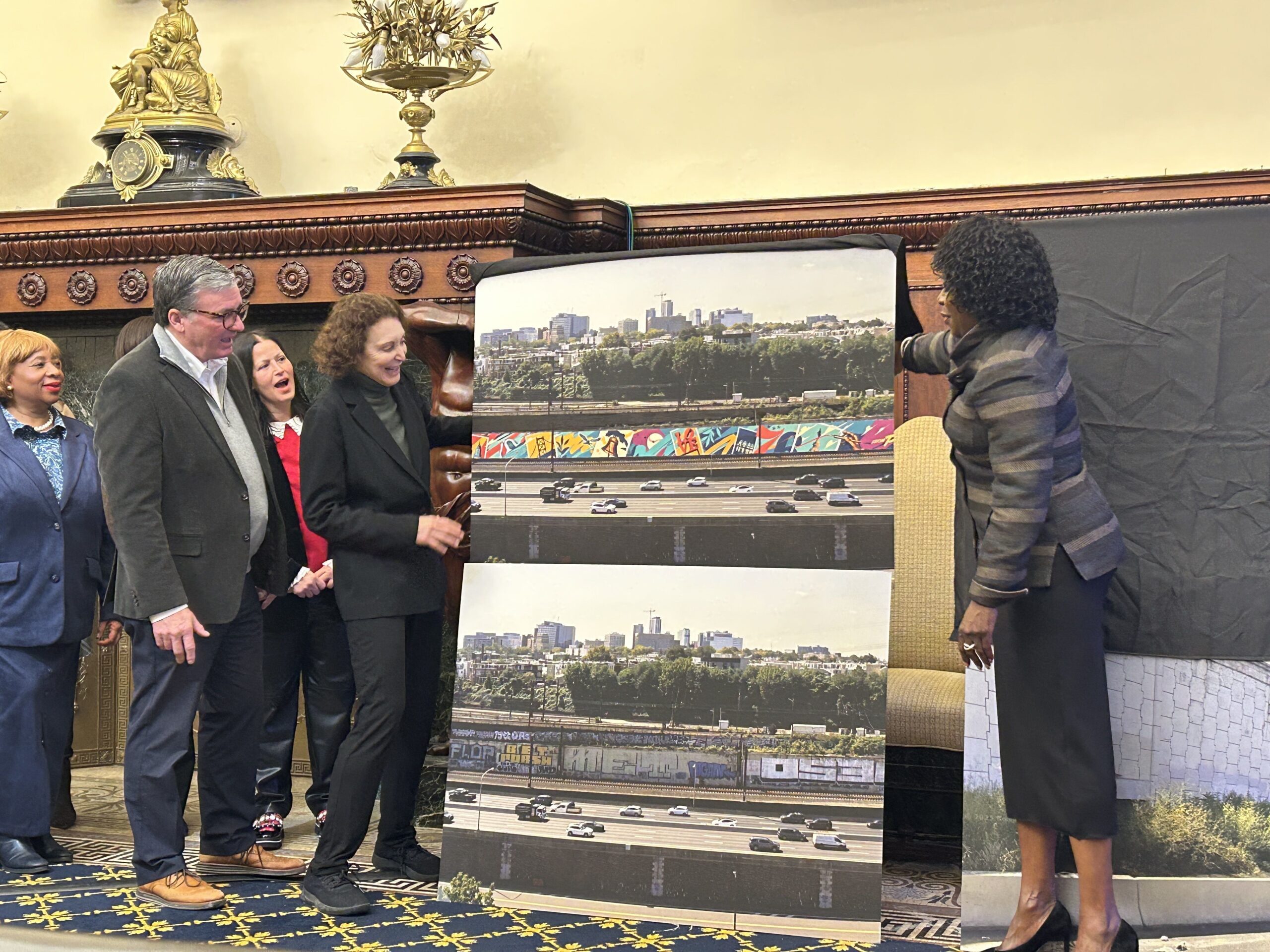
    Mural Arts Philadelphia’s work will range from smaller murals of flowers on the blank walls hugging the interstate, to a wide Philadelphia landmark-themed mural on the CSX/Amtrak wall. Much of the mural construction will take place at night to avoid travel interruptions, but there could be some shutdowns coming on the Amtrak corridor to accommodate work, according to executive director Jane Golden.

    “Creativity belongs in public life, and even the most utilitarian of spaces can reflect care, dignity and imagination… it makes the shared spaces of our city feel alive with hope, with possibility and with beauty,” she said.

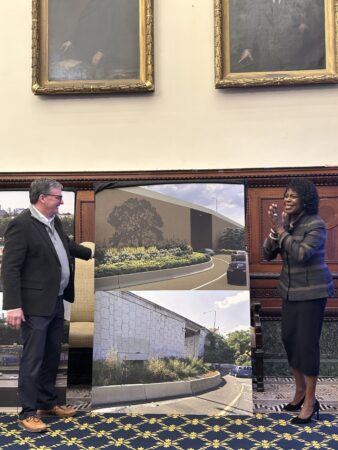
    Mayor Cherelle L. Parker and Jane Golden, Executive Director of Mural Arts Philadelphia, reveal a mockup for a new Philadelphia themed mural design coming to the CSX/Amtrak wall at Spring Garden Street. Their pasteboard shows a current look at the wall, which is filled with graffiti.

    While the project is happening largely because of visitors, speakers said they understood the need to maintain these new features for the city after the events end. PennDot’s $3.5 million contribution is meant to cover long-term maintenance.

    “As much as we want to welcome… the folks that visit Pennsylvania in 2026, it’s as much about that as it is about the folks that live in Fishtown and in South Philly,” said Pennsylvania Secretary of Transportation Michael B. Carroll.

    “This is about Philadelphia remembering who we are and getting our own house in order and making sure that it stays in order even after the company leaves,” Parker said.

    Parker said she intends for this initiative to have an impact on shaking what has become maybe Philadelphia’s most infamous nickname.

    “I’m unapologetic about this — we’re going to get rid of that ugly moniker ‘Filthadelphia,’“ she said.

  • Camden reaches its lowest homicide total in 40 years

    Camden reaches its lowest homicide total in 40 years

    The city of Camden last year reached its lowest homicide total since 1985, police said.

    In 2025, Camden recorded 12 homicides, the same number as in 1985. Homicides dropped down from 17 in 2024, and the declining year-end total comes after Camden experienced its first homicide-free summer in 50 years.

    Camden saw an overall 6% drop in violent crime in 2025 compared to the prior year, including a 32% decrease in sexual assaults and 12% decrease in robberies, according to police.

    “The consistent engagement with residents and community policing efforts have helped to build trust within our community,” said Camden Mayor Victor Carstarphen in a statement. “There is still plenty of work yet to be done, but through this collaborative effort we are building a safer and healthier Camden.”

    window.addEventListener(“message”,function(a){if(void 0!==a.data[“datawrapper-height”]){var e=document.querySelectorAll(“iframe”);for(var t in a.data[“datawrapper-height”])for(var r,i=0;r=e[i];i++)if(r.contentWindow===a.source){var d=a.data[“datawrapper-height”][t]+”px”;r.style.height=d}}});

    Leaders have attributed the shift largely to the disbandment of the city of Camden’s police department in 2013. Since then, the replacement Camden County Police Department and the city have embraced more community policing strategies, paired social workers with officers, and supported programming that provides better opportunities and care for at-risk youth.

    Homicides have dropped by 82% since 2012, the last full year of the former police structure. But leaders have also credited the city’s investments in third spaces and infrastructure in recent years, like $100 million in parks over the past five years and repaving streets.

    Thirteen years ago, “a homicide-free summer would have been a pipe dream for us,” Louis Cappelli Jr., director of the Camden County Board of Commissioners, said in a statement.

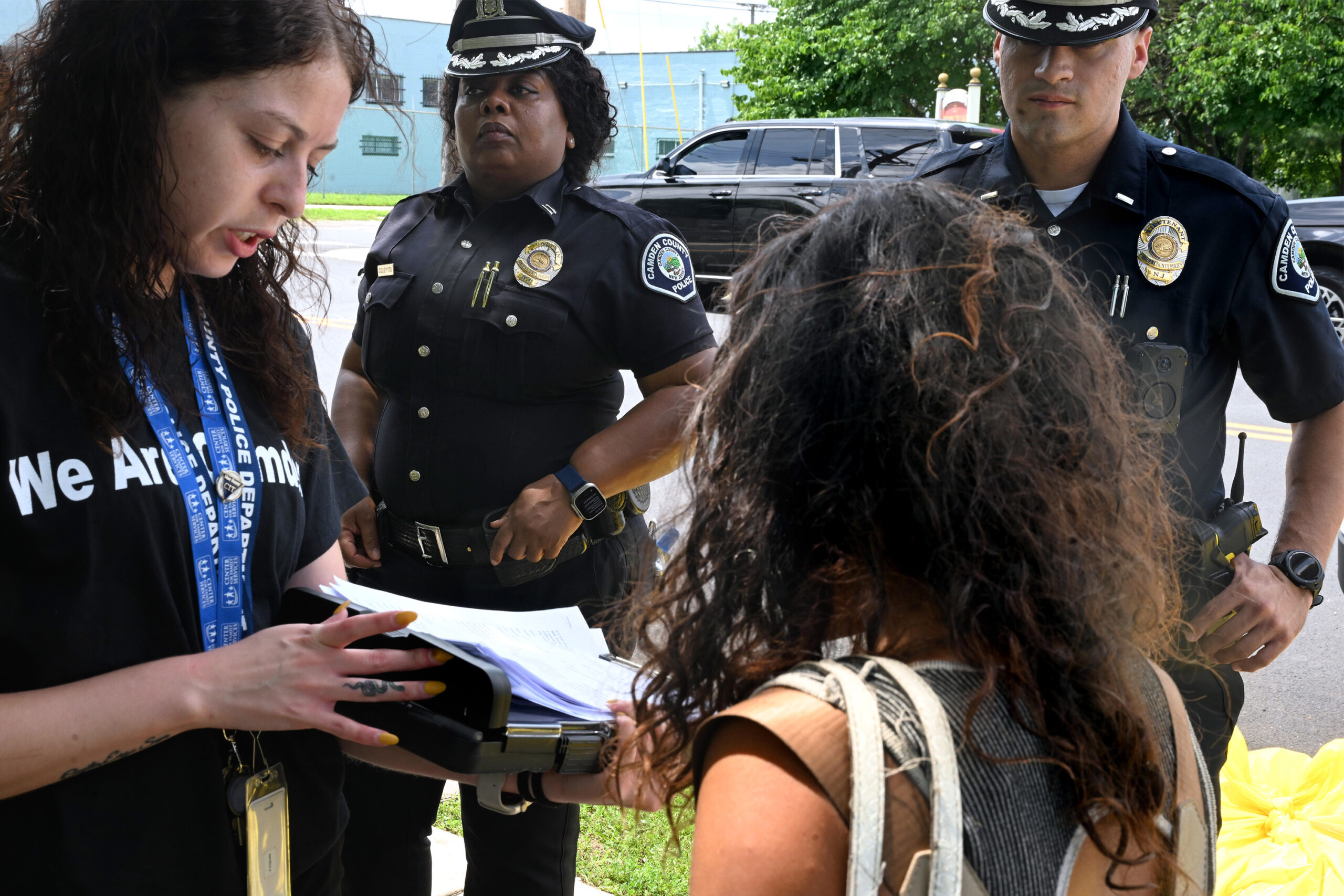
    Center for Family Services lead counselor Lyzza Tyson (left) works with Camden County Metro Police Capt. Vivian Coley (center) and Lt. Luis Gonzalez (right) talking with an unhoused person living in the park at Waterfront South Raingardens in July. Some of the department’s new social workers are stationed inside the downtown police headquarters for walk-ins while others are deployed in the field alongside officers doing door knocks, engaging transients at encampments, and making referrals for social services.

    Camden’s homicide and violent crime rates match national trends of decline after having surged during the pandemic. Philadelphia experienced its lowest homicide total in nearly 60 years in 2025, and other cities historically marked by higher rates of violence like Baltimore and Chicago have also seen major homicide declines.

    Crime researchers have been unable to identify any singular cause behind the nation’s drop in violence, but they theorize that cities, like in Camden, have broadly shifted toward greater investments in violence prevention programs and infrastructure, as opposed to traditional policing.

    window.addEventListener(“message”,function(a){if(void 0!==a.data[“datawrapper-height”]){var e=document.querySelectorAll(“iframe”);for(var t in a.data[“datawrapper-height”])for(var r,i=0;r=e[i];i++)if(r.contentWindow===a.source){var d=a.data[“datawrapper-height”][t]+”px”;r.style.height=d}}});

    For Derrick Gallashaw, life in Camden today feels much different than it did when he was growing up there in the 1980s and ’90s. It was more dangerous back then, and the community’s relationship with police was more strained.

    “It feels like the city is safe now,” he said.

    Gallashaw is the regional director of Mighty Writers, a nonprofit offering afterschool writing programs for youth and food distribution. The Camden County police credited its partnership with Mighty Writers and other groups for helping to reduce violence.

    Gallashaw is a believer in the strategy, too. He said the community policing initiative, paired with support for programs like his, have made a major impact on reducing violence. They are able to reach more people in need and address the conditions that often lead to crime.

    “You give them options and you’re providing a need. If someone is hungry, you’re not giving them a reason to have to go out and steal something to eat. We’re finding a resource for you right now,” he said.

    As Camden resets its violence statistics at the new year, Gallashaw said sustaining the city’s success would require leaders to continue listening to community members about their needs and not impose solutions from the top down.

    It’s not just the city and police who are responsible for keeping the numbers low — he wants groups and community members to continue filling people’s needs as well.

    “We all have to get together because it expands that reach,” he said.

  • Are you satisfied living in Philadelphia right now? For many, the answer is ‘no.’

    Are you satisfied living in Philadelphia right now? For many, the answer is ‘no.’

    Do you like living in Philly?

    In a global survey that asked residents of 65 large cities how satisfied they were with where they lived, Philadelphia came in almost dead last, according to the Gensler Research Institute. Only about 59% of Philly respondents said they were “satisfied” or “very satisfied” about living here.

    And among U.S. cities, Philly ranked 26th out of 27, with peers like New York City at nearly 70% satisfaction and Detroit and Columbus, Ohio, at 66%.

    But satisfaction is subjective, and surveys are not gospel. As a tumultuous year comes to a close, here is what a handful of neighborhood leaders across the city had to say about living in Philly today, the issues that matter most to their communities, and what still makes them excited to be Philadelphians.

    Life feels harder and more expensive

    “Things just feel a lot harder and a little bit more expensive,” said Jamila Harris-Morrison, the executive director of ACHIEVEability, a West Philly anti-poverty nonprofit focusing on single-parent and homeless families.

    This year, ACHIEVEability has received more requests for assistance than ever before, she said. Inflation has created financial pressure. “We’re talking about people who are working full-time jobs or maybe two jobs and feeling like they can’t make ends meet,” she said.

    That pressure has led West Philly’s young people to pick up any side hustle they can, like photography and sneaker cleaning. Some dismiss the idea of going to college or trade school, Harris-Morrison said, because they need money and resources now, not years down the line.

    Latisha White gathers at a balloon Release in memory of her nephew Maurice White, 19, at Level Up, in Philadelphia, July 10, 2024. White was killed in a drive-by shooting that injured eight others at a July 4th gathering in Southwest Philadelphia.

    Harris-Morrison hears them talk about aspirations to get out of their neighborhoods one day, but not necessarily out of Philly. And their adult counterparts still hold some optimism, despite recent struggles.

    She said that Mayor Cherelle L. Parker’s H.O.M.E. initiative especially has people energized and looking forward to how it might ease their housing burdens.

    “There’s still a level of hope,” she said.

    Community problem-solving

    Affordability is a major issue in West Mount Airy, too, according to Josephine Gasiewski Winter, executive director of the West Mount Airy Neighbors nonprofit. She said it has become more difficult for people who have lived in the area to stay, and for younger families to buy homes.

    But in general, people are pretty happy to be living in the neighborhood and the city, she said. Her organization was founded in 1959 to make the area one of the first intentionally integrated neighborhoods, and she said people today still value its diversity, plus its access to green spaces and the rest of the city.

    “It is a very magical little corner of Philadelphia,” she said.

    A strong sense of community is a key component of making people feel more satisfied, according to Winter. Recently, neighbors have come together for anti-immigration-raid trainings, and for mutual aid activations when SNAP benefits were paused.

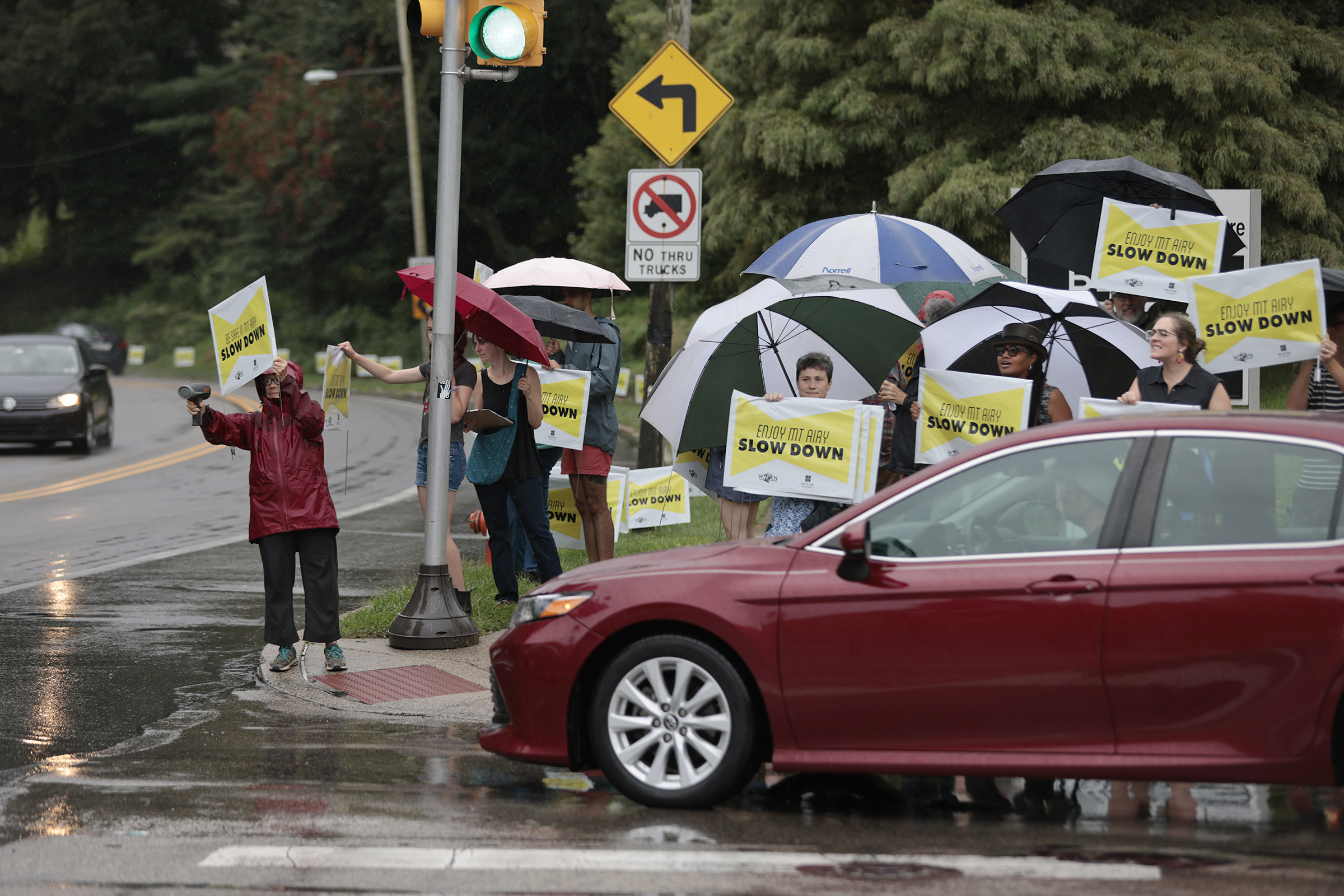
    Local resident Carol Bates (far left) aims a speed gun at passing motorists as members of the West Mt. Airy Neighbors (WMAN), East Mt. Airy Neighbors (EMAN) and other community members hold a Protest Traffic Violence rally at Emlen Circle on Lincoln Drive Lincoln Drive in Phila., Pa. on Sept. 11, 2022.

    “So when it feels like there’s not much you can do, there are people around that are doing things, and they’re united toward that common goal. That is a reason I think why people love living here,” Winter said.

    In South Philly, trash and litter are always top of mind for residents, according to Jimmy Gastner, board vice president of the Passyunk Square Civic Association.

    The problem persists even going into year two of the Parker administration’s twice-weekly trash pickup program in South Philly, so Gastner’s block has a contract with Glitter, a popular sidewalk and street-cleaning business. Gastner said litter in the area is a multifaceted problem that requires improvements to infrastructure but also personal responsibility.

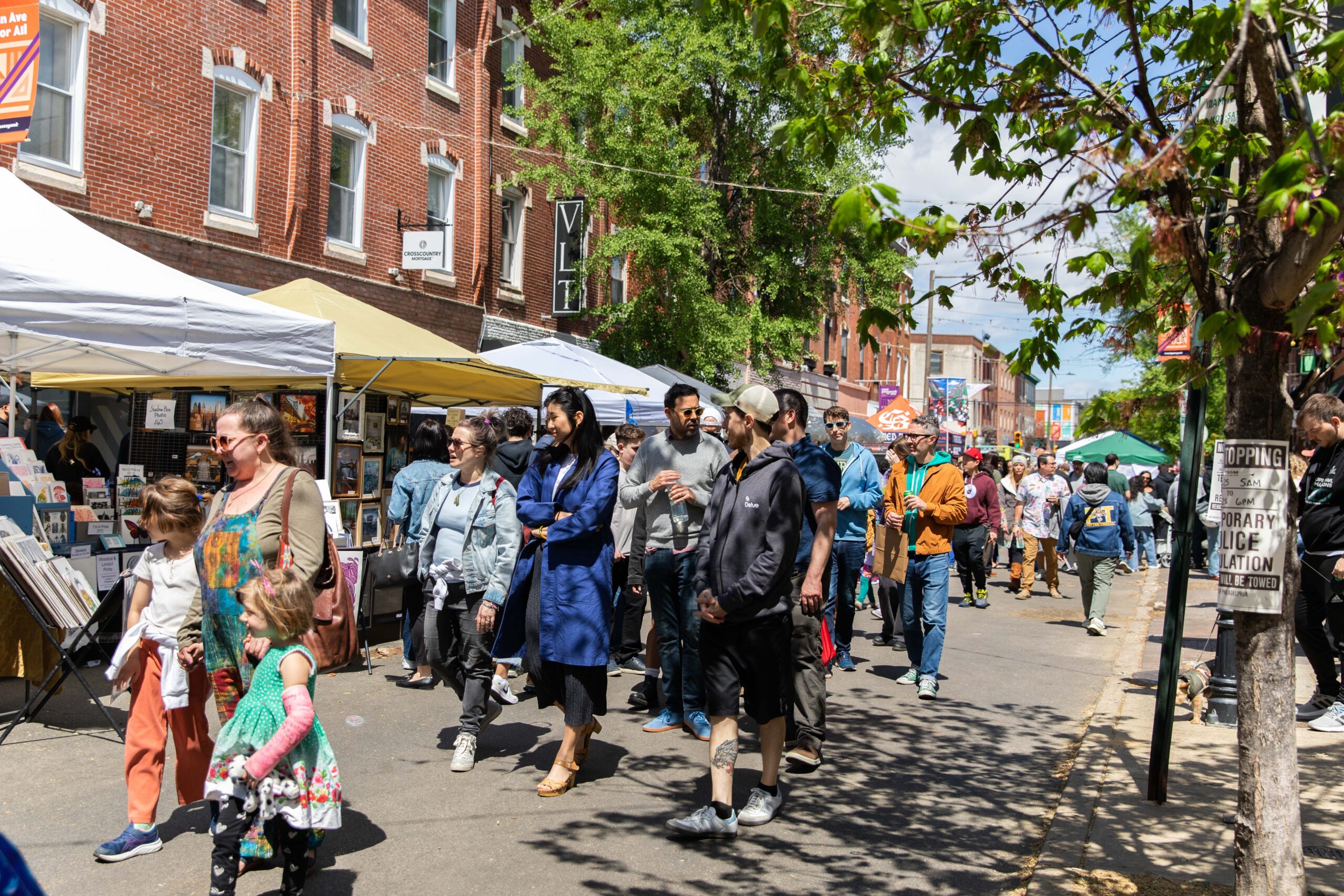
    Attendees pass vendors at the 2025 Flavors of the Avenue Festival, hosted by the East Passyunk Business Corporation, on East Passyunk Avenue.

    He said residents have also shared concerns about maintaining safe, accessible options for transit.

    Gastner still sees people positive and optimistic about their slice of South Philly, boosted particularly by neighborhood schools, parks, and resident groups. People value the restaurants and small businesses, and together it makes residents feel connected to where they live.

    “Particularly coming out of COVID, I think we’re all looking to get that sense of community,” he said

    Uncertainty moving forward

    While Kensington may have a certain reputation to those living outside the neighborhood, lately residents have shared mostly mixed feelings about living there, said New Kensington Community Development Corp. executive director Bill McKinney.

    Their ambivalence is driven strongly by uncertainty. McKinney said people feel unsure about what is coming next from the federal government.

    Theo Caraway of Philadelphia walking his dog Cooper, 6 months, Shitzu/Poodle wearing his Eagles jersey along Kensington at Ontario Street on Philadelphia, Friday, September 5, 2025.

    What the city’s latest plan is for the neighborhood’s unhoused population, its open-air drug market, and those suffering from substance abuse is also unclear to residents.

    “There’s constant movement but not a lot of clarity,” McKinney said. “You’re kind of just waiting for the other shoe to drop because you know the larger thing wasn’t solved.”

    Yet McKinney said there is plenty of positivity around, and it often goes overlooked. Whether or not that adds up to people being satisfied with living there, McKinney said he clearly sees the ways community members are invested in their neighborhood, like reclaiming open spaces to create Kensington’s thriving community gardens.

    His agency hosted a workshop series on housing over the last few months, with hundreds of people coming to learn about housing policies work and how coming plans may affect them.

    At a packed youth town hall cohosted with the nonprofit FAB Youth Philly, many questioned whether Philly was a place where they could see a future for themselves, McKinney said. He hopes that changes — for young people to envision a home here, a family, a job, and a community that they love. It will take major changes and investment, but McKinney thinks it’s possible.

    “I’m here because I love Kensington. I can live anywhere … I believe in it. I believe in the people here,” he said.

  • Some Center City blocks will no longer get sidewalk cleaning

    Some Center City blocks will no longer get sidewalk cleaning

    Philly aspires to be the cleanest city in the nation. Does that include the sidewalks?

    The Center City Residents Association will not renew its contract with Center City District for sidewalk cleaning that is up at the end of this month, the group said in an email to its members.

    The City of Philadelphia does not regularly perform sidewalk cleanings, though recently it has conducted occasional sweeps.

    The residents association said its board made the decision because of rising costs charged by the Center City District. The new rate would have doubled the proportion of the association’s budget going toward sidewalk cleaning in 2026, from 20% to 41%. The association paid $39,600 for sidewalk cleaning in the most recent fiscal year, according to tax forms.

    “We were losing money. It was like, are we going to clean the sidewalks for another year and a half and be dead as an organization?” said association president Nathaniel Margolies.

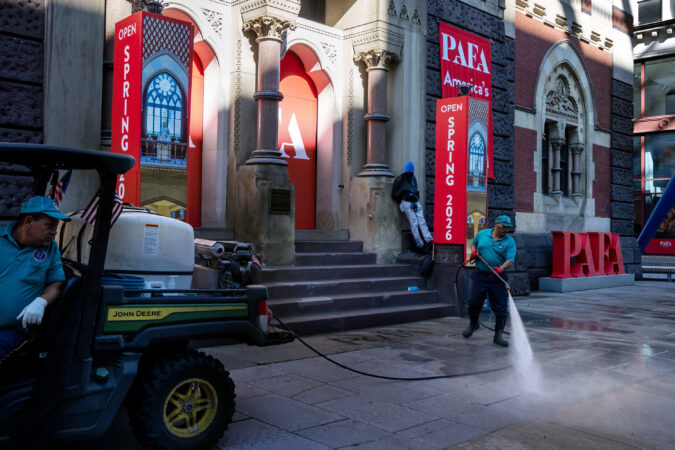
    Hundreds of city workers set out immediately following the Eagles’ four-hour-long victory parade on Feb. 14, cleaning up the mess a million plus fans left behind. Most of the streets and sidewalks along the route were spotless by the next morning.

    The residents association had a long-standing agreement with the Center City District to extend the district’s sidewalk cleaning operations to cover the entire CCRA catchment area — from John F. Kennedy Boulevard to South Street and from the Schuylkill to South Broad Street — at a favorable rate. The cleanings came the day after trash collection.

    Things changed coming out of the pandemic. The Center City District could no longer offer a subsidized rate and its prices climbed.

    “We presented a proposal to the CCRA that reflects the cost of the program, and they chose not to renew. Much of CCRA’s membership is located outside of our district’s boundaries; within CCD’s boundaries, sidewalks are cleaned three times a day and power washed during warmer months,” CCD spokesperson JoAnn Loviglio said in a statement.

    There were other reasons for CCRA to move on. The cleaning wasn’t making a significant difference on some blocks that already had good trash hygiene, Margolies said, and it didn’t make sense to continue asking half of the association to essentially pay twice for sidewalk cleaning, since they’re covered by CCD regardless.

    The residents association has established a Cleanliness Committee to explore other service providers, like Glitter. The popular service positions itself as an affordable option for blocks or neighborhood groups dealing with the same dirty sidewalk problem. Glitter currently cleans 350 blocks that are directly funded by neighbors, typically at $200 per month for weekly cleanings, and another 720 through violence prevention and neighborhood beautification grants, according to its CEO, Brandon Pousley.

    Margolies said it was frustrating that so much of the financial responsibility for keeping clean sidewalks falls upon neighborhood groups and individuals, not the city.

    In Mayor Cherelle L. Parker’s campaign to make Philadelphia the cleanest big city in the nation, her administration has directed resources toward trash collection and curbing illegal dumping. A signature policy has been the introduction of twice-weekly trash pickup, which began in South Philly and Center City last year, and is about to expand to North Philly.

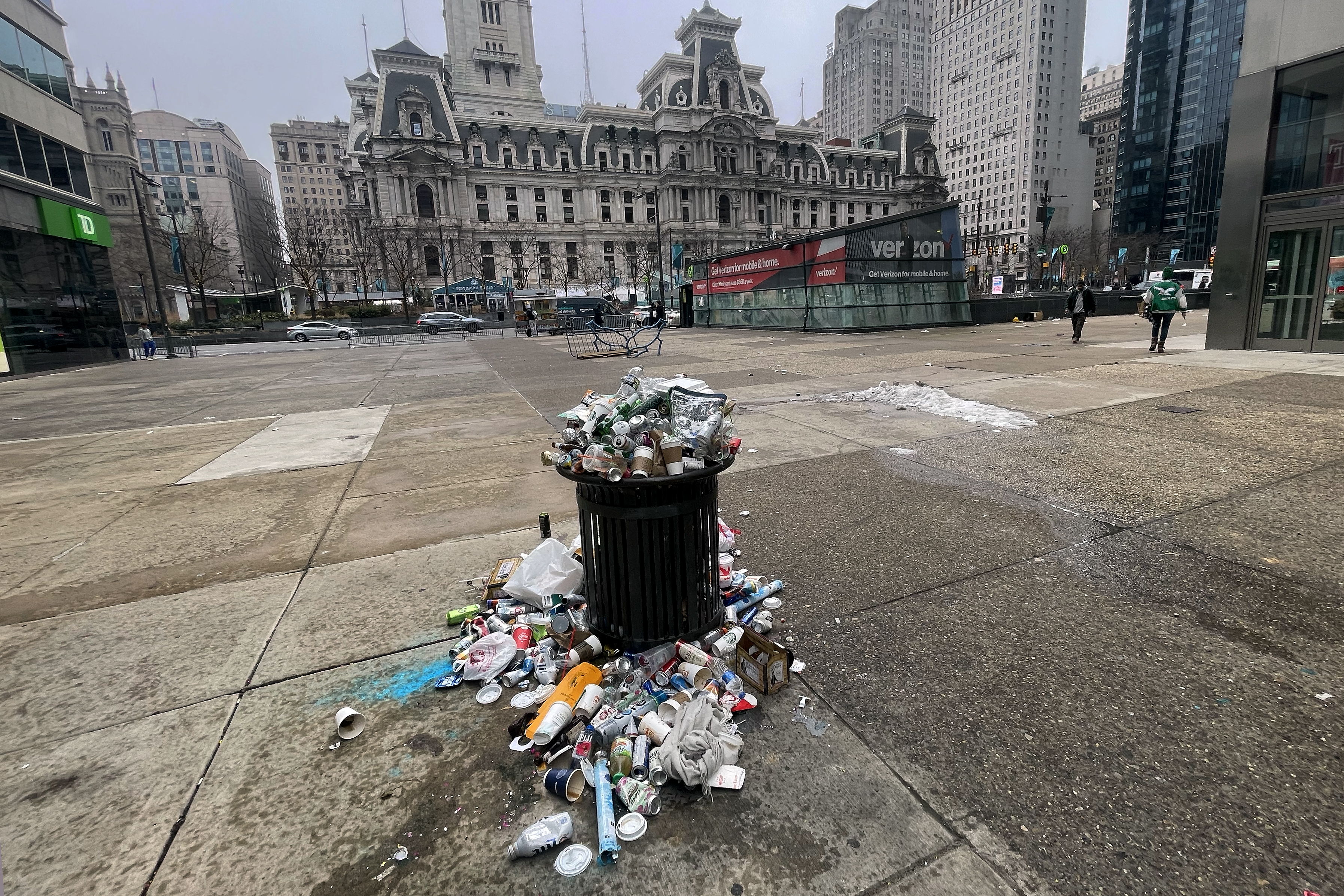
    The extra collection day has been met with a mixed response. Some residents have appreciated holding onto less trash and the city said it’s made a difference on illegal dumping and litter. But other residents have complained that the program has put even more trash on the street.

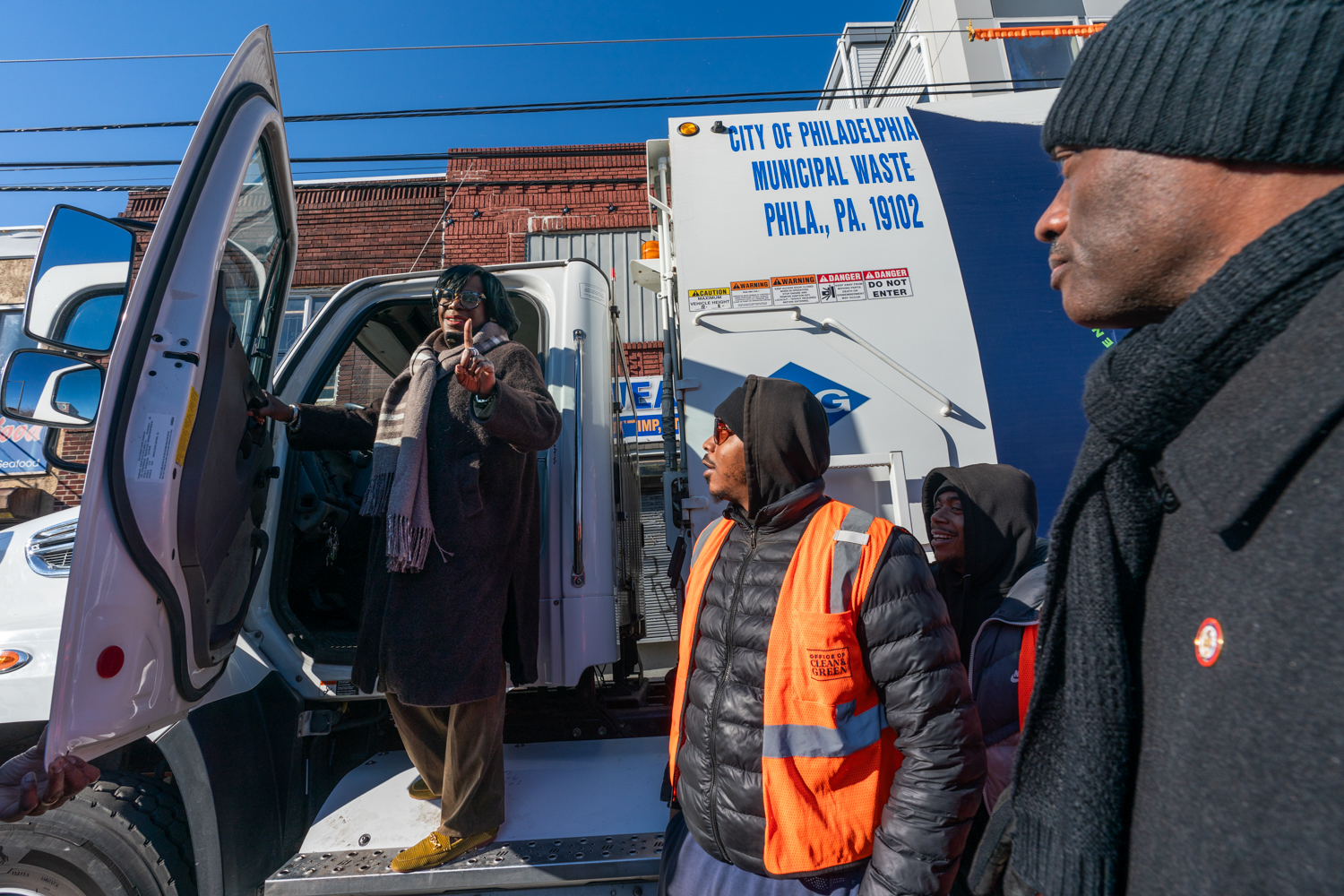
    Mayor Cherelle L. Parker poses for a photo opportunity on a sanitation truck at the Intersection of 1300 block of S. 21st St. and Point Breeze Avenue after a 2024 news conference to announce twice-weekly trash pickups.

    “If you’re gonna add a second trash day without fixing the functional problems of the system, you’re going to create more litter,” said Nic Esposito, the former director of Mayor Jim Kenney’s Zero Waste and Litter Cabinet.

    The city’s Office of Clean and Green Initiatives did not respond to a request for comment.

    Esposito said ideally, there would be a balance of responsibility between the city and its residents to making Philly cleaner. He said he believes that when people see the city government demonstrating care, it motivates residents to get more involved.

    “That’s what makes Philly so amazing. But it really wears on people when you’re trying to do that and before you can even do it, your street’s filthy … why are we expending our hard-earned money to have to do something as basic as cleaning streets?” he said.

    As CCRA weighs what to do about its sidewalks, its cleanliness committee will also advocate with the city, landlords, businesses, and other residents to build better habits and rule enforcement. Margolies said he’s had positive experiences working with the city’s Office of Clean and Green Initiatives, and they have been responsive to residents’ needs.

    Residents have expressed disappointment at the sidewalk cleaning service going away, but once he explains the financial situation, they usually understand, he said. But it’s unclear how long their patience will last if litter piles up.

    “When you look at the quality-of-life [issues] in the neighborhood, they change as time goes on … the real consistent one over time is trash and cleanliness. It really grates people,” Margolies said.

  • Two men were shot at the Frankford Transportation Center

    Two men were shot at the Frankford Transportation Center

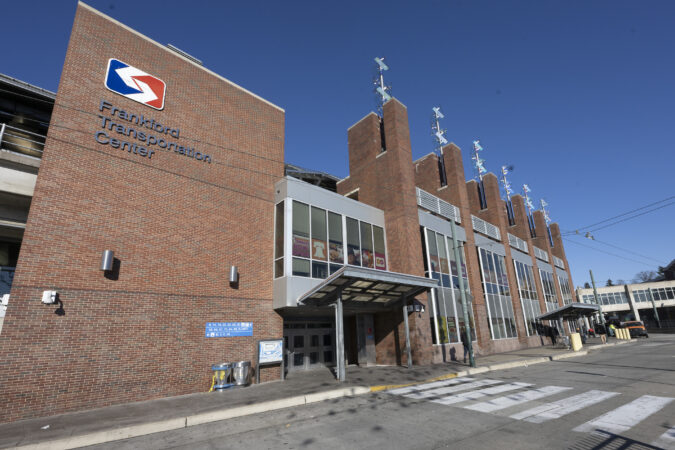
    Two men were shot on Monday morning inside the Frankford Transportation Center, police said.

    The shooting occurred at 8:51 a.m. inside the building at 5223 Frankford Ave. Two men got into a fight, and one man took out a gun and shot the other in the shoulder, according to SEPTA spokesperson John Golden. The fight continued over the gun, and the original shooter was shot in the hand by the man with the wounded shoulder, Golden said.

    Both men were hospitalized and taken into police custody. SEPTA police transported one man to Jefferson Torresdale Hospital, and the other to Temple University Hospital. Both men are in stable condition.

    Police are investigating the incident, but no charges have been announced.

    In November, another man was shot in the leg around the same time of morning on the same block near the Frankford Transportation Center.