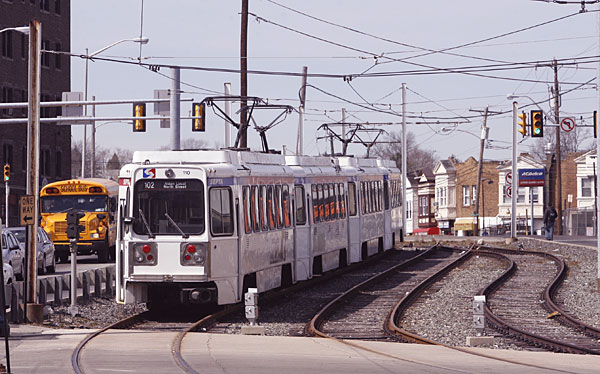
Rides on the two trolley lines serving Delaware County promise to be safer but longer with a modern signal system scheduled to go live on Monday, SEPTA said.
The upgraded signals on the D1 and D2 trolley lines will require operators to make more gradual accelerations and decelerations. They will also enforce speed limits and stop signals with automatic braking if needed.
“It will reduce the possibility of operator error,” SEPTA general manager Scott A. Sauer said. “They won’t be able to speed and risk derailment. They won’t be able to violate stop signals or misaligned switches.”
But the computer won’t replace the judgment of the people operating a trolley, Sauer said. Operators will get an alert, and the system provides backup if they cannot correct it in time, he said.
Trips will be up to 15 minutes longer on the D1 route and 10 minutes on the D2 route, depending on where a passenger boards and gets off the trolley.
The trolleys operate between Media and the 69th Street Transportation Center in Upper Darby, and between Sharon Hill and the transit hub. They were formerly called Routes 101 and 102.
SEPTA accounted for the increased Delaware County trolley travel times in the new schedules, which begin Monday.
It took about a decade and $75 million to install the system, called Communications-Based Train Control, on the Delco trolleys, said John Frisoli, SEPTA’s top rail signals engineer. Radios communicate between the control system and the trolleys.
A similar system has operated in the Center City trolley tunnel since 2005. SEPTA has been adding safety features to its rail-signal systems for about 20 years, including the installation of Positive Train Control on Regional Rail, which controls train speed and applies automatic brakes to prevent crashes caused by human error.
Philadelphia is getting $13 million to support six traffic-safety projects in Philadelphia, courtesy of speeders caught and fined by automated enforcement cameras.
The Pennsylvania Department of Transportation announced the grants Wednesday for an array of city projects, including $2 million for traffic-calming measures on Lincoln Drive between Kelly Drive and Wayne Avenue.
Some of that money will help pay for speed humps at 100 additional public, parochial, and private schools in the city, PennDot said.
Since taking office in 2023, the Shapiro administration has invested $49.7million in city traffic-safety projects, all from revenues raised by speed cameras.
Calming speeders
Under the automated speed-enforcement program, grants are plowed back into the communities that generated the revenue. Philadelphia is so far the only municipality in the state where speed cameras are authorized.
Pennsylvania also has automated speed enforcement in highway work zones, but that revenue goes to the Pennsylvania State Police for extra patrols and more troopers, the turnpike for safety projects and speeding counter-measures, and the general treasury.
The new grant is meant to continue traffic-safety work on Lincoln Drive that began a couple of years ago.
That includes speed humps, speed slots, new phosphorescent paint, flexible lane delineators, a smoother merge point where the road narrows, and marked left-turn lanes.
“It’s made a huge difference,” said Josephine Winter, executive director of the West Mount Airy Neighbors civic group, which organized residents.
“People that live along Lincoln Drive are feeling positive,” she said — though there is a split between people who are angry at what speed bumps have done to their cars’ undercarriages and those who support what they say are life-saving improvements.
“The city was wonderful, very responsive,” Winter said. “We’re been fortunate to get something done here.” Next up: working with other Northwest residents to get improvements on side streets, Wissahickon Avenue, and others.
Other grants
$1.5 million for planning work to upgrade traffic signals, better lane and crosswalk markings, and intersection modifications.
$5 million for design and construction of safety improvements along commercial and transit corridors. Those include curb extensions, concrete medians, bus boarding bump-outs, and new crosswalks. Locations include: Frankford Avenue (Tyson Avenue to Sheffield Avenue); 52nd Street (Arch Street to Pine Street); Hunting Park Avenue (Old York Road to 15th Street); and Germantown Avenue (Indiana Avenue to Venango Street).
Philadelphia drivers are about to get a new incentive to obey the flashing caution lights and 15 mph speed limit near schools.
On Tuesday, the Philadelphia Parking Authority plans to turn on automated speed-enforcement cameras in five school zones, targeted because they have had a relatively high rate of crashes. All are on major roadways.
Violators will get warnings until April 20, when the cameras start enforcing the law. Driving 11 miles faster than the school-zone speed limit will carry a $100 fine.
“The goal is to protect students,” said Rich Lazer, executive director of the PPA. “Speed cameras work. They reduce dangerous behavior.”
The high-priority school zones were selected based on an analysis of Pennsylvania Department of Transportation crash data by the Philadelphia Office of Transportation and Infrastructure Systems.
From 2019 through 2023, the five locations recorded 10 crashes in which a person was killed or seriously injured, and 25 pedestrian crashes, as well as several speed-related vehicle-on-vehicle crashes, the PPA said. (Victims included people of all ages; it was not clear how many were students.)
(function() {
var l2 = function() {
new pym.Parent(‘SKLZONECAMS’,
‘https://media.inquirer.com/storage/inquirer/projects/innovation/arcgis_iframe/SKLZONECAMS.html’);
};
if (typeof(pym) === ‘undefined’) {
var h = document.getElementsByTagName(‘head’)[0],
s = document.createElement(‘script’);
s.type = ‘text/javascript’;
s.src = ‘https://pym.nprapps.org/pym.v1.min.js’;
s.onload = l2;
h.appendChild(s);
} else {
l2();
}
})();
“We have tried many traffic-calming methods to stop people from driving dangerously fast in school zones, but many drivers still speed,” said Michael A. Carroll, a deputy managing director for the city who is in charge of OTIS.
“Speeding is the No. 1 cause of fatal crashes,” he said. The cameras will protect students walking to and from school, as well as crossing guards, “who often put their lives at risk,” Carroll said.
Automated speed enforcement remains controversial, despite studies that show it is effective, particularly on major urban roadways like the Boulevard.
The Pennsylvania legislature, historically skeptical of automated enforcement, in 2024 gave Philadelphia permission to use school-zone cameras through Dec. 31, 2029, on a trial basis.
There was some hesitation last March when City Council considered an ordinance to authorize the cameras. Three members held up the measure in committee, expressing concerns about a “money grab by the city.” The members also said they did not have enough information about the bill.
After they met with Councilmember Isaiah Thomas, the chief sponsor, the legislation was enacted.
“Everybody thinks it’s a money grab, but it’s really not,” Lazer said. “Resources are stretched; police are dealing with a lot of things. … If we can use technology, and it works, why not? Don’t speed, and you won’t get a violation.”
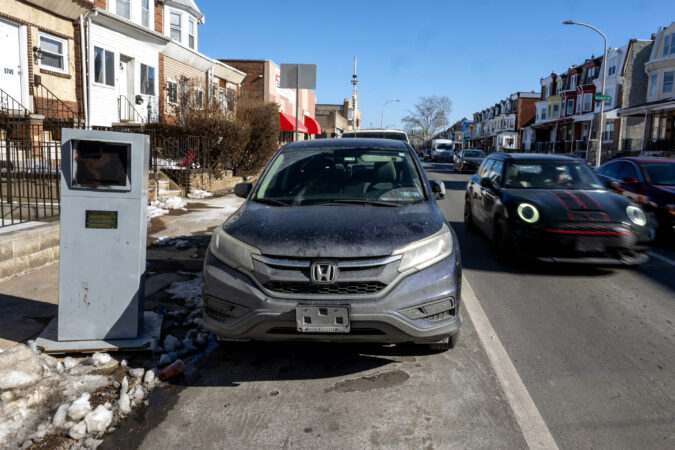
Unlike the speed cameras on the Boulevard and those along 13 miles of Broad Street since November, the school-zone units deployed by the PPA are squat and at street level.
Some people say they look like mailboxes or small refrigerators.
They are meant to be portable, PPA officials said, so that cameras can be moved to other schools with problems, as long as they are operating in only five school zones at any one time.
That limit is fixed by state law. Cameras can operate only when school zones are active, meaning weekdays when students are arriving in the morning or departing in the afternoon.
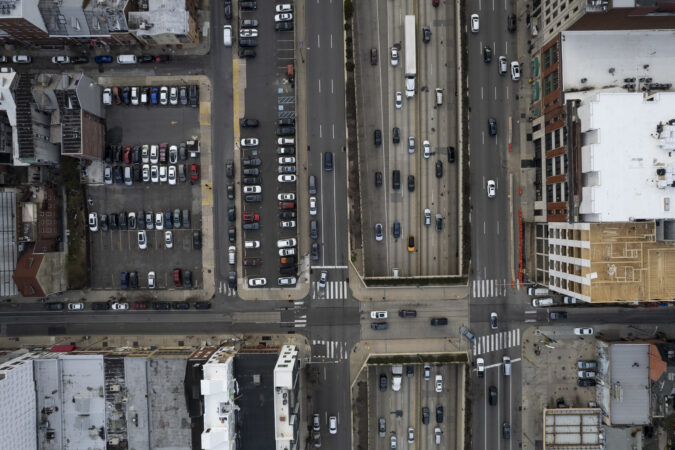
The Delaware Valley Regional Planning Commission is working to help keep alive the city’s project to cap the Vine Street Expressway after Washington last year yanked $150 million in promised federal money.
The project was dependent on a $159 million U.S. Department of Transportation grant covering the entire cost.
Now, DVRPC, at the city’s request, is managing the process of gathering $12.5 million to replace some of the lost money, enough to complete the final design.
“We are taking this administrative action to keep the project moving,” DVRPC spokesperson Elise Turner said.
The Chinatown project involves building a cap over I-676 from just east of 10th to 13th Streets, allowing for a park as well as more developable land. It would tie together Chinatown and the neighborhood to the north, which were united until the interstate split them.
Finishing the design will advance the project as officials look for construction funding. It’s possible building the cap will be delayed.
For the design work, $10 million would be obtained from another federal program for improvements on the national highway network. That money is available in the region’s reserve controlled by PennDot, DVRPC staff said.
The city would contribute $2.5 million.
The city’s Office of Transportation and Infrastructure Systems is working to secure the money and is “confident” that will happen, a spokesperson said, while declining to disclose details.
As for construction, “funding will have to be figured out later,” said DVRPC’s Turner.
The agency determines priorities for regional transportation projects.
To receive federal funds, an infrastructure project needs the formal blessing of the DVRPC, the designated metropolitan planning organization for the Philadelphia region.
Meanwhile, preliminary engineering work is continuing, financed by the $8.4 million. The project is expected to receive environmental approvals in the spring, DVRPC said.
President Donald Trump and the GOP congressional majorities have been targeting Biden-era initiatives for elimination, including various transportation-equity programs — to fund projects like the Stitch — that began under the national infrastructure act of 2022.
In late 2023, construction of the cap was projected to begin in 2027, although at other points a groundbreaking was anticipated in 2028.
The timeline is currently unclear.
This story has been updated to clarify DVRPC’s role in the project.
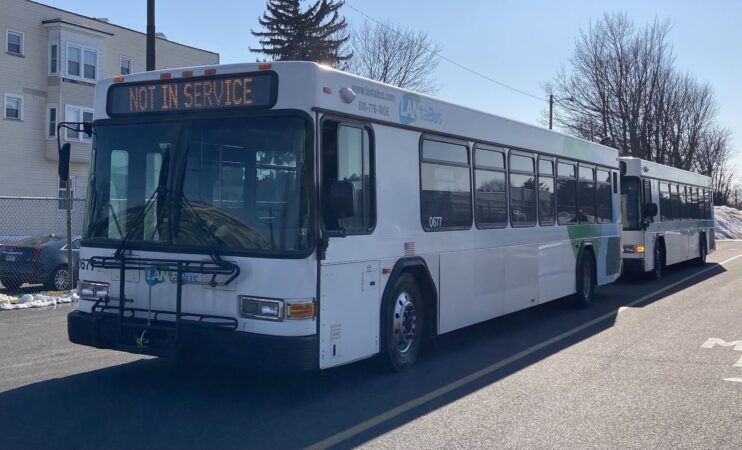
The bus system serving 11,000 daily riders in Lehigh and Northampton Counties cut its service 5% last week, a result of the continuing uncertainty around state funding for mass transit.
LANTA did not eliminate any routes but has reduced the number of trips on 13 bus lines.
“If there’s no solution coming, we’ll have to make deeper cuts,” Owen O’Neil, executive director of LANTA, said in an interview.
Most of the state’s 33 smaller public transit systems did not get that big an assist and now are facing unpleasant belt-tightening choices amid rising costs and years of underfunding from Harrisburg.
LANTA is planning to raise fares in March.
But the agency was able to make smaller cuts than the 20% it had budgeted because the Pennsylvania Department of Transportation granted it $13 million to stabilize service over two years, O’Neil said.
With federal COVID-19 relief funds, LANTA was able to expand service to 11 popular new worksites in the fast-growing Lehigh Valley. It’s the third-largest system in Pennsylvania.
In the state budget unveiled Tuesday, Shapiro proposed increasing the share of sales tax revenue reserved for SEPTA and its fellow mass transit agencies, raising a projected $319 million a year.
If the idea is enacted, however, new money would not begin flowing until July 1, 2027 — the start of the 2028 fiscal year. The tax rate itself would stay the same but transit would get 6.1% of the revenue, up from 4.4%.
O’Neil said LANTA likely could wait that long if needed. But “we don’t have the stable source of funding,” he added. It would be difficult to continue to operate the expanded routes without one, O’Neil said.
“Our governor is not meeting the moment,” said Connor Descheemaker, statewide campaign manager of Transit for All PA!, a nonprofit advocacy group.
“Adjusting the sales tax allocation does not meet the structural deficit facing a single one of Pennsylvania’s public transportation systems,” they said.
Postponing a change for 18 months gives lawmakers and the governor a longer runway to reach agreement on a stable, recurring source of money for transit — either via Shapiro’s proposal or through a new revenue stream.
SEPTA, which got $394 million from the state-sanctioned flex of capital dollars last year, has said it is not considering major service cuts or fare increases this year.
Executives figure that SEPTA can provide current levels of service until summer 2027.
The transit agency estimates that it would get $183 million in the first year if the governor’s Tuesday proposal is enacted, said Erik Johanson, SEPTA’s chief financial officer.
With a local match of $27 million, “the difference between what the governor is proposing and how much we need is getting closer and closer to being sufficient,” Johanson said.
Yet there has been no proposal to replace the capital money that the transit agency and PRT essentially borrowed against.
“Those dollars are gone, and they have to be replenished,” he said.
Descheemaker’s group estimates that seven smaller transit systems, including in the State College area, will have to cut service or raise fares if no solution is in the offing.
“It’s disappointing that we continue to hear about transit as if it is something that only affects Philadelphia and a little bit of Pittsburgh,” Descheemaker said.
As Train 9710 pulled out of the Trenton Transit Center at 7:25 a.m. Monday, something looked out of place.
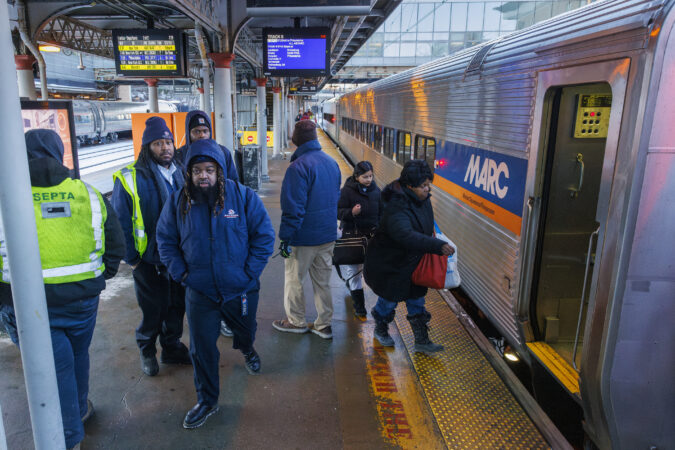
Five passenger coaches in the Philadelphia-bound Regional Rail train bore foreign “MARC” logos and orange-and-blue markings, all pulled by a properly labeled SEPTA electric locomotive.
The substitute cars initially will be running on the Trenton and West Trenton lines, where riders for months have endured packed trains due to a shortage of available 50-year-old Silverliner IVs.
The transit agency is paying $2.6 million to lease the new coaches for a year.
SEPTA’s records show it canceled at least 2,544 Regional Rail trips in the last three months of 2025. Delays and skipped stops also have plagued commuters for months.
SEPTA is using its ACS-64 electric locomotives, which it bought in 2019, to pull the MARC coaches and its own fleet of 45 coaches.
Silverliner cars do double duty; they carry passengers and have motors that provide their own locomotion through electricity drawn from overhead wires.
SEPTA said in a statement that the schedules will add trips on the Wilmington, Trenton, and Chestnut Hill East lines and increase the frequency of service from Wayne Junction directly to the Philadelphia International Airport on the Airport line.
Michael Chain Jr.oncehad to exit the Pennsylvania Turnpike at Downingtown and drive a zigzag pattern on State Routes 100, 113, 401, and 29 to reach his hotel.
So did his customers.
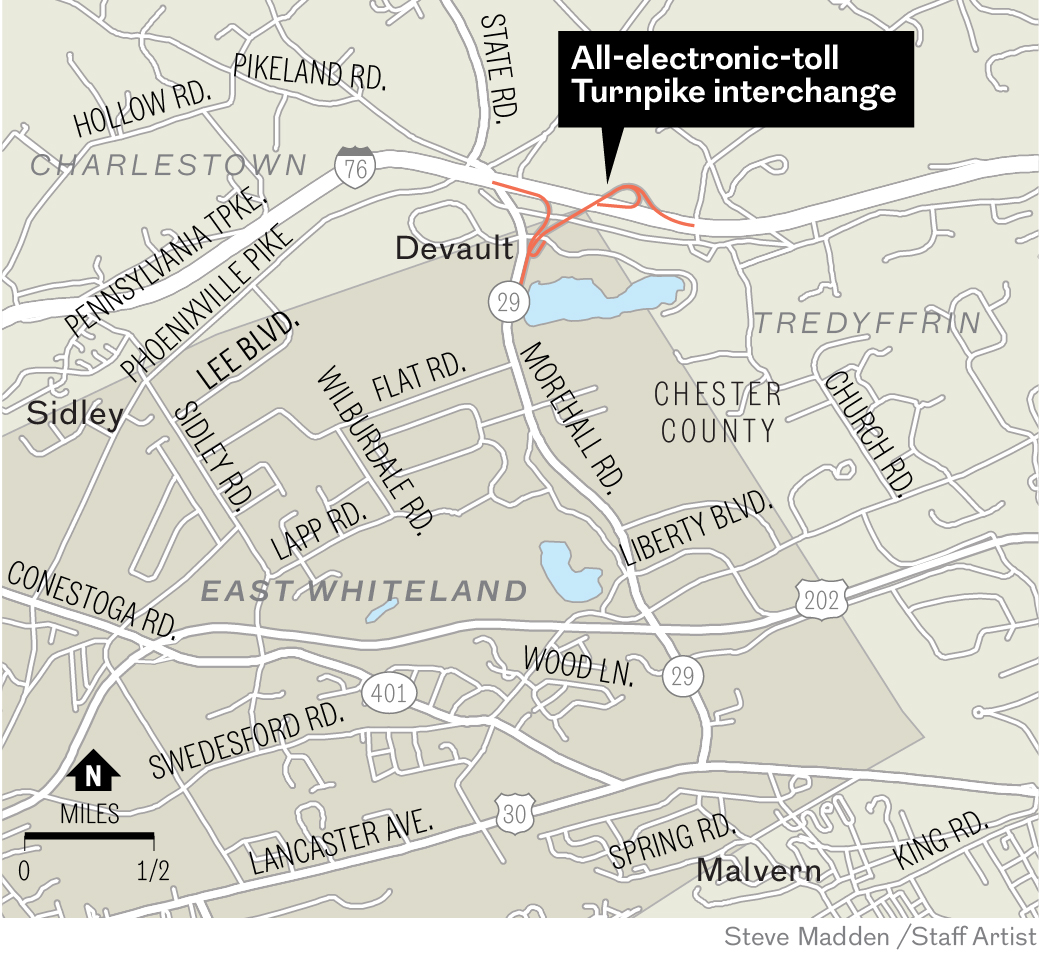
But thenthe turnpike built Exit 320, an all E-ZPass interchange thatconnects to Route 29 and brings traffic right to the family-owned Hotel Desmond Malvern, a DoubleTree by Hilton.
“It would easily take 20 minutes,” said Chain, general manager of the property. “Now you cut that in half, if not more.”
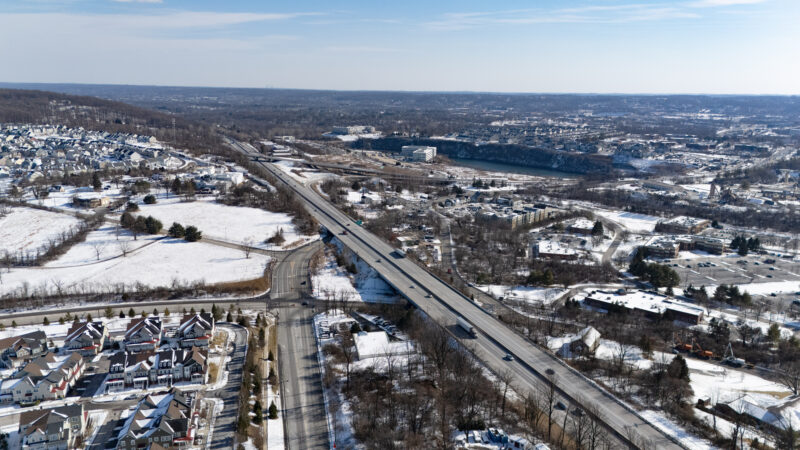
When it opened in December 2012, the interchange helped spur billions in new commercial and residential development in Chester County’s Great Valley.
Michael Chain, general manager at a hotel in Great Valley, says the Route 29 ramp has transformed his business.
Corporate office parks expanded and new ones sprouted. Vanguard relentlessly expanded its campus for its 12,000 workers. Pharmaceutical and biotech companies moved there. Pfizer, Johnson & Johnson, Teva, and other pharmaceutical companies planted offices and research laboratories there.
Thousands of people moved in to take advantage of the new jobs or a suddenly more convenient commute to Philadelphia and its inner-ring suburbs, Berks County, Lancaster, or even Harrisburg.
More than 10 years later, the effects of the turnpike’s project are evident, but the real estate market is evolving to meet a lower post-pandemic demand for traditional office space and a higher demand for more housing.
Through American history, transportation and development have been yoked. Towns and cities have grown around navigable rivers, post roads, national highways, railroads, interstates, turnpikes, and public transit.
“This new interchange was explosive in terms of the economic impact in that particular region in a way I’m not even sure we had anticipated,” said Craig R. Shuey, chief operating officer of the Pennsylvania Turnpike.
The key to success
Experts caution it would be a mistake to attribute too much of the growth in the Great Valley solely to the turnpike exit.
The area’s transition from agricultural and industrial to commercial mixed-use was already well underway when it opened. Real estate developersRouse & Associates acquired land in 1974 and began building the Great Valley Corporate Center, a 700-acre business park.
As the Pennsylvania 29 interchange was under construction, the U.S. 202 widening project occurred, helping ease the flow of traffic, although it stillgets congested at peak hours.
The Route 29 electronic toll interchange.
The exit “plays well with an improved Route 202,” said Tim Phelps, executive director of the Transportation Management Association of Chester County.
It’s also served by SEPTA Regional Rail Service and Amtrak, and there’s a connection to the 18.6-mile Chester Valley trail for biking, running, and walking.
“The key isall the multimodal access to the area from different points,” Phelps said. “You move goods and freight along corridors and people to jobs; transportation is economic development.”
New rise in residences
Growth hasn’t been linear.
”Since COVID the office market has been struggling everywhere, and a couple of years ago the funding for biotech became harder to get,“ said John McGee, a commercial real estate broker and developer. ”Both of these events had a negative impact on demand for [office] space in Great Valley.”
Other signs of a softer market in commercial space:
Malvern Green, a 111-acre office park owned by Oracle, is up for sale, marketed as a redevelopment opportunity. It has 759,000 square feet in four buildings on Valley Stream Parkway, off Route 29.
A 10.3-acre office property on Swedesford Road is slated to be demolished and turned into a mixed-use campus, with 250 apartments and about 6,700 square feet of retail and dining.
With the pandemic rewriting the rules of work beginning five years ago, residential development has picked up, driven by housing scarcity and lack of affordability.
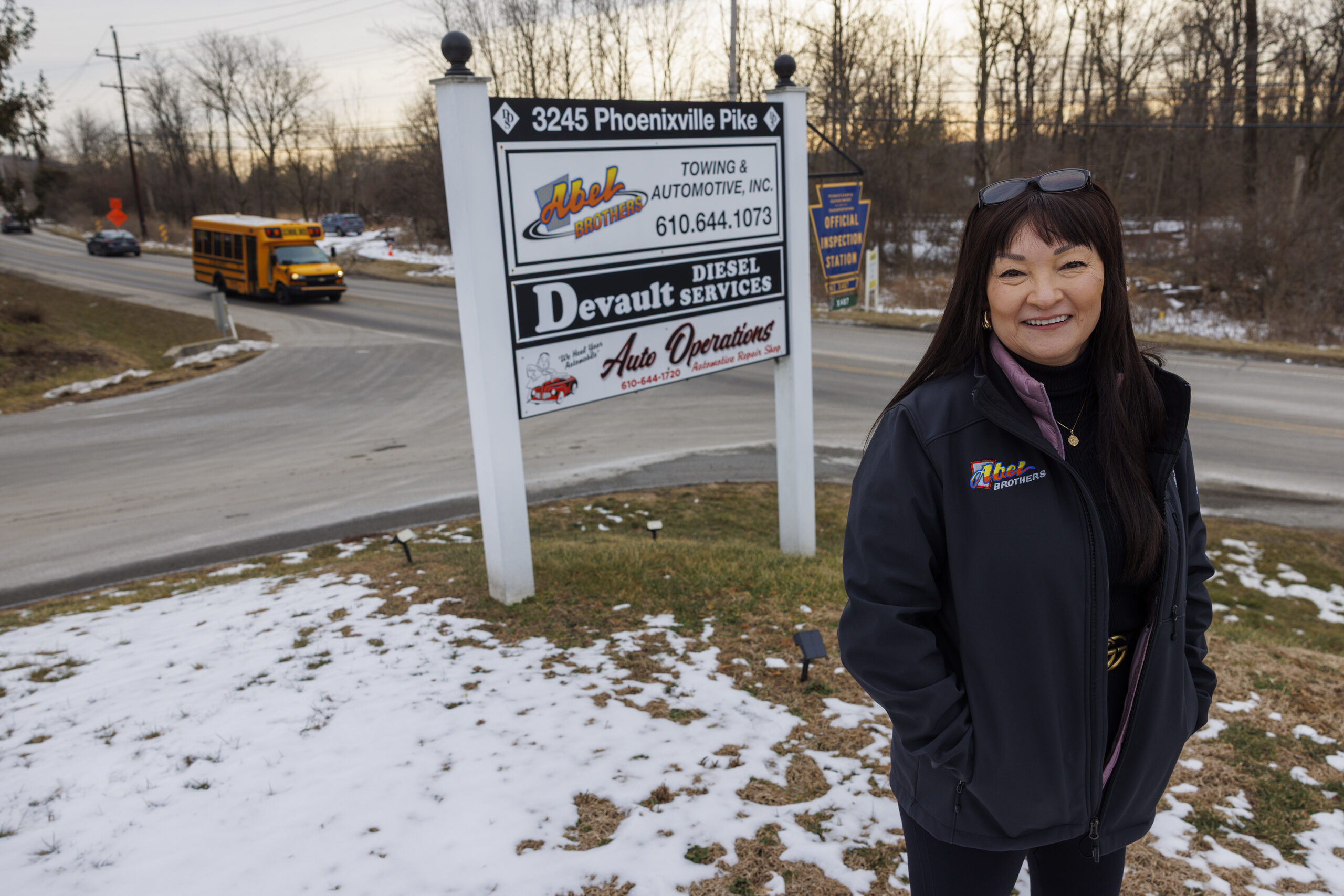
Deb Abel, president of Abel Brothers Towing & Automotive, has seen the area evolve from her position as chair of the East Whiteland Planning Commission and as a member of the Chamber of Business & Industry.
Deb Abel, chair of the East Whitefield Planning Commission, says workforce development is key to the area’s growth.
“We talk all the time about workforce development,” Abel said. “People don’t want to come to work where they can’t afford to live.”
More — and more affordable — housing is key both for current and future staffing needs. Workers shouldn’t have to commute from other areas with more housing options, Abel said.
‘A tangible asset’
To Chain, the hotelier, travel time saved by the interchange is a tangible asset.
“It improves the quality of life on a personal level, and [in business] I’m a beneficiary of people staying on the turnpike,” he said.
As corporate travel budgets waxed and waned in the Great Recession and pandemic years, the Hotel Desmond beefed up other lines of business. An events space at the resort-like hotel now provides about half the revenues, Chain said.
The interchange has helped him draw conference business from statewide associations, most of them in Harrisburg.
And in recent years, youth sports travel teams from New York and New Jersey attending weekend tournaments in the region have filled rooms while using the interchange for easy access. Hockey teams are big.
‘A natural progression’
A new multifamily project for Greystar Real Estate Partners is rising next to Route 29 on undeveloped land.
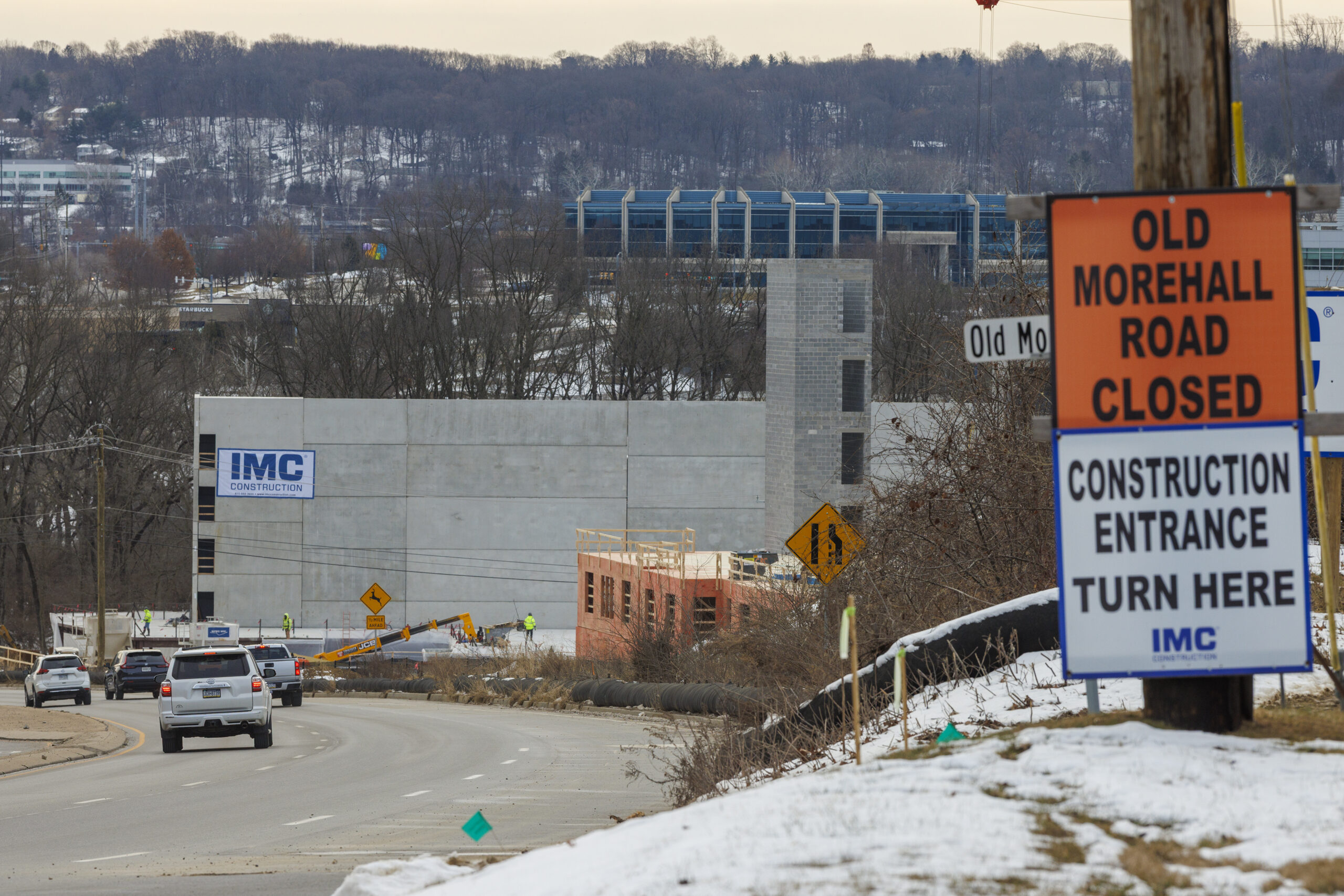
IMC Construction is building a five-story, 267-unit apartment building featuring a rooftop lounge, fitness center, coworking space, pool courtyard, grilling stations, and more.
IMC Construction signs and traffic markers along North Morehall Road in Malvern.
A 133-unit “active adult” apartment building for people who are 55 and older is also under construction.
Project manager Bob Liberato grew up in the area when Route 29 was a country road with one traffic light between Phoenixville and Route 30.
It seems ironic now, but he remembers a petition circulating among fellow students at Great Valley High School to oppose the turnpike’s interchange proposal. Pretty much everybody signed.
“We wanted to stop the turnpike because we liked our life,” Liberato said. “It was open, mostly fields and trees. Being able to go outside, have parties in the woods — all of that was great.”
So what he’s doing now is, in a way, part of the circle of life.
“We’re seeing a shift toward more residential projects, and there is a runway for more in the Great Valley,” said Liberato. With a scarcity of new development, ”it’s a natural progression in a lot of Philly suburbs.”
Relief is coming to thousands of aggrieved trolley riders.
After two months of closure, the trolley tunnel connecting Center City and West Philadelphia is scheduled to reopen Monday at 5 a.m., SEPTA announced late Friday.
Test runs of trolleys through the 5-mile passageway have shown that repairs to damaged connections between the vehicles and the overhead electric wires that supply their power have worked and it’s safe to resume normal operations, officials said.
“We recognize that this prolonged closure of the trolley tunnel posed a significant inconvenience for our riders, and we appreciate their patience,” SEPTA General Manager Scott A. Sauer said. “Our crews worked around the clock to complete the emergency repairs.”
About 60,000 riders traveled daily through the tunnel between 13th Street and its West Philadelphia portal at 40th Street before SEPTA closed it in early November.
Since November, SEPTA has replaced nearly 5,000 feet of overhead wire, or about 20% of the wire in the tunnel. Crews will continue to replace wire during scheduled weekend closures, the transit agency said.
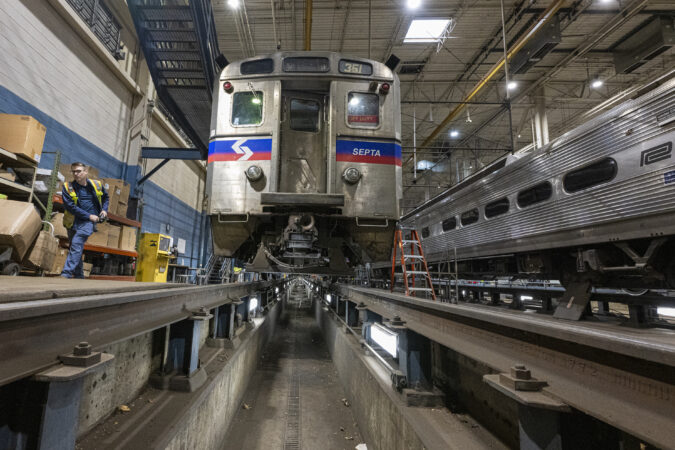
Regional Rail trains are operating with fewer canceled trips and are running with more cars after months of service disruptions while SEPTA rushed to inspect and repair 223 Silverliner IV cars after five caught fire last year.
Yet packed two-car trains and skipped stops persist on some lines during peak travel times.
“It’s been three months and our customers had reason to believe things would be better sooner and they’re frustrated — understandably,“ SEPTA spokesperson Andrew Busch said. ”There is still some catching up to do.”
SEPTA decided late Thursday to restore 24 Regional Rail express trips on the Lansdale/Doylestown, Media, Paoli, West Trenton, Norristown, and Wilmington Lines, Busch said. The restored expresses had been running as locals.
An Oct. 1 federal mandate to inspect and mitigate Silverliner IV fire risks required the transit authority to take the workhorse of Regional Rail offline, leading to shorter trains and furious riders.
SEPTA’s records show it canceled 2,544 Regional Rail trains from October through Dec. 31, though the number steadily droppedover time — from 1,324 to 752 to 468.
As of Thursday, 180 of the Silverliner IV cars had met all the milestones set by the Federal Railroad Administration to return to service.
Regulators demanded each car pass a safety inspection, have necessary repairs made, and have a modern thermal-detection circuit installed.
So far, however, just 78 of those 180 Nixon-Ford era rail cars have been returned to service.
That means work is yet to be completed on35 Silverliner IVs.All together, the carsmake up 57% of the Regional Rail fleet.
(function() { var l = function() { new pym.Parent( ‘regional-rail-return__graphic’, ‘https://media.inquirer.com/storage/inquirer/ai2html/regional-rail-return/index.html’); }; if(typeof(pym) === ‘undefined’) { var h = document.getElementsByTagName(‘head’)[0], s = document.createElement(‘script’); s.type = ‘text/javascript’; s.src = ‘https://pym.nprapps.org/pym.v1.min.js’; s.onload = l; h.appendChild(s); } else { l(); } })();
“Over the last couple of days, we’ve been adding more three and four-car trains,” Busch said. With the restoration of express service, that should continue, he said.
To keep Regional Rail service running in its slimmer form, SEPTA has been using its 120 Silverliner V cars, which arrived between 2009 and 2011, as well as 45 coach cars, which have no motors and are pulled by locomotives.
The Silverliners have onboard motors, carrying passengers and providing propulsion at the same time. The 78 returned to service will also add capacity.
In addition, SEPTA plans to use an additional 10 passenger coaches leased from Maryland’s commuter railroad. They are here, but train crews are undergoing training, which was delayed by vacations and work schedules over the holidays. They should be ready to go a couple of weeks, Busch said.
The transit agency is seeking to buy 20 used passenger cars from Montreal but has not heard whether it won the bidding.
Back-ordered shipments arrived around Christmas, and now there is plenty of wire to finish the job, SEPTA says. The deadline for the installations was Dec. 5, but under the circumstances, federal authorities did not punish SEPTA.
Philadelphia’s trolley tunnel has been closed for two months, but SEPTA now is saying that it has completed most necessary repairs and could reopen the connection between Center City and West Philadelphia soon.
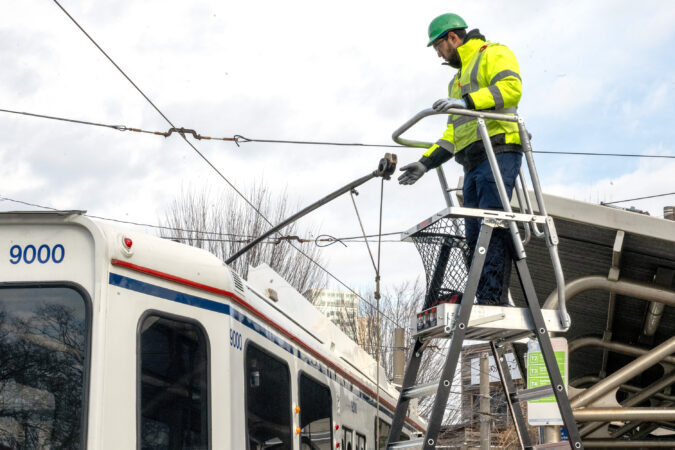
Crews currently are running trolleys through the tunnel to test fixes for damaged overhead wires and other equipment and to decide when it is safe for normal service to resume.
“We’re pretty close,” SEPTA spokesperson Andrew Busch said Tuesday.
About 60,000 riders traveled daily through the tunnel between 13th Street and its West Philadelphia portal at 40th Street before SEPTA closed it in early November.
At issue is a U-shaped brass part called a slider that carries carbon, which acts as a lubricant on the copper wires above the tracks that carry the electricity that powers the trolleys.
There were two major incidents when trolleys were stranded in the tunnels. On Oct. 14, 150 passengers were evacuated from one vehicle and 300 were evacuated from a stalled trolley on Oct. 21.
The Federal Transit Administration on Oct. 31 ordered SEPTA to inspect the overhead catenary system along all its trolley routes.
SEPTA has had to replace about 5,000 feet of damaged wire and make other repairs. It also switched back to 3-inch sliders.
On Nov. 7, SEPTA shut down the tunnel to deal with the issue, which had cropped up again, then reopened it on the morning of Nov. 13, thinking it was solved. But it discovered further damage to the catenary system and the tunnel was closed at the end of the day.
Other potential reopening dates were announced but postponed.
This story has been updated to correct the amount of wire replaced in the tunnel.