A source with knowledge of the situation confirmed an overnight report that the Union are preparing to transfer longtime defender Kai Wagner to English Championship side Birmingham City.
News of the deal was first reported by soccer reporter Jose R. Nunez via X, late Wednesday. The Inquirer learned that while both parties are ironing out the terms of the deal, the transaction could be announced before the week’s end, ending Wagner’s seven-year run in Philadelphia.
While the terms of the deal have not been announced, Sky Sports reported a transfer fee of €2.3 million for Wagner, or roughly $2.7 million. Upon completion, Wagner will join a Birmingham City side that’s currently 16th in the EFL Championship standings and winless in its last five games.
NFL great Tom Brady became a minority owner of the club in 2023 and has since been on a publicized push to return it to the top of the EFL Championship standings and even compete for promotion to the English Premier League.
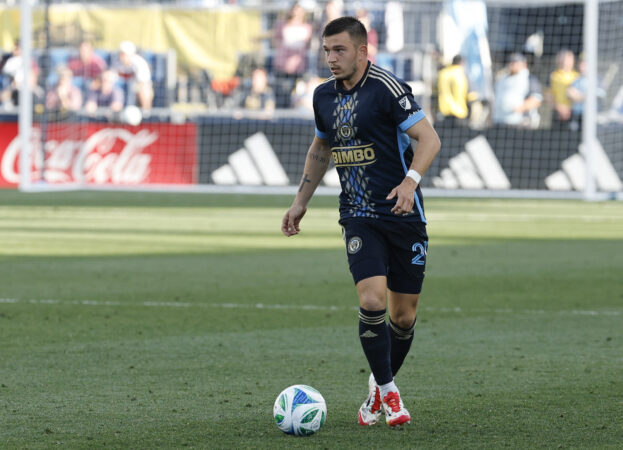
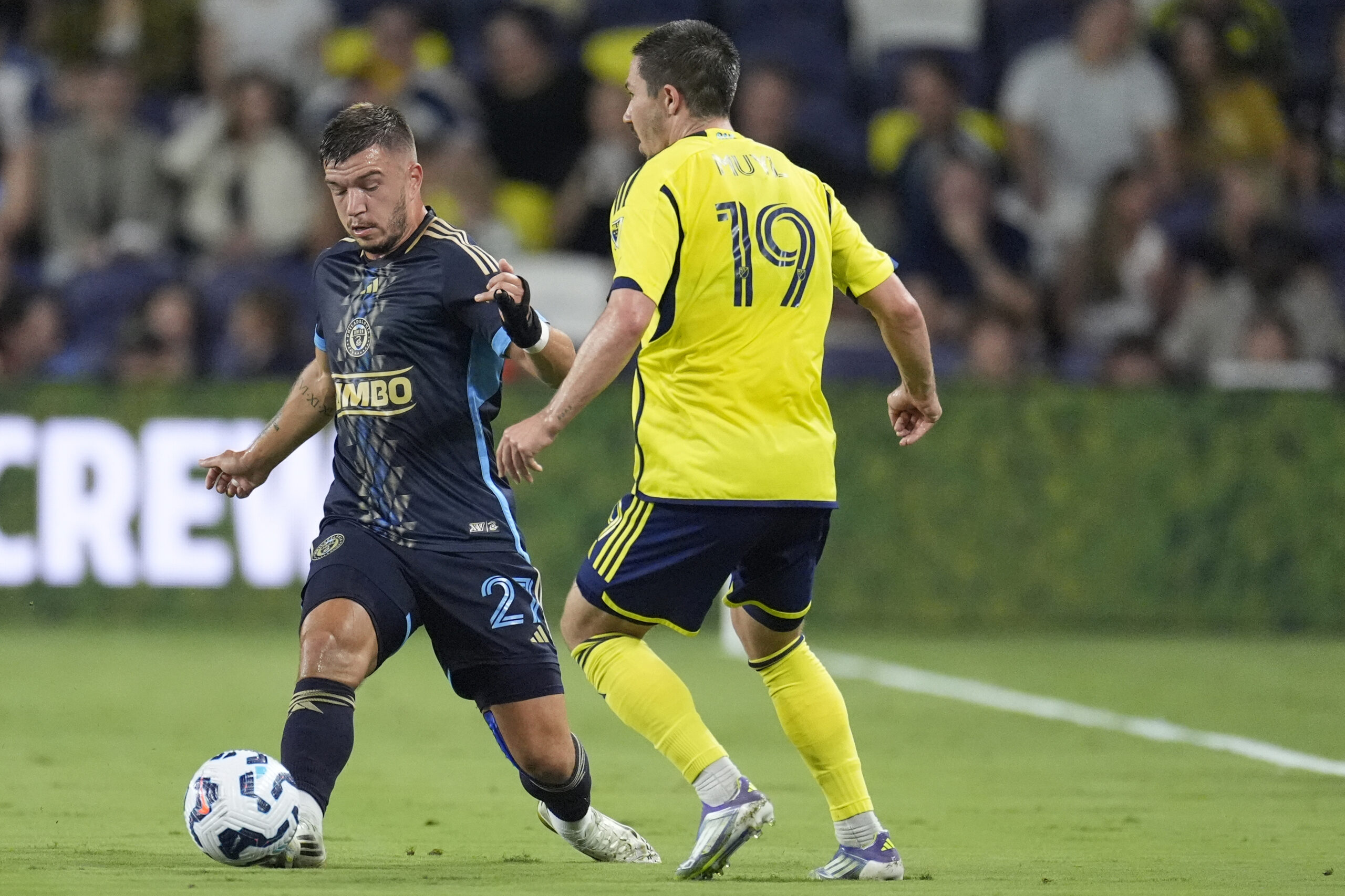
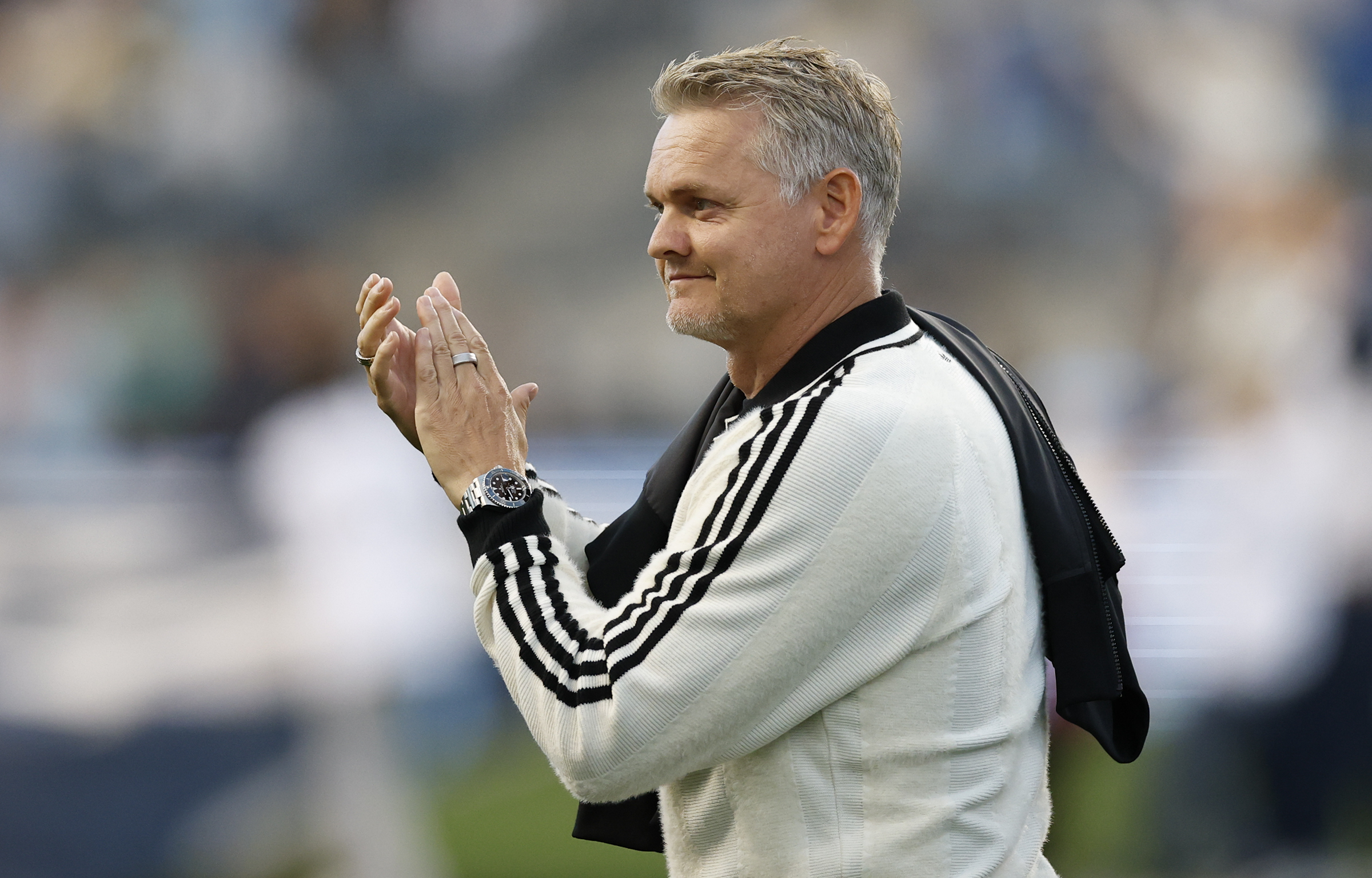
Kai Wagner (27), who is said to be heading to English side Birmingham City, appeared in 251 games in all competitions for the Union.
Wagner, 28, coming off an All-Star season with the Union, is considered one of the best defenders in Major League Soccer. He has made 204 league appearances and 251 in all competitions since the Union acquired his rights from German side FC Schalke on Feb. 6, 2019.
During that span, Wagner is credited with eight goals and 58 assists (11 assists in 2025). In addition to being a staunch defender, Wagner was effective in attack, delivering pinpoint crosses into the penalty area. Over his years in Philadelphia, Wagner was the subject of several trade rumors within and outside MLS, with the latest before the Birmingham news suggesting that current MLS champion Inter Miami could’ve been his next stop.
Wagner is set to be the club’s latest in a trio of blockbuster trades this offseason. Last month, the team traded forward Tai Baribo to D.C. United. Baribo, named an MLS All-Star, was the team’s top scorer in 2025 and was sent for a reported $4 million transfer fee.
Additionally, the Union parted ways with longtime defender Jakob Glesnes, now with the Los Angeles Galaxy, for a reported $2.2 million in allocation money. Glesnes ended the 2025 campaign on MLS’s Best XI.
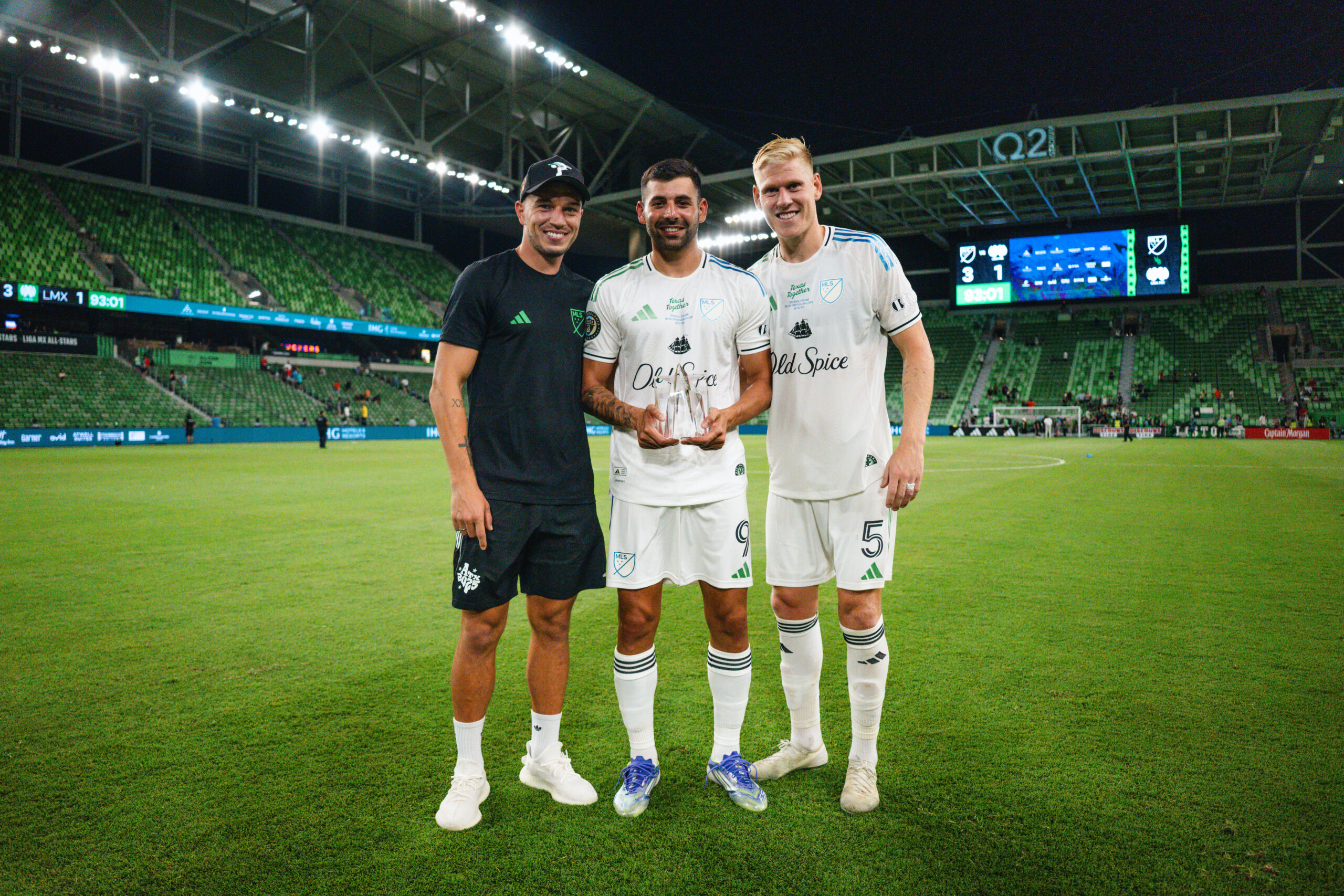
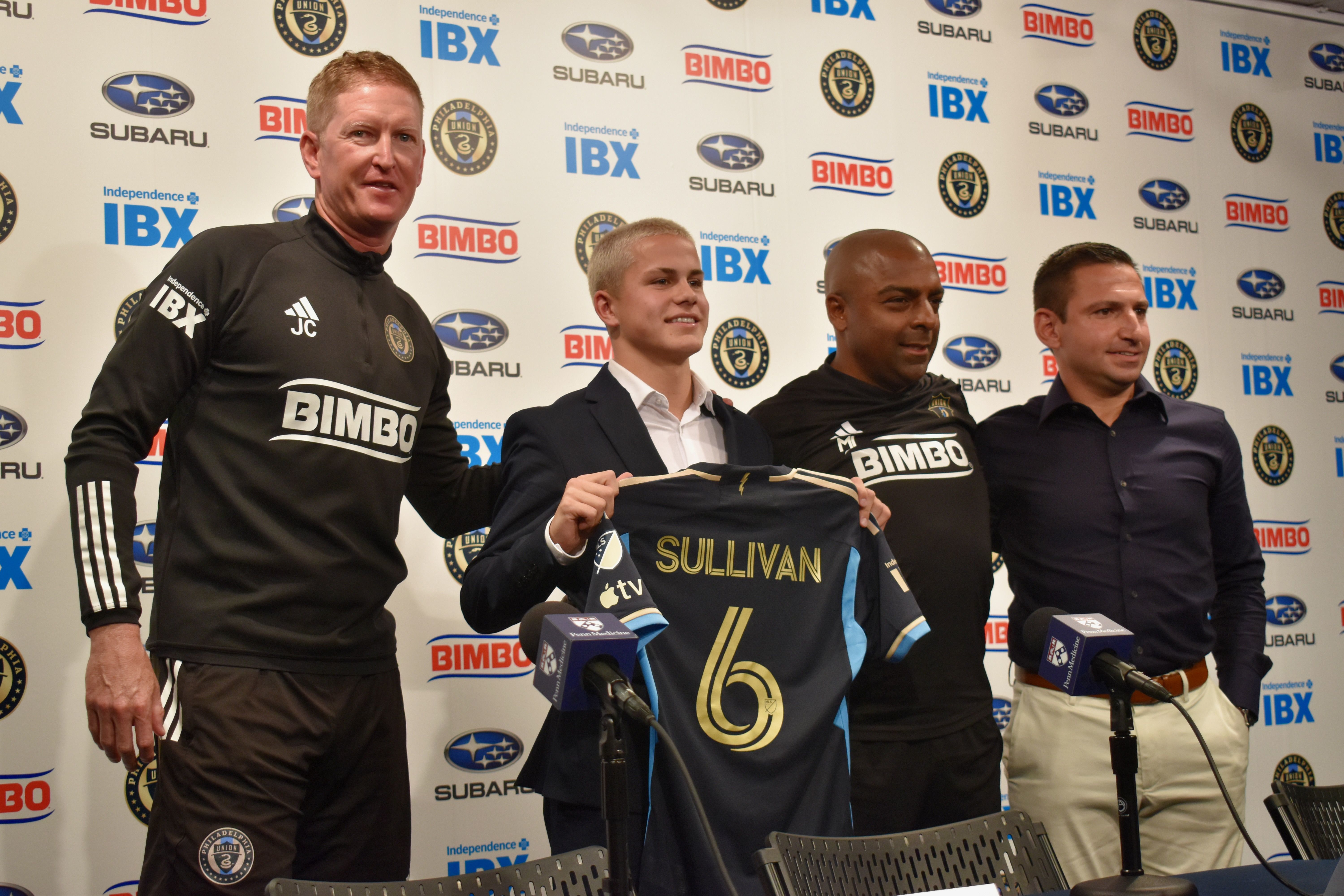
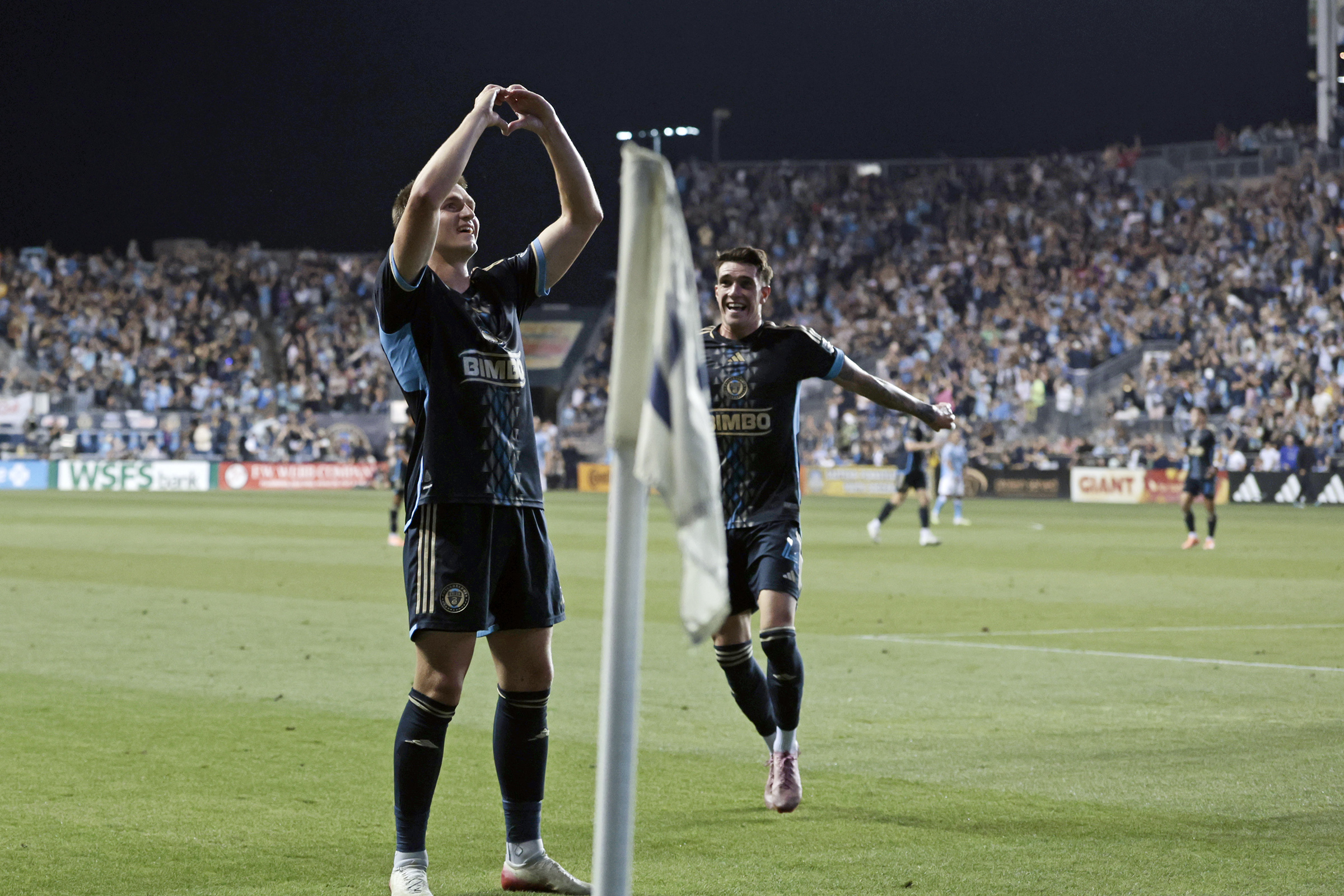
Wagner (left) stands will fellow 2025 MLS All-Stars Tai Baribo (center) and Jakob Glesnes in July. The latter two left the Union this offseason, with Wagner said to be up next.
Wagner’s playmaking ability was undeniable during his time on the Chester waterfront. Concerns about his character, however, arose after he was suspended in 2023 for violating MLS’s on-field discrimination policy, following allegations that he used a racist slur toward former New England forward and U.S. men’s national team forward Bobby Wood.
The incident resulted in Wagner being hit with a three-game suspension during the heart of the MLS playoffs and needing to undergo the league’s restorative practices program established in 2024. That suspension would have run into the start of the 2024 season, but MLS confirmed that Wagner had completed the required training and lifted his ban.
The Union will kick off their 2026 preseason campaign on Jan. 17 in Marbella, Spain. The season will begin in the Concacaf Champions Cup with a game against Trinidadian side Defence Force on Feb. 18 in Port of Spain, followed by a return leg at Subaru Park on Feb. 26.
The club’s MLS opener will be on the road against D.C. United on Feb. 21 (7:30 p.m., Apple TV).
For five out of the last six seasons, the Union have been the class of Major League Soccer’s Eastern Conference. In those six seasons, the team has earned two Supporters’ Shield titles, five MLS playoff appearances, and in 2022 came close to winning arguably one of the best MLS Cup finals ever.
It’s even more incredible when you realize that the franchise has done so with an ownership and front office that have been reluctant to spend any more than they have to, wallowing near the bottom of the league in terms of payroll while consistently being among the leaders in the Eastern Conference.
It’s like that scene in Moneyball when Billy Beane, portrayed by Brad Pitt, asks owner Stephen Schott for a little more money to support championship aspirations. In the case of the Union, owner Jay Sugarman has played the role of Schott to perfection, while the team’s fans could be perceived collectively as Beane, asking for a little more star power to fuel the team to a title.
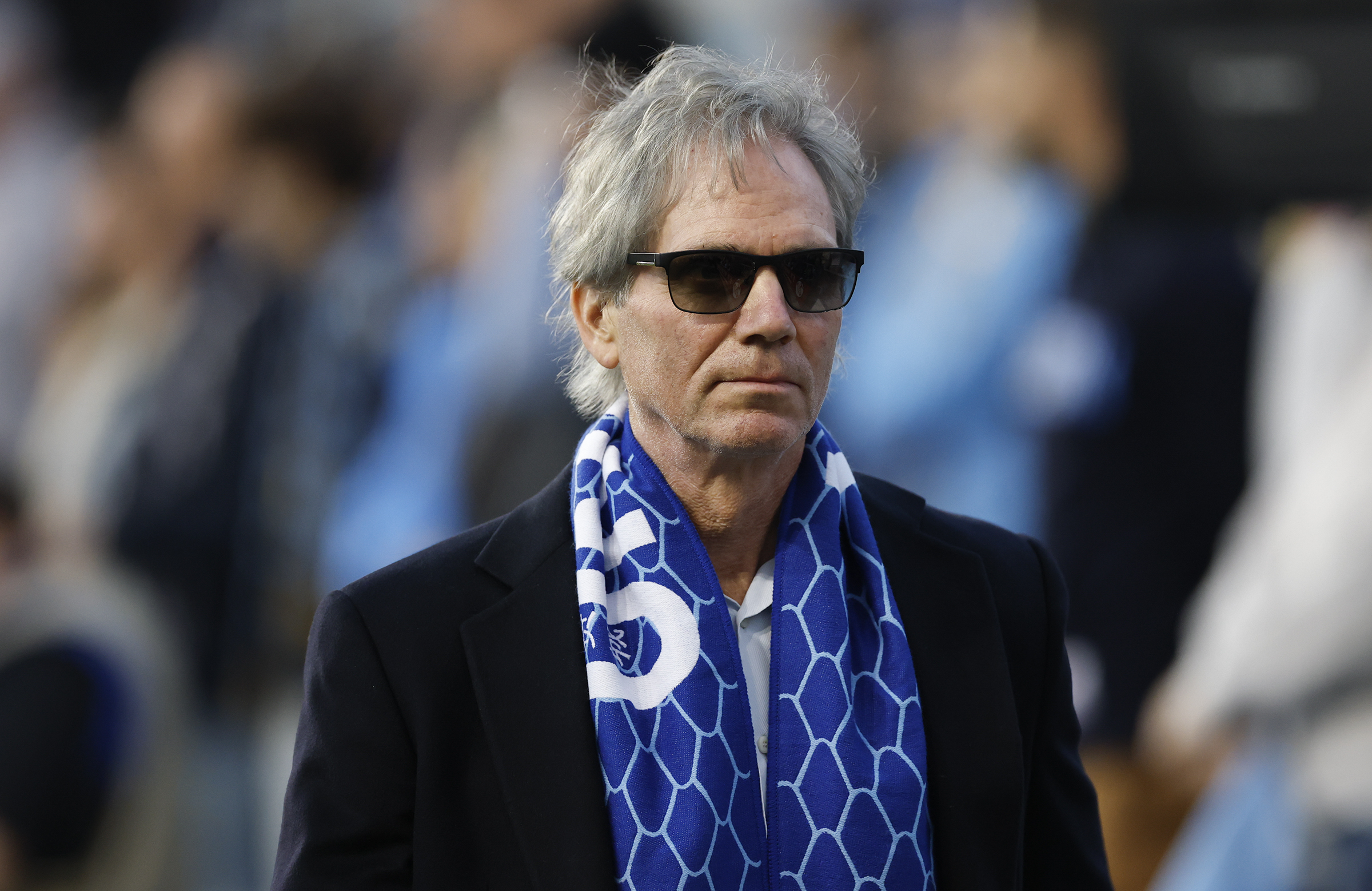
Union chairman and majority owner Jay Sugarman has been stubborn on spending to bring in top talent. But results have shown he doesn’t have to.
It’s been a stubborn approach that has proved successful enough to keep fans interested and engaged. And just like the way Beane’s Oakland team set a modern-day baseball record by winning 20 straight games on a shoestring budget, the Union lifted a trophy by knowing what they had and how much more they were willing to spend, and hiring a coach eager to prove his methods are championship-caliber.
Although the Union lost a pair of key pieces this offseason following the departures of forward Tai Baribo to D.C. United and longtime defender Jakob Glesnes to the Los Angeles Galaxy, there’s a belief that the team can go even further this season.
Their roster supports that claim — but Philly fans will be the first to remind anyone within earshot that a team on paper means very little around here.
The proof is in what the product can consistently produce on the field. Said proof arrives in a little over two weeks as the Union return to Marbella, Spain, on Jan. 17 to kick off their preseason.
The Union will play in 2026 without without Tai Baribo (center) and Jakob Glesnes (right), both MLS All-Stars in 2025 who were traded in the offseason.
It’s also going to be a massive year for soccer in Philadelphia as one of 11 cities in the United States scheduled to host matches in the FIFA World Cup. So much soccer on the horizon will have an impact on the local team. Increased exposure for Philly as a soccer city can only benefit a team coming off one of its best seasons in recent history — assuming the Union can replicate it.
If there was a crystal ball, genie, or whatever else is used to grant a wish for the new year, these are the three that probably are top of mind for most Union fans.
My Union wishes for 2026:
1️⃣ Win the CONCACAF Champions Cup. 2️⃣ Lift MLS Cup. 3️⃣ Cavan Sullivan has a breakout season that feels Messi-level magical.
There are 14 teams in Major League Soccer that have never won an MLS Cup — and seven of those teams were expansion clubs that arrived after the Union kicked off play in 2010.
If there’s an original seven of sorts, the Union are among them. In a poll of Union fans on social media, one of the biggest responses was for the team to win a major trophy. This year, they have a chance to win three: Along with chasing an MLS title, they’ll have an opportunity to lift the Concacaf Champions Cup and the Leagues Cup.
The Union will not be one of the 16 MLS clubs taking part in the 2026 U.S. Open Cup because of their Champions Cup berth, so the Leagues Cup, the competition in which MLS clubs face off against Liga MX teams, will be a third chance to take home some hardware.
A title of any sort beyond boasting the league’s best regular-season record would go a long way in validating the Union’s philosophy and a coach eager to win big.
Use the money from the sell-offs of Baribo and Glesnes for a TOP level player.
The Union have never been in the business of spending money on high-priced players. To their credit, they’ve arguably been the most successful MLS club to prove that the notion of building a roster around superstar talent isn’t a surefire way to success.
However, the obvious problem with that idea is that it’s very hard to win it all without an anchor to guide you to the promised land, in this case an MLS Cup title, Champions Cup trophy, or even a Leagues Cup or Open Cup crown.
This past season proved that bolstering a team around top talent can forge a championship as Miami, led by Lionel Messi — who, yes, just happens to be one of the greatest players on the planet — is the latest defending champion, with Messi collecting Most Valuable Player honors in both the regular season and in the title game.
1. Spend money to push this team from decent to great 2. Capitalize on the world cup via acquiring a 1a star player post World Cup. A leader who can fill Bedoya's role. 3. Win MLS Cup or CONCACAF Champions Cup.
The World Cup is one of the best possible opportunities for exposure. From the Union’s standpoint, they have a front-row seat to watching players from 48 nations, many of whom might be playing in lesser leagues. This is a chance for them to raise their stock and become an attractive move for a club full of talent but devoid of a go-to star (as yes, the jury is still out on 20-year-old newcomer Ezekiel Alladoh). Big tournaments allow players to showcase their talents and they allow clubs to get a look without having to tap their recruiting budget to find them.
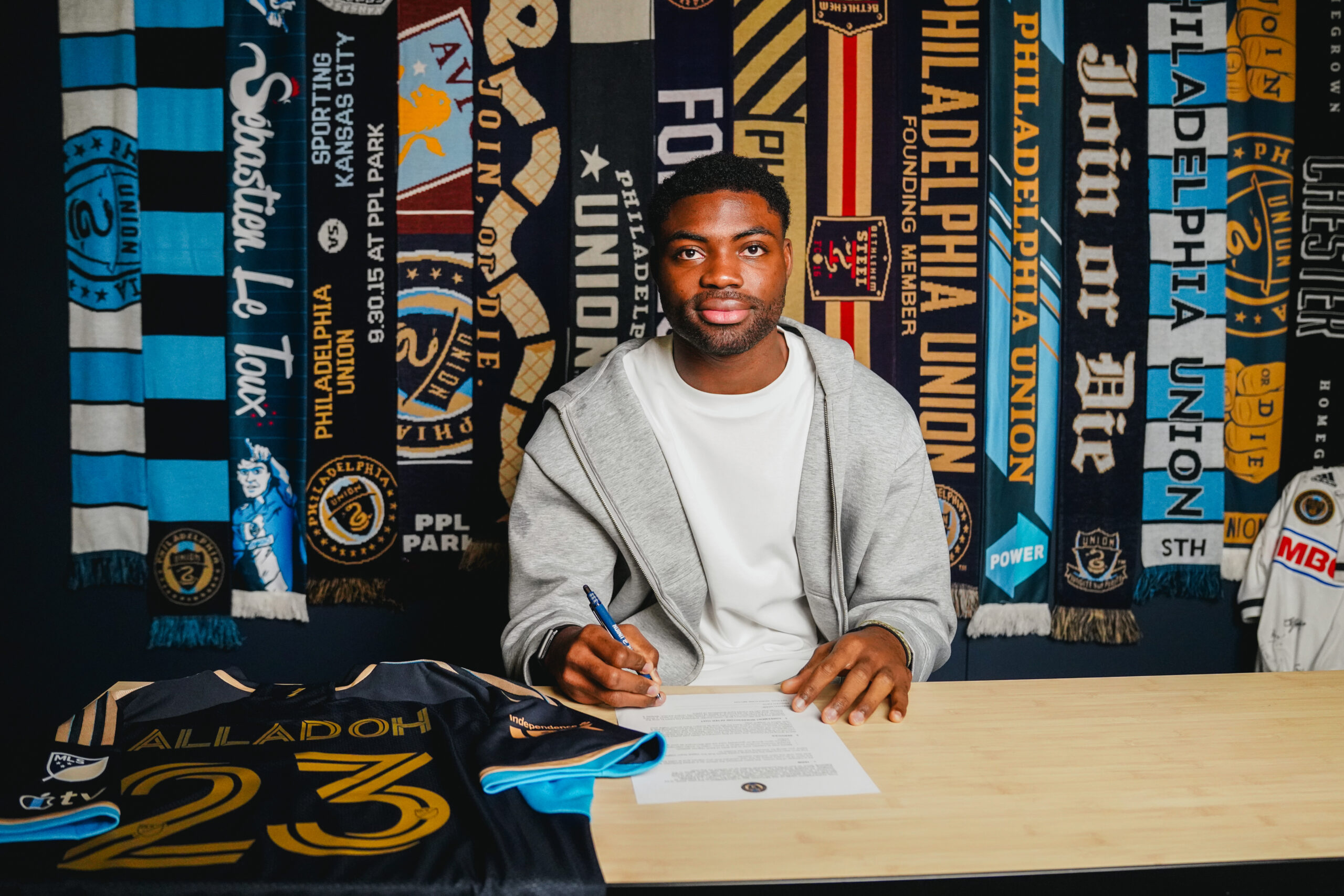
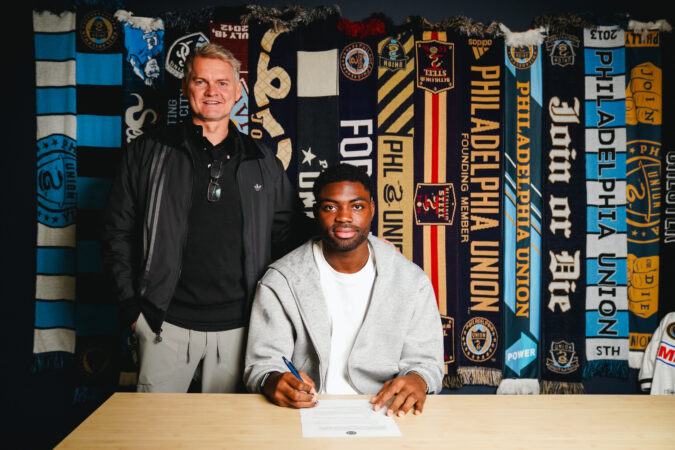
Ezekiel Alladoh signs his new Union contract at the team’s practice facility on Dec. 3.
On the flip side, players want to come to an attractive club and in this sport, like so many others, you’re only as good as your last game. If the Union can replicate the success they had in the 2025 season (especially that stretch from mid-April to late June when they ran through teams in all competitions, setting a club-record 11-game unbeaten streak), then that’s when love affairs tend to become mutual.
Also, a successful club entices interested parties to invest, and I don’t see a world where Sugarman isn’t going to listen to those interested in a minority ownership — or dare we even suggest that after 15 years as the primary funder of this franchise, entertain offers from those who might want to take the task off his hands.
Going into the World Cup as one of MLS’s best teams when the eyes of the world are on America opens up a lot of possibilities. The last one might sound wild to envision — but it’s not out of the realm of reality.
In the backdrop of the excitement surrounding the FIFA World Cup coming to Philadelphia is the question of what impact the tournament will have on soccer in the region.
World Cups have long had the potential to be transformative for the hosting nations. The last men’s edition in the United States, in 1994, helped spur Major League Soccer. The women’s editions in 1999 and 2003 also spawned leagues, but more importantly, they fueled the grassroots growth of the game, benefiting both girls and boys.
Over the course of those years, the youth game has morphed into a pay-for-play structure in which the best clubs are generally the ones that come at a high price, giving youth athletes whose parents have expendable cash — many times in the thousands — the opportunity to play consistently and thus reap the benefits of year-round exposure through tournaments and showcases.
U.S. Youth Soccer is a network that oversees more than 10,000 such clubs, with local branches such as the Eastern Pennsylvania Youth Soccer Association, which govern clubs and leagues across regions under the umbrella of USYS. The thing is, many of those clubs and leagues don’t come from inner-city areas like Philadelphia, where the next great American star could be waiting to be discovered.
But to find that kid, they need a place to play, and in Philadelphia, finding a spot to play organized soccer at times can be equally as tricky.
It is a need that the city, alongside several foundations and organizations, is working to address, recognizing that the World Cup’s visit to Philadelphia may lead more kids to give futból a try.
If you build it …
Ahead of the World Cup, Philadelphia Soccer 2026 committed $2 million to the U.S. Soccer Foundation to support youth soccer initiatives, including the development mini pitches across the state.
In late fall, U.S. Soccer Foundation installed a pair of those mini-pitches in Philadelphia. The foundation, which was also created after the 1994 World Cup, has a goal to leave a lasting legacy in inner cities. It believes these mini-pitches offer not just a place to play but a place for local organizations to host programs.
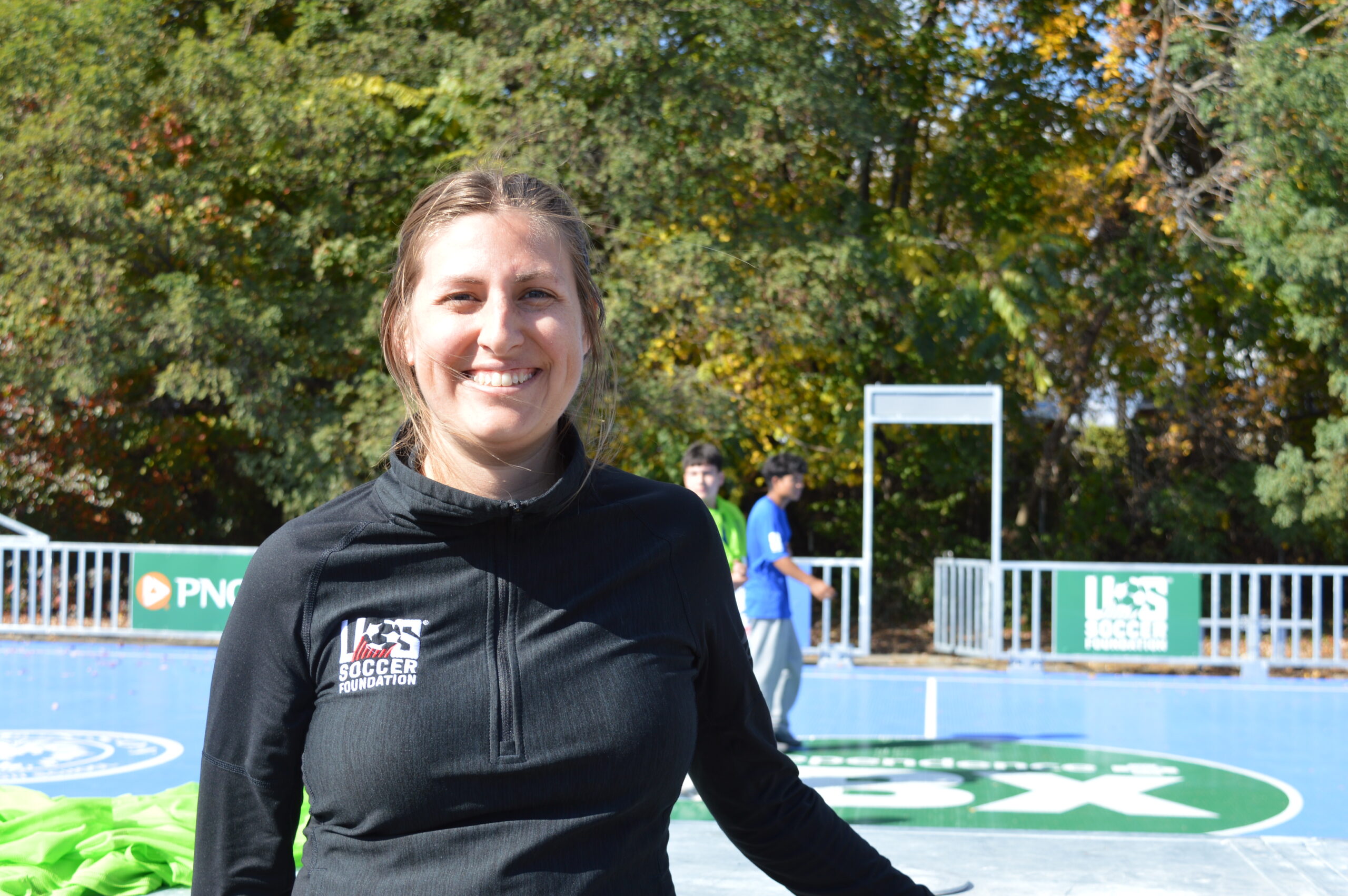
Jen Arnold, vice president of communications and marketing at the U.S. Soccer Foundation, says that the foundation has a commitment to introducing the sport to more children in underserved areas.
“When our current president and CEO [Ed Foster-Simeon] came into the role in 2008, he did a landscape analysis and showed it had grown … but in the suburbs and more affluent communities,” said Jen Arnold, vice president of communications and marketing for the U.S. Soccer Foundation.
“So from the foundation standpoint, we want to make sure it’s growing equally across the ground. We’re here for the under-resourced communities, communities that might not have been part of that boom after 1994. We’re here to make sure that everyone can access the game.”
Arnold spoke after the installation of one of the latest mini-pitches added to Philly’s soccer landscape, behind Swenson Arts and Technology High School in the Far Northeast. The installation was in collaboration with Independence Blue Cross, the School District of Philadelphia, and FIFA Philly 26, the local collective tasked with organizing Philly’s place in this summer’s World Cup.
The fields, which cost $150,000 apiece to install, according to Arnold, are the latest additions to Philly’s sports landscape. They could be considered an addition to the city’s massive Rebuild program, a reported $500 million restoration project for area parks and playgrounds, of which $3.5 million was allocated to create 15 mini-pitches and two signature soccer fields across the city.
Many recreation centers across the city are fenced off, only to be used under permit, which restricts the idea of open play, a key component of soccer.
The idea is that these mini-pitches offer an opportunity for more children to be introduced to the game. They also offer a welcoming environment, unlike the scores of fields around the city that are fenced and kept under lock and key. Or recreation centers in which both indoor and outdoor surfaces get gobbled up often by other sports, or even pay-to-play youth and adult league soccer organizations, which serve to add to city coffers in exchange for monopolizing much-needed field time.
But soccer organizers across the region believe that it’s not simply “If you build it, they will come.” It’s more like: “Build it and add programs and they might come.”
That’s where the big challenge lies when it comes to introducing more city kids to soccer.
… Will they come?
For the better part of a decade, Dom Landry has made it a mission to bring soccer to North Philadelphia. A Philly native who played at St. Joseph’s University, Landry has dedicated time, intuition, and even his own dollars to introduce the sport to as many children in the city’s Fairhill section as possible.
Landry founded AC Fairhill, the neighborhood club created in 2015 with just “three kids and an old bag of balls,” according to Landry. It has since become a recognized club that competes in tournaments across the region. His is one of a few clubs directly from the inner city that have funneled children from North Philly streets to top clubs and academies.
His desire mirrors what the U.S. Soccer Foundation says it’s looking to do in developing the infrastructure, but Landry notes that it goes way beyond plopping a shiny new field in the middle of an underserved neighborhood.
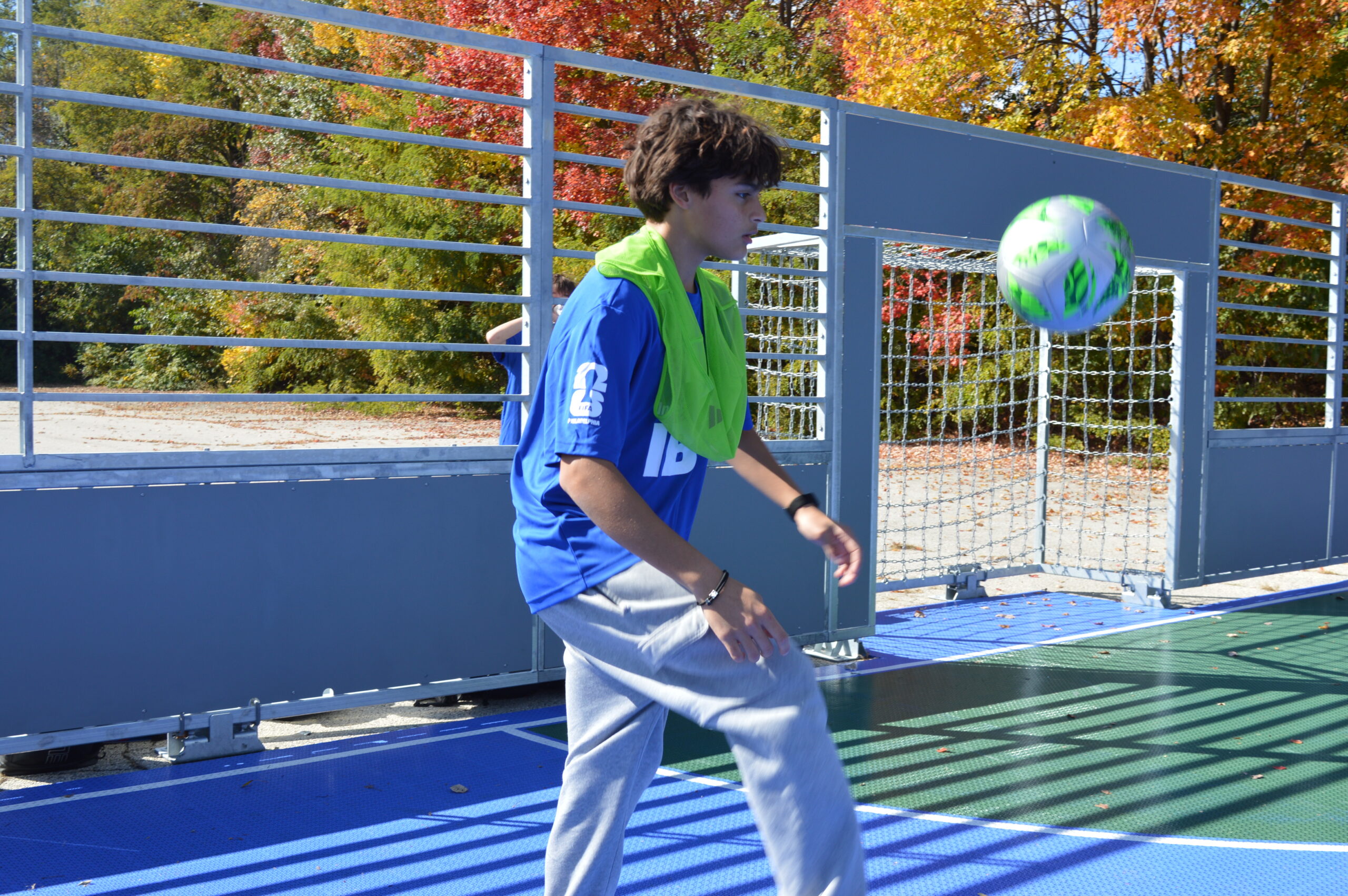
Students at Swenson Arts and Technology School were the first to test out the new soccer mini-pitch that was installed at the rear of the school earlier this fall.
“Putting infrastructure in for play is critically important, but it’s not the United States Soccer Federation or its foundation’s job to provide programming,” Landry said. “I know it’s part of their mission [at the U.S. Soccer Foundation], too, but it’s really the job of local organizations to bring the programming to those fields.
“We don’t have the soccer culture here in America where kids are just going to grab a soccer ball and go to a soccer pitch because it was made; there has to be enough people to bring in that level of interest to them. It’s very much a multiprong approach, and these mini-fields are great, but they’re only scratching the surface.”
Unlike other countries where soccer reigns supreme, in America it’s viewed as a sport for children, residing in the backdrop of football, baseball, and basketball. In other parts of the world, all that’s needed is a ball to get a game going, but here, it’s rare to see the sport being played without an organization tied to it.
Having safe places to play is one thing, but experts say developing a love for the game in area children is up to organizers.
‘We need to do more’
For Landry, it’s a simple thing that has been made to feel quite complex.
“We have to teach kids how to love the sport,” Landry said. “Not necessarily just, like, go get cones and train, but have fun with the sport. Who’s going to be that coach, that parent who’s going to show a kid how to have fun with the sport, so they can go out with their friends and play it? To me, if anything, that’s the next step in the legacy and evolution of soccer here. But that ideology also tends to upset these clubs who spend a great deal of time in generating a living from it.”
A host of organizations, both in the city and out, have taken soccer programming into schools, taking over gym classes or creating after-school outlets.
To introduce the sport directly to more Black and brown youth, the annual Odunde Festival created a soccer pitch in the middle of South Street at this past summer’s event to get children and their families playing soccer, coupled with education on where they could find programs close to home.
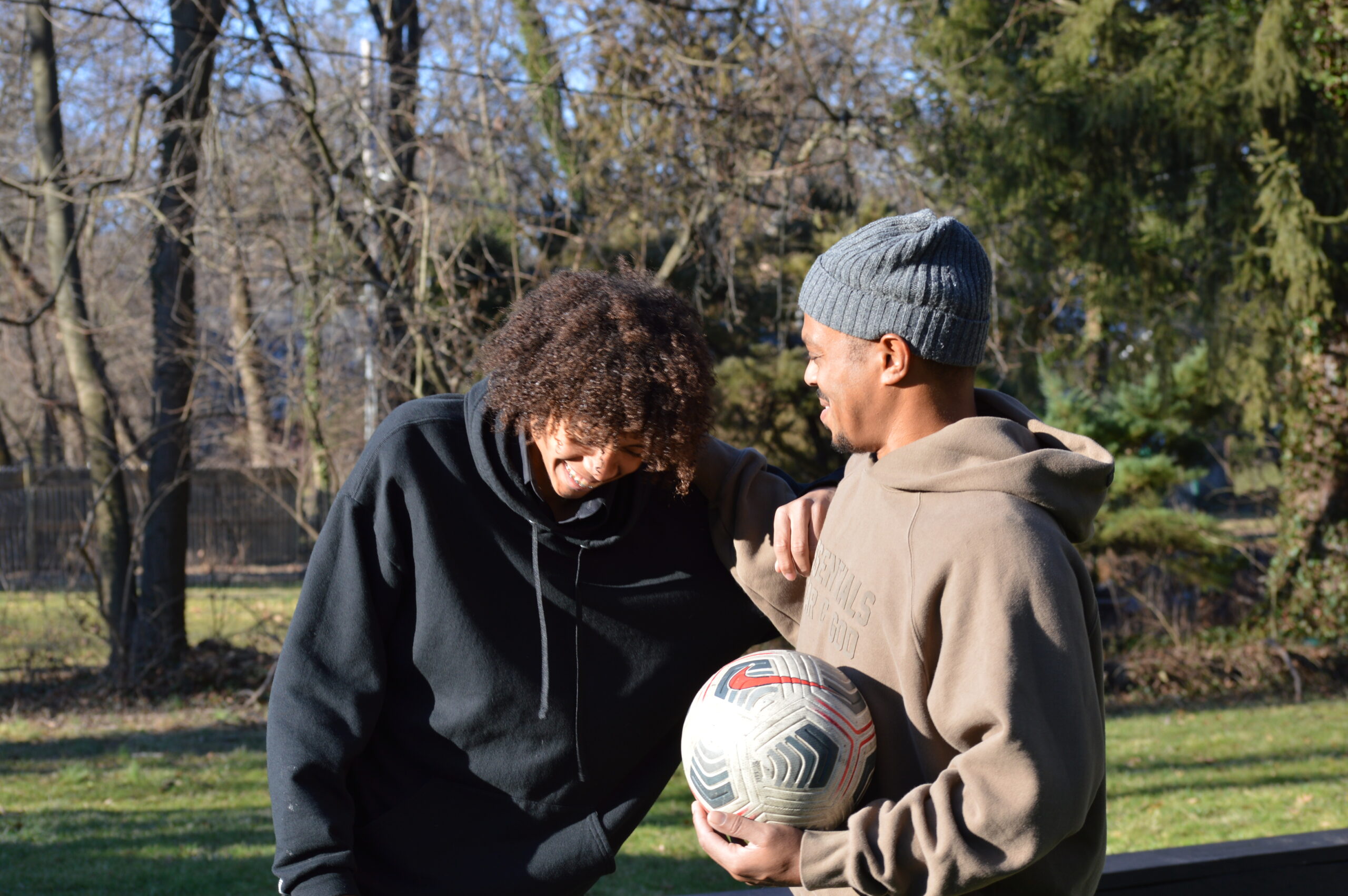
Jeremiah White III, a former professional soccer player turned entrepreneur, says he presented the idea to Odunde leadership and already has plans to grow Odunde Sports to align with this summer’s World Cup.
Jeremiah White Jr. (right), with his son, Jeremiah III, kick-started Odunde Sports this past summer, a deriative of the larger Odunde Festival, designed to foster connection between community and sports, like soccer.
“A big thing missing from soccer programming here is the importance of connection,” White said. “[When it comes to soccer in America], we tend to overvalue structural training, and in some cases disconnect training from culture entirely. It makes the game robotic and sucks out all of the passion. What kid is going to want to pick up a soccer ball over a basketball or a football, when that’s what they’re walking into?”
It’s a well-known challenge, even one recognized by top youth organizations as a change agent.
“The fields are great, but yeah, we need to do more,” said Chris Branscome, president and CEO of EPYSA, the organization that oversees club programming in the area. “Once they are built, you’ve got to get the kids there, you’ve got to program them. That’s perhaps the bigger piece of the puzzle: ensuring we have the opportunity to train more coaches and to deliver regular, consistent programming at these locations.
“To me, that’s the big challenge we have over the next year.”
It’s one that feels pretty integral once the noise the World Cup brings finally fades.
The Union added another option to their back line Tuesday in 19-year-old Finn Sundstrom.
Sundstrom comes by way of trade from D.C. United, who initially selected him off waivers from the USL Championship side North Carolina FC. In exchange, the Union gave D.C. United their first-round pick in the 2028 Major League Soccer SuperDraft.
Sundstrom and the Union agreed to terms on a deal that will secure his rights through the 2028 season, with club options for 2029 and 2030.
Welcome to Philly, Finn! ⚡️
Philadelphia Union has acquired defender Finn Sundstrom.
As part of the transaction, the Union have sent the club’s natural 1st round selection in the 2028 MLS SuperDraft to D.C. United for Sundstrom’s rights.
A U.S. under-20 men’s national team player, Sundstrom was a standout for North Carolina FC, where he was named the team’s player of the month twice and was a nominee for the USL’s Young Player of the Year award.
“Finn is a young, versatile defender who aligns well with our playing philosophy,” Union manager Bradley Carnell said. “At just 19 years old, he has demonstrated the toughness and mentality we value at the Union, as well as the ability to adapt to different styles of play. We look forward to continuing his development.”
The 6-foot, 170-pound defender aligns seamlessly with the club’s mantra of growing the game from the youth ranks up, prioritizing development over proven star power. Upon passing a physical, Sundstrom is expected to join the Union in time to head to Marbella, Spain, to kick-start their preseason campaign on Jan. 17.
It will be the second year in a row the club has started its preseason in Spain before returning home to embark on its second phase in Orlando.
There is one more game separating Penn State from the Matt Campbell era, after the longtime Iowa State coach was hired by the program earlier this month.
In one week, the transfer portal for college football will open, and Campbell’s staff at Penn State is starting to take shape, with several familiar names from the coach’s tenure in Ames, Iowa.
Last week, Noah Pauley was named Penn State’s wide receivers coach and Jake Waters came aboard as the quarterbacks coach. The week before that, Taylor Mouser was announced as the offensive coordinator and tight ends coach, while Deon Broomfield (secondary) and Ryan Clanton (offensive line) also joined the staff.
Much of the defensive staff must still be filled out, especially after Jon Heacock, who was expected to follow Campbell from Iowa State to Penn State, decided to retire. The Nittany Lions reportedly are interested in former letterman D’Anton Lynn, who has been the defensive coordinator at Southern Cal the past two seasons. Adding Lynn, whose defense this year ranked inside the top 50 in points and yards allowed, would help solidify a staff with a strong nucleus.
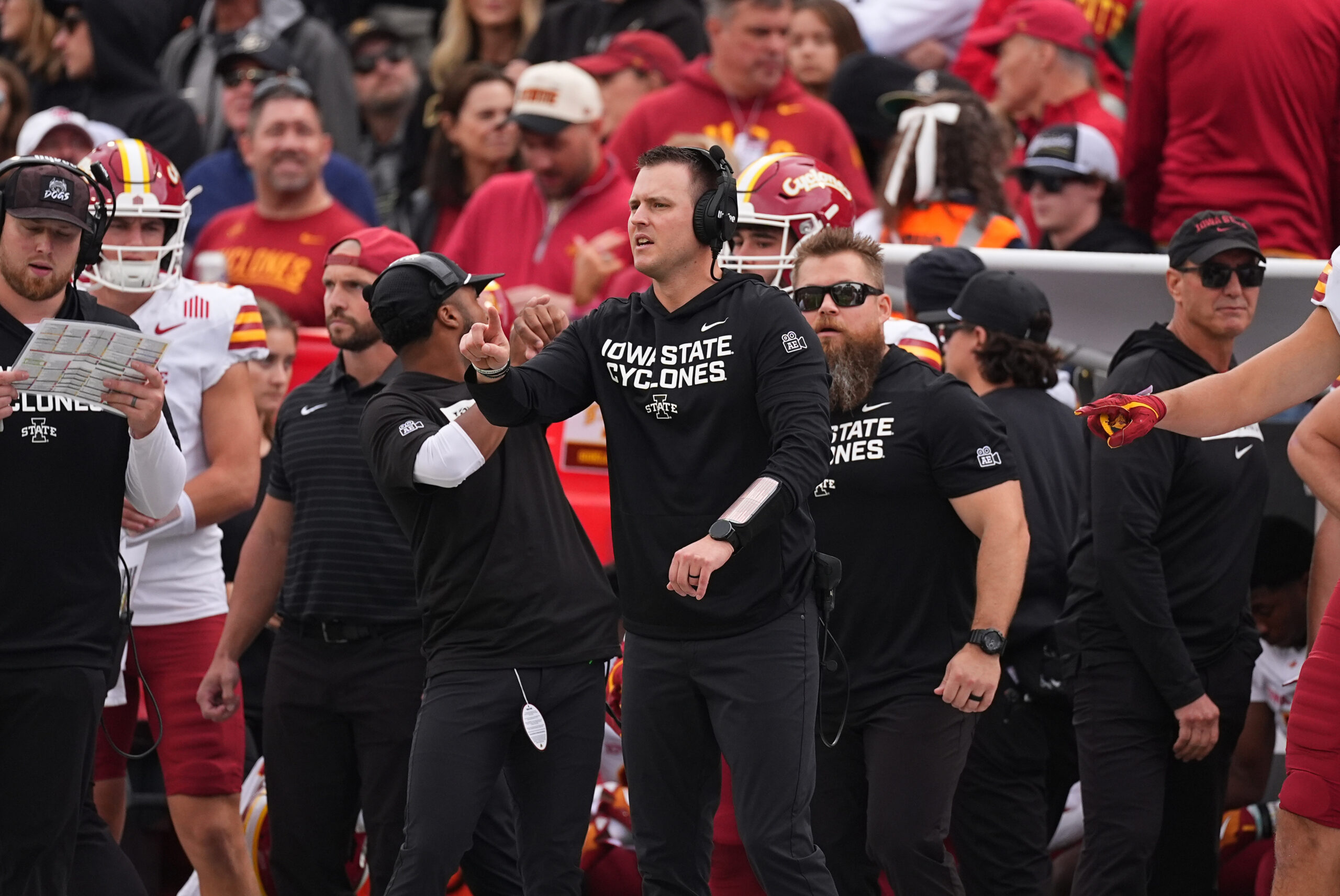
Iowa State offensive coordinator Taylor Mouser will fill the same role at Penn State.
Mouser’s offense at Iowa State was better statistically in 2024 than 2025, but this year was only his second season as the play caller. Clanton, who played at Oregon under Chip Kelly, has been successful developing offensive linemen. While at Northern Iowa, he was instrumental in helping Trevor Penning become a first-round pick in the 2022 NFL draft and aided Jalen Travis, who was selected in the fourth round of the 2024 draft, at Iowa State.
Bloomfield has developed a couple of secondary players into NFL draft picks (T.J. Tampa in 2024, Darien Porter in 2025), while Pauley has similarly had success in the growth of his receivers, with Jaylin Noel and Jayden Higgins getting drafted earlier this year. Pauley also was key in Christian Watson’s development at North Dakota State.
Waters, meanwhile, has worked closely the past two years with quarterback Rocco Becht, who recently entered the transfer portal.
Campbell’s staff is a mix of experienced coaches and others who have transitioned from analysts to position coaches. But there has been plenty of staff turnover, even as interim coach Terry Smith was retained, along with assistant quarterbacks coach Trace McSorley.
Among those who have departed are defensive line coach Deion Barnes, the North Philly native who was vital in developing the likes of Abdul Carter, Chop Robinson, and Odafe Oweh. Barnes took the same job at South Carolina, alongside former Temple coach Stan Drayton, who coached running backs at Penn State and will do the same for the Gamecocks as running backs coach and assistant head coach for offense.
Former defensive coordinator Jim Knowles, also a Philly native, is heading to Tennessee at the same position, and offensive coordinator Andy Kotelnicki is not returning next season, although he will coach in the Pinstripe Bowl. A few others followed James Franklin to Virginia Tech, including Ty Howle, Danny O’Brien, and Chuck Losey.
While Campbell has brought in some of his own guys, he will need to continue to look externally to fill out the rest of his staff, which likely will happen over the next couple of weeks.
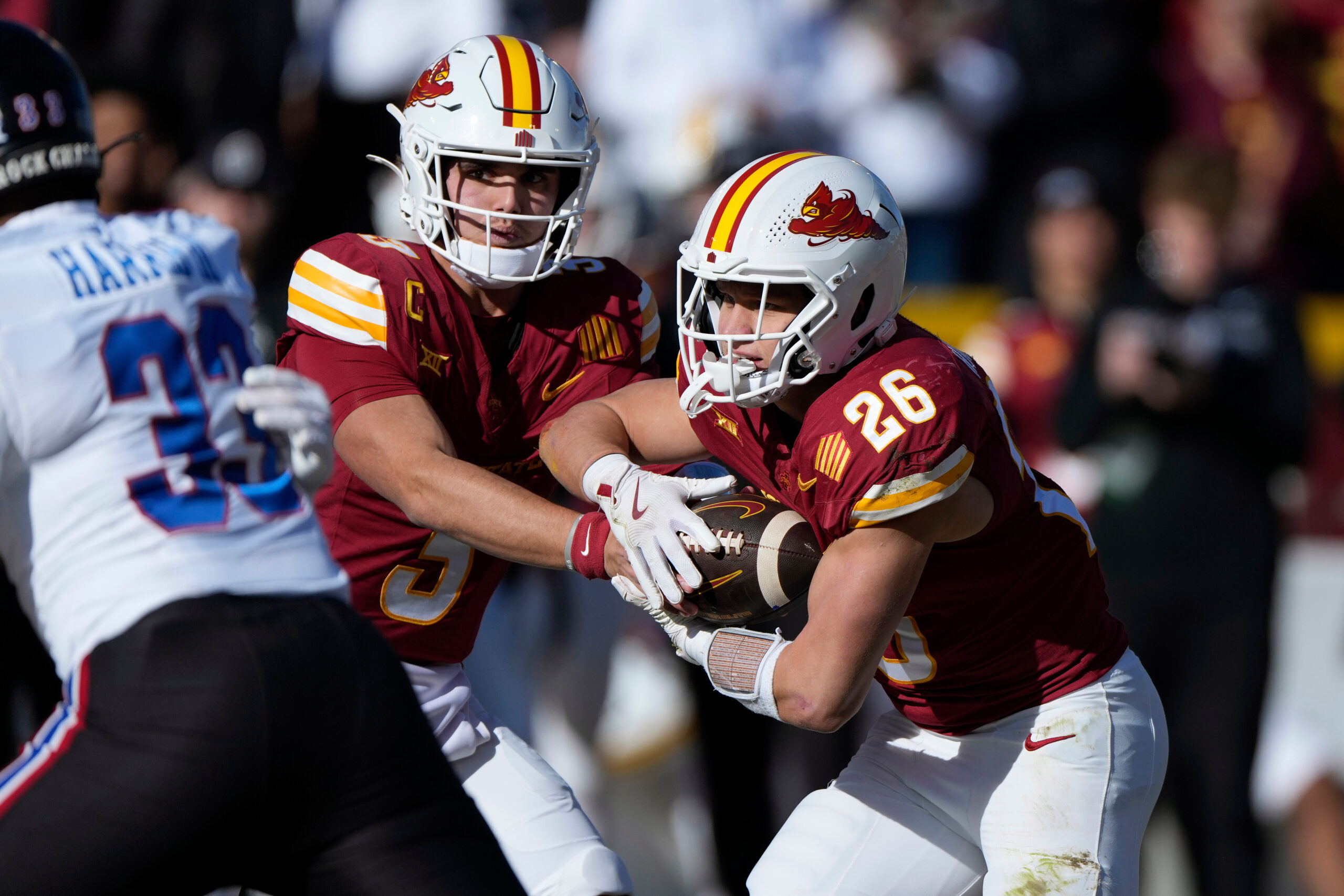
Iowa State quarterback Rocco Becht (3) was a player whom new Penn State quarterbacks coach Tyler Waters helped develop.
Flipping commits and bringing in transfers
Penn State signed just two players in the 2026 recruiting class, so it was natural that once Campbell was hired, that number would change. And it has in recent days.
Offensive linemen Mason Bandhauer and Pete Eglitis were among the seven players who previously committed to Iowa State and flipped to Penn State, bringing their 2026 recruiting class to nine players and counting.
And more reinforcements could be on the way via the transfer portal. Along with Becht, former Iowa State running back Carson Hansen and wide receivers Brett Eskildsen and Xavier Townsend have entered the portal.
Becht seems like a natural fit in Happy Valley, considering his experience, familiarity with staff, and the high-profile nature of the games Penn State will play, though there will be a considerable number of suitors. The ex-Iowa State quarterback has thrown for over 9,000 yards and 64 touchdowns in 39 starts.
Campbell likely will try to reconnect with some of the players he coached at Iowa State, but he also will need to recruit the players currently on Penn State’s roster. A number of key contributors, including edge rusher Chaz Coleman and defensive backs A.J. Harris and Elliot Washington, headline those who have announced their intention to enter the portal. Several starters from the 2025 season also will be making the jump to the NFL.
The new staff has its work cut out for them as they continue to build out the rest of the team for next year and beyond. But first, the rest of the staff remaining from the 2025 team will focus on beating Clemson on Saturday (noon, 6abc) to salvage what was a lost season in early October.
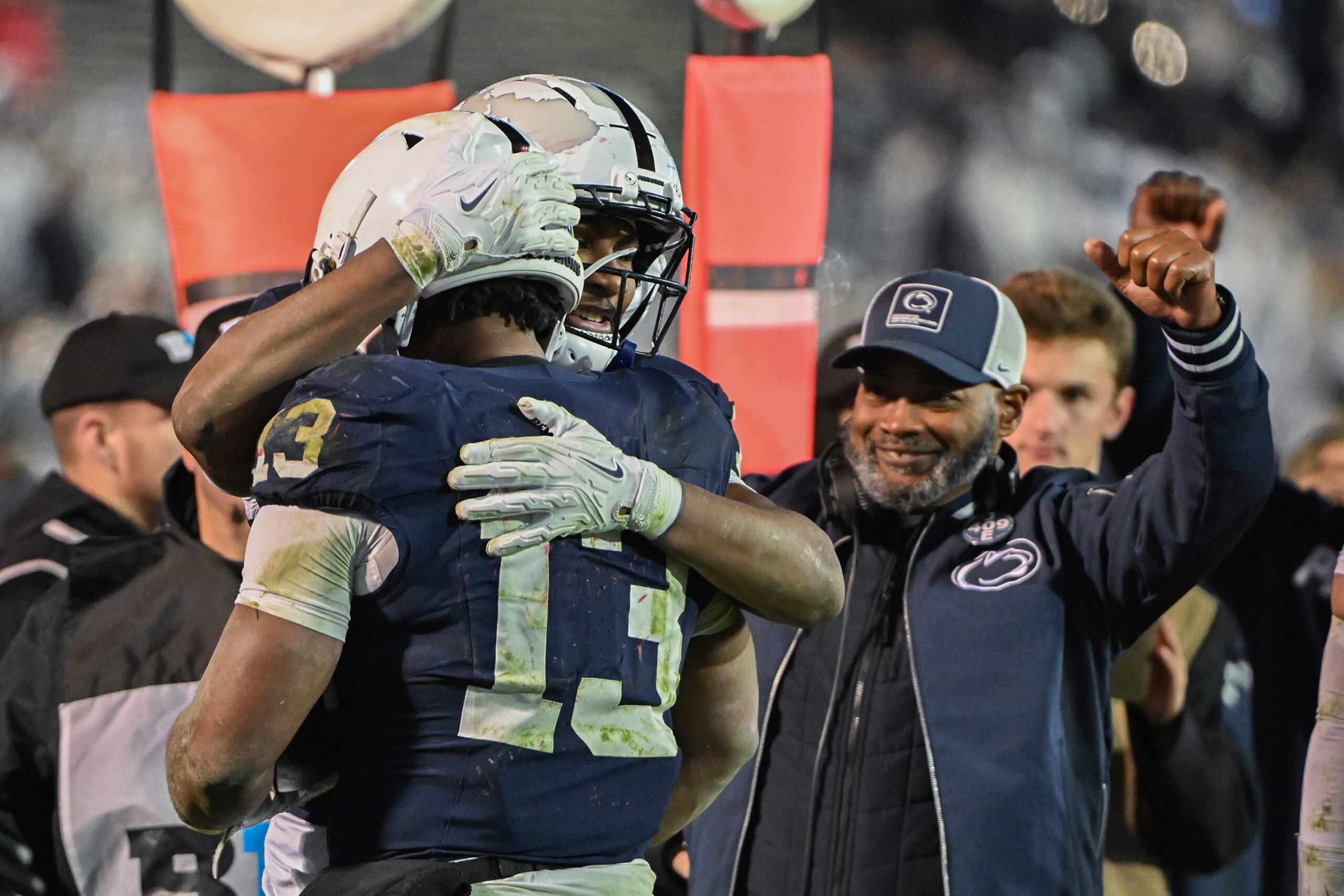
Penn State running back Kaytron Allen (13) and interim coach Terry Smith will look to end the season on a high with a win over Clemson in the Pinstripe Bowl.
Games of the week
Amid a holiday weekend of college football, there are two games with local flair certainly worth watching. Enjoy.
Pinstripe Bowl: Penn State vs. Clemson (Saturday, noon, 6abc)
It’s a chance for the Nittany Lions to end a rough year by their standards on a high note against a quality Power 5 opponent. Motivation? Penn State enters the game as three-point underdogs. It’s a test for fresh-faced Nittany Lions quarterback Ethan Grunkemeyer, but the must-watch player on offense will be in running back Kaytron Allen as he continues a season-ending climb to the top of the Big Ten history books. Fun fact: Despite being two of the oldest programs in college football, this will only be the second time these teams face off.
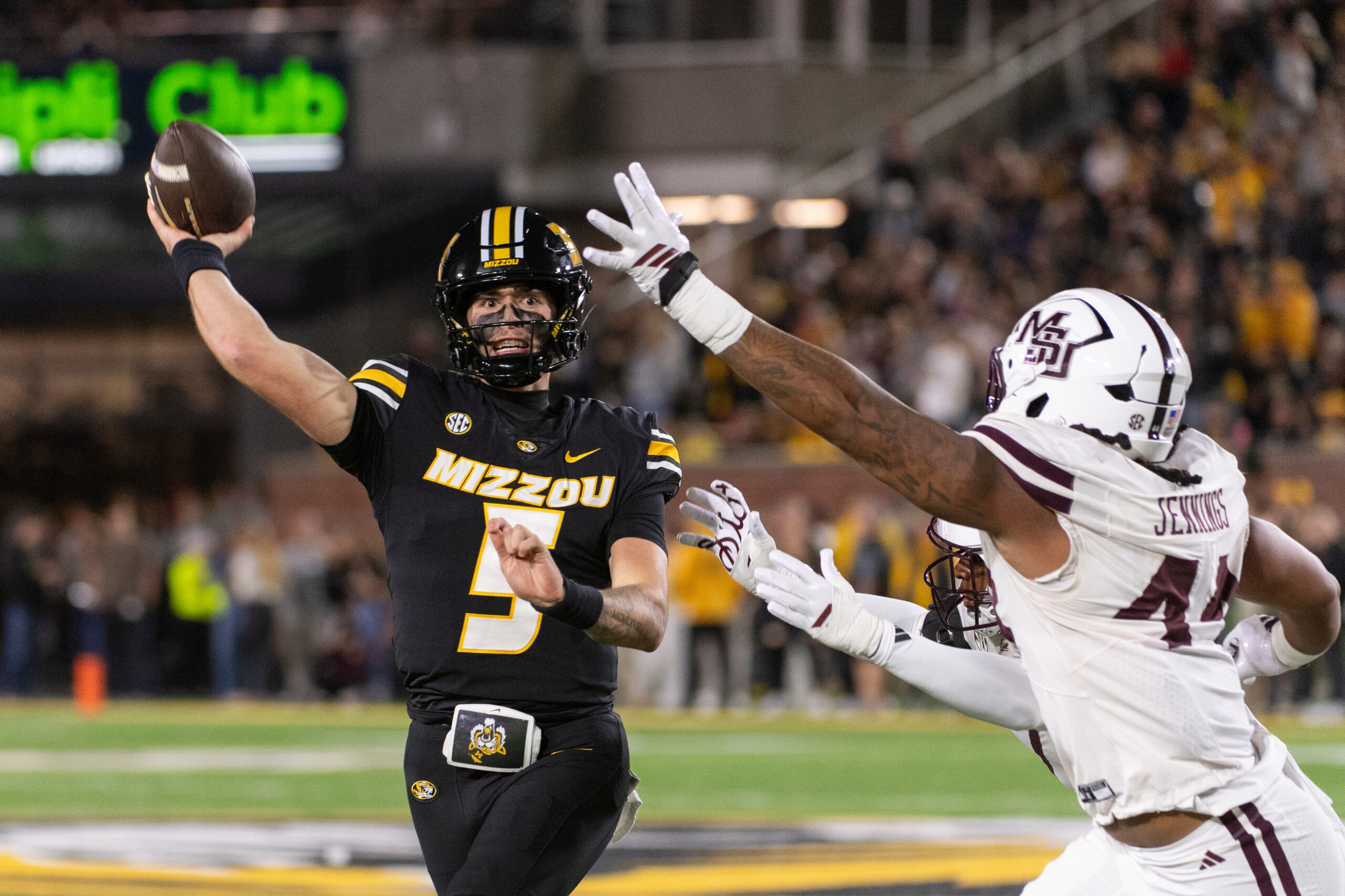
Missouri quarterback and Spring-Ford alum Matt Zollers, left, will lead the Tigers in Saturday’s Gator Bowl.
Gator Bowl: Virginia vs. Missouri (Saturday, 7:30 p.m. 6abc)
Saturday will provide another chance to see Spring-Ford alumnus Matt Zollers lead the Missouri offense after Mizzou starting quarterback Beau Pribula announced his intent to leave the school. In six games this season, Zollers, the freshman backup, threw for 402 yards, four touchdowns, and an interception and won four of the six games in which he played. The Tigers hope he can keep that energy while entering the game as four-point favorites.
For those hoping to get into a World Cup game in Philly, the assumption was that obtaining a ticket, even at face value, would be costly.
Well, that was correct, and on Thursday, fans interested in attending learned just how much.
FIFA’s random selection presale was the third in a four-part lottery phase in which interested buyers from around the world were able to select their match by venue or by the team they’d most like to see.
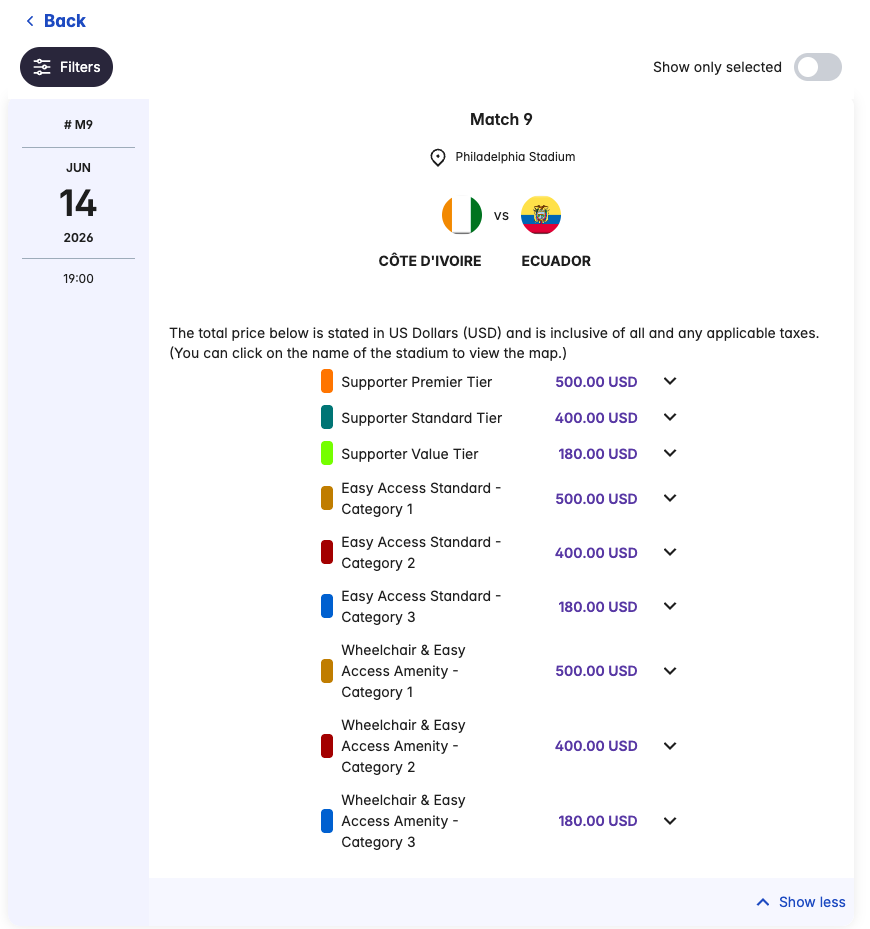
Among the 72 group stage matches scheduled to be held in the United States, Canada, and Mexico this summer, five will take place at Lincoln Financial Field, with the Ivory Coast and Ecuador kicking off Philly’s slate of matches on June 14.
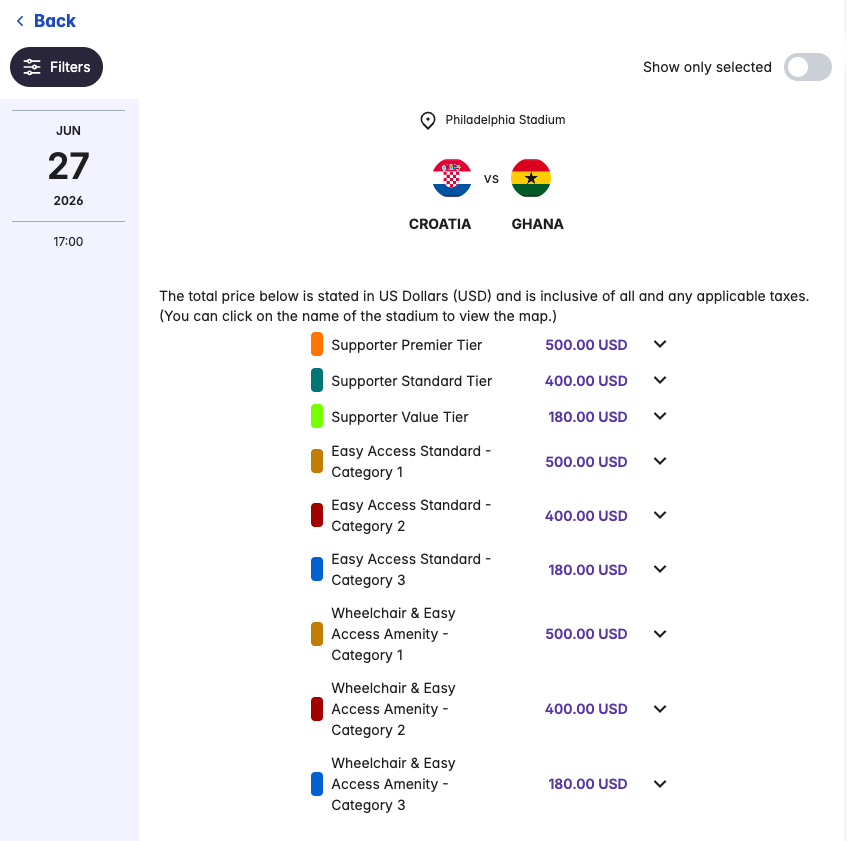
The least expensive seat for that match was $180 under Category 3 tiered pricing (which applies to upper-level seating and designated supporter sections). The most expensive ticket was $500 for a Category 1 seat (lower level, prime placement) or another section called a Supporter Premier Tier.
The cheapest ticket price was $180 for upper deck seats at Lincoln Financial Field for the World Cup opener between the Ivory Coast and Ecuador.
The costliest tickets were for the June 19 match between Brazil and Haiti, with the cheapest seat coming in at $265 and the priciest Category 1 tickets at $700. Even Category 2 seats, which generally are still lower- to mid-level but have corner sightlines, were $500 per seat.
While it remains to be seen, prices for France’s game in Philly on June 22 could mimic the Brazil game as both are high-powered nations in the top 10 of the latest FIFA World Rankings, complete with rosters expected to draw a crowd. France awaits whom it will play at the Linc, as a FIFA playoff in March will determine whether it will be Iraq, Suriname, or Bolivia.
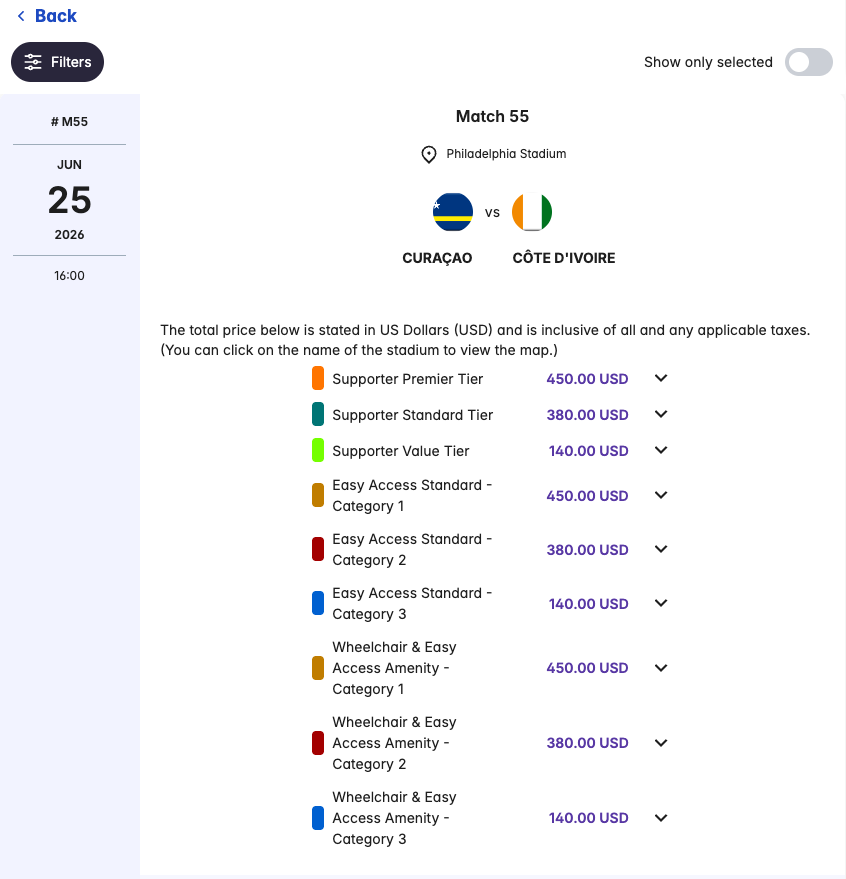
The least expensive game in Philly as of Thursday’s presale was the June 25 match, which features Ivory Coast against Curaçao. Lower-level tickets were $450 for Category 1 and $380 for Category 2 seats. For those who don’t mind sitting in the 200-level section, the price is $140 each.
The game between Ivory Coast and Curaçao on June 25 looked to offer the most affordable path to securing World Cup seats.
It’s believed that with fan bases not as large as some of the other matches coming to Philly, this might be the best chance for people looking to obtain tickets, not just in the presale but perhaps when tickets officially hit the resale market.
The final group stage match at the Linc, Croatia against Ghana on June 27, offers a live look at Croatian midfield legend Luka Modric, who at age 40, will be playing in his final World Cup. Although Ghana has consistently been a strong nation in past World Cups and enters as one of the better nations throughout Confederation of African Football (CAF) qualifying, the draw is Modric — and FIFA knows that.
Tickets for that match in the presale start at $500 for Category 1, and the least expensive ticket is $180 for a Category 3 seat.
Croatia-Ghana on June 27 offers fans a live look at probably the last time Croatian midfield legend Luka Modric will chase World Cup glory.
So how does it all work?
Interested fans must create a FIFA ID. Creating one is quick, and once you do, you’ll be able to enter the lottery, which runs through 11 a.m. on Jan. 13. FIFA says it will alert people who have won by Feb. 5 if they’ve earned the right to purchase tickets.
Still, you could find out sooner by checking your bank or credit card statement and noticing a balance decrease of hundreds or thousands of dollars.
In the process, fans are entered into a queue to buy, which on Thursday had potential purchasers experiencing wait times of up to 30 minutes. Once there, fans can access two ticket portals: the random selection draw, which allows them to choose one game or preferred venue, and another in which fans can select a preferred team and choose from that nation’s three matches throughout the group stage.
From there, a debit or credit card goes on file, from which, if selected, FIFA will automatically pull funds from the account beginning on Feb. 9. Incidentally, there’s no guarantee that fans will receive their full allocation, as there are options for ticket sales to be “completely successful” or “partially successful.”
What does the latter mean? Here’s is FIFA’s explanation:
“‘Partially successful’ means you received some, but not all, of the tickets you applied for. For example, if you requested tickets for three different matches but were allocated tickets for only one or two of them, your application is considered partially successful. If you are allocated tickets for any match, you will always receive the full quantity you requested for that match; you will never receive fewer than requested.”
The random selection draw is the last presale before FIFA will release remaining tickets in what’s sure to be a first-come, first-served frenzy. This late sales phase is expected to launch closer to the start of the tournament.
We are a week removed from the FIFA World Cup draw, and in the aftermath, a proverbial ball is beginning to roll on several fronts. FIFA opened its latest presale ticket lottery on Thursday for fans to enter the random selection phase of the tournament, the latest chance to hope and wish your name will be called to purchase tickets — ones that might still be priced in the hundreds, if not thousands, of dollars by the time it’s your turn.
These past few days have provided a greater opportunity to examine FIFA’s ways and which nations, cities, and fans benefited or flopped as next steps begin to trickle out.
With that said, these are our picks for winners and losers post-draw.
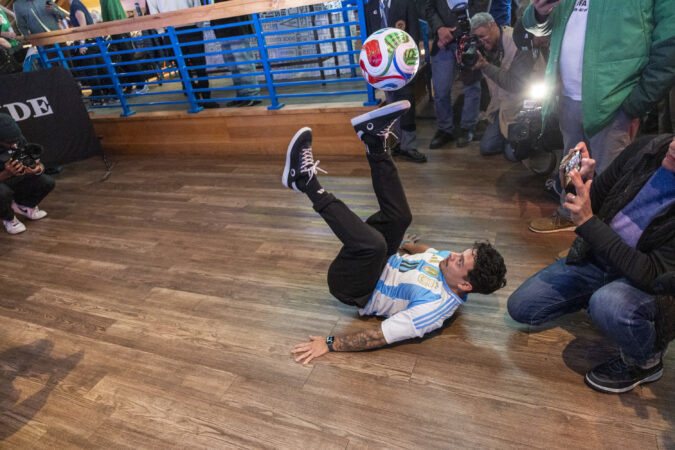
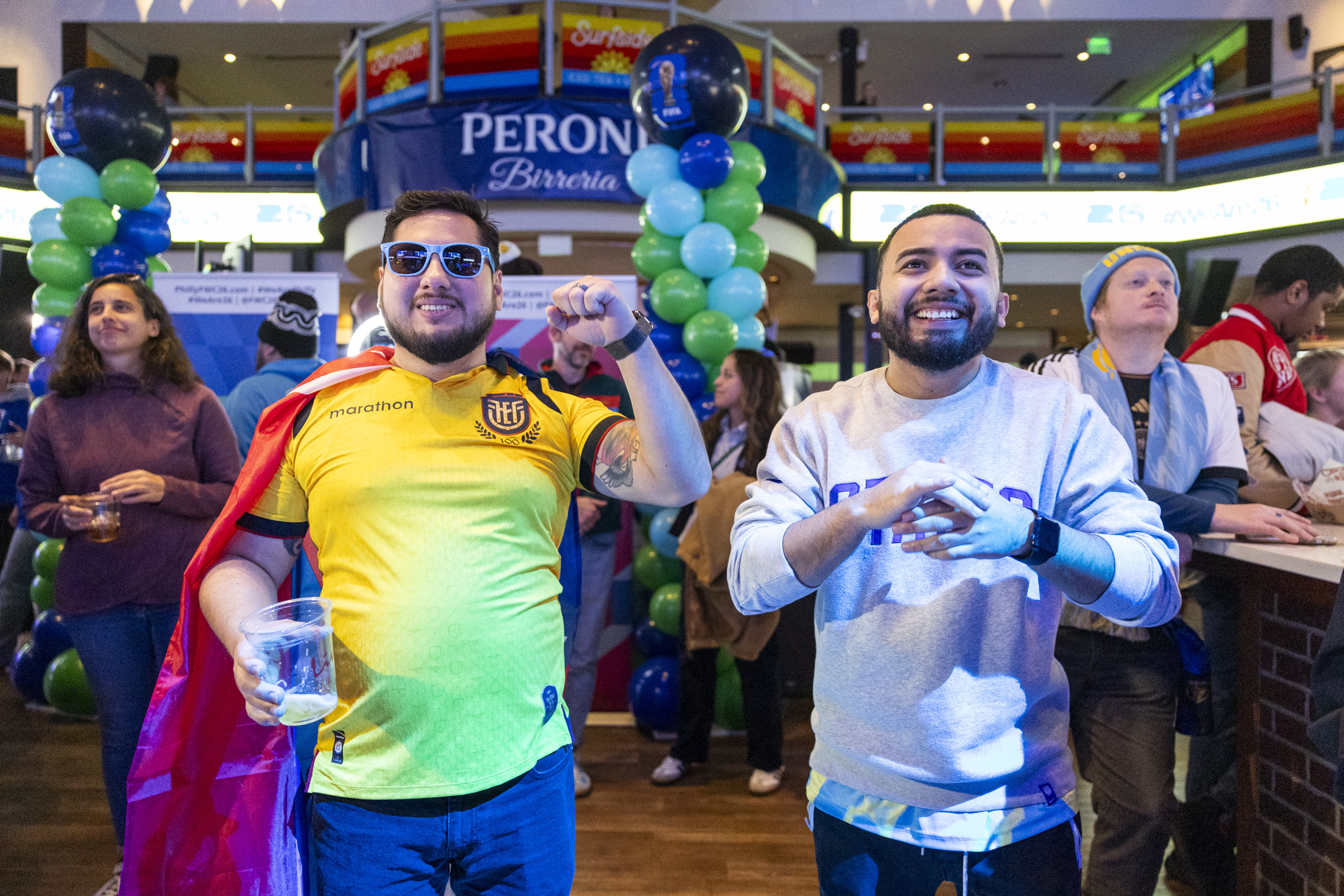
Wilson Velez, 36, of Northeast Philadelphia, Pa., (left), Edwin Martinez, 25, of Central Philadelphia, watched the FIFA World Cup draw at Stateside Live! on Friday.
👍🏽 Philly getting Brazil, France, and Croatia
For many fans, it’s going to be a breathing-into-a-brown-bag moment watching players like Brazil and Real Madrid’s Vinicús Jr., Croatian midfield maestro Luka Modric, and countless players on France’s squad, undoubtedly headlined by forward sensation Kylian Mbappé, chasing World Cup glory at Lincoln Financial Field. Especially when you consider the French are one of the early favorites to win next summer’s spectacle at +700, according to futures odds on FanDuel.
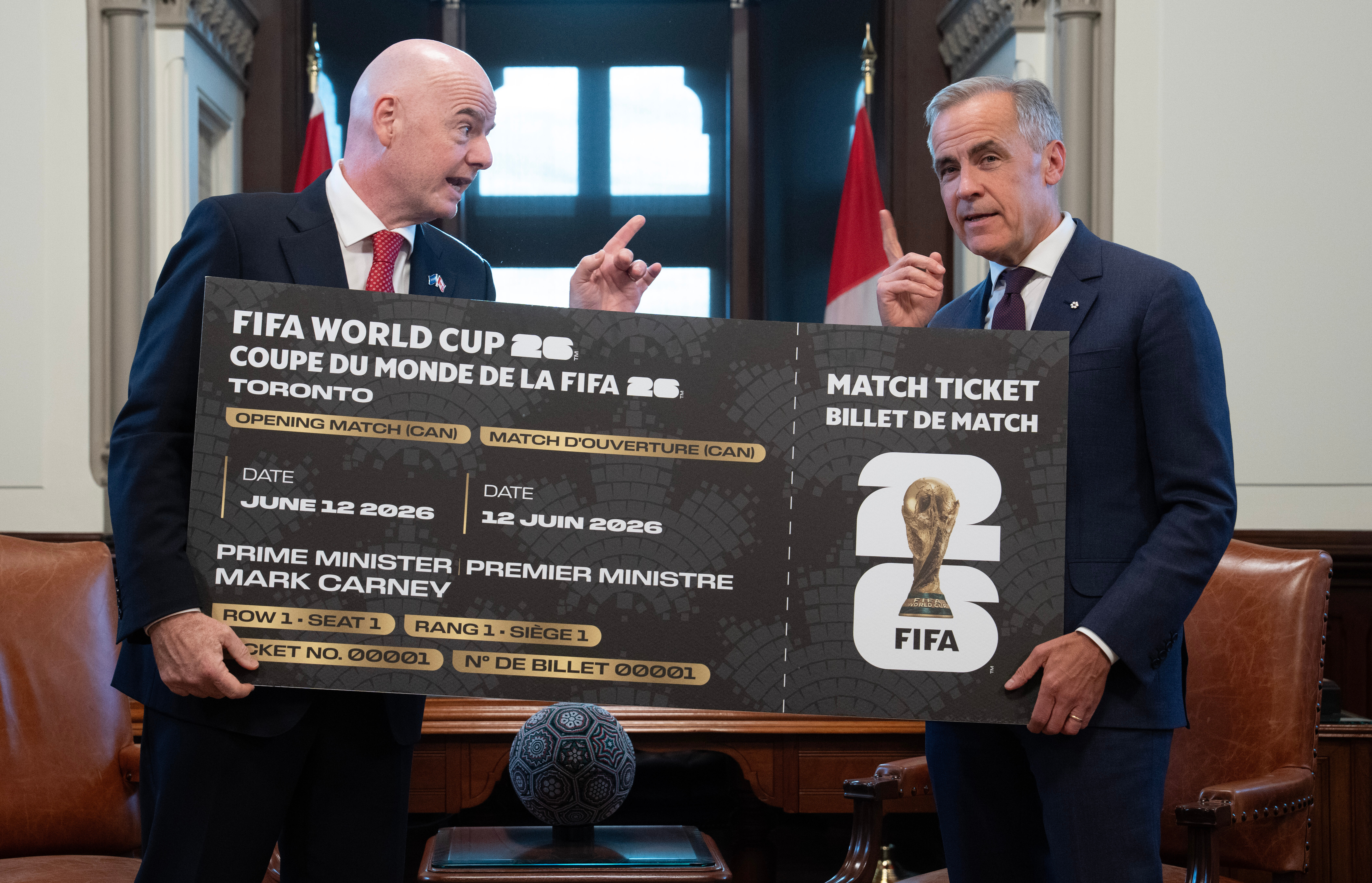
Canadian Prime Minister Mark Carney (right) is presented with a novelty World Cup ticket by FIFA President Gianni Infantino in October.
👎🏽 Dynamic pricing on tickets
For some reason, it just seems counterintuitive for FIFA to stress its desire to grow the game — and then turn around and make the world’s biggest sporting event available only to those who still have expendable cash in this current economic climate.
This is the first time in the history of the tournament that soccer’s governing body has opted to use dynamic pricing for tickets, and some of the early price tags to secure a seat, even during presale, are laughable. Now, some matchups could see prices fall slightly, but it’s the World Cup; demand will always be higher than supply, and that holds for the bulk of the 72 group-stage matches beginning June 11.
MetLife Stadium was the center of the soccer universe this past summer hosting the semifinals and final of the Club World Cup. It’s on the big stage yet again as host of the World Cup final.
👍🏽 The BIG apple
It was already one thing that MetLife Stadium will be the center of the soccer universe next summer as host for the World Cup final. But after last Friday’s draw, it could be argued that the New York-New Jersey delegation hit the jackpot with the group-stage matches and nations coming to East Rutherford, N.J.
First up, Brazil-Morocco (June 13, 8 p.m.), when Morocco is one of the hottest nations in the world, with its senior team just one place outside the Top 10 in FIFA’s latest world rankings. Additionally, MetLife will also host European giants Germany (June 25), England (June 27), and one of the most highly anticipated rematches in France-Senegal (June 16, 3 p.m.). The Senegalese defeated a star-studded French side in the 2002 World Cup, and it’s been the talk since this match got paired.
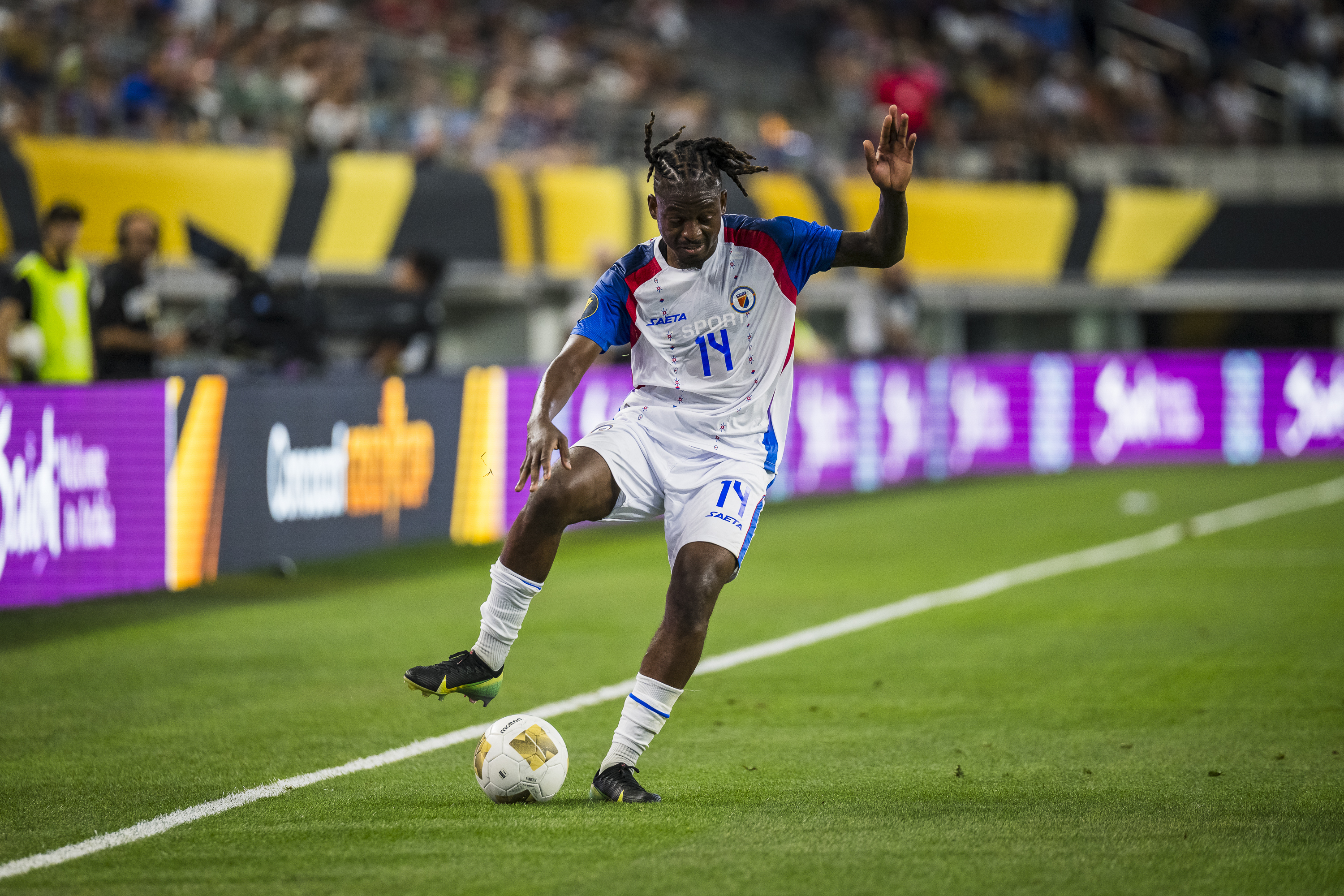
Haiti’s Leverton Pierre controls the ball during a CONCACAF Gold Cup soccer match against the United States in June.
👎🏽 Banned fans
Some fans won’t be able to see their team play live in the United States due to immigration rules and restrictions. Nations like Iran and Haiti will find out just how strong their expat communities are here in the States, but both coaches wouldn’t mind a little diplomacy.
“[President Donald Trump] is a peace prize winner,” Migné said after the event, alluding to the U.S. president winning FIFA’s inaugural Peace Prize award. “Maybe he will continue, and it will open the possibility for our fans to come here.”

A fan of Ghana cheers prior to the start of the African Cup of Nations Group B soccer match between Mozambique and Ghana in Abidjan, Ivory Coast, in January 2024.
👍🏽 African-Caribbean vibes come to Philly
In addition to the big nations like France, Brazil, and Croatia, Philly will host matches featuring the Ivory Coast, Ghana, and Curaçao. Having matches here in Philly that feature the first two bode well for the city’s sizable West African population situated primarily in the West and Southwest sections of the city. They’re also among the top teams in Africa, with Ghana consistently fielding a strong national team, and the Ivory Coast, the defending AFCON champions, ran through qualifying without conceding a goal.
As for Curaçao, the nation with the smallest population competing in the World Cup, despite making Jamaica’s road a bit harder by defeating them in November and forcing the Reggae Boyz into a three-team FIFA playoff in March, people will naturally root for the underdog in a city where the underdog mantra has been fully embraced.
The presence of Ice and Border Patrol agents at World Cup matches could be an issue for fans.
👎🏽 ICE fears
The Club World Cup served as a litmus test of how active U.S. immigration and customs enforcement and the U.S. Border Patrol would be in detaining fans attending the event, specifically in Philadelphia. Before that tournament, there were legitimate fears that ICE would be stationed outside arenas targeting fans.
While there were instances, and still could be next year, for the most part, it wasn’t as large as some led people to believe. During the Club World Cup, FIFA president Gianni Infantino was explicitly asked in a room full of reporters if he had any concerns about the enforcement and harassment of fans, to which he replied: “I don’t have any concerns about anything … most important for us is to be able to guarantee safety for the fans who come to the game.”
It’s important to know that a U.S. Customs and Border Protection spokesperson told The Inquirer via a statement in June that “U.S. Customs and Border Protection is committed to working with our local and federal partners … as we do with every major sporting event, including the Super Bowl. Our mission remains unchanged.”
A rendering shared by FIFA of what Philadelphia’s 2026 World Cup fan fest site at Lemon Hill Park is expected to look like.
👍🏽 Philly’s party HQ
While planning for the next phase of the process is still forthcoming, the revival of the Lemon Hill Mansion and grounds in Brewerytown ahead of the World Cup is promising as FIFA will use the park and grounds as the Philadelphia chapter of its fan festival.
A storied park with incredible views of the city will receive a much-needed facelift and serve as the side stage on matchdays for the six games scheduled to come through Philly. It’s steps from the larger Art Museum area and the Parkway, which will be a fun time to navigate for visitors from around the world, said Meg Kane, the host city executive for Philadelphia Soccer 2026, responsible for planning the event in the city. However, questions still remain on things like transportation, logistics, vendors, and more, but it’s December, so we’re just going to ride out on the excitement of what’s to come.
WASHINGTON — We’re one step closer in learning which teams will head to Philly ahead of next summer’s FIFA World Cup.
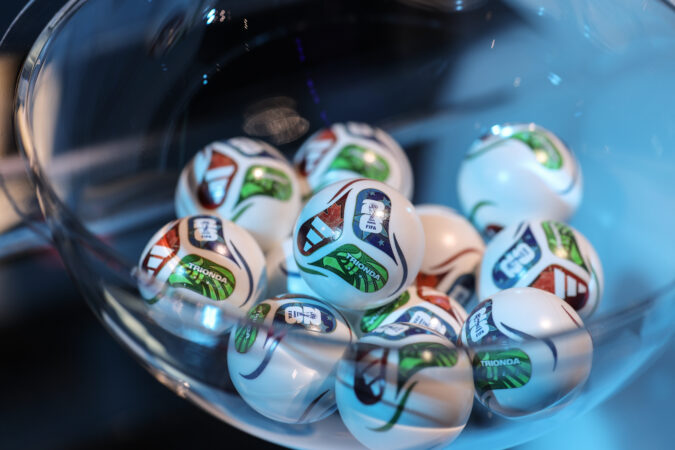
A packed house inside the Kennedy Center featuring world leaders, celebrities, and the delegations of over 40 nations watched as their countries were pulled from pots and slotted into 12 groups in FIFA’s expanded 48 team tournament.
Lincoln Financial Field is scheduled to host six matches, five in the group stage of the tournament and a Round of 16 game on July 4. Those early-round matches will be in Groups C, E, I, and L.
window.addEventListener(“message”,function(a){if(void 0!==a.data[“datawrapper-height”]){var e=document.querySelectorAll(“iframe”);for(var t in a.data[“datawrapper-height”])for(var r,i=0;r=e[i];i++)if(r.contentWindow===a.source){var d=a.data[“datawrapper-height”][t]+”px”;r.style.height=d}}});
The four nations in Group C were Brazil, Morocco, Haiti, and Scotland.
Brazil, which earned its qualification following a win over Paraguay on June 10, kept its streak of qualifying for every World Cup intact. We certainly learned that Morocco, which qualified in September, brings the party, evidenced by the fanfare brought to Philly by fans of the country’s Wydad AC in this summer’s Club World Cup.
“We’re incredibly excited about the potential for what the match schedule is going to be,” said Meg Kane, host city executive for FIFA Philly 2026, which is coordinating the events in Philadelphia next summer. “I think as we look at the four groups that have the potential of coming through Philadelphia, there are some big name teams, [like] Brazil and Morocco. We got to experience their fans last summer during Club World Cup. We would welcome them back, and I think [fans would] really lean into the excitement of that.”
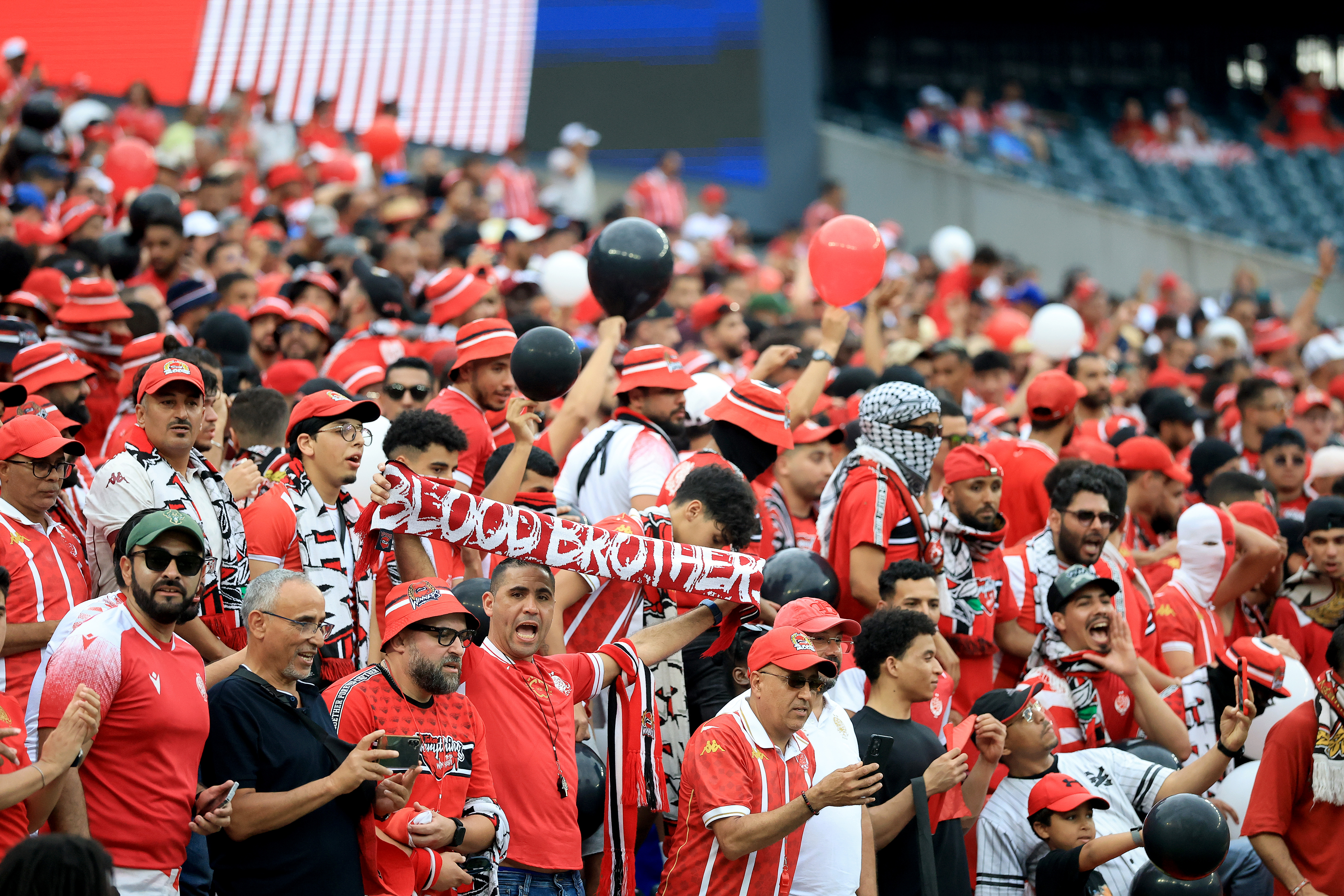
Moroccan fans of Wydad AC brought one of the most festive displays of celebration at the FIFA Club World Cup matches at Lincoln Financial Field earlier this year.
Possibly hosting Haiti and Senegal is exciting for Kane, too. It will be Haiti’s second World Cup appearance, and first since 1974. The Caribbean nation remains on the U.S.’s travel ban list under the Trump administration, however.
Haiti manager Sébastien Migné said he hopes President Donald Trump, who on Friday was awarded FIFA’s inaugural peace prize, will show diplomacy.
“[Trump] is a peace prize winner,” Migné said after the event. “Maybe he will continue, and it will open the possibility for our fans to come here.”
Kane is eager for Haitians living in the Philadelphia area to have the opportunity to see their country at the Linc.
“When it comes to Haiti, Ghana, and Senegal, I think that’s going to be potentially incredible when you consider the West African and Caribbean diaspora in West Philadelphia and across the region,” Kane said. “But looking at all the prospects, I think this has the potential to deliver [five incredible] group-stage matches. It’s really exciting.”
Philly’s group C match is on Friday, June 19, coincidentally on the day the U.S. men’s national team has a match in Group D in Seattle.
There will be two Group E matches at the Linc. That group features Germany, Curaçao, the Ivory Coast, and Ecuador. A match in Group E will kick off the series of World Cup games hosted in Philly on Sunday, June 14, with the second Group E tilt is Thursday, June 25 — another matchday on which the U.S. will have a Group D game in Los Angeles.
Curaçao, which is making its first World Cup appearance and is the field’s smallest nation by population, will be the first match for Germany, another popular team.
“I think we’re also excited to potentially see Germany appear in Group E,” Kane said. “That would be an incredible opportunity. France, in Group I, is huge, as well as England [in Group L]. I mean, really, when you think of major teams and the matches that we could have, the potential is there to really draw some of the top two teams.”
Along with France, Senegal, Norway, and the winner of a March playoff between Iraq, Bolivia, and Suriname could be in the mix for Philly’s Group I match, scheduled for Monday, June 22.
Finally, along with England in Group L, Croatia, Ghana, and Panama are together. The Linc’s Group L match, the penultimate in the series of games in Philly, will kick off on Saturday, June 27. England will open its World Cup campaign against Croatia in a rematch of the 2018 World Cup semifinal.
Brian Swanson, FIFA’s director of media relations, told the Inquirer that a decision to extend the draw an extra day to announce the venues was to “allow for greater discussion to take place on the exact locations.”
It already was known that no host nation will play group matches in Philly as Mexico (Group A1), Canada (B1), and the United States (D1) were predetermined.
Now, it’s a 24-hour wait before all 16 host cities across the United States, Canada and Mexico find out the nations they’ll host. Kane said that’s when the work begins of outreach to the various federations and understanding accommodation needs while preparing to introduce “Philly to the world” in a little under seven months.
“Once we see where those matches fall and what comes out, it’s the outreach that we’ll need to start planning in early 2026, related to which nations are coming,” Kane said. “It would have been an amazing opportunity to be in D.C. and start to be able to do that, but given that we’re not going to know until tomorrow, a lot of that outreach will be planned for in January and February.
“Looking at this list [of potential nations], there’s not a team on here where I don’t go, ‘Wow.’ There’s a passionate fan base with ties to our area on every team, which I find fantastic and is going to really meet the moment incredibly well for Philadelphia.”
Former NBA player Shaquille O’Neal, actor Kevin Hart, and former NFL player Tom Brady were among the big names at Friday’s draw.
Draw tidbits
Kevin Hart, who ended the event on stage with Heidi Klum, Tom Brady, and other celebrities gave a shoutout to Philly: “I know my guys back in Philadelphia are happy who could be coming to Philly next summer.” … Carli Lloyd, who was among the crowd at the draw noted how the men’s game coming to North America bodes well for the growth of sport — on the men’s and women’s side. The Delran native was the hero of the U.S. women’s national team’s women’s World Cup win in 2015 after her hat trick in the final cemented her legacy on the world stage. “I think it’s going to be great for both the men’s and women’s sides and we need to leverage that and harness it … to inspire girls and boys in our country,” she said. … The prize won by Trump is given to individuals who, through their unwavering commitment and their special actions, have helped to unite people all over the world, soccer’s governing body noted. Trump called the award “one of the great honors of his life,” and touted that peace accords he’s helped broker in the Middle East, Africa, and between Israel and Hamas have “saved millions and millions of lives.”
After he rattled off a slew of regular-season accomplishments, it was time for Union manager Bradley Carnell to get down to the prevailing question in the room:
Who is making player decisions now in the absence of sporting director Ernst Tanner, who remains embroiled in multiple allegations of misconduct?
And for how long?
In many ways, it appeared Carnell knew that would be the question on everyone’s minds before the Union’s final news conference of 2025 on Wednesday.
Union manager Bradley Carnell had his first season with the club end with the Supporters’ Shield and MLS Coach of the Year honors.
It’s why he chose to lead with a statement that divulged the plan of attack before reiterating highlights like the club winning the Supporters’ Shield for the second time or the fact that defenders Jakob Glesnes and Kai Wagner were named to Major League Soccer’s Best XI.
All great reminders, just not what anyone in the room was feverishly writing down.
It’s clear the Union already knew that, too, as Jon Scheer, the club’s director of academy and professional development sat alongside Carnell. Carnell revealed that alongside himself, Scheer, scouting director Chris Zitterbart, and assistant sporting director Matt Ratajczak will be the brain trust on player comings and goings for “the foreseeable future.”
“We’ve established an internal structure that brings together myself, Jon Scheer, Matt Ratajczak, [and] Chris Zitterbart all working in close collaboration with our ownership group,” Carnell said as part of his opening statement. “This is a collective and collaborative effort … to remain prepared, deliberate, and focused on making the strongest possible decisions for the club.”
How long this setup will continue remains a mystery, as neither the club nor the league has offered any clarity regarding Tanner as an investigation continues into his alleged racial, homophobic, and sexist behavior over seven years with the Union.
Scheer noted that decisions on players have always been a “collaborative and data-driven” effort by the club, which is known for being more of a developmental franchise than one ready to spend cash on high-value talent.
“I would say having worked in the club for seven years, I’ve seen the day-to-day and how that’s evolved,” said Scheer, who noted that the new group doesn’t change much in the process of how things work, despite Tanner being the architect of multiple player brokerages. “Every decision that’s been made over the last several years has been a collaborative effort with multiple people involved.
Jon Scheer (far right) has been with the club for seven seasons, playing a key role in pipelining players from the club’s youth academy to the professional ranks.
“We’re a very data-driven club, I think that’s been well documented. I think we’ve done a really good job of empowering our people across different domains. And that’s something that’s not going to change. We’re looking to take a step forward as a club and [continue] the on-field success. However, there’s a lot that’s going to remain the same in terms of decision-making and what that process looks like across the board.”
A high-value transaction made waves in Wednesday’s proceedings, as earlier that morning, the Union confirmed that they secured Ghanaian forward Ekeziel Alladoh via transfer from Brommapojkarna of Sweden’s top flight for a club-record $4.5 million fee, with incentives. Alladoh, 20, is locked up through the 2028 season with option years in 2029 and 2030.
Alladoh had been rumored to be joining the club for weeks and it’s believed that before his leave of absence, Tanner played a major part in bringing Alladoh to Chester.
“He really suits and fits our style of play,” Carnell said. ”He’s very aggressive, runs very vertical in transition, and with our game model intact, [I think he] shows exactly what type of striker we were looking for to complement [forwards] Tai [Baribo] and Bruno [Damiani] at this stage.”
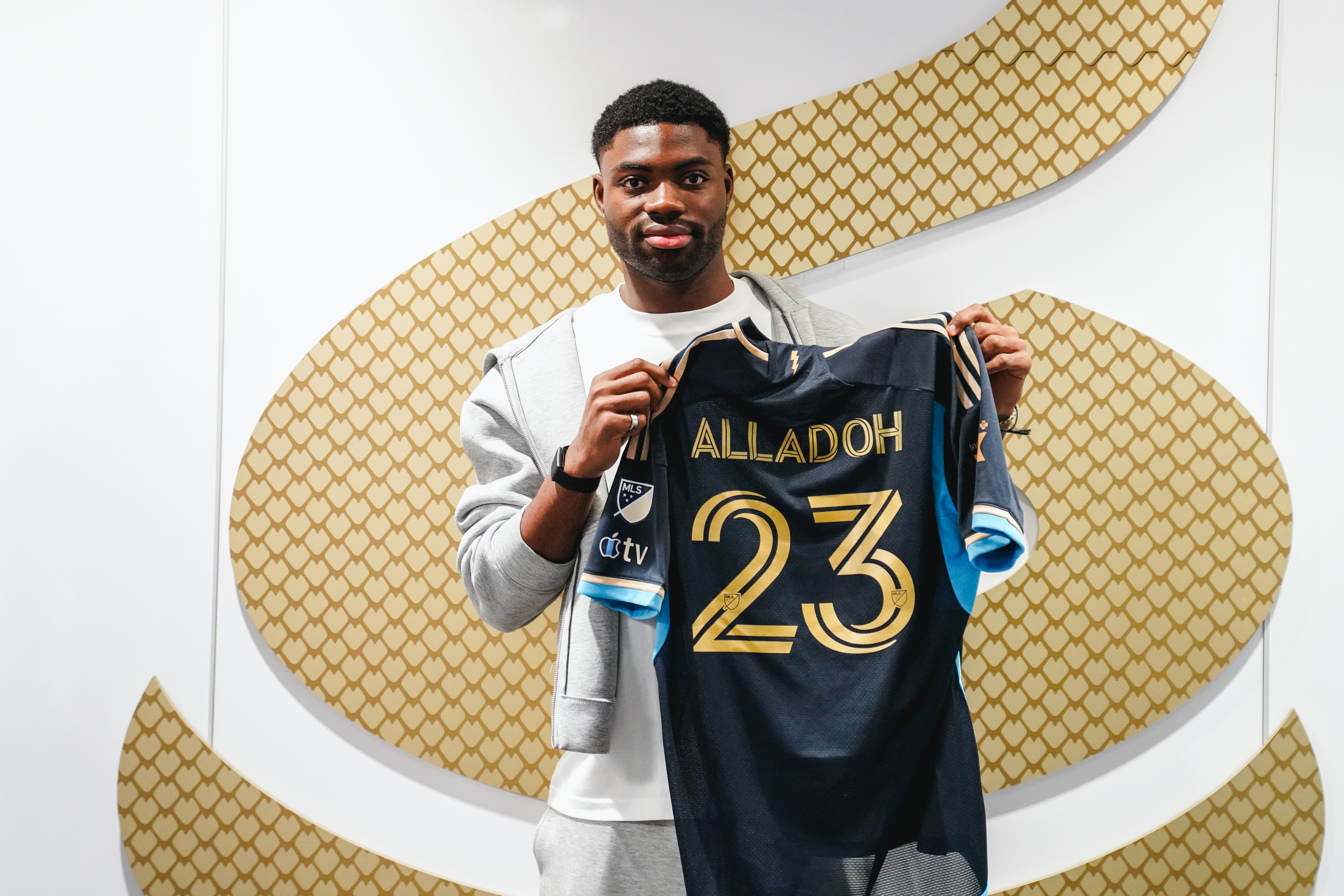
Ezekiel Alladoh holds up his new Union jersey at the team’s practice facility in Chester.
It’s unknown how long the Union’s decentralized approach to player decisions will last. Despite the comments from Scheer and Carnell about the group effort, someone ultimately makes the final decision in the role of sporting director — a role currently unfilled.
“We were all involved in these decisions and processes to begin with, and this is just a look at how collaborative we need to be as a club,” Scheer said. “We are a development club, and we’re always looking from within first … so there’s so much natural overlap already.”
When it came to any insight into the impact of Tanner’s absence, Scheer deflected.
“No comments as it relates to an ongoing investigation that our club is collaborating with, so we’re just focusing on day-to-day and doing the best job that we can in terms of our decision-making process and the path forward,” he said.
“I think being proactive in the market is always a sign of intent, especially coming off of a successful season where we look to continue to maintain those standards,” Carnell said of Alladoh’s signing.
Said Scheer: “It shows the ambition of our club and our ownership group.”
Though Alladoh’s transfer fee qualifies him as a designated player, his age means he can be classified as an under-22 signing and not count as a DP. The Union’s announcement didn’t give him a label, and Scheer said the team would not pick one until the league’s 2026 roster compliance deadline in February.
The Union announced they will return to Marbella, Spain, for training camp in January.
Preseason news
The Union’s preseason will begin Jan. 17, with plans for a trip to Spain, which the team took last year. Carnell said they’ll play two scrimmages there, then make their annual trip to Clearwater, Fla., where they are expected to play FC Cincinnati and CF Montréal.
The Union return to the Concacaf Champions Cup in mid-February, and the regular season begins Feb. 21 at D.C. United.
The Union’s Mikael Uhre (left) and Jovan Lukic celebrate Uhre’s goal against New York City FC on Oct. 4.
Other notables
Carnell reiterated that the club is in negotiations with forward Mikael Uhre about a new deal, but he was coy about the team’s desired outcome.
“There’s no denying the fact that Mikael, within the game model, has a certain quality, right?” Carnell said. “So I think one [factor] of that is family, what do his family want; what does Mikael want; and what does the club want? And I think if all of those come together and find the best possible solution for player, family, and club — ‘Mika’ had a good end to the season and showed exactly what made him so strong here over the years.”
Carnell said that form “sparks a lot of interest” to consider a deal. He also paid the Danish striker what felt like a notable compliment.
“Mikael was one of the nicest teammates you could ever imagine, and we have had a good working relationship,” Carnell said. “So we’ll see what happens over the next due course.”
Union academy director Jon Scheer says the club still is high on young defender Neil Pierre.
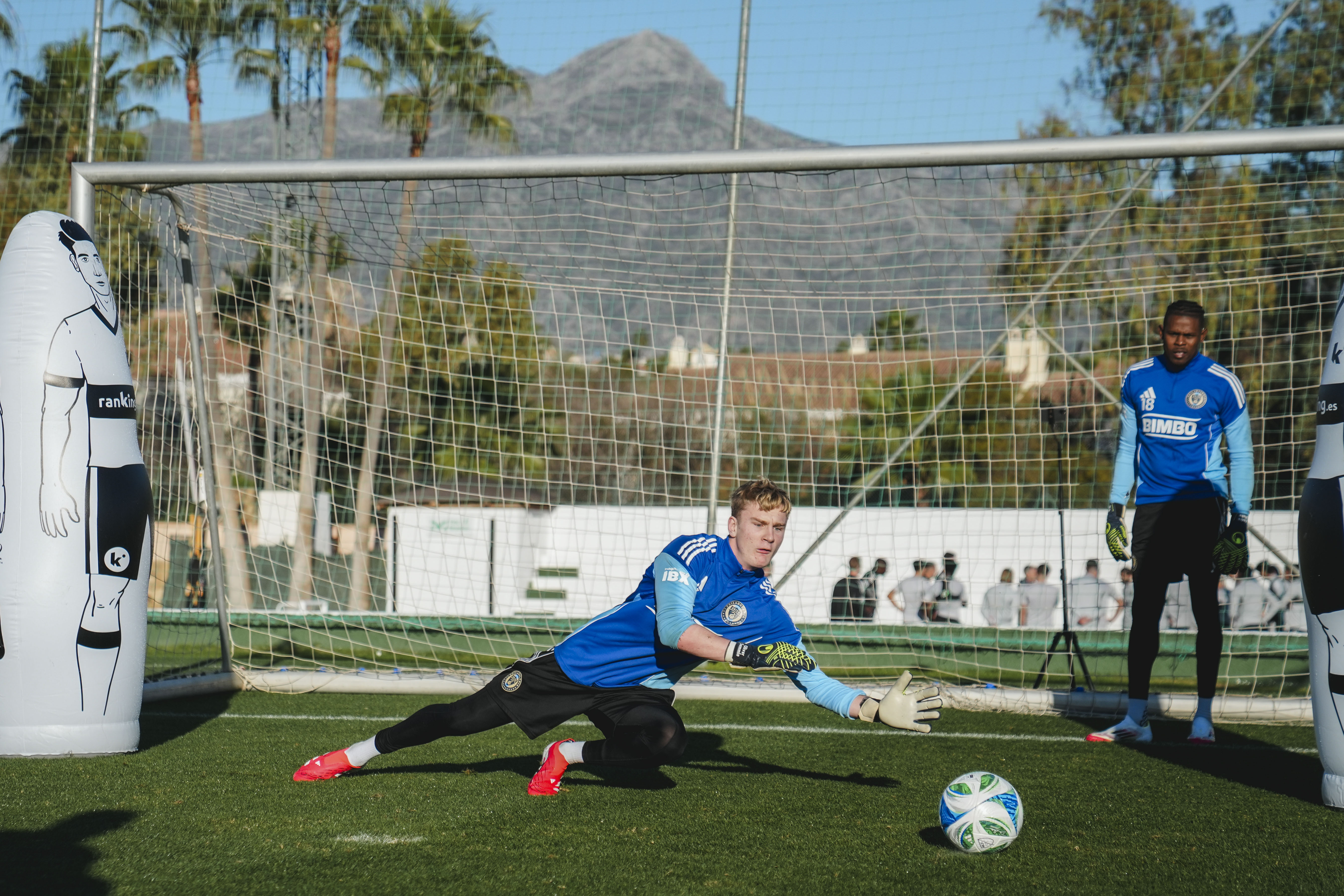
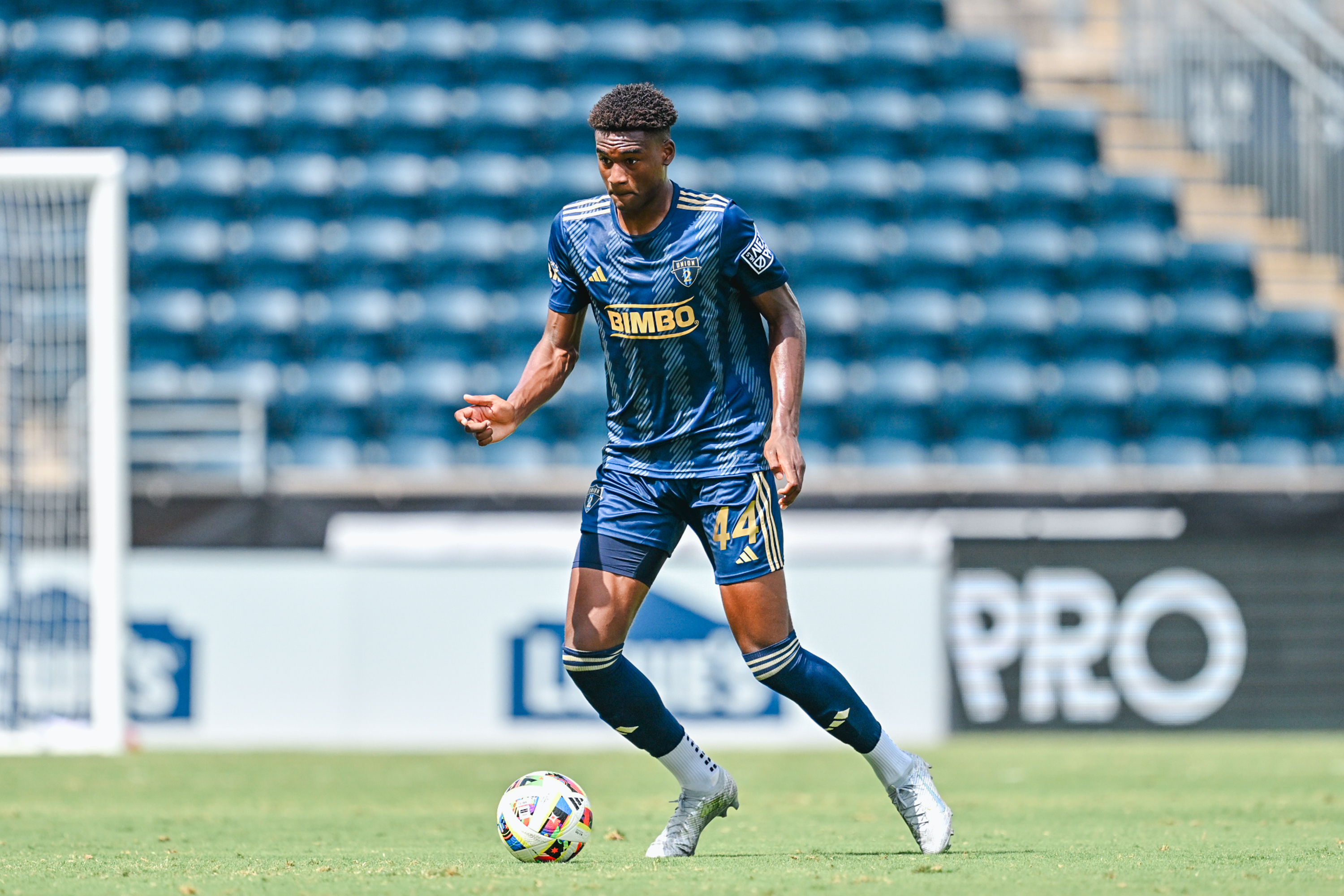
There also was talk about Neil Pierre, the 18-year-old centerback with a high ceiling. He played regularly for the Union’s reserve squad this year but hasn’t yet reached the physical maturity he needs for the top level.
“We’re really high on the potential of Neil Pierre, but we’re also going to make sure that he’s in the best possible environment to reach and maximize that potential,” Scheer said. “I think you’ll see here soon we’re still looking at other centerback options. But Neil, for the future, is one we still have a lot of belief in, and we’re looking forward to seeing what the best environment to continue to develop him in will be.”
It’s been four years since college athletes have been able to legally profit from their name, image, and likeness.
It’s been less than 10 years since those athletes could enter the NCAA’s transfer portal without needing to redshirt. Yet, it feels like so much of what transpires is taking shape in real time, not just for the students who partake, but also for the coaches, officials, and administrators who navigate it.
College sports, specifically revenue-generating college sports, have become a year-over-year proposition for coaches to find and retain talent. The latter has become even harder, given the trend of student-athletes initially recruited to big-time schools jumping ship after not receiving what they anticipated, often to mid-majors, and becoming big fish.
Conversely, student-athletes who have outkicked their scholarships at a mid-major can enter the portal for a fresh start at a power program — and potentially a substantial payday.
But it’s been fantastic the athlete. It’s why, according to Front Office Sports, nearly 4,000 players in men’s and women’s college basketball entered the most recent transfer portal, the highest number of players in a year in the history of the NCAA.
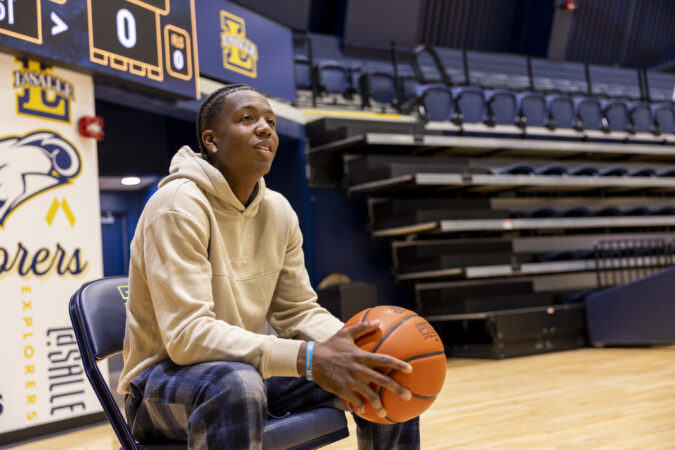
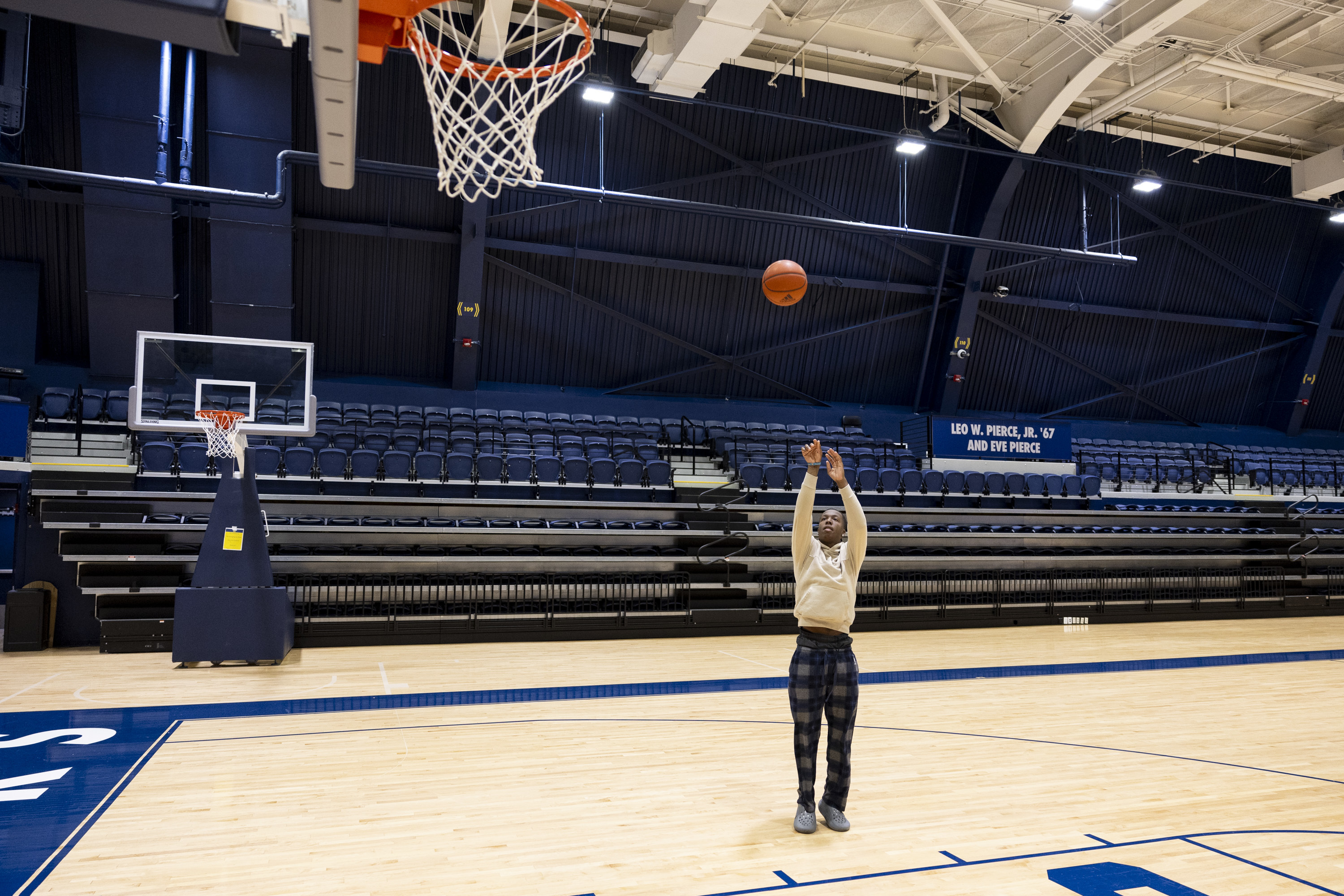
Truth Harris takes a few shots inside La Salle’s TruMark Financial Arena earlier this year. Harris joined the Explorers in the offseason, his fifth school in five years.
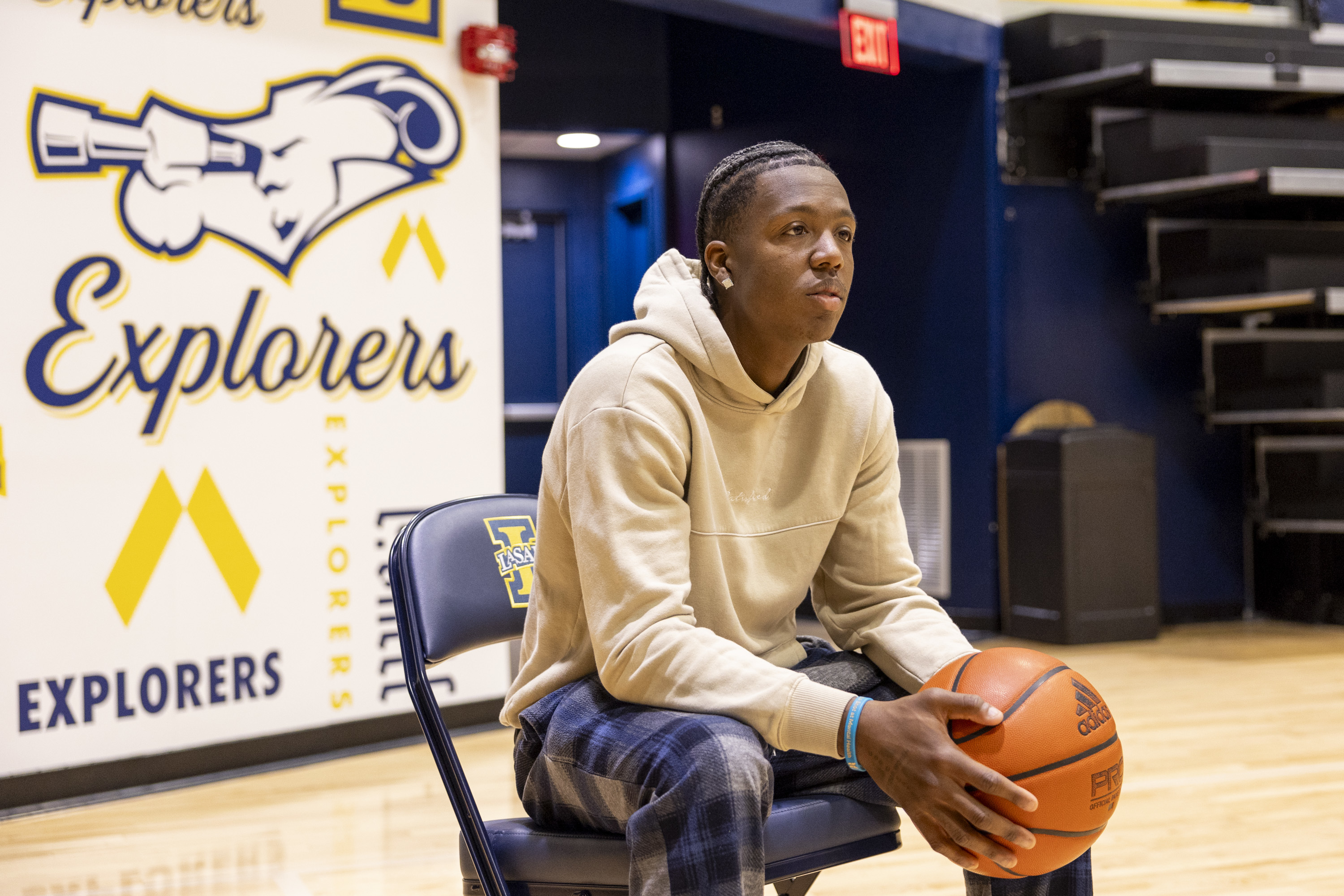
One of those players is Truth Harris, a graduate guard who followed new La Salle coach Darris Nichols after he succeeded Big 5 legend Fran Dunphy in March.
For Harris, 23, his fresh start with the Explorers was his third Division I program and his fifth school since 2020.
After his start at East Tennessee State, Harris, a Mt. Vernon, N.Y., native, who led Mount Vernon High School to a state title in 2017, spent two years at junior colleges, Pensacola State and Indian Hills Community College, where he starred. It afforded Harris a spot with Nichols at Radford ahead of the 2023 season — and he has been alongside him ever since.
While Harris sees these moves as opportunities, there are some within college sports who view them as exploitation and a lack of control by governing bodies.
Harris, who noted that his move to La Salle was paired with a five-figure sum through NIL opportunities, is why many students like him see the portal as a better way to navigate a college career.
“It was always going to get to this eventually,” Harris said in a sit-down with The Inquirer this summer. “I feel like students do deserve the recognition, do deserve the money. As student-athletes, we do go through a lot. We push our limits. We have to get paid for that. So, yeah, I think [the new reality of college sports is] right where it should be.”
This season’s top earners likely would agree. The highest paid hooper, BYU guard AJ Dybantsa, is earning $4.4 million this year, according to On3’s NIL valuations. The top 10 earners in men’s college basketball, according to that list, stand to make over $1 million this season.
It’s a far cry from the days in which the guarantee of a college scholarship was the allure.
These days, that comes standard.
Student-athletes are guided by the promise of a payday, with the masses who continue to jump into the transfer portal serving as proof.
BYU forward AJ Dybantsa (3) is the highest earner in college basketball, with a valuation of $4.4 million this season.
‘It’s not that hard, really’
Instructions on how to enter the NCAA’s transfer portal are available on the NCAA’s website. Once a player decides to go, though, there’s a bit of unknown. But if you’re a proven talent, it’s pretty straightforward, Harris says.
“When you enter the transfer portal, you don’t know what’s going to happen,” he said. “If we are saying if there’s stress [involved], I would say that’s the bad stress? But at the same time, when you start hearing from schools and hearing those schools out, it does ease you down a bit more.
“The hardest decision is picking the right school, picking the right option for you. And that all goes into [questions like], ‘Is the team good? What’s the coaching like? What’s their history, their culture?’ It’s about making sure they want you for the right things and you’ll be a good fit there. But once you do it once, it’s not that hard, really.”
Perhaps what causes little concern for student-athletes freely moving from school to school is that many are moving with general studies majors, or, in Harris’ case, chasing a master’s degree. He’s working on a master’s in communications, a degree he noted as “a well-known major that a lot of schools carry.”
La Salle’s Truth Harris is working on his master’s in communications, a popular degree he says has made it easier for him to change schools as much as he has.
In Step 1 of the NCAA’s guide to transferring schools, a line reads: “Your new school should help you satisfy both your academic and athletic goals.” However, graduation rates for athletes reflect the lack of emphasis on academics.
“I think we’ve opened up two different cans of worms. When we opened up the transfer portal and NIL at the same time, it became chaotic,” said Nichols, who added that fluctuating graduation rates and the impact it has on schools being treated like a revolving door isn’t being talked about enough.
“I think that if we’re about student-athletes graduating, we should be focused on retention and doing what’s best for both parties. Everybody’s talking about the money situation, but, to me, let’s clean up the situation of these student-athletes transferring so much but making sure they still graduate.”
However, according to the NCAA Division I Academic Progress Rates, a metric that is supposed to hold institutions accountable for the academic performance of student-athletes, graduation rates for men’s basketball players hovered around 83% as of the 2025 season — though that did have a 4% decline since last year.
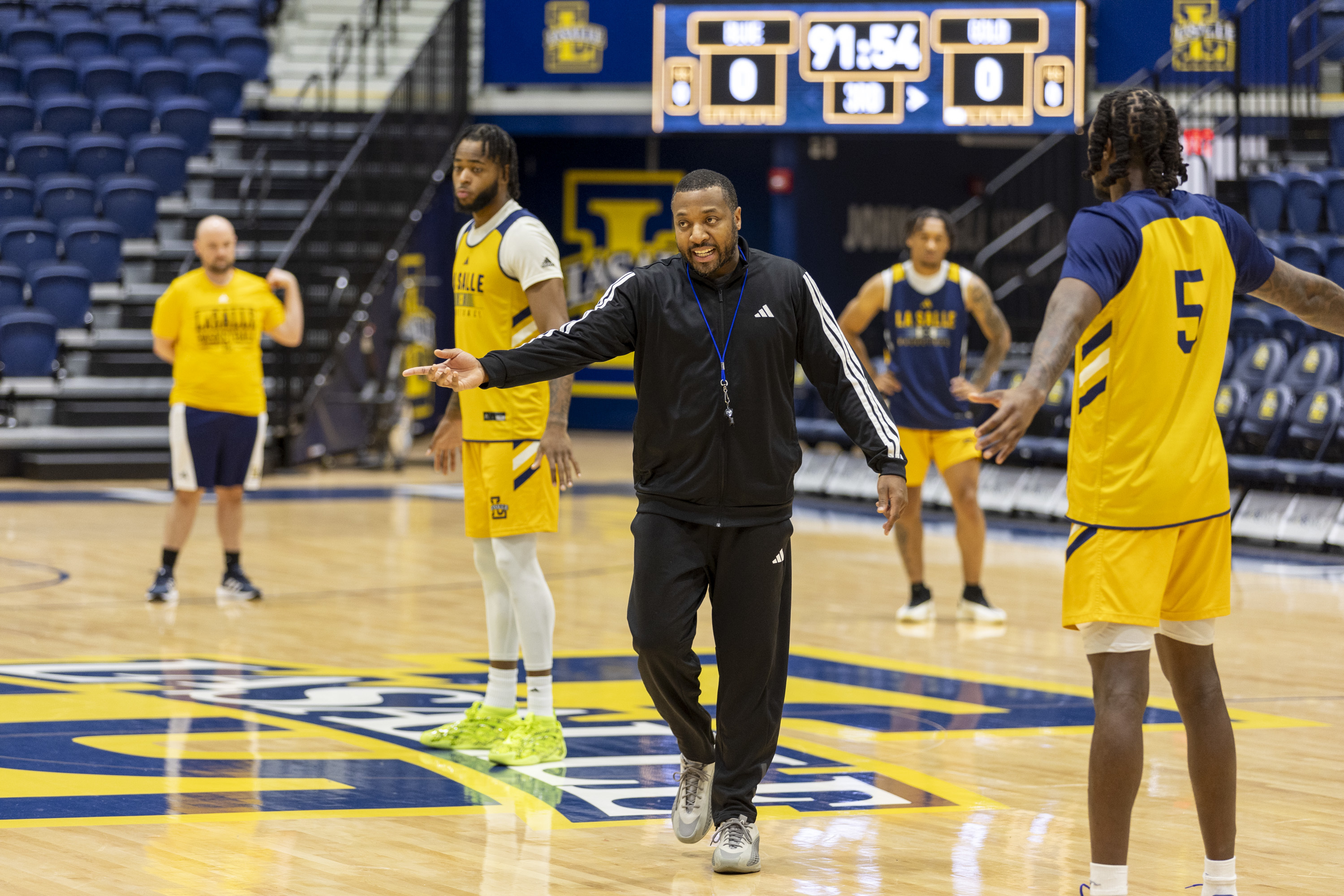
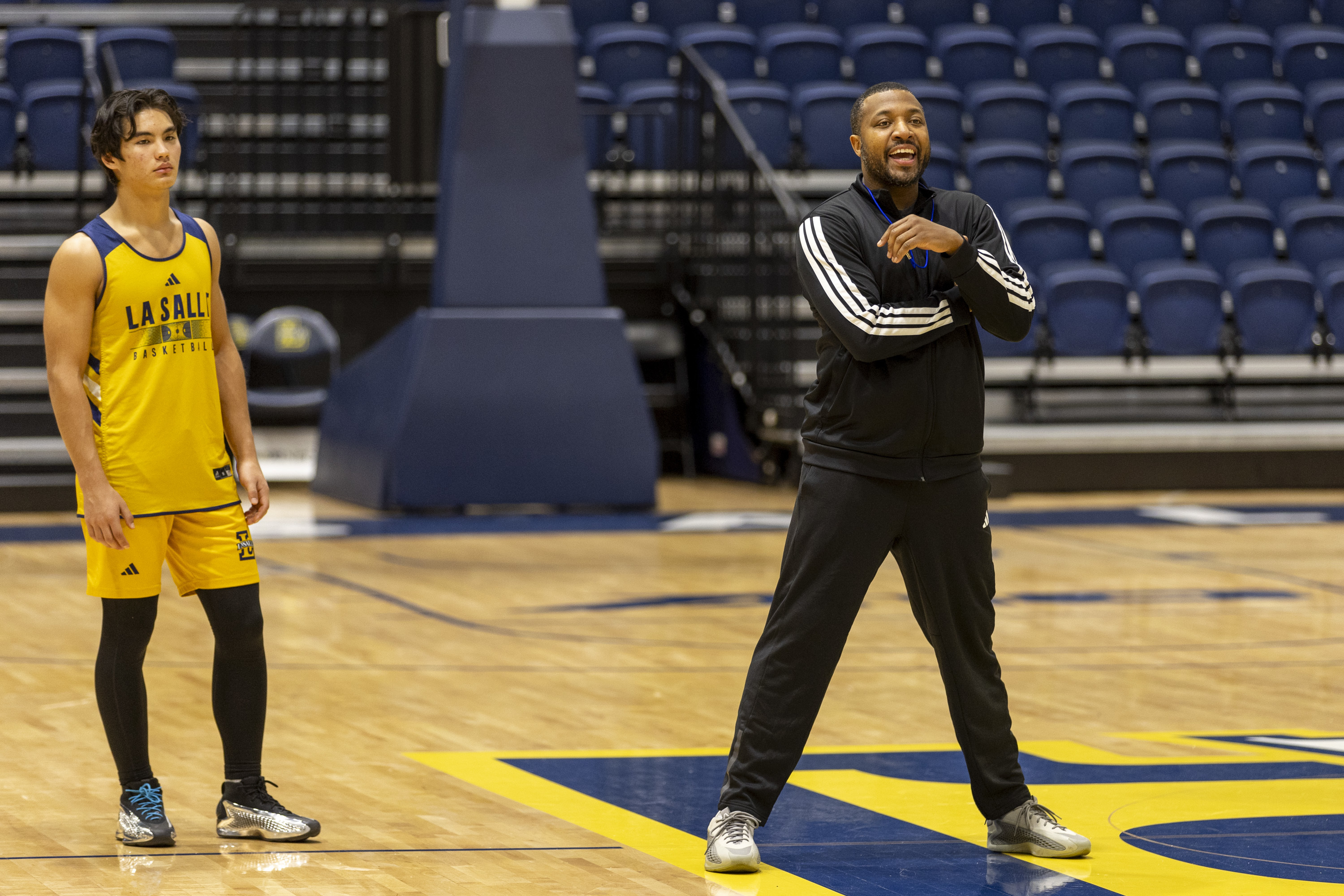
La Salle men’s basketball coach Darris Nichols says graduation rates aren’t being talked about enough in the era of the transfer portal and NIL.
“I think that there are just some challenges people don’t talk about,” Nichols said. “If you’re a player that’s transferring every year, are all your credits rolling over, so you’re actually eligible? Something as simple as uniforms, think about it: you bring in nine new players every year, you’ve got to get nine new uniforms. And for people who say, ‘Well, why don’t you just not put their names on the back,’ every one of them comes in different sizes, and [a player] can be number 0 to 99.
“So it’s not just about the cost of NIL for potential players, it’s about operating costs, budgets, revenue. Everybody’s talking about NIL, but there are the little things that go into all this change.”
Still, to Nichols, a former Division I star at West Virginia whose playing days preceded NIL, players should be compensated. That’s not the issue. The issue is the time coaches spend trying to field winning teams every season in what’s essentially a free-agent market.
“You’re constantly trying to get kids to buy in,” he said. “When I was playing, it was a buy-in for four years. And now it’s buy-in for a year. Look, we’re not in a position to try to hold anybody back. If you play here, you do well, and you want to go elsewhere, I get it. But as a staff, we do our utmost to just have honest conversations with [our players] about the new landscape of athletics and not try to hide behind it.”
Darris Nichols (right) says open communication about expectations is all a program can do when it comes to the the transfer portal process.
It’s impossible to hide when the data is so stark in that most schools, especially mid-majors, will see significant movement across their programs each year, especially in revenue-generating sports like football and basketball.
Across the NCAA’s 364 Division I programs, 1,156 undergraduate transfer portal entrants found new homes in men’s basketball alongside 384 graduate entrants this past offseason. In women’s basketball, 720 undergrads found new homes alongside 344 graduate students.
On the men’s side alone, that averages out to four players a coach would need to replace on their roster — solely from transfers — before entering the 2025-26 season.
Men’s basketball coaches needed to replace an average of four players after transfer portal movement last season.
For players like Harris, who stands to graduate from La Salle after his five-year journey, he’s happy to have benefited from this new reality.
“It’s just a better feeling,” Harris said. “You’re more relaxed. You can do more things for yourself without having to ask your mother and ask your parents for money all the time. I feel like it’s a relief off my parents to know they don’t worry about me [financially]. They’re not worried if I’m good or not because they know I am.
“So if you’re asking me? Yeah, I think it’s a reality that’s right where it should be.”