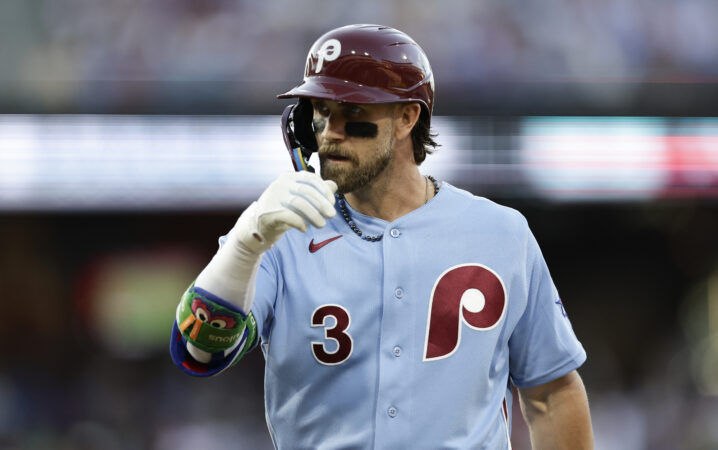
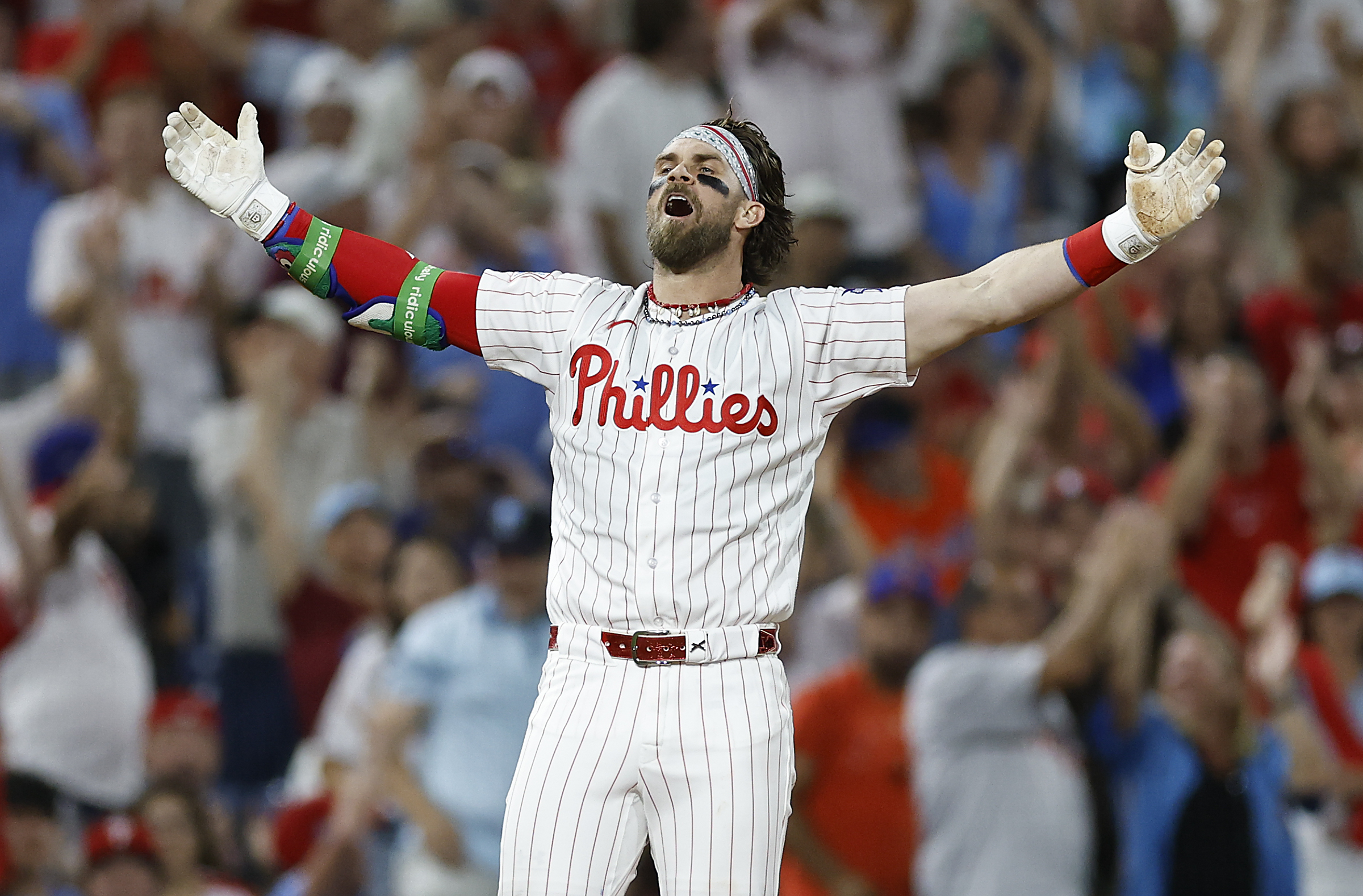
Bryce Harper on Thursday declined to discuss an Inquirer report about a personalized video of the Philadelphia Phillies star that FanDuel Sportsbook sent in November 2024 to a VIP bettor who had a gambling addiction.
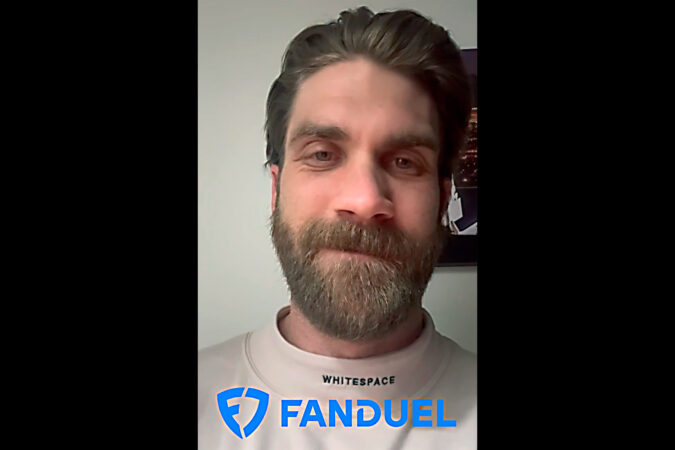
The Inquirer obtained a copy of the 21-second video, which is marked with a blue FanDuel logo and shows Harper offering a greeting to the bettor, Terry Thompson, and Thompson’s son.
Harper is not wearing FanDuel merchandise but mentions that he was reaching out at the request of Thompson’s VIP manager — “your host Bryttanni at FanDuel” — who wanted to ensure that he had an “extra special Thanksgiving.”
There is no evidence that Harper had a partnership with FanDuel, nor that he had any indication that Thompson was suffering from an addiction.
FanDuel on Thursday released the following statement:
“FanDuel is committed to fostering a culture of responsible gaming and protecting our customers. Unlike illegal offshore sportsbooks, FanDuel employees are trained to recognize and flag signs of problem gambling and offer resources and tools, and we continue to review and strengthen our policies to ensure we have the industry’s strongest consumer protection initiatives.”
The Inquirer previously shared the video of Harper with his agent, Scott Boras, as well as the Phillies and Major League Baseball.
Each declined to comment.
The Phillies were in Cincinnati on Thursday, preparing to play the Reds. It was there that Harper declined through the team to address the video before a reporter could directly ask him about it. Later in the day, Harper announced on Instagram that he had decided to participate in the All-Star Home Run Derby, which will be held Monday at Citizens Bank Park.
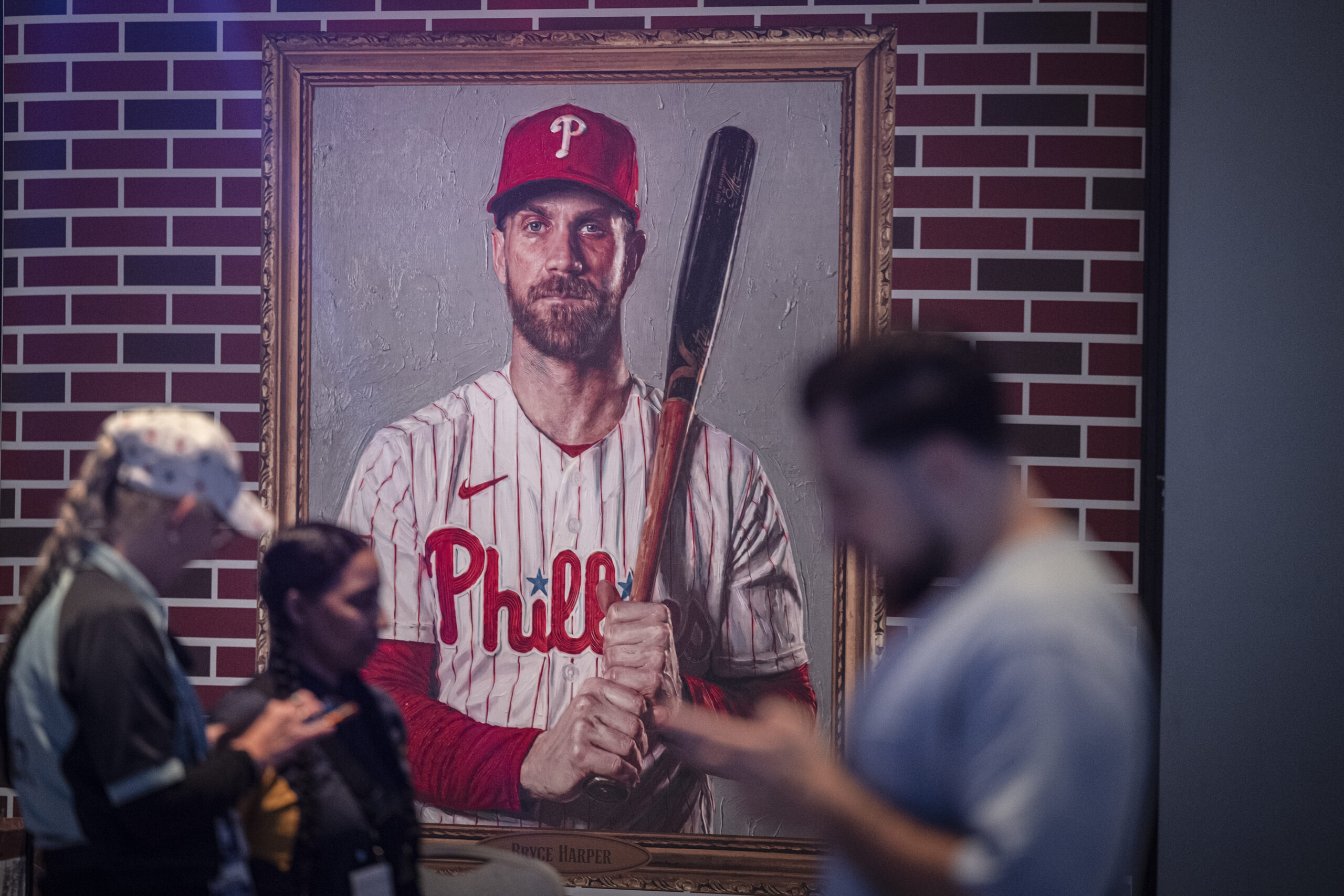
A portrait of Bryce Harper is on display at the 2026 MLB All-Star Village inside the Pennsylvania Convention Center in Philadelphia. The All-Star Game will be held next week at Citizens Bank Park.
Independent experts said the FanDuel video does not appear to be a violation of MLB’s current collective bargaining agreement, which allows athletes to appear in advertisements or make personal appearances for casinos, racetracks, or sportsbook companies, so long as the ballplayers do not encourage betting on baseball.
The current policy, which is scheduled to expire in December, does not specifically addresses interactions with VIP programs or bettors.
Still, the episode raises ethical questions about the league’s relationship with gambling companies, whose business practices are facing increasing scrutiny from state and federal lawmakers, said Jodi Balsam, a former NFL attorney who now works as the director of the Sports Law Clinic at Brooklyn Law School.
“Is this the kind of activity that either the union or the league want their players to be associated with,” Balsam said, “if it leads to addictive and self-destructive behaviors by a fan?”
Beginning in 2020, Thompson wagered $18.5 million with FanDuel and lost $1.5 million, according to a lawsuit that the Public Health Advocacy Institute filed in March in Common Pleas Court in Philadelphia on behalf of Thompson and against FanDuel and DraftKings, to which Thompson also lost money.
Harper is not named as a defendant in the lawsuit.
Thompson’s attorneys allege that he became addicted to placing microbets — in-game wagers on something as minor as the speed of a pitch during a baseball game — until he gambled away his final $10,000 on a DraftKings parlay bet in February.
Broke and afraid of disclosing the scope of his losses to his family, Thompson contacted his therapist and indicated that he planned to take his life.
He typically announces new endorsement deals, which in the past have included companies such as Under Armour, Gatorade, and Dairy Queen.
The circumstances of how Harper came to appear in the video for Thompson, and whether he received any compensation, remain unclear.
Staff writer Lochlahn March contributed to this article.
The Inquirer will continue to report on issues related to the growth of gambling addiction — among teens and adults — across Pennsylvania. If you, or someone you know, would like to speak with a reporter, please contact David Gambacorta or William Bender at dgambacorta@inquirer.com or wbender@inquirer.com
As the 2020 NFL season kicked off, Terry Thompson picked up his phone and placed a wager with FanDuel Sportsbook on his favorite team, the Philadelphia Eagles.
It was his first time gambling through an app, and he soon started placing microbets, which are in-game wagers on something as small as whether the next play would be a pass or run.
He grew addicted to the effortless, rapid-fire action. Every game, every quarter, every play — click, click, click. Thompson would ultimately wager $18.5 million with FanDuel, earning him VIP status with the company. That meant exclusive perks, from champagne to Super Bowl tickets, which made him feel important and enticed him to continue gambling.
By late November 2024, Thompson had incurred steep losses and resorted to desperate measures to fund his addiction. Then, one afternoon, he flicked open his phone and received a FanDuel reward that momentarily distracted him from his debts: a personalized video message from Philadelphia Phillies superstar Bryce Harper.
The Inquirer obtained a copy of the 21-second video. In it, Harper addresses Thompson by name and acknowledges Thompson’s young son. Harper ends by thanking Thompson for his support.
Harper is not wearing any FanDuel merchandise, but the video is marked with the company’s logo, and Harper mentions that he was reaching out at the request of Thompson’s VIP manager, “your host Bryttanni at FanDuel,” who wanted to ensure that Thompson had an “extra special Thanksgiving.”
Professional sports leaders had long recoiled at having any association with gambling. But the U.S. Supreme Court ruled in 2018 that states could legalize sports betting, and each league now has lucrative partnerships with sportsbook companies, whose advertisements can be easily found in stadiums and arenas, and during game broadcasts.
Still, league officials preach about the importance of protecting the integrity of their games and have rules that are designed to maintain distance between professional athletes and bettors. Although Major League Baseball’s policy does not explicitly reference interactions with VIP gamblers, Harper’s personal message to a bettor — apparently arranged by an employee of a major sportsbook — is a unique test of how cozy the league will allow players to get with gambling companies.
There is no evidence that Harper has an official partnership with FanDuel, or was aware that Thompson had an addiction.
The Inquirer could find no other examples of an active athlete recording a personal message to a sportsbook VIP customer who, by definition, had to be regularly betting large sums of money.
The Inquirer shared the video with Scott Boras, Harper’s longtime agent, and asked if he or Harper would discuss how FanDuel had obtained the video.
Boras declined to comment.
The Inquirer also shared the video with the Phillies and MLB. Both declined to comment, and the players union did not respond to a request for comment.
Multiple experts familiar with the fraught intersection of professional sports and the gambling industry said that while Harper does not explicitly encourage gambling in the video, it still raises concerns.
Danny Funt, who researched sportsbook VIP programs for his 2026 book, Everybody Loses: The Tumultuous Rise of American Sports Gambling, said in an email that VIP bettors sometimes get to hang out with former athletes. He cited former San Diego Charger LaDainian Tomlinson, who worked in retirement for DraftKings, as one example.
But the Harper video is entirely different, he said.
Harper, a nine-time All-Star and two-time MVP, has been one of baseball’s most marketable stars throughout his 15-year career.
“I’ve never heard of an active player, let alone a former MVP, doing something like this,” Funt said.
Leigh Steinberg — an agent who represents Kansas City Chiefs quarterback Patrick Mahomes, and whose past clients included MLB All-Stars Manny Ramirez and Will Clark — called the Harper video “bad for sports.”
Steinberg said if one of his clients approached him about doing promotional work of any kind for a sportsbook company, he would advise them to walk away.
“It’s not good for your brand,” he said. “It’s exploitative and it’s not the sort of activity you want to be associated with.”
MLB’s collective bargaining agreement, which is set to expire in December, allows athletes to appear in advertisements or make personal appearances for casinos, racetracks, or sportsbook companies, so long as the ballplayers do not encourage betting on baseball.
NFL players are prohibited from marketing or promoting “any form of gambling” under the league’s current collective bargaining agreement.
The NBA, meanwhile, allows its players to own a passive ownership stake — less than 1% — in sportsbook and prediction market companies, and engage in promotional work for gambling companies, provided they do not encourage betting on basketball. As a member of the Los Angeles Lakers, LeBron James appeared in advertisements for DraftKings.
Harper, 33, has been one of baseball’s most marketable players throughout his 15-year career. He has had endorsement deals with many companies, including Under Armour, Gatorade, Dairy Queen, and Blind Barber, a chain of barbershops and lounges of which Harper owns an equity stake.
He has also been famously unafraid of the spotlight, openly discussing everything from his Mormon faith — which prohibits gambling and alcohol use — to perceived criticism from his boss.
Professional sports leagues that once vehemently opposed any association with gambling enterprises have now embraced lucrative partnerships with sportsbook operators.
Jodi Balsam, a former NFL attorney who is now a sports law professor at Brooklyn Law School, said even if Harper’s video does not violate baseball policy, it raises ethical questions about the league’s relationship with gambling companies, whose business practices are facing increasing scrutiny from state and federal lawmakers.
“The first question I would have is, was [the Harper video] done by the sportsbook company precisely because they know they have an addicted gambler on their hands, and they’re trying to wring every cent out of him that they can?” Balsam asked.
FanDuel did not respond to a request for comment.
Balsam’s question is at the center of a lawsuit that attorneys for the nonprofit Public Health Advocacy Institute filed in March in Common Pleas Court in Philadelphia on behalf of Thompson and another plaintiff. The suit alleges that FanDuel and DraftKings, another sportsbook company, use their products and VIP services to intentionally maximize addiction.
Harper is not named in the lawsuit.
Thompson, whose attorneys declined to make him available for this story, details the depths of his gambling addiction in his lawsuit.
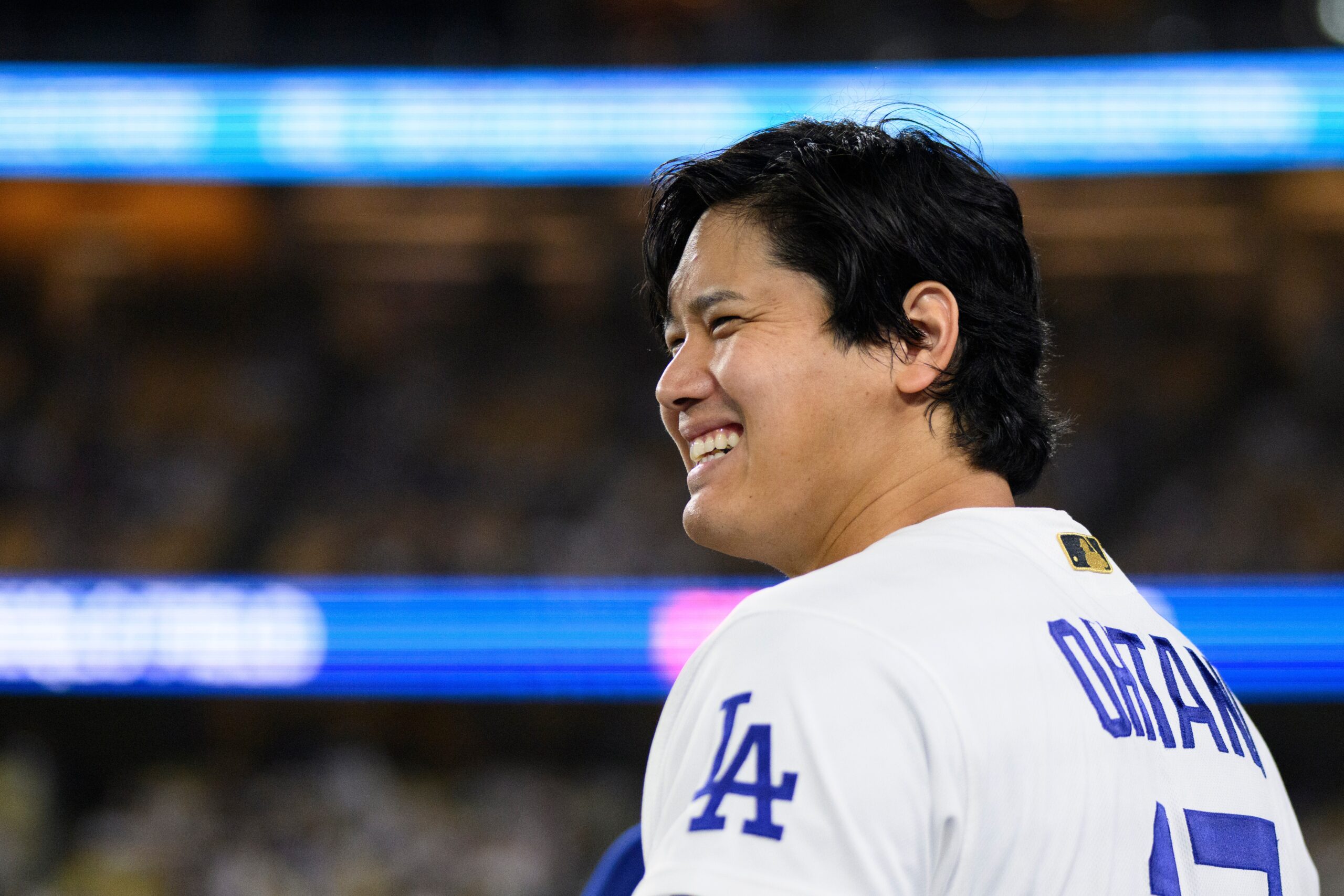
Los Angeles Dodgers star Shohei Ohtani’s former interpreter, Ippei Mizuhara, was sentenced in 2025 to 57 months in federal prison for illegally transferring nearly $17 million from Ohtani’s bank accounts to pay off gambling debts.
He alleges that he covered his losses by taking out second and third mortgages on his home, which later fell into foreclosure, and then sold his shares of an investment company that he had run for two decades.
By late February, Thompson’s suit claims, he wagered and lost his last $10,000 on a DraftKings parlay bet.
His losses totaled nearly $2 million, according to the lawsuit. Desperate and feeling like he could not confess the scope of his financial ruin to his family, Thompson texted his therapist, who then contacted the police. Officers raced to Thompson’s home and prevented him from harming himself.
Balsam said Thompson’s tragic story should give sports leagues and its players pause.
“Is this the kind of activity that either the union or the league want their players to be associated with,” Balsam said, “if it leads to addictive and self-destructive behaviors by a fan?”
How MLB’s betting stance changed
“People know gambling is deadly,” Allan H. “Bud” Selig said. “I don’t have to conduct focus groups.”
It was November 2012, and Selig, then MLB’s commissioner, was being deposed for nearly three hours in Milwaukee. A lawsuit instigated by then-New Jersey Gov. Chris Christie sought to overturn a longstanding federal law that restricted legal sports betting to just four states.
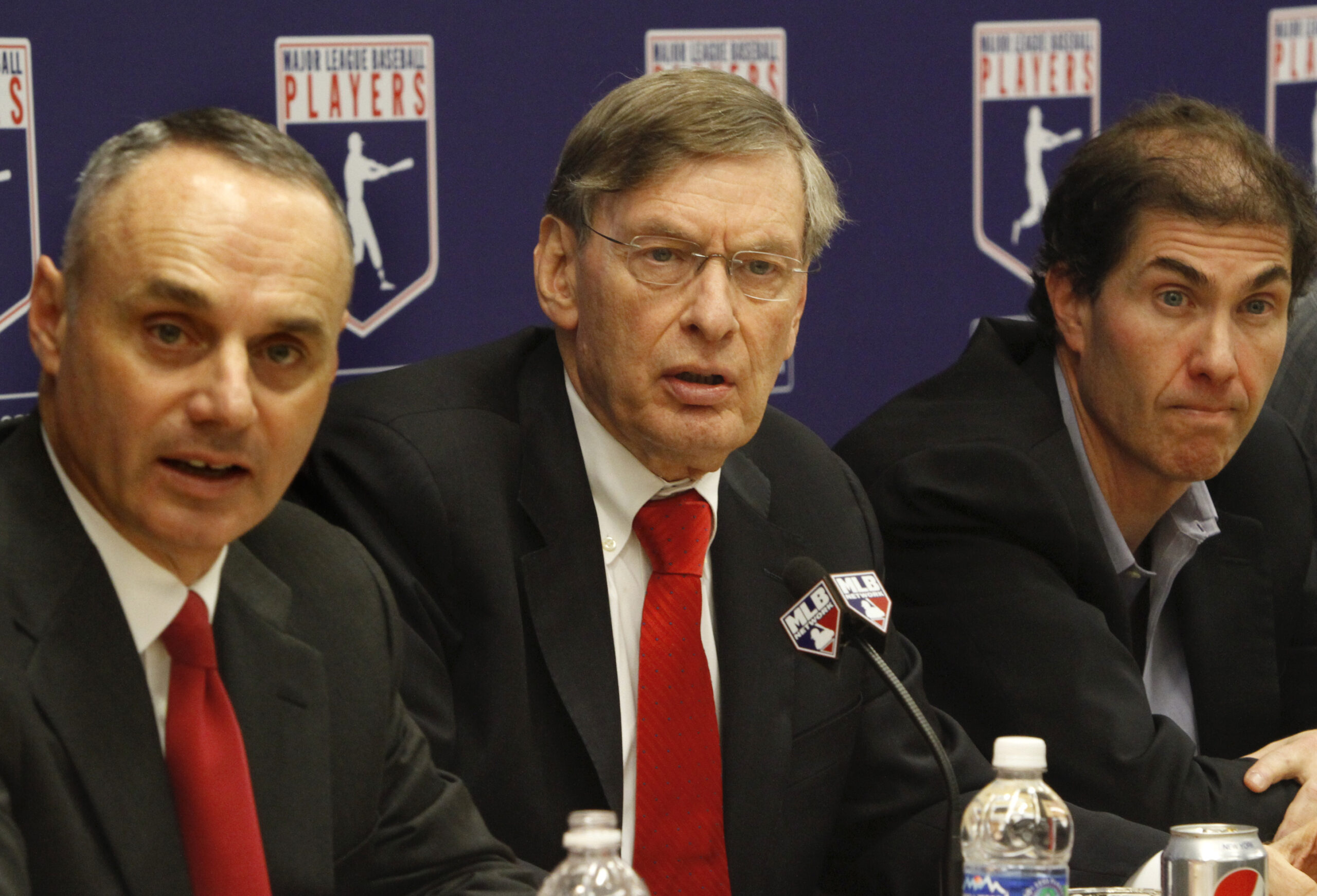
Major League Baseball longtime commissioner Bud Selig (center) argued in a 2012 deposition that widespread legalized sports gambling would be harmful to baseball. He was later succeeded by Rob Manfred (left), who has overseen partnerships between the league and sportsbook companies.
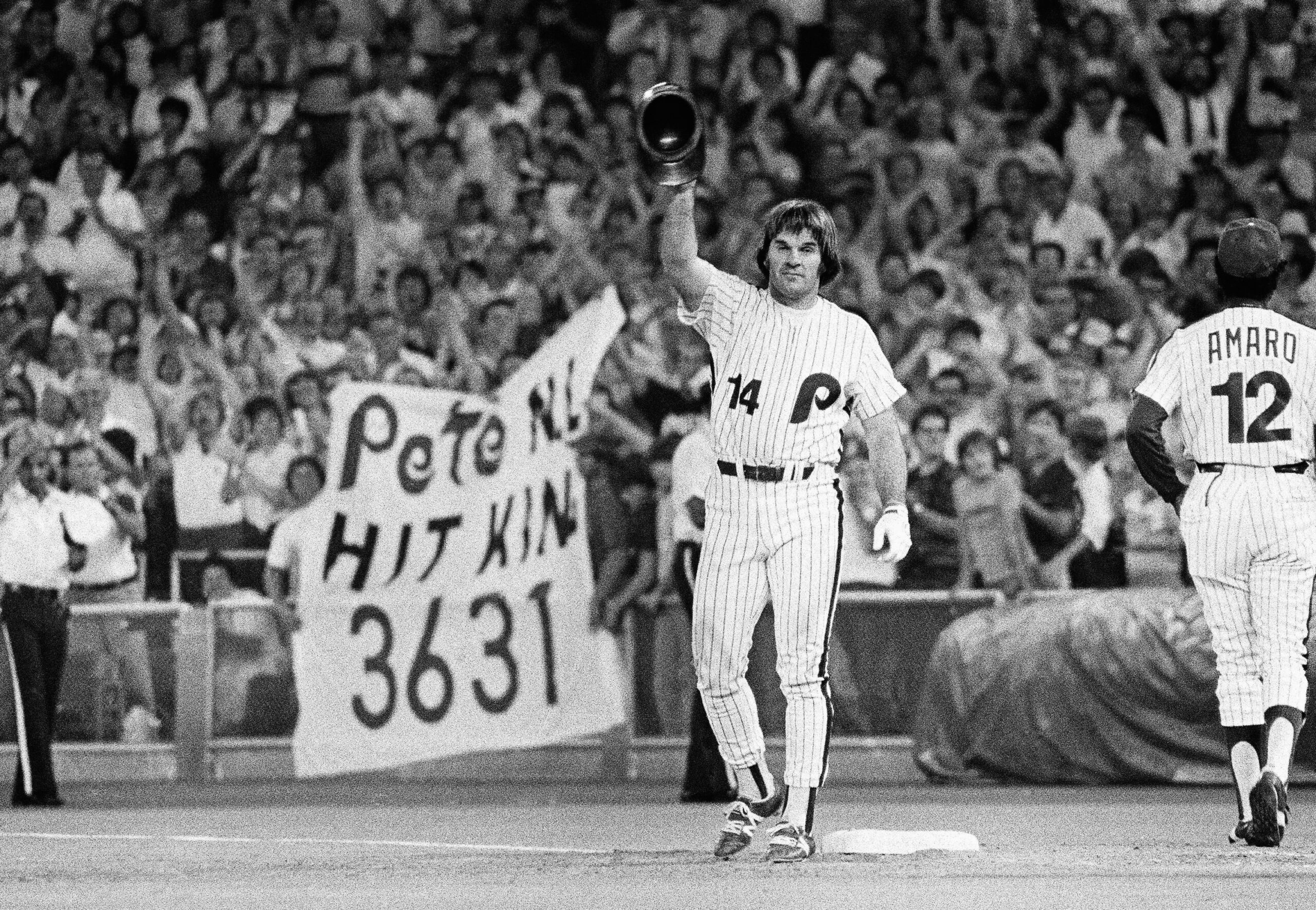
Baseball’s leaders had sought for decades to avoid recurrences of past gambling scandals that had threatened the integrity of the sport. Selig had maintained the hard line of his predecessors, perhaps most notably by upholding the league’s 1989 lifetime ban of former Phillies first baseman Pete Rose, who was found to have bet on baseball while managing the Cincinnati Reds.
Selig said he understood why state lawmakers would welcome the tax revenue that widespread legalized sports gambling could generate. But he argued such a development could only increase the odds of new baseball betting crises, which would be “the end of your sport.”
“I’m just — guess I have to say to you that I’m appalled,” Selig said in the deposition. “I’m really appalled.”
In 2019, MLB — led by a new commissioner, Rob Manfred — entered into its first partnership agreement with FanDuel.
Manfred sent a memo to players outlining the league’s gambling policy. At that time, it prohibited players from performing services “in any capacity involving sports betting for any third party,” a categorization that included “promoting or endorsing sports betting products or services.”
A new collective bargaining agreement, reached in 2022, allowed players to do promotional work for sportsbooks. Colorado Rockies outfielder Charlie Blackmon soon became the first professional baseball player to secure a deal as a brand ambassador for a sportsbook company.
Not everyone affiliated with MLB has welcomed the new relationships between the league and gambling entities.
“We’re entering a very delicate and, dare I say, dangerous world here,” Tony Clark, then president of the players union, told reporters in 2022.
MLB gave a lifetime ban in 1989 to former Phillie Pete Rose for betting on baseball while he was the manager of the Reds.
Two years later, MLB Players Inc. — a licensing and marketing subsidiary of the players union — filed a lawsuit that accused DraftKings of using without permission or compensation photos of MLB stars on its betting app and in social media posts. FanDuel and Bet365 were also named as defendants in the suit.
Harper figured prominently in the lawsuit. The complaint against DraftKings, filed in U.S. District Court in the Eastern District of Pennsylvania, included images of Harper’s face on the DraftKings app and a reference to a hypothetical wager on Harper hitting two home runs in a game. Attorneys also mentioned Harper in later courtroom arguments.
Being able to control how their names, images, and likenesses are used is a “crucial return on their substantial career investment,” the players’ attorneys wrote in the complaint. “It also enables athletes to avoid being associated with companies, commercial products, and industries that they do not wish to be perceived as supporting and endorsing.”
(The union ultimately dropped its case against FanDuel, and the lawsuit was settled earlier this year for undisclosed terms.)
In May 2024 — five months before FanDuel sent Harper’s video message to Terry Thompson — Manfred fired umpire Pat Hoberg for sharing a sportsbook account with a professional poker player who placed bets on baseball.
An investigation found no evidence that Hoberg himself had bet on baseball, Manfred later said. But the existence of the shared account — and the fact the umpire had deleted Telegram messages between himself and the poker player — created the “appearance of impropriety that warrants imposing the most severe discipline.” Hoberg appealed his dismissal but lost.
A year later, Bud Selig’s stark warning materialized.
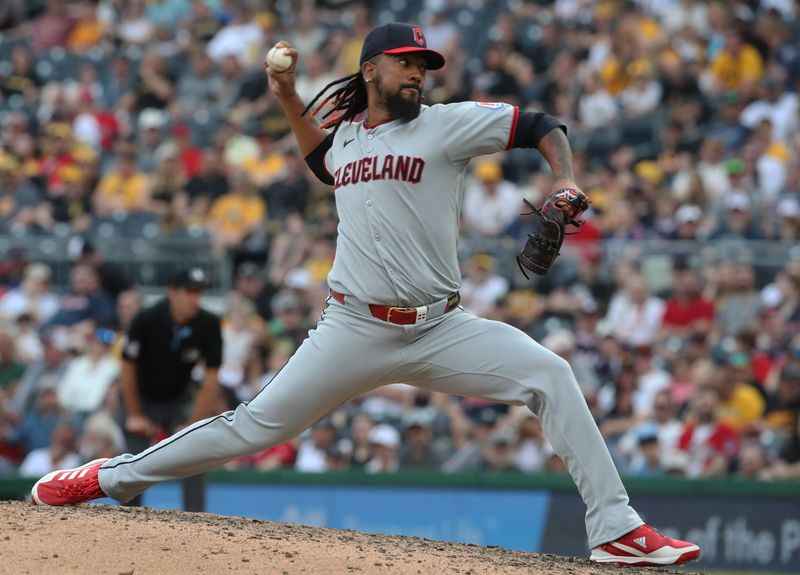
Former Cleveland Guardians pitcher Emmanuel Clase has been accused by federal investigators of conspiring with bettors in exchange for financial kickbacks.
Federal authorities indicted Cleveland Guardians pitchers Emmanuel Clase and Luis L. Ortiz, and accused each of conspiring with bettors.
Clase and Ortiz “agreed to throw specific types and speeds of pitches” prior to games, and bettors wagered on those pitches, the indictment states. In exchange, the bettors wired thousands of dollars to the pitchers through a third party in the Dominican Republic. Clase and Ortiz have each pleaded not guilty to wire fraud conspiracy and related charges and are awaiting trial. MLB has placed them on paid nondisciplinary leave.
That same year, Ippei Mizuhara, a former translator for Los Angeles Dodgers star Shohei Ohtani, was sentenced to 57 months in federal prison for illegally transferring nearly $17 million from Ohtani’s bank account to pay Mizuhara’s gambling debts.
Those episodes have not resulted in baseball’s demise, as Selig had once imagined. But they also did not rupture MLB’s relationship with gambling entities, which collected a record $165 billion in sports wagers in 2025.
As part of negotiations over a new collective bargaining agreement with MLB, the players union recently asked the league for to grant players more freedom to seek endorsements from sportsbook operators and prediction markets, ESPN reported.
The VIP treatment
FanDuel awards five points for every dollar that a bettor pays on a contest entry fee. To achieve VIP status, bettors must amass 600,000 points, which expire after a year of inactivity.
“But don’t worry,” the company explains on its website, “it’s easy to stay active.”
Terry Thompson earned a FanDuel VIP manager, Bryttanni Morgan, in 2021, court records show.
Morgan texted Thompson often about the fortunes of the Eagles, commiserating over the team’s ups and downs. Their conversations also veered into more personal terrain — favorite restaurants, travel plans, and family.
A FanDuel VIP manager allegedly offered tickets to Super Bowl LVII to bettor Terry Thompson, an Eagles fan who had a gambling addiction.
FanDuel’s intention, Thompson’s attorneys allege, was for Thompson to believe that Morgan was his friend.
Their exchanges often returned to Thompson’s betting activity. Morgan encouraged him to place more wagers, even when he showed signs of financial strain, the lawsuit states.
Morgan is named as a defendant in Thompson’s lawsuit. Her attorney could not be reached for comment.
In late December 2022, after Thompson had suffered more losses, Morgan texted him: “Are we gonna take a little break and start fresh in the New Year?”
“I’ll try,” Thompson wrote back, adding a smiley face symbol.
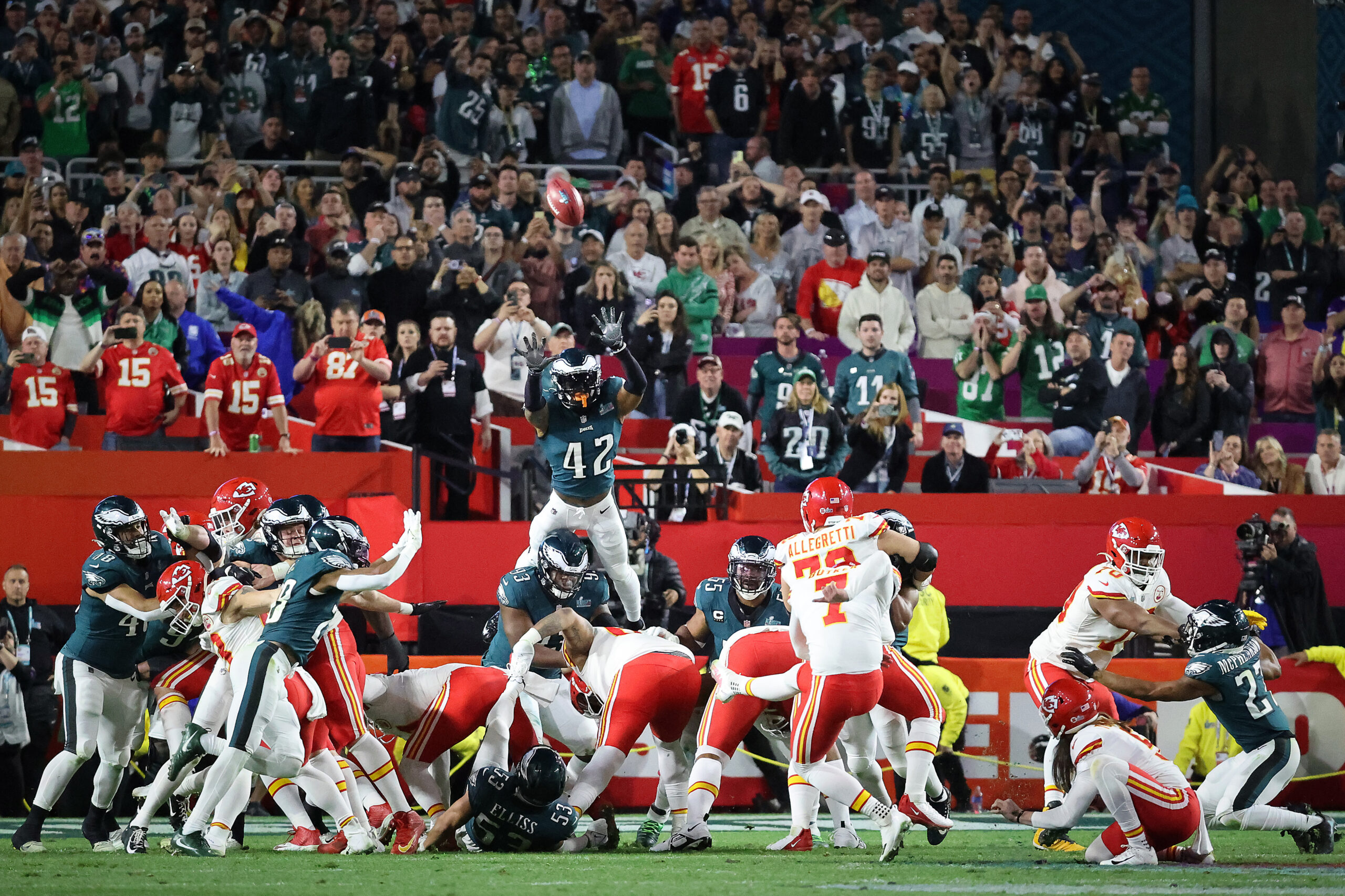
A few weeks later, on Jan. 13, 2023, Morgan offered a FanDuel VIP perk: two tickets to Super Bowl LVII in Arizona — where Thompson’s beloved Eagles would face the Kansas City Chiefs — along with free transportation, and tickets to Sports Illustrated and FanDuel parties.
On other occasions, Morgan provided Thompson with tickets to Eagles, Flyers, and Sixers games. FanDuel also flew Thompson and his son to Super Bowl LVI in California, with pregame access to the playing field and celebrities like Chris Rock.
Funt, the author, said he has major concerns about how the VIP programs are used to ensnare gamblers.
“They exist to egg on a reckless and potentially dangerous style of betting, using perks and other incentives that would be borderline irresistible for many sports fans,” he said. “I can only imagine how someone who loves Bryce Harper would feel indebted (no pun intended) to a sportsbook that facilitated a personalized video from him.”
Leigh Steinberg said he had not heard of other instances of sportsbook companies using active athletes to send greetings to a bettor.
“Because it’s not public, it’s hard to understand whether it’s ubiquitous or an exception,” he said.
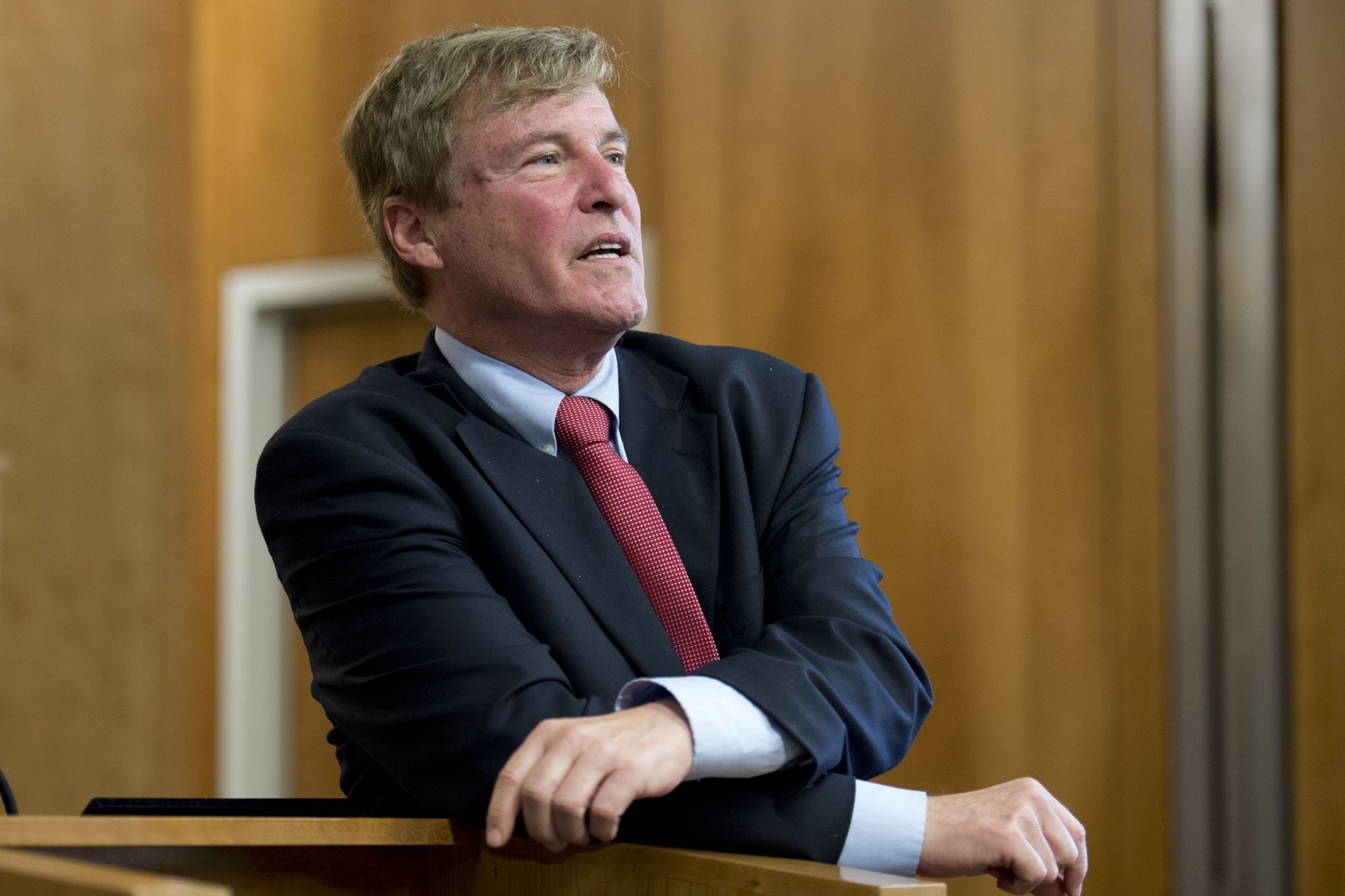
Leigh Steinberg has represented numerous NFL stars, from Chiefs quarterback Patrick Mahomes to NFL Hall of Famers Troy Aikman and Steve Young.
But Steinberg, who publicly struggled with an addiction to alcohol, argues that interactions between athletes and bettors who wager heavily on sports are inherently problematic.
“Getting a phone call or a zoom or a Cameo from a highly placed player is so flattering,” he said. “It’s stacking the deck unfairly in favor of continuing addicting behavior.”
The glamour of Thompson’s Super Bowl trips and brushes with celebrities had long since faded when he reached the nadir of his gambling earlier this year.
There were no more offers of free betting credits to be had, or microbets to chase.
Broke and broken, Thompson entered a psychiatric facility to undergo treatment for gambling addiction.
The Inquirer will continue to report on issues related to the growth of gambling addiction — among teens and adults — across Pennsylvania. If you, or someone you know, wants to speak with a reporter, please contact David Gambacorta or William Bender at dgambacorta@inquirer.com and wbender@inquirer.com
Correction: An earlier version of this story misstated the university where Jodi Balsam works as a law professor. She works at Brooklyn Law School.
In May, Donald Frank packed a bag and left his home in Wake Forest, N.C. His destination sat about 390 miles to the south, in Georgia, where he was scheduled to undergo a series of grueling medical evaluations.
Doctors spent two days testing his memory, attention span, language comprehension, and visual-spatial perception skills, to gauge the extent of a neurocognitive illness that had gradually eroded the contours of his everyday life.
A separate consultation with a neurologist resulted in a new diagnosis: Frank, a 60-year-old former San Diego Chargers defensive back, had Parkinson’s disease.
Frank believes that his health woes can be traced to the countless brain-rattling collisions that he absorbed during his six-year professional football career. But over the last seven years, the NFL’s controversial concussion settlement program has on four occasions denied Frank’s quest to be paid for the brain trauma that he sustained.
Nevertheless, he decided to make the case once more. Frank included the results of the May neuropsychological tests, and the Parkinson’s diagnosis, in a claim that he submitted to the settlement program.
Then he waited. And worried.
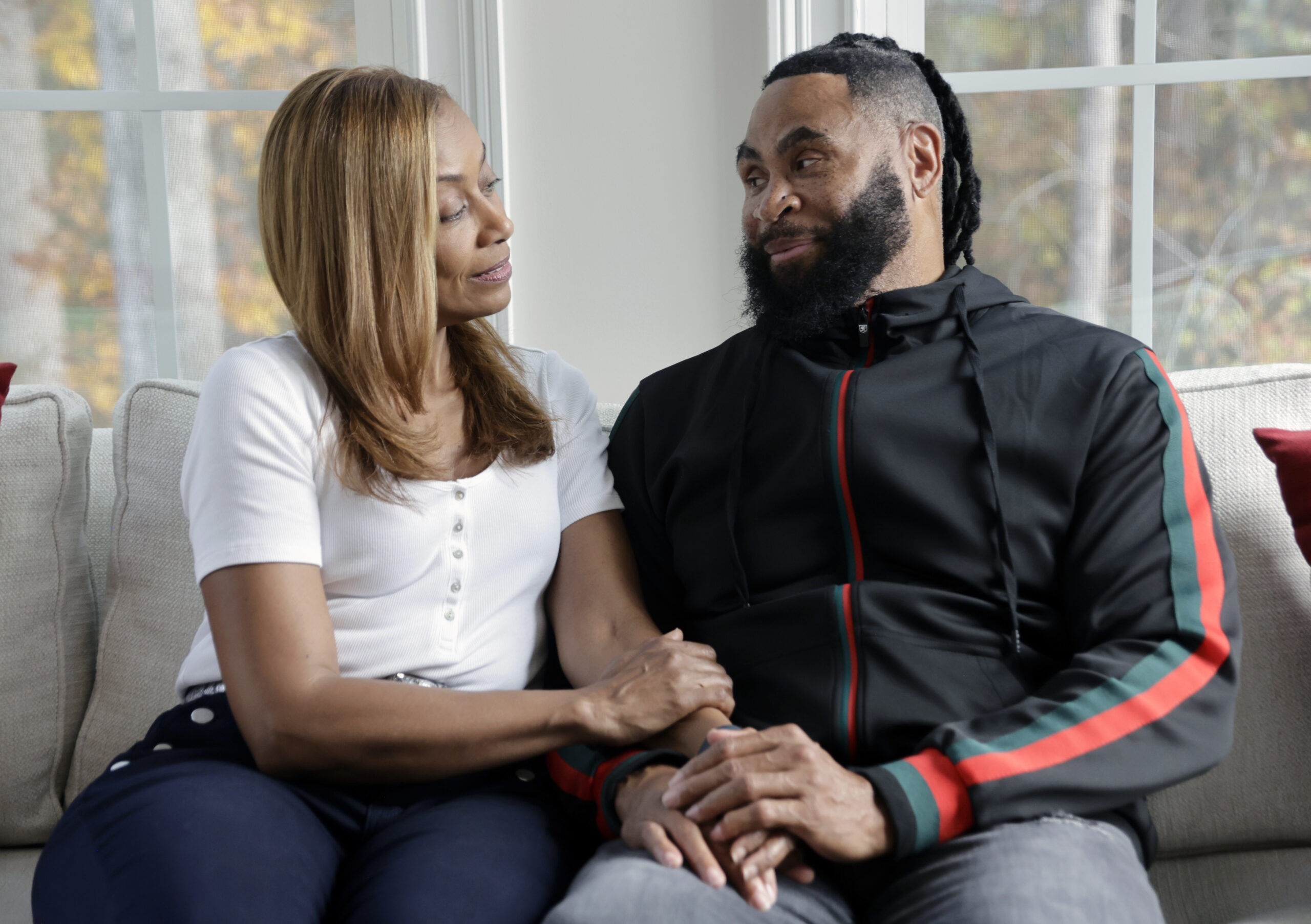
Donald Frank and his girlfriend, Deirdre Brown, learned in early November that the NFL’s concussion settlement program had agreed to pay Frank $1.4 million as he battles Parkinson’s disease.
The settlement program has doled out more than $1.6 billion, yet not every former football player who applies for a payment is compensated. Some, including members of the 1980 Philadelphia Eagles, have faced long delays and demoralizing denials.
The Inquirer found that Frank’s case is an extreme outlier. More than 4,400 ex-NFL players have submitted claims with the program, but only two others have received as many as four rejections.
On Nov. 4, Frank’s girlfriend, Deirdre Brown, opened an email from the settlement program’s claims department.
“Notice of monetary award claim determination,” read the first line.
Her eyes traced familiar details about Frank’s case and his medical history, then arrived at something new: an award for $1.4 million.
“It was a breath of fresh air,” Frank said, “considering all the years I’ve gone through this.”
From a small college to the pros
Frank followed an unlikely path to the NFL.
As a strong safety at a Division II college, North Carolina’s Winston-Salem State University, he attracted little attention from scouts. He had a bodybuilder’s physique, though, and could run the 40-yard dash in 4.4 seconds.
Those attributes persuaded the Chargers to take a flier on Frank in 1990 and sign him as an undrafted free agent. That same year, the team selected linebacker Junior Seau with their No. 1 pick in the NFL draft.
Frank made the team and quickly impressed coaches with his knack for game-changing interceptions, prompting the Los Angeles Times to liken his rise — from relative obscurity to an NFL roster — to a fairy tale.
Frank, like so many players from prior generations, didn’t realize that the violent collisions he experienced each year — during practices and in training camp, throughout the regular season and playoffs — could cause long-term neurological harm.
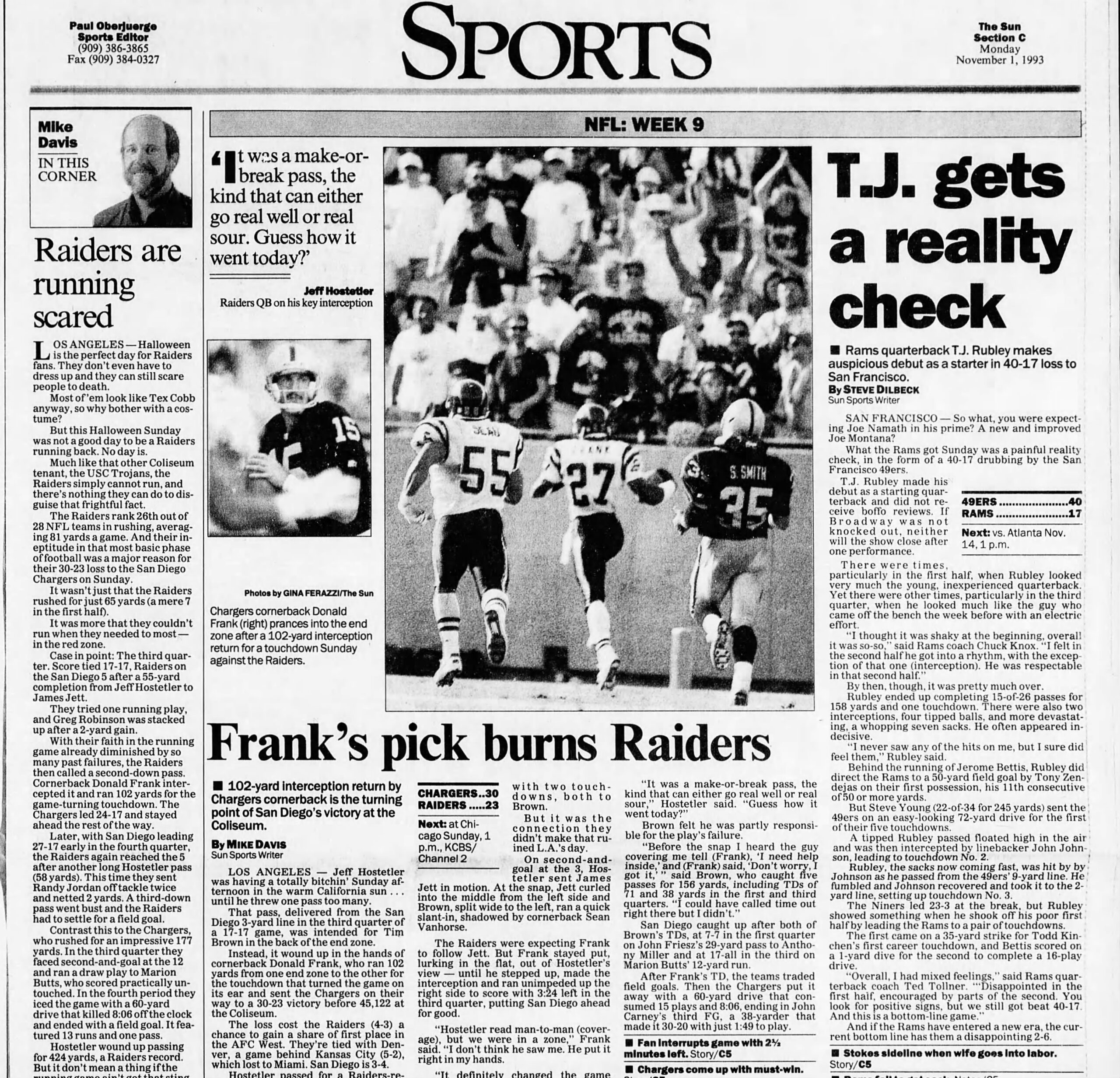
Donald Frank’s 102-yard interception return for a touchdown helped the Chargers defeat the Los Angeles Raiders on Oct. 31, 1993.
“When you got knocked out, or got your bell rung, they would put smelling salts to your nose to wake you up,” Frank previously told The Inquirer. “I don’t even remember there being an attempt to evaluate you. It was always, ‘OK, just let him sit on the bench for a minute to clear his head.’”
By 1993, Frank earned a role as a starting cornerback. That season, during a Halloween game against the Los Angeles Raiders, Frank intercepted a pass from Raiders quarterback Jeff Hostetler and returned it 102 yards for a touchdown.
For an undrafted athlete, it was a moment of remarkable personal triumph.
Just two years later, Frank reached the end of his NFL career. He was hindered by a back injury and had grown wary of hitting his head.
But there was another nagging problem that Frank initially kept to himself: On even simple defensive plays, he could no longer remember what he was supposed to do.
Confusion, then clarity
Frank’s memory problems began to deepen in 2008, according to medical records previously viewed by The Inquirer, and he grappled with depression and unpredictable mood swings.
He stopped driving and had to rely on Brown to help care for him on a daily basis.
In 2012, Seau, Frank’s old Chargers teammate, died by suicide at age 43. Researchers discovered that he had the degenerative brain disease chronic traumatic encephalopathy (CTE), which has been found in the brains of hundreds of former football players, including former Eagles Andre Waters, Max Runager, Frank LeMaster, Guy Morriss, and Maxie Baughan.
Dozens of ex-players had sued the NFL a year earlier in California and Pennsylvania, accusing the league of downplaying the risks of repeated brain injuries. The number of plaintiffs climbed into the thousands — Frank among them — and the cases were consolidated in Philadelphia federal court.
Three years later, the NFL settled the case.
The league admitted no wrongdoing but agreed to fund, for 65 years, a program that would pay retired players who developed neurocognitive impairment, Alzheimer’s disease, Parkinson’s disease, or amyotrophic lateral sclerosis (ALS, also known as Lou Gehrig’s disease).
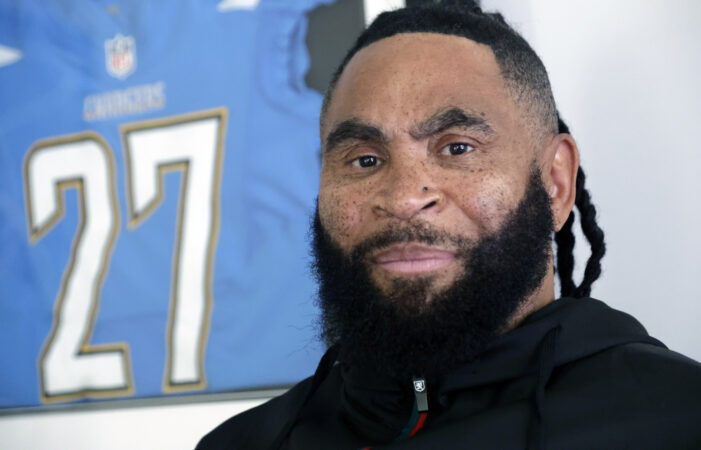
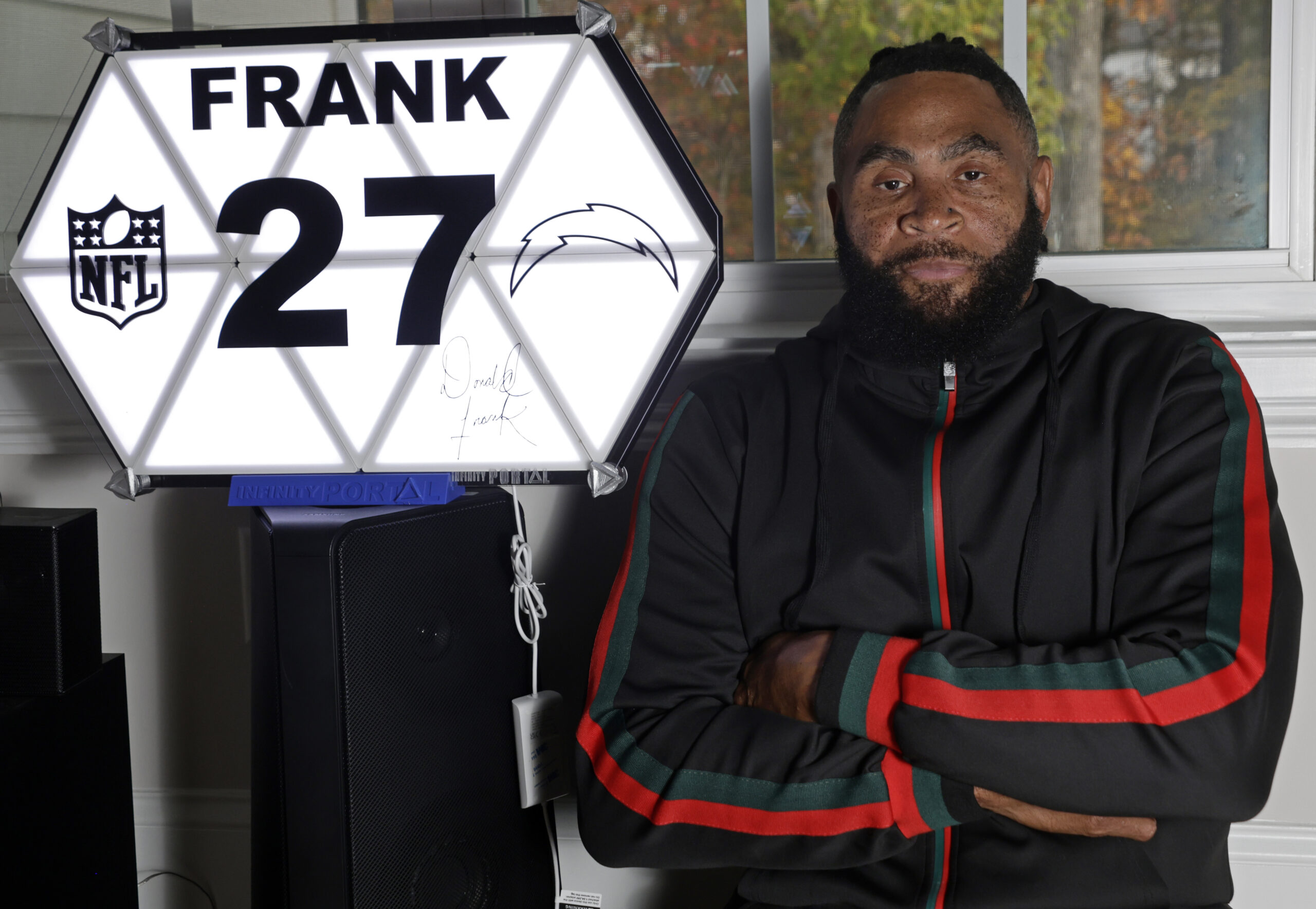
Donald Frank signed with the Chargers as an undrafted free agent in 1990. “My attitude, coming from where I came from, was basically, ‘You got to do everything you can to stay here,’” said Frank, 60. “And I was a physical player.”
In 2016, the chair of Duke University’s Department of Neurology evaluated Frank and determined that he had a “major neurocognitive disorder,” according to the medical records.
That same year, the NFL awarded Frank a benefit through the league’s 88 Plan, which provides financial reimbursements for medical care for players who have dementia, Alzheimer’s disease, or Parkinson’s. (The league spends more than $20 million a year on such reimbursements.)
Despite the seemingly widespread agreement that Frank suffered from a serious illness, he found little success navigating the concussion settlement program.
Retired players are required to be evaluated by doctors who belong to a network managed by a third-party company, BrownGreer LLC, and to have a diagnosis that meets the settlement program’s three tiers of cognitive impairment: level 1.0 for moderate decline; level 1.5 for early dementia; level 2.0 for severe cognitive decline.
Frank submitted three claims for a diagnosis of Alzheimer’s, but an appeals panel rejected each, noting that his test results were not consistent with the disease.
The denials sank Frank into depressive spirals and made him question whether he should abandon his crusade to be paid by the settlement program.
“It felt like a big confusion,” Frank said. “[The doctors] couldn’t get a grip on what was going on with me.”
Clarity finally arrived earlier this year, when his attorney asked Frank if he had ever experienced any tremors or shakes.
“I said, ‘Yes, I do,’” Frank recalled. “I told Dee a year ago, maybe two years, that I experienced some tremors in my right hand. I just never paid it no mind.”
After a neurologist and a movement disorder specialist each confirmed that Frank had Parkinson’s, he began taking medication meant to alleviate symptoms.
“It felt like an immediate release of pressure off my brain,” he said. “I felt like the tremors weren’t bothering me as much.”
Frank has noticed something else, too: a sense of optimism and gratitude that has pierced the frustration and uncertainty that had clouded his life for so long.
The concussion settlement program is scheduled to deliver its payment to him in January, and his daughter and 6-year-old grandson have moved in with him, filling his house with the welcome sound of busy lives and laughter.
“I’m looking forward to more hours with my grandson. I’m looking forward to the future,” Frank said. “I’m thankful.”
They had moved with surgical precision, the two masked thieves and their getaway driver. Their MO was simple: ambush an armored truck guard, seize his service weapon, grab his delivery bag, then go.
In the space of six early summer days, they executed two robberies, each in broad daylight, in busy Philadelphia shopping centers.
Each heist had taken only a few moments, and no one had been injured. But an unexpected wrinkle — a flinch, a scream, a jumpy truck guard with more bullets than sense — could easily escalate a robbery into a tragedy.
To members of the crew, though, this was all high comedy.
In a group chat after the second stickup, four men — two of whom authorities would later identify as members of the robbery ring — joked about a Fox 29 Instagram post that detailed the heists.
“Don’t say my name lol,” wrote one man.
Another suggested that law enforcement would set a trap for the thieves.
The tone of the group chat is breezy, dotted with laugh-crying emojis.
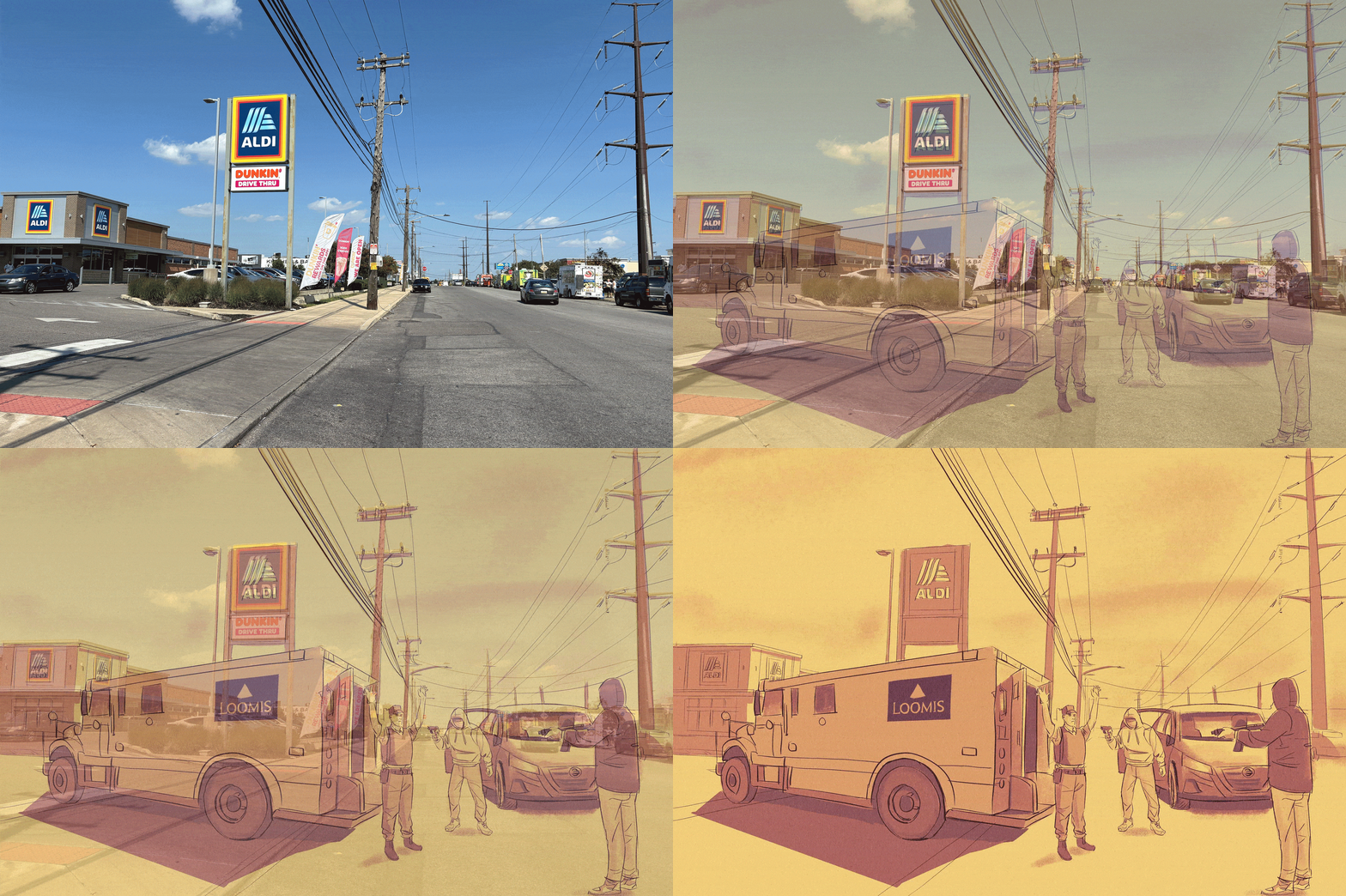
On June 26, as Philadelphia recovered from three consecutive days of 99-degree heat, armed thieves robbed a Loomis driver outside a Crescentville Aldi.
A federal agent would later recount this exchange, and several others, in a 29-page affidavit that details how an alphabet soup of agencies — the FBI’s Violent Crime Task Force, Philadelphia police, Cheltenham police, the District Attorney’s Office, the Bureau of Alcohol, Tobacco, Firearms and Explosives — worked to identify, track, and ultimately arrest members of the crew that allegedly attempted to rob five armored truck drivers between June 26 and Aug. 12.
This was not a simple whodunnit, solved with TV-drama efficiency.
It took a mélange of elements — old-fashioned detective work, high-tech digital surveillance, an anonymous tip, and a seemingly unrelated probe into automobile thefts — to help authorities zero in on the armored truck thieves.
Among the information that investigators collected along the way was the conversation about the Fox 29 post, which was sent to two members of the robbery crew and a third man by Tykee Smith, a Tampa Bay Buccaneers safety.
Smith, 24, grew up in West Philly, but his connection to the crew is unclear. He has not been accused of committing a crime. The FBI did not redact his Instagram handle from the affidavit, but did elect to hide the identities of other figures in the case.
Asked about Smith, an FBI spokesperson wrote in an email: “I would have to defer to the public documents.”
Representatives for Smith and for the Buccaneers declined to comment.
For a while, after their busy summer, the thieves seemingly went underground.
Then, in early fall, investigators learned that the crew had obtained a stolen white Honda Accord with a paper license plate tag.
On Oct. 3, police officers spotted the Accord outside a City Avenue Target — lurking near a Brinks truck.
The Accord peeled off, igniting a heart-thumping chase that spilled into Lower Merion Township, where the driver and his passenger ditched the sedan on a leafy, horseshoe-shaped road.
Police and news helicopters were soon thrumming over the area’s million-dollar properties. Some curious residents ventured outside and were met by teams of rifle-wielding cops who hollered to get back in their homes.
The officers’ radios hissed with speculation: Had the men fled along the nearby Cynwyd Heritage Trail, which leads to Manayunk?
By early afternoon, the suspense — and the manhunt — had drawn to a close.
Officers apprehended one individual, Mujahid Davis, hiding in the basement window well of a house on Colwyn Lane.
His partner managed to evade the dragnet in Lower Merion Township with the help of someone who picked him up in a Dodge Charger.
The escape was short-lived: Police caught up to the Charger soon after in West Philly and arrested the passenger, Dante Shackleford.
On Oct. 16, a federal grand jury charged Shackleford, 26, with one count of Hobbs Act robbery for stealing more than $100,000 from a Brinks driver on Aug. 12, attempted robberies on July 22 and Oct. 3, and brandishing a firearm in relation to a crime of violence.
It was Shackleford who had joked to not say his name when Smith shared the Instagram post about the robberies. Cell tower data showed that his phone was at the scene of some of the summer heists.
If convicted, Shackleford’s sentence could range from seven years to life in prison. He has pleaded not guilty. His attorney, Angela Levy, declined to comment.
Davis, 24, was charged with the Oct. 3 attempted robbery. He has pleaded not guilty.
More indictments might follow in January, when trial dates for Shackleford and Davis will be set, the records show.
Vito Roselli, a retired FBI agent who once worked on bank and armored car robbery investigations in Philadelphia, called the phone evidence in the affidavit “devastating.”
“A lot of robbery crews wise up with cell phones, and just use burner phones. It’s spy tradecraft,” he said. “This crew is not doing that. They’re pretty open about what they’re doing, and they’re running their mouths.”
‘Take all the tracking s— out’
While the FBI tried in early July to generate leads on Philly’s armored truck bandits, other law enforcement agencies were busy in the city with the seemingly unrelated pursuit of an alleged car thief and gun dealer.
Salim Sutton, 31, had been on the run since February. A Common Pleas Court judge had placed Sutton on house arrest while he awaited trial on firearms and theft charges. But Sutton had other plans, and allegedly cut off an ankle bracelet monitor, then absconded.
In June, police officers began investigating a series of complaints about cars having been stolen or broken into near Front and Callowhill Streets. Surveillance footage gave them a look at the alleged culprit: Sutton.
Investigators determined that Sutton had been selling firearms that he’d stolen from vehicles. Given the widening scope of Sutton’s alleged offenses, police and the District Attorney’s Office’s Gun Violence Task Force sought the assistance of the ATF.
The added manpower almost immediately yielded results. On July 10, ATF agents nearly captured Sutton, but he slipped beyond their grasp while riding in a black Nissan Maxima with tinted windows, black rims, and a blacked-out rear emblem.
Afterward, Sutton joked about the encounter on Instagram.
The next day, Sutton traded text messages with a man who wanted to purchase a stolen car.
“I’m bout to hurry up and take all the tracking s— out of it now,” Sutton wrote, according to the records.
“Got you send a cash app,” replied the man, whom the FBI refers to only as “Suspect 1.”
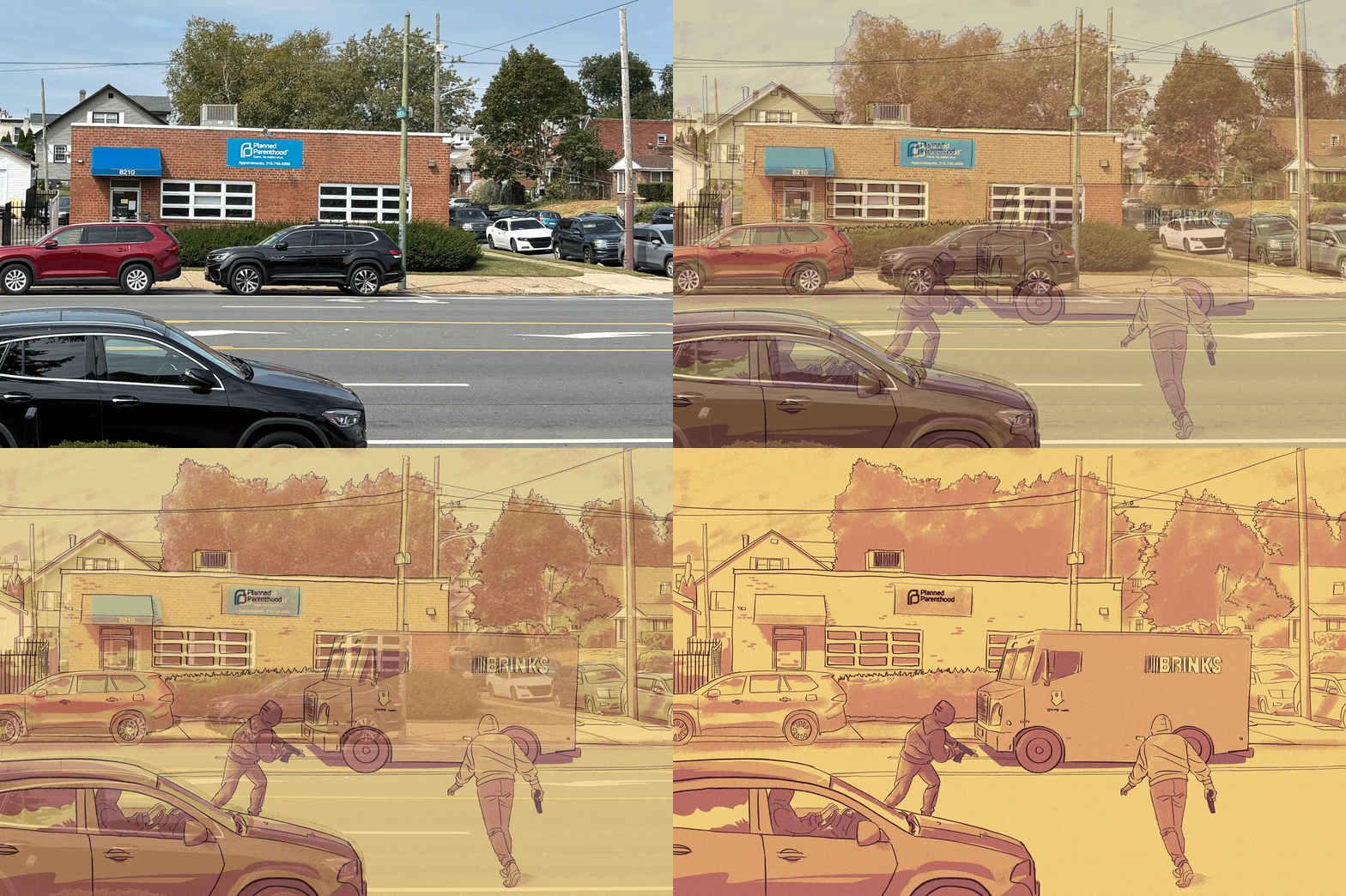
Four days later, on July 15, a Brinks guard parked on Castor Avenue in Rhawnhurst to make a delivery to a Planned Parenthood office.
A Brinks driver opened fired when armed thieves tried to rob him near a Planned Parenthood office on Castor Avenue.
The guard noticed that he was being approached by a man who was wearing a black facemask, a black hoodie, and latex gloves — and brandishing a handgun.
A second man, armed with an AR-style rifle, lurked near the intersection of Castor and Emerson.
The guard drew his service weapon and opened fire, getting off eight shots but not hitting anything.
One of the would-be robbers ran away. Surveillance cameras recorded his partner fleeing in a getaway car: a black Nissan Maxima with tinted windows, black rims, and a blacked-out rear emblem.
Hours after the attempted heist, photos of the getaway began to circulate across social media. Sutton saw one such image on social media, a clear look at the Nissan’s trunk — and its license plate.
He took a screen shot, then messaged the man to whom he had sold the Nissan and asked whether he had switched the car’s license plate.
The two men began discussing more vehicle transactions. Sutton said he had a black 2015 Mercedes-Benz S550 that he could sell for $800.
For the buyer, the price was too steep. He explained that he needed something cheaper, maybe in the $200 to $300 range, just so long as its windows were tinted.
“…we use em for bouncing,” he wrote, “that’s it[,] not to have[.]”
Eyes in the sky
As Philadelphia fell deeper into an uncomfortable, humid summer — punctuated by an eight-day garbage strike — the FBI was still trying to identify the men responsible for the armored truck heists.
They knew that after the first robbery, of a Loomis guard on June 26, two masked thieves and a driver escaped with a meager haul — the guard’s handgun, and a canvas bag that contained $1,000 — in a gray or brown Nissan Altima with tinted windows.
Philadelphia police stopped the Altima on July 2. Its license plate had been stolen from another car.
Officers determined that the driver had nothing to do with the heists. But he did share a valuable piece of information: He had rented the Altima, he said, from someone on Instagram.
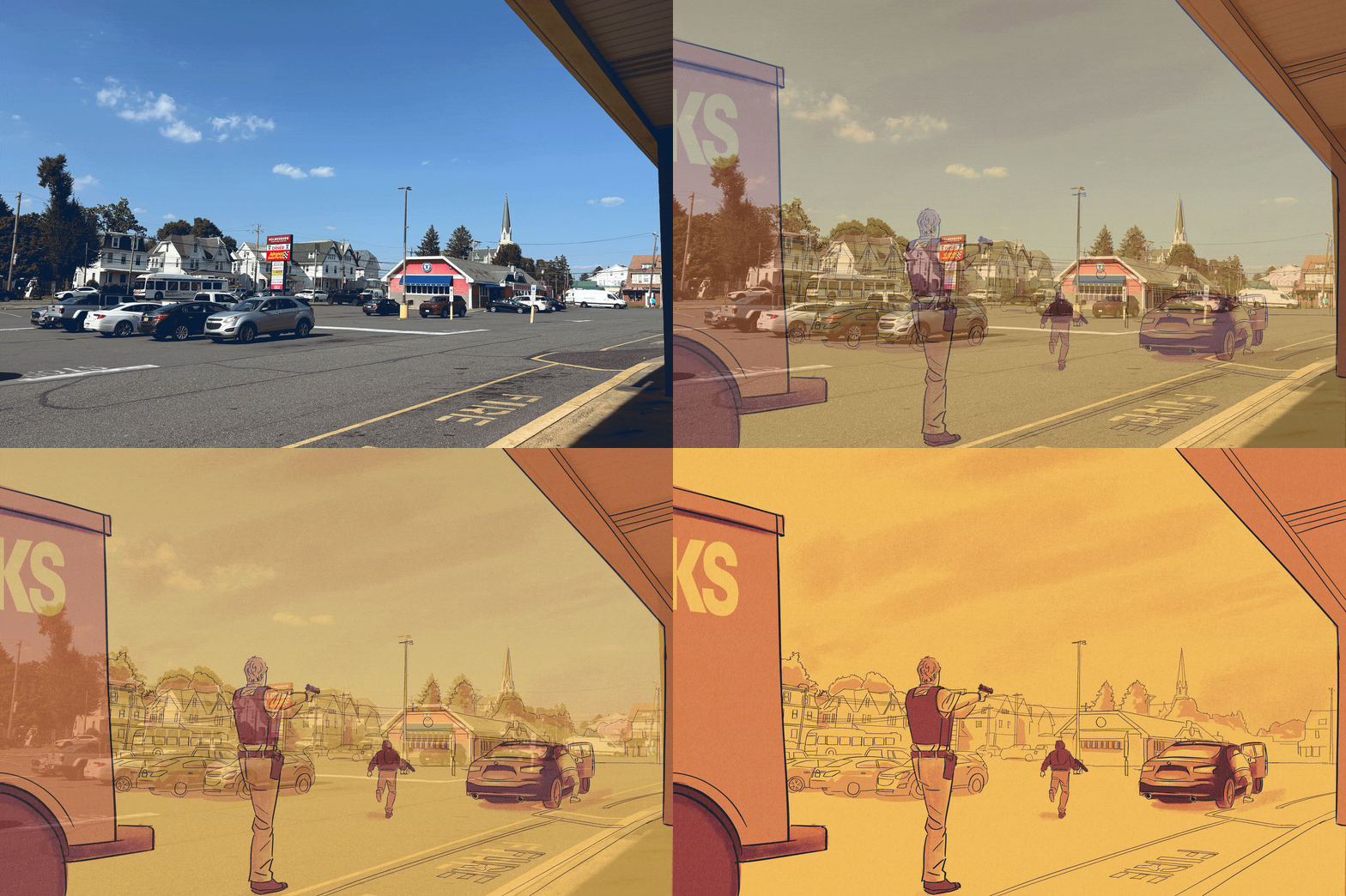
Eyewitnesses watched as three armed men ambushed a Brinks guard outside a Dollar General in Holmesburg on July 2.
On July 22, the stick-up crew struck again.
A Brinks driver climbed out of his truck to make a delivery to an H Mart grocery store in a Cheltenham Township shopping center. He realized he was being watched by three people in a black Dodge Durango.
Each of the occupants was masked. Two appeared armed with what the Brinks driver said he thought was a long gun.
The driver darted into H Mart and called police.
For the crew, there was only one sensible option: they had to drive away before patrol cops could reach the H Mart.
But the getaway was not entirely clean. Surveillance cameras recorded footage of the Durango arriving at the shopping center’s parking lot at 8:57 a.m.
Unbeknownst to the thieves, an automated license plate reader had also captured a clear look that morning at the Durango — and its license plate — riding on North Broad Street.
‘Don’t f— move’
The two parallel investigations — the ATF’s pursuit of a car thief and the FBI’s hunt for the armored truck bandits — would soon dovetail.
On Aug. 5, through a combination of physical and video surveillance, investigators saw Sutton driving a sport utility vehicle: a black Dodge Durango. Its license plate matched the Durango that had stalked a Brinks driver at the More Shopping Center two weeks earlier.
On Aug. 7, the ATF arrested Sutton. Investigators quickly obtained state and federal warrants to begin extracting data from Sutton’s phone.
The DA’s Office filed more than a dozen charges against Sutton, including theft, receiving stolen property, conspiracy, and firearms violations, and set his bail at $6.7 million. His attorney could not be reached for comment.
Authorities now had an extensive record of Sutton’s interactions with members of the armored heist crew, who were about to resurface.
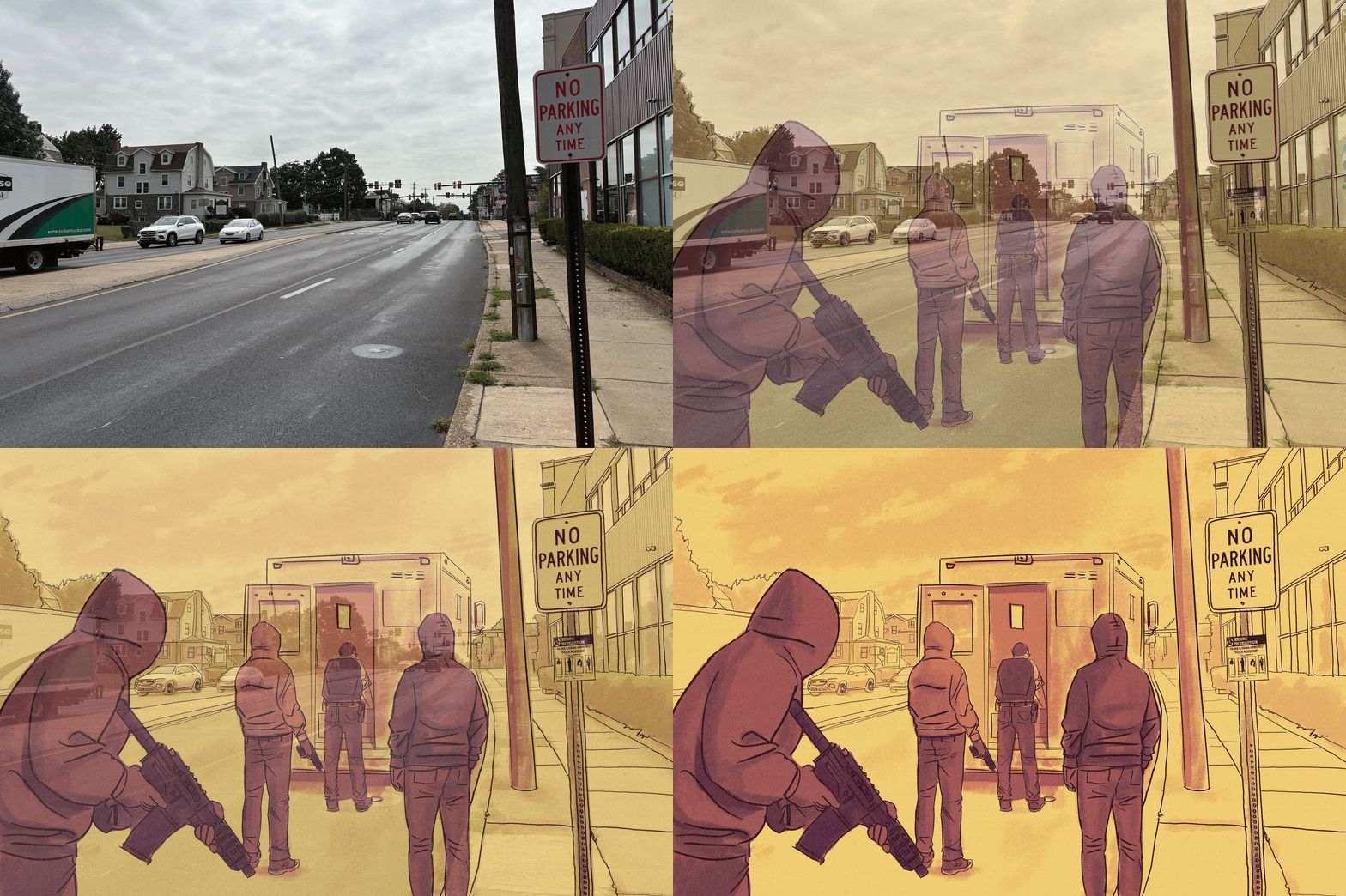
The heist grew ambushed a Brinks driver near an H Mart on Old York Road — and escaped with more than $100,000.
On Aug. 12, at 10:22 a.m., a female Brinks driver carried a delivery satchel towards the same H Mart that the thieves had targeted in July.
When she was mere steps from the store’s entrance, two robbers pounced.
One pressed the barrel of an AR-style rifle against her neck, according to court records.
“Don’t f— move, don’t f— move,” he said. “Give it to me.”
The other assailant pressed a handgun against the woman’s back. They took her service weapon and the satchel, which held $119,100, then fled into a waiting black Acura sedan.
Two days later, a Cheltenham Township police detective opened a letter that had been mailed to the department’s headquarters. The handwritten message claimed that a paralyzed man was responsible for planning the recent H Mart robberies. The writer also divulged the identity of one of the alleged thieves.
His name was Dante Shackleford.
Fresh lead in hand, the FBI began collecting every digital footprint that it could trace to Shackleford: cell phone records, social media activity, a newly opened bank account.
The records showed that Shackleford and the paralyzed man — whom the FBI referred to as “Suspect 1” — were indeed associates and had shared Instagram posts and messages with one another.
Among the exchanges that would be recounted in a later affidavit was the Fox 29 post that Smith — the Tampa Bay Buccaneers defensive back, who attended Imhotep Institute Charter High School in Philadelphia — had sent through Instagram to Shackleford, “Suspect 1,” and another man.
In a bid to gather even more evidence, the FBI on Aug. 26 announced a $10,000 reward for information that could lead to the arrests and convictions of the crew’s members.
Investigators found Shackleford’s number, meanwhile, in Sutton’s phone.
And cell tower data indicated that Shackleford’s phone was at the scene of three of the heist crew’s crimes, during the same window of time that the robberies occurred.
City surveillance cameras and cell phone location data provided another crucial piece of information: As of Oct. 2, Shackleford was likely operating or a passenger in a stolen white Honda Accord.
‘Get back inside!’
A day later, when Philadelphia police chased Shackleford and Mujahid Davis into Lower Merion Township, investigators were tracking Shackleford’s cell phone location data.
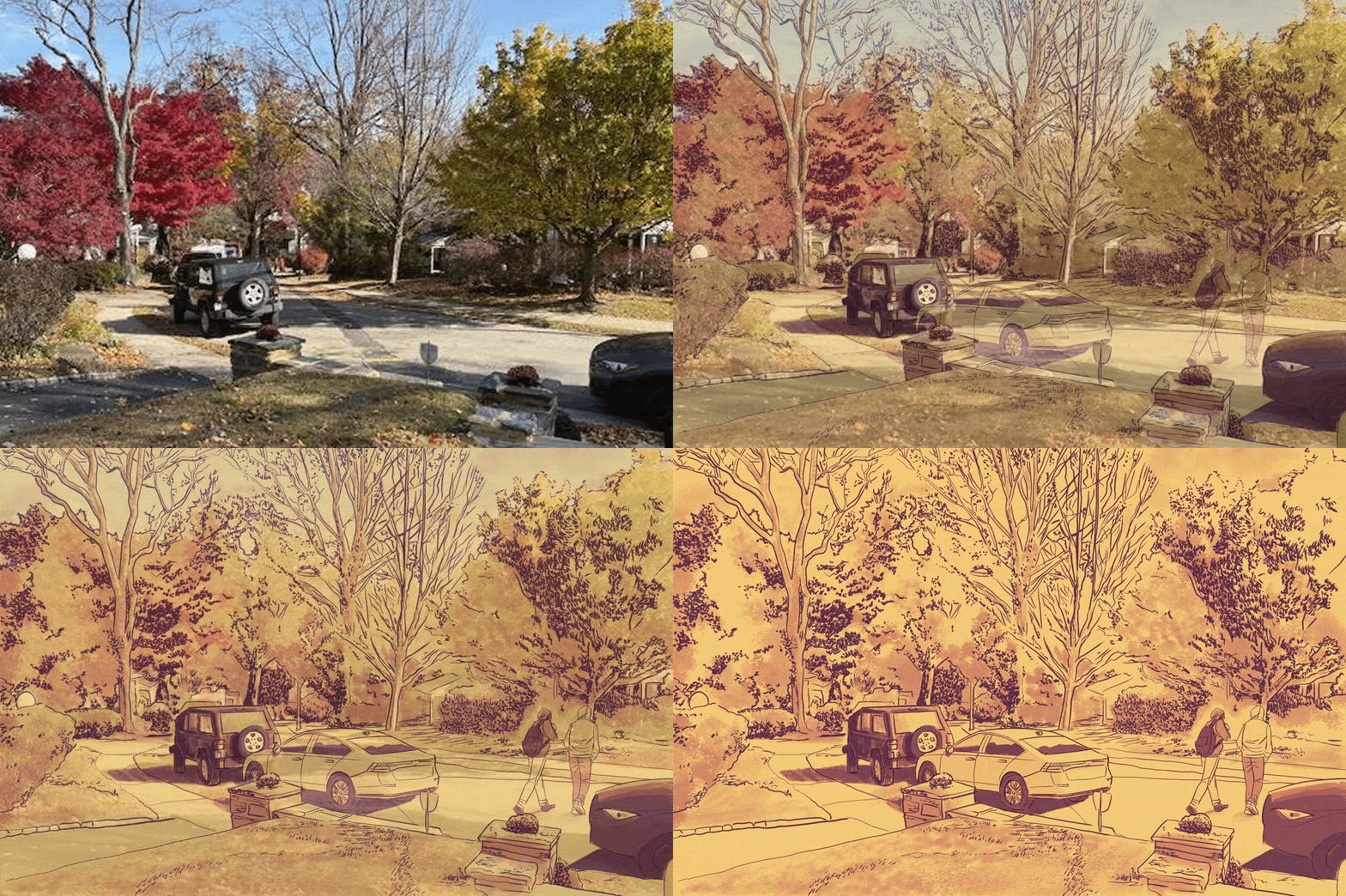
With law enforcement close behind them, Shackleford and Davis ditched the Accord on Snowden Road, a gently curving, tree-lined block in Bala Cynwyd.
Christine Weatherwax was getting ready to make a late morning supermarket trip when she heard helicopters hovering over her house on Snowden.
She stepped outside and saw that someone had parked a sedan — a white Accord — against her husband’s Jeep.
Residents on Snowden Road in Bala Cynwyd found helicopters and scores of police outside their homes on Oct. 3 — and a stolen Honda Accord that had been abandoned by the suspects on their block.
“My husband thought someone had forgotten to put on their parking brake,” said Weatherwax, 51. “He started walking around, looking for the owner.”
Another neighbor, John Wuetig, ventured outside and fixed on an unusual sight: 10 cops, rifles in hand, marching down the street, accompanied by eager police canines.
“The officers yelled, ‘Get back inside!’” Wuetig, 51, recalled.
Later, Wuetig reviewed his Ring camera footage and saw a sequence that he and the officers had missed: two individuals running from the Accord.
As they attempted to flee, the men shed some of their clothes, the Honda’s key fob, and a Glock handgun in neighbors’ yards, according to court records.
In the Accord, police would find an AR-style pistol.
Some residents spotted Davis on Colwyn Lane, a 14-minute walk from Snowden Road.
Police swept down the block, and found a house with an unopened front door.
The property owner, Todd Miselis, 50, had left to run to a store. Inside, a friend of his slept in a guest bedroom.
“I got a text from my friend that said, ‘911. Cops are all over!’”
Miselis wondered if his friend was joking.
He returned home and found his closet doors ajar. It appeared that someone had rummaged under his beds. His friend then explained that five armed cops had barged into Miselis’ house and woken him by pointing flashlights in his face.
Soon after, the officers found Davis hiding in the basement window well of Miselis’ neighbor.
But where was Shackleford?
A day earlier, the FBI had learned through surveillance footage that Shackleford had been riding in a white Dodge Charger.
That information was shared across police radio. Officers soon spotted the Charger in West Philadelphia, where it came to a stop at 52nd and Parrish Streets.
Shackleford and the driver, whose name has not been released, were arrested without incident.
At the scene, one investigator decided to dial a number that had helped unlock a significant portion of the case.
Inside the Dodge Charger, Shackleford’s phone began to ring.
Late Thursday afternoon, while Thanksgiving rituals unfurled in rowhouses and neighborhoods across Philadelphia, Rosa Mar Espinosa Rodas took her final steps.
Espinosa Rodas, 41, was struck by a black 2012 Honda Accord at 36th and Market Streets in University City about 3:50 p.m., according to preliminary information released Friday by Philadelphia police.
After hitting Espinosa Rodas, the Honda’s driver didn’t stop. Instead, police said, the car continued eastbound along Market Street, where it then crashed into a Buick LaCrosse near 34th Street.
The driver of the Honda attempted to flee on foot, but was apprehended by police a few blocks from the second crash scene.
Police identified the motorist as Shamir Miller, 30.
Miller was charged with murder, homicide by vehicle, involuntary manslaughter, and nine other offenses, court records show.
His bail was set at $3 million, and he is scheduled to face a preliminary hearing on Dec. 15.
Medics pronounced Espinosa Rodas dead on Market Street, police said. CBS3 reported that Espinosa Rodas had worked nearby and was on her lunch break when she was fatally struck.
The driver of the Buick, a 41-year-old woman, was admitted to Penn Presbyterian Medical Center with neck and back injuries and was listed Friday in stable condition.
Miller was also treated at Penn Presbyterian for head injuries.
On Nov. 20 — a week before Espinosa Rodas was killed — a nearby stretch of Market Street was the scene of another fatal hit-and-run crash.
Early that morning, the driver of a silver Chrysler 300 with tinted windows struck Meaza Brown at 33rd and Market.
Police said that Brown, 48, was hit at such a high rate of speed that she was “launched out of her sneakers” and propelled through the air for several hundred feet. She was pronounced dead at Penn Presbyterian.
Investigators later found the Chrysler at 34th and Race Streets, but no arrests have been reported.
The city, as part of its Vision Zero plan to reduce traffic deaths, is seeking from state legislators the authority to set speed limits for local roadways, and to expand its use of automated speed enforcement cameras, The Inquirer reported this week.
Last year, the city recorded 120 vehicle crash deaths, a 41% increase from 2015, when the Vision Zero program began.
Teeth-chattering winds and plunging temperatures awaited Eagles fans who made a pilgrimage Friday to Lincoln Financial Field for a late afternoon matchup against the Chicago Bears.
For those who drove to South Philadelphia, the city had a post-game surprise: a new traffic management plan that might minimize stadium complex gridlock.
In an email to The Inquirer, the city wrote that the test pattern is designed to provide drivers with an expedited route from Pattison Avenue to the Walt Whitman Bridge and I-76 East, along Darien Street.