Author: Sarah Gantz

  • Federal legislation would increase pathogen testing for infant formula following botulism cases

    Federal legislation would increase pathogen testing for infant formula following botulism cases

    A 2-month-old Bucks County infant was struggling to swallow and could hardly hold his head up.

    He was diagnosed last month with infant botulism, a rare, potentially deadly infection that affects the nervous system and can lead to paralysis.

    The family and their lawyer believe the baby, now recovering at home, ingested the bacteria that causes the infection from an infant formula subsequently recalled by its manufacturer, Nara Organics, over contamination concerns.

    Federal legislation proposed this spring could protect babies by requiring formula manufacturers to test for more pathogens. The bill, HR 7867, is awaiting hearings in the House Committee on Energy and Commerce.

    “I want responsible manufacturers, responsible industry partners, who say we know there is a risk of this and we’re going to be ahead of the game,” said U.S. Rep. Madeleine Dean, a Montgomery County Democrat and cosponsor of the bill.

    When asked for comment on the proposed legislation, Nara Organics pointed to safety protocols posted on its website saying the company exceeds the U.S. Food and Drug Administration’s current requirements.

    The New York-based company said it voluntarily recalled all of its infant formula on June 13 “in an abundance of caution,” after the FDA and the Centers for Disease Control and Prevention reported three cases of infant botulism in babies who had consumed Nara formula.

    As of July 6, a fourth case had been confirmed, and FDA testing identified the botulism-causing bacterium C botulinum in some of the company’s formula, according to an update posted on the company’s website.

    Nara Organics did not comment directly on the proposed regulations. When asked for its position on the legislation, the Infant Nutrition Council of America, which represents manufacturers, said its members “share the goal of ensuring families have access to safe, high-quality infant formula.”

    “Infant formula is among the most highly regulated foods in the United States, and INCA supports science-based, risk-based improvements that strengthen infant formula safety,” the organization said in a statement.

    The push to bolster regulations comes several years after federal regulators and lawmakers started looking more closely at infant formula safety in 2022, when a massive recall for a non-botulism bacterial contamination left shelves bare for months.

    But two recent infant botulism outbreaks linked to formula show the inadequacy of the steps that companies are already taking, said Bill Marler, a Seattle-based food safety lawyer who is representing Erica and Micky Goldfin, the Yardley couple whose son developed botulism after being fed Nara Organics formula.

    “We need to do more to protect these kids,” Marler said.

    A dangerous infection

    Infant botulism occurs when babies ingest C botulinum in foods or dust and dirt particles. The bacteria’s spores colonize in the large intestine and release a toxin that affects the nervous system.

    Symptoms include changes in facial expressions, such as smiling less, slow feeding, constipation, and low energy. Untreated, the toxin can spread and cause paralysis, making it hard for babies to breathe and eat.

    Infants are at greatest risk of illness because their digestive systems are still developing and less able to fight off infection.

    Nationally, 181 cases of infant botulism were reported in 2021, the most recent year for which CDC data are available.

    The Goldfins’ baby, identified by the initials W.G. in court records, spent two nights in the intensive care unit at the Children’s Hospital of Philadelphia, where he was treated with BabyBIG, the botulism antitoxin that is manufactured by the California Department of Public Health. The medication’s antibodies bind to the toxin and neutralize it, improving symptoms within 48 hours.

    On June 6, he returned home, where he is feeding well again, and regaining movement in his arms and legs. He is receiving weekly physical therapy for developmental delays in his gross and fine motor skills, according to the lawsuit.

    Testing challenges

    Federal regulators began looking more closely at infant formula in 2022, after Abbott Nutrition issued a massive recall over concerns of non-botulism bacterial infections.

    Abbott temporarily shut down one of the largest formula manufacturing plants in the country while it investigated the cause of the contamination, leaving families scrambling to find the formulas they relied on for their infants and medically fragile children.

    Pinpointing the exact source of contaminants can be challenging.

    The bacteria that causes botulism, for instance, could have been present in the Nara Organics’ powdered milk formula, in dust that settled on the packages during transportation, in the water used to mix it, or on the hands of those preparing the food, said Molly Potter, a senior clinical dietitian with Nemours Children’s Health in Delaware.

    According to its website, Nara Organics tests its formulas throughout the manufacturing process, first testing raw ingredients, then during production, and again with the final product.

    The tests the company uses include so-called sulfite-reducing clostridia (SRC) enumeration, which a leading international food-safety group recommends for identifying spores of the bacteria that causes infant botulism.

    But research published in June in the medical journal Frontiers in Microbiology found that SRC enumeration testing suggests that test wasn’t sufficient to consistently detect the bacteria.

    Researchers from IEH Laboratories & Consulting Group, a Washington-based firm that specializes in laboratory testing and analysis for the food industry, worked with ByHeart to analyze its infant formulas that had been linked to at least 28 cases of infant botulism this year and last.
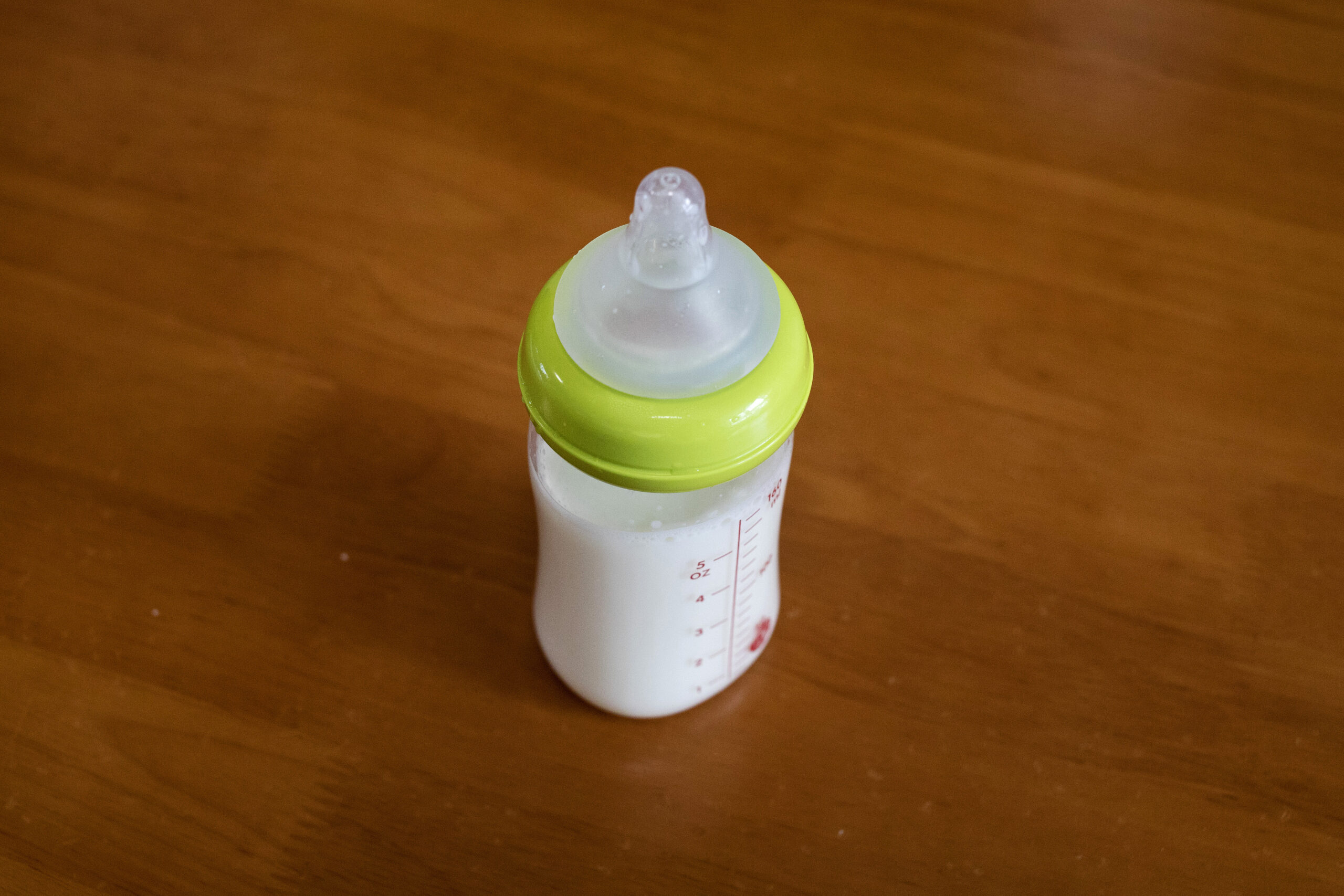
    A bottle of milk prepared from infant formula.

    Improving safety

    Dean said she hopes the proposed legislation will open up more conversation about how best to improve infant formula safety.

    The bill tasks the FDA with developing a list of pathogens that formula companies should test for, and working with manufacturers to begin any tests they aren’t already doing.

    The FDA would also set a schedule for how often manufacturers need to test for the new list of pathogens.

    Under the legislation, companies would be required to report contamination results within a day, and retain records of positive test results.

    Dean is among more than two dozen lawmakers to sign on as cosponsors. Rep. Jefferson Van Drew, who represents South Jersey’s 2nd District, is one of two Republican cosponsors.

    Potter, the Nemours dietitian, said she hopes increased testing will help families feel more at ease.

    In the meantime, parents can reduce the risk to their children by only purchasing formula from reputable stores, checking expiration dates, and storing powdered formula canisters properly. Caregivers should make sure to mix formula in clean equipment, and wash their hands before preparing and feeding it to a baby.


  • One year of inspections at Paoli Hospital: April 2025 – March 2026

    One year of inspections at Paoli Hospital: April 2025 – March 2026

    Paoli Hospital was not cited by the Pennsylvania Department of Health for any safety violations between April 2025 and March of this year.

    Located in Chester County, the hospital is one of four owned by Main Line Health.

    Here’s a look at the publicly available details:

    June 18, 2025: Inspectors came to investigate a complaint but found the hospital was in compliance. Complaint details are not made public when inspectors determine it was unfounded.

    • June 19: The Joint Commission, a nonprofit hospital accreditation agency, renewed the hospital’s accreditation, effective April 2025, for 36 months.
    • Oct. 20: Inspectors came to investigate a complaint but found the hospital was in compliance.
    • March 12, 2026: Inspectors came to investigate a complaint but found the hospital was in compliance.
  • Rutgers Women’s Brain Health Initiative will explore how hormonal changes affect the brain

    Rutgers Women’s Brain Health Initiative will explore how hormonal changes affect the brain

    A group of Rutgers researchers led by neuroscientist Ioana Carcea want to learn more about how women’s brains are affected by pregnancy, motherhood, menopause, and other hormonal changes that they say have been under studied.

    The Women’s Brain Health Initiative at the Rutgers Brain Health Institute in Piscataway will focus on research and public education about women’s brain function, neurodevelopment, mental health, and disease vulnerability.

    The Inquirer spoke with Carcea, associate professor in the Department of Pharmacology, Physiology and Neuroscience at Rutgers New Jersey Medical School, to learn more about the initiative, which launched in June.

    The interview has been lightly edited for clarity and length.

    Ioana Carcea is an associate professor in the Department of Pharmacology, Physiology and Neuroscience at Rutgers New Jersey Medical School.
    What is the focus of your research and the Women’s Brain Health Initiative?

    In my laboratory we study different aspects related to how the brain works, how it communicates with the body. One focus area for us is understanding maternal behavior and what regulates maternal behavior. The institute is much broader than what I do. In the Rutgers Women’s Brain Health Initiative, we want to focus on the transitions in life that are specific to women — puberty and monthly menstruation, pregnancy, postpartum, menopause. These are very dramatic hormonal changes that women experience and they impact general health, particularly brain health.

    How are the hormonal changes women experience different from men?

    Men obviously experience puberty, but it’s a different set of hormones. Post-puberty, testosterone does have a full cycle mode of release, but it’s not the monthly cycle that women experience in hormone levels, and the fluctuations are not as profound as in women. Then with aging, men don’t really experience a “pause.” There is going to be a decrease in testosterone levels with aging, but it’s not a complete pause like we see in women.

    What are some of the challenges in this type of research?

    It is a difficult topic to study. Menopause varies among women, as far as when it starts, how long the perimenopause period lasts — it can be two years, it can be 10. The symptoms vary, genetic risks can amplify the risk of disease. Another challenge is we don’t really have great animal models for menopause. Menopause is very rare in nature. Other than women, only orcas and some other whales have true menopause, where they can lead healthy lives after the reproductive window closes. Primates can come close to menopause – it’s not quite the same, but they do experience reproductive aging.

    Has research funding been a challenge?

    We need more funding in this area. The funding climate has been changing and both NIH and private foundations are now investing more in women’s brain health research, but that hasn’t happened for a long time, and I think that’s one of the reasons we have these gaps in knowledge when it comes to women’s brains.

  • Yardley family is suing an infant formula company after their baby developed botulism

    Yardley family is suing an infant formula company after their baby developed botulism

    Erica and Micky Goldfin’s 2-month-old son wasn’t eating and seemed to be having trouble swallowing. His cries were weak, and his eyelids were droopy.

    Within weeks, the Yardley parents were rushing their baby to Children’s Hospital of Philadelphia, where he was admitted June 1 to the intensive care unit and treated for infant botulism, a rare, potentially deadly infection that affects the nervous system and can lead to paralysis, according to court records.

    The couple are now suing Nara Organics, the maker of the whole milk infant formula they began feeding their son days after his birth in March, and Target, where they bought it. New York-based Nara Organics voluntarily recalled all of its infant formula on June 13, after the U.S. Food and Drug Administration and Centers for Disease Control and Prevention reported three cases of infant botulism in babies who had consumed Nara formula in Pennsylvania, California, and Washington.

    In the lawsuit, filed Monday in the U.S. District Court for the Eastern District of Pennsylvania, the family alleges that Nara Organics did not do enough to protect customers after federal regulators cautioned that whole milk powder can carry the bacteria that cause botulism.

    “Parents trusted a label that told them this was the safest, most premium thing they could feed their child,” said Bill Marler, a foodborne illness lawyer and a managing partner at Washington-based Marler Clark, who is representing the family.

    The Goldfins, who declined an interview through their lawyer, are also represented by Cherry Hill’s Ferrara & Gable.

    Nara Organics did not respond to a request for comment, but said on its website that it had issued the recall “in an abundance of caution,” and that none of its formulas had tested positive for the botulism-causing bacterium C botulinum. Tests are ongoing, according to the lawsuit.

    “We believe in taking the strongest possible measure to protect the safety of babies,” the company wrote in its recall. “Your family deserves to have complete confidence in the safety of your baby’s food.”

    Target did not respond for a request for comment.

    This is the second recent botulism outbreak linked to powdered whole milk infant formula. An infant botulism outbreak associated with ByHeart formula that began in November sickened at least 28 babies.

    What is botulism?

    Infant botulism is caused when babies ingest C botulinum in foods or dust and dirt particles. The bacteria’s spores colonize in the large intestine and release a toxin that affects the nervous system.

    Symptoms include changes in facial expressions, such as smiling less; slow feeding; constipation; and low energy.

    Untreated, the toxin can spread and cause paralysis, making it hard for babies to breathe and eat.

    Infants are at greatest risk of illness because their digestive systems are still developing and less able to fight off infection. Nationally, there were 181 cases of infant botulism in 2021, the most recent year for which CDC data are available.

    The Goldfin infant, who was identified only by the initials W.G., spent two nights in the intensive care unit at CHOP, where he was treated with BabyBIG, the botulism antitoxin that is manufactured by the California Department of Public Health and must be flown to hospitals overnight. The medication’s antibodies bind to the toxin and neutralize it, and symptoms improve within 48 hours.

    On June 6 he returned home, where he is feeding well again, and regaining movement in his arms and legs. He is receiving weekly physical therapy for head lag and delays in his gross and fine motor skills, according to the lawsuit.

  • One year of inspections at Shriners Children’s Philadelphia: April 2025 – March 2026

    One year of inspections at Shriners Children’s Philadelphia: April 2025 – March 2026

    Shriners Children’s Philadelphia was not cited by the Pennsylvania Department of Health for any safety violations between April 2025 and March of this year.

    The specialty children’s hospital is part of Shriners Hospitals for Children, a Florida-based nonprofit that operates health facilities across the country.

    Here’s a look at the publicly available details:

    • July 15, 2025: Inspectors came to investigate a complaint but found the hospital was in compliance. Complaint details are not made public when inspectors determine it was unfounded.
  • One year of inspections at Lower Bucks Hospital: December 2024 — November 2025

    One year of inspections at Lower Bucks Hospital: December 2024 — November 2025

    Lower Bucks Hospital was cited by the Pennsylvania Department of Health for failing to properly record a patient’s weight and improperly treating another patient’s pressure ulcer last year.

    The issues were among the instances health inspectors visited the Bristol hospital, owned by Prime Healthcare Services, between December 2024 and November 2025.

    Here’s a look at the publicly available details:

    • Dec. 4, 2024: The Joint Commission, a nonprofit hospital accreditation agency, renewed the hospital’s accreditation, effective September 2024, for 36 months.
    • Dec. 16: Inspectors came to investigate a complaint but found the hospital was in compliance. Complaint details are not made public when inspectors determine it was unfounded.
    • Jan. 29, 2025: Inspectors came to investigate a complaint but found the hospital was in compliance.
    • Feb. 27: Inspectors cited the hospital for failing to measure a patient’s weight and instead recording the weight told to staff by the patient’s family member. Staff were retrained that a patient’s weight must be recorded using a hospital scale within eight hours of admission.
    • March 4: Inspectors cited the hospital for failing to properly monitor and care for a patient’s hospital-acquired pressure ulcer. Inspectors found that the ulcer was not reported to a doctor or documented in the internal reporting system. Administrators said they were trying to hire a wound care nurse, and retrained staff on wound care policies.
    • April 1: Inspectors visited for a mental health monitoring survey and found the hospital was in compliance.
    • Aug. 27: Inspectors followed up on the March citation and found the hospital in compliance.
    • Sept. 5: Inspectors followed up on the February citation and found the hospital in compliance.
    • Sept. 9: Inspectors came to investigate a complaint but found the hospital was in compliance.
  • Pottstown Hospital cited for closing its ICU 13 days ahead of schedule

    Pottstown Hospital cited for closing its ICU 13 days ahead of schedule

    Pottstown Hospital was cited by the Pennsylvania Department of Health for shuttering intensive care services 13 days before it was scheduled to close the unit.

    Tower Health, which owns Pottstown, announced in November that it was closing Pottstown’s ICU, endoscopy center, and the Pottstown outpost of Tower’s McGlinn Cancer Institute effective Jan. 6. Hospitals are required to give 60 days notice before shuttering services.

    The closures were part of a larger downsizing that included laying off 350 workers across Tower’s hospital system. Tower also owns Phoenixville Hospital, Reading Hospital, and has a joint ownership of St. Christopher’s Hospital for Children with Drexel University.

    Tower officials said they closed the unit 13 days ahead of schedule on Dec. 24 because they did not have enough remaining nurses on staff to safely operate.

    “Safe ICU care requires appropriate nurse staffing, and operating the unit under those conditions could have compromised the high-quality care our patients deserve,” Tower said in a statement.

    Pottstown had already limited admissions to the unit to four patients, and began transferring remaining patients to other intensive care facilities on Dec. 22, according to the health department inspection report.

    The hospital’s other services remain open.

    Tower reported an operating loss of $16 million in the first six months of fiscal 2026.

  • One year of inspections at Jefferson Abington Hospital: December 2024 – November 2025

    One year of inspections at Jefferson Abington Hospital: December 2024 – November 2025

    Jefferson Abington Hospital was cited by the Pennsylvania Department of Health for sanitation problems in its trauma center last year.

    The incident was among more than a dozen visits health department inspectors made to the Jefferson Health facility between December 2024 and November 2025.

    Here’s a look at the publicly available details:

    • Dec. 4, 2024: Inspectors followed up on a July 2024 citation for failing to report an incident in which a mental health patient ran away from the hospital and security staff left the hospital’s campus to apprehend them.
    • Dec. 23: The Joint Commission, a nonprofit hospital accreditation agency, renewed the hospital’s accreditation, effective September 2024, for 36 months.
    • Jan. 16, 2025: The hospital was cited for sanitation issues, including several dirty triage bays, a brown substance under a patient’s head and on the floor, and a black, sticky substance on a hospital bed wheel. Administrators retrained maintenance workers on cleaning protocol and assigned additional staffers to ensure daily cleaning.
    • Jan. 16: Inspectors came to investigate a complaint and for a monitoring survey but found the hospital was in compliance. Complaint details are not made public when inspectors determine it was unfounded.
    • Jan. 28: Inspectors visited for a mental health monitoring survey and found the hospital was in compliance.
    • Feb. 19: Inspectors came to investigate a complaint but found the hospital was in compliance.
    • March 12: Inspectors came to investigate a complaint but found the hospital was in compliance.
    • April 17: Inspectors followed up on the January citation regarding sanitation issues and found the hospital in compliance.
    • May 29: Inspectors came to investigate two complaints but found the hospital was in compliance.
    • July 16: Inspectors came to investigate a complaint but found the hospital was in compliance.
    • Sept. 5: Inspectors came to investigate a complaint but found the hospital was in compliance.
    • Sept. 18: Inspectors came to investigate a complaint but found the hospital was in compliance.
    • Nov. 5: Inspectors came to investigate a complaint but found the hospital was in compliance.
  • Philly-based Every Cure gets $76M in funding from ARPA-H for rare disease AI tool

    Philly-based Every Cure gets $76M in funding from ARPA-H for rare disease AI tool

    Every Cure, a biotech nonprofit started by a University of Pennsylvania researcher, has landed $76 million in federal funding to advance its artificial intelligence match-making tool that identifies existing drugs to treat rare diseases.

    Over the next three years, Philadelphia-based Every Cure will use the funding from the Advanced Research Projects Agency for Health (ARPA-H) to pursue preclinical studies for at least 20 drugs that show promise for being repurposed for rare diseases with no other treatment options. The company will also pursue clinical trials to further test the safety and effectiveness of repurposing another 10 existing drugs.

    The nonprofit was co-founded in 2022 by David Fajgenbaum, an associate professor at University of Pennsylvania, after his own experience with a rare disease.

    He was diagnosed with Castleman disease as a medical student at Penn, and experimented in a campus lab with his own blood to try to find an off-label medication that could address his symptoms.

    Every Cure’s AI tool expedites a drug discovery process that is otherwise often left to chance. When patients with rare diseases have few treatment options, doctors may scour medical journals or tap expert networks for leads on other drugs to try with mixed results.

    The tool automates the process, using an algorithm to read massive biomedical data about diseases, medications, genes, and proteins. The tool looks for bits of data that diseases and medications may have in common that were previously unrecognized.

    “This next phase will allow us to do the essential work of evaluating these potentially life-saving treatments in the lab and clinical trials, accelerating access to potential treatments for those who urgently need them,” Fajgenbaum, Every Cure’s President, said in a statement.

    The new funding adds to $108 million in federal support the nonprofit has already received.

  • Philadelphia Medicaid advocates meet to plan outreach, with coverage at stake

    Philadelphia Medicaid advocates meet to plan outreach, with coverage at stake

    About 300,000 Pennsylvania residents risk losing Medicaid next year when new eligibility rules take effect, and advocates worry that too few people are aware.

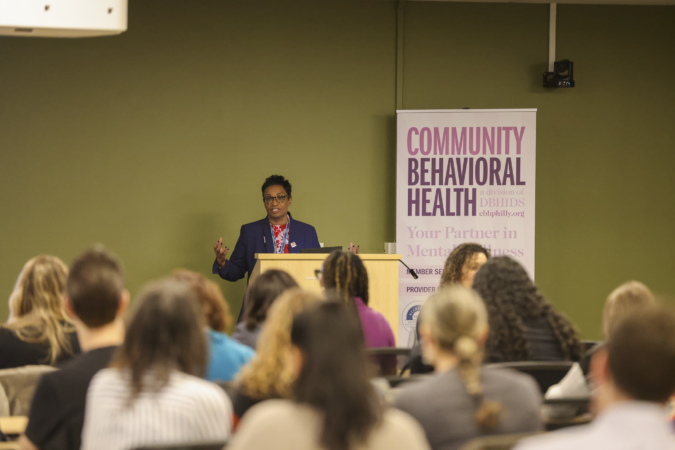
    More than 100 public health workers, community advocates, and medical providers gathered Thursday to strategize how to spread the word about forthcoming changes to Medicaid.

    The nonprofit Community Behavioral Health organized the event at its Center City offices as a first step toward rallying the stakeholders tasked with helping people navigate the new rules in order to maintain access to critical health services. The city contracts with CBH to provide mental and behavioral health services for Philadelphians with Medicaid.

    New federal rules taking effect in January 2027 require certain adults to meet work requirements and reapply for Medicaid every six months, instead of the current once a year. The changes were ordered under Republicans’ 2025 spending bill and signed into law by President Donald Trump. They are part of the largest cut in recent history to Medicaid, the publicly funded health coverage program for low-income families and individuals, and people with disabilities.

    States will be expected to verify eligibility for millions of people twice as often, a major administrative burden. For now, who will be exempt remains unclear. For instance, the law suggests that “medically frail” individuals will not need to meet work requirements or reapply every six months, without detailing who would qualify.

    The federal government expects to release more details in June.

    Public health leaders say they cannot wait for the additional guidance to begin talking about the forthcoming changes, in order to minimize the number of people who lose coverage.

    “It needs to be consistent and ongoing,” Donna E.M. Bailey, CEO of CBH, said of the group’s outreach efforts. “It really is a Philadelphia responsibility.”

    The coming Medicaid changes

    Roughly three million Pennsylvania residents are covered by Medicaid. About a quarter of them — roughly 750,000 people, including 180,000 in Philadelphia — qualify because the 2010 Affordable Care Act expanded access to low-income parents and childless adults. This so-called expansion group saw the bulk of the Medicaid cuts in last year’s Republican spending bill.

    Beginning next year, most people in this group will need to provide monthly proof that they spent at least 80 hours working, volunteering, or participating in job training. Every six months, they will need to reapply for the program. Some experts have compared this process to filing taxes because of the extensive paperwork and documentation required.

    Pennsylvania has estimated that about 300,000 people will lose Medicaid because they cannot navigate the new requirements — even though many remain eligible.

    “It’s hard to imagine with all these changes that it’s just going to be smooth,” said Mike Nardone, a former director of Pennsylvania’s Medicaid program, who spoke during the CBH event. “We’re going to have people who lose coverage, and we’re going to have to understand why that happens.”

    Starting outreach early

    Early and frequent communication is the best strategy for minimizing the number of people who lose Medicaid, public health advocates said at Thursday’s event.

    “We need to start now. This isn’t something that can wait,” said Joan Erney, CBH’s former chief executive.

    The dozens of medical providers, social workers, and community advocates in attendance were urged to work together to develop strategies for helping people to understand what new steps to take to keep their Medicaid coverage.

    “We always need the voice of those of you on the ground,” said Leesa Allen, a former Pennsylvania Medicaid director, who spoke during the panel.

    The event was the first in a series planned by CBH, which will expand outreach with similar events throughout Philadelphia designed for families and individuals to ask questions and learn more about the new Medicaid rules.