Author: Devin Jackson

  • Ranking the 2026 NFL draft position groups, and what that means for the Eagles

    Ranking the 2026 NFL draft position groups, and what that means for the Eagles

    Next week, 319 college football prospects will descend on Indianapolis for the annual NFL scouting combine, where they will be tested physically, mentally, and medically, interviewed by NFL front office personnel, and will speak with hundreds of media members.

    This latest step in the 2026 NFL draft process allows teams to home in on the next crop of players that will fill their franchises. All 32 teams will have 45 “formal interviews,” which last just under 20 minutes, can include watching film or any questions teams want to ask a prospect, and typically take place in the Lucas Oil Stadium suites.

    The first direct touch point with prospects happened at last month’s Shrine and Senior Bowl games. NFL teams will utilize this next piece of the puzzle to identify which prospects match their team needs.

    Here is how we’re ranking the combine position groups from strongest to weakest — and how they could help the Eagles address some roster needs.
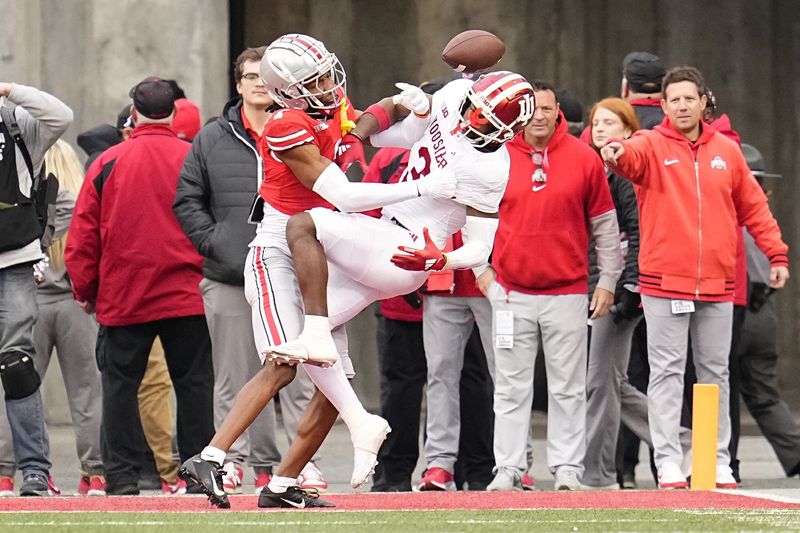
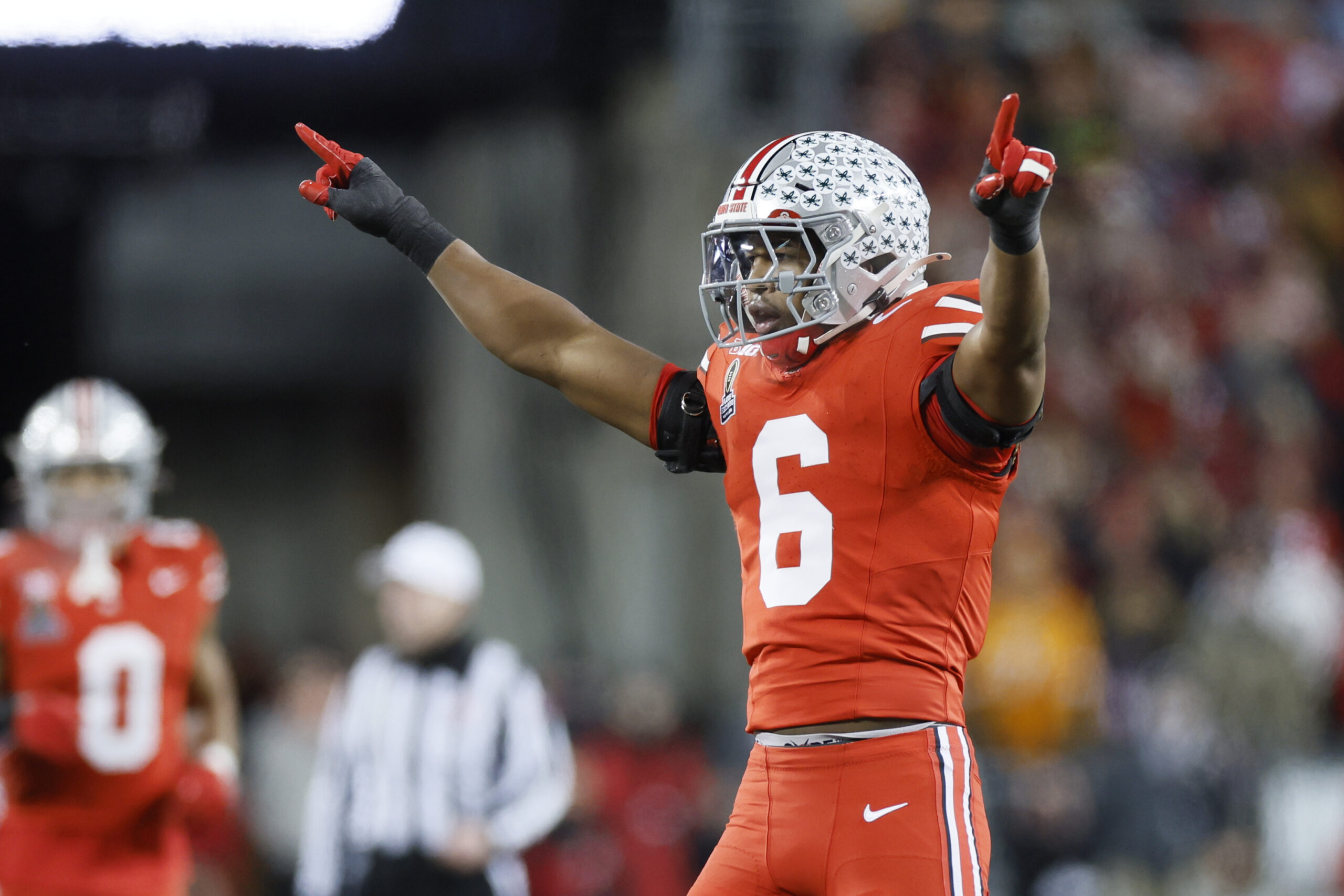
    Ohio State cornerback Davison Igbinosun (1) is a potential target for the Eagles beyond the first round.

    1. Cornerbacks

    It’s a good year to add a secondary player, whether they play outside corner, nickel, or safety. But outside and boundary corners, specifically, will be plentiful from the first round to Day 3 of the draft.

    This is a position the Eagles could address early, but not one that will likely be prioritized in the first round. Among the early projected draft picks at the position are LSU’s Mansoor Delane, Tennessee’s Jermod McCoy and Colton Hood, Clemson’s Avieon Terrell, and South Carolina’s Brandon Cisse.

    Finding a corner to develop into a starter opposite of Quinyon Mitchell — assuming they don’t bring back Adoree’ Jackson, who is set to be a free agent — should be among the Eagles’ objectives. Keep an eye on San Diego State’s Chris Johnson, Ohio State’s Davison Igbinosun, Arkansas’ Julian Neal, Georgia’s Daylen Everette, and Texas A&M’s Will Lee as players who could interest the Eagles.
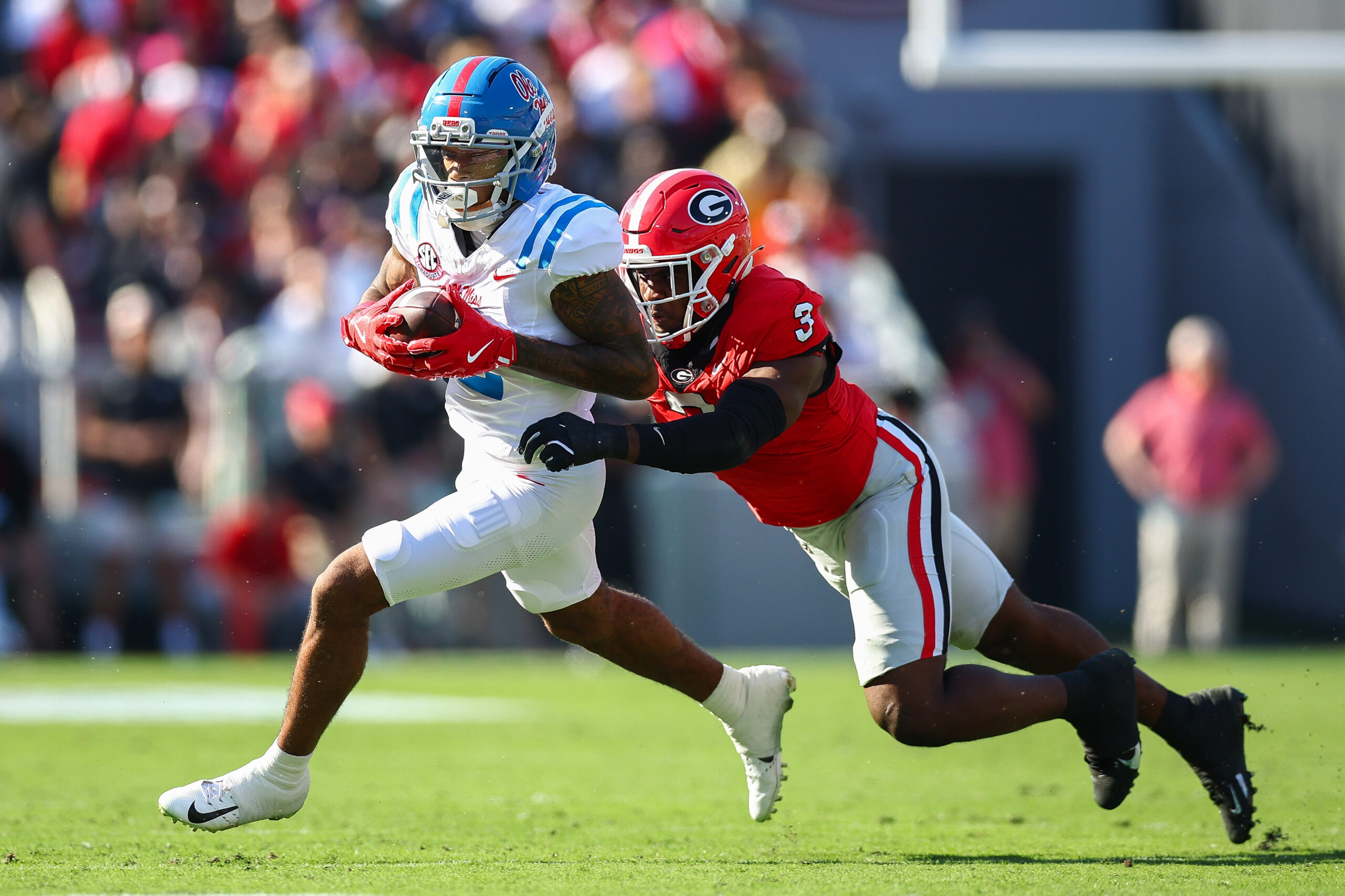
    Ole Miss wideout Harrison Wallace III (2) could be a depth or slot option for the Eagles.

    2. Wide receivers

    There is always a healthy stable of receivers entering the draft, and 2026 is no different. The Eagles, of course, won’t be drafting a wide receiver early — unless they trade A.J. Brown before the draft — but they will need to add more depth to the room regardless.

    The top of the class is led by Ohio State’s Carnell Tate, Arizona State’s Jordyn Tyson, and USC’s Makai Lemon, but the receivers heading to the combine feature several skill sets.

    The Eagles’ WR3 spot is a potential question mark heading into next season with Jahan Dotson heading into free agency. Players like Ole Miss’ Harrison Wallace, Baylor’s Josh Cameron, Georgia Tech’s Eric Rivers, and Clemson’s Antonio Williams are players to keep an eye on that can occupy either a slot role or have moved around the formation in their collegiate careers and could fit in a depth role for the Eagles.
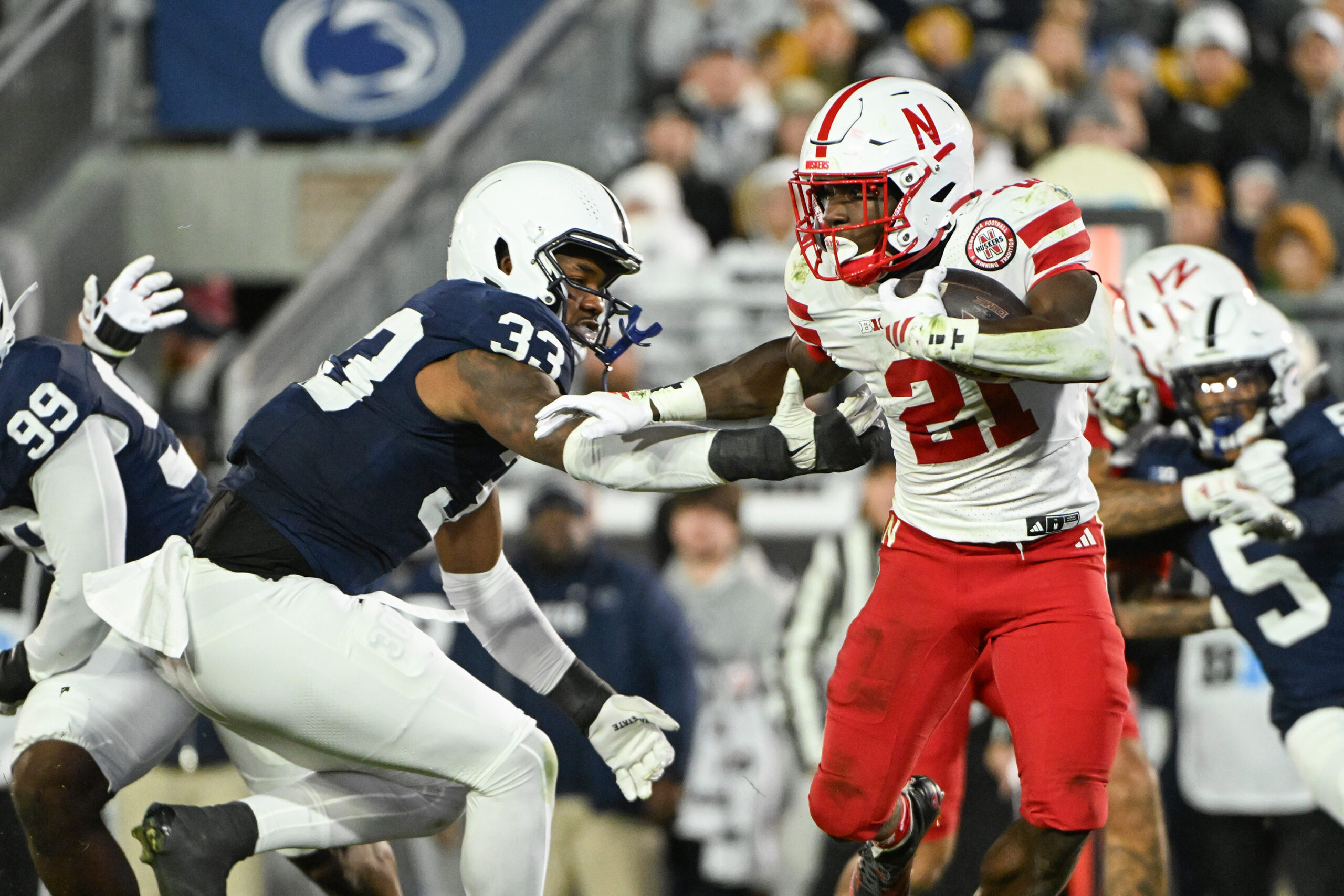
    Would Penn State defensive end Dani Dennis-Sutton (33) be a fit for the Eagles’ pass rushing group?

    3. Edge rushers

    There is an abundance of edge rushers worth drafting in this class, with Miami’s Rueben Bain, Texas Tech’s David Bailey, and Auburn’s Keldric Faulk as the top names. With Jaelan Phillips and Azeez Ojulari set to become free agents and Brandon Graham’s status unknown for 2026, the Eagles’ edge rusher room desperately needs more depth.

    The versatile edge rusher types might interest the Eagles more in this class, though, to complement the relatively light-body types in the edge rusher room currently. Alabama’s LT Overton, Florida’s Tyreak Sapp, and Penn State’s Dani Dennis-Sutton are all players who are bigger in size and have the ability to play from three-techniques out to true pass rusher alignments.

    As for developmental pass rushers, keep an eye on Michigan’s Jaishawn Barham, Western Michigan’s Nadame Tucker, and Boston College’s Quintayvious Hutchins as late Day 2 and early Day 3 options as pure pass rushers.
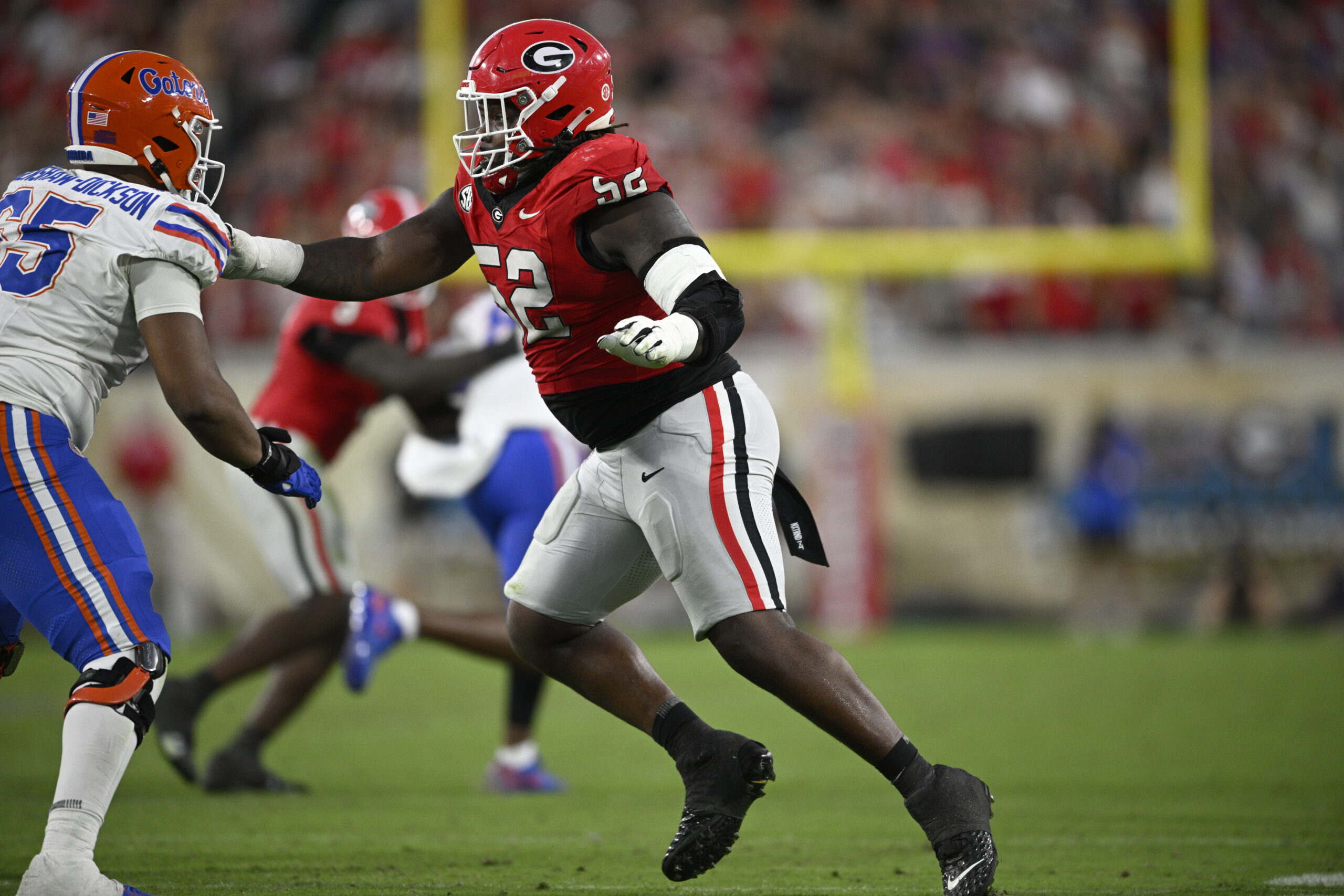
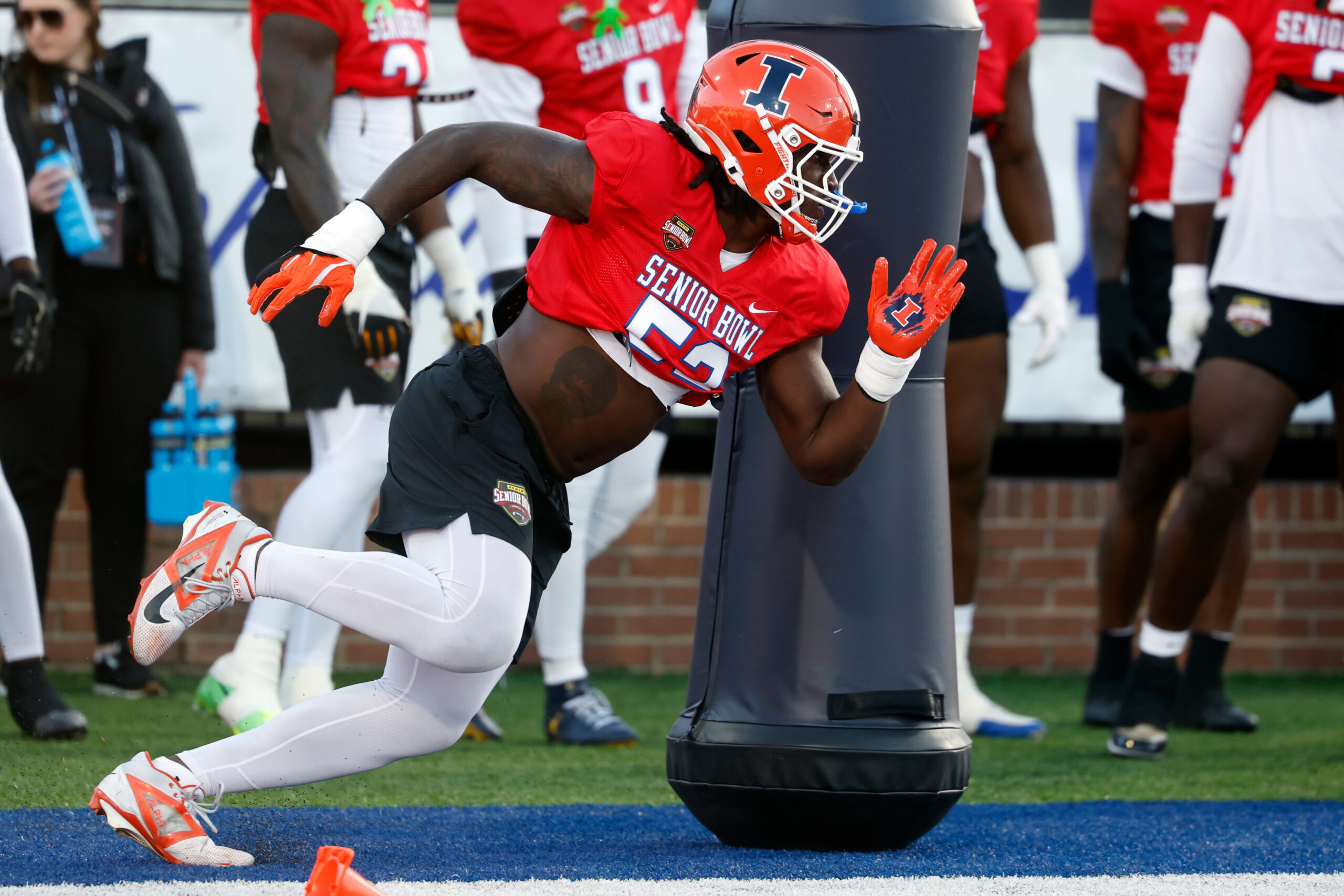
    Christen Miller (52) is another Athens-to-South Philly possibility for the Eagles.

    4. Interior D-line

    As the Eagles and Seattle Seahawks proved in the last two Super Bowls, an interior pass rush presence matters a whole lot, and the NFL has a deep group of prospects to choose from in this class.

    There are run stuffer types such as Texas Tech’s Lee Hunter, Ohio State’s Kayden McDonald, Iowa State’s Domonique Orange, and Georgia’s Christen Miller, and twitchy pass rushers including Clemson’s Peter Woods and Florida’s Caleb Banks.

    Jalen Carter and Jordan Davis could soon get extensions from the Eagles, but adding more bodies to have a deeper rotation and talent level in the room would only help keep those players fresh. Michigan’s Rayshaun Benny, Missouri’s Chris McClellan, and Texas A&M’s Tyler Onyedim are a few Day 2 and 3 options to keep tabs on.
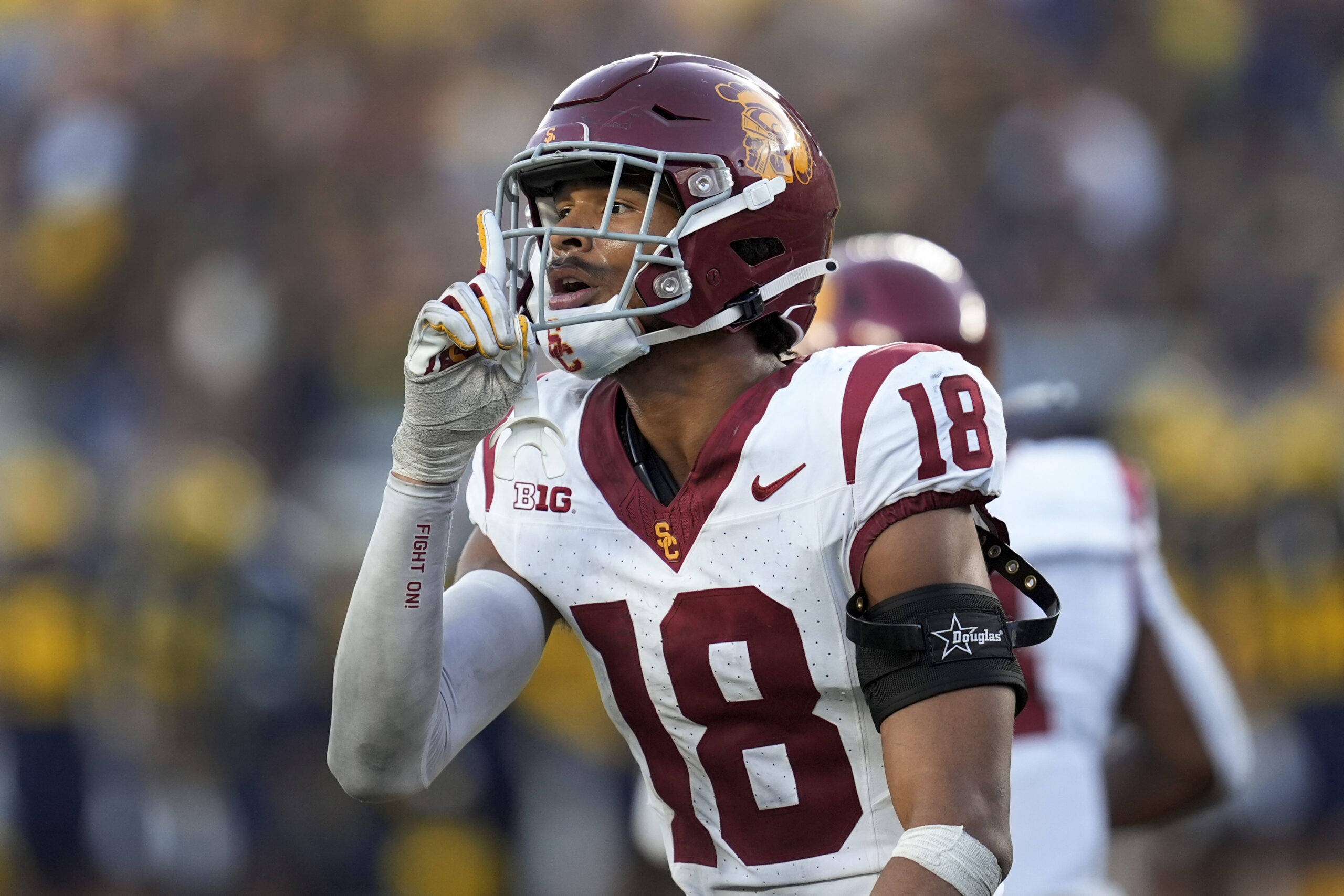
    Eric Gentry is a local product who might be of interest to the Eagles.

    5. Linebackers

    The Eagles linebacker room became a strength of the defense over the last few seasons and they won’t need to expend an early-round pick on one. But this class has three first-round caliber players at the position: Ohio State’s Arvell Reese and Sonny Styles and Georgia’s CJ Allen.

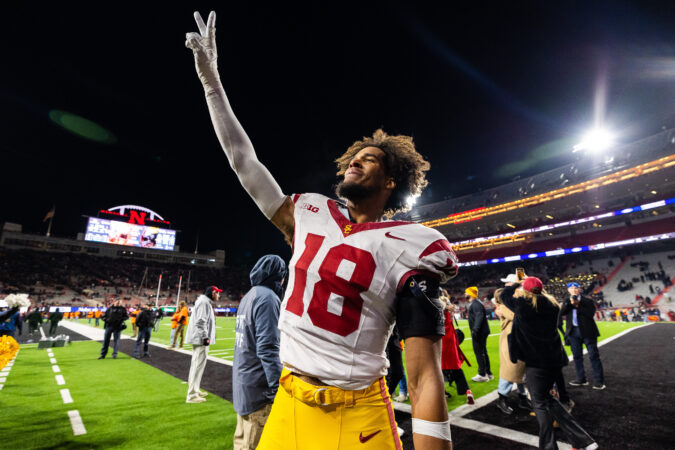
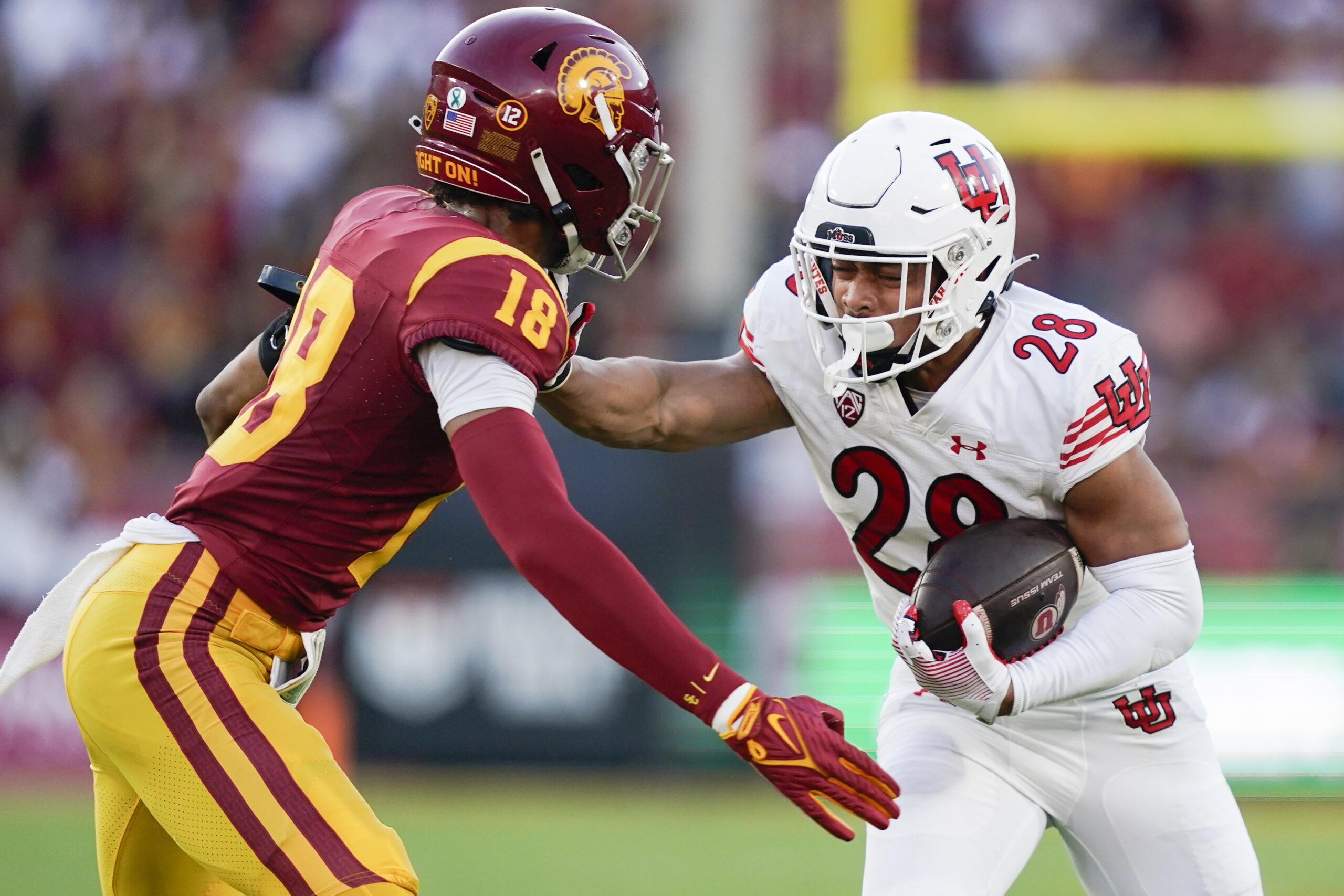
    The Eagles could lose Nakobe Dean to free agency this offseason, but still have Jihaad Campbell and Zack Baun penciled in as starters. There are two players in this class with Philly-area ties: USC’s Eric Gentry, the former Neumann Goretti standout, and Missouri’s Josiah Trotter, the younger brother of Jeremiah Trotter Jr. Josiah Trotter and Gentry are both expected to get drafted.
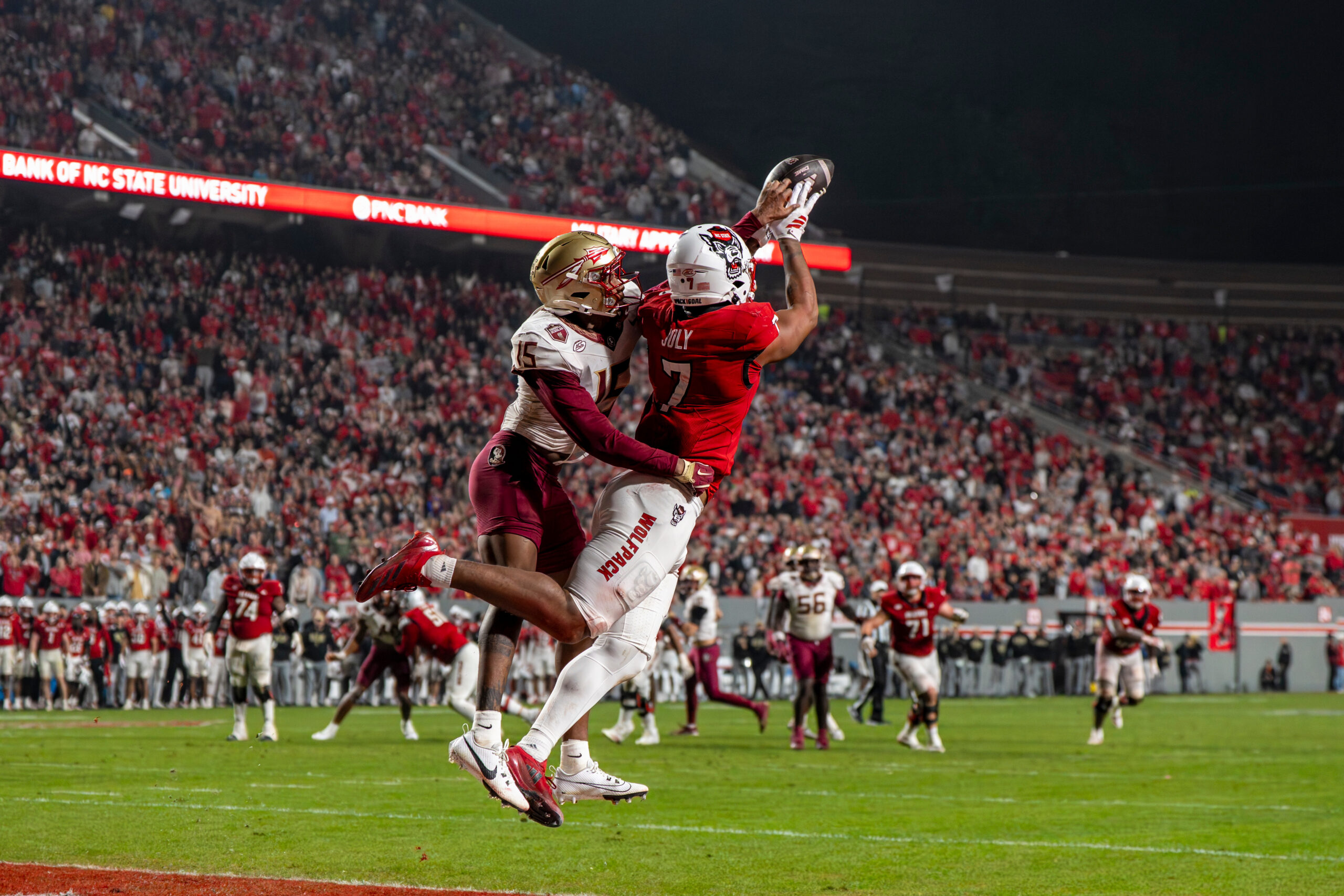
    North Carolina State tight end Justin Joly (7) could be an intriguing target for the Eagles.

    6. Tight ends

    Put a big circle around this group, because tight end is one of the pressing needs for the Eagles. Dallas Goedert, Grant Calcaterra, and Kylen Granson are all set to be free agents, and regardless of whether any of those players return, the room needs more talent in it.

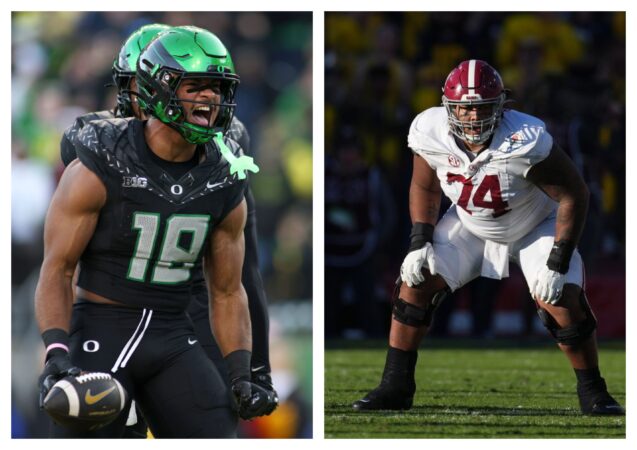
    Oregon’s Kenyon Sadiq is at the top of the class, and likely the only tight end to go in Round 1. But this class is strong on Day 2 and 3.

    Ohio State’s Max Klare, NC State’s Justin Joly, Georgia’s Oscar Delp, and Baylor’s Michael Trigg are all receiving tight end prospects worth taking on Day 2. Players who can thrive in-line as blockers and have some receiving chops as well include Ohio State’s Will Kacmarek, Penn State’s Khalil Dinkins, Texas A&M’s Nate Boerkircher, and Indiana’s Riley Nowakowski, who can also play fullback.

    Other later names, including Utah’s Dallen Bentley, Ole Miss’ Dae’Quan Wright, and Stanford’s Sam Roush are developmental options on Day 3 and could fill roles as second or third options in multi-tight end formations.
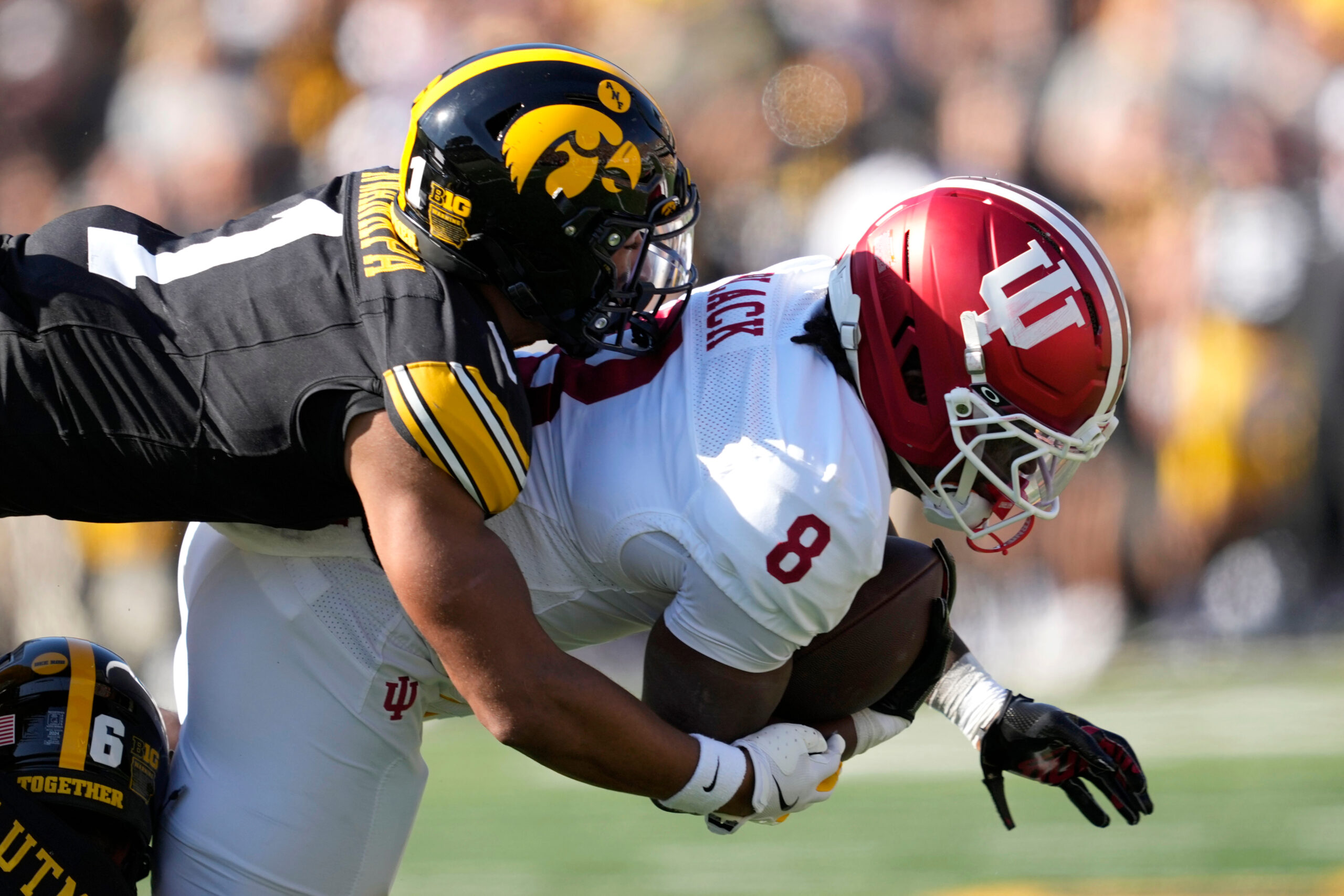
    Could Xavier Nwankpa (1) join Cooper DeJean as another ex-Hawkeye in the Eagles secondary?

    7. Safeties

    This is a position that probably needs more attention than it generally gets, considering Reed Blankenship and Marcus Epps are soon-to-be free agents. Drew Mukuba and Sydney Brown are the only players under contract for next season who have taken significant snaps at the position.

    This is a strong safety class, led by Ohio State’s Caleb Downs, who is also one of the best players in the draft class. Quinyon Mitchell’s alma mater, Toledo, has another early-round pick in Emmanuel McNeil-Warren, and there are plenty of coverage specialists such as USC’s Kamari Ramsey, LSU’s A.J. Haulcy, and Arizona’s Genesis Smith.

    Since Blankenship played more near the line of scrimmage, the Eagles could be looking to pair that skill set with Mukuba, and players including Penn State’s Zakee Wheatley, Oregon’s Dillon Thieneman, and Iowa’s Xavier Nwankpa fit the bill.
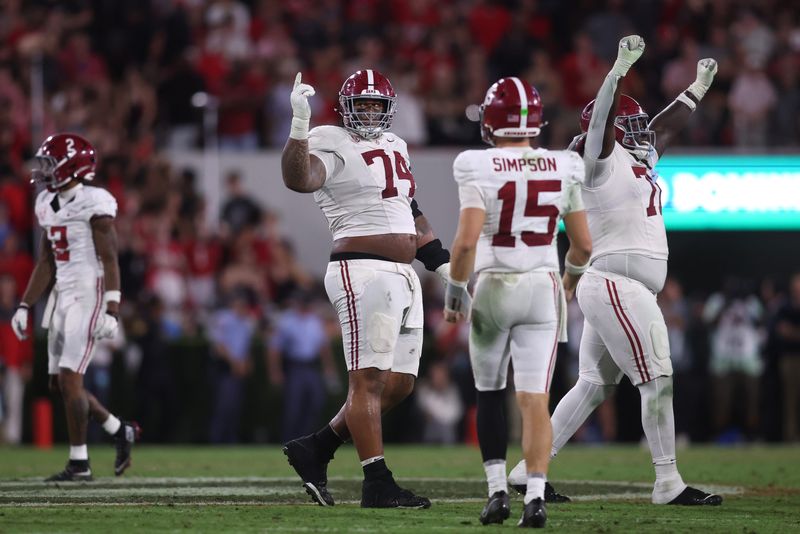
    Kadyn Proctor (74) is generating buzz as a possibility along the Birds’ offensive line.

    8. Offensive linemen

    This is the spot the Eagles need to upgrade most heading into next season, yet it’s among the weakest groups in this class in terms of starting caliber players. Still, there are players that will interest the Eagles.

    The player most commonly linked to the Birds is Alabama’s Kadyn Proctor, a massive offensive lineman with unique athleticism at 6-foot-7, 366 pounds. Is he a tackle or guard? That debate could get settled at the combine next week.

    The other top offensive linemen are Utah’s Spencer Fano and Caleb Lomu and Miami’s Francis Mauigoa. Fano and Mauigoa are also players that could move to the interior at the NFL level. Georgia’s Monroe Freeling, Arizona State’s Max Iheanachor, and Clemson’s Blake Miller are the next group of fringe first-round players who will strictly be tackles in the NFL and could serve as potential heirs to Lane Johnson whenever he retires.

    As for interior offensive line, Penn State’s Olaivavega Ioane is the only true guard prospect that is Round 1 worthy. The Day 2 prospects like Texas A&M’s Chase Bisontis, Oregon’s Emmanuel Pregnon, Georgia Tech’s Keylan Rutledge, and Notre Dame’s drop-off could be players the Eagles have interest in, especially with Landon Dickerson’s uncertain future.

    The overall O-line class has a steep drop-off after the starting-caliber players, so if the Eagles want one, they’ll need to draft one early.

    9. Running backs

    The Eagles seem set at the running back position for now with Saquon Barkley, Tank Bigsby, and Will Shipley. A quick glance at the running back invites at the combine shows a relatively limited group to pick from.

    There’s only one running back right now that has first-round consideration, and that’s Notre Dame’s Jeremiyah Love. Beyond him, the next running back could wait a full one or two rounds before hearing their name called in the 2026 draft.
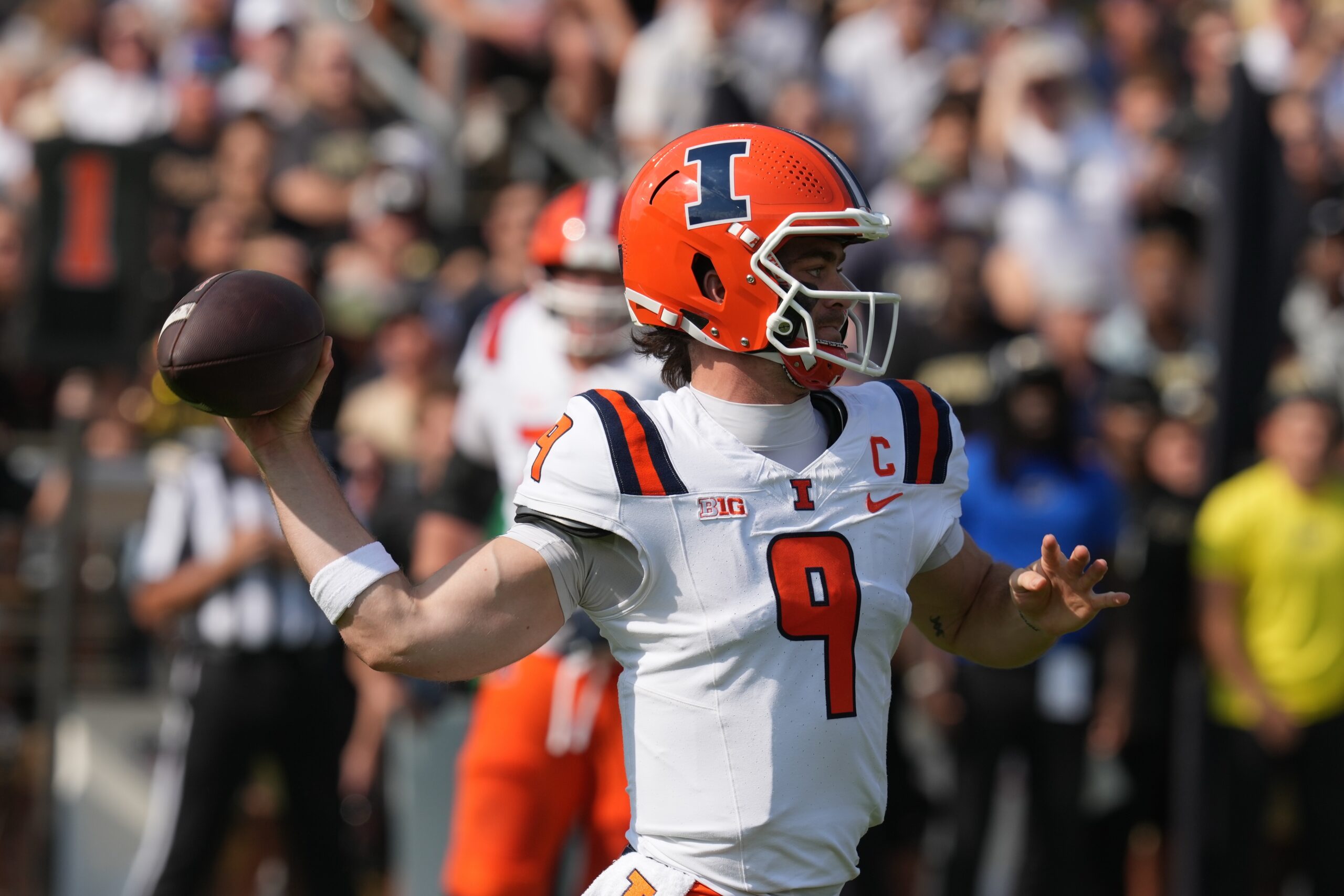
    Illinois quarterback Luke Altmyer is a potential developmental QB the Eagles might evaluate.

    10. Quarterbacks

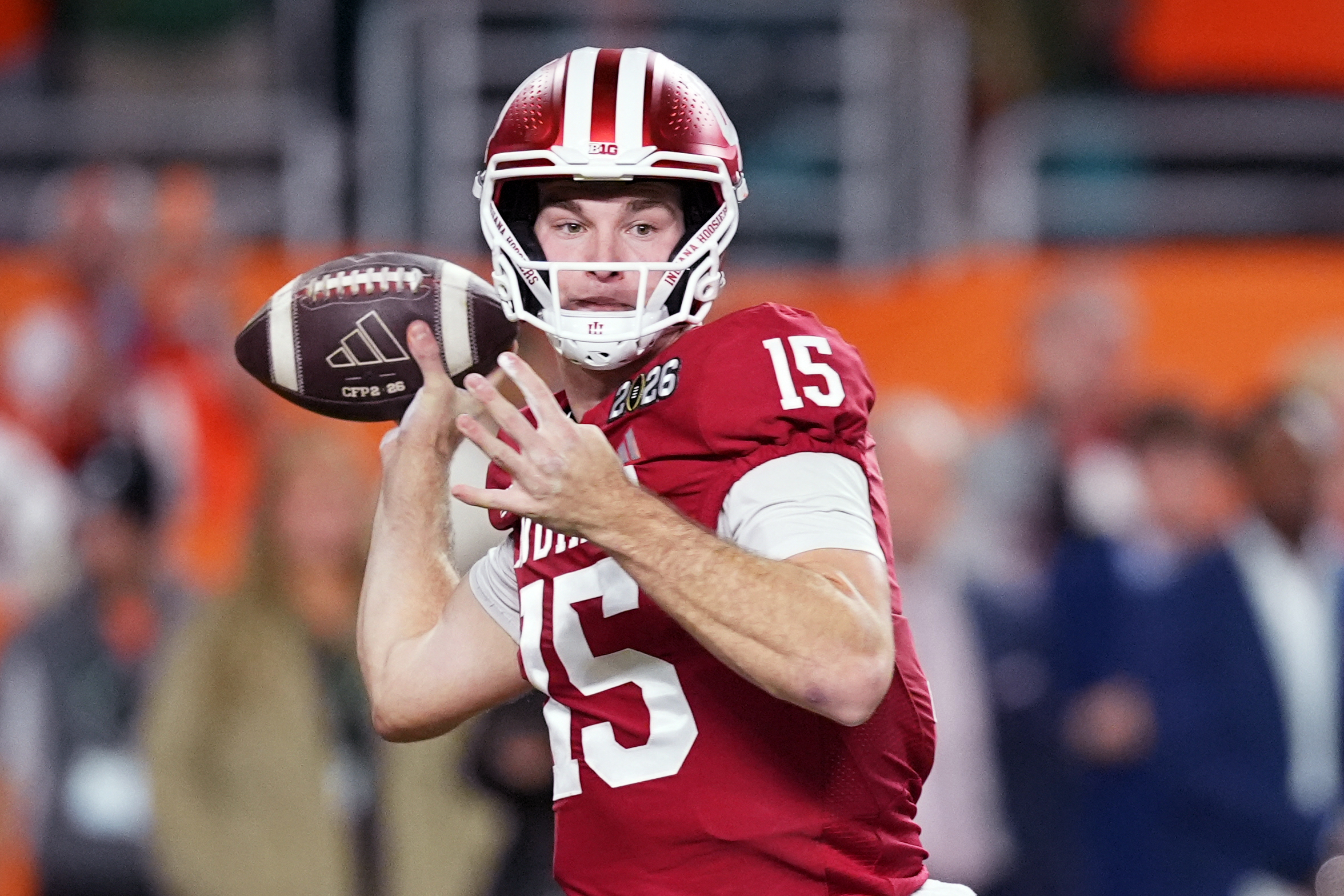
    As we alluded to in the All-Star game takeaways, this is not a strong quarterback class and it’s reflected in the number of combine invites. Indiana’s Fernando Mendoza is the projected top pick, but beyond him, the class is wide open. Alabama’s Ty Simpson could go in Round 1, but the gap between the second and third quarterback taken in this class could be very wide.

    The class overall lacks starting caliber players, and the sweet spot of the class is likely between Rounds 3-6. The Eagles could draft one to develop since Sam Howell is a free agent and Tanner McKee could move on over the next year via trade or free agency.

    Some players attending the combine that could make sense for the Eagles include Kansas’ Jalon Daniels, Arkansas’ Taylen Green, and Illinois’ Luke Altmyer.
  • 2026 NFL mock draft 1.0: What will the Eagles do at No. 23?

    2026 NFL mock draft 1.0: What will the Eagles do at No. 23?

    With the NFL season officially over, attention and focus over the next two months turns to free agency and the draft. The Las Vegas Raiders are on the clock with the No. 1 pick, with a new head coach in Klint Kubiak and an expected new quarterback next season.

    There is much to consider for the teams picking next. The draft is much stronger on the defensive side of the ball in Round 1, and we could see a run on defensive players similar to what we saw in 2024 when the first 14 picks were offensive players.

    The Eagles own the No. 23 overall pick, and their offensive philosophy is expected to undergo changes with Sean Mannion at offensive coordinator. Will they give Jalen Hurts more weapons, rebuild their offensive line, or add another defensive star?

    Here’s how we’re projecting the first round of the 2026 NFL draft with the order now officially set:

    It will be a surprise if the Raiders select someone other than Fernando Mendoza at No. 1.

    1. Las Vegas Raiders: Fernando Mendoza, QB, Indiana

    Mendoza, the Heisman Trophy winner, gives the Raiders staff a quarterback to build around as a new era and regime begin in Las Vegas.

    2. New York Jets: Arvell Reese, LB/edge, Ohio State

    New York has several needs to address and will have multiple first-round picks to do so. Reese is a physical player who has excellent run and chase ability and pass rushing potential, although his best position is linebacker.

    3. Arizona Cardinals: Rueben Bain Jr., edge, Miami

    Bain is a game-wrecker. Teams may question his arm length, but his impact on the game is felt no matter where he’s aligned. He would give Arizona some much-needed youth on the defensive line and could become a cornerstone piece on its defense.

    4. Tennessee Titans: Carnell Tate, WR, Ohio State

    Quarterback Cam Ward simply needs more weapons as the Robert Saleh era begins in Nashville. Tate is a three-level separator who can be a go-to receiver in a Titans offense that was devoid of a top target last season.

    5. New York Giants: Francis Mauigoa, OT/OG, Miami

    The right side of the Giants’ offensive line needs upgrades under John Harbaugh, and Mauigoa, the top overall lineman in the draft, can be an immediate starter at guard or tackle.

    6. Cleveland Browns: Jordyn Tyson, WR, Arizona State

    Cleveland and new coach Todd Monken need plenty of upgrades on offense, but Tyson, a dynamic wideout when healthy, gives whomever plays quarterback next season a top wideout option.

    Could Sonny Styles make an impact for a shaky Commanders defense?

    7. Washington Commanders: Sonny Styles, LB, Ohio State

    Adding Styles would massively upgrade a spot that was constantly attacked last year. The “other” Ohio State linebacker is a reliable tackler, explosive athlete, and excels at slipping past blockers to make plays at and behind the line of scrimmage.

    8. New Orleans Saints: Makai Lemon, WR, USC

    Tyler Shough looked like a long-term quarterback option while closing out the Saints’ season. In Lemon, New Orleans gets a wideout to pair with Chris Olave who can win from multiple alignments and is special with the ball in his hands after the catch.

    9. Kansas City Chiefs: Jeremiyah Love, RB, Notre Dame

    Defensive line could be an alternative priority here for Kansas City, but Love would give this offense a much needed dual talent in the backfield, which has not been the case for most of Patrick Mahomes’ career.

    10. Cincinnati Bengals: Caleb Downs, S, Ohio State

    Downs is one of the smartest and most instinctual players in the draft, with the versatility to play in the box and manned up on a tight end. He would help raise the floor of Cincinnati’s secondary.

    11. Miami Dolphins: Mansoor Delane, DB, LSU

    Miami must improve at corner under new coach Jeff Hafley, and Delane helps accomplish that. He’s a smooth cornerback with excellent anticipatory and ball skills who proved he can shut down his side of the field in 2025.

    David Bailey was one of college football’s top playmakers last season.

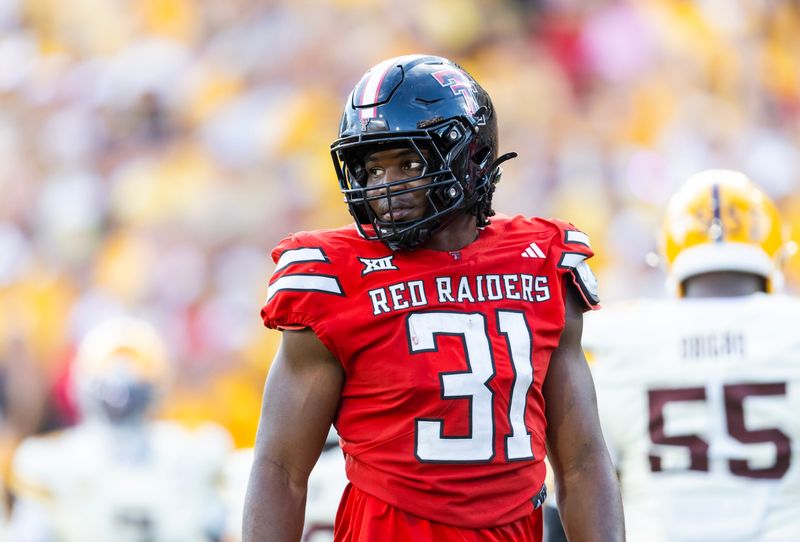
    12. Dallas Cowboys: David Bailey, edge, Texas Tech

    Bailey is a relentless pass rusher who utilizes his snap count timing and burst to win on the inside and outside shoulders of offensive tackles. He gives Dallas the needed juice they lost after trading Micah Parsons before the start of last season.

    13. Los Angeles Rams (via Falcons): Jermod McCoy, DB, Tennessee

    McCoy missed all of last season while recovering from a torn ACL suffered in the offseason. When he was healthy at Tennessee in 2024, he was a shutdown corner who got his hands on the football in both man and zone coverages.

    14. Baltimore Ravens: Keldric Faulk, edge, Auburn

    Faulk is closer to a defensive lineman than an outside linebacker, but he’s an excellent run defender who played a contain style of defense, which limited his pass rushing ability. He would give Baltimore a strong presence on run downs.

    15. Tampa Bay Buccaneers: CJ Allen, LB, Georgia

    The Buccaneers were in on Jihaad Campbell last year before taking wide receiver Emeka Egbuka instead in the first round. They won’t ignore the position twice, taking the Georgia linebacker with good instincts and playmaking skills at the second level.

    16. New York Jets (via Colts): Caleb Banks, DT, Florida

    New York has a big hole in the middle of its defense after trading Quinnen Williams at the deadline last season. Banks, who played in only three games last season because of a foot injury, has game-wrecking ability that the Jets need on their defensive line.

    17. Detroit Lions: Spencer Fano, OT/OG, Utah

    Detroit must do some reshuffling in its interior offensive line and needs a long-term replacement for Taylor Decker, who turns 33 in August. Fano can fit both roles, although he was primarily a tackle in college.

    18. Minnesota Vikings: Avieon Terrell, DB, Clemson

    Former Eagle Isaiah Rodgers played well in 2025 for the Vikings, but the team needs to get younger at the position. Terrell, the younger brother of Falcons defensive back AJ Terrell, excels in zone coverage and has a nose for the football.

    19. Carolina Panthers: Peter Woods, DL, Clemson

    Derrick Brown continues to be one of the league’s most underappreciated defensive linemen, but Carolina needs another playmaker to pair with him. Woods wasn’t as good in 2025 as he was as a sophomore, but he still showed flashes of dominance as a pass rusher and run defender.

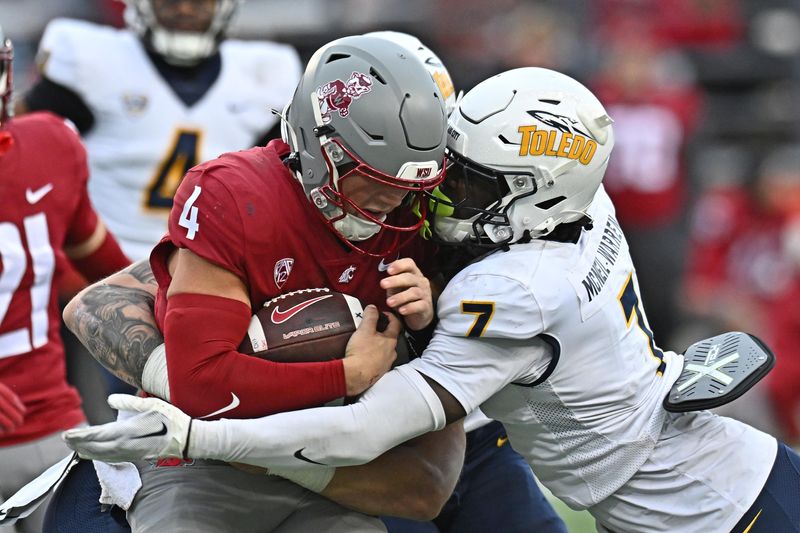
    Could new Cowboys defensive coordinator Christian Parker be eyeing Toledo safety Emmanuel McNeil-Warren (7)?

    20. Dallas Cowboys (via Packers): Emmanuel McNeil-Warren, S, Toledo

    Another year, another Toledo standout goes in the first round. McNeil-Warren is an outstanding athlete with excellent ball skills who showed he could play a single high safety role.

    21. Pittsburgh Steelers: Denzel Boston, WR, Washington

    A long-term option at quarterback still looks possible here, but Aaron Rodgers is likely returning next year under new coach Mike McCarthy. Pittsburgh gets a ball winner in Boston, who is tough to defend in the red zone and is a smooth route runner.

    22. Los Angeles Chargers: T.J. Parker, edge, Clemson

    The Chargers continue to get the most out of Khalil Mack, but their edge rushing corps needs more youth in it. Parker, who recouped his draft stock at the Senior Bowl, is a power rusher who can get after the quarterback off the edge.

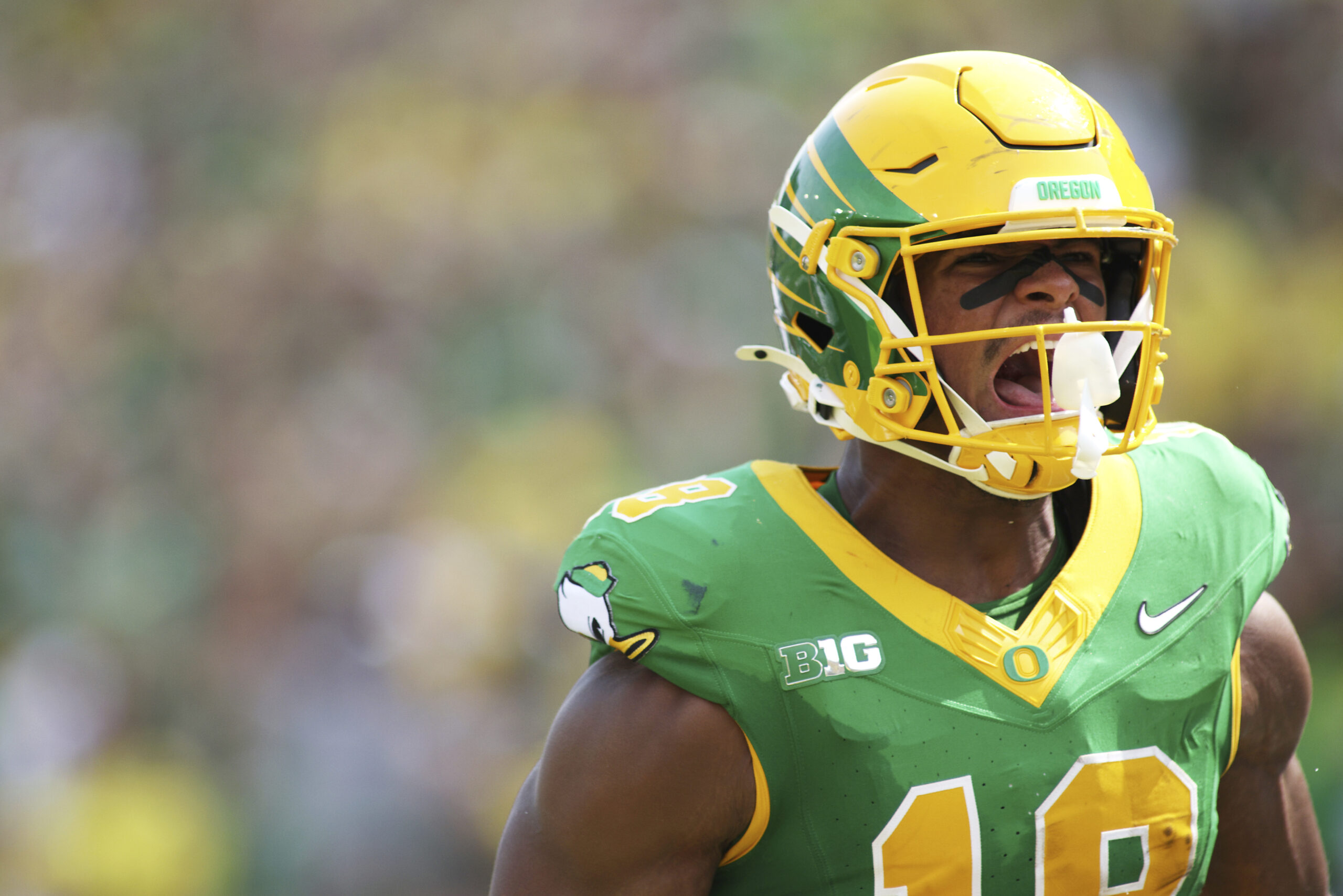
    Kenyon Sadiq might fill a huge need for a potentially depleted tight end position in Philly.

    23. Eagles: Kenyon Sadiq, TE, Oregon

    Sadiq has been mentioned as a popular pick possibility for the Eagles, and for good reason. He’s a dynamic athlete who can be a field stretcher and red zone target, and would fit a Mannion scheme that has Sean McVay and Kyle Shanahan influences.

    The Inquirer’s Jeff McLane reported on his podcast last month that Landon Dickerson returning to the Eagles next season is an uncertainty. While guard would become a top need if Dickerson unexpectedly departs, the depth of the interior offensive line class is much stronger on Days 2 and 3 of the draft.

    Lane Johnson’s uncertainty also looms large. But look for the Eagles to give Mannion’s offense a much-needed, dynamic tight end who can also hold his own as a blocker with Dallas Goedert entering free agency.

    24. Cleveland Browns (via Jaguars): Kadyn Proctor, OT/OG, Alabama

    Cleveland needs to get younger and improve its offensive line at multiple positions, and Proctor, a mauling lineman who can play guard or tackle, helps the Browns improve that area of their team.

    25. Chicago Bears: Lee Hunter, DT, Texas Tech

    Hunter has been on an upward trajectory since the Big 12 championship game and continues to prove he’s more than just a run stuffer. Chicago needs a dynamic defensive lineman and Hunter brings a three-down presence that is desperately needed.

    26. Buffalo Bills: KC Concepcion, WR, Texas A&M

    It seems Josh Allen needs more receiving help every year, and 2026 is no different. Concepcion is dynamic with the ball in his hands and would give Buffalo’s offense a much-needed vertical threat.

    27. San Francisco 49ers: Caleb Lomu, OT, Utah

    Trent Williams is under contract for one more year in San Francisco but is entering the twilight of his career — he turns 38 in July. Lomu, an excellent pass protector with quick feet, gives San Francisco a long-term option at an important tackle spot.

    28. Houston Texans: Kayden McDonald, DT, Ohio State

    Houston doesn’t have many holes on defense but could use more juice on the interior. McDonald is a run stuffer who has the quickness to shoot gaps on run downs and the power to push the pocket in drop-back scenarios.

    29. Rams: Monroe Freeling, OT, Georgia

    Quarterback was a consideration here even with Matthew Stafford returning for 2026, but Freeling can upgrade either tackle spot for the Rams with his athleticism and experience playing both in college.

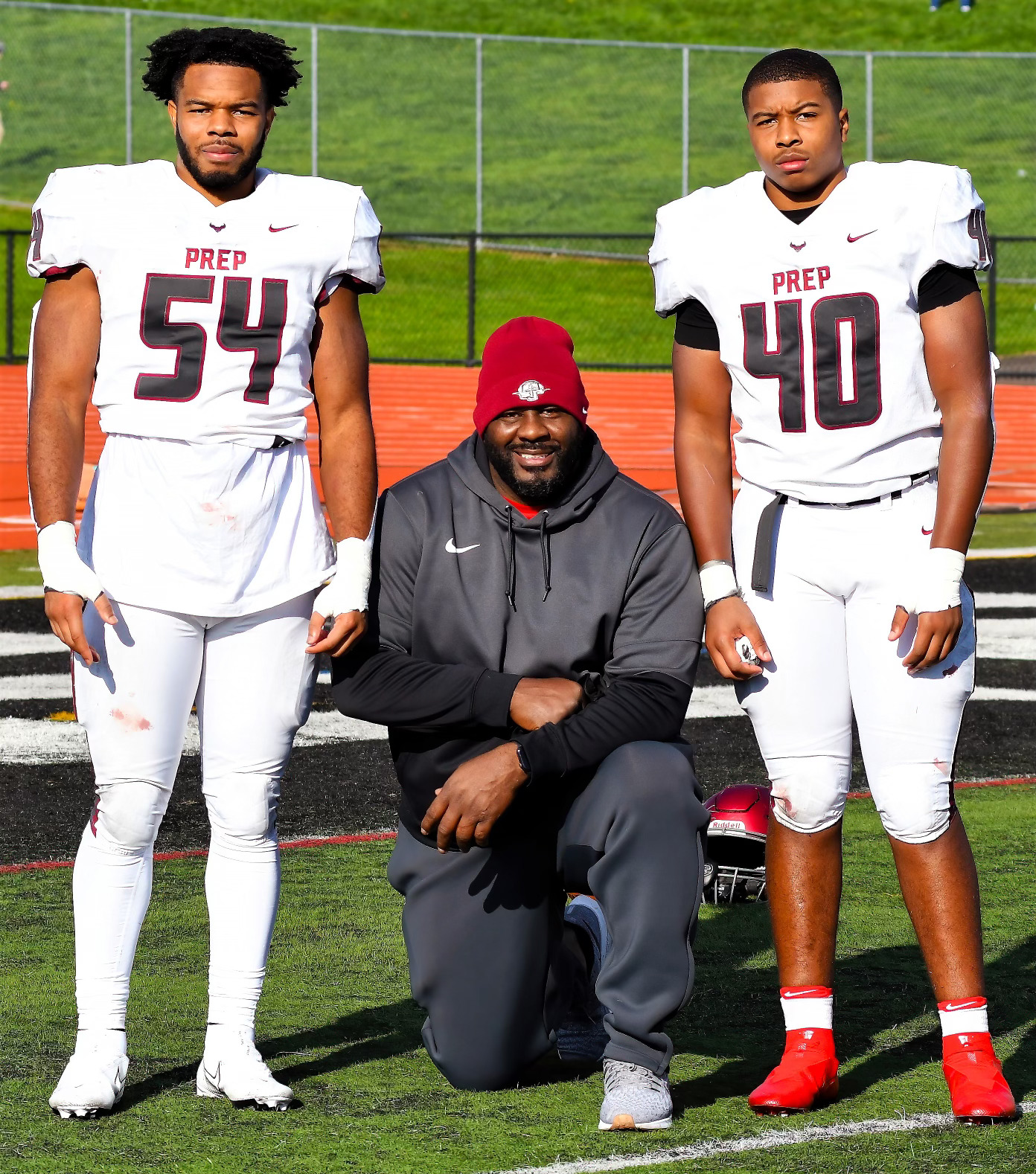
    Both Jeremiah Trotter Jr. (left) and Josiah Trotter (right) starred as linebackers at St. Joe’s Prep.

    30. Denver Broncos: Josiah Trotter, LB, Missouri

    Denver’s linebacker situation needs to improve. Trotter, a St. Joseph’s Prep grad and the younger son of longtime Eagle Jeremiah Trotter Sr. and brother of current Eagle Jeremiah Trotter Jr., is a physical, throwback linebacker who can shed blocks and get after the quarterback in blitzing scenarios.

    31. New England Patriots: Cashius Howell, edge, Texas A&M

    New England is winning with older edge rushers right now but must get younger at the position. Howell is a pass rush specialist who can bend the corner despite having sub-31-inch arms.

    32. Seattle Seahawks: Olaivavega Ioane, OL, Penn State

    Seattle doesn’t have many needs, but center and right guard are spots that could be upgraded. Ioane is a bruising guard who generates displacement in the running game and is a stout pass protector.

  • Fanatics forced to issue another apology after fan backlash, this time over Super Bowl LX merchandise

    Fanatics forced to issue another apology after fan backlash, this time over Super Bowl LX merchandise

    Apparel brand Fanatics issued an apology this week over the lack of availability and poor quality of its Super Bowl LX gear after complaints from New England Patriots and Seattle Seahawks fans.

    In a statement posted Monday night on social media, Fanatics wrote that “we’ve let Patriots and Seahawks fans down with product availability — we own that and we are sorry.”

    The NFL’s official merchandising partner pointed to the surge in demand for Seahawks and Patriots gear after both teams missed the playoffs last year, and admitted that the company was struggling to “meet the overwhelming demand to keep team color jerseys in stock.”

    Fanatics’ statement also tried to downplay the images circulating on social media — “We’ve heard questions about the quality of these alternate jerseys and can assure you that, despite some unflattering photos, these jerseys are identical to the standard Nike replica ‘Game’ jersey,” the company said — but fans and members of the media keep showing proof that says otherwise.

    Doug Kyed, Patriots’ beat reporter for the Boston Herald, shared photos of New England gear on site at the Super Bowl in the San Francisco area and there aren’t many options for fans looking to buy Patriots gear.

    CBS national NFL reporter Jonathan Jones pointed out that a jersey purchased 10 years ago not only had better quality — it was cheaper, too.

    The Patriots’ official pro shop posted a picture of its jersey options on Monday, and several X users pointed out that the Super Bowl LX patch location was different for each jersey.

    Seahawks fans are also complaining about the lack of availability for jerseys. But Fanatics appears to have plenty, as long as you want one in a color that the team has never worn or one that is not a replica of team-worn gear.

    This is hardly the first time Fanatics faced backlash for the quantity and quality of its products.

    Eagles fans also had a hard time finding the team’s jerseys ahead of its Super Bowl LVII appearance, when, as with the Seahawks this year, the only jerseys available with a game patch were in a non-team color (silver) — not white, green, or even black. It was a problem again for Super Bowl LIX. One fan pointed out that even when his jersey did arrive, well after the 2023 title game, it featured a crooked number.

    Later that year, several Birds fans complained about late-arriving and ill-fitting kelly green apparel, which again also featured crooked numbers, forcing CEO Michael Rubin, a Philly native who grew up in Lafayette Hill, to apologize for the botched Eagles gear.

    The issues aren’t limited to football — or even fan merchandise. Baseball players joined fans in complaining about the new Nike Vapor Premier jersey template and see-through pants unveiled in 2024, forcing the MLB to change its uniforms last season.

  • Penn State’s 2026 schedule: A trip to the Linc and a visit to Northwestern in debut of new stadium

    Penn State’s 2026 schedule: A trip to the Linc and a visit to Northwestern in debut of new stadium

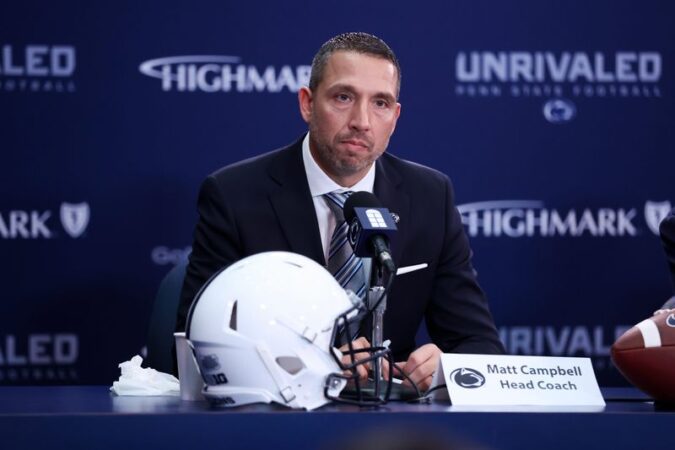
    Matt Campbell’s first season as Penn State’s football coach will feature five away games, including a visit to Lincoln Financial Field to face Temple in early September.

    Penn State’s full 2026 football schedule was released last week. Three of the Nittany Lions’ first four games will be at Beaver Stadium against Marshall (Sept. 5), Buffalo (Sept. 19), and Wisconsin (Sept. 26), which will open Big Ten play for the team.

    The Nittany Lions will face K.C. Keeler’s Owls on Sept. 12, the first matchup between the schools since 2016. Penn State holds a 40-4-1 advantage in their series history, which dates back to 1931.

    Penn State will visit Northwestern on Oct. 2 for a Friday night matchup at the Wildcats’ newly renovated Ryan Field. The game was moved after originally being scheduled for Oct. 3. Penn State has not played a Friday night game since 2019, when it beat Maryland in College Park, 59-0.

    After facing Northwestern, Penn State will host Southern California (Oct. 10), then travel to Ann Arbor to face Michigan (Oct. 17). After a bye week, the Nittany Lions welcome Purdue (Oct. 31), then travel to Seattle to face Washington (Nov. 7) for the first time since the Huskies joined the conference in 2024.

    Penn State will round out the schedule with Minnesota (Nov. 14) and Rutgers (Nov. 21) at home before traveling to Maryland to end the regular season against the Terrapins (Nov. 28).

    Times and television coverage for each game will be announced later.

  • NFL draft season has officially kicked off. Here are some early Eagles-focused takeaways.

    NFL draft season has officially kicked off. Here are some early Eagles-focused takeaways.

    MOBILE, Ala. — The snowstorms that swept the country over the last two weeks affected travel plans for many, including those within the NFL. Texas was hit with three inches between the first and second practices of the East-West Shrine Bowl, forcing NFL scouting staffs to change travel plans.

    And getting from the Dallas area to Mobile, Ala., was no easier. Changed and canceled flights, long days in the airport, and sold-out hotels made scouting the next group of NFL players difficult. But that didn’t stop teams from sending big contingents of scouts, coaches, and front office executives in droves to watch and interview players who will soon fill their rosters.

    Every team at both the Senior Bowl and Shrine Bowl all-star games meets with every participant, so the Eagles have not zeroed in on any prospects just yet, but that process has begun, With that in mind, here’s what we learned from attending the all-star game circuit:

    Heavy presence at the Shrine Bowl

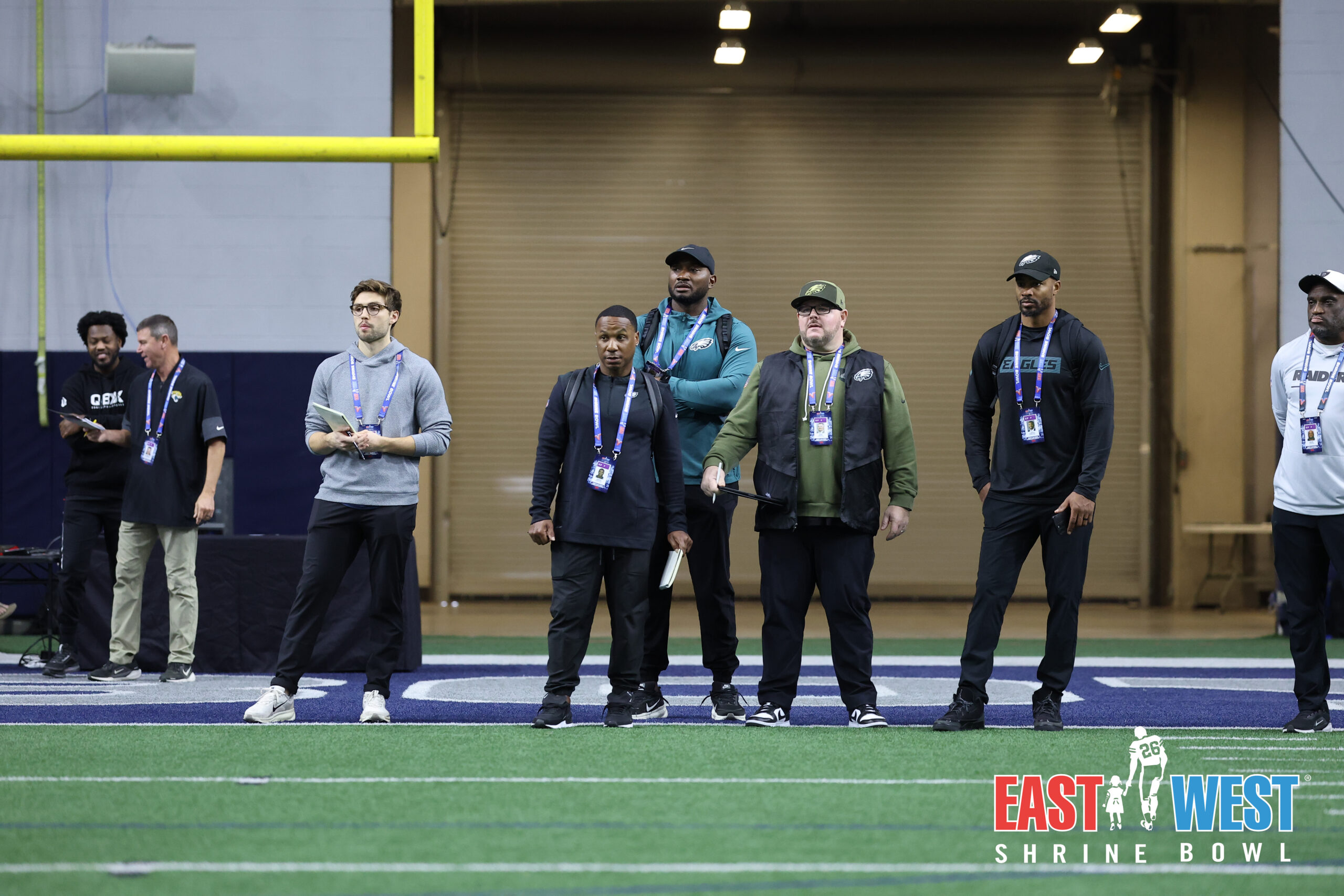
    All 32 teams were accounted for in some capacity in Frisco, Texas, for Shrine Bowl practices, and the Eagles sent several scouts, including personnel consultant Darren Sproles, director of college scouting Ryan Myers, West Coast area scout Rod Streater, and northeast scout Ben Ijalana.

    Many of these scouts spend all season on the road meeting and making connections with prospects, and attending the all-star game circuit gives them an opportunity to watch players up close and interview them directly.

    The Eagles were among a handful of teams that had strong representation from scouting personnel at the Shrine Bowl. The Lions, Rams, Dolphins, Colts, Raiders, and Panthers were among the teams with several scouts interacting and intently watching prospects from the sidelines at The Star, the Dallas Cowboys’ practice facility. Dallas, too, had many within the organization roaming the sideline.

    Darren Sproles (center) with other Eagles scouting personnel during the Shrine Bowl quarterback throwing session on Jan. 22.

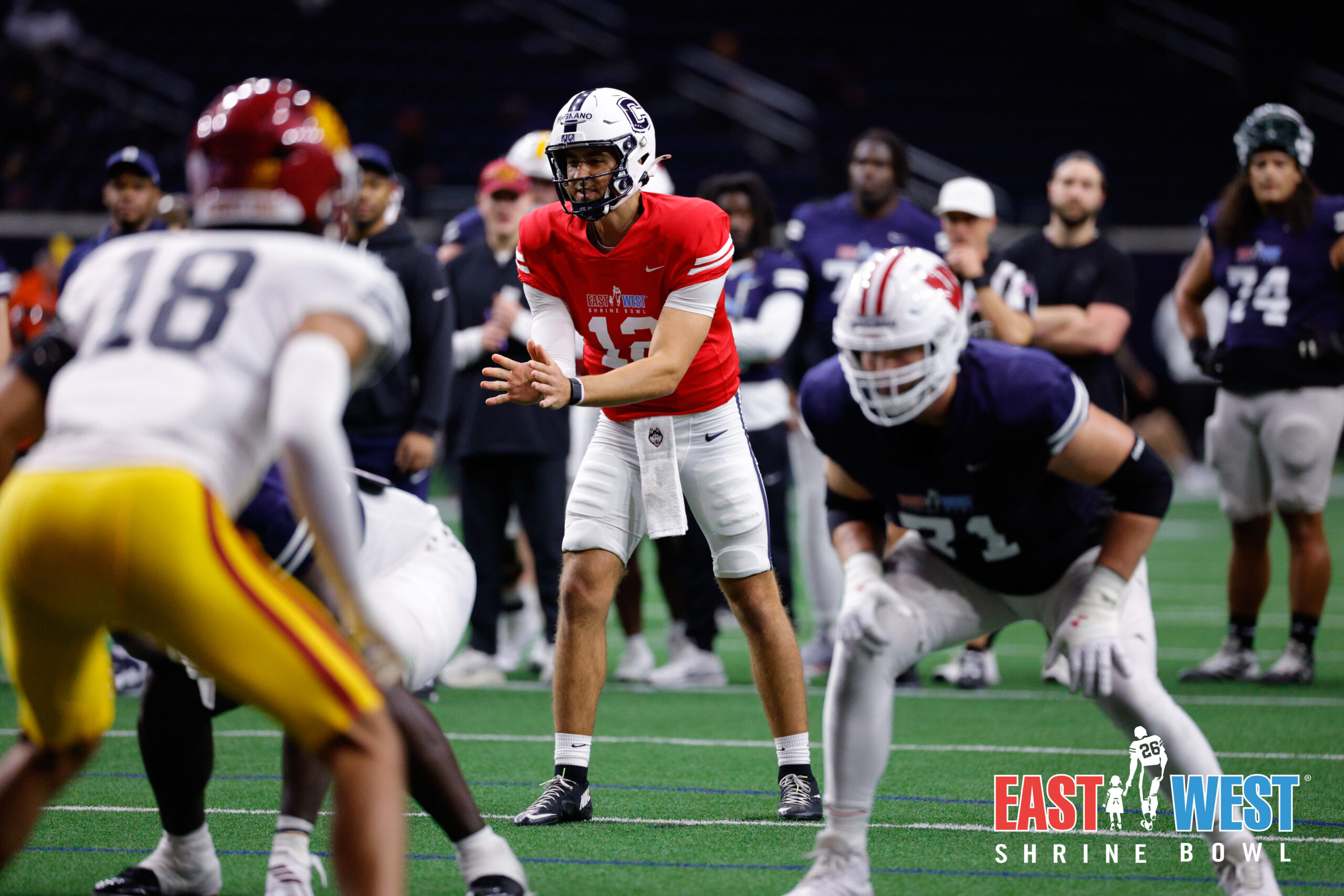
    Eagles scouts were on hand during the quarterback throwing session the day before Shrine Bowl practices began. Considering that new offensive coordinator Sean Mannion was the OC of the West team in Frisco, Iowa quarterback Mark Gronowski and Louisville’s Miller Moss could garner strong late-round consideration from the Eagles, who might consider drafting another QB after not retaining sixth-round pick Kyle McCord.

    Hurtt and Singleton work directly with prospects

    Eagles defensive line coach Clint Hurtt relished his opportunity to be head coach of the National team at the Senior Bowl, and his direct involvement with draft prospects during the week could be helpful for the Eagles’ scouting process. Also, Eagles running backs coach Jemal Singleton served as offensive coordinator, allowing him to work directly and closely with offensive draft prospects in Mobile.

    While Hurtt rotated between position groups during the three-day practice week, he told The Inquirer on Thursday that he gravitated toward the defensive side of the ball considering his experience on that side as a position coach and former defensive coordinator.

    Prospects also talked about being able to pick Hurtt’s brain as well, especially defensive linemen. Western Michigan edge rusher Nadame Tucker was one of those players to soak up knowledge, and his strong week should garner intrigue from the Eagles.

    Texas Christian safety Bud Clark was another standout who was complimentary of Hurtt’s energy, which seemed to resonate throughout the day even as things got chippy on the final day of practice.

    Singleton’s opportunity to call plays also gave him a closer look at positions like tight end, offensive line, and wide receiver, all potential areas of need for the Eagles heading into the draft. Texas A&M tackle Dametrious Crownover and tight end Nate Boerkircher were standouts at their respective positions, while Wisconsin wide receiver Vinny Anthony and Baylor’s Josh Cameron looked like potential slot options to replace Jahan Dotson as WR3 if he doesn’t return to the team next season.

    The Eagles typically have scouts in Mobile, and even chief of security Dom DiSandro made the trip down in recent years. But working directly with players and getting a chance to see prospects up close and getting direct coaching from people within the Eagles’ building gave them more insight and intel on prospects who could land in Philly in a few months.

    It’s also worth noting that three of the 10 players the Eagles drafted last year were at the Senior Bowl and they have drafted at least one player who participated in the all-star game over the last six drafts.

    A top-heavy O-line class

    Kadyn Proctor, Alabama’s standout left tackle, stood in the end zone at The Star in Frisco, watching Shrine Bowl practice and talking with NFL scouts. He hadn‘t committed to any all-star games, but he was hanging around the practice facility and attending meetings along with other draft prospects who were competing that week.

    Penn State O-linemen Drew Shelton and Olaivavega Ioane were also at the Shrine Bowl host hotel interviewing with teams. Proctor, Shelton, and Ioane are training with Duke Manyweather, the cofounder of OL Masterminds alongside Eagles right tackle Lane Johnson. Manyweather trains current and soon-to-be NFL offensive linemen at Sports Academy in Frisco.

    Proctor will be a hot commodity during the first round of April’s draft, partly because of his movement skills at 6-foot-7, 366 pounds, and partly because of the steep drop-off of true draft-eligible offensive tackles. The Shrine and Senior Bowl practices highlighted that further.

    Along with Proctor, Miami’s Francis Mauigoa, and Utah’s Caleb Lomu and Spencer Fano seem to be the surefire first-round players at the position. Georgia’s Monroe Freeling, Clemson’s Blake Miller, and Arizona State’s Max Iheanachor, who competed at the Senior Bowl last week, could be late first- or early second-round picks. Iheanachor in particular was in the best offensive lineman in Mobile, which is impressive considering that he didn’t play football in high school.

    There are more players who will either need further development or project as depth linemen. As opposed to last year, finding a starting offensive lineman after Day 2 of the draft will prove difficult in this class.

    The same can be said about interior offensive line, although there are several tackles, including Iowa’s Gennings Dunker, Duke’s Brian Parker, and Texas A&M’s Trey Zuhn, who will likely move to the interior at the NFL level.

    For a team like the Eagles, who could be looking to upgrade their offensive line in the interior and identify a replacement for Lane Johnson, spending a premium pick early in the draft on linemen would be ideal. At both the Senior and Shrine Bowls, Eagles scouts were up close to the offensive and defensive line one-on-one drills.

    With important contract extension decisions coming up on the defensive side of the ball, the Eagles won’t have much wiggle room to make big swings via trade or free agency to upgrade the offensive line. Getting an impactful lineman early in the draft could prove critical to extending their win-now window.

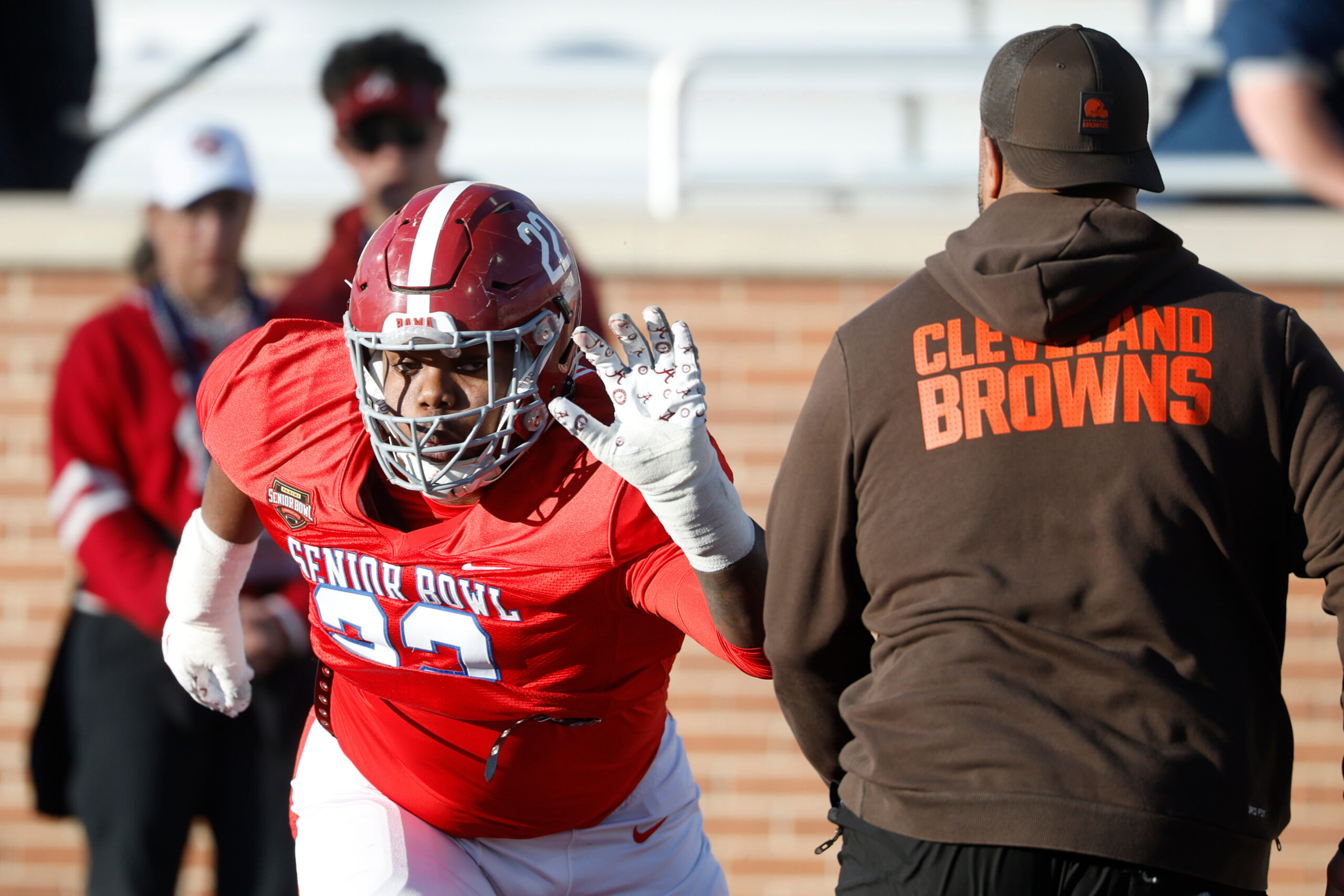
    Defensive lineman LT Overton of Alabama runs through drills during practice for the Senior Bowl on Jan. 28.

    Edge rushers, cornerbacks in spotlight

    Two positions the Eagles will likely need to address defensively are edge rusher and a second cornerback to complement Quinyon Mitchell. Jaelan Phillips was impactful as a midseason trade addition but needs a new contract, while Adoree’ Jackson is set to become a free agent.

    If the Eagles chose to move on from Phillips, there’s a strong Day 2 and early Day 3 class of edge rushers to choose from, many of them showcasing their talents on the all-star circuit.

    At the Shrine Bowl, Central Florida’s Malachi Lawrence and Wisconsin’s Mason Reiger were among the standouts of the week, although both excel more as pass rushers than run defenders. In Mobile, it was Illinois’ Gabe Jacas, Michigan’s Derrick Moore, Alabama’s LT Overton, Missouri’s Zion Young, and Western Michigan’s Tucker who flashed in either practice or the Senior Bowl game.

    Of the players mentioned, Jacas and Overton would be ideal players to complement Nolan Smith and Jalyx Hunt in the corps of edge rushers. A 6-3, 260-pound, densely framed edge rusher, Jacas has heavy hands to knock back offensive linemen and has enough wiggle to beat tackles on their outside shoulders. He can pass rush from the interior and from the edge, and his playing style could match Brandon Graham’s role over the last two seasons in Vic Fangio’s defense.

    Overton, who had a sack during the Senior Bowl, can play from multiple alignments, has powerful hands, and a strong bull rush on run downs. He has the skill set of a first-round player, but his impact has been inconsistent over the last two seasons. Overton, however, is the type of draft pick Howie Roseman has coveted: a former five-star prospect who hasn’t always lived up to his recruiting ranking.

    The secondary groups at both the Shrine and Senior Bowls were the best position groups collectively, especially at corner and nickel. In Frisco, North Carolina State’s Devon Marshall, Toledo’s Avery Smith, and Oregon’s Jadon Canady were steady players throughout the practice week. Marshall’s ability to challenge wideouts at the line of scrimmage and be disruptive at the catch point helped prove he was one of the best overall players there.

    Arkansas’ Julian Neal (6-1), San Diego State’s Chris Johnson (6-foot), and Tennessee’s Colton Hood (5-11) have ideal size and coverage skills to man the second corner spot for the Eagles, and Hood will likely go in the first round.

    If either position turns into a pressing need for the Eagles, it’s a good draft to upgrade those spots.

  • What the film says about the Eagles’ offensive direction under Sean Mannion and Josh Grizzard

    What the film says about the Eagles’ offensive direction under Sean Mannion and Josh Grizzard

    After an exhaustive offensive coordinator search, the Eagles settled on Green Bay Packers quarterbacks coach Sean Mannion, who only has two years of coaching experience. The former NFL quarterback-turned-coach has never called plays in his brief coaching career.

    However, Mannion did serve as the offensive coordinator for the West team during the East-West Shrine Bowl game earlier this week. While the play-calling and offensive structure was largely simplistic due to the environment of college players trying to showcase their skills for NFL scouts, the game film provides some clues on what Mannion’s vision for an offense may look like.

    Also in question is the effect Josh Grizzard, whose hire as Eagles pass game coordinator was reported Friday, might have on the scheme.

    Here’s a look at some of the influences Mannion may draw from ahead of his first NFL play-calling opportunity next season, and where Grizzard’s concepts could have an impact:

    Under-center runs and play-action

    The Mannion-led offense in the Shrine Bowl moved up and down the field in a 21-17 win over the East team, with the majority of the 72 offensive snaps coming from under-center. One frequent play call was play-action, specifically bootlegs where the quarterback would roll to the left or right after faking the handoff, effectively moving the pocket.

    The play-action bootlegs are staples for Matt LaFleur, Kyle Shanahan, and Sean McVay-led offenses. They typically give the quarterback two or three options, with a flat route from the front or backside tight end and a crossing route from the backside receiver. The tight wide receiver alignments Mannion had his Shrine Bowl receivers in are a direct comparison to LaFleur’s offense, which utilizes a lot of tight wide receiver splits. Packers quarterback Jordan Love had the fifth-highest play-action rate in the NFL in 2025.

    Beyond play-action bootlegs, Mannion also dialed up more traditional play-action passes, and incorporated a concept similar to dagger, where a deep crossing vertical route occupies the safety and allows for a deep intermediate middle-of-the-field route to be run right behind it.

    Several teams run the passing concept, but the 49ers and Vikings run it from under-center and on play-action throws more frequently than the Rams or Packers. Mannion spent two seasons of his playing career being coached by McVay and his final year playing quarterback was with the Vikings in 2023, under Kevin O’Connell.

    From a running game perspective, in the limited plays from the Shrine Bowl, Mannion seemed to draw on Shanahan’s run game philosophy. The first example was the inside toss play, which allows a running back to get downhill quickly. It’s also a play Mike McDaniel took with him to Miami and will likely now implement with Chargers.

    The other example was under-center power scheme runs, which pull the backside guard across the formation with the fullback kicking out the playside edge defender. Kyle Juszczyk had the most run blocking snaps among fullbacks in 2025, according to Pro Football Focus.

    The Eagles tried to do more fullback runs last season, so Cameron Latu could be an option to fill a similar role as Juszczyk should Mannion decide to utilize more fullback run-blocking schemes.

    During the Shrine Bowl game, Mannion also mixed in some outside zone run schemes from under-center to keep the defense honest. Outside zone runs are big staples of the McVay and Shanahan offenses.

    Mannion and Grizzard employ similar concepts

    The Packers last season threw out routes at one of the highest rates in the NFL last season. Could that become a staple for the Eagles in 2026?

    During the Shrine Bowl game, Mannion called at least three passing concepts that required the outside receivers to run out-breaking routes toward the sideline, and two of them were completed for first downs. Throwing such routes require timing and accuracy, because mislocating the football gives defensive backs a chance to break on the football.

    During the Shrine Bowl game, Mannion also called mesh concepts twice, an approach that has two receivers running shallow crossing routes across the field going opposite directions, and a route sitting over the ball behind the two receivers. It could also include the running back releasing from the backfield on a wheel route.

    Grizzard ran mesh quite a bit as the Buccaneers’ offensive coordinator in 2025. The passing concept can beat both man and zone coverages and is difficult to defend if defenders end up chasing the crossing routes.

    Grizzard also utilized a lot of screens in the passing game in Tampa, getting the ball in the hands of Bucky Irving, Emeka Egbuka and others behind the line of scrimmage. The first offensive play that Mannion called in the Shrine Bowl was a tight end screen. The screen game is also a staple in LaFleur’s offense, though the Green Bay coach is far more creative in presenting them.

    Plenty of unknowns

    While the Shrine Bowl gave a glimpse into Mannion’s influences from LaFleur, McVay, and Shanahan, how the Eagles’ offense looks in their season-opener is a mystery. Leaning into more under-center play-action and moving the pocket with Jalen Hurts seem like logical additions to an Eagles offense that struggled with their identity in 2025.

    Adding in an experienced playcaller like Grizzard into the fold can help give the Eagles some formational advantages and add less predictability to the offense. More pre-snap motion seems to be in the cards too. The Packers ranked eighth in motion rate and the Buccaneers ranked ninth, according to Sharp Football Analysis.

    One thing is likely: the Eagles offense will be modernized and look vastly different from the previous iterations under Nick Sirianni.

  • Six potential Eagles draft targets who are rising after the Senior Bowl and Shrine Bowl

    Six potential Eagles draft targets who are rising after the Senior Bowl and Shrine Bowl

    MOBILE, Ala. — Across seven practices and two cities, hundreds of draft prospects participated in the East-West Shrine and Senior Bowls to kickstart the NFL draft evaluation process.

    NFL scouts, general managers, and executives from nearly all 32 teams got a close look at players that will soon fill their rosters. At least five Eagles scouts attended the Shrine Bowl in Frisco, Texas, and a handful of personnel, including chief security officer Dom DiSandro, made the trip to Mobile.

    With just Saturday’s Senior Bowl game (2:30 p.m., NFL Network) left from the All-Star circuit, here are six prospects we monitored that could be targets for the Eagles:

    Shrine Bowl

    Devon Marshall, DB, N.C. State

    Marshall, who began his career at Villanova, only practiced for two days but rarely allowed completions across the one-on-one and team sessions. The 5-foot-10, 197-pound cornerback challenges wide receivers at the line of scrimmage, can easily flip his hips in coverage, and has excellent recovery speed if a receiver gets a step ahead of him.

    Over the last two seasons at N.C. State, Marshall has forced 24 incompletions, including nine against Florida State alone. Marshall’s anticipatory skills breaking on underneath routes and his ability to turn and run vertically with wide receivers made him one of the best corners across both All-Star games.

    If the Eagles are looking to add a secondary player on Day 2 of the draft, Marshall would be a worthy candidate to compete for a role opposite Quinyon Mitchell at corner.

    Cole Wisniewski, S, Texas Tech

    Wisniewski, who started his career as a linebacker, had a standout season with Texas Tech after missing the 2024 season for North Dakota State. The 6-3, 214-pound safety is physical at the catch point, is at his best playing a middle-of-the-field safety role, and can provide tight man coverage when matched up with tight ends.

    His versatility to line up at several spots in the secondary is a strength. During the first day of practice, he aligned in the box at linebacker, as a slot defender, and even as a deeper safety, with his instincts and coverage ability shining most when driving on routes from depth.

    Safety is a sneaky need for the Eagles with Reed Blankenship set to become a free agent. Wisniewski would bring some much-needed size in the secondary and is a willing and sound tackler in space.

    Dallen Bentley, TE, Utah

    Bentley, who only played five snaps of high school football before an injury ended his career, was a pleasant surprise at the Shrine Bowl after putting up career-highs in catches (48), yards (620), and touchdowns (6) in 2025. Up close, Bentley, who was mostly a reserve tight end in 2023 and 2024, looked fluid as a route runner and did not drop a pass in the one-on-one and team sessions.

    The standout Utah tight end already has a strong foundation in blocking, and in a draft class with few true three-down tight ends, Bentley could be of value. With Dallas Goedert and Grant Calcaterra both set to become free agents, the Eagles will likely need to dip into the tight end class, and Bentley would be a worthy prospect to take early on Day 3 of the NFL draft.

    Illinois defensive lineman Gabe Jacas saw his stock rise at the Senior Bowl.

    Senior Bowl

    Gabe Jacas, Edge, Illinois

    The defensive linemen on the American team at the Senior Bowl feasted on the offensive linemen, and Illinois standout Jacas was among them. The 6-3, 260-pound densely framed edge rusher has heavy hands to knock back offensive linemen and has enough wiggle to beat tackles on their outside shoulder.

    During Senior Bowl media day, Jacas told The Inquirer that teams view him more as a defensive end who sets the edge and rushes the passer as opposed to an outside linebacker, which typically requires coverage drops. His skill set matches that, with the power to push the pocket and the ability to reduce down inside at three-technique to beat interior offensive linemen.

    With the uncertainty of the edge rusher room beyond Nolan Smith and Jalyx Hunt, Jacas would be a perfect complement with his power profile to pair with Hunt and Smith’s speed off the edge.

    Gennings Dunker, OT/OG, Iowa

    Coming into the week, Dunker was among the highly anticipated players participating in Senior Bowl practice, and played both tackle and both guard spots throughout the week. Dunker was a three-year starter at right tackle for Iowa, displaying the power to displace defensive linemen in the run game and anchoring down against power rushers.

    He lacks the foot quickness and recovery ability to last at tackle, and that likely played a factor in his getting interior lineman snaps. Dunker looked much more natural as a guard, where his powerful hands and leg drive can shine against players who typically offer less twitch and space to maneuver around him.

    The potential guard and tackle versatility would intrigue the Eagles, who could be looking to upgrade the interior of their offensive line. Dunker has immediate run blocking upside and can be a long term answer at either guard or tackle for the Birds.

    Rayshaun Benny, DL, Michigan

    One of the week’s pleasant surprises, Benny, who had 35 tackles (three for loss) and 1½ sacks in 13 games, was one of the top players at his position in Mobile. He has strong hand usage and an explosive first step to get around opposing offensive linemen, though his production doesn’t always match the skill set he possesses.

    Throughout the practice week, Benny, a squatty defensive tackle (6-3, 296 pounds), was unblockable, using hand swipes, swim moves, and showing stack and shed ability across multiple defensive line spots.

    Interior defensive line isn’t a pressing need currently for the Eagles, but adding Benny can bring more depth and playmaking ability to a group led by Jalen Carter and Jordan Davis.

  • Eagles’ Clint Hurtt discusses coaching the Senior Bowl and his interview for the Dolphins DC job

    Eagles’ Clint Hurtt discusses coaching the Senior Bowl and his interview for the Dolphins DC job

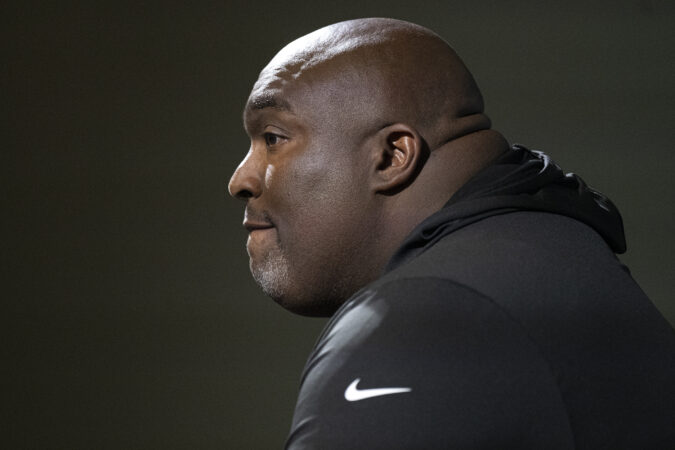
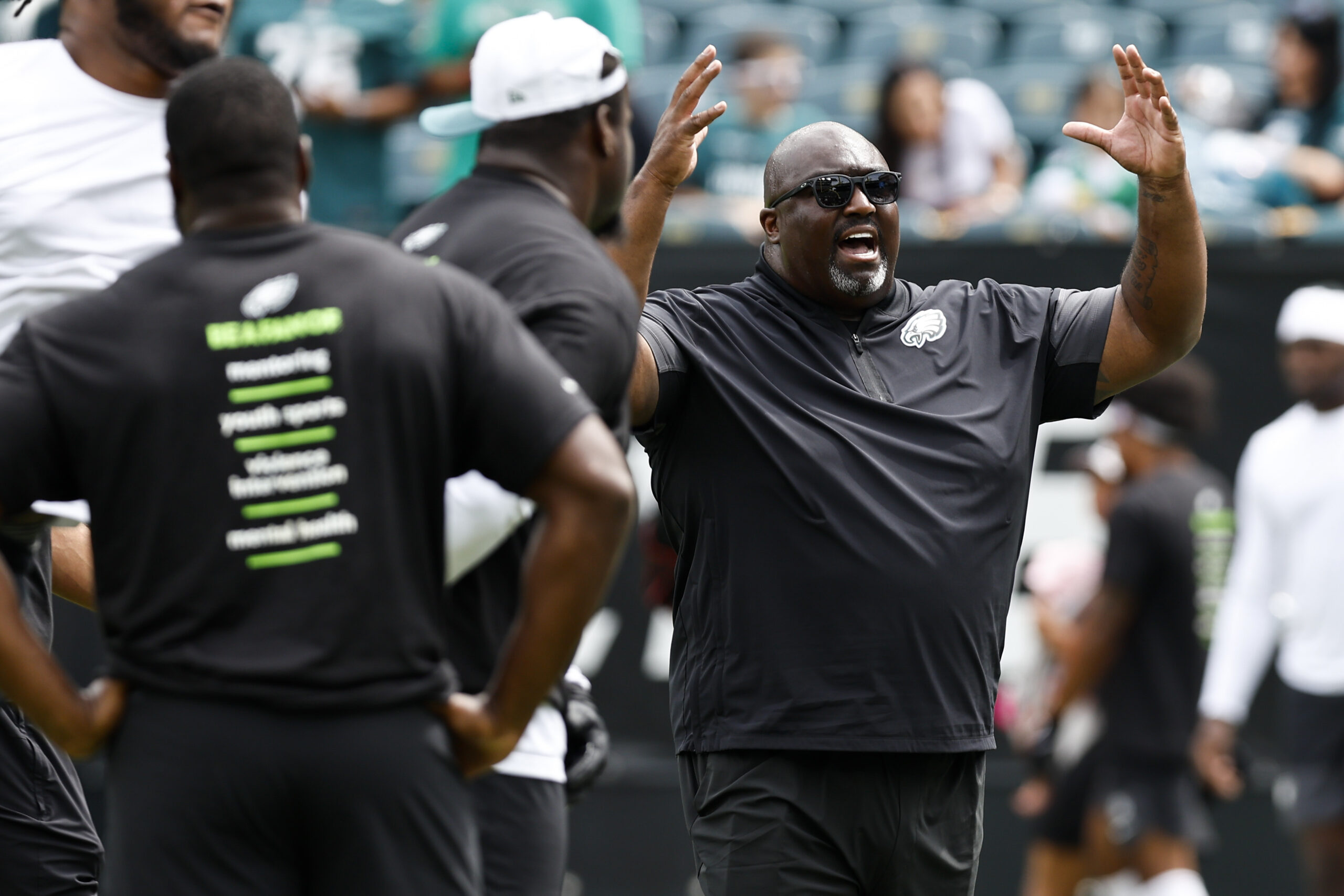
    MOBILE, Ala. — Standing in the north end zone of Hancock Whitney Stadium on the University of South Alabama’s campus, Clint Hurtt, the Eagles defensive line coach, had the sun shining on him while decked out in a black Eagles T-shirt and black pants. Hurtt was the head coach of the National team at the 2026 Senior Bowl, and was responsible for planning, delegating, and monitoring the two-hour practice session.

    For Hurtt, who has more than a decade of NFL coaching experience that included two seasons as the Seattle Seahawks’ defensive coordinator, the opportunity to run the show along with the hands-on experience leading a group of players are “things you can’t take for granted.”

    “If you have aspirations to be a head coach one day, it’s a different circumstance in terms of getting practice schedules together for the players, for the coaches, the installation, all those things that happen throughout the day,” Hurtt said Thursday. “There’s things that you know that happen when you’re following the lead of the respective head coach that you work for, but to do it yourself, it’s a great experience to be a part of. And obviously you’re not doing it alone. The [other] coaches are obviously a big part of that, and they help out with that stuff.”

    The focus is on helping build up and coach the next generation of NFL players this week, but Hurtt’s name has also circulated in coaching searches. He interviewed with the Miami Dolphins last weekend for their vacant defensive coordinator job under new head coach Jeff Hafley.

    Hurtt, 47, didn’t delve into much detail but confirmed the interview “went well and the feedback I got was that it went really well.”

    The preparation for his Senior Bowl assignment started well before Hurtt got boots on the ground in Mobile earlier this week. Hurtt, who played collegiately at Miami and began his coaching career shortly after, said his staff assembled from other NFL teams had meetings on Zoom to organize the daily practice and game day plans for the Senior Bowl. He leaned on Eagles running backs coach Jemal Singleton, the offensive coordinator for the National team this week, to help orchestrate the offensive plan.

    From planning for two-minute drills to red-zone work throughout the week, Hurtt is shouldering more on-field scheduling responsibilities than he typically would with the Eagles.

    Before coming to the Eagles, Clint Hurtt spent seven seasons with the Seahawks, including two as defensive coordinator.

    “When you’re the head, you have to have answers for everybody, for all position groups,” Hurtt said. “[Having been] a coordinator, before being used to that, coaching linebackers and the secondary and things of that nature. So it’s been really good and enjoyable with these kids. And they’re all hungry for knowledge.”

    One player benefiting from Hurtt’s coaching is Western Michigan edge rusher Nadame Tucker, one of the standouts of the week for the National team. Tucker, who spent his first three seasons at Houston before having a breakout season in 2025 with 21 tackles for losses and 14½ sacks for Western Michigan, said he “gravitated toward [Hurtt]” and appreciated his similar approach to football.

    “I feel like coaching D-line, to get guys to listen to you, that’s how you should be, man,” Tucker said after practice Tuesday. “So he’s my great idea of a D-line coach. He’s a stern guy, a guy that’s going to pull the best out of the players and want the best out of his players. … I just keep working with him and learning from him and learning from all the [coaches].”

    Hurtt is using this week to gain more exposure to coaching and the detailed nature of running practices, things he never experienced.

    “When you want to go into a job interview to try to escalate, improve your career and move up the ladder, there’s things that you have to learn along the way. But it’s hard to do that if you don’t get exposure,” Hurtt said. “I always constantly self critique, every evening, try to sit back and say, ‘OK, what went well today? What I’ll continue to do, what things can we improve on?’ Always looking for critical feedback. And because I like the criticism, I’m always self-talking on what are the things that we can do to get better, where can I be better, to be better for the players and be better for the staff.”

    Hurtt’s head coaching experience will come to an end on Saturday with the Senior Bowl game (2:30 p.m., NFL Network). But for now, he’s relishing this opportunity with the future NFL players who are soaking up knowledge from Hurtt and his coaching staff.

    “Being passionate, you want the kids to feel your energy and where you’re coming from, because then they understand how you want things to be,” Hurtt said. “The coaches [are] obviously doing that, too. It’s a great energy from our defensive coaching staff and offense as well. But I want every coach to be authentically themselves, too. Don’t try to replicate anybody else that’s around you. Got to be you, because that’s what the players are going to respond to the best.”

  • After a journey from Division II to the CFP title game, Levittown’s David Blay sets his sights on the NFL

    After a journey from Division II to the CFP title game, Levittown’s David Blay sets his sights on the NFL

    FRISCO, Texas — Four days after a heartbreaking College Football Playoff national championship game loss, Levittown native David Blay was back in football pads.

    Last week, Blay, whose five-year career spanned three schools and two levels of college football, practiced against some of the other draft-eligible prospects at the East-West Shrine Bowl.

    His college career began locally at Division II West Chester, where he spent two years, then spanned two years at Louisiana Tech before he finished this past season with national runner-up Miami. Blay, a defensive lineman, played 22 snaps against Indiana in the College Football Playoff title game and finished with one tackle in the 27-21 loss.

    Blay, a graduate of Harry S. Truman High School, gained a unique perspective in all three stops along the way, which included two years (his first at West Chester and first at Louisiana Tech) when he didn’t see the field much.

    “For West Chester, time management, the process of doing things at certain times [at] the correct time, and doing the correct things,” Blay said about what he learned.

    “And then for [Louisiana] Tech, they taught me the brotherhood aspect, because when I transferred into Louisiana Tech, about six or seven defensive linemen alone transferred in there at the same time. So it was like everybody had the same vision, the same goal. So it was easy to play against somebody I can call my brother.

    “[With Miami], having camaraderie with the team wasn’t that hard. They’re outgoing guys, so bringing me in wasn’t that hard. Me, I’m more of — I guess you could say a quiet guy.”

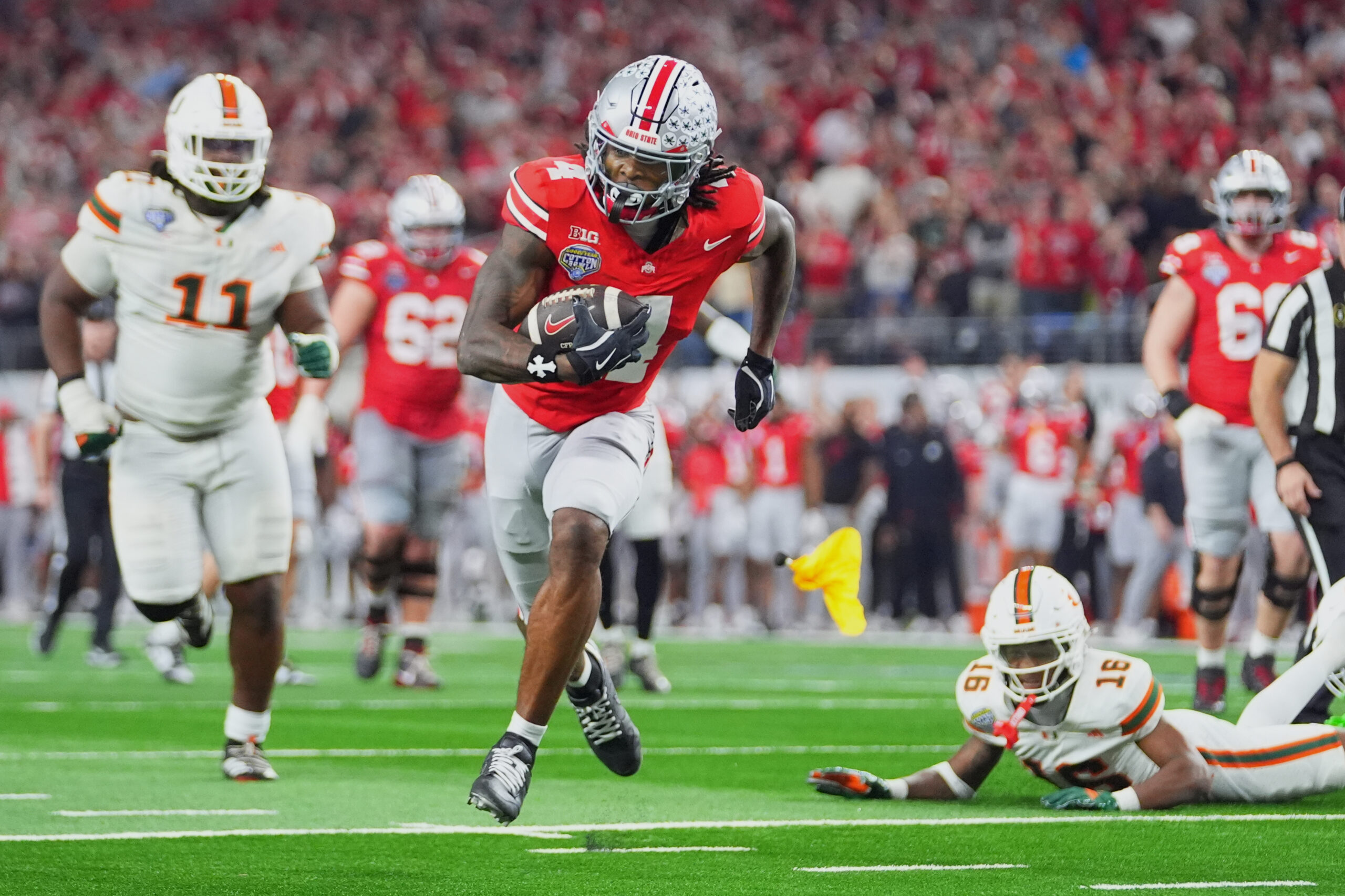
    Miami and David Blay (11, at rear left) got past Jeremiah Smith (4) and Ohio State in the CFP quarterfinals on their way to an appearance in the title game.

    At Miami, snaps weren’t easy to come by for Blay, with potential first-round NFL draft picks Rueben Bain and Akheem Mesidor manning the edge rusher positions and Ahmad Moten and Justin Scott starting in the interior.

    Blay was on the field with Miami’s defense on 412 plays, according to Pro Football Focus. He played 443 defensive snaps in one fewer game in 2024 for Louisiana Tech.

    But Blay, who amassed 95 tackles (23½ for losses) and 11½ sacks in four seasons at Louisiana Tech and West Chester, carved out a consistent rotational role on Miami’s D-line during a playoff run that Blay “will remember for the rest of my life.”

    The 6-foot-2 and 302-pound lineman credits his discipline for refining his skills, which helped get him on the field at the Power Four level.

    “In terms of getting on the field and playing, I just really had to be real technically sound,” said Blay, who had 28 tackles (2½ for losses) in 13 games with Miami. “Like I feel as if going to Miami, the big thing there was [to be] technical, technical, technical. That’s the difference between the levels in my head.”

    Blay was joined by Indiana safety Louis Moore and Miami linebacker Wesley Bissainthe as players who appeared in the national championship game and also practiced at least one day at the Shrine Bowl. Indiana tight end Riley Nowakowski also traveled to Frisco to interview with NFL teams but did not practice.

    Throughout his practice sessions at the Shrine Bowl, which wrapped up with the game on Tuesday night — the West won, 21-17, on a touchdown with 6 seconds left — Blay showed his strength capable of pushing the pocket as a pass rusher and standing his ground as a run defender against double-team blocks.

    “I give those guys a lot of credit,” Shrine Bowl director Eric Galko said. “And Wesley [Bissainthe] and David [Blay] are coming in like everyone else, they’re banged up, but they just played 16 games, right? Not 12, like other guys have.

    “And David’s done great, in the practice he had and in the interviews he has had, too. … I think David showed a lot of character — especially with the way the season ended, not on a victory, but on a loss — and he still said, ‘You know what? Now I’m on [to] the NFL.’ And to be focused here, I give the guy a lot of credit.”

    Added Blay: “Just the aspect that we’re getting better every day [motivates me]. You’re never at your best; in a sense you can always get better. And I also say to my mom, I’m trying to get her to understand the aspects of the game and how it could change your life.”

    Blay played his high school and the beginning of his college career about 30 miles from Lincoln Financial Field. An opportunity to play for his hometown Eagles would be “a dream scenario.”

    “Being around the crib, I could go work out, go practice, go do my job, and then essentially come home to the people I’ve seen my whole entire life,” Blay said.

  • Forged in Philly, Southern Cal linebacker Eric Gentry breaks the mold at East-West Shrine Bowl workouts

    Forged in Philly, Southern Cal linebacker Eric Gentry breaks the mold at East-West Shrine Bowl workouts

    FRISCO, Texas — If there were any doubts about whether Eric Gentry belonged in the NFL with size that is often compared to an NBA wing player, he quelled those concerns by the second practice of East-West Shrine Bowl workouts, which are composed of the best draft-eligible players from across the country.

    Gentry, who recently finished his college career at Southern California, sprinted downhill from his linebacker spot during the 11-on-11 period, hit the breaks two yards from the line of scrimmage when the offense ran play-action, and elevated to nearly intercept a Mark Gronowski pass over the middle of the field. The next play looked identical: Gentry flowed toward the line of scrimmage on a play-action pass, sank back a few feet, and elevated to again deflect a pass thrown his direction.

    The Philadelphia native and Neumann Goretti alum used every bit of his 6-foot-6, 221-pound frame and long arms. His height and more than 35-inch arms are in the 99th percentile, while his weight is in the first percentile among linebackers. He’s a unique player who has intrigued nearly every NFL scout and media member during Shrine Bowl practices.

    “We have a lot of value in guys that are really unique, and if their character matches their uniqueness on the field, those guys almost always hit the NFL,” Eric Galko, the Shrine Bowl director, told The Inquirer. “For Eric, we always saw that. He was one of our first invites at linebacker — we had no doubt he’ll play in the NFL. And I think what he’s showing this week in practice is that you can use him in a couple different ways. He can have a huge, huge impact because of how uniquely built he is.”

    Gentry is used to the doubts by now, having experienced the criticism throughout his football career. Most think he’s too tall and too thin to play linebacker. Others question his durability playing such a physical position.

    But through it all, he was focused on proving that the production and versatility he showed in college will follow him to the NFL. In one year at Arizona State and four at USC, he had nine forced fumbles, 26½ tackles for losses, nine sacks, and two interceptions.

    “I think of just making these [scouts] come get at me, making these teams come get at me — I feel more like I am going to be in the moment and make it all happen,” Gentry said before practices began. “I feel so happy to be able to be out here and do what I’ve got to do. Every 10 years, it’s a new generation of athletes, type of athletes that come around. I know I’m one of them. So every day, just showing it, every day, having that intuition, knowing that can’t nobody tell me no but me. I’m always telling myself, ‘Yes, I can do it.’”

    ‘Always magical’

    Football has been at the forefront for Gentry since he was 5 years old, but the journey to this weekend’s All-Star Game in Texas hasn’t been without its ups and downs.

    Recently, Quan Luck, Gentry’s mother, was going through some old Pop Warner pictures from her son’s early playing days. Many of the players in those pictures with Gentry, she said, are either no longer alive or in prison.

    The adversity that Gentry overcame to follow his dream of making the NFL still resonates with his mother.

    “It’s always magical watching my son, because the things that he’s able to do, most football players are not able to do, but it’s hard,“ she said. ”He just has [faced] a lot of adversity because of his build. … Because of so many coaching changes, he’s had to prove himself over again. But every single coach that he ever played for always spoke very highly of him and stated how he was a unicorn.”

    Southern California linebacker Eric Gentry prepares to rein in Utah running back Sione Vaki on Oct. 21, 2023.

    His mother also noticed how Gentry was “a different character” on the football field over the years. She was a college basketball player at Rutgers-Camden and thought her son might follow in her footsteps on the court.

    But Gentry wanted to be “something that nobody had ever seen” on the football field. Luck said Dwayne Thomas, Gentry’s former high school defensive coordinator, described his playing style as “playing basketball on the football field.”

    “Sometimes it’s like he’s the underdog for whatever reason. I don’t know why, but he just always proves them wrong,” Luck said. “People have so many questions about him. Is he too thin? Will he not make it? Is he too weak? Is he going to get pushed back? And he just proved to them that anything he wants to do, he does his best.

    “You can ask anybody from his team, they will always speak highly of him, that [football] is what he does every day.”

    Before winter storms ravaged most of the country, Luck, Gentry’s father, Eric Sr., and Thomas were set to make the trip to Frisco to watch him compete at the Shrine Bowl.

    Coming full circle

    During his three days of participation in Shrine Bowl practices, Gentry was one of the standouts among all players. He consistently made plays in one-on-one coverage and in pass-rushing reps during the team periods.

    An NFC scout, while watching Gentry, remarked that the Philly native “can be a good one” and would ideally want the linebacker to “get up to 240 pounds.” Another appreciated the “use of those long arms.”

    Eric Gentry (left) during the East-West Shrine Bowl practice on Saturday

    “I think Eric Gentry is kind of a choose-your-own-adventure player, like whatever he does in the draft process, whatever you care about as a team, you’re going to find value in as well,” Galko said. “I always tell NFL teams and guys, when you’re that big and long, you can make mistakes and still win the rep.

    “And I think with a player like Gentry, he can make mistakes and still make that play on the running back in the B-gap, or he can make that mistake and still bat the pass down. I think his length, wingspan, his mental aptitude, can make him a guy that early on in the NFL can contribute before he’s even reached his full potential.”

    One of Gentry’s agents is Chafie Fields, also a Philadelphia native, who has a close connection with his mother. Luck and Fields ran track and field together since they were 5 years old and the former Penn State and NFL wide receiver turned agent works for the Wasserman agency, which represents more than 100 NFL players.

    The journey is coming full circle for Gentry, one that is coming closer to reality in a few short months. Wherever he ends up, Philly will be at the forefront of his identity.

    “To be away and have my journey go on and just hearing people support me from back home — like a mythic legend, in a sense, because nobody sees me anymore — but just hearing everything that’s going on with me,” Gentry said. “My homie texted me not that long ago, actually, and he was like, ‘You don’t [get] on social media a lot, you don’t do a lot, but you don’t realize how much you are motivation to the people in the city.’

    “I never knew the true understanding of it, until you see, you hear people from back home. There’s so many people that know you back home and are talking about you. … I feel so great to be able to put on for the city and tell everybody and show everybody that Philly’s got it.”

    Added his mother: “The city made him. Part of his aggression is because he was raised in the city of Philadelphia. It’s not easy. People don’t understand to make it out of Philly is an accomplishment by itself.”