A week after authorities arrested Jonathan Christian Gerlach on charges of stealing human remains from Mount Moriah Cemetery, the consequences of the case continue to unfold — from a small police department fielding frantic pleas from families to a coroner’s office now responsible for safeguarding more than 100 unidentified bones and body parts.
Since the arrest, the Yeadon Police Department has been inundated with calls and emails from relatives fearful that the graves of their loved ones were disturbed, Police Chief Henry Giammarco said. The remains recovered during the investigation — including skulls, bones, and other human fragments — were seized from Gerlach’s basement and from a separate storage unit, both in Ephrata, and are now in the custody of the Lancaster County Coroner’s Office.
Gerlach is accused of systematically removing skulls and bones from graves at Mount Moriah, a sprawling historic cemetery that spans Philadelphia and Yeadon Borough. The case has drawn national attention, prompting widespread media coverage and intensifying concern among families with relatives buried at the cemetery.
(function() {
var l2 = function() {
new pym.Parent(‘bones’,
‘https://media.inquirer.com/storage/inquirer/projects/innovation/arcgis_iframe/bones.html’);
};
if (typeof(pym) === ‘undefined’) {
var h = document.getElementsByTagName(‘head’)[0],
s = document.createElement(‘script’);
s.type = ‘text/javascript’;
s.src = ‘https://pym.nprapps.org/pym.v1.min.js’;
s.onload = l2;
h.appendChild(s);
} else {
l2();
}
})();
As of Wednesday afternoon, Giammarco said, his department had received more than 200 calls and emails from people across Pennsylvania and from as far away as Montreal and Hawaii, many asking whether authorities could confirm whether specific graves had been disturbed or whether their loved ones’ remains were among those recovered.
Inside the coroner’s office, the remains have been cataloged and placed in secure storage, Coroner Stephen Diamantoni said. They will remain there until Gerlach’s criminal case is resolved.
Diamantoni said his office does not plan to attempt to identify the remains — a task he described as virtually impossible given their age, their condition, and the circumstances in which they were recovered.
When the bones were seized from Gerlach’s home and storage unit, Diamantoni said, they were not labeled or organized in any way that would indicate where they came from or whom they belonged to. In many cases, he said, remains from different individuals were mixed together, a condition known as commingling, “on a scale that I’ve never encountered.”
Compounding the challenge, some of the remains are believed to be hundreds of years old, Diamantoni said, and are in advanced states of decay. Even under ideal conditions, identifying such remains would be difficult. In this case, he said, it would be “a herculean task” to attempt to match the bones to specific burial sites — let alone to determine whose remains they were.
Even if that were somehow possible, Diamantoni said, identifying a living family member would present another nearly insurmountable hurdle, given the age of the remains.
Back in Yeadon, Giammarco said he has tried to provide as much clarity as possible to families reaching out in distress. While the investigation is ongoing, he said, authorities have identified thefts only from mausoleums and underground vaults — structures that are larger and deeper than standard graves and are constructed differently. He spent much of the weekend returning calls and responding to emails, he said, hoping to ease fears.
“If it would have been my family,” Giammarco said, “I would have wanted someone to contact me.”
Delaware County District Attorney Tanner Rouse, whose office is prosecuting Gerlach, said Wednesday the investigation into the crimes was ongoing.
A man was killed and a woman was injured Sunday night after two shooters fired into a tow truck parked in Northeast Philadelphia, police said.
The man, 25-year-old Aaron Whitfield, died at the scene of the shooting on the 2100 block of Knorr Street, police said. A 21-year-old woman struck in the leg by a bullet survived.
According to police, Whitfield, who works as a tow-truck driver, and the woman were inside the vehicle when the shooters drove up to the truck’s passenger side and opened fire at 7:52 p.m.
Officers who responded to a report of gunshots found Whitfield inside the tow truck. He’d been shot multiple times in his head and body, police said, and attempts by medics to resuscitate him failed.
The woman, whose name was not released by police, was transported to Jefferson Einstein Philadelphia Hospital. Police said that she was stable.
Investigators collected 17 bullet casings at the scene, police said. Bullets also struck nearby buildings, but no one else was injured, police said.
No arrests had been made in the shooting as of midday Monday. Police said a motive for the killing has not yet been determined, and it’s unknown whether either Whitfield or the woman were intentionally targeted.
Documents released Friday offer new detail on how investigators assembled their striking case against Jonathan Christian Gerlach, who authorities say desecrated dozens of graves to steal human remains.
Gerlach, 34, who is charged with stealing more than 100 skulls, bones, and body parts from Mount Moriah Cemetery, also posted dozens of photos of human remains on social media, records show, and authorities are investigating whether he may have offered to sell them.
The investigation into Gerlach, who lives in Ephrata, spans multiple counties and law enforcement agencies. The historic cemetery stretches across Philadelphia and Yeadon, Delaware County, where officials charged Gerlach on Thursday.
Gerlach’s lawyer, Anna Hinchman, declined to comment Friday, citing the pending criminal case.
In all, Gerlach faces more than 500 counts of burglary, criminal trespassing, abuse of a corpse, theft, and related crimes.
“After 30 years, I can say this is probably the most horrific thing that I’ve seen,” said Yeadon Police Chief Henry Giammarco, whose department was involved in the investigation.
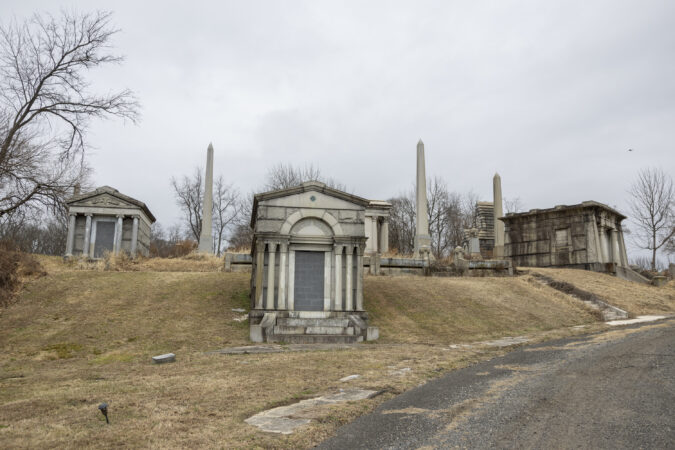
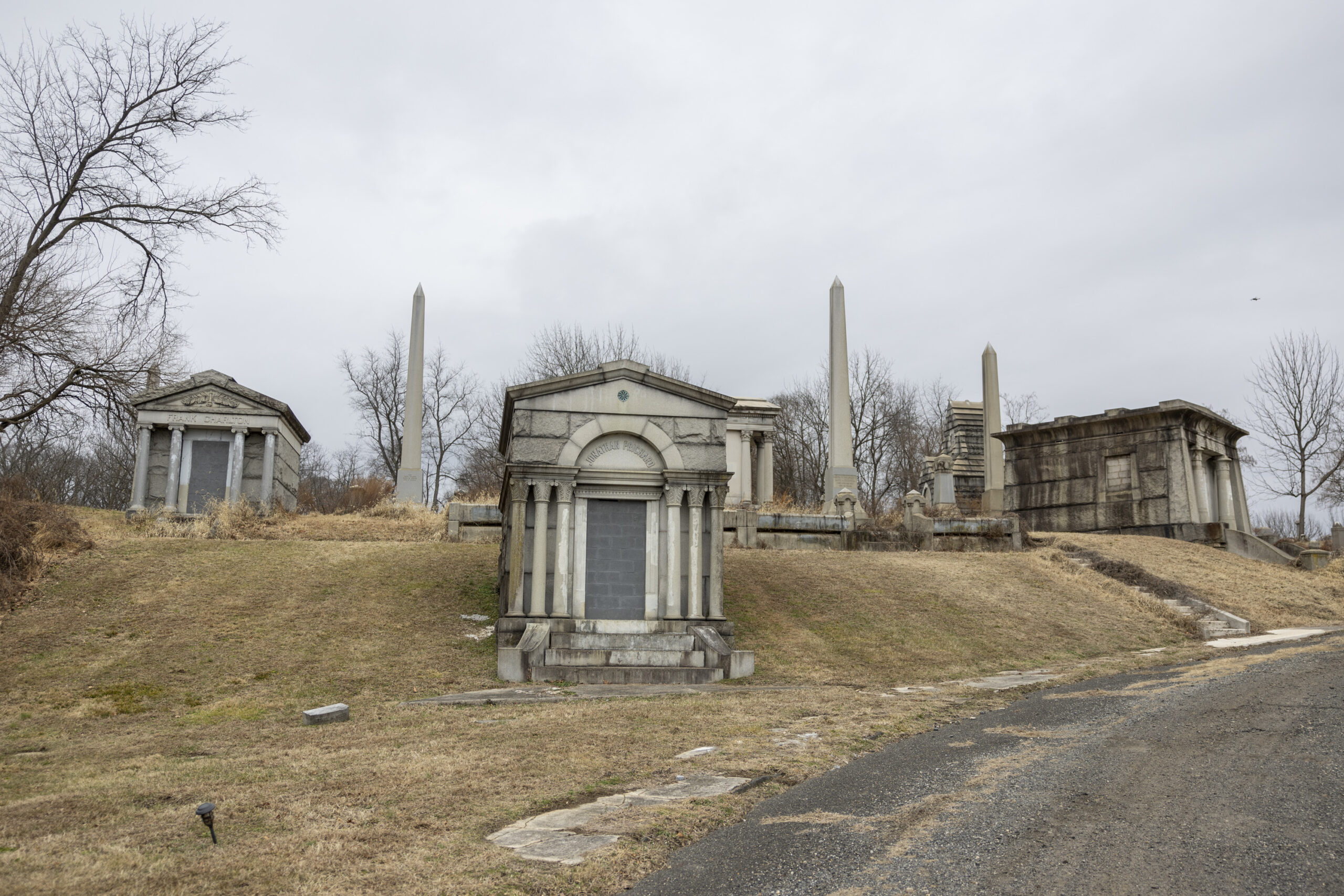
A few Mausoleum’s that Jonathan Gerlach broke into at Mount Moriah Cemetery in Philadelphia.
Grave sites damaged, remains stolen
Detectives were first dispatched to the burial ground on Nov. 7, according to the affidavit of probable cause for Gerlach’s arrest. There, a board member of the Friends of Mount Moriah Cemetery — the group that helps to maintain the burial ground — led the investigators to a mausoleum where a hole in protective cinder blocks revealed a damaged marble floor, 10 feet underground. A white rope, which detectives believe the thief used to rappel into the mausoleum, hung nearby.
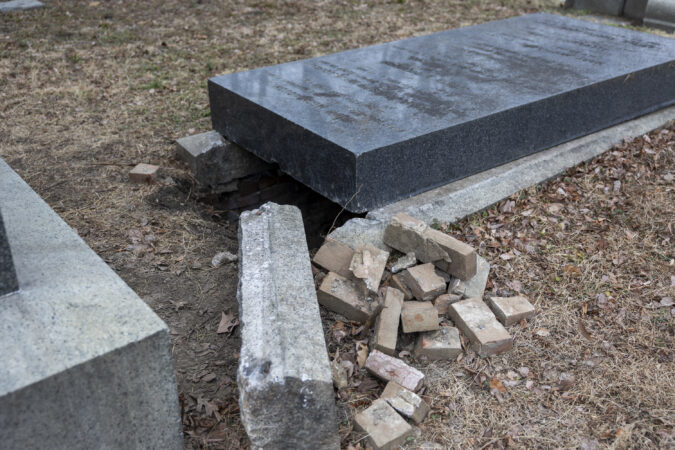
They discovered other disturbed burial sites, both that afternoon and weeks later, according to the affidavit: a crypt with its marble entrance stone ripped off, whatever was inside stolen; a damaged, empty casket inside a mausoleum; a clear plastic tarp covering human remains discarded on the ground of the cemetery.
Investigators collected clues, including the rope, a “Monster” energy drink can, and a partially smoked Marlboro Menthol cigarette. Each will be sent for DNA testing, the affidavit said.
On Dec. 23, the document shows, police received a tip pointing to Gerlach. “Look into Jonathan Gerlach,” the tipster said, according to the affidavit. “I know someone who’s friends with his family, and they mentioned that they recently discovered a partially decomposed corpse hanging in his basement, but were afraid to tell police.”
The tipster also pointed investigators to Instagram. “You’ll see he follows accounts in taxidermy, skeleton collecting and sales,” the tipster said.
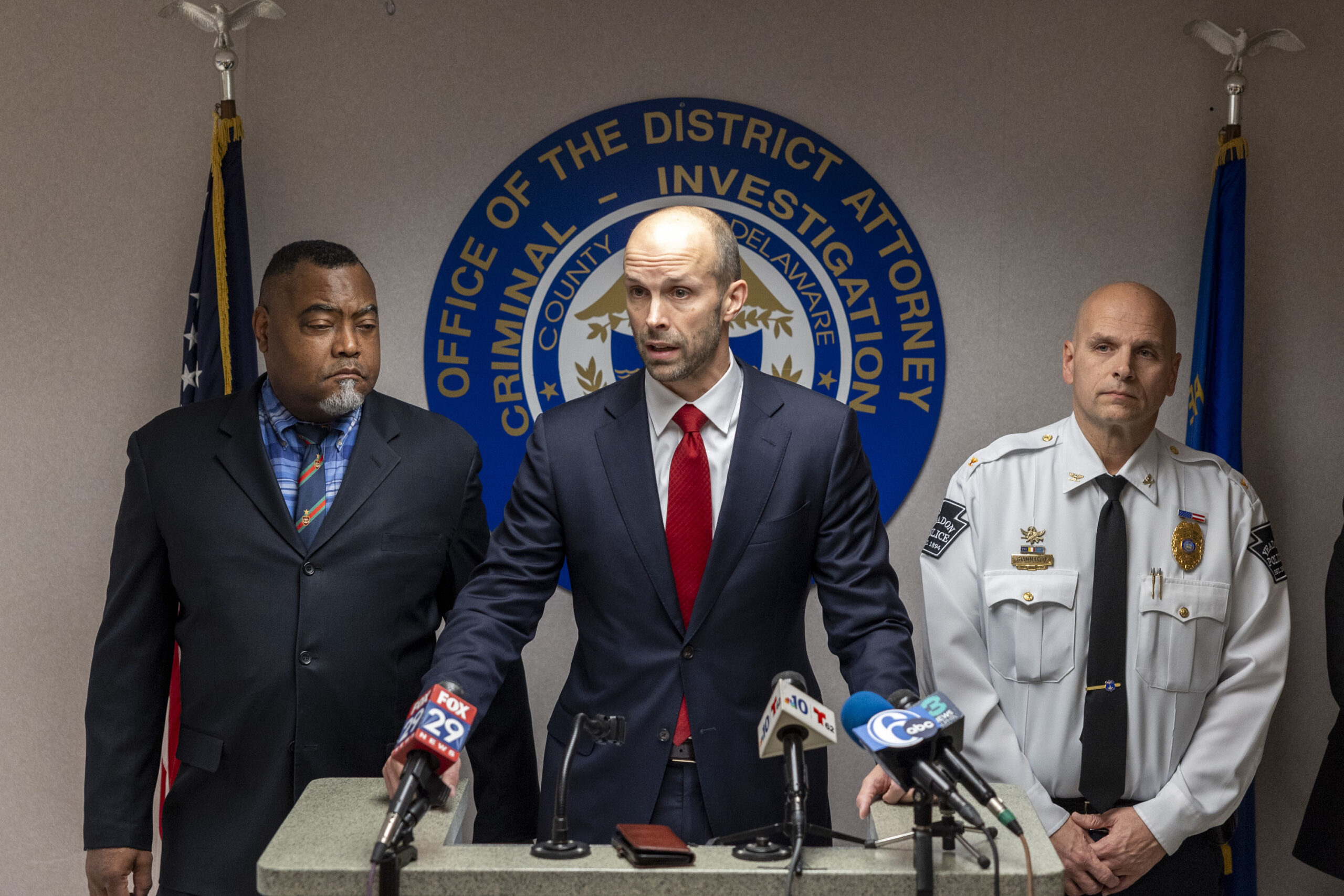
Delaware County District Attorney Tanner Rouse speaks to reporters on Thursday about Jonathan Gerlach, who is charged with burglary, abuse of corpse and desecration, and theft or sale of venerated objects for allegedly stealing from graves.
An Instagram trail
The last post on the Instagram account that Delaware County authorities have linked to Gerlach appeared on Tuesday, the day that detectives took him into custody, after they say they witnessed him carrying a burlap sack filled with human remains out of the cemetery.
A partial skull — its surface darkened and pitted with age, mounted upright like an artifact — appears in the post. Staged against a floral backdrop, the photo is paired with a caption that reads: “if you know, you know. skulls/bones available. dm to inquire.”
The post and dozens of others like it on the account suggest that Gerlach may have been part of a largely unregulated and little-known marketplace in which human bones and remains are bought and sold online and in specialty shops. It’s a trade that can be legal under certain circumstances in a number of states, including Pennsylvania, and one that records suggest Gerlach may have engaged with — though investigators have not confirmed he ever successfully made a sale.
Authorities say the investigation is continuing.
Gerlach is charged with crimes associated with how authorities say he acquired the bones: by breaking into the cemetery’s mausoleums and underground vaults and stealing the remains.
Investigators tied Gerlach’s vehicle to license plate readers near Mount Moriah, they said, and his cell phone to the area. A search of his recent purchases revealed trips to a hardware store to buy items that matched those that detectives had also recovered at damaged grave sites, including a stake.
When detectives executed a search warrant at Gerlach’s home, in the 100 block of Washington Avenue, they said they found skulls arranged on shelves, and a collection of other bones, skeletons and mummified body parts, including feet and hands. They also found a torso hanging from the ceiling, said Delaware County District Attorney Tanner Rouse.
Potential sales, and a call for change
Rouse and Detective Christopher Karr said law enforcement officials are aware of social media accounts associated with Gerlach and are investigating what, if any, connection they may have to his alleged crimes.
Rouse said accounts linked to Gerlach “certainly seemed to indicate” that Gerlach had attempted to sell the remains. “But whether that was real or not — whether a sale had ever been consummated — we can’t say for sure,” he said.
The Instagram account, which dates back to 2023, includes images of human remains arranged on shelves and tables, or held in a man’s hands. Its posts raise questions about whether Gerlach’s alleged activity extended beyond what authorities have detailed so far.
Investigators are working to determine when and where the images were taken and whether any of the items pictured were stolen from Mount Moriah, Rouse said.
In addition to a curator and potential salesperson, the Instagram account presents Gerlach as a forensic practitioner and professional.
In a recent post that pictured Gerlach holding a skull fragment beneath his heavily tattooed neck, the account’s operator wrote that he was completing a certification in forensic and osteological analysis, and planned to offer analysis through a planned company — describing services that would assess human remains using academic and forensic standards.
Gerlach is being held in the Delaware County jail in lieu of $1 million bail.
The investigation into Gerlach remains ongoing, Yeadon Borough Mayor Rohan Hepkins said Friday. Gerlach is suspected of burglarizing additional cemeteries, including in Ephrata, said Hepkins, who also sits on the board of the Friends of Mount Moriah Cemetery and said he helped to bring the case to police.
In a written statement, the Friends of Mount Moriah Cemetery thanked law enforcement officials but declined to comment.
Hepkins expressed dismay that the legal trade of human remains is even possible, and called for reform. “People never conceived that people would be stealing bones from graves and selling them in the market,” he said. “Politicians need to understand there is a type of individual out there — or a market out there — where legislation has to catch up with what’s happening out there.
“It’s a bad situation but a lot of good, preventive maintenance could come out of it,” he added.
Documents released Friday offer new detail on how investigators assembled their striking case against Jonathan Christian Gerlach, who authorities say desecrated dozens of graves to steal human remains.
Gerlach, 34, who is charged with stealing more than 100 skulls, bones, and body parts from Mount Moriah Cemetery, also posted dozens of photos of human remains on social media, records show, and authorities are investigating whether he may have offered to sell them.
The investigation into Gerlach, who lives in Ephrata, spans multiple counties and law enforcement agencies. The historic cemetery stretches across Philadelphia and Yeadon, Delaware County, where officials charged Gerlach on Thursday.
Gerlach’s lawyer, Anna Hinchman, declined to comment Friday, citing the pending criminal case.
In all, Gerlach faces more than 500 counts of burglary, criminal trespassing, abuse of a corpse, theft, and related crimes.
“After 30 years, I can say this is probably the most horrific thing that I’ve seen,” said Yeadon Police Chief Henry Giammarco, whose department was involved in the investigation.
A few Mausoleum’s that Jonathan Gerlach broke into at Mount Moriah Cemetery in Philadelphia.
Grave sites damaged, remains stolen
Detectives were first dispatched to the burial ground on Nov. 7, according to the affidavit of probable cause for Gerlach’s arrest. There, a board member of the Friends of Mount Moriah Cemetery — the group that helps to maintain the burial ground — led the investigators to a mausoleum where a hole in protective cinder blocks revealed a damaged marble floor, 10 feet underground. A white rope, which detectives believe the thief used to rappel into the mausoleum, hung nearby.
They discovered other disturbed burial sites, both that afternoon and weeks later, according to the affidavit: a crypt with its marble entrance stone ripped off, whatever was inside stolen; a damaged, empty casket inside a mausoleum; a clear plastic tarp covering human remains discarded on the ground of the cemetery.
Investigators collected clues, including the rope, a “Monster” energy drink can, and a partially smoked Marlboro Menthol cigarette. Each will be sent for DNA testing, the affidavit said.
On Dec. 23, the document shows, police received a tip pointing to Gerlach. “Look into Jonathan Gerlach,” the tipster said, according to the affidavit. “I know someone who’s friends with his family, and they mentioned that they recently discovered a partially decomposed corpse hanging in his basement, but were afraid to tell police.”
The tipster also pointed investigators to Instagram. “You’ll see he follows accounts in taxidermy, skeleton collecting and sales,” the tipster said.
Delaware County District Attorney Tanner Rouse speaks to reporters on Thursday about Jonathan Gerlach, who is charged with burglary, abuse of corpse and desecration, and theft or sale of venerated objects for allegedly stealing from graves.
An Instagram trail
The last post on the Instagram account that Delaware County authorities have linked to Gerlach appeared on Tuesday, the day that detectives took him into custody, after they say they witnessed him carrying a burlap sack filled with human remains out of the cemetery.
A partial skull — its surface darkened and pitted with age, mounted upright like an artifact — appears in the post. Staged against a floral backdrop, the photo is paired with a caption that reads: “if you know, you know. skulls/bones available. dm to inquire.”
The post and dozens of others like it on the account suggest that Gerlach may have been part of a largely unregulated and little-known marketplace in which human bones and remains are bought and sold online and in specialty shops. It’s a trade that can be legal under certain circumstances in a number of states, including Pennsylvania, and one that records suggest Gerlach may have engaged with — though investigators have not confirmed he ever successfully made a sale.
Authorities say the investigation is continuing.
Gerlach is charged with crimes associated with how authorities say he acquired the bones: by breaking into the cemetery’s mausoleums and underground vaults and stealing the remains.
Investigators tied Gerlach’s vehicle to license plate readers near Mount Moriah, they said, and his cell phone to the area. A search of his recent purchases revealed trips to a hardware store to buy items that matched those that detectives had also recovered at damaged grave sites, including a stake.
When detectives executed a search warrant at Gerlach’s home, in the 100 block of Washington Avenue, they said they found skulls arranged on shelves, and a collection of other bones, skeletons and mummified body parts, including feet and hands. They also found a torso hanging from the ceiling, said Delaware County District Attorney Tanner Rouse.
Potential sales, and a call for change
Rouse and Detective Christopher Karr said law enforcement officials are aware of social media accounts associated with Gerlach and are investigating what, if any, connection they may have to his alleged crimes.
Rouse said accounts linked to Gerlach “certainly seemed to indicate” that Gerlach had attempted to sell the remains. “But whether that was real or not — whether a sale had ever been consummated — we can’t say for sure,” he said.
The Instagram account, which dates back to 2023, includes images of human remains arranged on shelves and tables, or held in a man’s hands. Its posts raise questions about whether Gerlach’s alleged activity extended beyond what authorities have detailed so far.
Investigators are working to determine when and where the images were taken and whether any of the items pictured were stolen from Mount Moriah, Rouse said.
In addition to a curator and potential salesperson, the Instagram account presents Gerlach as a forensic practitioner and professional.
In a recent post that pictured Gerlach holding a skull fragment beneath his heavily tattooed neck, the account’s operator wrote that he was completing a certification in forensic and osteological analysis, and planned to offer analysis through a planned company — describing services that would assess human remains using academic and forensic standards.
Gerlach is being held in the Delaware County jail in lieu of $1 million bail.
The investigation into Gerlach remains ongoing, Yeadon Borough Mayor Rohan Hepkins said Friday. Gerlach is suspected of burglarizing additional cemeteries, including in Ephrata, said Hepkins, who also sits on the board of the Friends of Mount Moriah Cemetery and said he helped to bring the case to police.
In a written statement, the Friends of Mount Moriah Cemetery thanked law enforcement officials but declined to comment.
Hepkins expressed dismay that the legal trade of human remains is even possible, and called for reform. “People never conceived that people would be stealing bones from graves and selling them in the market,” he said. “Politicians need to understand there is a type of individual out there — or a market out there — where legislation has to catch up with what’s happening out there.
“It’s a bad situation but a lot of good, preventive maintenance could come out of it,” he added.
He stored them in the basement, authorities said — the human bones and headless torsos, the skulls and mummified feet, a skeleton with a pacemaker still attached. More than 100 pieces and parts, in all.
There were so many remains, they said, that the police officers who discovered them stopped short, stunned by what they were seeing.
Jonathan Christian Gerlach, 34, of Ephrata, is charged in what Delaware County law enforcement officials described as the most sweeping and unsettling case of its kind they have encountered: the systematic theft of human remains from Mount Moriah Cemetery, the sprawling 160-acre burial ground that straddles Philadelphia and Yeadon Borough, and the place where Betsy Ross was once interred and Civil War soldiers still lie.
“After 30 years, I can say this is probably the most horrific thing that I’ve seen,” said Yeadon Police Chief Henry Giammarco.
Authorities announced Gerlach’s arrest Thursday on charges of burglary, abuse of corpse and desecration and theft or sale of venerated objects. He is being held in jail in lieu of $1 million bail.
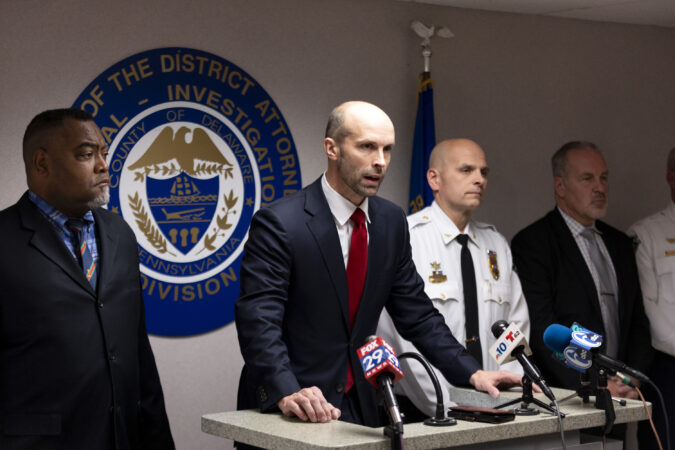
Inside the Delaware County District Attorney’s Office, law enforcement officials projected Gerlach’s photo — his neck covered in tattoos, a gold ring through his nose, green eyes rimmed red — onto a television screen as they outlined crimes whose scale and depravity District Attorney Tanner Rouse said were difficult to comprehend.
Prosecutors said Gerlach repeatedly broke into mausoleums and underground vaults, prying them open with tools and carrying away bodies, bones, and body parts, leaving behind desecrated graves and questions.
The thefts began last fall, authorities said, and ended after dark on Jan. 6, when Yeadon Borough detectives caught Gerlach as he was leaving the cemetery.
For weeks, the detectives had been tracking reports of vandalism and theft from at least 26 mausoleums and underground vaults inside Mount Moriah Cemetery, said Yeadon Mayor Rohan Hepkins, who sits on the cemetery’s board and who brought the case to police.
Investigators tied Gerlach to the crimes, investigators said, after his brown Toyota RAV4 began appearing on nearby license plate readers around the times the burglaries were believed to have occurred. The vehicle had never shown up on the readers before the thefts began, according to the affidavit of probable cause for Gerlach’s arrest. Records also showed his cell phone in the area.
“This was good, old-fashioned police work,” Rouse said.
On Jan. 6, detectives said they watched Gerlach walk out of the cemetery carrying a burlap sack and a crowbar. He was arrested beside his SUV, its back seat strewn with human remains. Inside the sack, detectives said, were the mummified remains of two children, three skulls, and several loose bones.
According to the affidavit, Gerlach told detectives he had used the crowbar to pry open a grave that night to steal the remains. He also admitted to taking at least 30 sets of human remains from across the cemetery, investigators said.
The next day, Jan. 7, a search of Gerlach’s home on the 100 block of Washington Avenue in Ephrata uncovered what Rouse described as the grim collection he had been amassing: remains scattered on shelves and suspended from the ceiling, some in fragments, others stitched back together.
Despite what authorities called overwhelming evidence that Gerlach committed the crimes, much remains unknown, Rouse said Thursday.
“We don’t know what he was doing with them,” he said.
Investigators have not identified a motive, and they cannot say whether Mount Moriah was the only cemetery targeted.
“There are other reports out there that we have not been able to corroborate,” Rouse said, declining to name specific locations. “And frankly, I don’t know that we ever will.”
Philadelphia police are searching for a man they say tried to steal a package from the front steps of a Feltonville home, then exchanged gunfire with both the homeowner and responding officers before fleeing Sunday evening.
Security camera footage from a home in the 400 block of East Rockland Street shows a man approaching the front steps and attempting to take a package, police said. The homeowner, a 50-year-old man, came outside carrying a handgun and confronted him, police said.
The homeowner fired a shot into the ground, police said, prompting the man to run. As he fled, the man fired a gun at the homeowner, they said.
Officers who had been called to the area after reports of a crowd and a person with a weapon on the 4900 block of D Street heard the gunfire and ran toward it, police said. When they encountered the man, police said, he fired his weapon at one of the officers, and the officer fired back.
The man escaped, police said. Officers later recovered a .40-caliber handgun and a jacket on Rockland Street.
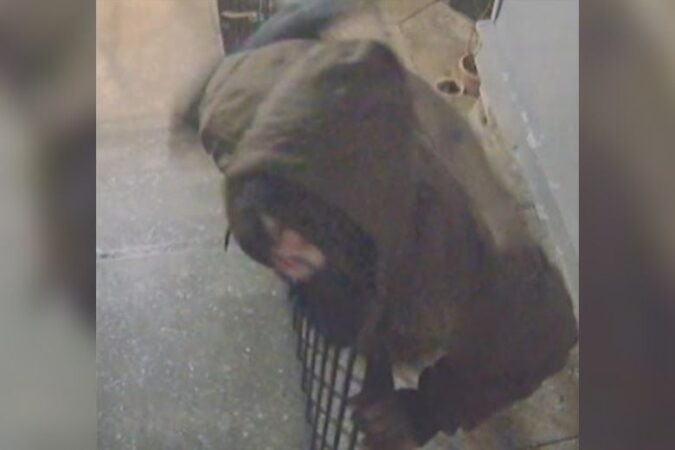
Police described the suspect as light-skinned with a stocky build, and a possible goatee. He was last seen wearing a brown coat, black pants, and gray sneakers.
Police ask that anyone with information about the man or the shooting call or text police at 215-683-1866.
The Philadelphia Fraternal Order of Police is offering a $5,000 reward for information leading to an arrest and conviction.
The officer who fired his weapon has been placed on administrative duty, as is customary, pending an internal investigation, police said. His name has not been released.
The Philadelphia Police Department on Tuesday released the name of the officer who shot and wounded a knife-wielding man on New Year’s Eve in Strawberry Mansion: Nicholas Jones.
Jones, 26, a four-year veteran of the department, shot 31-year-old Keith Freeman once in the chest, police said.
Jones and another officer — whose name has not been released — were called to a house in the 1800 block of North Bailey Street, police said, after a 911 caller had reported hearing a woman screaming.
A 9-year-old child opened the door, police said, and inside the officers saw a 30-year-old woman lying on the floor. Standing over her, knife in hand, they said, was Freeman. The woman had not been injured.
According to police, Jones and the other officer told Freeman to drop the knife. Instead, police said, Freeman leapt over a sofa and charged the officers, and Jones shot him.
Freeman was taken to Temple University Hospital for treatment. He was charged with aggravated assault, possession of an instrument of crime, simple assault, and recklessly endangering another person.
Freeman and the woman know one another, police said.
A police spokesperson said Tuesday that Jones has not previously been involved in an on-duty shooting. He has been placed on administrative duty, as is customary, pending an internal investigation.
A man died Sunday night after being placed in the back of a Philadelphia police cruiser that was parked on a Mayfair road, police said.
Officers were called to the 4000 block of Hellerman Street after the man, whose name and age have not been released, fired his legally owned gun several times into the ground outside a home he had just left, a police spokesperson said Monday.
Moments earlier, the spokesperson said, the man had argued with a relative during a party at the house.
No one was injured by the gunfire, police said.
When officers arrived, they took the man, who they said appeared disoriented and resisted arrest, into custody. They placed him in the back of a police vehicle, “where he became unresponsive,” the spokesperson said.
Efforts to resuscitate him were unsuccessful, and he was pronounced dead shortly before midnight at a nearby hospital.
The police released no additional details about the incident and said the cause of the man’s death has not yet been determined.
On Monday afternoon, no one answered the door at the home where the party had taken place. There was no visible sign of gunfire on the front lawn, which was crowded with lawn ornaments and a sign warning dog owners to clean up after their pets.
Two neighbors who were reached for comment at their homes said they had slept through the incident.
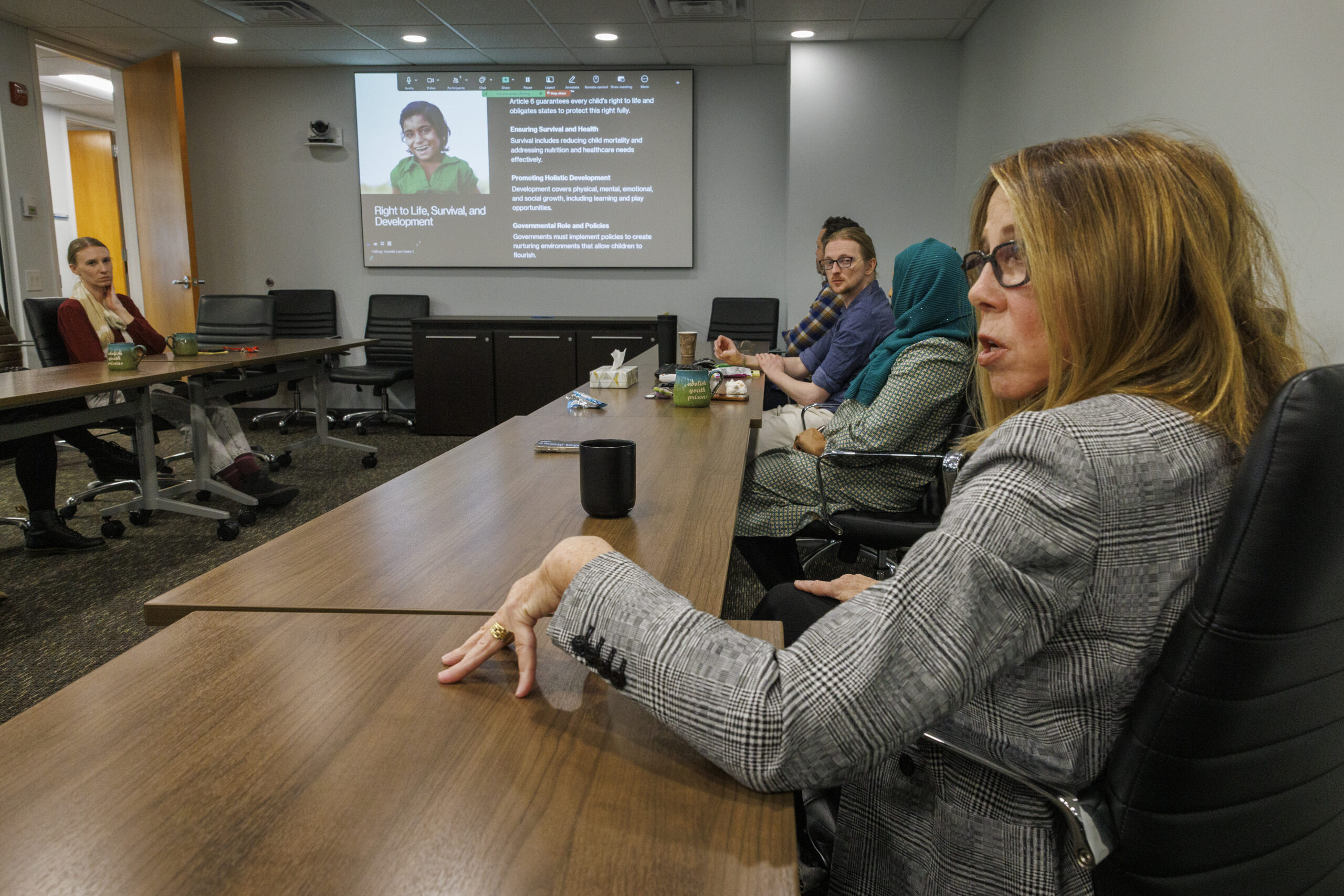
Marsha Levick took her seat at a conference table at the Juvenile Law Center on a recent Wednesday for what would be one of her last meetings. She walked colleagues through the basic principles of the United Nations Convention on the Rights of the Child, the 1989 treaty that laid out, in clear terms, what the world said it owed young people.
At the heart of the treaty is a simple idea: A child’s best interests come first — even when that child enters the justice system. It has been ratified by all but one of the U.N.’s member nations: the U.S. And in many of those 196other countries,Levick said, children younger than 14 cannot be prosecuted at all.
“Wait,” a staffer interjected. “Kids younger than 14 aren’t in the justice system?”
“I know,” Levick said. “It’s very different.”
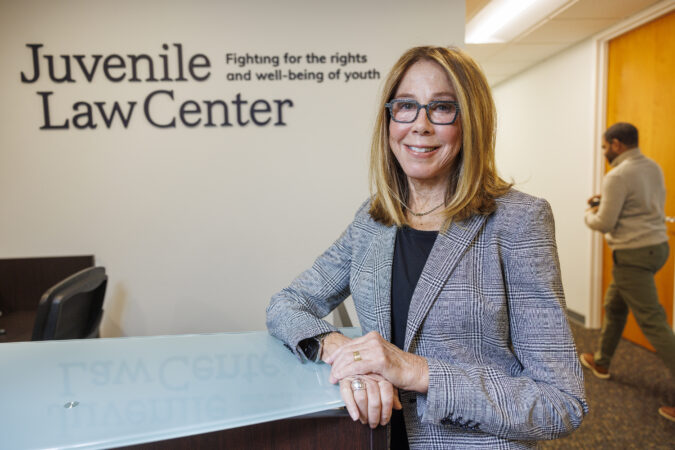
Marsha Levick, chief legal officer and cofounder of the Juvenile Law Center, speaks with staff on Dec. 17.
For 50 years, Levick, 74, has been one of the most persistent and influential voices in the American juvenile justice system, a driving force in turning what was once a niche legal specialty into a national civil rights movement. Colleagues credit her with helping to rewrite how courts view children — persuading judges, including those on the U.S. Supreme Court, to treat youth not as miniature adults but as citizens with distinct constitutional protections and needs.
Levick will step down Wednesday from her position as chief legal officer of the Juvenile Law Center, the Philadelphia-based organization she helped build from a walk-in legal clinic in 1975 into a national leader in children’s rights.
Her departure coincides with the center’s 50th anniversary. At a celebration gala in May, the nonprofit honored Levick with a leadership award that recognized her body of work.
Levick’s career ranged from representing individual teenagers to steering landmark litigation that forced states to overhaul abusive practices. She helped lead the Juvenile Law Center’s response to the “kids for cash” scandal in Luzerne County. She coauthored briefs in a series of U.S. Supreme Court victories that throttled the harshest punishments for kids, including life in prison.
But Levick is also stepping down at what she calls a “dark moment” forcivil liberties in America — a time when rights once thought settled are being rolled back.
Levick was in law school in 1973 when the U.S. Supreme Court handed down Roe v. Wade, the landmark decision that recognized a constitutional right to abortion. In the years that followed, a constellation of rights — from marriage equality to access to contraception — also expanded.
Roe was overturned, however, in 2022. Since then, other decisions have also chipped away at affirmative action in colleges and LGBTQ+ protections.
“It’s hard to convey the shock that it imposes,” Levick said in a recent interview. “Now, 50 years later, you’re pushing the rock back up the hill.”
She made clear she was unsparing with herself, quick to point out what she perceived as shortcomings. “There were high moments for sure,” she said. “But I am not foolishly happy about that. I’m shocked that that’s all we could do. That’s as far as we got.”
Yet even as fresh battles loom, colleagues say the groundwork Levick has laid will guide the Juvenile Law Center’s mission and the broader fight for children’s rights for years to come.
Jessica Feierman, the center’s senior managing director, will step into Levick’s role. “It is a huge privilege and also an immense responsibility,” she said. “In this moment of attacks on civil rights and children’s rights, it’s even more vital that we build on the victories of the last 50 years.”
From Philadelphia to the U.S. Supreme Court
Raised in Philadelphia’s Fairmount neighborhood, Levick discovered early the charge of using her voice, first as a girl who demanded a recount in an elementary school election and won the presidency, and later as a teenager who inhaled The Feminine Mystique and the feminist writers who followed. She earned an undergraduate degree from the University of Pennsylvania and a law degree from what is now Temple University Beasley School of Law.
She cofounded the Juvenile Law Center in 1975 with three law school classmates: Bob Schwartz, a classical music aficionado and part-time semi-pro baseball umpire; Phil Margolis, a vegetarian and free spirit; and Judy Chomsky, a mother of two and passionate Vietnam War resister.
Seven years earlier, the U.S. Supreme Court had ruled that juveniles were entitled to due process. That decision cracked open an untapped field, Levick said, to buildwith her classmates a new kind of civil rights practice focused on children.
For the first year, they worked out of the Chestnut Street office of Chomsky’s husband, a cardiologist, carving out space in his waiting room and sidestepping an exam room on the days he saw patients.
In its earliest years, the center took on individual cases for children. One of Levick’s first clients was in Montgomery County, a teen girl who had participated in a protest at a nuclear plant and who was arrested and charged with trespassing, she said.
But the center struggled financially. The founding partners laid themselves off at one point, Levick said, so they could keep paying the few employees they had hired: a divorced mother who worked as a receptionist; their first lawyer, Anita DeFrantz, who was an Olympic rower; and a social worker.
In 1982, Levick quit the center to become the legal director of the national NOW Legal Defense and Education Fund, now Legal Momentum. By the time she left there six years later, she had become its executive director.
At the NOW Legal Defense and Education Fund, Levick said, she learned how to build national cases — coordinating multistate litigation and filing amicus briefs in federal courts. By the time she returned to the Juvenile Law Center in 1995, after a stint at a small Paoli firm, she had come to believe that individual wins, while necessary, would not be enough to create lasting change.
The center’s mission became more focused on appellate litigation and national advocacy, setting the stage for children’s rights to reach state supreme courts and, eventually, the U.S. Supreme Court.
Hundreds of juveniles resentenced, released
In 2005, in Roper v. Simmons, Levick cowrote in a brief that social science research on youth development should inform constitutional law. Children, she also wrote, have a greater capacity to change.
“We just pushed ourselves into the center of it,” Levick said. “We were like, ‘We’re here. We’re writing the amicus brief.’”
The high court overturned decades of precedent when it ruled in Roper that the Eighth Amendment forbids the death penalty for juveniles. Five years later, in Graham v. Florida, it barred life-without-parole sentences for juveniles in non-homicide cases, after reading another brief Levick coauthored.
In 2012, Levick helped persuade the court to end mandatory life-without-parole sentences for youths convicted of homicide in Miller v. Alabama. And in 2016, she served as cocounsel in Montgomery v. Louisiana, the case that made the Miller decision retroactive across the country.
Since then, hundreds of juveniles — including nearly 500 in Pennsylvania — have been resentenced or released from prison. One of them: Donnell Drinks, freed in 2018 after 27 years.
The first time Drinks met Levick, he hugged her. “I couldn’t believe how small she was, because of her presence, her legal prowess, has all been so enormous,” recalled Drinks, who works as a leadership and engagement coordinator at the Campaign for the Fair Sentencing of Youth.Levick is 5-foot-3.
Those cases brought Levick into courtrooms across the state, often alongside public defenders. One of them, Bradley S. Bridge, a retired Philadelphia public defender who worked with her on dozens of resentencings, called Levick a “zealous advocate” who “always saw the big picture.”
Her ability, he said, “to think toward the future, I think, was most glorious.”
Levick agreed that looking ahead had always been part of her work. “We always tried to look around the corner,” she said.
One of those moments came in 2008, when she and her colleagues began fielding troubling calls from Luzerne County — the first hints of what would become the “kids-for-cash” scandal.
Seeing more in the ‘kids-for-cash’ scandal
In 2007, Laurene Transue called the Juvenile Law Center. Her daughter, 14-year-old Hillary Transue, had been ordered to serve three months in a detention facility after she created a Myspace page mocking her school principal, she said at the time.
“We saw in that one phone call something that was clearly much bigger,” Levick said.
In fact, it was one of the most egregious judicial corruption cases in modern American history: Two Luzerne County judges had accepted kickbacks in exchange for sentencing thousands of juveniles — many for minor misbehavior — to extended stays in private detention centers.
“It was kind of like, if I may, what the f— in my mind,” Levick recalled.
Levick and the center petitioned the Pennsylvania Supreme Court, which ultimately threw out and expunged thousands of adjudications. They later helped families pursue civil damages, with the help of other firms. The judges, Mark Ciavarella and Michael Conahan, were convicted of federal crimes and sentenced to long prison terms; President Joe Biden commuted Conahan’s sentence in 2024.
Hillary Transue now serves on the Juvenile Law Center’s board.
Transue told The Inquirer that as a teenager she believed that “highly educated” adults in “positions of authority” were “mean, nasty people who were out to hurt you.” But Levick, she said, “brushed up against my perception of adults” and proved her wrong.
“I think she’s a goddamn superhero,” Transue said recently.
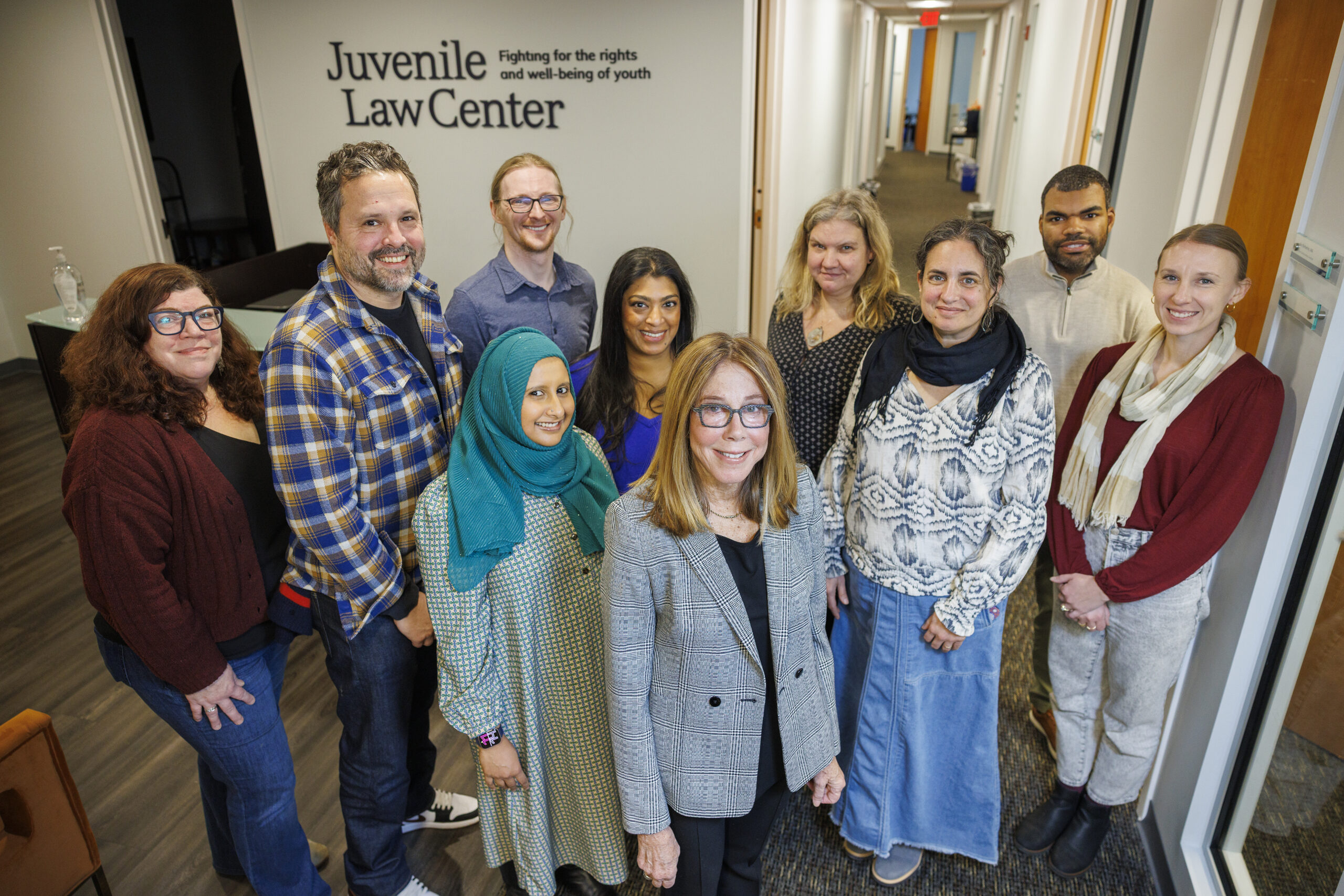
Marsha Levick (center) stands with staffers at the Juvenile Law Center earlier this month.
Among the successes, Levick still sees failures
Despite the victories, Levick is quick to cite the cases she lost. “I’ve had successes. I’ve also failed many times,” she said.
She still thinks about clients like Jamie Silvonek, sentenced to 35 years to life in prison after killing her mother, whose early release Levick has fought for but has not yet won, or a recent bid to expand parole access for people convicted as juveniles that fell flat in Florida.
Those losses have hardened her view of how deeply punishment is embedded in American law. “I feel like punishment is in our bones,” she said. “The way that we think about crime is that it is always followed by punishment.”
That instinct, she said, has left behind people who could have thrived outside prison — including juvenile lifers who will never be released. One of them is Silvonek, whom Levick described as brilliant and warm. “I want her to be able to share that warmth and joy with her family and with her community, who are all behind her,” Levick said.
“We lost what they had to give,” she added.
Levick isn’t done yet
Levick, who is married with two adult daughters, is not leaving the field. She will become the Phyllis Beck chair at Temple’s Beasley School of Law, a post once held by her cofounder Bob Schwartz, and will teach constitutional law to first-year students.
She feels newly urgent about the course. “I am outraged at the degree to which the law has been perverted by the current moment, and I think I still can say and do something about that,” she said. “I think that the things that motivate me include outrage.”
She expects much of the future progress in youth justice to come from state supreme courts rather than the U.S. Supreme Court — a shift she sees as pragmatic, not pessimistic. Washington State Supreme Court Justice Mary Yu, who has heard Levick argue successfully before her, called her a fearless litigator. “She’s an extraordinary appellate lawyer,” Yu, who is also retiring Wednesday, said in an interview.“It’s almost instinctual to her.”
And even now, Levick said, she has hope.
“We’re not going to abolish the juvenile justice system in America, but we could transform it radically,” Levick said. “I believe that. But it takes more than just lawyers to care. It takes more than the community to care. It takes people in positions of power to care. And that’s the hard part.”
Correction: An earlier version of this article misstated the name of a legal advocacy group at which Levick worked. She worked at NOW Legal Defense and Education Fund. The story also misstated the year Laurene Transue called the Juvenile Law Center; she called the law center in 2007.
Philadelphia police have arrested a 16-year-old girl and charged her with voluntary manslaughter, after they said she stabbed a man Sunday morning in Roxborough.
Officers who were called to the 500 block of Wartman Street found the 57-year-old man. He had been stabbed multiple timesin between his ribs, police said.
The man, whose name has not been released, was transported to Jefferson-Einstein Hospital, where he died shortly after 10 a.m., police said.
Deputy Police Commissioner Frank Vanore said the girl and her mother lived with the man, a family friend, in the Wartman Street home. He said that there was an altercation between the teen and the man, and that the girl then stabbed him multiple times. The teen, he said, also suffered injuries to her face.
Officers took the girl into custody Sunday. In addition to voluntary manslaughter, she has been charged with possessing an instrument of crime. She is being charged as a juvenile.
Vanore said investigators are looking into whether the teen and man may have used drugs together.