Author: Craig LaBan

  • Where to eat at the Jersey Shore this year, from LBI to Margate

    Where to eat at the Jersey Shore this year, from LBI to Margate

    If you’re a regular visitor to the Jersey Shore, catching up with your longtime favorite foods, chefs, and restaurants can often tell a wider story about what’s been happening in your favorite beach towns. The economic pressure of rising real estate prices has made the arrival of a sweet little BYOB like Joy & Salt on Long Beach Island a test case for the future of the small operator. The saga of ongoing attempts to revitalize Atlantic City’s Tennessee Avenue development? It just got a fresh boost from the comeback of a talented local chef. A new gem for stellar soul food, a growing audience for deep-crusted pizza, the rise of fancy iced coffee (with everything but the taste of coffee), and sage advice on how to choose the right pasta shape all added a tasty helping of color to this week’s fresh batch of restaurant reports from LBI to Margate.
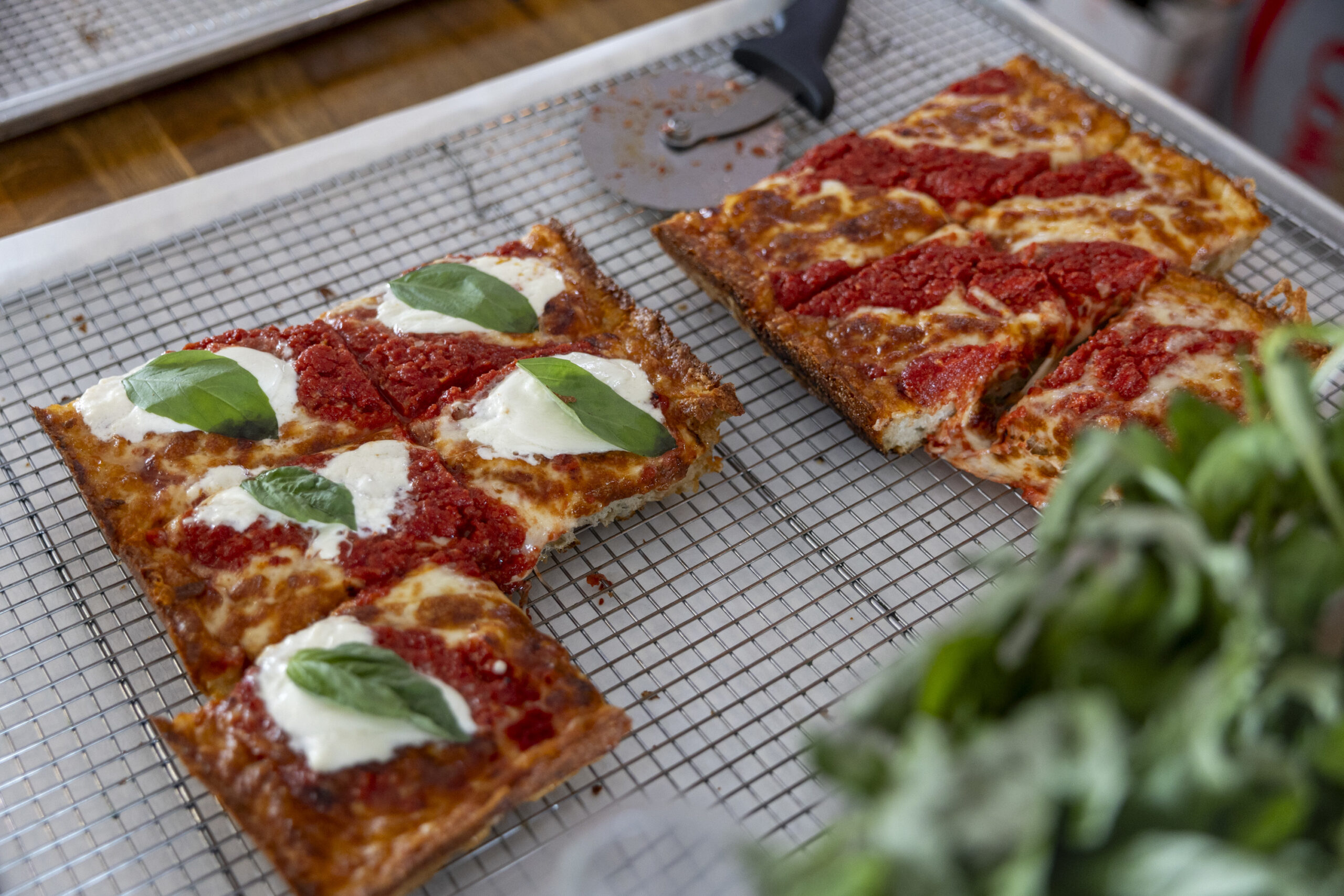
    The burrata with fresh basil and plain cheese pie at Queen City Crust in Beach Haven, N.J., on Thursday, June 18, 2026.

    I also delve into the Ventnorian controversy over a classic sub shop that’s been remade into an artisan sourdough bakery and touched a nerve with locals who fear their community is becoming too bourgeois. Then again, when something is as good as Florida Cuts is, perhaps it’s not simply change for the sake of trends but actual progress.

    Next week: new options from Cape May to Ocean City.
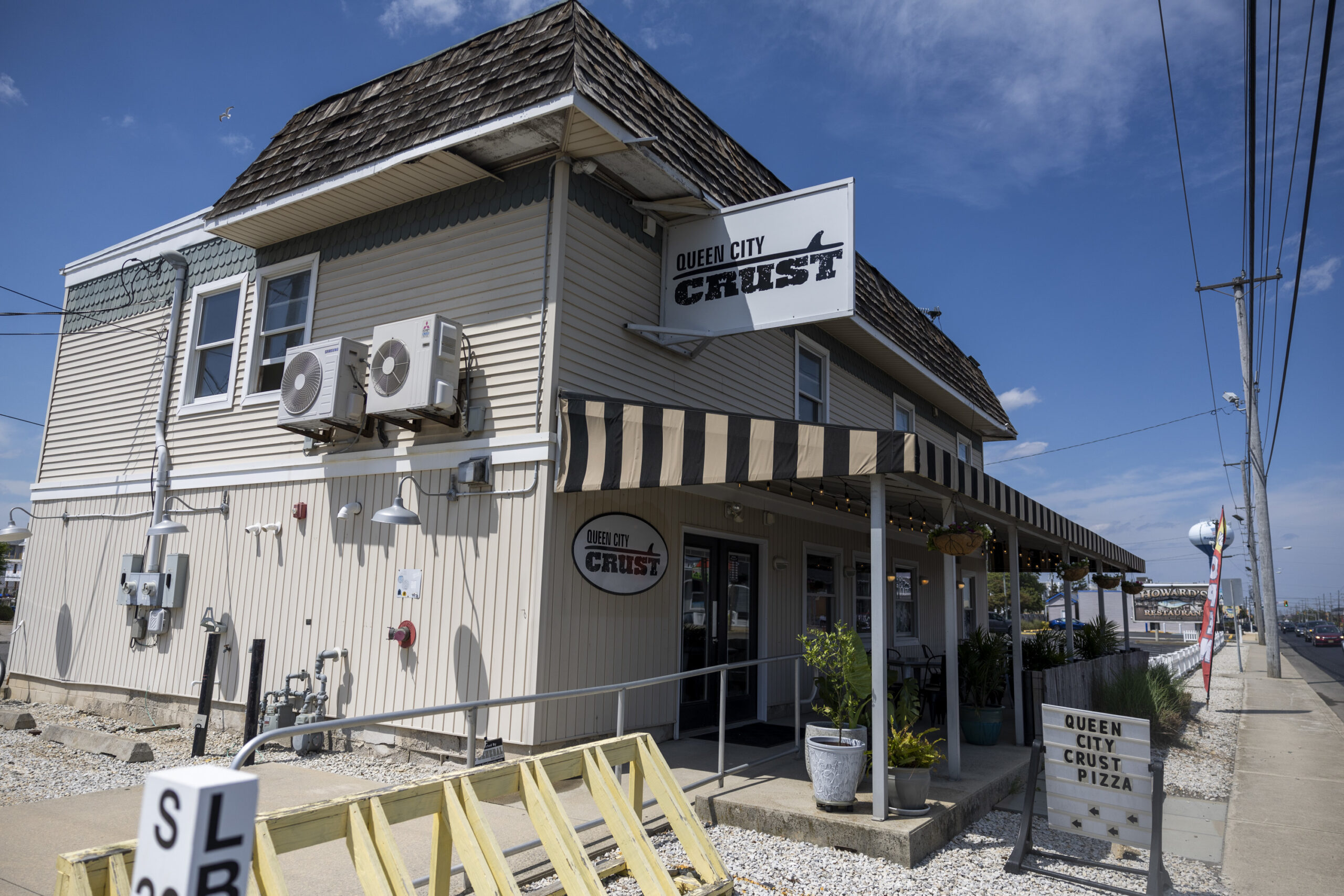
    The outside of Queen City Crust in Beach Haven, N.J., on Thursday, June 18, 2026.

    LONG BEACH ISLAND

    Joy & Salt Cafe

    With a temporary sign, and an understated location at an intersection near the ocean where drivers slingshot on and off the causeway to Long Beach Island, you could easily miss Joy & Salt Cafe. But it’s worth a stop at this low-key newcomer to Ship Bottom, a collaboration between two veteran chefs hoping to claim one of the few remaining corners of the island and make what partner Jordan Miller says is “a last-ditch effort for the charm of an old-school BYOB.”

    Miller and his business partner and co-chef, Jimi Savianeso, make up for the understated location with genuine hospitality and hands-on scratch cooking. The duo met cooking on the line years ago at local favorite Black-Eyed Susans. With years of fine dining experience behind them, they are opting for a more casual approach to this diner-space and channeling good local ingredients into food they simply like to eat.
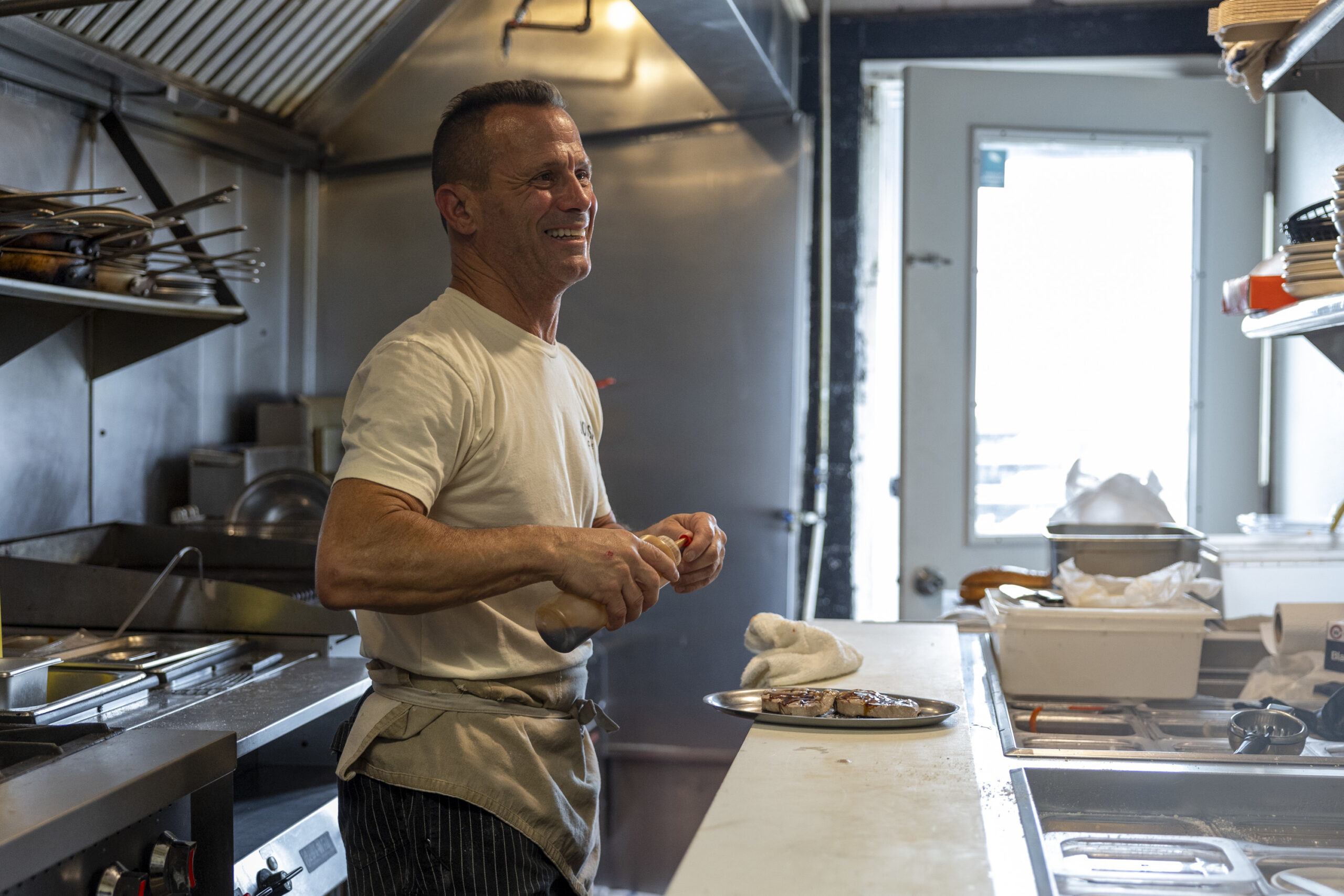
    James Savianeso, chef and co-owner of Joy & Salt Cafe, working in the kitchen in Ship Bottom, N.J., on Thursday, June 18, 2026.
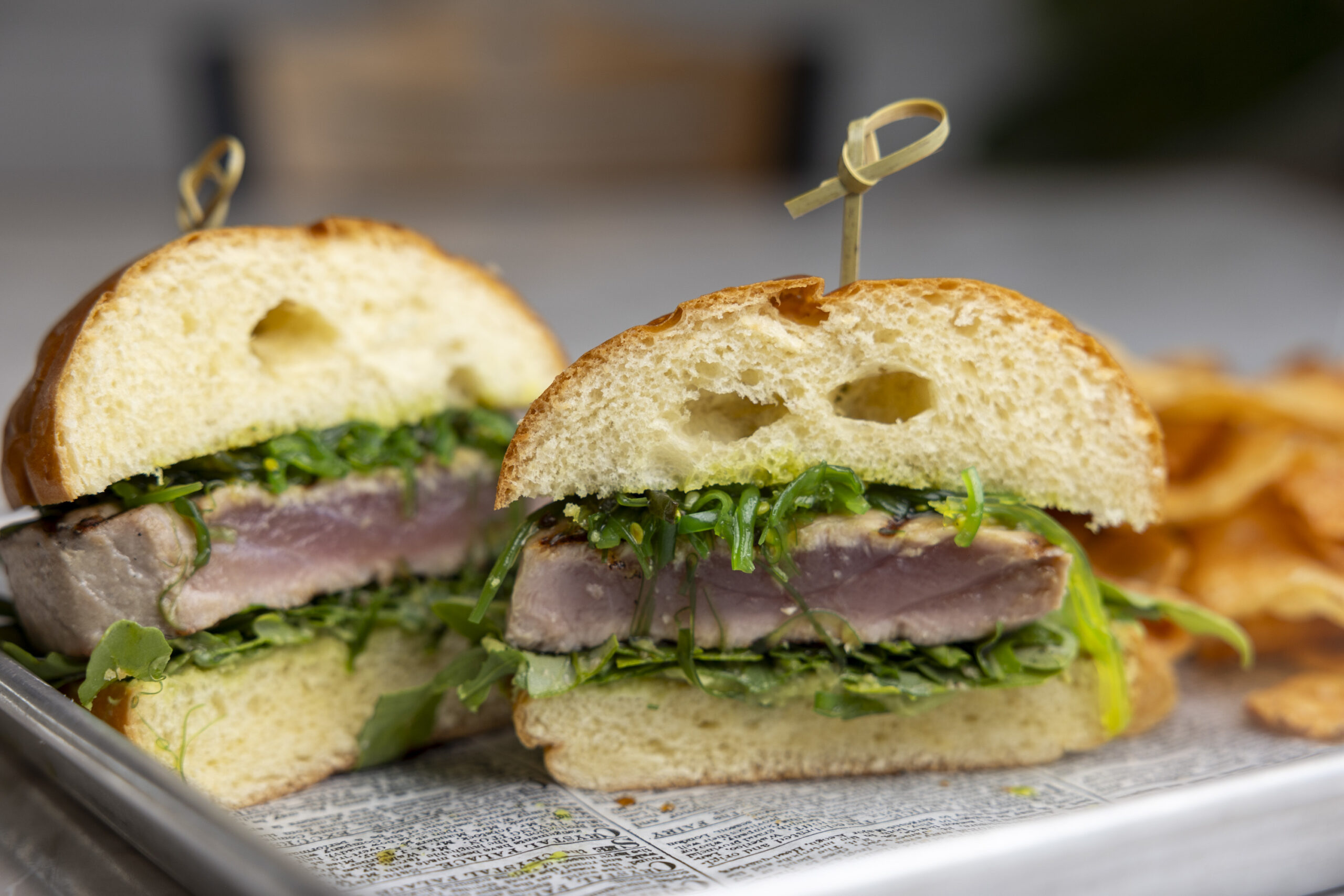
    The grilled ahi tuna sandwich at Joy & Salt Cafe in Ship Bottom, N.J., on June 18, 2026.

    That could mean a flavorful chowder made from just-dug whole clams, a slice of locally fished grilled tuna on brioche glossed in house-made Japanese barbecue sauce, or a bountiful chilled shrimp cocktail tossed in a saucy Mexican-style marinade (the secret? fresh tomato juice and orange soda). The duo routinely cook fresh-off-the-boat seafood specials for dinner sourced from the nearby docks, but the menu’s default is a homey Italian touch that comes natural to Savianeso, whose North Jersey upbringing imbues his red sauce and sausage and peppers with a nonna-esque magic. That is especially evident at lunch, where Savianeso’s chicken cutlet parm drenched in super-creamy vodka sauce may well become LBI’s sandwich of the summer.

    Joy & Salt Cafe, 816 Long Beach Blvd., Ship Bottom, N.J. 08008; 609-342-0794; joysaltkitchen.com

    Ellis’ Chicken & Crab Cakes

    Takeout can be tricky when determined diners are waiting in lines up to two hours for a seat at one of the Tide Table Group’s roster of popular restaurants on Long Beach Island (Parker’s Garage, Bird & Betty’s, Black Whale, Ship Bottom Shellfish) and in Manahawkin (Mud City Crab House, the Old Causeway Steak & Oyster House). They’ve addressed that conundrum with the creation of Ellis’ Chicken & Crab Cakes, a convenient destination for some of their greatest hits, collected in the fast-casual confines of a crisply rehabbed former antiques shop in Beach Haven that doubles as a boardinghouse for many of the company’s summer workers.

    The name offers a good clue as to the specialties: the fried chicken is the same crackle-crusted, buttermilk fried bird from Parker’s Garage. The crab cakes comes in two styles, the somewhat bready OG cakes from Mud City or the baked variation from Parker’s which I far preferred, not only because they’re gluten-free, with tapioca starch for binding, but because they’re made from sweet lump crab bound with a béarnaise sauce flavored with tarragon and Old Bay. The super-plump peel-and-eat shrimp offer a worthy, non-fried option. But this kitchen’s best assets are all about the crisp. Don’t leave without a side of deep-fried green tomato tots covered in creamy drizzles of zesty pimento cheese.

    Ellis’ Chicken & Crab Cakes, 208 N. Bay Ave., Beach Haven, N.J. 08008; 609-342-1100; ellislbi.com

    Queen City Crust

    Jersey Shore pizza has been trending toward thicker crusts in recent years, rising from the cardboard-thin rounds that have long been the boardwalk prototype to heartier, pan-baked pies with flavorful slow-fermented doughs and borders that snap with crispy cheese edges. Bakeria 1010 and Squares & Fare are two outstanding examples I’ve enjoyed in Ocean City and Somers Point, respectively. Long Beach Island has also gotten into the Detroit-style pie action with Queen City Crust, a former pop-up sensation that is now in its third year as a standalone storefront in Beach Haven.
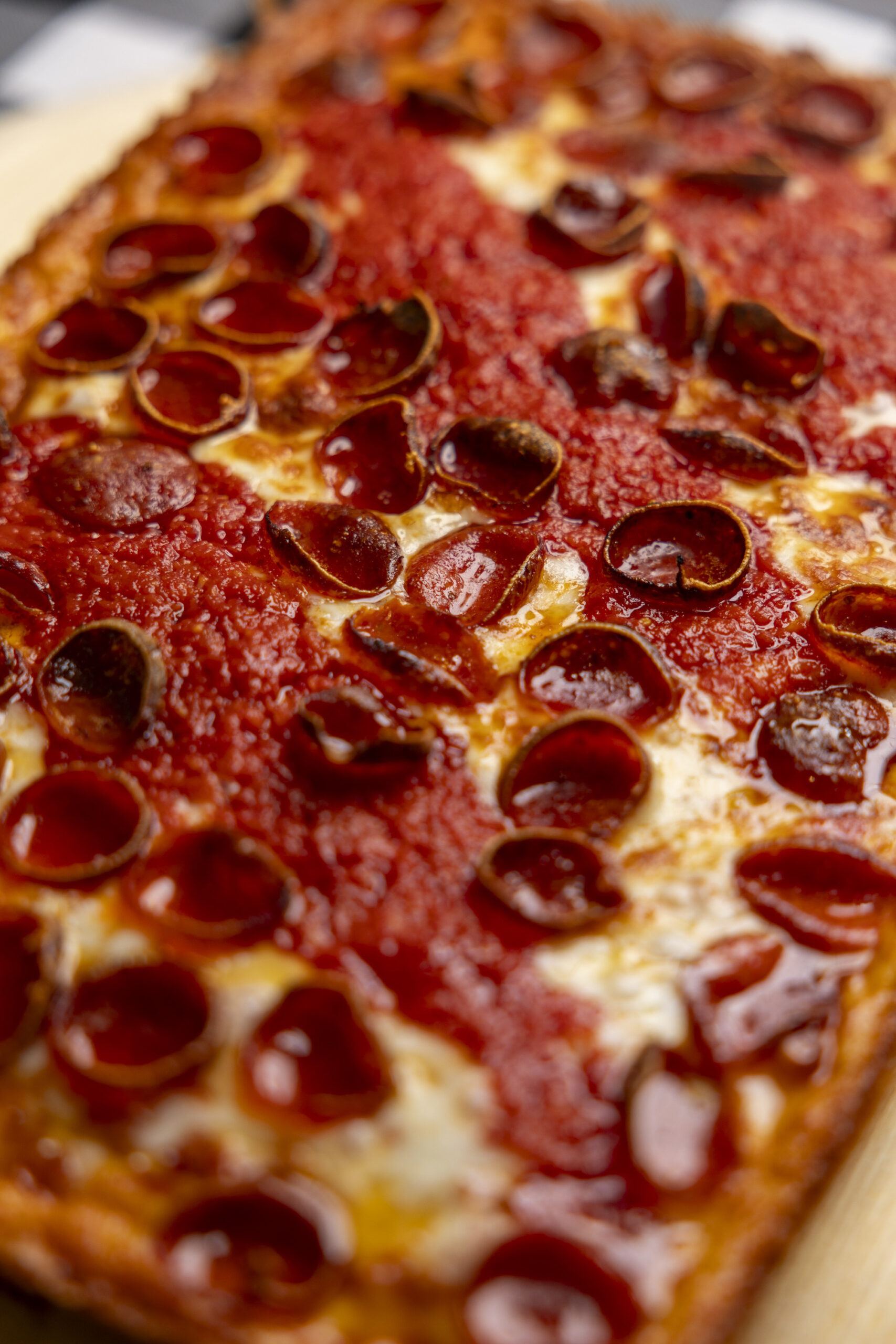
    Hot honey pepperoni pie Queen City Crust in Beach Haven, N.J., on Thursday, June 18, 2026.

    Owner Troy Sambalino, who spends his offseason running the service pass at Jean-Georges in Manhattan, says the Detroit style, which involves a slower, lower-temp prebake followed by a hot flash to finish pies to order, is ideal for beach locations with the technical limitations of a standard oven. But he still manages to crank out 200 pies on a busy Friday night, good enough to earn him the No. 1 spot in a 2025 ranking of 55 Shore pizzerias by NJ.com.

    Sambalino has a patient approach to his dough, which, after a two-day cold ferment, has both an impressively airy interior and a bottom that forms a delicate crisp against the olive oil-lined pan. Mozzarella and tangy cheddar are his cheese combo of choice, with the cheddar tucked near the edges forming a toasty crisp. One 10-by-13-inch pan can easily feed two to four people, but I appreciate that Queen City also sells its pies by the slice so you can taste a variety of toppings. From the cup-and-char pepperoni drizzled with hot honey to sausage with crunchy banana peppers, basil-topped puddles of milky burrata laced with bright tomato sauce, or a fusion pie of breaded chicken bits streaked with spicy Asian barbecue sauce, these pies offer hearty satisfaction when your teeth sink into their crusts.

    Queen City Crust, 13504 Long Beach Blvd., Beach Haven, N.J. 08008; 609-661-7769; queencitycrust.com

    Guapo’s Coffee House

    As I steadily caffeinated during my restaurant research missions up-and-down the Jersey Shore, my encounters with confectionary-sounding coffee drinks that included “dulce de leche, “dot cake,” and “banana bread” in the titles made it clear that running a cafe in 2026 is as much about thinking like a pastry chef as a barista.
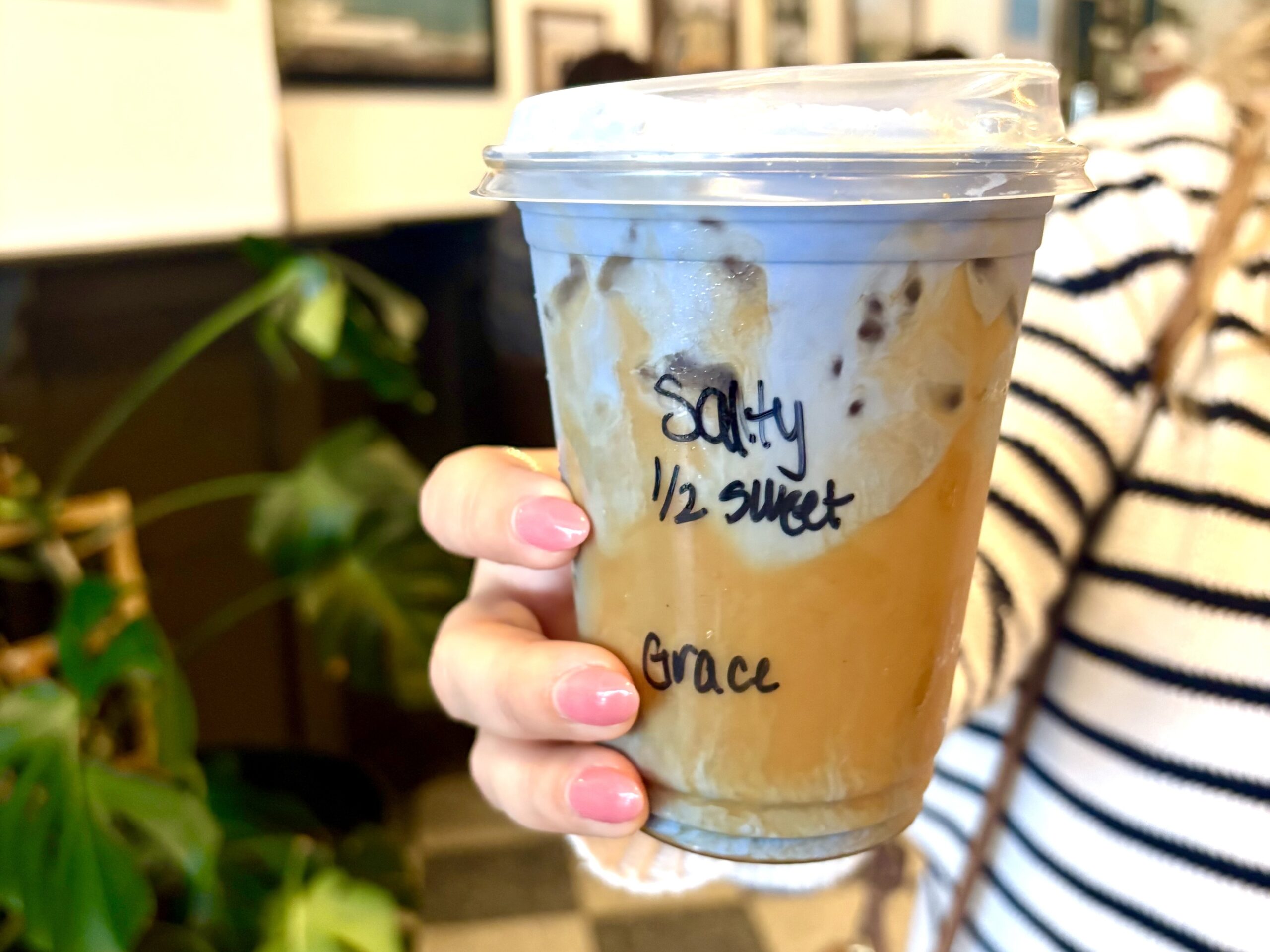
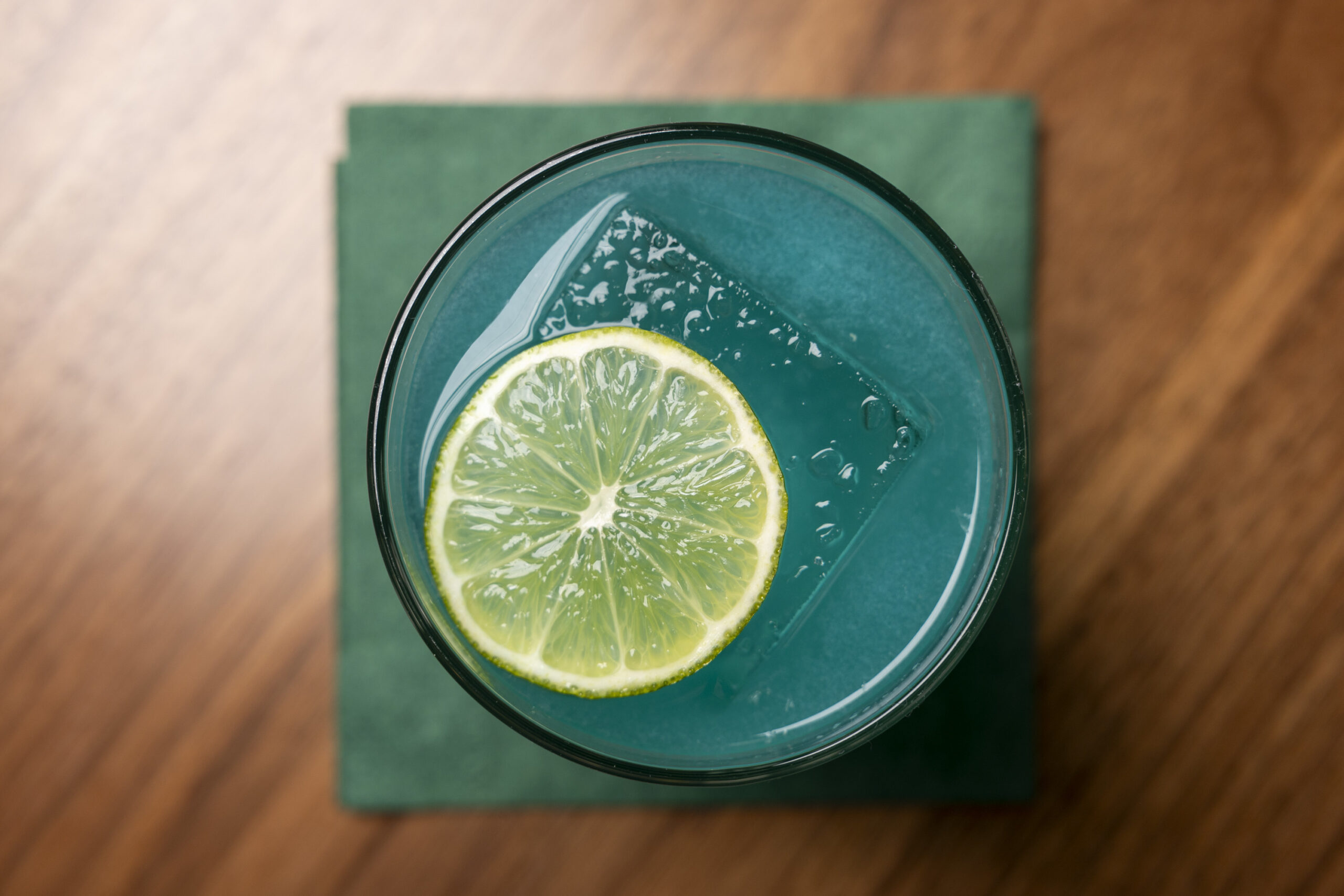
    The Salty Dog iced coffee at Guapo’s Coffee House in Beach Haven blends salted caramel-sweetend espresso with whipped cream turned blue with spirulina. It’s become a viral hit.

    In general, I’m not a dessert coffee fan. But the reason I returned multiple times to Guapo’s in Long Beach Island is because their specialty drinks still taste like they also actually include coffee. Even owner Sammy Jo Alvarez’s most viral and colorful drink, the Salty Dog (named for her pup Guapo), still delivers a toasty undertow of the house blend of Ethiopian and Colombian beans, roasted to a medium hue by Yellow Dog Roasters in nearby Manahawkin. The secret to making creatively flavored drinks that still have coffee integrity, says Alvarez, a longtime local bartender before launching her roof deck-topped cafe in Beach Haven four years ago, is balance and focusing on natural ingredients. All the add-in ingredients here are made in-house, from the sea salted caramel syrup to the top layer of fresh whipped cream (aka “cold foam”) that she turns sky blue with organic spirulina. “Basically, it looks like a day at the beach inside a cup — and people love it.”

    Guapo’s Coffee House, 106 N. Bay Ave., Beach Haven, N.J. 08008, 609-661-3504; guaposcoffee.com
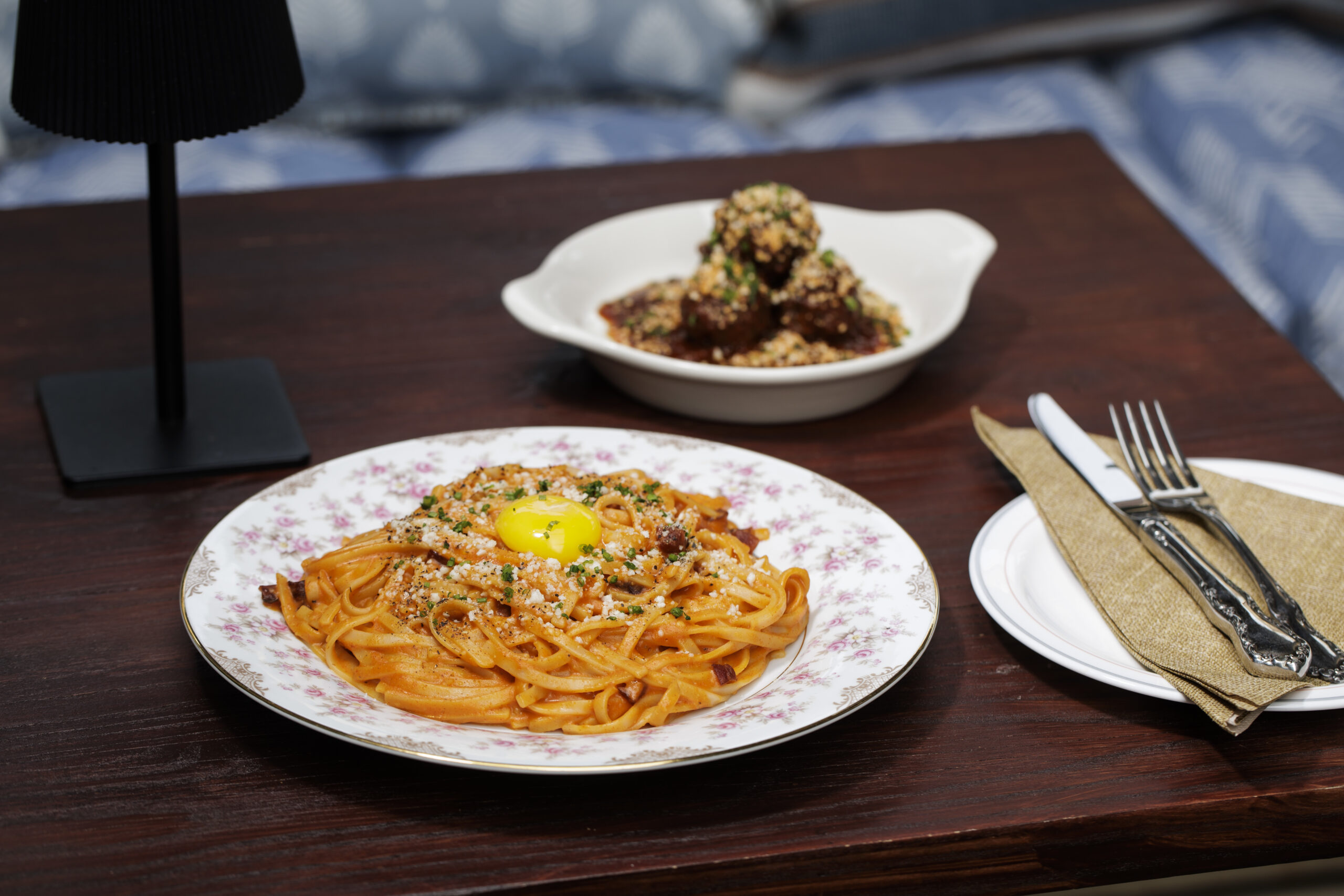
    The gochujang carbonara and Oaxacan meatballs at the Iron Room in Atlantic City, N.J. The Iron Room is hidden behind a door at Bar 32.

    ATLANTIC CITY

    Nana’s Good Eats

    If there’s a 20 minute-plus wait for your food at Nana’s Good Eats, it’s for a good reason: nothing hits the fryer before you order from this cheerful soul food hub, located on the pedestrian pavilion of Atlantic City’s Tanger Outlet mall. The wait is absolutely worth it, because Nana’s serves up some of the most delicious fried whiting I’ve had in recent memory, a huge portion of plump and lemon-scented fresh fillets sealed inside a delicate cornmeal crust, just as owner Samantha Prescott’s grandpa Dennis McDowell, a professional chef, taught her as a little girl. (“Most parents lead with how to tie your shoe, but my grandpa started by teaching me how to stir a pot of grits so it doesn’t stick to the bottom.”) Prescott’s cooking chops are also evident in her succulent fried jumbo shrimp, as well as every side I sampled. The mac and cheese retained the almost fluffy texture of perfectly cooked cavatappi while a balanced five-cheese sauce remained creamy, not broken or greasy. The tender braised collards were infused with the whiff of smoked turkey wings and a perky finishing tang.
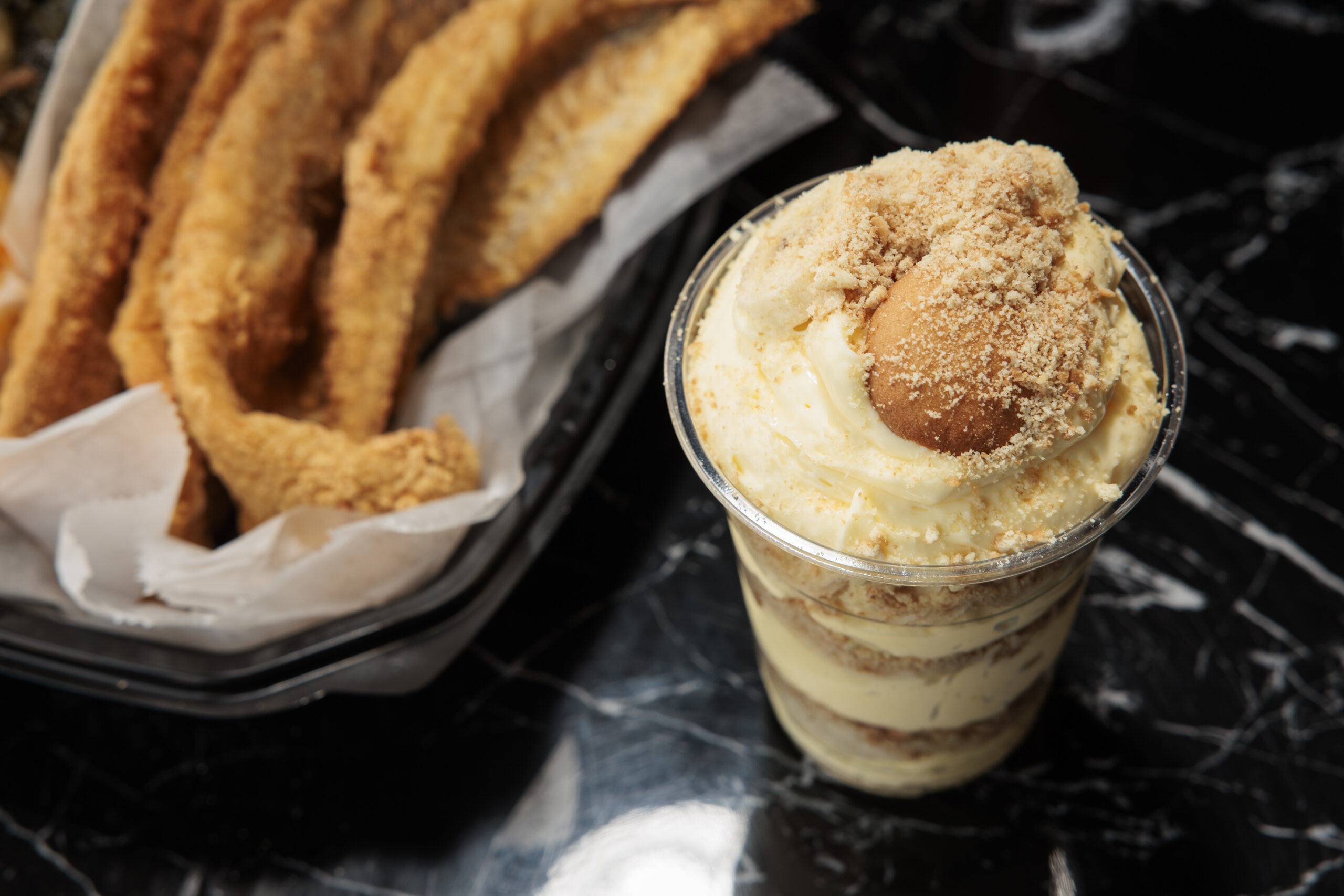
    The OG banana pudding at Nana’s Good Eats in Atlantic City, N.J.
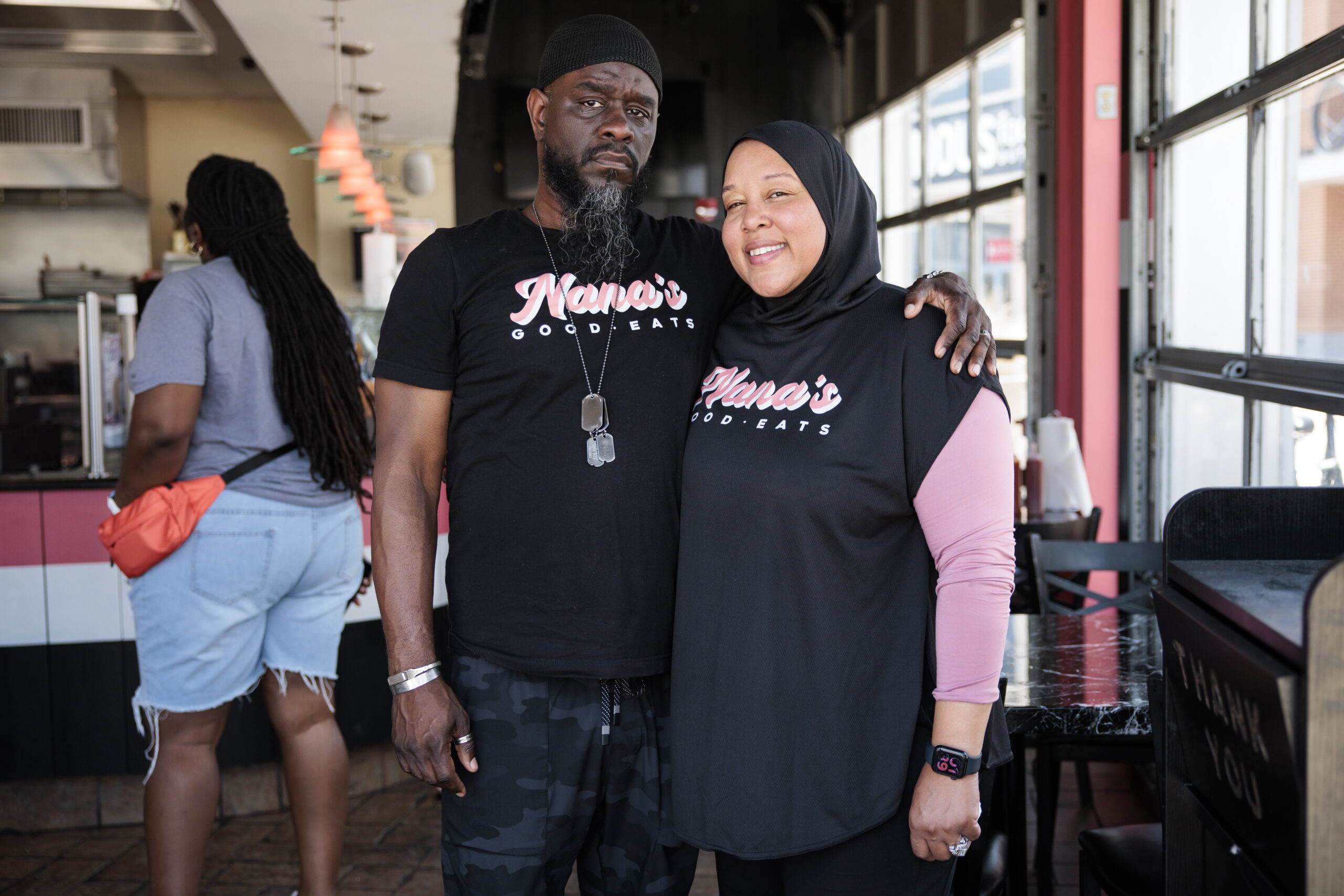
    Owners Rahman and Samantha Prescott at Nana’s Good Eats in Atlantic City, N.J.

    Prescott’s talent as an entrepreneur, meanwhile, answers all that savory goodness with the sweet indulgence of her first endeavor, Nana’s Good Puddin’. Prescott brought the customization concept of Cold Stone ice cream to the world of pudding in a popular dessert business she opened in 2020 in the Hamilton Mall, which she has since closed and merged into the Atlantic City Good Eats location. The build-your-own options here are vast, with 30 different base puddings (from classic flavors to white chocolate, pistachio, or Oreo cream), crunchy cookie add-ins and various different crumbles. I chose the OG banana pudding and was impressed by its banana-flavored intensity, but also by the meticulous manner in which it was constructed to order, with multiple layers of creamy pudding, crunch and vanilla wafer cookies being patiently added until, at last, it was finally handed over and I dove in spoon first.

    Nana’s Good Eats, 122 N. Michigan Ave., Atlantic City, N.J. 08401; on Facebook

    The Iron Room

    Do you believe in do-overs? The reboot of chef Kevin Cronin’s Iron Room, Atlantic City’s favorite hidden gastropub — now in its third incarnation and second location — might be the spark that finally gives the Tennessee Avenue development some momentum. First, you have to find it. True to its speakeasy roots (the original Iron Room was located behind a liquor store) this restaurant is tucked into an enclosed back alley patio accessed through the rear door of another establishment, Bar 32 Chocolate & Cocktails. A tall green wall on one side of the 50-seat al fresco space faces an awning-covered bar where some of the best cocktails I sipped this summer — a smooth but potent Manhattan; the mezcal-washed Storm Queen — are served in antique crystal coupes inherited from Cronin’s grandmother while a retro acoustic soundtrack sets a mellow mood.
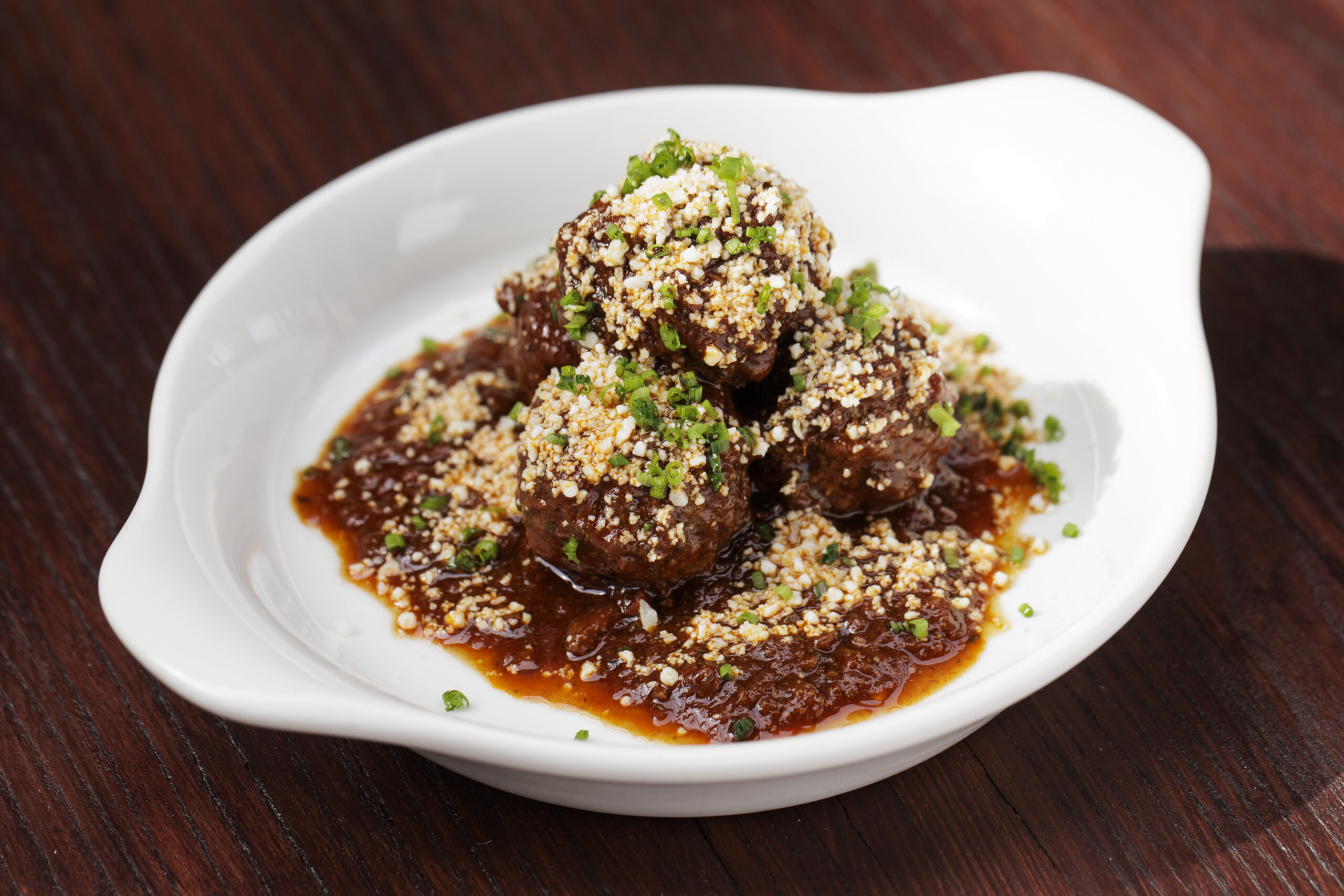
    The Oaxacan meatballs at the Iron Room on Thursday, June 11, 2026 in Atlantic City, NJ. The Iron Room is hidden behind a door at Bar 32.

    The small plates emerging from the shipping container kitchen are pure fusion fun, with bold flavors that resurrect some established Iron Room hits, including a thick-cut hunk of candied Nueski’s bacon, truffled udon mac and cheese, and a tamari-charred hanger steak fanned over brussels sprouts. Cronin’s new creations are equally bold. The spicy Oaxacan chorizo meatballs glazed in red salsa and shavings of Bar 32 chocolate were a favorite, along with the barbecue sauced boneless Korean-fried chicken and a rich pasta carbonara blushing with Korean gochujang spice. I would have loved the shrimp toast had the top layer of crustacean paste not been turned an unappetizing gray by the addition of black garlic. Next time, I’d consider preordering one of the menu’s large-format specials: a spatchcocked whole barbecue chicken with sides; a “big ass whole snapper” with tostones, or the Ron Swanson special (a rib eye, deviled eggs, and a flight of Lagavulin) that was also an old Iron Room “iykyk” draw. Hopefully, this time it will take.

    The Iron Room, 121 S. Tennessee Ave., Atlantic City (enter through Bar32 Chocolate, and head to back alley through back door); instagram.com/ironroom_ac

    Bar 32 Chocolate & Cocktails

    There’s no dessert served at the Iron Room by design. The separate and independent bar that fronts it has that course covered. Nicole Callazzo’s revamp of the project formerly known as Made Atlantic City Chocolate Bar has kept the original concept’s ambitious bean-to-bar chocolate production in place as the anchor for the chocolate-themed sweets menu. While there are more sophisticated chocolatiers in the region, the quality of Callazzo’s small batch chocolates made from ethically sourced cacao, which can take up to five days to make, is satisfying in a straightforward way. You can sample a little bit of several specialties on a tiered platter, which brings multiple shades of chocolate bars, double fudge brownies, chocolate mousse, and various bonbons. Try it while sipping a martini infused with the bar’s own 60% cocoa chocolate. The baked-to-order brown butter cookie skillet is also a popular choice here, if you have an extra 15 minutes to wait. But I’d return especially for one of the Bar 32 whiskey flights, which pair three different pours of Michter’s (or Whistle Pig) whiskey with different chocolates for $40. Considering the quality of the spirits, it’s a fair deal.

    Bar 32 Chocolate & Cocktails, 121 S. Tennessee Ave., Atlantic City, N.J. 08401, 609-248-6960; bar32chocolate.com
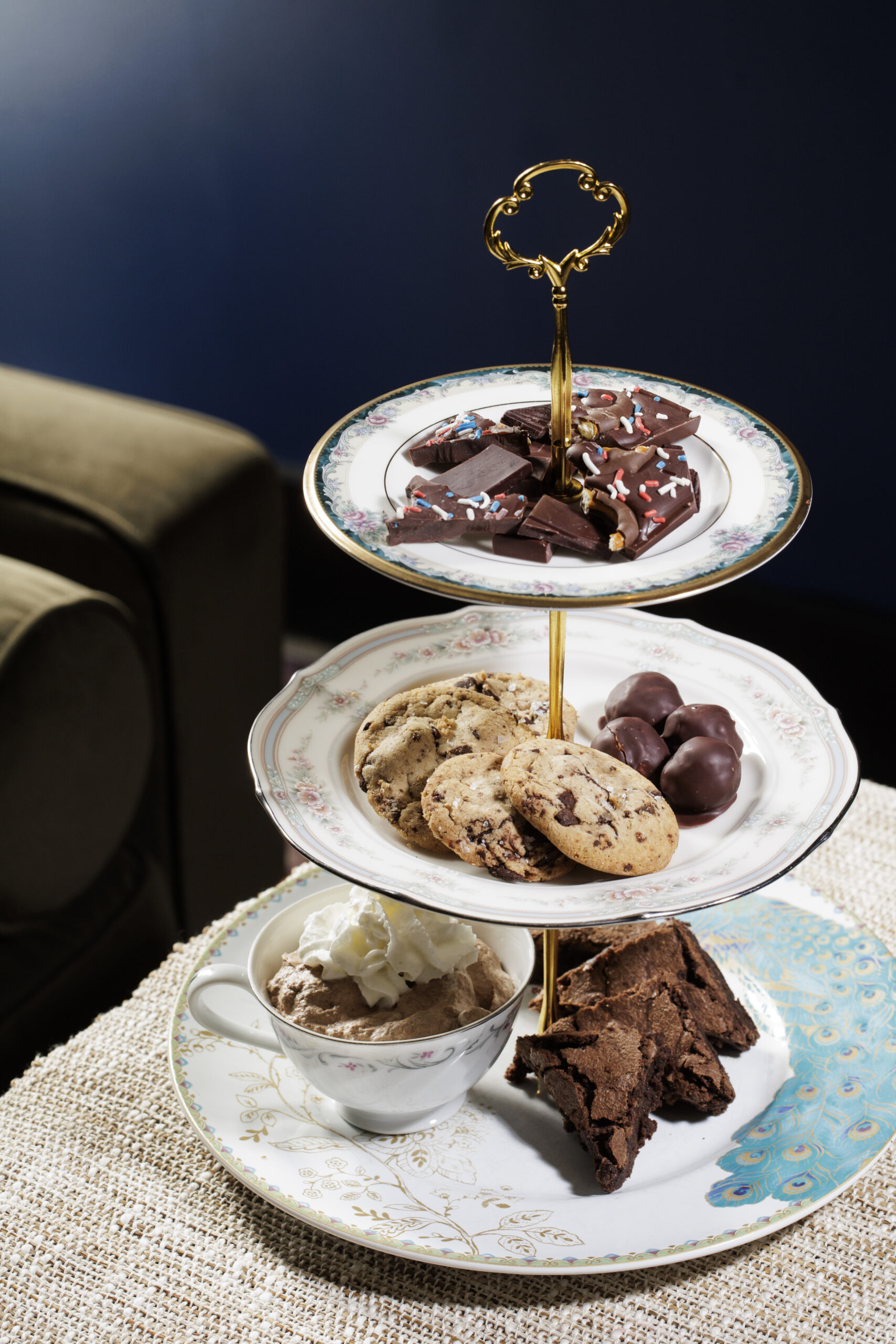
    “A little bit of everything” at Bar 32 on Thursday, June 11, 2026 in Atlantic City, NJ. Bar 32 offers bean-to-bar chocolate, handmade desserts, and craft cocktails.

    Moments at Scannicchio’s

    Some places are all about the food. Others revel in quirky ambiance. You can get a bit of both at this Atlantic City sibling to Scannicchio’s, one of my favorite old-school Italian haunts in South Philly. The AC experience offers the split personality of two adjoined spaces: the charming intimacy of a dark corner barroom lit with Christmas lights, and a bright sports bar lounge next door where a DJ spins retro hits for a handful of dancers while spillover dinner crowds sup at high-tops in the glow of large TVs.
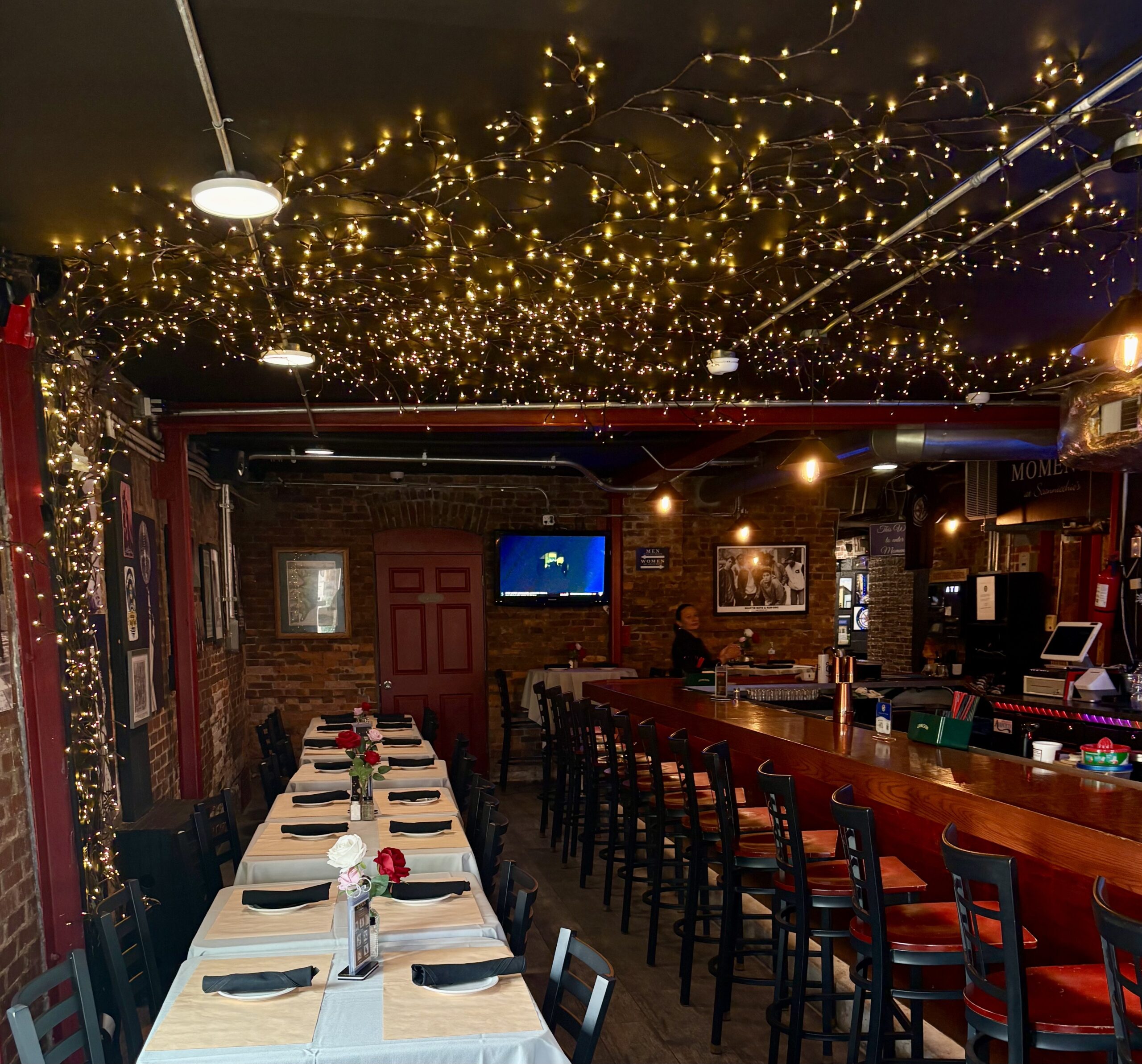
    The corner dining room of Moments at Scanniccho’s in Atlantic City is darker and more intimate than the neighboring lounge.

    A tender and massive double-cut pork chop Siciliana buried beneath a zesty gravy of cherry peppers, onions, olives, and mushrooms was the hands-down highlight of our meal. The big menu also showcases several familiar favorites from the South Philly original (clams casino, a stuffed artichoke, the sausage and figs app), although it was not cooked with the same consistency and finesse. Even so, we enjoyed the experience. And I’ll especially treasure the moment our larger-than-life server (who had a bear hug for every one of the restaurant’s many regulars) offered a memorable logic for his general preference of pasta shape with entrees: “Why should I waste calories twirling spaghetti when I can just get straight to it with penne? Stab and eat! Stab and eat!” Such wisdom alone is worth the visit.

    Moments at Scannicchio’s, 2647 Fairmount Ave., Atlantic City, N.J. 08401, 609-344-5338; momentsatscannicchios.com
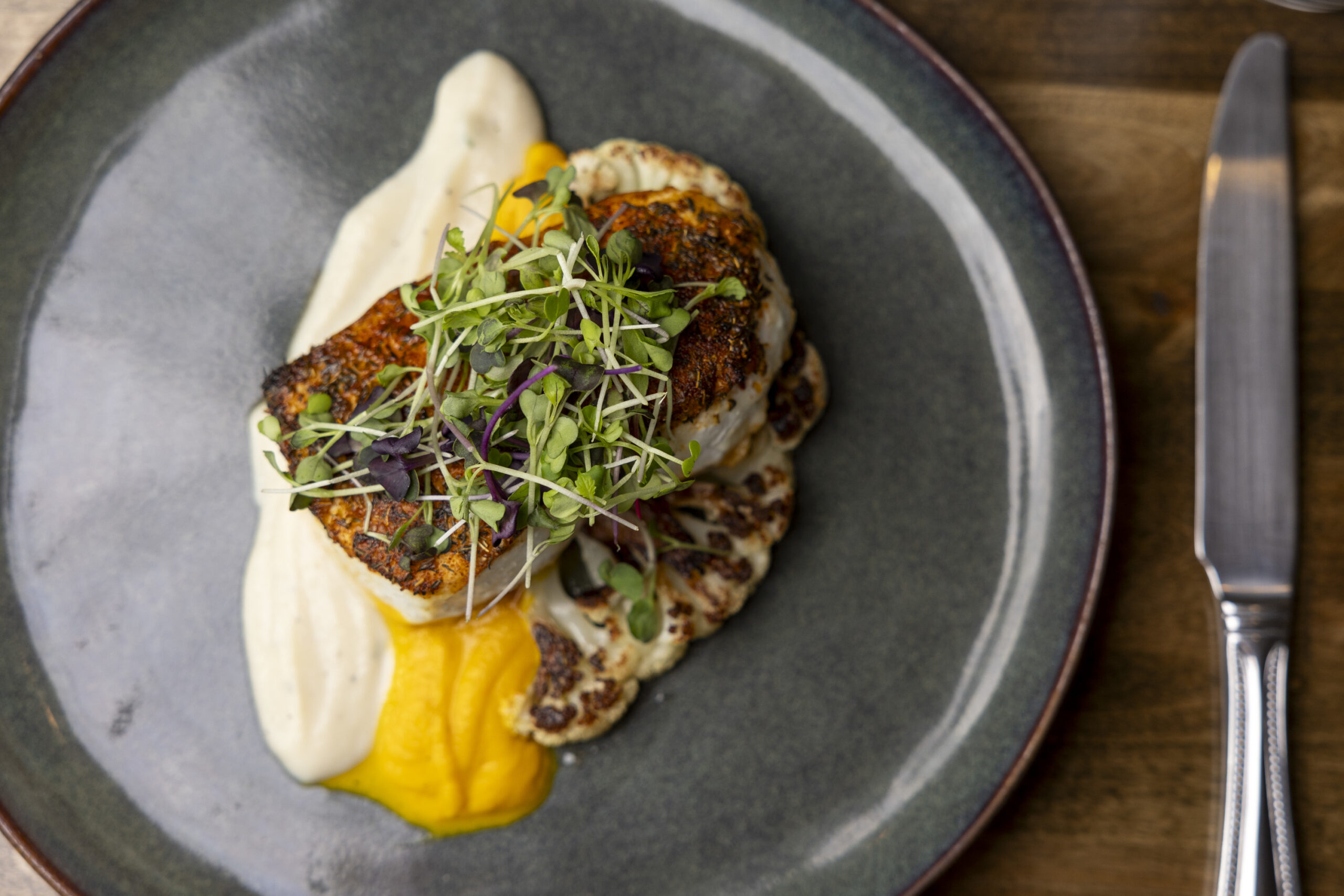
    The halibut entree at Rustico in Ventnor City, N.J., on Wednesday, June 10, 2026.

    VENTNOR

    Rustico

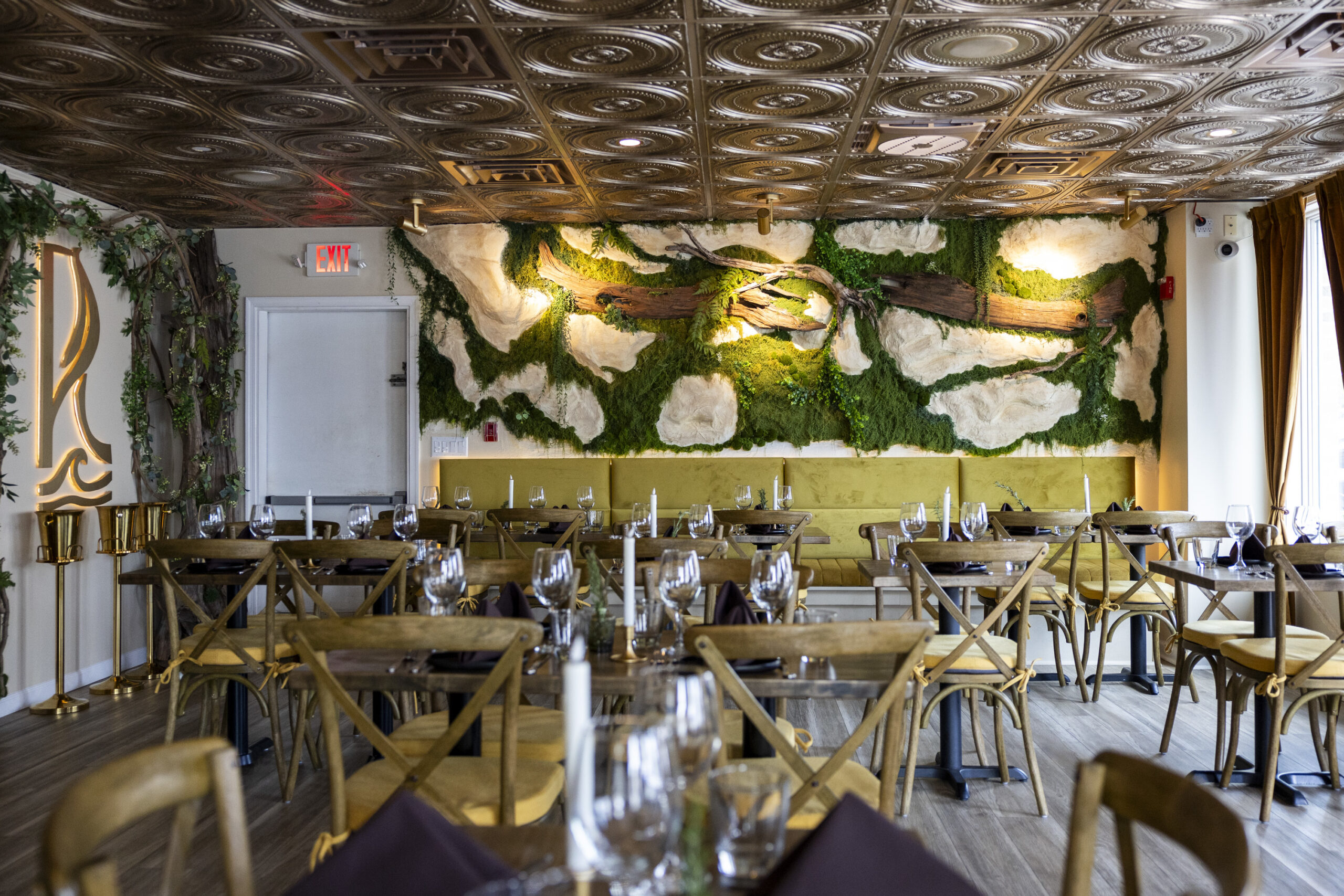
    Few restaurant couples have been able to create evocative dining experiences in small BYOB spaces through DIY design as deftly as Tanya and Petar Petrov. A veritable lemon grove on the ceiling of their debut Italian hit last year, Martina’s, conjured a glimpse of the Amalfi Coast on Atlantic Avenue. This year, they’ve turned to a closer source of marine inspiration — the bay beside their Ventnor home — for the makeover of Petar’s former Cafe Velo into Rustico, a naturalistic dinner cove that wraps diners in plastered wall montages of foraged driftwood, sea moss, and rocks. The menu is still decidedly Italian. While some Ventnorians have complained to me about menu overlap between the two restaurants, the fact that waiting lists can exceed 300 names for those hoping to get into 48-seat Martina’s means there is a legitimate demand for 80 more seats at Rustico (plus 28 more outside), where devotees can order the tried-and-true arancini, linguine with vongole, and chicken Parm.
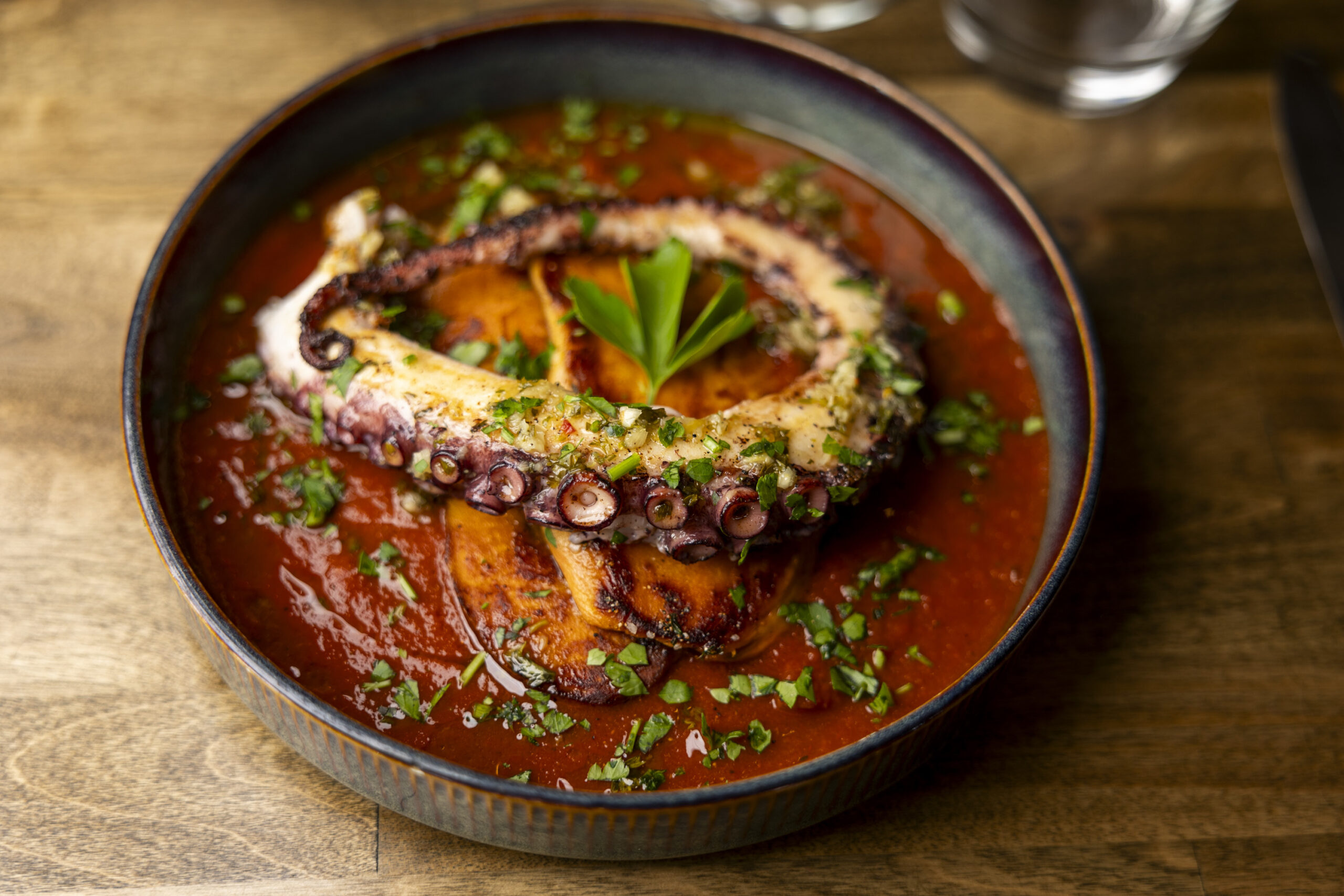
    The octopus dish at Rustico in Ventnor City, N.J., on Wednesday, June 10, 2026.
    The inside of Rustico in Ventnor City, N.J., on Wednesday, June 10, 2026.

    The chicken Parm was the least compelling thing we ate at Rustico. An unconventional starter of grilled octopus curled over a platform of sweet potato turned out to be delicious, the potato’s soft sweetness contrasting the texture of the meat while balancing the savory tomato sauce. That dish is a legacy of Cafe Velo’s early days, when the tiny kitchen would cross-utilize ingredients between the popular breakfast and dinner menus. Rustico, which expanded both its dining rooms and kitchen, has capacity now to undertake ambitious specials like broiled lobster and linguine feasts for two (very limited nightly). A soulful short rib and shiitake ragù was a hearty winner over fresh pappardelle made by Haddon Township’s Severino, whose owner is the Petrovs’ neighbor.

    Fresh seafood also remains a strength, with entrees like blackened ahi tuna with red bliss potato hash and hollandaise. A moist and meaty halibut set over two-toned purees of cauliflower and carrot was also fantastic, a special-turned-standby from chef de cuisine Lorenzo Hernandez. Of course, I ordered at the very moment this kitchen ran out of halibut. Luckily, Petar had a spare portion in the fridge at nearby Martina’s, and he retrieved it just in time for this busy kitchen not to miss a beat: “That’s the beauty of having two restaurants so close,” says Petar. “Stuff happens!”

    Rustico, 6525 Ventnor Ave., Ventnor City, N.J. 08406, 609-727-0499; rusticoventnor.com
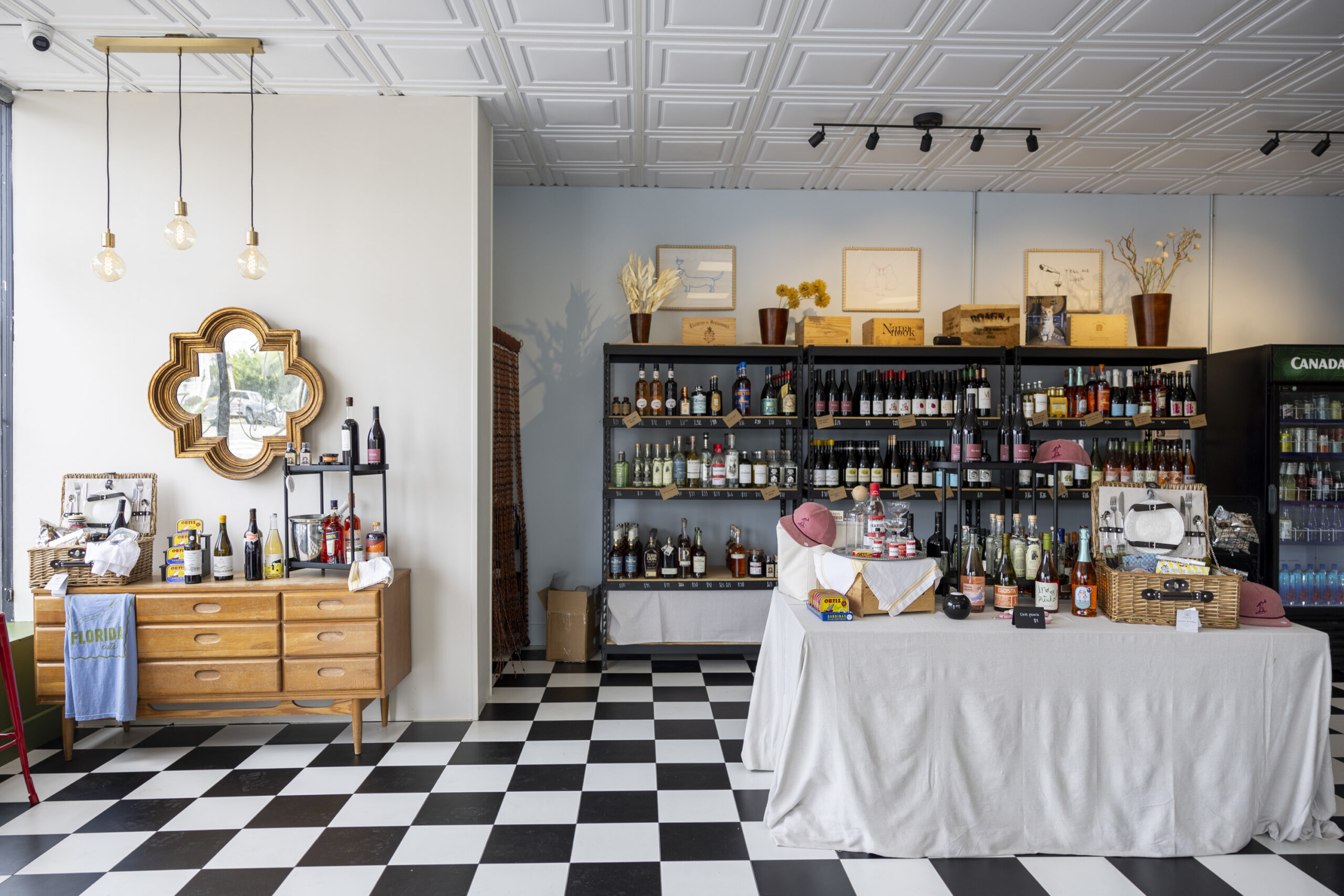
    The inside of Florida Cuts in Ventnor City, N.J., on Wednesday, June 10, 2026.

    Florida Cuts

    Cookie Till of Steve & Cookie’s bought the half-century-old Florida Cold Cuts & Liquors deli in 2022 and began to reshape it to her vision. What was a gradual makeover the first few years, most notably upgrading the sandwiches and bottle selection, became a wholesale change this spring when Till removed “cold” from the name and replaced the classic sub shop format with an artisan sourdough bakery turning out a lineup of grab-and-go sandwiches built on two kinds of focaccia and sesame-speckled semolina baguettes. The longtime tuna salad and Italian hoagie crowd is not pleased: “Cookie really took a good thing … and turned it into something nobody needed,” a reader wrote me in a direct message on social media.
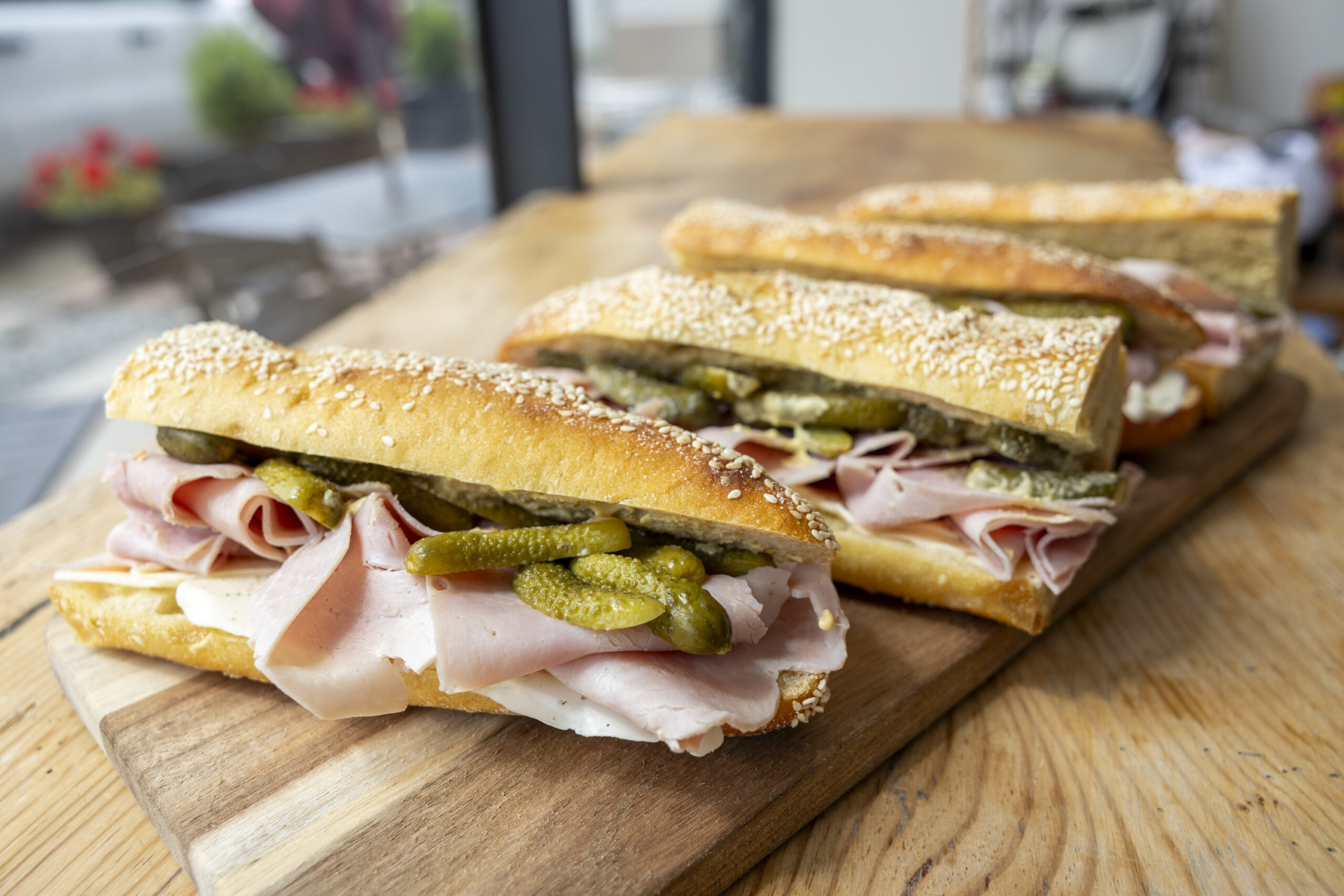
    The ham and butter baguette at Florida Cuts in Ventnor City, N.J., on Wednesday, June 10, 2026.

    I loved the old corner shop’s house-baked tavern ham sandwiches as much as anyone, but I disagree. What makes a smart restaurateur like Till so invaluable is her willingness and wherewithal to take risks to do things differently. Till has a track record of creating top-notch progressive concepts people simply didn’t realize they needed until she made it happen, from a craft coffee shop in Ventnor No. 7311 to an interactive organic farm with a philanthropic mission at Reed’s Farm. There are plenty of places to get a classic sub on Absecon Island, but there is nothing like the new Florida Cuts, where lead baker Santina Renzi (a longtime key contributor at Her Place Supper Club), consultant Jon Taus, and sourdough specialist Victoria McHugh are working with Till’s partner Kim Richmond to create stellar loaves made from flour milled from local grains that result in bread with integrity and flavor. They’re used for original sandwiches that are largely outstanding, from the minimalist focaccia laced with mortadella, ricotta, and pistachios (all crackly crust and lush stuffing richness), to the freshly house-roasted turkey layered with Steve & Cookie’s signature “ugly tomato salad,” Gorgonzola, and crispy shallots. The tuna salad fragrant with lemon zest and crunchy peperoncini rings is a sleeper hit, while the ham and butter on a sesame semolina loaf can compete with Philly’s best.
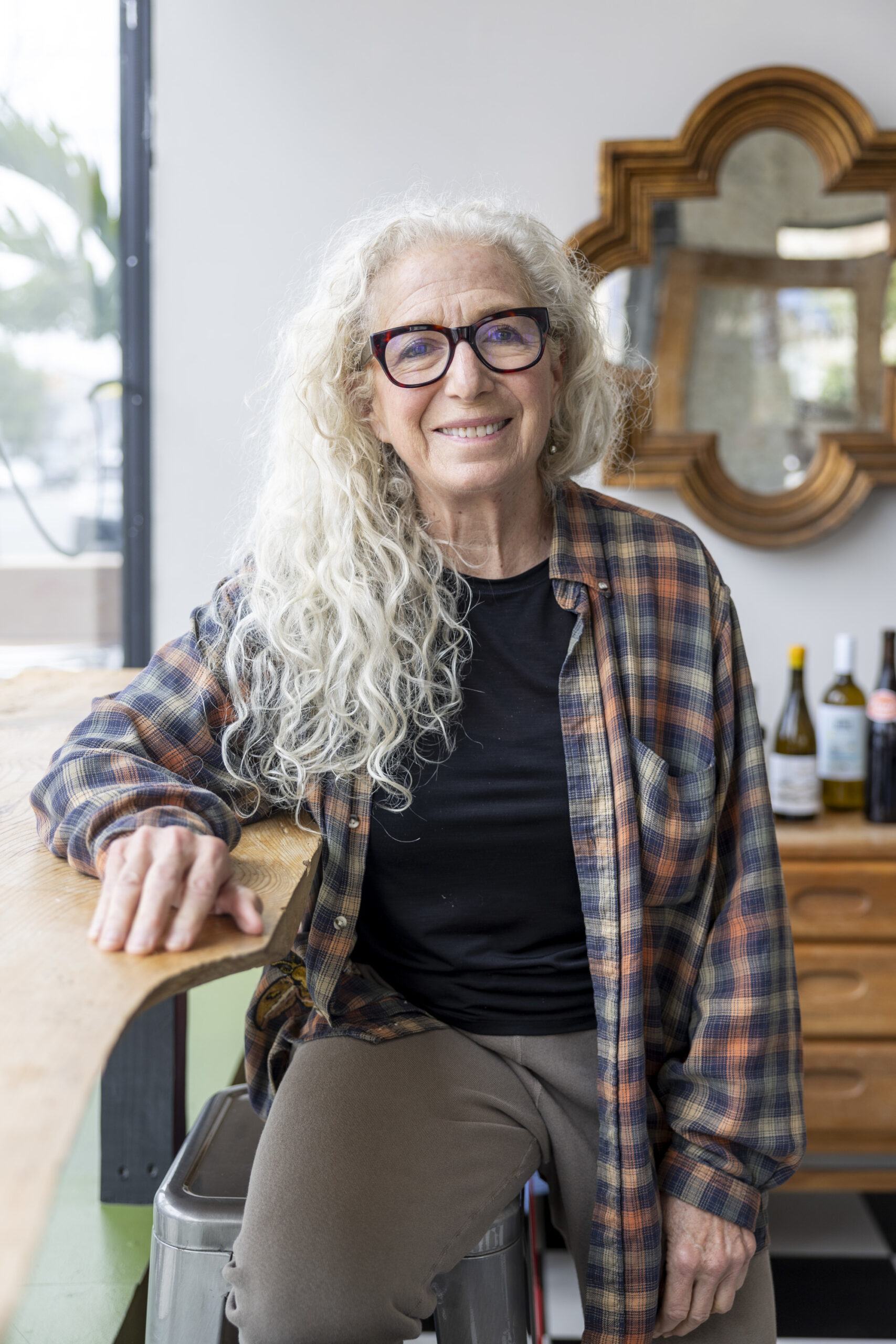
    Owner Cookie Till at Florida Cuts in Ventnor City, N.J., on Wednesday, June 10, 2026.
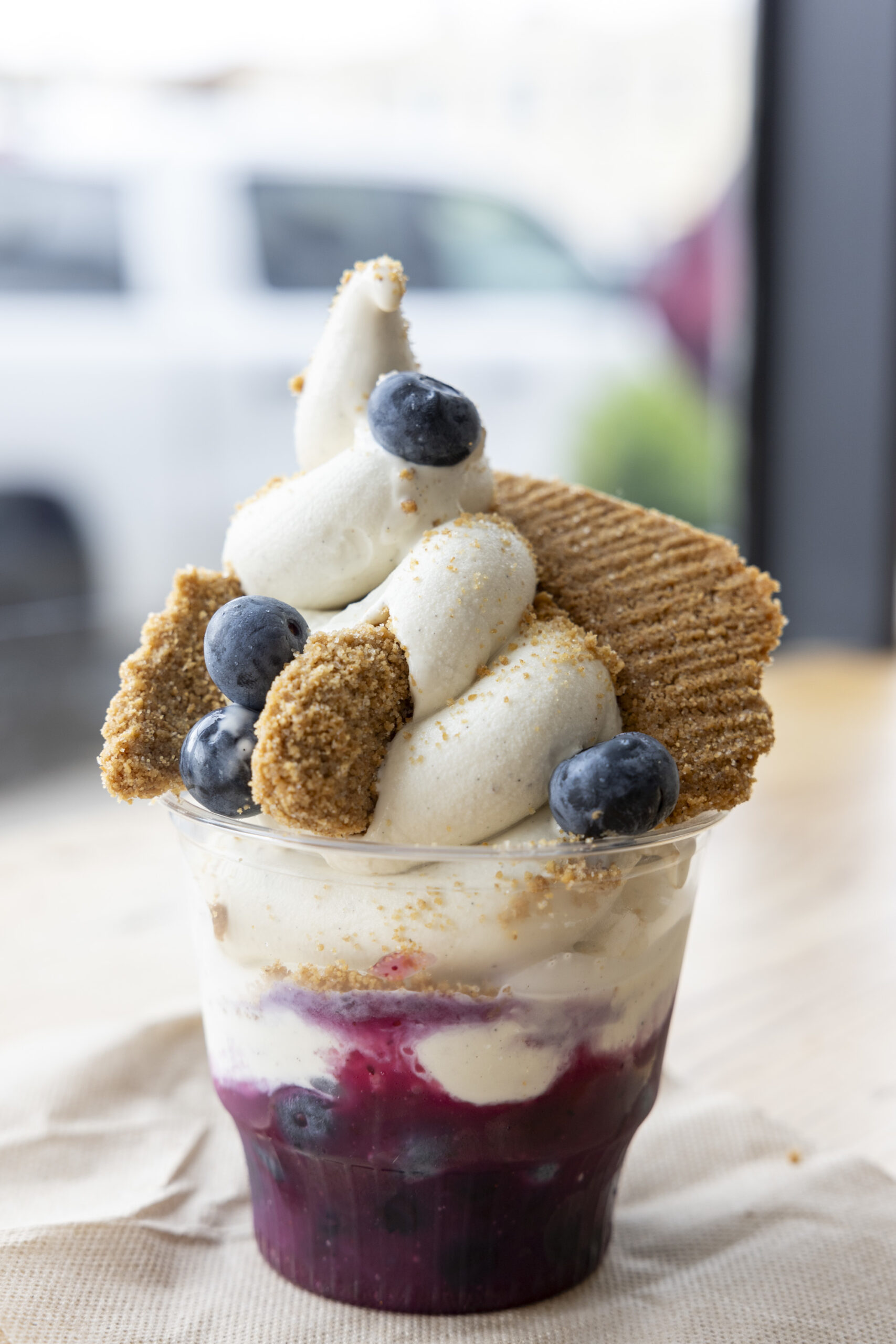
    The soft-serve sundae with Steve& Cookie’s blueberry pie at Florida Cuts in Ventnor City, N.J., on Wednesday, June 10, 2026.

    My one disappointment was the cutlet sandwich, which didn’t have nearly enough Caesar salad inside. But there were so many consolations: a fridge case stuffed with local farmstead cheeses; focaccia flatbread topped with butter-poached clams; warm rounds of fresh-baked sesame tahini cookies; shelves stocked with quality spirits and affordable natural wines. There’s also soft-serve now, offered as a sundae layered with Cookie’s famous blueberry pie. Now I definitely need that, even if I didn’t know it before I walked in the door.

    Florida Cuts, 7301 Ventnor Ave., Ventnor City, N.J. 08406; floridacuts.com

    MARGATE

    Tideline

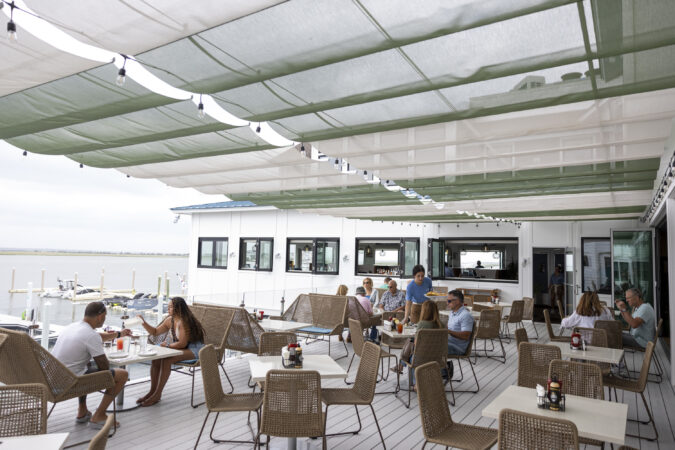
    The scene at Tideline on the bay behind Margate City, where full restaurant service is offered on deck to 30 moored boats and 12 Jet Skis at a time, could make anyone have yacht envy. But this splashy yearling from the family behind Tomatoes — an unabashed gesture to the city’s ever more ritzy denizens — has room on its multifloor 240-seat bar complex for everyone else to linger, nibble, imbibe, and observe. One of the area’s most spectacular bay perches for sunset views is an undeniable bonus. Given the swanky setting, the food from chef Carlo Marsini’s kitchen is a notch better than it has to be, from the generously stuffed truffled cheesesteaks and chicken Italiano cutlet sandwiches to the shot glasses stuffed with fried soft-shell crab halves dunked into an avocado green crema sparked with poblanos.
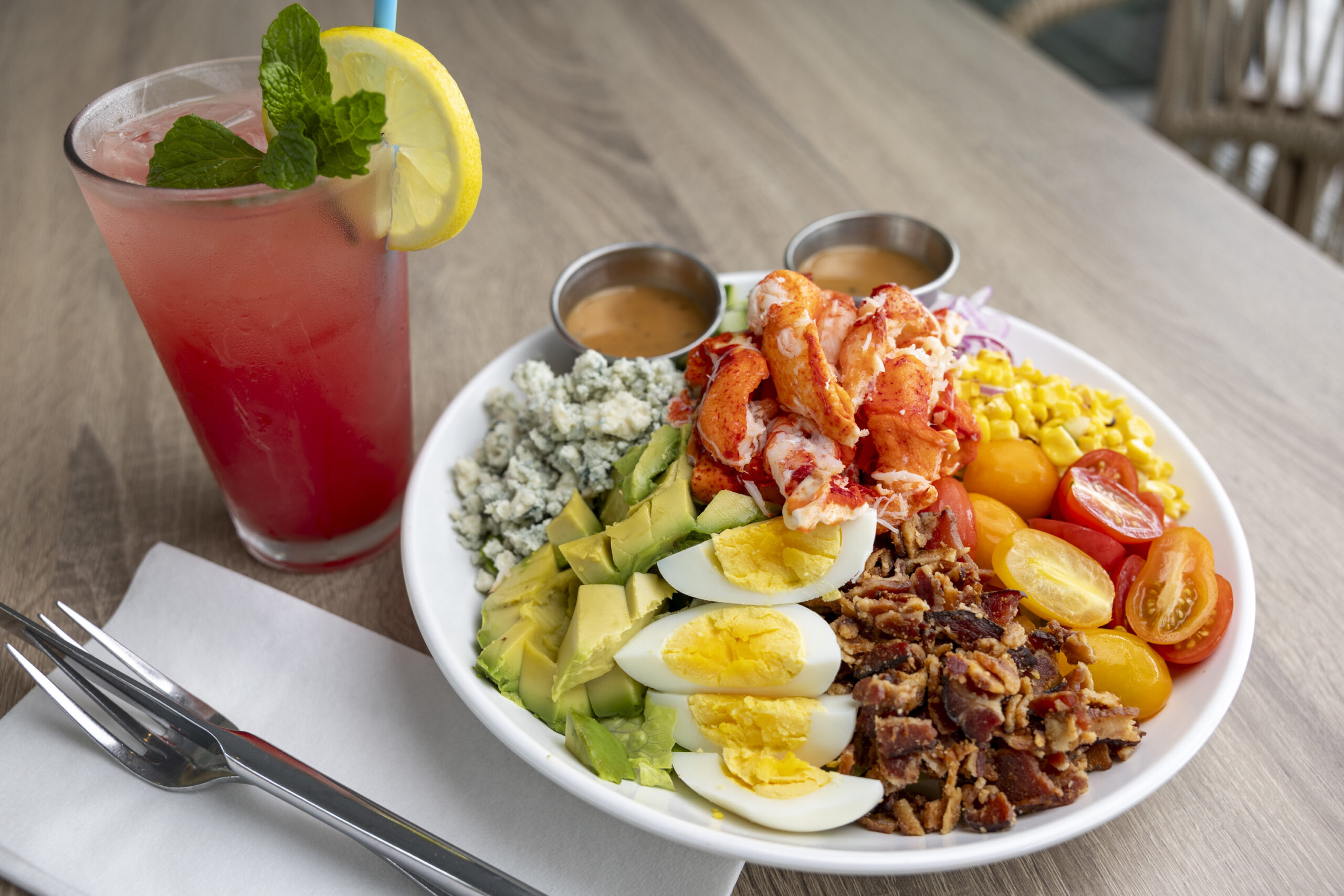
    The lobster Cobb salad at Tideline in Margate City, N.J., on Wednesday, June 10, 2026.

    I’d definitely return for the generous lobster Cobb salad and a Dockside cocktail of watermelon juice spiked with Tito’s. But don’t get too ambitious. The items we ordered from the large plate section, chicken kebabs and a $32 coffee-rubbed pork chop, were incinerated by the grill chef. The drink menu has a danger zone, too, with a cocktail called Liquid Art. It’s made with trendy Clase Azul Gold tequila and a chile pepper but what’s spicy is the price tag of $1.1 million. That’s because this drink comes with a 39-foot speed boat. That may be the stuff yacht club dreams are made of for some, even if there’ve been no takers yet. But unsurprisingly, this land-loving mezcal fan wasn’t even tempted.

    Tideline, 9317 Amherst Ave., Margate City, N.J. 08402; 609-350-6717; tidelinemargate.com
  • For this summer’s biggest Jersey Shore restaurant openings, head to the mainland

    For this summer’s biggest Jersey Shore restaurant openings, head to the mainland

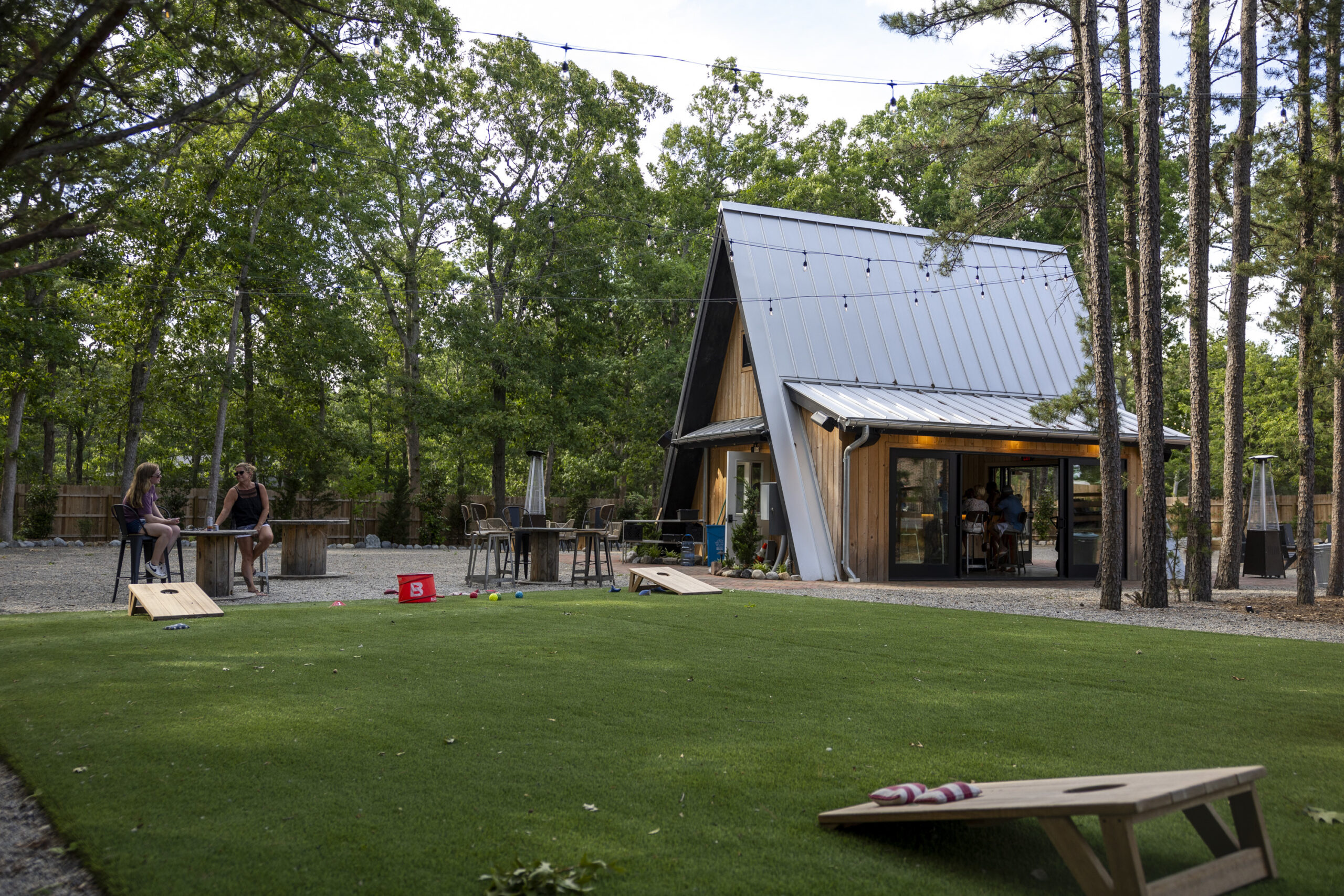
    The fire pits are ablaze by dusk at Hollow Pines, a sprawling compound with an outdoor bar, bocce courts, and a massive A-frame lodge where craft cocktails, duckpin bowling, and updated comfort food with a Jersey twist have been drawing guests by the hundreds to West Creek.

    The vibe at this ambitious newcomer off Route 9 from the Tide Table Group, which opened in February, conjures a funhouse in the woods more than a beachside resort, even if it’s only half a mile from the bay just south of Manahawkin. It’s also part of a larger trend: the biggest new restaurant openings at the Jersey Shore this year are on the mainland rather than the barrier islands, where real estate prices have skyrocketed.

    Veronica Smith of Barnegat (left) and Makayla Williams of Absecon enjoy drinks at Hollow Pines in West Creek, N.J., on Thursday, June 18, 2026.

    “There’s only so much land on the islands, and the property value there is higher if you subdivide and put residential on it,” says Hollow Pines co-owner Billy Mehl. “Plus, the short season [on the islands] makes it harder to recoup the cost.”

    The logic is similar farther south in Somers Point, where two mega-openings — the 400-seat Pablo and 250-seat Webster’s Tavern — aim to draw the growing year-round population as well as thirsty summer tourists pouring across the bridge from the dry island of Ocean City.

    “You should see our after-church crowd! We sell a lot of Bloody Marys and it’s terrific,” says Webster’s owner Chris Webb, noting the construction of hundreds of new homes nearby as a reason for optimism beyond the summer season. “Somers Point is on fire right now.”

    Of course, bigger is not necessarily better. New menus up and down the Shore have trended more conservative this summer, toward the safe bets of American tavern classics (wings, chicken Caesar wraps, and burgers), hedging for mainstream tastes at even a taco-themed fusion concept like Pablo. So, while I was sure to check out these large new players — results were mixed — I also explored some flavorful highlights from the international communities that have also settled on the mainland across from Atlantic City, from a stellar new chilaquiles specialist to the kebab combo platter of my dreams.

    If you prefer to eat closer to the beach, do not fret. This is just the first part of my annual shore guide. I still have exciting dining dispatches from the barrier island towns coming the following weeks, with reports from more than 20 places from Cape May to LBI. But first, here’s a look at some of the rapidly growing options for food and fun before you even cross a bridge.

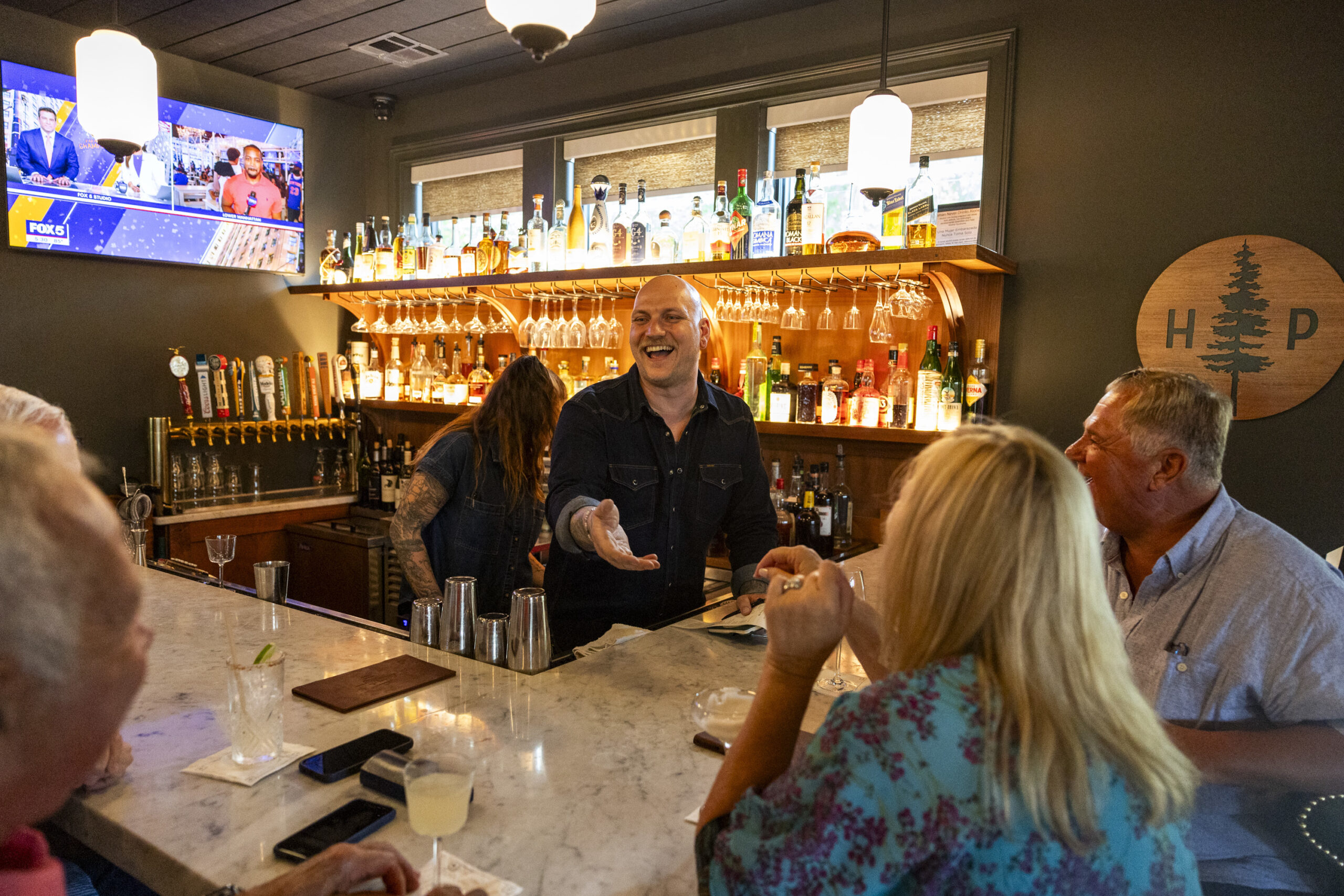
    Nicholas Bisbee of Tuckerton, lead bartender and head trainer, chats with customers at the upstairs bar at Hollow Pines in West Creek, N.J., on Thursday, June 18, 2026.

    PINELANDS

    Hollow Pines

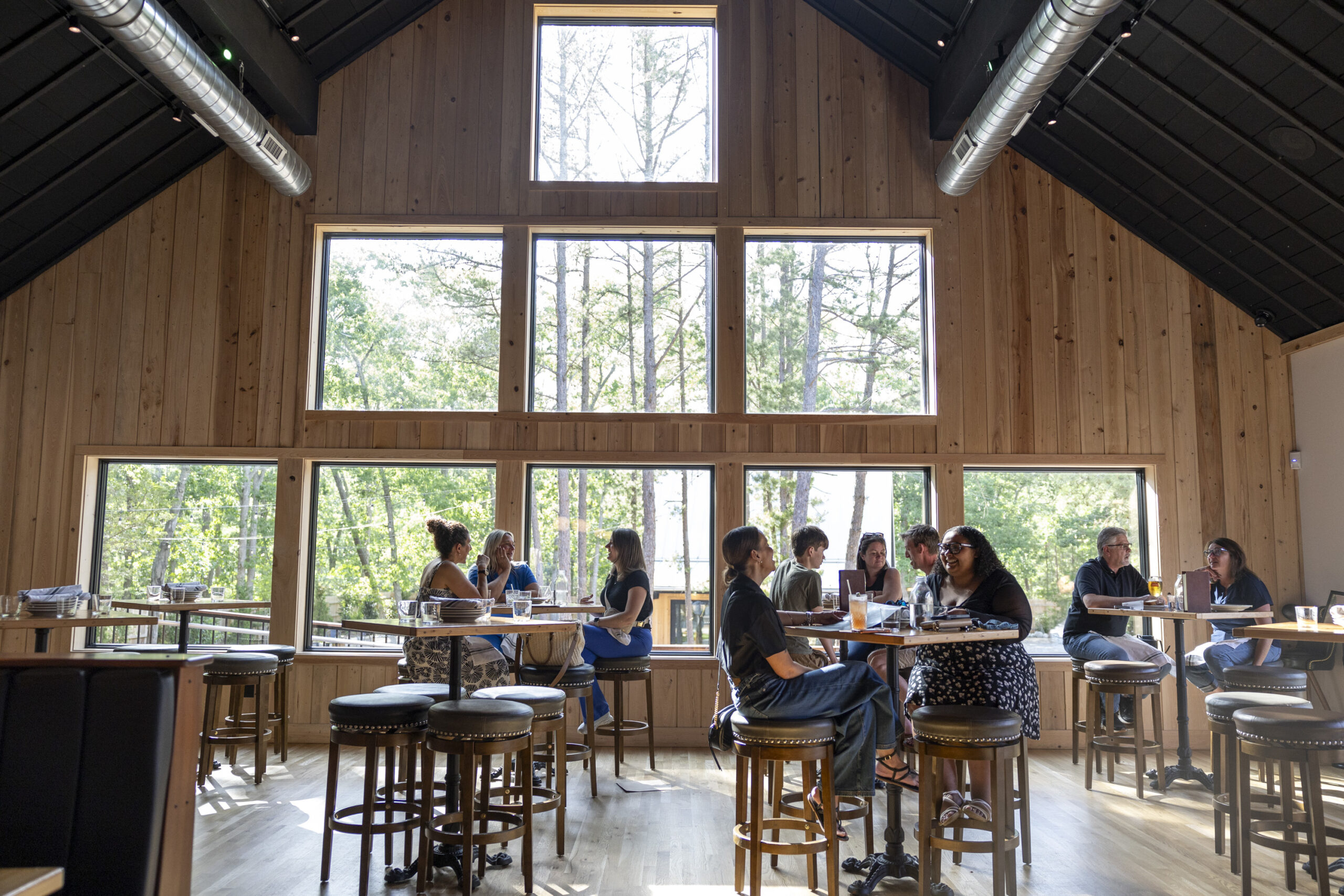
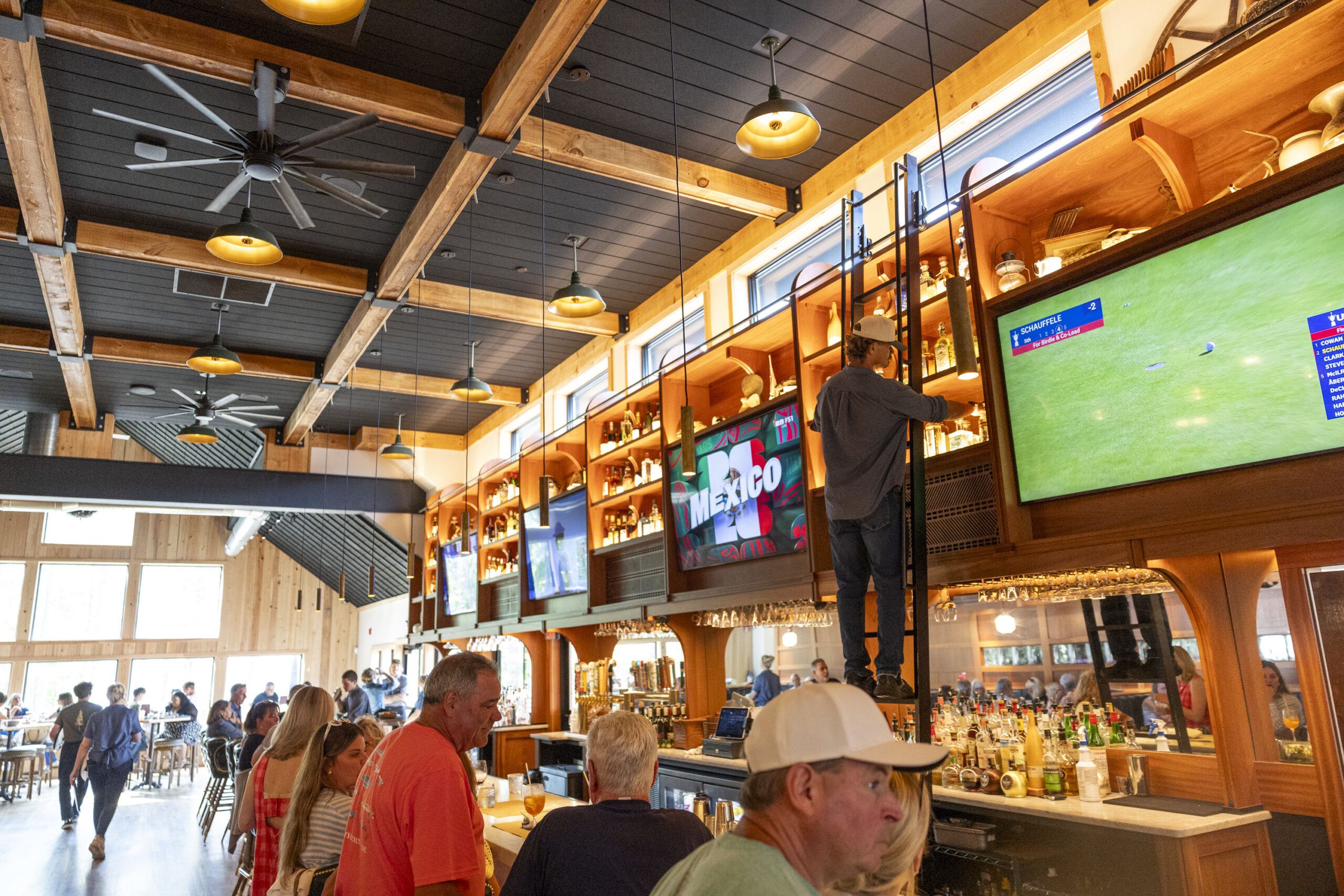
    It took eight years and nearly $8 million for the Tide Table Group to finally complete Hollow Pines, a multipurpose destination built on five acres of marshland just beyond the edge of the Pinelands National Reserve. The owners envisioned a place for big groups to linger and play, not just eat and run. And its indoor-outdoor spaces offer a variety of activities to that effect, from cornhole beside a separate outdoor bar serving Spaghett beer cocktails, composed shots, and other drinks, to a lively four-lane duckpin bowling alley on the ground floor of a roomy split-level tavern hall lined with TVs and a more intimate mezzanine dining room tucked upstairs.

    The outside bar and outdoor entertainment give patrons a reason to linger and play at Hollow Pines in West Creek, N.J., on Thursday, June 18, 2026.
    The inside main seating and bar area at Hollow Pines in West Creek, N.J., on Thursday, June 18, 2026.

    With Tide Table’s track record for good dining experiences at restaurants such as Mud City Crab House in Manahawkin and Parker’s Garage in Beach Haven, it’s no surprise the food and drink programs here are thoughtfully crafted. There’s a wide selection of upscale comfort foods from chef Al Cuff, from a pull-apart hot dog wrapped in a horseshoe of puff pastry to rich crab chowder and tomato bisque and a homey, double-crusted pot pie filled with an herbal chicken velouté.

    Some ideas were a bit too cute, like the salad heavily dressed with sour cream-and-onion dressing topped with potato chips. But the pasta is homemade in the pappardelle tossed with a hearty ragù of braised short rib. There’s plenty of lobster bits in the risotto to add some glamour to the salmon, and the oysters broiled in zesty Calabrian chili butter are decidedly local Briny Pinys. Jersey duck for the cassoulet and venison for the lasagna are appealing nods to the state’s sportsman traditions.

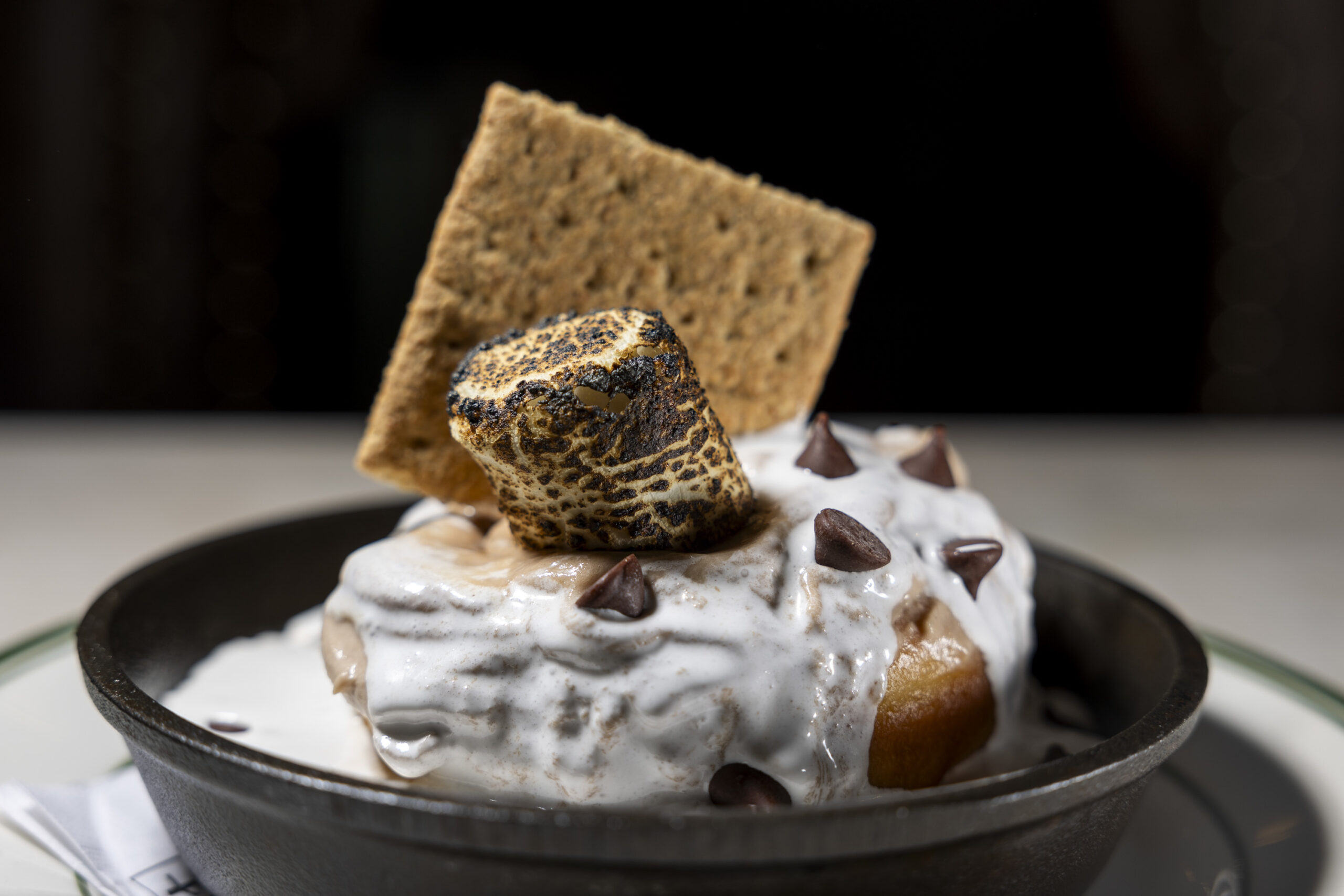
    The S’more’s doughnut dessert at Hollow Pines in West Creek, N.J., on Thursday, June 18, 2026.

    All this is fueled by a drink program that bubbles with local beers and whimsical cocktails, from an ice-cold tomato water martini (Nona’s Freezer Door) to the smoke bubble-topped rosemary gin drink (the Controlled Burn) appropriately named for a sipper at the edge of a national preserve. For dessert, I’m all about channeling the summer campfire vibe with the S’mores doughnut, a freshly fried fritter topped with molten marshmallow fluff that flows into a chocolate sauce studded with chips. It was both delicious and still on theme. Hollow Pines offers a nice reminder that New Jersey summers can be just as tasty in the forest as at the beach. Hollow Pines, 475 Main St, West Creek, N.J. 08092; 609-891-2558; hollowpinesnj.com
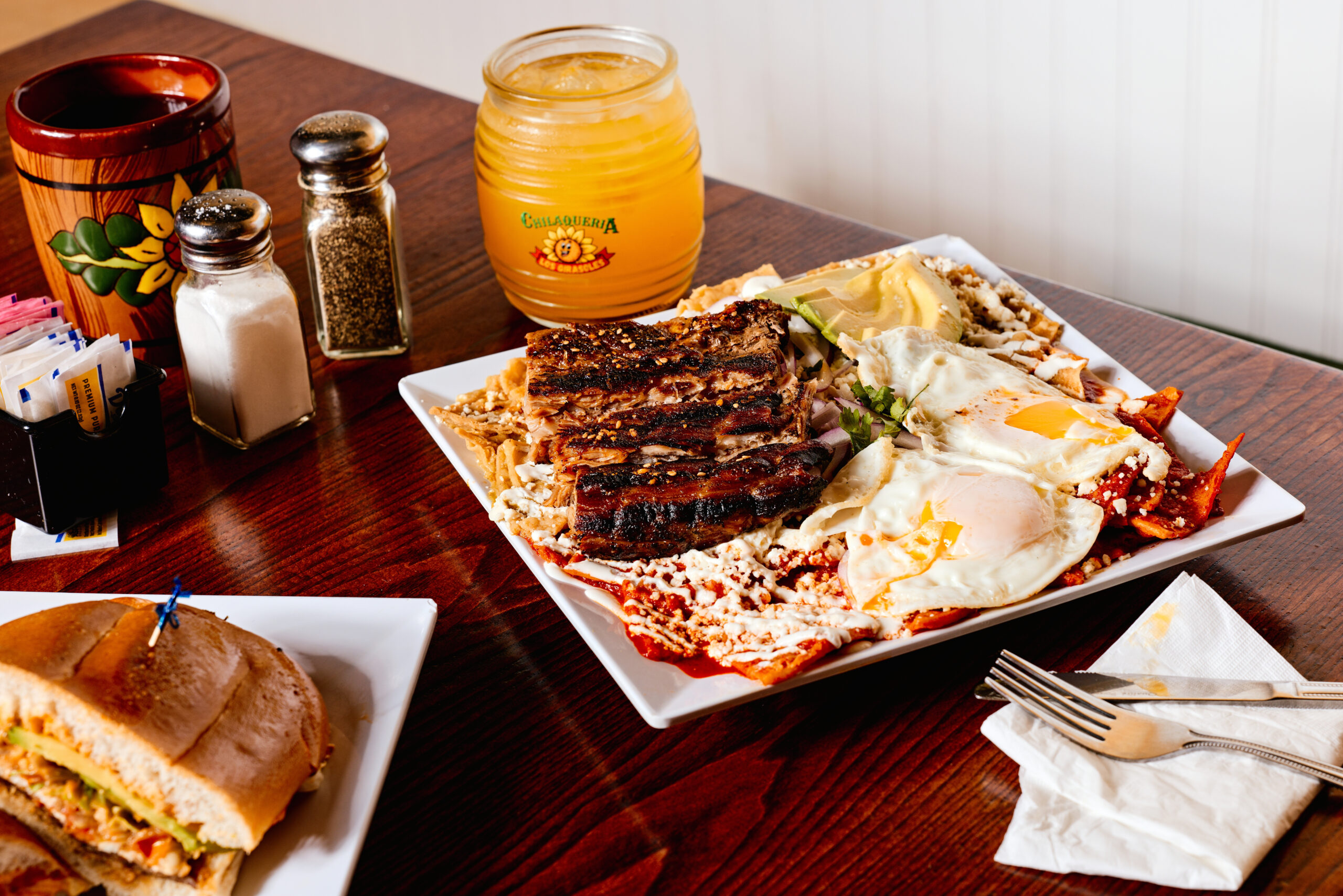
    The chilaquiles divorciados dish, paired with a passionfruit drink, rests on a table at Chilaqueria Los Girasoles in Pleasantville, N.J. on Friday, June 19, 2026.

    PLEASANTVILLE

    Chilaqueria Los Girasoles

    While the Shore has no shortage of Americanized Mexican food, you can find more traditional flavors just six miles north of Somers Point in Pleasantville, which has become a vibrant hub for multiple Latin American communities. At least a dozen Mexican restaurants operate within its city limits, and one of the newest, Chilaqueria Los Girasoles, is already one of my favorites. As the name suggests, chilaquiles is the focal point, with nine varieties of salsa combos used to sauté tortilla chips until they achieve the perfect balance of crunch and softness (they’ll even ask your preference). The traditional choices of salsa roja and salsa verde are so good, I’d recommend Los Girasoles’ unique pairing of the two for side-by-side fields of tangy green and earthy red on one plate, to be topped with protein of your choice. Try a hearty helping of eggs and steak, or salted cecina beef, then plan for a good nap when you’re done. The sweet and spicy mole poblano variation, made from a mole base shipped from Puebla, is also fantastic.

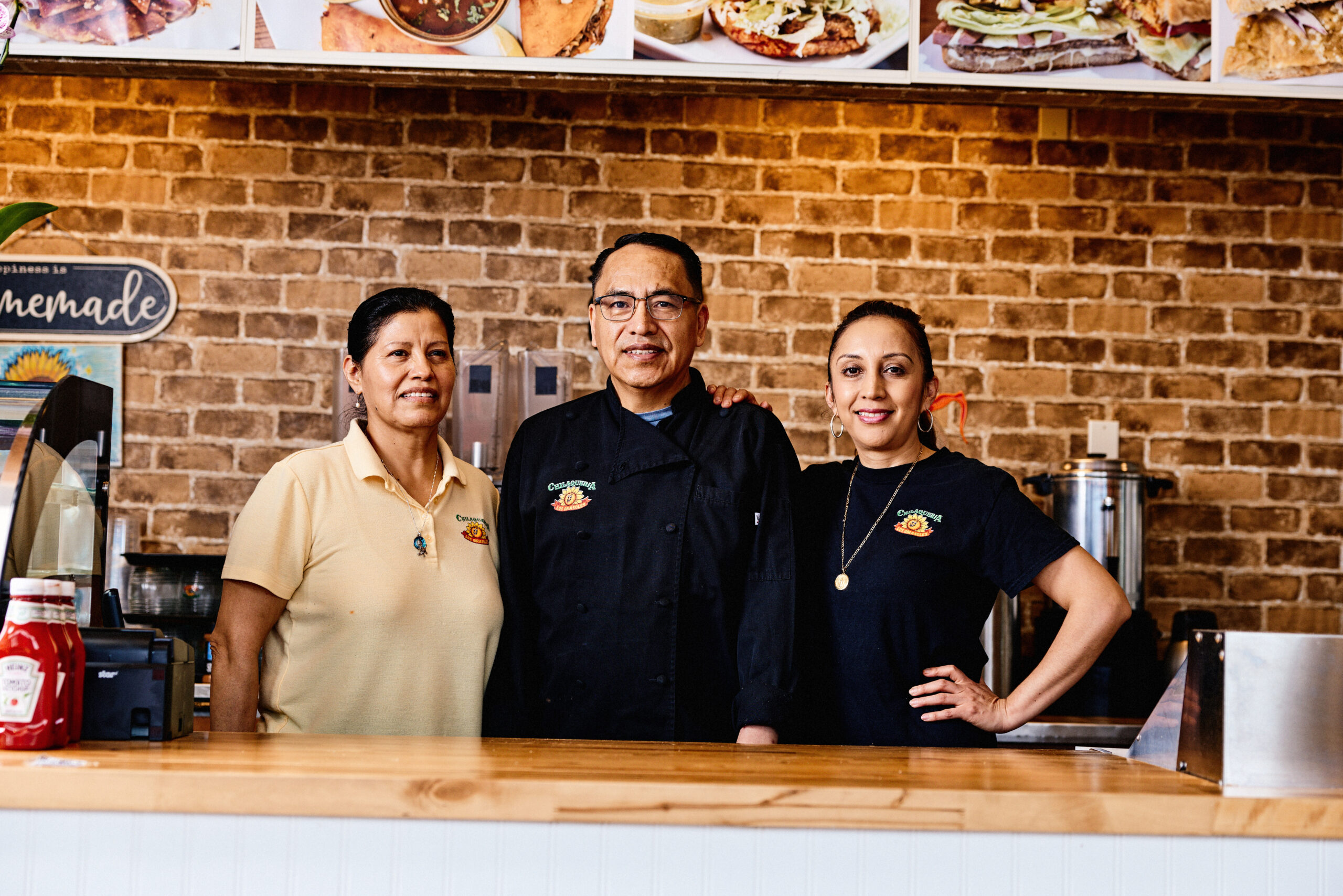
    Raquel Soto, Miguel Cerón, and Sandra Aguilar at Chilaqueria Los Girasoles in.Pleasantville, N.J., on Friday, June 19, 2026.

    As unique as this concept is (even in Mexico such a focus on chilaquiles is rare), this year-old project in a brightly rehabbed former Subway, owned by Sandra Aguilar, her husband, chef Miguel Cerón, and his cousin, co-chef Raquel Soto, is also an evocative tribute to their home state of Hidalgo. Their occasional weekend special of lamb barbacoa is outstanding, and I cannot stop thinking about their Hidalgo-style torta. A soft roll is stuffed with a thin slice of breaded top round beef, tender from its zesty marinade, then layered with stretchy quesillo cheese, creamy avocado slices, and a warm salsa of lightly cooked tomatoes and onions that gives this sandwich the perfect moistness. For dessert, don’t miss the fresh and delicate crêpes Cerón perfected while working in a previous job at a breakfast diner. Chilaqueria Los Girasoles, 310 S New Rd, Pleasantville, N.J. 08232, 609-241-0269; chilaquerialosgirasoles.com
    Pollos Asados PLV

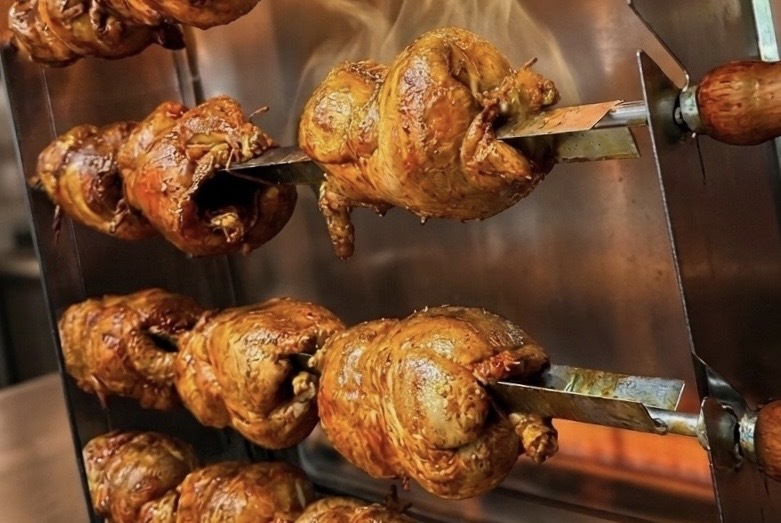
    Since fire-roasted chicken is in the name, it’s no surprise that the juicy birds turning on a rotisserie spit, seasoned with a Chiapas-style marinade, are the big draw to Pedro Rincon’s restaurant in downtown Pleasantville. It’s been so popular that he’s moving July 1 from his current location (114 N. Main St.) to a larger space next door at 104 N. Main St. Few meals I’ve eaten at the Shore were more satisfying than a whole bird here served simply cut up into pieces in a Styrofoam box with a bundle of fresh-pressed tortillas, two squeeze bottles of vibrant salsas, and belly-filling sides of refried black beans and rice.
    Chiapas-style chickens roast on the spit at Pollos Asados PLV in Pleasantville.

    But Rincon’s kitchen has other worthy gems you absolutely should not miss, from the platters of extra-large seven-inch-wide tacos (I loved the juicy al pastor) to the paddle-sized bundles of Chiapanecas quesadillas, whose pliant tortillas are made with a blend of corn and flour. The long envelopes are big enough to share and come stuffed with quesillo cheese and a variety of fillings, from nopales to chicken. But the real quesadilla star here is the deshebrada de res, a stew of tender shredded beef so full of flavor, I just about ate the whole darn thing. Pollos Asados PLV, 104 N. Main St. (after July 1), Pleasantville, N.J. 08232, 609-640-6347; pollosasadosplv.com
    Staff serve guests at Ruhani Kitchen in Egg Harbor Township on Friday, June 19, 2026.

    EGG HARBOR TOWNSHIP

    Ruhani Kitchen

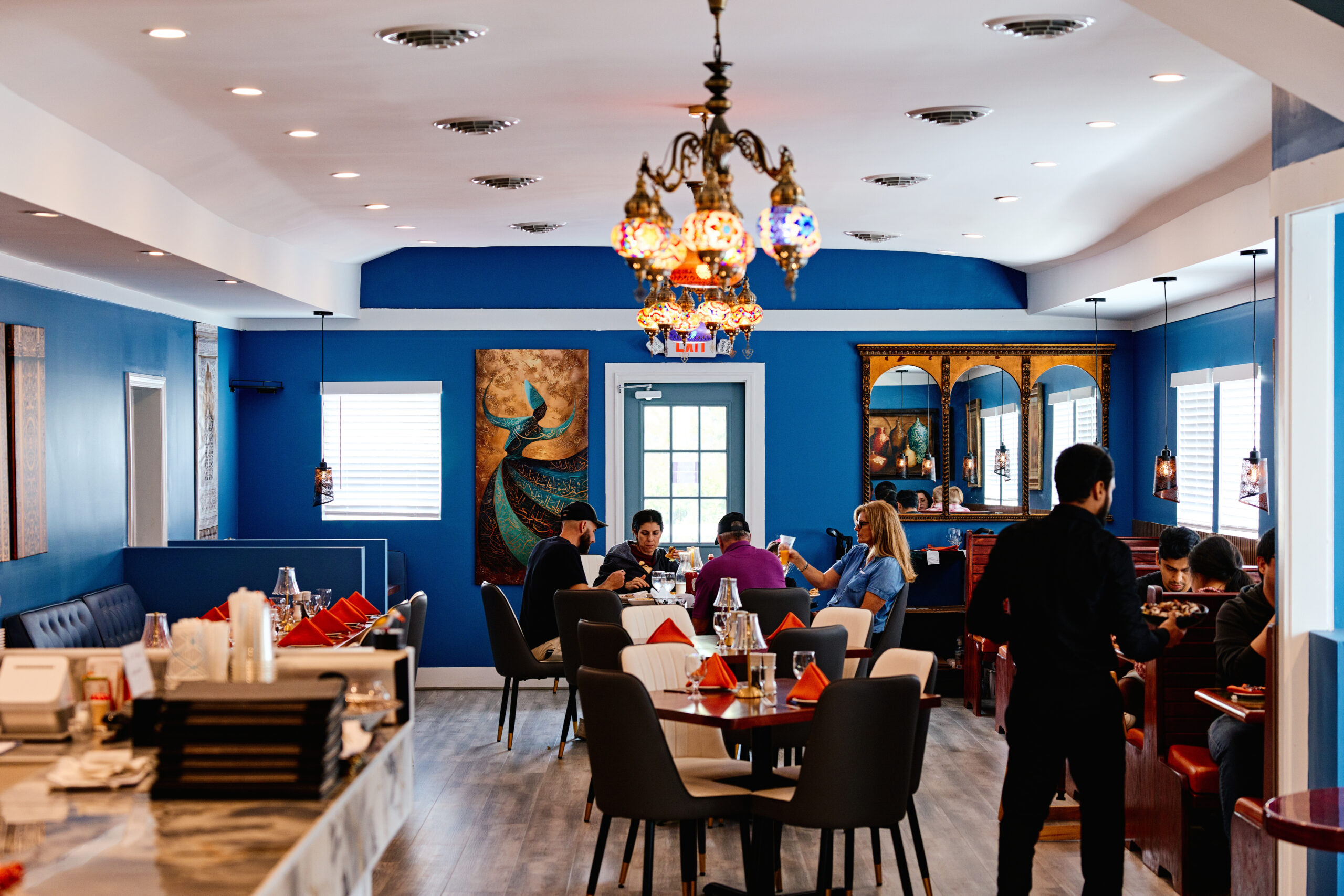
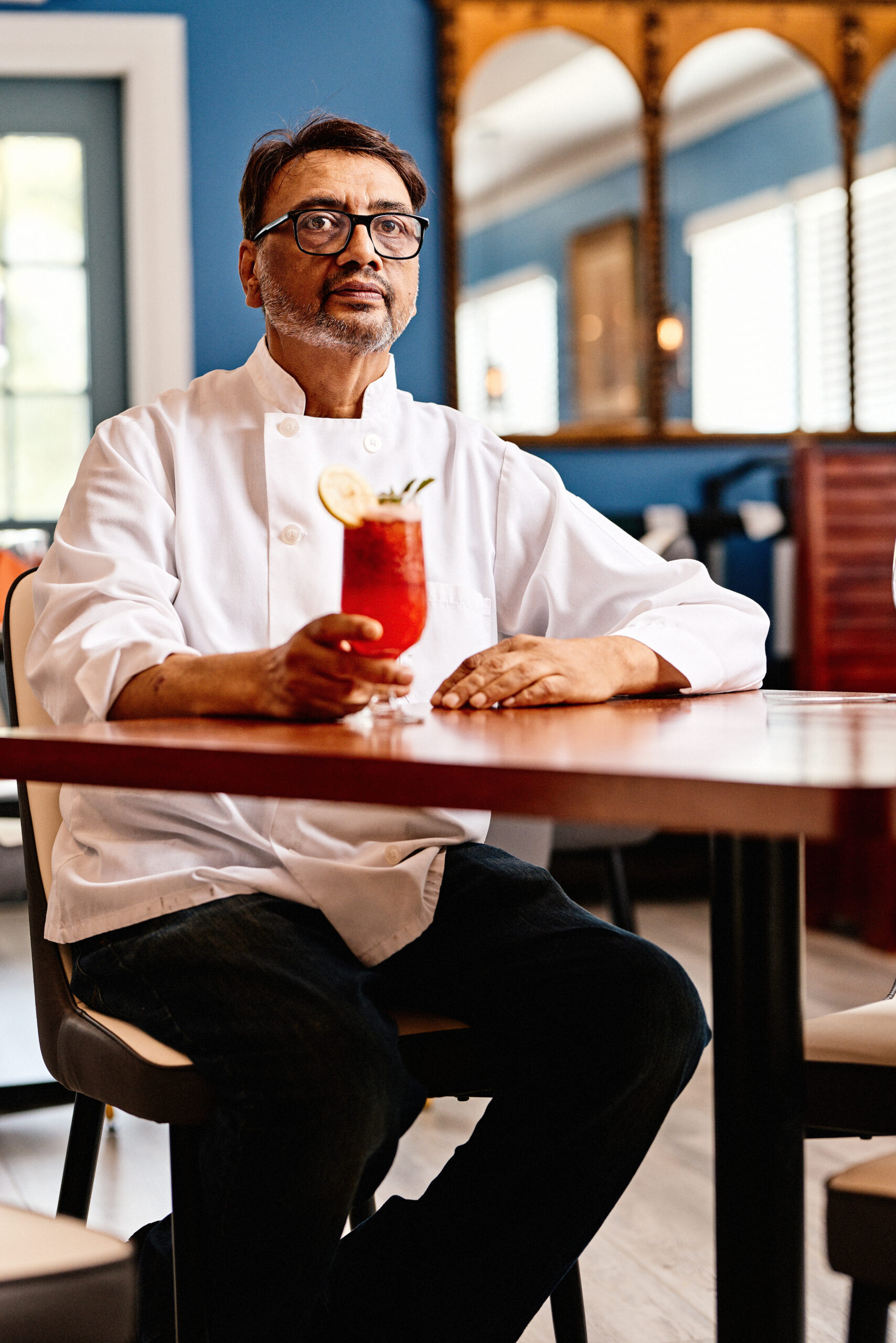
    Chef Syed Abbas is best known for The Nizam’s, the well-regarded Indian restaurant in Egg Harbor Township that he owned for 15 years before selling it in 2022. The New Delhi-born chef says he needed a break for health reasons, and over the next three years traveled extensively through the Middle East. He worked for free in several kitchens in Dubai, shadowing chefs in Turkey, and gathering inspiration for a new concept back in New Jersey that would draw on dishes from across the region while also reflecting his family’s Persian roots. Ruhani Kitchen, which opened in December in the same narrow white roadhouse where he’d launched the first version of Nizam’s, is the result — and it is a delight.

    The space has been completely rehabbed with vibrant blue walls, imported rugs, and comfortable furniture. The menu offers a greatest-hits list of Mediterranean and Middle Eastern dishes from Lebanon to Afghanistan, and though the range is so broad that some nuances may not always be in perfect register, Abbas’ skill as a chef always shines through in the quality halal ingredients and satisfying flavors. The mixed app platter is a perfect place to start, from smoky baba ghanoush to tangy-sweet muhammara and vibrant green falafel made with fava beans.

    Chef Syed Abbas at his restaurant, Ruhani Kitchen, in Egg Harbor Township on Friday, June 19, 2026.
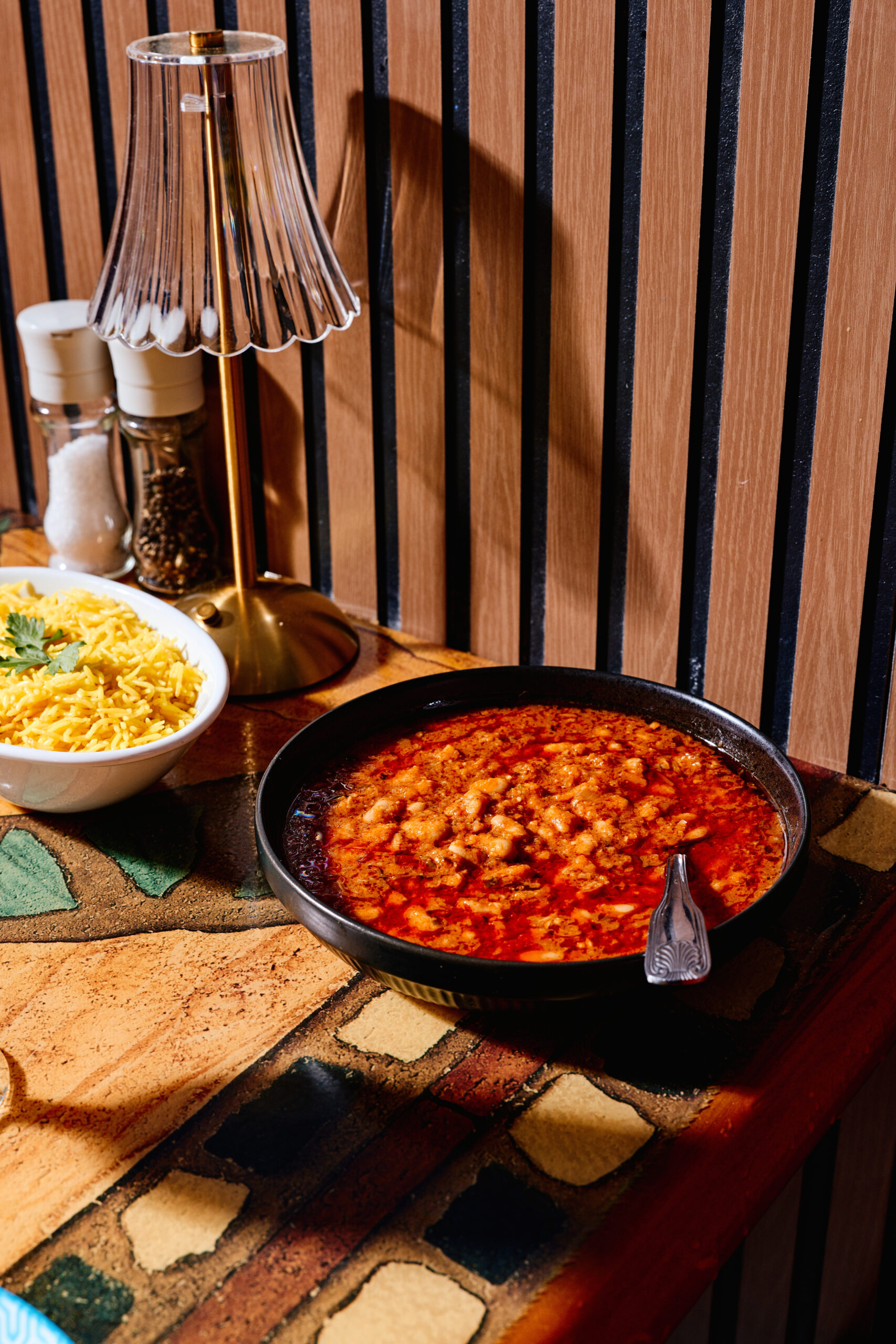
    The fasooli baida spicy white bean soup with a side of rice rests on a table Ruhani Kitchen in Egg Harbor Township on Friday, June 19, 2026.

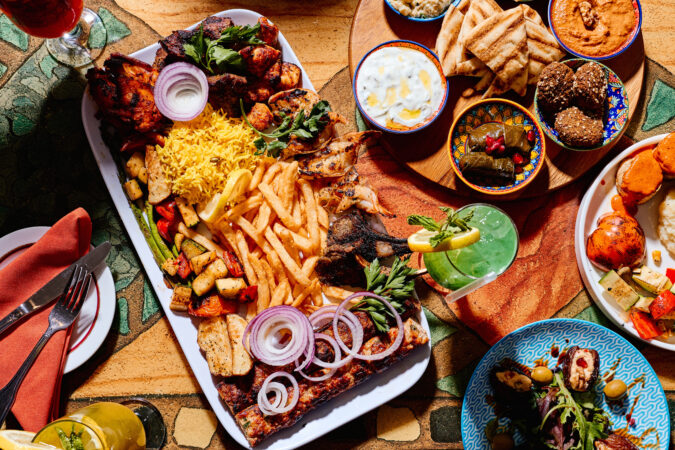
    But the main courses are where Ruhani most impresses, especially with the Sultan’s platter, a generous medley of grilled meats — lamb and chicken kebabs tenderized with yogurt and fragrant seven spice; succulent shell-on shrimp; adana kebabs of both ground chicken and lamb scented with cumin and sumac — that can easily feed a crowd. Abbas’ talent with lamb shanks is also worth noting, served either Afghan-style plain over a pilaf enriched with lamb juices and sweet carrot laces, or Persian-style in creamy saffron sauce. I also couldn’t stop eating Ruhani’s take on the spicy white bean and tomato stew known as fasooli baida. The only thing off-key at Ruhani were the desserts, including a non-traditional knafeh that was strangely soupy. But even the ever-confident Abbas knows his limitations with sweets: “I cannot be good at everything.” Ruhani Kitchen, 6666 Black Horse Pike, Egg Harbor Township, N.J. 08234, 609-855-9719; ruhanikitchen.com
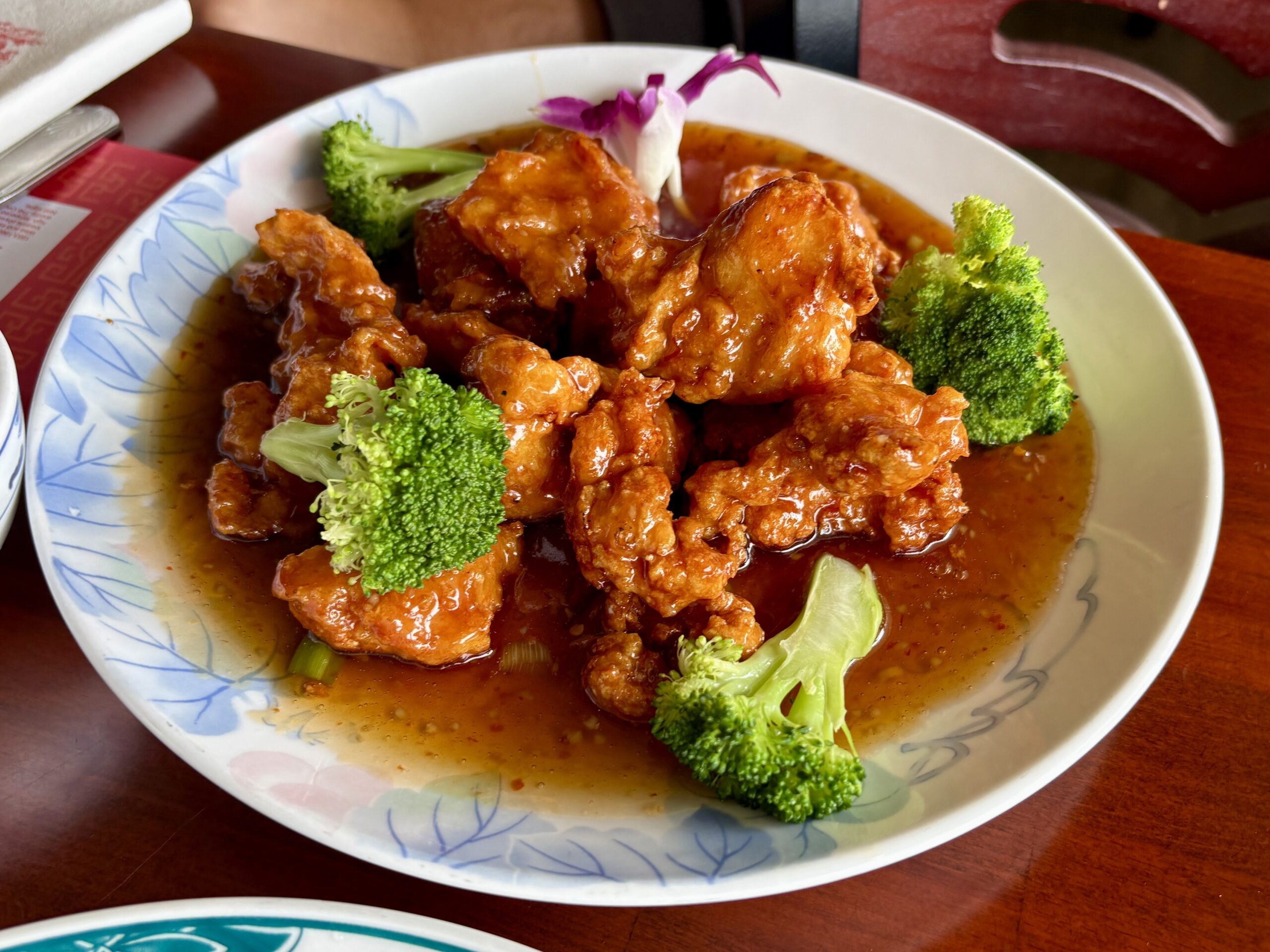
    General Tso’s chicken is made gluten-free at China Sea of Absecon.

    ABSECON

    China Sea of Absecon

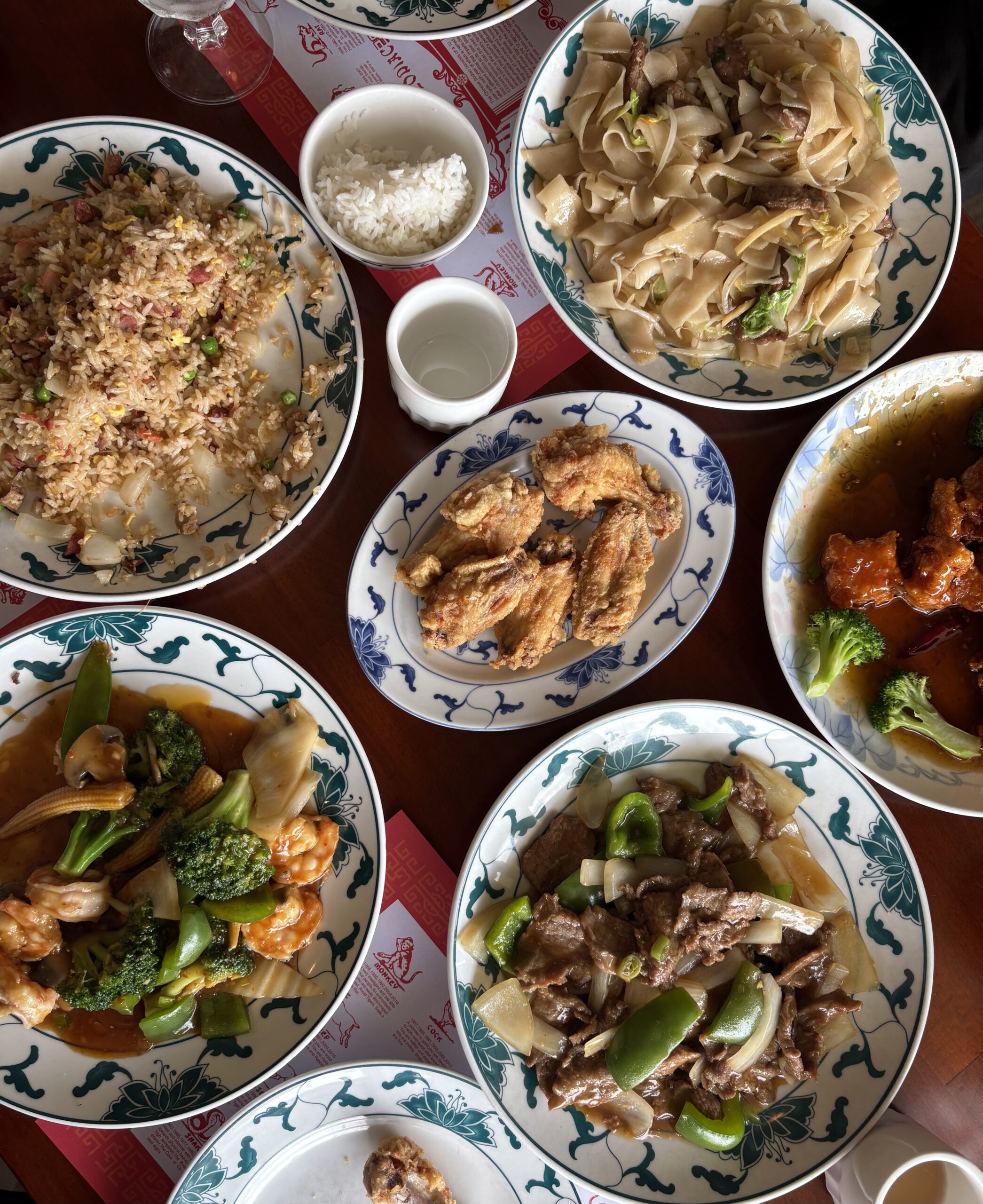
    China Sea is a survivor on the Shore’s dining scene, an unassuming standby that has thrived for 31 years in an Absecon strip mall. Founders Lily Lin and her husband, chef Chei Lin, delivered consistently good Cantonese food with a special distinction: an expansive selection of gluten-free options. Chinese food can be tricky for diners with gluten intolerance because of the heavy use of soy sauce and fryers that are commonly contaminated by wheat flour. But once chef Lin discovered his own restrictions with gluten, he developed an entire repertoire of modified dishes that are rarely seen elsewhere, including what my daughter Alice, who has celiac disease, declared as the best gluten-free General Tso’s chicken she’s ever tasted. Tender nuggets of meat are encased in delicate crusts crisped in a dedicated wok and tossed in a vivid orange sauce with a hint of heat that was flavorful without being cloyingly sweet. I consider it one of the best General Tso’s of any sort that I’ve tasted. But that wasn’t all. There were excellent gluten-free versions of plump shrimp in peppery Hunan sauce, perfectly deep-fried chicken “wing dings” in a crackly salt-baked crust, and impressively tender beef with peppers that hummed with a mellow savory balance.

    An entirely gluten-free Cantonese feast is served at China Sea of Absecon, including, clockwise from top left, fried rice, beef chow fun, General Tso’s chicken, pepper steak and Hunan shrimp.
    Such consistently good flavors bode well for continuity at China Sea, which has been in a gentle transition since the Lins retired in September and sold to Lily’s niece, Melissa Xie, and her husband, chef Billy Zheng. The couple, who both previously worked as poker dealers in Atlantic City’s nearby casinos, have plans to introduce more traditional seafood dishes from Zheng’s home province of Fujian, where the former pro chef mastered lobster in ginger-scallion sauce, a spicier rendition of Singapore noodles than what the standard menu currently serves, and whole fish. Xie promises that China Sea’s classics will remain, but I’d definitely return to explore some of this kitchen’s new moves: “My husband [Billy] is very famous for his cooking within our [local Chinese] community,” she says, “but we have to be careful to keep everything else the same because we have customers who come from all over.” China Sea of Absecon, 662 White Horse Pike, Absecon, N.J. 08201; 609-569-1995; chinaseaofabsecon.com
    Jersey Cow Ice Cream

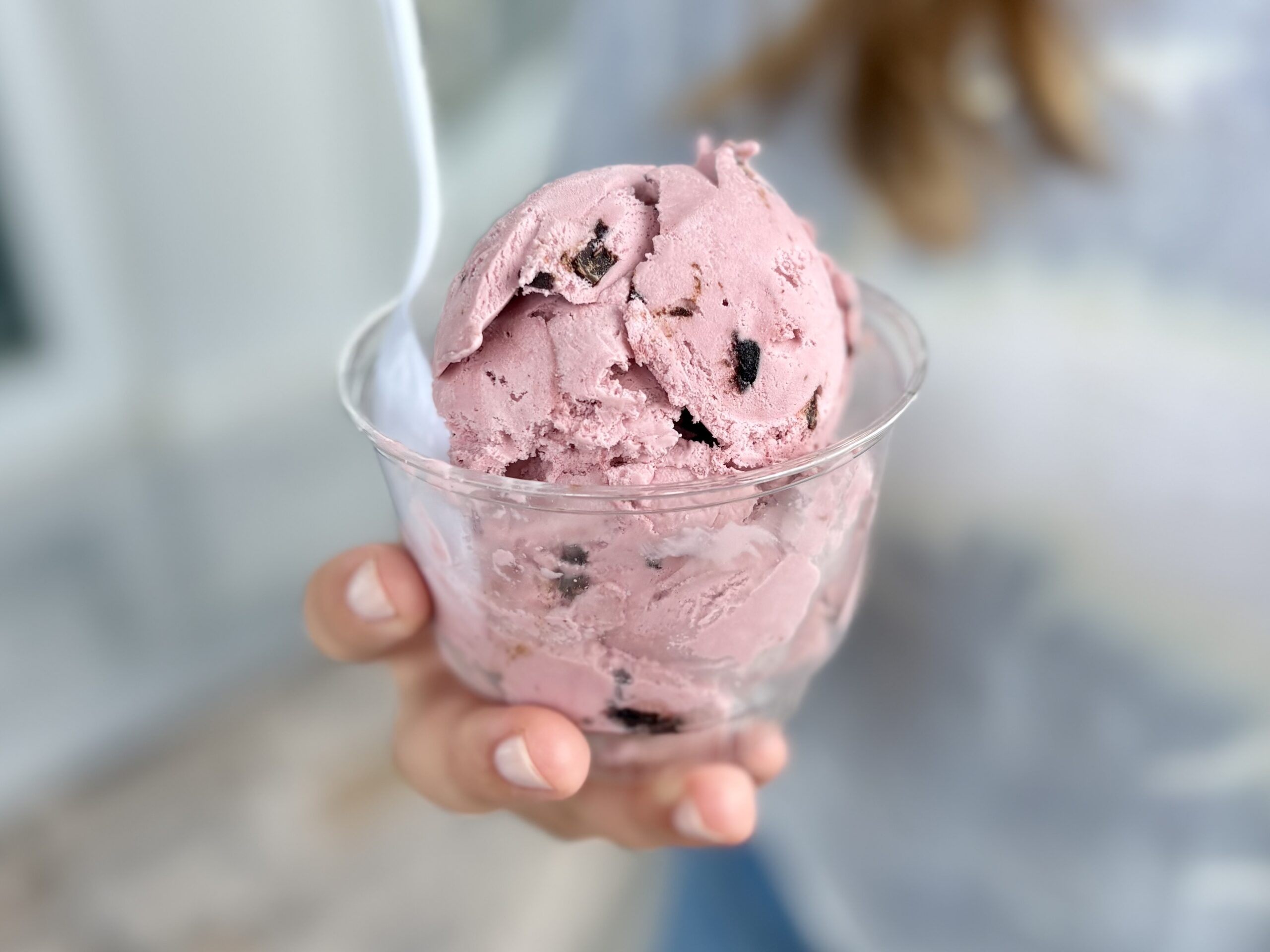
    Bordeaux cherry chip ice cream is one of the highlight flavors at the Jersey Cow Ice Cream chain.

    The Jersey Shore has plenty of options for your daily scoop. But here comes Jersey Cow, a fast-growing mini-chain of retro-style takeout windows with modern touch-screen menus that’s expanded over four years from the original location in Northfield, to Absecon, Brigantine, and now Margate, where the frozen treat competition is already fierce. If my visit to the Absecon storefront is any indication, Jersey Cow has come to play, especially in the hand-dipped category, where the ice cream is made from high-fat milk that allows them to achieve more vivid flavors with less sugar. The Chocolate Therapy is fudgy and intense, while the Bordeaux Cherry Chip (so named for the premium variety of dark cherries) has a more fruit-forward punch than the typical maraschino version. I wasn’t a fan of the icy vegan salted caramel, and Jersey Cow is still outsourcing its soft-serve base. But I’ll go back for any of their originals, especially some of the unique Asian flavors featured on the rotating specials — ube, black sesame, mango sticky rice, or red bean served atop a pandan green waffle — inspired by co-owner Maureen Gaw’s upbringing in Myanmar. Jersey Cow Ice Cream, 610 Mill Rd., Absecon, N.J. 08201, 609-796-2525; details on Northfield, Brigantine, and Margate locations noted on website, jerseycow-icecream.com

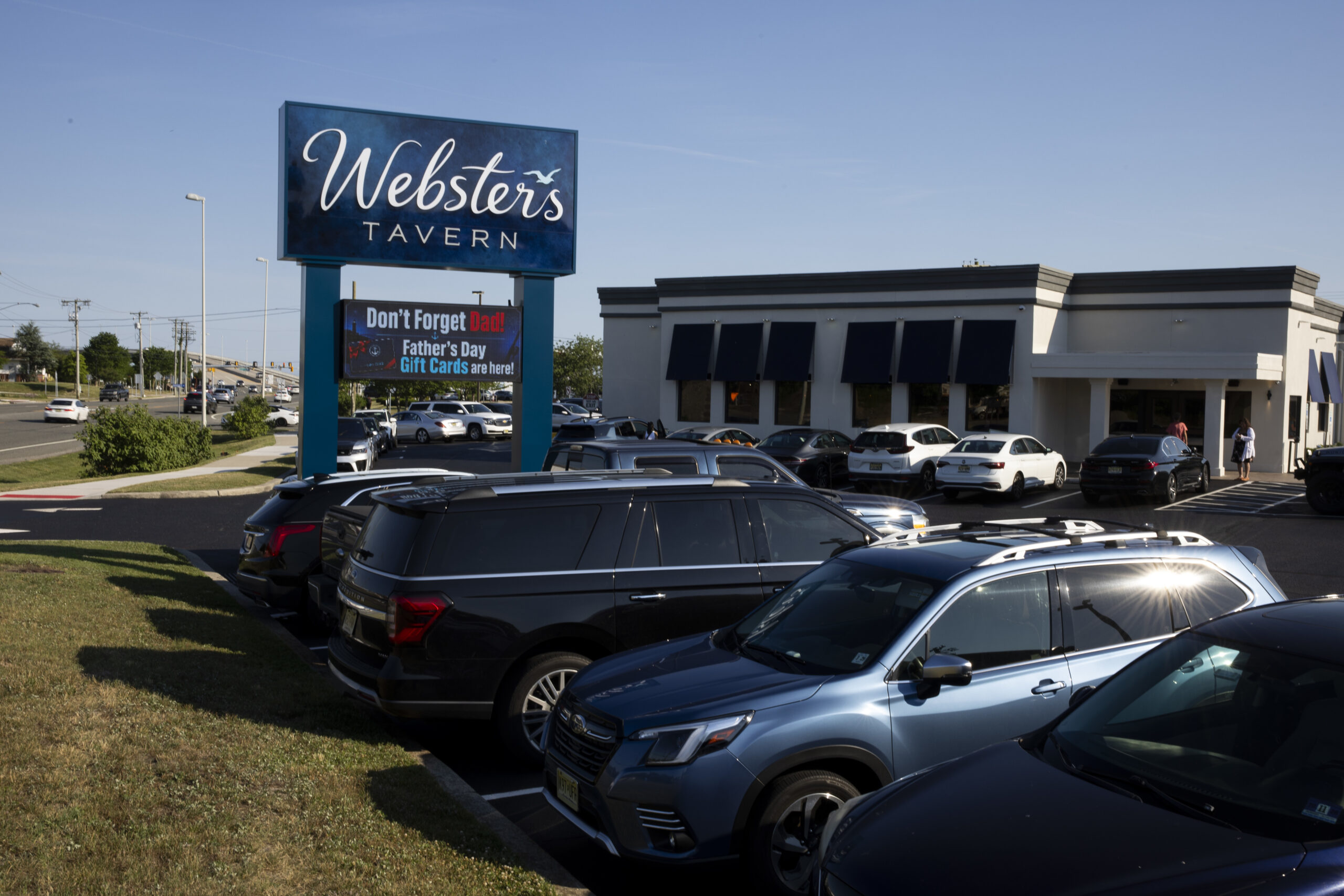
    The exterior of Webster’s on Wednesday, June 17, 2026, in Somers Point.

    SOMER’S POINT

    Webster’s Tavern

    Some people come to the Shore to relax on the beach, dig holes in the sand, body surf, and read. For those suffering from screen-time withdrawal, Webster’s Tavern is there for you. “An elite TV program,” as I’ve heard it described, has helped pack the big parking lot of the former Windjammer turned giant sports bar in Somer’s Point. So many customers are willing to wait up to an hour for a chicken wing feast bathed in the pulsing glow of 38 TVs that owner Chris Webb has concluded “we’re going to add more [TVs], including one on the kitchen wall.”

    The early days of Webster’s operations have exhibited some predictable hiccups as the tavern’s traffic rocketed to 750 customers a day within a couple weeks of opening in early June. The rushed pacing resulted in a multi-course meal that lasted barely as long as our 45-minute wait. The margarita was oversalted and sloppily mixed. (The pineapple-tinis, crushes, espresso martinis, and mud slides are apparently the safer move here). I appreciated the inclusion of local beers from Slack Tide and Somers Point Brewing on a list otherwise heavy with national brands and hard seltzers.

    The something-for-everyone menu typical of the corporate restaurant world Webb comes from (he was a vice president at P.J. Whelihan’s) was uneven to say the least. The French onion soup and sheet pan nachos were solid, as was the classic tavern burger, which landed with a perfect medium rare on a branded brioche bun (a fair quality value for $17). But the house-breaded chicken wings were dry and chewy. The seafood mac ’n’ cheese was skimpy on the seafood. The chicken lettuce wraps were tepid and drowned in too much sweet soy marinade. The fried shrimp were oddly mealy. I take heart in hearing that Webb has already made some smart early corrections, switching to house-breaded shrimp since my visit. It’s a good sign to know that this personable and veteran restaurant executive is ever-present on the ground of his first solo project and that he is paying as much attention to the food as he is the number of TVs. Webster’s Tavern, 18 MacArthur Blvd., Somers Point, N.J. 08244, 609-657-3470; websterstavernsp.com

    Pablo

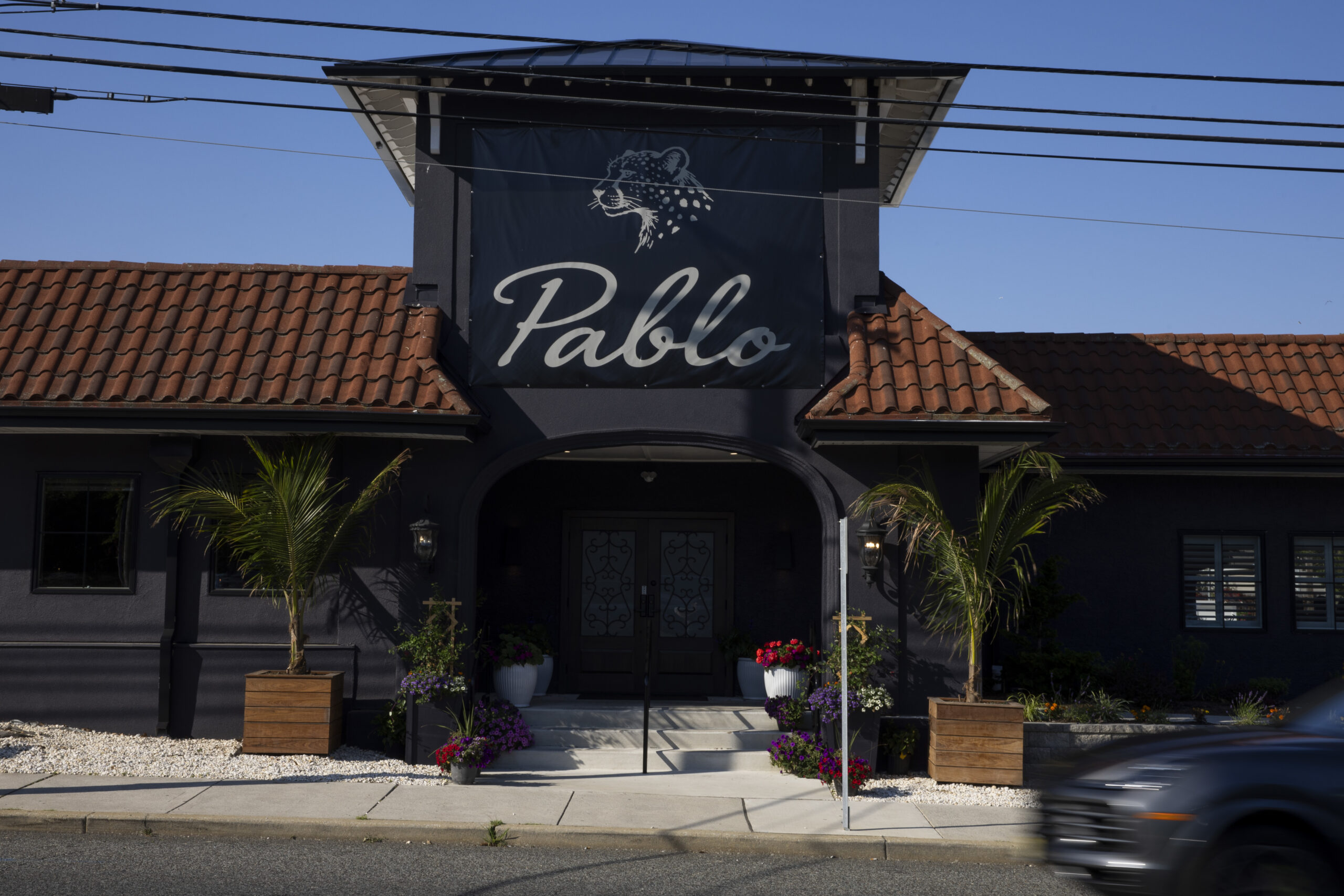
    Who is Pablo? That name was atop the list of every local I surveyed before my visit to the beach. It’s easy to see the curiosity factor at play: cars are often spilling out of the lot and parked on both sides of East Maryland Avenue beside the massive black hacienda of a restaurant and night spot called Pablo in Somers Point. The Zest Restaurant Group opened Pablo this summer after pouring $2 million into a renovation of the short-lived former Mexiquila. The Zest group, known for its stylish Cape May restaurants Port, Fish House, and Tacos Caballito Tequileria, has similarly transformed this rambling property (originally Clancy’s By the Bay) into a multi-room, four-bar, 400-seat extravaganza. There’s a moody lounge at the rear anchored by a DJ spinning house music, boosted by live musicians and pyrotechnics, an airy greenhouse dining room on the other side with skylights and garage doors that roll-up to a patio bar where they’ve re-created a beach. Fresh-juice cocktails fuel this fiesta, accounting for about 75% of the sales from the 1,200 or so guests that come through on a busy evening, says co-owner Ross Hammer, who concedes Pablo is a made-up name for the restaurant’s cheetah logo. (“Sorry, I’m Miguel,” said a passing server when I asked him for Pablo’s whereabouts.)

    The exterior of Pablo on Wednesday, June 17, 2026, in Somers Point.

    Pablo’s menu is a more affordable than its upscale-yet-underwhelming predecessor and conscientious to accommodate dietary restrictions. I only wish the kitchen put as much energy into making better-tasting food. Our meal was full of tepid overcooked meats, dry rice, stadium-grade nachos welded together with cheap cheese, and a parade of fusion tacos so disappointing that it was an all-out Taco-pocolypse, whose brightest bite was a tortilla topped with a cheeseburger. By that point, I realized that the wait — Hammer says it averages two to three hours for a seat in this no reservations dining room — is not worth it. Go to Pleasantville (see above) or pretty much anywhere else for your tacos, then return to Pablo for a tequila-spiked espresso martini, if you’re so determined, and boogie the night away on its ersatz beach. Pablo, 101 E. Maryland Ave., Somers Point, N.J. 08244, 609-469-6991; pablosomerspoint.com

  • The best things we ate this week

    The best things we ate this week

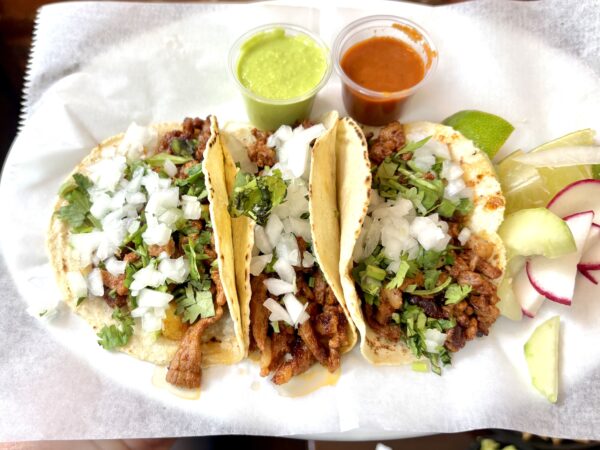
    Tacos al pastor at Tu Rinconcito

    “Tu Rinconcito” is Spanish for “your little corner.” The tiny 22-seater that bears this name in Old City is tucked into a sunny, brick-lined corner space on Third Street just north of Market, and could so easily be missed. That would be a mistake, especially if you love tacos.

    The menu is fairly straightforward at this casual counter-service collaboration between chef Eugenio Guevara and his daughter, Elena. But the recipes — a blend of flavors from Eugenio’s native Puebla and his wife Ernestina Martinez’s hometown of San Luis Potosí — benefit from an unmistakable handmade touch. The tacos al pastor are a perfect example. The ribbons of pork are cooked on the plancha rather than a usual trompo spit, but remain incredibly juicy and tender. Ernestina’s vivid orange al pastor marinade is bright and zesty, with pineapple juice and guajillo chiles that spark against the micro crunch of minced raw onions and cilantro.

    And as always with great tacos, details make all the difference. The succulent meat comes wrapped inside three house-pressed tortillas that are dainty but pliant and warm. Add a splash of the excellent and tangy salsa verde cruda or the earthy and herbaceous salsa rojo from the self-serve salsa bar, and the combo hits yet another level of magnetic force that is all this little corner needs to draw me back for more. Next time? Carnitas and a breakfast burrito. Tu Rinconcito, 17 N. Third St., 445-223-2733, turinconcitophilly.com

    — Craig LaBan

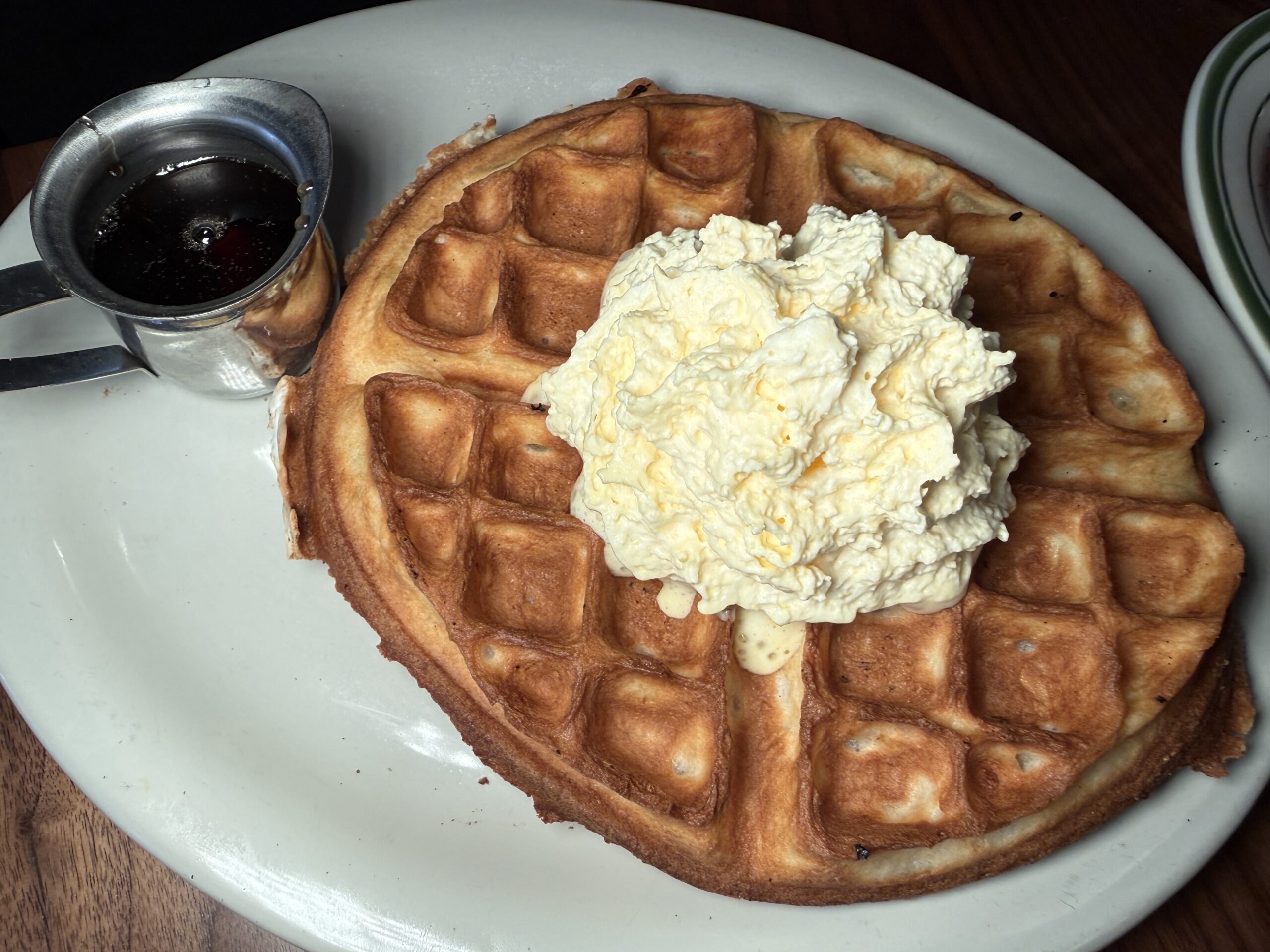
    The bibingka waffle at Manaong, 1833 Fairmount Ave.

    Bibingka Waffle at Manong

    Manong’s $11 bibingka waffle, available only on their newish brunch menu, is startlingly straightforward. You have a crispy, delicate waffle with a delightful chew — pulling it apart with your hands is particularly fun — topped with an enormous cloud of whipped cream. But just as the simplicity of the waffle’s appearance doesn’t prepare you for its eggy, rice flour texture, neither does gazing upon its accoutrements prepare you for their flavors. That cream cloud has salted egg yolk whipped into it, adding a lovely, savory balance to inherently sweet cream. The tiny pitcher of maple syrup is also spiked with spicy ginger for a sneaky kick. All the components come together beautifully. Manong, 1833 Fairmount Ave., 445-223-2141, manongphilly.com

    — Kiki Aranita

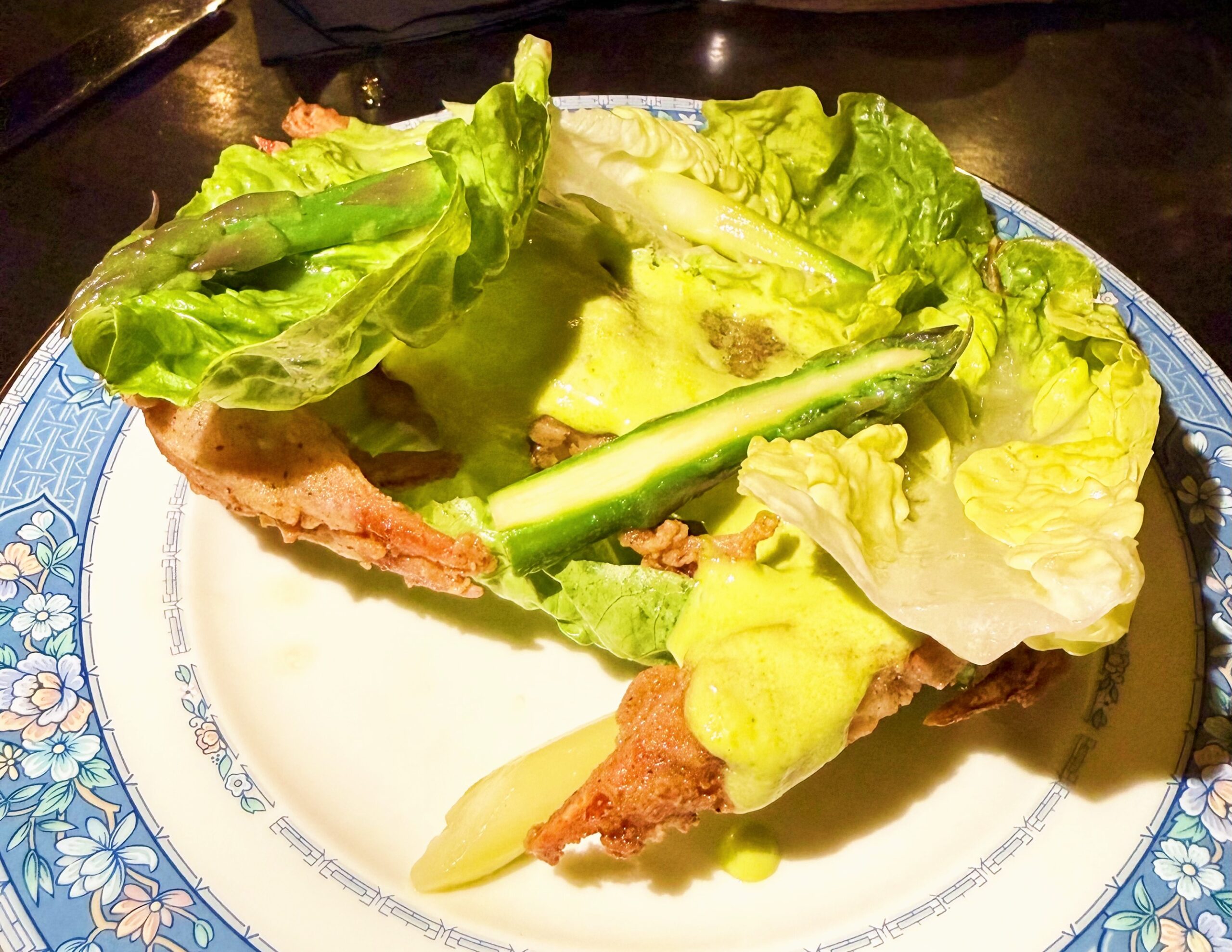
    Soft-shell crab at My Loup, 2005 Walnut St.

    Soft-shell crab at My Loup

    When the season turns from spring to summer, there’s a good chance that chef Alex Kemp will have a soft-shell crab dish on My Loup’s menu. In recent years, Kemp’s crab setup has included a highbrow riff on a BLT with roasted tomatoes, shredded lettuce, and bacon bits, and a supersimple version with Hollandaise sauce and caviar. The current plating puts a crispy crab under gem lettuce, spears of fresh asparagus, and a lemony-herby sauce. It’s a delight of contrasting textures and temperatures, and my annual reminder that summer is indeed here. My Loup, 2005 Walnut St., 267-239-5925, myloupphl.com

    — Evan S. Benn

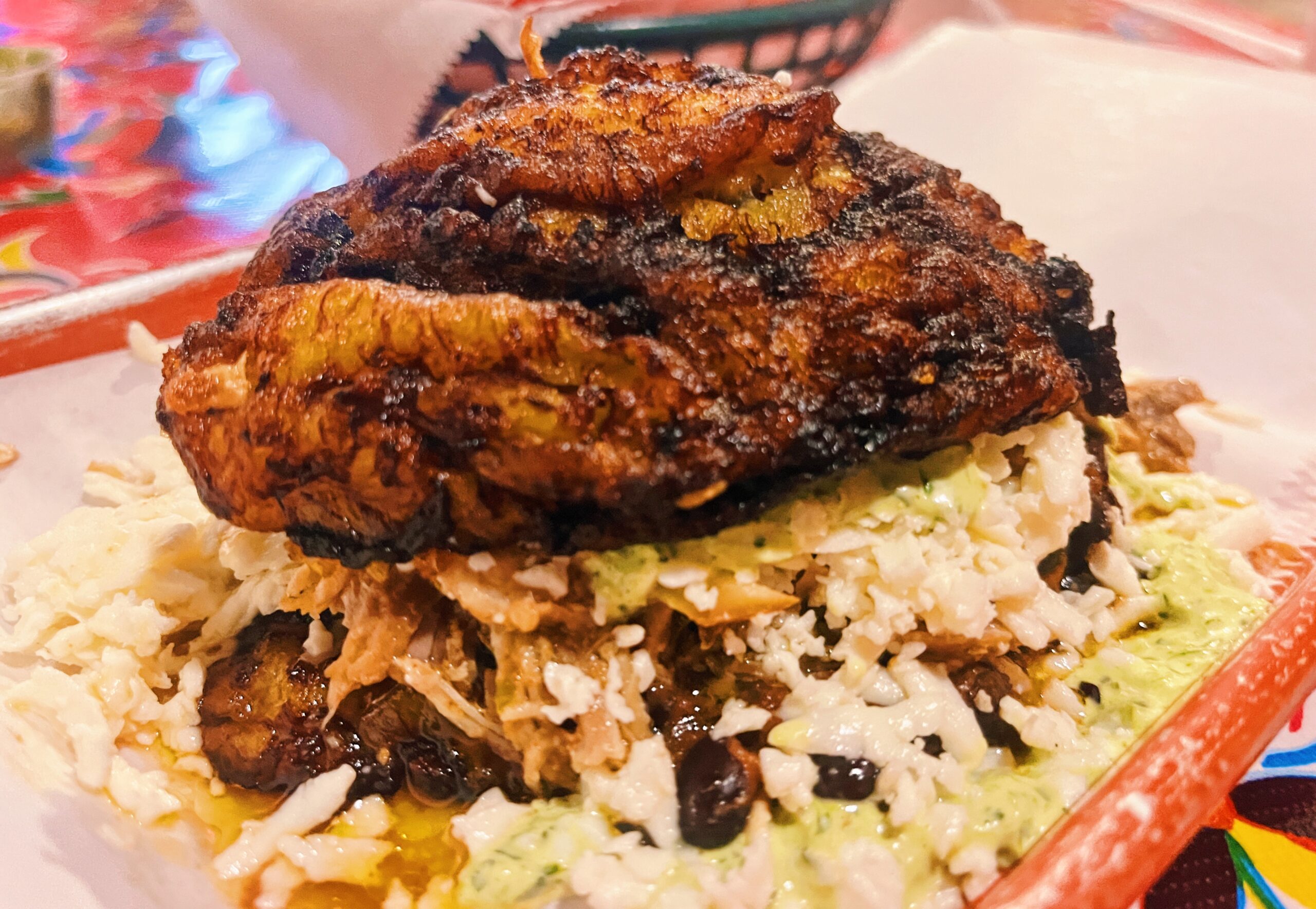
    The patacón pintón at Puyero Venezuelan Flavors, which has locations on South Street and in University City.

    Patacón Pintón at Puyero Venezuelan Flavors

    If you’re not venturing beyond the arepas at Puyero Venezuelan Flavors, you’re doing it wrong. The casual Venezuelan restaurant with locations on South Street and in University City overstuffs the doughy cornmeal pocket tender beef and juicy roast pork, but the real magic is in everything else on the menu: buttery tequeños with cheese pulls that put even the best mozzarella sticks to shame, crispy tostones, and the patacón pintón, a sandwich that brings one of my favorite intrusive thoughts: What if maduros were bread?

    The patacón pintón comes served on two giant pieces of caramelized sweet plantains piled high with shredded beef, black beans, and white cheese with a creamy green mayo. The maduros are surprisingly sturdy and add an extra dimension to an otherwise very salty — and heavy — sandwich. I think more sandwiches should come like this. Puyero Venezuelan Flavors, 524 S. Fourth St., 267-928-4584, puyeroflavor.com

    — Beatrice Forman

  • This East Market Mexican restaurant is all flash, little flavor

    This East Market Mexican restaurant is all flash, little flavor

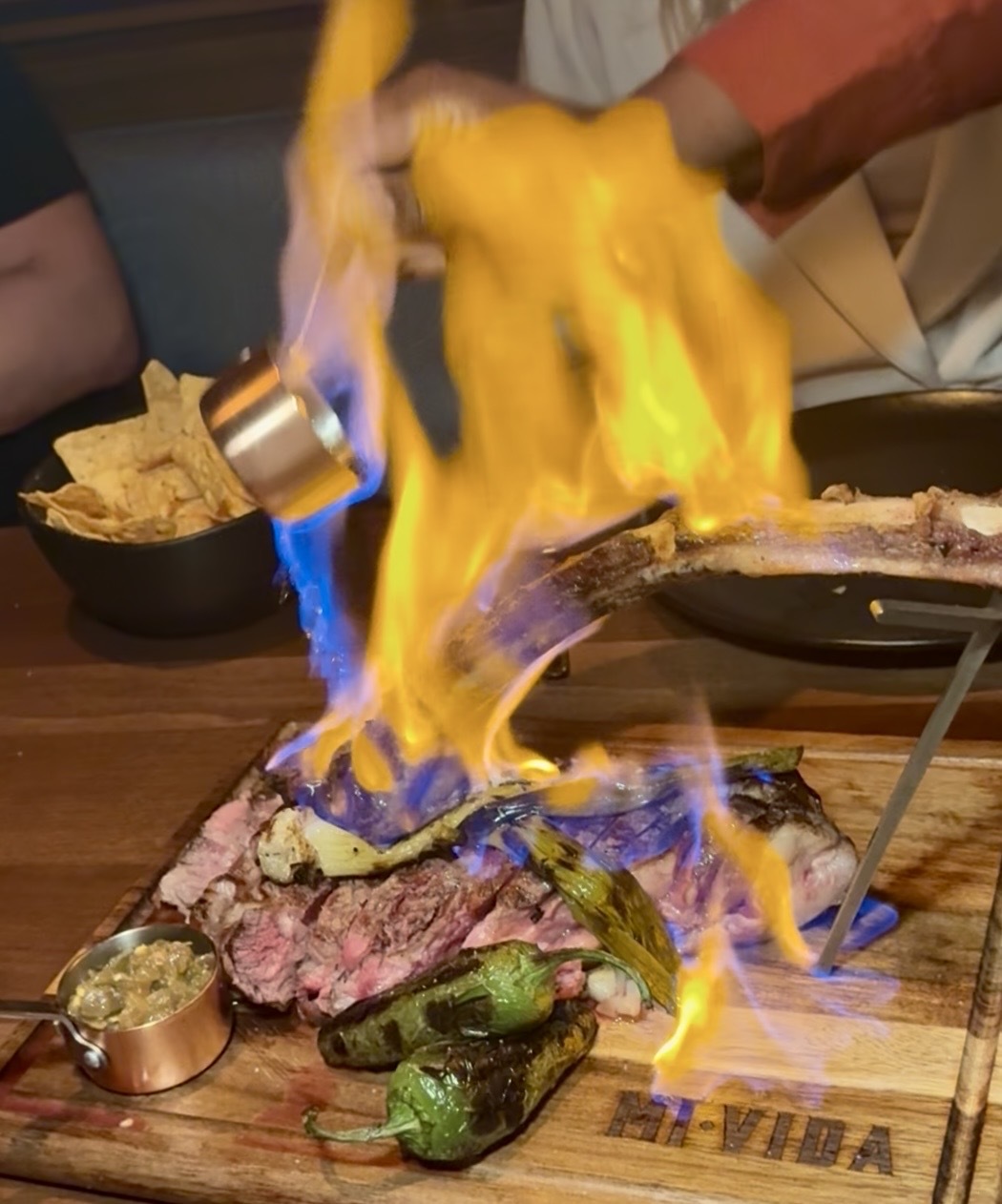
    There are fire bowls ablaze atop the columns flanking the front door of Mi Vida. At our table, a steak is, too, as the server who delivered the big chop known as “El Chingón” lit a cup of Mexican whiskey, then poured its blue flames up and down the arching bone of this 40-ounce mega-steak. The fire wasn’t hot enough to risk igniting the faux branches of the “tree of life” that rises over the tables near the bar — nor did it spark extra flavor on the steak. But pyrotechnics and dramatic decor are as much a part of the experience as the food at this ambitious newcomer in National Real Estate Development’s $400 million East Market development.

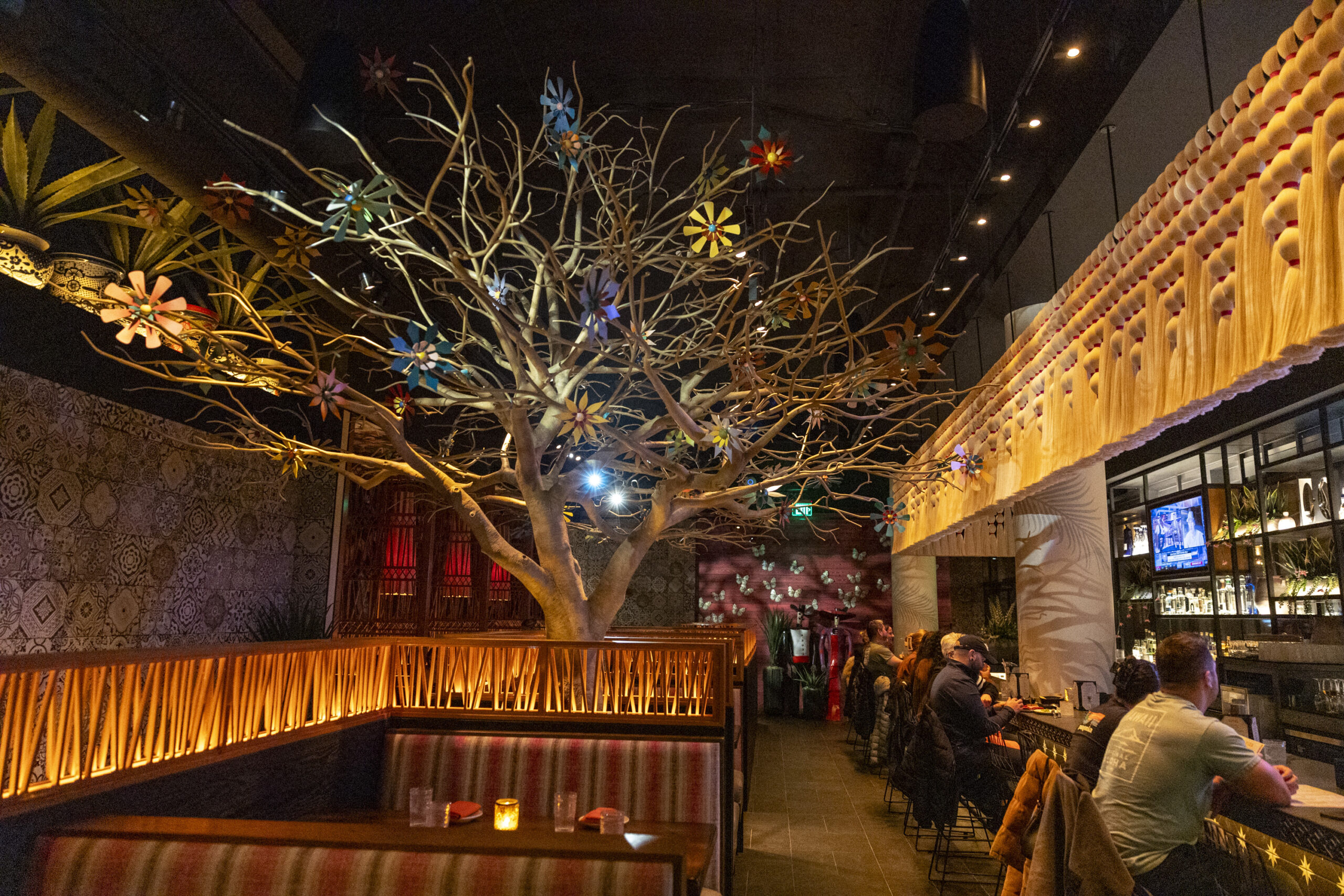
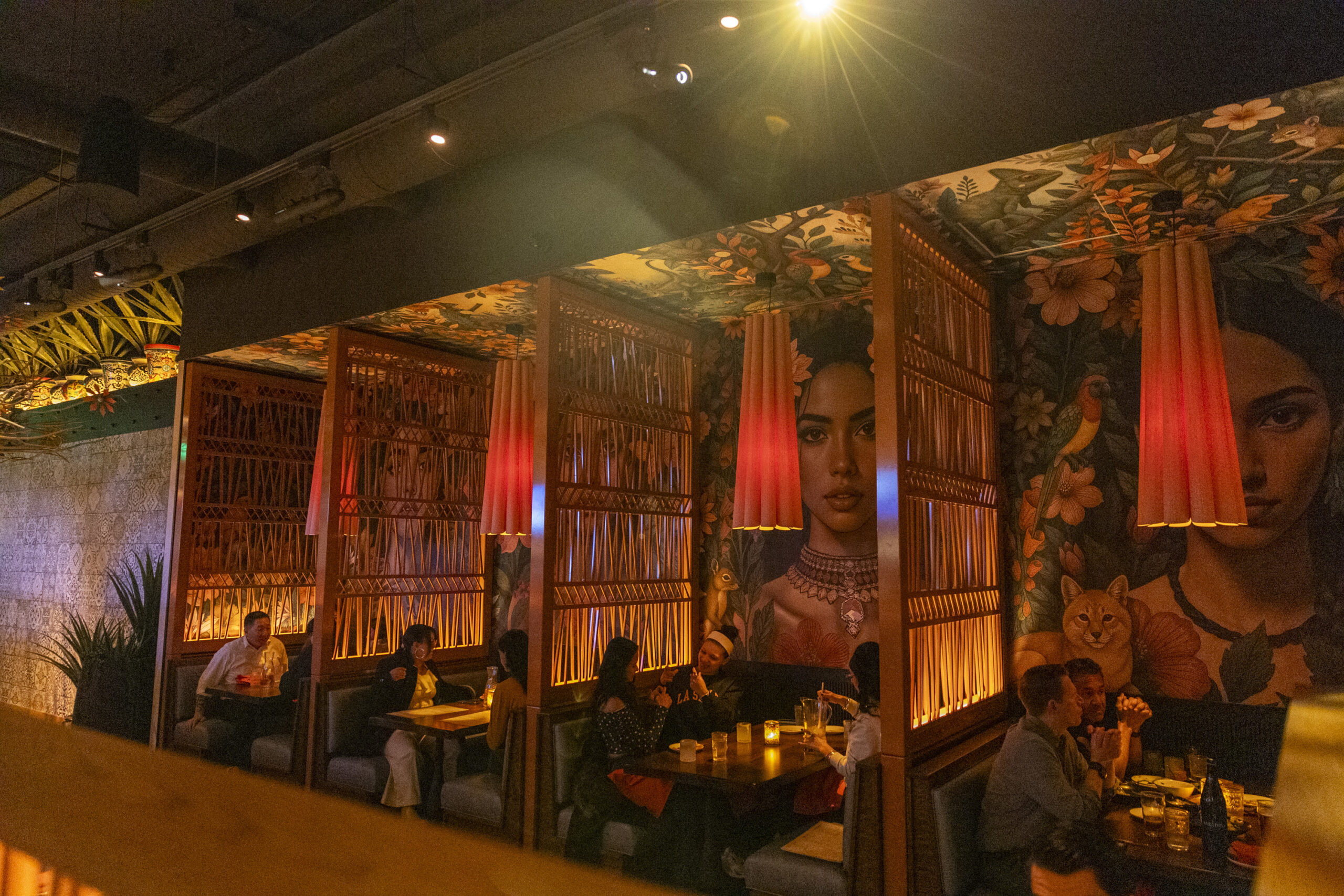
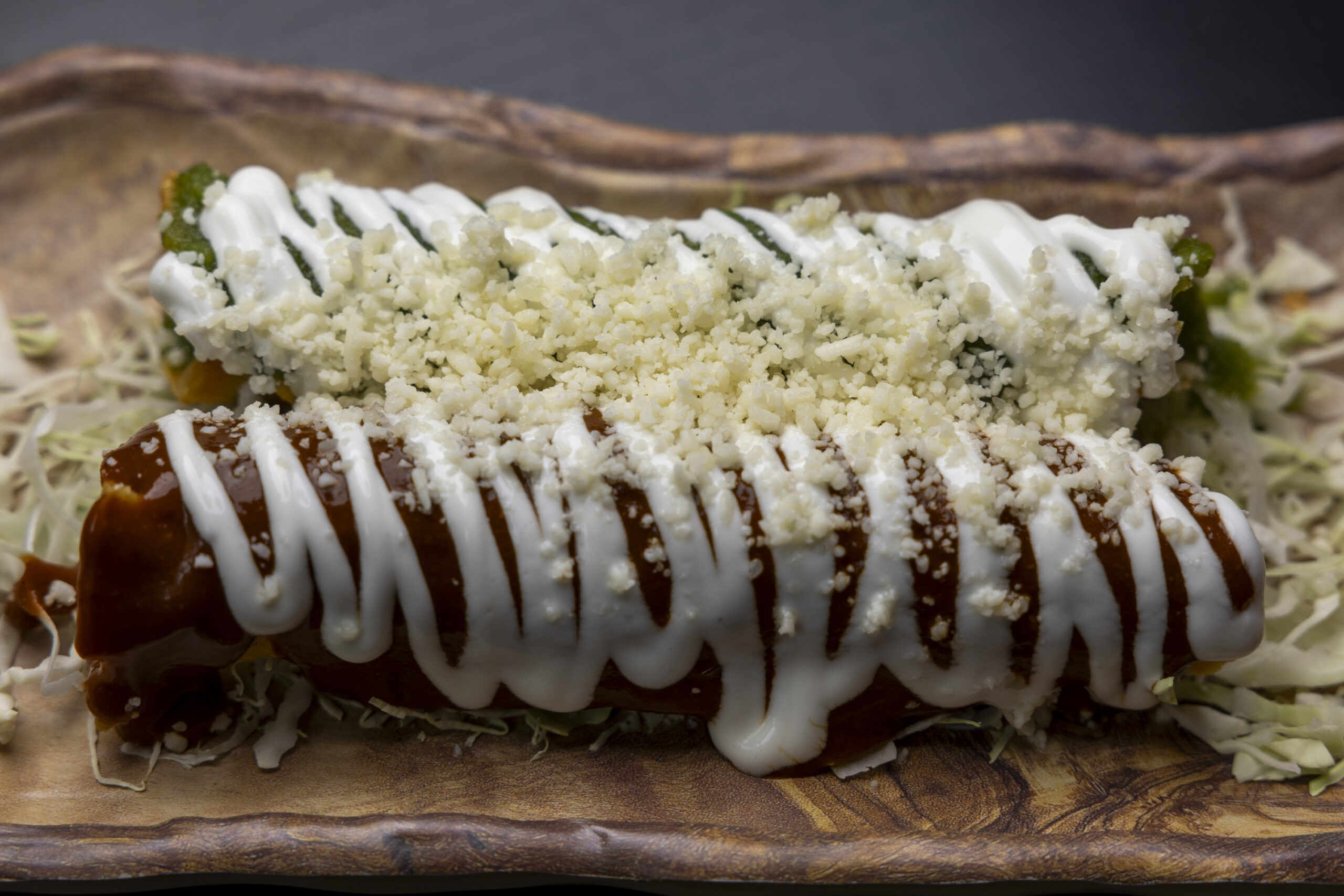
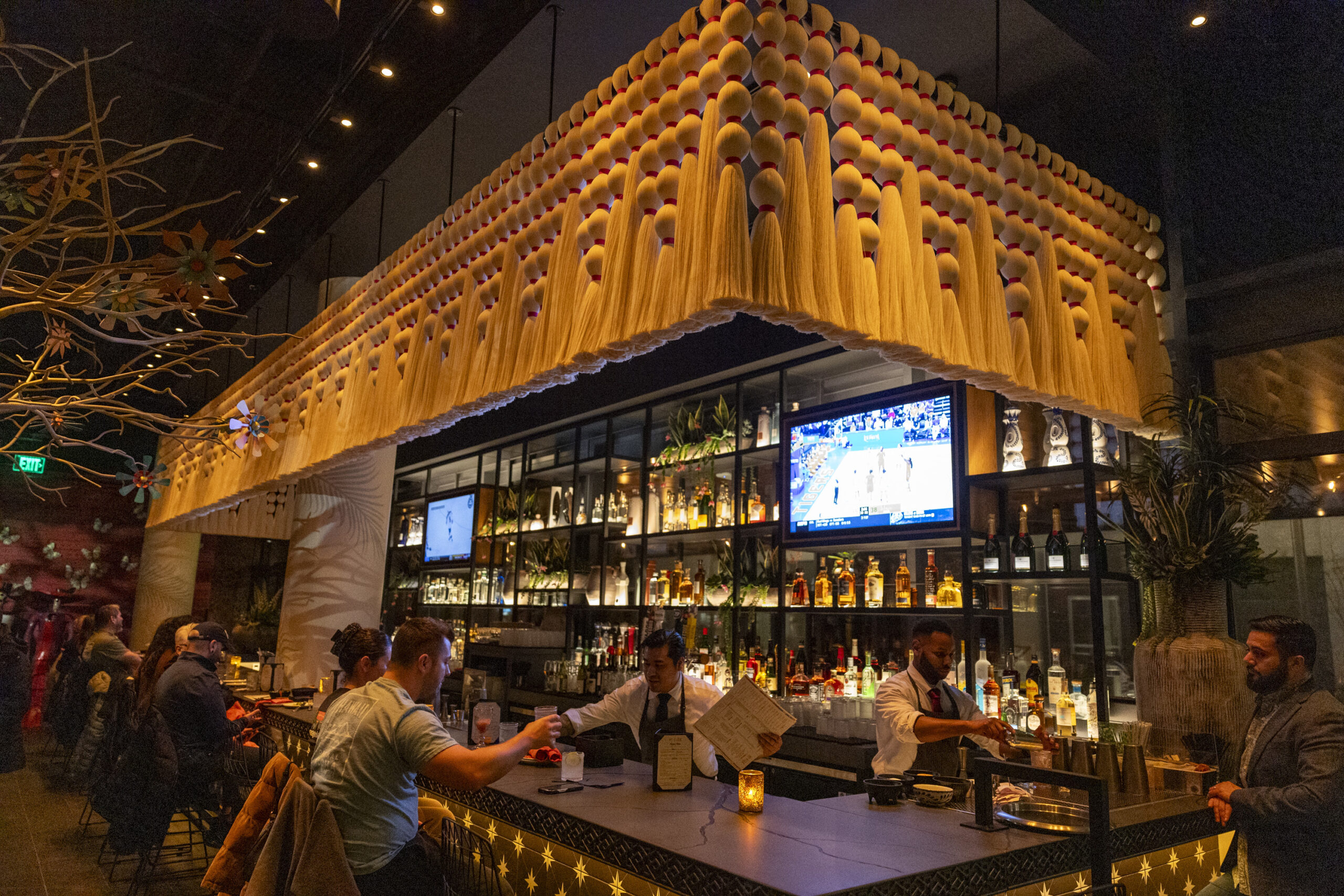
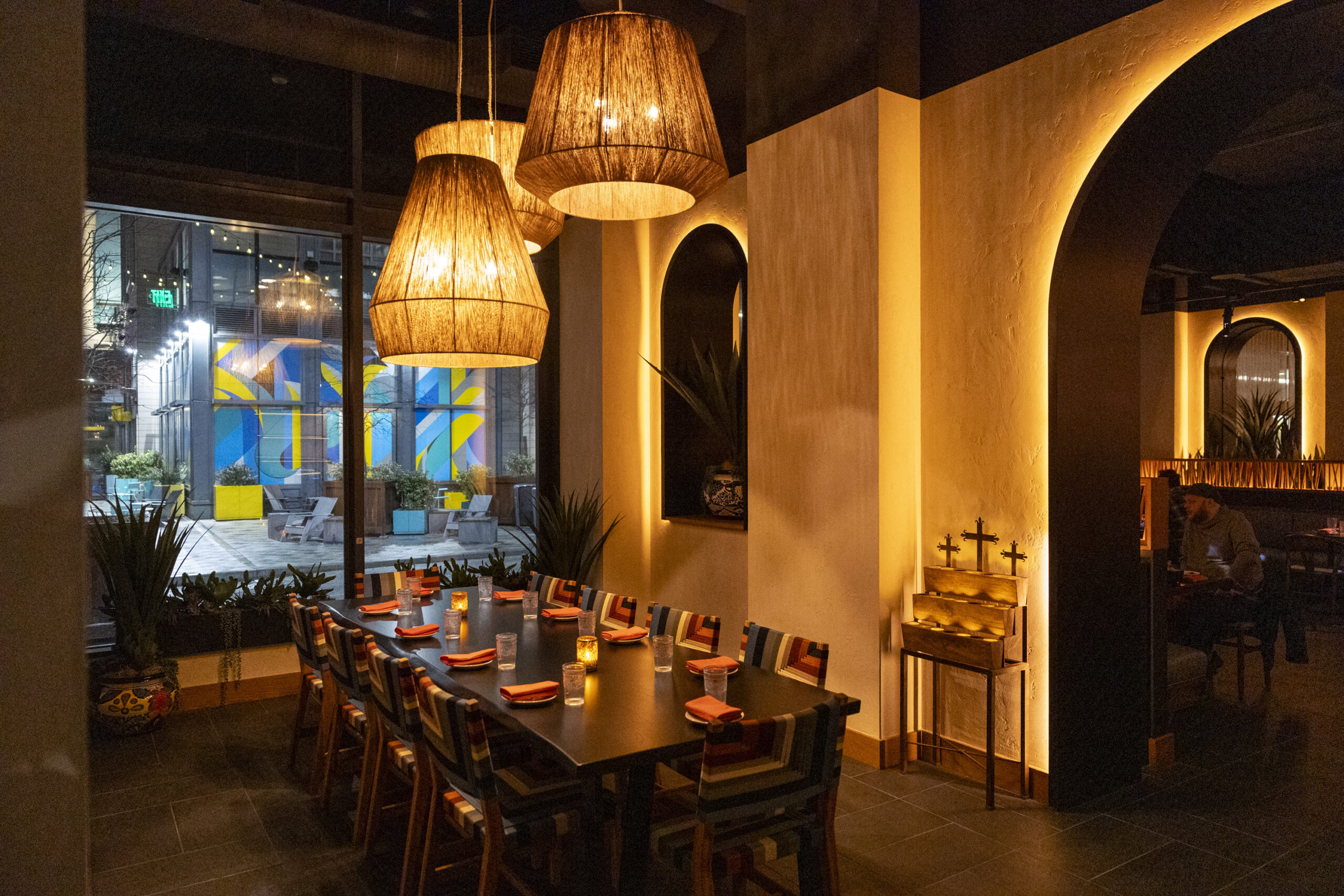
    Mi Vida, which opened in March as the first Philly project from Knead Hospitality + Design, a James Beard-nominated restaurant group based in Washington, aims to conjure Mexico through splashy design, the accents of hot pink lava meant to evoke the volcanic landscape, the tree rising from the ashes with branches dangling folk art flowers a symbol of resilience (and cue for Instagram selfies). Even the big bar that lines this theatrically lit 286-seat space tucked off Ludlow Street is fringed with a tassel-like rope sculpture woven from agave fibers, appropriate for a bar offering more than 150 tequilas and mezcals.

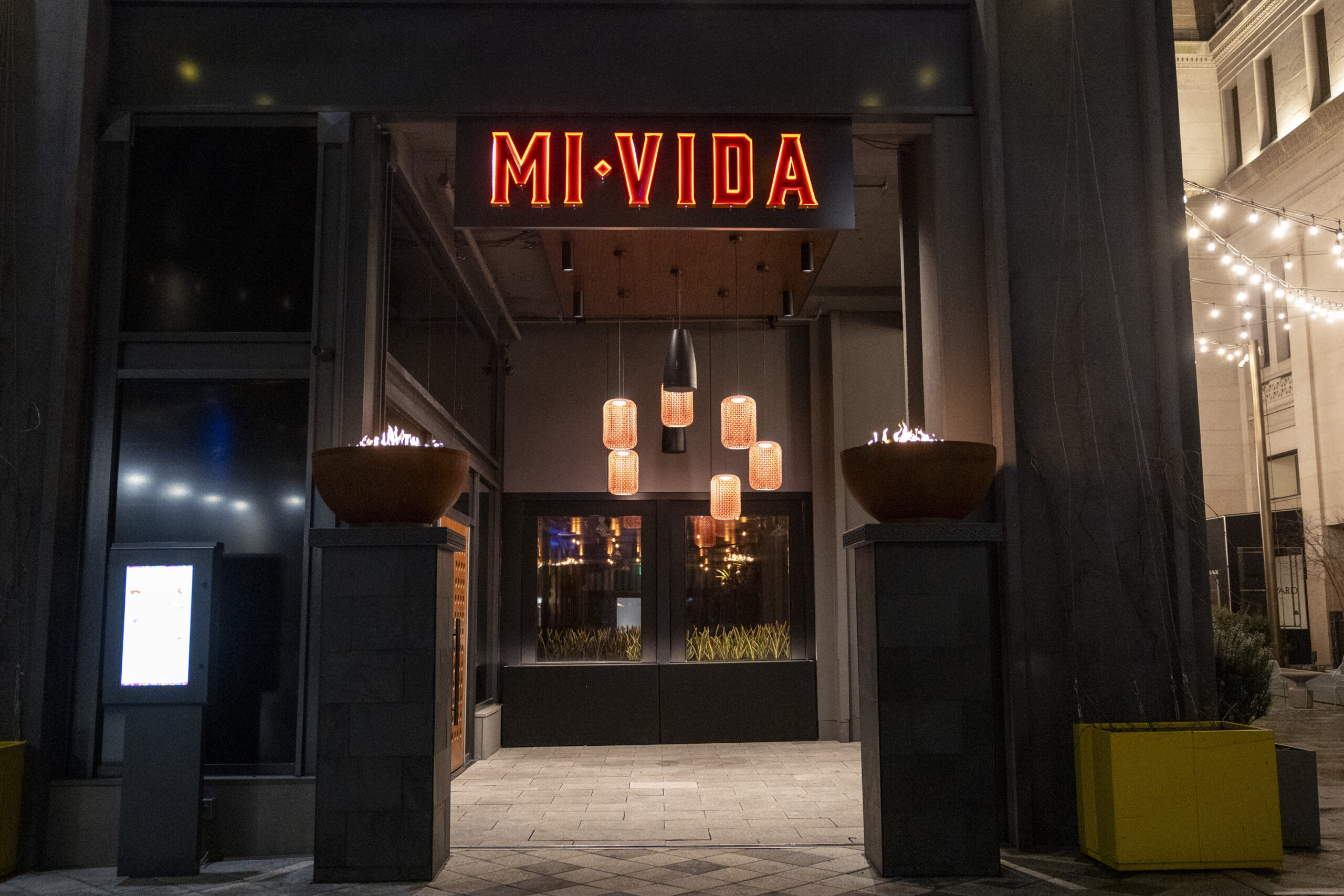
    The entrance to Mi Vida in Philadelphia, Pa., on Thursday, Feb. 26, 2026.
    A 40-ounce ribeye, dubbed “El Chingón” is doused tableside with flaming Mexican whiskey at Mi Vida in East Market.

    I only wish the food was as richly nuanced as the restaurant’s moody design. The menu of classic Mexican flavors with modern touches, designed in part by Knead’s culinary director, Roberto Santibañez, and recently updated by corporate chef (and current Top Chef contestant) Jonathan Dearden, is the same produced at all three other Mi Vida locations spread between D.C. and Virginia Beach.

    But this crew cannot even make a decent guacamole. Every order I scooped into over multiple visits was half-mashed into spoon-size chunks of unripe avocados so pale and lacking in natural creamy sweetness, it was like eating a bowl of slippery green potatoes.

    The inside of Mi Vida in Philadelphia, Pa., on Thursday, Feb. 26, 2026.
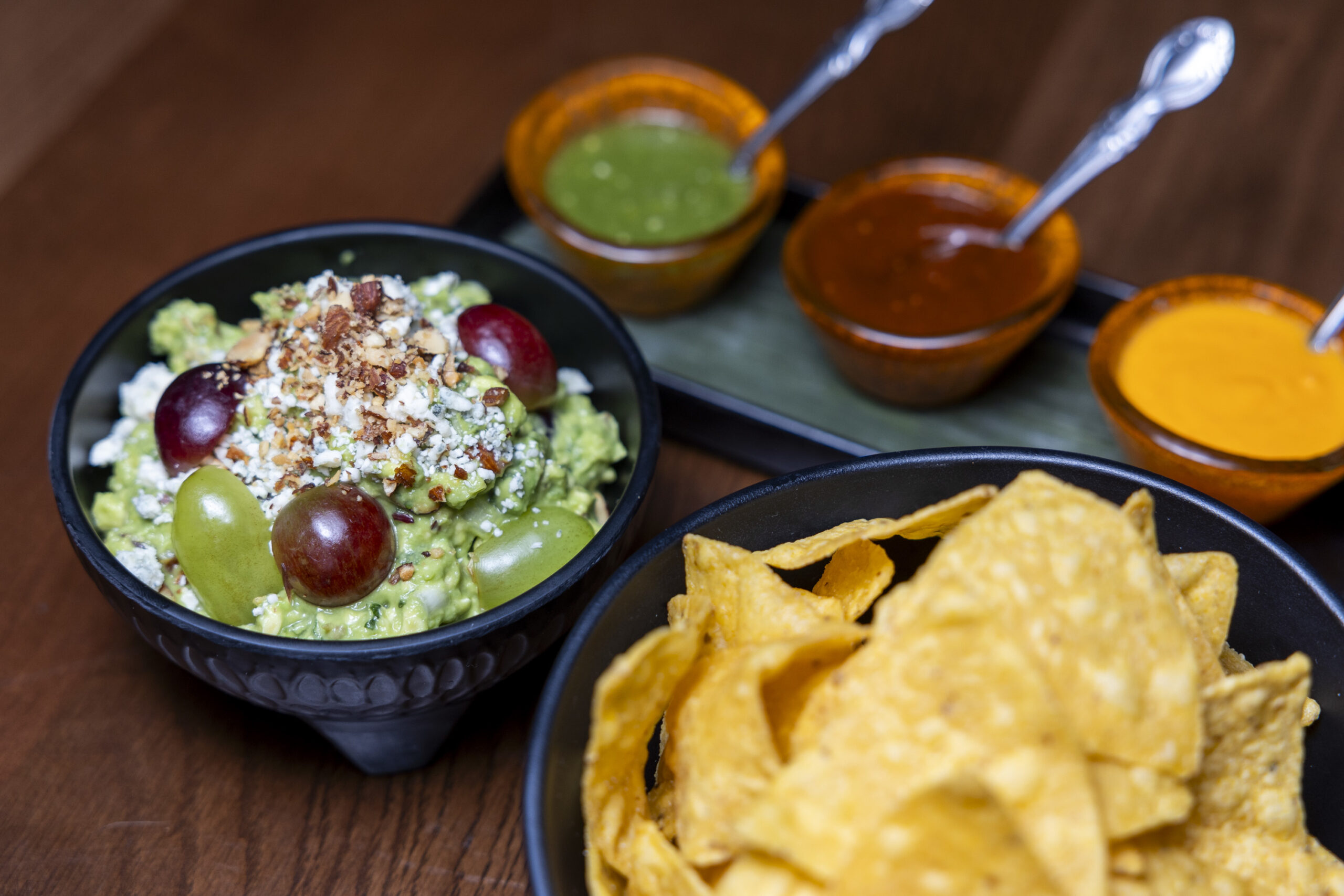
    Guacamole with blue cheese, grapes, and smoked almonds at Mi Vida in Philadelphia, Pa., on Thursday, Feb. 26, 2026.

    I’d normally resist a seemingly random topping like blue cheese, grapes, and smoked almonds, but it was an admittedly tasty distraction from the guacamole travesty lurking below.

    “Is everything yum, yum, yummy?” said our server, with perfect timing and an earnest chain restaurant perkiness I could not bring myself to disappoint with the truth.

    Fresh guacamole is obviously basic, but it’s also something that relies on finesse and a consistent touch. A bad miss on something so elemental is a red flag. Jason Berry, Knead’s principal and cofounder, surely knows this, having previously been the chief operating officer of Rosa Mexicano, the tableside guac-pioneering restaurant group that, beginning in the 1980s, helped redirect Mexican chain culture away from the Tex-Mex clichés of Chi-Chi’s to more elegant spaces showcasing regional dishes such as mole. Mi Vida has successfully built on that model in the past with its own spin, albeit skipping the tableside show for kitchen-made guacamole, ironically, in the service of consistency.

    Booth seating with mural paintings on the walls at Mi Vida in Philadelphia, Pa., on Thursday, Feb. 26, 2026.

    Berry launched Knead 11 years ago with his husband, designer Michael Reginbogin. They now have 17 restaurants in all, a diverse concept portfolio including Southern/Korean (Succotash), an American diner (Gatsby), and a Jewish deli (Beresovsky’s). The duo have Philly history, as Berry graduated from Wharton in 2002 and Reginbogin worked for Stephen Starr at Washington Square. This sprawling new, L-shaped space with a 50-seat enclosed patio nestled inside the ambitious East Market development logically offered a tempting opportunity for this expansion-minded duo to return, especially with its close proximity to visitors from the Convention Center and several nearby hotels.

    Much has also changed in Philly since the pair left nearly a quarter century ago. In particular, we’ve seen a dramatic growth in quality Mexican options driven by immigration, from the many Poblano taquerias of South Philly to creative BYOBs like El Chingón and El Mictlan, and thrilling new modern Mexican fine-dining destinations such as Amà and Tequilas-La Jefa. I don’t see Mi Vida competing directly with those places so much as a more mass-market concept like Starr’s El Vez less than three blocks away, which, based on a recent revisit, has held up remarkably well over its 23 years.

    Mi Vida has a darker, sexier vibe, and the virtue of a large space that can handle groups. But its kitchen has a way to go before it can compete.

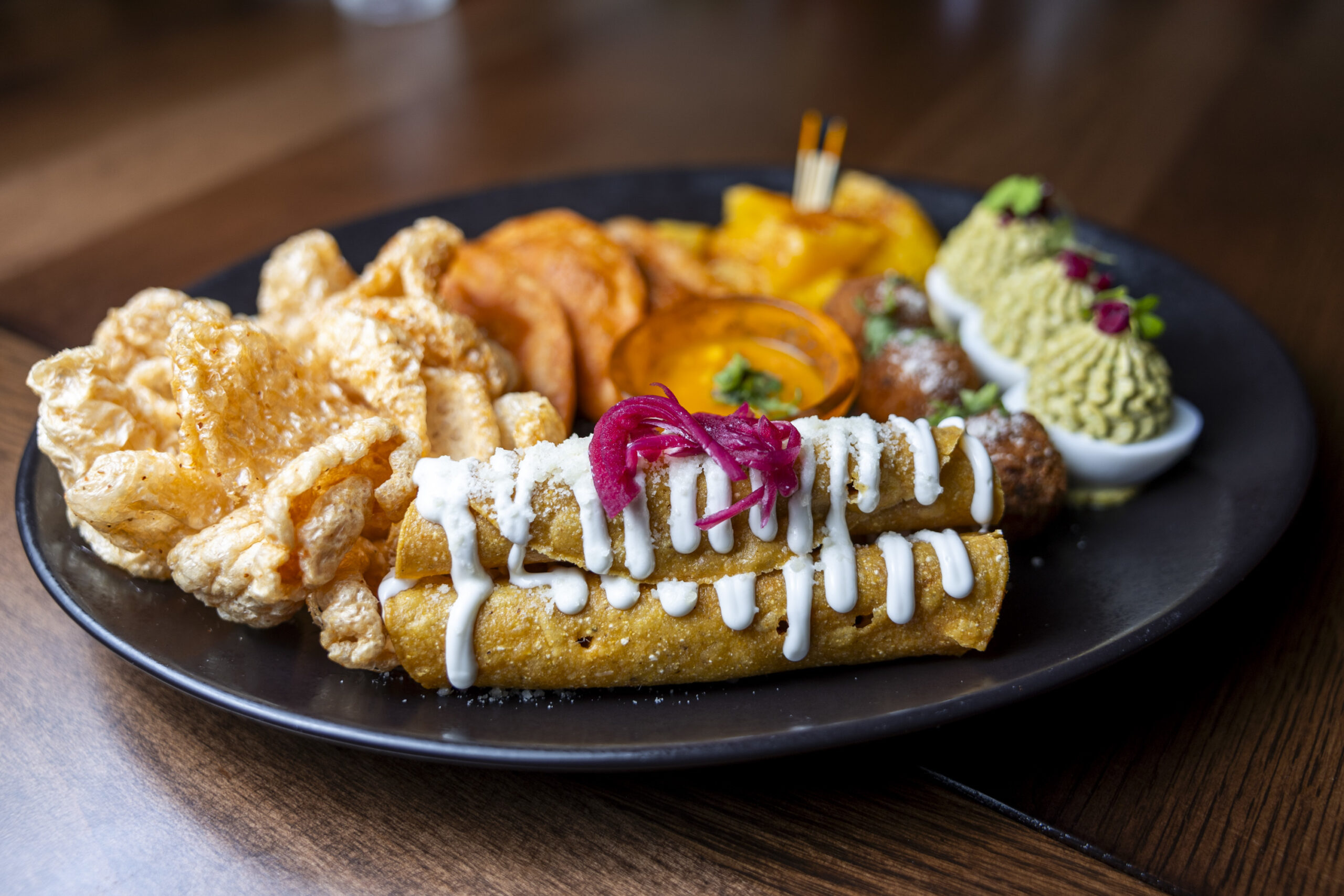
    A platter of taco dorados, huevos rellenos, croquetas, naranjas enchiladas, empanadas de mariscos, and chicarrones at Mi Vida in Philadelphia, Pa., on Thursday, Feb. 26, 2026.
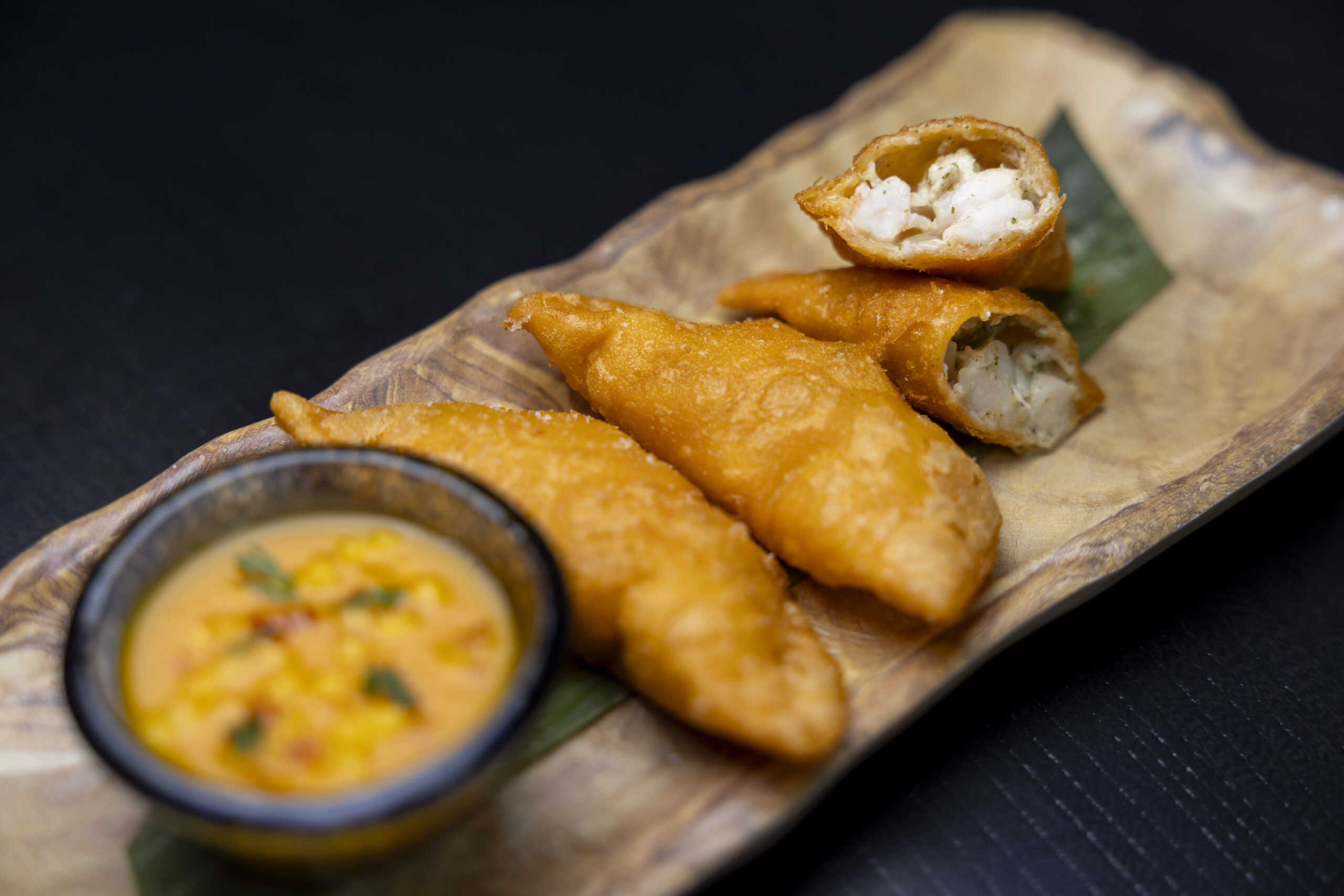
    Seafood Empanadas at Mi Vida in Philadelphia, Pa., on Thursday., May 21, 2026.

    There were some bright spots. The appetizer sampler brought an appealing platter of deviled eggs piped with fillings turned nutty green by pumpkin seed pipián, esquites croquettes, and seafood empanadas that were delicately crisped and bursting with a stuffing of sweet lump crab, ideal against the fruity heat of a mango-habanero salsa. A generous helping of chicharrónes piled overtop like crunchy clouds gave me hope this kitchen was ready to dive deep into true Mexican street food.

    It’s clear this kitchen is capable. The carnitas tacos were a vision of simplicity perfected, stuffed with juicy shreds of slow-braised pork, dusted with cilantro and onions, topped with a pale green drizzle of avocado salsa and the snap of more crushed chicharrónes. The beer-battered cod tacos were solid, though overwhelmed by an unwieldy slaw cut into chunky ribbons bigger than the tortillas themselves. A plate of chicken-stuffed tacos dorados was more successful, showcasing the contrasting salsas of a bracingly tart verde blending tomatillos and serranos and the smoky brown spice drawn from earthy pasilla de Oaxaca chilies.

    Tacos Dorados at Mi Vida in Philadelphia, Pa., on Thursday., May 21, 2026.

    But then came the gimmick of a smash cheeseburger taco, an overcooked patty welded to its tortilla on the plancha before it’s dressed in shredduce and a “pickle de gallo.” I went in hopeful, as someone passionate about both burgers and tacos, but the burger was so dry and overcooked it was a loveless marriage.

    There were some creative ideas that were absolutely delicious, especially those with vegetarian alternatives on traditionally meaty dishes, like the enchiladas stuffed with a coriander-scented mushroom, kale, and cauliflower blend that was complemented by a tomatoey salsa ranchera vibrant with ginger, guajillo chilies, and herbal epazote. The aguachiles, however, seemed to be driven more by the impact of colors than flavor, the strikingly black broth for one aguachile opting for the bland shortcut of activated charcoal for its pigment rather than the more traditional recipe of charred chilies and onions. The choice of beets in another aguachile overshadowed the taste of tuna.

    Aguachile tropical at Mi Vida in Philadelphia, Pa., on Thursday, Feb. 26, 2026.

    Mi Vida’s version of Oaxacan mole negro hit all the right notes — spicy, rich, subtly sweet, and layered with complexity. But why go to the trouble to make one of the world’s most time-consuming preparations only to pair it with enchiladas stuffed with brisket braised in smoky chipotle tinga sauce, a completely different and competing flavor? A great mole should be the star of the show.

    It wasn’t the only time this kitchen outsmarted itself with presentation. Covering the entire fajita skillet with molten cheese might sound novel, but the pasilla-marinated rib eye reposing atop that queso was robbed of the honor of arriving to our table with the ASMR sizzle of meat on metal. The steak itself was also a letdown, too fatty and with too little meat for $69. For that matter, the big tomahawk chop that arrived at our table as a flaming centerpiece for four was plentiful, but at $149, did not deliver a deep and lasting savor compared to other large format steak splurges I’ve ordered recently.

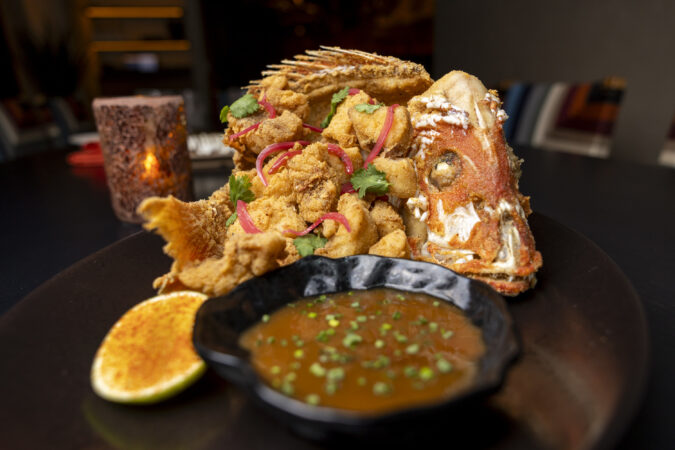
    Two other potential showstopping dishes stumbled on execution. A huge red snapper was deboned and cubed into masa-crisped nuggets that arrived cradled in the curve of its deep-fried skeleton beside a sweet-and-sour tamarind chili dip. The risky move of a double-fry method, however, left the fish overcooked. And “chewy” does not even begin to describe the texture of the big chamorro, a 1½ pound mallet of pork shank slow-braised in adobo broth then dropped in the fryer to crisp on the pickup. What finally arrived was so leathery and dark, I can’t even imagine what the first attempt looked like, given the chef had abandoned it for a second try, according to a manager who explained our plate’s delay.

    The bar at Mi Vida in Philadelphia, Pa., on Thursday, Feb. 26, 2026.
    The Piñada at Mi Vida in Philadelphia, Pa., on Thursday., May 21, 2026.

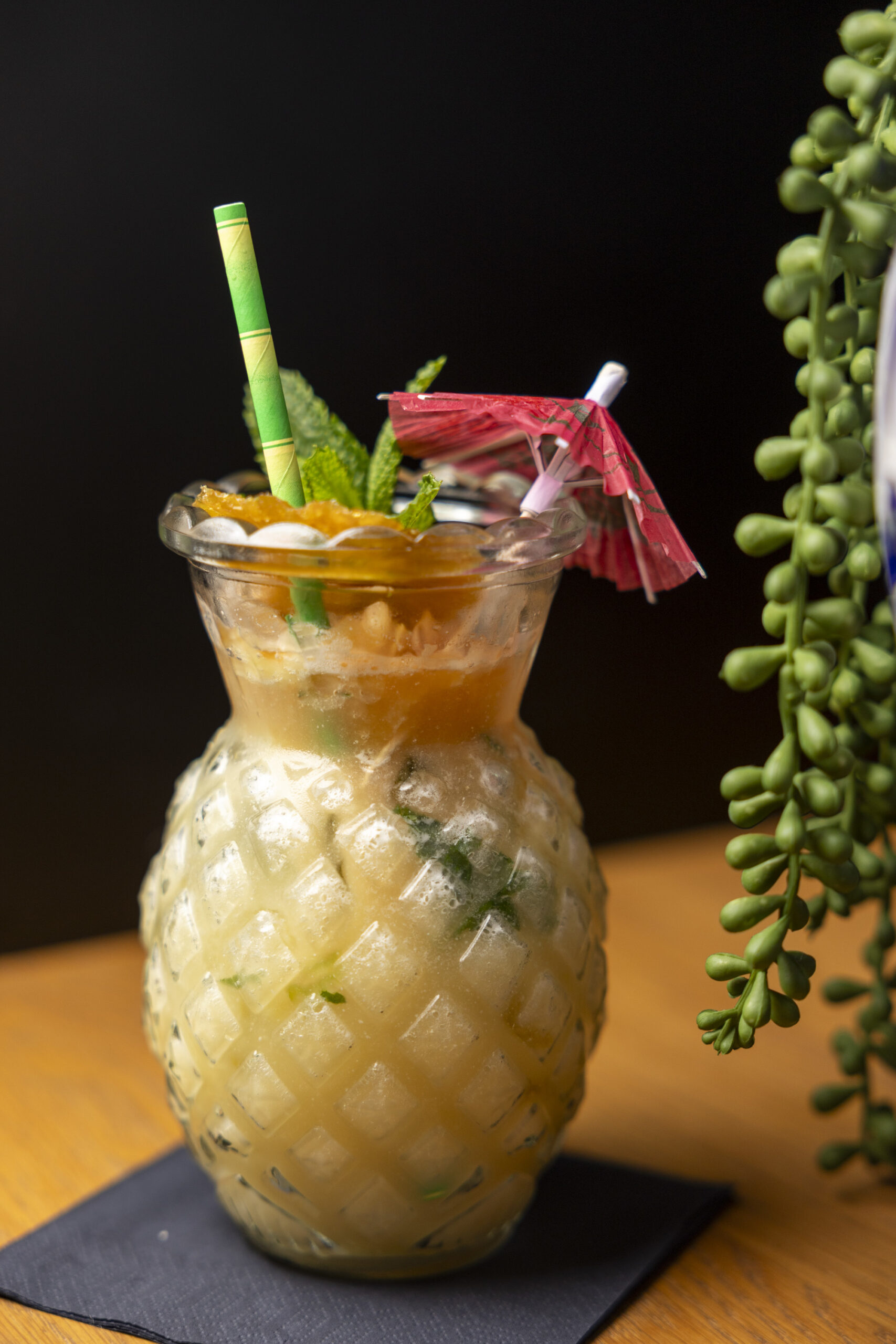
    We used that time to explore the drink list, which ably quenches any margarita cravings (try the apricot-tamarind variation called La Fiesta Dorada), and resort vibes cocktails such as the rummy Piñada in a pineapple-shaped glass. The impressive agave spirits list offers copitas for the serious sipper, such as my favorite, Fortaleza, or smoky Siembra Ancestral Blanco produced by Philly’s Suro family, along with several excellent mezcales, raicillas, sotol, and bacanora.

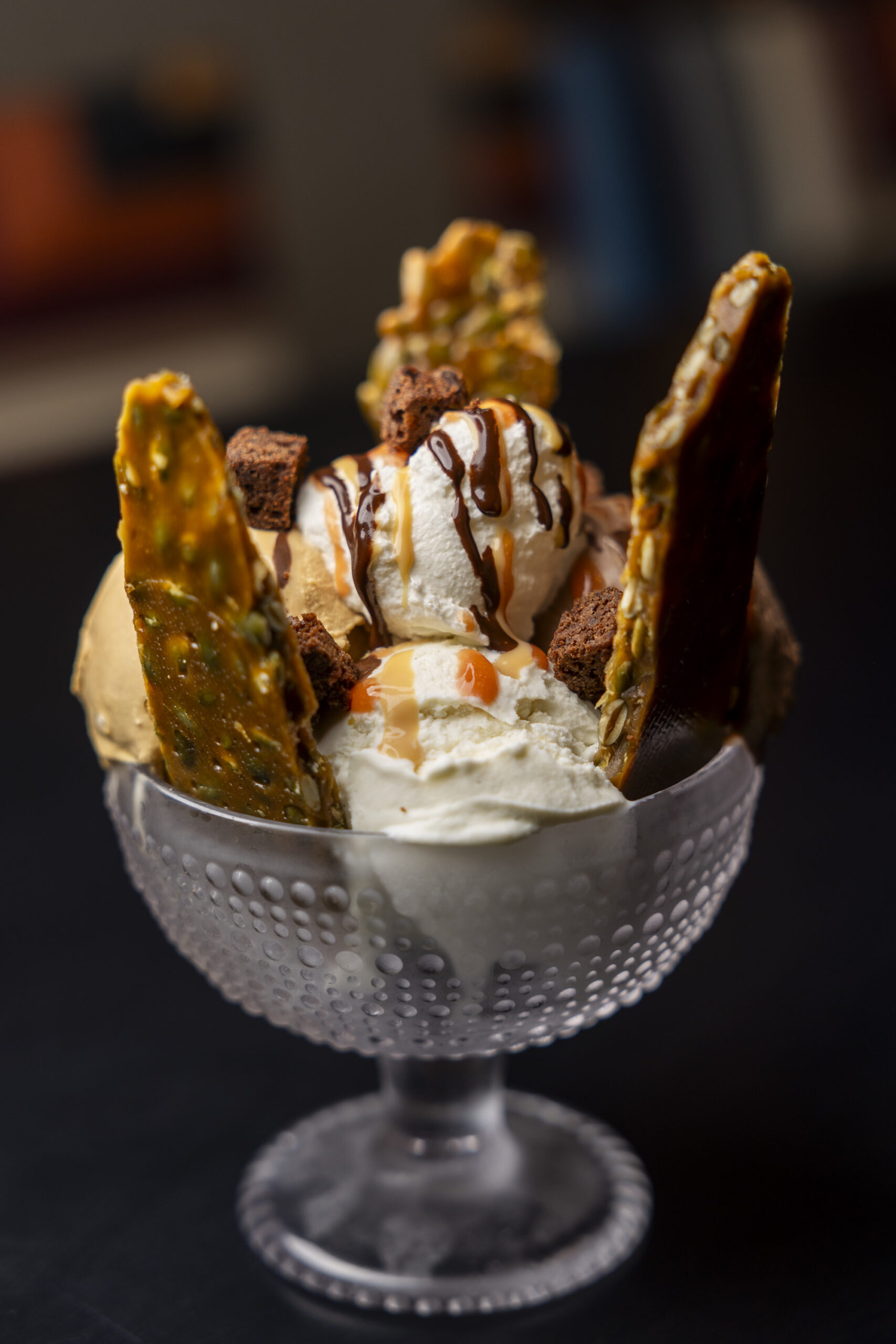
    By the time you get to dessert, tres leches and churros hit all the usual sweet notes. One pleasant surprise is the volcán de helados, Mi Vida’s take on the now trending sundae, covering cajeta, chocolate, and vanilla ice creams with guava sauce, pecan brownie bits, and pumpkin seed brittle that was a festive way to finish off an otherwise mundane meal.

    Based on Knead’s well-established success and significant investment, I can only hope this Mi Vida is just going through the growing pains of building a team in a new city. I have little doubt it will eventually find its niche as an easy destination for visitors and business groups. But with a Mexican dining scene in Philly that demands more than corporate flash to be impressed, this kitchen will need to level up considerably before it can become more than that.

    The Volcan de helados sundae with ice cream and pepita brittle at Mi Vida in Philadelphia, Pa., on Thursday., May 21, 2026.

    Mi Vida

    1150 Ludlow St., Philadelphia, Pa. 19107, 445-223-4875; mividamexico.com

    Lunch Monday through Friday, 11:30 a.m.-4 p.m. Dinner Sunday through Thursday, 4-10 p.m.; Friday, 4-11 p.m.; Saturday, 3-11 p.m. Brunch Saturday and Sunday, 11 a.m.-3 p.m.

    Tacos and enchiladas, $13.75-$21; entrees, $19.50-$69.

    Wheelchair accessible.

    About 80% of menu is gluten-free. There is also a dedicated gluten-free fryer to avoid cross contamination.

    Menu Highlights “Un Poco de Todo” app sampler (deviled eggs; esquites croquetas, chicharrones); crab empanadas; enchiladas rancheras and suizas; carnitas tacos; volcán de helados.

    Drinks An array of the usual margarita variations and colorful cocktails with a Mexican twist keep the meal festive. Check out the collection of 100-plus tequilas and nearly 50 mezcales.

    A dining table at Mi Vida in Philadelphia, Pa., on Thursday, Feb. 26, 2026.
  • Manong brings creative Filipino-American flavors to Fairmount — plus, it’s a lot of fun

    Manong brings creative Filipino-American flavors to Fairmount — plus, it’s a lot of fun

    Chance Anies grew up at the tables of America’s chain restaurants. His mom’s career as a manager opening locations for TGI Friday’s, Olive Garden, Dave & Buster’s and others meant he and his siblings spent some of their most important life events in the glow of neon flair illuminating bottomless breadstick bowls and blooming onions.

    “There was something magical about growing up there,“ says Anies, 34. “There was always something for everybody, for anyone who walked in the door, including kids. They were also affordable. And what I’ve found over the years is that middle-class dining like that has been dying.”

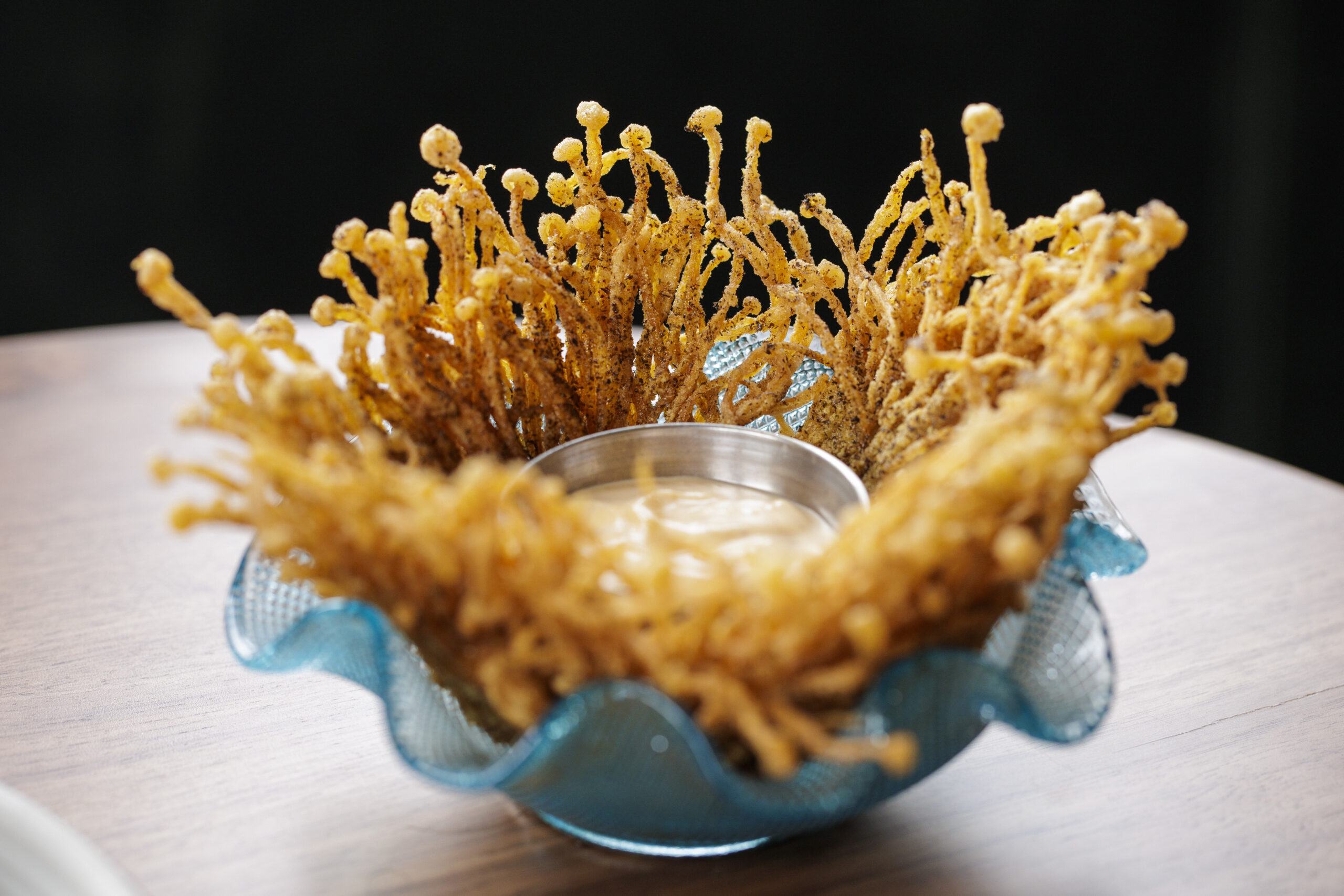
    Manong, which opened three months ago in the former Tela’s space at 19th and Fairmount Avenue, is filled with references to the mid-tier chains of his youth. From the longhorn skull emblazoned on the sign at its front door, to the Teenage Mutant Ninja Turtles arcade game being played for free by guests in the corner, to actual neon signs from both Applebee’s and Outback alight in its two bathrooms, the cues are here for what Anies calls his chain-inspired Filipino-American steakhouse. There’s even the signature Bloom Shroom, a fantastic fungi riff on the blooming onion, whose deep-fried thatch of enoki mushrooms is irresistible — at least, when it isn’t overcooked or oversalted, as it was on my first visit.

    The Bloom Shroom at Manong on Thursday, Nov. 20, 2025 in Philadelphia.

    This kitchen has largely been more reliable than that, and nailed the shroom on a following visit, when its broom-like sweep of crunchy-earthy mushrooms threads lived-up to their potential. It was also clear after my visits here that catchy labels trying to characterize Anies’ sequel restaurant to Tabachoy, his Filipino BYOB hit in Bella Vista, really don’t do its concept justice. For one thing, it’s not a steakhouse, considering Manong didn’t even have a steak on the menu (beyond grilled beef skewers) for its first three months, when an intriguing hanger steak with fish sauce and pickled onions replaced the prime rib.

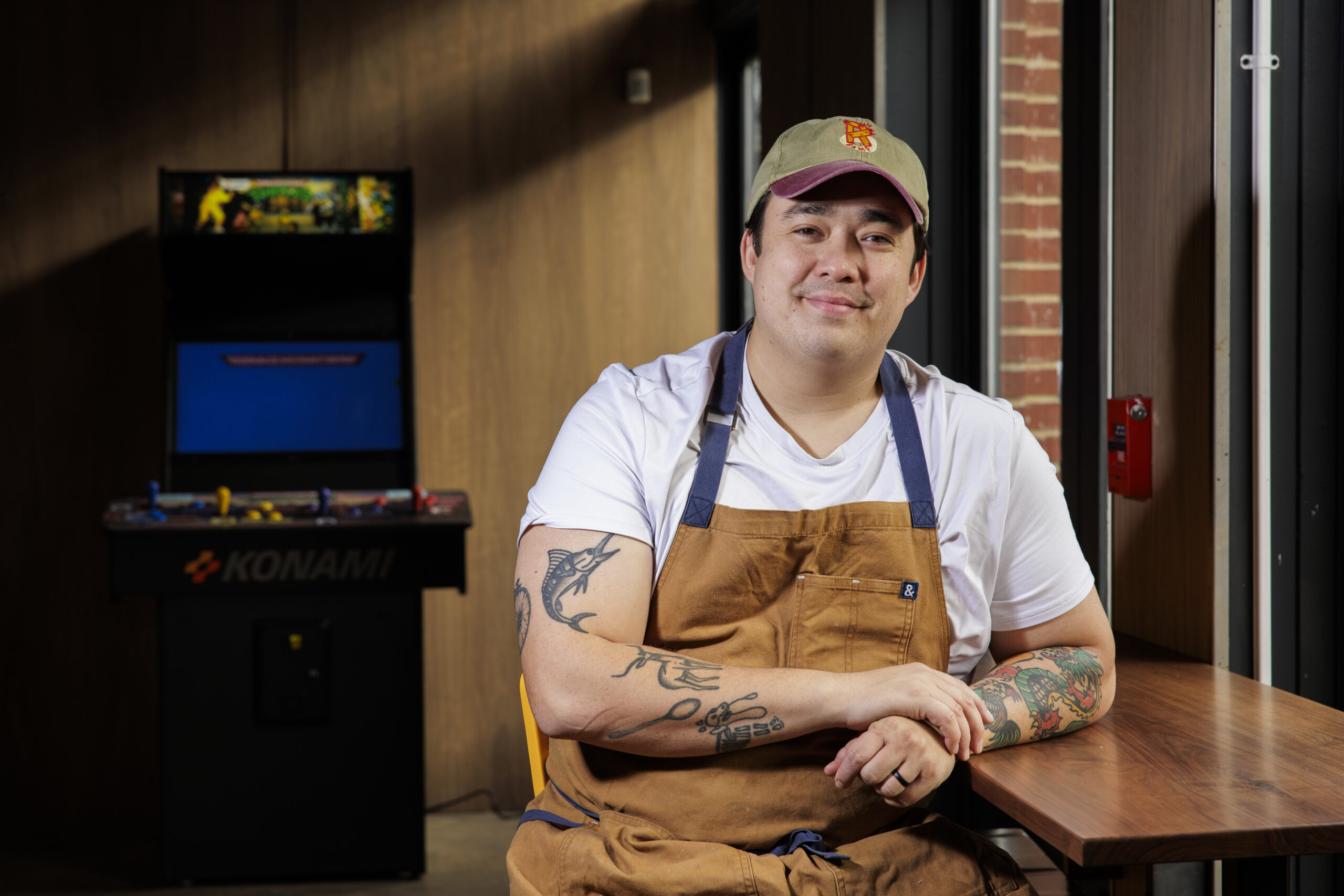
    Chef Chance Anies posed for a portrait at Manong on Thursday, Nov. 20, 2025 in Philadelphia.

    The swap was a pragmatic concession to keep the menu on the more affordable side, a prime characteristic of chain restaurant culture Anies says inspires him. With check averages around $50 to $60, including drinks, dinner at Manong costs more than going to Longhorn. But it succeeds in hitting a more accessible sweet spot than most of Philly’s pricier destination restaurants without sacrificing the quality of from-scratch food. There’s a balancing act of handcraft and value here most chain restaurants simply can’t touch.

    The dynamite lumpia at Manong in Philadelphia, Pa., on Thursday, March. 5, 2026.

    There’s also a level of personality, bold flavors, and storytelling to the food at Manong that is the antithesis of the sanitized corporate restaurant. This menu is a unique reflection of Anies’ childhood and life experiences as a Filipino-American — including his previous careers as an English teacher, medical researcher and food truck operator — that also diverges with its whimsy and creativity from the more traditionally-framed Filipino flavors anchoring Tabachoy.

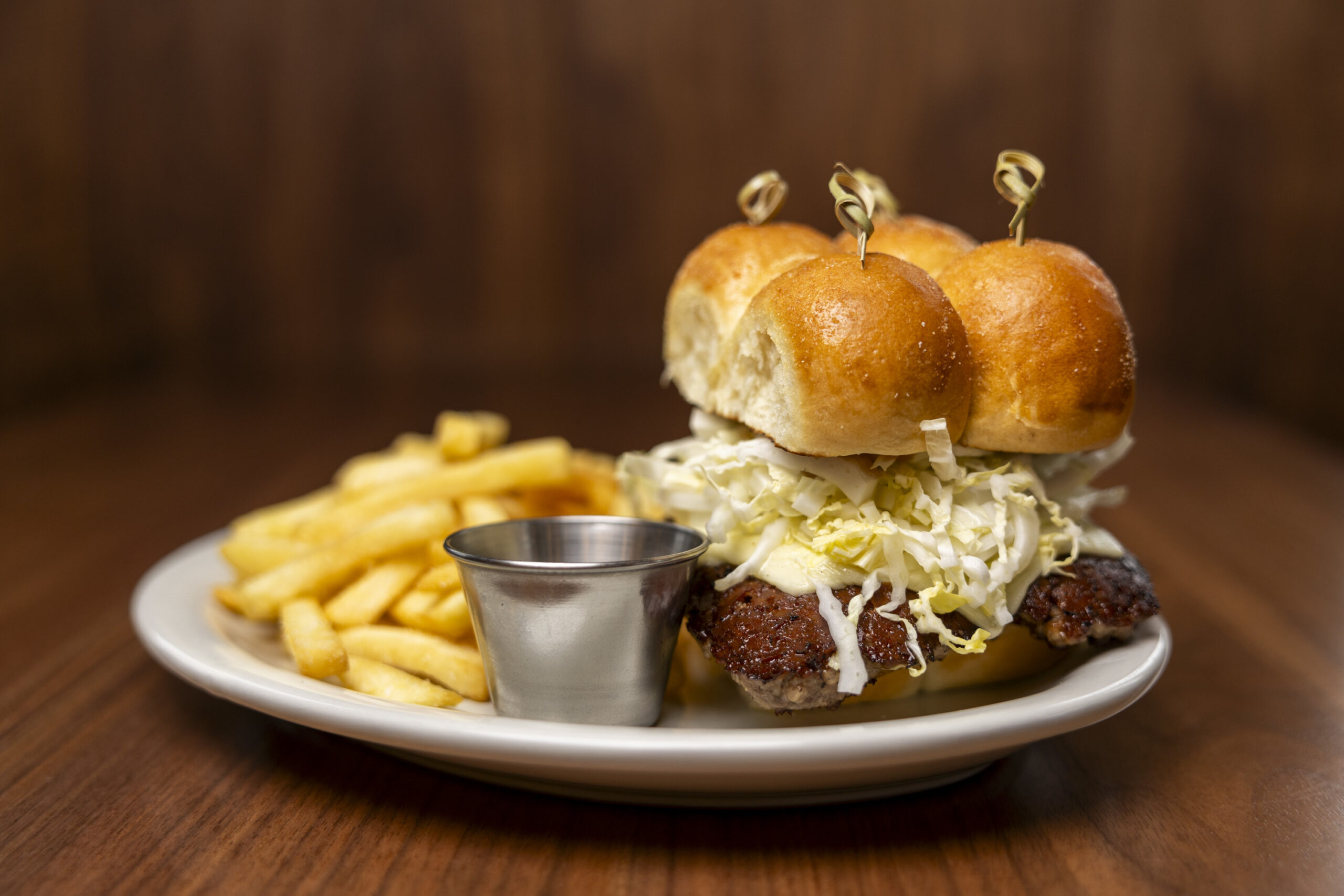
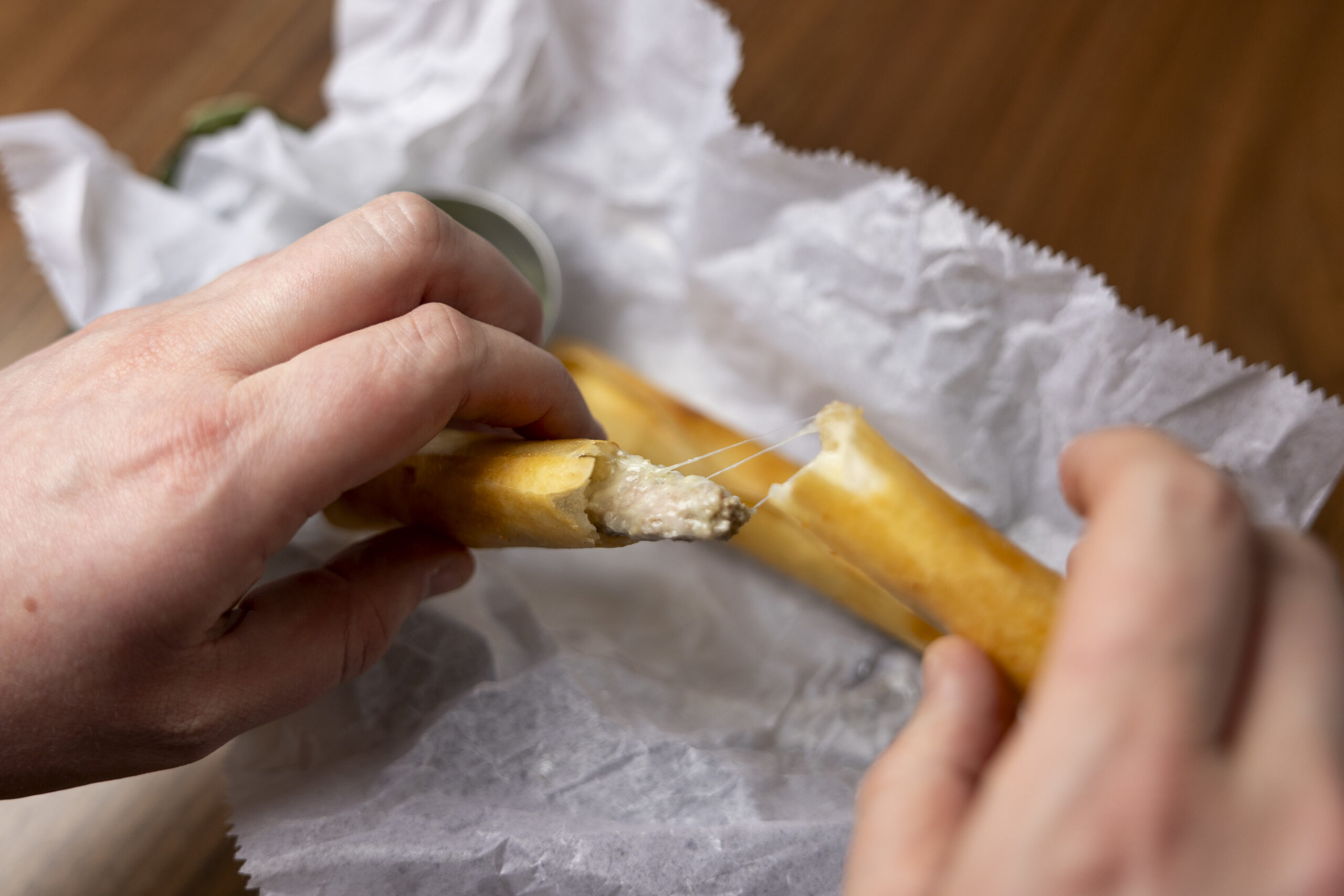
    There’s an equivalent to mozzarella sticks at Manong, the dynamite lumpia, but they’re wrapped inside crispy spring roll wrappers and laced with tender pork and minced jalapeños alongside a sweet chili dip. Manong also offers one of the most distinctive new cheeseburgers in the city, a half-pound patty that spans the width of four small pandesal rolls that are still attached, like King’s Hawaiian bread.

    The connected rolls can easily be divided into shareable sliders, but avoid the urge to supersize it into a full one-pound of meat because it throws all the proportions off. The standard serving maximizes its many Filipino flourishes, from the light sweetness on the fresh-baked bread to the tropical backnotes of the house banana ketchup, the calamansi-tanged slaw, and a mayo shaded by bangus (tinned milkfish), whose oily fillets are buzzed into an umami-rich spread that Anies says carries a Pinoy schmear of “je ne sais quoi.”

    The 1/2lb balong burger at Manong in Philadelphia, Pa., on Thursday, March. 5, 2026.

    The 75-seat Manong, which means “elder brother” in Ilocano, the Filipino dialect of Anies’ father’s family, is close to three times as big as Tabachoy, a 28-seater in Bella Vista so snug you need to access the bathroom through an alley door at the rear of the building. But Anies has made good use of this sunny, high-ceilinged corner space, warming its interior with rustic walnut accents and adding convivial booth seating to both its window walls and a central banquette.

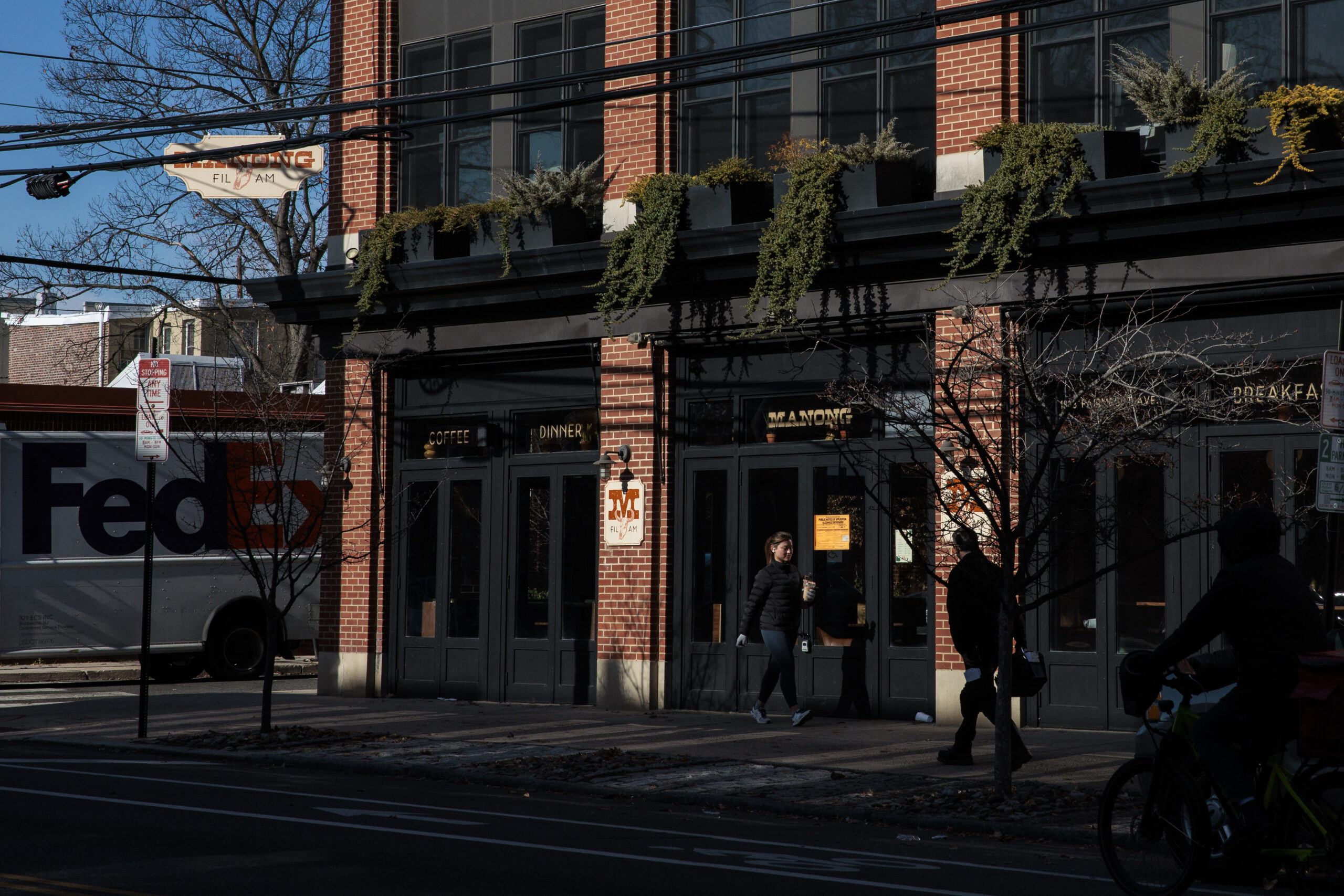
    The exterior of Manong on Tuesday, Dec. 9, 2025 in Philadelphia.

    With room for large parties, including a back alcove beneath mounted horns and a vintage truck grill with illuminated headlights, plus 13 seats at the bar, there were more groups of people simultaneously celebrating at Manong than any restaurant I’ve visited in recent memory. Conjuring that kind of joy, and for such a broad cross-section of customers, is one aspect of “everyone’s family” magic that Anies has successfully channeled.

    Customers enjoying drinks and food at the bar at Manong in Philadelphia, Pa., on Thursday, March. 5, 2026.
    The interior of Manong on Tuesday, Dec. 9, 2025 in Philadelphia.

    A drink program overseen by beverage manager Eli Ezer helps buoy the festive mood with a variety of fun, colorful drinks that also offer thematic twists, like the sky blue Otso Otso, a riff on a spicy margarita infused with green peppercorn, lemongrass, and calamansi, or an espresso martini with the added taste of sweet corn (a combo with roots in the Philippines), or a Pinoy version of the City Wide, pairing San Miguel Lite with a shot of Kasama rum.

    The Otso Otso cocktail at Manong in Philadelphia, Pa., on Thursday, March. 5, 2026.
    The Pandan latte at Manong in Philadelphia, Pa., on Thursday, March. 5, 2026.

    It’s no surprise this room has a serious noise problem, and will eventually require some significant investment to sound-proof its hard surfaces. It recently opened for new daytime cafe hours to pump out purple ube and pandan lattes with Herman’s Coffee, along with a limited selection of pastries, and plans to expand the daytime menu with breakfast sandwiches for a brunch debut this spring. There’s also a retail bottle shop where a fridge case full of Red Horse beer, natural wines, and sakes add yet another reason to visit.

    For now, however, Manong’s dinner is more than a worthy enough draw on its own. Aside from the bloom shroom, all of the skewers are winners, including the juicy grilled chicken thighs glazed in Filipino barbeque sauce and tagalog beef sticks that evoke Japanese negamaki with thin-sliced flank steak bundles on the skewer rolled around crunchy scallions in a calamansi soy-garlic glaze.

    Anies aims to evoke the rich chain restaurant pastas of his youth with the “creamy pasta” entree, but it’s infinitely more interesting here with basil fettuccine tangled in a sauce creamed with coconut and Parmesan, flavor-boosted with ginger, garlic, and thin slices of pork belly. The “super duper creamy” version may be tempting, but once again, like that burger, the “more” option was less appealing. When we opted for the bonus of trout roe and shrimp on my second visit, it came in an overly thickened cream sauce that bordered on sludge.

    The squash at Manong on Thursday, Nov. 20, 2025 in Philadelphia.

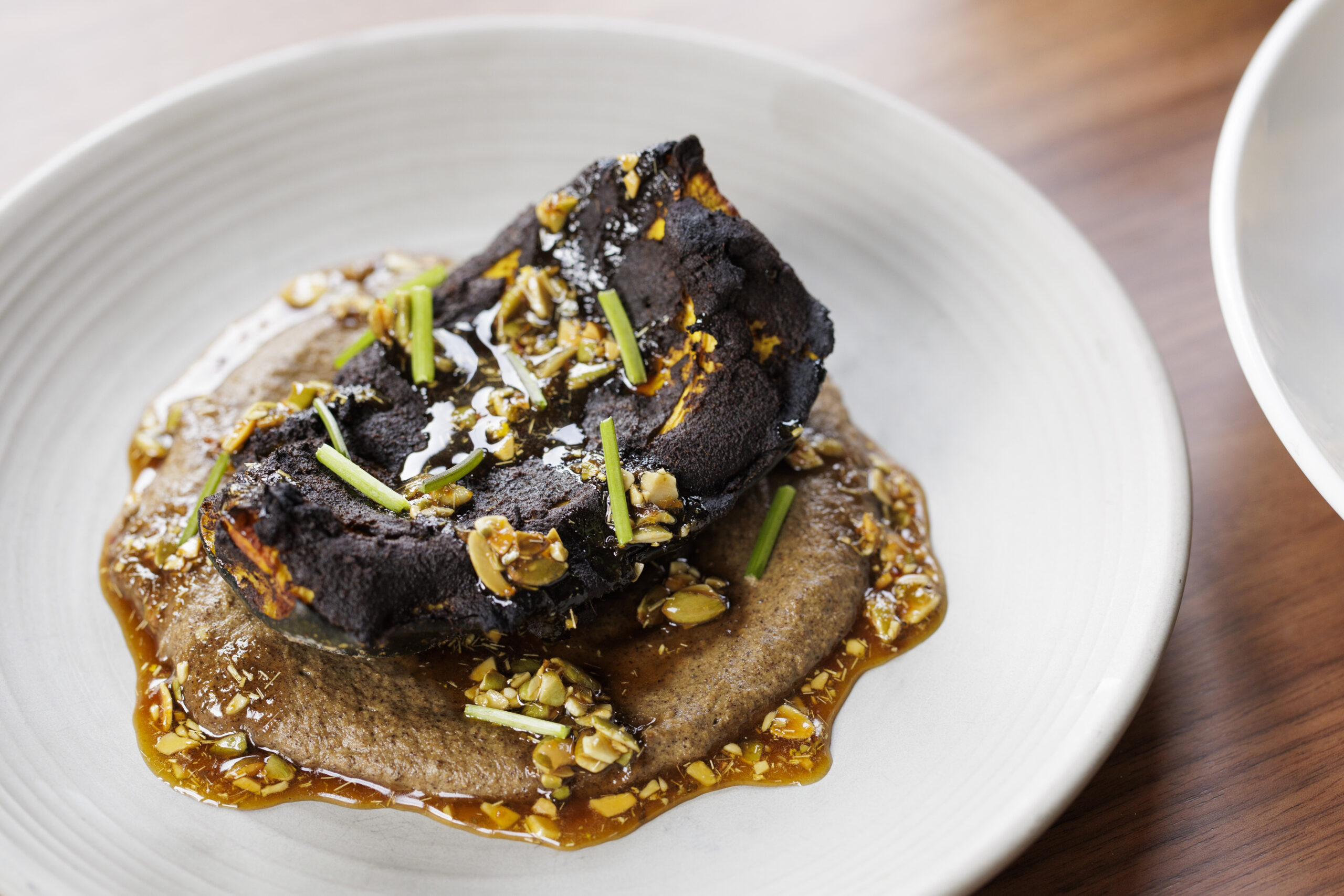
    One of Manong’s most creative dishes is its singular option for vegans, kalabasa pyanggang, a koginut squash marinated in a garlicky paste of charred coconut husks that’s served with a sweet vinegar lemongrass drizzle over a rich coconut milk sauce scattered with pepita seeds.

    I would have loved the grilled swordfish with green mango-bitter melon salad if it had been fully cooked. That’s one fish I don’t enjoy medium-rare. But Manong has its roasted half-chicken down, a juicy lemongrass-infused bird glazed in tart calamansi vinegar and orange annato butter — at $28, a relative bargain in an era of high-priced chicken entrees

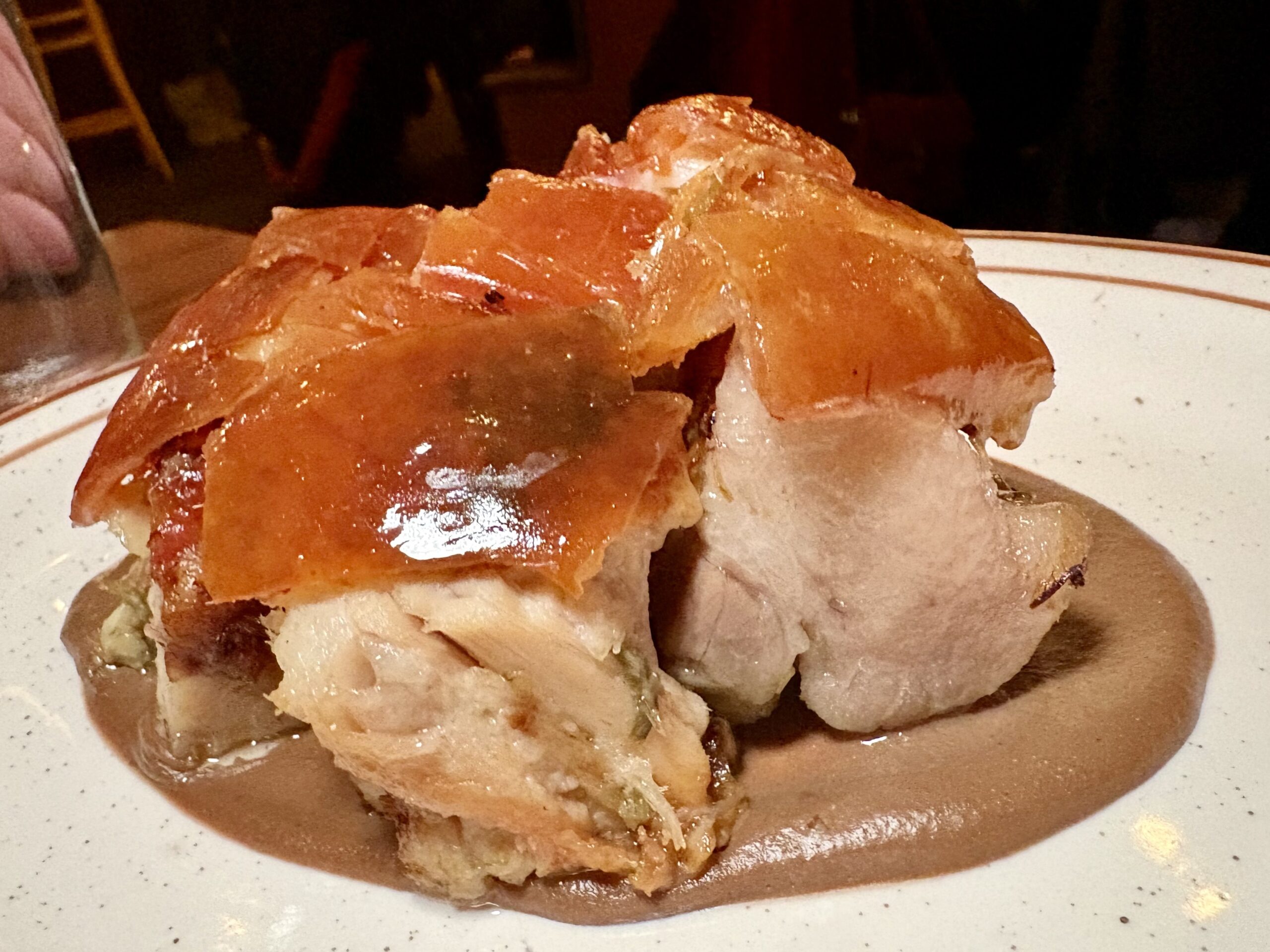
    The kitchen’s pork dishes are also exceptional, including a traditional lechon liempo pork belly whose superbly tender chunks of meat are set beneath shattering amber sheets of crispy pig skin, atop a silky swoosh of creamy liver sauce.

    The lechon liempo at Manong is slow-roasted pork belly topped with crispy skin over a sauce of pureed chicken liver.
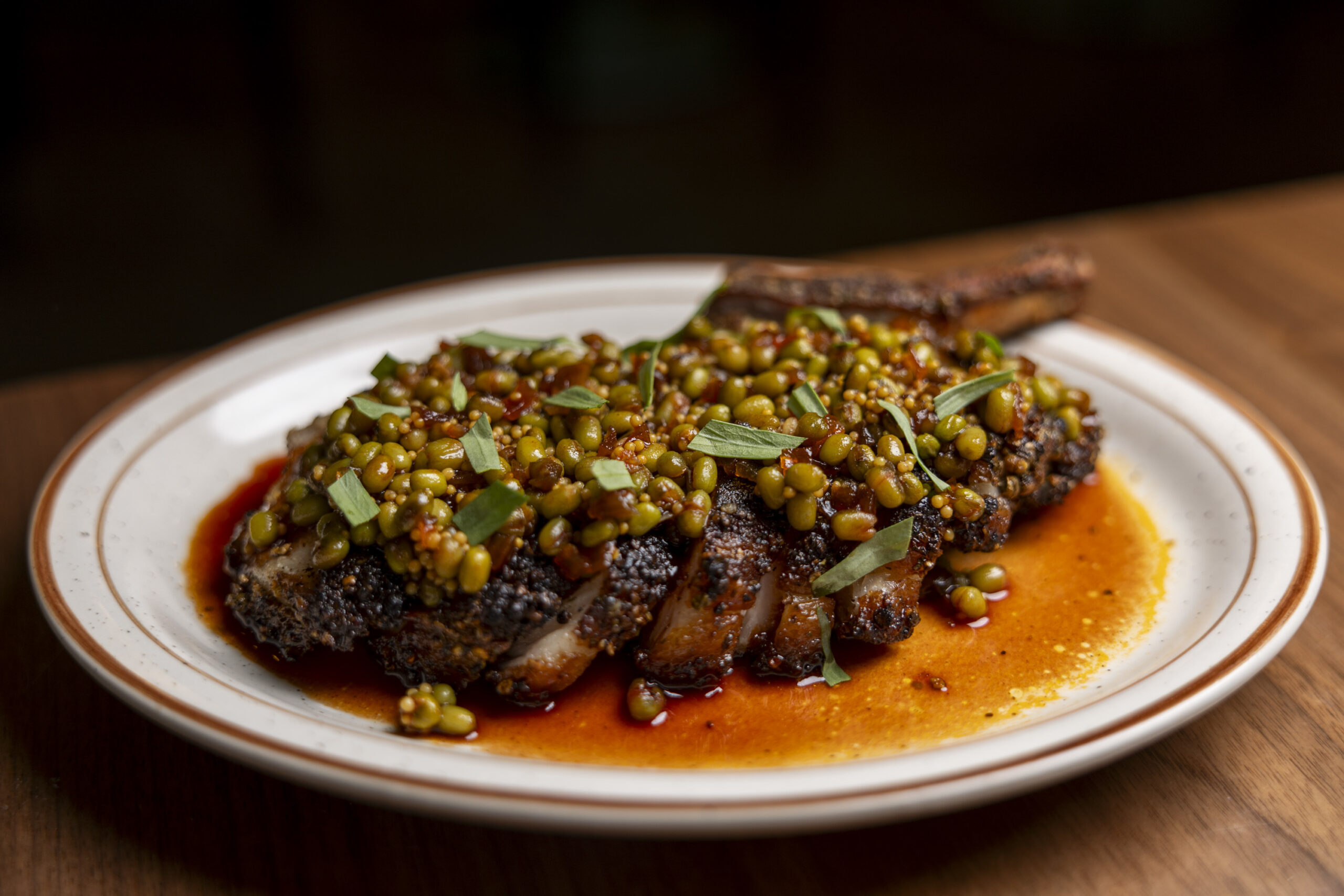
    The pork & beans at Manong in Philadelphia, Pa., on Thursday, March. 5, 2026.

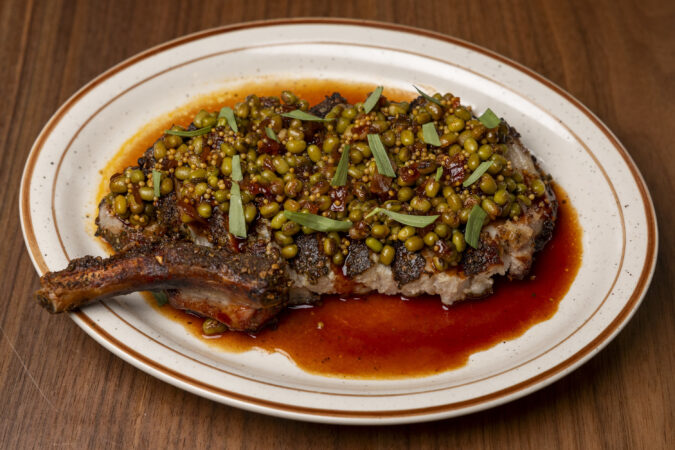
    Perhaps my favorite dish at Manong is the “pork & beans”, a multi-cultural mash-up of a juicy grilled pork chop encrusted with green peppercorns and smothered with sweet and zesty mung beans. Think of the canned Heinz baked beans classic, but with a Filipino swagger of cane vinegar, the sweetness of brown sugar, and red yeast rice (typically used in Chinese char siu bbq), and firmer beans that possess a nutty snap of extra texture.

    “Is it American? Is it Filipino? It’s neither, but also both,” says Anies, summing up not only this dish, but so much of the menu at Manong, where steaming sides of garlic rice, coconut-creamed spinach, and whipped potato salad studded with more crunchy garlic, corn, and shear potato skin chicharrones create a spirited fusion feast like no other.

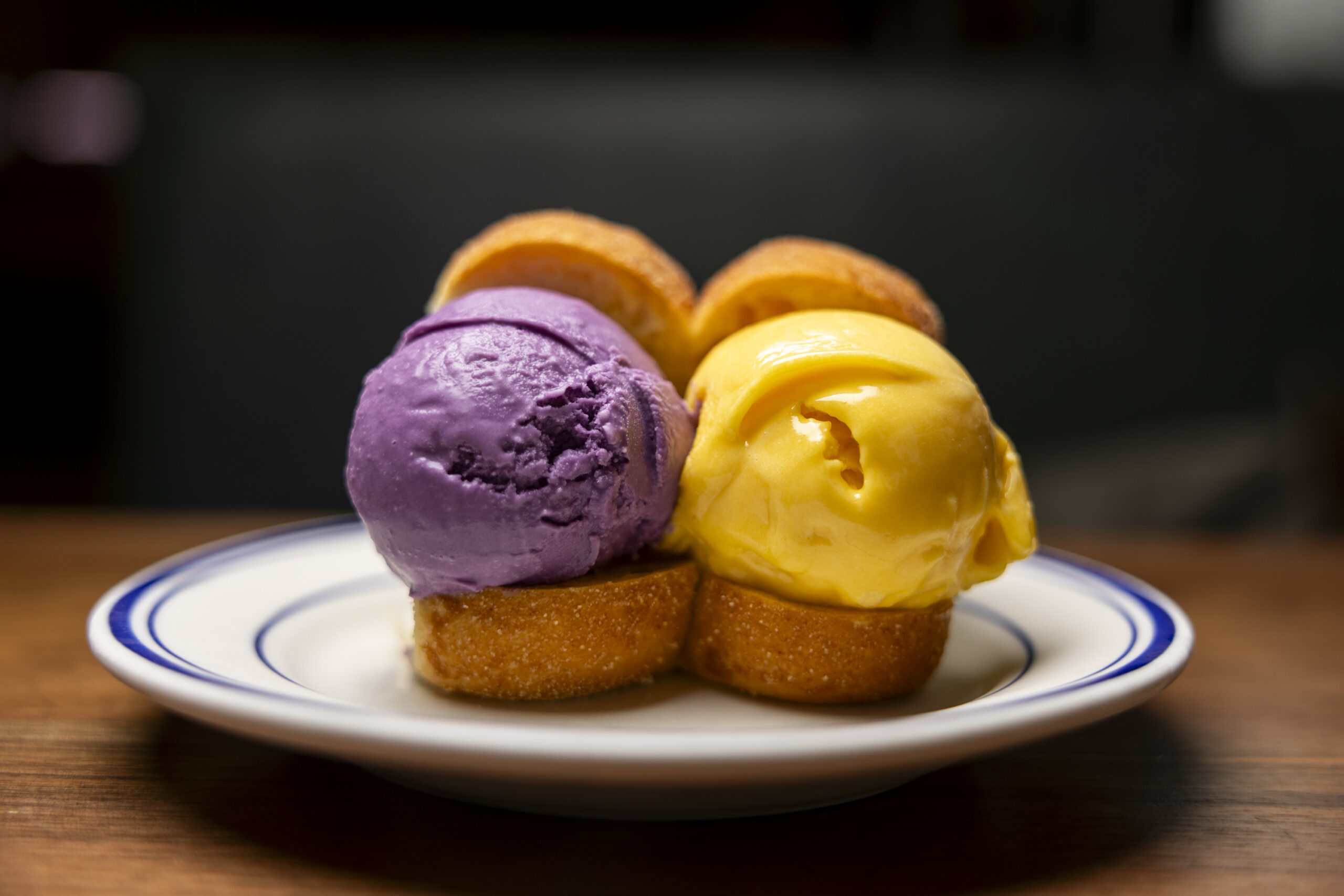
    Add some calamansi or mango water ice for dessert sandwiched on those fresh pandesal rolls, or the deep purple richness of its ube ice cream, and Manong’s Filipino fusion takes on a distinctly Philly vibe, too. Anies’ chain restaurant childhood may have been the impetus for the affordable and fun spirit of Manong, but he’s created something here that feels like an original.

    The ube and mango ice cream sandwich at Manong in Philadelphia, Pa., on Thursday, March. 5, 2026.

    Manong

    1833 Fairmount Ave., Philadelphia, PA 19130, 445-223-2141; manongphilly.com

    Dinner Wednesday to Sunday, 5-11 p.m. Cafe open for coffee and pastries Wednesday to Sunday, 8 a.m.-2 p.m.

    Dinner entrees, $19-$35.

    About 30% of the menu is gluten-free, including the bloom shroom, cooked in a gluten-free fryer.

    Wheelchair accessible.

    Menu Highlights: Bloom shroom; dynamite lumpia; beef stick tagalog skewer; balong burger; cream pasta; pork & beans; lechon liempo; kalabasa pyanggang; mango water ice; ube ice cream.

    Drinks: The cocktail list delivers affordability and style, with a series of classic templates transformed colorful tropical twists, from the sky blue Otso Otso infused with green peppercorn and lemongrass, to a backnote of corn in the espresso martini and Filipino rum mixed with coconut and purple sweet potato for the Ube Halaya. The beer list features both local brews and Filipino imports, including the smooth but potent Red Horse. There’s also a selection of natural wines by the 6 oz. carafe. In addition, a retail bottle shop has a fine selection of natural wines and sakes to go.

  • The best things we ate this week

    The best things we ate this week

    Crispy duck confit at La Fia

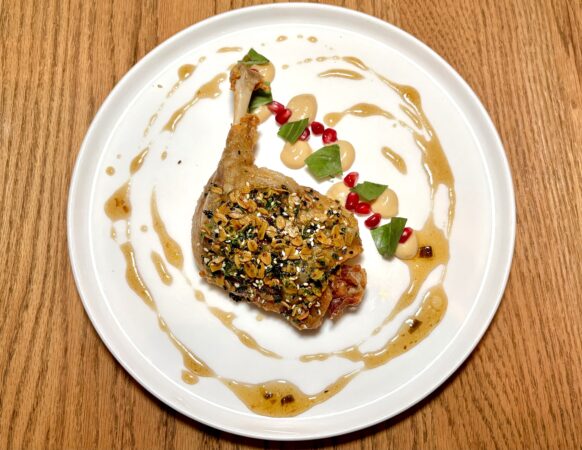
    I never thought about eating duck with my granola. But adding granola to a leg of duck confit has turned out to be one of the most enduring ideas executive chef Dwain Kalup has brought to La Fia since arriving at this globally inspired bistro in downtown Wilmington, Del., almost six years ago. Kalup, who was recently named a James Beard semifinalist in the Best Chef, Mid-Atlantic category, has plenty of excellent dishes with diverse inspirations on the ever-changing menu, including a fabulous update of old-school shrimp toast (topped with crunch green papaya salad), kojinut squash-stuffed agnolotti, and irresistible deep-fried brioche beignets with herb butter.

    But I can understand why this duck is one dish that never changes. It is a classic preparation at its heart, the meaty Pekin duck legs cure overnight in herbed salt with garlic before slowly simmering to tenderness in a crock of molten duck fat. The finished appetizer is all about contrasting modern flavors and textures: A glaze of yuzu koshu blends sweetness and citrusy spice while dabs of miso-mustard aioli add richness and zing. The crunch of savory granola scattered over top — oats and sesame bound with honey and tahini — lends a toasty snap to each bite of that meltingly soft duck. Add the juicy pop of tart pomegranate seeds along with the minty whiff of freshly torn Thai basil for a final flourish, and this duck has it all. La Fia, 421 N. Market St., Wilmington, Del., 302-543-5574, lafiawilmington.com

    — Craig LaBan

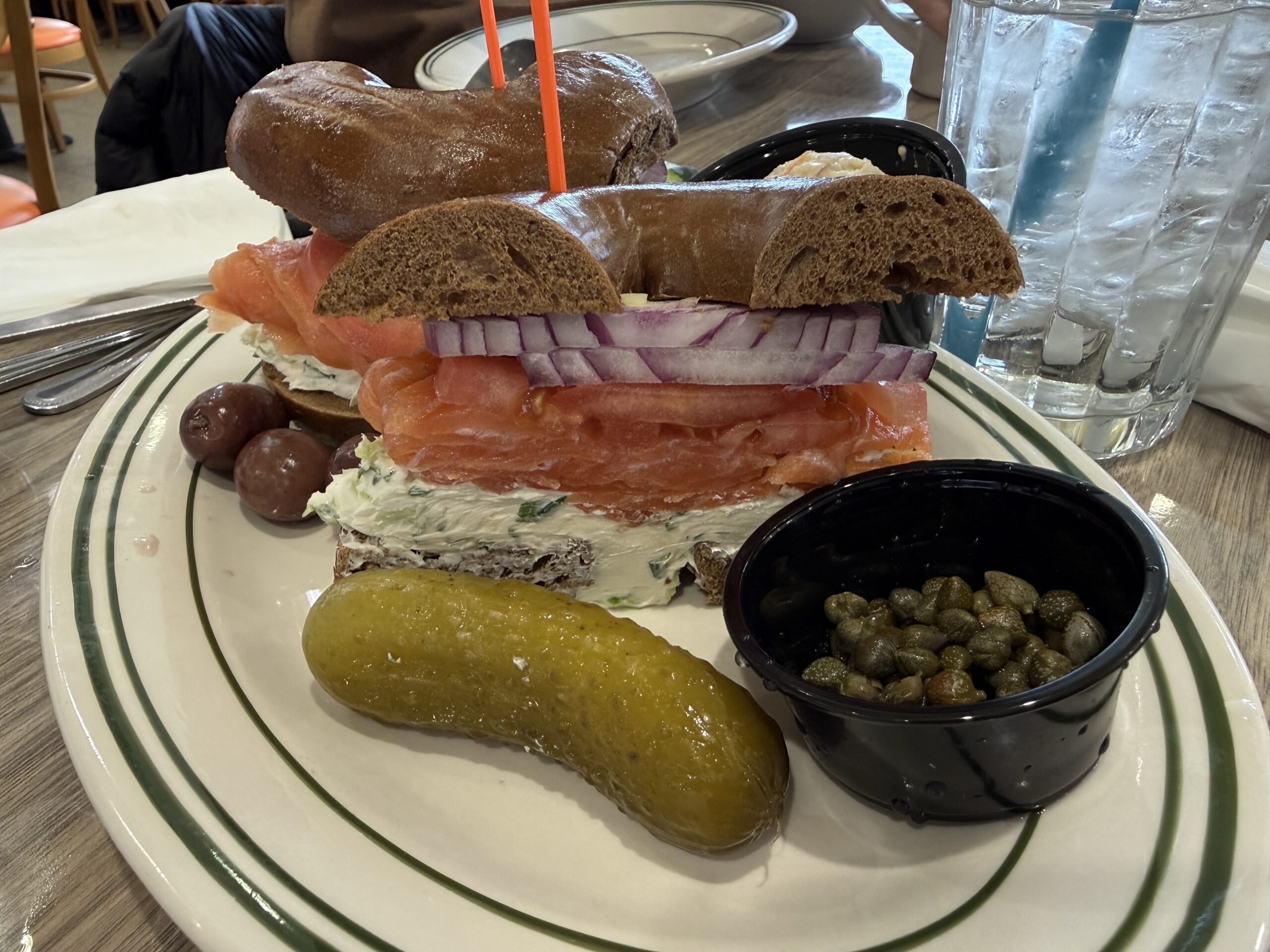
    The Nova salmon bagel from Radin’s Delicatessen topped with tomato and red onion.

    Nova salmon bagel at Radin’s Delicatessen

    Radin’s in Cherry Hill is known (maybe even notorious) for mind-bogglingly enormous portions that make one question their economic viability, but their bagel sandwiches are perfectly portioned and surprisingly easy to tackle. This Nova salmon bagel was no exception. Baked that day, the pumpernickel bagel was warm and springy, with no need for toasting. The red onion and tomatoes — my accoutrements of choice — were crisp and fresh. The salmon was buttery, and the generous layer of chive cream cheese had just the right amount of fluff. I could taste a little bit of everything in each bite, resulting in bagel perfection. Radin’s Delicatessen, 486 Evesham Rd., Cherry Hill, N.J., 856-509-5492, radinsdelicatessen.com

    — Kiki Aranita

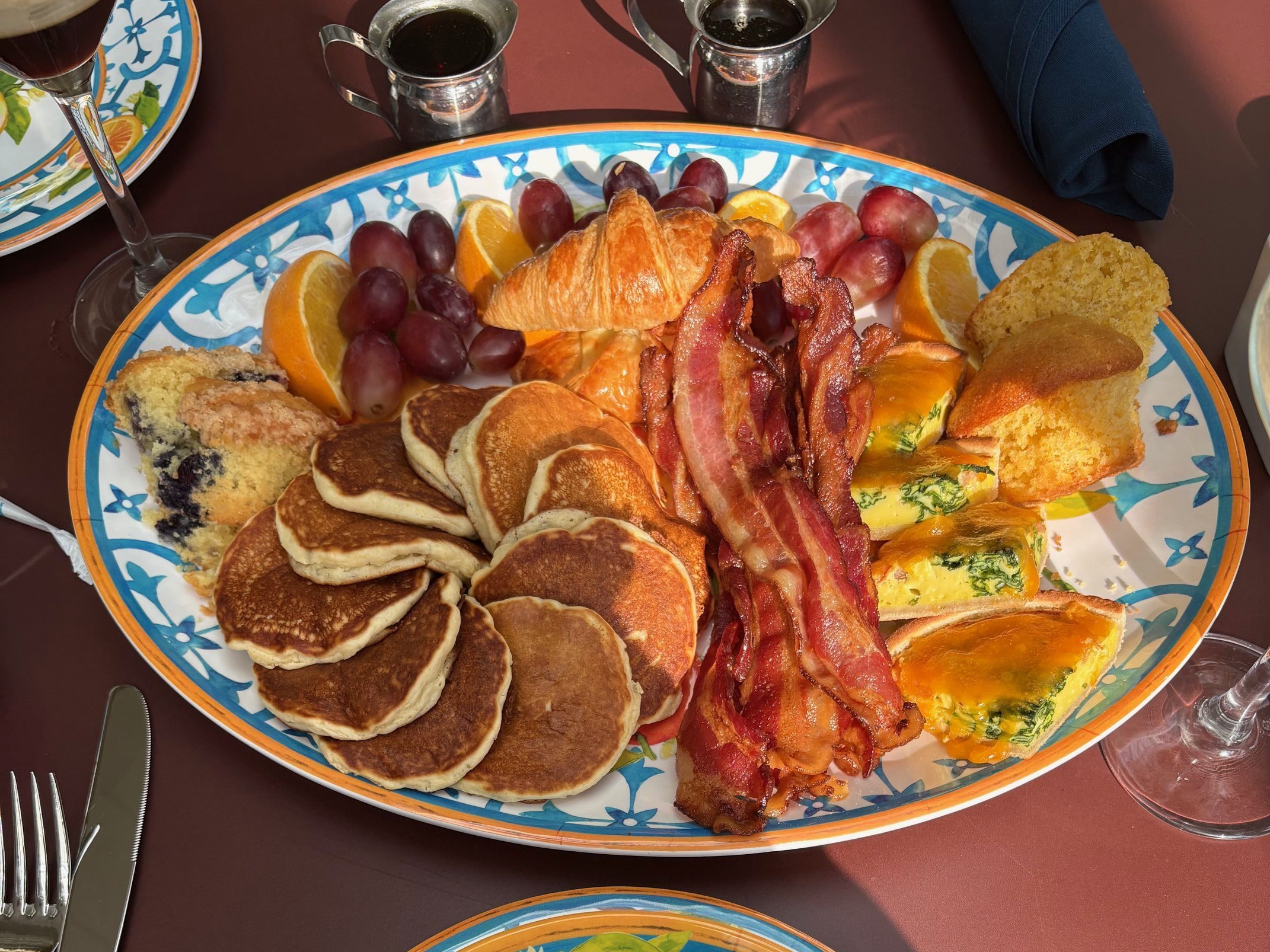
    The Breakfast Board at the Sunroom at the Borgata with tasty tater-tots and espresso martinis. A pleasant start to a slow Saturday morning.

    Breakfast board for two at the Borgata

    A habitual nibbler, uncontrollable snacker, and expert nosher, there are few things I love better than a charcuterie board. Having so many options at my fingertips lights up my tastebuds. Up until recently I thought this rush only came from hard cheeses, jellies, and salty processed pork. Then I visited the Sunroom Lounge in Atlantic City’s Borgata Hotel and discovered its “Breakfast Board For Two.” I waited for it with bated breath.

    Arrive it did. There were generous portions of bacon, pancakes, croissants, and sugar-topped blueberry muffins. A buttery, cheesy, melt-in-your-mouth quiche was stacked next to a hefty helping of cornbread muffins. A side of golden tater tots made this a totally-worth-the-guilt breakfast experience.

    If you are going all in on a totally lazy Saturday morning, wash it down with the Sunroom Lounge’s espresso martini. The splash of vanilla vodka makes it a breakfast-cocktail winner — as in move over, mimosas. Sunroom Lounge in the Borgata Casino Hotel and Spa, 1 Borgata Way, Atlantic City N.J.; 609-317-1000, borgata.mgmresorts.com

    — Elizabeth Wellington

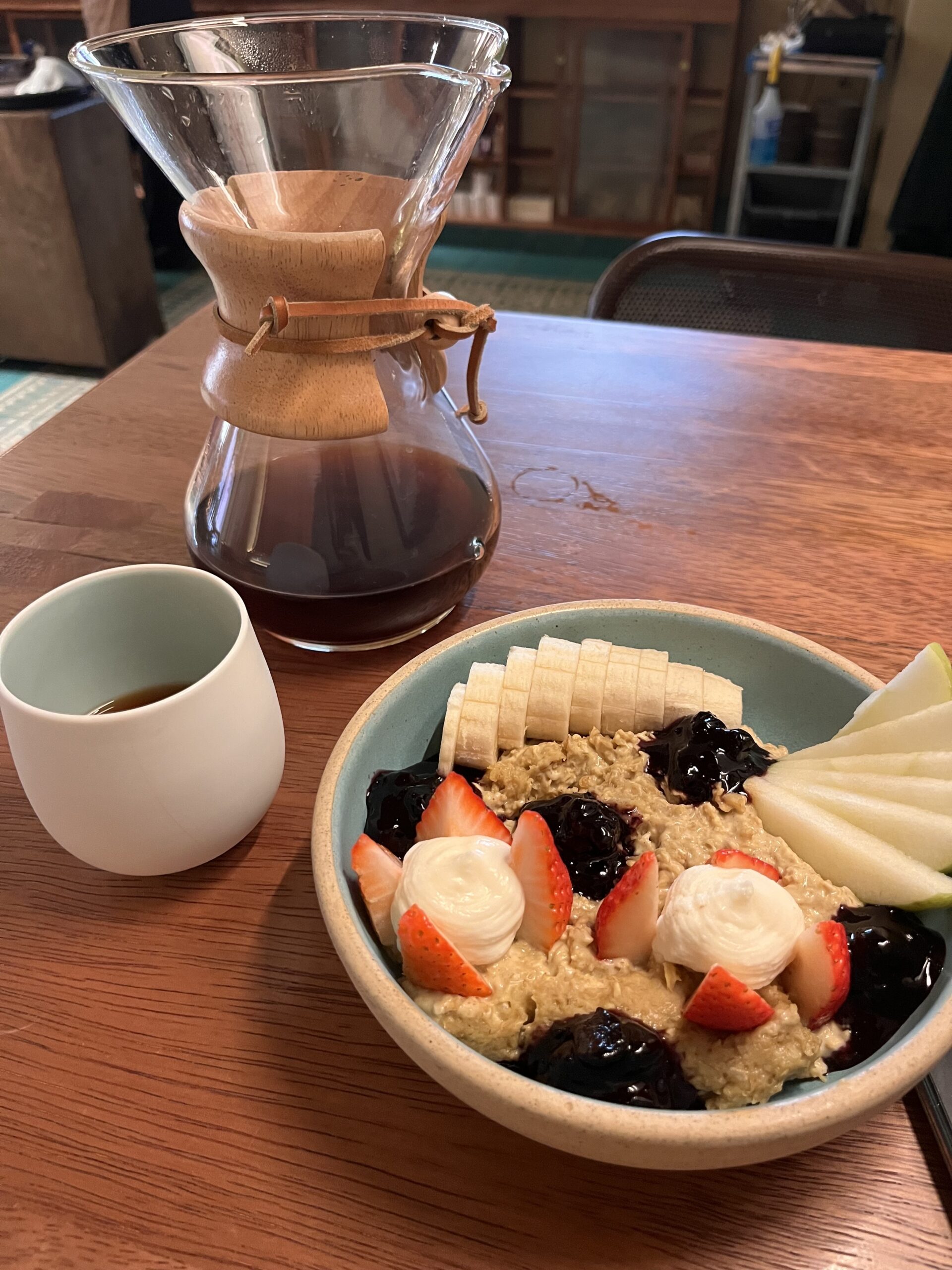
    The Bowl de Avena oatmeal at La Jefa.

    Bowl de Avena at La Jefa

    Mornings at La Jefa are usually reserved for coffee and a little treat, like a hibiscus and raspberry concha or a dulce de leche doughnut dusted with pistachio sugar. But on the first warm Saturday in months, I was feeling alive and craved something heartier. This is where the Bowl de Avena came in, an oatmeal that feels special, much like everything else at the cafe from the family behind the historic Center City Mexican restaurant Tequila’s. The oats are steeped in golden milk, dotted with dollops of ricotta and raspberry jam, and then topped with fresh bananas, green apple, and strawberries. Paired with a natural-process pour-over from Guadalajaran coffee roaster Cafe Estelar, it made for the perfect cozy morning with a book and some sunshine. La Jefa, 1605 Latimer St., 215-475-5500, lajefaphilly.com

    — Emily Bloch

  • One of America’s most decorated Chinese chefs brings his full-flavored cooking to the Philly suburbs

    One of America’s most decorated Chinese chefs brings his full-flavored cooking to the Philly suburbs

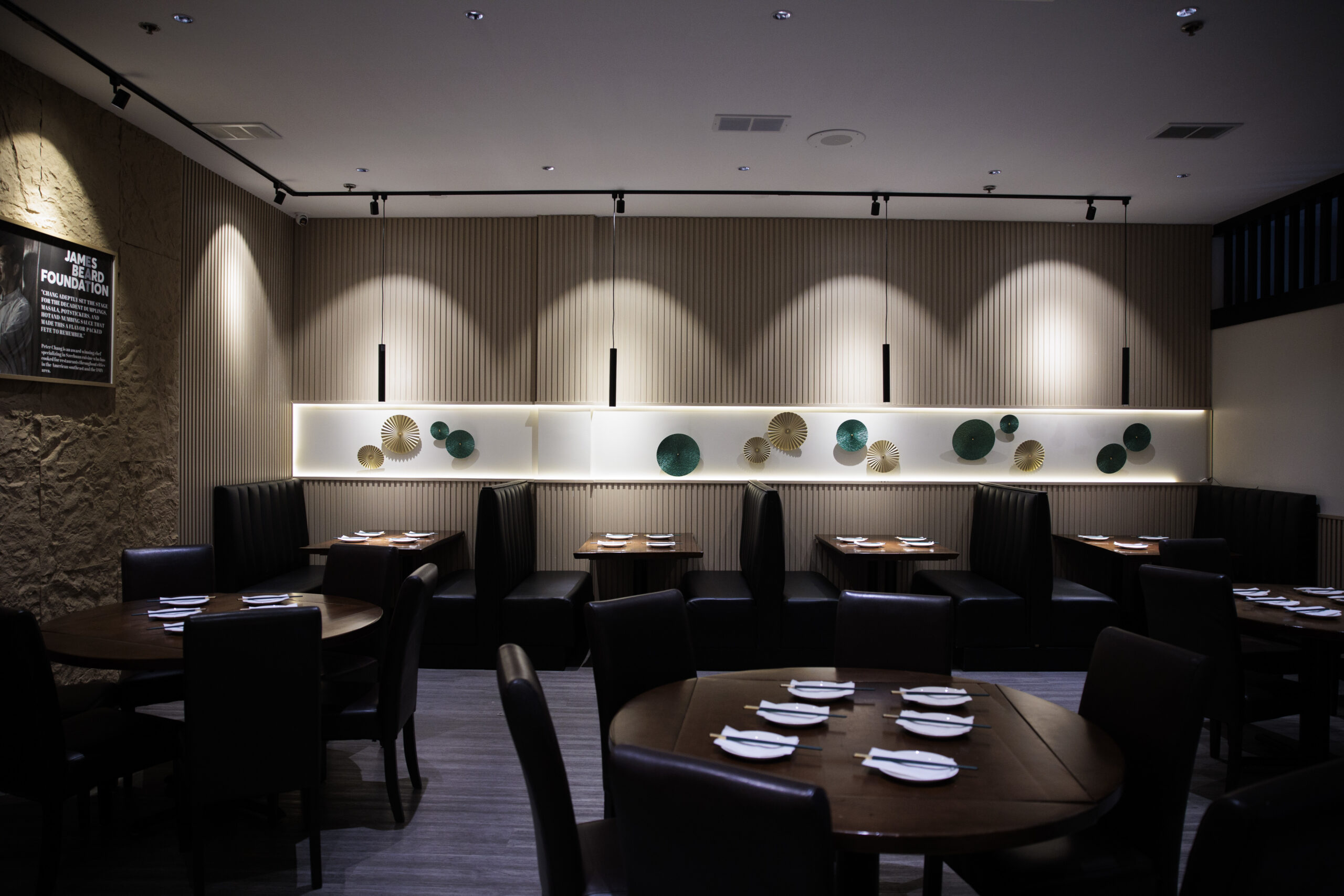
    If you weren’t paying attention, you could easily drive past the nondescript storefront beside the Giant supermarket in King of Prussia’s Henderson Square. But there, glowing red from the strip-mall space wedged between a yoga studio and a dental office, is a sign with a name that caused me to hit the brakes: Peter Chang.

    Chang is something of a legend in the Washington, D.C. area, especially after being profiled in 2010 by the New Yorker’s Calvin Trillin in an article — “Where’s Chang?” — that detailed a local cult following for the talented Chinese chef, despite (or perhaps because of) his perpetual moves from one Sichuan kitchen to the next. By 2011, however, Chang finally put down roots with his name attached to a restaurant in the DMV, starting in Charlottesville, Va. It became the first of a rapidly growing family empire that has since expanded to 20 restaurants of varying concepts across the Mid-Atlantic, from Chang Chang in Dupont Circle to Baltimore’s Nihao. The run that has earned this onetime chef at the Chinese Embassy multiple nominations from the James Beard Foundation, including a finalist nod for national Outstanding Chef in 2022.

    Now, having debuted in the Philadelphia region with not one but two new restaurants — Peter Chang in KOP and Mama Chang in Colmar — the once-elusive Chang is virtually everywhere.

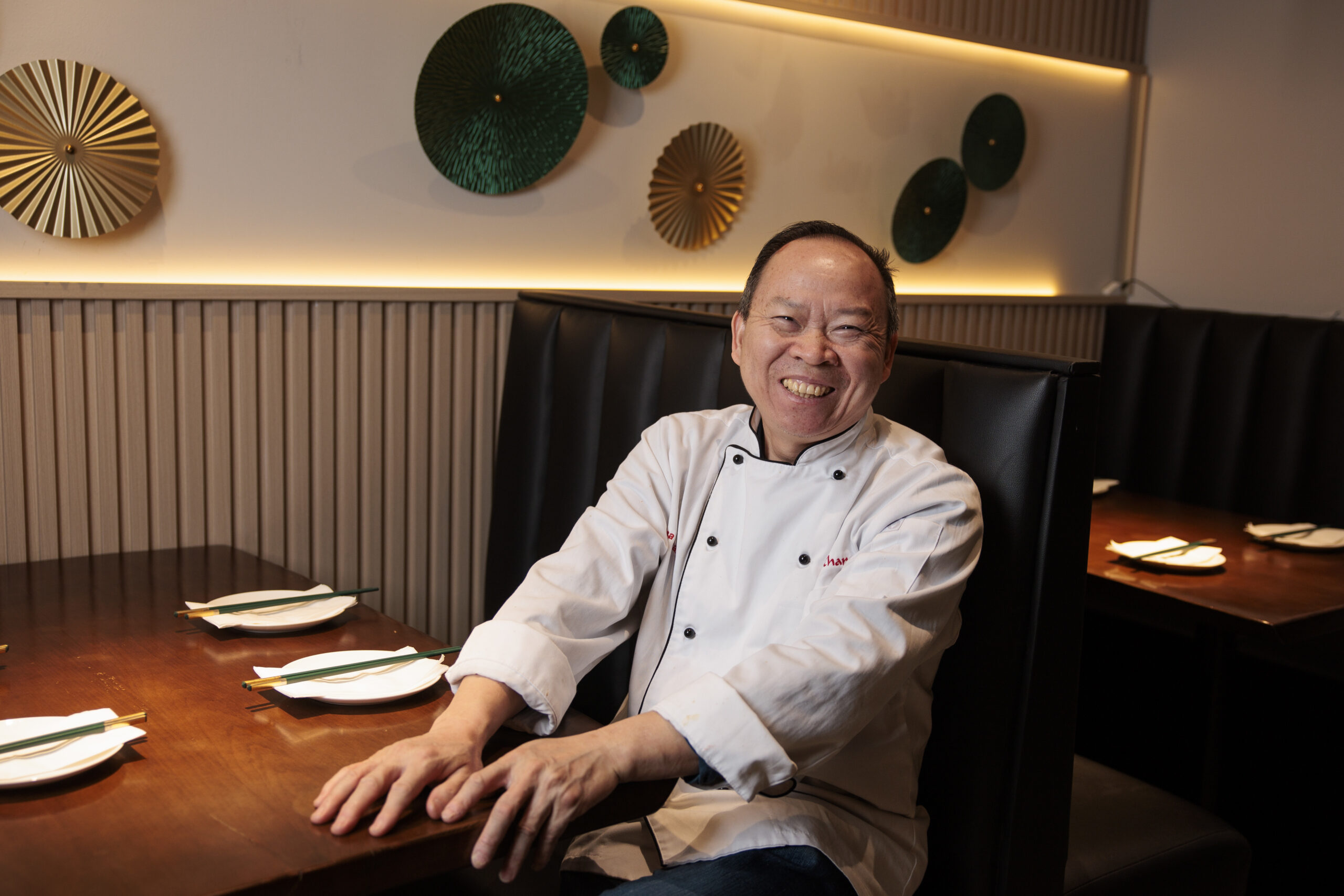
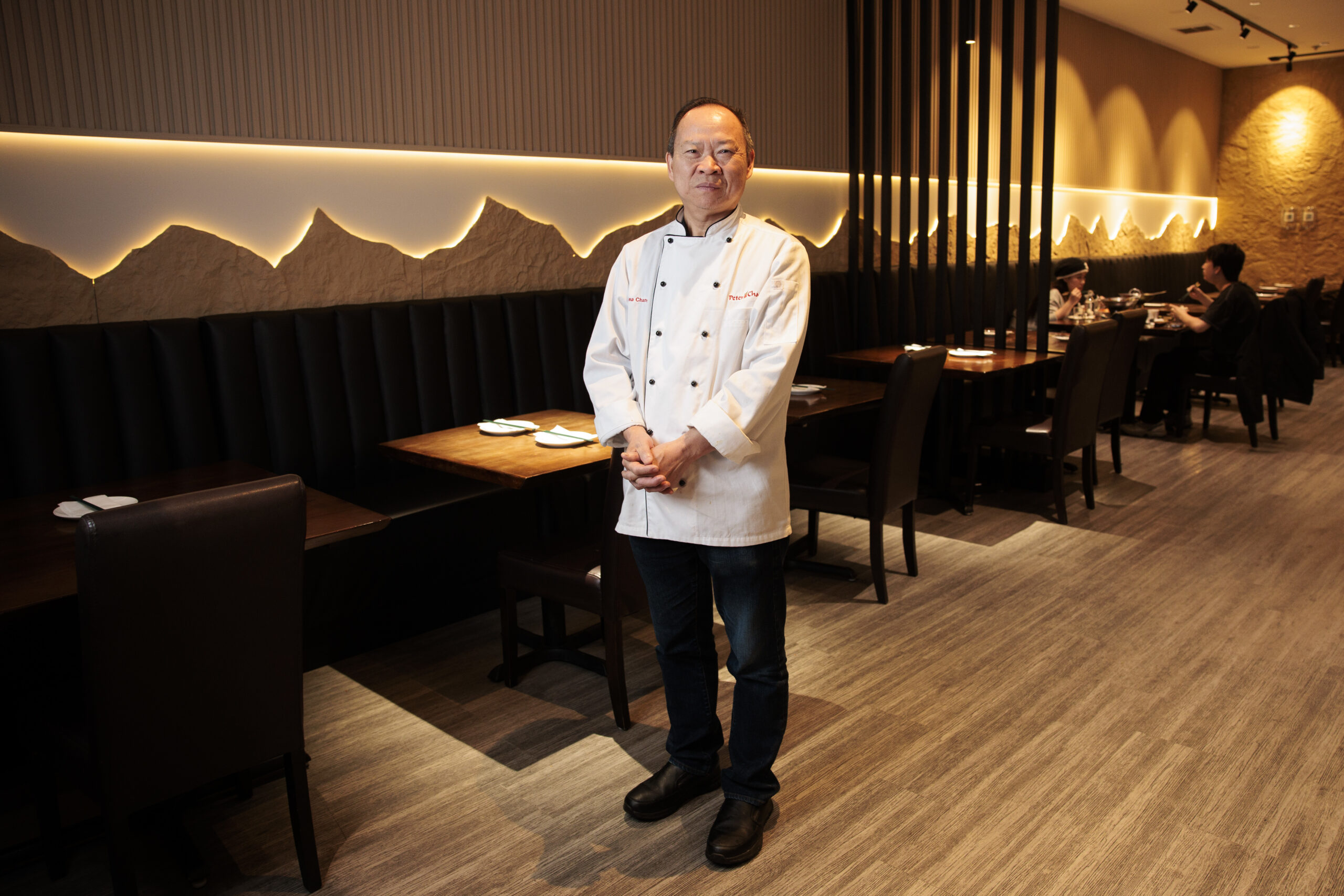
    Peter Chang posed for a portrait at Peter Chang King of Prussia on Thursday, Feb. 19, 2026 in King of Prussia, Pa
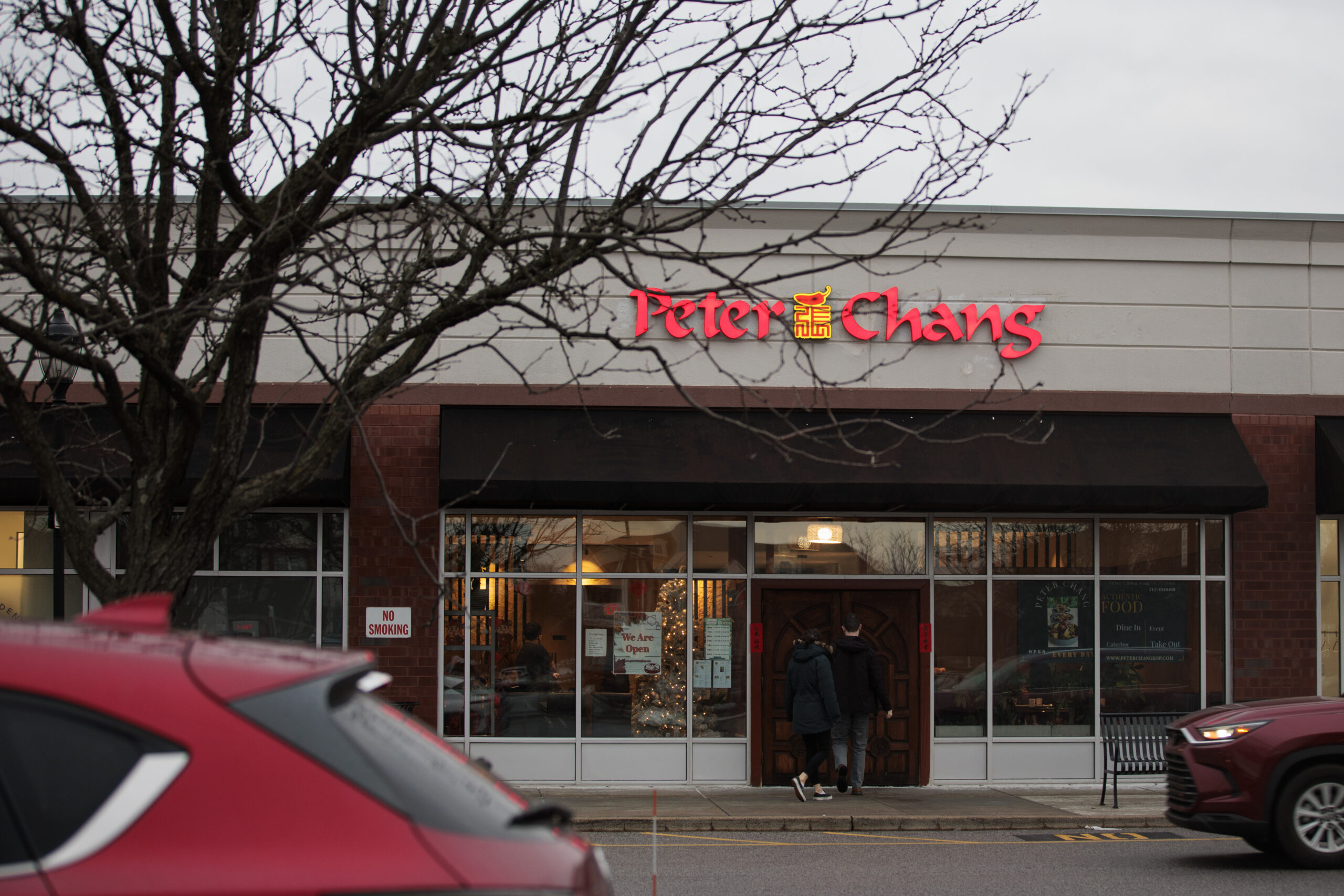
    The exterior of Peter Chang King of Prussia on Thursday, Feb. 19, 2026 in King of Prussia, Pa

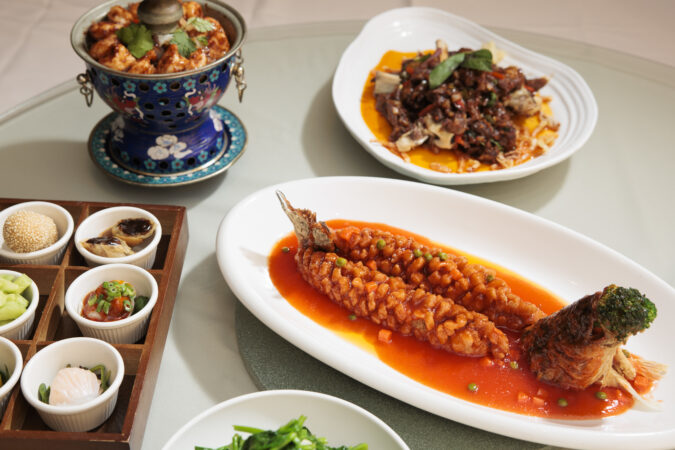
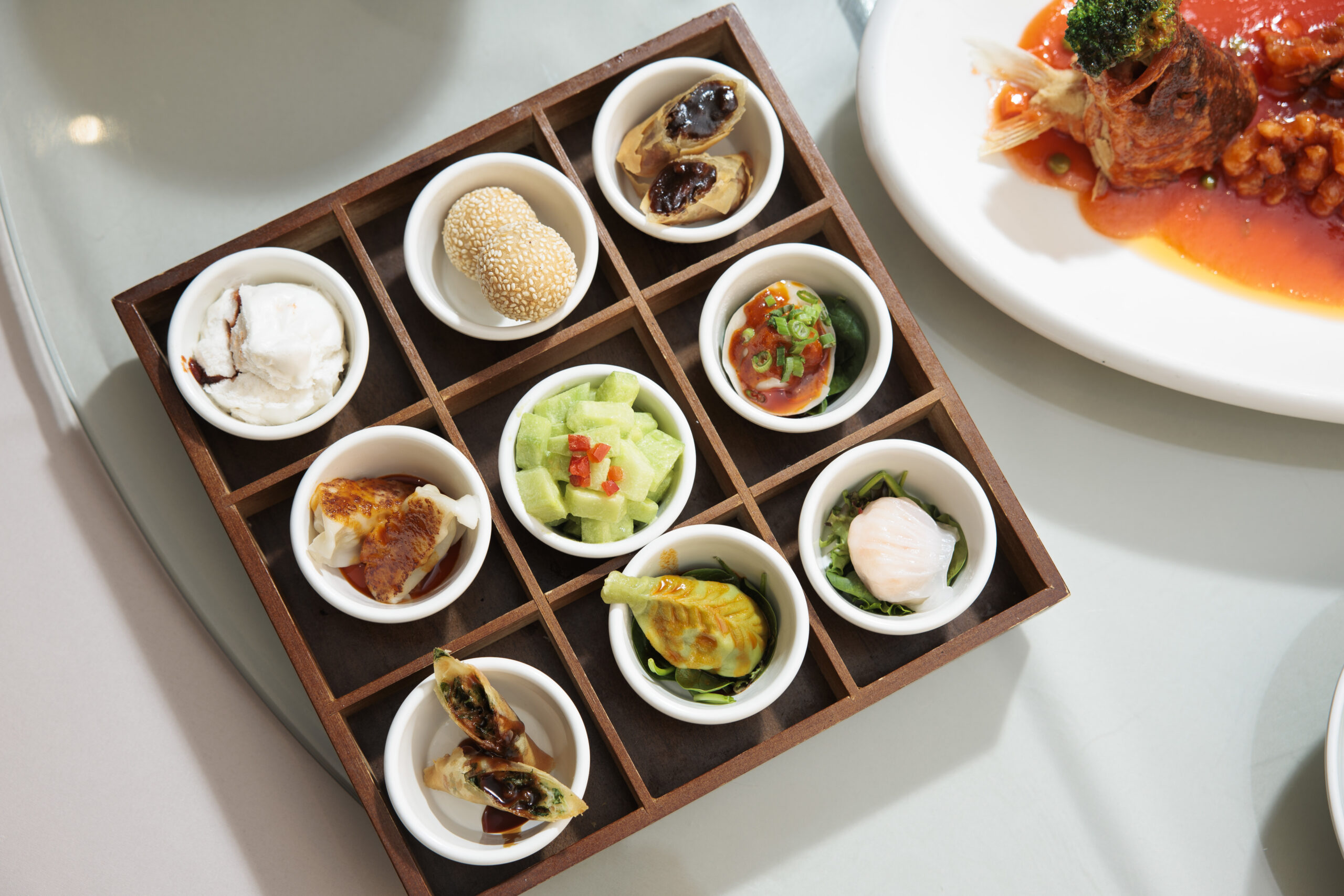
    I popped the steaming hot balloon of his wife Lisa Chang’s signature bubble scallion pancake, then hungrily grazed across the nine cubbies of the dim-sum sampler box, savoring the clean white snap of a crystal shrimp dumpling, the hoisin-dabbed crunch of a meaty Peking duck spring roll, and the fragrant spice of a wonton swirled with the house chili oil. I immediately concluded Chang’s arrival to Philly is a very good thing.

    Figuring out where, exactly, these new restaurants sit within the context of the Philadelphia region’s already rich Chinese dining landscape is separate question.

    The dim sum platter box at Peter Chang King of Prussia on Thursday, Feb. 19, 2026 in King of Prussia, Pa.

    Chang has long been referred to by fans (and even the company’s own website) as a Sichuan chef since many of his dishes buzz with the lip-numbing “málà” hum of Sichuan peppercorns and earthy cumin perfume typical of Sichuan cooking. But he is, in fact, from the province of Hubei, a Central Chinese crossroads threaded by train lines and the Yangtze River, where the cuisines of neighboring provinces like Sichuan and Hunan have been influential, but where the flavors of those traditional dishes are also interpreted in distinct ways.

    Chang’s take on dan dan noodles, for example, is simultaneously lighter, brighter, and more potently spiced than others I’ve tried in other local Sichuan restaurants — the usual ground meat subbed out for vegetarian diced tofu, then scattered with crushed peanuts and umami sparks of preserved olives and mustard greens. His black pepper shrimp, dramatically presented in a beautiful blue and yellow hot pot, is a delicious personal fusion of multiple regional styles; the bold-yet-balanced sauce blends Sichuan kung pao with the pungent tingle of Hunan black pepper and splashes of Maggi and Worcestershire sauces, which Chang’s daughter and business partner, Lydia Chang, says is a typical move in Cantonese kitchens.

    The Szechuan dan dan noodles with tofu is a spicy vegetarian offering at both Peter Chang and Mama Chang.
    The black pepper shrimp at Peter Chang King of Prussia on Thursday, Feb. 19, 2026 in King of Prussia, Pa

    The group’s flagship concept, Peter Chang, of which there are currently 15 locations, opened in a modest King of Prussia BYOB last summer, while the much larger Mama Chang debuted in October with a liquor license in a 400-seat Colmar space previously occupied by Golden City, a Chinese standby for 39 years.

    In theory, the two are different concepts, with Peter Chang presenting a broad array of classic Chinese dishes, many of them presented in tapas-style small dishes, while Mama Chang, originally opened in Fairfax, Va., was created to showcase the Hubei-style home cooking and larger family-style portions inspired by Chang’s mother, Ronger Wang. In practice, the two Philadelphia-area restaurants share almost identical menus while the company figures out what each audience will respond to most.

    The restaurant group has typically favored suburban locations in part because of their access to easy parking, but also for the opportunity to offer diverse communities unfamiliar with traditional Chinese cooking a taste of something different, says Lydia. In the case of this region, however, there’s already been a major demographic shift of Chinese families moving to Philly’s northern and western suburbs over the past two decades. Restaurants like Mama Wong, the original locations for Han Dynasty in Exton and Royersford, and Margaret Kuo’s Kitchen have successfully found their audiences without having to make too many compromises.

    See how the area’s Chinese population grew between 1980 and 2021.

    About 40% of Peter Chang’s King of Prussia customers are of Chinese descent, Lydia says. But in Colmar, that number drops to 20%, she says, and preferences for Americanized Chinese food remain strong. (“We try to be flexible,” she says, noting some Americanized standards like chicken lo mein and shrimp fried rice are still available.) The value of Peking duck combo meals and a $33 all-you-can-eat brunch and dim sum on weekends have been a draw.

    There are so many distinctive dishes at both locations, however, I‘d encourage diners to skip the impulse to order General Tso’s and try the Wuxi sweet-and-sour chicken, whose larger chunks and lighter batter feature a sauce with a punchy dose of garlic. The various dim sum here are also a great place to start, whether as the sampler or ordered in individual gems such as the firecracker cilantro fish roll, a shiitake-bok choy dumpling wrapped in a kale-infused dough, or the vibrant take on galicky cucumber salad, which glows pale green with a dressing of pureed jalapeños and scallions.

    The jade tofu soup with duck is a signature dish at both Peter Chang and Mama Chang.
    The fried branzino at Peter Chang King of Prussia on Thursday, Feb. 19, 2026 in King of Prussia, Pa.

    Sticking with Chang’s green trend, try the jade tofu duck soup, whose verdant broth is tinted with kale puree but also meaty with duck stock thanks to all the carcasses left over from the restaurant’s brisk Peking duck trade. Chang’s birds are cooked the classic way: inflated twice with a pump to separate the skin from the flesh, massaged with five-spice salt, scalded in a bath of baking soda, then roasted with a vinegar-and-corn syrup glaze until the tawny skin snaps like a candied cracker, to be wrapped tableside in pliant house-steamed pancakes with shaved scallion and a sweet dab of hoisin.

    The duck is a sure crowd-pleaser, as is the meaty branzino in sweet-and-sour sauce, whose deep-fried fillets are crosshatched like a pine cone in a show of the kitchen’s technical proficiency with classic dishes. Another personal favorite, the dragon eggplant in garlic sauce, showcases more impressive knifework, using a series of angular cuts in the suoyi style that lets it expand, Slinky-like, through a saucy glaze that balances sweetness, tang, and spice.

    Dragon eggplant with garlic sauce at Peter Chang in King of Prussia showcases an intricate knife-cutting technique that allows the eggplant to remain in tact.
    The dining room at Peter Chang King of Prussia on Thursday, Feb. 19, 2026 in King of Prussia, Pa

    Chang has a special fondness for spice, says his daughter, and that’s particularly evident in dishes that employ a double-cooked “dry fry” method, in which ingredients are pre-cooked or crisped in batter, then refried in the wok with shimmering aromatic spice. The eggplant fries are one delicious example, but so is the bamboo fish: crispy flounder fingers seared inside a crust that crackles from the addition of cooking wine and cornstarch, and radiates the heat of chilies and herbal fresh cilantro. House-steeped chili oil infused with cardamom and star anise, which takes days to make, transforms shredded tofu skin salad into irresistibly snappy noodles. Pickled fresh chilies are key to the soybean beef pot, a rarely seen rustic specialty that arrives simmering in a clay vessel. The hand-pulled noodles on Mama Chang’s menu employ chewy, hand-pulled Xi’an “belt” noodles as a springboard for garlic, ground Sichuan peppercorn powder, and coarse pepper flake garnishes that actually sizzle with aromatic steam when hot chili oil is drizzled over the base sauce of vinegar and soy.

    But no dish brings a wallop of earthy flavor quite like the massive serving of double lamb shanks, an Uyghur-style dish I could not get enough of, whose tender meat comes falling off the bone, absolutely encrusted in cumin and pickled chilies.

    The cumin spicy lamb shank at Peter Chang King of Prussia on Thursday, Feb. 19, 2026 in King of Prussia, Pa

    It’s not all spice bombs. Some of the best offerings at both places reflect subtler flavors. One is the “farmer’s stir-fry,” which incorporates rough-chopped celery, bell peppers, and tofu skin scrambled into eggs, a nod to what Peter’s mom used to whip together from their family farm.

    Another classic, the Yangzhou-style Lion’s Head meatballs are the height of comfort perfected through a knowing touch. These massive, cloud-like orbs of pork, impossibly fluffy in mild brown gravy, are the result of careful handiwork — both on the mince and the whipping, incorporating the meat into a high percentage of fat that simply melts away over the course of a slow braise in rich sauce scented with sesame oil and soy. I’ve had this dish multiple times in Chinatown, but never such an airy rendition. Served in a hot pot topped with a ceramic Buddha, it’s the kind of nostalgic dish that bridges the elegance, say, of an embassy banquet with the homespun feeling the restaurant group would like Mama Chang to eventually embrace more fully in Colmar.

    I’ll be curious to observe as these two locations evolve, especially once the wider public realizes one of America’s most decorated Chinese chefs has finally landed in our region. As is, they’re both already worthy additions to the suburban dining scene. Once Chang and his family find their footing and dive deeper into their culinary mission, there’s potential for the pair of restaurants to become a wider draw.

    Fluffy pork Lions Head meatballs are typical of the home-style Chinese cooking featured at Mama Chang in Colmar, Pa.

    Peter Chang KOP

    Henderson Square, 314 S. Henderson Rd., Suite C, King of Prussia, 717-431-0488, peterchangkop.com

    Open 11 a.m. to 9 p.m. Sunday through Thursday, until 10 p.m. Friday and Saturday.

    Larger plates, $16-$40.

    Wheelchair accessible.

    Not ideal for gluten-free dining.

    BYOB

    Menu highlights: Dim sum box platter (firecracker cilantro fish roll; Peking duck roll; chili oil pork and shrimp wonton; garlic cucumber salad); scallion bubble pancake; tofu skin salad with chili oil; dan dan noodles with tofu; spicy dry fried eggplant; farmer’s stir fry; dry fried bamboo fish; twice-cooked pork belly; dragon eggplant with garlic sauce; Peking duck; soy bean beef pot; cumin lamb shank; fried branzino with sweet and sour sauce.

    Mama Chang

    118 Bethlehem Pike, Colmar, 215-822-0299, mamachangphiladelphia.com

    Open 11 a.m. to 9 p.m. Sunday through Thursday, until 10 p.m. Friday and Saturday. Brunch 11 a.m. to 3 p.m. Friday through Sunday.

    Larger plates, $16-$42. Bottomless dim sum weekend brunch, $33 per person.

    Wheelchair accessible.

    Not ideal for gluten-free dining.

    Drinks: Full liquor license showcasing simple, colorful cocktails with tropical twists, Chinese beers and baiju.

    Menu highlights: Many of the above Peter Chang dishes are available here, including also: jade tofu duck soup; Lion’s Head pork meatballs.

    Peter Chang posed for a portrait at Peter Chang King of Prussia on Thursday, Feb. 19, 2026 in King of Prussia, Pa
  • Bomb Bomb Bar revives a classic South Philly Italian seafood spot with panache and care

    Bomb Bomb Bar revives a classic South Philly Italian seafood spot with panache and care

    You won’t find chef Joey Baldino flexing tweezers with microgreens or dotting plates with fluid gels at the Bomb Bomb Bar and Grill.

    That’s because Baldino, who also owns the popular Palizzi Social Club near 12th and Reed and Collingswood’s Zeppoli, occupies a unique place in Philadelphia’s pantheon of chefs as the preservationist-in-chief for the classic-but-fading flavors of Italian South Philly.

    Baldino has managed one of the trickiest tasks possible — to retain the essential character of a down-to-earth neighborhood bar while also making it his own, giving more depth to the seafood and drinks, and infusing it with sustainable new appeal for newcomers and longstanding regulars alike.

    At the Bomb Bomb, where the tiny back dining room is draped with red-checked tablecloths, a plastic marlin hangs on the wall, and Louis Prima tunes fill the air (along with Nina Simone, the Ramones, and vintage Herb Alpert brass), this humble son of East Passyunk is at his best in summoning his ancestors with, among other things, one of the best “mussels red” I’ve ever had. A shot of Calabrian chile paste and white wine give his fra diavolo sauce an irresistibly zesty ba-da-boom. His reinterpration of a venerable standby like lobster francese is even more proof of his golden old-soul touch: He infuses the meat with the zing of Goodfellas-style thin-shaved garlic before crisping it inside a delicate egg-wash crust, then floating it atop a lemony puddle of butter sauce laced with the briny crunch of caper leaves beneath the bright orange lid of its shell.

    The outside of Bomb Bomb Bar in Philadelphia, Pa., on Thursday, Feb. 12, 2026. .
    Joey Baldino has managed to retain the character of a down-to-earth neighborhood bar while also making it his own.

    “It’s time to bib up now!’” says longtime Bomb Bomb server Linda DeCero, sidling up behind us to tie on the disposable plastic bibs for our seafood feast to come, a plump and meaty steamed Dungeness crab for two scented with juniper, orange, and bay beside a votive-warmed basin of drawn butter.

    As one of several options for the prix fixe menu here, it’s a different kind of crustacean indulgence than the homey spaghetti with crab gravy the Bomb Bomb was originally known for. That was when it was owned by the Barbato family, which not only gave this storied corner taproom its name (a nod to a pair of 1936 firebombings allegedly committed by a jealous competitor), but also kept it rolling with baked ribs and “That’s Amore” kitsch for 73 years until it was sold to Baldino in early 2025.

    The steamed Dungeness crab for two is one of the highlights of the Italian seafood menu at Bomb Bomb Bar.
    Bomb Bomb Bar chefs Max Hachey (left) and Joey Baldino in the South Philadelphia landmark during a friends and family dinner on Sept. 29, 2025.

    Baldino, who took nine months to open his lightly renovated version of the bar, has managed the transition with aplomb. Just ask the two cheerful sisters at the table beside us, who came from South Jersey to toast their late father’s birthday with a celebratory dinner and sundae at his longtime favorite tavern: “He’d love what they’ve done to the place!” one told me as we waited outside in the rain for our rides after the meal.

    Baldino, 47, is uniquely suited for the task, having grown up eating steamed crabs out of a wooden bowl at his grandfather Al Mazza’s very similar bar at 12th and Reed — part of a generation of Italian bars like Strolli’s and South Philly Bar & Grill that have almost all now disappeared. He’s kept the Bomb Bomb’s classic format of the neighborhood corner tappie intact, with room for 16 walk-ins in the small barroom up front, where you can nibble on sublimely juicy roast pork sandwiches and sip Vespers spiked with peperoncini brine while the Flyers skate across TVs behind the bar.

    Meanwhile, the intimate 26-seat rear dining room, accessed through the onetime “Ladies Entrance,” is a boisterous reservation-only hideaway for three seatings nightly of a prix fixe seafood menu meant to evoke the Christmas Eve dinners of Baldino’s youth.

    The pork sandwich with long hots at the Bomb Bomb Bar.
    The inside bar area of Bomb Bomb Bar in Philadelphia, Pa., on Thursday, Feb. 12, 2026. .

    At $62 a person — with a choice of five sharing dishes for two people or six items for four people plus a pasta and a side — the price is fair considering the quality and quantity of the cooking. There are plenty of options for add-ons, specials, and drinks to turn dinner here into a splurge.

    The antipasto for $18 is one add-on you probably shouldn’t miss for its bounty of house-pickled veggies, salumi, and cheese. And if the bagna cauda special is on offer, that’s another worthy vegetable-centric starter culled from Baldino’s daily shopping rounds through the Italian Market — grilled eggplants and zucchini, blanched cabbage rolls, and imported chicory shoots. They are perfect for dipping in a warm crock of buttery anchovy-garlic cream while your table sips through its first round of cocktail classics with Italian twists.

    There’s a Bloody Mary sparked with Calabrian chilies and shredded provolone, a frozen Roman Coke spiked with amaro, a prickly pear riff on a margarita, and a crispy house pilsner made for the Bomb Bomb by Human Robot. I lean more into the affordable Italian wines when it comes to the heart of the prix fixe menu; a fizzy dry Lambrusco, the peachy almond notes of a Grechetto, and some light-hearted reds (a juicy Nebbiolo for $14) won’t overwhelm the seafood.

    As for the food itself, you almost can’t lose — unless you have an aversion to an occasional excessive use of breadcrumbs on standbys like the shrimp oreganata or bacony clams casino. I preferred the cockles in brothier “clams white” form, steamed in Carlo Rossi Chablis (the official jug wine of South Philly) over a bowl of toast to finish last, having soaked in all that garlicky juice. The Bomb Bomb’s shrimp cocktail is also exceptionally flavorful from a gentle poach in a white wine court bouillon perfumed with orange and thyme.

    The fried calamari at the Bomb Bomb Bar in Philadelphia, Pa., on Thursday, Feb. 12, 2026. .

    The fried calamari (also available on the limited tavern menu, like the shrimp cocktail) are the epitome of a bar classic done right, tenderized in cream before they’re crisped in seasoned semolina and tossed in a spicy confetti of red and green cherry peppers. But if you want to taste a deep cut from the Baldino family’s Seven Fishes repertoire, Mom’s stuffed calamari — the toothpick-sealed squid tubes stuffed with ground tentacles and Parmesan breadcrumbs that become incredibly tender after a two-hour simmer in tomato sauce — will absolutely take you there.

    The stuffed squid is something of an homage to the Barbatos, who made a different version of the recipe. Similarly, Baldino’s baked St. Louis-cut spare ribs, exclusive to the bar menu, are a slightly cheffier, orange-scented riff on a popular mainstay during the family’s tenure. I appreciated both menu items for the continuity they offered between the two owners.

    Two other luxurious seafood dishes shouldn’t be ignored. The baked crab cakes created by chef Max Hachey (last at Friday Saturday Sunday) were a celebration of sweet meat bound up with onion cream, roasted garlic aioli, and crushed crackers — easily one of my new favorites in the city. And the lobster-and-shells genre has also been taken to a clever new level here, inspired by the flavors of a stromboli: Al dente pasta cradles butter-poached lobster in a blush sauce enriched with melted mozz and zingy ground pepperoni.

    Crab cakes at the Bomb Bomb, the classic Italian seafood joint revived by chef-owner Joey Baldino in deep South Philly.
    The carbonara at the Bomb Bomb Bar in Philadelphia, Pa., on Thursday, Feb. 12, 2026. .

    As a testament to Baldino’s confident grasp of the South Philly Italian canon, he feels no need to resort to any red-gravy meatball clichés on the pasta side of the menu. His carbonara is the stuff of creamy noodle dreams, its egg-and-bacon glaze still frothy even though it’s blended with three kinds of cheese, including an alpine twinge of toma. The black ink spaghetti is a dark-horse noodle champ — quite literally, because its simple, garlicky shine of aglio-e-olio sauce is turned jet black with sepia ink. And Baldino’s Italian tuna pasta might be the most overlooked gem of them all, a comforting yet elegant deconstruction of tuna noodle casserole.

    There are always other off-menu treats lingering in back to keep the dinner intriguing, like grilled langostini glistening with bottarga butter in a fragrant nod to the Sicilian flavors of Zeppoli. The frequent special of garlicky T-bone steak basted with olive oil-soaked rosemary branches is so good, I wonder if there’s a retro Italian chophouse lingering in Baldino’s future, too.

    Keeping the Bomb Bomb’s distinctive red-neon sign glowing bright over the corner of Warnock and Wolf Streets, now beckoning to an enthusiastic new generation, is more than enough of an achievement. So order yourself a vanilla ice cream sundae drizzled with house chocolate sauce, brown-butter caramel, and a fried banana — a sweet tribute to a long gone shake shop that Baldino also loved — and lift a toast to the ancestors. Italian South Philly’s culinary preservationist-in-chief has scored once again.

    A porterhouse steak and grilled langostini with bottarga butter are two notable recent specials at the Bomb Bomb Bar & Grill.

    Bomb Bomb Bar

    1026 Wolf St., no phone (the restaurant monitors contact through the Resy app and Instagram); bombbombbar.com

    Dinner seatings in rear dining room by reservation only Thursday through Monday, at 5, 7, and 9 p.m. Bar is open to walk-ins only Thursday through Monday, 5 p.m.-1 a.m. Lunch served Saturday and Sunday, noon-3 p.m.

    Not wheelchair accessible. There are two steps at the front entrance and bathrooms are not accessible.

    Gluten-free pasta is available and much of the menu can be modified to be gluten-free, including the antipasto, lobster francese, streamed seafood, and ribs.

    Menu highlights: clams casino; crab cake, lobster francese; shrimp oreganata; mussels fra diavolo; fried calamari; lobster and shells; Dungeness crab; spaghetti alla carbonara; herbed tomatoes; porterhouse special. Bar menu: porchetta sandwich; shrimp agrodolce; vanilla sundae.

    Drinks: The full bar showcases simple but booze-forward cocktails with a zesty Italian twist, like the Vesper spiked with peperoncini brine and a Bloody Mary sparked with Calabrian chilies, frozen drinks such as the bubbly limoncello Scroppino.

    The exterior of Bomb Bomb Bar in South Philadelphia on Monday, Sept. 29, 2025.
  • The most memorable things Craig LaBan tasted in Japan

    The most memorable things Craig LaBan tasted in Japan

    The prospect of following one of America’s best sushi chefs on a food journey across Japan is tantalizing enough. But as I’d learn firsthand, Japanese food culture is about so much more than raw fish. As we traveled with Royal Izakaya & Sushi chef Jesse Ito and his father, chef Matt “Masaharu” Ito, through Tokyo, Osaka, and to the Ito ancestral home on Kyushu island, I found true delight at every level, from rarified tasting menus to the snack aisles of 7-Eleven.

    Brightly decorated, colorful shops line the street in Dotombori in Osaka.

    Considering there are an estimated 160,000 restaurants in Tokyo alone, this is hardly a “best of” list. I’ve written about an incredible ramen crawl across Tokyo with the owners of Neighborhood Ramen and a visit to Nihonbashi Philly, a Tokyo bar/shrine to Philly culture making its own cheesesteaks and soft pretzels, in separate stories. But there were so many other great flavors along the trip. This is an account of several more highlights from a nine-day journey I’ll never forget.

    Map of Craig LaBan’s travels in Japan with Philadelphia chef Jesse Ito and his father, Matt.

    Matt Ito and Jesse Ito talk with Chef Kunihiro Shimizu outside of his restaurant, Shimbashi Shimizu, on Sunday, Nov. 2, 2025 in Tokyo, Japan. No photos or video are allowed during the omakase at Shimbashi Shimizu, and international visitors are only permitted when accompanied by someone who understands Japanese.

    Edomae-style sushi at Shimbashi Shimizu in Tokyo

    We’d just touched down at Tokyo’s Haneda airport and it was 5 a.m. Philly time. Jet lag be damned! I was ready for my first omakase in Japan at this eight-seat hideaway off an alley near Shimbashi station. No pictures are allowed. No English is spoken. The only way for a foreigner to get a seat is on the recommendation of a regular. Chef Kunihiro Shimizu is revered as a master of the classic Edomae-style sushi, which means, among other things, the rice is seasoned with a startlingly assertive vinegar tang. Nearly 20 hearty pieces of nigiri and sashimi landed in waves directly on the wooden counter: velvety saltwater eel; red-tipped akagai (blood clam) cut into a pompom that crunched like sweet and briny ocean threads; a silky chawanmushi custard with hairy crab. This was also my first “wow” moment with the winter delicacy of shirako, the crinkly white pouches of cod milt that came doused in warm dashi with grated daikon. Each creamy bite melted away like a cloud.

    Onigiri at 7-Eleven (everywhere)

    The Japanese version of this iconic convenience store is legendary for a reason. They’re ubiquitous and stocked with fresh-made egg salad sandos, warming cases of fluffy pork buns, multicolored mochi doughnuts, and a dizzying array of onigiri rice balls that make easy snacks, including my first few breakfasts in Japan. Onigiri laced with pickled plum and seaweed and the tuna with mayo were my go-to moves.

    Breakfast in Japan may come from chains that are familiar to Americans, like Starbucks or 7-Eleven, but might consist of an onigiri rice ball, a steamed pork bun and a mochi doughnut dipped in pink icing.

    King crab legs at Tsukiji Outer Market in Tokyo

    The legendary wholesale fish market at Tsukiji moved to Toyosu in 2018, but the site remains an essential retail destination for tourists to graze the many food stalls. I ate some of richest pink toro of our visit for breakfast here, as well as skewered cubes of buttery grilled A5 Wagyu. The real star was a bucket of steamed king crab legs so sweet and tender, it was pure luxury to swab the moist plumes of white meat through garlic butter sauce laced with spiced pollock roe.

    King crab shells in the trash at the Tsukiji Outer Market on Monday, Nov. 3, 2025 in Tokyo, Japan.

    Whiskey and hand-carved ice at Abbot’s Choice in Tokyo

    I wandered spontaneously into this corner bar in Shibuya’s entertainment district, looked at the impressive collection of well-priced Japanese whiskeys, and promptly took a seat. My snifter of Nikka single-malt Miyagikyo was outstanding. But the real show was watching the bartender cradle huge blocks of ice in one hand and deftly whack them into tumbler-sized cubes with a swordlike blade.

    A pour of Nikka single-malt Miyagikyo is one of the many highlights from the extensive list of well-priced Japanese whiskeys at Abbot’s Choice bar in the Shibuya neighborhood of Tokyo.
    The salad course at Den on Monday, Nov. 3, 2025 in Tokyo, Japan. Den is Chef Zaiyu Hasegawa’s restaurant.

    Happy salad at Den in Tokyo

    Chef Zaiyu Hasegawa’s modern take on the seasonal kaiseki at Den is one of Jesse Ito’s favorite meals for a reason: It marries total mastery of techniques and traditional dishes with an inventive sense of humor and a relaxed atmosphere. That whimsy threaded throughout our meal, from the monaka rice cracker sandwich stuffed with miso-marinated foie gras and fig jam to the “Den-tucky” fried chicken wing stuffed with gingko nuts and sticky rice in a takeout box emblazoned with Hasegawa’s grinning face. We marveled at a bouncy cube of cashew milk fried like agedashi tofu (inspired by the chef’s trip to the Amazon), while two classics, a duck-and-turnip soup in bonito broth and a crispy-rice donabe bowl topped with warm ikura, radiated understated beauty.

    The “Den-tucky” fried chicken at Den on Monday, Nov. 3, 2025 in Tokyo, Japan.

    But Den’s masterpiece is an intricate salad with 15 ever-changing ingredients, each cooked by a different technique (steamed, fried, dashi-poached, raw) — essentially a seasonal kaiseki within the larger kaiseki. It always comes topped with pickled carrot coins carved like grinning emojis that could not help but make us smile, too.

    Sushi for breakfast at Iwasa, Toyosu Market in Tokyo

    The fish doesn’t get fresher than what’s on display at Iwasa, which has maintained deep connections to market sources since moving to Toyosu from its original location at Tsukiji. Our omakase was meticulously crafted in small batches on still-warm rice seasoned with neutral white vinegar to showcase the fish, and it was especially strong with fatty in-season horse mackerel — whose silver skin was slit and stuffed with grated ginger — as well as sardines, black-speckled whelk, silky squid, and buttery sweet ama ebi (shrimp) that are rarely available live in the U.S. This was also my first taste of sushi abalone, whose tender, cup-shaped flesh cradled a puddle of sweet and savory soy glaze.

    Sushi for breakfast at Iwasa at Toyosu Market on Tuesday, Nov. 4, 2025 in Tokyo, Japan.

    Tokyo Bananas at Haneda airport

    When flying in Japan, there’s no shortage of good things to eat at airport concessions. But the Tokyo Bananas are essential. These are not actual bananas. They are banana-shaped sponge cakes filled with banana-flavored custard (among other variations) that are, essentially, the greatest Twinkie ever made — and shelf-stable souvenirs. My first box, however, never made it to the airport gate.

    Tokyo Bananas are popular tourist treats that are banana-shaped sponge cakes filled with rich banana-flavored pastry cream.

    Takoyaki at Gindaco in Beppu

    This iconic street food of orb-shaped fritters stuffed with octopus have their origins in Osaka but are ubiquitous across Japan. The best I ate were at a food court stand of the popular Gindaco chain in Beppu on Kyushu island. Every batch was griddled fresh to order so each ball was crisp on the outside, with a red ginger-flecked batter inside that was still molten and gooey. Shower it with all the fixings — Japanese mayo, dark sweet katsu sauce, seaweed powder, wavy bonito flakes, and tempura crunchies — then good luck not finishing an entire snackboat on the spot.

    Takoyaki in Dotombori in Osaka.
    Matt Ito, center, and Jesse Ito, right, eat lunch during a boat ride through the canals of Yanagawa on Wednesday, Nov. 5, 2025 in Yanagawa City, Japan. The boat is called a donko-bune.

    Eel box gondola in Yanagawa

    One moment we’re viewing a seaweed farm and the factory of one of Japan’s leading nori producers; the next, our hosts at Maruho have shepherded us onto a donko-bune long boat in the coastal town of Yanagawa, where we glided through canals lined with cherry trees with a gondolier who serenaded us with folk songs by poet Hakushū Kitahara. A box lunch of warm eel over rice and cups of cold sake suddenly appeared from out of nowhere. After candied chips of crispy eel spine for dessert, more serenades, and multiple bridges so low we had to lie flat to slide past, we were thoroughly charmed.

    Grilled eel with rice on a gondola ride though the canals of Yanagawa in Yanagawa City.

    Vinegar tasting at Ukonsu in Saga

    High-quality vinegar is a sushi chef’s secret weapon because of the character it can lend rice when paired with raw fish. Whereas neutral white rice vinegar is most commonly used in American sushi bars, high-end sushi bars in both Japan and the U.S. increasingly prize akazu, a flavorful red vinegar from sake lees that can lend rice a brownish tint, due to its deep umami and mellow acidity. We tasted exceptional, traditionally made examples at Ukonsu in the city of Saga on Kyushu. At this nearly 200-year-old producer, prayers are offered to the vinegar gods before each batch is aged in massive wooden vats covered in straw mats that can be heard softly bubbling away as wild yeasts work their magic for up to half a year. Aside from the exceptional red rice varieties, Ukonsu steeps vinegars with fruits and vegetables — tomato, persimmon, plum, and especially roasted onion — that were a revelation.

    Jesse Ito tastes a variety of vinegars at Ukonsu in Saga on Wednesday, Nov. 5, 2025.

    Mentaiko bonanza at Ganso Hakata Mentaiju in Fukuoka

    Prior to this trip, I’d mostly had the spicy pollock roe called mentaiko in small dabs as a zesty fish egg garnish for onigiri or creamy pastas. It is a regional specialty in Fukuoka on Kyushu, though, and at Ganso Hakata Mentaiju, it is the main event. Served inside a white box, the tiny, bead-shaped eggs infused with chile, sake, and yuzu citrus came still encased in their snappy membrane, rolled inside a kombu wrapper. Eaten over warm rice covered in ripped nori, it was one of the most intensely marine-flavored combinations I’ve tasted. The full combo set brought a bonus of tsukemen ramen for dipping into a smoky bonito broth soup enriched with, yes, more mentaiko.

    The mentaiko at Ganso Hakata Mentaiju on Wednesday, Nov. 5, 2025 in Fukuoka, Japan.

    Shochu night in Fukuoka

    The island of Kyushu is known as the “Shochu Kingdom.” The clear spirit has been distilled there since the 15th century thanks to its agricultural riches in barley, rice, and sweet potatoes, as well as a warm climate that favored distilled alcohol over fermented sake before the advent of refrigeration. There are now 500 distilleries producing 5,000 varieties on Kyushu alone. So I was grateful to have one of the world’s preeminent experts, James Beard-nominated author Stephen Lyman, give me a thirsty crash course and a brief tour of some favorite shochu haunts in Fukuoka, where he currently lives.

    Propietor Sayuri Ajisaka, one of just three women to run a shochu bar in Fukuoka, serves a customer a pour from her 200 bottle collection at Bar Untitled, located in the city’s Nakasu entertainment district.

    We began with an earthy and tropical purple sweet potato shochu from Yamatozakura that was blended into a refreshingly fizzy highball at Ansic, a brightly lit shochu bar crammed with hundreds of bottles. The evening’s highlight, though, was our jaunt past the riverside food stalls of the Nakasu entertainment district, past a cluster of sumo wrestlers surrounded by entourages, and deep into a warren of narrow, ancient alleyways, where we landed at a snug hideaway called Bar Untitled. Owned by Sayuri Ajisaka, one of just three women to run a shochu bar in Fukuoka, the bar has a single bench for eight drinkers. Perched at the end, I took an abbreviated sipping tour of its 200-bottle collection, savoring the Chiran Tea Chu made in Kagoshima from a blend of sweet potatoes and green tea, and another sweet potato shochu from Yanagita Distillery. Each one was more proof of the elegance of a diverse spirit category too often wrongly compared to vodka. By this point, I was thoroughly transfixed by the bar’s elite-level munchie mix, which came with an ingenious plastic toy that turned shelling sunflower seeds into a Zen-like, shochu-driven trance.

    Ramen breakfast at Ganso Nagahamaya in Fukuoka

    Hakata ramen is famous for its superrich, cloudy tonkotsu broth and skinny, straight noodles. This legendary shop, founded in 1952, is known for a deliberately lighter version known as Nagahama-style ramen, ideal since it caters to workers getting off early-morning shifts from the Nagahama Fish Market right next door. The broth is thinner but still incredibly flavorful. The ultrathin noodles cooked for just a minute or less before they landed in the bowl with finely shaved pork and scallions, to be topped tableside with sesame and pickled red ginger. The portion is also slightly lighter than usual, so as not to weigh the workers down. But Ganso Nagahamaya also originated the noodle-refill order (known as kaedama) so hungry diners can eat extra helpings of fresh-cooked noodles at peak firmness. A perfect start to our day at 7 a.m.

    Jesse and Matt Ito eat tonkotsu ramen at a shop across from the Nagahama Fish Market on Thursday, Nov. 6, 2025 in Fukuoka, Japan.

    Ekiben feast on the bullet train

    There’s nothing like rocketing across land at 185 miles per hour on a bullet train to stoke my appetite. Japan excels in elaborate meal kits for rail travel that are sold in stations everywhere. Known as ekibens, the options are vast, from plastic bentos shaped like bullet trains to self-heating bentos stuffed with mackerel, stuffed squid, or chicken-shiitake stew. Craving a respite from all the seafood, I went for a double hambāgu feast with patties that were more like a meatloafy Salisbury steak than an American burger. I was drawn to its thick but flavorful brown mushroom gravy. Served with rice, a katsu chicken stick, and a cool scoop of potato salad, it was a much heartier feast than I needed at 11 a.m. Was it my most delicious meal in Japan? No. But it was an essential cultural experience fulfilled.

    A double hambāgu “ekiben” is typical of the boxed bento lunches that can be purchased in train stations for a complete meal on the rails.

    Coffee tasting at Glitch Coffee in Osaka

    Coffee culture thrives in Japan at all levels, from vending machines dispensing heated cans of brisk, milky joe to the most meticulously performed pour-overs at high-end Third Wave haunts like Glitch. Glitch’s Tokyo outlets are famously crowded, but we made several easy visits to a location in Osaka that met the buzzy hype. Friendly but formal baristas hand customers their business cards as they engage in deep-dive conversations to determine personal preferences, offering customers sniffs of beans from 10 different vials with elaborate tasting notes that were spot-on.

    A Colombian Huila La Loma billed as “chocolate malt, rum raisin” and an Ethiopian Yirgacheffe Idido described as “jasmine, green tea … long finish, juicy” tasted exactly like that. Yes, it cost 2,700 yen ($17!) for a cup of primo Bolivian beans. But I savored one of the best cups I’d ever sipped.

    An espresso from Ethiopian Sidama beans at Glitch is described in minute detail, brewed with precision, and served in polished style.

    Dotombori food crawl in Osaka

    Strolling along the canal and crowded pedestrian streets of Osaka’s historic Dotombori district is an obligatory activity for tourists, and it was worthwhile if only to take in the colorful lights and massive signs of animatronic king crabs, golden cows, and octopi waving their arms above restaurant facades. As with most tourist hubs, quality varies widely. Our ultimate choice from the dozens of stands making the local specialty of takoyaki octopus fritters was sadly burnt. But there were two genuine highlights: skewers of whole squid ikayaki scissored to frilly ribbons, grilled to order, then glazed in sweet soy and dusted with spice; and tall cups of freshly fried sweet potato chips whose massive, salt-speckled chips were impossible to stop eating.

    Grilled squid in Dotombori in Osaka.

    Barracuda fillet at Yohaku in Osaka

    If Dotombori is a boisterous festival of lights and street-food classics, dinner at Yohaku revealed Osaka’s low-key-creative modern side. This husband-wife atelier in the Shinsaibashi neighborhood is a canelé bakery by day and restaurant by night, where chef Yoji Arakawa works solo behind a counter to produce an elegant 10-course tasting that spins beautiful Japanese ingredients with French techniques. Briny snow crab came in a tartlet with refreshing grapefruit, crunchy radish, and earthy Jerusalem artichokes. Custardy shirako (more cod milt!) was served with fruity cubes of pear beneath a foamy cloud of ricotta that mimicked its creamy fluff. Arakawa paired a fruity Japanese merlot with gorgeous Hokkaido beef alongside a brûléed fig and velvety hunk of taro. Local herbs and grains inspired a memorable duo: a savory churro made from buckwheat smeared with liver pâté and sweet red beans, and a chewy green mochi cake infused with mugwort. Our favorite dish, however, was a barracuda fillet with perfectly pan-roasted skin. It was set over a celery root puree layered with lacto-fermented banana — a funky pulse of tropical sweetness that gave this elegant dish an unexpected shimmer of delight.

    Grilled barracuda at Yohaku on Thursday, Nov. 6, 2025 in Osaka, Japan.
    Jesse Ito holds pastries from le Croissant on Friday, Nov. 7, 2025 in Osaka, Japan.

    Katsu curry at Hakugintei in Osaka

    Jesse Ito told us to hustle so we could arrive early to this popular lunchtime destination near Honmachi station. We still waited 90 minutes to nab one of the 16 counter seats that ring its diner-like kitchen — but it was absolutely worth it. The rich brown curry is the star, a thick and fragrant sauce that swirls with fruity spice, sneakily building heat as you go. The menu options are simple: a fried tonkatsu pork cutlet, fried shrimp, spinach, or a combination of them all, mounded atop a pedestal of white rice with optional shredded cheese and raw egg yolk. It’s all thoroughly drenched in that gorgeous gravy. Easily one of my top-five favorite plates of the trip.

    Curry with shrimp, spinach, and cheese at Hakugintei on Friday, Nov. 7, 2025 in Osaka, Japan.

    Yakitori at Matsuri in Osaka

    At Matsuri, we feasted part-by-part on a coveted Hinai Jidori chicken, served as a parade of individual cuts on skewers, coal-grilled and basted with tare sauce. The cured “chicken ham” was the most eye-catching course — a pale leg that looked raw on the stand, but was actually cured. The salty translucent flesh, served atop a crispy sheet of nori with spicy micro-herbs, was more novelty than memorably delicious. But there were other rewards to come: tender chicken “oysters,” earthy gizzards and hearts, ground meat kebabs, fluffy dumplings, and thigh meat threaded with scallions. The most delicious bite was a rarely eaten cut from the back, a morsel of tender chicken wrapped in a thick pad of skin that arrived dripping with golden schmaltz, having been roasted over the coals till bubbly and brown.

    Chicken prosciutto at Yakitori Matsuri on Friday, Nov. 7, 2025 in Osaka, Japan.

    Tea and pastries at Souen in Tokyo

    If we’d had more time in Tokyo, I would have spent it at the Sakurei Tea Experience, where a modern tea ceremony pairs rare teas with pastries and tea-infused spirits. Instead, we popped into its more casual and low-key sibling, Souen, a glass-walled cafe in residential Setagaya where manager Ayumi Imamura led us to a world of options beyond the usual matcha. She meticulously prepared sencha blended with freeze-dried persimmons, another with shiso and orange peels, and yet another infused with whole cinnamon and cardamom that she toasted and ground to order then simmered in a copper ibrik pot over hot sand. A platter of exquisite seasonal pastries — griddled black-sesame dumplings, steamed castella cake with chestnuts and roasted tea, mooncakes stufeed with walnuts — completed an experience so soothing it made me wish our itinerary wasn’t quite so busy.

    Sweets and tea at Souen on Saturday, Nov. 8, 2025 in Tokyo, Japan.

    Pizza Y at Savoy’s Tomato and Cheese in Tokyo

    Is Tokyo pizza heaven? It just might be. There are at least a dozen great pizzerias in Tokyo to explore, but we landed at the tiny Tomato and Cheese branch of Savoy, one of the pioneers. Gravel-voiced and jolly, chef Bungo Kaneco cooked our pies in his sunglasses, rocking back and forth at the shaping station to give our crusts an almost wavy edge that lent them peaks of texture that swiftly crisped in the wood-fired hearth. I loved all of the pies, including Pizza O, with braised Ozaki beef. But the true star is the Pizza Y, topped with a fistful of chopped bluefin that, when it emerges from the oven, gets crushed to reveal a tuna tartare that’s been only half-cooked. Spread across the pie along with tangy bufala mozzarella, chopped scallions, and dabs of spicy wasabi, it’s the luscious Tokyo love child of sushi culture and a fanatical pizza scene. Jesse and Matt each told me separately it was among their favorite food memories of Tokyo together.

    The tuna pizza at Savoy on Saturday, Nov. 8, 2025 in Tokyo, Japan.
  • Jesse and Matt Ito’s Big Japan adventure

    Jesse and Matt Ito’s Big Japan adventure

    TOKYO — You have to wake up early in the morning to catch the world’s largest fish market at its peak. You also need to keep your head on a swivel.

    “Careful here! These drivers can be crazy!” said our market escort, yanking me back from a warehouse lane wet with fish blood and water as several electric forklifts zoomed past. Piled high with styrofoam boxes bearing some of the most coveted seafood on the planet, these silent-but-speedy carts were designed for Toyosu Fish Market, a state-of-the-art facility built in 2018 on reclaimed land in Tokyo Bay.

    The massive refrigerated halls were already humming with activity before dawn on a November morning as Philadelphia chefs Jesse Ito and his father, Masaharu “Matt” Ito, walked through vast aisles of whole fish on ice toward the live-seafood hall, where an acre of ocean creatures bobbed in gurgling tanks flanked by an ike jime station. Thrashing madai red snappers there were deftly dispatched with two strokes of a knife and a wire spike to the brain — a swift death considered both humane and, from a culinary perspective, optimal.

    Hirokatsu Takeda talks with Jesse Ito in a stall at Toyosu Market on Tuesday, Nov. 4, 2025, in Tokyo, Japan.

    “It instantly disables the nervous system from producing chemicals that degrade the fish and keeps the meat fresh,” said Jesse, of Royal Sushi & Izakaya, whose industry contacts had lent us official hats and white rubber boots to accompany them to areas of this seafood paradise where tourists are not permitted.

    At 5:30 a.m. sharp, the hand bells began to chime: Tokyo’s famous tuna auction was underway! We turned into a frigid hall where hundreds of tunas, some as big as couches, were laid atop the jade-green floor. Prospective buyers pried their bellies open with pikes to inspect the fatty pink flesh inside. Auctioneers from five different houses simultaneously launched into a rapid-fire sing-song patter met with the cries of replying bidders, the chaotic burst of noise transforming into a haunting, rhythmic chant that resonated in our chests.

    “It sounds almost tribal — and you feel it,” said Jesse, 36, who buzzed with excitement from the auction floor. “Japan is so futuristic, and there’s probably a much more efficient way to do this. But this is about culture and preserving tradition. This is part of what it means to be Japanese.”

    One of the most respected sushi chefs in the U.S., Jesse was not buying tuna on this day in November, but taking in this time-honored ritual alongside his father.

    “I’m so glad we got a chance to experience that together,” Jesse said.

    Matt, 72 and Japanese-born, taught a teenage Jesse the fundamentals of making sushi at Fuji, the family’s long-running restaurant in South Jersey. He and Jesse sold it before opening Royal Sushi & Izakaya in Queen Village together with partners in 2016, when Jesse was 26.

    Jesse grew up in Cherry Hill and worked at Fuji from childhood. Before age 27, he’d never flown on an airplane, let alone travelled to Japan — a curiosity for a talent who’s risen to national acclaim as an eight-time finalist for the James Beard award, a Michelin-recognized chef, and the face of the 32nd best restaurant in North America as ranked by World’s 50 Best. He finally made it to Japan in 2024 on a research trip for his new restaurant, dancerobot, with business partner and chef Justin Bacharach. This second visit, in late 2025, would also be full of nonstop eating in search of inspiration, found at street stalls, yakitori grills, sushi counters, and world-renowned kaisekis.

    But this journey was especially personal: We were boarding a plane later that morning to the southernmost Japanese island of Kyushu, to visit the village where Matt was born.

    Map of Craig LaBan’s travels in Japan with Philadelphia chef Jesse Ito and his father, Matt.

    Matt, who lives alone in Pennsauken with his two macaws, Sakura and Ichiro, had not been back to Japan in 25 years and, before last year, had no imminent plans to return. Jesse thought it important for his father to go while he was still physically able, and paid Matt’s way.

    “I never thought I’d get a chance to go to Japan with him,” Jesse said.

    The prospect of a father-son jaunt was hardly a given. The last time they took a family vacation? “Jesse was 3 years old,” said Matt, recalling a trip to Florida before his world got “caught up in work, work, work … I regret that.”

    There were other complications. Matt’s visa needed to be updated. Jesse had also been reluctant in previous years to relinquish two weeks of revenue from his omakase, an expensive experience for 16 diners each night (almost entirely regulars) that’s one of the toughest reservations in America.

    Matt Ito and Jesse Ito talk with Chef Kunihiro Shimizu outside of his restaurant, Shimbashi Shimizu, on Sunday, Nov. 2, 2025, in Tokyo, Japan. No photos or video are allowed during the omakase at Shimbashi Shimizu, and international visitors are only permitted when accompanied by someone who understands Japanese.

    Even more daunting was the prospect of so much time together. Despite working in the same restaurants every day for the past 22 years, the two rarely interact. There’s been challenging history between them: Jesse watching his parents’ divorce as a teen, financial struggles at Fuji, and a shifting power dynamic in the kitchen at Royal as Jesse took the lead and became a star — all while publicly grappling with alcoholism.

    With Jesse now five years sober, the air between them has been cleared. “I had a sit-down with my dad and there were a lot of raw emotions,” Jesse said. “I apologized, and he spoke, too. We’ve made amends. We’re on good terms now.”

    Jesse Ito and Matt Ito eat Tonkotsu ramen at a shop across from the Nagahama Fish Market on Thursday, Nov. 6, 2025, in Fukuoka, Japan.

    For Matt, the chance to journey to his homeland for the first time in a quarter-century with his son was an unexpected gift: “This is the first time I’ve spent this much time alone with Jesse since he was in junior high.”

    After leaving the tuna auction, Jesse hustled to introduce himself to several suppliers that handle prime ingredients he wanted to bolster his menus.

    “Next time I order,” he said as we walked to lunch, “they’ll know who I am and give me the good stuff. ‘That’s Jesse-san, send him the best!’”

    Matt trailed behind, reveling in the beauty of all that gorgeous seafood, including live snapping turtles that gave him flashbacks to his teenage years as a fish-market butcher: “Be careful or you’ll lose one of these!” he said, wiggling his fingers.

    We were famished by the time we arrived at Iwasa, a small restaurant in the market serving sushi for breakfast. We devoured the freshest pink toro, tender abalone, blood clams carved into snappy pompoms, and the sweetest shrimp over nubs of warm rice. It was just 6 a.m. We still had a late-morning plane to catch. The longest day of Matt and Jesse Ito’s big adventure had only begun.

    An inauspicious beginning

    Matt Ito arrived in Philadelphia almost exactly 50 years ago, just as an epic snowstorm in February 1976 froze the Schuylkill River solid. The 21-year-old chef was having regrets. The sandwich on the plane — roast beef on dry rye bread — was shocking. “I’d never seen such terrible food,” he said. When the owners of Sagami picked him up at JFK airport, he gazed out the windows of their Datsun with dismay as the wintry New Jersey Turnpike rolled by with “no mountains, just flat land, ice, and snow.”

    He’d been recruited through a friend in Kyushu to this still-fledgling restaurant in Collingswood, where he lived upstairs for the first two weeks. He was in charge of making sushi at a moment in American culture when tuna rolls, raw salmon, and even tempura-fried shrimp were still novelties. “A lot of people had never seen this before. I had to teach people how to eat it,” Matt said.

    But owners Chizuko and Shigeru Fukuyoshi were wonderful, he said, and Sagami was a fortuitous landing spot. That’s where he met Jesse’s mother, Korean-born Yeonghui Choi, who was a server. When he decided to open Fuji in 1979, she joined him there, building the business while his English was still limited.

    Despite its out-of-the-way location in a Cinnaminson strip mall, Fuji became a cult favorite of gourmet societies like La Chaîne de Rotisseurs thanks to Matt’s lyrical kaiseki. By the time I first encountered it in 1999 — writing a rave review about the tuna-wrapped foie gras, curry-spiced squab, and bundles of lobster crisped inside translucent tempura crusts — I could not fathom how such a talent had remained largely unknown to Philadelphia’s wider public for nearly two decades. When the Itos were forced through eminent domain to move their restaurant to Haddonfield in 2007, Matt’s cooking was better than ever. But the restaurant remained under the radar.

    Jesse worked his way up from dishwasher to head sushi chef at Fuji by 2008, getting more involved in the business. He graduated Rutgers-Camden with a business marketing degree in 2011. The decision to sell the restaurant after 37 years in 2016 came down to the unforgiving limitations of a family-run BYOB. “It’s not like we were failing. But we worked so hard for so little return, and there was no way for my parents to stop working,” Jesse said.

    Jesse Ito (left) and his father, Matt Ito work at the raw bar at Fuji, Haddonfield, June 9, 2011.

    They leveraged the sale of Fuji to allow his mother to retire, and to build something bigger. He and Matt partnered with restaurateurs Stephen Simons and David Frank — who own Royal Tavern and Cantina Los Caballitos, among several others — to open Royal Sushi & Izakaya.

    “I wanted to take care of my parents financially and also do something for myself,” Jesse said. “It’s a classic immigrant story: The first generation works hard and lays the groundwork, the second generation either takes it to the next level or goes a different route to become a doctor or go into finance. I grew up in that struggle, and as a teenager, life was not always nice.”

    Jesse has clearly taken it to the next level. Half a century after Matt helped usher in the dawn of sushi for Philadelphians, his son is now redefining the genre’s boundaries with his ever-evolving omakase. Bridging and building that legacy is no small feat considering there are now over 17,000 sushi restaurants in America, according to Nobu Yamanashi, of Yama Seafood in Jersey City, which distributes fish to over 800 restaurants around the country, including Royal Sushi.

    “All the iconic Japanese chefs with global reach are in their 70s,” says Yamanashi. “The next Nobu [Matsuhisa] or Morimoto doesn’t exist yet. It’s up for grabs. But there are a handful of Japanese chefs right now that have a chance to lay that claim. Jesse has the ability.”

    The potential for such recognition was already evident on Matt and Jesse’s trip. In Tokyo, at Den, a renowned kaiseki destination (No. 32 on World’s 50 Best Restaurants), Jesse took pride in signing the wall at the restaurant’s invitation, joining the names of famous chefs who’d visited from around the world. Jesse was also caught completely off-guard at Yohaku in Osaka when chef Yoji Arakawa asked him for a picture after our meal. “I was nervous when you walked in because I follow you on Instagram,” Arakawa told him.

    Chef Zaiyu Hasegawa talks with Matt Ito during dinner service at Den on Monday, Nov. 3, 2025, in Tokyo, Japan. Den has two Michelin stars.
    Jesse Ito points out his message on the wall at Den on Monday, Nov. 3, 2025, in Tokyo, Japan.

    That his growing social media profile had somehow reached halfway around the world both stunned and delighted Jesse: “That was super-validating,” he admitted.

    Jesse denies he has ambitions of global renown. But he’s certainly embraced the trappings of superstar chefdom. He has flown to London half a dozen times over the past few years to tattoo his arms with sleeves of colorful peonies and jetted to Los Angeles to tattoo his chest with a coiling dragon. On our field trip to Tokyo’s Kappabashi kitchen-supply district (“It’s Toys ‘R’ Us for chefs!”), he splurged on $1,000 worth of hand-blown sakeware for Royal’s omakase. A visit to the famed Nenohi knife store in Tsukiji Market bolstered his collection of high-end knives, including a gleaming broad blade with an emerald-lacquered scabbard that ran him a cool $2,700.

    Jesse Ito checks out the knives at Nenohi Cutlery Co. at the Tsukiji Market on Monday, Nov. 3, 2025 in Tokyo, Japan.

    “The omakase is a performance, so it’s nice to have a great knife,” he said as lights danced across his face from the sword-like curve of another sujihiki slicer he was considering.

    His father was quietly shaking his head in the corner. Matt, who’s so thrifty he brought his own onigiri rice balls from South Jersey to snack on while in Japan, said he could not relate his son’s knife obsession.

    “If a knife cuts well, that’s all I need,” he said. “And don’t tell his mother he spent so much on a knife. She hates this.”

    The sun sets during a drive on Wednesday, Nov. 5, 2025 in Japan.

    A detour, and then a discovery

    We arrived at Oita Hello Kitty Airport around 1 p.m., and when we stepped outside, Matt took a deep breath of the ocean air hugging the rocky coast of Kyushu Island.

    “It’s a homecoming!” he said. “I can smell it!”

    We’d come to visit Miemachi, Matt’s hometown on the outskirts of Oita. And Jesse was visibly concerned. He’s accustomed to being in control of every logistical detail, both at his restaurants and for the itinerary of this trip, and our time in Kyushu was the only leg of the journey he’d delegated to his father. But he grimaced when he saw his father’s gameplan for transit between the airport and Miemachi. Matt’s legal pad was scrawled with a series of connecting trains and buses that would get us there in three hours if all went smoothly.

    Jesse Ito and Matt Ito wait on the train platform at Miemachi Station on Tuesday, Nov. 4, 2025, in Miemachi, Japan.

    “Do we really need to go there?” asked Jesse, clearly drained after waking at 3:30 a.m. for our tour of Toyosu and then rushing to board a flight. “Nothing’s going to be open. What are we even going to see?”

    I insisted we follow through: This was one of the main goals of our trip! Matt, sensing Jesse’s unease, surprised his son by hiring a cab to take us there directly.

    Ninety minutes later, we rolled through the small town of Bungo-Ōno and up into the sparsely populated hills of Miemachi, an agricultural patchwork of rice paddies framed by the jagged triple peaks of Mount Katamuki. The cab moved slowly toward a cluster of houses, then drifted to a stop on Matt’s cue. Jesse was certain we were lost.

    “Dad, what’s the plan to get back? They don’t have Uber here.”

    Matt did not reply. Instead, he exited the car and walked down the road until he disappeared around the bend. The cab driver got out and smoked a cigarette against the car hood. Minutes ticked by and Jesse began to panic.

    “This is why I can’t let my dad plan things. Let’s be proactive, rally my dad and get out of here!” he said, suddenly shaking his phone. “I can’t get a signal. There’s no internet. I can’t use Google Translate to communicate with the driver!”

    At that moment, Inquirer photographer Monica Herndon, who had followed Matt, came jogging back to the cab: “He found it!”

    Fukiko Ito talks with Matt Ito and Jesse Ito, outside of her home on Tuesday, Nov. 4, 2025, in Miemachi, Japan.
    The area where Matt Ito used to live on Tuesday, Nov. 4, 2025, in Miemachi, Japan. The home he used to live in is no longer standing.

    Just over the rise, we found Matt at a low-slung house happily chatting with Fukiko Ito, 84, a cousin he’d not seen in decades who answered the door by pure luck. She was living in the house Matt’s father, Hideo, had built for his grandfather in 1967.

    “Wow! Wow! Wow!” Matt said, proudly introducing Fukiko to his son. We followed her into the backyard and discovered another surprise: a granite altar with blooming yellow flowers that marked the family grave.

    “My mother and father are buried here,” Matt told Jesse, whose anxious edge had instantly softened into one of quiet awe. “Your great-grandparents are buried here.”

    As a falcon circled overhead, Jesse quietly gazed at the monument and spotted his family crest etched into granite. It was the same patterned quince flower, descended from a branch of the Ito samurai clan, that he’d used for Royal’s logo. He now realized that he’d transcribed it incompletely.

    The Ito family crest is seen on the family grave in the backyard of Fukiko Ito’s home on Tuesday, Nov. 4, 2025, in Miemachi, Japan. Jesse Ito uses the family crest as the logo for his Royal Sushi omakase in Philadelphia.

    “I’m missing the house that goes around the outside of the flower,” he said, noting it for correction.

    Matt had been giddily wandering the yard’s garden, picking fragrant sudachi citrus and orange persimmons off the trees. He caught Jesse’s eye and then — “here, catch!” — tossed him a piece of the family fruit.

    Days later, Jesse would regard this as one of most powerful episodes of the trip, a direct connection to a heritage that rooted him to ancestral land that, since he was young, had felt like a distant concept not only as an American who’d never traveled, but as the product of a mixed-culture marriage who was constantly confronting impostor syndrome.

    “For most of my life I felt that way, like a misfit — an American-Japanese-Korean kid who was not accepted by either group,” Jesse said.

    He took heart in the pure delight that bloomed across his father’s face, an unfamiliar expression: “I’ve never seen him so happy — maybe ever.”

    In the moment, though, Jesse later said, when he saw that persimmon arc across the yard, he thought of his childhood in Cherry Hill, a lonely latchkey-kid existence with his parents always at the restaurant. He’d microwave himself a dinner of buttered rice and seaweed. His dad was never around to actually play catch.

    Matt Ito and his cousin Fukiko Ito pick persimmons in the backyard of her home on Tuesday, Nov. 4, 2025, in Miemachi, Japan.

    Letting Jesse run the show

    A flood of parallel emotions was soon to overwhelm Matt, too.

    As he and I sat alone together on the commuter train to the nearby spa town of Beppu following the unplanned family reunion, he recalled his own childhood. He was an indifferent student who spent time farming at age 14 to help care for the family when his father, a Japanese calligraphy teacher and former Army cook, fell ill. His father only gave Matt his blessing to become a chef on his deathbed one year later: “Under one condition: Just be the best.”

    Fifteen-year-old Matt started his career in a fish market, butchering the local delicacy of fugu blowfish, learning to massage the deadly poison out of its liver underwater. His mother found him a kitchen job at the New Tsaruta Hotel, a resort where, in fact, we were staying that night. It was there Matt learned the art of kaiseki, a multi-course tribute to the seasons that employs different cooking techniques with every course. Matt also befriended a mentor there who gave him words to live by: “You have to make your own life. There are opportunities floating by you in the air. You just have to grab them!”

    After two more years training in Osaka, the same mentor presented him with his big shot: the position at Sagami.

    “I figured I’d go to America for two years,” Matt said. But he kept grasping at the opportunities. A wife. Their own restaurant. Two children — Jesse and his older sister, Naomi. Devoted customers and a lifetime of work. Too much work.

    “I had a plan until I was 45, but then I messed up after that,” Matt said as the train rattled towards Oita. “I should have been a better father. I should have been a better man at the house. Instead I was always working, and as a result I lost my wife. I still feel bad about it, but we’re still friends and I talk to her every day. And every day before this trip, she’s so worried and tells me: ‘Don’t let Jesse eat fugu!’”

    Matt’s still a partner at Royal Sushi & Izakaya, but he’s content to watch Jesse run the show, admiring his son’s creativity (“sometimes I think he’s a genius”). He comes in for a couple hours early each day to make the tamagoyaki, the delicate, lightly sweetened rolled omelet customers often order to finish their meal.

    “[The cooks] just know me as the grumpy old man there making rolls. I’m Ito-san, that’s all. A funny old man.”

    Matt Ito walks towards the New Tsaruta Hotel on Tuesday, Nov. 4, 2025, in Beppu, Japan. Matt once worked in the kitchen at the New Tsaruta Hotel in Beppu.

    But he’s also observed closely as Jesse pours himself into the restaurant with a determination and focus he recognizes all too well.

    “He works too hard, and I worry about him. I want him to have a life, too. I hope he finds someone to get married to, like any parent would.”

    Is he worried his own story is repeating itself with his son?

    Matt nods as the train pulls into Beppu station. Finally, 16 hours after rising to watch the morning tuna auction in Tokyo, we shuffled like zombies into the lobby of the New Tsaruta Hotel.

    The aging tower overlooking Beppu Bay — known for sixth-floor open-air baths fed by the town’s famous hot springs — had lost some of its grandeur over the past half-century, Matt conceded. But when an exhausted Jesse opened the door to his room, he was not prepared for the culture shock of the spare traditional Japanese accommodations, with little more than a tatami mat visible. “There’s no bed!” he thought to himself, unaware of the futon in the closet. He turned around and, not wanting to offend his father, quietly left New Tsaruta and checked himself into a cushy new hotel nearby.

    Colorful shops line the street in Dotonbori on Thursday, Nov. 6, 2025, in Osaka, Japan.

    Small improvements every day

    “I’m sorry if I was cranky last night,” apologized Jesse the next morning as we boarded an early train to Fukuoka. A soft mattress had helped him recover his good spirits. Our previous day had been special. “I saw how happy my dad was and I felt like I’d done my duty as his son,” he said.

    But today brought another adventure on Kyushu that we’d all been looking forward to: nori day!

    We had come to Japan to eat, of course, and our nine days were filled with extraordinary flavors. We devoured luscious king crab legs for breakfast at Tsukiji Market, soulful curry-drenched pork katsu worth the 90-minute wait in Osaka, and the legendary Pizza Y topped with bluefin tuna and wasabi at Savoy Tomato & Cheese in Tokyo. We marveled at the poetic wonders of the modern kaiseki at Den, where chef Zaiyu Hasegawa’s food married culinary mastery with a sense of humor that resonated with Jesse as a model for his own restaurants.

    Curry with shrimp, spinach, and cheese at Hakugintei on Friday, Nov. 7, 2025, in Osaka, Japan.

    But Jesse had also come to Japan on a quest to further his pursuit of kaizen, the Japanese philosophy of making small improvements every day. And our field trip for day two in Kyushu — a visit to an artisan nori producer — had the potential to tangibly elevate his food. Quality fish takes center stage at any great sushi restaurant. But the difference between “good” and “extraordinary” can often come down to unsung supporting ingredients like nori and vinegar, whose varying qualities dramatically impact the final bite.

    That’s why we found ourselves standing atop the seawall in Yanagawa, peering out at the breezy Ariake Sea, where 50% of Japan’s nori is farmed. The seaweed grows in-season there like moss-green netting between poles that punctuate the water all the way to Nagasaki across the bay, whose tidal rhythms undulate between the wash of ocean water and the warmth of drying sun, fostering a coveted flavor that’s deep and complex.

    Maruho — the manufacturer that hosted our tour — arguably makes the best, according to Nobu Yamanashi, the Jersey City seafood distributor. Jesse was clearly impressed as we tasted myriad varieties, crunching through piles of crispy seaweed snacks speckled with spicy pollock roe (mentaiko), then nibbling through ascending grades of plain nori — the kind commonly used to wrap maki, temaki hand rolls, and onigiri — until he finally landed on the coveted No. 1.

    “This is so good!” said Jesse, holding a deep green sheet to the light, its denser weave pressed with flecks of aonori, another seaweed variety known for its color and fragrance. Its flavor was deeply oceanic. Its texture so crisp, it snapped cleanly when Jesse folded it in half, already imagining its effect wrapped around a fatty tuna handroll or a morsel of mackerel pressed over cubes of warm rice back in Philadelphia. “It’s like a cracker … I just hope I can afford it.”

    Nori is shown untoasted, left, and after toasting, right, at Maruho on Wednesday, Nov. 5, 2025, in Yanagawa City, Japan.

    This is the most expensive nori on the market. At $3.50 per sheet wholesale, it was twice the cost of the already top-market seaweed Jesse was currently using, and exponentially more than common sushi-bar nori. If Yamanashi had his way as Maruho’s exclusive importer, Jesse was about to become the first sushi chef in America to use it — “He’s a top-10 customer and he pays his bills.”

    Jesse Ito listens during a tour about the vinegar making process at Saga Vinegar on Wednesday, Nov. 5, 2025, in Saga City, Japan.

    Success becomes a balancing act

    Indeed, Jesse’s omakase — already one of the priciest dining experiences in Philly at $300 per person as of last October — had been scheduled to rise to $355 by the time we returned home in November, to accommodate all the new treasures he’d found. The top-shelf uni he’d begun buying from Toyosu was $350 a tray. The creamy lobes of plump monkfish liver from Hokkaido he planned to marinate in shoyu before gently steaming them into a silky pâté cost 10 times more than the ankimo he’d previously used. The Maruho nori, he’d later report, “has been a real game-changer. That stuff is amazing.”

    As we walked briskly through Fukuoka’s Nagahama Market, a calmer scene than Toyosu but still the second-largest fish market Japan, Jesse gave his Kyushu-based fish buyer, Takahiro Hirota, a wish list. Luminous pink madai sea breams. Silvery shima aji jacks. Translucent yare ika, or spear-tipped squid.

    “This is hard to find, can I get one for next week?” he said, gesturing at the squid, which becomes silky-soft and sweet when sliced just right.

    Takahiro Hirota talks with Jesse Ito at Nagahama Market on Thursday, Nov. 6, 2025, in Fukuoka, Japan.
    A kinmedai or golden eye snapper, at Nagahama Market on Thursday, Nov. 6, 2025, in Fukuoka, Japan.
    Large cuts of tuna in a refrigerator at Nagahama Market on Thursday, Nov. 6, 2025, in Fukuoka, Japan.

    The omakase — and Jesse himself — have come a long way since Royal Sushi & Izakaya first earned four bells from The Inquirer in 2018, when Jesse’s tasting menu was (just!) $130.

    The omakase’s ingredients, place settings, and techniques have continuously leveled up. And the storytelling its 18 courses now convey — including the extraordinary bibimbap with uni and toro that’s inspired by Jesse’s Seoul-born mother and composed over buttered seaweed rice (a childhood throwback, albeit now truffled) — has transformed the meal into something deeper than just a luxury splurge. Even as its fee rises, it remains hundreds of dollars less than similar experiences in New York and beyond.

    “After eating at multiple sushi omakases in Tokyo and Kyoto, from multiple Michelin stars to none, the best sushi omakase I have ever eaten is from Jesse Ito right here in Philadelphia,” says Marc Vetri, the Spruce Street pasta maestro who also owns a restaurant in Kyoto.

    Much of Jesse’s restaurant world is, in fact, accessible and relatively affordable to the wider public, both at dancerobot, where live jazz and karaoke nights keep it lively, as well as the izakaya portion of Royal, a walk-in experience Michelin noted with a Bib Gourmand as a “good value.” But it’s little wonder regulars guard their standing reservations to the omakase like courtside tickets for a Sixers game, ahead of a 1,000-person Resy waitlist that occasionally shakes a couple seats loose for newcomers. The seemingly impossible scrum shows no signs of abating.

    Jesse sympathizes with the notion of trying to make the omakase more accessible, but he simply doesn’t know how to achieve that without sacrificing the valuable personal relationships he’s forged over a decade to the murky forces of the anonymous internet, where valued seats risk becoming little more than a resale-market commodity.

    “If I was dumb enough to get rid of all my regulars, people with access to bots would just buy up everything and resell them,” he said.

    As with so much in Jesse’s life, his keen sense of how to navigate the challenges of success has been shaped by periods of struggle, alongside his parents and on his own.

    The pandemic presented an existential threat to Royal’s business and halted the omakase for over a year while the izakaya kept the lights on with takeout and a la carte. On the brink of losing his house, Jesse was also compelled by the crisis to finally confront his relationship with alcohol, which he’d long relied on to numb his anxieties and fears.

    Tiny bars fill the narrow streets in Shinjuku Golden Gai on Saturday, Nov. 8, 2025, in Tokyo, Japan.

    He became sober on Dec. 1, 2020, a status he’s maintained since, regularly attending support groups and talking publicly about his recovery. The shift reshaped his workplace, paring Royal’s hours back to five nights a week, closing at 11 p.m. for a more sustainable environment. Sobriety has helped him cope with setbacks. (“Part of losing the Beard award eight times … you come away with the ability to enjoy the moment,” he said.) It has also given him the clarity to build healthier relationships, “to be a better partner, a better friend, and a better son.”

    Jesse still gets a rush from the performance of slicing pristine fish and the intimacy of entertaining a handful of customers from behind his counter.

    “I’m going to keep it this way for as long as I can because it’s a moment in time when I get to do this,” he said. “It’s like a show every night.”

    Over the course of our time in Japan, however, Jesse succeeded in making his biggest impression on an audience of one: his father.

    “This was the best trip I’ve ever had and I’m really appreciative,” said Matt, who’s now planning a return trip on his own to travel to Miemachi with his Tokyo-based sister.

    Matt could typically be found lingering several paces behind us on our fast-paced visit, soaking in the sights, sounds, and flavors of the land he’d left 50 years ago. But he was also looking forward, enjoying the rare opportunity to observe his son out in the world as he forged new business relationships and soaked in inspiration at every turn: “I’m so proud of the mature person he’s become. He’s made his own life.”

    Matt also relished this opportunity to simply be with Jesse, even if conversation between the two was often sparse.

    “It’s funny because I don’t have to say more than one word,” Matt said. “I know he understands.”

    Matt Ito and Jesse Ito enjoy a tea tasting at Souen on Saturday, Nov. 8, 2025, in Tokyo, Japan.