Author: Alfred Lubrano

  • The Trump administration changed the name on a portrait of former Health Secretary Rachel Levine. She is staying quiet.

    The Trump administration changed the name on a portrait of former Health Secretary Rachel Levine. She is staying quiet.

    While the federal government was shut down, the U.S. Department of Health and Human Services altered the name under the official portrait of Admiral Rachel Levine, a Pennsylvania doctor who served as the agency’s assistant secretary under former President Joe Biden, to her birth name or “dead name.”

    Levine, who had previously served as Pennsylvania physician general and secretary of health under Gov. Tom Wolf, was the first openly transgender official confirmed by the U.S. Senate.

    This photograph shows the official portrait of Admiral Rachel Levine, former assistant secretary for health. The portrait hangs in the hallway of the Humphrey Building in Washington, D.C., where Levine served under President Joe Biden at the U.S. Department of Health and Human Services. Someone in the Trump administration changed Levine’s name to her birth name or deadname. The photographer does not want to be identified.

    “Deadnaming” — using a transgender person’s birth name rather than the one they chose — is “a horrible thing to do to vilify a group of people,” said Deja Alvarez a LGBTQ community leader. “It’s beyond reprehensible.”

    Levine has not spoken publicly about the action, which was first reported Friday by National Public Radio. In a brief statement delivered by her former deputy assistant secretary for health policy Adrian Shanker, Levine described the name change as a “petty action” and said she wouldn’t comment. Shanker, a fellow at the Lehigh University College of Health, manages Levine’s public engagements.

    Levine, 68, has received expressions of “sympathy and outrage” since Friday, Shanker said.

    Condemning the alteration of Levine’s portrait, he said, it was “hard to understand that this was a priority under a government shutdown.”

    ”What do you expect from people acting more like high school bullies than federal officials?”

    HHS didn’t respond to requests for comment. Agency officials told NPR in a written statement: “Our priority is ensuring that the information presented internally and externally by HHS reflects gold standard science. We remain committed to reversing harmful policies enacted by Levine and ensuring that biological reality guides our approach to public health.”

    As Pennsylvania’s health secretary, Levine led the state’s response to COIVID-19 and became a familiar figure in 2020, standing at a lectern in Harrisburg, answering questions about the deadly pandemic.

    Prior to the pandemic, Levine led the state’s response to the opioid epidemic. She also helped establish Pennsylvania’s medical marijuana program.

    Under Biden, Levine also worked on issues related to HIV, syphilis, climate change, and long COVID.

    Levine was a pediatrician who worked at Penn State Health Milton S. Hershey Medical Center for 20 years before moving into public life.

    Throughout her career, Levine “earned … recognition through decades of expertise and leadership,” said State Rep. Dan Frankel (D., Allegheny) in a statement Tuesday. HHS’s decision to “strip [her legal] name is an act of political malice.”

    The Trump administration has made numerous efforts to counter civil rights gains transgender and LGBTQ Americans had previously won.

    These include issuing an executive order on Jan. 20 that redefined the word “sex” in federal programs and services to refer only to biological characteristics “at conception” as well as restricting gender-affirming medical care for people under age 19, banning trans Americans from military service and eliminating protections for transgender people.

    Staff writer Gillian McGoldrick contributed to this article.

  • Camden County is building 60 efficiency apartments for people experiencing homelessness

    Camden County is building 60 efficiency apartments for people experiencing homelessness

    For Patricia Clark, who survived living on the streets of Camden for 25 years, the county’s move to build a supportive housing center with 60 efficiency apartments for people experiencing homelessness is a welcome development in a distressing moment.

    “The homeless rate is crazy, and this new place is needed, absolutely,” said Clark, 65, who struggled with substance abuse disorder starting at age 32 before going through recovery and becoming a homeowner and administrator at Joseph’s House of Camden, which offers shelter and support for unhoused people.

    “I thought I’d die as Jane Doe with a needle in my arm and a crack pipe in my mouth,” she said. “I’m so grateful for the help I got. I know the new center will help, too.”

    Named after a former Camden city attorney, the $22 million Martin McKernan Supportive Housing Center in Blackwood is expected to be completed in the spring, according to Camden County spokesperson Dan Keashen. Ten of the center’s 60 units will be set aside for emergency shelter, while the balance will be transitional housing, available to individuals for up to two years, according to Rob Jakubowski, director of Camden County Homelessness and Community Development. Residents will be offered case-management services that typically include counseling, employment help, and assistance finding permanent housing, he said.

    Camden County has seen homelessness grow by 20% between 2020 and today — from 633 to 759 people, 148 of them unsheltered, according to figures provided by Keashen.

    The county is confronting that increase in need as it faces a threat to federal housing aid under a Trump administration plan to cut two-thirds of the aid designated for permanent housing for people experiencing homelessness.

    Federal housing administrators argue its proposal would “restore accountability” and promote “self-sufficiency” in people by addressing the “root causes of homelessness, including illicit drugs and mental illness. But housing experts say it could displace 170,000 people nationwide.

    “We are already seeing some of the effects of the HUD plan, with housing programs being cut,” Colandra Coleman, executive director of Joseph’s House, said. “I expect more to be cut back significantly.”

    The McKernan center now seems that much more important, said Louis Cappelli, director of the Camden County Board of Commissioners. He stressed that homelessness is growing not just in the city of Camden, but in other parts of the county.

    “It’s in Haddonfield and Collingswood and so many other places,” he said. “We want to provide the best possible opportunity for people everywhere who need it.”

    While substance abuse and behavioral health are at the root of homelessness for many people, anti-homelessness agencies say the main reason Americans are homeless is the dearth of affordable housing.

    “The affordability crisis is at the heart of the larger numbers of people who experience homelessness,” said Kathleen Noonan, president and CEO of Camden Coalition, a nonprofit helping those with complex health and social needs. The average rent in New Jersey as of this month is $2,087, a 2% increase over last year, according to Apartments.com.

    For Clark, having a roof over her head and the sobriety to keep it still feels like a miracle.

    “I never had a happy moment on the street in 25 years,” she said. “Getting beaten, going hungry, being arrested for shoplifting, being judged by people. I remember wishing I was dead.

    “But now it’s different. I work to give hope to people living like I used to. In the end, God had a better plan for me.”

  • Trump admin threatened to withhold SNAP funds in Pa. and N.J.  unless recipient data is released. N.J. AG called stance ‘immoral’

    Trump admin threatened to withhold SNAP funds in Pa. and N.J. unless recipient data is released. N.J. AG called stance ‘immoral’

    The Trump administration’s threat to withhold money that Democratic-run states use to administer the SNAP food aid program unless officials release personal information about individual recipients puts 2 million people in Pennsylvania and more than 800,000 in New Jersey at risk of food insecurity.

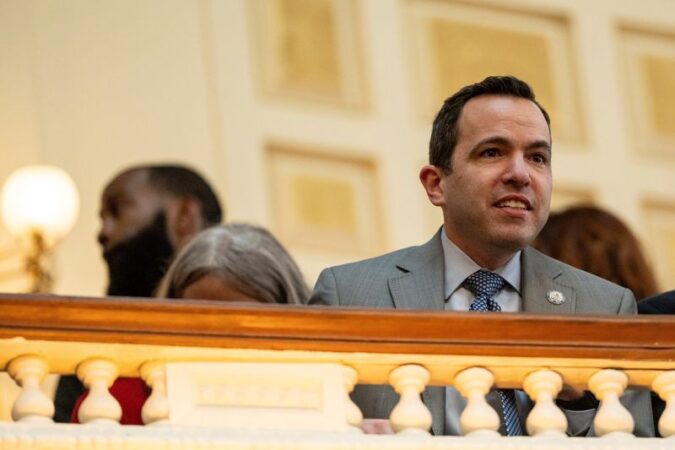
    On Wednesday, New Jersey Attorney General Matthew Platkin called the administration’s stance “deeply immoral.”

    “The past few weeks have shown that the Trump administration is willing to sacrifice millions of Americans’ most basic needs in service of a political agenda,” he added.

    In a cabinet meeting Tuesday, Agriculture Secretary Brooke Rollins said that data describing Supplemental Nutrition Assistance Program recipients’ names, addresses, Social Security numbers, and immigration status are necessary to ferret out fraud, the Associated Press reported. The Department of Agriculture runs the SNAP program.

    Twenty-two states, including New Jersey, have sued the administration over its demand for personal information, which states have never shared with the federal government. Representing Pennsylvania, Gov. Josh Shapiro joined the lawsuit. A California federal court issued a preliminary injunction on Oct. 15, allowing all parties until next Monday to respond.

    The federal government splits the cost of running SNAP with states, and the Trump administration said it is not planning to take SNAP benefits from individuals, but rather to pull funds it sends to the states to run the program..

    Individuals could nonetheless see their payments disrupted, said Joel Berg, CEO of Hunger Free America, in an interview. The agency is a national nonprofit that fights hunger.

    “People in the Philadelphia region could go hungry,” he said. “Even people in rural Pennsylvania and South Jersey in counties that supported Trump who are highly dependent on these programs could be hurt.

    “This is an authoritarian intrusion of big government. It’s a way to bully Democratic states.”

    Around 500,000 of the 2 million people in Pennsylvania who receive the federal food aid are in Philadelphia.

    Neither Shapiro nor New Jersey Gov. Phil Murphy offered comments. The White House referred requests for comment to the USDA, which released a statement Wednesday evening complaining that blue states “choose to protect illegals, criminals, and bad actors over the American taxpayer.”

    The statement added that the USDA recently sent an additional request to Democratic-run states for data. However, the statement warned, “if they fail to comply, they will be provided with formal warning that USDA will pull their administrative funds.”

    Lately, the SNAP program has played a significant role in aspects of how the Trump administration governs, advocates say.

    During the shutdown, the Trump administration paused SNAP benefits in early November, and then went to the Supreme Court to fight orders by federal judges to release the funding.

    The way SNAP has been thrust into the White House’s partisan battles irks George Matysik, executive director of the Share Food Program, which provides food to hundreds of Philadelphia-area pantries. “We have a serious food affordability crisis developing and it requires a focused response, not continuous political sideshows,” he said Wednesday.

    Temple University sociologist Judith Levine agreed. “It’s extremely disturbing that because of political games, people may lose this very basic benefit needed for survival,” she said. “Being food insecure has nothing to do with infighting between political parties.”

    Loss of SNAP places an inordinate strain on the charitable food system, primarily food pantries, which in turn hurts families, said Eliza Kinsey, a professor in the department of family medicine and community health at the University of Pennsylvania’s Perelman School of Medicine.

    “There’s tons of evidence that stoppages of SNAP can disproportionately affect households with children,” she said. “Cutting SNAP could be disastrous.”

  • Sen. Andy Kim, New Jersey AG spar with South Jersey lawmaker at raucous hearing over bill that would limit watchdog’s powers

    Sen. Andy Kim, New Jersey AG spar with South Jersey lawmaker at raucous hearing over bill that would limit watchdog’s powers

    A New Jersey Senate hearing on a proposal to scale back the authority of a state oversight office degenerated Monday into a blistering back-and-forth between Attorney General Matthew Platkin and state Sen. James Beach.

    A bill from Senate President Nicholas Scutari (D., Union) would shift the state comptroller’s investigative responsibilities regarding long-form corruption fraud or organized criminal activity probes to the State Commission of Investigation (SCI).

    The legislation drew opposition from two of the state’s most prominent Democrats: Platkin, who has served as New Jersey’s top lawyer since 2022, and U.S. Sen. Andy Kim (D., N.J.).

    But Democrats on the Senate State Government, Wagering, Tourism & Historic Preservation Committee appeared agitated by their presence at the marathon hearing.

    Beach, the committee’s chairman who represents Camden and Burlington Counties, told fellow Democrat Platkin the bill was necessary “because of you,” though the bill does not involve the attorney general’s office.

    Platkin, who had been critical of the bill, answered, “Now you’re saying the quiet part out loud.”

    Beach suddenly went on a tirade excoriating Platkin on his overall performance as attorney general, calling him a “problem,” questioning his ethics, and telling Platkin he’d been “sloppy” in bringing various indictments. ”And,” Beach said, “your leadership has been lacking.”

    Platkin, an appointee of outgoing Gov. Phil Murphy, retorted, “This isn’t about me.”

    The exchange may reflect sore feelings at Platkin within some corners of the Democratic Party following his pursuit of a corruption case against business owner and South Jersey power broker George E. Norcross III.

    Beach chairs the Camden County Democratic Committee, a position previously held by Norcross.

    Platkin’s office is currently seeking to reinstate a racketeering case against Norcross after a judge dismissed the indictment earlier this year. Norcross has also come into conflict with the state comptroller’s office, which has investigated him.

    Prior to his heated exchange with Platkin, Beach got into it with Kim, whose victory in the Senate race last year came after battles with the Democratic machine. Kim, who had previously criticized the bill, said he’d broken away from responsibilities in Washington to attend the hearing.

    Kim advanced to the hearing microphone with Platkin and acting State Comptroller Kevin Walsh, which angered Beach.

    “What makes you special that you can come up with your people?” Beach said to Kim. After Kim’s allotted time expired, he continued to talk. Beach yelled, “Your three minutes are up. You don’t run the meeting.”

    Beach then criticized Kim for voting in favor of several of President Donald Trump’s cabinet appointees.

    “Why did you vote with [Trump] so many times? Tell me. Tell me. Why don’t you tell me? Why did you vote to approve [Secretary of State Marco] Rubio? Why did you vote to approve [Secretary of Homeland Security] Kristi Noem?” Beach castigated the senator.

    Following the fiery exchanges, Beach’s committee voted to advance the bill to the Senate floor.

    The legislation states that the comptroller could continue its essential auditing functions but in practice it would remove the office’s ability to conduct investigations or issue subpoenas. In effect, the comptroller could still review government agencies’ finances but would no longer be empowered to probe misconduct or force corrective action.

    The Office of the State Comptroller (OSC) would still audit Medicaid-fraud cases, but its investigations arm would be absorbed by the SCI.

    The comptroller office’s reports on corruption, waste, and mismanagement have long frustrated officials across the state. But opponents of the legislation see it as an effort to weaken the state’s financial watchdog.

    Both Kim and Platkin were not called to speak until the hearing, which had taken up other bills, had gone on for nearly five hours. That annoyed Hoboken Mayor Ravi Bhalla, who accused Beach of not allowing the two to speak for so long.

    “That is a senator,” Bhalla said. “And this is a disgrace. This whole hearing is a sham.”

    The nasty tone of the hearing even took some lawmakers by surprise.

    “I hope it’s last time I ever see it,” said state Sen. John McKeon (D., Essex County). “I’m so proud to be here every day, but not right now. So let’s stop.”

    While Platkin and Kim have been vocal in their opposition to the bill, New Jersey Gov.-elect Mikie Sherrill said she was “opposed to efforts that weaken essential accountability and oversight, including with our watchdog agencies,” but added she “would not weigh in on pending legislation as it changes, is amended, and moves through the legislature.”

    In his introduction of the bill, Scutari said it would strengthen accountability by reviving the historic SCI and eliminating duplicative efforts between state oversight entities.

    “The investigations operations of the Office of the State Comptroller is smaller than, and different from, its main responsibilities, which are Medicaid fraud, procurement oversight, and audit functions,” the bill says. “Transferring the investigations function to the State Commission of Investigation does not curtail those responsibilities and is a more logical fit that will capitalize on its experience and success,” the bill says.

    Critics argue that in a state that has long been plagued with government corruption, the more watchdogs, the better.

    And Platkin charges that the motivation is personal. Walsh has taken an aggressive approach to the job since taking over in 2020. He led investigations on police accountability, government waste and fraud, and investigations into government benefit plans.

    A recent investigation released in September targeted Norcross in a scathing investigation alleging conflicts of interest and violations of public contracting laws related to the South Jersey power broker’s insurance empire. The report alleged that Conner Strong & Buckelew, and PERMA, separate entities owned by the same parent company under Norcross, operated as one entity, with one steering contacts to the other.

    Norcross told Politico that the report was “rife with factual inaccuracies and evidences a fundamental lack of understanding of the issues, here how insurance markets work.” He called Walsh a politically motivated ally of Platkin.

    Senators have blocked Walsh’s confirmation for years, keeping him in acting status. If the bill becomes law, he would no longer be in charge of the office.

    As the bill shifts power to the SCI, it also increases the three commissioners’ salaries and changes who appoints the chair from the governor to the Senate president and the Assembly speaker.

    Last week, Platkin wrote on social media, “This Thanksgiving, the NJ Senate is killing a gov’t watchdog that stops wasteful spending, giving politically powerful individuals broad powers to intimidate law enforcement fighting corruption & even letting them tap phones. Outrageous.”


  • Trump is changing the way aid goes to cities. Philly stands to lose tens of millions of dollars for housing.

    Trump is changing the way aid goes to cities. Philly stands to lose tens of millions of dollars for housing.

    Philadelphia stands to lose tens of millions of dollars in federal funds intended to fight homelessness under a plan issued by the Trump administration that advocates say could significantly disrupt permanent housing programs and return formerly homeless people to the streets.

    The U.S. Department of Housing and Urban Development released the plan earlier this month, saying it would “restore accountability” and promote “self-sufficiency” in people by addressing the “root causes of homelessness, including illicit drugs and mental illness.”

    Nationwide, advocates say, the HUD plan could displace 170,000 people by cutting two-thirds of the aid designated for permanent housing.

    The number of individuals in Philadelphia at risk of losing stable housing hasn’t been tallied because the city’s Office of Homeless Services (OHS) is still reviewing the plan’s impact, said Cheryl Hill, the agency’s executive director.

    Overall, there are 2,330 units of permanent housing, many of them financed by $47 million the city received from HUD last year, according to city officials.

    The new strategy comes as Mayor Cherelle L. Parker attempts to move ahead with an ambitious plan to increase the supply of affordable housing in the city. Parker declined to comment on the Trump administration’s policy shift.

    A preliminary analysis by HopePHL, a local anti-homelessness nonprofit, estimates around 1,200 housing units with households of various sizes would lose federal aid and no longer be accessible to current residents, all of whom are eligible for the aid because they live with a physical or mental disability.

    HUD plans to funnel most of the funding for permanent housing into short-term housing programs with requirements for work and addiction treatment. The agency also said that it’s increasing overall homelessness funding throughout the United States, from $3.6 billion in 2024 to $3.9 billion.

    “This new plan is disastrous for homelessness in Philadelphia,” said Eric Tars, the senior policy director of the National Homelessness Law Center, who lives and works in Philadelphia. “The biggest immediate harm would be that those who were once homeless but are now successfully living in apartments will be forced out of their homes.”

    Other critics say the policy is based on a failed model that strips away civil liberties and doesn’t address what scholars and people who run anti-homelessness agencies say is the main reason Americans are homeless: the dearth of affordable housing.

    “We have broad concerns about what we’re seeing,” said Candice Player, vice president of Advocacy, Public Policy and Street Outreach for Project HOME, the leading anti-homelessness nonprofit in Philadelphia. “We are all in a very difficult position here.”

    Amal Bass, executive director of the Homeless Advocacy Project, which provides legal services to those experiencing homelessness, agreed, saying the city is “bracing for homelessness to increase in Philadelphia as a result of these policy choices.”

    The need to house thousands of people suddenly made homeless would force cities, counties, and states to spend money they may not have, according to a statement from the National Alliance to End Homelessness.

    Asked for comment, a HUD spokesperson sent a statement saying the agency seeks to reform “failed policies,” and refutes claims that the changes will result in increased homelessness.

    HUD hopes that current permanent housing shift to transitional housing will include “robust wraparound support services for mental health and addiction to promote self-sufficiency.”

    The agency added that it wants to encourage the “12,000 religious organizations in Pennsylvania to apply for funding to help those experiencing homelessness.”

    New restrictions on ‘gender ideology extremism’

    The federal government funds local governments to address homelessness through so-called Continuums of Care (CoC), local planning bodies that coordinate housing and other services. In Philadelphia, the CoC is staffed by the city’s Office of Homeless Services, and governed by an 18-member board, including homeless and housing service providers, and physical and behavioral health entities.

    In its plan, HUD will require the local planning bodies to compete for funding, and will attach ideological preconditions that could affect how much money a community like Philadelphia receives.

    For example, the new HUD plan “cracks down on DEI,” essentially penalizing a local board for following diversity, equity, and inclusion guidelines. HUD would also limit funding to organizations that support “gender ideology extremism“ — programs that “use a definition of sex other than as binary in humans.” And HUD will consider whether the local jurisdiction“prohibits public camping or loitering,” an anti-encampment mandate that advocates such as the Legal Defense Fund say criminalizes homelessness.

    Funding for programs that keep people in permanent housing could be cut off as early as January, according to HUD documents.

    Philly an early adopter of Housing First

    The new HUD policy dovetails with the views of President Donald Trump, who signed an executive order in July that sought to make it easier to confine unhoused people in mental institutions against their will.

    Trump has also said he wants municipalities to make urban camping illegal, helping to clear homeless encampments from streets and parks. He’s expressed a preference for moving people who are homeless from municipalities to “tent cities.”

    Planners in Utah are working toward creating such a facility known as an “accountability center” that would confine people who are experiencing homelessness and force them to be treated for drug addiction or behavioral health issues.

    HUD’s new direction is a repudiation of Housing First, which gives people permanent housing and offers services without making them stay in shelter and mandating treatment for drug abuse or behavioral health issues. Philadelphia was an early adopter and was the first U.S. city to use it specifically for people with opioid disorders, according to Project HOME, which was cofounded by Sister Mary Scullion, an early proponent of Housing First.

    Time and again it’s been proven that “offering, rather than requiring, services to help those who are homeless, has greater effect,” said Michele Mangan, director of Compliance and Evaluation at Bethesda Project, which provides shelter, housing, and case management services to individuals experiencing homelessness in Philadelphia.

    The administration’s move toward transitional housing and required treatment hasn’t worked before, according to Dennis Culhane, a social policy professor at the University of Pennsylvania who’s an expert in homelessness and assisted housing.

    The people most in need of help couldn’t comply with clean and sober requirements and were evicted, he said.

    “It’s a misguided approach that blames the victim and fails to address the lack of affordable housing,” Culhane said. On the other hand, Housing First has had an 85% success rate in helping to lead people out of homelessness, Culhane said.

    He added that he “distrusts the administration’s motivation. It just wants people out of sight and moved into fantastical facilities with tents and alleged care because they’re seen as a nuisance.”

    Ultimately, said Gwen Bailey, HopePHL’s vice president of programs, it’s not clear whether the Trump administration “thinks it’s doing the right thing. I don’t know their data.

    “But in Philadelphia right now, today, I see all kinds of people facing frightening situations.”

    Staff writer Sean Collins Walsh contributed to this article.

  • Shapiro’s view that America is ready for a Jewish president hasn’t changed, Times says

    Shapiro’s view that America is ready for a Jewish president hasn’t changed, Times says

    Gov. Josh Shapiro told the New York Times in an article appearing Monday his opinion that a Jewish person could become president has not changed since he first voiced it a year ago.

    The article referenced a statement Shapiro made to the Times last year that “speaking broadly, absolutely” America could elect a Jewish president in his lifetime.

    The Monday article stated: “This month he said his view was unchanged.”

    Shapiro has never publicly confirmed he’s interested in running for president, though speculation has long followed him.

    While he has been largely untested on the national stage, Shapiro is often listed among the Democrats likely to make a run for the presidency in 2028.

    Despite that, the April arson attack, denounced by many as antisemitic, at the governor’s mansion against Shapiro and his family on Passover as they slept shook some people’s “confidence in the idea that the country was ready for leaders like Mr. Shapiro,” the Times wrote.

    In fact, Shapiro told the Times, he spoke with his family about whether holding elected office was worth the risk of political violence, which Americans believe is on the rise, according to a survey released last week by the Pew Research Center.

    Shapiro concluded: “If I leave because violence pushed us out or scared us, then those who want to perpetuate political violence win.

    “I’ve got to stay. I’ve got to show that we’re not afraid.”

    Taking that stand, however, is not getting easier.

    “It’s gotten hotter and hotter and more and more dangerous,” Michigan Gov. Gretchen Whitmer, herself the target of a kidnapping plot, told the Times.

    Cody Balmer, 38, the man accused of setting the governor’s mansion ablaze, pleaded guilty on Oct. 14 to attempted murder and related crimes. Sentenced to 25 to 50 years in prison, Balmer said he intended to attack Shapiro with a hammer that night.

    Photos released by the Pennsylvania State Police and seen on YouTube showed a soot-covered chandelier, singed walls, a blackened carpet, melted tables, burned furniture, and a damaged grand piano.

    Since the attack, Shapiro has spoken with other elected leaders and those considering running for office, offering personal guidance to those victimized by political violence, and he talked with Gov. Tim Walz of Minnesota after the former state House speaker, Melissa Hortman, and her husband were assassinated, the Times wrote.

    “Knowing that as you’re doing that work that I consider to be noble, that it comes with a risk to you and your family,” he told the Times, “that’s a tension that is a challenge to work through.”

    “It is one of the reasons why I’m so motivated to speak out against political violence,” Shapiro added. To “try and take the temperature down so that good people want to serve.”

    Regarding potential bias against religion, the governor told the Times that Americans “respect faith, even if they don’t practice it, and want to have a deep relationship with the people who represent them.”

    Being open about his Judaism has allowed him “to be able to have a deeper relationship with the people of Pennsylvania, allowed them to share their stories,” Shapiro told the Times, adding: “We’re doing that in this ultimate swing state.”

    Shapiro will release a memoir next year detailing his career and personal life, including the firebombing of the governor’s mansion and his place on the short list to be Kamala Harris’ vice presidential candidate.

    Considered a viable Democratic presence, Shapiro on Saturday stumped for New Jersey gubernatorial candidate U.S. Rep. Mikie Sherrill in the Garden State at a senior center auditorium and an African Methodist Episcopal church, targeting two groups seen as necessary for Sherrill to beat Republican Jack Ciattarelli.

    Staff writers Julia Terruso and Gillian McGoldrick contributed to this article.

  • Comcast is one of 37 ‘patriot donors’ paying for Trump’s $300 million White House ballroom

    Comcast is one of 37 ‘patriot donors’ paying for Trump’s $300 million White House ballroom

    Comcast is among 37 corporations, foundations, and individuals donating money to build President Donald Trump’s proposed ballroom where the East Wing of the White House once stood, according to CNN and various news reports.

    The exact amount that the Philadelphia-based global media and technology company will be contributing toward the estimated $300 million construction cost was not included on a list of donors provided to news media by the White House.

    Comcast officials didn’t comment Friday.

    The company has supported Trump in the past. It donated $1 million to Trump’s 2025 inaugural committee in December, The Philadelphia Inquirer reported. And it made a $250,000 donation to his 2017 inauguration, according to CNN.

    Despite the contributions, the Trump administration has attacked Comcast-owned media outlets such as NBC and MSNBC for content he’s found objectionable.

    The 90,000-square-foot ballroom, to be named after Trump, could hold close to 1,000 people for state dinners and events, Time magazine reported.

    The project is not without controversy.

    Trump lacked approval for construction from the National Capital Planning Commission, which signs off on construction work and major renovations to government buildings in the Washington area, according to the Associated Press.

    Ethics experts wonder whether donors are looking for special consideration from Trump.

    Claire Finkelstein, a University of Pennsylvania Carey Law School professor and director of the school’s Center for Ethics and the Rule of Law, said the ballroom project rouses “a lot of concerns,” according to FactCheck.org, a project of the Annenberg Public Policy Center at Penn.

    “Is he really going to use it for the duties of his office, or will he entertain a lot of individuals trying to curry favor with the administration or him personally?” Finkelstein asked. She wondered whether it could be “a misuse of public real estate.”

    Others complain that the administration initially pledged not to demolish the East Wing, which turned out “to be a lie,” according to New York Magazine.

    Comcast joins an elite roster of ballroom underwriters, including Amazon, Apple, Google, Lockheed Martin, Meta Platforms, Microsoft, and T-Mobile, according to NBC News.

    Also on the list are crypto, oil, and tobacco companies, owners of sports teams, and the foundations of several billionaires.

    Trump said he’ll contribute his own money to the ballroom’s construction, joining the list of what he calls “patriot donors.”

    Staff writer Sean Collins Walsh contributed to this article.

  • Democrats in Upper Darby accuse a GOP council candidate and former police officer of racist posts

    Democrats in Upper Darby accuse a GOP council candidate and former police officer of racist posts

    Bob Yantorno, a Republican candidate for a seat on the Upper Darby Township Council, is facing scrutiny over material he posted three years ago that Democrats have decried as racist.

    Yantorno, 65, is a former commanding officer of the Narberth Police Department, a former paramedic, and a veteran of other law enforcement agencies. He’s running in the township’s 3rd District.

    Yantorno denies that anything he has ever posted was motivated by racism and said his social media comments reflected his outrage over incidents of violence.

    The controversy stems from posts Yantorno made in 2022 on Twitter, now known as X, in response to crime news stories from Fox 29 that involved Black suspects.

    “Take him out back n bullet in occipital section,” Yantorno wrote about a suspect from Drexel Hill charged with two homicides.

    “Arrest convict bury,” Yantorno wrote in response to a booking photo of a Camden man accused of rape.

    In a 2022 reply to an Upper Darby Police Department statement about a rash of thefts from automobiles, Yantorno wrote under four photos of young men in hoodies walking near cars but not stealing anything, “Common denominator?”

    The race of the men was not obvious from the photos posted by the department.

    Democrat Noah Fields, 25, who is running for one of two at-large council seats, neither of which Yantorno is seeking, condemned Yantorno in an interview for what he said was “shocking” and “hateful” speech, as well as “violent rhetoric.”

    Fields said that “racism has no place in Upper Darby.” He added that “this guy is calling for the execution of people without due process. The violent rhetoric we’re hearing on the national level is trickling down to local politics.”

    State Rep. Heather Boyd (D., Delaware), who represents Upper Darby, said the posts were “really upsetting, offensive, and disappointing.”

    She added, “We don’t want anyone in a position of influence to not consider people’s right to due process and the rule of law.”

    Asked about the posts in an interview Wednesday, Yantorno initially said he was unaware of their existence.

    “I have no idea what you’re talking about. What Democrats are saying is slanderous. People put stuff out there about me that’s not true,” Yantorno said. “All I can tell you that in the Narberth Police Department, my reputation was stellar.”

    Yantorno said he didn’t know how posts with his name, photo, and personal details got onto X. His page says he joined the platform in 2022 and features a profile photo of him in police uniform.

    He bristled at being called racist. He added, “I would never put a picture of somebody of any color and disparage them because of their race.”

    Yantorno said that personal experience has made him sensitive to race bias. He said that when he and his first wife, whom he identified as a woman of color, moved into a house in Stonehurst, an Upper Darby neighborhood, someone stuck a cross in their lawn.

    It was, Yantorno said, a symbol of hatred aimed at his then-wife.

    Similarly, he said, when he was a police officer in Yeadon, he and his former wife “fell in love” with a house they wanted to buy, but had to back out of the deal because their real estate agent said if they moved in, “someone would burn down the house and the real estate office.”

    Yantorno added without being asked: “You will never see anything from me online using the N-word. That’s not how I roll, brother.”

    A statement emailed Thursday by the Upper Darby Republican Campaign Committee included remarks attributed to Yantorno that differed from his original explanation.

    In the new statement, Yantorno no longer said he was unaware of the posts. Instead, he said, “those comments reflected my frustration and anger over the senseless violence in our community and had nothing to do with race.” He added that “claims of racism are offensive and absurd.”

    A GOP committee statement, which was not attributed to a specific person, emphasized Yantorno’s commitment to public service and said that he does not deserve a “fabricated inference that has no basis in reality.”

    Jeff Jones, an Upper Darby real estate developer who has been a Republican candidate for the council in the past, defended Yantorno.

    “I read the tweets. They were comments made by a gentleman 35 years in law environment who’s seen criminals and victims at their worst, and the frustration came through in those tweets,” said Jones, who is Black.

    Melissa DiNofia-Bozzone, Yantorno’s Democratic opponent for the 3rd District seat, declined to comment on the posts, saying, “I’m focused on running a positive campaign.”

    Friends describe Yantorno, a veteran, as a gregarious person with a desire to help his community.

    In 2020, he biked across the United States to raise money for families of slain police officers. He also did the ride, he said, for the family of Daniel Faulkner, the Philadelphia police officer who was killed in 1981. Mumia Abu-Jamal received the death penalty for the shooting, which was later reduced to a life sentence without parole.

    Yantorno is also the author of a 1995 crime novel set in Philadelphia called Brutal Mercies. According to the publishing company, Trafford, the story opens with “a horrific act of mutilation” in Overbrook that “leaves the police asking, ‘Why?’”

    Staff writers Katie Bernard and Ryan W. Briggs contributed to this article.

  • John Fetterman sides with Republicans on ending the filibuster to reopen the government: ‘The only losers are the American people now’

    John Fetterman sides with Republicans on ending the filibuster to reopen the government: ‘The only losers are the American people now’

    Sen. John Fetterman (D., Pa.) said he would back a Republican plan to override the Senate filibuster if it meant passing a bill to reopen the government.

    In an interview with The Inquirer on Tuesday, Fetterman admonished fellow Democrats who balk at the notion of using the so-called nuclear option to end the filibuster: “When I ran for Senate, everyone, including myself, said we’ve got to get rid of the filibuster. I don’t want to see any Democrats clutching their pearls about it now.

    “If we’d had our way, the filibuster wouldn’t have been around for years.”

    A staple of the Senate that has long been debated, the filibuster requires 60 votes to pass most legislation in the chamber.

    Republicans have long vowed to protect the filibuster, noting that the 60-vote threshold presents a check on Democrats when they have the majority, but it’s now the rule standing in the way of their government funding bill. And in recent months, leaders have made moves to further weaken the minority party’s power, including bypassing the need to get Democratic support to confirm a slate of President Donald Trump’s nominees last month. Senate Majority Leader John Thune (R., S.D.) has thus far said he won’t use the same tactic to reopen the government.

    Fetterman’s comments on Tuesday followed several Republicans floating the idea of getting rid of the filibuster in recent days.

    Fetterman is one of three members of the Democratic caucus who voted with Republicans to reopen the government earlier this month, joining Sens. Catherine Cortez Masto of Nevada and Angus King, a Maine independent.

    “If you look at my record, I’ve been voting the Democratic line, but this is different now. The tactic is wrong,” Fetterman said.

    He said his main concern is the possibility that people in the state and across the country would face hunger if the federal government shutdown continues and Americans lose their Supplemental Nutrition Assistance Program (SNAP) benefits beginning Nov. 1.

    “Nobody checks their political party when they’re hungry,” he said. “It’s not about a political side blinking. The only losers are the American people now.”

    Fetterman added that he is in favor of extending tax credits, as Democrats are demanding during the shutdown. With those tax credits set to expire, people are going to start seeing higher prices when they sign up for health insurance come open enrollment in November, experts say.

    “I don’t want people clobbered,” Fetterman said. “But Democrats designed them to expire this year. We passed these things when we were in the majority.”

    Seeing room for dialogue, Fetterman said Thune “is an honorable man, and I believe a productive conversation to extend tax credits can be had with him.”

    Sen. Andy Kim (D., N.J.) said he had multiple conversations with Senate Republicans on Tuesday who said they would “adamantly oppose” ending the filibuster.

    “That’s been a huge part of how they’ve been able to lock down power here in D.C. before,” Kim said.

    He said from his perspective, Senate Democrats are focused on getting the House back to work to negotiate a deal that includes the extended healthcare subsidies in a government funding bill.

    “This is not an issue of Senate procedure. This is an issue of just doing our job.” Kim did not comment on Fetterman’s support for a filibuster carveout to end the shutdown.

    In 2022, according to the media and politics site Mediaite, every Senate Democrat with the exceptions of then-Sens. Joe Manchin of West Virginia and Kyrsten Sinema of Arizona voted to eliminate the filibuster in a failed effort to pass former President Joe Biden’s elections overhaul.

    A sometimes contrary figure, Fetterman has taken controversial stands in the past and is one of few Democrats who actively works with Republicans.

    He has been criticized by progressives for his unwavering support of Israel in its war against Hamas.

    And Fetterman garnered the enmity of some Democrats (and the praise of President Donald Trump) when he defended Immigration and Customs Enforcement by saying fellow Democrats’ calls to abolish the agency were “inappropriate and outrageous.”

  • Federal shutdown may bring a halt to food assistance for half a million Philadelphians

    Federal shutdown may bring a halt to food assistance for half a million Philadelphians

    Nearly 2 million Pennsylvanians — including 500,000 Philadelphia residents — won’t receive SNAP benefits in November if the federal government shutdown continues, state officials said.

    The Supplemental Nutrition Assistance Program provides $366 million a month to low-income people in the state, according to the Pennsylvania Department of Health and Human Services (DHS). Most households that receive SNAP benefits consist of elderly people, children, or individuals with disabilities, according to hunger experts.

    This is the first federal shutdown in at least 20 years in which SNAP will not be made available, said George Matysik, executive director of the Share Food Program, a food bank that serves 500,000 people living in the region.

    “It’s like a horror movie where the call is coming from within the house,” Matysik said in an interview last week. “Our own federal government is making the choice to take benefits from Pennsylvanians,” who are among 42 million people nationwide who participate in the program.

    In Philadelphia, Share has seen a 120% increase in food need over the last three years, Matysik said. “And that was with SNAP,” he added, saying the city faces a greater food crisis now than it did during the pandemic.

    In an email Monday, the Pennsylvania DHS blamed Republicans “who control the U.S. Senate, the U.S. House, and the White House” for failing to pass a budget and causing the current difficulties Americans endure.

    “We urge Republicans in Congress to reopen the government and protect vulnerable Pennsylvanians at risk because of this inaction,” the email said.

    Gov. Josh Shapiro’s office could not be reached for comment. In May, Shapiro said that the commonwealth would be unable to replace lost funding for SNAP should the federal government fail to pay.

    The U.S. Department of Agriculture, which administers SNAP, did not return calls for comment. The White House issued a statement that the shutdown is affecting personnel in its press office, delaying responses. The statement blamed Democrats for the government’s closure: “Please remember this could have been avoided if the Democrats voted for the clean Continuing Resolution to keep the government open.”

    To receive SNAP benefits, individuals carry EBT (electronic benefits transfer) cards that are loaded monthly with the amounts to which they are entitled.

    The shutdown began Oct. 1 after Congress could not reach a compromise to allow funding to continue. The region’s 46,000 federal workers found themselves without paychecks. The Trump administration, meanwhile, began laying off federal workers, with a goal of sacking 4,000 of them. A federal judge in California intervened to halt the layoffs. A hearing is scheduled for Tuesday.

    Like other states, New Jersey faces the same funding difficulty. If the federal government remains closed by Nov. 1, about 800,000 people will be without SNAP benefits.

    Elderly people who rely on SNAP will suffer throughout Pennsylvania because, for them, “food is medicine,” said Allen Glicksman, director of research at the Eastern Pennsylvania Geriatrics Society in Newtown Square. “Without it, there’s the chance of a health catastrophe that will cost more money in Medicaid and in emergency room visits.”

    There are 234,638 Philadelphians age 65 and older, 104,972 (45%) of whom live below the federal poverty line ($21,150 for two individuals in a household), Glicksman calculated.

    Brian Gralnick, executive director of the Center for Advocacy for the Rights and Interests of Elders (CARIE) in Center City, agreed. “Consequences will be devastating. Without federal government dollars, ending or even addressing hunger in the region will be as successful as draining the Delaware River using Eagles helmets.”

    For children, the potential shortage of SNAP benefits will be no less calamitous, said sociologist Judith Levine, director of the Public Policy Lab at Temple University.

    “Food is a necessary element for brain development and growth,” she said. “And there’s a clear connection between hunger and the ability to perform in school.

    “This is a complete crisis we are facing.”

    One in four Philadelphia children experiences food insecurity — lack of enough food over the course of a year to live a healthy life — according to a City Council report.

    In the neighborhoods, the word about the halt to SNAP benefits is circulating. Fear and confusion had already been growing after the Trump administration announced changes to the SNAP program that would make it more difficult for some people to access benefits.

    Among the changes: Some SNAP recipients ages 18 to 54 who are able to work and do not support a child under 18 are now required to report at least 20 hours of work, training, or volunteering per week, or 80 hours per month, to keep their benefits.

    Despite the revisions to the program, however, many people these days are more worried about what happens if SNAP halts.

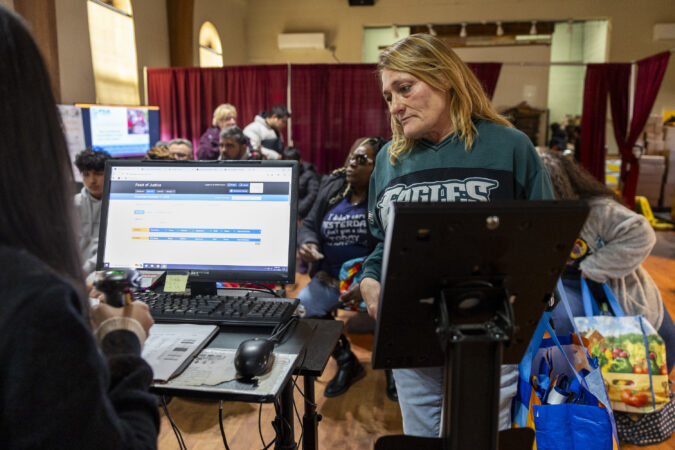
    “People are very anxious about that,” said Pastor Tricia Neal, director of the Feast of Justice food pantry at St. John’s Lutheran Church in the Northeast.

    “The anxiety level is driving more people to come here, and, because we serve 5,500 households, we are well beyond the capacity of what we can support. It’s really horrendous to look at what’s happening here.”

    That much is clear, according to Rosemary Diem, who tries to stave off hunger for her and her husband by combining SNAP benefits with visits to Feast of Justice.

    “Everything at the pantry is running low,” said Diem, 60, who is disabled, as is her husband, Joseph, 63. “I see us getting hurt without SNAP. There won’t be money for milk and eggs.

    “How am I going to get through?”