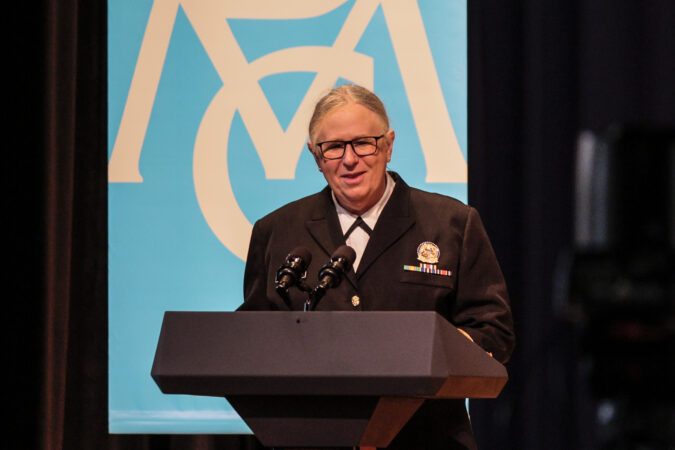
Saying the Trump administration is using the federal government for “pure evil” in its immigration crackdown in Minneapolis, Gov. Josh Shapiro revealed on late-night television Monday that he’s preparing Pennsylvania to respond should the state face such an incursion.
Shapiro’s wide-ranging remarks on The Late Show With Stephen Colbert — which included Shapiro deriding Vice President JD Vance as a “sycophant” and a “suck-up” — sounded at times like a speech before a studio audience that applauded him vigorously. Making the rounds to promote his new book, Where We Keep the Light: Stories from a Life of Service, Shapiro also appeared on CBS Sunday Morning, Good Morning America on Monday, and The View on Tuesday.
On Colbert, the governor sharply criticized the Trump administration’s actions in Minneapolis, where he said “untrained” agents from U.S. Immigration and Customs Enforcement (ICE) have been creating “chaos” by fatally shooting two American citizens.
“I think Americans are outraged by what they see,” Shapiro said, adding: “The mission in Minnesota must be terminated immediately.”
When Colbert said there are “rumors” that federal troops will be sent to Philadelphia “to foment fear,” Shapiro nodded. On The View, he said troops could show up in Philadelphia, Pittsburgh, or Lancaster.
“We have spent hours and hours and hours doing tabletop exercises to prepare for it,” Shapiro said, without being specific. The governor did not elaborate.
He added that “it’s a sad day in America that a governor of a commonwealth needs to prepare for a federal onslaught where they would send troops in to undermine the freedoms and the constitutional rights of our citizens. This is un-American.”
“But I want the good people of Pennsylvania to know — I want the American people to know — that we will do everything in our power to protect them from the federal overreach.”
Asked for comment, Abigail Jackson, a White House spokesperson, said Tuesday: “It’s pure evil when Democrat leaders provide sanctuary to dangerous criminal illegal aliens who assault, murder, and rape innocent American citizens. President Trump is keeping his promise to the American people to deport criminal illegal aliens.”
Referencing ICE agents wearing masks, Shapiro said that members of the Pennsylvania State Police “have strict rules on when they can wear a mask. You want to be identified as folks who are keeping people safe.”
He added, “Of all the tools that we give our law enforcement in Pennsylvania, the most important tool you need to have is trust with the community that you police.”
When the conversation turned to Vance’s statement that the ICE officer who shot andkilled Minneapolis resident Renee Macklin Good on Jan. 7 has “absolute immunity,” Shapiro retorted that it was untrue.
He added that Vance is “such a sycophant, such a suck-up. He embarrasses himself daily as he seeks the affirmation of Donald Trump.”
ICE agents “are not above the law,” Shapiro added moments later. “I don’t care what B.S. Vance [says.]”
The governor’s reelection bid this year, as well as rumors that he may be a presidential candidate in 2028, did not come up. Instead, Colbert touted Shapiro’s book.
Shapiro said that the courts, Congress, and public opinion need to be marshaled to prevent the Trump administration from sending more troops to U.S. cities.
“All of you have powerful voices,” Shapiro told the audience. He added: “The story of America is ordinary Americans rising up, demanding more, seeking justice.”
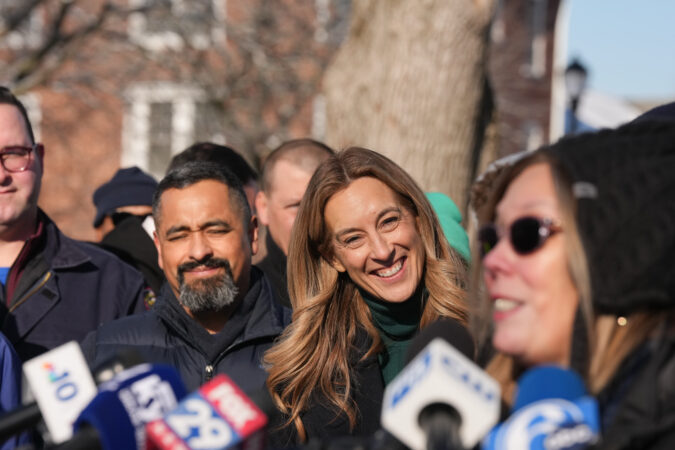
Saying “it’s been a while” since New Jersey faced a storm like the one being forecasted for Sunday and Monday, Gov. Mikie Sherrill urged state residents to stay off the roads and to not “commit to anything on Monday.”
Sherrill said in a press conference in Newark late Saturday afternoon that while “we’re tough” in New Jersey, “we have to be safe.” She declared a state of emergency starting 5 p.m. Saturday.
Sherrill said she was expecting snowfall to range from eight inches to 18 inches throughout the state. It will be a storm “the likes of which we haven’t seen in a decade,” Sherrill said.
The governor said extremely cold temperatures are expected to make things more difficult, and she suggested that people watch football and play board games with their children on Sunday.
“We are prepared for the moment, but we do need the people of New Jersey to stay safe,” she said.
The governor was accompanied by State Police Acting Superintendent Lieutenant Colonel David Sierotowicz, Department of Transportation Acting Commissioner Joseph Bertoni, and NJ Transit President and CEO Kris Kolluri.
With challenging conditions expected, Acting Attorney General Jennifer Davenport and the Division of Consumer Affairs warned sellers that price gouging New Jersey’s consumers during the declared state of emergency wouldn’t be tolerated.
Sellers can’t excessively increase prices (10% more than normal or higher) during a declared state of emergency, or for 30 days after the termination of the state of emergency, according to New Jersey law.
“As a former prosecutor, my administration will not tolerate price gouging, and we will be vigilant during this winter storm,” Sherrill said, adding that there’d be “zero tolerance for those who prey on New Jerseyans during this state of emergency.”
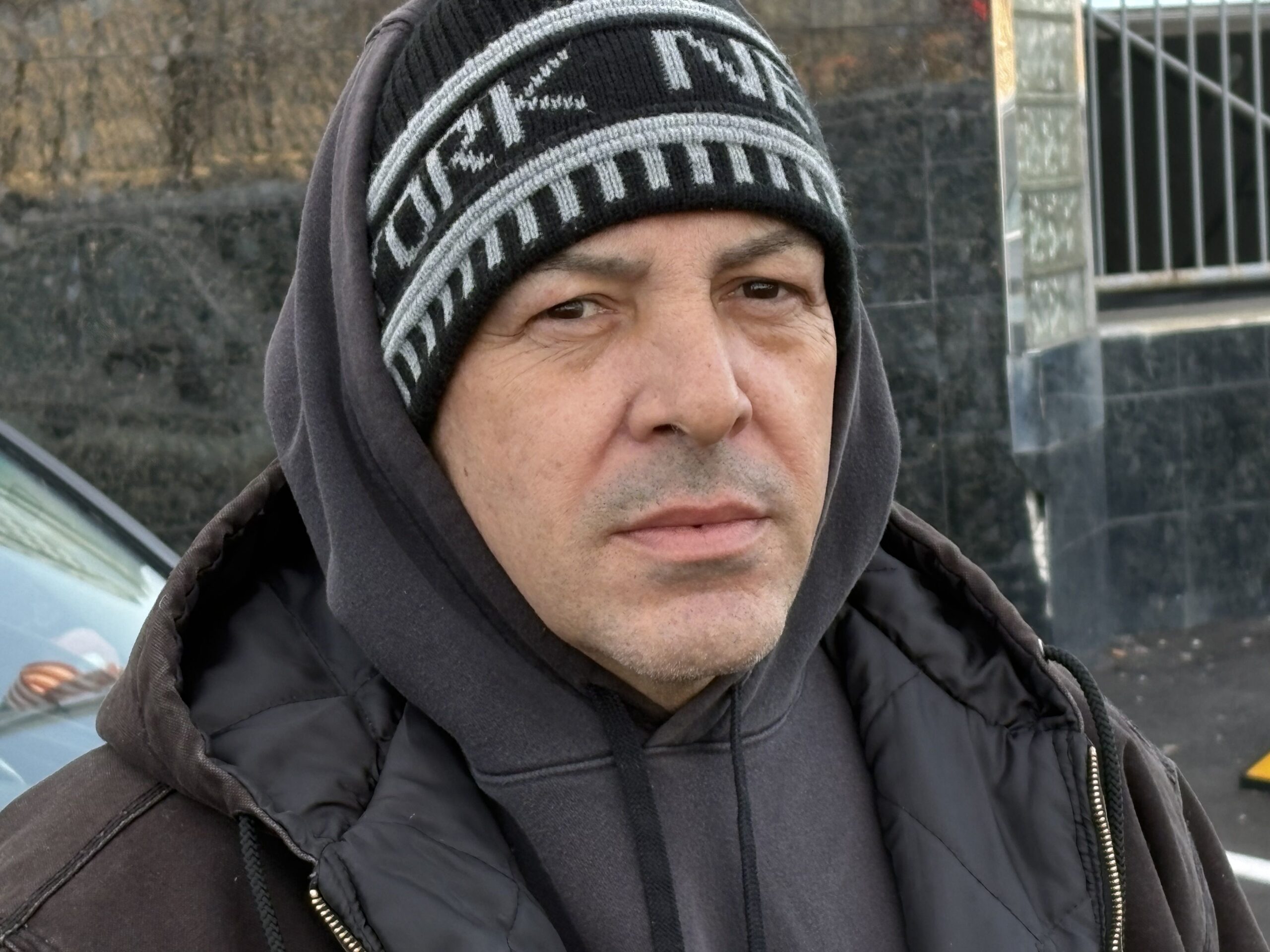
Scowling under a wool cap and a hood, Robert DeJesus stood in the bitter wind outside the Sunrise Diner in Allentown last week and confessed his “big mistake”: voting for President Donald Trump in 2024.
“The guy makes ‘cookie promises,’” said DeJesus, 57, a retired construction worker and independent voter from Allentown in Lehigh County. “They’re easy made and easy broken.”
Trump’s biggest gains in the state in 2024 were concentrated in the Lehigh Valley and in Northeastern Pennsylvania. But a year into his second presidency, there are signs that his winning coalition is splintering.In interviews across five counties in the region, some voters shared their disappointment with rising grocery prices and what they see as Trump’s failure to keep his commitments.
Even while hailing some of Trump’s policies, several Republicans interviewed said they were put off by his manner as well as his stance on key issues. That disillusionment could spell trouble for Pennsylvania Republicans as they look to hold onto two key swing congressional seatsin this region in November.
Robert DeJesus of Allentown voted for President Donald Trump in 2024, but he now regrets that decision.
Explaining his problems with Trump, DeJesus said the president pledged “but didn’t deliver” lower grocery prices. And at the same time DeJesus and his family are contending with “insane” supermarket costs, he said, Trump cut taxes for billionaires with the sweeping domestic policy package he signed last year. It has made DeJesus feel overlooked and overwhelmed.
“He left nothing for the working man,” DeJesus said. “People say it’s good the price of gas went down under Trump. But how we have to live, with high food and high rent, makes no sense.”
Diana Kird, 58, a Republican who also pulled the lever for Trump, is experiencing buyer’s remorse much like DeJesus.
“I don’t know what we’re doing in Venezuela,” said the nurse from Lehighton in Carbon County as she stood outside a Giant supermarket in town.
“We need to stop getting into foreign wars,” a promise Trump made and “ignored,” Kird added.
Kird said she has not seen Trump come through on his commitments. “He’s wash-rinse-repeat for me,” she said, “saying the same things over again,” such as promising cheaper groceries, “yet doing nothing.”
Trump’s “refusal to release all the Epstein files” after saying he would was another disappointment that makes her wish she had not supported the president, she added.
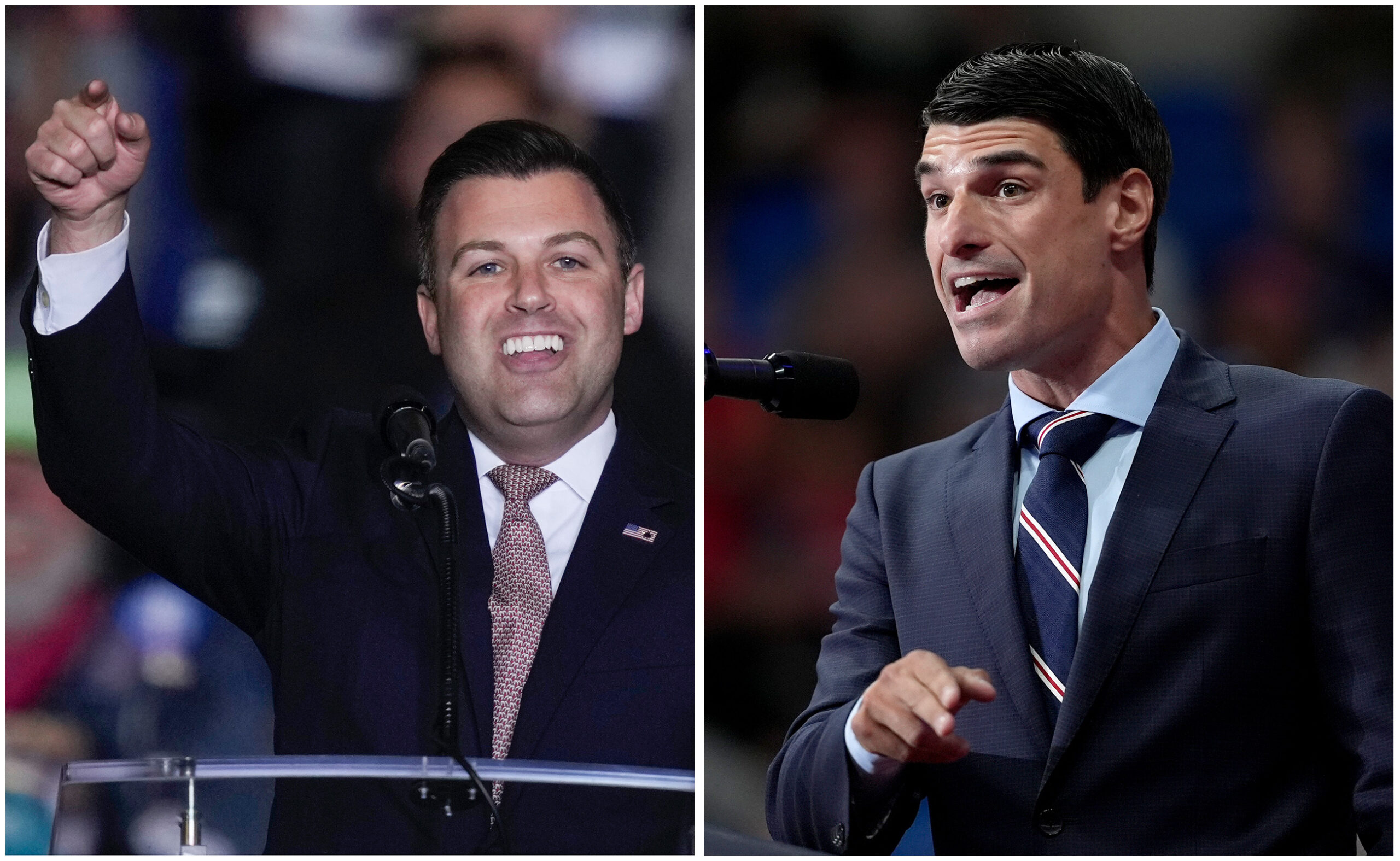
Republican U.S. Reps. Ryan Mackenzie (left) and Rob Bresnahan (right)
Mackenzie and fellow freshman U.S. Rep. Rob Bresnahan, a Republican who won his neighboring Northeastern Pennsylvania district by less than a point, are among the top targets for Democrats in November as the party hopes it can win back the House with a focus on affordability.
In a statement Wednesday, Mackenzie blamed the Biden administration for high prices and described Trump as “a vital partner” in efforts to improve the cost of living.
“We have made real progress,” he said, “reducing gas prices to their lowest level since COVID, keeping inflation below 3%, and delivering real tax relief for every American.”
Bresnahan’s office did not respond to a request for comment.
Both Trump and Vice President JD Vance barnstormed throughthe regionlast month, seeking to counteract Democrats’ affordability message, which Trump has bemoaned as a “hoax.”
But recent moves by Mackenzie and Bresnahan show the two Republicans are giving the issue more weight and seeking to distance themselves from Trump on the high cost of living ahead of tough contests in November.
“The break with the president on healthcare wasn’t surprising. Both men are feeling the heat from constituents,” said Chris Borick, director of the Muhlenberg College Institute of Public Opinion.
Borick noted that Trump’s 2024 win in the state was due in large part to his gains with voters of color, younger voters, and independents. Those same voters could be crucial to determining how Pennsylvania votes in the next election.
“But now they’re disappointed.”
Trump is ‘fearless’ and ‘honest’
There were warm feelings for Trump at the Coop, a popular diner in Coopersburg, a town just outside Allentown in Lehigh County.
“Trump’s a confident and honest man who knows business, and made a lot of money. I so admire him. And we need him,” saidTiffany Osmun, 27, who works as a host at the restaurant.
“He’s fearless, and not afraid of what he has to do,” Osmun said.
She plans to vote for Mackenzie in November, she said, adding, “I won’t be voting for any Democrat in the midterms.”
And if Trump ever popped up in another election, Osmun said, “I’d vote for him again.” In his Pennsylvania speech last month, Trump referenced running for a third term, despite constitutional barriers.
(function() {
var l2 = function() {
new pym.Parent(‘TRUMP_NE_PA.html’,
‘https://media.inquirer.com/storage/inquirer/projects/innovation/arcgis_iframe/TRUMP_NE_PA.html’);
};
if (typeof(pym) === ‘undefined’) {
var h = document.getElementsByTagName(‘head’)[0],
s = document.createElement(‘script’);
s.type = ‘text/javascript’;
s.src = ‘https://pym.nprapps.org/pym.v1.min.js’;
s.onload = l2;
h.appendChild(s);
} else {
l2();
}
})();
Other Trump voters, however, acknowledged frustrations withthe first year of his second presidency — even if they are pleased with most of Trump’s policies.
“I don’t like his personality,” saidBud Hackett, 72, a semiretired construction business owner who lives in Bethlehem.
Hackett praised Trump’s moves to curtail immigration and shrink the size of the federal workforce, but he bristled at other actions.
“I’d say over the last year, he’s done maybe 100 things, 70 of which will result in people’s lives being better off. The other 30 have to do with stuff like building a huge ballroom [after tearing down the East Wing of the White House] for his giant, weird ego that I can’t buy into.”
Trump may have generated a few problems on the home front, conceded soft-drink merchandiser Bobby Remer, a 31-year-old resident of Palmerton in Carbon County. But the president more than compensates by reminding the world just how powerful the United States can be, he said.
Remer supports the president’s attacks on boats allegedly carrying drugs from Venezuela, as well as Trump’s capture of Venezuelan President Nicolás Maduro and his wife.
“He’s done great militarily, throwing our swag around,” Remer said. “It’ll show China, which floods America with fentanyl to wipe out our military-aged men with addiction, that we have a hammer that we’ll use against any nation trying to destroy us.”
But pocketbook issues could matter more in November to other voters — especially after Trump made attacking Democrats on inflation a major theme of his 2024 campaign.
An October pollfrom Franklin and Marshall College asked voters in the Lehigh Valley and Northeastern Pennsylvania how they would compare their financial status with a year ago. Around 29% of Republicans said they were better off, while 34% said they were worse off, with 37% saying they were in the same position.
Among voters listed as independents “or something else” (such as a third party), 14% said they were better off, 32% said they were worse off, and 55% said they remained the same. Nearly half of Democrats said they were worse off, with 9% saying things were better and 43% saying they were the same.
“Things definitely got bad under Trump. He’s heading us toward dictatorship,” said Malinda Brodt, 65, a Democrat who lives in Saylorsburg in Monroe County, which had the biggest shift to Trump in the state in 2024.
Several Trump voters who were interviewed heaped praise on the president for lowering prices — despite mixed results — and a few quoted Trump’s speech in Mount Pocono that referred to affordability as a hoax.
“He’s gotten down the cost of living, that’s for sure,” said Carol Solt, 80, retired from working in a bait-and-tackle shop in Lehighton. “He keeps his promises.”
While gas and egg prices have decreased in the last year, the cost of food overall rose 3.1% last month compared with December 2024. Increased prices for beef (1%), coffee (1.9%), and fruits and vegetables (0.5%) led the way, according to consumer price index data released earlier this month.
Ultimately, Kird, the Lehighton voter, concluded before she entered her Giant supermarket that the good times the president assured Americans they would see have yet to materialize.
“Life is just more expensive under Trump,” she said.
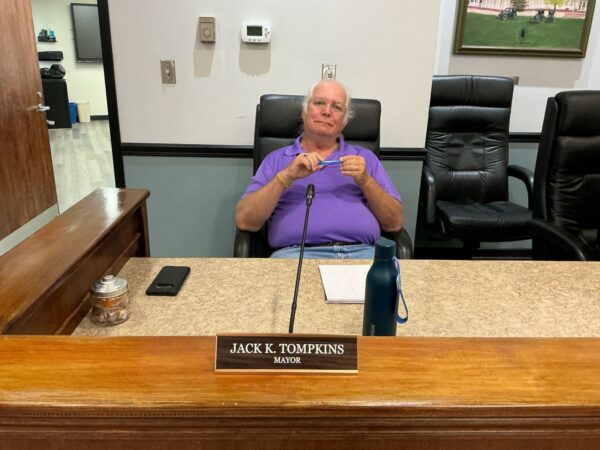
Former Pemberton Township Mayor Jack Tompkins revealed in a rare interview this week that lawsuits stemming from allegations of misconduct against him made him uninsurable, compelling him to resign to avoid financial ruin.
The township’s insurance carrier “decided to cancel my insurance,“ said Tompkins, 64, who resigned on Dec. 31. ”They notified me and the township in October. I weighed my options and the smartest thing to do was to resign. Withdrawal of insurance coverage would have financially devastated me.”
Tompkins, a Republican, was long under fire for alleged sexual harassment and other behavior over the last two years.
On Wednesday, the five-member township council of the Pine Barrens community in Burlington County — all Republicans — will choose one of three GOP candidates to replace Tompkins. The three candidates were selected by the Republican municipal county committee last week to serve the balance of the year. The committee didn’t release the candidates’ names.
Tompkins was the subject of a highly critical independent investigation in April 2024 that was commissioned by township officials and conducted by a Hackensack law firm, Pashman Stein Walder Hayden.
Some of the report’s more serious allegations included inappropriate interactions with female lifeguards under age 18; sexual harassment of the township’s recreation director, who sued Tompkins and the township, winning a $500,000 judgment.
He was also accused of a pattern of misconduct — such as poking a woman in the head, or discussing rape in township offices — that was sometimes accompanied by obscene language and “retaliatory” outbursts, fostering what the investigators who wrote the report termed a “severe chilling effect” that silenced anyone who felt wronged and allowed Tompkins to continue his aberrant behavior.
Tompkins said that while he was mayor, he worked in a “toxic environment created by [township] council, and I was walking on eggshells.
“Things got really ugly and nasty.”
He added that his time in office left “such a dirty taste in my mouth about politics, I want nothing to do with it anymore.”
In office since January 2023, Tompkins, 64, a retired Air Force veteran, refused to quit during his tumultuous tenure despite calls from members of both political parties for him to do so, including Gov. Phil Murphy.
Over time, the township council officially censured Tompkins, whose pay was cut from $13,000 annually to $4,000, to $1.
Tompkins told The Inquirer on Monday herelented after the Burlington County Municipal Joint Insurance Fund, which covers the township, informed him of their decision to no longer insure him. The fund cited “numerous claims resulting from your interaction with Pemberton Township employees over the past several years.”
Township officials said last summer thatmore lawsuits connected to Tompkins were expected.
In the interview, he said that inappropriate behavior with lifeguards “never happened.” He also said that any alleged misconduct “toward [other] females never happened.” He declined to comment on additional allegations.
Tompkins said there have been “zero criminal charges” leveled against him. He added, “Everything has been civil allegations, and nothing’s been proven.”
Asked why these allegations were made in the first place, Tompkins said, “You’re looking for an answer to something I don’t know. I don’t know what they were trying to do.”
Accused on several occasions of cursing and being harsh to staff, Tompkins explained, “Sometimes when you’re the boss and tell somebody they need to get something done, I guess they wanted me to ask ‘pretty please.’ With my military background, that wouldn’t always happen.”
Tompkins said he’s survived the experience with the support of friends and family “who knew this was nonsense.”
Sherry Scull, a former Democratic township council member, has publicly supported Tompkins, and continues to do so. “I’ve never seen signs of him doing what he was accused of,” she said.“I think his resigning is sad.”
Others contacted this week didn’t agree.
“This has been a total embarrassment for the town,” said Republican council member Dan Dewey.
Abby Bargar, Republican municipal chair for Pemberton Township, said, “I always liked Jack, but I think he made some bad decisions. It was the best thing for the party that he stepped down.”
Throughout town, the reaction to the end of Tompkins’s administration is “overwhelmingly positive,” said Marti Graf Wenger, president of the Browns Mills Improvement Association. Browns Mills is an unincorporated section of Pemberton Township; the association works to improve and promote the area, once a “Gatsby-esque” locale with chic hotels that drew well-off Philadelphians vacationing in the woods, Wenger said.
She added, “Tompkins treated this town like his dictatorship. There’s just a sense of relief now, a feeling that we can start fresh and hope our leadership will be better.”
Asked whether lingering resentments will make it difficult to remain in town, Tompkins said he’s not going anywhere.
“I just want to go into retirement and put this chapter behind me,” he said. “I’ve traveled the world, and I’ve settled here. I once said I’m going to die in this house. So this is where I’ll be.”
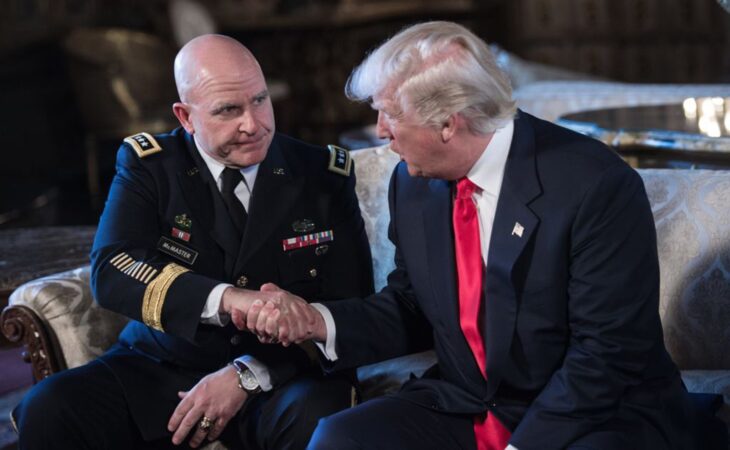
Americans should “have a say” in the Trump administration’s unilateral decision to use military force against Venezuelan boats, according to H.R. McMaster, former national security adviser during the first Trump administration, and a retired lieutenant general who grew up in Roxborough.
Being honored Jan. 16 at the Museum of the American Revolution’s 320th birthday celebration of Benjamin Franklin, McMaster was interviewed by The Inquirer last week. He offered a brief but wide-ranging discussion on foreign policy and military matters. McMaster will be named the 2026 Franklin Founder honoree during the annual Philadelphia event that celebrates the life and legacy of Franklin. McMaster is scheduled to speak about the role of the military in a democracy.
“A comprehensive explanation for bombing boats is lacking,” McMaster said in the interview, referencing the attacks on vessels allegedly carrying drugs that find their way to the United States, which have resulted in around 100 deaths since early September. “The American people should have a say through Congress.” The Trump administration has said it has complete authority to conduct the attacks.
McMaster said certain questions must be answered, such as whether the strikes are a “just cause,” and whether the right to conduct the missions is within the purview of presidential power under Article II of the U.S. Constitution.
McMaster didn’t discuss the ongoing controversy about whether U.S. forces were justified in killing two survivors of a Sept. 2 attack on a Venezuelan boat. Defense Secretary Pete Hegseth is refusing to release video showing the killing of two men clinging to wreckage in the Caribbean Sea.
McMaster, 63, is a historian and senior fellow at the conservative Hoover Institution at Stanford University who served 457 days in the Trump administration, from February 2017 to April 2018. He left after disagreements with Trump over foreign policy and internal dynamics.
Trump considered using force against drug smuggling during his first term, McMaster said, when the president asked his staff, “Why don’t we just bomb the drugs?” coming out of Mexico.
Military intervention was avoided, McMaster said, after he “huddled a team” and won “unprecedented cooperation” with the Mexican government to fight the flow of drugs.
Addressing other military matters, McMaster discussed the widely reported meeting of military commanders called by Hegseth in September.
One of Hegseth’s main messages was there’s no place for “wokeness” in the military, saying too many uniform leaders were being promoted “for the wrong reasons — based on their race … gender quotas [and] based on historic so-called firsts.” He added he wants “no more … DEI programs or dudes in dresses. No more climate change worship.”
While he agrees with much of what Hegseth said, McMaster explained, the secretary was speaking to the wrong people: “There are no woke generals and admirals,” McMaster said. “They had been following unwise directives from senior civilian officials pushing an extreme social agenda in the Biden administration.” Under Biden, McMaster concluded, the military had come to “valorize victimhood.”
Civilian guidance on so-called woke matters isn’t needed in a self-policing entity such as the military, McMaster said: “Yes, there have been criminals and sexists in the military, but hell, we threw them out ourselves.”
McMaster also said he doesn’t have a problem with the Trump administration deploying National Guard troops to U.S. cities such as Los Angeles; Chicago; Memphis; Washington, D.C.; and Portland, Ore. “It’s the president’s right to do so, allowing local law enforcement to enforce the law,” he said. “Regrettably,” he said, local authorities have resisted guard placement, especially in Oregon and California, where Democratic governors are in charge. “This is an example of how partisan politics can undermine our ability to work together,” he said.
As a former insider in a Trump-led administration, McMaster has said in previous writing that he’d witnessed the machinations of the White House, including “exercises in competitive sycophancy” among officials in Oval Office meetings. McMaster didn’t comment on the atypically blunt revelations by Trump chief of staff Susie Wiles in Vanity Fair.
He’s written that Trump is a “flawed commander in chief: mercurial, inconsistent, and easily distracted.” But, he added, Trump’s erratic course reversals can be helpful, because they make him unpredictable to our adversaries.
This cover image released by Harper shows “At War with Ourselves: My Tour of Duty in the Trump White House” by H.R. McMaster.
Despite his time in the inner sanctum of the Trump administration, McMaster would write in his book, At War With Ourselves: My Tour of Duty in the Trump White House, that he’d been unable to foresee Trump’s “persistent false claims of widespread election fraud [in 2020] and his encouragement of a mob [on Jan. 6] to conduct the most significant attack on the U.S. Capitol since August 1814,” when British troops set fire to the White House.
The partisanship that helped spur the attack is a continued threat to the republic, McMaster said in the interview with The Inquirer, referencing Franklin, “who feared factionalism.”
Each year, the Franklin celebration highlights a theme that connects Franklin’s work to current social issues and concerns. In receiving the Franklin Founder Award, McMaster joins company with others from a wide variety of fields:
John Mather, an astrophysicist who won a Nobel Prize, was the 2025 winner. He helped develop the James Webb Space Telescope, connecting with Franklin who uncovered important principles in electricity, marine oceanography, magnetism, and aeronautics.
In 2020, the centennial anniversary of Congress’ act to grant women the right to vote, awards went to Linda Greenhouse for her coverage of the Supreme Court for the New York Times, as well as to Cokie Roberts, political commentator and author.
The 2016 award went to pediatrician Paul Offit from Children’s Hospital of Philadelphia as well as the Perelman School of Medicine. Offit is the co-inventor of the rotavirus vaccine, and an author and public speaker. This topic was closely aligned with Franklin, whose civic involvement included creation of the first public hospital. Offit has frequently sparred with Health Secretary Robert Kennedy Jr. over the issue of vaccines.
McMaster is a graduate of Norwood-Fontbonne Academy (formerly Norwood Academy for Boys, and Fontbonne for girls), a private Catholic school in Chestnut Hill. He also graduated from Valley Forge Military Academy, which will be closed in the spring (it doesn’t affect Valley Forge Military College, which shares a campus with the academy in Wayne).
McMaster went on to the U.S. Military Academy at West Point, and was a U.S Army Officer for 34 years. His career included combat service in the Gulf War. Afterward, he returned to teach history at West Point and earned a Ph.D. in history from the University of North Carolina-Chapel Hill.
With the midterm elections 11 months away, Vice President JD Vance visited one of the most closely watched swing districts in the country to ask Pennsylvania voters to aim their anger over the economy at Democrats rather than the Trump administration.
During a speech at Uline Shipping Supplies in Alburtis in the Lehigh Valley, Vance blamed immigrants for the housing shortage and invoked the name of notorious killer and cult leader Charles Manson as he doubled down on President Donald Trump’s rhetoric from the week before in the Poconos.
Vance’s visit was to U.S. Rep. Ryan Mackenzie’s district, while Trump’s speech last week at the Mount Airy Casino Resort was in U.S. Rep. Rob Bresnahan’s district. Both freshman Republicans won their seats by roughly a percentage point last year and are among the most vulnerable incumbents in Congress headed into 2026.
Both speeches were billed as being focused on the economy — as Trump and Vance seek to counter Democrats’ message on affordability ahead of next year’s election. But both delved into an assortment of topics.
Though Vance’s remarks were wide-ranging, the vice president hewed to the White House message that while the price of eggs might still be high, the administration is working to improve pocketbook issues and restore confidence in the economy.
“Even though we’ve made incredible progress, we understand that there’s a lot more work to do, and the thing that I’d ask from the American people is a little bit of patience,” Vance said.
Affordability
Vance didn’t say the affordability crisis is a “Democratic hoax,” as Trump did.
He just said it’s the Democrats’ fault.
“When I hear the Democrats talk about the affordability crisis they created,” Vance said, “it’s a little bit like … Charles Manson criticizing violent crime. Look in the mirror, my friend, you are the cause of the problem.”
It’s a variation of Trump’s line from last week that “Democrats talking about affordability is like Bonnie and Clyde preaching about public safety.”
Democrats started criticizing the price of eggs when Trump was in office for less than a week, Vance said.
A woman asked Trump about it, and according to Vance, the president responded, “’Lady, we’ve been here for three days. It takes a little bit of time to fix something that was so fundamentally broken.’”
Every “single affordability crisis” in the United States — food, housing, medicine, gas — is because we “inherited a nightmare of an economy from Joe Biden,” Vance told the crowd.
In an unusual explanation of how Biden sent housing costs soaring, for example, Vance explained that the previous administration’s immigration policies were to blame.
Vance said “20 million illegal immigrants … took homes that, by all rights, go to American citizens, and to the people of this great state.”
It’s a line that he’s used before, which fact-checkers have flagged. Politifact pointed out that there are around 12 million to 14 million undocumented immigrants living in the United States. And the housing shortage comes from a lack of construction of a sufficient supply of affordable homes, experts say.
Beyond that, Politifact said, immigrants often share housing with friends or relatives, making their average housing consumption “far smaller than is typical.”
Democratic Gov. Josh Shapiro, who is up for reelection next year, hit back at Vance on social media and made the case that Trump’s policies, including cuts to Medicaid and tariffs, are exacerbating the cost-of-living headaches for Pennsylvanians.
“Donald Trump and JD Vance’s economic policies are hurting Pennsylvania. They have raised prices at the grocery store, screwed over our farmers, and gutted healthcare funding,” Shapiro said on X. “I know this Administration thinks the cost of living is a ‘hoax’ — but it’s not, and Pennsylvania families know it.”
Firing federal workers
In his speech, Vance made much of the just-released November jobs report, delayed by the government shutdown. Around 64,000 jobs were added to the economy, an improvement over the more than 100,000 jobs lost in October.
Putting a good face on the big October job loss, Vance told a reporter after his speech that those were federal government jobs eliminated by the Trump administration — with a plan in mind.
“That is, in a lot of ways, what we’re trying to do under President Trump’s leadership,” Vance said. “We wanted to fire bureaucrats and hire these Americans out here,” Vance said to applause.
As he spoke, Vance praised Mackenzie for his “dedication to American workers.”
Asked about the 4.6% November unemployment rate, the highest since 2021 during the pandemic, Vance was able to put a good spin on that as well.
Many of the unemployed may have lost their jobs two years ago, under Biden, and stopped looking for work, Vance said. Those people aren’t counted in the official unemployment statistics. Now, however, as we see wages rise and more investment into the United States, Vance said, the people sitting out the job search under Biden are getting “off the sidelines” and once again seeking jobs. As they do, they’re being counted as unemployed.
The high unemployment rate, then, is “exactly what we want,” Vance said. “That is happening under President Trump’s leadership.”
As he spoke, Vance explained Trump’s ideas to help Americans get by, including omitting taxes on tips and overtime, as well as creating a tax deduction for interest on auto loans.
These will lead to significant tax refunds, Vance said, adding that middle-class Pennsylvanians will see “the best tax season in 2026 that you’ve ever had.” That’s a result of Americans having “a president and Congress fighting for you for a change,” Vance said.
Vance responds to Vanity Fair article
In a tough question from a reporter, Vance was asked about a Vanity Fair article in which Trump’s chief of staff, Susie Wiles, described some of the people in the administration in less-than-flattering ways.
She said Trump has an “alcoholic’s personality”; Elon Musk is an ”avowed ketamine user” and an ”odd, odd duck”; Budget Director Russell Vought is “right-wing, absolute zealot”; and that Attorney General Pam Bondi ”completely whiffed” in handling the Epstein files.
As for Vance, Wiles said he’s “been a conspiracy theorist for a decade,” and that Vance’s crossover from a Trump critic to an ally was based on political expediency.
While Vance didn’t address the latter description, he agreed that he “sometimes” is a conspiracy theorist, but that he only believes “in conspiracies that are true.”
As an example, he said, he believed in “this crazy conspiracy theory that the media and government were covering up the fact that Joe Biden was clearly unable to do the job.”
Vance said it turns out that such conspiracy theories are just things that he discovered to be true “six months before the media admitted it.”
He hastened to add that if anyone in the Trump administration learned a lesson from the Vanity Fair article, it’s that “we should be giving fewer interviews to mainstream media.”
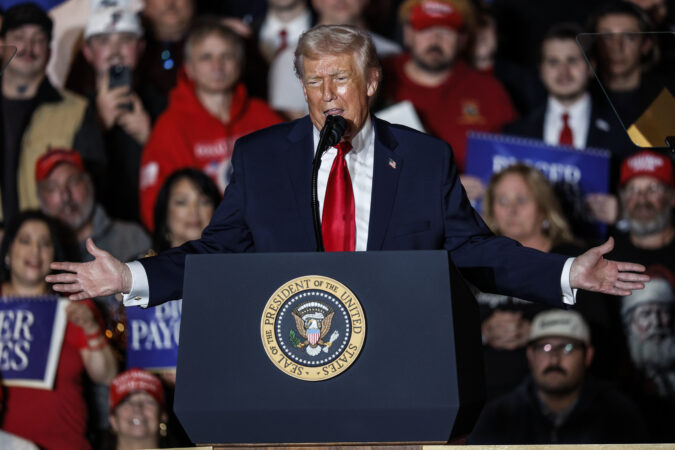
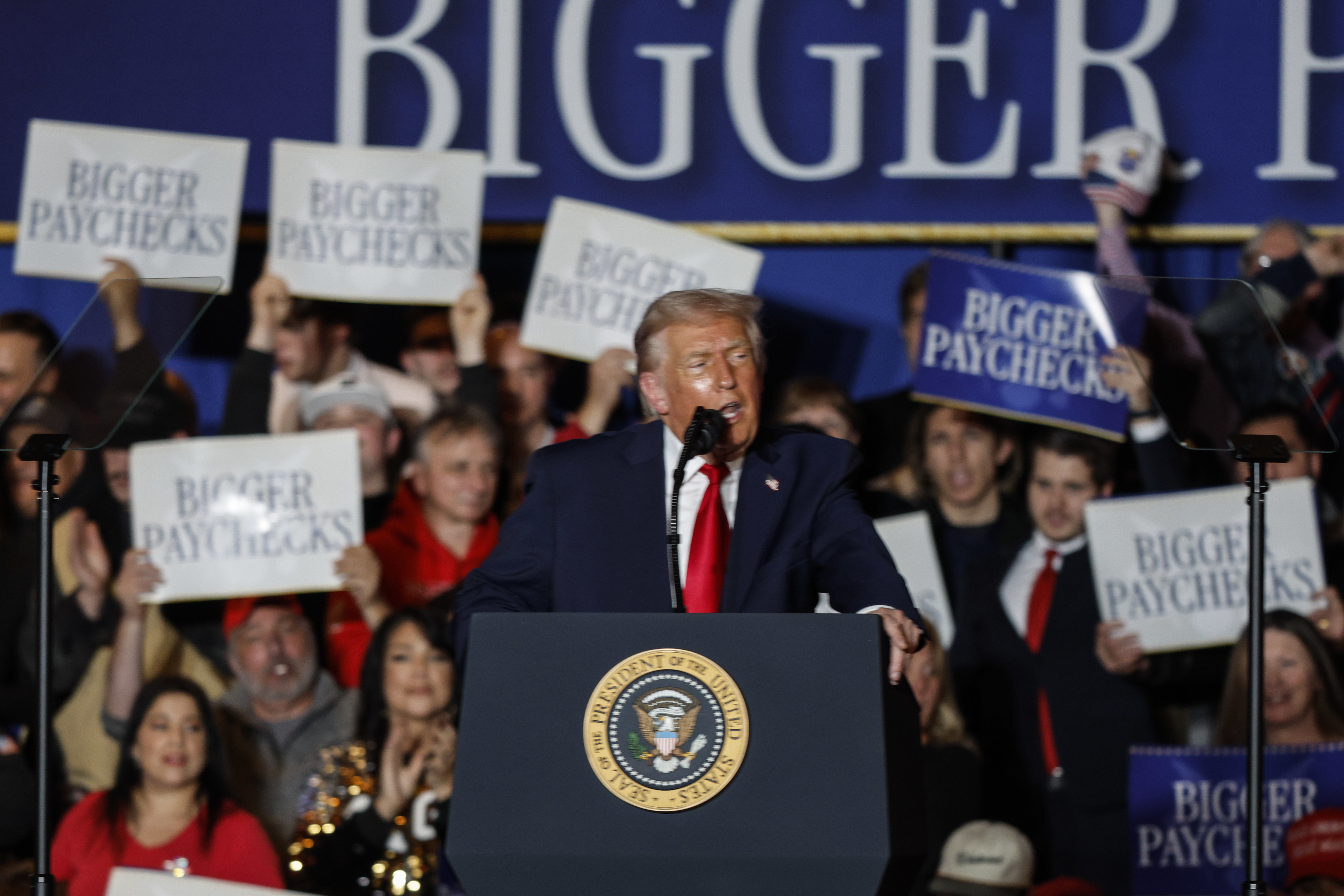
President Donald Trump professed his admiration of miners Tuesday night at his Poconos rally, contending the brave workers are so enamored of their profession that Trump wouldn’t be able to convince them to swap jobs with anyone — including himself.
“I love miners. … They wouldn’t trade jobs with me if I gave them a beautiful, magnificent penthouse in the middle of Manhattan, where I used to live — if I gave them the most beautiful penthouse — they wouldn’t take it,” Trump told the crowd at the Mount Airy Casino Resort in Mount Pocono.
“They’d rather go 10,000 feet underground and dig. That’s what they want.”
Can that be true?
Trump has long extolled the virtues of “beautiful, clean coal,” as he calls it, during nearly a decade of campaigning in the Keystone State.
President Donald Trump makes his first stop on an “economic tour,” in Mt. Pocono Pa., Tuesday, December 9, 2025 .
But would miners really prefer to toil in the damp darkness, somewhere between the buried dead and the devil, rather than run the free world in a clean blue suit, with access to a lavish high-rise in the gorgeous sunshine they forsake eight hours a day?
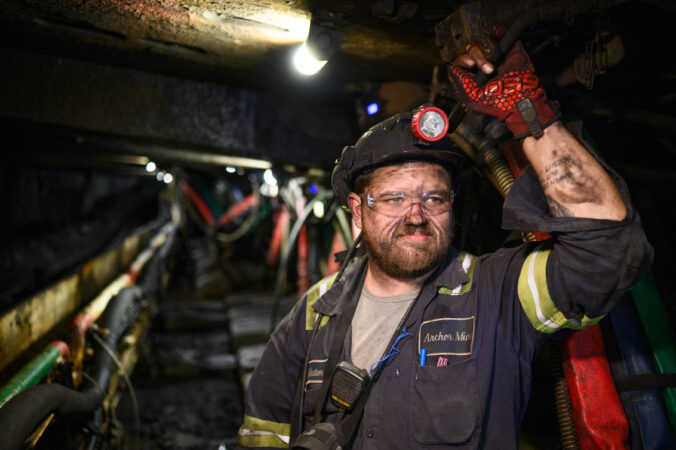
“Yes, of course,” said Edmund Neidlinger, 75, a fourth-generation coal miner who dug black Pennsylvania anthracite in Schuylkill County and its environs for 40 years. He now works as mine foreman at the Lackawanna Coal Mine Tour, a Scranton tourist attraction.
“If I was offered any other job when I was mining, I would have turned it down,” he said. “And I wouldn’t have traded the life I led for a penthouse. No way.”
There is, Neidlinger believes, a passion just a few special people hold toward working with a band of headlamped brothers, risking entrapment, methane explosions, black lung from dust, and cave-echoing machine noise down in an inky coal seam to perform the ninth-most-dangerous job in the world (logging is the riskiest), as the Occupational Safety and Health Administration tells it.
“You fall in love with this job,” Neidlinger said. “Very few people can do it. Most miners feel like it’s in their blood.”
While it’s not in his veins, Trump has made coal mining a big part of his energy policy. The industry is declining, experts say, but he has signed executive orders to expand it, and has opened up new land for mining while directing agencies to scotch regulations that “discriminate against coal production or coal-fired electricity generation,” as one presidential order reads.
Not everyone agrees that tempting miners to abandon their coal mines would be all that difficult.
“I’m sure the average miner would turn down a jet plane, private island, and gold-plated toilet, too!” said a sarcastic Mark Ferguson, cofounder of Woodshed: An Appalachian Joint, an online magazine dedicated to the culture of the region responsible for an immensity of U.S. coal mined over the centuries.
Cautioning people not to romanticize the lore and lure of mining, Ferguson pointed out that “folks here literally had to go war with mining companies to be paid in real U.S. currency, not scrip that could only be used at the company store.
“They know the value of a dollar, and sure as hell wouldn’t turn a penthouse down.”
The thing about mining you have to understand is, for most people, it starts out as a job you have to do, said Bob Black, 68, who dug coal for half a century in Allegheny County.
As a young man, Black wanted to be a teacher, but after his father died, Black set the dream aside and descended into the earth to work at the higher-paying job to support the family.
“You go into the mine, blink your eyes, and you’ve been doing it for 30 years,” Black said. “By then, you can’t imagine doing anything else.”
There were “days you hate, and days you love,” said Black, who ultimately became a mine manager. “Every ex-miner would tell you they miss fighting Mother Nature — like when the roof falls in, or when you’re dealing with water coming in,” he said. “You can’t run to Ace Hardware for help. You find solutions.”
What you remember most, though, is the company of soot-faced guys, he said.
“It’s like a city down there, with 250 men working, spread out over 15 miles,” Black said.
“The camaraderie. That’s what I miss most.”
So does Black think Trump was right? Would he have refused to trade 50 years of fellowship and labor in perpetual midnight for anything in the world?
“Oh, no,” Black said. “I’d have taken the penthouse. For sure.”
Staff writer Julia Terruso contributed to this article.
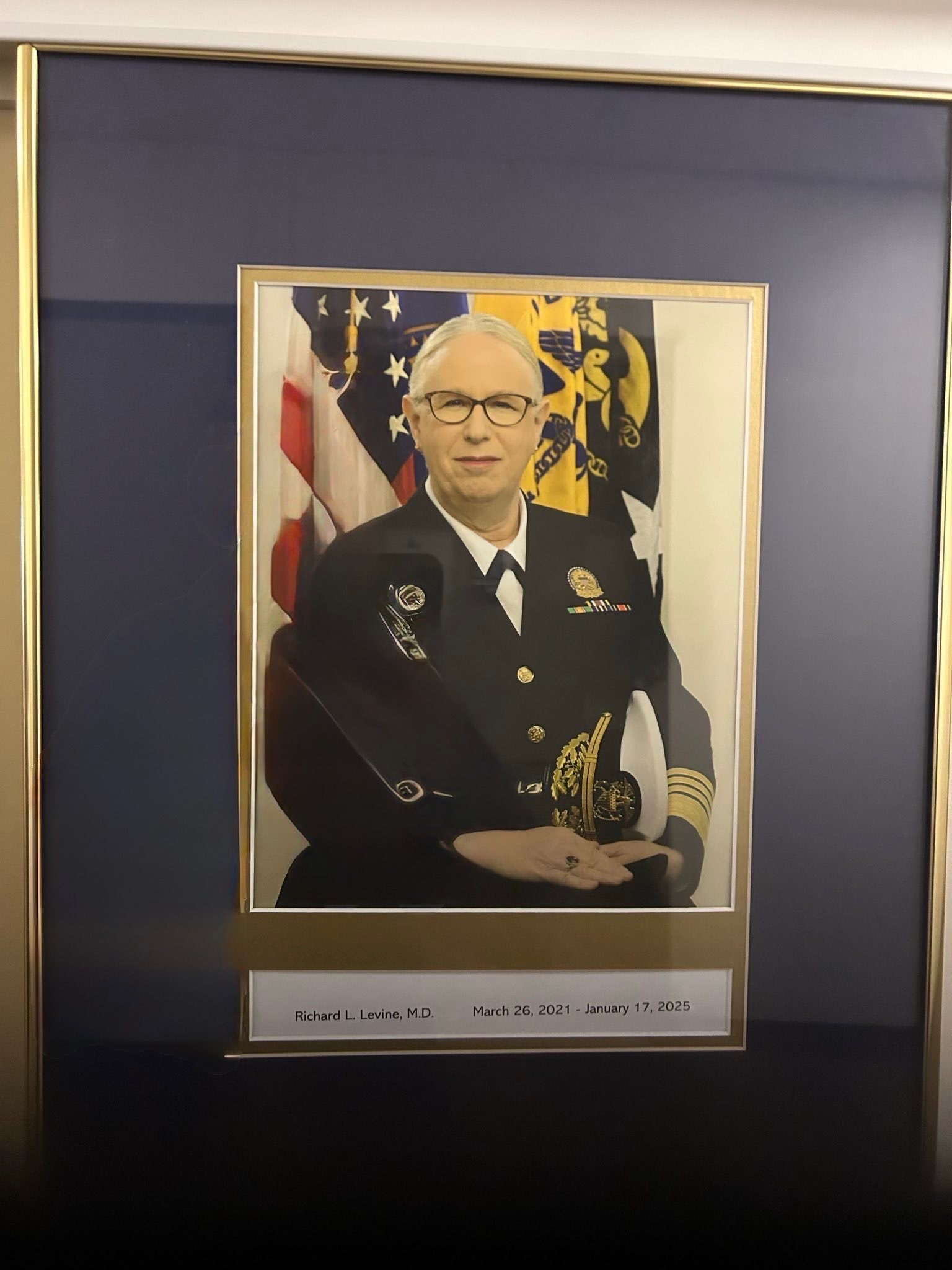
While the federal government was shut down, the U.S. Department of Health and Human Services altered the name under the official portrait of Admiral Rachel Levine, a Pennsylvania doctor who served as the agency’s assistant secretary under former President Joe Biden, to her birth name or “dead name.”
Levine, who had previously served as Pennsylvania physician general and secretary of health under Gov. Tom Wolf, was the first openly transgender official confirmed by the U.S. Senate.
This photograph shows the official portrait of Admiral Rachel Levine, former assistant secretary for health. The portrait hangs in the hallway of the Humphrey Building in Washington, D.C., where Levine served under President Joe Biden at the U.S. Department of Health and Human Services. Someone in the Trump administration changed Levine’s name to her birth name or deadname. The photographer does not want to be identified.
“Deadnaming” — using a transgender person’s birth name rather than the one they chose — is “a horrible thing to do to vilify a group of people,” said Deja Alvarez a LGBTQ community leader. “It’s beyond reprehensible.”
Levine has not spoken publicly about the action, which was first reported Friday by National Public Radio. In a brief statement delivered by her former deputy assistant secretary for health policy Adrian Shanker, Levine described the name change as a “petty action” and said she wouldn’t comment. Shanker, a fellow at the Lehigh University College of Health, manages Levine’s public engagements.
Levine, 68, has received expressions of “sympathy and outrage” since Friday,Shanker said.
Condemning the alteration of Levine’s portrait, he said, it was “hard to understand that this was a priority under a government shutdown.”
”What do you expect from people acting more like high school bullies than federal officials?”
HHS didn’t respond to requests for comment. Agency officials told NPR in a written statement: “Our priority is ensuring that the information presented internally and externally by HHS reflects gold standard science. We remain committed to reversing harmful policies enacted by Levine and ensuring that biological reality guides our approach to public health.”
As Pennsylvania’s health secretary, Levine led the state’s response to COIVID-19 and became a familiar figure in 2020, standing at a lectern in Harrisburg, answering questions about the deadly pandemic.
Prior to the pandemic, Levine led the state’s response to the opioid epidemic. She also helped establish Pennsylvania’s medical marijuana program.
Under Biden, Levine also worked on issues related to HIV, syphilis, climate change, and long COVID.
Levine was a pediatrician who worked at Penn State Health Milton S. Hershey Medical Center for 20 years before moving into public life.
Throughout her career, Levine “earned … recognition through decades of expertise and leadership,” said State Rep. Dan Frankel (D., Allegheny) in a statement Tuesday. HHS’s decision to “strip [her legal] name is an act of political malice.”
The Trump administration has made numerous efforts to counter civil rights gains transgender and LGBTQ Americans had previously won.
These include issuing an executive order on Jan. 20 that redefined the word “sex” in federal programs and services to refer only to biological characteristics “at conception” as well as restricting gender-affirming medical care for people under age 19, banning trans Americans from military service and eliminating protections for transgender people.
Staff writer Gillian McGoldrick contributed to this article.
For Patricia Clark, who survived living on the streets of Camden for 25 years, the county’s move to build a supportive housing center with 60 efficiencyapartments for people experiencing homelessness is a welcome development in a distressing moment.
“The homeless rate is crazy, and this new place is needed, absolutely,” said Clark, 65, who struggled with substance abuse disorder starting at age 32 before going through recovery and becoming a homeowner and administrator at Joseph’s House of Camden, which offers shelter and support for unhoused people.
“I thought I’d die as Jane Doe with a needle in my arm and a crack pipe in my mouth,” she said. “I’m so grateful for the help I got. I know the new center will help, too.”
Named after a former Camden city attorney, the $22 million Martin McKernan Supportive Housing Center in Blackwood is expected to be completed in the spring, according to Camden County spokesperson Dan Keashen. Ten ofthecenter’s 60 units will be set aside for emergency shelter, while the balance will be transitional housing, available to individuals for up to two years, according to Rob Jakubowski, director of Camden County Homelessness and Community Development. Residents will be offered case-management services that typically include counseling, employment help, and assistance finding permanent housing, he said.
Camden County has seen homelessness grow by 20% between 2020 and today — from 633 to 759 people, 148 of them unsheltered, according to figures provided by Keashen.
The county is confronting that increase in need as it faces a threat to federal housing aid under a Trump administration plan to cut two-thirds of the aid designated for permanent housing for people experiencing homelessness.
Federal housing administrators argue its proposal would “restore accountability” and promote “self-sufficiency” in people by addressing the “root causes of homelessness, including illicit drugs and mental illness. But housing experts say it could displace 170,000 people nationwide.
“We are already seeing some of the effects of the HUD plan, with housing programs being cut,” Colandra Coleman, executive director of Joseph’s House, said. “I expect more to be cut back significantly.”
The McKernan center now seems that much more important, said Louis Cappelli, director of the Camden County Board of Commissioners. He stressed that homelessness is growing not just in the city of Camden, but in other parts of the county.
“It’s in Haddonfield and Collingswood and so many other places,” he said. “We want to provide the best possible opportunity for people everywhere who need it.”
While substance abuse and behavioral health are at the root of homelessness for many people, anti-homelessness agencies say the main reason Americans are homeless is the dearth of affordable housing.
“The affordability crisis is at the heart of the larger numbers of people who experience homelessness,” said Kathleen Noonan, president and CEO of Camden Coalition, a nonprofit helping those with complex health and social needs. The average rent in New Jersey as of this month is $2,087, a 2% increase over last year, according to Apartments.com.
For Clark, having a roof over her head and the sobriety to keep it still feels like a miracle.
“I never had a happy moment on the street in 25 years,” she said. “Getting beaten, going hungry, being arrested for shoplifting, being judged by people. I remember wishing I was dead.
“But now it’s different. I work to give hope to people living like I used to. In the end, God had a better plan for me.”
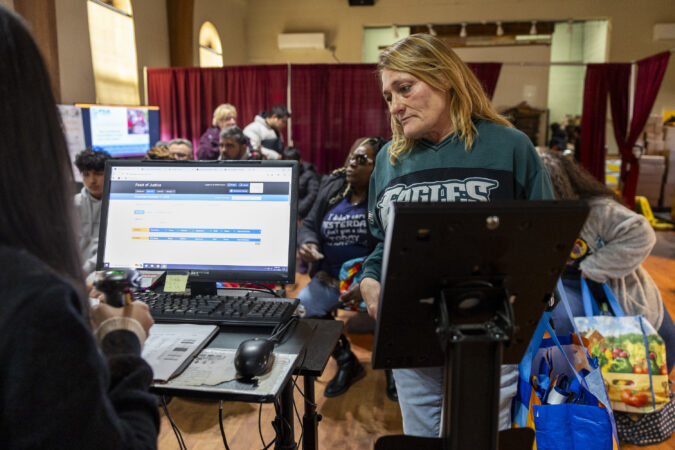
The Trump administration’s threat to withhold money that Democratic-run states use to administer the SNAP food aid program unless officials release personal information about individual recipients puts 2 million people in Pennsylvania and more than 800,000 in New Jersey at risk of food insecurity.
On Wednesday, New Jersey Attorney General Matthew Platkin called the administration’s stance “deeply immoral.”
“The past few weeks have shown that the Trump administration is willing to sacrifice millions of Americans’ most basic needs in service of a political agenda,” he added.
In a cabinet meeting Tuesday, Agriculture Secretary Brooke Rollins said that data describing Supplemental Nutrition Assistance Program recipients’ names, addresses, Social Security numbers, and immigration status are necessary to ferret out fraud, the Associated Press reported. The Department of Agriculture runs the SNAP program.
Twenty-two states, including New Jersey, have sued the administration over its demand for personal information, which states have never shared with the federal government. Representing Pennsylvania, Gov. Josh Shapiro joined the lawsuit. A California federal court issued a preliminary injunction on Oct. 15, allowing all parties until next Monday to respond.
The federal government splits the cost of running SNAP with states, and the Trump administration said it is not planning to take SNAP benefits from individuals, but rather to pull funds it sends to the states to run the program..
Individuals could nonetheless see their payments disrupted, said Joel Berg, CEO of Hunger Free America, in an interview. The agency is a national nonprofit that fights hunger.
“People in the Philadelphia region could go hungry,” he said. “Even people in rural Pennsylvania and South Jersey in counties that supported Trump who are highly dependent on these programs could be hurt.
“This is an authoritarian intrusion of big government. It’s a way to bully Democratic states.”
Around 500,000 of the 2 million people in Pennsylvania who receive the federal food aid are in Philadelphia.
Neither Shapiro nor New Jersey Gov. Phil Murphy offered comments. The White House referred requests for comment to the USDA, which released a statement Wednesday evening complaining that blue states “choose to protect illegals, criminals, and bad actors over the American taxpayer.”
The statement added that the USDA recently sent an additional request to Democratic-run states for data. However, the statement warned, “if they fail to comply, they will be provided with formal warning that USDA will pull their administrative funds.”
Lately, the SNAP program has played a significant role in aspects of how the Trump administration governs, advocates say.
During the shutdown, the Trump administration paused SNAP benefits in early November, and then went to the Supreme Court to fight orders by federal judges to release the funding.
The way SNAP has been thrust into the White House’s partisan battles irks George Matysik, executive director of the Share Food Program, which provides food to hundreds of Philadelphia-area pantries. “We have a serious food affordability crisis developing and it requires a focused response, not continuous political sideshows,” he said Wednesday.
Temple University sociologist Judith Levine agreed. “It’s extremely disturbing that because of political games, people may lose this very basic benefit needed for survival,” she said. “Being food insecure has nothing to do with infighting between political parties.”
Loss of SNAP places an inordinate strain on the charitable food system, primarily food pantries, which in turn hurts families, said Eliza Kinsey, a professor in the department of family medicine and community health at the University of Pennsylvania’s Perelman School of Medicine.
“There’s tons of evidence that stoppages of SNAP can disproportionately affect households with children,” she said. “Cutting SNAP could be disastrous.”