Author: Gene Marks

  • Why your small business needs an AI policy

    Why your small business needs an AI policy

    It’s no secret that the use of both generative and agentic AI will proliferate over the next few years as the technology becomes more reliable and pervasive.

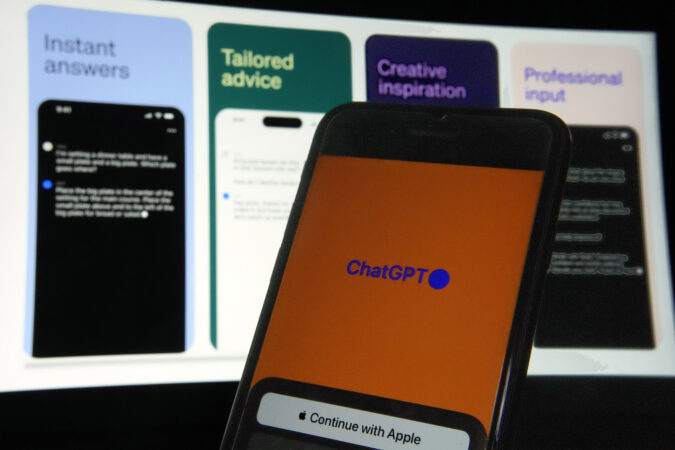
    More than 58% of small businesses are already using AI in their companies, according to a recent study from the U.S. Chamber of Commerce, and that usage is expected to rise this year. For now, most of that can be attributed to chatbots like ChatGPT, Gemini, Copilot, and others.

    Because of this, your business needs to create and maintain a strict AI policy. Why?

    “An AI policy places guardrails around the usage of AI by your employees,” said Philadelphia attorney David Walton, who chairs the artificial intelligence team at Fisher & Phillips. “It allows your employees to use AI faster and better.”

    Without an AI policy, a business would be exposed to reputational damage that’s caused by AI “hallucinations” or errors, Walton said. In addition, a company’s proprietary data — pricing, contracts, customers information, processes — could be exposed to the public, particularly when employees use free AI tools that offer less protection.

    Lawyer Star Kashman, founding partner of Cyber Law Firm, warns her clients that without an AI policy, employers could be exposed to claims of bias and other lawsuits.

    “For example, there might be some resumes from people of certain races, people of certain genders that maybe aren’t as accepted by the AI system, and you’re automatically rejecting great candidates,” she said. “You’re going to be the one that has a huge lawsuit on your hands, even for your employees’ actions, if you weren’t able to protect it.”

    A good AI policy should include the following.

    Include a statement of purpose for AI

    The policy should be clear that AI is allowed only when used responsibly and with guardrails.

    It should also be clearly stated that AI tools are used only when they can improve productivity, provided that they are safe and confidential.

    Provide a list of approved applications

    A company’s AI policy should specify which tools and software are approved by management, both lawyers said.

    The tools should be used for business purposes only. Free tools should not be allowed because of their privacy concerns, and if a tool is not listed in the policy, permission is required from management to use it.

    When employees use AI on a personal account, Walton said, “it’s hard for the business to control privacy settings, and confidential data may leak into free or public AI models.”

    Consider a proprietary information ban

    It’s still unclear how safe our data is when AI applications are being used. To that end, it’s a good practice to avoid or even ban the entry of private information into these platforms.

    This would include customer data, financial statements, contracts, pricing information, personal identifying factors, trade secrets, or anything medical, legal, or human resources related.

    State the ownership of AI work

    When an employee makes a “prompt” into an AI chatbot, that query, as well as any resulting workflows and custom instructions, are all assets of the company and should be stated as so.

    A company’s AI policy should state that employees must return all AI-created work at separation, cannot export data into their personal accounts, and cannot use their own agents or tools for company work.

    Avoid AI in HR

    AI applications shouldn’t be used in hiring or performance reviews, both Kashman and Walton said. Many platforms leverage AI to perform these functions, but these tools could create more headaches than benefits.

    “HR is the front line for legal problems tied to AI,” Walton said. “Relying on AI to make hiring, firing, or performance review decisions could be very problematic.”

    Ban certain outputs

    An AI policy should ban the use of images, videos, or voice without management approval. NSFW (not-safe-for-work), pornographic, or defamatory content should be off limits. This can help protect against reputation damage, deepfakes, and offensive content.

    Always use human oversight

    We know today’s AI tools are far from perfect. Your policy should state that everything AI produces must be validated, checked, sourced, and edited by a human.

    Explain why the AI policy exists

    AI is new, and your employees are already concerned about this new technology. Kashman said it’s important to explain the “why” behind each rule in your policy.

    “Instead of just ‘don’t,’ explain the risk to the employee and company such as hallucinations, data leaks, bias, etc.” she said. “Employees follow rules better when they understand them.”

    The uncertain regulatory environment is another big reason for creating an AI policy. Regulation of AI use shouldn’t be expected anytime soon, Walton said.

    “Businesses must prepare for state-level AI regulation, especially around risk assessment and bias, because the federal government is unlikely to pass comprehensive laws anytime soon,” he said.

    However, some states — like New Jersey — have proposed bills that would require businesses to do formal risk assessments and acceptable-use policies. Meanwhile, President Donald Trump is considering an executive order limiting states from regulating AI.

    Kashman said the lack of regulations will leave business owners vulnerable “because tech companies aren’t going to be as liable for harms.” So small businesses “must protect themselves with strong internal policies,” she said.

    “An AI assistant or chatbot can help businesses draft a policy or template, especially for nonlawyers who need structure or a first draft,” Kashman said. It’s important to frequently update this policy because the technology, models, privacy terms, and data breaches change rapidly, she added.

    “However, be careful,” she said. “AI can’t understand the nuances of a specific business or legal risk, so human review from legal counsel or an expert is necessary.”
  • Despite challenges in 2025, Philly-area small businesses remain resilient and optimistic

    Despite challenges in 2025, Philly-area small businesses remain resilient and optimistic

    From inflation to tariffs to labor shortages, small businesses in Philadelphia have faced many challenges in 2025. But they remain resilient and, for the most part, are optimistic about the coming year.

    But that, of course, depends on the type of business.

    For example, the Monkey’s Uncle, a retro Philly sports apparel boutique located in Doylestown, had an “exceptionally strong” year, which was mostly driven by the Eagles’ Super Bowl win. Co-owner Derrick Morgan expects the holiday season to be busy but observes more people are shopping for holiday gifts much earlier this year as consumers are “spreading out their spending much more.”

    For small businesses in the Philadelphia region, consumer sales were up 2.4% in October compared to a year before, according to a monthly index from payment technology provider Fiserv. That’s compared to a 1.5% increase nationally. Small-business optimism remains above its 52-year average and uncertainty dropped this month, according to the National Federation of Independent Businesses.

    All in all, it hasn’t been such a bad year for most, despite the uncertainty.

    Looking to 2026, Morgan is optimistic due to Philadelphia hosting a number of major sporting events (like the MLB All-Star Game), and he is already coordinating commemorative merchandise with licensed vendors. But it’s not economic uncertainty that impacts his business as much as Jalen Hurts or Bryce Harper.

    “The nature of our business is very much at the mercy of the wins and losses from our Philly sports teams, which can certainly be unpredictable,” he said.

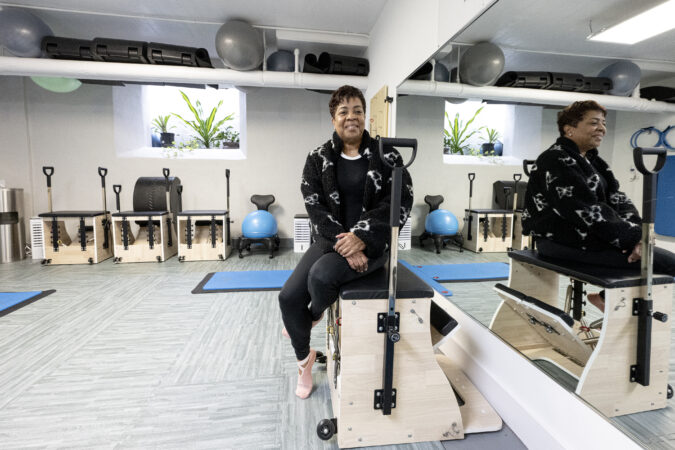
    Regardless of the economic uncertainty, physical fitness remains popular. Valerie Plummer’s Germantown-based Pilates studio — Pilates by Valerie — has had a “profitable and expansive year” thanks to “rising client retention, steady new enrollments, and an increasingly strong sense of community.”

    Plummer has used this year to double down on her business by broadening her programming with a series of new classes and apparatus trainings while developing instructor materials, improving internal systems, and strengthening her long-term training pipeline. As for next year? Plummer’s optimistic.

    “I am confident in the direction of the studio, the relationships we are building, and the value we are providing — and I’m excited for what’s ahead,” she said.

    The restaurant industry has been hit hard recently, thanks mainly to increasing costs and labor shortages. In Media, Rainy Culbertson’s breakfast restaurant, The Corner, has had a difficult year.

    “Customers are uncertain about their finances,” she said. “Eating out is a luxury and is one of the first cuts to a person’s budget in economically uncertain times. We’ve had ups and downs this year, but mostly down.”

    Like many restaurants, The Corner faces challenges in labor retention, cost increases, and competitive issues. And they’re still recovering from the pandemic, Culbertson said.

    “Most restaurants have not recovered from COVID, it’s just that we stopped talking about it because folks want it behind them, ourselves included,” she said. “Most restaurants still carry debt from COVID and now they have to deal with economic uncertainty and painfully thin profit margins due to inflation.”

    It’s not surprising that Culbertson remains very uncertain about 2026.

    “I’m optimistic it will be better but realistically, it will probably be more chaos and stress dealing with inflation and tariffs,” she said. “A lot depends on how long this madness of inflation, tariffs, and the unstable economy drags on. I’m really close to calling it quits.”

    Heather Herbert, the co-owner of Tail Spinz in Montgomeryville says her family-owned dog daycare has grown every year since its opening in 2023. It saw growth this year too, but some months were slower.

    “2025 has had its ups and downs, with some months of steady growth and others that have leveled off a bit,” she said. “Our business is built almost entirely on word-of-mouth and referrals, which creates a slower but more sustainable kind of growth. We have had a few families scale back or pause daycare due to budget changes, and we completely understand that we’re a ‘nice-to-have’ rather than a necessity for everyone.”

    Herbert is looking forward to even more growth next year and is currently gearing up for the holidays, with “a full lineup of festive events planned” including “a visit from Santa” with holiday photo ops and treats.

    “When you provide great care, build genuine relationships, and create a space that dogs are excited to come to, it’s hard not to feel positive about what’s ahead,” she said.

    Even in an uncertain economy, specialized businesses like Blevins Sommelier Services can flourish. Focused on bringing “affordable luxury experiences” directly into their clients’ homes, the company, which offers wine tasting and bourbon education events, has experienced strong growth this year with monthly bookings doubling over the prior year.

    “I’m optimistic for 2026,” said Amanda Blevins, who operates her business out of her home in Glen Mills. “The demand for wine events remains steady, and the demand for bourbon tastings has increased.”

    Tariffs and supply shortages have impacted Blevins’ business, particularly on wines from Italy and France, but like many business owners she’s pivoted and now features more local wines.

    “In many cases, hosting private in-home celebrations is more affordable than entertaining at a restaurant or larger rented venue,” she said. “There is always something new to discover in the world of wine and whiskey, and I consider it a wonderful life-long journey.”

  • Six months in, how are Philly-area businesses handling Trump’s tariffs?

    Six months in, how are Philly-area businesses handling Trump’s tariffs?

    It’s been six months since President Donald Trump announced new tariffs on U.S. imports. For local small-business owners, the impact so far depends on what they sell. But they’re all thinking ahead about more adjustments they will have to make.

    Trump declared an “Independence Day” on April 2, implementing a minimum 10% tariff on all countries selling products into the U.S., with larger ones on countries including India and China. Since then the president has either threatened or implemented additional tariffs on certain products such as steel and aluminum, sectors such as furniture, and “reciprocal tariffs” on countries to match their tariffs on American imports.

    Many economists have warned that these higher costs will drive up inflation, slow our economy, and hurt many small businesses that rely on imported goods.

    Fred Woll, president of Philadelphia packaging products supplier F.P. Woll & Co., said he’s seen tariffs from overseas suppliers but “decided to eat a 5% price increase.” He doesn’t think he can do that again.

    “We have been in business in the City of Philadelphia since 1907, and gone through many, many challenges over the last 100-plus years,” he said. “This current challenge may end up being existential, and it’s our country doing it to itself.”

    George Patti, the owner of Head Start Shoes in Philadelphia, is also feeling pressure.

    “Everything is costing me more money and the dollar has dropped in value,” Patti said. “The costs of our merchandise is higher, and we’ve had to raise prices 10% to 15%.”

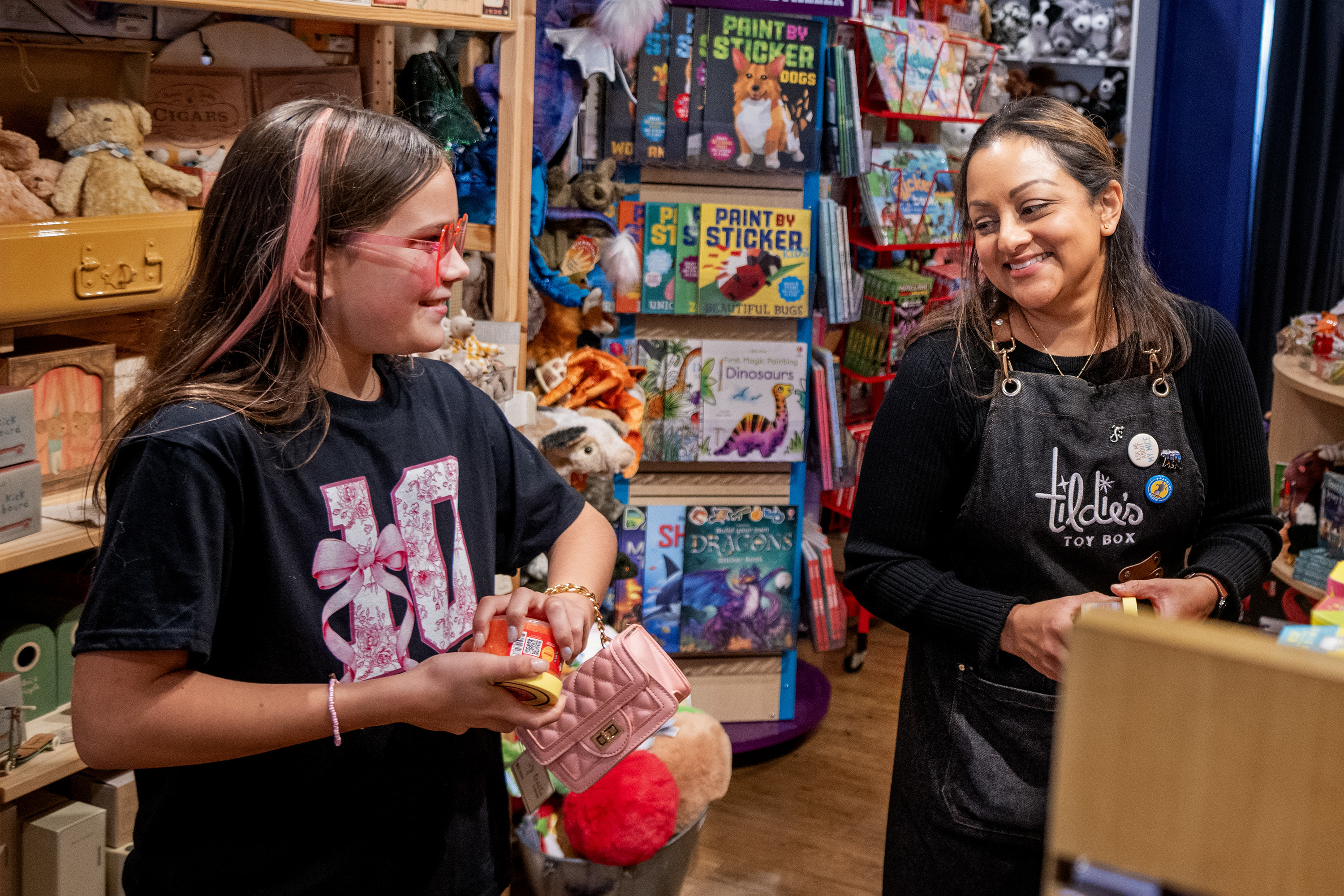
    At Tildie’s Toy Box in East Passyunk and Haddonfield, owner Michelle Gillen-Doobrajh said tariffs have made this year “confusing and difficult” and the added costs will “absolutely” have an impact on how they do business going forward.

    Michelle Gillen-Doobrajh (right) talks with 10-year-old customer Harlowe McGrath at Tildie’s Toy Box shop in downtown Haddonfield.

    “I am beginning to pass on items where the cost has gone up too much to be realistic for the consumer,” she said. “I fear that product selection will decrease, and many manufacturers will end up going out of business and retailers will follow.”

    “We will have to get used to paying more money for less product,” Gillen-Doobrajh added.

    Not every company is suffering. The family-run Trappe Tavern in Trappe, Montgomery County, has not seen a significant impact.

    “We’ve had some prices creep up,” David Duryea, the restaurant’s owner said. “In general, it hasn’t really had much of an effect at all.”

    If the costs of his food and other supplies continue to go up, Duryea said, people will eventually cut back on their spending and that could affect his business.

    “If that happens, we’re going to have to raise prices like everyone else,” he said.

    Despite new tariffs on steel, Upper Darby-based Delaware Valley Steel has not been significantly impacted, at least for now. That’s because “we don’t import any of our inventory,” said Jerry Sharpe, the company’s CEO.

    However, Sharpe warns that whenever tariffs are applied, the domestic steel mills that sell him products see that as an opportunity to raise prices.

    “If demand picks up, which I believe it will later this year, we will see increased pricing from the domestic mills,” he said. “We’re also going to be hit with a 20% tariff on an expensive piece of machinery we have ordered.”

    Kevin McLaughlin, a partner at business advisory firm Centri Consulting in Philadelphia, said the common theme among his firm’s clients is uncertainty.

    “While the full impact of tariffs has not yet sifted through every corner of the economy, growing businesses and businesses with thinner margins and less negotiating power than large corporations are often the first to feel the pressure,” he said.

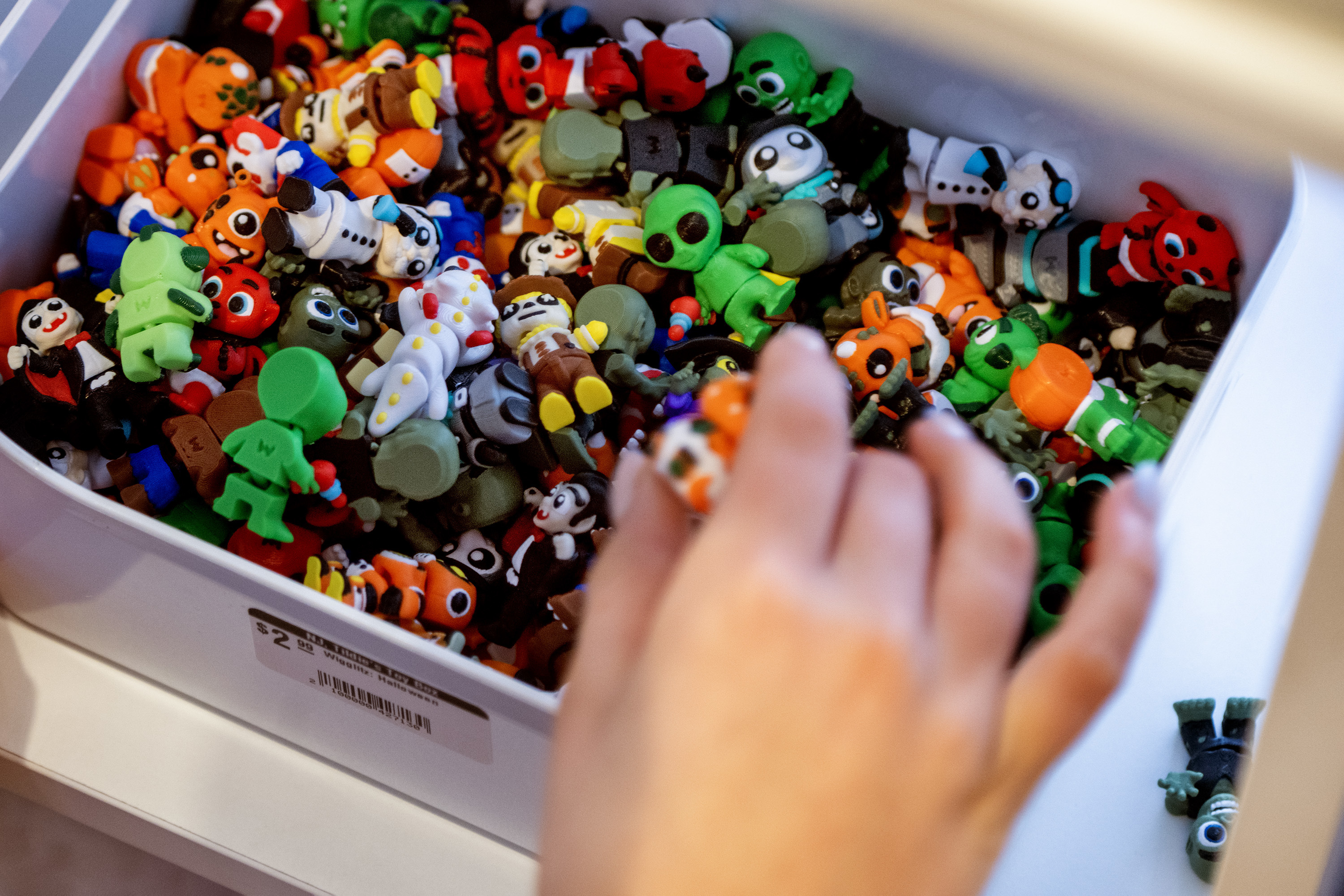
    Ten year-old customer Harlowe McGrath looks through figures — all of them 3D printed in the U.S. — at Tildie’s Toy Box shop in downtown Haddonfield Wednesday, Oct. 15, 2025. Store owner Michelle Gillen-Doobrajh is one of many Philly-area business owners dealing with tariffs. McGrath, who lives in town, was shopping with her mother, Kimberly McGrath.

    How small-business owners are navigating tariff uncertainty

    Woll says he’s focusing on cutting his overhead and may lay off employees. Gillen-Doobrajh is changing her product mix by “stocking up where tariffs are low” and foregoing unnecessary items.

    “I’m trying to be really smart and frugal with buying overall,” she said. “I am also paying attention to where items are made and holding out hope that these tariffs will dissolve so that our industry can survive.”

    Frank Cettina, who runs operations at Computer Components Corp., a precision tools contract manufacturer based in Philadelphia, is passing along any added costs to customers, with transparency. Tariff-related cost increases are noted separately and determined “on a customer-by-customer basis,” he said.

    “We are not making blanket cost increases because our intention is to remove them when and if they go away or change,” Cettina said. “We are also offering any alternative sources where we can.”

    Patti said he will likely buy less product but will also “buy higher quality just to pick up my margins” and compensate for the loss of volume.

    McLaughlin, the consultant, struck a more positive tone. He said clients are “stress-testing” multiple “what-if” scenarios so their businesses can adapt quickly.

    “With all the uncertainty, we are consistently encouraged by how resourceful our clients are through this unique time,” he said. “Many are using this moment as an opportunity to strengthen supplier relationships, accelerate efficiency, and polish their value propositions.”