Author: Gillian McGoldrick

  • Josh Shapiro visits the White House as Mikie Sherrill skips governors meeting after clash with Donald Trump over Democrats’ attendance

    Josh Shapiro visits the White House as Mikie Sherrill skips governors meeting after clash with Donald Trump over Democrats’ attendance

    Pennsylvania Gov. Josh Shapiro joined President Donald Trump at the White House for a breakfast on Friday, following weeks of uncertainty and strife over whether any Democrats would attend the traditionally bipartisan annual event after Trump reversed course on a decision to disinvite two other blue-state governors from the meeting.

    A spokesperson for Shapiro said he decided to attend the meeting at the White House once Maryland Gov. Wes Moore and Colorado Gov. Jared Polis were invited, despite Trump previously declaring the pair of Democratic leaders were not welcome.

    “Gov. Shapiro chose to join his colleagues and go to the White House to raise real issues and harm the Trump administration is doing to Pennsylvania,” Rosie Lapowsky, Shapiro’s press secretary, said in a statement.

    Trump initially planned to invite only Republican governors to the annual event that coincides with the National Governors Association winter meeting in Washington, D.C., but faced pushback by the group’s GOP chair. Trump then invited Democrats, as well, but rescinded the invitations for Moore and Polis. In a post on his Truth Social platform earlier this month, Trump wrote that the two Democratic governors were “not worthy of being there.”

    The weekslong back-and-forth threatened the nonpartisan nature of the National Governors Association that represents 55 governors, including those from all 50 states and five U.S. territories. Ultimately, the NGA declined to facilitate the annual breakfast event, and Trump later re-invited Polis and Moore.
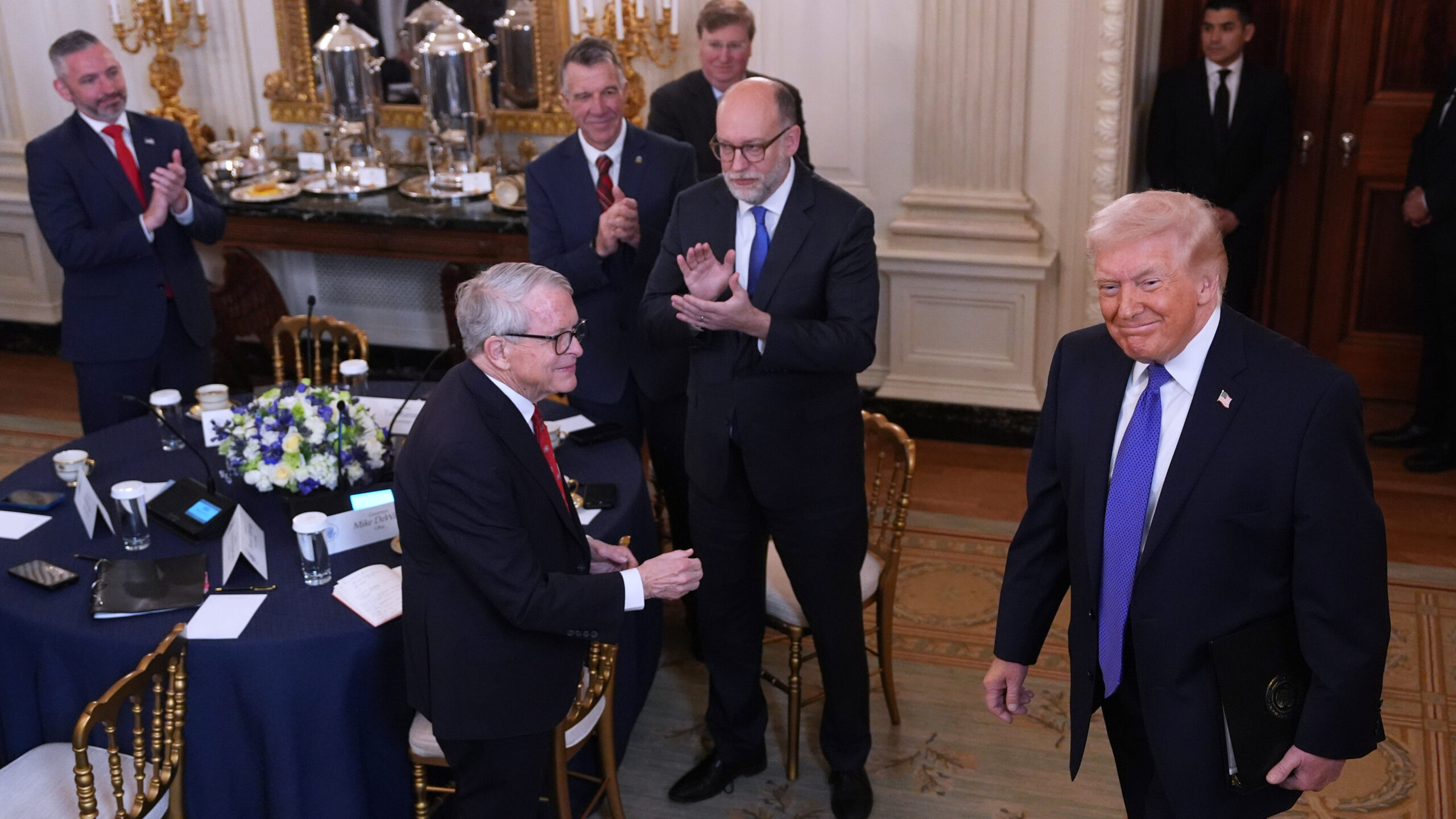
    President Donald Trump arrives to speak during a breakfast with the National Governors Association in the State Dining Room of the White House, Friday, Feb. 20, 2026, in Washington. (AP Photo/Evan Vucci)

    Moore, Polis, and Shapiro were among the more than two dozen governors who attended the White House breakfast Friday, where Trump delivered brief remarks. Other Democrats, including New Jersey Gov. Mikie Sherill, decided against going.

    Sherrill, a former member of Congress who just began her term last month, said in a statement that she opted to skip the White House breakfast to “focus on other NGA meetings.”

    “The president’s chaotic back-and-forth about the NGA was counterproductive and Gov. Sherrill decided not to attend,” said Sean Higgins, a spokesperson for Sherrill.

    What Shapiro talked about

    Shapiro described the closed-door meeting between Trump, the governors, and all of Trump’s cabinet as productive for him to advocate for specific issues directly with federal leaders.

    “Folks were respectful to me,” Shapiro told reporters following the meeting. “I went there with a mission to talk about things that were important to Pennsylvania.”

    Shapiro, who is currently running for reelection and touts his ability to work across partisan lines, has expressed an openness to working with Trump on issues specific to Pennsylvania, though he has challenged the president more than a dozen times in court since Trump took office last year.

    Shapiro said he was able to discuss his top issues directly with federal officials. He said he spoke with U.S. Department of Agriculture Secretary Brooke Rollins about the reemergence of the avian flu in Pennsylvania; discussed releasing withheld broadband funding with Treasury Secretary Howard Lutnick about releasing withheld broadband funding; and talked with U.S. Secretary of Health and Human Services Robert F. Kennedy Jr. and Director of the Office of Management and Budget Russ Vought about the ways “their policies are hurting rural Pennsylvanians.”

    New York Gov. Kathy Hochul, another Democrat who attended the meeting, said afterward in a news conference that she was glad to hear what lessons Trump said he learned from his administration’s immigration enforcement mission in Minneapolis that led to mass protests and the fatal shootings of two U.S. citizens by federal agents.

    Hochul said Trump told the group that “we’ll only go where we’re wanted,” alleviating concerns among some Democratic governors that their states may be the next to see a full-scale federal presence upending daily life.

    Weeks of back-and-forth ahead of the White House breakfast

    Sherrill and Shapiro were among the 18 Democratic governors who earlier said they would not attend the event if their colleagues were excluded.

    “Democratic governors have a long record of working across the aisle to deliver results and we remain committed to this effort,” they said in a joint statement on Feb. 10 through the Democratic Governors Association. “But it’s disappointing this administration doesn’t seem to share the same goal. At every turn, President Trump is creating chaos and division, and it is the American people who are hurting as a result.”

    They added: “Democratic governors remain united and will never stop fighting to protect and make life better for people in our states.”

    In comments to CNN last week, Sherrill said that “worse decisions” would be made without all the governors there.

    “For the president to pick and choose who he is going to have to sort of undermine the very focus of this, of coming together to get stuff done for the country just seeds more … chaos,” the New Jersey Democrat said.
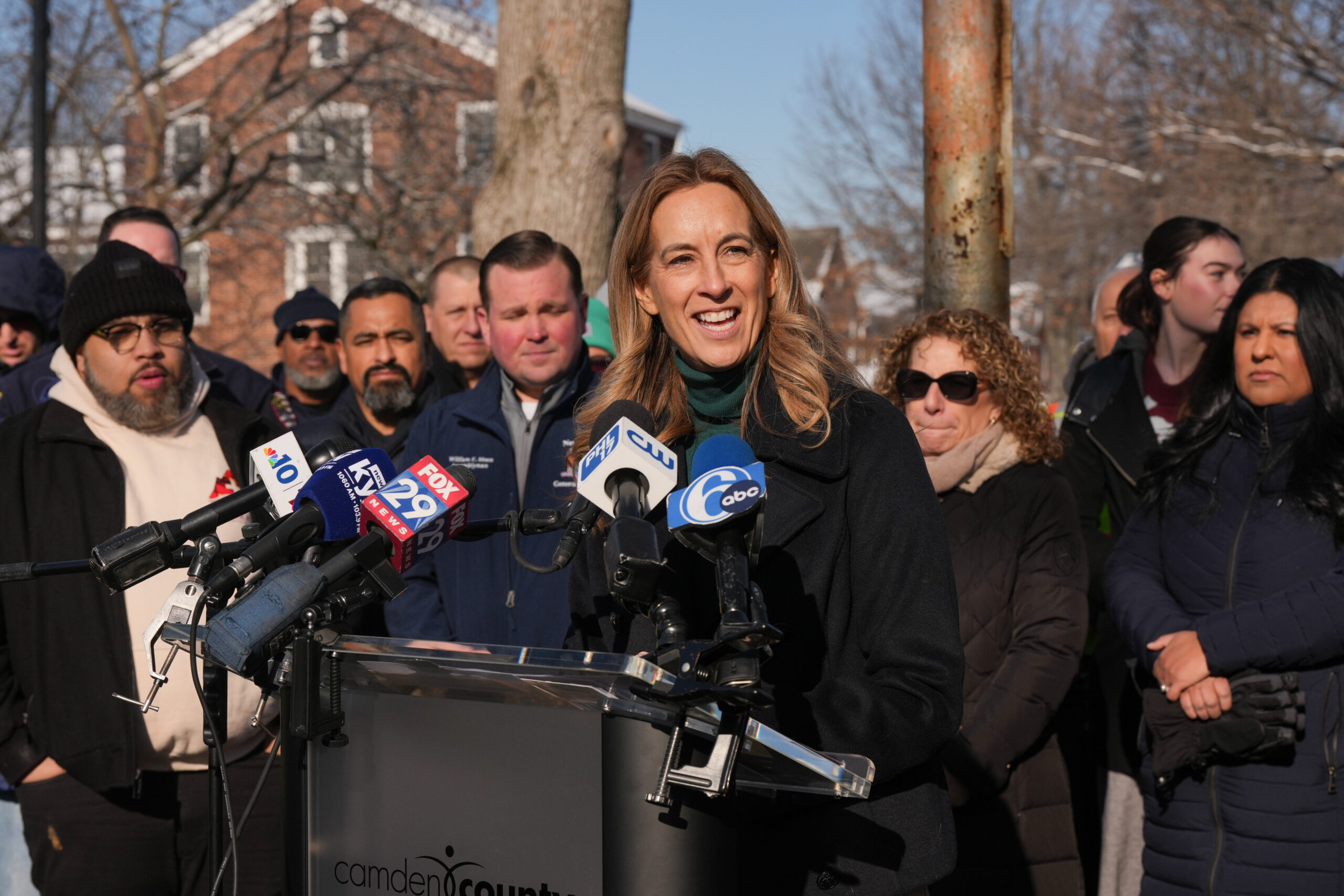
    Gov. Mikie Sherrill, shown here at a news conference as volunteers gather prior to shoveling snow at Fairview Village on Martin Luther King Day during a day of service, in Camden, New Jersey, January 19, 2026.

    Moore, the nation’s only Black governor, and Polis, the first openly gay man elected to U.S. governor, were the only two leaders Trump singled out, raising concerns by civil rights groups.

    Trump, however, cited different reasons for his objections to Moore and Polis’ attendance. He said he wanted to exclude Polis because his state continues to incarcerate a former county clerk over her conviction related to allowing election-denier activists access to election data following the 2020 election. Trump also expressed a number of grievances toward Moore, including his handling of the rebuilding of the Francis Scott Key Bridge and Baltimore’s crime rates.

    Following the meeting Friday, governors from both parties reaffirmed that they were still committed to working with Trump despite the turmoil.

    “It’s really important imagery that we stand together as governors of our states and represent all of America, and just remind people that there’s really more that brings us together and unites us than divides us,” said Oklahoma Gov. Kevin Stitt, a Republican who chairs the NGA.

    Shapiro separately told reporters that he has worked with directly Trump to “save steelworker jobs” but remains ready to challenge them in court if they threaten Pennsylvanians’ rights.

    Asked whether he has a good relationship with Trump, Shapiro said: “We have a relationship where we can work for the people of Pennsylvania, that’s my job.”
  • Big-money and out-of-state donors helped Josh Shapiro raise $30 million while Stacy Garrity raised $1.5 million from Pa.’s grassroots

    Big-money and out-of-state donors helped Josh Shapiro raise $30 million while Stacy Garrity raised $1.5 million from Pa.’s grassroots

    Democratic Gov. Josh Shapiro is racking up contributions from out-of-state billionaires as well as thousands of individual donors across the country.

    His likely Republican challenger, State Treasurer Stacy Garrity, meanwhile, is capturing small-donor donations from Pennsylvanians.

    That’s according to an analysis of the latest campaign finance filings in the Pennsylvania governor’s contest, as a clearer picture of the race emerges nine months out from Election Day. Shapiro entered 2026 with $30 million on hand — money raised over several years as he has built a national profile — while Garrity raised $1.5 million in her first five months on the campaign trail as she tries to unseat the popular Democratic incumbent. Last year, Shapiro brought in $23.3 million.

    Here are three takeaways from the first campaign finance filings in the race, tracking fundraising heading into 2026.

    Almost all of Stacy Garrity’s contributors are from Pennsylvania, while 62% of Shapiro’s are in state

    Nearly all of Garrity’s individual 1,155 contributors — more than 97% — live in Pennsylvania, and on average gave $889 each.

    Shapiro — who has amassed a national following and is a rumored 2028 Democratic presidential contender — had a much further reach and attracted many more donors from around the country. He received contributions from 4,981 individual donors, 62% of whom are from Pennsylvania. The average individual donor to Shapiro contributed $3,461, a number buoyed by multiple six- and seven-figure contributions.

    Shapiro received most of his remaining individual donations from California (7.1%), New York (6.3%), New Jersey (2.5%), Florida (2.5%), and Massachusetts (2.4%), according to an Inquirer analysis.

    (The analysis includes only donors who contributed more than $50 in 2025. Campaigns are required to list only individual donors who contribute above that threshold.)

    (function() { var l = function() { new pym.Parent( ‘shapiro-garrity3__graphic’, ‘https://media.inquirer.com/storage/inquirer/ai2html/shapiro-garrity3/index.html’); }; if(typeof(pym) === ‘undefined’) { var h = document.getElementsByTagName(‘head’)[0], s = document.createElement(‘script’); s.type = ‘text/javascript’; s.src = ‘https://pym.nprapps.org/pym.v1.min.js’; s.onload = l; h.appendChild(s); } else { l(); } })();

    Shapiro’s broad donor base is a result of his status as a popular incumbent governor who is liked among people of both political parties, said Robin Kolodny, a Temple University political science professor who focuses on campaign finance.

    “These amounts that you’re seeing is a very strong signal that ‘This is our guy,’” Kolodny said. “That underscores he is a popular incumbent.”

    Kolodny also noted that Shapiro’s state-level fundraising cannot be transferred to a federal political action committee should he decide to run in 2028. But his war chest shows his ability to raise money nationally and his popularity as the leader of the state, she added.

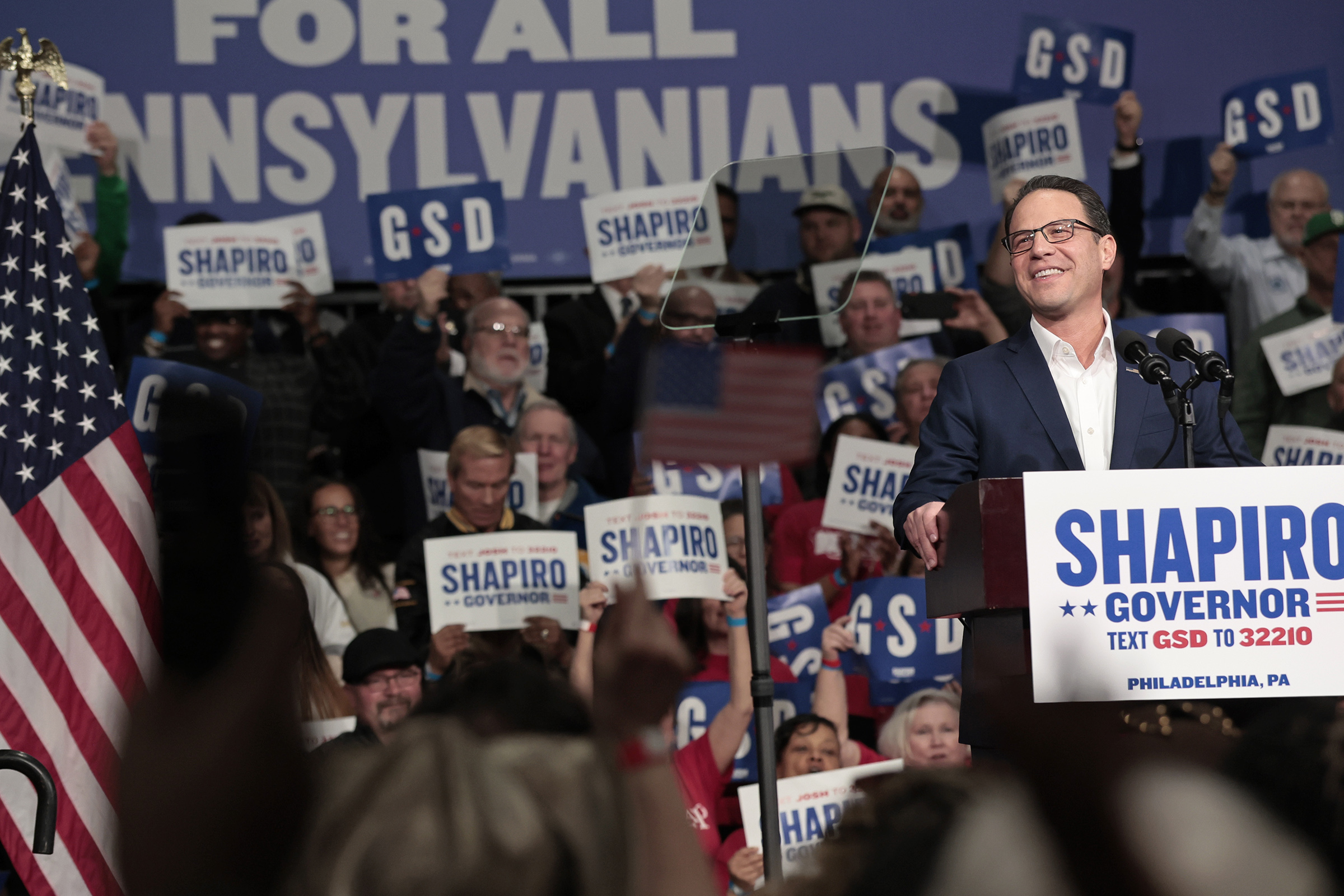
    Governor Josh Shapiro during a reelection announcement event at the Alan Horwitz “Sixth Man” Center in Philadelphia on Thursday, Jan. 8, 2026.

    Only a small percentage of the population contributes to political campaigns, Kolodny said. And sometimes, it’s the smallest contributions that pay off the most, she said. Small-dollar donations suggest grassroots support that can translate into a person assisting the campaign in additional ways to get out the vote, she said.

    Both Shapiro and Garrity have received a significant number of small-dollar donations that illustrate some level of excitement in the race — though Shapiro’s more than 3,000 in-state donors outnumber Garrity’s total by nearly 3-1.

    “Think of fundraising as not just a money grab, but also as a campaign strategy,” Kolodny said.

    Since announcing his reelection campaign in January, Shapiro has run targeted social media ads and sent fundraising texts, asking for supporters to “chip in” $1 or $5. The strategy worked, bringing in $400,000 in the first two days after his announcement, with an average contribution of $41, according to Shapiro’s campaign. This funding is not reflected in his 2025 campaign finance report.

    Most of Shapiro’s money came from out-of-state donors, including billionaire Mike Bloomberg and a George Soros PAC

    While Shapiro garnered thousands of individual contributions from Pennsylvania in all 67 counties, according to his campaign, the latest filings show it was the big-money checks from out-of-state billionaires that ran up his total.

    Approximately 64% of the $23.3 million Shapiro raised last year came from out-of-state donors.

    And more than half — 57% — of Shapiro’s total raised came from six- or seven-figure contributions by powerful PACs or billionaire donors.

    By contrast, only 31% of Garrity’s total fundraising came from six-figure contributions.

    The biggest single contribution in the governor’s race came from billionaire and former New York City Mayor Michael Bloomberg, who gave Shapiro $2.5 million last year.

    Shapiro also received $1 million from a political action committee led by billionaire Democratic supporter George Soros; and $500,000 from Kathryn and James Murdoch, from the powerful family of media mogul Rupert Murdoch.

    Kolodny noted that big contributions from people like Bloomberg are a drop in the bucket of his total political or philanthropic spending.

    window.addEventListener(“message”,function(a){if(void 0!==a.data[“datawrapper-height”]){var e=document.querySelectorAll(“iframe”);for(var t in a.data[“datawrapper-height”])for(var r,i=0;r=e[i];i++)if(r.contentWindow===a.source){var d=a.data[“datawrapper-height”][t]+”px”;r.style.height=d}}});

    “This is not something extraordinary,” Kolodny said. “He’s got nothing but money.”

    In Pennsylvania, Shapiro received notably high contributions from Philadelphia Phillies owner John Middleton, who gave $125,000, and Nemacolin Resort owner Maggie Hardy, who gave $250,000, among others. He also received a number of five-figure contributions from private equity officials, venture capitalists, and industry executives in life sciences, construction, and more.

    Garrity’s single biggest donation was $250,000 from University City Housing Co., a real estate firm providing housing near Drexel University and the University of Pennsylvania. Her largest contributions from individuals included $50,000 from her finance chair, Bob Asher of Asher Chocolates, and another $50,000 from Alfred Barbour, a retired executive from Concast Metal Products.

    Garrity has served as Pennsylvania’s state treasurer since 2020 and has led the low-profile statewide office with little controversy. She did not join the race for governor until August and raised only a fraction of the funds Shapiro did in that same time. Meanwhile, Shapiro spent 2025 at the political forefront as a moderate Democrat trying to challenge President Donald Trump in a state that helped elect him. Shapiro also benefited from his national name recognition after he was considered for Vice President Kamala Harris’ running mate in 2024.

    Shapiro has so far outraised Garrity 30-1, and top Pennsylvania Republicans have said they want to see Garrity fundraising more aggressively nationally.

    Kolodny said Garrity’s low fundraising is a reflection of the state of the race: Republicans put up a weak candidate in 2022 against Shapiro during his first run for governor, and now many powerful donors want to keep the relationship they have formed with Shapiro over the last three years.

    “That will reflect as a lack of enthusiasm for her,” Kolodny said. “Now she could turn that around, but from what I see, I don’t see her that much, only recently. She had the last six months; she could have done a lot more.”

    Controversy over donations tied to associates of Jeffrey Epstein

    Shapiro’s top contributions from individual donors also included a $500,000 check from Reid Hoffman, the Silicon Valley-based billionaire cofounder of LinkedIn. His name showed up thousands of times in the trove of documents recently released by the U.S. Department of Justice related to the investigation into financier and convicted sex offender Jeffrey Epstein.

    Garrity has highlighted the donations Shapiro received from Hoffman, and has publicly called on Shapiro to return the tech billionaire’s campaign contributions from last year and prior years, totaling more than $2 million since 2021.

    Hoffman has claimed he had only a fundraising relationship with Epstein, but publicly admitted he had visited his island. He has not been charged with wrongdoing.

    A spokesperson for Shapiro said Garrity should “stop playing politics with the Epstein files.”

    “Donald Trump is mentioned in the files over 5,000 times. Is she going to ask him to rescind his endorsement?” asked Manuel Bonder, Shapiro’s spokesperson.

    Garrity has previously downplayed Trump’s appearance in the Epstein files, and argued that Democrats would have released them much sooner if there was clear evidence of Trump partaking in any inappropriate behavior.

    Trump endorsed Garrity for governor last month.

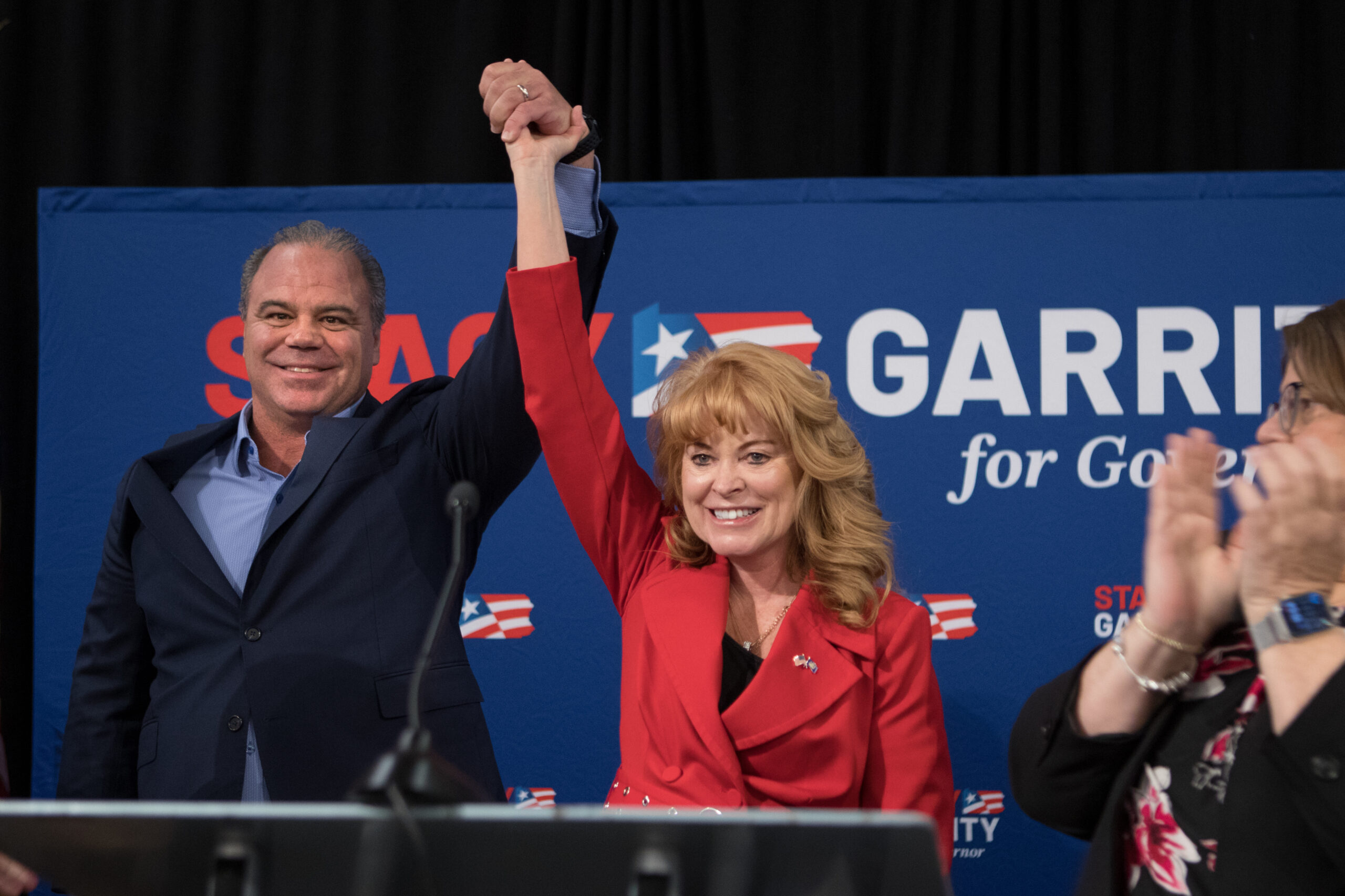
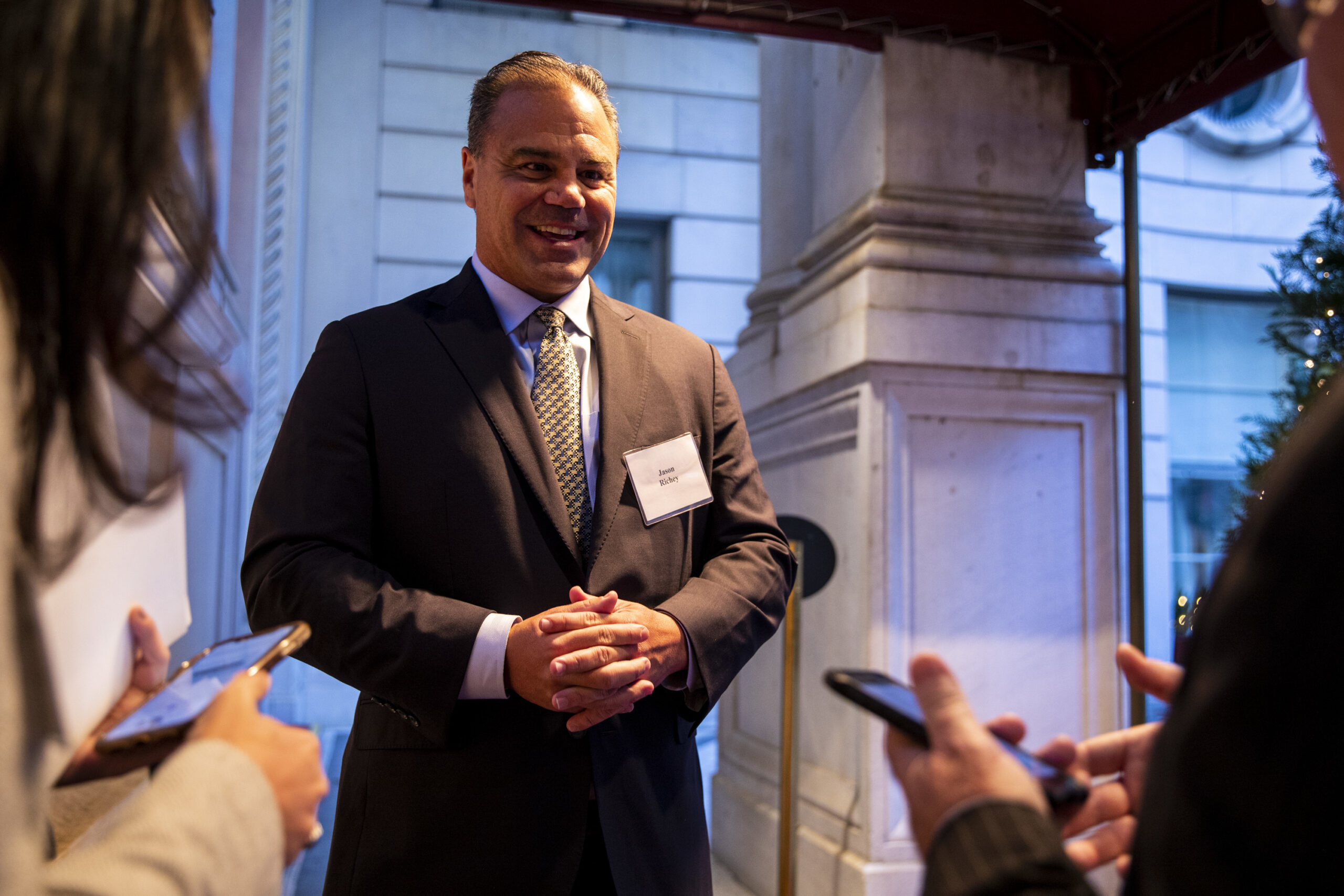
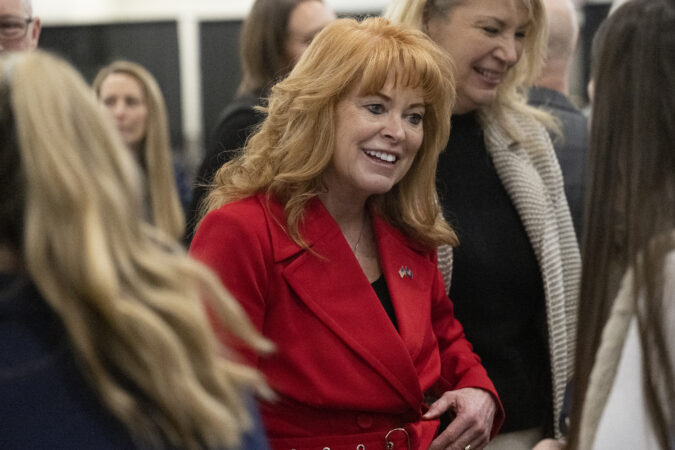
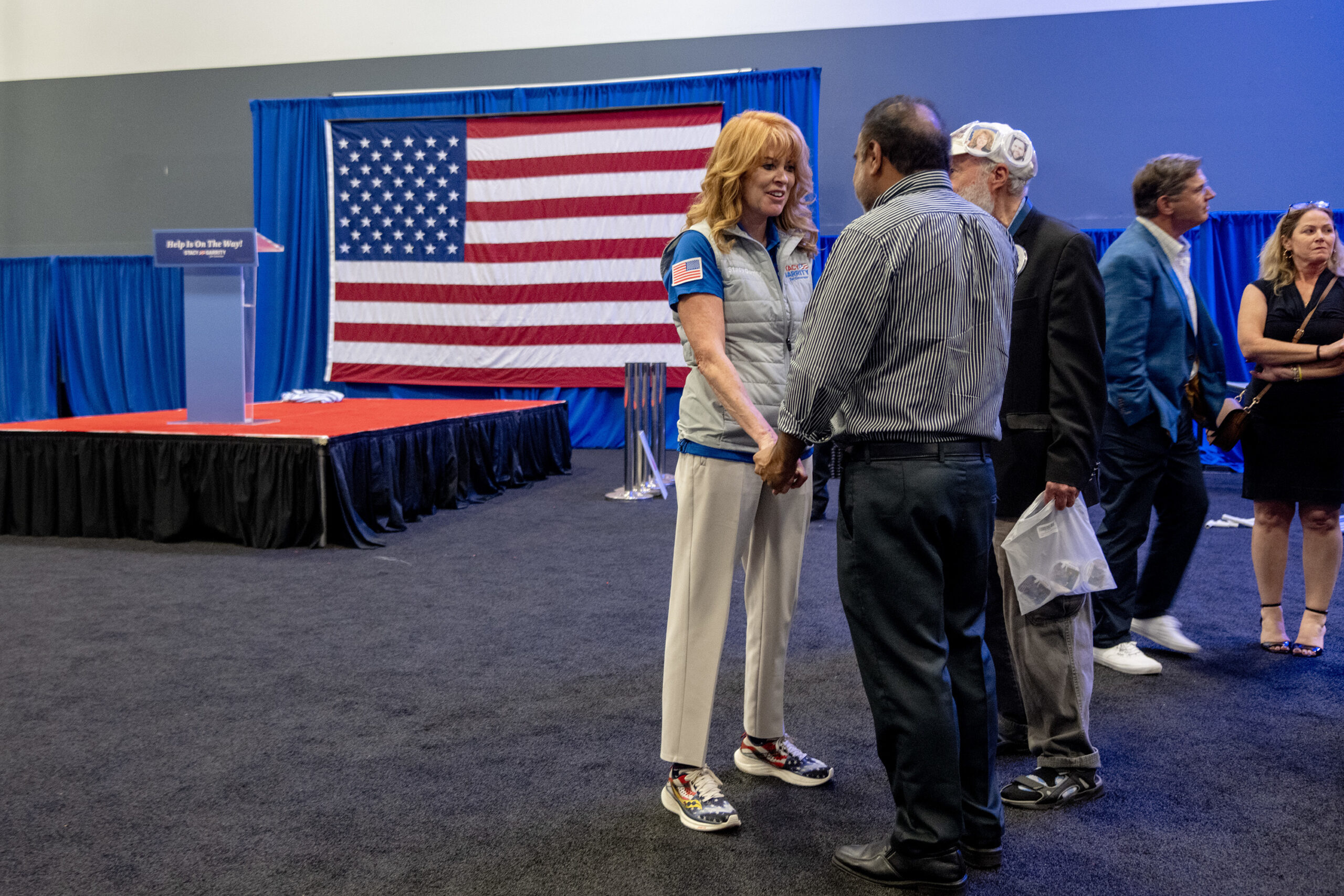
    GOP candidate for Pennsylania Governor, Stacy Garrity and Jason Richey hold up their arms in Harrisburg, Pa., Saturday, February 7, 2026. The PA State Republican Committee endorsed the two in their quest for the governor’s mansion. (For the Inquirer/Kalim A. Bhatti)

    If Shapiro were to return the funds from Hoffman, it would be bad for Garrity, Kolodny said, because she has made very few other political attacks against him.

    “That’s her [main] issue,” she said.

  • You can celebrate Pennsylvania’s 250th birthday at this hidden Philly landmark

    You can celebrate Pennsylvania’s 250th birthday at this hidden Philly landmark

    Days before America’s Founding Fathers declared their independence from Britain, Pennsylvania did it first.

    In June 1776, before the Declaration of Independence was signed, a group of leaders from Philadelphia and its surrounding 10 counties — Bucks, Berks, Chester, Lancaster, York, Cumberland, Bedford, Northampton, Northumberland, and Westmoreland — met in Carpenters Hall for the Pennsylvania Provincial Conference. There, the Commonwealth of Pennsylvania was born.

    Carpenters Hall, a hidden landmark just two blocks from Independence Hall in Philadelphia’s Old City, is the true birthplace of Pennsylvania, where the state declared its independence from Britain — jump-starting the framework of the state’s influential constitution that would serve as a model for the U.S. Constitution.

    Now, the little-known and privately owned historic site is celebrating Pennsylvania’s 250th birthday — which coincides with America’s Semiquincentennial — by holding commemorative events across the state to reflect on Pennsylvania’s history and ask residents how the state constitution should be strengthened in 2026 and beyond.

    “It’s the piece of the story we should own and celebrate and use as a platform for civic engagement,” said Michael Norris, the executive director of Carpenters Hall.

    Executive director Michael Norris makes remarks at the reopening ceremony at Carpenters Hall on July 3, 2023.

    Last week, Norris and others from Carpenters Hall traveled from Philadelphia — the state’s first capital — to Harrisburg to announce their yearlong schedule of events celebrating Pennsylvania’s founding, including those about the state’s constitution and its past and future.

    At a news conference last week, Rep. Mary Isaacson (D., Philadelphia) noted that she occupies the seat once held by former Pennsylvania House Speaker Benjamin Franklin. She said she sees the Carpenters Hall events as “more than learning about a key moment in Pennsylvania history.”

    “It’s also about exploring the vital importance of our state constitution in our democracy today and what citizens can do to engage,” she added.

    The commemorative events include an interactive town hall series hosted in Philadelphia, Pittsburgh, Harrisburg, and Erie to discuss the importance of the Pennsylvania Provincial Conference in the United States’ founding. The group will also host several events at Carpenters Hall, including the installation of a blue historical marker outside the hall on June 18, in addition to a three-part virtual lecture series on Pennsylvania’s constitution.

    The events, funded by America 250 PA and the Landenberger Family Foundation, are open to the public and intended to reach Pennsylvania’s “lifelong learners” who are interested in history and civics, as well as the legal community, who will be eligible for Continuing Legal Education credits for attending the virtual lectures, Norris said.

    “To me, 250 is about reflection and engagement,” Norris said. “It’s not about parties and buildings. It’s really a moment to reflect and say, ‘What are we doing here? Do we still want this democracy, and how do we protect it and keep it going?’”

    The Carpenters’ Company — the nation’s oldest craft guild, which built and still owns Carpenters Hall — will also conduct polling about how Pennsylvania’s constitution, as well as the U.S. Constitution, should be changed to better represent citizens in a modern time, Norris said. The poll results will be made public at an in-person event in Philadelphia on Sept. 28, the 250th anniversary of when the state constitution was ratified.

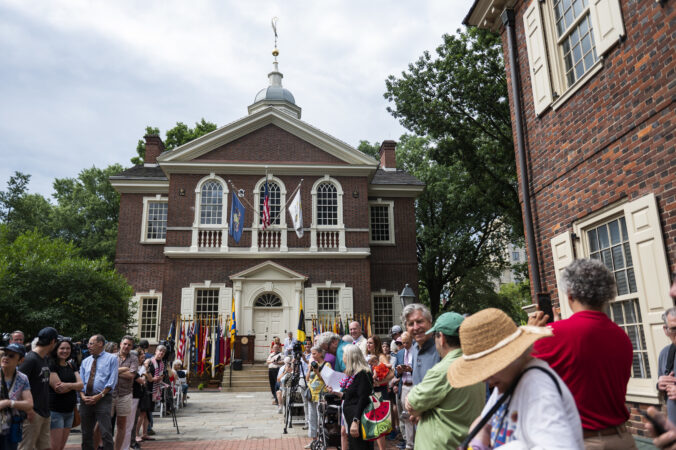
    Historic flags are displayed outside at the reopening ceremony at Carpenters Hall on July 3, 2023. The building opened for the first time to the public since April 2022.

    Rhode Island was the first colony to declare independence from England in May 1776, and Delaware became the first state in December 1787. Pennsylvania followed days after, and its constitution influenced the country’s founding documents. Pennsylvania’s expansive constitution — viewed as radical at the time — focused on personal freedoms and liberties in its “Declaration of Rights,” after which the Bill of Rights was modeled.

    Carpenters Hall was the nation’s first privately owned historic landmark, and remains owned by the Carpenters’ Company today, which offers free admission for 150,000 visitors each year. Because it is privately owned, it is not overseen by the National Park Service, which has in recent weeks dismantled exhibits about slavery at the nearby President’s House Site in Independence National Park that President Donald Trump’s administration contends “inappropriately disparage” the United States.

    The Carpenters Hall events will occur as Philadelphia prepares to host millions of visitors this summer for America’s 250th celebrations, the MLB All-Star Game, and FIFA World Cup games.

  • The Pa. GOP and state Dems finalize their endorsements for the 2026 governor’s race

    The Pa. GOP and state Dems finalize their endorsements for the 2026 governor’s race

    HARRISBURG — The Pennsylvania Republican and Democratic Parties locked in their endorsements for the 2026 governor’s race Saturday at dueling committee meetings in the state’s capital, as they present different visions of the future for Pennsylvania and America.

    The state GOP endorsed Jason Richey, a longtime Pittsburgh attorney and chair of the Allegheny County Republicans, for lieutenant governor to run alongside its endorsed gubernatorial candidate, Treasurer Stacy Garrity. On the other side of town, the state Democratic Party resoundingly endorsed Gov. Josh Shapiro and Lt. Gov. Austin Davis for reelection to a second term.

    By finalizing their endorsements for governor and lieutenant governor, the November election is all but officially set. The candidates are expected to be formally nominated by their parties in the May 19 primary.

    Garrity would be the state’s first female governor and would be a strong conservative leader who will protect the state from becoming “California East,” Richey said as he described another term under Shapiro in his acceptance remarks.

    State Republicans took the unprecedented step to endorse Garrity in September 2025, in an effort to give her six additional months to campaign for governor and coalesce support. However, Garrity did not announce Richey as her choice for running mate until last month. Several candidates had turned down the job, as Garrity faces an uphill battle to challenge Shapiro, a popular moderate Democratic governor, in a midterm election already advantageous to Democrats.

    There was no shortage of attacks on Shapiro at the state GOP meeting.

    “[Shapiro] is a charlatan. He is a phony who tries to talk like [former President Barack] Obama and has done nothing to help move this state forward,” Richey said. “Today is not just another meeting. Today is not just another endorsement. Today is the moment that the Pennsylvania Republican Party stands together and resolves to take back our commonwealth.”

    Garrity last month received the coveted nod from the leader of the Republican Party, President Donald Trump, who called her an “America First Patriot.”

    Meanwhile, for state Democratic Party committee members, their attention was not on Garrity and Richey. They want to make Trump a lame-duck president by flipping four congressional seats and secure Shapiro a Democratic trifecta by retaining control of the state House and flipping the state Senate for the first time in more than 30 years.

    “These are people who are lawless. They are without a conscience, without a backbone, without any sense of right and wrong,” said U.S. Rep. Madeleine Dean (D., Pa.), describing the GOP colleagues she wants to unseat. “Four seats. That will be the U.S. House majority. We can get the gavels in our hands, and we can make Trump an even lamer duck than he already is, and we can move on with impeachments, convictions, whatever we can do.”

    Different outlooks on Pennsylvania and the U.S.

    To Republicans, Pennsylvania is falling behind, citing its U.S. News & World Report rankings as 41st in Best Overall States, 38th for its economy, and 39th for education. Trump’s White House, alternately, is heavily invested in Pennsylvania’s success, often inviting its GOP county commissioners to visit, said Lancaster County Commissioner Josh Parsons, delivering the GOP commissioners’ update to the state committee.

    “We’re going to keep Republicans in the majority in Congress, because if not, we’ve seen this show before. We know what’s going to happen: investigations, impeachments, and, worst of all, they will stop the agenda that Trump has created,” said state GOP chair Greg Rothman, noting Trump’s efforts to lower prices, end the war in Gaza, and more.

    For Democrats, it’s America that’s on the wrong track, while Pennsylvania is succeeding despite the “chaos in Washington,” as Shapiro described in his endorsement acceptance speech.

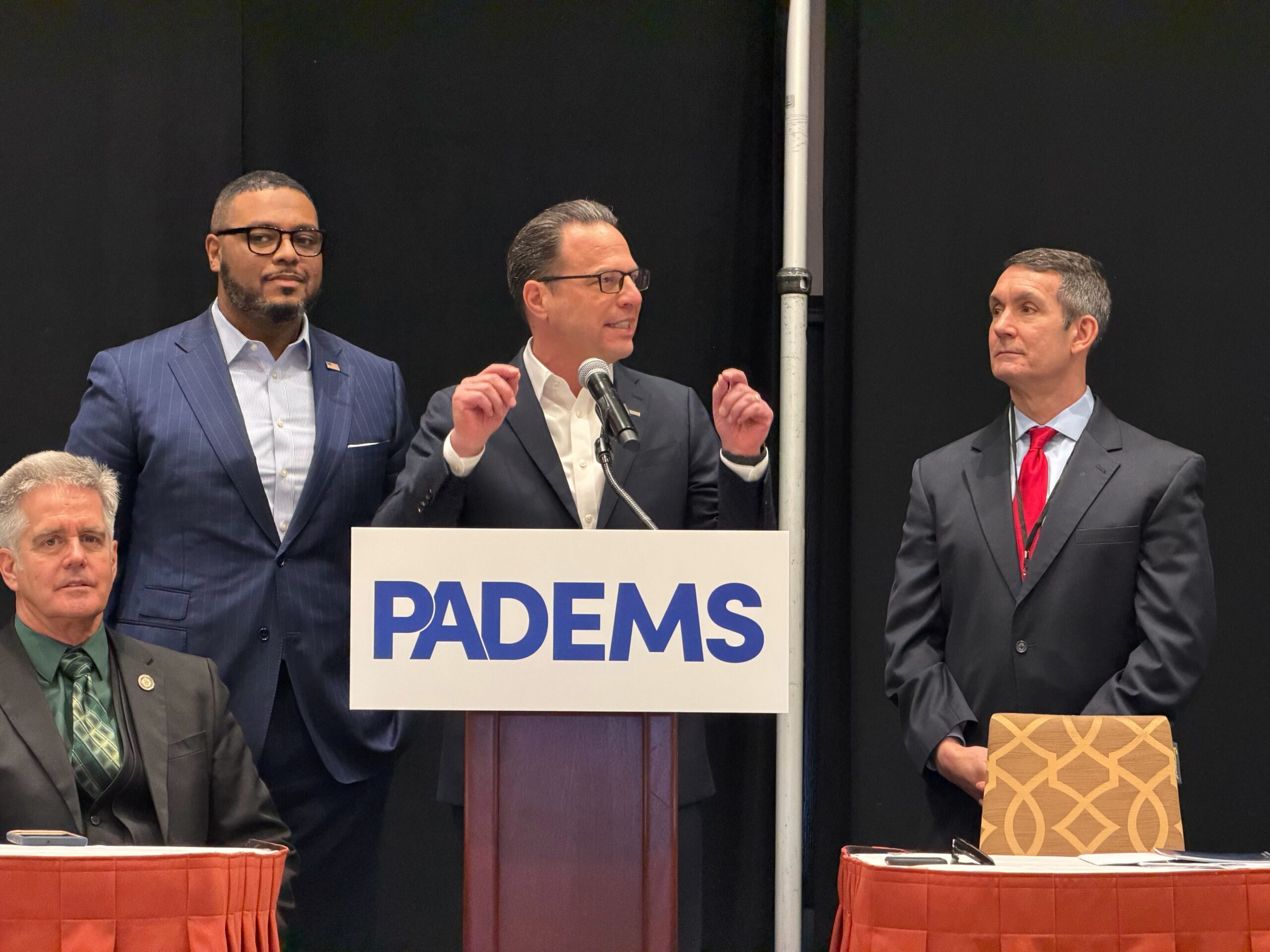
    Pennsylvania Gov. Josh Shapiro accepts the endorsement for a second term as governor at the state Democratic Party’s winter meeting in Harrisburg on Feb. 7, 2026. With him are Lt. Gov. Austin Davis (second from left) and Pennsylvania Democratic Party chair Eugene DePasquale (right).

    That positive view of Pennsylvania is due to Shapiro’s leadership in the state, said Pennsylvania Democratic Party chair Eugene DePasquale.

    “You look at the polls today, Donald Trump is at his historic low mark, while the governor is at a historic high mark,” DePasquale added. “Why is he at that high mark? They see the state heading in the right direction. They see him fighting the Trump administration to protect Pennsylvanians.”

    Candidates will begin circulating petitions later this month to secure a spot on the ballot. No candidates are expected to challenge Shapiro or Davis in the primary. There is at least one write-in campaign being run, for State Sen. Doug Mastriano (R., Franklin), who declined to challenge Shapiro for a second time. He lost to Shapiro by more than 15 percentage points in 2022.

  • Democratic campaign manager charged in Chester County for allegedly filing fake signatures in 2024 primary race

    Democratic campaign manager charged in Chester County for allegedly filing fake signatures in 2024 primary race

    A Democratic campaign manager was charged Monday in Chester County with filing fraudulent nomination petitions in the 2024 primary for auditor general, including the forged signature of a Chester County judge, authorities said.

    Mariel Kornblith-Martin, 40, of Philadelphia, is accused of filing the false nomination petitions when serving as campaign manager for Mark Pinsley, the Lehigh County controller, as he sought to secure a place on the competitive Democratic primary ballot.

    Petitions for Pinsley’s campaign included the names of people who said they had not signed them, including Chester County Judge Alita Rovito, Coatesville City Council members Carmen Green and Khadija Al-Amin, and West Goshen Township Supervisor Nate Wolman, The Inquirer reported.

    Rovito reported the forgery to the Chester County District Attorney’s Office at the time, saying the signature was not hers and she did not sign nominating petitions for any candidate, “as to do so would be a violation of judicial ethics,” according to charging documents.

    Rovito, a Democrat, told The Inquirer at the time that “the use of my name and signature is concerning to me due [to] the potential implications on my role as a member of the independent judiciary.”

    Alita Rovito, a Chester County judge, poses for a portrait in West Chester, Pa. in 2020.

    In the criminal complaint filed against Kornblith-Martin, the Chester County District Attorney’s Office alleges that she gave three college students “stacks of pages containing signatures of supporters” and asked them to sign the required sworn declaration at the bottom of each page. Among the charges filed against Kornblith-Martin was solicitation to false swearing.

    Prosecutors say she paid the students, who are not named in the charging documents, $50 on at least three occasions to sign the petitions.

    “That’s disgraceful,” former U.S. Rep. Bob Brady, the chair of the Philadelphia Democratic Party, said of the charges against Kornblith-Martin. “She’s not one of our favorites.”

    The three college students were all working part-time on several campaigns run by Kornblith-Martin, according to the complaint.

    The students were previously identified by The Inquirer as paid volunteers attending Temple University.

    Kornblith-Martin described herself to investigators as a “political operative” in Philadelphia with 13 years of experience who had worked on 16 campaigns, according to the criminal complaint. She previously served in Philadelphia’s 39th Democratic Ward, but resigned last year, according to its ward leader, Traffic Court Judge Michael Sullivan.

    Kornblith-Martin did not respond to requests for comment on Wednesday or Thursday.

    She turned herself in on Wednesday and has been released on bail, which was set at $50,000.

    Kornblith-Martin said in 2024 that the campaign was conducting an “internal investigation” when asked about the alleged fraudulent signatures.

    Pinsley told The Inquirer on Wednesday evening his campaign “reviewed what was brought to our attention but did not have enough verified information to reach independent conclusions” when concerns were raised.

    “Petition drives can involve invalid or questionable signatures for many reasons, and we were not in a position to determine intent,” he added in a text message. “I was not personally involved in the signature collection, and I believe the legal process is the appropriate place for the facts to be established. If anyone knowingly falsified signatures, that would be wrong and should carry consequences.”

    Pinsley said he has “not been involved” with Kornblith-Martin since his auditor general campaign and does “not know the facts of this situation.” Pinsley is now running in the crowded Democratic primary to challenge Republican U.S. Rep. Ryan Mackenzie in the Lehigh Valley.

    Pinsley’s campaign was not the only one with signatures that came under scrutiny.

    State Sen. Nikil Saval’s 2024 campaign complained about signatures on then-candidate Allen King’s petitions, which included two of the same student circulators and contributed to his being booted from the ballot.

    King, an entrepreneur who still has political aspirations, told The Inquirer the incident had disillusioned him about the two-party system and inspired him to reapply to law school.

    “When ballot access becomes a game of shortcuts and challenges, democracy loses before voters ever enter the booth,” he said.

    The February 2024 revelation that Pinsley’s campaign may have submitted fraudulent petitions shook up the race for a little-known office responsible for conducting audits to ensure that state money is spent properly.

    Pinsley failed to secure the Democratic nomination over State Rep. Malcolm Kenyatta, who ultimately lost to incumbent Republican Auditor General Tim DeFoor as the GOP swept the state’s row offices in the general election.

    Kenyatta did not formally challenge Pinsley’s nominating petitions to remove him from the ballot during the primary. Reached Wednesday, Kenyatta said in a statement: “Fraud occurring within any stage of our electoral process is a direct assault on our democracy.”

    “The charges brought today are a first step in the legal process but accountability must not end here: the buck always stops with the candidate,” added Kenyatta, the vice chair of the Democratic National Committee.

    Investigators found at least nine pages of alleged forgeries of Chester County voters, according to the complaint.

    To get on the ballot in Pennsylvania for a statewide row office like auditor general, a candidate must submit 1,000 signatures, including at least 100 from at least five counties.

  • Gov. Josh Shapiro proposes $53.2 billion state budget focusing on affordability, development, and raising Pennsylvania’s minimum wage

    Gov. Josh Shapiro proposes $53.2 billion state budget focusing on affordability, development, and raising Pennsylvania’s minimum wage

    HARRISBURG — Gov. Josh Shapiro on Tuesday unveiled a $53.2 billion state budget that focuses on making Pennsylvania a more affordable place to live — while proposing a 6.2% spending increase over last year and renewing his pitches to create new revenue streams to fill a significant budget deficit as he runs for reelection.

    Shapiro’s fourth budget address attracted several standing ovations from Democrats as he stood before a joint session of the state House and Senate to pitch some of Democrats’ shared priorities, such as increasing the minimum wage to $15 an hour.

    Afterward, Republicans decried the budget proposal as unaffordable, arguing such a steep increase in spending is unrealistic when the state is already poised to spend more than it brings in during the current fiscal year and in the future. Shapiro’s proposal would spend $4.6 billion more than the state is projected to bring in in the 2026-27 fiscal year, requiring officials to pull most new spending from Pennsylvania’s $7.7 billion Rainy Day Fund, or find funding from new revenue streams like the taxation of recreational marijuana that do not yet exist.

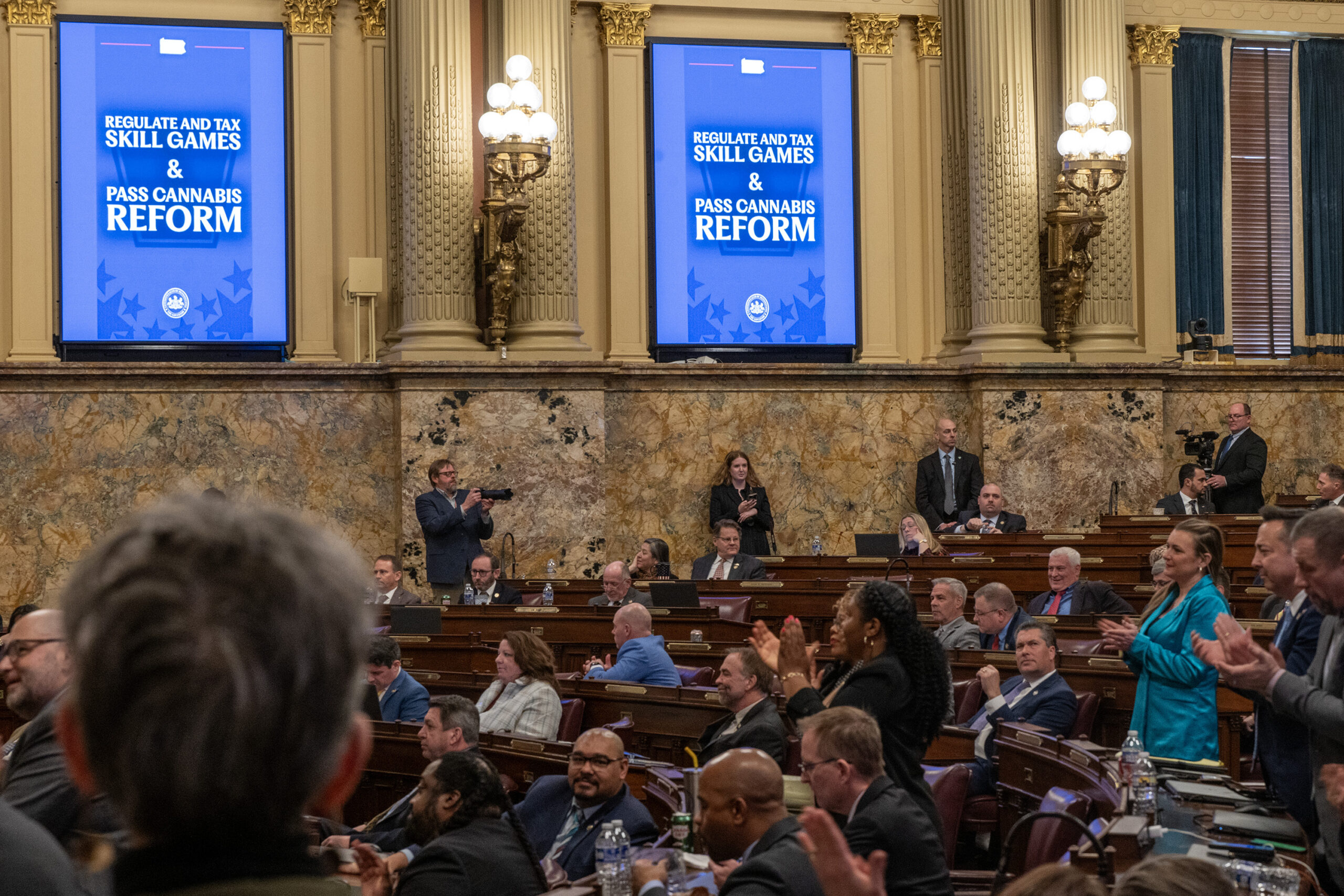
    Screen shows skill games and cannabis regulation and reform as Gov. Josh Shapiro makes his annual budget proposal in the state House chamber in Harrisburg Tuesday, Feb. 3, 2026.

    Shapiro’s proposed spending hike equates to a $2.7 billion total increase over the 2025-26 budget. Approximately $1 billion of that would fulfill increased federal Medicaid obligations, another $1 billion would be for new initiatives proposed by the governor, and $700 million would go to other funding increases, according to a Shapiro administration official.

    The proposal does not include any broad tax increase on state residents. Instead, Shapiro’s budget pitch includes proposals to generate nearly $2 billion in new revenue, largely from the taxation and legalization of recreational marijuana and regulation of so-called skill games — suggestions that he put forward last year but that failed to gain traction within the legislature. He proposed taxing adult-use cannabis at 20% to generate $729.4 million. He is also seeking a 52% tax on skill games, the unregulated and untaxed slot-machine look-alikes that have proliferated around the state in corner stores, bars, and fraternal organizations, to generate an estimated $765.9 million in its first year.

    “Everyone knows we need to get this done. So let’s come together and finally get it over the finish line,” he added.

    Shapiro proposed the legalization and taxation of recreational marijuana in each of his prior three budget proposals. Last year, he pitched a 20% tax on the sale of legal marijuana that he estimated would bring in $535.6 million in its first year. This year’s projection of $729.4 million in that time frame would be a 36% increase without changing the proposed tax rate. A Shapiro administration official said Tuesday that the projected increase is due to more interest from marijuana companies that want to do business in Pennsylvania.

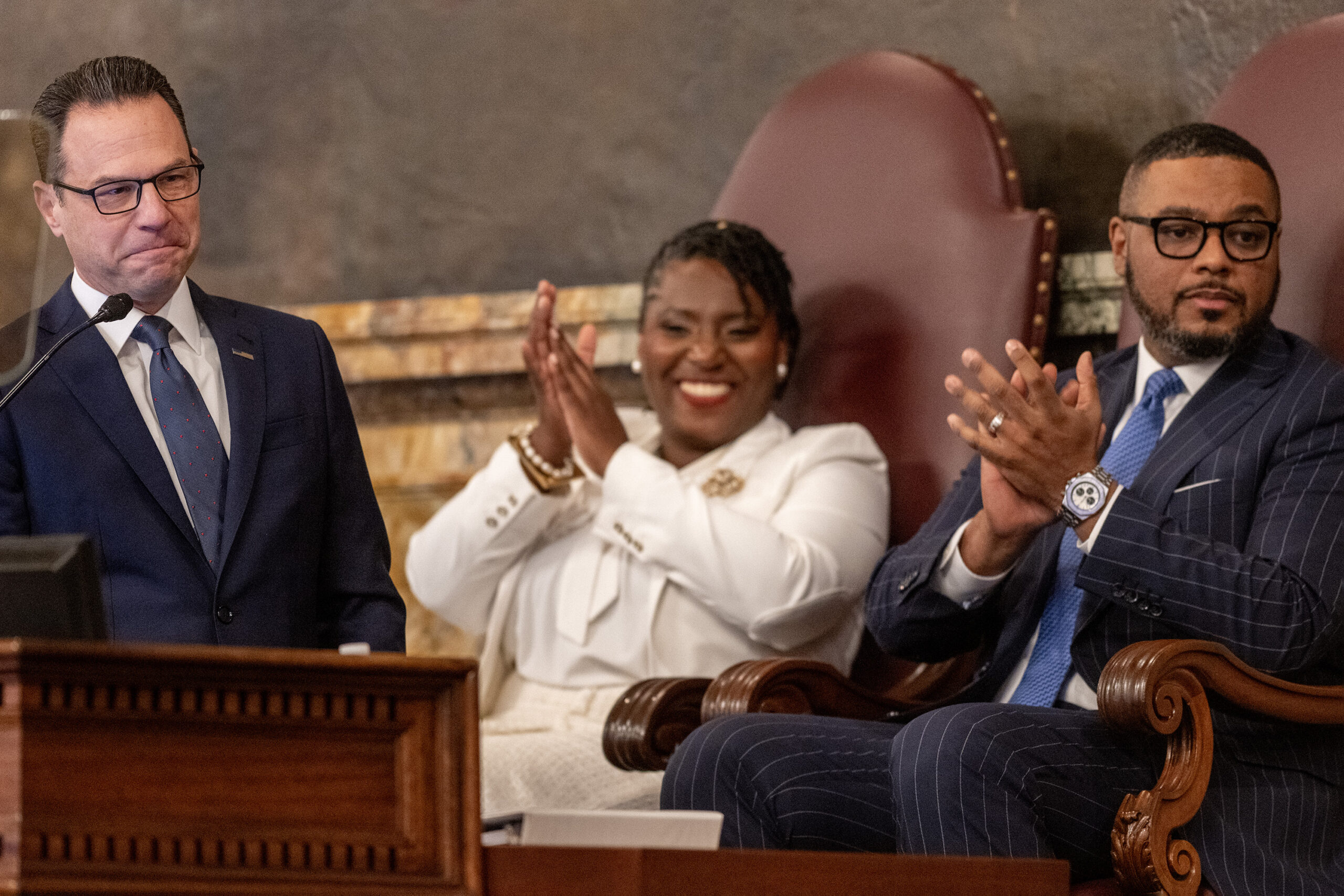
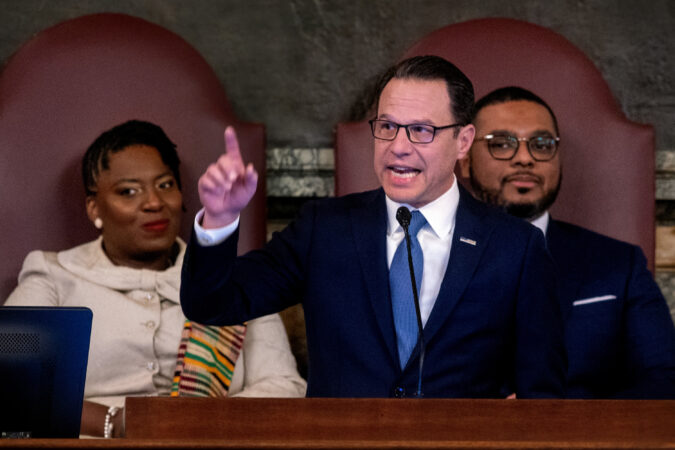
    Gov. Josh Shapiro make his annual budget proposal in the state House chamber in Harrisburg Tuesday, Feb. 3, 2026. Pa. House Speaker Joanna McClinton (left) and Lt. Gov. Austin Davis (right) are seated behind him.

    Shapiro’s budget also called for an additional $565 million for public schools toward the state’s new adequacy funding and tax equity formulas, in the latest installment of a nine-year plan to ensure students get an equitable education no matter their zip code. He requested $30 million in additional funding toward three of Pennsylvania’s state-related universities — the University of Pittsburgh, Pennsylvania State University, and Temple University — to be awarded based on a new performance-based funding mechanism.

    The governor also pitched creating a “Federal Response Fund” in Pennsylvania, seeking to set aside a $100 million reserve to offset any impact from President Donald Trump’s administration, in the event the federal government moves to cut funding to social services programs and grants to state and local governments, as it has done several times over the last year.

    A focus on affordability

    As his reelection campaign ramps up ahead of November, Shapiro made a broad pitch for policies aimed at making Pennsylvania more affordable.

    Shapiro said he was working with utility companies to rein in energy costs and called for the construction of new homes and a bevy of renter protections in a plan to expand the availability and affordability of housing across the state.

    He proposed a $1 billion fund, supported by the issuing of bonds, to pay for a range of infrastructure projects relating to energy, housing, local governments, and schools. But he billed it largely as “a major investment in building new housing.”

    “We need hundreds of thousands of new homes,” Shapiro said. “This is how we build them.”

    Shapiro also called for the state to create a catalog of local zoning rules and to help local governments revamp ordinances to allow for more housing.

    The governor again proposed raising Pennsylvania’s minimum wage to $15 an hour, billing it as a cost savings of $300 million to the state on entitlement programs such as Medicaid.

    In a news conference hosted by Senate and House Republicans following Shapiro’s budget address, top legislative leaders contended that Shapiro’s affordability vision for the state is unnecessary.

    “What we need to do is stand back and watch the private sector work, and watch the private sector grow the jobs that will support this economy,” said House Minority Leader Jesse Topper (R., Bedford). “What we need to do as a government is far less. We need to get our footprint down. That is what we believe will make things more affordable for Pennsylvanians.”

    Attracting AI developments — at a cost

    Shapiro made it clear he wants Pennsylvania to be a place that will draw business investment — particularly amid the expansion of artificial intelligence.

    He announced a new plan he said would protect consumers against rising energy costs associated with data centers, while also easing a path for tech companies to build the centers.

    The Governor’s Responsible Infrastructure Development (GRID) plan would make data center developers either bring their own power generation or pay for any new generation they will need, he said, “not saddling homeowners with added costs because of their development.”

    Shapiro said that too many data center proposals have been “shrouded in secrecy” but that they are crucial for the country.

    “The United States is locked in a battle for AI supremacy against China,” Shapiro said. “Look, I don’t know about you, but I’d much rather the future be controlled by the United States of America and not Communist China.”

    ‘We all recognize it took too long last year’

    Shapiro’s $53.2 billion pitch likely sets him up for another fight with Senate Republicans, who control the chamber. They have promised fiscal restraint as their top priority and are unlikely to approve a major spending increase.

    Last year, Shapiro and House Democrats took 135 days to reach an agreement with Senate Republicans, in what became an at-times ugly battle that underscored the state’s rural-urban divide.

    Shapiro said Tuesday he wants to avoid another lengthy stalled budget, which forced schools, counties, and nonprofits to take out billions in loans to stay afloat during the four-month impasse.

    He invited leaders of all four caucuses — Senate Democrats, Senate Republicans, House Democrats, and House Republicans — to meet on Wednesday to start budget talks much sooner than in past years. They all agreed to attend, he added.

    “We all recognize it took too long last year and that had real impacts on Pennsylvanians, but we learned some valuable lessons through that process,” Shapiro said in his address, which lasted an hour and 24 minutes. “We learned that we all need to be at the table, and that we all need to be at the table sooner.”

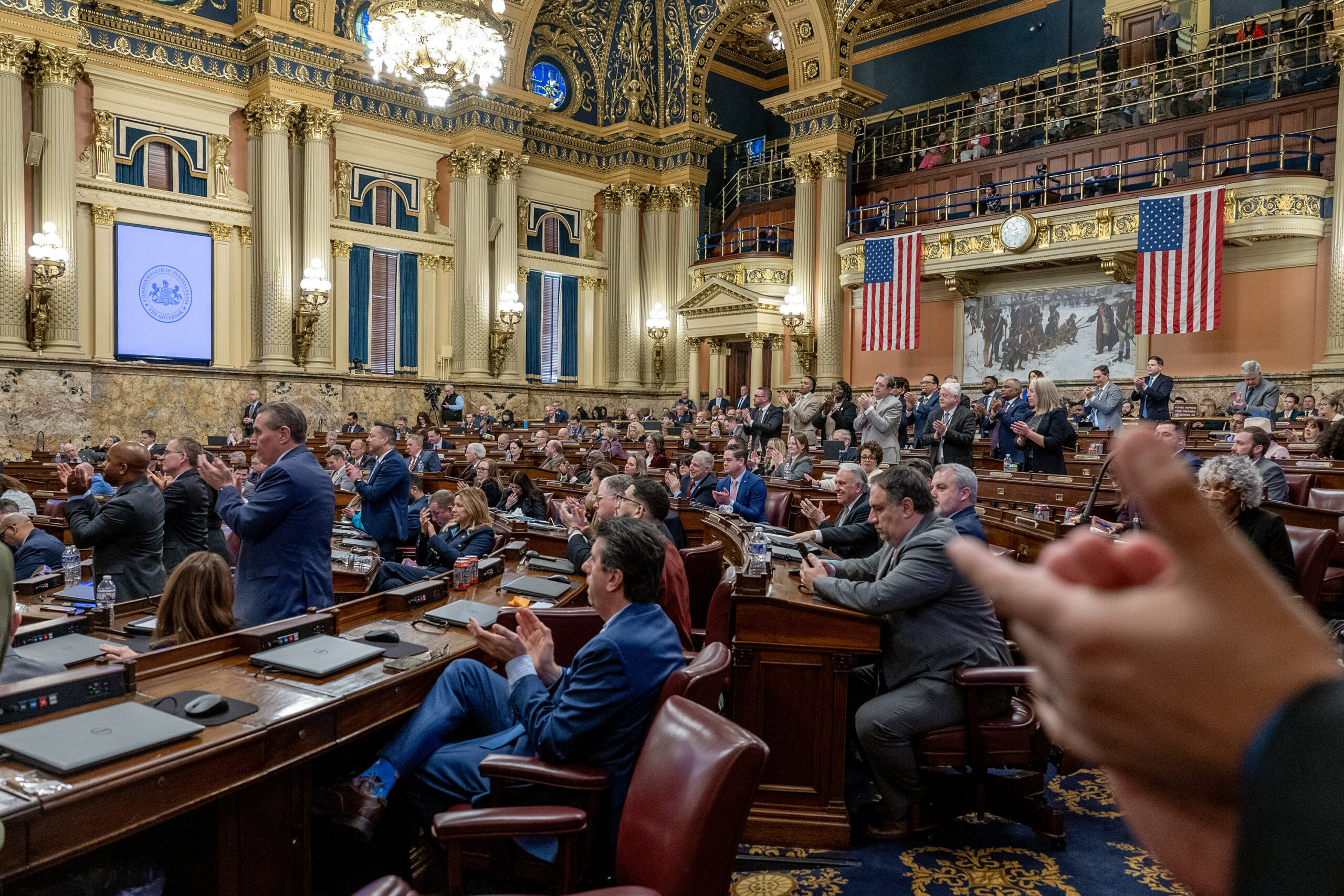
    The state House chamber as Gov. Josh Shapiro makes his annual budget proposal in Harrisburg Tuesday, Feb. 3, 2026.

    Budget negotiations will begin Wednesday, Shapiro said, before legislative committees begin meeting about the proposal later this month. The budget will be negotiated in closed-door meetings between top leaders and is due by the start of the new fiscal year, which begins July 1.

    One contentious issue is off the negotiating table for the forthcoming fiscal year: funding mass transit. Shapiro again pitched the state to increase the share of the sales and use tax that goes to mass transit, including SEPTA, as the transit agencies desperately need a new recurring revenue source. Shapiro does not want that to begin until July 1, 2027, when his latest short-term transit funding fix is scheduled to run out.

    Shapiro and most lawmakers in the General Assembly are up for reelection this year. In previous midterm election years, the electoral pressure has sped up negotiations, as legislators want to bring home results to their constituents before they return to the campaign trail in a year when the governor’s mansion and control of the state House and Senate are on the line. (Shapiro’s likely opponent, Republican State Treasurer Stacy Garrity, immediately criticized his budget proposal, saying the pitch “didn’t come nearly close enough” to bridging the state’s spending deficit.)

    But even if lawmakers move with haste, this year’s budget negotiations may be tense as leaders try to reset spending to better align with how much the state generates in revenue.

    “We’re going to do everything we can to protect the taxpayer and make sure that the dollars that are allocated are wisely used,” Senate Majority Leader Joe Pittman (R., Indiana) said. “We have to make sure we’re, again, stretching every taxpayer dollar we can and bringing the cost of government down as much as possible.”

    But with the high-stakes election just months away, House Majority Leader Matt Bradford (D., Montgomery) cautioned Republicans against coming down hard on Shapiro, who has boasted consistently high approval ratings.

    “I would argue the polls indicate that we have a very popular governor. They tried to obstruct him and his numbers only got more popular,” Bradford said. “My suggestion is it would be the political imperative, regardless of the policy implications, that they start working with this governor to pass things.”

    Staff writers Thomas Fitzgerald, Maddie Hanna, Ariana Perez-Castells, and Susan Snyder contributed to this article.

  • Housing, affordability, and new revenue: What to watch for in Gov. Josh Shapiro’s state budget address

    Housing, affordability, and new revenue: What to watch for in Gov. Josh Shapiro’s state budget address

    HARRISBURG — Gov. Josh Shapiro on Tuesday is expected to propose a $53.2 billion state budget for the 2026-27 fiscal year, just three months after settling a bitter, 135-day budget impasse that forced schools, counties, and nonprofits to take out loans to stay afloat.

    Shapiro, a first-term Democrat running for reelection this year and potentially poised for higher office, will deliver his fourth annual budget address before a joint session of the Pennsylvania General Assembly, where he plans to pitch an expansive $1 billion housing and infrastructure plan to incentivize new housing development with an overall focus on affordability in the state.

    And as in years past, Shapiro is expected to again propose new revenue streams to fill a more than $5 billion deficit, such as the legalization and taxation of adult-use cannabis, as Pennsylvania is again expected to spend more than it brings in tax revenues.

    Here are three things to watch for in Shapiro’s budget proposal.

    Affordability, affordability, affordability

    Affordability has become somewhat of a top Democratic catchphrase heading into the midterm elections, as housing, energy and healthcare costs continue to rise.

    It’s an issue Shapiro has repeated as one that is top of mind for him, and he is now applying it to a basic need for many Pennsylvanians: housing.

    He’s expected to pitch a sweeping, $1 billion housing and infrastructure plan to cut red tape and reform zoning rules, as housing costs in the state remain high and availability low, though the details of the plan were unclear Monday afternoon.

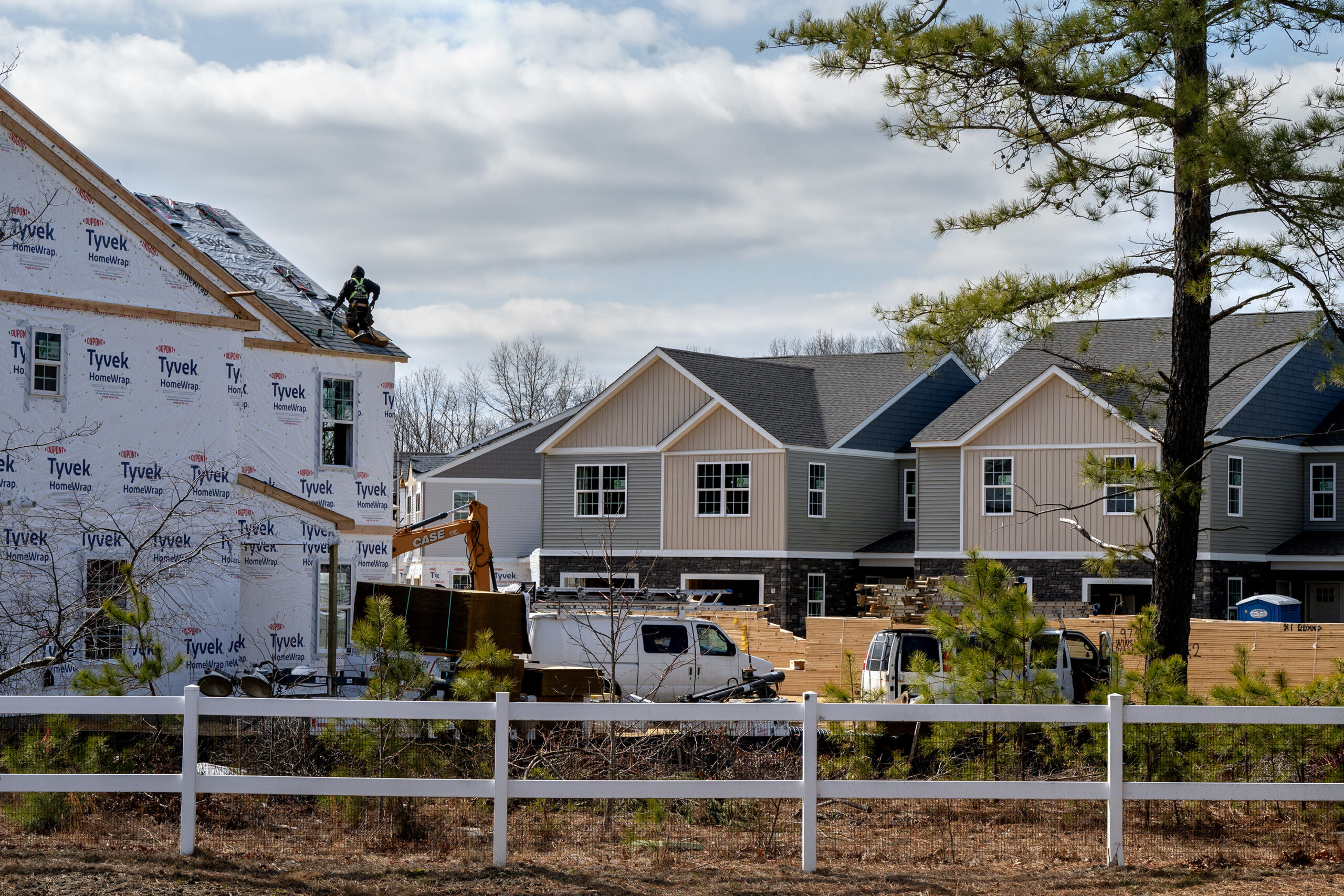
    Construction is underway on three bedroom units with garages at Winslow Cross Creek Family Apartments Thursday, Mar. 6, 2025. Hans Lampart, founder, president, and CEO of Eastern Pacific Development and Brookfield Construction specializes in build-to-rent affordable housing.

    The average rental price in Pennsylvania is $1,525 per month, with 25,000 rentals available across the state, according to the real estate website Zillow.

    Additionally, Shapiro has been focused on energy affordability as another top priority, challenging PJM Interconnection — the independent electrical grid operator for Pennsylvania and 12 other states — over how much it is charging residential customers for energy.

    Shapiro has taken this effort to the White House and gained support for a cap on prices going forward.

    The governor on Tuesday is also expected to reintroduce his “Lightning Plan” that includes incentives to increase renewable energy production and a new Pennsylvania-specific cap-and-trade carbon program.

    The plan would replace the Regional Greenhouse Gas Initiative that Shapiro and House Democrats agreed to ditch as part of an overall $50.5 billion budget deal in November, following years of urging from Republicans who argued that it stifled economic growth in the state. A similar cap-and-trade program would be unlikely to pass the Republican-controlled state Senate.

    New revenue streams, again

    Shapiro will again try to fill the state’s projected $4.3 billion budget gap with new revenue streams — although none of them would be likely to be up and running in time for the start of the new fiscal year on July 1.

    Last year was the first time Pennsylvania’s state budget ever topped $50 billion. Its revenue still has yet to hit that milestone, and is unlikely to do so this fiscal year. The Independent Fiscal Office estimates the state will bring in nearly $49 billion, a 1.3% increase in revenue over the last fiscal year.

    The budget gap is among the biggest challenges for Shapiro in upcoming negotiations with top legislative leaders, as Senate Republicans say it’s their top priority to spend within the state’s means.

    Shapiro last year proposed tapping into the state’s Rainy Day Fund — approximately $7 billion set aside for emergencies — that the state has been stockpiling in the years since the COVID-19 pandemic. It’s unclear whether he will pitch using some of the fund again for the 2026-27 fiscal year.

    He is also expected to propose legalizing recreational marijuana again, in addition to the regulation and taxation of so-called skill games to generate new revenue for the state.

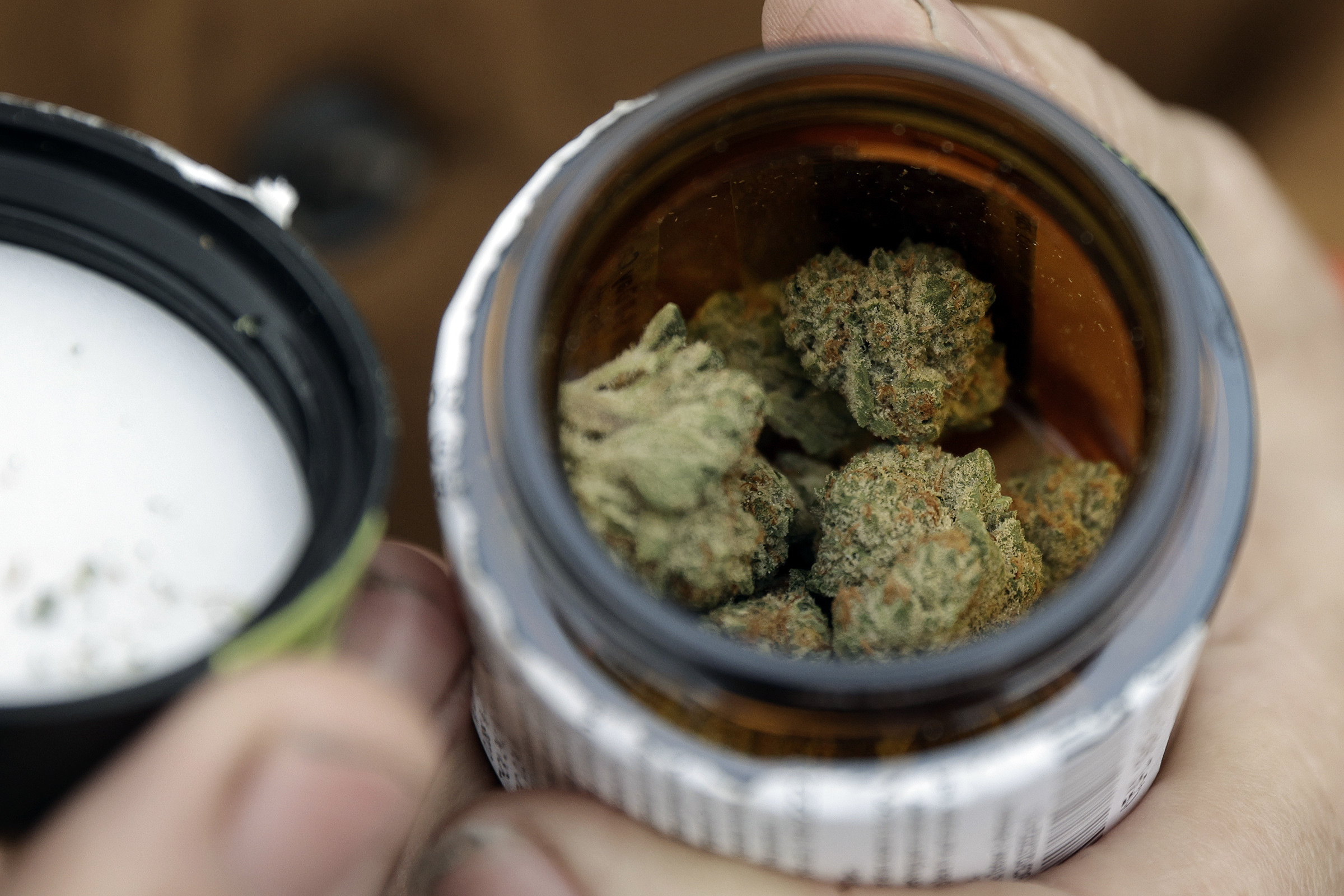
    Last year, Shapiro proposed a 20% tax on adult-use cannabis that he predicted would bring in $535.6 million in its first year, largely from licensing fees. He projected it could bring in $1.3 billion in the first five years, noting that only one of Pennsylvania’s neighboring states, West Virginia, hasn’t legalized recreational marijuana, essentially allowing Pennsylvania to lose out on tax revenue as residents cross state lines to buy it.

    A legal marijuana purchase in Deptford, N.J. on April 21, 2022.

    Shapiro has proposed regulating skill games in his last two budgets, asking last year that the unregulated gaming machines be taxed at 52%, which is the same tax rate as slot machines in casinos or gas stations. He estimated then that skill games would bring in nearly $369 million in its first year.

    (The skill games industry has continuously rejected a high tax rate, arguing that it would hurt the industry and small business owners that carry the machines, like bars and corner stores.)

    A possibly quicker resolution

    There is one bright spot for the schools, counties, and nonprofits that rely on state funding and which last year had to wait more than four months for that money when lawmakers couldn’t agree: It’s an election year.

    Election years often result in quicker budget resolutions, as lawmakers and officials want to secure money for their districts before they go home to campaign for reelection.

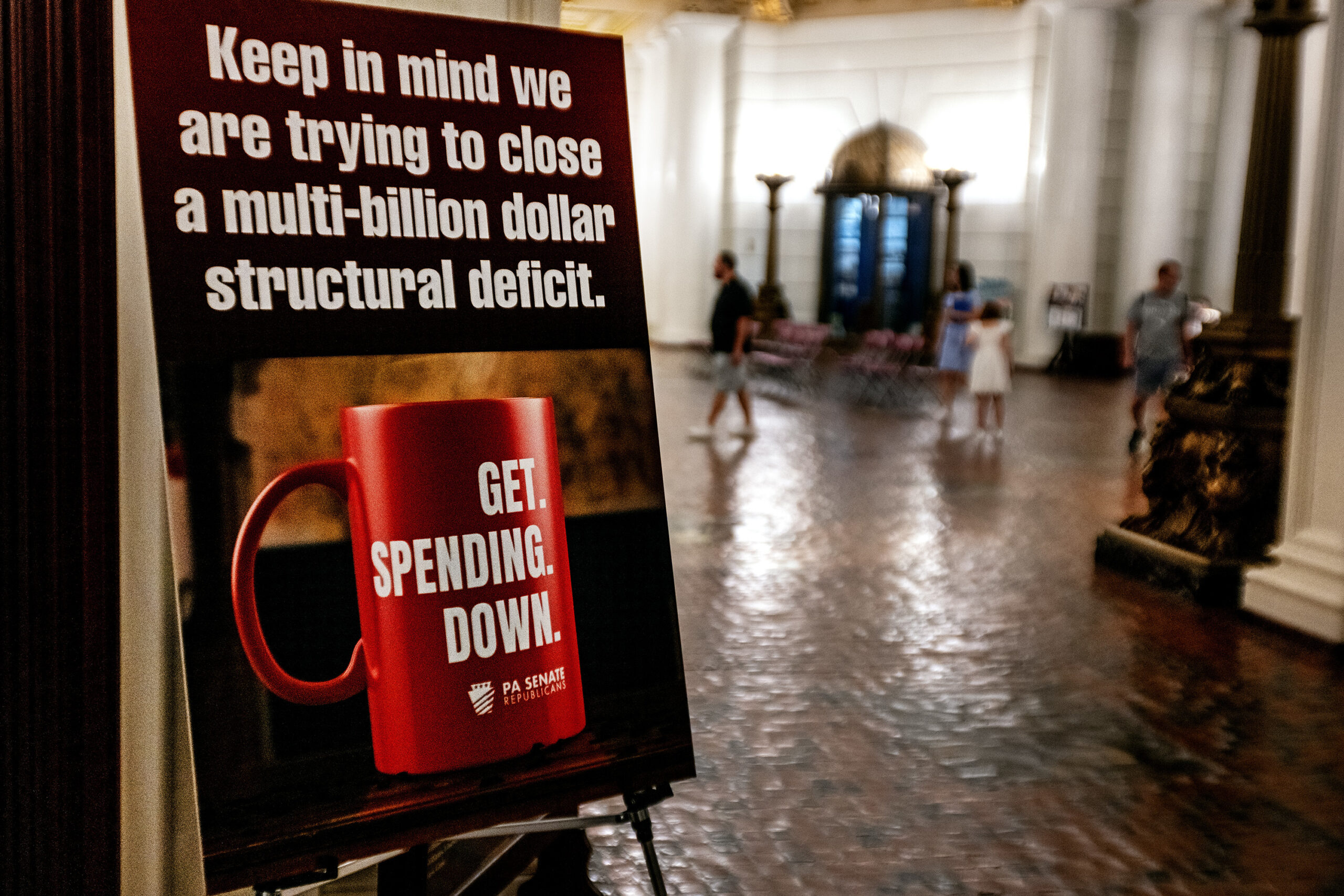
    Sign posted by the PA Senate at the Pennsylvania State Capitol in Harrisburg Aug. 26, 2025, reminds visitors of the state’s “multi-billion dollar structural deficit.”

    In 2018, when former Democratic Gov. Tom Wolf was up for reelection, he signed the state budget on June 23 — a week ahead of the July 1 deadline.

    This year, Shapiro is up for reelection, likely to face a November challenge from State Treasurer Stacy Garrity, the state Republican Party-endorsed candidate. And many other state lawmakers are in the same boat.

    All 203 seats in the state House and half the 50 seats in the state Senate are on the ballot in November. Several lawmakers have announced that they will not seek reelection, allowing for competitive elections to fill the vacancies.

  • As Josh Shapiro calls for ICE to leave Minneapolis, his GOP challenger Stacy Garrity wants Minnesotans — and Pennsylvanians — to cooperate with agents

    As Josh Shapiro calls for ICE to leave Minneapolis, his GOP challenger Stacy Garrity wants Minnesotans — and Pennsylvanians — to cooperate with agents

    As Gov. Josh Shapiro makes the case on national television for ICE to leave Minneapolis, his Republican challenger Stacy Garrity has a different view: Minnesotans should cooperate.

    Garrity, the state treasurer and GOP-endorsed candidate, said “it’s best to cooperate” with U.S. Immigration and Customs Enforcement, in an interview Thursday night at the National Constitution Center following an appearance on a conservative podcast.

    The retired U.S. Army colonel also praised Tom Homan, President Donald Trump’s border czar assigned to take over the Minneapolis operation, as “spot on” in his recent remarks calling for a de-escalation of the conflict between residents and federal officials, and that residents should comply.

    “He said it best: Cooperate and take down the rhetoric,” Garrity said, noting her time as U.S. Army military police officer gives her a “different perspective.”

    Garrity’s comments came days after she received an endorsement from Trump in the Pennsylvania governor’s race. The president on Tuesday evening called Garrity a “true America First Patriot, who has been with me from the beginning.”

    Shapiro, meanwhile, has become more outspoken about ICE’s operations in Minnesota over the last few days while on a national media blitz for his new memoir released this week, Where We Keep the Light. The former Pennsylvania attorney general, known as a careful and deliberate communicator, has now repeatedly called for ICE and the Border Patrol to leave Minneapolis, arguing that the operations are “outside the bounds of law” and “must be terminated.”

    Pennsylvania does not have a sanctuary policy restricting cooperation with ICE by state law enforcement, but several jurisdictions in the state do have such policies, including Philadelphia.

    Garrity was in Philadelphia on Thursday for a live taping of the conservative podcast Ruthless. The event was hosted by Americans for Prosperity, a national libertarian advocacy organization. She largely talked about what led her to politics in 2020 after a long career in the military and private sector, as well as her work as the state’s treasurer.

    When asked whether she was concerned by the shooting of Alex Pretti, an intensive-care nurse at a Veterans Affairs hospital in Minnesota, Garrity said she had not seen the videos of Border Patrol agents fatally shooting Pretti and that she “always waits for the investigation” before forming an opinion. Pretti’s death marked the second killing of a U.S. citizen by federal agents in Minneapolis this month, leading to mass protests and public outrage.

    “The investigation will come out, and then any corrective action that needs to be taken, or we’ll see what the results are,” she said. “I’m going to withhold any judgment until the investigation.”

    In the case of Pretti’s death, Trump said the U.S. Department of Homeland Security is leading the investigation, and he is “going to be watching over it.” Minnesota officials have called for an independent investigation and have protested as federal officials have blocked local authorities from investigating.

    Earlier this week, Shapiro said his staff has been preparing for the chance that Trump sends a surge of ICE agents to a Pennsylvania city like Philadelphia or Pittsburgh.

    If Trump does send more ICE agents to Pennsylvania, Garrity said Pennsylvania officials should cooperate here, too.

    “It’s always good to cooperate with ICE, especially when they’re doing targeted actions,” Garrity added.

  • Here’s who Stacy Garrity has picked for a running mate in the Pa. governor’s race against Josh Shapiro

    Here’s who Stacy Garrity has picked for a running mate in the Pa. governor’s race against Josh Shapiro

    Pennsylvania Treasurer Stacy Garrity on Thursday announced her pick for a running mate in the governor’s race, as state Republicans mount their campaign to more seriously challenge Democratic Gov. Josh Shapiro in November’s election.

    Jason Richey, a longtime Pittsburgh attorney and chair of the Allegheny County GOP, announced his campaign for lieutenant governor on Thursday morning. Garrity, the state party-endorsed candidate for governor, quickly endorsed him afterward.

    Jason Richey, Aliquippa, Pa., Republican Candidate for Governor speaks with Inquirer Reporters at the Pennsylvania Manufacturers Association held at The Metropolitan Club in New York, N.Y., on Saturday, Dec., 4 2021.

    Garrity said Richey “rose to the top” as the best candidate to be her running mate to challenge Shapiro.

    “Jason understands the potential Pennsylvania has, but only if our Commonwealth has the right leadership,” she said in a news release, noting that he shares her concerns with Shapiro’s tenure as governor. “Jason Richey will not just be an incredible running mate on the campaign trail, but a terrific partner in governing for all the people of Pennsylvania.”

    Until Richey’s announcement, few moderate candidates had emerged to run alongside Garrity. Meanwhile, other potential candidates declined to run with her in the uphill battle election against Shapiro, a popular incumbent with a $30 million war chest and a growing national profile. Garrity announced earlier this month she had raised nearly $1.5 million in the first few months of her campaign, from August to December.

    Richey is running to be Garrity’s No. 2 among a field of several other potential lieutenant governor candidates, including State Sen. Cris Dush (R., Jefferson) and Bucks County businessman and political newcomer Brian Thomas. Other candidates who have considered a run for lieutenant governor but have yet to announce include former gubernatorial nominee State Sen. Doug Mastriano (R., Franklin) and former State Rep. Rick Saccone (R., Allegheny).

    In Pennsylvania, candidates for lieutenant governor and governor run in the primary election separately. Whoever wins the primary nomination joins on one ticket for the general election. For example, Mastriano won the primary nomination but his endorsed lieutenant governor candidate did not, leading him to run with another running mate in November. At least one of the lieutenant governor candidates — Dush — said he would run for the office in the primary election even without the party’s support.

    Shapiro is expected to again run unopposed in the Democratic primary, alongside Lt. Gov. Austin Davis, the first Black person elected to Pennsylvania’s executive branch.

    “We must turn Pennsylvania around now and I believe that Stacy Garrity is the person who can fix Pennsylvania,” Richey said in a release Thursday. “I’m excited to join Stacy on the ticket that’s going to save Pennsylvania. Stacy has demonstrated leadership, fiscal discipline, a deep commitment to serving Pennsylvanians and the ability to win statewide.”

    In an interview weeks before he decided to enter the race, Richey said he believed Garrity should pick a lieutenant governor candidate who is politically moderate and comes from Pittsburgh or Philadelphia, the state’s population centers.

    Earlier this month, Richey said a running mate who has “a little more urban understanding,” since Garrity hails from a rural part of the state, “would make a lot of sense” on the Republican ticket.

    Garrity secured the state party endorsement for governor last fall, as Republicans sought to coalesce around a gubernatorial candidate after their failures to do so in 2022 led to Mastriano’s nomination to oppose Shapiro. Mastriano went on to lose to Shapiro by nearly 15 percentage points, or 800,000 votes.

    Richey ran in 2022 for governor as part of the crowded GOP primary, but withdrew and did not appear on the ballot with the other nine candidates in the running.

    Garrity, of rural Bradford County, captured President Donald Trump’s endorsement earlier this week, in which Trump called her a “true America First Patriot, who has been with me from the beginning.” Garrity will appear in Philadelphia at the National Constitution Center on Thursday for a live taping of the political podcast RUTHLESS, alongside Fox News analyst Guy Benson.

    In addition to his duties as chair of the Allegheny County GOP, Richey is a partner at K&L Gates law firm in Pittsburgh with a focus on energy law.

    Richey, 54, lives in a suburb of Pittsburgh with his wife and has three sons.

    Staff writer Katie Bernard contributed to this article.

  • Facing an uphill battle against Gov. Josh Shapiro’s $30 million war chest, Stacy Garrity still has to convince top Republicans she’s worth investing in

    Facing an uphill battle against Gov. Josh Shapiro’s $30 million war chest, Stacy Garrity still has to convince top Republicans she’s worth investing in

    HARRISBURG — In the race for Pennsylvania governor, State Treasurer Stacy Garrity still has a lot of work to do.

    With a little more than nine months until Election Day, the state Republican Party-endorsed candidate must convince top GOP donors that her campaign is worth investing in, making the case that she can motivate voters — and beat popular incumbent Gov. Josh Shapiro.

    And so far, she has significant ground to make up against the Democratic machine Shapiro now effectively controls, as he continues to build his name recognition nationwide.

    Garrity announced earlier this month that from August through December, her campaign raised nearly $1.5 million — almost as much as the 2022 Republican gubernatorial candidate, Doug Mastriano, raised in the entirety of his campaign. But the amount is only a fraction of the $30 million war chest Shapiro has built up over the last few years.

    Republican insiders for months have said privately they see the race against Shapiro, a Democratic governor with consistently high approval ratings and a rising national star, as one they have slim chances at winning in November.

    Pennsylvania Gov. Josh Shapiro (right) listens to Stacy Garrity, the 78th state treasurer, at the Forum Auditorium in Harrisburg, Pa., on Jan. 21, 2025. It was the day she was sworn in.

    Still, they’re hoping that Garrity, a retired U.S. Army colonel who in 2024 broke the record for receiving the most votes in a state-level race — a record previously held by Shapiro — will be able to deliver a high enough level of excitement among Republican voters in Pennsylvania to drive them to the polls, where down-ballot races for control of the U.S. House and state Senate are also on the line.

    Some GOP insiders have pointed to Garrity’s limited early fundraising haul as make-or-break for the state’s whole Republican ticket — and the political future of Pennsylvania.

    “This is the Democrats’ first real opportunity to gain a trifecta in Pennsylvania that could lock up Pennsylvania from being a ‘purple’ state to a solid blue state every election here onward,” said Matt Brouillette, who leads Commonwealth Partners and its political action committees, which often contribute to Republican candidates and are largely funded by Pennsylvania’s richest man, Jeffrey Yass.

    Brouillette leads the Commonwealth Leaders Fund, a powerful PAC that sat out the 2022 gubernatorial race that the PAC saw Mastriano as unable to win. Brouillette said in an interview earlier this month that the fund still had yet to decide whether it will invest in Garrity’s campaign.

    There isn’t a specific number Brouillette said he wants to see her raise before he chooses to get involved in the governor’s race, but he is overall “encouraged to see Stacy solidifying support for her candidacy.”

    “Stacy is going to have to attract national investment the way Josh has,” Brouillette said. “Our donors won’t be sufficient. Stacy is going to have to be competitive nationally to make this a race.” (After publication of this story, Brouillette said the PAC would invest in Garrity’s race, but did not disclose a dollar amount.)

    As 2028 inches closer, Shapiro’s national reach continues to grow — and with that, he has been able to flex his fundraising skills across the country. He will publish his first book on Tuesday, a memoir called Where We Keep the Light, in what is largely seen as a telltale sign that a candidate is considering a presidential run. He has promised to use his influence in Pennsylvania to support Democrats down the ballot, including in four congressional districts the party hopes to flip in the midterms — and deliver Democrats a majority in the U.S. House.

    Campaign finance filings detailing who contributed to both Shapiro and Garrity’s campaigns won’t be available until next week. Shapiro broke fundraising records in the 2022 race, and is on track to do the same again this year.

    What’s more: Garrity is also contending with strong headwinds favoring Democrats in November, as support for President Donald Trump wanes.

    Still, Garrity has been rolling out a number of endorsements from top Pennsylvania Republicans, including on Friday from U.S. Rep. Ryan Mackenzie (R., Pa.), who is running for reelection in one of the districts Democrats hope to flip. But she has yet to receive Trump’s support or endorsement, and was not mentioned by Trump when she attended his most recent Pennsylvania rally.

    The hesitancy appears to have extended to the lieutenant governor’s contest. Garrity still has yet to announce who she would like to be her running mate. Only a few candidates have announced their candidacy for lieutenant governor so far, and the state GOP is expected to endorse Garrity’s pick at its February meeting.

    A spokesperson for Garrity’s campaign said she is “humbled by the outpouring of support she’s received from supporters all across the commonwealth, including from members of the Commonwealth Partners’ leadership,” who share her vision for the state and frustrations with Shapiro.

    “No moment crystalized this support more than when the PAGOP took the unusual step of endorsing Treasurer Garrity’s campaign so early, which served as the catalyst for the momentum she’s building to defeat Josh Shapiro this November,” said Garrity’s spokesperson, Matt Benyon, in a statement.

    A spokesperson for the Pennsylvania Republican Party declined to comment.

    Garrity will host a kickoff fundraiser in Philadelphia on Wednesday, said Bob Asher, Garrity’s finance chair.

    As for her fundraising numbers since December, Asher said, with a smile: “Stay tuned.”

    Grassroots support vs. Shapiro’s war chest

    In announcing her first haul, Garrity’s campaign said 97% of her contributions came from Pennsylvania residents, and 75% of the contributions were under $100. Shapiro, for his part, boasted that the $30 million in his campaign coffers came from all of Pennsylvania’s 67 counties, as well as financial support from all 50 states.

    A large number of small-dollar campaign contributions can suggest grassroots support — translating to an energized voter base on Election Day — for a candidate that big-dollar or corporate political action committee funds can’t capture. But the bigger the war chest, the more a candidate can spend to get their name on the airwaves.

    Other GOP insiders are pointing their fingers at the state Republican Party, using Garrity’s early fundraising numbers as proof they are not doing enough to back her up in the race against Shapiro and that they’re setting themselves up for failure in November.

    For Jim Worthington, the owner of the Newtown Athletic Club and a Bucks County GOP power player, Garrity’s early struggles are a result of failings by the state GOP to plan ahead and invest in mail voting.

    “It’s an indictment of the party,” Worthington said. “I understand why some people are hesitant to give money. They’re looking at the tea leaves and saying, ‘Look, we lost the year.’”

    “It’s going to be difficult for Stacy, and I feel bad because she is a hell of a candidate,” he added.

    State Treasurer Stacy Garrity greets supporters after a campaign rally in Bucks County on Sept. 25, 2025. The GOP gubernatorial candidate visited the Newtown Sports & Events Center, in one of Pennsylvania’s top swing counties.

    Worthington said anytime he talks to national Republicans in Washington or Trump’s Mar-a-Lago club, where he’s a member, he mentions Garrity’s race as one in which they should invest.

    At the very least, he argues, top Republicans should help Garrity in an effort to ensure Shapiro doesn’t “have a cakewalk right into 2028,” as speculation continues to surround Shapiro about his political aspirations. Worthington said he even brought this up directly to Vice President JD Vance, the GOP’s expected 2028 successor to Trump, at Vance’s holiday party.

    As for Garrity, Worthington said he believes she can win, calling her “an excellent candidate” with a hard work ethic.

    “Make no mistake, it’s gonna be a tough go,” Worthington added. “But I’m 100% sure she can win.”