Author: Gina Mizell

  • As Tyrese Maxey ascends, his shotmaking in ‘clutch’ scenarios is still a work in progress

    As Tyrese Maxey ascends, his shotmaking in ‘clutch’ scenarios is still a work in progress

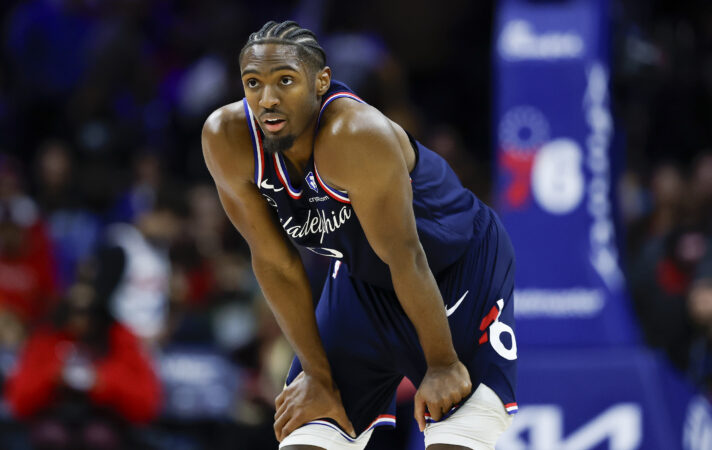
    An onlooker could have determined that Tyrese Maxey simply lost his dribble at the end of regulation Monday in a loss to the Denver Nuggets, forcing him into a rushed, fading three-point attempt.

    But the 76ers’ star point guard already recognized that he wished he had gotten an earlier screen from teammate VJ Edgecombe. That would have given him more time to determine whether he should pass the ball if he drew multiple defenders or attack the basket with his explosiveness.

    “Once I came off the screen, there was like four or five seconds left,” Maxey said postgame. “They were kind of faking the double[-team] at me, and that was a little difficult for me.”

    The Sixers never should have been in a last-possession situation against the depleted Nuggets, who played their 125-124 overtime victory at Xfinity Mobile Arena without their top seven players, including MVP front-runner Nikola Jokić. But Maxey had the ball in his hands at the end of regulation and the extra frame and missed two potential game-winning shots.

    That developing responsibility comes with the 25-year-old’s continued ascent that includes being named the Eastern Conference Player of the Week, being ranked second in the East in fan voting in the first All-Star returns, and earning legitimate MVP buzz for the surprising 19-15 Sixers.

    “I’m just learning what [actions] I want to get into, how I want to play, where I want guys,” said Maxey, who totaled 28 points, six rebounds, six assists, and four steals against Denver. “… I could have done a better job of explaining what I wanted and what I wanted to happen.”
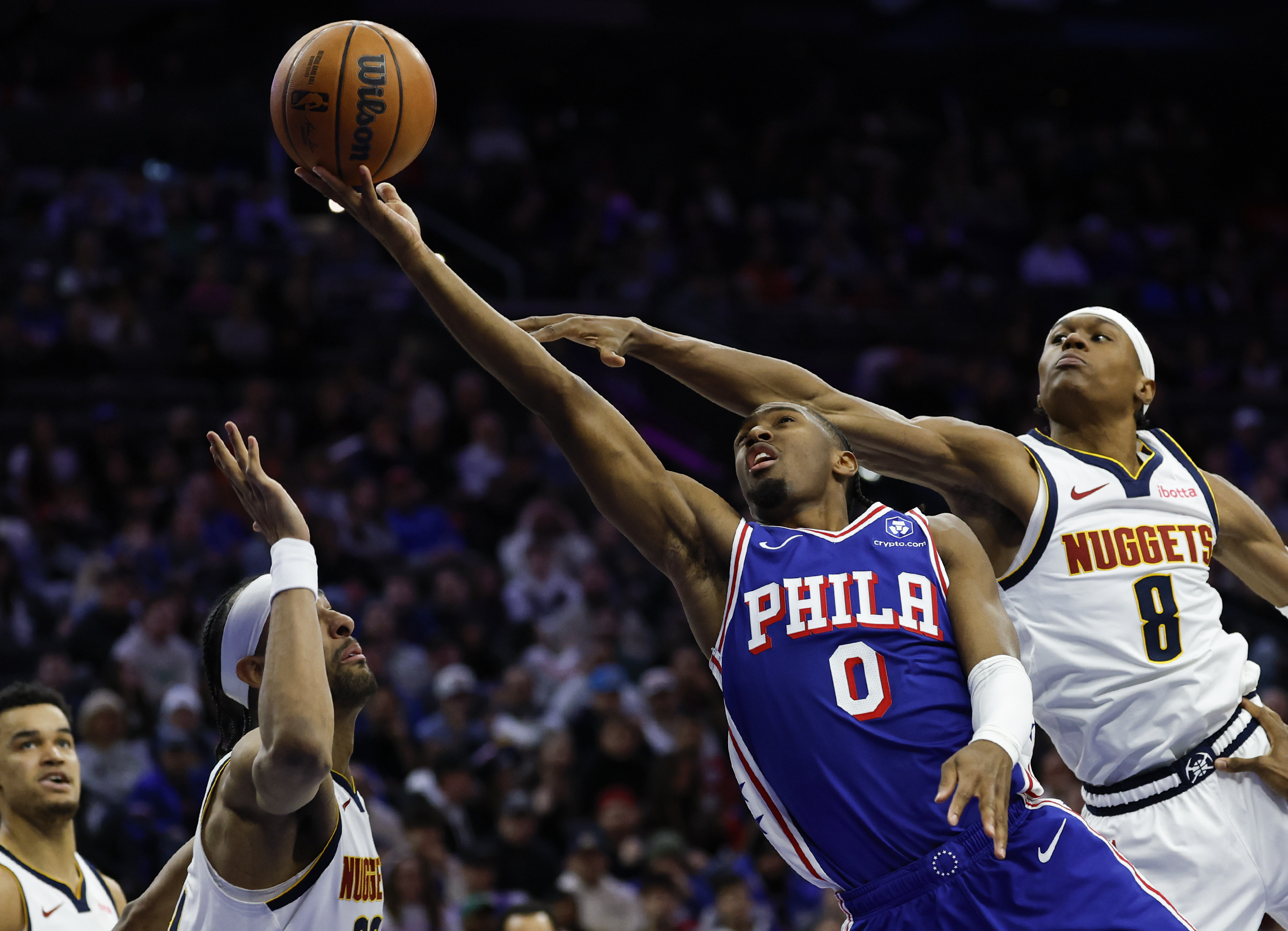
    Tyrese Maxey had 28 points, six rebounds, six assists, and four steals against Denver on Monday.

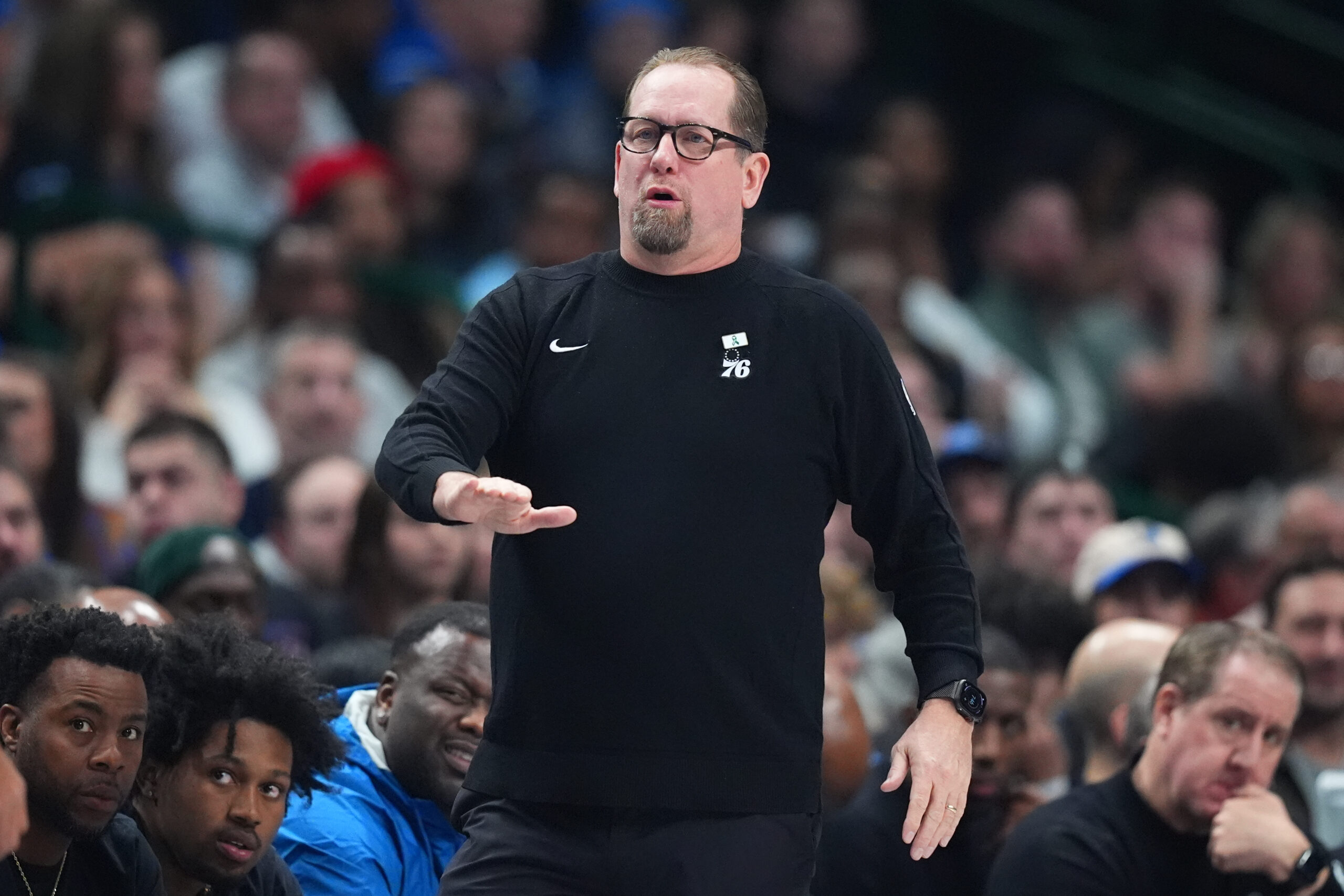
    Maxey also misfired at the end of overtime on an attempt he described as a “good look” but that coach Nick Nurse called “OK.” Maxey took the inbounds pass with less than five seconds remaining and turned the right corner around the defender, but tripped over his foot and, while falling, lofted a floater that bounced off the rim.

    “Got a little off-balance,” Nurse said, “and probably wasn’t as clean a look as he wanted to get.”

    Maxey and the Sixers are no strangers to matchups going down to the wire this season. They entered Tuesday tied for second in the NBA with 23 “clutch” games played, when the scoring margin is five points or fewer with five minutes remaining in regulation. They are 13-10 in such situations and are tied for ninth in the league in winning percentage (.565) and are sixth in net rating (plus-1.4).

    Maxey has played in 21 of those games, and ranks 10th in the league in scoring average in those minutes (four points) among players with at least 10 clutch appearances. Maxey is shooting 39.7% from the floor, including 22.7% from three-point range in those minutes, significant dips from his overall shooting numbers (47.5% from the field, 40.5% from long range) while sitting third in the NBA in scoring at 31 points per game.

    The defense — and pressure — increases down the stretch of tight games, of course. But this season, reigning MVP Shai Gilgeous-Alexander of the defending champion Oklahoma City Thunder is shooting 49.2% from the floor in clutch situations, while averaging 7.4 points. Last season, NBA Clutch Player of the Year Jalen Brunson connected on 51.1% of his attempts and averaged 5.6 points in those minutes for a New York Knicks team that advanced to the Eastern Conference finals. Entering Tuesday, Anthony Edwards, Cade Cunningham, and Devin Booker are shooting 50% or better in at least 12 clutch games played this season.
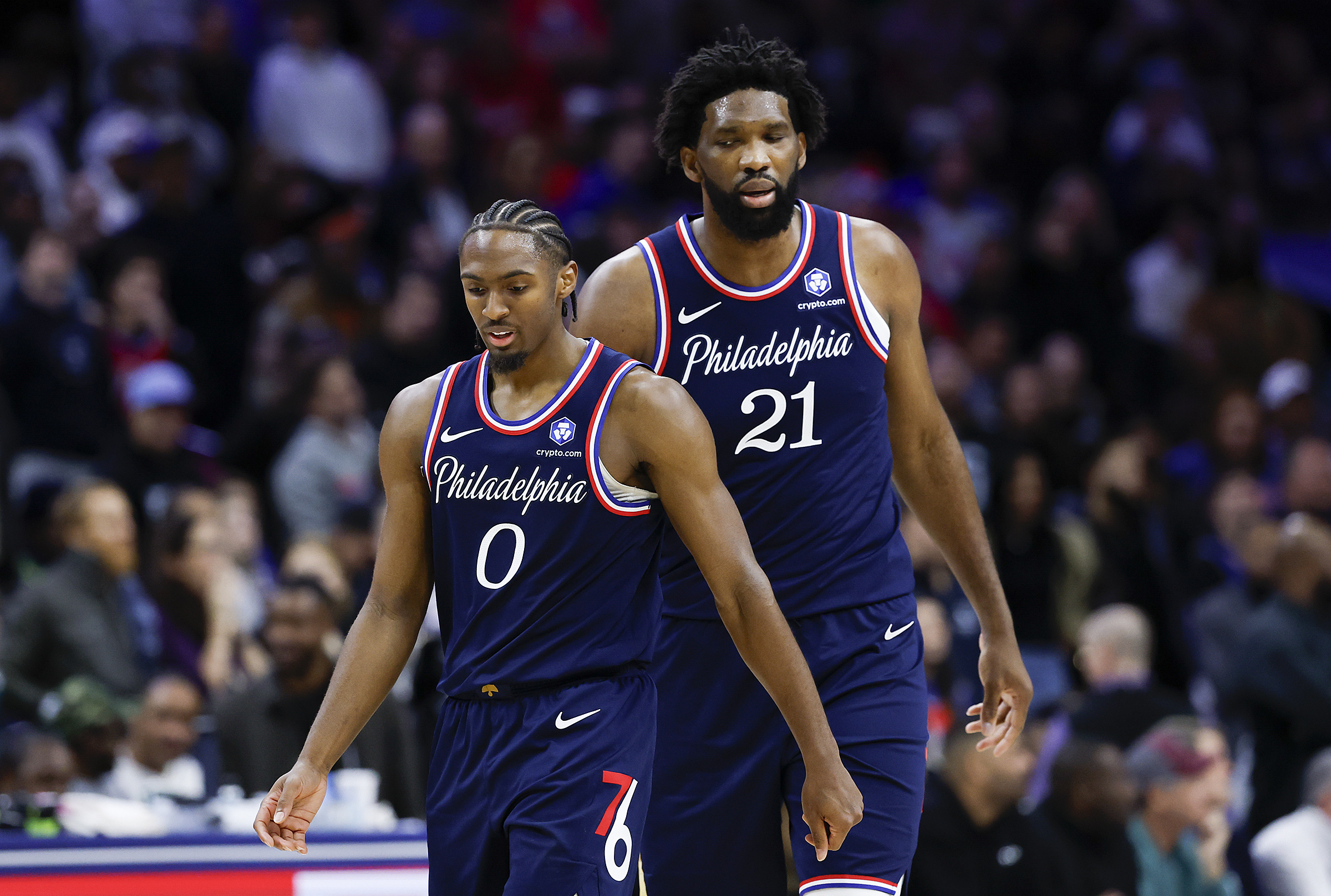
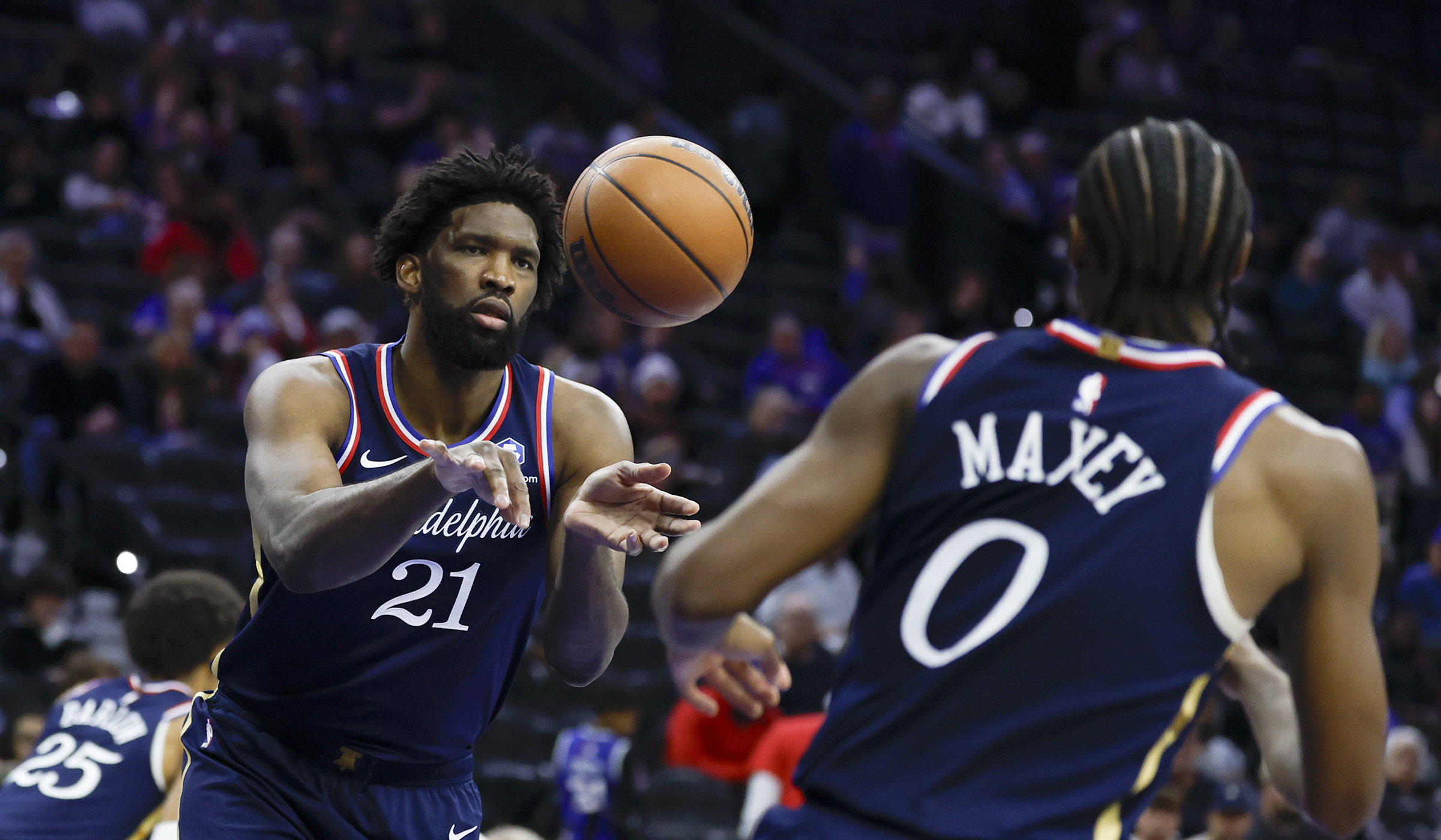
    Tyrese Maxey has become a focal point in big moments as Sixers stars including Joel Embiid have become less available.

    They headline the elite guard group that Maxey, in many ways, has already cracked. Yet he spoke last season about experiencing a variety of new defensive coverages while becoming the Sixers’ clear top offensive option, while former MVP Joel Embiid and perennial All-Star Paul George mostly were sidelined with injuries. Consider these clutch demands — which were a rarity during a woeful 24-58 season in 2024-25 — the next layer.

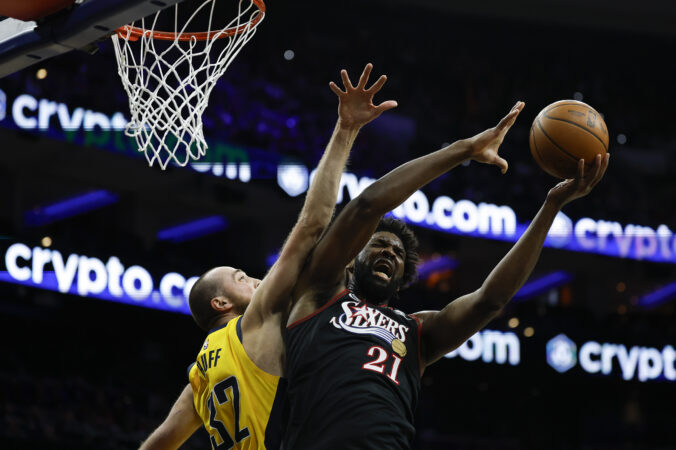
    Long before Monday’s waning seconds of regulation and overtime, Nurse said the Sixers lost “strictly a shooting percentage game” by allowing the shorthanded Nuggets to get comfortable from the floor (53.1%) and beyond the arc (18-for-37). Embiid, meanwhile, called the Sixers’ offensive spacing “kind of terrible,” and said the basketball IQ required to counter the smaller Nuggets’ double teams of him was “high school stuff.” Denver gained its final lead in overtime via a goaltending call on Embiid, who acknowledged that he mistimed his jump to challenge a Bruce Brown transition layup.

    In November, Maxey fervently clapped when asked about the crunch-time games the Sixers had already compiled. He said then that he was proud of his team’s resilience, and that the experience should hold long-term benefits. On his own, Maxey had already rewatched the Sixers’ first two matchups against the Boston Celtics (a one-point win and one-point defeat, respectively), along with their 136-124 victory against the Orlando Magic on Oct. 27 and their dreadful 113-111 loss at the Chicago Bulls on Nov. 4.

    “There were a couple times I just got in the paint, kicked it out, got some open threes,” Maxey said then. “I think that’s the biggest thing. And then, sometimes, I’m going to have to shoot some tough shots — and make some tough shots. I can live on that hill.”
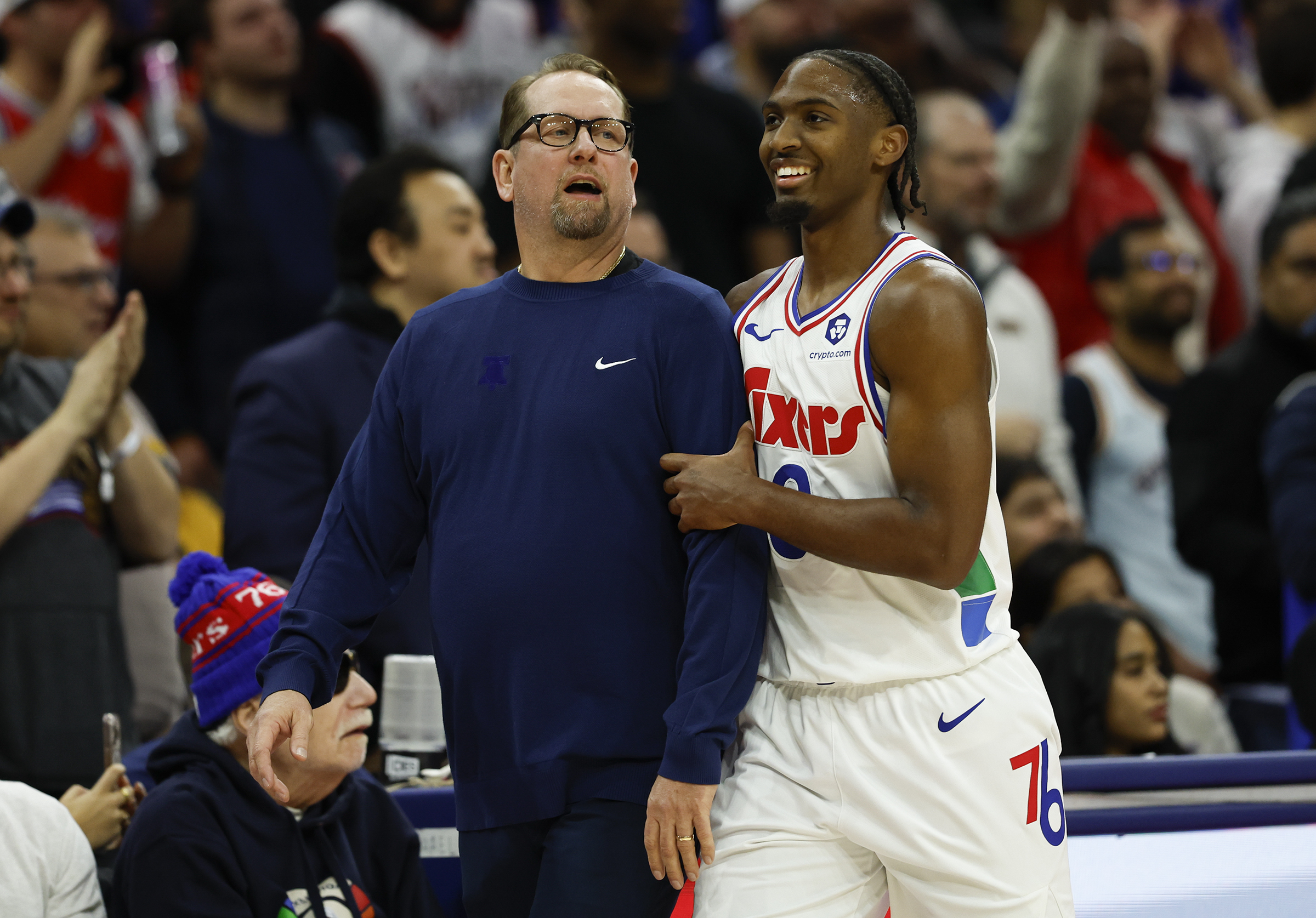
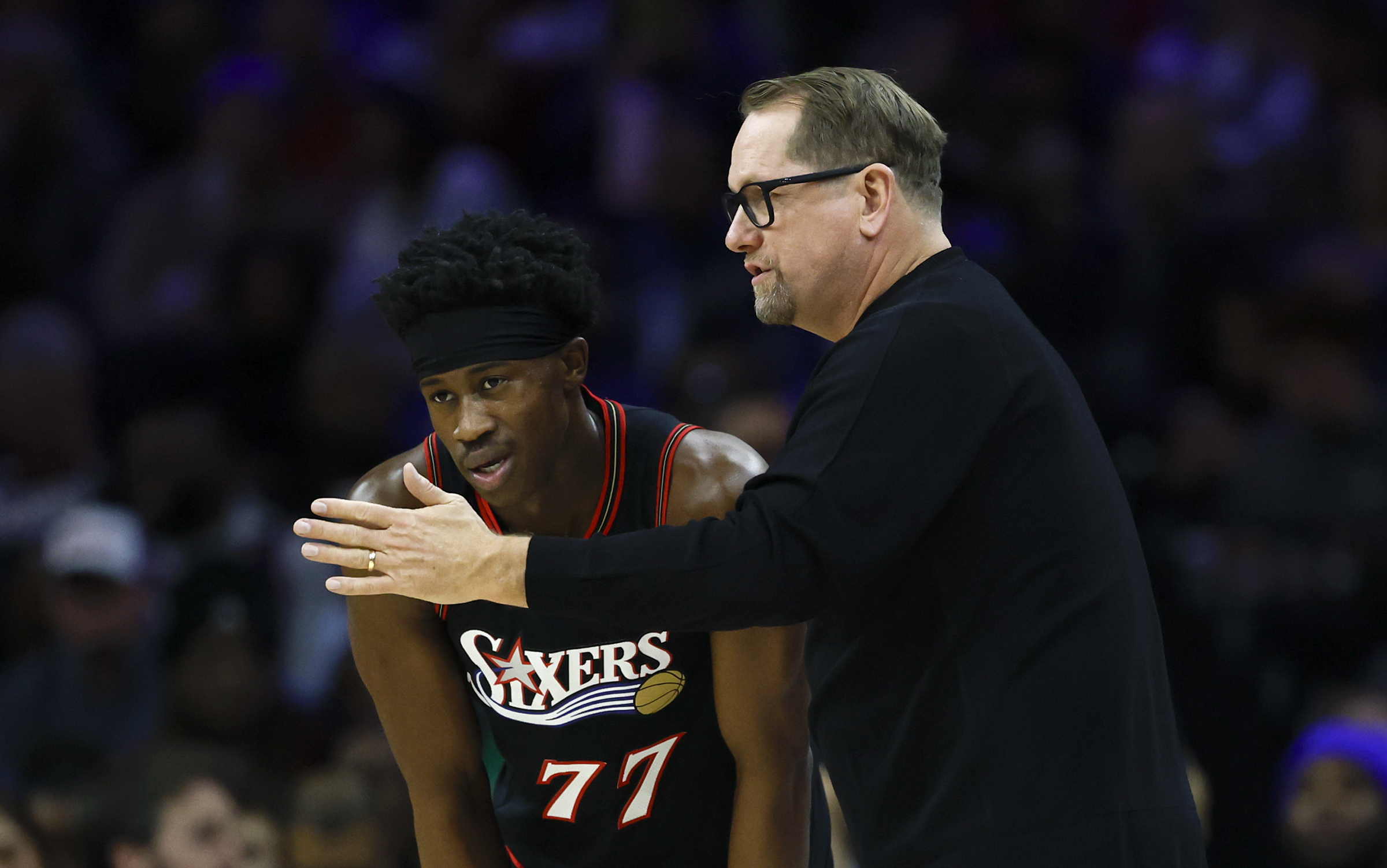
    Sixers coach Nick Nurse described Tyrese Maxey’s final look against the Nuggets as “OK.”

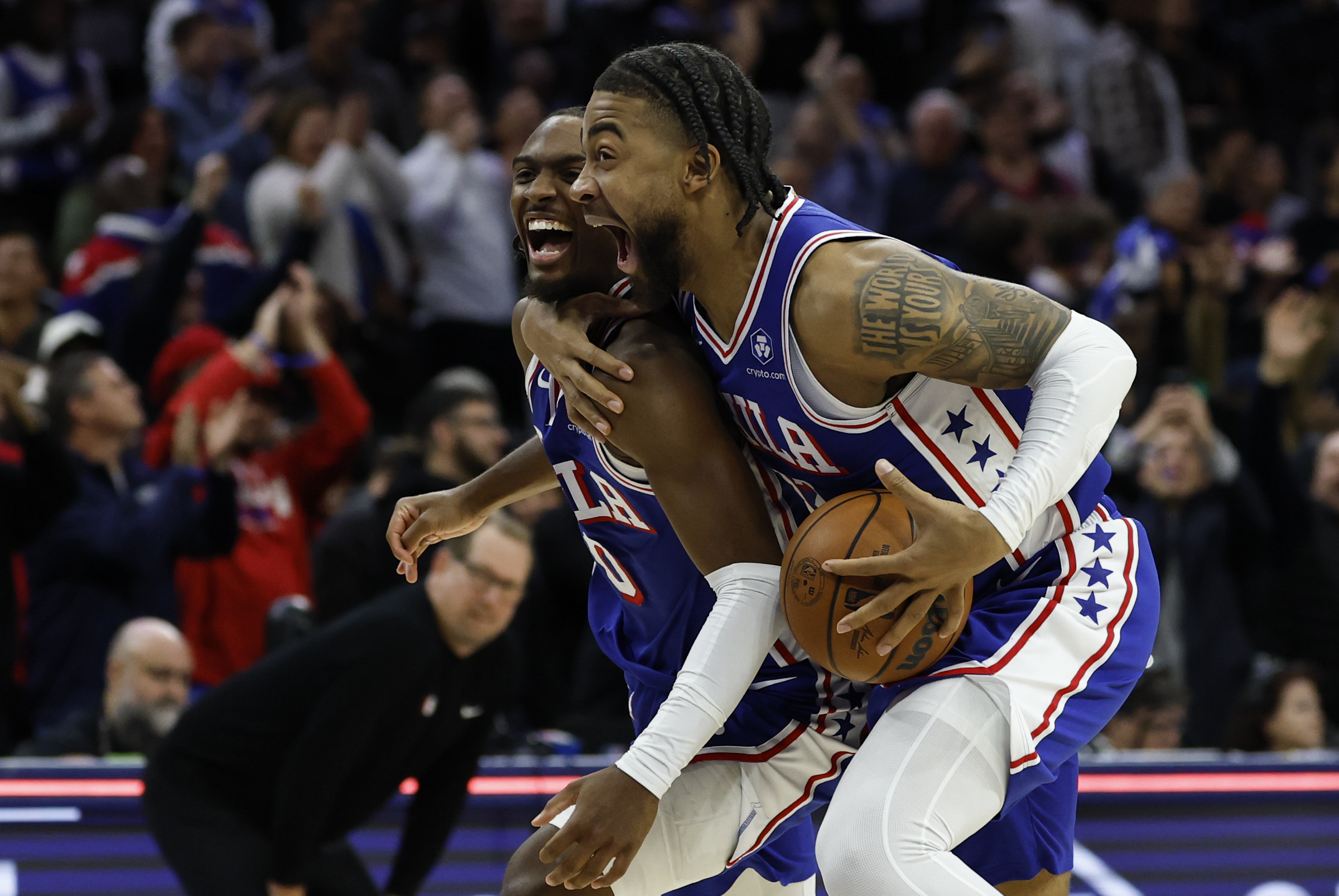
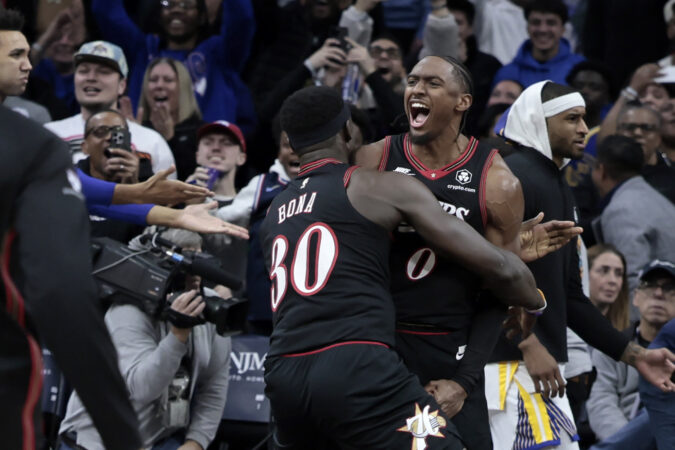
    Since then, Maxey has connected on timely fourth-quarter shots at Madison Square Garden to keep the Sixers out of clutch territory in Saturday’s victory over the Knicks. And he covered the ground for an highlight-worthy chase-down block on former teammate De’Anthony Melton to preserve a Dec. 4 home victory against the Golden State Warriors. And he dished to Edgecombe for an overtime game-winner at the Memphis Grizzlies last week.

    That play featured the screen timing from Edgecombe that Maxey desired Monday, when he got going too late before bobbling the ball. By the time Maxey hit the podium for his postgame news conference, he had vocalized that to his rookie teammate.

    That is part of Maxey’s development — and responsibility — as a clutch player. And Embiid, who has plenty of experience in those final-possession scenarios, believes in his star point guard.

    “You have the ball, the whole defense is looking at you,” Embiid said. “… You don’t necessarily have to take that last shot. The double comes, you invite it, and then you make the right plays.

    “I think [Maxey] has the right mindset to make those plays, and we’re still going to trust him to make those plays.”
  • Sixers come out of road trip with momentum — and continuity — after beating Knicks at Madison Square Garden

    Sixers come out of road trip with momentum — and continuity — after beating Knicks at Madison Square Garden

    NEW YORK — Nick Nurse asked the assembled media to check their notes. But the 76ers coach could not recall the last time his team rolled out the same starting lineup for three consecutive games.

    “That might be a record for us in the last 18 months,” he said. “… I really don’t remember that happening for a long time.”

    This newfound continuity occurred within a tiny sample size of the 82-game regular-season grind. But the Sixers are beginning to see results, including a 130-119 victory over the New York Knicks on Saturday night at Madison Square Garden.

    The win capped a holiday-season road trip that began 0-2 before reversing into three consecutive victories. It was the second time in 16 games that the Sixers topped the Knicks — a legitimate NBA Finals contender — on their home court. And it put the 19-14 Sixers five games over .500 for the first time this season, perhaps providing a glimpse of what this team can become in a fascinating Eastern Conference pecking order.

    “The biggest difference is we just feel better as a unit,” said veteran forward Paul George, who finished Saturday with a balanced 15 points, eight rebounds, and six assists. “We trust in the process of this team. … It’s safe to say everybody in this locker room is starting to enjoy the game. We’re starting to enjoy being out on that floor, playing on both ends. And I think we’re just jelling.

    “It’s translating. Everything that we’ve been trying to connect with is translating on the court.”

    Injuries, scheduled rest days, and illness had limited the Sixers’ trio of max-contract players (George, Tyrese Maxey, and Joel Embiid) to 125 minutes over six games before Saturday, with a net rating of plus-7.2. That group combined with standout rookie VJ Edgecombe had gotten even less time together: 74 minutes over five games, with a net rating of minus-1.1.

    Yet against the Knicks, Nurse estimated his team logged about 40 minutes of “making the absolute right decision on offense.”

    Joel Embiid has been mostly available and productive during the Sixers’ recent stretch.

    Embiid recorded an efficient 26 points, 10 rebounds, and five assists in his first game in this building since the 2024 first-round playoff series. He reiterated that New York City is his “favorite place in the entire world,” yet needled Knicks supporters for being “quiet, but I guess that’s what happens when you’re losing the whole game.”

    A noteworthy sign of the former MVP’s physical progress, following multiple surgeries on his left knee and an issue with his right one: He dunked for the first time this season.

    “I wish it had been one off the backboard,” said Embiid, another playful jab after he executed such a move inside the Garden during the 2024 playoffs. “That’s the next step.”

    George, who battled numerous health issues in a disappointing first season as a Sixer, also spoke about feeling satisfaction while continuing to hit his own mental checkpoints that are morphing into production. He knocked down two key corner three-pointers in the second half, then collected a timely offensive rebound and dish to Quentin Grimes for an underneath finish to help quash New York’s final rally attempt.

    Maxey, meanwhile, amassed 36 points, eight rebounds, and four assists. He shot 14-of-22 from the floor and 6-of-9 from three-point range, looking precisely like the dude who unleashed a masterful playoff performance here in 2024 and not the one who went 0-for-10 from beyond the arc while trying to play through an injured finger last season.

    And then there’s Edgecombe, who had already been referenced to by Nurse as part of the Sixers’ “Big Four” before the rookie’s second consecutive dazzler inside basketball’s Mecca.

    He finished with 26 points on 10-of-16 shooting from the floor, fearlessly launching open three-pointers and finding space to drive while Embiid and Maxey’s lethal two-man game attracted defensive attention. He wowed onlookers with an athletic sequence when he blocked Knicks wing Mikal Bridges in one corner, then beat everybody down the floor for a transition dunk. And he flashed his beyond-his-years basketball IQ by stealing a late inbounds pass, calling timeout while falling to the floor, and, after the break, faking a pass before getting to the rim for another slam.

    “He plays like a 10-year vet with his composure,” Nurse said. “Just kind of keeps making plays and does a little bit of everything.”

    Added Edgecombe: “At the end of the day, I’m just hooping, man. … I’m just happy to see Joel and Tyrese and PG on the floor. I’m super happy, man. It’s like a little kid in me, playing alongside the superstars that I was watching.”

    The Sixers had already handled injury absences significantly better than last season, when championship aspirations instantly crashed into a 24-58 disaster. Maxey vowed at media day that they would play with the same intensity and style no matter who was on the floor for that particular game. They leaned into their guard-heavy roster by pushing the pace.

    Nick Nurse has applauded the work of his “Big Four” while expressing caution over the meaning of the 76ers’ winning stretch.

    But although the Sixers have been “making it work” with such lineup inconsistency, Maxey said, “it’s difficult with guys in, guys out” while Embiid and George slowly reacclimated.

    After the Sixers surrendered a late lead in Chicago to open this trip, then got blasted by the defending-champion Oklahoma City Thunder, Maxey said there was no massive off-court reset. They hung out in the team’s Memphis hotel, the “same stuff we always do.” They finally won a game when Maxey, Embiid, and George all played, topping the Grizzlies on Edgecombe’s overtime winner. Two days later, they won again in Dallas.

    Before Saturday’s matchup, Nurse touched on how he could continue experimenting with personnel combinations and the actions that originate from them. George now feels the growing rhythm in defensive positioning, offensive spacing, and in how teammates communicate within the game. Nurse added there even is “a little bit more to explore” between Embiid and Maxey’s already-proven two-man connection, and in how teammates complement it.

    “The first couple games, we didn’t know what to run,” Maxey added. “We didn’t know, ‘Hey, how we going to get this person the ball?’ [or] ‘How we going to do that?’ … That’s the biggest thing: knowing what to run, when to run it.”

    Added Embiid: “Everybody understands that, at some point, it will be your time. But until then, just do your job. It’s not necessarily that everybody knows their role. We’re just playing basketball, and we like each other. No one cares about taking a step back for the other.”

    Kelly Oubre Jr. could be returning soon to provide the Sixers another valuable piece.

    And the Sixers still do not have their full rotation available. Nurse said Saturday that starting wing Kelly Oubre Jr., who arguably was playing the best basketball of his career before missing more than a month with a knee injury, and versatile forward Trendon Watford, who has missed 16 games with a strained adductor muscle in his thigh, are ready for five-on-five action at the Sixers’ next practice.

    Until then, the Sixers will next host the depleted Denver Nuggets and woeful Washington Wizards before another challenging road trip to Orlando and back-to-back games in Toronto. After that, the Sixers play nine of 10 games to finish January at home.

    When asked about this finally-getting-healthier team’s ceiling, Nurse pumped the brakes. The Sixers are still digging out of last season’s disappointment as 2025-26 gets closer to its midpoint. But more roster continuity means more wrinkles in offensive sets. And more counters to opponents’ game plans. And more defensive schemes.

    A fourth consecutive game with this group — already unofficially dubbed a Big Four — would be another long-awaited step toward all that.

    “We see how good we can be when we’re jelling and everyone’s touching the rock,” said Edgecombe, echoing George. “Everyone’s playing hard. Everyone’s bought into their role and what they have to do.”

  • D.J. Wagner, once the nation’s No. 1 recruit, embraces his role as a college basketball veteran

    D.J. Wagner, once the nation’s No. 1 recruit, embraces his role as a college basketball veteran

    NEWARK, N.J. — As the Prudential Center’s public address announcer rolled through Arkansas’ starting lineup introductions, two players remained on the bench.

    Then Darius Acuff, the Razorbacks’ leading scorer and a projected NBA lottery draft pick, was announced. D.J. Wagner was last, a distinction often reserved for a respected team leader.

    It might seem unfathomable that Wagner, the former Camden High School star and once the nation’s top-rated recruit, is now in his third college basketball season. The 6-foot-4 combo guard continues to be an interesting case study in expectations put on high school athletes, this era of name, image, and likeness in college sports, and how one defines success.

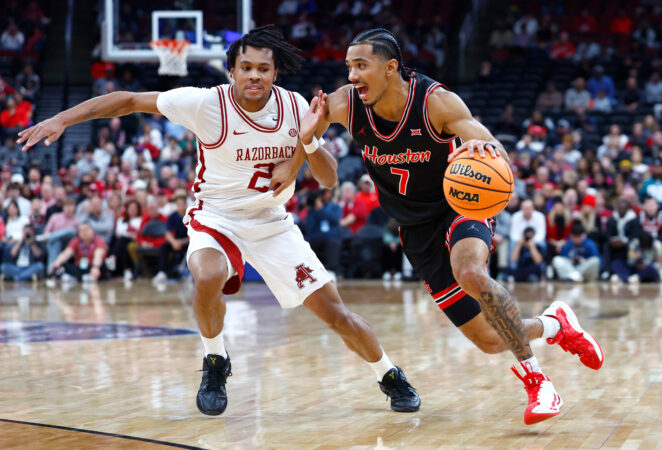
    But Wagner has embraced his role as a veteran for a Razorbacks team — which also includes fellow former Camden star Billy Richmond — that was ranked 14th in the Associated Press poll before Arkansas lost to No. 8 Houston, 94-85, Saturday night in the Never Forget Tribute Classic.

    “You could say I take a lot of pride in it,” Wagner said earlier in the week. “It’s just an honor. It’s a blessing to be able to be playing under Coach [John Calipari] for three years. …

    “I’m just happy to be here. Whatever I can do to help my teammates out, I’m happy to do it.”

    When asked before Saturday’s game how many family members and friends would be inside the arena about 80 miles from Camden, he said, “I couldn’t even tell you. I know it’s going to be a lot.” He finished the game with 11 points on 4-of-10 shooting and two assists in a season-high 34 minutes, flashing what made him an intriguing recruit who now possesses an inconsistent college body of work.

    Camden’s DJ Wagner guarding Imhotep’s Justin Edwards, now with the Sixers, during a game in 2023.

    He got past his defender for a crafty layup for Arkansas’ second bucket, then splashed a three-pointer to tie the score at 11. Early in the second half, Wagner dished a pass to Acuff for a three-pointer that cut what had been a 21-point Houston lead to 51-44. But after those two early buckets, Wagner did not score again until hitting two late three-pointers, when the game had all but been decided.

    “Even D.J.’s got to play better, make better plays,” Calipari told one local reporter in the hallway after the game. Arkansas did not hold its scheduled postgame news conference, preventing The Inquirer from asking additional questions about Wagner and Richmond.

    Wagner, who played his freshman season at Kentucky before following Calipari to Arkansas, is averaging a career-low 8.4 points this season. But he has improved his shooting from the floor (41.5%) and three-point range (34.9%). He also has totaled 33 assists against 10 turnovers while shifting more to an off-the-ball role. He is one of two players to start all 12 games, a sign of trust from Calipari as a steady presence with deep familial ties. Wagner’s father, Dajuan, played for Calipari at Memphis before being selected sixth overall in the 2002 NBA draft.

    “A lot of these kids get ranked, then they’re trying to live up to rankings,” Calipari told the Fort Smith (Ark.) Southwest Times Record before the season. “What does the ranking mean? You’ve got to go in and compete and take what you want, but it could be a burden.

    “I think with [Wagner], he needed to shed that and just be the player he is. Let’s see your best version. I believe his best version is being more aggressive, less dribbles, more attack. The things that he’s doing, the way he leads; he’s just matured.”

    Wagner’s Razorbacks team gained national prominence in March with a surprise run to the NCAA Tournament’s Sweet 16 as a No. 10 seed. Arkansas upset No. 7 Kansas and second-seeded St. John’s before losing an overtime heartbreaker to third-seeded Texas Tech. Wagner acknowledged he “didn’t really watch” much of the tournament after the Razorbacks were knocked out, but called Arkansas’ Dec. 13 rematch victory over Texas Tech, which was ranked 16th at the time, “definitely personal.”

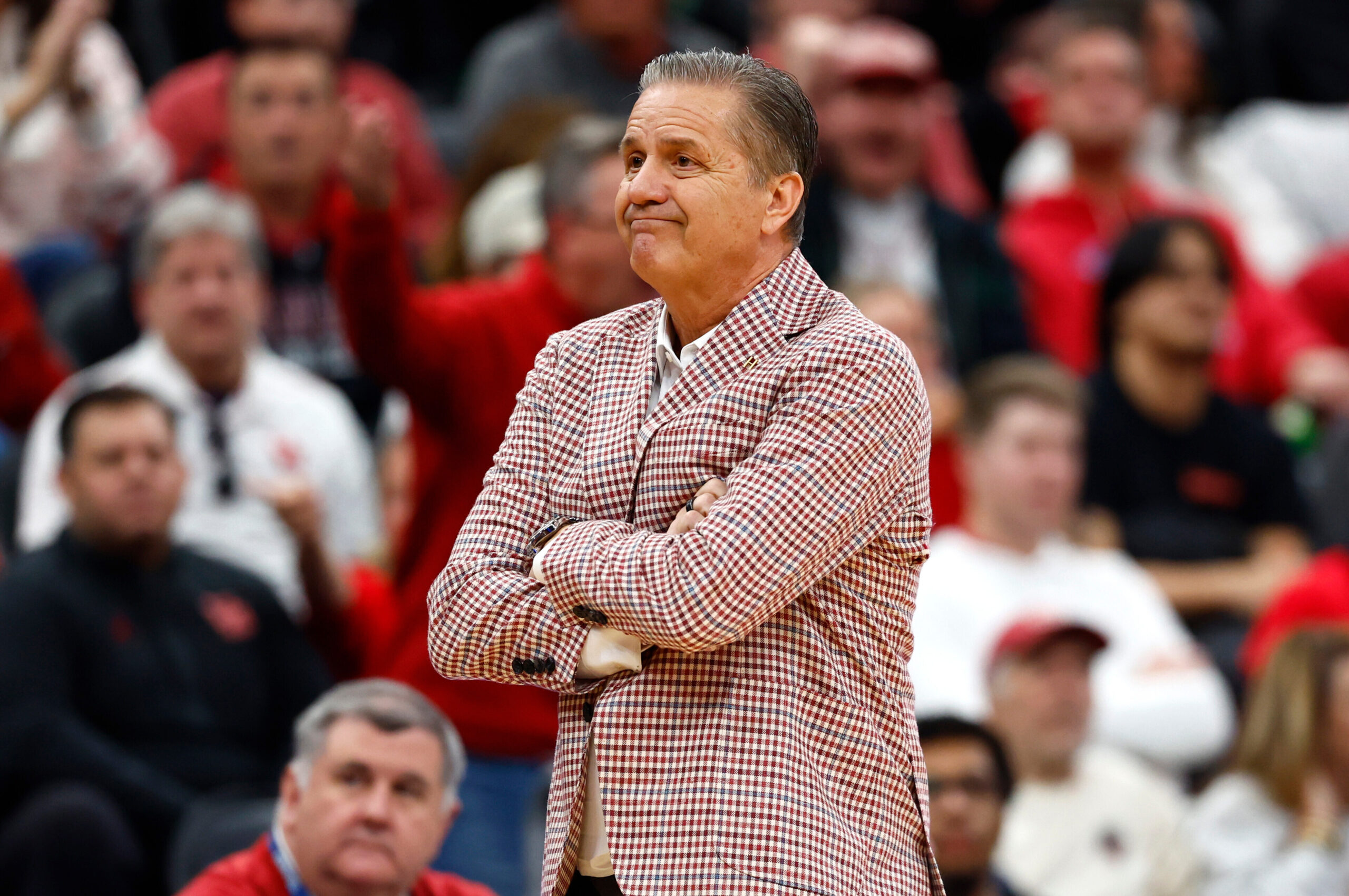
    Arkansas coach John Calipari on the sideline during the second half against Houston in Newark, N.J.

    That win was part of Arkansas’ 9-3 start against an intentionally difficult schedule. The Razorbacks also already have a victory against No. 11 Louisville. Their other two losses are to No. 9 Michigan State by three points — when Wagner had 13 points on 4-of-6 shooting, three assists, and three steals in perhaps his most impressive performance of the season — and to No. 3 Duke by nine points.

    That is why Houston coach Kelvin Sampson called Arkansas the best opponent his Cougars, who advanced to the national title game last season, had faced so far. Sampson added he believes Arkansas has “as good [of] a chance as anybody” to win the loaded SEC, which included six other ranked teams in the most recent AP poll.

    The marquee nonconference, neutral-site matchup against the Cougars added to Wagner’s growing list of college experiences in “crazy games in crazy atmospheres,” he said. He played Kansas at Chicago’s United Center as a Kentucky freshman. Last season, he faced Michigan at the legendary Madison Square Garden. And “every game in the SEC, you know you’re going to fight,” he said.

    Wagner’s calming leadership was on display Saturday when he approached Malique Ewin to say, “You got this” as Ewin uncharacteristically struggled at the free-throw line. Wagner’s biggest advice to the high-profile youngsters who enter the program is to remember that the uber-demanding Calipari “might be hard on you, but he’s just coaching you because he cares about you.” And with Acuff as the primary point guard, Wagner said he gets more opportunities to read and react to the defense.

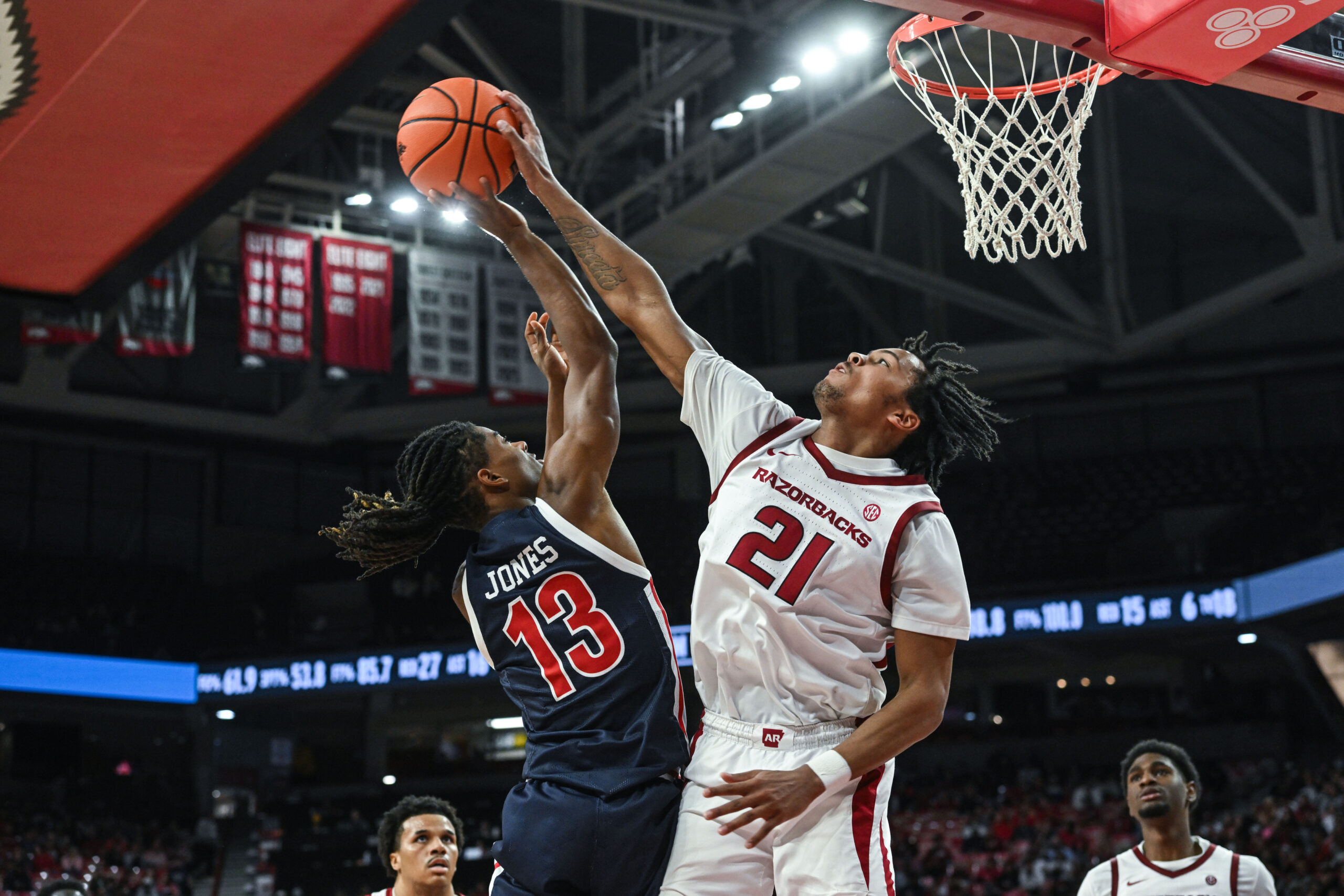
    Arkansas guard D.J. Wagner blocks a shot by Jackson State’s Cael Jones on Nov. 21.

    “It kind of gives you more time to see what’s happening,” Wagner said. “More time to see a play before it even happens. You could be more aggressive, like attacking more, just from getting passes and not having the ball in your hands all the time.”

    Yet the former Camden star whom Sampson singled out as “dynamic” was Richmond, who totaled 12 points on 5-of-6 shooting, two rebounds, and two steals off the bench. It was a sentiment echoed by a spectator behind the basket, who hollered, “Billy Ball!” when Richmond first entered the game.

    The sophomore’s versatility fueled the Razorbacks’ rally to cut a 40-19 deficit to eight points at the break. Richmond immediately hit a baseline jumper, a skill Wagner said his teammate has refined while connecting on 57% of his shots. Then Richmond sank a three-pointer. He drove baseline for a dunk that got Razorbacks supporters on their feet, then mean-mugged after swiping a steal underneath the opposite basket and lofting a pass to Ewin for the alley-oop slam.

    “That’s who he is,” Calipari said.

    Added Wagner: “He gets in the game, the energy [is] going to shift, because that’s just the type of player he is.”

    Acuff, meanwhile, amassed 27 points, seven assists, and five rebounds. He will likely join Adou Thiero, Reed Sheppard, Rob Dillingham, and the 76ers’ Justin Edwards as former teammates whom Wagner will watch reach the NBA before him.

    It is unclear whether Wagner will ever be regarded as a legitimate draft candidate again. He was not listed on last week’s top 100 prospects by ESPN, where teammates Acuff (No. 15), Maleek Thomas (No. 28), Karter Knox (No. 56), and Trevon Brazile (No. 82) were all included.

    And without a defined path to the pros, it is far more practical (and lucrative) for Wagner to stay in college. He was one of the first high schoolers to sign an NIL deal with Nike, and has also landed partnerships with Express clothing and Marathon fuel during his college career. One of the Arkansas men’s basketball program’s biggest boosters is John H. Tyson, the chairman of Tyson Foods.

    So Wagner’s third college season brought him back to his home state, where he was introduced last in Arkansas’ starting lineup. And he has embraced this unexpected role as the veteran for a Razorbacks team with aspirations of another deep March run.

    “Really just taking it one day at a time,” Wagner said. “Just stay in the gym. Just trying to get better at everything.”

  • Gameday Central: Sixers Extra with Kate Scott

    Gameday Central: Sixers Extra with Kate Scott

    We’re kicking off Sixers Extra with our first guest — Sixers play-by-play announcer Kate Scott. Watch her interview with The Inquirer’s Gina Mizell here.

  • How the Sixers’ ‘kids’ bonded, then injected energy into the locker room

    How the Sixers’ ‘kids’ bonded, then injected energy into the locker room

    Adem Bona got Johni Broome’s attention from across the 76ers’ locker room, subtly interrupting a conversation ahead of their Nov. 30 game against the Atlanta Hawks.

    “I’m coming, Bona!” Broome hollered in response.

    It was time for the young Sixers to head to chapel, which has become a pregame ritual. Jared McCain, VJ Edgecombe, Justin Edwards, and Hunter Sallis joined them, too.

    Those teammates have swiftly forged a bond through serious activities, such as tapping into their faith, and sillier ones, such as intense NBA 2K video game matchups. And everyday ones, such as bus rides and shared meals.

    Outside belief that the Sixers are old and washed up is primarily used as a dig at the oft-injured (and max-salaried) Joel Embiid and Paul George. But these youngsters are debunking that notion and injecting energy — and promise — into their team’s 14-11 start.

    “We’re all just kids,” Edgecombe recently told The Inquirer. “Just enjoying the moment. Knowing that we’re in the NBA, what we worked for our whole life. …

    “It’s just a natural bond, for real. It’s no forced relationship.”

    This contingent of the roster is made up of rookies Edgecombe, Broome, and Sallis; second-year players Bona, McCain, and Edwards; and two-way newcomers Jabari Walker and Dominick Barlow. There is also a trio of 25-year-old “tweeners” in star point guard Tyrese Maxey — who noted before the season that he has tried to pick up video games in an effort to connect with his younger teammates — along with Trendon Watford and Quentin Grimes.

    The Sixers’ front office more deliberately course-corrected to this roster-building direction in the middle of last season’s 24-58 flop, citing a need for more players who were athletic and consistently available. Bona, McCain, and Edwards received legitimate minutes as first-year players. Edgecombe, the third overall pick in last summer’s draft, is averaging 15.2 points, 5.6 rebounds, and 4 assists as an instant-impact rookie. Barlow is a starter and arguably the Sixers’ biggest surprise so far this season, and Walker is part of the rotation.

    The bulk of this 2025-26 group initially linked at the Sixers’ facility for summer league practices. Conversations while sticking around for cold-tub and treatment sessions spilled over to their newly created group chat, a player’s home, or a local restaurant. They went through the two-week summer league odyssey from Salt Lake City to Las Vegas. Then to workouts in Los Angeles, which included a Disneyland trip organized by Maxey. Then back to Philly for informal pickup games.

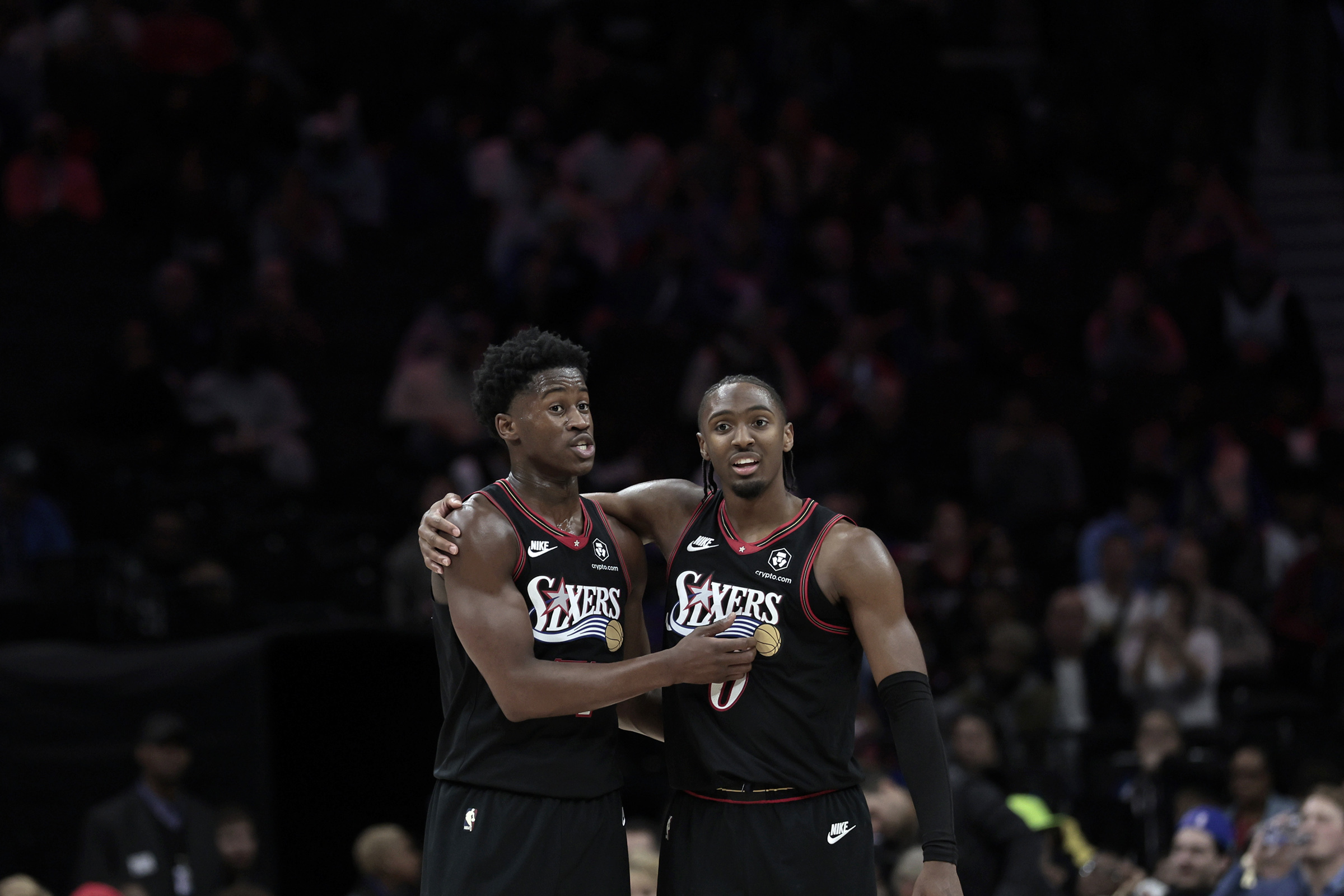
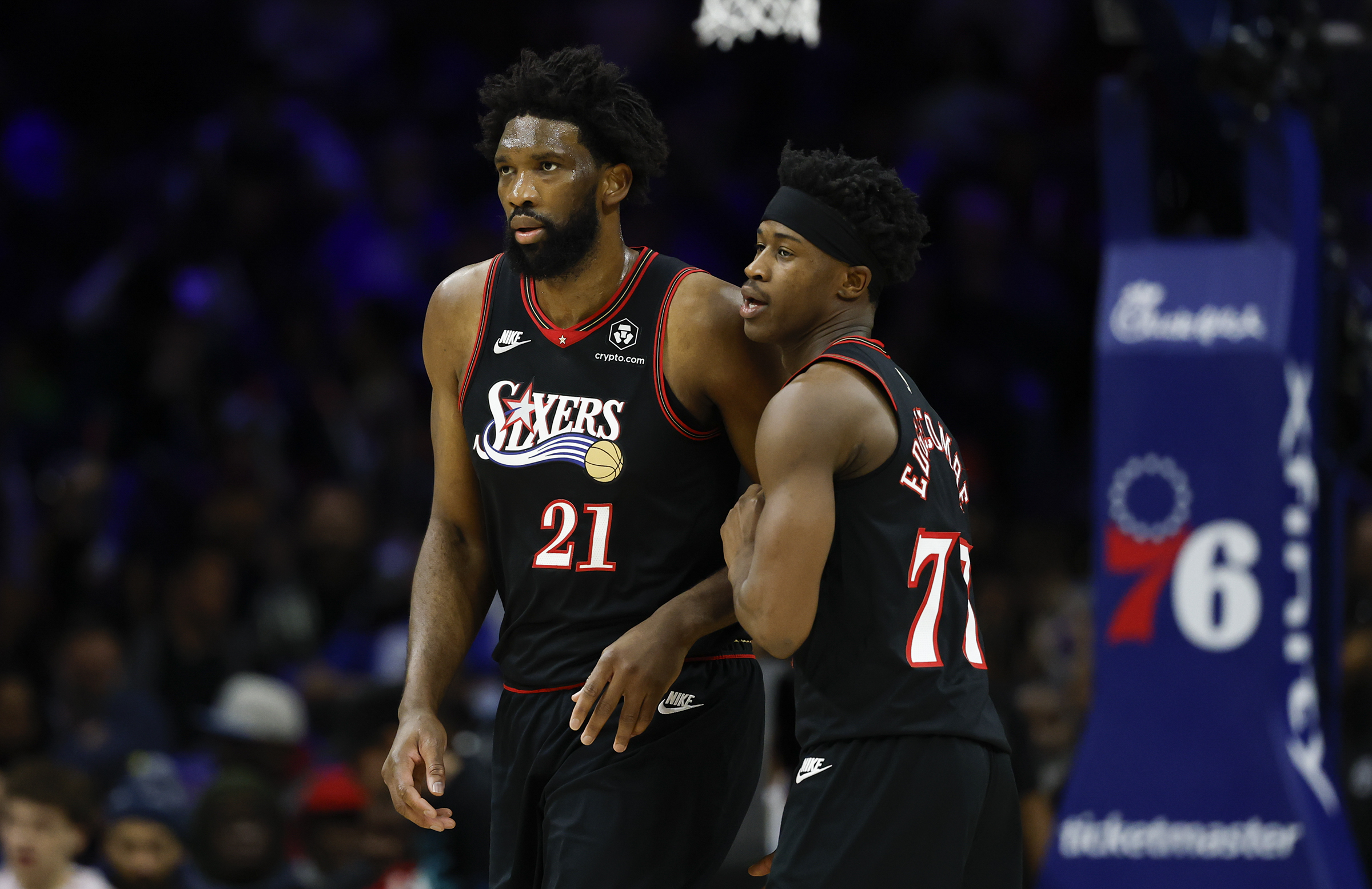
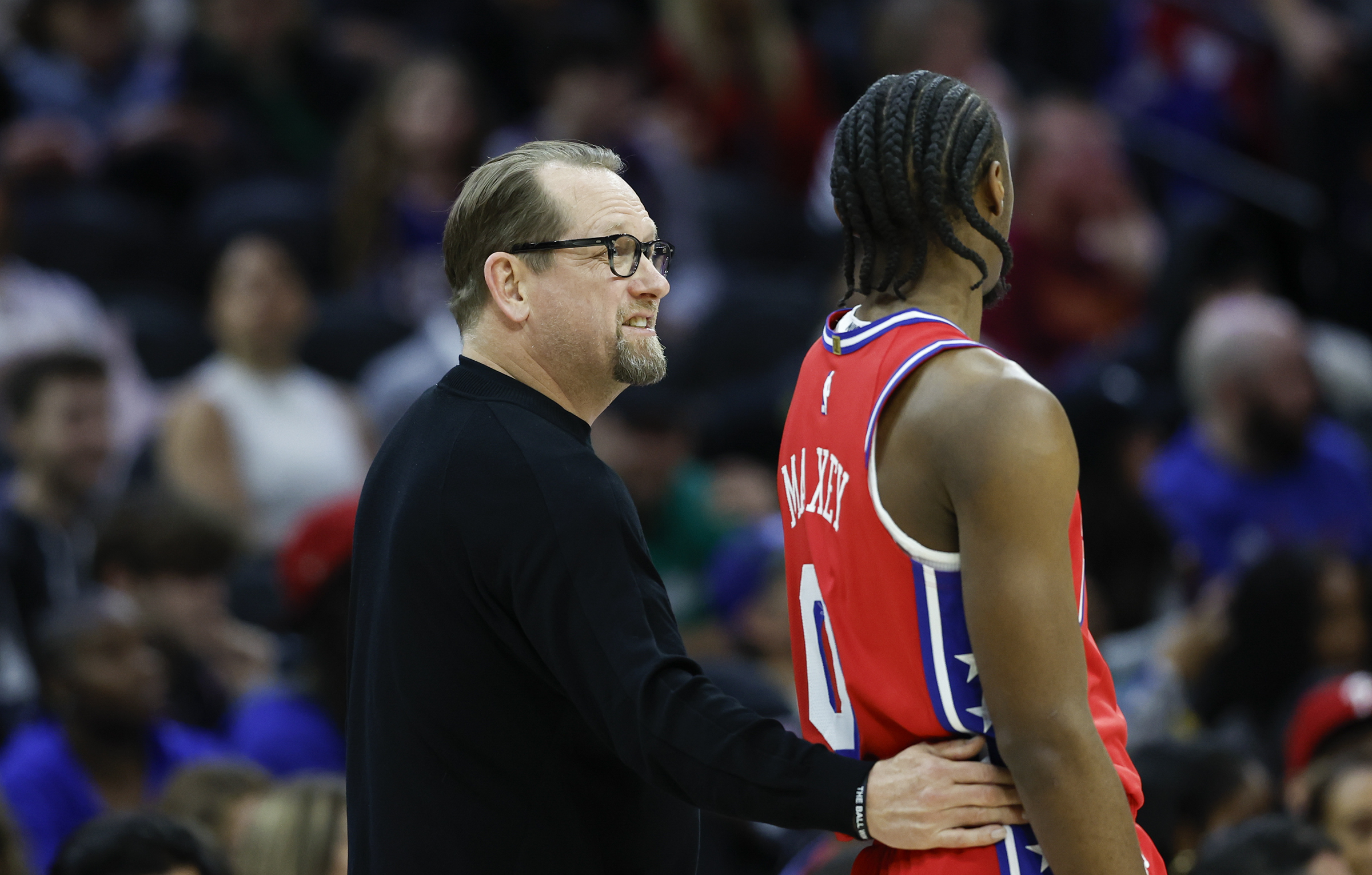
    Sixers guards VJ Edgecombe and Tyrese Maxey talk strategy during an NBA game.

    By the time training camp began in late September, those Sixers had already spent nearly three months together. And while the rookies had nothing to compare this early NBA chemistry-building to, Walker, now in his fourth season, called it “a different type of bonding” while likening it to a college-team environment.

    “Sometimes, in other situations, you want to hurry up and get off the court and just go home,” Walker said. “I’ve been wanting to lag behind, because there’s so many different personalities. … For things to happen like that so quick, you don’t feel like you’re just coming to a job every day.

    “I actually wake up like, ‘Dang, I’ve got to tell Johni this when I get there’ [or] ‘I’ve got to tell Justin this.’”

    Coach Nick Nurse grinned when this topic was broached following an early-season practice. He said he first noticed the “entertaining” connection among those players while on the bus heading to gyms in the summer. He added that they embody this staff’s 12-months-a-year philosophy, and helped set the tone for the Sixers’ commitment to “dig ourselves out of a hole” following that disastrous 2024-25 season.

    These days, Nurse said, there is a row of chairs along the practice court where those players frequently sit after their work is done.

    “I go up there once in a while,” Nurse said, “and I say, ‘What are you guys doing over here?’ And they’re like, ‘We’re just hanging out, Coach.’ And I’m like, ‘All right, keep hanging out.’”

    Sixers guard Tyrese Maxey and forward Trendon Watford have a close friendship on and off the court.

    Once those players finally leave the Sixers’ facility for the day, they regularly hop on their video-game headset.

    Unsurprisingly, NBA 2K is their top choice. In “My Player” mode, Broome has an “elite” 7-foot-4 big man who can shoot. Sallis plays with a point guard “trying to run the show.” Edgecombe has a variety of players, allowing for maximum versatility.

    “[We’ll] be on the game 24/7,” Edwards said. “We’ll be on FaceTime, in the group chat, trying to see who wants to play. That’s a big thing that I feel like we didn’t have last year.”

    When asked who is the best gamer of the bunch, most provided the politically correct answer. Yet when told that Edwards brushed it off, Walker quipped that “Justin should ‘no comment’ that question.” And while bringing his voice down to a whisper inside a mostly empty postgame locker room, Edgecombe eventually revealed, “I think I’m the best, though, to be honest with you. You can say [it].”

    Gaming is how those youngsters also roped Sixers veterans — aka “Uncs” — George and Andre Drummond into their group. The 32-year-old Drummond said being around those players’ lingo — Edwards recently started calling him “Muddy,” an apparent reference from his New York City relatives — music tastes, and overall energy is “why I call myself a young man.” George, 35, added that being immersed in a virtual environment away from the facility or Xfinity Mobile Arena has encouraged them all to open up and bridge age gaps.

    “That’s where kind of the trust and the relationship has grown,” George said. “ … We shoot the [expletive] on the game, but then it carries over the next day and we’re looking forward to seeing each other. We laugh about what happened the night prior, and who [stunk], and who was trash.

    “It’s a fun way and I think, for us, [it’s] just kind of expressing ourselves outside of the grind of the season.”

    Now, such connections fuel aspects of those players’ game-day routines.

    Bona is the unofficial leader of the chapel “safe space,” which last season quickly added McCain. The invites then extended to Broome, Edwards, Edgecombe, and Sallis, who now file out of the locker room about an hour before any game’s tipoff.

    “Everyone checks on each of us,” Bona said, “Like, ‘Yo, we’ve got five minutes!’ It’s amazing. It’s a really good bonding activity together.”

    Added Broome: “Obviously, I’m a rookie, so things kind of get a little tough and frustrating sometimes. So it just kind of keeps me grounded, keeps me on the right path, in the right direction. Keeps me encouraged.”

    Those relationships also are noticeable inside the postgame locker room. Following a Nov. 25 blowout loss to the Orlando Magic, for instance, Barlow, Walker, and Broome sat huddled in a corner, immediately dissecting how the game got so out of hand. And after Embiid’s 39-point outburst against the Indiana Pacers on Friday, he was enthusiastically chatting with McCain and Edgecombe before heading to treatment.

    “I’m happier coming in here,” Embiid said later that night. “… You look at the guy next to you, you want to always joke around, talk to them, and hang out. Being on the road and just chill, that goes a long way.

    “I love all these guys in this locker room.”

    A fair amount of credit for such vibes can go to the “kids,” who quickly bonded with one another and then injected energy into the start of the Sixers’ season.

    “I can go [down] the list of young guys,” Drummond said. “It really just keeps our whole team spirit high.”

  • Tyrese Maxey is back from illness, and pleased with how the Sixers played without him

    Tyrese Maxey is back from illness, and pleased with how the Sixers played without him

    Tyrese Maxey typically is “super animated” whenever a health issue has forced him to watch his team play on television.

    But when the 76ers’ star guard tried to express such outward enthusiasm while ill at home for Friday’s victory over the Indiana Pacers and Sunday’s three-point loss to Atlanta Hawks, he rapidly fatigued.

    “The more I yelled and screamed, the more I got tired,” Maxey said following Wednesday’s practice. “And it was, like, I can’t do that. I couldn’t stand up, really. So I’m basically just sitting there, watching the game, like, throwing my arms like this.”

    The good news for the 14-11 Sixers: Maxey was back on the court with his teammates Wednesday, following an individual session the previous day. Perhaps even more encouraging to him and coach Nick Nurse was how the Sixers played without Maxey, who entered Wednesday ranked third in the NBA in scoring (31.5 points per game) and leading the league in minutes (39.9 per game).

    “When I said [before the season that] I wanted stuff to look the same,” Maxey said, “I just wanted us to go out there and compete every single night. I don’t want it to look like, ‘Oh, this guy’s out. That guy’s out. So we’re just going to lay down, and the other team’s going to beat us.’

    “I think we’ve kind of created that standard and done a good job of it. It’s kind of coming to light, and now we’ve got to keep doing it.”

    Nurse acknowledged Wednesday that his “fears were really high” entering last weekend’s games without Maxey. But the coach was particularly pleased with how rookie VJ Edgecombe handled lead guard duties, with seven assists against two turnovers across those two games while surpassing 20 points in each contest. The coach also liked how his team broke defensive pressure, and that he was able to get a look at a variety of lineup combinations.

    Maxey, meanwhile, was thrilled that former MVP Joel Embiid “put on a clinic” in his 39-point outburst against the Pacers.

    Tyrese Maxey says teammate Joel Embiid “put on a clinic” during the star center’s 39-point outburst against Indiana last week.

    “When he was about to do the … you know,” said Maxey, referring to Embiid’s DX chop celebration. “I was about to say, ‘If I tweet that, will I get fined? If I tweeted a GIF?’ But I just stayed away from all that.”

    Though Maxey said he felt “way better” while back in the facility Wednesday, Nurse believed the star guard “looked like he’s been off for a little bit.” And some reacclimation was necessary after the Sixers added to their schematic package during last week’s four-day layoff between games while Maxey was away. The point guard said he noticed those changes while reviewing practice film and while watching the games live.

    “The biggest thing that I took from [those games] is that we can be really good,” he said. “I mean, we can. It’s possible. We have those opportunities. We have those chances.

    “We’ve just got to keep coming together, keep doing a good job of building every single day, and staying healthy.”

    Another positive injury development: Kelly Oubre Jr. (left knee) and Trendon Watford (left thigh) have progressed to individual on-court work, the team said Wednesday. There is no timetable for either player to return for game action, though Watford said Wednesday he is “close” to that.

    “I feel like I had a pretty good groove going while I was playing,” said Watford, who averaged 8.9 points, 4.7 rebounds, and 3.6 assists in 14 games after missing the start of the season with a hamstring issue. “[I was] starting to string it together a little bit. It’s unfortunate what happened, but it could always be worse.

    “Just sitting back and keeping that perspective, and just trying to attack the rehab the same every day.”

    To the G League

    A potential byproduct of the Sixers getting healthier is diminishing minutes for players further down the rotation. That includes Justin Edwards and Adem Bona, who, after playing more sporadically in recent games, were assigned to the G League’s Delaware Blue Coats for Tuesday’s win at the Capital City Go-Go.

    Edwards scored 37 points on 13-of-21 shooting and added four rebounds and six steals in 40 minutes. Bona totaled 12 points on 6-of-9 shooting, four rebounds, three assists, and three blocks in 32 minutes.

    Justin Edwards was assigned to the G League’s Delaware Blue Coats and scored 37 points in their win on Tuesday.

    “That was a great opportunity for both of them,” Nurse said. “Went down there and embraced it and played great. My thing was I told them both, ‘Do your thing. Play hard. Do the things that you can do. Play to your strengths.’”

    Edwards is 0-for-10 from the floor in his last three NBA games, and only logged 8 minutes, 51 seconds on Sunday in Atlanta. Bona, meanwhile, has not played in the Sixers’ past three games, with Embiid becoming more consistently available and Andre Drummond taking hold of the backup center spot. The Sixers also recently used a similar get-right strategy with second-year guard Jared McCain, who went 0-for-9 from the floor in his first four games upon returning from missing nearly a calendar year following knee and thumb surgeries.

    Nurse said Edwards and Bona likely will see the floor in the Sixers’ upcoming back-to-back on Friday at the New York Knicks and on Saturday against the Dallas Mavericks. But, as the season rolls on, the coach acknowledged that both second-year players will probably have “long moments where they don’t hit the floor much.”

    “So balancing growing … at a young age, with learning how to play,” Nurse said. “Playing the right way, keeping your confidence up, keeping your conditioning up.”

    In the clutch

    End-of-game scenarios have been a focus during the Sixers’ two lighter weeks, per Nurse.

    That is understandable, given they entered Wednesday tied for second in the NBA with 18 “clutch” games played, which occurs when the score is five points or fewer with five minutes remaining in regulation. The Sixers were 1-1 in such situations last weekend, pulling away from the Pacers in the final minutes and then losing to the Hawks in a game that came down to the last possession.

    After reevaluating the end of that Atlanta game — which included a chaotic final-minute sequence with two missed three-pointers, an offensive rebound, taking too long to foul, and a controversial no-call by the officials — Nurse described Quentin Grimes’ missed three-point leaner at the buzzer as “really good.” A detail worth mentioning: veteran Kyle Lowry entered the game to inbound the ball with 1.5 seconds remaining, a role once held by Nico Batum during the 2023-24 season.

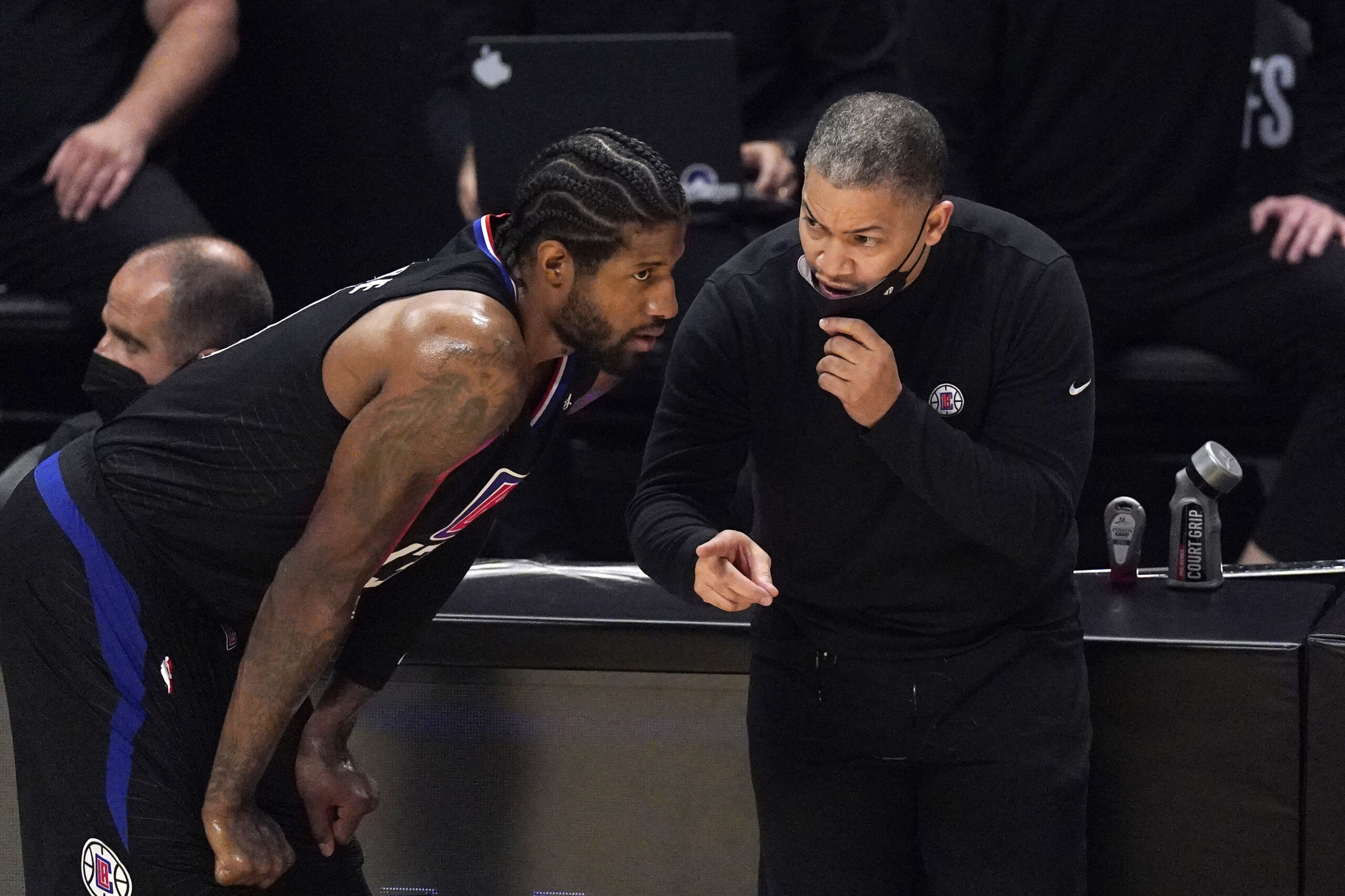
    Sixers head coach Nick Nurse talks to guard VJ Edgecombe during a game against the the Indiana Pacers on Dec. 12.

    Overall, Nurse has called his team’s crunch-time play so far this season “maybe better than I expected, and certainly better than in the past.” The Sixers were 18-18 in clutch games in 2023-24, which ranked 14th in the league in winning percentage, and 15-21 during the dreadful 2024-25 season.

    “We’ve made some clutch stops to get us in these positions,” Nurse said. “We’re doing OK. I want to keep building on that stuff. … Always want to get better. Always get greedy on that kind of stuff.”

  • Without Tyrese Maxey, vintage Joel Embiid appears in Sixers’ win over Pacers: ‘I will if I have to’

    Without Tyrese Maxey, vintage Joel Embiid appears in Sixers’ win over Pacers: ‘I will if I have to’

    Joel Embiid grabbed the offensive rebound and, before tumbling to the floor, muscled the put-back through contact and into the basket.

    And as the 76ers’ center stepped to the line to shoot the and-1 free throw, faint “M-V-P!” chants resurfaced inside Xfinity Mobile Arena.

    That conversion highlighted Embiid’s best game of the season — 39 points, nine rebounds, and three assists in Friday’s 115-105 win over the Indiana Pacers — when his team needed the boost while playing without ill star guard Tyrese Maxey. The big man’s first 30-point outing in nearly a calendar year also served as a flashback to the player he used to be, before multiple knee surgeries curtailed his dominance on both ends of the floor.

    And a reminder of the player he can still be, at least every now and then?

    “I feel like I can do it,” Embiid said from his locker after the game. “I think the dynamics [are] obviously different, at times. I want to play more as a team, so making sure everybody’s involved. If someone has to sacrifice, I will. But in some occasions, when I’ve got it going or nights like tonight, it’s going to happen.

    “I don’t expect having to do this when everybody’s healthy. But I will if I have to.”

    Embiid reacts after scoring three of his 39 points against the Pacers.

    Embiid’s outburst came in his 10th appearance of an early season that already has been interrupted by scheduled missed games and a three-week absence due to a right (not left) knee issue. It also occurred after one of the worst shooting performances of his fabulous career, going 4 of 21 during Sunday’s loss against the Los Angeles Lakers.

    But Embiid shrugged that dud off in the immediate aftermath. Then, he utilized a rare four days between games to generate rhythm through team practices and individual workouts. The break also allowed a previously undisclosed finger issue that may have affected his shooting to heal, Embiid said during Friday’s postgame media session.

    “Obviously, it’s easier to be consistent when everything is going well physically,” said Embiid.

    Sixers coach Nick Nurse, meanwhile, added a “couple little wrinkles” to foster a variety of Embiid scoring avenues that the coach is “always trying to continue to seek,” he said.

    Friday night, that manifested in post-ups from both blocks. And in pick-and-roll actions in the middle and on the side of the floor. And in Embiid directing teammates such as Dominick Barlow to cuts for easy dunks. And in Embiid driving to draw fouls — and 13 free-throw makes — with an aggressiveness that signals the center is at his best, Nurse said.

    “It came in a lot of different schemes [that the Pacers] threw at him,” Nurse said of Embiid’s performance Friday. “And I thought he read the different stuff pretty good most of the night.”

    VJ Edgcombe started at point guard Friday with Tyrese Maxey out.

    Embiid’s presence also helped unleash rookie VJ Edgecombe, who scored 14 of his 20 points in the first quarter while filling in for Maxey as the starting point guard. Embiid then amassed 15 points of his own in the second frame, including a step-back three-pointer that snapped a streak of 17 consecutive long-range misses.

    During the third quarter, Embiid spun and scored early in the frame and later finished an off-balance and-1. And he complemented the Sixers’ stout down-the-stretch defense by sinking a baseline fadeaway jumper with less than a minute remaining, putting his team up by 10 points and earning a slap on the backside from Nurse.

    Perhaps nobody was happier to see this version of Embiid resurface than Maxey, who entered Friday ranked third in the NBA in scoring (31.5 points per game) and first in minutes played (39.9 per game). During the game, Maxey posted “GOOD PROCESS!!” on X, then fielded a postgame phone call from his teammate and close friend.

    Embiid also was spotted chopping it up with Edgecombe and Jared McCain in the postgame locker room, evidence of the connections forming during the Sixers’ 14-10 start.

    “I won’t lie,” Embiid said. “Last year, I wasn’t happy all the time coming to work because of everything that was going on, whether it was on and off the court. This year, it’s a little different. I’ve got a great group of guys. I’m happier coming in here.”

    Following a lengthy postgame treatment session, Embiid said his body feels “great” after playing a season-high 32 minutes. The real test, as always, will be how both knees respond Saturday morning. He reiterated the plan remains for him to take two days off between games, which means it would require at least a conversation in order for Embiid to be cleared to play Sunday at the Atlanta Hawks.

    “It’s up to them,” said Embiid, adding he was “consistently pushing” his body during the four days leading up to Friday’s game. “If I can, I’ll fight for it. If I can, I’ll play. But if I’m not allowed or if I can’t, then it is what it is.”

    But when the Sixers needed a boost from their former MVP while playing without Maxey for the first time this season, Embiid dropped a reminder of who he used to be.

    And can still be, at least occasionally?

    “People don’t understand how much work he does,” teammate Paul George said of Embiid, “ … when it comes to taking care of his body and trying to do whatever it takes to get on the floor and be available for us.

    “Just happy that it showed out, [that he] got back to his usual self.”

  • How is Tyrese Maxey handling his heavy minutes? The Sixers star is ‘lost in the competitiveness’

    How is Tyrese Maxey handling his heavy minutes? The Sixers star is ‘lost in the competitiveness’

    When Tyrese Maxey flew down the court for his game-saving block on the Golden State Warriors’ De’Anthony Melton last week, it was not only an impressive burst of speed.

    “That’s conditioning, too,” Doc Rivers, the Milwaukee Bucks coach who formerly was with the 76ers, said while commending Maxey’s play the following day. “If you’re tired mentally or physically, you can’t make that play.”

    Maxey insists that, a quarter of the way through this season, he is not fatigued. But perhaps no Sixer is savoring this light stretch in the schedule before Friday night’s game with visiting Indiana more than their star point guard.

    Maxey entered Thursday leading the NBA in minutes played, averaging 39.9 in 23 games. That is three minutes greater than the next player with a comparable number of games logged (the Los Angeles Lakers’ Austin Reeves’ 36.9 minutes in 21).

    Maxey’s recent workloads have included playing the entire second half and overtime of a Nov. 20 win at the Milwaukee Bucks, when he scored a career-high 54 points. In a Nov. 30 double-overtime loss to the Orlando Magic, he played more minutes (52) than there are in a typical NBA game (48).

    No NBA player has averaged 40 minutes or more per game since Monta Ellis with Golden State in 2010-11 (40.3). So conventional wisdom says this pace for Maxey is not sustainable for the 82-game grind. Sixers coach Nick Nurse hopes having the team’s four rotation guards healthy — and productive — will ease Maxey’s load moving forward.

    Still, it has taken impressive physical fitness and mental fortitude for Maxey to pull this off for the season’s first seven weeks while playing at an All-NBA level. He entered Thursday ranked third in the league in scoring (31.5 points per game) and averaging a career-high 7.2 assists and 4.7 rebounds.

    “He’s a warrior,” teammate Paul George said. “There’s no question about it. He’s a fighter. … [There’s] a leadership about him. And when he’s out there, I play for him. I do everything I can to make the game easier for him. He’s our guy. It’s inspiring. Me, as a vet, it’s inspiring for a guy to consistently do it — and to be efficient with all the minutes that he’s been playing.”

    Nurse said Maxey’s relentless energy stems from him being “lost in the competitiveness” of the Sixers’ 13-10 start, that “it’s not like I’m sitting there saying, ‘Hey, you’ve got to come out.’ It’s the other way around. He doesn’t want to come out.”

    It’s also a responsibility to which Maxey has become accustomed. Last season, he led the NBA at 37.7 minutes per game in 52 games. In 2023-24, he ranked second in the league in that category, with 37.5 minutes in 70 games.

    Nurse’s top players racking up heavy minutes has also become a trademark of his coaching approach. Pascal Siakam, when he was a Toronto Raptor, led the NBA for two consecutive seasons, in 2021-23, while Fred VanVleet landed in the top five in both seasons. This season, fellow Sixers Kelly Oubre Jr. (34.8 minutes) and VJ Edgecombe (34.6) rank in the top 20, although their workloads have been diminished by injuries.

    Though there may not appear to be a massive difference between 37 and 40 minutes on the court, they add up game after game. Especially when Maxey is so active in generating the Sixers’ offense with the ball in his hands, and he has become more of a defensive playmaker.

    “He’s taken that challenge on a nightly basis, while being guarded by the best defender, usually,” George said Wednesday. “ … He’s doesn’t look for a night off, to go and sit in the corner and guard no one.”

    Maxey, 25, credits sports performance consultant Alexander Reeser with building foundational offseason strength and conditioning programs that “[push] me to my max limit, every day.” Maxey also has gained a reputation for his early morning on-court workouts, and for sometimes clocking in for as many as three sessions per day.

    Last season, Maxey added, was his first time “really locking in” on recovery, an effort to blend his present high performance with career longevity. Which means his routine between games in-season has become “very minimal work, for obvious reasons,” Nurse said.

    Maxey said the goal of his individual sessions is not “running around” to get to his spots on the floor to shoot — or to execute elaborate dribble combinations — which expend more energy. Instead, he drills passing, touch layups, floaters, and jumpers from the midrange and beyond the arc.

    “It’s the stuff you do after you do the move,” Maxey said. “Making sure it feels good.”

    Added Nurse: “He’s maturing a little bit, to have the confidence to just understand he can roll [in games] without having to have a big day on the floor on the off days.”

    Nurse has tinkered with when to rest Maxey, typically at the end of the first and/or third quarters or at the beginning of the second and/or fourth quarters. In that Nov. 20 game at Milwaukee, however, Maxey told Nurse, “Coach, let me go,” leading to him playing the final 29 minutes. Yet even within those lengthy on-court stretches, teammate Jared McCain has noticed Maxey going “straight to sit down” on the bench during timeouts.

    “Give him his time to breathe and rest,” McCain said. “[It’s] definitely a responsibility … [that] all the guards take, and something we’ve got to help him with.”

    Sixers coach Nick Nurse has started to lean on a three-guard lineup without Tyrese Maxey to give him much-needed time on the sideline.

    The Sixers’ new-look offense, after all, has been built around its four rotation guards — Maxey, Edgecombe, McCain, and Quentin Grimes — who can score, push the pace, and pass in a variety of lineup combinations. But only recently did that full group reach full strength.

    McCain got off to a rocky start after missing nearly a calendar year following knee and thumb surgeries, but now he looks like a threat to score from all three levels. Edgecombe, a hyper-athletic two-way player, missed three games with a calf injury. And, outside the backcourt, max players George and former MVP Joel Embiid remain limited after offseason knee surgeries.

    “That’s kind of part of the reason we spread the floor out and we’re moving the ball a lot more,” Nurse said of those guard-heavy looks last week. “We’re trying to get them to play downhill and off the catch. We just haven’t quite got to it yet. There’s glimpses of it. …

    “We’re just [spreading] them out, and they go back and forth and move the pieces a little bit and then, boom, one of them’s down the lane. I hope they make a good decision. They either take it forcibly to the rim, or they just kick it out to a shooter or start it all over again.”

    Perhaps the start of the second quarter of Sunday’s 112-108 loss to the Lakers offered some encouragement, when the Sixers turned a tie game into an eight-point advantage while Maxey rested for nearly six minutes. But their latest poor third quarter followed, and then LeBron James’ shot-making buried the Sixers down the stretch.

    That the vast majority of the Sixers’ games so far have been tight has also contributed to Maxey’s workload. They entered Wednesday having played the league’s third-most “clutch” games (16), which occurs when the score is within five points or less with five minutes remaining in the fourth quarter.

    So when the Sixers staged a rare blowout win over the Washington Wizards last week — and Maxey logged a season-low 29 minutes — he chuckled when asked if he could immediately play another game.

    “Yeah, I guess so,” he said.

    Maxey followed that up by amassing 40 minutes against the Warriors and 37 at the Bucks on back-to-back nights. Then, another 39 against the Lakers.

    After that game, how did Maxey plan to spend this lighter stretch in the schedule?

    “Rest,” he said. “Just rest.”

  • Tyronn Lue, current Sixers remember the iconic Allen Iverson step-over: ‘It couldn’t have happened any better’

    Tyronn Lue, current Sixers remember the iconic Allen Iverson step-over: ‘It couldn’t have happened any better’

    Tyronn Lue chuckled before the reporter could even finish the question.

    Do memories of the 2001 NBA Finals — more specifically, being on the wrong end of Allen Iverson’s iconic step-over in overtime of Game 1 — flood back whenever he returns to Philly?

    “Every single time,” said Lue, the former Los Angeles Lakers guard who now coaches the Clippers. “You never forget it.”

    The 76ers will wear their black throwback jerseys throughout this season, as part of the 25th anniversary celebration of that Eastern Conference championship team. Donning them against the Lakers on Sunday night was most fitting.

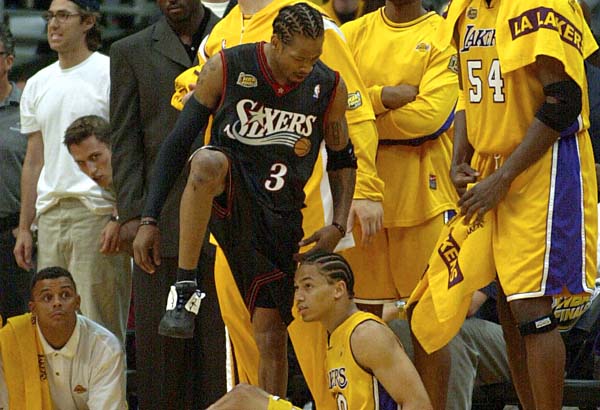
    Those jerseys are synonymous with that Finals series, and AI’s signature moment. Iverson sent Lue to the court by pulling back to fire a baseline jumper. After drilling the shot, Iverson stared at — while stepping over — a seated Lue in front of the Lakers’ bench. Though the Lakers won that series, four games to one, as part of the Kobe Bryant-Shaquille O’Neal dynasty, Iverson delivered an all-time highlight play in franchise and NBA history.

    The Inquirer recently asked some of today’s Sixers about their memories of that sequence. Kyle Lowry was a North Philly kid at the time. Paul George was growing up in Southern California and would eventually be coached by Lue. Tyrese Maxey, whose exceptional start to the 2025-26 season is drawing comparisons to Iverson, was barely born.

    And, of course, Lue also provided his perspective 25 years later.

    Kyle Lowry: “I remember everybody driving around, beeping their horns”

    Today, Lowry considers Lue “one of my closest friends in the world.”

    Yet back in 2001, Lowry was a young teenager feeling like the basketball universe had counted out his Sixers. He was watching the game at home when Iverson went right, created the space for the shot, and “[stomped] with the big dogs,” he said.

    “Everybody in the whole city of Philadelphia, at the same time, jumped up and cheered,” Lowry recalled. “ … And then after the game, I remember everybody driving around, beeping their horns.”

    Now, it is “special” for Lowry to wear those black jerseys in his return to his hometown to (likely) close out his NBA career. He is tight with Lue, whom Lowry reminded may have changed that Finals series with his ability to guard Iverson full-court.

    And Lowry “knows for a fact” that Iverson and Lue have a good relationship today.

    “I don’t think it was nothing disrespectful,” Lowry said. “I think it was just a great moment for the game of basketball, and an amazing basketball play for the city of Philadelphia.”

    Paul George: “He was the Man in the Arena”

    George was an Iverson fan growing up. But as a Southern California kid, he said Bryant “was everything to us.”

    So George was rooting for the Lakers during those 2001 Finals. He was “amazed” at how Iverson challenged the team led by his favorite player and the equally dominant O’Neal.

    And when the step-over happened, “it kind of was just, like, ‘This smaller guy is a giant,’” George said.

    Sixers star Paul George played for Clippers coach Tyronn Lue during his five seasons in Los Angeles.

    “It just solidified how good he was and his magnitude and just his swagger,” George said. “That’s what I kind of took away from it, was just his confidence and his swagger. In that moment, he was the Man in the Arena.”

    George then was coached by Lue during his five seasons playing for the Clippers. Though George said the step-over never came up in conversation, he is not surprised Lue does not view it as a source of shame.

    “Kobe said it best: You play against the best players, you’re going to get embarrassed sometimes,” George said. “It comes with it. It’s fun. I look forward to being embarrassed, because I know I’m going to come back for you the next time. It comes with the territory of being a defender.”

    Tyrese Maxey: “That was a crazy play”

    Maxey was born Nov. 4, 2000 … aka, during that magical Sixers season.

    Which means he obviously has no in-the-moment memory of the step-over. The first time he remembers watching it and “actually [knowing] what’s going on,” he believes, was in middle school.

    “That was a crazy play,” Maxey said. “ … A wild moment in history. It will never be forgotten.”

    Since becoming a Sixer, Maxey has gotten to know Iverson, who is a regular visitor at games and team functions. As a fellow scoring (and smaller-framed) lead guard, Maxey said Iverson’s best advice has been to “just be ultra-aggressive every single time you step on the court.” And Maxey’s torrid start to the 2025-26 season — through Sunday he ranked third in the NBA in scoring (31.5 points per game), while also averaging 7.2 assists and 4.7 rebounds — has been Iverson-esque.

    It is poetic that, during this celebratory season, Maxey dressed up as Iverson for the team Halloween party. Asked why that was his costume of choice, Maxey said, “I just thought it was funny.”

    Tyronn Lue: “It couldn’t have happened any better”

    Lue said he can now thank Iverson for the step-over. Or, at least, for the opportunity to guard him.

    Had the Toronto Raptors advanced to the Finals instead of the Sixers, Lue deduced, he likely would not have played in that series because their starting guards were the bigger-framed Vince Carter and Alvin Williams.

    “I could have been out of the league,” Lue said. “ … It definitely was a blessing. Without that matchup [with Iverson], I probably wouldn’t have had as long of a career as I had.”

    As that play unfolded, Lue did not think it would become such a “big deal.” After attempting to contest the shot, Lue slipped and fell in front of Iverson’s legs while turning around to see if the ball had splashed through the net. But then “Doug Collins went crazy” on the television broadcast, Lue said, generating even more buzz for those outside the arena.

    Lue jokes that he and Iverson were “probably still mad at each other” a couple of years after the play. But since then, Lue confirmed they have become “really good friends.”

    “We’re close in age,” Lue, 48, said of the 50-year-old Iverson, “but I still idolized him when I was coming up through college, and when I got to the league. Just idolizing somebody who was only two or three years older than you is kind of crazy, but I looked up to him.

    “Having an opportunity to play against somebody you idolized was a great moment for me.”

    That moment did propel Lue into a successful career as a complementary player, which spanned 11 seasons across seven teams. He is now regarded as one of the game’s most respected coaches, winning the 2016 championship leading the Cleveland Cavaliers and earning a reputation for impressive tactical adjustments.

    Twenty-five years later, Lue looks back on that flashpoint of his career — which some might expect would spurn irritation or embarrassment — with fondness.

    “It couldn’t have happened any better,” Lue said. “I tell people all the time, he could step over me 50 times, if I get the opportunity [to guard him] again.”

  • Paul George winds back clock with vintage performance against Bucks: ‘I feel like myself again’

    Paul George winds back clock with vintage performance against Bucks: ‘I feel like myself again’

    MILWAUKEE — Paul George approached Tyrese Maxey during the fourth quarter of Friday’s tightening matchup at the Bucks, and told the 76ers’ star point guard, “Don’t worry about it. I’m going to finish this for us.”

    George more than made good on his promise. His output in that final frame — six points, four rebounds, and two assists — helped push the Sixers to a 116-101 victory at Fiserv Forum. And the well-rounded overall performance (20 points, five rebounds, five assists in 29 minutes, 58 seconds) flashed that, following knee surgery and an injury-riddled first season as a Sixer, George might still have shades of the player who became a perennial All-Star and signed a max contract in the summer of 2024.

    “I feel like myself again,” George said from his locker after Friday’s victory. “I believe I’m not done yet. So it was great to kind of [have] everything kind of come back to me and it feel like it was natural. Muscle memory and my rhythm, timing, cadence, flow.”

    It was a crucial lift for the Sixers (13-9) on a night when Maxey was limited to a season-low 12 points, two weeks after dropping a career-high 54 on these Bucks. The Sixers also were without former MVP center Joel Embiid, who played in Thursday’s chaotic home victory over the Golden State Warriors but sat out the second night of the back-to-back with left knee injury recovery.

    George, meanwhile, did not play against the Warriors because of his own recovery path. He entered Friday’s fourth quarter with an already-sharp 14 points and three assists.

    The 6-foot-8 wing then began to initiate the Sixers’ offense, a role that typically falls on Maxey. The shift allowed George to be on his “A game,” he said, because of his adept playmaking and smooth shot-making while patiently reacting to the defense.

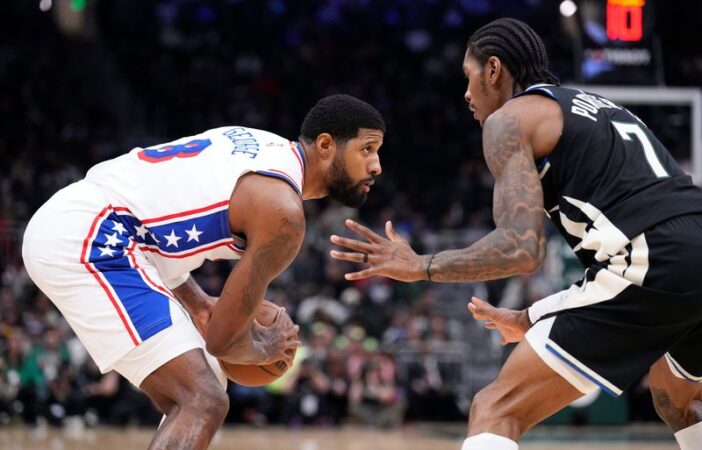
    Paul George puts up a shot against Milwaukee Bucks guard Kevin Porter Jr. (7) at Fiserv Forum on Friday.

    After multiple correct passing reads yielded missed shots by teammates, George took his defender off the dribble and rose up for a midrange jumper at the 6:18 mark. On the Sixers’ next possession, he nailed another pull-up to put the Sixers up by 14 points. About a minute later, George called for the ball, drew the foul on Kevin Porter Jr., and sank the two free throws.

    While holding off the Bucks’ attempted rally from 26 points down, George also got back in transition to help force a Bobby Portis whiff at the rim with 3:53 to play. He then secured a rebound that set up teammate VJ Edgecombe’s three-pointer to give the Sixers a 108-94 lead with 2:34 remaining.

    “Coach trusted me in that moment,” George said. “And [that was] me being able to respond to the moment.”

    George’s best game of the season was the result of his behind-the-scenes rehab work. That occurred amid outside criticism — “You’re getting old, and you’re washed, and you can’t do it anymore,” George mimicked Friday — that the 35-year-old said he needed to “drown out.”

    He also acknowledged the mental challenge of expecting his athleticism and body movements that have been reliable for years and those physical gifts suddenly dissipating. During his disappointing first season as a Sixer, George struggled to burst past defenders while averaging 16.2 points, 5.3 rebounds, and 4.3 assists in 41 games.

    “Outside looking in,” George said, “[fans] see us on the court and they’re like, ‘Yo, why aren’t you doing this?’ It’s just like, ‘My body can’t. I’m trying.’”

    George missed the Sixers’ first 12 games of 2025-26, before playing in seven of the team’s past 10 matchups.

    Following an efficient 14-point outing at the Brooklyn Nets on Nov. 28, George said that he and the Sixers’ staff had discovered the ideal way to fire up his left quadriceps muscle to support his knee. He then asked to play more minutes (28:02) in Sunday’s double-overtime home loss to the Atlanta Hawks, saying he feels like “the bird leaving the nest, getting to fly and flap my wings a little bit more.” But two days later, George felt “a little fatigued” while playing 17:43 in Tuesday’s home blowout vs. the Washington Wizards, a sign that these early games essentially are serving as his training camp.

    Sixers coach Nick Nurse reiterated earlier this week that George makes an instant impact as a versatile and communicative defender. His offensive flurries — including scoring the game’s first 11 points in the Nov. 20 overtime win in Milwaukee — also offered some promise. Now, when George drives to his left — when that lead leg must be strong and stable — he said he feels a mental “light popping back on, that I can start to trust it again.”

    Paul George makes a three-point basket against the Washington Wizards at Xfinity Mobile Arena on Dec. 2.

    George also still leans on his vast experience and knowledge of opponents, such as whose jump shot releases take longer and how to attack defensive switches. He has used that expertise to provide vocal mentorship to younger teammates like second-year center Adem Bona, who in Tuesday’s game against Washington missed a pass from George after sealing his defender.

    “I’m throwing that over the top, where he can just catch it and finish at the basket,” George said then. “Might be a little different. He’s not used to it. But just letting him know, ‘I see you, and I’m looking for that.’”

    It was poetic that, to help ignite George’s excellent fourth quarter, he lofted that style of pass to a cutting Bona for a dunk. And once George’s performance on both ends had all but officially propelled the Sixers double-digit victory, George and Maxey linked for their elaborate handshake as the veteran checked out for the final time.

    George had made good on his promise to his point guard. And he looked like vintage PG.

    “That’s what he’s here for,” Maxey said.