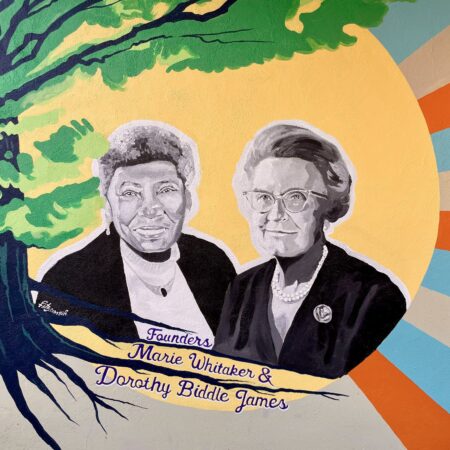
When the Media-area NAACP was selecting a few Black figures to spotlight throughout Black History Month, adding Marie Whitaker to the list was a no-brainer, said Cynthia Jetter, president of Media’s NAACP chapter.
Within the community, “I think most people know the story,” Jetter said.
The story, that is, of when Whitaker sat down for a meal at the Tower Restaurant at the corner of State and Olive Streets with her baby in her arms and her sister by her side in 1943.
No one waited on them.
This bothered Dorothy James, a white Quaker woman who was dining at the restaurant. So she approached a worker there who explained that the waitresses did not serve Black people,James recounted in a letter she wrote a few days after the incident.
Whitaker soon left the restaurant with her baby and sister and went elsewhere. Soon, James joined them, she wrote.
Whitaker and James became fast friends and cofounded Media Fellowship House the following year. The goal was to bring together Media residents of all races and religions for events and meals. It grew over the course of its first decade, and in 1953, they raised enough money from community members to buy a property on South Jackson Street, where the organization flourished.
Whitaker died in 2002, but the fellowship house lived on. In its 82 years, it has gone from hosting sewing circles and childcare events to helping Black people buy homes in restricted neighborhoods to now offering assistance to first-time homebuyers and helping those facing foreclosure.
For Amy Komarnicki, who now runs the Media Fellowship House, the values Whitaker championed — inclusion, resilience, and courage — are always guiding her.
“I think you have to move toward the injustice that you see and not ignore it,” Komarnickisaid.
That is especially difficult to do when you’re on the receiving end of the injustice, she added.
“Being willing to accept an invitation to talk about it takes enormous bravery and trust,” Komarnickisaid. “It’s good to be uncomfortable. It’s good to make people uncomfortable for the greater good. It opens up space for dialogue.”
Living in Media and going to Fellowship House growing up exposed him to people from all kinds of demographics and religions, Bill Whitakersaid. And that was no accident; it was something his mother and Fellowship House helped lay the groundwork for.
“She was resolute and knew what she wanted, not just for her family, but for her community and for her world,” Whitaker said. “She had a vision of what Fellowship House stands for, bringing people together and having people speak across what seems now to be a chasm of our differences — she wanted people to speak across that, to reach across that and come together.”
As long as Fellowship House stands, that work, just as important now as then, will continue, Bill Whitaker said.
Two university-run science summer camps that have each served Philly kids for more than two decades will not run this summer due to budget limitations.
Academy Science Camp, run through the Academy of Natural Sciences of Drexel University, is canceling its camp for just this summer. The University of Pennsylvania’s Museum of Archaeology and Anthropology is ending its Anthropology Camp for this summer as well as “the foreseeable future,” the museum wrote on its website.
Both camps, which offered science lessons and projects tailored to the museums’ exhibits, cited financial pressures as the catalyst behind the decision.
The new truncated public schedule made continuing the summer camp, which typically runs Monday through Friday, no longer feasible, the academy wrote on its website.
The academy plans to assess later in the year whether to run the camp in 2027, academy spokesperson Kaitlyn Kalosy said.
Last year, the camp served 360 kids ages 5 to 12, Kalosy said. It offered museum tours, experiments, and field trips.
“We know this may be disappointing for campers who look forward to spending their summers exploring and learning with us, and we are truly grateful for the enthusiasm they bring to the Academy each year,” the academy wrote online.
The University of Pennsylvania Museum of Archaeology and Anthropology, meanwhile, is unable to afford the cost of staff to run its camp because of a university-wide hiring freeze, it wrote on its website. The camp served about 500 kids ages 6 to 13 each summer, according to a museum spokesperson. It offered workshops, expert talks, and gallery explorations.
“This decision was reached only after extensive discussion and careful consideration of multiple scenarios,” the museum wrote on its website. “It was not made lightly.”
The school first ordered a hiring freeze in the spring to prepare for anticipated federal funding cuts under President Donald Trump’s administration. Last year, Penn and its centers were asked to cut 5% of certain expenses. This year, they have been asked to cut 4% on top of that. The cuts are aimed at helping the school keep up with mounting endowment taxes, legal, insurance and employee-benefit expenses, potential losses in research funding, and changes in student loan and visa programs, Penn leaders said.
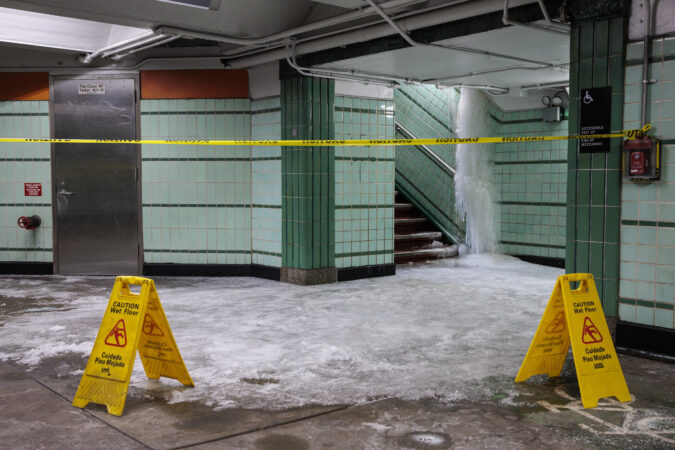
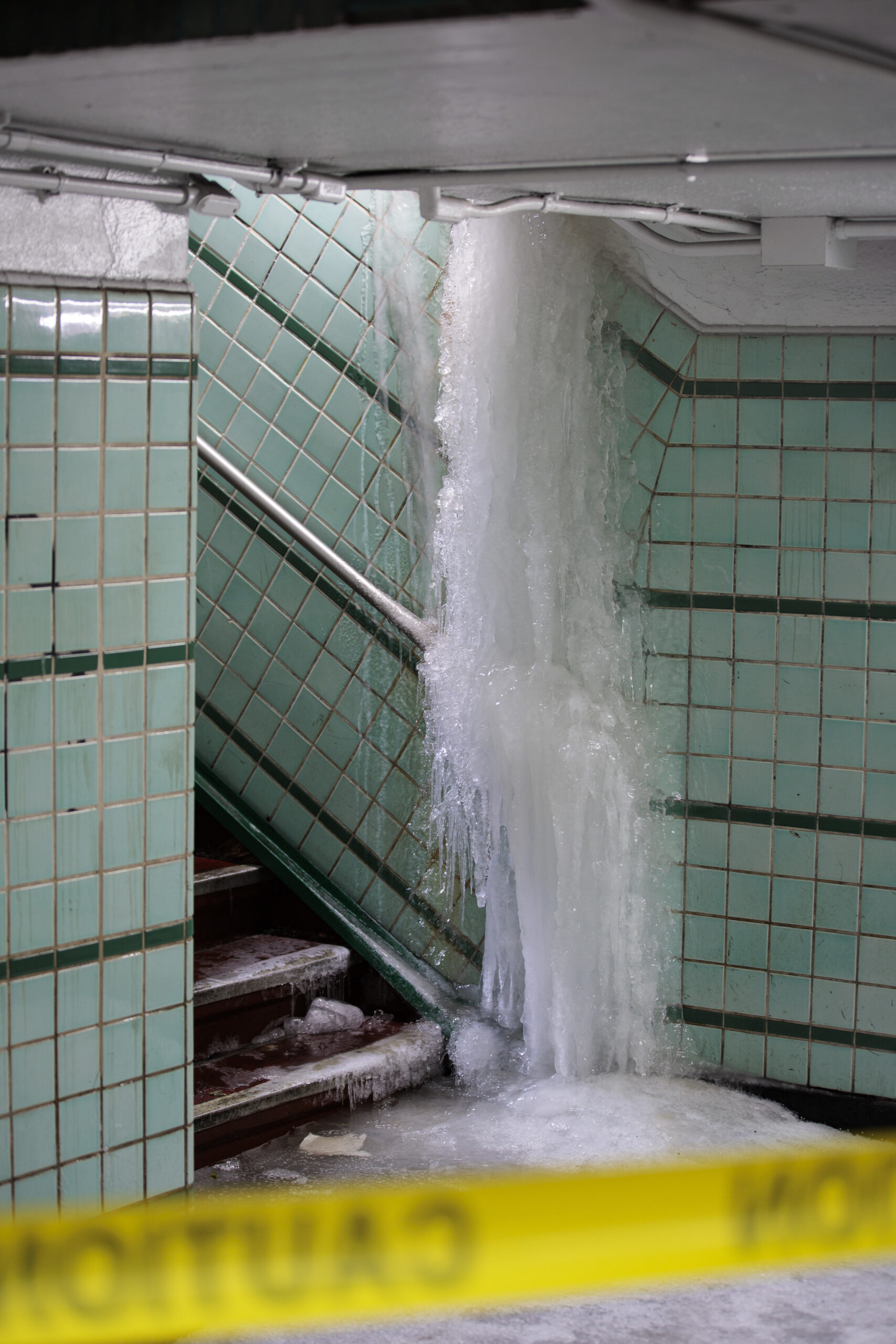
An enormous block of ice extended from the ceiling and covered the floor at the east-side entrance to the Tasker-Morris Station on SEPTA’s Broad Street Line on Tuesday afternoon after a pipe burst outside the station late Monday.
The pipe belonged to the Philadelphia Water Department, SEPTA spokesperson Andrew Busch said. It was being repaired and crews were continuing to clean up the damage, Busch said Tuesday afternoon.
The damage did not affect train service, he said.
The transit authority has been dealing with a number of burst pipes the last few weeks, only some of which are theirs. Some belong to other property owners, such as the one that burst at the Convention Center and flooded Jefferson Station on Monday night.
Ice covers the Tasker Street east-side entrance/exit at the Tasker-Morris SEPTA Station on the Broad Street Line on Tuesday, Feb. 10, 2026 in Philadelphia.
“When we have these deep freezes and then it warms up, and it’s happening all over, that causes problems with the pipes,” Busch said. “In many cases the best we can do is make sure that we have crews ready to respond to it and then work on cleaning up.”
Over the last two weeks, SEPTA has recorded about 10 incidents of water main breaks or burst pipes leading to flooding in stations or water from SEPTA structures flooding streets, Busch said. In about half those cases, the pipes belonged to SEPTA.
Many of these issues have occurred along the eastern edge of the Market-Frankford Line from near Spring Garden to the Frankford Transportation Center, Busch said. That is the oldest part of the line and some sections of the pipes are exposed.
SEPTA is planning a winterization project starting this summer. The project will likely include installing new valves on the water lines, replacing pipe insulation, and upgrading strips in the pipes that heat them. Busch said SEPTA expects that project to be done by around the start of next year. No full cost estimate is available yet, Busch said.
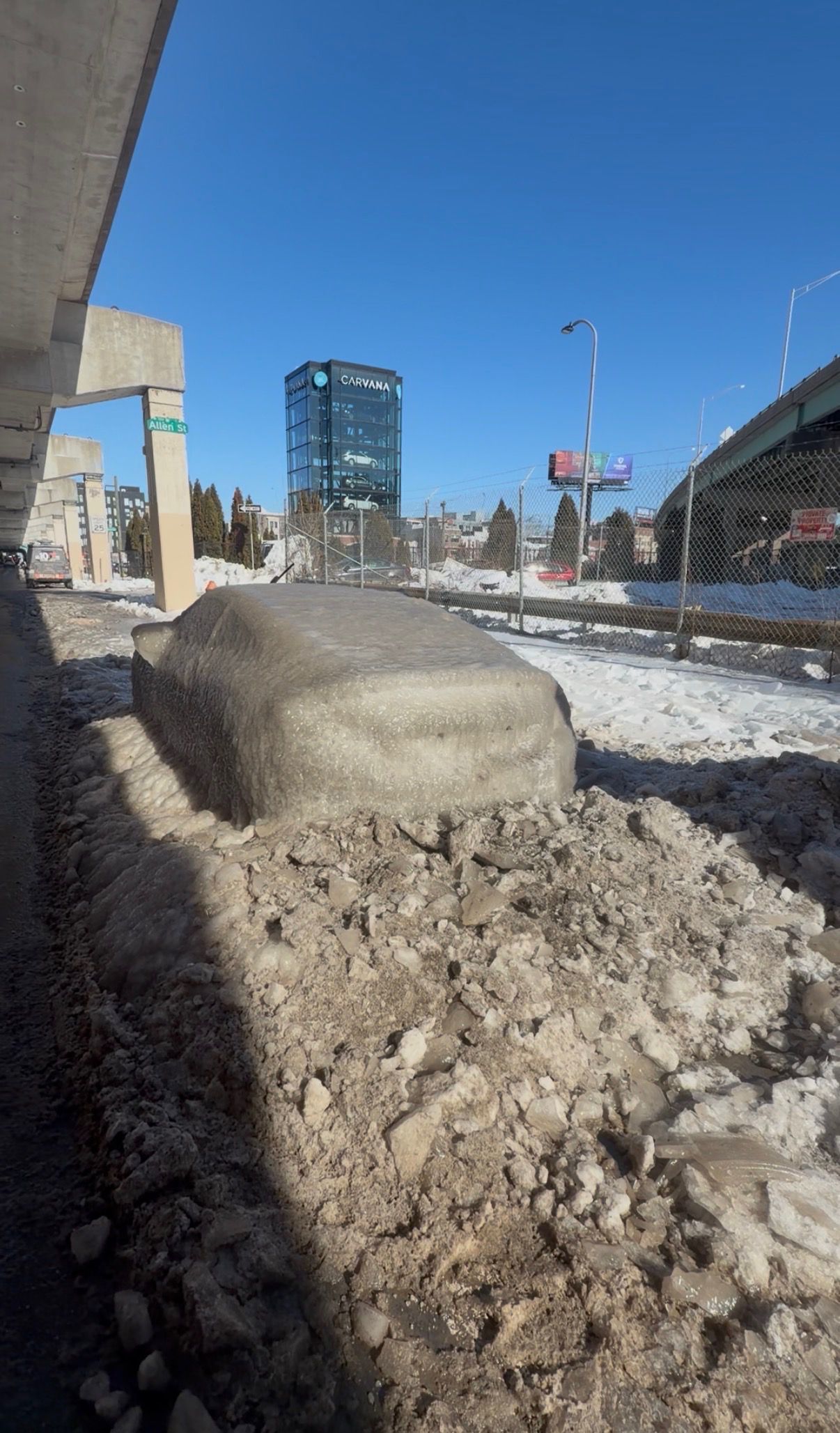
After her frozen car garnered tens of millions of views on TikTok, Tianna Graham is getting a new car for free, gifted to her by Carvana, whose car vending machine tower features prominently in the background of her videos.
Graham, a 24-year-old fifth-grade math teacher at Community Academy of Philadelphia, had a 2016 Honda Civic. The vehicle became thoroughly encased in ice following the snowstorm and arctic temperatures late last month.
On Tuesday, Graham reached out to Carvana, hoping she could leverage the car tower’s inadvertent virality in her videos to get a discount on a new car. Carvana soon responded, eager to help.
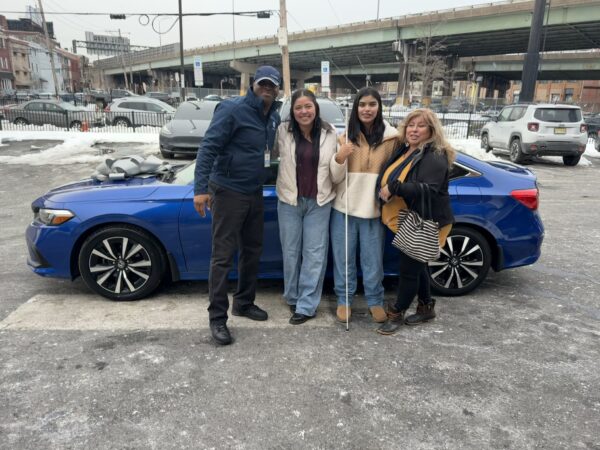
When Graham, a Fishtown resident, arrived at the facility on Friday afternoon with her mom and sister, she said, she expected Carvana would offer her some percentage off one of their cars.
Replying to @✨mrs.corby.nails✨ THANK YOU @Carvana MORE COMING SOON!!! I’m so incredibly grateful for this!!!! after all the details get sorted out, i’ll post a full update! and a big thank u to my lovely friends and family who have been helping me through this!
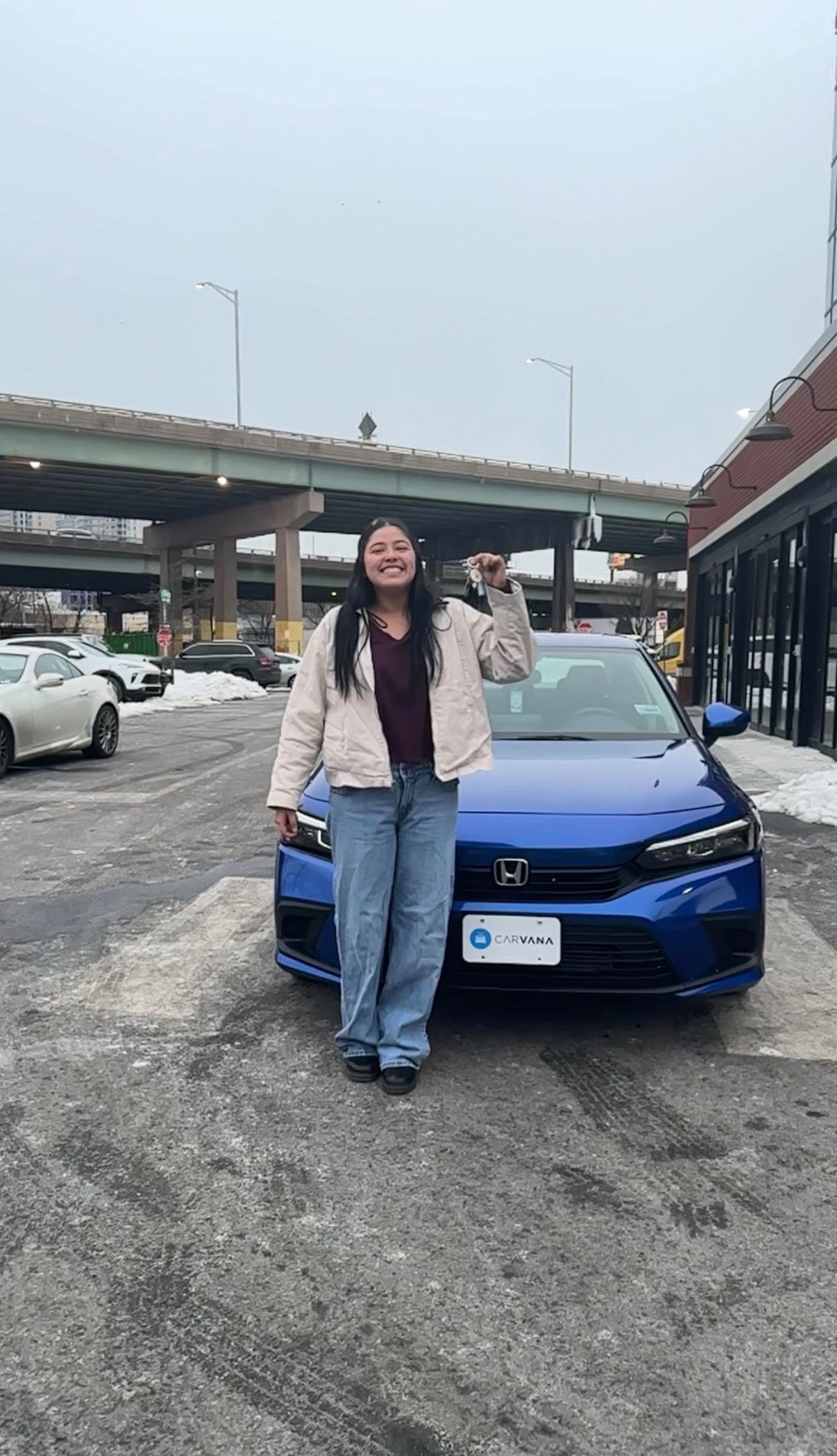
She was stunned to see a bright blue 2022 Honda Civic descend from the car vending machine with a big bow on it, school supplies inside, and an ice pick, “which I guess I do need,” Graham said with a laugh.
Carvana spokesperson Hayley Pollack confirmed Friday the car will be free for Graham once all the paperwork is finalized.
“I was shocked, in disbelief,” Graham said of learning the car would be free. “It’s a beautiful car.”
Tianna Graham in front of the car Carvana is gifting her.
The car is used and has about 28,000 miles on it, Graham said. She expects to have it in her possession next week based on initial conversations with Carvana, she said.
She plans to take it for a spin for the first time next weekend to drive to Ocean City, Md., for a National Federation of the Blind convention, she said. Graham, whose sister is blind, said she is currently pursuing her graduate degree to become an orientation and mobility specialist to help blind people learn to use canes.
“All things do happen for a reason,” Graham said she learned from this experience. “Anything bad that is happening, something good can always come out of it.”
Independence Hall, the Rocky statue, the Liberty Bell, and … a 2016 Honda Civic parked in Fishtown?
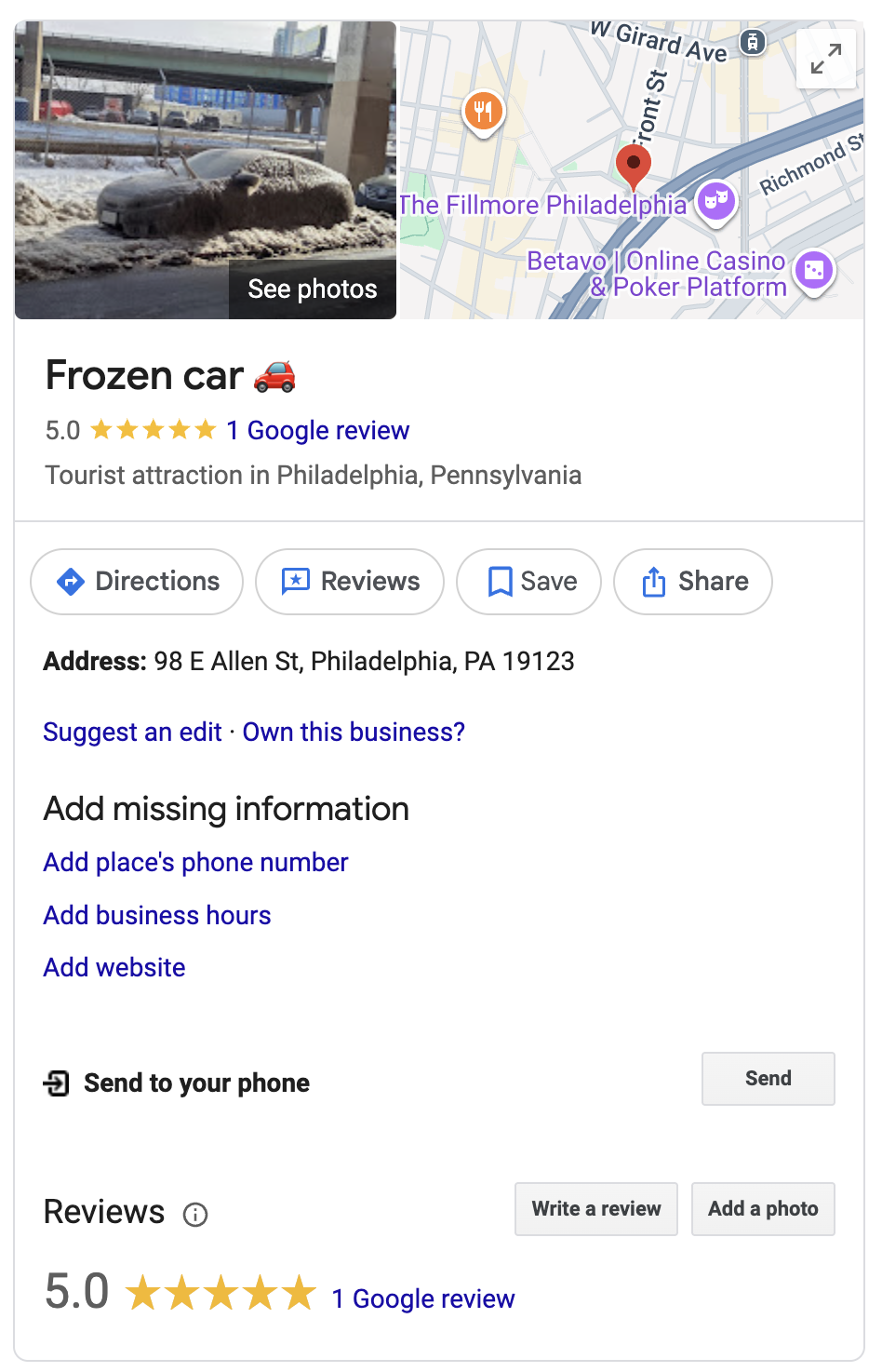
That odd appendage at the end of the list just became one of Philadelphia’s newest tourist attractions on Google Maps.
How does a silver two-door get minted a must-see site in the birthplace of America?
It gets completely covered in ice.
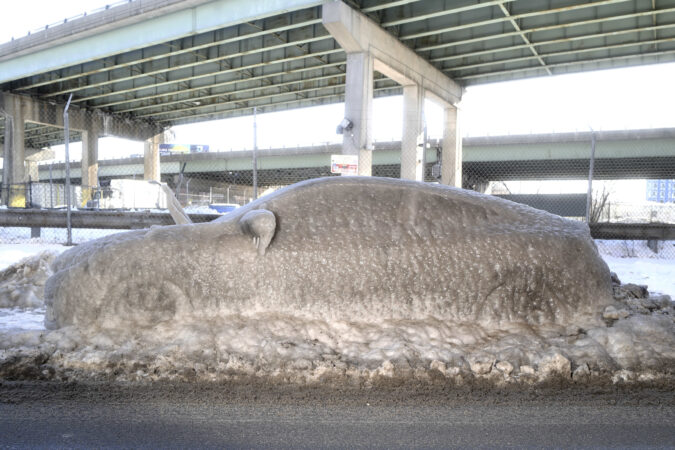
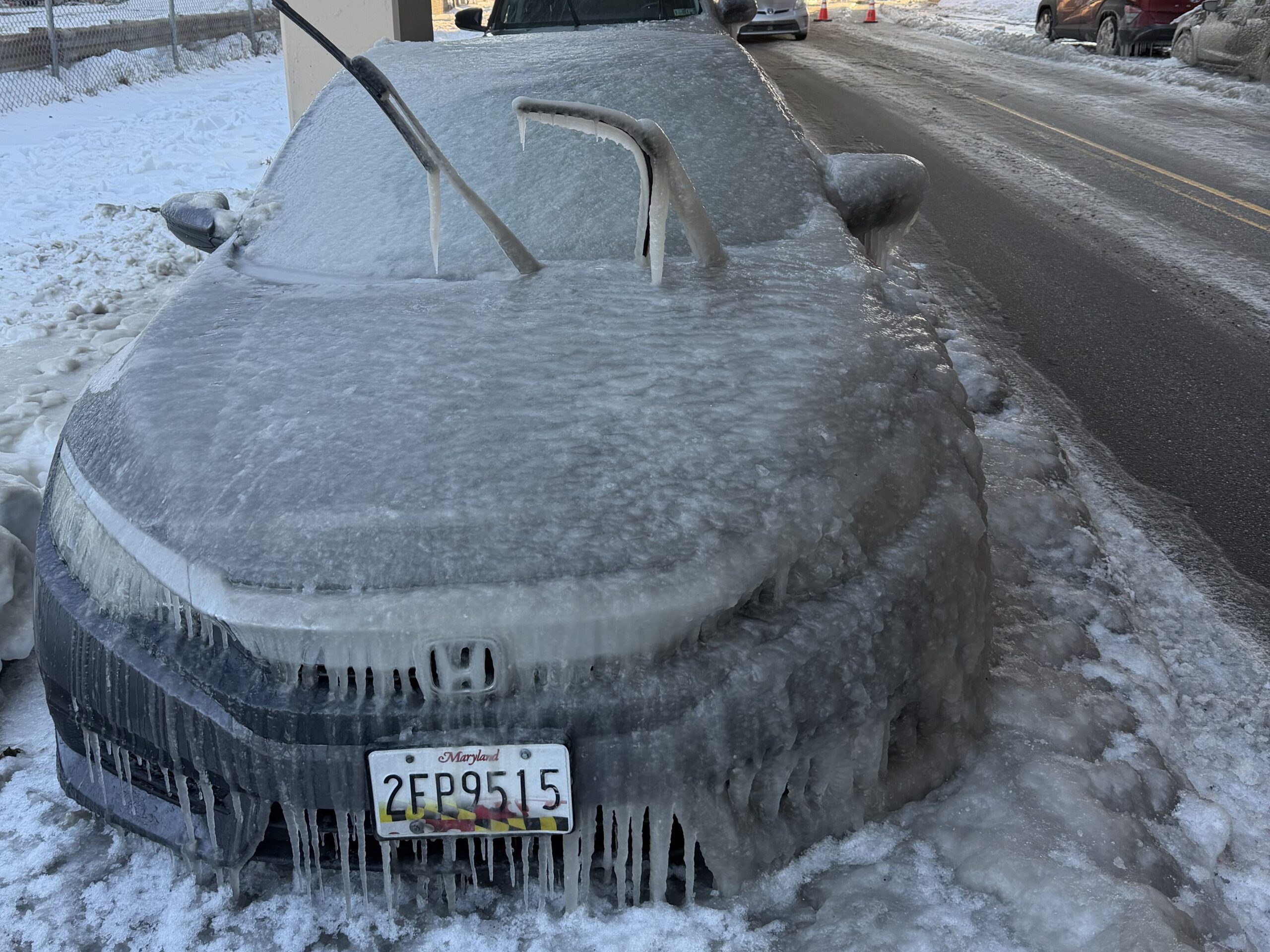
In photos of the car now seen around the world, a sheet of ice wrapping around the roof and hood of the car extends all the way down to the pavement. Paralyzed windshield wipers propped up perpendicular to the dashboard look like a pair of arms flailing frantically for help as the car suffers a frigid death. Passersby might easily mistake the sight for an ice sculpture of a car rather than a real one.
A screenshot of the frozen car in Fishtown on Google Maps.
The journey from plebeian commuter vehicle to local celebrity has been a source of both humor and headache for 24-year-old Tianna Graham, the car’s owner.
At first she wasn’t terribly worried about the situation.
“It’s fine. I’ll figure it out,” she remembered thinking.
Then the shock wore off.
“Now I’m like, ‘OK, what do I actually do now?’”
The saga starts at the intersection of North Front and East Allen Streets, under the El tracks, where Graham first parked her car on Jan. 23. She knew a major snowstorm was looming, so when she found an open spot near her apartment, she leaped at it.
When they returned, they found the spot still vacant, so Graham parked there again.
A car parked in Fishtown becomes completely encapsulated in ice.
On Wednesday, Graham, a fifth-grade math teacher at Community Academy of Philadelphia, noticed the street she had parked on was cordoned off with caution tape.
She asked a nearby police officer if she should move her car, she said, and he advised her to leave it there.
What happened next, Graham, the city, the people of Philadelphia, and frozen-car fanatics worldwide may never fully know.
On Thursday, the Philadelphia Water Department repaired a leak on a six-inch water main at North Front and East Allen Streets around 2:30 p.m., said department spokesperson Brian Rademaekers.
The department did not receive any reports of water gushing dramatically from the pipe, Rademaekers said. It is not clear if water from the pipe, from the highway overpass, or from another source led the car to become enveloped in ice.
But, when Graham returned from work last Thursday around 3:30 p.m. during what turned out to be a weeklong Arctic freeze and checked on her Honda, she saw it frozen absolutely solid.
A car parked in Fishtown becomes completely encapsulated in ice.
“I was freaking out a little bit,” Graham said. “I was just like, ‘I don’t even know where to start.’”
So she started where many Gen Zers start — on Instagram.
Graham posted the photo on her private Instagram story, asking friends what she should do.
Her first instinct was to try to break apart the ice. So she and her friend came at it with a small shovel and an ice pick but quickly found it a futile effort.
Graham was, however, able to pry open the passenger-side door and look inside.
“There was water everywhere,” she said. “The inside of my car is soaked. The floors are soaked. My seats were soaked. Everything is wet inside.”
On Friday, she was able to turn on the ignition, she said, but had no such luck when she tried again this week.
She filed a claim through her insurance company, Geico, which dispatched a tow truck Monday, she said. It is now awaiting inspection.
A car parked in Fishtown that got covered in ice gets towed.
“It’s really just overall inconvenient,” she said. “I understand that it’s like hilarious and everyone’s loved it, but nobody has been offering any kind of valid help at this point.
“I don’t really know where to go from here,” she said.
As Graham was dealing with the logistics of trying to save the car, the car itself was skyrocketing toward social media stardom.
Photos and videos of it began circulating online. Area residents began posting clips of themselves visiting the car, some even climbing on top of it.
When 23-year-old Abbigail Erbacher came up to Philly to visit her friend on Sunday, the frozen car was quickly added to the day’s itinerary.
The Egg Harbor Township, N.J., resident had seen the videos of the car on TikTok, identified the location with her friend based on landmarks around it, and headed to Fishtown.
“My first thought was, ‘Oh, my god, this is real.’ And then my next was, ‘I feel so bad for her,’” Erbacher said. “It had to have been encased in anywhere from an inch to two inches of ice.”
Her video starts with her screaming upon seeing the car and gently knocking on the frozen solid driver’s-side mirror. The overlaid text: “philadelphias newest monument.”
As of Wednesday the video had 22 million views.
Erbacher was surprised to see her clip become so widely viewed, but was not at all shocked to see the story itself gaining traction.
“I think our generation is so unserious,” she said. “These sort of things feel like the type of things that only happen to our generation.”
Between the political climate and the pandemic, Erbacher said, she and many others Gen Zers feel particularly prone to bad luck.
“I think we definitely feel a bit victimized,” she said. “And so when things reinforce that, we’re like, ‘OK, cool. That would only happen to us, so we just kind of got to go with it.’”
And Graham did, indeed, go with it. She started documenting the journey on TikTok herself late last week beginning with a simple video featuring the camera panning around the frozen car to the Rob49 song “WTHELLY.” That post got 8 million views.
and there she goes! yes it is totaled btw! if you feel inclined to help, go fund me in bio! no i’m not begging for money, but people have been asking how they can help and anything is appreciated to help w rental (which is not covered) and the difference to a new car! btw yes, the inside it soaked. yes, it did start but now will not (even after a jump)
On Monday, she posted two more videos: one of her girlfriend and friend gingerly cracking the ice off the car with hammers to the No Doubt song “Just a Girl,” which was viewed more than 27 million times, and another of the car getting towed away to the song “Vroom Vroom” by Charli XCX that was watched more than 12 million times.
“Bye ice car!” she wrote over the video of its immobilized tires cutting through hefty chunks of ice as the tow truck dragged it across the street.
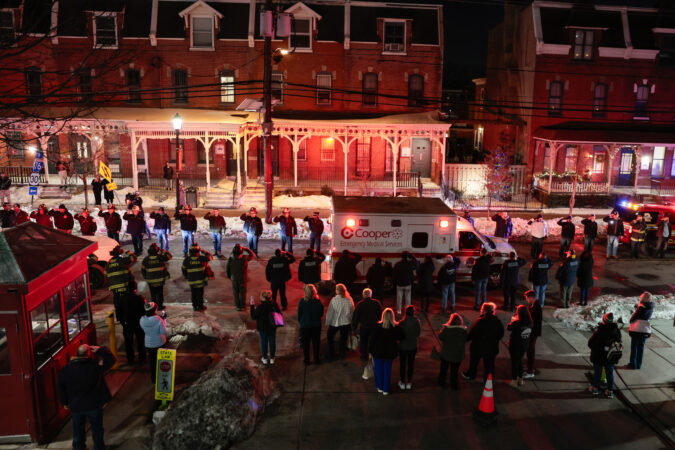
A Camden firefighter died Thursday after getting trapped under ice and water in the Delaware River, according to the Camden mayor’s office.
The Professional Fire Fighters Association of New Jersey on thursday night identified the fallen first responder as Howard Bennett.
The firefighter was doing regular maintenance on a department fireboat near Wiggins Marina around 11:30 a.m. when he fell into the water and got stuck under the ice. He was trapped for about 30 minutes, Fire Department Chief Jesse Flax said at a news conference.
Bennett was removed from the water, given medical attention, taken to Cooper University Hospital, and declared dead.
“I do not have enough words that I can even say that could tell you how this is hurting all of us,” Flax said.
Camden Mayor Victor G. Carstarphen thanked the fallen firefighter for the sacrifices he made to serve the city.
“He wasn’t just a public servant,” Carstarphen said. “He was a husband. He was a brother, a father, that committed his adult life to serving and protecting and being there for our residents in the city.”
Pete Perez, the president of Local 788, a union that represents Camden firefighters, described Bennett as particularly skilled in boating.
“He was our guy for when it came to the boat stuff,” Perez said.
“I’m devastated to the core,” Perez added. “For first responders — police and fire — training, routine things, can be inherently dangerous and today, unfortunately, we learned that.”
Mathew Caliente, president of the Professional Fire Fighters Association of New Jersey, said in a statement:
“We are devastated by the loss of Brother Bennett who dedicated his life to protecting the residents of Camden. Our hearts, our prayers, and our full support are with his family, his friends, and the members of Camden City Firefighters Local 788 and Camden Fire Officers Local 2578 during this unimaginably difficult time.”
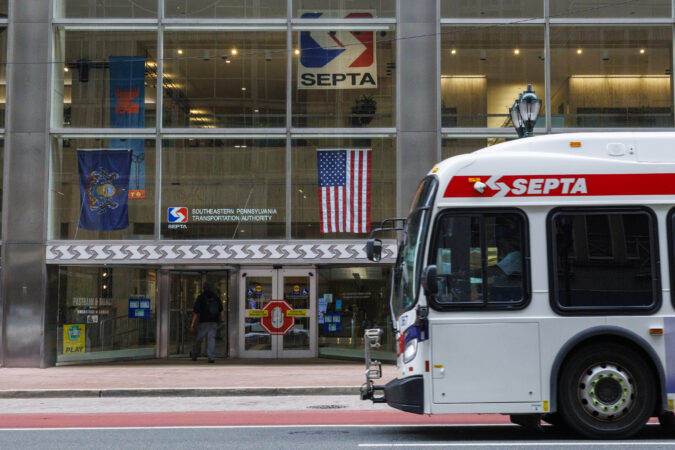
Starting Monday, SEPTA will no longer post alerts about potential delays and cancellations due to bus and trolley driver shortages on social media, the service announced this week on its website.
Alerts about delays due to weather and other issues will continue.
Driver shortage alerts originated shortly after the COVID-19 pandemic hit, at a time when the service was operating with a significant deficit of drivers, SEPTA spokesperson Andrew Busch said. Now that the service has partly resolved the staffing issue and improved its notification systems, the generic alerts are no longer necessary, he said.
“It was never very precise,” Busch said. Alerts were not “giving customers a good picture of what they should expect.”
Since the pandemic, Busch said, the service has refined its tools, like its app and website, to offer customers a more accuratesense of what is happening with their route in real time,including how late a bus may be running and if it has been canceled.
The service has also gotten a better handle on staffing. During 2022 and early 2023, SEPTA was operating withabout 220 fewer bus and trolley operators than its budgeted headcount, Busch said. Nowthat gap has shrunk to about 100 operators, which makes it easier to adjust for staffingfluctuations.
Between those two improvements, the generic delay and cancellation warnings became obsolete, Busch said.
“It just seemed like it was the right time to move on from that and to try to push customers to where they’re going to get more accurate information,” he said.
Riderswho do not rely on the website, social media, or the app can get updates on their route by calling 215-580-7800.
SEPTAwas at one time a trailblazer in governmental use of social media. It first started posting on Twitter, now X, in 2008, long before many municipal transit agencies had adopted social media. In 2013, it expanded its presence on Twitter with @SEPTA_Social, whichwas staffed by SEPTA employees.
Customers could post complaints and concerns and receive a personalized response from SEPTA staff, signedwith the initials of the staff member. SEPTA shared best practices on social media interaction with transit officials in Chicago, New York, and Boston, Busch said.
SEPTA does not plan onmoving away from social media any time soon, he said, even as other large organizations move away from personalized customer service with artificial intelligence. The goal for SEPTA is more tailored support, Busch said, not less.
“That’s been a very successful program and we’ll probably only grow that going forward,” he said.
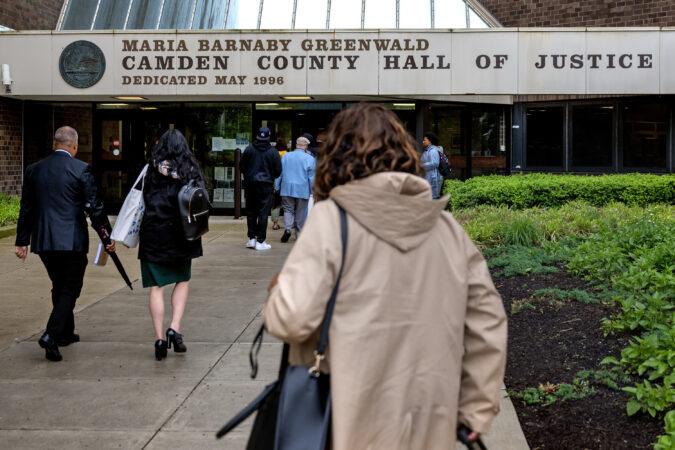
The Camden County Hall of Justice is closed through at least Wednesday after a sprinkler system pipe froze and then burst at the facility Sunday afternoon, said New Jersey courts spokesperson Pete McAleer.
The damage to the building was significant, McAleer said. Parts of the first floor and lower-level areas of the building were flooded. However, the courtrooms were unaffected, he said.
Courtroom operations will be held remotely as tests are conducted to assess if the damage created any environmental hazards.
The judiciary staff will continue coordinating with county officials and the county sheriff’s office as they relocate services temporarily, McAleer said.
The resistance was born on a Friday morning at the Gen. George A. McCall School photocopy machine.
The copier spat the message out on yellow, purple, and orange paper — page after page amplifying the same sentiment scrawled on each in big black letters: Learn all history.
In the aftermath of the removal of the slavery exhibit at the President’s House Site on Jan. 22, fourth-grade social studies teacher Kaity Berlin wanted to convert her rage into something productive, she said. She quickly thought of the words on one of her shirts: “Teach all history.” So she gathered some teacher friends, took to the photocopier, and headed to Independence National Historical Park.
Berlin wasn’t the only one who saw the shallow silver frames at the President’s House as a void screaming to be filled.
The city asked a federal justice to order that no more exhibits be removed from the President’s House and that the exhibits that were already removed be kept safe. In a hearing Friday, judge Cynthia M. Rufe didn’t issue a ruling but asked the Trump administration attorney that the exhibits remain untouched so she can review them Monday.
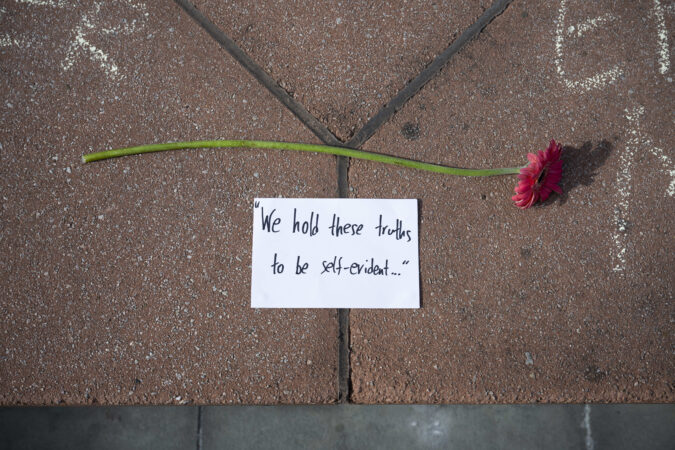
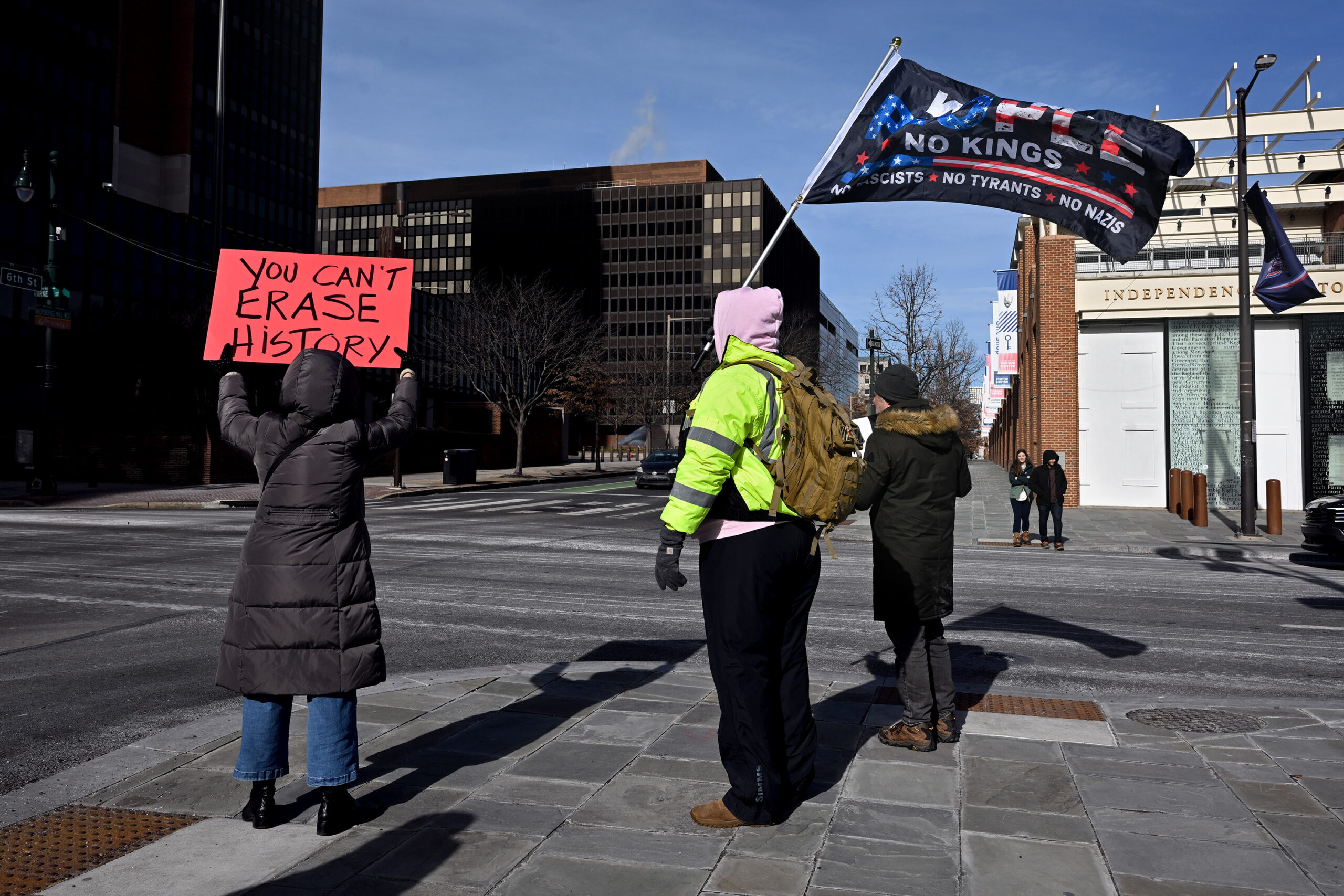
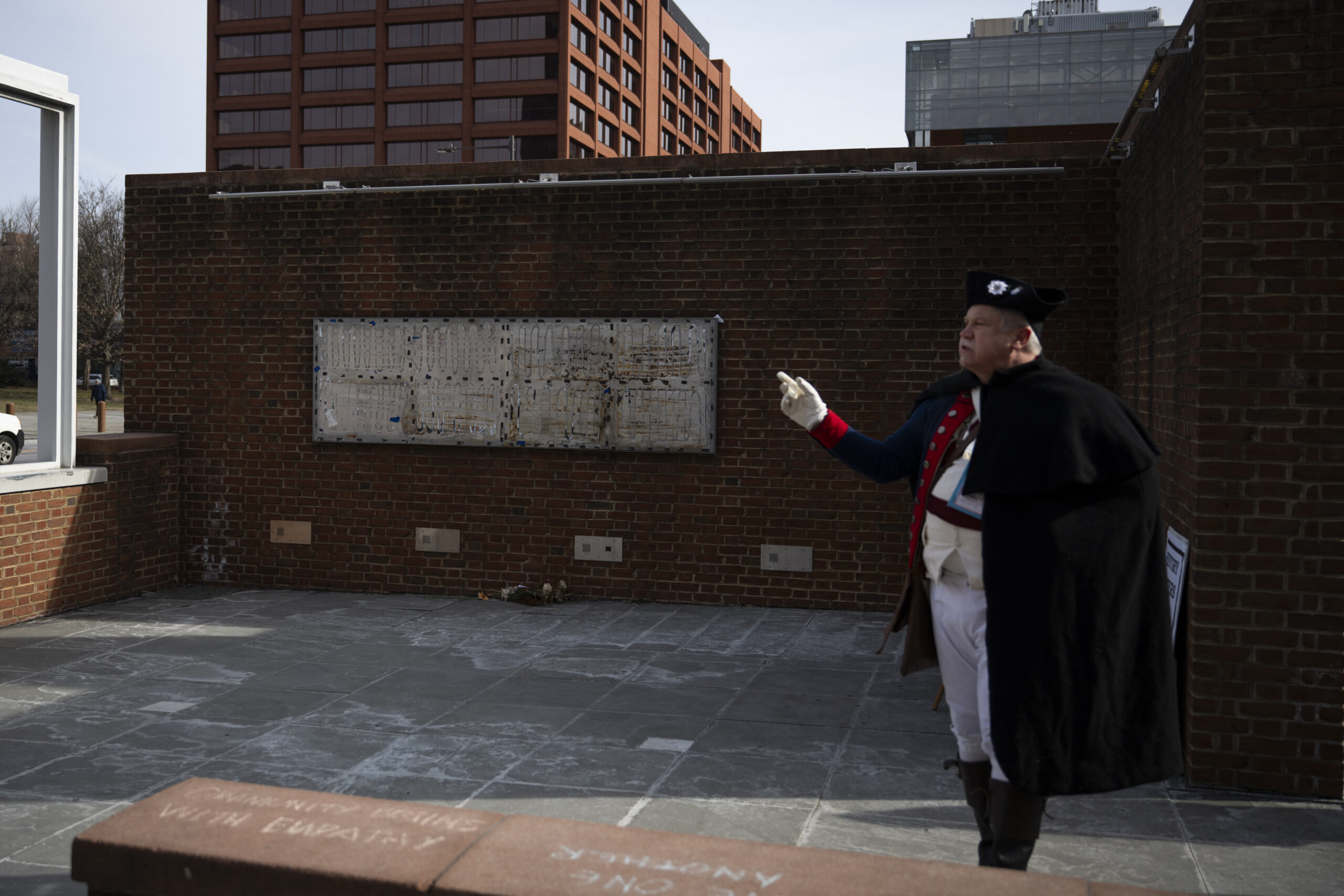
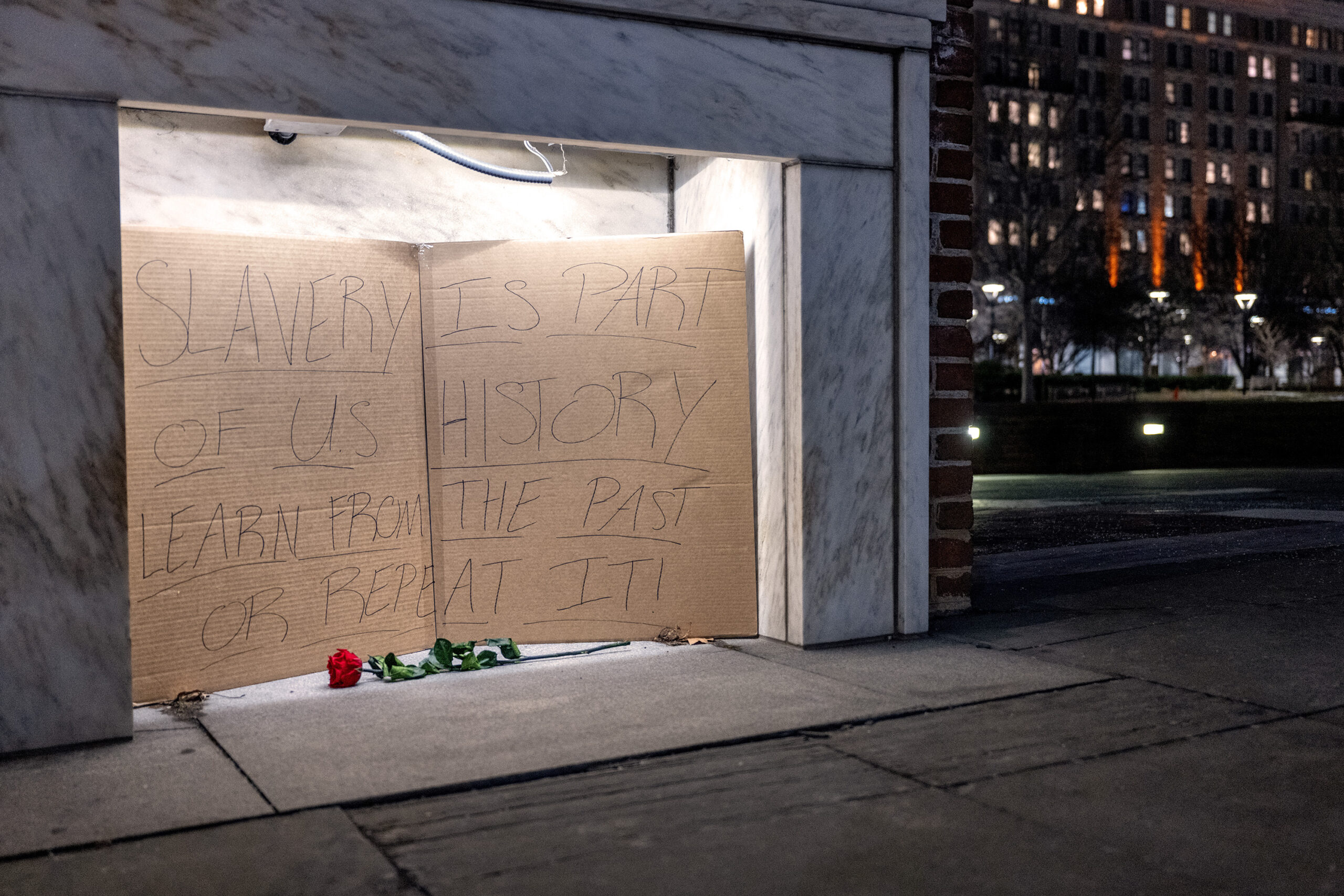
Over that first weekend colorful signs populated the walls, reenactors donned historic garb and positioned themselves along the red brick pillars with a flourish, some people held giant replica signs of the ones that were removed, and others laid flowers delicately across the facility.
To Berlin, whose school is a few blocks from the President’s House, posting the colorful signs was just a quick action she could take in her 45-minute prep period.
“It was just a cathartic way to be like ‘Ugh, this sucks,’” Berlin said.
But it soon became the first of numerous forms of activism and art that filled the space as more and more Philly-area residents yearned for a similar way to express their opposition to the removal of the plaques.
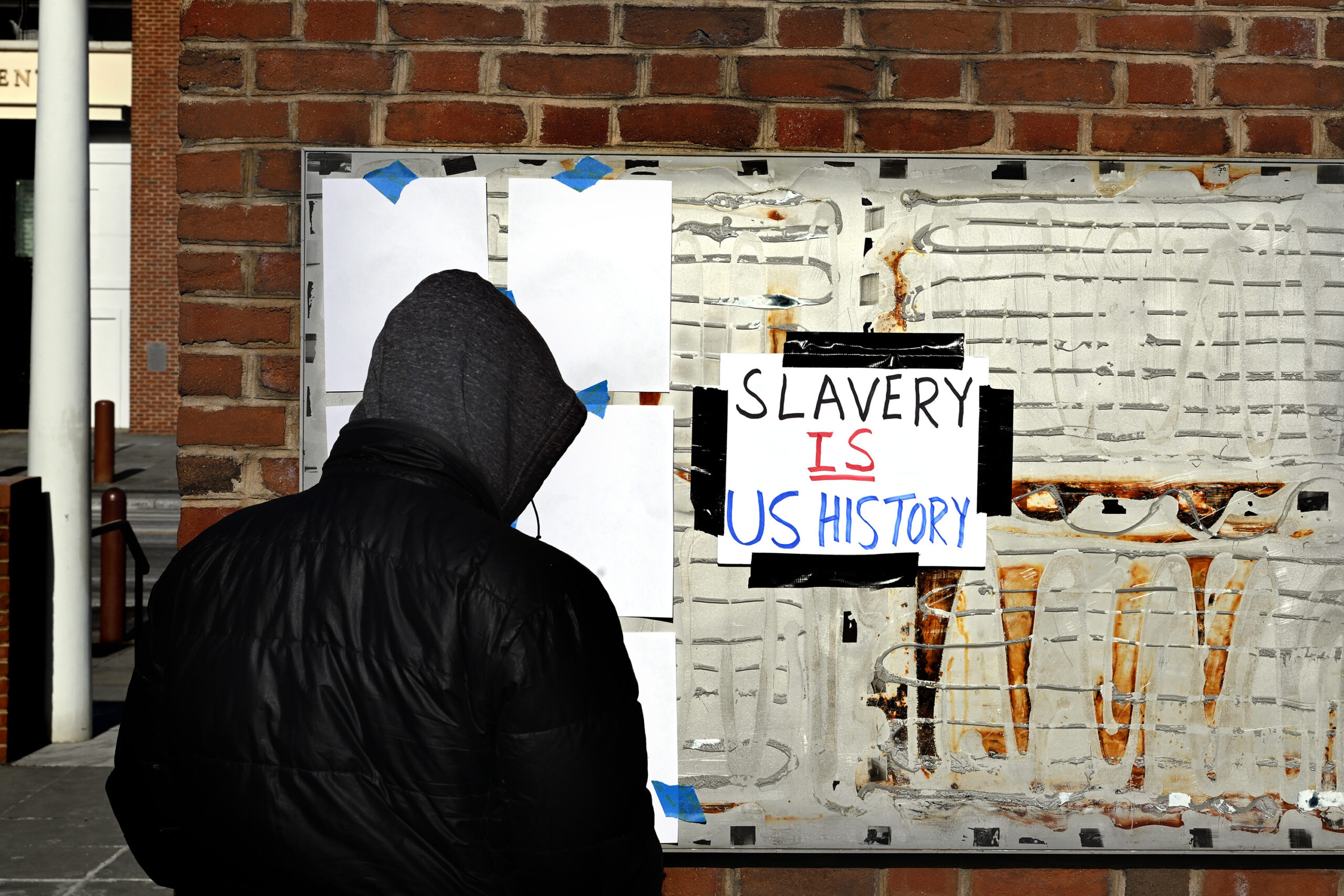
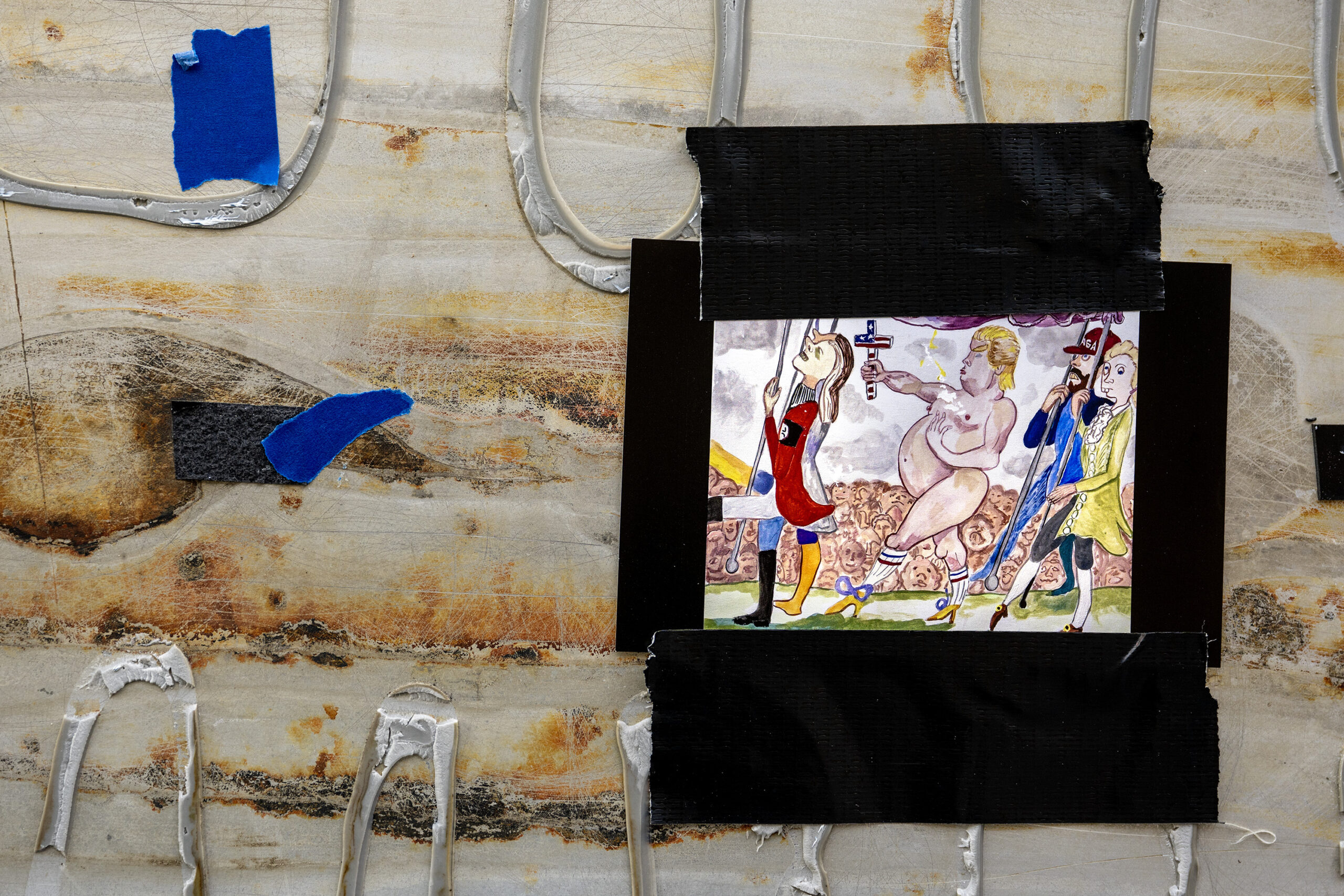
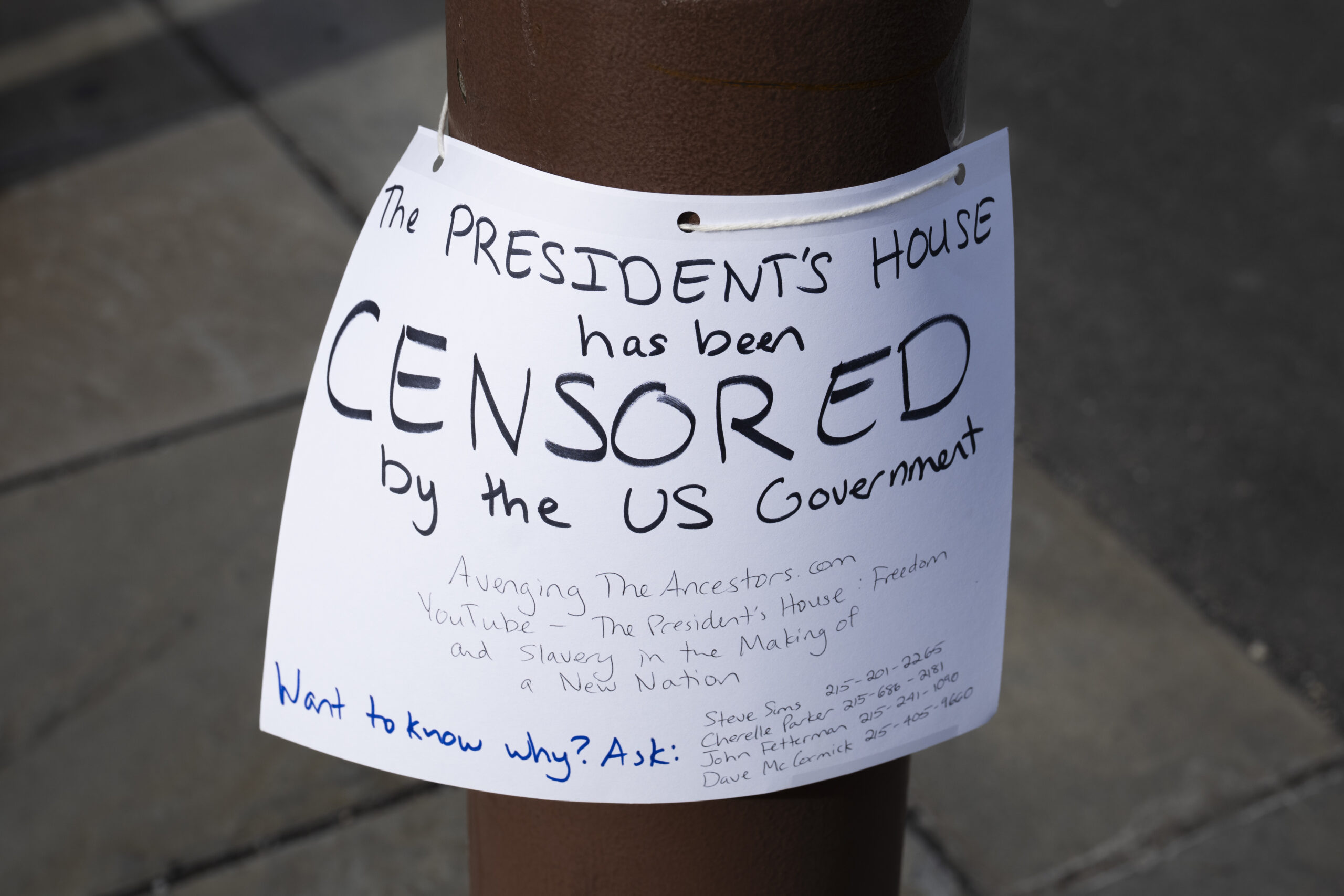
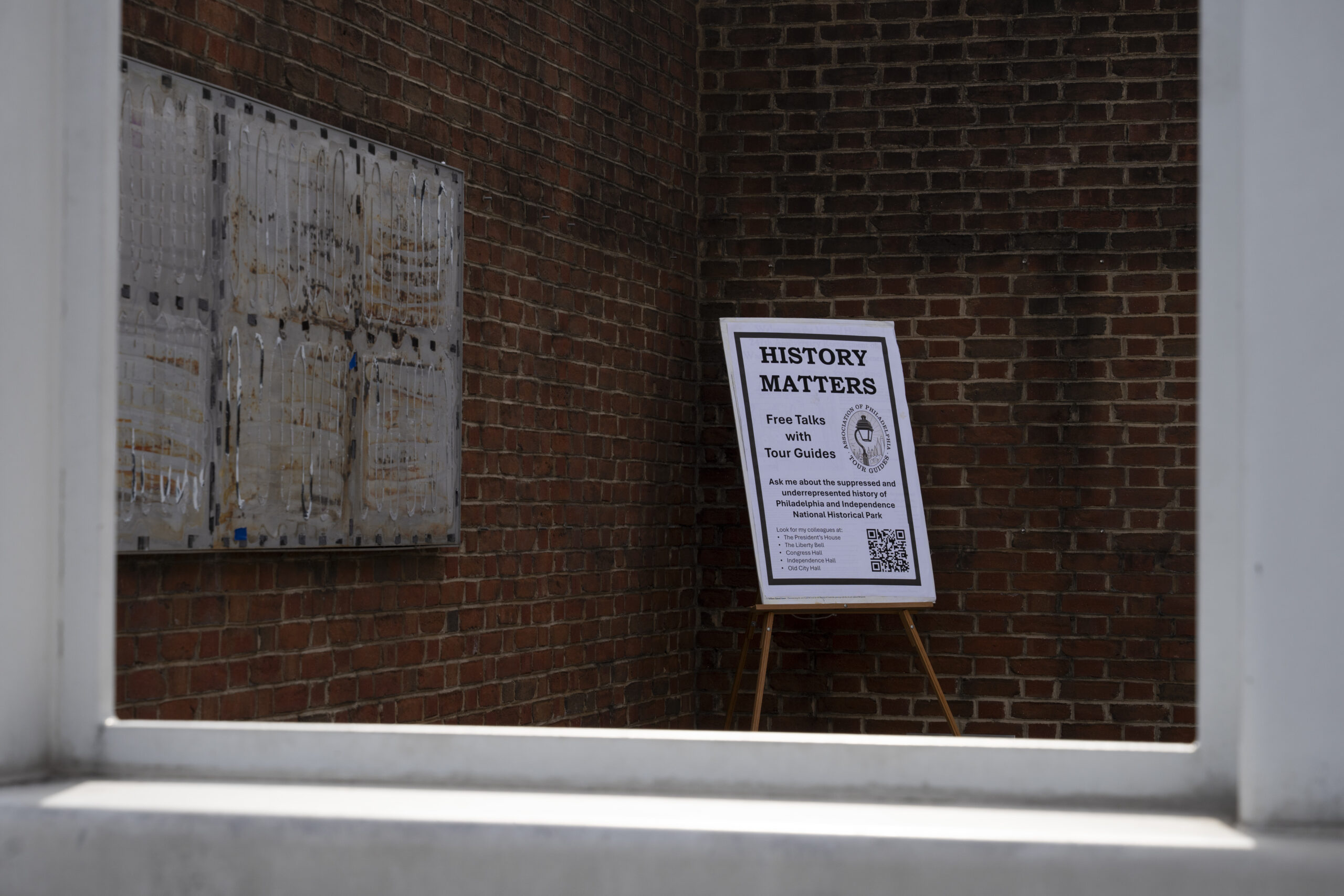
Media ranged from cardboard to poster board. Tools included Sharpies and pens. Many of the more informal signs were affixed with painter’s tape to nooks in the brick structure and empty metallic shells where the original signs hung. Some more official-looking signs included QR codes and printed messages balanced on easels. Others were replicas of the signs that were there made with assistance from professional printing services.
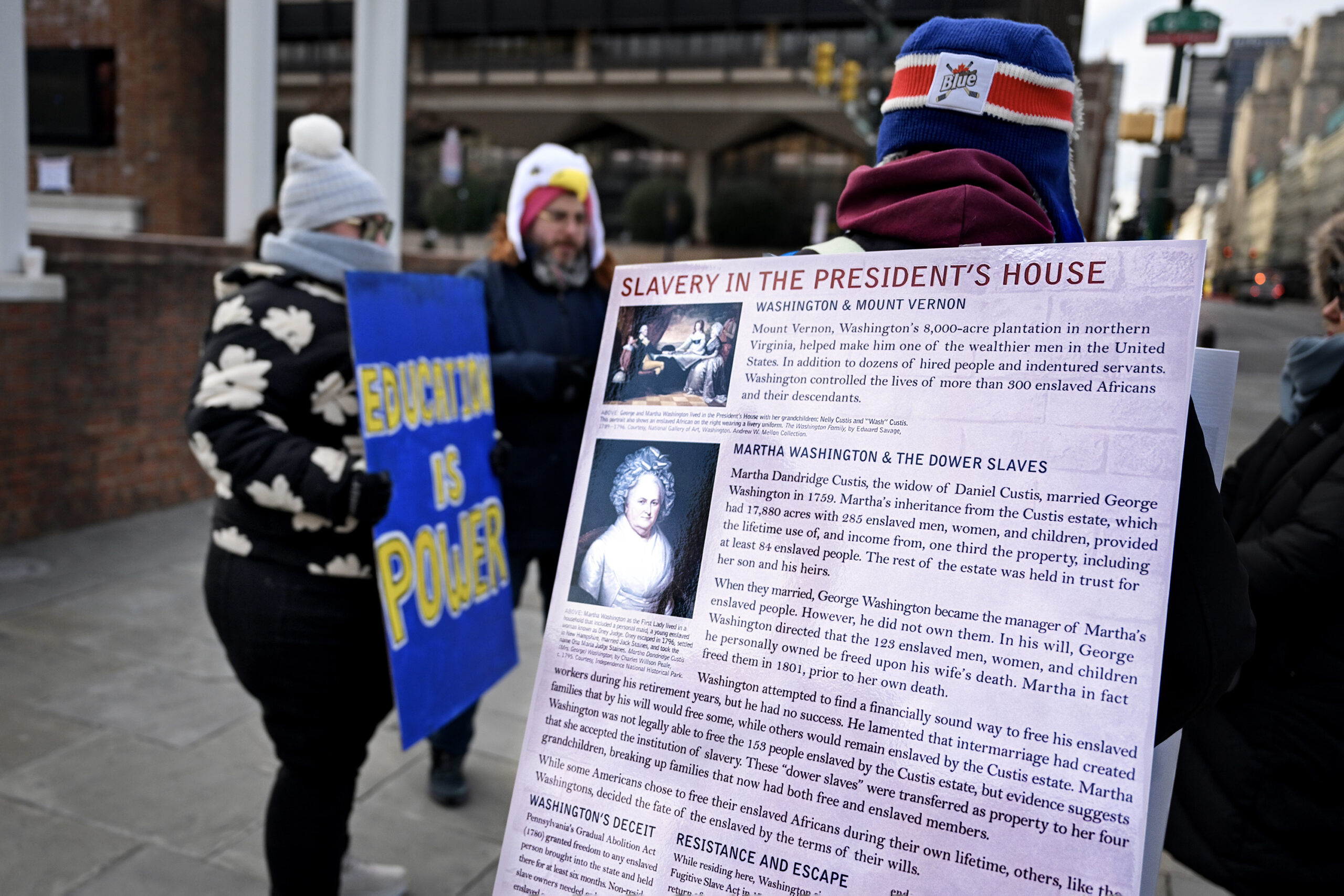
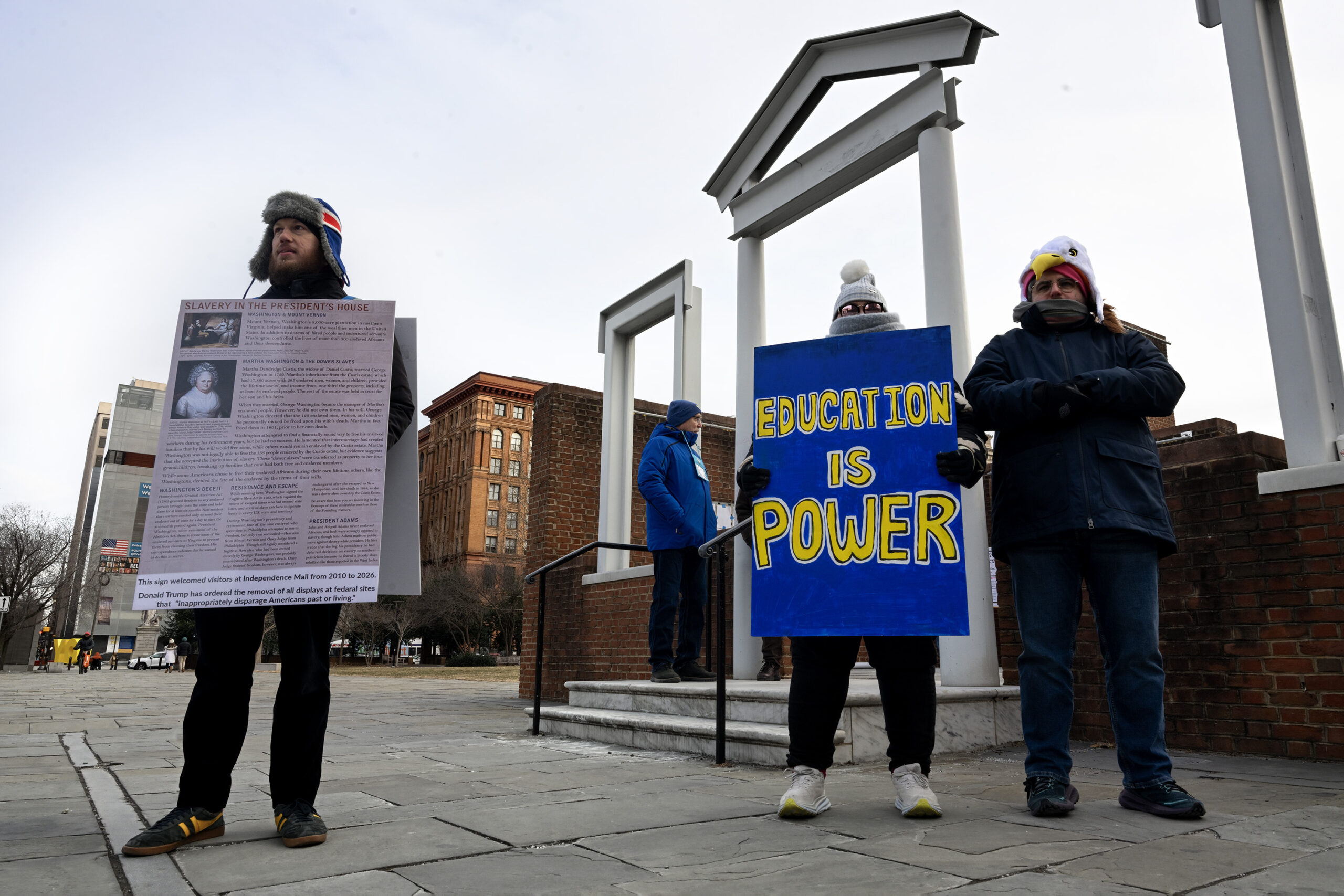
Ted Zellers, a property manager in North Philly, took a more full-body approach to his protest. He found a high-resolution image online of one of the removed signs, titled “Slavery in the President’s House,” got it printed twice, fashioned a sandwich board out of the posters, and became “a living sign,” he said.
It was an educational tool he could wield, but it doubled as a warning.
“I hope people will think about what other information is under threat of being disappeared,” Zellers said.
He expected to be the only person in the park with a sign, but was heartened to see a few dozen others there withstanding the 17-degree air interspersed with sharp winds slicing through the open air exhibit.
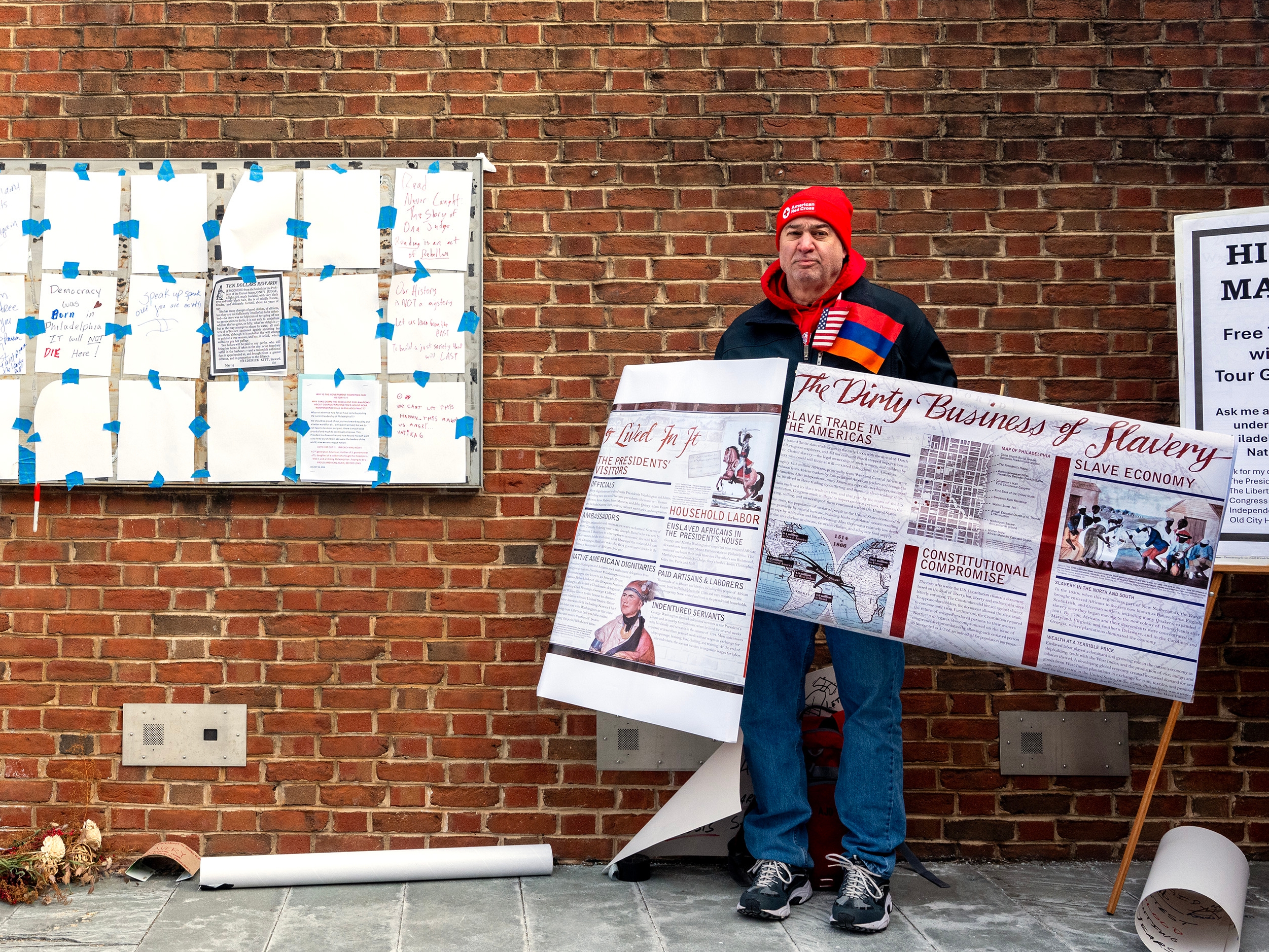
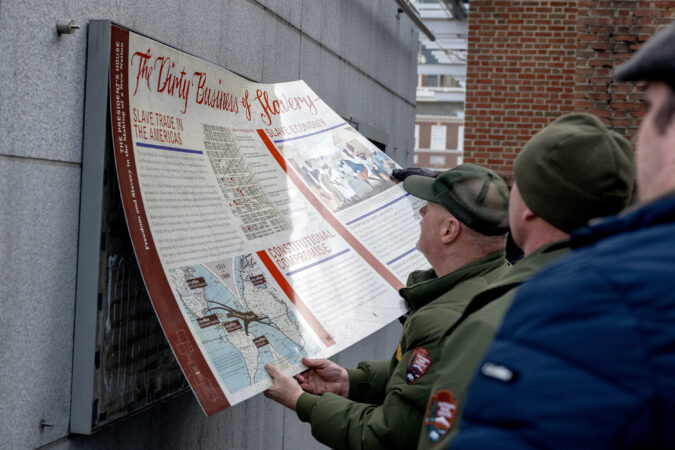
Albert DerMovsesian from Willow Grove, who came to the site equipped with one vertical sign detailing the labor that took place in the house and a horizontal one titled “The Dirty Business of Slavery,” found himself similarly pleased to see so many like-minded others around him.
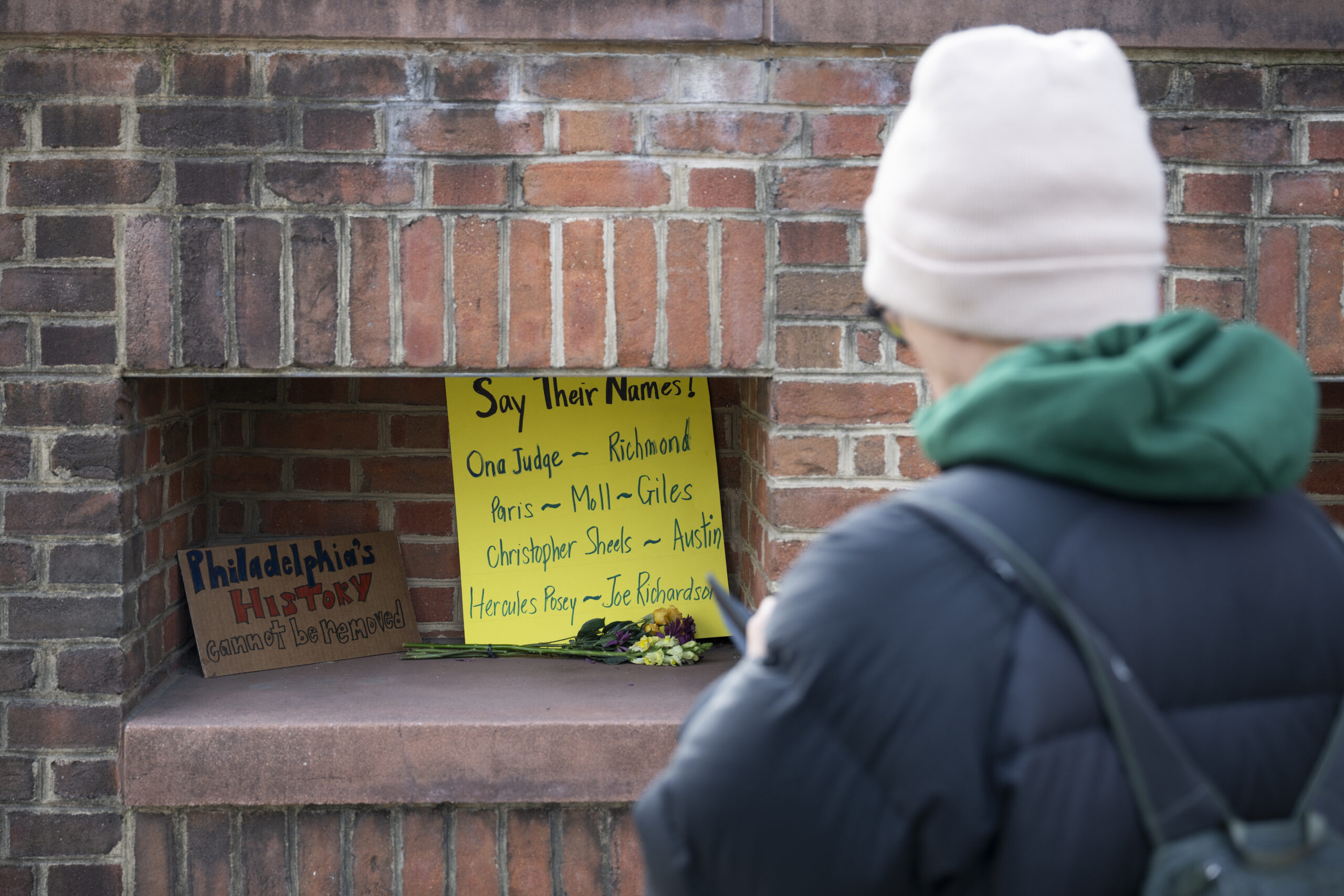
In the park he saw little kids writing on pieces of paper pasted to the walls, a woman leaving a sign with the names of those enslaved at the site, and people adorning the structure with flowers.
“It reminded me that I wasn’t alone,” DerMovsesian said.
“We don’t need 350 million Malcolm X’s to make the country better,” Zellers said. “We just need a lot of regular people who recognize that they’re part of networks and who can take some action and amplify what’s going on, pass it onm and get other people engaged.”
The collage of images developed organically, but hearkened back to a long lineage of protest art that has become increasingly prevalent under the Trump administration, said Nicolo Gentile, an artist and adjunct faculty member at Temple University’s Tyler School of Art and Architecture.
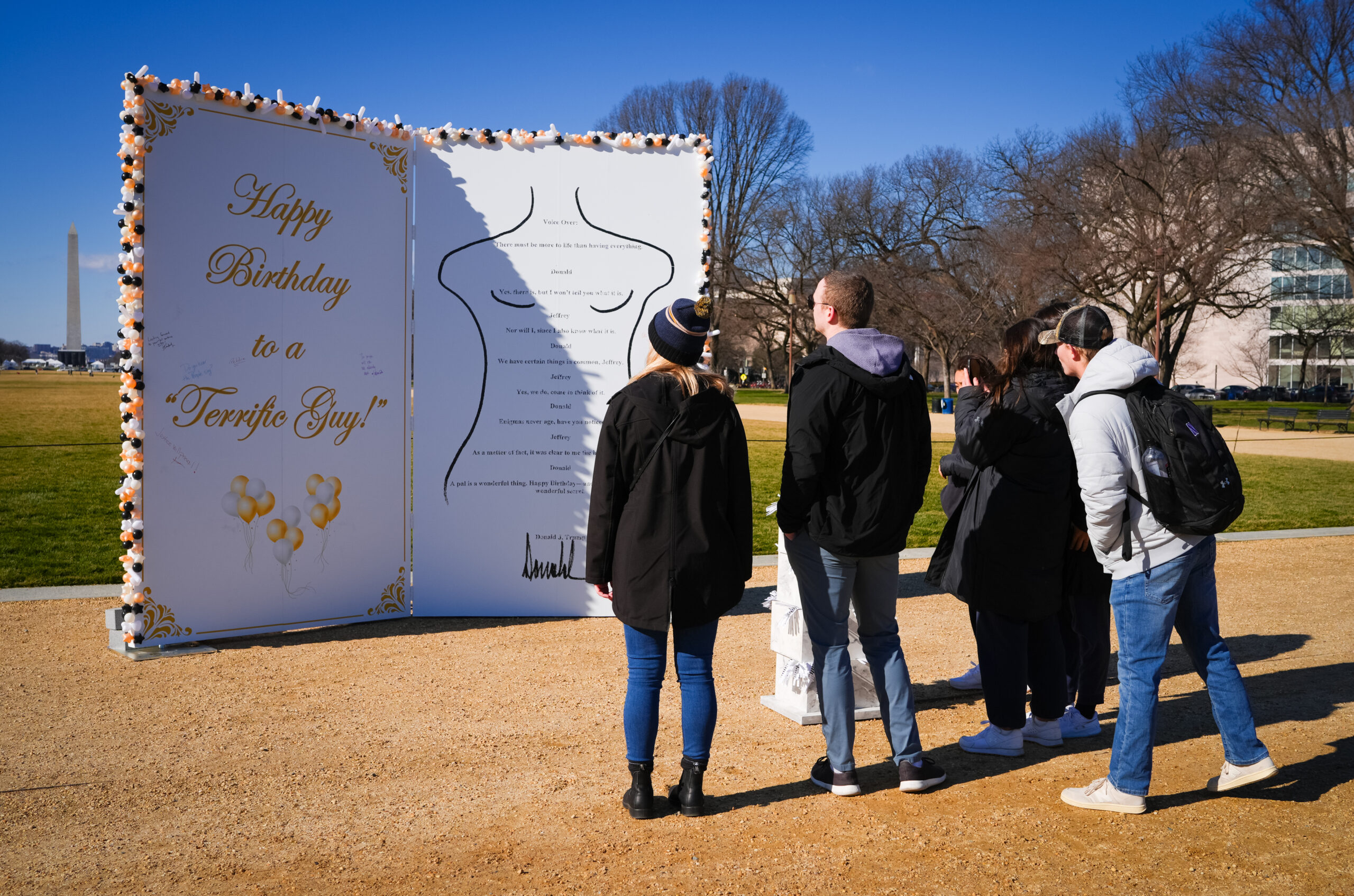
A new protest art installation referencing the Epstein files and President Donald Trump was installed on Third Street SW along the National Mall.
The assortment of papers reading “learn all history” gets its power from the relative anonymity of its author, Gentile said, as well as its use of repetition.
“It starts to create a texture of sound of a greater voice the way that the many voices of a chant during protest does,” he said.
While Berlin said she doesn’t see herself as an artist, she appreciates the punch of a stark and direct message through signage and art.
“I do love the impact of a good simple piece,” she said.
In some cases, political art can be used to “accelerate progress,” Gentile said, but sometimes its best use is halting regression and “to wedge our foot in the door as progress may seem to be closing.”
“This work seems to be the foot in the door,” he said.
People leave notes on the spaces at the President’s House site in Independence National Historical Park.Ted Zellers (right) wears a sandwich board with a replica of one of the removed slavery panels as people visit and protest at the President’s House site.Ted Zellers (left) wears a sandwich board with a replica of one of the removed slavery panels, joining Jenna and Gregory May (right) protesting at the President’s House. People leave notes and political satire cartoons in the spaces at the President’s House.People protest at the President’s House site.Al DerMovsesian holds replicas of some of the removed slavery panels as people visit the President’s House site.The President’s House in Independence National Historical Park.The President’s House in Independence National Historical Park.Michael Carver portrays Mordecai Sheftall as part of a “History Matters” guide at The President’s House.A sign was placed at the President’s House.A group of teacher taped posters along the now barren brick walls of the President’s House.A single rose and a handwritten cardboard sign (“Slavery is part of U.S. history learn from the past or repeat it”) are inside an empty hearth at the President’s House.
For some, the removal of exhibits about slavery at the President’s House Site at Independence National Historical Park on Thursday came as a shock.
For John Garrison Marks, a historian and author who writes and researches about America’s early years, it looked like history repeating itself.
In April, Marks will publish his book Thy Will Be Done: George Washington’s Legacy of Slavery and the Fight for American Memory. The book delves into George Washington’s life, his relationship with slavery, and how that relationship has been manipulated by politicians and activists over the last 2½ centuries to serve various narratives.
Marks talked to The Inquirer about how the removal of the slavery exhibits at the President’s House will become another chapter in the nation’s struggle to reconcile how a man renowned for fighting for freedom forced so many into bondage.
The following interview has been edited for clarity and brevity.
Can you tell me a little about the specific history of this site?
While [Washington] was there, he enslaved at least nine people. He had enslaved people for the entirety of his adult life. He had grown accustomed to being served by enslaved people at his home in Virginia.
So he brought these people from Mount Vernon to the President’s House in Philadelphia while he was serving as president there, and the major complication that came up with this, and this is one of the things that the historic site did a great job of explaining, is that the state of Pennsylvania passed a law to gradually abolish the institution of slavery in 1780.
As part of that law, any enslaved person who remained in residence in Pennsylvania for more than six months would be entitled to their freedom. George Washington discovered this soon after assuming the presidency and relocating to Philadelphia, and he also learned, as many future presidents would learn, that the law also would apply to him. He wanted to keep the labor of these people that he enslaved, and so he devised a scheme he very much wanted to be kept secret to rotate enslaved people in and out of Pennsylvania before they had arrived at that six-month mark and would be entitled to their freedom.
Sometimes he would send people back to Virginia. Sometimes he would just take them across the river to New Jersey for a little while, but he was very aware of this gradual abolition law and worked very hard to make sure that it wouldn’t apply to the people he personally enslaved.
The tragic irony in that is, at the very same time, George Washington was expressing in letters to people, in private correspondence, how much he supported these Northern gradual abolition laws.
Was there some sort of moral struggle that we have evidence of that he was experiencing? How was he reconciling these things?
He writes to people in private, talking about how he recognizes the hypocrisy inherent in him leading a revolution to found a nation dedicated to liberty and equality and his own involvement with slavery.
There were these statements that he made limiting the nature of his involvement, of trying to establish some limits for himself of how he would and would not engage with the institution of slavery, but he also proved flexible on that point.
Hercules Posey, the chef that he enslaved in Philadelphia, escapes from slavery and escapes from the Washingtons.
After that happens, Washington writes in a letter that he’s disappointed because he vowed never to gain another enslaved person by purchase but then says, “Now this is a vow I must break.” So it seems he never even considered the possibility of hiring and paying a free chef.
How has Washington’s experience with slaves, in general but particularly there, been sort of warped over time?
In the months after Washington’s death, almost every American would have known that he freed the people he enslaved in his last will and testament, and yet almost no one talked about it.
There are dozens of biographies of Washington that get published in the decade after his death, and almost none of them acknowledge slavery in any way.
But there have always been people in America who are dedicated to lifting up that history, to resurfacing Washington’s involvement in slavery. So during the 1932 bicentennial [of Washington’s birth] you have Black educators and activists, Black newspapers who say, if this is going to be about getting back to the real George Washington, now is the time that we have to reckon with his involvement in slavery.
It happens again, to varying extents, during the Civil Rights Movement as there’s a greater scholarly attention to the histories of slavery and African Americans. You’ve seen it over the course of the last couple decades about what kinds of things can and can’t be taught in American schools.
Always, the conversation is about Washington, but it’s never just about Washington. It is always about America and what America stands for, and depending on people’s assessment of what the nation is and what it means, that often dictates how they think the story of George Washington and slavery should be treated.
Why do you think it’s important we have the President’s House as a memorial with the plaques that have been removed? What do you make of the removal of them?
Trying to hide the nation’s history of slavery has never worked. We’ve been trying it over and over again throughout American history, but there have always been other people who insist that we reckon with this past, that we face it head on, that we include the full story so we can learn from it.
As we approach the nation’s 250th anniversary, I can’t help but think how many people are going to be visiting Independence Hall, are going to be visiting Independence National Historical Park, who would have had the opportunity to encounter this history of slavery that is so closely tied to our history of the founding and maybe learned it for the first time.
Eliminating the ability for people to learn from that history, to have conversations about that history, to reckon with what that history should mean for us today is only going to set us farther back. It is going to make much more challenging any effort to move the United States to becoming a more just society.