Author: Michelle Myers

  • Why the lunar module is leaving the Franklin Institute

    Why the lunar module is leaving the Franklin Institute

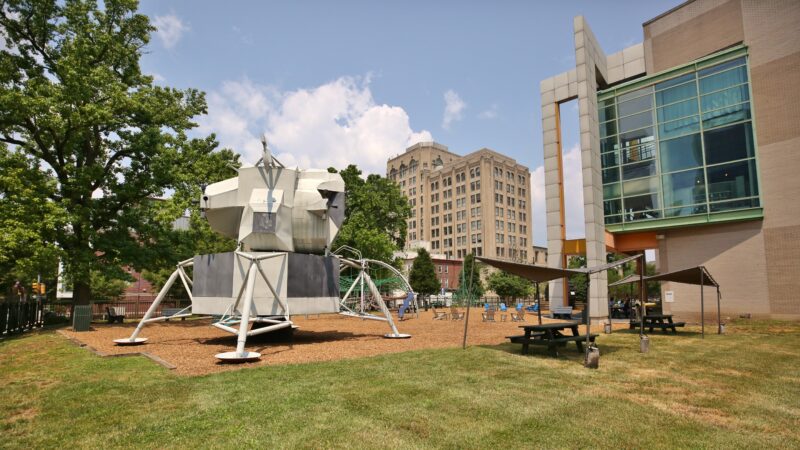
    Bill Piccinni, 67, was riding his bike by the Franklin Institute when something halted his pedaling. The lunar module looked as if King Kong had ripped it in half, he said.

    Concerned, he asked Curious Philly, The Inquirer’s forum for questions about the city and region: What is going on with the Apollo-era lunar module? Is the Franklin Institute getting rid of it?

    » ASK US: Have something you’re wondering about the Philly region? Submit your Curious Philly question here.

    “It’s been there for so long; it’s like a part of the city almost,” Piccinni said. “If it disappears, it would just be a shame.”

    Sadly for Philly space lovers, the disjointed module does signal a farewell. After 49 years at the museum, it is returning to its previous orbit — Washington.

    Neil Armstrong’s ride look-alike, a prototype used in preparations for several Apollo missions, was loaned by the Smithsonian’s National Air and Space Museum in 1976, according to Derrick Pitts, the Franklin Institute’s chief astronomer. Now, that museum has asked for the module’s return.

    “All museums, when they are keeping track of their artifacts … set a period of time for how long it’s gonna be borrowed, and then they will ask for it back,” Pitts said.
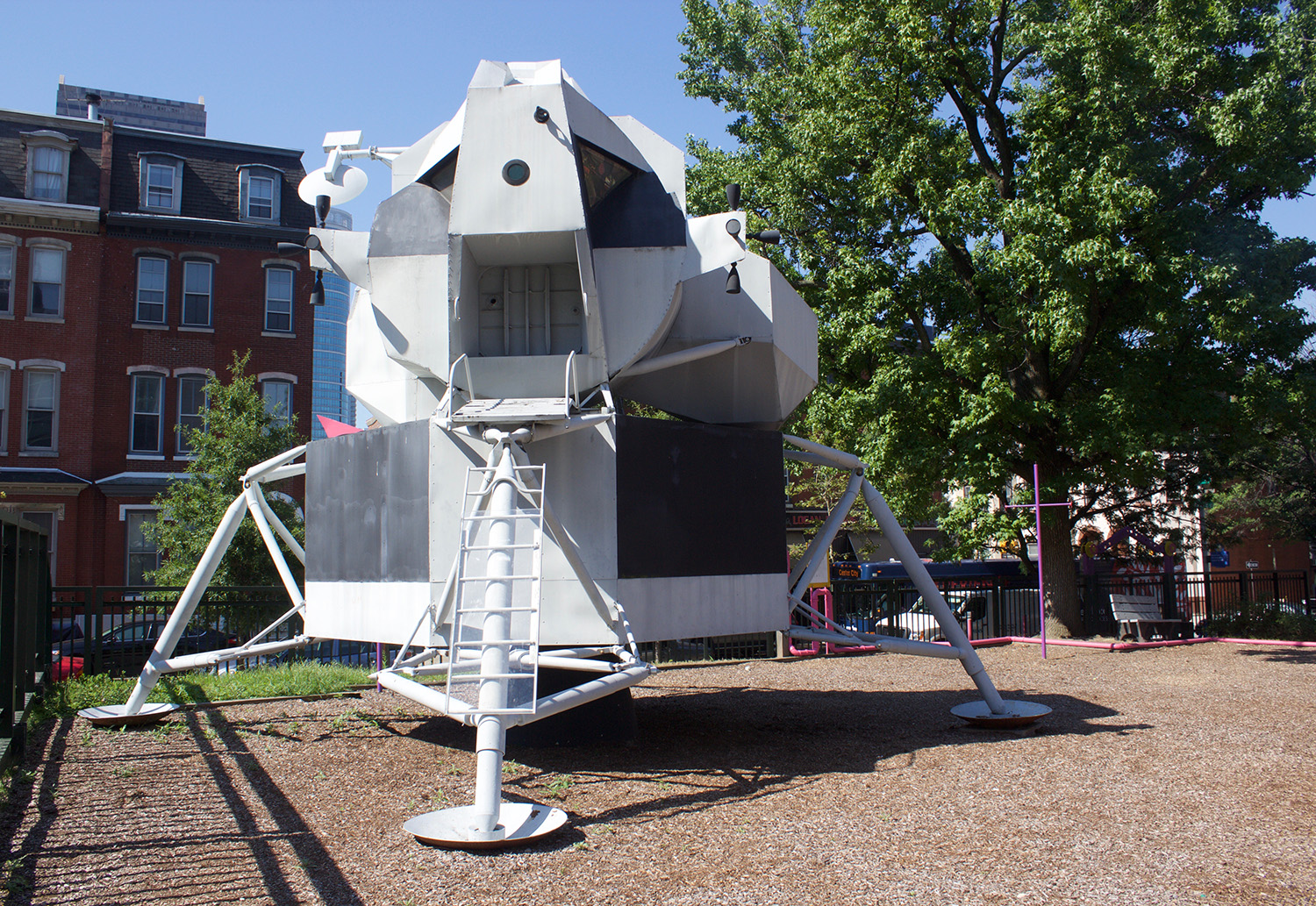
    The Lunar Module was loaned by the Smithsonian’s National Air and Space Museum in 1976.

    The chief astronomer is not sure what awaits the Grumman structural engineering test module near D.C. The engineering prototype served to test how the parts and pieces would fit together in preparation for the real Apollo 11 lunar module that took Armstrong to the moon.

    To Pitts, that doesn’t make it any less special. On the contrary, he views the equipment as an epitome of the height of space exploration technology at the time. It’s proof that “we successfully sent explorers to the moon and brought them back safely,” Pitts said.

    For future generations of Philadelphians, this means no longer being able to see the module up close without leaving the city. People in Washington won’t be seeing this particular module either. There are currently no plans for it to be displayed at the National Air and Space Museum, according to spokesperson Marc Sklar.

    For now, the Franklin Institute is considering an array of options for replacing the module in the backyard, but nothing is set in stone, Pitts said. In the meantime, the museum’s Wondrous space continues to be an option for folks wanting to learn about space.

    “I am just really appreciative that people have paid attention to the lunar module enough to wonder what is going on with it,” Pitts said. “We are really very glad that you are aware that it has been here and that you are going to miss it.”
  • Ray the goat needs a wheelchair. The Philly Goat Project hopes its fundraiser will get him one.

    Ray the goat needs a wheelchair. The Philly Goat Project hopes its fundraiser will get him one.

    Ray the Nubian goat has come a long way since a parasite threatened to take his life, leaving him with three legs but not dampening his spirit. Now he’s in need of a wheelchair.

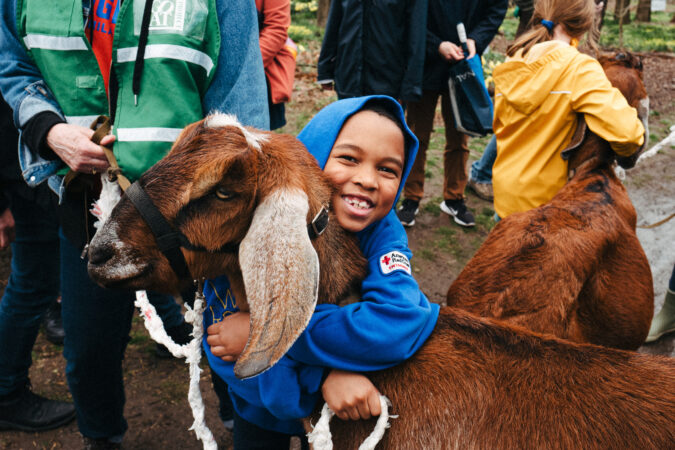
    As a jolly middle-aged goat, 7-year-old Ray loved taking long strolls around Awbury Arboretum, supporting people in bereavement with hoofshakes and kisses, and taking children with cerebral palsy on rides.

    The wagon was his biggest job, and he took it seriously, said Karen Krivit, the director of Philly Goat Project, an East Germantown nonprofit that provides community wellness through nature connection. So much so that he hid his pain.

    “Goats tend to hide their injuries,” Krivit said. “Ray was determined to keep from showing any pain and just trying to pull his head high and be with everybody else.”

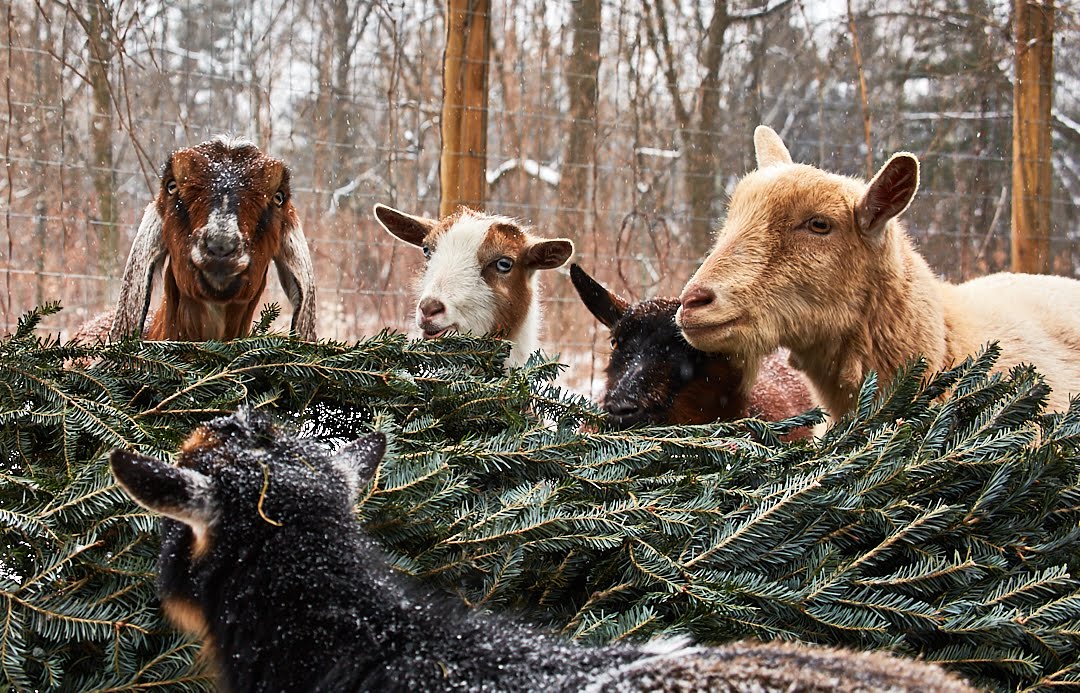
    Philly Goat Project’s annual Christmas Tree-Cycle feeds old trees to goats.

    Ray had been battling a parasite infection common among outdoor animals, Krivit said. But, as often happens for his breed, he was resistant to the medication. As his veterinarian team continued trying for a cure, a slight limp alerted the Philly Goat Project staff that his condition had worsened.

    The parasite affected his bone density, causing one of his femurs to break in three places. A big problem for any goat due to their rough-and-tumble nature.

    The place Ray had called home since he was 3 months old rallied around him, raising money for a titanium plate to secure the bone in place. But his anatomy once again worked against him.

    With Ray standing at a little over 3 feet tall, his natural lanky composition would have made it hard for the plate and the screws to hold onto the bone. The titanium plate could have collapsed his bone in another area, causing additional damage, Krivit said.

    “We were able to eliminate the parasite, but not in time enough to save his leg,” she added. “The safest long-term plan was amputation.”

    For tall animals in particular, it’s hard to thrive on three legs, Krivit explained. The biggest challenges since the amputation in May have been teaching him how to move around by himself and reintegrating him into his herd of 13 goats.

    “Humans tend to be mean to each other if you look different or act differently; it’s the same with goats,” Krivit said. “But humans can use their voices and talk about it; goats can only be mean and exclude another goat. Not being rejected is vital to his survival.”

    Ray was placed in a nearby separate stall. His brother Teddy never stopped looking out for him.

    Ten thousand dollars and months of rehabilitation later, Ray has a severe limp, but can now stand up and lie down by himself. The herd has accepted him back, but he seems to feel left behind when they go on long walks, often bellowing as the other goats head out without him.

    “Because he is moving his body in three legs instead of four, he is at risk for hurting himself further if he goes on a long walk, making it harder for him to stay connected to the herd,” Krivit said.

    So Ray needs a wheelchair.

    For goats, that involves a metal harness with a wheel on each side of the goat, mimicking a leg. But they are expensive.

    The Goat Project needs $2,000 for a custom-made wheelchair for Ray, physical therapy, and proper fitting.

    For Krivit, leaving her beloved otherwise-healthy goat without a wheelchair is not an option. She is hoping to raise enough money at the group’s annual GOAToberFest to get him a chair.

    The Oct. 18 event will take place at the Conservatory at Laurel Hill West Cemetery, and tickets run for $75, with free snacks, drinks, and goodie bags.

    Until then, she hopes folks can see in Ray a symbol of resilience.

    “A wheelchair is the missing link for him to safely go on walks that will support his body and his spirit to not be left behind,” Krivit said. “If Ray can be resilient and he can survive this, I hope that gives people hope in their times of adversity.”

    Krivit hopes their upcoming annual GOAToberFest can help get Ray a wheelchair.