Stephanie Stronsick has bats in her Berks County house. On purpose.
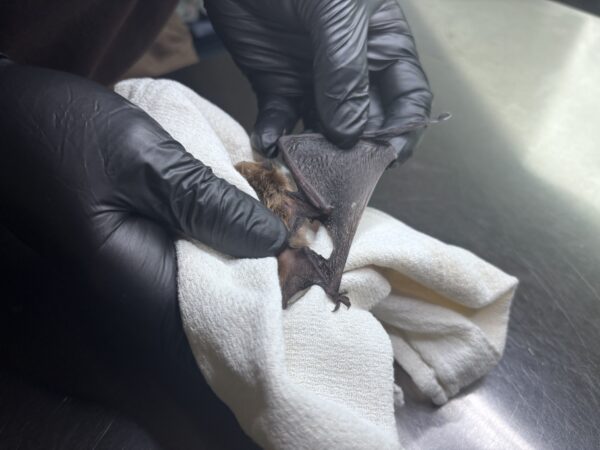
“Aw, look at her little face,” Stronsick said about an injured brown bat her husband was holding on a recent winter afternoon.
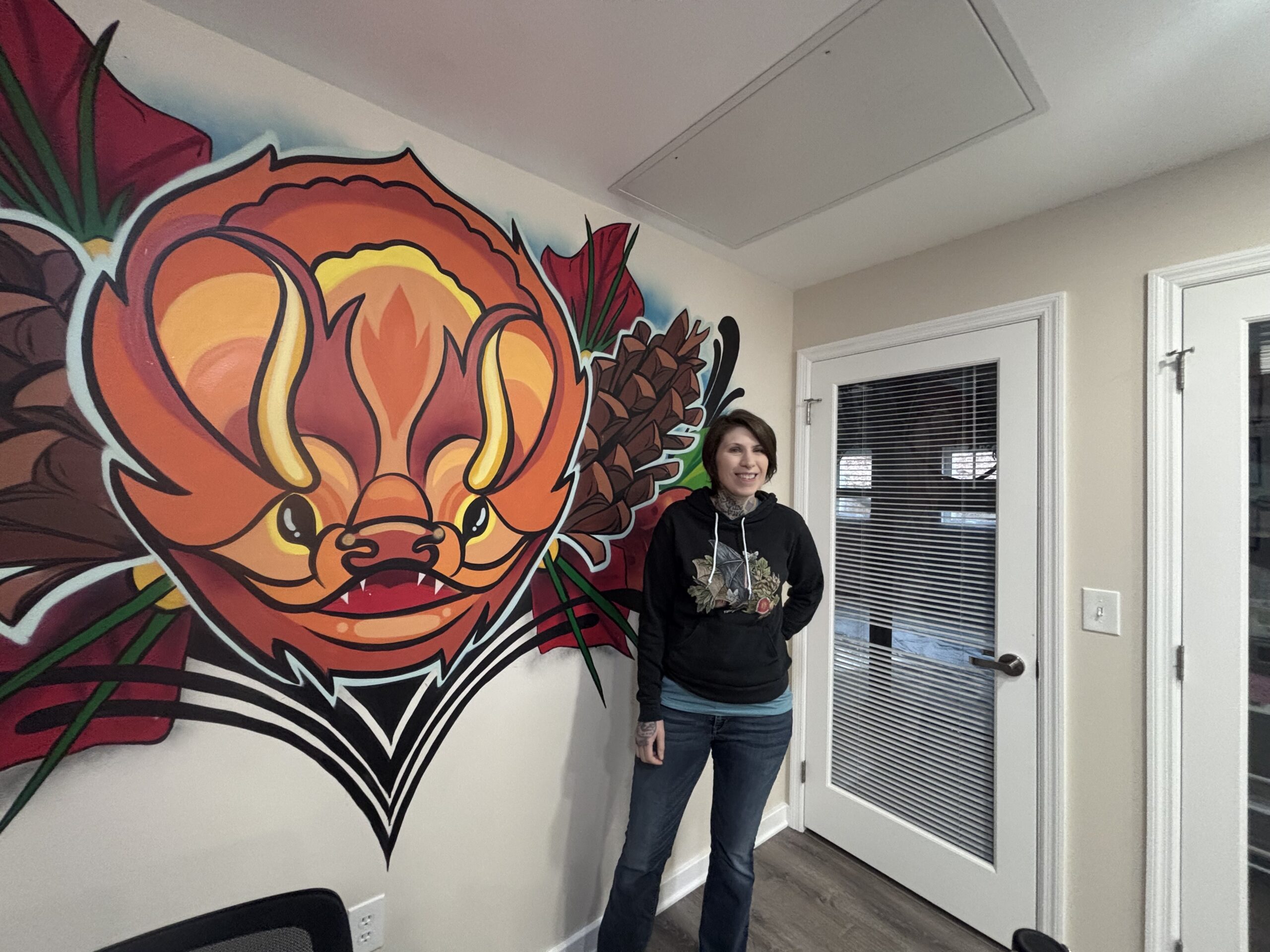
Stephanie Stronsick is the founder of PA Bat Rescue in Berks County.
Stronsick, 42, is the founder and executive director of Pennsylvania Bat Conservation and Rehabilitation (PA Bat Rescue), a nonprofit that underwent a major overhaul last year.
She’d like the bats to leave, ideally, but only after they’ve healed. Currently, the facility is treating over 100 bats for injuries and illness. Some were struck by wind turbines or bonked their heads on tall urban buildings that don’t turn off their lights at night. Others were torn up by outdoor cats or birds of prey.
Some big fruit bats, which look like puppies, were hanging upside down in one room. They used to live at the Akron Zoo.
Like the other bats in Stronsick’s house, they were asleep.
“They’re all retired,” she said.
Many of Stronsick’s bats are being treated for white-nose syndrome, a fungal disease that has killed millions of bats in North America. In Pennsylvania, it’s estimated that 99% of cave-dwelling bats have been affected by the fungus during hibernation.
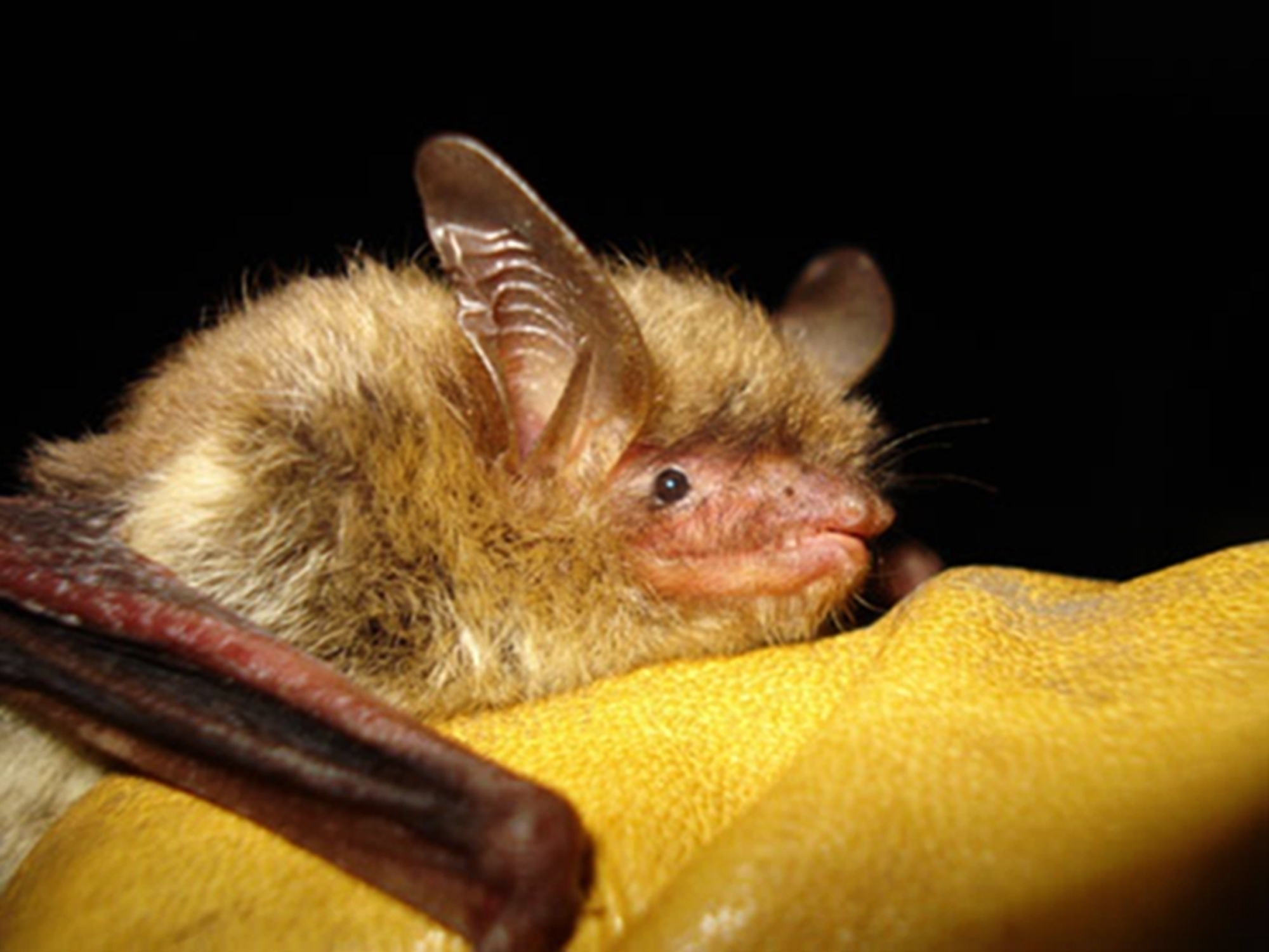
“We’ve lost so many bats that we’re at a point where if we don’t do something, they’re going to be gone,” Stronsick said. “In my lifetime, we are looking at the extinction of two species that occur in Pennsylvania: the Northern long-eared bat and the tricolored bat.”
Northern long-eared bat. (Wisconsin Department of Natural Resources via AP, File)
Bats get a bad rap, Stronsick said, thanks to horror tropes, rabies fears, and the overhyped interest in vampire bats. Only three of the approximately 1,500 bat species drink blood, and they’re in Central and South America.
“I think all bats are adorable,” she said.
If the general public doesn’t see that, they should at least understand that the flying mammals are biologically fascinating, contribute to healthy ecosystems, and help scientists.
“If it wasn’t for bats, the military wouldn’t have radar, and anticoagulants that vampire bats use have been studied to treat blood clots and stroke,” said Greg Turner, a mammalogist with the Pennsylvania Game Commission.
Bats, Turner said, are also highly resistant to cancer.
In Pennsylvania, bats are insectivores, Turner said, and they eat nothing but flying insects at night. He said studies have shown that bats in Pennsylvania save farmers $74 per acre, by eating moths that would otherwise produce crop-eating caterpillars.
“They also eat mosquitoes,” he said.
Elsewhere in the world, bats help pollinate cacti and agave.
“A lot of people should be happy bats are out there performing every night,” Turner said. “No bats, no tequila. No margaritas.”
Aside from the fungus, Stronsick said bats face serious dangers similar to birds: predation from feral and outdoor cats and building strikes.
“Bats do not recognize cats as a predator. If people have cats outdoors, they absolutely should not be feeding birds in the same area, and they should not have a bat house anywhere near there either,” she said. “If you do that, you’re inviting these animals to die. ”
Stronsick said the light pollution from large cities, combined with a bat’s ability to echolocate, makes window strikes common.
“When they hit something hard, they do a lot of damage,” she said. “Cityscapes are not good environments for bats.”
Turner said wind turbines, which dot the landscape in mountainous regions of Pennsylvania, are bat killers. Bats do not constantly echolocate, he said — that would be like screaming, nonstop — and when they’re not echolocating, they’re susceptible to the turbines.
“It’s estimated that 25 bats are killed per turbine per year, and we have hundreds of turbines in the state,” Turner said.
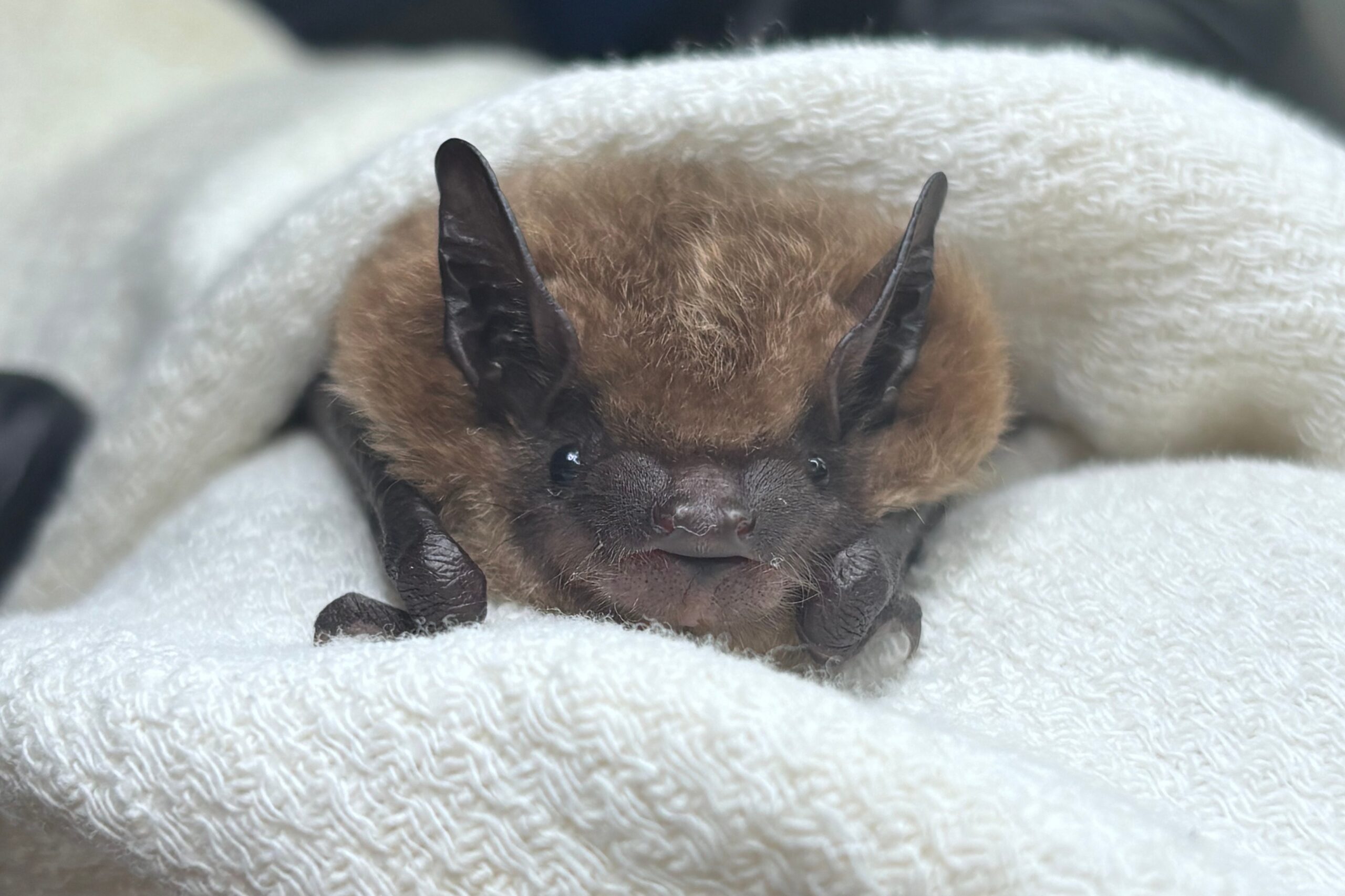
PA Bat Rescue takes in bats, year-round.
Stronsick said she grew up outdoors, seeing bats at her grandmother’s home and playing with salamanders. She’s worked with raptors and shore birds in California and stumbled upon bats.
“They were so different from what I imagined,” she said. “I left shore birds and birds of prey and started working with bats.”
Now she has some bat tattoos.
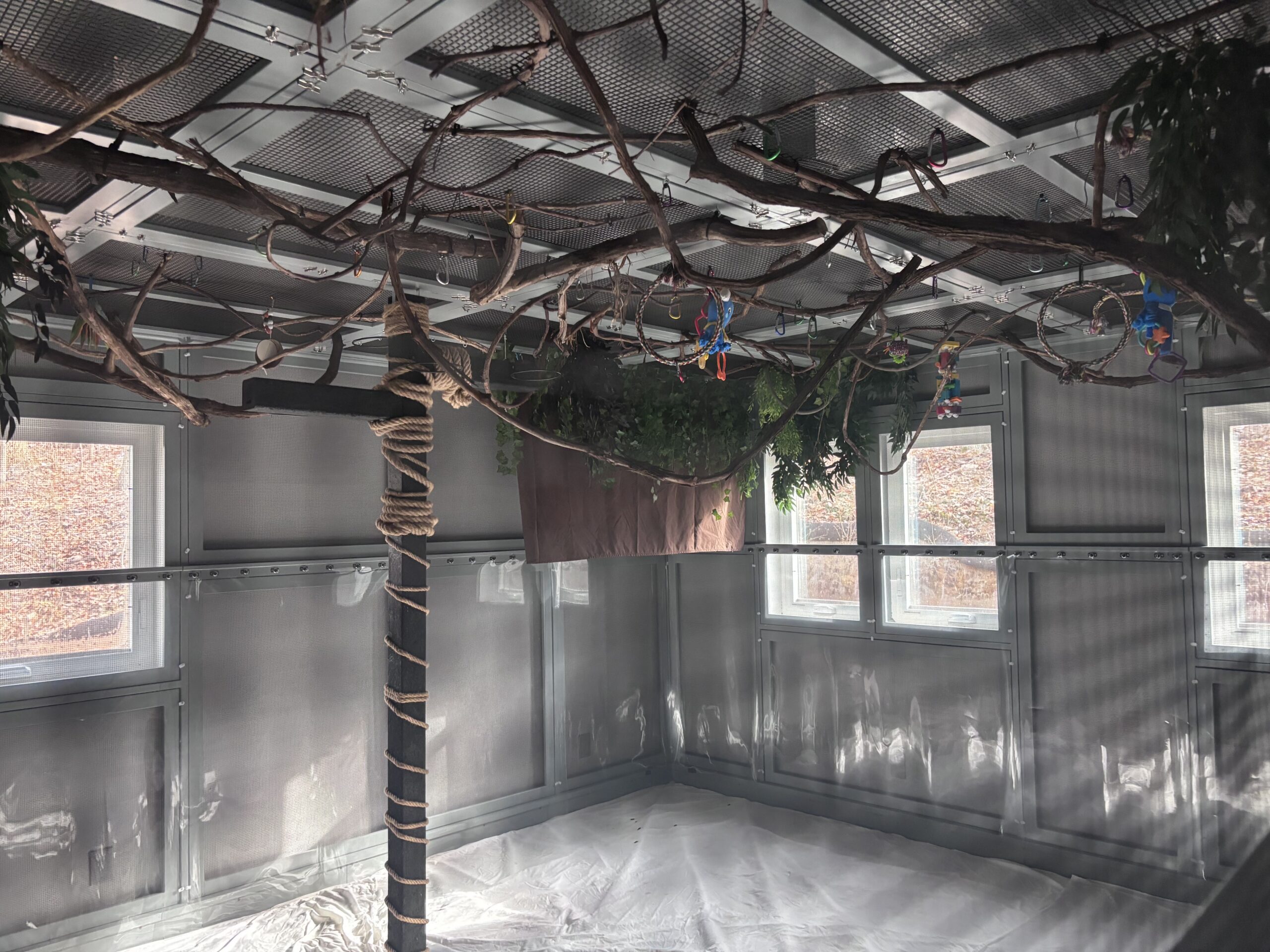
Stronsick’s facility, which is attached to her home, underwent a major investment in May. She accepts both donations and grants, which are hard to come by, she said.
PA Bat Rescue takes in bats, year-round, for treatment and injury rehabilitation.
Since 2018, PA Bat Rescue has rehabilitated 2,000 bats. Unlike most animal rehabilitation centers, hers is as quiet as a church.
“Bats prefer silence,” she said. “The fruit bats can get a little noisy when they wake up.”
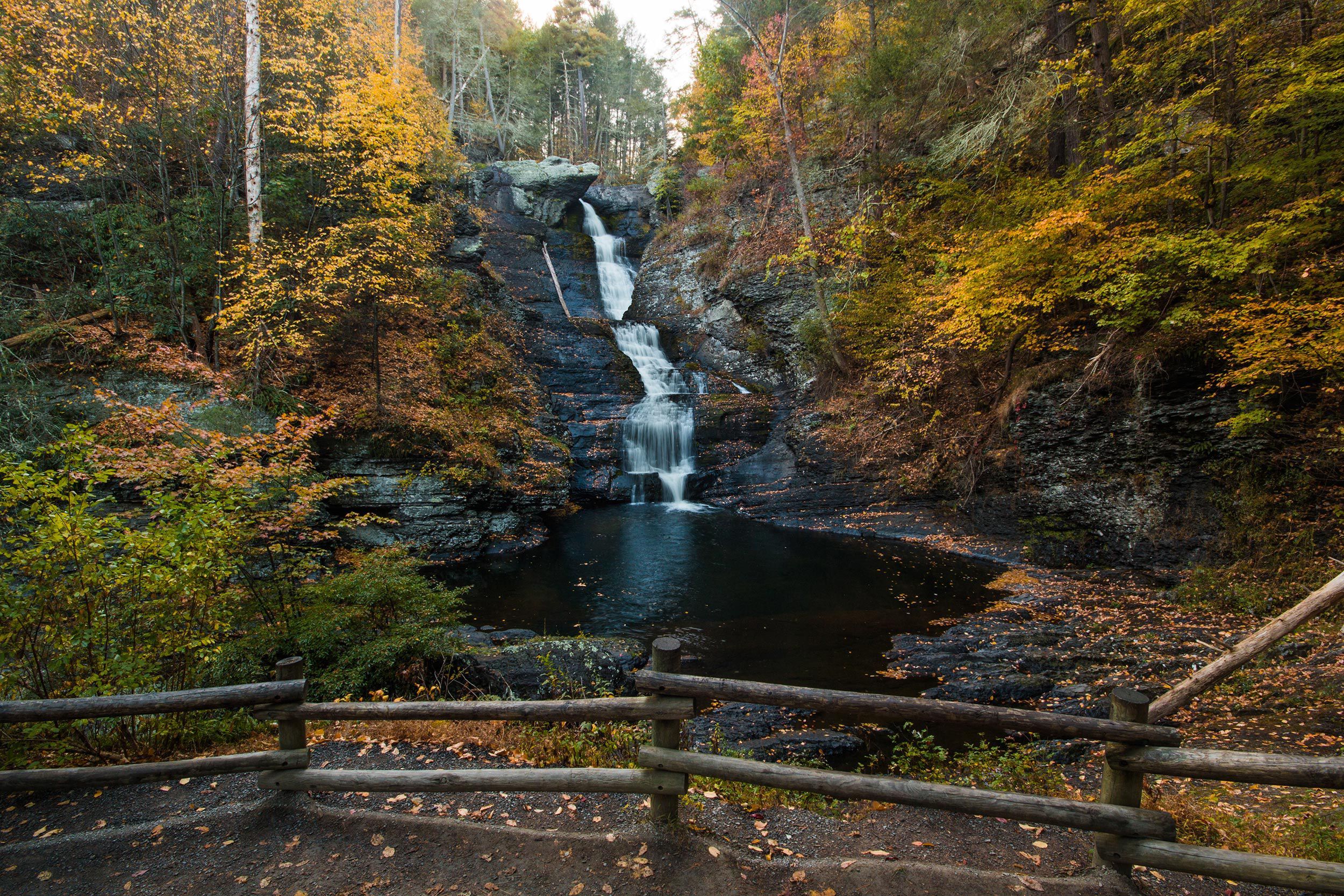
It sits along the scenic banks of the Upper Delaware River in Pike County, surrounded by mountains, with access to major trails, canoeing, kayaking, and biking, and the tallest waterfall in Pennsylvania. It’s an adventure hub among the best in the tristate region.
But Milford isn’t just for people in hiking boots. It’s also an artsy town, with galleries, a theater, and dedicated film, music, and writers’ festivals. It’s a shopping destination too, with a slew of antique and gift shops, and a healthy-living store that rivals anything in Philadelphia or New York.
“Geographically, I believe Milford has the edge over most small towns around,” said local entrepreneur Bill Rosado, who owns some popular businesses in town. “It is centered so well. Just looking at the town is a treat to me.”
There’s plenty of history in Milford, too, which calls itself the “birthplace of the conservation movement” as it was home to Gifford Pinchot, founder and first chief of the U.S. Forest Service. It also has a historical museum that’s home to a unique and morbid artifact from the Civil War era.
And, finally, you have to eat. Milford is home to fine dining at historic hotels, both fancy and cozy bars, along with breweries, classic diners, organic coffee, and, thanks to Rosado, authentic food from Mexico’s Yucatan peninsula. (He was born there.)
Milford’s about 75 miles northwest of Manhattan and just across the river from North Jersey, so yes, you’ll see Yankees and Giants gear, but it’s just 135 miles from Philly, so get up there.
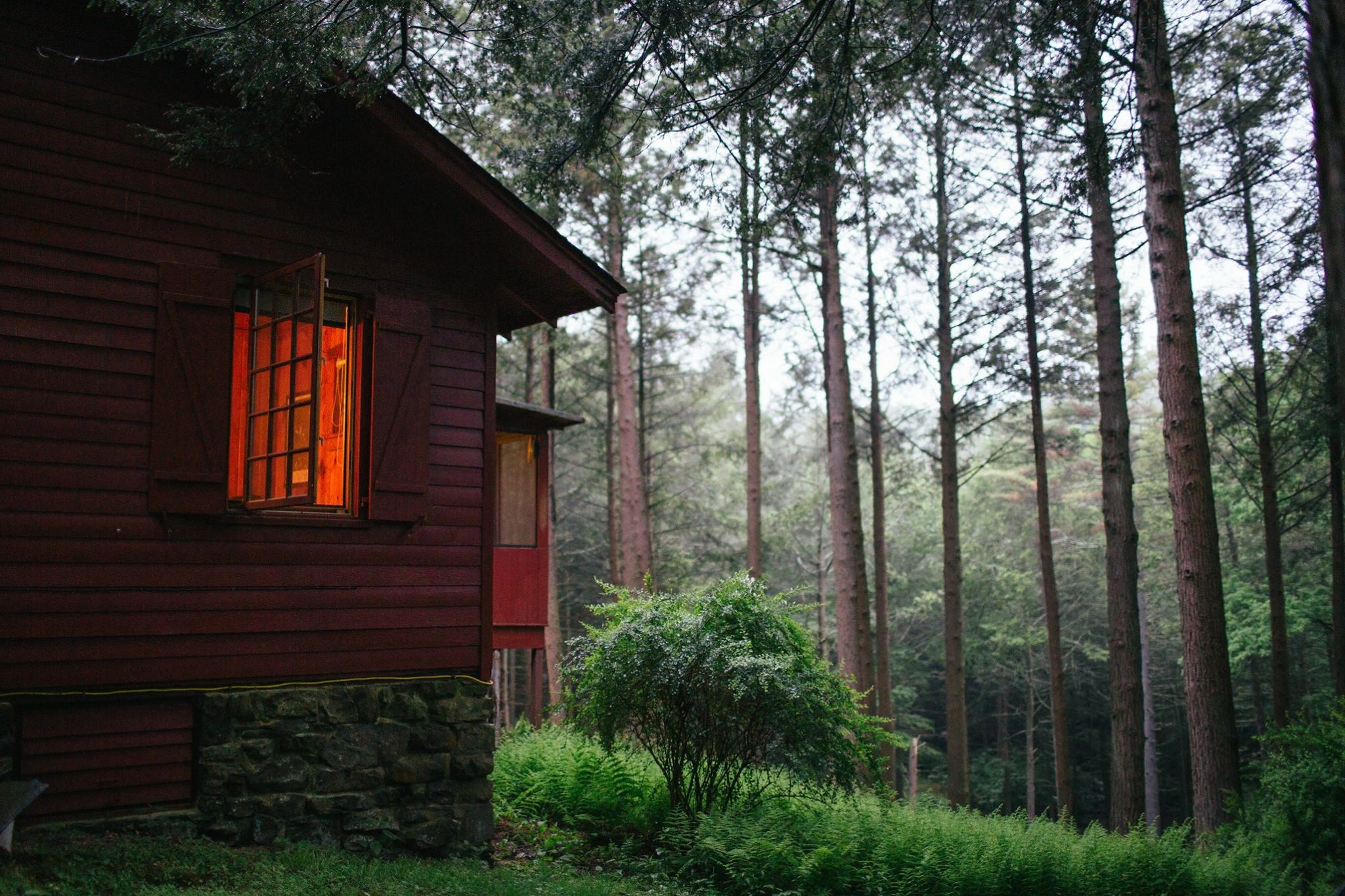
One of the cabins available for rent at Sean Strub’s Dwarfskill Preserve in Milford, Pa.
Stay: Dwarfskill Preserve
There are plenty of hotels in downtown Milford that are in the midst of everything the town has to offer, including the historic and ornate Hotel Fauchère and the Tom Quick Inn, which would be at home in Cape May. Rosado owns both of them.
I’ve been eyeing up the tiny cabin at the 575-acre Dwarfskill Preserve, up in the hills above town, for years now, as a former colleague had spent extended time there over the years and shared lovely pictures. It’s owned by former Milford mayor Sean Strub and consists of three separate properties: the one-room cabin I rented for a few nights with my girlfriend, Jen, and my dog, Wanda, and two larger cabins that can fit more people.
We stayed there over the New Year’s holiday, cooking brisket in the microwave and making coffee on the hot plate. While Milford and the Dwarfskill are undoubtedly at their best in the summer and fall, when you can take full advantage of the outdoor opportunities, including the swimming hole at the cabin, we watched both the wood fireplace and the ample snowfall outside for hours. It was hard to leave, a full hygge experience, in Northeastern Pennsylvania.
📍 Dwarfskill Falls Lane, Milford, Pa. 18337
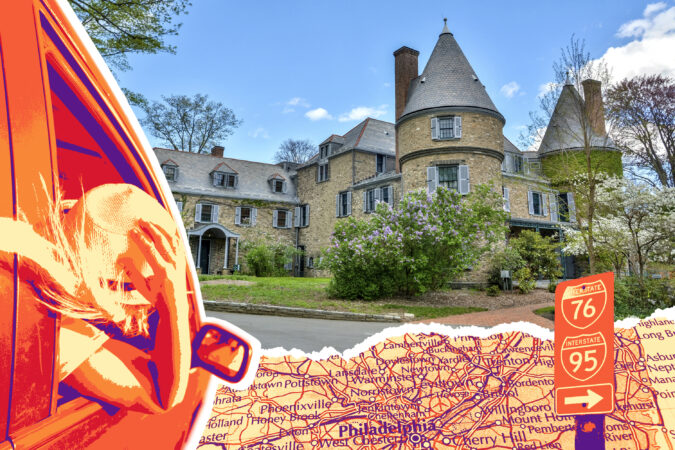
Grey Towers, the Pinchot family residence, outside Milford, and the family’s haven from 1886 to 1963. The family made its fortune in lumber.
Explore: Grey Towers National Historic Site
If you drive around Pennsylvania as much as I do, you’ll see the name Gifford Pinchot quite a bit. Pinchot was a two-term governor of the Commonwealth and has a 54,000-acre state forest named after him.
He went on to found and run the U.S. Forest Service and is generally considered a pioneer in the U.S. conservation movement. Pinchot was born in Milford and his home, Grey Towers, is a national historic landmark run by the U.S. Forest Service. Its curated gardens, French chateau-style stone architecture, and expansive library can all be seen on tours, both in-person during spring, summer, and fall, and online all year round.
At 150-feet tall, Raymondskill Falls is the tallest waterfall in Pennsylvania.
If you’re interested in something a little more outdoorsy, visit Raymondskill Falls, which, at 150 feet, is the tallest in Pennsylvania. You can, technically, visit in winter, but the ice and snow could be treacherous. In summer, you might have to brave some crowds and jammed parking lots, but the views are worth it.
📍 Grey Towers: 122 Old Owego Turnpike, Milford, Pa. 18337
Learn: The Pike County Historical Society at the Columns
It’s not every day that a county historical society can really wow you with an artifact, but Pike County punches up with a Civil War relic you won’t find anywhere else in the world: the bloody U.S. flag used to cradle Abraham Lincoln’s head after he was shot at Ford’s Theatre in 1865.
The flag and other exhibits are housed in “the Columns,” a 1904 neoclassical-style mansion. Want to learn how they obtained the flag? Visit on Wednesdays, Saturdays, and Sundays.
It’s a place to get coffee or tea and healthy pastries. It’s a community hub, where people gather to meet or work remotely.
It’s also a place to look good, with woolens and other “natural” clothes, and smell good, or simply be good, with homesteading supplies and books.
📍 Broad Street, Milford, Pa. 18337
Eat: Felix’s Cantina at La Posada
Jen spends weeks in the Yucatan every winter, so she was surprised to see a restaurant in Northeastern Pennsylvania promising a “taste of the Yucatan Peninsula and other regional dishes from southern Mexico.”
Rosado, who also owns a historic theater in town, owns the Cantina at La Posada, yet another one of his hotels. He was born in Merida, the capital of Yucatan.
He knows the dishes well, and she approved, describing our pork and birria tacos as “fattening and delicious.”
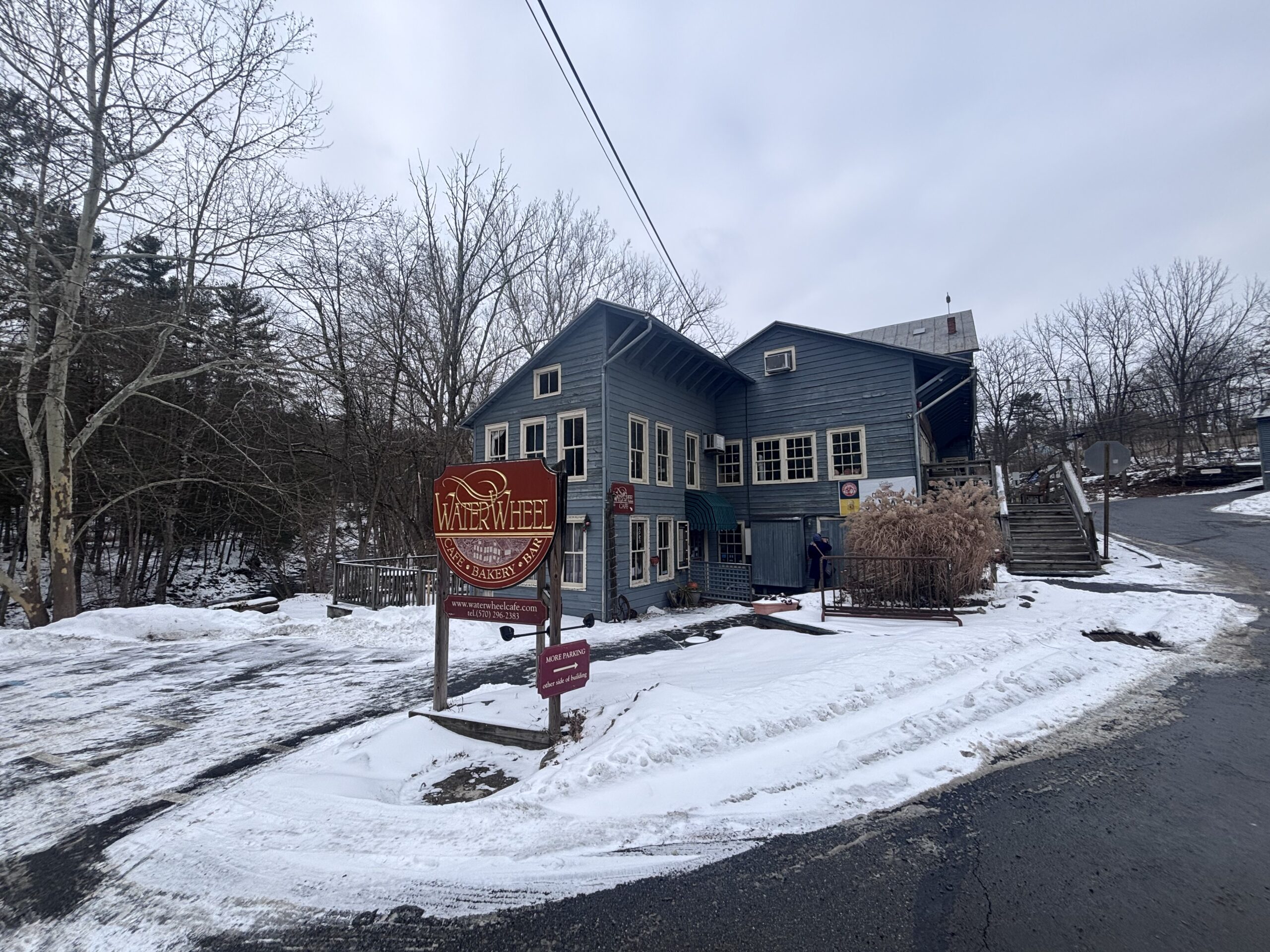
For breakfast, the Waterwheel Café Bakery Bar, an old grist mill along Sawkill Creek, serves up a killer thick-cut challah French toast. We basically licked the plate clean.
HARRISBURG — As the rural reporter at The Inquirer for about the last decade, I’ve cuddled bear cubs, rattlesnakes, and alligators, trembled in fear at horses, and been punched by the scent of deer urine farms.
Still, nothing scares me more than the mushroom burger at the Pennsylvania Farm Show.
I haven’t really missed a show since I began covering rural Pennsylvania, and I probably never will, regardless. If you’ve been there, you know. If you haven’t, take my advice from last year: Pull your kids out of school, and go there this week. The show runs through Saturday at the Pennsylvania Farm Show Complex & Expo Center in Harrisburg, and it’s free to get in. It’s an agricultural spectacle you’ll never forget, a place to see show rabbits, hogs, goats, and cows, all while learning where your food comes from.
It’s also a place to eat, with a gargantuan food hall filled with offerings I’m still uncovering. Shannon Powers, a spokesperson for the Pennsylvania Department of Agriculture I pester often during the show, smartly said she didn’t have a favorite meal there.
“But on a cold day, a cup of trout chowder hits the spot,” she told me.
Trout stew? Who knew? There’s also goat stew.
There’s a mind-boggling number of things on the menu at the Pennsylvania Farm Show in Harrisburg.
I do have favorites, though, including the sugared German almonds I end my day with every year. I went on opening day, Saturday (never go on opening day), and took my daughter, sampling some old standbys and interviewing folks about some popular foods there.
4-H brisket sandwich
As a man of tradition, if I like a certain item on a menu, I’ll get it over and over again, for the rest of my life. I still have dreams about the ’90s-era Wawa hot roast beef and cheese sandwiches I ate religiously.
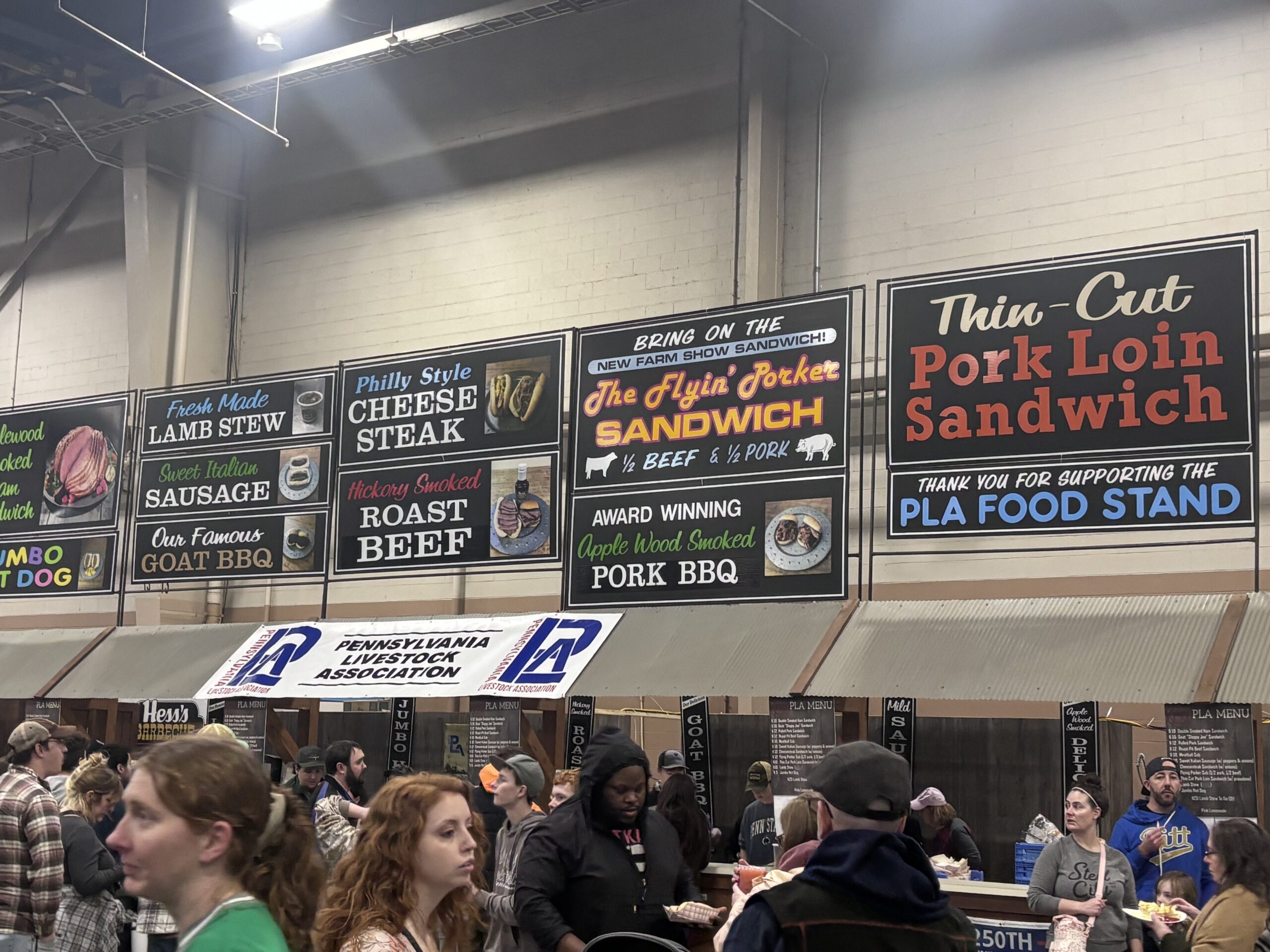
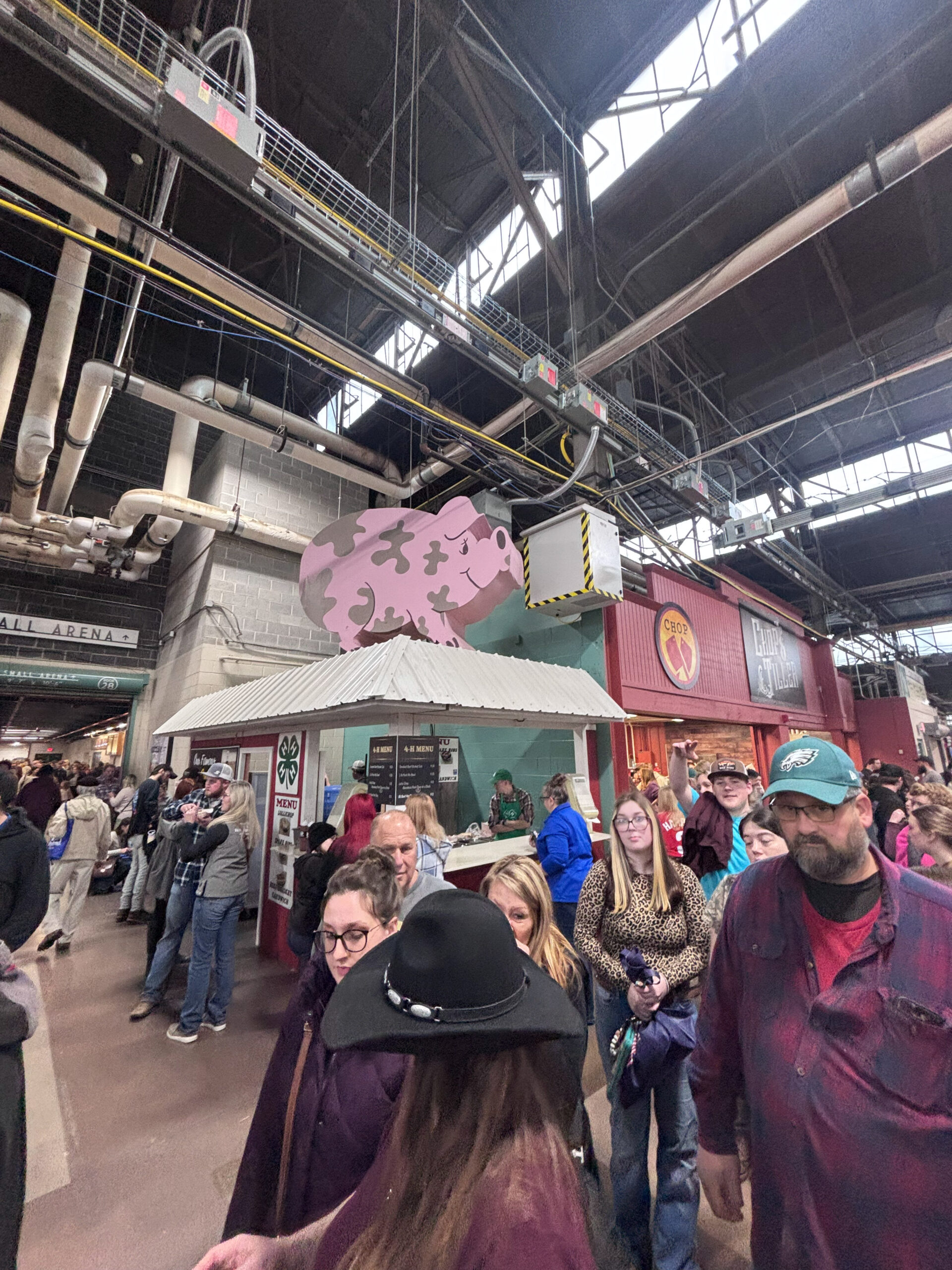
Anyhow, I get a brisket sandwich every year from a 4-H stand that’s actually not in the food hall but rather the main hall, where the famous butter sculpture is. Get a map, seriously. You’ll need it.
Look for the pig in the Main Hall, and you’ll find the 4-H brisket sandwich, plus pork chops on a stick.
Brisket has a special place in my heart. I ate it for Thanksgiving and New Year’s Eve, and this year, I paid $14 for thick-sliced brisket on a roll, which I slathered in BBQ sauce, while squatting on the floor.
Then, I followed it up with a flu shot, another Farm Show tradition.
This sandwich was not better than my holiday briskets, but I’m easy. Almost everything I’m willing to eat is “pretty good.”
I assumed proceeds of the sales go to Pennsylvania 4-H clubs. The folks cutting the brisket didn’t know, though my receipt credits the Pennsylvania Livestock Association.
If you want to save a few bucks at the 4-H booth, the pork chop on a stick is $8.
Mushroom burger
I know mushrooms grow underground, and that Chester County is one of the nation’s top producers, but I assumed they come from even deeper places.
Pennsylvania is the nation’s top producer of mushrooms, most of them coming from Chester and Berks Counties.
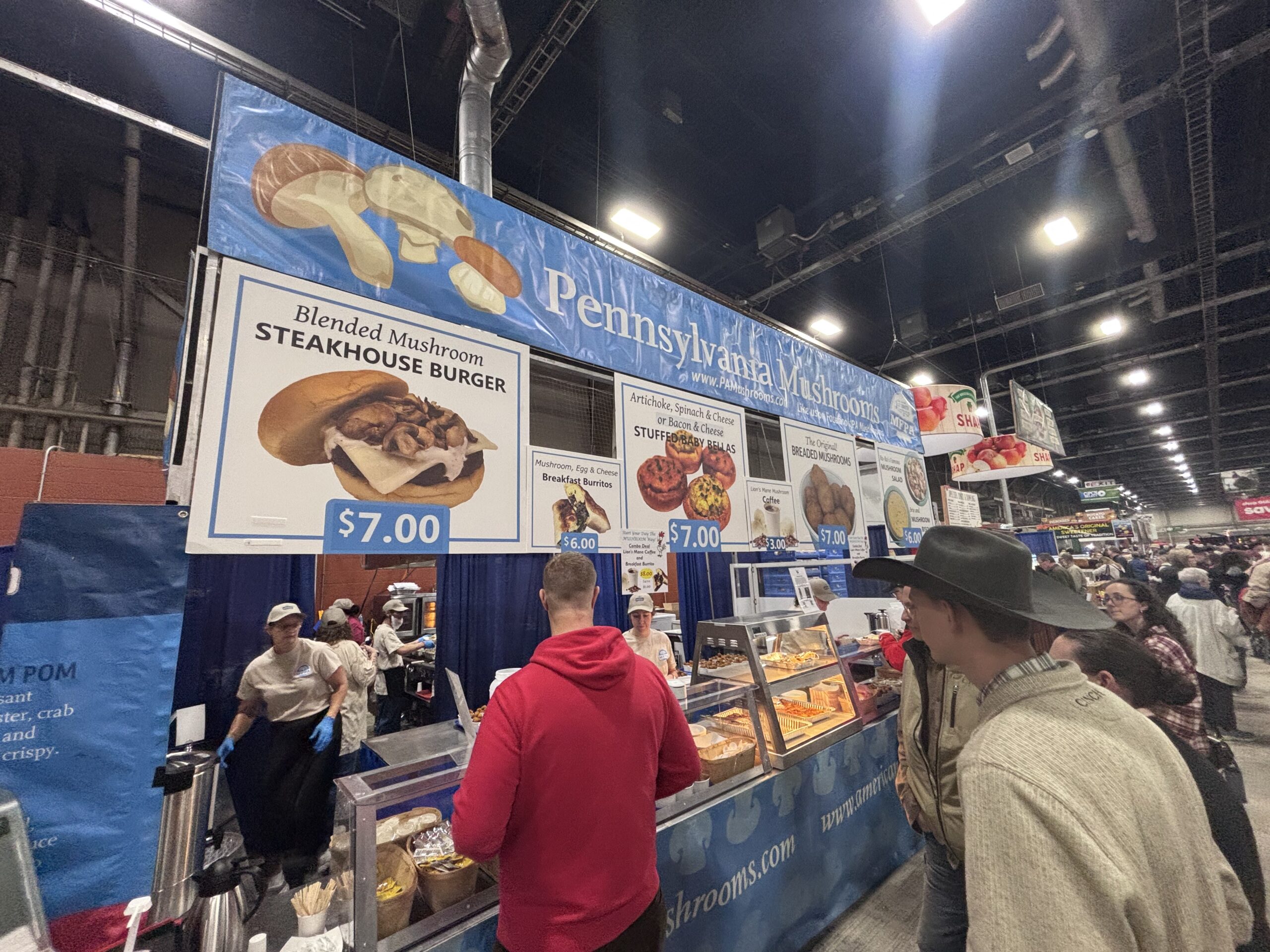
I’m not a fan and can’t be convinced, though I did have somewhat of a revelation about the mushroom burgers for sale at the Mushroom Growers of Pennsylvania booth.
They are “blended” with beef, specifically for big babies like me.
“It’s an introduction, an easy introduction. It’s 75% ground beef and 25% chopped mushrooms,” said Gale Ferranto, of Mushroom Farmers of Pennsylvania. “Would you like to try one?”
I declined.
There are more mushroom offerings, too, something called a “mushroom salad,” which I probably wouldn’t eat for less than $500.
“Somebody back home in Philly wanted the mushroom salad. She’s pregnant, like 7 months pregnant, so you have to do what she says,” said attendee Mark Soffa.
Grilled cheese
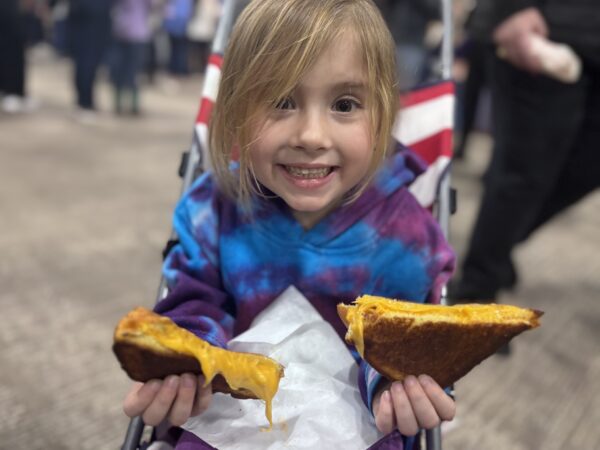
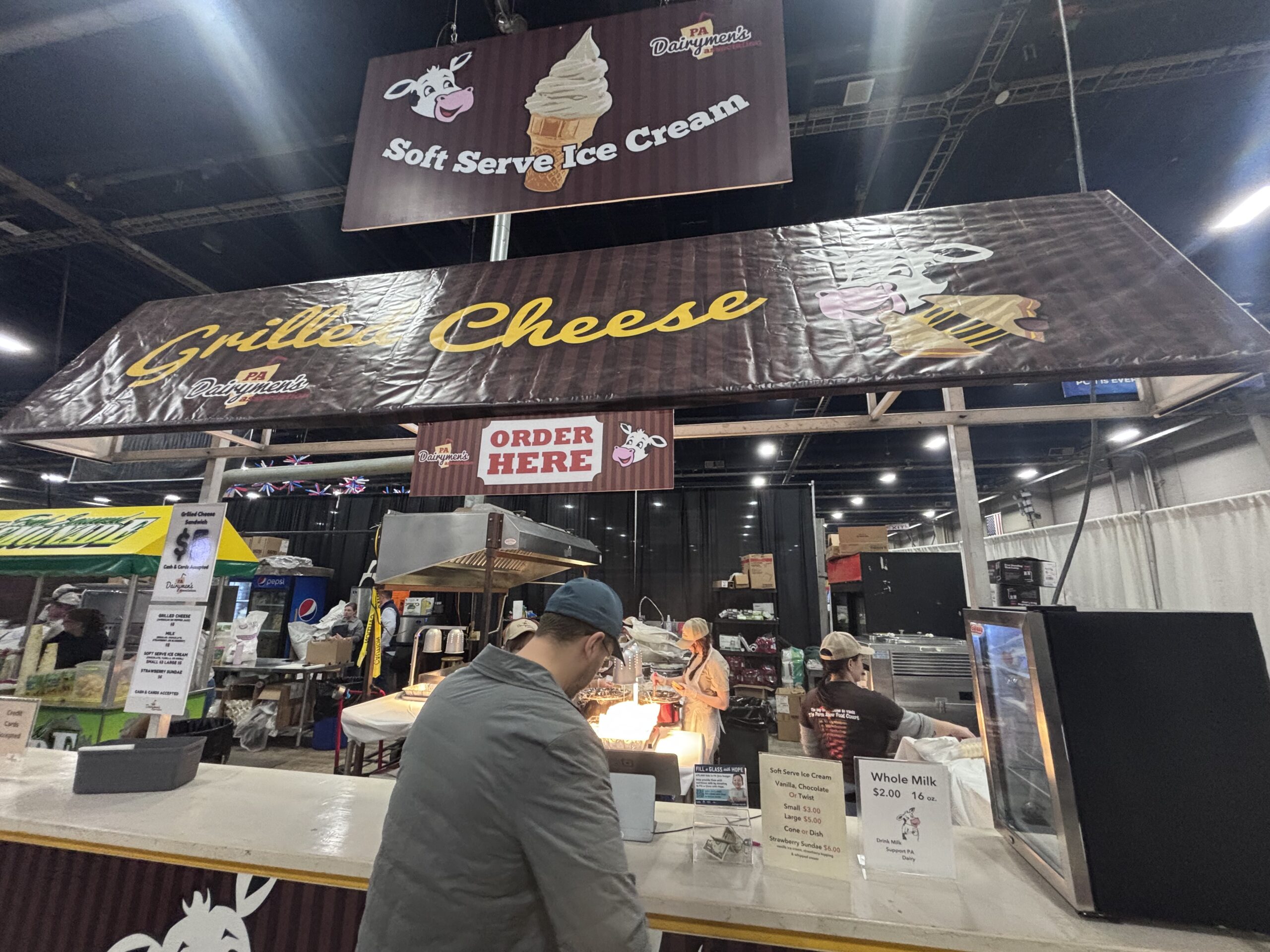
The Pennsylvania Dairymen’s Association offers up a lot of food during the week, and when I saw grilled cheeses — a parent’s best friend — I grabbed one for my daughter, along with a chocolate milk.
The combo is wallet-friendly, too, just $7.
“Chocolate milk comes from brown cows,” I told my daughter.
She’s too smart for that joke and rolled her eyes, like her mother.
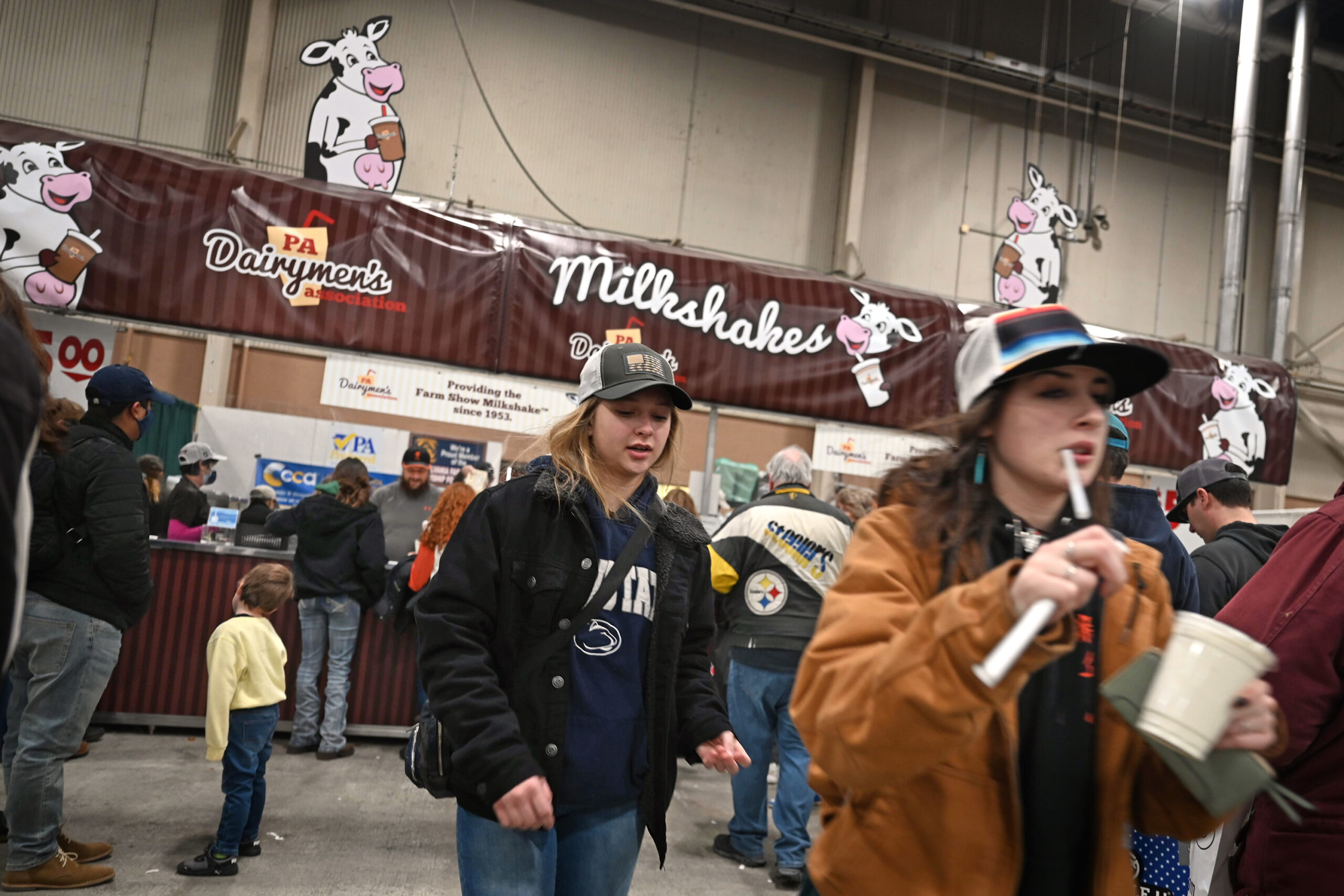
The PA Dairymen’s Association sells grilled cheese, cheese cubes, and, of course, the ubiquitous milkshakes.
The grilled cheese crew actually had crockpots full of melted butter, slathering white bread before sending it off to the grill. You can choose American or pepper jack.
“We’ll at least make a few thousand today,” the cashier told me. “We made 500 yesterday, and that was a half day.”
My daughter’s verdict: “Very gooey.”
Pierogies and sweet potatoes
I’m cheating a bit here, including two items from the PA Cooperative Potato Growers, Inc., which is the oldest potato cooperative in the United States.
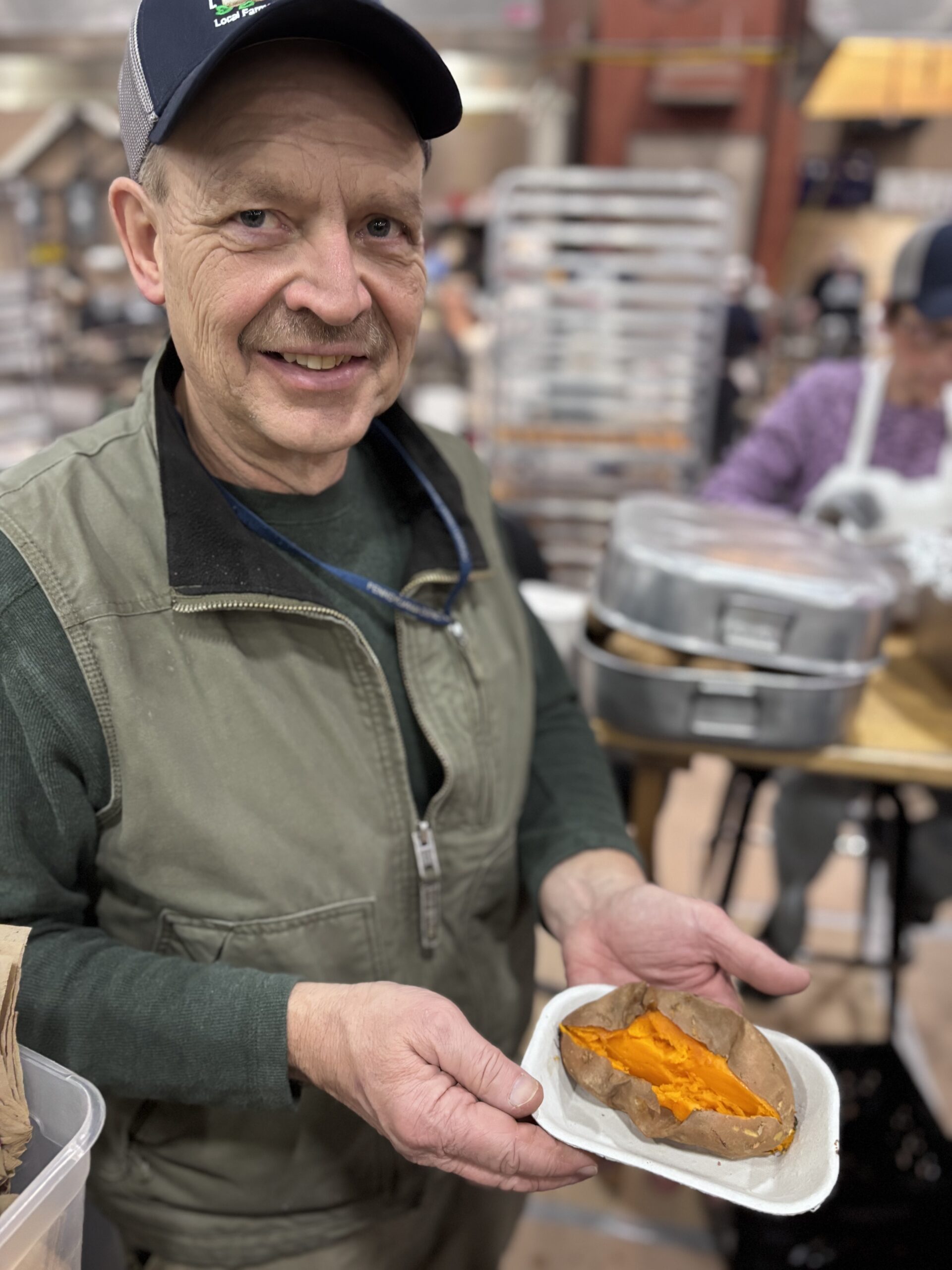
I planned on focusing entirely on the sweet potato, which is swimming in butter and brown sugar, with some cinnamon on the side. It’s basically a dessert.
The sweet potato at the Pennsylvania Farm Show is basically a dessert.
My Polish heritage requires that I never turn down a pierogi, though, or never fail to mention their wholesome goodness. I grew up on them, in the way other folks may have grown up on mac and cheese or PB&J. I actually prefer mine fried a bit, but the Farm Show serves them drowning in butter and onions: 5 for $4.
You can’t really mess up a pierogi, particularly in the Keystone State.
“These aren’t like Maryland pierogies,” a woman from Maryland told me.
The potato growers told me they sell 6 tons of baking potatoes at the show, plus 8 to 10 tons for french fries, and about 1.5 tons of sweet potatoes.
Plus, there are potato doughnuts.
The milkshakes
The most well-known must-have item at the Pennsylvania Farm Show are the milkshakes offered up by the Pennsylvania Dairymen’s Association since 1953.
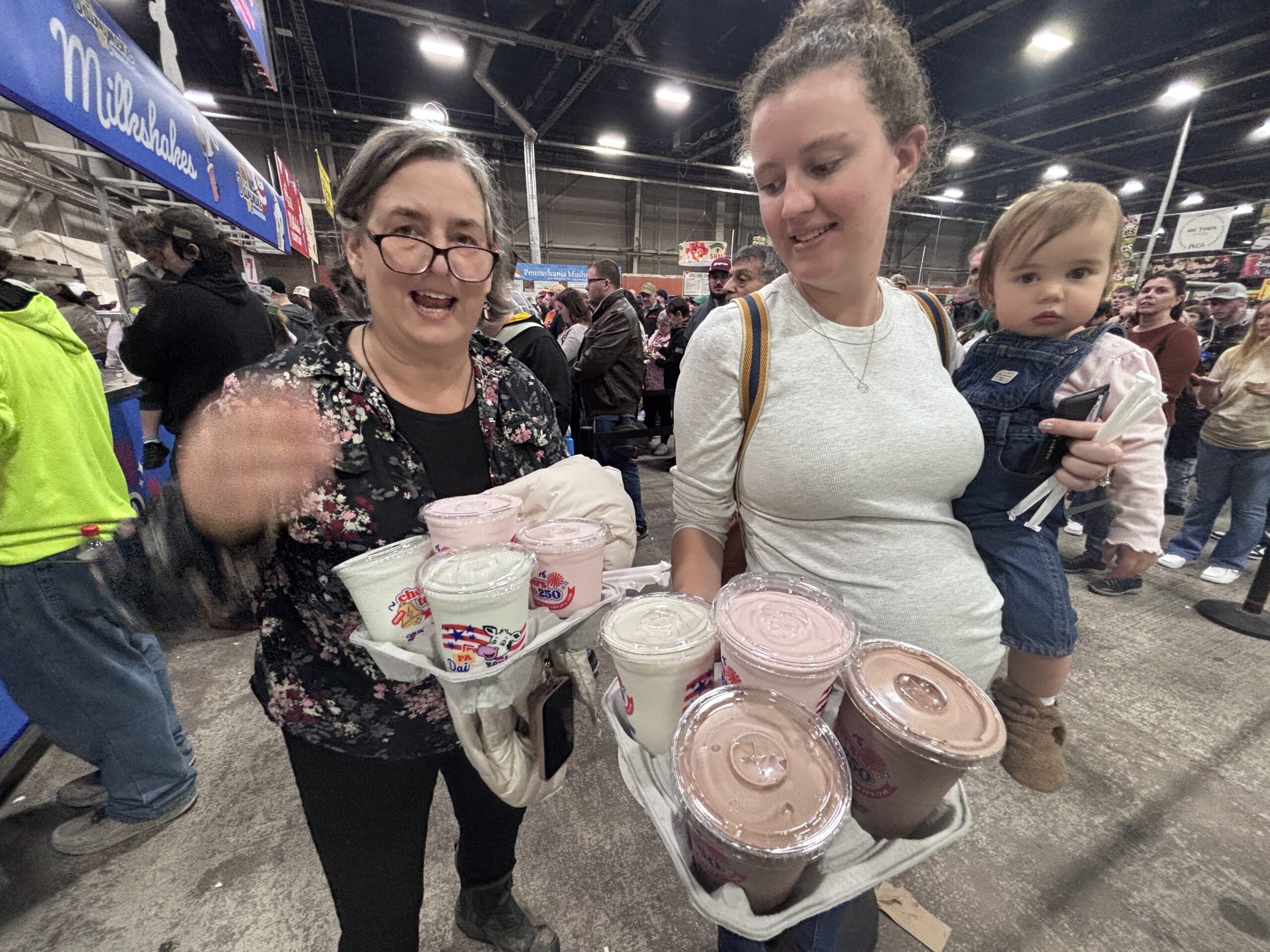
Three generations with 10 milkshakes at the Pennsylvania Farm Show.
On Saturday, the lines were a bit bonkers, more than 100 deep on each of the dozen or so cash registers in the various locations where they’re sold at the farm show complex. I’ve had them before, and I’ll say they are “thick and creamy” as advertised.
Are they different than any other soft-serve-style milkshake in America? I have to work with these people, so yes, I’ll say they’re different.
A colleague who had a milkshake at the Farm Show told me she didn’t “get the hype.”
I ran into a mother and daughter who had ordered 10 of them.
Either way, you have to have one while you’re there.
You just finished watching Back to the Future with your parents and cousins at the multiplex, and now it’s time to pile into the Chevy Caprice wagon with faux wood-paneled sides. You beg your dad to put in the Wham! cassette, one more time.
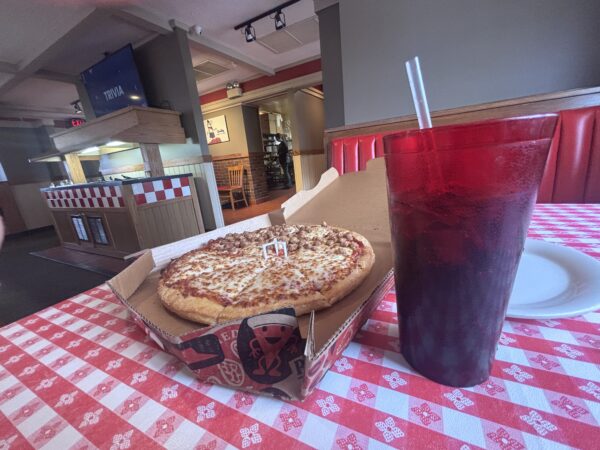
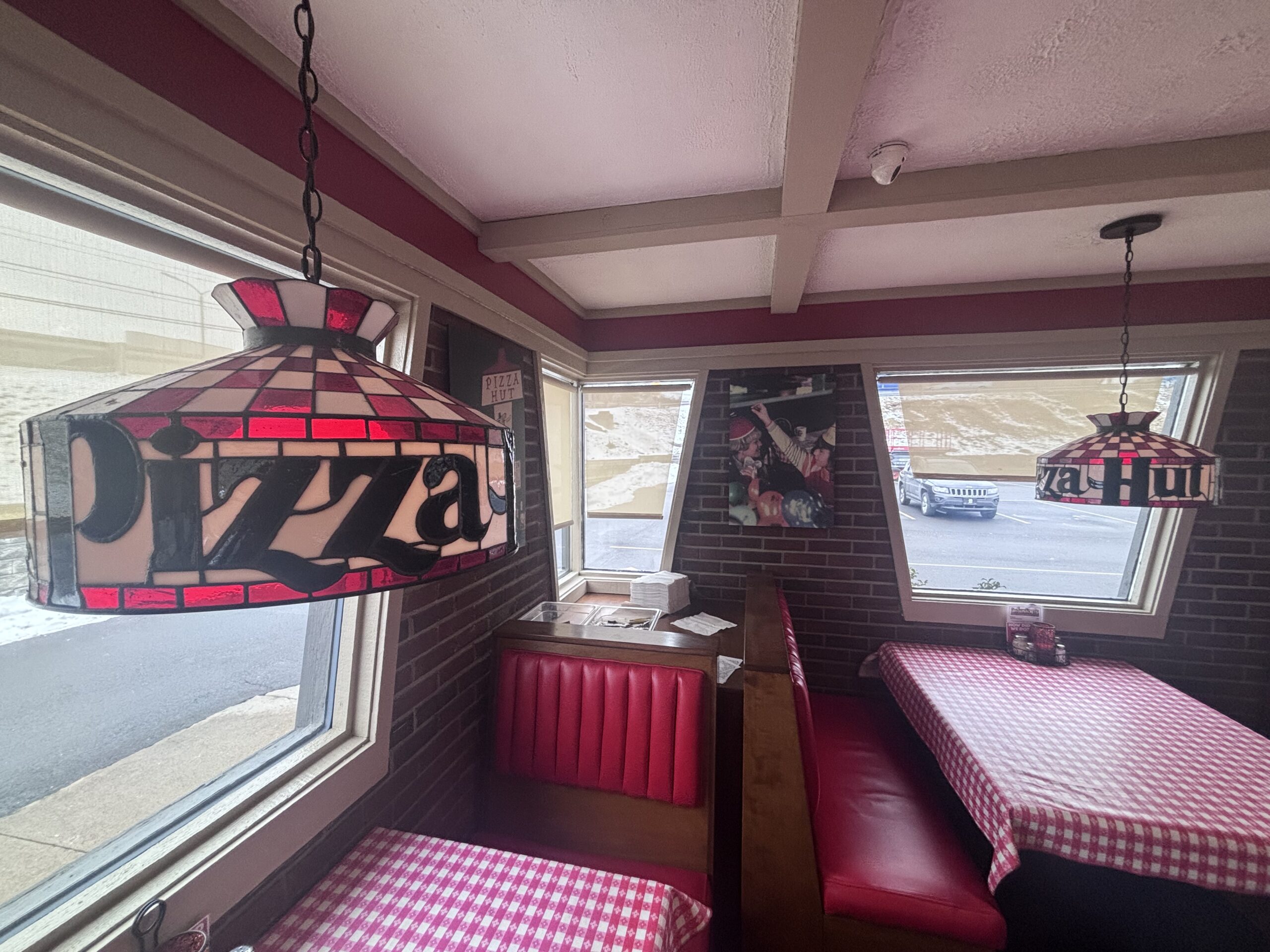
You’re going to Pizza Hut, of course, and the parking lot is packed. Inside, there are stained-glass lamps hanging over the checkerboard tables, a salad bar, and those red plastic cups.
The server brings out your deep-dish pies. They smell almost buttery. You grab your fork and knife because, well, that’s how you eat at Pizza Hut.
Can you smell it? Taste it? Ah, nostalgia.
A Pizza Hut location in Wyoming County, Pennsylvania, was remodeled into a “classic” location, featuring the salad bar, red, plastic cups and other vintage touches.
If you’re hankering for Pizza Huts of bygone days or places like the “birthday room” at McDonald’s, you often have to travel back into your memory. Not anymore.
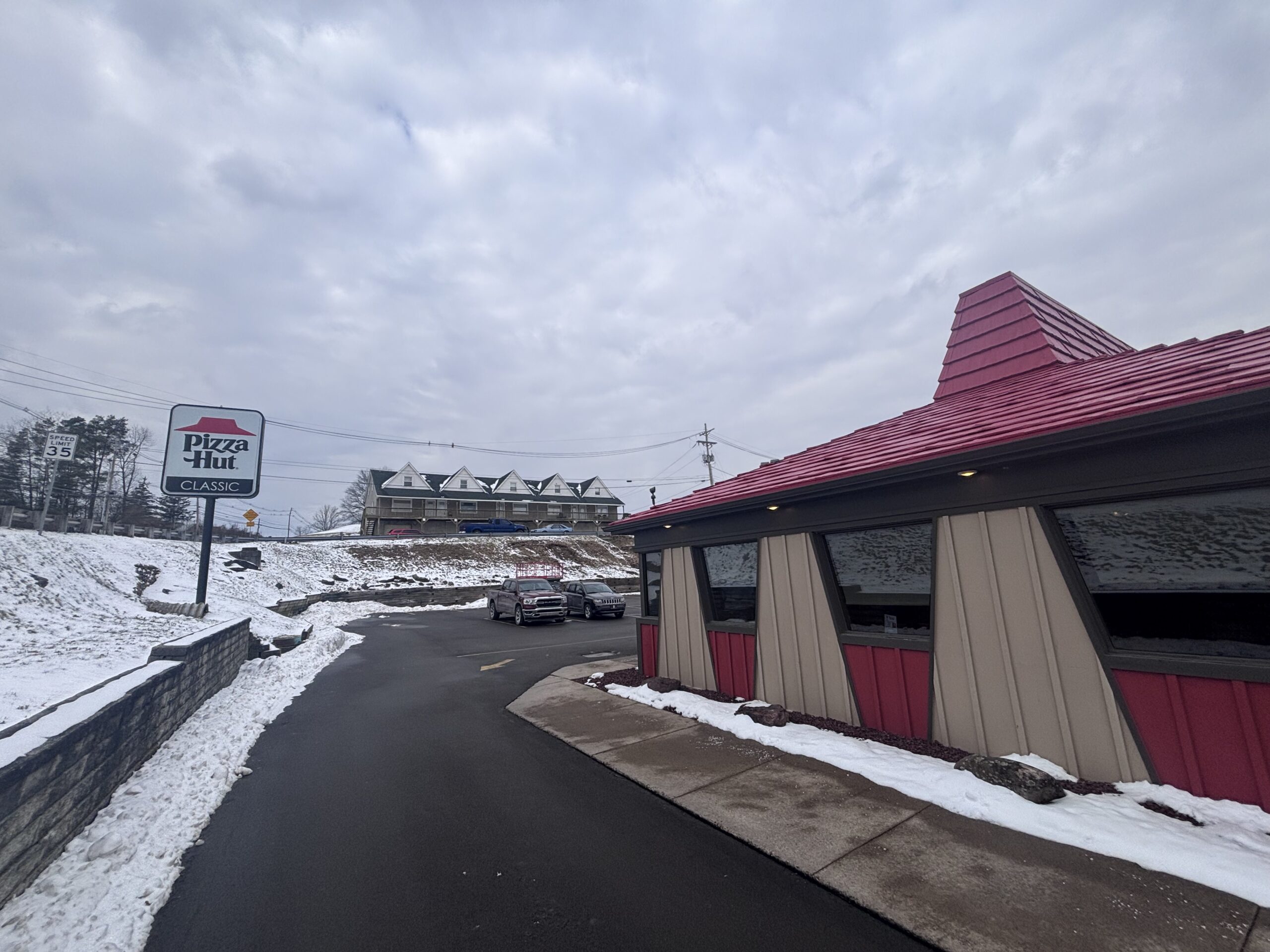
Pizza Hut has tapped into the power of nostalgia across the United States by resurrecting some “classic” restaurants. There’s one in Tunkhannock, a small town in the Endless Mountains of Wyoming County, about 140 miles northeast of Philadelphia.
The Pizza Hut, which has been in a shopping center parking lot for decades but was totally revamped — restored? — into a classic location, complete with the red, angled roof.
A Pizza Hut location in Wyoming County, Pennsylvania, was remodeled into a “classic” location, featuring the salad bar, red, plastic cups and other vintage touches.
“No touchscreen kiosks, no sleek redesign, just the classic dine-in Hut experience you thought was gone forever. It’s more than pizza. It’s a full-blown childhood flashback served with breadsticks and a plastic red cup!” the Just Pennsylvania Facebook page wrote in May in a post that received 7,500 shares.
It’s not clear how many Pizza Hut Classic locations exist in the United States, and, oddly, the company did not return multiple requests for comment. According to the Retrologist website, the Tunkhannock location is the only one in Pennsylvania. There appears to be about two dozen in the United States, according to the site, though none in New Jersey or Delaware. The only New York location is in Potsdam, which is closer to Canada than to Pennsylvania.
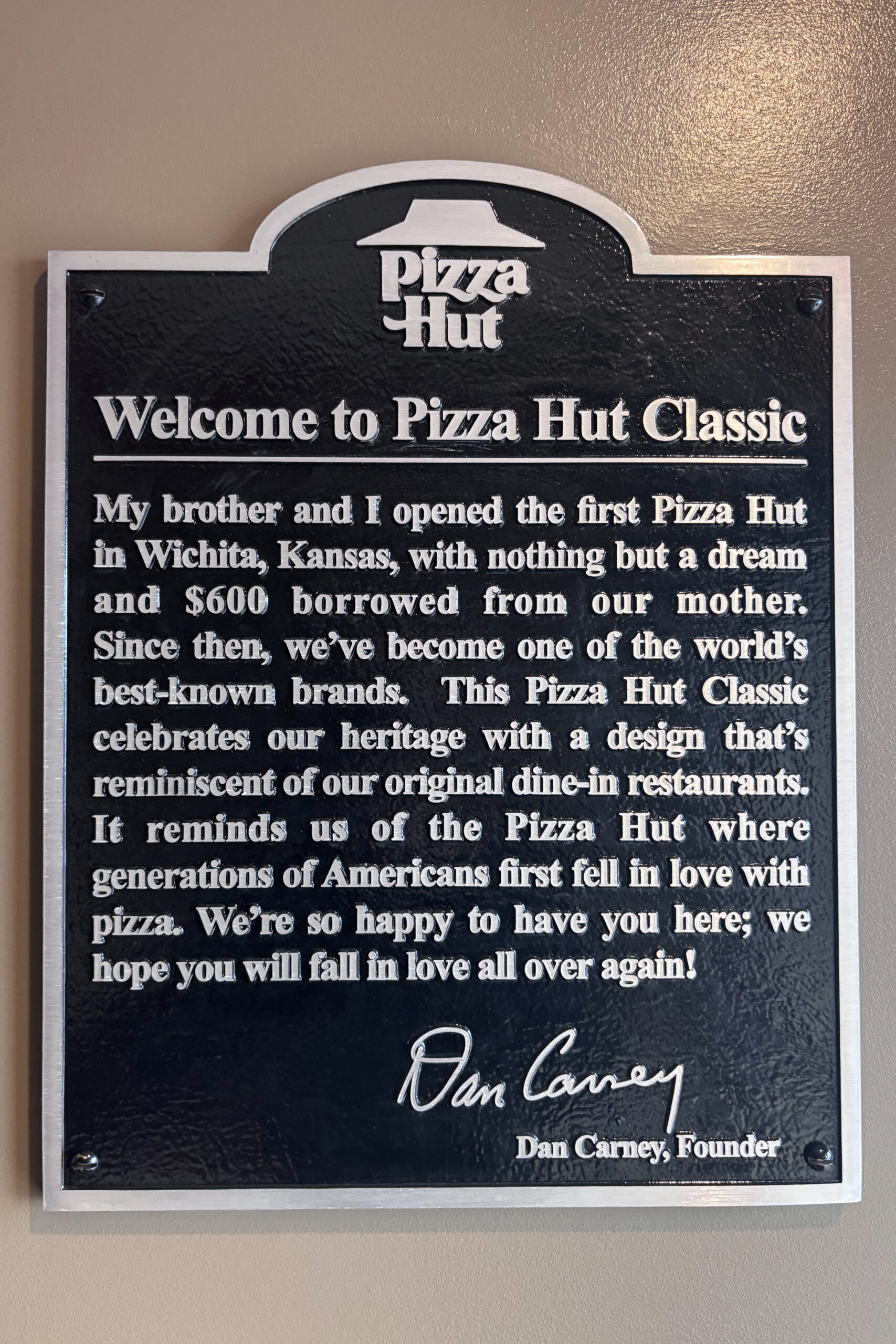
A plaque on the wall of the Tunkhannock location, written by Pizza Hut founder Dan Carney, explains the concept.
“It reminds us of the Pizza Hut where generations of Americans first fell in love with pizza,” Carney wrote.
When The Inquirer visited early on a recent Monday, a lunch crowd was beginning to file in.
“It was probably 10 years ago that they turned it into a classic, and our business has really exploded in the last year,” said Paul Bender, a shift leader at the Tunkhannock location. “I don’t know how it happened, but people really began to notice. I’ve had customers come in from Wisconsin, Oregon, Michigan, and, obviously, Pennsylvania and New Jersey. We get a lot of people in the parking lot making videos.
Bender said the Tunkhannock location is still hoping for a jukebox and old-style video games, like the tabletop Ms. PAC-MAN.
“That would seal the deal,” Bender said.
Bender has wondered why more iconic chains haven’t created throwback locations, like Pizza Hut. He’s seen the power of nostalgia firsthand.
“Instead, it seems like more and more are getting rid of dine-in altogether, ” Bender said. “But I’ve seen grown men, in tears here, saying they came here with their father and mother.”
Last year, it was reported that a Pittsburgh-area Pizza Hut was bringing back dine-in service, though videos show that it’s only gone half-classic so far.
A Pizza Hut location in Wyoming County, Pennsylvania, was remodeled into a “classic” location, featuring the salad bar, red, plastic cups and other vintage touches.
It’s January, and that means one of Pennsylvania’s grandest spectacles is back again: the annual Farm Show butter sculpture.
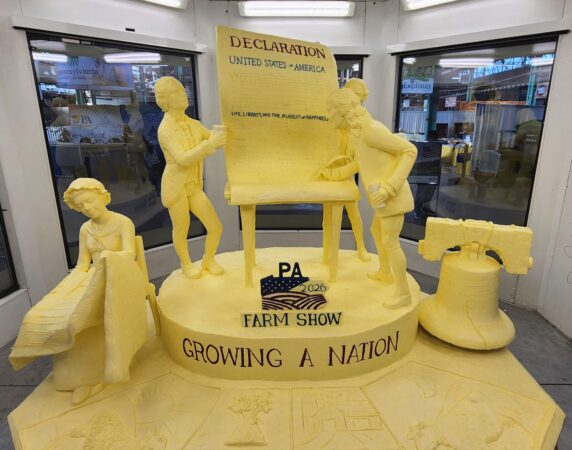
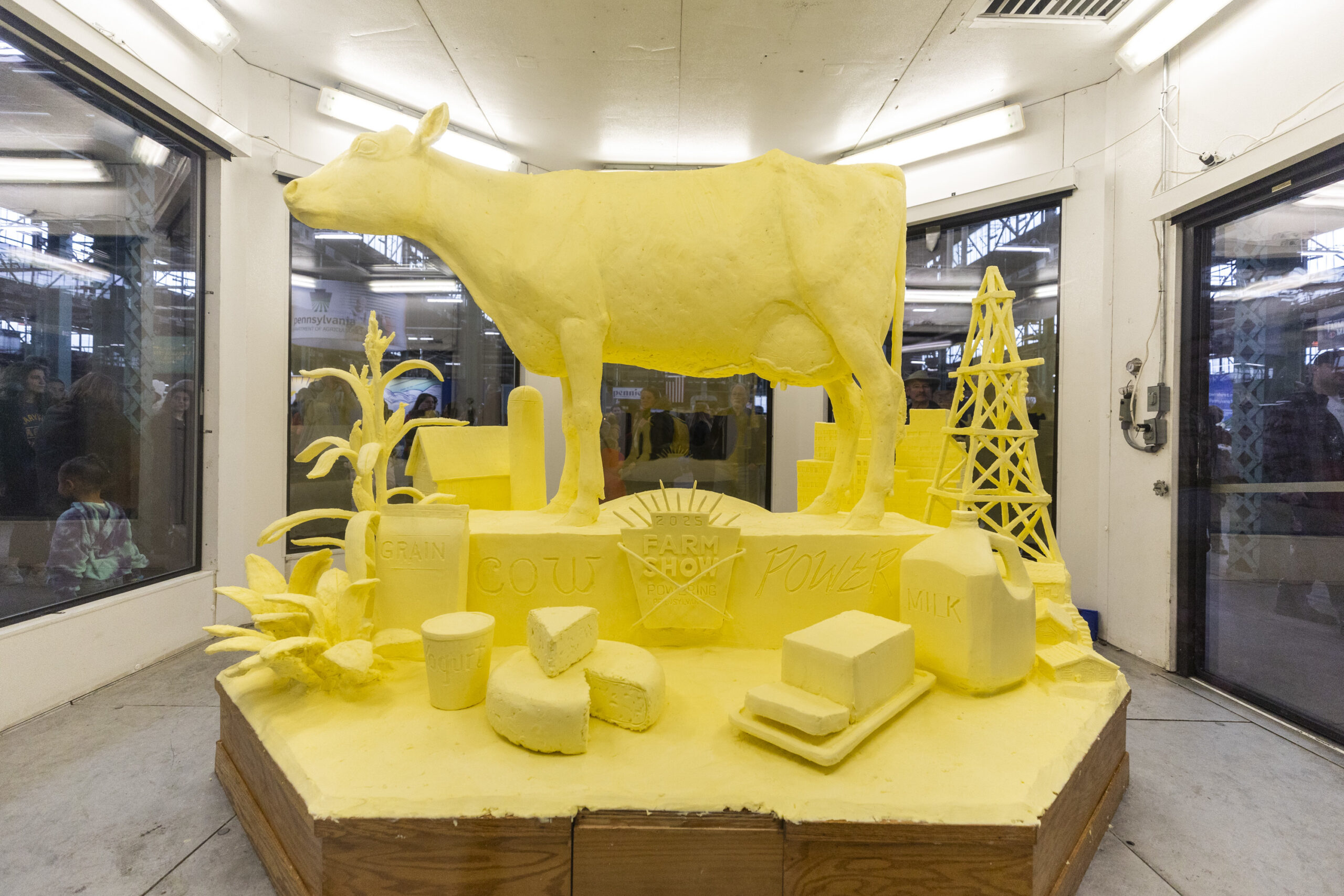
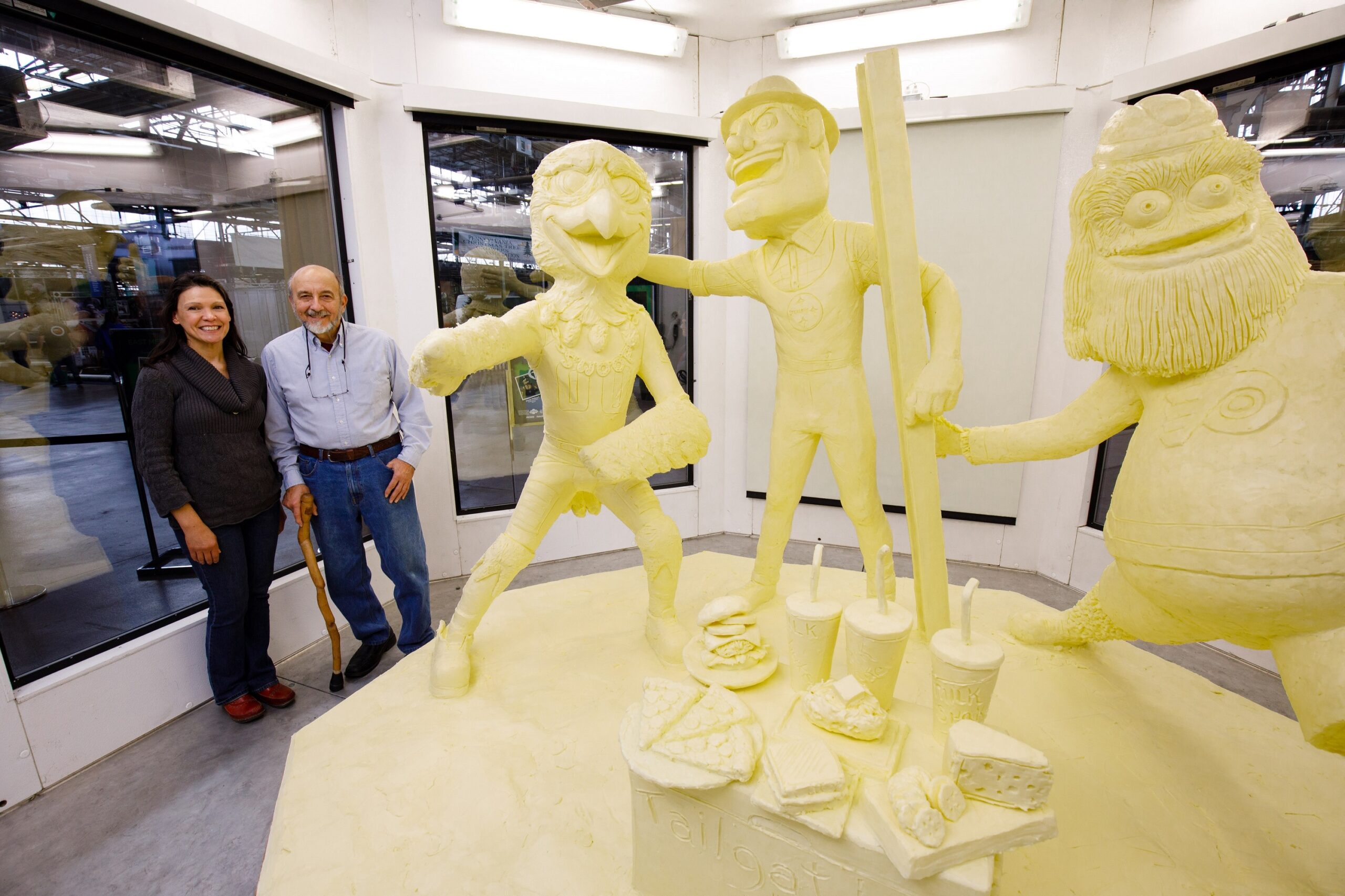
Every year, in Harrisburg, a new 1,000-pound sculpture is unveiled to the public at the Farm Show Complex, a 1-million-square-foot event space that hosts the long-running show. Some years, the sculpture features mascots, like Gritty. This year’s sculpture is titled, “A Toast to Our Nation’s 250th Anniversary: Inspired by Founders. Grown by Farmers” in honor of America’s Semiquincentennial.
“The butter sculpture is a people-pleasing favorite every year at the Pennsylvania Farm Show,” Pennsylvania Department of Agriculture Secretary Russell Redding said in a news release. “In this America250 year, it takes on a deeper meaning reflecting how agriculture has been the roots of our nation’s growth and prosperity for 250 years, and how Pennsylvania farmers will continue to lead us forward.”
The completed butter sculpture crafted from 1,000 pounds of butter over 14 days by Jim Victor and Marie Pelton at the Pennsylvania Farm Show in Harrisburg, Pa., on Saturday, Jan. 4, 2025.
The show began on Friday and runs daily through Saturday. The butter sculpture, which has been part of the Farm Show for over half a century, is enclosed in a large, refrigerated case.
This year’s sculpture is a 1776 Philadelphia tableau, featuring Benjamin Franklin and the Founding Fathers at the signing of the Declaration of Independence, complete with a celebratory toast with milk. The Liberty Bell and Betsy Ross make an appearance, too.
Like most years, the butter sculpture was created by Conshohocken artists Jim Victor and Marie Pelton. They’ve worked with chocolate, cheese, and ice over their careers, but butter’s brought them the most acclaim.
The butter is often donated by large national producers like Land O Lakes or Keller’s, and no, it can’t be melted and drizzled on popcorn.
“It’s waste butter we get from plants,” Pelton told The Inquirer in 2020. ”It’s stuff that’s been extruded or cleaned out, or stuff that’s been damaged, or generally can’t be sold to the public.”
According to the Department of Agriculture, the Pennsylvania Farm Show is the largest indoor agricultural expo in the nation, featuring nearly 5,000 animals, 12,000-plus competitive entries from more than 4,600 competitors, plus more than 250 commercial exhibits, and hundreds of educational and entertaining events. Admission is free. Parking is $15 per vehicle. Farming, according to the Department of Agriculture, provides 593,000 Pennsylvania jobs and contributes $132.5 billion to the state’s economy each year.
Marie Pelton and Jim Victor with the mascot-themed butter sculpture they created for the 104th annual Pennsylvania Farm Show in Harrisburg in January 2020.
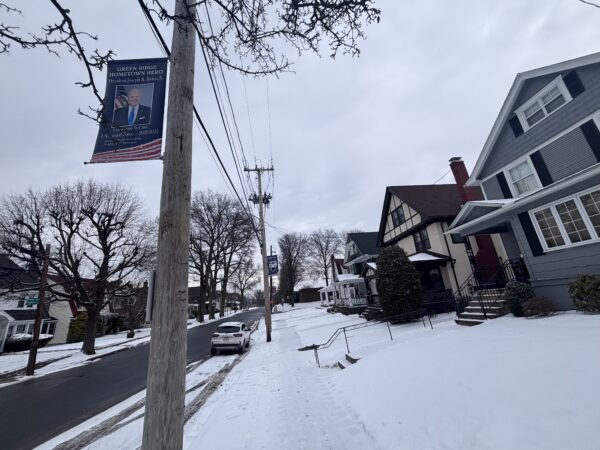
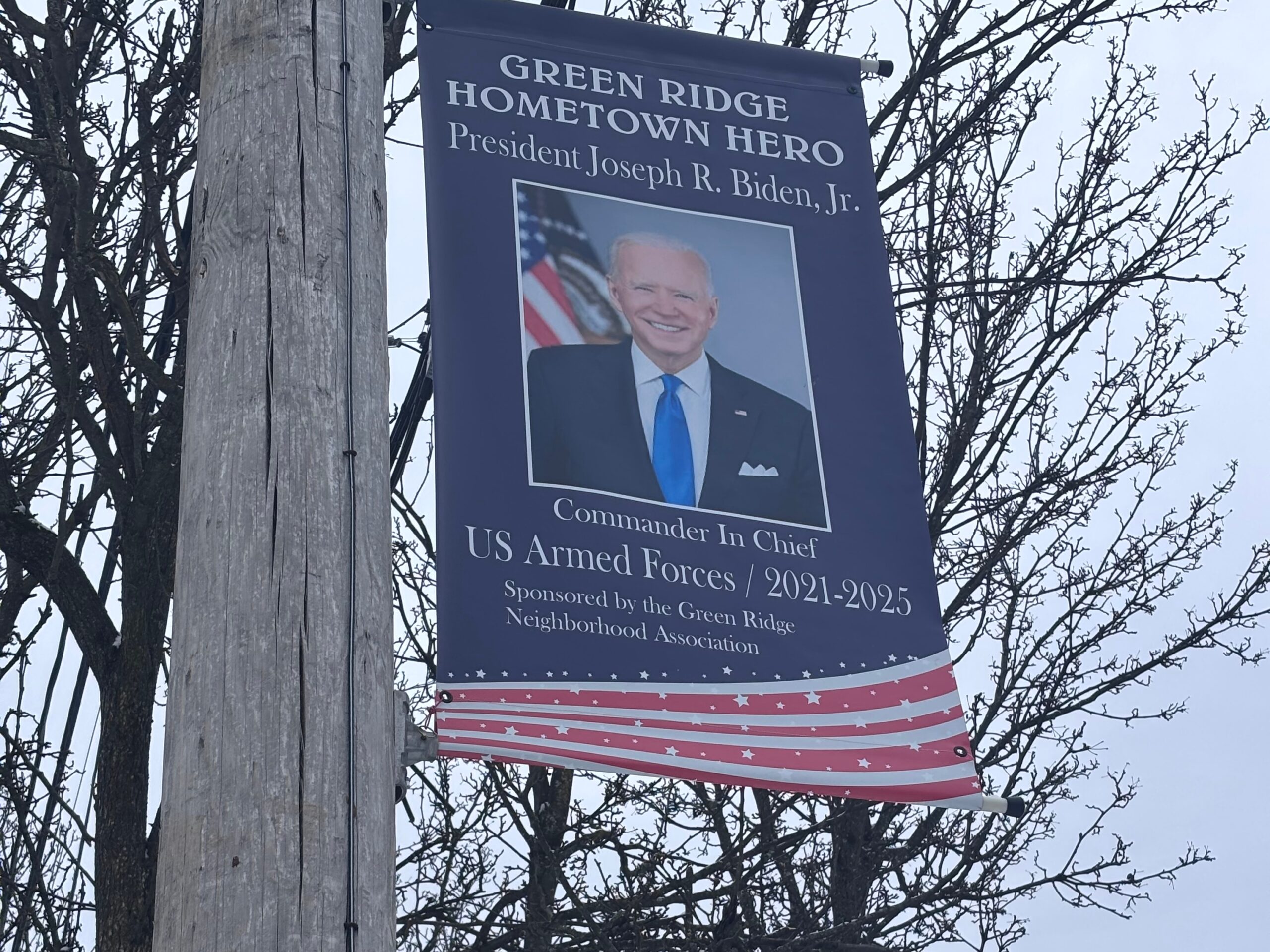
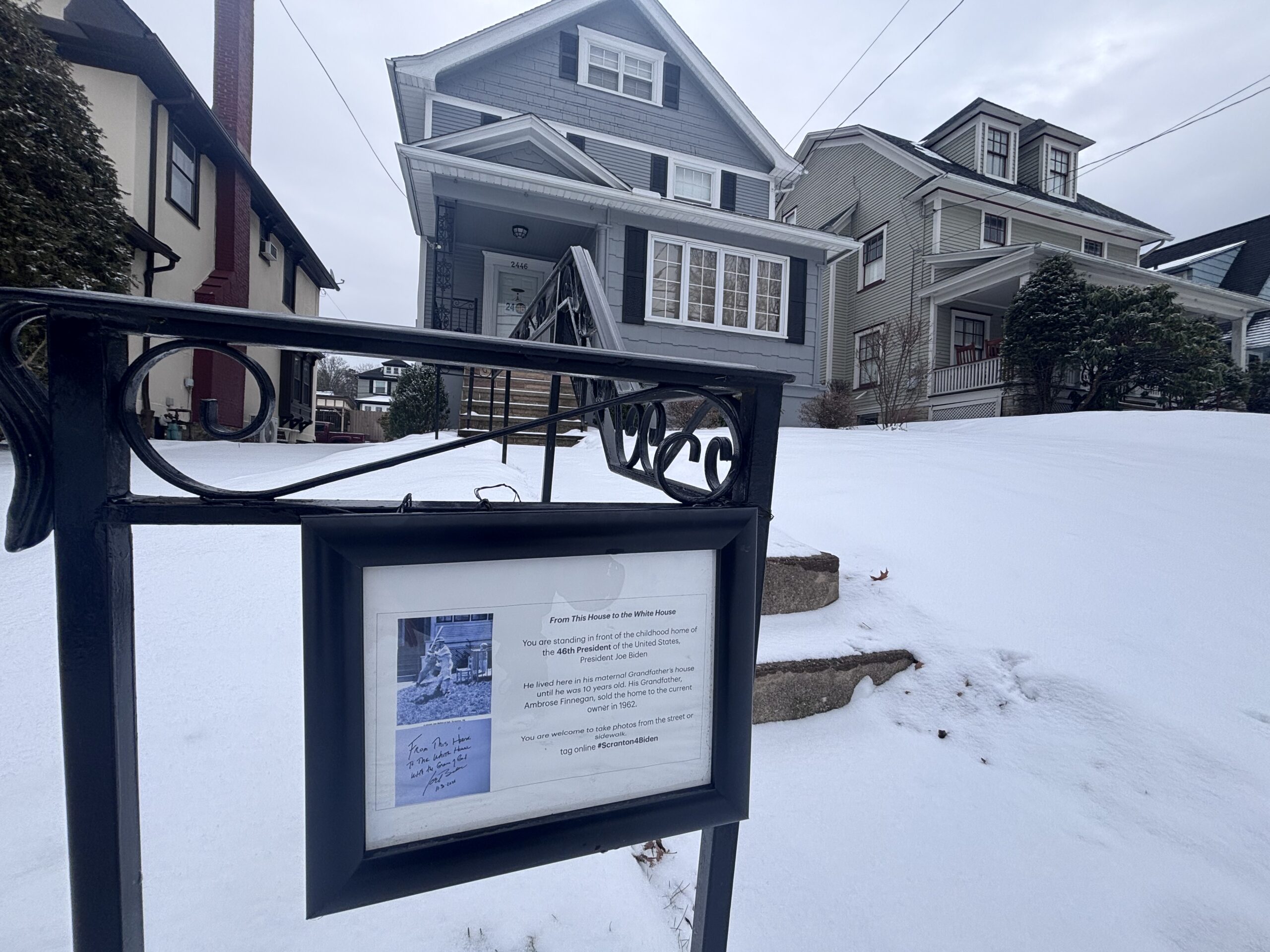
When a Scranton neighborhood group decided to honor Joe Biden with a “hometown hero” banner outside the 46th president’s childhood home recently, they expected a little bit of blowback.
But members of the Green Ridge Neighborhood Association say they’re dumbfounded by the number of complaints and even threats, both locally and abroad.
“Someone in Guam has been very vocal,” Roberta Jadick, the association’s secretary, said beneath the banner on North Washington Avenue on a recent snowy weekday.
“Hometown Heroes” banners first appeared in Harrisburg in 2006, according to the program’s website, and they’ve become ubiquitous in small-town and suburban Pennsylvania. Most appear as black-and-white photos of men and women in uniform, thousands of veterans honored in nearly every corner of the Commonwealth.
While most of the banners honor veterans, no rule prohibits municipalities, civic groups, or veterans’ groups from honoring others, said Laura Agostini, president of the Green Ridge group. Some towns have put up banners of high school athletes or law enforcement officials.
“I mean, teachers are heroes, aren’t they?” Jadick said.
The banner on North Washington Avenue near Biden Street depicts the former president in a suit, with the title “Commander in Chief, U.S. Armed Forces, 2021-2025″ written beneath it. Agostini said the group was aware that “Commander in Chief” was a civilian title.
A banner featuring former president Joe Biden as a “hometown hero” has sparked controversy in Scranton. The neighborhood group that put it up plans to vote on its future Monday after getting criticism from veterans.
Agostini said the initial blowback was political but that the issue “morphed” into a veterans’ issue.
“We never intended to portray him as a veteran,” Agostini said. “There’s only been 46 presidents in the United States, and each one had a hometown, and we thought this is a unique honor.”
A Dec. 21 Facebook post about the banner by the Green Ridge Neighborhood Association received nearly 250 comments, ranging from supportive to critical to crude.
“He’s an embarrassment!” one commenter wrote.
A similar controversy erupted in 2021, when a four-lane highway in Scranton was renamed President Joe Biden Expressway.
Biden was born in Scranton in 1942 and lived there on and off, and he repeatedly mentioned Scranton as a formative place. A plaque outside the home where Biden lived with his maternal grandfather, Ambrose Finnegan, said he moved out when he was 10 years old.
A Hometown Heroes banner honoring the Finnegans is just one light pole down from Biden’s. No one from the Hometown Heroes Banner Program returned requests for comment on Wednesday.
One local veteran, Andy Chomko, said he doesn’t have a problem with Biden being honored in Scranton, but his banner should not look like veterans’ banners.
“It’s a great thing that he lived here and had roots here,” Chomko said. “But the banner makes it look like he’s a veteran, and every one of those people on those other banners put their lives at risk for their country.”
Navy veteran Harold Nudelman told WNEP-16 that Biden “didn’t put his life on the line.”
“Don’t portray him as a veteran. He didn’t serve. He didn’t take that oath to serve as we did,” he told the news station.
Chomko, who served in Iraq and Afghanistan with the Army, believes the Green Ridge group should remove the banner and “rethink it.”
That could happen after Monday, the group will vote on the future of the banner at a public meeting.
“I would say the vast majority of people support it or really don’t care,” Agostini said. “I don’t take any of this lightly, though, and while we were hoping it would be dying down, we’ll have an open discussion about it.”
Jadick said the banner was never meant to divide the public even more than it is.
“If Trump was from here, he’d have a banner up after he was out of office,” she said. “This is where Joe Biden is from. Those are his uncles on the other banner.”
A banner featuring former president Joe Biden as a “hometown hero” has sparked controversy in Scranton. The neighborhood group that put it up plans to vote on its future Monday after getting criticism from veterans.
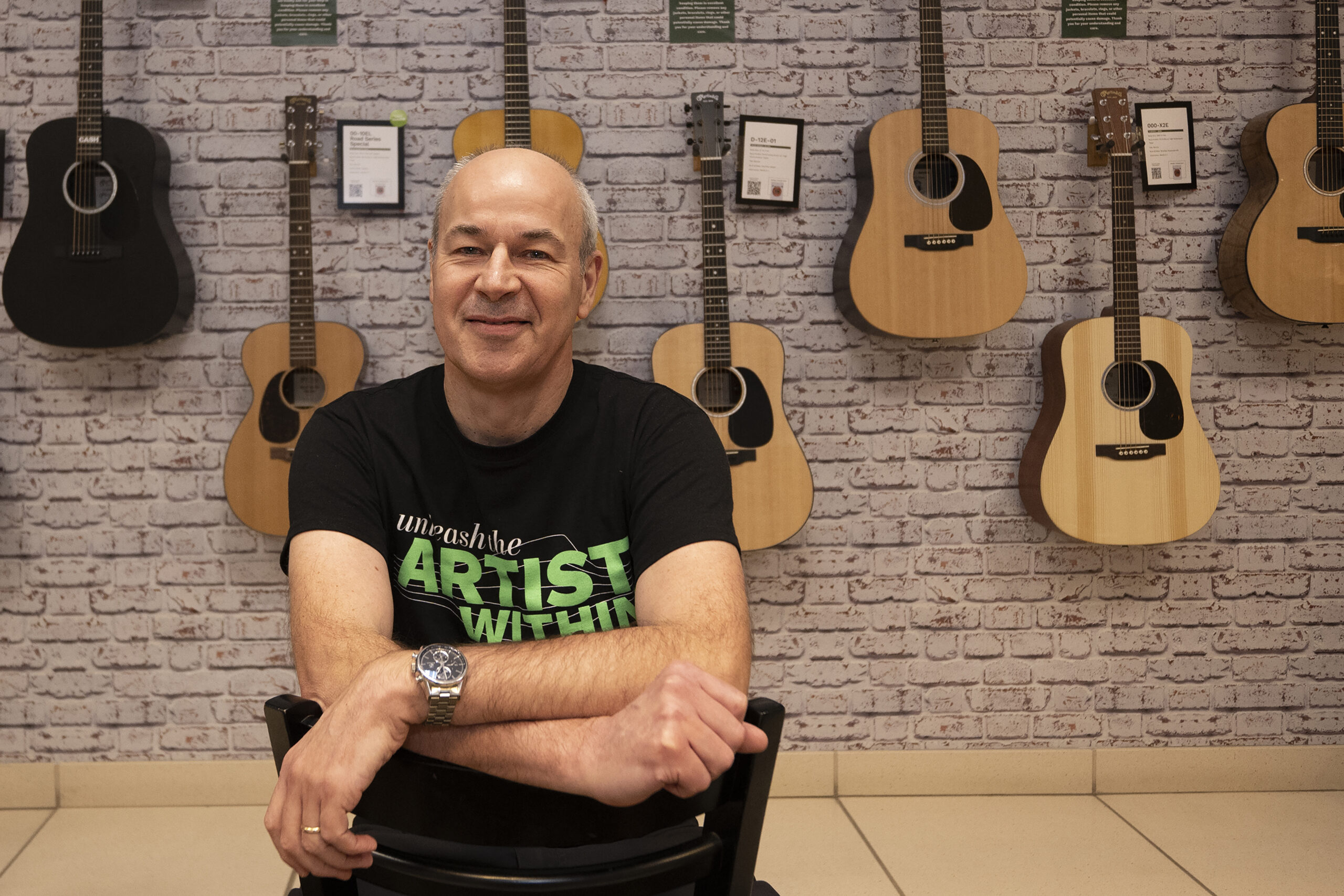
Whenever Christian F. Martin IV hears a Martin guitar, whether it’s the timeworn piece Willie Nelson’s nearly strummed a hole through, or a customer nervously picking a D-300 that looks like fine art and costs $300,000, he beams with pride. Like a father.
Martin is the executive chairman of C.F. Martin & Co., the sixth generation of Martins to create arguably the world’s most-renowned acoustic guitars out of Nazareth, Northampton County. Founded in New York City in 1833 by German luthier Christian Frederick Martin, the company moved to Nazareth in 1839 and has crafted 3 million guitars, all of them intertwined with the family tree.
So when Martin took his daughter to a Post Malone concert in 2020 and watched the artist play a Martin, he smiled from afar. Later, when Malone dragged — yes, dragged — what appeared to be the same guitar across the stage, Martin’s heart dropped.
“I’m freaking out,” Martin said. “I’m looking at my wife, and she’s looking at me like ‘I don’t know.’”
Martin was still processing the trauma of a 145-year-old Martin guitar being smashed in the 2015 Quentin Tarantino film The Hateful Eight. So when Malone smashed the guitar onstage and poured a beer on it, Martin’s heart broke into small pieces, too.
“I need to leave,” he told his wife.
Luckily, before Martin could flee the concert in Hershey to process the trauma, he was told the smashed guitar was a prop, not a Martin.
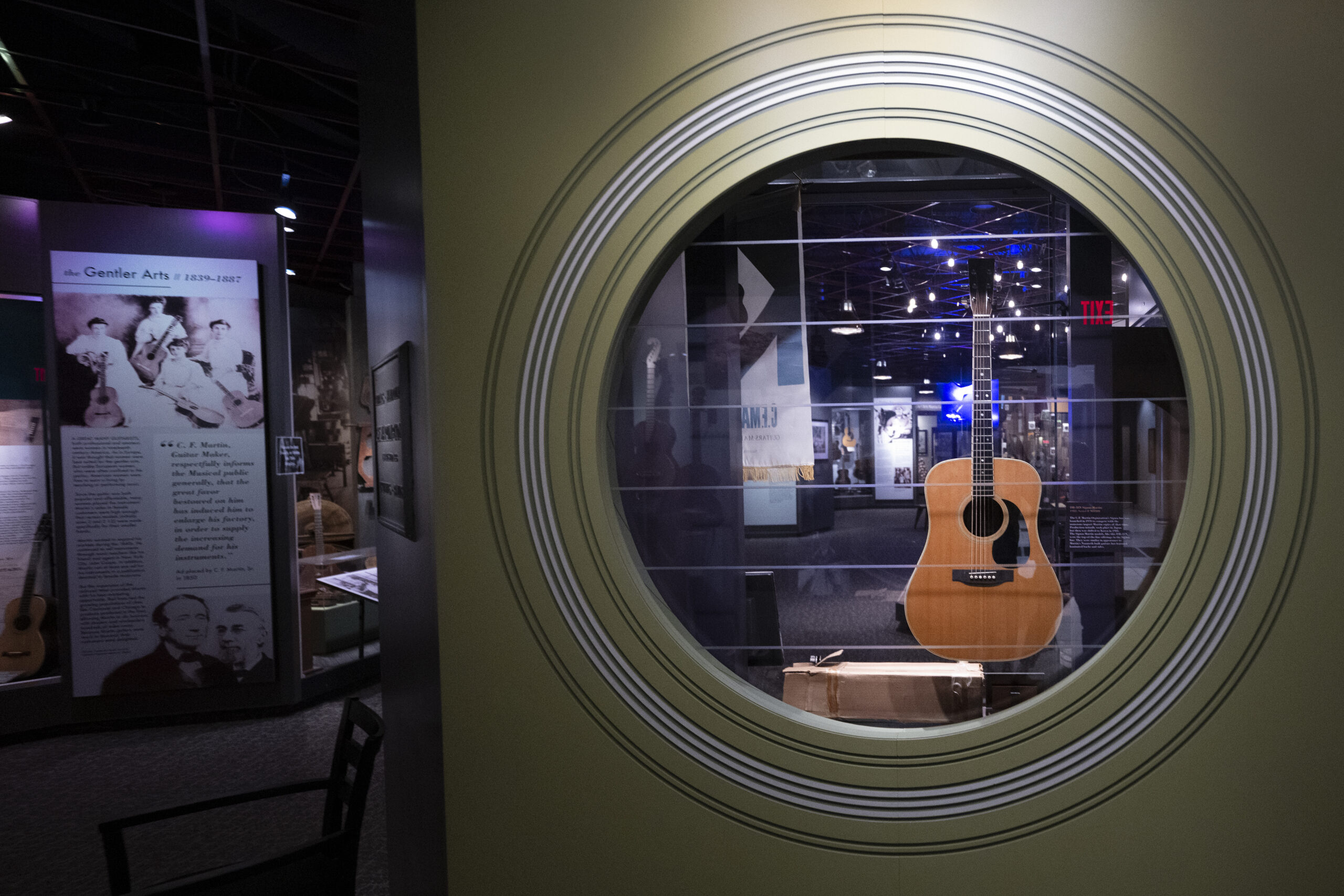
That’s how seriously Martin, and its devotees, takes guitars. On a recent fall weekday in the Nazareth headquarters, tourists were lining up before the building opened for tours, taking selfies. Inside, guitars that belonged to Nirvana frontman Kurt Cobain and Hank Williams, two of thousands of artists who played Martins, sat in glass cases.
(Later that day, Martin flew to London to give a special presentation about the Martin D-18 Cobain played during Nirvana’s famed Unplugged set in 1993.)
“I’ve always just gravitated toward playing Martins,” said Delaware County musician Devon Gilfillian. “When I first started playing, that was just always the goal. The tone is just so perfect and warm. Plus, it’s from Pennsylvania.”
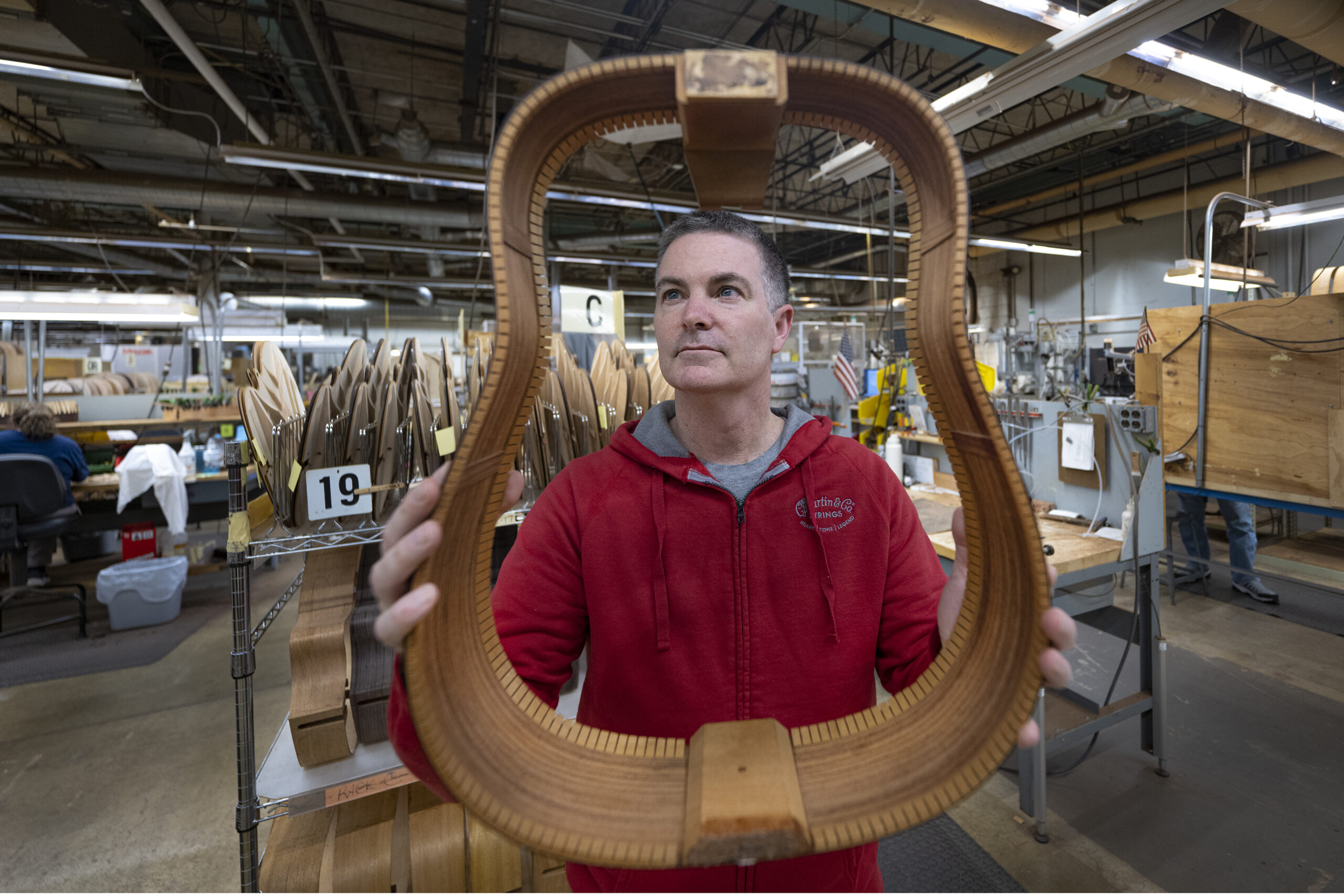
Mike Nelson inspects a guitar frame at C.F. Martin & Co.
Martin said guitar sales booms are usually tied to specific cultural moments or trends in popular music. Folk music in the 1960s, for example, or the popularity of MTV’s iconic Unplugged series that featured Nirvana, Eric Clapton, Alice in Chains, and countless others.
Today, Martin is still feeling the effects of the COVID-19 pandemic, when many workers were forced to stay home and went looking for something to do. The company is producing approximately 500 guitars per day in Nazareth and a plant in Navojoa, Mexico.
“We’re on a bit of a roll,” Martin said.
“I think it’s important to show people this is where a Martin guitar is made and this is what it takes to make a Martin guitar,” he said. “For many guitar players, coming to the Martin factory is like going to mecca.”
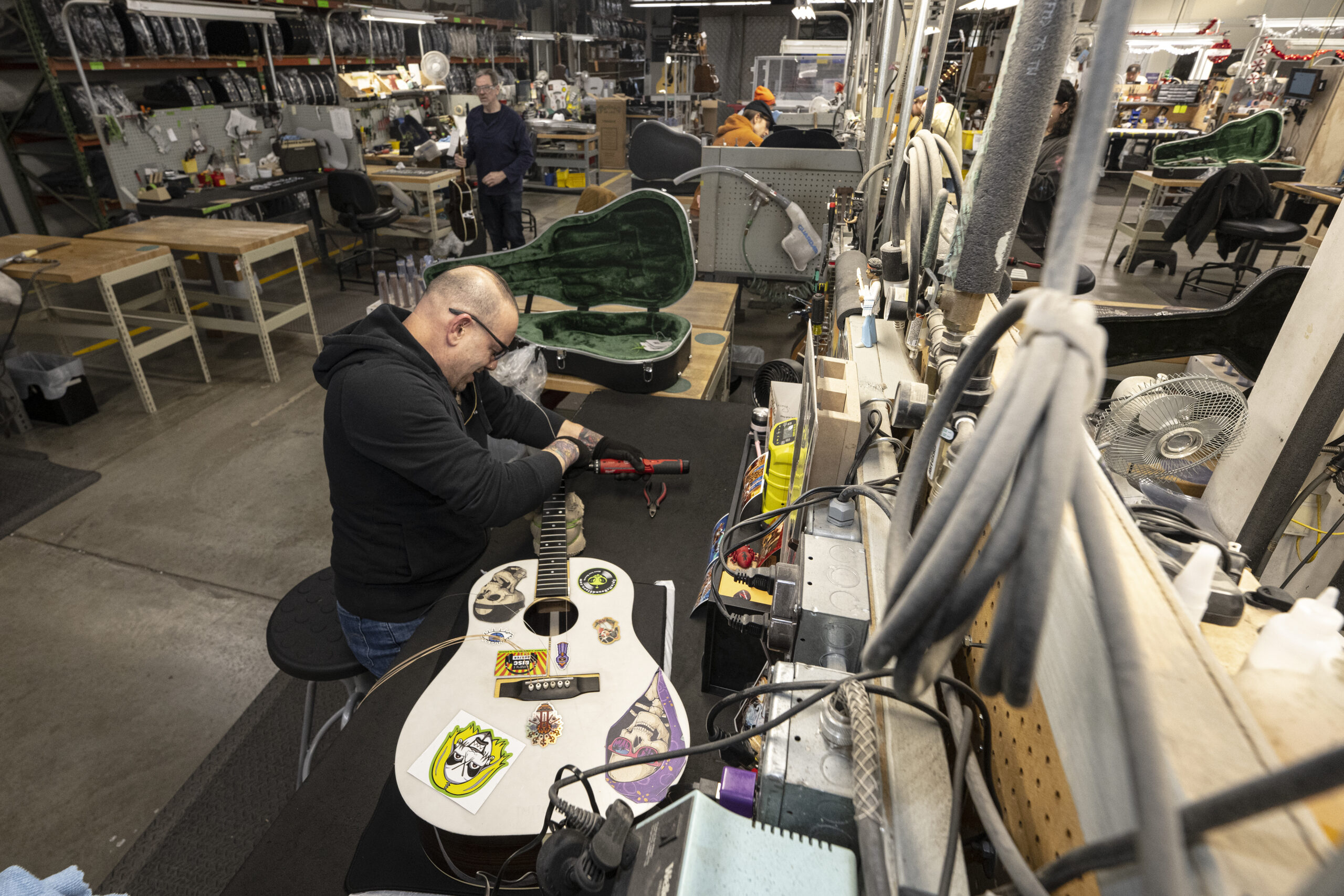
Inside, the factory floor is divided into sections, an assembly line of sorts, with some specialists focusing on fretboards, others on the necks. Some were spraying lacquers, with ventilation masks on, while other lucky employees — musicians themselves — do sound checks, strumming chords for tone. Few guitars are rejected.
The factory is both high and low tech, with robotic arms meticulously sanding bodies while workers use ancient woodworking tools to shape some parts.
That level of specialization, Martin said, makes Martin’s craftsmen the best in the business.
“You’ll see what it takes,” he said. “You’ll see why we’re the best.”
Most Martin guitars are made with various timbers, including a slew of different spruces, along with rarer mahogany and rosewood.
All businesses change, subject to the whims of markets and greater global issues. While the overall design of a guitar hasn’t changed all that much over the centuries, newer and different materials may be in the pipeline, due to issues with climate change and deforestation. The tropical hardwoods grow slowly and are under threat.
Temperate hardwoods like maple and walnut are more abundant, and the company is exploring them, Martin said. The use of alternate materials might be possible, but they would all fall under the same standard: the guitar would need to sound like a Martin.
“We would not use a material that doesn’t work,” he said.
Martin has committed to reforestation projects in Costa Rica and the Republic of the Congo. Martin’s sustainable Biosphere III, with a polar bear design by company artist Robert Goetzl, benefits Polar Bears International and retails for $2,399.
Gregory Jasman strings a guitar. The list of musicians who play Martins could fill a music hall of fame.
Goetzl has been responsible for most of Martin’s “playable art,” and he cherishes the idea that his art will make art.
“It is art, and it could be hung on a wall, but that would kind of be a shame,” he said on the factory floor, holding a guitar featuring owls and the northern lights. “It’s not cheap. It’s a very real instrument with a beautiful design.”
On this weekday, a buyer had come to Martin to possibly purchase a guitar worth more than a quarter-million dollars.
The list of musicians who play Martin is endless, enough to fill a music hall of fame — Nelson and his famous “Trigger,” Bob Dylan, Johnny Cash, Ed Sheeran, Joni Mitchell, and so many others.
Thomas Ripsam, president and CEO, at the C.F. Martin assembly line.
“We are very intentional about who we want to work with,” said Thomas Ripsam, who assumed the role of CEO in 2021. ”We don’t really pay artists for playing our guitars, so we are looking for artists who have a sincere connection.”
One of them is Billy Strings, a popular, Nashville-based guitarist who combines bluegrass, rock, and even metal.
“When you think of the word guitar, I think of a Martin D-28,” Strings said in a promotional video for guitars that the company designed for him. “It’s so American. It’s like baseball or something.”
An A-frame guitar adorns the museum entrance Thursday, Dec. 18, 2025, at C. F. Martin & Co. Inc. in Nazareth, Pa.
Soon, the distinct smells of the Pennsylvania Farm Show will waft through Harrisburg, everything from manure to hay to the ubiquitous milkshakes.
The shakes, sold by the Pennsylvania Dairymen’s Association, are a Farm Show tradition, along with looking at the enormous butter sculpture and watching live calf births.
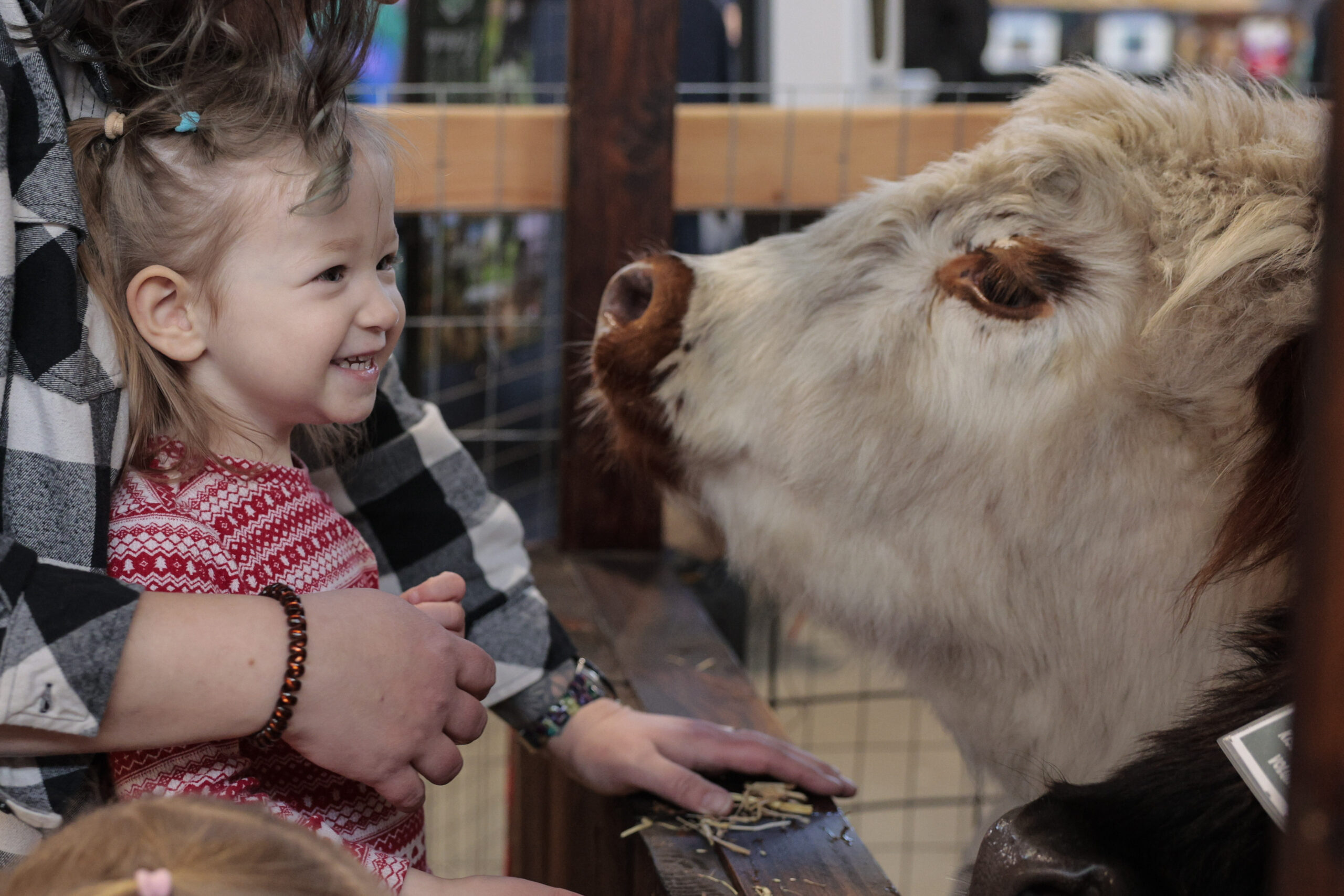
Kaitlyn Groff from Lancaster is visiting a kiss a cow with a Highland cattle at the Pennsylvania Farm Show in Harrisburg, Thursday, January 9, 2025.
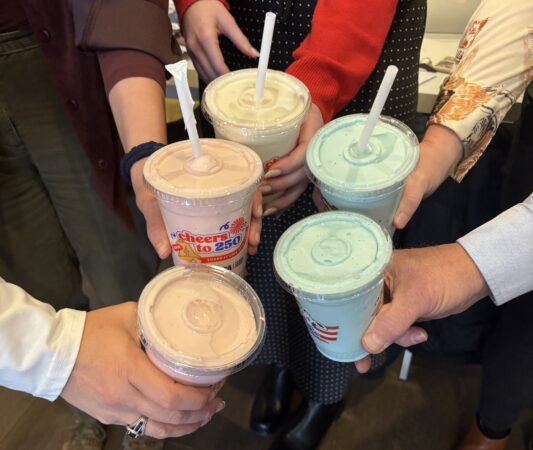
Traditionally, the flavors are vanilla, chocolate, and strawberry, but this year, to celebrate America’s 250th birthday, the shakes are getting patriotic. The “America250Pa Milkshake flight” will now be red, white, and blue thanks to the addition of blue raspberry.
The farm show is the country’s largest indoor agricultural exhibition, and it starts on Saturday, Jan. 10, 2026, with the massive food court opening on Friday, January 9th. You can get mushroom burgers from Chester County and baked sweet potatoes douses in butter and cinnamon.
Pennsylvania is second nationally in the number of dairy farms with 465,000 head of cattle on 4,850 farms. The state’s dairy industry provides 47,000 jobs across the Commonwealth and generates $11.8 billion in annual revenue.
Attendees visit the the PA Dairymen’s Association milkshake booth at the Pennsylvania Farm Show in Harrisburg Jan. 10, 2022.
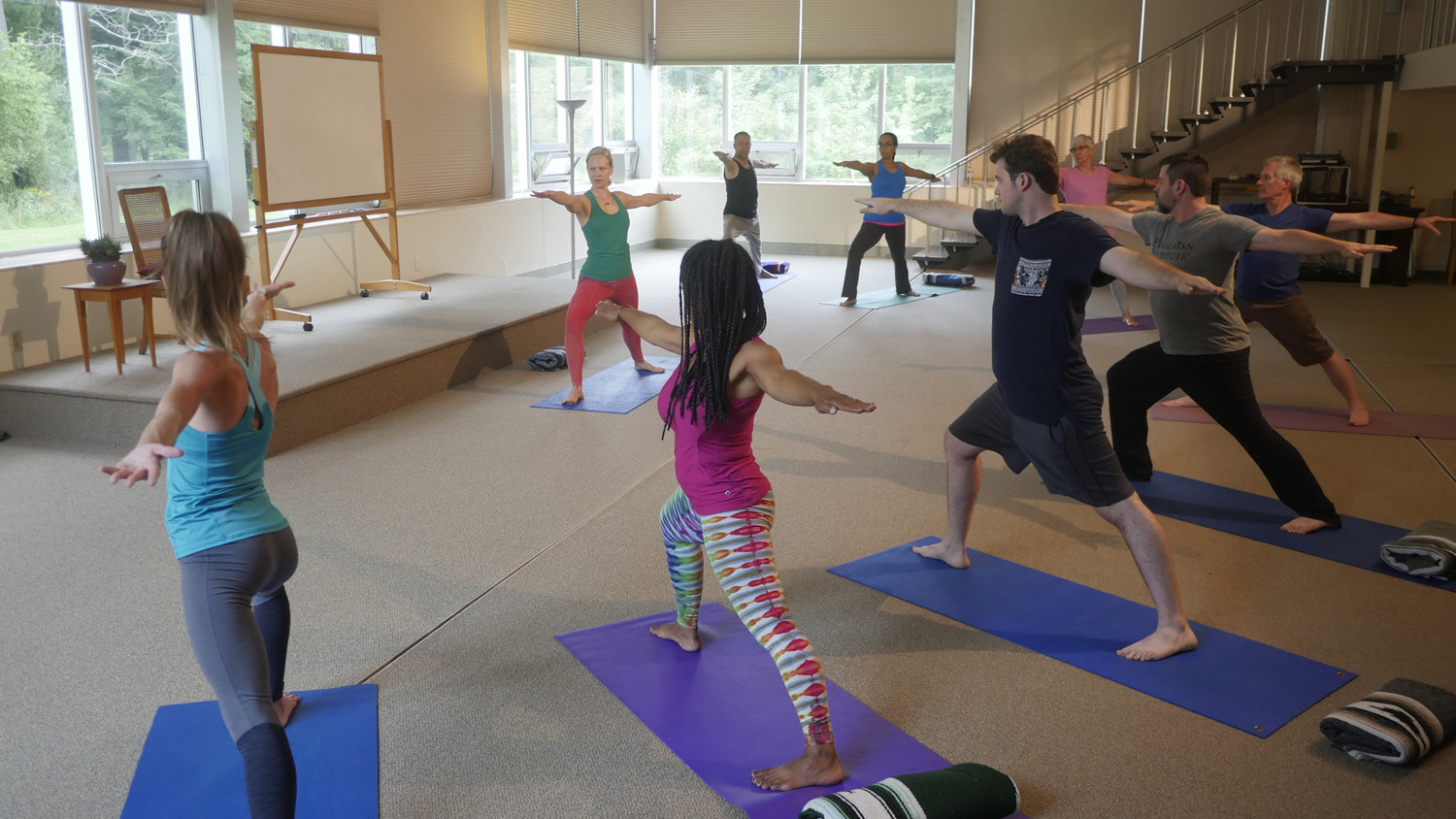
The silence in the Himalayan Institute’s shrine redefines silence, quiet enough to hear your heartbeat, to pick up a whisper from across the room, and, perhaps most importantly, to feel every breath, in and out, while you meditate.
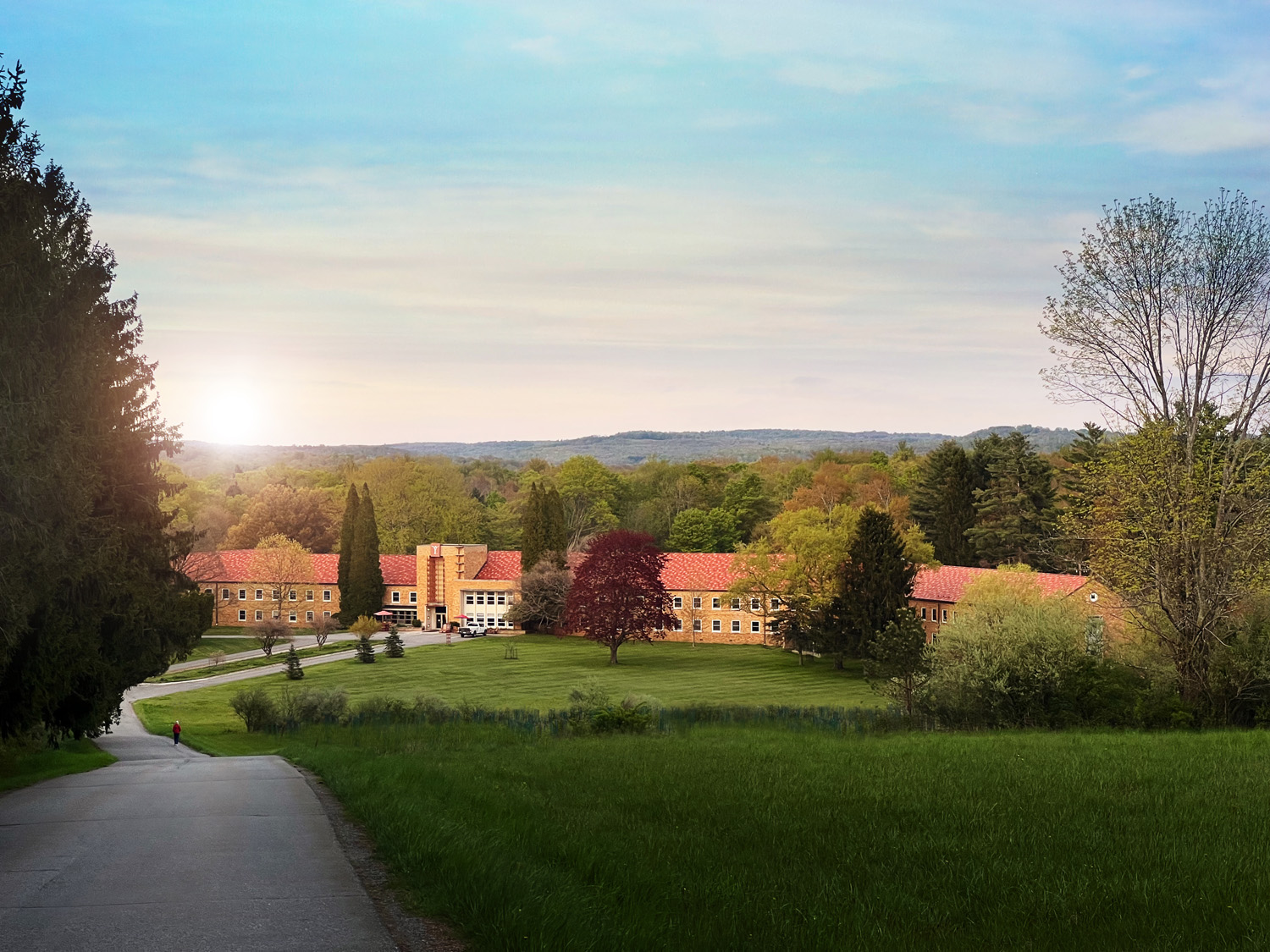
The institute, founded in 1972, moved into the massive, former seminary on 400 hilly, forested acres in Honesdale, Wayne County, in 1977, a time when yoga was still a niche practice. For more than 50 years, the institute has been offering yoga training, spirituality, meditation, and holistic health practices, along with getaways and retreats.
“It’s for anyone, for any creed, religion, sex, or gender,” said Greg Capitolo, a California native who became the institute’s president after attending retreats there. “There’s really no religious affiliation at all.”
As yoga exploded in popularity and modern meditation apps abound, the Himalayan Institute has seen growing interest worldwide. It hasn’t hurt that downtown Honesdale has seen its own popularity grow over the last decade as Philadelphia and New York City residents look for properties and business opportunities outside of traditional urban escapes, like upstate New York.
“I like to sat this is the best-kept secret in Wayne County,” Capitolo said. “I hope we become less of a secret to the people here. ”
The Inquirer went to Honesdale during a frigid weekend last December and confirmed it: even in single-digit temps, the town’s gift shops, bakeries, buzz-worthy restaurants, art galleries, and book stores were alive with tourists and locals up and down Main Street.
Afterward, several readers mention the Himalayan Institute as a “must-visit.”
The Himalayan Institute, In Honesdale, Pa.
On a Monday in late November, the main, dormlike building was abuzz with “residents” who were doing volunteer work in the kitchen for access to classes, yoga training, and other programs the institute offers. Capitolo said the institute can house up to 80 residents, who commit to staying for a year as part of the $800 per month “Residential Service Program.”
Meals are vegetarian, and on this afternoon, lunch was beet subzi and kimchari. The Himalayan Institute follows Ayurvedic principles, which discuss balance and digestion, among other things.
“The Ayurvedic system says you should eat your biggest meal around lunchtime, when the sun’s at its highest, point, because your digestion will be optimally ready to break down food,” Capitolo said.
There’s also a gift shop and a trail network at the Institute, along with a popular Wellness Center that offers several types of massage, including hot stone. One of the Wellness Center’s most popular offerings is an Ayurvedic therapy known as Shirodhara Treatment, which includes “streaming warm oil onto the forehead to clear and calm the mind.”
The Himalayan Institute, In Honesdale, Pa.
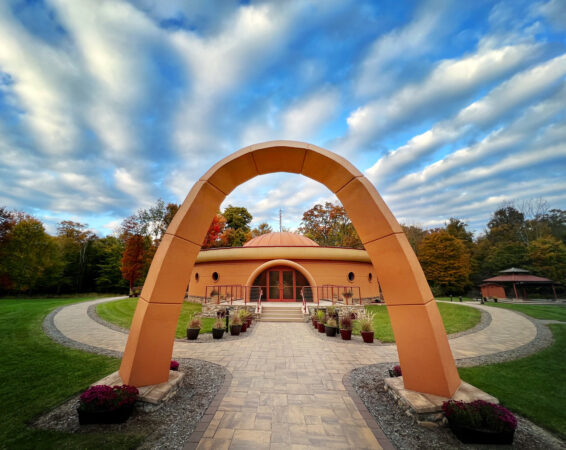
The simplest structure and offering at the Himalayan Institute may be the Sri Vidya Shrine, a simple, domed building that sits behind the former seminary on the campus. The shrine is the twin of the Sri Vidya Shrine at the Himalayan Institute’s Khajuraho campus in central India, and its meditation hall is not so simple: that unique silence was part of the design.
The shrine’s meditation hall is referred to as the mandapa, literally “the canopy for seekers to gather.”
Capitolo sat silently in the hall for several minutes, hands folded, focusing on his breath. He, too, was a seeker, leaving a lucrative job in Silicon Valley to head east to Honesdale, before it was hip.
“I was happy and seemingly had everything I needed,” he said outside the shrine. “But something was missing. This place satisfied what was missing.”
Philadelphia nearly experienced its own nightmare before Christmas this year, with the closure of the Center City Macy’s and the iconic, beloved holiday light show.
Capitalism can’t stop Christmas traditions, though. The light show is back, and across the region, people are buying Christmas trees, prepping for Hanukkah, and preparing for Kwanzaa events this week.
One simple way to get in the spirit? Visit one of the many holiday light shows, from neighborly displays to events steeped in decades of history and nostalgia.
Philadelphia and its suburbs offer plenty of options. Here are some of the best.
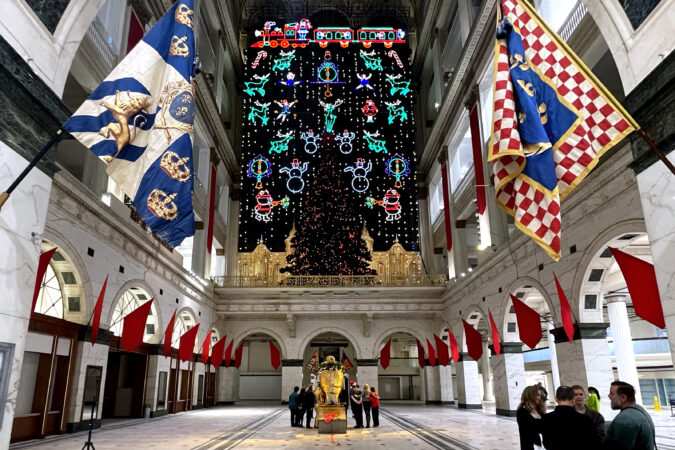
The decades-old holiday tradition is back at Center City’s shuttered Macy’s, with a new name and, possibly, an entirely better experience. With more than 100,000 LED lights, the Wanamaker Light Show remains free to the public. What makes the Wanamaker Building so magical is the melodies booming throughout the cathedral-like department store from the century-old organ, one of the largest in the world. Enjoy the massive light show beginning on Black Friday. The show operates Wednesday to Sunday from noon to 8 p.m., through Dec. 11. Starting Dec. 12, there are daily shows from noon to 8 p.m. The final day for the show is Christmas Eve, from noon to 4 p.m.
According to Visit Philadelphia, the Wanamaker Building will undergo renovations after the holidays, and the light show may be on hiatus for several years.
🕒 Through Dec. 24, daily, various times, 💵 Free, 📍1300 Market St., Philadelphia, Pa. 19107, 🌐 visitphilly.com
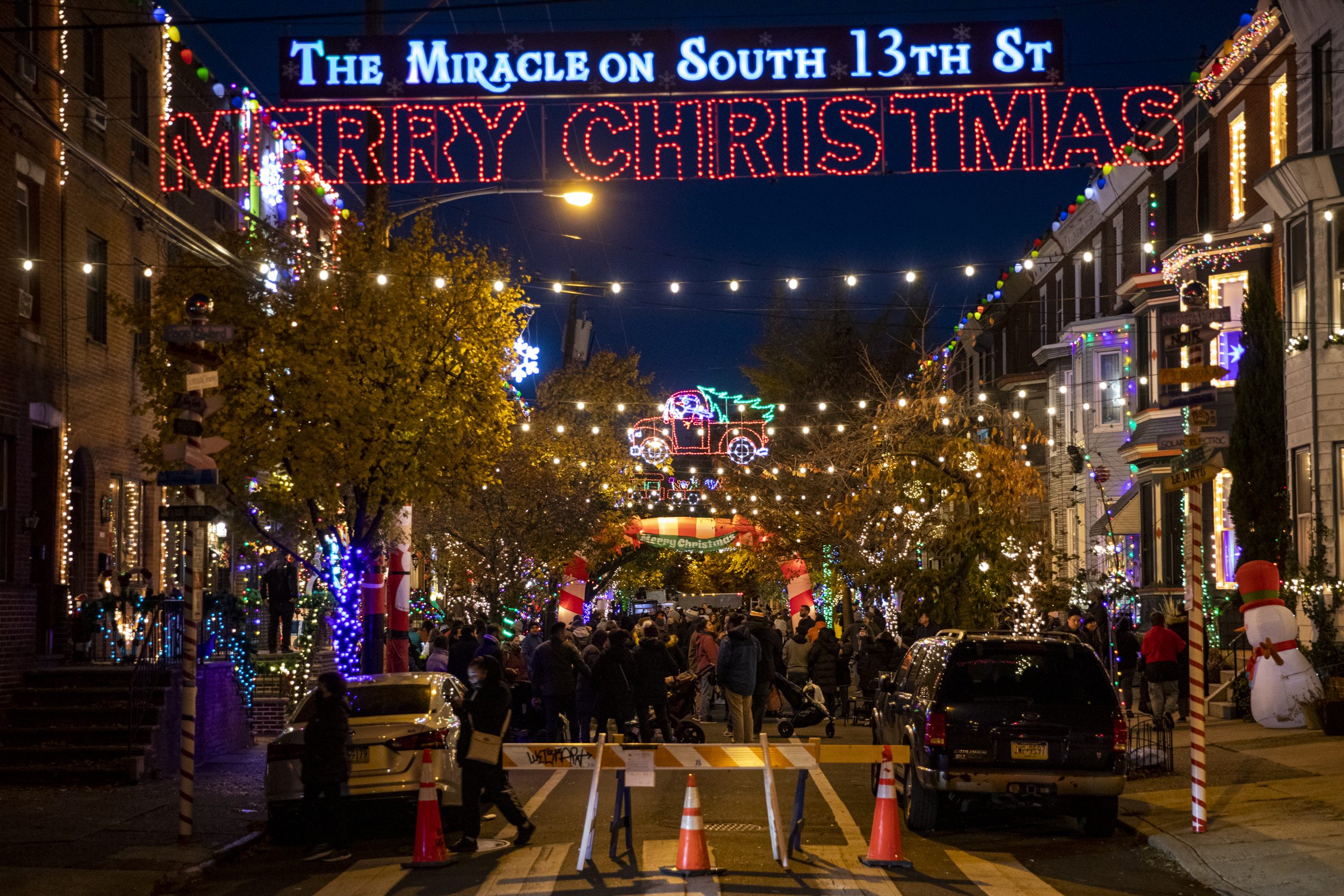
The Miracle on South 13th Street block party filled with Christmas lights and decorations in South Philadelphia, on Saturday, Nov. 27, 2021.
Nothing spreads holiday spirit more than neighbors coming together to remind us what it’s all about. Since the ‘90s, residents of the 1600 block of South 13th Street in East Passyunk have transformed their street into a Christmas light show so spectacular that Peco must see a spike in usage. The show opens with a block party on Nov. 29 from 5 to 9 p.m. with face painting, balloon art, and a 6 p.m. special guest from the North Pole.
🕒 Through Jan. 1, daily, 5 to 10 p.m., 💵 Free, 📍 1700 S. 13th St., Philadelphia, Pa. 19148, 📷 @themiracleonsouth13thstreet
It was opening night for Winter in Franklin Square featuring the Electrical Spectacle Light Show presented by PECO.
Celebrate the holidays in Franklin Square, a park older than the Declaration of Independence, where each year the Electrical Spectacle Holiday Light Show illuminates the plaza along with classic Christmas songs. The event includes mini golf, street curling, and seasonal sweet treats and cocktails at Frosty’s Fireside Winter Pop-Up Bar.
🕒 Through Feb. 23, various times, 💵 Free, 📍200 N. Sixth St., Philadelphia, Pa. 19106, 🌐 historicphiladelphia.org
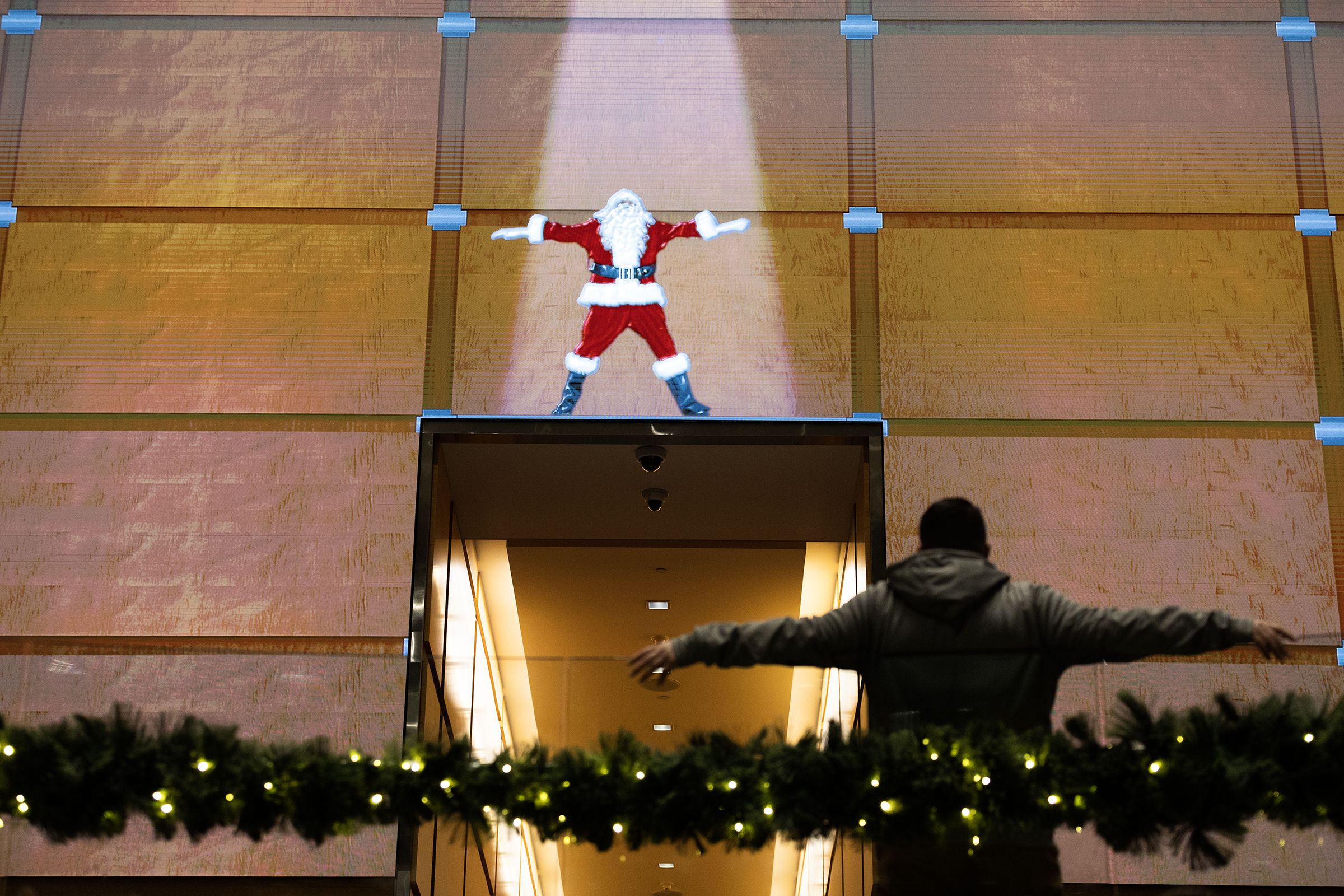
A man watches a dancing Santa with a similar body language in the lobby of the Comcast Technology Center during a Dec. 15, 2023, holiday video presentation.
Philly’s telecommunications giant has two immersive attractions again this year. Each day, the Comcast Holiday Spectacular at the Comcast Center wows visitors with light shows at the top of every hour. Inside the Comcast Technology Center, which is right around the corner, theDreamWorks’ Shrek’s Festive Flightreturns. The show tells the story of Shrek, Donkey, and Gingy’s journey from Philadelphia to the North Pole Bakery.
🕒 Through Jan. 2, daily, 10 a.m. to 8 p.m., 💵 Free, 📍1701 JFK Blvd., Philadelphia, Pa. 19103, 🌐 comcastcentercampus.com
This regional credit union gives back during the holidays with a 400,000-light display accompanied by 40-foot Christmas trees, hundreds of wreaths, and more. Stroll through American Heritage’s campus, where you can snap family photos, enjoy the displays, and take in the winter night air. The events begin on Nov. 29.
🕒 Through Jan. 1, daily at dusk, 💵 Free, 📍2060 Red Lion Rd., Philadelphia, Pa. 19115, 🌐 americanheritagecu.org
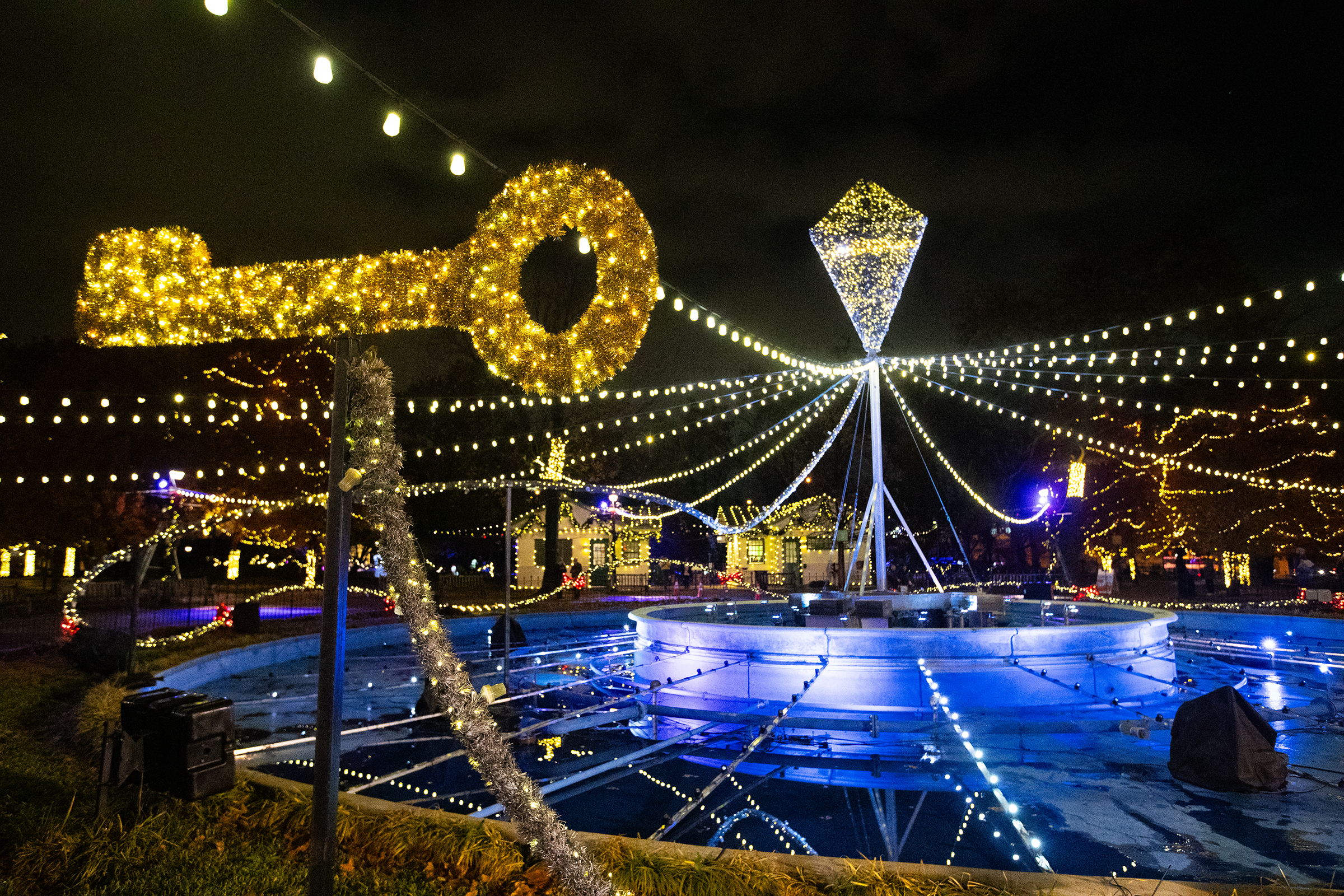
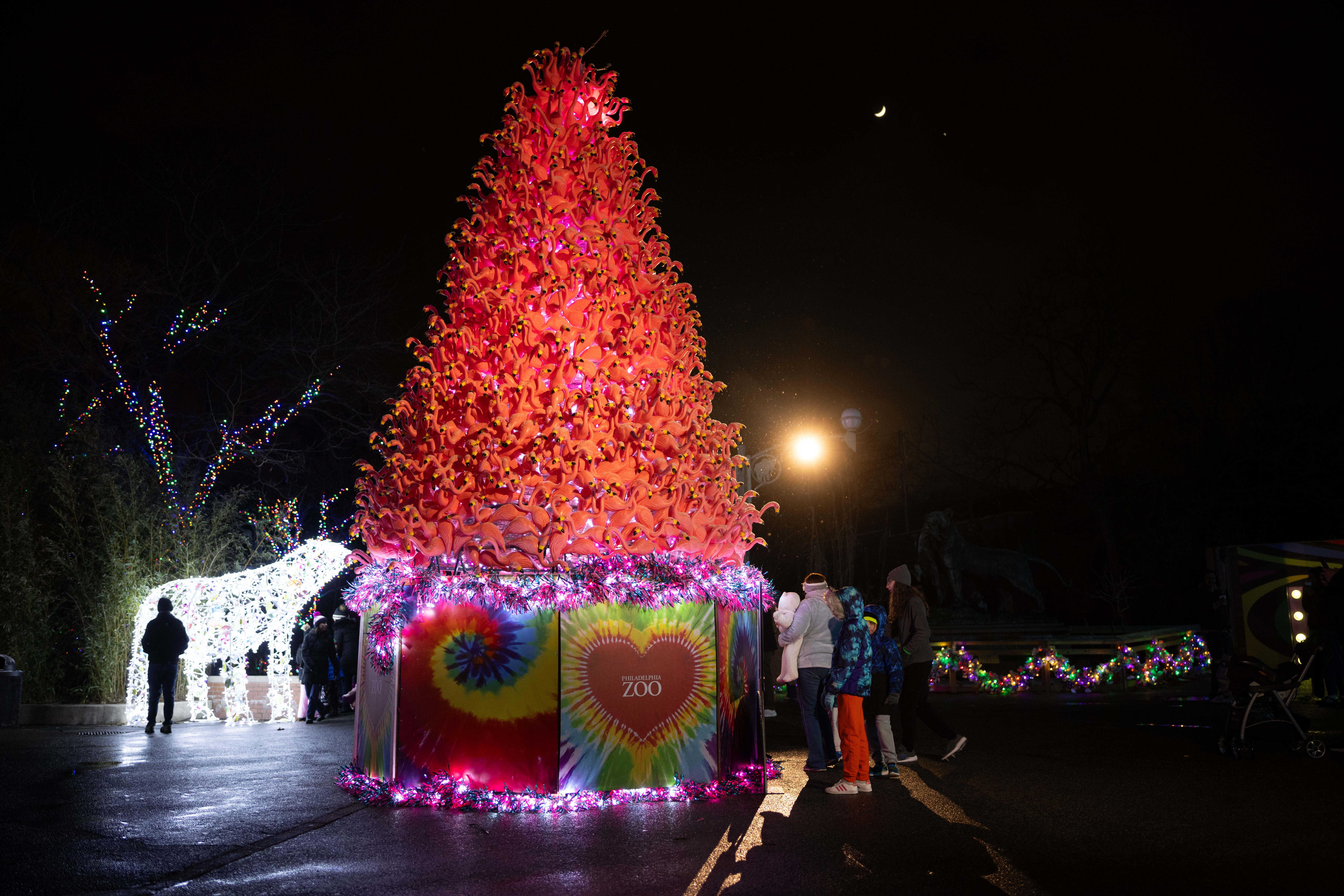
Philadelphia Zoo’s nature-inspired holiday tradition, LumiNature, returns for its sixth season of whimsical wildlife scenes come to light.
Philadelphia Zoo’s nature-inspired holiday tradition, LumiNature, returns for its sixth season of whimsical wildlife scenes come to light. Guests are invited to take a spin on the brand new Philly Zoo Pherris Wheel, a 110-foot-tall ride with breathtaking views of the city skyline, grab a drink with Santa inside his warm, cozy lodge, bring their old zoo key (or treat themselves to a new one) to turn on the magic at select displays, play and dance with roaming animal characters, and take in more than a million twinkling lights with family and friends. Guests should note the zoo’s animals will be sleeping in their indoor homes.
Bucks County’s all-in-one holiday shopping experience and attraction is back to bring smiles to all who visit. The Colonial-style Peddler’s Village is adorned with thousands of lights among the dozens of shops and restaurants connected by brick walkways. The annual gingerbread displays will feature 125 creations, and the tunnel of lights is the Instagrammable photo of the season.
🕒 Through Jan. 18, Monday to Saturday, 10 a.m. to 9 p.m.; Sunday, 10 a.m. to 7 p.m., 💵 Free, 📍100 Peddlers Village, Lahaska, Pa. 18931, 🌐 peddlersvillage.com
Clark Griswold would be proud of his estranged West Chester relatives’ over-the-top holiday display. Known as the West Chester Griswolds, this family covers their home and property with thousands of LED lights, glowing figurines, nativity scenes, and, if you’re lucky, a glimpse of Santa Claus peeking from a window. Each year, they turn their dazzling display into a charitable effort, raising $400 for the Hearing Loss Association of America in 2023. Don’t forget to tune your car radio to 87.9 FM to enjoy the synchronized light-and-music show. This year, donations are going to LaMancha Animal Rescue in Coatesville.
🕒 Through Dec. 28, Monday to Thursday, 4:45 to 9:45 p.m.; Friday to Sunday, 4:45 to 10:15 p.m., 💵 Free, 📍304 Dutton Mill Rd., West Chester, Pa. 19380, 🌐 westchestergriswolds.com
The Harnishfegers on Colonial Drive transform their Bucks County home into Danny DeVito’s from Deck the Halls, equipped with Pixel technology to sync holiday music to the thousands of LED lights and a projector that displays animations across the house. So bright, you could swear satellites can see it from space. Donations will go to the Children’s Hospital of Philadelphia’s toy drive.
🕒 Through Jan. 1, daily, 5 to 10 p.m., 💵 Free, 📍155 Colonial Dr., Langhorne, Pa. 19047, 🌐 facebook.com/ColonialLights
Herr’s, the nationwide snack brand headquartered in Philly’s backyard of Chester County, invites families and friends to enjoy a free drive-through holiday lights show. More than 600,000 lights are on display throughout the company’s corporate campus. Visitors should stay in their cars at all times while driving through the show.
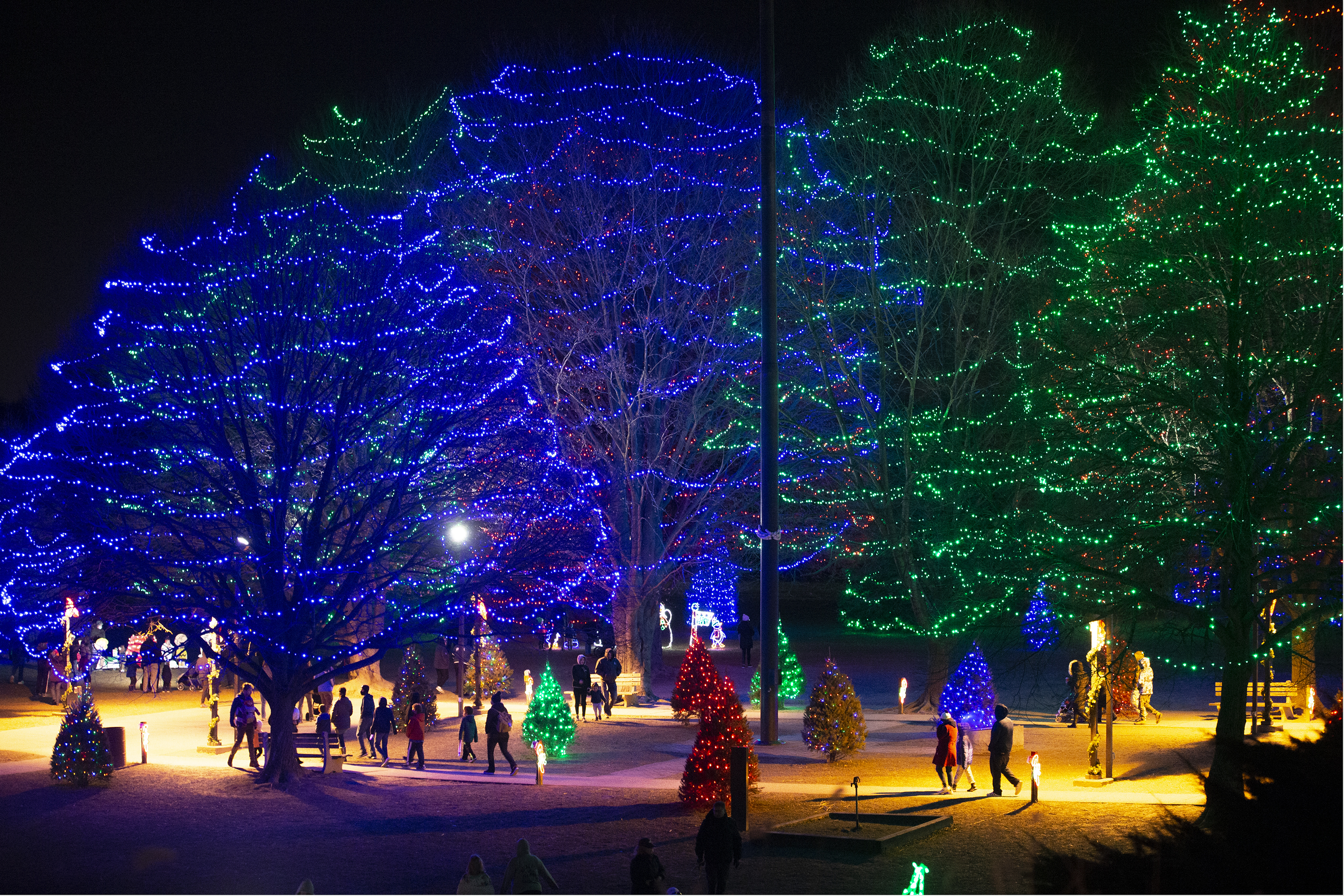
Visit Rose Tree Park anytime during the holiday season for a serene nighttime stroll among brightly colored illuminated trees. On Dec. 5, Dec. 7-8, and Dec. 14-15, enjoy food trucks, vendor markets, and live entertainment with Delco Fare and Flair Nights. Friendly, leashed dogs are welcome.
🕒 Through Jan. 4, daily, 5 to 10 p.m., 💵 Free, 📍1671 N. Providence Rd., Media, Pa. 19063, 🌐 delcopa.gov
Manayunk businesses are bringing the holiday cheer with more than 80,000 lights lining Main Street — and some friendly rivalry in the annual Manayunk Gets Lit Competition. Stroll through the hillside neighborhood to enjoy festive food, drink, and shopping while casting your votes for the Best Overall, Most Lit, and Most Creative light displays. Participants will also be entered for a chance to win a $200 Manayunk shopping spree. The lights shine daily, but for an extra festive experience, hop aboard the free Jolly Trolley for tours of the displays Thursday through Saturday, now through Dec. 20.
In Philadelphia’s historic district, December is a nonstop holiday celebration with street events, holiday shopping, menorah lighting, light shows, and more. On the Old City District’s website at oldcitydistrict.org is a full schedule of events to attend. Don’t miss the Historic Holiday Tree at the Betsy Ross House.
🕒 Through Jan. 1, various dates and times, 💵 Free to $100-plus depending on event, 📍239 Arch St., Philadelphia, Pa. 19106, 🌐 oldcitydistrict.org
The trek to Sicklerville, Camden County, is worth it for this award-winning mile-long drive-through holiday light show, marketplace, and Ferris wheel. Glow at Washington Township is one of the largest light displays in the region with 8 million animated lights synced to music playing through the car radio, and it’s perhaps the most costly starting at $40 per car.
🕒 Through Jan. 26, daily, Sunday to Thursday, 5 to 9 p.m.; Friday and Saturday, 5 to 10 p.m., 💵 $50-$75 per vehicle, 📍217 Berlin-Cross Keys Rd., Sicklerville, N.J. 08081, 🌐 visitglow.com
In West Chester, live music, markets, Santa Claus, and a professional gingerbread competition are happening on the weekends. Free to the public, each weekend will feature different events among the illuminated streets and businesses of West Chester. Find a schedule of events and promotions at greaterwestchester.com.
🕒 Through Jan. 1, various times, 💵 Free, 📍137 N. High St., West Chester, Pa. 19380, 🌐 greaterwestchester.com