TOWANDA, Pa. — Her full name was Cashells Jry Shakira-Red-ET — Shakira to keep it simple — and like her namesake, the big red and white Holstein had 6-foot hips that didn’t lie as she hoofed down Main Street.
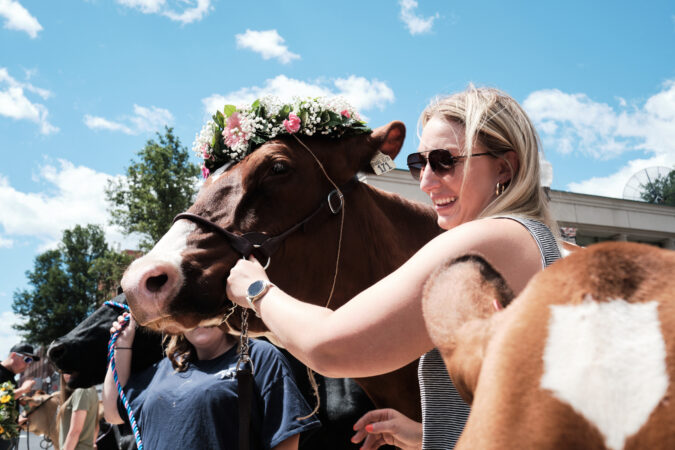
Shakira is a showgirl accustomed to winning, one of the few cows that allowed judges to place a floral crown on her head at the Bradford County dairy cow beauty pageant in Towanda on June 20, about 100 years after their last one.
“The most beautiful dairy cow in Bradford County, folks,” said Duane Naugle, Bradford County’s community planner and the day’s emcee.
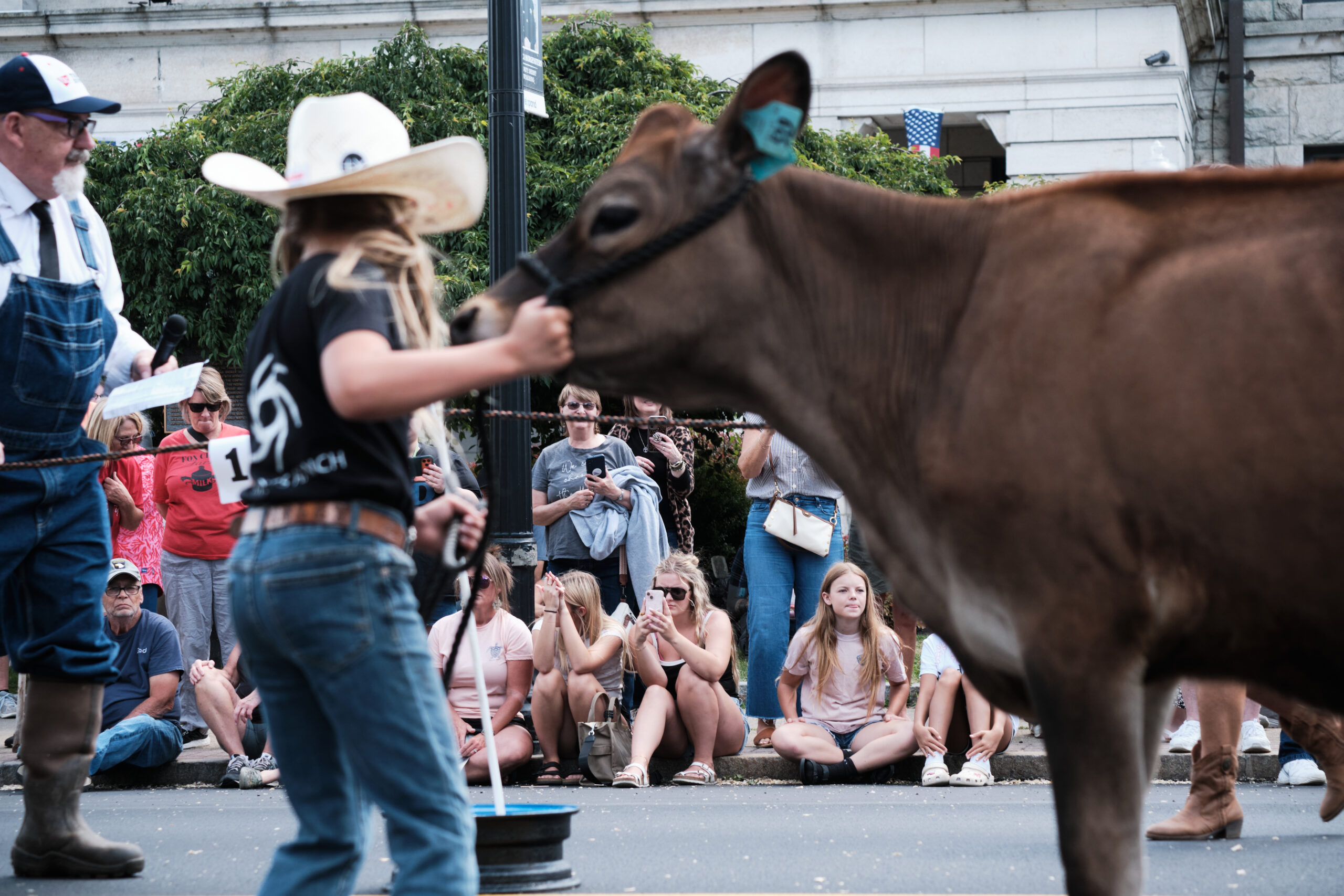
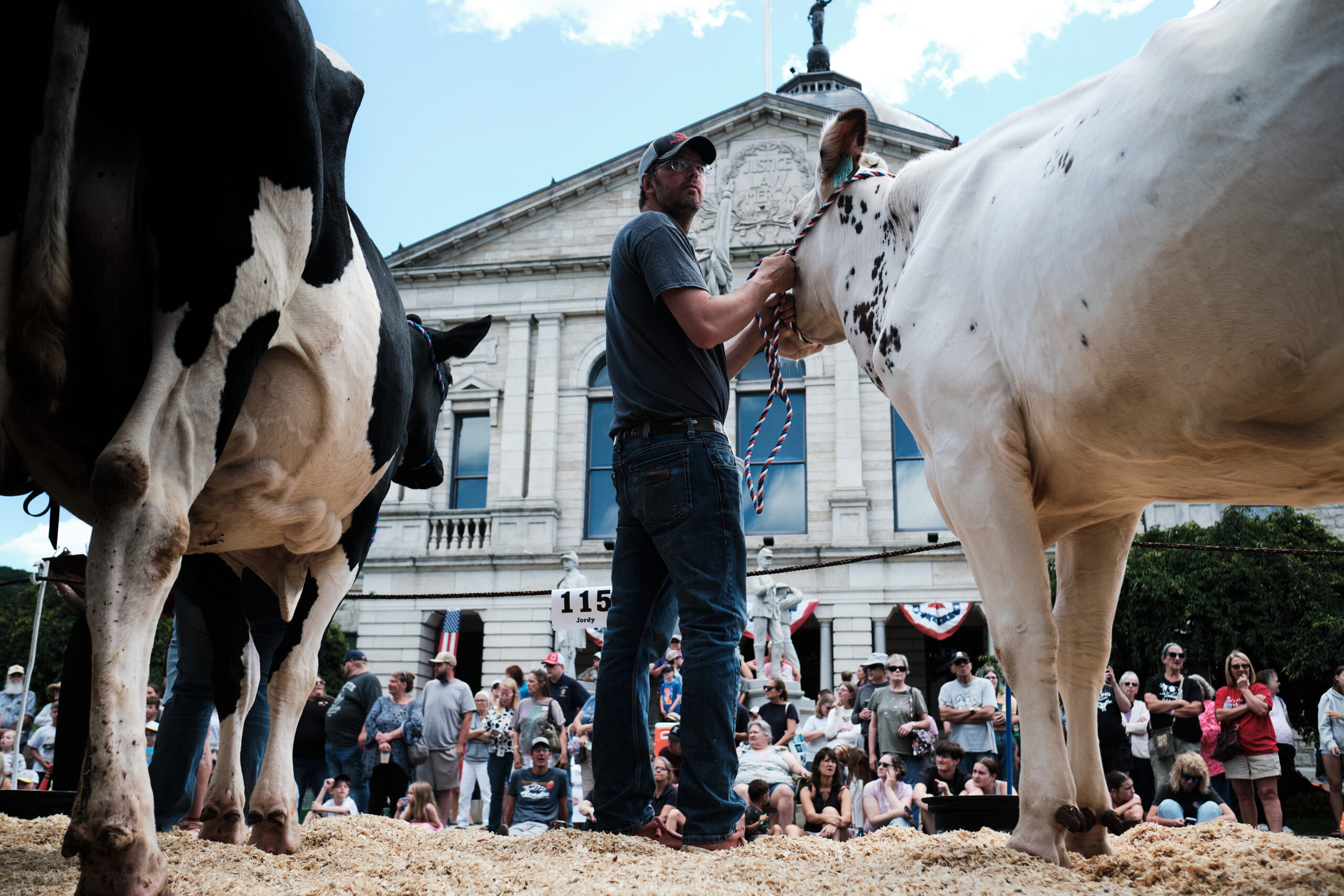
A heifer is walked down Main St. in front of the County Courthouse in Towanda, Pa., for a cow beauty contest held on Saturday, June 20, 2026.
Other winners were Skylar, a Lineback heifer, and Camo, a doe-eyed Brown Swiss calf.
“They’re my favorite breed. They’re just so dopey and docile,” Miranda Neville, a dairy farmer out of Warren Center, said of Camo. “I mean, just look at her.”
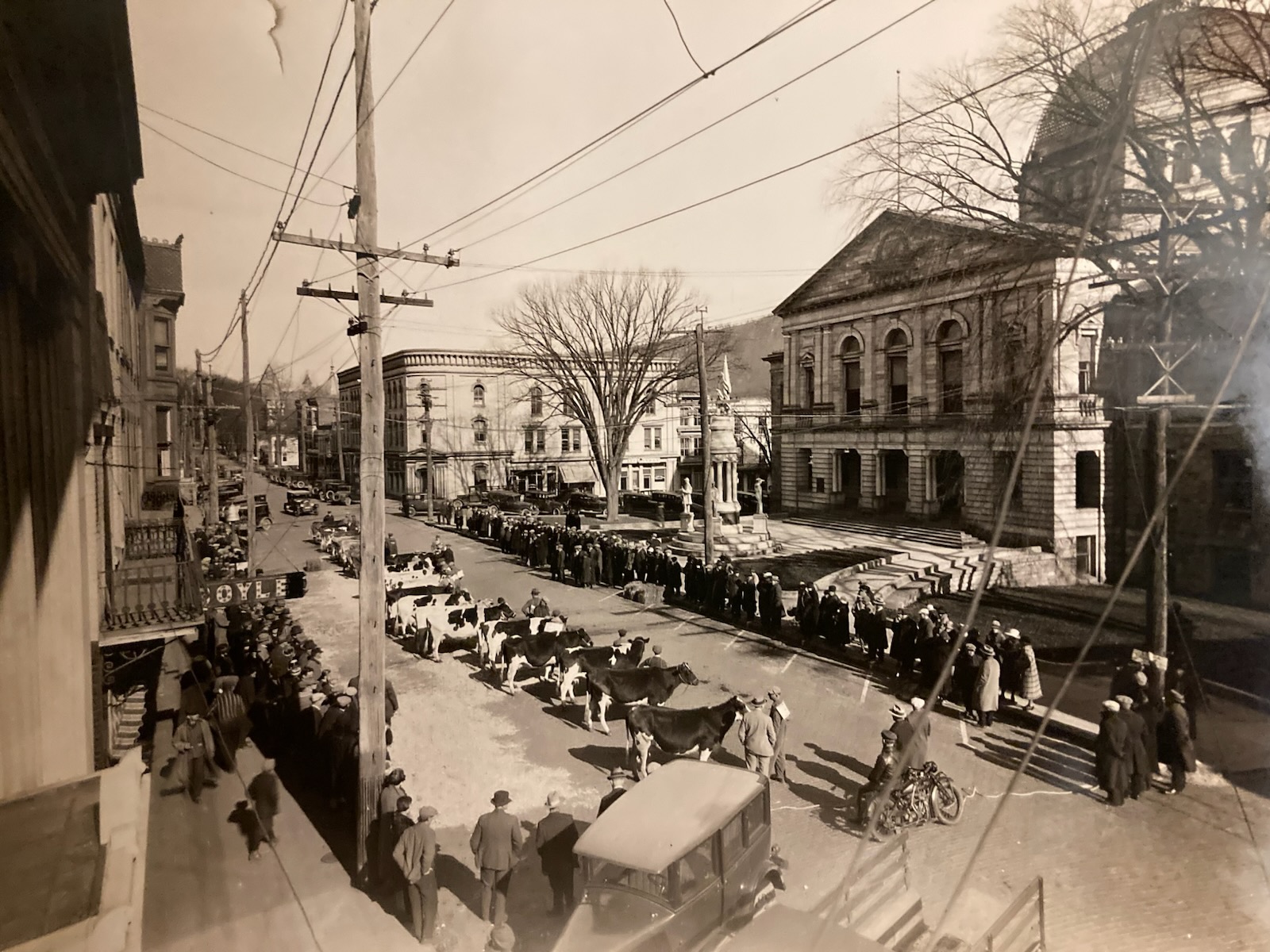
Bradford County, population 59,600, sits about 175 miles northwest of Philadelphia in North Central Pennsylvania. County officials said they found an old, black-and-white photo of a similar beauty pageant from 1926 in the county courthouse recently.
The 1926 event in Bradford County.
The purpose of that contest a century ago, organizers said, was to highlight the county’s bustling dairy industry.
“Getting down to the main idea, it may be stated that the Chamber of Commerce has seized upon this opportunity of giving recognition to the basic industry of Bradford County — dairying,” The Daily Review newspaper wrote in 1926.
Officials figured that old photo was a sign, a good-enough reason to get cows on Main Street as part of the county’s ongoing celebration of America’s 250th. There was also free ice cream, a cow milking contest, and other livestock to pet.
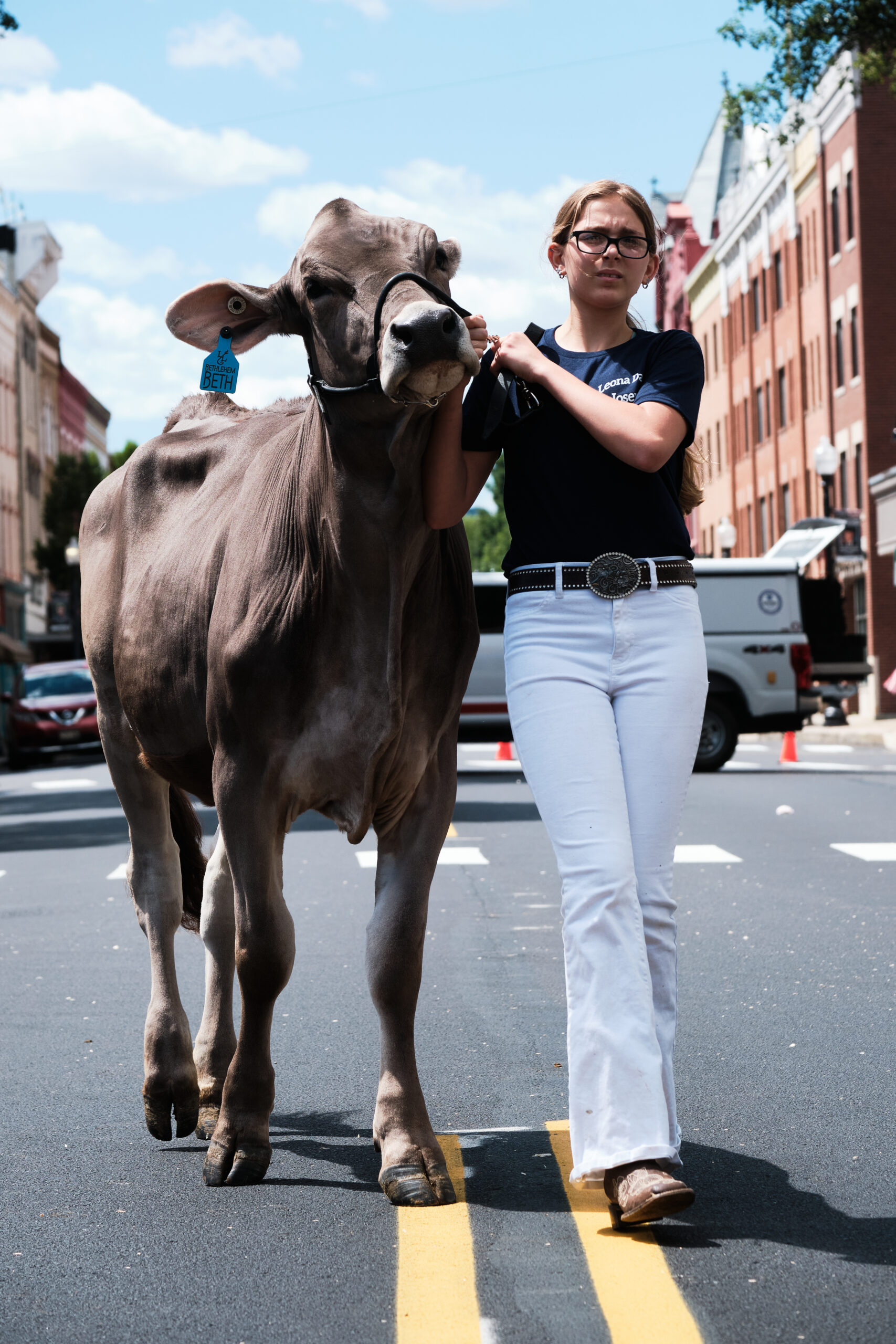
Dixie Joseph leads her heifer down Main Street in Towanda, Pa., for a cow beauty contest in front of the Bradford County courthouse on June 20.
A lot has changed in dairy over the decades, as dairy farms have shuttered by the thousands, nationwide. In 2025, the USDA reported 23,609 dairy farms across the country, a 70% decrease in just 20 years.
Earlier this year, The Inquirer chronicled the plight of a longtime dairy farm in New Jersey’s most rural county. Owners there were denied a variance to install solar panels and stopped milking shortly after.
“We have been losing money for the last 10 years,” a young farmer there told The Inquirer.
Henry Farley, the mayor of Sayre, Bradford County, said there were 41,311 dairy cows in the county in 1920. That number is down to 10,059 dairy cows today, he said.
“We remain an agricultural county, and dairy is still a big part of it,” he said. “This is still rural America, and this was a great way to showcase that.”
A cow owner glances back in front of a crowd gathered at the Bradford County courthouse for a cow beauty contest in Towanda, Pa., on June 20.
Top employers in Bradford County include medical facilities, a mill, Walmart, and Cargill, a beef-processing plant in Wyalusing, where most major league baseballs are made from dairy cow hides.
Many of the farmers in Towanda on June 20 owned small farms, which are the hardest to keep afloat. Most of the owners couldn’t depend on dairy as a full-time income and worked other jobs as a result.
Many dairy farms in Bradford County have transitioned to beef, poultry, or swine.
“Well, it’s pretty simple. Dairy prices are down, and beef is up,” said dairy farmer McKenzie Slater.
Neville said she still milks 60 cows at her dairy, Vin-Deb Farms, but it’s not her only source of income. She also works for Bradford County’s conservation district.
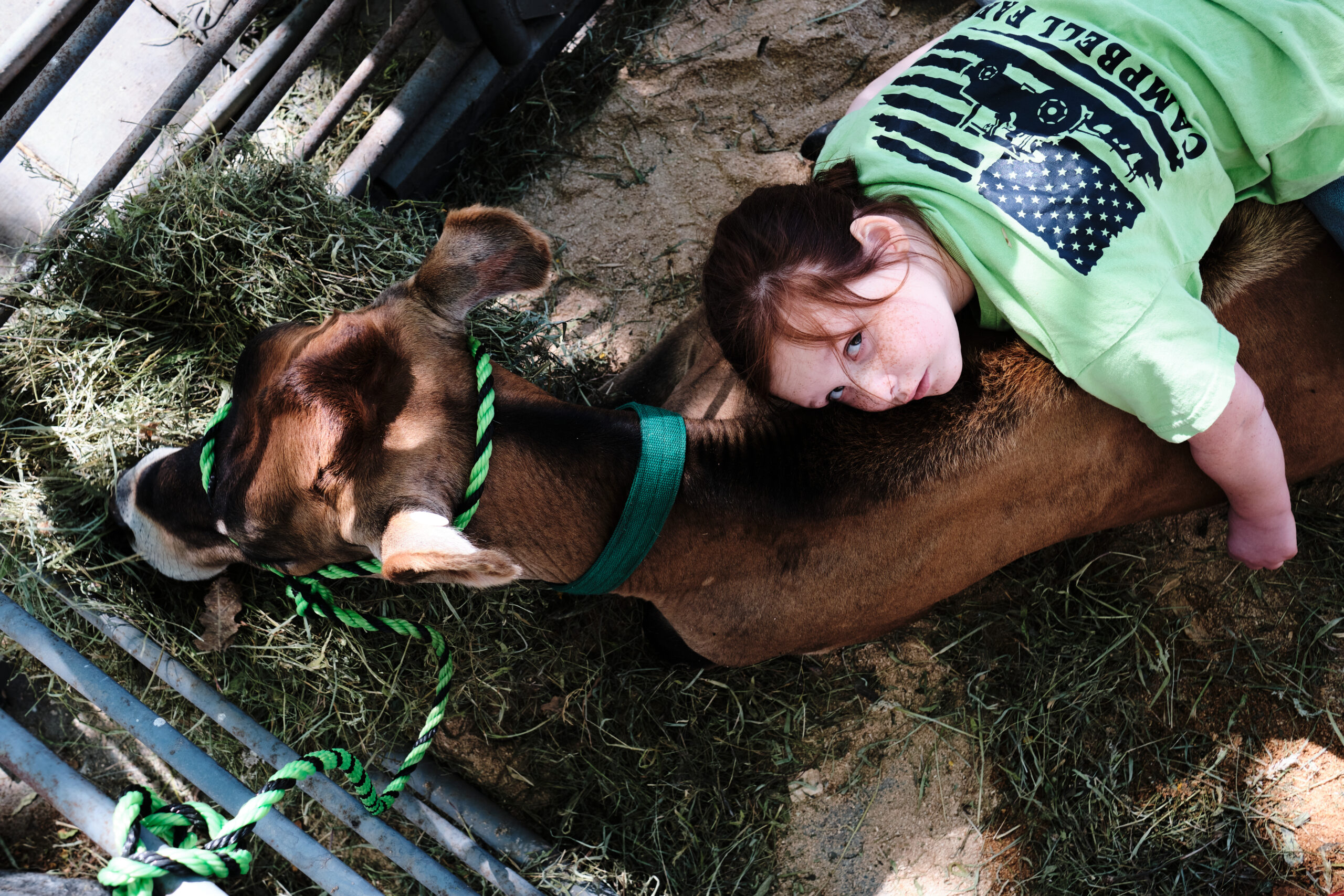
Sheyann of Campbell Farm rests on top of her calf, Norma, ahead of Bradford County’s cow beauty contest in Towanda, Pa., on June 20.
“We all have full-time jobs, too, along with farming,” Neville said. “That’s normal around here.”
Even Shakira, the showgirl, still milks, producing more than 11 gallons per day. She’s just preened and washed a bit more. Her udders hung low on Main Street.
“She’s milking pretty heavy right now,” said owner Hannah Watson, of Columbia Crossroads, Bradford County. “It’s whole milk, straight from the cow.”
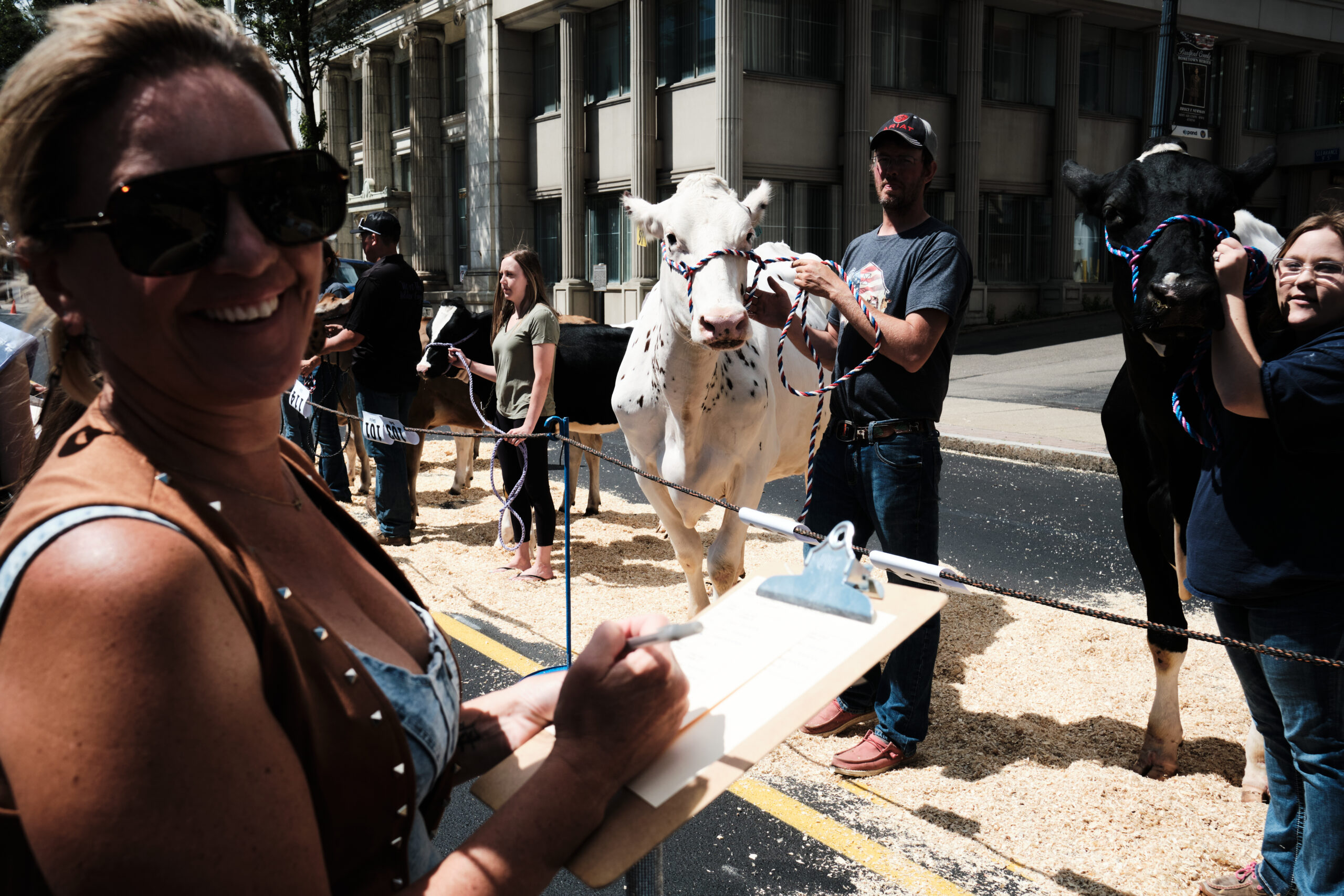
A judge scores the cows on their beauty in front of the Bradford County courthouse in Towanda, Pa., on June 20.
Few things are more American, more emblematic of our collective melting pot, than a city block party on the Fourth of July.
Neighbors catch up to hold new babies and learn who’s passed. They talk about the Sixers trade or their latest surgeries, and, of course, the heat that hangs all over us.
Hopefully, someone’s inflating a pool or filling a water balloon.
Everyone and everything is sweating, including the beers. The air smells of charcoal briquettes, sparklers, and, in the Ludlow section of Philadelphia, hints of jerk seasoning and Spanish rice.
That’s where Johanna Rodriguez and Michael Cunningham were mixing fresh lemonade Saturday as they watched their daughter and son splash around in the above-ground swimming pool in the middle of their Jefferson Street block.
“Obviously, having a block party with all the neighbors coming together is always the best. Just hanging out and talking about the old days. It brings back the classic vibes,” Rodriguez said. “On top of that, it’s about making sure our kids get to experience what we got when we were their age.”
Lisa Desamoir (left) and Danny Torres prepare pork shoulders at their block party in the Ludlow section of Philadelphia on Saturday.
The block’s “OGs” were out in full force, applying for permits, coordinating who will be grill master, and erecting party tables to turn Jefferson Street into a Puerto Rican Fourth of July, Cunningham said, gesturing to his mother-in-law, Carmen “Terry” Torres, the block captain and resident of more than 50 years.
Rodriguez said the block takes Fourth of July seriously because it’s one of the only times of the year where everyone comes outside to enjoy the festivities and see each other in person. It also provides the classic July Fourth fun outside during a time where many kids are used to hanging out inside.
Torres, alongside her neighbor of more than 30 years, Elizabeth Reyes, transforms Jefferson Street into a barbacoa party, taking the cuisine pioneered by the Taino people.
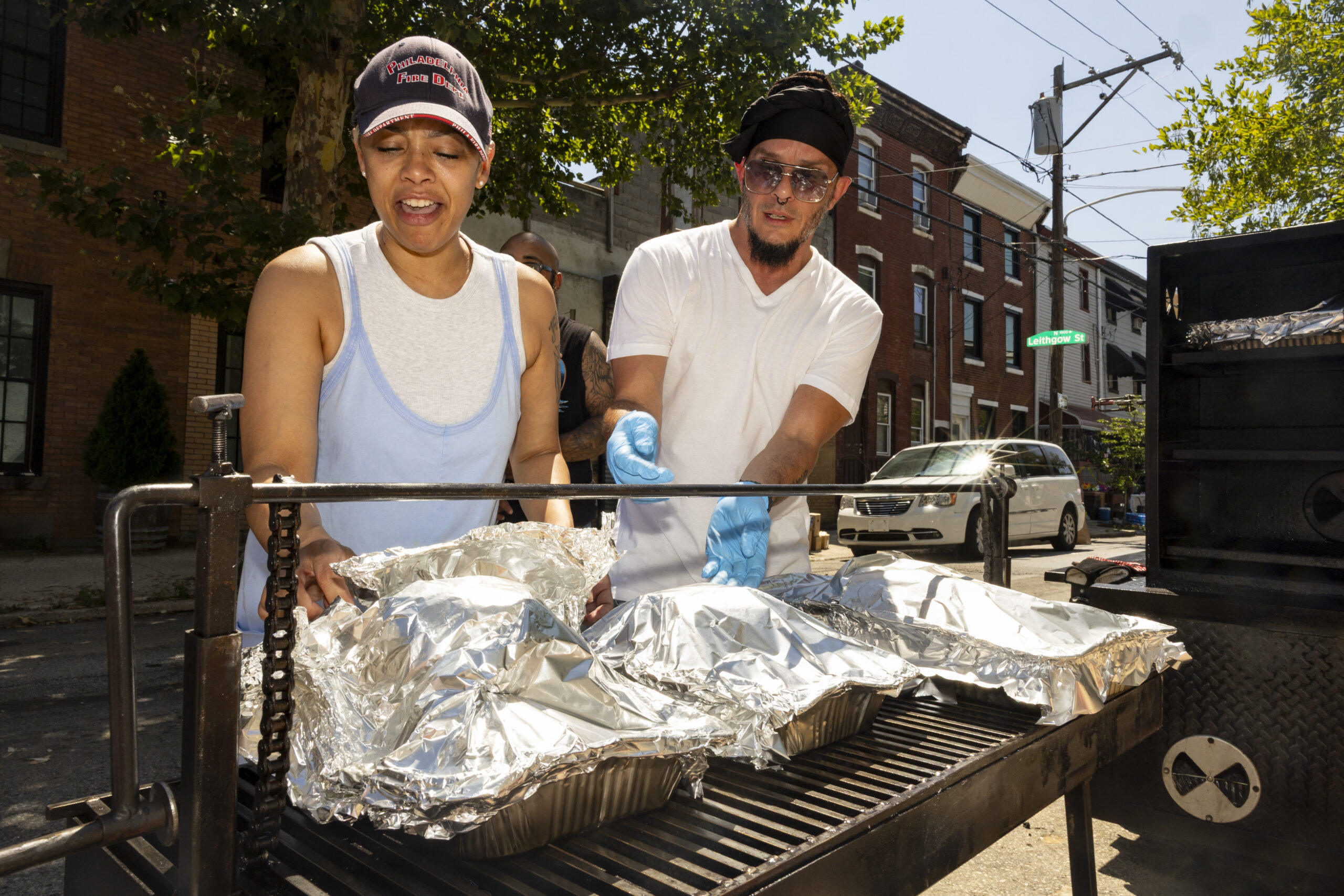
No one sacrifices more on 100-degree Independence Day than the grill master. In Ludlow, that was Danny Torres, who runs the barbeque business The Latin Grill, only lives a few houses down from Torres and Reyes, and along with his wife, Lisa Desamoir, will be supplying the prized smoked meats to the entire neighborhood.
A little girl loses her popsicle while riding an inflatable water slide during a block party in Point Breeze on Saturday, July 4, 2026, in Philadelphia.
Desamoir, a retired firefighter who had the local Engine 29 truck stop by to treat the kids earlier in the day, was taking inventory of the more than 50 chicken wings, whole slabs of pork shoulder (with a crunchy skin for added texture), and nearly dozens of chicken kebabs. These would go nicely alongside the macaroni salad, corn on the cob, Spanish rice, and more sides that neighbors prepared, Desamoir said.
“Danny is making a whole Caribbean vibe cause he’s got the jerk seasoning and Puerto Rican flavors,” Desamoir said.
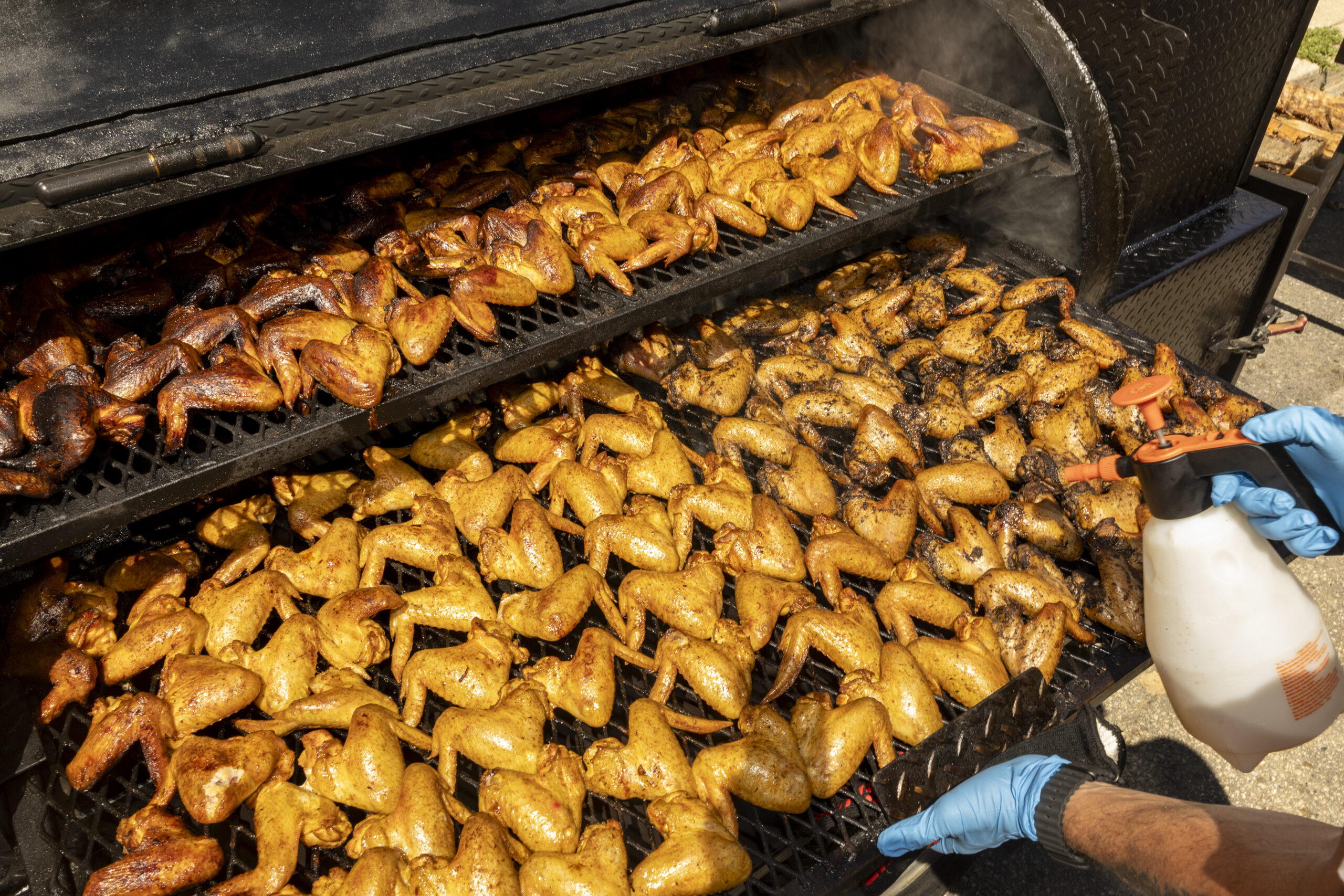
Danny Torres, who runs the barbecue business The Latin Grill, prepares Puerto Rican and jerk seasoned chicken wings on a grill at his block party in the Ludlow section of Philadelphia on Saturday.
In Point Breeze, Robin Miller and her neighbors were having an inaugural block party. Miller and another neighbor had a small outdoor hangout, then wanted to make it official and invite the whole block. What better day to throw the block’s first party than the 250th anniversary of the United States? Miller said.
A bounce castle took over the middle of the block and, in an inflatable pool nearby, a group of young children and teens lay with just their faces sticking out of the water, like alligators.
Joy Fields-Butler and Christine Mardre, neighbors and friends, sat underneath one of the canopies situated along the street. For them, this block party is about bringing together all walks of life on the block, from fostering formative memories for the children to bringing a diverse array of adults to kick back, share a beer, and even join in on the water gunfights with the little ones, Mardre said.
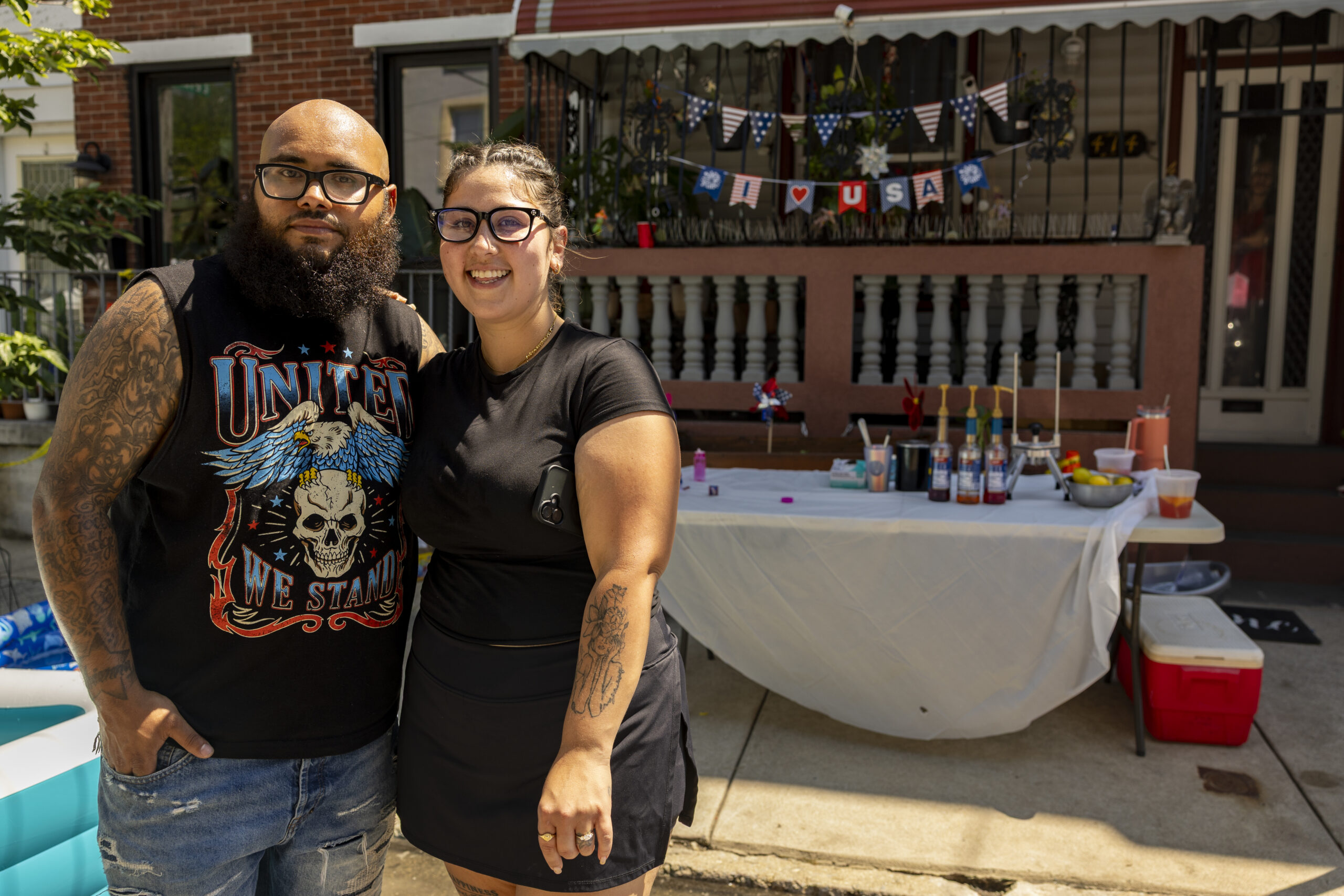
Michael Cunningham and Joanna Rodriguez stand for a portrait outside their house near the Ludlow section of Philadelphia on Saturday.
“It’s diverse on this block, and days like today have all of us coming together,” she said. “Today, there is no arguing, there is no drama, it’s just a party.”
Miller enjoyed the experience of neighbors coming together to do something special, feeling very Philadelphian, she said, as the city is known for its rich neighborhood culture.
“Our neighborhood pitched in, and a lot of us pooled together to get the inflatable pool or the bounce castle,” Miller said. “The food spread is basically for the entire neighborhood, and people just keep coming out and replenishing anything that’s run out.”
Meanwhile, an annual South Philly block party near 21st and McKean Streets was celebrating decades of tradition. Resident Monica Elder, who’s been there 38 years, said the party dates back decades. Now 55, Elder has become one of the leaders on the block who watch over children and preside over the festivities.
“Cooking, eating, dancing — everybody participates. Whether we know you or not, everyone is welcome,” Elder said.
By 5 p.m., the good times were getting a bit of a late start due to the blistering temps. Elder’s son, Jeremiah Worthem, helmed the grill. He said block parties build community and serve as a chance for neighbors — many have been here for decades — to meet up. “It’s a good time,” Worthem said. “Just building these memories.”
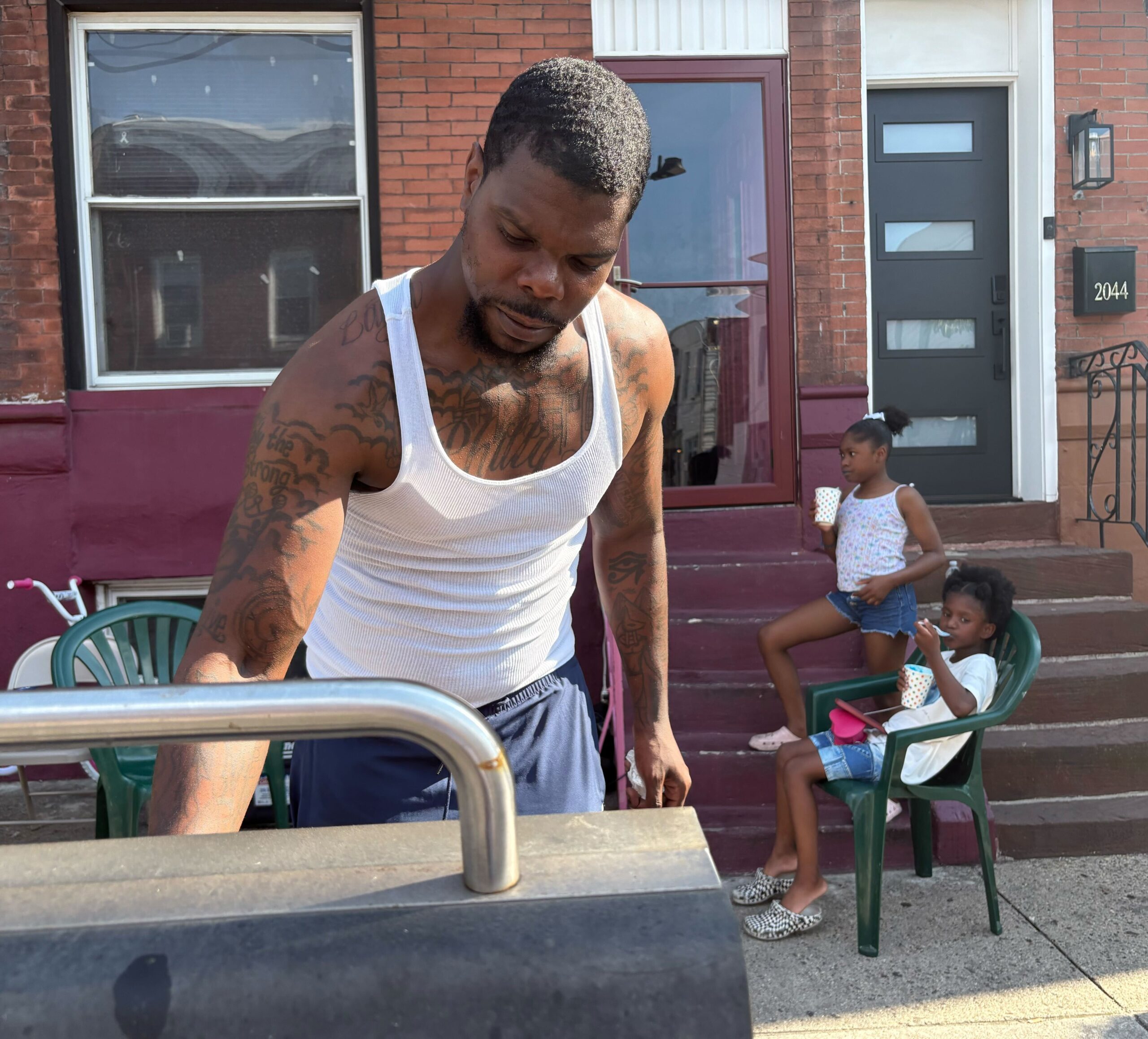
Jeremiah Worthem helms the grill at a block party in South Philly.
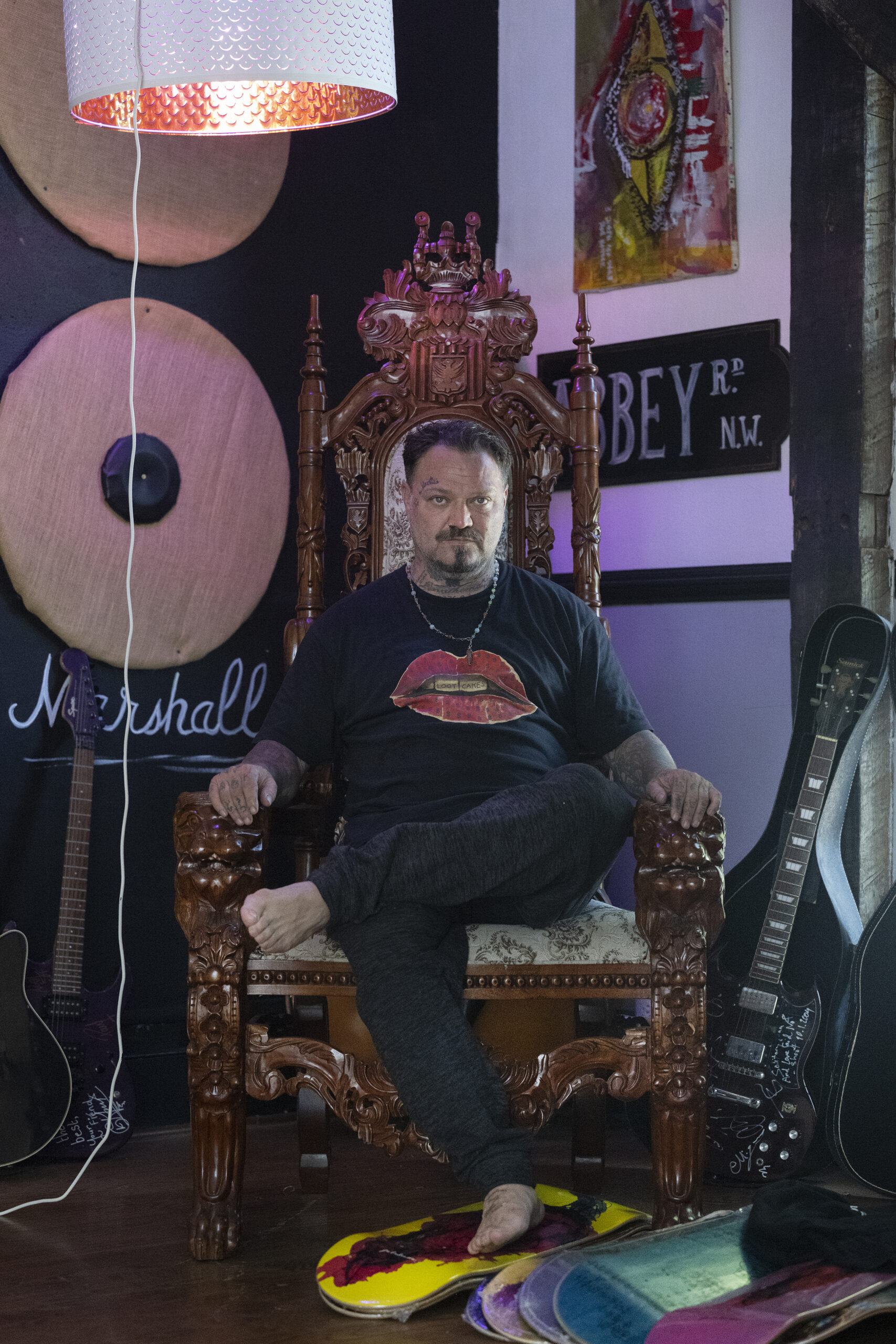
A former bouncer with hands like 5-pound hams was peppering Bam Margera with rib punches in a small gym at his Chester County castle.
Every few minutes, Margera waved his hands in surrender. He started looking for a place to sit down. Sweat poured down his face, and he struggled to catch his breath
“I need a second,” he said.
Margera had strung together years of bad days recently, but, despite the pain, this wasn’t one of them. Today, he’s sober, in love, skateboarding, spending some time with his family and son, Phoenix Wolf, and, on this early June afternoon, working out, too.
Fans of the Jackass series will get to see him on Friday, June 26, when Jackass: Best and Last, the fifth and final film in the series, is released.
“I think this is the grand finale of it all,” he said.
While Margera didn’t film new stunts or pranks for the latest film and had no interest in attending any premieres (his parents attended) or promotional events, he signed a deal allowing unseen archival footage and outtakes from early Jackass days to be used in the film.
Margera had a public falling out with the Jackass crew over sobriety demands they placed on him before the release of 2022’s Jackass Forever. (He still blames Johnny Knoxville’s “sharp tacks” stunt in a Viva La Bam episode for damaging his feet and hurting his skateboarding career.)
“I’m not ready to reunite with anybody,” he said recently.
Paramount Pictures alleged Margera broke a “wellness agreement” that required him to undergo regular drug and alcohol tests and take prescribed medication to be in the 2022 film. When the film was released, Margera had a brief cameo, and The Inquirer noted that it suffered without Margera’s trademark heartagram symbol and Philly hoagiemouth accent.
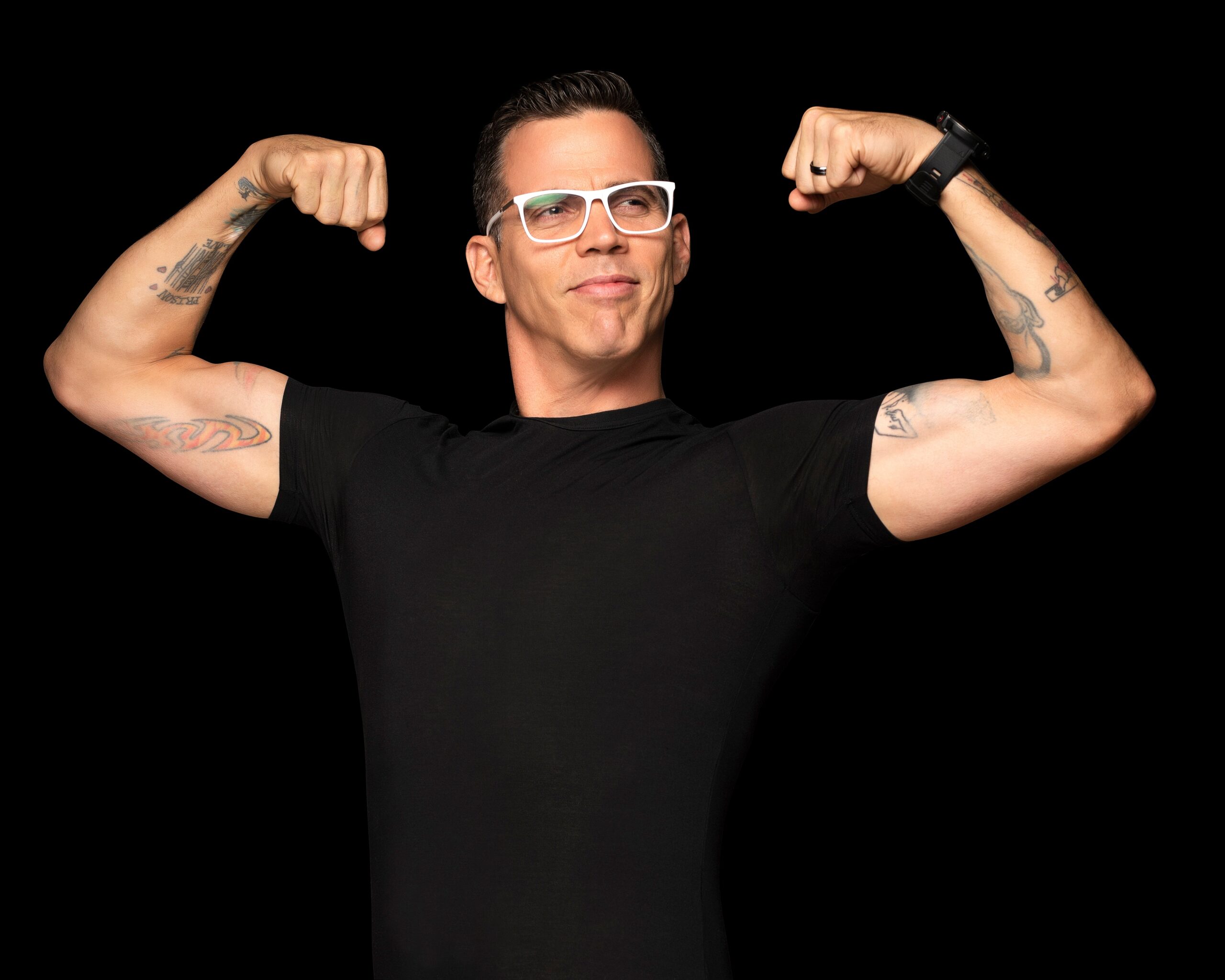
Some stars of the show and films, including Stephen “Steve-O” Glover and Brandon Novak, a longtime friend of Margera’s, have gotten sober. While Margera was seemingly blowing up friendships at his worst, Novak, a former pro skater, said he never took it personally.
“I always have and will still love him, wherever he is in his journey,” he told The Inquirerin June.
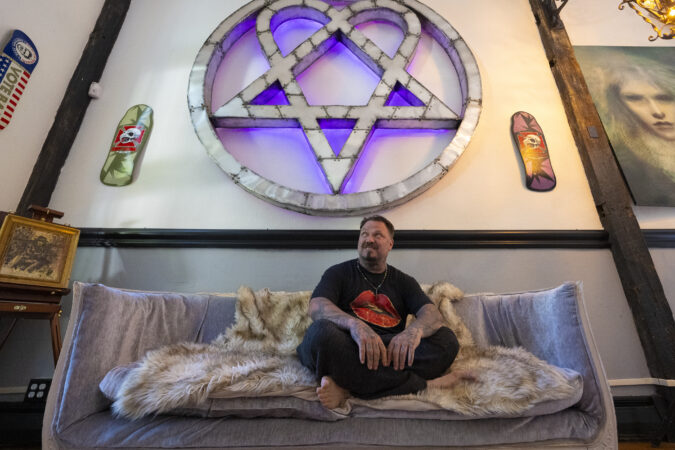
West Chester native Bam Margera poses for a portrait at his home in Pocopson Township, Chester County on June 4, 2026. After years of personal struggles, Margera says he is sober, skating again, and reconnecting with the “Jackass” franchise, allowing producers to use archival footage of him in the latest film.
Three years ago, Margera seemed hell-bent on burning his own bridges to a better life. He was in California, a long way from his home and family in Chester County. He was even further from good publicity, from his passion — skateboarding — or any semblance of a normal life. In his own words, he became a professional “piece of s—.”
Margera was mired in a custody battle with his ex-wife, Nikki Boyd, along with a slew of other legal issues and lawsuits in Pennsylvania and beyond, plus the subsequent attorney fees. He was in and out of rehabilitation centers for drugs and alcohol, and dealing with medical and mental health issues.
When The Inquirer spoke to Steve-O about Margera in 2023, he said he was ready to help.
“I just can’t do it for him,” Steve-O said at the time. “I tried everything I could to encourage him to want to get better, and none of it worked, so here we are. He has to want to get better.”
“Jackass” star Steve “Steve-O” Glover has been sober for several years but he says his stunts are better than ever.
Margera was placed on a 5150 psychiatric hold when he was found acting erratically outside Trejo’s Tacos in Los Angeles in June of 2023.When he was released, he checked into the Sunset Marquis hotel with more drugs than he’d ever had. Looking back, Margera said he wasn’t suicidal, but he didn’t really expect to wake up.
Still, he said a little prayer that night.
If he survived, Margera expected God to deliver him the “hottest eye candy with a tan pit bull” to save him. When he woke up, surprised to be alive, Margera went out by the pool, ordered a Bloody Mary, and met Daani Marie, a model and stretch coach he later married.
Margera and Daani Marie, who now spend most of their time in Florida, hit it off immediately.
“I really like you,” she said. “Do you want to walk my dog with me?
“What kind of dog do you have?” Bam asked.
“A tan pit bull.”
He looked up at the sun and smiled.
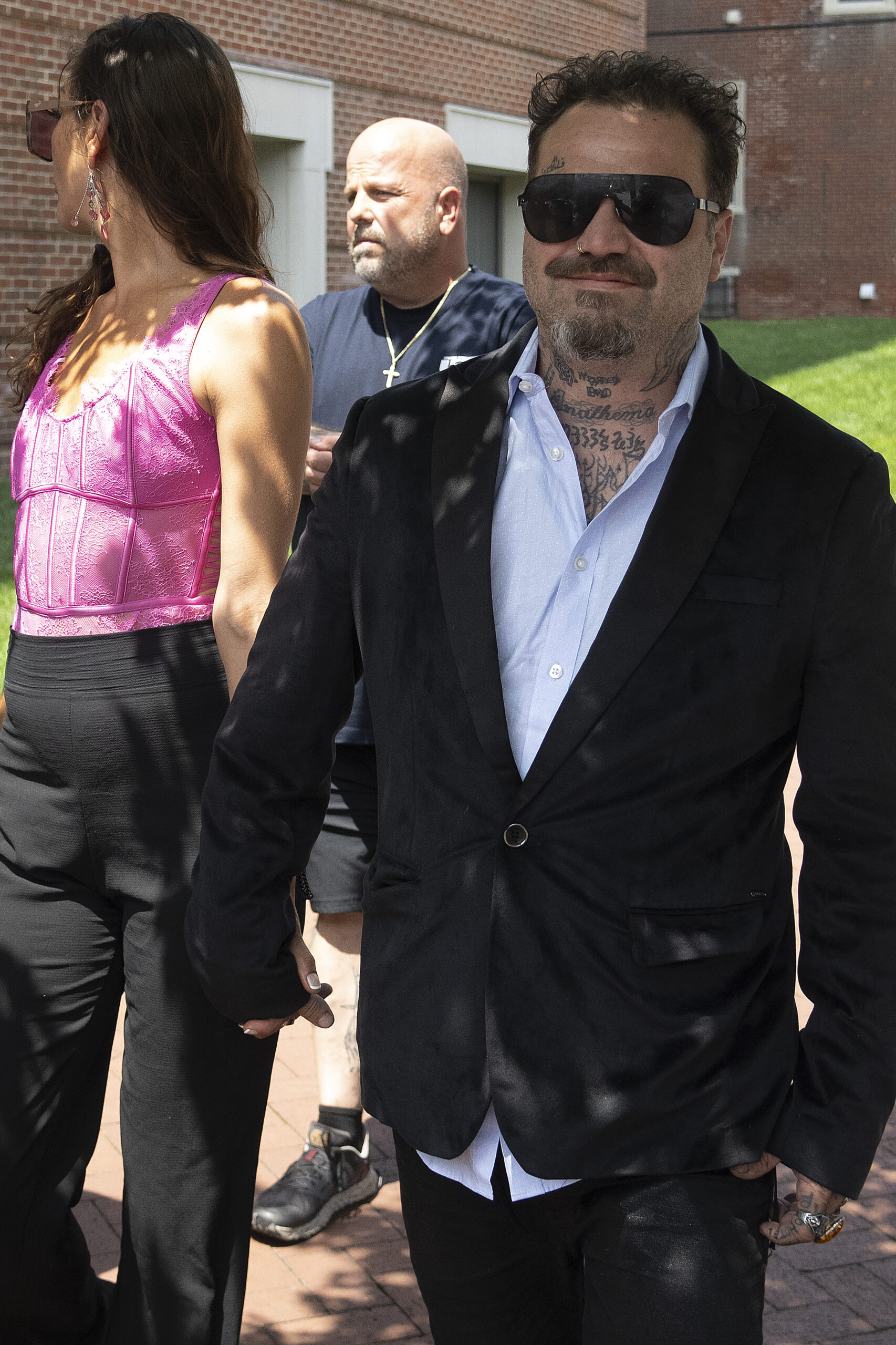
Former Jackass star Bam Margera walks to the Chester County Justice Center on July 27, 2023, for a preliminary hearing.
While he didn’t get sober immediately, Margera credits that night, that chance meeting with Daani Marie the next morning, for at least putting him on the path. The two were married in New Mexico a year later.
“Enough was enough,” Margera said. “I knew if I continued this lifestyle, I’m gonna die this way.”
Margera said he hadn’t been back to Castle Bam in 10 months, and on this June afternoon, was paying Andrew Mehan, a former bouncer in West Chester, for boxing lessons.
Mehan had to kick Margera out of some West Chester bars back in the day. He’d seen Margera in worse shape.
“Come on, get up,” he commanded.
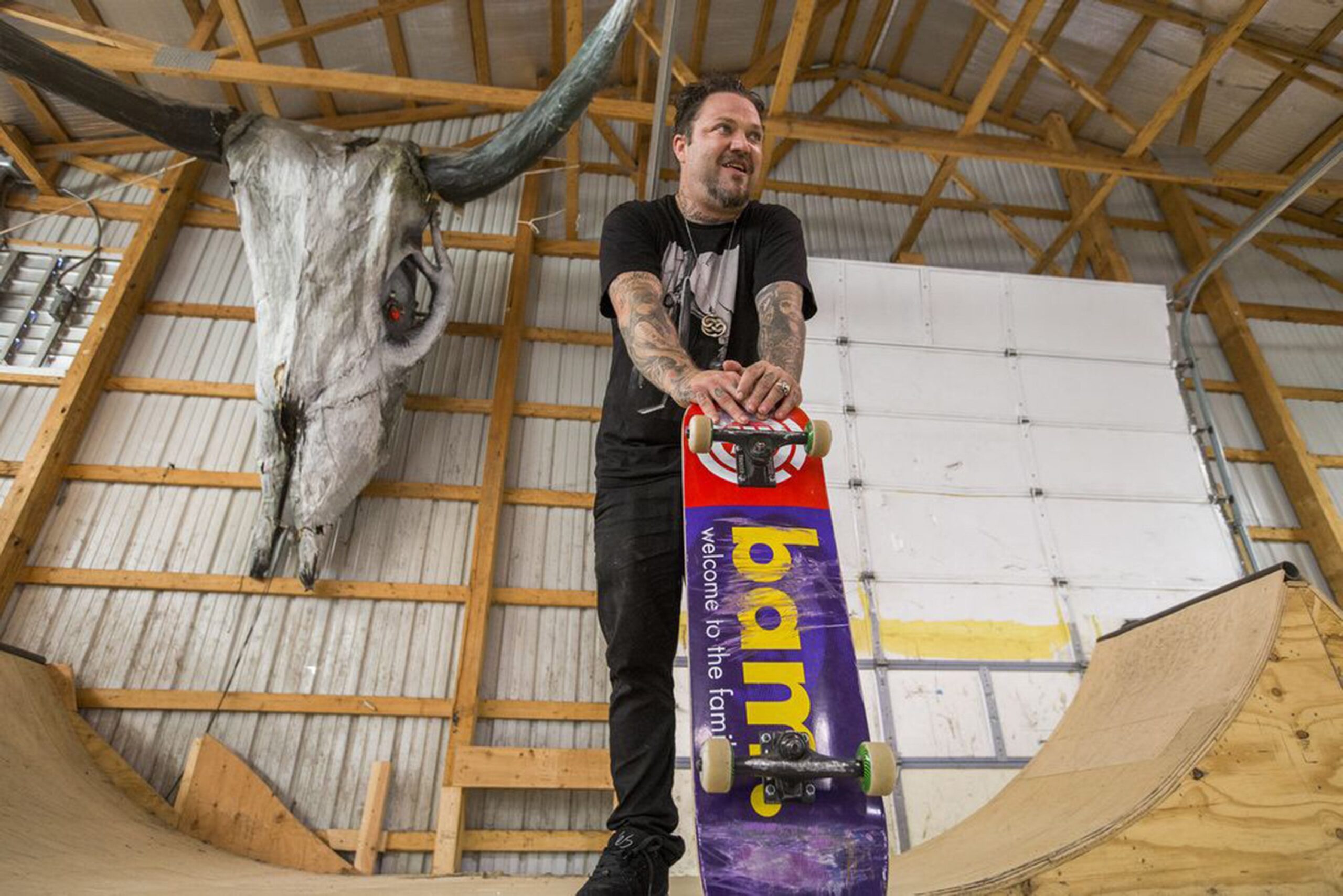
Bam Margera in his personal skateboard park in Chester County, Pennsylvania, in 2011. (Charles Fox/The Philadelphia Inquirer/TNS)
Suddenly, Margera would rise from his rest with a groan — he still smokes — and snap a few jabs at Mehan.
His father, Phil, the lovable victim of countless pranks and a few punches from Bam over the years, sat in the wings, beaming with pride as his son countered with a few jabs.
“Yeah, he put me through it, but I’ll sit through anything as long as he’s sober,” Phil said.
Margera’s solo show, Viva La Bam!, was set almost entirely in and around Castle Bam, his notorious home and compound in Pocopson Township, Chester County, and also at his parents’ home. The show ran for five seasons on MTV, from October 2003 to August 2005.
Many of Castle Bam’s mainstays were still there: purple luxury cars — a Bentley and Audi in the driveway — skateboard decks on the walls, and lots of Margera’s paintings leaning against the walls. Margera described his style as “Jackson Pollock-ish.”
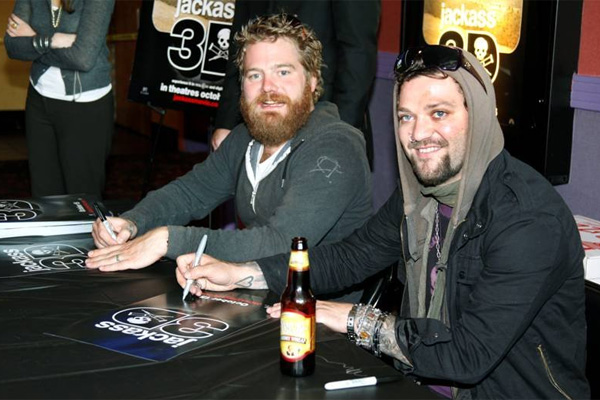
Brandon “Bam” Margera (right) of MTV’s “Jackass” was born in West Chester, and friend and costar Ryan Dunn moved there as a teen. Above, they were signing autographs after a screening of the movie “Jackass 3D” at Manayunk’s UA Main Street 6 in October 2010.
One skateboard deck featured Ryan Dunn, another steady fixture at Castle Bam back in the day. Dunn, Margera’s longtime friend and a fellow Jackass star, died in a fiery crash after a night of drinking in Chester County in 2011. The two met at 15, at West Chester East High School, and were nearly inseparable thereafter. In the wake of Dunn’s death, Margera turned to food and alcohol — pints of vodka and Gatorade, food binges followed by purges — to deal with the grief.
Margera was interviewed by a television station at the scene. He was mostly sobbing, and when asked how he would get through it, he said he “couldn’t.”
On this June afternoon, there were people, young and old, everywhere at the Castle: in the pool, putting skateboards together, or doing yard work. His wife doesn’t love the cold, so he didn’t plan on spending too much time back at the Castle or any one place, for very long. Pocopson Township, he said, cracked down on his ability to host big gatherings and do outlandish stunts.
“I love Pennsylvania, but I love to travel, too,” he said. “Boredom is my trigger.”
Friends popped in and out, including Dennis Wood, a West Chester native who used to skate at Margera’s as a teen.
“Obviously, there’s been trials and tribulations throughout the years; he took some steps forward, some steps back,” Wood said. “In the last couple of years, this is the best I’ve seen him.”
Margera had very public fallouts with his family during the worst years, too. He was charged with assaulting his brother at Castle Bam in 2023.
Margera’s mother, April, said his legal issues have been resolved and that he seems to be “out of the darkness.” She went to California with him and Phil recently to visit Phoenix Wolf.
“I would like to say I’m really proud of him. He came a long way. We’ve all been through the fire and brimstone, and we seem to be coming out on the other side,” April said in a text message.
Novak, a former star of Jackass and Viva La Bam! who now owns sober living houses in Delaware and New Jersey, said Margera’s family was always the grounding force, a source of unconditional love, and he was happy to hear the Margeras have made amends.
He also loves that Margera is skating again.
“Where he seems to be now is a healing stage,” Novak said recently. “To what degree, I can’t speak on, but it’s better than it was when he wasn’t speaking to his family or the majority of his friends.”
Margera started skateboarding as a teen, with Phil driving him all over the area to pursue his passion, including the late Love Park and FDR Park. Margera’s earliest stunts appeared in videos for his brother’s alt-metal band, CKY, and he got noticed by MTV. His crew was teamed up with other wild men, like Johnny Knoxville and Steve-O. Jackass was born. Margera and Dunn were featured in the first episode on Oct. 1, 2000, riding — crashing, rather — shopping carts.
Phil watched his son’s recent torturous boxing lesson with pride.
“He’s still cute, even at 46,” Phil said.
When the final sparring round was over, Mehan helped pull Margera’s gloves off. Margera slumped down and took deep breaths. A few minutes later, he shuffled out of the gym and walked straight into the deep end of the pool, fully clothed.
“I need to quit smoking,” he said along the way.
Mehan put the day’s boxing lesson into a deeper perspective while he unwrapped his own hands.
“That’s the worst he’ll ever look,” Mehan said of the boxing lesson. “Here’s the deal: He fought through it. He kept saying he was done, that he wanted to quit, but he kept going.”
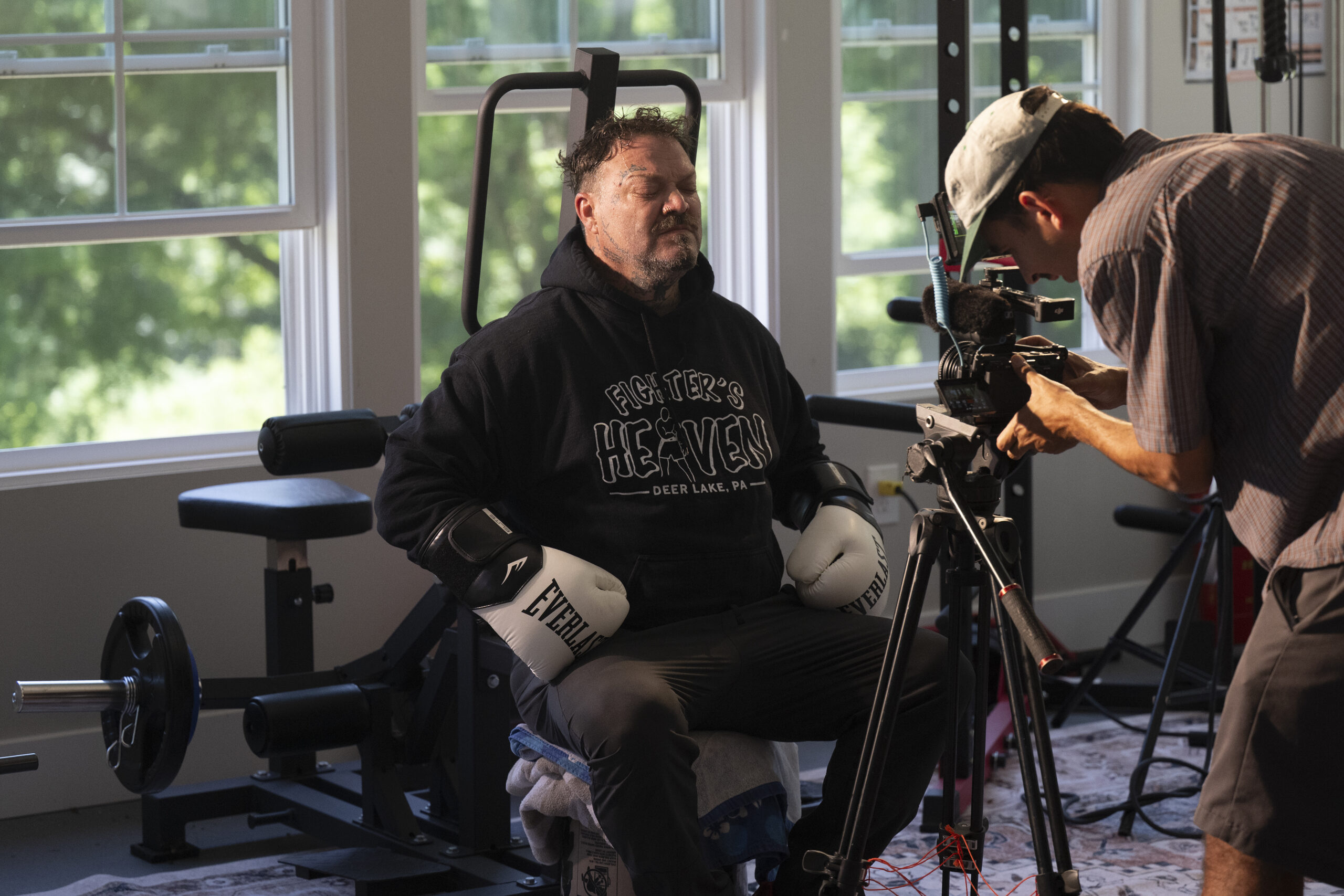
West Chester native Bam Margera is filmed by a documentary crew as he rests during a boxing workout at his home in Pocopson Township, Chester County.
The future of a family farm in rural Salem County was at stake, and after multiple meetings and hours of presentations, questions, pleas, and complaints, a local planning board was set to vote.
Before the vote, one longtime resident of Mannington Township came to the podium with a warning. In preparation for this crowded, mid-March meeting, Alice Waddington, 98, said she’d made a list of dairy farms she remembered from her decades in the little town.
At one time, she said, there were close to a dozen.
“There’s only one farm left milking cows,” Waddington told the board, “and that’s the Cadwalladers.”
The Cadwalladers were struggling in the volatile dairy industry, though, and believed a large solar project could be a lifeline, a way to avoid shuttering and selling to developers eager to build warehouses, data centers, and housing in the nation’s most densely populated state.
Farmer David Cadwallader at Waldac Farms in Salem, N.J., on Jan. 29.
This was the fourth Mannington Township planning board meeting for the Cadwalladers, who were seeking a variance to install 300 acres of solar panels on Waldac Farm that would, eventually, generate enough energy to power 19,000 homes annually.
Some board members and locals questioned the environmental impacts, whether it would affect the soil, injure the abundant wildlife in the area, or taint the nearby Delaware River watershed. Representatives from AES Corp., a Virginia company that would build the solar project and pay a lease to the Cadwalladers, had answers for all of them.
“Whether we all, in this room, agree with it or not, it is the state’s policy to advance these types of solar energy uses to meet the energy demands that we need,” Keith Davis, an attorney representing AES, told the planning board.
What they couldn’t seem to quell, however, were the repeating concerns about how a solar farm would look in New Jersey’s most rural county. Those concerns raised open-ended, philosophical questions: What’s a working farm supposed to look like? What exactly does rural mean?
“It will destroy property values and will be an eyesore for our township,” a neighbor of the Cadwalladers commented on a 2025 Facebook post about the project.
Similar situations have played out nationwide. A recent Associated Press story from Ohio highlighted a struggling farmer’s solar project that also faced community pushback and was ultimately blocked.
In Salem County, Mannington planning board member Joanne Wright was the most vocal at the meeting. She mentioned, often, that Mannington’s master plan called for maintaining “scenic vistas” and its rural, agricultural characteristics.
The Cadwalladers said they would plant pollinator habitats and plants on the solar farm, and introduce roughly 300 sheep to graze around and under the panels. The combination of solar and agriculture — “agrovoltaics” — is supported by the New Jersey Farm Bureau, Andrew Cadwallader pointed out.
Wright, however, thought solar panels would break up the township’s “contiguous farmland.”
“I’m just wondering how you see that the positive outweighs the negative,” Wright asked representatives from AES.
Farmer Andrew Cadwallader at Waldac Farms in Salem, N.J., on Jan. 29.
A picturesque farm
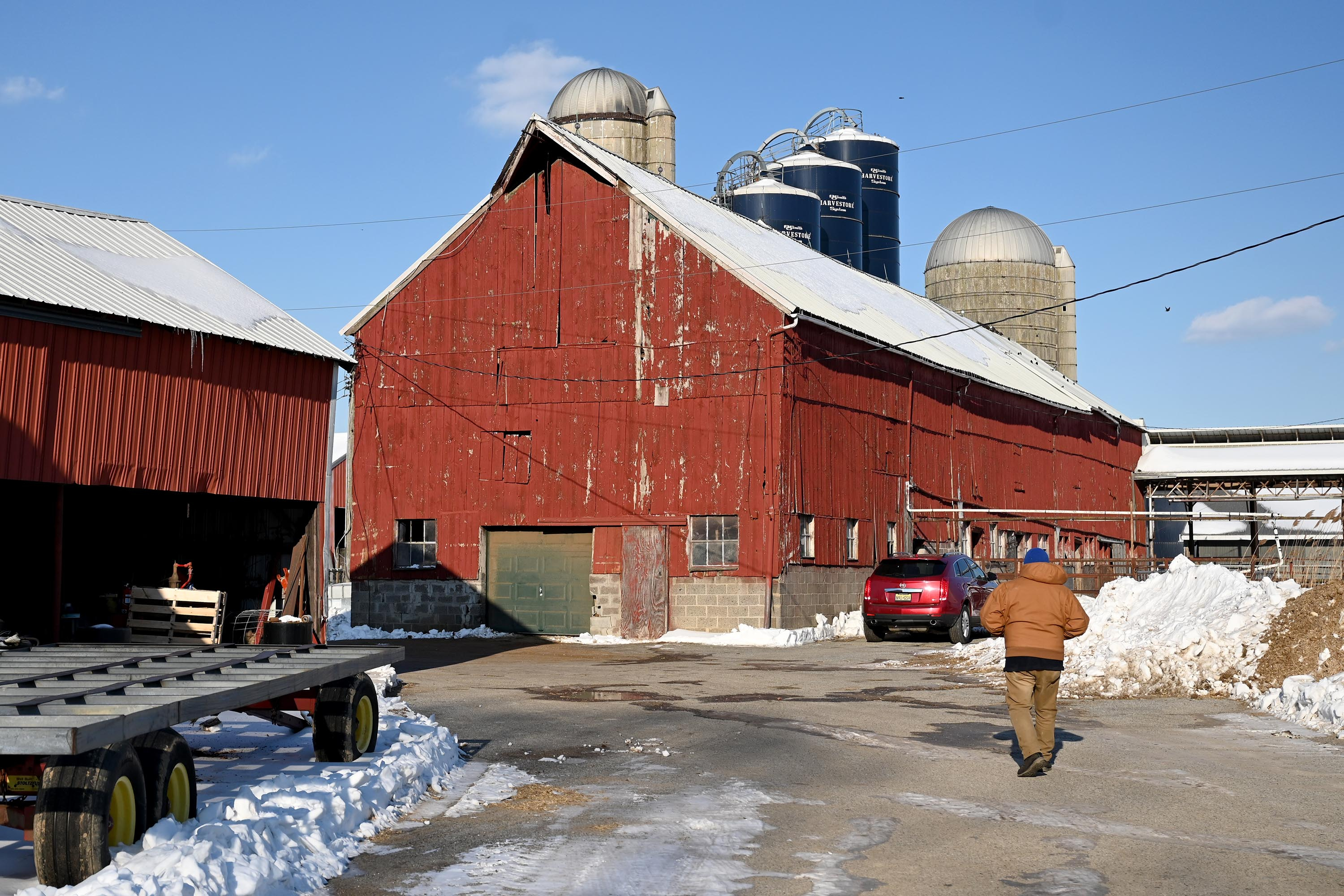
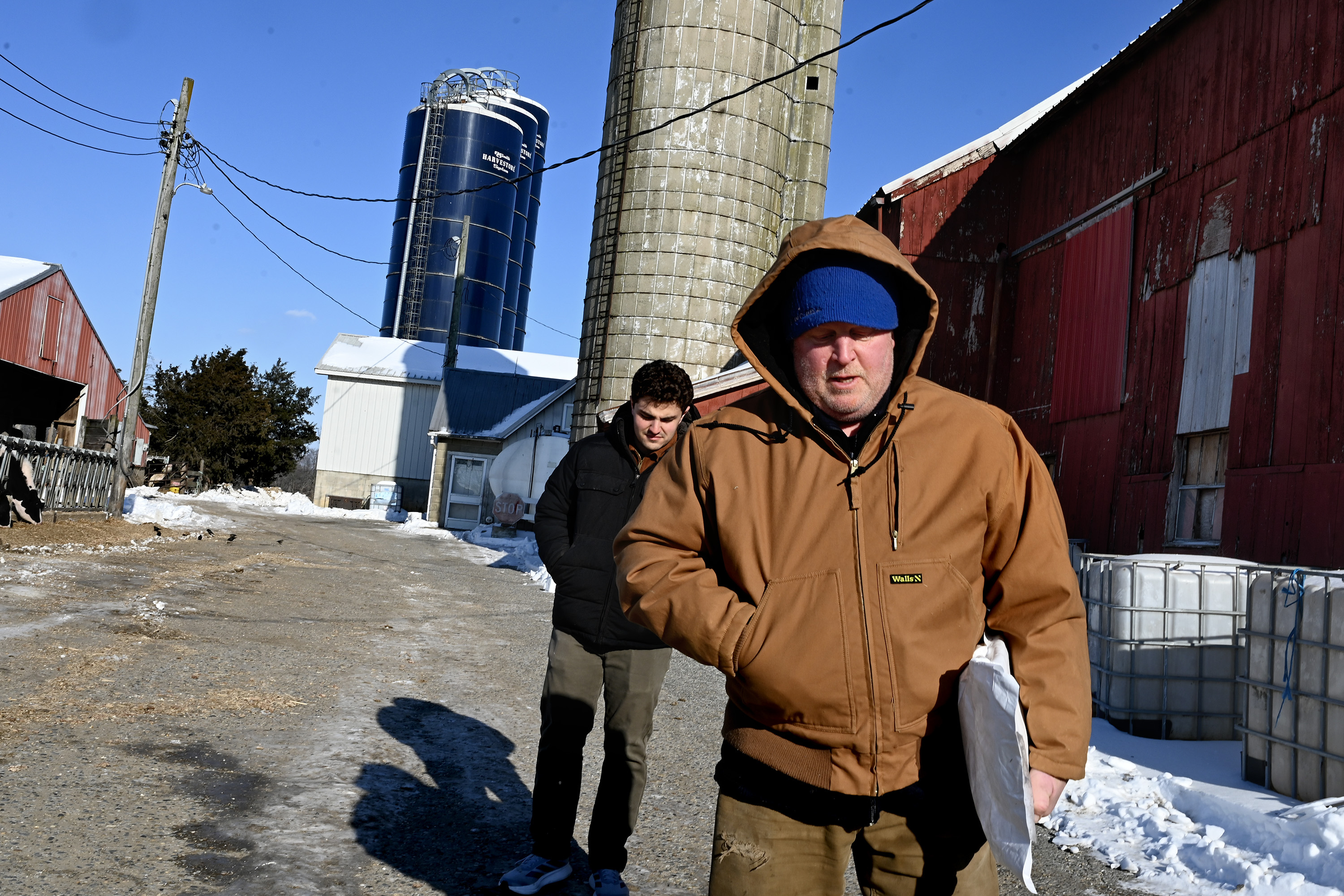
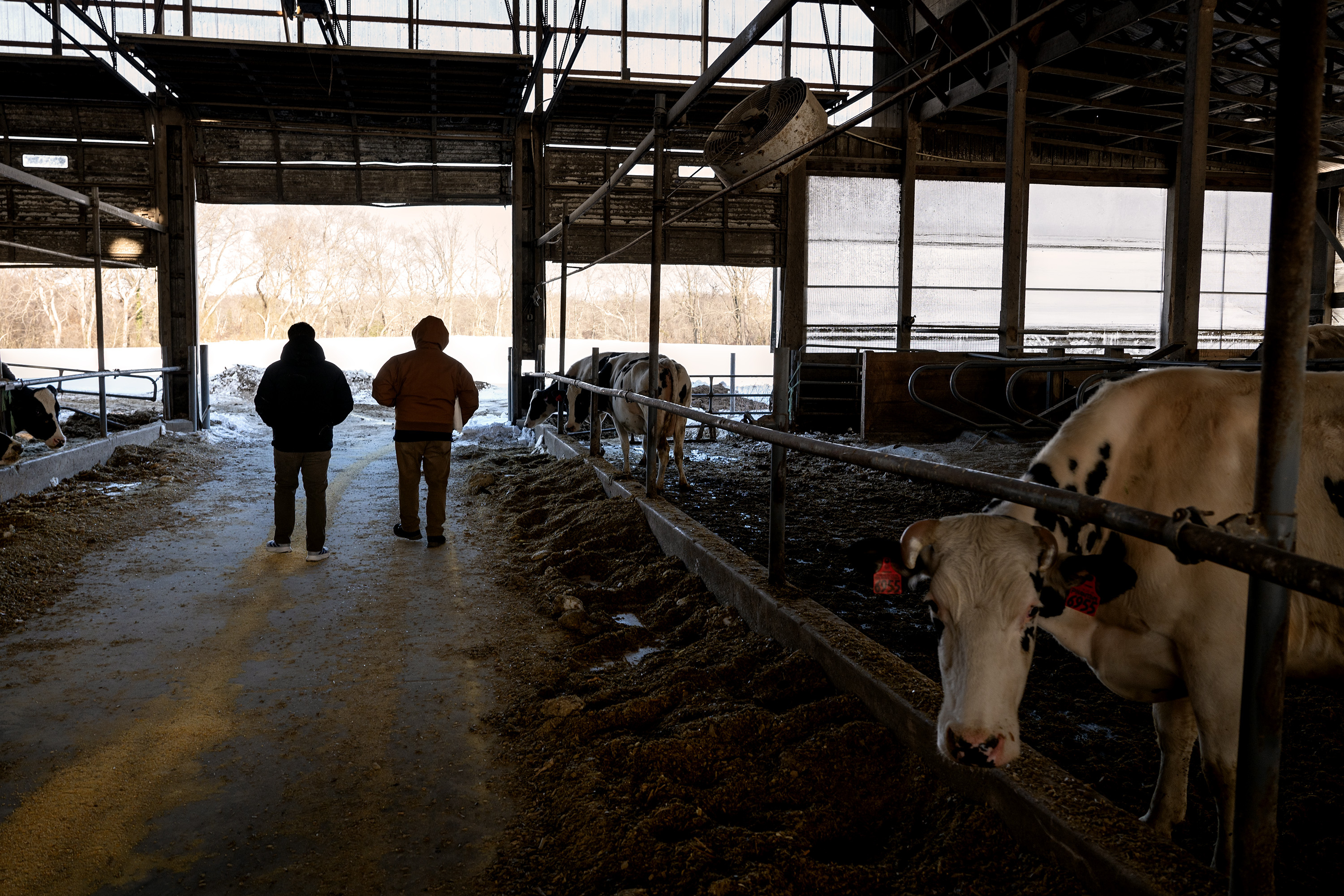
The Cadwallader family has been farming since the 1860s, and Waldac Farms certainly looks the part: There’s a circa-1790 farmhouse down a long dirt road, a slew of silos dotting the flat landscape, and big red barns, faded by time, that are full of cows and cats.It was mostly silent there, too, aside from the winter wind.
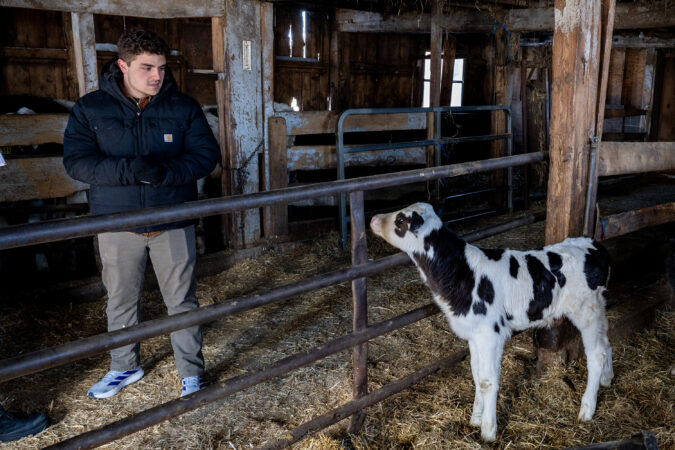
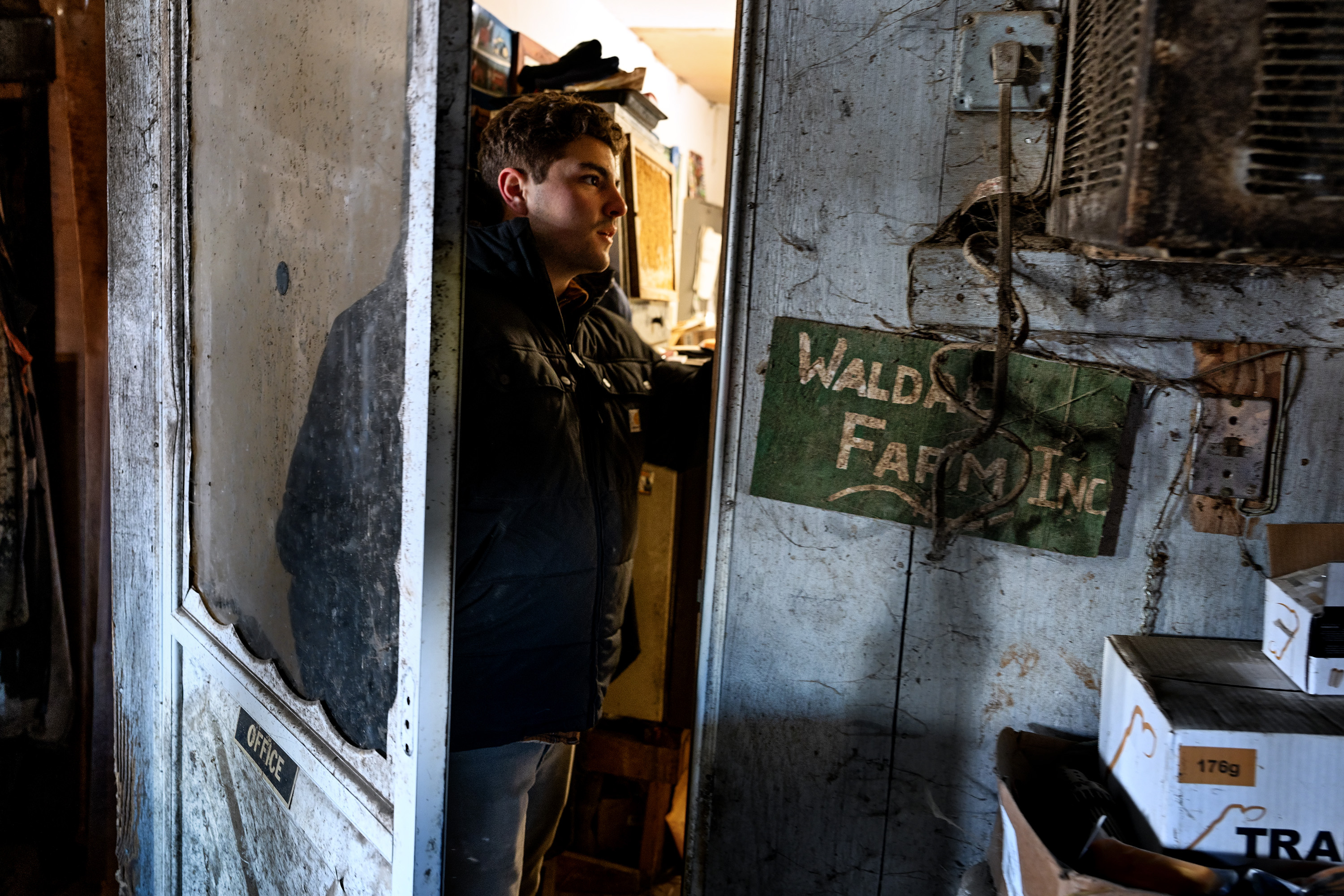
The only thing that seems out of place on the family farm on a frigid afternoon is Andrew Cadwallader. The college senior looks younger than 22, and his sneakers and pants were impeccably clean.
Andrew’s been milking cows since before his baby teeth fell out, though.
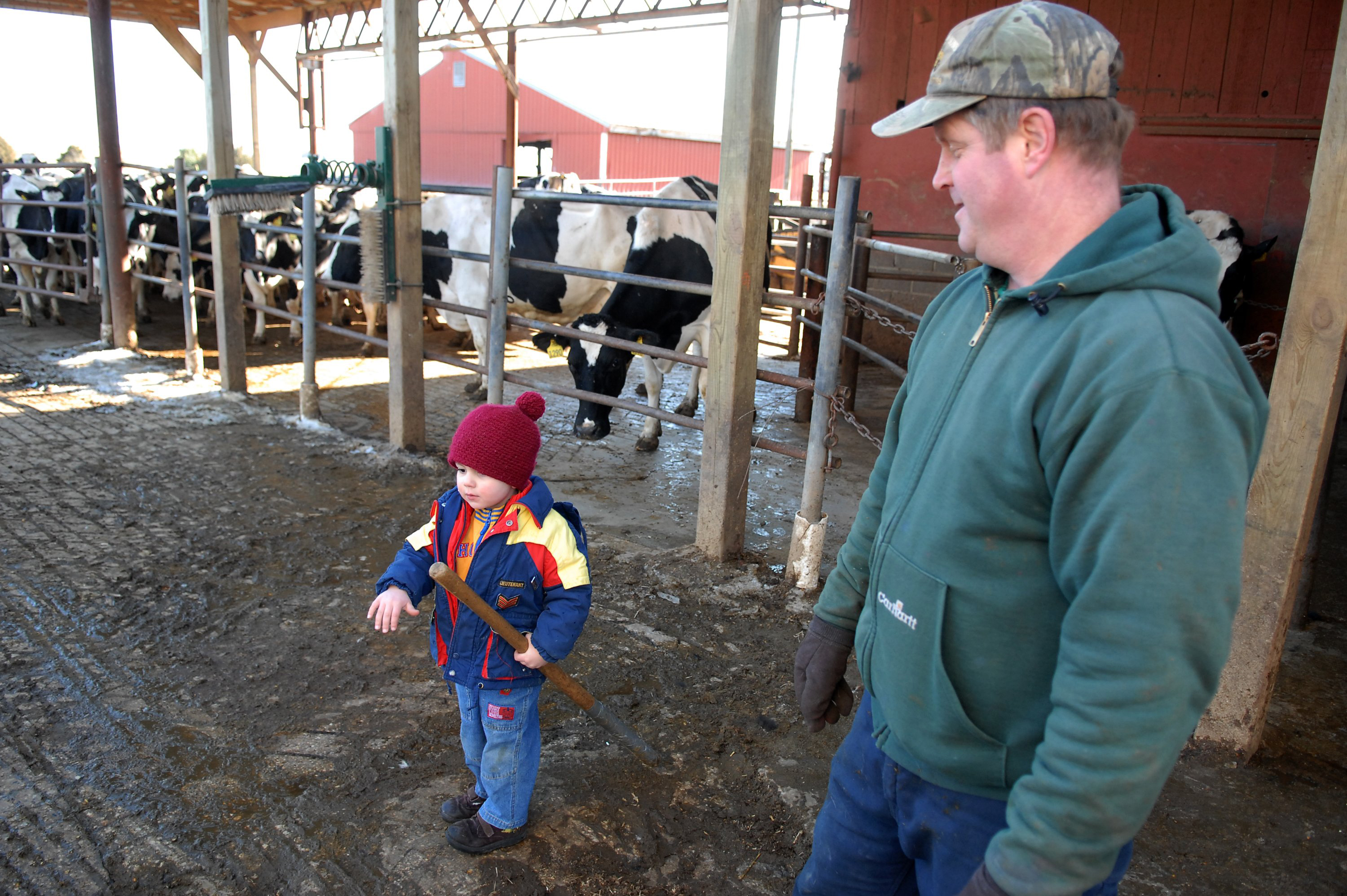
In 2007, a South Jersey newspaper visited the Cadwalladers to discuss the dismal state of dairy farming at the time. The newspaper took a picture of Andrew, then 3, surrounded by cows in a pen. His father, David, told the newspaper he’d love to pass the farm down to his son.
“If he wants it,” David Cadwallader said.
From the Press of Atlantic City on March 12, 2007: The state is trying to revitalize its dairy farm industry. With his 3-year-old son Andrew, David Cadwallader prepares his cows for their 3 p.m. milking at Waldac, his Woodstown dairy farm.
Andrew is set to graduate from Haverford College with a degree in political science. He’s merged his life history — agriculture and geology — with his interests in politics and government, and recently began an internship for CNN’s Michael Smerconish, a Bucks County native.
Andrew’s an only child, and, yes, he wants to farm, bucking a trend that’s seen the average age of farmers, 58.1, rise steadily, according to the 2022 U.S. Census of Agriculture Data.
“I’m coming back here after I graduate,” he said.
Nationwide, small dairy farms like Waldac have continued to shutter at a rapid rate since Andrew was in the local newspaper.
Overall, milk production is up in the United States. That’s because modern genetics has produced cows that make more milk than their ancestors. Those big production numbers are coming from massive farms with large herds, too.
The Cadwalladers milk about 130 dairy cows on approximately 500 acres, and small farms like theirs have been decimated. In 2005, according to the USDA, there were 78,295 dairy farms in the United States. In 2025, that number was 23,609, a 70% decrease in just 20 years.
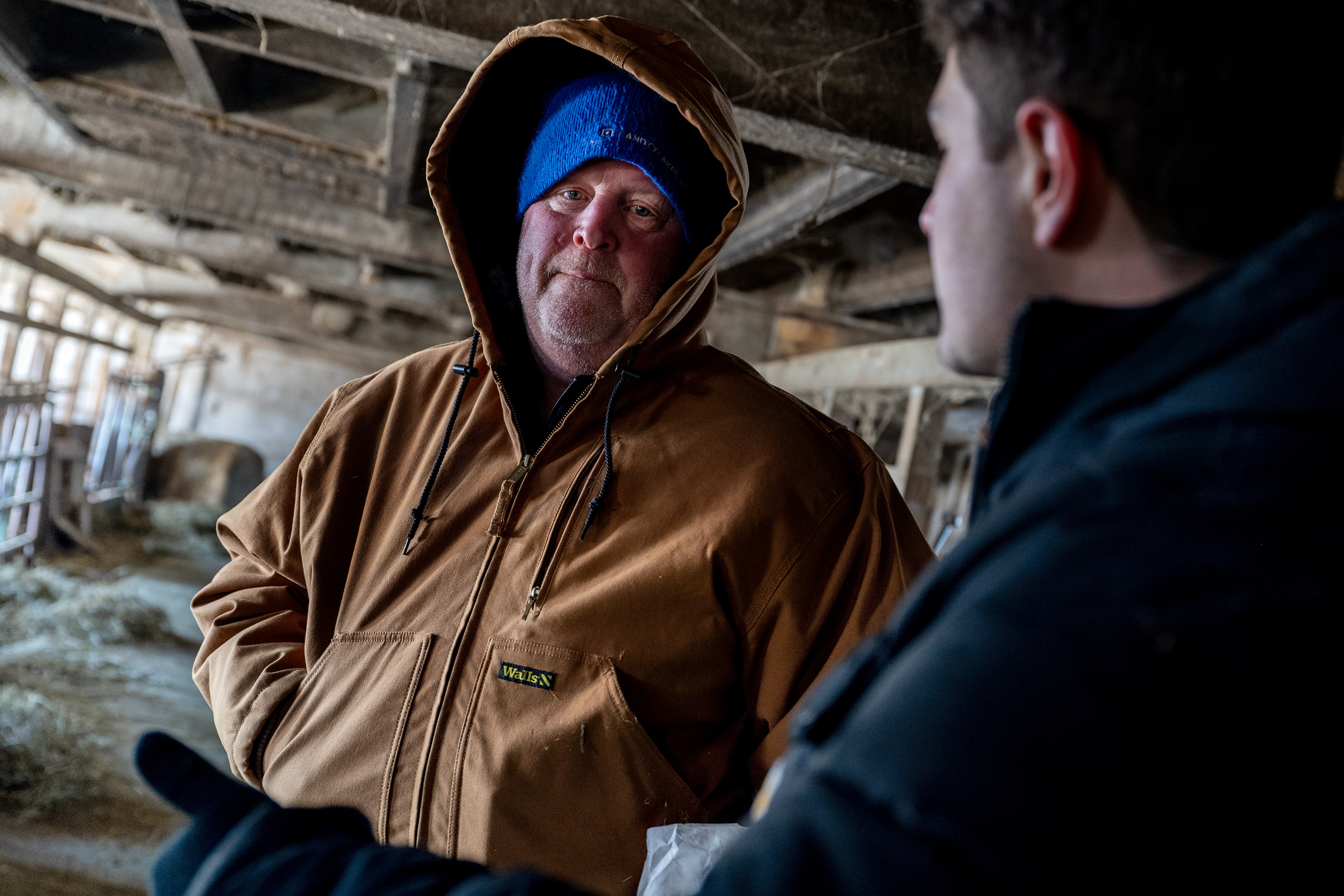
Farmers Andrew Cadwallader and his father David Cadwallader (front) at Waldac Farms in Salem, N.J., on Jan. 29.
Andrew Cadwallader declined to go into exact figures but said the family would be “paid well” by the AES lease. Waldac Farms would pivot to sheep and the sale of their lambs, while possibly still milking cows on a smaller scale.
“We have been losing money for the last 10 years,” Andrew said of the dairy operation.
AES approached the family about “solar grazing” during the pandemic, Andrew said, and as they sought a use variance from the Mannington planning board to move forward, he became the project’s public face. Andrew made numerous, lengthy Facebook posts in local groups about the project to be transparent.
“Will we continue to hope that the price of milk goes up and risk failure, or will we pivot and change?” Andrew wrote in the Salem County Advocates group in November.
Many comments were supportive or neutral, in a libertarian “it’s your land” way. There was plenty of pushback, though, and Andrew said it was disheartening to see how many comments focused on visual impact.
“I’m glad people can worry about the look of the farm,” he said in late January. “We have to worry about making a living.”
Cadwallader said flat farmland is not a natural part of landscapes in South Jersey. People have just gotten used to seeing it. His farmland was likely cleared of trees by the native Lenni-Lenape centuries ago, he said. Barns and tractors are industrial buildings and commercial machinery, he said, not quaint antiques.
“They are prioritizing the look, and it’s not reality,” he said. “It’s not a natural feature.”
Still, Cadwallader felt confident, on a late January afternoon on his farm, that the planning board might approve the project.
Jennifer Kugler, founder of the nonprofit South Jersey Preservation, visited Andrew’s farm shortly before the planning board meeting with her children and wrote a lengthy Facebook post in support of his plan that received 573 likes.
“The Cadwalladers want to evolve,” Kugler wrote. “This means new solutions are necessary to ensure the continued viability of the farming operation. For farmers, this can be incredibly scary.”
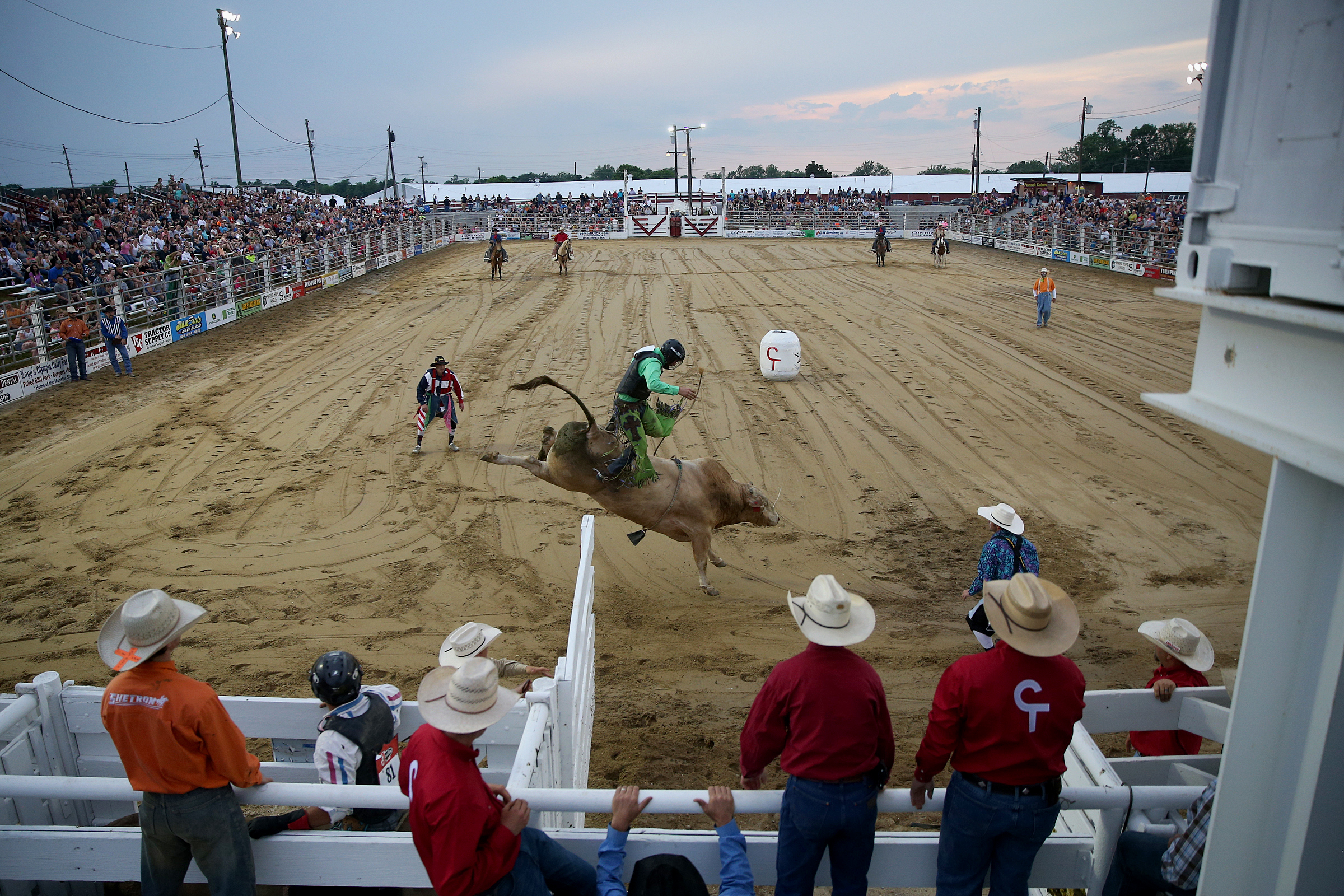
Kugler, 42, lives in Pilesgrove, Salem County, home to America’s oldest continuously-operating rodeo. She was raised on a dairy farm in Lackawanna County. That farm closed in the 1990s and never reopened, and part of her goal with South Jersey Preservations, she said, is to prevent more small farms from folding.
“We support farmers continuing to farm,” she told The Inquirer.
Farmers Andrew Cadwallader and his father David Cadwallader (left) at Waldac Farms in Salem, N.J., on Jan. 29.
To preserve or not to preserve
While the Cadwalladers would prefer the solar project, there are other options to keep farms afloat in New Jersey. The state’s Farmland Preservation Program is a common way to ensure that housing and warehouse developers don’t buy up farms. It’s a relatively simple process.
The program uses a combination of federal, state, county, municipal, and nonprofit funds to buy a farm’s development rights. The purchase price, according to the program’s website, is “based on the difference between what a developer would pay for the land and what it is worth for agriculture.”
A cow at a farm along Route 49 in Salem County, N.J., on May 6, 2024.
In turn, farmers get a much-needed payout while keeping their agricultural operation running. If those farmers choose to sell their land someday, deed restrictions require the property to be used for agricultural purposes or otherwise remain undeveloped.
“You can’t do additional residential or commercial improvements. You can’t turn it into a housing development or a Walmart,” said Charles Roohr, executive director of the New Jersey State Agriculture Development Committee.
Since the program began in 1984, Roohr said New Jersey has preserved 250,000-plus acres, with a goal of 500,000 acres. Salem County leads the way among counties, with more than 43,000 preserved acres.
The family has not ruled out farmland preservation if the solar project is rejected, but they were concerned about some of the potential restrictions and complications.
“It’d be like a bailout, but we have 500 acres,” Andrew said on the farm in late January. “We need to figure out what the heck we’re going to do with the 500 acres that’s going to actually make us some money.”
Cowtown Rodeo in Pilesgrove, N.J.
A complicated farmland preservation issue played out right in Mannington in recent years, when Mannington Deputy Mayor Robert DiGregorio filed a civil rights lawsuit against local and county officials in 2021. According to the lawsuit and Transparency NJ,, DiGregorio was holding weddings, private parties, and nonprofit functions on his preserved, 78-acre farm, but was told by officials that he would need variances and site plan approvals or waivers to continue. The back-and-forth between those officials and DiGregorio, according to Transparency NJ, almost grew physical.
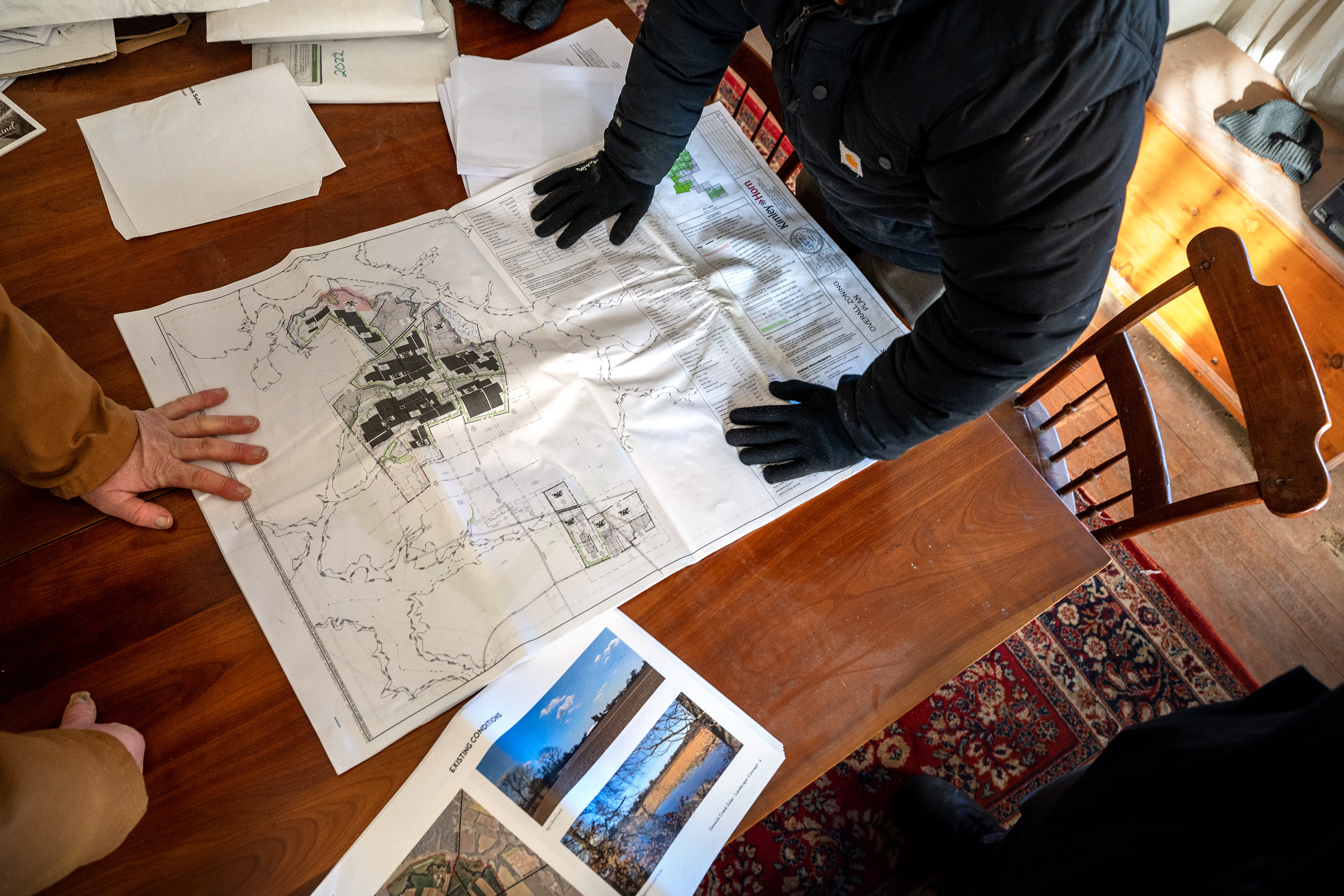
Farmers Andrew Cadwallader and his father David Cadwallader (left) with plans at Waldac Farms in Salem, N.J., on Jan. 29.
In April, Mannington agreed to pay DiGregorio $55,000 to end the lawsuit, according to an article in NJ.com. Neither DiGregorio, who is on the planning board, nor his attorney returned requests for comment. It’s unclear if he will continue to host events on his farm.
Roohr, commenting on farmland preservation restrictions in general, said events are allowed if “the purpose of the event is to sell the things that you’re producing on your farm.”
A tomato festival on a tomato farm would be fine, for example. A folk festival on a tomato farm would probably require a special-use permit.
“If the main purpose of the event is some other focus and your stuff ‘might’ get sold as a side benefit, then we consider that a non-agricultural use. And so the greatest example of that would be a wedding.”
Roohr said the preservation program is more important than ever, as data centers look to build in rural areas nationwide.
“We have over 200 applications [for farmland preservation] in our office right now,” he said.
The Cadwalladers said they have no plans to sell to a developer.
Farmers Andrew Cadwallader and his father David Cadwallader (right) at Waldac Farms in Salem, N.J., on Jan. 29.
The vote
Along with Alice Waddington, numerous others spoke at the March planning board meeting. Union officials said the solar project would bring jobs (AES put the number between 75 and 100). Some spoke in support of Andrew Cadwallader and his love for the ecosystem. Still, others talked about protecting Mannington’s “rural identity” and fears that the project could affect property values.
Andrew Cadwallader was the last member of the public to speak.
“As a family, we’re at a crossroads,” he said. “We can’t risk volatility anymore as a family and as a farm.”
When he was finished, Davis gave a final summation on behalf of AES and the Cadwalladers. Minutes later, the planning board made a resounding 6-1 vote, shooting down the project.
Cadwallader hung his head and gave a half-smile and some quiet “thank yous” to the attendees who patted his shoulder and shook his hand.
Laura Kellogg, a development manager for AES, said the team was disappointed but would continue to “evaluate next steps for the project.”
A week later, Andrew Cadwallader said he and the family were still dealing with the disappointment and contemplating their next move.
“People like this area so much, but we love it. No one loves this land more than my family,” he said. “People have to understand that a working farm is not a museum.”
Cadwallader’s life was getting busier at Haverford, too. He was taking geology classes and working on a senior thesis about preserving “the agricultural viability of mid-sized farming operations in the United States.”
Andrew drives the 38 miles south from college, back to Salem County, every weekend. A week or so after the meeting, though, Alice Waddington’s warning to the planning board, and the people of Mannington, proved prophetic.
Waldac still looked like a farm to neighbors and motorists passing by, but the Cadwalladers had stopped milking cows.
Correction: This article has been corrected to reflect that AES Corp. is based out of Virginia.
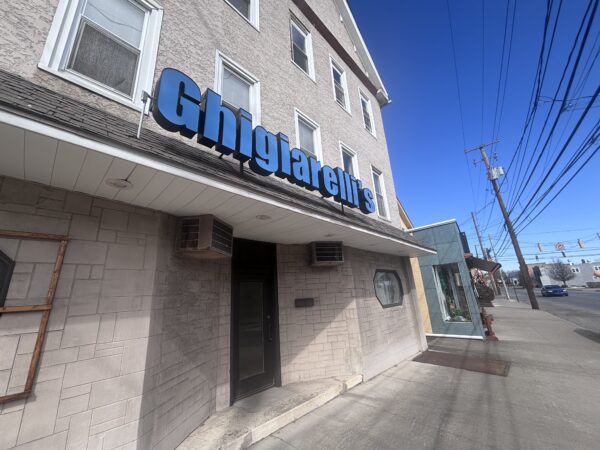
OLD FORGE, Pa. — The ovens went cold at Ghigiarelli’s after owner Robert Baron was killed in 2017, and the longtime Main Street restaurant went into a protracted limbo here in the “Pizza Capital of the World.”
There’s arguably a pizza shop on every block in this blue-collar town about 120 miles north of Philadelphia, in Lackawanna County. It’s a place where presidential hopefuls come for photo opportunities, eating a rectangular “cut” of pizza, not a slice, that’s cooked in a “tray,” not a pie. Everyone has their favorites, whether it’s Revello’s or Arcaro & Genell’s, but shop owners see themselves as a collective, not competitors.
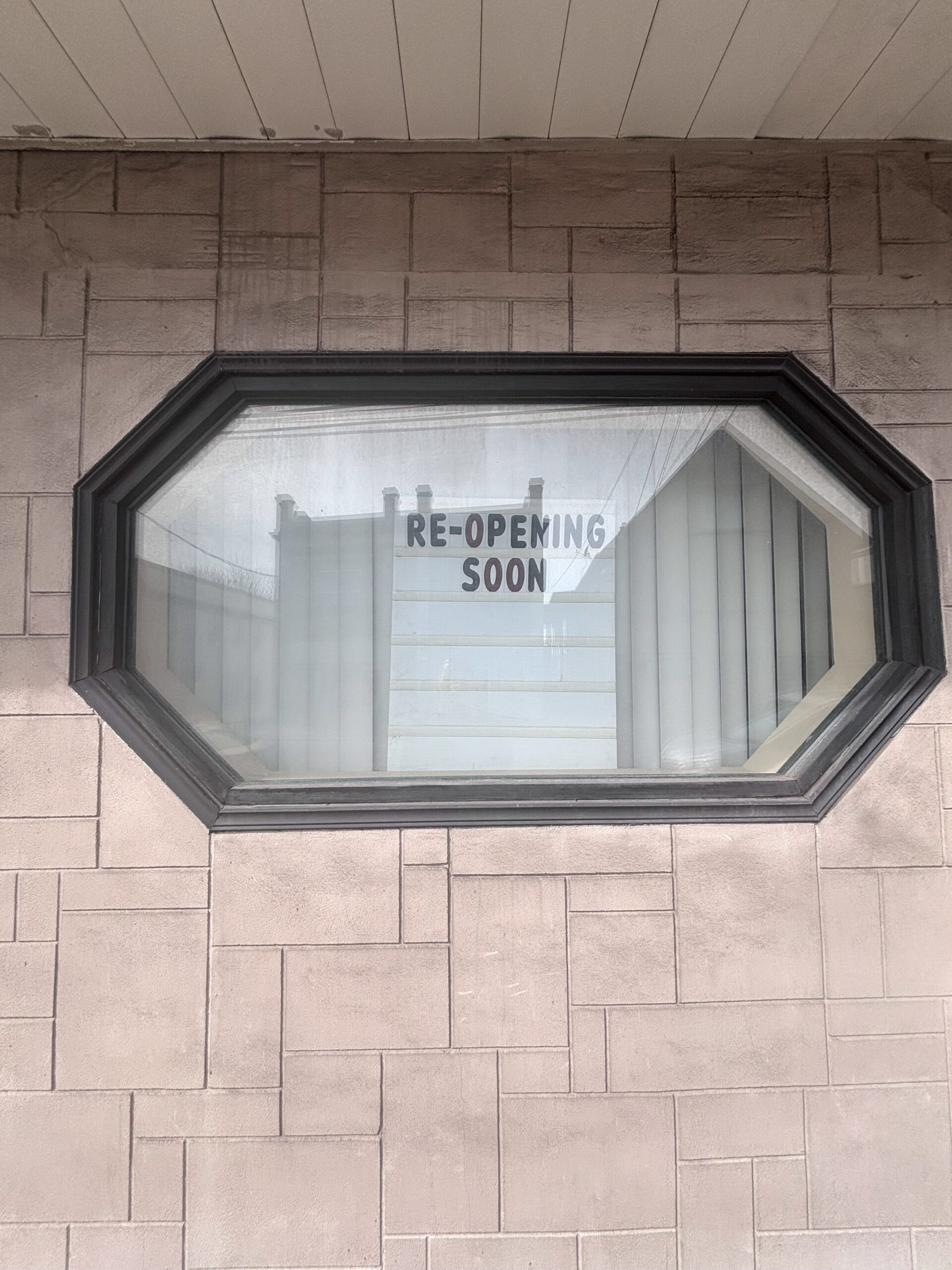
Ghigiarelli’s is, perhaps, the progenitor of this uniquely Northeastern Pennsylvania brand of pizza, opening in 1926. According to a recent social media post and a simple sign in the window, hot cuts may soon return.
“Thank you for your continuous support throughout the years, even while we’ve been closed! Keep an eye out for updates on an opening date for take out. We look forward to seeing everyone,” the restaurant’s official Facebook page announced Feb. 13.
A sign in the window of Ghigiarelli’s Pizza hints at the restaurant’s reopening.
It’s unclear who’s behind the reopening. The building remained closed Monday afternoon, with a small sign in the window announcing the reopening. Robert Baron’s widow, Maria, and daughter Brittany did not return requests for comment, and Old Forge Mayor Robert Legg said he didn’t know who was opening Ghigiarelli’s.
“Ghigiarelli’s has been there for years and years, so we’d love all our establishments open. People loved their pizza, and they’re chomping at the bit,” he said. “They are a really nice family, and they suffered a great tragedy.”
Robert Baron’s death
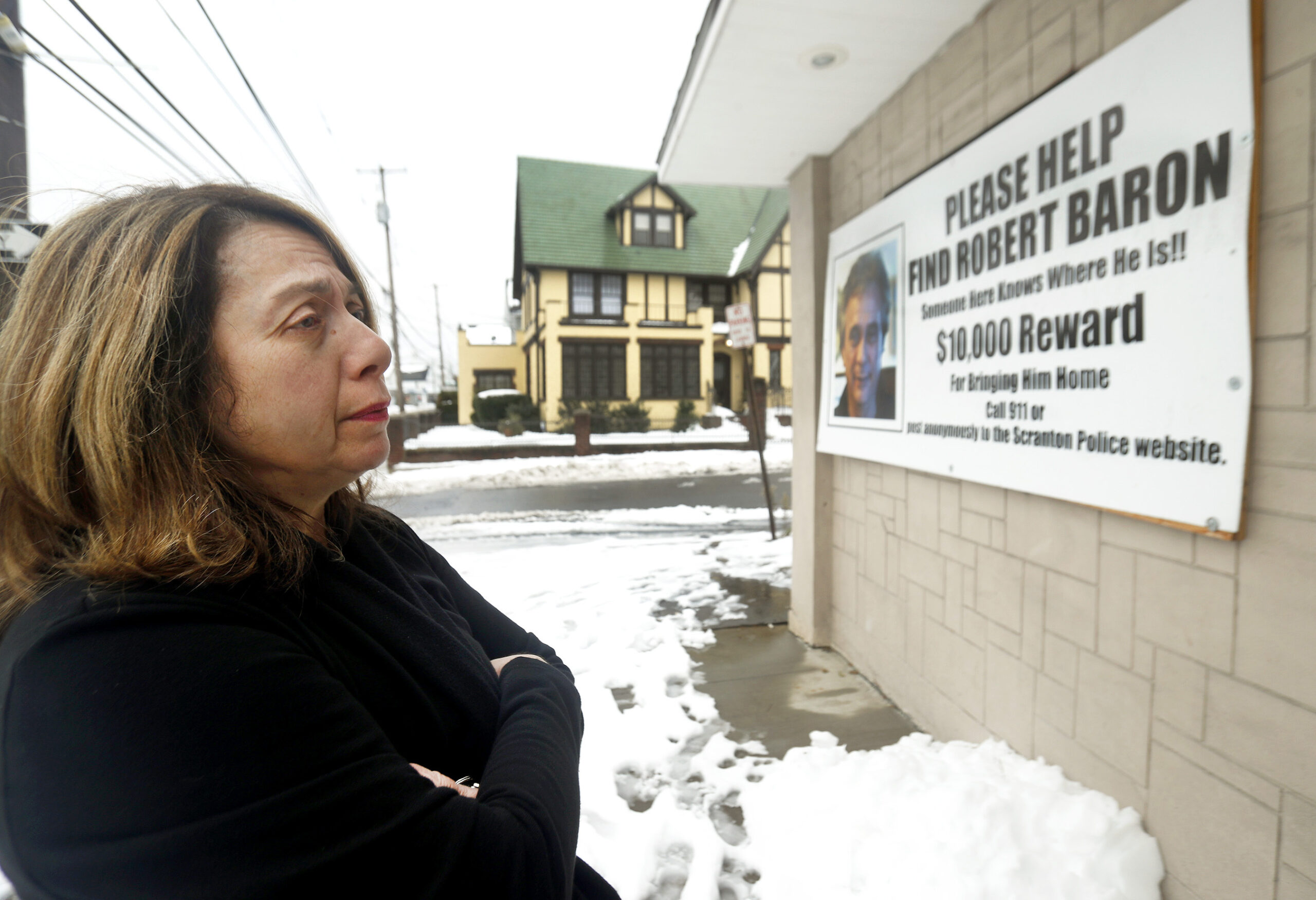
Robert Baron’s family purchased Ghigiarelli’s in 1961, keeping the name and the pizza. He grew up in Old Forge, an affable workaholic who poured himself into the restaurant. Baron often slept in the apartment above to meet delivery trucks. He was last seen Jan. 25, 2017, when he dropped his son off at his apartment in town at about 11 p.m.
Maria Baron stands in front of Ghigiarelli’s Restaurant in Old Forge, Lackawanna County. She is the wife of Robert Baron who disappeared from there on Jan. 25, 2017, and was later found dead. (FRED ADAMS / For the Inquirer 11-17-18)
Investigators found blood, a tooth, and cleaning supplies scattered at his pizza shop, the daily delivery of dough still outside. Baron’s car was found about a mile away, by the Lackawanna River, not long after. Investigators found blood inside and out of the car, and, in 2023, discovered his remains in a nearby park. Weeks later, a local man was charged with his murder and later convicted.
HONESDALE, Pa. — In waiting rooms all over America, millions of children found something to stave off the impending needles and drills, a magical world of puzzles, games, and stories written just for them.
For many kids, Highlights was the first magazine they ever read, and, perhaps, the one that mattered most when they look back on their childhoods, decades later.
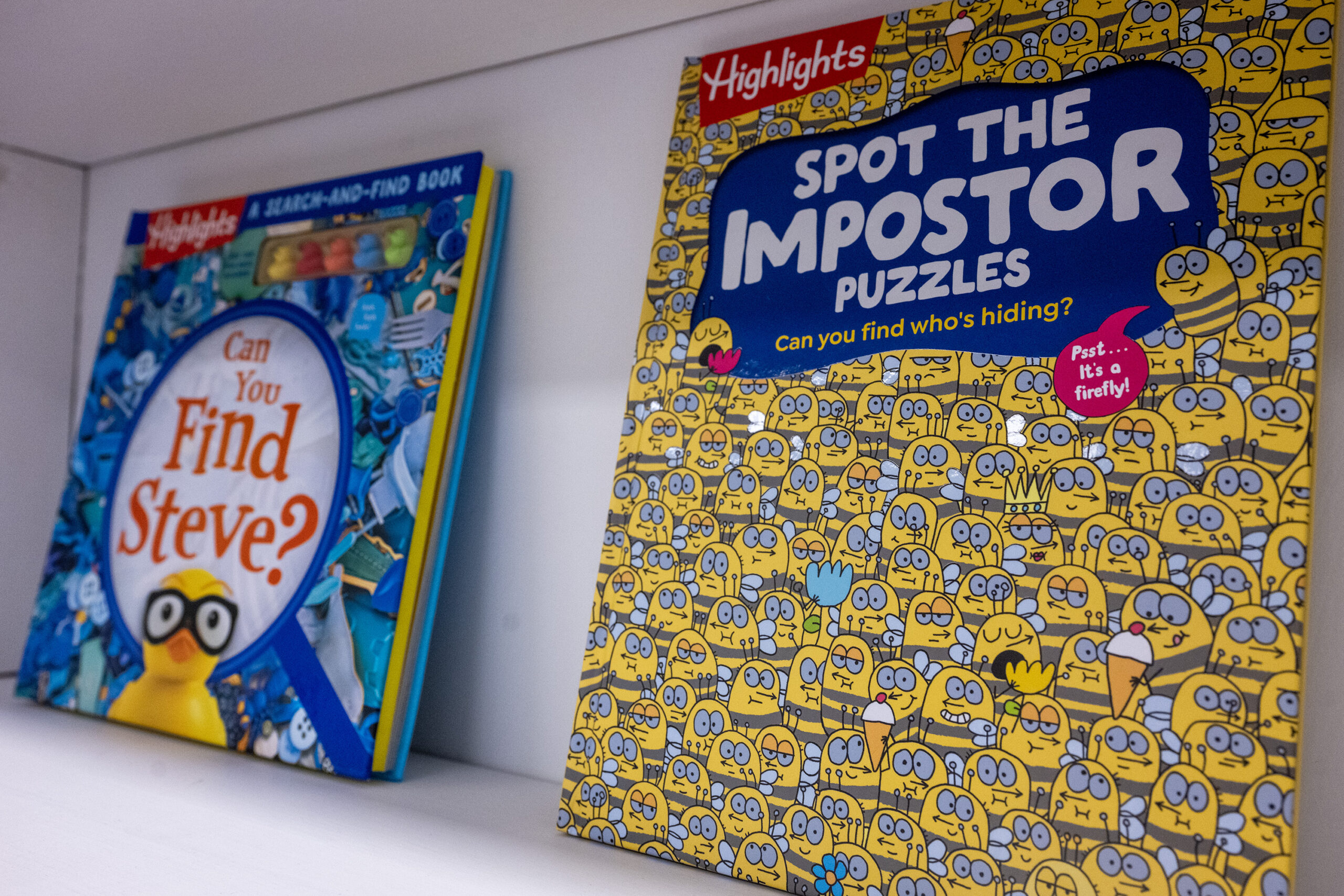
Books published by Highlights on a shelf at the magazine’s editorial offices in Honesdale.
In an era when print circulation — magazines, newspapers, and even the phone book — steadily declines, it’s easy to look back on Highlights, which was first published in 1946, with a glowing nostalgia. Every issue was full of intricately illustrated hidden-picture puzzles, the beloved duo of Goofus and Gallant making disparate decisions, and child-authored “Dear Highlights” questions that were often silly, serious, and tender.
“I let my friends borrow one of my stuffed animals. She’s going to give it back next time we meet, but I’m afraid she’s going to lose it,” a girl named Ramona, from California, wrote to Highlights.
The magazine may get some Generation Xers feeling wistful, but Highlights and its handful of offshoots are alive and well and, perhaps, more crucial than ever in an era where children’s attention spans are pulled in every direction. Highlights turns 80 this year, and its editorial offices remain in a cozy pre-Civil War, Italianate house in downtown Honesdale, Wayne County.
“We are as relevant as we were 80 years ago,” said Marlo Scrimizzi, senior editorial director for Highlights for Children. “Our future is expansion. We want to bring Highlights to more homes and families.”
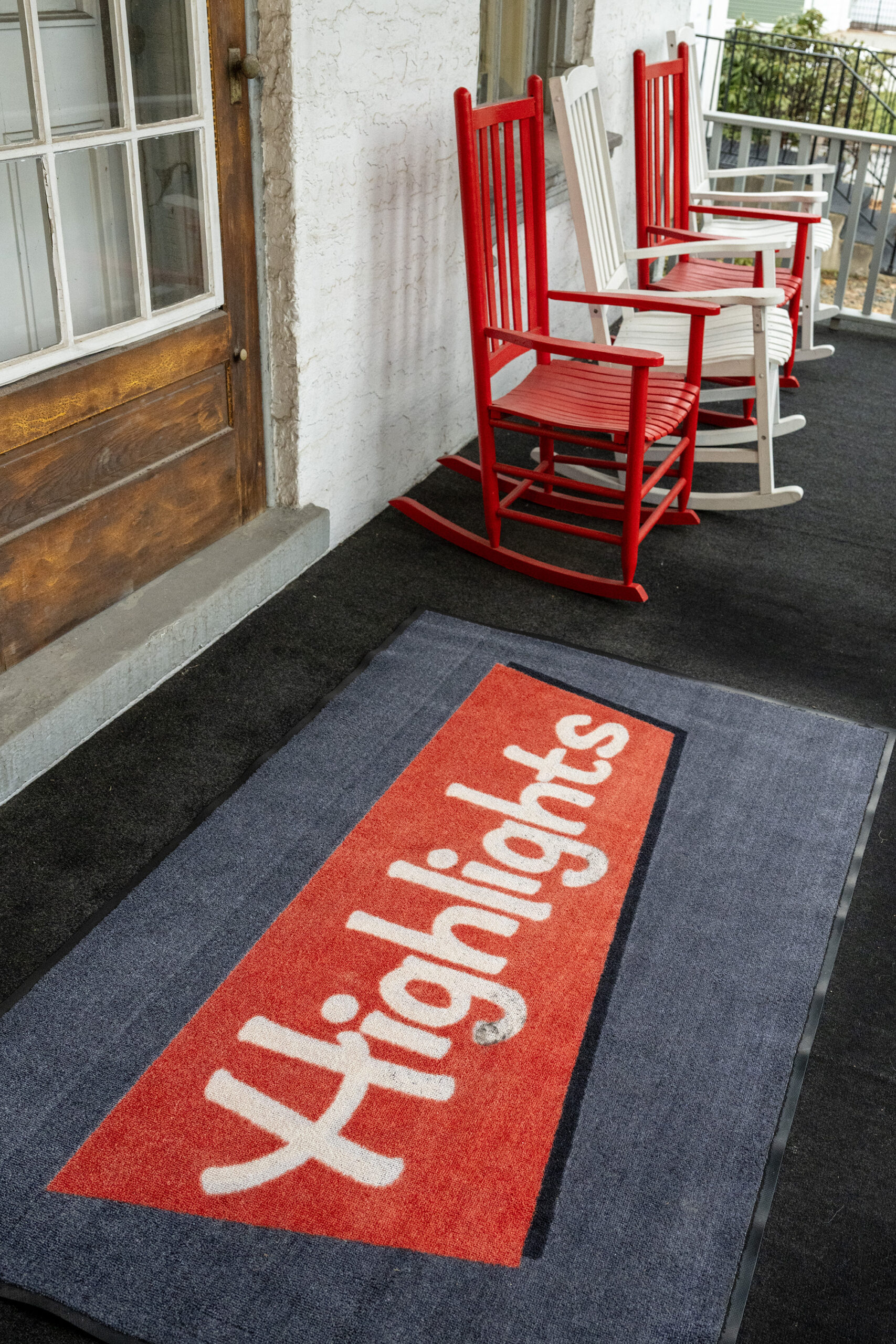
Front porch of the Highlights magazine editorial offices in Honesdale Jan. 14, 2026.
Today, Highlights for Children publishes six magazines, with a combined circulation of one million a month, all while remaining family-owned. It’s still full of old favorites, like Goofus and Gallant, plus dinosaurs, outer space themes, animals, and unicorns, the mythical beast that’s made a big comeback in recent years.
“Dinosaurs will always be in,” Scrimizzi said.
Outside of the flagship magazine, which targets children 6 to 12, the company publishes Hello (ages 0-2), Highlights CoComelon (ages 1-4), High Five (ages 2-6), High Five Bilingüe (ages 2-6), and brainPLAY (ages 7 and up).
On a recent January afternoon in Honesdale, the editorial crew was laying out its latest issue, which featured a Japanese artist who practices kintsugi, the art of repairing broken objects by filling cracks with lacquer mixed with powdered gold, silver, or platinum.
Highlights magazine editor Judy Burke (left) and editorial director Marlo Scrimizzi at the magazine’s editorial offices in Honesdale.
In the 1940s, a husband and wife duo from Pennsylvania, Garry Cleveland Myers and Caroline Clark Myers, made an unlikely decision to create a magazine focused on and for children, with the motto “Fun with a purpose.” Garry Cleveland Myers had a Ph.D. in psychology from Columbia, and Caroline Clark Myers was a schoolteacher in Wayne County.
“They really wanted kids to know that they had it in themselves to be creative, to think through problems, to be empowered and have the confidence to really come up with the creative solutions and think through answers to questions,” said Judy Burke, the magazine’s editor.
The Myerses, who had worked for another children’s magazine before starting their own, had a groundswell of support from parents and built a clientele base through old-fashioned door-knocking. By 1950, however, the business model was lagging.
“They were editors, not business people, really. They were educators,” Burke said. “They were in really dire straits, financially, and almost had to close, so they kind of rallied some troops.”
The business didn’t fully take off, however, until their son Garry Myers Jr. quit his job as an aeronautical engineer and took a look at the books. It was Garry Myers Jr. who decided to send the magazine to doctors’ and dentists’ offices, which sparked a rush of subscriptions from parents.
By 1960, Highlights had a half-million subscribers, and the relationship between the magazine and the waiting room was forever sealed.
“Parents would see their kids amusing themselves with this magazine in the waiting room and think, ‘What is this product?’” Burke said. “There wasn’t a ton of magazines for kids back then.”
Dipesh Navsaria, a professor of pediatrics at the University of Wisconsin, said the competition for children’s attention extends to the waiting room in 2026. Some have arcade games. Others have televisions. Every parent has a phone, he said, which is an easy salve for a sick child.
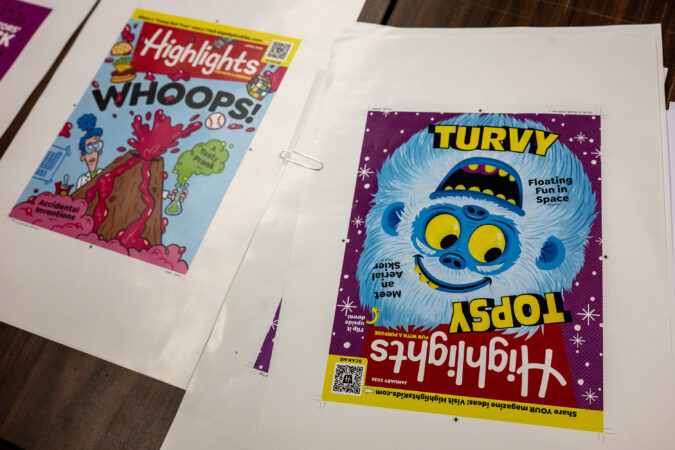
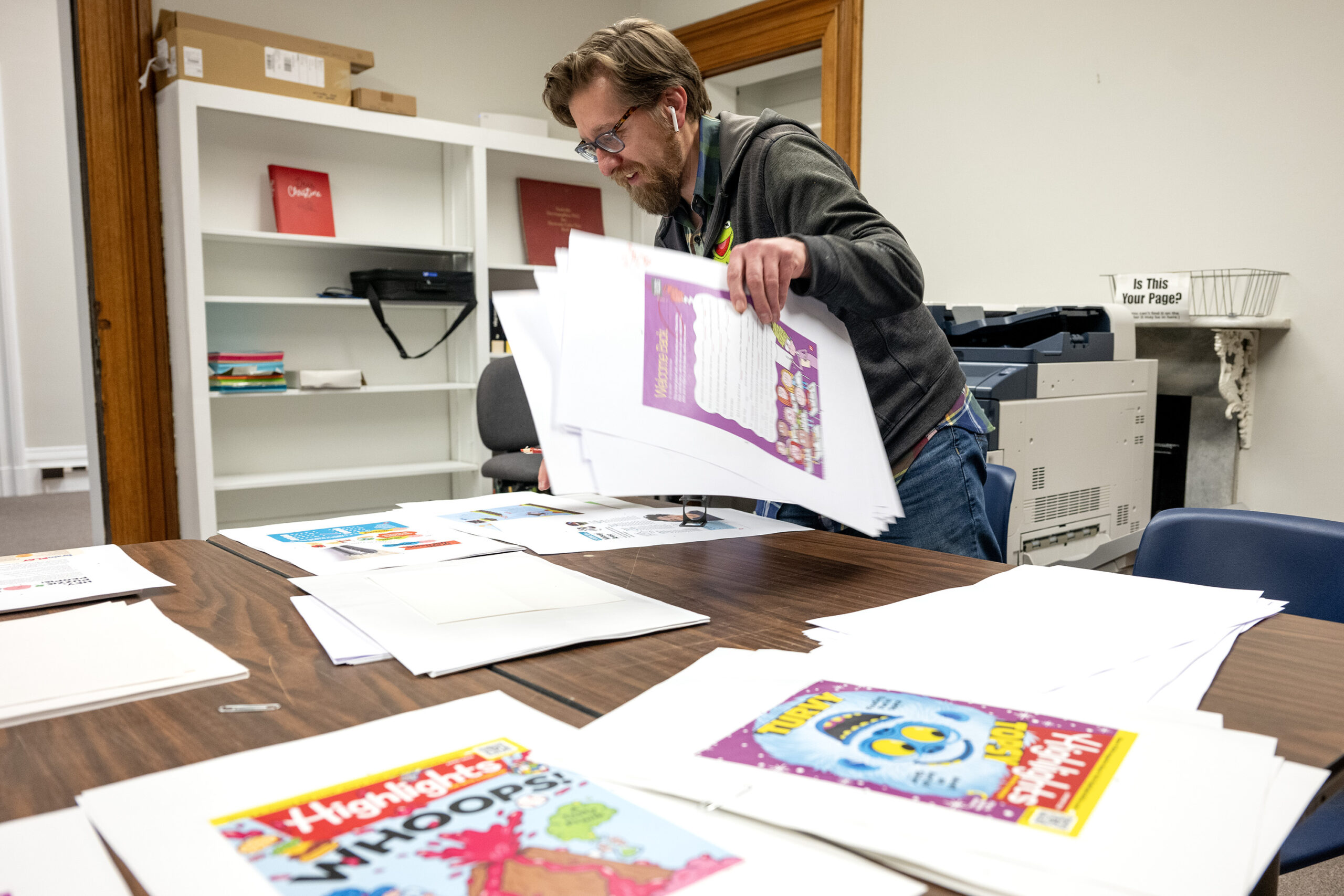
Senior production artist Dave Justice looks through proofs of forthcoming Highlights magazines in the editorial offices in Honesdale.
Still, as a supporter of Highlights, he believes the timeless magazine still matters there.
“Families should expect and perceive that the most important thing we care about is that child’s health and well-being. That extends to what’s on the walls, in the exam rooms, and the waiting room,” he said. “With Highlights, there’s a long history of trust. Highlights doesn’t have advertising, and parents can know their kids aren’t going to be marketed to.”
Burke was one of those kids in the waiting room, reading Highlights at a doctor’s appointment 20 miles west of Honesdale.
“I’d see how much of the magazine I could read before they called me in,” she said. “I didn’t want to miss a page.”
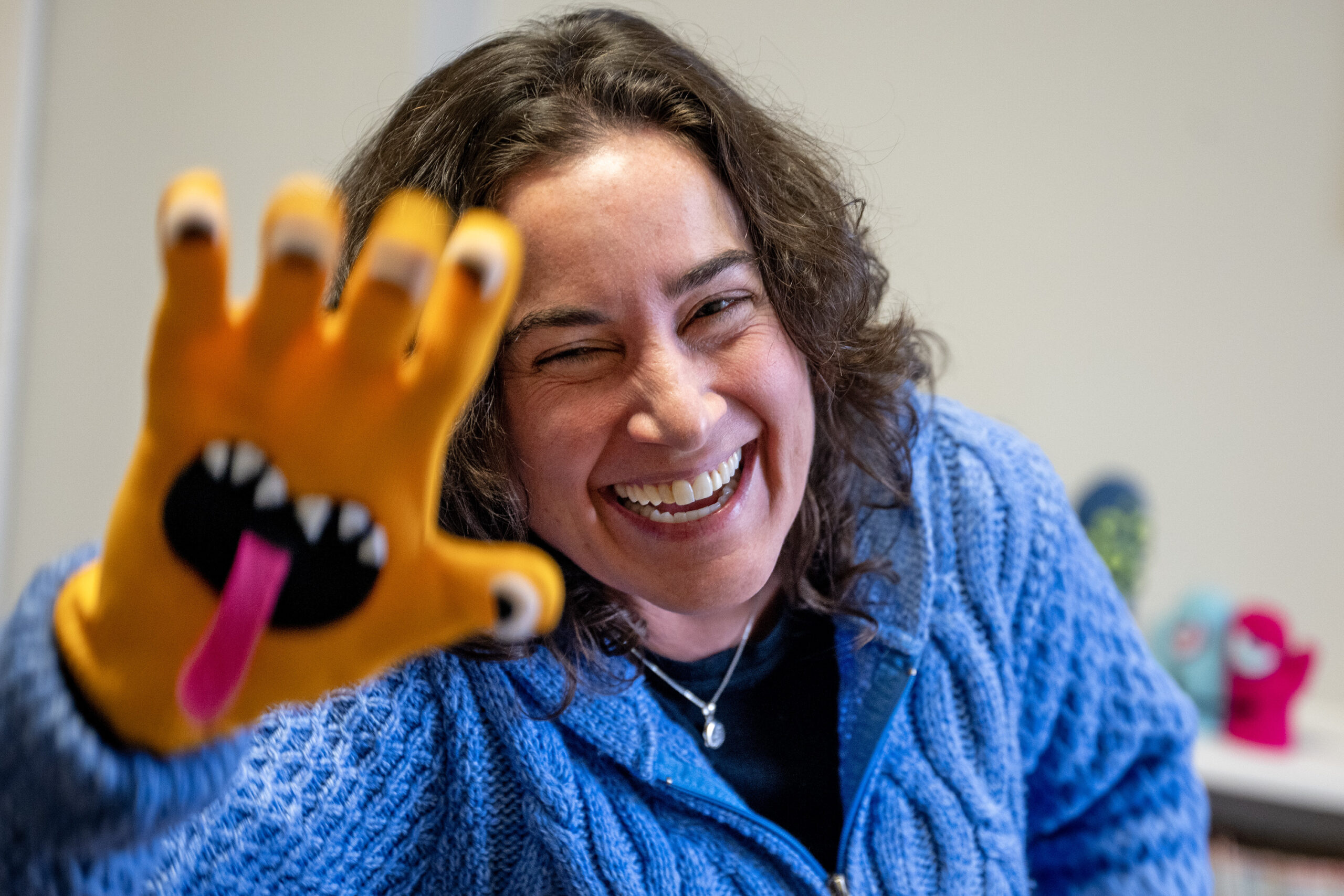
Highlights magazine editor Judy Burke with a hand puppet at the magazine’s editorial offices in Honesdale on Jan. 14, 2026.
Decades later, Burke was in a Pennsylvania dentist’s office during a break from college and picked up Highlights again. That inspired her to reach out to the company, and she’s now been there for 31 years.
“A girl wrote in recently and said, ‘I love your magazine so much, I just feel like I could curl up with it,’” Burke said. “Those words warm my heart.”
Honesdale has seen an uptick in population and tourism, along with more breweries, artists, restaurants, and short-term rentals moving into the once sleepy Poconos town. Burke, Scrimizzi, and a small crew who anchor the Honesdale editorial offices are in the middle of it all, downtown. Other editorial staff members work remotely, and the company’s business offices are in Ohio.
A “Can You Find Steve?” duck, the subject of a new book published by Highlights on a shelf at the magazine’s editorial offices in Honesdale Jan. 14, 2026.
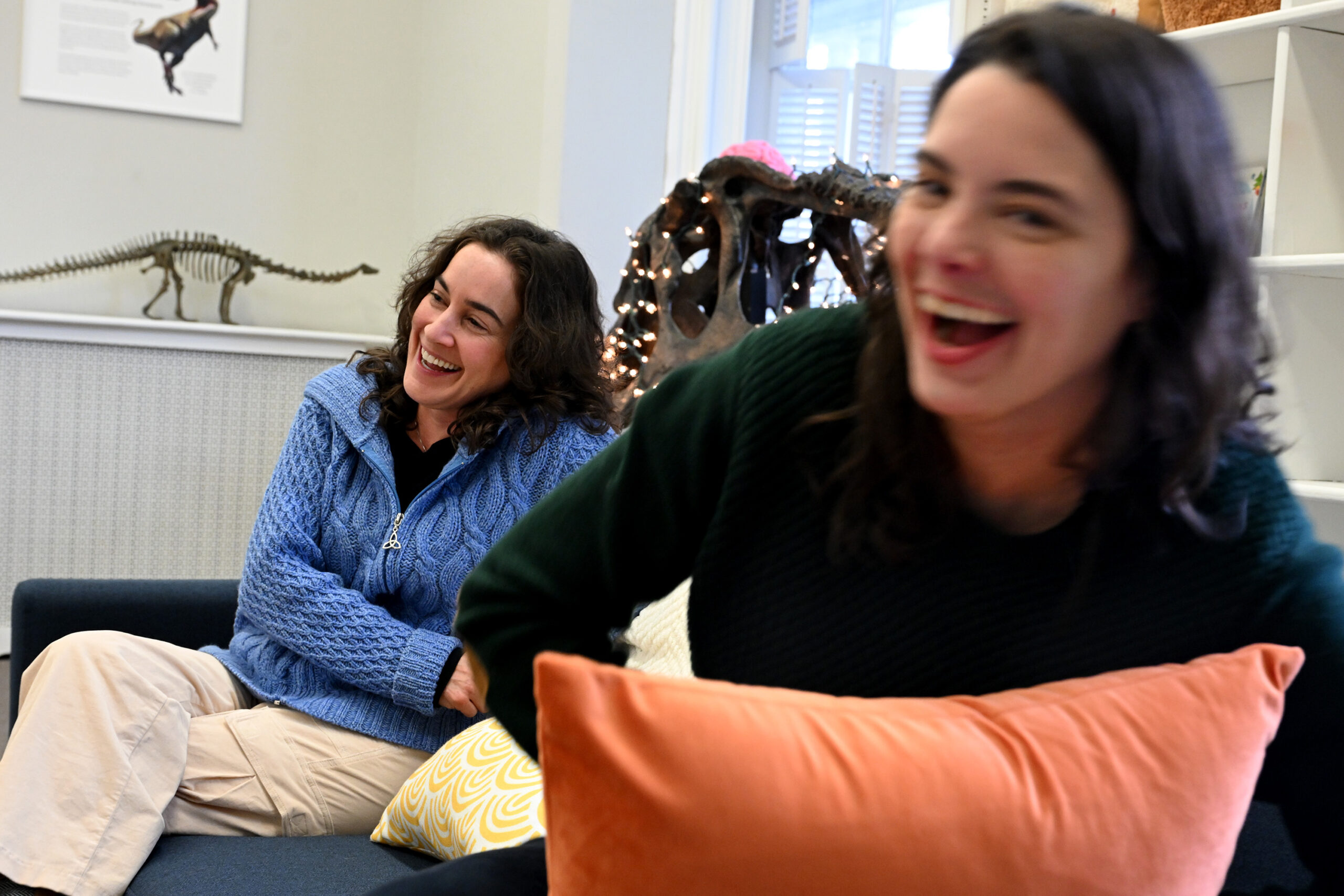
The Honesdale offices aren’t the location of an amusement park, but there’s a large dinosaur head in a meeting area and vintage children’s books that the Myerses wrote for, along with other children’s memorabilia.
Burke’s office is filled with monster puppets, and just outside it, on a wall, is a large wooden motif of the magazine built by a fan, a testament to how beloved it is.
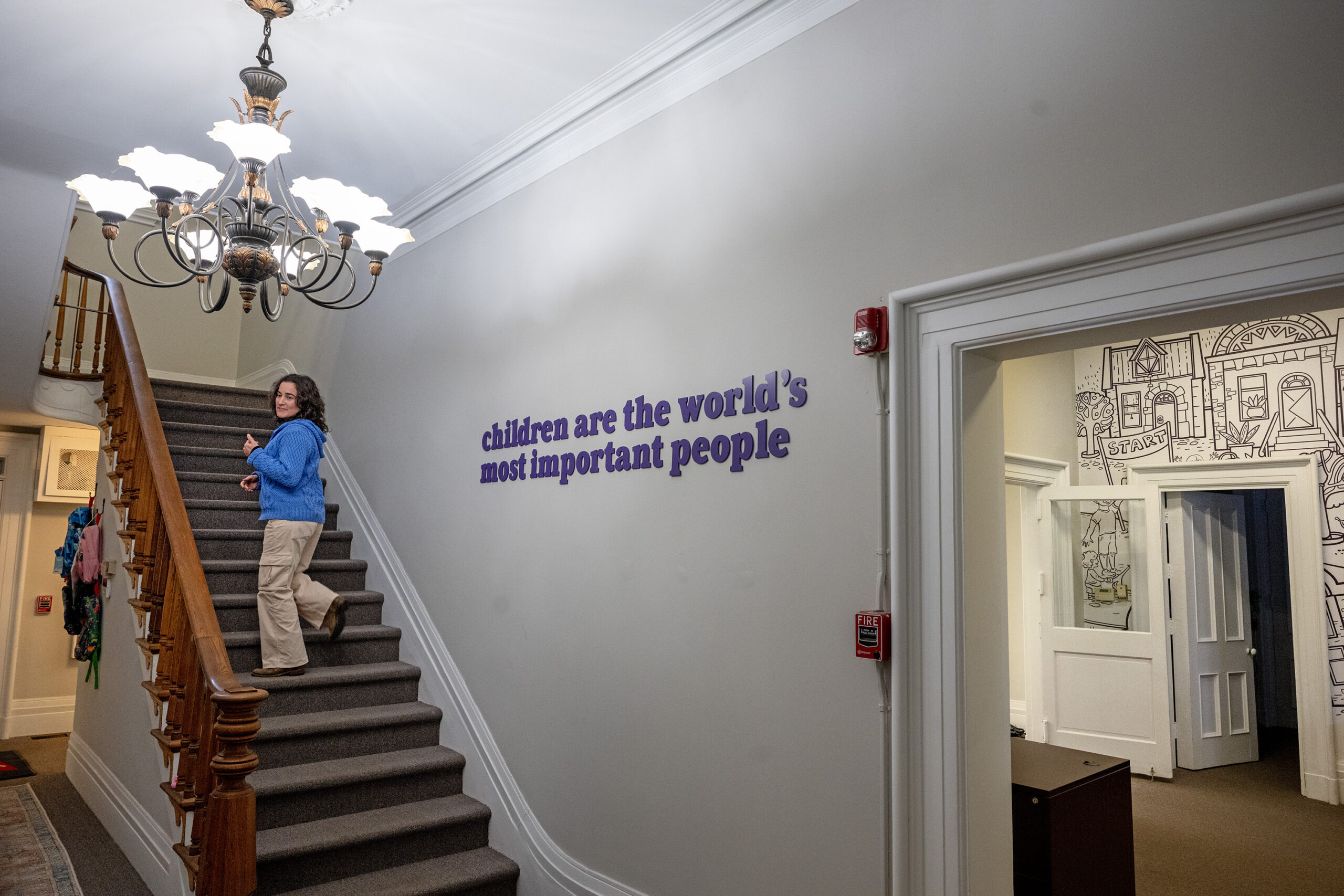
Along the staircase, Highlights’ guiding principle is affixed to the wall: “Children are the world’s most important people.”
Highlights magazine editor Judy Burke in the former mansion that is the magazine’s editorial offices in Honesdale Jan. 14, 2026. The beloved children’s publication began as a small operation in the town in 1946 and the editorial offices are still there, even as it has grown into one of America’s most respected educational magazines for kids.
Stephanie Stronsick has bats in her Berks County house. On purpose.
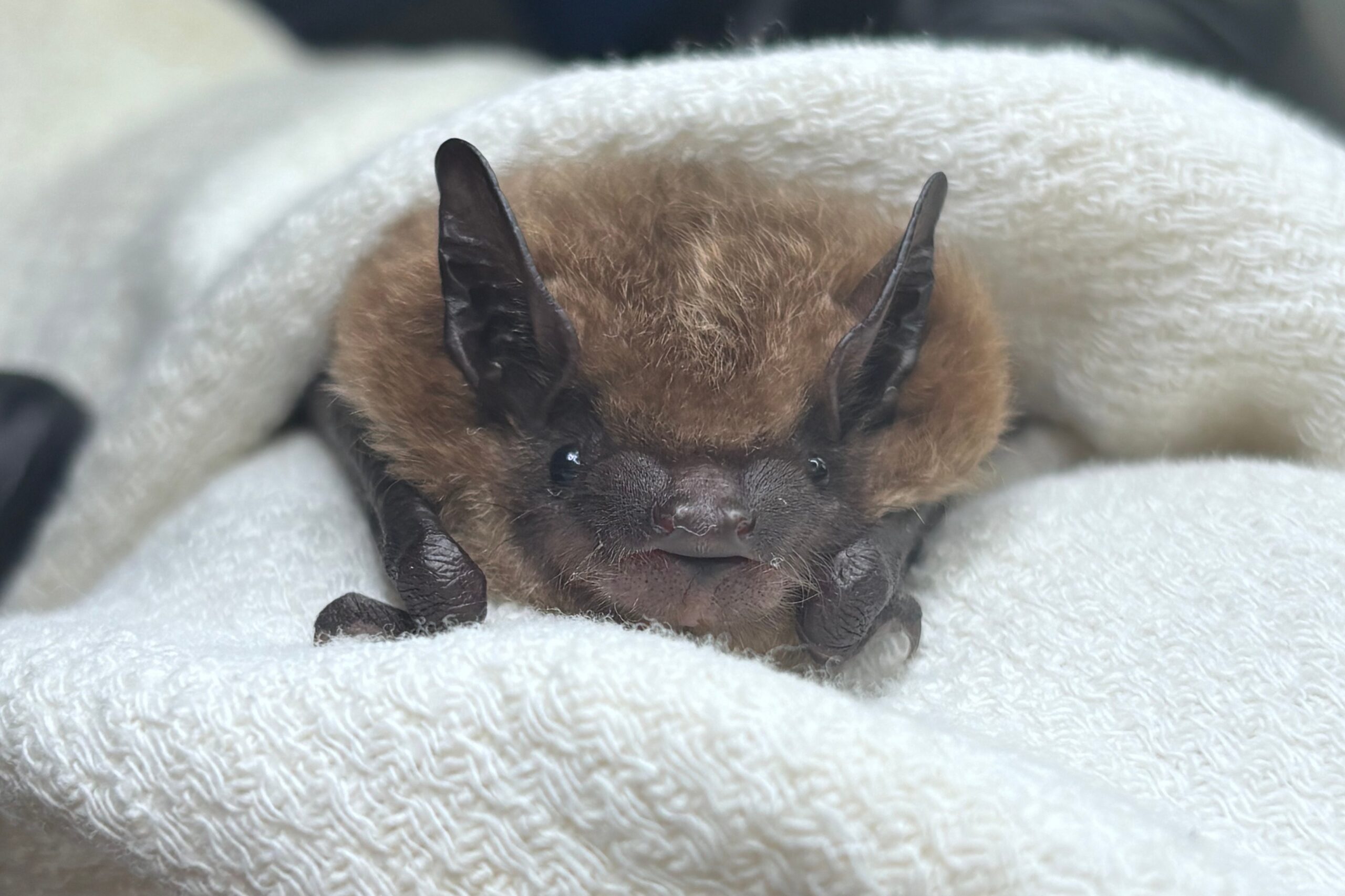
“Aw, look at her little face,” Stronsick said about an injured brown bat her husband was holding on a recent winter afternoon.
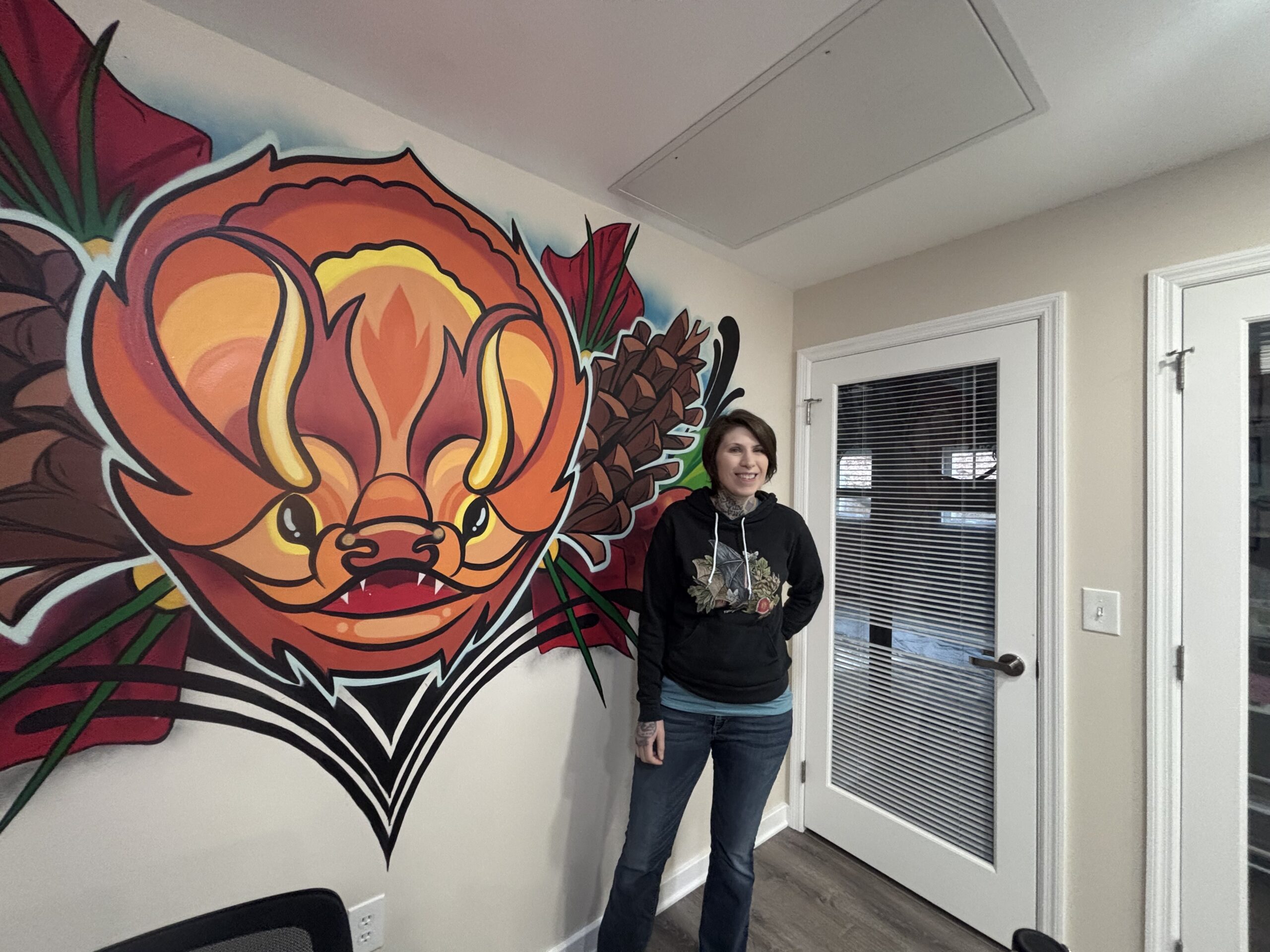
Stephanie Stronsick is the founder of PA Bat Rescue in Berks County.
Stronsick, 42, is the founder and executive director of Pennsylvania Bat Conservation and Rehabilitation (PA Bat Rescue), a nonprofit that underwent a major overhaul last year.
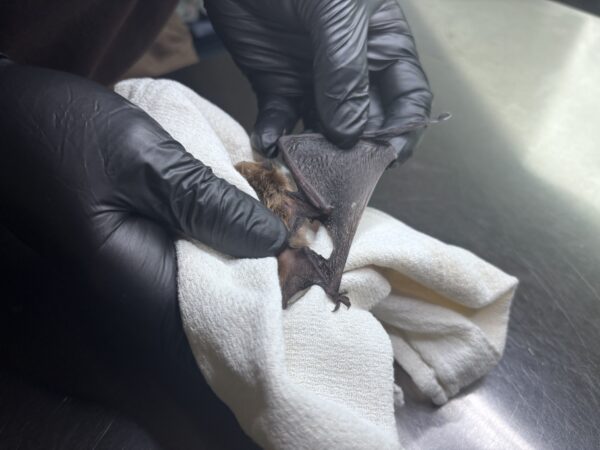
She’d like the bats to leave, ideally, but only after they’ve healed. Currently, the facility is treating over 100 bats for injuries and illness. Some bonked their heads on tall urban buildings that don’t turn off their lights at night. Others were torn up by outdoor cats or birds of prey.
Some big fruit bats, which look like puppies, were hanging upside down in one room. They used to live at the Akron Zoo.
Like the other bats in Stronsick’s house, they were asleep.
“They’re all retired,” she said.
Some of Stronsick’s bats are being treated for white-nose syndrome, a fungal disease that has killed millions of bats in North America. In Pennsylvania, it’s estimated that 99% of cave-dwelling bats have been affected by the fungus during hibernation.
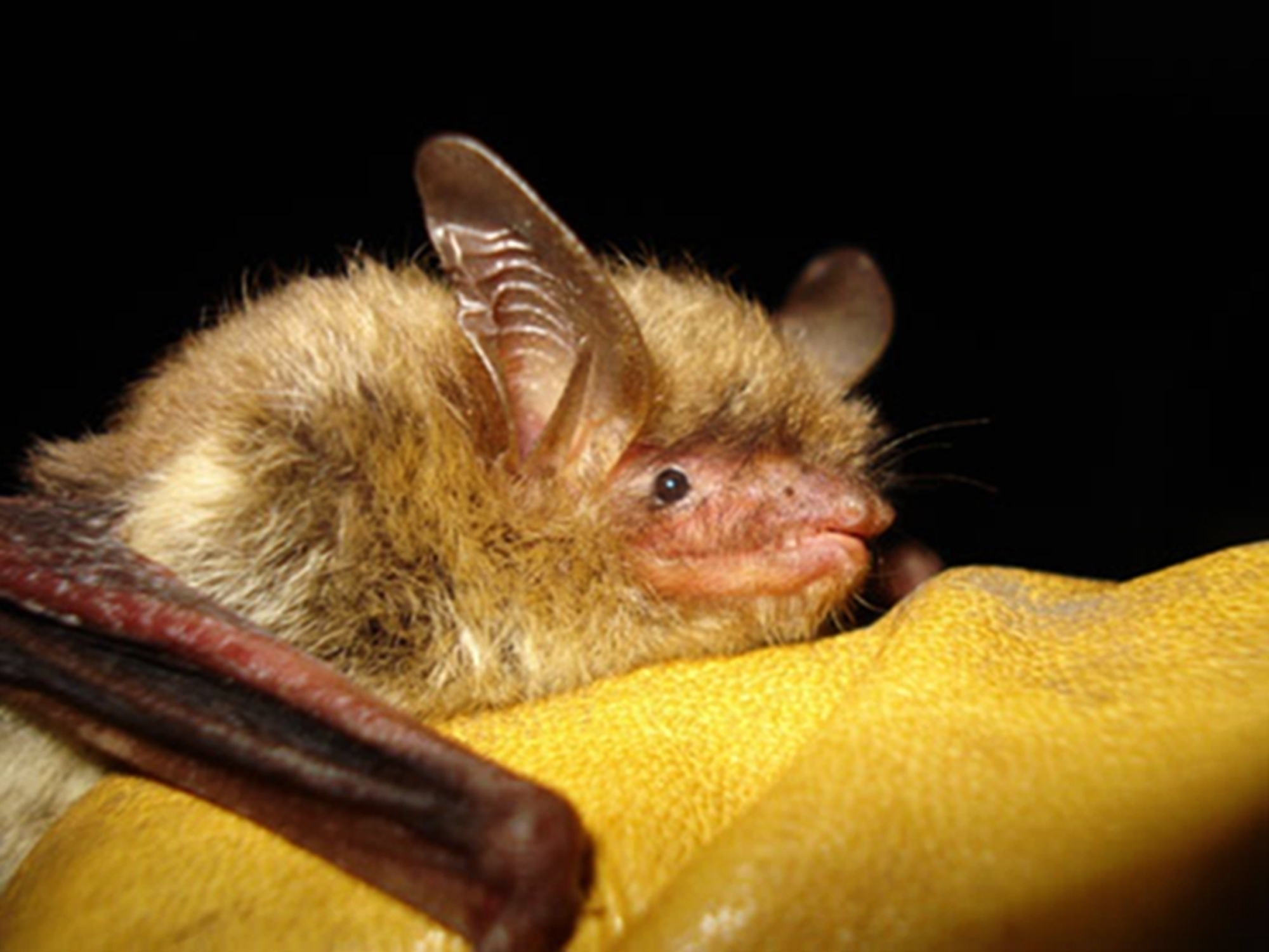
“We’ve lost so many bats that we’re at a point where if we don’t do something, they’re going to be gone,” Stronsick said. “In my lifetime, we are looking at the [local] extinction of two species that occur in Pennsylvania: the Northern long-eared bat and the tricolored bat.”
Northern long-eared bat. (Wisconsin Department of Natural Resources via AP, File)
Bats get a bad rap, Stronsick said, thanks to horror tropes, rabies fears, and the overhyped interest in vampire bats. Only three of the approximately 1,500 bat species drink blood, and they’re in Central and South America.
“I think all bats are adorable,” she said.
If the general public doesn’t see that, they should at least understand that the flying mammals are biologically fascinating, contribute to healthy ecosystems, and help scientists.
“If it wasn’t for bats, the military wouldn’t have radar, and anticoagulants that vampire bats use have been studied to treat blood clots and stroke,” said Greg Turner, a mammalogist with the Pennsylvania Game Commission.
Bats, Turner said, are also highly resistant to cancer.
In Pennsylvania, bats are insectivores, Turner said, and they eat nothing but flying insects at night. He said studies have shown that bats in Pennsylvania save farmers $74 per acre, by eating moths that would otherwise produce crop-eating caterpillars.
“They also eat mosquitoes,” he said.
Elsewhere in the world, bats help pollinate cacti and agave.
“A lot of people should be happy bats are out there performing every night,” Turner said. “No bats, no tequila. No margaritas.”
Aside from the fungus, Stronsick said bats face serious dangers similar to birds: predation from feral and outdoor cats and building strikes.
“Bats do not recognize cats as a predator. If people have cats outdoors, they absolutely should not be feeding birds in the same area, and they should not have a bat house anywhere near there either,” she said. “If you do that, you’re inviting these animals to die. ”
Stronsick said the light pollution from large cities, combined with a bat’s ability to echolocate, makes window strikes common.
“When they hit something hard, they do a lot of damage,” she said. “Cityscapes are not good environments for bats.”
Turner said wind turbines, which dot the landscape in mountainous regions of Pennsylvania, are bat killers. Bats do not constantly echolocate, he said — that would be like screaming, nonstop — and when they’re not echolocating, they’re susceptible to the turbines.
“It’s estimated that 25 bats are killed per turbine per year, and we have hundreds of turbines in the state,” Turner said.
PA Bat Rescue takes in bats, year-round.
Stronsick said she grew up outdoors, seeing bats at her grandmother’s home and playing with salamanders. She’s worked with raptors and shore birds in California and stumbled upon bats.
“They were so different from what I imagined,” she said. “I left shore birds and birds of prey and started working with bats.”
Now she has some bat tattoos.
Stronsick’s facility, which is attached to her home, underwent a major investment in May. She accepts both donations and grants, which are hard to come by, she said.
PA Bat Rescue takes in bats, year-round, for treatment and injury rehabilitation.
Since 2018, PA Bat Rescue has rehabilitated 2,000 bats. Unlike most animal rehabilitation centers, hers is as quiet as a church.
“Bats prefer silence,” she said. “The fruit bats can get a little noisy when they wake up.”
Correction: This article has been corrected to reflect that there are no bats in the refuge that have been struck by wind turbines. Most bats who do fly into wind turbines die on impact. The article also has been corrected to note that some, but not many, of the bats in Strosnsick’s care are being treated for white-nose syndrome. Finally, a quote has been amended to make clear that two bat species are at risk of extinction in our area, but not total extinction as a species.
It sits along the scenic banks of the Upper Delaware River in Pike County, surrounded by mountains, with access to major trails, canoeing, kayaking, and biking, and the tallest waterfall in Pennsylvania. It’s an adventure hub among the best in the tristate region.
But Milford isn’t just for people in hiking boots. It’s also an artsy town, with galleries, a theater, and dedicated film, music, and writers’ festivals. It’s a shopping destination too, with a slew of antique and gift shops, and a healthy-living store that rivals anything in Philadelphia or New York.
“Geographically, I believe Milford has the edge over most small towns around,” said local entrepreneur Bill Rosado, who owns some popular businesses in town. “It is centered so well. Just looking at the town is a treat to me.”
There’s plenty of history in Milford, too, which calls itself the “birthplace of the conservation movement” as it was home to Gifford Pinchot, founder and first chief of the U.S. Forest Service. It also has a historical museum that’s home to a unique and morbid artifact from the Civil War era.
And, finally, you have to eat. Milford is home to fine dining at historic hotels, both fancy and cozy bars, along with breweries, classic diners, organic coffee, and, thanks to Rosado, authentic food from Mexico’s Yucatan peninsula. (He was born there.)
Milford’s about 75 miles northwest of Manhattan and just across the river from North Jersey, so yes, you’ll see Yankees and Giants gear, but it’s just 135 miles from Philly, so get up there.
One of the cabins available for rent at Sean Strub’s Dwarfskill Preserve in Milford, Pa.
Stay: Dwarfskill Preserve
There are plenty of hotels in downtown Milford that are in the midst of everything the town has to offer, including the historic and ornate Hotel Fauchère and the Tom Quick Inn, which would be at home in Cape May. Rosado owns both of them.
I’ve been eyeing up the tiny cabin at the 575-acre Dwarfskill Preserve, up in the hills above town, for years now, as a former colleague had spent extended time there over the years and shared lovely pictures. It’s owned by former Milford mayor Sean Strub and consists of three separate properties: the one-room cabin I rented for a few nights with my girlfriend, Jen, and my dog, Wanda, and two larger cabins that can fit more people.
We stayed there over the New Year’s holiday, cooking brisket in the microwave and making coffee on the hot plate. While Milford and the Dwarfskill are undoubtedly at their best in the summer and fall, when you can take full advantage of the outdoor opportunities, including the swimming hole at the cabin, we watched both the wood fireplace and the ample snowfall outside for hours. It was hard to leave, a full hygge experience, in Northeastern Pennsylvania.
📍 Dwarfskill Falls Lane, Milford, Pa. 18337
Grey Towers, the Pinchot family residence, outside Milford, and the family’s haven from 1886 to 1963. The family made its fortune in lumber.
Explore: Grey Towers National Historic Site
If you drive around Pennsylvania as much as I do, you’ll see the name Gifford Pinchot quite a bit. Pinchot was a two-term governor of the Commonwealth and has a 54,000-acre state forest named after him.
He went on to found and run the U.S. Forest Service and is generally considered a pioneer in the U.S. conservation movement. Pinchot was born in Milford and his home, Grey Towers, is a national historic landmark run by the U.S. Forest Service. Its curated gardens, French chateau-style stone architecture, and expansive library can all be seen on tours, both in-person during spring, summer, and fall, and online all year round.
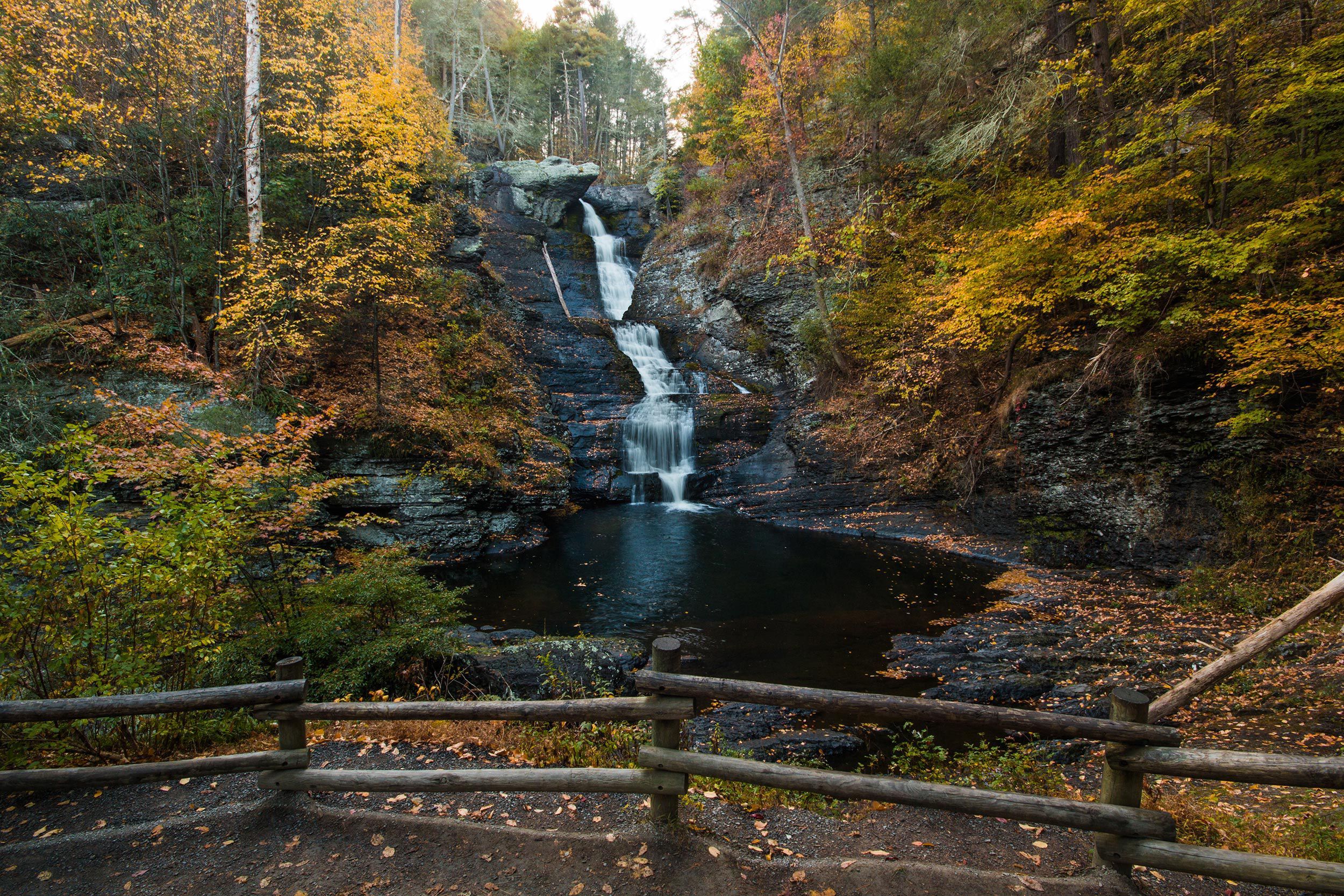
At 150-feet tall, Raymondskill Falls is the tallest waterfall in Pennsylvania.
If you’re interested in something a little more outdoorsy, visit Raymondskill Falls, which, at 150 feet, is the tallest in Pennsylvania. You can, technically, visit in winter, but the ice and snow could be treacherous. In summer, you might have to brave some crowds and jammed parking lots, but the views are worth it.
📍 Grey Towers: 122 Old Owego Turnpike, Milford, Pa. 18337
Learn: The Pike County Historical Society at the Columns
It’s not every day that a county historical society can really wow you with an artifact, but Pike County punches up with a Civil War relic you won’t find anywhere else in the world: the bloody U.S. flag used to cradle Abraham Lincoln’s head after he was shot at Ford’s Theatre in 1865.
The flag and other exhibits are housed in “the Columns,” a 1904 neoclassical-style mansion. Want to learn how they obtained the flag? Visit on Wednesdays, Saturdays, and Sundays.
It’s a place to get coffee or tea and healthy pastries. It’s a community hub, where people gather to meet or work remotely.
It’s also a place to look good, with woolens and other “natural” clothes, and smell good, or simply be good, with homesteading supplies and books.
📍 Broad Street, Milford, Pa. 18337
Eat: Felix’s Cantina at La Posada
Jen spends weeks in the Yucatan every winter, so she was surprised to see a restaurant in Northeastern Pennsylvania promising a “taste of the Yucatan Peninsula and other regional dishes from southern Mexico.”
Rosado, who also owns a historic theater in town, owns the Cantina at La Posada, yet another one of his hotels. He was born in Merida, the capital of Yucatan.
He knows the dishes well, and she approved, describing our pork and birria tacos as “fattening and delicious.”
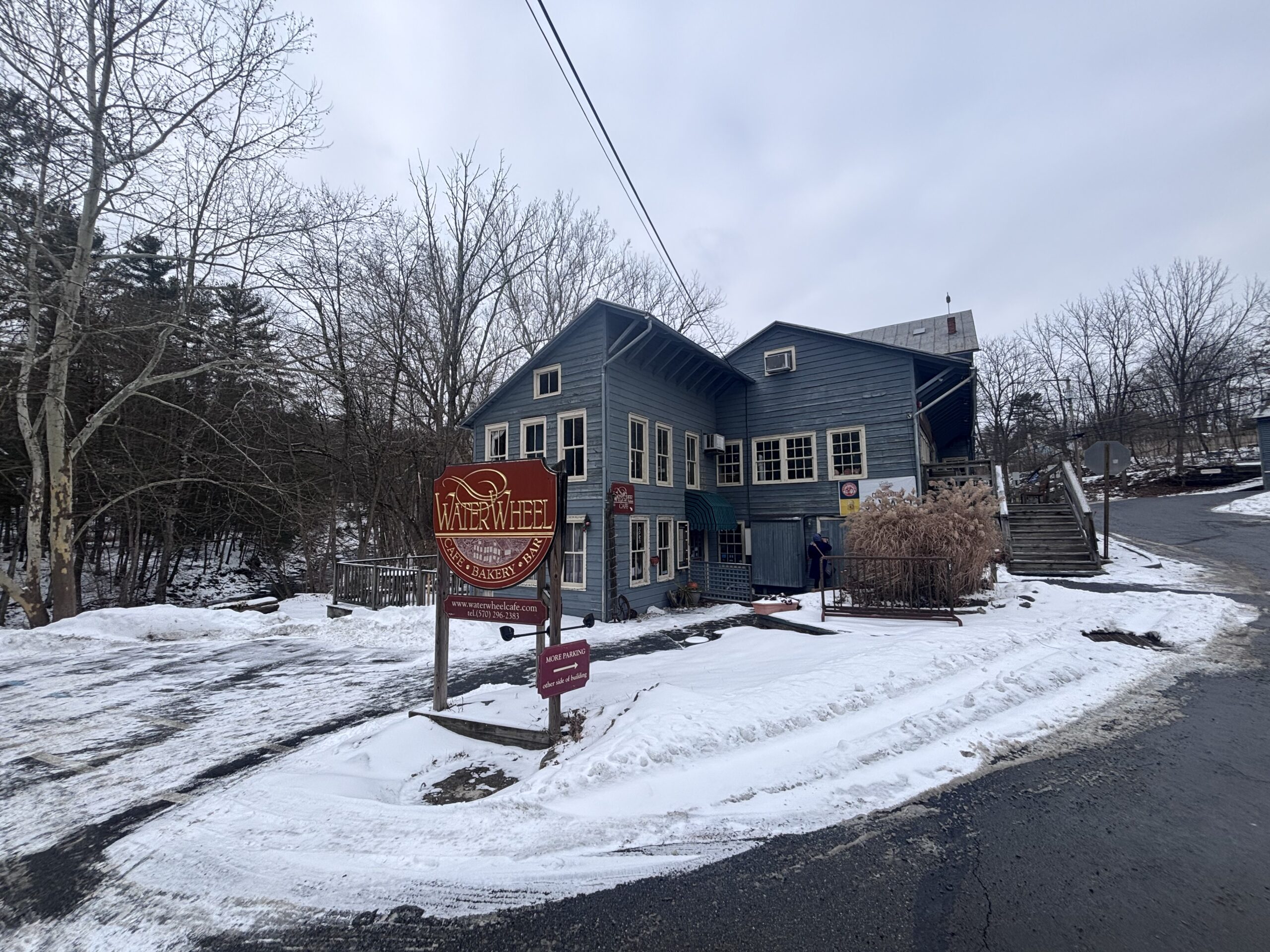
For breakfast, the Waterwheel Café Bakery Bar, an old grist mill along Sawkill Creek, serves up a killer thick-cut challah French toast. We basically licked the plate clean.
HARRISBURG — As the rural reporter at The Inquirer for about the last decade, I’ve cuddled bear cubs, rattlesnakes, and alligators, trembled in fear at horses, and been punched by the scent of deer urine farms.
Still, nothing scares me more than the mushroom burger at the Pennsylvania Farm Show.
I haven’t really missed a show since I began covering rural Pennsylvania, and I probably never will, regardless. If you’ve been there, you know. If you haven’t, take my advice from last year: Pull your kids out of school, and go there this week. The show runs through Saturday at the Pennsylvania Farm Show Complex & Expo Center in Harrisburg, and it’s free to get in. It’s an agricultural spectacle you’ll never forget, a place to see show rabbits, hogs, goats, and cows, all while learning where your food comes from.
It’s also a place to eat, with a gargantuan food hall filled with offerings I’m still uncovering. Shannon Powers, a spokesperson for the Pennsylvania Department of Agriculture I pester often during the show, smartly said she didn’t have a favorite meal there.
“But on a cold day, a cup of trout chowder hits the spot,” she told me.
Trout stew? Who knew? There’s also goat stew.
There’s a mind-boggling number of things on the menu at the Pennsylvania Farm Show in Harrisburg.
I do have favorites, though, including the sugared German almonds I end my day with every year. I went on opening day, Saturday (never go on opening day), and took my daughter, sampling some old standbys and interviewing folks about some popular foods there.
4-H brisket sandwich
As a man of tradition, if I like a certain item on a menu, I’ll get it over and over again, for the rest of my life. I still have dreams about the ’90s-era Wawa hot roast beef and cheese sandwiches I ate religiously.
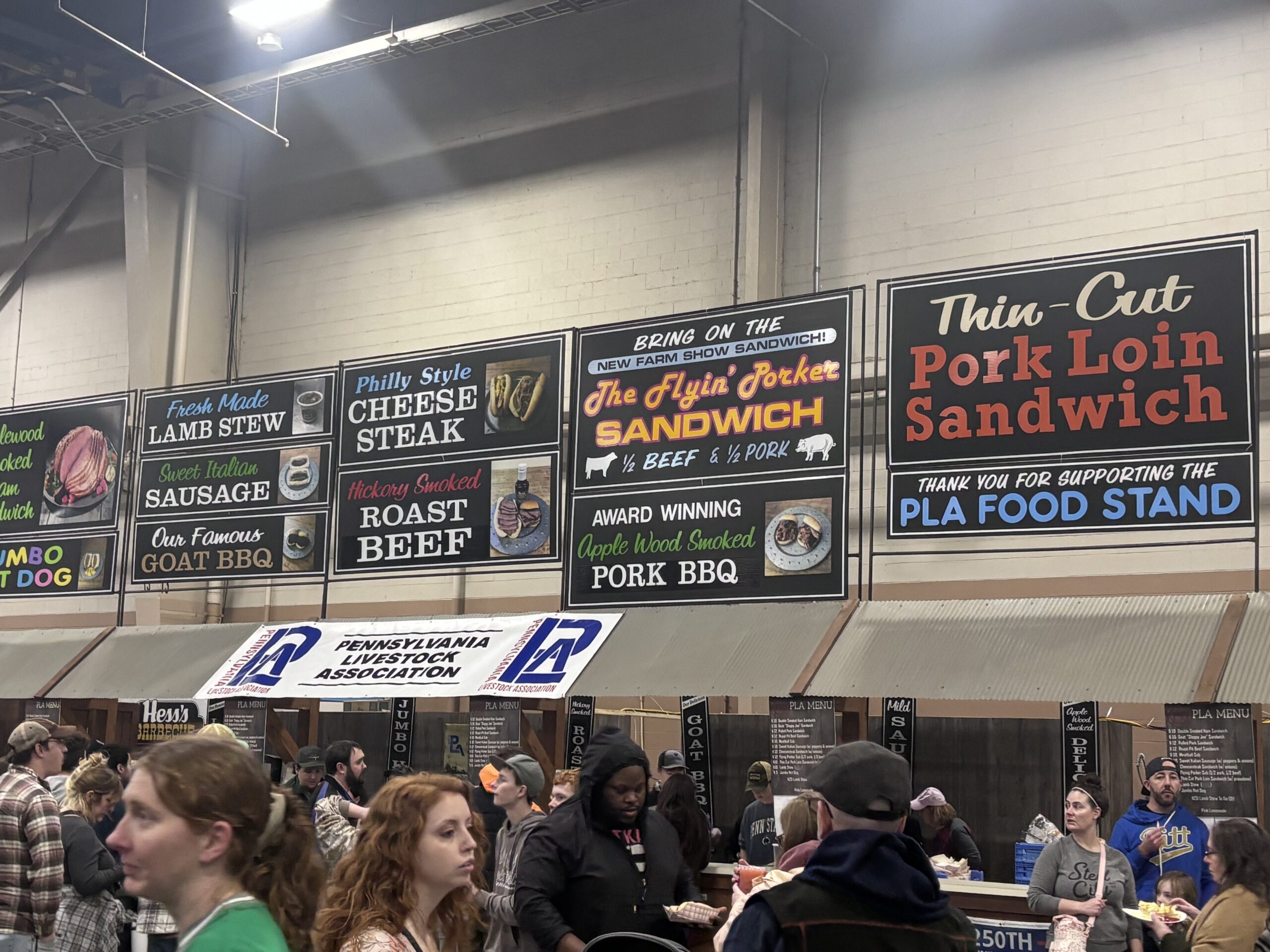
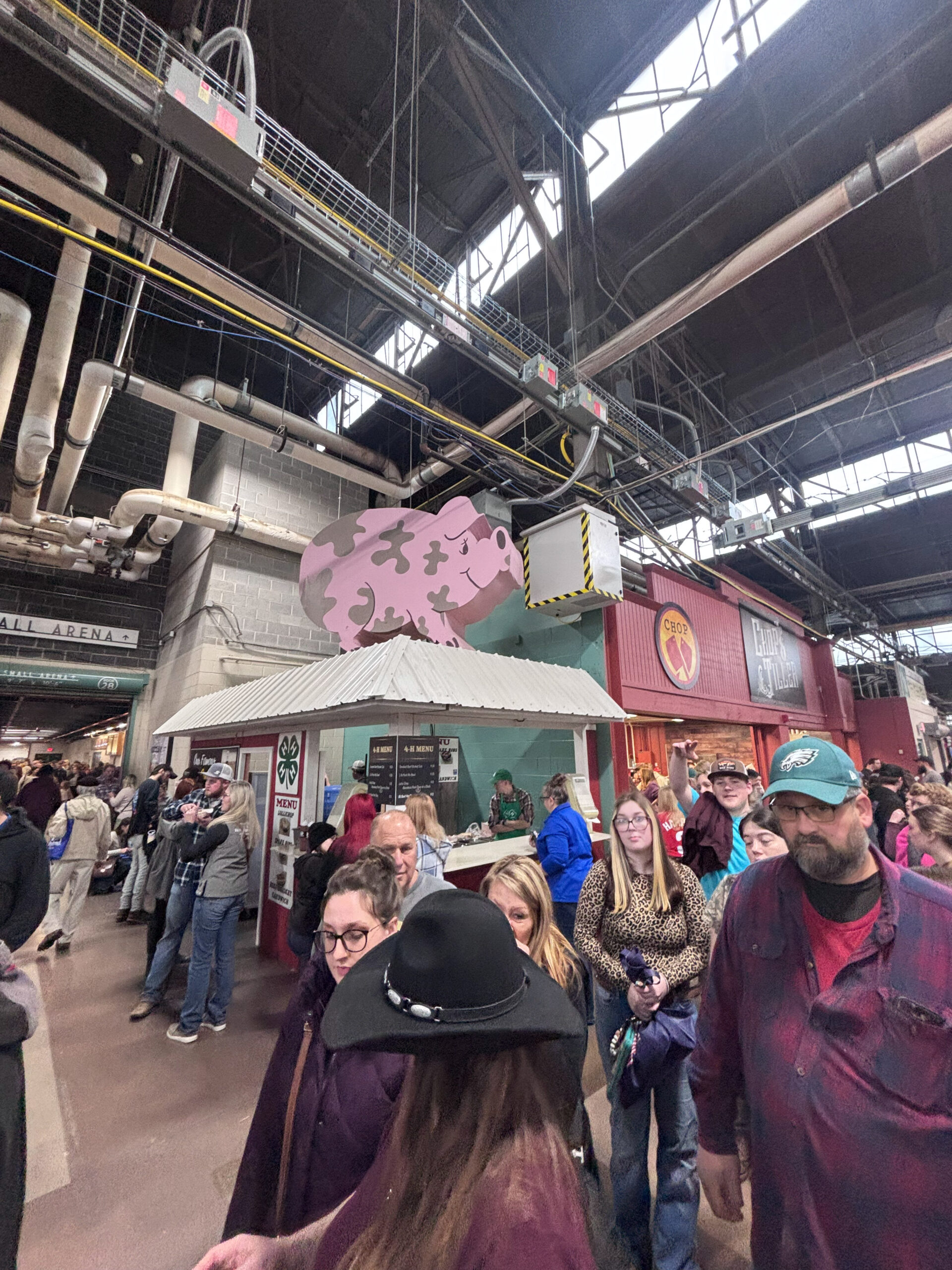
Anyhow, I get a brisket sandwich every year from a 4-H stand that’s actually not in the food hall but rather the main hall, where the famous butter sculpture is. Get a map, seriously. You’ll need it.
Look for the pig in the Main Hall, and you’ll find the 4-H brisket sandwich, plus pork chops on a stick.
Brisket has a special place in my heart. I ate it for Thanksgiving and New Year’s Eve, and this year, I paid $14 for thick-sliced brisket on a roll, which I slathered in BBQ sauce, while squatting on the floor.
Then, I followed it up with a flu shot, another Farm Show tradition.
This sandwich was not better than my holiday briskets, but I’m easy. Almost everything I’m willing to eat is “pretty good.”
I assumed proceeds of the sales go to Pennsylvania 4-H clubs. The folks cutting the brisket didn’t know, though my receipt credits the Pennsylvania Livestock Association.
If you want to save a few bucks at the 4-H booth, the pork chop on a stick is $8.
Mushroom burger
I know mushrooms grow underground, and that Chester County is one of the nation’s top producers, but I assumed they come from even deeper places.
Pennsylvania is the nation’s top producer of mushrooms, most of them coming from Chester and Berks Counties.
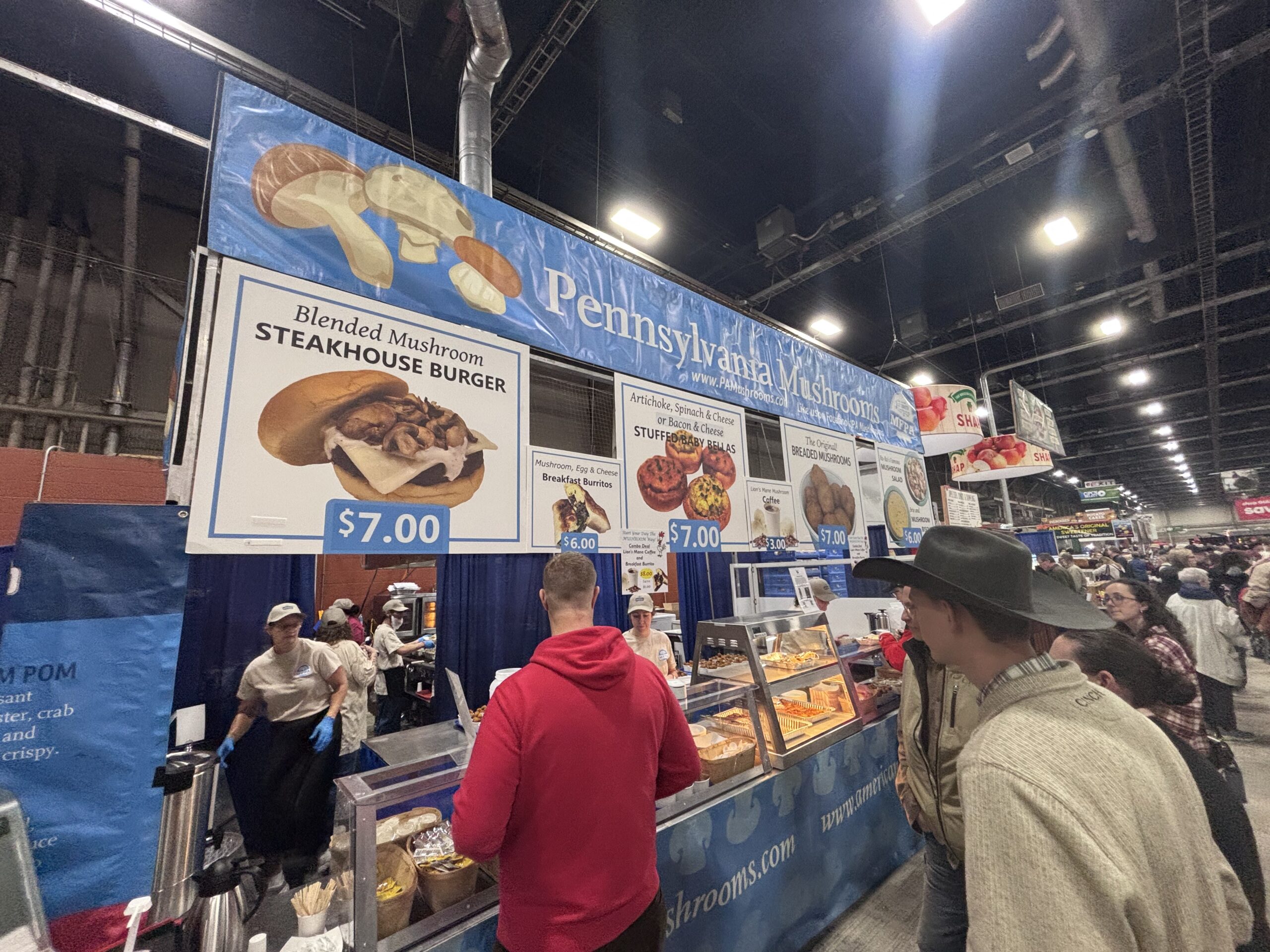
I’m not a fan and can’t be convinced, though I did have somewhat of a revelation about the mushroom burgers for sale at the Mushroom Growers of Pennsylvania booth.
They are “blended” with beef, specifically for big babies like me.
“It’s an introduction, an easy introduction. It’s 75% ground beef and 25% chopped mushrooms,” said Gale Ferranto, of Mushroom Farmers of Pennsylvania. “Would you like to try one?”
I declined.
There are more mushroom offerings, too, something called a “mushroom salad,” which I probably wouldn’t eat for less than $500.
“Somebody back home in Philly wanted the mushroom salad. She’s pregnant, like 7 months pregnant, so you have to do what she says,” said attendee Mark Soffa.
Grilled cheese
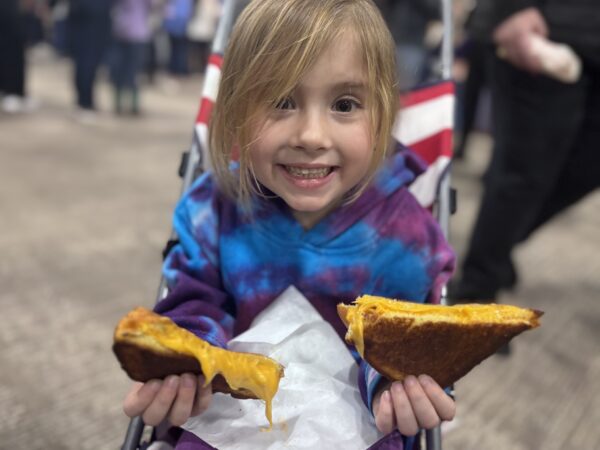
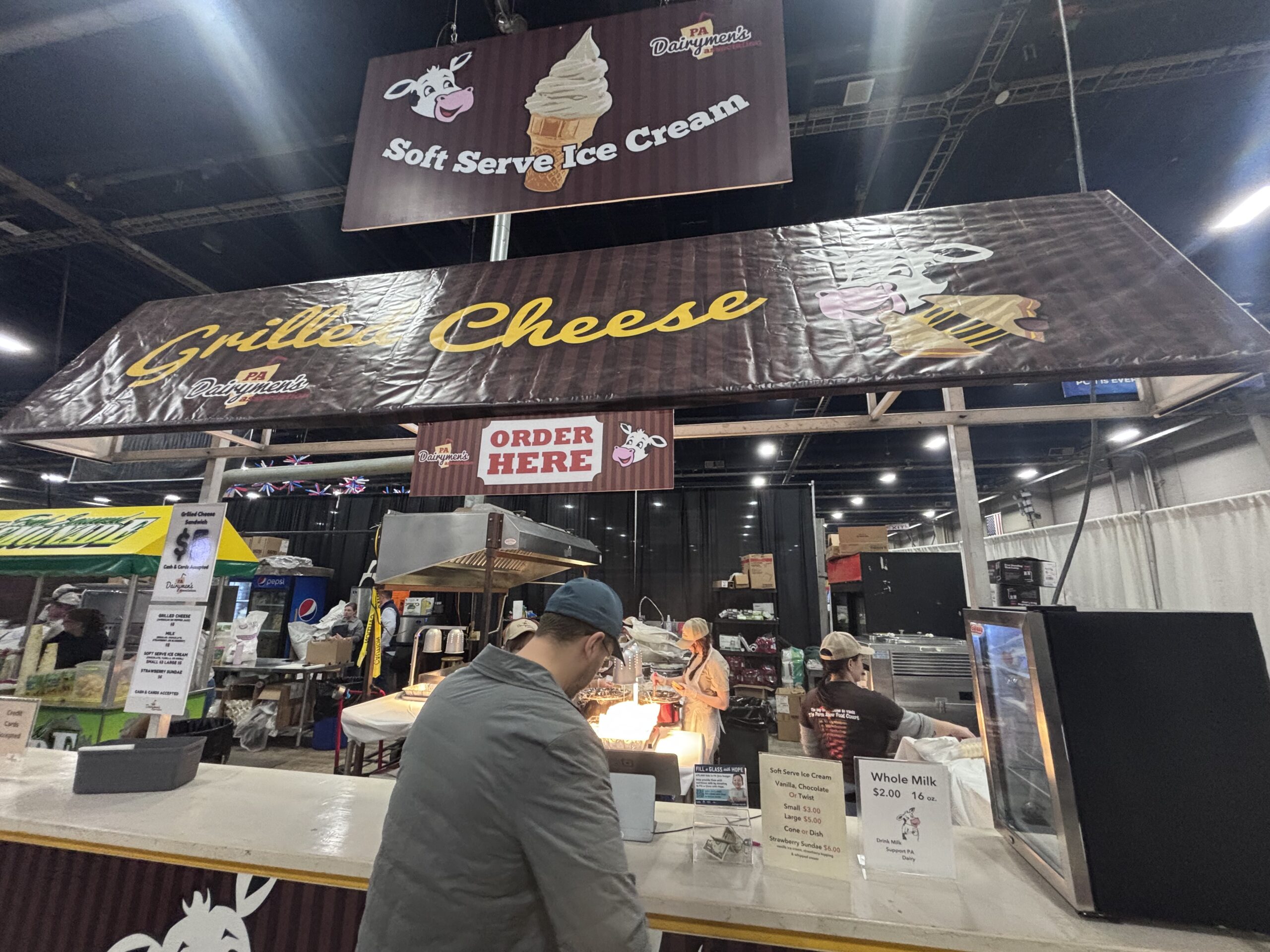
The Pennsylvania Dairymen’s Association offers up a lot of food during the week, and when I saw grilled cheeses — a parent’s best friend — I grabbed one for my daughter, along with a chocolate milk.
The combo is wallet-friendly, too, just $7.
“Chocolate milk comes from brown cows,” I told my daughter.
She’s too smart for that joke and rolled her eyes, like her mother.
The PA Dairymen’s Association sells grilled cheese, cheese cubes, and, of course, the ubiquitous milkshakes.
The grilled cheese crew actually had crockpots full of melted butter, slathering white bread before sending it off to the grill. You can choose American or pepper jack.
“We’ll at least make a few thousand today,” the cashier told me. “We made 500 yesterday, and that was a half day.”
My daughter’s verdict: “Very gooey.”
Pierogies and sweet potatoes
I’m cheating a bit here, including two items from the PA Cooperative Potato Growers, Inc., which is the oldest potato cooperative in the United States.
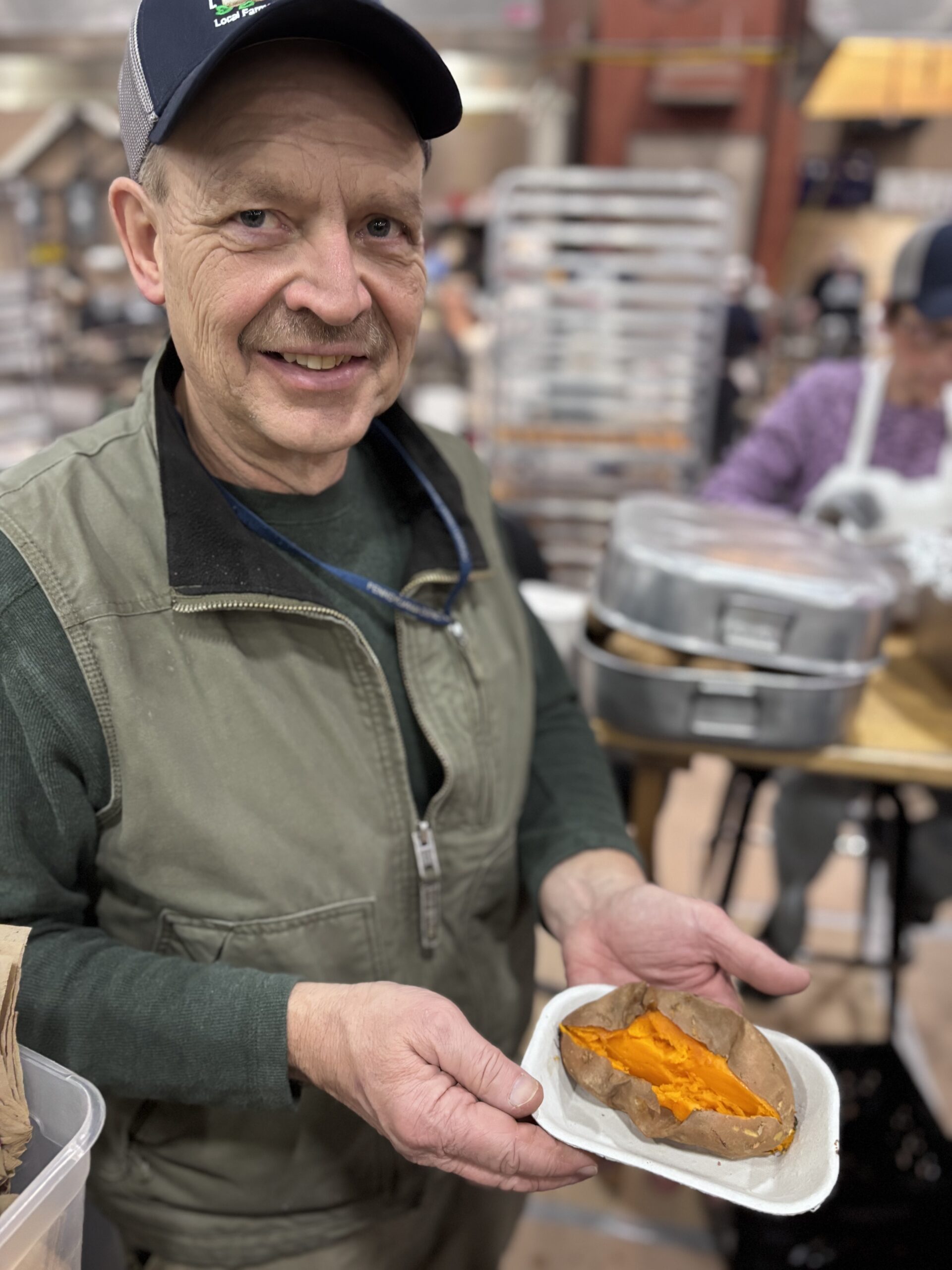
I planned on focusing entirely on the sweet potato, which is swimming in butter and brown sugar, with some cinnamon on the side. It’s basically a dessert.
The sweet potato at the Pennsylvania Farm Show is basically a dessert.
My Polish heritage requires that I never turn down a pierogi, though, or never fail to mention their wholesome goodness. I grew up on them, in the way other folks may have grown up on mac and cheese or PB&J. I actually prefer mine fried a bit, but the Farm Show serves them drowning in butter and onions: 5 for $4.
You can’t really mess up a pierogi, particularly in the Keystone State.
“These aren’t like Maryland pierogies,” a woman from Maryland told me.
The potato growers told me they sell 6 tons of baking potatoes at the show, plus 8 to 10 tons for french fries, and about 1.5 tons of sweet potatoes.
Plus, there are potato doughnuts.
The milkshakes
The most well-known must-have item at the Pennsylvania Farm Show are the milkshakes offered up by the Pennsylvania Dairymen’s Association since 1953.
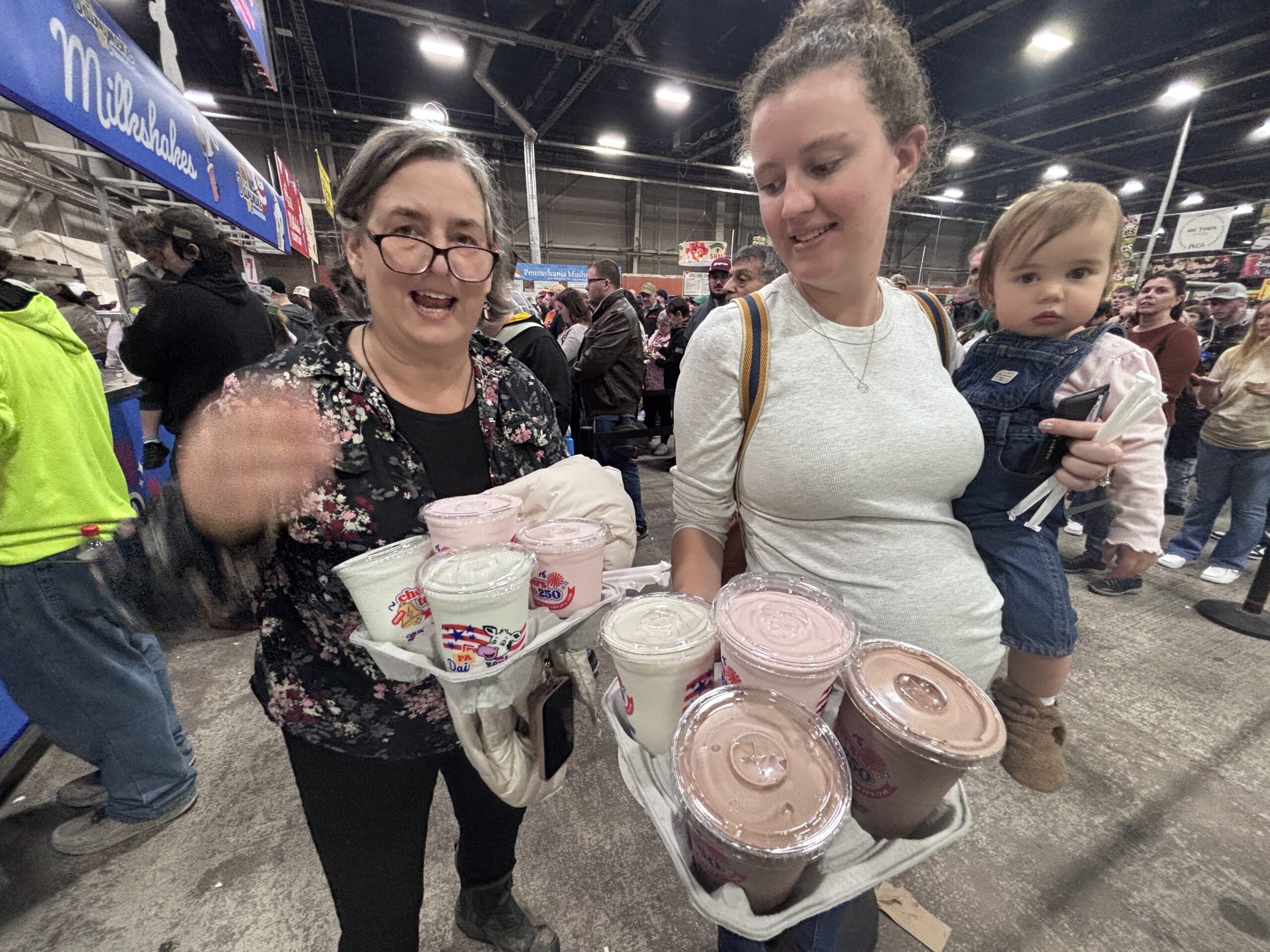
Three generations with 10 milkshakes at the Pennsylvania Farm Show.
On Saturday, the lines were a bit bonkers, more than 100 deep on each of the dozen or so cash registers in the various locations where they’re sold at the farm show complex. I’ve had them before, and I’ll say they are “thick and creamy” as advertised.
Are they different than any other soft-serve-style milkshake in America? I have to work with these people, so yes, I’ll say they’re different.
A colleague who had a milkshake at the Farm Show told me she didn’t “get the hype.”
I ran into a mother and daughter who had ordered 10 of them.
Either way, you have to have one while you’re there.
You just finished watching Back to the Future with your parents and cousins at the multiplex, and now it’s time to pile into the Chevy Caprice wagon with faux wood-paneled sides. You beg your dad to put in the Wham! cassette, one more time.
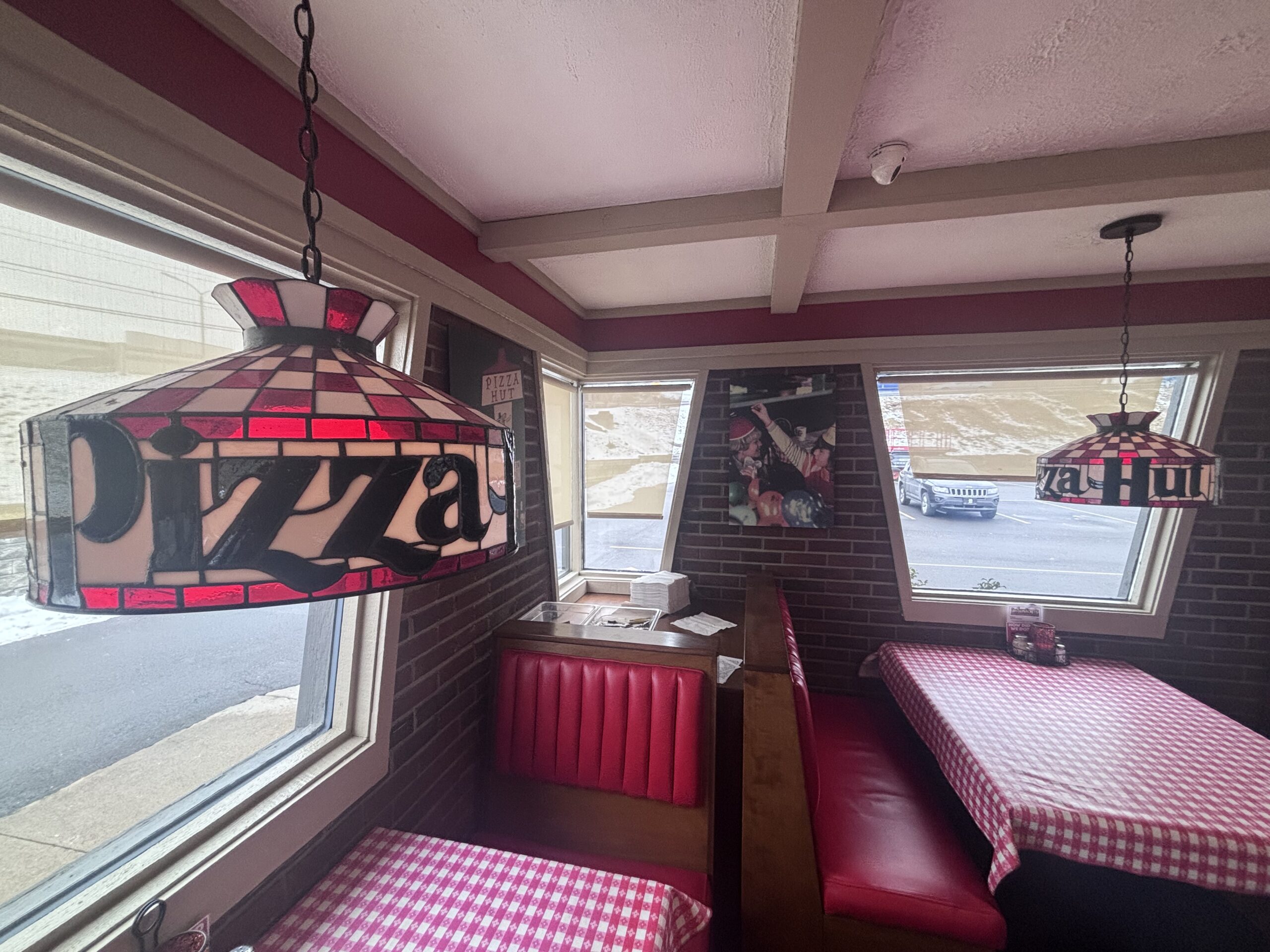
You’re going to Pizza Hut, of course, and the parking lot is packed. Inside, there are stained-glass lamps hanging over the checkerboard tables, a salad bar, and those red plastic cups.
The server brings out your deep-dish pies. They smell almost buttery. You grab your fork and knife because, well, that’s how you eat at Pizza Hut.
Can you smell it? Taste it? Ah, nostalgia.
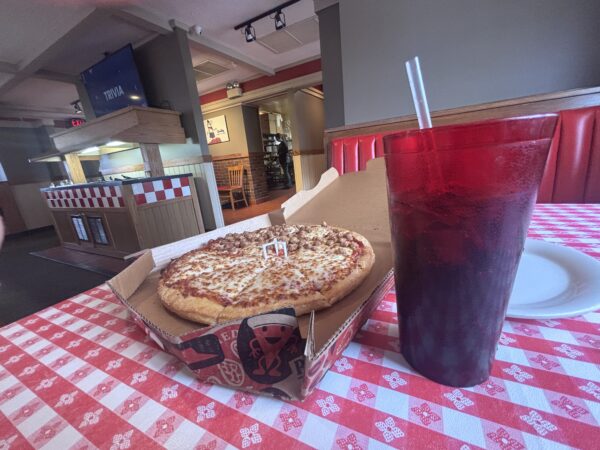
A Pizza Hut location in Wyoming County, Pennsylvania, was remodeled into a “classic” location, featuring the salad bar, red, plastic cups and other vintage touches.
If you’re hankering for Pizza Huts of bygone days or places like the “birthday room” at McDonald’s, you often have to travel back into your memory. Not anymore.
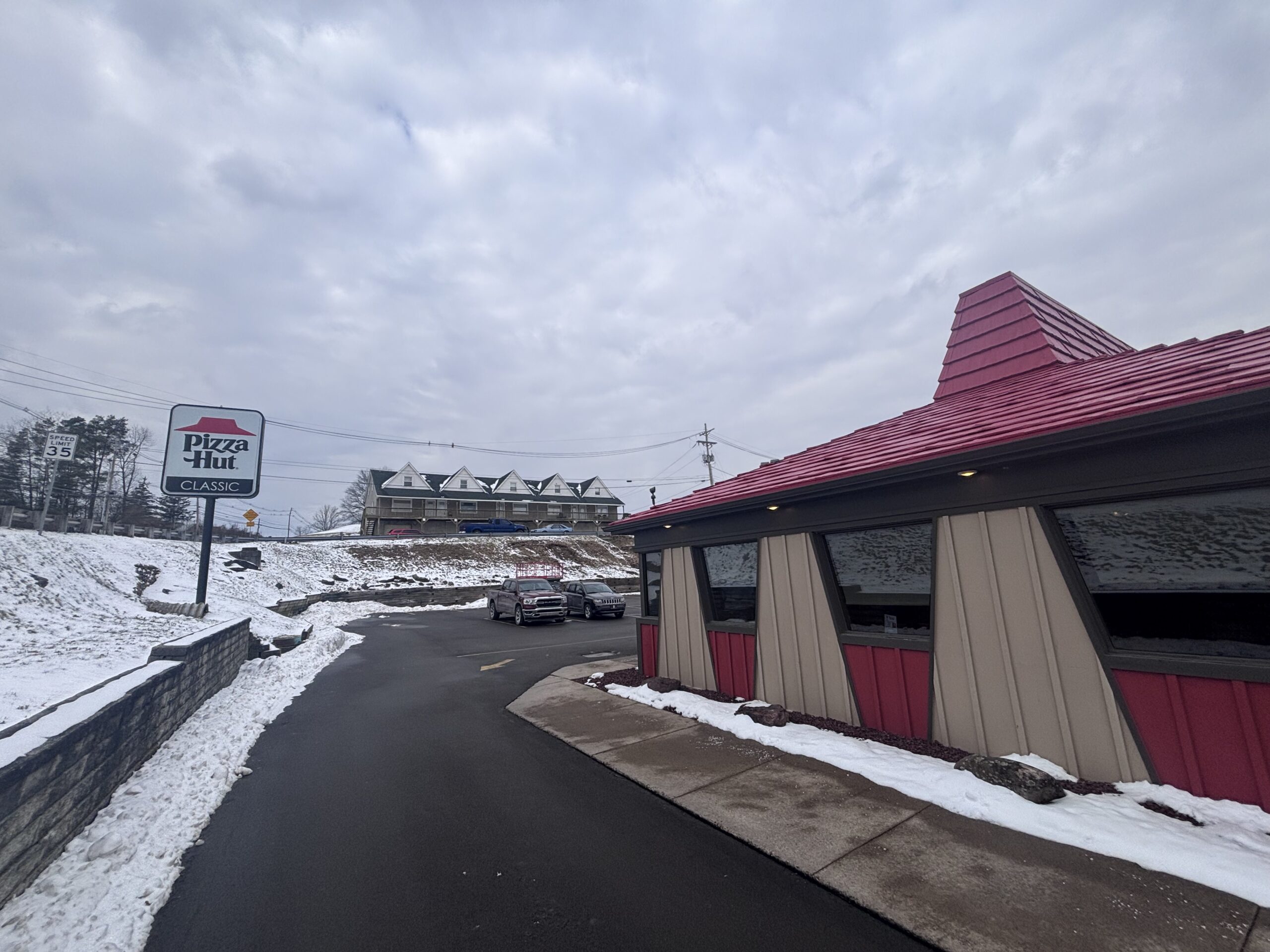
Pizza Hut has tapped into the power of nostalgia across the United States by resurrecting some “classic” restaurants. There’s one in Tunkhannock, a small town in the Endless Mountains of Wyoming County, about 140 miles northeast of Philadelphia.
The Pizza Hut, which has been in a shopping center parking lot for decades but was totally revamped — restored? — into a classic location, complete with the red, angled roof.
A Pizza Hut location in Wyoming County, Pennsylvania, was remodeled into a “classic” location, featuring the salad bar, red, plastic cups and other vintage touches.
“No touchscreen kiosks, no sleek redesign, just the classic dine-in Hut experience you thought was gone forever. It’s more than pizza. It’s a full-blown childhood flashback served with breadsticks and a plastic red cup!” the Just Pennsylvania Facebook page wrote in May in a post that received 7,500 shares.
It’s not clear how many Pizza Hut Classic locations exist in the United States, and, oddly, the company did not return multiple requests for comment. According to the Retrologist website, the Tunkhannock location is the only one in Pennsylvania. There appears to be about two dozen in the United States, according to the site, though none in New Jersey or Delaware. The only New York location is in Potsdam, which is closer to Canada than to Pennsylvania.
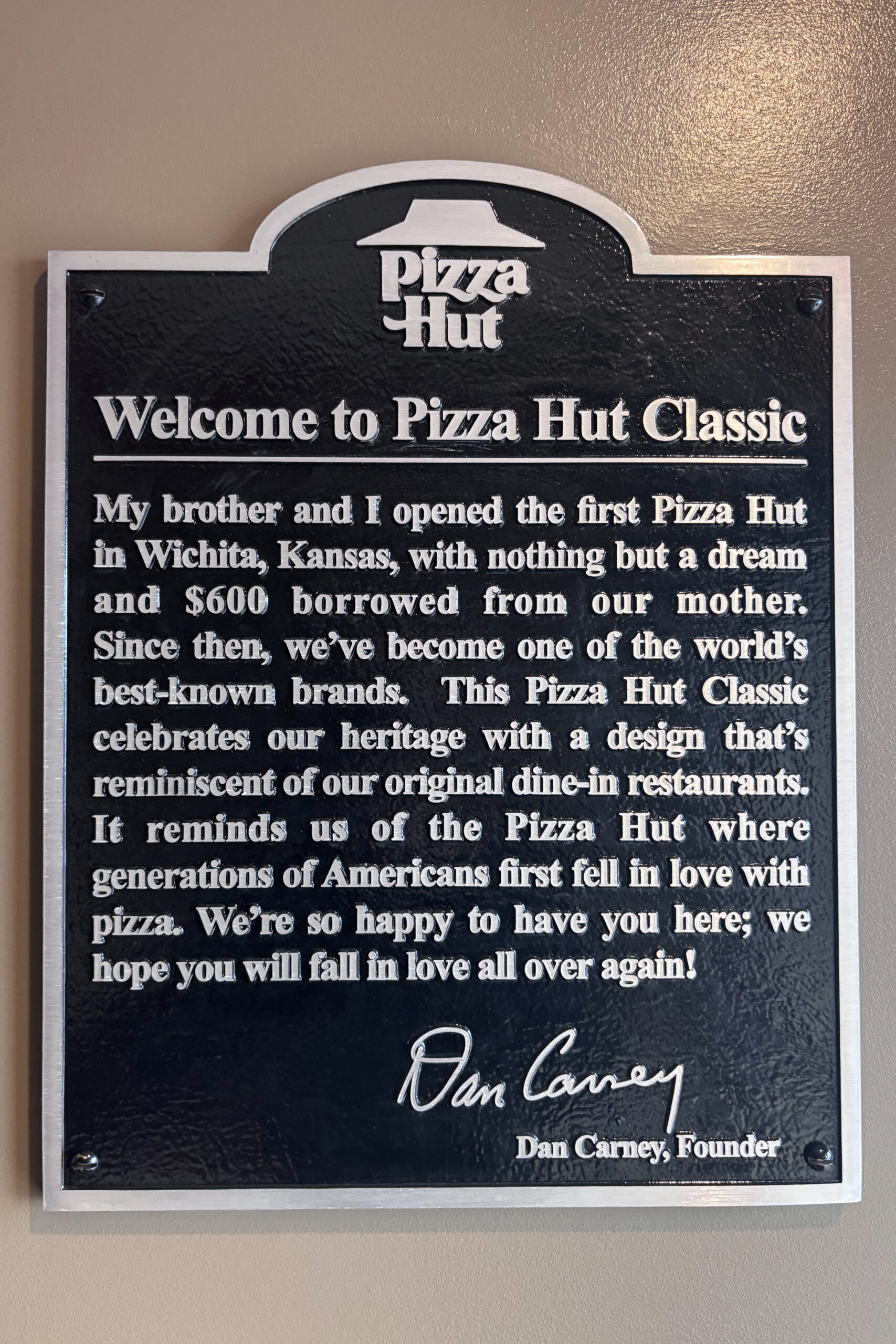
A plaque on the wall of the Tunkhannock location, written by Pizza Hut founder Dan Carney, explains the concept.
“It reminds us of the Pizza Hut where generations of Americans first fell in love with pizza,” Carney wrote.
When The Inquirer visited early on a recent Monday, a lunch crowd was beginning to file in.
“It was probably 10 years ago that they turned it into a classic, and our business has really exploded in the last year,” said Paul Bender, a shift leader at the Tunkhannock location. “I don’t know how it happened, but people really began to notice. I’ve had customers come in from Wisconsin, Oregon, Michigan, and, obviously, Pennsylvania and New Jersey. We get a lot of people in the parking lot making videos.
Bender said the Tunkhannock location is still hoping for a jukebox and old-style video games, like the tabletop Ms. PAC-MAN.
“That would seal the deal,” Bender said.
Bender has wondered why more iconic chains haven’t created throwback locations, like Pizza Hut. He’s seen the power of nostalgia firsthand.
“Instead, it seems like more and more are getting rid of dine-in altogether, ” Bender said. “But I’ve seen grown men, in tears here, saying they came here with their father and mother.”
Last year, it was reported that a Pittsburgh-area Pizza Hut was bringing back dine-in service, though videos show that it’s only gone half-classic so far.
A Pizza Hut location in Wyoming County, Pennsylvania, was remodeled into a “classic” location, featuring the salad bar, red, plastic cups and other vintage touches.