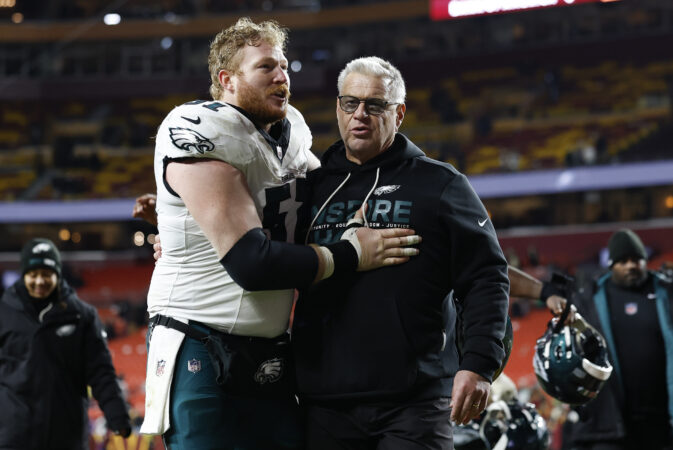
After 13 seasons, Jeff Stoutland, the longest-tenured Eagles coach, will no longer be the team’s offensive line coach as the offensive coaching staff continues its overhaul.
Stoutland, who has been on the staff since 2013 and worked under head coaches Chip Kelly, Doug Pederson, and Nick Sirianni, announced his departure from coaching in a social media post Wednesday night.
Philadelphia,
I’ve decided my time coaching with the Eagles has come to an end.
When I arrived here in 2013, I did not know what I was signing up for. I quickly learned what this city demands. But more importantly, what it gives back.
“I’ve decided my time coaching with the Eagles has come to an end,“ Stoutland wrote. ”When I arrived here in 2013, I did not know what I was signing up for. I quickly learned what this city demands. But more importantly, what it gives back.”
The Eagles wanted Stoutland back, a source said, but Stoutland chose to step away from coaching. He may still be around the team in an unofficial capacity.
Stoutland, who turns 64 next week, was also the team’s run game coordinator, but his influence over the running game lessened during the season when the Eagles shifted their game planning and play-calling to offset the early struggles on the ground, The Inquirer reported last week.
Stoutland has been a coach for more than 40 years and has been widely regarded as one of the best offensive line coaches in the league for some time. His influence on the team’s offensive front was critical in its two Super Bowl victories. The success stories under his tutelage have been numerous. He helped turn Jordan Mailata from a rugby player into an All-Pro, oversaw two of the best offensive tackles in recent history, Jason Peters and Lane Johnson, and just a season ago helped Mekhi Becton turn his career around.
Stoutland has also been key in the Eagles’ success using their signature Tush Push, though, like the running game this season, that aspect of the offense took a step back.
“Stout’s influence throughout football is immense, having helped countless players reach their true potential, including many who went on to earn All-Pro honors and some who developed into future Hall of Fame talents,” the Eagles said in a statement. “His passion for the development of young players set the bar not only for our organization but for the entire National Football League.
“It is hard to fathom another coach investing more personally and professionally in their players than Jeff Stoutland.”
The Eagles had 10 first-team All-Pro selections under Stoutland, whose offensive line teaching earned the nickname “Stoutland University” during his time with the team. Jason Kelce (six) and Johnson (two) made up eight of the All-Pro honors, and Peters and Evan Mathis each were selected once during Stoutland’s tenure.
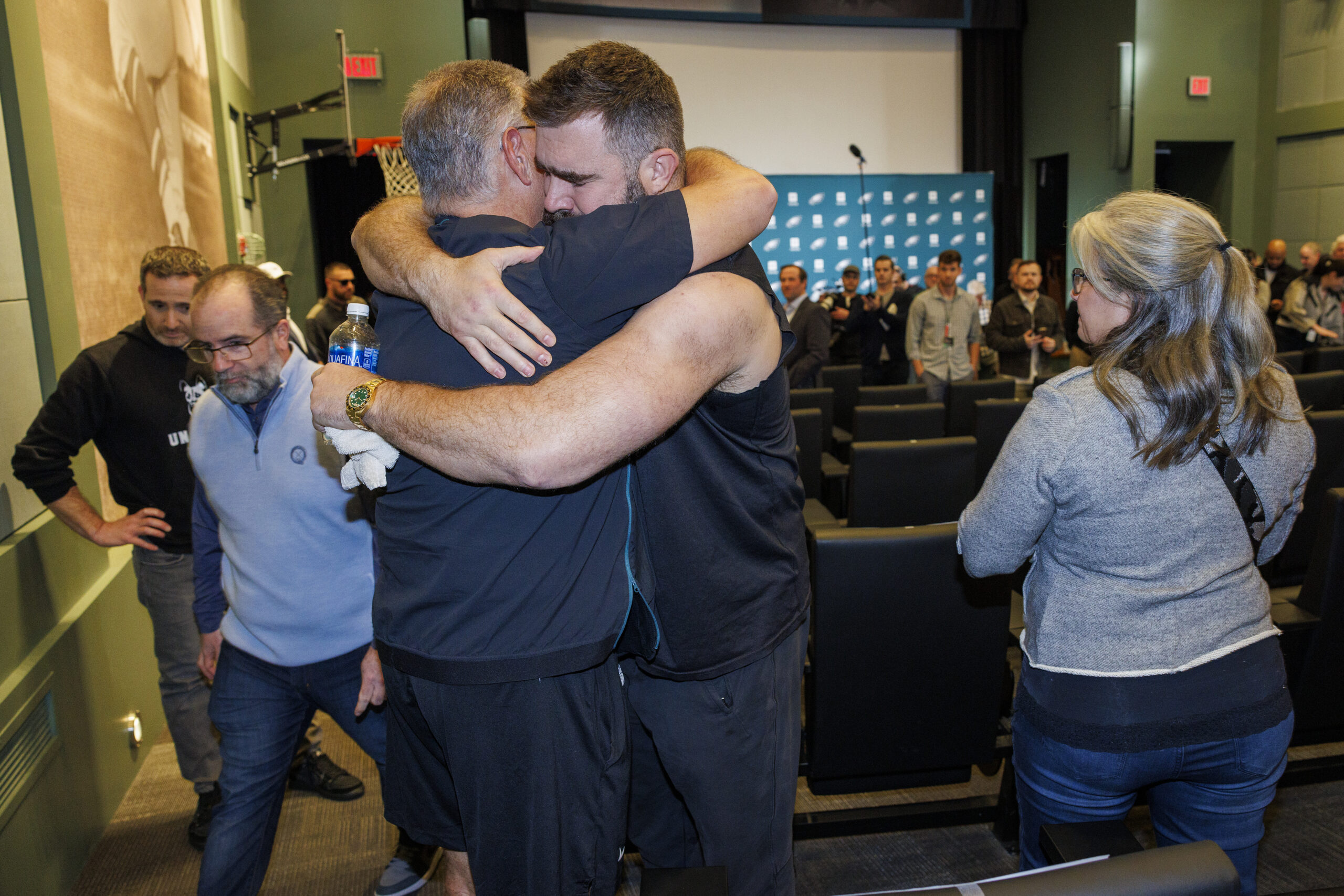
Jason Kelce embraces Jeff Stoutland after Kelce announced his retirement at the Novacare Complex on March 4, 2024.
“There is absolutely no one I credit more with the career I had than Jeff Stoutland,” Kelce wrote on social media. “The consistent passion and his eagerness to teach pushed my teammates, me, and our room to amazing success. More importantly, we became incredibly close as people. It was more than just coaching and teaching, it was his presence and sense of urgency that was unaccepting of mediocrity and potential left behind.
“He will undoubtedly be missed inside the building, and everyone that played for him. I am incredible grateful to have played for Stout, 1 of 1 coach and person. I love you coach.”
Stoutland, in his statement, said the past 13 years “have been the great privilege of my coaching career. I didn’t just work here, I became one of you.
Devin Askew was covered in sweat when he sat down in a room inside the practice facility at Villanova on Monday, fresh off an on-court workout with development coach JayVaughn Pinkston that followed a weightlifting session.
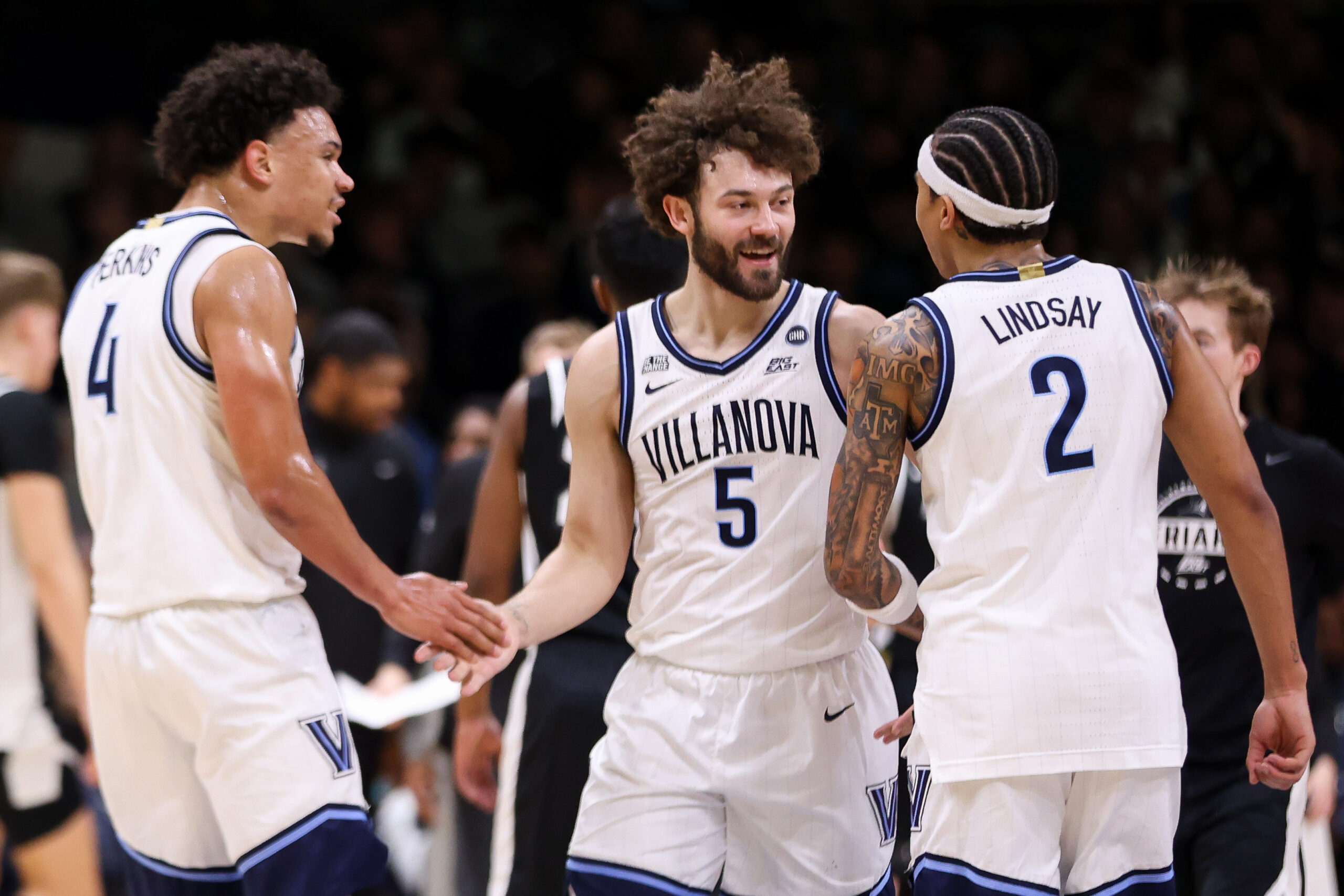
Askew, Villanova’s sixth man, is on a tear as of late, averaging 15.8 points during a six-game stretch in which the 23-year-old guard has made 17 of 29 three-pointers. Sessions with Pinkston, a former Villanova player, have helped. Pinkston’s role is exactly that, to do the little things to get the most out of every player. But with Askew, Pinkston’s presence also is a reminder of the past and the winding journey Askew has traveled to put himself in the running for Big East Sixth Man of the Year.
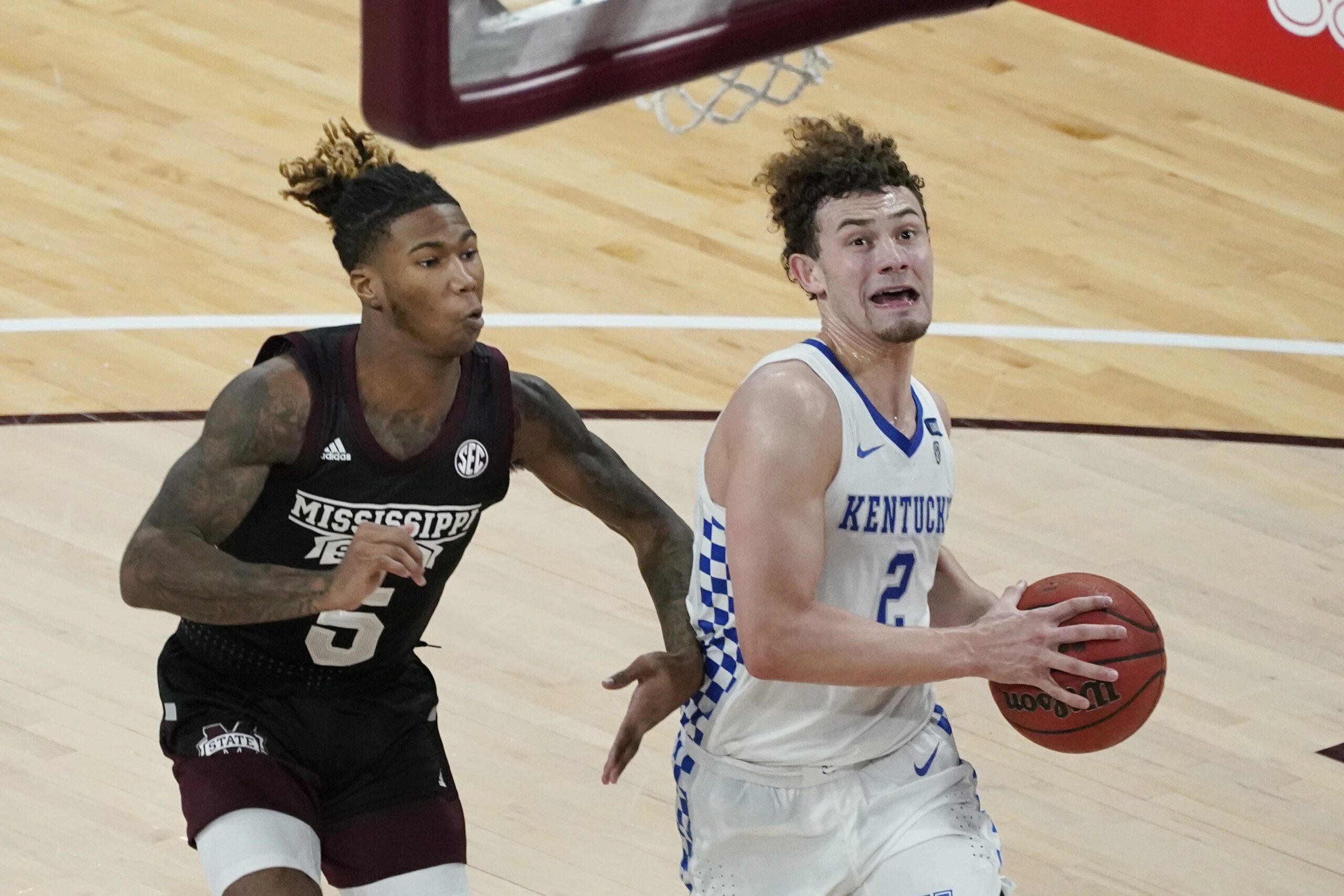
There are few connections remaining to the Villanova program of old, and Pinkston, who played for the Wildcats from 2011 to 2015, is one of them. Which gives him the right to playfully rib Askew about 2019, when, as a top recruit in the class of 2020 from California, he chose Kentucky over Villanova (and others).
“He’ll always tell me I should have been here five years ago,” Askew said. “I should’ve always been a Villanova Wildcat.”
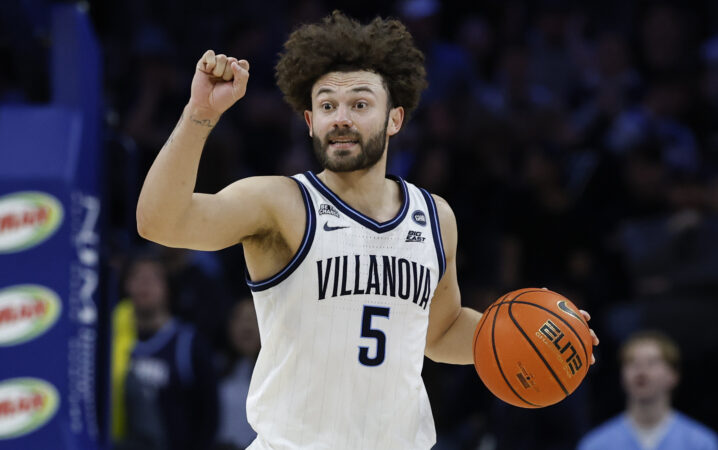
Devin Askew is making a strong case for Big East sixth man of the year.
He is here now almost by accident. His college journey has traveled more than 8,000 miles from Mater Dei High School in California to Lexington, Ky., to Austin, Texas, to Berkeley, Calif., to Long Beach, Calif., and, finally, to the Main Line. Five schools in six years. Which made him just another sign of the times when Kevin Willard plucked him out of the transfer portal to give his roster a much-needed experienced ballhandler and shooter.
He was, to the outside world, another mercenary college basketball player passing through a random place on a map and collecting a paycheck to bridge his way to wherever professional hoops takes him.
But for Askew, his time at Villanova has been a “full-circle” experience. Like in most people, his past explains the present, and it’s fitting the journey ends here, where his future is being determined during a critical turning-point season for him and Villanova.
‘It’s why we brought him here’
This recent stretch is what Willard imagined when Villanova recruited Askew this time around. It’s a young Villanova roster, especially at guard. Freshman Acaden Lewis and sophomore Bryce Lindsay have had breakout seasons with the Wildcats, but Askew lately has been a steady presence, and his experience has allowed him to compete on both ends during the physical demands of a Big East schedule.
Before the last six games, Askew reached double figures just three times in 15 contests. It took a little bit longer for it all to come together because he suffered a knee injury during the lead-up to the season. His injury history followed him. A sports hernia injury ended his junior season at California after 13 games, and a foot injury ended his following season, the 2023-24 campaign, after just six.
That injury gave him a redshirt season, but also extra perspective to get through his first few months at Villanova, when he missed nearly two months of practice and was not 100% when the season started.
“I’m tough, and I’m not going to quit,” Askew said when asked what he has learned about himself along his college journey.
Were past versions of him not as tough?
“The true test of knowing that is to go through something,” he said. “I’m willing to go through it and deal with anything that comes to me because I love the game, I love the sport of basketball. I don’t want to stop playing.”
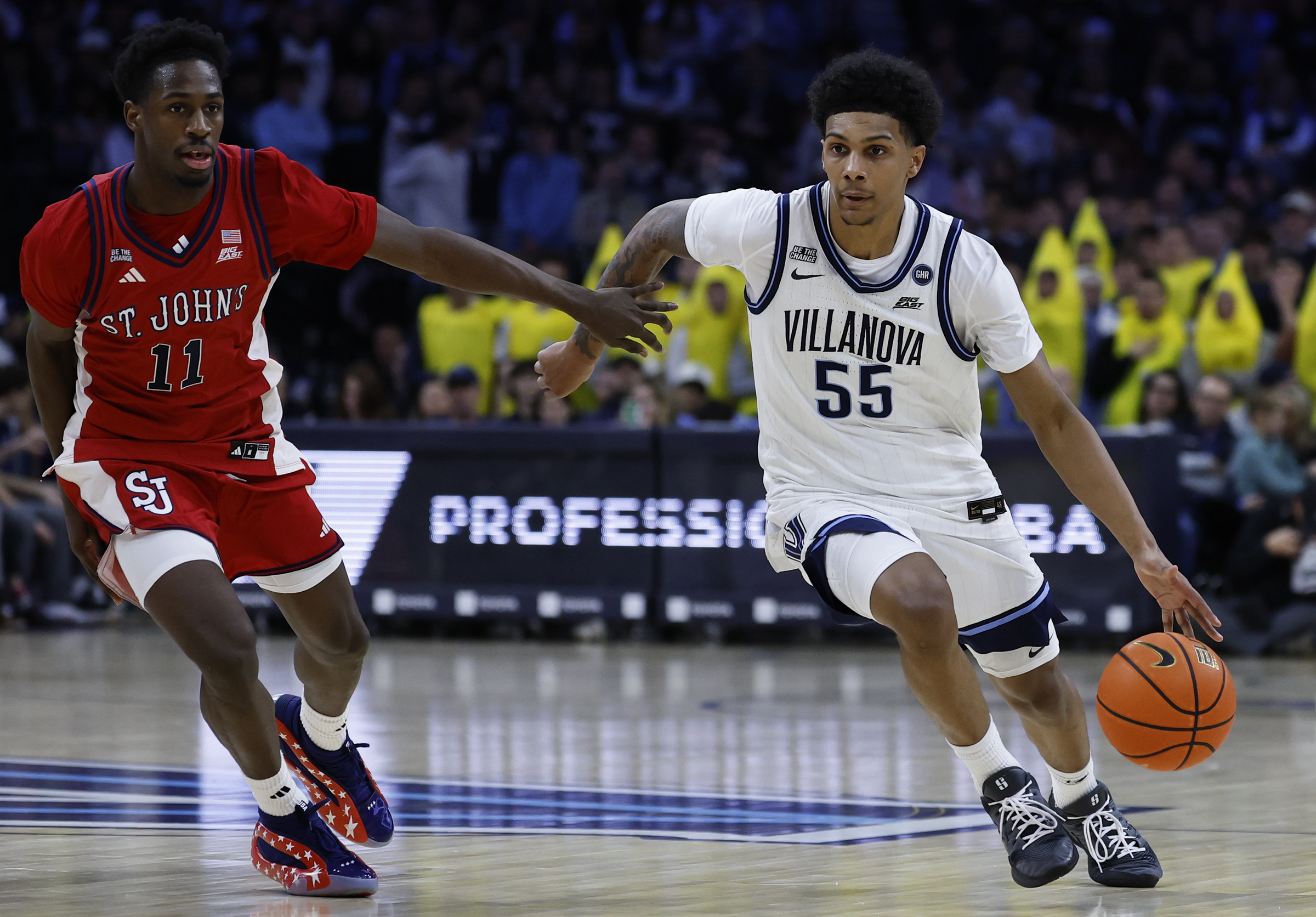
Villanova has needed Askew to be a stabilizing force at times, and it also has needed him to take over games offensively, like against St. John’s and Connecticut, two of the more experienced teams in the conference.
“I don’t view it as they need me to take over,” Askew said. “There are so many things going on within a game, taking over a game could be a defensive stop.”
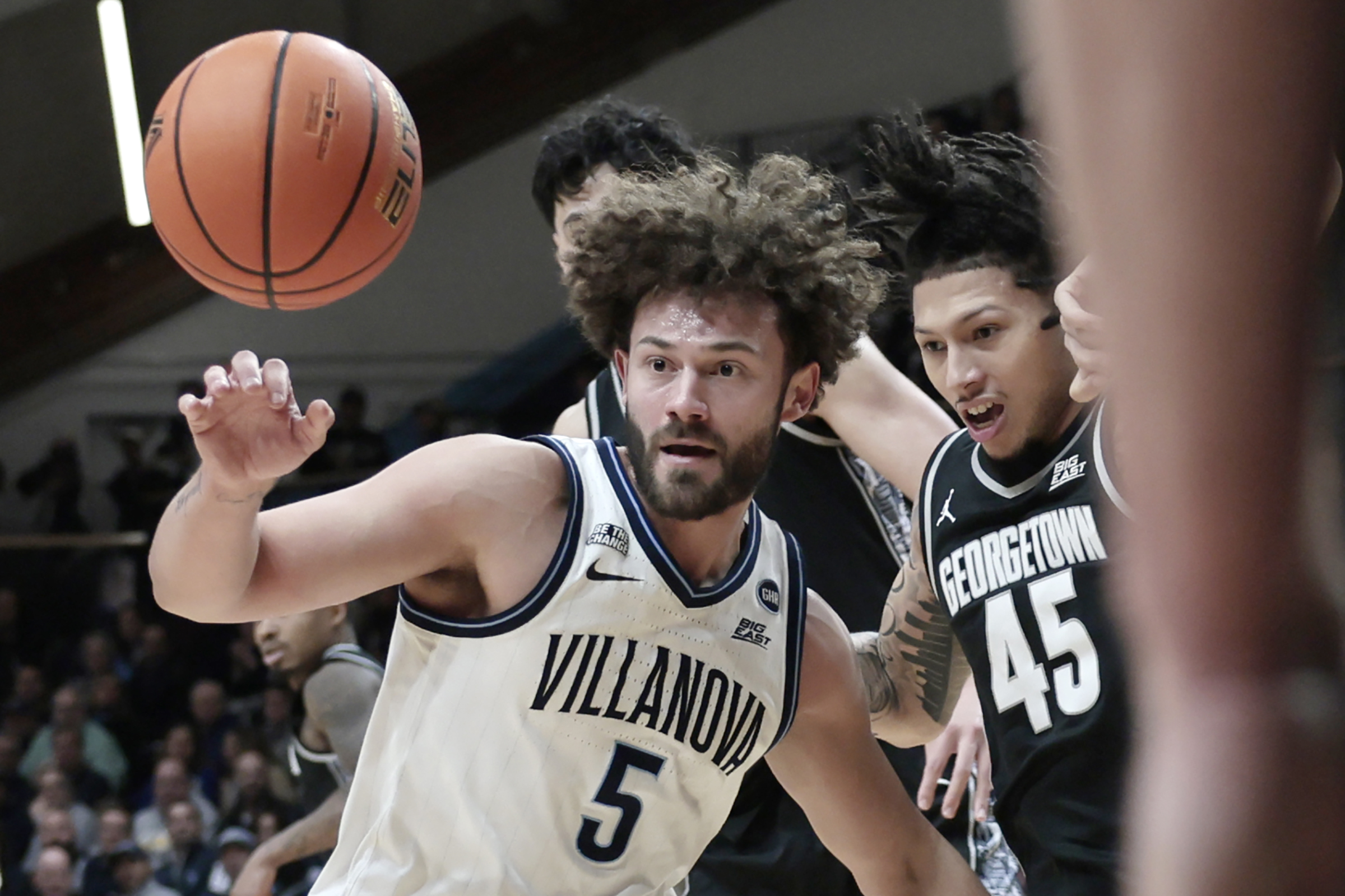
Devin Askew scored a team-high 20 points off the bench against Providence on Friday.
Willard credited a recent run of strong practices after Askew made five three-pointers and scored 20 points in Friday’s win over Providence. The coach has talked recently about how critical it is to have Askew’s experience. He’s a big reason the Wildcats are 16-5 overall and 7-3 in the Big East as they head into Wednesday night’s home game vs. Seton Hall.
“It’s why we brought him here,” Willard said. “This is the type of player he is. When you go into the portal, you really have to evaluate and watch film and see what he has. When he was on his visit, I think the best part about it was I just loved his maturity. He’s a terrific, terrific person.
“He’s getting rewarded for being a hard worker and a terrific person.”
A piece from all the places
There is a part of every stop that make up the player and person Askew is.
He chose Kentucky as a 17-year-old top-40 prospect because who wouldn’t want to play for John Calipari and follow in the footsteps of top guards like Shai Gilgeous-Alexander and Tyrese Maxey?
What did he learn from each stop? Askew went through them one by one.
Devin Askew said his time at Kentucky “taught me patience and to be even-keeled.”
At Kentucky, he learned how to go from being the guy on a high school team to being one really good player on a team of other really good players. It wasn’t an easy learning experience. “It actually taught me patience and to be even-keeled,” he said. “There’s going to be ups and downs, and you can’t get too high or too low. I was just an emotional kid.” He had high expectations for himself and didn’t meet them. He started losing his love of basketball.
Enter Texas, which may be the most important stop of the five. “That brought back all that love for me,” Askew said. “No, you still love this game. Chris Beard and that coaching staff saved my career.” Askew averaged 14.9 minutes off the bench and was a role player on a team that reached the NCAA Tournament. He fell back in love with basketball, but he wanted a place where he could start, so he went back home to California.
At Cal, it was time to “go show it,” Askew said. “I was ready. And the seasons just got cut short to injuries both years, and that’s where we kept learning and kept growing. … This is the life we chose.”
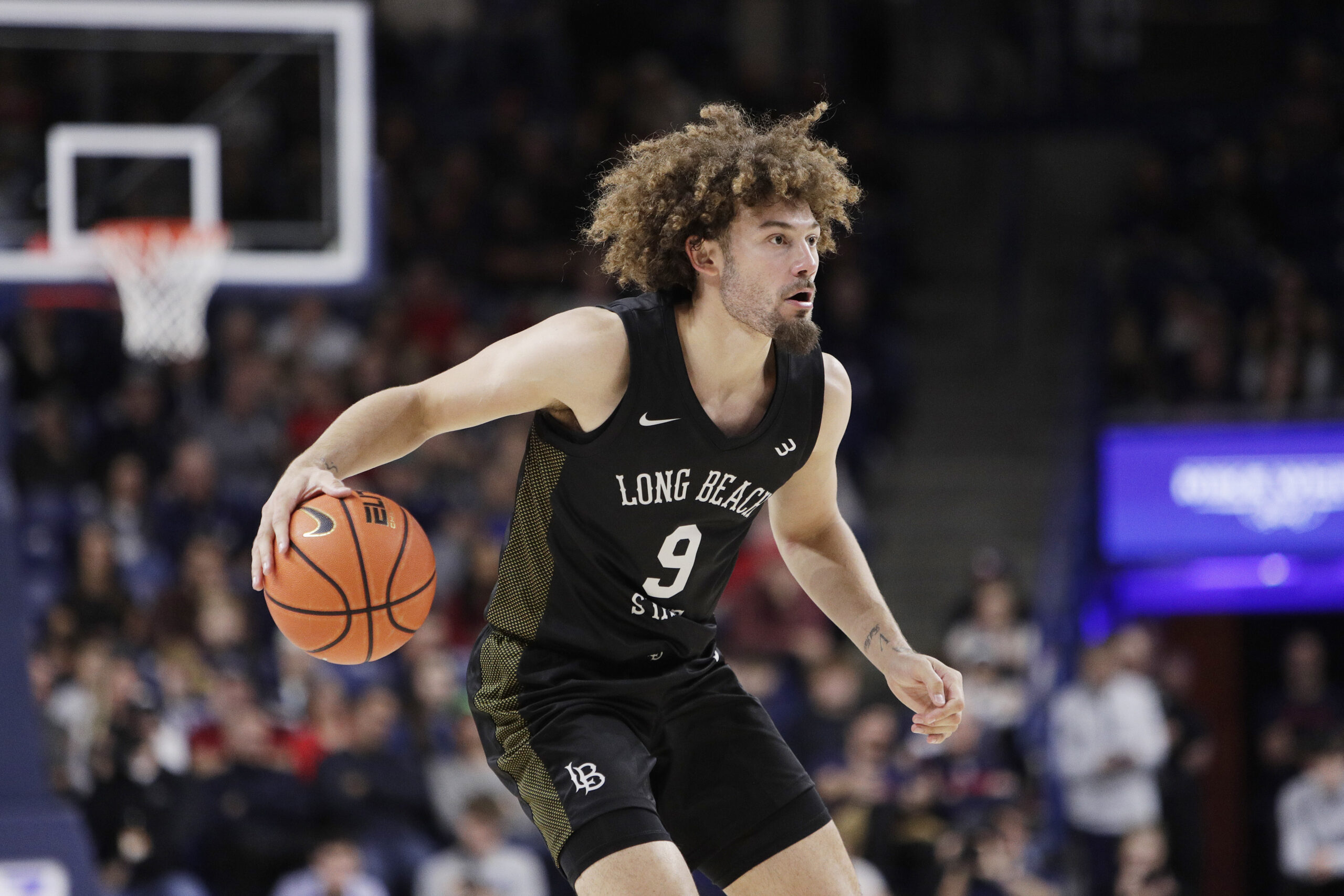
Cal allowed him to be closer to his family. He has leaned heavily on his two brothers and his parents over the years. Cal also gave him his undergraduate degree in interdisciplinary studies. But entering the 2024-25 season, he was an oft-injured journeyman with two seasons of eligibility left — one redshirt year, one COVID year — looking to prove he could still play. To the portal, and to Long Beach State, he went.
“Go do it,” Askew said of Long Beach. “It wasn’t go show everyone, because I wasn’t into showing everyone. But it was prove to yourself again.” He scored 18.9 points per game and shot 37.6% from three-point range on a team that won seven games and ended the season by losing its last 15.
At Long Beach State, Devin Askew averaged 18.9 points.
“Not a lot of people believed in me and believed I could play still,” Askew said. “They gave me the platform to show what I could still do.”
There are a lot of reasons to gripe about the state of college basketball, and a player going to five schools in six years is one of them. Askew is, in a sense, a one-year rental who helped Willard get Villanova back on track in his first season.
Off the court, Askew is taking classes toward a master’s certificate in Villanova’s public administration program, a year after earning a certificate in communications at Long Beach. On the court, Askew is helping Villanova get back to the NCAA Tournament.
When the topic of the tournament came up, Askew shook his arms and said he got chills.
“That would mean everything to me,” he said. “I kind of get emotional thinking about it. As a kid you always want to play in the tournament. You go to college and want to play college basketball to make the tournament.”
A continuation of his current form will go a long way toward making that possible, and helping him raise his own profile. The NBA probably isn’t in his future, but there is a country or league out there for a lot of players like him.
“I don’t know what this year will do for me,” Askew said. “And I don’t like to hope, because what will happen will happen. I’m just thankful wherever this game takes me, thankful and grateful.”
Sometimes it takes you to the place where maybe you were always supposed to be.
Steve Donahue sat back in his chair, a smile stretched across his face. St. Joseph’s had just beaten La Salle, 67-58, on Saturday, the Hawks’ sixth win in their last seven, and Dasear Haskins, who made six three-pointers and tied a career high with 20 points, was talking about the “A to B mentality” Donahue has drilled into his team.
“I told my mom I will A to B to practice the other day,” said Haskins, a redshirt sophomore who played at Camden High. “It’s like a lifestyle to me now. I think the guys are treating it like that.”
The motto is simple enough: “Whatever A is, you have to get to B,” Donahue said later. A can be something good. A can be something bad. St. Joe’s has just gotten a lot better at the getting to B, and it’s not surprising that it took a couple of months for that to happen, for the Hawks to look like the sum of all their parts, considering all that has happened since September.
Former coach Billy Lange abruptly left for the NBA. The roster that he worked hard to build would be playing for a new coach, Donahue, whom Lange brought on as his top assistant after the Delaware County native was fired following his ninth season at Penn. New coach, new roster, awkward timing. The Hawks started 2-3, had some ups and downs, then by mid-December their leading scorer, Deuce Jones, was no longer with the program.
They started Atlantic 10 play by losing their first two games. Then came a team meeting. Then came six wins in seven tries, a stretch that could be a perfect 7-for-7 if not for late-game execution on the road against a good VCU team.
Zoom out a little bit, and on a macro level this version of the Hawks is the B to whatever A was after they allowed Davidson to leave Hagan Arena with a 62-56 win on Jan. 3. The season could have gone sideways then, but it hasn’t. St. Joe’s is 14-8 overall and 6-3 in the A-10 and in fourth place in the conference.
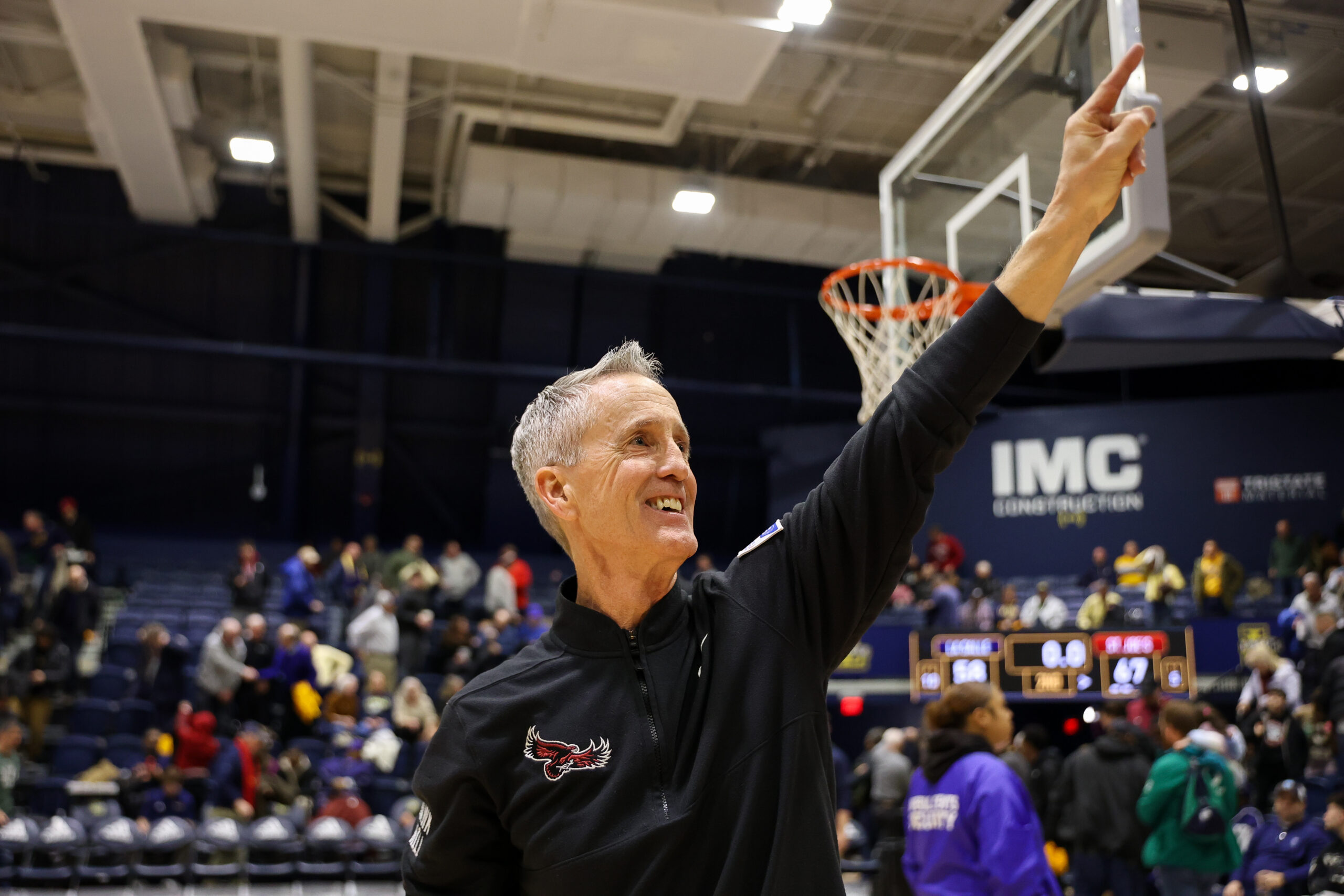
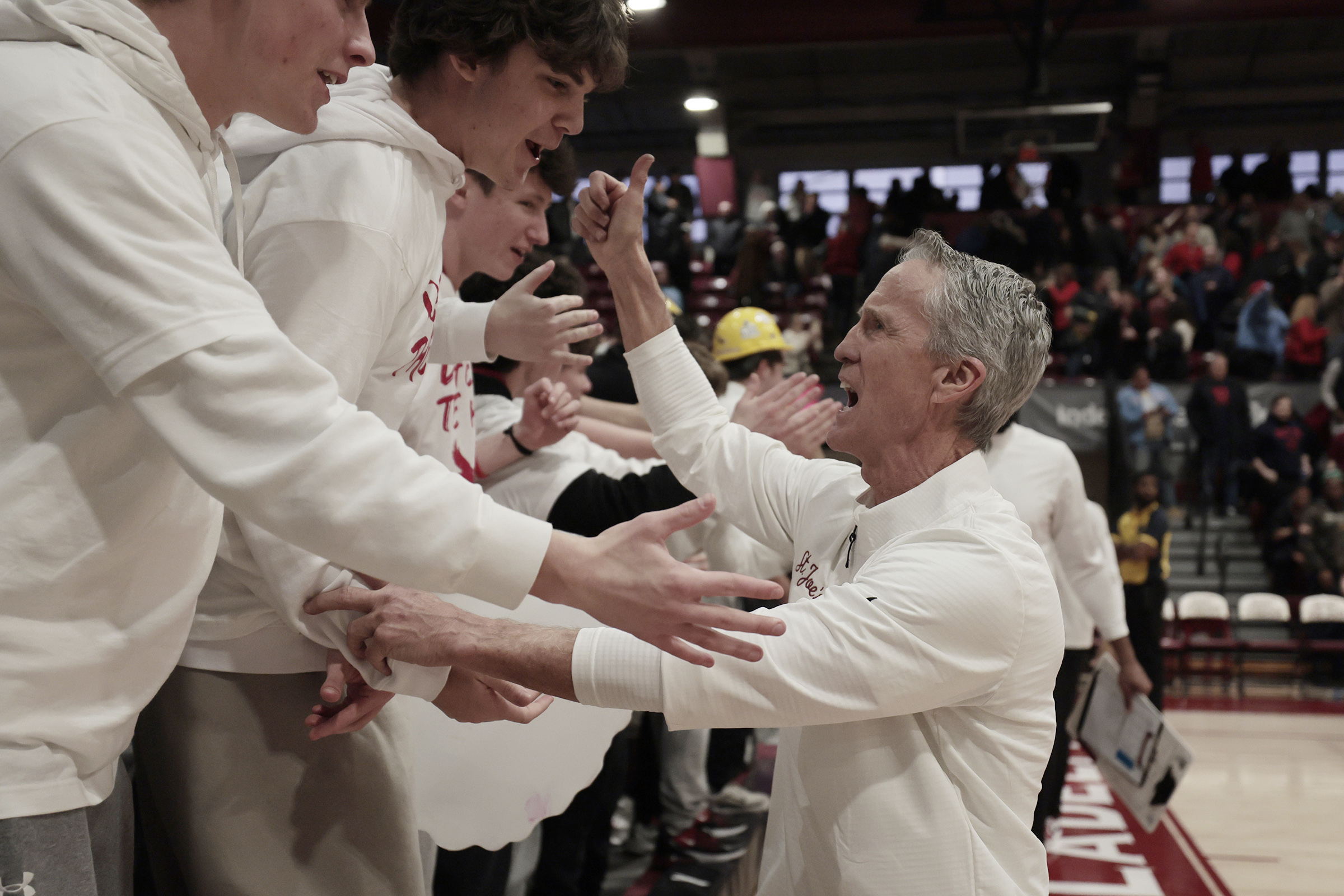
St. Joseph’s coach Steve Donahue points to the student section after a 67-58 win against La Salle.
Perhaps, finally, Donahue’s team is taking on a little bit of his own personality, playing the way Donahue wants the Hawks to play.
“I like to think that,” Donahue said Saturday. But he also wanted to credit Lange for laying a foundation. Lange, Donahue said, “built a really good program here with really good people.” He pointed to the consecutive 20-win seasons and the program’s footing in the A-10.
“I’m grateful that I walked into this and have guys like [Haskins],” Donahue said. “That being said, I saw things that bothered me.”
“We lost three games where we were tied or up against good opponents with eight minutes left, and we didn’t get from A to B,” Donahue said. “We allowed the circumstances to change who we are. We’ve been through a lot, and since then I just see their ability to forget about personal expectations and figure out what needs to be done in that game.”
Saturday, Donahue said, was living proof.
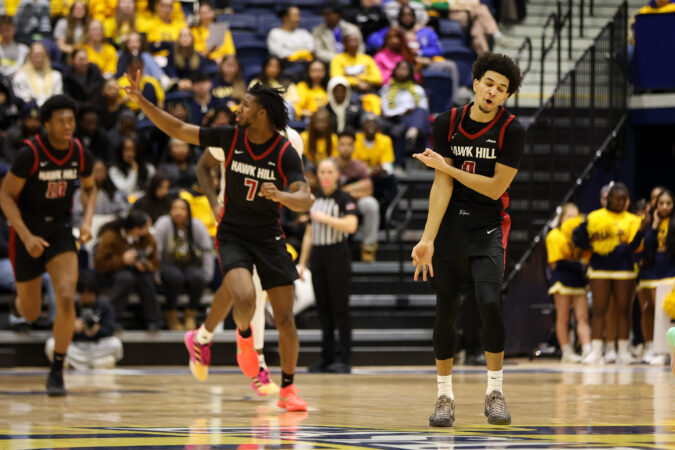
La Salle did everything it could to take Derek Simpson out of the game. Simpson has been on a tear during this recent run, but the shooting lanes weren’t there, so the Hawks found Haskins on the weak side and the lefty made La Salle pay with six threes on seven attempts. Simpson still more than made his mark on the game with 13 points, six rebounds, and seven assists.
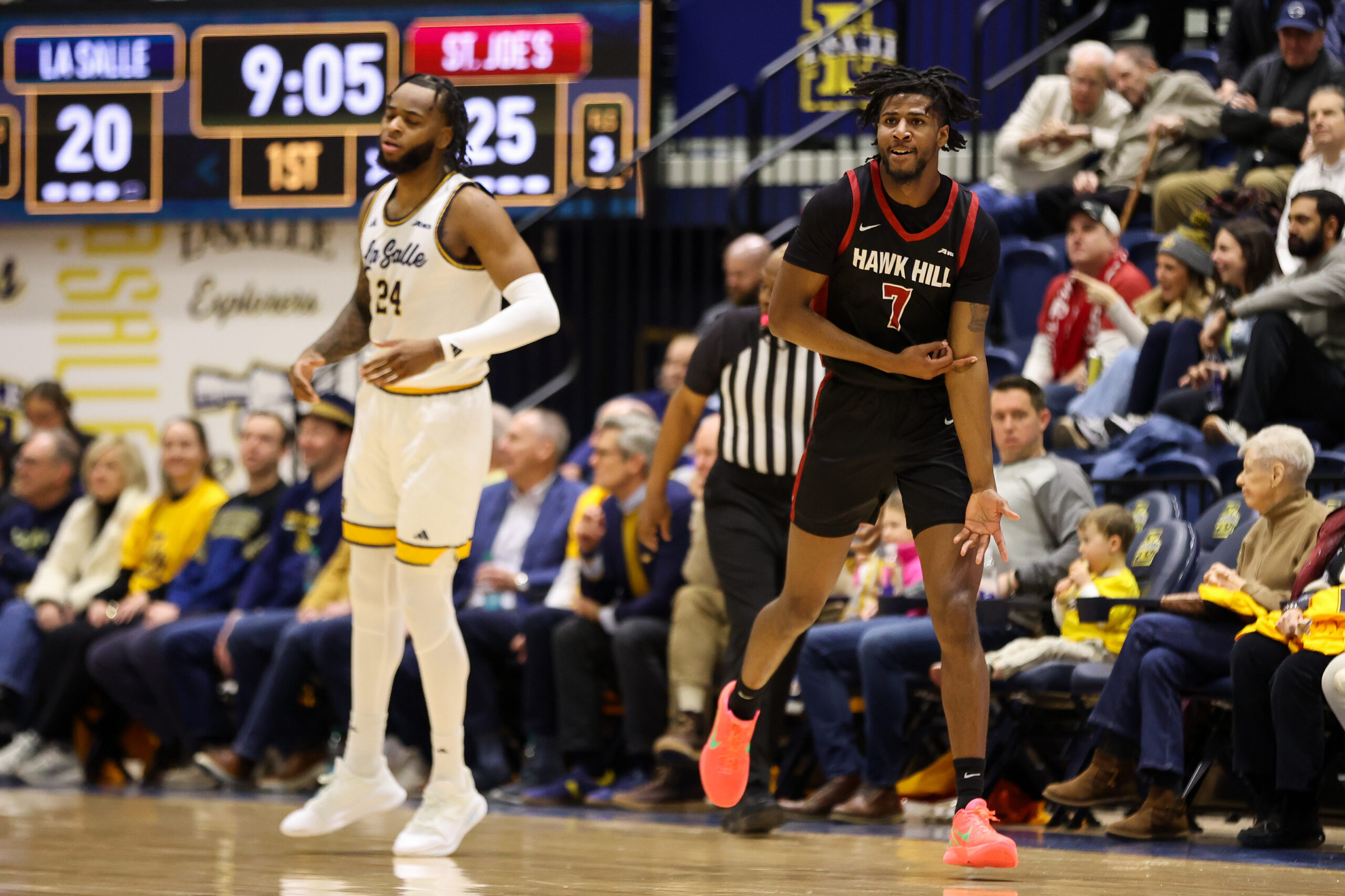
Hawks guard Dasear Haskins (7) reacts after a made three-pointer against Jerome Brewer and La Salle.
The feisty Explorers used an 11-0 run to make the game interesting late, but St. Joe’s battled through a couple of turnovers and closed the game with its free-throw shooting.
“When a game gets closer, we just want to get closer,” Haskins said. “We just come together, listen to our coaches, trust in our game plan, and just come together as a unit.”
Words that make Donahue smile.
“There’s a mentality now that we’re not going to be affected if something is going right for the other team and wrong for us,” Donahue said. “We’re going to move on and figure out how to win this game.”
Some of this recent success has a simpler explanation. It’s just a natural part of a team growing together. Simpson and Justice Ajogbor, both seniors, have been steady. Simpson, Donahue said, is the “heart and soul” of the team, and is no longer looking over his shoulder. But the other components of the team needed time. Jaiden Glover-Toscano barely played at St. John’s last season. Haskins is playing his second season of college basketball. The Hawks rely a lot on two freshmen, Austin Williford and Khaafiq Myers, and a backup center, sophomore Jaden Smith, who had a limited role at Fordham last year.
“The youth is catching up to the older guys and we’re blending,” Donahue said.
It’s the right time for it, considering the calendar just flipped to February. The Hawks have nine games left before the conference tournament in Pittsburgh. They have shown the ability to play with and beat some of the conference’s best, like Dayton and Virginia Commonwealth. There will, of course, be no trip to the NCAA Tournament without running the table in Pittsburgh, and doing so means getting through those teams and the juggernauts, St. Louis, which beat St. Joe’s by 23, and a George Mason squad the Hawks play on the road on Saturday.
That stuff will sort itself out when it’s supposed to. For now, the Hawks can just enjoy the ride.
“Winning is so fun,” Haskins said. “I love winning so much.”
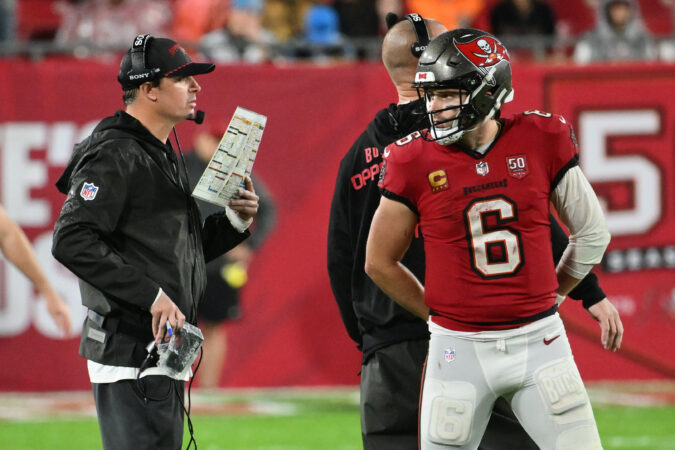
The Eagles are hiring former Tampa Bay Buccaneers offensive coordinator Josh Grizzard to the role of pass game coordinator, a source said. Grizzard, 35, was in the mix for Mannion’s job and had multiple interviews with the Eagles for the offensive coordinator role.
Grizzard was the offensive coordinator and called plays for one season after joining the Bucs in 2024 as a pass game coordinator. Before Tampa Bay, he worked with Mike McDaniel in Miami and was with the Dolphins under Adam Gase, too.
Grizzard has been a fast riser, though not quite as fast as Mannion. He played at Yale and was a student coach there, too. He was hired to David Cutcliffe’s staff at Duke as a 23-year-old and was there for four seasons as a graduate assistant and then a quality control coach before leaving for the NFL.
This past season was Grizzard’s first calling plays full-time, and he oversaw a steep drop-off in Tampa after former coordinator Liam Coen departed for the Jacksonville Jaguars. The Bucs, however, dealt with multiple key injuries. Grizzard was in charge of third-down play calling in 2024 as the pass game coordinator. That season, the Bucs led the NFL in third-down conversion rate (51.1%).
Nick Sirianni said the Eagles’ goal during this search was to make sure the offense continued to “evolve.” They have now hired two outside voices to key positions.
It’s unclear what Grizzard’s hire means for Parks Frazier, who was the pass game coordinator under Kevin Patullo. More changes could be coming to the staff as the Eagles try to revamp their offense.
Staff writer Jeff McLane contributed reporting to this story.
It was easy to imagine the 2025-26 St. Joseph’s season as being a lost one on Jan. 3, after the Hawks went six minutes without a basket in crunch time and blew an 11-point second-half lead to Davidson to fall to 8-7 overall and 0-2 in the Atlantic 10.
In fairness, that’s what it had been to date. This wasn’t glass-half-empty thinking. Consider what had transpired in the four previous months. Former coach Billy Lange abruptly left in September, and St. Joe’s turned to Steve Donahue, whom Lange had hired as associate head coach after Donahue was fired by Penn.
Who would stay? Who would leave? It was a little late for the players to reasonably find somewhere else to go. Lange had built a roster capable of competing in the upper half of the A-10, but then came a 2-3 start. By mid-December, leading scorer Deuce Jones, a La Salle transfer, was off the team.
The Hawks went 3-for-22 from three-point range in that Davidson loss. By that point, only one of their eight victories had come against a team ranked inside the KenPom top 200, and even in that one they needed a frantic comeback and a wild shot from Jones before the buzzer to beat Temple. Two of the eight wins were against Division III teams.
St. Joe’s has won five of six since then. What changed? The shots are falling more consistently, which always helps, and there’s more of a sense of togetherness when you watch the Hawks than in games earlier in the season.
But never question the power of a meeting. The Hawks had one in the aftermath of that Davidson loss in Donahue’s office, where six players entered with change in mind.
“When we looked at ourselves in the mirror, we saw something that we didn’t like,” said senior guard Derek Simpson, who scored a season-low six points in that Davidson loss but has scored 19.2 points per game in the six since.
“We got our feelings out,” Simpson said. “We were able to tell each other how we felt.”
St. Joe’s coach Steve Donahue celebrates with fans after a victory over Dayton on Saturday.
St. Joe’s (13-8, 5-3) has been nearly perfect since. The only blemish came against a Virginia Commonwealth team rated 46th at KenPom (St. Joe’s is 157th), and the Hawks could have won that game. They got 20 points from Jaiden Glover-Toscano to help knock off Dayton one game later, and the St. John’s transfer is starting to show more flashes of why he was a high-major prospect in the first place. He had the highlight of the night Tuesday when he threw down a one-handed slam, one of the Hawks’ 12 dunks in a blowout win over lowly Loyola-Chicago.
Next on the schedule for St. Joe’s is a game Saturday against its crosstown rival, La Salle, that looks a lot more interesting than it did a few weeks ago.
That’s because the best win of the young Darris Nichols era in Olney happened last week when the Explorers started Dayton off on its Philadelphia trip from hell by jumping out to a 33-8 lead and held on for dear life in a 67-64 victory.
That came on the heels of a win over St. Bonaventure.
The Explorers (7-14, 3-5), who are much healthier now than they were earlier in the season, lost Wednesday night at Fordham, but they’ve hung in against some of the A-10’s elite and play a style that won’t be fun to go against in the conference tournament.
Or if you’re a St. Joe’s team looking to keep the train on the tracks Saturday.
Temple announced more than 2,600 attendees at its Wednesday night home game vs. Charlotte, but it didn’t take a census veteran to realize that number was way overinflated. Half of that number might have been generous. Some students showed up, but many of them were gone after the iPad giveaway was doled out.
The Owls probably deserve a little more support. That aforementioned heartbreaker vs. St. Joe’s at the Big 5 Classic was followed by a seven-game winning streak. Then, during the week when assistant coach Bill Courtney died suddenly, Temple nearly beat two of the best teams in the American Athletic Conference.
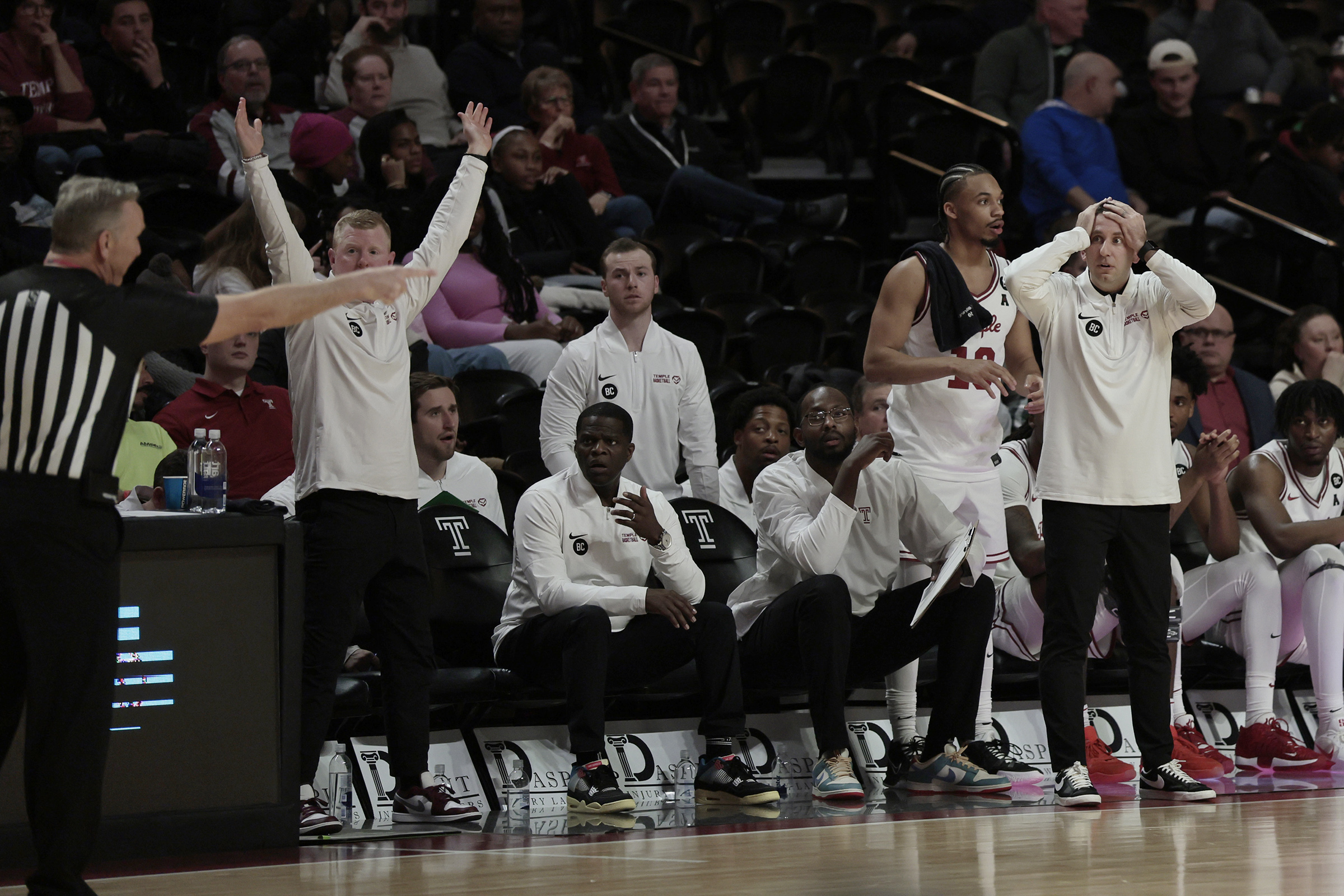
Temple coach Adam Fisher (right) reacts to an official’s call during the loss to Charlotte.
The Owls should have closed out a win over Charlotte on Wednesday, despite being without key starter Gavin Griffiths. They led by nine with six minutes left before losing in overtime. But they’re 5-3 in conference play (13-8 overall) and just one game back of first place.
They host a South Florida team on Saturday night that is 6-2 and in a four-way tie for first (8 p.m., ESPN2). It’s White Out night at the Liacouras Center.
An ode to Dan McQuade, a man who loved basketball
Philadelphia is a lot worse off without Dan McQuade, who died of cancer at 43 years old this week. McQuade, the son of longtime Daily News assistant sports editor Drew McQuade, was a singular writer who wrote for various publications — Defector, Deadspin, and Philadelphia Magazine among them — with flair and fun and with more curiosity than most.
Dan wrote about a lot of things, but he sure loved Philly basketball, and wrote about it often, like when he went to the Catholic League final in 2023 and implored people in a Defector article to go out and see more basketball games in person. Or when he wrote about attending a La Salle home game and witnessing an economic professor light the silly smoke machine at Gola Arena. Or when he went to a Big 5 doubleheader at the Palestra, where he attended many games as a former Penn student and sports writer, and wrote a compelling case for little kids playing basketball being the best version of the halftime show.
After a search that lasted 16 days to find the replacement for Kevin Patullo, the Eagles on Thursday announced that 33-year-old Green Bay Packers quarterbacks coach Sean Mannion is their next offensive coordinator.
Mannion played mostly as a reserve for nine NFL seasons and was a player in the NFL just two seasons ago. He has been a coach for the previous two, and now has risen from first-year offensive assistant to first-year quarterbacks coach to first-year offensive coordinator with the Eagles.
Get the theme here? We’re talking numbers. And while Mannion hasn’t been a coach long enough to have too many data points to parse to infer much about what his hire means, there are at least some meaningful stats and numbers that could be meaningful.
Let’s have a look.
66.3%
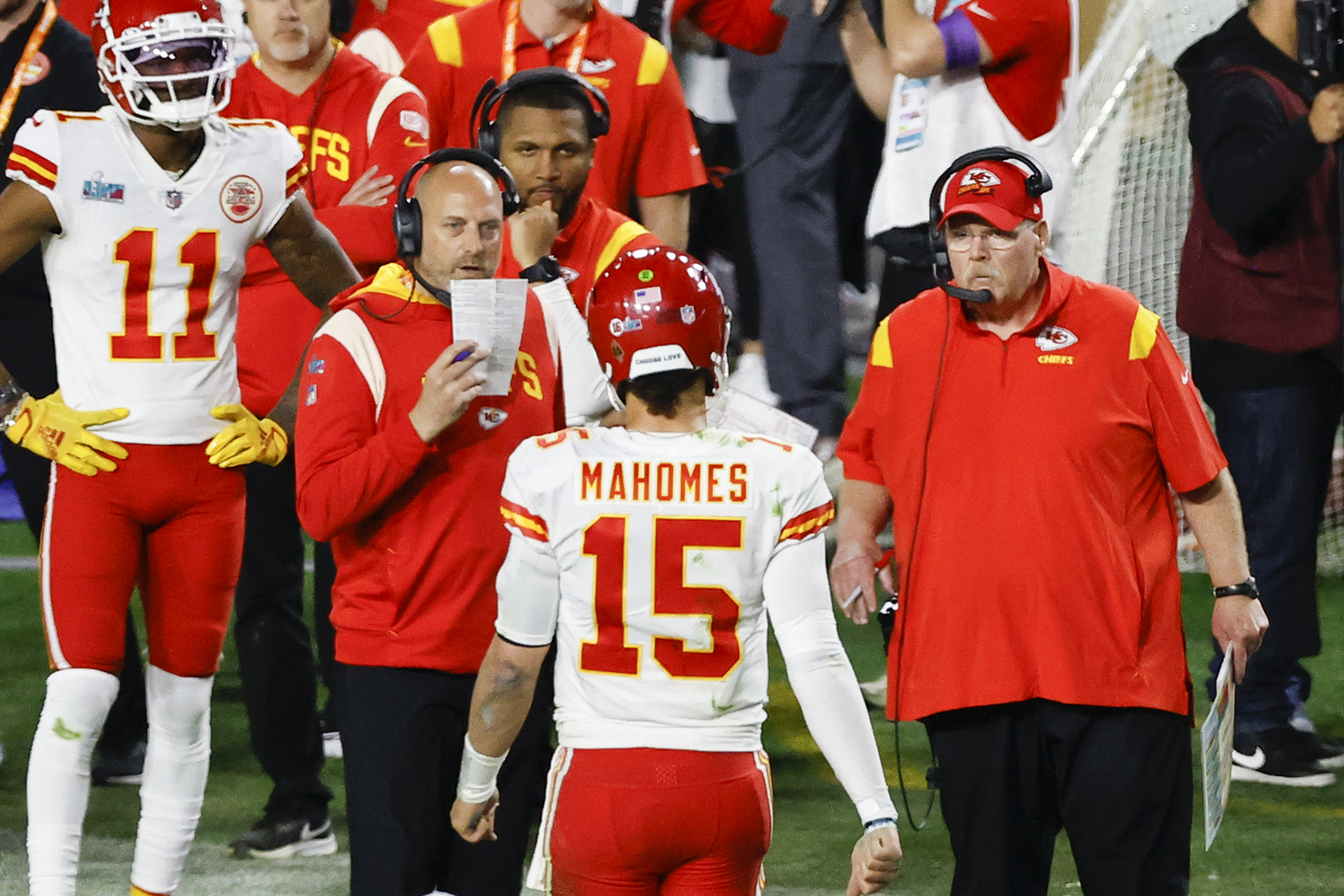
That was Jordan Love’s completion percentage in 2025, Mannion’s first as quarterbacks coach. That was Love’s best mark in his three full seasons as a starter in the NFL. The 66.3% completion rate wasn’t the only high Love set in 2025. He also had his best season as a starter by passer rating (101.2, which ranked sixth among all NFL starters), and threw his lowest total of interceptions (six, down from 11 in each of his first two seasons as a starter).
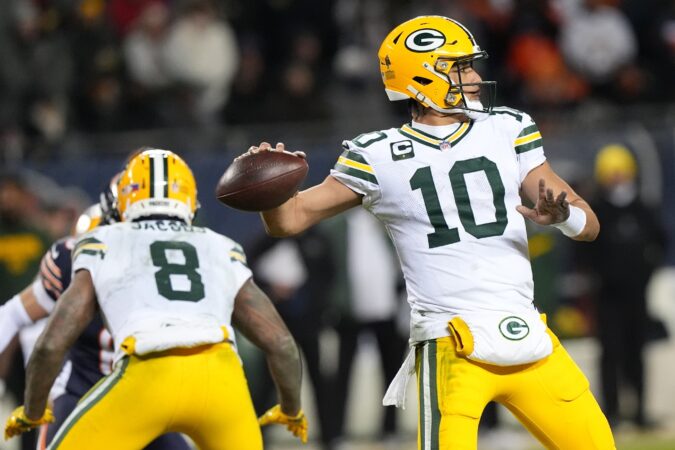
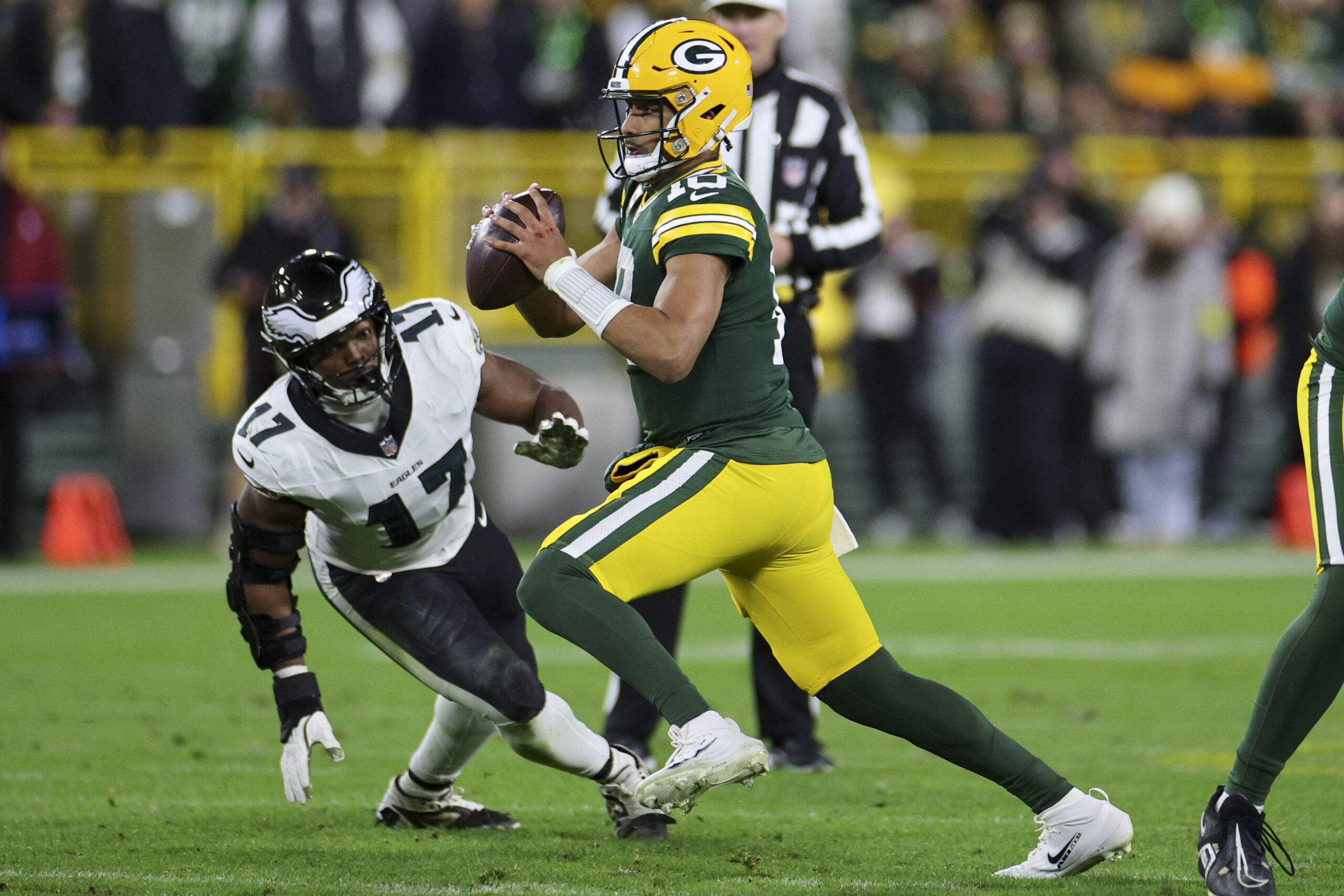
Jordan Love had a strong 2025 despite a substandard performance against the Eagles.
All while the Packers dealt with a constant list of key injuries on offense.
What’s more, backup Malik Willis had an 85.7% completion rate in 35 attempts in relief of Love.
The NFL MVP race is between Drake Maye and Matthew Stafford, but Love was third in the NFL in pass EPA (expected points added) at +95.6, according to Next Gen Stats. EPA measures the average points added by the offense on each play.
Love had the same EPA per drop back as Stafford (+0.20).
Could more play action be in the cards for Jalen Hurts during the Sean Mannion era?
28.3%
Mannion has had a lot of influence in his years as a player and coach from some well-regarded offensive minds. How might he shape the way the Eagles’ offense looks moving forward?
Love’s numbers could offer some clues.
His play-action rate of 28.3%, for example, was fifth-highest in the league. Jalen Hurts ranked 23rd at 23.8%, according to Next Gen.
13%
Hurts threw more deep balls per attempt than any other quarterback, despite what you may think about the Eagles and their conservative nature. According to Next Gen, which counts a deep pass as a ball that travels 20 air yards, Hurts threw a deep ball on 13.2% of his throws.
Right behind him was Love, who went long on 13% of his passes.
Throwing them is one thing, completing them is another. Hurts rated 14th in deep ball completion rate (38.3%) while Love completed only slightly more (40.4%, 10th).
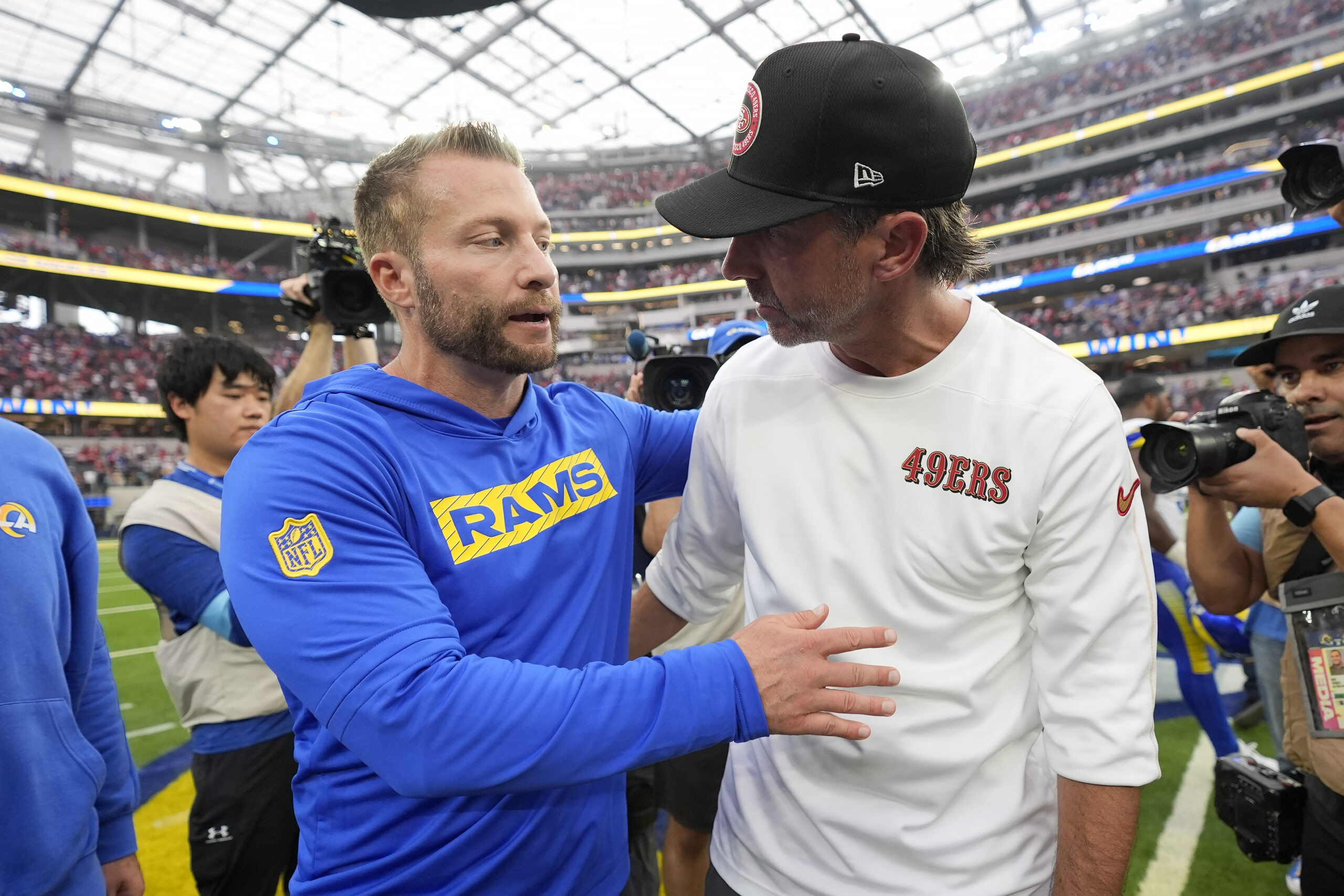
Look for Sean Mannion’s scheme to borrow heavily from those of Sean McVay (left) and Kyle Shanahan.
59%
Only four teams ran less motion before the snap than the Eagles’ rate of 44%. Green Bay, meanwhile, used motion on 59% of its offensive plays, which was the eighth-highest rate in the NFL.
Motion is a staple of the offenses run by Sean McVay and Kyle Shanahan, whose influences are all over Mannion’s past. McVay’s Rams were fourth in motion rate while Shanahan’s 49ers were third.
Of course, the best coaches find a way to use their players to fit their players’ strengths, but Mannion is likely to incorporate a lot of the things he’s learned along the way.
13,600
Here’s a bonus set of numbers that have nothing to do with Mannion’s coaching career but are worth mentioning anyway.
This first one is worth it because Mannion is a quarterback guy whose new job is largely about maximizing Hurts’ skill set.
Mannion may have thrown only 36 passes at the NFL level, but he was a prolific college quarterback at Oregon State, where he threw for 13,600 yards, a number that ranks 19th in FBS history.
1
Mannion had one career NFL touchdown pass, and it came in his final game, which was his third career start.
On Jan. 2, 2022, Mannion filled in for Kirk Cousins (COVID-19) in a Week 17 game vs., ironically, the Packers. In a 37-10 loss, Mannion completed 22 of 36 passes for 189 yards and a touchdown. He rushed twice for 14 yards and was sacked twice.
K.J. Osborn caught Mannion’s touchdown pass, a 14-yard connection on the final play of the third quarter.
How’s that for a useless trivia answer?
.@KJ_Osborn made sure Sean Mannion got his first TD ball 💜
Sunday is the first day of February, which means March is right around the corner, which means it is officially no longer too early to think about the NCAA Tournament.
Villanova is 20 games through its 31-game schedule, and nine games through its 20-game Big East slate. The Wildcats, who host Providence on campus Friday night, are 15-5 overall and 6-3 in their conference matchups in the first season of the Kevin Willard era.
School administration moved on from Kyle Neptune last March after a third consecutive season ended without an invitation to the NCAA Tournament. Villanova officials believe the school should field a basketball team that perennially is in the at-large bid conversation, and three consecutive seasons without meaningful basketball was not acceptable.
Right now, it’s hard to believe the drought could stretch to four.
Villanova coach Kevin Willard is on pace to get the Wildcats back to the tourney.
The Wildcats aren’t yet a lock, but it’s looking pretty safe for their fans to preemptively look into taking a PTO day or two for the third week of March.
What are the numbers saying? We went to ESPN’s bracket guru himself, Joe Lunardi, for some help.
‘A very long leash’
Saturday’s loss to No. 2 UConn in Hartford, Conn., was an “insurance policy” kind of game, Lunardi said. Villanova declined coverage. The Wildcats let an upset opportunity slip away in an overtime loss, but the result, Lunardi said, was a “wash.” Villanova was a double-digit underdog and lost by eight.
“It didn’t hurt, and it didn’t help,” said Lunardi, who had the Wildcats as a No. 7 seed in his latest bracket projection released Tuesday morning.
The metrics support that notion. Villanova barely budged in the NCAA’s NET rankings, where it was ranked 34th as of Wednesday afternoon, and at KenPom (27).
What has to happen to stay on the right path?
“All they really need to do is win games they’re favored, and they can even afford to lose [a few] of those,” Lunardi said. “If they go 6-5, they’re going to make it.”
That’s some leeway.
“That’s a very long leash given the fact that, frankly, the league is good but not great,” Lunardi said.
Guard Acaden Lewis is among those who could land the Wildcats back in the dance.
As things stand right now, Villanova likely would be favored in at least eight of its final 11 contests. Take care of six or seven of those, and there’s no need for a marquee win over UConn or St. John’s.
While 6-5 the rest of the way probably would be a disappointment, Lunardi projects that a final record of 21-10 gets Villanova “at worst” a No. 10 seed. The Wildcats’ ceiling, meanwhile, is “probably a five,” Lunardi said.
So, don’t count on the NCAA rewarding the Wildcats with a “home” game at Xfinity Mobile Arena to start the tournament.
Asked to put the resumé in perspective, Lunardi said: “I would describe it as a resumé of a regular good Jay Wright team, meaning a mid-single-digit seed, not a Final Four team. Everything has to go right to make the second weekend.”
That’s probably a result any rational person in ’Nova Nation would have signed up for nine months ago.
It also seems pretty accurate. Villanova is 15-5 because it mostly has taken care of business against teams it is supposed to beat. The nonconference schedule started with a loss to nationally ranked BYU, but then came seven consecutive games against teams well outside the KenPom top 100, including three dominant Big 5 wins.
The Wildcats were then blown out by Michigan before traveling to Wisconsin to beat the Badgers in overtime, which was followed up with a road victory over Seton Hall to begin conference play. At the time, those were pretty good wins. Only the Wisconsin game has aged well.
As of Tuesday morning, Seton Hall was Lunardi’s first team outside the field of 68 after a four-game losing streak.
Forward Matt Hodge and guard Tyler Perkins have Villanova in good shape despite a near-miss against UConn on Saturday.
It is a Villanova resumé without a signature win, and it might not need one. Why?
“They don’t have the dreaded bad loss,” Lunardi said.
Last year’s resumé had losses to Columbia, St. Joseph’s, and a down Virginia team. The year before featured losses to St. Joe’s, Penn, and Drexel. This year’s biggest blip currently is against a Creighton team that still is on the NCAA Tournament bubble.
Show me the math
Lunardi says his projections are pretty conservative and include some emphasis on past similar resumés. Right now, Villanova has more than an 80% chance of making the NCAA Tournament, according to Lunardi’s projections.
On the more extreme side, the TourneyCast projections at Bart Torvik’s analytics site have Villanova at 96% to make the dance. Torvik’s numbers are based on thousands of simulations playing out the rest of the season.
“It’s too early to make anybody a lock,” Lunardi said.
But it’s getting closer to that time.
If there was anything to worry about right now for Villanova fans, it should be health. The Wildcats are a key injury or two — even minor ailments — from scrambling a bit. They don’t have a reliable backup center, for example. Their depth has taken a hit elsewhere, too.
But those worries are hypothetical. Then again, all of this is.
What about the rest of the Big 5?
Villanova is the only one of the six Big 5 schools with an at-large path to the men’s NCAA Tournament. The others would need to win their respective conference tournaments. Of the bunch, only Temple (5-2) and St. Joe’s (5-3) entered Wednesday with a winning conference record.
Villanova celebrates after a win over Xavier on Jan. 8.
On the women’s side
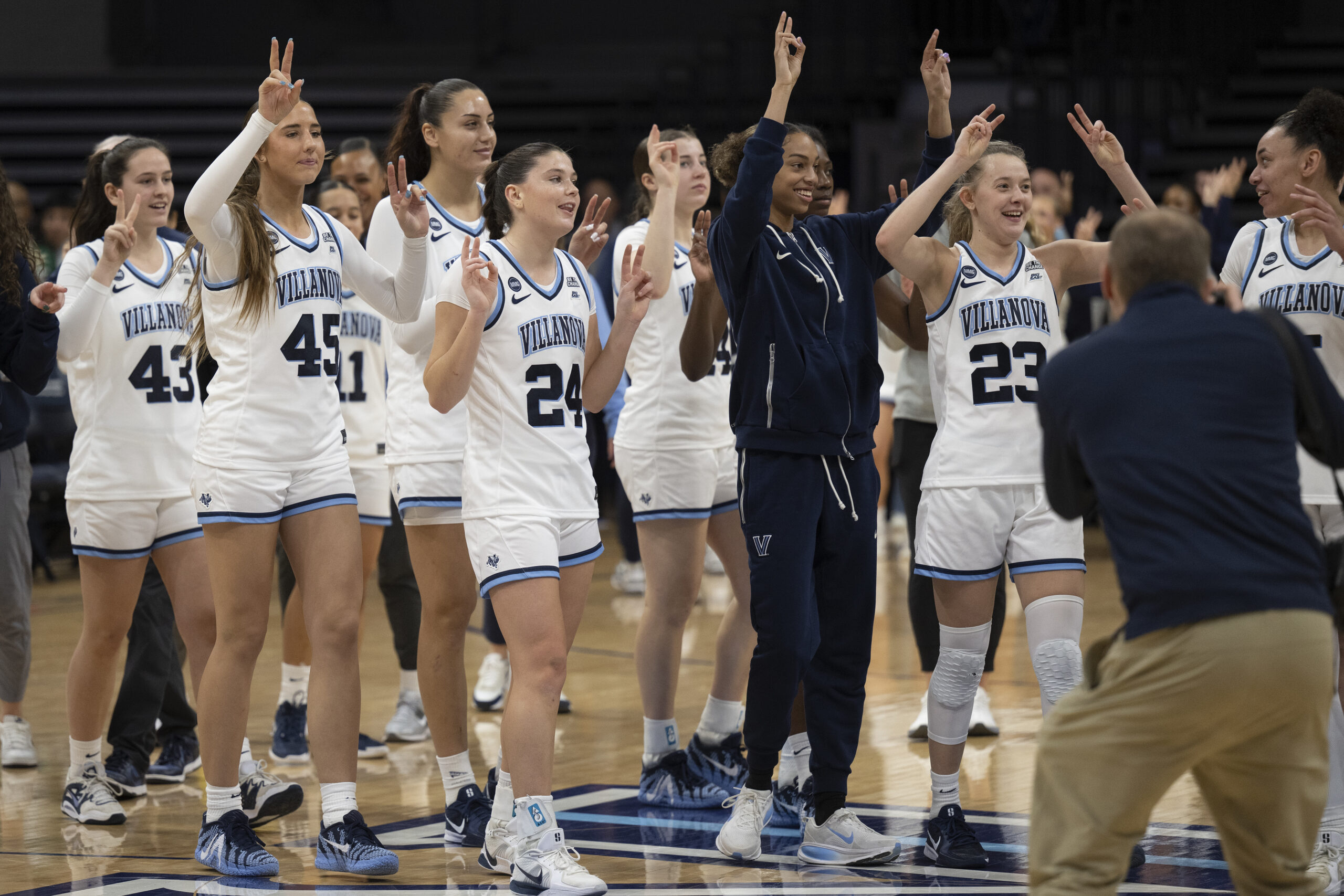
Similar story. Villanova (16-5, 9-3) was projected as a No. 10 seed on the right side of the NCAA Tournament bubble with an at-large bid in the latest ESPN women’s bracketology. No other team has an at-large path, and only Drexel (4-3) had a winning conference record entering Wednesday.
The search for the next Eagles offensive coordinator is nearly two weeks old, and while the team has conducted multiple interviews, new candidates are still appearing, signaling a clear replacement for Kevin Patullo has not yet emerged.
Here’s a look at the state of the search the day after championship Sunday in the NFL.
New candidates
The Eagles added at least two names to their interview list Monday morning, according to reports.
According to NFL Network, the Eagles interviewed Dolphins coordinator Frank Smith, who worked under Mike McDaniel in Miami. The Eagles, according to sources, talked to McDaniel during the process, but McDaniel is headed for Los Angeles to be the next Chargers coordinator under Jim Harbaugh.
The Eagles are obviously interested in McDaniel’s staff, so talking to Smith makes sense in that regard. While McDaniel was the play-caller, Smith oversaw the Dolphins offense from 2022 to 2025. The Dolphins were sixth in total offense in 2022 and then first in 2023 before taking big steps back in each of the last two seasons. Before the Dolphins, Smith was the running game coordinator and offensive line coach under Sean McVay for the 2021 Los Angeles Rams season. Before that, Smith held assistant roles under Sean Payton in New Orleans, John Fox in Chicago, and Jon Gruden in Oakland.
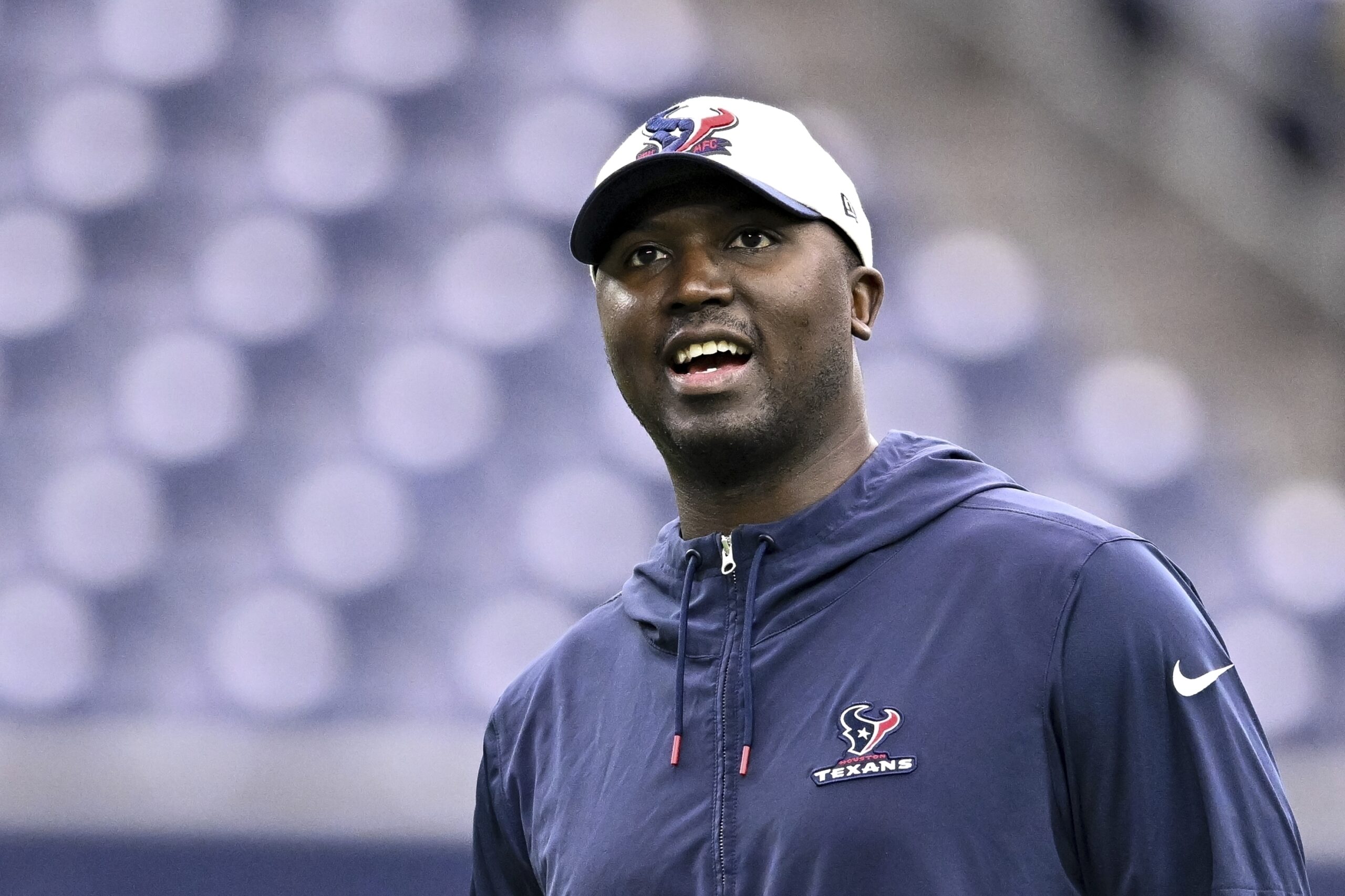
The Eagles also are set to interview Houston Texans quarterbacks coach Jerrod Johnson, according to The Athletic. The team interviewed him for the same role before it hired Kellen Moore in 2024. Johnson, a former quarterback, was in camp with the Eagles in 2011. He was a Bill Walsh Diversity Fellow with the San Francisco 49ers and Indianapolis Colts in 2017 and 2019, respectively, before becoming an offensive quality control coach with Indianapolis in 2020, when Nick Sirianni was the Colts’ offensive coordinator.
The Eagles will be interviewing Houston Texans quarterback coach Jerrod Johnson for an OC role for the second time in three years.
Johnson was then the Minnesota Vikings’ assistant quarterbacks coach in 2022 before joining the staff in Houston under then-coordinator Bobby Slowik, who was also a candidate for this Eagles job but reportedly has agreed to fill that position in Miami.
You’ve met the new names, now let’s run through the others who are still on the board.
In addition to the names above, the known candidates still available are: Jim Bob Cooter, Josh Grizzard, and Matt Nagy.
Matt Nagy (left) is out in Kansas City and remains on the board for his former employer, the Eagles.
The Eagles interviewed Nagy, a former Andy Reid assistant, last week.
Cross them off?
The Eagles reportedly tried to add another name to the candidate list over the weekend. According to ESPN, the team requested to interview Dallas Cowboys coordinator Klayton Adams, who doesn’t call plays. But Dallas denied that request, blocking Adams from a promotion with its divisional rival.
The Eagles, according to The Athletic, had conversations with Arthur Smith, who is heading back to the college ranks to be the OC at Ohio State.
A candidate is a candidate until he’s officially not, but Brian Daboll, according to The Athletic, is a candidate for the Buffalo Bills head coaching job and is otherwise planning to be the next offensive coordinator in Tennessee.
Nothing official there, and Daboll did interview with the Eagles.
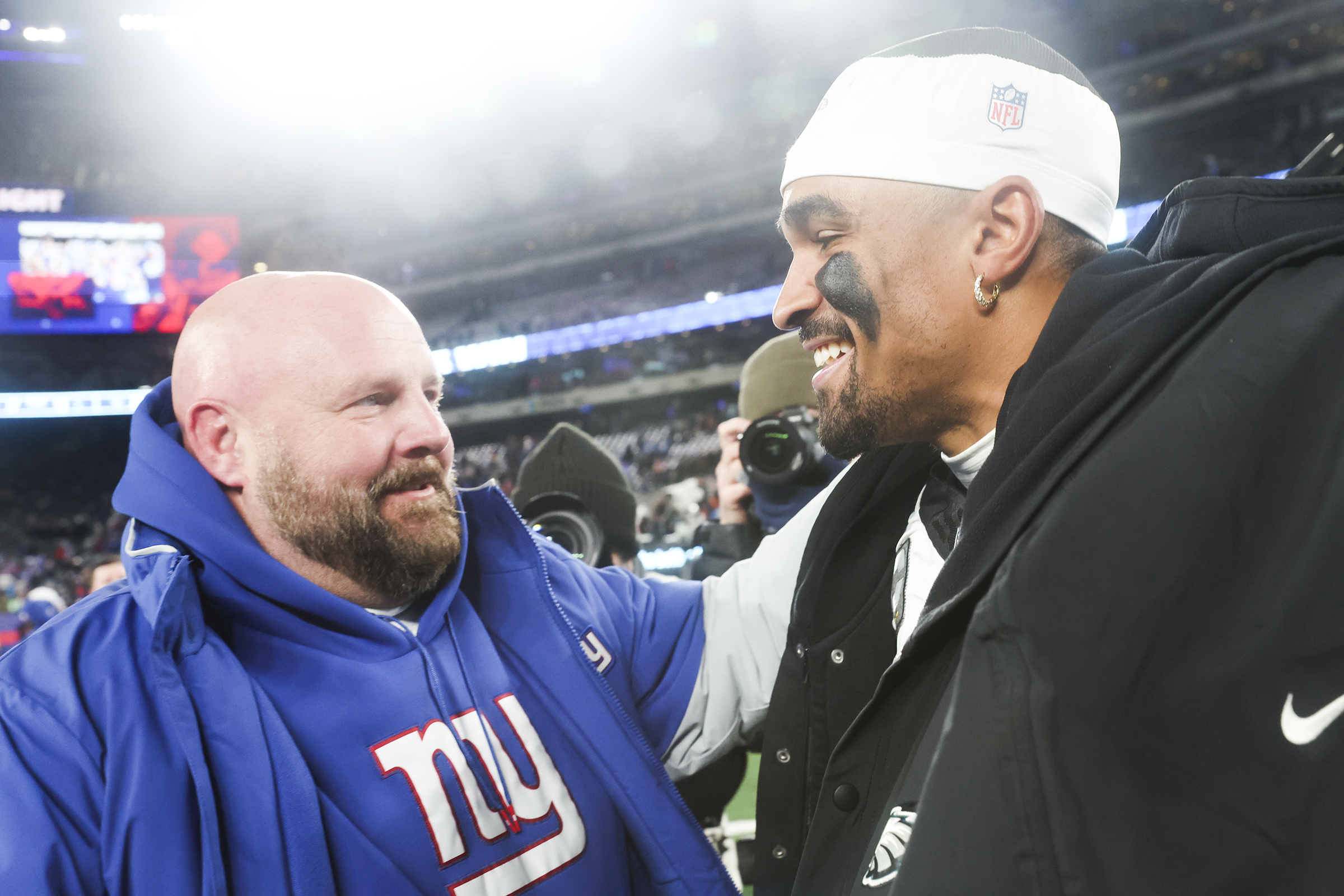
Ex-New York Giants head coach Brian Daboll (left) is technically still on the board but remains a head coaching candidate in Buffalo.
McDaniel’s hire in Los Angeles became official Monday. Slowik was, according to ESPN, elevated to the OC role in Miami over the weekend.
Three other names that were connected to the Eagles were crossed off the list Monday.
Bears offensive coordinator Declan Doyle, whom the team interviewed last week, withdrew his name from consideration, according to The Athletic. LSU offensive coordinator Charlie Weis Jr., who followed Lane Kiffin from Ole Miss, informed the team that he will remain in college football, according to The Athletic. Lastly, Mike Kafka, who was the New York Giants’ coordinator under Daboll, was hired by the Detroit Lions in a “high-ranking offensive staff role,” according to NFL Network. Of course, that doesn’t mean any of them were offered or turned down the job.
Zac Robinson, who interviewed with the Eagles, took another OC job late last week with Tampa Bay.
Who could be next?
Rams passing game coordinator Nathan Scheelhaase has a busy Monday. After his team was eliminated Sunday in Seattle, Scheelhaase is set to be interviewed in Los Angeles for the vacant head coaching gig in Cleveland, according to multiple reports.
If he doesn’t get that job, could he emerge as an offensive coordinator candidate for the Eagles? It’s possible, though current Rams OC Mike LaFleur seems to be a front-runner to be the next head coach in Arizona, meaning Scheelhaase would be in line for a promotion in L.A., even if he doesn’t call plays (McVay does). Scheelhaase has not called plays in the NFL, but he has in college under new Penn State coach and Sirianni friend Matt Campbell at Iowa State.
Another coaching candidate who lost Sunday is Davis Webb, who was quarterbacking in the league as recently as 2022. Webb became Denver’s quarterbacks coach in 2023 and added passing game coordinator to his duties in 2025. According to reports, Webb is set to be interviewed for Buffalo’s head coaching job and is a candidate for the head coaching job in Las Vegas. If he doesn’t land either of those, Webb could be someone the Eagles want to talk to for their OC vacancy.
The Eagles have not been publicly linked to Kliff Kingsbury, but it seems likely the team would have at least considered him for the gig. There’s also Bills coordinator Joe Brady, a head coaching candidate whose current team is looking for a new head coach.
The Eagles said they were going to cast a wide net, and they have. It wouldn’t be any surprise to see it expanding.
HARTFORD, Conn. — Devin Askew drove into the paint with Villanova trailing Connecticut by just one point inside two minutes to play. The defense collapsed, so Askew kicked the ball to the wing and into the waiting hands of … Kevin Willard.
The Villanova coach pounded the basketball onto the court with two hands. One of Villanova’s 11 turnovers came at an inopportune time.
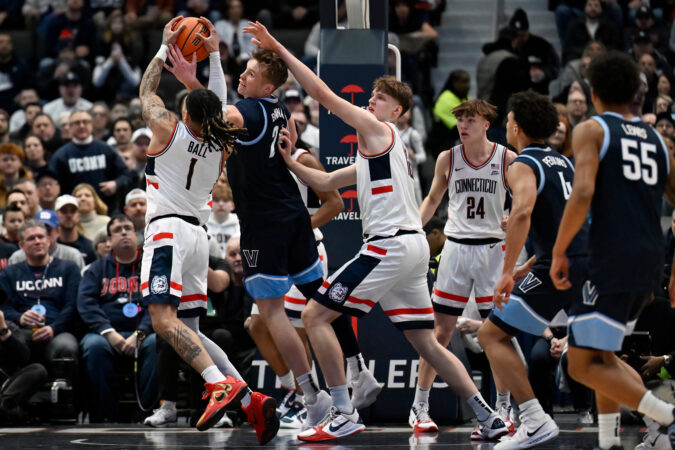
The Wildcats later had a lead with less than a minute on the clock, and they still did take the second-ranked team in the country to overtime, but Askew’s turnover was one of many little moments that didn’t go Villanova’s way in a 75-67 loss at PeoplesBank Arena.
Where to start? There was Acaden Lewis’ out-of-control drive down two in overtime with just over a minute to go. Back in regulation, Bryce Lindsay missed an open runner in the paint shortly after the Askew turnover. Then Villanova’s leading scorer, who was held to three points and didn’t make any of his eight attempts, had a three-point attempt blocked in a tie game with less than 30 seconds to play.
Villanova started overtime with a Tyler Perkins three-pointer, then got the ball back when Perkins drew a charging foul. But instead of building on the lead, Lindsay had his pocket picked by Silas Demary Jr., leading to a runout dunk from Tarris Reed Jr. Perkins’ triple, 12 seconds into overtime, was Villanova’s only made basket of the extra session.
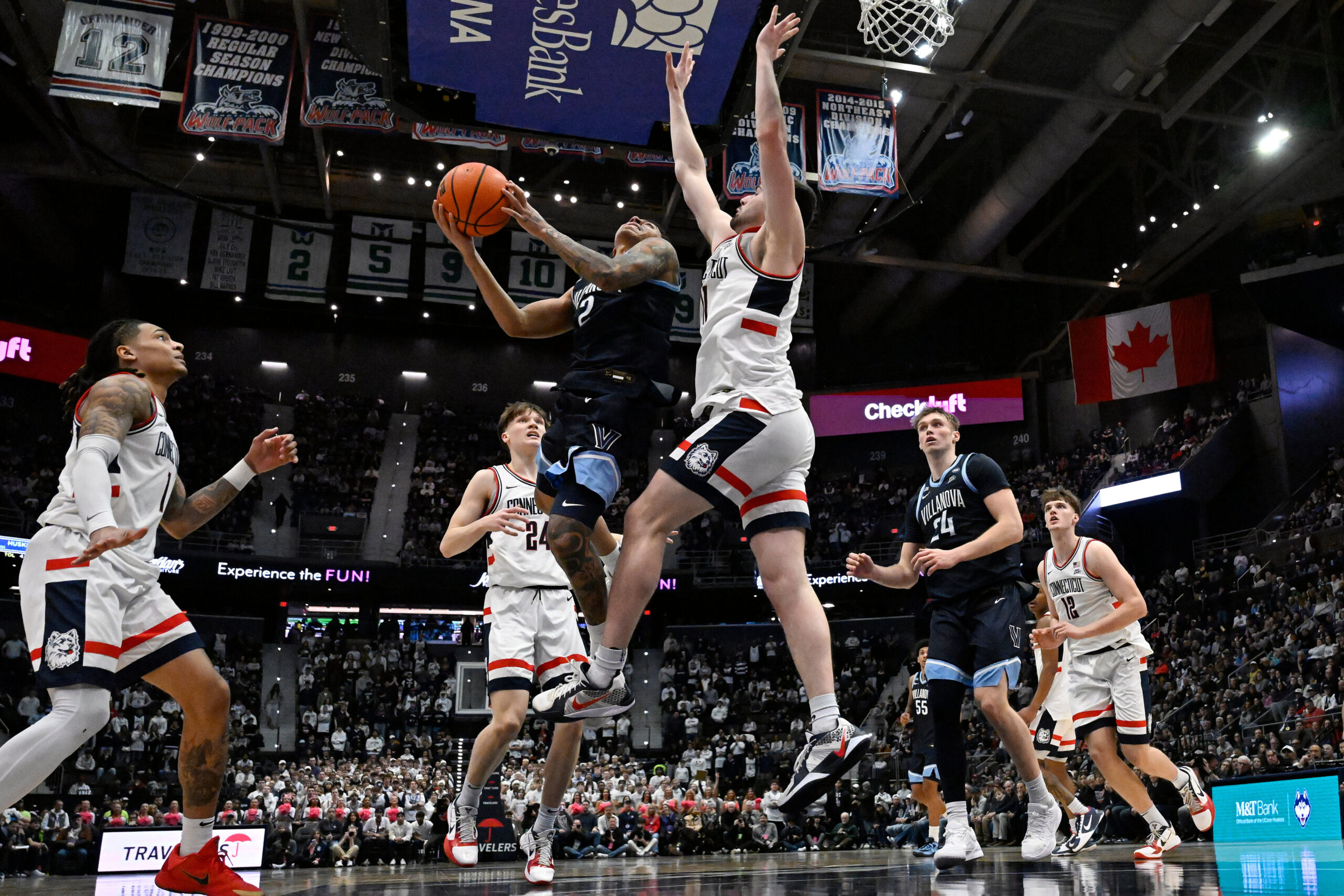
Villanova guard Bryce Lindsay shoots as UConn forward Alex Karaban defends on Saturday.
“It just hurts,” said Villanova senior big man Duke Brennan, who struggled last week with the size and physicality of St. John’s but battled back in a big way Saturday. He had 16 points and 14 rebounds and, perhaps most importantly, made eight of his nine free-throw attempts in 40 minutes. “We fought until the end. That’s a great team over there.”
To be sure, there were things Villanova did well enough to win. You don’t take the No. 2 team in the country to overtime without doing things correctly. The Wildcats had answers for a lot of UConn’s offensive action. They held Alex Karaban, who averages nearly 14 points, off the scoreboard for the first 30 minutes (though he did finish with 17 points).
Perkins had 16 points and 10 rebounds and continued to be the physical and experienced guard presence Villanova needs. Askew, too, continued his strong stretch of games with 13 points, four rebounds, and three assists before he fouled out in overtime. Matt Hodge followed up consecutive games being held to four points or less with 12 points on 4-for-6 shooting from three-point range, including a corner three that gave Villanova a 61-59 lead with just over a minute to go.
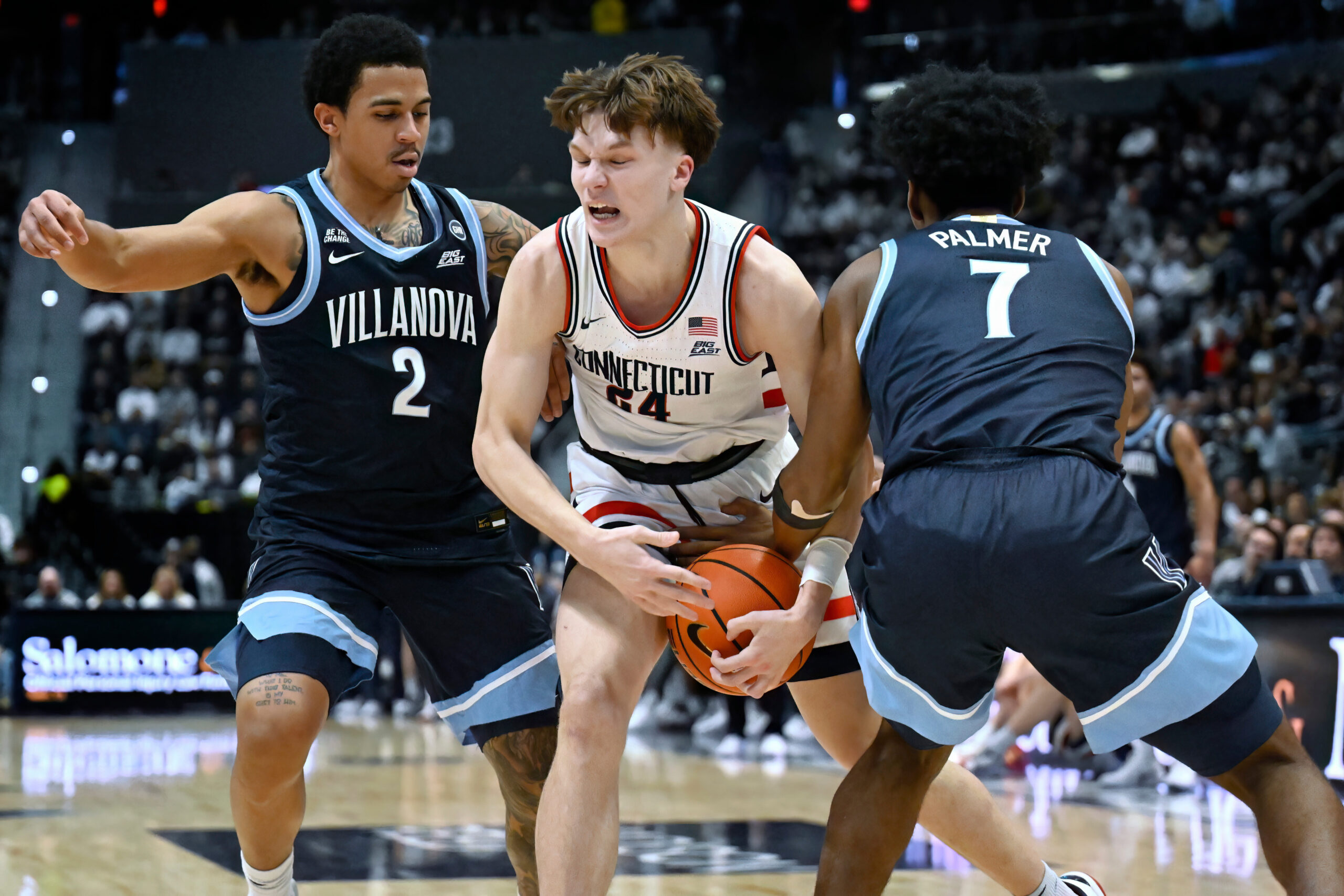
UConn guard Braylon Mullins is guarded by Villanova guards Bryce Lindsay (2) and Malachi Palmer (7) on Saturday.
But then came another costly error. Demary missed a driving layup, and Villanova couldn’t secure a rebound, allowing Reed to tip in the tying basket.
In the end, UConn made the plays when it mattered. Solo Ball, who led all scorers with 24 points, hit arguably the game’s biggest shot, a three-pointer with two minutes left in overtime that turned a one-point Villanova lead into a two-point deficit.
It is hard for Villanova to win when Lindsay doesn’t make a shot and Lewis goes 1-for-13 from the field. Yet, it nearly happened anyway.
“We’re a young team,” Willard said. “Guys were trying to make plays. We got to the rim. We didn’t finish at the rim, and I thought we had some opportunities at the rim.”
Villanova made 5 of 15 layup attempts.
“We’re still going down and playing high-level defense,” Willard said. “If we can continue to build on that, then we’ll get out in transition and get some easier buckets.”
It was the closing minutes that Willard said he needed to “get better at.” Lewis was seemingly benched for a large stretch of the second half. Brennan was in foul trouble. The Wildcats are a team without much depth.
“I got to put the right lineups out there at times and I’m learning a lot about certain guys and what to do,” Willard said. “At the end of the day, we don’t do a free throw box out, and we don’t get a huge rebound when we’re up four with about six minutes to go. … Sometimes to get there on the road you got to make sure you finish possessions, and I thought there was three or four times where we didn’t finish possessions with rebounds.”
An encouraging game nonetheless?
“No,” Willard replied. “I don’t like losing. We should have won that game.”
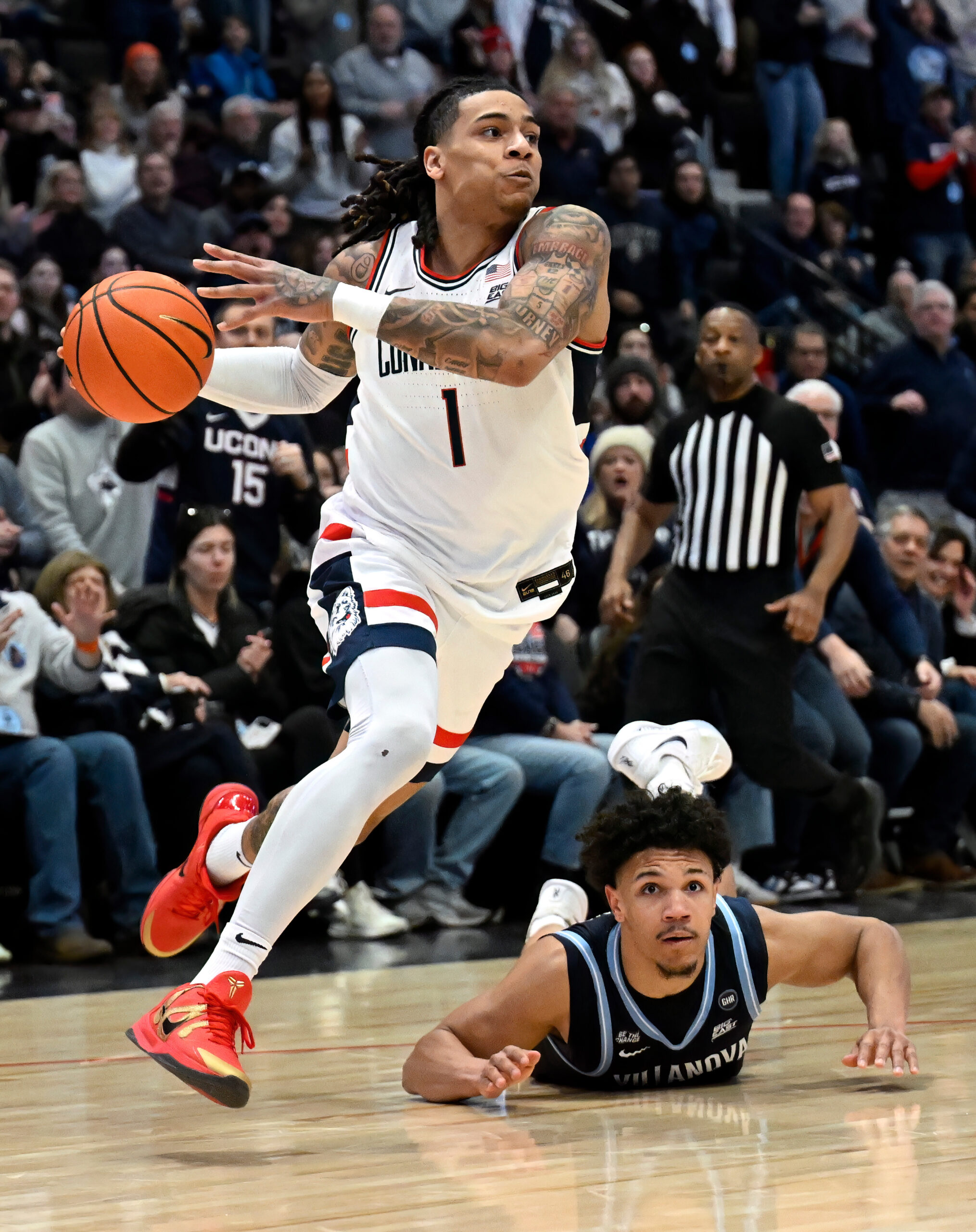
UConn guard Solo Ball, who led all scorers with 24 points, dribbles around Villanova guard Tyler Perkins on Saturday.
The reality for Villanova is Saturday’s loss is one that won’t necessarily hurt. A road upset helps a lot more than an eight-point overtime loss stings as far as the meaningful metrics go. The Wildcats are 15-5 overall and 6-3 in Big East play. They started the day rated 25th at KenPom and were still there by late Saturday afternoon. They have rest ahead before a Friday home game vs. Providence, and plenty of winnable games on the calendar as they continue to hunt for an at-large bid to the NCAA Tournament.
Plus, two more shots at the conference’s elite. On consecutive Saturdays, Villanova took St. John’s and Connecticut to the brink.
“The good thing about conference is you play every team twice,” Brennan said. “We get another shot at those dudes. St. John’s we felt like we didn’t play good at all, all throughout our program. This game we felt like we really battled.
“It feels like it got away and we felt like we were there the whole game. There are certain little things that come down at the end of the game where it can flip one way. It wasn’t on our side tonight.”
The offseason is only two weeks old, but it’s already been an interesting one for the Eagles.
Kevin Patullo was removed from his role as offensive coordinator two days after their season-ending playoff loss to the San Francisco 49ers, and the search for his replacement is underway.
Patullo’s post isn’t the only one in need of filling, though.
We’re keeping you updated on the comings and goings and the entire Eagles offseason at The Inquirer with news and analysis on the team as it goes through a critical offseason. This week’s update will start with the latest on the coaching front.
Coaching staff changes
The Eagles have interviewed multiple candidates for the offensive coordinator opening, and some of those candidates have landed elsewhere. We’ll get to the state of the OC search momentarily.
But the Eagles are also in need of a new defensive backs coach after the Dallas Cowboys plucked Christian Parker, a highlyregarded 34-year-old up-and-comer to be their new defensive coordinator. It had always seemed like a matter of time until Parker, who was also the defensive pass game coordinator, was lured to a better job with another team, and that time came now.
Christian Parker has long been heralded as the member of the staff primed for a bigger role.
Parker, of course, has been instrumental in helping the Eagles develop their two young All-Pro defensive backs, Quinyon Mitchell and Cooper DeJean. As far as candidates for that job go, it’s unclear what external candidates the Eagles might consider, but one internal candidate, safeties coach Joe Kasper, is a possibility.
As for the offensive coordinator spot, the search rolls on.
Two new names were added to the list this week when the Eagles on Wednesday interviewed longtime Andy Reid assistant and former Bears head coach Matt Nagy. They also reportedly requested to interview current Bears defensive coordinator Declan Doyle, a 29-year-old who has been a fast riser.
The candidate list has lost a few names. Zac Robinson was hired by Tampa Bay, and Mike McDaniel appears headed to the Chargers if he doesn’t get a head coaching gig. Brian Daboll, who the Eagles interviewed, is also in the running to be a head coach and, according to The Athletic, will likely land in Tennessee as the OC if he doesn’t. Still, Daboll probably should be considered a candidate until he officially isn’t one.
Other names on the list include Jim Bob Cooter, Josh Grizzard, Mike Kafka, and Bobby Slowik.
Since the last offseason update, special teams coordinator Michael Clay, whose contract was set to expire, was re-signed by the team.
Additional offensive coaching staff changes could occur, too, depending on the eventual OC hire.
Will Reed Blankenship be back with the Eagles in 2026?
Roster decisions (updated Jan. 17)
Scheduled free agents
The Eagles have 20 pending free agents, 10 on offense, nine on defense, and punter Braden Mann.
Offense
TE Dallas Goedert: Goedert reworked his deal last offseason to stay with the Eagles and scored a career-best 11 touchdowns, an Eagles tight end record. Considering the Eagles don’t have any tight ends on the roster, they may look to bring the 31-year-old back after he got through the season relatively healthy.
WR Jahan Dotson: The little-used third receiver could find a new home this offseason. WR3 is a tough position on this team behind A.J. Brown and DeVonta Smith, and it seems unlikely the Eagles will find it worth bringing Dotson back.
OT Fred Johnson: Johnson left for free agency after last season, but the Eagles traded for him before the season for some insurance at tackle, and they needed it. It remains to be seen how the Eagles approach the draft and free agency, but Johnson’s return would put an experienced body on the depth chart.
TE Grant Calcaterra: As mentioned, the Eagles don’t have any tight ends. Calcaterra has been productive when the Eagles use him as a pass catcher, but he’s not a great blocker, and the Eagles need their tight ends to block.
OL Brett Toth: The do-it-all lineman has been a valuable asset in Jeff Southland’s offensive line room. He can fill in at any position.
TE Kylen Granson: Granson was a big part of the Eagles’ special teams, despite having a limited role in the offense. The tight end position is in flux, but Granson could return as a depth piece.
OL Matt Pryor: The Eagles brought back a familiar and experienced face in the offseason for some depth. Pryor gave that and provided positional versatility. But he wasn’t all that great in relief.
RB AJ Dillon: Dillon started the season in the mix to get snaps behind Saquon Barkley, but he fell out of favor after the Eagles traded for Tank Bigsby. Dillon was inactive for most of the second half of the season and logged just 12 carries. The Eagles are pretty set at running back with Barkley, Bigsby, and Will Shipley.
QB Sam Howell: The Eagles weren’t comfortable with Kyle McCord as QB3, so they acquired Howell before the season. Will McCord be ready after spending the 2025 season on the practice squad?
FB Ben VanSumeren: VanSumeren changed positions from linebacker to fullback and made the 53-man roster, but his season ended on the opening kickoff in Week 1. The Eagles signed Kansas City’s Carson Steele to a futures contract. Will they bring back VanSumeren and have a fullback competition?
Defense
EDGE Jaelan Phillips: The deadline acquisition stepped in right away and was a difference-maker along the defensive line. The Eagles need a top-end edge rusher to add to a unit that has Jalyx Hunt and Nolan Smith under contract. Phillips would make sense.
LB Nakobe Dean: Dean returned from patellar tendon surgery in the middle of the season and looked like he didn’t miss a beat. But the Eagles drafted his replacement last season in Jihaad Campbell.
S Reed Blankenship: Blankenship has been a big part of the defense for the last four years. He has started 50 games and is a leader. The Eagles are thin at safety, but it remains to be seen what Blankenship’s market looks like and if the Eagles will be in the mix.
CB Adoree’ Jackson: Jackson was up and down in training camp and to start the season, but he played his way into a starting job opposite Quinyon Mitchell. He’ll be 31 next season, and the Eagles probably want to get better at CB2.
S Marcus Epps: Epps stepped in as a starter after Drew Mukuba went down. He’ll be 30 before the season starts, though he could find his way back to the Eagles and compete for a job.
EDGE Brandon Graham: Graham came out of retirement and briefly changed positions when Jalen Carter went down and the interior needed a boost. Will he go back into retirement?
EDGE Joshua Uche: Uche seemed to be playing his way into a bigger role when the Eagles brought Graham out of retirement, which forced Uche to a lesser role. The Eagles are thin on the edge, though Uche seems to be more of a depth piece right now.
EDGE Azeez Ojulari: Ojulari ended up behind Uche on the depth chart and then missed most of the season after being placed on injured reserve.
EDGE Ogbo Okoronkwo: Okoronkwo made the team out of training camp as a depth edge rusher but suffered a season-ending injury in Week 4, the only game in which he played.
Special teams
P Braden Mann: Mann had a great season. He ranked fifth in the NFL in punt average (49.9 yards). It would make sense for the Eagles to want to bring him back.
Jordan Davis, left, and Jalen Carter could both be in consideration for new deals.
New deals?
There are a few players under contract who could be in the running for a new contract with the Eagles.
DT Jordan Davis: The Eagles picked up Davis’ fifth-year option last offseason and he remains under contract for the 2026 season. But after a breakout 2025 season, he likely earned himself a lot of money.
DT Jalen Carter: The Eagles likely will do what they did with Davis and pick up Carter’s fifth year, but it might be time for an extension now. Carter didn’t have his best season after a dominant 2024. The Eagles may be able to sign him to a more team-friendly deal, though Carter and his agent, Drew Rosenhaus, may opt to play 2026 on his current deal and revisit the big-money deal next offseason.
DT Moro Ojomo: Ojomo is set to play the final year of his four-year rookie deal in 2026. The seventh-round pick has been a major success story. Will the Eagles look to lock him up beyond 2026? Will they be able to afford all of these defensive linemen with big contracts coming in the future for other defensive stars like Mitchell and DeJean?
Contracted players who could be on the way out
The Eagles have some players on the 2026 roster who may not be here when training camp starts.
K Jake Elliott: Elliott has had two consecutive seasons where he didn’t perform well enough. His 2025 field goal conversion rate was just 74.1%, the lowest of any kicker who played a full season.
WR A.J. Brown: Will his frustrations with the offense cause him to ask for a trade? It would be a costly move for the Eagles, but they’ve willingly taken on dead cap in the past. The Eagles would have a big hole to fill if it came to that.
RT Lane Johnson: Johnson remains one of the best tackles in football, but his availability was an issue this season. He missed the final eight games of the season after suffering a Lisfranc injury in his right foot. The Eagles probably would love him back, but Johnson will be 36 in May and won’t play forever.
QB Tanner McKee: Will the Eagles look to ship McKee to another team for a draft pick? McKee’s Week 18 performance didn’t help their cause.
CB Kelee Ringo: Ringo remains under contract on his rookie deal, but he seems like a change-of-scenery candidate. He has struggled to get on the field with the Eagles, though he has been great on special teams.
2026 free agency targets (updated Jan. 17)
What do the Eagles need most? What kind of players will be on the market?
First, the Eagles need to know what happens with the futures of key offensive players like A.J. Brown and Lane Johnson.
At the moment, they have just over $15 million in cap space, according to Over the Cap. That’s not a lot, but Howie Roseman has shown the creativity to use void years and spread cap hits out over multiple seasons.
Free agency begins March 11.
Position groups and players to target
Offensive line: Will Johnson return? Will Landon Dickerson ever be healthy again? Can Cam Jurgens bounce back? Big questions facing the Eagles, who need to restore their offensive line this offseason. Reinforcements likely will come via the draft, but free agency offers some options.
Indianapolis Colts right tackle Braden Smith, for example, has dealt with injuries but could provide insurance for Johnson and help the Eagles bridge their way to the next young tackle. Old friend Isaac Seumalo fits that bill, too, at guard. Same with Cleveland Browns guard Joel Bitonio.
Wide receiver: Regardless of what happens with Brown, the Eagles could use some more help at receiver. They won’t be playing in the George Pickens pool, and probably not Alec Pierce, either, but what about Romeo Doubs, Kendrick Bourne, or Van Jefferson at WR3?
EDGE: Jaelan Phillips should be at the top of the Eagles’ wish list. Jalyx Hunt and Nolan Smith are the only two edge rushers under contract. The Eagles will draft at least one rusher, but they need a top-end talent like Phillips. If not Phillips, other top options would be Trey Hendrickson, Odafe Oweh, Boye Mafe, Joey Bosa, and Khalil Mack. There’s always the possibility of Roseman figuring out a way to trade for Maxx Crosby, too.
Tight end: Dallas Goedert may be in the running to return. But if not, the Eagles could eye someone like Atlanta’s Kyle Pitts, who finally played to his potential this season. Pitts attended Abington and Archbishop Wood before playing at Florida in college. Other free agents include Isaiah Likely, David Njoku, and Tyler Higbee. The Eagles probably will use a draft pick on one, too.
Cornerback: Quinyon Mitchell eventually will re-sign at the top of the market, and you don’t see many teams spending that type of money on two players at this position. But there are some options the Eagles could target, like Tariq Woolen, Roger McCreary, and Jamel Dean. Will those players be too costly? We’ll see.
Safety: Reed Blankenship has been solid for the Eagles, but he’s not great in coverage. The Eagles could be looking to pair Drew Mukuba with a better player on the back line, and they could look to do that via free agency. Old friend Kevin Byard has been really productive with the Chicago Bears, though he could command a bigger contract than the Eagles are willing to give out. Los Angeles Rams safety Kamren Curl could be an option.
The 2026 NFL draft (updated Jan. 17)
The Eagles’ needs here will become clearer after free agency, though our Devin Jackson looked at a few potential targets at pick No. 23.
The draft will take place beginning on Thursday, April 23, in Pittsburgh.
Before that, there are some other key dates and events to look out for.
The East-West Shrine Bowl is on Jan. 27; the Senior Bowl is on Jan. 31; the yearly NFL Scouting Combine begins on Feb. 23; and teams have until April 15 to conduct visits, tests, and interviews with prospective draft picks.
League meetings (updated Jan. 17)
The annual league meeting is from March 29 to April 1 in Arizona. It is there that the Tush Push likely will be another big topic of conversation and could meet its demise.
But the Eagles’ lack of success using their signature play this season could result in some teams backing off a little bit. We’ll see.
There’s also another league meeting May 19 and 20 in Orlando.
2026 Eagles schedule (updated Jan. 17)
The Eagles’ opponents are known. They play home games vs. their three divisional opponents (Washington Commanders, Dallas Cowboys, and New York Giants), as well as other games vs. the Indianapolis Colts, Carolina Panthers, Los Angeles Rams, Seattle Seahawks, Pittsburgh Steelers, and Houston Texans.
Besides their three NFC East road games, the Eagles also travel to play the San Francisco 49ers, Chicago Bears, Arizona Cardinals, Jacksonville Jaguars, and Tennessee Titans.
It remains to be seen if the Eagles will get an international game.
The schedule is due out in May, but international dates will likely be released prior to that.