Author: Hira Qureshi

  • When the buzziest restaurants in Philly need a menu, this is the designer they call

    When the buzziest restaurants in Philly need a menu, this is the designer they call

    Unless you’re paying close attention while flipping through the extensive menu at Almanac, Old City’s Japanese American cocktail bar, you might overlook some of the painstaking work that went into it. The leather-bound book’s deep green color is meant to evoke the interior of the bar. The borders of the pages hint at the seasonal ingredients that go into each cocktail, and the thin newsprint pages depicting glassware illustrations of Almanac’s complex cocktails are meant to both be a guide and evoke opening an old book.

    Kylie Silvestri is obsessed with these details.

    That’s because she is the artist and designer behind menus for some of the city’s trendiest restaurants and bars. Her roster includes Sao, Almanac, Ogawa Sushi & Kappo, Javelin, Little Coco’s, River Twice, Little Water, Habibi Supper Club and its forthcoming cafe, Slow Drinks, and the forthcoming Northern Liberties cocktail bar, Field Day. Her company, Haridelle, focuses on this meticulous hospitality branding.

    “Design is part of the holy trinity in the food service industry,” Silvestri said. “There’s the food. There’s the hospitality, and then there’s the design.”
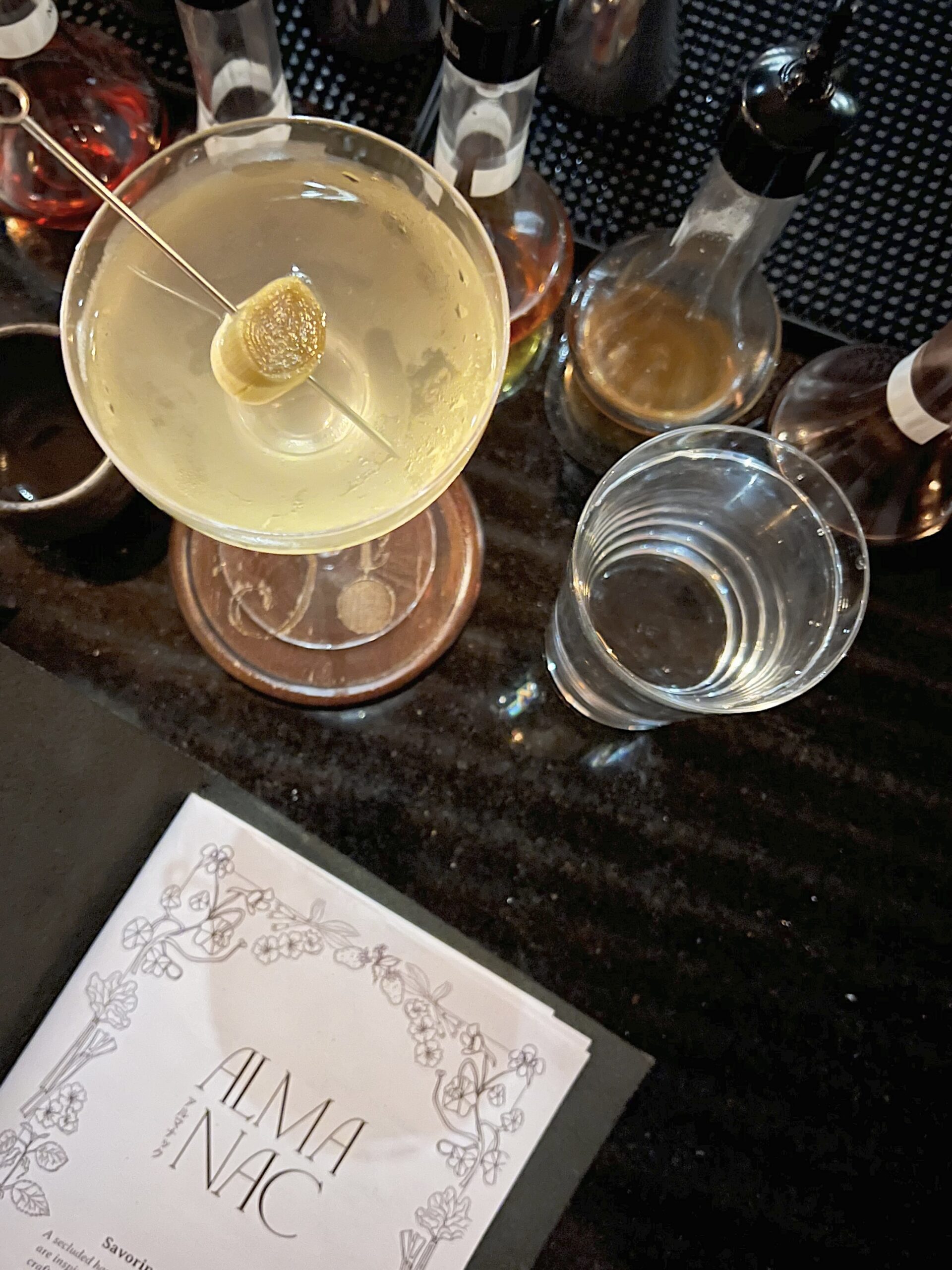
    Almanac’s menu, designed by Kylie Silvestri.

    Menus help set the stage for each customer’s meal, and play a big role in bringing the restaurant’s story to life.

    “The second a customer sits down — before they even taste the food/beverage — they are holding a menu in hand,” she explained. “How does the menu feel, tactilely? How does it look? It all adds to the experience and helps to tell that story. So, for me, designing them is about building the puzzle pieces together in a way that connects and relays the message eloquently, from chef-owner to customer.”

    Silvestri didn’t begin her career with a roster of small hospitality clients. She previously worked for startup groups and larger hospitality companies. In 2021, she started freelancing to build her own company, called Kylie Creative, where she developed branding for predominantly women-owned entrepreneurial businesses in the wellness industry.

    As her clientele grew, she would pick up serving shifts at restaurants in the city, including Osteria, and build connections with industry folks. Soon, a friend at the restaurant introduced Silvestri to Amanda Rucker (River Twice, Little Water), who commissioned her to design flyers for a 2022 fundraising event to support abortion access. The following year, Rucker reached out to Silvestri for branding and menu development for Little Water.

    “I naturally pivoted my design work to focus on the hospitality industry — because once you start, you never leave,” she said.

    While designing menus is just a part of her restaurant branding business, the process can take up to a month for each restaurant. There are five key steps to ensure a final product that owners are happy with.
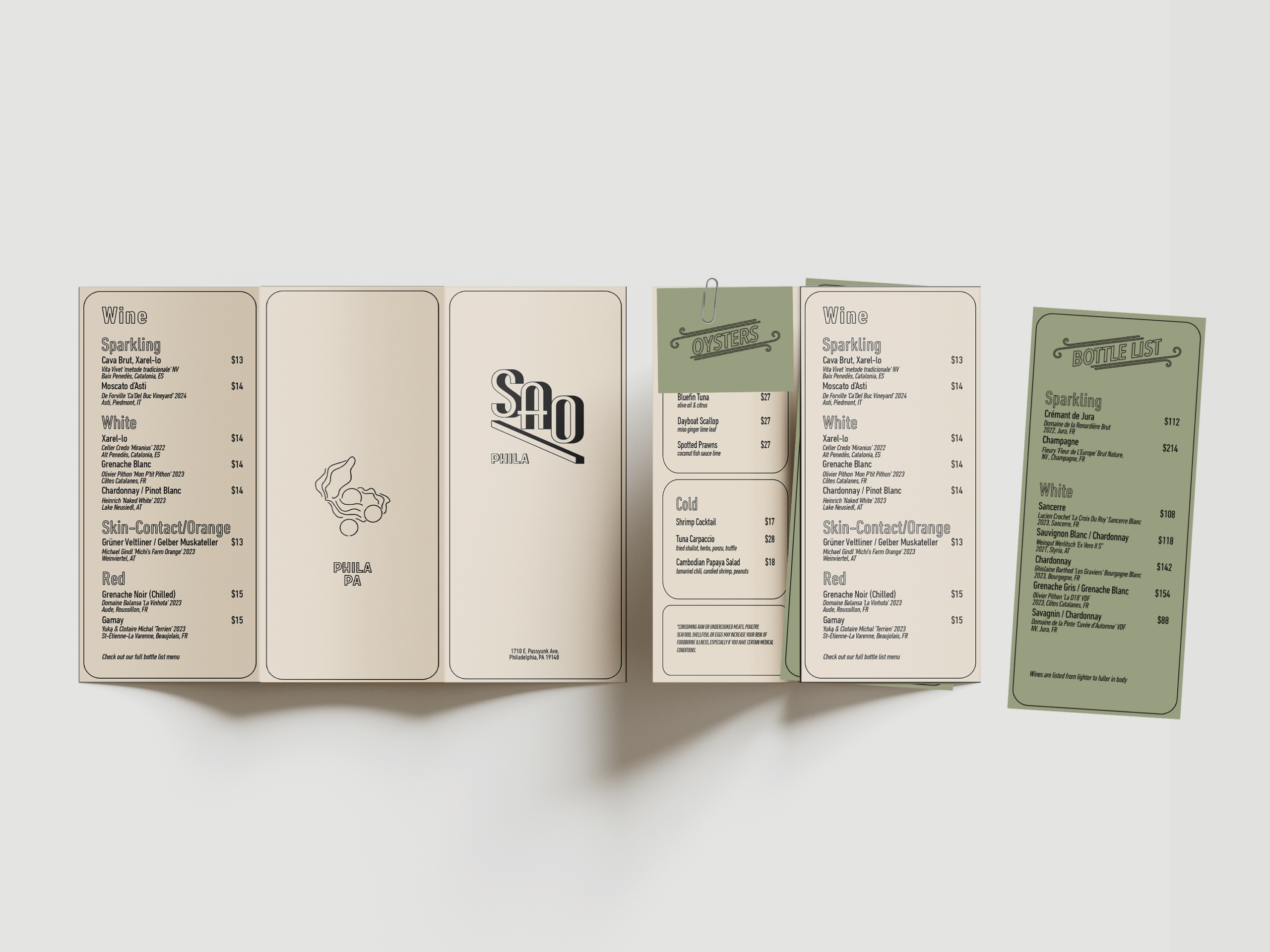
    Sao menu, by Kylie Silvestri.

    First, Silvestri takes time to understand the owners/chefs’ vision for the menu. Then, she determines a menu system and layout with brand fonts and drawings. Walk-throughs of the restaurant/bar (in person or via renderings if it’s not built yet) help her connect the menu design to the physical space. Once the vision is mapped out, Silvestri likes to settle down at a local coffee shop to create the menus on Adobe Illustrator and InDesign. The final step is sharing paper stock samples with owners/chefs for feedback on design and tactility.

    At Little Water, the linen-textured menu was the answer to conversations surrounding technique and locale, reinforcing the feeling of the coast with dishes offering the breadth of the Gulf to Cape Cod. An illustration of a little sandpiper sipping out of a cocktail on the drinks menu showcases the personality of restaurant owners Randy and Amanda Rucker. “We tied the design to that nautical experience and having this playfulness — Randy always says that ‘We don’t take ourselves seriously; we take our food seriously,’“ Silvestri said.

    At Sao, the menu was inspired by Rachel Lorn’s family’s business down the Shore, featuring a takeout menu style that sections off the dishes in categories. There are outlines of vintage signage by Philly-based artist Darin Rowland.
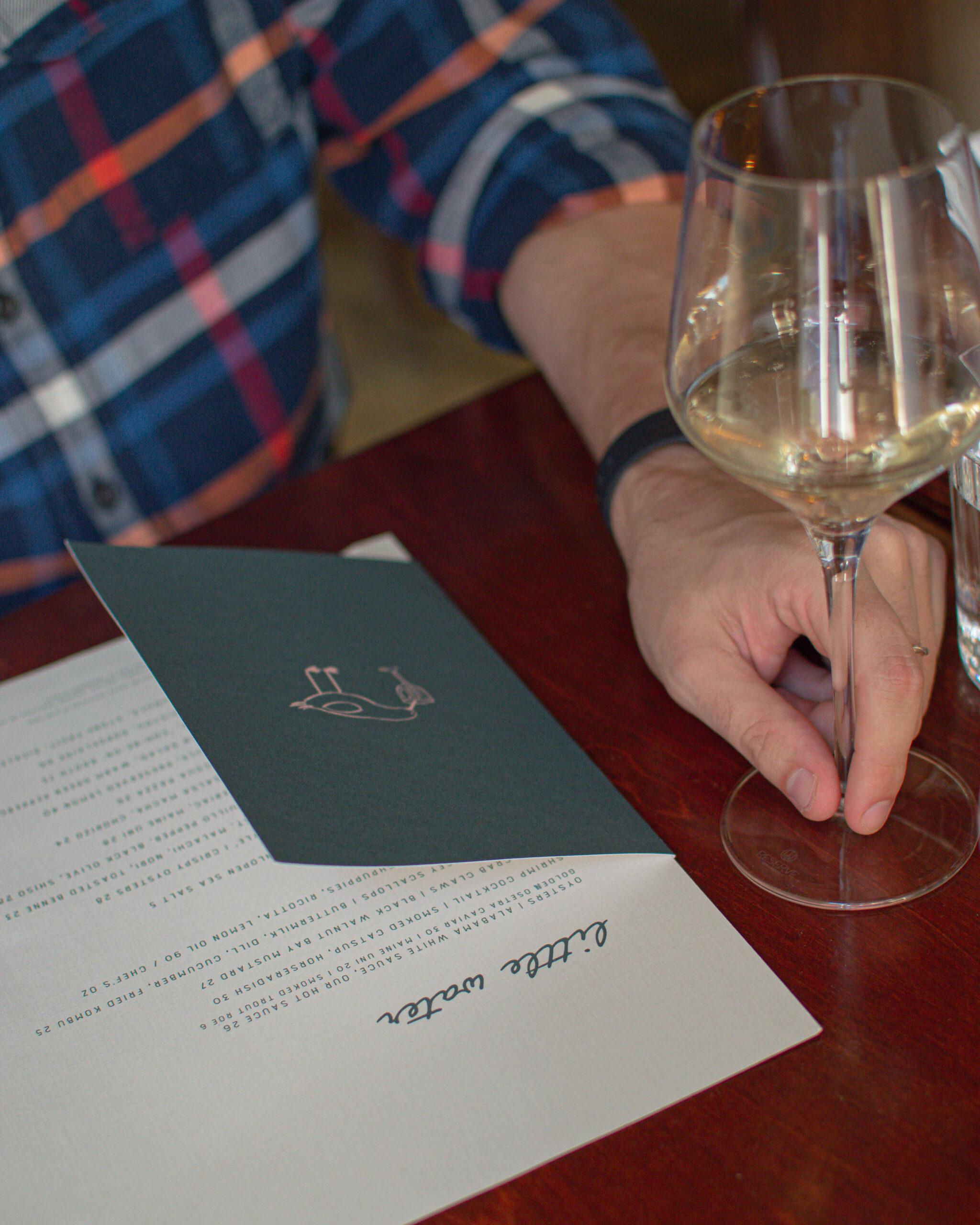
    Little Water menu, by Kylie Silvestri.

    For Habibi Supper Club and Field Day, the menus — like the restaurants — are still in development. On a recent Wednesday, Silvestri visited Field Day to chat with co-owner Katie Childs about the new bar’s branding and later chatted on the phone with Miled Finianos of Habibi Supper Club for his new cafe’s menu design.

    The menus, Silvestri explained, are “time capsules of culture, time, and space,” so every choice, from paper stock to illustration style, is made to capture that particular restaurant’s moment.

    Philly’s aim lately is on chef-owned restaurants, “or rather a focus on who is behind what,” she said, which means storytelling is more important than ever.

    “Philly’s food scene is incredibly versatile. … Each story is unique to the chef/beverage professional at the heart of the concept, making it an incredible city to work in,” she said. “I will never get tired of exploring new design styles and never feel pigeonholed to follow a specific one.”
  • Philly cheesesteak outranks New York pizza in a new World Cup food study

    Philly cheesesteak outranks New York pizza in a new World Cup food study

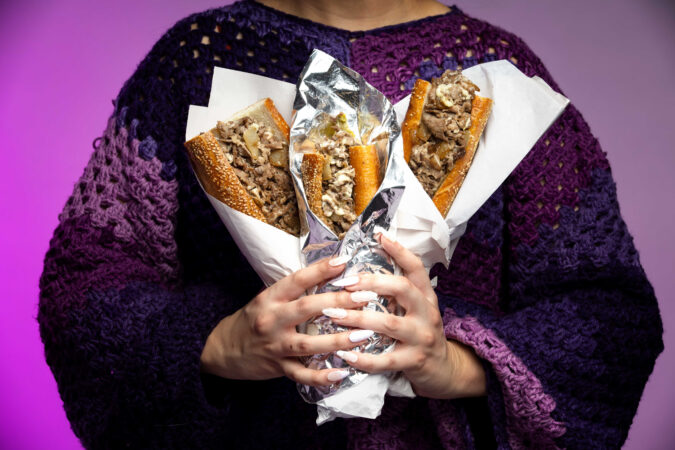
    What are the foods that tourists should try on their trip to North America for the World Cup? Apparently, the Philly cheesesteak is way up there, even higher than tacos in Los Angeles or Cuban sandwiches in Miami.

    Canada Sports Betting published the “Ultimate World Cup 2026 Food Guide: What to Eat in Every Host City” on June 15. The study placed the Philly cheesesteak at No. 5, outranking New York pizza by a long shot.

    With the 2026 World Cup spanning 16 host cities across three countries, writer Amy Harris found a tour of 16 “completely different food cultures” for this guide. Canada Sports Betting scored the “hero” dish of every host city based on source frequency, local support, tourist recognition, city-specificity, and cultural significance. The result: a ranking of the most unique city-specific dishes.

    In Philadelphia, “the cheesesteak … defines the city’s entire culinary reputation internationally,” Harris wrote. The iconic sandwich with “shaved rib eye on a hoagie roll with Whiz, provolone, or American was invented by Pat Olivieri in South Philadelphia in 1930,” she continued. “Locals will tell you DiNic’s roast pork at Reading Terminal Market is actually the city’s best sandwich. That internal argument is part of what makes Philadelphia interesting.“

    The cheesesteak is, for better or worse, depending on your point of view, No. 3 on The Inquirer’s 76 iconic Philly foods, with only one other sandwich — the hoagie — surpassing it. (Water ice was also rated above cheesesteaks on The Inquirer list.)

    “The cheesesteak, much like the city in which it was invented, is a working-class sandwich,“ wrote Inquirer reporter Tommy Rowan. “Its rugged beauty is in its simplicity.“

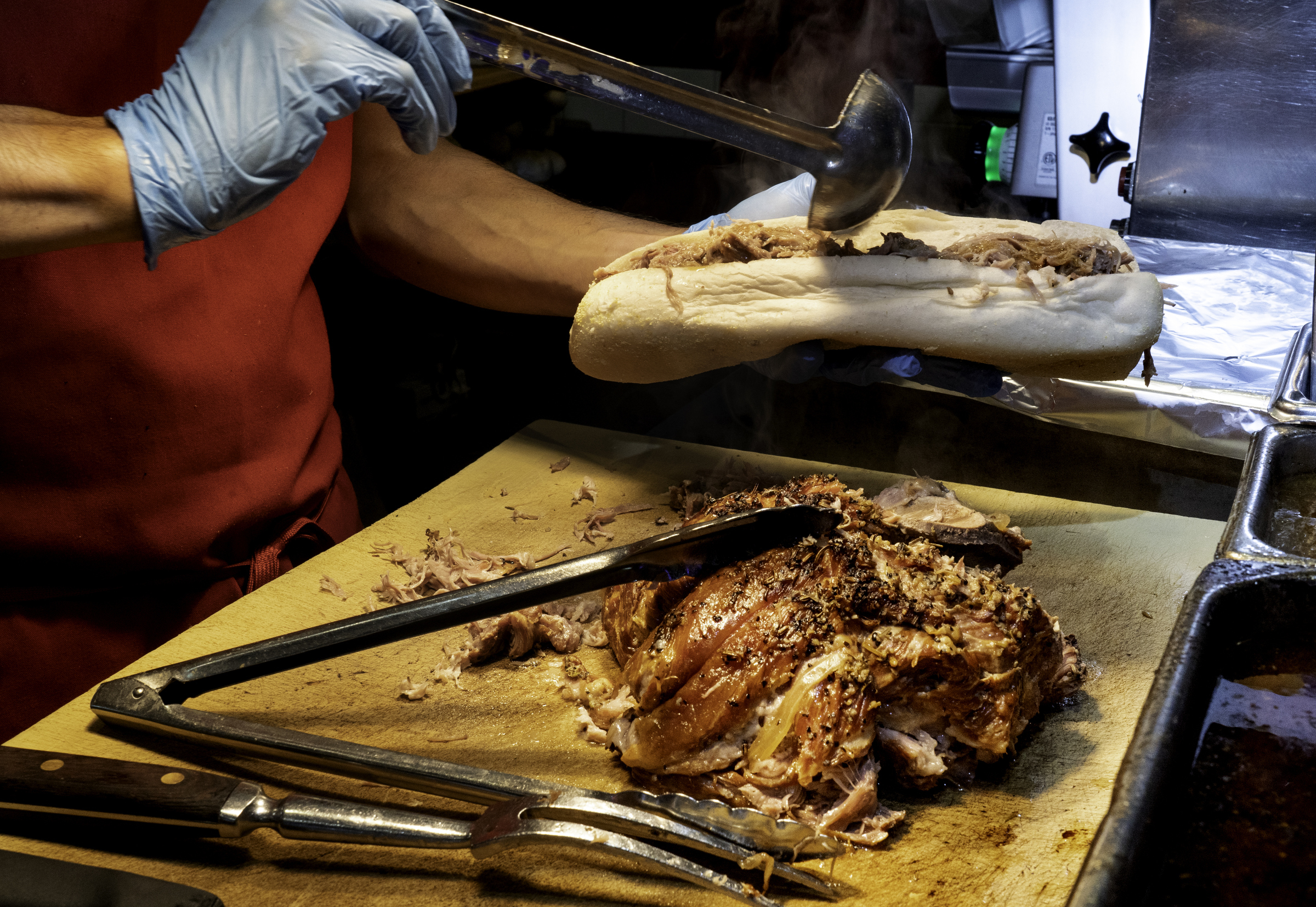
    The pulled pork at DiNic’s Roast Pork, Reading Terminal Market, Tuesday, September 26, 2018, in Philadelphia. JESSICA GRIFFIN / Staff Photographer

    Guadalajara’s torta ahogada landed in first place, followed by the Viet-Cajun crawfish in Houston. Cabrito al pastor — young goat roasted over live coals — from Monterrey came in third; and the burnt ends — charred tips of a smoked brisket point — from Kansas was fourth.

    And all the way in 15th place: New York pizza.

    “New York ranks 15th not because its food is unremarkable, but because its most iconic dish has become the world’s most replicated food,” Harris wrote. “New York pizza is made everywhere from Tokyo to Nairobi. That is a consequence of the city’s cultural influence, not a failure of its food.”

    But a great cheesesteak? Sorry, you have to come to Philly for that.

  • South Philly Barbacoa is moving in to Triple Bottom Brewing

    South Philly Barbacoa is moving in to Triple Bottom Brewing

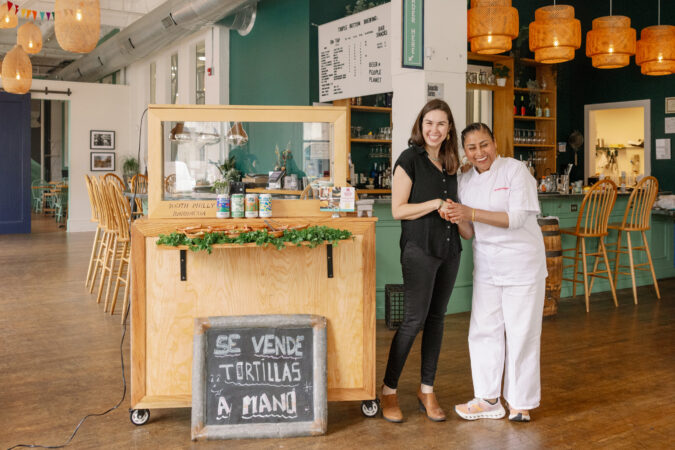
    On a recent Saturday inside Triple Bottom Brewing, award-winning chef Cristina Martinez stood behind a wooden taco cart next to the bar making barbacoa tacos for an eager crowd.

    At the June 14 event, Triple Bottom owners Tess Hart and her husband, Bill Popwell, announced South Philly Barbacoa as their new permanent food vendor for the Spring Garden brewery.

    The brewery was ready to have a permanent food vendor after two years of hosting chef residencies, including La Llamita Vegana and Angie’s Vietnam. In early spring, the CEO of Triple Bottom decided to email the restaurant she felt would be the best fit: South Philly Barbacoa.

    “Their team has been in our space a lot, and I’ve been down there,” Hart said. “We introduced the conversation at a moment where they were also thinking about their next steps and what growth could look like for them. It felt very natural, because I think — even though we do such different things in the food and beverage space — both of us are really led by values,” including caring about the supply chain for their respective businesses and supporting the immigrant community of Philadelphia.

    The South Philly Barbacoa menu, attached to Triple Bottom drinks menu, features most of the same items found at its South Philly location inside Casa Mexico, where South Philly Barbacoa still operates.

    Find South Philly Barbacoa at Triple Bottom Brewing, 915 Spring Garden St.

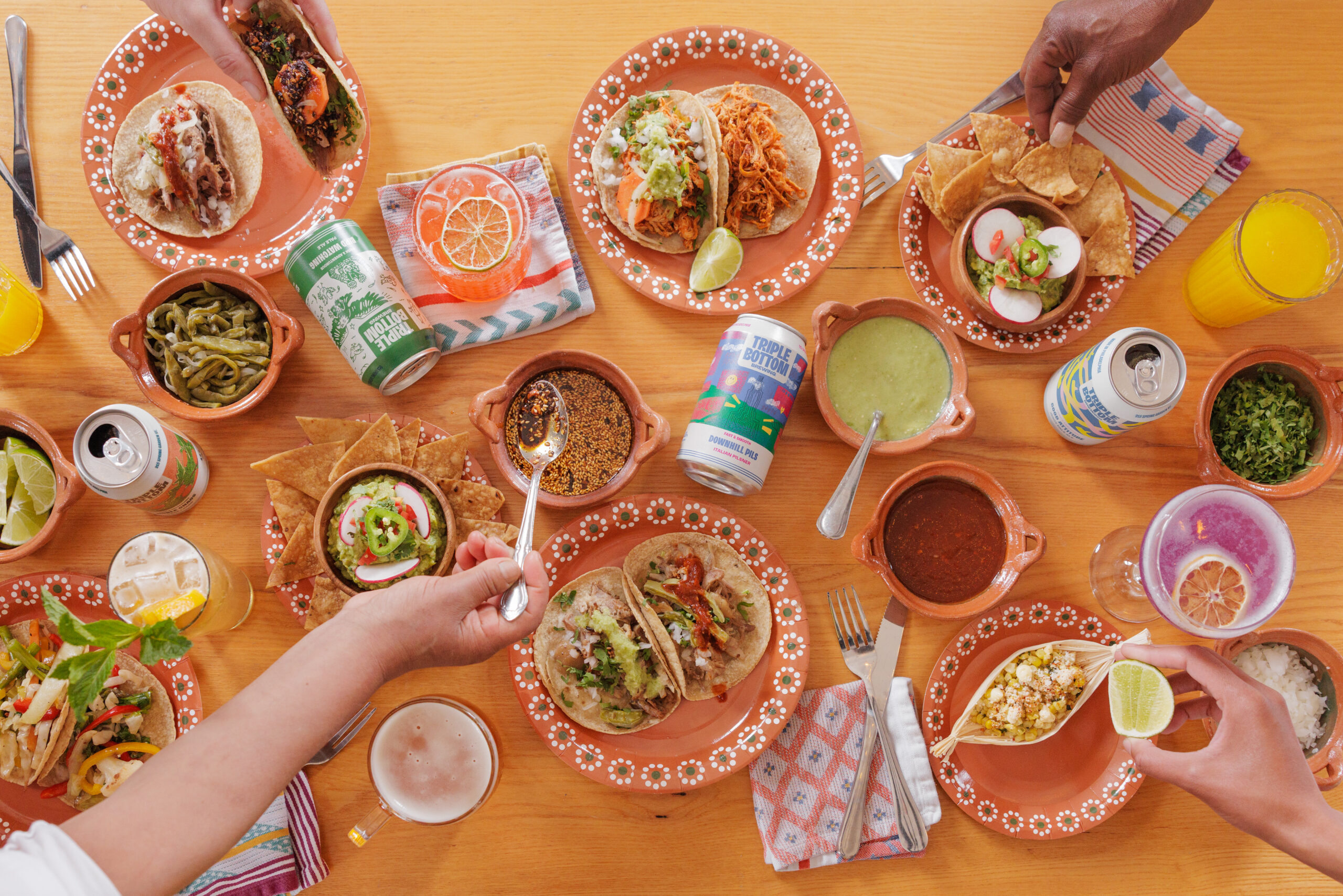
    “The only thing that is not here is the consommé, which hopefully we’ll have in the wintertime,” Hart said. “But for now,” there are tacos — slow-cooked lamb barbacoa, shredded chicken covered in smoky tomato chipotle sauce, slow-braised pork, spicy lamb offal sausage pancita, and a vegan option with seasonal vegetables — $7 for one or $21 for three, chips and guacamole with crispy corn tortillas for $10, esquites for $10, and handmade sweet tamales made with corn masa for $7.

    “Having a very amazing food program that’s reliable is a way to make sure that you can come here even if you don’t want a beer or any kind of drink — this is still a place for you,” Hart said.

    “Triple Bottom Brewing is this little oasis on Spring Garden Street with these bright, airy windows,” Hart continued. “And now, barbacoa tacos.”

  • My favorite halal restaurants in the Philadelphia area

    My favorite halal restaurants in the Philadelphia area

    What makes Philly’s halal dining unlike any other city is the diversity of cuisines available. It’s what made dining so exciting for me when I moved to Philly in 2020. As a Muslim growing up in Tennessee, halal options — aside from chicken and rice and one barbecue hotspot — were hard to come by. From the moment I began eating my way through my new home, it was clear Philly’s robust dining scene offered a grander landscape of halal eats.

    Halal meat follows the tradition of zabihah, defining whether the animal has been fed and treated humanely before and during slaughter, blessed in the name of Allah, and drained of blood. The literal meaning of halal is “permissible,” which can be used to describe various parts of Muslims’ lifestyle, including dining habits. For example, rice and bread are halal, but alcohol and pork are haram — or prohibited.

    Most halal-serving restaurants will identify themselves as such on their website or menus but a simple ask also helps verify. Similar to kosher meat, halal certifications are available, but “if it’s a Muslim-owned restaurant and they are guaranteeing and promising you that it’s halal, then that’s really the only research that’s required,” said Toba Hoda, who runs the Instagram account @phillyhalalspots.

    Over the years, I’ve compiled a list of my favorite halal spots, from crispy Ethiopian fried chicken in West Philly to slow-cooked beef rendang in South Philly. Here are a handful of them that show the breadth of cuisines to try in Philly. — Hira Qureshi

    Al-Baik Shawarma

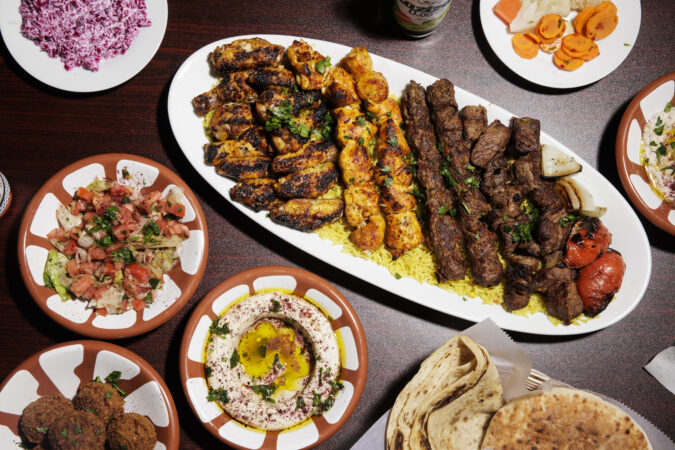
    Tucked into a commercial strip on the ever-busy Willits Road, Al-Baik Shawarma is one of the best Palestinian restaurants in Philadelphia. Hailing from Ramallah, chef-owner Sohaib Al-Haj and his family serve juicy cuts of chicken, beef, and lamb seasoned with aplomb. Nestle into one of the plush booths and order the mashawi mixed grill platter to savor it all: kufta, chicken and beef kebab skewers, and chicken wings alongside rice, salad, hummus, grilled onions, tomatoes, and fresh laffa bread. The Northeast restaurant also has some of the best falafel in the city. Here, you can sip on Palestine Colas and enjoy sweets like coconut basbousa and pistachio Nutella cookies from local bakers. At least, that’s what I do.

    3217 Willits Rd., 267-703-8000, order.albaikshawarma.com

    Black Dragon Takeout

    In West Philly, chef Kurt Evans is serving an entire halal menu featuring Black American Chinese takeout. That means I’m walking in ready to order their crispy collard green egg rolls, saucy oxtail “lo-mane,” sweet and spicy General Roscoe’s chicken, sweet potato chili wings, and jerk chicken skewers. With limited seating, it’s best to take your order home — although I usually sneak a bite inside and end up scarfing down the rest while standing on the sidewalk.

    5260 Rodman St., 267-292-2905, blackdragontakeout.com

    Doro Bet

    What if halal fried chicken was also gluten-free? At Doro Bet, sisters Mebruka Kane and Hayat Ali (who also own the nearby Alif Brew, which offers traditional Ethiopian coffee service with fresh-roasted beans, and Salam Cafe in Germantown) make those dreams a reality. The fast-casual West Philly hotspot — an Inquirer 76 pick two years in a row — serves crispy, teff-coated fried chicken spiced with either berbere or lemon turmeric. It’s just a few blocks west of Clark Park, perfectly located for a savory treat after my farmers’ market visits. The restaurant also has Ethiopian classics like doro wot and tibs, along with vegetarian options like falafel wraps and teff-flour fried mushrooms. And don’t sleep on the tiramisu, made with the richness of that same Ethiopian coffee.

    4533 Baltimore Ave., 215-921-6558, alifamilyrestaurants.com/doro-bet

    Griddle & Rice

    Philly’s new era of Indonesian cafés includes a South Philly spot that’s got a halal, pork-free menu. Griddle & Rice is all about dishes that marry Indonesian traditions with current trends and American breakfast foods. Take the nasi uduk, a breakfast coconut rice platter packed with crispy fried marinated chicken, sweet chili egg and tofu, sweet soy tempe, crunchy veggie fritter, sambal terasi shrimp paste chili, and crackly garlic crackers; or the iga bakar platter with grilled, Indonesian-spiced braised beef ribs, white rice, fried egg, more sambal terasi, and a salad. I would recommend ordering one of the best bowls of congee — with halal curry chicken broth and shredded chicken breast — in the city. And don’t sleep on the drinks — I slurped up the es kopi gula aren, a smoky Indonesian palm sugar latte, and mango matcha with coconut water in one sitting.

    2151 S. 22nd St., 267-360-2900, griddlericephilly.com

    Hardena

    The beloved late Ena Widjojo’s family-run restaurant has been feeding South Philly for more than 20 years. These days it’s her daughter Maylia who runs the place, but they’ve stuck to the script — halal Indonesian classics. I love venturing to South Philly for their slow-cooked beef rendang, saté chicken (marinated in sweet soy and makrut lime juice, topped with peanut sauce), and crunchy Krupuk (garlic and tapioca chips). And I’m always reminded why the menu earned a semifinalist nod from the James Beard Foundation in 2018.

    1754 S. Hicks St., 215-271-9442, hardenapa.com

    Korea Taqueria

    Since its inception in 2023, Korea Taqueria has mostly operated with a non-halal menu, with halal chicken offerings on a if-you-know-you-know basis. But as of March, owners Alexander Sherack and Rene Lopez announced their shift to a fully halal menu. “We’d be getting DMs [about halal offerings] just about every month, so there was always this seed planted from day one,” Sherack said. “Once we found local suppliers we made the shift.” The Korean Mexican grub, located in South Philly, Fishtown, and West Philly, includes bulgogi beef birria tacos, gochujang wings, Kimchi cheese fries, Korean fried chicken sandwich, and more. Consider ordering my go-to: the meal sampler, for all of it one order. Wash it down with horchata or watermelon agua fresca.

    3101 Tasker St., 267-234-7100; 2563 Trenton Ave., 267-204-3710; 3401 Walnut St., 267-274-1230, korea-taqueria.com

    MAdness of MAsala

    One of the 76 most vital restaurants in the Philly area sits in the middle of Montgomery County. The hour drive to Madness of Masala becomes a mandatory pilgrimage for those seeking halal goat pepper fry, malai paneer kabab, andhra shrimp curry, and other South Indian classics. The fiery tandoori spices tingle on my tongue as I devour stuffed mirchi bajji, kali mirch paneer, and goat ghee roast. I only need to order their syrupy gulab jamun and a Hyderabadi masala chai to cool down.

    2851 Ridge Pike, Trooper, 484-235-8003, madnessofmasala.com

    Saad’s Halal Restaurant

    What makes this a West Philly institution? It’s owner Saad Alrayes’ chicken shish tawook — best known simply as the chicken maroosh. The first time I took a bite of the sandwich packed with juicy pieces of grilled chicken, tomato slices, sautéed onions, and snappy pickles, generously drizzled with creamy garlic sauce in a long hoagie roll — the namesake “maroosh way” — I understood. This was most definitely the best sandwich in the city.

    4500 Walnut St., 215-222-7223, saadhalal.com

  • A complete guide to Cherry Hill’s newly improved H Mart

    A complete guide to Cherry Hill’s newly improved H Mart

    After nearly 25 years in operation, the newly renovated H Mart in Cherry Hill is drawing crowds as regulars and newcomers marvel at its major improvements.

    The outpost of the renowned Korean grocery store off Route 70 has served the local community since 2001. In April 2025, the Cherry Hill Township Planning Board approved plans for an expansion. A year later, the grocery store reopened with enhancements to the first floor and an open-concept food court, bakery, and retail space on the second.

    As a diehard H Mart fan, I decided to venture across the bridge on a recent Thursday and see the 39,000-square-foot store for myself.

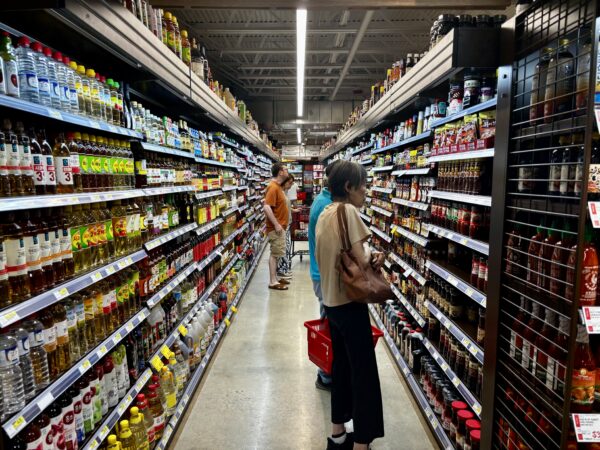
    Customers shop inside H Mart Cherry Hill.

    Where to start your H Mart visit

    I arrived at the brick building, marked with the familiar “H Mart” sign in big red letters, at about 11 a.m. Entering through the double sliding doors of the second floor, I found myself inside the new food court.

    A few customers dined in the massive seating area that morning, enjoying various dishes. I decided to grab an iced brown sugar coffee boba from Tiger Sugar as a little treat to sip on during my exploration.

    Beginning the journey on the second floor was the right move, according to Ryan Solot, a regular shopper at H Mart. He and his wife, Miki Solot, came to the store once a week before renovations. The couple were shopping for dashi stock and Japanese sauces when I ran into them. They were happy to see the makeover, particularly on the second floor’s general shop department. But the Solots still felt the first-level aisles were a bit narrow for ideal grocery shopping.

    “The layout is strangely unchanged,” Ryan Solot said. “It’s still kind of awkward to get through the aisles … but start from the top [floor] and make your way down, it’s much more organized upstairs.”

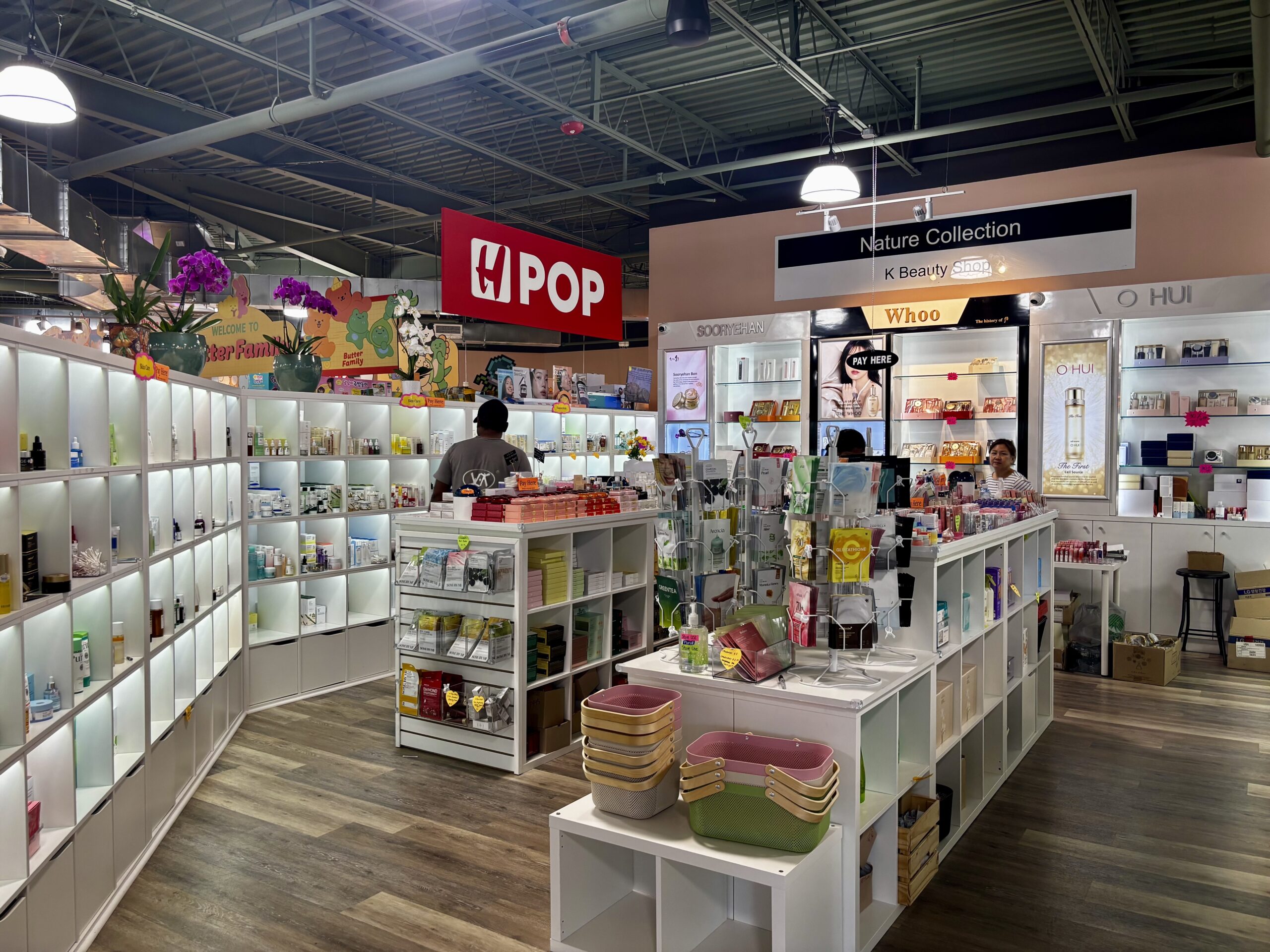
    Korean beauty section at H Mart Cherry Hill.

    The second floor of H Mart: general goods, Korean beauty products, and an arcade

    Walking out of the food court area, I found a mini Korean beauty store with boxed shelving displaying creams, serums, cleansers, tonics, and other products from popular brands such as Medicube, Anua, and Beauty of Joseon. Attendants explained the various products to customers, especially to Korean skincare novices like myself.

    Neon arrow signs next to the beauty department directed me into H Mart’s general store and “H Pop” section. A small selection of drinks and snacks lined the shelves leading me into the rows of shelves with over-the-counter medicines, vitamins, toiletry items, slippers, bedding, and kitchenware.

    In the back corner I found a vast selection of cutesy notebooks, pens (ones with funky kiwi and toilet attachments), furry character key chains, mini toys, makeup storage containers, and other knickknacks. The prices for items were organized by serial numbers, which were listed on a card hanging off the shelves. Pro tip: Take a photo of that price card to reference as you shop.

    Customers shop inside H Mart Cherry Hill.

    The first floor of H Mart: frozen foods, fresh produce and seafood, snacks, and lots of instant noodles

    Taped to the elevator, two signs offered directions on where to find specific items. “Second floor: food court, house ware, characters, K-beauty, game, health food” and “First floor: Asian/Western, produce, fish, meat, ready to eat, banchan” were written in all caps and highlighted in yellow.

    The elevator also had another sign with an important tip for shoppers: “You are welcome to shop freely on both 1st and 2nd floor, and you may check out either floor.”

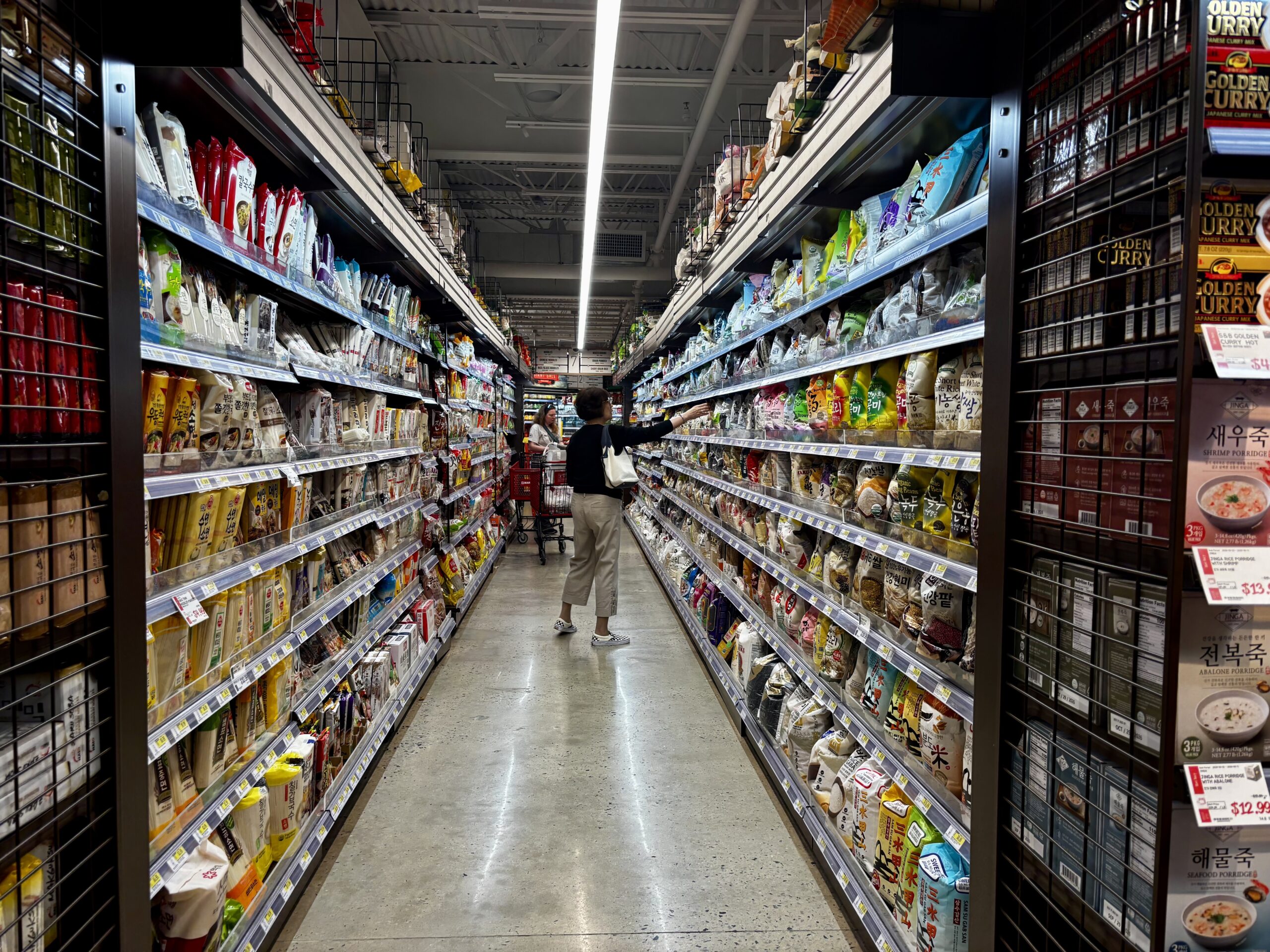
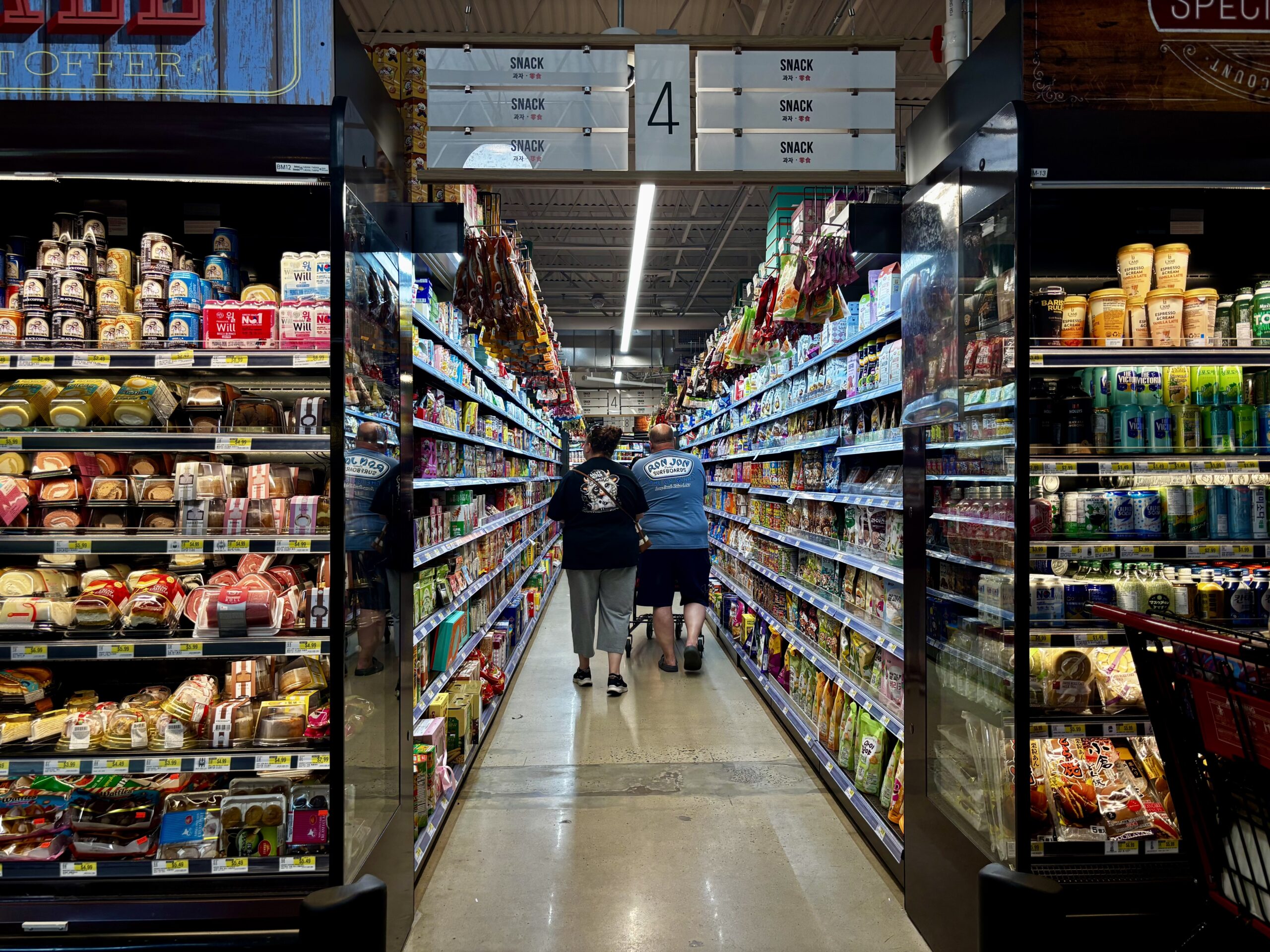
    Downstairs on the first level, the elevator opened up to aisles upon aisles of snacks, produce, sauces, packaged sweets, and lots of instant noodles. Each aisle is organized by number with a sign noting all the items available.

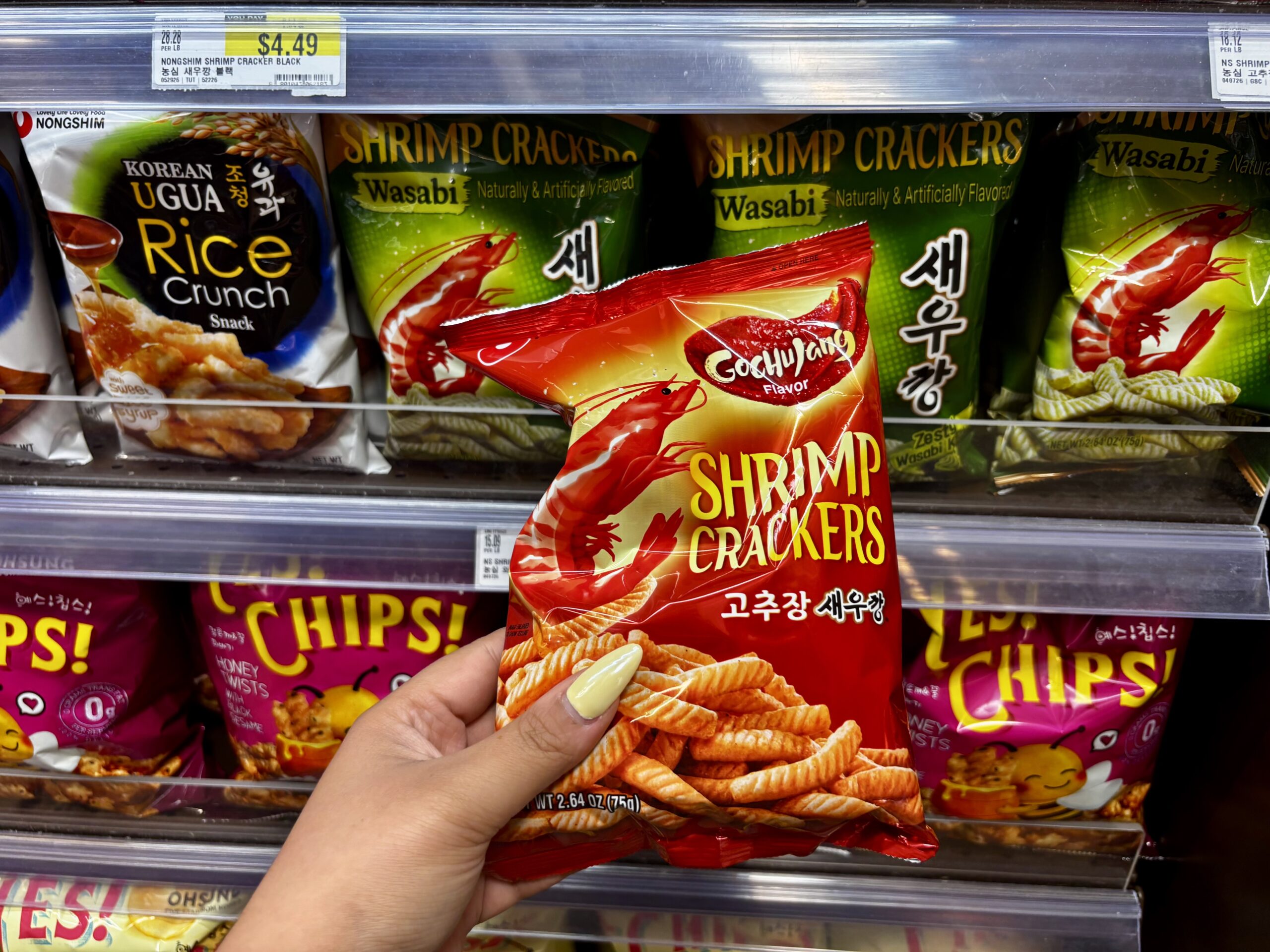
    Shrimp crackers at H Mart Cherry Hill.

    I walk into Aisle 3 as I exited the elevator and found snacks galore. KitKats, Pocky sticks, Buldak ramen-flavored chips, O’jelly real plum candies, lychee gummies, Poongnyun Bakery seaweed crackers, and so much more lined the shelves. I picked up some of my favorites: Shrimp crackers, crispy snacks made from starch and ground shrimp, and a bag of chocolate yogurt-covered orange slices sitting nearby.

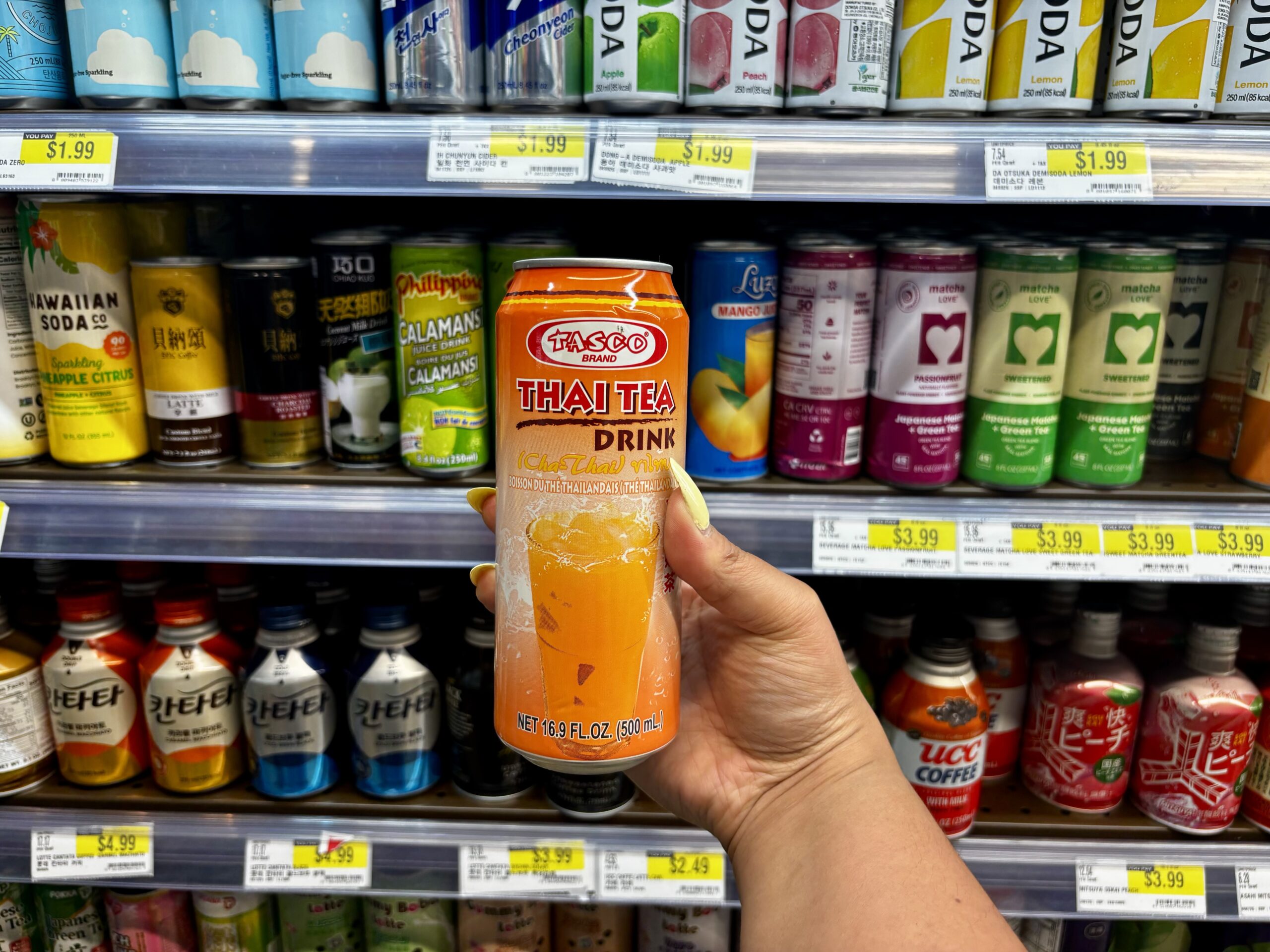
    Next, I headed into Aisle 5 for beverages. The vast selection includes soy milk, hojicha, banana milk, corn silk tea, coconut milk and juice, and taro. I grabbed a tall can of Thai tea and a couple of glass bottles of Ramune, a fizzy, fruity, sweet Japanese soda.

    Thai tea at H Mart Cherry Hill.

    I stopped by Aisle 10 for chili oil and pho seasonings. And on Aisle 1, I found instant noodles plentiful — the Japanese-style soba noodle box piqued my interest. At the end of Aisle 9, I saw cups filled with ice in the freezer section and drinks packaged in pouches for easy pouring. I grabbed the peach mango tea to accompany my post-shopping food court lunch.

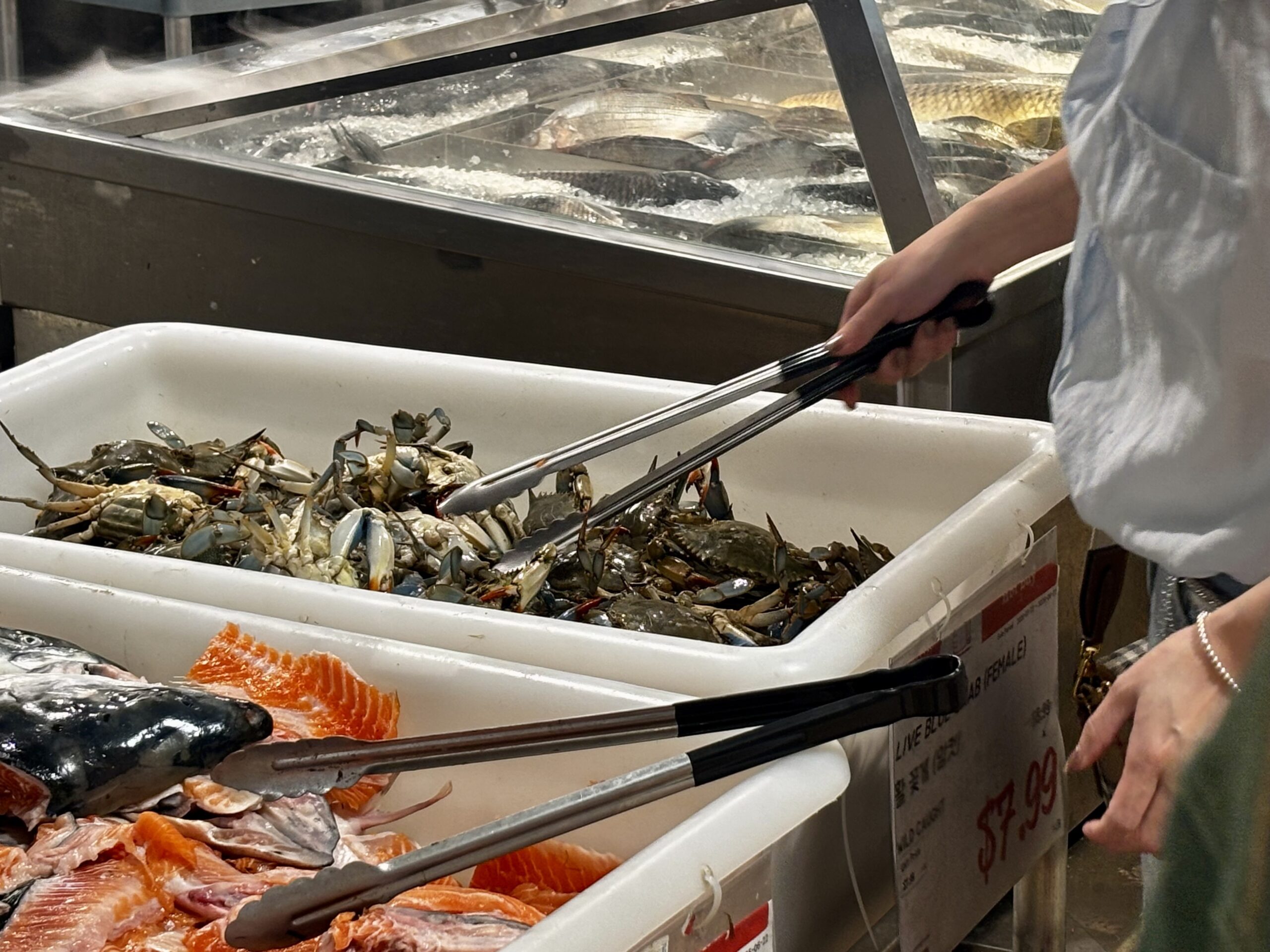
    As I walked deeper into the store, I found Catherine Yao and her mother, Jingjing Dong, in the massive seafood section, picking live crabs from a big box.

    Live crab selection at H Mart Cherry Hill.

    Yao and Dong, who live five minutes from the store, come to the H Mart every week. They come for the fresh seafood — live fish, lobsters, and crabs swim in big tanks near the butchers, while some sit in displays on ice — and frozen meats — think beef bulgogi and pork belly. The two also like exploring the premade foods section next door; I picked up a crab onigiri for the road.

    The mother-daughter duo recommended stopping by the vast produce section near the cashiers. “I like the fresh durian, lychees, mangoes, and the gold melons,” Dong said.

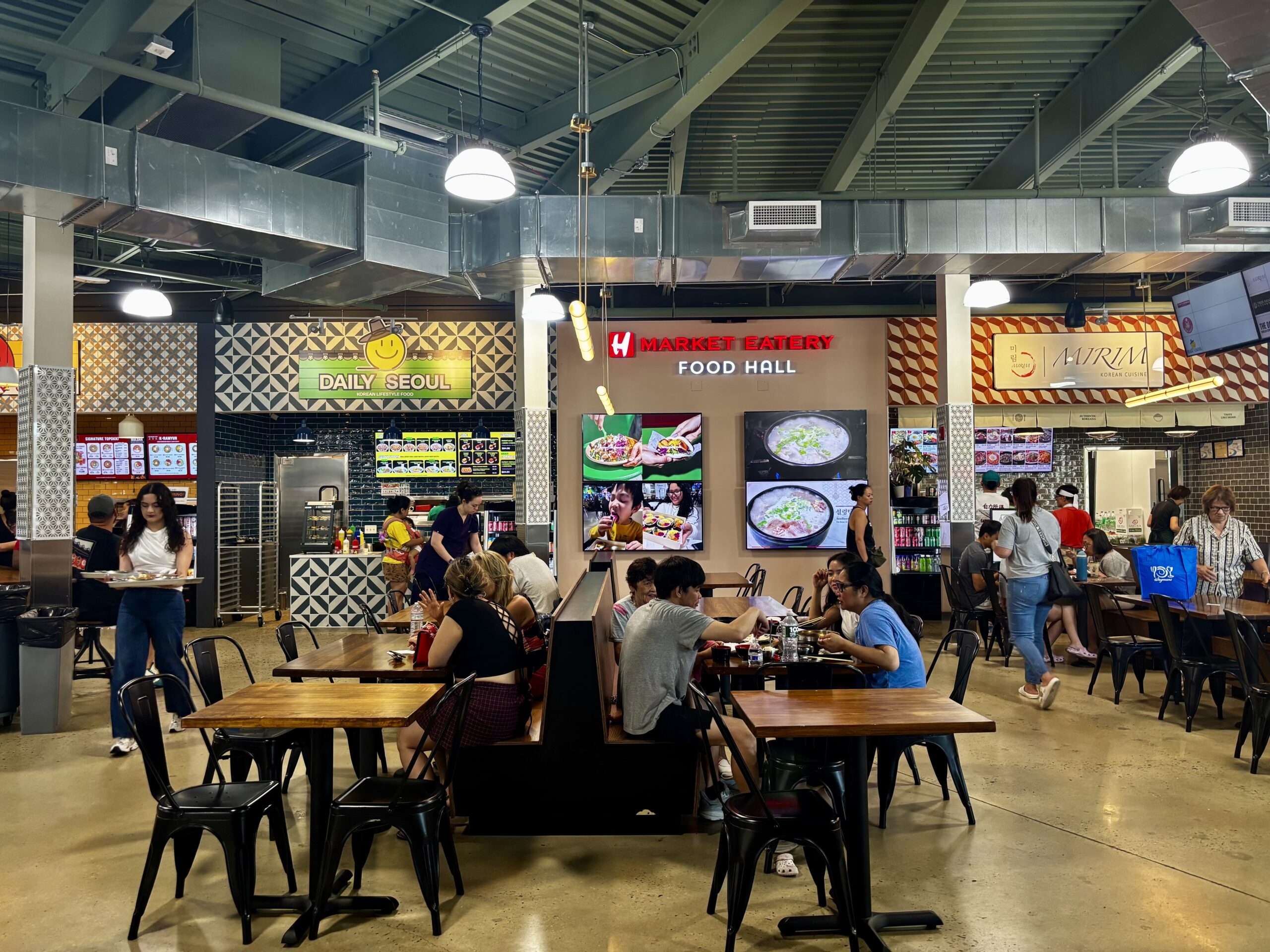
    Food court at H Mart Cherry Hill.

    The food court

    Around noon, I took the elevator back up to the second floor and ventured back into the food court for lunch.

    The court can feel overwhelming, with nine vendors to choose from — think bibimbap, Korean fried chicken, and noodles. Thankfully, Yao and Dong recommended a couple of options: Kyodong Noodles, a Korean-style Chinese noodle restaurant; Daily Seoul, a Korean lifestyle food brand; and Tiger Sugar, the Taiwanese bubble tea vendor I sampled earlier.

    While perusing the vendors, I ran into regular Ryan Solot at Mirim, a traditional Korean restaurant. He recommended the cold buckwheat noodle soup. “I didn’t like how it looked at first but then I tried it and it was very good,” he said.

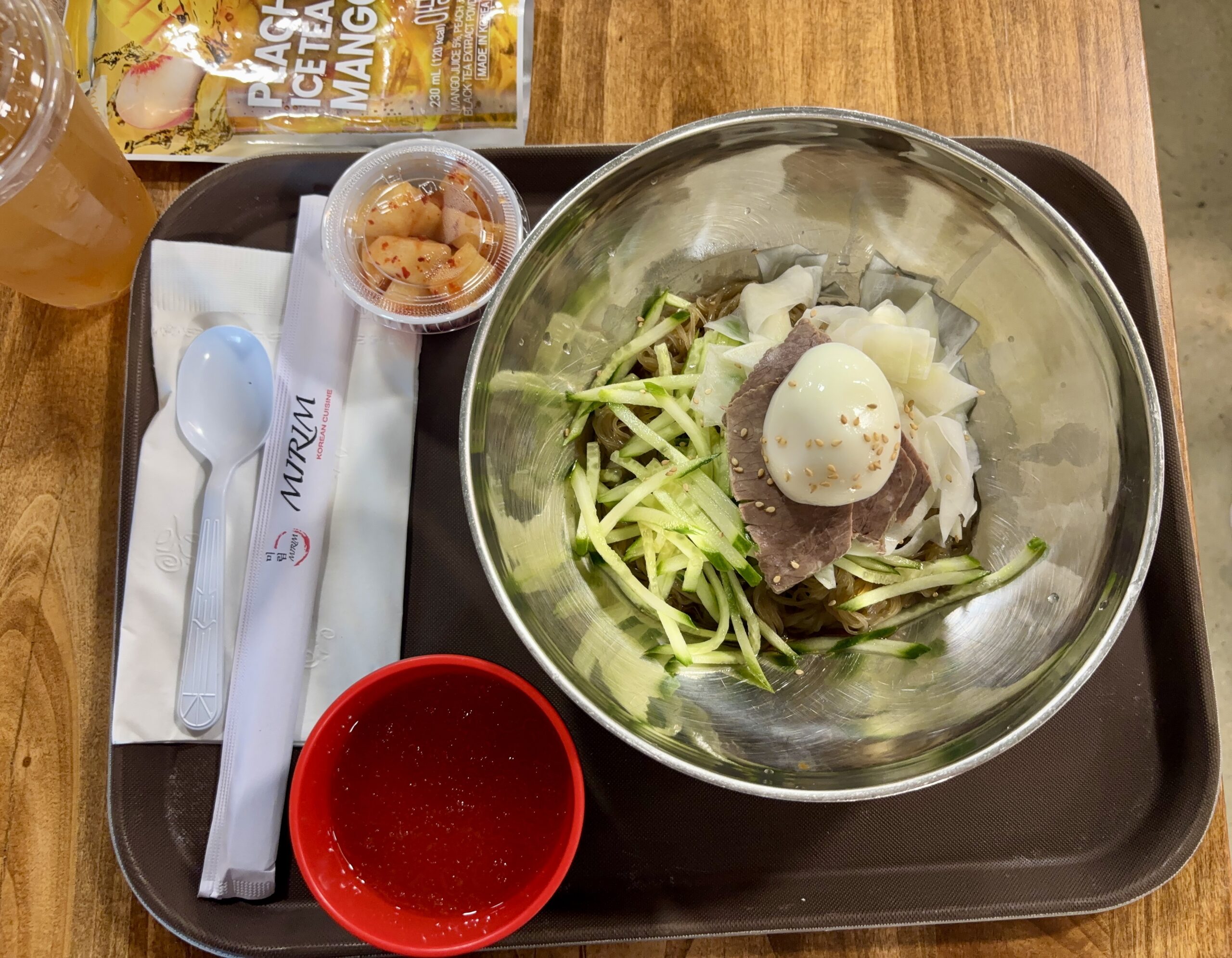
    Spicy cold buckwheat noodle soup H Mart Cherry Hill.

    I ordered the spicy buckwheat noodles with beef at Mirim. The dish was served in a metal bowl with pickled vegetables on the side, chopsticks included.

    For Yao, the food court is a great addition to the store.

    “I like coming here more now because they have a food court — we go to eat there pretty often, for lunch and dinner sometimes,“ she said.

    H Mart Cherry Hill: 1720 Route 70 E, Cherry Hill; 856-489-4611; Monday to Sunday, 9 a.m. to 9 p.m.

  • Need nails that’ll last? Ask where a chef or bartender gets their manicure

    Need nails that’ll last? Ask where a chef or bartender gets their manicure

    On a chilly February morning, Mallory Valvano walked up two flights of stairs to a second-floor atrium filled with exotic plants leading her to a salon suite. The baker behind Party Girl Bake Club found herself back inside the Fishtown building to see Alex Furst, also known as Pepper Holidays on Instagram.

    But Valvano wasn’t in the neighborhood to deliver one of her whimsical, eye-catching cakes or catering displays. She was there on an equally important task: a manicure.

    Valvano is one of many Philly culinary professionals who see their nails as an extension of their brand personality as well as a self-care treat — despite the taboo of chefs cooking with polished nails. (ServSafe, the food and alcohol safety-training and certification organization, discourages the use of nail polish and/or extensions and highly recommends cooking with gloves.)

    Valvano is ServSafe-certified, which means she knows the impact of food safety really well. She also believes that shouldn’t stop her from expressing herself — especially when the products Furst uses ensure chip-free, perfectly intact nails for up to four weeks.

    “I’m an artist, by trade, in textile manufacturing and design — the food thing came a little later in life,” she said. “So, [getting your nails done] is about, one, taking care of how you look and being presentable. It’s also an extension of your own personal style. I like to have this whole vision of what a party girl is: neon and pastels, colors inspired by art, architecture, and interior design.”

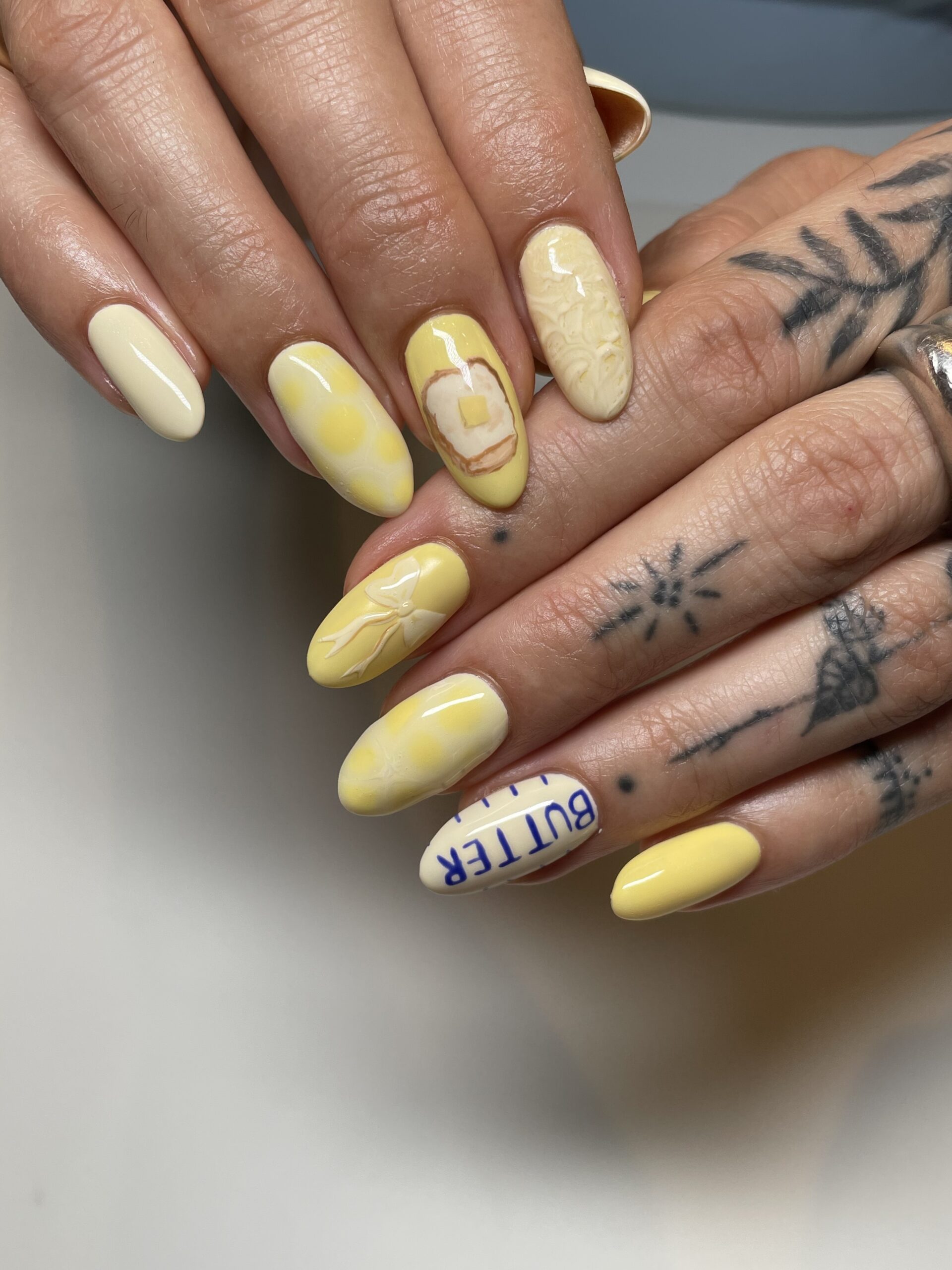
    Mallory Valvano with butter-themed nails.

    The key to nails that food professionals aren’t worried about working with? Regular sessions with a nail artist who emphasizes prep and uses gel builder, a thick-viscosity, strengthening product that creates a protective, hard shield with LED/UV light. And Furst is the woman to do the job for Valvano and Natalia Lepore Hagan of Midnight Pasta.

    The 37-year-old nail artist is in her eighth year as a licensed nail technician. With two chef clients and a few nurse clients under her belt, Furst understands working on labor-intensive nails that exist in industries where unpainted nails are the norm.

    “My philosophy for everyone is that the foundation is the most important thing — the prep or the way the product is applied, if that’s missing then you’re not going to have a long-lasting, strong manicure,” Furst said. “Gel body builder is strong enough that it allows the nails to maintain and support its structure so that they’re not going to be chipping or lifting in a three to four week time frame.”

    What does a long-lasting manicure entail?

    Each session begins with Furst removing old product and chatting with the client about what their month is looking like to determine length of nail. Then it’s prep: shaping and smoothing nails, pushing back the cuticles , and exfoliating, removing any sticky cuticle from the nail plate, and lightly etching the new nail growth.

    “Our body naturally produces oil, so that prep is to ensure getting the gel completely adhered to the nail plate,” she said. “No one wants the gel to lift — when it lifts, it damages the nail. So, prep is important.”

    Design comes next. Both Valvano and Lepore Hagan love to experiment with colors and incorporate their brands into the nail designs.

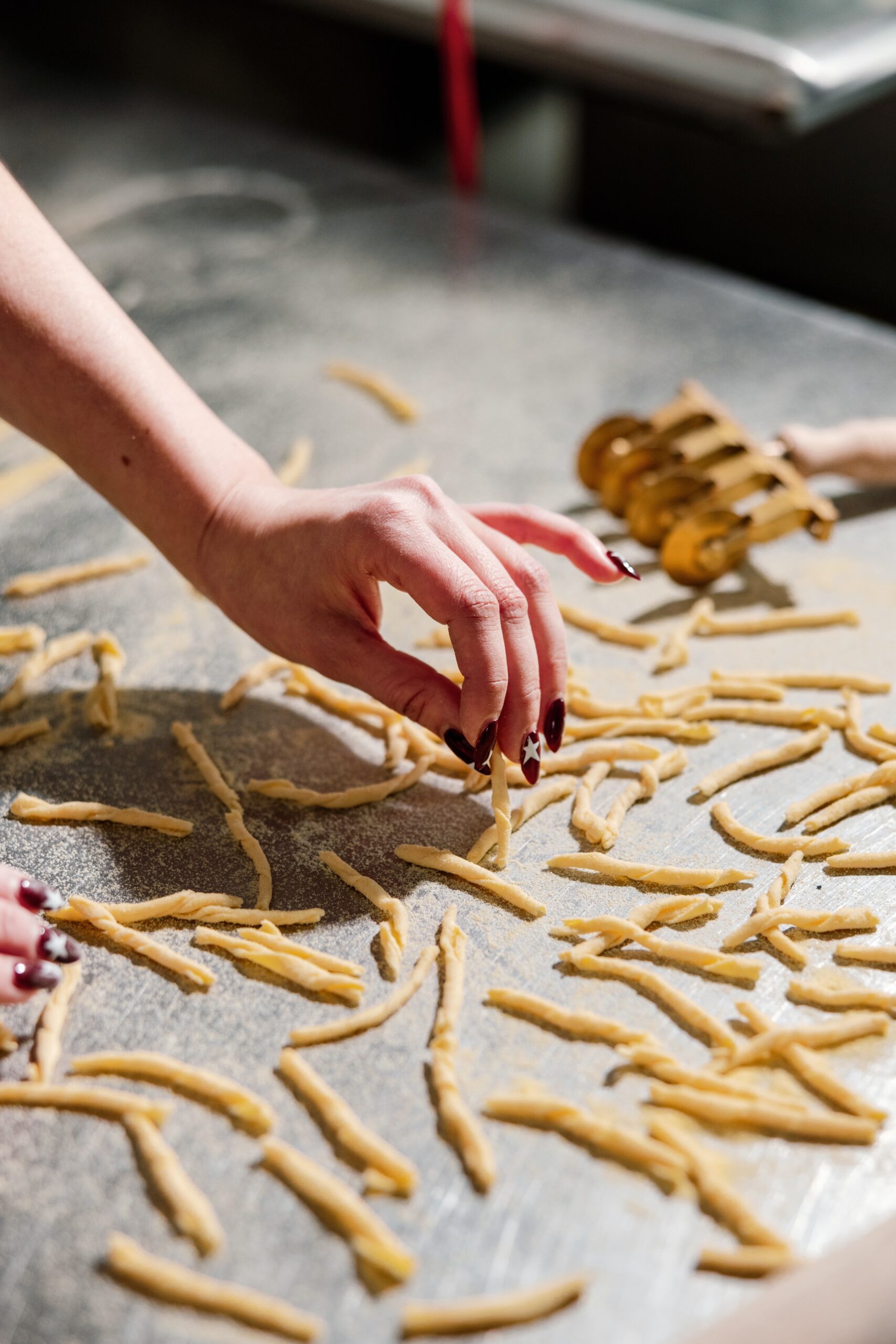
    Natalia Lepore Hagan of Midnight Pasta and her nails.

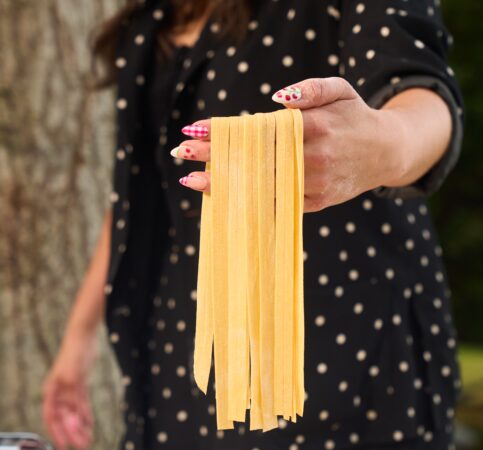
    Furst has drawn buttered toast designs for Valvano inspired by an all-butter event and tomatoes for Lepore Hagan inspired by an Italian picnic-themed event.

    “I brought her an idea, and she sketched out all 10 nails in front of me,” Lepore Hagan said. “She said, ‘Let’s do tomatoes on this finger. We’ll do the checkers on your middle finger. And another with stripes.’ I love artists more than anything, and it’s so cool to collaborate with her on my nails.”

    The hostess with the mostest and her nails

    Midnight Pasta, a hands-on pasta-making class and BYOB dinner party, is a nontraditional dining experience, Lepore Hagan explained, where she is s both chef and host, leaving more room for self-expression with nails.

    Gloves stay on while cooking, and nails come out for hosting. “Mallory and I are both really fashion-forward,” she said. “We care a lot about fashion. I am always looking at what she’s wearing and her nails because she’s a representation of her brand.”

    But the pasta chef draws the line at gel extensions or acrylic nail tips, opting for only gel builder polish on her natural nails to ensure no attachments fall off when working.

    “I want to be professional, and part of that professionalism is having my nails always done perfectly and interestingly,” Lepore Hagan said.

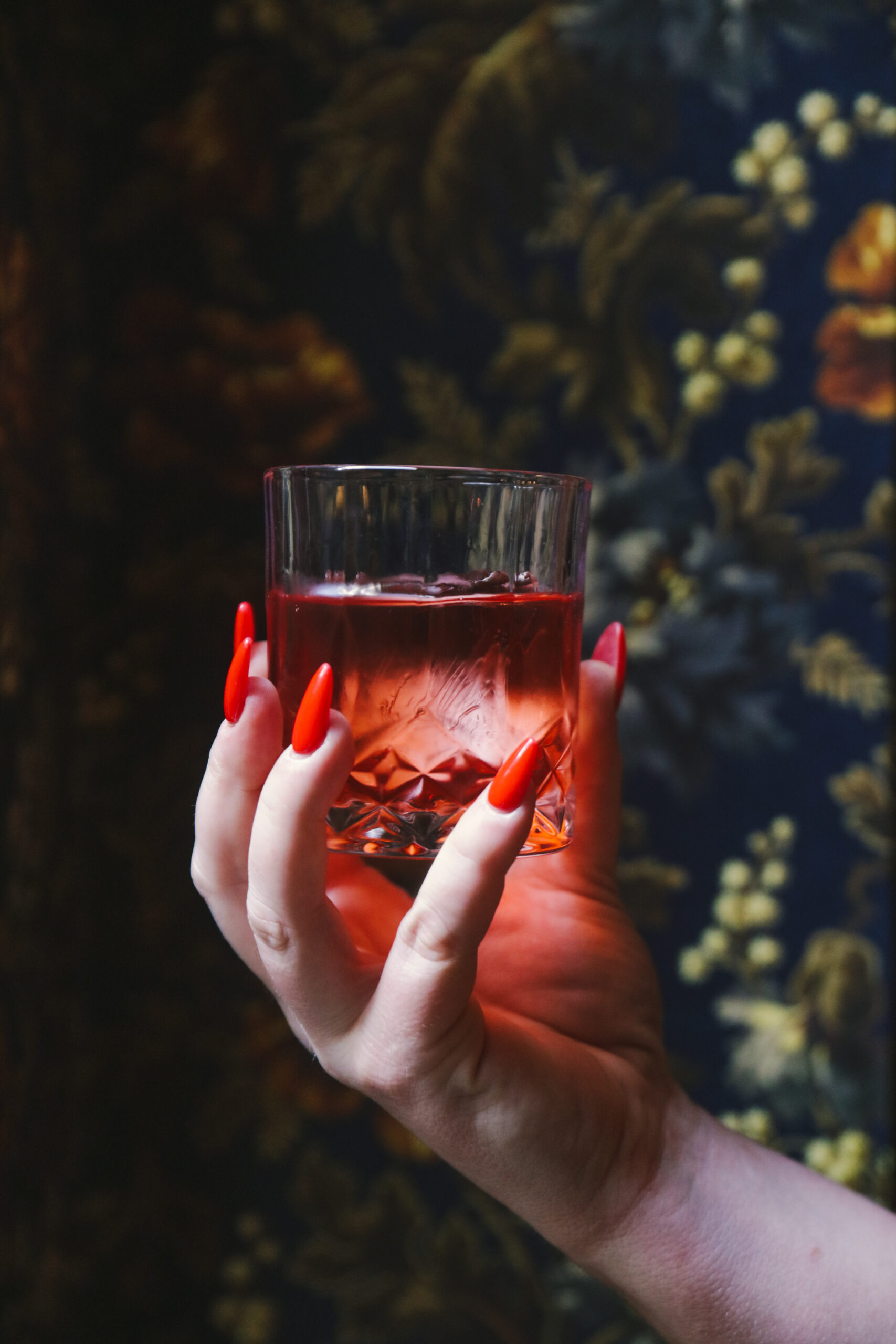
    Jillian Moore’s nails with with My Loup’s Montreal cocktail.

    Behind the bar with acrylics

    Jillian Moore, however, is an acrylic nail queen.

    She’s behind the bar at My Loup and Pine Street Grill, where customers will catch her perfectly pointed, brightly colored nails around spoons and cocktail shakers. As bar director at the two hot spots, she’s using her hands differently then chefs Valvano and Lepore Hagan, allowing her to opt for long acrylics decorated with gel polish every two weeks at her nail appointment with @nailsbylinny.

    Expressing oneself through nails is similar to wearing makeup to work, Moore said, as long as food safety rules are followed. And following the ServSafe rules isn’t hard with nails, she said. “You still have to make sure your fingernails are clean [and put on gloves for prep work], regardless if you have extensions or not,” she said. “So that’s how I’ve always operated.”

    For Moore, getting her nails done is way to share her personality, whether it’s with a specific color or theme — or repping the restaurants she works at. Every year for My Loup’s anniversary, she gets the color of the tiles at the bar with a little “ML” script on top. And when Pine Street opened, her nails were covered in little acorns.

    “People are watching my hands all the time — it’s definitely something that people notice [and] we end up talking about it,” Moore said. “It’s just a fun way to express myself, [and] why I like it so much.”

    “I make this joke all the time — I say, there are three people that you should never piss off: your bartender, your hairdresser, and your nail tech,” she added. “Maintain those relationships.”

  • New York’s Blank Street, a coffee and matcha chain, to open on UPenn’s campus

    New York’s Blank Street, a coffee and matcha chain, to open on UPenn’s campus

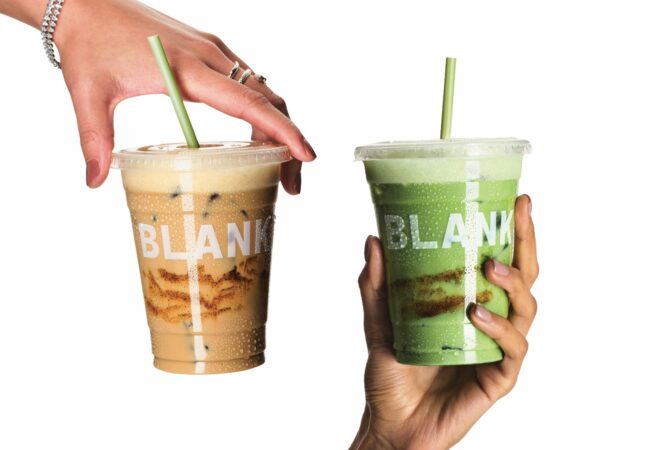
    New York’s ubiquitous seafoam-green painted coffee and matcha cafe chain is headed to Philadelphia.

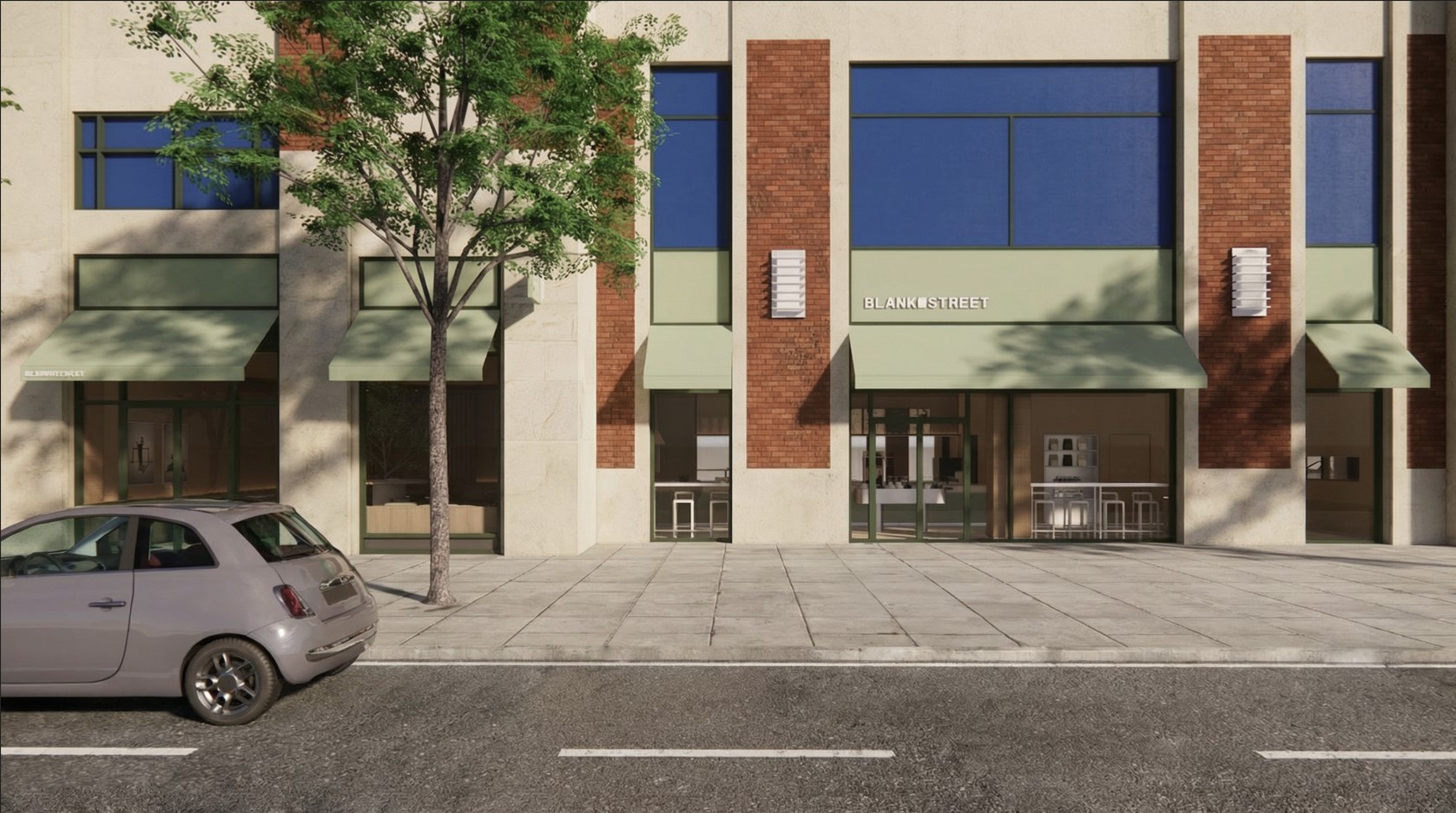
    Blank Street will open its first Philly location at 3603 Walnut Street, joining UPenn’s retail district. It’s expected to open in late summer.

    The six-year-old chain is known for its micro-cafe look and automated espresso systems for customers to grab matchas and lattes. And soon, Penn students, faculty and surrounding neighbors will experience the quick service inside the 3,500 square foot cafe.

    The Philly location will be one of the largest U.S. cafes on Blank Street’s expansive roster, which includes more than 40 locations in the U.S. and the United Kingdom.

    “We’re excited to be getting closer than ever to the UPenn community,” said Vinay Menda, Blank Street co-founder and U.S. managing director in a statement. Giving the company, “the opportunity to invest deeply in design and bring an elevated, hospitality-forward experience to the neighborhood.”

    The new Blank Street cafe location at 3603 Walnut Street will be their first in Philly.

    Founded in 2020 by Menda and Issam Freiha, Blank Street quickly expanded with New York’s pandemic-induced surge of lowered rent storefronts and private equity financing. But soon, the rapid growth raised scrutiny from skeptics, who saw “Blank Street as an avatar of gentrification and automation” resenting “the use of Wall Street money to compete with local businesses,” reported the New York Times. The cafe chain also has its fans, who lean younger and see the trendy matcha drinks as fashionable — even leading the brand to London Fashion Week this year.

    Blank Street cafe is one of several additions to the SHOP PENN retail district. James Beard Award winner Chef Tom Colicchio’s Root and Sprig will open in the spring. And Korea Taqueria opened a location at Franklin’s Table Food Hall in January.

  • Oyster House wins James Beard Foundation 2026 America’s Classics Award

    Oyster House wins James Beard Foundation 2026 America’s Classics Award

    Oyster House is a great, storied fish house of Philly’s seafood glory days. And now it’s a James Beard 2026 America’s Classics Award winner.

    On Wednesday, the James Beard Foundation announced six recipients of the award in the Restaurant and Chef category. The “America’s Classics” designation is given to local restaurants with “timeless appeal that serve quality food and are beloved by their communities” and “sustain and contribute to American food culture,” according to the foundation’s statement.

    For the mid-Atlantic category, Oyster House was selected for its three-generation commitment to serving seafood traditions in Philadelphia. The foundation praised owner Sam Mink and his family for straddling multiple eras of Philadelphia’s restaurant history with specialties like sherried snapper soup and combinations like fried oysters and chicken salad, along with its willingness to evolve with creative modern seafood cookery like executive chef Joe Campoli’s crudos, grilled fish, and halibut glazed in black garlic over dashi.

    “Oyster House is not just a venerable ambassador of Philadelphia food history — it remains one of the city’s most rewarding places to eat,” the statement noted.

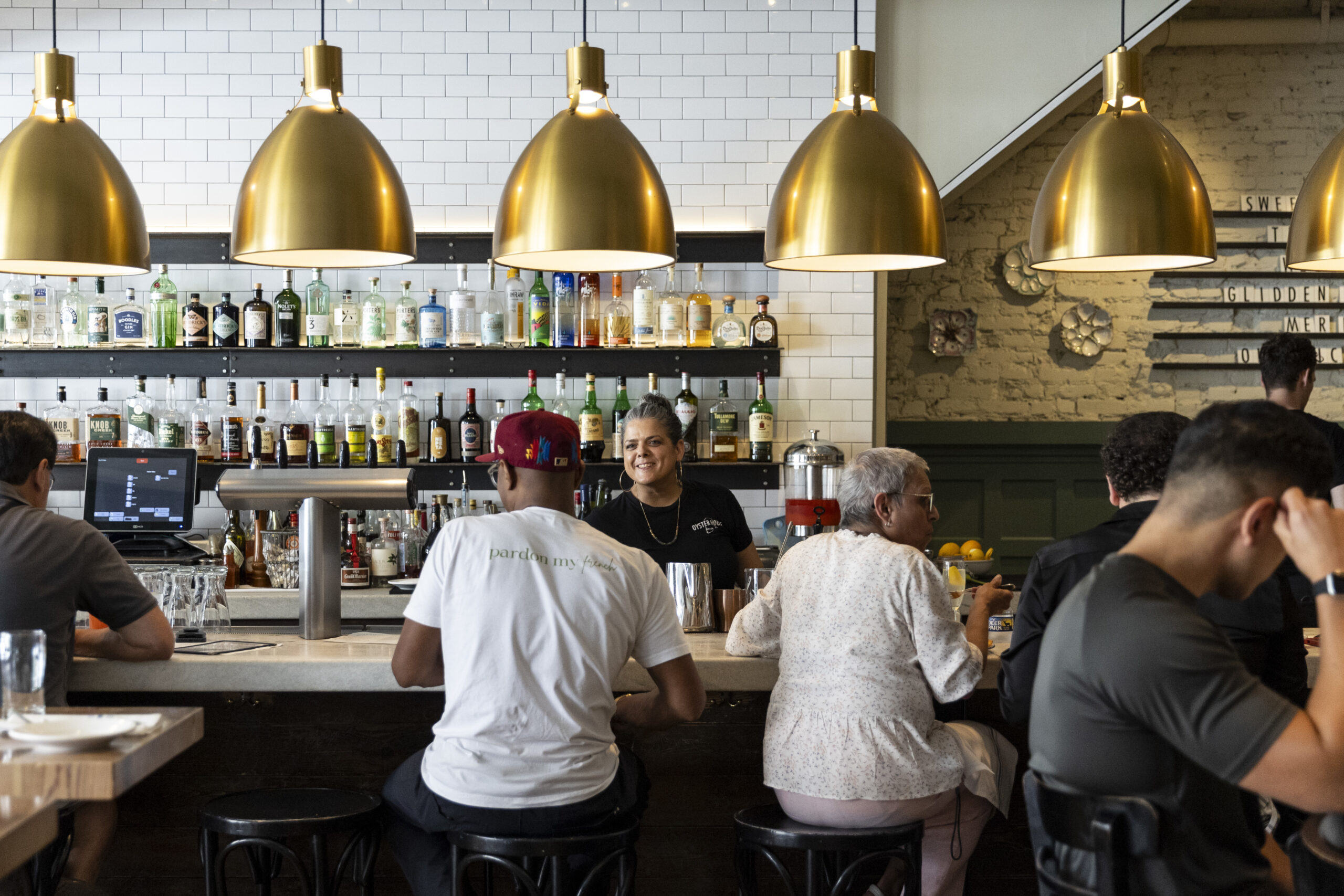
    People fill the bar during happy hour at Oyster House in Philadelphia on Thursday, July 11, 2024.

    When Mink received the email announcing the restaurant’s win a week ago, he was surprised “because I really wanted this award.”

    “I feel like we are such a classic institution for Philadelphia,” he said. “But to be honored on a national level … people in Philly know about us — we’ve been around for 50 years … that recognition means so much [and] just validates what we do day in and day out. We come to work trying to give Philadelphia the best seafood possible.”

    The restaurant staff was abuzz with congratulations and excitement Wednesday morning. “I’ve got a great staff here, the managers, the chefs on down to the servers, bartenders, cooks — everyone just has a real smile on their face today and is really excited to be here.”

    While Mink hasn’t had time to think about an immediate celebration for the good news, the Center City restaurant will celebrate its 50th anniversary with a big block party in the spring.

    The Oyster House is one of The Inquirer’s 76 most vital restaurants in Philadelphia. This year’s other winners are the Serving Spoon in Inglewood, Calif., Johnny’s Cafe in Omaha, Neb., Eng’s in Kingston, N.Y., Figaretti’s Italian Restaurant in Wheeling, W.V., and Bob Taylor’s Ranch House in Las Vegas.

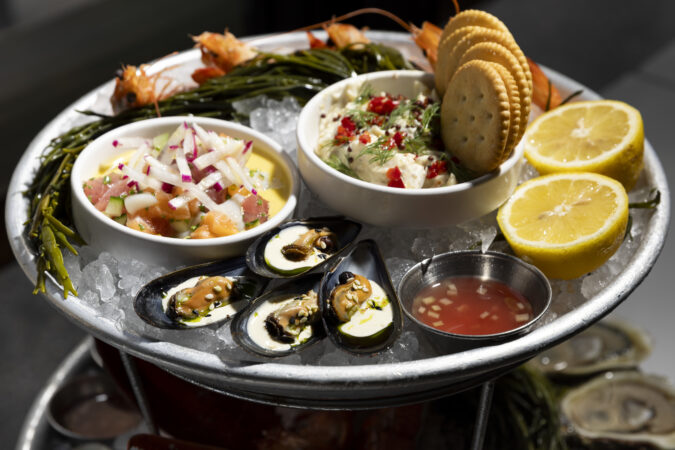
    Gary McCready prepares a seafood tower at Oyster House in Philadelphia on Thursday, July 11, 2024.

    Restaurants are recommended by the Restaurant and Chef Awards voting body and the public during an open call period from October to November, then considered and selected by the subcommittee. America’s Classics restaurants must be open for at least a decade to be eligible.

    The winners will be celebrated at the James Beard Restaurant and Chef Awards ceremony on June 15 at the Lyric Opera of Chicago.

    “Behind each of these cherished restaurants are people who show up day after day to nourish their communities — their powerful stories are ones of creativity, resilience, and tradition,” said Lauren Saria and Erinn Tucker-Oluwole, Restaurant and Chef Awards subcommittee cochairs. “On behalf of the Restaurant and Chef Awards subcommittee, we are honored to celebrate these unsung heroes of American food culture. We hope this recognition opens new doors for their continued success.”

  • Philly’s latest Yemeni coffee shop has lines out the door until midnight

    Philly’s latest Yemeni coffee shop has lines out the door until midnight

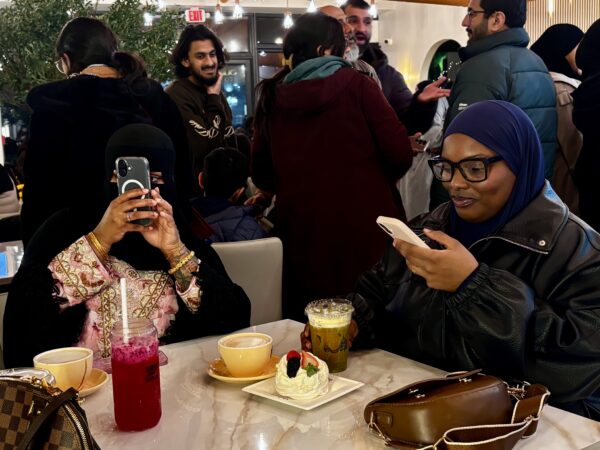
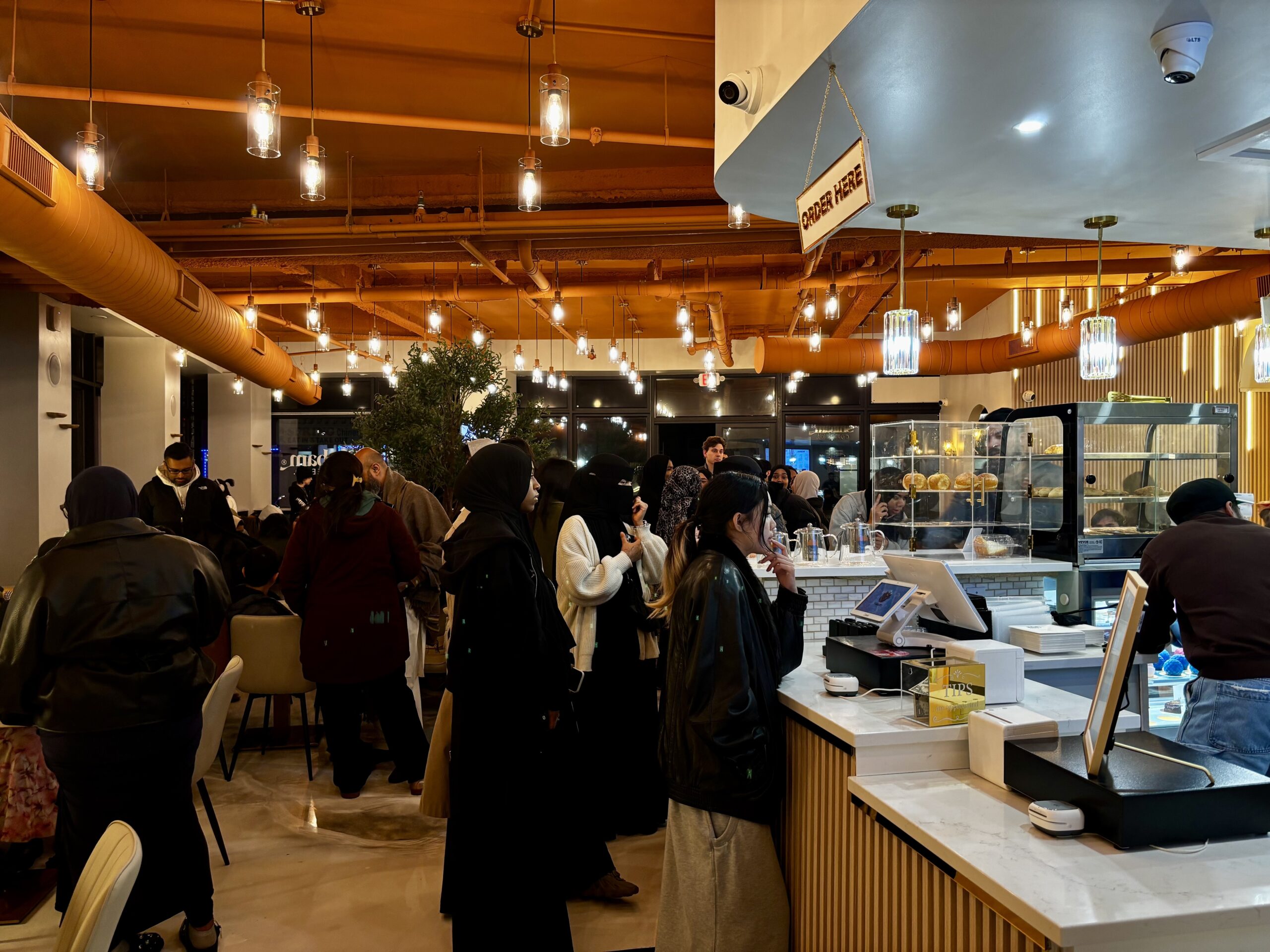
    At 11 p.m. on a February Friday night, a boisterous line snaked out of a brightly lit cafe a block away from Penn Presbyterian Medical Center. Philadelphians chatted excitedly as they waited to order pistachio lattes, matcha, and Adeni chai at Philly’s newest Yemeni coffee shop, Shibam Coffee Co.

    The national chain added Philly to its roster of U.S. locations, soft-opening last weekend, thanks to four friends: Philly native Fahad Azam and his college friend Khurram Ghayas, who looped in brother Waqas Ghayas and Texas-based friend Roshaan Ahmad.

    Inside the minimalistic, neutral-toned cafe at 3748 Lancaster Ave., owners Azam, Khurram, and Waqas served order after order of coffee, chai, sandwiches, and desserts from 5 p.m. to midnight on Friday. Customers nestled into plush mid-century modern chairs at white marble tables, high-top chairs at countertops near the big windows, a custom wraparound couch from Pakistan situated around an olive tree, and still more couches in the lounge room, decorated with a Philly skyline mural and fireplace.

    Glass-bulb light fixtures hanging from the copper-colored industrial ceiling cast a warm glow on the 2,600-square-foot cafe — open until midnight on Fridays and Saturdays, a rarity in a city where many coffee shops close before sunset.

    Shibam Coffee Co. in West Philly.

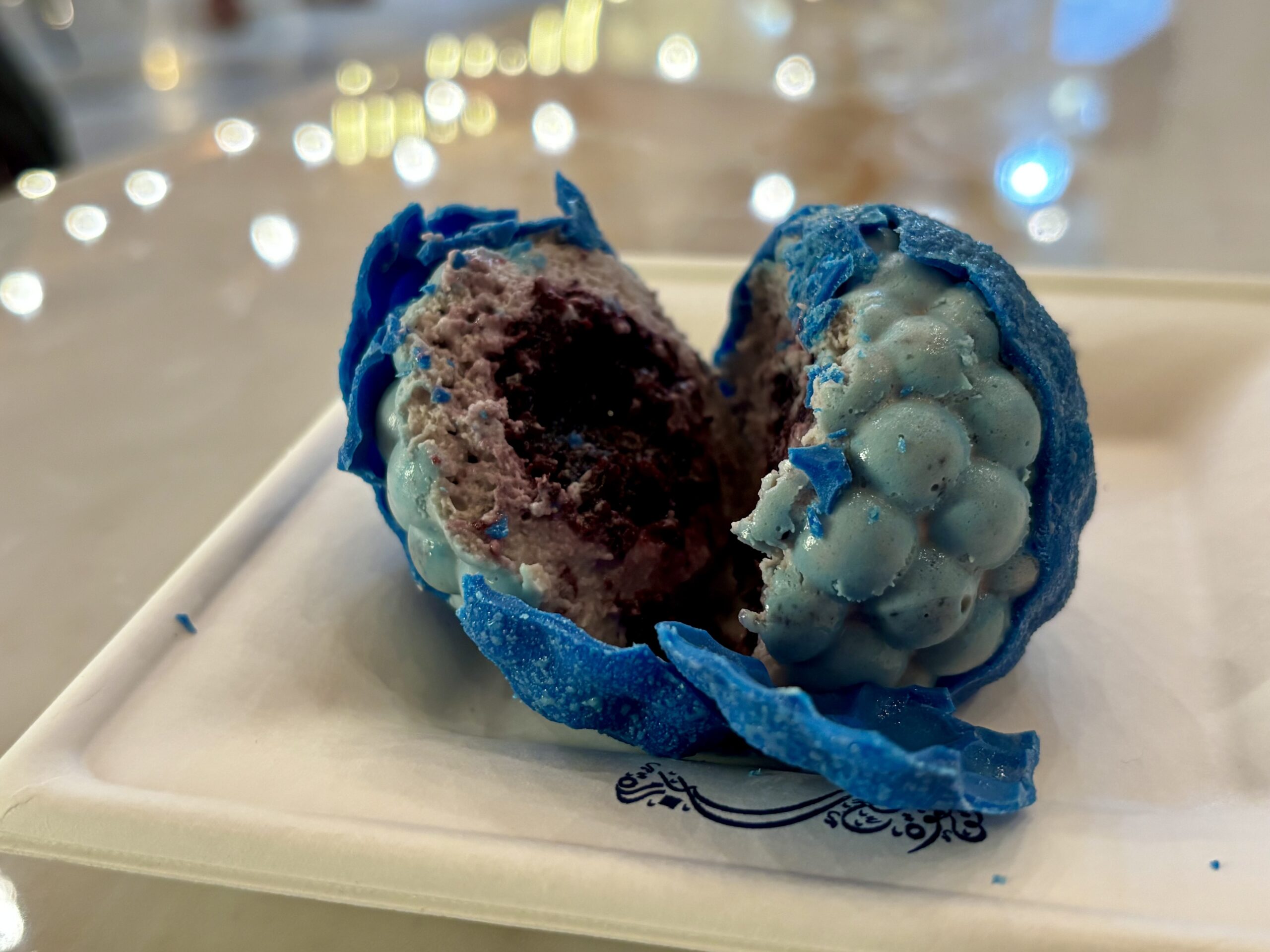
    The display case shows off cream tarts perfectly shaped like blueberries, raspberries, and mangoes; sweet cream cheese-filled honeycomb bread; and slices of rich lotus, caramel, and pistachio milk cakes from Aroma Bakery in Old City. The menu also includes house-made halal sandwiches with beef pastrami and turkey from Grad Hospital’s Prime Halal Meat Co. on ciabatta rolls from Chestnut Hill’s Baker Street Bread.

    “We wanted to … work with local businesses to bring the Philadelphia vibes into Shibam,” Azam said.

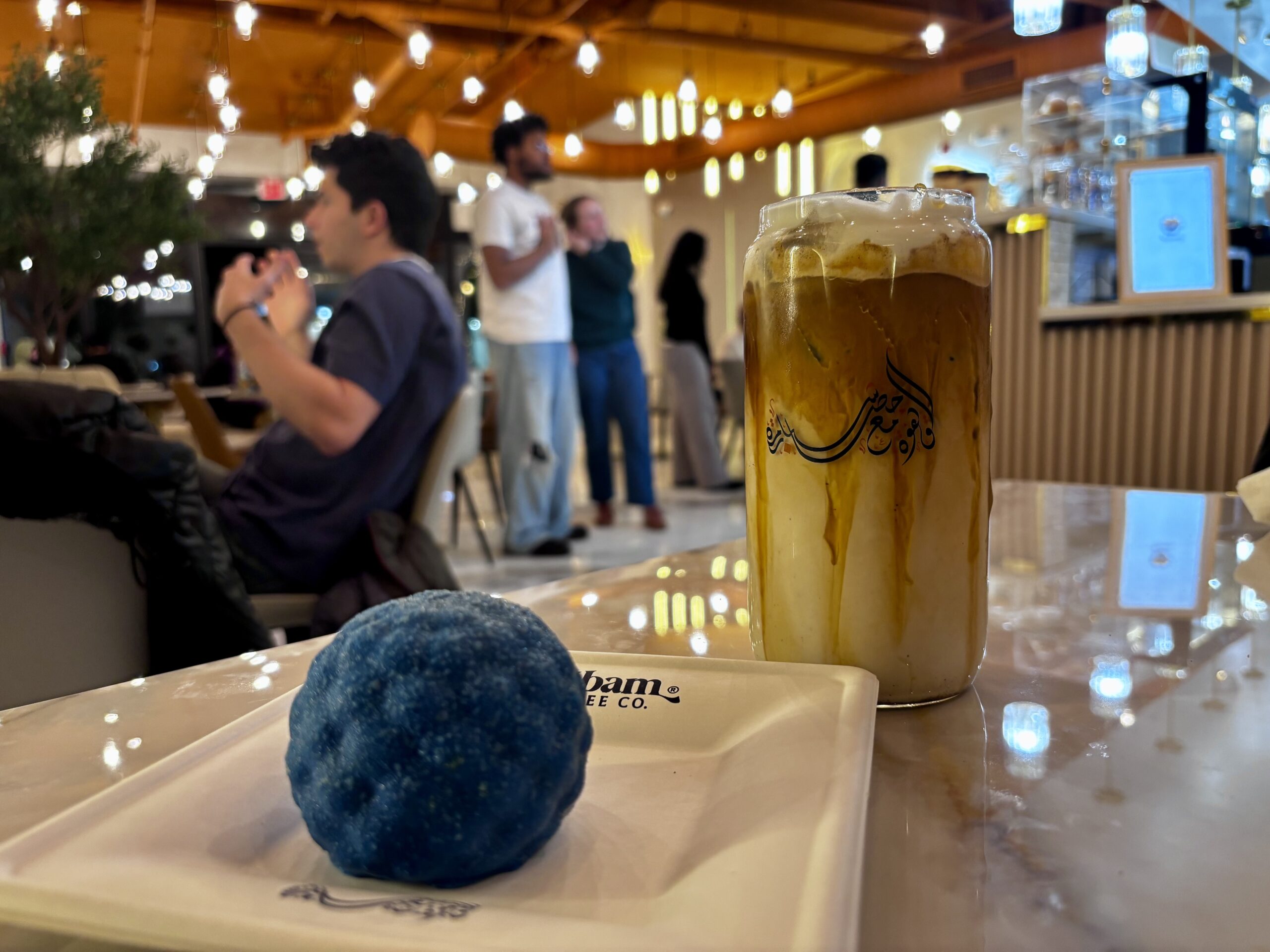
    The West Philly location’s coffee menu is standard to the national chain, which has 13 locations, in cities like Pittsburgh; Dearborn, Mich.; and Columbus, Ohio. Customers can sip on Yemeni cafe staples like jubani (made with coffee and the husk of coffee cherries, served with cardamom, ginger, cinnamon), Adeni (Yemeni black tea, cardamom, nutmeg, milk), and mofawar (coffee with cardamom and cream), along with drinks like Shibam coffee (light roast Yemeni coffee with coffee husks, cardamom, ginger, cinnamon, cream) and Saudi coffee (light roast with cardamom and saffron). There are also more usual coffee shop drinks like brown sugar-shaken espressos, pistachio lattes, and matcha.

    With the soft opening landing on the first weekend of Ramadan, many patrons came from a nearby mosque for a post-tarweeh (late-night holiday prayer) treat and gathering spot.

    Shibam offers pastries from Old City’s Aroma Bakery.

    “We had planned to open up in December or January, but it just kept getting delayed,” Azam said. “I see it as a blessing in disguise that we opened on the first Friday of Ramadan, Alhamdulillah.”

    “We want to offer a late-night hangout spot for Muslim people, as well serve the healthcare community in the neighborhood,” he added. “I feel like we [Muslims] need a third space year-round — we don’t go to clubs; we don’t go drinking at bars. We might as well have a coffee shop that’s more like a community center, a space that’s comfortable for everyone.”

    The four owners initially planned on opening their cafe location in the Philly suburbs but pivoted when they heard the building was available.

    “We were like, ‘What the hell are we doing?’ — [Lancaster Avenue] is a marquee location,” Azam said. “You’re right near Drexel University. You’re right next to UPenn Presbyterian building. And there’s a well-established community already there. It was a no-brainer.”

    Shibam Coffee Co. in West Philly

    Azam and his friends knew they wanted to open a Shibam location together after embarking on a Yemeni cafe crawl in Dearborn. The rich, smooth flavor profile of the Shibam coffee there stood out to the four friends. But it was meeting the “humble, down-to-earth” CEO of Shibam Coffee Co., Mansour Sharha, that led them to open their own location in Philly, said Azam.

    While this is the first Shibam franchise in Philly, the city’s Yemeni coffee footprint has been on a steady incline, with four cafes opening in 2025 and several on the horizon.

    One of those cafes, Haraz Coffee House, is just a 12-minute walk from Shibam. But Azam doesn’t see the coffeehouse as competition, rather a friendly neighbor with the same goal: expand the Yemeni coffee shop footprint.

    For the co-owner, opening weekend of Shibam was a reflection of Philadelphians’ love for the ever-growing Yemeni cafe culture creating cherished cultural spaces for immigrant, Muslim, and diasporic communities.

    “It means we are on the right track — we are passionate about [Yemeni coffee] and it shows through the amazing support we’ve been getting,” Azam said. “We want to keep this going and make sure we continue to set high standards for ourselves and our customers.”

    Shibam Coffee Co., 3748 Lancaster Ave.; shibamphilly.com; instagram.com/shibam.philly; Ramadan hours (through March 19): 3 to 11 p.m. Monday to Thursday, 3 p.m. to midnight Friday and Saturday, 3 to 11 p.m. Sunday. (Hours will be updated at a later date.)

  • Taking Amtrak? Now you can order Parc’s spaghetti bolognese on the train

    Taking Amtrak? Now you can order Parc’s spaghetti bolognese on the train

    Now you can order Parc en route to New York or D.C. Amtrak is rolling out dining experience with new dishes from Philly mainstays Parc, Pizzeria Stella, and Buddakan, in partnership with STARR Restaurant Group. But you’ll have to book a first class ticket on the NextGen and FirstGen Acela trains to enjoy these favorites on board.

    The three-year-old collaborative menu has been updated with a rotating selection of seasonal dishes for lunch and dinner services.

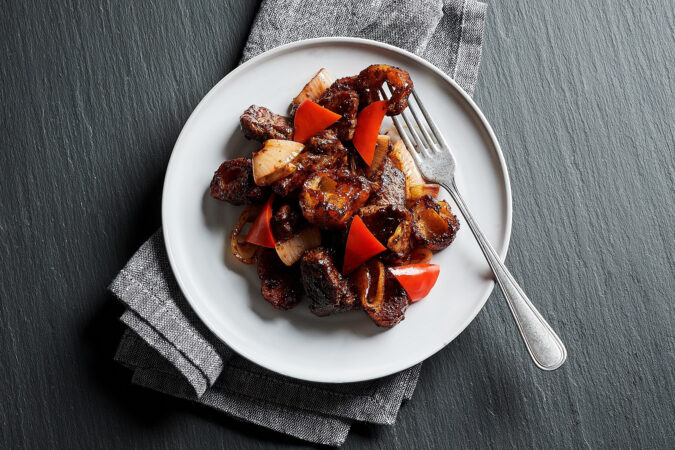
    The options include: lasagna al forno, saucy lasagna with rich ricotta, mozzarella, and Parmesan cheese, from Pizzeria Stella. There’s also spiced black pepper marinated tenderloin topped with wok-tossed herbs, red finger chilies, and crispy Chinese crullers from Buddakan, or Parc’s rich, slow-simmered spaghetti bolognese with crunchy garlic toast.

    STARR Restaurant Group is led by Philadelphia-based restaurateur Stephen Starr, who recently opened his 41st restaurant, Borromini, with mixed reviews. And while he’s an operator known for fanatical attention to detail and an assortment of over-the-top restaurants, it hasn’t stopped him from getting in some hot water on occasion — he is facing union-busting charges brought by the National Labor Relations Board.

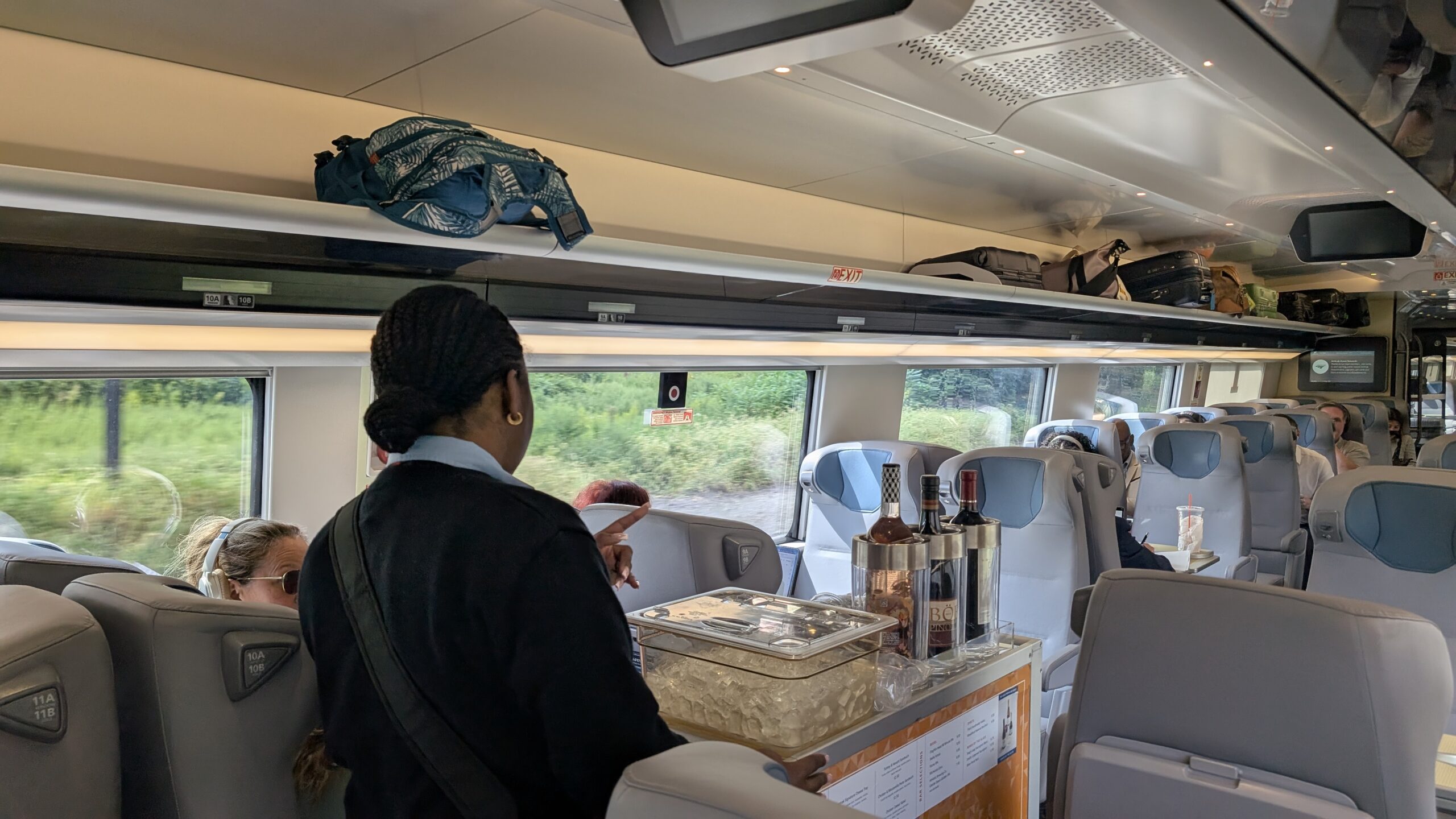
    A server pushes a bar cart down the aisle of a business class car in a NextGen Acela

    Onboard, Amtrak aims to offer the same culinary expertise enjoyed at Starr’s restaurant portfolio across Amtrak’s Northeast Corridor.

    “Serving elevated offerings in Acela First Class in partnership with STARR Restaurant Group adds an exceptional touch to our customers’ experience onboard on our trains,” said Eliot Hamlisch, Amtrak’s executive vice president and chief commercial officer, in a statement.

    Amtrak is also debuting two new dishes by executive chef David Gottlieb. There’s a caramelized apple bread pudding for breakfast and chilled harissa salmon for lunch and dinner.