Author: Jess Rohan

  • SEPTA cuts 3 Glenside Regional Rail trains along with other schedule changes

    SEPTA cuts 3 Glenside Regional Rail trains along with other schedule changes

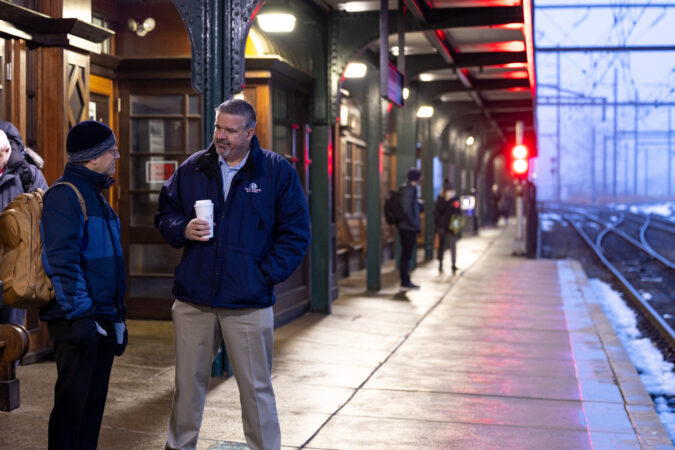
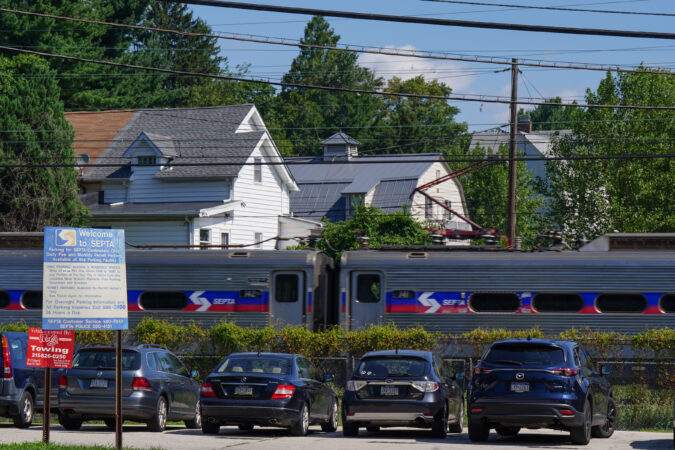
    SEPTA is trading Glenside Regional Rail riders three daytime trains for new off-peak options, more train cars, and new schedules aimed at reducing congestion between Glenside and Wayne Junction.

    The Warminster Line, which runs through southeastern Montgomery County, is the only Regional Rail line losing multiple trains under systemwide changes that began on July 5 to make trains more consistent and prevent delays.

    The new schedule cuts two weekday trains that left Glenside at 8:40 a.m. and 2:47 p.m. for Center City, and one weekday train that left Suburban Station at 4:53 p.m. toward Warminster.

    The morning train cut leaves a 27-minute gap in service to Center City from Glenside, while the afternoon cuts each add five minutes or less to the wait for the next train.

    SEPTA also added a train to the Warminster Line that leaves Suburban Station at 11:35 p.m. on weekdays, and a train on the West Trenton Line that leaves Suburban Station at 5:28 a.m.

    The late-night train will serve airport workers, and the dawn departure is convenient for people who commute into the suburbs, SEPTA spokesperson Kelly Greene said.

    The changes SEPTA made across the commuter rail system this week are aimed at improving consistency and reliability, the agency said.

    “As SEPTA continues to increase the number of train cars available for service, trains will be longer and provide more space for riders,” officials wrote in a statement.

    Between Wayne Junction and Glenside, SEPTA said, it hopes the new schedule will help “prevent trains from bunching together, which can cause delays.”

    The 8:40 a.m. train from Glenside was cut to reduce congestion, Greene said, and had the lowest ridership of the trains running around that time.

    Other changes affecting the Abington area include new departure times for some trains on the Lansdale/Doylestown, Warminster, and West Trenton Lines.

    SEPTA put out a full list last month of what is changing on each line, along with updated train schedules.

    This suburban content is produced with support from the Leslie Miller and Richard Worley Foundation and The Lenfest Institute for Journalism. Editorial content is created independently of the project donors. Gifts to support The Inquirer’s high-impact journalism can be made at inquirer.com/donate. A list of Lenfest Institute donors can be found at lenfestinstitute.org/supporters.
  • Here’s what Abington’s new middle school might look like

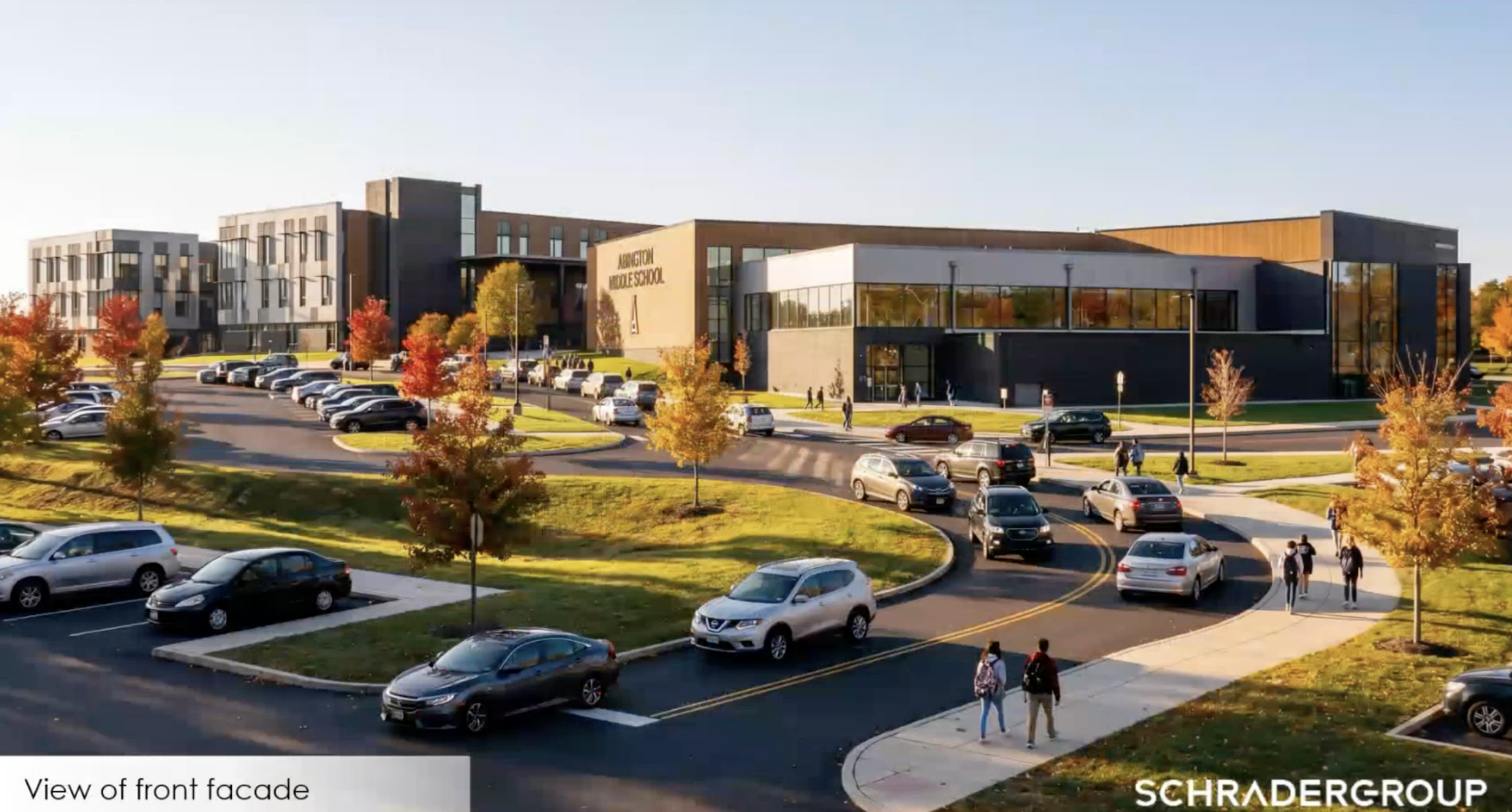
    Abington School District wants feedback on design plans for a middle school set to open as early as 2029.

    The new school, designed to house 2,200 students, will be built on existing district land. The current building, meanwhile, is slated for demolition, and sports fields will be rebuilt in a $285 million project that taxpayers approved in a rare, successful referendum last May.

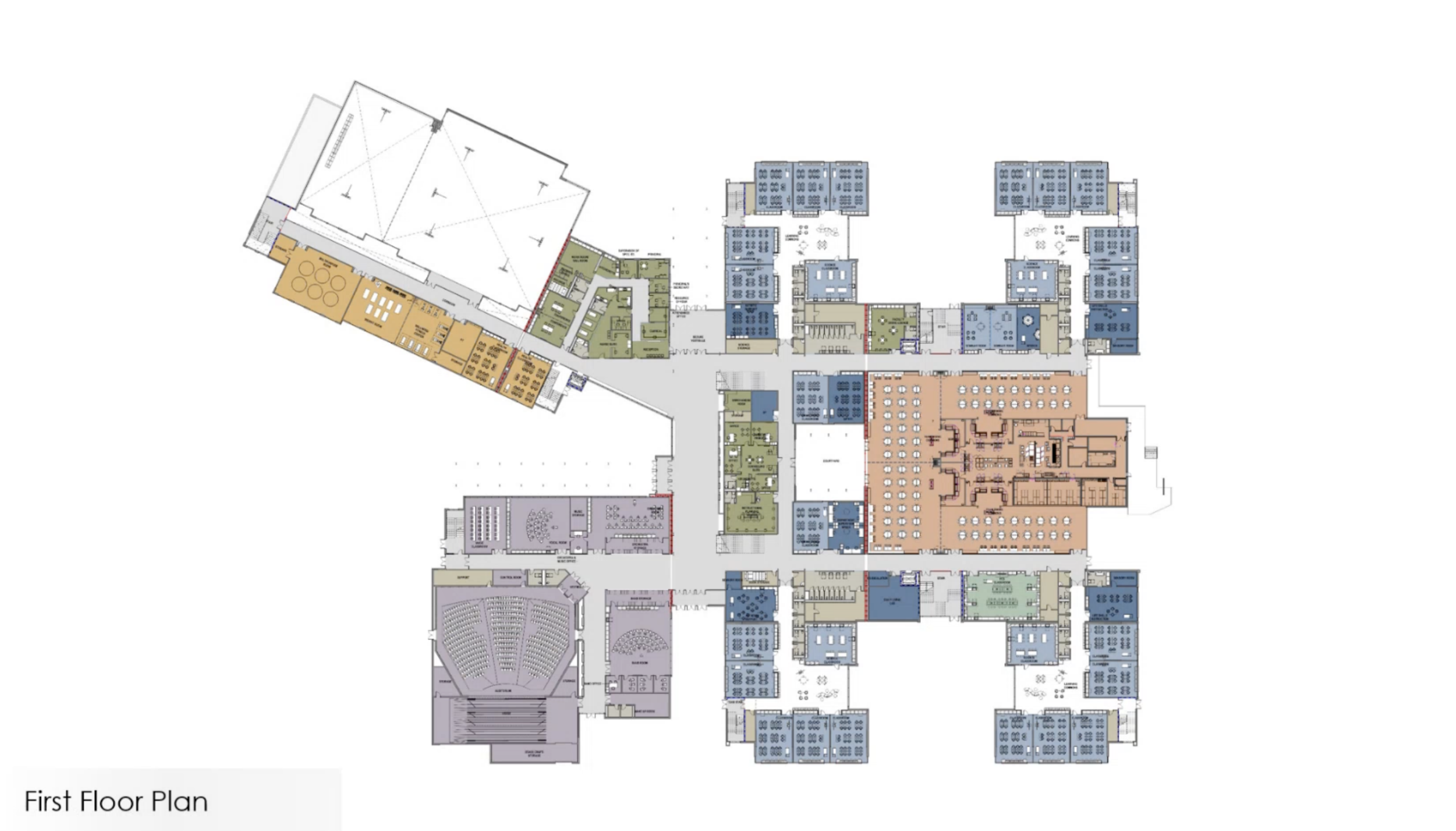
    The plan, as seen in a June presentation, includes more parking spaces, layouts for easier monitoring of classrooms and bathrooms, a class “pod” design, and flexible room sizes.

    Abington has extended the deadline for a community survey on the plan to July 10, district spokesperson Allie Artur said. The district will use the feedback to further refine the design.

    Abington School District shared design plans for a new middle school set to open as soon as 2029.

    Design for new Abington middle school

    The academic areas of the school would be divided into sets of classrooms and bathrooms to give students a home base within the larger building, said Ryan Murphy, a project manager from ICS, the facility planning consulting firm leading the design effort.

    Those classrooms would have windows that allow adults to look in from the hallway, but are too high to distract students sitting at desks.

    The planned bathrooms would have fully private stalls, with shared sink areas equipped with cameras.

    Several classrooms, along with the cafeteria and auditorium, would have partition options for changing the room sizes.

    Initial renderings for Abington’s new middle school show pods of classrooms and bathrooms organized around a central cafeteria, shown in peach.

    New middle school adds parking, moves sports

    The design adds 79 more parking spaces than the current middle school has, Murphy said. The plans also retain a track around the football field.

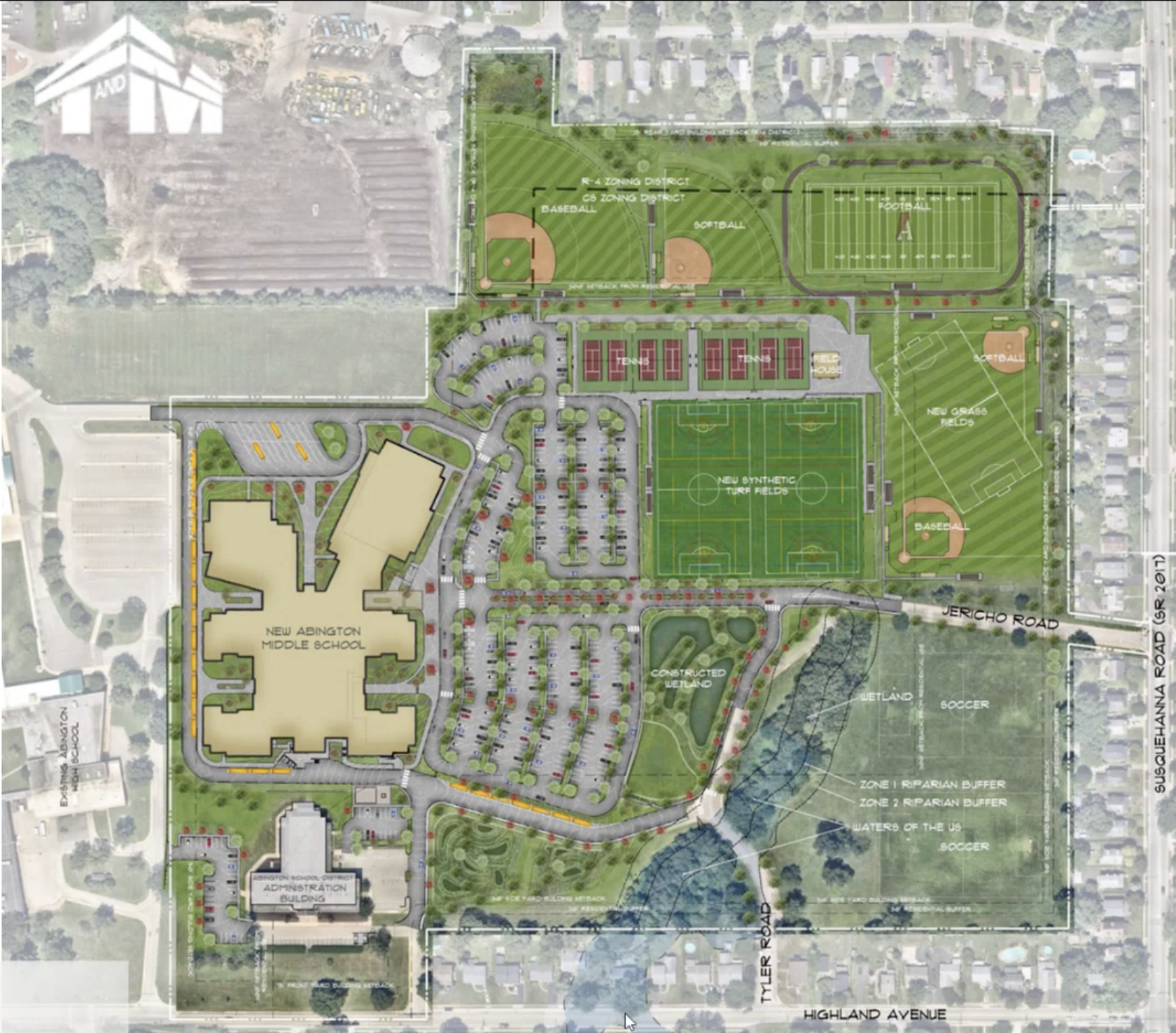
    The new school is to be built on the current site of the tennis courts beside the district administration building.

    While some athletic spaces, including the soccer fields, won’t be touched during construction, the tennis courts won’t be rebuilt until the old school is demolished during the 2029–2030 school year, according to the project timeline.

    The district is working with the township on a plan to use Alverthorpe Park and other venues for tennis in the meantime, Artur said.

    The new building would also give spectators access to bathrooms during games, while keeping the rest of the school blocked off.

    Initial renderings for Abington’s middle school project show the planned site of the new building and athletic spaces.

    Abington takes feedback on school design

    Murphy emphasized during the June presentation that the renderings are not the final product, as the district continues to seek feedback on the project.

    A district survey last winter found that residents wanted a safe, inclusive, and cost-effective middle school filled with natural light.

    The new survey on the initial building renderings asks residents for feedback on specific design elements, including safety features, the pickup and drop-off line, and parking.

    Residents had to approve the extra spending for the demolition and construction project, which will eventually cost the average taxpayer about $54 per month.

    The successful 2025 referendum — unusual in Pennsylvania — drew 17,579 voters and passed by a 411-vote margin.

    Opponents of the project argued that $285 million is too steep, and called for a slower process to allow residents more input in the renovation and construction options.

    Advocates said renovating the existing building would cost an estimated $206 million anyway, and that needed repairs alone would cost around $100 million and require debt.

    A tax calculator that allows property owners to estimate how much the project will add to their bill has been viewed more than 27,000 times, according to the website.

    This suburban content is produced with support from the Leslie Miller and Richard Worley Foundation and The Lenfest Institute for Journalism. Editorial content is created independently of the project donors. Gifts to support The Inquirer’s high-impact journalism can be made at inquirer.com/donate. A list of Lenfest Institute donors can be found at lenfestinstitute.org/supporters.
  • 40 new apartments are coming to Jenkintown at the site of the former Helweg funeral home

    40 new apartments are coming to Jenkintown at the site of the former Helweg funeral home

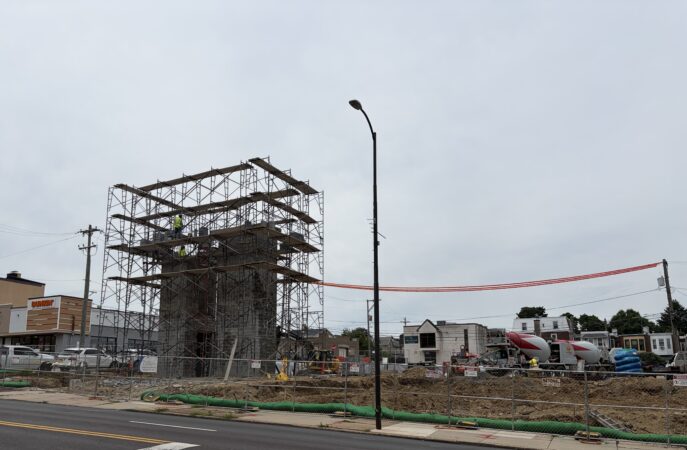
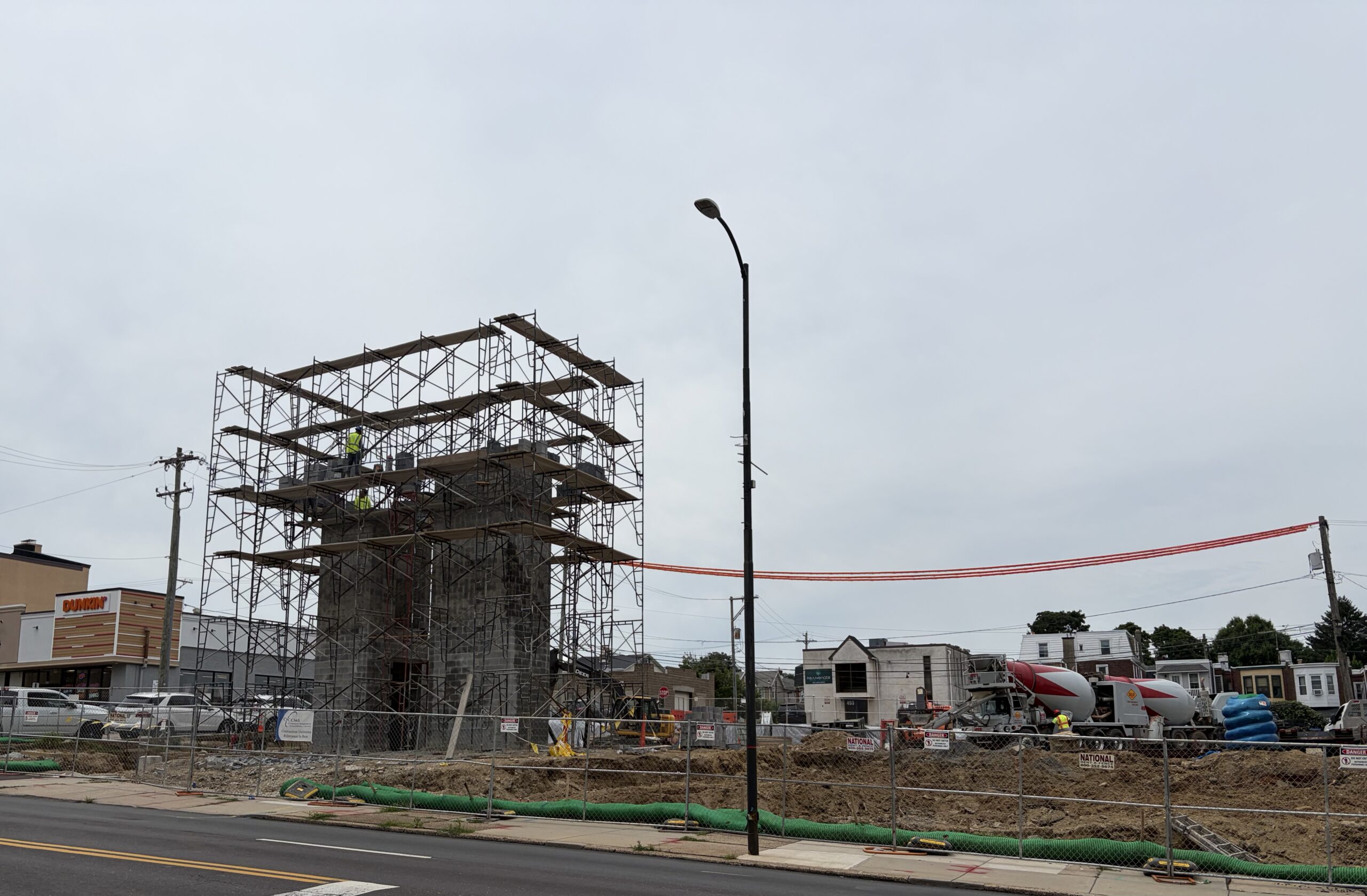
    Construction is underway on a mixed-use apartment building facing York Road in Jenkintown.

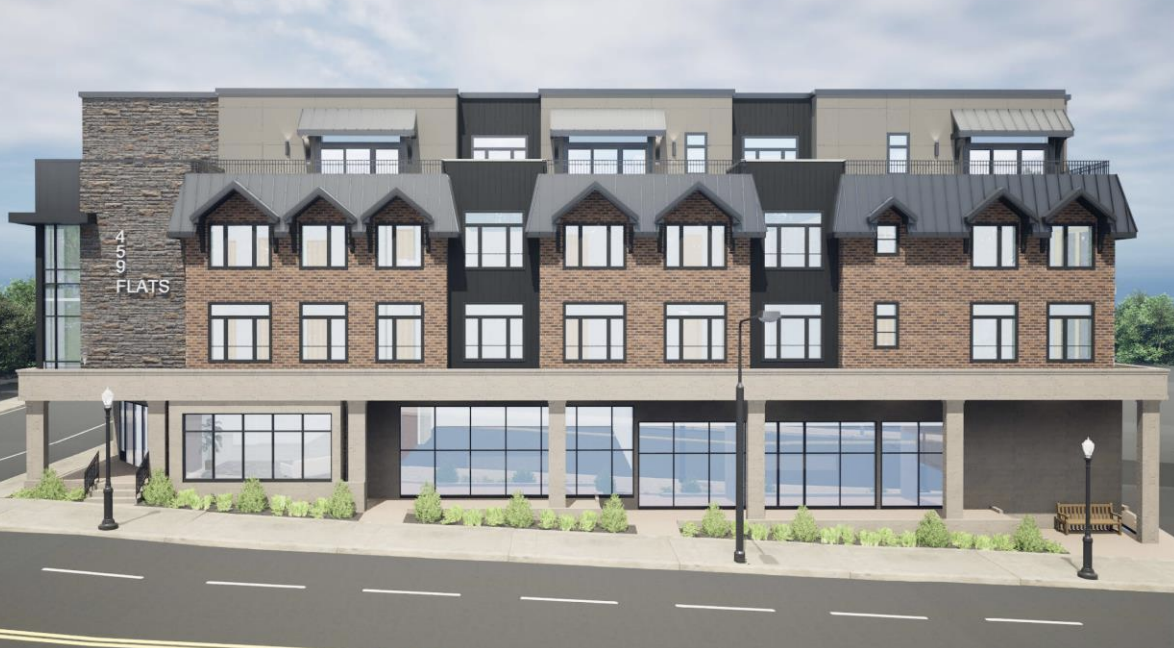
    Plans for the new building, which will sit at the intersection of Route 611 and Cherry Street across from Dunkin’, include 40 apartments and a ground-floor commercial space.

    The four-story structure also includes a parking garage with 48 spaces. Eight of those will be reserved for the retailer, developer and owner Vincent Celenza said.

    Rendering of an apartment complex at Route 611 and Cherry Street in Jenkintown set to open next year.

    Some Jenkintown residents have previously voiced concerns about parking permit arrangements for new apartments, arguing that charging for the spots encourages occupants to use free street parking instead.

    But Jenkintown Borough Manager George Locke said he’s heard some argue that no-cost parking permits could present a different problem: “[An] owner might just work the cost of parking into all leases and that might negatively affect those who chose not to drive and use public transportation instead.”

    Celenza said he hasn’t decided yet how to handle parking permits. “That was one of [the borough’s] concerns,” he said.

    An older building on the site, Helweg Funeral Services Inc, was demolished earlier this month.

    Celenza bought the land in 2022 from the trust of the Helweg family funeral home’s owner, Mary Welham Wurmstedt, according to property records.

    Newspaper archives indicate the Helweg funeral home had operated on the property since at least the 1930s. Helweg’s has merged with another funeral home and is now located two miles down the street in Abington.

    Celenza went through several rounds of planning with Jenkintown, which requested fewer apartments and a wider sidewalk on Cherry Street, Locke said. Celenza agreed to those requests in the final plan submitted last summer.

    Construction is underway on a new 40-apartment complex and commercial space at Old York Road and Cherry Street in Jenkintown.

    The developer will also add a small public area with two benches on a back corner of the property at Cherry and Johnson Streets.

    The apartment complex, named 459 Flats, is set to open in June 2027, Celenza said.

    Average rent for the apartments, which range from studios to two-bedroom units, will be about $2,400 per month.

    This suburban content is produced with support from the Leslie Miller and Richard Worley Foundation and The Lenfest Institute for Journalism. Editorial content is created independently of the project donors. Gifts to support The Inquirer’s high-impact journalism can be made at inquirer.com/donate. A list of Lenfest Institute donors can be found at lenfestinstitute.org/supporters.
  • The death of Edward Weinrich, longtime owner of Weinrich’s Bakery in Willow Grove, has sparked an outpouring of support

    The death of Edward Weinrich, longtime owner of Weinrich’s Bakery in Willow Grove, has sparked an outpouring of support

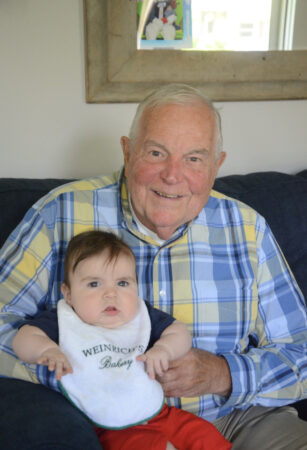
    Born above a Philadelphia bakery and forged in Willow Grove, Edward M. Weinrich, 92, died of natural causes at his home beside a Florida river on June 17 surrounded by the sons who keep his beloved cake shop alive.

    Weinrich’s parents ran a bake shop on Front Street in North Philadelphia before opening their Willow Grove konditorei — the German word for patisserie — at 55 Easton Rd. in 1952. By the 1970s, Weinrich had graduated from Villanova University, spent two years stationed in Hawaii with the Army, had five children, and taken over the Willow Grove bakery with his wife, Kippy, selling cookies, pies, danishes and cakes — many made from inherited recipes, like their famous butter cake.

    “Still today there are recipe books in the bakery archive that are written in German,” said Stephen Weinrich, the youngest of his five sons.

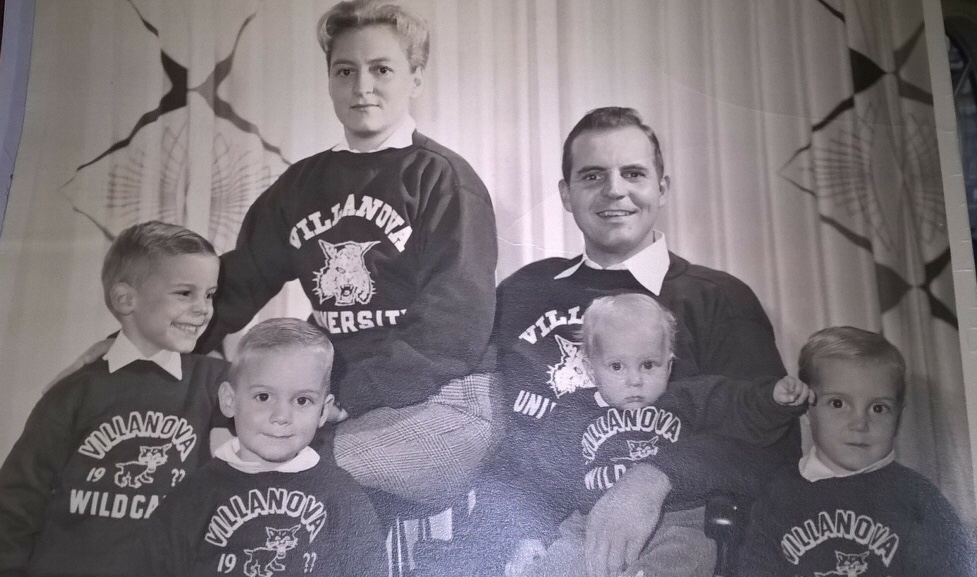
    Edward and Kathryn Weinrich pose in Villanova sweatshirts with their four oldest children.

    He also invented his own: In the 1960s, Weinrich worked with food scientists to develop his signature frosting — a buttercream that doesn’t turn gritty. It’s still used in custom cakes the store makes for birthdays, weddings, and First Holy Communions.

    Weinrich learned the trade from his dad, Herman, who left Naumburg in 1913 to help his brother August run a Manhattan bakery, opening his own in 1919. (It is descendants of their cousin, Ludwig, who operate R. Weinrich German Bakery in Newtown Square.)

    Weinrich made wedding cakes for many couples over the years. By the end of his career in 2005, he was making wedding cakes for their grandchildren.

    The news of his death this month sparked an outpouring of remembrances on social media.

    “My mother … wouldn’t get dressed to go to the doctors, but she’d call and order and drive down in her nightgown and robe for a curbside pickup,” one social media user wrote. “Her last trip to the hospital, she only worried that we froze her Weinrich order so it didn’t go to waste.”

    “We were just blown away,” said Michael Kirby, the bakery’s general manager and Weinrich’s great nephew. “It’s unbelievable how many people had such fond memories of him and the things we made.”

    Their products travel far, Kirby added. “We have people come from across the country for our butter cakes because they can’t get them anywhere else.”

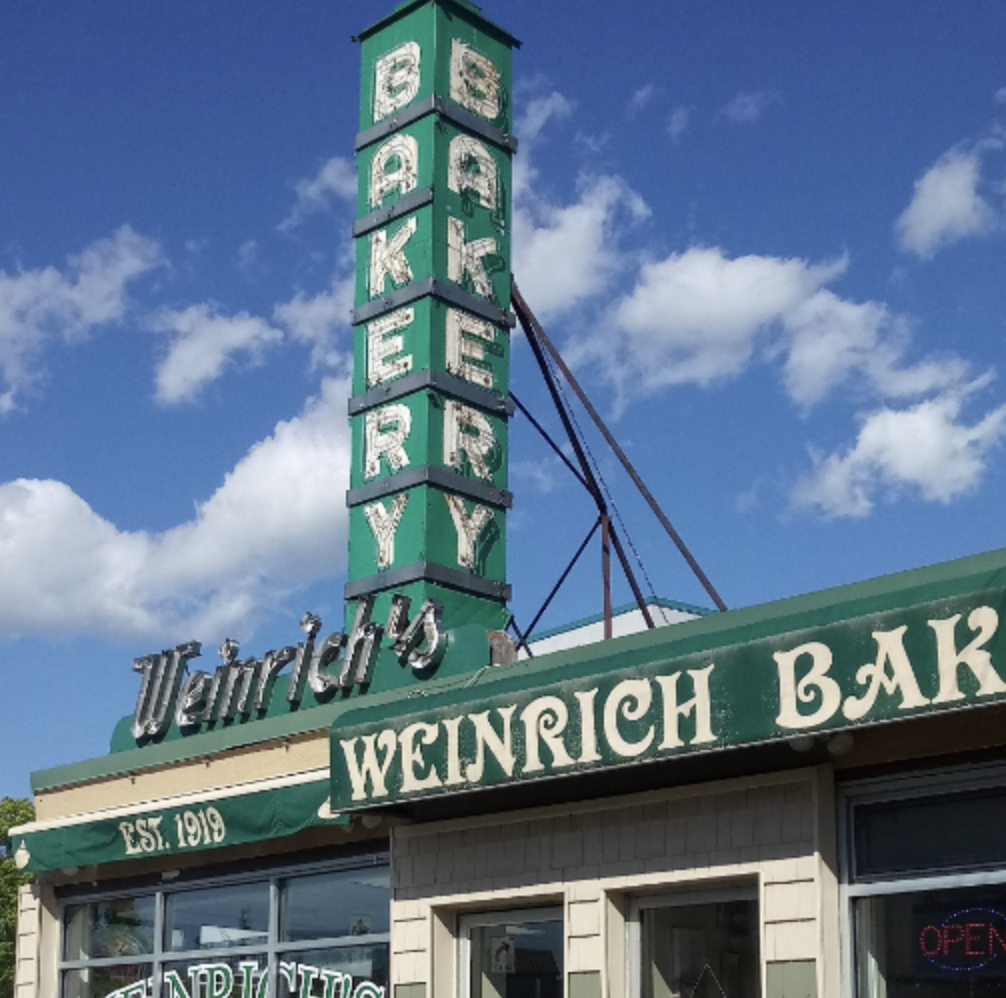
    Weinrich’s Bakery in Willow Grove.

    Three of Weinrich’s sons still work for the bakery, which is now owned by the third son, Herman, and his wife, Beth.

    Though they took over the store in the 2000s, Weinrich and Kippy still showed up regularly to offer advice and to greet many of the bakery’s lifelong customers.

    After Kippy died of Alzheimer’s disease in 2015, Weinrich retired to Fort Myers, Florida. But he still asked about the bakery daily, Herman and Beth wrote on social media.

    Their cousins’ kids are now there full-time, too, Stephen said: “We have a fourth generation of family working every day in the store.”

    Weinrich was an active member of his parishes at St. David Roman Catholic Church in Willow Grove and then Immaculate Conception Church in Jenkintown, and a longtime supporter of the Abington Police Athletic League, Stephen said.

    “He is and will forever be remembered for his kind presence and loyalty to all of us,” Herman and Beth wrote.

    Funeral arrangements will be made after Weinrich is returned to Pennsylvania, the family said.

    He leaves behind his sons and their families, including 16 grandchildren and seven great-grandchildren.

    This suburban content is produced with support from the Leslie Miller and Richard Worley Foundation and The Lenfest Institute for Journalism. Editorial content is created independently of the project donors. Gifts to support The Inquirer’s high-impact journalism can be made at inquirer.com/donate. A list of Lenfest Institute donors can be found at lenfestinstitute.org/supporters.
  • Abington is planning a new, multi-million-dollar library to replace its 1950s-era building

    Abington is planning a new, multi-million-dollar library to replace its 1950s-era building

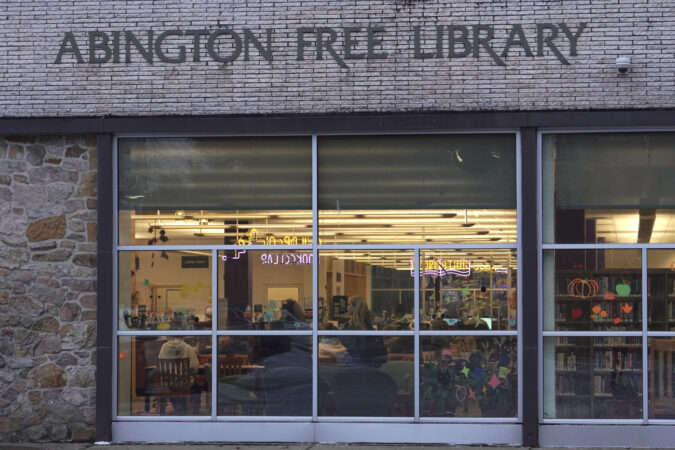
    Abington is planning to tear down and replace its flagship library building.

    The Pennsylvania Department of Education announced more than $11 million in grants in April for libraries across the state. Abington Township received $749,750 “to plan and design a library facility that is sustainable, accessible, efficient and tailored to the needs of the community.”

    Town officials are now hard at work doing just that, Abington Township Public Library executive director Elizabeth Fitzgerald said.

    The library has already put out a call for a fundraising consultant who will help raise the roughly $50 million total that township officials think they’ll need to replace the main library at 1030 Old York Road with something bigger. The consultant will be paid with private donations from the library’s endowment, Fitzgerald said.

    Officials hope some of that money will come from state and federal sources, too. Fitzgerald asked state Sen. Art Haywood about possible funding through the Pennsylvania’s Redevelopment Assistance Capital Program, according to minutes from the May library trustees meeting.

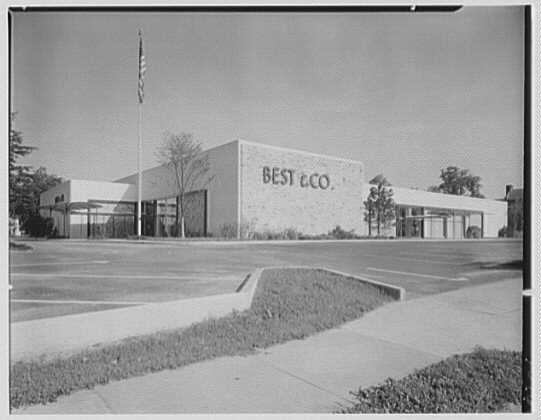
    The 1954 building was previously a Best and Co. department store. Abington took over the property in the mid-1970s.

    A 1957 image of the Best and Co. department store in Abington held at the Library of Congress.

    Maintaining the 72-year-old structure has “caused countless interruptions in services and building closures,” Fitzgerald wrote in a statement announcing the grant.

    And the community has now outgrown it, the library director said. Earlier this month, the library hosted author Pam Jenoff at a Penn State building down the road in order to fit some 125 attendees.

    In addition to author events, the library hosts activities for kids, an adult literacy program, and a “library of things“ ranging from birding backpacks to electricity usage monitors.

    Nearly 24,000 people attended over 800 library programs in 2025, Fitzgerald wrote in the grant announcement. “Abington Township needs a new, 21st century library building that can accommodate the needs of our community for generations to come.”

    Next steps include hiring an architectural engineering firm using the state grant money, Fitzgerald said. The town expects to demolish the current structure sometime after September 2027 and rebuild on the same land.

    In the meantime, officials will seek community input on the project “with surveys, focus groups, town halls, and one-on-one conversations,” Fitzgerald wrote.

    “The planning is not in my hands,” she said. “This is the community’s library.”

    This suburban content is produced with support from the Leslie Miller and Richard Worley Foundation and The Lenfest Institute for Journalism. Editorial content is created independently of the project donors. Gifts to support The Inquirer’s high-impact journalism can be made at inquirer.com/donate. A list of Lenfest Institute donors can be found at lenfestinstitute.org/supporters.
  • There are plans for an 86-unit apartment complex next to SEPTA’s Jenkintown station

    There are plans for an 86-unit apartment complex next to SEPTA’s Jenkintown station

    Eighty-six new apartments are planned for Wyncote in Cheltenham Township as part of a development project that would also include an office and a commercial space.

    The building at the center of the 165 Township Line Rd. property would remain an office, while the project would convert a second existing structure into a 36-unit apartment building, and add a third, 50-unit apartment complex to the site with a parking garage and a retail space on the ground floor, according to a May review letter from the Montgomery County Planning Commission.

    The higher-density development would sit about 1,000 feet from SEPTA’s Jenkintown-Wyncote Regional Rail station, which SEPTA plans to rebuild with a pedestrian overpass and other features by 2027.

    The lot is zoned for multi-use development, but only the new 50-unit building meets that criteria. Cheltenham Township grandfathered the existing office building into the current zoning ordinances, and the planned 36-unit complex was granted an exemption in 2024.

    In addition to the 79-car garage, the plans include a repainted parking lot to boost spaces from 135 to more than 160.

    The project is expected to net about half a million dollars annually for the township and Cheltenham School District, according to a February fiscal analysis, and house an estimated six school-aged children.

    SEPTA, which aims to boost ridership by encouraging higher density, pedestrian-friendly housing along Regional Rail lines, said Tuesday that they’re glad projects like these are moving forward.

    “Transit-oriented communities reinforce the public’s investment in SEPTA,” spokesperson Kelly Greene said.

    JOSS Realty Partners, which had owned the entire property, held a joint open house with SEPTA in 2019 about a project that would’ve allowed SEPTA to use a parking lot on the site.

    JOSS still owns the office building that’s excluded from the proposal. The new development is planned to be built on about an acre of the site that was sold off to 165 Town Line Holdings LLC in 2025.

    The mailing address for the LLC is a property co-owned by real estate investor Edward Topolewski.

    In their review of the proposal, the Montgomery County Planning Commission called for more pedestrian and cyclist access.

    “We are glad to see new development proposed in the area of the Jenkintown-Wyncote Station,” principal county planner Chloe Mohr wrote.

    “For this to be a successful development, pedestrians need to easily and safely travel throughout the site, to the train station, and to other destinations.”

    That includes access to future walking trails, the planners wrote, and neighboring Wyncote House.

    County officials also suggested that Cheltenham consider improvements to the stormwater management plan.

    “It appears that there may currently be erosion and drainage issues here,” Mohr wrote. “With the steep slopes on this site, more may need to be done to remediate stormwater runoff.”

    The project was slated for review by the town’s Shade Tree Advisory Commission this month, Cheltenham Commissioner Jeff Chirico said, but the developer requested an extension.

    The proposal would then head to the township commissioner board.

    This suburban content is produced with support from the Leslie Miller and Richard Worley Foundation and The Lenfest Institute for Journalism. Editorial content is created independently of the project donors. Gifts to support The Inquirer’s high-impact journalism can be made at inquirer.com/donate. A list of Lenfest Institute donors can be found at lenfestinstitute.org/supporters.