Author: Fallon Roth

  • Rape crisis centers are finally getting funding from Pennsylvania’s budget, but advocates say it’s not enough to support survivors

    Rape crisis centers are finally getting funding from Pennsylvania’s budget, but advocates say it’s not enough to support survivors

    Rape crisis centers in the Philadelphia region are sounding the alarm that the slight increase in funding in the recently passed state budget won’t be enough to sustain or improve crucial services for survivors of sexual assault.

    The Pennsylvania Coalition to Advance Respect (PCAR), which funds rape crisis centers via the state allocation, estimates centers will only see an average increase of $5,300 from the state to support their work assisting victims of sexual violence.

    The Philadelphia Center Against Sexual Violence had to lay off most of its staff and reduce services due to the nearly five-month state budget impasse. And while leaders in the region appreciate the funding — the first increase for rape crisis centers in years — it’s only a fraction of what Philly’s only rape crisis center says it needs to survive.

    “Even with the budget now passed, the funding increase is minimal compared to the overwhelming need,” said LaQuisha Anthony, senior manager of advocacy at the center, in a news release last week. The center is known as WOAR, the initials of its former name, Women Organized Against Rape.

    Now advocates in Philadelphia and the suburbs are turning their focus to next year’s budget, pushing for an $8 million increase in state funding to rape crisis centers, which, among other services, offer victim advocacy, legal services, and crisis hotlines. A surge in funding will help provide stability for survivors and adequately compensate staff who dedicate their lives to this work.

    “An $8 million increase would help ensure that every survivor across the Commonwealth, urban, suburban, and rural, has access to care, advocacy, and prevention,” said Joyce Lukima, coalition director and chief operating officer at PCAR, in a statement.

    More than $12 million of a $50.1 billion state budget was allocated to rape crisis this year, a $250,000 increase from last year. Lukima said this $250,000 will be split among 47 rape crisis centers in the state.

    In a statement, a spokesperson for the Pennsylvania Department of Human Services, which oversees rape crisis center funding, highlighted Gov. Josh Shapiro’s history of support for survivors of sexual violence.
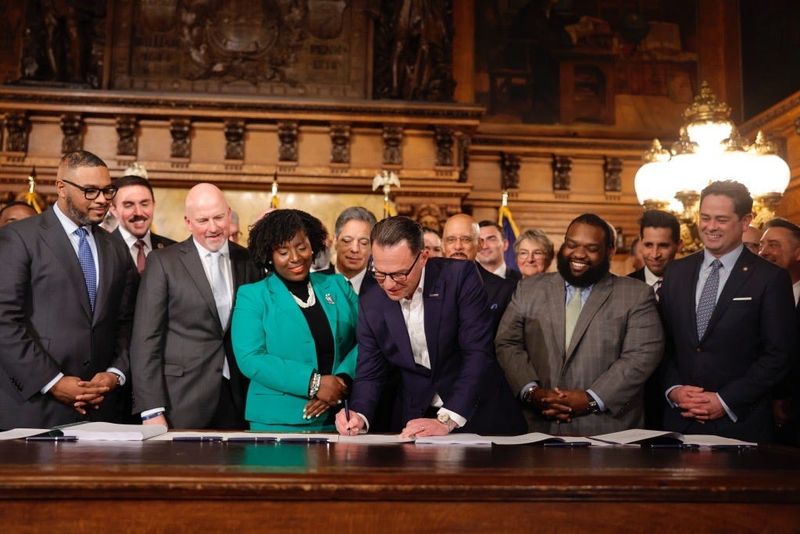
    Gov. Josh Shapiro signs the fiscal year 2025-26 budget surrounded by General Assembly members on Nov. 12 at the Capitol in Harrisburg. The state budget had been due June 30, and Pennsylvania is the final state in the country to approve a funding deal.

    “The final budget reflects the realities of working with one of the only divided legislatures in the entire country – but Gov. Shapiro will continue to fight for survivors and the Commonwealth’s rape crisis centers,” said Ali Fogarty, the DHS spokesperson.

    Victim services centers in the suburbs, which also offer rape crisis services, are echoing WOAR and PCAR’s message, highlighting the urgent need for greater funding. These suburban centers receive funding from additional sources because they support victims of other crimes.

    “For now, we’re doing OK, but another year of no increase in funding while the cost of living is going up has a significant impact on our staff as well as our organization,” said Penelope Ettinger, executive director of Network of Victim Assistance – Bucks County.

    Trying to stay afloat

    While Pennsylvania lawmakers were failing to come to an agreement on a far overdue state budget last month, rape crisis centers in Philadelphia and the suburbs were trying to make ends meet and provide services to survivors of sexual violence.

    For instance, the Victim Services Center of Montgomery County had to use a line of credit, delay bill payments, institute a hiring freeze, increase the number of interns, and commit to “triaging services,” said Mary Onama, executive director.

    “If they hadn’t passed the budget the time that they did, by December or January, we would have had to close, because we couldn’t go much longer,” Onama added.

    At the Crime Victims’ Center of Chester County, it “added a layer of stress to an already very stressful job,” though the center did not have to reduce services, said Christine Zaccarelli, the organization’s CEO.

    And at WOAR, the changes were drastic.

    The nonprofit cut their 30-person staff and paused counseling and therapy services and prevention-education programs. Other programming was kept afloat by the handful of staff members that remained.

    WOAR’s release last week said the closure of therapy and counseling services left “106 individuals wait-listed, 33 group clients waiting for services to resume, and eight child clients referred elsewhere for care.”

    The center has been serving Philadelphia since 1971 and was one of the first rape crisis centers in the United States, according to the organization. Between January and October, the center said it responded to 3,820 calls on its crisis hotline.

    But there have been recent shake-ups at the nonprofit, including the hiring of Gabriella Fontan, WOAR’S executive director, which was announced roughly a week before layoffs began in October. Prior to Fontan, the center had two interim executive directors since 2022.

    The dysfunctional approval of the state budget, though, will have lingering effects on WOAR, warning in the news release that without a “long-term, sustainable investment,” the center won’t be able to meet a rising demand for resources.

    The Bridge Loan, from the Pa. Treasury Department, provided WOAR funding owed for July through September, but it still wasn’t enough to return WOAR to full capacity, said Demetrius Archer, PCAR’s communications director. The center also brought back two employees this month, but it’s still in need of community support and is hoping to bring back more staff when possible.

    “When services are underfunded, survivors and entire communities feel the impact,” said Fontan in the news release. “In a city as large and diverse as Philadelphia, every minute counts when someone is in crisis. Survivors deserve to know that when they reach out for help, someone will be there to answer.”

    All eyes on Harrisburg

    At Temple University’s campus Tuesday, student advocates bundled up in their coats, hats, and scarves and gathered at the Bell Tower to discuss an anti-sexual violence state bill they helped develop.

    The Every Voice Bill, which primarily focuses on sexual violence prevention resources on college campuses, is even more important now that survivor services from WOAR are “unstable,” said Bella Kwok, a senior criminal justice major and president of Temple’s Student Activists Against Sexual Assault, in an interview prior to Tuesday’s event

    “This bill would ensure that stability at least on an institutional level,” Kwok said.

    Temple University students Emma Wentzel, left, and Bella Kwok speak at a podium on Polett Walk on Tuesday, Nov. 18, 2025, about campus sexual assault and a state bill they helped craft to strengthen protections against sexual violence at colleges.

    Kwok is not the only one who is turning their attention to Harrisburg. PCAR and other rape crisis centers are continuing their push for next year’s budget to include an $8 million increase in the Pa. DHS line item for rape crisis.

    As the first increase for rape crisis centers in a few years, the new budget’s funding gives advocates “hope,” even if the amount is “disappointing,” said Zaccarelli, of the Crime Victims’ Center of Chester County.

    “Maybe our advocacy is making a little bit of a difference and shining a light on survivors and their needs and how important our centers are in the community,” Zaccarelli said.

    Ettinger said that Bucks County’s state lawmakers have been supportive of NOVA Bucks, which had to place a hiring freeze on some positions and issue “significant” restrictions on spending due to the impasse, but that a lack of increased funding from the state is “very telling.”

    “I believe that the fact that the state did not allocate a significant increase is very telling to what they believe, where they put it on the priority list,” Ettinger said.

    For his part, Shapiro signed Act 122 in October 2024, which aimed to increase transparency by requiring a statewide electronic system to track evidence kits for sexual assaults, Fogarty, the DHS spokesperson said. And in December 2023, he signed Act 59, which aims to improve access to treatment for survivors of sexual assault.

    It’s a “societal” problem, not a government problem, said Vincent Davalos, interim executive director of the Delaware County Victim Assistance Center.

    “When we talk about sexual violence, the first thought is, of most people, is to say ‘Maybe this didn’t happen,” Davalos said. “And even if they do believe it happens… it’s just a really difficult topic for people to engage and talk about it plainly.”

    This week, victim services leaders across Pennsylvania will gather in Harrisburg for an annual conference to address funding challenges among other concerns, Davalos said, noting that with more funding, his center could improve staff retention.

    But this year, the newly passed state budget is likely to be top of mind.

    “I think money is going to be a big topic,” Davalos said.
  • Philly-area federal workers are finally getting paid again. But they fear another shutdown.

    Philly-area federal workers are finally getting paid again. But they fear another shutdown.

    The longest ever federal government shutdown is now in the rearview mirror, but not for federal workers.

    With their jobs back to normal, some local federal employees said worries created by the shutdown remain — one said their credit score suffered, others noted their Thanksgiving tables will be less festive. And for many, another shutdown in a matter of weeks is a real concern.

    Federal employees — whether furloughed or required to work during the shutdown — missed paychecks during the 43-day lapse in federal appropriations, the longest ever in United States history. Workers sought out food pantries, delayed payments on bills, and tried to make ends meet for their families ahead of the holidays.

    “I will be paycheck to paycheck for the next couple of months maybe, before I can start accumulating my savings again,” said a Philadelphia Veterans Benefits Administration employee, who was working without a paycheck during the shutdown.

    The Inquirer agreed to withhold the names of federal employees interviewed due to their fear of retaliation for speaking out. Despite workers beginning to receive retroactive paychecks from the shutdown, they spoke of lingering financial damage and worries that yet another lapse in funding could happen in just a couple of months.

    The bill to end the shutdown, signed into law by President Donald Trump on Nov. 12, funds the government through Jan. 30. It includes protections for federal employees such as reversing layoffs that took place during the shutdown, and ensures back pay for all government workers throughout that time, which had been put into question by the Trump administration. And certain government agencies, such as Veterans Affairs, the Department of Agriculture, and the Food and Drug Administration, have been allocated a year’s worth of funding.

    But after Jan. 30, if lawmakers once again fail to agree on keeping the government open, some federal workers could once again face a lapse in their pay.

    “We’re bracing for Jan. 30,” said Philip Glover, national vice president of the American Federation of Government Employees District 3, the union that represents federal employees in Pennsylvania.

    The recent shutdown and the possibility of another are among a series of obstacles that government workers have faced this year. The Trump administration’s efforts to shrink and reshape the federal workforce have included layoffs, pushing employees to resign, and the dismantling of collective bargaining agreements. When government funding lapsed in October, the Trump administration used it as an opportunity for more firings.

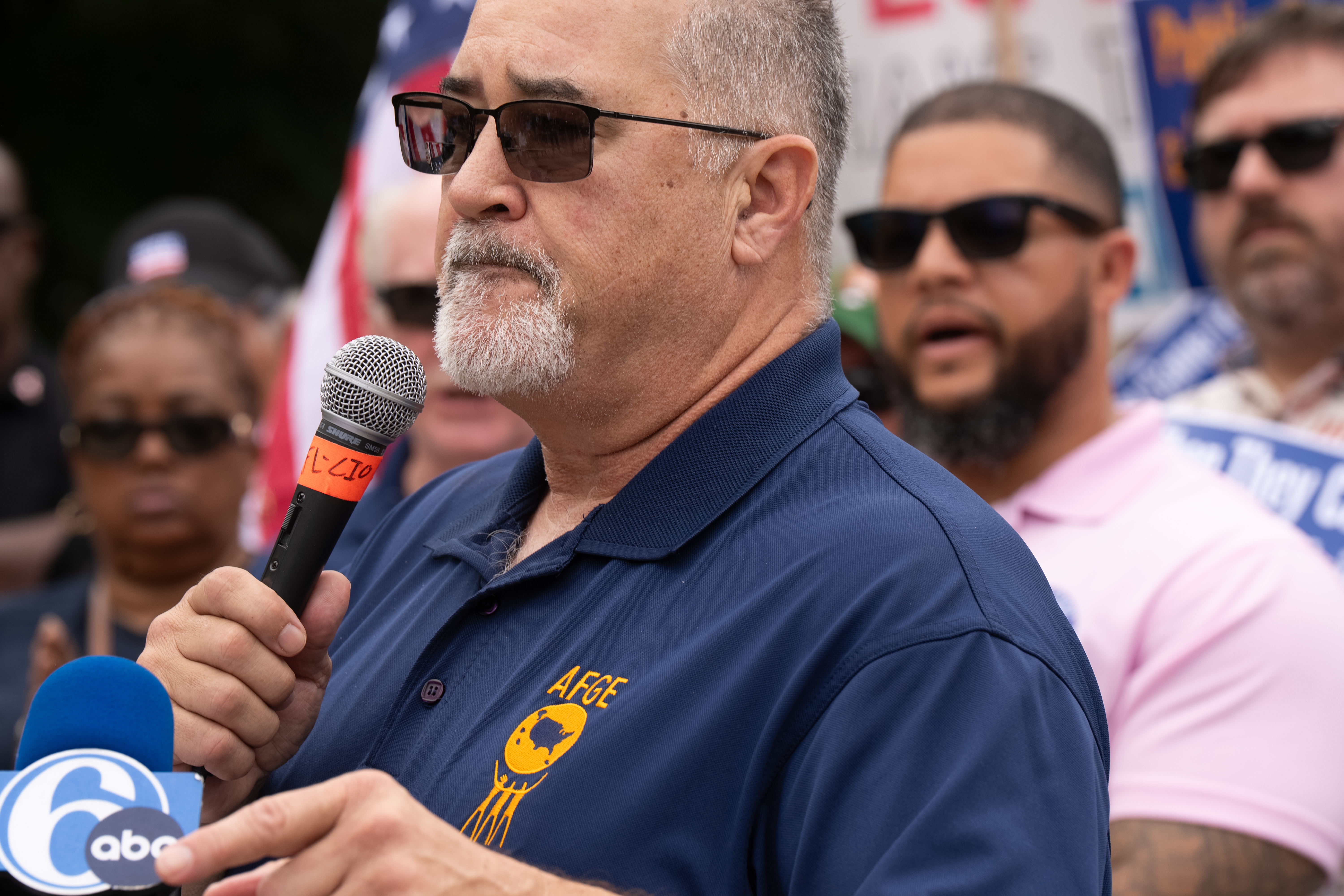
    Philip Glover, AFGE District 3 national vice president, speaks at a news conference focused on federal workers amid the government shutdown, near the Liberty Bell on Oct. 7.

    Federal workers have been “dealing with a layer cake of trauma,” said Max Stier, founding president and CEO of the Partnership for Public Service, a federal government management organization.

    “This is not simply one incident, but it’s one on top of a bunch of them that this administration has put in their way,” Stier said.

    The financial strain

    At the Social Security Administration in Philadelphia a benefit authorizer said Monday that she and her coworkers had started getting their back pay, but she had already felt the impact of missing checks.

    “We assumed we could just call and everybody would place everything on hold, and that was not the case,” said the Social Security employee.

    The benefit authorizer had put her mortgage and car payments on hold, but some banks and utility companies weren’t as accommodating, and she accumulated overdraft fees from a credit union.

    Her role required her to work through the shutdown without pay. (In Pennsylvania, furloughed workers may apply for unemployment benefits, but those who continue to work, even without pay, may not.) The benefit authorizer looked for additional work, unsure how long the shutdown would last. Some of her colleagues in Philadelphia picked up gigs with Uber, DoorDash, and Instacart, she said.

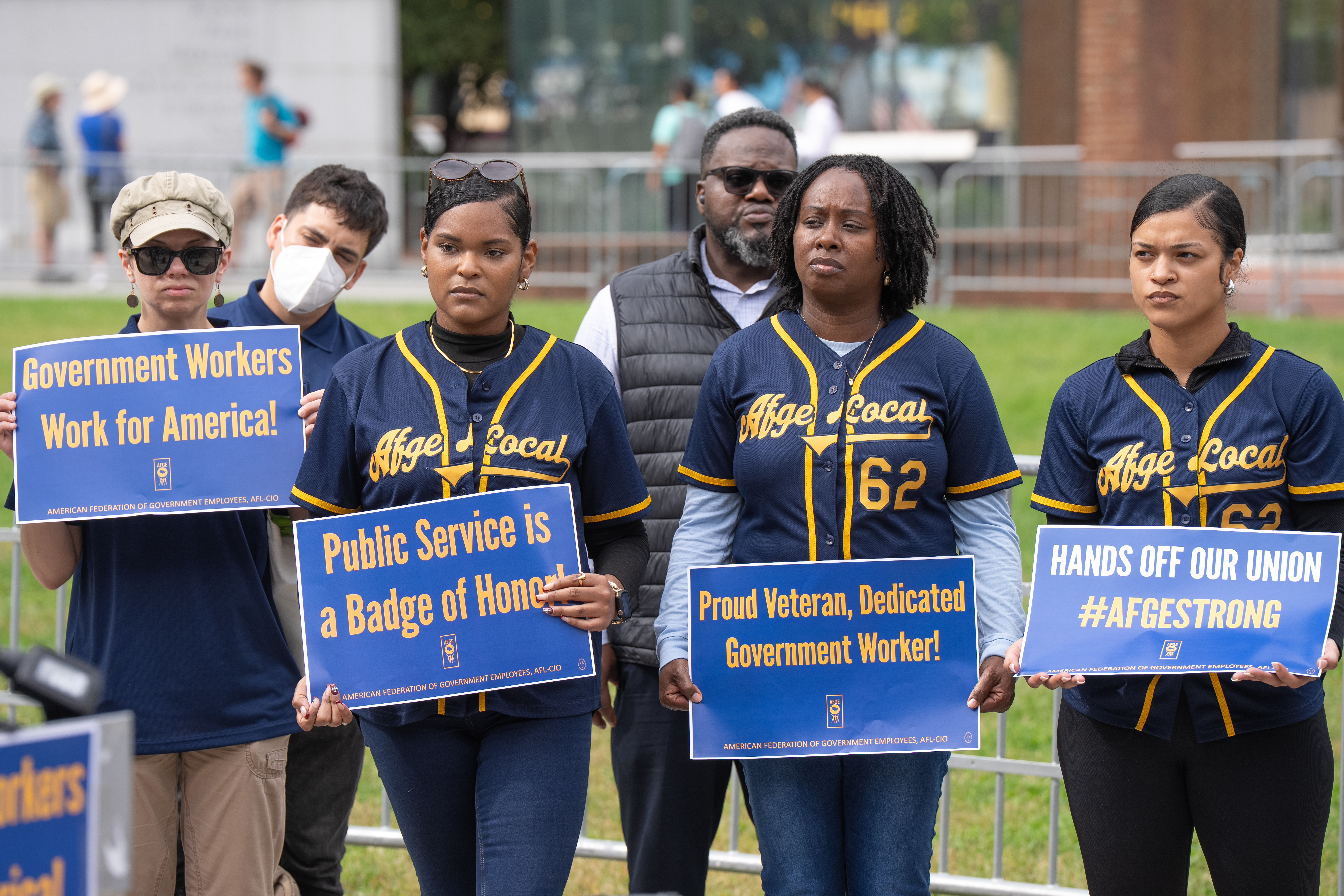
    Union officials from AFGE gathered on Oct. 7 in front of Independence Hall to protest the government shutdown.

    Another Philadelphia Social Security employee, who has been with the agency for 15 years, noted that some colleagues picked up night shifts at Amazon or work in home healthcare.

    “People living paycheck to paycheck, they needed something to pay those bills that were absolutely essential that they had to pay,” the 15-year Social Security employee said.

    For one federal employee from Central Jersey, 2025 already came with an unexpected career turn when they lost their job at U.S. Housing and Urban Development, as part of a mass layoff of probationary employees. They found a job at the U.S. Department of Commerce, in Virginia, which allowed them to support their mother and three kids back in New Jersey.

    Wary of permanently moving to Virginia during such a volatile time in the federal workforce, the Commerce employee commutes eight hours by Amtrak twice a week and stays in a $200 per night hotel on workdays.

    During the federal shutdown, the Commerce employee had to work without a paycheck. They used up their savings paying for the commute, hotel, and other expenses. Ultimately, they took out a bank loan to cover their expenses.

    The government shutdown exemplifies a lack of stability in the workforce, the Commerce employee said. “To be honest, you feel unsafe all the time, and you feel like you’re not deserving that.”

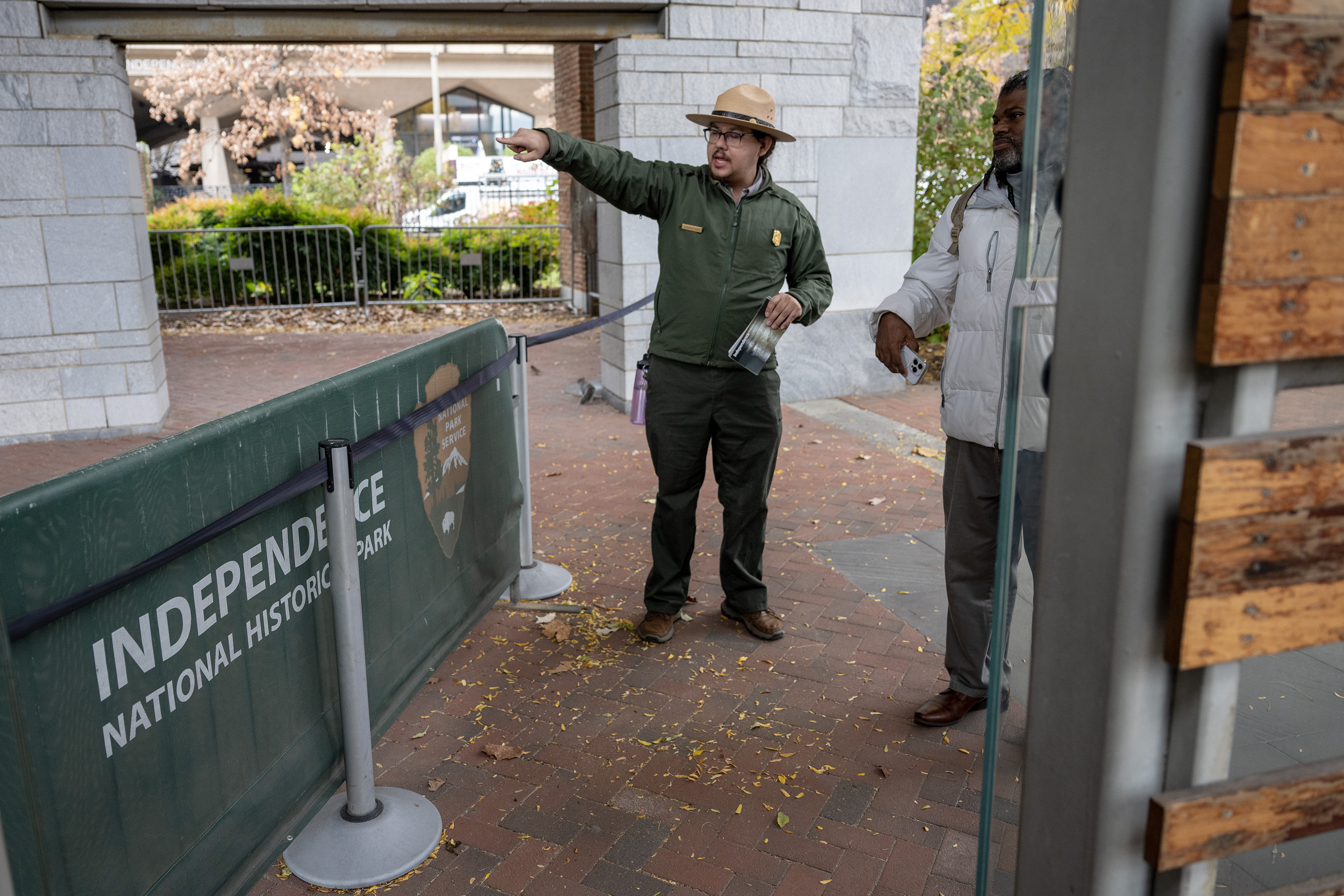
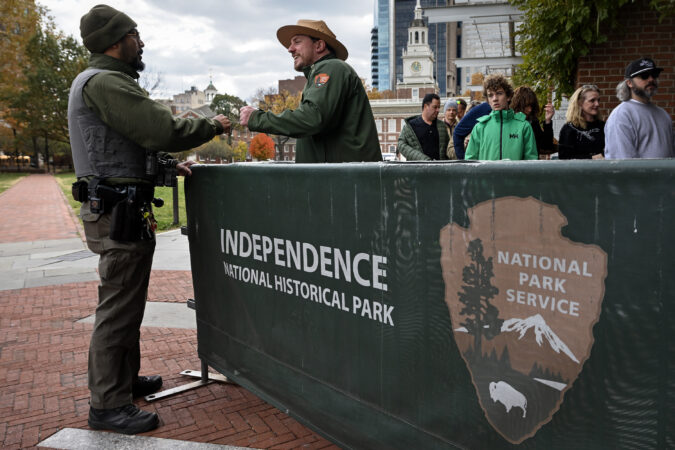
    National Park Service ranger Christopher Acosta talks with tourists outside the Liberty Bell Center on Nov. 13 after returning to work from the shutdown.

    Worries remain ahead of the holiday season

    The Philadelphia VBA employee, who worked without pay during the shutdown, received their back pay Monday. The single parent said they were one more missed paycheck away from turning to food pantries and living off credit cards.

    “Usually I’m the one donating around this time,” the employee said last week. “I usually adopt a family and provide them with the meal and then their gifts and stuff from our local community churches and outreach programs.”

    Thanksgiving is the time they “splurge,” but now the shutdown has made them contemplate their finances. “I haven’t even thought about the process of even having a Thanksgiving dinner on the table because I didn’t want to spend the money,” the VBA employee said. By Christmas, they hope to be caught up on payments.

    It’s a similar story for one Philadelphia VA Medical Center employee who worked without pay through the shutdown. Speaking days before the shutdown’s end, the employee said their credit score had taken a hit. They reached out to creditors and got some of their payments deferred, but relief won’t set in until the employee can catch up on their water, electric, gas, mortgage, and car bills.

    A “big feast” for Thanksgiving is off the table. “You can’t do that now because you don’t have the funds,” they said.

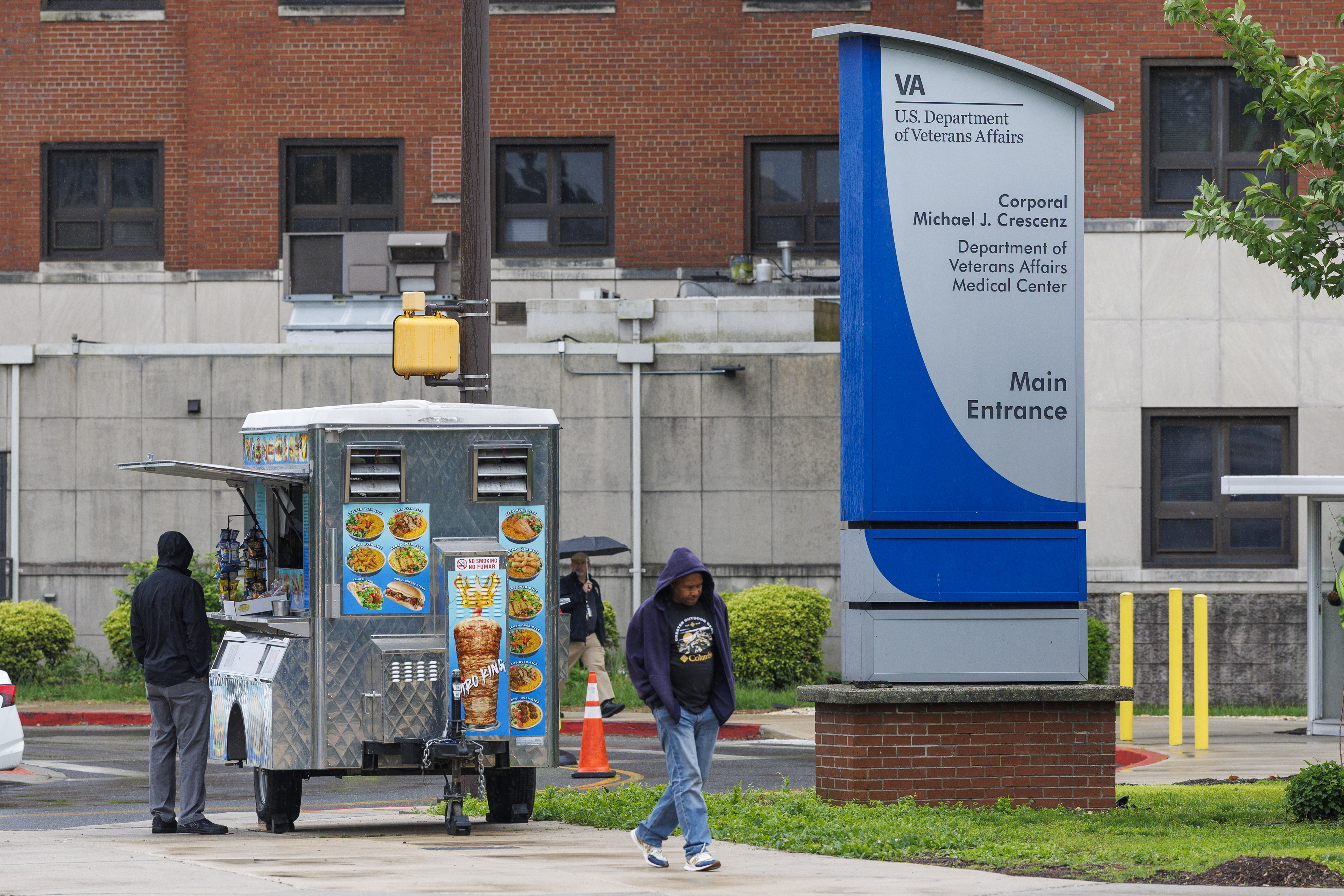
    The Corporal Michael J. Crescenz Department of Veterans Affairs Medical Center in Philadelphia.

    ‘Fear of what’s to come’

    Throughout the funding impasse, Philadelphia’s federal workers turned to each other for assistance.

    At the VBA, supervisors set up a small food pantry several weeks into the shutdown. The VBA employee said that didn’t feel especially helpful. “That was our second paycheck missed, and that was the best that they could come up with,” the employee said.

    “It’s business as usual in the eyes of the VA, and they expect us to work like nothing’s going on in our real lives.”

    At the Social Security Administration, workers banded together to start an impromptu food pantry, the Philadelphia benefit authorizer said.

    “Everything was taken. People needed it. People were really pinching pennies,” she said.

    The national office of AFGE, the largest federal workers’ union, backed the deal to end the government shutdown. “Government shutdowns not only harm federal employees and their families, they also waste taxpayers’ dollars and severely diminish services depended on by the American people,” AFGE national president Everett Kelley said in a statement on Nov. 10.

    But some thought it should have ended differently.

    In the days leading up to the deal, dozens of AFGE Local 3631 members, who are employed at the Environmental Protection Agency, said in a local union survey that they did not want their local to support budget legislation such as what passed. Their concerns were with an expected rise in healthcare expenses across the country.

    The union local had polled members at the end of October, according to local union officer Hannah Sanders. The survey got more than 100 responses, and over 85% said the local should only support a deal if it preserved subsidies for Affordable Care Act healthcare plans and avoided cuts to Medicaid.

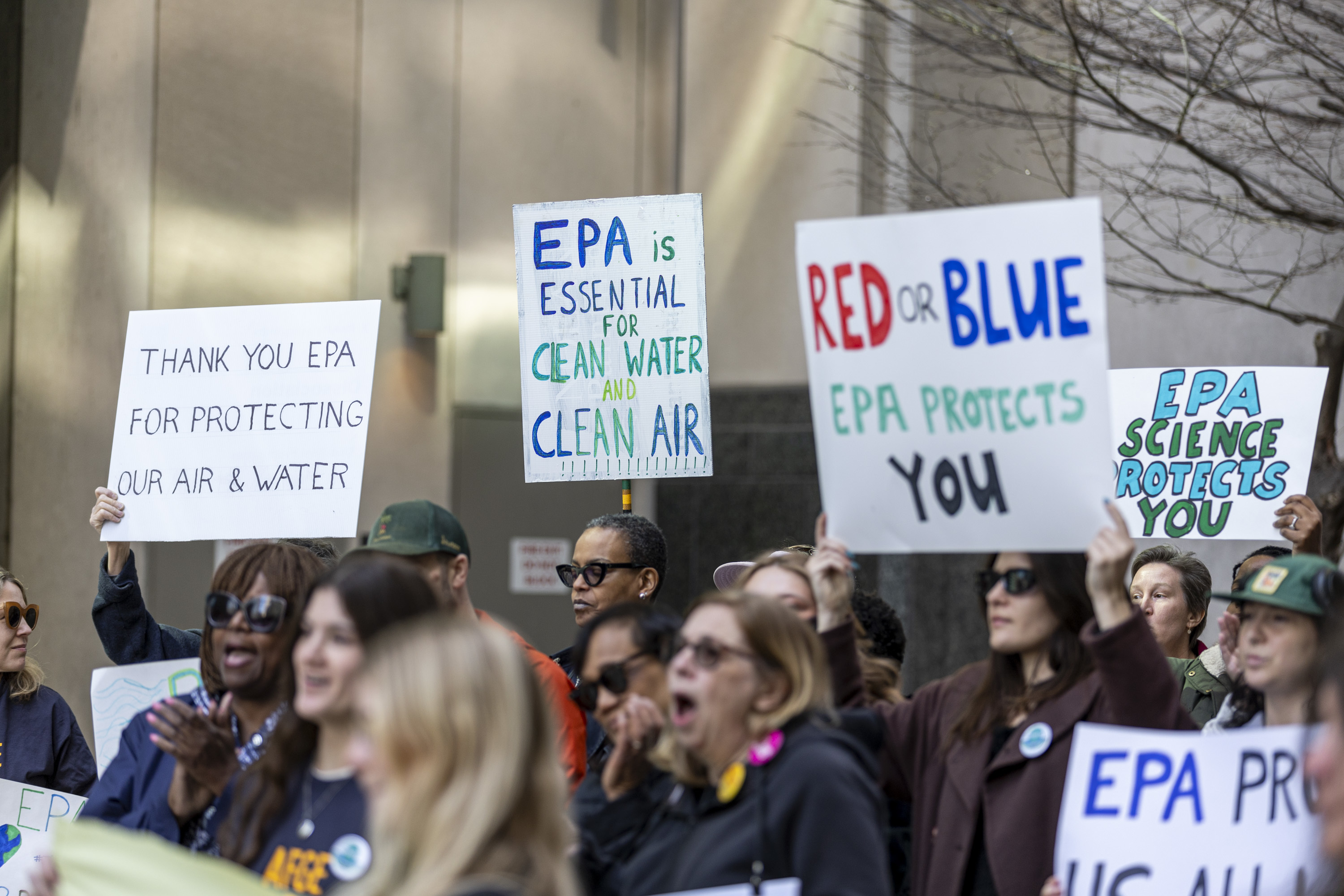
    EPA workers and supporters gathered outside their office for a solidarity march around Philadelphia’s City Hall in March.

    In Washington, most Senate Democrats held out, only supporting a vote on an appropriations bill that would extend ACA subsidies. But eight senators, including Sen. John Fetterman (D., Pa.), crossed party lines to back the Republican bill that omitted the subsidies.

    Sanders said there are few changes between the recently passed deal and the bill that could have averted the shutdown back in September. “We would have not had this shutdown, and people wouldn’t have, you know, gone without pay or gone without SNAP benefits and all these things. So it’s super frustrating to see that this is how it all resolved,” said Sanders.

    Now, the benefit authorizer at the Social Security Administration says, people are concerned that another shutdown could be on the horizon come Jan. 30.

    “We are in complete fear of what’s to come,” she said.

  • Why there’s less controversy — and less money — in this year’s school board races in Central Bucks and elsewhere

    Why there’s less controversy — and less money — in this year’s school board races in Central Bucks and elsewhere

    Personal attacks, political division, and culture wars have defined school board races in the Philadelphia suburbs in recent years.

    But 2025 feels different.

    Even as national politics are more divided than ever — and amid a federal shutdown and state budget standoff — local school board candidates from both parties are shying away from partisanship in favor of focusing on local issues like taxes and full-day kindergarten.

    The change in posture can be attributed to several factors — Republicans who ran on culture-war issues largely lost in 2023 and, while the GOP is now tackling those priorities from the federal level, local candidates said they cannot control what President Donald Trump does. Schools are also facing pressing fiscal issues amid state and federal budget cuts.

    There are some exceptions. In Souderton, candidates on the Republican slate say they want to maintain the district’s current policies that prevent transgender girls from playing sports and prioritize “parental rights” — stances Trump has also embraced. Some Democratic candidates, meanwhile, say Trump’s education policies, including plans to dismantle the federal Department of Education, motivated them to run.

    Still, those issues are not taking center stage across the Philadelphia collar counties.

    “School districts are struggling financially,” said Brittany Crampsie, a Democratic consultant. Parents “don’t want to have a debate about DEI [diversity, equity, and inclusion] anymore, they want to make sure their kids are getting a good education.”

    Moving on from ‘culture wars’ — for the most part

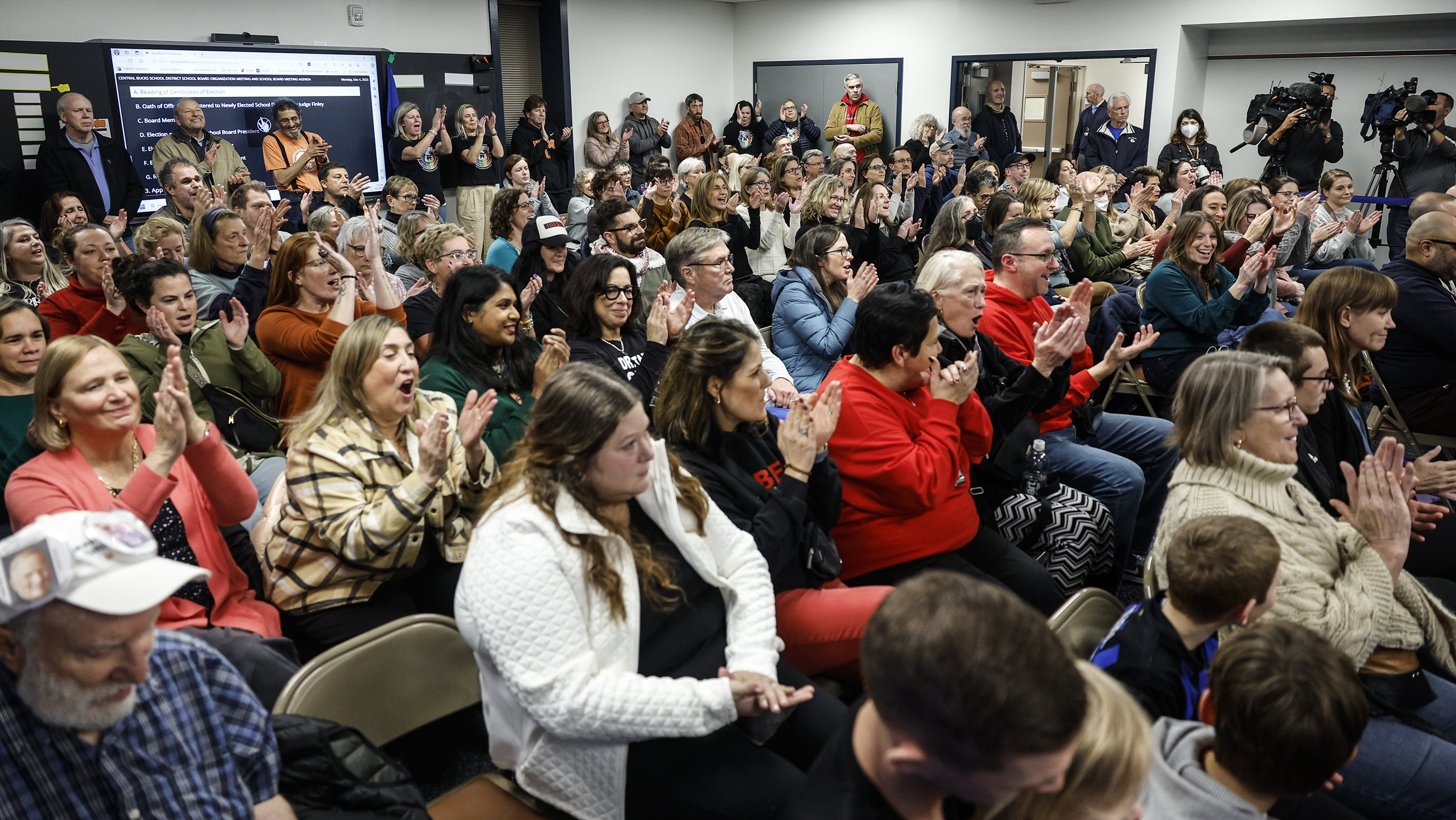
    Supporters cheer in 2023 before five new Central Bucks school members are sworn in. Democrats seized control of the board in a contentious race.

    Culture-war debates reached a fever pitch in the aftermath of COVID-19, as conservative parents voiced frustration over pandemic protocols and classroom curricula. Republicans in districts like Central Bucks won contentious races focused on those issues in 2021.

    Two years ago Central Bucks was again among the most closely watched races in the region, with spending surpassing $600,000. Democrats swept every open seat, ousting a conservative majority that had banned books and Pride flags in the district. Other suburban districts flipped to Democratic control as well.

    Now, candidates are steering clear of those hot-button topics.

    “My campaign is focused on academics, school taxes, and safety….these are the current issues of concern in Central Bucks,” Betty Santoro, a Republican, wrote in an email.

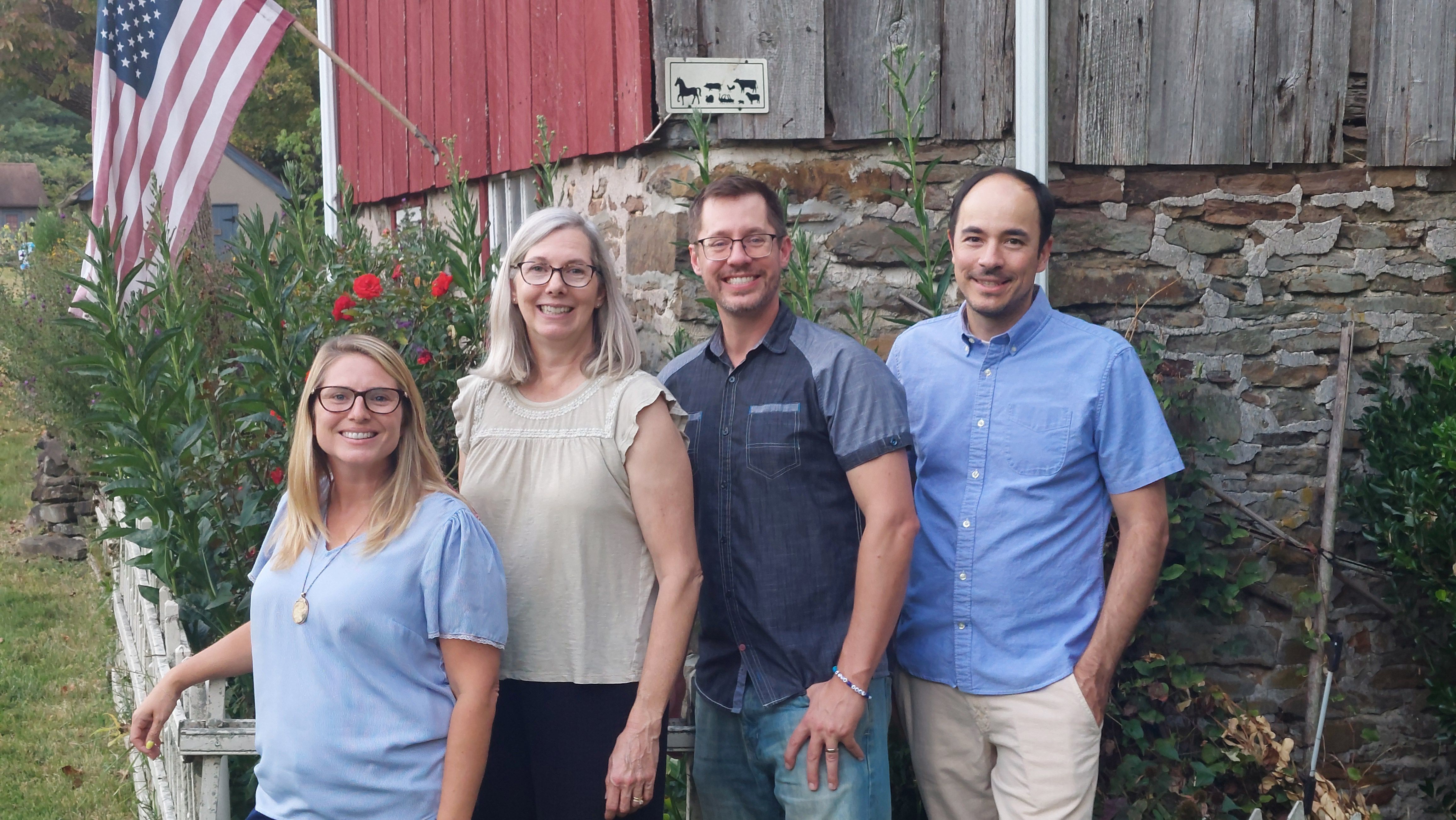
    The Democratic candidates for Central Bucks school board: Amanda O’Connor, Katrina Filiatrault, David Comalli, and Daniel Kimicata (left to right).

    Culture wars were a “distraction” from priorities for the district, said Daniel Kimicata, a Democrat running for reelection. Four of nine seats are on the ballot this year; Democrats will maintain their majority regardless of the outcome.

    Andrew Miller, a Republican running in Central Bucks, wrote in an email it’s good that things are quieter. “People are tired of the shouting and want results,” he wrote. “They want candidates who listen, not lecture and candidates who build bridges, not walls.”

    In Souderton — where Democrats say they are optimistic about their chances of gaining representation on the all-Republican board — the Republican platform also includes parental rights and student safety.

    Republican board president Stephen Nelson, who is running for reelection, said that culture-war topics are not an issue in the district, but that it would not allow transgender athletes to compete on girls sports teams should the situation arise. (The Pennsylvania Interscholastic Athletic Association this year changed its transgender athlete policy to comply with President Donald Trump’s executive order on “Keeping Men Out of Women’s Sports.”)

    “Why is that a question? It’s always been that way and we don’t quite understand why it has to be any different,” Nelson said.

    In Pennridge, where the board is Democratic-controlled, Republican candidates, in a statement, pushed back on the idea that school board races in the past centered on issues promoted by Republicans. Instead, they argued, GOP candidates were responding to Democratic-initiated policies and questioning some DEI policies and whether they were best for students.

    “Our intent was never to divide but to ensure that schools serve all students equally and that classroom priorities remain rooted in education, not ideology,” they said.

    Money, money, money

    This year, there is far less money flowing into school board races, though Central Bucks continues to attract outside fundraising.

    The Republican candidates for Central Bucks school board. Andrew Miller, Sharon Beck, Roman Szewczuk, and Betty Santoro (left to right).

    The 1776 Project PAC, a group supporting Republican school board candidates that has drawn ire from Democrats, has spent more than $86,000 on mailers and text messages in Bucks County. Approximately half that has gone toward supporting Central Bucks GOP candidates, with the rest going to candidates in Centennial School District and Pennridge, according to Bucks County campaign finance reports.

    The PAC has also spent more than $20,000 supporting candidates on Republican slates in Perkiomen Valley and Lower Merion, according to Montgomery County campaign finance filings.

    Democrats are also getting support from an outside group — Red Wine and Blue, a national group of suburban women that promotes Democratic candidates. The group has spent approximately $260 in Bucks County and $104 in Montgomery County school board races, according to county filings.

    In Bucks County, other races like district attorney and sheriff have drawn money and attention that might have otherwise gone to school boards, said Guy Ciarrocchi, a GOP analyst.

    “There’s a certain amount of fatigue that’s hitting a place like Bucks,” Ciarrocchi said.

    The Trump factor

    Democrats in suburban districts said they need to maintain majorities to best address the impacts of Trump administration policies.

    “When I realized the threat that public education was under, I decided now was the time that I had to run,” said Katrina Filiatrault, a Democrat running in Central Bucks.

    Judy Lofton, a Democrat running in Perkiomen Valley, said of her slate: “Our central unifying message is that we want to protect public education, that public education is currently under attacks from a variety of different stakeholders.”

    Republicans are striking a different tone.

    “We’re not focused on anything that’s going on outside of something that we don’t control,” said Jason Saylor, a Republican running for reelection in Perkiomen Valley. “We don’t control the federal government. We don’t control what might happen with the Department of Education. We don’t control issues at the state legislature.”

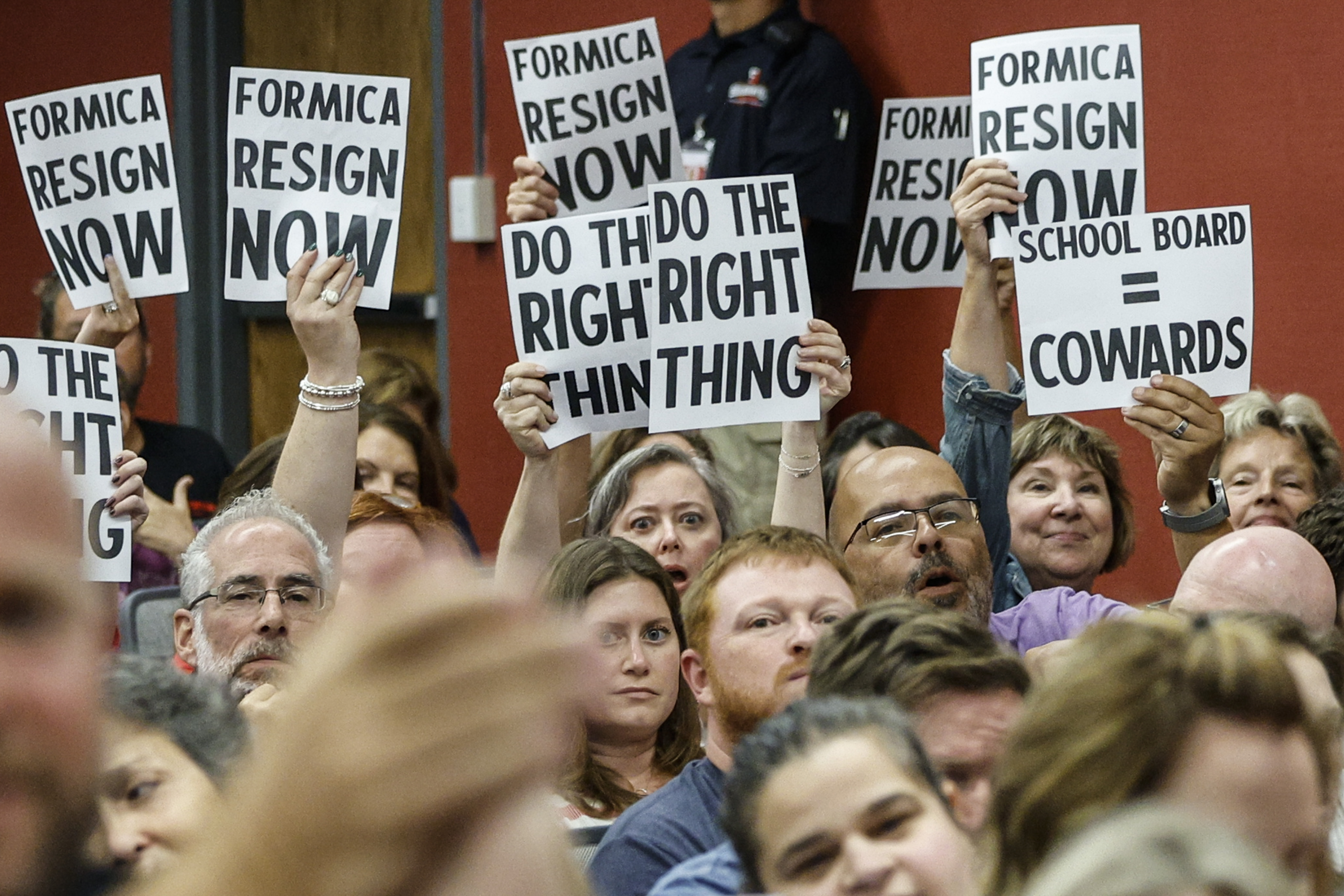
    In Souderton, controversy flared last year when Republican school board member Bill Formica made lewd comments about former Vice President Kamala Harris. He is still on the board and is not up for reelection this year.

    Residents protest at a Souderton school board meeting last year after board member Bill made a lewd social media post about then-Vice President Kamala Harris.

    “We’re talking to every voter who might be a Republican or an independent, and they’re sharing concerns at the doors about how they can’t vote for certain people anymore,” said Corinne DeGeiso, a Democrat running for the board.

    Nelson, the Republican school board president running for reelection, said Formica was protected by the First Amendment.

    His comments, Nelson said, were “rude, lewd, and unacceptable,” but there was nothing the board could do about it.

    Even in a less contentious election cycle, Chris Lilienthal, a spokesperson for the Pennsylvania State Education Association, which tends to endorse Democratic candidates, said school board elections are more important than ever this year.

    “They’re holding the line right now in this budget impasse,” he said, “and that alone should merit the attention of voters.”

    This suburban content is produced with support from the Leslie Miller and Richard Worley Foundation and The Lenfest Institute for Journalism. Editorial content is created independently of the project donors. Gifts to support The Inquirer’s high-impact journalism can be made at inquirer.com/donate. A list of Lenfest Institute donors can be found at lenfestinstitute.org/supporters.

  • More than 300,000 Pennsylvanians need help heating their homes. The federal shutdown has delayed that assistance.

    More than 300,000 Pennsylvanians need help heating their homes. The federal shutdown has delayed that assistance.

    More than 300,000 Pennsylvanians who struggle to pay their heating bills will need to wait longer for assistance from the state government due to funding stoppages caused by the federal government shutdown.

    The Pennsylvania Department of Human Services said in a news release Wednesday that Pennsylvania will delay the opening of this year’s Low-Income Home Energy Assistance Program (LIHEAP) until at least Dec. 3 because of a pause in federal funding due to the shutdown. The program was originally scheduled to open on Nov. 3.

    The opening date for the program will be reassessed once the shutdown ends and is contingent on the state receiving the delayed federal funds, Brandon Cwalina, DHS press secretary, said in a statement Thursday.

    LIHEAP distributes benefits to utility companies or home heating fuel providers for Pennsylvanians who need assistance paying their heating bills. The state has received more than $200 million each of the last two years from the federal government to carry out the program.

    Pennsylvania Human Services Secretary Val Arkoosh said in the news release that the program “is especially critical for older adults and low-income families” as colder months approach.

    Once DHS receives federal funding after the shutdown ends, the department will begin accepting LIHEAP applications and will continue processing applications that had been received during the shutdown.

    This announcement comes the same week that DHS said nearly 2 million Pennsylvanians will not receive benefits from the Supplemental Nutrition Assistance Program (SNAP) next month if the shutdown continues. The food assistance program provides $366 million a month to low-income people in Pennsylvania, including roughly 500,000 in Philadelphia.

    Joline Price, an attorney in the energy unit at Community Legal Services who works with clients to advocate for their access to water, heat, and electricity, said many of the same households could be affected by a lack of SNAP benefits and assistance in paying their heating bills, creating a “huge and devastating impact.” The program assisted 56,000 Philadelphia households last season, she noted.

    “Even if some of these benefits become available later in November, they’re gonna be making really serious choices between food and utilities,” Price said. “It’s gonna be — I don’t even know that I have the words — it’s going to be bad.”

    Other resources are available in the meantime — for instance, some electric and gas companies offer assistance programs — but there are gaps that remain with LIHEAP help beginning later than expected. For instance, Pennsylvania has an annual winter utility shut-off moratorium for qualified residents from Dec. 1 through March 31, though it does not eliminate any outstanding home heating bills, DHS said.

    Prior to Dec. 1, low-income Pennsylvanians who are already “drowning” in utility costs could see their electric or gas shut off, Price said.

    “Until then, folks are vulnerable to having their electric or their gas shut off, which would then bring them into the winter without safe heating sources,” Price said.

    Democratic Gov. Josh Shapiro and members of his administration are arguing that impacts to crucial services are on the shoulders of Republicans in Washington, who hold both chambers of Congress and the White House. Meanwhile, Republicans are blaming the shutdown on Democrats because the majority party cannot pass funding legislation in the Senate without at least seven Democrats crossing the aisle.

    Arkoosh echoed Shapiro’s messaging Wednesday, saying of LIHEAP: “Inaction from the Republican-controlled Congress now threatens access to this assistance.”

    “I urge Congress and the White House to recognize the serious consequences that limiting heating assistance will have on the health and safety of people in Pennsylvania. Congress must come together for a solution that protects people most at risk,” she said.

  • The Shapiro administration has posted messages blaming Republicans for the government shutdown, impacts to SNAP benefits

    The Shapiro administration has posted messages blaming Republicans for the government shutdown, impacts to SNAP benefits

    As nearly 2 million Pennsylvanians brace for the loss of their food assistance next month due to the federal government shutdown, the Pennsylvania Department of Human Services is pinning the blame on Republicans on Capitol Hill.

    States administer the federally funded Supplemental Nutrition Assistance Program, which provides support to low-income people, including families with children. But as the standoff in Congress prevents federal funding from flowing to states, Democratic Gov. Josh Shapiro’s administration entered the messaging battle over the cause of the disruption to benefits.

    “Because Republicans in Washington D.C., failed to pass a federal budget, causing the federal government shutdown, November 2025 SNAP benefits cannot be paid,“ reads a pastel orange banner on the DHS website from Friday, alerting recipients of the Supplemental Nutrition Assistance Program to the impending changes.

    The message reflects the mounting impacts of the government shutdown, which is in its third full week, and the growing political tensions between Republicans and Democrats on the state and national levels after lawmakers failed to pass funding to avert a government shutdown by Oct. 1.

    Shapiro has frequently gone head-to-head with the Trump administration, but the use of a state government website is a notable escalation.

    The governor said in a news release Monday that Congress already had kicked off hundreds of thousands of Pennsylvanians from Medicaid and SNAP when it passed President Donald Trump’s One Big Beautiful Bill Act in July.

    “Now, Republicans are once again threatening vital support for Pennsylvania families and children — it’s time for them to pass a federal budget and end this shutdown.”

    Pennsylvania Human Services Secretary Val Arkoosh added that “Inaction from Republicans in Congress” jeopardizes the well-being of Pennsylvanians.

    A significant impact will be felt next month in Philadelphia, where half a million people will not receive SNAP benefits. The program, which is funded by the U.S. Department of Agriculture, serves households including elderly people, individuals with disabilities, and children.

    Another Democratic-led state, Illinois, also referred to the lapse in funding as the “Republican federal government shutdown” on its benefits webpage. Other Democratic-led states near Pennsylvania, New Jersey and Delaware, have not posted political messages on their states’ SNAP benefits pages.

    Republicans in Pennsylvania criticized the use of the DHS website for a partisan message.

    “Public service isn’t a political weapon and using a government website to fuel your partisan agenda is indefensible,” the Pennsylvania GOP wrote Monday in a post on X.

    However, the Trump administration has also been using its official government websites for partisan rhetoric on the national level, potentially raising red flags related to federal ethics laws.

    The shutdown is “Democrat-led,” says the Trump administration’s State Department website.

    “The Radical Left in Congress shut down the government,” declares a bright red banner on the U.S. Department of Housing and Urban Development homepage.

    The rising political pressure comes as the Trump administration began rolling out highly politicized messaging to the public and federal employees after the government shutdown began earlier this month.

    Last week, Philadelphia International Airport and other airports refused to play a video from Homeland Security Secretary Kristi Noem that inculpates Democratic members of Congress for the shutdown.

    And some federal workers — nonpartisan civil servants who have been coping with plummeting morale and either being furloughed or working without pay during the shutdown — have been on the receiving end of politicized messaging, too.

    A message to federal employees ahead of the Oct. 1 funding deadline proclaims that Trump “opposes a government shutdown.”

    Any lapse in appropriations, the message continues, is “forced by Congressional Democrats.”

  • Dave McCormick joins fellow Senate Republicans urging RFK Jr. to rescind approval for an abortion pill

    Dave McCormick joins fellow Senate Republicans urging RFK Jr. to rescind approval for an abortion pill

    U.S. Sen. Dave McCormick (R., Pa.) has joined fellow Senate Republicans in signing on to a letter urging top health officials in the Trump administration to rescind approval for a drug used in one of the most common methods of abortion.

    In a letter to Health and Human Services Secretary Robert F. Kennedy Jr. and FDA Commissioner Marty Makary earlier this month, the Republican senators recommended, among other things, that officials re-evaluate the safety of mifepristone, one of two pills commonly used in a medication abortion, and suspend the distribution of the drug and its generic versions, saying it should be considered an “imminent hazard” at the federal level.

    “Today, your agencies have all the information they need to bring an end to previous Democrat administrations’ abortion drug regulations while a comprehensive review is conducted,” the Republicans wrote in the letter.

    Only two Senate Republicans, Lisa Murkowski (R., Alaska) and Susan Collins (R., Maine), did not sign the letter.

    Mifepristone is considered safe and effective and is used to terminate early-stage pregnancies and manage miscarriages, according to the American Medical Association. It received initial approval from the Food and Drug Administration in September 2000.

    McCormick’s signature on the letter could signal a change in how the Pennsylvania Republican views abortion regulation. During his campaign last fall, McCormick said during a debate that he wants to leave regulation to individual states, which has been the status quo since the U.S. Supreme Court overturned Roe v. Wade in 2022. His backing of the letter, which encourages sweeping policy decisions at the national level, suggests otherwise.

    “Sen. McCormick has concerns about the adverse effects mifepristone can have on women, as shown in a recent study,” a spokesperson for McCormick said in a statement Friday evening. “This letter addresses those potential impacts on women’s health and encourages HHS and FDA to reevaluate the potential risks and harms associated with mifepristone. Sen. McCormick also issued a statement yesterday applauding the White House’s efforts to lower IVF costs.”

    Eugene DePasquale, chair of the Pennsylvania Democratic Party, accused him of betraying his constituents.

    “Sen. McCormick’s support for an extreme anti-choice policy that could threaten the lives of Pennsylvania women is a shameful betrayal of his constituents,” DePasquale said. “This type of extreme policy coming out of Washington only makes it clearer that everything is on the line when it comes to protecting our freedom — and it is up to us to do it right here at the state level.”

    Last month, Kennedy said the FDA is reviewing the safety of mifepristone.

    “By law, the FDA has very limited discretion in deciding whether to approve a generic drug, and the FDA’s approval of a generic mifepristone is not an endorsement of the product. HHS remains committed to its study of the reported adverse effects of mifepristone,” White House spokesperson Kush Desai said in a statement to The Inquirer.

    Medical abortions, where mifepristone is used as part of a two-drug regimen along with misoprostol, account for more than half of all abortions performed in the U.S., according to the Cleveland Clinic in 2024.

    Should the FDA revoke its approval of mifepristone, medical abortions won’t be eradicated. Medication abortions are possible using just misoprostol, but the method is less effective, according to a 2021 report from the American Family Physician.

    In addition to their safety concerns, Senate Republicans are also urging Kennedy and Makary to suspend approving new generic versions of mifepristone awaiting the results of a safety review of the Risk Evaluation and Mitigation Strategies (REMS) for the drug. REMS are safety programs for certain medications as required by the FDA.

    The Republicans are also urging the federal government to require mifepristone and its generic versions to be distributed in person, not through mail, and not at a pharmacy.

    The letter also claims that the U.S. has an “‘abortion-on-demand’ culture,” referring to the accessibility of mifepristone through mail. But, according to Planned Parenthood, a telehealth call is required before any pill is shipped.

    Staff writer Katie Bernard contributed to this article.

    This story was updated to include a comment from Sen. McCormick.