Author: Ellie Rushing

  • Dozens more drug, gun cases tied to cops who defenders say ‘lied’ are thrown out. Some sent people to prison for years.

    Dozens more drug, gun cases tied to cops who defenders say ‘lied’ are thrown out. Some sent people to prison for years.

    More than 40 drug and gun convictions were vacated Wednesday, the latest batch in what could grow to 1,000 cases tied to three narcotics officers who prosecutors say repeatedly gave false testimony in court.

    Common Pleas Court Judge Rose Marie DeFino-Nastasi dismissed 47 cases — most involving defendants jailed because of their convictions — after prosecutors conceded that the testimony of three officers on the Philadelphia Police Department’s Narcotics Strike Force could no longer be trusted.

    In December, the district attorney’s office said that Officers Ricardo Rosa, Eugene Roher, and Jeffrey Holden were found to have repeatedly given false statements in drug-related cases after attorneys with the Defender Association of Philadelphia uncovered video evidence that contradicted their accounts.

    The defenders said the officers regularly watched live surveillance footage to monitor suspects in drug investigations, then did not disclose it to prosecutors or defense attorneys in court. The video footage showed they also testified to things that did not happen or that they could not have seen from where they were positioned, according to court filings.

    Prosecutors later said that they could no longer vouch for the officers’ credibility and are expected to dismiss scores of cases built on their testimony in the coming months.

    Nearly all the defendants at the center of the cases dismissed Wednesday were in custody, including several serving years in prison tied to their drug convictions.

    Among them is Hamid Yillah, 34, serving four to nine years in state prison, plus two years’ probation, on gun and drug charges based on the testimony of Roher and Rosa, prosecutors said.

    And Juan Lopez, 38, serving five to 10 years in prison on drug possession and conspiracy charges.

    DeFino-Nastasi vacated their convictions and sentences.

    Not everyone whose conviction was overturned will walk free. Some are also serving time for unrelated serious crimes, including murder and aggravated assault.

    But many without additional arrests could be released as a result of Wednesday’s ruling.

    The dismissals follow more than 130 convictions that were thrown out in December after prosecutors and defenders identified more than 900 cases built almost entirely on the officers’ word. Approximately 200 cases have been resolved so far.

    The officers at the center of the case remain on active duty, but have been temporarily reassigned from narcotics amid an ongoing internal affairs investigation, said police spokesperson Sgt. Eric Gripp.

    That investigation, which began in early 2024, remains incomplete because the district attorney’s office has not provided the department with the information necessary to complete it, he said.

    The district attorney’s office previously said it provided internal affairs with details of the officers’ false statements last March. But Gripp said the records and evidence offered did not appear to show wrongdoing.

    (Paula Sen, of the Defender Association’s Police Accountability Unit, said she and her colleagues have also provided internal affairs with a few dozen cases where the officers’ testimony did not match surveillance footage.)

    Since the first batch of cases was thrown out in December, Gripp said, the department has followed up with the district attorney’s office for more information about the alleged wrongdoing, including the nine cases identified in court records in which the officers were said to have given false statements.

    “To date, we have not been provided with those cases,” he said.

    Gripp said that some of the cases discharged Wednesday involved dangerous drug dealers carrying weapons, and that narcotics officers risk their lives to make arrests.

    “This work matters, and repeated dismissals without providing the department the information necessary to review and address the concerns does not advance officer accountability or public safety,” he said. “We continue to expect good faith cooperation from all partners in the criminal justice system. We remain ready to act immediately upon receipt of any substantiated information.”

    The district attorney’s office did not immediately respond to a request for comment.

    Prosecutors have stopped short of accusing the officers of lying, but said “there’s enough of a pattern of inconsistencies across testimony that we can’t rely on them as critical witnesses in court.”

    Michael Mellon and Paula Sen work in the Police Accountability Unit for the Defender Association.

    Sen and Michael Mellon, of the defenders’ Police Accountability Unit, disagreed, and said the officers “straight up lied.”

    Sen and Mellon said they first spotted a pattern of testimony discrepancies in 2019 while reviewing surveillance footage that conflicted with statements Rosa had made in drug cases. Over time, they said, they continued scrutinizing his narcotics squad and identified similar issues with testimony from Holden and Roher.

    According to the defenders, the officers relied on the city’s surveillance camera network to watch suspected drug activity in real time but did not disclose that investigative method — withholding evidence that should have been turned over to the defense.

    In court, Mellon said, the officers denied using the cameras and frequently testified that they personally observed hand-to-hand drug transactions. Video later showed those exchanges either did not occur or would have been impossible for the officers to see because the suspects were out of view.
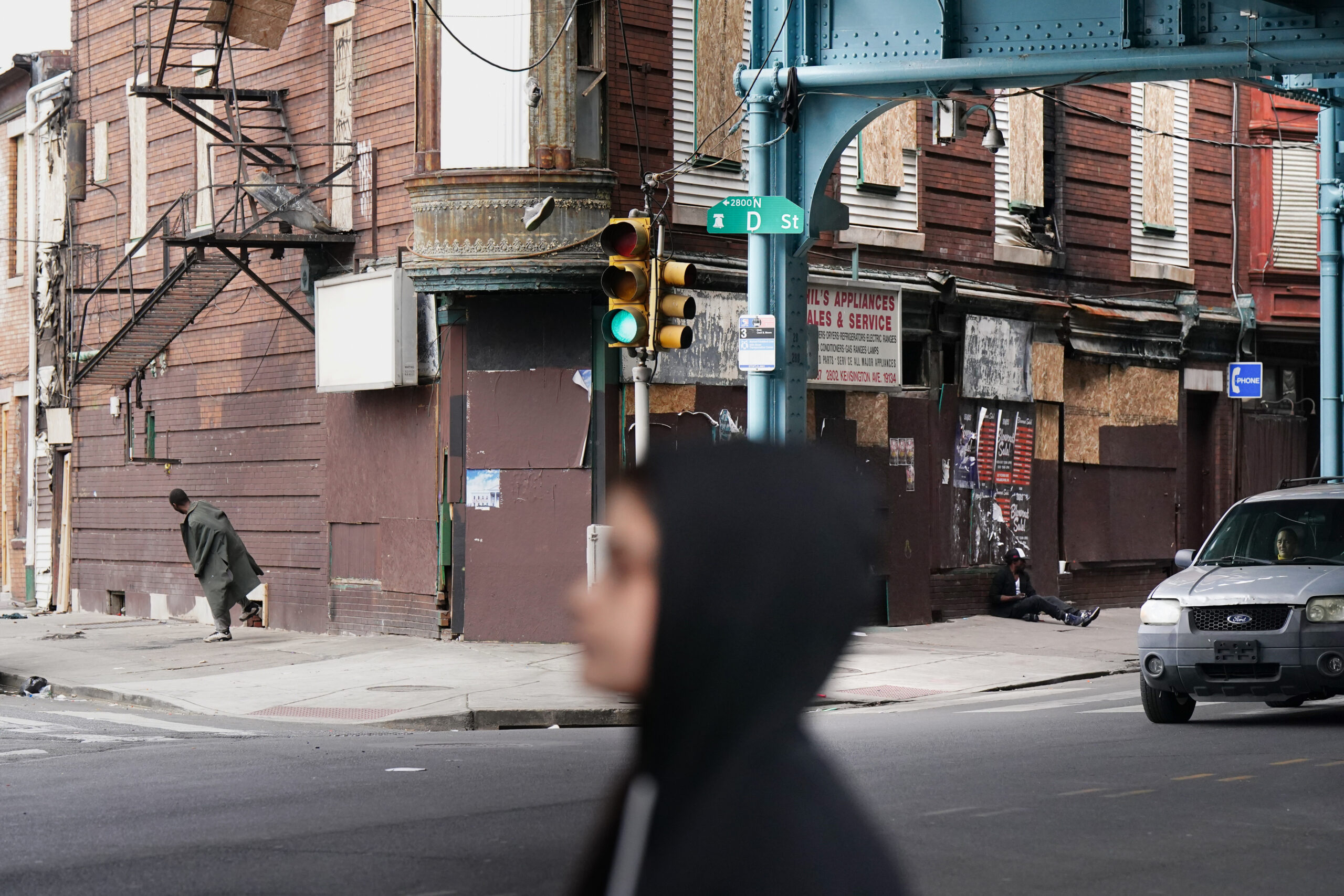
    A video camera used by Philadelphia police is positioned at the corner of D Street and Kensington Avenue.

    Sen said her office sent letters to all of the defendants whose cases were being reviewed to let them know they might be eligible for relief.

    Still, she said, the convictions often resulted in years of peoples’ lives spent incarcerated and on court supervision — time they cannot get back.

    “We are not talking about big drug busts. We are talking about the lowest of the low cases, hand-to-hand drug sales … within a quarter of a mile radius of Kensington,” she said. “That’s what makes this especially egregious.”


  • Daughter of man who prosecutors say ran human trafficking ring in Northeast Philly pleads guilty to helping with finances

    Daughter of man who prosecutors say ran human trafficking ring in Northeast Philly pleads guilty to helping with finances

    The daughter of a Northeast Philadelphia man who prosecutors say ran a human-trafficking ring for years that trapped vulnerable women, supplied them with drugs, then forced them to have sex with men across the region pleaded guilty Friday to helping manage the finances of the criminal organization.

    Natoria Jones, 30, pleaded guilty to promoting prostitution after prosecutors with the Pennsylvania Attorney General’s Office said she helped her father, Terrance Jones, manage the payments of his sex-trafficking scheme for at least three weeks in 2023.

    In exchange for Jones’ plea, Senior Deputy Attorney General Zachary Wynkoop withdrew felony charges of conspiracy, participating in a corrupt organization, and promoting unlawful activities.

    Wynkoop asked Common Pleas Court Judge Zachary Shaffer to defer Jones’ sentencing until after the June trial of her father, Terrance Jones — the alleged ringleader of the criminal enterprise — and three of his associates.

    The plea marks the latest development in the sweeping indictment brought by the attorney general’s office in 2024 in which officials charged Terrance Jones, 54, and several of his associates with operating a human-trafficking ring across the region for more than a decade.

    For 12 years, Terrance Jones, of Lawndale, marketed what he called “GFE” or “the Girlfriend Experience” online and recruited women in their 20s — many battling addiction and struggling to find stable housing or income, authorities said.

    When women contacted the operation, prosecutors said, Terrance Jones would impersonate a woman, raising the pitch of his voice and introducing himself as “Julie” or “Julia” to build trust. He promised to send a driver to pick them up for “dates” where they could earn more than $250 and obtain drugs, officials said. He used the women to lure other victims who were addicted to drugs into the scheme, telling one confidant that he “could ‘wash em up’ and make money with them,” according to the affidavit of probable cause for Jones’ arrest.

    “He made these women feel worthless. He controlled them, manipulated them, and, in a way, programmed them to feel like this was their only option,” then-Attorney General Michelle Henry said in announcing the charges.

    Prosecutors and Pennsylvania State Police began investigating in 2021 after a woman who they said had been trafficked by Terrance Jones reported the abuse.

    After meeting with the woman, officials conducted wiretaps, acted as undercover sex workers and buyers, and tracked down his clients, the affidavit said. Across the three-year investigation, officials said they found that the operation crossed through the Philadelphia suburbs and into New Jersey, and that over just 10 days in 2023, Terrance Jones arranged 78 “dates” — and pocketed most of the funds.

    He was charged with trafficking individuals, involuntary servitude, running a corrupt organization, conspiracy, and related crimes. He remains in custody, held on $2 million bail.

    Three of Terrance Jones’ business partners — Thomas Reilly, Joseph Franklin, and Raheem Smith — are charged with running a corrupt organization, conspiracy, and related crimes, and are scheduled to go to trial with him in June.

    Another associate, James Rudolph, a driver who officials said transported women to their “dates,” pleaded guilty to conspiracy to promote a house of prostitution last year. He’s scheduled to be sentenced later this month.

    In a rare move, prosecutors as part of the indictment also criminally charged 16 men who paid Terrance Jones for sex with the women. While the charges against some of the men have been dismissed, at least nine have pleaded guilty to promoting or patronizing prostitution and are scheduled to be sentenced next month.

    Among Terrance Jones’ business partners, was also his daughter, Natoria, who handled some of the financials and payments between the women and customers. Her attorney Jonathan D. Consadene declined to comment Friday.

    Senior Deputy Attorney General Erik Olsen said several factors influenced the plea agreement.

    “There’s some mitigation as to how she got pulled into this,” Olsen said, adding that more details would emerge at trial in June.

  • An engaged South Philly couple were ambushed in a random shooting in Puerto Rico, killing a young chemist

    An engaged South Philly couple were ambushed in a random shooting in Puerto Rico, killing a young chemist

    After a night of dancing and laughter in San Juan, Puerto Rico, Kelly Crispin and her fiance, Omar Padilla Vélez, were driving back to his family’s home when they made a wrong turn off the popular Calle Cerra nightlife strip.

    It was about 1:45 a.m. on Jan. 3. The side street that the South Philadelphia couple had turned onto, which they thought led to the highway, was nearly pitch-black. Then suddenly, Crispin said, roughly a dozen masked men carrying AR-15-style rifles appeared in the road and quickly surrounded the car.

    Padilla Vélez tried to press forward and drive around the crew, she said, when the men opened fire. She remembers the glass exploding around her and the pain in her shoulder and hand as bullets tore through the car. And then the words from her fiance: “I’ve been shot.”

    Padilla Vélez, a 33-year-old chemist for DuPont, was shot in the head. He was rushed to a hospital, where he died days later.

    Omar Padilla Vélez, of South Philadelphia, was shot and killed in San Juan on Jan. 3.

    Crispin, 31, recounted the attack in a phone interview from her South Philadelphia home this week as she struggled to come to terms with what she said San Juan police believe was a random attack by a gang controlling a small stretch of road near a popular tourist area.

    After the shooting stopped, at the intersection of Calle Blanca and Calle La Nueva Palma, Crispin said, one of the men appeared at the side of the car and took her phone as she was calling 911.

    She said she heard some of the men yelling at one another that there was a woman in the car and urging others not to shoot, as if realizing they had made a mistake. They searched her purse, she said, but returned her phone. They took nothing.

    Crispin and a friend, who was with them in the car and was unharmed, pulled Padilla Vélez into the back seat. As she held pressure on his wounds, her friend took the wheel, and the gunmen told them to leave and told them how to get out of the neighborhood.

    It was surreal, she said, to be shot and then have one of the gunmen explain how to leave safely.

    They called 911 again as they left, and met an ambulance at a nearby gas station and were rushed to Centro Médico de Puerto Rico.

    About two days later, Padilla Vélez was briefly stable enough for Crispin to visit him.

    “He told me that he loved me, and I told him that I loved him, too,” she said. “And he said, ‘I’m so sorry.’ Then he fell asleep.”

    Kelly Crispin and Omar Padilla Vélez got engaged in the fall and were looking forward to getting married.

    Later that day, she said, he suffered a catastrophic stroke. Days later, he was declared brain-dead. He was an organ donor, she said, and doctors were able to use his organs to save several lives.

    Padilla Vélez was Puerto Rican, she said, and came to the mainland U.S. in 2015 to earn a Ph.D. in chemistry at Cornell University. He moved to Philadelphia in 2022 and worked as a senior scientist for DuPont in Wilmington.

    The couple met about three years ago at their best friends’ wedding. Crispin, who works as a project manager for an electrical vehicle company, moved to Philadelphia about a year into their relationship. In September, they got engaged.

    They often returned to San Juan to visit Padilla Vélez’s relatives. This trip, which began Dec. 30, was meant to ring in the new year.

    Crispin said she has been frustrated with San Juan police, who she said did not appear to have visited the scene of the shooting until five days later, after her fiance died and the case was assigned to a homicide detective. She said she was not interviewed until Jan. 21 and worries those delays could hamper the investigation.

    No arrests have been made.

    Police in San Juan did not respond to several requests for comment about the case.

    Crispin said the homicide detective assigned to the investigation told her that residents in the area, fearful of retaliation, have refused to provide information. Police, she said, told her that a gang operates on the street where they were ambushed, and that she and her fiance were likely shot in a case of mistaken identity.

    Crispin said the city should warn people to avoid the area, especially since it’s so close to a popular tourist district.

    Omar Padilla Vélez earned a doctorate in chemistry from Cornell, before moving to South Philadelphia, where he lived with his fiancée.

    Since returning to Philadelphia last week, she has struggled to make sense of her new reality. The bones in her hand were shattered and will require multiple surgeries to repair. The bullet passed through her shoulder, and she will need months of physical therapy.

    But that is nothing, she said, compared to the searing heartache of what she has lost.

    Padilla Vélez, she said, was intelligent and funny. To meet him was to feel like you’d known him for years.

    He had a booming laugh that was often the loudest in the room.

    “I thought it was mortifying at first, how loud it was,” she said. “Then I just began to love it.”

    She recalled sitting with him on their couch one night and laughing so hard that their stomachs ached. She can’t remember what started the laughing fits, she said, but she remembers thinking: I am so lucky.

    “I would see other couples and wonder if they laugh like Omar and I do,” she said.

    “We had just made this decision to spend the rest of our lives together, forever,” she said. “It just feels so cruel that this was taken away.”

  • DA Larry Krasner forms coalition of progressive prosecutors committed to charging federal agents who commit crimes

    DA Larry Krasner forms coalition of progressive prosecutors committed to charging federal agents who commit crimes

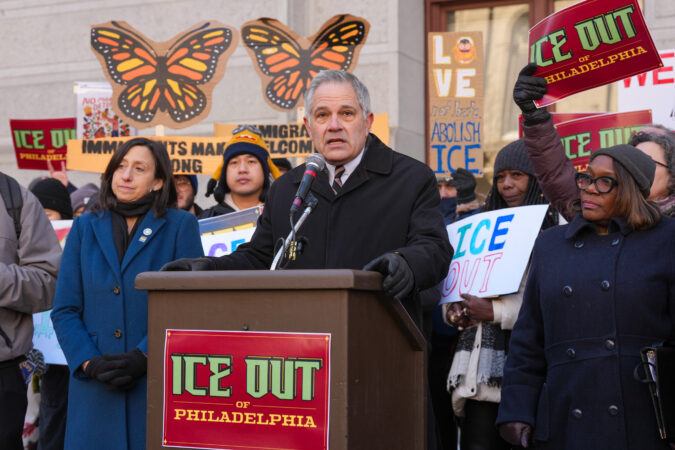
    District Attorney Larry Krasner on Wednesday announced the formation of a new coalition of progressive prosecutors committed to charging federal agents who violate state laws.

    Krasner joined eight other prosecutors from U.S. cities to create the Project for the Fight Against Federal Overreach, a legal fund that local prosecutors can tap if they pursue charges against federal agents.

    The abbreviation for the group, FAFO, is a nod to what has become one of Krasner’s frequent slogans: “F— around and find out.”

    The move places Krasner at the center of a growing national clash between Democrats and the Trump administration over federal immigration enforcement and whether local law enforcement can — or should — charge federal agents for actions they take while carrying out official duties.

    It is also the latest instance in which Krasner, one of the nation’s most prominent progressive prosecutors, has positioned himself as Philadelphia’s most vocal critic of President Donald Trump. He has made opposing the president core to his political identity for a decade, and he said often as he was running for reelection last year that he sees himself as much as a “democracy advocate” as a prosecutor.

    Krasner has used provocative rhetoric to describe the president and his allies, often comparing their agenda to World War II-era fascism. During a news conference Tuesday, he said federal immigration-enforcement agencies are made up of “a small bunch of wannabe Nazis.”

    The coalition announced Wednesday includes prosecutors from Minneapolis; Tucson, Ariz.; and several cities in Texas and Virginia. It was formed to amass resources after two shootings of U.S. citizens by federal law enforcement officials in Minnesota this month.

    Renee Good, 37, was shot and killed in her car by an ICE officer on Jan. 7 as she appeared to attempt to drive away during a confrontation with agents. The FBI said it would not investigate her killing.

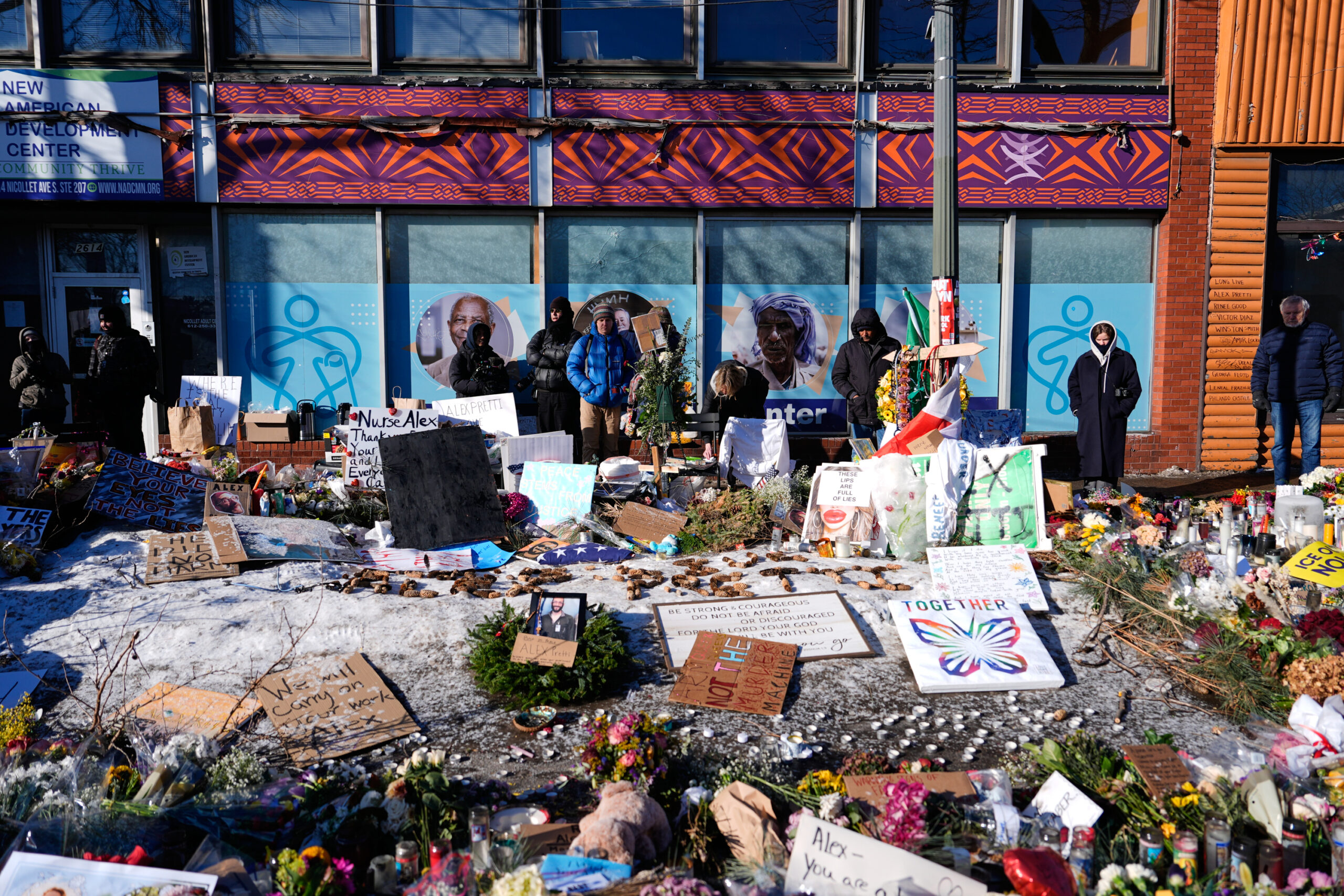
    People visit a memorial for Alex Pretti at the scene in Minneapolis where the 37-year-old was fatally shot by a U.S. Border Patrol officer.

    Then, on Saturday, Alex Pretti, 37, was killed after similarly confronting agents on a Minneapolis street. Video of the shooting, which contradicted federal officials’ accounts, appeared to show Border Patrol agents disarming Pretti, who was carrying a legally owned handgun in a holster. They then shot him multiple times. Federal authorities have attempted to block local law enforcement from investigating the shooting.

    Krasner said that, despite Vice President JD Vance’s recent statement that ICE officers had “absolute immunity” — an assertion the Philadelphia DA called “complete nonsense” — prosecutors in FAFO are prepared to bring charges including murder, obstructing the administration of justice, tampering with evidence, assault, and perjury against agents who commit similar acts in their cities.

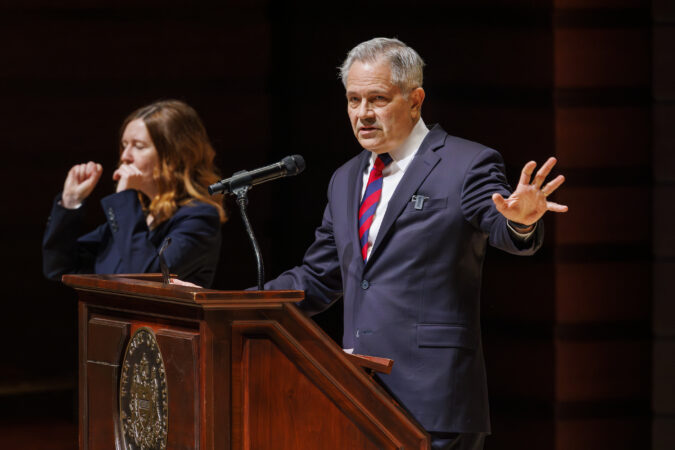
    “There is a sliver of immunity that is not going to save people who disarm a suspect and then repeatedly shoot him in the back from facing criminal charges,” Krasner said during a virtual news conference Wednesday. “There is a sliver of immunity that is not going to save people who are shooting young mothers with no criminal record and no weapon in the side or back of the head when it’s very clear the circumstances didn’t require any of that, that it was not reasonable.”

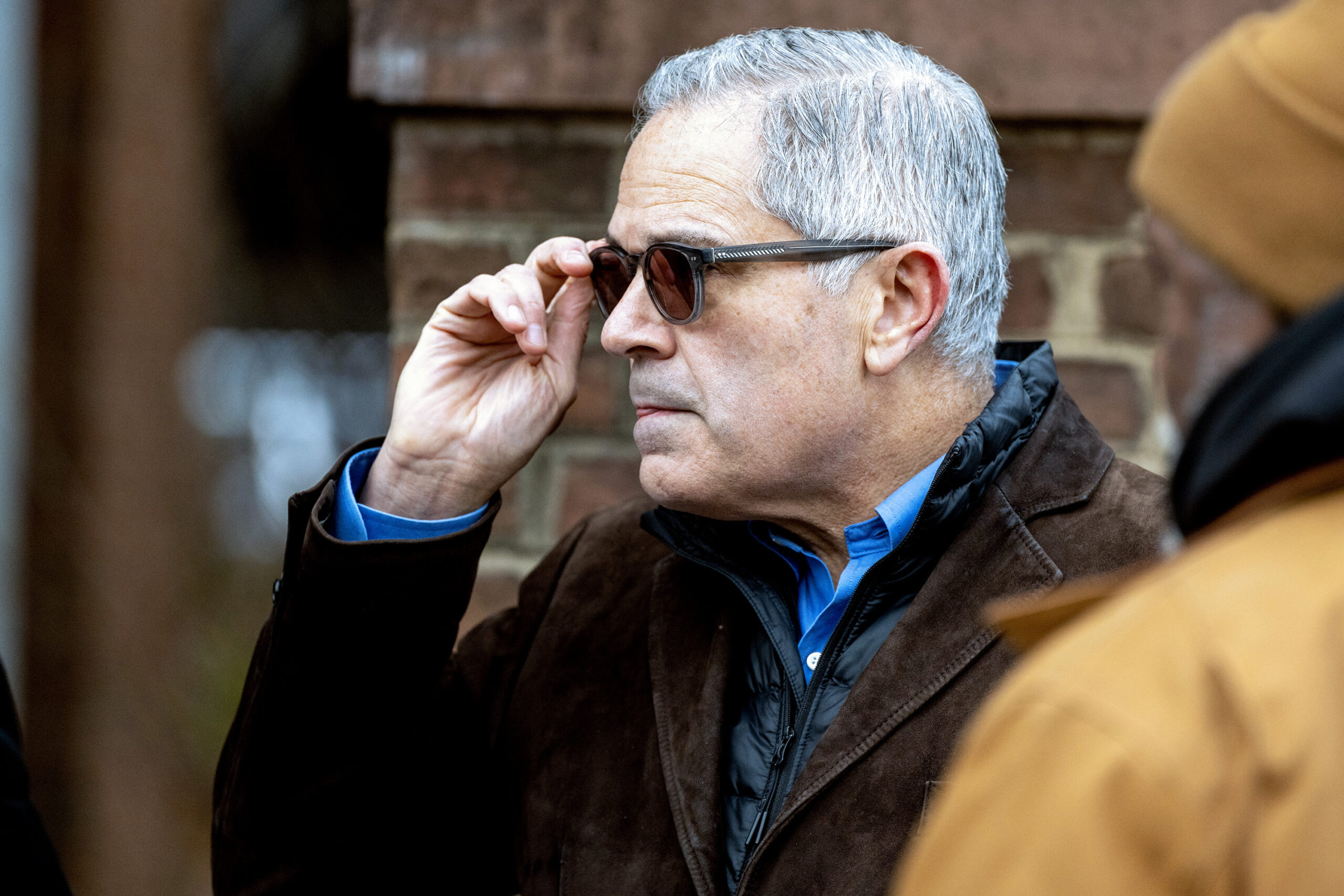
    Philadelphia District Attorney Larry Krasner attends an event at Independence National Historical Park on Dec. 21, 2025.

    How will FAFO work?

    The coalition has created a website, federaloverreach.org, and is soliciting donations.

    Prosecutors who spoke during the news conference said those donations would be toward a legal fund that would allow prosecutors to hire outside litigators, experts, and forensic investigators as they pursue high-profile cases against federal agents.

    “This will function as a common fund,” said Ramin Fatehi, the top prosecutor in Norfolk, Va., “where those of us who find ourselves in the tragic but necessary position of having to indict a federal law enforcement officer will be able to bring on the firepower necessary to make sure that the federal government doesn’t roll us simply through greater resources.”

    The money raised through the organization will not go to the individual prosecutors or their political campaigns, they said Wednesday.

    Scott Goodstein, a spokesperson for the coalition, said the money will be held by a “nonpartisan, nonprofit entity that is to be stood up in the coming days.” He said the prosecutors are “still working through” how the fund will be structured.

    Krasner said it would operate similarly to how district attorneys offices receive grant funding for certain initiatives.

    Most legal defense funds are nonprofit organizations that can receive tax-deductible donations. Those groups are barred from engaging in certain political activities, such as explicitly endorsing or opposing candidates for office.

    Goodstein said the group is also being assisted in its fundraising efforts by Defiance.org, a national clearinghouse for anti-Trump activism. One of that group’s founders is Miles Taylor, a former national security official who, during the first Trump administration, wrote under a pseudonym about being part of the “resistance.”

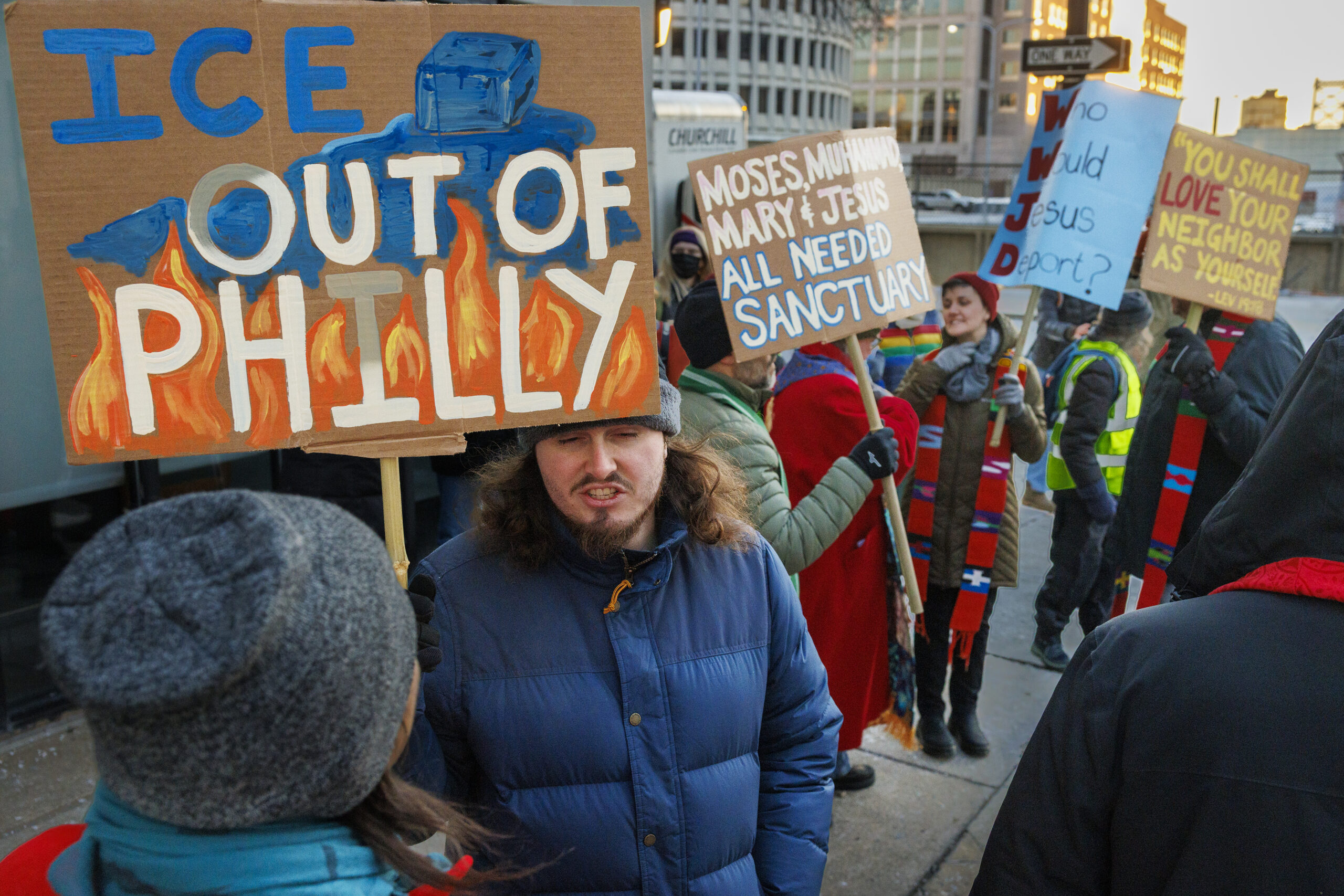
    Demonstrators from No ICE Philly gathered to protests outside the U.S. Immigration and Customs Enforcement, office at 8th and Cherry Streets, on Jan. 20.

    ‘Who benefits?’

    In forming the coalition, Krasner inserted himself into a national controversy that other city leaders have tried to avoid.

    His approach is starkly different from that of Mayor Cherelle L. Parker, a centrist Democrat who has largely avoided criticizing Trump. She says she is focused on her own agenda, and has not weighed in on the president’s deportation campaign.

    Members of the mayor’s administration say they believe her restraint has kept the city safe. While Philadelphia has policies in place that prohibit local officials from some forms of cooperation with federal immigration enforcement, the Trump administration has not targeted the city with surges of ICE agents as it has in other jurisdictions — such as Chicago and Los Angeles — where Democratic leaders have been more outspoken.

    Parker and Police Commissioner Kevin Bethel have at times been frustrated with Krasner’s rhetoric, according to a source familiar with their thinking who spoke on the condition of anonymity to discuss internal communications.

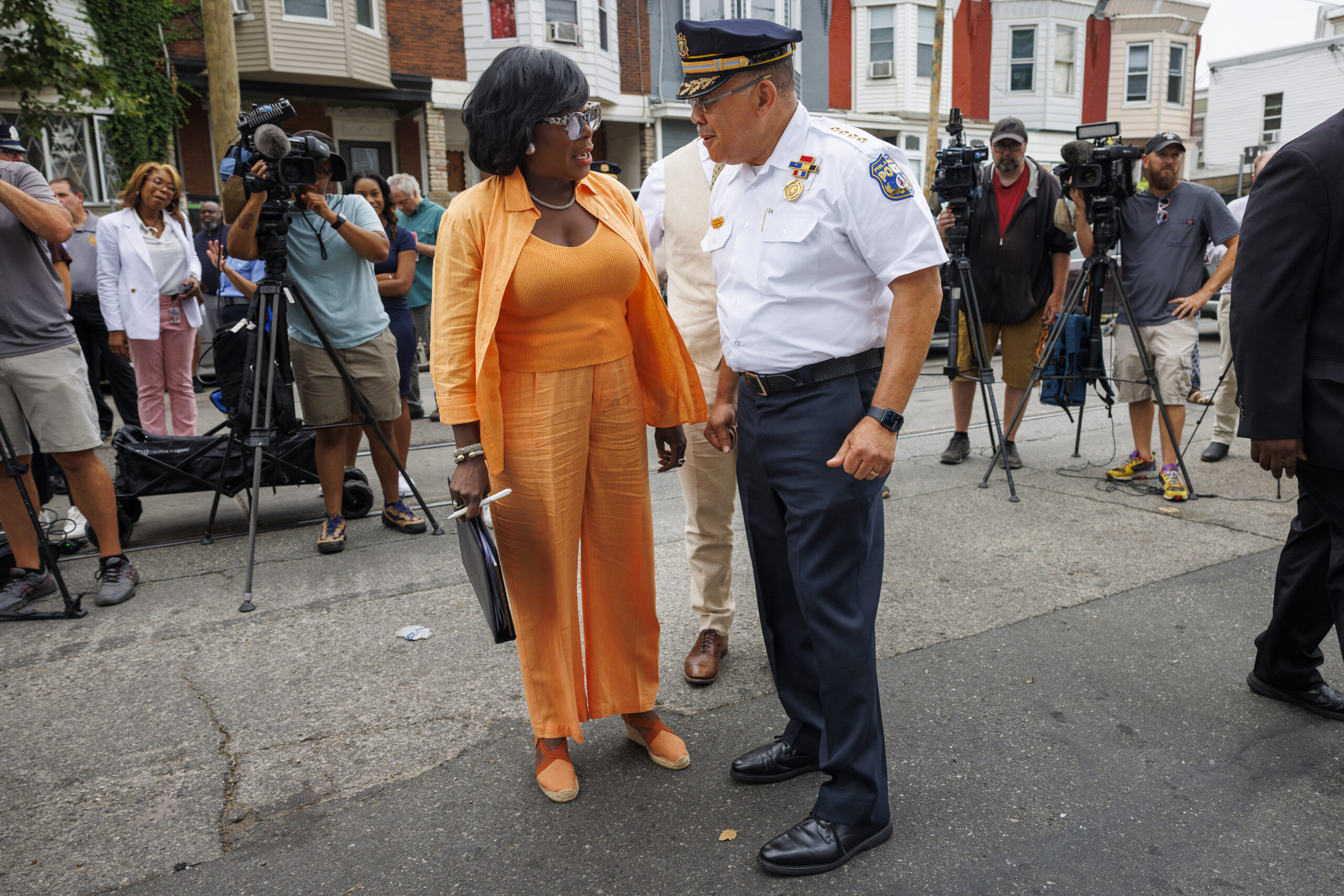
    Philadelphia Mayor Cherelle Parker and Police Commissioner Kevin Bethel speaking ahead of a July 2024 press conference.

    That was especially true this month when Krasner hosted a news conference alongside Sheriff Rochelle Bilal. The pair made national headlines after Krasner threatened to prosecute federal agents — something he has vowed to do several times — and Bilal called ICE a “fake” law enforcement agency.

    Bethel later released a statement to distance the Police Department from the Sheriff’s Office, saying Bilal’s deputies do not conduct criminal investigations or direct municipal policing.

    The police commissioner recently alluded to Parker’s strategy of avoiding confrontation with the federal government, saying in an interview on the podcast City Cast Philly that the mayor has given the Police Department instruction to “stay focused on the work.”

    “It is not trying to, at times, potentially draw folks to the city,” Bethel said. “Who benefits from that? Who benefits when you’re putting out things and trying to… poke the bear?”

    As for Krasner’s latest strategy, the DA said he has received “zero indication or communication from the mayor or the police commissioner that they’re in a different place.”

    “I feel pretty confident that our mayor and our police commissioner, who are doing a heck of a lot of things right,” he said, “will step up as needed to make sure that this country is not invaded by a bunch of people behaving like the Gestapo.”

  • In South Philly mass shooting, friends unintentionally killed each other, but it’s still murder, prosecutors say

    In South Philly mass shooting, friends unintentionally killed each other, but it’s still murder, prosecutors say

    No one can say for certain what caused the first loud “pop” to echo down a South Philadelphia block — a single gunshot, a car backfiring, or something else entirely.

    But within seconds, at least 15 people attending a party on the 1500 block of South Etting Street pulled out guns and started shooting, a chain reaction that left three people dead and 10 others wounded.

    In the weeks that followed the July 7 mass shooting, police said they identified four people who fired weapons that night: Daquan Brown, 21, Terrell Frazier, 22, Brandon Fisher, 17, and Dieve Jardine, 45. Prosecutors charged each with three counts of murder, 10 counts of attempted murder, conspiracy, and related crimes.

    Municipal Court Judge Francis W. McCloskey Jr. on Thursday ruled that the cases against the four men could move forward to trial on charges of third-degree murder, aggravated assault, and inciting a riot. He dismissed all counts of attempted murder and causing a catastrophe.

    Throughout the nearly five-hour hearing, prosecutors, using a compilation of video and social media evidence, laid out in greatest detail yet how the shooting unfolded.

    Dozens of people had gathered on the street the night of July 7, the second block party in as many days. Gunfire erupted just before 1 a.m.

    Assistant District Attorney Cydney Pope said the shooting was driven in part by paranoia.

    Assistant District Attorney Cydney Pope leaving the courthouse during a November trial.

    Frazier and other young men at the party had been going back and forth with people on social media, she said, challenging someone who threatened to shoot up the party to “go ahead” in an Instagram Live video.

    Less than 10 minutes later, she said, surveillance video showed a single loud “pop” that appeared to scare partygoers, who started to run down the block.

    Eight seconds later, she said, at least 15 people at the party pulled out their guns and shot more than 120 bullets toward the end of the block.

    But there’s no evidence anyone ever shot into the party, she said. The sound they believed was gunfire, she said, was likely a car backfiring.

    “This is a tragedy because all of these defendants shot and killed their friends,” she said.

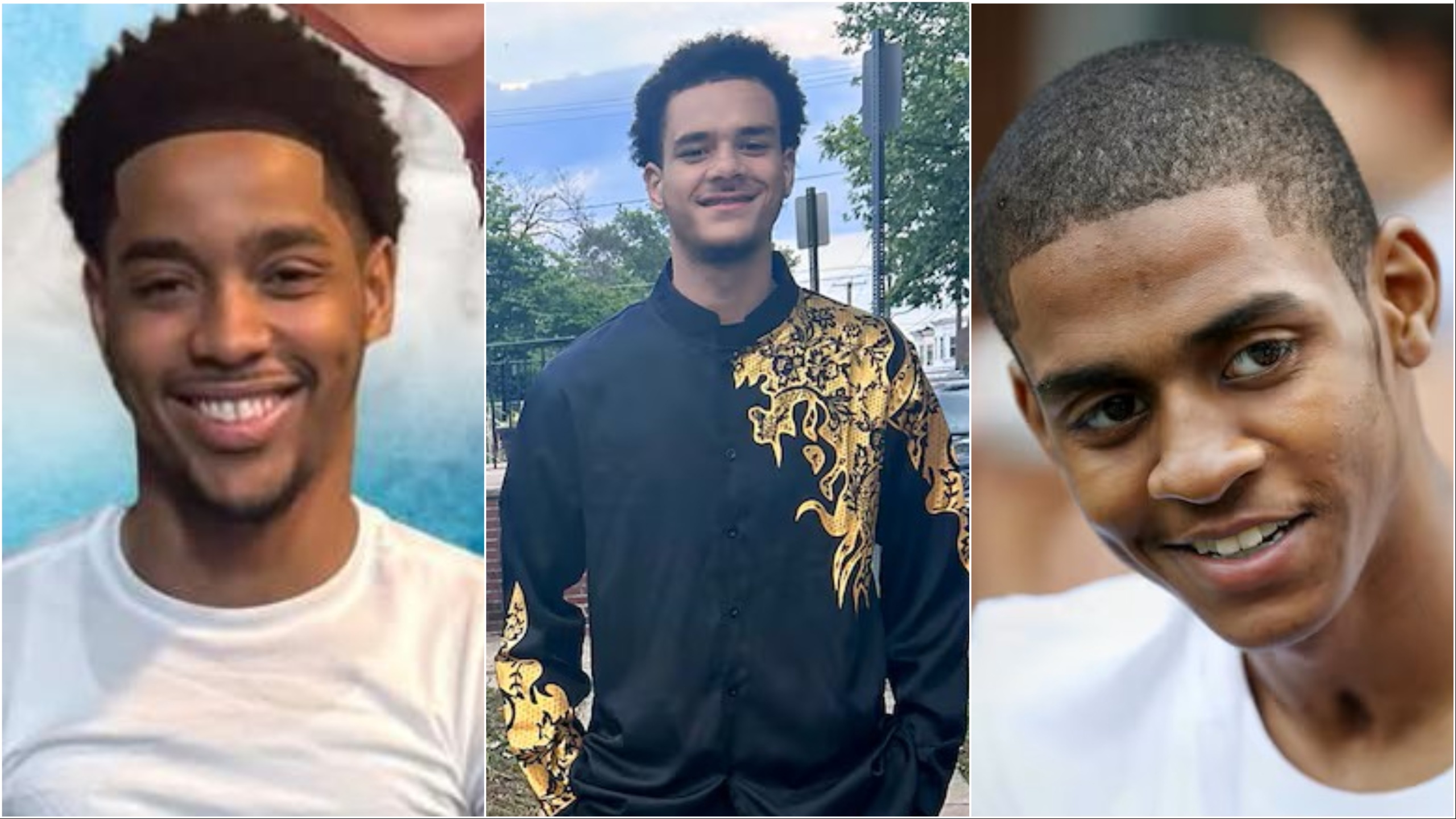
    From left to right: Zahir Wylie, Jason Reese, and Azir Harris were killed in a mass shooting on the 1500 block of Etting Street on July 7.

    Three men were killed. Zahir Wylie, 23, was struck in the chest, and Jason Reese, 19, was shot in the head. Azir Harris, 27, who used a wheelchair after being paralyzed in an earlier shooting, was struck in the back as he sought cover between two cars.

    Homicide Detective Joseph Cremen said he identified the four gunmen by combing surveillance video, phone, and social media records, and interviewing witnesses.

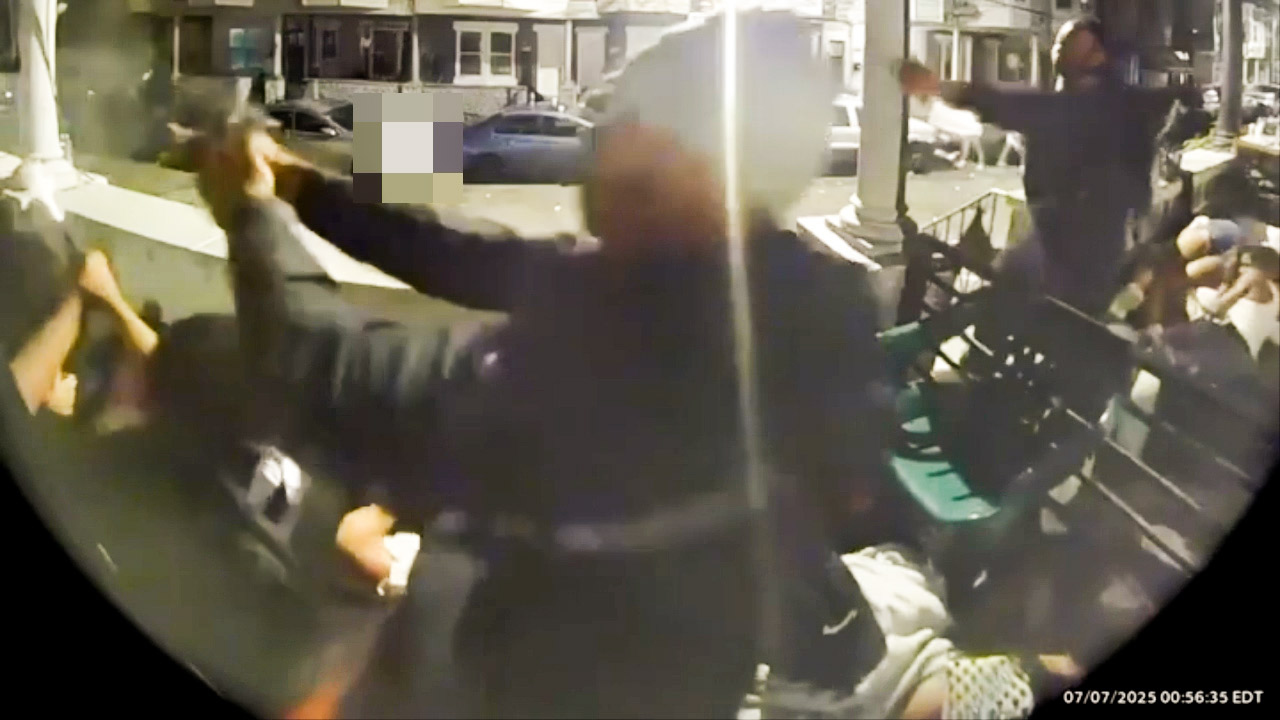
    Fisher, he said, was seen on the porch of one of the homes using a gun with a “switch” attachment that caused him to spray dozens of bullets down the street, appearing at times as if he couldn’t control his weapon. In the teen’s phone, he said, were pictures of him with multiple guns, as well as the clothes he was wearing the night of the shooting and messages indicating he was selling firearms.

    Police said the person directly in front of this video is Brandon Fisher, 17, using a gun with a switch on it to fire dozens of shots down Etting Street on July 7.

    And Frazier, he said, talked about the shooting in text messages. About 12 hours after the shooting, he said, someone asked Frazier where he was when Wylie was struck.

    “I was banging back,” Frazier wrote. He said the shooting was “bad,” and that Wylie “died from us.”

    “He died from a stray,” he said, according to the texts.

    Cremen said Brown admitted that he fired two shots with his legally owned gun, “then when he realized he wasn’t shooting at anything, he stopped and took cover.”

    And Jardine, also known as Dieve Drumgoole, also told investigators he fired two or three shots after he saw someone come out of an alley on the block with a green laser attachment on a gun, the detective said.

    Cremen didn’t recover video that showed anyone using a gun with a green laser beam.

    Defense attorneys for the four men all argued that their clients were acting in self-defense, and only fired their guns because they believed someone was shooting at them. Police still do not know — and may never know — whose bullets struck each victim.

    “There is no evidence that he struck anyone, there’s no evidence that he intended to strike anyone,” said Gina Amoriello, who represents Brown. “In all my years, I’ve never seen a case overcharged like this. This is extreme.”

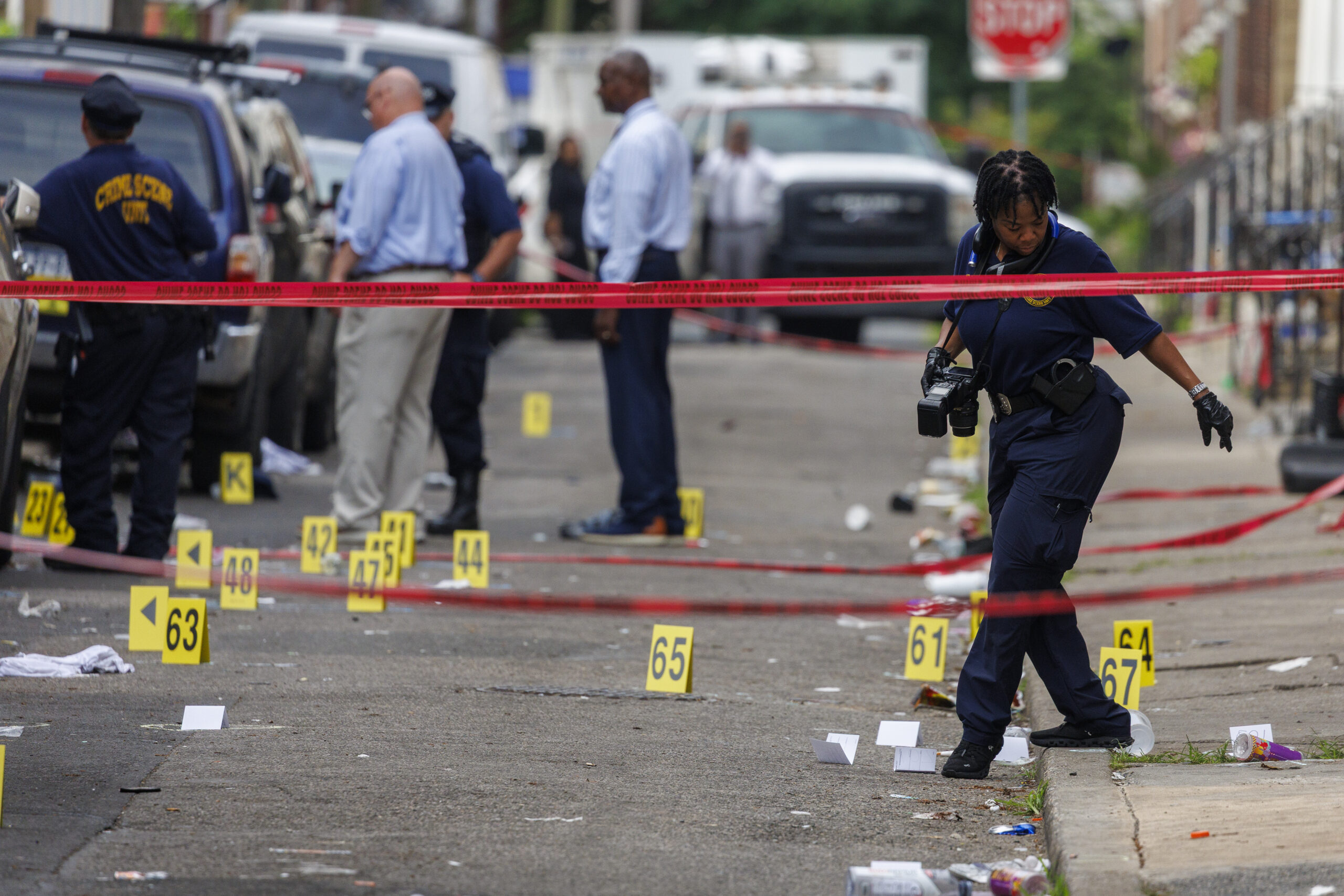
    Philadelphia Police Crimes Scene officer taking pictures at scene. Scene of an overnight shooting 1500 block S. Etting Street, Philadelphia, that sent several to hospital, fatalities, early Monday, July 7, 2025.

    John Francis McCaul, Jardine’s lawyer, said the father was “protecting his family” on the porch. Jardine’s son and nephew were also injured in the shooting.

    No one, he said, intended to kill anyone by firing their guns.

    The judge disagreed.

    “The intent goes where the bullet goes,” said McCloskey. “The intent is established by producing the gun, pointing the gun, and pulling the trigger.”

    He said it would be up to a jury or judge later on to determine whether or not the men were acting in self defense. At this preliminary stage, he said, prosecutors provided enough evidence to uphold a third-degree murder charge.

    Prosecutors plan to address charges against a fifth person, Jihad Gray, who had been charged with the shooting at a hearing next week.

    A sixth person, Christopher Battle, 24, remains at-large.

    After the hearing, the families of the victims struggled to make sense of what they had just watched — friends killing friends.

    “It’s really hard to digest,” said Troy Harris, whose son, Azir, was killed. “It was shocking. It was life changing to us. … This domino effect can hurt generations and generations.”
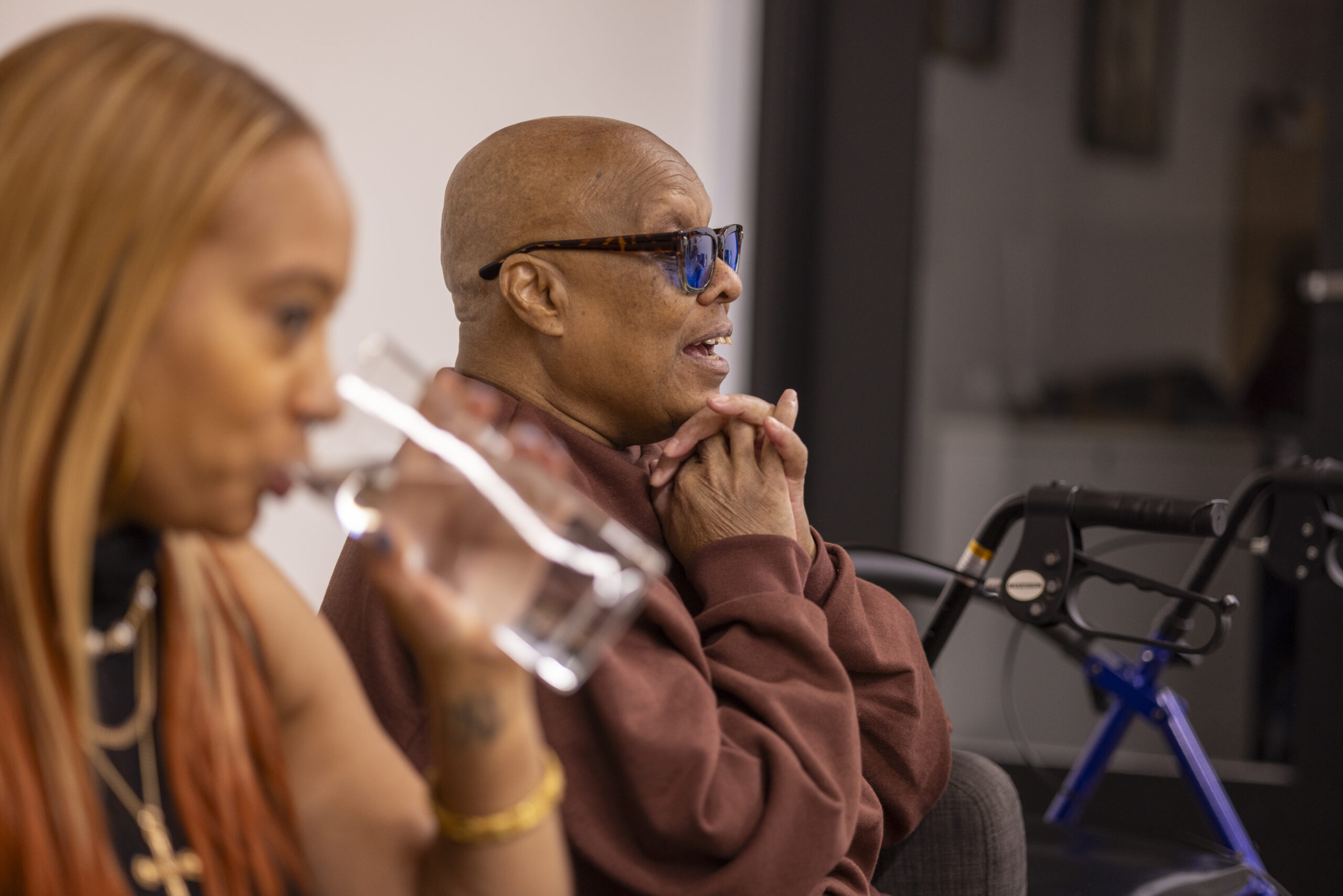
    “I still don’t even get it,” said Markeisha Manigault, the mother to Zahir Wylie. “I don’t understand why … my son lost his life. It was just unnecessary.”
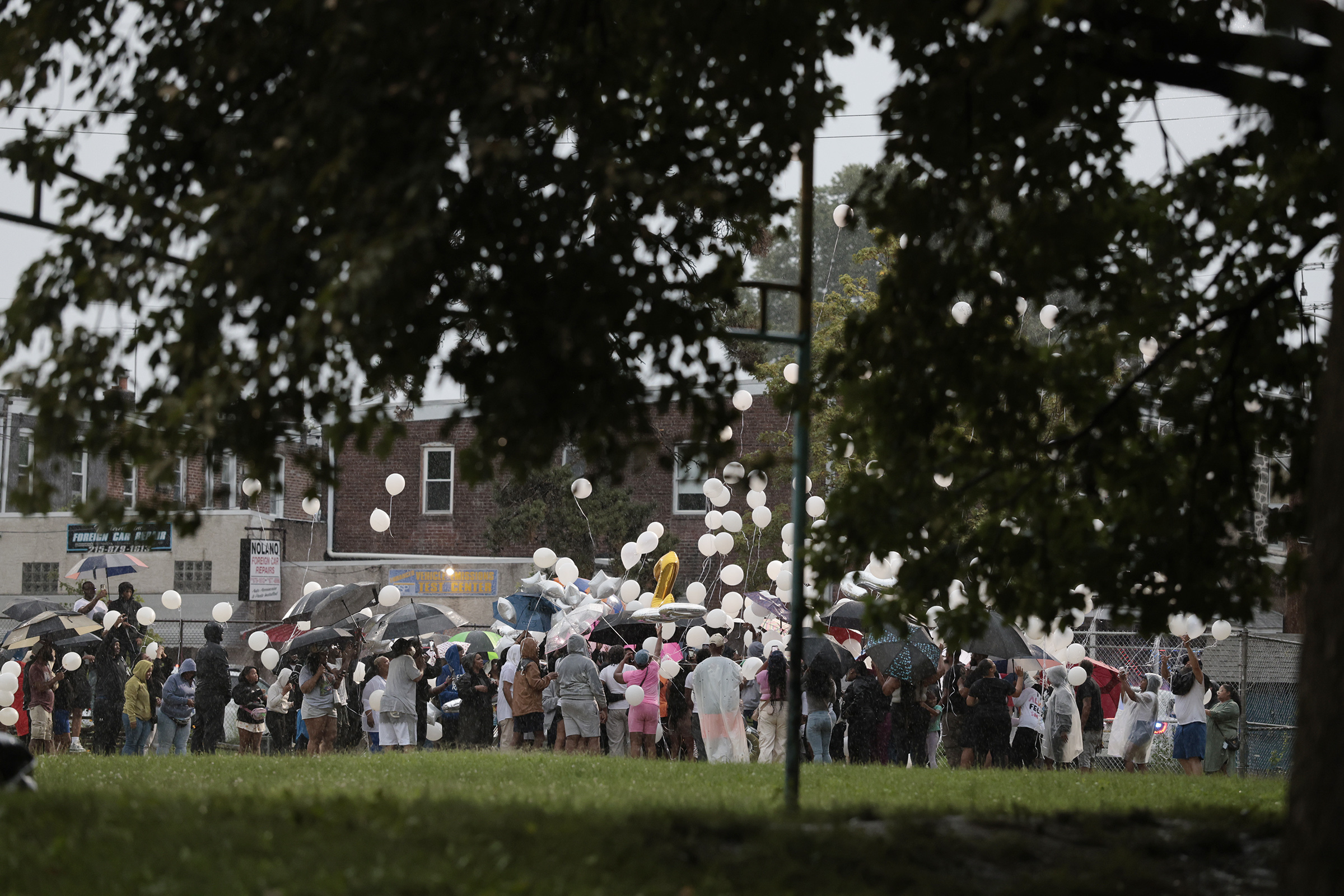
    Family and friends gather for a balloon release in memory of Zahir Wylie at the Papa Playground on July 8, 2025.
  • The fatal shooting of a 16-year-old inside Chipotle bathroom may have been unintentional, sources say

    The fatal shooting of a 16-year-old inside Chipotle bathroom may have been unintentional, sources say

    A 16-year-old was found shot to death inside the bathroom of a Chipotle near Temple University’s campus Monday night in what investigators believe may have been an unintentional shooting, according to police and a law enforcement source.

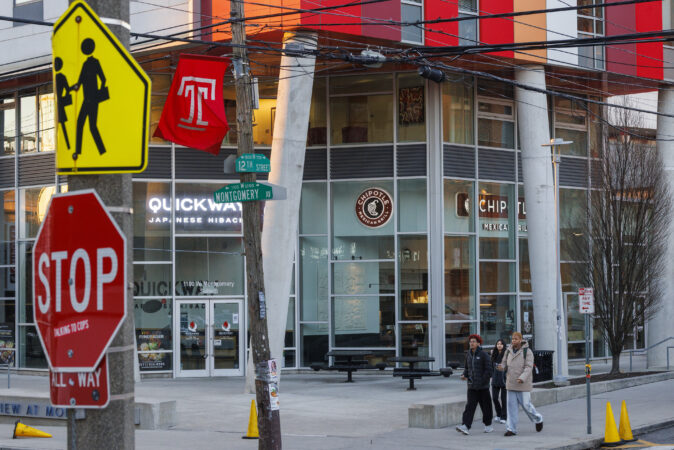
    Khyon Smith-Tate and three of his friends were inside the Chipotle on the ground floor of The View at Montgomery apartments at 12th Street and Montgomery Avenue around 5 p.m. Monday, police said. Smith-Tate and one friend went into one bathroom, while the two other teens went into the second bathroom, said Deputy Commissioner Frank Vanore.

    According to surveillance video, the teen with Smith-Tate left the restroom alone a short time later, and then walked out of the restaurant with the other teens, Vanore said.

    About 15 minutes later, a restaurant employee found Smith-Tate suffering from a gunshot wound to the chest, he said. Police and medics responded, and pronounced him dead at the scene, officials said.

    No gun was recovered, though officers found one spent shell casing from a 9mm handgun in the trash can, Vanore said.

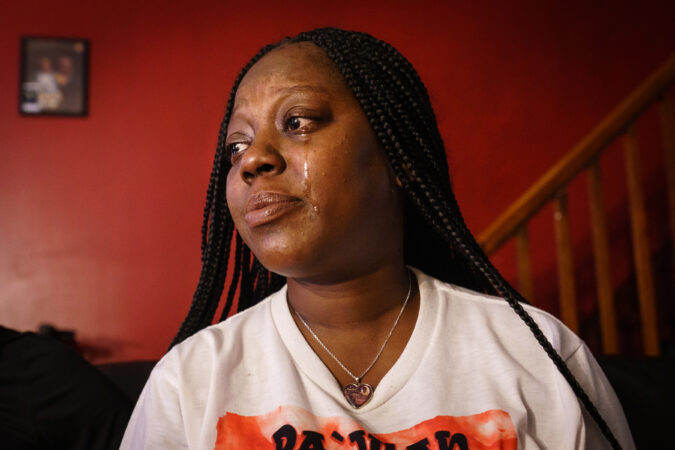
    Smith-Tate was a student at Imhotep Institute Charter High School. His mother, overwhelmed with grief, declined to speak Monday at her North Philadelphia home.

    In a written statement, school officials described Smith-Tate as “caring, energetic, filled with school pride and comical.”
    “He was filled with light and love,” the statement, signed by Imhotep Chief Executive Officer Andre Noble and Principal Jury Segers, said. “We will always remember his smile.”

    Police have identified the three teens involved, Vanore said, and are poring over cell phone data and interviewing witnesses to try to learn what happened inside the bathroom.

    A law enforcement source with knowledge of the investigation said detectives are looking into whether the teens may have been filming a social media video or playing with a gun when it fired and unintentionally struck Smith-Tate.

    The source, who asked not to be identified to discuss an ongoing investigation, said the teens are all close friends. Still, they did not call for help, the source said, and left him to die on the bathroom floor.

    “As one can imagine, we are struggling today,” Noble and Segers said. Our collective hearts are hurting. But this community is resilient.”

    District Attorney Larry Krasner said that trauma-care professionals and victim advocates from his office visited the school on Tuesday to lead “multiple grief trauma healing circles” for students and staff.

    “The trauma and grief our young people experience as a result of shootings is unacceptable,” he said. “We will not accept this as normal for our kids and babies.”

    Smith-Tate is the first child under 18 to be shot and killed in Philadelphia this year, and his death comes after homicides in the city reached near-historic lows last year.

    If it is confirmed that the shooting was unintentional, Smith-Tate would be the latest in a growing list of children shot by a mishandled gun in Philadelphia.

    Dozens of kids have been wounded in accidental shootings in recent years, often the result of other children finding unsecured guns in their homes. Just last month, a 14-year-old was seriously wounded when another teen playing with a gun shot him in the stomach, police said.

    Last year, 12-year-old Ethan Parker was shot and killed after police said his 17-year-old neighbor was playing with a gun while recording a song and accidentally fired it. Other victims have been even younger: like 3-year-old Kayden Barnes, who police said shot herself with her father’s gun in 2024, and 2-year-old Diora Porter-Brown, who was fatally shot by a cousin with an intellectual disability who found his grandmother’s firearm in 2023.

  • Her youngest son was killed in a mass shooting. Now, her eldest is charged with committing one.

    Her youngest son was killed in a mass shooting. Now, her eldest is charged with committing one.

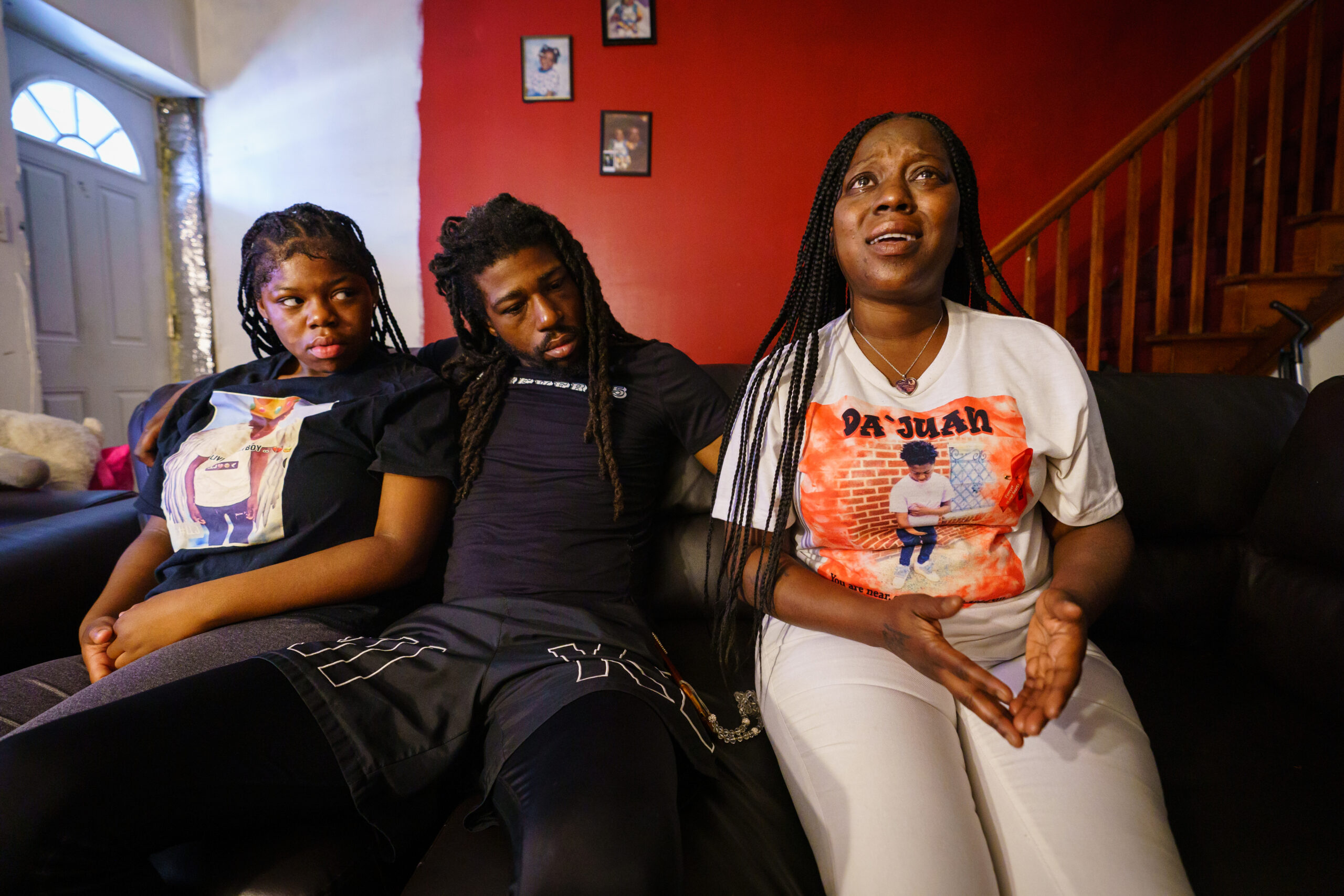
    Two mass shootings, just years apart, forever altered Nyshyia Thomas’ life.

    In July 2023, her 15-year-old son, DaJuan Brown, was shot and killed when a mentally ill man dressed in body armor gunned down five people at random on the streets of Kingsessing.

    Then, two years later, almost to the day, police say Thomas’ son, Daquan Brown, was one of at least 15 people who fired guns aimlessly down the 1500 block of Etting Street, leaving three dead and 10 others wounded.

    It’s a symmetry almost too painful for the mother to reconcile: one son killed in a mass shooting, another behind bars, charged with committing one.

    Last month, Thomas, 37, sat inside the Philadelphia courthouse and faced the man who killed her youngest son and set in motion the crumbling of her family.

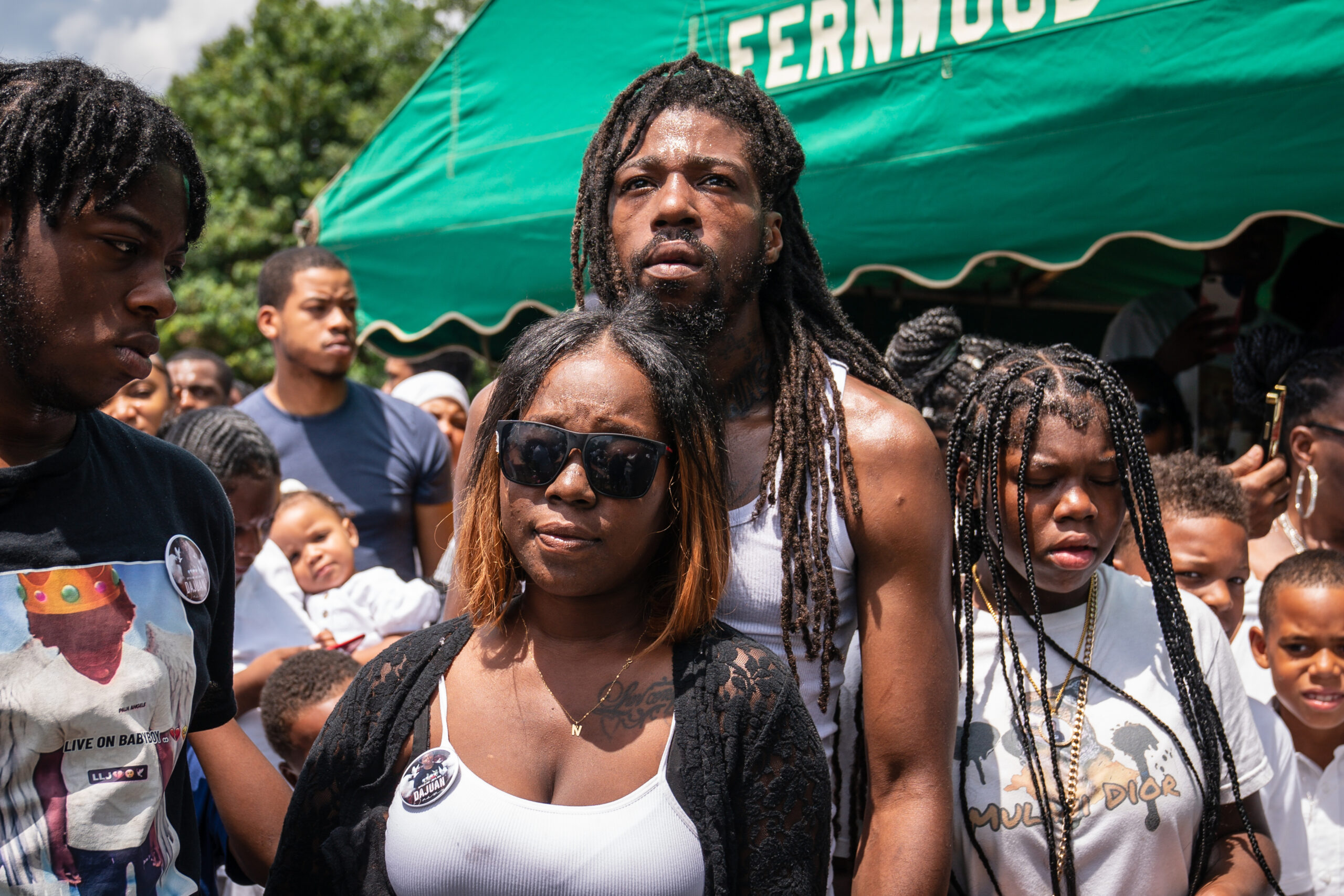
    From left to right: Daquan Brown, Nyshyia Thomas, Tyejuan Brown, and Nesiyah Thomas-Brown, at the funeral for 15-year-old DaJuan Brown in July 2023.

    This week, she will return, but to sit on the other side of the room — to see her eldest son in shackles, seated behind plexiglass, charged with three counts of murder, nine counts of attempted murder, and causing a catastrophe and riot.

    She said her 21-year-old son feared for his life when he fired his legally owned gun twice down Etting Street the night of July 7, and that prosecutors have charged him with killings he didn’t commit.

    But she also feels for the families of the victims — one of them her son’s close friend — and imagines that, if she were in their shoes, she would want everyone who fired a gun to face consequences.

    “From being on both sides of this, it’s overwhelming, it’s unfair,” she said. “But I understand.”

    Nyshyia Thomas (right) with Tyejuan Brown and Nesiyah Thomas-Brown inside their South Philadelphia home.

    The July 7 party on Etting Street was one of two on the block that weekend celebrating the July Fourth holiday and the lives of some young men from the neighborhood who had been killed in recent years. Daquan Brown grew up about a block away and went to see childhood friends, his mother said.

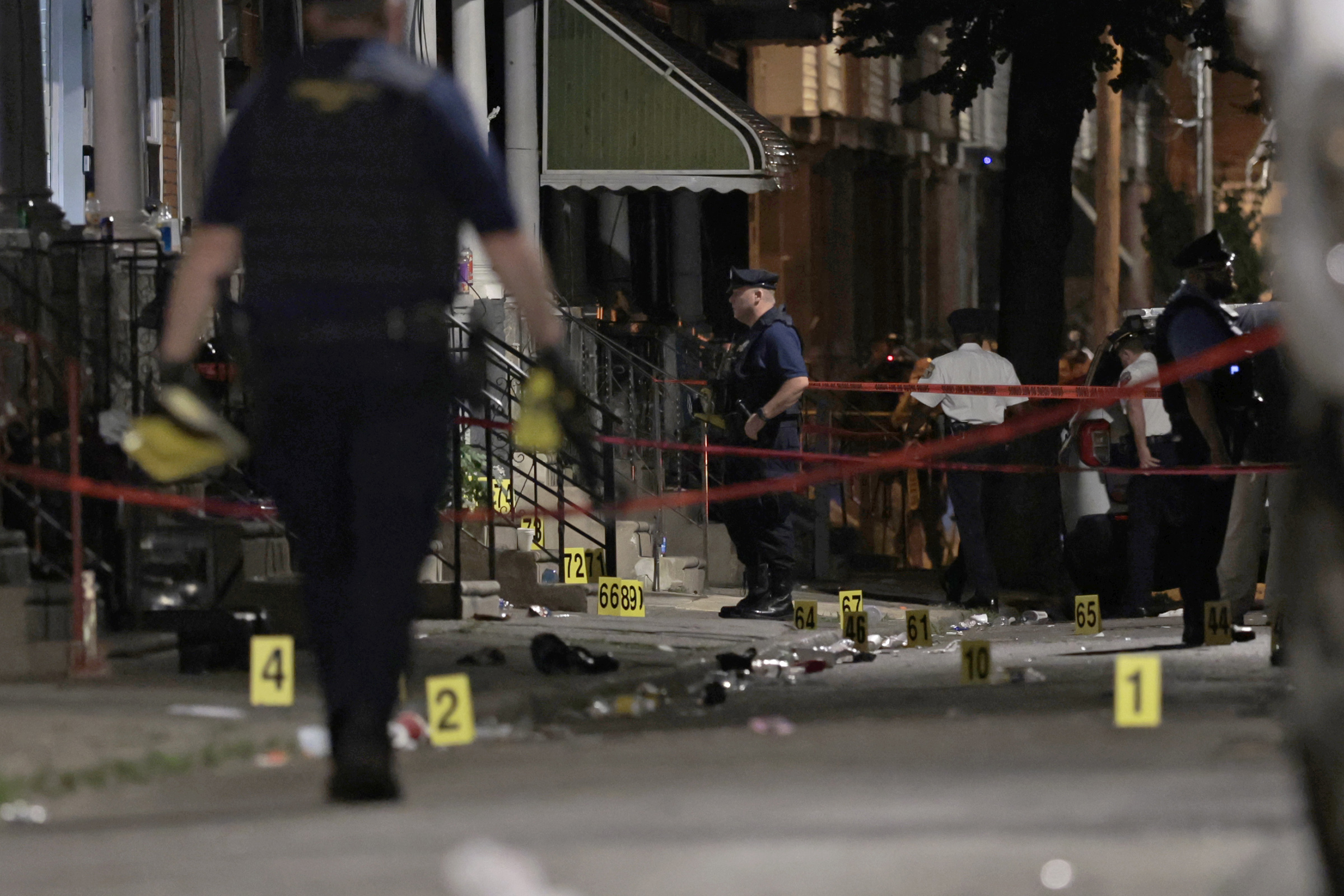
    Shortly after 1 a.m., police said, gunfire erupted. Officers responded to find that more than 120 bullets had been fired down the street in nearly all directions, striking neighbors’ homes and cars — and 13 partygoers.

    Three men died. Zahir Wylie, 23, was struck in the chest, and Jason Reese, 19, was shot in the head. Azir Harris, 27, who used a wheelchair after being paralyzed in an earlier shooting, was struck in the back.

    Initially, police thought someone had shot up the party in a targeted attack. But after reviewing video footage, interviewing witnesses, and analyzing ballistics, detectives now believe the partygoers may have unintentionally shot each other.

    Police investigate a mass shooting on the 1500 block of South Etting Street on July 7, 2025.

    After people heard what they thought was the sound of gunfire — someone at the gathering may have shot once into the air or a car passing by may have backfired — at least 15 people pulled out their weapons and sprayed dozens of shots down the block, police said.

    Brown, police said, was among them. As gunfire erupted, he took cover between cars and fired two shots down the block, according to two law enforcement sources who asked not to be named to discuss an ongoing investigation.

    Investigators don’t know whether any of the shots Brown fired struck or killed anyone, the sources said. A full ballistics report is still pending, though it may never be able to determine whose bullets struck each victim.

    Four other men have also been charged with murder and related crimes.

    Thomas has tried to come to terms with the police narrative. She is adamant that her son, having fired only two shots, shouldn’t be charged with three counts of murder and 10 counts of attempted murder. He feared for his life and acted in self-defense, she said.

    At the same time, she said, had it been her son who was shot and killed that night, she would not want to hear from anyone trying to make sense of it.

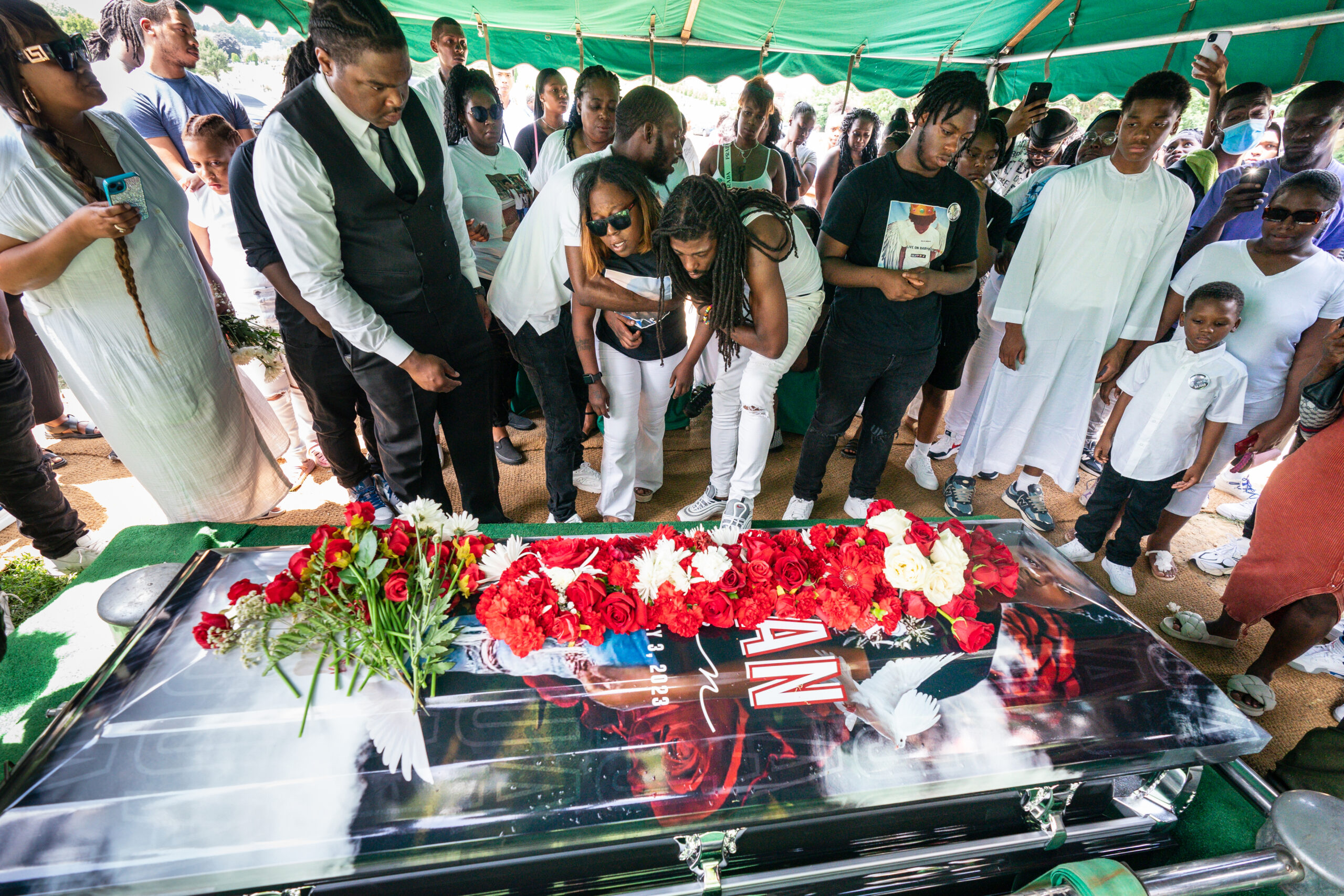
    Tyejuan Brown and a family member hold Nyshyia Thomas at the funeral of their son, DaJuan Brown, on July 15, 2023. DaJuan’s brother, Daquan, stands to right of Tyejuan.

    Still, she finds herself doing that. Brown, who worked as a security guard and has no criminal record, only started carrying the 9mm handgun because of what happened to his brother, she said.

    She remembered talking to him before he bought the weapon last year.

    “Mom, I lost my brother,” Thomas said he told her. “Y’all not burying me.”

    “I kissed him,” she said. “I told him I respect it.”

    Brown’s father, Tyejuan, is also jailed with him.

    On the night of July 7, she and Tyejuan, the father of her three children, were talking on the porch of her home when they heard dozens of gunshots coming from Etting Street. Tyejuan Brown, she said, took off running toward the party where his son was gathered.

    When Thomas reached the block, she said, she found Tyejuan and Daquan covered in blood from carrying bodies to police cruisers.

    But police said that when they reviewed surveillance footage from that night, they saw Tyejuan Brown rushing down the street holding a gun, which he is barred from owning because of drug, gun, and assault convictions.

    He was arrested in early August and charged with illegal gun possession.

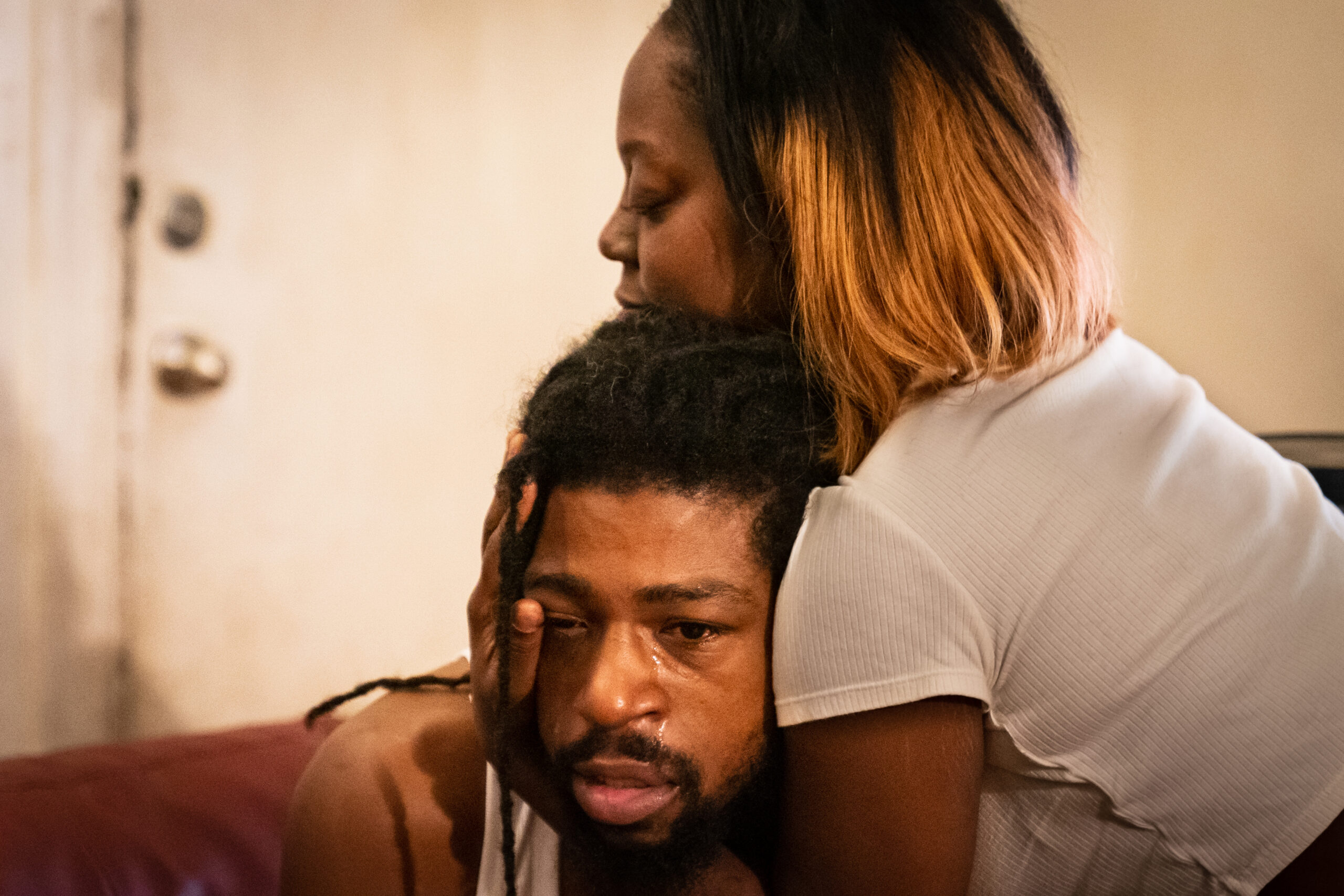
    Nyshyia Thomas holds Tyejuan Brown during an interview in 2023 about the loss of their youngest son, DaJuan.

    Four days later, they came for his son.

    Until recently, Daquan Brown and his father were housed in the same block at Curran-Fromhold Correctional Facility and would speak to each other through a shared cell wall.

    Brown is held without bail. Thomas said her family has gathered the $25,000 necessary for the father’s bail, but he has told them not to post it.

    “I’m not coming out without my son,” Thomas said he told her.

    On the outside, Thomas and her 15-year-old daughter, Nesiyah, are left to grapple with the absence of the three men in their lives they love most.

    “I lost one son to gun violence,” Thomas said. “I’ll be damned if I let the system take my other one from me.”

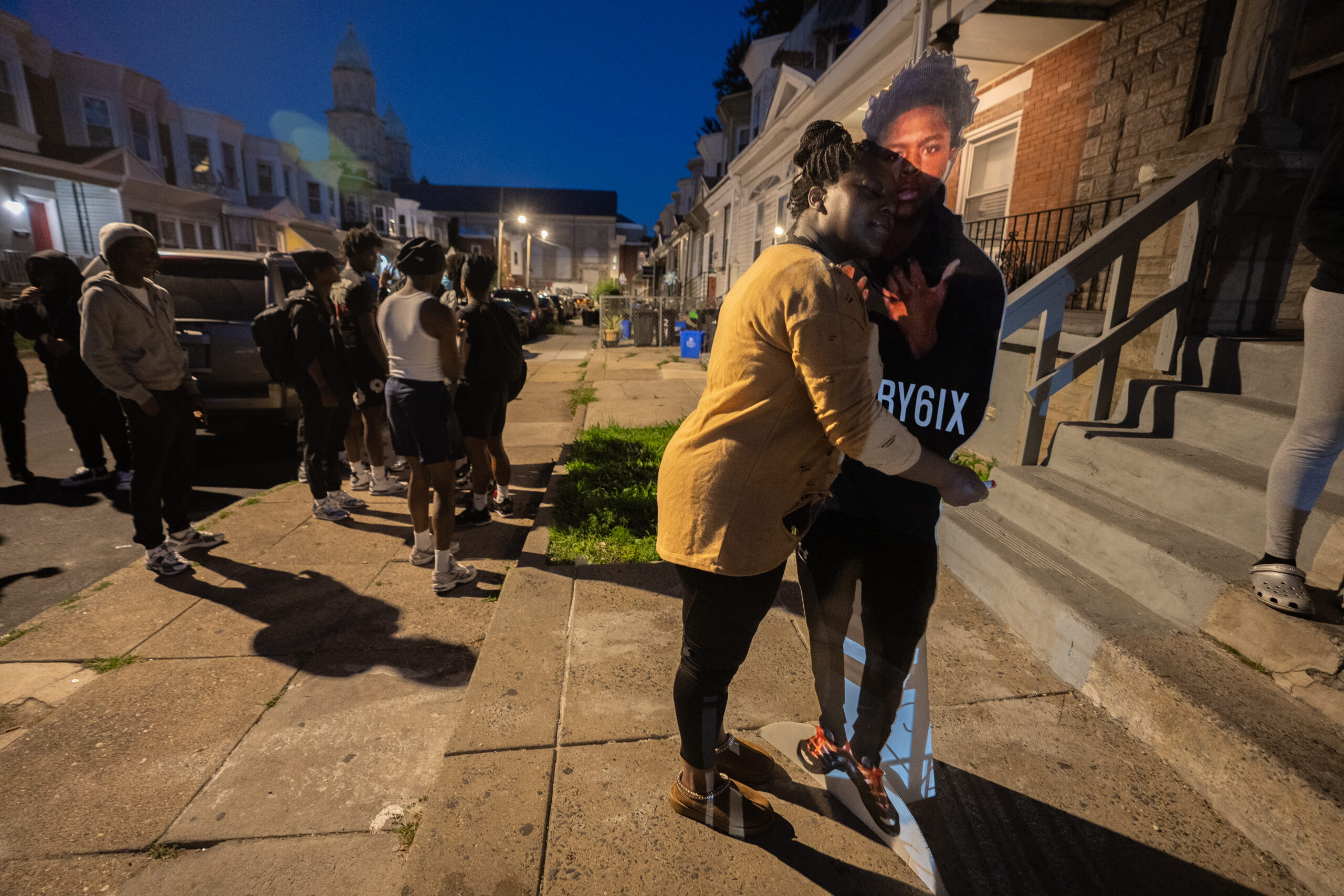
    Nyshyia Thomas hugs a photo of her son, DaJuan Brown, on what would have been his 18th birthday in September. Brown was shot and killed in a random mass shooting in July 2023.
  • The first assistant to DA Larry Krasner is retiring. He has some advice for his boss.

    The first assistant to DA Larry Krasner is retiring. He has some advice for his boss.

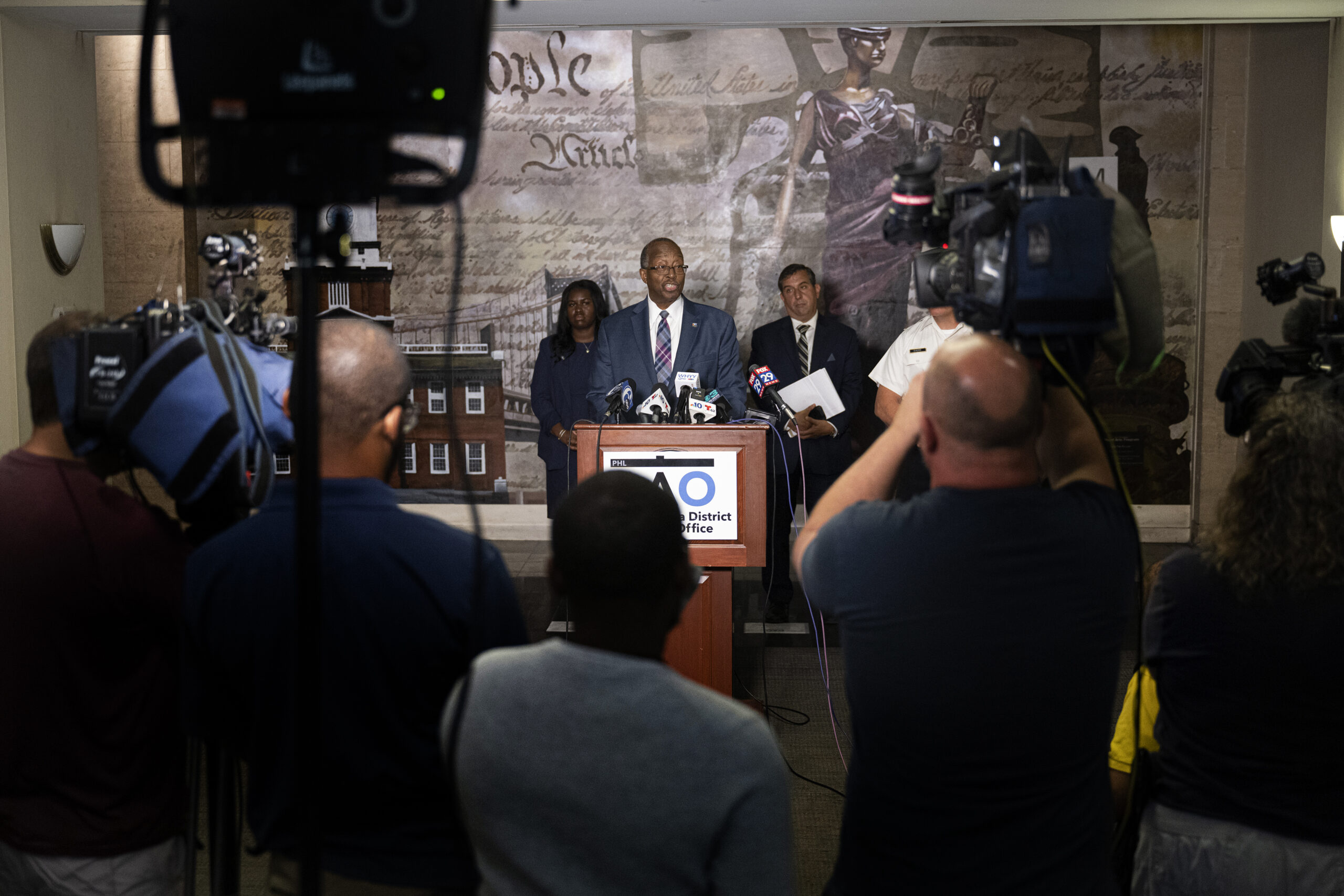
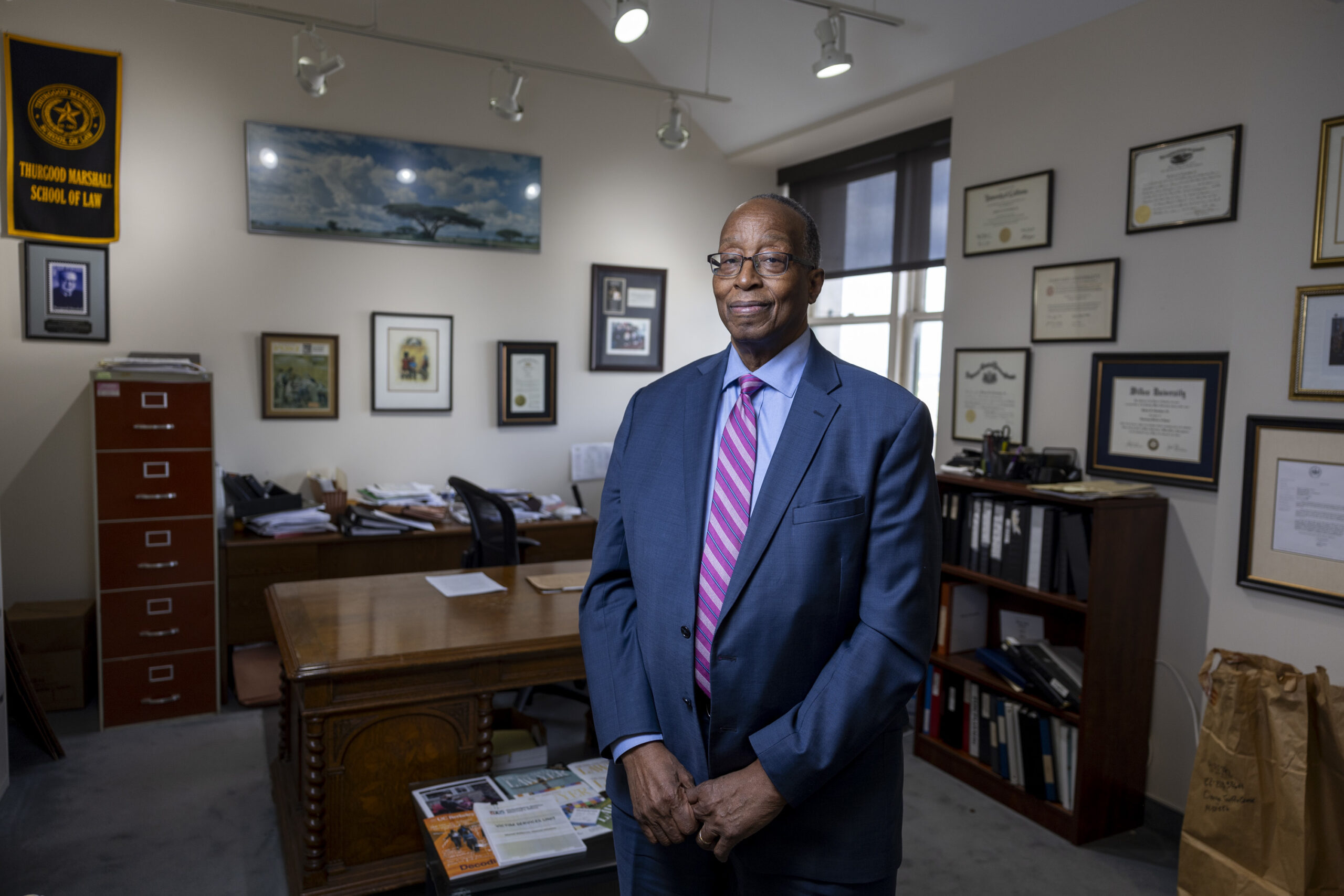
    Robert Listenbee, the first assistant district attorney under Larry Krasner and a largely behind-the-scenes enforcer of the office’s progressive agenda, is retiring after nearly eight years as the office’s second-in-command.

    Listenbee, 77, is expected to announce Friday that he is stepping down, marking the first shift in Krasner’s leadership team as the top prosecutor begins his third term.

    A longtime public defender and juvenile justice advocate, Listenbee joined the administration at the outset of Krasner’s first term in 2018 — even as Krasner openly questioned whether the role of first assistant was necessary beyond its statutory requirement.

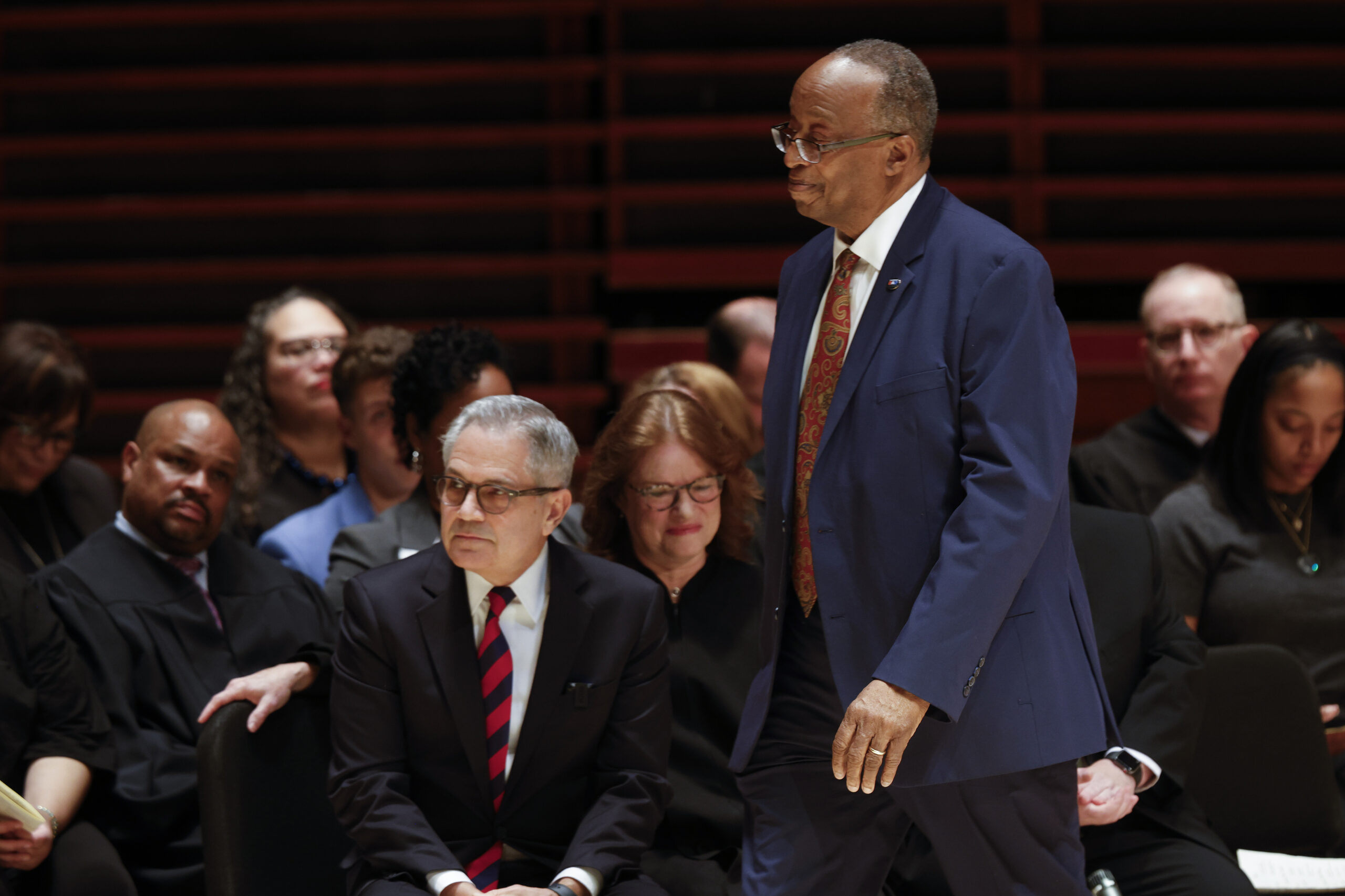
    Robert Listenbee joined District Attorney Larry Krasner at the 2026 inaugural ceremony.

    Over the course of Krasner’s tenure, Listenbee rarely served as the public face of the office on major cases, focusing instead on juvenile work, recruitment, and personnel matters.

    Some prosecutors in the office said that often translated into a lack of visible management compared to previous first assistants, and that he served more as an internal messenger of Krasner’s often controversial agenda than the traditional day-to-day overseer of the office.

    Listenbee has said his role was never set up to operate traditionally, and his goal was to carry out Krasner’s vision and reform the office.

    Krasner declined to say who might replace him but he said he was evaluating candidates.

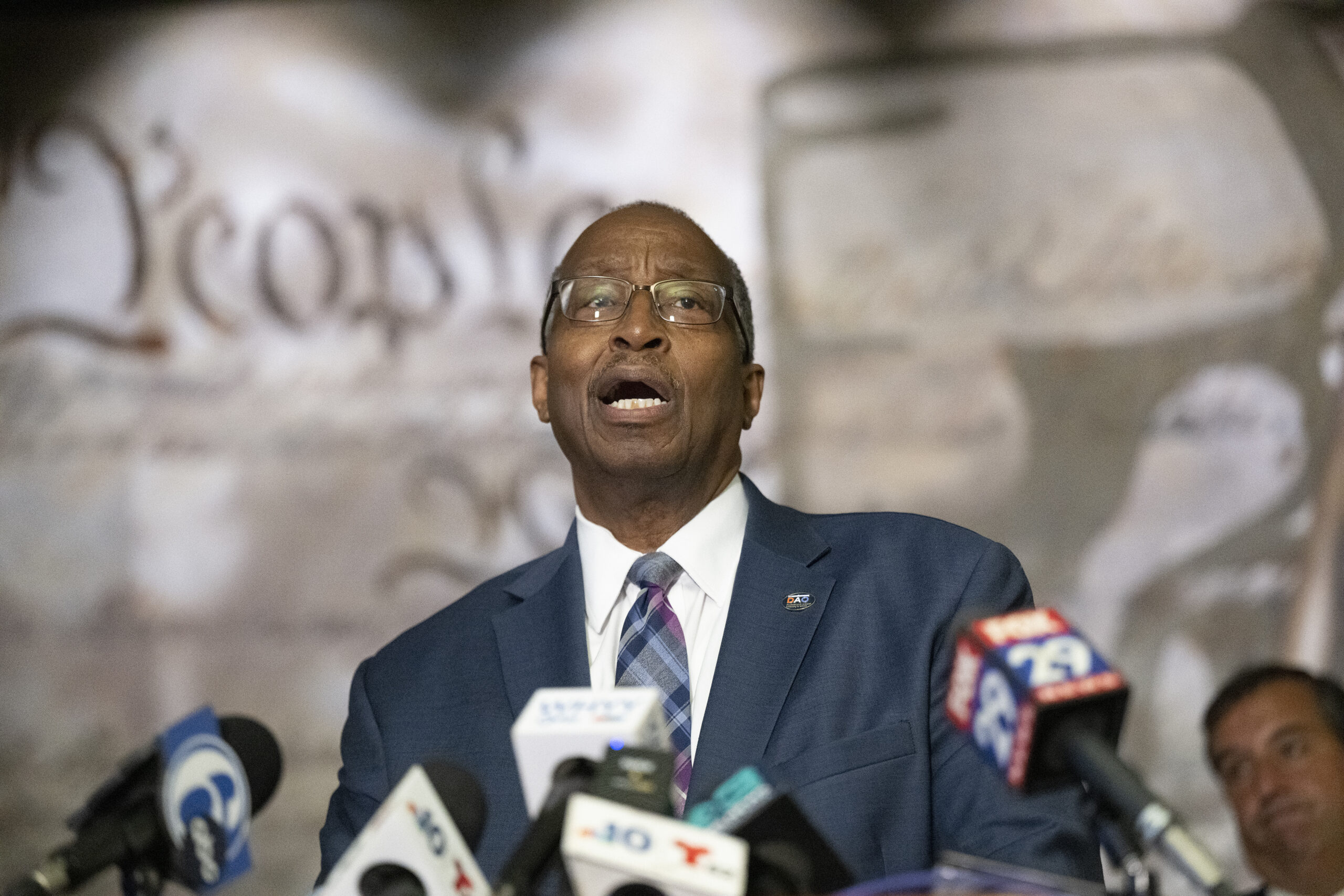
    Robert Listenbee, first assistant district attorney, announced developments in the case against a West Philadelphia teen who was planning a terrorist attack.

    Before joining the district attorney’s office, Listenbee spent decades as a public defender, including 16 years as chief of the juvenile unit at the Defender Association of Philadelphia. He later led the U.S. Department of Justice’s Office of Juvenile Justice and Delinquency Prevention during the Obama administration, and worked at Drexel University before returning to Philadelphia to join Krasner’s team.

    We spoke with Listenbee about his unconventional path to the law, his years reshaping juvenile justice, internal tensions within the DA’s office, and his advice for Krasner’s third term.

    This interview has been edited for length and clarity.

    Tell me about your life growing up.

    I was raised in Mount Clemens, just north of Detroit. My father worked in the auto industry. We were poor and lived in the projects. I went to a public high school, and was the first in my family to go to college.

    I came from a small African American community where people look out for one another. This community saw something in me very early. When I was only planning to go to Kalamazoo College, a mom at my school decided my life was going to be different. She contacted the recruiter at Harvard University, and they visited me out in my little home in the projects when I hadn’t even applied. I got a full ride to Harvard.

    I was among the first large group of African Americans at Harvard. It was 1966. We were in the middle of the Civil Rights Movement and the Vietnam War.

    How was that?

    There was total upheaval in this nation. Demonstrations everywhere, college campuses being taken over.

    I worked on the committee that helped establish the African American Studies Department at Harvard, one of the first in the nation.

    This was also at a time when African countries were becoming independent. I spent 16 months as a teacher in the rural area in western Kenya.

    Robert Listenbee spent 16 months in Africa teaching English, and then traveled the continent before going to law school.

    Instead of coming back from Africa, I decided to hitchhike around the world. I spent six months in Asia — Thailand, Laos, even as the war was going on. I rode a motorcycle into the Mekong Delta in Vietnam and had experiences that make me grateful to be alive. I hitchhiked across Africa and traveled 8,000 miles by train across India. I did all of this on about $600.

    After a two-year gap year, I returned to Harvard and finished my degree.

    I ended up getting a full-ride scholarship to Berkeley law school.

    Where did you go after law school?

    I had job offers but I had this crazy idea that I wanted to build a road across Africa, from Nairobi to Lagos, but I was broke and needed money to do it.

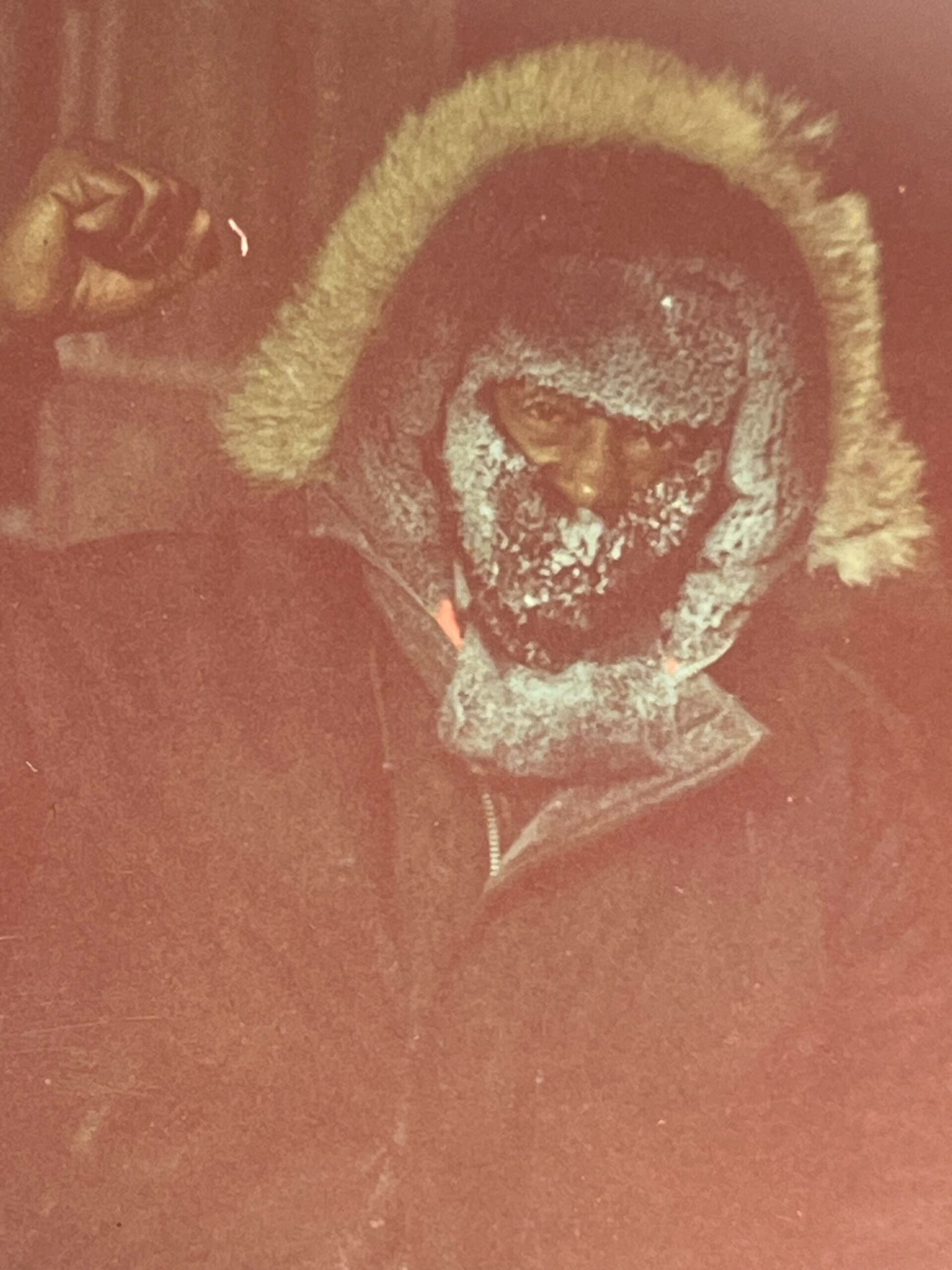
    This was when the pipeline was being built across the North Slope of Alaska, and you could make gobs of money in a short period of time. So in 1976, I went to Anchorage without a job and lived in the YMCA. I shoveled snow, washed dishes, and worked at McDonald’s.

    Robert Listenbee worked in the oil fields building the pipeline on the North Slope of Alaska for several years beginning in 1976.

    Finally, I got a job on the pipeline.

    I was there for a couple of years. I was a laborer in the oil fields. I worked trucks that rode across the Arctic Ocean in the middle of the winter. I worked on wildcat wells 50 miles from base camp. I had to relieve pressured gas to keep it from blowing up. It was 50 degrees below zero.

    Robert Listenbee worked in the oil fields building the pipeline on the North Slope of Alaska for several years beginning in 1976.

    I got into fights. People were trying to kill me at different points in time, and I was trying to kill other people, too. So I mean, the reason I know a little bit about criminal justice is because I was almost a criminal.

    I never built the road in Africa. I eventually came back to Philadelphia, and worked construction until 1986.

    So what about being a lawyer?

    After my construction company failed, I was broke again. I ended up going back to legal work, and got a job working at the Defender Association.

    You were the head of the juvenile unit for 16 years, and then you finished your career here on the other side — going from defending young people to prosecuting them. How was that transition for you?

    Working for the U.S. Department of Justice’s Office of Juvenile Justice and Delinquency Prevention under President Obama helped prepare me for prosecutorial work.

    I was adamant I would never work for this office. I thought it was corrupt. Krasner called me three times before I agreed to join as first assistant.

    We were engaging in culture change. Some of the behavior of the people who were here was absolutely outrageous, especially in the homicide unit. They had a sense that this office belonged to them. It didn’t belong to the people. They were willing to cheat and do it and hide evidence in the process of doing it. That’s the feeling that I had when I first got here, and that’s what we found.

    Robert Listenbee, first assistant district attorney, takes questions from the media after announcing developments in the case against a West Philadelphia teen who investigators say purchased materials including chemicals, wiring, and tactical equipment associated to become a terrorist.

    There has been criticism of your juvenile work — some have said that it was too lenient during the period of intense gun violence and that kids went on to commit worse crimes. Others say the office hasn’t gone far enough to treat kids as kids. How do you assess your record?

    We’ve reduced the number of kids in out of home placements. We’ve expanded juvenile diversion programs. In 2024, we created a juvenile homicide unit to review all cases of juveniles charged with murder.

    I’m satisfied that we’re being as fair as we can and taking the time to carefully evaluate every issue in a case.

    The first assistant is typically the person who manages the office day-to-day. Some prosecutors have said that, in this administration, that role functioned differently — that much of the management flowed directly from Krasner. Do you think that perception is fair, and how did you approach leadership in that environment?

    The DA did not want the imperial first assistant that had been here before. He would prefer a flat structure to a hierarchical structure, which means you get assigned a lot of odd jobs depending on what he wants you to do.

    If I were running the office, I would have run it completely differently. But I have to tell you that, having been here as long as I have, we never would have gotten this far without the DA’s serious concerns about what people around here were doing, whether they were implementing his policy or not. His skepticism, his oversight, is what’s kept this place moving in the direction that he wanted to go in. I wasn’t tuned in enough to the office to understand that from the very beginning, but I listened to him.

    We hire people, we fire people, we move people around. That’s happened a lot. We sometimes end up with younger and inexperienced supervisors, because we haven’t really developed a program for training supervisors really well. We’re working on that.

    Do you have any regrets in the position?

    We’ve gotten better with victim communication, particularly when police are killed.

    I wish I had worked on juvenile issues earlier than I did.

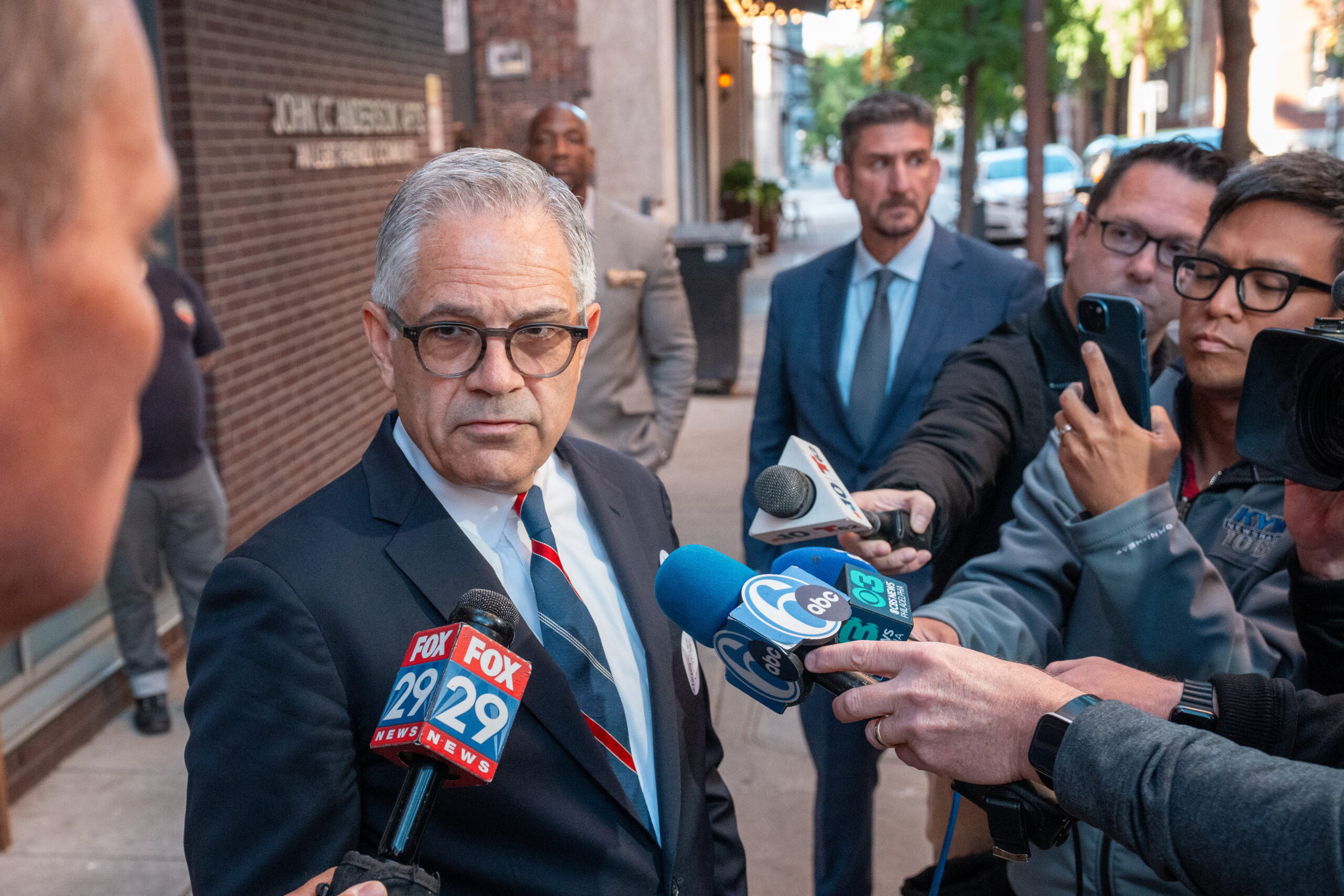
    District Larry Krasner speaks with the media after casting his vote in the 2025 primary.

    What’s your advice for the next first assistant?

    You have to understand the DA’s goals and purposes and how he operates.

    So, listen to Larry?

    Not that. The DA is not a micromanager. But there’s no written directives on most of the things he wants, and there’s no organizational chart or hierarchy. If we have issues, we often go to him.

    Do you have a piece of advice for Krasner in his third term?

    This is a city that has a chip on its shoulder. The DA is a person who has a chip on his shoulder. They respect him for that when he speaks out. A lot of the things he says may not be politically astute, but they’re things he believes in. They like that about him.

    He is the Donald Trump of the progressive era.

    He needs to continue surrounding himself with people who can understand him and help him implement his policies.

    A lot of people don’t like him, and I understand that. A lot of people don’t like me because I work for him. A lot of people don’t like what we do. That never mattered to me. I know that the people we have seen in court, the victims and the defendants and the witnesses, I know that we’re doing right by them. That’s my North Star.

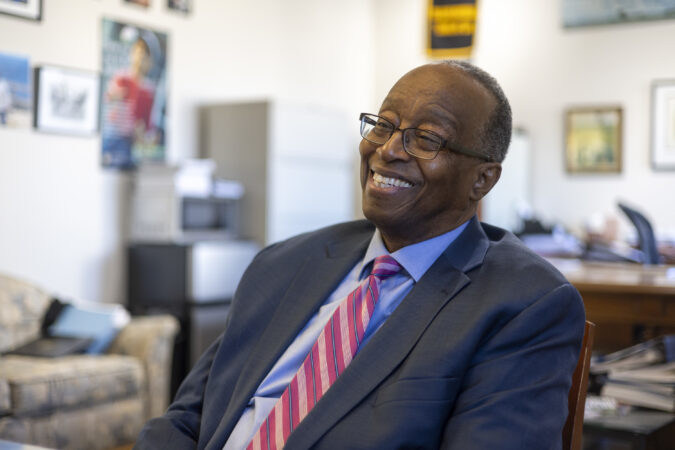
    Robert Listenbee, the first assistant to District Attorney Larry Krasner, retired on Friday.
  • A 72-year-old woman imprisoned for over half a century was released after her life sentence was commuted

    A 72-year-old woman imprisoned for over half a century was released after her life sentence was commuted

    For the first time in more than half a century, Marie Scott is free.

    Scott, 72, who served more than 52 years in prison for felony murder, was released from custody on Wednesday after Gov. Josh Shapiro commuted her life sentence in June. Despite opposition from the victim’s family, community advocates had pushed for her freedom for years, saying she had served enough time, was a model inmate, and no longer posed a threat to society.

    Scott, known as “Mechie,” has been incarcerated since 1973, after she and her then-16-year-old boyfriend, Leroy Saxton, robbed a Germantown gas station. She was 19 and addicted to heroin when she helped Saxton restrain the cashier, Michael Kerrigan, and then rummage through the store’s cash register and safe. Her attorneys say she was acting as a lookout when — to her surprise, she says — Saxton shot Kerrigan, 35, in the back of the head.

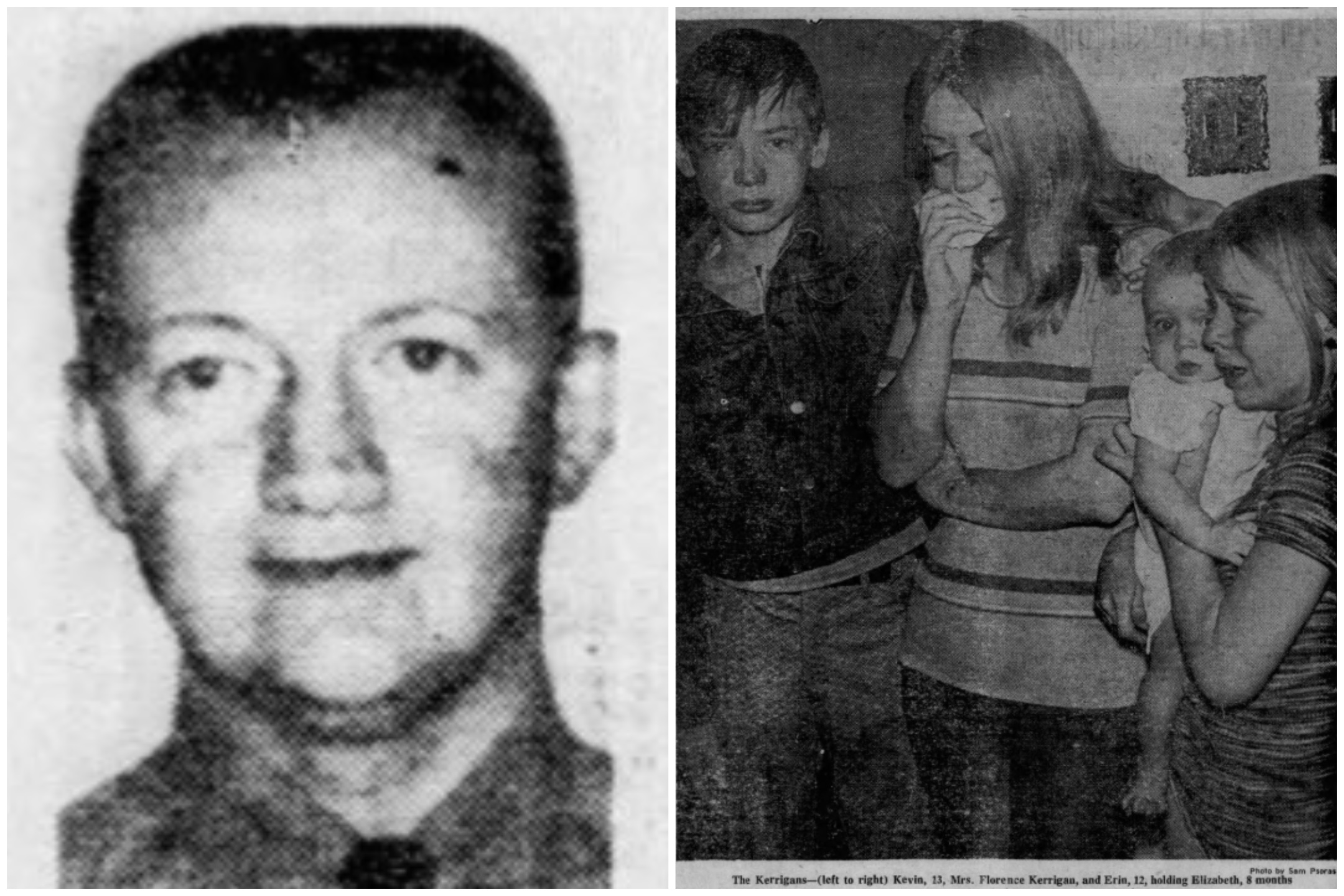
    Philadelphia firefighter Michael Kerrigan, left, was killed in 1973. His family, shown in a 1973 photograph, was never the same. In the photo, from right to left, is Kerrigan’s son Kevin, wife Florence, and daughter Erin holding 8-month-old Angela.

    Saxton was later convicted of first-degree murder and sentenced to life in prison. Scott was convicted of felony murder and handed the same fate.

    But Saxton was released on time served in 2020 after the U.S. Supreme Court overturned mandatory life sentences for juveniles.

    Scott had remained behind bars ever since.

    Until Wednesday, when hours before dawn, she walked out of her cell in State Correctional Institutional Muncy for the final time, stepped into the back of a van, and was driven three hours toward her new life in Philadelphia.

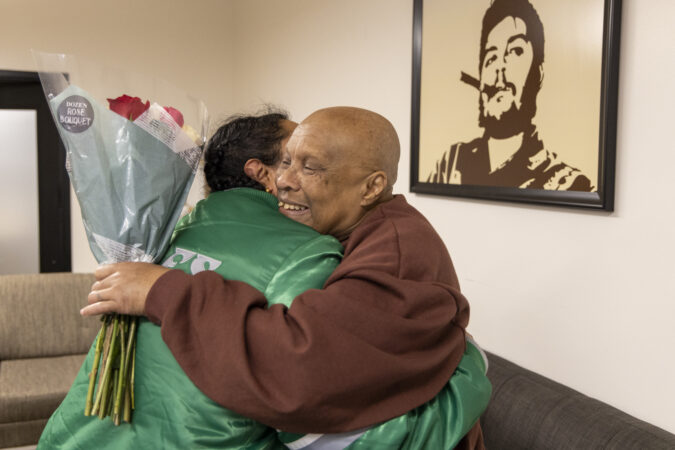
    There, for the first time in her life, she hugged her daughter, Hope Segers, outside the prison walls.

    “I just covered my face and lost it,” Scott said of seeing her Wednesday. “That was the first time I have seen my daughter and grandson in the real world. … To feel them, to smell them in the free air.”

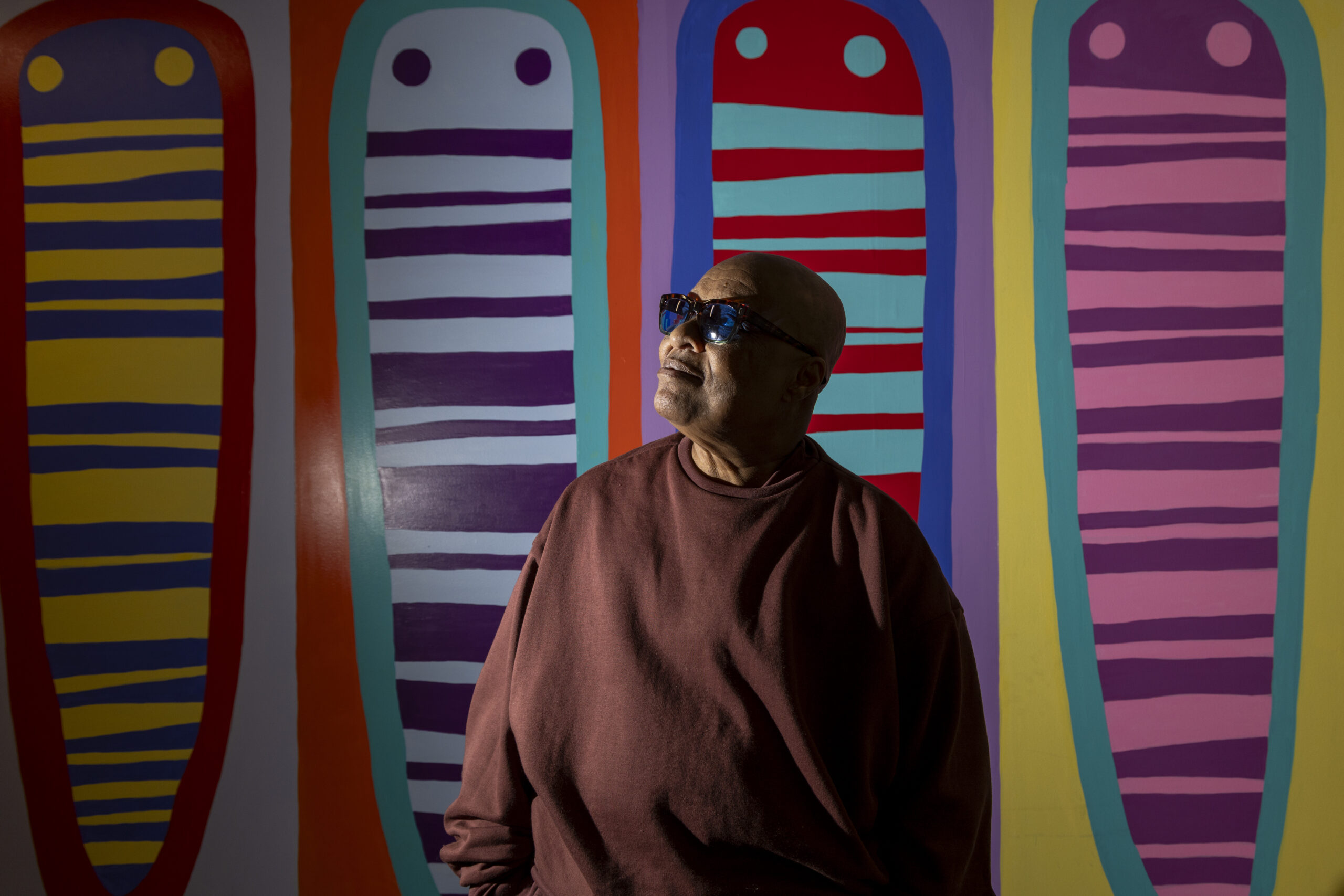
    Marie Scott had her life sentence commuted after 52 years in prison.

    Segers was born in SCI Muncy 45 years ago. During one of the three times Scott escaped from prison between 1975 and 1980, she reunited with a man who worked in the prison kitchen and with whom she had fallen in love, and she got pregnant.

    Segers has known her mother only through prison visits often years apart, and short calls via phone and Zoom. Now, she said, she is eager to begin building a true relationship with her.

    “It’s still not real,” she said of sitting next to her mother. “I’m still in shock.”

    Scott, who will be on parole for the rest of her life, will move into her daughter’s home in Northeast Philadelphia after living in a halfway house for a year, as is required by the prisons.

    Scott’s health has deteriorated in recent years. She uses a wheelchair, suffered from Stage 2 breast cancer, and had a double mastectomy last year. She was not ill enough to qualify for compassionate release, her attorneys said.

    But she has since learned she is cancer free, she said.

    Marie Scott, 72, survived Stage 2 breast cancer while in prison.

    Scott had been serving a mandatory life sentence under Pennsylvania’s felony murder law, which allows people to be convicted of second-degree murder if a death occurs during the commission of a felony such as robbery — even if they did not kill the victim or intend for anyone to die. Pennsylvania is one of only two states where a felony murder conviction automatically carries a life sentence, a punishment Shapiro has called unjust and unconstitutional. (Pennsylvania’s Supreme Court is currently weighing the issue.)

    Other than the decades-old escapes, her attorneys said, she has been a model inmate. She is deeply remorseful for her actions, and has written books about healing, directed plays, and led drug and alcohol treatment courses for inmates, they said. She became a mentor and mother figure to dozens of women at Muncy.

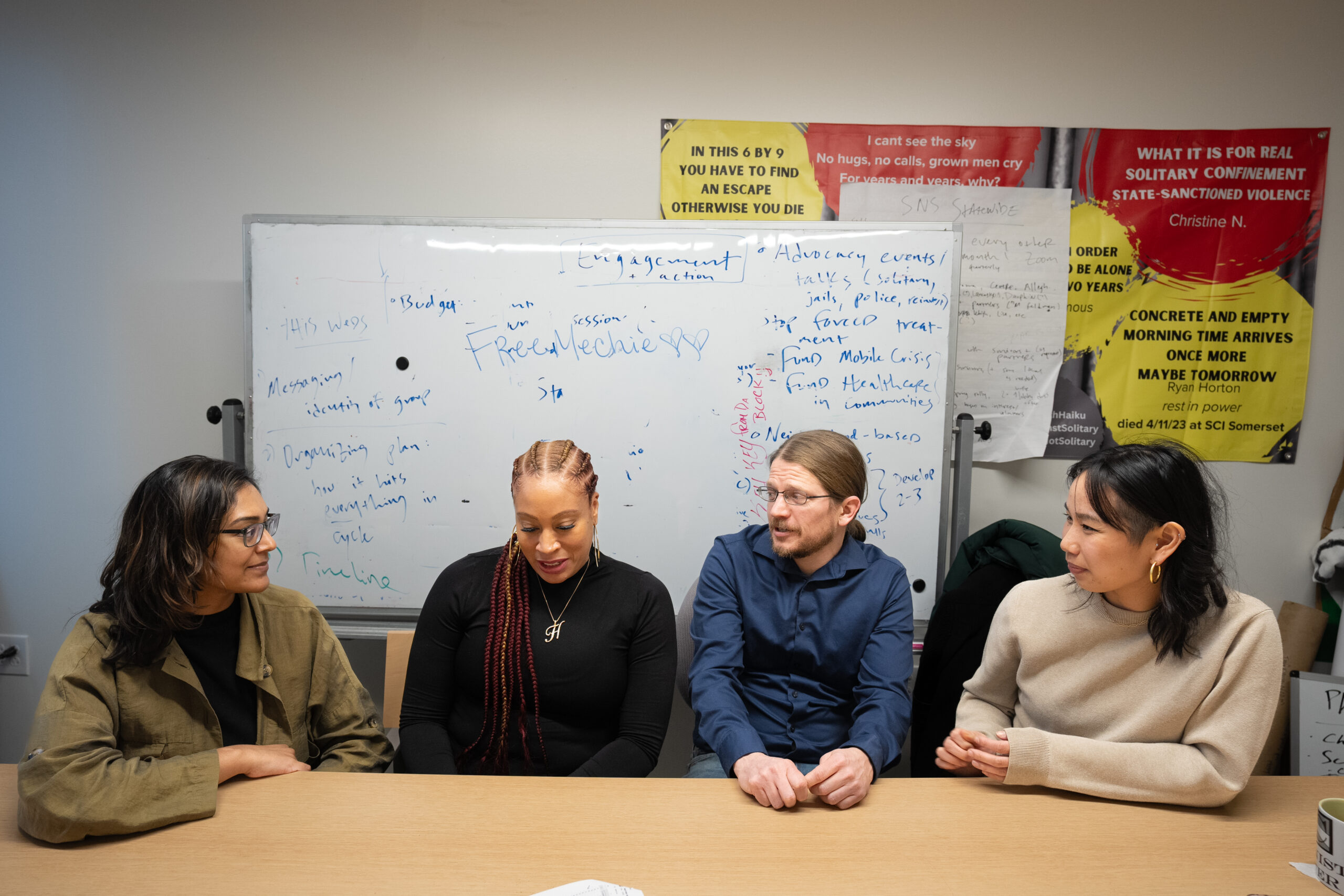
    Rupalee Rashatwar (from left, Hope Segers, Bret Grote, and Sam Lew worked to free Marie Scott through their work at the Abolitionist Law Center.

    For years, Scott and her attorneys at the Abolitionist Law Center applied for a commutation from the Pennsylvania Board of Pardons, asking that her life sentence be reduced. Her applications were repeatedly denied without explanation, lawyer Bret Grote said.

    She applied last year with renewed hope after the leadership at SCI Muncy said they would support her petition.

    Still, Grote said, Laurel Harry, secretary of the state Department of Corrections, told officials she would not support Scott’s petition because of the prison escapes decades ago. Harry’s support was typically a requirement of the board’s approval for release, he said.

    Grote, his colleagues, and a collection of volunteers drafted a social media, phone, and letter writing campaign to persuade Shapiro and prison officials to support her commutation. Members of Philadelphia City Council, alongside state senators and representatives, called for her release, as did Philadelphia rapper Meek Mill.

    It worked. In May, the Board of Pardons voted to recommend a commutation of her sentence, and the following month, Shapiro formally approved her release. The board then required that Scott spend six additional months in prison for the prison escapes.

    Her release comes amid opposition from the victim’s family.

    Michael Kerrigan holding his granddaughter, Angela Kerrigan Hightower. His wife later adopted Angela to be one of her seven children.

    Initially, two of Kerrigan’s daughters said they supported Scott’s release and could forgive her, but later changed their minds and asked the board of pardons and parole not to release her. They said they do not believe she has taken enough responsibility for the crime.

    Angela Kerrigan Hightower, a grandchild of Kerrigan’s who was later adopted by his wife and would have been his seventh child, said Wednesday that “the system failed the victims in this case.” She said she does not believe Scott has shown sufficient remorse, and that she and Saxton should have had to serve a life sentence for the suffering they brought her family.

    “I want to know,” she said, “where is the justice for the victims in this case.”

    Scott has said she deeply regrets what happened. She said Wednesday that she hopes to use her time outside of prison to tell the story of the cycle of drug and sexual abuse and codependency that she has said contributed to her actions.

    She also wants to push for the release of other women who she said have been reformed in prison and don’t deserve to die there.

    Marie Scott, 72, joined a Zoom call with the Coalition to Abolish Death by Incarceration alongside her daughter, Hope Segers, and grandson Dashawn Green.

    Scott’s grandson, Dashawn Green, 28, said he wants to get his grandmother’s health and diet back on track, introduce her to his girlfriend and miniature schnauzer, and maybe even plan a road trip.

    Scott said her first order of business is to find a church.

    Seated on the couches in the Abolitionist Law Center in North Philadelphia Wednesday night, she recalled gathering for her final Sunday service inside the prison last week and saying goodbye to the women in the facility who raised her.

    “You’re my family,” she said she told them. “I don’t make promises because they’re made to be broken, but if you don’t have your word, then you don’t have anything. And I give you my word, I am going to die trying to get all of my women out.”

    “It feels like I’m on another planet,” Marie Scott, 72, said of her newfound freedom.
  • DA Larry Krasner takes more shots at Trump as he’s sworn in to third term amid major drop in crime

    DA Larry Krasner takes more shots at Trump as he’s sworn in to third term amid major drop in crime

    When Larry Krasner was sworn in to his second term as district attorney four years ago, Philadelphia was in a public safety crisis: Murders and shootings were at an all-time high and the homicide clearance rate was at a historic low.

    On Monday, Krasner was inaugurated to a third, four-year term in remarkably different circumstances. The city in 2025 recorded the fewest homicides in 59 years, and police are solving killings at the highest rate in more than 40 years.

    Krasner, 64, took the oath of office alongside his wife, former Common Pleas Court Judge Lisa M. Rau, and one of his two sons inside the grand auditorium of the Kimmel Center for the Performing Arts.

    More than two dozen city judges, as well as City Controller Christy Brady, were also sworn in.

    Krasner is now one of the longest-serving district attorneys in modern Philadelphia history. Lynne M. Abraham, the tough-on-crime Democrat who in the 1990s was dubbed “deadliest DA” by the New York Times because she so frequently sought the death penalty, is the only other top prosecutor in the city to serve more than two terms.

    Krasner cruised to reelection in November after handily defeating former Municipal Court Judge Patrick F. Dugan with about 75% of the vote. Krasner’s campaign often focused more on attacking President Donald Trump than specifying what, if anything, he might do differently with another four years.

    He struck similar tones on Monday.

    Across a nearly 20-minute speech, Krasner did not lay out a coming agenda, saying that was “not for today,” but instead recounted what he said were his accomplishments over the last eight years: building what he said was a more morally intact staff, investing in forensic advancements to help take down violent gangs, and providing grants to community organizations.

    “It will be headed towards more safety. It will be headed towards more freedom,” he said of his office in the next four years.

    And he took a few shots at Trump.

    “Sometimes people ask me, ‘Why are you talking about Trump so much? Why do you keep bringing up Trump?’” he said.

    While City Council members and state lawmakers have “tremendous power,” he said, “they don’t have the obligation, as I just swore in front of you, to uphold the Constitution and the laws of the United States from someone … whose intent is, without question, the overthrow of democracy in the United States of America.”

    District Attorney Larry Krasner displays a political cartoon by Pat Bagley during a news conference in August 2025 to lament President Trump’s deployment of the National Guard to D.C. streets. Bagley is staff cartoonist for the Salt Lake Tribune in Salt Lake City, Utah.

    He also noted that Trump has not deployed the National Guard to Philadelphia, as the president has done in other Democratic cities like Chicago, San Francisco, and Los Angeles, and seemed to acknowledge Cherelle L. Parker’s hotly debated strategy of avoiding confrontation with Trump.

    “If that has any part in the reality that we have not seen Trump’s troops, Trump’s tanks in the City of Philadelphia — I don’t know if it does or not, but if it has anything to do with that, then I’m glad, and I intend to work closely, always, with other elected officials.”

    Parker, who earlier congratulated Krasner in her introductory remarks, stared ahead stoically during his comments about Trump.

    Krasner ended by promising to continue making Philadelphia safer, and then returned to one of his favorite themes.

    “We all got to this point of achievement together, and this is no time to retreat. It is no time to surrender. It is time to push on so that Philadelphia goes from being known as chronically violent to being known as consistently safe for decades to come,” he said.

    “And if anybody — including the guy in D.C. — doesn’t want that, if they want to F around, then they’re gonna find out.”