Author: Aliya Schneider

  • Mikie Sherrill takes oath as New Jersey governor, becoming the second woman to lead the state

    Mikie Sherrill takes oath as New Jersey governor, becoming the second woman to lead the state

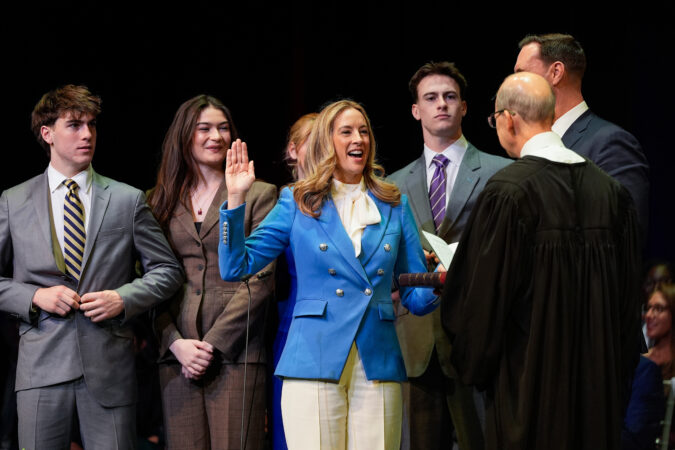
    NEWARK, N.J. — Mikie Sherrill was sworn in as New Jersey governor Tuesday, becoming the second woman to govern the state and the first from the Democratic Party.

    Sherrill, who is also the first female veteran from either party to be elected to the office, broke tradition by opting to be inaugurated in her home county of Essex, in northern New Jersey, instead of the state’s capital city, Trenton.

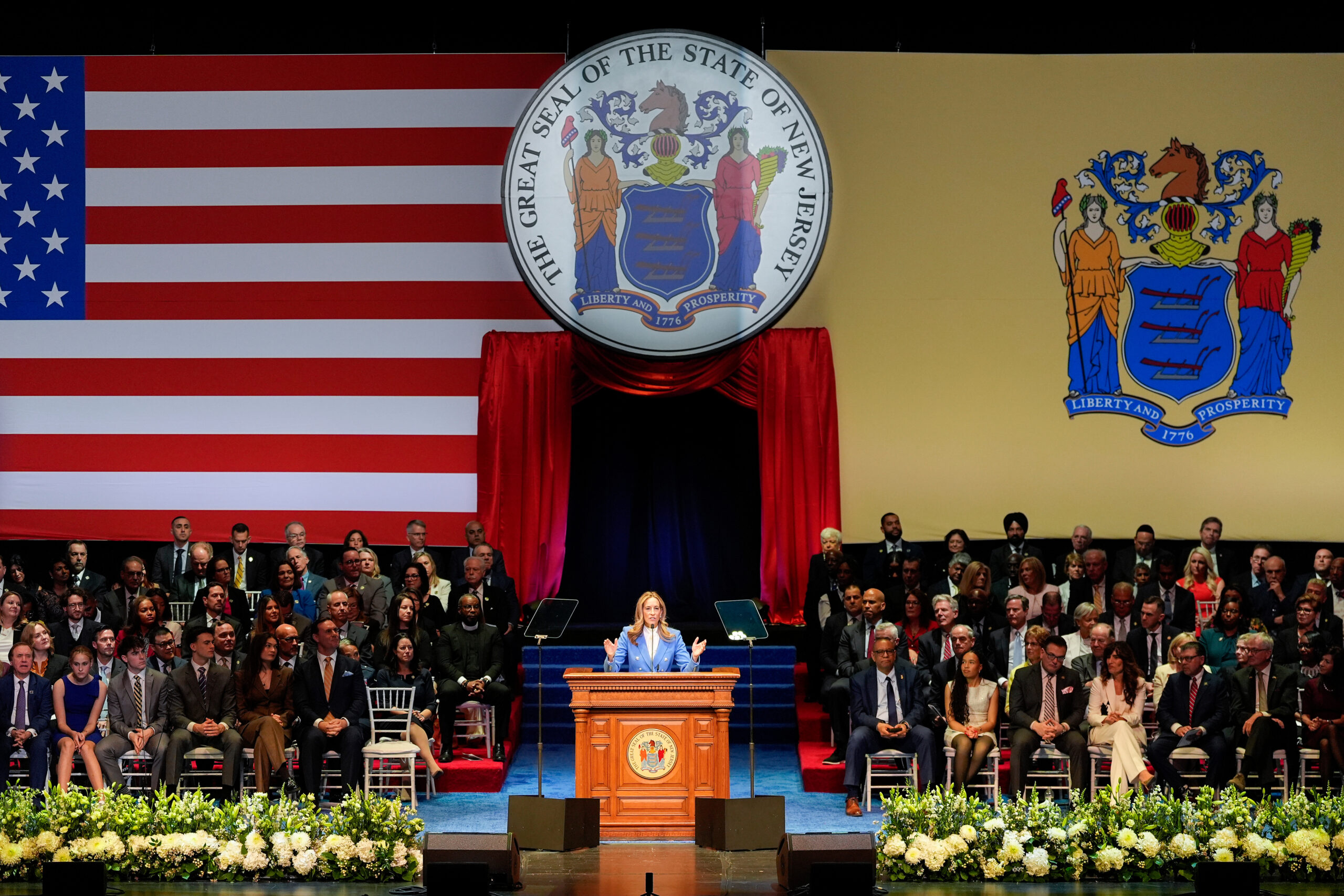
    She took the oath at the New Jersey Performing Arts Center in Newark in the morning. Joined onstage by her family and high-profile Democrats, Sherrill spoke about her love for New Jersey and denounced President Donald Trump in a speech on Tuesday.

    She also gave two shout-outs to South Jersey, noting that she learned on the campaign trail that South Jerseyans say “pork roll” instead of “Taylor Ham.”

    “I have heard you in South Jersey, where you want jobs, transportation investments, innovative businesses, and not to be forgotten or left behind,” she also said.

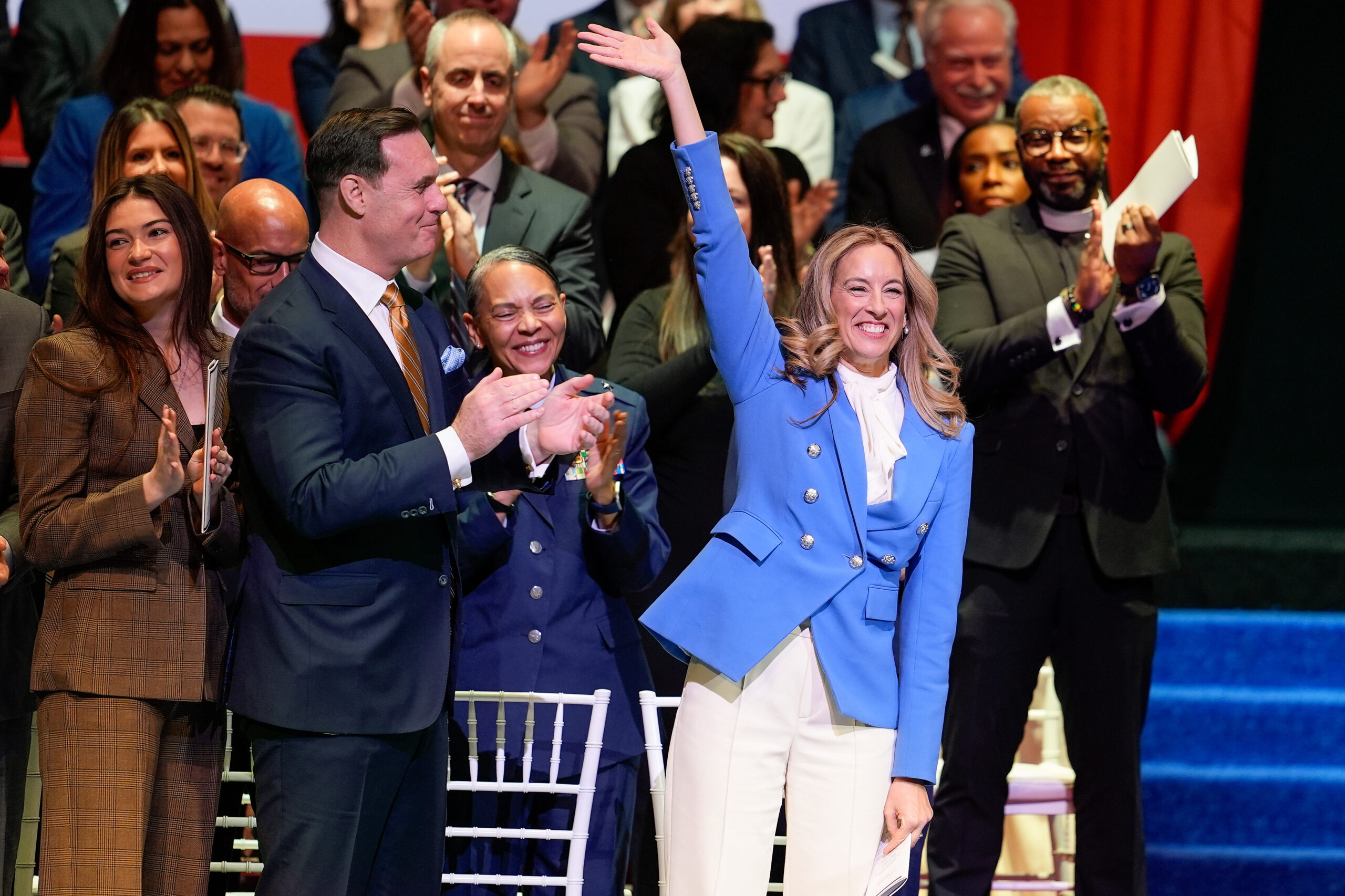
    New Jersey Governor-elect Mikie Sherrill waves as she arrives for her inauguration, Tuesday, Jan. 20, 2026, in Newark, N.J. (AP Photo/Seth Wenig)

    She even referenced Philadelphia while talking about the founding of the United States — in a very Jersey way.

    “In fact, not too far away, in the greater Camden metropolitan region, in a place called Philadelphia, Thomas Jefferson wrote a declaration of our independence, marking the birth of this great nation,” she said.

    “This entirely unique and revolutionary declaration claims human beings had universal rights to life, to liberty, to the pursuit of happiness, not because of who their parents were, but because every human being is endowed with these rights by their creator, not by a king,” she added, and was met by applause.

    She drew parallels between England’s king at the founding of the United States and Trump, whom Democrats have criticized through “no kings” protests. Sherrill said Trump is “illegally usurping power, unconstitutionally enacting a tariff regime to make billions for himself and his family while everyone else sees their costs go higher.”

    Sherrill, a former Navy helicopter pilot, former federal prosecutor, and mother of four, was elected to Congress in 2018 and stepped down in November after winning the election, defeating Jack Ciattarelli, who had won the endorsement of Trump.

    Sherrill, whose closely watched candidacy drew significant national support, promised during her campaign that she would make New Jersey more affordable and would stand up to Trump.

    She told voters she would declare a state of emergency on utility rates on her first day in office, a promise she executed while still onstage for her inauguration speech right after being sworn in. She signed two bills: one freezing utility rates and the other encouraging more energy production in the state.

    White flowers lined the front of the stage, and large American and New Jersey flags served as a backdrop.

    Virginia Gov. Abigail Spanberger, Sherrill’s friend and former congressional colleague, was in attendance. Spanberger became Virginia’s first female governor on Saturday in a ceremony attended by Sherrill and other high-profile Democrats.

    New Jersey and Virginia were the only states to hold gubernatorial races last year, and the Democratic victories were viewed as a positive sign for the party heading into the midterms with Trump in the White House.

    Sherrill, who turned 54 on Monday, succeeds Gov. Phil Murphy, a Democrat who served two terms. It’s the first time the same party has held the governor’s mansion for three consecutive terms since 1970.

    After the ceremony, Sherrill was slated to head to Trenton to sign more executive orders before going back north for an inaugural ball Tuesday evening at the American Dream in East Rutherford.

    Sherrill’s lieutenant governor, Dale Caldwell, 65, was also sworn in Tuesday. Caldwell, a Middlesex County-based Methodist pastor, most recently worked as the first Black president of Centenary University. He has worked for state government, started nonprofits, and led charter schools.

    In his speech Tuesday, Caldwell said his father marched with the Rev. Dr. Martin Luther King Jr., whom he and Sherrill both mentioned in their speeches.

    “My father taught me that faith must be active, not passive. He taught me that justice is not an idea, it is a responsibility,” Caldwell said. “And he taught me that service is not optional, especially for those who have been blessed with opportunity.”

    Sherrill defied expectations on both sides of the aisle by winning what had been viewed as a competitive race by 14 points. Republicans had felt optimistic in part because the state shifted red in 2024, but those gains bounced back in November. The resident of Montclair similarly won a crowded primary by more than 100,000 votes in June.

    During her campaign, Sherrill repeatedly reminded voters of Ciattarelli’s ties to Trump and leaned into the president’s unpopularity in the state.

    Sherrill’s campaign repeatedly held events in Newark leading up to her election with the support of Newark Mayor Ras Baraka, a progressive who placed second in the Democratic primary.

    Her decision to be inaugurated up north was celebrated by Newark officials, but Trenton City Council member Jennifer Williams, a Republican, argued in an op-ed that it was an insult to Trenton.

    The governor-elect visited Camden on Monday to celebrate Martin Luther King Jr. Day and announced that she will divert resources to the city to honor the civil rights leader.

    Christine Todd Whitman, the first woman to serve as New Jersey governor, used the same venue as Sherrill when she was sworn in for her second term in 1998 while the war memorial in Trenton, the traditional site, was undergoing renovations.

    Whitman served as a Republican from 1994 to 2001 before joining the Bush administration and has since left the Republican Party for the Forward Party. She endorsed Sherrill’s candidacy.

    New Jersey Gov. Mikie Sherrill speaks after taking the oath of office during an inauguration ceremony, Tuesday, Jan. 20, 2026, in Newark, N.J. (AP Photo/Seth Wenig)
  • Mikie Sherrill announces she’ll steer resources to honor MLK in Camden in visit ahead of inauguration

    Mikie Sherrill announces she’ll steer resources to honor MLK in Camden in visit ahead of inauguration

    A day before taking the oath as New Jersey governor, Mikie Sherrill said in a visit to Camden on Monday that she will steer resources to the city to commemorate the Rev. Dr. Martin Luther King Jr.

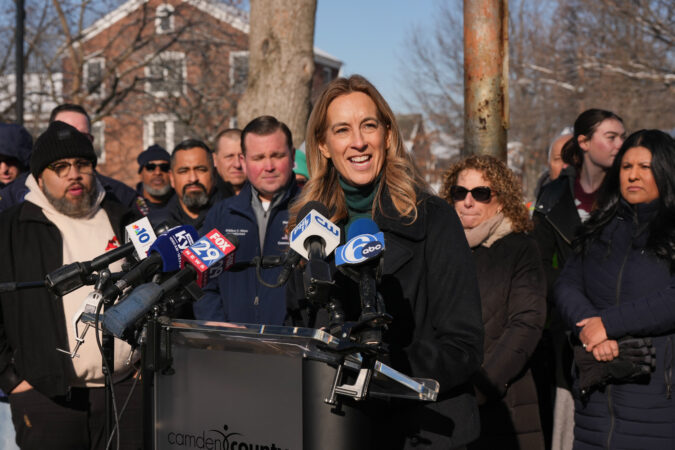
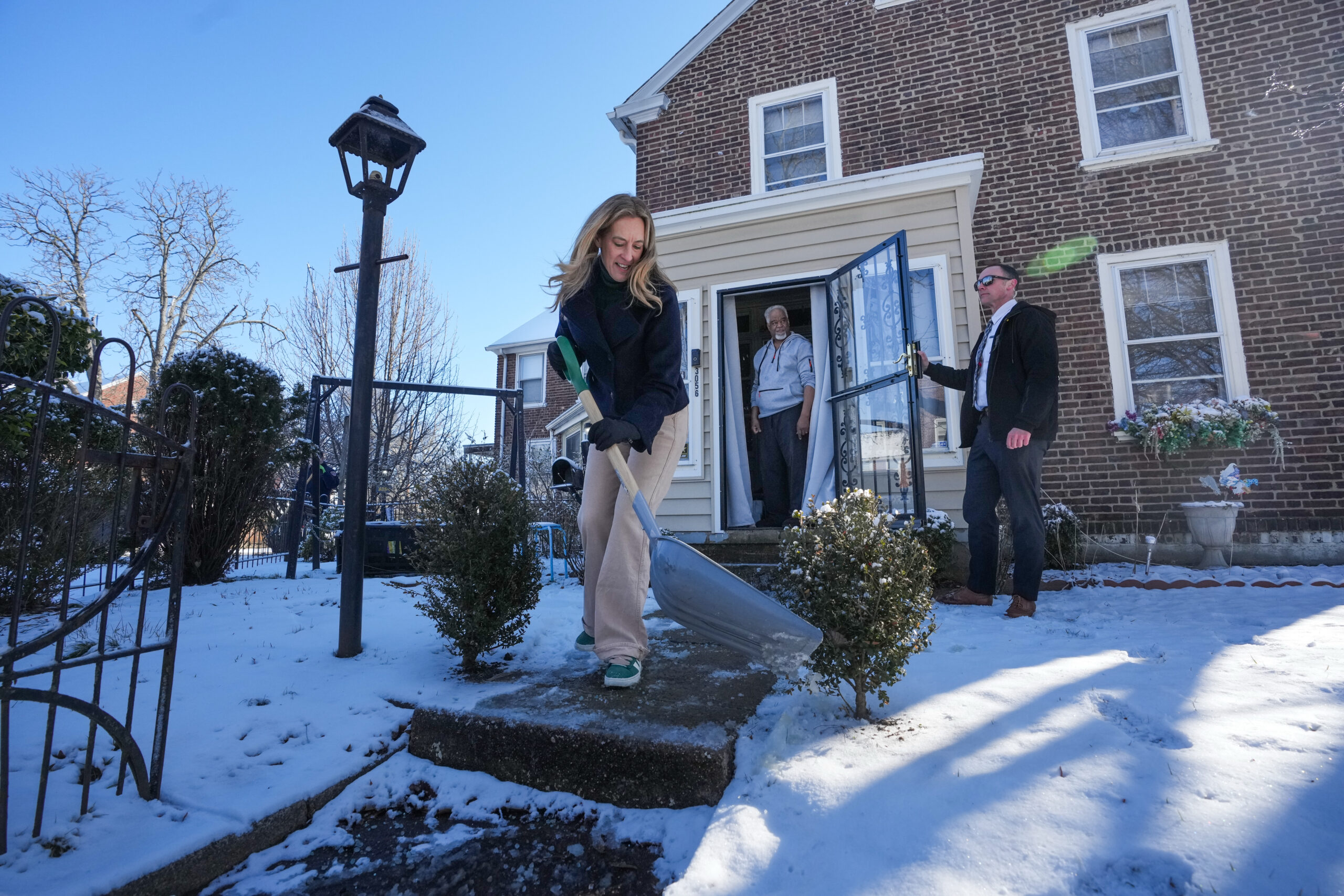
    Sherrill visited Camden on Monday morning to observe Martin Luther King Jr. Day by joining a community effort to shovel snow. In a short speech, she emphasized King’s historical connection to Camden and an incident he’s said to have cited as sparking his interest in becoming a civil rights leader.

    “I’m going to work with the city of Camden to make sure we can better bring this history to light, that we bring resources to commemorate the real birth of this movement here in Camden, New Jersey,” she said.

    Sherrill’s team told local officials last week that she would be announcing plans to commission a statue of King for Camden, but they backtracked minutes before her announcement to instead make a broader promise.

    New Jersey Gov.-elect Mikie Sherrill shovels snow for a resident, as volunteers shovel snow at Fairview Village on Martin Luther King Jr. Day during a day of service Monday in Camden.

    Her transition team later told The Inquirer that Sherrill “is excited about the chance to elevate the history of Martin Luther King Jr. in Camden, and will work with the community on different possibilities to do this, including with a statue.”

    Sherrill’s decision to come to Camden on MLK Day — the eve of her swearing-in and also her 54th birthday — was significant to local officials. It showed that the diverse South Jersey city is at the top of her mind after it resoundingly voted for her in November and improved turnout compared to the last gubernatorial election.

    Camden Mayor Victor Carstarphen said in an interview on Saturday — anticipating a statue announcement — that he would want King to be honored in a spot in Farnham Park that has sat empty since a statue of Christopher Columbus was removed in June 2020 amid a nationwide reckoning on racism after former Minneapolis police officer Derek Chauvin murdered George Floyd.

    Camden released a statement at the time saying the statue’s removal was “long overdue.”

    Carstarphen said the city has been wanting to replace that statue with one that’s more fitting for the community at some point. He said “it only makes just great sense” for King’s honor to be put there.

    A headless statue of Christopher Columbus that was dismantled and then knocked off a trailer in Farnham Park in Camden on June 11, 2020.

    State Sen. Nilsa Cruz-Perez, a Democrat who represents Camden, said in an interview on Friday that residents were surprised that Sherrill chose to come back to Camden so soon after being elected.

    “It’s a good message for the South Jersey region that she is going to be available for South Jersey, that she’s someone who’s going to pay attention,” Cruz-Perez said.

    City Council member Nohemi Soria-Pérez, who works as the chief of staff for Cruz-Pérez and two local assembly members, said Sherrill’s attention to Camden, and the possibility of a King statue, is “just such a positive step forward into what we see in the future.”

    The (debated) significance of MLK to Camden

    Sherrill said in her speech that she loves learning “so many neat things about our state that otherwise you just wouldn’t realize, even places you pass by every single day.”

    “And I have to tell you, one of the coolest was hearing about Martin Luther King’s history in Camden, the fact that many scholars say he had his very first act of civil disobedience here in Camden,” she added.

    She was referencing an incident in 1950 in which King and his friends reported that they were refused service at Mary’s Cafe, a tavern in Maple Shade Township in nearby Burlington County — not Camden — while attending Crozer Theological Seminary in Pennsylvania’s Delaware County.

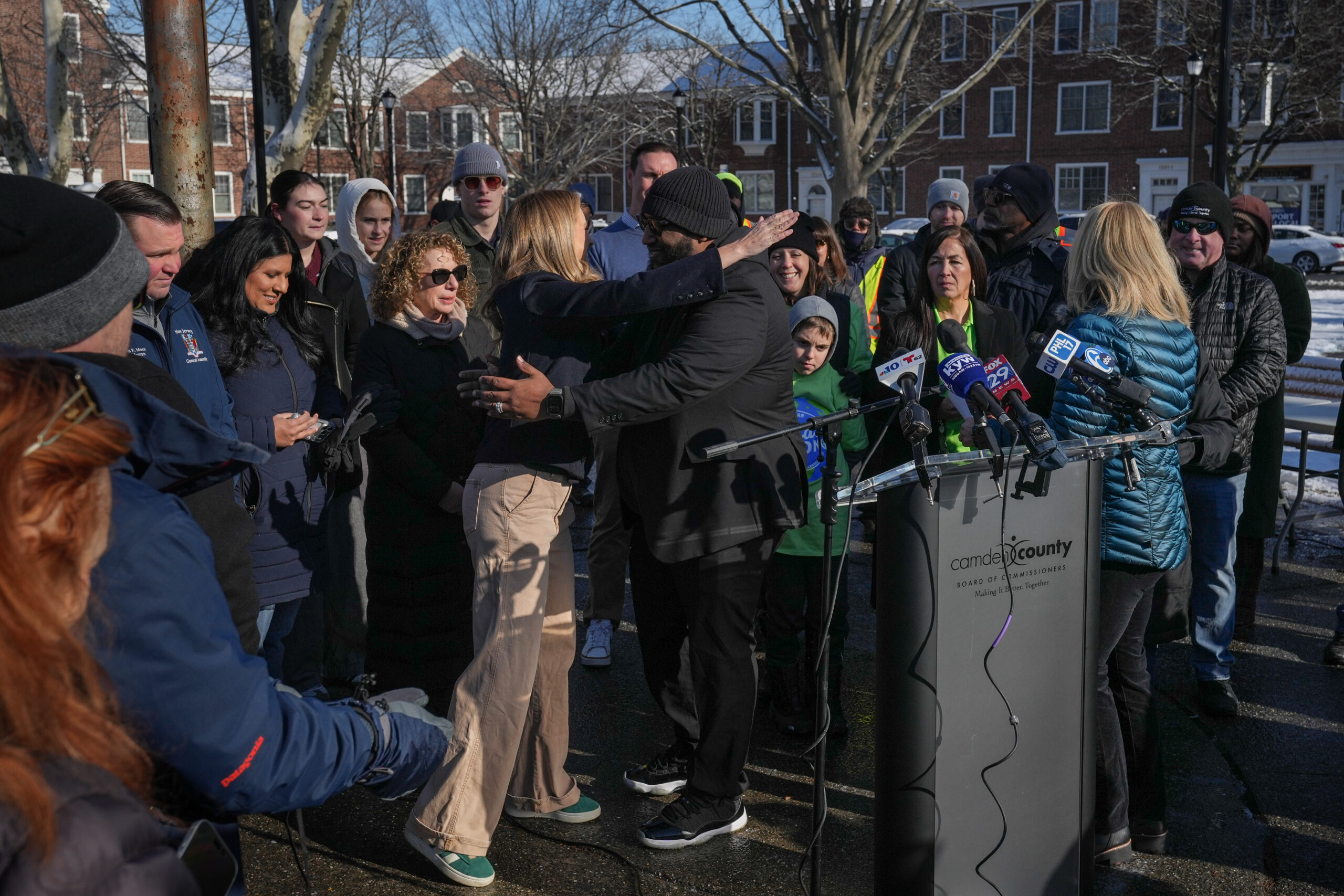
    New Jersey Gov.-elect Mikie Sherrill (center left) hugs pastor Pastor Daniel Brown from Freedom Worship Assembly Church, as volunteers gather to shovel snow at Fairview Village on Martin Luther KingJr. Day during a day of service on Monday in Camden.

    King often recounted the incident as an example that sparked his interest in the civil rights movement, according to the Southern Christian Leadership Conference and reported in a 1976 Inquirer obituary of the tavern owner.

    Widespread accounts of the incident indicate that the tavern owner shot his gun in the air, but Sherrill said in her speech that King had a gun “pointed at him.”

    “I didn’t realize that he lived in Camden during his years as a student at Crozer Theological Seminary from 1948 to 1951,” she also said.

    That may be because historians have argued there is no evidence King actually lived in the house, but rather stayed there during visits.

    The state denied an application to designate the house as a historical landmark in early 2020 after it commissioned an unprecedented $20,000 study by Stockton University, which made the case that the home wasn’t King’s residence.

    The belief that King lived in the home stems in part from the building’s then-owner and his daughter saying the civil rights leader lived there “on and off for two years.”

    Regardless of the disputed details, King is widely understood to have a connection to Camden.

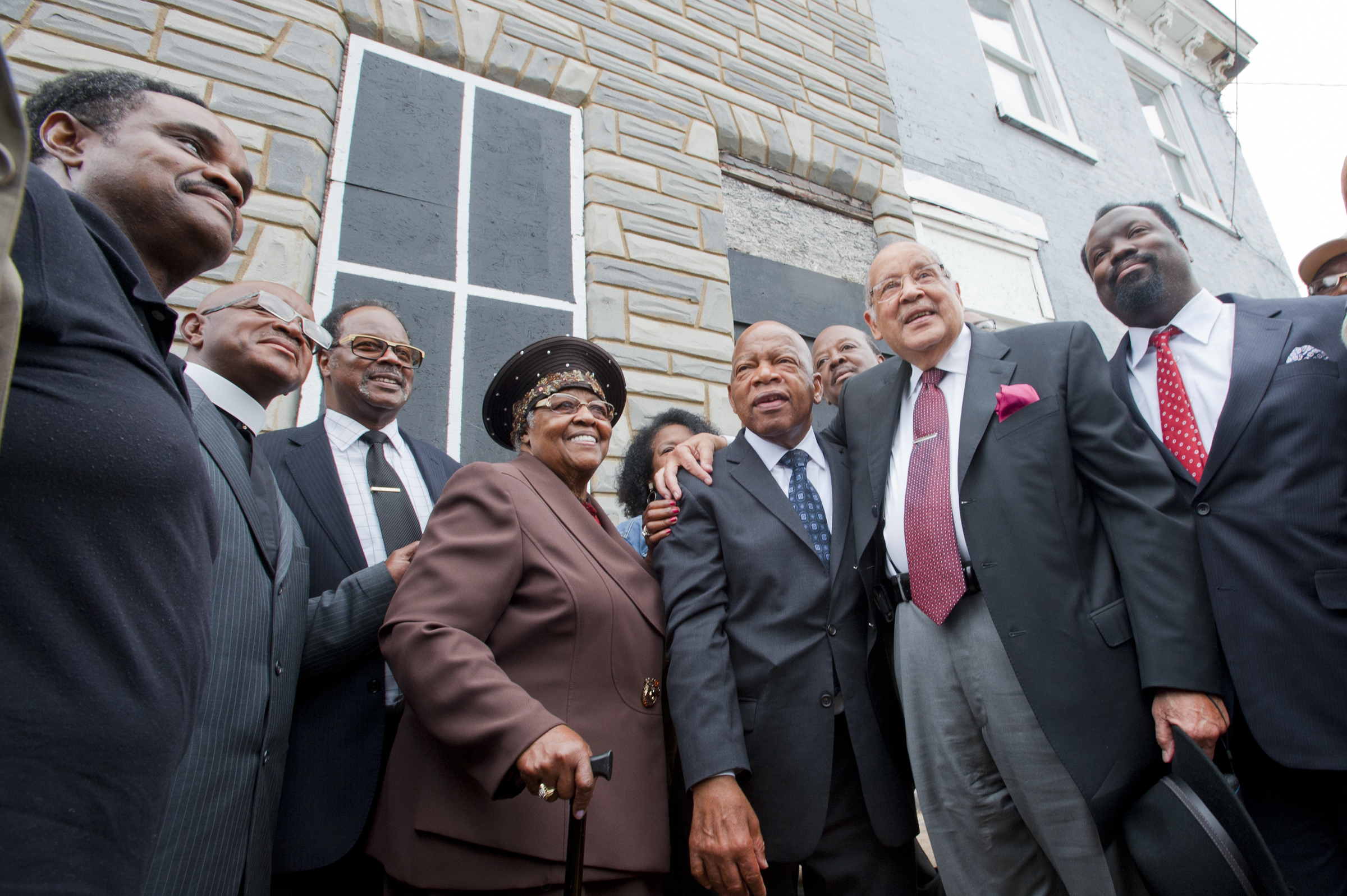
    Civil rights icon and U. S. Rep. John Lewis of Georgia (center) is surrounded by admirers during his visit to the Walnut Street property in 2016.

    David Garrow, a historian and the author of the King biography Bearing the Cross, has previously said he believes King spent time in Camden and likely occasionally stayed at the Walnut Street house where he visited his friend.

    The state-commissioned study noted that King “almost certainly” stayed there the night of the Mary’s Place incident described by Sherrill.

    John Lewis, a civil rights leader and member of Congress who died in 2020, visited the building in 2016 and called it a “piece of historic real estate that must be saved for generations yet unborn.”

    Local advocates have sought to rehabilitate the Walnut Street home — which sustained a fire in 2023. A 2017 grant of $229,000 was earmarked to renovate the building — which sat vacant and in disrepair even before the fire — but the money was diverted to the city’s fire department in 2018 without explanation.

    Voter turnout in Camden increased 63% from the last gubernatorial election in 2021 to 2025, and the city voted for Sherrill with 92% of the vote.

    Sherrill and running mate Dale Caldwell visited the city repeatedly in the weeks leading up to Election Day, and Caldwell was in Camden on Saturday. The city’s population is nearly 38% Black and more than 54% Latino, and Sherrill’s campaign had outreach teams specifically catered toward both groups.

    Carstarphen said a statue of King would be “a daily reminder” to Camden’s residents that “our city matters.”

    “It sends a powerful message to us that we’re not an afterthought,” he said ahead of Sherrill’s visit.

  • Brian Fitzpatrick criticizes House Speaker Johnson as Pa. swing-district Republicans join Democrats in ACA subsidies vote

    Brian Fitzpatrick criticizes House Speaker Johnson as Pa. swing-district Republicans join Democrats in ACA subsidies vote

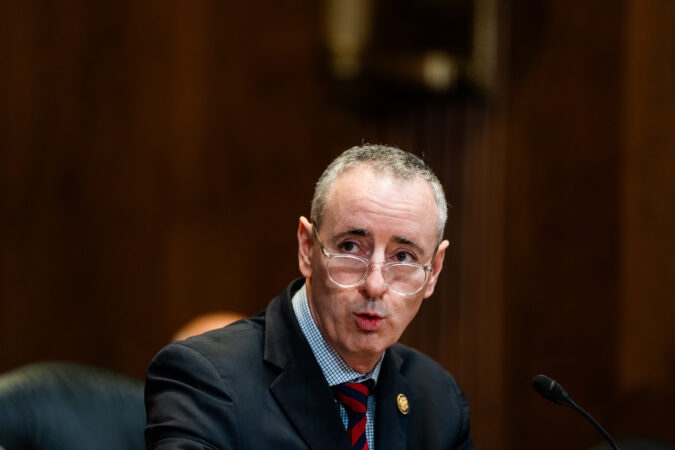
    U.S. Rep. Brian Fitzpatrick accused some of his Republican colleagues of being “intellectually dishonest” about the Affordable Care Act, hours before he and other Republicans broke party lines to pass a bill to restore recently expired healthcare subsidies.

    The Democratic-led bill passed the House by a vote of 230 to 196 after Fitzpatrick and eight other Republicans backed a discharge petition the previous day, in the latest rebuke of Republican House Speaker Mike Johnson.

    The bill now heads to the Senate, where its fate is uncertain.

    Fitzpatrick, a moderate Republican who represents purple Bucks County, was one of 17 Republicans to cross the aisle Thursday to back the legislation that will restore healthcare subsidies after insurance premiums spiked this month, following their expiration at the end of last year. The bill would extend the subsidies, enacted in 2021, for another three years.

    He said some of the pushback “unfortunately, is ideological” as he explained frustration with other members of his party, including Johnson.

    “I’ve made the point to them many times over,” he said. “You are entitled to criticize something, provided that you have a better alternative. … I’ve been hearing a lot of talk out of my colleagues for a long period of time without any concrete plans.”

    He noted that the expiration of the subsidies could lead to a rate increase for everyone if fewer people have coverage as a result, not just the approximately 8-10% who qualify for the subsidy, for whom the credit is “everything,” he said.

    The issue could be an important one in congressional races later this year if lawmakers don’t resolve the matter, which was also one of the main sticking points during last year’s government shutdown.

    Fitzpatrick is one of three swing-district Republicans in Pennsylvania who backed the effort, along with freshman GOP Reps. Ryan Mackenzie and Rob Bresnahan. All three are being targeted by Democrats in the fall election.

    A fourth swing-district Republican in the state, U.S. Rep. Scott Perry, was among the legislation’s detractors.

    Perry shared a video Wednesday to social media of President Donald Trump accusing Democrats of being “owned” by insurance companies.

    “These companies are thriving, not hurting,” Perry said in a post accompanying the video. “Subsidies are direct cash transfers from the Treasury (YOU) to their bank accounts. But they’re worried that their money tree is going to be chopped down, so now they’re threatening to pass off higher costs to consumers to keep their profits high.”

    Janelle Stelson, a Democrat who is seeking a rematch against Perry after narrowly losing to him in 2024, criticized the GOP incumbent’s opposition to the bill.

    “Forcing Pennsylvanians to pay an average of 102% more on insurance premiums is unacceptable,” Stelson said, noting the average increase to plan costs on Pennie, the state’s insurance marketplace. “Some Republicans in Pennsylvania are working across party lines to try to help their constituents, but Congressman Perry is again refusing to do anything.”

    About 90% of people who bought insurance through Pennie for 2025 qualified for some amount of tax credit, but with the expiration of the enhanced tax credits this year the cost of health insurance through Pennie and other ACA marketplaces has skyrocketed.

    About 1,000 people a day are dropping their Pennie health plans, deciding the coverage is too expensive, according to Pennie administrators. A total of about 70,000 people who bought Pennie plans in 2025 have dropped their coverage as of the end of December, said Devon Trolley, Pennie’s executive director.

    Philadelphia area residents are expected to pay, on average, more than twice as much in 2026. Philadelphia’s collar counties are seeing more moderate cost increases, ranging from an average 46% price hike in Chester County to a 70% average increase in Delaware County.

    Fitzpatrick had released his own legislation last month, but he chose to support the Democratic bill after his proposal failed to get traction. He said he expects some of his ideas, including income caps and anti-fraud provisions, to be amended into the legislation in the Senate.

    Fitzpatrick said he met with several Senate Republicans on Thursday who said that the successful discharge petition “really breathed new life into their negotiations” after the upper chamber failed on its own compromise attempts.

    “They just said, short-term, try to rack the number up as high as you can get, because the more crossover votes we can get, the stronger message it’ll send to the Senate majority leader that they need to move something quickly,” he said.

    Fitzpatrick warned that more discharge petitions could be coming in the House if Johnson doesn’t change his leadership approach.

    The healthcare vote comes just weeks after the House voted to discharge and then pass a bill to release files related to Jeffrey Epstein, after Johnson had slow-walked the legislation.

    “It’ll keep happening if bills that have the support of 218 members of the House are not given floor time,” Fitzpatrick said.

  • New Jersey digital innovation office that uses AI becomes permanent with new law

    New Jersey digital innovation office that uses AI becomes permanent with new law

    New Jersey Gov. Phil Murphy’s digital innovation office has been made a permanent cabinet-level office in what appears to be the first move of its kind in the nation as the role of artificial intelligence increases in government.

    Murphy created the New Jersey State Office of Innovation in 2018 to improve digital innovation in state government.

    And now it’ll remain a fixture in New Jersey after he leaves office, following Murphy’s signing Monday of a bill that turns the office into an authority within the Treasury Department.

    Gov.-elect Mikie Sherrill, who will be inaugurated on Jan. 20, will oversee the new authority. Sherrill supports the office, but even if she didn’t, the new law means a governor can’t just get rid of it.

    Georgetown University’s Beeck Center, which tracks these efforts nationally, has identified 17 states with digital innovation offices, including Pennsylvania. But the university and Murphy’s office say New Jersey is the first to codify a cabinet-level position of its kind into law.

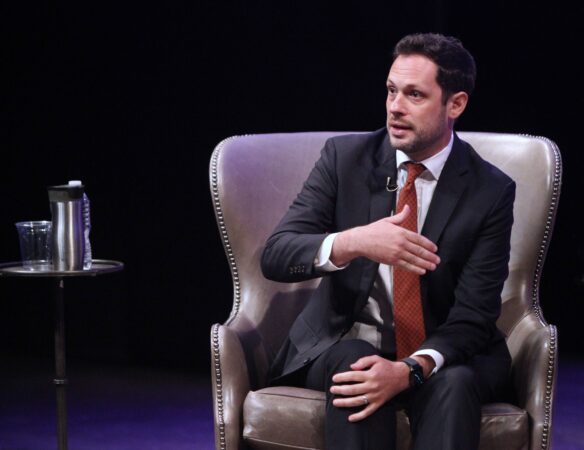
    The new law also helps the office fund projects between departments more easily and opens up the possibility of revenue streams such as by selling its technology to other state governments or local governments within the state, said Dave Cole, a Haddonfield resident who leads the department. The law also requires a board of directors appointed by the governor.

    The state innovation office has worked with almost every state agency to identify problems that can be fixed with technology in an effort to make government services more efficient, Cole said.

    In one example, it helped the Department of Labor redesign emails for its unemployment program, which had used decades-old design technology and hard-to-understand legalese that was slowing down the claim process because it wasn’t user-friendly.

    In another, the office used machine learning to identify 100,000 students eligible for summer food assistance who weren’t getting it.

    The office has also modernized call centers and even created an internal AI chat bot for state employees that helps draft emails, summarize documents, and analyze public feedback — shaving days off the process of aggregating public comments.

    Employees are told repeatedly that AI is a tool and that human review is still needed, Cole said.

    “The person that’s using the AI needs to be accepting responsibility for the use of and any dissemination of information after they’ve reviewed it,” he said in an interview.

    The office was awarded what it called a “first of its kind” grant last month to utilize AI in government.

    Cole, 40, said his team’s approach to AI is to make bureaucratic processes more efficient, like summarizing fraud information, generating memos, and matching disparate data sets.

    “Our purpose isn’t to solve an AI problem as much as it is to solve a resident problem, a business owner problem — sometimes, when we work with higher education, an institutional problem,” he said. “And often AI, more recently, emerges as a tool that can help us through that.”

    The bill passed by 29-8 in the Senate with three members not voting on Dec. 22 and by 61-13 in the Assembly on Dec. 8, with four members not voting and two abstentions.

    Sherrill said she will keep Cole in his position as she puts together her administration.

    “I look forward to working with Dave as we modernize the way New Jerseyans access state government services and build a government that works for everyone,” Sherrill said in a statement.

    Cole, a Rutgers grad, worked with data and analytics as an organizer for former President Barack Obama’s 2008 presidential campaign before developing the White House website and online petitions as part of the presidential administration.

    That work was simpler than the projects he does now given the rapid development of AI — but reached the same goal of increased civic engagement, he said.

    After his work there, Cole then pivoted to the private tech sector and made an unsuccessful bid for Congress in South Jersey in 2016 before joining the state’s innovation office in 2020 to help with pandemic vaccine distribution before eventually rising to chief innovation officer a year ago, replacing Beth Noveck, who now works as the chief AI strategist in the same office.

    “Generally speaking, there’s a lot of pain. There’s a lot of unsolved problems. There’s a lot of improvements that we need to see,” Cole said. “And so if we understand how to effectively leverage technology, we can do good there, but we have to be careful with anything like this.”

    One project Cole is looking forward to this year is building the option for residents to use one online account for various government agencies and allowing for their data to be shared across departments to pre-populate forms.

    Not only can that simplify processes for residents who choose to participate, but it can make it easier for government agencies to recommend different government programs by getting information about applicants it wouldn’t otherwise receive, he said.

    “Having that information allows us to do really interesting things, like ‘You’re enrolled in this program, did you know you may also be eligible for this other program?’” he said. “This has been for a long time, I think, sort of a dream of folks who do this kind of digital technology work to recommend and automatically enroll people in benefits based on their eligibility.”

    Working with Sherrill to cut through red tape

    Sherrill campaigned on “cutting through that red tape and bureaucracy.” When asked to elaborate by The Inquirer at a mid-November campaign appearance in South Jersey, she said “a lot of it is just putting stuff online.”

    She also said she wants to address redundancies for residents who need to go through different government organizations and find out they have more steps than they initially thought.

    “I’ve heard too many stories of people who do the five steps they need to get a permit, and they go back and they go, ‘Well, here’s five more,’” she said in November. “So there’s not a lot of clarity, transparency, or accountability in getting through this process.”

    That’s the kind of work the innovation office has been doing through business.nj.gov, a centralized website for starting and growing a business, and Cole looks forward to doing more of it in partnership with Sherrill.

    New businesses that use the website launched an average of a couple of weeks sooner than those that didn’t, Cole said.

    “It has many agencies, permits, and licenses integrated in it, but not all,” he said.

    “And one of the challenges is that agencies have many priorities about the things that they need to work on at a given point in time, so I think the governor-elect’s focus on this could allow more clarity there,” he added.

    This article has been updated to reflect the office is cabinet-level.

  • Steve Sweeney to be paid up to $287K in new Gloucester County job after being appointed during Friday commissioners’ meeting

    Steve Sweeney to be paid up to $287K in new Gloucester County job after being appointed during Friday commissioners’ meeting

    Former New Jersey Senate President Steve Sweeney, who finished last in the six-way Democratic primary for New Jersey governor in June, will receive a six-figure salary in Gloucester County for a new role.

    The Gloucester County Board of Commissioners appointed Sweeney as county administrator at its public reorganizational meeting Friday night. The role has a salary rage of $191,308 to $287,168.

    The resolution appointing Sweeney, 66, to the position is tucked away in an unsearchable 236-page packet posted online Friday afternoon, just hours before the meeting. It does not say what Sweeney will be paid, but the document specifies that the county will provide him with a vehicle that can be utilized for personal use — “as in the past,” the resolution notes.

    Sweeney replaces Chad Bruner, the county’s longtime administrator who recently stepped down. Bruner chairs Rowan University’s Board of Trustees, which Sweeney joined in September.

    The resolution easily won approval by the board, which is composed of five Democrats and two Republicans. All five Democrats voted yes. Republican Nicholas DeSilvio voted no, while Republican Chris Konawel Jr. abstained from voting in protest.

    “They violated procedure, and I do believe that was an illegal meeting,” Konawel said Saturday morning.

    Democratic commissioners wouldn’t allow him to object to a “consent agenda,” which would have let commissioners look more closely at each resolution on the agenda, Konawel said. He said he received a copy of the resolution just four hours before the meeting, and noted that the vote was scheduled during a meeting with no public comment period.

    “The biggest thing for me is, we just handed somebody a $290,000 a year job, with no idea what his qualifications were,” Konawel said.

    Sweeney’s contract will last 5 years, the maximum for the role.

    Sweeney, a longtime friend of power broker George Norcross and an ironworker union leader, served the longest tenure as state Senate president, the most powerful position in New Jersey government aside from governor.

    But the West Deptford Democrat lost his reelection in 2021 to Trump-aligned Republican Ed Durr, a truck driver with little funding who planned to also run for governor before dropping out last year.

    The Republican commissioners first found out that Sweeney was picked for the role through the rumor mill weeks ago when department heads were given a heads-up behind closed doors, Konawel said.

    Konawel and DeSilvio each questioned Sweeney’s credentials in part because he didn’t attend college.

    “I kind of thought that they would actually go through a process to pick somebody qualified. I didn’t think they would just give it to Steve Sweeney, but that’s what they did,” DeSilvio said.

    Sweeney and Democratic leaders on the county board could not be reached on Friday for comment.

    Since leaving the state Senate, Sweeney served as the founding chair of a think tank at Rowan University called the Steve Sweeney Center for Public Policy.

    He attempted a political comeback last year, but his campaign for governor failed to gain traction outside of South Jersey and he did worse than expected even within the region.

    Sweeney ran to the right of his opponents on certain issues, like by saying he would get rid of the state’s sanctuary policy for undocumented immigrants, a stance touted by Republicans.

    He avoided the press in the final days of his campaign and left his party quietly just minutes after his loss, which signaled another failure of the South Jersey party machine. He won Gloucester and Salem Counties by wide margins but lost to Gov.-elect Mikie Sherrill in the other three southern counties that endorsed him.

    As county administrator, Sweeney will oversee all county department heads and can sign off on all personnel actions. The powerful role also comes with the authority to help prepare the county budget, authorize payments, take part in board discussions (without voting power), inquire into county operations, and sign off on behalf of the clerk of the board if the clerk is absent.

    County administrators are paid six-figure salaries throughout the state, but Gloucester County has developed a reputation for paying its administrator particularly well.

    Bruner was the second highest paid county administrator in the state at $253,324 in 2023, according to data compiled by the Bergen Record. The highest county administrator salary that year was in Middlesex County, which has more than double the population of Gloucester, according to the Census Bureau. Sweeney’s starting salary was not stated at the meeting, according to Konawel.

    Sweeney cannot be removed from the role without cause for the duration of his contract, and if he is, he will still receive his remaining salary, according to the resolution. He will be eligible for raises.

    Attorney General Matt Platkin expressed disapproval over the position’s high salary last month, noting that Gloucester’s County administrator was making more than the governor, whose salary is $175,000 and will raise to $210,000 this year when Sherrill takes office.

    “A county administrator making $100k more than the current governor’s salary is a pretty good argument to keep the comptroller as an independent agency to combat waste, fraud, and abuse in local government,” Platkin said in a social media post in early December when the state legislature was considering an ultimately unsuccessful bill to limit the watchdog’s power.

  • Karen Dalton, who plans to challenge Scott Perry in the GOP primary, has her own definition of RINO

    Karen Dalton, who plans to challenge Scott Perry in the GOP primary, has her own definition of RINO

    If she makes it on the ballot, Karen Dalton will be U.S. Rep. Scott Perry’s first primary opponent since 2012 – the year he first won the seat.

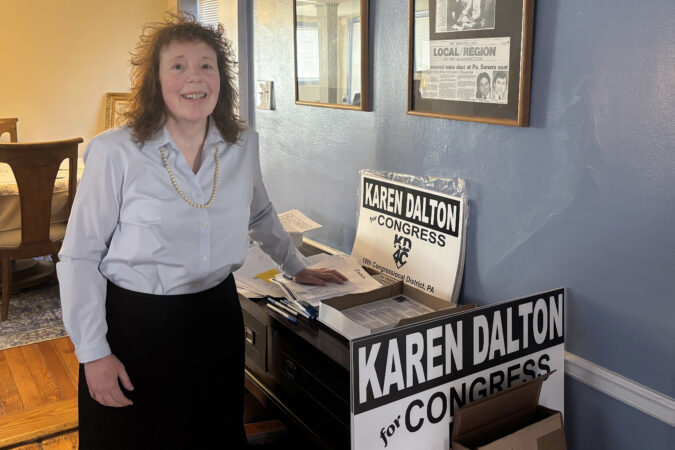
    Dalton, a retired staff attorney for the Pennsylvania House Republicans, knows the odds are against her as she runs a solo campaign operation out of her living room. But she thinks she has a shot.

    The 65-year-old Carlisle resident is irked by President Donald Trump’s policies both from a faith-based standpoint and a legal one.

    She holds many views that align with Democrats, which may draw accusations that she’s a “RINO,” or Republican in name only. But she argues she’s a Republican at heart.

    “I was talking to a senior citizen the other day, and the first thing he said to me was, ‘So you’re a RINO,” said Dalton, 65. “And my response to that was, well, if you mean ‘Respect for Individuals and Not Oligarchs,’ I’ll go along with that. He goes, ‘No, no, no, I’m a RINO too. I’m that old school Republican that believes in helping people.’ I’m like, ‘Yes, thank you. That’s what I’m talking about getting back to.’”

    Perry, a longtime ally of President Donald Trump who supported his unsuccessful attempts to overturn the 2020 election, represents Dauphin County and parts of Cumberland and York Counties in Central Pennsylvania. He appears to be particularly vulnerable this year as the district has shifted toward Democrats and Republican-turned-Democrat Janelle Stelson, a former local news anchor, had a razor-thin loss against him in the general election last year. She plans to run again in the Democratic primary.

    Dalton, in a long-ranging interview with The Inquirer in her living room, called Donald Trump’s One Big Beautiful Bill Act the “Big, Brutal Betrayal of the American Dream Act,” because of its cuts to Medicaid and SNAP.

    She believes former Vice President Kamala Harris should have pushed back more on Trump’s claims about transgender people in the 2024 election, argued that the term “illegal alien” is factually incorrect, and says on her website that climate change is a real threat.

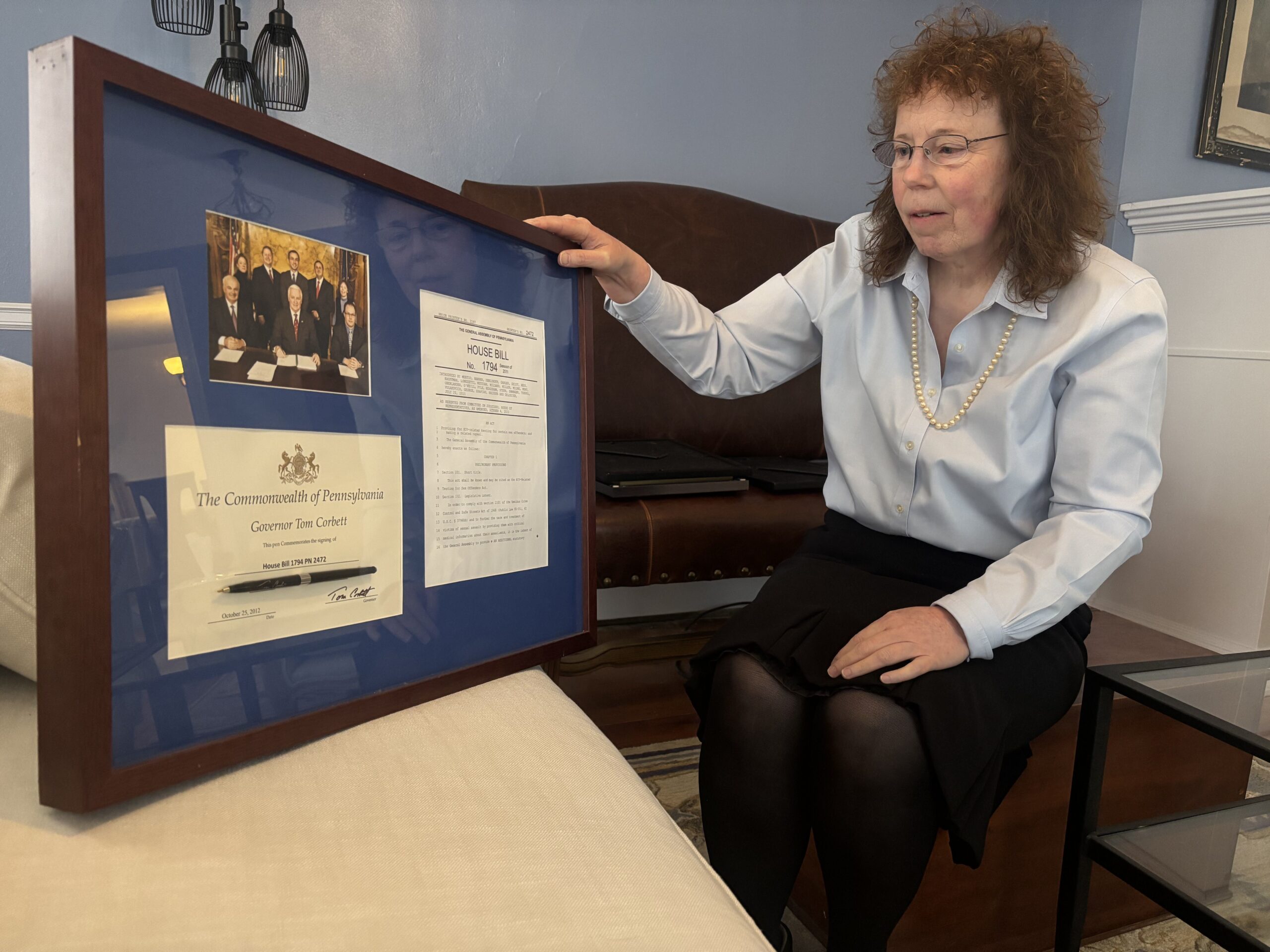
    Karen Dalton, who plans to challenge Scott Perry in the Republican primary, holds materials from a bill she worked on in Harrisburg in her Carlisle home on Monday.

    She supports a $15 federal minimum wage and a millionaire’s tax, and wants to raise the corporate tax rate. She supports abortion rights and believes health care is a human right, though she’s fearful of what she views as over-regulation from Democrats.

    Her walls are covered with Republican political memorabilia and a poster of the late Sen. Robert F. Kennedy, a Democrat who was assassinated during his 1968 presidential campaign.

    She noted that she was a Republican when Donald Trump was a Democrat.

    Her path to victory, she believes, is convincing enough independents and Democrats – particularly former Republicans – to change their registration to support her in the May GOP primary.

    “You know, independents have been upset many years because Pennsylvania has a closed primary system … if they register as Republicans, they get to vote in a primary against Scott Perry and not wait until November,” she said.

    Primary challengers are rarely successful. Dalton reported under $3,000 in contributions – and an approximately $6,000 loan from herself — through September, which is pennies compared to the more than $1 million Perry reported.

    But she only needs to gather 1,000 signatures and pay a $150 filing fee to appear alongside him on the primary ballot.

    Perry’s campaign did not respond to a request for comment about Dalton as of Wednesday.

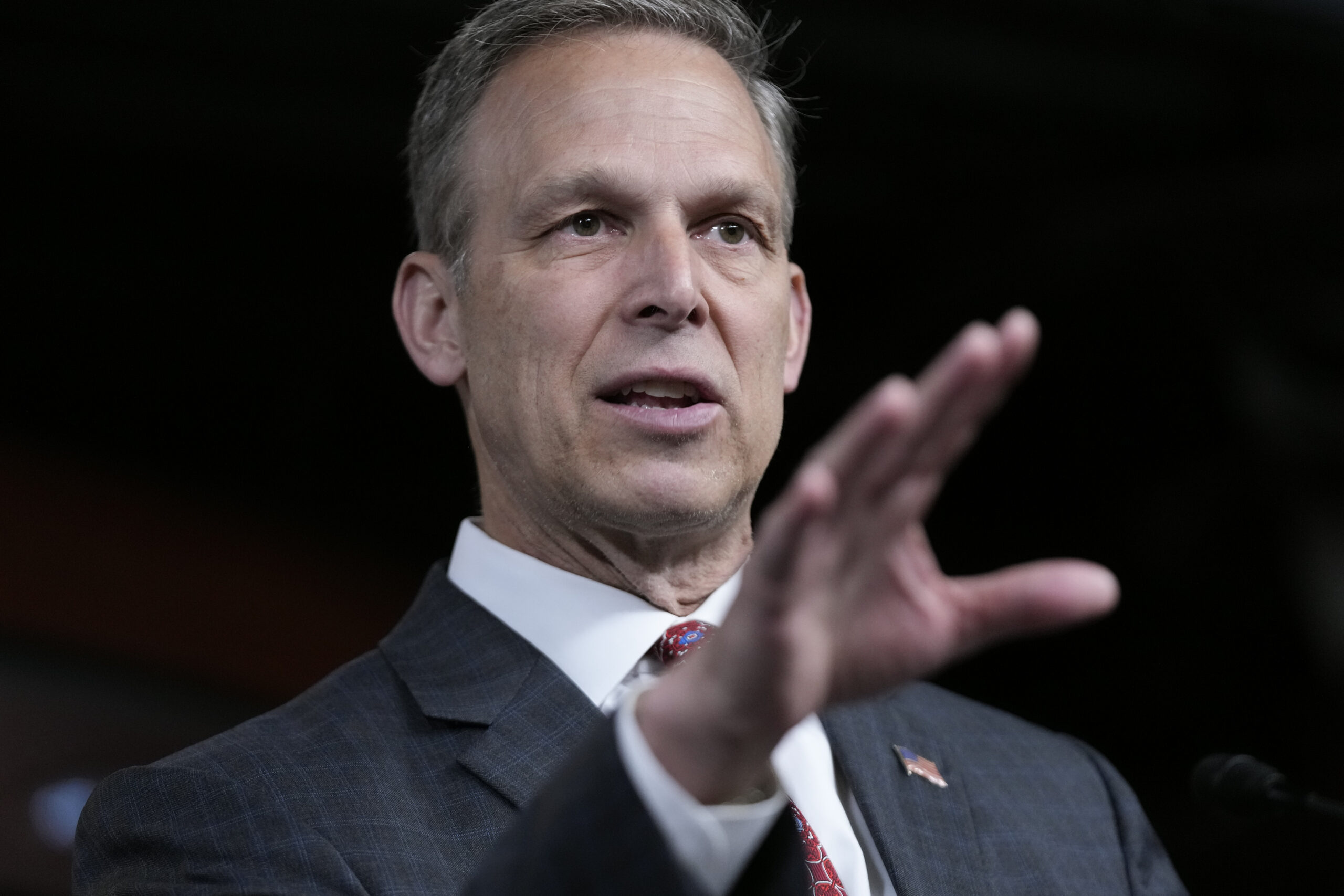
    U.S. Scott Perry speaks during a news conference on Capitol Hill in Washington in July 2023.

    Rosy eyed about the old Republicans

    Dalton grew up in New Jersey and was the first in her immediate family to go to college, attending Montclair State University before getting her politics graduate degree at New York University and later attending law school.

    She lives in Carlisle near Dickinson Law — her “beloved alma mater” — in a home she bought just four years ago at age 61. With student loans hanging over her head for the vast majority of her career, she couldn’t afford a down payment until her state retirement payday.

    She has no kids and she’s never been married — “I spent a lot of time reading and studying and going to school,” she said. These days, she takes piano lessons and plays pickleball, and does pro bono legal work when she’s not knocking on doors for her one-woman campaign.

    Dalton is rosy-eyed about moderates of the Republican Party’s past. She managed former U.S. Rep. Jim Greenwood’s (R., Bucks) successful state Senate campaign in 1986 and worked for New Jersey Republican Gov. Tom Kean, who wrote The Politics of Inclusion. She later worked as a staff attorney for Pennsylvania House Republicans for 25 years, where she focused on domestic violence and child sexual abuse legislation.

    “I’m convinced that if the Republican Party wants to survive and thrive, we need to give up what Donald Trump believes in, and return to our roots,” she said.

    Dalton, whose parents were both Democrats, changed her registration from independent to Republican in 1984 at the age of 24 after her first job working for Ralph J. Salerno’s unsuccessful state Senate campaign in New Jersey. When he lost, “amazingly, nobody took up arms,” she said.

    “I mean, I cried in his lapel, but you know, it’s just like he conceded, and everybody moved on,” she said. “There was no insurrection, there was no battle, there was no violence, there was no ‘Oh, there was voter fraud.’ None of that stuff happened, because that’s the way things used to be before Donald Trump was president.”

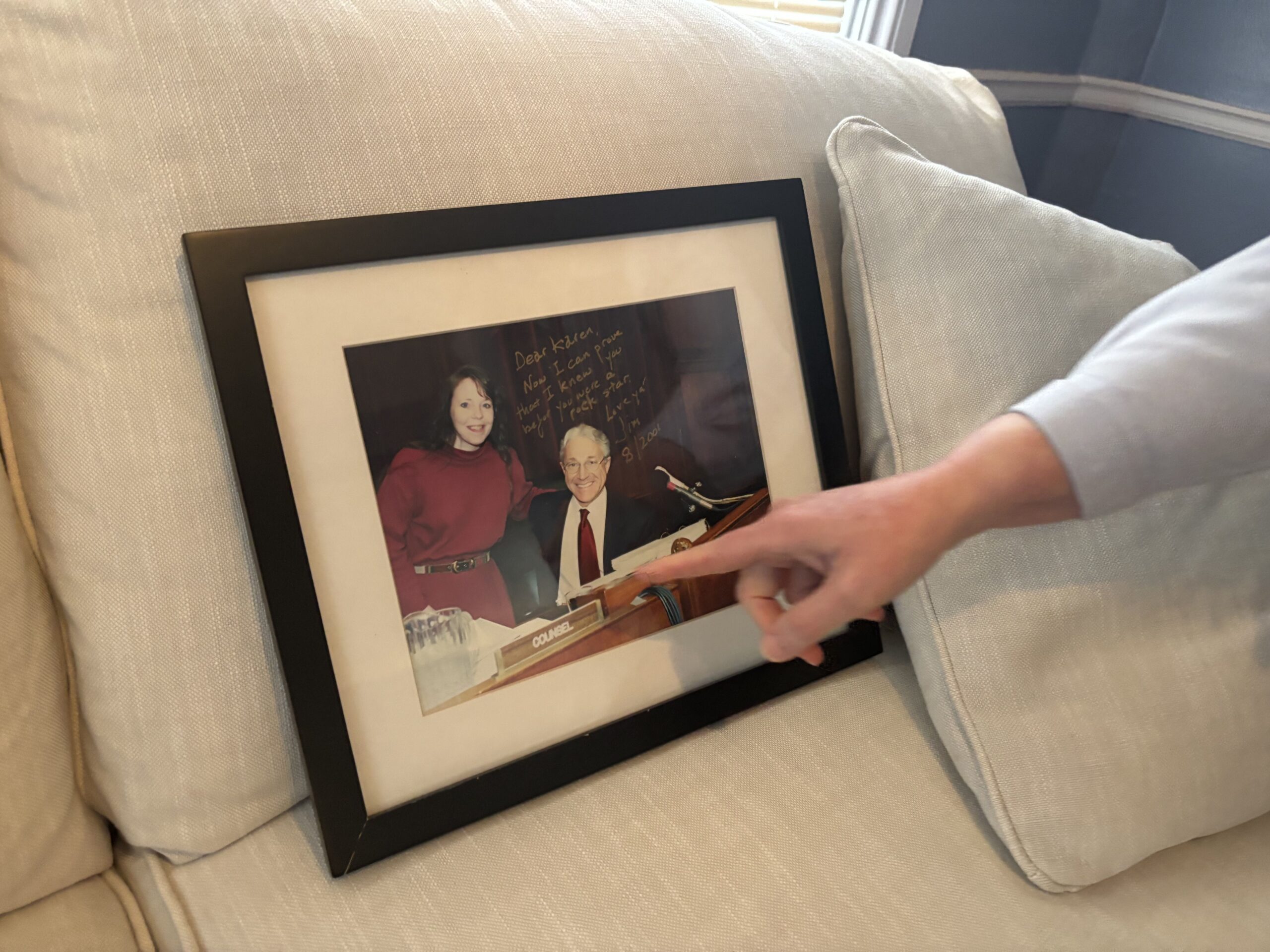
    Karen Dalton points to a photo of herself and her old boss Jim Greenwood in her Carlisle home on Monday. A message from Greenwood says: “Now I can prove that I knew you before you were a rock star.”

    Tired of yelling at the television

    Dalton said she didn’t think she’d become a candidate herself during her years working for politicians. But she said “steam started to come out of my ears” when Trump tried to end birthright citizenship, and again when House Speaker Mike Johnson mused about defunding the federal judiciary.

    “I just couldn’t sit back anymore … I got tired of yelling at the television,” she said.

    While Dalton argued that Trump’s rise in 2015 has soured the Republican Party, much of her criticism concentrated on the Jan. 6, 2021 riot and what followed.

    Dalton worked with Perry in Harrisburg when he was a state representative, and she described him as “an incredibly nice man” despite her misgivings about his efforts to overturn the 2020 election and continued alignment with Trump. (She calls him “morally blind” on her website.)

    When asked if she ever supported Perry, Dalton said she wasn’t comfortable talking about who she voted for in the past because “ballots are private.” She did say that she didn’t vote for Trump in 2024, and she voted for Stelson, Perry’s Democratic challenger.

    “I can tell you that I don’t vote for insurrectionists,” she said.

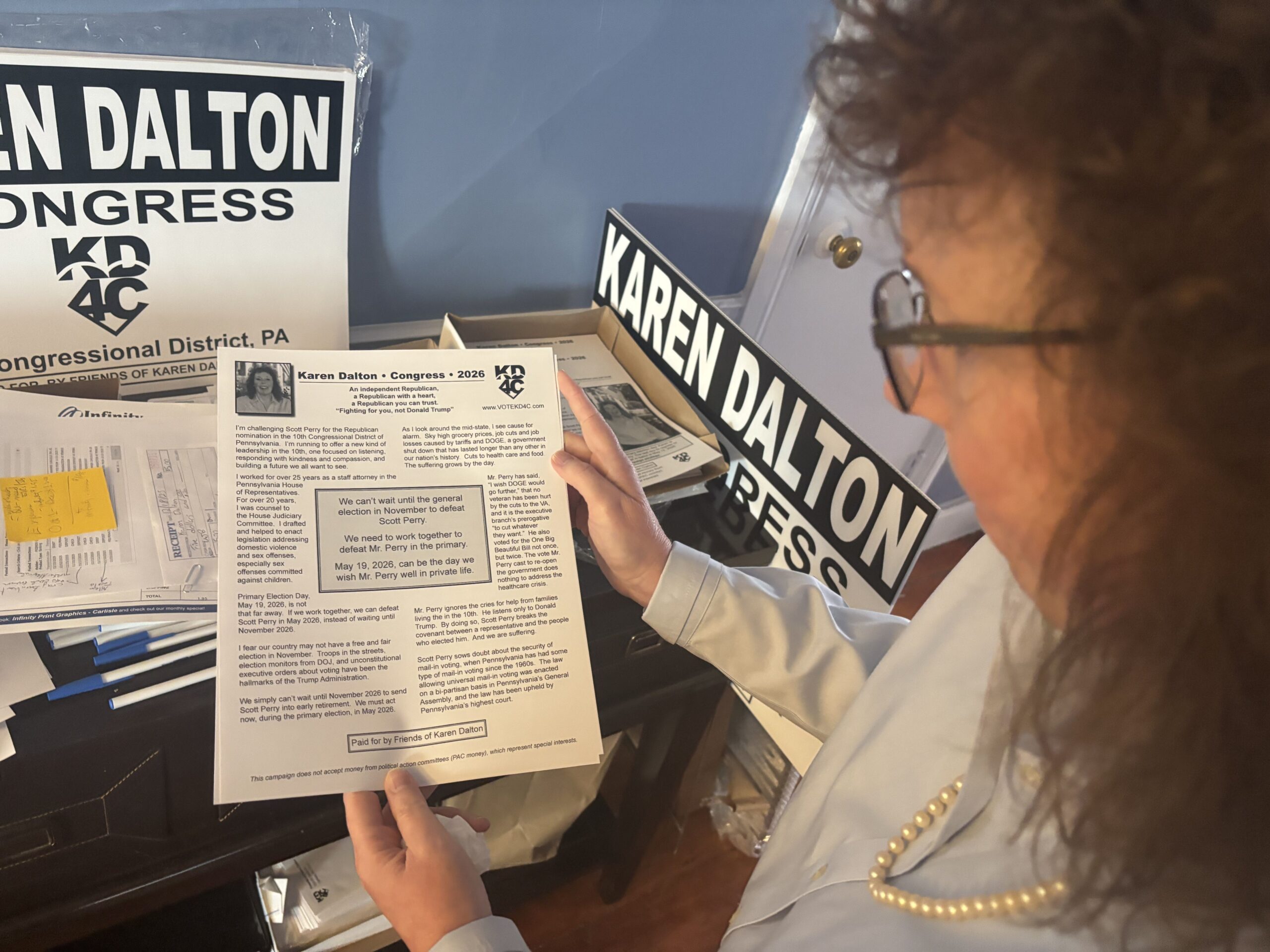
    Karen Dalton, who plans to challenge Scott Perry in the Republican primary, calls a table in her living room her “campaign headquarters.”

    Policy informed by faith

    Dalton was raised Catholic, confirmed Episcopalian, and has attended the Unitarian Universalist Church. Though she hasn’t converted, she now identifies as Jewish, and was moved to tears while talking about a late mentor who introduced her to the religion – noting that speaking about the subject made her “verklempt,” a Yiddish term for emotional.

    “One of the things I love so much about Judaism, in addition to its focus on social justice, is the idea that you get to disagree,” she said, a handful of crumpled tissues in her lap.

    Her faith informs her approach to public policy, from opposing cuts to healthcare subsidies to appreciating ideas across the political spectrum.

    One of her flagship policy proposals is creating a way for people to borrow up to two years worth of their own Social Security benefits before they reach retirement age to help with things like a down payment, tuition, or medical expenses – one that would have helped her buy a home earlier.

    Another is a scholarship program that would allow students in any field to borrow the full amount of their education from the federal government through loans that would be forgiven if they serve “the public good,” a rebuke of Trump’s One Big Beautiful Bill’s borrowing limit on federal student loans.

    She also wants to create a program to pay for the education of students who want to pursue careers in science and guarantee employment at national health or science institutions, including a new foundation for scientific discovery.

    Dalton has brought her neighbors into her home to discuss her ideas, and plans to do it again.

    She also held a town hall at Central Penn College in Enola that she said drew 15 people.

    “That’s 15 more people than Scott Perry looked in the eye and talked to over the past five years at his town halls that didn’t exist,” she said.

  • How Camden tells the story of Mikie Sherrill’s big win and New Jersey’s blue wave

    How Camden tells the story of Mikie Sherrill’s big win and New Jersey’s blue wave

    The story behind New Jersey Gov.-elect Mikie Sherrill’s landslide victory last month can be understood by looking at her strong performance in the city of Camden.

    The young, diverse, and working-class city exemplifies trends that played out across the state as Sherrill reversed rightward shifts among the voter groups Democrats desperately need to rebound with nationally.

    An Inquirer analysis of municipal-level data shows that Sherrill outperformed both former Vice President Kamala Harris in 2024 and outgoing Democratic Gov. Phil Murphy in 2021 across New Jersey’s 564 cities, boroughs, and townships, winning 300 — about 53% — of them as compared with Harris’ 252 last year and Murphy’s 210 four years ago.

    She reversed gains made by President Donald Trump last year that gave Republicans false hope that Jack Ciattarelli, who was aligned with and endorsed by Trump, would do much better in November than he actually did as Sherrill outperformed expectations.

    window.addEventListener(“message”,function(a){if(void 0!==a.data[“datawrapper-height”]){var e=document.querySelectorAll(“iframe”);for(var t in a.data[“datawrapper-height”])for(var r,i=0;r=e[i];i++)if(r.contentWindow===a.source){var d=a.data[“datawrapper-height”][t]+”px”;r.style.height=d}}});
    Camden’s population is more than 54% Hispanic and nearly 38% Black — Democratic-leaning voter groups that had shifted toward Trump nationally in 2024. Sherrill’s campaign had outreach operations geared toward both Black and Hispanic voters.

    Every demographic group in the state swung toward Democrats this year, but Sherrill’s most striking improvement over Murphy and Harris seemed to be among Hispanic people, who make up more than half of Camden’s population.

    She similarly made gains in areas across the state that have high populations of young voters, lower-income voters, and voters without college degrees — like Camden.

    Voters in Camden turned out for Sherrill resoundingly with 92% of the vote, more than 10 percentage points better than Harris performed in the city during her presidential run last year, and Sherrill outperformed the former vice president in every one of the city’s 40 precincts. The larger the Hispanic share of the voting district, the larger it shifted toward Sherrill.

    This was reflected statewide, with the state’s 10 largest Hispanic-majority cities moving an average of 18 points to the left while other New Jersey municipalities moved just about four points toward the Democrat.

    Latino outreach in Camden fueled Hispanic support

    window.addEventListener(“message”,function(a){if(void 0!==a.data[“datawrapper-height”]){var e=document.querySelectorAll(“iframe”);for(var t in a.data[“datawrapper-height”])for(var r,i=0;r=e[i];i++)if(r.contentWindow===a.source){var d=a.data[“datawrapper-height”][t]+”px”;r.style.height=d}}});
    Outreach to Hispanic voters was driven by a coordinated campaign between Sherrill’s campaign and the state Democratic Party, as well as independent expenditure groups. It seemed to pay off.

    In Camden’s most heavily Hispanic precinct, for example, voters gave Sherrill 92% of the vote, 12 points more than they gave to Harris.

    Sherrill’s campaign and its backers knew how important it was to win over these voters who had felt taken for granted by the Democratic Party.

    Sherrill had limited time to introduce herself to voters coming out of a six-way competitive primary in June — which she won big but with less success in some heavily Black and Hispanic areas. To many voters, especially in South Jersey, she was just another candidate.

    UnidosUS Action PAC experienced that unfamiliarity with Sherrill when its canvassers first started knocking on doors in Camden in September, said Rafael Collazo, the executive director of the PAC.

    “The question that Latino voters and voters that we spoke to had wasn’t if they were going to vote for Ciattarelli or not, because they were clearly against anyone associated with Trump,” Collazo said. “But they honestly weren’t sure if they were going to vote for Sherrill, because they didn’t feel like they knew her.”

    Sherrill’s campaign and backers tapped local leaders like pastors, nonprofit executives, and elected officials, and held events specifically catered to Latinos, said Vereliz Santana, the coordinated campaign’s Latino base vote director, who grew up in Camden.

    They spread the message through Spanish-speaking door knockers and Spanish-language ads, which Camden City Councilman Falio Leyba-Martinez, a Democrat, called “beyond impactful.”

    “She made it normal for people to understand that you don’t speak English,” he said.

    That was not always the case for New Jersey Democrats, according to Patricia Campos-Medina, a vice chair of Sherrill’s campaign and senior adviser for Sherrill’s Latino and progressive outreach. Democratic operatives in the state justified saving money on bilingual messaging over the last decade since most Latinos speak English, she said.

    “But the problem is that Latinos have to hear that you are talking to them … otherwise they feel like you’re just ignoring them,” she added.

    And it’s not just speaking Spanish. Showing cultural competency — such as using Puerto Rican slang or phrases like “reproductive healthcare” instead of “abortion rights” — is also critical, she said.

    window.addEventListener(“message”,function(a){if(void 0!==a.data[“datawrapper-height”]){var e=document.querySelectorAll(“iframe”);for(var t in a.data[“datawrapper-height”])for(var r,i=0;r=e[i];i++)if(r.contentWindow===a.source){var d=a.data[“datawrapper-height”][t]+”px”;r.style.height=d}}});
    Latino organizers in Camden said that community members who supported Trump or did not vote in 2024 have become frustrated by the high cost of living, slashed federal funding, and Immigration and Customs Enforcement’s tactics. Even those for whom immigration was not a top priority or who supported Trump’s plan to deport people who committed crimes have been dismayed, they said.

    Camden City Council President Angel Fuentes said videos circulating of immigrants being detained locally have been particularly resonant.

    “You can see the tears of these individuals,” he said. “You know, it’s so inhumane. I mean, I really want to use the f-word, but it’s so inhumane how they’re treated. Latinos … we are all family. We should not be treated like this.”

    Turnout increased compared to last race for governor

    Turnout is typically lower in cities with large numbers of lower-income voters and voters without college degrees, like Camden. But Democratic investments in the city seemed to make a difference this year.

    Camden saw a 63% increase in turnout compared with 2021. The jump in the city is more than double the 28% turnout increase statewide compared with the last race for governor.

    The city still has relatively low turnout compared with the full state, however, with only 26% of voters casting ballots in Camden compared with 51% statewide.

    Camden County as a whole was closer to the statewide turnout rate at 50%, but the county’s increase of 32% from 2021 was smaller than the city’s growth.

    Sherrill visited the city of Camden in July — early in her general election campaign — for a visit to CAMcare, a federally qualified health center that treats underserved communities, and went on to discuss it on a national podcast the next day.

    She did not return until October, at which point she visited the city three times in the lead-up to Election Day. Her campaign also held a rally outside city lines at the Camden County Democratic Party headquarters in Cherry Hill that Santana said was planned to feel “authentically Latino.”

    As part of their “scientific” strategy, Sherrill visited less-Democratic areas in the summer and early fall to try to win over swing voters before pivoting to bluer places like Camden, where they needed to motivate already-registered Democrats to cast their ballots, said Om Savargaonkar, the coordinated campaign director for Sherrill’s campaign and the New Jersey Democratic State Committee.

    As Sherrill zigzagged the state, a massive coordinated effort was underway to draw a strong Democratic turnout, bolstered by national funding from the Democratic National Committee.

    Sherrill’s coordinated campaign — the state party operation that worked with the campaign — made at least 19.5 million phone calls, door knocks, and text messages statewide, which was roughly 13 times more than the 1.5 million made for Murphy’s coordinated campaign in 2021, Savargaonkar said.

    Out of a roughly $12 million statewide investment, about $2 million to $3 million went directly to county parties to supplement the statewide turnout efforts, Savargaonkar said of the coordinated campaign.

    Sherrill did even better than previous Democrats in lower-income municipalities

    Democrats routinely score landslide wins in New Jersey’s working-class municipalities.

    Both Murphy and Harris posted double-digit margins in these communities, but Sherrill took that strong base and supercharged it. She won nearly two-thirds of the vote in the lowest-income municipalities and in places where fewer voters have college degrees — improving on Murphy’s and Harris’ performances by as much as eight percentage points.

    In Camden, fewer than one in 10 adults have a college degree and the typical household has an annual income of $40,000. That’s in a state where nearly 45% of residents are college-educated and with a median income of about $100,000.

    Sherrill’s campaign reached Latinos in Camden who voted for Trump last year because they believed he would make life more affordable but were having buyer’s remorse, organizers said.

    Her campaign spoke with locals about the negative impacts of Trump’s tariffs, engaging with everyone from distributors and manufacturers to local business groups, Santana said. Local surrogates also discussed Trump’s cuts to benefits and programs that help the community, said Camden Mayor Victor Carstarphen.

    And Sherrill’s focus on affordability and Trump resonated more broadly.

    She also won among voters in wealthier places, including the middle 50% of towns by median household income — places where Ciattarelli won four years ago and where Trump fought Harris to a near-draw last year. Like Harris before her, she managed to win the very wealthiest areas comfortably.

    While the city of Camden saw Sherrill’s biggest improvement over Harris in the county, her second-largest improvement came in nearby Runnemede, a borough in Camden County, where the typical household’s income is virtually identical to that of the state.

    Sherrill reversed losses among the youngest voters

    Trump made gains last year among younger voters across the country, and New Jersey was no different. The president won about 37% of the vote in the state’s youngest 25% of municipalities, beating Ciattarelli’s 2021 performance with that group by more than three percentage points even as he lost the state by nearly double Ciattarelli’s 2021 margin.

    This year, Sherrill reversed those inroads, improving on Harris’ performance by nearly eight points in places, including Camden, where the median age is 33. (New Jersey’s median age is 40.)

    Sherrill’s campaign made partnering with social media influencers a key part of her strategy as more young people focus their attention online. She appeared on national podcasts and in TikTok videos, on Substack, Reddit, and Instagram — often with Democratic-friendly hosts. Her team provided special access to influencers and held briefings with them.

    Sherrill appeared on 18 podcasts from January to October 2025, according to Edison Research, while Harris appeared on only eight during her campaign from July to November 2024.

    Her coordinated campaign’s statewide Latino effort also had its own social media, spearheaded by Frank Santos, a 33-year-old Camden resident of Puerto Rican and Nicaraguan descent. Santos and other staffers on the Latino outreach team represented different sub-demographics of “the larger Latino monolith,” Santana said.

    Organizers also catered their conversations to different sub-demographics through smaller and more “organic” events, she said, noting that younger voters were generally more progressive.

    “If you’re trying to connect with a community, knowing that you yourself reflect and represent that community, I think it makes the world of a difference,” she said.

    window.addEventListener(“message”,function(a){if(void 0!==a.data[“datawrapper-height”]){var e=document.querySelectorAll(“iframe”);for(var t in a.data[“datawrapper-height”])for(var r,i=0;r=e[i];i++)if(r.contentWindow===a.source){var d=a.data[“datawrapper-height”][t]+”px”;r.style.height=d}}});
  • Radnor school board is considering charter’s plan to open on Valley Forge Military Academy campus

    Radnor school board is considering charter’s plan to open on Valley Forge Military Academy campus

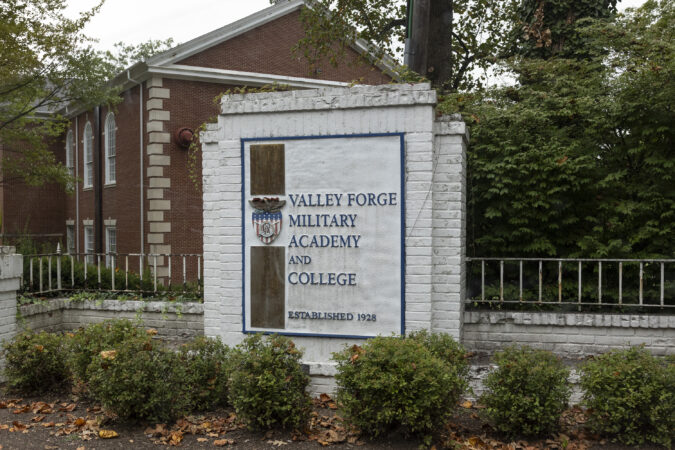
    Radnor school board officials are now considering a plan for a charter school seeking to open in the fall of 2026 on the Valley Forge Military Academy campus.

    A group seeking to open Valley Forge Public Service Academy Charter School on the site of the closing military school is already equipped with a leadership team and board, but it cannot open as a publicly funded charter school without approval from the local school board.

    The group began the formal charter approval process Tuesday at a Radnor school board meeting with a presentation pitching a nontraditional high school experience that could prepare students for public service jobs.

    Liz Duffy, the board president, said the board entered the hearing “with an open mind toward gathering information.”

    “And no decisions have been made or will be made on the application today,” she added.

    At least one more hearing will follow before the board votes on the proposal. Radnor has never approved a charter school, despite receiving earlier proposals.

    Why is there a charter proposal?

    Valley Forge Military Academy is slated to close for good in May. The once-elite private boarding school was plagued with myriad problems amid declining enrollment, rising costs, publicity over unaddressed abuse concerns, and, according to some parents, misplaced priorities. A two-year college on the campus will continue to operate.

    The Radnor school board has voted down two previous proposals to add a military-themed charter school to the campus, which the board had argued would serve as a way to subsidize the military academy. The current proposal, The Inquirer has reported, has been in the works since March — months before the private military academy announced it would shut down.

    Chris Massaro, a Radnor native who runs a firm that advises educational institutions, had begun working to help the military academy in January and thought a new charter school could be a way to preserve the institution’s legacy.

    Massaro said at the hearing Tuesday that he introduced charter school consultant Alan Wohlstetter to the Valley Forge Military Academy Foundation in April and “they got to work” on the plan. Massaro and Wohlstetter are both listed as founders of the potential new school.

    The applicants and the foundation are presenting themselves as separate entities that would simply have a landlord-tenant relationship.

    “This proposal is entirely new,” said Stephen Flavell, the prospective charter school’s founding CEO. “It has a new mission, new leadership, and a new board.”

    He said the school would provide a “uniquely different” experience for students who might not be a good fit for a regular public school.

    “This is an ‘and’ for Radnor, not an ‘or,’” he added.

    Charter schools are publicly funded but privately run, and receive per-pupil funding from school districts.

    What would the charter school offer?

    Organizers said the school would prepare students in grades six through 12 for public service jobs, such as law enforcement, emergency response services, and the military. The entity’s website says its mission is “to provide a rigorous, service-oriented education that emphasizes character, discipline, academic excellence and career readiness.” Applicant spokespeople emphasized providing students with career-path alternatives to four-year college degrees.

    The school would cap the number of Radnor School District attendees at 25%, and would also cater to students from nine other local school districts, according to the applicant team. “Every student graduates with a diploma plus,” said Deborah Stern, a board adviser for the prospective school. She said the school would give students opportunities to secure college credits or industry-recognized credentials in addition to their high school diploma, alongside connections in the field of their choice.

    Would there be any construction?

    Dave Barbalace of BSI Construction said the applicant team would pursue a $2.4 million renovation that would take six to seven months to “repair, refresh, and modernize” the building.

    The renovation would include making the restrooms on the first floor bigger, a new roof, walkway repairs, and an Americans with Disabilities Act-accessible ramp, he said.

    When would the charter school open?

    The applicant team said the school would be ready to open in September 2026 if it is approved by the Radnor School District.

    The school would have 50 students per grade, starting with just sixth through eighth grades in the fall and adding another grade each year through 12th grade..

    A few students have already pre-enrolled, according to the applicant team.

    What feedback has the proposal gotten?

    Jim Higgins, a lifelong Radnor resident who grew up across the street from the military academy, told the school board he did not support the prior two charter school proposals but is supportive of this one.

    “I care personally about what happens to the property, so I’ve been watching it,” said Higgins, who previously worked as a CEO and principal of a North Philadelphia charter school and has two kids in the Radnor school system.

    “I did not support the other charter applications. I thought they were the wrong people. There wasn’t a community investment. I’m excited by this one,” he added.

    Jibri Trawick, a member of the applicant team, said the team has done over 35 outreach events and collected 115 petition signatures, though not all are from Radnor residents since the school would serve the region. The applicants also have 18 letters of support from local businesses and organizations, Trawick said.

    One person at the hearing expressed concern about young students sharing a campus with college students, and another questioned what was different between the proposed school’s programming and the existing options for students at Radnor’s district schools and the Delaware County Technical School.

    Michael Kearney, a Wayne resident, expressed concern over whether the applicant team was planning for the unexpected expenses that come with using an aged building.

    “I caution you that we don’t get too excited about what is a great idea and ignore the uncertainty and risk that are inherent in the proposal,” he said.

    What comes next?

    This hearing was designed for the charter school team to present its project, and a second hearing set for Jan. 20 is designed for the board, the school district’s administration, and its solicitor to question the applicant team.

    The school board has to make a decision by March 1.

    If Radnor rejects the application, the group could reapply, and ultimately could appeal to the Pennsylvania Department of Education.

  • Former Sen. Bob Menendez is ‘forever disqualified’ from ever holding public office again in N.J.

    Former Sen. Bob Menendez is ‘forever disqualified’ from ever holding public office again in N.J.

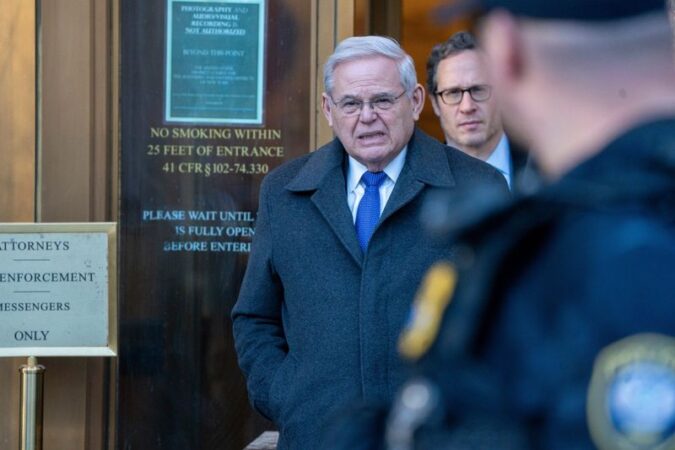
    Former U.S. Sen. Bob Menendez is permanently banned from holding public office in New Jersey. If he tries to anyway, he could face criminal charges.

    Mercer County Superior Court Judge Robert Lougy wrote in an order that Menendez is “forever disqualified from holding any office or position of honor, trust, or profit” in New Jersey state or local government.

    If the once-powerful New Jersey Democrat applies for public office or employment, or shows any efforts to campaign or be appointed to political office, he will be subject to a fourth-degree contempt of court charge.

    Menendez, 71, was convicted in July 2024 for selling the powers of his office to wealthy benefactors and acting as a foreign agent for the Egyptian government.

    He accepted bribes of gold bars, cash, a Mercedes-Benz, and more from 2018 to 2022 in exchange for using his position to advance the interests of three New Jersey business owners and Egyptian officials.

    Prior to his conviction, Menendez floated the idea of running as an independent to maintain his Senate seat as a competitive Democratic primary was underway to replace him.

    He ultimately did not run and South Jersey Democratic Sen. Andy Kim, a U.S. House lawmaker at the time, won his former Senate seat.

    In January, Menendez was sentenced to 11 years in prison and began serving in June at the Federal Correctional Institution Schuylkill in Minersville, Pa.

    New Jersey Attorney General Matt Platkin’s office announced Lougy’s order on Friday.

    “Critical to preserving the public’s faith and trust in government institutions is ensuring that elected officials who commit crimes involving their offices don’t find new opportunities to regain positions of power,” Platkin said in a statement.

    The former senator’s wife, Nadine Menendez, was convicted in April of serving a “critical role” in his scheme. She was sentenced to 4-and-a-half years in prison and is slated to begin her sentence next summer.

    Menendez rose from the Union City school board at age 20 to the powerful Senate Foreign Relations Committee chair position over the course of five decades, becoming mayor earlier in his career and later being elected to the U.S. Senate in 2006.

    Platkin’s office filed a lawsuit in May requesting Menendez’s lifetime ban on public office in New Jersey. At the time, Platkin’s office pointed to former Paterson Mayor Jose “Joey” Torres, who was convicted of contempt in December 2024 after running for mayor in 2022 in violation of a similar 2017 order not to run. sentenced to three years of probation through a plea deal, along with a $10,000 fine, in February of this year.

    Platkin said he hopes the order on Menendez “sends a message” that pubic corruption will come with consequences.

    “Too many people in New Jersey have a cynical viewpoint that corruption is a routine, widespread feature of our politics,” he added.

  • Pete Hegseth, in a 2016 talk, cited the same military law as the lawmakers he’s now calling seditious

    Pete Hegseth, in a 2016 talk, cited the same military law as the lawmakers he’s now calling seditious

    Defense Secretary Pete Hegseth previously emphasized the same military law that the Trump administration has been calling Pennsylvania lawmakers seditious for citing.

    Hegseth noted the military rule not to obey unlawful orders during a forum in 2016, when he was a Fox News contributor, in recorded remarks CNN unearthed on Tuesday.

    Hegseth spoke at length about his views on the military — and criticism of former President Barack Obama — in a talk titled “The US Military: Winning Wars, Not Social Engineering.” The talk was shared online by the Liberty Forum of Silicon Valley and was marked as taking place on April 12, 2016. Hegseth, an Army veteran, had a book coming out that he promoted at the event.

    The moderator asked him a question from an attendee: “Can you comment on soldiers who are being held at Leavenworth Prison for being soldiers?”

    Fort Leavenworth in Kansas is home to the military’s only maximum-security correctional facility, which houses prisoners convicted of violating the Uniform Code of Military Justice.

    Hegseth argued that some prisoners at the facility did not deserve to be there but that others were facing the consequences for their unlawful actions.

    “There are some guys at Leavenworth who made really bad choices on the battlefield, and I do think there have to be consequences for abject war crimes,” he said. “If you’re doing something that is just completely unlawful and ruthless, then there is a consequence for that.”

    “That’s why the military said it won’t follow unlawful orders from their commander in chief,” he added. “There’s a standard, there’s an ethos, there’s a belief that we are above what so many things that our enemies or others would do.”

    It is the same policy that a group of six Democratic members of Congress cited in a video that enraged President Donald Trump.

    Democratic U.S. Reps. Chrissy Houlahan of Chester County and Chris Deluzio of Allegheny County, both veterans, joined a group of other veterans and former members of the intelligence community to urge members of the military and intelligence community to “refuse illegal orders” in a video they shared on social media last month.

    On his social media website, Truth Social, Trump said they were committing sedition “punishable by DEATH” and shared other posts attacking the lawmakers, including one calling for them to be hanged. Hegseth called them the “seditious six.”

    “Encouraging our warriors to ignore the orders of their Commanders undermines every aspect of ‘good order and discipline,’” Hegseth said in a social media post. “Their foolish screed sows doubt and confusion — which only puts our warriors in danger.”

    When asked for comment by CNN, spokespersons for the Pentagon and the White House further criticized the Democratic lawmakers who made the video.

    Pentagon spokesperson Kingsley Wilson also told CNN that the military “has clear procedures for handling unlawful orders” and defended Trump’s orders as legal.

    White House spokesperson Anna Kelly told CNN that Hegseth’s position has remained consistent and that his remarks were “uncontroversial.”

    Sean Timmons, a Houston-based attorney specializing in military law who served as an active-duty U.S. Army captain in the U.S. Army Judge Advocate General (JAG) program, told The Inquirer that service members can get in trouble for refusing orders and that it is largely up to commanders to determine whether orders are lawful or not. While the military rules specify not to follow obviously illegal orders, such as war crimes, they also say to presume orders are lawful.

    Houlahan expressed disappointment in her Republican colleagues for largely not defending the Democratic lawmakers, though U.S. Rep. Brian Fitzpatrick, a Bucks County Republican, said he stood by his Democratic colleagues when asked by The Inquirer.

    The fallout from the video has gone beyond rhetoric on X and Truth Social.

    The FBI wanted to question the lawmakers involved in the video, and the Department of Defense said it would investigate U.S. Sen. Mark Kelly (D., Ariz.), a former naval officer and the one veteran in the video who is still obligated to follow military laws because he served long enough to become a military retiree. The department threatened to call Kelly back to active duty for court-martial proceedings, which abide by stricter rules than civilian law.

    Hegseth also said in his 2016 talk that he believed U.S. Sen. Ted Cruz (R., Texas), Trump’s top rival for the GOP nomination that year, would be the best president at fighting wars, but that he believed Cruz and Trump would both “unleash war fighters and get the lawyers out of the way, which is really a big impediment to how we fight wars.”

    The Democratic lawmakers did not cite specific orders in their video announcement, but Trump’s involvement of the National Guard in U.S. cities and the Pentagon’s strikes in the Caribbean have drawn legal debate.