Author: Brett Sholtis

  • As Minneapolis shooting stirs fears of state violence, several Black Panther Party members made their presence known in Philly

    As Minneapolis shooting stirs fears of state violence, several Black Panther Party members made their presence known in Philly

    As the Trump administration increases the presence of federal agents in U.S. cities, a local group identifying as part of the Black Panther Party for Self-Defense has become more active in Philadelphia.

    The group says it is a resurgence of the militant Black power group dating back to the 1960s, and has been trained by some of the original party’s surviving members. Several attended an anti-ICE protest Thursday at Philadelphia City Hall, carrying military-style weapons.

    They say they’re legally permitted to carry firearms and are showing up as a response to violence from the Trump administration.

    The group has been holding regular weekly free food programs in North Philadelphia for several years, according to 39-year-old Paul Birdsong of West Philadelphia, who identifies himself as the Black Panther Party’s national chairman.

    Birdsong and others attended the Philly protest one day after Immigration and Customs Enforcement officer Jonathan Ross shot and killed 37-year-old Renee Nicole Good in Minneapolis.

    “That wouldn’t have happened if we were there,” Birdsong said. “Not a single person would have gotten touched.”
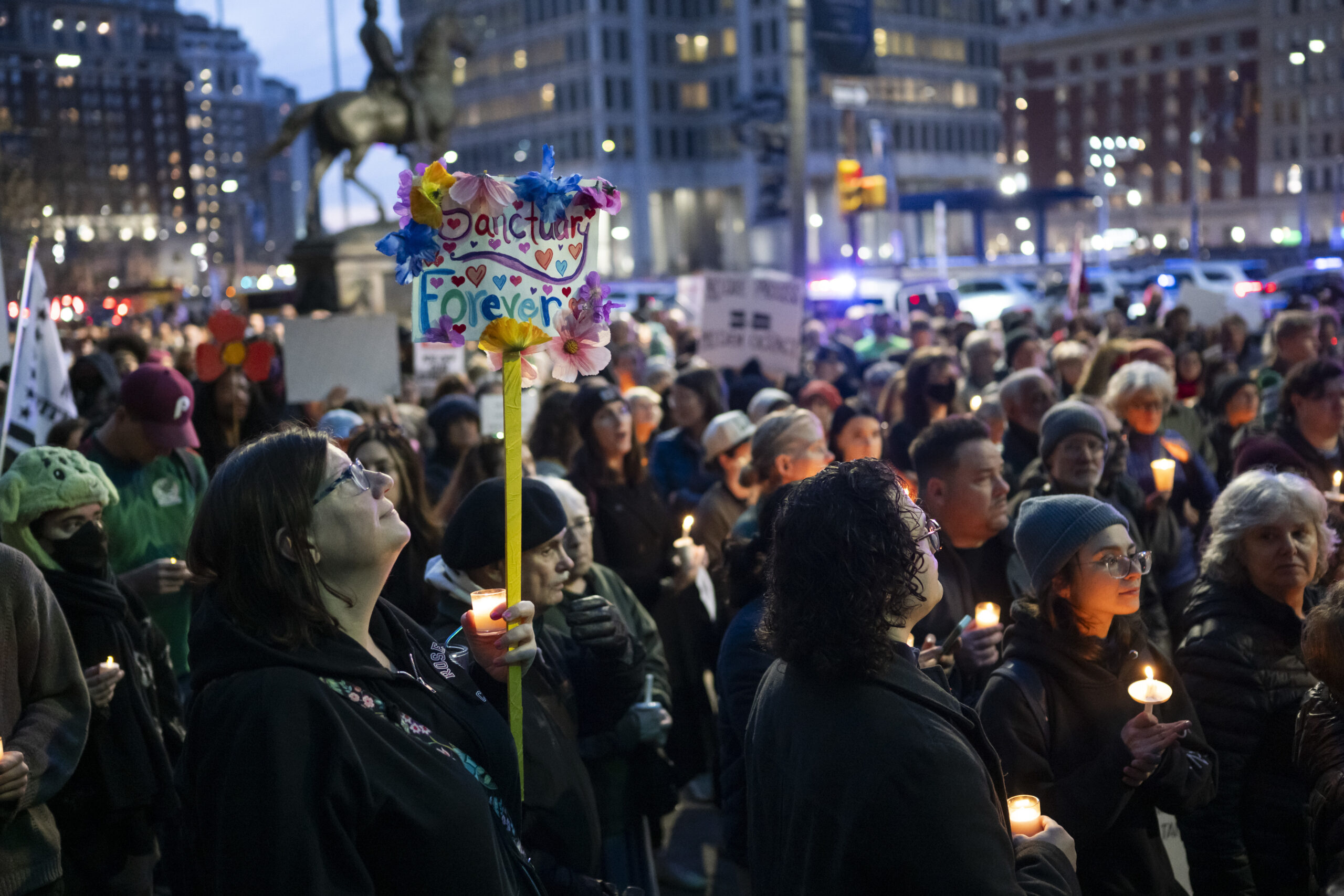
    Jane Wiedman of Mount Airy holds up a sign among the crowd of protesters at City Hall on Thursday, Jan. 8, 2026, as they gather for a vigil to rally against the killing of Renee Nicole Good, who was shot by an ICE agent in Minneapolis.

    Millions of people have watched videos of the shooting online, sparking national protests. The Trump administration quickly defended the shooter, with JD Vance asserting Ross has “absolute immunity” and “was doing his job.” Some have rejected Vance’s suggestion that Ross couldn’t be tried by the state, and Minnesota leaders Friday renewed their calls for state involvement in an investigation of the shooting.

    Birdsong said the group wants to see ICE abolished and the Trump administration held accountable.

    “You got people that are part of a cabal, that are self serving … and they prey on the common folks of the United States,” Birdsong said.
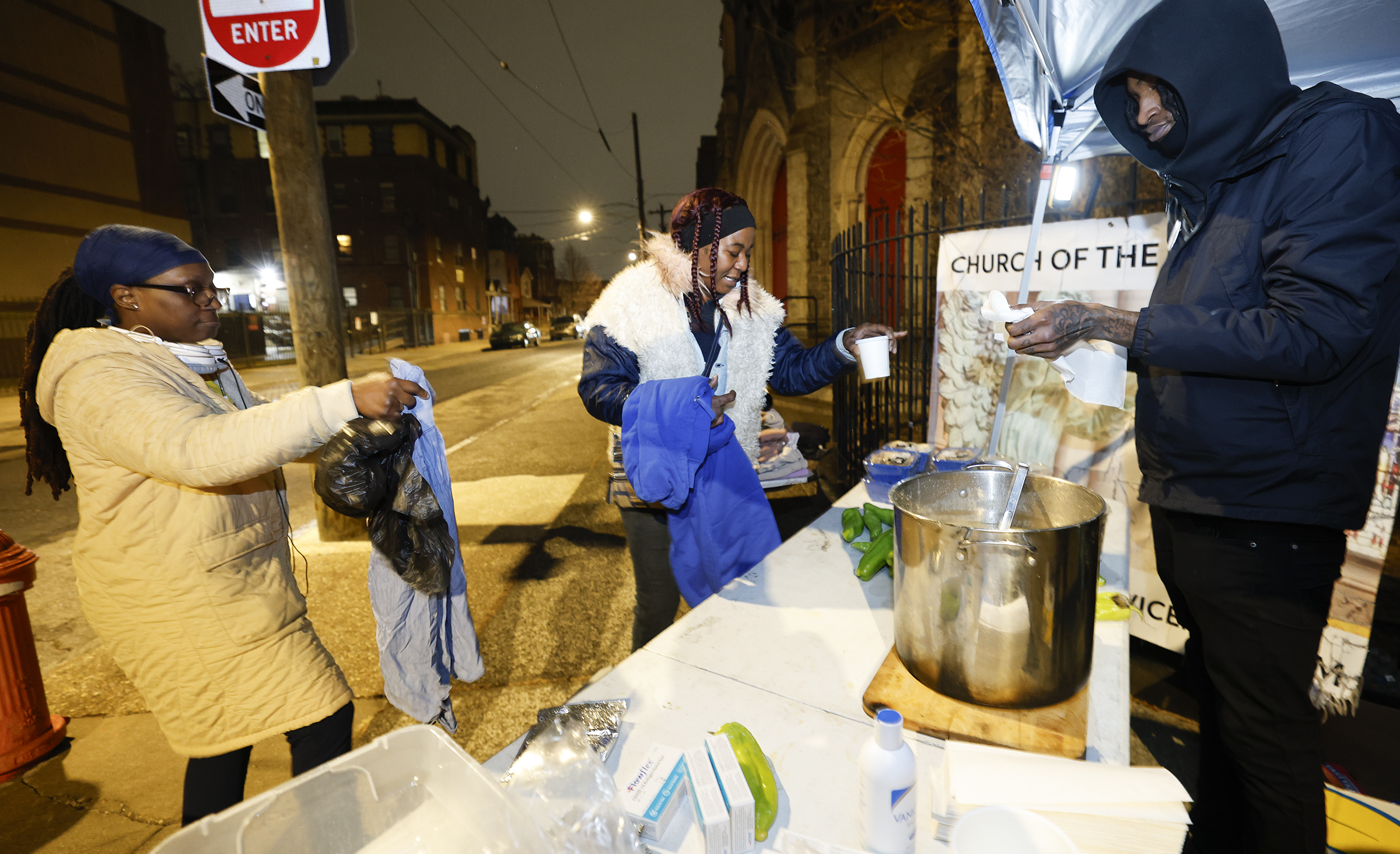
    Philadelphia Black Panther Party for Self-Defense member Skiippy (right) hands soup to Yolanda Gray (center) and Roxanne Hart outside the Church of the Advocate in North Philadelphia on Friday, Jan. 9, 2026. The Philadelphia Black Panther Party for Self-Defense helps supply food and clothes for residents.

    A free food program

    Birdsong said he was recruited by members of the Black Panther Party in the wake of the 2020 police killing of George Floyd, and he listed several surviving elders of the group as mentors. The Philly chapter has “less than 100″ members, he said, though he declined to provide more detail.

    On Friday evening, Birdsong and several other Black Panther Party members set up a pop-up food pantry outside Church of the Advocate at the corner of 18th and Diamond Streets in North Philadelphia.

    The members laid out bananas, grapes, salad greens, romaine lettuce, cherry tomatoes, apples, pears, celery, peppers, and mushrooms on folding tables.

    They added bread, Tastykakes — immediately popular with passing children — canned food, and hygiene items like shampoo, COVID-19 test kits, and adult undergarments. On another table were children’s clothes and a large pot of chicken soup, all near a banner with the Black Panthers logo.

    Philadelphia Black Panther Party for Self-Defense member Sharon Fischer (left) hands a bag of food to Daren Robison in North Philadelphia on Friday, Jan. 9, 2026. The Philadelphia Black Panther Party for Self-Defense supplies food and clothes for residents.

    Birdsong said the money to buy the food comes from members’ own paychecks, as well as donations from people in the community.

    “It really helps out,” said Dawn Henkins, 60, who lives nearby. She said it’s especially helpful for older people who are living on a fixed income.

    “The brothers can help people — they are here for the people,” Henkins said.

    The Black Panthers previously held food programs at 33rd Street and Cecil B. Moore Avenue in Strawberry Mansion, and at Jefferson Square Park in Pennsport, Birdsong said. More recently, the group was able to move into 2123 N. Gratz St. — a North Philadelphia location that Birdsong says once was a headquarters for the original Black Panther Party Philadelphia chapter.

    The original Black Panther Party was founded by Bobby Seale and Huey P. Newton in Oakland, Calif., in 1966 and was active nationally until the early 1980s. The group formed to fight against police brutality and quickly evolved to promote other social changes including prison reform and access to education, food, and healthcare, according to the National Museum of African American History and Culture.

    The group was soon targeted by J. Edgar Hoover’s FBI, which sought to “discredit, disrupt, and destroy” the Black rights movement, according to UC Berkeley Library. Two Black Panthers in Chicago, Fred Hampton and Mark Clark, were killed in a Chicago police raid that was later revealed to have been coordinated by the FBI.

    The Philadelphia chapter was active from 1968 until 1973, according to a University of Washington website that maps U.S. social movements. Prominent local figures from this era include Sultan Ahmad, who went on to hold roles in city government, and Paula Peebles, a social activist who stayed involved in the Black Panthers for much of her life.
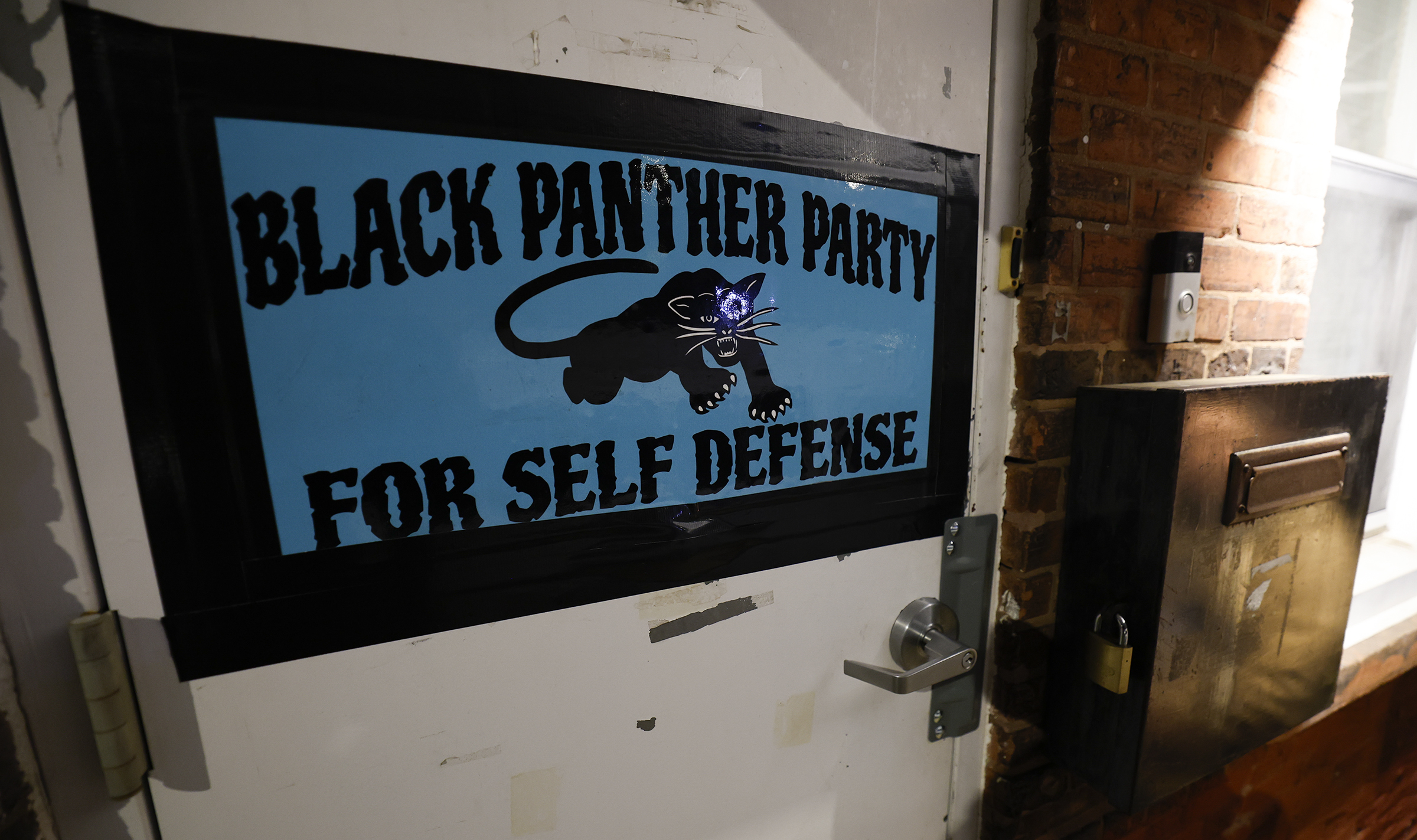
    The Black Panther Party for Self-Defense headquarters in North Philadelphia on Friday, Jan. 9, 2026.

    One person who stopped by for soup on Friday, Jerome Hill, 63, said he can distantly remember the days when Episcopalian pastor and social activist the Rev. Paul Washington let the Black Panthers hold events at Church of the Advocate.

    “They primarily were always community oriented,” Hill said. He said he’s glad to see the group handing out food, and added that they could serve as role models for younger people in the neighborhood.

    While one member of the group served up chicken soup to several boys who stopped by the tables, another member stood at the corner holding an AK-47-style rifle.

    “I feel like we’re welcome,” said one member, also carrying a firearm, who identified himself as Comrade Arch. He said he was a fan of the original group growing up, and he joined a few months ago. “I’ve always had a revolutionary spirit.”

    Under a canopy behind the tables, Birdsong moved back his jacket to reveal a modern MP5, a weapon that has its origins in German submachine guns. He also carried two semiautomatic handguns.

    It’s a controversial posture: Many pro-democracy advocates and experts on civil rights emphasize that nonviolence is essential to successful protest movements.

    The law says you can carry a gun in Philadelphia — but only if you have a license to carry firearms, according to Dillon Harris, an attorney who focuses on gun rights.

    “Open carry,” or carrying a firearm in a way that it can be plainly seen by others, is “generally lawful” in Pennsylvania, except for in prohibited locations such as federal buildings, said Harris.

    But Philadelphia is an exception to this rule, Harris said. A state law prohibits carrying firearms in “a first class city” without a license to carry firearms. That statute applies to Philadelphia.

    But while many civil rights advocates argue that firearms tend to escalate violent confrontations, rather than prevent them, it’s long been part of the Black Panthers’ tactics, and Birdsong pushed back against that idea.

    “We feel safe,” Birdsong said. “No police, no drug dealers doing anything to us here.”
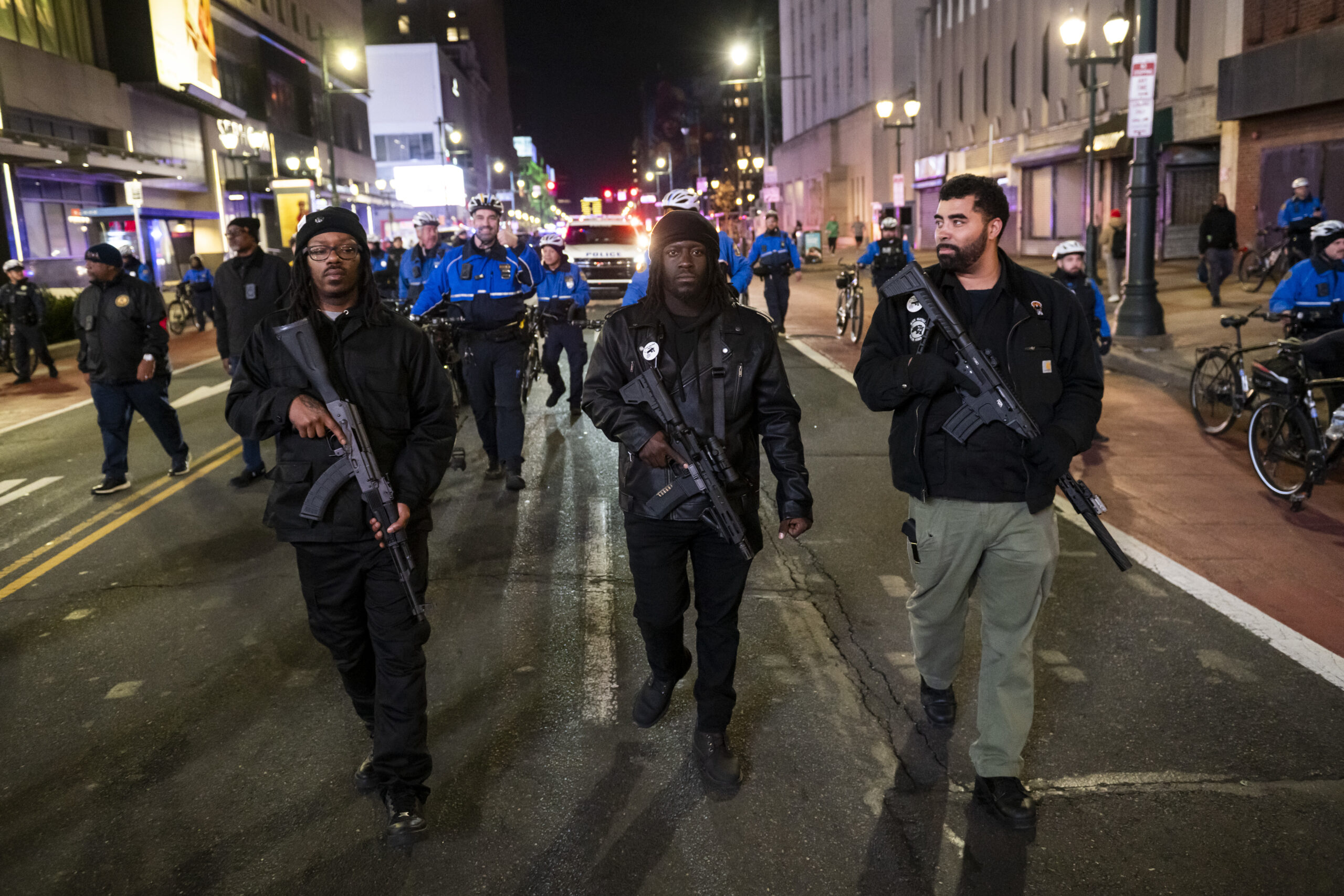
    Armed members of the Black Panther Party for Self-Defense march down Market Street with a crowd of protesters on Thursday, Jan. 8, 2026, to rally against the killing of Renee Good, who was shot by an ICE agent in Minneapolis, Minn.

  • Bucks County agrees to pay nearly $1 million to a woman who was pepper-sprayed and restrained in jail

    Bucks County agrees to pay nearly $1 million to a woman who was pepper-sprayed and restrained in jail

    Bucks County has agreed to pay $950,000 to a woman with a serious mental illness who was pepper-sprayed and left strapped for hours in a chair while at Bucks County Correctional Facility over five years ago.

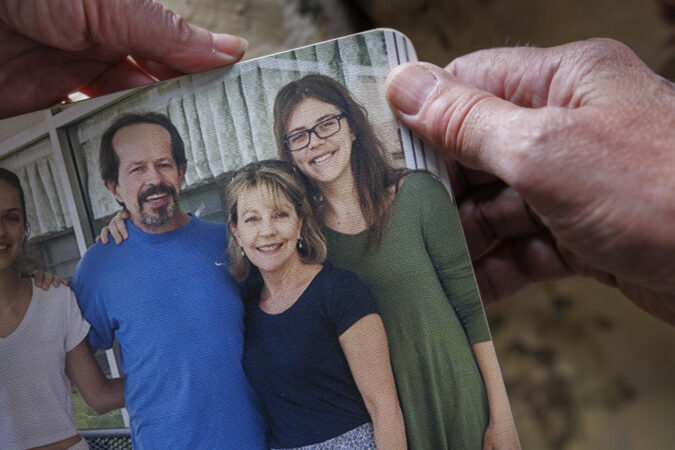
    Kimberly Stringer’s parents hope the settlement draws attention to the country’s ongoing mental health crisis, and the need for alternatives to arresting and jailing people who need psychiatric care.

    Martha and Paul Stringer of Lower Makefield Township sued Bucks County prison guards and officials in 2022, asserting that their daughter’s civil rights were violated while she was jailed for 64 days during the spring and summer of 2020.

    Martha Stringer has since become an advocate for programs to keep people with serious mental illnesses out of jails. She said that, along with the settlement, the county agreed to work to implement one such program. Known as assisted outpatient treatment, it involves regular court appearances and close supervision for people with a history of hospitalizations who struggle to follow treatment plans.

    “My only hope would be that this story resonates beyond Bucks County,” because county jails all around the country are frequently where people with mental health issues end up, she said.

    By April 2020, her 27-year old daughter already had been diagnosed with bipolar disorder with psychotic features and had been involuntarily committed twice, Martha Stringer said.

    “She was well known, particularly in Falls Township, where she was arrested,” Martha Stringer said.

    It was then, while in the midst of a rapidly worsening mental health crisis, that Kimberly Stringer struck and threatened her neighbor, according to the Stringers’ attorney, David Inscho. She was arrested and taken to Bucks County Correctional Facility, where, as a pretrial detainee, she was pepper-sprayed twice by prison guards, Inscho said.

    Stringer was also placed in a “restraint chair,” which prohibits movement, several times, for as long as four hours, Inscho said. At no point did she pose a threat to guards, and her inability to comply with orders was because she was “in a state of catatonia.”

    “In that state she was not able to process and comply with the rules of that correctional facility — and that led to uses of force” by prison guards, Inscho said.

    The settlement agreement between the Stringers and Bucks County, which was reached Dec. 17, includes a requirement that video footage of the incidents recorded by prison guards be destroyed. The agreement notes one remaining copy of the videos may be kept in a password-protected file for 10 years and then deleted.

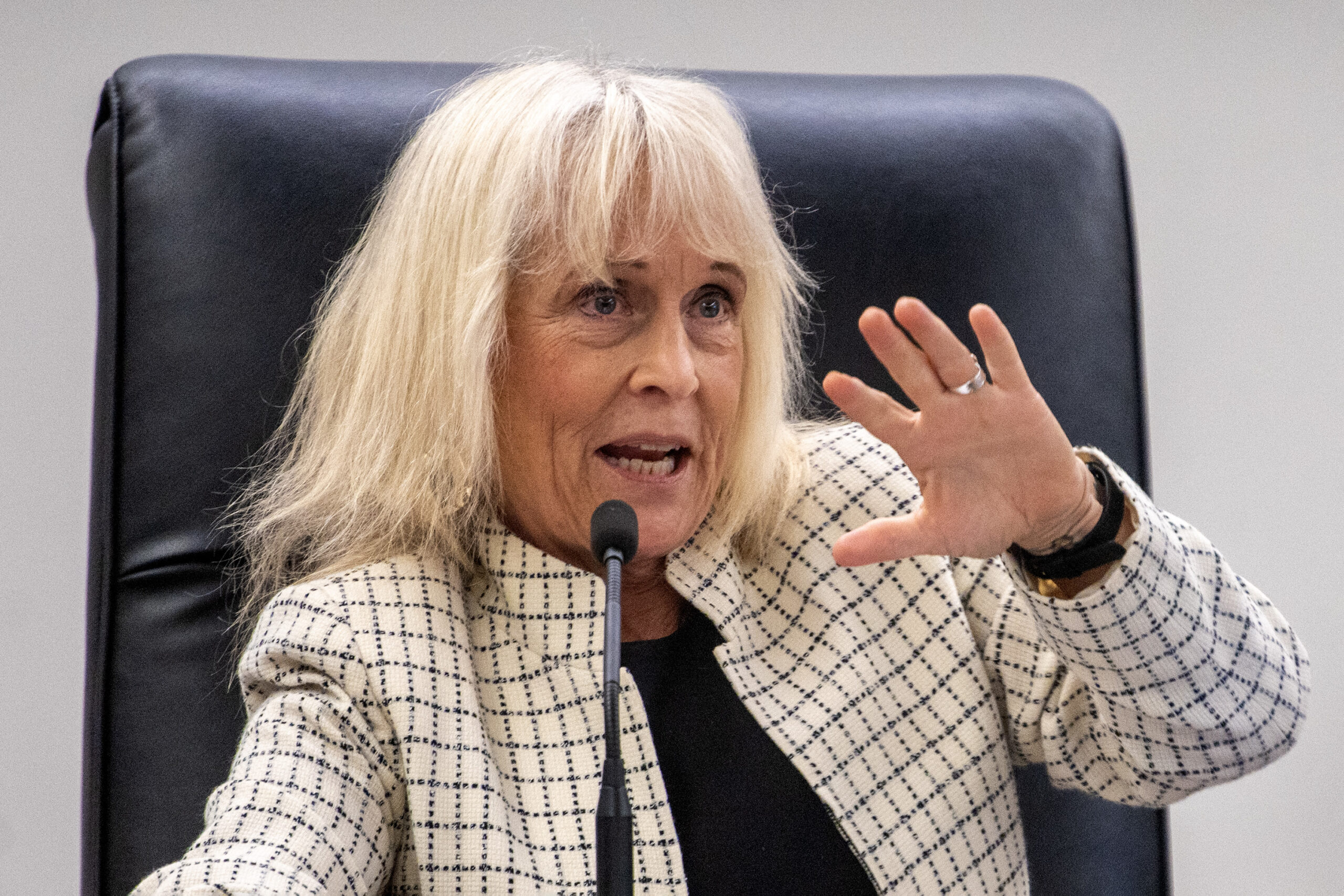
    Bucks County Commissioner Diane Ellis-Marseglia during a meeting on May 21, 2024.

    “The videos were difficult to watch,” Inscho said. “It was clear that Kim was in a mental health crisis. The tools available to the guards were clearly not the tools Kim needed.”

    Bucks County Commissioner Diane Ellis-Marseglia said she believes prison guards were trying to keep Stringer safe, but she shouldn’t have been in jail to begin with.

    “She and the millions of Americans who likewise struggle with mental illness deserve access to high-quality, intensive treatment, with intervention that begins long before they are misdirected to the criminal justice system,” Ellis-Marseglia said in a statement.

    Ellis-Marseglia said that Bucks County has made strides in helping people with serious mental illness. In 2023, the board of commissioners voted unanimously to fund a behavioral health center in Doylestown, the Lenape Valley Foundation’s Bright Path Center, Ellis-Marseglia noted. Last August, commissioners voted to add $5 million more to fund the facility, a county spokesperson said.

    Bucks County in 2023 also voted to build a Diversion Assessment Restoration and Treatment Center at the jail, which is set to open this year, the spokesperson said, and in 2021, it added a separate housing area for women and a mental health unit in the jail.

    “These programs and facilities will help bridge critical gaps in mental health services and move us in the direction of improving the mental health treatment environment,” Ellis-Marseglia said.

    Martha Stringer, parent of Kim Stringer, at her home in Yardley. When Kim Stringer was having an acute psychotic episode, local police charged her with harassment and placed her in the Bucks County jail. Her parents sued in 2022, and have become advocates for prison reform after their daughter’s mistreatment.

    The Stringers applauded these changes, which they attributed in part to the public outcry over their daughter’s mistreatment. Their daughter’s story became public after several inmates notified the media of Kimberly Stringer’s condition in jail; days later, the county relocated her to a state mental institution.

    Still, Martha Stringer said, most of Bucks County’s new interventions are for people who have already been arrested.

    “And that’s where we’re going to come to the table with Bucks, to see if we can implement assisted outpatient treatment,” Martha Stringer said.

    The money from the settlement will go into a special needs trust that the parents set up years ago, Paul Stringer said. The trust has strict rules on what money can be spent on, and is designed to provide for their daughter even after he and his wife, both in their 60s, have died.

    “She’s doing quite well,” Paul Stringer said. “But she requires, probably, a lifetime of supports.”

    Their now-33-year-old daughter is living in Brooke Glen Behavioral Hospital under a long-term involuntary commitment, Martha Stringer said. Their hope is that she’ll be able to move to a less-restrictive setting and gain more independence, while still getting the support she needs.

    “These past five years, she’s missed a lot,” Martha Stringer said. “She’s missed her sister’s wedding. Recently she’s become an aunt. She’s missed a lot. We struggled with that.”

    One thing that’s given some comfort, she added, is that people often reach out for advice on how they can help their children, who are in similar situations.

    “I learned so much the hard way, that I felt like, if I could give families a better understanding of what we learned, then I could help them.”

  • Schuylkill River Trail, city transit shelters to get upgrades from state transportation grants

    Schuylkill River Trail, city transit shelters to get upgrades from state transportation grants

    The Schuylkill River Trail and some of the city’s transit shelters are slated for upgrades as a result of a funding infusion from state coffers.

    The two projects will receive nearly $1.3 million, part of $47 million for 54 transportation projects across the commonwealth.

    The state will provide $947,668 to the Philadelphia Department of Streets to obtain a right-of-way so that it can complete a gap in the Schuylkill River Trail, Gov. Josh Shapiro’s office said in a news release. The funding is for the city to acquire rights of way to construct a trail segment between Kelly Drive and Main Street, near the Pencoyd Bridge, according to a Streets Department spokesperson.

    The city portion of the trail is an immensely popular thoroughfare for people walking, biking, and cycling, and offers views of the Art Museum, Boathouse Row, and Fairmount Park. The multiuse trail stretches out of the city into neighboring counties, with a plan to eventually connect 120 miles of trail from Philly to Frackville, Schuylkill County, according to the nonprofit Schuylkill River Greenways.

    The state earmarked $328,295 for the Center City District to fix up transit shelters “in preparation for Philadelphia250,” according to the governor’s office.

    America’s 250th birthday celebration, aka the Semiquincentennial, is expected to draw hundreds of thousands of tourists, with a long list of events scheduled. Philadelphia will also host the FIFA World Cup, NCAA March Madness games, the Major League Baseball All-Star game, and the PGA Championship next year.

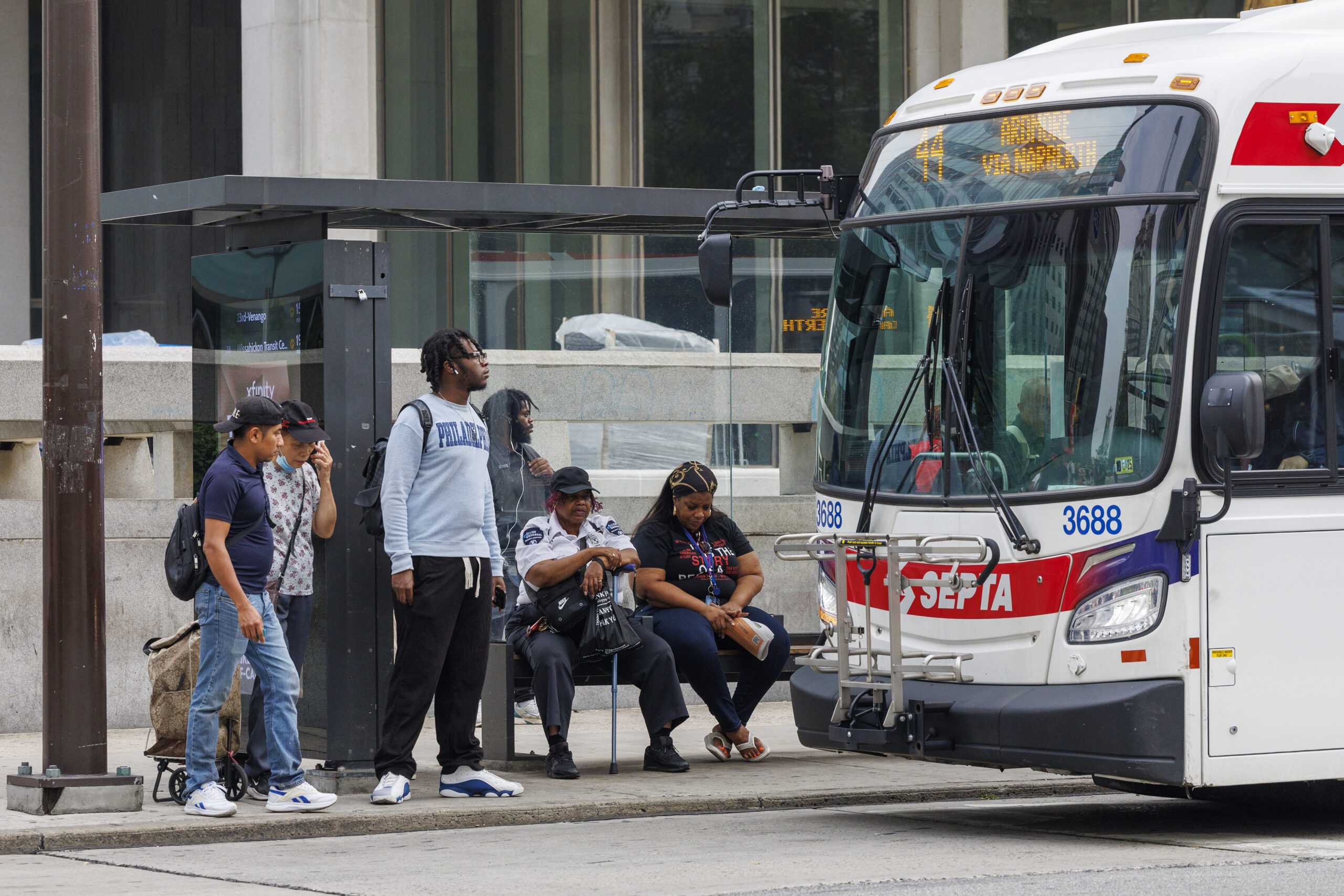
    A bus picks up riders at a bus shelter on JFK Boulevard at North 15th Street.

    The money for the projects comes out of the state’s multimodal transportation fund, created in 2013 to provide investments for ports, rail freight, aviation, and “bicycle and pedestrian improvements,” according to a state website.

    “Infrastructure is essential to Pennsylvania’s growth and to connecting people with opportunity,” Shapiro said in a Dec. 23 news release.

    In Bucks County, Upper Makefield will get $250,000 for sidewalks, ramps, and features that comply with the Americans With Disabilities Act, and other improvements including “decorative crosswalks” and pedestrian signals along Route 532.

    Chester County is set to see $113,920 for trails and ADA-compliant improvements on Broad Run Road in West Bradford and $126,827 for storm sewer and pedestrian improvements in West Goshen.

    Communities in Delaware County will get more than $1.4 million for three projects:

    • nearly $400,000 for an “emergency preemption system” in Aston to notify the fire department of incidents;
    • about $700,000 to realign roadways, providing safe areas for pedestrians in Springfield; and
    • $314,249 for safety and streetscape improvements on Myers Avenue in Swarthmore.

    Recipients in Montgomery County are set to receive about $3.3 million for four projects:

    • $1,324,000 for safety improvements in Conshohocken;
    • $1,415,183 to Hopwood Homes, a business registered by real estate investor Arnold Galman, for road widening, drainage, and trail additions on Hopwood Road; 
    • $3 million for intersection improvements in Towamencin ; and
    • $3 million to replace a bridge and build a roundabout in Upper Providence.

    Projects were decided by PennDot based on “safety benefits, regional economic conditions, technical and financial feasibility, job creation, energy efficiency, and operational sustainability,” the news release said.

    The next application period for grants opens Jan. 5.

  • The Pennsylvania Turnpike’s restaurant offerings can feel like a trip back in time

    The Pennsylvania Turnpike’s restaurant offerings can feel like a trip back in time

    Driving west on the Pennsylvania Turnpike, Mary Wright was hoping for a Chick-fil-A. But as she watched the limited options on road signs pass, fond memories of roast beef sandwiches lured her to Roy Rogers.

    “My mother liked Roy Rogers,” said Wright, who is in her 60s and from Collingswood. “That’s how long it’s been around.”

    That’s pretty typical of the food offerings on the Pennsylvania Turnpike, where old-school brands such as Auntie Anne’s, Baskin-Robbins, and Sbarro dot many of the 17 service plazas.

    That puts the turnpike behind the times compared with similar toll roads in New Jersey and New York, where travelers can hold out for newer brands like Chick-fil-A, Pret a Manger, and Shake Shack.

    “I think the older generation likes Roy Rogers and all that, but younger people are more likely to like Shake Shack, for example,” said John Zhang, professor of marketing at the University of Pennsylvania’s Wharton School of Business.

    Once on the toll road, people are faced with dining options decided almost entirely by one company. It’s what Zhang called a “captive consumer” environment. The reasons for this involve state policy, a corporate contract, and a little business history.

    Mary Wright and Rich Misdom of Collingswood consider their options at the Roy Rogers located in the Peter J. Camiel Service Plaza on the Pennsylvania Turnpike in late November.

    ‘Applegreen determines the food concepts’

    The commercial stakes are significant: More than 550,000 people drive on the turnpike every day, according to the Pennsylvania Turnpike Commission, and about 7.4 million travelers are expected to have used the toll road around the Christmas and New Year’s holidays.

    Though the turnpike commission oversees the operation, a company called Applegreen primarily decides which restaurants fill the state’s 17 service plazas, according to turnpike commission spokesperson Marissa Orbanek.

    Applegreen runs travel plazas in 12 states, including New Jersey and New York. The company, based in Ireland, was taken private for $878 million in 2020 and is majority-owned by the large private equity firm Blackstone Inc. Applegreen did not respond to requests to comment for this story.

    For access to the service plazas, Applegreen pays the turnpike commission 4% of its gross food and beverage sales, amounting to about $2.4 million per year, Orbanek said.

    “Applegreen determines the food concepts and seeks approval from the commission,” Orbanek said. “So the turnpike is certainly involved in this process.”

    Of the 15 restaurant chains Applegreen lists on its website, nine appear on the Pennsylvania Turnpike. There are nine Auntie Anne’s, eight Burger Kings, one Cinnabon, seven Dunkin’s, two Popeyes, seven Roy Rogers restaurants, four Sbarros, 10 Starbucks outposts, and one Subway restaurant, according to the turnpike commission website. Pennsylvania also has six Baskin-Robbins locations, it shows.

    In other states, Applegreen’s brands include Chick-fil-A, Nathan’s Famous Hot Dogs, Panda Express, Panera, Pret a Manger, and Shake Shack.

    The service plaza contract dates back to 2006, when the turnpike commission signed a 30-year lease agreement with HMS Host Family Restaurants, giving the company “exclusive rights” to food and drink sales, Orbanek said.

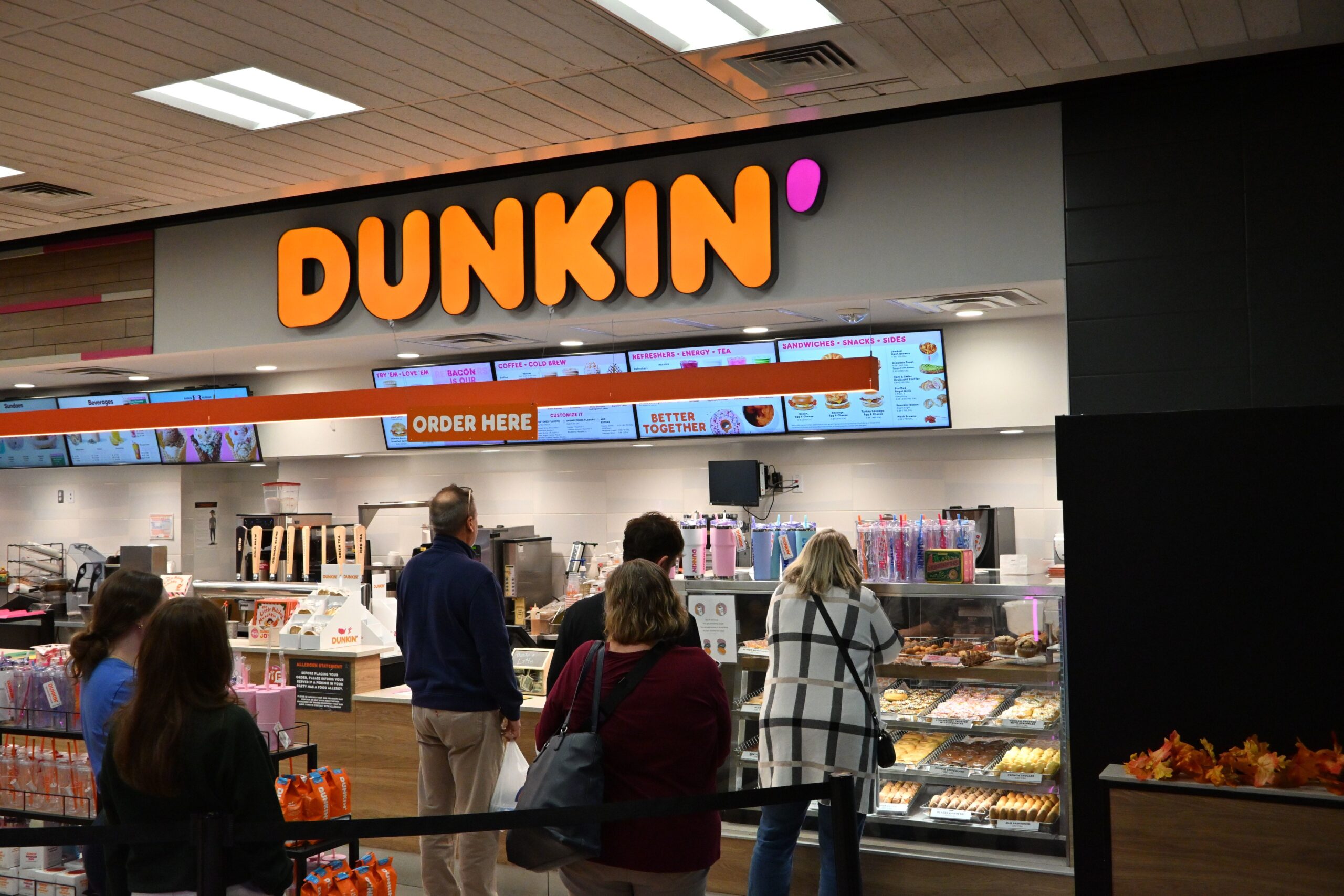
    Seven Dunkin’ locations dot the Pennsylvania Turnpike.

    In 2021, Applegreen acquired HMS Host for $375 million and took over its lease. The lease will expire in August 2036, Orbanek said.

    Until then, Applegreen decides which eatery goes where.

    What’s with all the Roy Rogers restaurants?

    When Applegreen bought HMS Host, it became the franchisee of the Roy Rogers restaurants on the turnpike, said Jim Plamondon, who co-owns the Frederick, Md.-based Roy Rogers brand with his brother.

    Plamondon wants to keep the restaurants on the turnpike past 2036 — a decision that will depend in part on whether Applegreen sticks with the restaurants it acquired when it bought HMS Host.

    “It’s all about developing relationships and hoping to grow with our operators,” Plamondon said.

    As for Roy Rogers’ prominent position on the turnpike, that dates back to the 1980s, when Marriott Corp. managed the service plazas, Plamondon said. Back then, the restaurant was owned by Marriott — it had a licensing agreement with the showbiz cowboy of the same name — and Plamondon’s dad was an executive in the company.

    These days, Plamondon said, nostalgia and curiosity for something a bit different have driven the restaurant chain’s modest growth: It has opened a few new locations in recent years, including one in Cherry Hill, and has a devoted fan base.

    Fast-food restaurants are facing a number of challenges in the current economic climate. Wages and tariffs have pushed prices up, and low-income consumers in particular have started to reduce spending. Even McDonald’s, the largest fast-food chain in the U.S., has seen nearly double-digit decreases in traffic among low-income Americans, the company said in its third-quarter earnings report last month.

    McDonald’s CEO Christopher Kempczinski told investors on a call announcing the third-quarter results that low-income consumers were having to absorb significant inflation, which was affecting spending behavior.

    Roy Rogers has seen some of these challenges as well, Plamondon said. Costs have gone up, margins are thin, and people’s tastes are always changing. People are eating more chicken and want spicier options, he added. .

    “It’s a really good menu, it’s great quality food, and I think our brand absolutely has a future to it, because at the end of the day, it’s about the food.”

    Changing tastes

    The Wharton School’s Zhang agreed that consumers’ tastes have shifted. “People increasingly want ethnic foods, and younger people want spicier food,” he said. “And people want to go upscale nowadays.”

    Zhang noted a number of older brands on the Applegreen roster, such as Sbarro, the pizza restaurant that has faced two bankruptcies in the years since the turnpike commission approved the 30-year lease.

    In terms of market forces, Zhang said, turnpike service plazas are “an aberration.” Unlike those in most suburban or urban areas, service plaza customers are willing to settle for what’s available, and pay more to get in and out, he said.

    “If you’re a traveler on a holiday, you tend to be less price sensitive,” Zhang said. “You just want to have your food very quickly.”

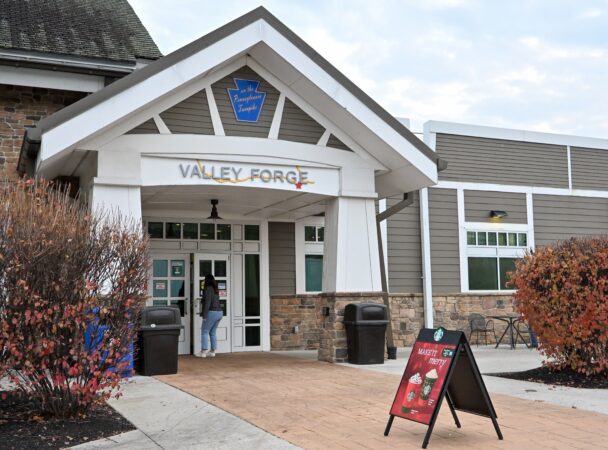
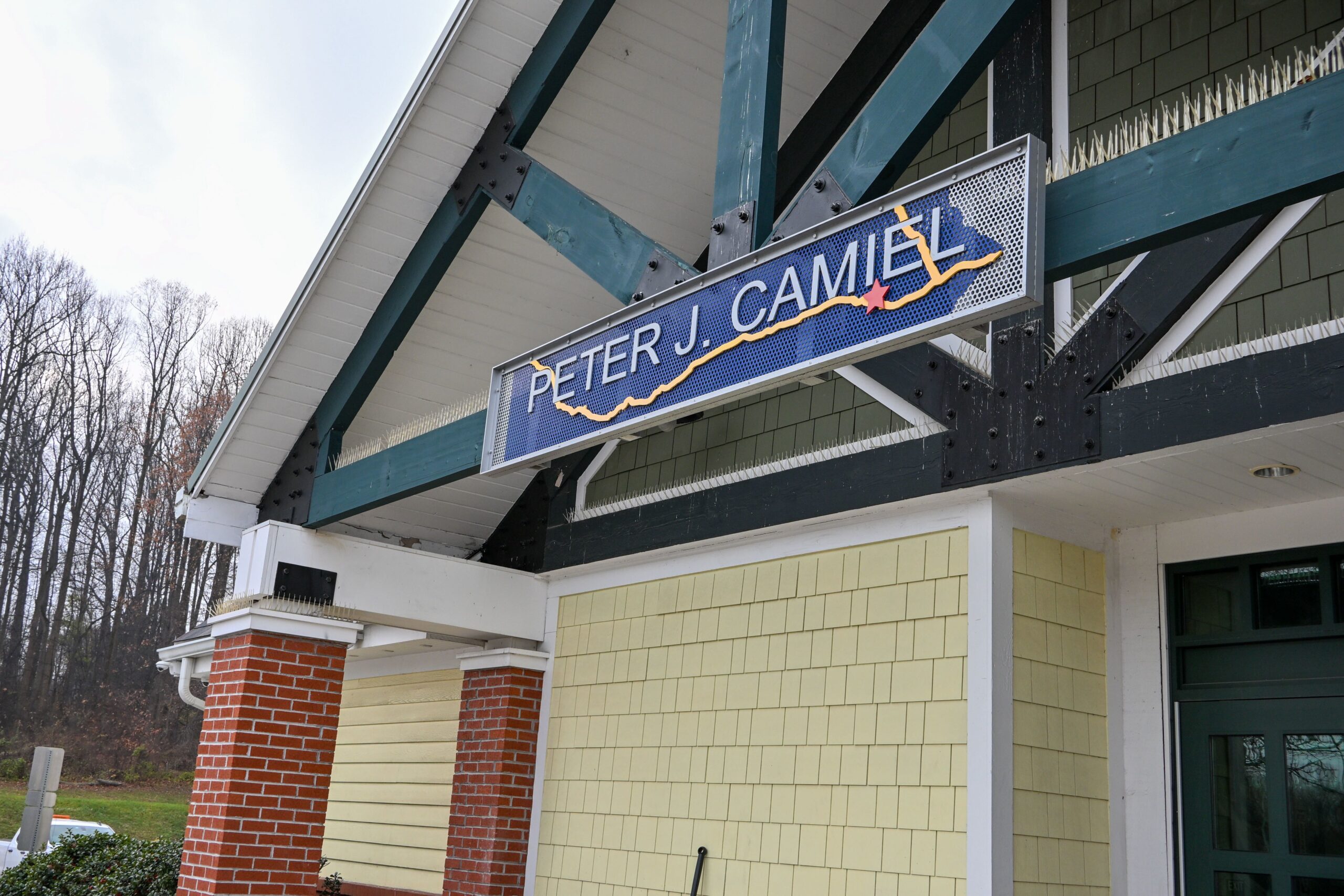
    A sign at the Peter J. Camiel service plaza on the Pennsylvania Turnpike.

    That puts turnpike service stops at odds with the shifting consumer preferences that have bedeviled the fast-food industry over the last couple of decades, Zhang said, including the addition of food delivery services like DoorDash and GrubHub.

    Zhang said that the lack of order-ahead options at turnpike eateries is puzzling. For people traveling down a strip of highway, it seems like calling ahead would make sense.

    “For them, the customers just pass by once,” he said.

    For Mary Wright and her traveling companion, Rich Misdom, their recent Roy Rogers visit did not exactly ignite enthusiasm.

    “This is, like, old-school kind of stuff,” Misdom said, adding he was disappointed that this Roy Rogers restaurant was not serving roast beef. He settled for a cheeseburger, while Wright got a chicken sandwich.

    “We don’t come here to fine dine,” Misdom said, between bites. “Let’s put it that way.”

  • Days after Bristol nursing home explosion, residents are left in unfamiliar new locations without clothes, possessions, and medications

    Days after Bristol nursing home explosion, residents are left in unfamiliar new locations without clothes, possessions, and medications

    First, Danielle Delange saw the news alert: Bristol Health & Rehab, the nursing home where her mother lived, was on fire.

    Within minutes, Delange got a phone call from an unfamiliar number. On the line, she heard her 64-year-old mother’s trembling voice.

    “My mom said there was a gas explosion,” Delange said. “And I said, ‘How do you know it was a gas explosion?’ And she said, ‘Because we’d been smelling gas.’ … And I said, ‘Today?’ And she said, ‘No, for a couple days.’”

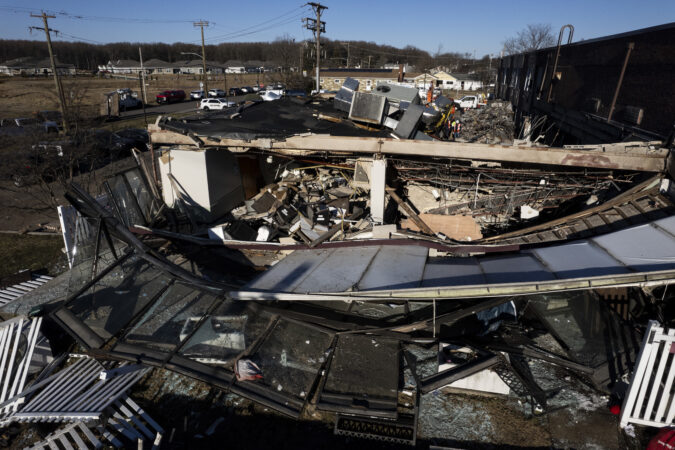
    Her mother, Anna Grauber, who uses a wheelchair, was evacuated from the burning building soon after Tuesday’s devastating blast, which killed a nurse and a resident and injured 20 people. The cause of the explosion remains under investigation.

    First responders work the scene of an explosion and fire at Bristol Health & Rehab Center, Tuesday, Dec. 23, 2025, in Bristol, Pa.

    According to Delange, in the immediate aftermath of the explosion, her mother was outside, and she was starting to get uncomfortably cold.

    Delange said her mother, who lives with COPD and emphysema, didn’t have the oxygen that she needs and was struggling to breathe. Even her emergency inhaler was back in her room.

    Delange’s mother is one of the 119 residents who had to be relocated from the healthcare facility in Bristol Township, Bucks County, to other care homes across the region. With the facility now the scene of a federal investigation, Grauber and other residents are left without their possessions and, according to several families, they lack even basic necessities like clothes and phone chargers.

    ‘She doesn’t have pants’

    The company that runs the nursing home, Saber Healthcare Group, says it’s doing all it can while it waits for the National Transportation Safety Board to determine whether people can safely return to the nursing home building at 905 Tower Rd.

    But family members of residents, such as Delange, are questioning whether that’s enough.

    Delange said her mother was promptly moved to another Saber Healthcare Group property, Statesman Health & Rehabilitation Center, a short drive away in Levittown. However, her mother had to go several days without one of her medications, Delange said, and was struggling to adjust.

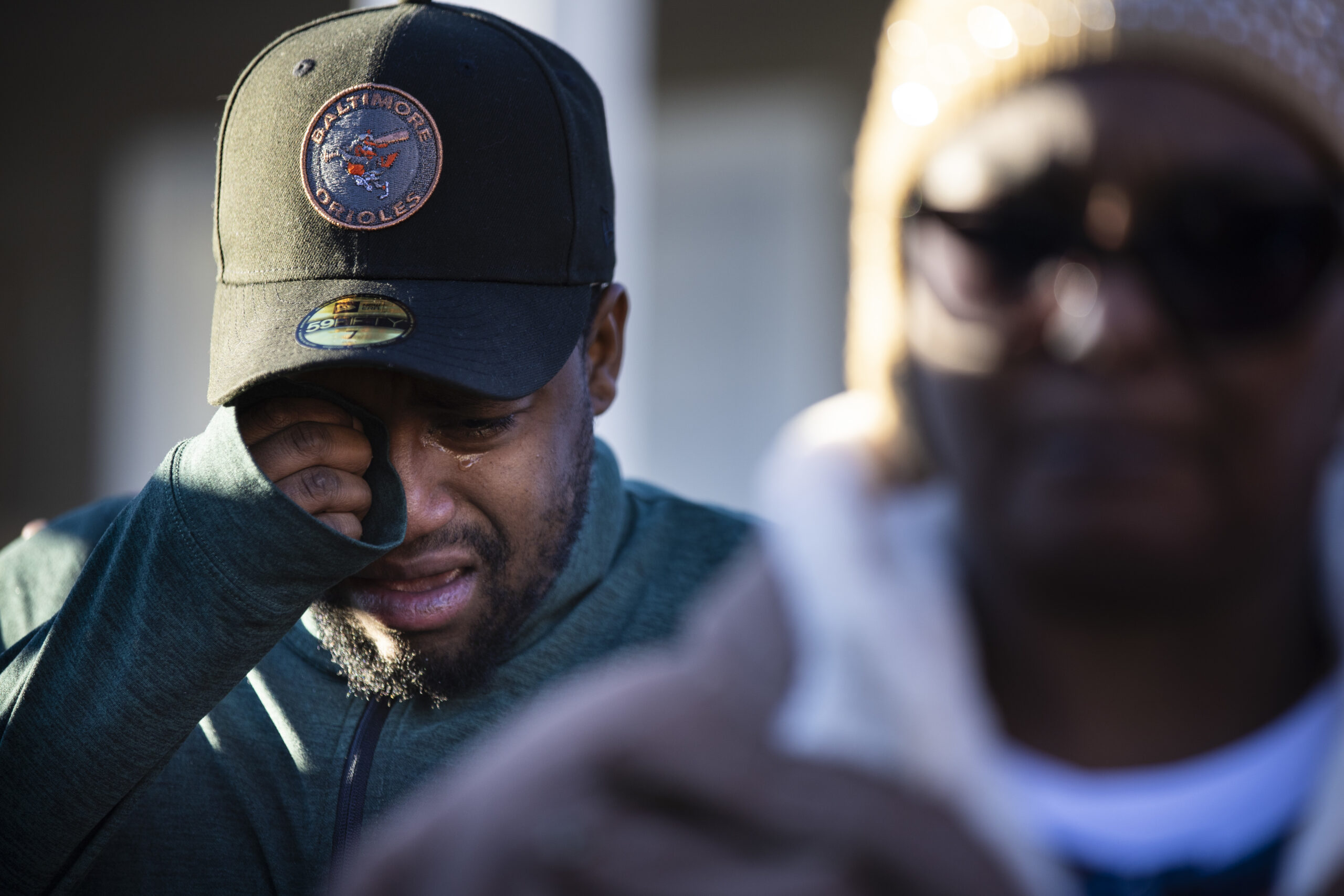
    Muthoni Nduthu’s son Clinton tears up while the family speaks with the media on Wednesday, Dec. 24, 2025, in Bristol Township, Pa. Muthoni Nduthu was killed in the explosion at Bristol Health and Rehab Center on Tuesday.

    Delange said that when she visited her mother on Friday at her new home in Levittown, her mother was wearing men’s basketball shorts and a T-shirt. She said that Saber has not provided clothes for the relocated residents, and so staff have resorted to pulling clothes from a donation box.

    “She doesn’t have pants,” Delange said. “And that got me thinking, like, what did my mom have on when she left there?”

    ‘No indication’ of issues

    Zachary Shamberg, Saber’s chief of government affairs, said the company is doing everything it can to help the displaced residents — but right now, nobody is allowed in the Bristol facility.

    Possibly as early as Monday, Saber may be cleared to reenter the building, Shamberg said. “We’ll survey the damage, we’ll see what can be salvaged, and we’ll get in touch with families to ensure any items were returned.”

    Saber’s insurance company would likely handle replacement or compensation for items destroyed in the blaze, he said.

    As far as he knows, Shamberg said, the company is not providing money or purchasing new clothes or essential items for residents. He encouraged residents’ families to contact leadership at the Bristol facility if they need anything.

    Shamberg said many residents have been moved to other Saber-affiliated nursing homes in the area, and these residents would promptly get prescriptions refilled. In addition, the company has started working with Medicare and Medicaid to replace residents’ dentures and eyeglasses. However, because some Saber locations are full, people have been placed in other facilities.

    In the immediate aftermath of the disaster, Shamberg said, the goal was to get people “to the best care setting as quickly as possible.” He added the company tried to keep residents as close as possible to their families.

    “The focus, initially on Tuesday, was to make sure staff and residents were safe,” Shamberg said. “Now, we survey the damage. We assess the facility. And we decide what happens next in terms of rebuilding and moving forward.”

    Gov. Josh Shapiro delivers remarks on the explosion at Bristol Health & Rehab Center, at Lower Bucks Hospital on Tuesday, Dec. 23, 2025, in Bristol, Pa.

    Saber staff at Bristol are being paid for the next 30 days regardless of whether they work, Shamberg said, and the company is offering them positions at other locations. Some staff, such as care coordinators and facility leadership, have remained in close contact with residents’ families, he said.

    Saber, a privately run for-profit company, acquired the Bristol nursing home from Ohio-based CommuniCare Health Services barely three weeks before the explosion. Under CommuniCare, the nursing home had received numerous citations for unsafe building conditions and substandard care.

    Saber was aware of these issues, Shamberg said. However, he said, as the company took over, there was no indication of problems with its gas lines.

    “When you acquire a nursing home, you inherit that nursing home’s survey history,” Shamberg said. “Even looking at the most recent survey, the October 30th survey, there’s nothing that indicated a potential gas leak or explosion.”

    Bristol had not been the first choice for 49-year-old Lisa Harnick and her family when it came time to find a nursing home for her mother, Debra Harnick. However, since Lisa Harnick didn’t have a car, the family opted for a choice close to her home in Bristol Township.

    Now, Lisa Harnick’s 77-year-old mother is about an hour away at York Nursing & Rehabilitation Center in Philadelphia, she said. (The facility is not part of Saber Healthcare Group.) And their weekly lunch date is on hold.

    “We started going over every Tuesday to have lunch with her, and visit with her, and now I can’t do that,” Lisa Harnick said.

    Debra Harnick is “completely bed-bound,” her daughter said, and has no possessions except for her iPad, which she uses to communicate with family. She does not have a cognitive impairment, is alert, and is not happy about her new situation, Lisa Harnick said.

    She added that Saber has remained in touch.

    “I’ve been in contact with the social worker, and the activities director,” she said. “And I’ve been in contact with the insurance company, too. They just wanted to verify that she was there.”

  • Police: The Special Victims Unit is investigating after a 2-year-old boy died in Point Breeze

    Police: The Special Victims Unit is investigating after a 2-year-old boy died in Point Breeze

    Philadelphia Police say the Special Victims Unit is investigating after a 2-year-old boy died Sunday morning in Point Breeze.

    Officers in the 17th District responded to what police described as “a hospital-related radio call involving a two-year-old child reported not breathing” around 5 a.m. at a home on the 2100 block of Titan Street, police said.

    A medic conducted CPR, police said, and the child was taken to Children’s Hospital of Philadelphia, where he was pronounced dead at 5:31 a.m.

    Police said Sunday afternoon that the cause of death had not been determined. “The investigation is ongoing with the Special Victims Unit,” police said.

  • Thousands of households in the Philly suburbs are still without power after Friday’s wind storm

    Thousands of households in the Philly suburbs are still without power after Friday’s wind storm

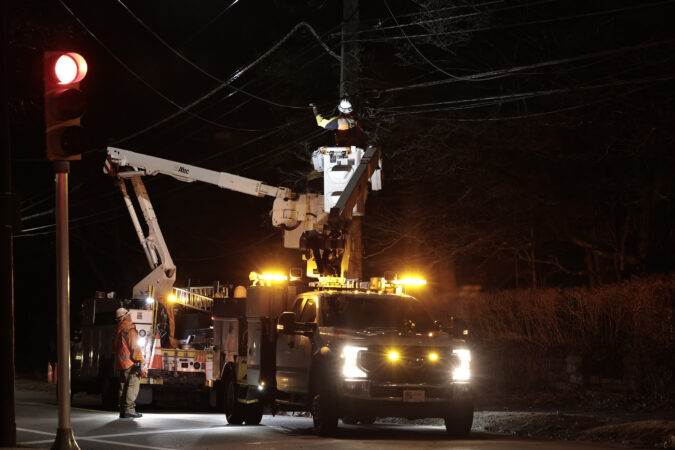
    Thousands of households in Philadelphia’s collar counties remained without power a day after wind gusts downed trees and caused hundreds of electrical outages throughout the region.

    More than 2,230 customers, mostly in Bucks, Chester, Delaware, and Montgomery Counties, still did not have electric service as of Saturday evening, according to Peco.

    Nearly half the outages were due to fallen trees and branches interfering with electrical systems, Peco spokesperson Tom Brubaker said Saturday afternoon. As a result, suburban counties saw far more outages than Philly, he said.

    Winds registered as high as 62 mph Friday afternoon. Around 7 p.m., a pine tree fell on a Chestnut Hill apartment, CBS3 reported, while in Roxborough, a tree fell on a vehicle, sending two people to the hospital.

    Temperatures plummeted into the 20s Friday night, and, according to Brubaker, about 80,000 homes lost power.

    Crews faced challenges from the weather, with wind gusts frequently topping 40 mph, Brubaker said.

    “When wind gusts are that high, we can’t take our bucket trucks to repair lines,” he said.

    An additional 135 Peco employees from Virginia and North Carolina have traveled to the region to assist in the recovery, Brubaker said.

    He said he expected most of the remaining outages to be resolved by Saturday evening, though “a few rural, isolated customers” may face longer waits.

    A live update of the outages can be found at peco.com/outages/experiencing-an-outage/outage-map.

  • City Councilmember Jeffery Young’s plan to relocate the Cecil B. Moore Library met with pushback from community who want to see it renovated

    City Councilmember Jeffery Young’s plan to relocate the Cecil B. Moore Library met with pushback from community who want to see it renovated

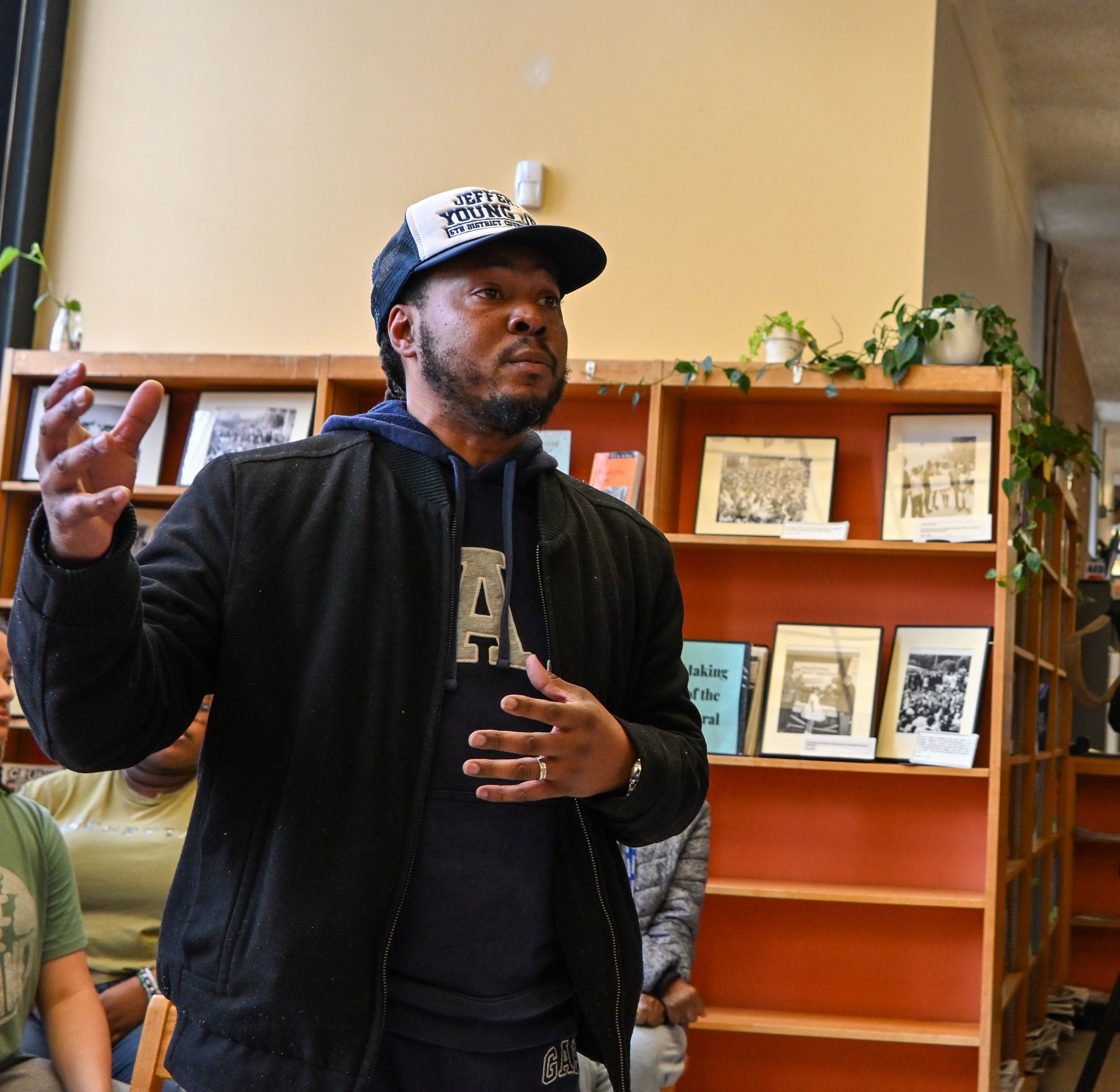
    During an occasionally contentious Saturday meeting on the future of the Cecil B. Moore Library in North Philadelphia, City Councilmember Jeffery Young Jr. told residents he wants to build a new library instead.

    But, as with Young’s previous suggestion that the city move the library, residents held fast to their stance that the 64-year-old building should be preserved.

    “This space is easily accessible to everyone who needs it, and that’s why it should be renovated, not relocated,” said Cierra Freeman of the Brewerytown Sharswood Neighborhood Coalition.

    She criticized Young for proposing a plan without any “tangible written documents” — and for presenting a solution that she said nobody had asked for.

    Young said he wants to build a new library less than a half mile away, using city property on 19th Street. He argued that the community — and teens in particular — would be better served by a new facility.

    “The systems in this library are old,” Young told the crowd of about 40 people gathered at the library on Cecil B. Moore Avenue near 24th Street. “They’re old. As we continue to use this space, things are just going to continue to fall apart.”

    It was the second time this year Young proposed a plan for the library. In March, he suggested that the city demolish the building and replace it with a new library that has affordable housing units above it — an idea that also drew intense pushback from community members.

    This time, Young suggested the current building be kept as a public space.

    Like the street it is on, the Cecil B. Moore Library is named for the civil rights figure — a World War II veteran, lawyer, and politician who, while serving as the Philadelphia NAACP president, played a central role in the push to desegregate Girard College.

    The building has issues with its aging HVAC, plumbing, and electrical systems, all of which need to be upgraded, according to the Save the Cecil B. Moore Library Greater Coalition. The library was closed from January through March this year due to problems with the heating system.

    Other renovation plans include building a new teen space, adding windows, an elevator to the basement, and ADA-accessible bathrooms, and other initiatives, the group said.

    Due to the city’s long tradition of councilmanic prerogative, Council members have near-total control over whether projects in their districts move forward. Young has not yet filed a “notice to proceed,” a necessary step to release funding and begin renovation, according to the coalition.

    Young said the needs of young people have changed significantly since the 1960s. He described a space with things like podcasting studios and e-gaming technology that he said would draw in young people.

    Councilmember Jeffery Young speaks to community members at the Cecil B. Moore Library Saturday, Nov. 22, 2025.

    “If you look at this community, there is nothing to attract teenagers,” Young said. “Our kids deserve better. Our kids deserve new things.”

    But many of those present, including Cecil B. Moore library worker and AFSCME union member Kate Goodman, said that moving the library east toward Temple University would remove a prime resource from a neighborhood that needs spaces for people to congregate.

    “It’s a half-mile, but it’s a whole world of difference,” said Jordan Holbert of the proposed move.

    Event moderator Joel Northam said that if the funds are not released soon, costs of labor and supplies will keep going up, shrinking the amount of work that can be done.

    “We literally can’t afford to have this put off,” Northam said.

    He suggested that the next step would be to support a campaign to unseat Young in 2027.

  • 3 are killed in a crash after fleeing from Pennsylvania State Police in Chester County

    3 are killed in a crash after fleeing from Pennsylvania State Police in Chester County

    Pennsylvania State Police say three people are dead after a vehicle fled from a traffic stop and crashed in Chester County early Friday.

    Around 1:20 a.m., state police troopers saw the silver Toyota sedan violate traffic laws near East Third Street and Garner Drive in New Garden Township, according to police.

    When officers tried to conduct a traffic stop, “the vehicle failed to stop and a pursuit ensued,” police said.

    “Soon after the pursuit ensued, the fleeing vehicle crashed, and the three occupants of the fleeing vehicle are deceased,” state police said in a news release.

    No police officers were injured. State police were working to identify the deceased and notify their families.

    Early-morning TV news reports showed a mangled car next to a tree and a fence. The crash happened in Avondale on Gap Newport Pike between Sharp Road and Limestone Road, according to news reports.

  • Meet Gary, the cat who ended a friendship and cost $25,000 in legal fees

    Meet Gary, the cat who ended a friendship and cost $25,000 in legal fees

    First they were roommates, and then they were friends. But after Jessica Yang and Nicole DeNardo couldn’t agree on who should keep Gary — the exotic shorthair that Yang bought and DeNardo had been taking care of — it took a Common Pleas Court judge to decide.

    The two former roommates say they disagreed over whether Yang had given Gary to DeNardo or whether it was a temporary arrangement. In December 2024, Yang sued DeNardo to make her return the cat.

    “She said I was unfit to be a pet parent,” Yang said. “She said I was childish and selfish for even wanting Gary back. She kept asking me to consider the feelings and preferences of Gary.”

    Two lawyers contacted for this story say that situations like this one are on the rise, though the money spent on such a case — Yang spent $20,000, DeNardo, $5,000 — is a bit remarkable.

    “People love their animals, and people are willing to spend a lot of money in legal fees to reclaim their animals,” said Rebecca Glenn-Dinwoodie, a Doylestown-based family and animal lawyer not involved in the case.

    But for the two women, the fight over the small, cuddly cat with blue eyes became a catastrophe that dragged on for a year.

    “She just didn’t want me to have him,” DeNardo said. “It was personal. It was about beating me.”

    Nicole DeNardo at her home in Center City.

    How it started

    Yang, 33, purchased Gary for $1,000 when she was living in Pittsburgh in 2018. She named him after the SpongeBob SquarePants TV show character Gary the Snail.

    In the spring of 2022, Yang moved from New Mexico to Philadelphia. She said that with a new contract as a nurse anesthetist, she expected to travel for work every two weeks, making a roommate situation ideal.

    She and DeNardo, 31, met on a Facebook group for people seeking roommates and soon moved into an apartment together in Graduate Hospital. DeNardo, who works in finance, often worked from home, spending a lot of time with Gary.

    Yang and DeNardo each said they became friends and travel buddies. They took snowboarding trips to Vermont and Colorado and hiked at Lake Havasu, Ariz.

    They even got matching alien tattoos together. Yang said hers was a nod to her time living near Roswell, the UFO tourist town in New Mexico. DeNardo said the alien paired well with her tattoo of Saturn, a planet linked to her zodiac sign of Capricorn.

    Yang said as the apartment’s lease was coming to an end around March 2024, she was going through a difficult time. She and her long-term boyfriend had just broken up. She had just changed jobs. And, she had just bought a house in Passyunk Square that needed extensive renovations.

    That was when, as she remembers it, DeNardo offered to take the cat. “I was like, how convenient for Gary,” Yang said. “And I thought it would be good for her, too.”

    That summer, Yang commissioned a portrait of Gary, surrounded by snowboards, trekking poles, and other symbols of the two women’s friendship. There were two prints, both framed, one for each of them.

    A detail shot of a piece of art Jessica Yang commissioned featuring her cat, Gary, and mementos from her friendship with Nicole DeNardo. She gave a second copy of the art to DeNardo.

    Going to court

    Things began to go south when Yang said she learned that DeNardo had changed Gary’s last name at the vet — from Yang to DeNardo — and added her name to the cat’s microchip. DeNardo, Yang said, considered the cat hers.

    It’s one of several details DeNardo remembers differently. DeNardo said the vet’s office changed the cat’s last name, not her. As for the microchip, which would help people identify Gary’s owner if he were to get lost, she said she added her name for practical reasons — she was the one who was around.

    DeNardo said she was often the one who took care of Gary. She fed him, she said, and took him to the vet. She even “cleaned his eyeballs” every day — something shorthair cats often need.

    “He was always in my life, always on the windowsill next to me,” DeNardo said.

    She provided a timeline showing she’d spent more time with Gary than Yang. She offered lists of friends who would attest Gary was her cat — a fact many people in her lifefound mildly amusing, since her father and her brother are also both named Gary.

    Jessica Yang holds her cat, Gary, at her home Sunday, Nov. 9, 2025.

    DeNardo said she believes that somehow, the issue became personal after a 2023 incident where she told Yang they needed to take the cat to the vet.

    “I think she viewed that more as a personal attack,” DeNardo said. “For me, this was always only about Gary’s well-being.”

    After a yearlong process that involved a hearing and a bench trial, the court ruled in Yang’s favor. Yang proved she had purchased the cat, and DeNardo had to give him up.

    DeNardo blames the Pennsylvania legal system, which views animals as property. “You can spend years scooping litter, cleaning his eyeballs, and the court tells you none of that matters, because pets are property,” she said.

    The law

    A few other states, such as New York, do define pets the way DeNardo had hoped the court would view Gary, said Daniel Howard, an associate family law attorney at Petrelli Previtera in Center City.

    “Some states have pet custody statutes that look similar to what we see in child custody, looking at the welfare of the animal,” Howard said.

    Howard pointed out that in September the Pennsylvania House of Representatives passed a bill that would change how pets are recognized in divorce proceedings. (The bill would have to pass the state Senate and get the governor’s approval for enactment).

    However, even if this bill were to pass, it would not apply to cases where the two people aren’t married, Howard said.

    Gary, an exotic shorthair, relaxes on the couch Sunday, Nov. 9, 2025.

    Still, he said, attitudes are changing around the ways animals should be viewed by the courts. Laws that worked well for farm animals don’t fit as neatly for cats or dogs.

    “For a lot of people, their pets really are their children,” Howard said. “And I think there needs to be some kind of an update to look at that.”

    Glenn-Dinwoodie said the situation also speaks to the need for people — even if they’re just roommates, or friends — to put things in writing when they enter a living arrangement.

    “Just have clear conversations, clear expectations, but also [take] that extra step so that, if ownership is ever disputed … you have enough proof. Because the court needs proof,” she said.

    For Yang, the whole episode felt like a misuse of time and resources. It left her wanting to raise money for animals, “because $25,000 could save a lot of cats.”

    DeNardo said the dispute showed her that doing what you think is right doesn’t always lead to the outcome you want. At her apartment, she gestured toward the window, where she said Gary spent countless hours watching the birds that would perch outside.

    “He’s just a really playful, sweet, cat,” DeNardo said. ”He was my buddy… I just hope he’s OK and has all the things he needs, and is living a good life. If he’s happy, I’m happy.”

    Clarification: This article has been updated to reflect DeNardo’s assertion that she took care of Gary even when Yang was home.