Author: Brett Sholtis

  • Shapiro stumps for N.J. gubernatorial candidate Mikie Sherrill

    Shapiro stumps for N.J. gubernatorial candidate Mikie Sherrill

    On the first day of early in-person voting in New Jersey, and with U.S. Rep. Mikie Sherrill, the Democratic gubernatorial candidate, showing a slim polling edge over her Republican opponent, Democrats called in the popular governor from neighboring Pennsylvania to drum up some enthusiasm among Garden State voters.

    Gov. Josh Shapiro stumped for Sherrill at a senior center auditorium and an African Methodist Episcopal church, targeting two groups seen as necessary for Sherrill to beat Republican Jack Ciattarelli.

    “Thank you for getting off the sidelines,” Shapiro said to the crowd at the senior center, several of whom said they either voted by mail already or were on their way to the polls. “Thank you for doing your part. Thank you for being in this game. I am grateful.”

    Outside the Monroe Township senior center, Shapiro was a big draw among the crowd that lined up early Saturday to get through security.

    “He’s very well liked,” said Connie Hamlin, 71, of Monroe Township, who sipped coffee to stay warm “Number one, he’s handsome. He’s young. That’s very important.”

    Equally important, she said, is that Shapiro is “for democracy” and “a decent person,” two traits she said President Donald Trump lacks.

    Shapiro got standing ovations and roaring applause, but Sherrill was the main event. The Navy veteran and former federal prosecutor finds herself in a tight race with Ciattarelli, a business owner and former state lawmaker. A recent Rutgers-Eagleton poll found Sherrill with a five-percentage-point lead.
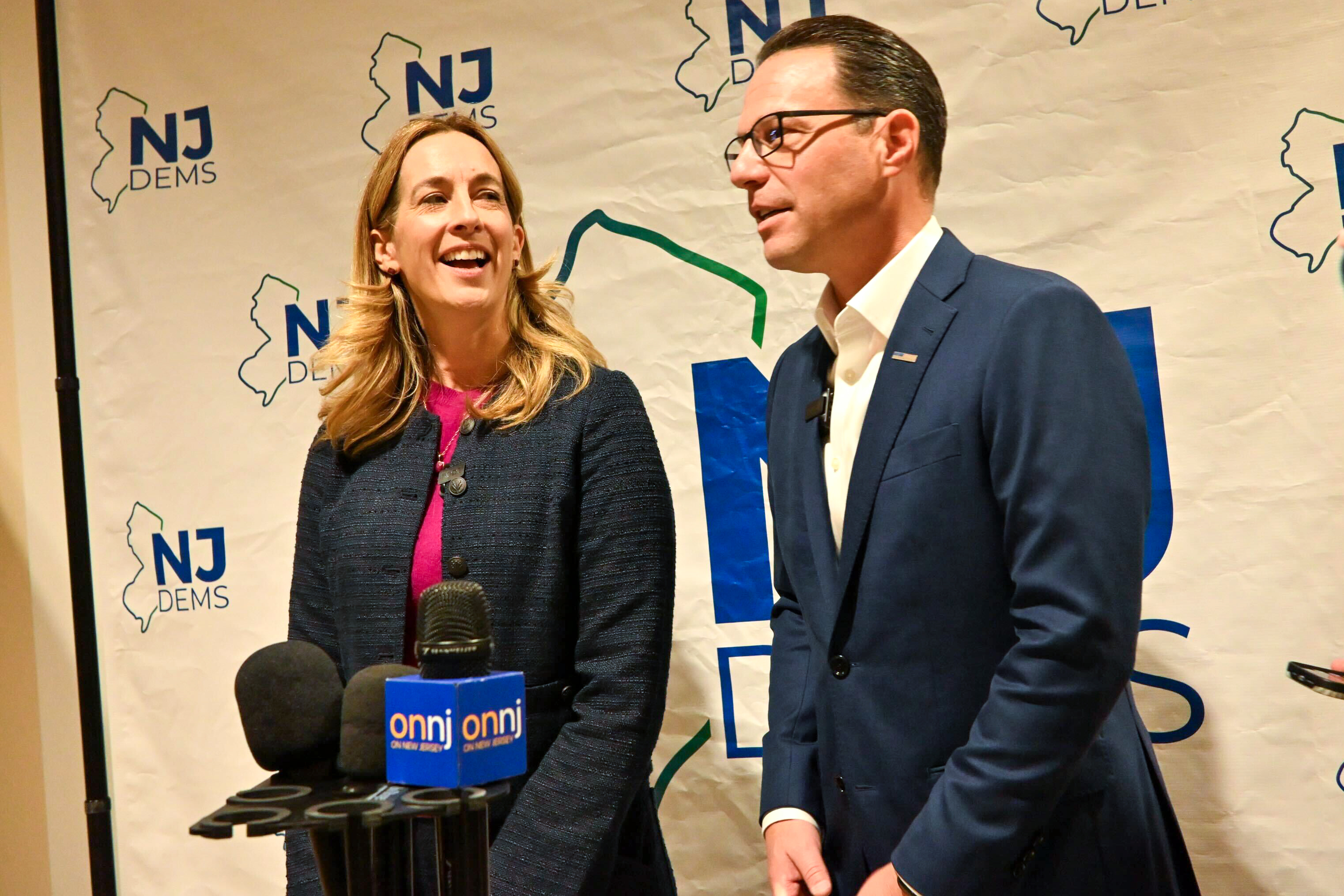
    Gov. Josh Shapiro on the campaign trail for NJ gubernatorial candidate Mikie Sherrill (left) Saturday, Oct. 25, 2025.

    At the two campaign stops, Sherrill ripped into Trump, saying that while the prices of consumer goods like coffee have skyrocketed, “Trump and his family are making billions.”

    Sherrill said her opponent would rubber-stamp Trump administration policies that are unpopular with many in New Jersey — such as his cancellation of $16 billion in funding to build two new rail tunnels under the Hudson River.

    “It’s about opportunity and affordability,” Sherrill said. “We’re fighting for our kids, to make sure they have a better future.”

    Ciattarelli hit the campaign trail as well Saturday, stopping in Passaic, Bergen, and Morris Counties with a message of “a stronger, safer, and more affordable New Jersey,” according to Facebook posts.

    Friday evening, Trump held a tele-rally for Ciattarelli, in which he said Sherrill would “be a travesty as the governor of New Jersey” and urged Republicans to take part in early voting.

    “You got to make sure the votes are counted, because New Jersey has a little bit of a rough reputation, I must be honest,” Trump said.

    There is no evidence of mass voter fraud in New Jersey or anywhere else in recent elections, but Trump still claims the 2020 election was rigged against him and has appointed a notorious Pennsylvania election denier to a federal position monitoring elections. On Friday, the Department of Justice said it will send federal observers to monitor elections in New Jersey and California.

    At a news conference Saturday, Sherrill said she is proud that New Jersey’s elections have been “open, transparent, and free.”

    “And we’re going to continue to do that, and ensure we don’t have any voter intimidation,” Sherrill said.

    At the senior center, Hamlin said she supports Sherrill’s plan to lower energy costs, likes that she’s a woman, and feels it’s important that the next governor is a Democrat. “She’s soft-spoken, but she has meaningful things to say,” Hamlin said.

    Shapiro spoke about how he was raised and how his faith teaches him that “no one is required to complete the task, but neither are we free to refrain from it.”

    The message wasn’t lost on Steve Riback, who said Trump has given antisemites and other extremists “license to come out of the woodwork.” Riback, who is Jewish, said that Shapiro would be his top choice for president in 2028, above Illinois Gov. JB Pritzker.

    Shapiro urged voters frustrated with Trump to send a message to the rest of the country “that here in Jersey, we value our freedom, we cherish our democracy, and we love our country.”

    And Shapiro held up Sherrill as someone who would get things done in New Jersey. Sherrill has cited Pennsylvania as an example of a state with more efficient business licensure rules and better-managed energy costs.

    Shapiro, who has not officially announced his reelection campaign, has long been floated as a presidential hopeful by Democratic insiders and national pundits. Shapiro’s soon-to-be-released memoir will likely add to speculation about his 2026 intentions.

    After the senior center visit, Shapiro and Sherrill hit the turnpike up to New Brunswick, where a packed Mount Zion A.M.E. Church — congregants had come in on buses from around the state — was waiting for him.

    Shapiro said it was up to Democrats to keep, and build upon, what the founders created. “We are those people, and this is a moment where we have to do this work. We’ve got to stand up for our rights,” he said. “We’ve got to keep perfecting our union.”

    Pheobie Thomas, an A.M.E. member who traveled from Trenton for church, said Shapiro and Sherrill offered promising signs that they support “equitable access for all people, including Black people.”

    Thomas, 48, said there is a long history of Democratic politicians courting Black churches for votes, and for good reason.

    “The Black church is extremely important,” Thomas said. “We do go to the polls. We do show up.”

    As for Shapiro, she said he was speaking to New Jersey — but at the same time, he hinted that he was speaking to a broader audience.

    “You just know that there’s that potential of, you know, ‘I may come back again to ask for your vote.’”

    Staff writer Robert Moran contributed to this article.

  • Sixth person to go to trial in 2022 shooting outside Roxborough High School that killed teen

    A sixth person will go to trial over the September 2022 shooting outside Roxborough High School that killed 14-year-old Nicolas Elizalde and wounded four others.

    Zaakir McClendon, 20, will be tried for his alleged role in the deadly ambush, which began when five young men armed with handguns burst from an SUV and sprayed more than 60 bullets at a group of boys who had just finished junior varsity football practice.

    Police said a sixth person was driving the SUV. Police arrested five people in the months after the incident but did not charge McClendon until August.

    At a preliminary hearing — a court process to decide whether there is enough evidence for someone to go to trial — Judge David H. Conroy reviewed video footage and cell phone records and heard from detectives.

    A painting of Nicolas Elizalde, that his mother Meredith Elizalde is bringing with her as part of a small colleciton of her sons things as she packs to start a new life in Montana, two years after Nicolas was killed in a shooting, in Aston, PA, August 15, 2024.

    Citing text messages, Philadelphia Police Detective Robert Daly said the shooting happened after McClendon told another defendant in Elizalde’s killing that a Northeast High School football player had assaulted a girl he knew. The Northeast and Roxborough junior varsity teams were playing a scrimmage on the day of the shooting. Elizalde, a freshman at Walter B. Saul High School who played football for Roxborough, had nothing to do with the girl, police said.

    “It’s clear to me that this defendant set this all in motion,” Conroy said of McClendon.

    Stephen Grace, who was a detective on the case, said police found DNA on one of the 64 cartridge casings left at the scene among the bullet fragments and discarded football equipment.

    For nearly three years, police searched for the person whose DNA was found on the 9mm casing. After police in July charged McClendon with killing a 16-year old boy, and his DNA was uploaded into a criminal database, they got a match, Grace said.

    Two men have already pleaded guilty and been sentenced to decades in prison for their involvement in the shooting. Three others will soon go to trial — and now, McClendon is likely to join them.

    “The goal now is to link these cases and try these defendants together,” said Assistant District Attorney Ashley Toczylowski.

  • Michael Days, pioneering journalist who led the Philadelphia Daily News during its 2010 Pulitzer Prize win for investigative reporting, has died at 72

    Michael Days, pioneering journalist who led the Philadelphia Daily News during its 2010 Pulitzer Prize win for investigative reporting, has died at 72

    Michael Days, a pillar of Philadelphia journalism who championed young Black journalists and was beloved among reporters who worked for him at the Daily News and Philadelphia Inquirer, died suddenly on Saturday at 72 in Trenton.

    A devout Catholic who grew up in North Philadelphia, Mr. Days was instrumental in developing talent among Philadelphia’s journalism community, leading with a kind but direct approach that nurtured journalists and caused reporters to break out in spontaneous applause when he returned to the Daily News in 2011 after an interim stint at the then-rival Inquirer.

    Mr. Days was also respected beyond Philadelphia, receiving Hall of Fame honors from the National Association of Black Journalists and the Pennsylvania News Media Association. He was a past president of the Philadelphia Association of Black Journalists (PABJ) and at the time of his death was president of NABJ-Philadelphia, which formed as an alternative to PABJ.

    Mr. Days’ wife, Angela Dodson, said Sunday afternoon she was comforted by the outpouring of support and love from journalists who knew him.

    “He was the kind of person who wanted to serve,” Dodson said. “People could talk to him, and he had something wise to say.”

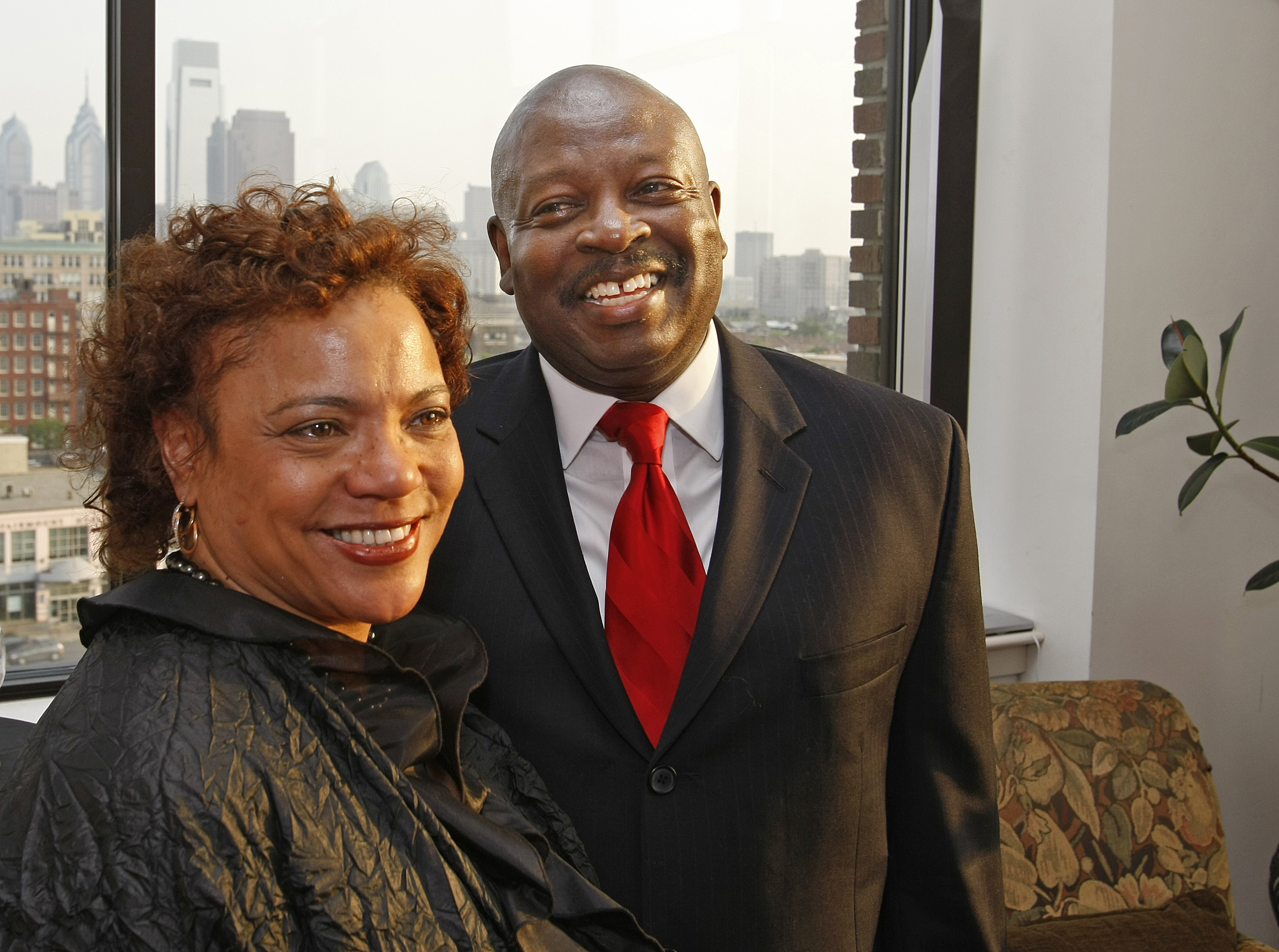
    Michael Days (right), Editor, Philadelphia Daily News and Trailblazer Award winner with his wife, Angela Dodson (left)

    Dodson, a journalist and author, said she and her husband had a long-running disagreement over where they had first met. She believes it was in Rochester, N.Y., when they were working for rival newspapers. But Mr. Days believed he’d met her a year earlier, at an NABJ convention.

    “People loved him,” Dodson said. “He commanded such respect that I used to say, people would elect him president of anything.”

    In recent years, Dodson enjoyed listening as her husband took long phone calls from journalists seeking advice. “What we all need is somebody who listens to us, and he was a master at that,” Dodson said.

    Former Daily News reporter and current Inquirer journalist Stephanie Farr recounted Mr. Days’ infectious laugh and his habit of adding Post-it notes to clips of reporters’ articles to tell them they had done a good job, sometimes with simple messages like “amazing quote!” that gave reporters a little extra pride in their work.

    “You didn’t get one every day, but when you got one, you were on top of the world,” Farr said.

    She still has a box full of these “Mike-O-Grams,” as they became known, and many others do, as well. “The small gestures, in the end, are really the big ones,” Farr said.

    Tributes and condolences poured in Sunday from journalists who were shaped by Mr. Days’ leadership.

    “It is with a very heavy heart that NABJ Philadelphia mourns the sudden passing of our President Michael I. Days, a respected journalist, mentor and cherished friend whose legendary career and commitment to excellence inspired us all,” wrote Inquirer education reporter and NABJ-Philadelphia Vice President Melanie Burney.

    NABJ President Errin Haines said she first met Mr. Days when she moved to Philadelphia in 2015 to work for the Associated Press. Haines said she was struck by his seemingly boundless energy for helping younger reporters. She remembered him as a universally respected leader, and someone who had shown other Black journalists a path to success.

    “It was seismic in the industry, and a huge point of pride for NABJ,” said Haines.

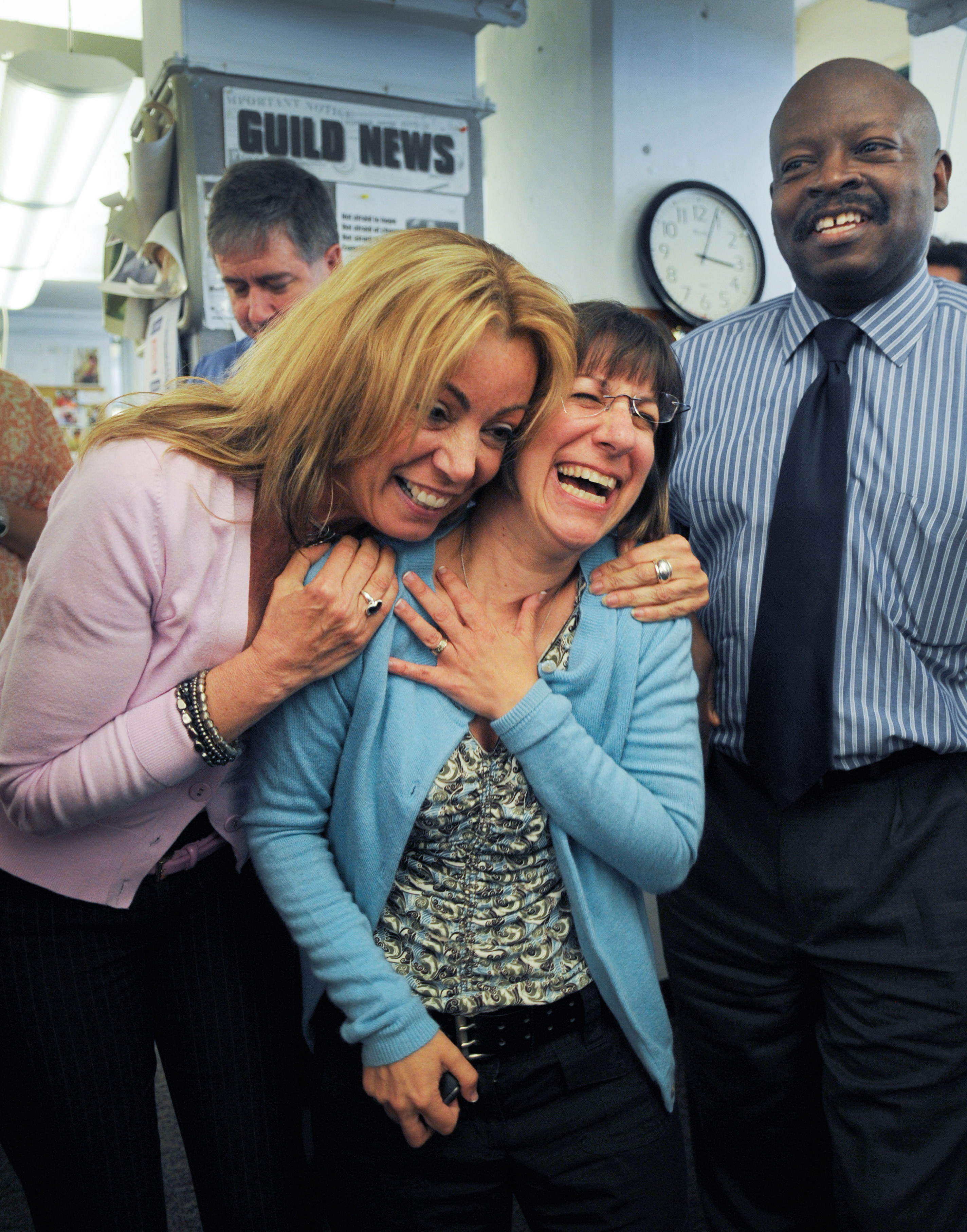
    Philadelphia Daily News reporters Barbara Laker (left) and Wendy Ruderman, and editor Michael Days react as they hear the news that the two reporters won the 2010 Pulitzer Prize for investigative reporting.

    As editor of the Daily News, Mr. Days played an essential role in the decisions that would lead to its 2010 Pulitzer Prize win for investigative reporting, said Inquirer senior health reporter Wendy Ruderman. She and her colleague Barbara Laker won the prize.

    “You could walk into his office anytime and talk to him,” Ruderman said. “He just was very approachable — but also, you respected him.”

    Ruderman recounted sitting in Mr. Days’ office late one evening, alongside Laker and a company lawyer, as they discussed whether to move forward with a story about a Philadelphia Police Department narcotics officer. The story, the lawyer said, stood a good chance of getting them sued.

    With a “directness and sincerity” that were his hallmark, Mr. Days turned to the reporters.

    “He said, ‘I trust my reporters, I believe in my reporters, and we’re running with it,’” Ruderman said. That story revealed a deep dysfunction within the police department, Ruderman said, and led to the newspaper’s 2010 Pulitzer Prize win.

    Retired Daily News managing editor Pat McLoone remembered Mr. Days as a quietly authoritative presence, and a leader who brought elegance and class to everything he did — even as he had to preside over the early days of the news industry’s difficult shift from print to digital media.

    “He was the best possible boss to work for,” McLoone said. “He was in the 100th percentile as a human being.”

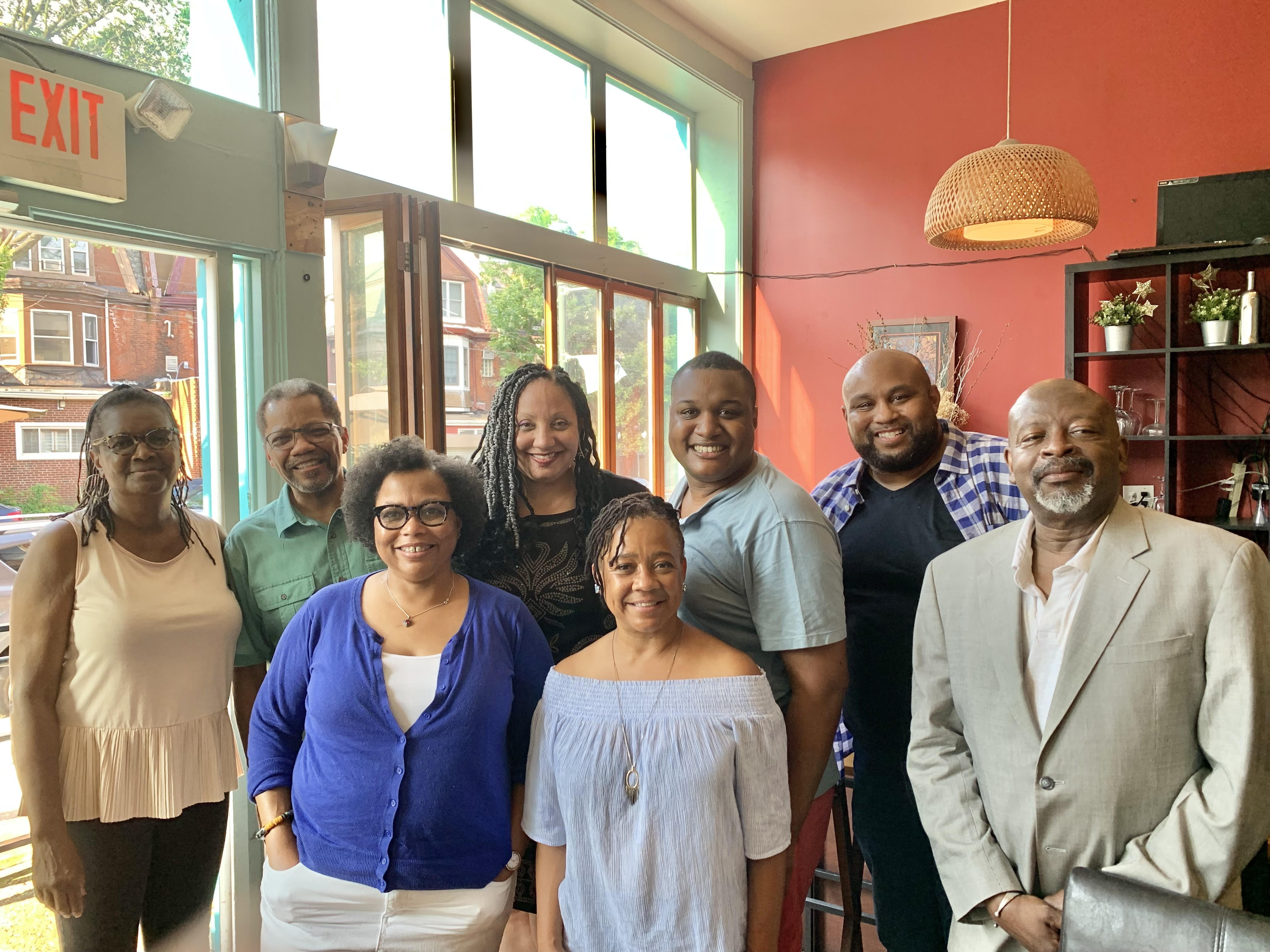
    Michael Days (far right) with other former presidents of the Philadelphia Association of Black Journalists in 2021. He served as president in the 1980s.

    After graduating from Roman Catholic High School in Philadelphia, Mr. Days earned degrees from College of the Holy Cross and the University of Missouri. He worked at the Wall Street Journal and other newspapers before joining the Daily News as a reporter in 1986.

    In 2011, Mr. Days was named managing editor of the Philadelphia Inquirer, where he held several management roles until he retired in October 2020. Inquirer Editor and Senior Vice President Gabriel Escobar said Sunday that Mr. Days was a “leading light in Philadelphia journalism.”

    “Mike was a son of Philadelphia, a believer in the power of journalism to do right, and a mentor to scores of young journalists who benefited over many decades from his attentive guidance,” Escobar wrote in an email to Inquirer staff. “He spent his life fighting for better journalism because he understood its limitations and, when it came to diversity, its flaws.”

    After his own retirement, Mr. Days’ work mentoring Black journalists didn’t stop, said retired journalist Linda Wright Moore.

    “He had all the things you need,” Wright Moore said. “He was steady. Principled. He could do tough. He balanced what the craft demands of all of us with the fact that we’re humans, and not perfect.”

    Wright Moore had known Mr. Days when she was a columnist at the Daily News from 1985 to 2000. But they stayed in touch over the years and saw one another every year at the annual NABJ convention.

    In August, the NABJ celebrated its 50th anniversary — a historic moment for the organization and for Wright Moore, whose late husband, Acel Moore, was one of the group’s founding members.

    For her and Mr. Days, it demonstrated the significance of the group’s survival, a half century later, despite the ongoing dismantling of DEI programs at many organizations.

    “I could just feel how proud he was to be there, to have made it to this point,” Wright Moore said.

    Mr. Days is survived by Dodson, three adopted sons, Edward, Andrew, and Umi, and three grandchildren. Mr. Days is predeceased by his adopted son Adrian.

    Services for Mr. Days will be held Oct. 25, at Sacred Heart Church, 343 S. Broad Street, Trenton, N.J. The Viewing will be held from 10 a.m. to 12 p.m. followed by Mass at noon.

    Donations in his memory may be made to the following: College of the Holy Cross; St. Rosa of Lima school; Dodson, Dotson and Hairston Family Scholarship through the Marshall University Foundation.

  • Thousands turn out in Philly for the ‘No Kings’ protest

    Thousands turn out in Philly for the ‘No Kings’ protest

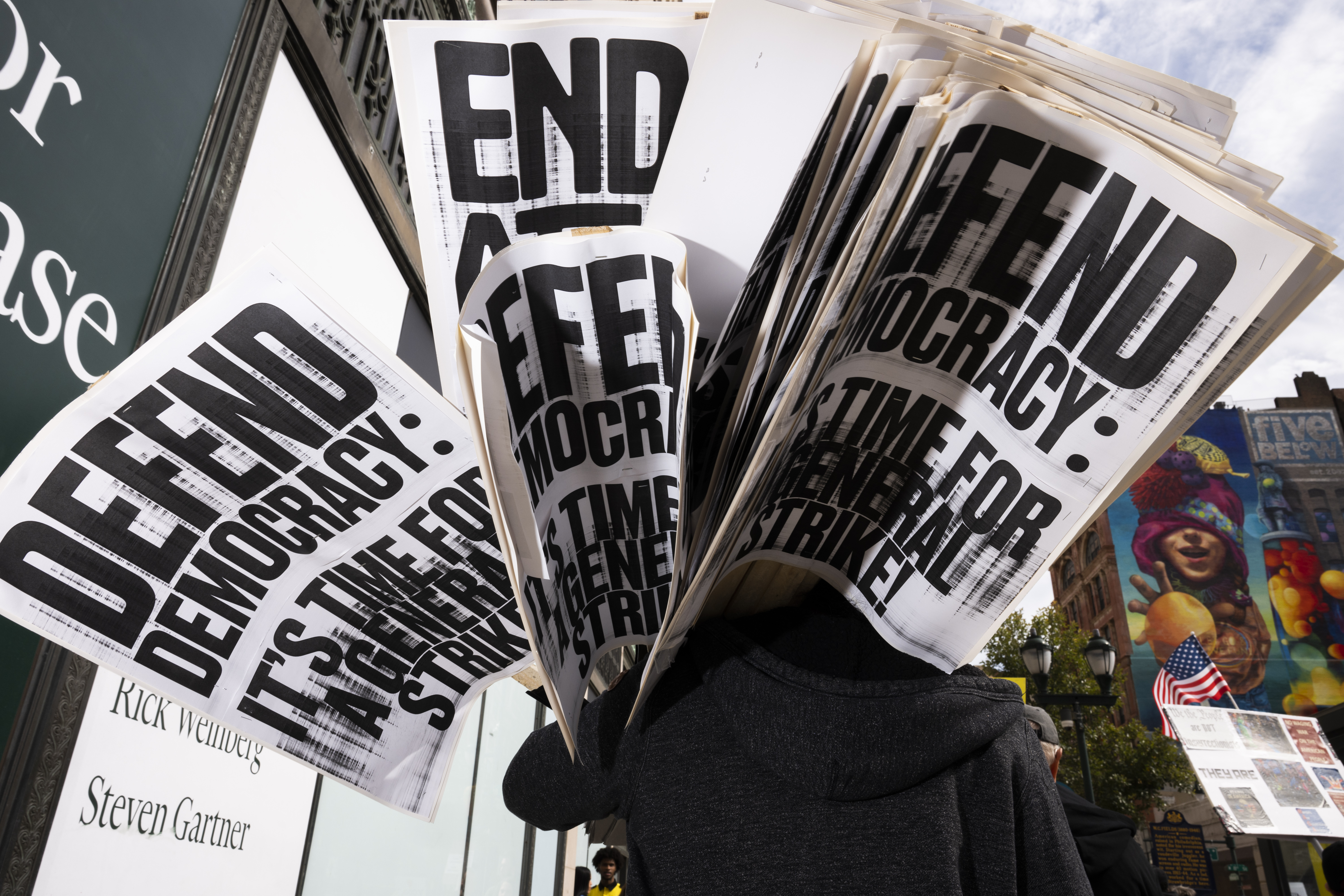
    Joining demonstrators around the country, thousands gathered Saturday in Philadelphia to protest President Donald Trump’s actions that they contend are threatening to undermine 250 years of the nation’s democratic traditions.

    “I think everybody needs to know that we’re not going to just sit back,” said Sherri King, who arrived at the “No Kings” rally in Center City wearing an inflatable chicken costume.

    On a mild October afternoon when the weather was drawing no protests, the event began in a festive atmosphere with the sounds of clanking bells as participants gathered at City Hall — some, like King, wearing pre-Halloween regalia — and marched to Independence Mall.

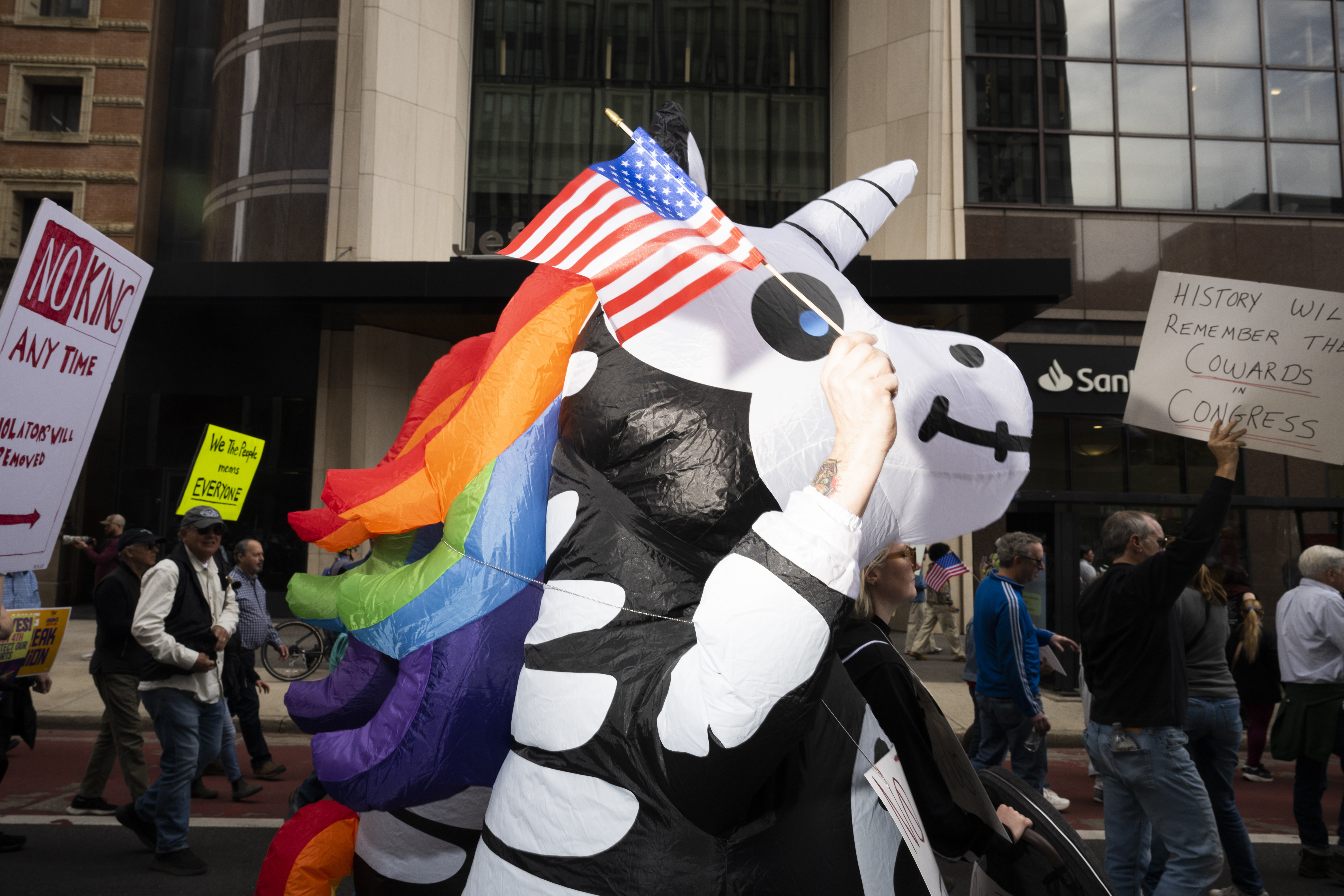
    Demonstrators gather for a’ No Kings’ rally in Philadelphia on Saturday, Oct. 18, 2025.

    “It’s a very large, orderly crowd,” said Police Capt. Frank Palumbo. The three-hour march and rally, which began at noon, actually ended on time.

    Said Thomas Bacon, a 72-year-old Vietnam veteran from North Philadelphia: “It’s peaceful. No division. Just opposition.”

    Under Trump, he said, “the whole world is turned upside down.”

    In what was the third mass anti-Trump protest this year, several organizers were taking credit, including Indivisible, MoveOn, and the 50501 Movement.

    The demonstrators’ menu of grievances included aggressive raids by Immigration and Customs Enforcement, Trump’s budget and efforts to limit free speech, and the government shutdown that began Oct 1.

    Organizers of the more than 2,500 demonstrations nationwide say the shutdown in particular is a dangerous move toward authoritarianism.

    Trump and congressional Republicans are blaming Democrats for refusing to vote on a reopening.

    For his part, Trump spent the day of what fellow Republicans were calling “Hate America” rallies at his Florida mansion.

    Demonstrators gather for a’ No Kings’ rally in Philadelphia on Saturday, Oct. 18, 2025.

    At the Philadelphia protest, Laura Murphy, a 74-year-old retiree, said she was struggling with the “Hate America” concept. “It’s ridiculous,” she said. “What could be more American than being against kings?”

    Along with demonstrators, Democratic politicians were evident at events in Philly and elsewhere.

    With Democrats hoping to make significant gains in the 2026 election, the presence of party elected officials was evident at rallies in Philly and elsewhere. Among those who showed up in Philadelphia were area U.S. Reps. Mary Gay Scanlon, Madeleine Dean, and Brendan Boyle, along with U.S. Rep. Jamie Raskin of Maryland.

    Rallies were being held all over New Jersey, Pennsylvania, the region, the nation — even Spain, where a few hundred gathered in Madrid. About 5,000 people jammed the streets of West Chester.

    In Philly, Jerry Lopresti, who said he never had attended a protest in his 64 years, said: “There has to be a show of numbers. It’s important to show up.”

    Demonstrators gather for a ’No Kings’ rally in Philadelphia on Saturday, Oct. 18, 2025.

    Among those who showed up conspicuously was Michael Noonan, 48, of Northern Liberties. He was wearing a Tinky-Winky Teletubby costume as he walked off a Market-Frankford Line subway car.

    He said his outfit was a counterpoint to suggestions that the demonstrations might turn violent. “Nobody’s here to fight anyone,” he said, “nobody’s here to kill anyone.”

    Not everyone who showed up had issues with Trump.

    Patrick Ladrie, 20, who lives in Camden County, stood out in his Trump hat and “ultra MAGA” T-shirt that proclaimed “I love our king.”

    He said he crossed the Delaware River to “get a good viewpoint of what the American left is.”

    After engaging in debate with three protesters on matters that included Christianity and conservatism, Ladrie reported that the environment was not so bad.

    In fact, he said, it was one of the “most peaceful” debates he could recall. As one of his adversaries jogged away to meet up with his friends, Ladrie said, “Keep out of trouble.”

    The protest was a decidedly intergenerational affair, with some parents describing the event as a teachable moment, while others said it was their progeny who came up with the idea to attend. Danielle Pisechko, 38, carried her youngest, who wore orange butterfly wings, on her shoulders.

    Their sign read: “The only monarchs we want are butterflies.”

    Demonstrators gather for a’ No Kings’ rally in Philadelphia on Saturday, Oct. 18, 2025.

    The participants included Center City resident Reed Oxman, 66. Although his disability limited his movement, he and his husband sat on a ledge near City Hall as evidence of the diversity of the crowd. “It’s [about] representation and clearing all the lies about who is coming to this,” Oxman said.

    Lana Reckeweg, who lives at a North Philly women’s shelter, said her resources were seriously limited, but that didn’t stop her from finding cardboard and getting markers to make signs to give to other demonstrators.

    She said that over the last several months a handful of undocumented women have found sanctuary in the place she calls home, and seeing their struggles made her want to attend the protest on their behalf.

    “I have done a lot of crying. I see how it’s affecting them every day,” said Reckeweg, trying to keep her handwriting steady on a moving bus.

    “I am here because they can’t be. People need to wake up and realize it’s getting a lot more serious more quickly than expected.”

    As for what effect the rallies might have, “I would tend to doubt that the protests will have any immediate direct impact on the administration’s policies,” said David Redlawsk, chair of the political science and international relations department at the University of Delaware, but “they may work to embolden those who are opposed to Trump’s actions to continue to organize and respond.”

    Sam Daveiga, 15, attended her first protest, the Women’s March, when she was 7 years old. This time, she brought along her father, Ed. “Every voice counts,” the Philly teen said.

    “You can have a small voice, but the second you put it with everyone else who’s come out, it amplifies.”

    Staff writers Emily Bloch, Scott Sturgis, and Rob Tornoe contributed to this article, which contains information from the Associated Press.

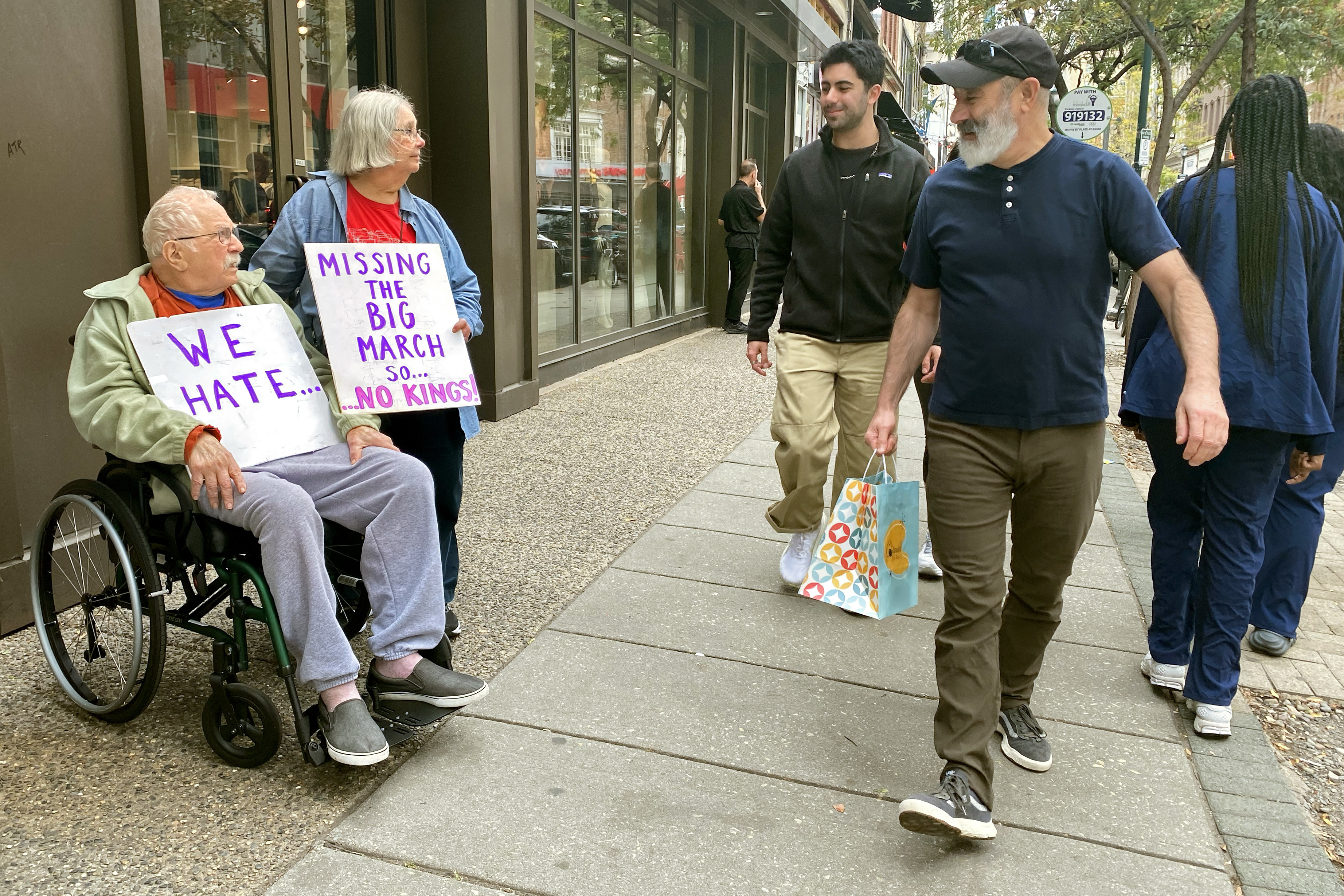
    Fourteen blocks away from the “No Kings” rally on Independence Mall, Bert and Lynne Strieb stand (and sit) in silent protest Saturday, Oct. 18, 2025 outside their apartment building in the 1900 block of Chestnut Street, vicariously joining thousands of others in Philadelphia and in cities across the country in response to Trump’s masked ICE agents and the deployment of troops in American cities. The Striebs, both in their 80s, could not attend the June “No Kings” march as Bert was in the hospital, and Lynne said they “did not want to miss this one.”