Author: Jackie Spiegel

  • Unhappy with his game, Matvei Michkov got to work over the break: ‘I was training every day’

    Unhappy with his game, Matvei Michkov got to work over the break: ‘I was training every day’

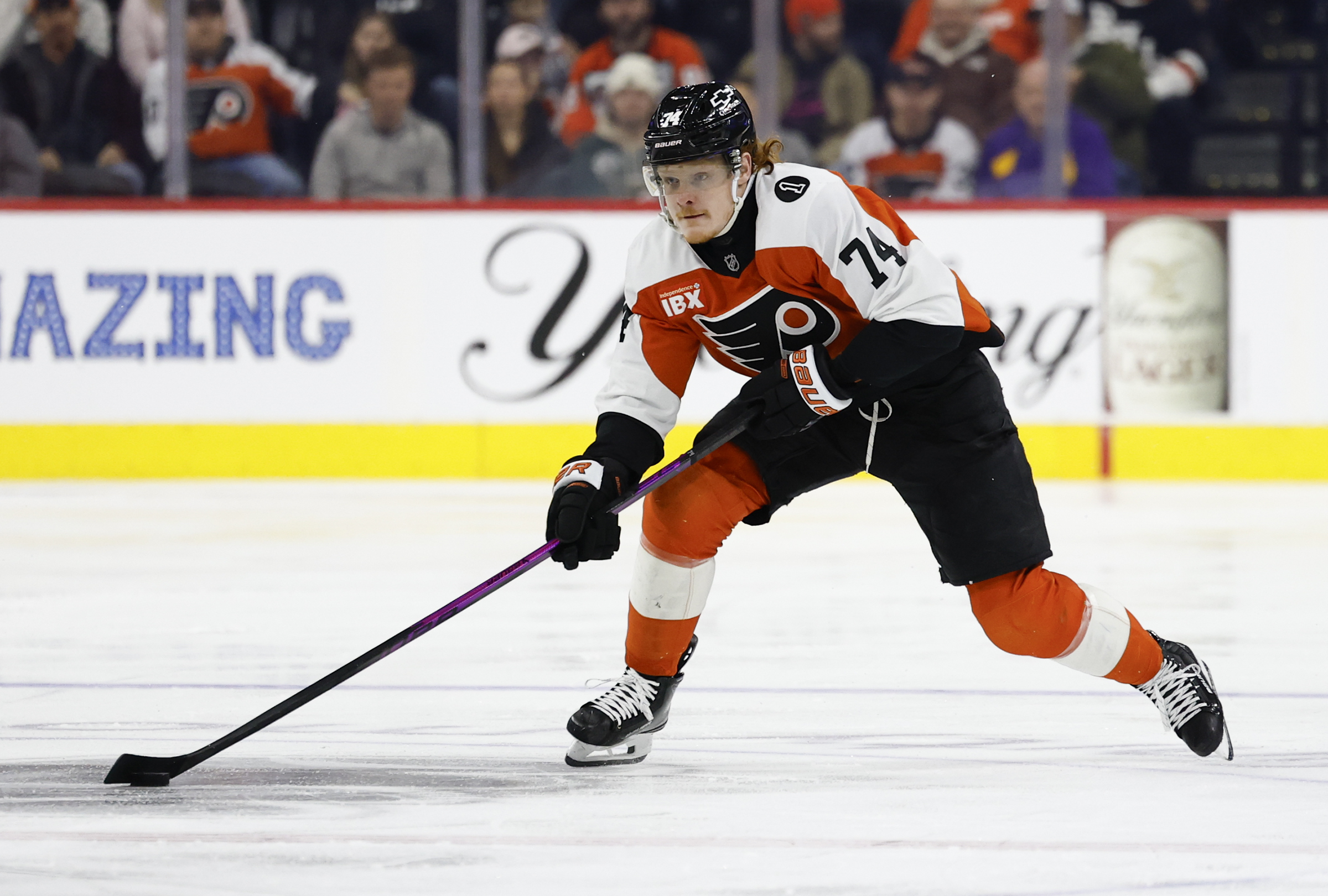
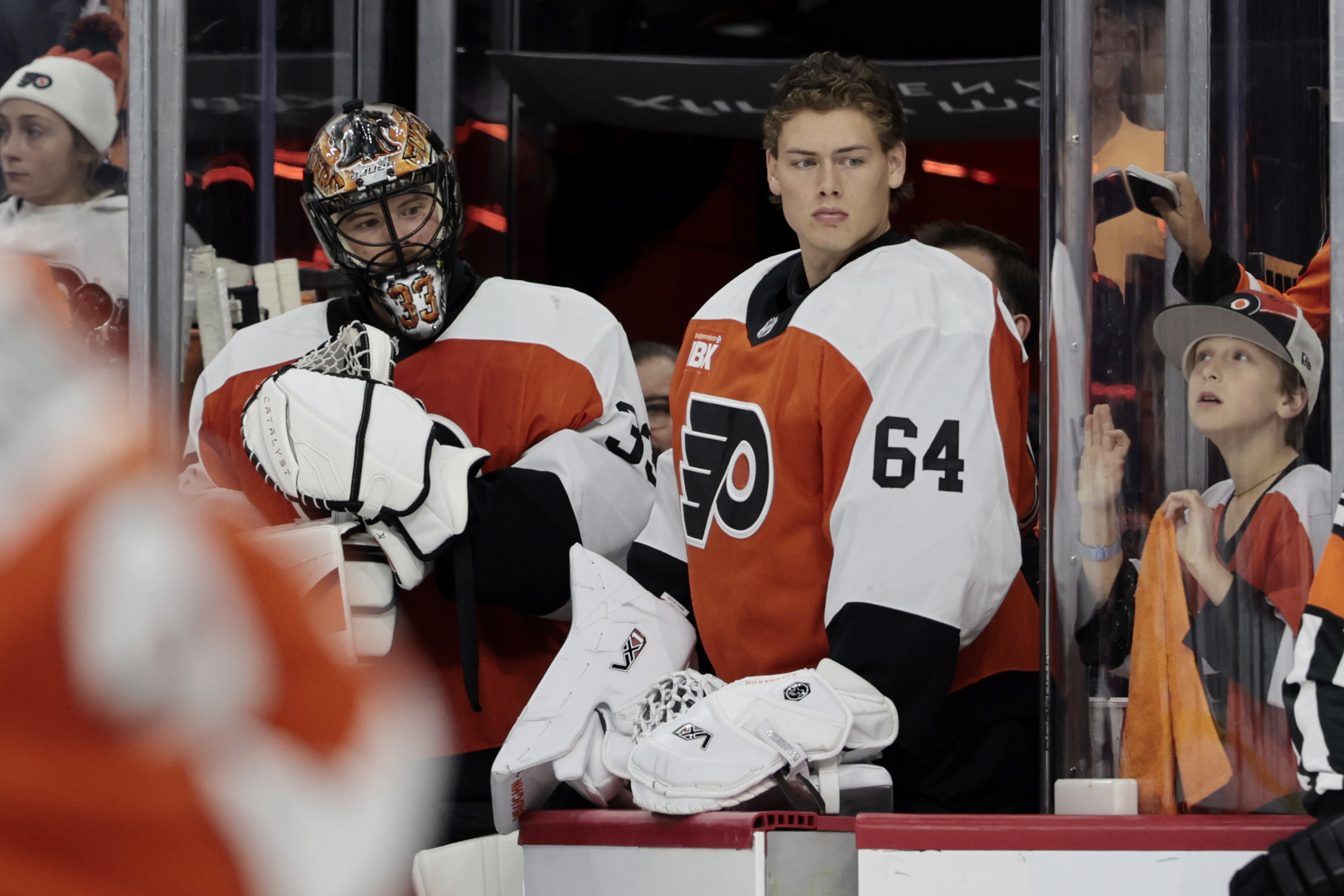
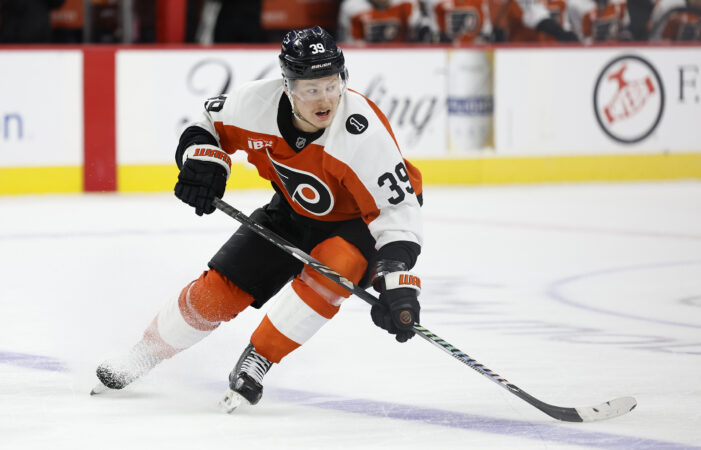
    The Flyers’ season restarts Wednesday in Washington, and Matvei Michkov is ready to go.

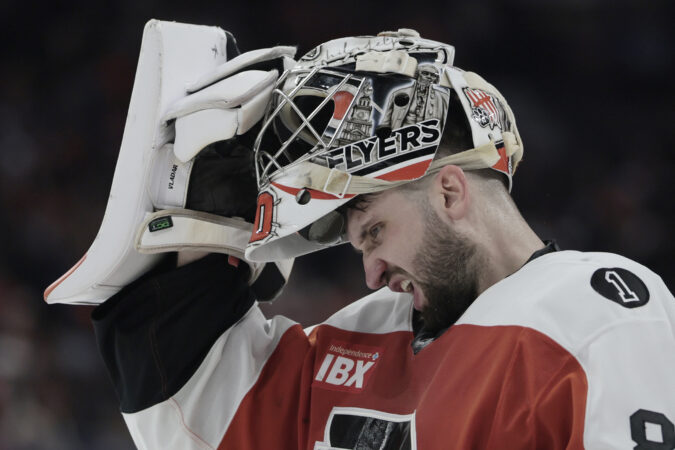
    “I was training every day. Was not resting,” the winger said through team translator Slava Kuznetsov about how he spent his Olympic break.

    Michkov said he did two-a-days off the ice for seven days during the break. One session focused on strength and another on conditioning and stamina while he stayed off the ice. He also posted pictures and videos on Instagram on Feb. 16, showing him working out on vacation in the Dominican Republic, and said he had a trainer with him.

    “Last year, the 4 Nations [Face-Off] was not too long a break, so I was just resting,” he said when asked about his impressive stretch after the February 2025 tournament. “This time, I was not planning to rest. I was not happy with the way the game was going, so I was working the entire break.

    “My emotions depend on how the hockey goes, so that’s why I decided to work instead of the rest.”

    In mid-October, the Spittin’ Chiclets podcast reported that sources said Michkov was “out of shape,“ and coach Rick Tocchet revealed the same day that Michkov had suffered an ankle injury in the offseason that impacted his training. In November, the 21-year-old Russian attributed his slow start — one goal in his first 13 games, and now 13 across 55 — to his failure to train well over the summer.

    Over the past several weeks, The Inquirer has spoken with former and current NHL players about the conditioning and strength needed to endure the grind of the 82-game season, especially one as condensed as this one.

    They all agreed that while not 100% impossible, it is incredibly difficult to build strength and conditioning during the season. A large part of that is because of the lack of time to recover when players need to be ready to play a physical game at a consistent level. This season, even more so, makes it tough to have an extra day to “run myself into the ground,” as one player put it, because the next day is a game or practice.

    In-season programs are built to maintain instead of build, with even maintaining still difficult to achieve. Conditioning and stamina do go up as games build because of the constant stress of the game on the body, but strength goes down for everyone. The work has to be done in the summer, and Michkov, who was “a little bit behind the eight ball” as Tocchet said earlier this season, reiterated Tuesday that he has learned from his mistakes.
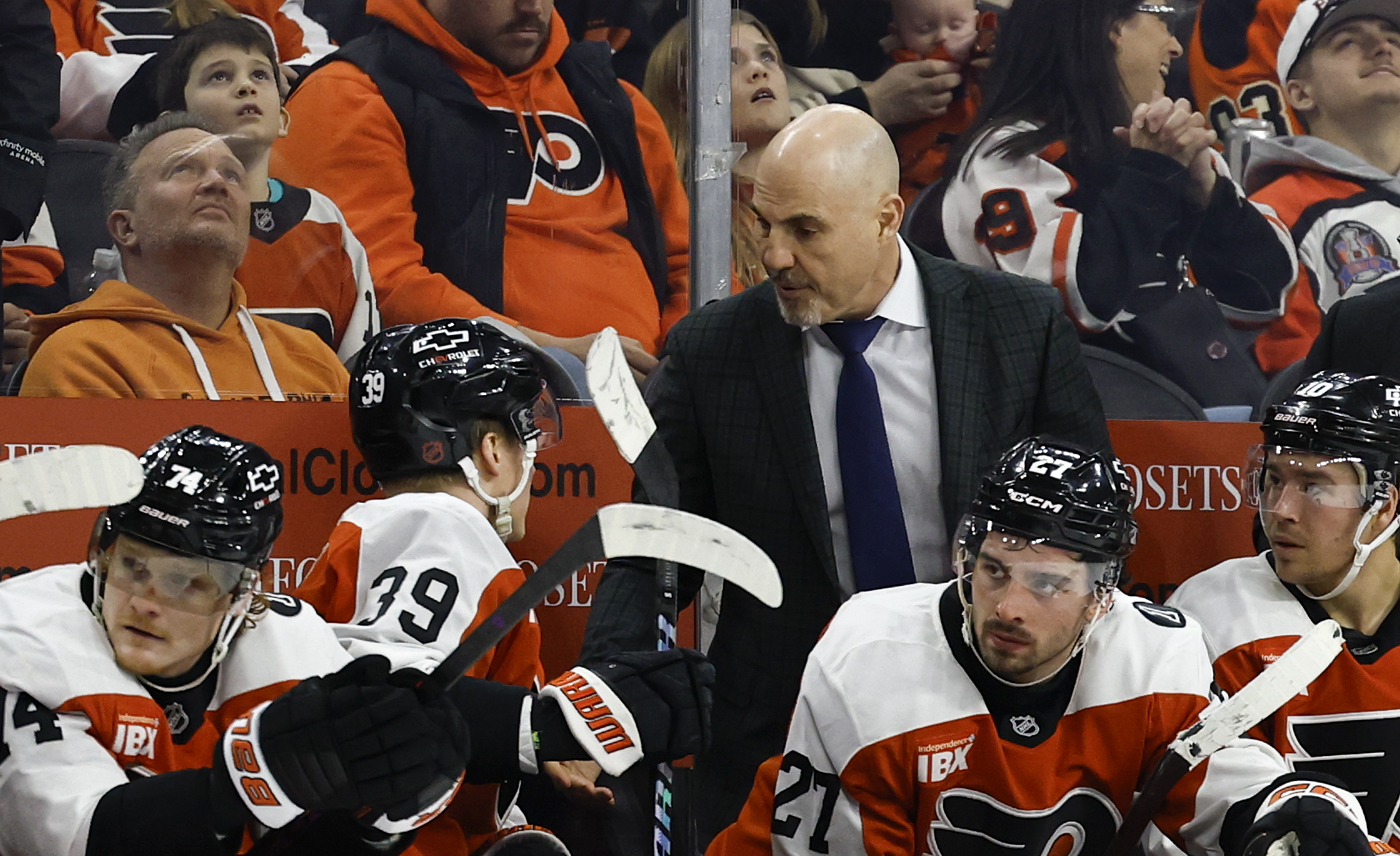
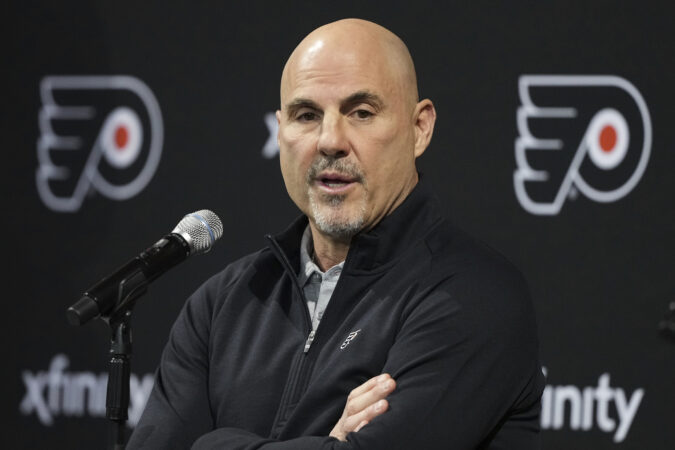
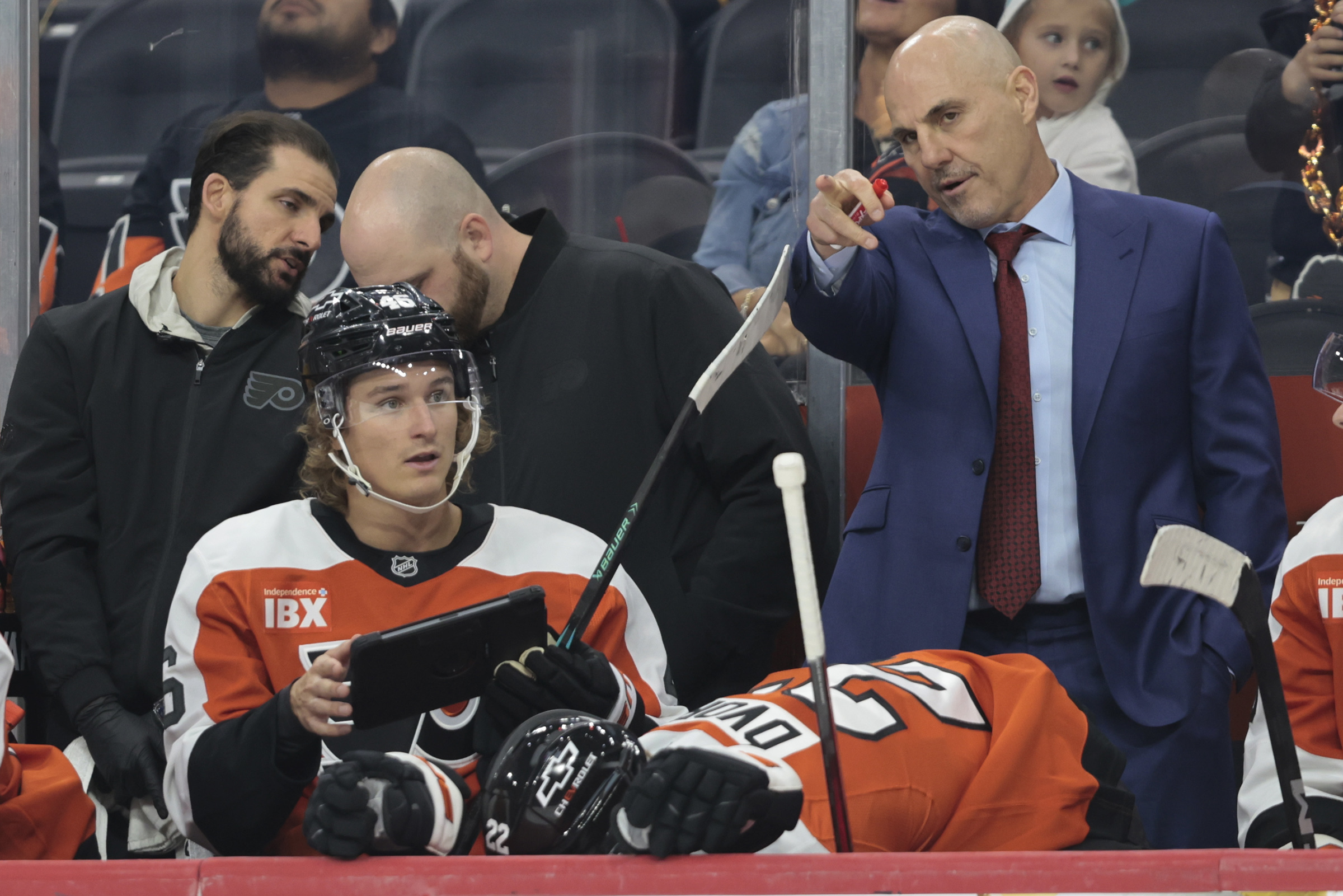
    Flyers coach Rick Tocchet and Matvei Michkov haven’t always agreed on the winger’s role and ice time this season.

    “The NHL is hard work,” he said. “If you take a four-month break, it can reflect [in] your game. You have to concentrate on hockey all the time, and you cannot take even a month of [a] break. You have to be smart when you train in the break, don’t take [an] injury, but training must go.”

    As for working with Tocchet, another topic that swirls around Michkov due to his current role and ice time, the sophomore forward said they have the “common relationship” between coach and player.

    He said he was also unaware of the media chatter before the break, specifically around Tocchet’s comments on the PHLY podcast at the Flyers Charities Carnival regarding Michkov’s minutes and how general manager Danny Brière wanted “to address a little bit of the noise that is going around” while denying a rift between the two.

    “I’ll play as much time as I’m [being] given, and I have to do my job. That’s the only thing I care about,” said Michkov, who is averaging more than two minutes fewer this season compared to last.

    “The way the [coach] plays me, that’s the way he decides to play, so I’ll play. I’m a player, and I have to concentrate 100% on what I’ve been doing at that moment.”

    A left-handed left wing is preferable to many coaches in the defensive zone because it typically pits a lefty against a right-shot defenseman, so they have sticks on the same side — and in the shooting lane — as the defenseman when they try to close them down.

    Another aspect of Tocchet’s decision-making that has drawn criticism is his switching of the left-handed Michkov off his preferred position of right wing to the left side. Some traditionalists will tell you that Michkov should be playing on the left side anyway, especially in defensive-zone coverage, as a left-handed stick will be able to use the walls and protect the puck to get it out on the left side.

    Tocchet said in January that it’s just to line up and not a big deal in the offensive zone, “but through the neutral zone, for me, the faster you can go on your forehand is the better [side]. But that doesn’t mean you can’t go to the other side.”

    Asked about the adjustment, Michkov responded: “I’m always playing [on] the right, I was always happy. Now I’m playing on the left [and] it’s a new role. If the coach sees me there, I have to adapt as quick as I can. But, for me, on the right, I can create a lot more moments. Now I have to switch everything to the left and do the same thing.”

    Regardless, Michkov says he is feeling 100% and “very light on the ice.” His focus is not on the noise but the last stretch of games as the Flyers try to make up ground in the Eastern Conference and gain a spot in the Stanley Cup playoffs.

    “I’m sure every single player is looking [to win] those games,” he said.

    “Twenty-six games left; it’s hard work. Everybody wants to make the playoffs, and that’s our goal on the ice — for me, for coaches, and for staff as well — everybody’s thinking about the group and how to win those games and make the playoffs.”

    Breakaways

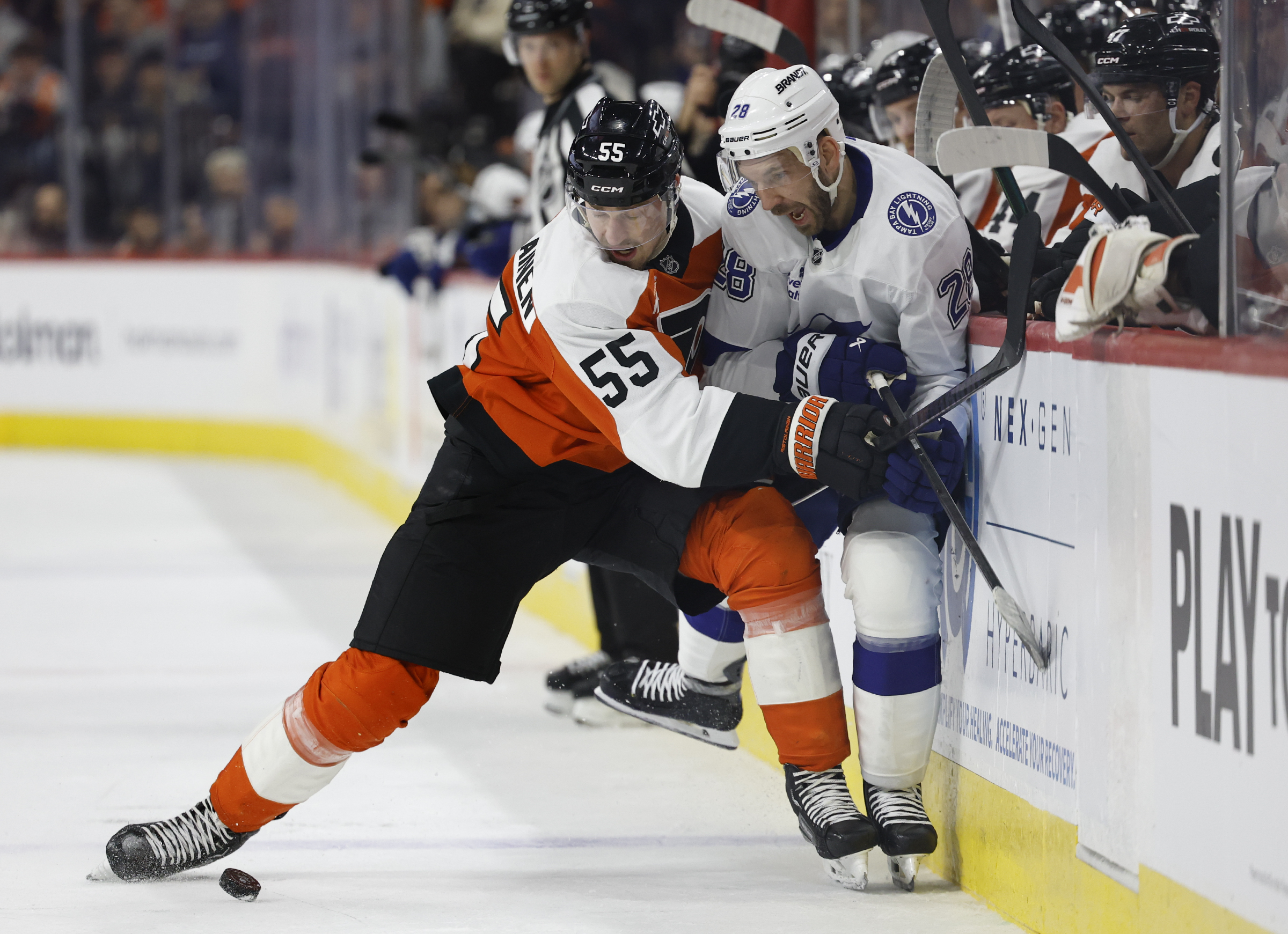
    Rasmus Ristolainen rejoined the Flyers on Tuesday after an impressive Olympic performance in Milan. He said he roomed with Mikko Rantanen in the Athletes’ Village and is just happy he didn’t lose his bronze medal after the game. … Assistant coach Todd Reirden said Travis Sanheim was at the Flyers Training Center on Tuesday and is expected to play against the Washington Capitals on Wednesday (7 p.m., NBCSP). He took a different route home from Italy than Tocchet, who flew on the charter to Miami and was unable to make it to Philly because of the weather. Tocchet will join the team in Washington.
  • From trade bait to untouchables, here’s where the Flyers roster stands heading into the deadline

    From trade bait to untouchables, here’s where the Flyers roster stands heading into the deadline

    Let the wheelin’ and dealin’ commence.

    The NHL trade freeze thawed at 11:59 p.m. on Sunday, and general managers have until 3 p.m. on March 6 to decide if their team is a buyer or a seller.

    Flyers president Keith Jones and general manager Danny Brière have long said “the players will decide” which route they take during the team’s rebuild, but Brière expects this deadline to be a quiet one.

    That doesn’t mean trades won’t happen between now and the buzzer, as the Flyers still have five games to sway brass one way or the other.

    We broke the Flyers’ roster into five categories, ranging from the players most likely to be traded to those who are considered untouchable.

    Which Flyers are trade bait?

    Two seasons ago, pending unrestricted free agent defenseman Sean Walker was widely expected to be on his way out, and he was eventually dealt to the Colorado Avalanche in a package that included a 2025 first-round pick. Last season, after years of speculation, glue guy Scott Laughton was shipped north to Toronto for Nikita Grebenkin and a 2027 first-round pick.

    But for the first time in Brière’s tenure, no player is a slam dunk to be traded.

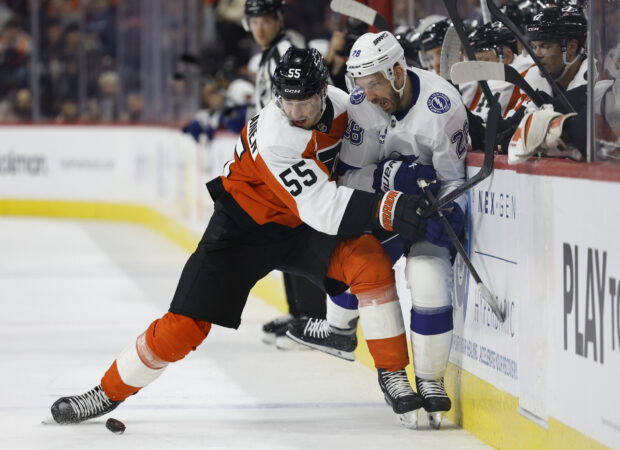
    Rasmus Ristolainen, D: If the Flyers trade anyone, all signs point to the 31-year-old Ristolainen. There are several appealing aspects regarding the 6-foot-4, 208-pound blueliner for playoff-bound teams. Finally healthy, the Finn is coming off an impressive performance at the 2026 Milan Cortina Olympics, where he showcased a physical, two-way game while posting three assists, a plus-9 rating, and earning a bronze medal. A more tantalizing tidbit is that he wouldn’t be a one-and-done rental; Ristolainen has term, with one more year at a relatively cheap $5.1 million. Various reports on Monday indicate that there will be suitors.

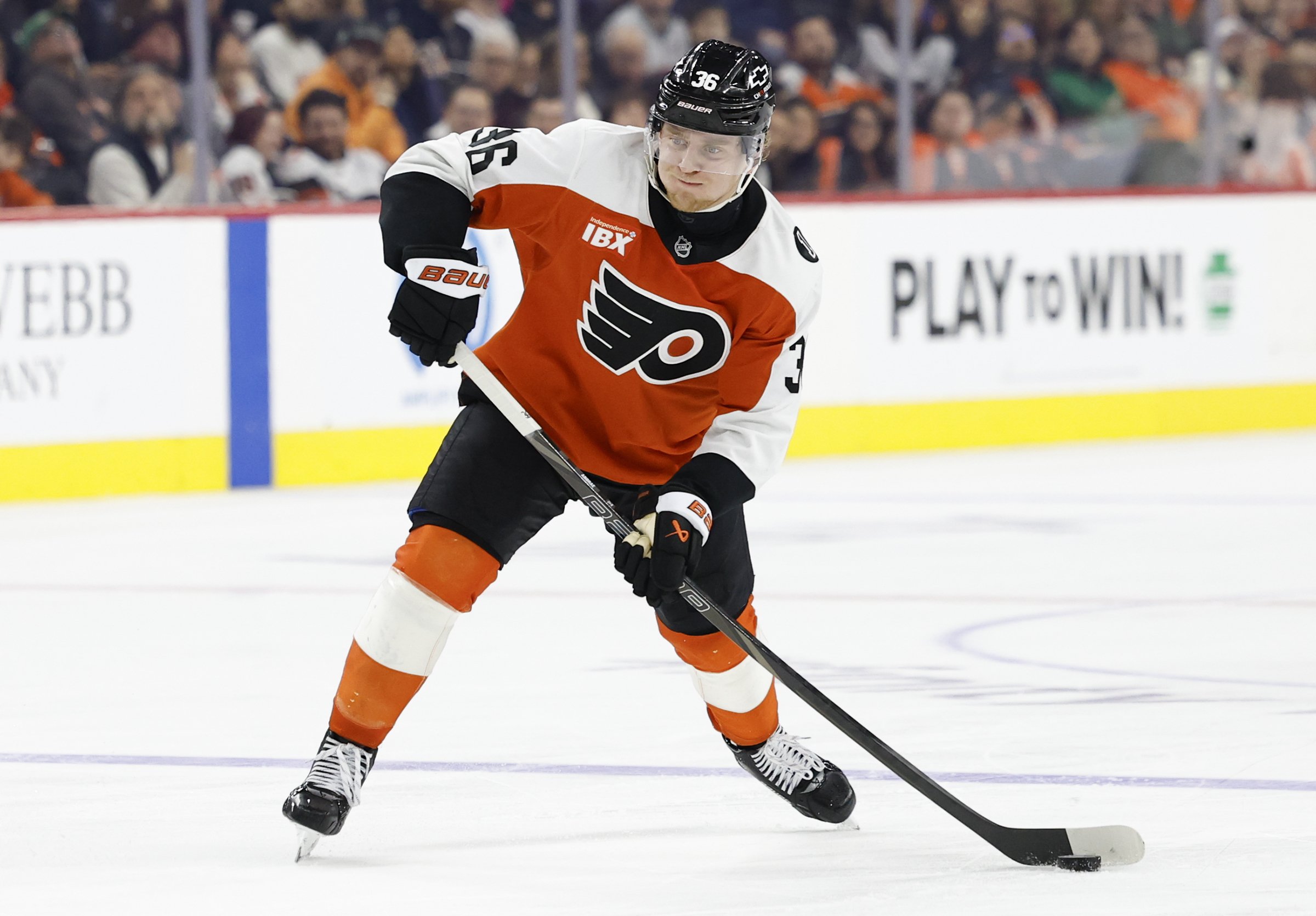
    Emil Andrae, D: In the last month, a question has arisen: Where does Andrae actually fit? Limited in stature but not in heart and drive, the 24-year-old Swede is an exciting puck-mover but also prone to miscues. Scratched the last five games before the Olympic break, it’s not clear whether the Flyers are looking to move him, but a change of scenery might suit all involved..

    Flyers defenseman Emil Andrae seems like a player who is a little stuck. Could the Flyers opt for a change-of-scenery trade?

    Carl Grundström, LW/RW: Acquired in early October in the deal that sent Ryan Ellis’ contract west, Grundström has brought speed, quickness, and a great shot to the Flyers’ fourth line. As assistant coach Todd Reirden said on Sunday: “He’s been such a good add for our team this year. Been able to help us in a number of different ways, whether it’s penalty kill or sliding up and down anywhere from the fourth line to the second line.” If the Flyers are selling, could he recoup a mid-round draft pick?

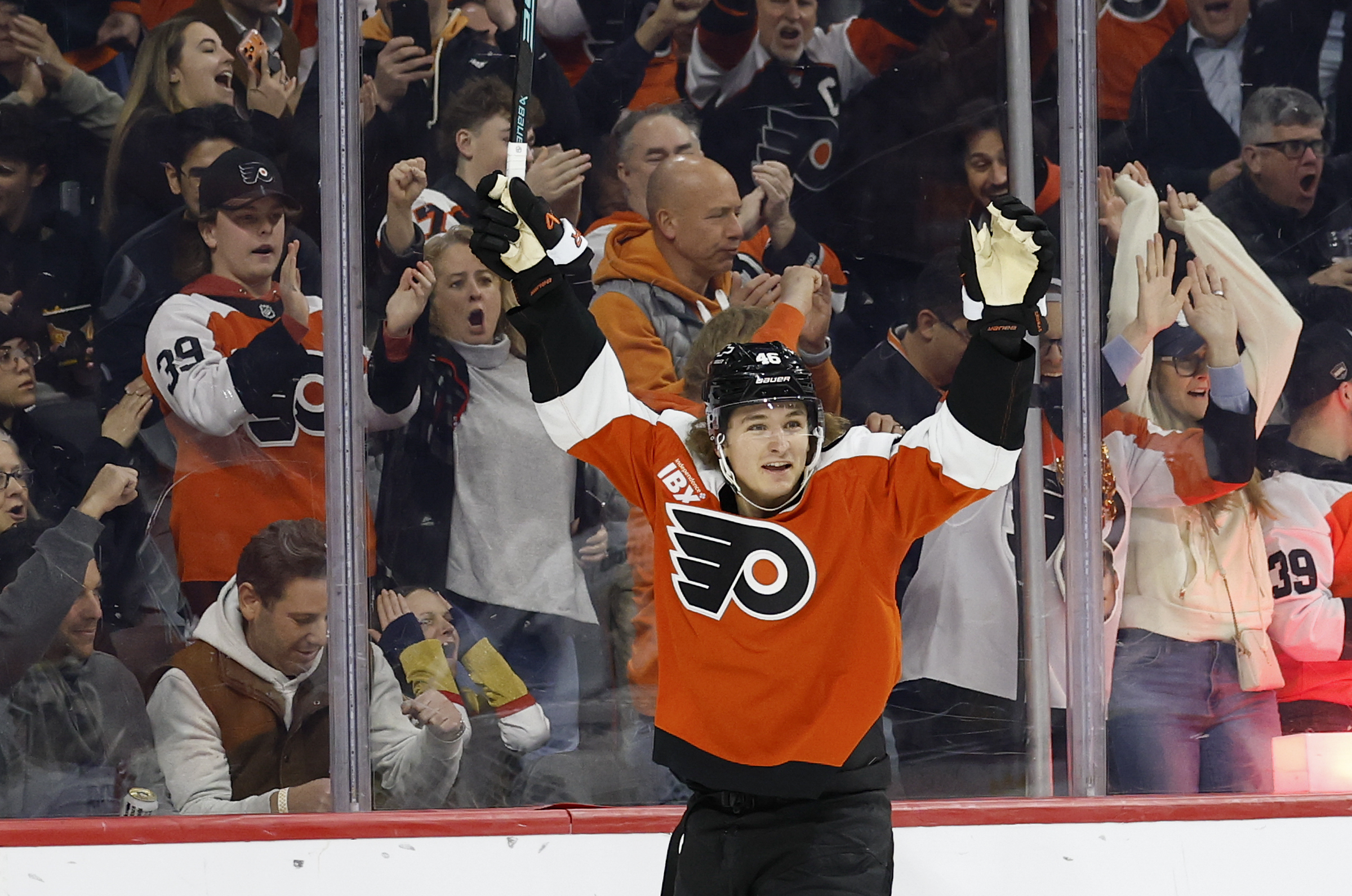
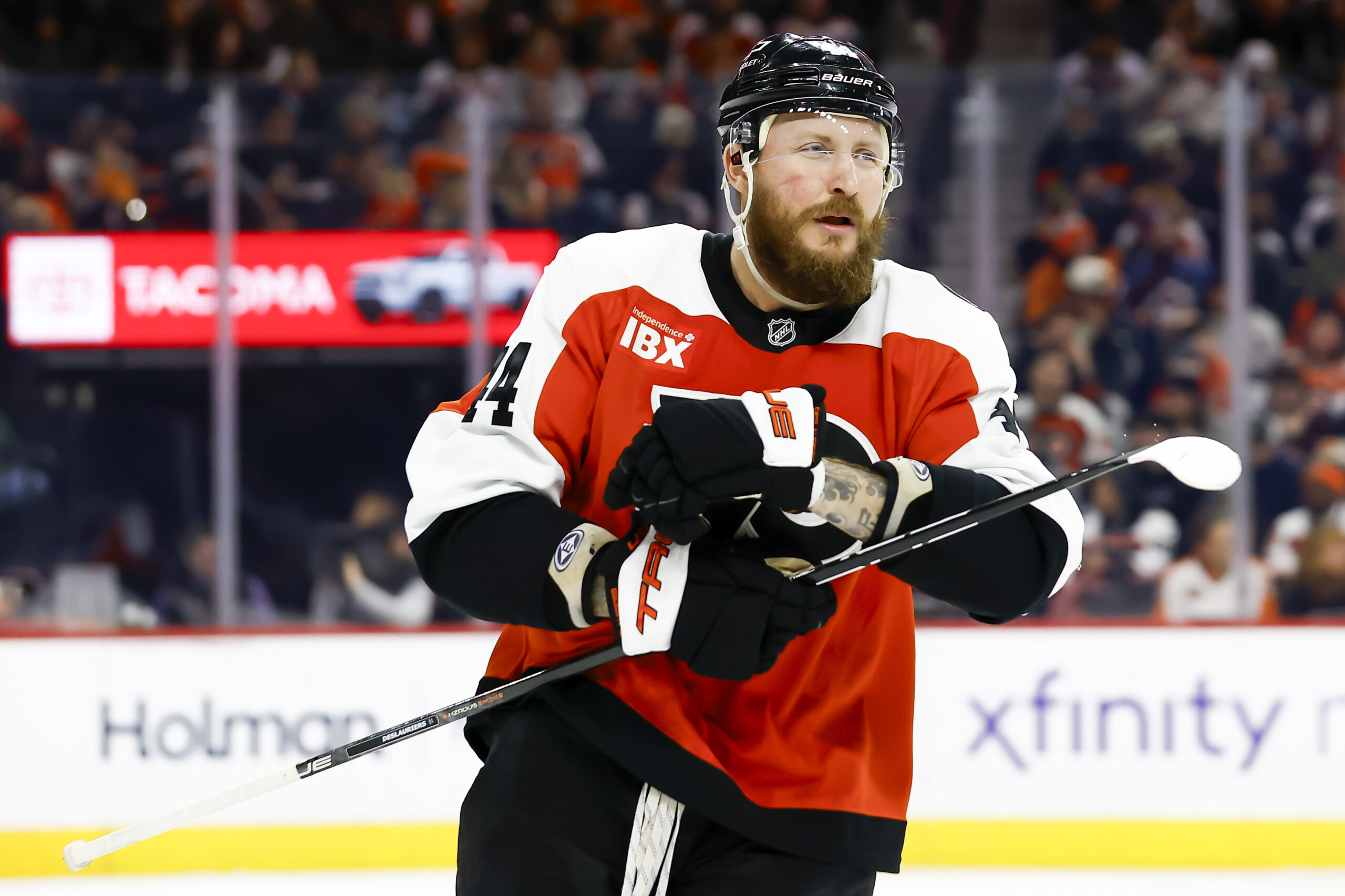
    Nic Deslauriers, LW: The veteran will be an unrestricted free agent this summer and recently told The Inquirer that he thinks he has another year or two in him. A good locker room guy, he has the playoff intangibles of being a hard-working forward who plays the body with authority and can patrol the ice. Brière is known to do right by veteran players — i.e., Erik Johnson and Scott Laughton — so maybe it’s Deslauriers turn.

    Noah Juulsen, D: Someone coach Rick Tocchet knew from his days in Vancouver, the blueliner is a capable depth defenseman that might provide depth for a contender.

    Which Flyers could be in play for the right price?

    Owen Tippett, LW/RW, and Bobby Brink, RW: It’s unlikely — for the moment — but the Flyers are going to need to start making space for young wingers like Porter Martone. And while the Flyers assuredly wouldn’t want to subtract either player from their lineup, Tippett and Brink are players other teams might want. Tippett, who has a 10-team no-trade list beginning on July 1, has officially become the guy everyone expected, using his speed, skill, and physicality to become a true power forward. Small in stature, Brink is a two-way player who has built a solid foundation to his game and can slide into any system.

    With a glut of wingers, could the Flyers look to move Owen Tippett in a package for a center or a defenseman.

    Noah Cates, C/LW: This one has an even lower probability, but Stanley Cup teams are always looking for third-line centers who play a checking role while also chipping in offensively. Cates has shown he can shut down the game’s best, and contenders assuredly wouldn’t mind adding someone as fundamentally sound as the Minnesotan.

    Sam Ersson, G: Inconsistent is a good word to describe Ersson, who has had stretches of brilliance but also long stretches of struggle — notably the latter this season. Could the Flyers trade the pending restricted free agent? Anything is possible, especially with the decision of whether or not to extend him a qualifying offer on the horizon. But as of today, the young goalies in the system aren’t ready for the leap to the NHL, so it’s foreseeable that he’s sticking around for now at least.

    Garnet Hathaway, RW: Although he has struggled this year to put the puck in the net and has been a healthy scratch for nine games, Hathaway has intangibles that playoff-bound teams want at the deadline — like penalty killing ability and a gritty, edgy game that gets under opponents’ skin. That formula helped the Florida Panthers win back-to-back Cups and is why Hathaway been moved to contenders at previous deadlines.

    Nick Seeler, D: There’s been a bit of a buzz around the hard-nosed blueliner in the press box from visiting scouts. A solid defenseman who blocks shots and provides physicality, Seeler could be the perfect depth guy for a team heading for a deep playoff run. The only thing is, he would have to waive his no-trade clause, which does expire on July 1.

    Which Flyers are unlikely to be traded?

    Sean Couturier, C: The Flyers captain has a no-movement clause and a likely unmovable cap hit of $7.75 million for the next four years. With a cheaper and short-term contract he might be enticing to a playoff team as the 33-year-old center’s analytics are still solid, and what he does in the faceoff circle could change the course of a game. But the contract is probably a nonstarter for most teams.

    Jamie Drysdale and Cam York, D: Teams need guys like Drysdale and York to round out their defense, as both are young with offensive upside and solid defensive games. York has a team-friendly contract at $5.15 million for the next five years, while Drysdale is a restricted free agent. While there might be interest, the Flyers need both players to hit on their potential.

    Christian Dvorak, C: Inked to a shiny new deal, the Flyers are less inclined to trade a guy they just promised four years to. But, if they were to do it, they need to do it now, as Dvorak received a no-trade clause the first two seasons and a modified no-trade the last two that kicks in on July 1.

    Flyers center Christian Dvorak is presumably off the market now after signing a five-year extension in January.

    Nikita Grebenkin, LW: A key part of the swap for Laughton at the last trade deadline, the Flyers like what the young Russian brings. A gritty but skilled winger, Grebenkin is a work in progress; however, the upside and potential could be too good to part with this soon.

    Which Flyers would only get traded for a star or massive haul?

    Tyson Foerster, LW/RW: Since Foerster, 24, went down with a likely season-ending injury in December — a yellow non-contact jersey has been in his locker during the Olympic break — it’s become more evident just how important the Canadian is to the roster. Prior to his injury, Foerster seemed to be trending close to “untouchable” given his goal scoring and defensive acumen.

    Denver Barkey, LW: Expected to be in the minors this season, Barkey was recalled in late December and has been not just a revelation but a reminder that not every guy needs to “marinate.” The Flyers do not want to lose the 20-year-old rookie and his high hockey IQ, but he could be a key part of a larger deal to land that center or top-pair defenseman the team covets.

    Who on the Flyers is untouchable?

    Matvei Michkov, RW: Brière on Feb. 3: “One thing I can tell you, first of all, is: Matvei Michkov is not going anywhere. Let’s make that clear. OK. Matvei is going to be here for a long time.” Despite a difficult season, Michkov remains one of the most important pieces to the Flyers’ rebuild.

    involved. He

    Trevor Zegras, C/LW: It took the Flyers some patience to get Zegras, 24, from the Anaheim Ducks, and they are not partying with him now. The only question is how much the restricted free agent, who has 20 goals and 49 points in 56 games as a Flyer, will make when he inks his new contract.

    The Flyers have long coveted an offensive game-breaker like Trevor Zegras. Now, they have to pay the restricted free agent.

    Travis Sanheim, D: Coming off an impressive silver-medal-winning twirl with Hockey Canada, Sanheim is among the team’s untouchables right now. The blueliner has a unique combination of size and skating ability, which he just showcased on the international stage. Sanheim, who turns 30 next month, also has a full no-trade clause through the 2026-27 season, and a modified 12-team clause for the remaining four years of his deal.

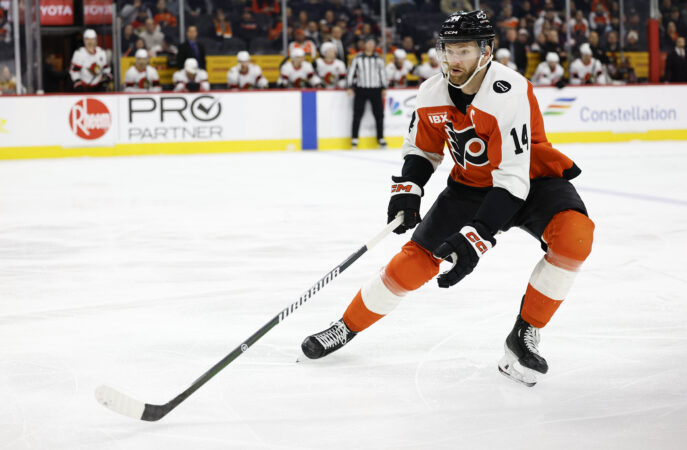
    Travis Konecny, RW: Currently in Year 1 of an eight-year extension signed two summers ago, with a no-movement clause through 2031, Konecny has become not only the team’s top scorer but a leader. Before the Olympic break, it felt like the soon-to-be-29-year-old strapped the Flyers to his back and tried to will them to victory — on a bruised and battered body, no less. The time off has helped the winger recoup, and he is on pace to achieve yet another career year.

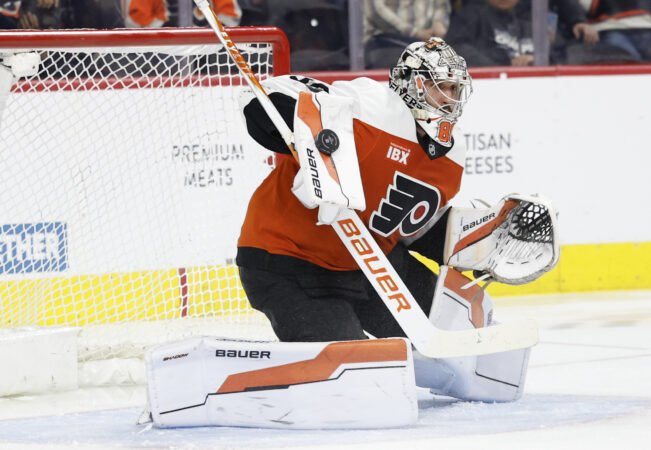
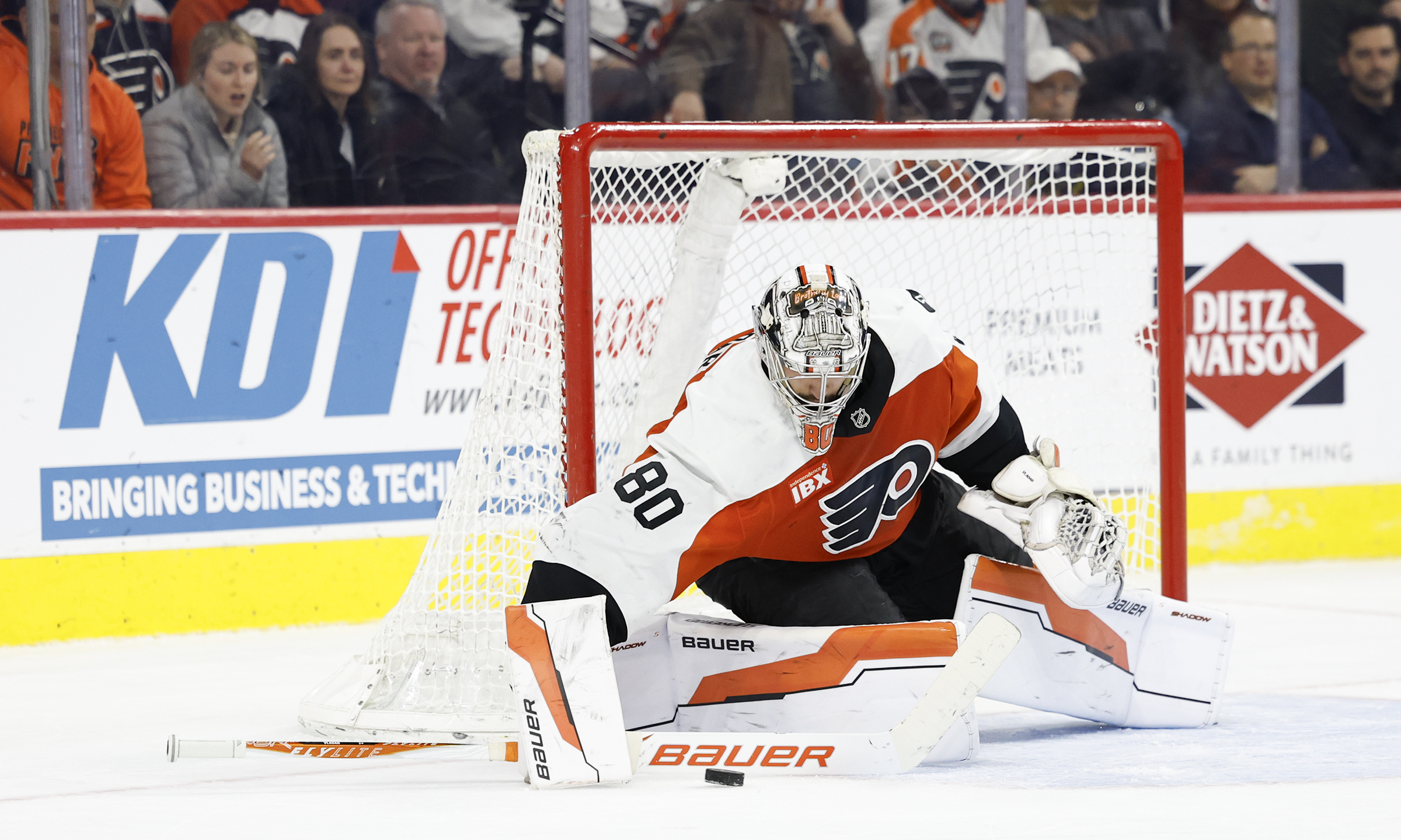
    Dan Vladař, G: The goalie needed someone to believe in him and give him the chance to carry the workload. He has paid the Flyers back two-fold with a top-20 save percentage and the 10th-best goals-against average in the NHL. He has an eight-team no-trade clause, but there is no doubt the netminder is sticking around given the Flyers’ checkered history between the pipes.

  • Little-used Nic Deslauriers faces an uncertain future with the Flyers: ‘I still think I have some in the gas tank’

    Little-used Nic Deslauriers faces an uncertain future with the Flyers: ‘I still think I have some in the gas tank’

    Last season, Nic Deslauriers played 31 games for the Flyers, mostly due to an upper-body injury that kept him out for almost three months. This season, across the Flyers’ 56 games, the veteran winger has suited up for just 21.

    “Not easy, that’s for sure,” he said Sunday after practice. “It’s where the young guys kind of step up and [I] just stay ready for when my name is called upon. It’s frustrating, but at the same time, I can’t control those things.”

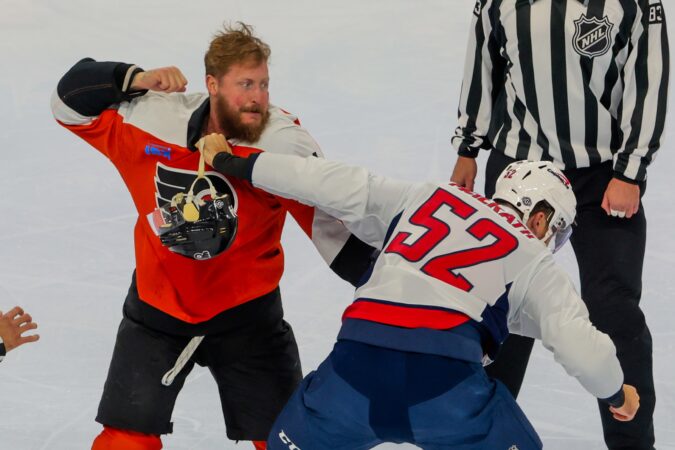
    A fourth-liner when he does slot in, Deslauriers is a bit of a throwback. Although he was selected by the Los Angeles Kings in the third round of the 2009 NHL draft as a defenseman, the now 35-year-old — his birthday was Sunday — is a tough, grinding forward who is feared across the league for his fists.

    This season, he has one assist with a minus-3 rating while averaging 8 minutes, 18 seconds of ice time. He’s averaging the most minutes he’s played since his first year in Philly (10:06 in 80 games) after signing as a free agent in July 2022.

    Since joining the Flyers, the forward has dropped the gloves 32 times in the regular season — most notably against the New York Rangers’ Matt Rempe in what many called the “Fight of the Year” two years ago Tuesday. Twenty of his 26 penalty minutes this season are from fighting majors against Minnesota Wild forward Marcus Foligno, Montreal Canadiens forward Arber Xhekaj — he fought his brother, Florian, who is also on the Canadiens in the preseason — Tampa Bay Lightning tough guy Curtis Douglas, and Brennan Othmann of the Rangers.

    “It’s funny, there’s sometimes that I could see it kind of like disappearing, and then, it’s more when you watch the playoffs, and you see those guys, not enforcers technically, but the hardworking guys that hit, and, I wouldn’t say patrol, but if there’s something going wrong, they’re there,” he said.

    “I think you see them in some teams, and those are teams that have success. So I think it’s getting away, that’s for sure, but I think there’s still a place for it.”

    Flyers general manager Danny Brière is starting to build a reputation as a guy who does right by his veteran players. Last year, he traded Erik Johnson back to Colorado, where he had previously won a Stanley Cup, and Scott Laughton to his hometown Toronto Maple Leafs. With the trade deadline approaching on March 6, is the pending unrestricted free agent next?

    “I think I have maybe another year or two in me [but] those are things out of my power,” Deslauriers said. “I’ve always taken care of my body for the type of job that I do, and I’m always ready. I still think I have some in the gas tank.”

    Deslauriers feels like he came into camp in great shape, plus, as he noted, “I get bag-skated a lot, so I’m still in shape.” On the ice for every morning skate, whether optional or not, he spends extra time helping goalies work on their craft, does a hard skate if he’s not playing, and then hits the gym during the first period of the game. Sometimes he’ll head up to the press box afterward to check out the game.

    “The game’s easier when you guys watch from up top,” he noted. “Some games you want to feel a refresh and you go up there and kind of look at the games. But the main thing, of not playing, is just staying in shape and waiting for your turn.”

    Nic Deslauriers has played in just 31 of the Flyers’ 56 games this season. He might welcome a chance to play more elsewhere.

    Unfortunately, time catches up to us all, and there is only so much road left for the Quebec native who is two games shy of 700 in the NHL. He got a taste of post-career life when he was hurt last season, spending more time with his four children and taking them to soccer tournaments in between gym sessions during the recent Olympic break.

    But despite being the oldest player on the Flyers — he’s got nine months on linemate Garnet Hathaway — the respected and well-liked Deslauriers is not done yet.

    “I know it’s toward the end,” he said with a laugh, “but trying to kind of prove that I can be here.

    “If you look at my season this year, just 21 games, it’s not a lot, but I think I’m almost more in shape now than the last few years from all the skating.

    “So, no, I think the passion of the game is still there. The love of the game is still there. And we’ll see where that goes.”

    Breakaways

    The NHL trade freeze lifted at 11:59 p.m. on Sunday. … Several Flyers and NHL items are up for auction at www.classicauctions.net, including items from the personal collections of Ron Hextall and Bobby Taylor along with the late Bernie Parent’s “Ghost” mask. The auction closes on Tuesday. … On Saturday, Flyers forward Owen Tippett surprised more than 50 children, ages 5-9, by participating in the Flyers Learn to Play practice at the Skatium in Haverford. An ambassador for the program since 2023-24 with his wife, Taylor, Tippett ran the players through skating and stickhandling drills. Participants in the program, which takes place at 18 rinks across Pennsylvania, New Jersey, and Delaware, are supplied full head-to-toe hockey equipment, a personal welcome message from the Tippetts, a certificate of completion signed by Owen, and the chance for a postgame meet-and-greet at Xfinity Mobile Arena.

  • Dan Vladař relishes in his Olympic experience; Flyers’ Americans celebrate Team USA’s historic gold

    Dan Vladař relishes in his Olympic experience; Flyers’ Americans celebrate Team USA’s historic gold

    Dan Vladař had goosebumps when he first saw his jersey hanging in his stall.

    For the first five minutes of his lone start, he just thought to himself, “wow,” as he looked around and saw the fans waving flags and the Olympic rings plastered everywhere.

    “This is actually happening,” he thought.

    Indeed. The Flyers’ No. 1 goalie returned to practice on Sunday for the first time after donning the red, white, and blue of Czechia at the 2026 Milan Cortina Olympics.

    Vladař played in one game, allowing three goals on 12 shots in a 6-3 win against France in Czechia’s second game of the tournament. France took a 3-2 lead at one point in the second period before David Pastrňák tied it up, and Czechia never looked back.

    “You never know if you’re ever going to get the chance, so I didn’t want to take it for granted, but it was, for me, it was just trying to focus on myself,” he said about his solo start.

    “Obviously, we won, it was good. I wasn’t the best, but those games are tough when you’re just standing there, and nothing’s going towards you, and then, all of a sudden, you look up, and you’re like, one, two, three; you’re like, what’s going to happen now?”

    The Czechs tournament ended in the quarterfinals with a 4-3 overtime loss to Canada on a goal by Mitch Marner against Lukáš Dostál. Vladař said he spoke with his Flyers teammate, Travis Sanheim, during handshakes and congratulated Flyers coach Rick Tocchet, an assistant on Jon Cooper’s staff, in the tunnel after. The two Flyers won silver medals on Sunday, one day after defenseman Rasmus Ristolainen won bronze with Finland.

    For the 28-year-old goalie, leaving Italy without a medal didn’t diminish the experience. He stayed in the athlete’s village — goalies got their own room — and took in the sights and food of Milan. He liked the freshness of all the salads and pasta, which were cooked al dente, but didn’t have any pizza, and rode the golf cart in full gear between rinks.

    Flyers goalie Dan Vladař said the Olympic experience makes him want to play meaningful NHL games even more than ever.

    He wasn’t able to take in other events due to a tight schedule, or get the tattoo he told The Inquirer he was planning on getting — that’s coming in the summer, he said — but “I was trying to enjoy every moment, every second there, which I thought I did.”

    Vladař is now back between the pipes for a Flyers team trying to make a playoff push with 26 games left in the season. Across his first 33 games, which is already a career high, he went 17-8-6 with a 2.47 goals-against average and .905 save percentage. And while he didn’t return to Philly with a medal, he came back with some fuel.

    “You don’t want to have that feeling again, losing [and] not accomplishing anything; that was probably … my biggest fire coming back here, was just, I don’t want to feel like we all felt after that overtime goal in the quarterfinals,” he said.

    “I think that we still have some time to really push for it and then, at least, sneak in.”

    Golden!

    The Flyers’ practice was slated to start at 11 a.m., and on a typical day, guys start hitting the ice well in advance. But Sunday was not your typical day as the United States and Canada were going toe-to-toe in the men’s hockey finale at the Olympics.

    Huddled in the video room, the Flyers watched — and then hooted and hollered, according to Cam York — as Jack Hughes scored the golden goal to give the Americans their first gold medal in men’s ice hockey since the 1980 Lake Placid Olympics at roughly 10:55 a.m. It came on the 46th anniversary of the “Miracle on Ice,” when the plucky U.S. squad of collegians upset the powerhouse Soviet Union before beating Finland for gold. York said he won $100 off Canadian Tyson Foerster thanks to the U.S. win.

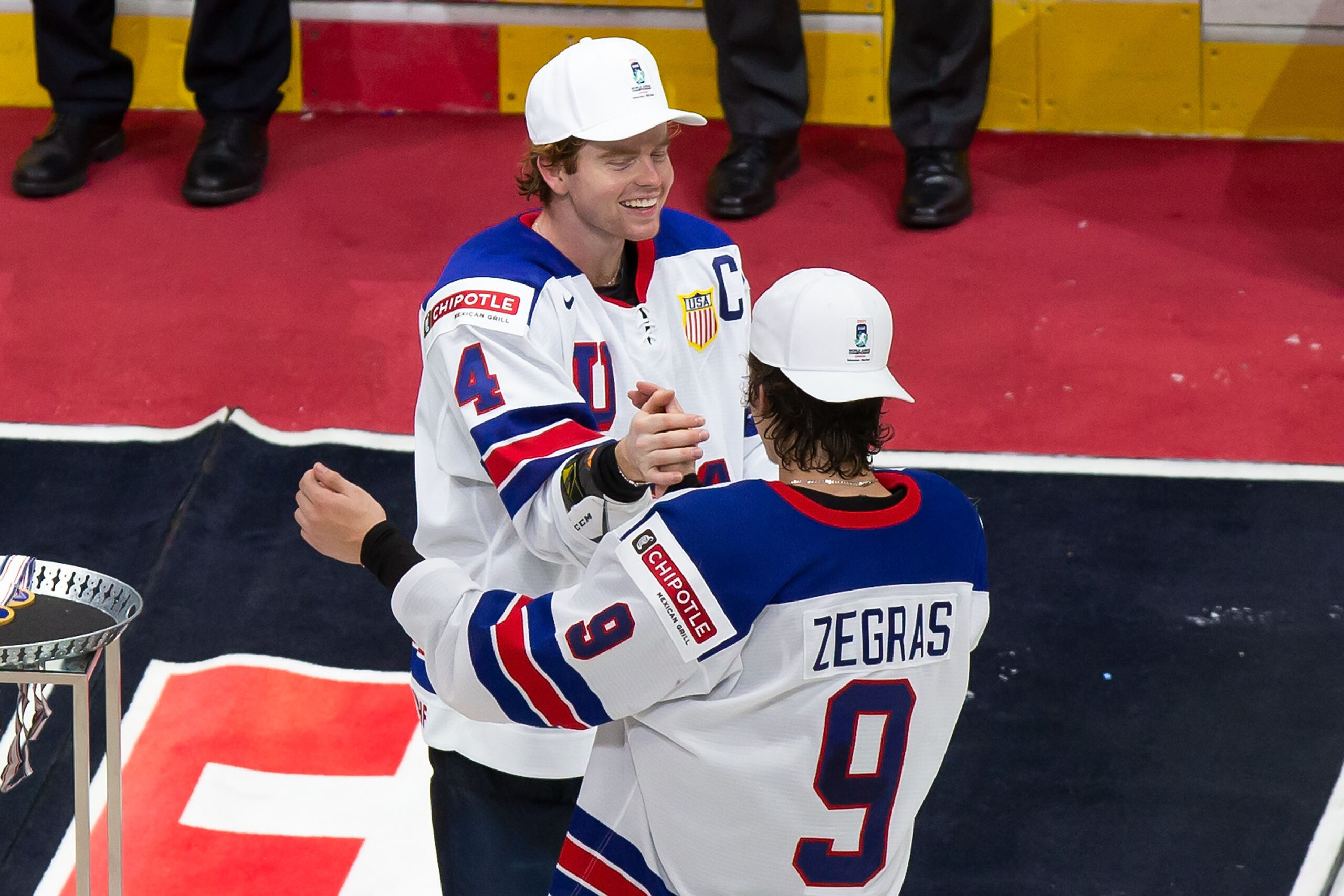
    Cam York and Trevor Zegras know the feeling of winning gold with Team USA after accomplishing it at the 2021 World Juniors.

    “That’s my good buddy who scored the overtime winner, so that was pretty crazy,” said New York native Trevor Zegras. “It was weird practicing after that.”

    “It was one of the best games I’ve ever watched, I think, just the pace of it all, the Grade A chances, both sides, goalies playing incredible,” added the Californian York, who played with Zegras for the U.S. National Team Development Program and won gold at the 2021 World Juniors.

    “For USA Hockey, it’s huge, it’s been a long time coming, I think, and to see those guys win, I thought that was just a really sick game.”

    It’s been a long time coming indeed. The U.S. entered the day with 12 medals but just two golds in men’s hockey, from the 1980 and 1960 Squaw Valley Olympics. The last time USA Hockey medaled was 2010, when Sidney Crosby, who was injured and unable to play on Sunday, scored a heartbreaking golden goal in the finale.

    “It was a big one. [Goalie Connor] Hellebuyck was unbelievable in that game, made a lot of huge saves there,” said Christian Dvorak. “Americans came through, so it was great to watch and fun to chirp some of the Canadians in here.”

    The Flyers have seven Americans on the roster in York, Zegras, Maine’s Garnet Hathaway, Dvorak (Illinois), and the Minnesotans, Nick Seeler, Noah Cates, and Bobby Brink; Sean Couturier was born in Phoenix but grew up in New Brunswick and represents Canada on the international stage.

    None of the players on the current roster were around for the last gold medal, and only five, including Hathaway and Dvorak, were around for the 1996 World Cup victory over Canada. For assistant coach Todd Reirden, this was another special — and defining — moment for hockey in the U.S.

    “I remember clear as day, everything that went on with that ’80 Olympics, being pretty young at the time, 9 or 10 years old. So it was something I could remember very clearly, and how exciting it was, and how those guys became my heroes,” said the Illinois native.

    “To see where it’s come now, I think all that stuff was a culmination of the growth of the game, and now it’s going to continue. Major credit to what USA Hockey has done with the way that they’ve changed the way that they’re teaching the youth, the small area games, the smaller sheets. You see the skill level players, we see it all the time in the NHL, but it’s really made it a more exciting game, and something that hopefully will continue to rise because it’s fun to be a part of.”

    Breakaways

    With Vladař back from Italy, Aleksei Kolosov was loaned back to Lehigh Valley of the American Hockey League on Sunday.

  • Flyers center Sean Couturier is bringing ‘a fresh mindset’ into the final stretch

    Flyers center Sean Couturier is bringing ‘a fresh mindset’ into the final stretch

    Reset.

    That’s what Sean Couturier was planning to do during the NHL’s Olympic break.

    The Flyers captain is also looking to reset — by doing again — how he plays away from the puck, defensively, and setting up his teammates, but reset — differently — his offensive production.

    “Yeah, feels good to have a fresh mindset coming into the last stretch here,” he said. “Excited to get going here.”

    Analytically, Couturier’s numbers are solid. According to Natural Stat Trick, at five-on-five, the Flyers have a 51.9% Corsi For percentage, 53.6% of the shots, 56.64% of the expected goal share, and 57.35% of the high-danger chances, when he is on the ice. His Corsi For percentage is No. 1 for Philly, while the rest range in the top two or three among players who have skated in at least 20 games.

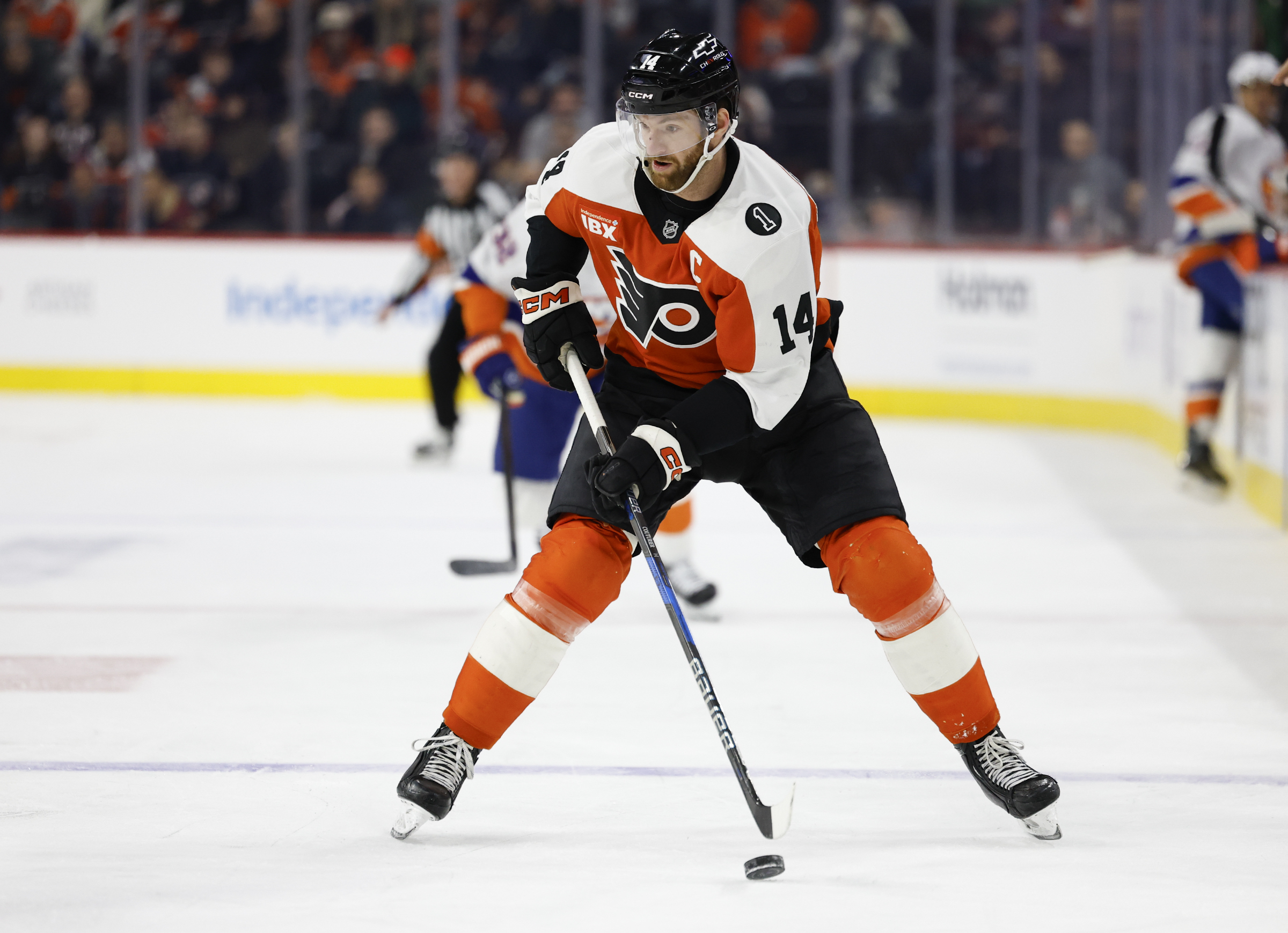
    Flyers center Sean Couturier has five goals and 26 points in 55 games this season.

    The only issue? The Flyers have allowed three more goals (29 goals for, 32 against). It’s not egregious, but the number is compounded by the fact that Couturier hasn’t scored since Dec. 7. He has five goals and 26 points in 55 games this season, with nine assists and zero goals across his last 29.

    “You know, before the break, I was just trying to simplify my game, go to the net, try to get a lucky bounce hit me off a shin pad, or my pants, or something, just get a dirty goal,” he said. “But bounces just seemed not to be going my way before the break.”

    As someone who sits 71 games away from 1,000, Couturier has gone through this type of stretch before.

    “I think you try to cut things down to not look at the big picture and try to have little goals in three-to-five-game segments, and [then] kind of always start with a fresh mindset after that,” he said after the Flyers’ fourth practice since returning Tuesday.

    “… I think it’s just, mentally be sharper, be more [even] keel, I would say. Not too high, not too low, so that you manage to go through these struggles.”

    Not to sound too cliché, but he’s pretty much taking it day by day. He’s getting chances, but he’s just snakebitten, as assistant coach Todd Reirden acknowledged on Saturday.

    Couturier said he has to “get back to that mentality of shooting first and not always looking for a pass.” Working on re-finding his offensive touch, the 33-year-old forward did have the sixth-most shots on the team (54) since his last NHL goal against the Colorado Avalanche.

    “I think it’s just to get my mindset more of just two-on ones, shoot when I can, not just look for passes,” he said. “I like to pass the puck. I like to create plays, but sometimes, you’ve got to simplify things, and I think if I have more of a shooting mentality, it’ll help out for sure putting the puck in the net.”

    It should help that Couturier is back skating with Denver Barkey and Owen Tippett after centering the fourth line for the last four games before the break — with coach Rick Tocchet moving him up the lineup depending on the scenario. The trio had primarily been connected since Barkey was called up from Lehigh Valley of the American Hockey League in late December, skating more than 140 minutes together.

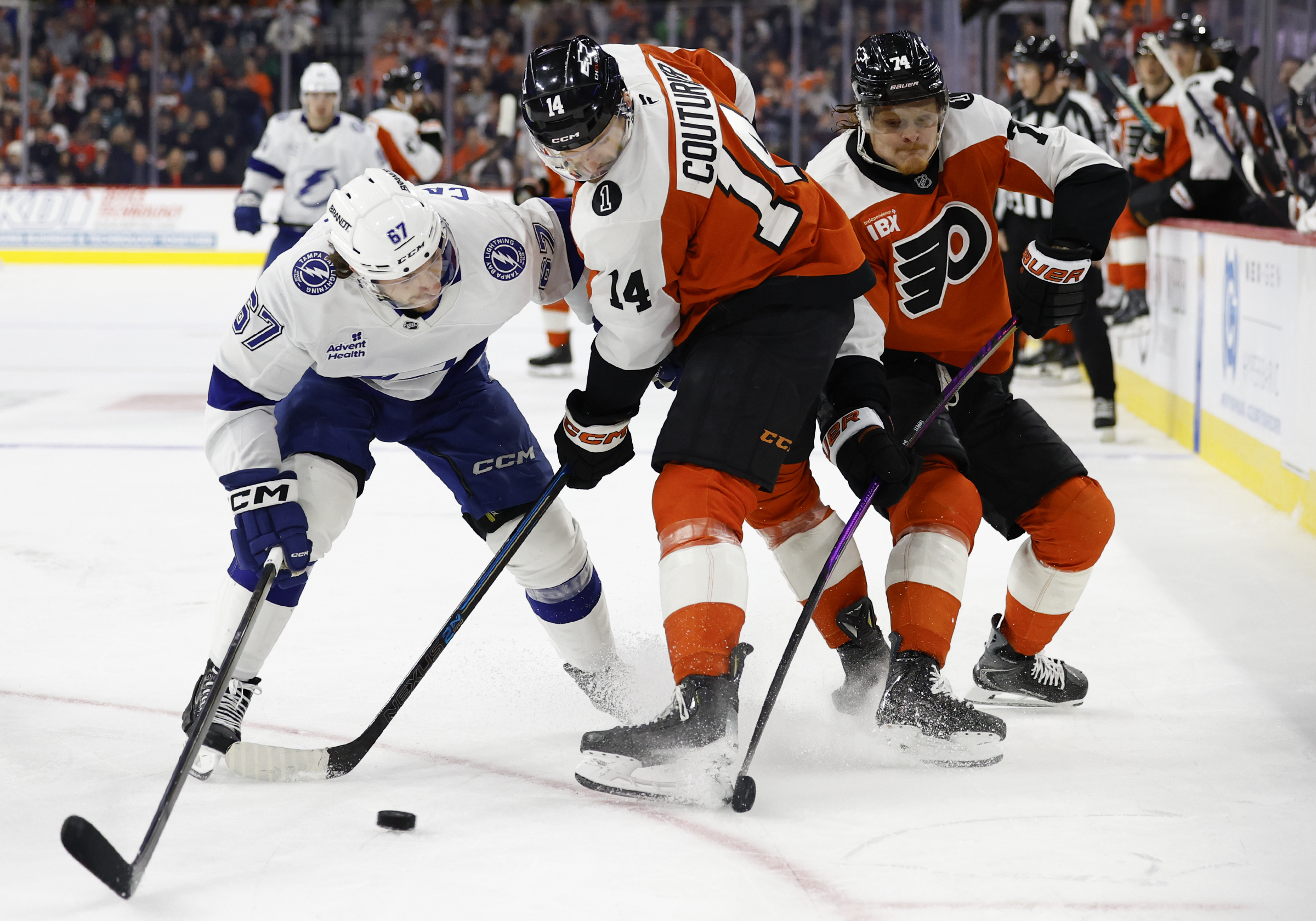
    Flyers center Sean Couturier and teammate Owen Tippett go after the puck against Tampa Bay Lightning on Jan. 10.

    When they were on the ice at five-on-five, the Flyers had a 56.32% Corsi For — with 69.09% of the high-danger chances — outshot opponents 62-47, had almost twice as many scoring chances (76-47), and 64.62 of the expected goal share. The only negative is that they were outscored 9-6.

    Does Couturier, a Selke Trophy winner as the NHL’s top defensive forward in 2019-20, focus on defense to let them fly up the ice?

    “I don’t know,” he said. “They’re two great offensive young players. So, yeah, I try to, maybe, balance things out on the defensive side and let them do their things offensively, letting them take a little more chances and, you know, back them up at times.

    “But, honestly, I think it’s more on me to just be better, more involved in the play, timing-wise, when to be up the ice and when to be back under the play.”

    Couturier may not be scoring, but he’s doing the little things that lead to goals, like his play on the wall or winning a faceoff — among forwards who had taken at least 90 draws, he led the Flyers in faceoff win percentage in the last 29 games (54.0%). And the captain, whose “voice carries a lot of weight,” according to Reirden, is a key penalty killer and can play on the power play.

    Reirden has worked with some of the NHL’s best players, notably Sidney Crosby and Evgeni Malkin of the Pittsburgh Penguins, and Washington Capitals star Alex Ovechkin, who the Flyers will see on Wednesday (7 p.m., NBCSP) when they restart the season. He draws back on working with players like that to help Couturier get through the difficult times, and he feels “a little different vibe from him than I did before the break.”

    Maybe that’s because, as Couturier said, “It’s a new chapter to finish the year.”

    Bronze Age

    Flyers defenseman Rasmus Ristolainen and Finland captured the bronze medal with a 6-1 win against Slovakia at the 2026 Milan Cortina Olympics.

    The 6-foot-4, 208-pound blueliner had an impressive tournament, popping on both sides of the puck. He entered the medal game with two assists and a plus-7 across five games. He had an assist on the sixth goal on Saturday and finished plus-9, tied for the top spot in the men’s tournament with one game left to be played.

    “We know he’s a big, big body,” said former Dallas Stars forward Jere Lehtinen, who is Finland’s general manager, in a phone interview from Milan before the Olympics began. “He moves quick, a physical guy, and in the defensive zone it’s tough to play against him.

    “But at the same time, he gets up to play and has a good shot. … So, the main thing is he brings us size and speed and physicality. And if you want to succeed as a team, you need those types of players in your defensive zone, [who] may play against the top players.”

    Ristolainen, 31, skated for his country for the first time since the 2016 World Cup when it went 0-3-0, shut out by Sweden and Russia, and scored just one goal against Team North America. He was named to the 4 Nation’s Face-Off roster last February but was unable to play due to injury.

    The bronze medal now goes along with the gold he won — literally — at the 2014 World Juniors. In overtime, the physical defenseman hopped over the boards, carried the puck around Sweden’s Robert Hägg — the Flyers’ 2013 second-round pick — cut across the crease, and tucked in the golden goal. His game-winner gave Finland its first World Junior medal since 2006 and first gold since 1998.

    “Obviously, it was a big one, and, you know, sometimes I used to make plays and play a little offense,” he said with a chuckle.

    Saturday’s bronze is Finland’s eighth medal at the Olympics in men’s hockey. Its lone gold came at the 2022 Beijing Olympics, with Slovakia winning bronze that year.

    Breakaways

    Defenseman Adam Ginning and goalie Aleksei Kolosov were recalled from Lehigh Valley on Saturday. … The gold medal game will be played on Sunday with Tocchet, defenseman Travis Sanheim and Canada facing the United States and former Flyers coach John Tortorella (8 a.m., NBC, Peacock).

  • Flyers return to practice after the Olympic break with playoffs on the mind: ‘The urgency, the compete level needs to be up’

    Flyers return to practice after the Olympic break with playoffs on the mind: ‘The urgency, the compete level needs to be up’

    It’s 23,040 minutes and a handful of hours. It’s five games.

    But how do you measure a year?

    In goals? In saves? In shifts?

    How do the Flyers’ decision-makers measure this season? That’s the question as president Keith Jones and general manager Danny Brière figure out what to do as March 6’s 3 p.m. trade deadline ticks closer.

    For the players who hit the ice Tuesday for the first allowed practice after taking 11 days off for the Olympic break, they are focused on closing out strong, beginning on Feb. 25 against the Washington Capitals (7 p. m., NBCSP).

    “I don’t think there’s any emphasis on the games before the deadline, [it] doesn’t change anything for us,” winger Travis Konecny said. “We’re just looking to get back on track, kind of back to the way we were playing at the start of the season.”

    The last time the Flyers were in playoff position was Jan. 12. They sat in third place in the Metropolitan Division, but since then, they have won only three of 12 games (3-6-3) and posted the fifth-worst points percentage (.375) in the NHL.

    With 26 games left on the schedule, and just five until the trade deadline, time isn’t just ticking on what management will do but also ticking on the season. The Flyers enter the last stretch eight points back of both the Boston Bruins, who hold the second wild card in the Eastern Conference, and the New York Islanders in the Metropolitan Division. The Flyers have a game in hand in Boston and two on the Islanders.

    “Two division opponents right when we get back, huge back-to-back,” said center Noah Cates, regarding playing the Capitals and New York Rangers on consecutive nights (8 p.m., ESPN).

    “So, yeah, definitely the urgency, the compete level needs to be up, everything. Definitely huge for us to get back into shape and our structure, different things that were lacking before the break. And get reset and refocused and dialed in for huge games in February and then in March.”

    Tuesday marked the start of pseudo-training camp, with seven practices over the next eight days at the Flyers Training Center in Voorhees.

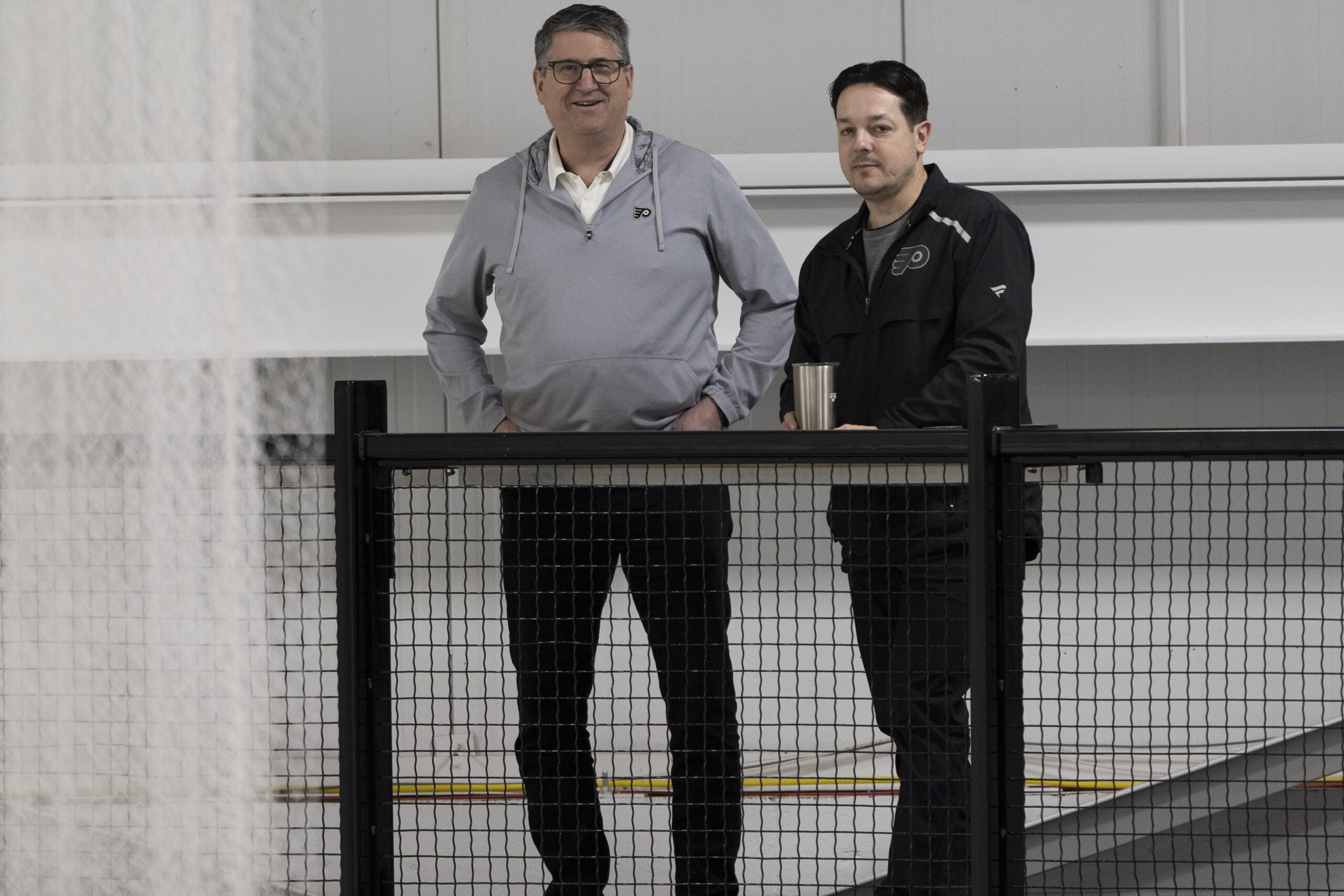
    President Keith Jones and GM Danny Brière are in an interesting spot with the trade deadline less than a month away.

    Things started slowly as the players worked on getting their hands back, touching the puck for the first time in a while, and skating. Some of the drills included a small area game of keep away, with one fewer puck than the players, and someone ending up as the last man standing, and another where the players had to pass between pylons a certain number of times before being able to shoot on goal.

    As the day wore on, the intensity ratcheted up — without contact — and it ended with a conditioning bag skate.

    “I think you realize where we’re at in the standings, where things are schedule-wise. Right now is part of the process, and today was part of the process of getting ourselves back up to speed,” assistant coach Todd Reirden said. Reirden spoke with the media with Rick Tocchet still in Italy as an assistant coach for Hockey Canada.

    “Every drill was done with a purpose and with a reason behind it to be able to get the players executing as high a pace as they possibly could, conditioning at the end, and then tomorrow, we’ll go after certain areas of our structure to improve.”

    One guy the Flyers will be relying on is Konecny, who has 37 points in the past 35 games, including nine points in five games heading into the break. Banged up and playing through it — he tallied a hat trick as he gutted out and grimaced through a demoralizing loss to Columbus on Jan. 28 — the alternate captain has impressed everyone, including Reirden.

    “I had a good break, got a chance to reset, get my mind in a different spot. Kind of realize where we’re at as a team and what we need to do finishing the season here. For me, just getting to the top of my game, where I need to be to help our team, and I think everyone is in the same spot,” Konecny said.

    But he’s also looking ahead. Konecny, who said after the loss in Boston to the Bruins before the break that “I’m tired of missing the playoffs,” looks at the standings every day.

    “I think it’s disappointing every year if you miss it,” he said on Tuesday. “I think what’s gotten everyone to this point is everyone’s a competitor, everyone wants to compete in the big games. … It’s not going to be like the end of the world if it didn’t happen; I’d be frustrated.

    “But I know that the team we’re building, what we have, the plan, we’re going to be a playoff team, and I’m not worried about that. I know everyone believes in that in this locker room, so we keep on pushing. Hopefully, it happens, and we’re going to give everything to get there, and if it doesn’t, we re-evaluate and get better in the summer.”

    Breakaways

    Goalie Carson Bjarnason was recalled from Lehigh Valley of the American Hockey League on Tuesday to give the Flyers two goalies with Dan Vladař at the 2026 Milan Cortina Olympics. … According to Reirden, defensemen Oliver Bonk and Hunter McDonald will also join the Flyers with Rasmus Ristolainen and Travis Sanheim in Italy playing for Finland and Canada, respectively, and the Phantoms off until Friday in Hershey. McDonald was with the Flyers across the weeklong trip to Las Vegas, Salt Lake City, and Denver, but did not play. Bonk joined the Phantoms in early December after missing training camp and the start of the season with an upper-body injury. He has six points in 22 games.

    Youngster Carson Bjarnason (right) is up to practice with the Flyers while Dan Vladař is at the Olympics with Czechia.
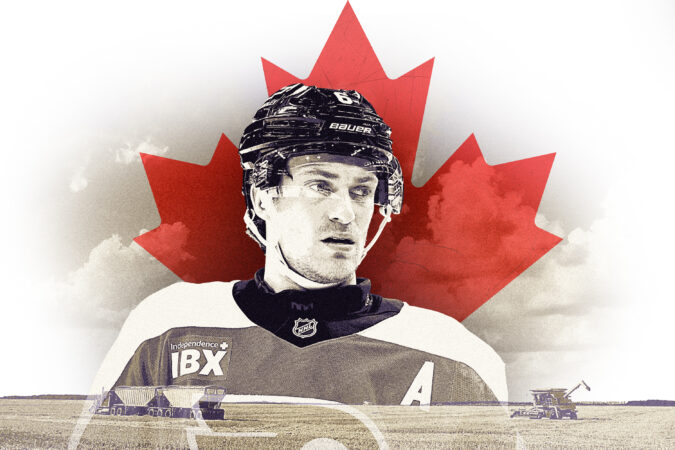
  • Travis Sanheim learned hard work growing up on a grain farm in small-town Canada. It helped make him an Olympian.

    Travis Sanheim learned hard work growing up on a grain farm in small-town Canada. It helped make him an Olympian.

    There were no Christmas or birthday presents from Shelly and Kent Sanheim this year for their kids and grandkids. They combined everything into one big present for each family member.

    But those tickets to Italy weren’t for a typical family vacation. Instead, the tickets for three of their kids and their families were bought early in the hope that their brother, Travis Sanheim, had done enough to book his own trip to the 2026 Milan Cortina Olympics and represent Canada.

    The cancellation option, added just in case, was not needed.

    Around 8 a.m. Mountain Time on the morning of New Year’s Eve, the Flyers defenseman called his parents to give them the news that they needed to work on their Italian. The phone rang as they were making their way through airport security, going from Vancouver, British Columbia, to Calgary, Alberta, as they followed the Flyers on their Western Canada trip.

    “I guess maybe three, four years ago, he never thought he would have a shot at this, and now he’s going to, hopefully, bring back a gold, right?” Kent said. “So I don’t know what else to say. I guess, it’s just, I don’t know, it’s hard. It brings tears to my eyes.”

    There was a lot of emotion as Kent and Shelly spoke to The Inquirer a few hours later on the concourse at the Scotiabank Saddledome, the rink where Travis starred for the Hitmen of the Western Hockey League during his junior career. The emotions filled the rink, as it was a family affair with everyone, including his twin brother, Taylor, his teammate in the WHL, there to watch Travis play for the Flyers and celebrate his big moment.

    This is what the Sanheims are all about: family.

    ‘Where the Great Plains begin’

    Driving through the prairies of Canada, the chartreuse of the canola fields can be mesmerizing as the sun hits the bright yellow that stretches across seemingly endless miles. Across that open land, not far from the 100th meridian and tucked into the town of Elkhorn, Manitoba, is one of those fields with some wheat intermixed. In this town of about 500 people, with no street light and one K-12 school, is where Travis Sanheim learned all about responsibility, work ethic, and dedication.

    “Being out on a farm, you get firsthand … how much work my family puts in and being able to help out, at a young age, I remember skipping school for harvest, jumping in the combine, and helping mom and dad out with harvest … and just how excited I was to be able to help and be a part of it,” the 29-year-old defenseman said recently.

    Born and raised a 3½-hour drive west of Winnipeg, Travis grew up wanting to be like Kent and would help him out on the farm as much as he could. He would help plant crops in the spring and harvest them in the fall and complete daily chores throughout the year. If he didn’t help, there would be no time for hockey. And for Travis, it was all about the hockey.

    “Just a die-hard, loved the game — always has,” Shelly said of a young Travis. “Always excited to go to the rink and wanted to go to the rink.

    “It’s funny, I see on Twitter or whatever about Trav being the last one off the ice and working on things, and I’m like, ‘This is this kid his entire life.’”

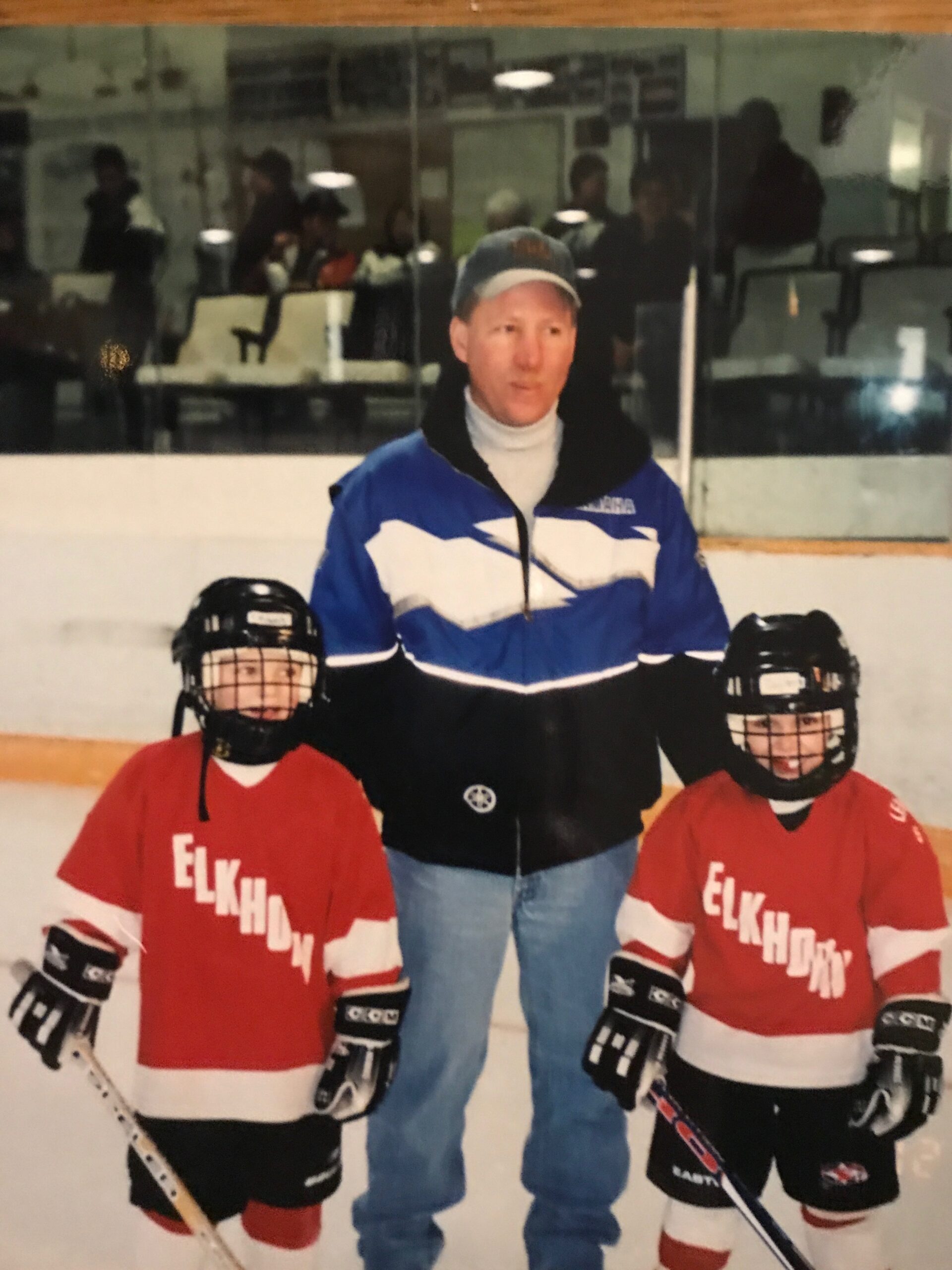
    Elkhorn is where Travis fell in love with hockey. He always wanted to play, and he and Taylor even would try to scrape off the dugout, a storage reservoir on the farm, to go one-on-one. And while Kent would stay on the farm to work, they’d pile into the car and Shelly would drive them to the local community rink.

    They never wanted to leave.

    “As long as they didn’t look in the waiting room, they didn’t think they ever had to go home because I’d be knocking on the glass and pointing to my watch, and they just would never look up,” she said with a laugh.

    “And then they got to stay longer at the rink. He would always be the last one on the ice, if possible. We dragged him off.”

    Kent Sanheim with his twin sons, Travis and Taylor, when they played youth hockey in Manitoba.

    Wheat Kings and hockey things

    At some point growing up, Travis got a key to the rink, which often was open, anyway, in the town that sits near Manitoba’s border with Saskatchewan. While the temperatures could dip well into the teens in the winter months, he’d call his buddies to get games of shinny going with him and his brother.

    “We did everything together,” Travis said of Taylor. “A lot of battles in the basement, playing hockey against each other. That’s kind of where my competitiveness, I would say, came from. … Was really lucky to have the opportunities that I did growing up, that I was able to skate as much as I was, and had the guys that pushed me, and obviously, my brother was a huge reason as to why.”

    The duo also would hit a frozen pond on Boxing Day before watching Canada compete at World Juniors — a fitting tradition for a family that has a sign in the living room asking people not to disturb them because they’re watching hockey. And Travis remembers sitting in front of the television as Sidney Crosby crushed the hearts of Americans everywhere with his golden goal against the U.S. at the 2010 Vancouver Olympics.

    As a 13-year-old, he just wanted to make the NHL; he never expected to now be lining up alongside the all-time great seeking a gold medal.

    “Super excited,” he said. “Obviously, a dream come true. Getting to represent your country and playing in the Olympics and being an Olympian means a lot, and something that I never really thought was possible, but now that it’s here, and then I get the chance to do it, just really excited.”

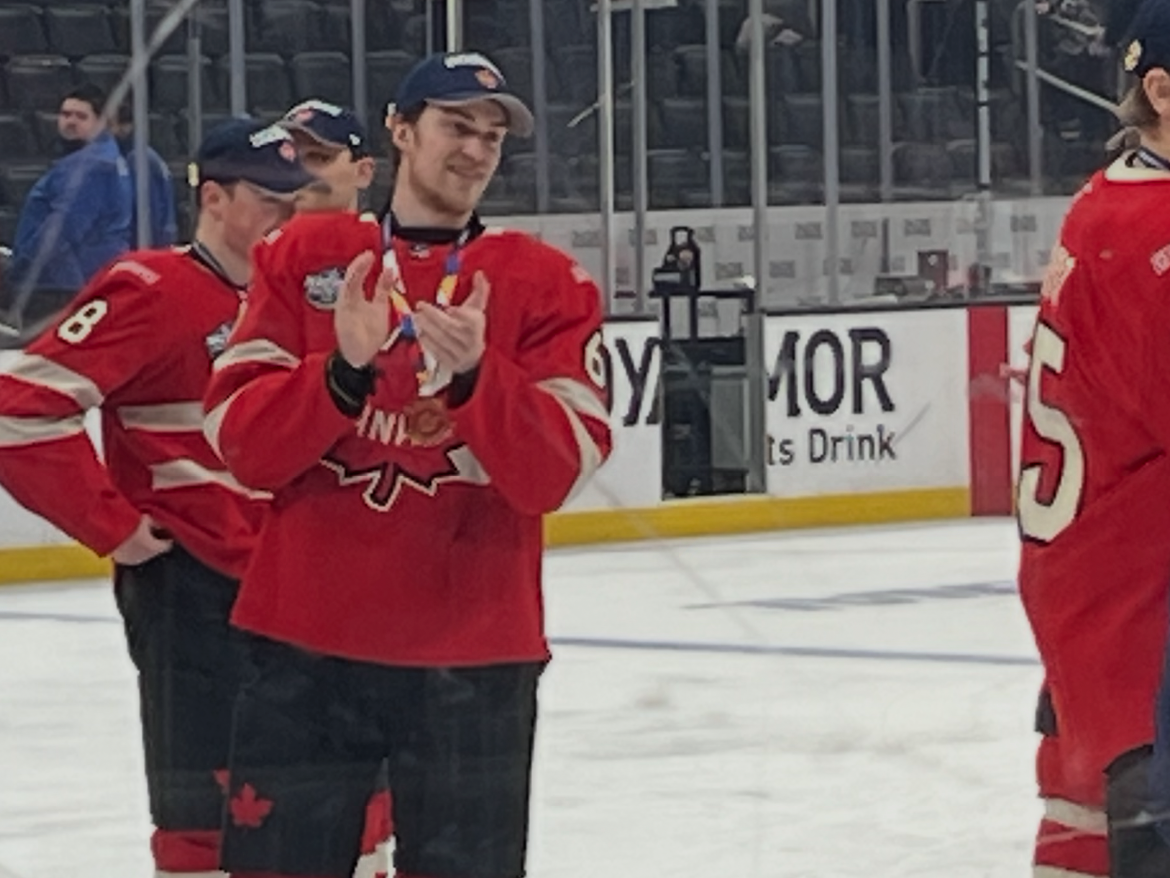
    Sanheim has donned the maple leaf several times before, including at the 2013 World Under-17 Hockey Challenge and the 2014 U18 World Championship, snagging a bronze medal at the latter; the 2016 World Juniors; and the 2022 and 2025 World Championships, winning silver four years ago.

    Travis Sanheim celebrates after Canada’s victory in the 4 Nations Face-Off last February.

    And he surprised many across Canada last year when he was named to the team for the 4 Nations Face-Off tournament, which the Canadians won. Now he’s going for Olympic gold.

    “You never know, there’s so many good players in Canada. They could take a second team and probably still medal with the second team,” Shelly said. “So, you know, just the fact that he was in the mix was a thrill for us, and then to have the dream come true here just — I think I’m still shell-shocked over it. It’s hard to believe.”

    ‘Across the icy world’

    Tampa Bay Lightning and Team Canada coach Jon Cooper isn’t one to show his hand. However, the way he spoke of Sanheim in November in the bowels of the Lightning’s Benchmark International Arena — with a Cheshire Cat-like grin on his face — there was no denying that the defenseman was on his short list.

    “You see these players, you compete against these players, but you don’t really know till you have them,” Cooper said. “And I’ve always, I’ve really liked his game. I’m a big fan of big [defensemen] that take up a lot of space and can skate, and he can do all those things. But his ability to jump into plays, he’s got an offensive mind to him.”

    After nearly being traded in 2023, Travis Sanheim has developed into a bona fide top-pair defenseman.

    Sanheim has come a long way from being a little nervous and wide-eyed at Hockey Canada’s first practice in Brossard, Quebec, ahead of the 4 Nations Face-Off last February. And while he didn’t start the tournament in the lineup, by the end — half because of injury and half because of his performance with the versatility to play right and left defense — he was not just skating in the championship game, but Cooper had him out there for the first shift of overtime.

    “He was good. … Travis got thrown in when one of the guys, when [Shea Theodore] got hurt, probably,” said Vegas Golden Knights coach Bruce Cassidy, an assistant on Cooper’s staff.

    “Real good player, steady player, liked his pace, transported pucks, got involved. … I think both [he and Thomas Harley] ended up playing a little bit on the right side, and there was no hesitancy to get up the ice and join the rush. And I think that’s the type of team Coop wanted to build, so he fit right in.”

    There will be comfort now for Sanheim, having skated on the same team as some of the game’s biggest names like Crosby, Connor McDavid, Cale Makar, and Nathan MacKinnon. And he’ll surely be comfortable because he’ll be able to look up whenever he wants to see his family in the stands in Milan, Italy.

    And he’ll surely be thinking about how far he’s come from his days on a farm in Elkhorn, Manitoba, a place Shelly says “gives him some time for clearing his head and stuff.” He hasn’t been able to spend too much time there with all his hockey adventures, but it circles back to the biggest question heading into the Games, which for Sanheim will begin Thursday against Flyers teammate Dan Vladař and Czechia (10:40 a.m., USA and Peacock).

    When we spoke to Kent on the Flyers fathers’ trip in 2023, he revealed that “if he can’t make the playoffs, you better get home to help me work.”

    So how about now that his son is heading to the Olympics to represent his town, his province, and Canada?

    “I cut him a little slack now,” Kent said with a chuckle, “but we’ll take his help if he’s coming.”

  • Czechia goalie Dan Vladař will face Flyers teammate Travis Sanheim at Olympics: ‘That’s going to be a fun one’

    Czechia goalie Dan Vladař will face Flyers teammate Travis Sanheim at Olympics: ‘That’s going to be a fun one’

    Dan Vladař joked that he told Travis Sanheim that once they land in Italy, the Flyers teammates will no longer be buddies, and that he’s blocking his number.

    At least … we think he’s joking.

    The Flyers goalie and native of Czechia, formerly the Czech Republic, will face Sanheim, Flyers coach Rick Tocchet, and Canada in the opening Group A game for both teams at the Milan Cortina Olympics on Thursday (10:40 a.m., USA, Peacock). Defenseman Rasmus Ristolainen will be suiting up for Finland, which is in Group B and plays Slovakia on Wednesday (10:40 a.m., USA, Peacock).

    “That’s going to be a fun one,” Vladař told The Inquirer about playing the Canadians. “You know, I think I know more of his weaknesses than, hopefully, they know about my weaknesses, so I’m going use that power against them.”

    And the chatty goalie will 100% throw some chirps Sanheim’s way — maybe even in Czech — if he’s in net. Of course, there are no guarantees that he will be the starter at Milano Santagiulia Ice Hockey Arena, but there’s a good chance.

    His teammate Karel Vejmelka has more games (44) and wins (27) this season than Vladař (17 wins in 33 games), but the Flyers netminder has a better goals-against average (2.47) and save percentage (.905) than the Utah Mammoth goalie and Lukáš Dostál of the Anaheim Ducks.

    Flyers defenseman Travis Sanheim is ready to take on Czechia with Team Canada.

    “Obviously, you don’t really want to share too much, but he’s been awesome for us this year,” said Sanheim when asked what he’ll tell his Canadian teammates about Vladař.

    “He’s a big reason why we’ve been in a lot of games and [I’m] not really looking too forward to going up against him. He’s been playing great — and I don’t score on him too much in practice.”

    Prague proud

    After toiling behind Tuukka Rask in Boston and Jacob Markström and Dustin Wolf in Calgary, Vladař is getting a chance to be a No. 1 goalie in Philly. And now he’ll get a chance to show his talents on the world stage as he tries to help his country win its first Olympic medal since the 2006 Torino Olympics and its first gold since the 1998 Nagano Games. In the final of that tournament, Dominik Hašek pitched a shutout against Russia, almost six months to the day after Vladař was born in Prague.

    “I was too little to remember anything,” Vladař said, “but just watching the highlights, and basically, I think that’s one of the reasons why I’m even playing hockey, is because, you know, obviously, my parents were watching, and the whole country was watching.

    “So I’m pretty sure a whole new generation of players are coming from that era. So, obviously, it’s going to be a great time for me, and I’m really proud.”

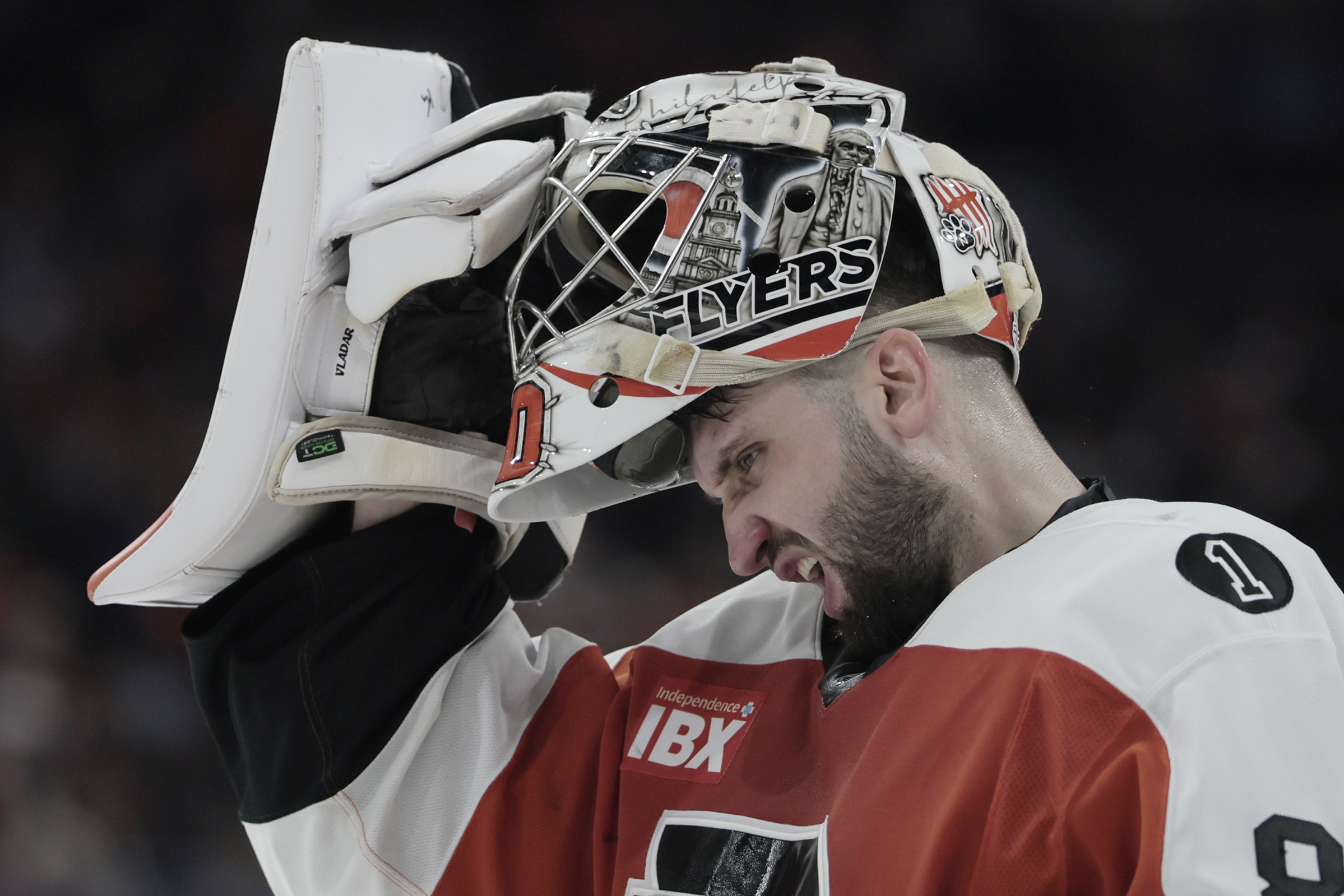
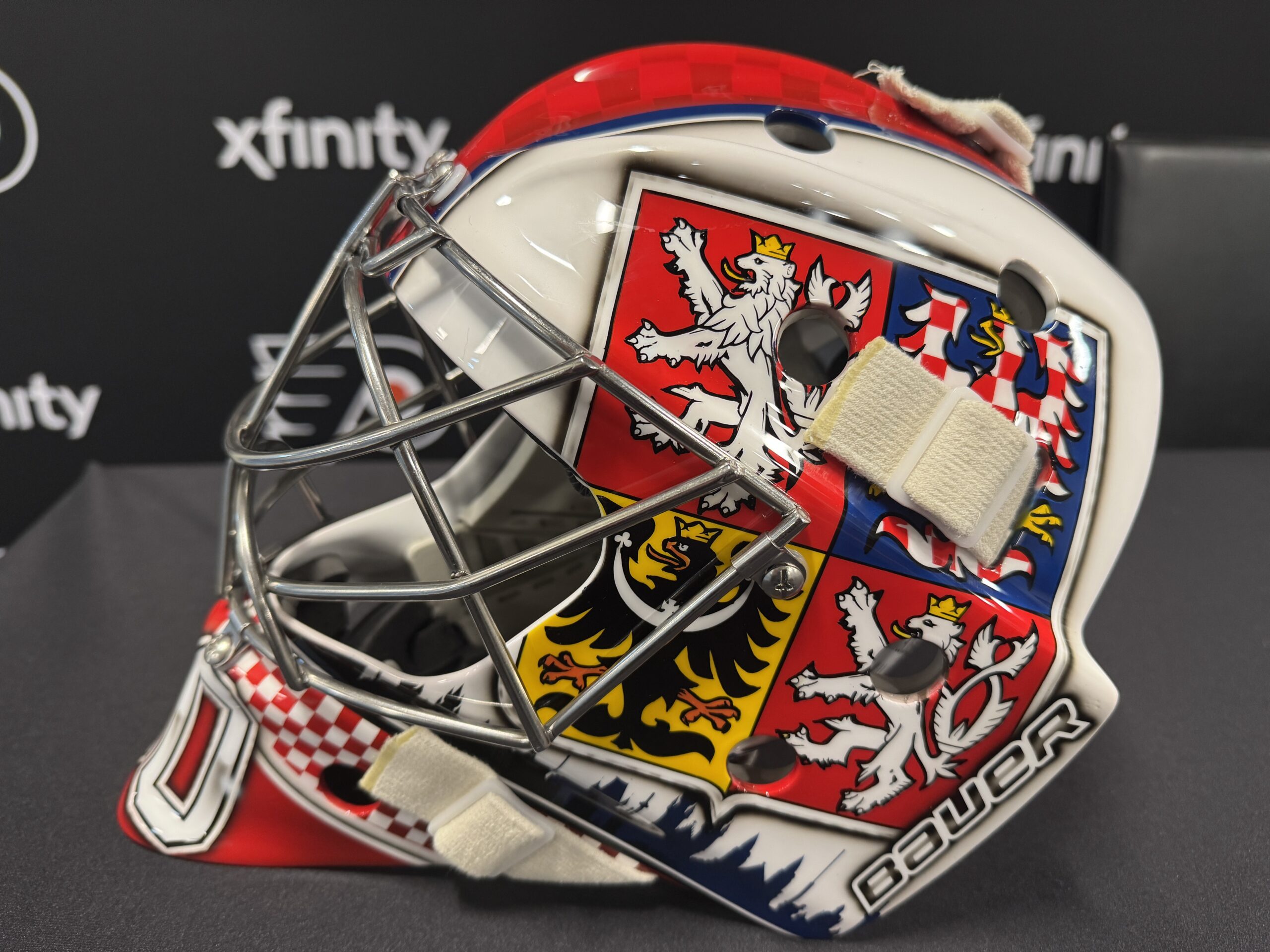
    Vladař is proud of Czechia and his hometown, Prague, and it shines through on his goalie mask. Working with Langhorne’s Franny Drummond of Paint Zoo Studios, who also designed his NHL game mask and worked with the Flyers’ goalies and children on their Hockey Fight Cancer masks, he brought his vision to life — with a twist.

    After having to scrap his original mask plan because the International Ice Hockey Federation and the International Olympic Committee did not approve it — Drummond told the Snow The Goalie podcast at the Flyers Charities Carnival that they originally had lions and lightning on the side — Vladař went simple with a tribute to home.

    On the sides are the national crest with the skyline of Prague, including Prague Castle and Prašná brána or the Powder Tower — “It’s a piece of my heart, back home, and I’m proud that I can be from the beautiful city like that,” he said — underneath each crest.

    Dan Vladař worked with Langhorne’s Franny Drummond of Paint Zoo to design his Olympic goalie mask.

    The checker pattern pulled from the team’s jerseys is intermixed, and the back plate sports the names of equipment managers, athletic trainers, and team service members.

    “I think they deserve it,” Vladař said.

    “Overall, in hockey, they don’t really get enough credit for the time they spend around us, and whatever they do for us. … So this is just a little something that I think I can do for them to get their names out there and just maybe people start recognizing them a little bit more.”

    Although he has the Flyers staff on his mask in Philly, there’s a chance he may need to cover the names in Italy based on IIHF and IOC guidelines.

    “We couldn’t really go wild with that because they’re pretty strict with the Olympics. But at the same time, I think, it’s simple, but simple is power,” he said.

    “I think it turned out to be a pretty cool, simple mask … and I’m always going to look up to it with hopefully a bunch of really good memories.”

    Mettle to Medal

    Like his friend Michal Krčmář, a Czech biathlete who won silver in the 10 kilometer sprint at the 2018 PyeongChang Olympics and is competing on Tuesday, there’s a good chance the Czechs will make some noise.

    David Pastrňák (Boston Bruins), Martin Nečas (Colorado Avalanche), Tomáš Hertl (Vegas Golden Knights), and former Flyers Radko Gudas (Anaheim Ducks) and Lukáš Sedlák (HC Dynamo Pardubice) will play in front of Vladař as he goes for his first medal since the 2014 IIHF Under-18 World Junior Championship.

    At that tournament, he was the backup to Vítek Vaněček when the Czechs lost to the United States in the gold medal game. That same year, he earned another silver as the starter against Canada in the Ivan Hlinka Memorial Tournament, giving up four goals, with one scored by his Flyers teammate Travis Konecny.

    Flyers goaltender Dan Vladař uses his stick to stop the puck against the Ottawa Senators on Feb. 5.

    The netminder last played for Czechia at the 2025 IIHF World Championship — his first appearance since the 2017 World Juniors — posting a 3-0-0 record in four games with a 1.09 GAA and a .951 save percentage; Vladař relieved Vejmelka in the Czechs’ quarterfinal loss to Sweden.

    “I’m just proud I can be there,” he said of being in Milan. “Obviously, we have a lot of goalies that are successful, whether they are playing in NHL or in the top leagues in Europe.

    “So for me, it’s a big honor that I can be part of that group. And, obviously, I’m probably going to have a little tattoo on my body, too, because after 12 years, you just don’t know if you’re going to ever have the opportunity to go.”

  • Flyers blueliner Rasmus Ristolainen embraces his chance with Finland at the Olympics

    Flyers blueliner Rasmus Ristolainen embraces his chance with Finland at the Olympics

    Standing in the hallway outside the Flyers’ locker room in the bowels of Nationwide Arena in Columbus, Ohio, Rasmus Ristolainen confessed that he isn’t the most emotional person. But for a few fleeting seconds, as he chatted with The Inquirer, a smile radiated from his face.

    “Means a lot. I haven’t had the chance to play the last couple of Olympics, so [it] means even more,” he said, confirming that he had that rare smile when coach Antti Pennanen called to welcome him to Finland’s squad.

    “And then, obviously, think about all the players who wore the jersey and when you watched them play when you were a kid. So that means a lot.”

    For the first time since the 2014 Sochi Olympics, NHLers will be back on the world’s biggest stage. At that time, Ristolainen was 19 years old, splitting time between the Buffalo Sabres and Rochester of the American Hockey League during his first year in North America.

    On Jan. 5, a few weeks before Finland would win the bronze in Sochi, he scored one of the biggest goals in the nation’s history. In overtime, the physical defenseman hopped over the boards, carried the puck around Sweden’s Robert Hägg — the Flyers’ 2013 second-round pick — cut across the crease, and tucked in the golden goal to clinch the World Junior Championship.

    His game-winner gave Finland its first World Junior medal since 2006 and first gold since 1998.

    “Obviously, it was a big one, and, you know, sometimes I used to make plays and play a little offense,” he said with a chuckle.

    “World Juniors is a great tournament, and it’s the first time you get to play on the big stage,” he added. “So much excitement, and obviously, I have good memories when we won it.”

    Worth the wait

    Ristolainen manned the blue line two years later at the 2016 World Cup for a Finnish squad that went 0-3-0, was shut out by Sweden and Russia, and scored just one goal against Team North America.

    But then that was it.

    There were several reasons he hasn’t represented Finland since, but the biggest was a dark injury cloud that seemed to follow around the native of Turku.

    Last February, the Flyers defenseman was all set to play at the 4 Nations Face-Off, but right before the tournament, he was knocked out with an upper-body injury. A month later, he underwent surgery on a right triceps tendon rupture. That came after two surgeries in 2024.

    “So basically, three surgeries in the same elbow. Obviously started with a pretty bad infection, which I played with for multiple weeks until I couldn’t anymore,” he disclosed in December of the injuries that cut his last two seasons short and had him start this season late.

    “And then we found out there is some infection and a torn triceps tendon. So obviously, did those two things separately, and then tried to get back.”

    He returned — probably too quickly in hindsight, he thinks — “and then it suddenly snapped, and not sure when or where it happened again.”

    “Obviously, second time the same tendon [was] torn,” he said. “So saw a different doctor this time, and his timeline and recovery were a lot longer, which I think was the key and helped. And, yeah, right now I’m here and feel pretty good.”

    ‘The more pressure, the better’

    In the last few weeks, Ristolainen missed a handful of games for the Flyers, and everyone held their breath, hoping he wouldn’t have to skip yet another opportunity to don the blue and white of Suomi. Nobody held their breath more than former Dallas Star Jere Lehtinen.

    Defenseman Rasmus Ristolainen checking Tampa Bay’s Zemgus Girgensons on Jan. 10. He adds a physical presence to the Flyers.

    “We know he’s a big, big body,” Lehtinen, who is Finland’s general manager, said in a telephone interview from Milan. “He moves quick, a physical guy, and in the defensive zone it’s tough to play against him.

    “But at the same time, he gets up to play and has a good shot. … So, the main thing is he brings us size and speed and physicality. And if you want to succeed as a team, you need those types of players in your defensive zone, [who] may play against the top players.”

    The 6-foot-4, 208-pound blueliner credits his physicality to his days growing up in Turku. Joking that he’s old enough that he didn’t have iPads growing up, he spent his days playing street hockey. As he recalls, he “was always the youngest one, so I had to kind of fight my way through and earn the spot to play with the big boys.”

    Ristolainen, 31, is one of six players from that successful World Juniors squad, which includes goalie Juuse Saros of the Nashville Predators, Stars defenseman Esa Lindell, forward Teuvo Teräväinen of the Chicago Blackhawks, Colorado Avalanche forward Artturi Lehkonen, and ex-NHLer Mikko Lehtonen. And Lindell, Teräväinen, Sebastian Aho of the Carolina Hurricanes, and Mikael Granlund of the Anaheim Ducks played with the Flyers defenseman at the World Cup.

    Lehtonen believes the players’ connections and experience, whether having success like in 2014 or disappointment in 2016, are important. But, while Ristolainen says watching Finland win silver at the 2006 Torino Olympics as a 12-year-old is his favorite Olympic moment, he’s looking to do one better.

    So, any pressure, especially since Finland is the defending Olympic gold medalist?

    “The more pressure, the better,” Ristolainen said. “Everyone wants to play the pressure games; obviously, they are all must-wins. So I’m very excited.”

  • Rick Tocchet’s late parents emigrated from Italy. Now, he’ll go back there to coach Canada in the Olympics

    Rick Tocchet’s late parents emigrated from Italy. Now, he’ll go back there to coach Canada in the Olympics

    There are the visible strings.

    The ones that tie a skate or hold up hockey pants. And the ones that some jerseys have near the neck.

    But then there are the invisible ones that matter all the same — maybe even more. For Flyers coach Rick Tocchet, there’s an invisible string pulling him across the ocean.

    “My parents emigrated from Italy, and I’m really excited to go back there,” said Tocchet, who understands poco, or a little, Italian. “I love the food. … I’m excited to go over there and see a beautiful country.”

    Tocchet’s late parents, Norma and Fortunato ‘Nato’ Tocchet, immigrated to Canada from outside Venice. They settled in Scarborough, Ontario, bringing a blue-collar work ethic — Norma was a seamstress, and Nato a mechanic — that Tocchet carried with him across his 621 games with the Flyers and 1,144 in the NHL.

    A member of the Flyers Hall of Fame, he accumulated 232 goals,508 points, and a franchise-record 1,815 penalty minutes across two stints in Philly while being beloved and revered by the fans for his grit and in-your-face style.

    It is the same work ethic he has carried with him as a coach, including the first 56 games of his tenure behind the Flyers’ bench. And the same one he will carry 173 miles west of Venice, as an assistant coach for Canada’s men’s team at the 2026 Milan Cortina Olympics.

    “Yeah, an unbelievable moment. To be a part of that, to coach for your country, with the talent that we have, it’s going to be a lot of fun,” Tocchet told The Inquirer in Utah after a recent Flyers practice. “So it’s a great honor, and I’m really excited.”

    ‘Sense of pride’

    Across his 61 years, Tocchet has always watched the Olympics. He remembers Sidney Crosby’s golden goal at the 2010 Vancouver Games and captain Mario Lemieux leading Canada to its first gold in 50 years at the 2002 Salt Lake City Olympics. And, for the dual citizen, he’ll pop on Miracle, about the 1980 U.S. Olympic team that stunned the Soviet Union before winning gold in Lake Placid, to get motivated.

    But the most impactful Canadian hockey moment for the Scarborough kid wasn’t on the Olympic stage. In the 1972 Summit Series, as the Tragically Hip’s Gord Downie would sing in Fireworks, Paul Henderson scored “a goal that everyone remembers.”

    In Game 8 of an eight-game series, pitting Canada’s best against the Soviets’ best, Henderson clinched the series. The Flyers’ Bobby Clarke — who infamously slashed Valeri Kharlamov during the series — was linemates with Henderson, but was not on the ice because Phil Esposito stayed on for an elongated shift.

    “So I was 8 or 9 years old and in school, and they actually brought a TV into our classroom to watch that; that’s how the whole country’s eyes were on that series,” Tocchet recalled.

    Rick Tocchet is renowned around the league for his one-on-one instruction with players.

    “But when he scored the goal, the sense of pride — the whole country went crazy, obviously. But what a series. … You go down the list of great players and it impacted my life, because I loved hockey even more when I saw that, and I started to train and wanted to be an NHL player.”

    Fast forward to the present, and on Thursday, like many of his players, including Flyers defenseman Travis Sanheim, Tocchet will make his Olympic debut when Canada plays Dan Vladař and Czechia (10:40 a.m. ET, USA Network). But like all of his players, he has worn the maple leaf before. The forward played in a World Championship and two Canada Cups, winning gold each time.

    “It wasn’t about money. It wasn’t about status. It was about playing for your country,” he said. “To be part of that, I was very lucky as a young kid to play with Wayne Gretzky, Mario Lemieux, and Paul Coffey, guys that I idolized and learned a lot from.

    “And then playing in front of the Canada crowd, how loud it was. Just the sense of pride, it was incredible. Had nothing to do with anything, it wasn’t about individual goals, it was about playing for your country.”

    Tocc-eye

    Tocchet is no stranger to coaching for his country, either. Last February, he was part of Tampa Bay Lightning coach Jon Cooper’s staff at the 4 Nations Face-Off. The Canadians, which included Sanheim and Flyers forward Travis Konecny, won gold by beating the U.S. in overtime.

    At that tournament, Tocchet was a jack-of-all-trades, focusing on the structure, faceoff planning, and in-game adjustments. But what impressed Cooper the most was how he would often meet with players one-on-one or in small groups to watch videos — over a garbage can.

    As Tocchet explained, he would put his laptop on a garbage can and go over things, as he did when he was an assistant coach with the Pittsburgh Penguins and his Flyers’ assistant coaches do now.

    “I couldn’t have surrounded myself with a better guy,” Cooper told The Inquirer in late November. “I will tell you this, because his eye for the game and what happens in real time, having that talent is a real thing. And Tocc has that. He sees it, he processes it, and then gives you the information.

    “And there were countless times at the 4 Nations that he made me think of things, or I saw things in a different light, or I missed something, and he caught it. And so many little adjustments we made in between periods, because of what Tocc did.”

    He’ll have the same role in Italy with Cooper rolling over the same staff in Tocchet, Vegas Golden Knights coach Bruce Cassidy, former NHL coach Pete DeBoer, and former NHL assistant coach Misha Donskov.

    After winning last year’s 4 Nations Face-Off, Canada enters this year’s Olympics as the favorites.

    Tocchet will assuredly have one eye on the Flyers, who get back to work on Feb. 17 at 2 p.m. in Voorhees, five days before the men’s gold medal game is scheduled. But he may not have his eyes on the Flyers, outside of Sanheim, in Milan. As Vladař said with a laugh, he’s blocking numbers right now.

    He’ll also be taking in other events like speedskating, Canada’s women’s hockey team, and figure skating, which includes South Jersey’s Isabeau Levito, who is co-coached by Slava Kuznetsov, the Flyers’ Russian translator.

    But, with it being 12 years since Canada last won gold in Sochi, Russia, Tocchet’s whole focus will be finishing with a string around his neck and a gold medal hanging from the end. After all, as the winningest country in men’s hockey at the Olympics with nine triumphs, it is the Canadian way: Gold or bust.