Author: Julia Terruso

  • Sen. Chris Coons and U.S. Rep. Madeleine Dean are headed to Denmark as Trump pushes to acquire Greenland

    Sen. Chris Coons and U.S. Rep. Madeleine Dean are headed to Denmark as Trump pushes to acquire Greenland

    As President Donald Trump threatens to acquire Greenland, Sen. Chris Coons is boarding a plane to Denmark to push back.

    Coons (D., Del.), who opposes the president’s takeover proposal, is bringing a bipartisan group of House and Senate members on a mission to highlight the longstanding relationship between the U.S. and Denmark, which has control over defense and foreign policy in the semi-autonomous territory, located northeast of Canada.

    Coons said in an interview Wednesday that the delegation will meet with Danish and Greenlandic government and business leaders to discuss issues including Arctic security and strengthening trade relations.

    “Denmark has been a strong close and trusted ally for decades and this is a chance for a bipartisan and bicameral delegation from Congress to go and communicate our respect and appreciation for their close partnership,” he said.

    He said he hopes the visit clarifies “there are folks in Congress who do not support an aggressive engagement.”

    Coons noted Danish soldiers fought alongside Americans in Iraq and Afghanistan and suffered some of the highest casualties per capita. The delegation will lay a wreath to commemorate that sacrifice on their trip.

    Joining Coons will be Democratic U.S. Reps. Sarah McBride of Delaware, Madeleine Dean of Pennsylvania, Gregory Meeks of New York, and Republican Sen. Thom Tillis from North Carolina. The delegation will be in Copenhagen Friday and Saturday. Some members of the delegation will continue on to the World Economic Forum in Davos, Switzerland.

    Trump has threatened to annex Greenland, a self-governing territory of Denmark, into the United States, contending it’s an issue of national security to prevent Russia or China from taking it over.

    Coons called that rationale “puzzling,” given leaders of Greenland and Denmark have assured him on previous visits that they are happy to collaborate with the U.S. to amp up American military presence in the country and work together on arctic security issues or to explore investments in mineral resources.

    “I asked are you aware of any foreign threats, cyber, or other incursions?” Coons said of a previous conversation with Denmark Minister of Foreign Affairs Lars Løkke Rasmussen. “Nope, none.”

    Leaders in Greenland this week said they wanted the territory to remain part of the kingdom of Denmark.

    “Greenland does not want to be owned by the USA,” Greenland’s Premier Jens-Frederik Nielsen said at a news conference Tuesday in Copenhagen. “Greenland does not want to be governed by the USA. Greenland will not be part of the USA. We choose the Greenland we know today, which is part of the Kingdom of Denmark.”

    Denmark officials have warned an attack on Greenland, which is part of Denmark and thus under the protection of the North Atlantic Treaty Organization, would destroy the alliance, which has been a pillar of U.S.-European relations since 1949.

    Trump has been seemingly undeterred by foreign protestations. He said on social media Wednesday that “anything less” than U.S. control of Greenland is “unacceptable,” arguing the United States needs the territory for national security purposes, which could in turn strengthen NATO.

    “NATO becomes far more formidable and effective with Greenland in the hands of the UNITED STATES,” Trump wrote in a Truth Social post. “Anything less than that is unacceptable.”

    Dean, who also went on a trip to Denmark in April, said in an interview she hopes to convey “the president’s notion is wrongheaded, dangerous, inane and not something we support.”

    Dean said if the president wants to boost security in Denmark he might consider increasing the number of U.S. military bases there, which has precipitously declined, rather than trying to take control of the country.

    Dean also encouraged her Republican colleagues to speak out against the president’s comments.

    “If somehow this president unleashes military action against Greenland, against the kingdom of Denmark — it will destroy 80 years of a NATO partnership that has kept the world in a more peaceful place,” she said. “It’s just a sick irony that this is the same president who so wishes he could win the Nobel Peace Prize.”

    Vice President JD Vance and Secretary of State Marco Rubio hosted the foreign ministers of Denmark and Greenland Wednesday, a meeting that ended with plans for a working group but also highlighted the “fundamental disagreements” between the nations.

    Coons and Dean’s trip comes as tensions have risen internationally.

    The government of Greenland and Denmark’s Ministry of Defense said there would be an increased military presence in the territory starting Wednesday due to “security tensions,” CNN reported.

    Elsewhere, European leaders continue to reject Trump’s calls to control the semi-autonomous territory. French President Emmanuel Macron warned Wednesday that the consequences of the US trying to seize Greenland from Denmark would be “unprecedented.”

  • Josh Shapiro’s reelection campaign in Pennsylvania starts now — but 2028 looms large

    Josh Shapiro’s reelection campaign in Pennsylvania starts now — but 2028 looms large

    He’s running.

    Gov. Josh Shapiro officially announced his widely expected reelection bid for Pennsylvania governor Thursday, as speculation over a 2028 run for president continues to build. The question now: How will the Democrat’s rumored presidential ambitions bolster or detract from his must-win election at home in 2026?

    Shapiro will kick off his reelection campaign with not one but two rallies — first stopping in Pittsburgh, then in Philadelphia. In a campaign video posted to social media Thursday morning, he touted his three years of leading a divided legislature and his bipartisan achievements in a politically split state, via a campaign that has already amassed a record $30 million war chest.

    He coasted to victory in 2022, elevating his profile within the national Democratic Party, and is not expected to face a primary challenger. In the general election, he will likely face Republican State Treasurer Stacy Garrity, who largely consolidated GOP support early.

    But that’s not the only race on the line in November.

    Shapiro, whose campaign declined to comment for this article, has been elusive when asked directly about plans to run for president. But in the last year, he’s taken bold steps to build a national profile, while quietly making moves behind the scenes that signal bigger political aspirations. He’s expanded his public affairs team, planned a book tour for the end of January, and sat for interviews with national magazines like the Atlantic, which published an extensive feature on him late last year. Last month, he and Democratic presidential candidate kingmaker U.S. Rep. Jim Clyburn (D., S.C.) discussed the pioneering Black lawmakers’s new book on a stage in Philadelphia. Earlier in December, he and Utah Gov. Spencer Cox, a Republican, discussed curbing political violence with NBC News host Savannah Guthrie, a conversation that highlighted Shapiro’s emphasis on bipartisanship.

    At home, he’s a local political celebrity, boasting approval ratings between 52% and 60%. But outside the Keystone State, he has yet to become a household name.

    As Shapiro looks to potential parallel runs, he’ll need to continue to build a national profile without outwardly focusing too much on the presidential picture.

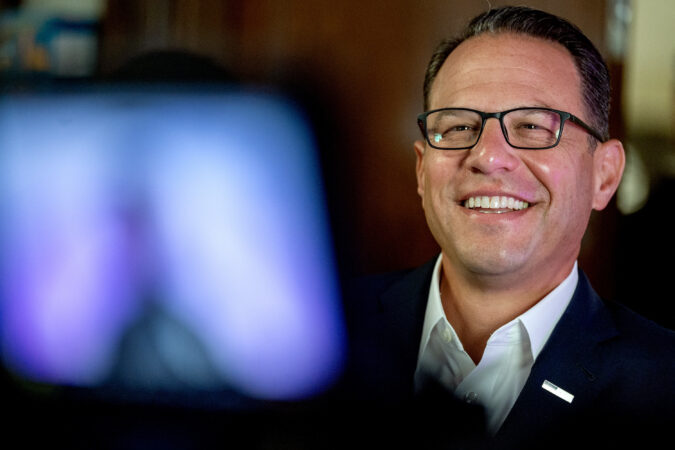
    Gov. Josh Shapiro is interviewed by TV news in the spin room at the Convention Center following the debate between former President Donald Trump and Vice President Kamala Harris Tuesday, Sept. 10, 2024.

    “The challenge, of course, is you have to take care of your next election first,” said Christopher Borick, a pollster at Muhlenberg College. “Of anything he does, he knows this is the most important thing for his potential success in 2028 if he was to run.”

    The former Pennsylvania attorney general, Montgomery County commissioner, and state representative has never in 20 years suffered an electoral defeat. Being passed over for Vice President Kamala Harris’ running mate in 2024 kept that winning streak alive.

    In the governor’s race, Shapiro will likely face a more formidable opponent in Garrity than he did in state Sen. Doug Mastriano (R., Franklin) in 2022, but he’ll also be running in a far more favorable political atmosphere for Democrats amid souring attitudes toward President Donald Trump and the GOP. If he can retain the governor’s mansion decisively and bring a ticket of Democrats vying for the statehouse and Congress to victory with him, that’s a narrative that could be strong in a Democratic presidential primary.

    “Having a win, and maybe an impressive one in Pennsylvania, the key swing state heading into that cycle, is about as big of a boost as any that you can have,” Borick added.

    Running local

    The 2028-curious Democrats include several other sitting governors generating buzz: California’s Gavin Newsom, Kentucky’s Andy Beshear, Maryland’s Wes Moore, Michigan’s Gretchen Whitmer, and Illinois’ JB Pritzker. Shapiro has formed alliances with several of them.

    But unlike some of his peers, Shapiro hasn’t been a frequent guest on cable news or podcasts with national reach.

    That’s not to say he hasn’t made moves toward a potential presidential run.

    On Oct. 4, 2024, nearly a month before Harris lost the presidential election to Trump, Shapiro confidentially requested that the state ethics commission determine whether he would violate any state ethics laws for accepting royalties from a book about his life in public service, according to the filing.

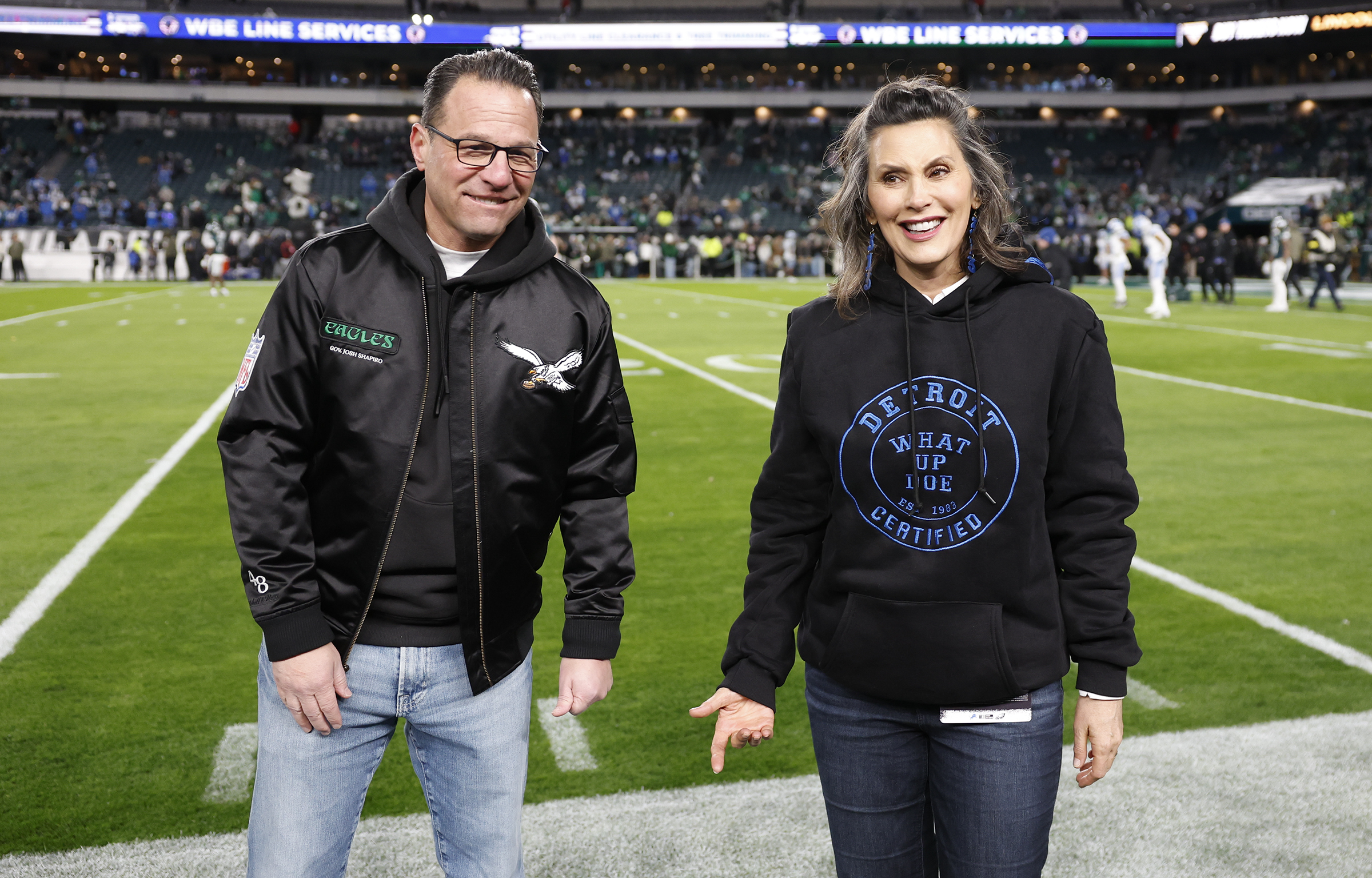
    Pennsylvania Gov. Josh Shapiro (right) and Michigan Gov. Gretchen Whitmer before the Eagles played the Detroit Lions at Lincoln Financial Field on Sunday, Nov. 16, 2025, in Philadelphia, PA.

    His book, Where We Keep the Light, will publish later this month, recounting his political upbringing, his vice presidential vetting, and the firebombing of his home last year. He’s not alone. Harris published a memoir about the 2024 election last year, and Newsom is due out with Young Man in a Hurry: A Memoir of Discovery in February.

    But in the coming months, several Democratic strategists predict Shapiro will be squarely focused on the governor’s race he has to win in Pennsylvania — simultaneously proving he has what it takes to capture the vote of the nation’s most important swing state.

    “He’s such a careful politician. He’s not taking anything for granted,” said former Gov. Ed Rendell, a Democrat who also once faced scrutiny for having potential presidential ambitions.

    Shapiro is likely to follow the same campaign playbook in Pennsylvania as he did in 2022: Stump in every region of the state, including areas where Democrats don’t usually show up. That helped him run down the margins in longtime GOP strongholds like Lancaster or Schuylkill Counties toward his resounding victory over Mastriano. Those stops in most of Pennsylvania’s 67 counties won’t give him as much time to visit South Carolina, Iowa, and New Hampshire, as the other Democratic presidential hopefuls start their sojourns.

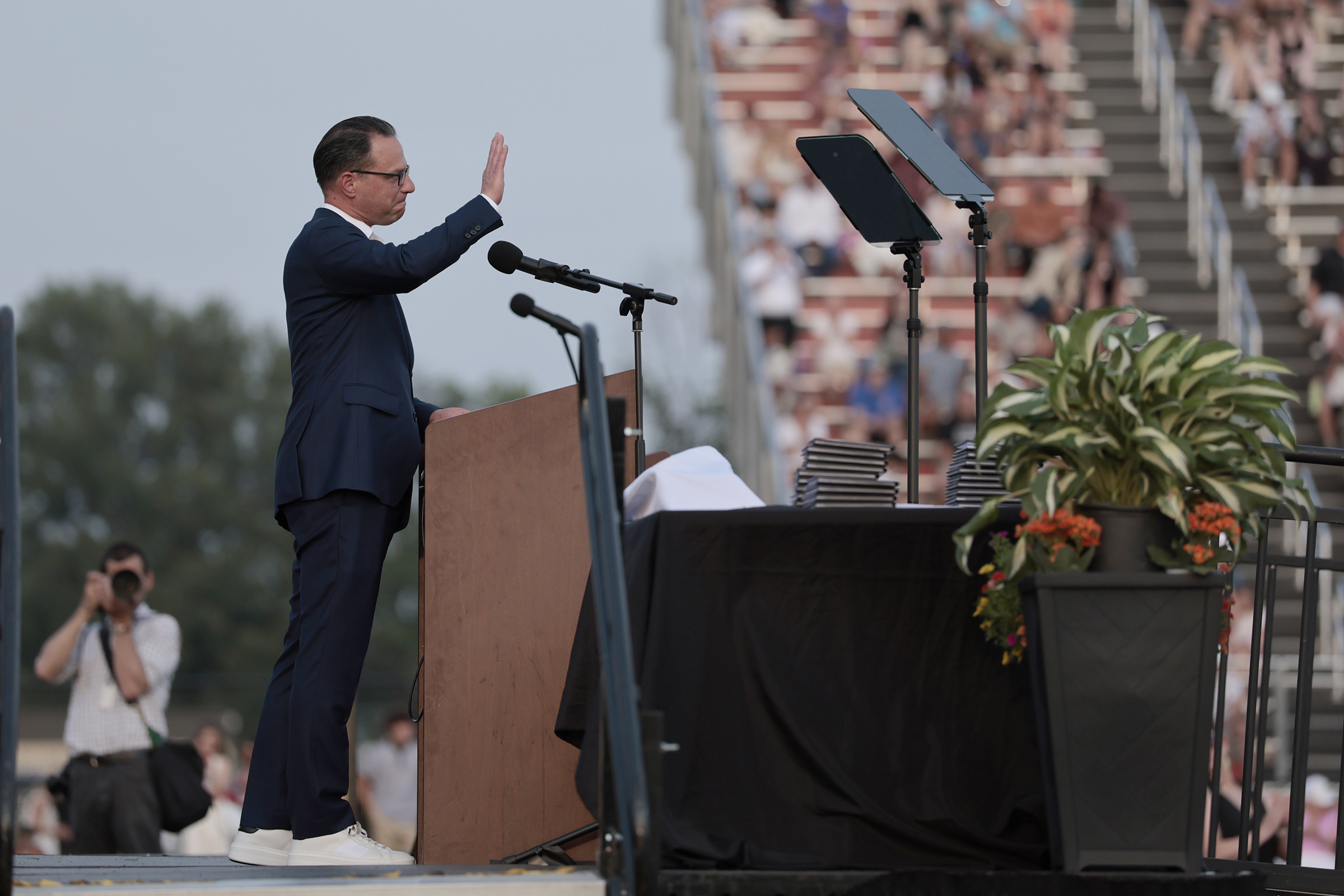
    Pennsylvania Governor Josh Shapiro waves goodbye to the crowd after speaking during graduation ceremonies at Pennsbury High School in Fairless Hills on Thursday, June 12, 2025.

    “The No. 1 caveat is stay focused on the race you’re running,” echoed Alan Kessler, a national fundraiser based in Philadelphia who has supported and fundraised for Shapiro.

    Still, the campaign is likely to generate attention beyond the Keystone State.

    Shapiro will still court donors in blue states as he fundraises for reelection, Kessler added.

    Come November, he will be the only governor with rumored 2028 aspirations up for reelection in a swing state. And his brand as a popular, moderate Democratic governor trying to restore trust in government — as well as his potential to help boost Democrats down ballot — will easily capture a wider audience and bring national media into Pennsylvania.

    As Democrats seek to flip control of the U.S. House in 2026, targeting several congressional districts in the state, the election may once again come down to Pennsylvania, and in turn, increase the spotlight on Shapiro. The governor is widely seen as someone who can boost the congressional Democratic candidates also on the ballot, having won three of the four districts that Democrats are targeting in the state by double digits in 2022.

    “Every single Democrat that I know that’s running for office in 2026 in Pennsylvania wants the governor to campaign with them,” Democratic state party chair Eugene DePasquale said.

    Preparing for an onslaught

    Republicans have targeted several weaknesses to try to erode Shapiro’s popularity in Pennsylvania and boost Garrity. They point to a lack of rigorous electoral challengers in his past. They question his record of “getting stuff done” — his oft-repeated motto — including three late state budgets. And they’ve harped on a lack of transparency as governor, including claims he used tax dollars for political benefit as well as a sexual harassment scandal involving a former top aide. They’ve also criticized his support for Minnesota Gov. Tim Walz, who recently dropped his third gubernatorial bid following a fraud scandal among the state’s Somali refugee population totaling $1 billion, according to federal prosecutors.

    Among the emerging attacks: Republicans want to highlight Shapiro’s presumed presidential ambitions, as they try to cast him as an opportunist more interested in a future White House bid than the problems of everyday Pennsylvanians.

    “Josh Shapiro is more concerned with a promotion to Pennsylvania Avenue than serving hardworking Pennsylvanians,” Garrity said in a statement, noting the state fared poorly in U.S. News and World Report rankings on the economy and education. “In the military, I learned the importance of putting service before self. Pennsylvanians are the hardest-working, most compassionate, strongest people in the nation, and together we will return Pennsylvania to our rightful place as a national and global leader.”

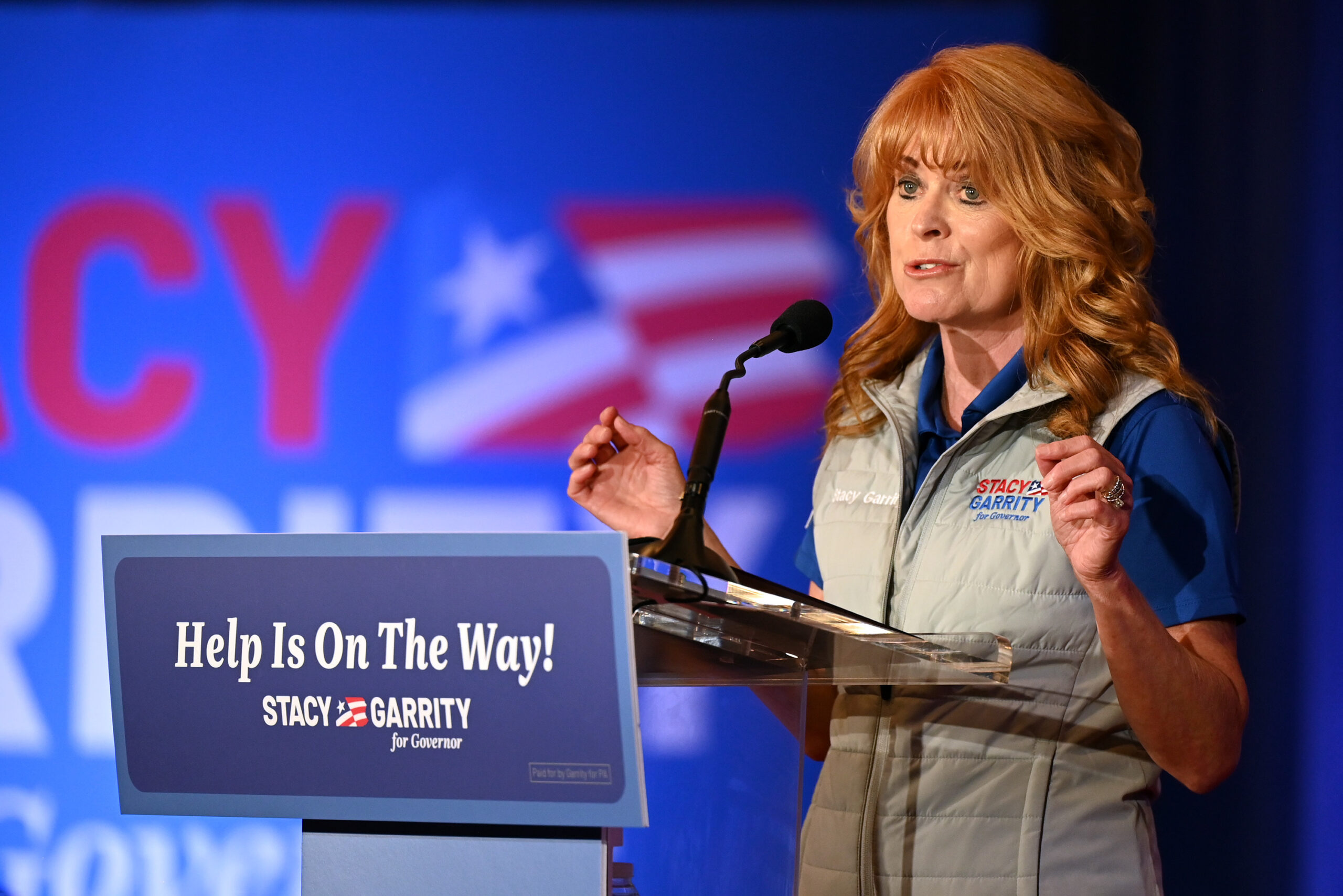
    State Treasurer and Republican candidate for governor Stacy Garrity holds a rally in Bucks County Sept. 25, 2025 at the Newtown Sports & Events Center.

    There are lingering missteps that could come up in a reelection campaign or afterward. He was unable to secure a long-term funding stream for mass transit, requiring him to use capital funds to keep SEPTA operating. He has yet to follow through on his support for school vouchers, a GOP-selling point for him that angered the powerful teachers’ unions in the state. And he’s faced questions over a number of actions his administration has taken, including $1.3 million in security improvements to his personal home following the attack on the governor’s residence in Harrisburg, his use of the state plane, and his transparency in open records requests, among others.

    Mastriano, the far-right Republican state senator who announced Wednesday he won’t run for governor, said in a statement earlier this week that Shapiro “owes [Pennsylvanians] straight answers” over his use of the state plane, security updates to his personal home in Abington Township, and more.

    “Pennsylvanians deserve accountability, not ambition,” he added, making a nod to Shapiro’s potential longer-term plans.

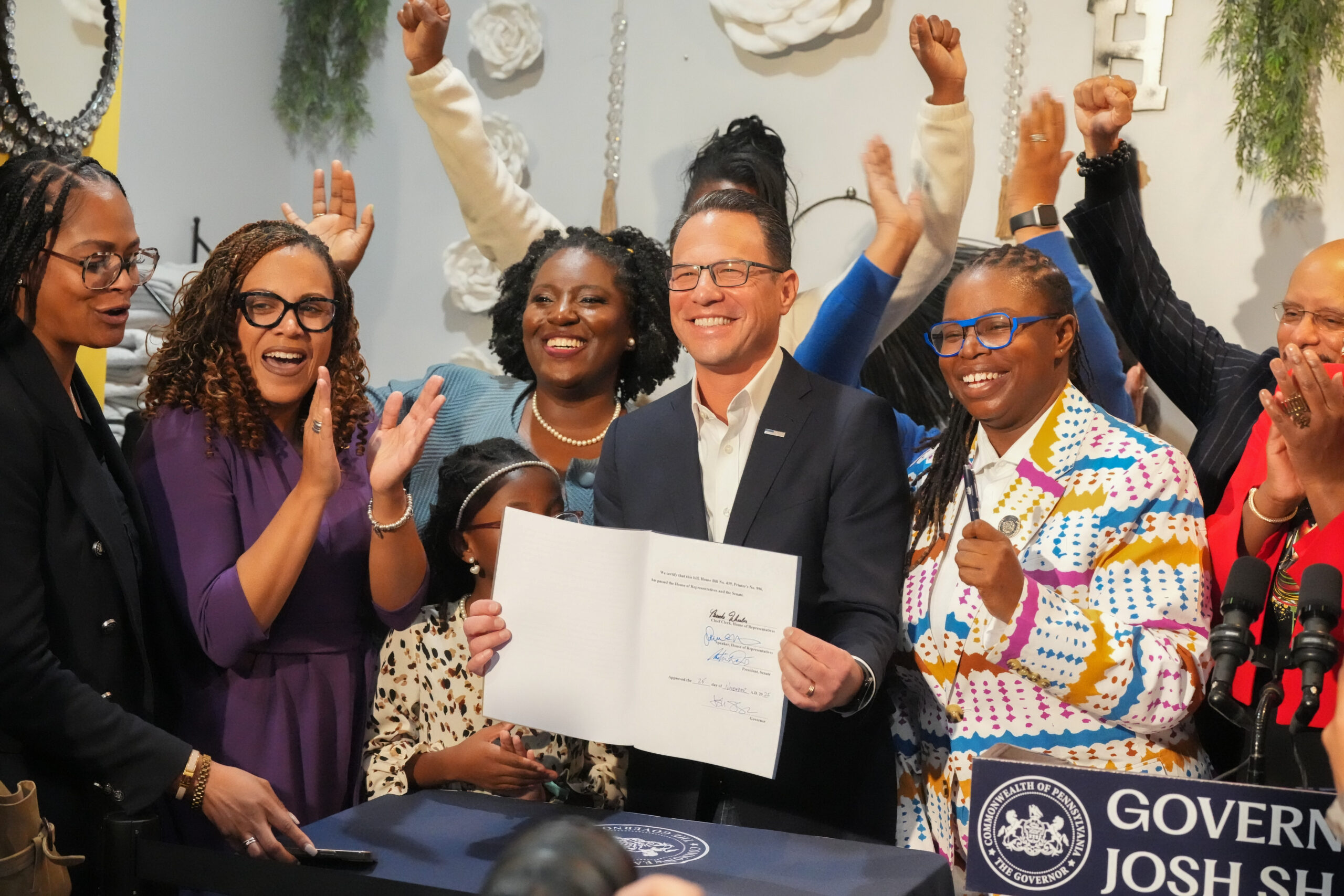
    House Speaker Joanna McClinton, back center left, Gov. Josh Shapiro, front center, and State Rep. La’Tasha D. Mayes, right, celebrate the signing of the CROWN Act, which prohibits discrimination based on a person’s hair type, during a press conference at Island Design Natural Hair Studio, in West Philadelphia, November 25, 2025.

    Borick, the pollster, was skeptical that attacks on Shapiro’s potential wider ambitions could reverse his largely positive public sentiment.

    “If that’s all they got, they don’t got a lot.”

    Republicans insist they see a path to victory for Garrity in a politically divided state with months to go until the election. But behind the scenes, some Republicans are already acknowledging the goal is to lose by less and prevent big losses in state legislature or congressional races.

    If Shapiro does look poised to cruise to victory, it might mean less media attention on the race, and it could mean he’s less vetted ahead of a much bigger stage.

    “I think Josh is better served if the [Republican Governors Association] puts $100 million into this race because then it’s nationalized,” said a Democratic political strategist based in Pennsylvania who did not want to be named speculating on Shapiro’s presidential run. “If it’s a cakewalk, CNN’s not gonna cover it …If he wants to be governor for another four years, he should pray for a cakewalk. If he wants to be president, he should pray for a difficult campaign.”

    Florida Gov. Ron DeSantis, for example, the strategist noted, cleaned up in his 2022 reelection, but failed to gain traction in the GOP presidential primary that Trump dominated.

    Beyond 2026

    Shapiro speaks Pennsylvanian very well. Raised in Montgomery County, he’s lived here almost all of his life, and has built an image as a popular moderate focused on problem-solving in a purple state. That’s earned him the support of about 30% of Trump voters in the state.

    But winning a general election in Pennsylvania is different than winning a Democratic presidential primary.

    He’s tried not to alienate the MAGA base, focusing on issues with bipartisan appeal like funding for apprenticeship and vocational-training programs. He’s taken on Trump in court, but has picked his personal battles with the president more carefully.

    But being a strategic, self-described “progressive pragmatist” can end up alienating voters on both sides.

    Gov. Josh Shapiro leaves after an event at the Port of Philadelphia Thursday, Apr. 10, 2025, the day after President Trump paused some tariffs.

    Becky Carroll, a Democratic political consultant in Chicago who has worked with Pritzker, said Shapiro seems less on the radar of voters in the Midwest. As she’s followed Shapiro’s career, she said she sees a “damn fine governor,” but someone who’s taken a more muted approach to Trump than blue state governors like Pritzker and Newsom.

    When it comes to a Democratic primary, candidates may be judged in part on their pushback to Trump, she said. “I think we’re in a moment where you can sulk in a corner and hope it’ll all go away or fight …,” Carroll said. “And if you’re gonna put yourself out there for a primary battle, you better show you have battle scars to prove you can fight for the most vulnerable in the country right now.”

    Gov. Josh Shapiro is interviewed by TV news in the spin room at the Convention Center following the debate between former President Donald Trump and Vice President Kamala Harris Tuesday, Sept. 10, 2024.

    But other national strategists see Shapiro’s moderate appeal as a potential asset in 2028. Jared Goldberg-Leopold, a former communications director for the Democratic Governors Association, thinks Shapiro’s biggest asset is his electoral track record in a state the nation knows is critical on the path to the White House. Primaries have previously been won by moderates whom the party thinks have the best chance at winning the general.

    But the first step, Goldberg-Leopold stressed, is the governor’s race ahead.

    “It would be easy for the Eagles to look past the 49ers to the next week of playoffs, but they’ve gotta focus on only one thing. And the same is true for the governor,” he said. “You can only prepare for what’s ahead of you, and the way people get in trouble in politics is planning too many steps ahead.”

    Staff writer Katie Bernard contributed to this article.

  • Ala Stanford gave Michael Nutter his first COVID vaccine. Now he’s endorsing her for Congress.

    Ala Stanford gave Michael Nutter his first COVID vaccine. Now he’s endorsing her for Congress.

    Former Mayor Michael Nutter endorsed Ala Stanford, a pediatric surgeon who rose to prominence in the city for her response to the COVID-19 pandemic, in the crowded primary race for the 3rd Congressional District.

    “While some were giving speeches, she was giving shots,” Nutter said in remarks at the West Philadelphia church where he launched his political career.

    “While some were talking about what should be done, she was out in the streets doing what needed to be done, at great risk to herself and others when people were getting sick and dying. Dr. Ala Stanford ran toward the danger, while most of us were safely in our homes.”

    In thanking Nutter for his backing, Stanford said she was running “not because I’ve spent my career in politics. I’m running for Congress because I’ve spent my life stepping up when people needed help and the system wasn’t working.”

    During the pandemic, Stanford led the Black Doctors COVID-19 Consortium, which brought vaccines into communities of color, inoculating thousands of Philadelphians who might not have otherwise had access.

    She went on to serve as a regional Department of Health and Human Services director under President Joe Biden and now runs a community health center in North Philadelphia.

    She is one of at least a dozen candidates vying to succeed retiring U.S. Rep. Dwight Evans in the 3rd Congressional District, one of the most Democratic districts in the nation, which covers much of Philadelphia. Evans endorsed Stanford upon her entry into the race.

    Nutter, who led the city as mayor from January 2008 to January 2016 and before that served on City Council, called Stanford “the only person running, as far as I can tell, who has serious executive, federal government experience,” pointing to her post at HHS.

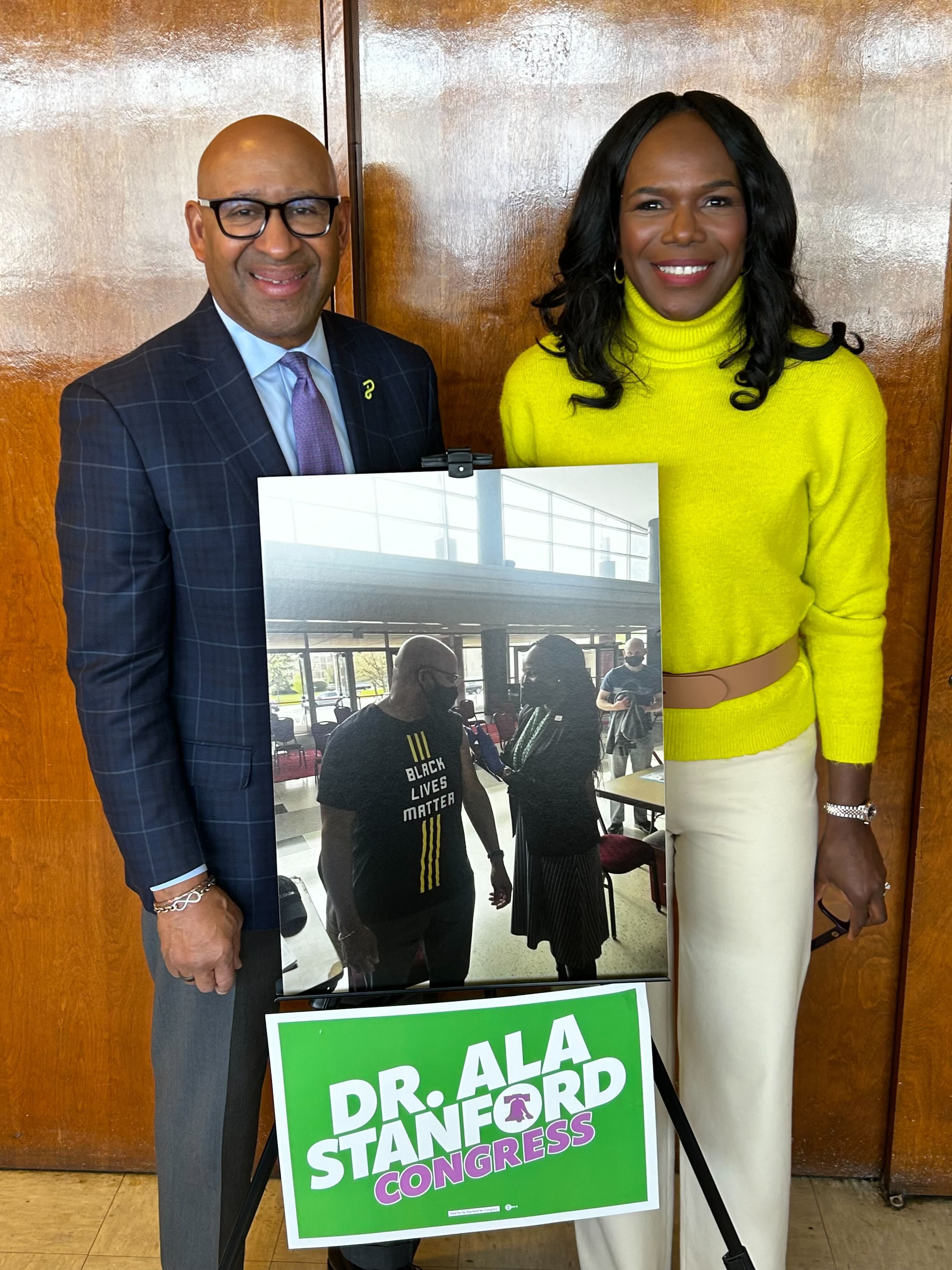
    Former Mayor Michael Nutter endorsed Dr. Ala Stanford Thursday in her bid for Congress. Here he poses with blown-up photo of her giving him the COVID vaccine in 2021.

    The former mayor teaches at Columbia University, holds a fellowship at the University of Pennsylvania, and was recently named president of the Board of Directors of City Trusts. Dating back to 1869, the board oversees 119 different entities bequeathed to the city by different benefactors, including Girard College and Wills Eye Hospital.

    In the 2023 mayoral contest, Nutter endorsed former Controller Rebecca Rhynhart over a field that included several sitting City Council members, including Mayor Cherelle L. Parker, who won the contest. He also got involved in the 2020 presidential election, endorsing former New York Mayor Michael Bloomberg’s short-lived campaign.

    Nutter’s endorsement of Stanford comes a week after former Pennsylvania Gov. Ed Rendell, who also served two terms as Philadelphia mayor, endorsed State Sen. Sharif Street in the contest.

    Street, the first candidate to enter the race, has amassed the most Democratic establishment and organized labor support so far, but there are five months to go before the May primary and most political observers think any of four candidates — Street, Stanford, State Rep. Morgan Cephas, and State Rep. Chris Rabb — could take off.

    Street’s father, former Mayor John Street, was Nutter’s immediate predecessor as mayor.

    Stanford has a strong personal backstory, but as a first-time candidate she could face an upward climb in fundraising and establishing herself beyond her expertise in healthcare.

    She said last week she sees most issues as interconnected with healthcare and that expertise as an asset.

    “My team and I, we’ve gotten lots of advice about ‘you gotta talk about housing.’ Housing is health,” she told The Inquirer. “‘You need to talk about affordability.’ But that is prescription drugs. ‘You need to talk about safety in our communities.’ … All those issues bring me back to healthcare. … And I’m an expert in the space.”

    Staff writer Anna Orso contributed to this article.

  • Three Pa. Republicans are siding with Democrats in a last-ditch effort to save healthcare tax credits

    Three Pa. Republicans are siding with Democrats in a last-ditch effort to save healthcare tax credits

    Four moderate Republicans — including three who are in the hot seat for reelection in swing districts in Pennsylvania — joined Democrats to sign a discharge petition Wednesday to force a vote on a proposal to extend pandemic-era expanded Obamacare subsidies.

    While the move may not save the subsidies from expiring, given that Republican-controlled Senate has indicated resistance to the plan, the votes mark the sharpest rebuke of party leadership from within the GOP since President Donald Trump started his second term.

    U.S. Rep. Brian Fitzpatrick, who has represented Bucks County since 2017, and two GOP freshmen from elsewhere in the state, U.S. Reps. Rob Bresnahan and Ryan Mackenzie, joined New York moderate Mike Lawler to give Democrats the votes they needed to push a vote on a clean extension of the subsidies to the floor.

    The move comes on the heels of other high-profile examples of rank-and-file Republicans bucking Trump and House Speaker Mike Johnson, including last month’s bipartisan vote to release the Jeffrey Epstein files, following a discharge petition after Johnson had slow-walked the legislation.

    The “dam is breaking,” U.S. Rep. Marjorie Taylor Greene (R., Ga.) told CNN on Tuesday in reference to the string of incidents in which members of the party had defied the president and speaker ahead of next year’s midterms.

    The Republicans who defected on the healthcare bill had favored a compromise that they hoped might have a chance of passing Congress, but that was rejected by Johnson (R., La.), who sided with conservatives against expanding the subsidies, on Tuesday night.

    That left them supporting a vote on a bill that extends the program as is, with far fewer restrictions and concessions than the compromise bills included.

    “Despite our months-long call for action, leadership on both sides of the aisle failed to work together to advance any bipartisan compromise, leaving this as the only way to protect the 28,000 people in my district from higher costs,” Bresnahan said in a statement posted on X.

    “Families in NEPA cannot afford to have the rug pulled out from under them. Doing nothing was not an option, and although this is not a bill I ever intended to support, it is the only option remaining. I urge my colleagues to set politics aside, put people first, and come together around a bipartisan deal.”

    Later Wednesday, House Republican leaders pushed to passage a healthcare bill that does not address the soaring monthly premiums that millions of people will soon endure. The bill passed on a mostly party-line vote of 216-211. U.S. Rep. Thomas Massie (R., Ky.) joined with Democrats in voting against the measure.

    Fitzpatrick and Lawler tried to add a temporary extension of the subsidies to the bill, but were denied.

    “Our only request was a floor vote on this compromise, so that the American People’s voice could be heard on this issue. That request was rejected. Then, at the request of House leadership I, along with my colleagues, filed multiple amendments, and testified at length to those amendments,” Fitzpatrick said in a statement. “House leadership then decided to reject every single one of these amendments.

    “As I’ve stated many times before, the only policy that is worse than a clean three-year extension without any reforms, is a policy of complete expiration without any bridge,” Fitzpatrick said.

    Bresnahan’s vote for the discharge petition came a little more than a week after he welcomed Trump to his Northeast Pennsylvania district for a rally, which was meant to address voter concerns about affordability ahead of next year’s midterms.

    The coming spike in healthcare premiums will be a central part of Democrats’ messaging in swing districts like Bresnahan’s.

    Bresnahan won his election last year by about 1 percentage point. He was also one of just 20 House Republicans to sign a successful discharge petition earlier this month to force a vote for collective bargaining to be restored for federal workers.

    “At the end of the day that might have been going against party leadership, but it was what’s right for northeastern Pennsylvania,” he told The Inquirer of the vote at the Pennsylvania Society last weekend.

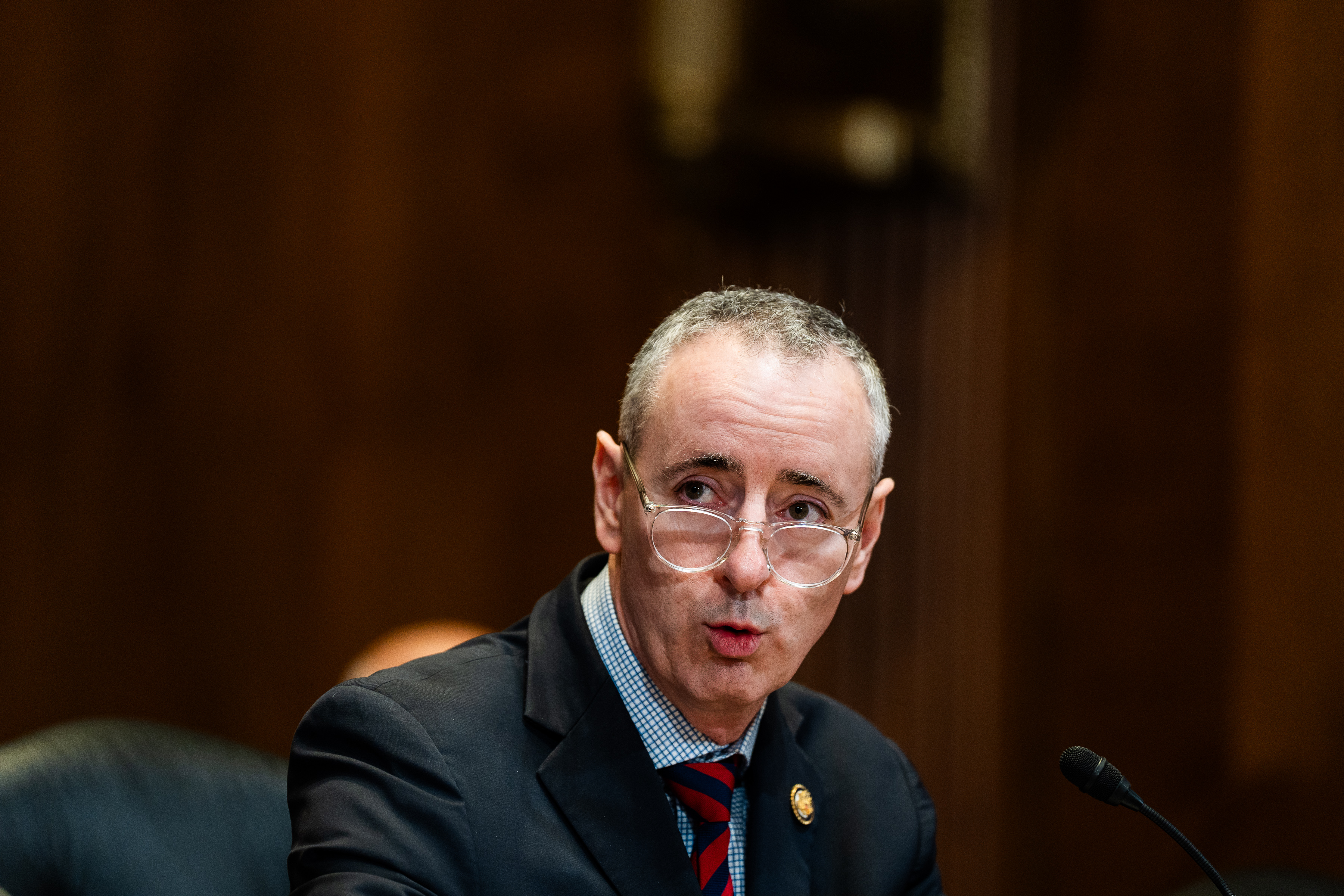
    Rep. Brian Fitzpatrick (R-Pennsylvania) speaks at a hearing on Capitol Hill on Dec. 3.

    Mackenzie, in an interview with The Inquirer, blamed Democrats for not signing on to one of the compromise proposals, leaving him and the other three Republicans with no alternative but to sign onto a discharge for a plan he doubts will pass.

    “But if you send the Senate anything at this point, I’m of the opinion it will continue the conversation and they’ll consider what their options are,” Mackenzie said. “If they would like to do additional reforms, I welcome those.”

    While Republicans who have opposed the extension argue the subsidies were meant to be temporary and affect only about 7% of Americans, Mackenzie said he has been hearing from constituents constantly.

    “Healthcare and the current system is unaffordable for many people,” he said. “We recognize the current system is broken for millions of Americans, so to actually get to some kind of better position, you need both short-term and long-term solutions.”

    He called the Affordable Care Act subsidy extension a needed short-term solution “to do something for people struggling right now.”

    Like Bresnahan, Mackenzie won his Lehigh Valley seat by 1 percentage point last year. And the district will be a top priority for both parties in next year’s election — as shown by Vice President JD Vance’s visit there Tuesday.

    U.S. Rep. Scott Perry, a staunch Trump ally, represents a swing district in Central Pennsylvania but voted against the discharge petition. Janelle Stelson, a Democrat seeking Perry’s seat, called him “extreme” for voting against the measure.

    “While other Republicans are working across party lines to lower costs, Perry is yet again refusing to do anything to make life more affordable,” said Stelson, who narrowly lost to Perry last year.

    Fitzpatrick had been leading the moderate push for a solution on the ACA tax credits with his own compromise bill in the House. His bill would extend the subsidies by two years and implement a series of changes, including new income eligibility caps and a minimum monthly premium payment. Fitzpatrick has bucked his party and Trump several times, voting against final passage of Trump’s One Big Beautiful Bill, though he voted for an earlier version that passed the House by only one vote.

    Some Republicans do not want to extend the credits at all, while others want abortion restrictions included.

    Democrats hoping to unseat Fitzpatrick argue he has a record of pushing back on Trump and GOP leaders only in ways that do not actually damage the party or its priorities. In this case, though, the three Pennsylvanians were critical in getting the petition through, even if the future of ACA tax credits remains uncertain.

    “The only thing Brian Fitzpatrick has perfected in his 9 years in Congress is the art of completely meaningless gesture, designed to protect his political future not the people he serves,” his Democratic challenger, Bucks County Commissioner Bob Harvie, wrote on X.

    Harvie had previously called on Fitzpatrick to sign the Democrats’ discharge petition.

    Not all ACA tax credits are under threat. Under the ACA, people who earn less than 400% of the federal poverty level — about $60,000 — are eligible for tax credits on a sliding scale, based on their income, to help offset the monthly cost of an insurance premium.

    That tax credit is part of the law, and therefore not expiring. But what will expire is an expansion passed in 2021 when Congress increased financial assistance so that those buying coverage through an Obamacare marketplace do not pay more than 8.5% of their income.

    This article includes information from the Associated Press.

  • Top Pennsylvania Republicans are projecting relative calm amid 2026 national party panic

    Top Pennsylvania Republicans are projecting relative calm amid 2026 national party panic

    The same week Republican National Committee chair Joe Gruters said history predicted “almost certain defeat” for his party in the 2026 midterms, Pennsylvania Republicans partying in Midtown Manhattan projected relative calm about the election cycle.

    Gruters, President Donald Trump’s handpicked chair to run the party, said on a conservative radio station last week: “It’s not a secret. There’s no sugarcoating it. It’s a pending, looming disaster heading our way. We are facing almost certain defeat.”

    He added that the goal is to win and he “liked our chances in the midterms,” but noted “only three times in the last hundred years has the incumbent party been successful winning a midterm.”

    Pennsylvania could decide which party controls the U.S. House next year, as Democrats eye four congressional districts that Republicans recently flipped while the GOP fights to maintain its majority.

    But Pennsylvania Republicans in New York City for the annual Pennsylvania Society glitzy gathering of politicos last weekend had a less hair-on-fire view.

    “At this point when I was running [for Senate in 2024], the betting market said there was a 3% chance I was going to win,” Sen. Dave McCormick (R., Pa.) said after addressing a bipartisan audience at the Pennsylvania Manufacturer’s Association luncheon on Saturday.

    “We’re a million miles from Election Day, and we’ve got a great track record of things to talk about and a great vision for how the president’s policies are going to make life better for working families,” McCormick said. “We just got to go out and make that message happen, but also continue to make the policies that are going to make that a reality happen.”

    The political environment was, of course, far more favorable to Republicans in 2024, when Trump won Pennsylvania by a larger margin than he did in 2016. But with Republicans in power and popular Democratic Gov. Josh Shapiro on the ballot for reelection, the headwinds in 2026 in the Keystone State are different.

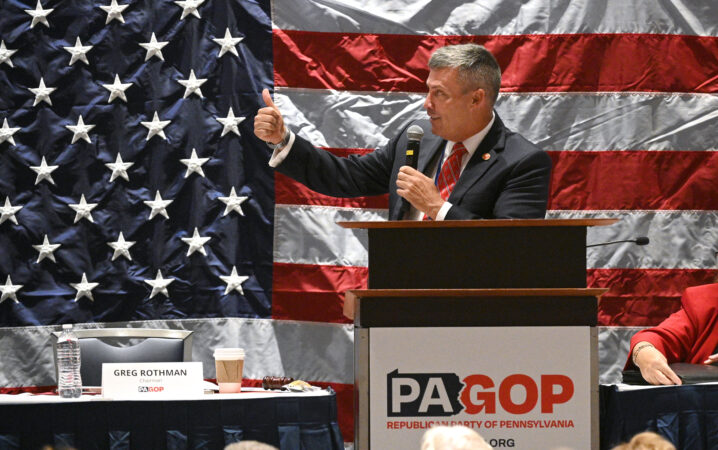
    Pennsylvania GOP chair Greg Rothman, in an interview outside the PMA event on Saturday, called Shapiro “one of the greatest politicians of my generation” but noted that upsets have happened across various political environments in state history.

    “Anything can happen and the voters are smart, and all I can do is prepare the party to ride the waves and ignore the crashes, but I’m optimistic,” he added.

    Shapiro will likely face a GOP challenge from State Treasurer Stacy Garrity, who is a popular politician in her own right and holds the record for receiving the most votes of any candidate for statewide office in Pennsylvania.

    Meanwhile, Rothman predicted that the four Pennsylvania congressional incumbents running for reelection in swing districts will sink or swim based on how Trump and his policies land with voters come November.

    “They will be judged by the national economy and by immigration,” he said, and by Trump’s ability to end some international conflicts.

    But U.S. Rep. Rob Bresnahan, a GOP incumbent running for reelection in Pennsylvania’s Eighth Congressional District, which includes Scranton, had a more local view of how to win in 2026.

    “Everything about our job as a member of Congress is about northeastern Pa.,” Bresnahan said.

    “Northeastern Pennsylvania has always been our North Star. We know our district. We are out in our district. We’ve done over 250 public events. Our constituency case work is, in my opinion, one of the best offices in the country.”

    Bresnahan appeared at a rally with Trump in Mount Pocono last week. He was also one of just 20 House Republicans to sign a successful discharge petition to force a vote for collective bargaining to be restored for federal workers.

    “At the end of the day that might have been going against party leadership, but it was what’s right for northeastern Pennsylvania,” he said.

    Democrats have begun a full court press. That was evident at the Pennsylvania Society, where attendees seen mingling with other politicians included: Janelle Stelson, who is running for a second time against U.S. Rep. Scott Perry in the 10th Congressional District, as well as firefighter Bob Brooks and former federal prosecutor Ryan Croswell, both of whom are running for the Democratic nomination to take on U.S. Rep. Ryan Mackenzie in the Seventh.

    Bresnahan’s challenger, Scranton Mayor Paige Cognetti, also attended the soiree and walked through the Rainbow Room atop Rockefeller Center with U.S. Sen. Chris Coons (D., Del.) on Friday night. Coons said the time is now for Democrats to get involved in these races.

    “Given the margin, if there were to be four new Democrats in the House this cycle, as there were in 2018, that’d be the difference maker for the country,” Coons added.

    Staff writer Gillian McGoldrick contributed to this article.

  • Candidates for Dwight Evans’ congressional seat hunt for cash and support at the Pa. Society in New York

    Candidates for Dwight Evans’ congressional seat hunt for cash and support at the Pa. Society in New York

    NEW YORK — In dimly lit Italian restaurants, boisterous Irish pubs, and the vintage sprawling ballroom atop Rockefeller Center, candidates running for Congress in Philadelphia spent a busy weekend in New York trying to woo donors and supporters.

    State Sen. Sharif Street, Ala Stanford, and State Rep. Morgan Cephas, all seeking to replace retiring U.S. Rep. Dwight Evans in one of the nation’s most Democratic districts, made the rounds, as Pennsylvania’s political elite gathered in Manhattan for the annual Pennsylvania Society dinner — and a parade of related events.

    Stanford held a somewhat star-studded fundraiser Thursday evening, hosted, according to a posted listing for the private event, by Hamilton actor Leslie Odom Jr., (who did not attend but lent his name). Other hosts included Holly Hatcher-Frazier, an educator and original cast member on the TV show Dance Moms, and Lauren Bush, the niece of former President George W. Bush and co-founder of FEED Projects, a fashion brand which donates a portion of its proceeds to alleviating childhood hunger.

    “What I’m hearing is people want a different type of solution,” Stanford said in an interview at a breakfast held by the University of Pennsylvania on Saturday. “Innovative, reaching across the aisle, collaborative, not afraid to stand up to authority,” she added.

    A lot of eyes are on the pediatric surgeon and founder of a community health center, to see how she translates a career that involved fundraising for nonprofits into funding her first campaign.

    She was endorsed by Evans upon launching her bid to succeed him in the 3rd Congressional District.

    She’s built her campaign around her experience in the medical community and the biggest buzz of the weekend may have been her response to a minor medical incident. An older woman fell down some steps exiting a reception hosted by House Speaker Joanna McClinton (D., Philadelphia).

    Stanford “triaged” the situation, according to Democrats in attendance, instructing Pennsylvania Supreme Court Justice Kevin Dougherty and his son State Rep. Sean Dougherty to lift the woman onto some chairs so she could evaluate her. The woman ended up being fine and was able to walk home from the restaurant.

    Street, the former state party chair and a longtime attendee at Pennsylvania Society, held two fundraisers in Manhattan, fresh off his endorsement last week by former Gov. Ed Rendell.

    “We got a lot of people that can vote in the district here, we want their votes,” he said in an interview at a rooftop reception hosted by Independence Blue Cross. “We got a lot of people who can write checks here, we want their checks.”

    State Rep. Ben Waxman, a longtime friend and colleague of Cephas, is in talks with donors to organize a super PAC to support the fellow Philadelphia Democrat’s campaign, according to a source familiar with the plans. The PAC would likely be run by longtime Philadelphia strategist Brandon Evans, who worked for both former Mayor Jim Kenney and District Attorney Larry Krasner.

    The PAC has a goal of raising $250,000 to spend on digital, mail, and field, according to the source.

    Cephas was the only sitting member of the Pennsylvania House to endorse Waxman when he ran in 2022 and has been a big supporter ever since. He is the treasurer of a state PAC created to support the Philadelphia delegation in Harrisburg, which she chairs.

    Not spotted at Pennsylvania Society weekend was State Rep. Chris Rabb, who is running as an anti-establishment progressive.

    “That’s not really my thing,” he said in a text message, of the glitzy Manhattan affair.

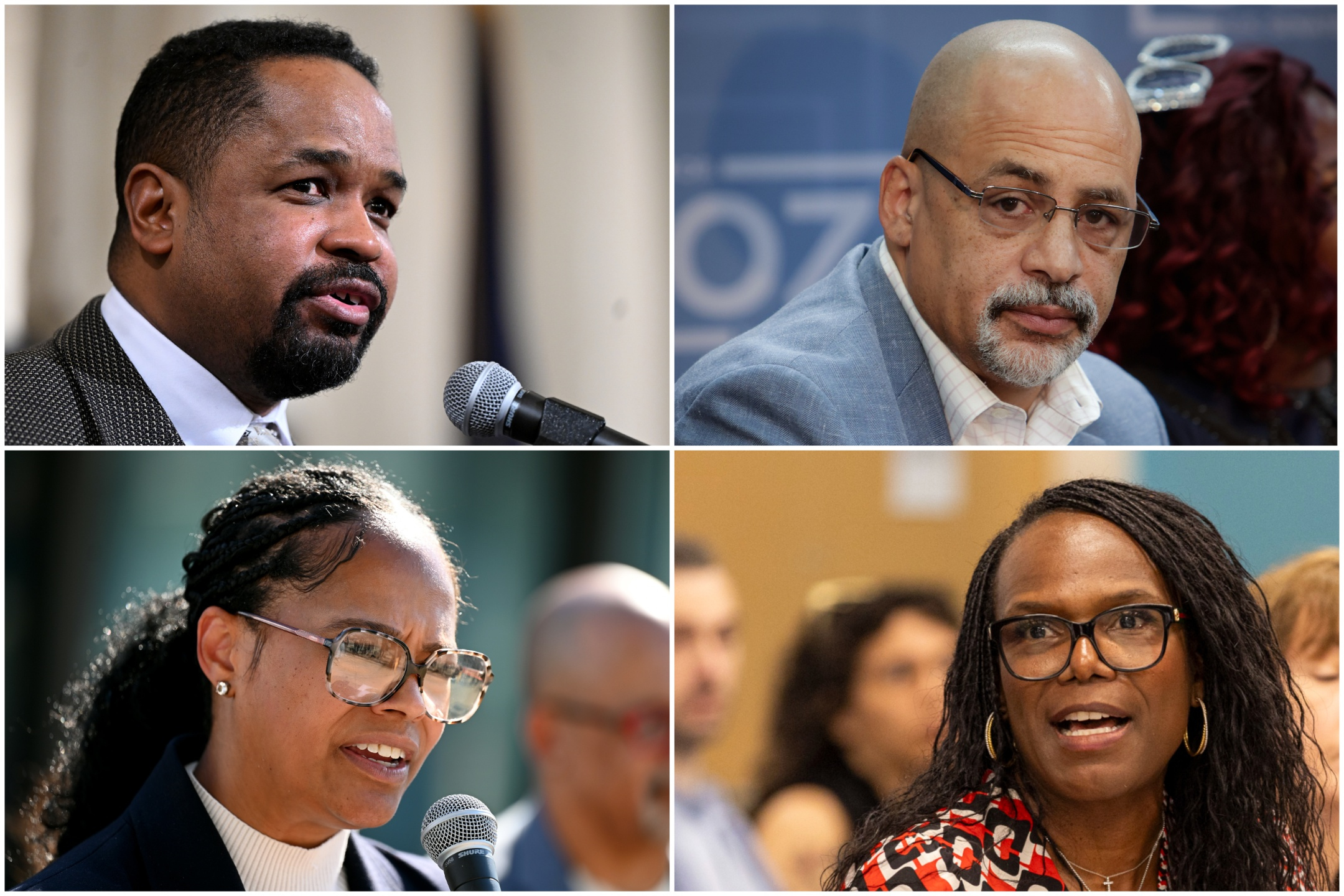
    Declared candidates in the Democratic primary for Philadelphia’s 3rd Congressional District, clockwise from upper left: State Sen. Sharif Street, State Rep. Chris Rabb, Ala Stanford, and State Rep. Morgan Cephas. The seat, currently held by retiring U.S. Rep. Dwight Evans, represents a large portion of Philadelphia and is the most Democratic district in the state.

    The state of the race

    Street released an internal poll last week that showed him narrowly beating Rabb with Stanford and Cephas following behind.

    Several candidates running in the crowded race, which is up to about a dozen candidates, were not included in the poll and did not attend Pennsylvania Society.

    “I believe our standing is strong,” Stanford said when asked about the poll. “I believe that there are many endorsements and people donate lots of money. But ultimately every individual has one vote. And that is the equalizer.”

    One question will be whether Street, the son of former Mayor John Street, ties up most or all of the Democratic establishment support.

    Several state representatives and ward leaders, like State Rep. Danilo Burgos, have already endorsed him — little surprise given his background running the party. But other elected officials, including City Councilmember and ward leader Katherine Gilmore Richardson, said they are waiting for their ward’s official vetting process to get underway.

    Street said when it comes to his colleagues, “I think by the time we get to Election Day, most of my colleagues will be for me.”

    John Brady, political director of the Pennsylvania Democratic Party, said 60% of Philadelphia wards have endorsed Street. He said the City Committee is waiting for more of the remaining wards, including the progressive and independent wards, to complete their processes so the full committee can move forward with their endorsement process in February.

    “Look, two months from now is the first week of February, that’s plenty of time for them to complete their processes.” The concern, Brady said, is if the party waits too long, an endorsement may not carry weight.

    While the City Committee wants to firm up an endorsement, some elected Democrats at Pennsylvania Society said they were struggling with whom to back — several said they really liked Cephas but felt wary of political backlash if they didn’t back Street and he won the nomination.

    While Rabb has carved out a clear lane as the progressive, some of the city’s most progressive elected lawmakers have not lined up behind him yet. City Councilmember Jamie Gauthier, who represents West Philadelphia, said this weekend she is not yet ready to endorse and Working Families Party member Kendra Brooks, also on City Council, said the Working Families Party would go through a formal process in January (the progressive group often gets involved in Democratic races).

    While Evans is backing Stanford, Philly’s other Democratic members of Congress have yet to weigh in. U.S. Rep. Brendan Boyle said he might not endorse in the primary. U.S. Rep. Mary Gay Scanlon, at an event on Friday night, said she’s worked with both Cephas and Stanford and has “great respect for both of them.”

    Mayor Cherelle L. Parker has said she will endorse in the primary and her vetting process starts in January.

    “For me, I’m really looking at Philadelphia’s agenda, you know, safe, clean, green, economic opportunity for all and how will you leverage your seat at the table to deliver for the 3rd Congressional District?” she said.

    “What do you advocate for and champion as a legislator? What’s your personal passion and then you have to leverage tangible results.”

  • Former Gov. Ed Rendell endorses State Sen. Sharif Street to succeed Rep. Dwight Evans in Congress

    Former Gov. Ed Rendell endorses State Sen. Sharif Street to succeed Rep. Dwight Evans in Congress

    Former Gov. Ed Rendell endorsed Democratic State Sen. Sharif Street in his bid to represent Philadelphia in Congress.

    In his endorsement, Rendell, who was Philadelphia’s mayor from 1992 to 2000, called Street someone with a track record of delivering for working families in Philadelphia.

    “With our nation in crisis, we need fighters like Sharif Street representing us in Congress,” Rendell said in a statement Wednesday.

    “I’ve known Sharif since he was a teenager, and he’s spent his entire career fighting for our community,” Rendell said, commending Street’s work as a state legislator to help implement Pennsylvania’s Affordable Care Act exchange, Pennie, and delivering money to programs that work to reduce gun violence.

    Street, a former chair of the state Democratic Party, has worked closely with Rendell on party business and fundraising in the past. The candidate’s father, former Mayor John F. Street, served as City Council president during Rendell’s mayorship before succeeding him in the office.

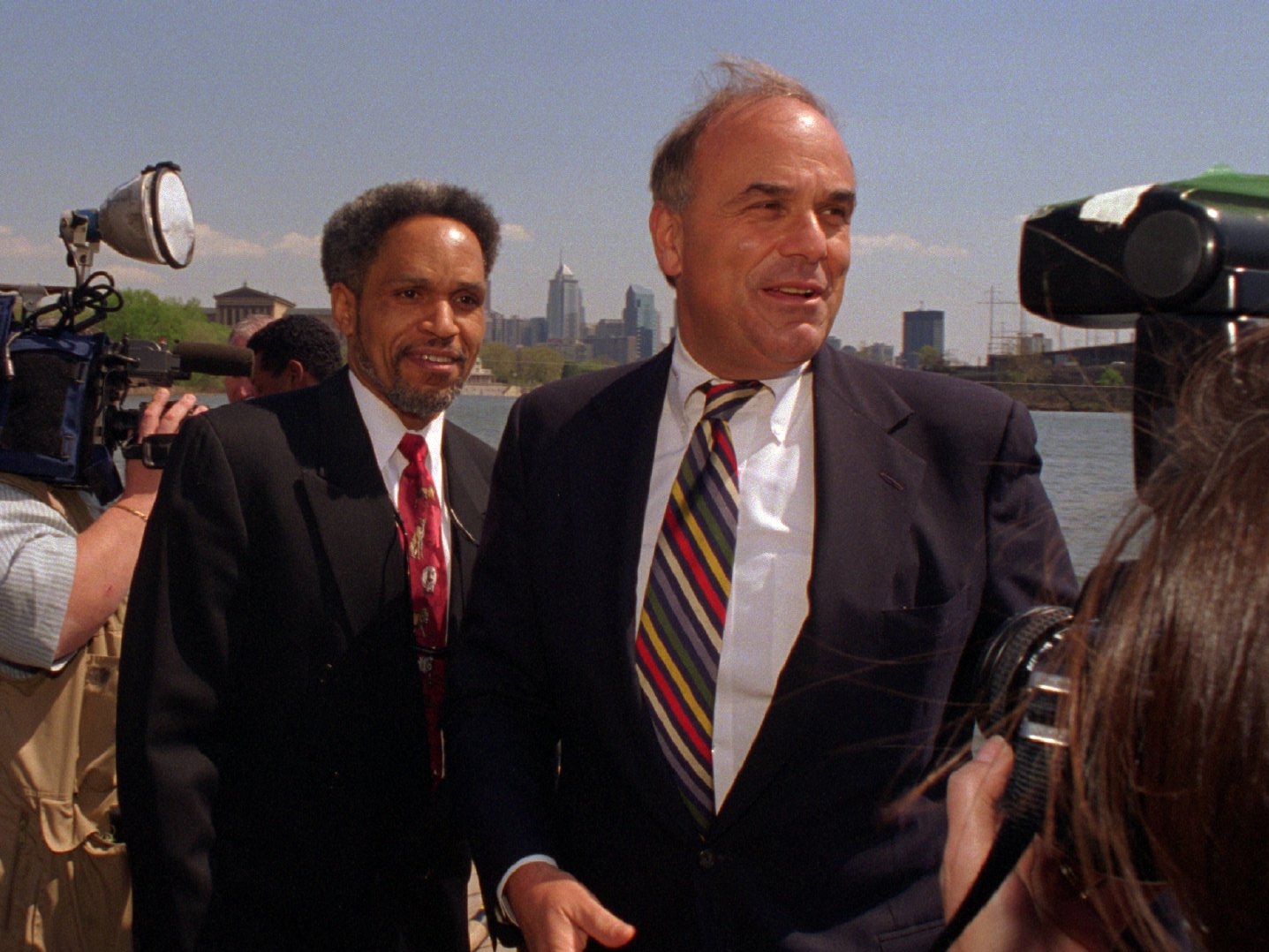
    John Street and Ed Rendell arrive for a 1994 news conference when Rendell was serving as mayor. Street went on to succeed Rendell as mayor after collaborating with him closely as City Council president.

    The endorsement comes as the race for the 3rd Congressional District heats up.

    U.S. Rep. Dwight Evans’ decision to retire has kicked off the city’s first competitive primary in more than a decade — with one of most Democratic-leaning districts in the country up for grabs.

    Evans endorsed Ala Stanford, a physician, founder of Philadelphia’s Black Doctors COVID-19 Consortium, and former regional director at the U.S. Department of Health.

    Two of Street’s Harrisburg colleagues, State Reps. Chris Rabb and Morgan Cephas, are also running, as is intensive-care physician Dave Oxman.

    A half dozen other hopefuls include Jahmiel Jackson, a West Philly native and recent University of Chicago graduate; Isaiah Martin, a 25-year-old real estate developer and executive director of Empowered CDC, which runs community programs in Southwest Philadelphia; Pablo McConnie-Saad, a Bella Vista resident and former U.S. Treasury Department adviser in the Biden administration; Temple University computer science professor Karl Morris; and former city employee Robin Toldens.

    Rendell’s endorsement further solidifies Street as the early Democratic establishment favorite in the race. Street also received endorsements from several city labor unions.

    “I’m honored to accept the endorsement of a leader like Governor Rendell,” Street said in a statement, calling the endorsement part of a “broad-based coalition — from labor unions to elected officials to community activists.”

    Street’s strength with the establishment could become a target in the race. At the first campaign forum, held last week, Rabb said he was running because Philadelphians needed a true progressive representing them, “not another establishment ally.”

    There has been no independent polling done in the race, but an internal poll from Street’s campaign, conducted by Democratic pollster Celinda Lake’s firm, showed him with a 5-percentage-point lead (22%) over Rabb (17%), with Stanford (11%), Cephas (7%), and Oxman (2%) behind them. The survey of 500 likely 2026 Democratic primary voters had a margin of error of plus or minus 4 percentage points.

    But the survey showed a plurality of voters, 36%, were undecided.

  • Trump strays from script at Poconos rally, calling affordability a ‘hoax’ and Pa. a ‘dumping ground’ for immigrants

    Trump strays from script at Poconos rally, calling affordability a ‘hoax’ and Pa. a ‘dumping ground’ for immigrants

    President Donald Trump’s raucous rally Tuesday night in Pennsylvania was billed as the launch of a national tour focused on easing voters’ economic anxieties that threaten Republicans’ hold in Washington with the 2026 midterms looming.

    But the economy couldn’t maintain the president’s interest for the duration of the speech.

    Instead, he rallied the crowd at the Mount Airy Casino Resort in Mount Pocono by fomenting anger at Democratic U.S. Rep. Ilhan Omar and other Somali immigrants who live in Minnesota and teasing a 2028 run, despite constitutional limits on a third term.

    Employing a method he calls “the weave,” Trump darted back and forth between cost-of-living issues and entirely unrelated material, such as claiming credit for the use of the phrase “Merry Christmas” during the holiday season.

    “If I read what’s on the teleprompter, you’d all be falling asleep right now,” Trump said.

    It was Trump’s third trip to Pennsylvania since he began his second term, following a campaign in which he spent a considerable amount of time in the Keystone State, winning it back in part by promising to cure a beleaguered economy. It’s the president’s first return to Northeast Pennsylvania, where he saw his biggest gains in the region during the last election, and which will be a crucial battleground in next year’s election, when the GOP’s razor-thin House majority is on the line.

    “America is winning again. Pennsylvania is prospering again. And I will not rest until this commonwealth is wealthier and stronger than ever before,” Trump proclaimed at the large casino and hotel complex tucked in between ski resorts in the Pocono Mountains.

    The speech comes as many Americans lament the cost of living, workers have lost power in the job market and with their employers, and people are bracing for Affordable Care Act tax credits to expire at the end of the year.

    The casino stayed open Tuesday and gamblers played slots and card games on the floor upstairs as Trump spoke in the ballroom below.

    Trump, in a speech that stretched over an hour, blamed high prices on his Democratic predecessor, former President Joe Biden. He argued gas prices are down and car prices are dropping thanks to relaxed fuel-efficiency standards. The stock market is up this year and overall growth for the third quarter is strong. Trump also has signed agreements to reduce list prices on prescription drugs.

    While Trump again called concerns about affordability a “hoax,” the event itself was at least an acknowledgment that frustrations with the economy are damaging the Republican brand ahead of the midterms. He spoke in front of a large “lower prices, bigger paychecks,” banner.

    “Democrats talking about affordability is like Bonnie and Clyde preaching about public safety,” he said.

    The most compelling part of the evening came more than an hour in, when the president called up members of the local community, including a waiter and an EMT to share personal stories about how no taxes on tips or overtime would benefit their families when tax returns are filed next year.

    Trump played to the Pennsylvania crowd, noting his connections to the state as a graduate of the University of Pennsylvania’s Wharton School. “I love Philadelphia. It’s gotten a little rougher, but we will take it,” he quipped.

    He then reminisced about hosting the Philadelphia Eagles at the White House earlier this year following their Super Bowl win. He hailed coach Nick Sirianni as a “real leader” and marveled at running back Saquon Barkley’s muscles.

    “It’s like I hit a piece of steel. … He’s so strong,” Trump said about patting the Eagles player on the back.

    But despite these light-hearted moments, Trump repeatedly went after Omar and the Somali immigrant community.

    Trump asked if anyone from the crowd was from Somalia and asked them to raise their hands before tearing into Omar, the progressive Minnesota Democrat who left the African country as a refugee.

    “She comes from a country where, I mean, it’s considered about the worst country in the world, right?”

    Later in the speech, Trump complained about immigration from Somalia, Afghanistan and Haiti — instead of countries like Norway and Denmark — as he recounted and affirmed his use of the phrase “shithole countries” during his first term, something he denied at the time.

    He also accused Democrats of making Pennsylvania a “dumping ground” for immigrants.

    Despite this incendiary rhetoric, Trump also celebrated his performance with Black and Latino voters in the last election. He put up the strongest Republican performance with these demographic groups in decades, though a majority both went for Vice President Kamala Harris.

    “Black people love Trump,” Trump said. “I got the biggest vote with Black people. They know a scam better than anybody. They know what it is to be scammed.”

    ‘Everyone’s paying a lot more’

    Nationwide, prices and inflation have increased this year — with many experts saying that the president’s tariff policies have contributed.

    In his speech, Trump touted his tariffs as bringing in “hundreds of billions of dollars,” and noted his administration would be steering $12 billion to farmers through that revenue. The money is meant to help agriculture producers cope with retaliatory measures taken by China and other trading partners in response to Trump’s tariffs, which Trump did not mention in his remarks.

    “We gave the farmers a little help … and they are so happy.” Trump said.

    Poll after poll shows Americans see rising home prices, groceries, education, and electricity costing more. Gallup’s Economic Confidence Index found a 17-month low in terms of trust in the economy, and the survey found Americans’ views of the job market are at their most negative since the end of Trump’s first term during the height of the pandemic.

    For the average Pennsylvanian, there is a “financial struggle” with higher prices on food, childcare, healthcare, and electricity, among other expenses, said Mark Zandi, chief economist at Moody’s Analytics.

    He attributes it to Trump’s tariffs and immigration policies, including deportation, which he said limits the number of people working and has “hurt growth and raised inflation.”

    “Everyone’s paying a lot more for basic necessities, most everything,” Zandi said.

    Zandi noted Trump’s economic policies include a few positives for workers and employers, including tax breaks for businesses from Trump’s Big Beautiful Bill Act, as well as the tax cuts on tips and overtime.

    “But net, I think the policies have contributed to the financial hardship of the typical Pennsylvanian,” Zandi said.

    Pennsylvania, however, is the only growing economy in the Northeast, according to Moody’s Analytics. The state has secured $31.6 billion in private-sector investments since Democratic Gov. Josh Shapiro took office in 2023, according to his administration.

    Shapiro has been quick to argue the state’s relative fiscal health has come in spite of federal policies he argued are hurting Pennsylvanians. He called Trump “a president who seems to want to blame everybody else, whose economic policies are failing,” in an interview Monday night on MS NOW.

    “I mean, if he comes to Pennsylvania and spews more B.S. … I think what you’re ultimately going to find are people tuning him out,” Shapiro, a potential contender for the presidency in 2028, said ahead of Trump’s visit.

    Sen. John Fetterman (D., Pa.) told MS NOW in a separate interview on Tuesday that polling shows the president, “he’s really kind of losing the plot with a part of his own voters now front and center.”

    A key battleground

    The setting for Trump’s speech is also one of the most closely watched battlegrounds in the state, home to freshman Republican U.S. Rep. Rob Bresnahan’s district, which Democrats are targeting to flip. Bresnahan won by 1.5 percentage points last year.

    Bresnahan was more on message in brief remarks. He said he and Trump have heard the call for relief.

    “The message is the same everywhere we go: Lower the cost, higher-paying jobs, keep our community safe, and listen to the people during the work,” he told the crowd in Mount Pocono.

    He argued policies authored by Trump and passed by the Republican-led Congress, like tax credits for working families and seniors, are already helping people.

    The Democratic Congressional Campaign Committee seized on the visit to blast Bresnahan in ads on the Wilkes-Barre Times Leader website, highlighting his penchant for stock trading. And Scranton Mayor Paige Cognetti, a Democrat running to unseat Bresnahan, took the moment to call him “the exact kind of self-serving politician that Northeastern Pennsylvanians … all agree we need to get rid of.”

    Whether Trump’s message resonates in this part of the country will be telling. Monroe County, home to Mount Pocono, flipped to Trump in the 2024 election after backing Biden in 2020.

    The region is home to a large number of New York City transplants who have moved here seeking more-affordable housing in a region that largely relies on Pocono Mountains tourism as the main source of jobs.

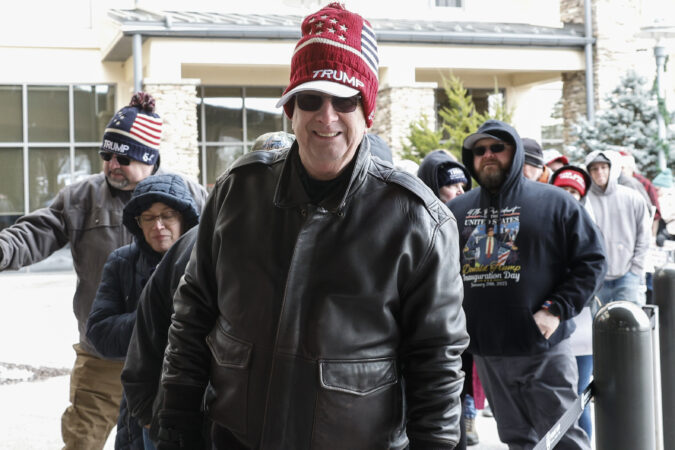
    While views on the economy were mixed on the casino floor, attendees in the ballroom gave the president a warm welcome back to the state. The Secret Service had to turn people away, and many who got in had waited more than four hours outside on an 18-degree day.

    Trump’s ongoing response to affordability woes could have major implications for other vulnerable Republicans hoping to be reelected in the state. In last month’s election, Democrats successfully ran on affordability in the New Jersey and Virginia gubernatorial races — and picked up a slew of local seats in Pennsylvania.

    The DCCC has its sights on the seats of three other Pennsylvania Republicans, along with Bresnahan: U.S. Rep. Brian Fitzpatrick of Bucks County; U.S. Rep. Ryan Mackenzie of Lehigh County; and U.S. Rep. Scott Perry of York County.

    Attendees in the crowd Tuesday night held “Keep the House, Keep the Country,” posters.

    Trump told the crowd he’d be back on the trail for Republicans in the midterms, and reflected, that like his off-the-cuff speech, he enjoys stumping.

    Whether the current state of the economy affects Republicans’ chances in 2026 could depend on how those future appearances go and how willing the party will be to keep acknowledging that many Americans are struggling.

    Marc Stier, executive director of the Pennsylvania Policy Center, who was a leading advocate for the establishment of the ACA, argued that “voters are not fools, particularly when it comes to their pocketbook.”

    “How they talk about it will determine in some ways how badly they get hurt,” Stier said. “If they acknowledge a problem and, say, come up with ideas to deal with it, they will probably be hurt less. If they followed Trump’s line … I think they’re gonna get clobbered.”
  • Trump came to a Pa. casino to promise prosperity. Gamblers here had a mixed view of the economy.

    Trump came to a Pa. casino to promise prosperity. Gamblers here had a mixed view of the economy.

    A smattering of people pushed their luck Tuesday at the Mount Airy Casino Resort, tapping neon slot buttons, flipping dice onto felt craps tables, and wandering the rows of glowing, dinging machines.

    A floor below, President Donald Trump was set to speak in a sprawling ballroom, where event staff hung a huge blue banner: LOWER PRICES, BIGGER PAYCHECKS.

    Trump picked this casino in the Pocono Mountains to deliver the first big economic speech of his presidency as polls show Americans are feeling the pain of high prices — and many are blaming him.

    Politically, the setting made sense. This northeastern corner of the state is where Trump saw the largest swing from 2020 to 2024, and it will be a key congressional battleground next year. It’s also a region home to a large population of aging, non-college-educated voters — the core of Trump’s comeback coalition.

    But the contrast at the casino was hard to miss: the steady slot machine chimes of financial risk and uncertainty above and a president’s promises of stability and revival on the floor below.

    How’s the economy working for Rosemary Migli?

    “It could be better,” said the 73-year-old retired bartender from Tobyhanna, taking a puff of a cigarette before winning 35 cents on a spin.

    Despite a frenzy of police and Secret Service, many gamblers, focused on their own troubles or celebrations, did not realize the president was coming. An older retired couple enjoyed an afternoon together with no obligations. Nearby, a recently widowed woman said the monotony of the slots helps her cope with her loss.

    Peter Jean-Baptiste celebrated his 33rd birthday at the casino with his fiancee. The Philadelphia-based couple are saving for a wedding next year.

    “It’s tough for everyone just trying to make a living, honest people trying to make a living,” Jean-Baptiste said. “One day you feel like [Trump’s] got your back, the next day he doesn’t.”

    Jean-Baptiste, who works in property insurance, said he has also seen housing prices rise. And, as a child of Haitian immigrant parents, he is struggling with how Trump’s anti-Haitian verbal attacks and immigration crackdowns have affected his family.

    “He does a bunch of hot takes and causes division between American citizens,” Jean-Baptiste said. “When, I feel, we really all just want to get along and get by.”

    Mount Pocono is a region with mixed fortunes: Wealthy retirees have second vacation homes here, while lower-income workers are employed in warehouses and hold up the tourism industry. The area is also a hub for New York City commuters who moved here for more affordable housing.

    “We live on a fixed income. We watch what we spend,” said Julie Dietz, sitting beside her husband, Glenn, as she played a buffalo-themed slot game. The Toms River, N.J., couple gamble for a few hours every now and then. She was a paralegal and he worked evaluating industrial facilities for safety before they retired.

    “We know what our limitations are,” Dietz, 71, said. “Yes, food prices have gone up, but I’ve also seen some things come down — gas prices in our area. And the economy took so many years to get to this point.”

    Dietz, who supported Trump in the last election, thinks an economic rebound is just going to take more time.

    “He’s been in office 11 months. Eleven months. So I feel full confidence that he is going to do what he said he’s going to do. Everybody wants things immediately.”

    Kathy F., who didn’t want to give her last name talking about politics and gambling, joined her husband at the casino Tuesday, despite her misgivings about losing money at a time when prices are going up.

    “I go to Costco and everything is $5 more than it used to be. That’s a lot,” she said, bundled in a puffy black coat as her husband gambled nearby.

    “I really don’t understand politics,” said the retired New York City civil servant, who voted for then-Vice President Kamala Harris last year. “It seems like they just fight with each other nonstop when all people want is to be able to afford to live.”

    As he stretched his legs between games, Stephen Miller — “not that Stephen Miller,” he clarified — laughed off the notion of going to see Trump in person a floor below.

    “If I want to see him, all I have to do is turn on the TV. He’s on at 12, he’s on at 3, he’s on at 5, seven days a week.”

    The 75-year-old retired contractor supports Trump, though, and called the economy “half-decent.” He said food prices are high but eggs have gone down.

    “The economy is glacial, so it moves slow. Democrats are definitely locked onto the affordability. But affordability means, what? It means whatever you want it to mean.”

    Miller glanced down at a few vouchers in his hand to set off for the next set of machines.

    “I’m not winning yet, but I will be and the Donald will be,” he said. “Give it time.”

  • Sharif Street, Ala Stanford and others vying to replace Dwight Evans in Congress make their pitch in Mt. Airy

    Sharif Street, Ala Stanford and others vying to replace Dwight Evans in Congress make their pitch in Mt. Airy

    Philly’s first competitive congressional primary in more than a decade is officially underway.

    On Thursday night in a standing-room-only auditorium in Mount Airy, State Sen. Sharif Street, State Reps. Morgan Cephas and Chris Rabb, and doctors Ala Stanford and David Oxman made their opening pitches to voters for why they should represent the 3rd Congressional District, which stretches from Northwest Philadelphia to parts of South Philly.

    The candidates are vying to replace retiring U.S. Rep. Dwight Evans in a district that is among the most Democratic in the nation. Thursday’s packed forum, hosted by the 9th Ward Democratic Committee, was largely an opportunity for candidates to introduce themselves to a heavily engaged community more than five months before the May primary.

    The five candidates represent only a fraction of nearly a dozen declared in the race. They were invited based on fundraising and endorsements, ward chair Jeff Duncan said in opening remarks.

    Here are some takeaways from the evening.

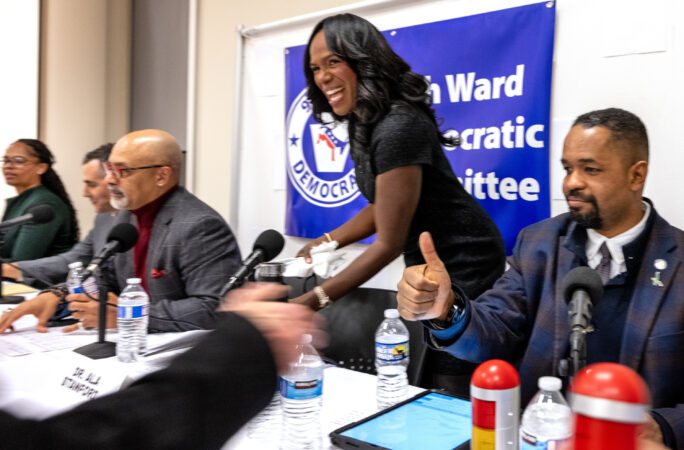
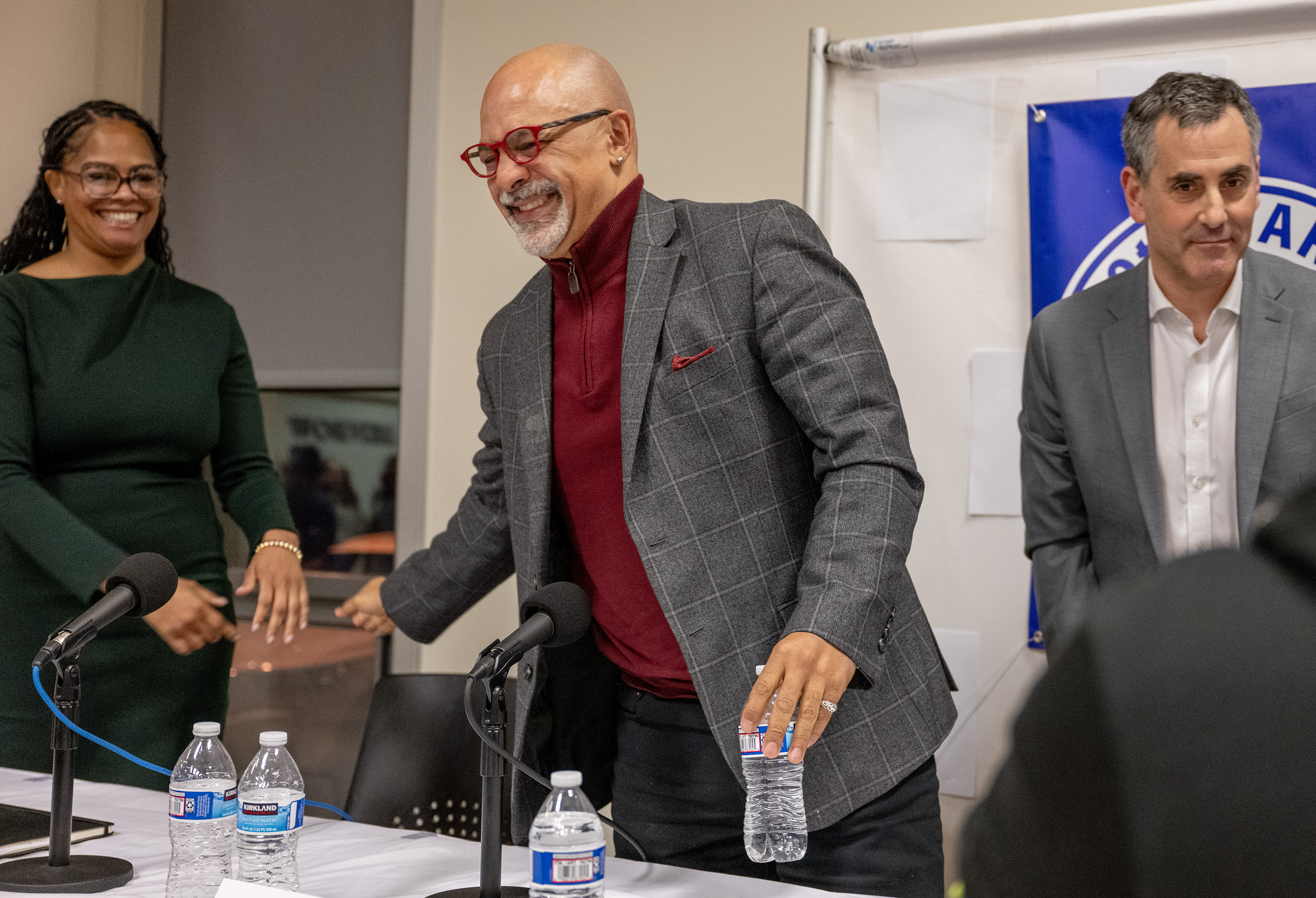
    Candidates (from left) State Reps. Morgan Cephas, and Chris Rabb; and physician David Oxman appear at a forum hosted by the 9th Ward Democratic Committee in Mt. Airy Thursday, Dec. 4, 2025.

    Why are they running for Congress?

    It’s tough to run for office without a compelling “why,” and each candidate made a personal pitch to the crowd.

    Cephas talked about being a toddler in a stroller while her mom picketed with American Federation of State, County, and Municipal Employees District Council 47, the union representing many of Philly’s city workers, back in 1986. She said she wants to bring a family history of activism and her experience in Harrisburg, where she has championed maternal health, to Washington.

    Oxman, a medical professor and intensive-care doctor, said Philadelphians are in the midst of a health crisis — not just because of deteriorating physical wellness, but also from mental and financial strain. He talked about building trust with patients and colleagues and taking an outsider approach in Congress, where there are only a handful of doctors serving.

    Rabb, on friendly turf in Mount Airy, an area he represents in the state House, separated himself from the Democrats sitting beside him by arguing he is the only true progressive in the race who would bring needed energy to Washington, “not another establishment ally.” Throughout the forum, he called out Democrats who take money from corporations and who he argued have been unwilling to fight for progressive causes.

    Stanford gave a compelling rundown of her personal backstory: born to a young mother in poverty and going on to be the first Black female pediatric surgeon trained in the United States. Stanford played a key role in responding to the COVID-19 outbreak in Black and brown communities in Philadelphia and now operates a health center in North Philadelphia. “I’m running because I lived it and I understand it, and I won’t wait for permission in Washington,” she said.

    Street, the son of former Mayor John F. Street and the former chair of the Pennsylvania Democratic Party, opened by talking about the scourge of gun violence in Philadelphia and how it has affected his family and staff. He also said he has experience sparring with President Donald Trump in defending voting rights in the state when Trump sued to try to overturn the outcome of the 2020 election here after losing to Democrat Joe Biden.

    Frustrations with ICE

    On the topic of immigration, candidates were unanimous that U.S. Immigration and Customs Enforcement needs to be reined in, if not totally abolished.

    Street called the agency “corrupt to its core” and one that recruits “racists and neo-Nazis,” a reference to scrutiny over the imagery used in ICE’s recent campaign.

    Cephas said there needs to be better oversight of immigrant detention centers. Democratic lawmakers have been turned away from facilities in recent months when they have attempted to review conditions.

    Rabb thinks those centers should be dismantled altogether and took the opportunity to contrast the moment with Trump’s first administration. “Yes, ‘abolish ICE’ is popular these days,” he said. “But when I was leading families into sanctuary in 2017, people weren’t talking then. We have a bigger villain now.”

    Oxman said he didn’t know if ICE was “salvageable.”

    “If you have to wear a mask at work to hide your identity, maybe you should be asking a few questions,” he said.

    Rabb and Oxman vow not to take pharmaceutical, insurance PAC money

    Only Rabb and Oxman said they would commit to refusing corporate donations from pharmaceutical or insurance firms.

    Rabb said he has never, since his first election in 2015, taken corporate PAC money.

    Oxman told a story about colleagues at the hospital getting wined and dined by pharmaceutical companies and insisting they were unaffected by the gifts. “I asked them, ‘Why do you think they do it?’” Oxman said. “Because it works.” He added he’s a “hell, no” on taking pharma and insurance PAC money.

    Cephas, Street, and Stanford all promised to work to hold those industries accountable without committing to forgo their money on the trail.

    Rabb comes out strongly against sending arms to Israel

    Candidates were given one minute to say whether they would support a bill that would prohibit sending more weapons to Israel, two years after the start of its war in Gaza following the Oct. 7, 2023, attack. Street said it was an insufficient amount of time to cover an exceedingly complex topic.

    He said violence is correlated with poverty — noting the disproportionately high homicide rate in his neighborhood, where people are struggling to afford groceries — and stressed the need to get humanitarian aid flowing in Gaza.

    Cephas said she would want to have conversations about the proposal. Oxman said that the enemy is “extremism on both sides” and that any country receiving arms from the United States has to live up to certain standards.

    Stanford said that as a mother and a surgeon who cares for children, she believes there is “no justifiable reason for a child to lose her life,” but did not weigh in on the bill.

    Only Rabb answered definitively, saying he would support the bill to block weaponry to Israel. “There are no two sides in this when we see the devastation,” he said of Gaza, where the death toll has surpassed 70,000 since Israel launched its military campaign.

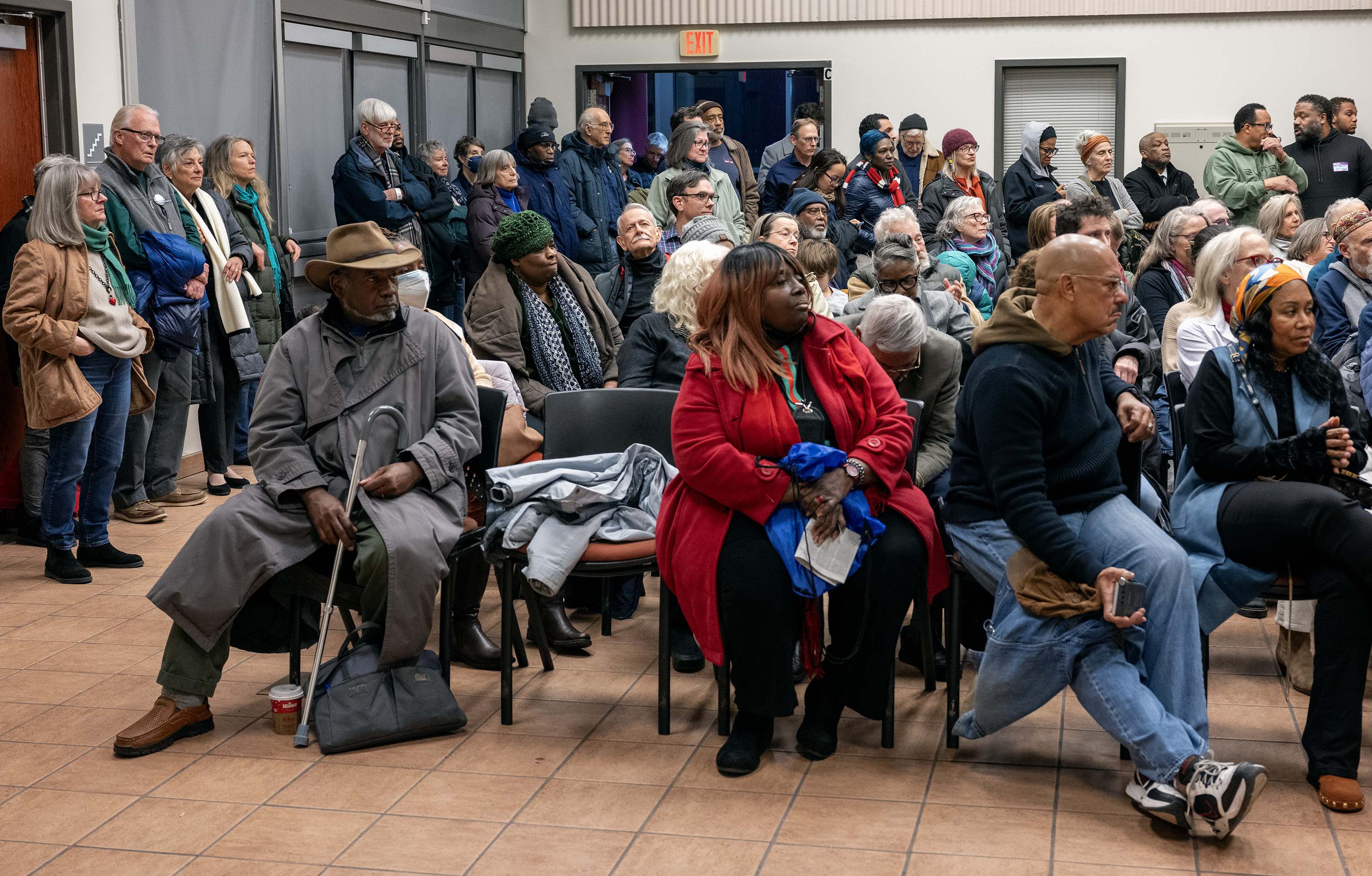
    It was standing room-only at the United Lutheran Seminary in Mt. Airy when the 9th Ward Democratic Committee hosted a candidates forum five months before the Democratic primary.

    Abortion question prompts some personal stories

    Asked how they would protect women’s reproductive rights, several candidates shared personal stories of grief or hardship.

    Stanford said there is a need for more doctors in Congress with lived experience and talked about having had a miscarriage.

    “Unfortunately, I am one of those Black women who was treated with racism and bias, and it impacted the livelihood of a child I did not carry to term,” she said. “I will fight for reproductive rights, and that also includes the right to choose.”

    She noted she had worked closely with Vice President Kamala Harris on postpartum-care initiatives for women.

    Street said reproductive rights have to extend to expanded in vitro fertilization protections and access. He said that he and his wife, who had children from previous marriages but wanted to have another, went through IVF.

    “It didn’t work, but we did try it, and everyone should have that option,” he said, adding there is power in people telling their stories.

    Boosting their party beyond Philadelphia

    May’s Democratic primary winner in the extremely blue district is all but guaranteed to become Philadelphia’s newest congressperson next fall. All five candidates vowed to help Democrats win in congressional races around the state following the May election.

    Cephas said it’s not “enough to be safe here in Philadelphia” without a Democratic majority in the House.

    Street made a case for his experience campaigning as a past state party chair.

    Rabb argued a progressive voice is the way to motivate voters around the state. “Are we gonna have a status quo person or a transformational leader?” he asked. “And if that person’s a transformational leader, they can help reach beyond the traditional base around the state. The Democratic Party has been sleeping on folks.”

    Ultimately, the direction the 3rd District goes will likely get national attention for what it says about the preferences of Democratic voters in urban areas like Philadelphia. Oxman argued that means selecting the right messenger.

    “Whoever represents it has to think about how their message is heard around Pennsylvania. We need a message that can rally the whole state. What happens here has national import.”