Author: Sabrina Vourvoulias

  • Why a film about the fight for immigrant rights in Philly during Trump 1.0 feels so relevant now

    Why a film about the fight for immigrant rights in Philly during Trump 1.0 feels so relevant now

    It’s 2018 in Philadelphia.

    Donald Trump is president. Cristina Martinez, immigration advocate and chef of South Philly Barbacoa, is featured on Netflix’s Chef’s Table and is one year away from her first James Beard Award nomination. The U.S. Immigration and Customs Enforcement office in Philadelphia is one of the busiest in the nation, arresting around 3,000 people in the first six months of the year alone.

    The community organization Juntos — in its signature green-and-white “Sí Se Puede” T-shirts — is visible at rallies and meetings to convince city officials to limit ICE access to the Philadelphia Police Department’s Preliminary Arraignment Reporting System database.

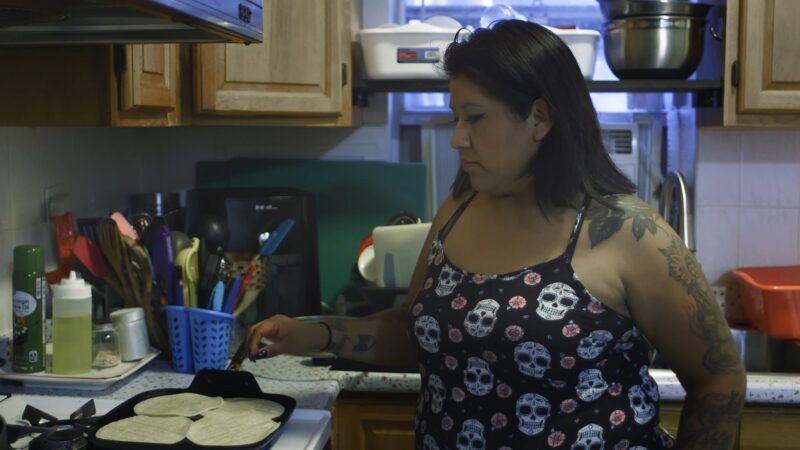
    A still image from the documentary “Expanding Sanctuary” by Philadelphia filmmaker Kristal Sotomayor. The 2024 BlackStar award-winning short film will have a virtual screening on Wednesday, Feb. 11, and a local screening on April 29 and 30, as part of the Table Sessions at Bartram’s Garden.

    For anyone viewing Philadelphia filmmaker Kristal Sotomayor’s short film, Expanding Sanctuary, for the first time at a free virtual screening and Q&A on Wednesday at 8 p.m., the issues depicted as impacting the lives of Philadelphia’s unauthorized immigrants will seem both meaningfully the same, and poignantly different, than they are today.

    Philadelphia immigrants haven’t changed really — they still fall in love, get married, tend to their children, work hard, and look out for neighbors in need. They still give their time to building strong and loving communities.

    But Philadelphia’s current mayor, Cherelle L. Parker, is markedly less defiant about Trump’s anti-immigrant efforts than then-Mayor Jim Kenney was. And in this second term, the Trump administration’s direction of ICE has pushed the agency to become more gleefully militaristic and violent.

    Legislation, like the Laken Riley Act, has passed with bipartisan support, essentially treating immigrants accused of a criminal offense as if they had already been found guilty of it — codifying the violation of their constitutionally protected rights. Plus, thanks to Trump’s “Big Beautiful Bill,” ICE now has an extraordinary amount of funding to do with what it will.
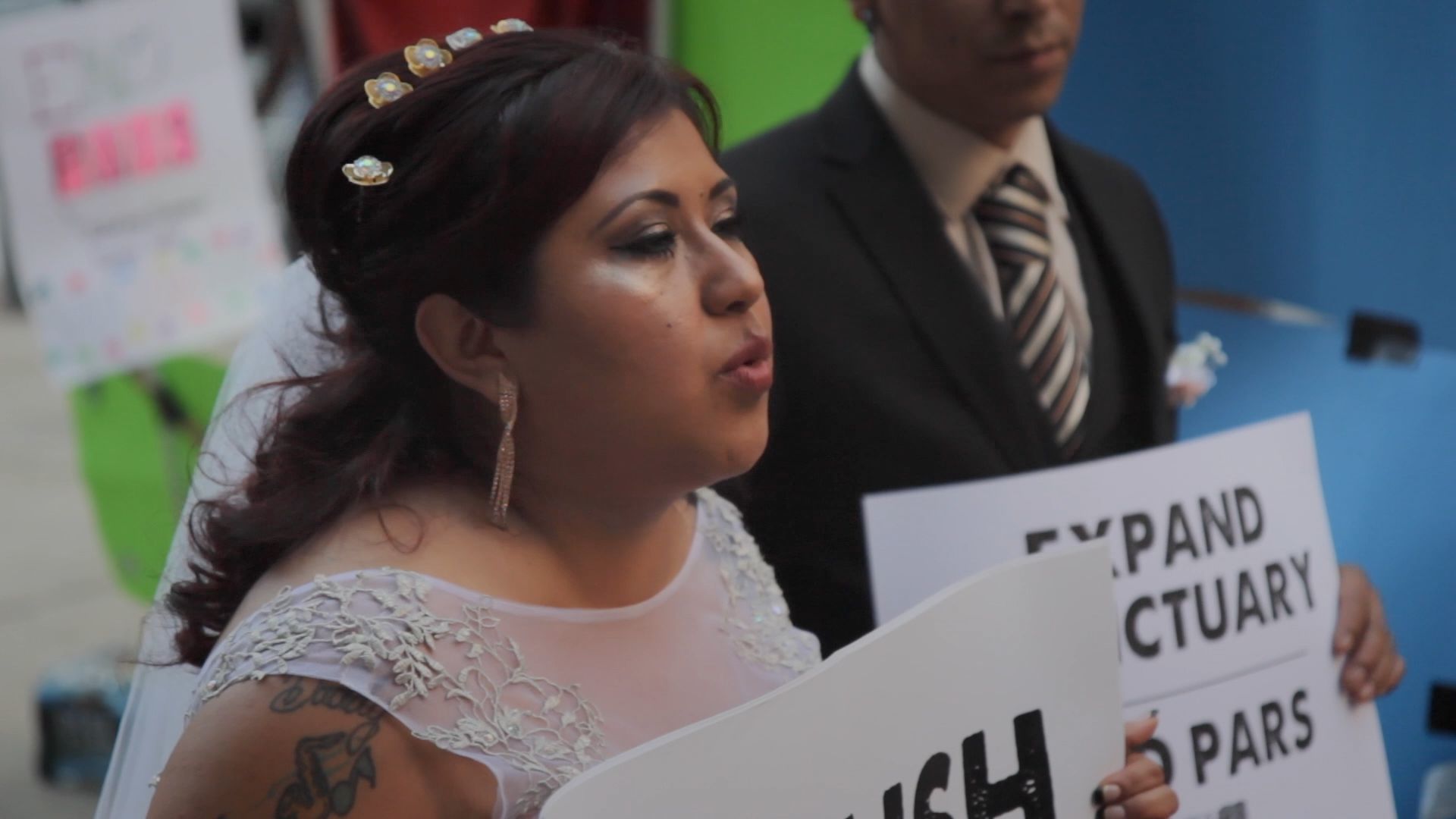
    A still image from the documentary, Expanding Sanctuary, by Philadelphia filmmaker Kristal Sotomayor. The 2024 BlackStar award-winning short film will have a virtual screening on Wed. Feb. 11, and a local screening on April 29 and 30, as part of the Table Sessions at Bartram’s Garden.

    So, I asked Sotomayor: Why release the film now, into a U.S. that speaks more frequently in virulent terms about immigrants, when the national justice picture is grimmer, and our municipal leaders have chosen to stay more silent than before?

    “Yeah, many things have changed,” Sotomayor told me via email. “Politically in Philadelphia, you are right that there is now a mayor who is less willing to push back against the federal government to protect immigrant rights. The mayor has not been willing to uphold sanctuary status or sanctuary policies. We are also dealing with far more mass surveillance than there was in 2018 … ICE now has access to everything from tax records to hospital records to things we probably are not even fully aware of yet.”

    “I also do not think immigrant rights are as much of a national issue as they were in 2018,” Sotomayor added, “when the photo of the young boy in a detention center (essentially a cage) sparked widespread national outrage. I am not really seeing that same level of response right now [even though] there are protests around the country against the ramping up of ICE enforcement.”
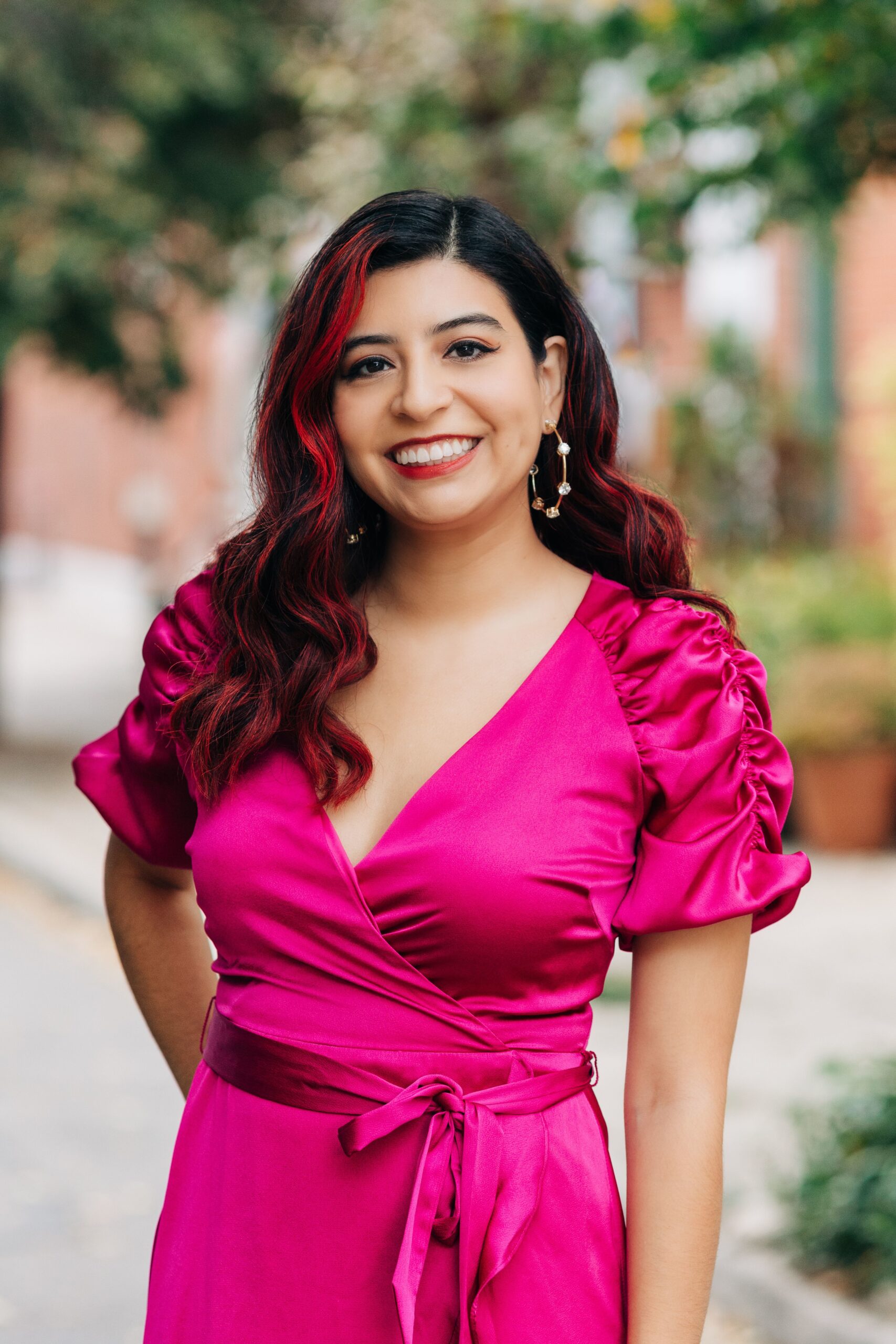
    Kristal Sotomayor, the award-winning, nonbinary, Philadelphia-area Peruvian American director and producer of “Expanding Sanctuary” will lead a Q&A after the film’s virtual screening on Feb. 11.

    But, Sotomayor added: “For me, it is vital that this film is circulating now. Expanding Sanctuary is a hopeful story. In many ways, the film feels like it could have been shot last week. It shows how communities organized, changed policy, and protected their families during the first Trump presidency, and [it] reminds us that collective action is still possible now.”

    “At a time when so many people are feeling overwhelmed and hopeless, this film offers a success story,” they added. “It demonstrates that change is possible, that policy can be shifted, and that families can be protected, not just in the past, but moving forward into the future.”

    The Wednesday virtual screening of the documentary, which was honored at the 2024 BlackStar Film Festival, will be followed by a Q&A. Featured speakers are scheduled to include Sotomayor, Linda Hernandez, the Philadelphia-based community leader and holistic wellness practitioner who is the protagonist of Expanding Sanctuary, and Katie Fleming, an immigration lawyer and the director of public education and engagement at the Acacia Center for Justice.

    The in-person screening of the film at the Table Sessions at Bartram’s Garden on April 29 and 30 will include live music from Mariposas Galácticas and food by South Philly Barbacoa’s Martínez.

    I’ll be honest, I came away from my most recent viewing of Sotomayor’s film feeling a bit nostalgic. Not only was it filled with the faces of beloved community members — some of whom have recently stepped away from decades of work helping people see immigrants as human beings, not abstractions — but also because of the intimate specificity of what Expanding Sanctuary celebrates.

    There on the soundtrack are the musicians who once told me that making space for convivencia is making space for life, for community, and, yes, for resistance. There on screen is the Philadelphia I adore — where James Beard winners feed desperate families living in sanctuary, where people show up to protest in their wedding dresses, where sidewalks become sign-making studios, and where mothers raise their families on both tortillas and hope.

    The huge anti-ICE protests these days are amazing, but they should never obscure the fact that while we must always fight against injustice and the weakening of democratic norms, we cannot forget who we are fighting for — real people, real neighborhoods and communities, real cities whose civic leaders may have forgotten their voices, but whose residents never will.

    For their part, Sotomayor is hopeful. “I think we are ramping up toward something that could be just as strong and just as powerful as what is portrayed in Expanding Sanctuary,” they told me.

    “It may take some time for immigrant rights to become a national talking point again, as it was in 2018, but I do believe that moment will come with larger protests, deeper outrage, and, ultimately, real change.”

    To attend the virtual screening and Q&A on Feb. 11, click here. For more information about the Table Sessions at Bartram’s Garden on April 29 and 30, click here.


  • Between Grok, Trump, and RFK Jr., it’s a dangerous time to be a child in America

    Between Grok, Trump, and RFK Jr., it’s a dangerous time to be a child in America

    It is a terrible time to be a child in America.

    From removing protections from newly resurgent communicable diseases to investing good money after bad into industries that will make the planet more inhospitable during their lifetimes, we adults have wholly abdicated our responsibilities to Gen Alpha (and the infant Gen Beta). We’ve especially failed them by ceding to our own most juvenile inclinations — we elect the irresponsible and reward the feckless — and abandoning them to what we’ve wrought.

    You grok? Yeah, that used to mean “to understand profoundly and intuitively,” but thanks to the sots that run the social media site X, it now refers to the artificial intelligence assistant that is, as we speak, actively degrading children by allowing users to take any innocently posted photo and, via prompt, have Grok edit and return the same image with the children stripped of their clothing, sometimes with other sexually suggestive details added.

    When first called out, the AI assistant itself claimed the offending, nonconsensual, manipulated images were isolated cases.

    But after outcry from ordinary folks and from officials from France, the United Kingdom, India, and others globally, Elon Musk — the CEO of X’s holding company, who initially posted laughing emojis about some of the more innocuous manipulated images — has now, according to the Guardian, posted that “anyone using Grok to make illegal content will suffer the same consequences as if they upload illegal content.”

    Nevertheless, as of yesterday, the degrading images were still being generated and posted, the Guardian noted.

    It’s not only children. The majority of the nonconsensual AI manipulated images created this way between Dec. 25 and Jan. 1, according to an analysis by a French forensic nonprofit, are of women under the age of 30, with only 2% involving minors under the age of 18. Still, it is particularly troubling that some of the minors subjected to this kind of image editing are allegedly as young as 5 years old.

    The creation of these deepfakes isn’t, unfortunately, limited to X. According to a recent article by Wired, Google’s and OpenAI’s chatbots also enable users to manipulate existing images nonconsensually this way.

    As the adults in the room, our gravest fault in all this isn’t that we’ve given puerile middle-aged tech leaders like Musk the space to ply generative products that retcon our children’s images in gross and nonconsensual ways, though that’s certainly bad enough. No, it’s the cumulative harms to our children we’re enabling across the board and right under our noses.

    Elon Musk holds up a chain saw he received from Argentina’s President Javier Milei (right) as they arrive to speak at the Conservative Political Action Conference (CPAC) at the Gaylord National Resort and Convention Center in Oxon Hill, Md., in February.

    The generative AI that fuels the nonconsensual pornification of our children’s visages for entertainment purposes is part of what empowers Big Tech funding support of the Trump administration. An administration that is working mightily to restrict the image our children themselves can choose to present in the world, and to deny the bodily autonomy of anyone younger than 19.

    It’s an administration that has thwarted the release of the Jeffrey Epstein files, despite the calls to do so from the women who were preyed upon and victimized when they were young girls. The same administration that has cut the SNAP benefits that feed millions of young people, and has dismantled educational resources for disabled students. An administration that, under Robert F. Kennedy Jr.’s direction, has narrowed access to healthcare, blamed Tylenol for autism, and curtailed gold-standard vaccines for children rather than expanded them.

    In the longer term, the same Big Tech responsible for the development of generative AI is responsible for the explosion of data centers, which we adults welcome because, sure, they create jobs for us now. But since each one consumes up to five million gallons of freshwater per day, the world we are shaping for Gen Alpha and Gen Beta children to inhabit will have drastically diminished, or contested, capacity to support human life.

    There are so many other examples of how we, the adults in the room, are choosing to be callow and cavalier about the future. So can we really bristle when we hear members of Gen Alpha (or even Gen Z) say we’ve ruined the world?

    If we want the younger generations to be mistaken about that, we must change course now. And the opportunity to flex on the Grok grotesquerie is staring us in the face. Let’s push to close it down altogether until the coding is modified, and no one can prompt the AI assistant to strip our children of their clothes, their dignity, and their agency. We owe them that.

    Then we can get started on fixing all the rest.

  • Nativity scenes have long mirrored current events. All of the ICE references this year are no different.

    Nativity scenes have long mirrored current events. All of the ICE references this year are no different.

    For 29% of the world, the world’s 2.3 billion Christians, the days leading up to Dec. 25 are filled with traditions to help us prepare for one of the two most important religious celebrations of the year.

    On Christmas Day, the mangers in Nativity scenes in front of churches across the nation, empty until now, will feature depictions of the infant Jesus.

    Christians can then, as the carol goes, know the thrill of hope, and the weary world can rejoice.

    For a day, an hour, a moment, Christians in the U.S. will seem to be one body in Christ — but perhaps not even the Nativity can bridge the gulf that has grown between Christians over President Donald Trump’s immigration policies.

    In fact, this holiday season, some of that deep division has flared up publicly, centered on Nativity scenes at churches — across denominations and geographies — that depict the Holy Family behind barbed wire, or flanked by federal agents from U.S. Immigration and Customs Enforcement and U.S. Customs and Border Protection.

    An “ICE WAS HERE” sign is posted in the empty spot for the baby Jesus at a Nativity scene displayed at St. Susanna Church in Dedham, Mass., earlier this month.

    In Massachusetts, at the Roman Catholic St. Susanna Church, the Holy Family is missing — replaced by a sign saying “ICE WAS HERE.” At Oak Lawn Methodist in Dallas, the Holy Family is behind a barbed wire fence, with a sign that says “Holy is the refugee.” At Missiongathering Church in Charlotte, N.C., ICE agents wearing bulletproof vests surround the Holy Family.

    At Oak Lawn United Methodist Church’s nativity, Mary and Joseph are silhouettes, surrounded by a chain link fence topped with razor wire. Their halos are old bicycle wheels. A shopping cart and two metal bins, frequently used by the unhoused as firepits, flank the scene.

    [image or embed]

    — NPR (@npr.org) December 16, 2025 at 2:08 PM

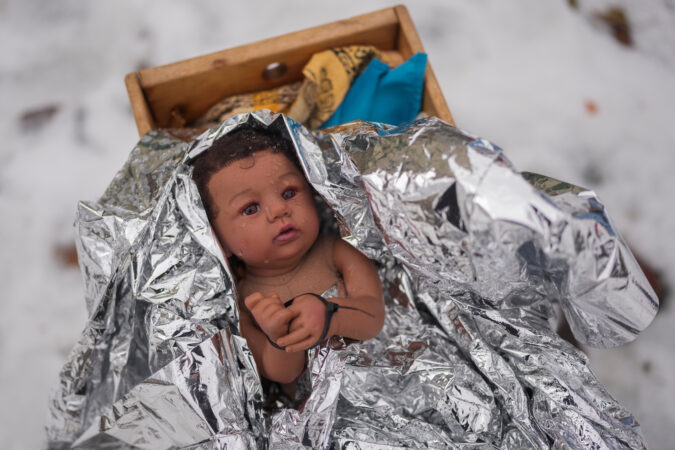
    And at Lake Street Church of Evanston, in Evanston, Ill., not only are ICE and CBP figures included, but Mary wears a gas mask, and the infant Jesus has his hands zip-tied together — the way a witness describes federal agents from ICE and CBP zip-tying children together after raiding an apartment building in Chicago in October — and is swaddled in a Mylar blanket like those used in detention centers.

    The pastors involved say the Nativities remind everyone that “God is with us” now. The scene “reflects the context that Jesus would be coming into if he were born today,” St. Susanna’s Father Stephen Josoma told the National Catholic Reporter.

    The Rev. Michael Woolf, pastor of Lake Street, was even more direct when he posted on Instagram after someone had removed the zip ties from the Jesus figure in his church’s Nativity:

    “We restored the zip ties on baby Jesus. The #Christmas story is literally about an authoritarian ruler using violence, causing fear, and eventually driving the holy family to become refugees in Egypt. The parallels couldn’t be more clear between Scripture and our nativity. We’re not going anywhere.”

    There is a long tradition of having Nativity scenes reflect contemporary concerns and realities. For example, during World War I, according to Emma Cieslik, a museum professional and religious scholar writing for the website Hyperallergic, the Holy Family huddled in the trenches. More recently, the Christmas Lutheran Church in Bethlehem created a Nativity scene with the infant Jesus cradled by rubble from the bombing of Gaza, and the Vatican itself hosted Nativity scenes depicting the war in Ukraine.

    Still, there has been plenty of pushback. The bishop of the Archdiocese of Boston has been critical of St. Susanna’s Nativity, for example, and online comments at X dispute any characterization of the Holy Family as migrants or refugees. (Ahem, Matthew 2:13-14 anybody?)

    But the strongest reactions have taken place at the churches in places that were impacted by Trump-directed immigration surges.

    At Missiongathering in Charlotte, a person was caught on video knocking over the ICE figures in the Nativity and tearing up the “Know Your Rights” signs around it. At Lake Street Church on Chicago’s North Side, vandals knocked down the ICE and CBP figures, then battered and decapitated the Mary figure.

    The violence is symbolic, but the fury is undeniable. This administration has so thoroughly demonized migrants and refugees, labeling all as criminals, that any hint of resemblance between today’s migrants and refugees and the Holy Family reads as anathema to some Christians. But anyone who thinks the parallels are politically driven needs to get their history straight. Way back in 1952, Pope Pius XII was writing in his Exsul Familia Nazarethana that “the migrant Holy Family of Nazareth, fleeing into Egypt, is the archetype of every refugee family.”

    And here’s the thing: These Nativities that have enraged people aren’t exclusively reflecting the reality of migrants and refugees who are endangered by the Trump administration policies — they are reflecting the danger to all of us.

    Folks may feel safe in their own status, but anyone can be treated the same way the administration is treating migrants and refugees. It is happening already, in fact, with federal agents refusing to accept valid U.S. birth certificates and passports as proof of citizenship.

    “No document will protect you,” Malka Older, who heads up the international community of writers and human rights activists Global Voices, and has years of experience working at humanitarian aid, disaster risk reduction, and emergency preparedness organizations, wrote recently on Bluesky.

    “All they have to do is take it from you and ‘lose’ it; take it from you and say you never gave it to them; claim it’s fake; make a new rule that you need another document. Citizenship is a made-up status that governments decide the rules for.”

    Older said “it has never been about immigration. It’s racism, and it’s intimidation, and profit for some. Allowing it to happen to any group means it’s a possibility for everyone, and that’s how fascism maintains power.”

    Which brings me back to Christmas Day, and what every pastor who has placed one of those ICE Nativity scenes knows.

    It is a broken world now, and it was a broken world when Christ was born into it.

    Amid the soaring Glorias, the sparkle of lights, and the colorful paper wrapped around gifts we give each other in echo of the gifts brought to the Christ child by the Magi, we should remember that three days after Christmas Day, Christians will be marking the slaughter of the Holy Innocents. The one the Holy Family fled from, the one that made them refugees.

    They were warned, as we are warned, that authoritarian rulers will stop at nothing to get their way.

  • Ale Ayiti: Philly’s Haitian Americans celebrate a rare World Cup bid

    Ale Ayiti: Philly’s Haitian Americans celebrate a rare World Cup bid

    The first World Cup I remember was in 1970. I was a kid in Guatemala, and my brothers and I were so excited. It was the year the Brazilian seleção included Pelé, Jairzinho, Rivellino, Tostão, Gérson, and Zé Maria — there may be no more beautiful example of the sport of soccer than what they showed us.

    The Guatemalan team was not in the World Cup that year (or ever 😢), but El Salvador was, and although they were unlikely to advance very far, we felt a lot of Central American solidarity and rooted for them — the underdoggiest of the underdogs.

    I expect to root for the underdog again next year, when Brazil and Haiti take the field in World Cup play in Philadelphia. Brazil is a five-time world champion; Haiti last competed at this level 52 years ago.

    Philly’s Haitian community doesn’t care if it’s a little lopsided.

    “Most Haitians adore Brazil,” the Rev. Dr. Josephys Dafils told me via email, “and now Haiti will face the mighty Brazil on American soil. This is the thrill and magic of soccer. Haitians and Haitian Americans will travel to be part of this historic moment. Many of us will gather for a tailgate celebration outside the stadium, even without tickets, which are extremely expensive. We will bring food, music, vendors, and a traditional Haitian band called rara.”

    Numa St. Louis agreed: “For Haitian Americans, this event is more than just a game; it’s a moment of immense pride and emotion. As a Haitian American and die-hard soccer fan, the feelings that arise from witnessing Haiti step onto the world stage are overwhelming. It represents a long-cherished dream; a chance for a nation often faced with adversity to showcase its talent, passion, and spirit on an international platform.”

    “The joy of supporting Haiti, coupled with the opportunity to share the occasion with Brazilian fans,” he told me via email, “underscores the camaraderie found in the beautiful game.”

    Dafils, who at one time served as a youth soccer coach in Haiti, said that for the national team to make it to the World Cup at all, they had to overcome almost insurmountable obstacles.

    “Armed groups have taken control of nearly 85% of [Haiti’s] capital, as well as major cities across the country. More than one million Haitians have been forced to flee their homes,” he said. “Many people no longer have access to electricity, clean running water, or food. Families are constantly moving from one neighborhood to another in search of safety. [And] amid this dire situation, the Haitian national soccer team has accomplished the extraordinary.”

    An example of that? They had to play all the qualifying matches outside of Haiti.

    Haiti’s Leverton Pierre controls the ball during a CONCACAF Gold Cup soccer match in June against the United States in Arlington, Texas.

    “I have cried tears of joy since Nov. 18, 2025 — the day Haiti qualified for the 2026 World Cup,” Dafils told me. “Nov. 18 also marks the anniversary of the Battle of Vertières in 1803, when Haiti secured its independence from France. The symbolism is profound.”

    St. Louis makes another historic connection: Next year’s tournament will also coincide with America’s 250th anniversary, adding another layer of significance.

    The Haitian community has a long history in Philadelphia. Hundreds of white slaveholders and those they enslaved fled the Haitian Revolution, first arriving in Philadelphia in 1793; many of those enslaved people gained their freedom here in the years between 1793 and 1796. The community grew and saw waves of immigration throughout the 20th and 21st centuries, prompted by political turmoil and natural disasters.

    It’s estimated that some 12,000 members of the community are currently legally residing under temporary protected status.

    Those Haitian immigrants, like their peers across the U.S., have felt the impact of the singularly ugly lies JD Vance and Donald Trump fabricated about Haitians during the campaign, and after Trump became president, the decision to not renew protected status when it expires in February.

    The shadow of Trump’s immigration policies “loom large” — even over an event like the World Cup match, according to St. Louis.

    “The cancellation of the Temporary Protected Status program threatens to strip many Haitians of their legal ability to remain in the United States, leaving them vulnerable to deportation,” he said. “Furthermore, Haiti is among the 19 countries whose citizens are banned from entering the U.S., which will hinder potential visitors from attending the matches.”

    But he and Dafils always return to the thrill and magic of the World Cup match.

    “It has taken 52 years for Haiti to return to the World Cup. None of us know when we will see this again. I was not yet born in 1974, and I never thought I would witness such a moment,” Dafils said.

    “This match symbolizes hope,” St. Louis said, “a celebration of cultural connections that transcend borders. Even amid political challenges and the looming impact of immigration policies, this gathering promises to foster unity among diverse communities, showcasing the power of sports to uplift and inspire.”

    “As the day approaches, the anticipation grows for what promises to be an exhilarating clash, filled with heartwarming moments, passionate displays, and the acknowledgment of Haiti’s journey,” he added.

    What a beautiful game. Ale Ayiti!

  • Faith communities are showing up at the ICE office for 40 weeks of prayer and protest

    Faith communities are showing up at the ICE office for 40 weeks of prayer and protest

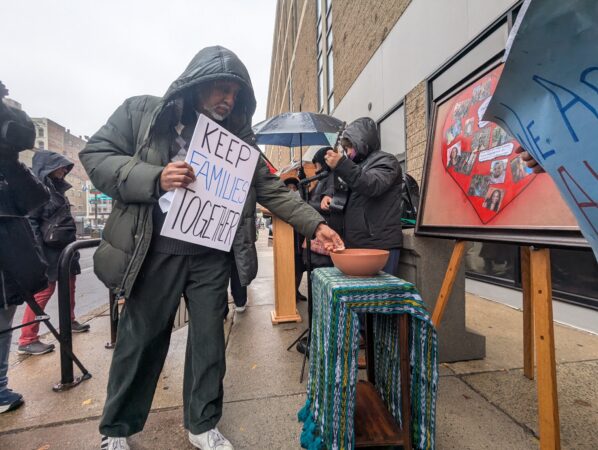
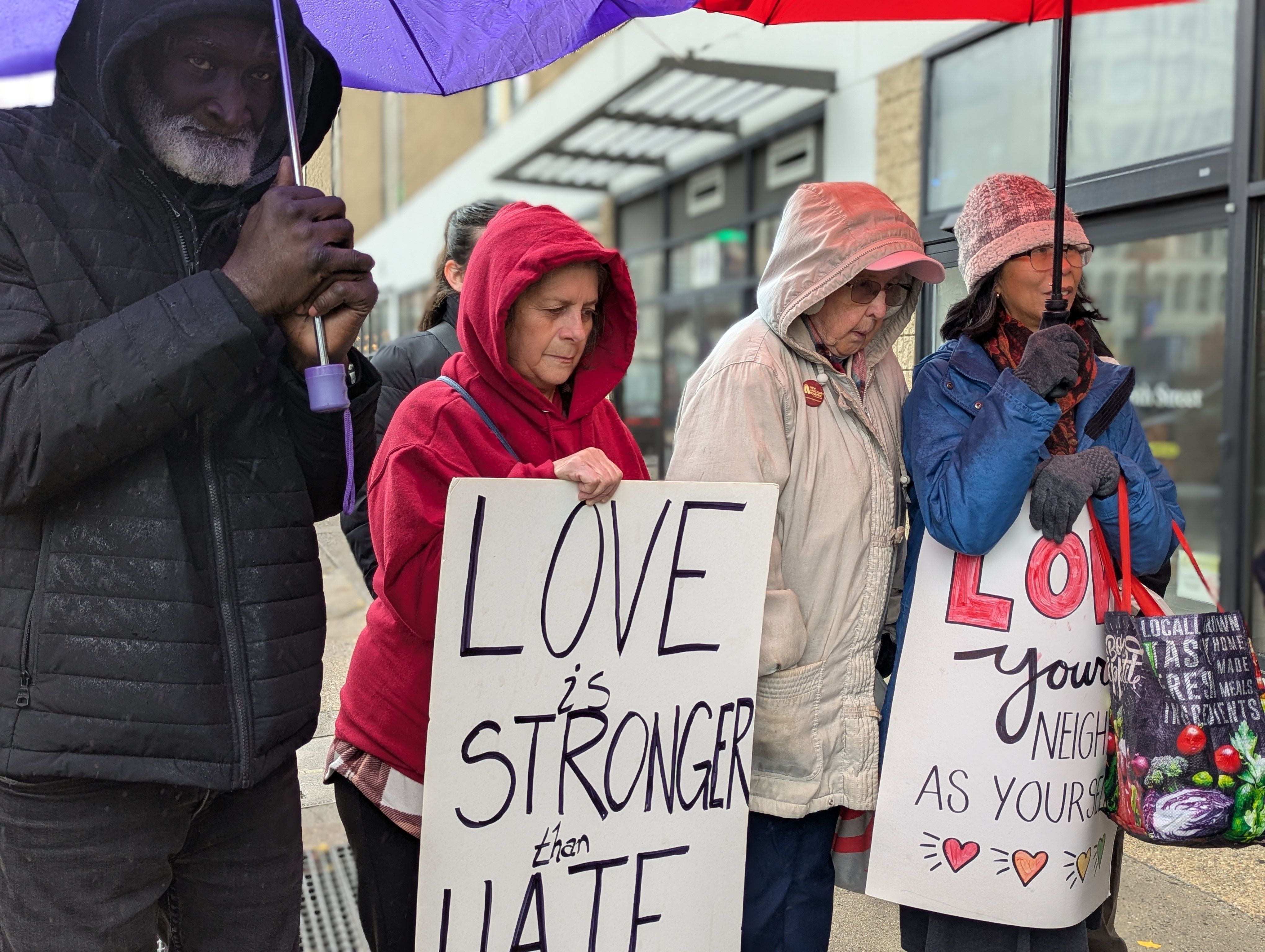
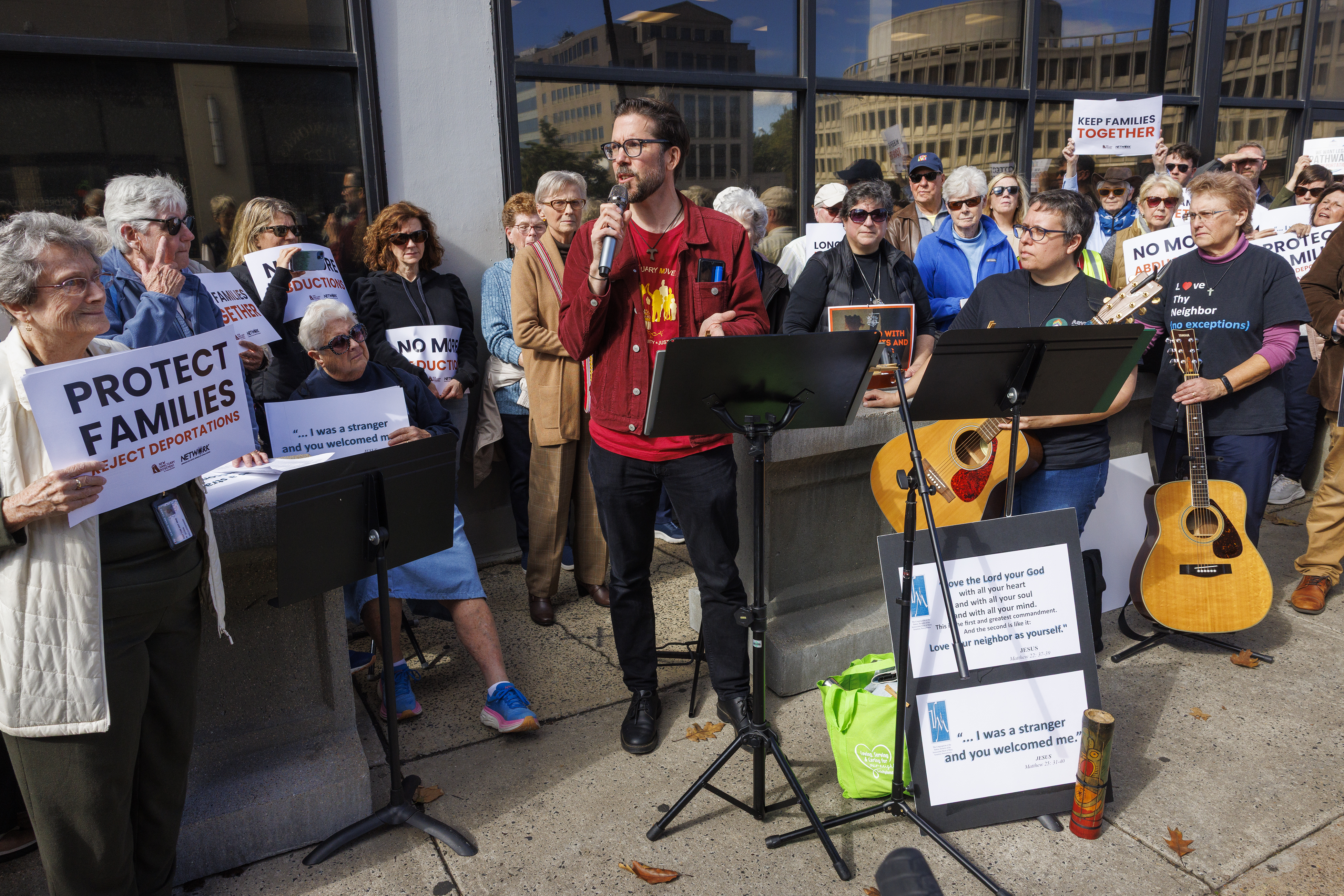
    On a rainy Wednesday a week before Thanksgiving, members of the congregations of the Roman Catholic parishes of Holy Innocents and St. Joan of Arc gathered in front of the U.S. Immigration and Customs Enforcement office in Center City.

    They stood vigil in witness to what the Rev. Christopher Neilson — the founder and president of Christianity for Living Ministries and founder and pastor of the Living Church at Philadelphia — calls “the core requirements God has for humanity”: act justly, love mercy, and walk humbly with God.

    Another religious group appeared at ICE’s door near Eighth and Cherry Streets on the day before Thanksgiving. This time, it was an interfaith mix of folks led by Christianity for Living Ministries.

    And there will be more. On Wednesdays to come, members of Mennonite Action, a couple of United Methodist churches, a Quaker meeting, two synagogues, a Presbyterian church, the Sisters of St. Joseph of Philadelphia and more Catholic parishes have all pledged to take part in a recurring demonstration that Neilson calls ICE Profest 40 — an ecumenical and interfaith action to oppose the government’s pitiless anti-immigrant crackdown slated to take place over 40 weeks. The word profest was coined by Neilson to mean “an amalgamation of faith expressed through proclamation, prayer, and protest.”

    Members of the congregations of Holy Innocents and St. Joan of Arc parishes gathered Nov. 19 for an interfaith prayer vigil outside the ICE office in Center City. It was the kickoff of 40 weeks of vigils planned by faith communities across Philadelphia.

    It’s easy for small, quiet acts like this to get lost in the din of all the outrageous actions coming from President Donald Trump and his administration, or amid the larger protests that draw millions of participants.

    But organizers are hopeful that whatever their movement might lack in numbers, it more than makes up for in the power of their spiritual conviction — a conviction that is grounded in the Bible and other sacred texts.

    “We proclaim God’s word of justice, mercy, and humility (Micah 6:8),” Neilson told me via email. “We pray for ICE agents and authorities (St. Matthew 5:44-45; St. Luke 3:24; 6:27-28; I Timothy 2:1-4), many of whom are conflicted and have crises of conscience. [We pray] for their courage, transformation, and turning, and for the protection and provision of the detainees and deportees, who are traumatized, from family separation and living in constant fear (Isaiah 1:17; Psalm 10:17-18; 82:3; St. Luke 4:18-19).”

    “And,” he added, “we protest ICE activity, i.e., the orders ICE agents are given and the ways in which they are carried out, that dehumanizes and victimizes those created in the image and likeness of God [who] are our neighbors, and [which] disobeys and violates God’s command to welcome and love the stranger and alien (Leviticus 19:33-34; Deuteronomy 10:18-19; St. Matthew 25:31-46).”

    The Rev. Christopher Neilson said that demonstrators at the protests pray for detainees and deportees who have been traumatized by family separation and are living in fear. They also pray for the safety of ICE agents and that the organization’s leaders might change their policies.

    The number of weeks — 40 — during which this will happen has biblical significance, Neilson said, as a period of transition from trial to transformation. (Think of the 40 days and 40 nights Jesus traveled in the wilderness before the crucifixion.)

    For me, the timing of when ICE Profest 40 is gearing up is especially resonant.

    We’re moving from Thanksgiving — a secular holiday which, in good years, I get to celebrate with a family that includes foreign-born and U.S.-born folks — into Advent.

    The beginning of the liturgical year is when Christians like me move from anticipation to action as we wait to celebrate the birth of Christ into a humble, migrant human family. I love the hush that precedes a world on the brink of transformation. I suspect that is why the quiet power of ICE Profest 40 actions moves me so deeply.

    “The tone of these vigils is different,” Peter Pedemonti, the codirector of New Sanctuary Movement of Philadelphia, told me via email.

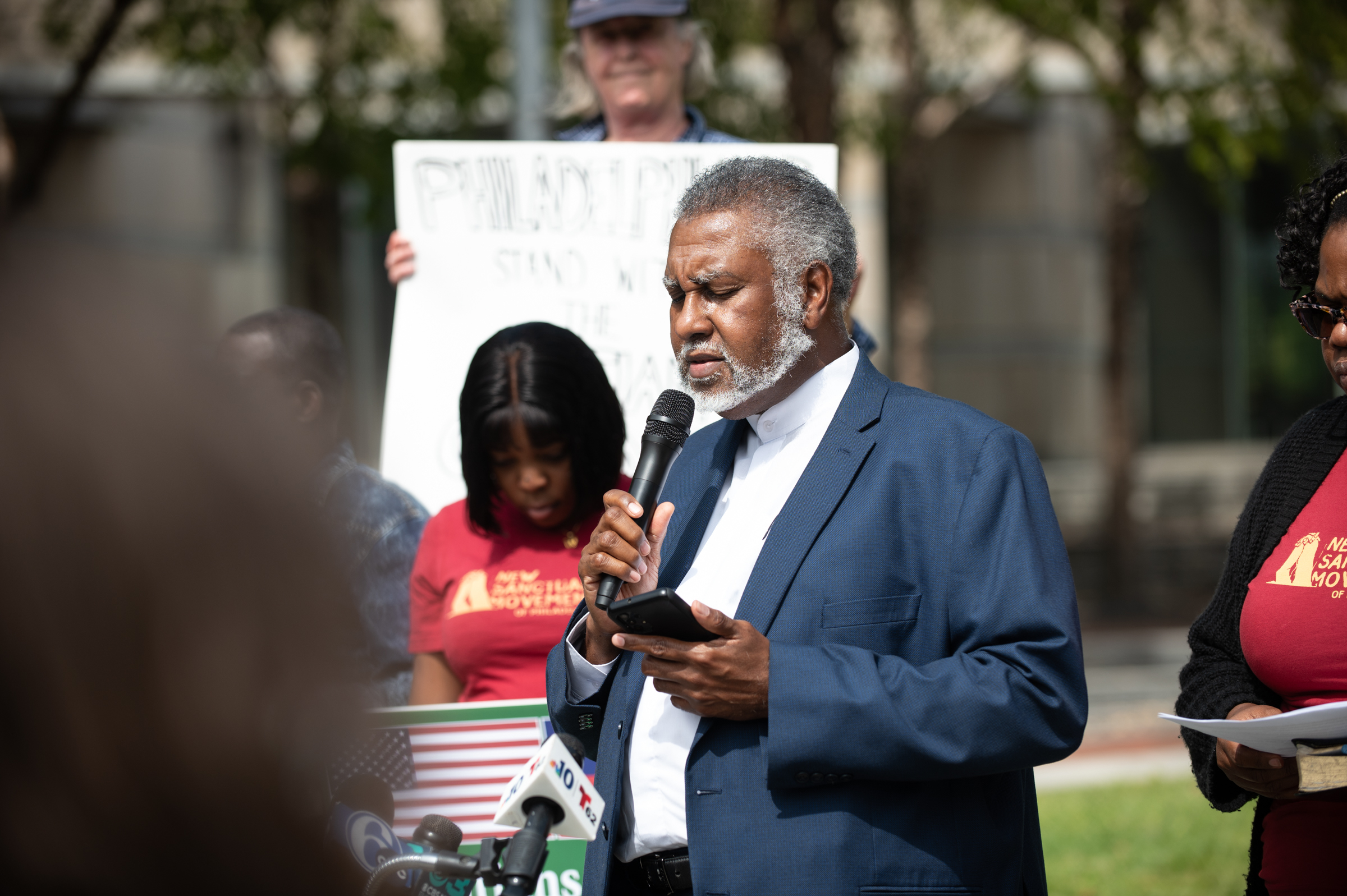
    Peter Pedemonti, codirector of the New Sanctuary Movement, addressing Catholics gathered outside the ICE office at Eighth and Cherry Streets, in October.

    “They are not as loud as a protest, but they have the potential for big impact,” he said. “We are seeing people sign up who are new to public witness, and so they serve as an entry into collective action. This is important as we fight not only the attacks on immigrant communities, but also Trump’s rapid steps toward authoritarianism. We need everyone right now, and it is really important we have paths for new people to get involved.”

    “I have been doing faith-rooted organizing for nearly 20 years. These spiritual tools we have work. We can’t always see the immediate impact, but I have seen them help win campaigns. And so I believe that when we bring them to ICE, we are engaging in something powerful,” Pedemonti added. “The religious community has an important role right now. We are the moral voice, and when we see Trump trample our faith teachings and our democracy, it is critical [that] faith communities speak out.”

    While my own faith tradition has long had priests, religious men and women accompanying immigrants and advocating for their rights, the United States Conference of Catholic Bishops has been pretty circumspect about commenting on the Trump administration’s policies.

    But that changed this November.

    In a statement issued after the conference’s plenary meeting, the bishops wrote, “We oppose the indiscriminate mass deportation of people,” and soon thereafter, Pope Leo XIV expressed his wholehearted support for the bishops’ statement.

    Leaders from many other faith traditions and denominations have, of course, also stood publicly with immigrant communities threatened by Trump’s policies.

    But for Catholics who supported Trump — 55% overall (62% of white Catholics, 41% of Hispanic Catholics), according to the Pew Research Center — the Catholic bishops’ statement could serve as a come-to-Jesus (heh!) moment.

    It is certainly a clear call for transformation during this most transformative of seasons.

    What can the birth of Christ mean to us Christians if we would deny people shelter near us simply because they are unknown to us, and from elsewhere? What can it mean if we don’t stand against the indiscriminate targeting of innocents? What can it mean if we justify killing people based on the mere prognostication of threat?

    I won’t speak for other people of faith, but for me, those are questions that go beyond political affiliation or temporal power, and touch on the “act justly, love mercy, and walk humbly” core requirements Neilson referenced.

    On the first Sunday of Advent, one of the readings will be Isaiah’s proclamation that the people “shall beat their swords into plowshares, and their spears into pruning hooks; one nation shall not raise the sword against another, nor shall they train for war again,” and that throws me right back into the fact that both the Catholic bishops in their statement, and the Rev. Neilson in his description of the ICE Profest 40 vigils, reference ICE agents.

    ICE agents aren’t wielding swords, of course, but they do carry firearms and other implements with which they smash the windows and doors of terrified immigrants. And with the proposal that military members could be “trained” by deployment to U.S. cities to support ICE and U.S. Customs and Border Protection agents, it’s not that much of a stretch to make Isaiah fit the moment.

    I’m going to confess something now. I’ve prayed often for immigrants, never for ICE agents. In fact, I bristled a bit when I heard the bishops equating the vilification immigrants have experienced with the vilification of ICE agents — no one has accused ICE agents of eating pets, or separated them from their families, or turned them from legally residing to unauthorized in a moment.

    But, as we saw with this week’s shooting of two National Guard members in Washington, D.C., those who have been asked to carry out the administration’s ill-conceived and oppressive policies may also be endangered by them.

    The shooting reminded me of what Pedemonti told me: “If we want ICE to see the humanity of those they are persecuting, then we need to model that and see the humanity of ICE agents.”

    “The religious community has an important role right now. We are the moral voice, and when we see Trump trample our faith teachings and our democracy, it is critical [that] faith communities speak out,” Peter Pedemonti said.

    “We believe all people can change,” he added, “and so in the tradition of St. Óscar Romero, who called on soldiers in El Salvador’s authoritarian regime to put down their arms, we call for ICE agents to follow their conscience and refuse to follow orders, to leave people with their families, to leave the people in peace.”

    I guess it’s time to broaden my prayers. Don’t get me wrong, my rosary (the one which, along with its crucifix and Our Lady of Guadalupe medallion, has monarch butterfly beads representing migrants) will still be in regular rotation with prayers for immigrant justice. But maybe the Romero quote with which I open my prayers using a niner that has his medallion will be different: I want to make a special appeal to soldiers, National Guard members, and policemen: Each of you is one of us.

    The first candle we light at Advent represents hope, after all, and no matter how far away or unlikely the desired outcome appears, hope always leads to transformation.