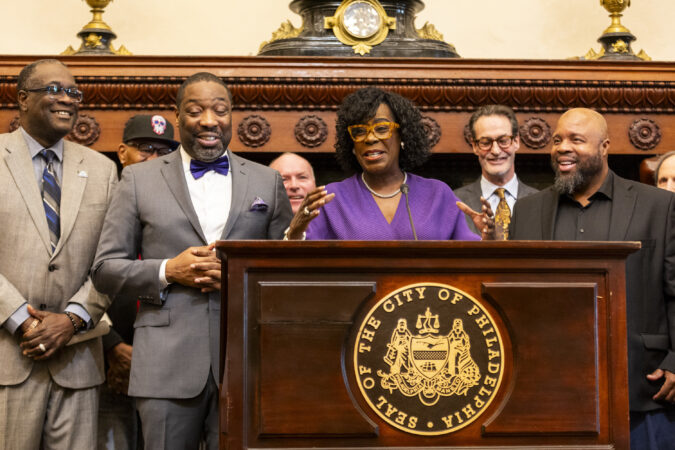
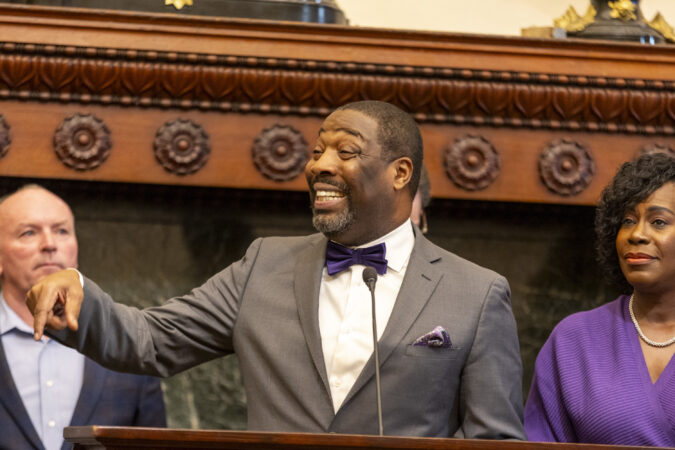
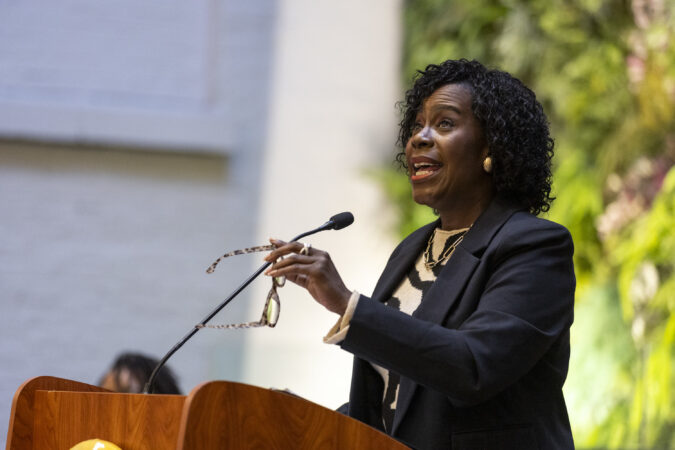
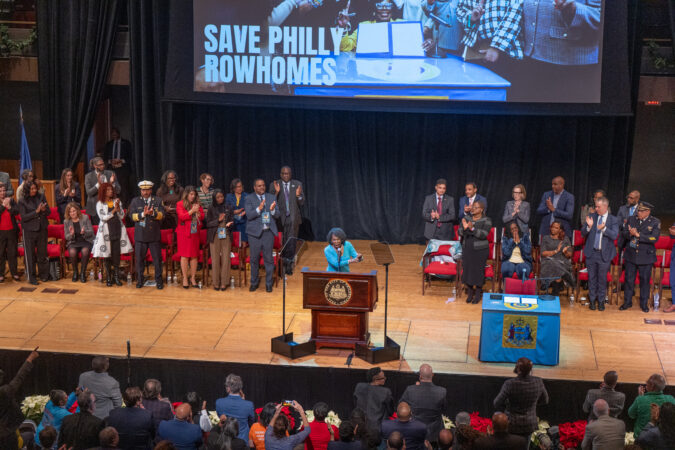
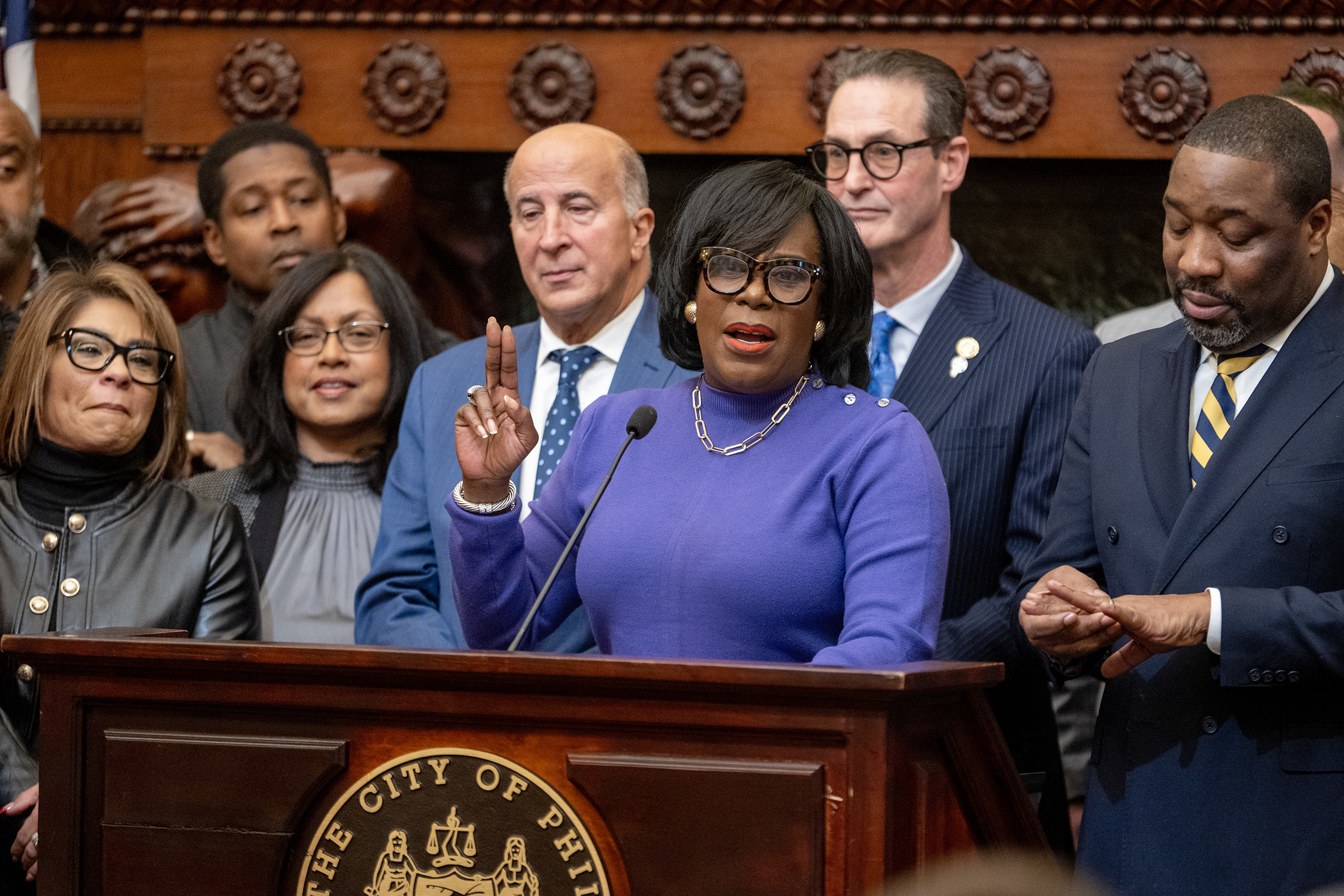
Parker wasted no time, signing the bill into law at a news conference Thursday afternoon to fast-track the process for the city to sell the first $400 million tranche of bonds in late March or early April. The administration plans to sell the second $400 million in 2027.
“We are signing into law the largest and most significant investment in housing in the city of Philadelphia’s history, a $2 billion plan that will create and preserve 30,000 units of housing here in the city of Philadelphia,” Parker said, citing a sum for H.O.M.E.’s budget that also includes other funding steams and the value of city-owned land the administration hopes to redevelop into housing through the plan.
In March 2025, when Parker unveiled her housing plan — with the goal of helping the city build or preserve 30,000 units of housing in her first term — she wanted to issue the bonds that fall. Council initially approved the bond authorization and other legislation related to H.O.M.E. in June.
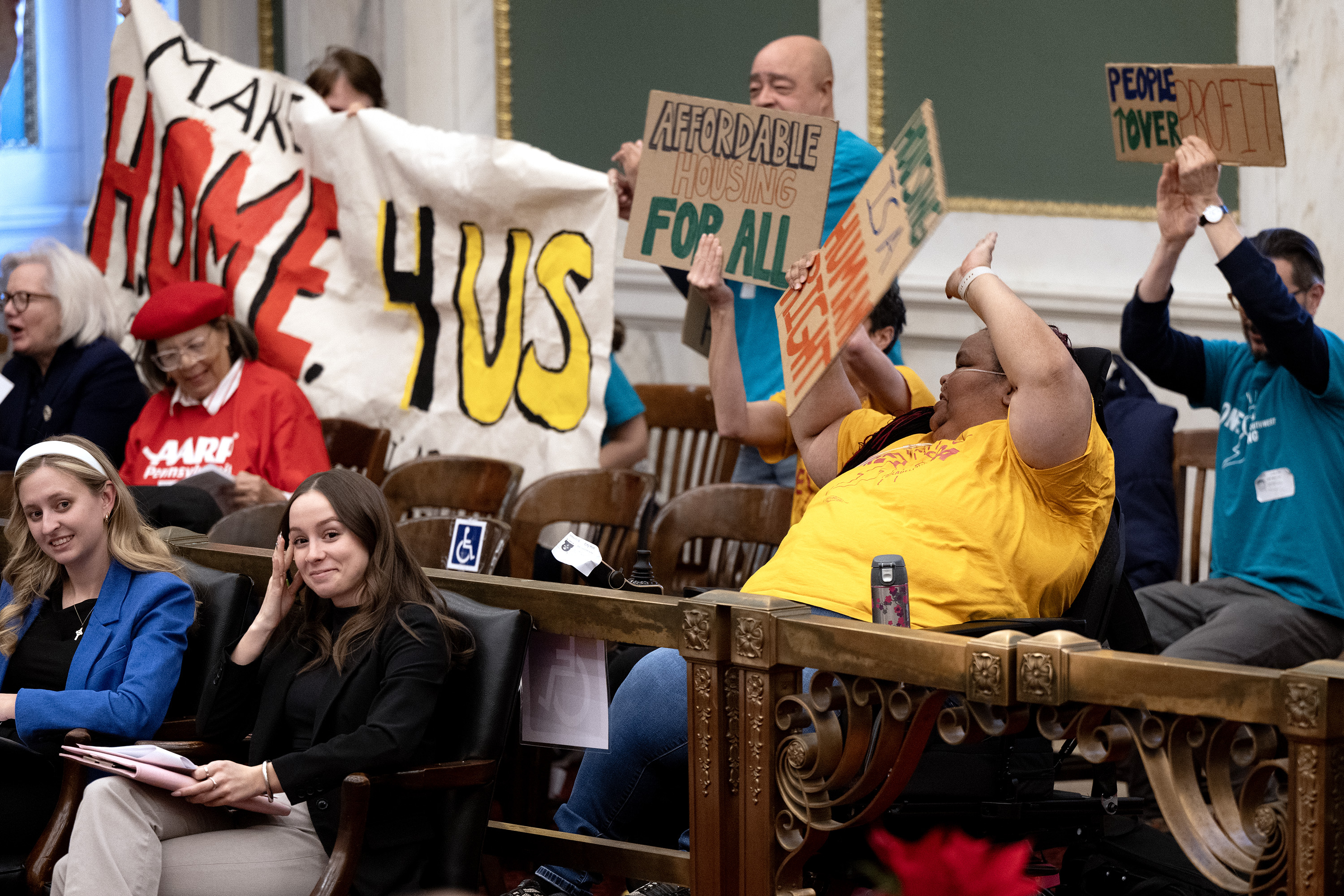
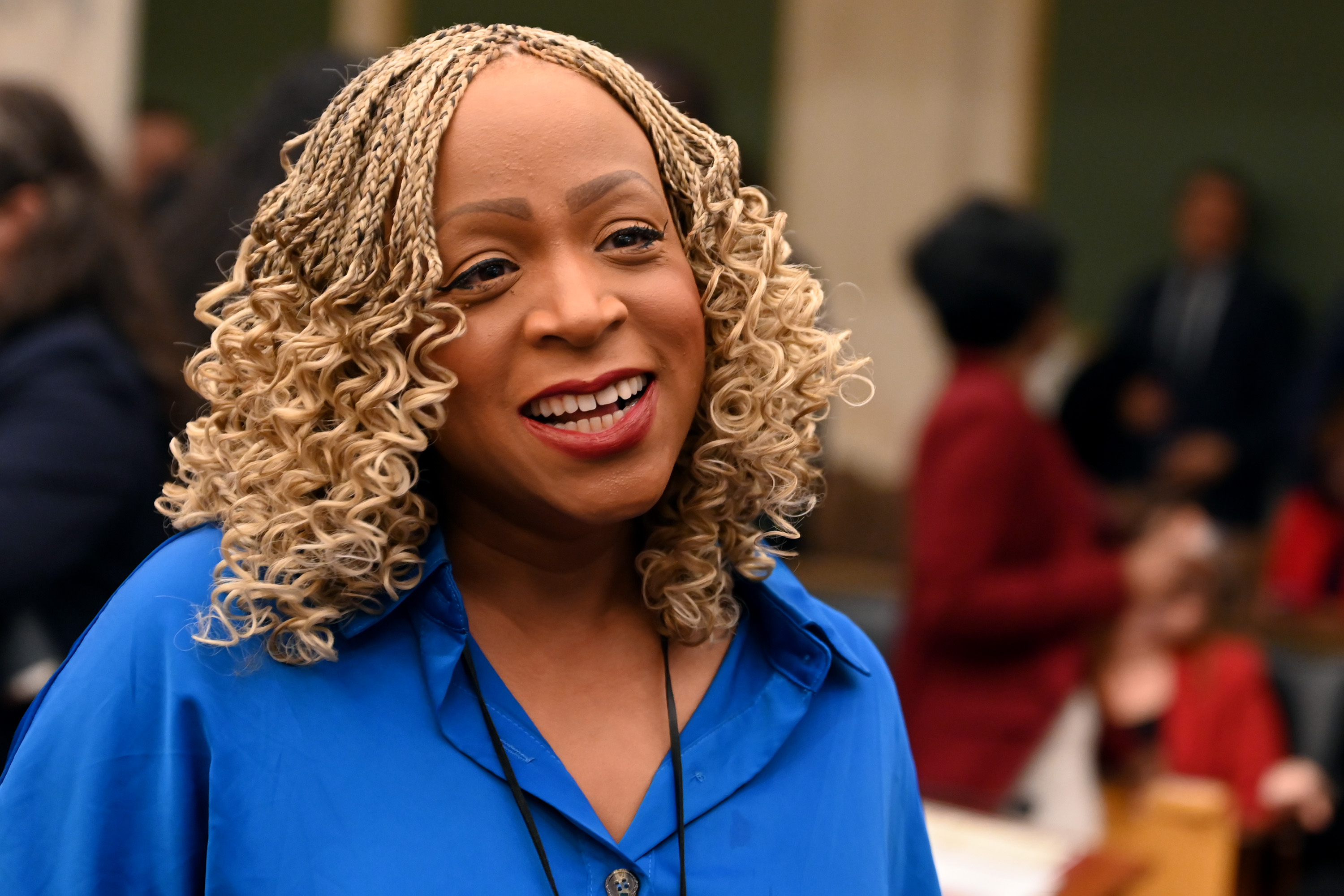
The most notable changes, championed by progressive Councilmembers Jamie Gauthier and Rue Landau, lowered the income thresholds for some of the programs funded by H.O.M.E. to prioritize lower-income Philadelphians.
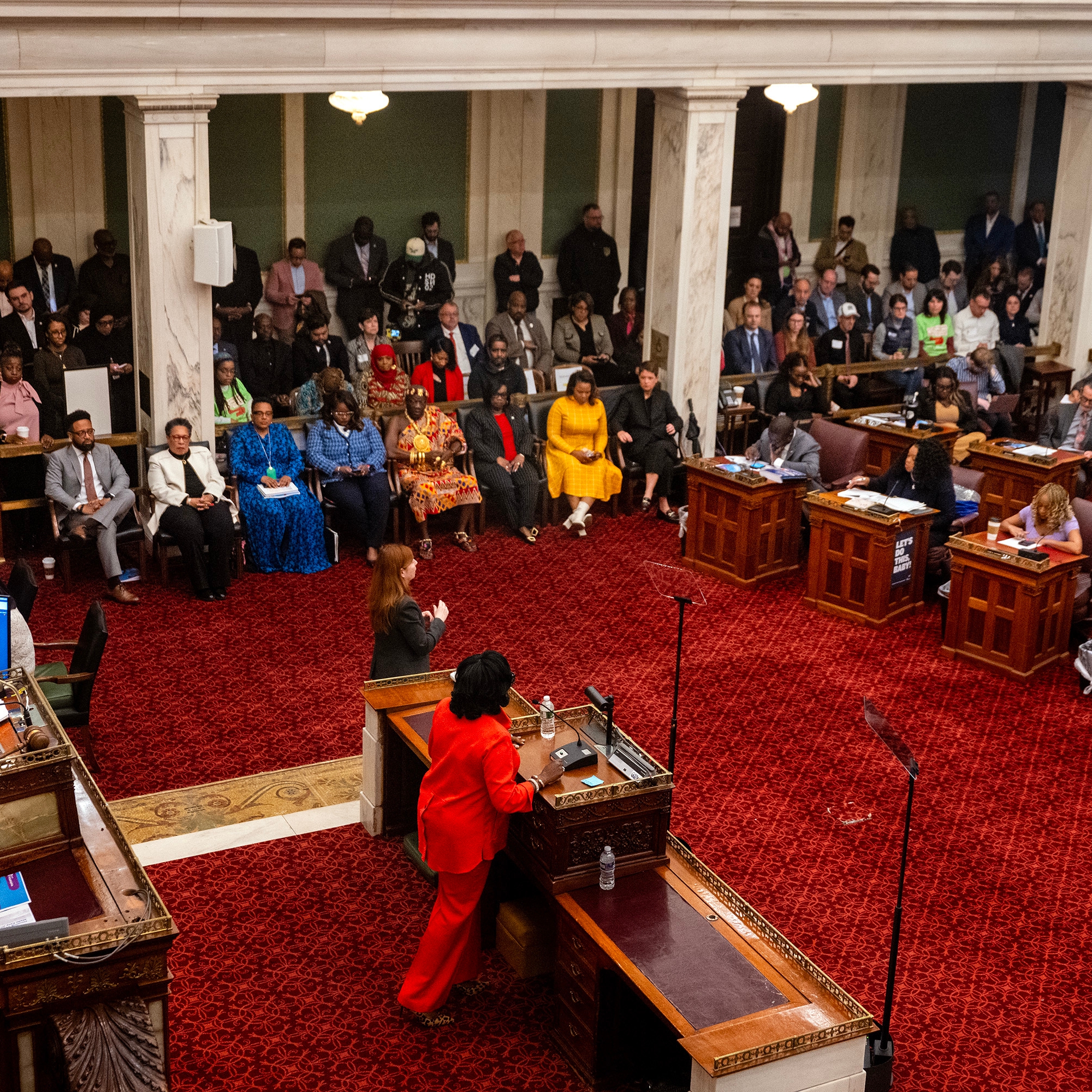
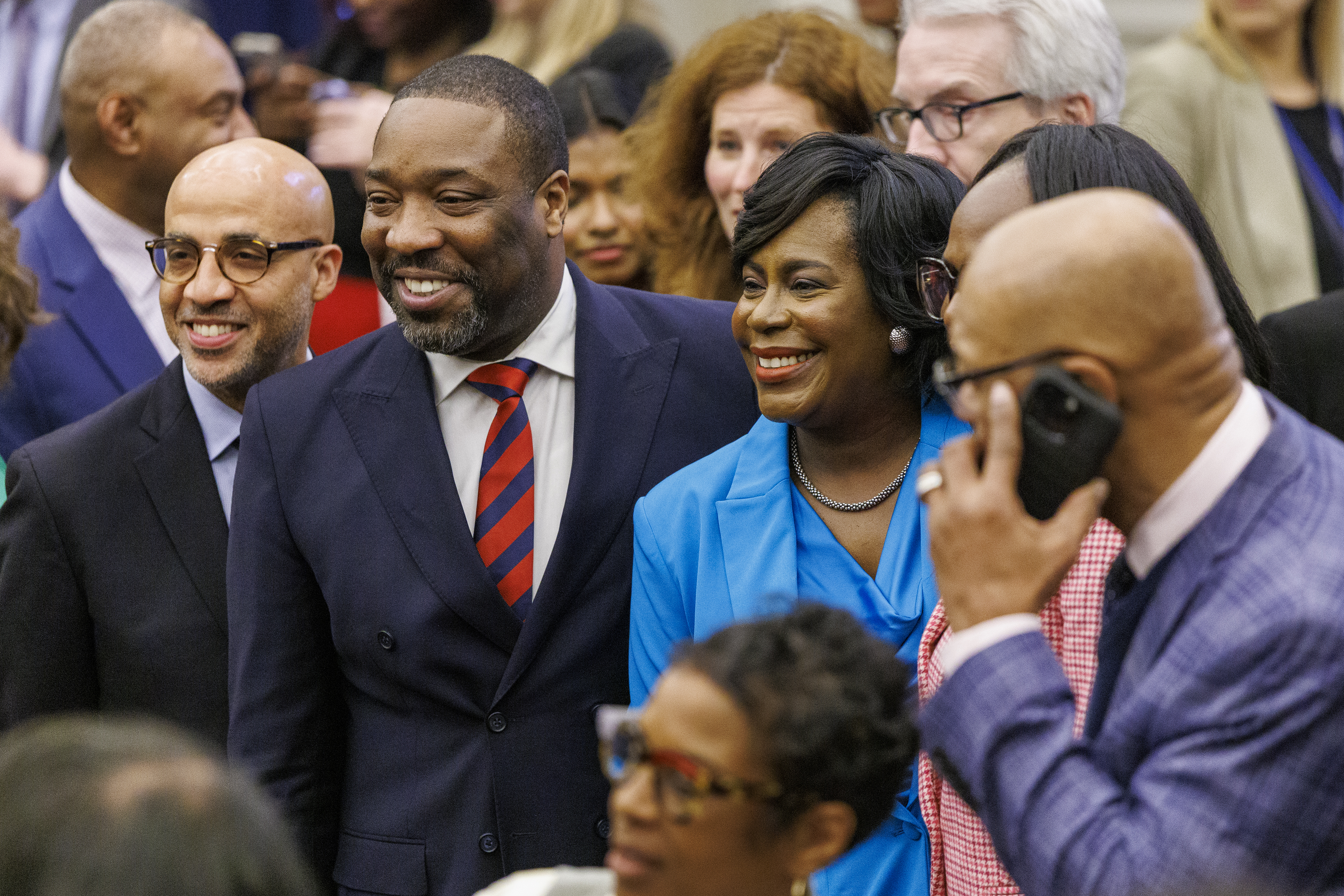
Mayor Cherelle L. Parker unveils her long-awaited plan to build or preserve 30,000 units of housing during a special session of City Council Monday, Mar. 24, 2025. Council President Kenyatta Johnson is at left.
Parker opposed the amendment, and administration officials testified that H.O.M.E. was meant to serve residents at a variety of income levels, including middle-class households that are struggling but often make too much to qualify for government support programs.
But Council members argued that even with the new infusion of funds, Philadelphia’s resources are too limited to help the city’s hundreds of thousands of impoverished residents — let alone aid middle-income residents as well.
“City Council demonstrated through its actions — not just its words — that it’s serious about putting City Hall to work for communities that have too often been left behind,” Gauthier, Landau, and their allies said in a group statement Thursday.
The dispute proved to be the most significant public disagreement to date between Parker and Council President Kenyatta Johnson, who sided with Gauthier and Landau.
The changes required Council to pass an updated bond authorization before moving forward because the previously adopted version no longer aligned with the language in the budget resolution. Lawmakers ran out of time to pass the new bond bill before adjourning for their winter break in December.
They approved it unanimously on Thursday.
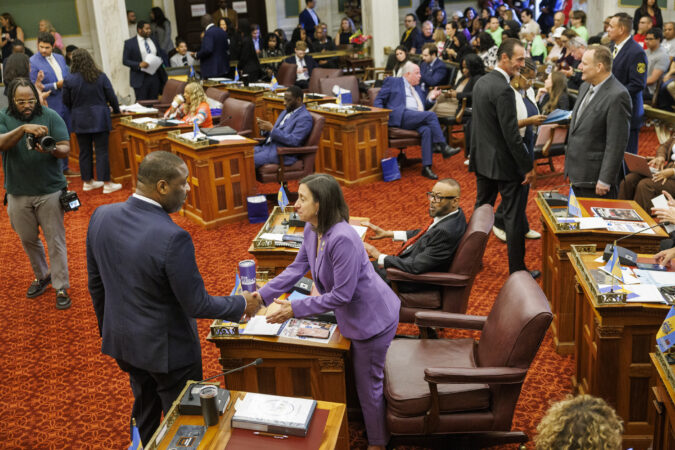
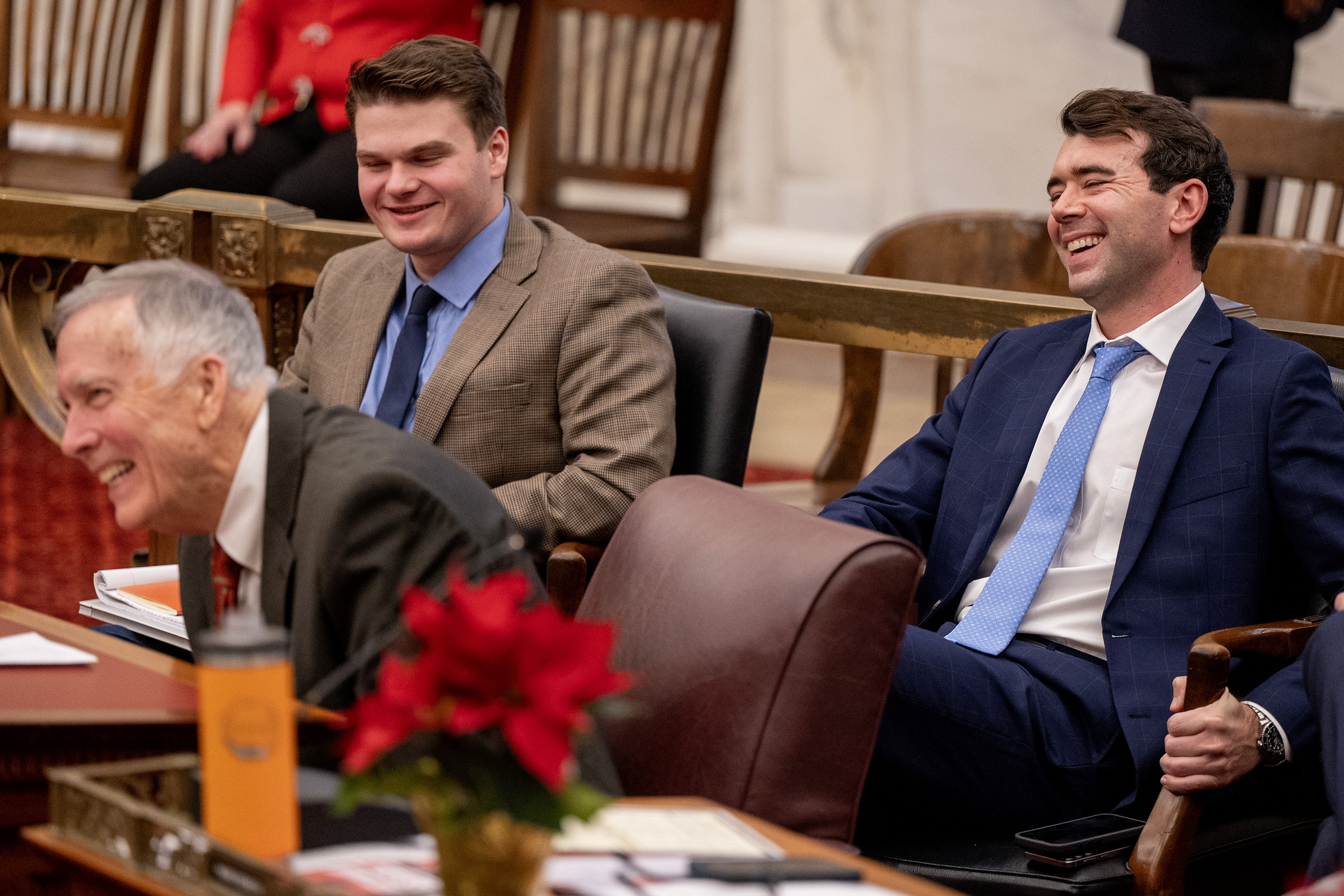
A couple of hours later, Johnson and Parker profusely praised each other at the bill-signing ceremony, going out of their way to show that their strong working relationship remains intact now that the conflict was behind them.
The moment of congeniality was a stark contrast to the dynamic between the two late last year.
Parker at one point said Council’s delay “means homes are not being restored” and “homes are not being built or repaired.” Johnson fired back, “Council’s responsibility is not to rubber-stamp legislation.”
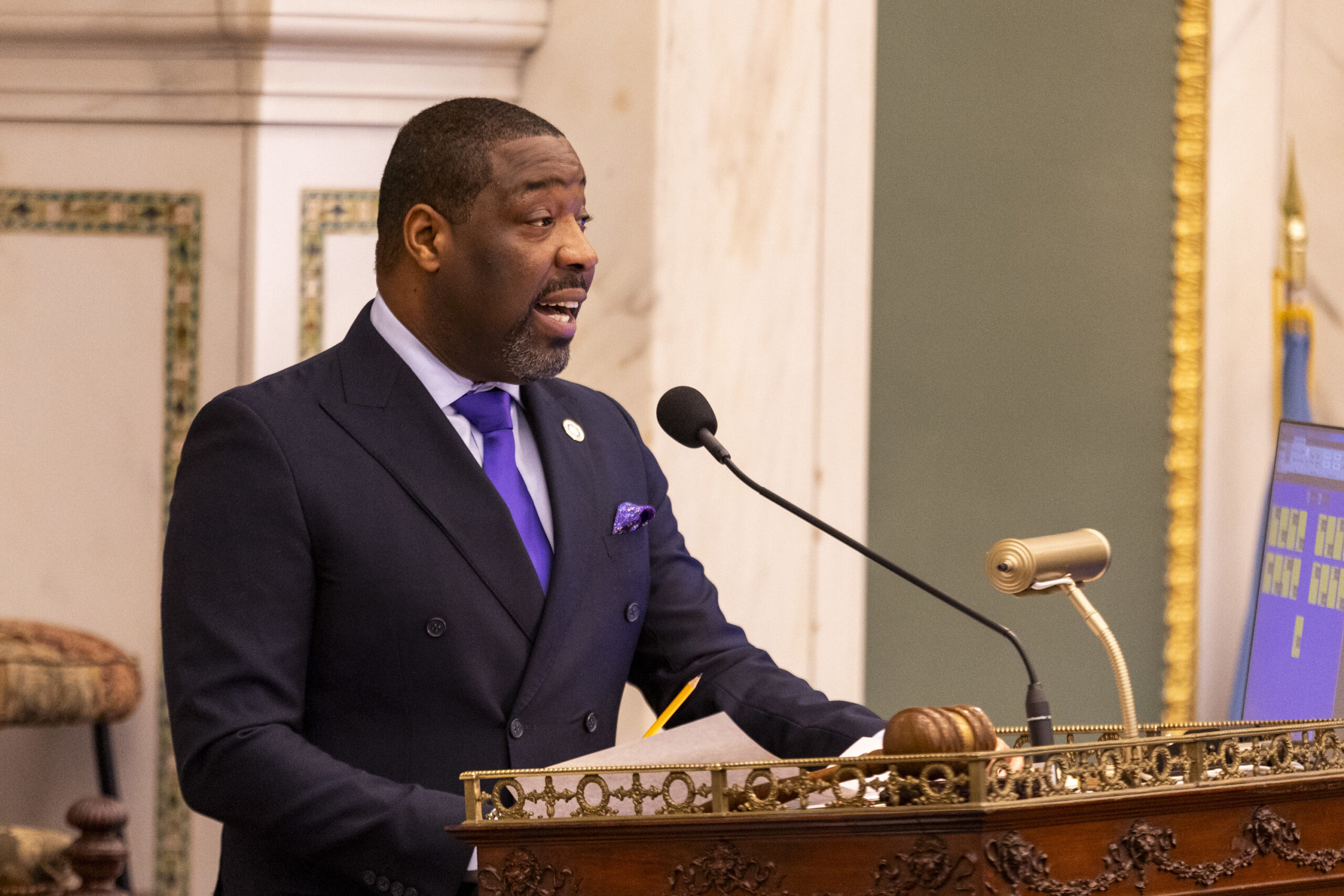
City Council President Kenyatta Johnson speaking at the City Council’s first session of the year in Philadelphia, Pa., on Thursday, Jan. 22, 2026.
But on Thursday, there was enough feel-good energy between the mayor and Council that it extended beyond Johnson to members who have more frequently clashed with the administration.
Gauthier and Councilmember Isaiah Thomas, who questioned the mayor’s agenda last year over concerns that she was taking out too much debt for housing, also stood alongside the mayor at Thursday’s news conference.
After the delays to her agenda at the end of last year, the mayor appears to be trying to regain control of the narrative this week. Thursday’s bill-signing ceremony marked Parker’s third major update related to H.O.M.E. in three days.
On Tuesday, she announced that her administration was partnering with the city’s building trades unions and the Philadelphia Housing Authority to redevelop the Brith Sholom House, a notoriously dilapidated senior facility that closed in 2024, into affordable housing for seniors.
And on Wednesday, she laid out a vision to build a modular housing manufacturing facility on the long-vacant Logan Triangle tract in North Philadelphia. The city issued a request for information from developers potentially interested in building such factories in the city, with a deadline in late March.
Parker on Thursday only indirectly responded to a question about how many units could be built or repaired in the two years left in her term.
She also expects Gov. Josh Shapiro, at his forthcoming budget address, to announce state-level housing reforms that would help “as it relates to streamlining state processes [to] run more efficiently.”
Staff writer Anna Orso contributed to this article.
City Councilmember Jamie Gauthier said the Philadelphia School District showed “just a complete lack of thought and consideration for really important programs” when crafting its long-anticipated facilities plan, released Thursday.
Council President Kenyatta Johnson said his members had “a lot of concerns.”
And City Councilmember Jeffery “Jay” Young Jr. went so far as to propose amending the city Home Rule Charter to allow Council to remove the school board members who will consider the proposed closures.
“If you are closing schools during a literacy crisis, then you should be held directly accountable to the people you serve,” Young said.
In many ways, it’s unsurprising Council members would speak out against a plan that would close or consolidate schools in their districts. But the pushback from lawmakers Thursday was notably strong, and Young’s proposal to allow Council to remove school board members could dramatically reshape the politics of the district.
(function() {
var l2 = function() {
new pym.Parent(‘school_closing1’,
‘https://media.inquirer.com/storage/inquirer/projects/innovation/arcgis_iframe/school_closing1.html’);
};
if (typeof(pym) === ‘undefined’) {
var h = document.getElementsByTagName(‘head’)[0],
s = document.createElement(‘script’);
s.type = ‘text/javascript’;
s.src = ‘https://pym.nprapps.org/pym.v1.min.js’;
s.onload = l2;
h.appendChild(s);
} else {
l2();
}
})();
Currently, the mayor appoints the nine members of the school board, and Council votes to confirm them. Allowing lawmakers to remove board members would shift the balance of power toward the legislative branch and effectively leave the district’s leaders with 18 bosses — the mayor and the 17 Council members.
Significantly, Johnson immediately endorsed Young’s plan, which would have to be approved by city voters in a ballot question.
“It’s a good check-and-balance in terms of the process, and also allows us to have the ability and the opportunity to make sure that anything that the school board does is done with transparency,” Johnson told reporters. “I‘m always for, as members of City Council and this body in this institution, having the opportunity to provide accountability.”
Left unsaid was that the long-awaited facilities plan did not come from the school board — its members have yet to approve the proposal, which was presented to lawmakers this week by Superintendent Tony B. Watlington Sr.
Still, the pushback was notable in part because it came from lawmakers who are often on opposite sides of debates about education policy. Johnson is an advocate for charter schools, while Gauthier is a progressive ally of the teachers union who is often critical of the so-called school choice movement.
Gauthier said the plan would limit opportunities in her West Philadelphia-based 3rd District. She pointed to changes including Robeson High School and Parkway West ceasing to exist as standalone schools (Robeson would merge into Sayre and Parkway West into SLA Beeber), and the Workshop School colocating with Overbrook High. (The Workshop, however, would remain a distinct school, just in a new location.)
“What are people supposed to do for good high school options in West Philadelphia?” Gauthier said in an interview.
Jamie Gauthier. First day of fall session, Philadelphia City Council, Thursday, September 11, 2025.
Gauthier added that while Watlington has talked at length about the district avoiding the mistakes of its widely criticized 2012 school closure plan, it appears doomed to repeat that history.
“That’s a great thing to hold up every time we have this conversation, but how are you solving for it?” Gauthier said. “You can’t state all of the things that went wrong and then present a plan that seems to lack care in the same way as the plan in 2012.”
Johnson said the discussion over the plan was far from complete.
“I’m sure it’s going to be a very, very robust process,” he said. “These are only recommendations. This isn’t the final product.”
Watlington’s plan will touch every part of the city. It includes 20 school closures, six colocations, with two separate schools existing inside a single building, and more changes. It also includes modernizing more than 150 schools over 10 years, though officials have not yet revealed which buildings will get the upgrades.
In total, the blueprint would cost $2.8 billion — though the district is proposing funding only $1 billion of that with capital borrowing. The rest of the money would come from the state and from philanthropic sources, and if those dollars don’t come through, fewer repairs could happen.
Nearly all Council members on Thursday said they understood the need to consolidate schools, but each had concerns about how individual closures would affect the communities they serve.
Councilmember Curtis Jones Jr., whose district includes parts of West and Northwest Philadelphia, said some of the changes are encouraging, including an expansion of career and technical education planned for some schools, including Overbrook High.
But, he said, others could combine students who come from different neighborhoods and backgrounds, and the district must consider the social impacts of merging those populations.
“The places where the kids come from, that is always a dynamic that is under-considered,” Jones said. “If I live in this neighborhood and got to travel to that neighborhood, what are the historical dynamics?”
And Councilmember Cindy Bass, who represents parts of North and Northwest Philadelphia, said two of the schools in her district slated for closure — Fitler Academics Plus School and Parkway Northwest High School — “are models of great public education.”
“I don’t understand why they are targeted when they are very well-regarded and lots of kids want to go there,” Bass said. “If it’s not broken, why are we trying to fix this?”
It’s unclear how much sway members will have over where the district ultimately lands. Councilmember Isaiah Thomas, who chairs the Education Committee and represents the city at-large, warned of a “long and emotional” journey ahead.
“There’s always an emotional attachment to schools,” he said. “They are a pillar in a lot of neighborhoods.”
Staff writer Jake Blumgart contributed to this article.
Philadelphia City Council’s first meeting of 2026 on Thursday comes as tensions rise over President Donald Trump’s immigration crackdown and as Mayor Cherelle L. Parker continues to sidestep that conversation while focusing on advancing her signature housing initiative.
They will also tackle the city’s waste-disposal practices, a long-standing law requiring Council members to resign before campaigning for higher office, and the city budget.
Meanwhile, events largely outside Council’s control, including potential school closings and Philly’s role in the nation’s 250th birthday, are also expected to prompt responses from lawmakers.
Here’s what you need to know about Council’s 2026 agenda.
‘Stop Trashing Our Air’ bill up for vote
The first meeting of a new Council session rarely features high-profile votes, but this year could be different.
Currently, the city government sends about a third of the trash it collects to the Reworld trash incinerator in Chester, with the rest going to landfills. Those waste-disposal contracts expire June 30, and Gauthier is hoping to take incineration off the table when new deals are reached.
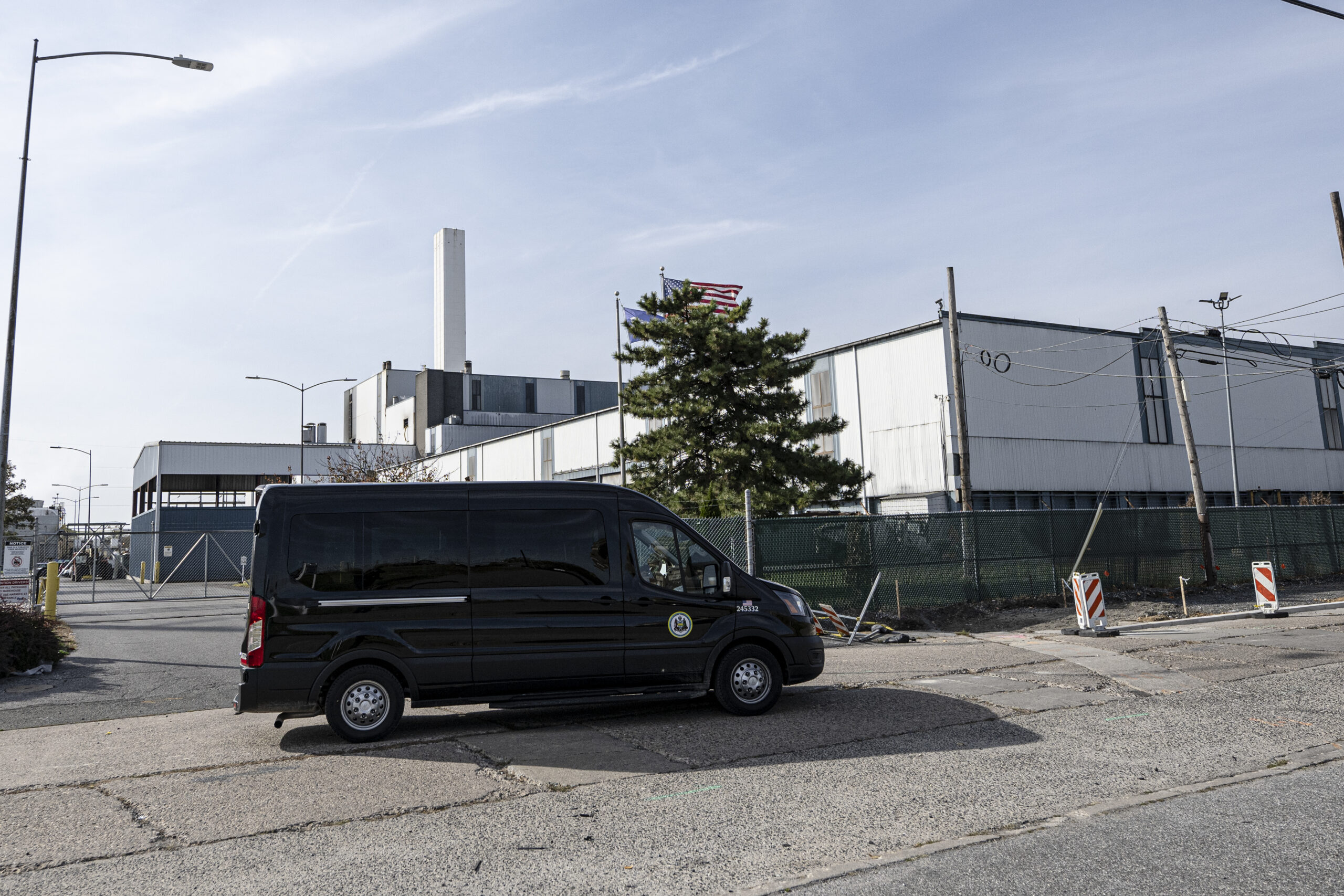
The Reworld incinerator in Chester, Pa., on Friday, Nov. 7, 2025.
“Burning Philadelphia’s trash is making Chester, Philadelphia, and other communities around our region sick,” Gauthier has said, pointing to elevated rates of asthma and other ailments and a legacy of “environmental racism” in Chester. The low-income and majority-Black city downriver from Philly has been home to numerous heavy industrial facilities.
Reworld has said its waste-to-energy facility, which produces some electricity from burning trash, is a “more sustainable alternative to landfilling.”
At a hearing last year, Parker administration officials said the city is including language in its request for proposals for the next contracts that will allow the city to consider environmental impacts. But they asked lawmakers not to vote for a blanket ban on incineration to allow the city to study the issue further.
Parker waiting for Council to reapprove $800 million in bonds for her H.O.M.E. plan
The biggest agenda item left hanging last month when lawmakers adjourned for the winter break was a bill to authorize the Parker administration to issue $800 million in city bonds to fund her H.O.M.E. initiative.
Parker had hoped to sell the bonds last fall, and Council in June initially authorized the administration to take out new debt. But lawmakers made significant changes to the initiative’s first-year budget, especially by lowering income thresholds for some programs funded by the H.O.M.E. bonds to prioritize the lowest-income residents.
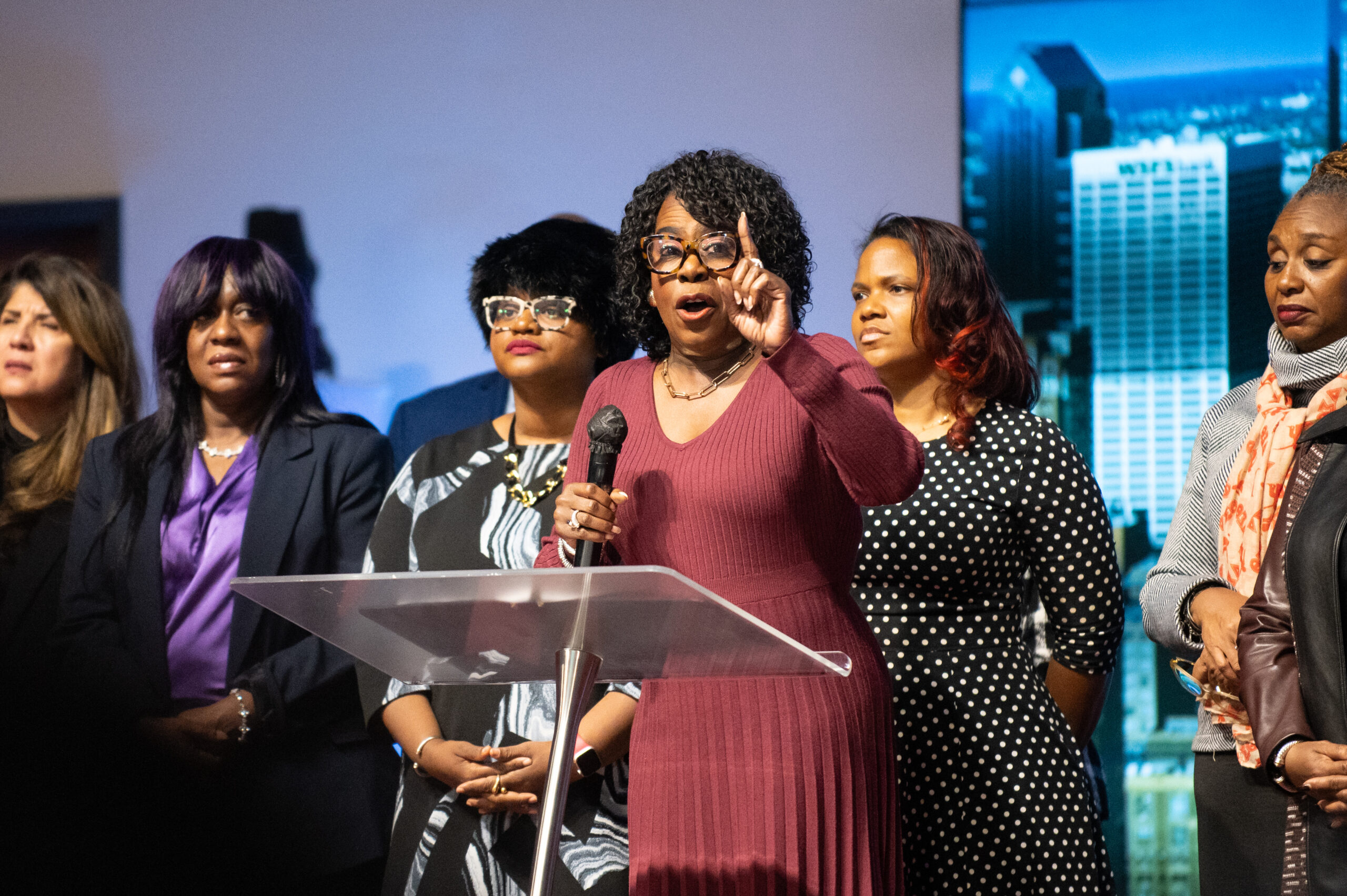
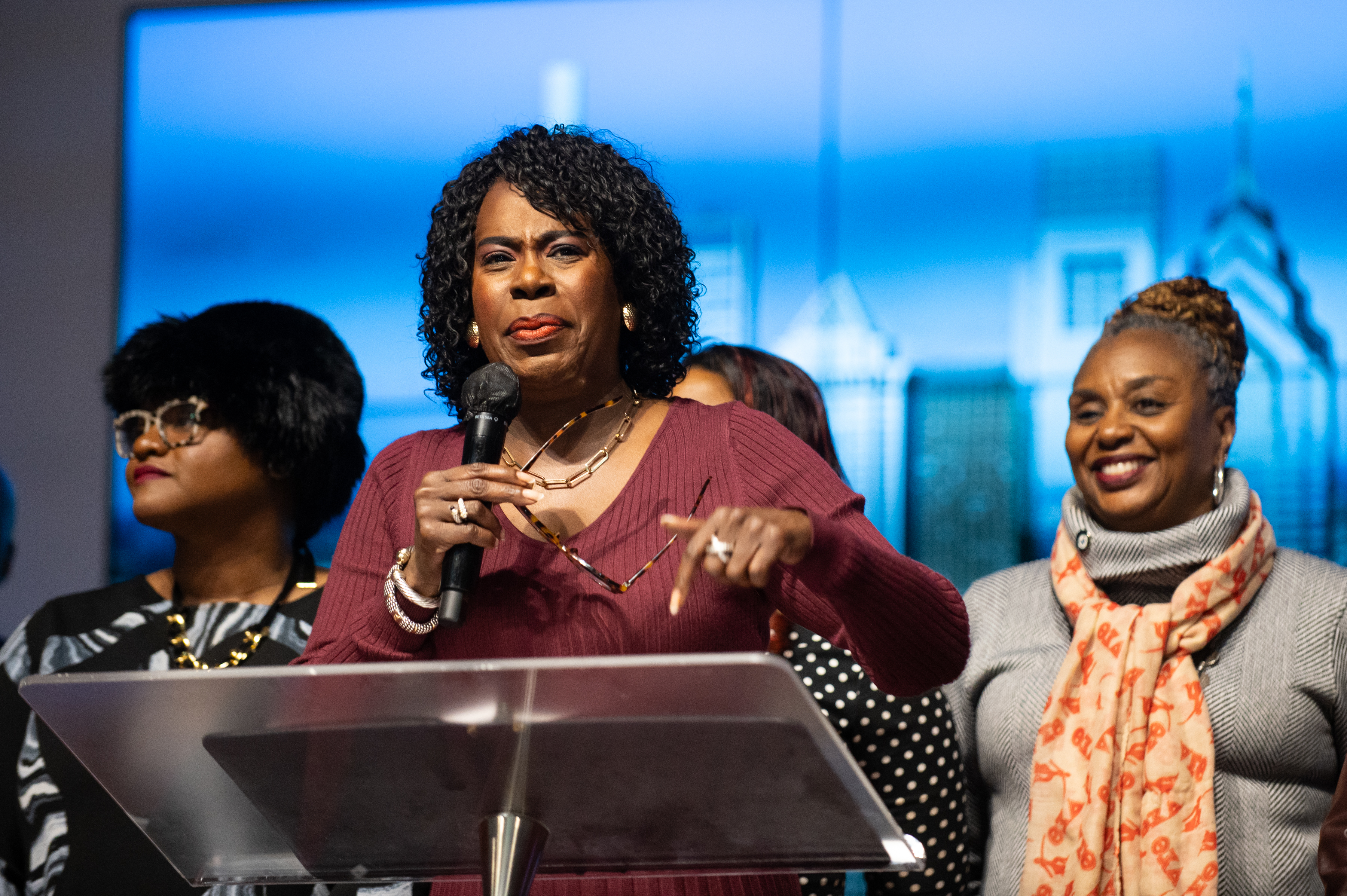
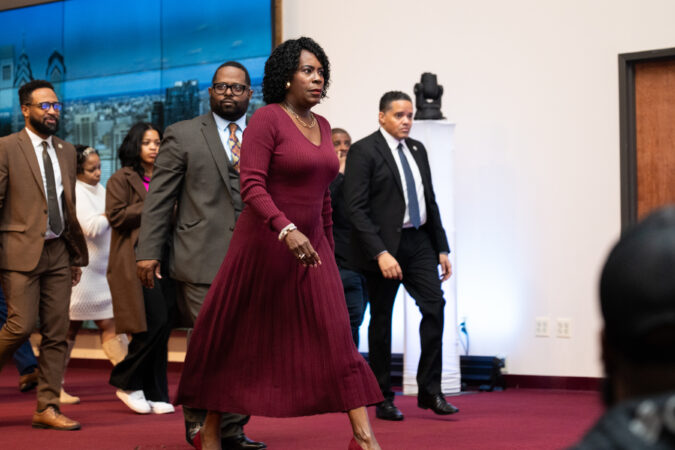
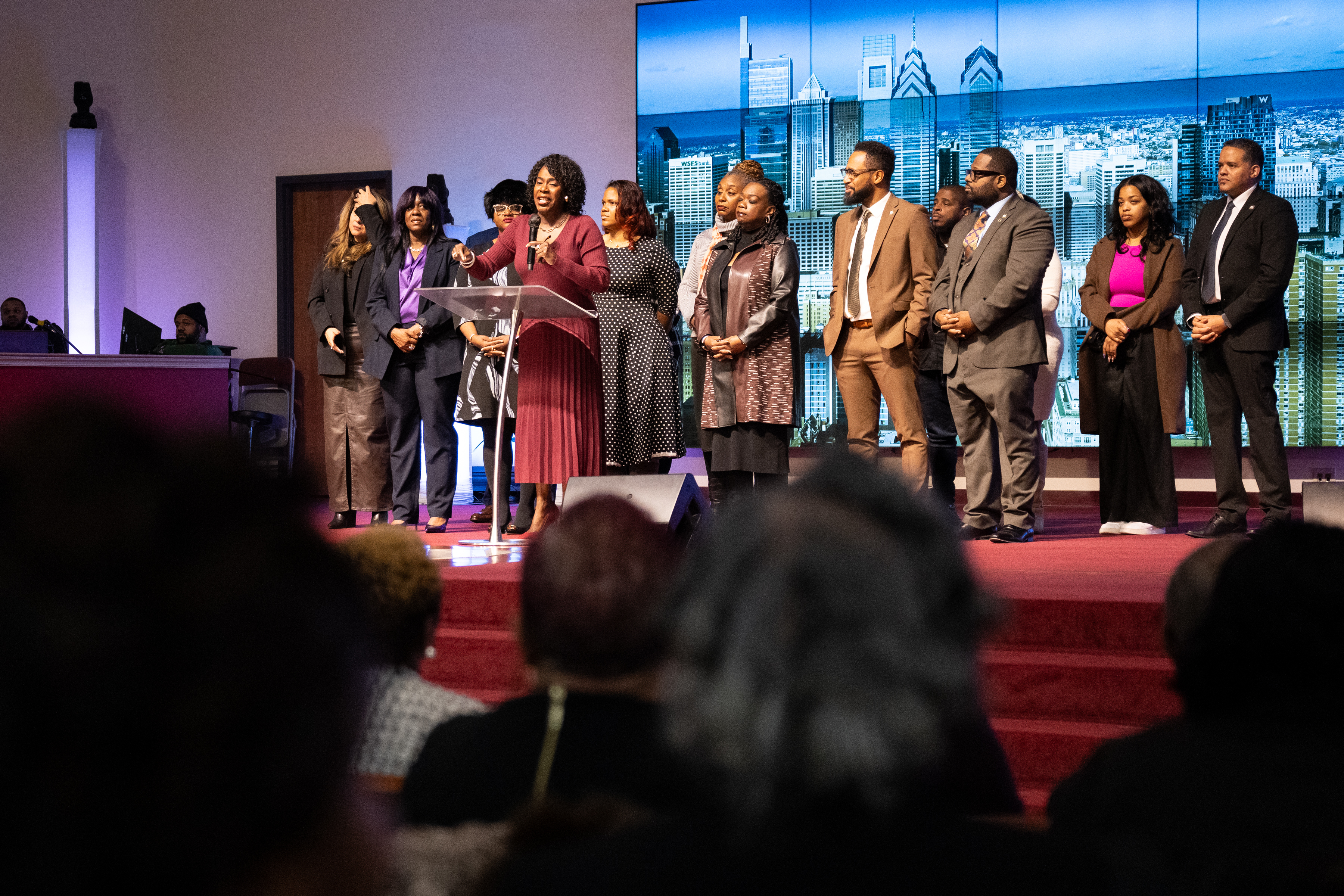
Mayor Cherelle L. Parker speaks to the crowd at The Church of Christian Compassion in the Cobbs Creek neighborhood of West Philadelphia on Sunday, Dec. 7, 2025. Parker visited 10 churches in Philadelphia on Sunday to share details about her H.O.M.E. housing plan.
“Council members have always been supportive of the H.O.M.E. initiative,” Johnson said. “H.O.M.E. advances City Council’s goals to expand access to affordable homeownership for Philadelphians … and to ensure that city housing investments deliver long-term benefits for families and neighborhoods alike.”
Currently, Council members and other city employees are required to quit their jobs to run for higher office. Lawmakers have tried several times over the last 20 years to repeal the law, but they have been unsuccessful. Changing the rule requires amending the city’s Home Rule Charter, which a majority of voters would have to approve through a ballot question.
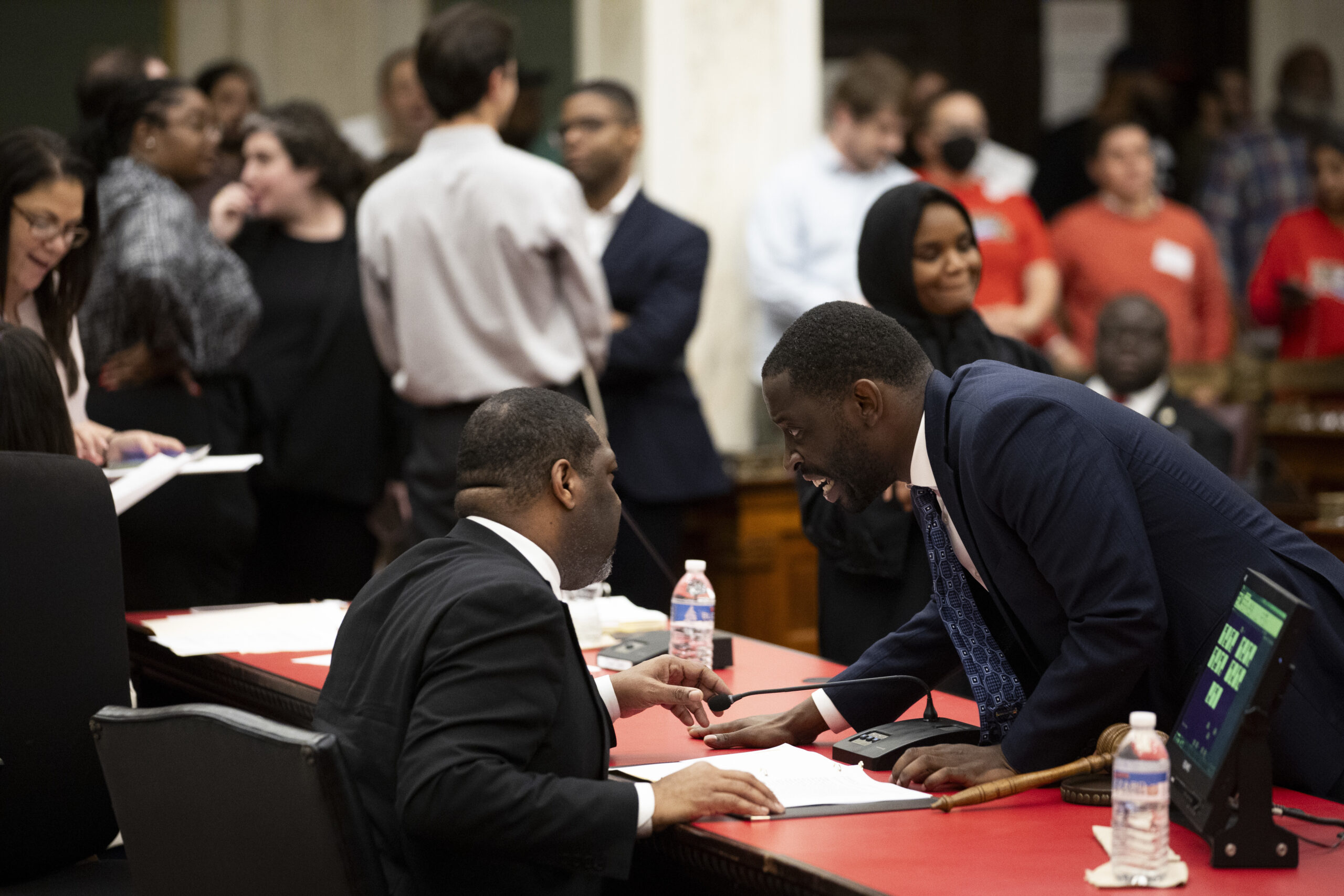
Council President Kenyatta Johnson talks with Councilmember Isaiah Thomas at City Hall on Wednesday, Dec. 11, 2024 in Philadelphia.
The latest attempt, spearheaded by Councilmember Isaiah Thomas, would not entirely repeal the resign-to-run law, but instead would narrow it to allow elected officials to keep their seats only if they are seeking state or federal office, such as in Congress or the state General Assembly. Council members who want to run for mayor would still have to resign.
Thomas, a Democrat who represents the city at-large and is rumored to have ambitions of running for higher office, plans to make minor amendments to the legislation this spring, a spokesperson said, before calling it up for a final vote. The goal, Thomas has said, is to pass the legislation in time for a question to appear on the May primary election ballot.
The mayor, however, cannot control what other local elected officials say about national politics, and Trump’s immigration crackdown appears to be stirring stronger local reaction heading into his second year in office.
Meanwhile, progressive Councilmembers Rue Landau and Kendra Brooks this year are expected to introduce legislation aimed at constricting ICE operations in Philadelphia.
Demonstrators from No ICE Philly gathered to protests outside the U.S. Immigration and Customs Enforcement, office at 8th and Cherry Street, Philadelphia, Tuesday, Jan. 20, 2026.
It is not yet clear what the lawmakers will propose. But Brooks, who has called on Parker to take a firmer stand against Trump, recently criticized the Philadelphia courts for allowing agents to seize suspects leaving the Criminal Justice Center. She said officials who in her view have failed to stand up to ICE are engaged in “complicity disguised as strategic silence,” and she vowed to force those who “cooperate with ICE in any way” to testify in Council.
“Cities across the country are stepping up and looking at every available option they have to get ICE out,” Brooks said at a news conference earlier this month. “In the coming days, you will hear about what my office is doing about city policy. These demands must be met or face the consequences in Council.”
Landau added Philly cannot allow “some masked, unnamed hooligans from out of town [to] come in here and attack Philadelphians.”
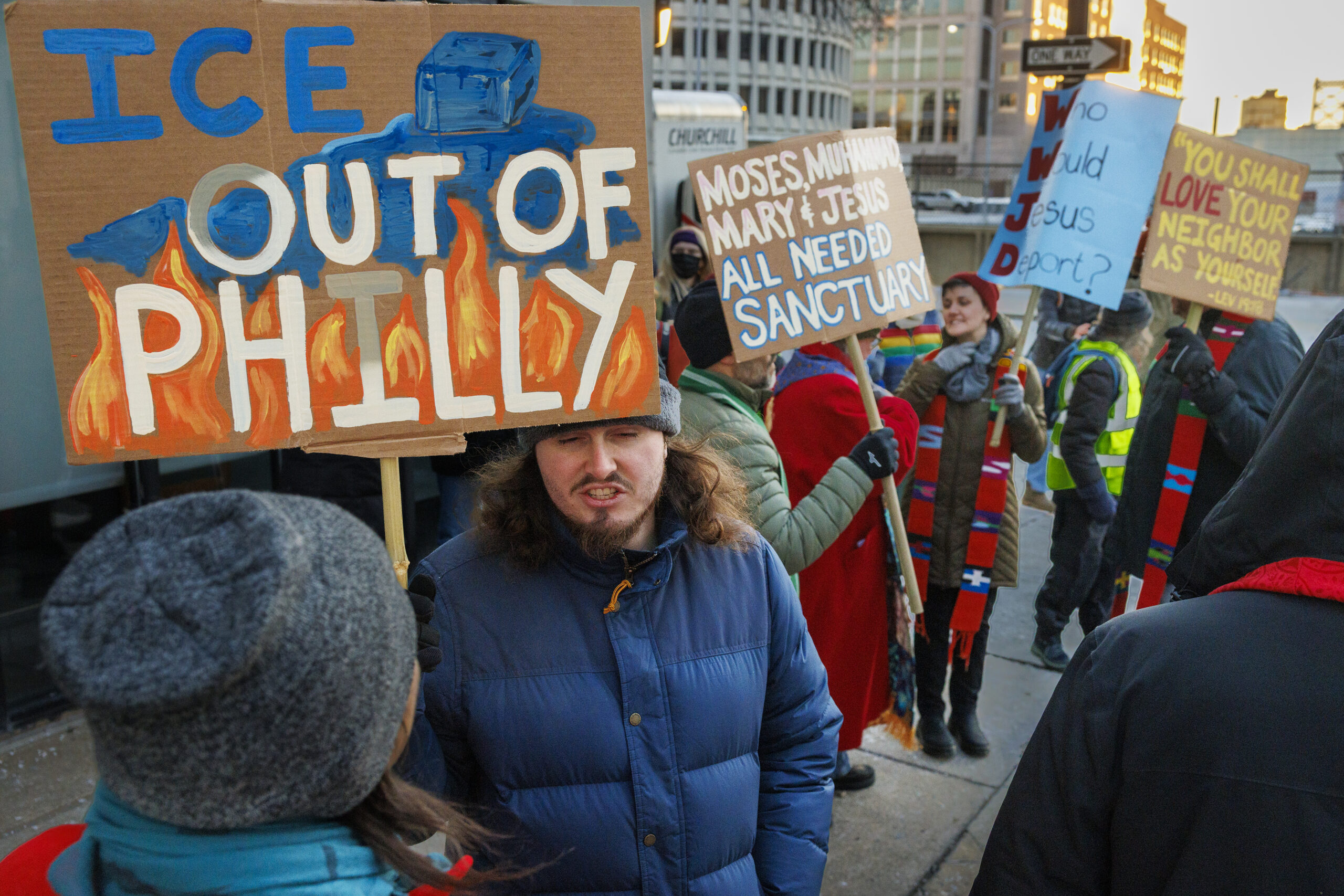
“We are saying, ‘ICE out of Philadelphia,’” she said.
Parker has said her administration has made no changes to the city’s immigrant-friendly policies, but she continues to be tight-lipped about the issue.
The Pennsylvania Office of Open Records last week ruled in favor of an Inquirer appeal seeking to force Parker’s administration to disclose a September letter it sent the U.S. Department of Justice regarding local policies related to immigration.
The administration still has not released the document. It has three more weeks to respond or appeal the decision in court.
South Philly arena proposal still in the works
After the 76ers abandoned their plan to build a new arena in Center City a year ago, the team announced it would partner with Comcast Spectacor, which owns the Flyers, to build a new home for both teams in the South Philadelphia stadium complex.
The teams announced last fall they have selected an architect for the new arena, which is scheduled to replace the Spectacor-owned Xfinity Mobile Arena, formerly the Wells Fargo Center, in 2031.
If the teams are still planning to open the new arena on their previously announced timeline, legislation to green-light the project could surface as soon as this spring. But so far, there has been no sign of movement on that front.
“There is currently no timeline for introducing legislation to build a new Sixers arena in South Philadelphia,” said Johnson, whose 2nd District includes the stadium complex. “At the appropriate time, my legislative team and I will actively collaborate with Mayor Cherelle L. Parker’s administration on drafting any legislation related to the Sixers arena before it is introduced in City Council.”
School closings and 2026 celebrations also on the horizon
In addition to its legislative agenda, Council this year will likely be drawn into discussions over school closings and the high-profile gatherings expected to bring international attention to Philly this summer.
Johnson said his agenda includes “making sure Philadelphia has a very successful celebration of America’s 250th Birthday that results in short and long-term benefits for Philadelphia.”
Staff writers Jake Blumgart, Jeff Gammage, and Kristen A. Graham contributed to this article.
When State Sen. Sharif Tahir Street converted to Islam 30 years ago, he already had a Muslim name.
His father, John F. Street, who would go on to become Philadelphia’s mayor, gave his son a Muslim name when he was born in 1974 despite raising him in the Seventh-day Adventist Church, an evangelical Christian sect in which members of the Street family hold leadership roles to this day.
As the senator tells it, his father initially considered adopting the name Sharif himself — not because he was considering converting to Islam but because he wanted to embrace the movement of Black Americans reclaiming pre-slavery identities.
Instead, the elder Street, who had already built a reputation as a rabble-rousing activist, kept his name and dubbed his son Sharif, which in Arabic means noble or exalted one.
The story would be surprising if it weren’t from the idiosyncratic Street family, which has played a unique outsider-turned-insider role in Philly politics for decades. The late State Sen. Milton Street was the senator’s uncle, and Common Pleas Court Judge Sierra Thomas Street is his ex-wife.
This year, with Sharif Street a frontrunner in the crowded Democratic primary to replace retiring U.S. Rep. Dwight Evans, the family could make more history: If elected, Sharif Street would become the first Muslim member of Congress from Pennsylvania.
A Street win would mark another milestone in political representation for Philadelphia’s large Muslim community, an influential constituency that already includes numerous elected officials and power players.
But in characteristic Street fashion, that potential comes with a twist. Street has relatively moderate views on the conflict in Gaza and would likely stand out from Muslim colleagues in Congress like U.S. Reps. Ilhan Omar (D., Minn.) and Rashida Tlaib (D. Mich.), progressives who regularly denounce Israeli aggression.
To be sure, Sharif Street, 51,is highly critical of Israeli Prime Minister Benjamin Netanyahu and the war in Gaza. But he is also quick to defend Israel’s right to exist as a Jewish state, favors the two-state solution, and counts many prominent Philadelphia-area Jews among his friends and political supporters.
“Guess what? Benjamin Netanyahu is not the only leader of a major country in the world that’s committed war crimes, because Donald Trump has done the same thing,” Street said last week at a Muslim League of Voters event. ”But none of us would talk about getting rid of the United States of America as a country.”
For Muslim voters who view the Middle East crisis as a top political concern, this year’s 3rd Congressional District race sets up a choice between one of their own and a candidate whose politics may more closely align with their views on Gaza: State Rep. Chris Rabb, a progressive who has been endorsed to succeed Evans by the national Muslims United PAC.
“F— AIPAC,” Rabb said at a recent forum, referring to the American Israeli Public Affairs Committee, which has spent large sums and wielded aggressive tactics to unseat lawmakers it views as antagonistic to Israel. “They are destroying candidates’ lives because they don’t like that we’re standing up to them, that we are actively and consistently acknowledging that there is a genocide in Gaza.”
Rabb, who is not religious and said he respects all faiths, is hoping that Muslim voters will embrace his stance on the issues.
“Making history is not the same as being on the right side of history,” Rabb said in a statement.
‘Embrace all of the texts’
Street said his Adventist upbringing immersed him in an Old Testament-rooted Christianity that led to a growing curiosity about all the Abrahamic faiths. As he got older and read more, he realized that he didn’t view Judaism, Christianity, and Islam “as separately as other people do.”
“I do believe that the Abrahamic religions were all correct. In no way were they all supposed to be separate religions,” he said. “Islam allowed me to embrace all of the texts, which I had already decided to do.”
Before converting, Street said he was embraced by the Muslim community in Atlanta when he was a student at Morehouse College. He officially converted after returning to Philly to earn his law degree at the University of Pennsylvania.
Street’s Shahada, the creed Muslims take when joining the faith, was administered by Imam Shamsud-din Ali, his father’s friend. (Years later, Ali was one the elder Street’s associates being targeted by federal investigators when an FBI listening device was discovered in the mayor’s office in 2003. The episode created a firestorm around John Street’s ultimately successful reelection campaign that year, and Ali was later convicted on fraud and racketeering charges.)
For many Muslim converts, the religion’s dietary strictures, such as abstaining from pork and eating Halal food, take some getting used to, Sharif Street said. That wasn’t a problem for him.
“Islam has a lot of rules — unless you were Seventh-day Adventist,” he said, referring to the denomination discouraging followers from eating pork, shellfish, and numerous other foods.
Street said his faith has guided him as an individual and public servant.
“Islam, for me, focuses on my personal responsibility,” he said, and “the idea that man’s relationship with God is and always was.”
His views on the unity of the Abrahamic religions also guide his perspective on the Middle East, he said.
“I recognize that there won’t be peace for the state of Israel without peace for the Palestinian people, but there won’t be peace for the Palestinian people unless there’s peace for the state of Israel at some point,” he said.
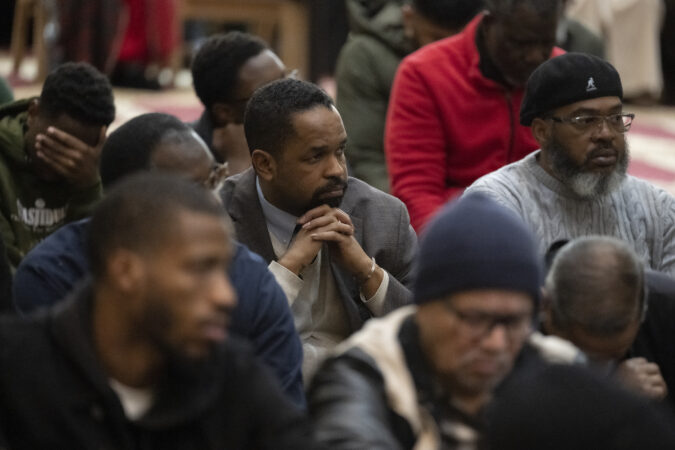
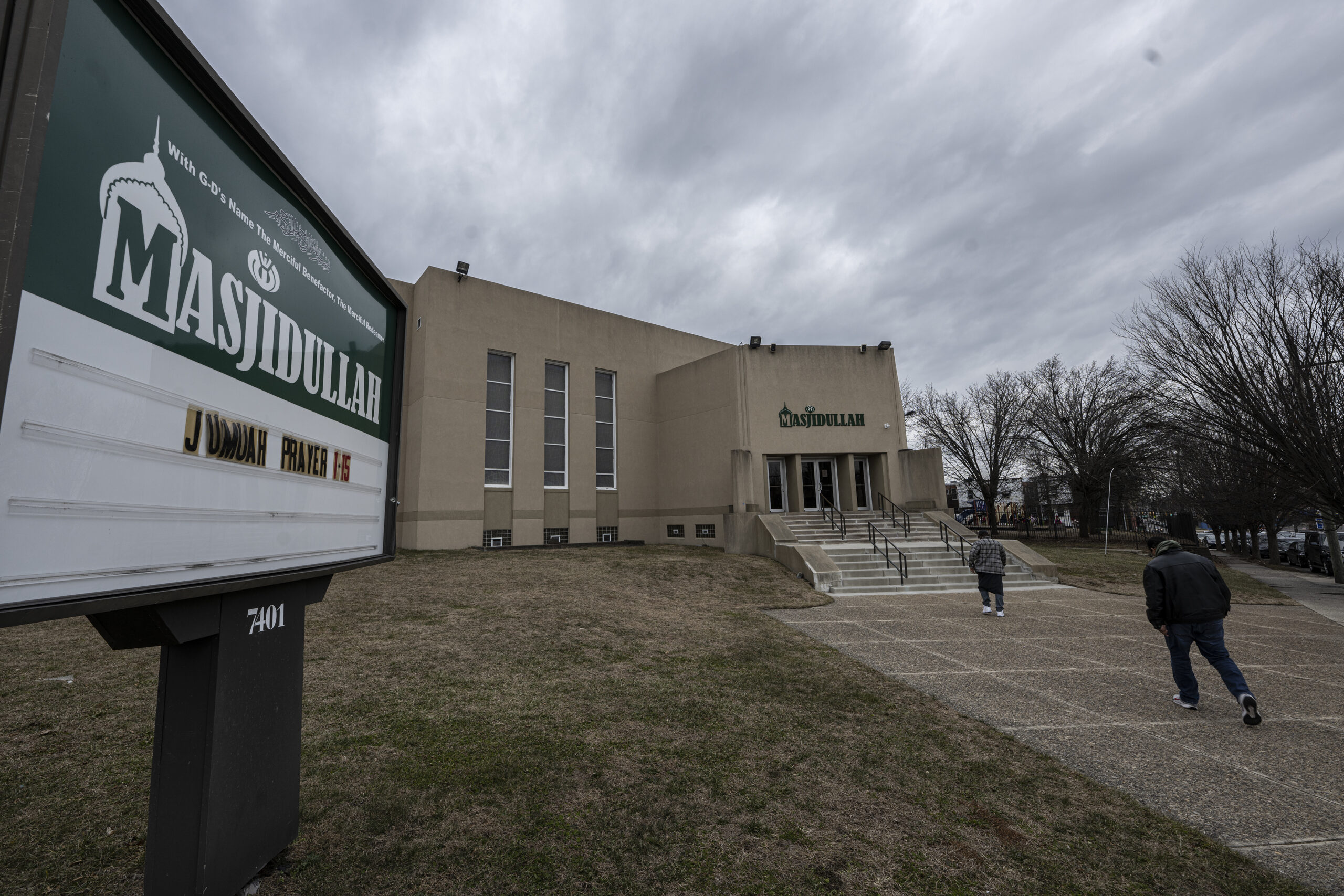
Sharif Street participates in Friday prayer at Masjidullah mosque recently.
Like elected officials of other religions, Street’s politics do not perfectly align with the teachers of Muslim leaders.
On a recent Friday, Street attended Jumu’ah, the weekly afternoon prayer service, at Masjidullah in Northwest Philadelphia. A sign at the entrance reminded Muslims that abortion and homosexuality are against Islam’s teachings.
“Almost every one of Philadelphia’s Muslim political leaders … are all pro-civil rights, including LGBTQ [rights] and pro-choice,” he said. The sign, he said, represented “some members of the faith leadership who are reminding us … that is not the stance of the official religious community.”
For Street, that type of dissidence hits close to home.
His father, he said, became Baptist after being “kicked out” of the Seventh-day Adventist Church for officiating a same-sex marriage in 2007 between Micah Mahjoubian, a staffer for Sharif Street, and his husband, Ryan Bunch.
The Seventh-day Adventist Church in North Philadelphia did not respond to a request for comment.
’One of the most Muslim urban spaces’
Ryan Boyer, who heads the Philadelphia Building and Construction Trades Council and is Muslim, likes to say he’s proud that members of his faith are so integrated into local politics that their religious identities are often overlooked.
“We’re a part of the fabric,” said Boyer, whose politically powerful coalition of unions has endorsed Street. ”To me, it’s not that big of a deal. We’re here.”
For Boyer, that means Muslim candidates like Street are judged based on their merits, not their identities.
“He’s Muslim,” Boyer said of Street. “Well, is he smart? Does he present the requisite skills and abilities to do the job? … The answer is yes.”
Other Muslim leaders in the city include: Sheriff Rochelle Bilal; City Councilmembers Curtis Jones Jr. and Nina Ahmad; former Police Commissioner Sylvester Johnson; and City Commissioner Omar Sabir, who is Boyer’s brother.
Philly has also sent several Muslim lawmakers to Harrisburg, including current State Reps. Keith Harris, Jason Dawkins, and Tarik Khan.
Although the community is less well-known nationally than those in Michigan or Minnesota, Philadelphia has one of the nation’s oldest and largest Muslim populations, with about 250,000 faithful in a city of 1.6 million, according to Ahmet Tekelioglu, executive director of the Council on American-Islamic Relations’ Philadelphia branch.
By some estimates, Philly’s Muslim community has the highest percentage of U.S.-born followers of any major American city, thanks to the conversion of thousands of Black Philadelphians in recent decades. While many came to the faith through the Nation of Islam movement, a vast majority of Black Muslims in Philadelphia now practice mainstream Sunni Islam, Tekelioglu said.
Add in thriving immigrant communities from West Africa and the Middle East, and Philadelphia is “one of the most Muslim urban spaces” in the country, he said.
“Within a few minutes of walking in the city, you come across a visibly Muslim individual,” said Tekelioglu, whose nonprofit group does not make political endorsements. “Halal cheesesteak, ‘the Philly beard,’ and such — these also have overlap with the Muslim community and [the city’s] popular culture.”
The Middle East and the 3rd Congressional District
As a lawmaker, Street has been instrumental in forcing the Pennsylvania Interscholastic Athletic Association to allow Muslim girls competing in sports to wear hijabs and in leading the School District of Philadelphia to recognize Eid al-Adha and Eid al-Fitr as official holidays.
That record is part of why he bristles at the Muslims United PAC’s endorsement of Rabb.
“We cannot allow other people to hijack our community and hijack our issue because it’s Black people, it’s Muslims dying in Philadelphia right now, and some of these candidates don’t have anything to say about that,” Street said at the Muslim League of Voters event. “Some of them even got some fugazi Muslim organizations to endorse them.”
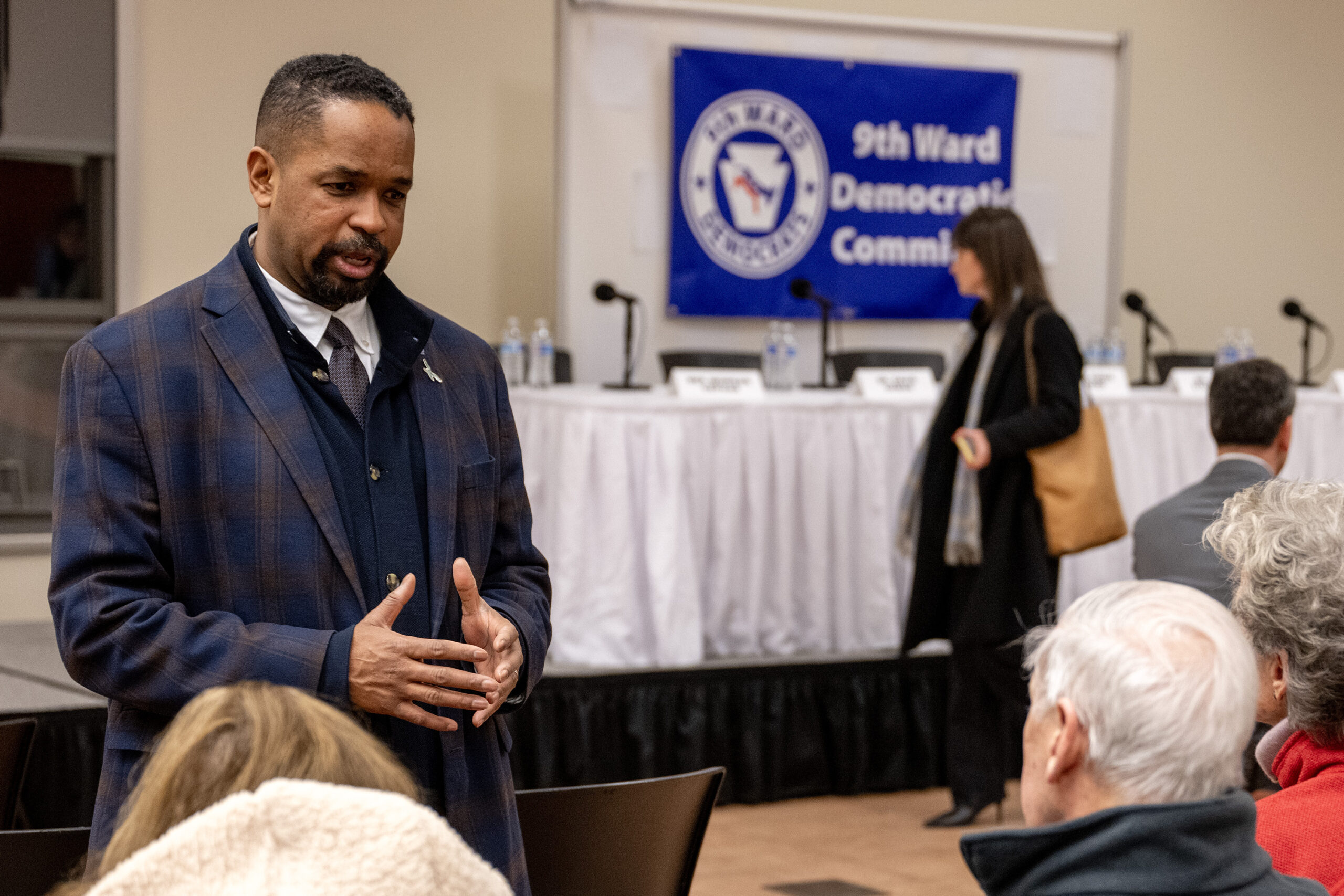
State Sen. Sharif Street appearing at a forum hosted by the 9th Ward Democratic Committee in December.
At another recent forum, the 3rd District Democratic candidates were asked whether they support legislation stopping U.S. weapons shipments to Israel after more than two years of conflict that has seen an estimated 70,000 Palestinians die in Gaza.
Street, who traveled to Israel and Palestine in 2017, said the one-minute response time wasn’t enough to unpack the complicated issues, and none of the other candidates gave straightforward answers — except Rabb, who said he supported the proposal.
“There are no two sides in this when we see the devastation,” Rabb said.
In an interview, Street said his comparatively moderate views on the crisis and his relationships with Jewish supporters will allow him to “play a really constructive role” in Congress.
“We need more people who can talk to both the Jewish and Muslim communities,” he said. “We need people who can have a nuanced conversation and do it with some real credibility.”
Tekelioglu said he has observed Muslim voters moving away from “identity politics” and toward “accountability-based political stance.” That evolution has accelerated during Israel’s war in Gaza following the Hamas attacks on Oct. 7, 2023, he said.
“Oct. 7 and everything that’s going on has made everything a bit more clear,” he said. “This doesn’t make it such that the Palestine issue is the main dealbreaker, but overall I see a trend of moving away from the identity politics.”
The real question, he said, is, “Are they going to represent our interests?”
Mayor Cherelle L. Parker on Thursday announced the launch of the Philadelphia Free Business Tax Preparation program, which will cost the city $7.5 million per year and is expected to last at least five years.
The new service is aimed at helping the estimated 50,000 firms this year that will need to start paying Philadelphia’s business income and receipts tax, or BIRT, following the elimination of a popular exemption that primarily benefited small companies.
How does the Philadelphia Free Business Tax Preparation program work?
Under the new program, the city will connect eligible business owners with private tax professionals who will be reimbursed by the city for each client they assist.
There will be no cost to the businesses. Only firms based in Philadelphia that made less than $250,000 in 2024 are eligible.
The tax professionals will help firms file city, state, and federal tax returns — not just BIRT.
“We want you to be ready,” acting Commerce Director Karen Fegley said Thursday. “Let’s be ready for growth.”
The city so far has contracted with 19 tax preparation companies to participate in the program, and more may join, Fegley said. Together, they offer services in 13 languages, including English, Spanish, Mandarin, Cantonese, Arabic, Italian, Russian, Japanese, and French.
Why did the BIRT exemption end?
For about a decade, firms with less than $100,000 in revenue from transactions in Philadelphia were exempt from paying the BIRT.
That policy, championed by former City Councilmembers Maria Quiñones Sánchez and William J. Green IV, effectively allowed the tens of thousands of companies making less than that amount to forgo paying the tax at all. During the COVID-19 pandemic, former Mayor Jim Kenney’s administration waived the requirement for those firms to file local business tax returns, providing administrative relief for business owners.
But Parker last year convinced Council to eliminate the tax break after a Massachusetts-based medical device manufacturer that does business in Philly sued the city, saying the policy violated the Pennsylvania Constitution’s uniformity clause.
The policy change will place a significant burden on Philadelphia’s smallest businesses, both financially and administratively, given the complexity of BIRT. The tax includes two levies: Firms must pay 5.71% of their net income, or profits, made in Philadelphia, as well as 0.141% of their gross receipts, or total income, in the city.
Council last year approved a Parker plan to gradually lower the tax rates over 13 years and eventually eliminate the gross receipts levy, but the most significant cuts are years away.
Parker reiterated Thursday that she supported the $100,000 exemption. But she said her administration settled the lawsuit after determining the city would likely lose in court, potentially risking a ruling that City Solicitor Renee Garcia has said could require the city to repay past tax revenue.
Critics of the mayor’s decision to settle the case last year questioned why she didn’t fight harder to preserve the tax break. Parker said Thursday that would have been irresponsible.
“I said, ‘That’s why I’m the mayor and you’re not,’ because we can’t just do that and put the fiscal stability of the city at risk,” Parker said Thursday at a City Hall news conference.
To help ease the transition, Parker last year proposed using the money the city expected to gain as a result of more firms paying the BIRT — about $30 million — to fund business assistance programs. Council increased that total to about $47 million before approving the city budget in June.
Most of the money will go to existing programs that provide direct grants for businesses, such as the Philadelphia Catalyst Fund, Fegley said. But Parker is also using the funds to launch the tax preparation service.
“Small businesses are the backbone of Philadelphia, I don’t care what neighborhood you live in,” Parker said.
What else is being done to help small businesses?
In response to the elimination of the $100,000 BIRT exemption, Councilmember Mike Driscoll last year introduced a bill to exclude certain types of businesses — entrepreneurs, sole proprietorships, and businesses with one employee — from the tax.
Many of Philadelphia’s smallest companies are one-person operations, and Driscoll said he aimed to relieve them of the cost and burden of filing a BIRT return.
Parker on Thursday said her administration is still evaluating the proposal, noting that it would cost the city revenue and could potentially run up against the same legal hurdle as the $100,000 BIRT exemption: the uniformity clause, which requires Pennsylvania businesses, property owners, and individuals of the same “class” to be taxed at the same rate.
“We will work through that with his team, and do the cost analysis,” Parker said, adding that, “more importantly,” the city’s law department will work “to make sure we are not in violation of the Commonwealth of Pennsylvania’s uniformity clause.”
Council is expected to consider the measure in a committee hearing in the first half of the year.
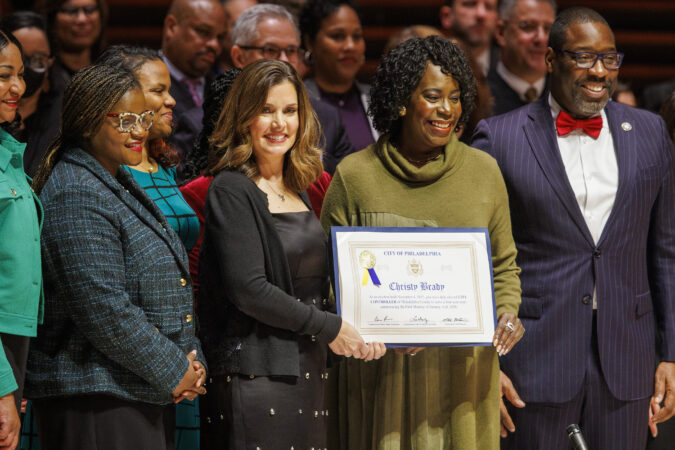
After being sworn in to her first full four-year term, City Controller Christy Brady on Monday vowed to examine spending related to Mayor Cherelle L. Parker’s signature housing program and to probe whether Philadelphia is maximizing economic opportunities at its waterfront and port.
“In my next term, I will be expanding my oversight of the mayor’s housing program to ensure every dollar borrowed is used as intended and is properly accounted for,” Brady said of Parker’s Housing Opportunities Made Easy, or H.O.M.E., initiative during a swearing-in ceremony at the Kimmel Center for the Performing Arts.
“And with our waterfront and ports being one of our strongest economic assets, we will be focusing on efforts to ensure they can deliver the greatest financial impact,” Brady said.
Holt denies that it has engaged in anticompetitive conduct, and a company spokesperson said growth is “vitally important to the future of our business and our region.”
“Holt Logistics has been a key driver of the Port’s growth over the last decade, as witnessed by the fact that in the last month alone, two new lines of business have chosen to call Philadelphia, largely because of the service they receive,” spokesperson Kevin Feeley said.
Additionally, Brady promised to help prevent fraud in city spending related to this year’s Semiquincentennial festivities.(Parker has pledged to dole out $100 million, focusing on neighborhood-based programming across the city, for major events in 2026, including the nation’s 250th birthday.)
And in her capacity as chair of the Philadelphia Gas Commission, Brady said she would “conduct a thorough review of PGW’s operations.”
Brady also sits on the city Board of Pensions and Retirement and said she would “collaborate with [City] Council to adjust benefit structures.”
The controller’s office audits city agencies and investigates allegations of fraud, waste, and abuse.
Brady was appointed by former Mayor Jim Kenney to serve as acting controller in late 2022 when Rebecca Rhynhart resigned to run for mayor. Brady in 2023 won a special election to serve the remaining two years of Rhynhart’s term.
Seeking her first four-year term, Brady ran unopposed in the May 2024 Democratic primary and easily defeated Republican Ari Patrinos in the November general election.She was sworn in Monday with District Attorney Larry Krasner, who is beginning his third term, and city judges who were on the ballot last year.
Philadelphia Common Pleas Court Judge Natasha Taylor-Smith introduced Brady and administered her oath of office.
Many past controllers have had less-than-friendly relationships with the mayors they served alongside, a natural dynamic for an office tasked with investigating the executive branch. The post has also served as a springboard for many politicians with higher aspirations.
Rhynhart, for instance, repeatedly clashed with Kenney by publishing critical reports on city accounting practices and a lack of accountability in spending on anti-violence groups. She touted those probes to brand herself as a reformer while running in the 2023 mayor‘s race, finishing second behind Parker in the Democratic primary.
Brady’s background and leadership style are different. She has spent three decades rising through the ranks in the controller’s office and was deputy controller in charge of the audit division before being appointed to the top job. And since becoming controller, she has made a point of working collaboratively with Parker’s administration.
Dignitaries and elected officers before start of 2026 Inaugural Ceremony at the Kimmel Center Performing Arts on Monday.
“As promised, I hit the ground running. We’ve achieved far more than many thought was possible,” Brady said. “A key to that success has been collaboration with Mayor Parker and Council President [Kenyatta] Johnson to ensure that our recommendations resulting from the findings in each report, review, and audit that we issue are implemented.”
Parker acknowledged their collaboration in her remarks during Monday’s ceremony.
“Controller Brady, thank you for not being wrapped up in politics and staying focused on the work of the controller’s office,” Parker said. “You do it by communicating with our office. No ‘gotcha’ moments.”
In her relatively short political career, Brady has received strong support from influential groups in local politics, especially the building trades unions and the Democratic City Committee. On Monday, she gave shout-outs to numerous politicos, including former U.S. Rep. Bob Brady, who chairs the city’s Democratic Party and is not related to her.
“I want to thank the people who have made this possible, including my friends in labor, Congressman Bob Brady, my friends in the Democratic Party, the business community, and all the voters who put their trust in me,” Christy Brady said.
And this year, Parker let go of three top city officials amid ordeals fraught with internal drama for the administration.
Despite those tribulations, the big-picture news for the city has been positive, and the mayor can credibly say she has made progress on her oft-repeated campaign slogan of making Philadelphia “the safest, cleanest, greenest big city in the nation with access to economic opportunity for all.”
"We are doing the best we can with what we have," Parker said in an interview Friday. “Nobody’s resting. We’re not having a party and celebrating because we know we have a lot more work to do.”
story continues after advertisement
The year encapsulated Philadelphia’s reality under Parker’s administration: big wins on major goals despite signs of tension in City Hall.
“She’s getting some pushback, but statistically, in terms of the crime rate, the city is doing better,” said David Dunphy, a Pennsylvania Democratic political consultant and lobbyist. “In terms of the biggest issues that voters had in the last election, it’s inarguable there’s been vast improvement.”
“There’s a general sense Philadelphia is coming back and making a rebound [following the pandemic], and she gets a lot of good will from the sense she enjoys being mayor,” Dunphy said.
Here are six takeaways from Parker’s second year in office.
story continues after advertisement
Big wins, with caveats
Parker made public safety the central themeof her 2023 mayoral campaign. And two years in, the news could hardly be better.
The Police Department as of last week had recorded 212 homicides in 2025, and is on pace to close the year with the lowest level since 1966.
But it’s not just the reduction in violence.
Philadelphia’s poverty rate has dipped below 20%, and it no longer has the highest rate among the 10 largest U.S. cities. The city’s finances are in the best shape they have been in since the early 1990s fiscal crisis. Perhaps most shockingly, there even appears to be progress in Kensington, where Parker has pledged to end the neighborhood’s notorious open-air drug market.
Onedrug dealer told The Inquirer the city’s crackdown has cut his weekly revenue from about $1,500 to $400. And the city isexpanding its Riverview Wellness Village, a first-of-its-kind initiative from Parker’s administration to house and provide treatment for people in recovery.
There are plenty of caveats to all of those headline accomplishments. The decline in homicides began shortly before Parker took office. Philadelphia still has the lowest median income of the 10 biggest cities in the country. The city’s finances, buoyed by a growing economy, have been growing more stable for decades. And the Kensington drug market isn’t disappearing anytime soon.
Workers from Philadelphia’s Community Life Improvement Program clean the intersection of Kensington Avenue and Somerset Street on Jan. 22, 2025.Jessica Griffin / Staff Photographer
But mayors are judged by how the city changes during their tenures. And so far, Parker is likely pleased with her progress on the most important measuring sticks.
“She communicated during the campaign and throughout the beginning of her term a set of priorities that everybody can repeat: the safe, clean, green, inclusive growth or opportunity for all,” said Pedro A. Ramos, a former city managing director who now leads the Philadelphia Foundation, a major philanthropy. “Two years in, I think any fair scorecard has got to give her pretty good grades.”
Tom Gralish / Staff Photographer
Strike highlighted Parker’s strengths and weaknesses
During the first major city worker strike in 40 years, the mayor stoodatop the Philadelphia Art Museum steps in sweltering heat as what were unofficially dubbed “Parker piles” of uncollected trash mounted around the city.
“I will not put the fiscal stability of the city of Philadelphia in jeopardy for no one,” Parker said, explaining her refusal to meet demands for bigger wage increases for the union representing trash collectors, 911 dispatchers, water treatment plant employees, and other blue-collar workers. “If that means I’m a one-term mayor, then so be it.”
Philadelphia Mayor Cherelle L. Parker discusses the AFSCME DC 33 municipal workers strike at a news conference at the Philadelphia Art Museum on Thursday, July 3, 2025.Kaiden J. Yu / Staff Photographer
But the strike was also the most divisive moment in Parker’s tenure, fuelingtensions within organized labor and leading to accusations that Parker didn’t care about the workers’ plight.
Teamsters Local 107 president Bill Hamilton said the mayor encouraged workers to cross picket lines and “should be ashamed of her actions and her words during this strike.”
“She doesn’t have any friends on my side of labor, I can tell you that,” he said.
Parker said that being at odds with labor was “abnormal” for her and that she was disappointed the strike led some people to believe she was not a strong supporter of organized labor.
”Was I disappointed? Yes, because it wasn’t reflective of my career and everything I had done," Parker said in the interview. “But I also respect the union.”
Alejandro A. Alvarez / Staff Photographer
Parker’s don’t-poke-the-bear strategy with Trump
In August, the U.S. Department of Justice sent so-called sanctuary cities a letter threatening to cut off federal funding if they did not get in line with the Trump administration’s immigration policies.
Like many other Democratic leaders, Boston Mayor Michelle Wu excoriated the Trump administration andpublished a scathing response to the DOJ.
But Parker said nothing. Her administration refused to release Philadelphia’s response to the DOJ letter and is still fighting an Inquirer request for the document under Pennsylvania’s Right to Know Law.
Since President Donald Trump took office in January, Parker has rarely if ever uttered the president’s name in public. Supporters sayher don’t-poke-the-bear approach has saved Philadelphia from Trump’s wrath and kept National Guard troops out of the city while theywere deployed to other major U.S. cities. Critics say it shows an unwillingness to stand tall during a dangerous moment in American history.
Read More
Mayor Parker’s restraint with Trump is both calculation and gamble as the president escalates against blue cities
Mayor Cherelle L. Parker has avoided overtly criticizing Trump, even as the president has sought to deploy troops to other American cities against the will of their Democratic mayors.
“We are living in actual fascism,” said City Councilmember Nicolas O’Rourke, of the progressiveWorking Families Party. “It’s clear the mayor is being calculating. That is not the tactic I would take. I think we need to be more pronounced.”
Parker said her goal was to focus on delivering on her campaign promises without letting politics get in the way.
“If there were ever a time that the citizens of Philadelphia needed a mayor to stay laser-focused on doing everything we can with the scarce resources that we have … that time is now,” Parker said. “Some people won’t like it. That’s very unfortunate, but I have to lead in a way that’s authentic to me.”
Kaiden J. Yu / Staff Photographer
A remarkable level of control over Philly’s political arena
In one meeting in June, Council approved the initial legislation for the H.O.M.E. initiative, a $6.8 billion city budget, and a 13-year plan to gradually cut the business tax — all while makingminimal changes to Parker’s proposals.
For a moment, it appeared Council President Kenyatta Johnson had gotten rolled by Parker. But Johnson, standing next to Parker at a celebratory news conference, revealed they had been working together all along, even before Parker unveiled her budget and tax plans three months earlier.
“Folks want to see us fight,” Johnson said. “A while ago … we had the John Street-Ed Rendell partnership when the city thrived. We haven’t seen it since then, quite frankly.”
City Council President Kenyatta Johnson and Mayor Cherelle L. Parker at City Hall on Thursday, Dec. 19, 2024.Tom Gralish / Staff Photographer
It’s difficult to overstate the significance of the comparison. In the 1990s, Mayor Ed Rendell and Council President John F. Street formed an unlikely partnership that was credited with saving the city from the brink of bankruptcy. No mayor and Council presidenthave worked together as closely since.
The moment highlighted how Parker has amassed a remarkable level of control over institutions in Philadelphia government and politics that have tripped up past mayors’ agendas.
In City Hall, Parker’s alliance with Johnson has seen her agenda largely sail through the legislature. City Controller Christy Brady, whose office has historically been a thorn in the sides of mayors, ran for reelection this year on a platform of working with, and not against, the Parker administration.
And the unions for city workers,which have inflicted lasting wounds on past mayors including Rendell and Michael A. Nutter, are all locked in multi-year contracts after Parker’s successful stand against DC 33’s strike.
Politically, the centrist Democratic mayor has a seemingly unbreakable bond with some of the most influential labor organizations in the city — the Philadelphia Building and Construction Trades Council, the Carpenters union, and the Service Employees International Union Local 32BJ — and she is usually in lockstep with Democratic City Committee Chair Bob Brady.
Additionally, potential threats from both the right and the left have not materialized, with the Philly GOP in the political wilderness and the local progressive movement appearing to have lost some momentum.
Parker said the support she has built in Philadelphia politics is not a strategy but the product of her career in public service, which began when she was a teenager interning for former Councilmember Marian Tasco.
“These are organic relationships. These are not like forced marriages,” Parker said. “I’ve been working with all of these people my whole life.”
Council took its most notable stand against Parker during a fight this fall over legislation related to the H.O.M.E. initiative.Johnson sided with lawmakers who wanted to prioritize funding for housing programs for the city’s lowest-income Philadelphians, defying Parker’s plan to spread the benefits more evenly across low- and middle-income households.
But Council still supports the major tenets of H.O.M.E., and Johnson made clear earlier this month the episodedid not damage his alliance with Parker. He even made an unsolicited early endorsement for her 2027 reelection campaign.
“I’m pretty confident that our mayor will be reelected — that’s my personal opinion — and will have my support to get reelected,“ said Johnson, the only senior Democratic member of Council who did not endorse Parker in the 2023 mayor’s race.
Despite facing little political opposition, Parker clearly still sees enemies in many corners.
The mayor bristles at dissent even when she wins, and has recently has been handing out to journalists, administration officials, and others copies of a 98-page book titled Performative Outrage: How Manufactured Fury Undermines Local Government and Public Service.
“It is truly our blueprint,” chief of staff Tiffany W. Thurman said. “It reminds us that noise isn’t the same as progress. … We don’t chase the outrage of the moment. We chase the outcomes of a lifetime.”
The city in August spent $423.80 to order copies for every cabinet member, according to records for the mayor’s office credit card.
Parker signed a copy of the book, which was given to a reporter, writing: “Great read!”
Tom Gralish / Staff Photographer
Signs of discord within the administration
Parker freely admits she is a tough boss. And the strains of working under her demanding leadership style started to show in her second year.
But Anderson, the former DEI director, pushed back on that account, and asserted that DeSantis’ investigation was a pretext for Parker to fire her because she had pushed for the administration to take a more aggressive stance against Trump’s DEI crackdown. Her comments took on new salience whenThe Inquirer revealed this fall that Parker had quietly ended the city’s longstanding policy of prioritizing city contracts for businesses owned by women, people of color, or disabled people due to legal threats from conservative groups.
Parker said personnel issues come with the territory of running a city.
“Things happen. You can’t have a government with 29,000 employees where stuff doesn’t just happen,” she said. “For me, it’s how does my administration navigate those challenges? … Do we get paralyzed into inaction? And the answer is no.”
Ramos added that Parker will be judged by outcomes, not internal disputes.
“At the end of the day, people only care about palace intrigue if they don’t see results,” Ramons said.
Tom Gralish / Staff Photographer
A ‘big mahoff’ emerges
When she became mayor, Parker said she didn’t want one top aide to be the “big mahoff” in her administration. Instead she appointed a “big three” — a trio of senior advisers.
Two years later, it looks like Parker ended up with a “big mahoff” after all.
Thurman, the chief of staff, appears to have become the central figure in the administration, and her portfolio of responsibilities has continually grown over the last two years.
The shift started in 2024, when Thurman took over the 76ers arena negotiations from then-Chief Deputy Mayor Aren Platt. And when Platt resigned in October of that year, Thurman took over the oversight of all the city’s planning and development projects. This year, her portfolio has grown to include the Neighborhood Community Action Centers, a Parker initiative to establish 10 “mini-City Halls” throughout the city, where residents can request services like graffiti removal and traffic-calming measures.
Chief of staff Tiffany W. Thurman takes questions from City Council on Nov. 12, 2024.Alejandro A. Alvarez / Staff Photographer
Parker objected to the notion that her “big three” structure had gone by the wayside and emphasized that the two chief deputy mayors who make up the rest of the triumvirate continue to have “a hell of a lot” in their portfolios. Sinceré Harris, who was Parker’s 2023 campaign manager, oversees labor, legislative affairs, and intergovernmental relations. Vanessa Garrett-Harley leads on child welfare, early education, DEI, and other issues.
Thurman could instead be seen as a first among equals, given that Harris and Garrett-Harley still report directly to the mayor.
But at Friday’s event, Thurman introduced Parker with a flattering speech, and the mayor in turn made clear that Thurman has a central role in her administration.
“Tiffany Thurman is not just my chief of staff. She is the chief air traffic controller” of the administration, Parker said Friday. “Nothing moves in this city without her. I don’t make a decision without her.”
Tom Gralish / Staff Photographer
Staff Contributors
Reporting: Sean Collins Walsh, Anna Orso, Jake Blumgart, Ellie Rushing, and Ryan Briggs
Editing: Oona Goodin-Smith, Ariella Cohen, and Addam Schwartz
Digital Editing: Patricia Madej
Subscribe to The Philadelphia Inquirer
Our reporting is directly supported by reader subscriptions. If you want more journalism like this story, please subscribe today
All 17 of Philadelphia’s City Council members have indicated they will seek reelection in 2027. And if they follow through, that election would mark the first time all members simultaneously asked voters for new four-year terms since the city’s Home Rule Charter was adopted in 1951.
The 2027 primary is more than a year away, and plenty can happen before then. Past lawmakers have declined to seek reelection for a variety of unexpected reasons, such as receiving an appointment to another post or being indicted. And while incumbents usually prevail in Council elections, several current members are likely to see serious challengers.
Still, if the incumbents all run and prevail, Philadelphia could potentially see for the first time in its modern political history a cohort of Council members serving more than four years together.
In some ways, it makes sense that this crop of Council members might be the first to achieve that feat. Council is remarkably inexperienced at the moment, with 12 of its members having served less than two terms. And it appears no current Council members are expected to resign their seats to run for other offices until after 2027, given that none have entered the race for Philadelphia’s open U.S. House seat next year and that Mayor Cherelle L. Parker is in her first term and unlikely to face a reelection challenge from Council’s ranks.
“It’s no surprise this City Council all wants to return,” said John C. Hawkins, a City Hall lobbyist. “They are much younger and newer than previous iterations, and they’re feeling confident that they and their leadership are representing their constituents well.”
While many voters may not start paying attention to who is running for Council until much closer to the primary, potential candidates and political insiders are already hard at work trying to figure out which seats will be open or vulnerable and who might run in the 2027 election cycle.
In addition to being an opportunity for special interests to wine and dine the state’s political class, Pennsylvania Society also serves as a breeding ground for rumors about future elections. This year, there was little if any talk of vacancies emerging on Council.
O’Neill to seek 13th term
In the run-up to every recent city election cycle, speculation has swirled around whether Councilmember Brian J. O’Neill, the body’s lone Republican member and by far its longest-serving, will run for reelection.
O’Neill, who turns 76 later this month and was first elected in 1979, said he is up for the challenge of extending his own record by seeking a 13th four-year term.
“I am definitely running,” O’Neill said Monday. “If my health or my wife’s changed, that would be a big factor. Right now, she’s pretty healthy, and so am I.”
Councilmember Brian J. O’Neill (center) speaks during a hearing in City Council Monday, Oct. 27, 2025 on former Mayor Jim Kenney’s tax on sweetened beverages. Behind him, front to rear, are: Councilmembers Kendra Brooks, Jimmy Harrity, Nina Ahmad, and Rue Landau.
O’Neill said he decided long ago that if he could no longer knock on doors while campaigning, he would call it quits. After shoveling snow for more than two hours last weekend, O’Neill said, he is confident that won’t be a problem.
What is most remarkable about O’Neill’s longevity is that he is one of the few district Council members who regularly face opposition. That’s because his Northeast Philadelphia-based 10th District is the only one in deep-blue Philly that could be considered purple.
In fact, a majority of voters registered with parties in the district are now Democrats. But O’Neill has successfully swatted away a series of Democratic challengers, doing so most recently in 2023 against Gary Masino, who led the sheet metal workers’ union.
O’Neill, who avoids partisan political debates in Council and focuses almost entirely on Northeast Philly neighborhood issues, expects another challenge in 2027. But he is not concerned.
“I try not to think about it because I could never have predicted any of the races I’ve had,” O’Neill said. “It’s a waste of energy because no matter who runs against you, they all present different situations.”
The Council members who are viewed as potentially vulnerable include some of the newest and some who must navigate ideologically divided constituencies.
Councilmember Jimmy Harrity, one of seven Council members who represent the entire city, was the last-place finisher among Democrats in the 2023 primary, putting a target on his back for the 2027 primary.
In the last two election cycles, Councilmembers Kendra Brooks and Nicolas O’Rourke of the progressive Working Families Party won at-large seats set aside for minority-party or independent candidates. The GOP, which had held those seats for 70 years, may seek to mount a comeback.
City Council candidates Kendra Brooks and Nicolas O’Rourke celebrate after the Working Families Party declared victory at their election night gathering at Roar Nightclub in Philadelphia, Pa. on Tuesday, Nov. 7, 2023.
Councilmember Cindy Bass, a centrist who represents the 8th District, which includes parts of North and Northwest Philadelphia, narrowly eked out a win over progressive Democrat Seth Anderson-Oberman in the 2023 primary and may see another challenge from the left in 2027.
And Councilmember Jeffery “Jay” Young Jr., who represents the North Philadelphia-based 5th District, has already drawn a potential challenger.
Young won his seat without opposition after being the only candidate to qualify for the ballot in a bizarre scenario triggered by former Council President Darrell L. Clarke’s last-minute decision not to seek reelection in 2023.
Council members do not have to make their reelection campaigns official for more than a year, and they gave a variety of answers when asked if they planned to seek new terms.
“I can’t see a reason why I wouldn’t,” said Council President Kenyatta Johnson, who represents the 2nd District in South and Southwest Philadelphia.
“I’m strongly considering yes,” said Councilmember Curtis Jones Jr., whose 4th District includes parts of West and Northwest Philadelphia.
Councilmember Isaiah Thomas, who holds an at-large seat, said yes, and added, “What I like is the fact this legislative body as a collective is so young.”
Councilmembers Nina Ahmad, Harrity, O’Rourke, Jamie Gauthier, Rue Landau, Quetcy Lozada, and Mike Driscoll all simply affirmed they would likely run. And numerous City Hall insiders told The Inquirer they expect all members to seek new terms.
Councilmember Rue Landau speaks with Councilmember Curtis Jones Jr. on first day of City Council on Jan. 23, 2025, Caucus Room, Philadelphia City Hall.
Young gave perhaps the most puzzling answer.
“It’s not up to me to make that decision,” he said. “It’s up to the people of the 5th District.”
Asked how he would discern whether voters wanted to keep him before the next election, Young said he would gauge support by doing outreach in his district. But he also said he would personally like to serve another four years.
“I like doing my job,” he said.
2031 mayoral election race on horizon
Even if they all win reelection, it is unlikely that this group of Council members will stay together for future elections.
One major driver of Council turnover is the City Charter’s “resign to run” rule, which requires city employees to step down if they want to campaign for an office other than the one they hold. Consequently, mayoral elections are a major driver of resignations.
Mayor Cherelle L. Parker is with City Council President Kenyatta Johnson (far right) and supportive Council members in the Mayor’s Reception Room at City Hall Thursday, Dec. 19, 2024 after Council gave final approval to the Sixers arena.
Assuming Parker wins reelection in 2027, she will be unable to seek a third consecutive term in 2031, and several current members are likely to throw their hats in the ring to replace her.
Johnson, Thomas, Gauthier, and Majority Leader Katherine Gilmore Richardson are all seen as potential contenders for that race.
Philadelphians without retirement savings plans through their employers could soon have access to a plan through the city after lawmakers approved legislation Thursday to enable the novel program to move forward.
City Council members unanimously passed legislation that creates PhillySaves, which is modeled on state-facilitated “auto-IRA” programs that allow people to invest through payroll deductions at no cost to their employers.
Voters would have to approve the creation of an investment management board through a ballot question, which is slated to appear in the May primary election.
The measure was part of a flurry of legislation Council considered during a marathon meeting Thursday, its last session of the year before legislators reconvene in mid-January. Lawmakers passed dozens of pieces of legislation touching on issues including housing, public health, small-business growth, and public safety.
In addition to approving the retirement savings program, Council approved legislation to:
Ban mobile outreach groups that provide medical care and support services to people in addiction from a swath of Kensington, the epicenter of the city’s drug crisis.
Prohibit so-called reservation scalpers, or websites that allow users to reserve tables at coveted restaurants and resell them without the permission of the businesses.
Here’s a breakdown of what else happened on Thursday:
H.O.M.E. inches forward over Parker’s objections
City Council on Thursday approved a key piece of legislation related to Mayor Cherelle L. Parker’s Housing Opportunities Made Easy, or H.O.M.E., initiative, the latest step in the drawn-out fight over how the city should spend the proceeds from the $800 million in city bonds the administration plans to sell to support the program.
Mayor Cherelle L. Parker speaks to the crowd at The Church of Christian Compassion in the Cobbs Creek neighborhood of West Philadelphia on Sunday, Dec. 7, 2025. Parker visited 10 churches in Philadelphia on Sunday to share details about her HOME housing plan
Over Parker’s objections, Council successfully pushed to lower income eligibility thresholds, prioritizing poorer residents. For instance, lawmakers ensured that 90% of the bond proceeds that will be spent on the Basic Systems Repair Program will go to households making 60% of area median income, which is about $71,640 for a family of four.
“This budget opens city housing programs to ensure that more than 200,000 low-income and working-family households have a chance to get into a program that provides housing stability and economic mobility and increases,” said Councilmember Rue Landau, who helped lead the push to lower the income thresholds. “This is a transformational investment, a win-win.”
Supporters react as City Council approves a key piece of legislation related to Mayor Cherelle L. Parker’s H.O.M.E. initiative Thursday, Dec. 11, 25 on the last day of the 2025 session.
A separate but related piece of legislation — an ordinance authorizing the city to sell the bonds — also needs to pass before the administration can take on debt for the initiative. That proposal, which won committee approval Wednesday, is expected to come to the Council floor in January.
In a statement Thursday, Tiffany W. Thurman, Parker’s chief of staff, thanked Council for its vote.
“We look forward to continuing conversations with Council President Kenyatta Johnson and members of City Council in the weeks ahead, and to fulfilling Mayor Parker’s strong vision to save Philadelphia’s rowhomes,” she said.
Council waters down a bill on training for security officers
Council approved a bill requiring private security guards in Philadelphia to go through 12 hours of training when they are hired and an additional eight hours of training every subsequent year.
But the final version of the bill, authored by Councilmember Isaiah Thomas, has been significantly watered down by amendments following a legislative showdown between the Service Employees International Union Local 32BJ, which championed the original version, and real estate and private security industry leaders, which said it was overly onerous and costly.
Thomas’ original bill required security guards to receive 40 hours of training upon hiring, and it prohibited employers from conducting the training for their own workers. Instead, the instruction had to be provided by a nonprofit — potentially including a labor union. SEIU 32BJ, one of the most influential unions in the city, represents building services workers, including security guards.
The amended version, however, allows employers to conduct the training after getting approval for their program from the Philadelphia Office of Worker Protections — a major relief for business leaders.
The new version, which now heads to Parker’s desk, also exempts security guards for bars and restaurants from the training requirements, and pushes back the bill’s effective date from Jan. 1 to March 1.
An inquiry into DEI contracting changes is coming next year
City Council next year will examine Parker’s decision to end its long-standing policy of prioritizing women- and minority-owned businesses in city contracting and replace it with a system favoring “small and local” firms.
Johnson authored a resolution allowing the Committee of the Whole, which includes all 17 members, to look at the history of minority contracting policies in the city and “the rationale, design, and anticipated effects” of Parker’s new policy. The resolution was approved in a unanimous vote, and a hearing will likely be scheduled in the first half of 2026.
Race- and gender-conscious government policies have been targeted by conservative legal groups following a 2023 U.S. Supreme Court decision ending affirmative action in college admissions. The Inquirer revealed in November that Parker quietly ended the city’s 40-year-old contracting policy earlier this year due to the likelihood it would be challenged in court.
The mayor has said her new “small and local” policy will accomplish many of the goals of the old system because many small Philadelphia businesses are owned by Black and brown residents and have faced roadblocks to growth.
Attorneys hired by the city, however, had recommended a race- and gender-neutral policy of favoring “socially and economically disadvantaged” businesses, according to administration documents obtained by The Inquirer.
Lawmakers will get the chance to weigh in on that decision next year.
A controversial zoning change passes for University City
Council on Thursday also approved Councilmember Jamie Gauthier’s controversial University City zoning overlay, which seeks to regulate how higher education institutions dispose of property.
The legislation has been diluted from its original form, and it now regulates the sale of property over 5,000 square feet in University City — which would largely affect only universities themselves.
Councilmember Jamie Gauthier in chambers as City Council meets Thursday, Dec. 11, 2025, on the last day of the 2025 session.
Gauthier has further amended the legislation to exclude healthcare institutions. Among other things, the bill would require that property owners have building permits in hand before they are allowed to move forward on demolitions.
A sale of land would also trigger review by the Philadelphia City Planning Commission.
The legislation is part of Gauthier’s outraged response toSt. Joseph’s University’s sale of much of its West Philadelphia campus to the Belmont Neighborhood Educational Alliance, a nonprofit that operates charter schools. The organization is led by Michael Karp, who is also one of the larger student-housing landlords in the area.
Thomas, a Democrat who represents the city at-large, was the only member to vote against the bill. His vote was a break with the tradition of councilmanic prerogative, in which members generally approve legislation offered by Council members who represent geographic areas when the measure affects only their districts.
Quote of the week
Councilmember Brian J. O’Neill (left) uses his end-of-session speech in City Council Thursday, Dec. 11, 2025 to say goodbye to longtime legislative director Robert Yerkov (right), who is leaving for a job outside government.
That was Councilmember Brian J. O’Neill, Council’s longest-serving member, who is typically its shortest-winded. But on Thursday, he took his time in a speech saying goodbye to longtime legislative director Robert Yerkov, whose last day as a Council staffer is next month.
O’Neill said he was struggling to wrap up his remarks and joked that Council should limit the amount of time that its members can speak. Public commenters are generally limited to three minutes of remarks.
To quote Shakespeare: “Brevity is the soul of wit.”
During a combative hearing on legislation related to Parker’s signature housing initiative, Council President Kenyatta Johnson on Wednesday afternoon refused to allow a vote on an amendment brought by the Parker administration and instead advanced Council’s version of the proposal over the mayor’s objections.
In a voice vote, Council’s Committee on Fiscal Stability and Intergovernmental Cooperation approved its own changes to the legislation — authorizing the city to take out $800 million in city bonds to fund Parker’s Housing Opportunities Made Easy, or H.O.M.E., initiative — without considering the mayor’s requested tweaks.
Councilmembers Brian O’Neill, Anthony Phillips, and Curtis Jones Jr. signaled their support for Parker’s vision by voting against the measure, which now heads to the Council floor for a final passage vote or further amendments, either of which could come as soon as January.
It is unclear how Johnson’s handling of H.O.M.E. will change the tight working relationship Parker and Johnson have maintained since both took office in January 2024. Wednesday’s vote marked their most contentious public disagreement during their tenures. Both officials still agree on many policy goals and have plenty to gain politically from maintaining their alliance.
Philadelphia Mayor Cherelle L. Parker stands beside Council President Kenyatta Johnson (left) after finishing her budget address to City Council in Philadelphia City Hall on Thursday, March 13, 2025.
The dispute between Parker and Council centers on income eligibility thresholds for two of the housing programs that will be funded by bond proceeds: the Basic Systems Repair Program (BSRP), which provides funding for needed home improvements to eligible owners who might be displaced by costly repairs, and the Adaptive Modification Program (AMP), which funds projects to improve mobility for permanently disabled renters and homeowners.
“The whole debate over income eligibility limits for BSRP and Adaptive Modifications is to make sure that we leave no working Philadelphian and no qualifying Philly rowhome owner excluded from these vital programs,” Parker said in a statement Wednesday. “If we don’t save Philly rowhomes, we’re going to become a city of used-to-be neighborhoods, blocks that used to be nice but now are showing signs of age and decline. I will not allow that to happen — not on my watch as Mayor of Philadelphia.”
Councilmember Jamie Gauthier, who chairs the Committee on Housing, Neighborhood Development and the Homeless, said Wednesday’s vote sent the message “that Council takes its job seriously as a steward of taxpayer money in the city of Philadelphia, that we are not here to just rubber-stamp in a proposal, that we’re here to work together.”
Change in fortunes for Parker
Wednesday’s vote appears to mark the first instance of Parker’s hard-line negotiating tactics failing her since she took office. Even when she could not get negotiating counterparts to bend to her will in the past, Parker has largely prevailed.
And in July, when the largest union for city workers went on strike to try to squeeze larger raises out of the administration, Parker stuck to her guns amid increasing pressure to fold as trash piled up across the city and 911 wait times grew longer. The union ultimately folded after an eight-day work stoppage with a new contract that closely aligned with Parker’s last offer before the strike began.
But this time, Parker appears to be out of options to prevent Council from getting its way because she cannot veto another key piece of legislation to keep the housing initiative in motion that needs to pass before the city can issue the bonds. That measure — a resolution setting the first-year budget for H.O.M.E. that received preliminary approval in a Council committee last week — could see final approval as soon as Thursday.
“We’ve got to take care of the people who are most in need, but we can’t penalize the people who are going to work every day, pay their taxes, contribute to the city, and they can’t benefit from home improvement programs,” she said.
Mayor Cherelle L. Parker speaks to the crowd at The Church of Christian Compassion in the Cobbs Creek neighborhood of West Philadelphia on Sunday, Dec. 7, 2025. Parker visited 10 churches in Philadelphia on Sunday to share details about her H.O.M.E. housing plan.
That maneuver did not appear to go over well with lawmakers, who likely did not appreciate the mayor encouraging their constituents to oppose Council’s version of the plan.
Even before chief of staff Tiffany W. Thurman presented Parker’s amendment at Wednesday’s hearing, lawmakers sounded off, with Gauthier saying the administration was spreading “misinformation” and Councilmember Nicolas O’Rourke calling Parker’s approach “Trumpian.”
“It was in response to misinformation being spread during that tour,” said Gauthier, who, along with fellow progressive Councilmember Rue Landau, led the charge to lower the income eligibility thresholds included in H.O.M.E.
Gauthier noted that Council’s version of the bill still increases those thresholds beyond what is offered in existing programs.
“Obviously, the mayor, all of us, have the right to go and talk to our constituents,” she said, “but we have to be operating from a fact-based perspective, and telling folks that the Council proposal excludes them is not factual.”
No vote on Parker amendment
The legislative process for approving the city bond issuance — the centerpiece of Parker’s H.O.M.E. initiative, which she first proposed in March — has been long and tortured.
Council initially approved the bond authorization in June, but lawmakers at that time inserted a provision requiring the administration to get their approval for annual budget resolutions determining how the proceeds will be spent.
Johnson delayed a vote on the first H.O.M.E. budget resolution for months before allowing it to be approved last week by the Committee of the Whole. But lawmakers made major changes over the mayor’s objections, including granting themselves the right to set income thresholds for the initiative’s programs.
It was the first sign that Council was serious about enacting its own ideas even if Parker was not on board and, in Council’s view, would not negotiate. In a twist, lawmakers took their latest stand Wednesday at a time when the mayor’s team came to the table with a significant, albeit last-minute, counteroffer.
Council’s changes to the eligibility requirements for BSRP and AMP would require 90% of the H.O.M.E. bond proceeds for those programs to be spent on households making 60% of Philadelphia’s area median income, which is about $71,640 for a family of four.
Thurman on Tuesday proposed a compromise in which only 60% of bond money would be set aside for those households. She told lawmakers that Parker, in part, wants to ensure H.O.M.E. helps city workers, who are required to live in Philadelphia but often struggle to make ends meet on municipal salaries. (Parker pointed to the H.O.M.E. plan during the strike as evidence she backed city workers despite opposing higher wages.)
Johnson responded that he hopes “one day our city workers are getting paid enough where they don’t have to sign up” for assistance programs.
“You know as well as I do we agree,” Thurman replied, prompting Johnson to cut her off.
“I’m not acknowledging you yet,” Johnson said, referring to a Council hearing procedure in which the chair must recognize speakers.
Tiffany Thurman, Mayor Parker’s chief of staff, takes questions from Council members in 2024.
Parker’s latest offer, which came months into the standoff over H.O.M.E., appears to have been too little, too late.
Phillips — who voted for the Council budget resolution last week but said he has since changed his mind to support Parker’s vision — wanted to call upthe administration’s amendmentfor a vote, he said in an interview.
“This week I changed my mind because that’s where my mind really has been,” said Phillips, who represents the Northwest Philadelphia-based 9th District that Parker held when she was on Council. “The 9th District neighbors — they’ve made abundantly clear that our housing policy needs to reflect them. … They’re long-term homeowners, residents who are on fixed incomes, multigenerational families.”
Under Council rules, only Johnson can call on members to put forward amendments in committee. But instead he blocked it, prompting Jones, Parker’s most vocal ally on Council, to protest.
“We should do the right thing always, even in spite of its inconvenience and time,” Jones said during Council. “Resolutions and amendments need to be introduced so that they can get the light of day and be heard.”
Johnson said he pushed through Council’s version because the mayor’s administration did not engage with him about its new proposal ahead of the meeting.
“Just for the record … I had not officially seen any official amendment prior to this actual hearing,” Johnson said. “The administration just showed up.”
Despite Wednesday’s vote, the fight over H.O.M.E. may not be over. Councilmember Mike Driscoll, a Parker ally who voted to advance the bond authorization, signaled there may be further changes.
“I wanted to keep the HOME initiative process moving,” Driscoll said in a statement, “but still hope to influence a reasonable solution which includes program support for row home Philadelphians.”