Author: Jonathan Zimmerman

  • Graham Platner and the Democrats’ war on expertise

    Graham Platner and the Democrats’ war on expertise

    Let’s suppose you’re the kind of Democrat who — like me — derides Republicans for declaring war on expertise. From vaccines and climate change to tariffs and foreign aid, we say, the GOP has discarded professional knowledge in its quest for power.

    Why, then, do we support candidates who lack expertise — and experience — themselves?

    That’s the question we should be asking about Graham Platner, whose campaign for the Senate is on the ropes following a former girlfriend’s claim that he had sexually assaulted her. Platner has never held elected office; his only political experience was a stint on his town planning board.

    How can we be OK with that? If we value expertise in government, we should want leaders who have demonstrated it. But Democratic voters seem to be moving in the opposite direction.

    In the recent New York primary, they chose Darializa Avila Chevalier to replace five-term, 71-year-old Rep. Adriano Espaillat. The first Dominican American — and the first formerly undocumented immigrant — to be elected to Congress, Espaillat helped win measures protecting delivery drivers and home-based childcare providers. But he lost to a 32-year-old graduate student who has zero political experience.
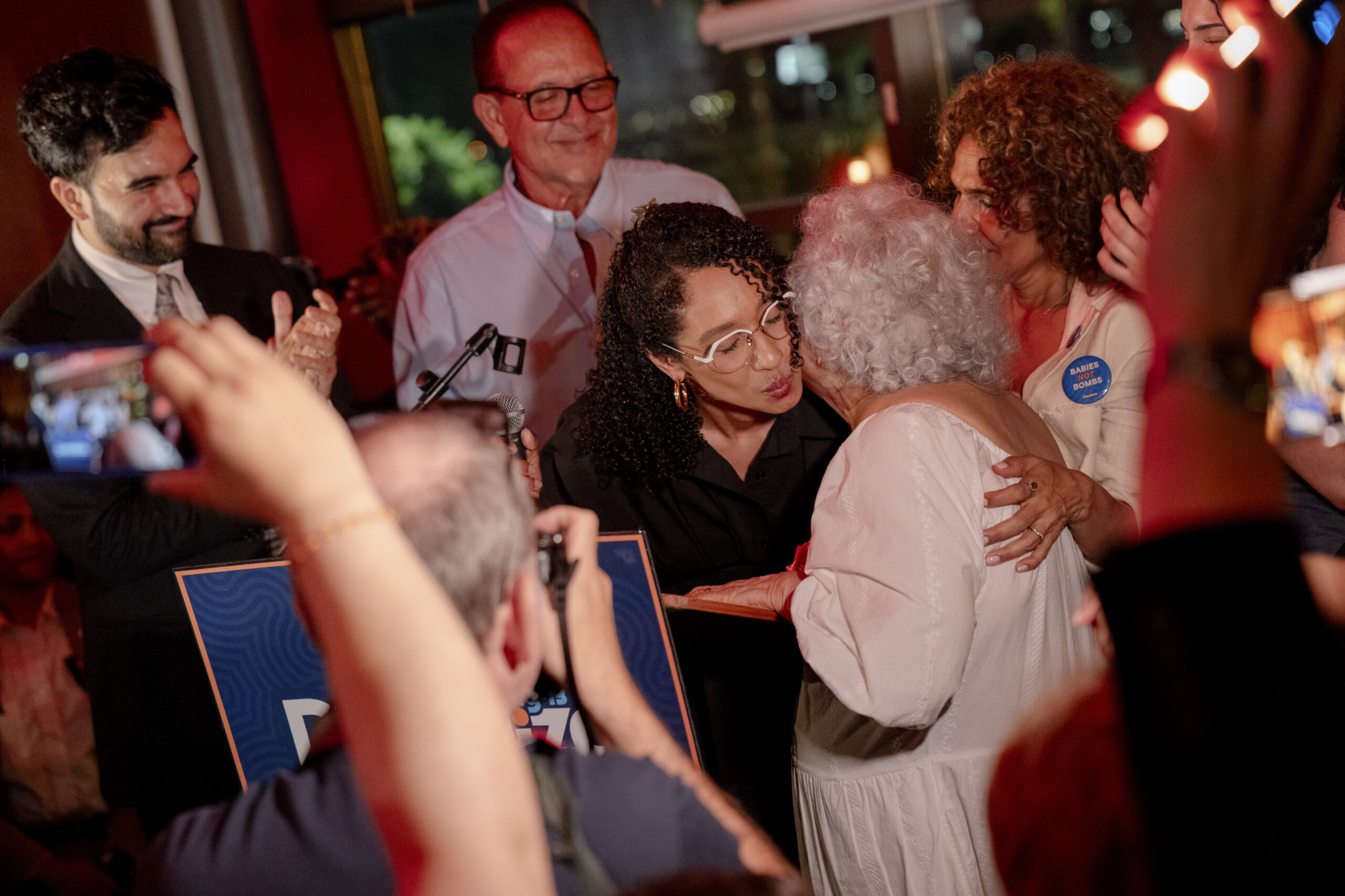
    Darializa Avila Chevalier (center), alongside New York Mayor Zohran Mamdani (left), greets supporters after winning the Democratic nomination for New York’s 13th Congressional District.

    Neither does Melat Kiros, 29, who unseated 15-term Rep. Diana DeGette, 68, in the Democratic primary in Colorado. She has worked as a lawyer and — more recently — as a barista. But when it comes to politics, she is a complete novice.

    Then there’s Platner. A combat veteran and oyster farmer, he ran as an aw-shucks common man. That meant eschewing what he called “the establishment,” including experienced political consultants and pollsters.

    But guess what? It turns out experience matters. The young Democratic operative who recruited Platner to run for Senate bypassed the standard background check, which usually takes a few weeks. He opted instead for a three-day “investigation” by a firm that didn’t even bother to interview Platner or solicit a questionnaire from him.

    To its credit, the firm flagged some of Platner’s controversial Reddit posts. But a more thorough — and, yes, professional — background check would surely have uncovered his “unsettling” behavior around women, which former girlfriend Jenny Racicot described to reporters last month.

    And earlier this week, Racicot said Platner had shown up drunk at her house — after she asked him to stay away — and forcibly had sex with her. Platner denied the charge, but he said he was “mindful of the political reality it would inflict” and that he was taking time to “reflect” on how to proceed.

    Leading Democrats — including Sens. Elizabeth Warren and Bernie Sanders — called on Platner to quit the race, and I agree with them. But I also think the party should reflect on why we continue to elevate candidates who lack any real political experience.

    To defenders of these outsiders, their inexperience is a selling point. If you want to challenge the establishment, the argument goes, you need people who aren’t tainted by it — which was a major sentiment behind then-29-year-old Alexandria Ocasio-Cortez’s upset in New York’s 14th Congressional District in 2018. Ever since, some have argued, that’s the only way to get progressives into power.

    Nonsense. Here in Philadelphia, Chris Rabb scored a stunning victory in the May primary race to replace Rep. Dwight Evans. Like Chevalier and Kiros, Rabb calls himself a democratic socialist. But he also has significant experience in government.

    Jonathan Zimmerman wonders how voters can be OK with supporting Graham Platner, a Senate candidate who has never held elected office.

    Rabb served for five terms in the Pennsylvania House of Representatives, where he sponsored bills to repeal the death penalty and to promote restorative justice in criminal sentencing. He knows his way around Washington, too. Earlier in his career, he worked as an aide to Carol Moseley Braun, the first African American woman in the U.S. Senate.

    Whatever you think of Rabb’s politics, he is qualified for the job. And we should care about that. Just like we shouldn’t make a housing official the director of national intelligence, we shouldn’t make an oysterman a member of Congress. To serve effectively in government — like any other professional role — you need knowledge and experience.

    And if you think otherwise, just look at the guy in the White House. America elected 44 presidents before Donald Trump. Forty-one of them had held prior political office; the other three (Zachary Taylor, Ulysses S. Grant, and Dwight D. Eisenhower) were victorious U.S. war generals.

    By contrast, Trump was a failed real estate baron and a successful reality TV figure. His two presidencies have been monuments to incompetence because he doesn’t believe in expertise. Or in anything, really, except himself. Remember “I alone can fix it”? He didn’t, and he won’t.

    Experts don’t know everything, of course, and they can be wrong (see: COVID-19 lockdowns). But they do know more than the rest of us about what they do. In choosing candidates like Graham Platner, Democrats turned their backs on that principle. Let’s hope they rediscover it before it’s too late.

    Jonathan Zimmerman teaches education and history at the University of Pennsylvania. He is the author of “Schooling Citizens: How Education Can Save Democracy,” which will be published next spring by American Philosophical Society Press.


  • Assailed by right and left, the Peace Corps continues to make an apolitical difference

    Assailed by right and left, the Peace Corps continues to make an apolitical difference

    In 1983, I finished college and joined the Peace Corps. I was sent to Nepal, where I taught English in a remote village. To get there, you took an overnight bus out of Kathmandu and then walked for three days into the Himalayan foothills.

    My Peace Corps journey changed my life. It opened my eyes to cultural differences, and it taught me how to communicate across them. That’s been an invaluable tool for me, as an educator and a human being.

    But when I got to graduate school, I discovered that many of my fellow left-leaning students — and some of their professors — had a decidedly less rosy view of the Peace Corps. It was a neocolonial project, they said, designed to enhance America’s global power and to keep poorer countries in perpetual dependency.

    I’ve been thinking about their comments over the past few days, as news spread that U.S. Rep. Scott Perry (R., Pa.) had proposed to eliminate funding for the Peace Corps under amendments he submitted to a House appropriations bill. The York congressman was also an ardent supporter of Elon Musk’s dismantling of the U.S. Agency for International Development, which Perry called a “piggy bank for far-left causes.”

    Yet, the Peace Corps — like USAID — has also been the target of left-wing attacks, which bear a strong echo to Republican ones. Neither side believes Americans can be a force for good in the world.

    That’s why the Peace Corps matters. It’s based on the simple proposition that bringing different people together can help them thrive. And it’s a standing rebuke to cynics on the right and the left.

    Going back to Richard Nixon, GOP politicians have tried to diminish — or destroy — the Peace Corps. Their last effort to zero it out took place in 2019, when U.S. Rep. Mark Walker (R., N.C.) proposed to “put America first” by defunding the Peace Corps and devoting the saved dollars to disaster relief at home.

    Never mind that the Peace Corps represents 1% of our foreign aid budget, which is usually about 1% of total government spending. That means one out of every 10,000 federal dollars goes to the Peace Corps.

    But that’s too much for Perry, who has also proposed eliminating government funding for the Millennium Challenge Corp., which finances infrastructure and anti-poverty programs in poor countries, and for the Democracy Fund, which aids nascent democracies that are under strain.

    U.S. Rep. Scott Perry (R., Pa.) at a campaign event in front of employees at an insurance marketing firm in Harrisburg in 2024. He has proposed eliminating funding for the Peace Corps.

    America’s own democracy is under strain, of course, thanks to the likes of Perry. As his text messages showed, he tried to assist Donald Trump’s effort to overturn the results of the 2020 election. He’s also facing a tough reelection battle this fall against Democratic challenger Janelle Stelson, whom he narrowly defeated in 2024.

    Perry is betting that his campaign to defund the Peace Corps and other foreign aid will help him at the polls, and I hope he’s wrong. But I also think it’s wrong to dismiss the Peace Corps as an imperial power grab, as my grad student colleagues did.

    That critique has been revived in the digital age by “No White Saviors,” a social media campaign begun in 2018. When the Peace Corps evacuated all of its volunteers during the 2020 COVID-19 pandemic, No White Saviors said they should stay home.

    “No more pretending inexperienced young people are actually useful in countries and cultures they are alien to,” No White Saviors declared. “No more spending money on flights or evacuations, no need to teach language or culture.”

    That demand was taken up within the Peace Corps itself. Calling themselves “Decolonizing Peace Corps,” disillusioned volunteers called for the abolition of the agency. The Peace Corps was a scam, they said, spending scarce resources that could be better used at home.

    Scott Perry and Mark Walker couldn’t have put it better themselves. Whatever their other differences, America First Republicans and No White Saviors think the Peace Corps is a waste of taxpayer dollars.

    Please. The 250,000 people who have served in the agency have generated enormous goodwill overseas and huge benefits at home. More than 80% of them continue to volunteer in their communities. A quarter of them have started businesses.

    They’re also more diverse than No White Saviors assumes. In 1990, four years after I returned from Nepal, only 7% of volunteers were nonwhite; in 2020, 34% were.

    I didn’t go to Nepal to save anyone. I went to live, and to learn, and to grow. And 25 years later, I returned to my village with my 17-year-old daughter. A bus road had been cut into the hills, so the three-day walk was narrowed to about six hours.

    The school where I taught held an impromptu “welcome home” ceremony for us. I stood up to give a speech in my broken Nepali, but broke down in tears, overwhelmed by my good fortune to have known these good people. If we jettison the Peace Corps, fewer Americans will experience that kind of connection. I just don’t see how that can be good for America or for the world.

    Jonathan Zimmerman teaches history and education at the University of Pennsylvania. He is the author of “Schooling Citizens: How Education Can Save Democracy,” which will be published next spring by the American Philosophical Society Press.

  • Liberals erase history, too

    Liberals erase history, too

    Suppose you’re the kind of liberal who — like me — was outraged by the Trump administration’s removal of an exhibit at the President’s House about nine people whom George Washington enslaved. It’s a whitewash of history, you might say, and an insult to democracy.

    Well, are you also denouncing the removal of the Caesar Rodney statue from a plaza in downtown Wilmington? You should.

    The statue of Rodney — a signer of the Declaration of Independence who enslaved about 200 people — was taken down by city officials during the racial reckoning of 2020. And last month, the Trump administration said it would be displayed in Washington, D.C., as part of the nation’s 250th anniversary celebrations.

    Cue the culture wars: One side says the statue symbolizes racism, and the other says it embodies patriotism.

    They’re both right. And that’s why the statue of Rodney belongs back in Delaware, surrounded by displays about his past as an enslaver. We can’t make sense of the past unless we address its complexities. And we can’t condemn the erasure of history if we’re erasing it ourselves.

    That’s what my fellow liberals have been doing since 2020, by demanding the removal of monuments to those who were enslavers. We should instead seek to add information to the memorials, so Americans receive a fuller picture of slavery and its role in our founding.

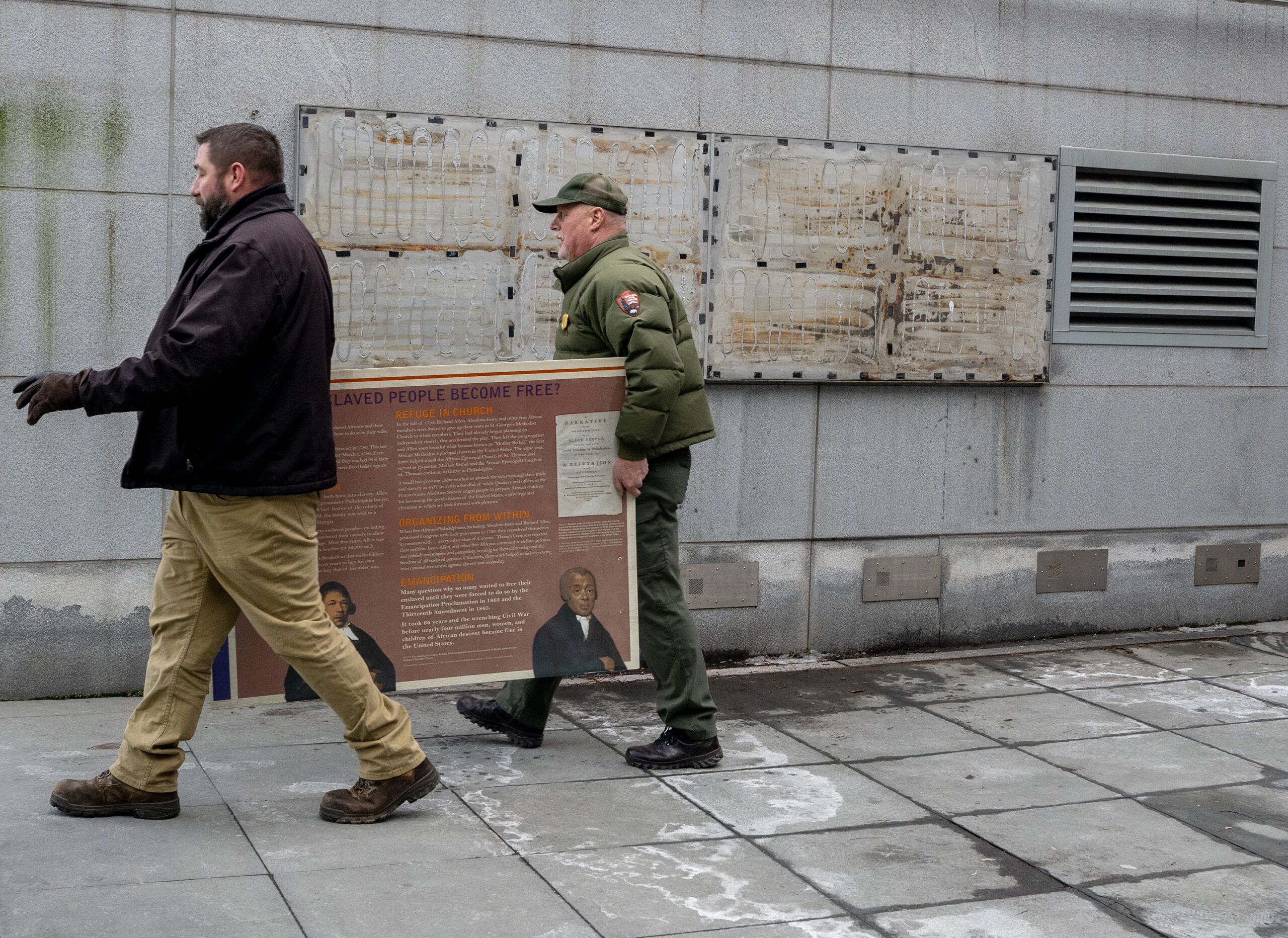
    The Trump administration doesn’t want that, of course, which is why it removed the panels about the enslaved people who labored at the President’s House Site at Independence National Historical Park. Last month, a federal district court judge ordered the panels be reinstalled. Sixteen of the 34 panels were returned to the site before a circuit court judge placed a stay on that order. The other panels will remain in storage until the courts issue a full ruling on the matter.

    Meanwhile, protesters have converged upon the President’s House to demand that we “tell the complex stories,” as one leader said. She’s right. We need to face the fact that many people who fought for American freedom also endorsed slavery.

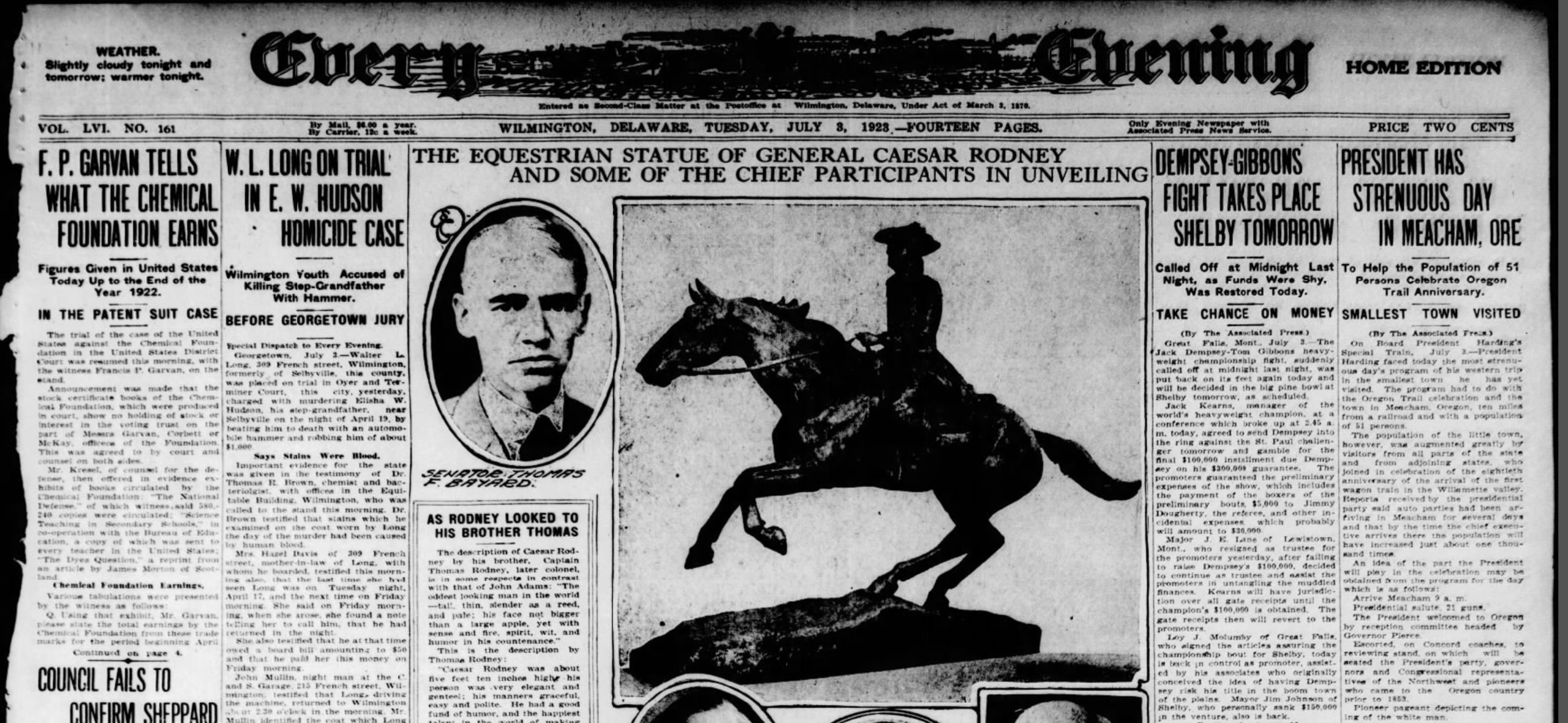
    Rodney was one of them. He raced on horseback from Dover, Del., to Philadelphia on July 2, 1776, to cast his state’s decisive vote in favor of the Declaration of Independence, which was adopted two days later. The town fathers of Wilmington erected a statue in his honor in 1923, shortly before the 150th anniversary of the declaration.

    An image of the front page of the July 3, 1923, edition of the News Journal of Wilmington, which notes the dedication of the Caesar Rodney statue on the following day.

    But Rodney also enslaved roughly 200 African Americans at his family plantation. That’s why protesters demanded his statue’s removal in 2020, when the police murder of George Floyd led many communities around the country to reconsider their connections to slavery.

    In agreeing to remove the statue, Mike Purzycki — the mayor of Wilmington at the time — pledged to conduct a discussion about it. But it’s hard to talk about something when you have hidden it. It’s out of sight, out of mind.

    And that’s where some liberals want it to remain. “You can have him, D.C.,” said Wilmington Councilwoman Shané N. Darby, reacting to the news that the statue of Rodney would be moved to Washington. “I do not think he needs to have a statue in his honor at all.”

    But giving the statue to Washington concedes way too much to President Donald Trump, who issued a proclamation in October 2020 condemning its removal from Wilmington as “part of an ongoing, radical purge of America’s founding generation.”

    The proclamation made no mention of Rodney’s past as an enslaver, because the Trump administration doesn’t want us to address that. All we need to know is that Rodney was a “patriot,” and that the people who denounced the Wilmington statue are engaged in “extreme anti-American historical revisionism,” Trump declared.

    But the real revisionists are Trump and his disciples, who want to erase slavery from public memory. And that’s precisely what will happen if the Rodney statue disappears from Delaware.

    Like the display at the President’s House, Rodney’s statue should include signage describing his complex relationship to slavery. Although he held human beings captive, Rodney introduced a bill to prohibit the importation of enslaved people into Delaware. And his will directed that the people he enslaved should be freed after he died.

    Fewer people will know that history if the statue is gone. Even at Caesar Rodney High School in Camden, Del., students and recent graduates said they weren’t aware of Rodney’s past until the controversy flared over his statue in Wilmington.

    So let’s bring it back, perhaps paired with a monument to enslaved people in Delaware. That’s what University of Delaware political scientist Theodore Davis Jr. proposed back in 2020, as the campaign to remove Rodney’s statue gained momentum. Davis, who is Black, understood that we should always be adding to history. Leave the subtracting to Trump.

    Jonathan Zimmerman teaches history and education at the University of Pennsylvania. He is the author of “Whose America?: Culture Wars in the Public Schools.”

  • Masks don’t belong on ICE agents — or on campus

    Masks don’t belong on ICE agents — or on campus

    When was the last time you changed your mind?

    That’s one of my favorite questions to ask students. I want them to scrutinize their most deeply held beliefs. When you do that, I tell them, you sometimes find out you don’t believe them any longer.

    A few weeks ago, a student put the same question to me. I thought about it for a few days, and then I came back with my answer: I changed my mind about protesters wearing masks on campus.

    I used to think they should be allowed to cover their faces, and that it was a mistake for universities to prohibit them from doing so. But I think differently now.

    And my reason has three letters: ICE.

    Like many other Americans, I’m appalled by the presence of masked agents from U.S. Immigration and Customs Enforcement on our streets. Even before they killed two protesters in Minnesota, I was afraid of them. Now, I’m terrified.

    And I’m proud of Democrats in Congress for demanding that ICE agents be prohibited from wearing masks that hide their identities. Blocking a GOP spending bill that lacked any new curbs on ICE, the Democrats forced a partial shutdown of the federal government over the weekend. They should hold out until the mask ban is in place.

    I also support a proposed City Council measure that would block law enforcement officers in Philadelphia — including ICE agents — from obscuring their identities with facial coverings.

    A demonstrator in Los Angeles wears a mask in front of an image of Renee Good during a protest last month to denounce the Trump administration’s immigration enforcement polices.

    But now I believe campus demonstrators — like ICE agents — should also be barred from wearing masks. Their facial coverings stoke fear, too. And they make it next to impossible for officials to keep everyone else safe.

    If you think otherwise, consider what happened at Haverford College earlier this month. Interrupting a talk by a pro-Israel speaker, several masked demonstrators burst into the room. One of them shouted into a bullhorn that “Israeli occupation forces” were killing children. “When Gaza is burned, you will all burn, too,” she said.

    Most universities already have rules barring disruption of public events. But masks add something worse: intimidation.

    When the masked protesters entered the room, a Haverford professor said he thought they were “terrorists trying to get in and kill us.” Another witness said she worried she might be attacked.

    “No one knew who they were or whether they were armed,” the witness added. “Imagine fully masked people entering through emergency exits, hiding objects under their coats, blocking basic points of egress. It is reasonable to fear for your physical safety.”

    And it’s also reasonable for colleges to ban masks. In a statement, Haverford officials said the protester carrying the bullhorn was not a member of their community. But nobody could know that when she entered the room.

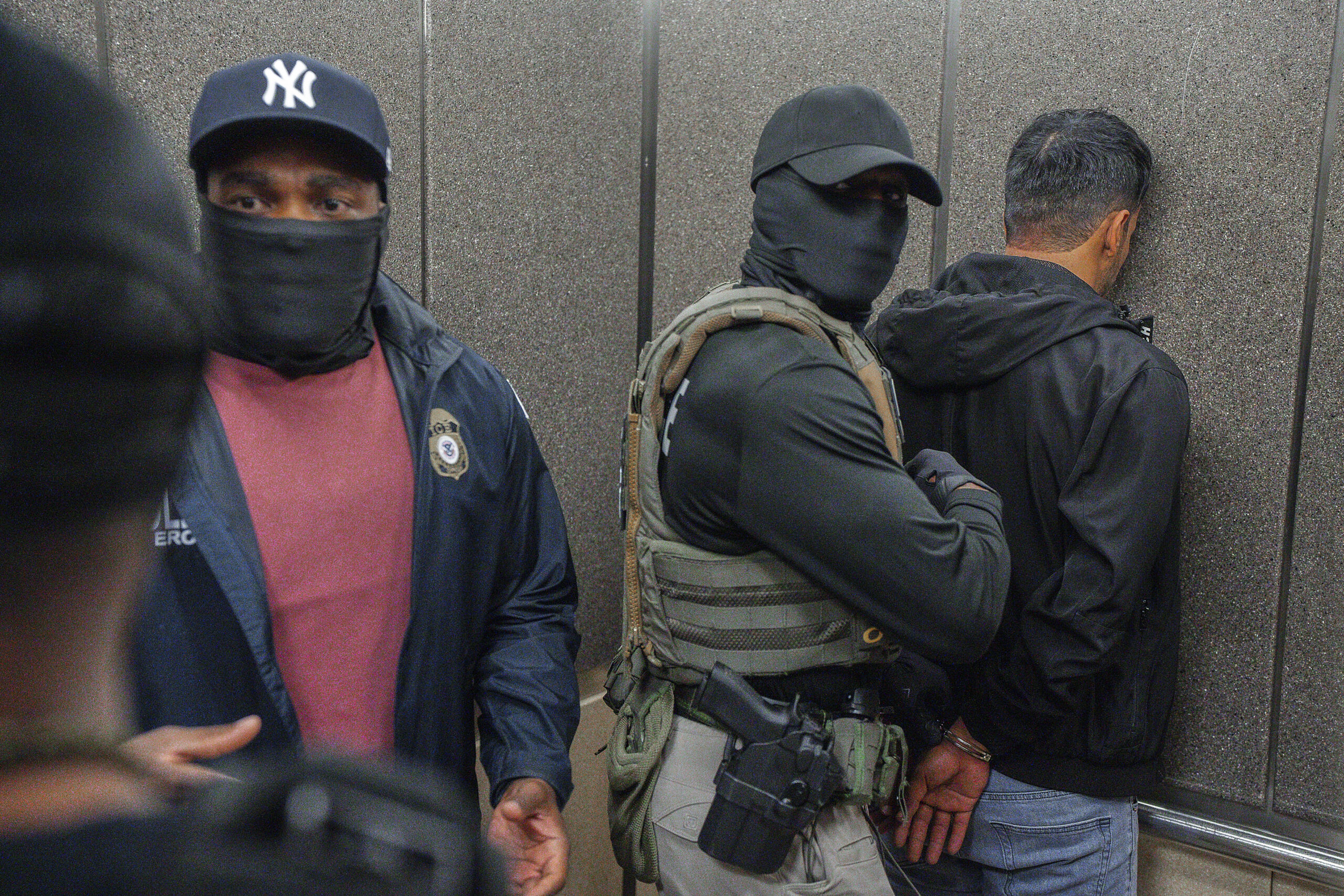
    Masked U.S. Immigration and Customs Enforcement agents escort a detained immigrant into an elevator after he exited an immigration courtroom in New York in June.

    How can we keep the university safe if we don’t know who is from the university and who isn’t?

    At the University of Pennsylvania, where I teach, only nine of 33 people arrested during the clearing of pro-Palestinian encampments in May 2024 were students at the university. At Swarthmore, just two of nine arrested demonstrators were members of the college community.

    I opposed the disbanding of the Penn encampments back then, and I still do. I also opposed the university’s new guidelines on open expression, which prohibited protests that “threaten or advocate violence” against “individuals or groups” on the basis of their race, religion, national origin, or sexual orientation. Under that rule, the Haverford protester’s comment about Gaza — “you will burn, too” — might be banned.

    It shouldn’t be. We need a free and open dialogue about Israel, and everything else. And that’s also why we should ban masks, which inhibit that same dialogue. You can’t have a conversation if you don’t know who is talking.

    I used to think masks were a form of free expression, so universities should allow them. I also thought protesters needed to hide their identities so they wouldn’t get doxed, which would subject them to violence and harassment.

    Then the Trump administration said the same thing about ICE agents — they need masks to protect them from doxing — and I changed my mind. Regular police officers don’t wear masks; instead, they wear numbers and name tags. That’s how we hold them accountable for their actions.

    Putting masks on ICE agents does the opposite: It lets them act with impunity. The goal of the masks is not to protect the agents. It’s to foster fear in our communities and our nation.

    They need to take their masks off. But so do we.

    Of course, we should make exceptions for people who cover their faces for reasons of health, religion, sports, or entertainment. I’d hate to see a college kid barred from wearing a Halloween mask, for example.

    But a protester? Let us see who you are. Don’t cower behind a mask. That’s what ICE does.

    Jonathan Zimmerman teaches history and education at the University of Pennsylvania. He is the author of “Whose America?: Culture Wars in the Public Schools.”

  • On guns, everyone’s a hypocrite

    On guns, everyone’s a hypocrite

    When Kyle Rittenhouse shot three people, two of them fatally, at a Black Lives Matter protest in 2020 — in self-defense, he said — Republicans made him into a hero. But when Alex Pretti showed up at an anti-ICE demonstration with a loaded handgun, Trump administration officials condemned him as a “would-be assassin” and a “domestic terrorist.”

    It’s outrageous. And hypocritical.

    Yet, when it comes to guns, everyone’s a hypocrite right now. All of us are allowing the fatal shooting of Pretti in Minneapolis last week to alter our principles.

    On the right, the same people who celebrate the Second Amendment — and its supposedly sacred guarantee of “gun rights” — are condemning Pretti for exercising that right. And on the left, which has long called for limits on gun ownership, we are suddenly invoking Pretti’s constitutional entitlement to arm himself.

    We can’t bring ourselves to state the obvious: His gun made him less safe, not more so.

    That’s been our mantra for more than a half century, and we have the data to prove it. Americans purchase guns because they believe firearms will protect them from crime and injury. But they are wrong about that, as a wide swath of research shows.

    If someone breaks into your house, a 2015 study reported, you’re more likely to be injured after threatening your attacker with a gun than if you call the police or run away. Gun ownership also makes domestic violence more common. In 2019, scholars found that states with higher levels of household gun ownership also record more domestic gun homicides.

    The following year, the COVID-19 pandemic led to a big spike in American gun sales: People were afraid, so they armed themselves. And guess what happened? There was also a sharp rise in firearm-related homicides.

    Kyle Rittenhouse brought an assault-style rifle to a protest in Kenosha, Wis., in August 2020, where he shot three people, two of them fatally. He was acquitted of murder charges in November 2021.

    Finally, states that make it easier to obtain a permit to carry a concealed weapon experience more homicides than states that make it harder to obtain one.

    You’d think my fellow liberals would be trumpeting all of these facts following the death of Pretti. But you’d be wrong. We have simply pointed out that Pretti had a permit for his gun and that he had a right to carry it under the Constitution.

    “The Trump administration does not believe in the 2nd Amendment,” California Gov. Gavin Newsom posted on X, gleefully mocking GOP attacks on Pretti. “Good to know.”

    Come again? I thought Democrats believe the Second Amendment does not — or should not — allow individual citizens to carry firearms anywhere they want.

    For most of our history, it didn’t. Ten states passed laws in the 1800s barring possession of concealed weapons. One of them was Texas, where the governor declared in 1893 that “the mission of the concealed weapon is murder.”

    In 1939, the U.S. Supreme Court upheld a federal limit on gun ownership. According to Solicitor General Robert Jackson, who would join the court two years later, the Second Amendment did not protect the right of individuals to possess guns for “private purposes.” Instead, it was “restricted to the keeping and bearing of arms by the people collectively for their common defense and security,” Jackson added.

    Only in the 1970s would the National Rifle Association — which had formerly supported broad restrictions on guns — start to argue that the Second Amendment protected individual gun ownership. Now that’s the law of land, thanks to several recent rulings by Republican-appointed federal judges.

    A handwritten sign honoring Alex Pretti hangs on a fence outside the Minneapolis Veterans Administration hospital on Tuesday.

    Democrats have loudly questioned these decisions, looking forward to the day when they might be overturned. But that won’t happen if we don’t consistently denounce the idea that anyone should be able to carry a gun.

    And that includes Pretti. There was no good reason — none — for federal agents to kill Pretti last week in Minneapolis. He didn’t deserve to die because he had a gun. But — especially in the current political climate — it’s hard to come to any other conclusion except that carrying a gun certainly made it more likely that he would.

    Video of the shooting appears to show that Pretti’s gun had already been removed from him before he was shot. In the confusion of the moment, some of his assailants might not have known that.

    But here’s what we do know: Guns are a scourge on America. We think they safeguard us from violence, but they too often escalate it. We shouldn’t let the horror and injustice of Pretti’s death blind us to that.

    Jonathan Zimmerman teaches history and education at the University of Pennsylvania. He is the author of “Whose America?: Culture Wars in the Public Schools.”

  • The cowardice of the Trump administration’s attacks on history

    The cowardice of the Trump administration’s attacks on history

    For centuries, white people in America depicted slavery as a benign institution developed to uplift and civilize “savage” Africans. They preached that myth in churches, taught it in schools, and memorialized it in statues.

    That’s not what the Trump administration was trying to do last week, in dismantling a display about nine Black people whom George Washington enslaved. The exhibit was removed from the President’s House in Independence National Historical Park in accordance with a White House directive to take down or cover up materials that “inappropriately disparage Americans.”

    I suppose you could call that a small piece of progress, given that prior generations of Americans actively praised slavery. Federal officials know it was evil, which is why they are scrubbing displays about it from the President’s House and other historical sites around the country.

    But I’ve got another word for their behavior: cowardice. They are afraid to admit the contradiction at the heart of our history: a nation that dedicated itself to human liberty also enslaved African Americans. And they do not trust the rest of us to grapple with it, either. It’s so much easier to just look away.

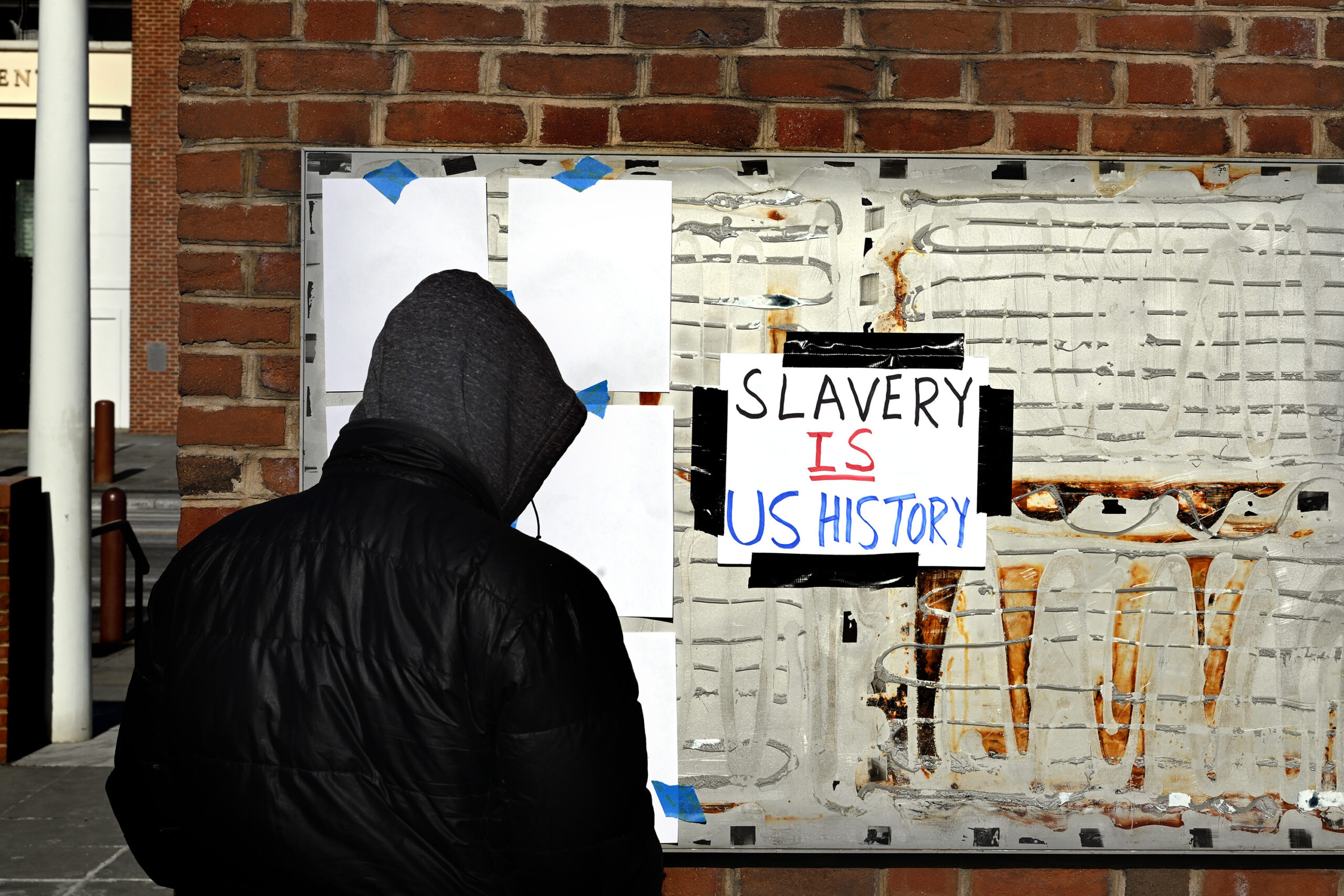
    People leave notes Saturday on the spaces at the President’s House site where more than a dozen educational displays about slavery were removed.

    That was harder to do in the late 19th and early 20th centuries, when slavery was within living memory for millions of people. Especially in the South, white educators made extended efforts to excuse it. The problem wasn’t slavery, they said.

    The problem was “the War of Northern Aggression” — a.k.a. the Civil War — which granted freedom to African Americans, whom, according to this twisted retelling of history, neither wanted nor deserved it.

    The key figure in this campaign was Mildred Lewis Rutherford, the “historian-general” of the United Daughters of the Confederacy, or UDC. Born into a wealthy slaveholding family in 1851, Rutherford led the effort to purge Southern schoolbooks of so-called Yankee perspectives.

    In 1919, “Miss Millie” — as she was affectionately known across the white South — published A Measuring Rod to Test Textbooks, which provided a checklist that UDC women could use to assess what their schools were teaching. “Reject a book … that speaks of the slaveholder of the South as cruel and unjust to his slaves,” Rutherford urged.

    Invoking the era’s rhetoric of progressive education — which stressed student activities rather than memorization from books — the UDC also sponsored essay contests for students who conducted research about slavery. Many of the essays drew on interviews from former slaveholders, who provided a predictably romantic view of the institution.

    Slavery was “the happiest time of the negroes’ existence,” declared a winning essay in 1915 by a Virginia high school student. “The slave was a member of the family, often a privileged member. He was the playmate, brother, exemplar, friend and companion of the white man from cradle to grave.”

    Despite Rutherford’s fears of encroaching Yankee doctrine, meanwhile, Northern schoolbooks often included similar falsehoods about slavery. In 1944, amid the World War II struggle against Nazism, Black activists in New York City complained that one history text used in their schools said those in bondage were “happy”; another congratulated the Ku Klux Klan for keeping “foolish Negroes” out of government after the Civil War. “Such passages … could well have come from the mouths of the fascist enemies of our nation,” the activists noted.

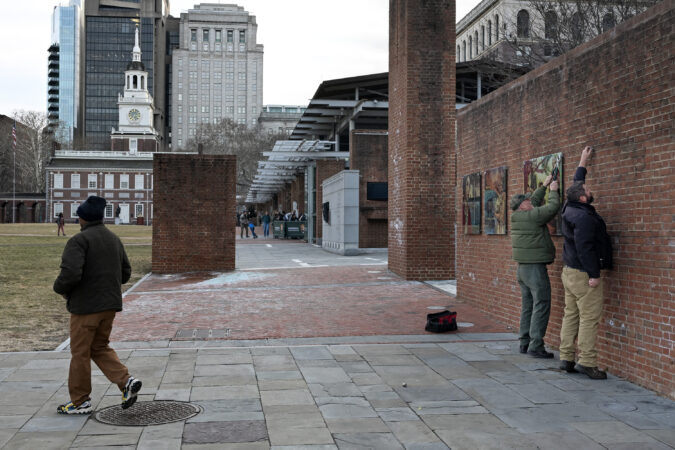
    Bolts are removed from interpretive panels about slavery before they are removed from the walls of the President’s House site in Independence National Historical Park Thursday.

    African American attacks on flawed textbooks came to a head during the civil rights movement of the 1960s, when the Urban League and the National Association for the Advancement of Colored People appointed committees to examine the books. Thanks to these efforts, most textbooks corrected their distortions of slavery. They also added new material about African Americans who fought against it, like Denmark Vesey and Frederick Douglass.

    Today, outside the darkest corners of the internet, nobody celebrates the enslavement of African Americans. “It is disgusting and absurd to suggest that anyone inside this building would support slavery,” White House press secretary Sarah Huckabee Sanders said during President Donald Trump’s first term in office, when Chief of Staff John Kelly suggested Confederate Gen. Robert E. Lee was an “honorable man.”

    In his second term, Trump has moved to restore the names of Confederates to military bases. Yet, I haven’t heard him — or anyone in his administration — say a good word about slavery. Again, that’s a very good thing.

    Workers remove the displays at the President’s House site in Independence National Historical Park Thursday.

    But it also underscores their fundamental lack of courage. They’re not defending slavery, as earlier generations did. Instead, as happened at the President’s House, they’re simply eliminating it from sight because it doesn’t suit their happy picture of our history. To paraphrase the Jack Nicholson character in A Few Good Men, they can’t handle the truth.

    And if visitors ask why the exhibit about Washington and slavery disappeared, National Park Service employees have been instructed to say that they don’t know. Talk about cowardice! First, we deny history, and then we deny knowing why we did so.

    It’s enough to make a citizen embarrassed for his country. Trump and his aides say they took down the exhibit because it disparaged America. But they are the ones disparaging America, because they don’t believe in our ability to make sense of it: its glory and its tragedy, its achievements and its abuses. Shame on them.

    Jonathan Zimmerman teaches history and education at the University of Pennsylvania. He is the author of “Whose America?: Culture Wars in the Public Schools.”

  • Who’s a Jew? The government should never ask.

    Who’s a Jew? The government should never ask.

    I’m Jewish, and like most other Jews I know, I often wonder who else is. When I meet someone at a party, or see a new face on TV, I think: yes or no? It’s a game, and it’s all in good fun.

    But when the government does it, it isn’t. It’s a dagger at our hearts.

    That’s why so many people at the University of Pennsylvania — where I teach — are up in arms about the Trump administration’s effort to compel the university to identify Jewish students and employees. It’s part of an investigation of antisemitism on campus by the Equal Employment Opportunity Commission, which issued a subpoena demanding the names and contact information of members of Jewish-related student groups, staffers at the school’s Jewish studies program, and anyone who had filed an antisemitism complaint.

    Fortunately, Penn said no. The EEOC sued the university back in November for refusing to comply with the subpoena. And last week, several groups at Penn filed their own motion in the case. “Compiling and turning over to the government ‘lists of Jews’ conjures a terrifying history,” they wrote.

    Indeed, it does. Going back to the Middle Ages, state officials have tried to establish who is Jewish. And it never ends well.

    In 1215, Pope Innocent III decreed that Jews must wear markers at all times that made them distinguishable from Christians. Two years later, in England, King Henry III ordered male Jews to wear a badge on the front of their outer garments.

    In England, the badge was shaped like the tablets upon which Moses — according to the Old Testament — received the Ten Commandments. In France, it was a circle of red or yellow felt. Hungarian Jews had to wear red capes. And in German-speaking parts of Europe, Jews were required wear a cone-shaped Judenhut, or “Jew’s Hat.”

    The goal of these rules wasn’t simply to identify Jews; it was to segregate, humiliate, and persecute them. Jews wearing badges were mocked by children and attacked by bandits. Badge laws also led to extortion: To receive exemptions from the laws, Jews had to pay large sums to the state.

    In the so-called Jewish Emancipation era of the 18th and 19th centuries, when Jews finally received citizenship in the nations where they lived, badge laws disappeared. But they returned with a vengeance in the 1930s and 1940s, when the Nazis required Jews in Germany and the territories it conquered to wear yellow stars.

    That helped facilitate their deportation and murder in concentration camps, where a new set of markers developed. Jews who were also political prisoners wore a red triangle, superimposed on a yellow one; gay Jews were identified by the pink triangle, which was later adopted by LGBTQ+ activists as a symbol of pride.

    And Jewish camp prisoners often received tattooed numbers on their arms. Again, that was a way to degrade Jews as well as to identify them.

    “My number is A-10572. That is what I was, they did not call us by our names,” recalled Holocaust survivor Lilly Ebert, whose TikTok video about the Auschwitz death camp went viral in 2021. “We were no longer humans. We were only a number, and we were treated like numbers.”

    Since then, every state effort to count or list Jews has reflected disdain for them. Convinced that Jews at the Bureau of Labor Statistics were altering employment statistics to undermine him, President Richard Nixon ordered aides to find out how many BLS workers were Jewish. “The government is full of Jews,” Nixon fulminated in a taped 1971 White House conversation. “Most Jews are disloyal … You can’t trust the bastards. They turn on you.”

    An aide scrutinized the BLS employees’ names — never a perfect way to figure who is Jewish — and concluded that 13 of 35 fit the “demographic criterion that was discussed,” as he delicately reported. Less than two months later, two Jewish senior officials were removed from their posts and demoted to less visible positions in the agency. That was “the last recorded act of official antisemitism by the United States government,” as political commentator Tim Noah wrote.

    Forcing Penn to cough up a list of Jews would be the next one. It doesn’t matter that it comes as part of a Trump administration investigation of antisemitism. Frankly, I doubt a president who welcomed Holocaust denier Nick Fuentes to his home for dinner — and who still refuses to criticize him — cares very much about the safety of Jews on campus.

    But even if he does, that’s no reason to count them. When the government does that, it isn’t fun anymore. It’s game over.

    Jonathan Zimmerman teaches education and history at the University of Pennsylvania. He is the author of “Whose America?: Culture Wars in the Public Schools.”

  • In the lottery of life, I got lucky

    In the lottery of life, I got lucky

    Many years ago, when I was a college student, a philosophy professor told me that life was a great cosmic lottery. None of us chooses the parents we have. Instead, they choose to have us.

    I’ve been thinking about his comment because my mother died last week, after a long and fruitful life. Of course, it’s always sad to lose a loved one. But since she passed, I’ve felt more serendipity than sorrow.

    In the great cosmic lottery, I got lucky.

    I got lucky because Mom taught me that men and women are — or should be — equal, in all the ways that matter. She never sat me down and said that, but she didn’t have to. It permeated everything she did.

    Mom devoted her career to international family planning and maternal health. She fought for women to have access to contraceptive information and services, no matter where they lived. She thought they should be able to make their own choices about reproduction and everything else.

    So “Women’s Lib” wasn’t just a saying where I grew up, in the 1960s and 1970s. It was a fundamental truth. I never questioned whether women should enjoy the same rights as men.

    Margot Lurie Zimmerman taught her son to raise his voice when he had something to say.

    That’s been an enormous boon to me, as a spouse and a parent and a teacher. My wife and I have two daughters, and, because I teach about education, most of my students have been female. I would be much worse at what I do if I believed they were lesser, in any sense. And they would be worse for it, too.

    I also got lucky because Mom taught me to raise my voice when I had something to say. As an educator, I am constantly trying to get students to do the same. Sadly, some of them don’t believe they have anything to say that would be worth hearing. And others are simply afraid to say what they think.

    I never was. That’s because of Mom, too. If you want to write for newspapers, you need a thick skin. And she gave me one.

    The third way I got lucky was by watching Mom work. And I mean work. Hard. To succeed at anything, she taught me, you need effort. It’s not about your inherent abilities. It’s about what you do with them.

    Psychologists call that a “growth mindset.” I didn’t know the term when I was younger, but again, I didn’t need to. It was drilled into me, over and over again. If you want something, work for it. And if you don’t get it right away, keep at it. Keep going.

    That’s been a hugely useful lesson in my life. Of course, you can take it too far. Mom insisted that you could achieve anything if you tried hard enough.

    And that’s not true. We are all finite beings, in what we can imagine and create and accomplish. It’s good to keep trying, but you also have to accept your own limitations. (I keep trying to do that.)

    Last, I got lucky by being exposed to the inestimable value of friendship in everything we do. My parents spent their lives traveling the world, and they collected friends at every stop. Those are the people who will nurture and replenish you until your own journey comes to an end.

    When Mom died, I was overwhelmed by the expressions of love from her friends. And it came on the heels of the death of my dear friend Mark, who lived in Oregon. I went to be with Mark’s family when he died, and I was on my way home when Mom passed on.

    The novelist Wallace Stegner described friendship as something you needed to create and recreate, over and over again. It is “a relationship that has no formal shape, there are no rules or obligations or bonds as in marriage or the family,” Stegner wrote. “It is held together neither by law nor property nor blood, there is no glue in it but mutual liking. It is therefore rare.”

    Jonathan Zimmerman writes that his mother taught him about the inestimable value of friendship.

    But where I grew up, it was as common as sunshine. As a kid, I don’t think I appreciated what my Mom did to sustain her friendships. Now I do. And I am lucky — again, for her example.

    Mom was not perfect by any means. She could be prickly, judgmental, and blunt. She didn’t know how to read a room, and she also didn’t feel like she needed to. Whatever she thought, she said. And sometimes — actually, lots of times — you didn’t want to hear it.

    But in the great cosmic lottery, I got a pretty darned good ticket. Thanks, Mom, for the mark you left on me. I was lucky to be your son.

    Jonathan Zimmerman teaches education and history at the University of Pennsylvania. He is the author of “Whose America?: Culture Wars in the Public Schools” (University of Chicago Press).

  • Can the Brown University tragedy bring the left and the right together?

    Can the Brown University tragedy bring the left and the right together?

    Let’s start with the easy part. There is absolutely no evidence so far to suggest that the shooter at Brown University targeted Alabama native Ella Cook — one of two students who died in the massacre last Saturday — because of her political opinions.

    That’s what several right-wing commentators said, noting that Cook had been vice president of the College Republicans at Brown. Cook “was targeted for her conservative beliefs, hunted, and killed in cold blood,” the national chairman of the College Republicans wrote in a post on X, which has garnered nearly two million views.

    Please. We still don’t know who opened fire in a classroom building at Brown, or why. It’s reckless — and cynical — to pretend that we do.

    But behind every crazed conspiracy theory lies a small grain of truth. Conservative students are not in danger for their lives, but they do experience ostracism and discrimination. People who claim otherwise are like climate change deniers, except in this case the naysayers are on the left.

    I’m on the left, too. And it’s time for us to come clean about the biased environments we have created.

    I feel that every time I hear a colleague say all Trump voters are white supremacists or fascists. I feel it when students email me to complain about the left-wing groupthink in their classes.

    And I feel it, most of all, when they come out to me as Trump supporters in my office, with the door closed. I plead with them to share their views with others, which is the only way we learn anything. But they tell me the cost would be too high: They’d be vilified and canceled.

    A poster seeking information about the shooting suspect is seen on the campus of Brown University on Wednesday.

    That’s why so many Republicans disdain higher education. They know that we abhor their views, and they return the favor.

    Now they’re trying to impose their will upon us. Start with President Donald Trump’s “compact,“ which is really just an act of extortion: Do what we say, or we’ll cut off your funding. I’m glad that Brown — like Penn — rejected it, but schools with smaller endowments might face a more difficult choice when deciding whether to do so.

    Then there are state measures restricting instruction about race and gender. The logic goes like this: You taught things we didn’t like, so we’re going to prevent you from teaching about them at all.

    Remember the adage about two wrongs? We seem to have forgotten it. Liberals created an intolerant atmosphere on our campuses. In response, conservatives are taking political measures to silence us.

    It’s time to end this madness. And perhaps we can use the Brown tragedy to do just that.

    The other student who was murdered was a naturalized U.S. citizen from Uzbekistan, Mukhammad Aziz Umurzokov. He survived a serious childhood illness and wanted to become a doctor, so he could assist other people who had suffered like he did.

    You haven’t heard a lot about Umurzokov in right-wing media, which has been busy memorializing Ella Cook. But neither have my fellow liberals made much mention of Cook; instead, they have been commemorating the remarkable life of Mukhammad Umurzokov.

    Imagine a national day of mourning, where we switched all of that up. In Congress and in statehouses, Democratic leaders would hoist large blow-up pictures of Cook — the kind you see in sports stadiums — to memorialize her. And GOP officials would do the same for Umurzokov.

    That would require courage on both sides, which is in short supply these days.

    Democrats would need to celebrate a brave churchgoing conservative who bucked the dominant liberal consensus on campus. And Republicans would need to challenge their party’s nativist and anti-Islamic rhetoric by praising a young Muslim immigrant who wanted to do good in and for America.

    They would also have to call out the conspiracy theorists in their midst. Political violence is real, but there’s no evidence that Ella Cook was killed because of her politics. Honest Republicans know that. They need to say it.

    And maybe, just maybe, that can begin the healing that our battered nation so desperately needs. We simply cannot make anything better by hating on each other.

    At our schools and universities, we’ll resolve to welcome all points of view. Instead of maligning the other side — or trying to censor it — we’ll bring different sides together.

    And we will educate a new generation of citizens, who have both the will and the skill to converse across their differences. That will be a great way to remember Ella Cook and Mukhammad Umurzokov. And it will make America great, too. For all of us.

    Jonathan Zimmerman teaches education and history at the University of Pennsylvania. He is the author of “Whose America? Culture Wars in the Public Schools”.

  • To defeat Trump, stop calling him names

    To defeat Trump, stop calling him names

    The Democrats had a great election night earlier this month when the democratic socialist Zohran Mamdani scored a smashing triumph in New York’s mayoral race, and mainstream Democrats won gubernatorial contests in New Jersey and Virginia. Savoring the victories, left-wing standard-bearer Alexandria Ocasio-Cortez said her party had united against a common foe: fascism.

    “It’s not about progressive, it’s not moderate, it’s not liberal,” Ocasio-Cortez declared. “This is about, do you understand the assignment of fighting fascism right now? And the assignment is you come together across difference no matter what.”

    She’s right about the need for my fellow Democrats to join hands to challenge President Donald Trump and his MAGA loyalists. But she’s wrong to call them fascists. That doesn’t hamper Trump; it empowers him.

    And you know who gets that? Zohran Mamdani.

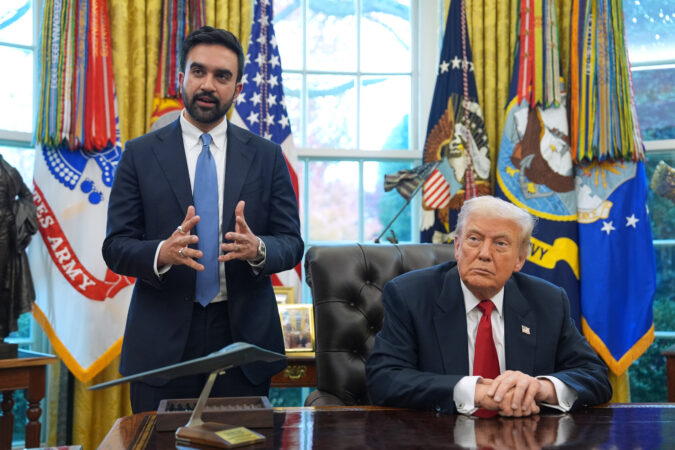
    Witness his meeting with Trump at the White House on Friday, when a reporter asked Mamdani if the president was a fascist. Before the mayor-elect could answer, Trump threw him a lifeline.

    “That’s OK, you can just say yes,” Trump said. “It’s easier than explaining.” Laughing, he gave Mamdani a light pat on the arm. “I don’t mind,” Trump added.

    Mamdani played along, smiling widely. “OK, all right,” he replied.

    But it was better than all right. It was brilliant.

    Calling Trump a fascist does nothing — literally, nothing — to advance the Democrats’ cause. And Mamdani was wise to steer away from it.

    To win elections, the Democrats need to claw back voters who tipped for Trump and the GOP in 2024. Do you think they’re going to be persuaded by someone telling them they supported a fascist?

    If so, you just haven’t been listening. Last October, a mask-wearing protester accosted Tom Eddy — chairman of the Republican Party in Erie County, Pa. — and called him a fascist. “Do you even know what it means?” Eddy asked. “Don’t need to know,” the masked man replied. “I know who you are.”

    A month later, Trump won Pennsylvania by the largest margin of victory for a Republican presidential candidate since 1988. Of course, Democratic accusations of fascism weren’t the only reason for that. But they certainly didn’t help.

    Neither does calling Trump a white supremacist or racist, which is another turn-off for voters. In a 2023 Public Agenda survey, 77% of Americans said it was a “serious problem” that “people are too quick to accuse others of racism.”

    And it’s not just white voters who think that. In the poll, 77% of Latino Americans and 76% of Asian Americans agreed with the statement. The percentage of African American voters who agreed was a bit lower — 68% — but still represented a significant majority.

    Let me be clear: Donald Trump has said some horribly racist things: Haitians eat pets, Mexicans are rapists, Africa is full of shithole countries, and so on. But calling him a racist won’t sway anyone into the Democrats’ column; it’s more likely to bring people to his side because they’re sick and tired of hearing about how racist America is.

    “Enough with the ‘He’s a Hitler,’” the comedian Jon Stewart said of Democratic candidates who attack Donald Trump. “Tell people what you would do with the power that Trump is wielding, and then convince us to give that power to you, as soon as possible.”

    Ditto for labeling Trump a fascist. I’ve read my Timothy Snyder and Jason Stanley, and I do see elements of fascism in Trump’s MAGA movement: the relentless denunciation of internal enemies, the Big Lie about elections (see: 2020), and the celebration of a strongman who will save us. But I still think it’s an enormous mistake to imagine all of his supporters — or, even, his entire party — as fascist.

    That’s what the American Association of University Professors — our nation’s most venerable academic organization — did earlier this fall.

    Rebutting the idea that academia is biased against conservatives, the AAUP posted that “fascism generally doesn’t do great under peer review.”

    Translated: The reason there aren’t more conservative professors is that they’re actually fascists. So is anyone who disagrees with the dominant liberal consensus on campus.

    As comedian Jon Stewart warned back in January, none of this is going to enlist more voters for the Democrats. “Enough with the ‘He’s a Hitler,’” Stewart urged. “Tell people what you would do with the power that Trump is wielding, and then convince us to give that power to you, as soon as possible.”

    That’s exactly right. And that’s also what Mamdani has been doing, with his persistent focus on housing and affordability.

    Pressed by an interviewer on Sunday, Mamdani said he stood by his earlier comments that Trump was a “despot” as well as a fascist. But he quickly changed the subject, because he knows that’s a game Democrats can’t win.

    “I’m not coming to the Oval Office to make a point or make a stand,” Mamdani declared. “I’m coming in there to deliver for New Yorkers.”

    The way for Democrats to defeat Trump and the GOP is to show we can deliver for all Americans, in the ways that matter most to them.

    So enough with the name-calling, OK? It makes us look churlish and small. Focus instead on the big things we can do. And we will be all right.

    Jonathan Zimmerman teaches education and history at the University of Pennsylvania. He is the author of “Whose America?: Culture Wars in the Public Schools.”