Category: Archive

  • The historic Conkling-Armstrong House in North Philly is poised for affordable redevelopment

    The historic Conkling-Armstrong House in North Philly is poised for affordable redevelopment

    They don’t make them like the Conkling-Armstrong House anymore. They never really did — except this once.

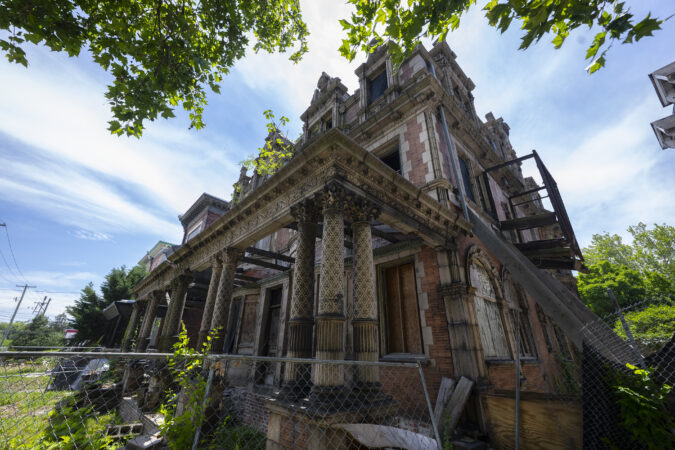
    Located at 2224-26 W. Tioga St., each of the two roughly 5,000-square-foot houses in this twin mansion are encrusted with terra-cotta flourishes that set them apart from their neighbors and from pretty much any other building in the city.

    That’s because this almost 130-year-old mansion in North Philadelphia was built as a towering advertisement for what the Conkling-Armstrong Terra Cotta Co. could offer late-19th-century developers and architects.

    They studded it with beautiful decorations and elaborate details to demonstrate what their products could look like on future buildings.

    When this one-of-a-kind house was built in 1898, the company’s factory stood mere blocks away. Now it is gone, demolished in 2011, and the house itself hasn’t been occupied in even longer.

    That period of vacancy will end soon, if local affordable housing developer Brian Wise gets his way. He’s already invested almost $1 million in bringing the Conkling-Armstrong house back from the brink of demolition.

    “When we first had the property, we could not even walk through it,” said Wise, managing partner of Wise Holding Group LLC. “There was so much deterioration from the roof all the way down to the basement.”

    Wise plans to build 12 apartments in the twin buildings and another 12 in two additions behind the twins, each over 4,000 square feet. They will extend into the vacant lot behind the Conkling-Armstrong house, fronting on Estaugh Street.

    The plan is to lease most of the units to tenants who use rent vouchers from the Philadelphia Housing Authority.

    “It’s a pretty ambitious job to do and something that will be a challenge, but sometimes we like challenges,” Wise said. “We’ll do everything we can to keep the building stabilized and bring it back to its original form, especially the exterior.”

    Earlier this month, the city’s Zoning Board of Adjustment gave Wise the go-ahead to begin the project.

    “This is one of these projects that you’ll remember over the course of your career,” Wise’s attorney, Alan Nochumson, said in his pitch to board members to preserve the building.

    Wise needed permission to build beyond the allowable density on the site, arguing that the rents from additional units were the only way to make the project economically feasible.
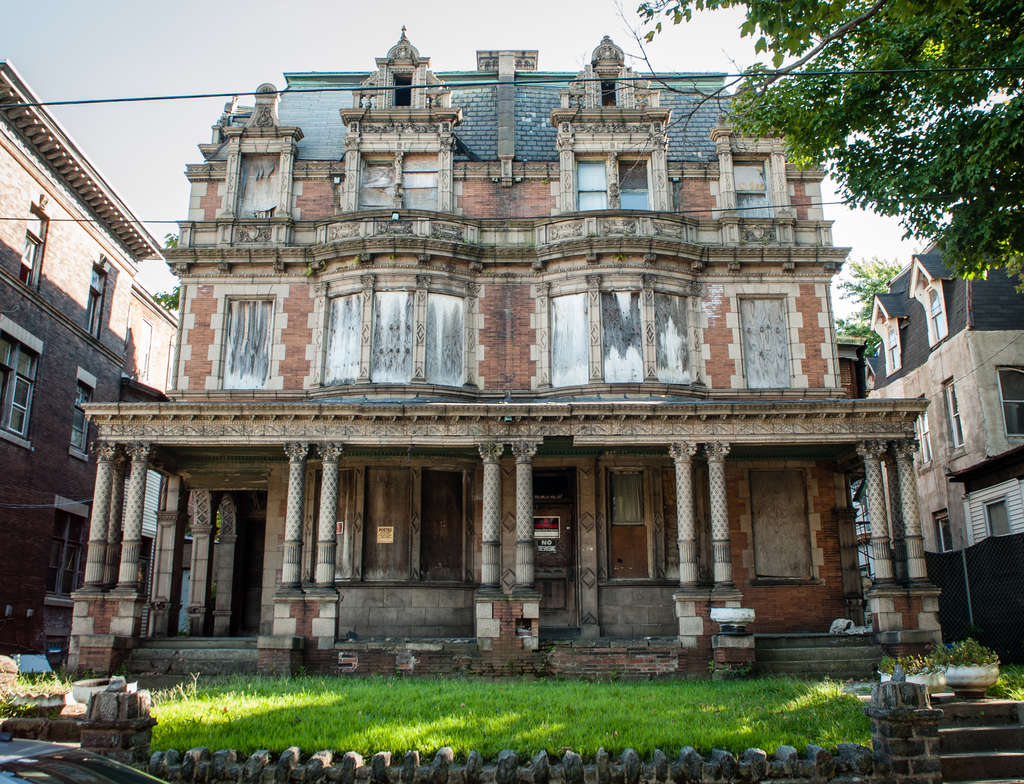
    The Conkling-Armstrong house on the 2200 block of West Tioga Street in 2018.

    His case was supported by two local community groups, the Allegheny West Civic Association and the Swampoodle Neighborhood Parcels Association.

    Wise anticipates an 18-month to two-year timeline, given the final Historical Commission approvals he needs.

    Wise originally came to this block of West Tioga Street to try to buy one of the other venerable, if less ornamented, stone twin houses on the block.

    He decided against that purchase, but while he was in the neighborhood, he noticed the intricate design and decoration of the Conkling-Armstrong House, as well as its dilapidated state.

    After acquiring the building, Wise considered demolishing it. But the Conkling-Armstrong House is on the Philadelphia Register of Historic Places, which makes razing it a challenge. Instead, the developer decided to embark on his first adaptive reuse proposal. He needs a final Historical Commission approval to begin construction.

    “My first impression, obviously, was that the architectural nature of the property was unique,” Wise said. “It was something that we weren’t used to seeing … so instead of knocking it down, we said let’s try to bring this building back to life.”

    At the zoning board, Wise faced questions from commissioners who wanted him to add a porch to the new addition facing Estaugh Street, which he promised to do.

    The new buildings behind the Conkling-Armstrong house will be more modest, with a design that echoes other houses in the neighborhood.

    “We decided that trying to match all of these ornate features of the front building is not a tenable solution,” said Matt Masterpasqua of the Mass Architecture Studio, which is designing the project.

    “So we tried to take context from the rear street, as well as some of the more modest neighboring buildings to inspire our new design,” Masterpasqua said. “It’s a little more feasible for us to construct.”

    He anticipates the redevelopment of the Conkling-Armstrong Terra Cotta Co.’s house-and-showroom will cost at least $3 million, but he could be aided by federal Historic Preservation Tax Credits.
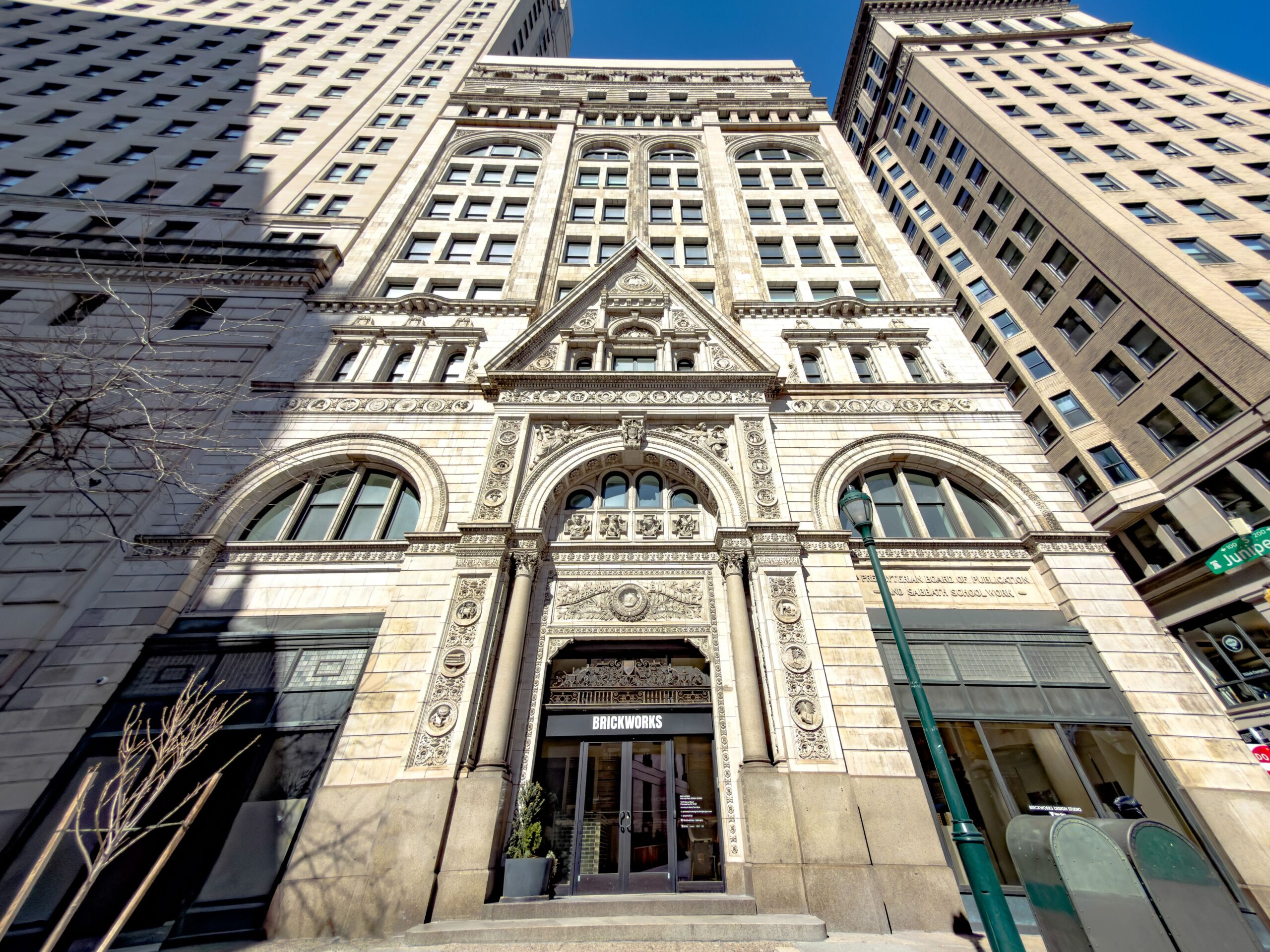
    The Witherspoon building, ornamented by the Conkling-Armstrong Terra Cotta Co.

    The company’s historical legacy in Philadelphia includes ornamenting such structures as the Witherspoon building and the former Curtis publishing house. Like many historically protected gems, those buildings are in Center City, not residential North Philadelphia.

    “It was a showcase for the capabilities of their company, but it’s also just really an incredible building,” Masterpasqua said. “It’s really great to be part of something that’s going to be able to salvage the neighborhood and this piece of architecture.”
  • S. Broad Street gets a new landscaped median — and it’s just the start of what’s planned

    S. Broad Street gets a new landscaped median — and it’s just the start of what’s planned

    A new landscaped median under construction for months in front of the Kimmel Center has reached completion — the down payment on a promised major redo of the Avenue of the Arts streetscape.

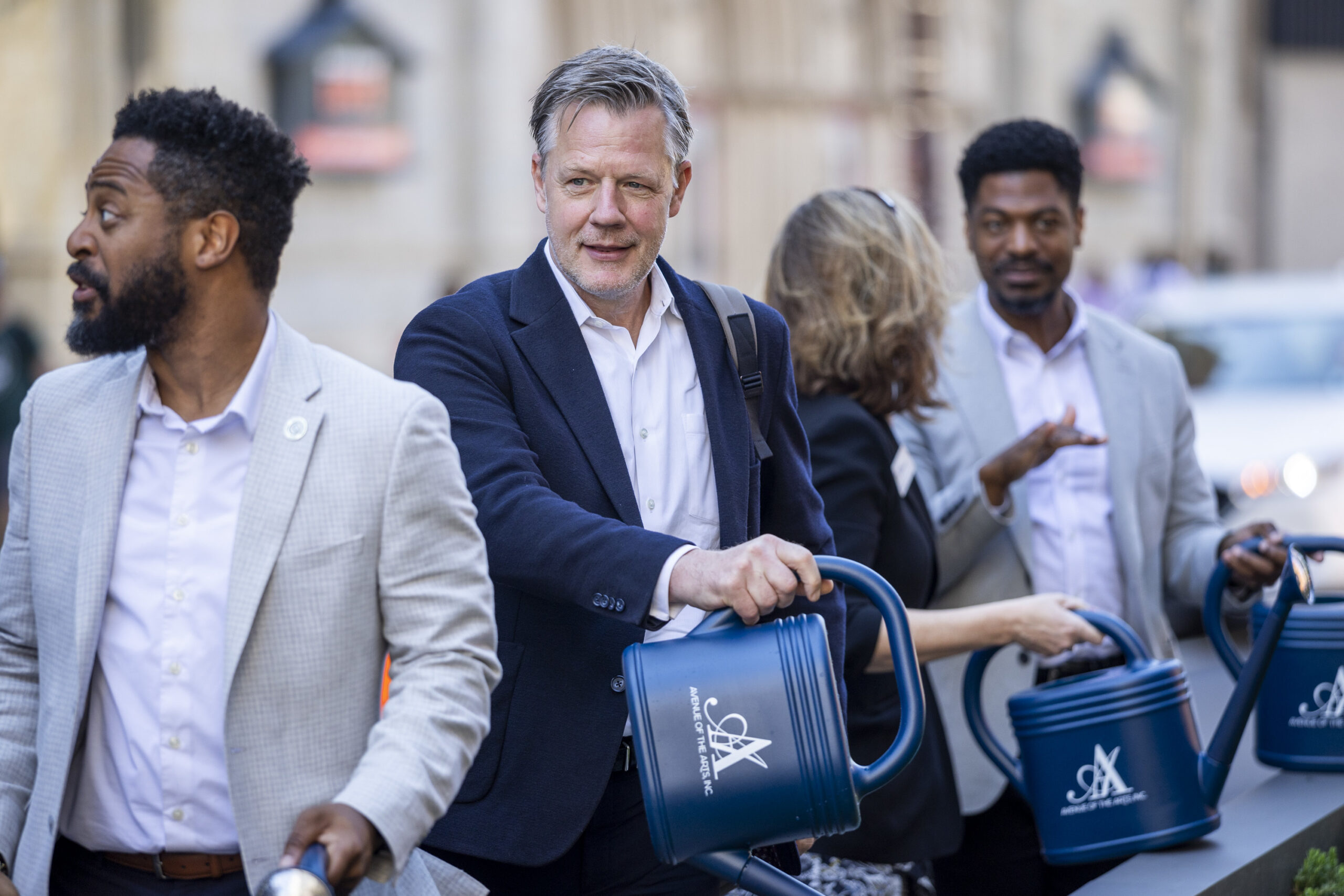
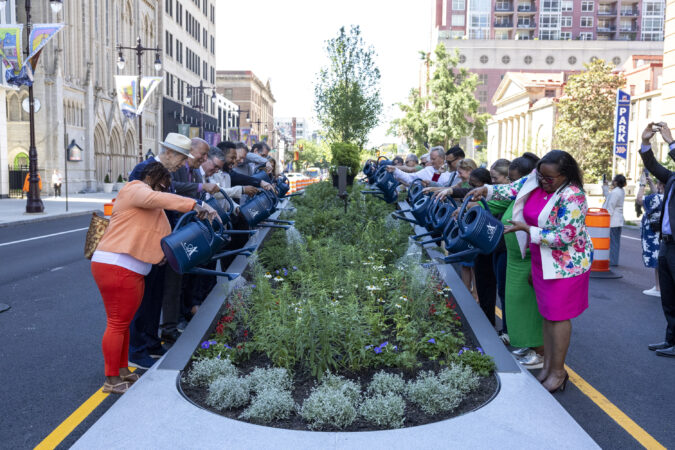
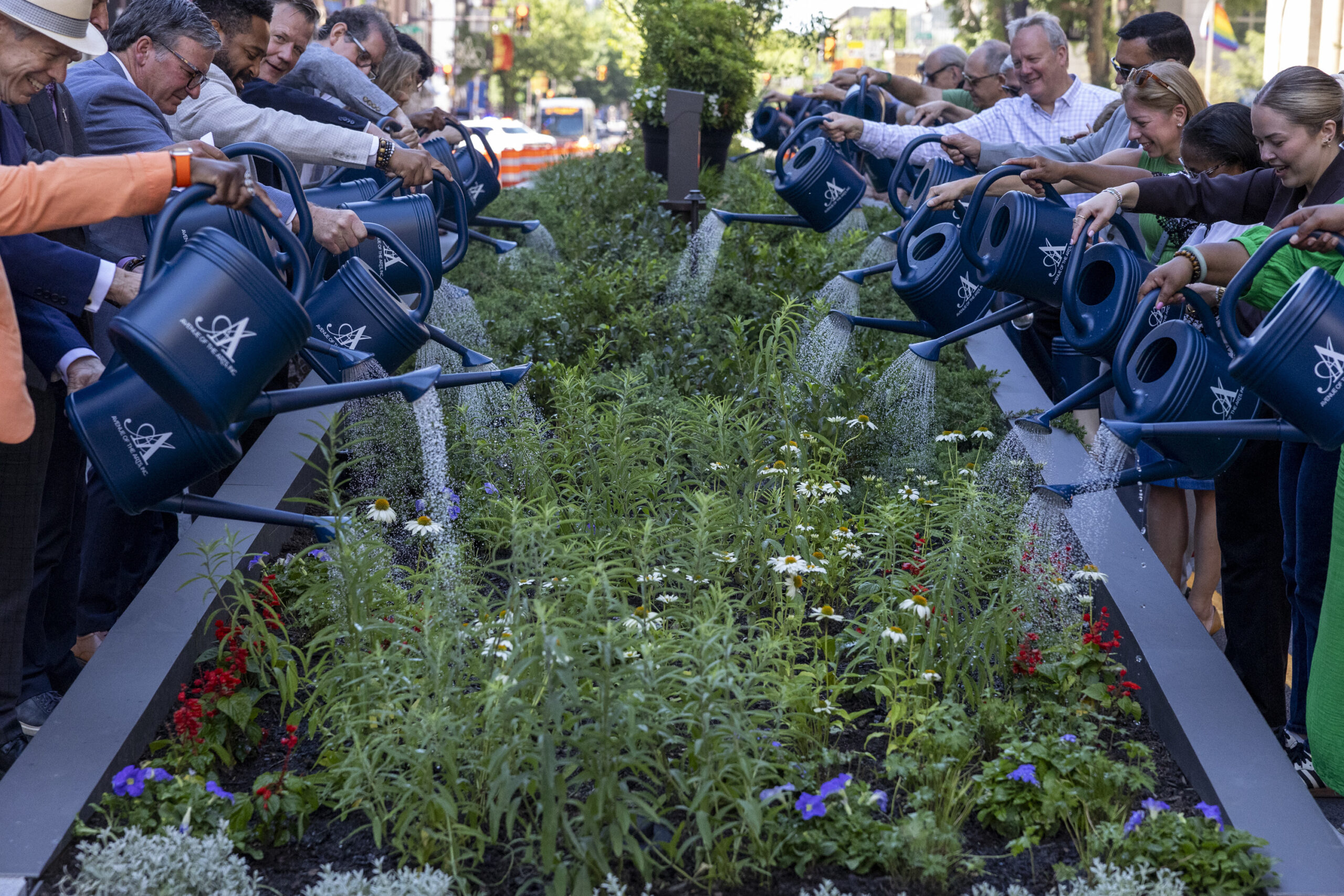
    The leafy ribbon down the middle of Broad Street from Spruce to Pine Streets was officially unveiled Wednesday morning with speeches and a ceremonial sprinkling from blue watering cans onto the new plantings.

    “We aimed high and we met our lofty expectations, and we’re off and running,” said Carl Dranoff, chair of Avenue of the Arts Inc., which is spearheading the project.

    There is a practical, traffic-calming intention behind the raised median: It leaves less space for drivers to make U-turns on the block occupied by the arts center and residences, and creates a barrier to thwart pedestrians jaywalking across Broad Street.

    Attendees watering the new redesign of the South Broad Street median outside the Kimmel Center in Philadelphia, Pa., on Wednesday, June 24, 2026.

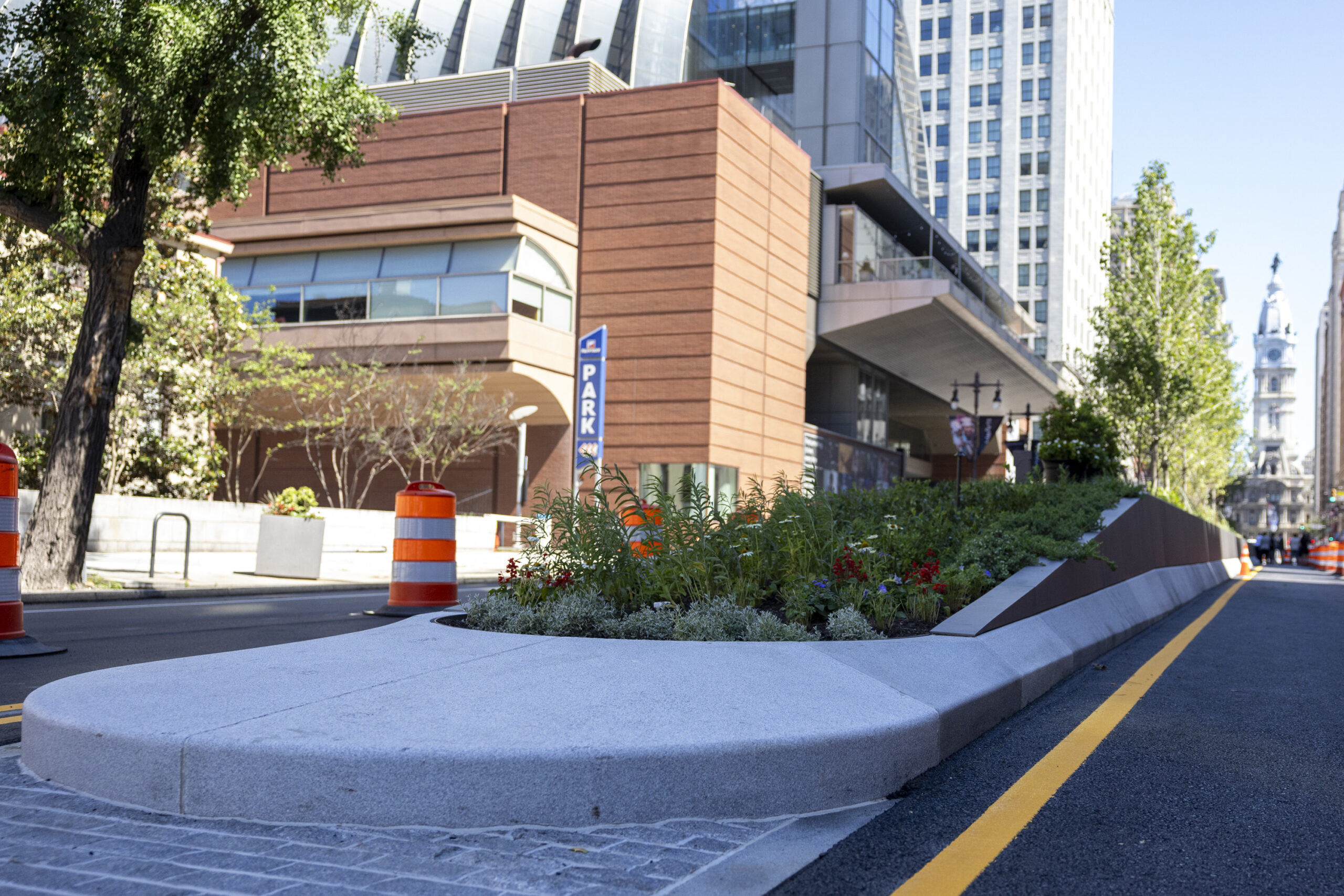
    But the slender, shapely strip of trees, shrubs, and ground cover atop a granite base with metal skirt signals a larger transformation to come.

    In spring of 2027, work is expected to begin on an ambitious beautification of the heavily trafficked block. Sidewalks will be landscaped, sculptures installed, and pop-up performance space carved out, creating what planners say will be a markedly different vibe.

    That will give the project’s leaders something tangible to point to when raising money for the entire streetscape project, which is envisioned as eventually stretching from City Hall south to Washington Avenue.

    “The idea of a beta block was to get everybody on board and excited about what can be accomplished — the doability and to create buzz,” said Dranoff, who said the median was the first step in turning South Broad Street into “one of the great streets of the world.”

    Oliver Schaper, Ubran Designer for the Project with the New York office of Architecture/Design Firm Gensler, waters the plants in the redesign of the South Broad Street median outside the Kimmel Center in Philadelphia, Pa., on Wednesday, June 24, 2026.

    That larger, 10-block effort is expected to cost about $150 million and take years to design and complete, with funds anticipated from both government sources and philanthropy.

    The design of each segment will vary, said Oliver Schaper, an urban designer for the project with the New York office of architecture/design firm Gensler.

    “The requirements of adjacent buildings are different on every block, the left-turn lanes are different, even the length of the median is different from block to block,” Schaper said. “We wanted to make sure that all the design elements can act as a kit of parts and adjust, so each design of a block will be an application of that kit of parts so they feel like cousins, but specific.”

    Some design professionals have criticized the median as intrusive to sight lines, but the design and landscaping were chosen to preserve sight lines, Dranoff said.

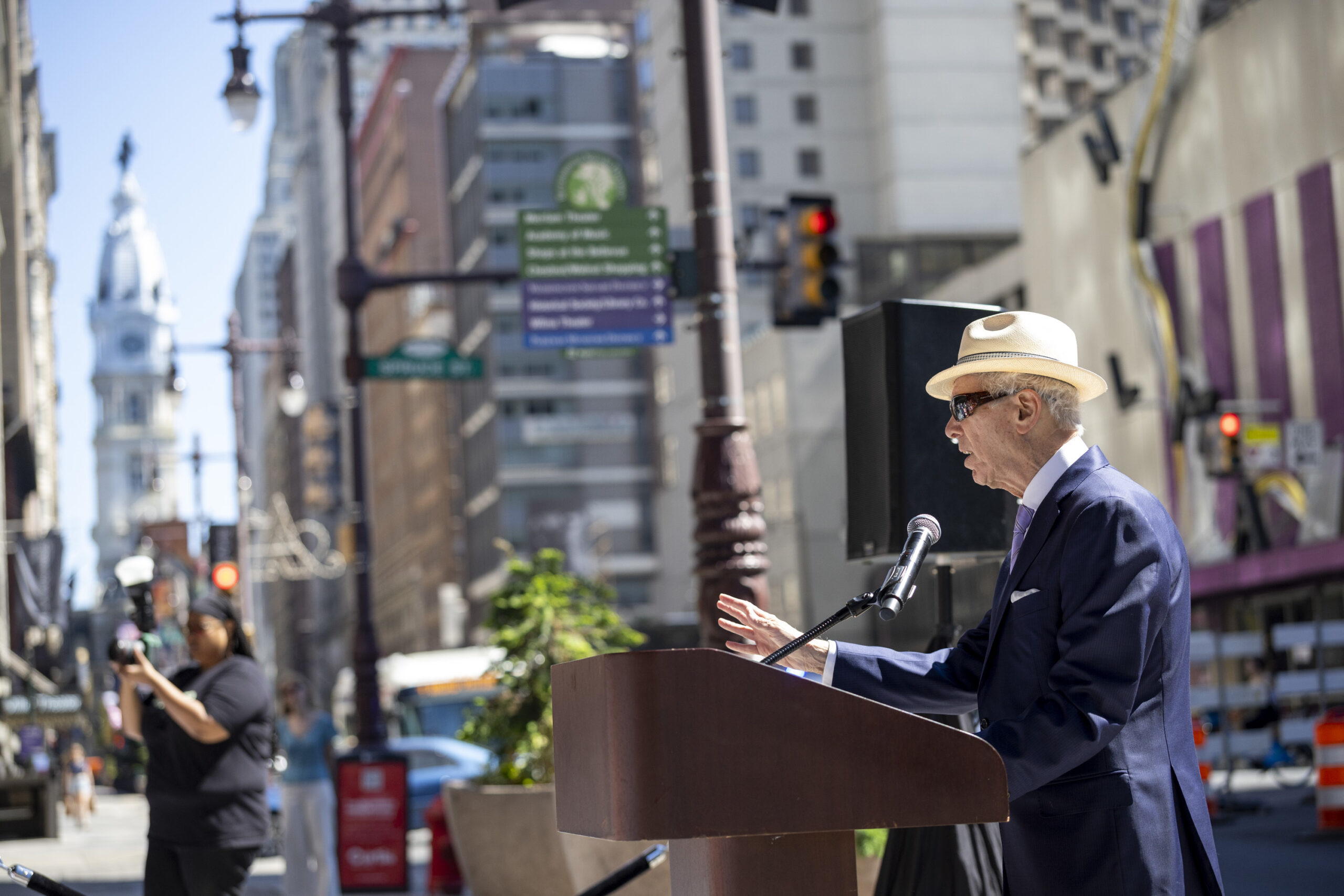
    Carl Dranoff, Chair of Avenue of the Arts Inc., speaks about the redesign of the South Broad Street median outside the Kimmel Center in Philadelphia, Pa., on Wednesday, June 24, 2026.

    “All of the trees were specifically selected to have long trunks and very narrow canopies, all the vegetation.” The designs adhere to standards for safety, he said, “so we are very confident that we will not block views.”

    The flora — about three dozen kinds of native and adaptive plants — were chosen by OJB Landscape Architecture to withstand “the abuse that they will be subject to in terms of the winters and the salt and all that,” Schaper said.

    Looking ahead, the blocks farther north from Spruce Street are anticipated as having fewer trees, to preserve the view of City Hall.

    “We even designed, as you get closer to City Hall, standing areas for brides and photo ops, so that we’re not taking anything away from people,” Dranoff said. “We have parade areas so that Mummers and other parades have performance areas between the medians.”

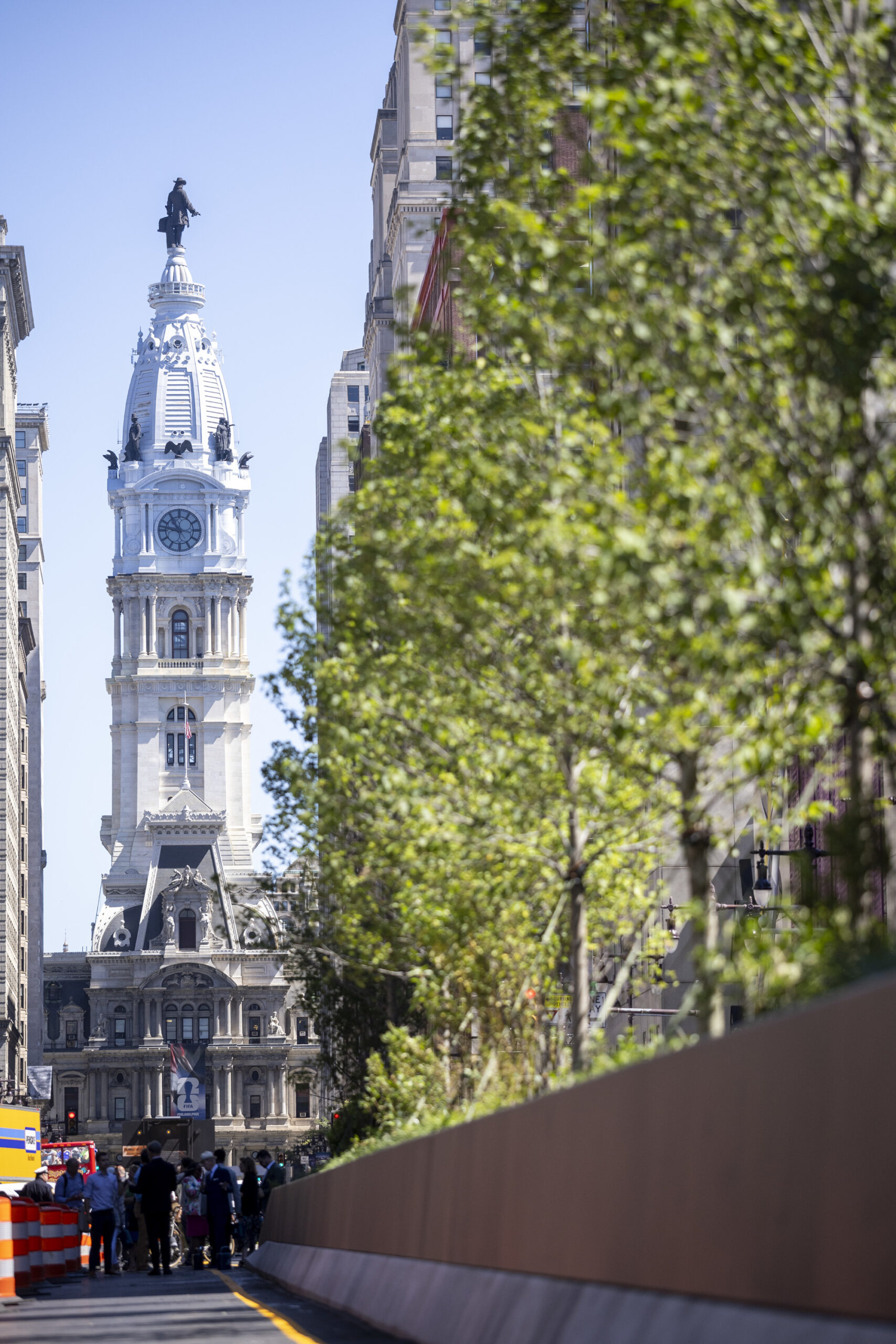
    City Hall seen in the back near the new redesign of the South Broad Street median outside the Kimmel Center in Philadelphia, Pa., on Wednesday, June 24, 2026.

    But more immediate is the work from Pine to Spruce, where Dranoff’s 47-story Arthaus residential condo tower sits. The $5 million needed to pay for the median and work on the infrastructure beneath the street “is accounted for and that was utilized,” Dranoff said, “and of the $10 million for the sidewalks, we have several million lined up and more to go, and we’ll have it all by the end of the year.”

    Construction on the sidewalk portions is expected to begin in 2027 and be completed by the end of the year “or thereabouts,” he said.

    Schaper said part of the goal is to rebalance the dynamic between pedestrians and other factors.

    “I think as designers at some point we take a position, and our position was, ‘Let’s design for pedestrians.’ There are, of course, very specific requirements that we need to adhere to — for example, it’s reflected in conversations that we had with the Kimmel Center about their bus queuing, and we made adjustments to continue to allow that to happen.”

    The new redesign of the South Broad Street median outside the Kimmel Center in Philadelphia, Pa., on Wednesday, June 24, 2026.

    But, he said, the plan sets out to be “an advocate of the pedestrian experience, and not think that private car access is the model of the future for cities.”

    Dranoff said construction of this first median phase, running much of the block from Spruce to Pine, was delayed by the unusually harsh conditions of this past winter, but workers made up for lost time.

    “Philadelphia’s going to be a hotbed this summer, and the whole point of this was to show what we can do and be more beautiful and more attractive and more compelling to Philadelphians and to suburbanites and to the world.”

  • 1990s flashback: When the desire for Starter jackets turned deadly

    1990s flashback: When the desire for Starter jackets turned deadly

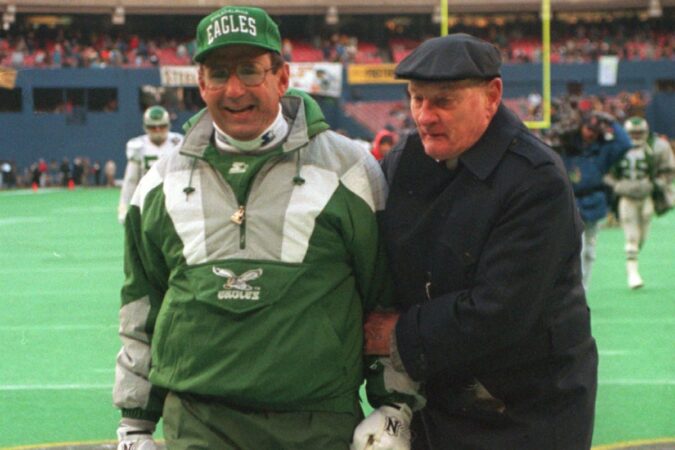
    Just before midnight on March 4, 1990, 15-year-old Darius Lamont was pulled through the back door of a friend’s home in Charlotte, N.C.

    His attacker wanted the teenager’s green-and-white Eagles Starter-brand jacket, valued at $125. During their struggle, the attacker pulled out a gun and shot Lamont in the face.

    When police arrived, the jacket was gone. Lamont died 10 hours later.

    His death — like the jacket — was part of a trend.

    The growing popularity of professional sports in the late 1980s and early ’90s spawned a new cultural status symbol: expensive sports gear lined in team colors and affixed with hulking logos. The apparel was marketed to the eager-to-impress in their teens and early 20s. But the gear was so popular that some young wearers became crime victims.

    As the 2017 NFL season kicks off and sports stores start to push their cold-weather gear, we look back on the chaos that followed the rise in sports-gear popularity and crimes spurred by the Starter-brand jacket trend.

    In the 1980s and ’90s, the jackets were manufactured by the Starter Corp. of New Haven, Conn. The company was licensed to produce gear for all the major professional teams, including baseball, hockey, basketball, and football. While the brand still exists, it’s now an underutilized subsidy of Iconix Brand Group, which continues to sell the jackets for about $100 each.

    Starter’s business peaked in 1992, when the brand made $350 million in sales. The most popular product was the winter-weight jacket, worn by gangster rappers and Hollywood superstars alike.

    But the status symbol also led to a secondary industry: jacket theft. In Philadelphia, especially in the lower Northeast, some who couldn’t afford one turned to violence.

    Two and three times a week, the police blotter was full. On one week in 1993:

    – “14-year-old boy was jumped by a group of four men at 8:45 p.m. Jan 23 in the 6300 block of Charles Street and robbed of his $100 warmup jacket”

    – “14-year-old boy was punched and robbed of his $100 Starter jacket at 9:15 p.m. Jan. 22 in the 4100 block of Levick Street by a group of three teen-age boys”

    – “A 13-year-old boy was robbed of his $100 Starter jacket at 3:15 p.m. Jan. 21 in the 1500 block of Foulkrod Street by a 15-year-old boy”

    Philadelphia police went so far as to send the freshest-faced cops undercover as decoys to catch would-be thieves. A Mayfair neighborhood group offered to put jackets on a registry, scribbling assigned serial numbers in three separate and secret locations on the jackets. But the thieves caught on, cutting out the serial numbers after they were lifted.

    In 1993, when Robert Levins was inspector of the Northeast Police Division, he told then-Daily News columnist Jill Porter that he would lecture parents.

    “I tell parents that I wouldn’t buy one for my child because of the fact — why put a target on your kid?” he said. “Why make your kid a victim? Buy him a nice coat, but it doesn’t have to be a Starter jacket or a sports team jacket.”

    Porter wrote in response: “Sounds good to me, but try telling that to your kid.”

    James Lamont, Darius’ father, told the Charlotte Observer that he had given his son money for Christmas to buy the jacket.

    “It’s a shame you can’t buy something for your child,” he said, “without worrying if he’ll be safe to wear it.”

  • Starting a gym was one scary workout for City Fitness’ Ken Davies

    Starting a gym was one scary workout for City Fitness’ Ken Davies

    Think your gym time is killer? That hour on the elliptical machine? That muscle-taxing combination of burpees, lunges, and side planks that make you want to collapse in a pile of sweat and tears?

    Try owning the gym.

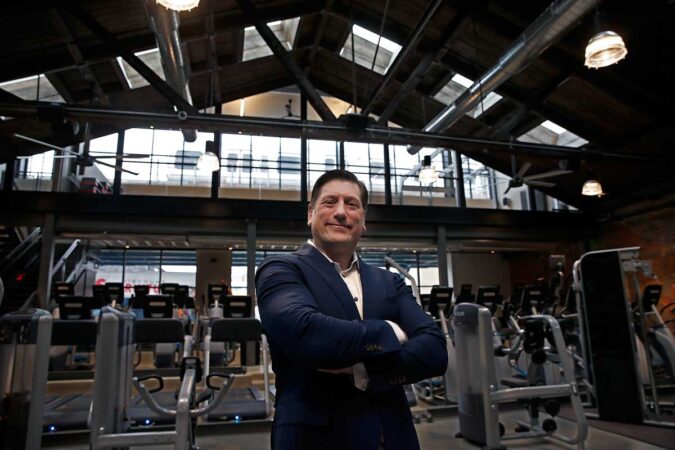
    With his fifth City Fitness location recently opened in Fishtown, and No. 6, the biggest and swankiest of them all, planned for 44,000 square feet in the Sterling apartment building at 18th  Street and JFK Boulevard late this year or early next, founder and CEO Ken Davies is in a good place. But it wasn’t that long ago just the opposite was true.

    The financial hole Davies was in was the ultimate cardio challenge.

    He hit bottom in 2008, a year after opening the first City Fitness on the edge of Northern Liberties, at Second and Spring Garden Streets, just as a recession was bearing down. He reached the precipice of bankruptcy before pulling back.

    “I was beat up,” Davies, 44, a standout wide receiver at Radnor High School and Millersville University, recalled recently. “I didn’t even enjoy it anymore. I wasn’t even working out.”

    It’s a wonder he was making it out of bed those days.

    Davies, who is divorced, had drained the $175,000 he had accumulated in a 401(k) from earlier lucrative jobs in risk management and commercial real estate. He was missing mortgage payments on a house in Stratford, which he had remortgaged for $125,000 and then for an additional $25,000, to help meet his capital needs. He also was delinquent on repayment of a $1.25 million loan from the U.S. Small Business Administration, owed $75,000 on credit cards, had an unsecured loan for $50,000, and needed to repay $70,000 he had borrowed from two friends.

    Plus, he had lost his primary job in information, analytics, and marketing for the commercial real estate industry because he didn’t disclose his gym business.

    One of the worst times, Davies said, was “when I basically slept in a van for a week because I was locked out of my house because I couldn’t pay my mortgage.” The other was when his debit card was declined at Wawa for a $1 purchase.

    “That was the lowest point in my life,” he said.

    City Fitness is now profitable, with gross revenues of $7.5 million, 100 employees, and national growth aspirations, Davies said.

    “I believe he is someone to watch in the fitness industry,” said Wes Deming, principal of All Commercial Capital L.L.C., who was a member of City Fitness before agreeing three years ago to serve as its financial adviser. As such, he is helping Davies locate expansion financing.

    “It can be tough,” Deming said.

    That’s true for many reasons, said Mike Trimble, a vice president in commercial lending at TD Bank. Lack of collateral is one, because most gym owners lease facilities. Another is uncertainty of membership duration.

    Which explains the lack of enthusiasm Davies encountered early on:

    “One banker said, ‘If you were Walt Disney, we wouldn’t lend to you if it was a gym.’ They hated gyms. Even to this day, even with my success, it’s still difficult.”

    Incorporating in May 2005, Davies started paying $20,000 a month to rent the Second and Spring Garden location, which he expected to have open for business in 2006. He was selling memberships for $29.99 a month based on poster-board depictions of what he planned for the site.

    About 300 memberships were sold. Buyers turned against Davies when no gym materialized, accusing him on at least one blog site of stealing their money, he said.

    It took five months to secure the Small Business Administration loan. Build-out  took  an additional six or seven. The first City Fitness gym opened in August 2007. By then, about 10 percent of the presale members had asked for refunds, Davies said.

    Then “things turned from bad to worse,” as can be expected when expenses — equipment leases, instructors, software, office and cleaning supplies, rent — exceed income. Membership sales were slow and revenue from personal training virtually nonexistent, which Davies largely attributed to the recession. Debt mounted.

    To help turn things around, he borrowed the low-cost strategy of a competitor, Planet Fitness. City Fitness memberships dropped to $19.99 a month, quickly attracting 1,000 sign-ups.

    “They have a great model,” Davies said of Planet Fitness, where memberships are currently offered for $10 a month. “But you can’t provide the gym I wanted.”

    That’s a place where equipment is replaced every three years, a robust schedule of group exercise is offered along with top-notch training programs, and where service with a smile and fastidious cleaning are priorities, said Tom Wingert, marketing director for City Fitness. Memberships now start at $49.99 a month.

    “City Fitness’ costs are a direct result of how expensive it is to maintain the level of quality seen in our clubs,” said Wingert, who last year created the city wellness initiative, My City Moves, to achieve another City Fitness objective: community-building.

    “Fitness is a moving target,” said Tracy Shannon, an owner of competitor Sweat, which has been in business since 1997 and plans to open its eighth gym in March at 1 South Broad Street.

    Success is “about staying ahead of the game” and keeping members happy, Shannon said. “If you think you have it figured out, it changes.”

    It wasn’t until 2012 that Davies could open a second location, in the city’s Graduate Hospital section. A smaller “express gym” opened in South Philadelphia in November 2014, followed in April 2015 by what Davies said has been the only failure so far, a personal-training studio in Society Hill at Fourth and Walnut Streets. It reopened Feb. 6 as an express gym.

    Opening in December in Fishtown was a full-scale gym that will offer 25,000 square feet of workout space when fully built out. TD Bank is sold on what Trimble said is “a model that works.”

    Integral, he said, is “an unbelievably strong brand particularly driven by the quality of the offering and Ken’s commitment to building a culture there.” TD has provided $1 million in financing for Fishtown, and a $100,000 letter of credit to support the Sterling lease.

    These days, Davies said, he functions in a state of  “productive paranoia”  because “things can always change.”

    “It’s something that keeps me driven but grounded at the same time.”