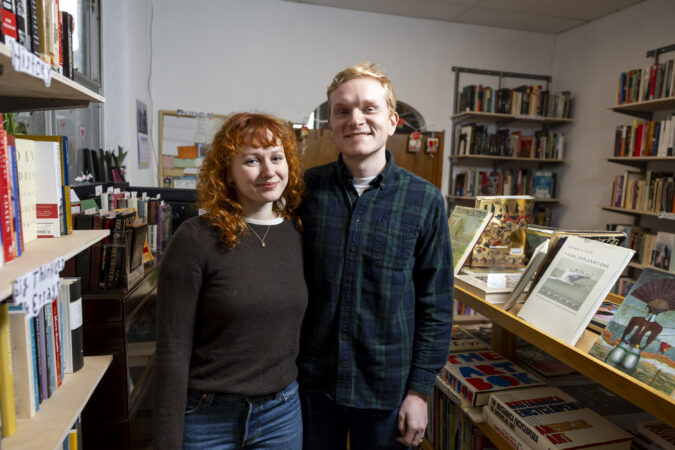
Little Yenta has to be the tiniest used bookshop in Philly. And it’s certainly the only one located in the back of a 40-year-old children’s dressmaking studio.
Ariel and Simon Censor, partners in life and now books, opened Little Yenta Books, their self-described “micro-bookstore,” on East Passyunk Avenue in South Philadelphia on Saturday.
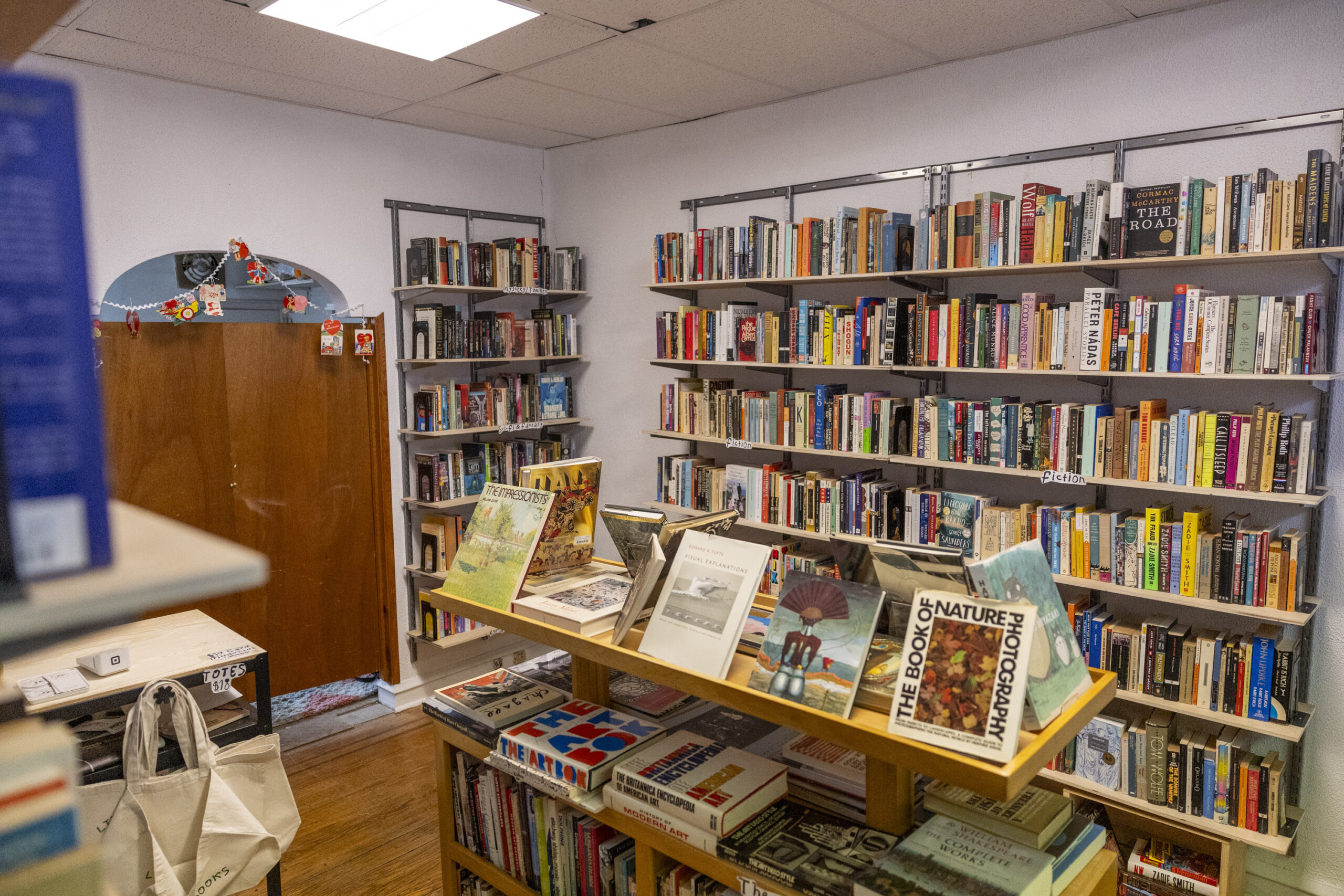
Situated, speakeasy-style, in a postage-stamp-sized loft above the Painted Lady children’s boutique, the 150-square-foot shop is nearly bursting with over 1,500 titles, including literary fiction, science fiction, poetry, history, graphic novels, plays, and first-edition classics.
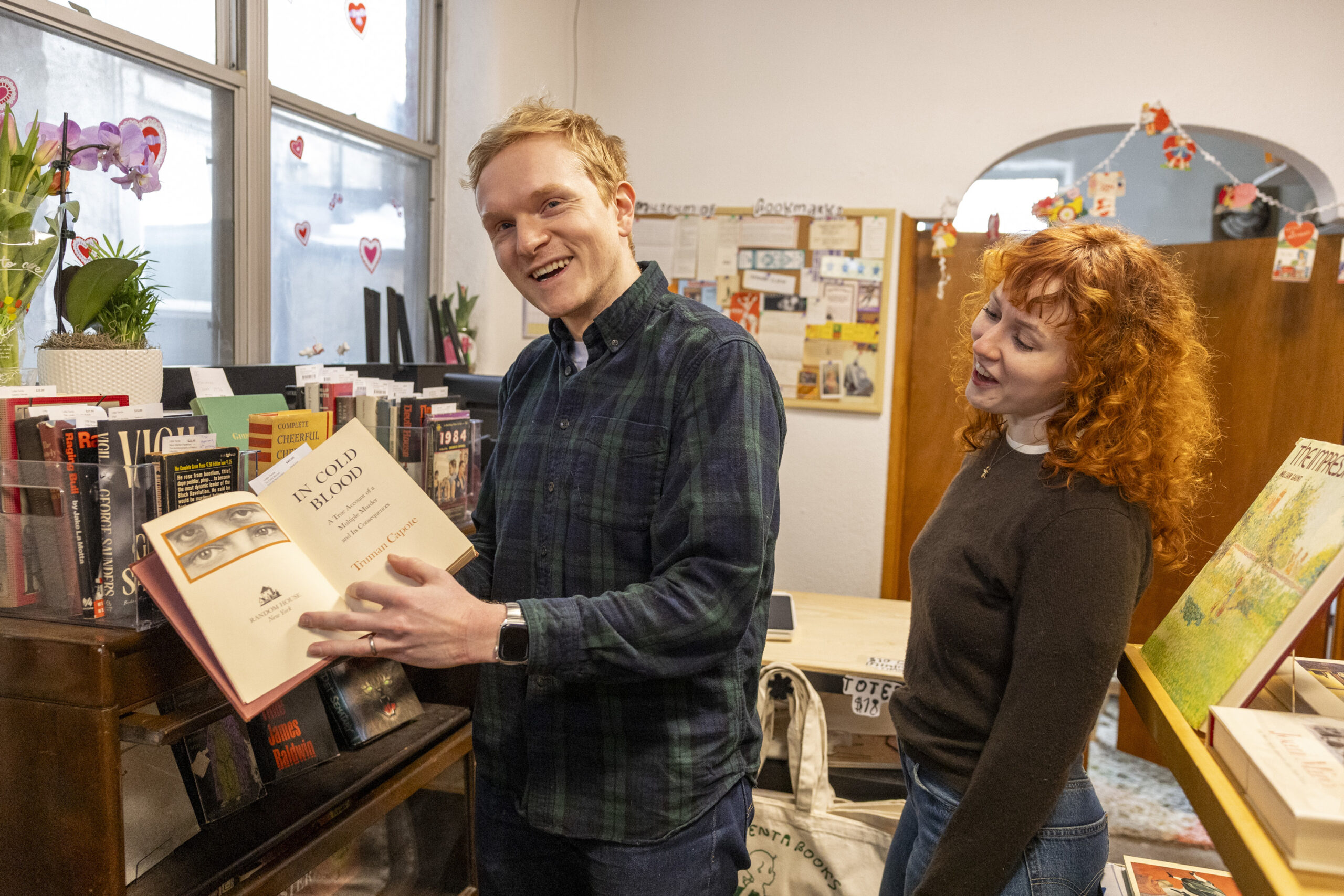
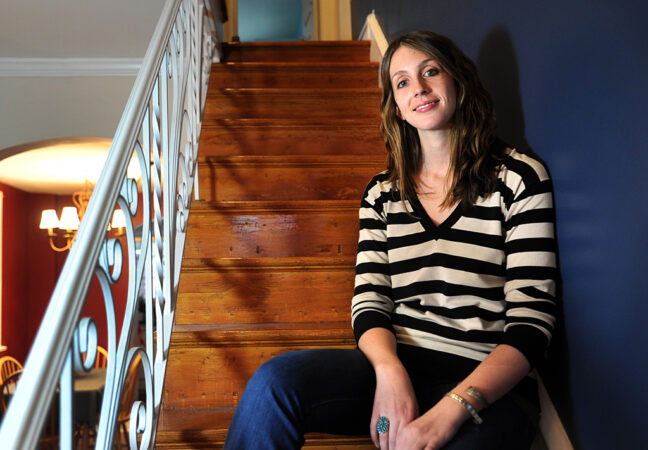
Simon and Ariel Censor, owners of Little Yenta Books, showing one of their favorite books they acquired, “In Cold Blood,” a novel by Truman Capote, in their small bookshop in Philadelphia, Pa., on Friday, Feb. 13, 2026.
“We can’t be everything to everyone,” said Ariel Censor, 27, preparing the spine-packed space with her husband on a recent afternoon. “But we want to be something to most people.”
The shop is a passion project.
The Haverford College graduates have long been aficionados of used bookshops — believers in the magic of unexpectedly stumbling upon a literary treasure in a sea of cast-off paperbacks. Their South Philly rowhouse could double as a secondhand store itself, the couple jokes.
“You really couldn’t use the living room anymore,” Ariel Censor said with a laugh. “It was all books.”
Last year, they decided to host pop-up used book sales around the neighborhood, including at the popular Cartesian Brewery. It was a hit.
“We got lots of people coming and saying that they wished there was a permanent used bookstore around here,” said Ariel Censor, who works as an associate communications director at the Penn Center for Impact Philanthropy.
Molly’s Books & Records on Ninth Street in the Italian Market has long been an iconic South Philly used book spot. A Novel Idea, a popular independent bookshop, opened on East Passyunk Avenue in 2018 and mostly deals in new books.
The couple believed South Philly could handle another used book destination. Selling nearly 100 books at the brewery event, the couple decided to make their dream a reality.
Searching for a brick and mortar space they could afford — and that boasted a little South Philly charm — they found it in the back of Painted Lady. It’s in a small storefront at 1910 E. Passyunk, where dressmaker Angela D’Alonzo has made custom baby outfits for decades.
Little Yenta Books is a small bookshop in Philadelphia, Pa., on Friday, Feb. 13, 2026.
It’s a case of old South Philly meeting new South Philly. For $400 a month, she offered the couple a little loft area storage space five steps above her shop, with no heat or hot water. Warmth creeps up from the basement, explained Simon Censor, 29, who works for a real estate firm. And hot water is not a must for book buying, they added.
“Your hands are just a little cold, and that’s OK,” Ariel said.
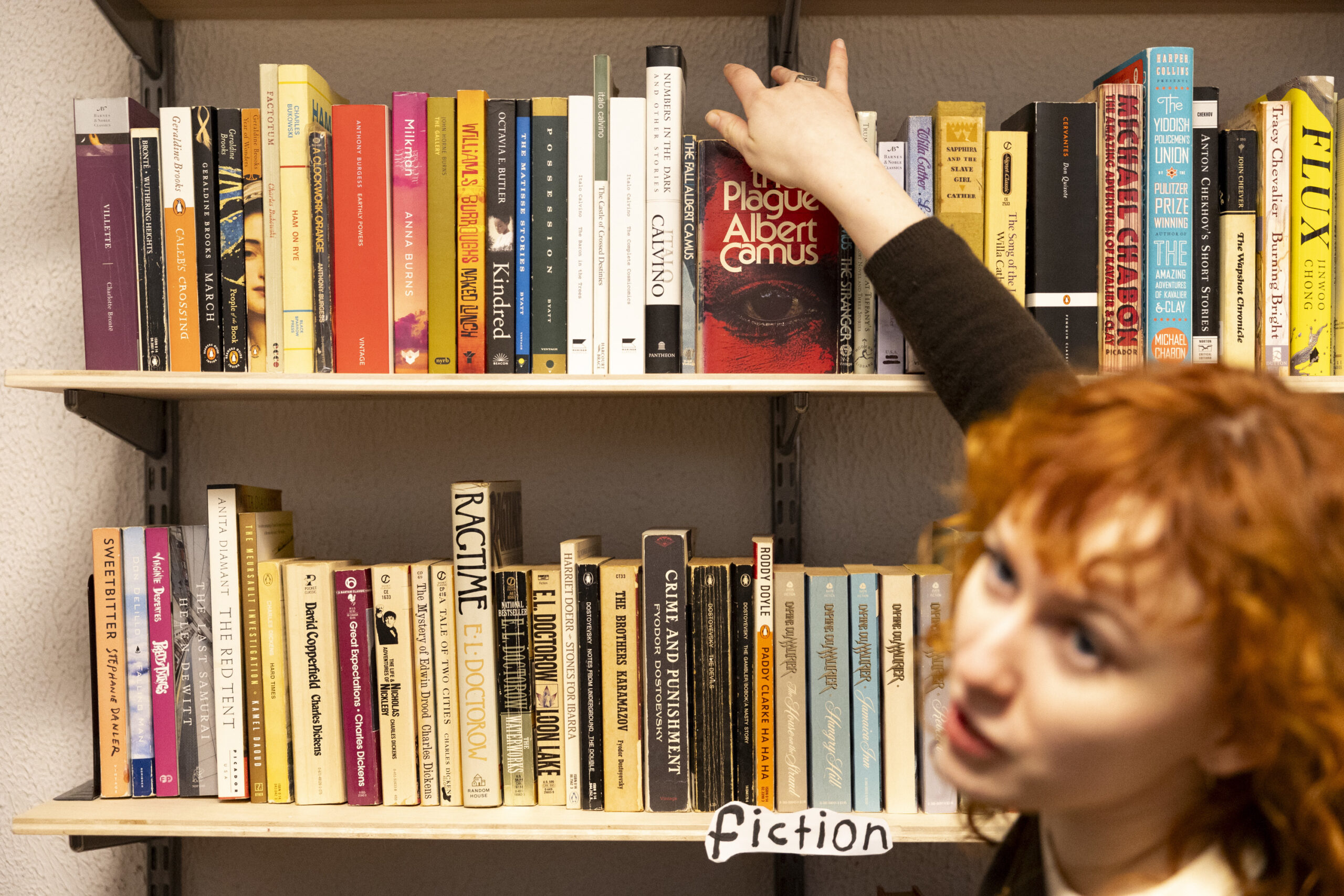
Ariel and Simon Censor have transformed the tiny space into a literary thicket, with shelves and stacks of titles from their home collections, and ones they’ve purchased from estate sales and sellers. Rare early editions and classics by Truman Capote, James Baldwin, E.L. Doctorow, Octavia Butler, and Willa Cather. Hard-to-find paperback editions of George Orwell, Albert Camus, Italian novelist Elena Ferrante, and cult favorite Charles Bukowski.
“I always want to fit more books in here,” said Ariel Censor.
Ariel Censor shows one of the books she and Simon Censor acquired, “The Plague,” by Albert Camus, in their small bookshop in Philadelphia, Pa., on Friday, Feb. 13, 2026.
On a bulletin board hang keepsakes the couple have discovered in the books, including notes, prayer cards, letters, poems, baseball cards, a high school class schedule from the 1990s, and a vintage recipe for triple chocolate cake.
“I actually want to make that someday,” said Ariel Censor.
Opened Thursdays and Fridays from 4:30 to 7 p.m., and weekends from noon to 6 p.m., the spirit of the shop is found in its name, the couple said. In American Yiddish parlance, Yenta can mean matchmaker. For Ariel and Simon Censor, that means that special feeling of playing matchmaker between a reader and a book.
“Just coming in and stumbling upon a book that you will love,” said Ariel Censor.
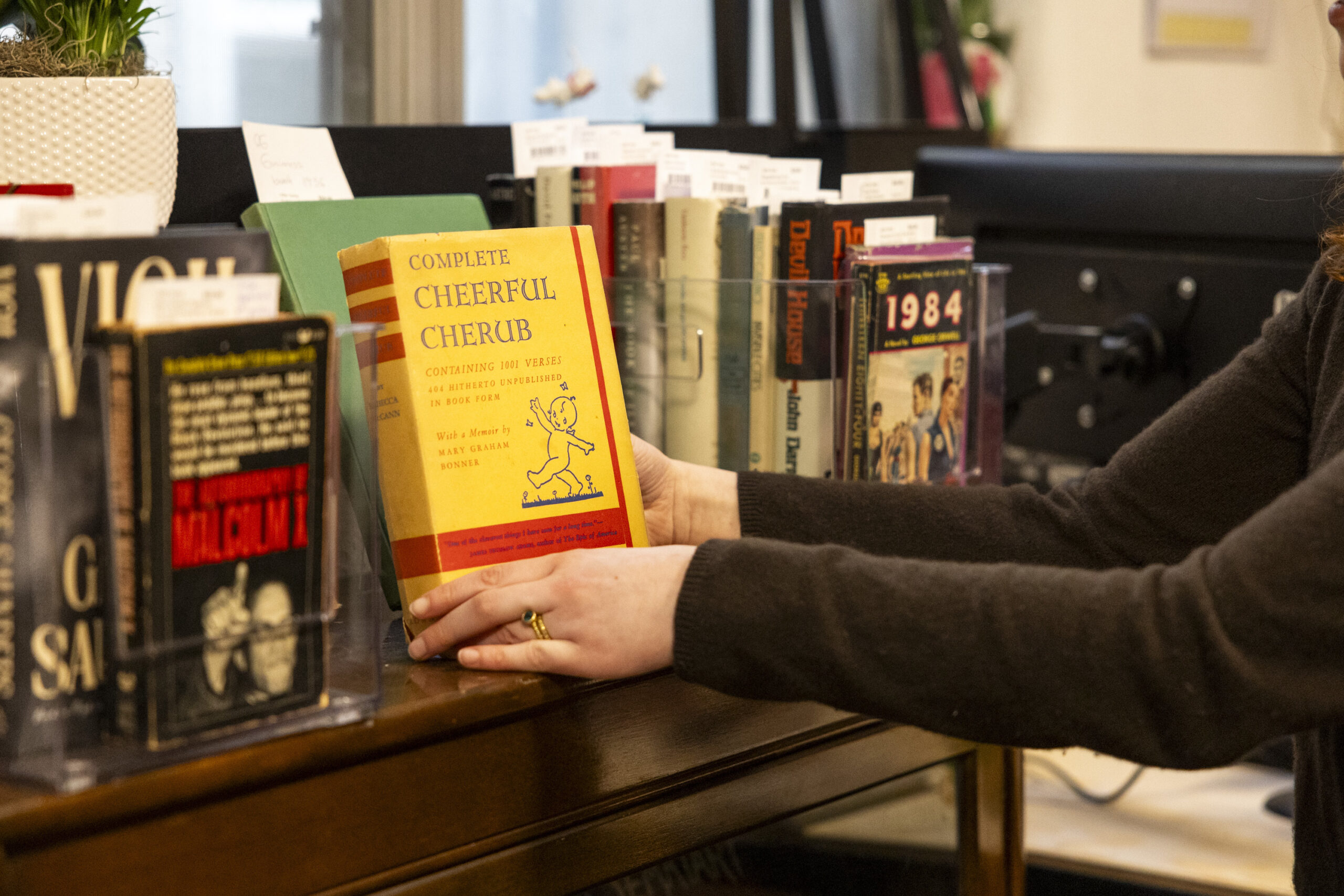
“Complete Cheerful Cherub” by Rebecca McCann is a book in Little Yenta Books in Philadelphia, Pa., on Friday, Feb. 13, 2026.
When we first meet Bok High graduate Ozzie Phillips — one of three protagonists in Sadeqa Johnson’s latest novel, Keeper of Lost Children — a block party on South Philadelphia’s Ringgold Street is just winding down. In between the last dollops of creamy potato salad and sips of clear corn liquor, Ozzie’s friends and family wish the young serviceman a bon voyage.
He spends the last few weeks with his girlfriend, Rita, picnicking at the Lakes in FDR Park and walking through Center City department stores like Wanamaker’s and Strawbridge’s. One night the couple go to Ridge Avenue’s Pearl Theater to see Pearl Bailey perform.
The next morning, Ozzie’s Uncle Millard picks him up in a Vagabond-blue Oldsmobile and the two cruise down Broad Street, Count Basie tunes playing on WHAT AM. Uncle Millard circles City Hall, depositing Ozzie at Reading Terminal Station, where he hops on a train to Trenton’s Fort Dix Army Base before embarking on a steam boat to Germany.
It’s Ozzie’s time in Germany that fuels the plot of the sentimental historical novel.
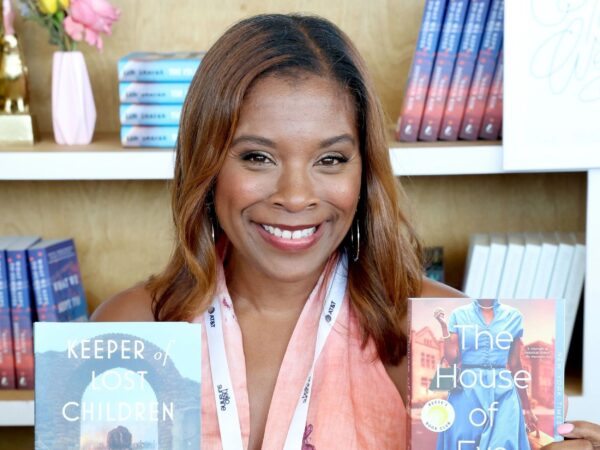
“It’s such a joy for me to write the Philly scenes,” Johnson said, during a recent video chat. The book publicist turned New York Times best-selling author was born in South Philadelphia, grew up in North, and graduated from George Washington Carver High School of Engineering and Science. Today, the married mom of three writes from her home in Virginia, right outside Richmond.
“I left Philly when I went to Marymount Manhattan College in New York,” Johnson said. “But where you grow up is always in your DNA. Philly is in my soul. When I sit down and paint pictures of historical moments in Philadelphia, I get to go home.”
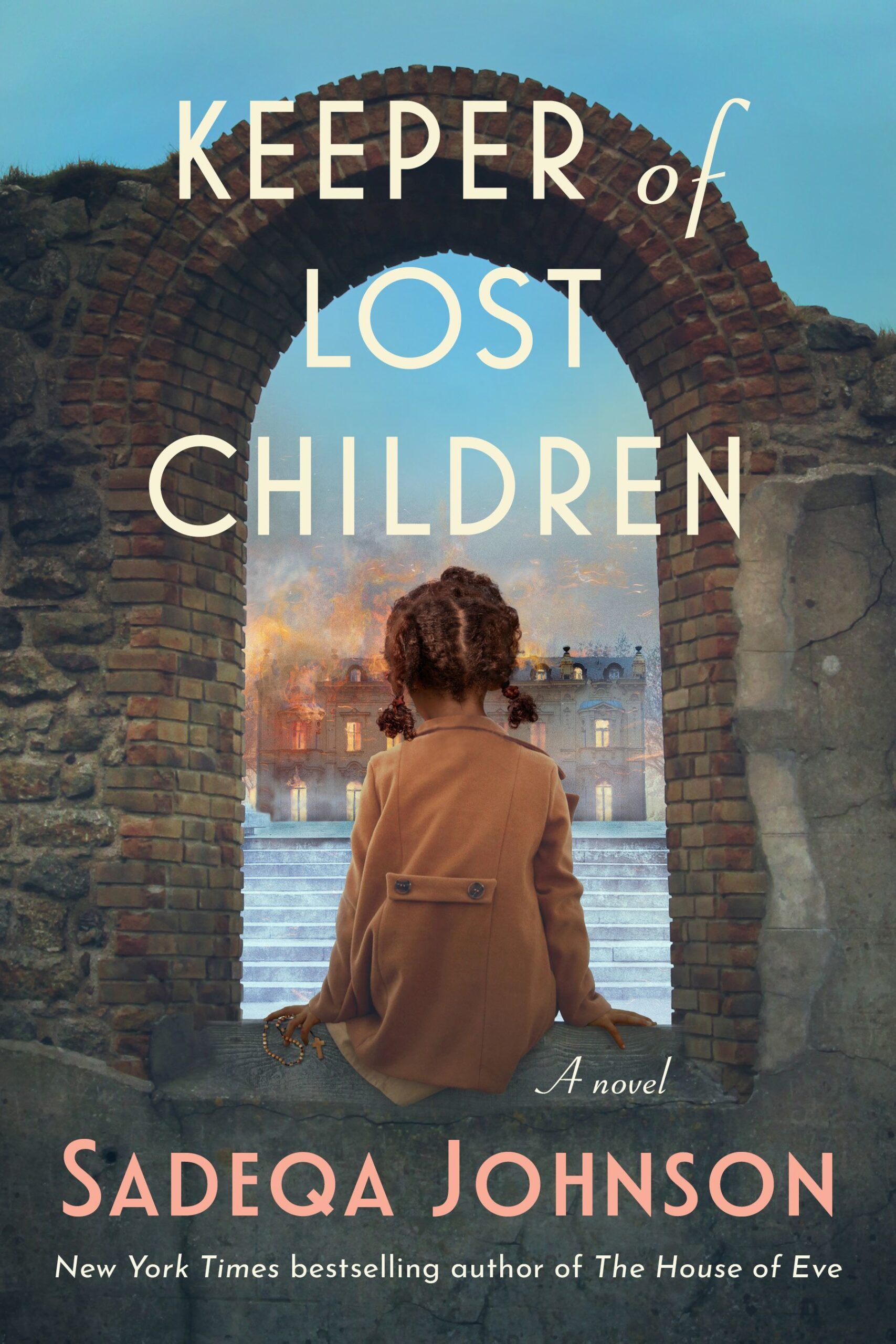
Cover art for Sadeqa Johnson’s 2026 novel, “Keeper of Lost Children” One of the main characters, Ozzie Ozbourne grew up in 1940s South Philadelphia.
Johnson has six books out in the world. She self-published her first,Love in a Carry-On Bag, in 2012.
Her books center young Black women in old-school and modern times trying to do the best with what they got. But in most of her works — especially the captivating historical fiction novels through which she’s made a name for herself on BookTok, podcasts, and traditional bestseller lists — her heroines face overwhelming odds.
Take theYellow Wife’s Pheby Delores Brown. Set in antebellum Virginia, Brown’s story is based on the harrowing real-life experience of enslaved woman Mary Lumpkin, who is forced into a relationship with her enslaver for whom she bears five children.
“I have this propensity to tell the story of young women 15, 16, 17, who are in a situation that feels insurmountable,” said Johnson, who, until 2023, taught creative writing in Drexel University’s master’s of fine arts program. “And I really love developing those stories that show how those young women get to the other side.”
The House of Eve, a 2023 New York Times bestseller and a Reese Witherspoon Book Club of the Month pick centers 1950s North Philadelphia teen Ruby Pearsall who falls in love with a Jewish boy whose family runs a corner store. In the book, Ruby must choose between a free ride to Cheyney University and motherhood.
“I love the research,” Johnson said. “I love learning interesting things about this city that I was brought up in.”
In Keeper — released this month by 37 INK, a division of Simon & Schuster — Ethel Gathers, a journalist and wife of an Army officer, also stationed in post World War II Germany, is the central character. There, she chances upon a group of multiracial children who she learns are the offspring of Black servicemen and German women.
Gathers, whose story is based on the life of journalist Mabel Grammer, adopts eight of the “Brown Babies” and starts an adoption agency, ultimately placing hundreds of the children with Black families in the United States. In the book, Grammer visits Philadelphia from her Washington home and books a room at the Divine Lorraine, the country’s first fully racially integrated hotel.
“I stumbled upon Ms. Grammer while researching The House of Eve,” Johnson said.“And in that moment, I knew I wanted to tell that story.”
Johnson breathes life into her fictional characters through extensive research, adding vivid details that take the readers back in time and thrust them into the rich tapestry of her story. Fans will often find connections to characters from previous books where they least expect it.
Ozzie’s military time and South Philly swag is based on Johnson’s great-uncle, 94-year-old Edgar Murray, who, like Ozzie, grew up in South Philly and spent the latter part of the 1940s in Germany. (For the record, Johnson said, her uncle didn’t suffer with alcoholism like Ozzie does in the book.)
It was Murray who suggested Ozzie live on Ringgold Street and take his date to the Pearl Theater.
“I like the factual things she puts in there,” said Murray, who lives with family in Denver, Colo. “It makes it more interesting.”
Philadelphia readers with an eye for history will enjoy seeing the city unfold through Ozzie’s eyes after his 1952 return.
He leafs through The Philadelphia Inquirer, reading detailed accounts of white veterans securing “large mortgages and moving out to lofty suburbs” on the GI bill that he too applied for. He works a job at the Navy Yard, gets married at Tasker Baptist Church, and experiences a miracle at West Philly’s Mercy-Douglass Hospital.
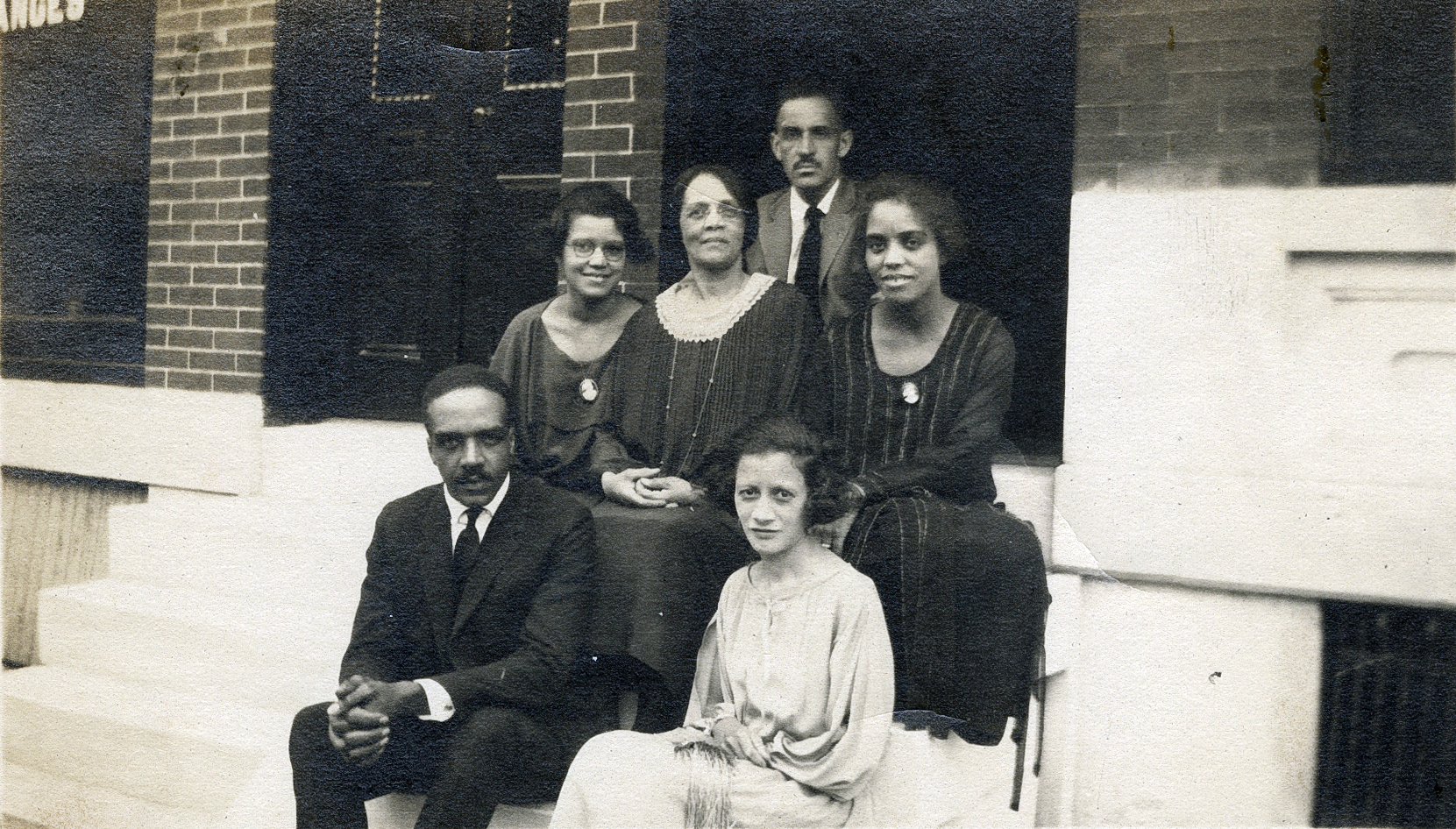
Tanner family members gather on the front steps of the Tanner House, at 2908 W. Diamond St. in Philadelphia, in this photo taken circa 1920. They are: Bottom row (l-r) Aaron A. Mossell Jr., and his wife, Jeanette Gaines Mossell; Middle row (l-r): Sadie T. M. Alexander, her mother, Mary L. Tanner Mossell, and Sadie’s sister, Elizabeth Mossell Anderson. Top row: Page Anderson, Elizabeth Anderson’s husband.
Halfway through Keepers, Ozzie attends a party thrown by elite Civil Rights husband-and-wife-team Raymond Pace Alexander and Sadie Tanner Mossell Alexander at their swanky home at 17th and Jefferson.
Attorneys John Francis Williams and Lewis Tanner Moore Sr., cofounder of the Pyramid Club and whose son, art collector Lewis Tanner Moore Jr. died in 2024 — shoot the breeze about an NAACP fundraiser and Buddy Powell, a 1940s jazz musician who was so severely beaten by the Philadelphia railroad police that he ended up in an asylum.
“In The House of Eve, I got to dig around in my mom’s memory for Ruby,” Johnson said. “This time around I got to dig around in my dad and Uncle Edgar’s head to get South Philly down. Let’s see what happens in the next book.”
Sadeqa Johnson will give an author’s talk at the Philadelphia Ethical Society, 1906 Rittenhouse Square, Friday, Feb. 13, 6:30 p.m. to 7:30 p.m. Tickets are $35 and include a copy of “Keeper of Lost Children”
Helen Cherry, 101, formerly of Philadelphia, prolific illustrator, artist, and show tunes devotee, died Thursday, Jan. 15, of age-associated decline at her home in the Woodland Pond retirement community in New Paltz, N.Y.
“It was her decision entirely,” said her daughter, Lynne. “She knew her own mind and made the decision that it was time for her to take flight to the Great Beyond.”
A lifelong artist, Mrs. Cherry grew up drawing and painting in West Philadelphia. She earned a scholarship to the old Philadelphia College of Art, sold illustrations to the Jack and Jill children’s magazine, and took a 20-year hiatus in the 1950s and ’60s to rear her three children.
She resumed her career at 50 in 1974 and went on to illustrate 30 books and dozens of magazine stories for Highlights, Cricket, and other publications. Using a combination of her maiden name, Cogan, and her married name, Cherry, she was published under thepseudonym of Helen Cogancherry.
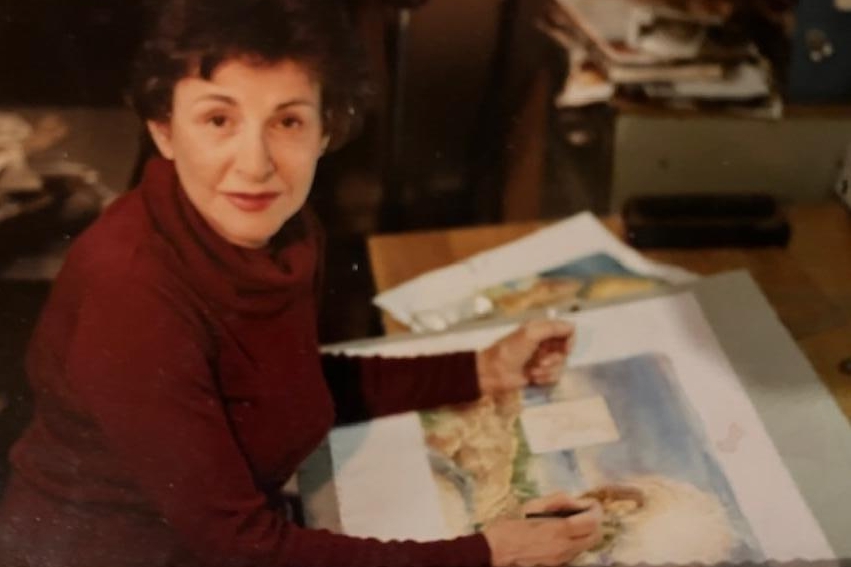
Mrs. Cherry at work illustrating 1991’s “Fourth of July Bear.”
“She was always an artist,” said her daughter, also an illustrator and writer. “Art was her hobby, her passion, her work. She said it was something that she can’t not do.”
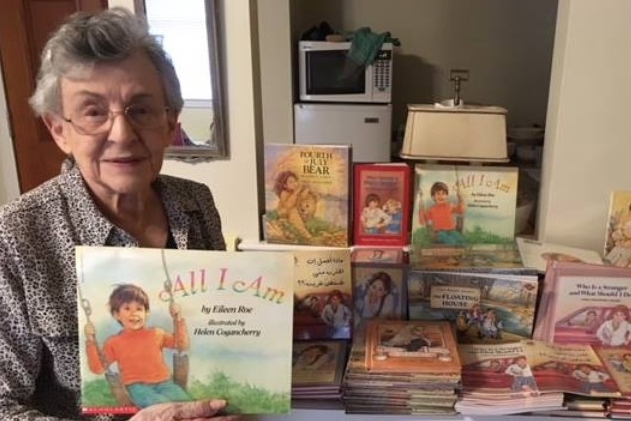
Mrs. Cherry was a keen and imaginative observer of life, adept at creating visuals that reflected the concepts of the writers with whom she worked. She illustrated many children’s books, such as All I Am, Warm as Wool, and The Floating House.
She told The Inquirer in 1986 that a book she illustrated helped a girl she knew address a difficult childhood situation. “That made a profound impression on me,” she said. “I saw how my little books could help children.”
Her career was featured in several publications, and she told The Inquirer that breaking back into the business in the 1970s was “discouraging at first.” She said: “I remember coming home sometimes and telling my husband that it was hopeless. He kept encouraging me to keep at it.”
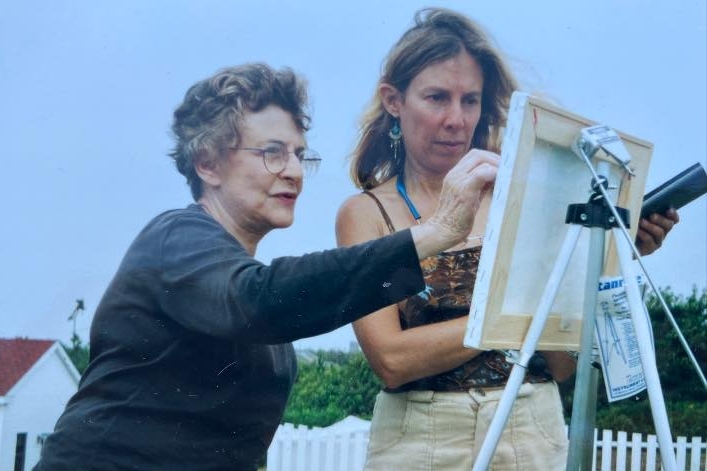
Mrs. Cherry (left) and her daughter, Lynne, work on a project.
Helen Cogan was born July 9, 1924, in a West Philadelphia rowhouse beneath the elevated railroad tracks. The middle of three children, she looked up to her sister, Molly, and cared for her younger brother, Robert, while her parents ran the small grocery store they lived above.
She contributed illustrations to the yearbook and graduated from West Philadelphia High School. She met Herbert Cherry in French class and sent him beautifully illustrated letters while he served overseas during World War II.
They married in 1950 and had a daughter, Lynne, and sons Steven and Michael. She helped her husband operate Cherry’s Pharmacy in Ridley Park for years, and they lived in Milmont Park and Wallingford in Delaware County, and Carlisle, Pa. She moved to New Paltz after her husband died in 2000.
Mrs. Cherry often sang show tunes with family and friends, and while she worked. She whipped up memorable meals, especially on holidays, and enjoyed idyllic summers on family vacations at the Jersey Shore in Ventnor.
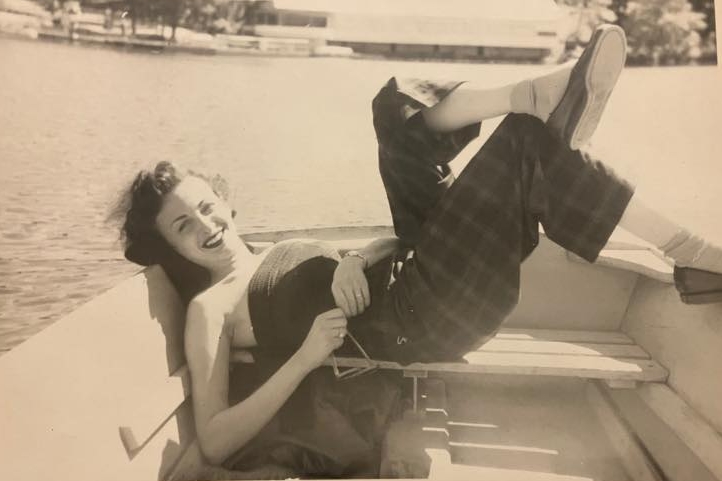
Mrs. Cherry grew up in West Philadelphia.
She tutored her children and their friends, and later her grandchildren, in drawing and painting. She showed everybody, her daughter said, “how to be a good human being in this world.”
On Facebook, friends called her “warm,” “beautiful,” and “a talented giver.” One said: “The joy she radiated her whole life long was magical.”
Her daughter said: “She was quiet and understated but strong.”
Her favorite song was “Life is Just a Bowl of Cherries.” It opens with: “Life is just a bowl of cherries. Don’t take it serious. Life’s so mysterious.”
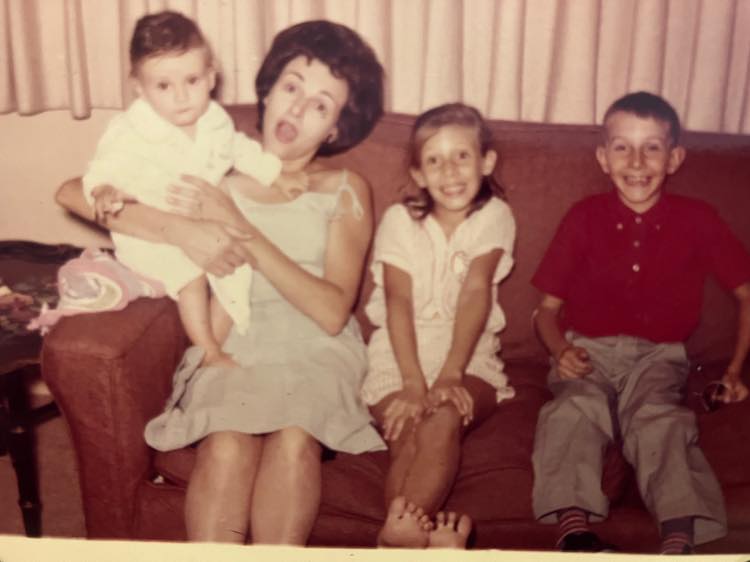
Mrs. Cherry enjoyed time with her children.
In addition to her children, Mrs. Cherry is survived by five grandchildren, a great-granddaughter, her brother, and other relatives. Her sister died earlier.
A memorial service was held Sunday, Jan. 18. A celebration of her life is to be held later.
Chill Moody didn’t plan on writing a children’s book.
A story about a young athlete was bubbling in his head. And the West Philly-born rapper and serial entrepreneur wanted to turn it into a screenplay, mirroring the upbeat, have-faith vibe of fellow rapper Bow Wow’s 2002 film, Like Mike.
“Instead of basketball [in Like Mike], I wanted the story to be about golf,” said Moody, whose real first name is Eric.
“And instead of a little boy, I wanted my main character to be a little girl.”
But movies take forever to become a reality. Moody, always ready to churn out his next nice thing, wanted to get this fictional little girl, who rocks a red golf tee and wields golf clubs passed down from the ancestors, into the world quickly.
So Moody, and his coauthor and cousin, Danielle Kellogg, decided a children’s book would be their best bet. This way, Moody could share his message of inspiration directly with his target audience. His character would come alive with every page turn; and a skilled rapper, Moody could write a story that rhymed.
“There had to be alliteration,“ he said. ”So, I named her Gia,”
Gia the Golfer was released in December.
The 36-page picture book, featuring vibrant illustrations by local artist Stephen Hatala, is available on the Barnes & Noble website and Amazon, where it sells for $14.99.
So far, Moody said, he’s sold a few hundred copies of Gia the Golfer. And, he said, 100% of the profits will fund his nonprofit We Golf Now. The two-year-old nonprofit encourages Philadelphia’s Black and brown youth to develop confidence, social, and networking skills through playing golf.
Zane King, 6, get advice from Chill Moody during a We Golf Now event at Five Iron Golf in Philadelphia, Pa., on Sunday, March 30, 2025.
“We serve over 100 kids,” Moody said. “We teach kids how to play golf, the business of golf, and introduce them to careers and job opportunities.”
Moody sees Gia’s spark and optimism in all of his young golfers.
When we meet Gia, her grandfather, Geo, has just died. She and her mother are going through his things when Gia discovers golf clubs that belonged to Geo, a star golfer and winner of a lot of tournaments. She takes the clubs and practices on her own and seems to be a natural. Her mother signs her up for golf classes and, following in her grandfather’s footsteps, she excels and decides to compete in a tournament.
But, on the day of the tournament, the golf clubs — that twinkle like they could be magical — disappear. Gia has to play without them.
“I wanted to teach children about memories and dealing with grief,” Moody said. “And that even if you lose something that you think is important, you aren’t at a loss.”
Moody, 40, finished writing the book in 2024. He shopped it to publishers for nearly a year before taking the self-publishing route.
“I didn’t want to sell the books out of my trunk like I did with my music,” Moody said. “But then I remembered I did this so we could tell our children’s stories. I remembered I could do this … I bet on myself.”
In September, he partnered with Lansdale’s Boardroom Spirits and released Tequila Transfusion, a mix of tequila, grape, ginger, and lime — his version of the country club cocktail.
Just like his drinks, Moody has big plans for Gia.
“I’m thinking animated cartoons and plush toys,” Moody said. “I want her to blow up as a brand. Seriously, I’m thinking Gia will be the next Dora the Explorer.”
John Langdon, 79, formerly of Philadelphia, innovative award-winning graphic designer, painter, writer, and longtime adjunct professor of typography at Drexel University, died Thursday, Jan. 1, of complications from a heart attack at French Hospital Medical Center in San Luis Obispo, Calif.
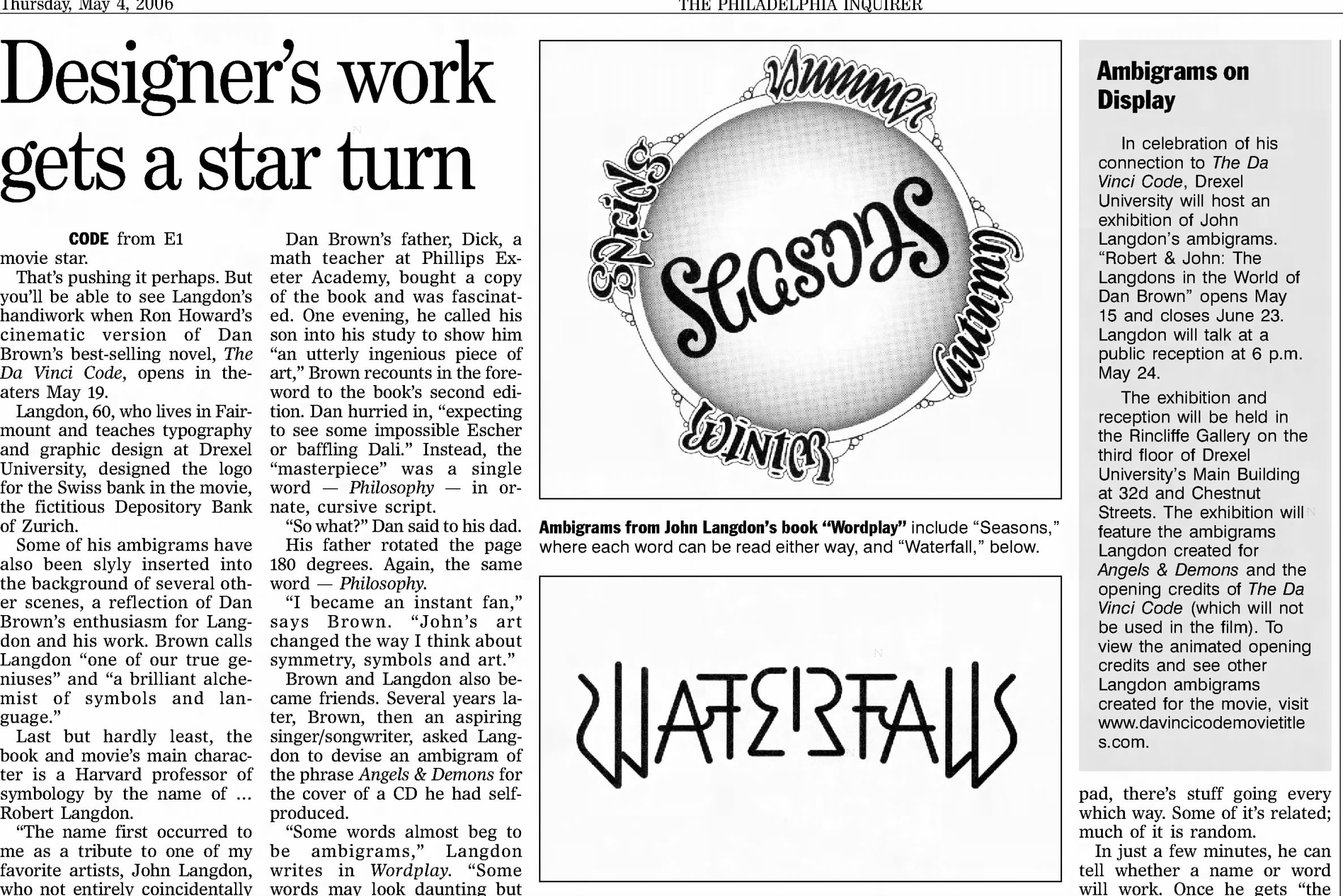
Mr. Langdon was a lifelong artist and wordsmith. He originated ambigrams in the early 1970s and created distinctive logos for corporate clients, artists, musicians, and others. Ambigrams are words or designs that retain meaning when viewed from different perspectives, and his work influenced countless other designers and typographers who followed.
“They also present familiar concepts in an unfamiliar way,” he told The Inquirer in 1992, “and thus stimulate the reader’s imagination.”
On his website, johnlangdon.net, Mr. Langdon described his work as “making abstract concepts visual, almost always through the design of words, letters, and symbols.” He called it “words as art” and said: “I specialize in the visual presentation of words.”
His designs were featured in more than a dozen solo shows in galleries and museums in Pennsylvania, New Jersey, New York, Connecticut, Maryland, and Delaware, and in more than 50 group exhibitions around the country and Europe. He created six ambigrams for author Dan Brown’s best-selling book, Angels & Demons, and Brown named his fictional protagonist, Harvard symbologist Robert Langdon, after John Langdon.
“John’s art changed the way I think about symmetry, symbols, and art,” Brown told The Inquirer in 2006.
Mr. Langdon’s own book about ambigrams, Wordplay, was first published in 1992 and updated in 2005. He also wrote the forwards of other books and articles for journals and newsletters. He said he had a “particular interest in word origins” in an interview on his website.
He was featured several times in The Inquirer and wrote an op-ed piece in 2014 about the Philadelphia Museum of Art’s new logo. He opened the article with: “Please, beloved Philadelphia Museum of Art, before you print one piece of stationery or a single promotional flier, reconsider your new logo.”
Mr. Langdon’s work was featured in The Inquirer in 2006.
In 1996, he began painting what he called his “visual-verbal meditations and manipulations” on canvas. “My paintings still involve symmetry and illusion, a bit of philosophy, and a few puns thrown in for good measure,” he said on his website.
He cocreated the Flexion typeface and won a 2007 award from the New York-based Type Directors Club. He spoke often about design at colleges and high schools, and to professional societies. He gave a TEDx talk about font and the future of typeface at Drexel.
Douglas Hofstadter, a professor at Indiana University who coined the term ambigram in 1984, told The Inquirer in 2006 that Mr. Langdon had a “very strong sense of legibility but also a marvelous sense of esthetics, flow, and elegance.”
Born in Wynnewood and reared in Narberth, Mr. Langdon graduated from Episcopal Academy in 1964 and earned a bachelor’s degree in English at Dickinson College in Carlisle, Pa. He worked in the photo-lettering department of a type house and for a design studio in Philadelphia after college, and began freelancing as a logo designer, type specialist, and lettering artist in 1977.
He taught typography and logo design classes at Moore College of Art and Design from 1985 to 1988 and at Drexel from 1988 to his retirement in 2015. In an online tribute, one student said he was “one of my favorite teachers of all time.”
He was interested in Taoism and inspired by artists Salvador Dalí and M.C. Escher, and authors Edgar Allan Poe and Ogden Nash. “In the early ’70s, I tried to do with words what Dali and Escher did with images,” he said in a 2006 interview posted on Newswise.com.
John Wilbur Langdon was born April 19, 1946. He played high school and college soccer and drew caricatures of classmates for the Episcopal yearbook.
After college, he took painting and drawing classes at the Pennsylvania Academy of the Fine Arts and the old Philadelphia College of Art. He married Lynn Ochsenreiter, and they had a daughter, Jessica. They divorced later.
Mr. Langdon enjoyed vacation road trips and told stories of hitchhiking around the country in the 1960s. He followed the Phillies, was interested in genealogy, and traced his family back to the Founding Fathers.
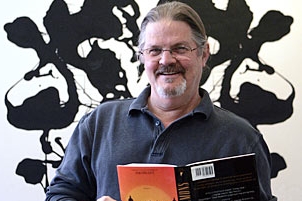
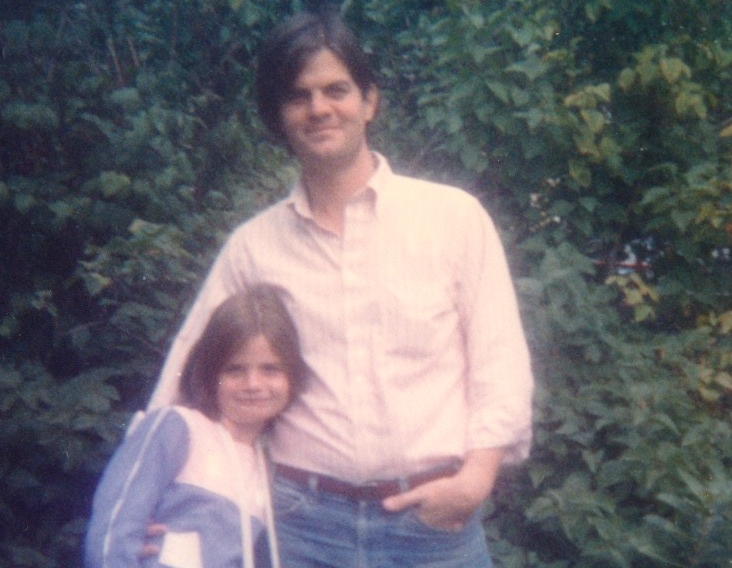
Mr. Langdon stands with his daughter, Jessica.
He lived in Darby, Woodbury, Wenonah, and Philadelphia before moving to California in 2016. “He was jovial, social, and amusing,” his daughter said. “People said he was clever, and everyone liked him.”
He told The Inquirer in 2006: “It may seem counterintuitive, but the more ambiguity you invite into your life, the more things make sense and become understandable.”
Robert Caputo was captivated by the natural world, its animals and people. So he spent 35 years, from 1970 through 2005, traveling through Africa, Asia, and South America, taking photos, writing stories, and making films and TV shows for National Geographic magazine, Time, PBS, TNT, and other media outlets.
From Kenya to Egypt, Venezuela to Zanzibar, in China, Cuba, New Orleans, and Boston, Mr. Caputo chronicled the beauty and tragedy of everyday life. He reported as a freelancer, with a camera and a notepad, for National Geographic for decades, covering political coups, civil wars, and famines in Sudan and Somalia, and the AIDS epidemic in Uganda.
He worked for photographer and filmmaker Hugo van Lawick in Tanzania in the 1970s and then camera-stalked lions and leopards for National Geographic on the Serengeti Plain. He sent back striking images of the Abu Simbel Temples in Egypt and the old Kingdom of Mustang in Nepal.
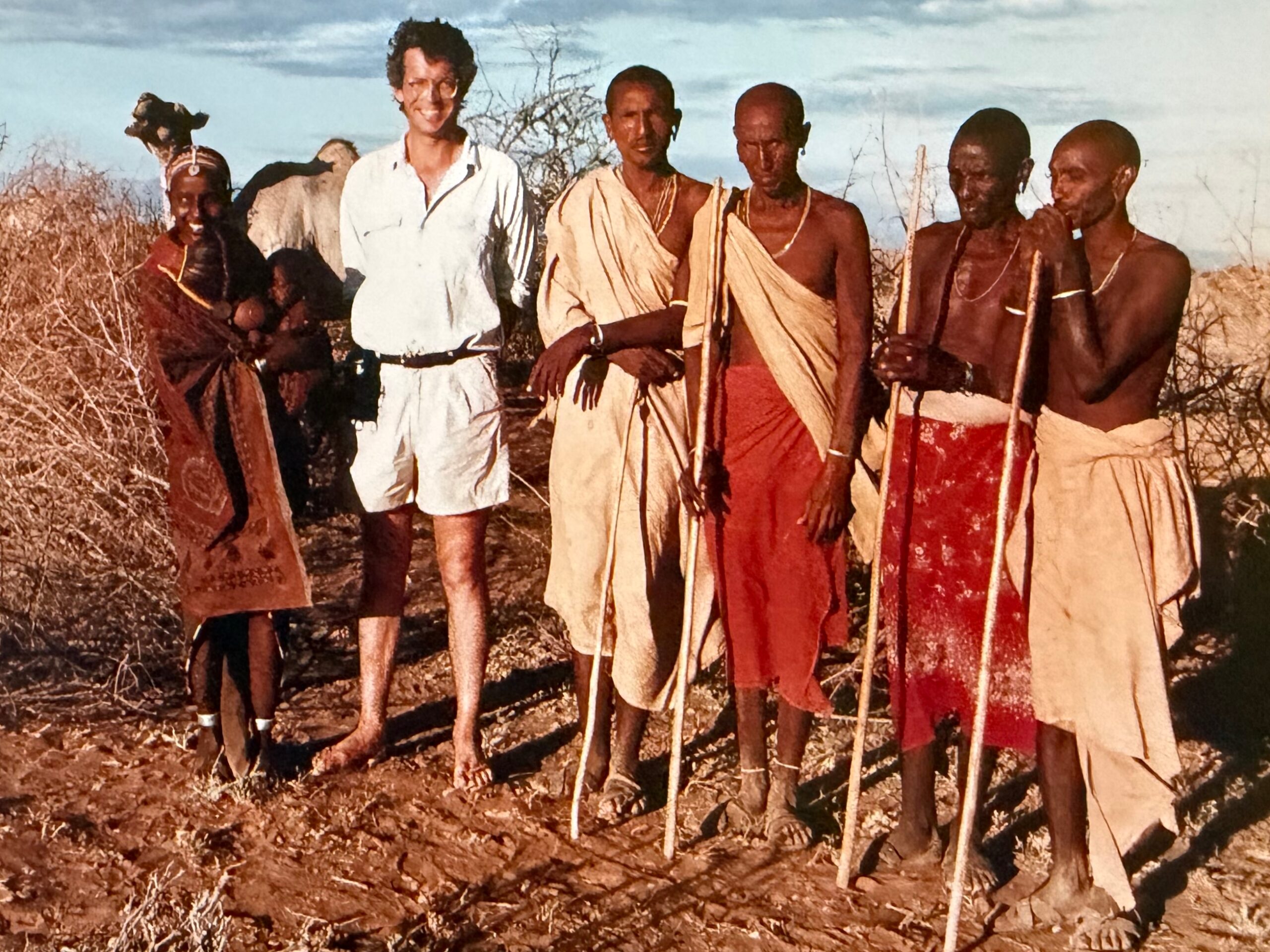
In Sudan, he sipped tea with camel traders, slept under the stars, and posed for portraits with tribal chiefs. He trekked the Himalayas and photographed fishermen on the Congo, Nile, and Mississippi Rivers. His poignant August 1993 cover photo for National Geographic of a starving Somali woman gained worldwide attention.
“In fact, it is a great job,” Mr. Caputo told the Washington Post in 1995, when he was featured in a TV show about the Geographic photographers. “You really do get to go places and do things others only dream about.”
He told the New York Daily News in 1995: “I’ve always thought of my job as a license to be nosy.”
In 2002, as he was winding down his international travel, Mr. Caputo moved from Washington, D.C., to a farmhouse in Kennett Square, Chester County. In early 2025, he was diagnosed with Alzheimer’s disease. In December, he and his family traveled to the Pegasos Swiss Association voluntary assisted dying center in Basel, Switzerland. He died Thursday, Dec. 18. He was 76.
“Fairly early on, Bob had expressed his wishes to go out on his own terms,” said his wife, Amy. “We were able to honestly and pragmatically deal with our situation, and he remained his thoughtful self, with his sense of humor intact till the end.”
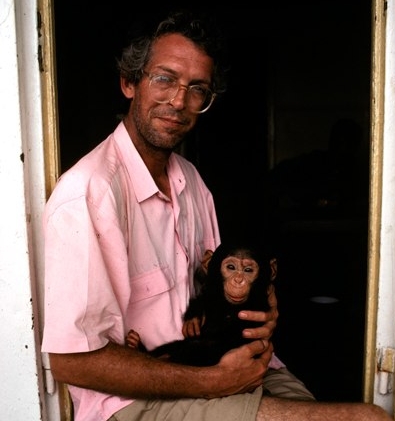
Mr. Caputo loved spending time with animals.
Mr. Caputo first went to Africa in 1970. He dropped out of Trinity College in Connecticut as a senior and meandered with friends across the vast continent, from Morocco to Tanzania.
He returned to earn a bachelor’s degree in film at New York University in 1976. Then, until 1979, he lived in Nairobi, Kenya, and sold photos and stories about Africa to Time, Life, and other magazines.
“He liked to learn about things,” said his son Nick. “He was constantly inquiring into things.”
In 1981, National Geographic hired him to report from Sudan on the verge of its civil war, and he produced striking cover photos, dramatic picture spreads, and detailed stories about Africa. In 1984 and ’85, he spent eight months and traveled 4,000 miles on steamboats, tugboats, and all-terrain vehicles to document traditional daily life along the Nile.
Mr. Caputo had several cover photos for National Geographic.
“Everywhere he went,” his family said, “Bob found that the people he met were fundamentally good and generous, happy to share their often limited food with him, a perfect stranger, and excited to tell him about their lives.”
There were challenges, too, he said in many interviews. He was detained by border guards in Uganda in 1979 and contracted malaria nine times. The monthslong assignments in search of remote Indigenous people were often lonely, and he got hungry and tired.
But the connections he made with people he encountered were worth it, he said. “The great advantage of working for National Geographic is having time,” he told the New York Daily News. “You can go to a village in Africa and not just have to waltz in and start shooting away. You can spend time getting to know people, and they can know you.”
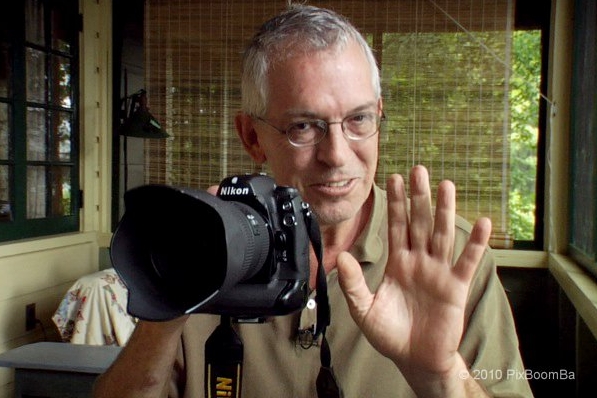
Mr. Caputo was a natural innovator and teacher, and he organized photo workshops and lectured about photography around the world. He taught digital photography at the Center for Digital Imaging Arts at Boston University and cofounded Aurora & Quanta Productions in Maine in 1985 and the PixBoomBa.com photo website in 2010.
Mr. Caputo (second from left) poses with local people in Africa.
He wrote and appeared in wildlife shows, hosted TV programs and YouTube videos about photography, and wrote the story on which Glory & Honor, a 1998 award-winning TV film, is based. He made films about making films in Nigeria and the history of Boston’s Fenway Park.
He earned awards from the National Press Photographers Association, the American Travel Writers Foundation, Communications Arts journal, and other groups. He was personable and energetic, colleagues said, and he cofounded the annual National Geographic Prom at the Washington office.
“He was a tremendously caring and loving person,” his son Nick said. “He looked out for other people.”
Mr. Caputo met TV and film producer Amy Wray on a National Geographic TV shoot in the Amazon rainforest. They married in 1997 and had sons Nick and Matt.
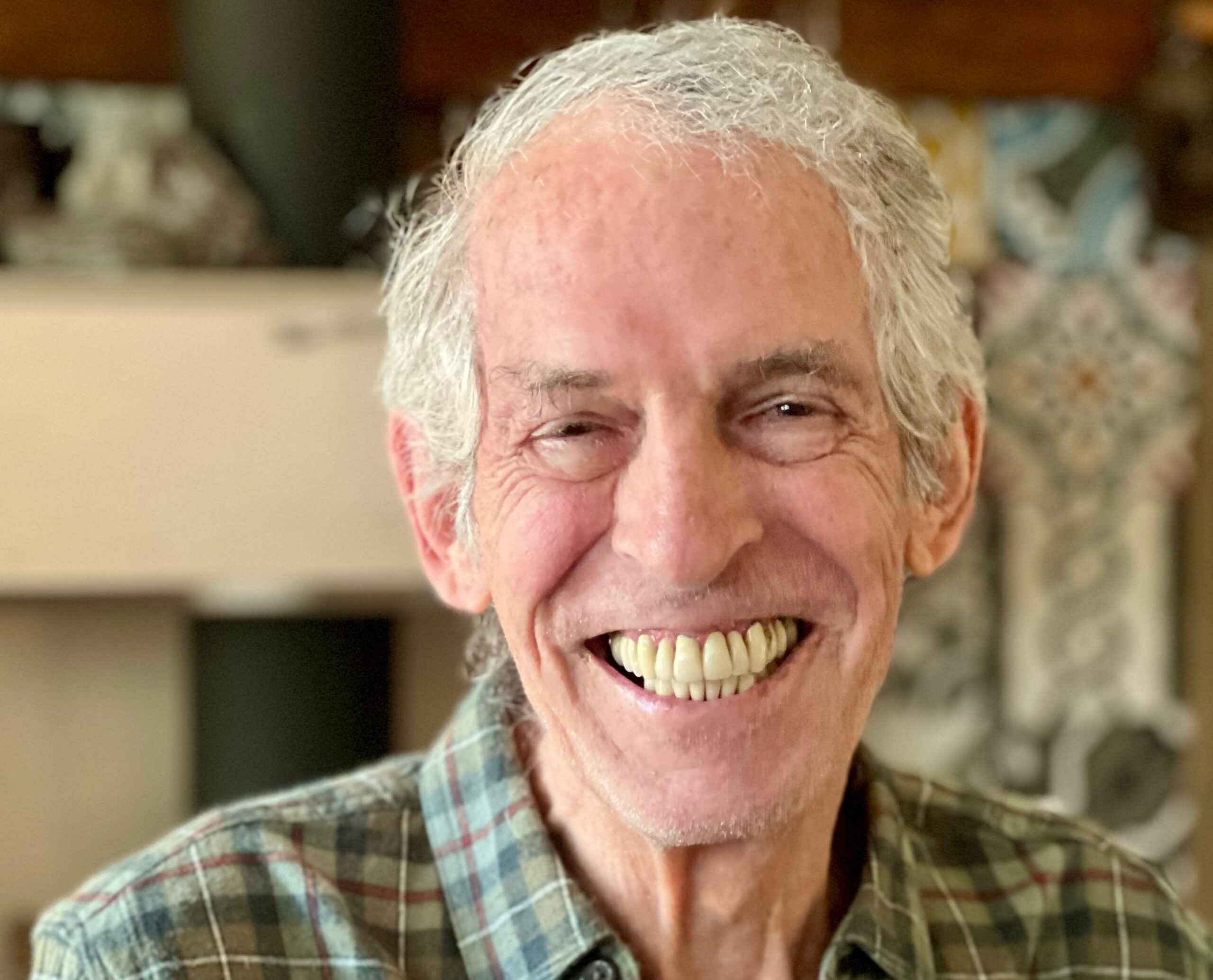
This photo is featured on Mr. Caputo’s website.
In Facebook tributes, friends and colleagues noted his “wonderful smile” and “deep love of people and animals.” They called him a “legend” and “amazing.” Robert J. Rosenthal, former Africa correspondent and former executive editor of The Inquirer, called Mr. Caputo “one of the best humans I ever knew.”
Mr. Caputo told MainLine Today in 2009: “My personal heroes are the people who work for aid organizations and nongovernmental organizations, who go to some faraway place to help people they’re not related to and often put themselves in harm’s way.”
Robert Anthony Caputo was born Jan. 15, 1949, at Camp Lejeune, N.C. His father was a career Marine and moved the family to bases in Virginia and then Sweden for an assignment at the U.S. embassy there.
In a 1991 interview with the Newhouse News Service, Mr. Caputo said: “I remember as a kid going to sleep listening to artillery going off in the distance down at the range. It was kind of comforting. I wouldn’t change it for anything.”
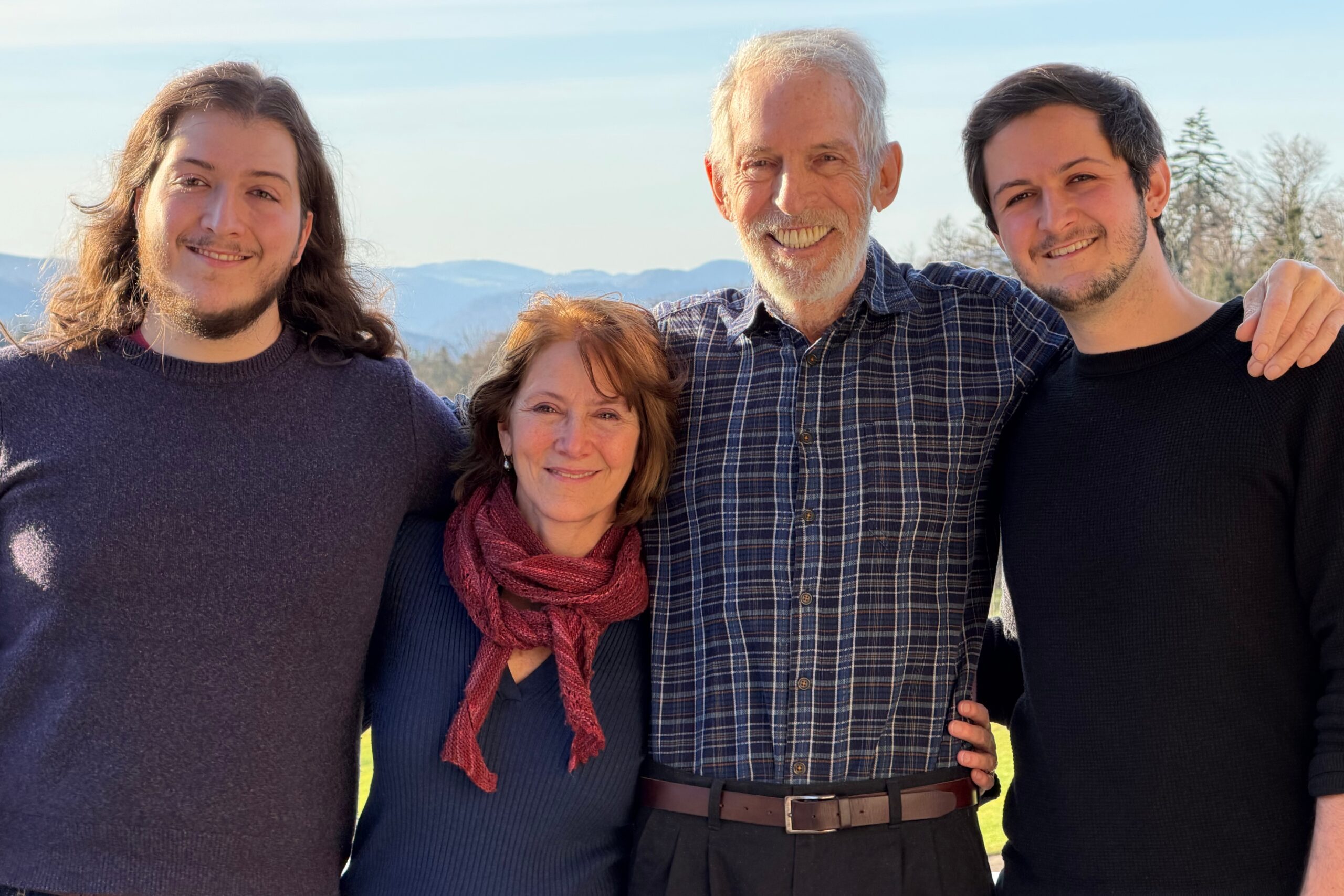
Mr. Caputo (second from right) doted on his wife and sons.
He attended a Swedish middle school, learned the language, skied, and played soccer. He returned to the United States in the late 1960s to attend boarding school in Virginia and then Trinity.
In Kennett Square, Mr. Caputo was a soccer, baseball, and basketball coach to his sons, and a Cub Scouts leader. He walked the boys to the school bus stop in the morning. He told them bedtime tales about secret agents and pirates, they said, and built a tree house in the backyard.
He decorated his truck on Halloween and grew impressive gardens. His neighbors called him Farmer Bob.
He took his family on trips to Kenya and Tanzania. He dabbled in experimental playwriting and literature when he was young, and enjoyed classic movies and William Blake’s poetry.
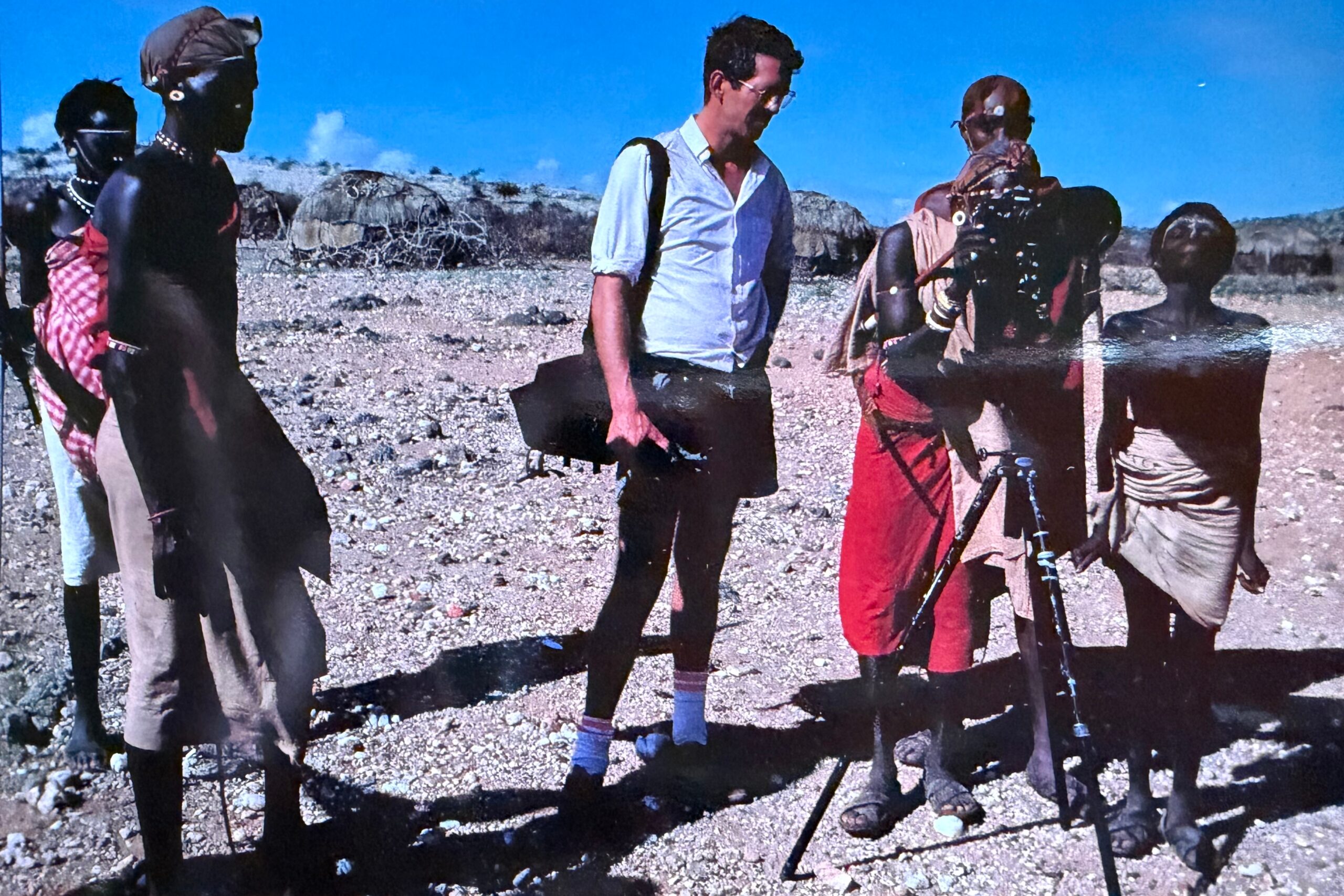
Mr. Caputo (center) shows his camera to the locals in Africa.
“He felt extraordinarily lucky to have lived the life he did,” his wife said, “full of adventure, family and friends. And in the end he said, ‘I’m ready.’”
In addition to his wife and sons, Mr. Caputo is survived by a sister and other relatives.
Services are to be at 11 a.m. Saturday, Jan. 10, at Kennett Friends Meeting, 125 W. Sickle St., Kennett Square, Pa. 19348.
Donations in his name may be made to Doctors Without Borders, Box 5030, Hagerstown, Md. 21741.
His family called Mr. Caputo “buttered side up” when he was young “because no matter
how he fell he always seemed to end up the right way, and his life was full and lucky.”
Each of the city’s libraries, from Bustleton to Kingsessing, is a neighborhood hub stocked with books, movies, magazines, video games, and other media that anyone with a library card can access. This year, the Free Library circulated 7.6 million items and hosted 1.7 million people across its 54 branches.
So what were your neighbors reading this year?
We asked the library for the most borrowed fiction, nonfiction, and video games across the city. (The numbers don’t include e-books or audiobooks because they’re handled by a third party.) Can you sort the lists below from most to least popular?
Fiction
Rank
Which was the most popular?
Library Checkouts
Your Ranking
Drag to reorder this list
1
2
3
4
5
6
Liz Moore
The God of the Woods
Percival Everett
James
Alison Espach
The Wedding People
Suzanne Collins
Sunrise on the Reaping
Emily Henry
Great Big Beautiful Life
Dave Pilkey
Dog Man: Big Jim Begins
Liz Moore
The God of the Woods
Percival Everett
James
Alison Espach
The Wedding People
Suzanne Collins
Sunrise on the Reaping
Emily Henry
Great Big Beautiful Life
Dave Pilkey
Dog Man: Big Jim Begins
The most checked-out print book of the year across all Philly’s library branches — in any genre — was Liz Moore’s 2024 The God of the Woods, a propulsive thriller about a girl who goes missing from a summer camp in 1975, eerily mirroring the disappearance of her brother from the same place 14years earlier.
“An extraordinary storyteller, Philly would adore her transportive books even if she weren't an English professor at Temple,” said Kim Bravo, the Free Library’s adult materials selector.
Bravo said she was surprised that a few popular books, including Onyx Storm by Rebecca Yarros and Atmosphere by Taylor Jenkins Reid, weren’t also at the top of this year’s list.
story continues after advertisement
Nonfiction
Rank
Which was the most popular?
Library Checkouts
Your Ranking
Drag to reorder this list
1
2
3
4
5
6
Tariq Trotter & Jasmine Martin
The Upcycled Self
Mel Robbins
The Let Them Theory
Jonathan Haidt
The Anxious Generation
James Clear
Atomic Habits
Ezra Klein & Derek Thompson
Abundance
John Green
Everything is Tuberculosis
Tariq Trotter & Jasmine Martin
The Upcycled Self
Mel Robbins
The Let Them Theory
Jonathan Haidt
The Anxious Generation
James Clear
Atomic Habits
Ezra Klein & Derek Thompson
Abundance
John Green
Everything is Tuberculosis
The most popular nonfiction book borrowed in Philly libraries this year was The Upcycled Self: A Memoir on the Art of Becoming Who We Are by The Roots’ Tariq “Black Thought” Trotter and Jasmine Martin.
The 2023 book traces Trotter’s life growing up in South Philly: “Our history leaks a particular radiation into the blood of those born within its city limits. Loyalty, fight, pride, honor,” he writes. The book was the library’s 2025 One Book, One Philadelphia selection.
The library’s adult nonfiction selector, Ai Leng Ng, said one surprising book that didn’t make the list was Inner Excellence, by Jim Murphy, the self-help book that went viral after wide receiver A.J. Brown was seen reading it on the sidelines of an Eagles playoff game in January.
story continues after advertisement
Video Games
Rank
Which was the most popular?
Library Checkouts
Your Ranking
Drag to reorder this list
1
2
3
4
Nintendo
Super Mario Bros. Wonder
XBox Game Studios
Minecraft Legends
Sega
Sonic x Shadow Generations
Nintendo
Super Smash Bros. Ultimate
Nintendo
Super Mario Bros. Wonder
XBox Game Studios
Minecraft Legends
Sega
Sonic x Shadow Generations
Nintendo
Super Smash Bros. Ultimate
The most popular video game checked out this year was Nintendo’s 2023 Super Mario Bros. Wonder, a 2D adventure in the new, whimsical Flower Kingdom.
All the most checked-out video games were ones that could be played by gamers of all ages, said Kris Langlais, the library’s AV Selector. The top titles “also have a nostalgic factor for our adult patrons.”
Langlais said that books set in the worlds of widely played video games, including the Five Nights at Freddy’s, Minecraft, and Pokémon series, are also popular with patrons.
Thanks for playing! If you think you can hack it, head to our bonus round below and order the Dog Man graphic novel series from most to least popular.
Staff Contributors
Design and development: Charmaine Runes
Reporting and data: Zoe Greenberg
Editing: Sam Morris, Evan Weiss
Copy Editing: Brian Leighton
Bonus Round: Dog Man
The Dog Man graphic novel series is extraordinarily popular all over the country, including Philly. Here are five Dog Man books, each of which were checked out over 100 times across the local library system. Which was the hardest to get your hands on?
Rank
Which was the most popular?
Library Checkouts
Your Ranking
Drag to reorder this list
1
2
3
4
5
Dave Pilkey
Dog Man: Fetch 22
Dave Pilkey
Dog Man: Grime and Punishment
Dave Pilkey
Dog Man: A Tale of Two Kitties
Dave Pilkey
Dog Man: Scarlet Shredder
Mo Willems
Dog Man: Mothering Heights
Dave Pilkey
Dog Man: Fetch 22
Dave Pilkey
Dog Man: Grime and Punishment
Dave Pilkey
Dog Man: A Tale of Two Kitties
Dave Pilkey
Dog Man: Scarlet Shredder
Mo Willems
Dog Man: Mothering Heights
The 14-part Dog Man series by Dav Pilkey features a part-man, part-dog hero.
“We’re in the golden age of graphic novels for children. Most of the most heavily circulated children’s items this year were graphic novels, including graphic adaptations of popular fiction series like The Baby-Sitters Club, Sweet Valley Twins, and Wings of Fire,” said Megan Jackson, the library’s middle grade selector.
As for Dog Man in particular, “Dav Pilkey has been tapping into what kids want to read since Captain Underpants was first published in 1997— fast-paced, emotionally honest, hilarious stories that balance words and illustrations for multi-layered reading.”
In both West Philly and Northeast Philly, a Dog Man book was the top checked-out item across all genres.
Subscribe to The Philadelphia Inquirer
Our reporting is directly supported by reader subscriptions. If you want more journalism like this story, please subscribe today
Another book by South Philly author Liz Moore is heading to the small screen.
Netflix announced it has ordered a series adaptation of The God of the Woods, a multigenerational mystery drama set in the Adirondacks.
Moore will serve as a co-showrunner, writer, and executive producer, Netflix said. It marks the author’s second book that has been adapted for TV.
The 2024 novel is about a teenage girl who disappears from her summer camp in 1975 and how the investigation uncovers years of family secrets and mysteries.
Earlier this year, Moore’s best-selling Long Bright River, which focuses on Kensington’s opioid crisis, was turned into a series for Peacock. That crime thriller premiered in March.
The author, who lives in South Philly, earned local credibility for her efforts to depict Kensington honestly in her book and with producers for the Peacock series. She said at the time her aim was to make something that countered misguided depictions of the neighborhood.
Moore teaches at Temple’s College of Liberal Arts and is the director of the school’s creative writing MFA program.
The God of the Woods is Moore’s fifth novel. It collected several accolades, including multiple Book Club shortlists and a spot on Barack Obama’s Summer Reading List.
No additional details have been publicized about the Netflix series’ cast or release date.
Three local bookstores are among eight in Pennsylvania to win a $500 grant from award-winning author James Patterson’s annual Holiday Bookstore Bonus Program.
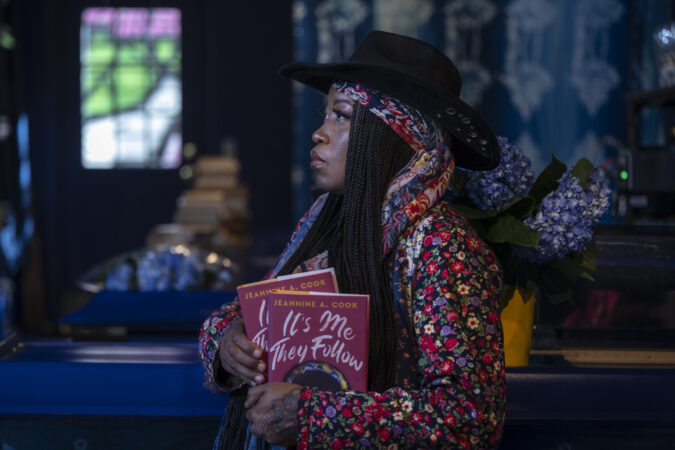
Harriett’s owner Jeannine A. Cook thanked Patterson on her Instagram.
“Thank you [James Patterson] for supporting Harriett’s in this way and spreading love to our bookshop cousins all across the country when many of us need it most,” Cook wrote, adding that she will use the money to support her Bookshop Without Borders project that brings books and companionship to people who are lonely.
This year’s winners were announced Wednesday. This is Main Point Books second consecutive bonus and it was Harriett’s first. In New Jersey, Inkwood Books in Haddonfield and Words Matter Bookstore in Pitman also received grants.
Patterson has been doling out cash to bookstores in this holiday bonus program since 2015. The gifts, he said to the New York Times in 2014, are to financially support and recognize the vital work of independent bookstore employees and librarians.
Patterson alludes to the need to fund independent bookstores in his 2024 book The Secret Lives of Booksellers and Librarians, True Stories of the Magic of Reading.
“Our bookstores in America are at risk,” he said in 2014 at the advent of the program. “Publishing and publishers as we’ve known them are at stake. To some extent the future of American literature is at stake.”
If you’re trying to pass some time while you wait for your delayed flight home, these stories can help.
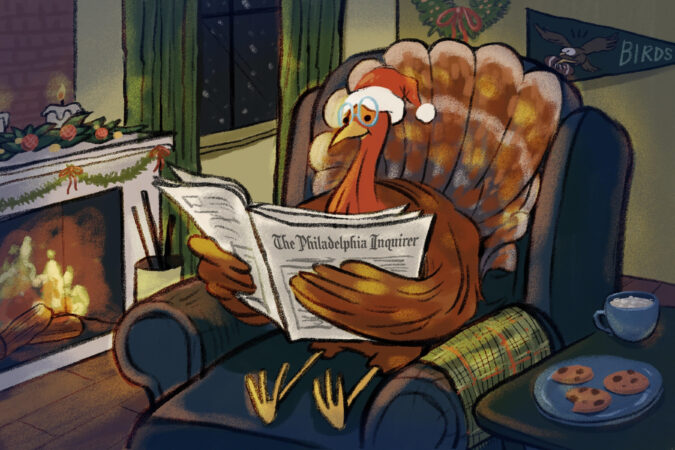
Joy Velasco / For The Inquirer
The Inquirer published some fantastic reads this year — stories you may have meant to read but couldn’t find the time for. The holidays are the ideal time for catching up: Maybe you’re stuck on a delayed flight, waiting for the turkey or ham to thaw, or just looking for an excuse to avoid that one annoying relative who’s a despicable Cowboys fan.
We’ve rounded up some of our best and top-read journalism from 2025. Take this quiz to find the perfect match for your holiday downtime.