Category: Books

  • We can thank the Afro Sheen founder for  ‘The Sound of Philadelphia’

    We can thank the Afro Sheen founder for ‘The Sound of Philadelphia’

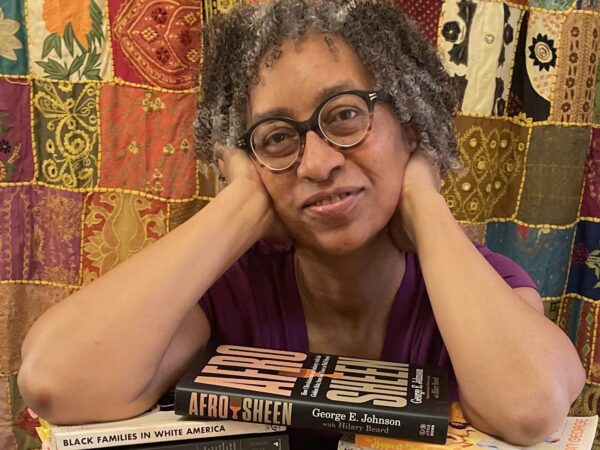
    Like many Black children growing up in the ‘70s and ‘80s, Mount Airy author Hilary Beard had fond memories of Afros and Soul Train dancers.

    “I was a little Black girl with braids who sat between my mother’s knees every day as she combed my hair and oiled my scalp with Ultra Sheen,” Beard recalled in a recent video chat. “When I was in the seventh grade and cut my hair into an Afro, I used Afro Sheen. I grew up watching Soul Train. I lived in a world created by this man.”

    It wasn’t until 40 years later that she realized these hallmarks of Black culture had a common author, George E. Johnson, the father of modern Black hair care.

    Three years ago, Beard teamed up with a then 94-year-old Johnson to cowrite his memoir. She combined her warm memories of plaits, kinky blowouts, Black power picks, and the Soul Train Line with more than 2,000 pages of interviews to write Afro Sheen: How I Revolutionized an Industry with the Golden Rule, from Soul Train to Wall Street, a 320-page story of entrepreneurship, civil rights, and Black culture, spanning nearly a century.

    “Mr. Johnson’s story sweeps through the Cotton South, the Great Migration, the Jim Crow North, the Jim Crow South, World War II, and the civil rights of the 1950s and 1960s,” Beard said. “And it’s told through the perspective of an African American man. We know many of these stories have not been told, they have also been actively suppressed.”
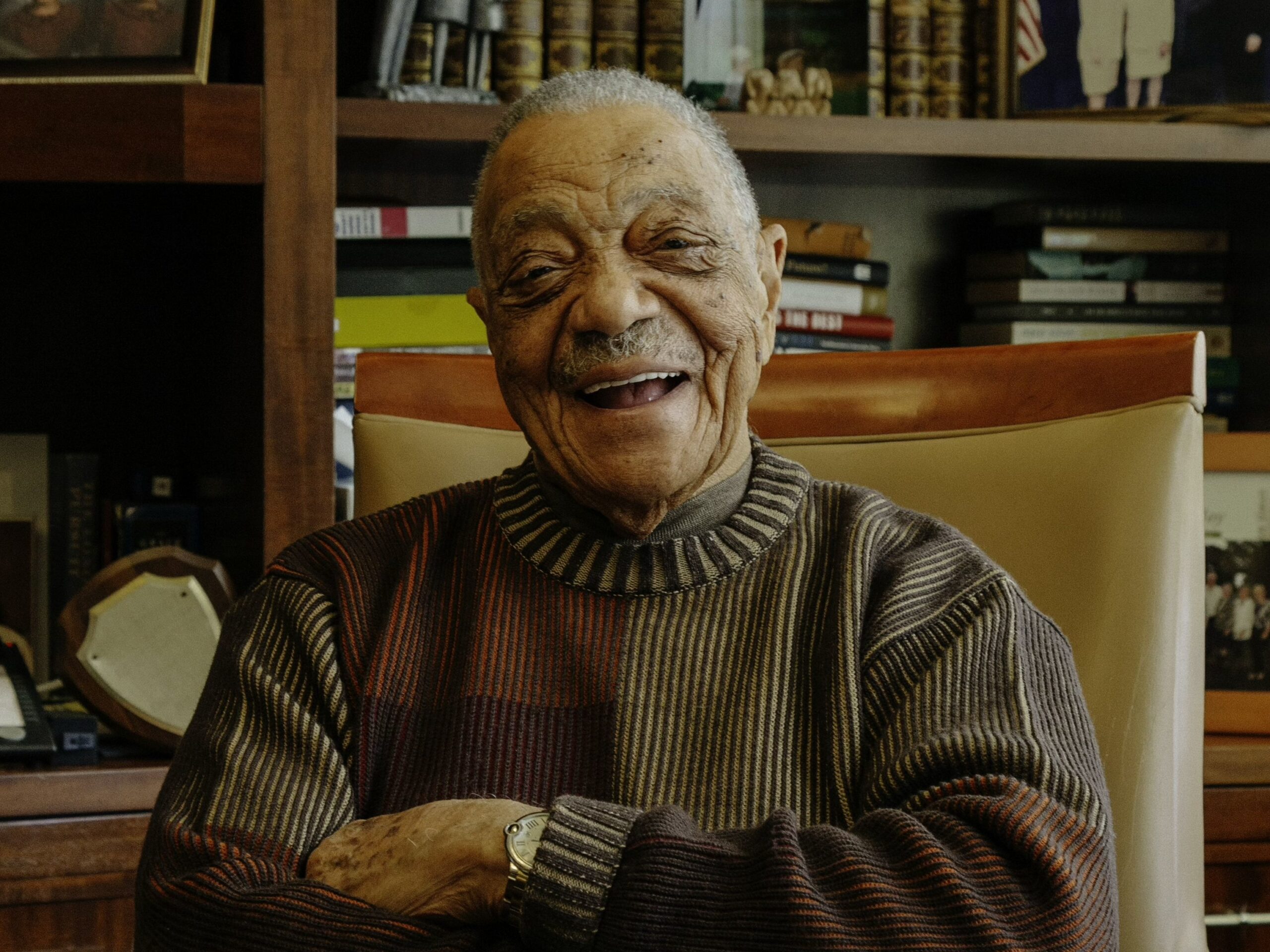
    George Johnson, founder of Afro Sheen, in his Chicago study. Johnson is the founder of the first Black company to go public. He also funded the early episodes of Soul Train, for which the Sound of Philadelphia, Gamble & Huff, wrote the soundtrack.

    Johnson’s story begins in 1927 Richton, Miss., on a small sharecropping farm. His mother, Priscilla, left his father in 1929, and moved Johnson and his two brothers to Chicago’s South Side. In his early 20s, he worked as a production chemist at the Black-owned cosmetics company Fuller Products, owned by S.B. Fuller, the richest Black man in America at the time.

    In the early to mid-20th century, many Black people’s grooming habits included straightening their hair to assimilate, often affording them better jobs in mainstream America. The hair straightening concoctions — a mix of potatoes, lye, and eggs — separated, were messy to apply, and burned.

    While working at Fuller Products, Johnson developed Ultra Wave Hair Culture, a creamy emulsified product barbers applied to clients’ hair, giving them the slicked back look popularized in the 1940s by Little Richard, Nat King Cole, and Sammy Davis Jr.

    Ultra Wave Hair Culture marked Johnson Products Co.’s debut. In the next decade, JPC introduced Ultra Sheen Cream Satin Press, which hairdressers applied to Black women’s hair before pressing it straight with a hot comb; and Ultra Sheen Relaxer, a lye-based hair straightener for Black women. The “Black is Beautiful” movement birthed Afro Sheen, a spray that left Afros voluminous and glossy.
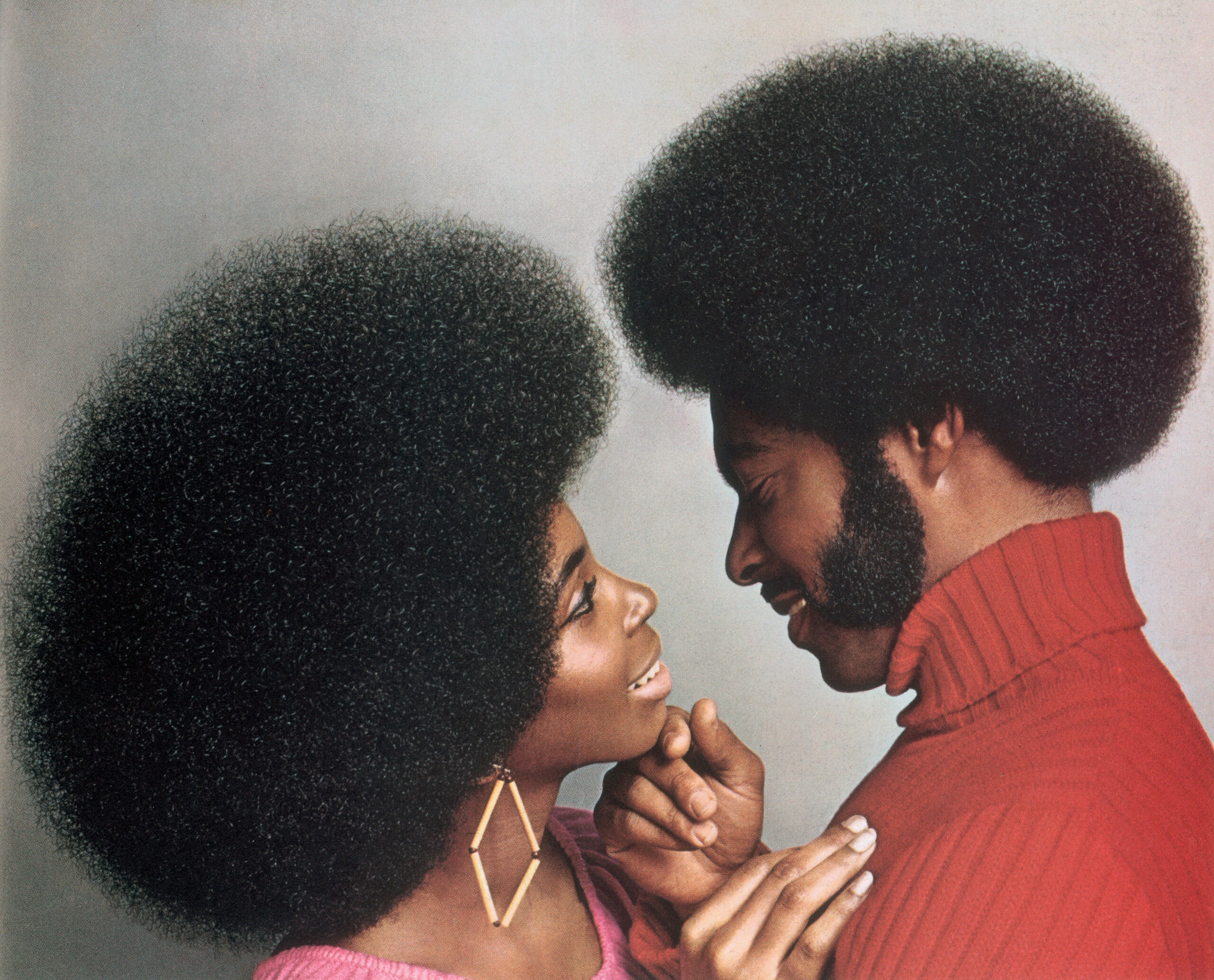
    “A Natural Explosion! Afro Sheen® Blowout Creme Relaxer 1973/2007” from the series “Unbranded: Reflections in Black by Corporate America” by Hank Willis Thomas. MUST CREDIT: Rubell Museum

    “The thing that moved my products forward was innovation,” said Johnson, who, at 97, still sounds like a salesman talking to potential customers. “We created something like a new mousetrap, it had never been done before.”

    In 1971 — with sales of $12.1 million, or $94 million in today’s dollars — JPC became the first Black-owned company to be publicly traded on the American Stock Exchange, now known as the New York Stock Exchange. Although at the time it was a major achievement, Johnson said that with hindsight, he realized it was a big misstep as he was forced to answer to a board that didn’t understand the Black community.

    Creating his lane

    Johnson — not to be confused with John H. Johnson, founder of Ebony and Jet magazines — built his empire when banks did not loan money to Black startups, and groceries and drugstores did not stock Black hair care products, let alone place them on endcaps. Johnson remembers struggling to build his business when there were no federal laws to protect him from discrimination. He built his own manufacturing facility and created networks to distribute and advertise his products, and was among the first to sell Black hair care products in mainstream retail outlets.

    To see companies like Target and Walmart — which up until recently had a stellar reputation of stocking Black hair care by Black-owned companies — cower under the Trump administration and roll back DEI initiatives is not only disheartening, but it also signals going back to a time when disenfranchisement of minority- and women-owned businesses was standard operating procedure. This reality, Beard says, makes Johnson’s story particularly timely, serving as a road map with young entrepreneurs of color.

    “There is a widespread movement to make programs, books, and context that remind us of the bigotry in our nation’s history illegal,” Beard said. “Mr. Johnson is a witness to the overt racism many Americans would like to sweep under the rug. The irony is the very history they don’t want us to know is the reality they are attempting to create.”

    JPC was among the first companies to advertise products to Black consumers using images of Black professionals — like doctors, lawyers, and teachers — instead of subservient characters like Aunt Jemima and Uncle Ben.

    Johnson created Soul Train with Don Cornelius in 1971 so his advertising dollars could reach Black consumers directly. Soul Train — the hippest trip in America — was modeled after Dick Clark’s American Bandstand, and featured R&B acts, creating the community that bought Afro and Ultra Sheen products. In 1974, Kenny Gamble and Leon Huff wrote Soul Train’s iconic theme song, “T.S.O.P. — The Sound of Philadelphia,” performed by Philadelphia International Records’ The Three Degrees. Soul Train laid the cultural groundwork for MTV and Black Entertainment Television, and “T.S.O.P.” was the first TV theme song to reach No. 1 on the Billboard Hot 100. JPC’s profits nearly tripled to $37 million a year by 1975.

    “That was tremendous growth,” Johnson said. “And in 1980, I gave Don my share with the stipulation he keep one minute of advertising time a show to JPC.”

    Living history

    Johnson never planned to write a book.

    “I certainly wouldn’t have waited until I was 94 to do this,” he said. “But I had an epiphany, a real experience and I clearly heard five words, ‘You must tell your story.‘”

    Johnson is married to Madeline Murphy Rabb, the mother of Pennsylvania state Rep. Chris Rabb, a friend of Beard’s. Chris Rabb reached out to Beard, the author of 19 books including memoirs she cowrote with actors and husband-wife team Angela Bassett and Courtney B. Vance, as well as Philadelphia high school baseball phenomenon Mo’ne Davis, in 2021.
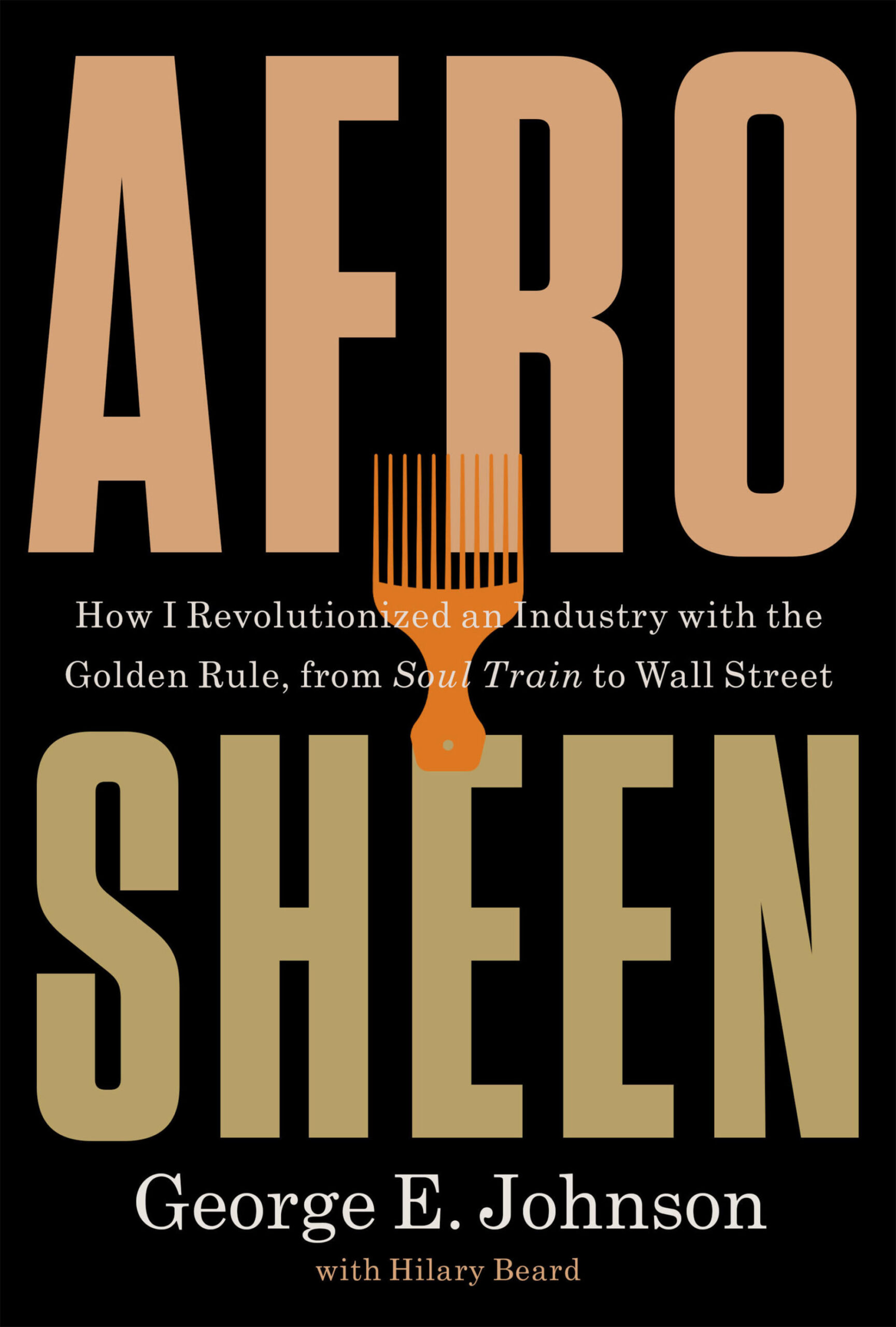
    Afro Sheen: How I Revolutionized an Industry with the Golden Rule, from Soul Train to Wall Street by George E. Johnson, written with Mount Airy-based author, Hilary Beard.

    Beard read 16 books about Black hair care culture and Chicago history. The two-year-long writing process became emotional, especially when Johnson recalled his infidelity and losing his first manufacturing facility to fire.

    “When Mr. Johnson contacted me, I thought of the African proverb: when an elder dies, a library burns down,” Beard said. “So, I dropped everything to capture this piece of living history on the page.”

  • Donors were misled by Trump-backed Freedom 250, House Democrats allege

    Donors were misled by Trump-backed Freedom 250, House Democrats allege

    Some donors who intended to give money to a bipartisan effort to celebrate the nation’s 250th anniversary were, instead, steered to a White House-backed initiative under false pretenses, House Democrats allege in a report released Thursday morning, citing whistleblower interviews and newly obtained documents.

    The donors meant to give money to America250, a congressionally chartered initiative to celebrate the nation’s semiquincentennial, according to Democrats on the House Natural Resources Committee. They instead were given routing and account numbers that directed their funds to Freedom 250, which President Donald Trump established last year to organize anniversary events, the report says.

    The report does not identify the donors. In interviews, Democrats said they needed to protect the identity of whistleblowers who worked with the panel. But they said their report — which includes other allegations of Freedom 250 officials and allies explicitly steering money away from America250 and toward projects shaped by Trump — shows how the president transformed a bipartisan celebration of the nation’s anniversary into an initiative that benefited him and his allies.

    “I’m a lawyer, and I know better than to pronounce that a crime has been committed,” said Rep. Jared Huffman (D., Calif.), who oversaw the report as the committee’s top Democrat. “But I do know the elements of fraud, and there is evidence of all those elements here.”

    The White House referred questions to Freedom 250, which denied that donors had been misled by its fundraising activities and criticized Democrats for the timing of their report.

    “This so-called ‘report’ is nothing more than a partisan smear from politicians who would rather manufacture division than celebrate America’s 250th birthday alongside the rest of the country,” Freedom 250 spokesperson Danielle Alvarez said in a statement.

    Alvarez also criticized America250, saying that the bipartisan organization — which Congress established in 2016 — “had nothing to show” for its 10 years of planning and spending.

    “Freedom 250 was created because the American people deserved better,” Alvarez said.

    America250 declined to comment on the specific allegations in Democrats’ report.

    “America250 will continue to focus on the values-based programming approved by our bipartisan Commission at the local, state, national and international levels, including once-in-a-lifetime celebratory moments during the 4th of July weekend,” Rosie Rios, who chairs America250, said in a statement. “We are supportive of the many other organizations planning events for the 250th at the federal, state and local level, so all Americans have ample opportunities to join in the celebration.”

    Trump has extolled Freedom 250 in public remarks, saying that the initiative has organized multiple special events. The public-private partnership, which the White House launched in December, has overseen a flurry of high-profile announcements, including some from the Oval Office.

    “We’ll have a Freedom 250 Grand Prix right here in Washington around the Capitol,” the president said last week in remarks kicking off the Great American State Fair on the National Mall — another Freedom 250-backed event.

    The Trump-backed initiative has overtaken some efforts led by America250, which is directed by a bipartisan board created by Congress a decade ago.

    America250 originally applied for and received a grant from the Institute of Museum and Library Services for so-called Freedom Trucks, mobile museums inspired by the American Freedom Train that crisscrossed the country from 1975-1976. The institute is a federal agency that provides financial support for museums and libraries.

    Officials have said the grant was later voluntarily transferred to Freedom 250, which is now operating Freedom Trucks that provide a sanitized version of the nation’s founding, according to administration critics.

    America250 officials have said they reoriented their initiative to organize events outside Washington, while Freedom 250 focuses on events in the nation’s capital. But the dueling organizations and approaches have confused some corporate leaders and lawmakers, and tensions between the groups have grown, the Washington Post reported earlier this year.

    The Democratic lawmakers’ report offers further examples of how the two groups have come into conflict.

    Some donors and sponsors interested in donating to America250 were told by the Trump administration that they lacked a “green light” to do so, according to the Democrats. The report also claims that administration officials pressured donors to redirect donations from the bipartisan effort to Freedom 250, with the Trump-backed group conducting outreach to America250 sponsors with donation requests.

    Some corporate executives did not understand the difference between the two organizations and were confused by this process, the report says.

    Freedom 250 officials also worked to deprive America250 of money, the Democrats charge, citing new examples of Trump allies pressuring donors to reallocate funds away from the bipartisan initiative. They also allege that Trump allies worked to shift public financial support away from America250, including $75 million of congressionally allocated funds that America250 leaders were expecting to receive. The remaining funds are likely to be kept by the White House, the report says.

    The reduced funding posed challenges for America250 to execute planned programming, according to the report, including grants, educational initiatives, and volunteer programs. Redirected federal funding created “significant headwinds” for this programming, the Democrats said, though the group still sought to execute all planned events through additional private fundraising.

    Though America250 is still organizing anniversary celebrations in large cities across the country, its programming has been overshadowed by that of Freedom 250. The Trump-backed group helped organize last month’s UFC fight on the White House lawn, this week’s opening of the Theodore Roosevelt Presidential Library in North Dakota, and a Trump rally and fireworks show scheduled for the evening of Independence Day.

    Freedom 250 also employs many former U.S. DOGE Service officials and harvested users’ data for political purposes, according to the report.

    Huffman said that if Democrats retake the House this fall — and obtain the power to issue subpoenas — they will open broader investigations into Freedom 250.

    “If and when we have more tools at our disposal to do investigation and oversight, perhaps in the next Congress you will see a lot more information on this, I’m sure,” he said.

  • Meet the journalist-turned-poet chronicling her Cherry Hill childhood in her debut book

    Meet the journalist-turned-poet chronicling her Cherry Hill childhood in her debut book

    In her poem, “To the Chimeras of South Jersey,” Jia-Rui Cook writes of teenage heartache, ’80s movies, and the gulf between her American childhood and the world of her parents, immigrants from China by way of Taiwan and Singapore.

    “… Acing / honors English but flunking Saturday / Chinese School: double cherries that ripen / when summer sun runs hot. This world / will feel less than whole for many years.”

    The Cherry Hill-bred and Los Angeles-based writer is set to release her debut poetry collection, Soft Beasts, next year. The book explores Cook’s upbringing in South Jersey, her coming of age in Los Angeles, and the various bodies we inhibit in our ever-changing world. Cook is the 2025 winner of the Philip Levine Prize for Poetry, a national prize out of Fresno State University that awards one writer $2,000 and the publication and distribution of a book.

    As she prepares for the release of Soft Beasts next year, Cook reflected on her formative years in Cherry Hill, which shaped her career as a writer and figure prominently in her poetry. Cherry Hill “was kind of an amazing incubator” for young writers like herself, Cook said.

    Jia-Rui Cook (right) and her father standing in front of her childhood home in Cherry Hill, N.J. around 1995, the year she graduated from Cherry Hill High School East.

    Cook’s parents settled in Cherry Hill when she was a toddler and sent her to James H. Johnson Elementary School, Henry C. Beck Middle School, and Cherry Hill High School East. At East, Cook played lacrosse, worked on the yearbook, participated in the all-South Jersey band, and wrote for the student newspaper. Cook took an early interest in playing with words (her parents had an Inquirer subscription, and Cook was a habitual reader of the crosswords and comics page). A 1995 Inquirer story profiled Cook (whose maiden name was Chong) and her classmate Gina Kang, both star lacrosse players who were headed to Harvard University.

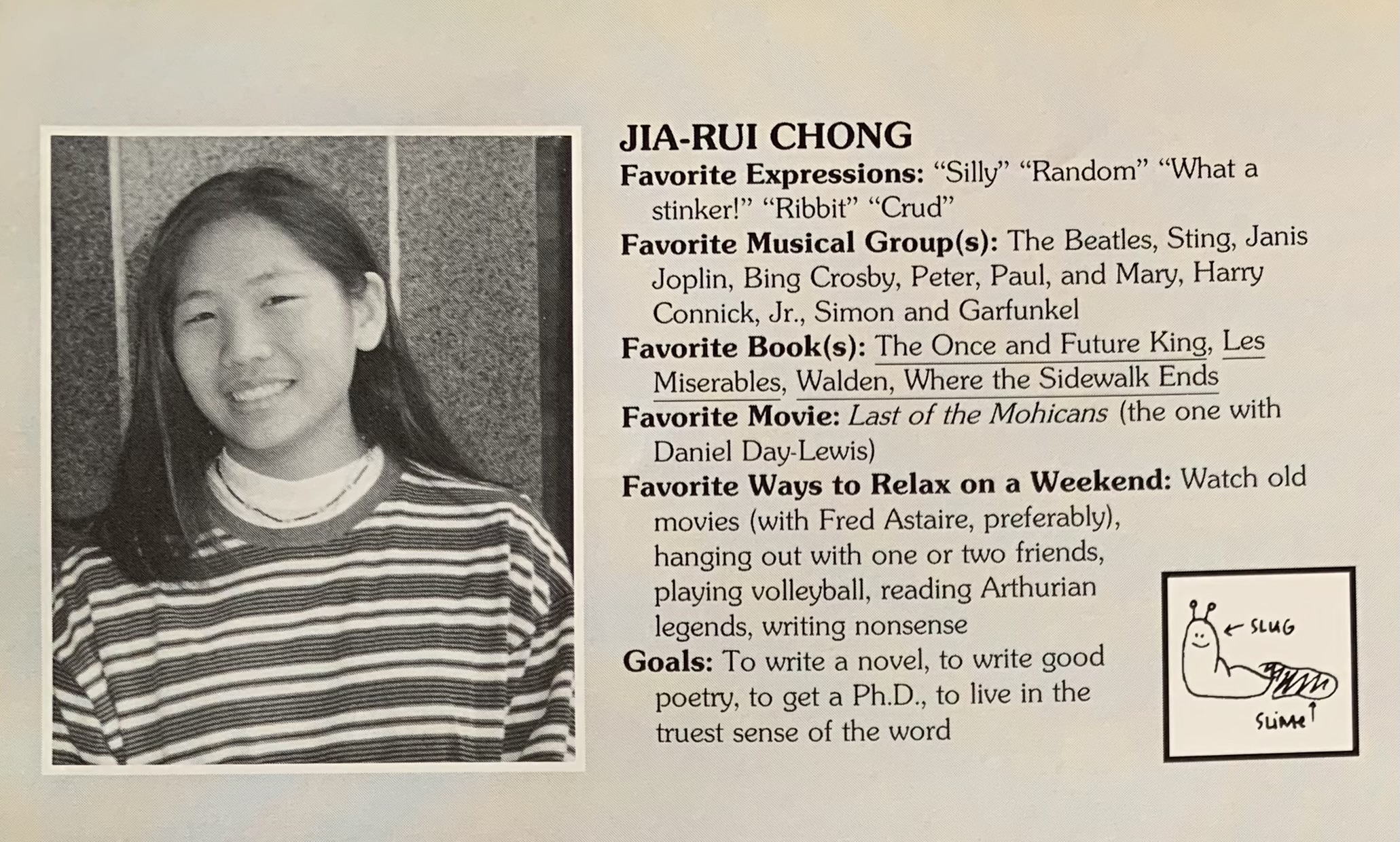
    In Cook’s high school yearbook, she wrote that it was her goal “to write good poetry.”

    Cook studied American history and literature at Harvard, joining the poetry board and studying under writers Seamus Heaney and Helen Vendler. She wrote a thesis on “Moby Dick.”

    Cook always wanted to be a writer, but didn’t know if she could make a living out of poetry. After college, she ventured into another form of storytelling — journalism. Cook spent six years at the Los Angeles Times, covering everything from medical research to Asian-American life in the city. She left journalism in 2009, and has worked in science and health communications since, including a stint at NASA’s Jet Propulsion Laboratory.

    Reporting and science writing are grounded in third-person observation and objectivity, Cook said, and as she was writing about rocket launches and research breakthroughs, she missed the creativity that drew her to writing in the first place.

    She wrote a few poems in the mid-2010s, and won the Zócalo Public Square Poetry Prize in 2013, but life quickly became busy with parenthood and work (Cook and her husband, Bryan, who is from the Main Line, have two daughters). It wasn’t until 2021 that Cook felt like she could pick up the pen again.

    “You get on this roller coaster of going, going, going, and then when you suddenly stop, you think, ‘Wow, actually, maybe I’ve learned some things. I have some things to share,’” she said, recalling how it felt to return to poetry five years ago.

    Jia-Rui Cook’s (then Chong) photo in her Cherry Hill High School East yearbook. Cook graduated from East in 1995.

    So Cook began to write again — about people, animals, her childhood in Cherry Hill, the subtleties of the Chinese-American experience she came to understand while living in and writing about Los Angeles.

    “I had to really step away and experience the world for a bit,” she said. “I had to go out and experience the world and to see it, and maybe try to tell other people’s stories for a while before I really understood, ‘What story did I want to tell about my own life?’”

    Anagrams (words or phrases made by rearranging the letters of a different word) figure prominently in her work.

    In her poem “Anagram No. 2,” Cook anagrams “Cherry Hill, New Jersey,” rearranging the letters to make sentences that resemble English, but don’t precisely follow its conventions. English was not Cook’s parents’ first language, and “there was always this kind of slipperiness with the language” in her house, she said.

    “Anagram No. 2” is “playing around with the English language” in a way that echos the experience of learning it.

    In January, Cook became a fellow with the Periplus collective, a mentorship program for writers-of-color. In February, she won the Levine Prize. Jake Skeets, the Levine Prize’s final judge, called Cook’s poetry “both wonder and wander,” holding “stark, living images of place” and teachings on how “to be alive in the present moment.”

    For Cook, publishing poetry has been an opportunity to “create something meaningful” in a world that “feels under siege.” The immigration crackdown that overtook Los Angeles last summer weighed heavily on her as the child of immigrants.

    “It just was really wonderful and incredibly meaningful to feel like I’ve been creating these little, tiny bits of beauty where I can in the world,” she said.

    Winning Fresno State’s Levine Prize is poignant for Cook. Fresno State was the first place Cook’s mother landed when she arrived in the U.S. and was where she learned English. Decades later, the university is helping to publish Cook’s first book.

    “It felt like a full-circle moment,” Cook said.

    Though California has been her residence for decades (and Cook says she has decidedly fallen in love with Los Angeles), she still considers South Jersey home. It’s the place where she became a writer and where her journey of self-understanding began.

    “It has to start somewhere,” she said of her book. “So it really does start in Cherry Hill.”

    This suburban content is produced with support from the Leslie Miller and Richard Worley Foundation and The Lenfest Institute for Journalism. Editorial content is created independently of the project donors. Gifts to support The Inquirer’s high-impact journalism can be made at inquirer.com/donate. A list of Lenfest Institute donors can be found at lenfestinstitute.org/supporters.

  • This year’s One Book, One Philadelphia pick was released in 2022 but is uncannily resonant of today’s times

    This year’s One Book, One Philadelphia pick was released in 2022 but is uncannily resonant of today’s times

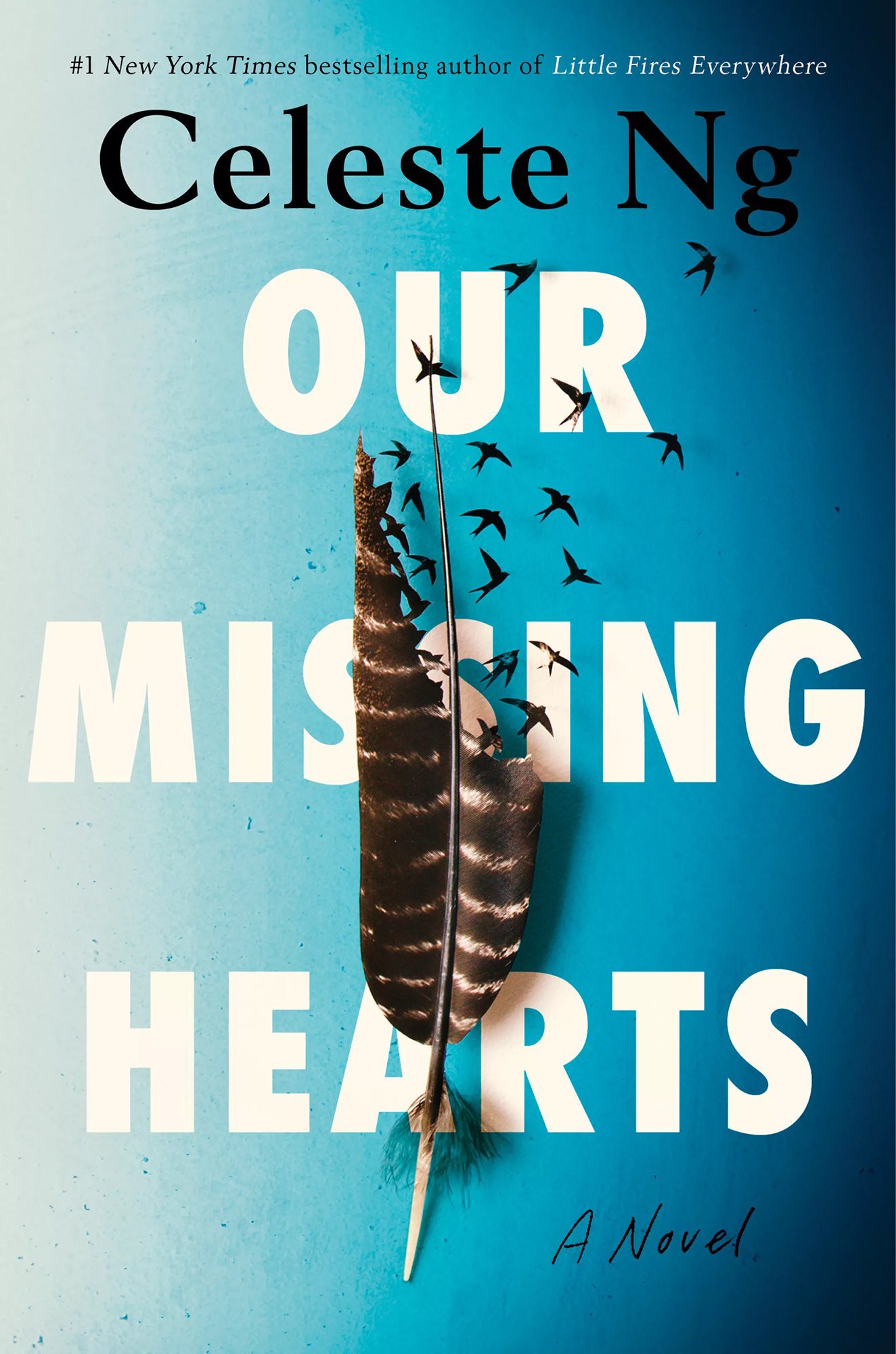
    Celeste Ng’s 2022 New York Times bestseller, Our Missing Hearts, is the 2026 One Book, One Philadelphia pick. The dystopian novel is about a 12-year-old biracial Chinese American boy and his quest to be reunited with his mother in an authoritarian America.

    “I’m thrilled and honored,” Ng said Wednesday, speaking from her Boston study a few hours before she hopped on a plane to Philadelphia for Thursday’s announcement.

    Ng’s 2017 novel Little Fires Everywhere was adapted into the 2020 Hulu miniseries of the same name, starring Kerry Washington and Reese Witherspoon.

    “I love community reads programs,” Ng said. “I relish in this idea that readers will have a shared experience, that they will be able to talk to each other, get to examine the world they are living in, ask if this is the world they want to live in, and figure out what they are going to do about it.”

    “Our Missing Hearts,” by Celeste Ng. (Penguin Press/TNS)

    In Ng’s 335-page paperback, a future America is living under the Preserving American Culture and Traditions Act, where books are banned, voices are censored, and citizens are forbidden to criticize a government for its wrongdoings, especially its unfair treatment of people of color. People of Asian descent are particularly mistreated, considered scapegoats for a severe economic crisis.

    Ng wrote Our Missing Hearts in 2020 during the pandemic when AAPI hate was at an all-time high. Years on, Ng’s PACT mirrors present-day America, where under President Trump’s executive order to “restore truth and sanity to American history,” historic panels honoring George Washington’s enslaved staff were removed from Independence Hall National Park last month.

    (On Feb. 17, a federal judge ordered the panels to be restored, but the Trump administration appealed the decision and the return of the plaques to the park has been halted.)

    “I sort of hoped the book would get further way from reality as the years went by, but that’s not the case so far,” said Ng, who stressed she’s not a psychic, just aware of history. “We are in a world where we just aren’t going to mention George Washington had enslaved people and we are taking down the gay pride [flag] at Stonewall, trying to pretend that none of this happened.”

    Bird is the 12-year-old in the center of Ng’s book. His Chinese mother criticizes America through her poetry and art. She leaves Bird with his white dad, and continues to make public art that unites Americans and encourages them to speak out.

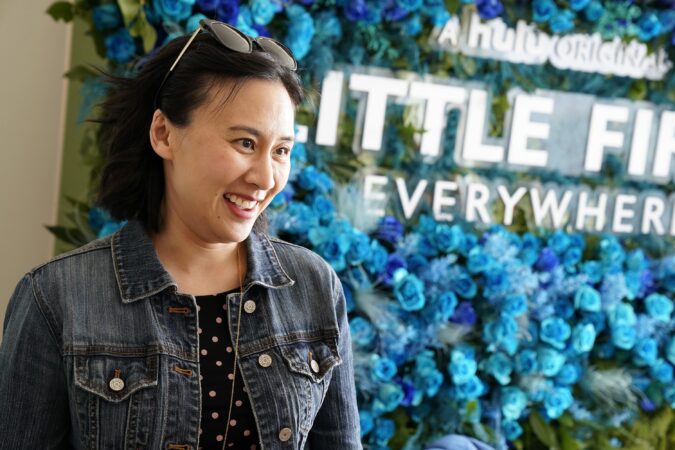
    Celeste Ng attends Hulu Little Fires Everywhere Press Brunch at ROSS HOUSE on Feb. 19, 2020 in Los Angeles, Calif. (Photo by Erik Voake/Getty Images for Hulu/TNS)

    “I feel like Philly is a living example of that,” said Ng, who was born in Pittsburgh and periodically visits Philadelphia. The Mütter Museum is one of her favorite places to visit. She’s keeping an eye on how the museum handles its collection of human remains.

    “Philadelphians get to walk past history daily. There is art all around you, reminding you of the stories that form you and are a part of your lives. Philly is a space that can start connection through all of the beautiful sculptures and murals reminding us that change is possible.”

    Our Missing Hearts is the Free Library’s 24th One Book, One Philadelphia pick. Last year’s choice was Tariq “Black Thought” Trotter’s 2023 memoir, The Upcycled Self.

    The annual program urges Philadelphians to read the same book, fostering literacy and civic dialogue. The kick-off event is April 7. Ng will return to Philadelphia that day for a book signing and celebration. One Book ends May 28.

    A series of events at Parkway Central and the 54 branch libraries will take place throughout the year.

    “I hope the conversation will get people thinking, what do we lose when stories disappear,” Ng said. “What do we do if stories never get told? What happens when we intimidate people out of talking about the past and learning from it? I’m really grateful to the Free Library of Philadelphia for starting these conversations in this moment.”

  • Philly’s tiniest used bookshop opens in the back of a children’s dress shop on Passyunk Avenue

    Philly’s tiniest used bookshop opens in the back of a children’s dress shop on Passyunk Avenue

    Little Yenta has to be the tiniest used bookshop in Philly. And it’s certainly the only one located in the back of a 40-year-old children’s dressmaking studio.

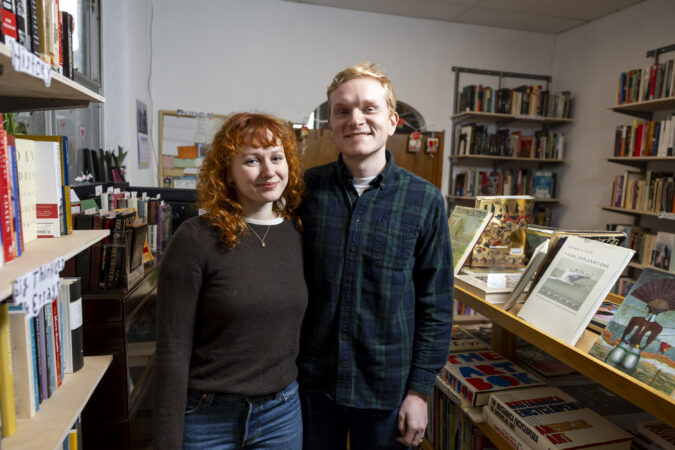
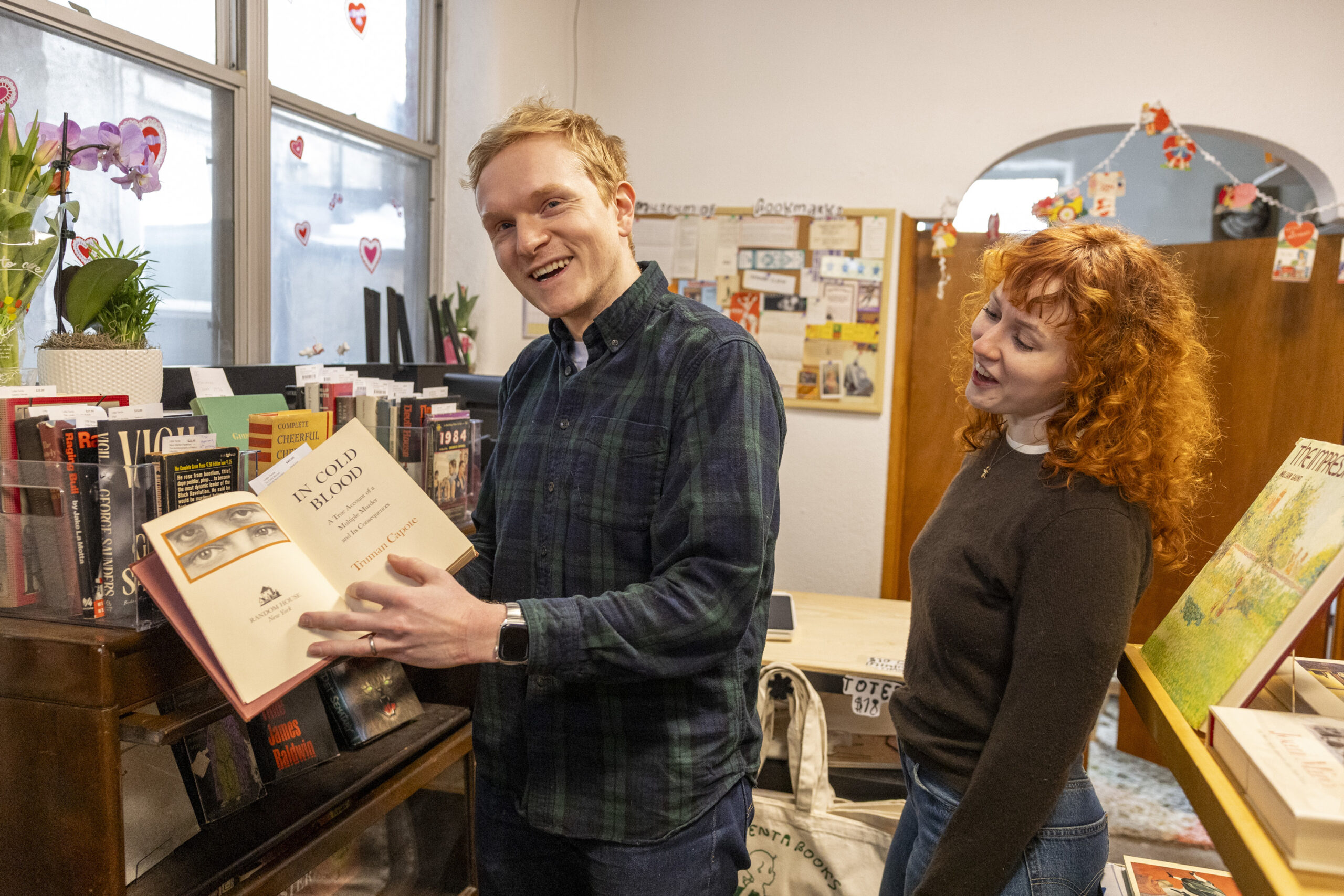
    Ariel and Simon Censor, partners in life and now books, opened Little Yenta Books, their self-described “micro-bookstore,” on East Passyunk Avenue in South Philadelphia on Saturday.

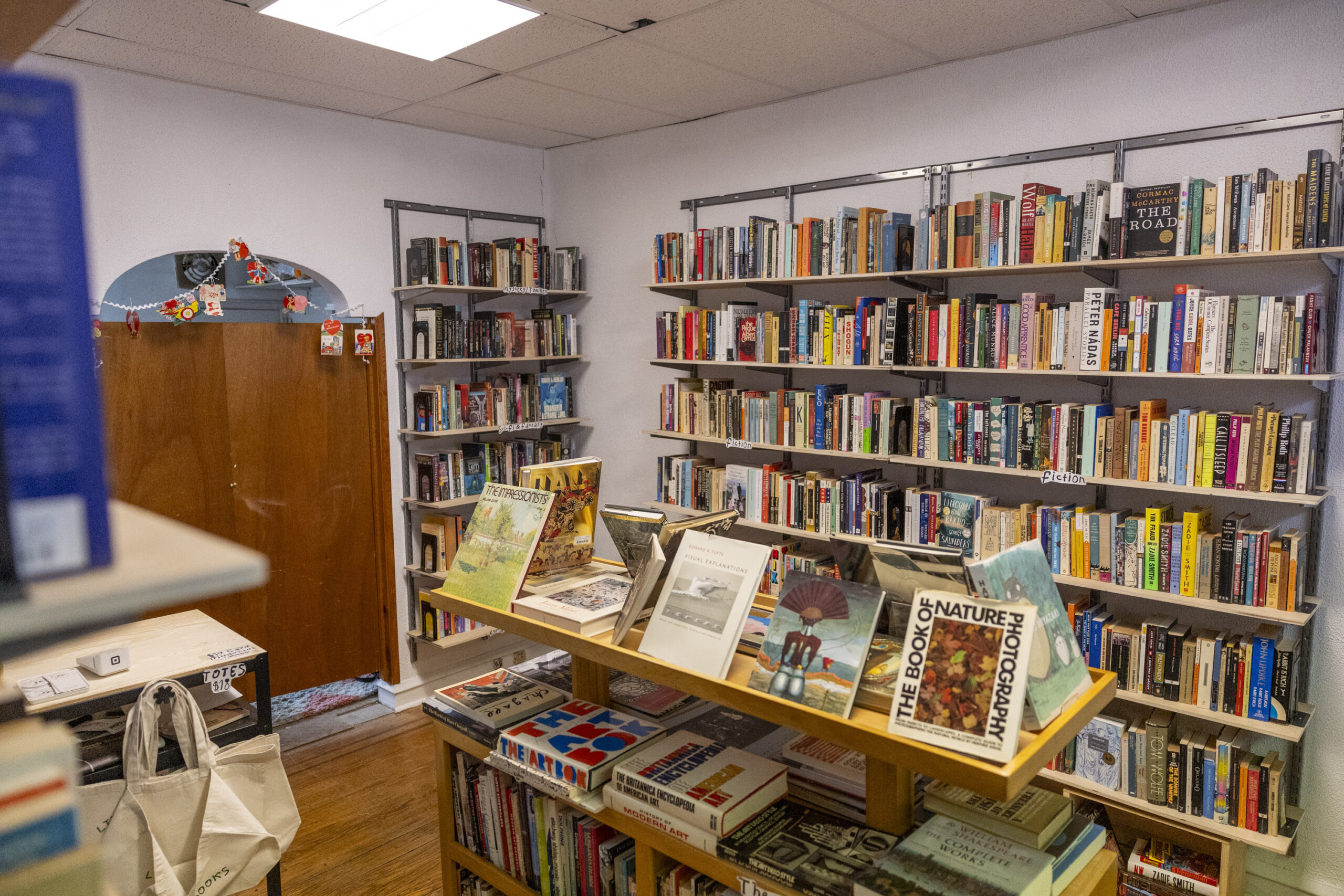
    Situated, speakeasy-style, in a postage-stamp-sized loft above the Painted Lady children’s boutique, the 150-square-foot shop is nearly bursting with over 1,500 titles, including literary fiction, science fiction, poetry, history, graphic novels, plays, and first-edition classics.

    Simon and Ariel Censor, owners of Little Yenta Books, showing one of their favorite books they acquired, “In Cold Blood,” a novel by Truman Capote, in their small bookshop in Philadelphia, Pa., on Friday, Feb. 13, 2026.

    “We can’t be everything to everyone,” said Ariel Censor, 27, preparing the spine-packed space with her husband on a recent afternoon. “But we want to be something to most people.”

    The shop is a passion project.

    The Haverford College graduates have long been aficionados of used bookshops — believers in the magic of unexpectedly stumbling upon a literary treasure in a sea of cast-off paperbacks. Their South Philly rowhouse could double as a secondhand store itself, the couple jokes.

    “You really couldn’t use the living room anymore,” Ariel Censor said with a laugh. “It was all books.”

    Last year, they decided to host pop-up used book sales around the neighborhood, including at the popular Cartesian Brewery. It was a hit.

    “We got lots of people coming and saying that they wished there was a permanent used bookstore around here,” said Ariel Censor, who works as an associate communications director at the Penn Center for Impact Philanthropy.

    Molly’s Books & Records on Ninth Street in the Italian Market has long been an iconic South Philly used book spot. A Novel Idea, a popular independent bookshop, opened on East Passyunk Avenue in 2018 and mostly deals in new books.

    The couple believed South Philly could handle another used book destination. Selling nearly 100 books at the brewery event, the couple decided to make their dream a reality.

    Searching for a brick and mortar space they could afford — and that boasted a little South Philly charm — they found it in the back of Painted Lady. It’s in a small storefront at 1910 E. Passyunk, where dressmaker Angela D’Alonzo has made custom baby outfits for decades.

    Little Yenta Books is a small bookshop in Philadelphia, Pa., on Friday, Feb. 13, 2026.

    It’s a case of old South Philly meeting new South Philly. For $400 a month, she offered the couple a little loft area storage space five steps above her shop, with no heat or hot water. Warmth creeps up from the basement, explained Simon Censor, 29, who works for a real estate firm. And hot water is not a must for book buying, they added.

    “Your hands are just a little cold, and that’s OK,” Ariel said.

    Ariel and Simon Censor have transformed the tiny space into a literary thicket, with shelves and stacks of titles from their home collections, and ones they’ve purchased from estate sales and sellers. Rare early editions and classics by Truman Capote, James Baldwin, E.L. Doctorow, Octavia Butler, and Willa Cather. Hard-to-find paperback editions of George Orwell, Albert Camus, Italian novelist Elena Ferrante, and cult favorite Charles Bukowski.

    “I always want to fit more books in here,” said Ariel Censor.

    Ariel Censor shows one of the books she and Simon Censor acquired, “The Plague,” by Albert Camus, in their small bookshop in Philadelphia, Pa., on Friday, Feb. 13, 2026.

    On a bulletin board hang keepsakes the couple have discovered in the books, including notes, prayer cards, letters, poems, baseball cards, a high school class schedule from the 1990s, and a vintage recipe for triple chocolate cake.

    “I actually want to make that someday,” said Ariel Censor.

    Opened Thursdays and Fridays from 4:30 to 7 p.m., and weekends from noon to 6 p.m., the spirit of the shop is found in its name, the couple said. In American Yiddish parlance, Yenta can mean matchmaker. For Ariel and Simon Censor, that means that special feeling of playing matchmaker between a reader and a book.

    “Just coming in and stumbling upon a book that you will love,” said Ariel Censor.

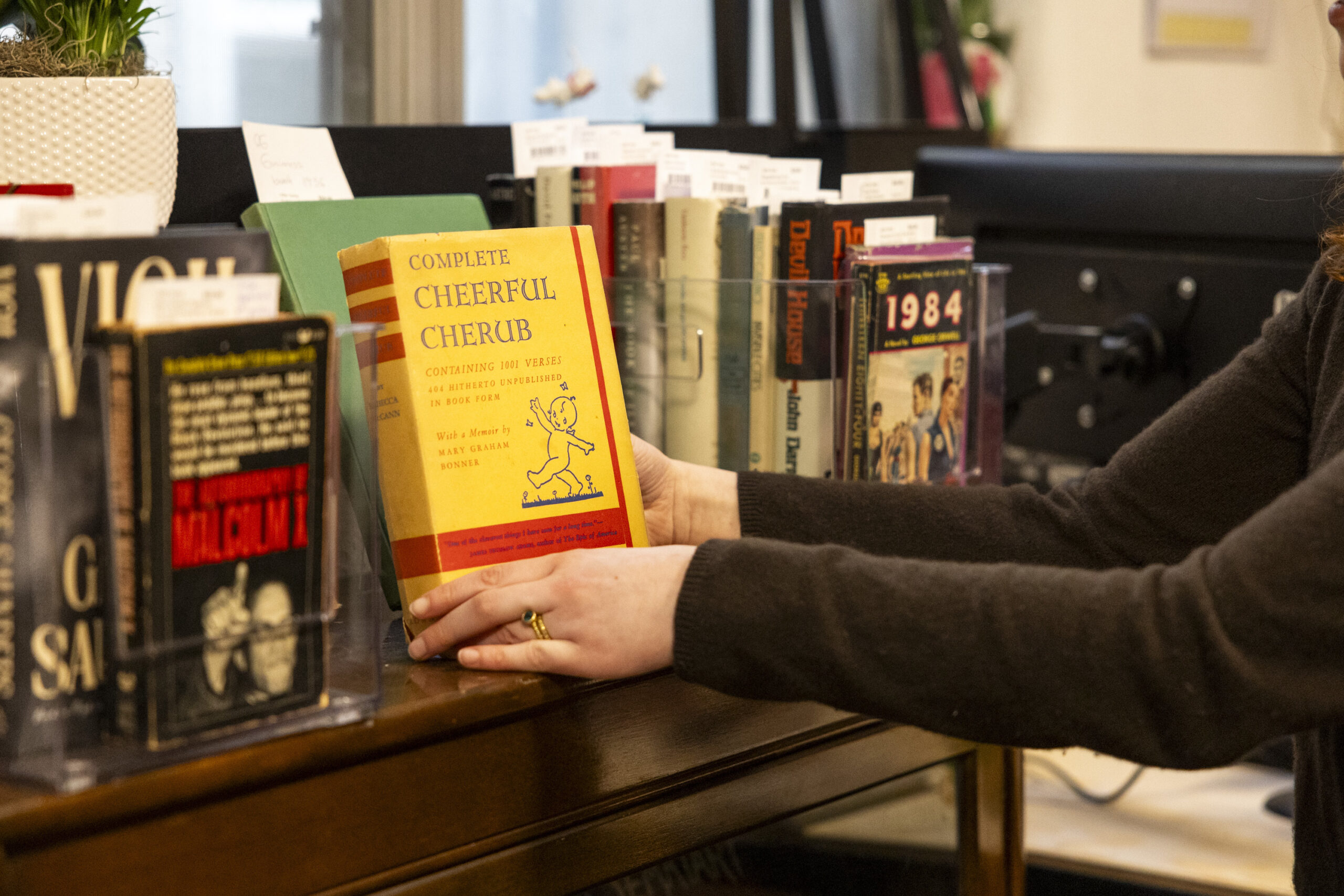
    “Complete Cheerful Cherub” by Rebecca McCann is a book in Little Yenta Books in Philadelphia, Pa., on Friday, Feb. 13, 2026.
  • WWII-era Philadelphia comes back to life in Count Basie tunes, Strawbridge’s, and South Philly block parties

    WWII-era Philadelphia comes back to life in Count Basie tunes, Strawbridge’s, and South Philly block parties

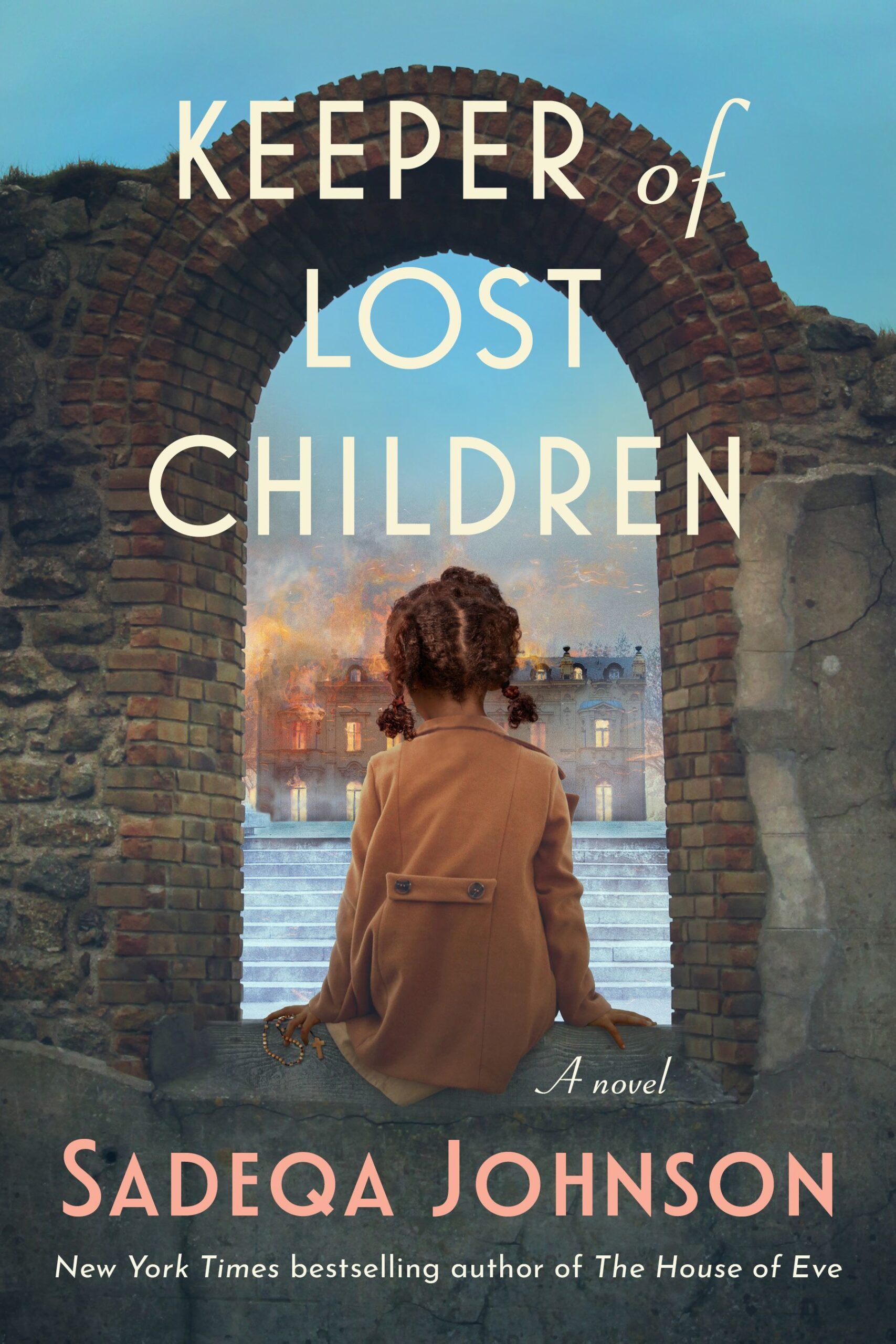
    When we first meet Bok High graduate Ozzie Phillips — one of three protagonists in Sadeqa Johnson’s latest novel, Keeper of Lost Children — a block party on South Philadelphia’s Ringgold Street is just winding down. In between the last dollops of creamy potato salad and sips of clear corn liquor, Ozzie’s friends and family wish the young serviceman a bon voyage.

    The year is 1948 and 18-year-old Ozzie is headed to Germany to join hundreds of thousands of military men occupying post-World War II Germany.

    He spends the last few weeks with his girlfriend, Rita, picnicking at the Lakes in FDR Park and walking through Center City department stores like Wanamaker’s and Strawbridge’s. One night the couple go to Ridge Avenue’s Pearl Theater to see Pearl Bailey perform.

    The next morning, Ozzie’s Uncle Millard picks him up in a Vagabond-blue Oldsmobile and the two cruise down Broad Street, Count Basie tunes playing on WHAT AM. Uncle Millard circles City Hall, depositing Ozzie at Reading Terminal Station, where he hops on a train to Trenton’s Fort Dix Army Base before embarking on a steam boat to Germany.

    It’s Ozzie’s time in Germany that fuels the plot of the sentimental historical novel.

    “It’s such a joy for me to write the Philly scenes,” Johnson said, during a recent video chat. The book publicist turned New York Times best-selling author was born in South Philadelphia, grew up in North, and graduated from George Washington Carver High School of Engineering and Science. Today, the married mom of three writes from her home in Virginia, right outside Richmond.

    “I left Philly when I went to Marymount Manhattan College in New York,” Johnson said. “But where you grow up is always in your DNA. Philly is in my soul. When I sit down and paint pictures of historical moments in Philadelphia, I get to go home.”

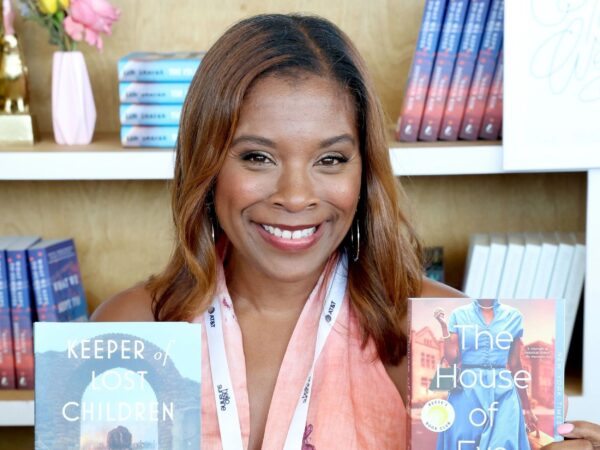
    Cover art for Sadeqa Johnson’s 2026 novel, “Keeper of Lost Children” One of the main characters, Ozzie Ozbourne grew up in 1940s South Philadelphia.

    Johnson has six books out in the world. She self-published her first, Love in a Carry-On Bag, in 2012.

    Her books center young Black women in old-school and modern times trying to do the best with what they got. But in most of her works — especially the captivating historical fiction novels through which she’s made a name for herself on BookTok, podcasts, and traditional bestseller lists — her heroines face overwhelming odds.

    Take the Yellow Wife’s Pheby Delores Brown. Set in antebellum Virginia, Brown’s story is based on the harrowing real-life experience of enslaved woman Mary Lumpkin, who is forced into a relationship with her enslaver for whom she bears five children.

    It was a 2022 finalist for the Hurston Wright Legacy Award. It was also named one of NPR’s Best Books of the Year in 2021.

    “I have this propensity to tell the story of young women 15, 16, 17, who are in a situation that feels insurmountable,” said Johnson, who, until 2023, taught creative writing in Drexel University’s master’s of fine arts program. “And I really love developing those stories that show how those young women get to the other side.”

    The House of Eve, a 2023 New York Times bestseller and a Reese Witherspoon Book Club of the Month pick centers 1950s North Philadelphia teen Ruby Pearsall who falls in love with a Jewish boy whose family runs a corner store. In the book, Ruby must choose between a free ride to Cheyney University and motherhood.

    “I love the research,” Johnson said. “I love learning interesting things about this city that I was brought up in.”

    In Keeper — released this month by 37 INK, a division of Simon & Schuster — Ethel Gathers, a journalist and wife of an Army officer, also stationed in post World War II Germany, is the central character. There, she chances upon a group of multiracial children who she learns are the offspring of Black servicemen and German women.

    Gathers, whose story is based on the life of journalist Mabel Grammer, adopts eight of the “Brown Babies” and starts an adoption agency, ultimately placing hundreds of the children with Black families in the United States. In the book, Grammer visits Philadelphia from her Washington home and books a room at the Divine Lorraine, the country’s first fully racially integrated hotel.

    “I stumbled upon Ms. Grammer while researching The House of Eve,” Johnson said. “And in that moment, I knew I wanted to tell that story.”

    Johnson breathes life into her fictional characters through extensive research, adding vivid details that take the readers back in time and thrust them into the rich tapestry of her story. Fans will often find connections to characters from previous books where they least expect it.

    Ozzie’s military time and South Philly swag is based on Johnson’s great-uncle, 94-year-old Edgar Murray, who, like Ozzie, grew up in South Philly and spent the latter part of the 1940s in Germany. (For the record, Johnson said, her uncle didn’t suffer with alcoholism like Ozzie does in the book.)

    It was Murray who suggested Ozzie live on Ringgold Street and take his date to the Pearl Theater.

    “I like the factual things she puts in there,” said Murray, who lives with family in Denver, Colo. “It makes it more interesting.”

    Philadelphia readers with an eye for history will enjoy seeing the city unfold through Ozzie’s eyes after his 1952 return.

    He leafs through The Philadelphia Inquirer, reading detailed accounts of white veterans securing “large mortgages and moving out to lofty suburbs” on the GI bill that he too applied for. He works a job at the Navy Yard, gets married at Tasker Baptist Church, and experiences a miracle at West Philly’s Mercy-Douglass Hospital.

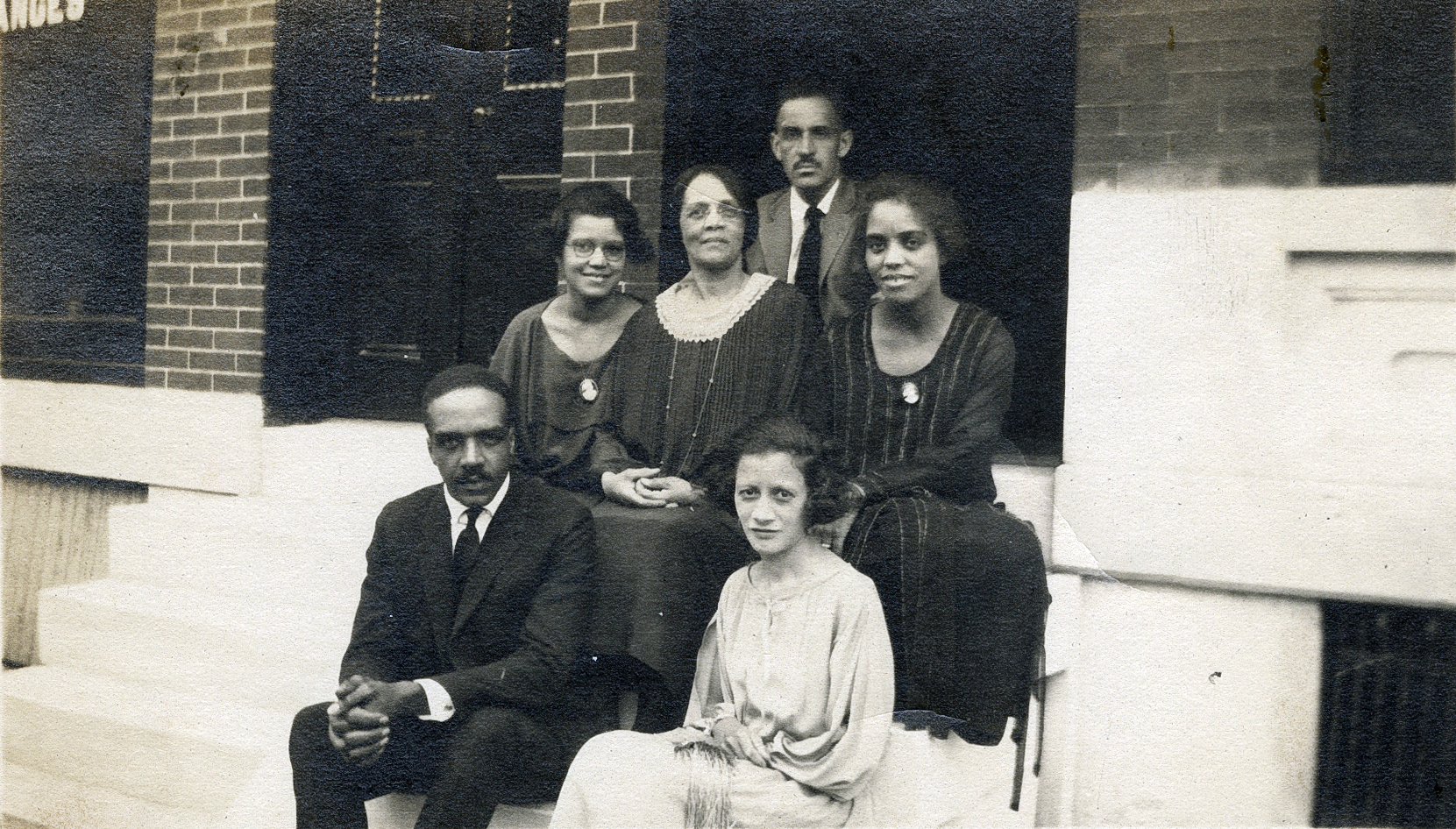
    Tanner family members gather on the front steps of the Tanner House, at 2908 W. Diamond St. in Philadelphia, in this photo taken circa 1920. They are: Bottom row (l-r) Aaron A. Mossell Jr., and his wife, Jeanette Gaines Mossell; Middle row (l-r): Sadie T. M. Alexander, her mother, Mary L. Tanner Mossell, and Sadie’s sister, Elizabeth Mossell Anderson. Top row: Page Anderson, Elizabeth Anderson’s husband.

    Halfway through Keepers, Ozzie attends a party thrown by elite Civil Rights husband-and-wife-team Raymond Pace Alexander and Sadie Tanner Mossell Alexander at their swanky home at 17th and Jefferson.

    Attorneys John Francis Williams and Lewis Tanner Moore Sr., cofounder of the Pyramid Club and whose son, art collector Lewis Tanner Moore Jr. died in 2024 — shoot the breeze about an NAACP fundraiser and Buddy Powell, a 1940s jazz musician who was so severely beaten by the Philadelphia railroad police that he ended up in an asylum.

    “In The House of Eve, I got to dig around in my mom’s memory for Ruby,” Johnson said. “This time around I got to dig around in my dad and Uncle Edgar’s head to get South Philly down. Let’s see what happens in the next book.”

    Sadeqa Johnson will give an author’s talk at the Philadelphia Ethical Society, 1906 Rittenhouse Square, Friday, Feb. 13, 6:30 p.m. to 7:30 p.m. Tickets are $35 and include a copy of “Keeper of Lost Children”

  • Helen Cherry, prolific illustrator and artist, has died at 101

    Helen Cherry, prolific illustrator and artist, has died at 101

    Helen Cherry, 101, formerly of Philadelphia, prolific illustrator, artist, and show tunes devotee, died Thursday, Jan. 15, of age-associated decline at her home in the Woodland Pond retirement community in New Paltz, N.Y.

    “It was her decision entirely,” said her daughter, Lynne. “She knew her own mind and made the decision that it was time for her to take flight to the Great Beyond.”

    A lifelong artist, Mrs. Cherry grew up drawing and painting in West Philadelphia. She earned a scholarship to the old Philadelphia College of Art, sold illustrations to the Jack and Jill children’s magazine, and took a 20-year hiatus in the 1950s and ’60s to rear her three children.

    She resumed her career at 50 in 1974 and went on to illustrate 30 books and dozens of magazine stories for Highlights, Cricket, and other publications. Using a combination of her maiden name, Cogan, and her married name, Cherry, she was published under the pseudonym of Helen Cogancherry.

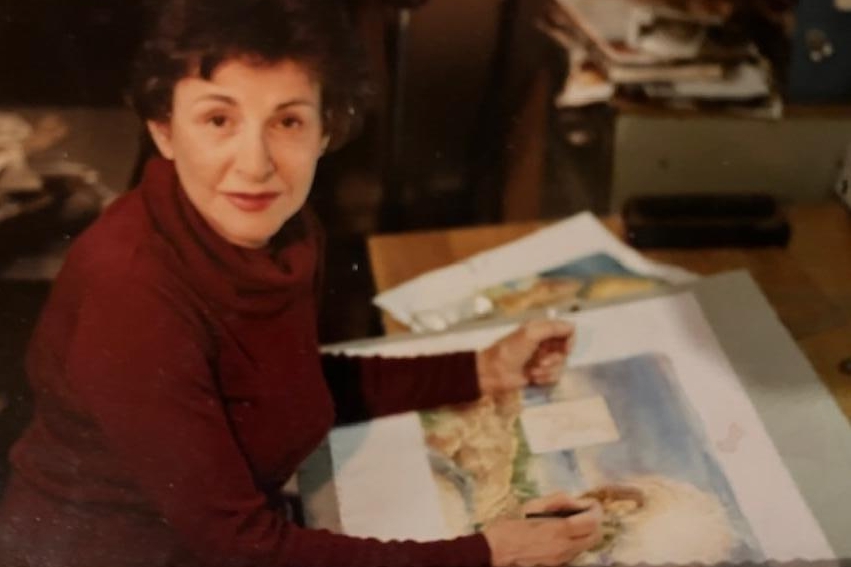
    Mrs. Cherry at work illustrating 1991’s “Fourth of July Bear.”

    “She was always an artist,” said her daughter, also an illustrator and writer. “Art was her hobby, her passion, her work. She said it was something that she can’t not do.”

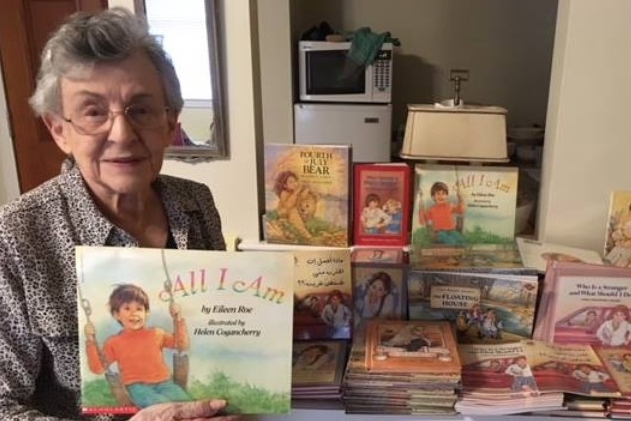
    Mrs. Cherry was a keen and imaginative observer of life, adept at creating visuals that reflected the concepts of the writers with whom she worked. She illustrated many children’s books, such as All I Am, Warm as Wool, and The Floating House.

    She told The Inquirer in 1986 that a book she illustrated helped a girl she knew address a difficult childhood situation. “That made a profound impression on me,” she said. “I saw how my little books could help children.”

    Her career was featured in several publications, and she told The Inquirer that breaking back into the business in the 1970s was “discouraging at first.” She said: “I remember coming home sometimes and telling my husband that it was hopeless. He kept encouraging me to keep at it.”

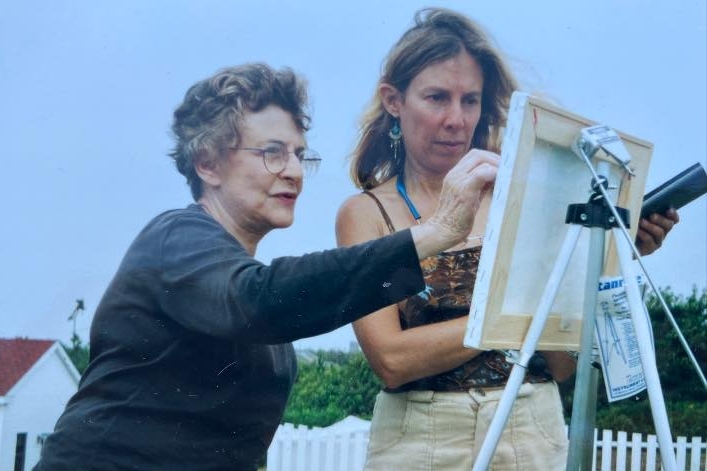
    Mrs. Cherry (left) and her daughter, Lynne, work on a project.

    Helen Cogan was born July 9, 1924, in a West Philadelphia rowhouse beneath the elevated railroad tracks. The middle of three children, she looked up to her sister, Molly, and cared for her younger brother, Robert, while her parents ran the small grocery store they lived above.

    She contributed illustrations to the yearbook and graduated from West Philadelphia High School. She met Herbert Cherry in French class and sent him beautifully illustrated letters while he served overseas during World War II.

    They married in 1950 and had a daughter, Lynne, and sons Steven and Michael. She helped her husband operate Cherry’s Pharmacy in Ridley Park for years, and they lived in Milmont Park and Wallingford in Delaware County, and Carlisle, Pa. She moved to New Paltz after her husband died in 2000.

    Mrs. Cherry often sang show tunes with family and friends, and while she worked. She whipped up memorable meals, especially on holidays, and enjoyed idyllic summers on family vacations at the Jersey Shore in Ventnor.

    Mrs. Cherry grew up in West Philadelphia.

    She tutored her children and their friends, and later her grandchildren, in drawing and painting. She showed everybody, her daughter said, “how to be a good human being in this world.”

    On Facebook, friends called her “warm,” “beautiful,” and “a talented giver.” One said: “The joy she radiated her whole life long was magical.”

    Her daughter said: “She was quiet and understated but strong.”

    Her favorite song was “Life is Just a Bowl of Cherries.” It opens with: “Life is just a bowl of cherries. Don’t take it serious. Life’s so mysterious.”

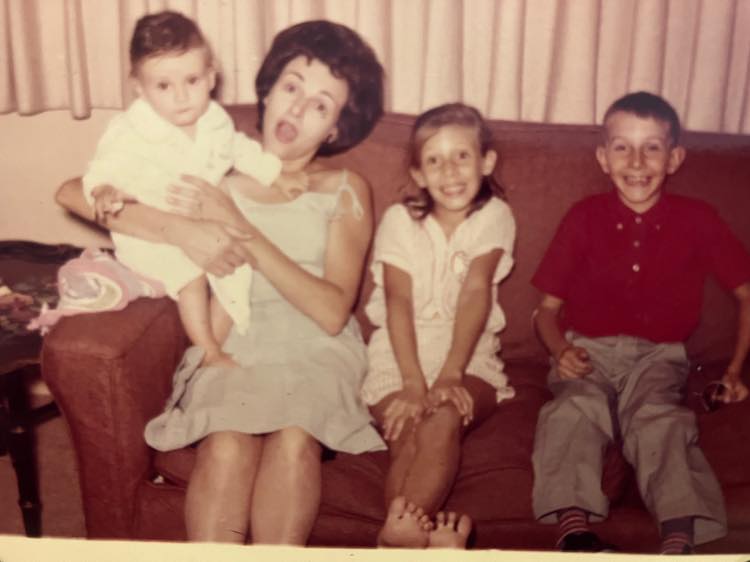
    Mrs. Cherry enjoyed time with her children.

    In addition to her children, Mrs. Cherry is survived by five grandchildren, a great-granddaughter, her brother, and other relatives. Her sister died earlier.

    A memorial service was held Sunday, Jan. 18. A celebration of her life is to be held later.

    Donations in her name may be made to the Children’s Environmental Literacy Foundation, Suite 130, 500 Summit Lake Dr., Valhalla, N.Y. 10595.

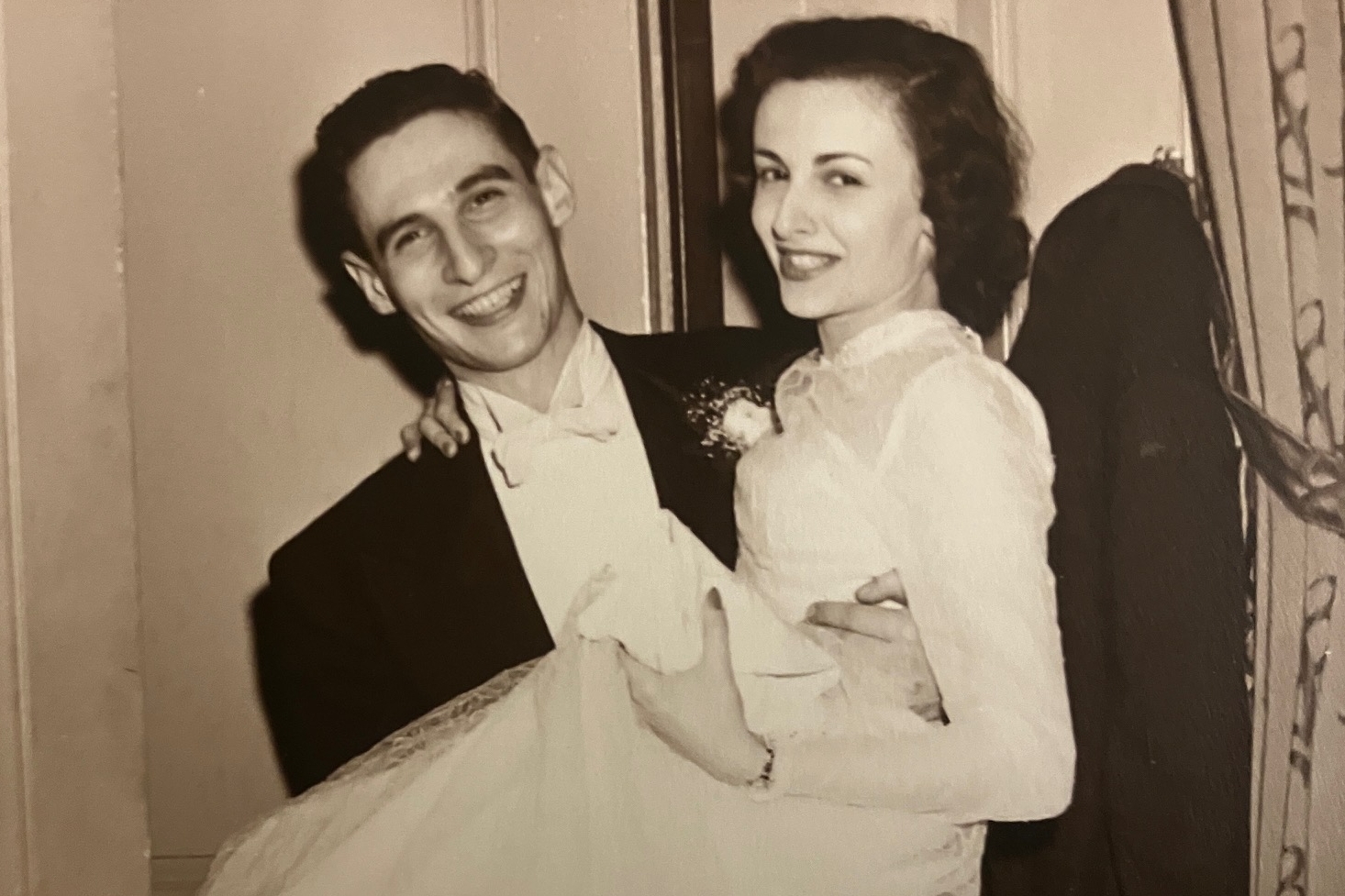
    Mrs. Cherry and her husband, Herbert, married in 1950.
  • Chill Moody’s newest venture is a book about a little girl with magical golf clubs

    Chill Moody’s newest venture is a book about a little girl with magical golf clubs

    Chill Moody didn’t plan on writing a children’s book.

    A story about a young athlete was bubbling in his head. And the West Philly-born rapper and serial entrepreneur wanted to turn it into a screenplay, mirroring the upbeat, have-faith vibe of fellow rapper Bow Wow’s 2002 film, Like Mike.

    “Instead of basketball [in Like Mike], I wanted the story to be about golf,” said Moody, whose real first name is Eric.

    “And instead of a little boy, I wanted my main character to be a little girl.”

    But movies take forever to become a reality. Moody, always ready to churn out his next nice thing, wanted to get this fictional little girl, who rocks a red golf tee and wields golf clubs passed down from the ancestors, into the world quickly.

    So Moody, and his coauthor and cousin, Danielle Kellogg, decided a children’s book would be their best bet. This way, Moody could share his message of inspiration directly with his target audience. His character would come alive with every page turn; and a skilled rapper, Moody could write a story that rhymed.

    “There had to be alliteration,“ he said. ”So, I named her Gia,”

    Gia the Golfer was released in December.

    The 36-page picture book, featuring vibrant illustrations by local artist Stephen Hatala, is available on the Barnes & Noble website and Amazon, where it sells for $14.99.

    So far, Moody said, he’s sold a few hundred copies of Gia the Golfer. And, he said, 100% of the profits will fund his nonprofit We Golf Now. The two-year-old nonprofit encourages Philadelphia’s Black and brown youth to develop confidence, social, and networking skills through playing golf.

    Zane King, 6, get advice from Chill Moody during a We Golf Now event at Five Iron Golf in Philadelphia, Pa., on Sunday, March 30, 2025.

    “We serve over 100 kids,” Moody said. “We teach kids how to play golf, the business of golf, and introduce them to careers and job opportunities.”

    Moody sees Gia’s spark and optimism in all of his young golfers.

    When we meet Gia, her grandfather, Geo, has just died. She and her mother are going through his things when Gia discovers golf clubs that belonged to Geo, a star golfer and winner of a lot of tournaments. She takes the clubs and practices on her own and seems to be a natural. Her mother signs her up for golf classes and, following in her grandfather’s footsteps, she excels and decides to compete in a tournament.

    But, on the day of the tournament, the golf clubs — that twinkle like they could be magical — disappear. Gia has to play without them.

    “I wanted to teach children about memories and dealing with grief,” Moody said. “And that even if you lose something that you think is important, you aren’t at a loss.”

    Moody, 40, finished writing the book in 2024. He shopped it to publishers for nearly a year before taking the self-publishing route.

    “I didn’t want to sell the books out of my trunk like I did with my music,” Moody said. “But then I remembered I did this so we could tell our children’s stories. I remembered I could do this … I bet on myself.”

    Moody is used to taking bets on himself.

    Under Moody’s nicethings umbrella, he has released several flavors of kombucha and partnered with City Winery for a limited-edition wine.

    In September, he partnered with Lansdale’s Boardroom Spirits and released Tequila Transfusion, a mix of tequila, grape, ginger, and lime — his version of the country club cocktail.

    Just like his drinks, Moody has big plans for Gia.

    “I’m thinking animated cartoons and plush toys,” Moody said. “I want her to blow up as a brand. Seriously, I’m thinking Gia will be the next Dora the Explorer.”

  • John Langdon, innovative award-winning graphic designer, has died at 79

    John Langdon, innovative award-winning graphic designer, has died at 79

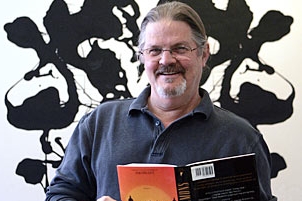
    John Langdon, 79, formerly of Philadelphia, innovative award-winning graphic designer, painter, writer, and longtime adjunct professor of typography at Drexel University, died Thursday, Jan. 1, of complications from a heart attack at French Hospital Medical Center in San Luis Obispo, Calif.

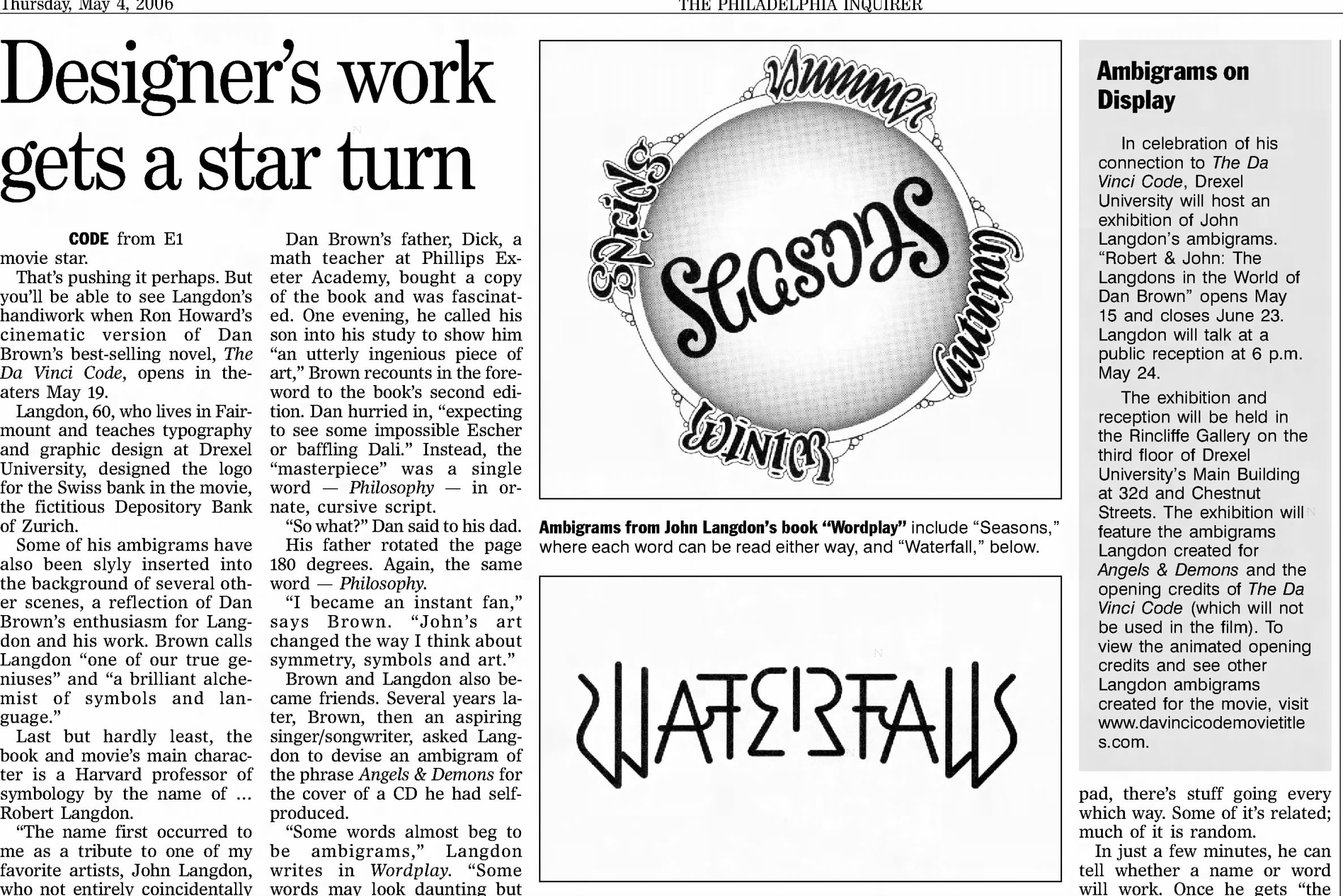
    Mr. Langdon was a lifelong artist and wordsmith. He originated ambigrams in the early 1970s and created distinctive logos for corporate clients, artists, musicians, and others. Ambigrams are words or designs that retain meaning when viewed from different perspectives, and his work influenced countless other designers and typographers who followed.

    “They also present familiar concepts in an unfamiliar way,” he told The Inquirer in 1992, “and thus stimulate the reader’s imagination.”

    On his website, johnlangdon.net, Mr. Langdon described his work as “making abstract concepts visual, almost always through the design of words, letters, and symbols.” He called it “words as art” and said: “I specialize in the visual presentation of words.”

    His designs were featured in more than a dozen solo shows in galleries and museums in Pennsylvania, New Jersey, New York, Connecticut, Maryland, and Delaware, and in more than 50 group exhibitions around the country and Europe. He created six ambigrams for author Dan Brown’s best-selling book, Angels & Demons, and Brown named his fictional protagonist, Harvard symbologist Robert Langdon, after John Langdon.

    “John’s art changed the way I think about symmetry, symbols, and art,” Brown told The Inquirer in 2006.

    Mr. Langdon’s own book about ambigrams, Wordplay, was first published in 1992 and updated in 2005. He also wrote the forwards of other books and articles for journals and newsletters. He said he had a “particular interest in word origins” in an interview on his website.

    He was featured several times in The Inquirer and wrote an op-ed piece in 2014 about the Philadelphia Museum of Art’s new logo. He opened the article with: “Please, beloved Philadelphia Museum of Art, before you print one piece of stationery or a single promotional flier, reconsider your new logo.”

    Mr. Langdon’s work was featured in The Inquirer in 2006.

    In 1996, he began painting what he called his “visual-verbal meditations and manipulations” on canvas. “My paintings still involve symmetry and illusion, a bit of philosophy, and a few puns thrown in for good measure,” he said on his website.

    He cocreated the Flexion typeface and won a 2007 award from the New York-based Type Directors Club. He spoke often about design at colleges and high schools, and to professional societies. He gave a TEDx talk about font and the future of typeface at Drexel.

    Douglas Hofstadter, a professor at Indiana University who coined the term ambigram in 1984, told The Inquirer in 2006 that Mr. Langdon had a “very strong sense of legibility but also a marvelous sense of esthetics, flow, and elegance.”

    Born in Wynnewood and reared in Narberth, Mr. Langdon graduated from Episcopal Academy in 1964 and earned a bachelor’s degree in English at Dickinson College in Carlisle, Pa. He worked in the photo-lettering department of a type house and for a design studio in Philadelphia after college, and began freelancing as a logo designer, type specialist, and lettering artist in 1977.

    He taught typography and logo design classes at Moore College of Art and Design from 1985 to 1988 and at Drexel from 1988 to his retirement in 2015. In an online tribute, one student said he was “one of my favorite teachers of all time.”

    He was interested in Taoism and inspired by artists Salvador Dalí and M.C. Escher, and authors Edgar Allan Poe and Ogden Nash. “In the early ’70s, I tried to do with words what Dali and Escher did with images,” he said in a 2006 interview posted on Newswise.com.

    John Wilbur Langdon was born April 19, 1946. He played high school and college soccer and drew caricatures of classmates for the Episcopal yearbook.

    After college, he took painting and drawing classes at the Pennsylvania Academy of the Fine Arts and the old Philadelphia College of Art. He married Lynn Ochsenreiter, and they had a daughter, Jessica. They divorced later.

    Mr. Langdon enjoyed vacation road trips and told stories of hitchhiking around the country in the 1960s. He followed the Phillies, was interested in genealogy, and traced his family back to the Founding Fathers.

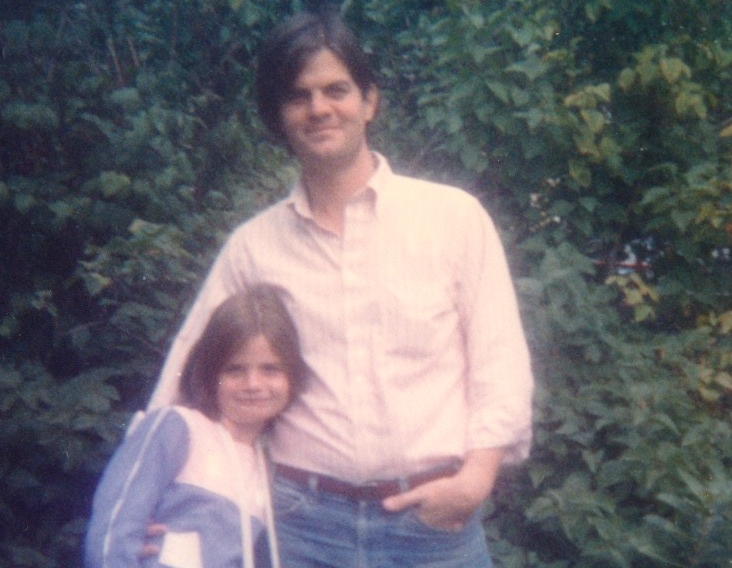
    Mr. Langdon stands with his daughter, Jessica.

    He lived in Darby, Woodbury, Wenonah, and Philadelphia before moving to California in 2016. “He was jovial, social, and amusing,” his daughter said. “People said he was clever, and everyone liked him.”

    He told The Inquirer in 2006: “It may seem counterintuitive, but the more ambiguity you invite into your life, the more things make sense and become understandable.”

    In addition to his daughter and former wife, Mr. Langdon is survived by a brother, Courtney, and other relatives.

    A memorial is to be held later.

    Mr. Langdon lived in Darby, South Jersey, and Philadelphia before moving to California in 2016.
  • Robert Caputo, prolific photographer, writer, and filmmaker, has died at 76

    Robert Caputo, prolific photographer, writer, and filmmaker, has died at 76

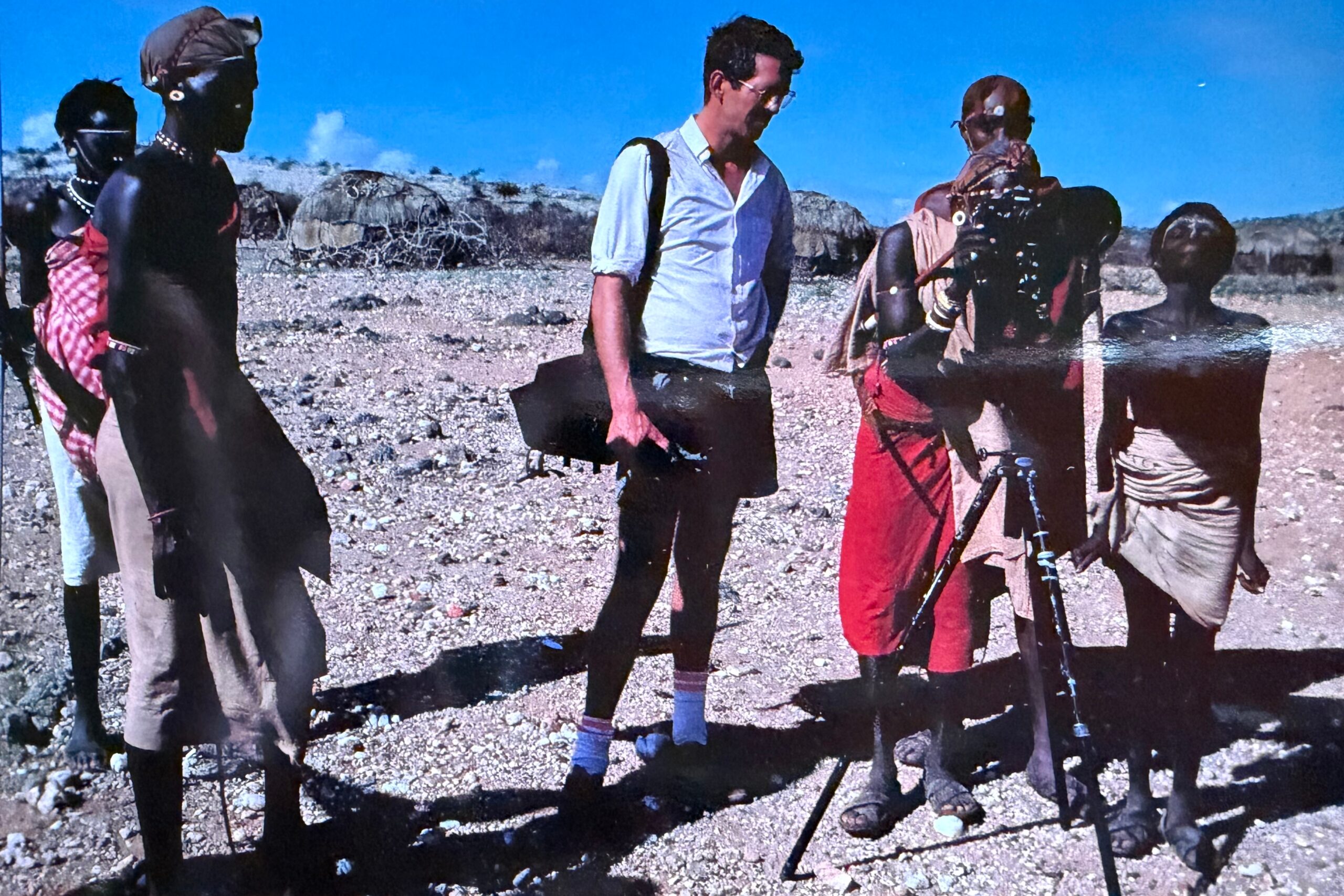
    Robert Caputo was captivated by the natural world, its animals and people. So he spent 35 years, from 1970 through 2005, traveling through Africa, Asia, and South America, taking photos, writing stories, and making films and TV shows for National Geographic magazine, Time, PBS, TNT, and other media outlets.

    From Kenya to Egypt, Venezuela to Zanzibar, in China, Cuba, New Orleans, and Boston, Mr. Caputo chronicled the beauty and tragedy of everyday life. He reported as a freelancer, with a camera and a notepad, for National Geographic for decades, covering political coups, civil wars, and famines in Sudan and Somalia, and the AIDS epidemic in Uganda.

    He worked for photographer and filmmaker Hugo van Lawick in Tanzania in the 1970s and then camera-stalked lions and leopards for National Geographic on the Serengeti Plain. He sent back striking images of the Abu Simbel Temples in Egypt and the old Kingdom of Mustang in Nepal.

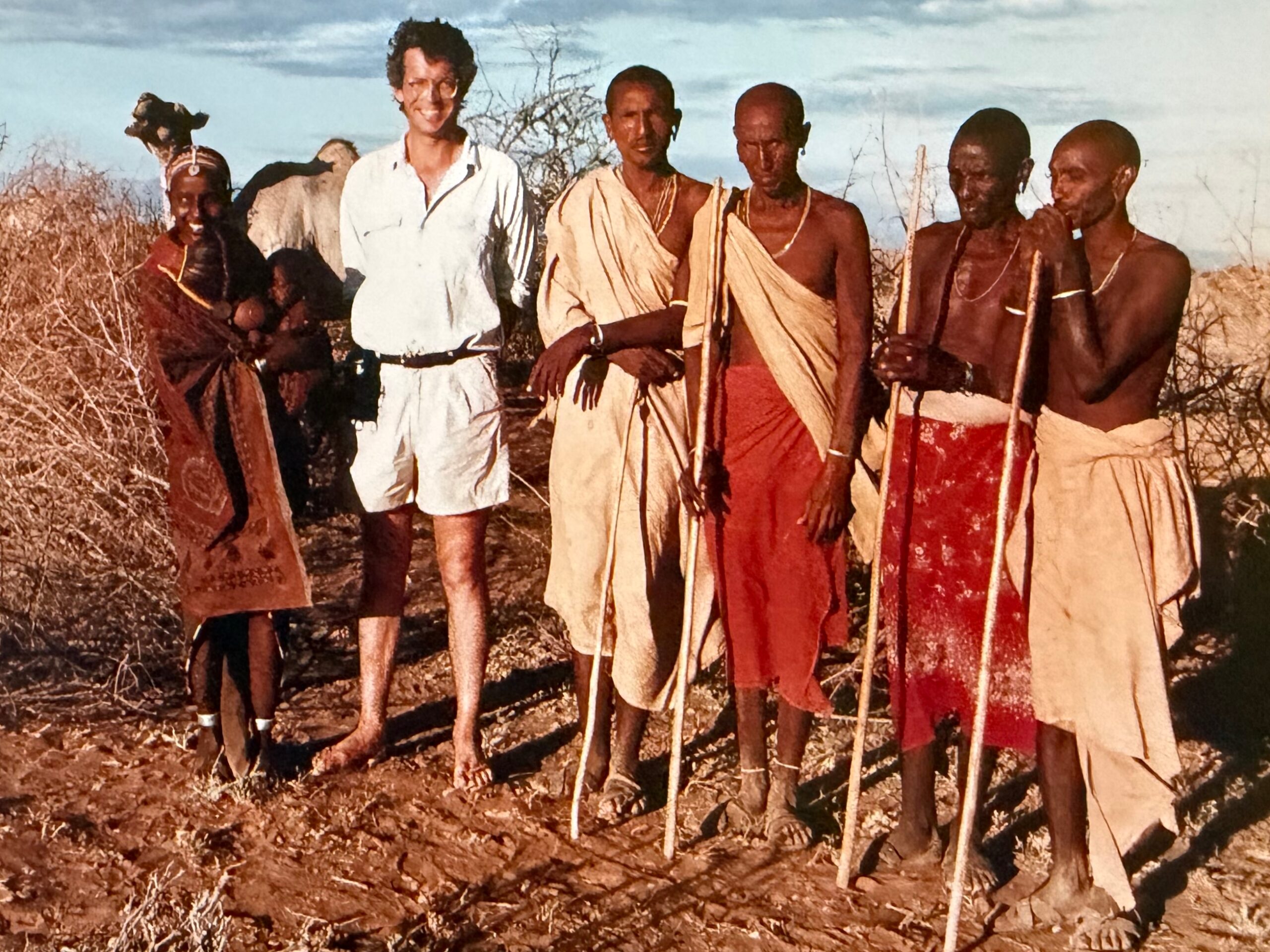
    In Sudan, he sipped tea with camel traders, slept under the stars, and posed for portraits with tribal chiefs. He trekked the Himalayas and photographed fishermen on the Congo, Nile, and Mississippi Rivers. His poignant August 1993 cover photo for National Geographic of a starving Somali woman gained worldwide attention.

    “In fact, it is a great job,” Mr. Caputo told the Washington Post in 1995, when he was featured in a TV show about the Geographic photographers. “You really do get to go places and do things others only dream about.”

    He told the New York Daily News in 1995: “I’ve always thought of my job as a license to be nosy.”

    In 2002, as he was winding down his international travel, Mr. Caputo moved from Washington, D.C., to a farmhouse in Kennett Square, Chester County. In early 2025, he was diagnosed with Alzheimer’s disease. In December, he and his family traveled to the Pegasos Swiss Association voluntary assisted dying center in Basel, Switzerland. He died Thursday, Dec. 18. He was 76.

    “Fairly early on, Bob had expressed his wishes to go out on his own terms,” said his wife, Amy. “We were able to honestly and pragmatically deal with our situation, and he remained his thoughtful self, with his sense of humor intact till the end.”

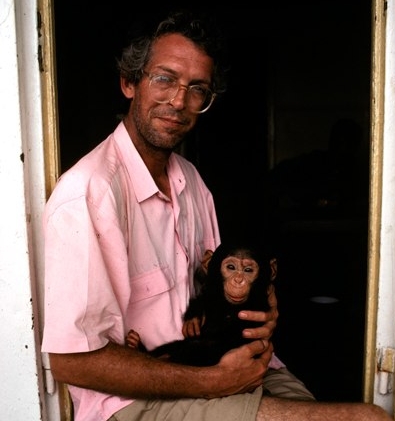
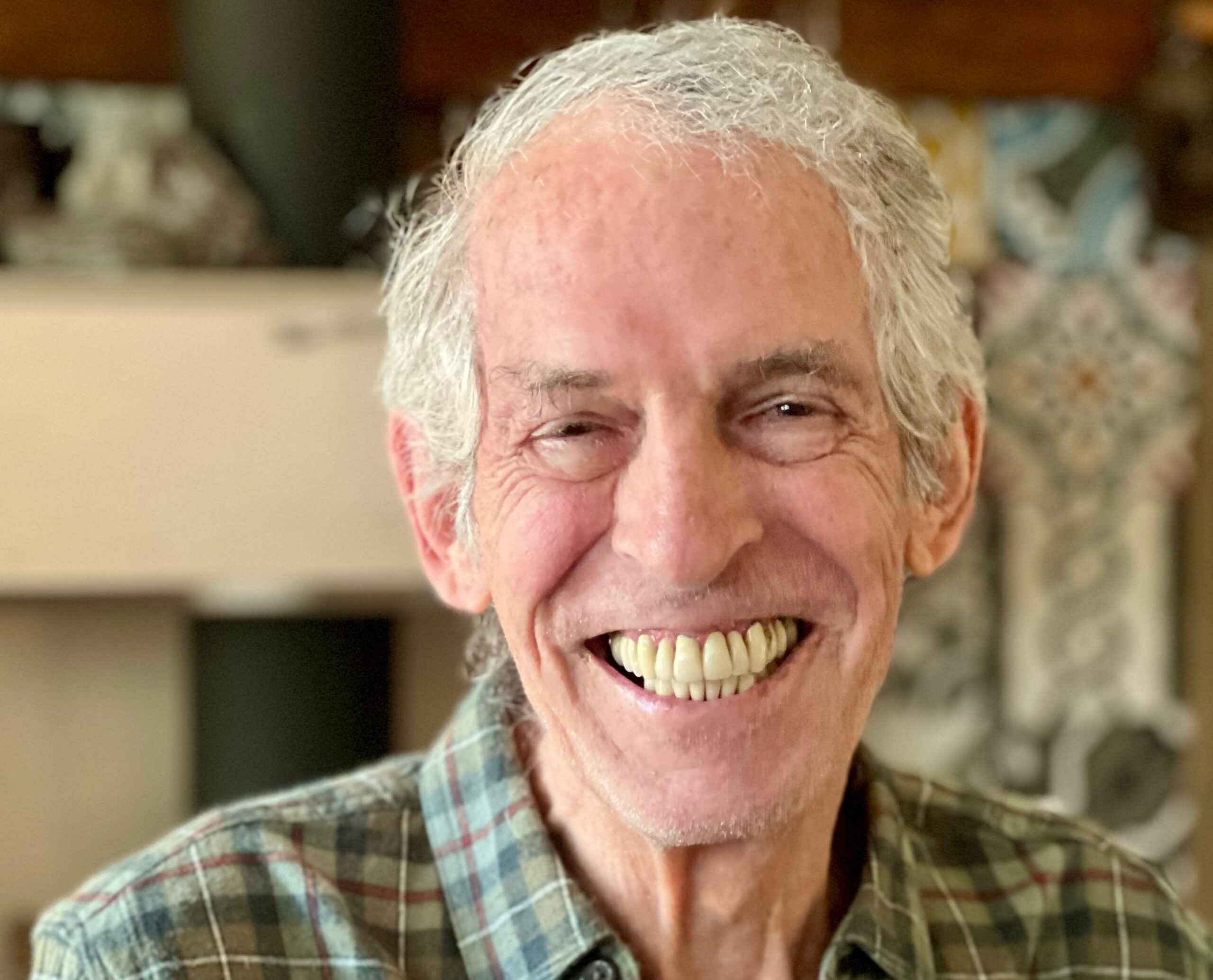
    Mr. Caputo loved spending time with animals.

    Mr. Caputo first went to Africa in 1970. He dropped out of Trinity College in Connecticut as a senior and meandered with friends across the vast continent, from Morocco to Tanzania.

    He returned to earn a bachelor’s degree in film at New York University in 1976. Then, until 1979, he lived in Nairobi, Kenya, and sold photos and stories about Africa to Time, Life, and other magazines.

    “He liked to learn about things,” said his son Nick. “He was constantly inquiring into things.”

    In 1981, National Geographic hired him to report from Sudan on the verge of its civil war, and he produced striking cover photos, dramatic picture spreads, and detailed stories about Africa. In 1984 and ’85, he spent eight months and traveled 4,000 miles on steamboats, tugboats, and all-terrain vehicles to document traditional daily life along the Nile.

    Mr. Caputo had several cover photos for National Geographic.

    “Everywhere he went,” his family said, “Bob found that the people he met were fundamentally good and generous, happy to share their often limited food with him, a perfect stranger, and excited to tell him about their lives.”

    There were challenges, too, he said in many interviews. He was detained by border guards in Uganda in 1979 and contracted malaria nine times. The monthslong assignments in search of remote Indigenous people were often lonely, and he got hungry and tired.

    But the connections he made with people he encountered were worth it, he said. “The great advantage of working for National Geographic is having time,” he told the New York Daily News. “You can go to a village in Africa and not just have to waltz in and start shooting away. You can spend time getting to know people, and they can know you.”

    Mr. Caputo was a natural innovator and teacher, and he organized photo workshops and lectured about photography around the world. He taught digital photography at the Center for Digital Imaging Arts at Boston University and cofounded Aurora & Quanta Productions in Maine in 1985 and the PixBoomBa.com photo website in 2010.

    National Geographic published his Photography Field Guide in 1999 and Ultimate Field Guide to Landscape Photography in 2007. He also authored photo essay books on the Nile and African wildlife, and exhibited his photos at the Delaware Museum of Nature and Science and elsewhere.

    Mr. Caputo (second from left) poses with local people in Africa.

    He wrote and appeared in wildlife shows, hosted TV programs and YouTube videos about photography, and wrote the story on which Glory & Honor, a 1998 award-winning TV film, is based. He made films about making films in Nigeria and the history of Boston’s Fenway Park.

    He earned awards from the National Press Photographers Association, the American Travel Writers Foundation, Communications Arts journal, and other groups. He was personable and energetic, colleagues said, and he cofounded the annual National Geographic Prom at the Washington office.

    “He was a tremendously caring and loving person,” his son Nick said. “He looked out for other people.”

    Mr. Caputo met TV and film producer Amy Wray on a National Geographic TV shoot in the Amazon rainforest. They married in 1997 and had sons Nick and Matt.

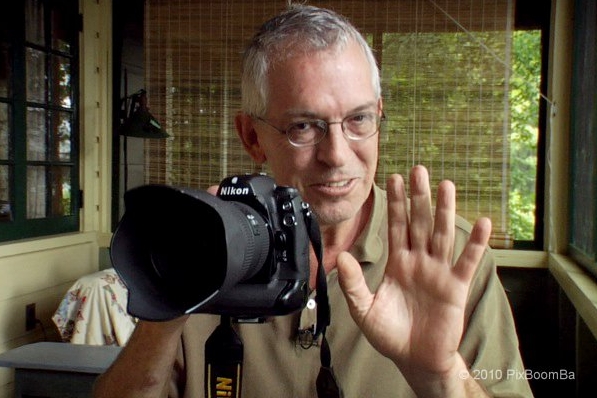
    This photo is featured on Mr. Caputo’s website.

    In Facebook tributes, friends and colleagues noted his “wonderful smile” and “deep love of people and animals.” They called him a “legend” and “amazing.” Robert J. Rosenthal, former Africa correspondent and former executive editor of The Inquirer, called Mr. Caputo “one of the best humans I ever knew.”

    Mr. Caputo told MainLine Today in 2009: “My personal heroes are the people who work for aid organizations and nongovernmental organizations, who go to some faraway place to help people they’re not related to and often put themselves in harm’s way.”

    Robert Anthony Caputo was born Jan. 15, 1949, at Camp Lejeune, N.C. His father was a career Marine and moved the family to bases in Virginia and then Sweden for an assignment at the U.S. embassy there.

    In a 1991 interview with the Newhouse News Service, Mr. Caputo said: “I remember as a kid going to sleep listening to artillery going off in the distance down at the range. It was kind of comforting. I wouldn’t change it for anything.”

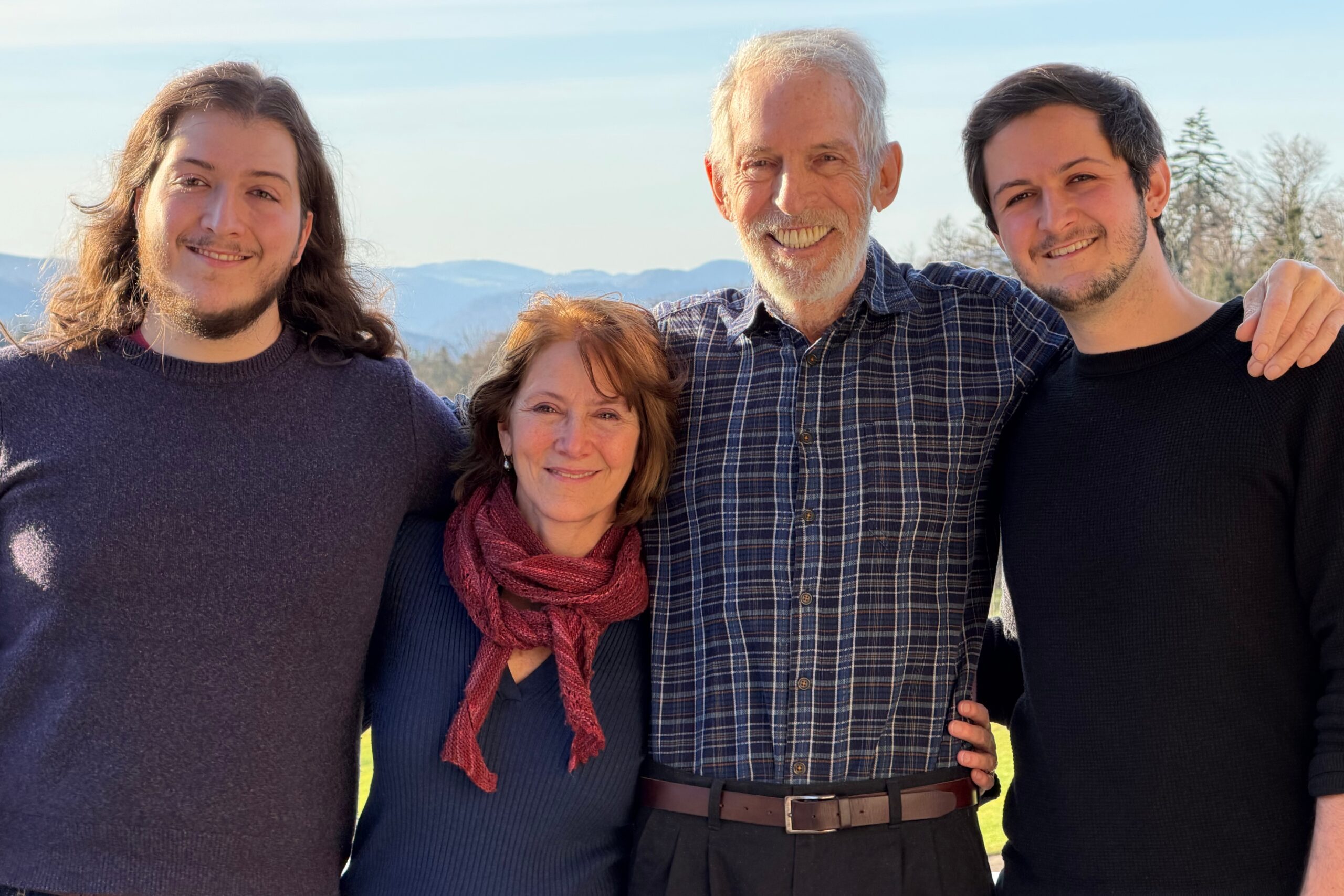
    Mr. Caputo (second from right) doted on his wife and sons.

    He attended a Swedish middle school, learned the language, skied, and played soccer. He returned to the United States in the late 1960s to attend boarding school in Virginia and then Trinity.

    In Kennett Square, Mr. Caputo was a soccer, baseball, and basketball coach to his sons, and a Cub Scouts leader. He walked the boys to the school bus stop in the morning. He told them bedtime tales about secret agents and pirates, they said, and built a tree house in the backyard.

    He decorated his truck on Halloween and grew impressive gardens. His neighbors called him Farmer Bob.

    He took his family on trips to Kenya and Tanzania. He dabbled in experimental playwriting and literature when he was young, and enjoyed classic movies and William Blake’s poetry.

    Mr. Caputo (center) shows his camera to the locals in Africa.

    “He felt extraordinarily lucky to have lived the life he did,” his wife said, “full of adventure, family and friends. And in the end he said, ‘I’m ready.’”

    In addition to his wife and sons, Mr. Caputo is survived by a sister and other relatives.

    Services are to be at 11 a.m. Saturday, Jan. 10, at Kennett Friends Meeting, 125 W. Sickle St., Kennett Square, Pa. 19348.

    Donations in his name may be made to Doctors Without Borders, Box 5030, Hagerstown, Md. 21741.

    His family called Mr. Caputo “buttered side up” when he was young “because no matter
    how he fell he always seemed to end up the right way, and his life was full and lucky.”