Category: Theater

  • From a world premiere to a flying car, here are the 7 shows we loved on Philly stages in 2025

    From a world premiere to a flying car, here are the 7 shows we loved on Philly stages in 2025

    Philadelphia theaters have weathered a difficult year as arts organizations across the region faced deep cuts in federal funding. The numbers paint a somewhat bleak picture: The state lost $1,463,000 from the National Endowment of the Arts alone, and though some attendance figures have risen from last year, the performing arts sector has struggled overall to recapture prepandemic audiences.

    Yet there remain some bright signs of what’s to come next year, from Philadelphia’s massively successful Fringe Festival returning to full-year programming to a new, five-week arts festival launching for America 250 (with plans to recur on a regular basis). Plus, a program of three plays written by forever South Philadelphian and Pulitzer winner, James Ijames.

    This year, despite challenges, Philly’s scrappy, beloved, and award-winning theater community kept showing up and showing out on local stages with incredible productions and exciting world premieres.

    Here are few of our favorites from 2025.

    ‘La Otra’ from 1812 Productions

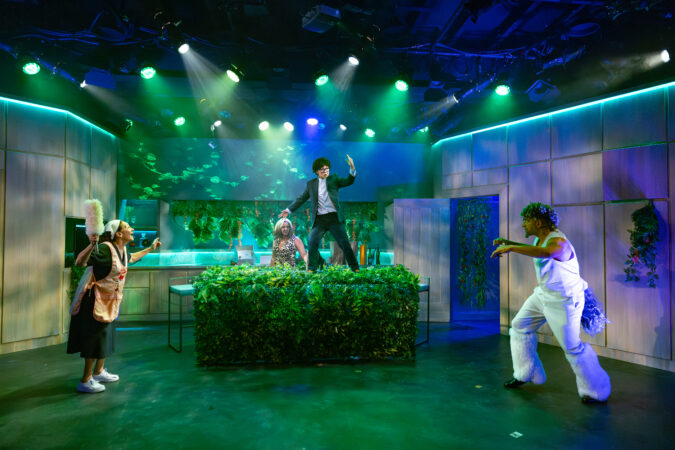
    Written and directed by Tanaquil Márquez, this Fringe Festival world premiere from 1812 Productions was a heartwarming comedy about three estranged sisters reuniting for their father’s 80th birthday party in Colombia. The real drama all happened in the kitchen as cousins played pranks, sisters bickered endlessly, and at one point the set exploded in a burst of tropical vines that broke into the realm of magical realism. The show fired on all cylinders, from the versatile cast in multiple roles, to its engrossing production design, to the sharp trilingual dialogue that echoed the rhythm and intimacy of a big family much like my own. (The clever use of subtitles ensured that no one got lost in translation, from English to Spanish to Vietnamese.) I laughed a lot, especially thanks to the standout performance from Yajaira Paredes. We named it one of the works with a high chance of post-Fringe Fest success, so here’s hoping to see it back on our stages soon.
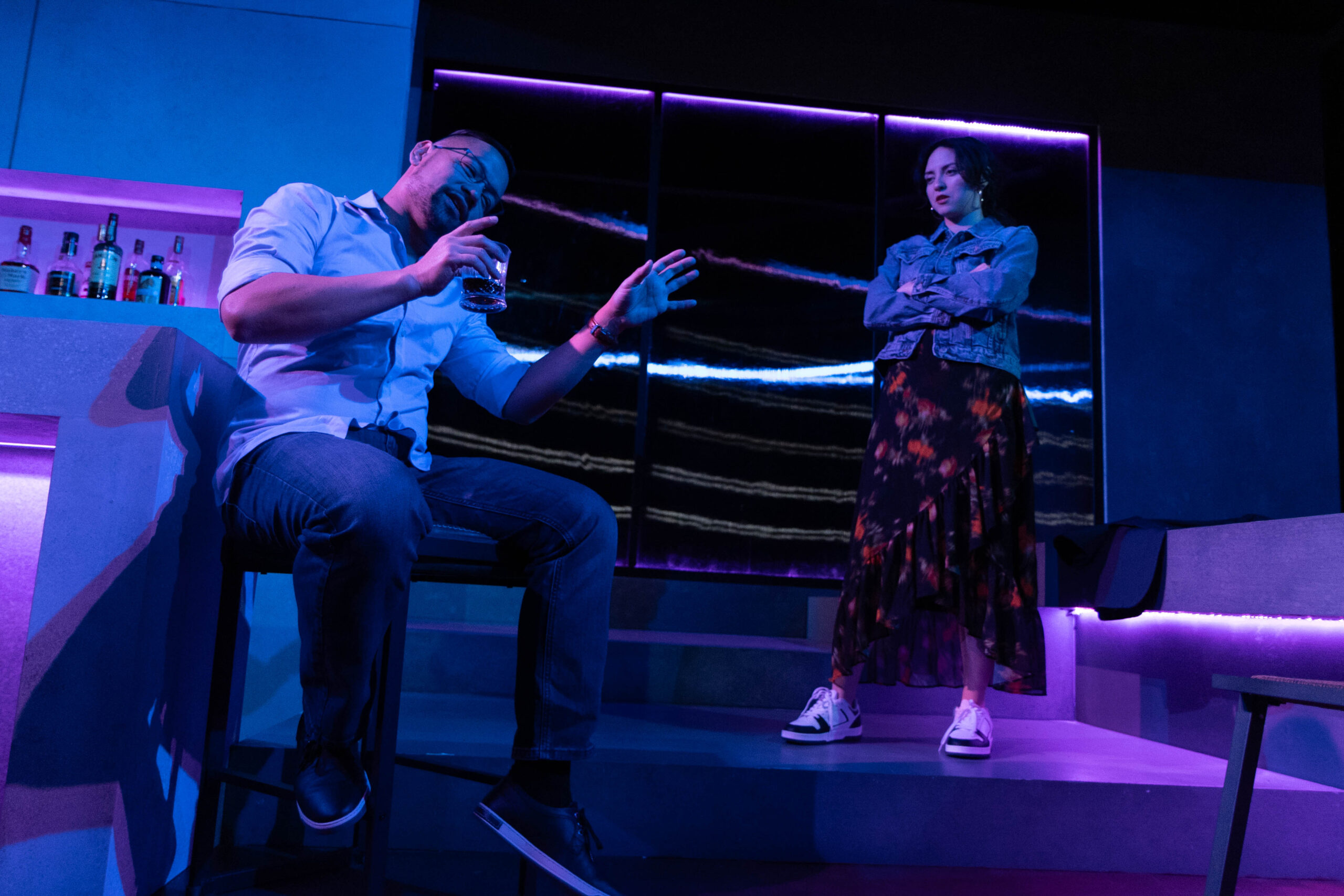
    Valeria Diaz (Madeleine Garcia) and Professor Qiu (Justin Jain) in InterAct Theatre Company’s “Quixotic Professor Qiu.”

    ‘Quixotic Professor Qiu’ from InterAct Theatre Company

    Another promising world premiere came from playwright Damon Chua with this tense, small InterAct production following a Chinese American mathematics professor accused of being a spy. Inspired by actual instances of academics suspected of espionage, the drama provided a provocative and chilling reflection of the U.S. government’s targeting of immigrants amid the ever-encroaching creep of censorship. As the titular Qiu, Justin Jain played a convincingly aggrieved intellectual who finds the entire investigation absurd. But he’s essentially left helpless at the whims of law enforcement hell-bent on punishing him, regardless of the facts. The minimalist set centered our attention on the high stakes he faces trying to clear his name, with moody lighting that heightened our sense of dread. By the end, Jain breaks the fourth wall to underscore the message: “That’s the world we live in. That’s the world you live in.”

    ‘King Hedley II’ at Arden Theatre Company

    The Arden’s commitment to staging all of August Wilson’s Century Cycle plays is a laudable effort and each production is a major theatrical event. James Ijames directed this run with Akeem Davis playing the titular King, a struggling, formerly incarcerated man released at the height of the 1980s recession. The story depicts a harsh reality for the Black family at the center, played deftly by a well-rounded cast that pivots from warmth to fury to humor. It was not an easy watch — the tragic ending left me in tears — but it was a vital story that felt relevant, urgent, and timeless.
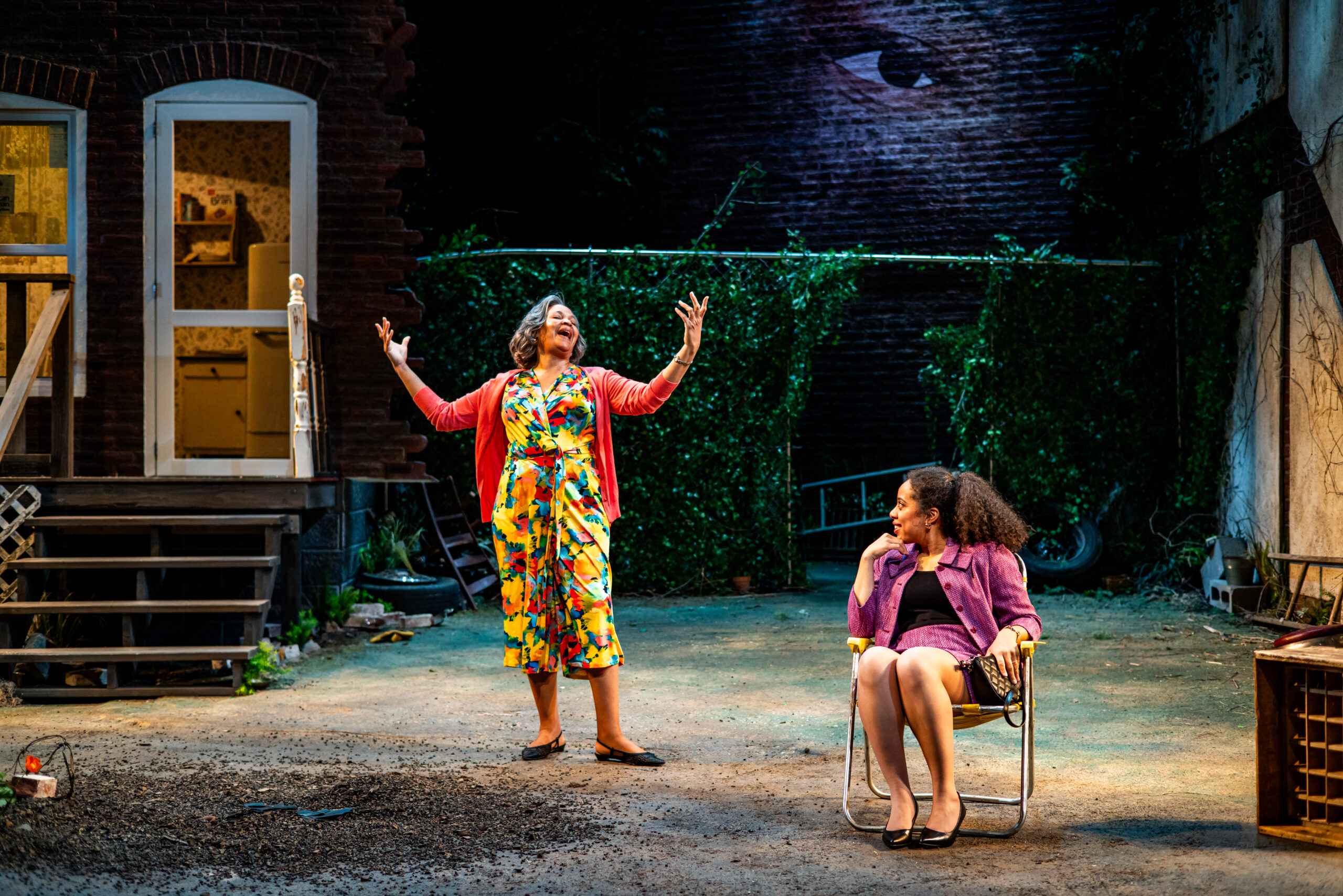
    Ruby (Kimberly S. Fairbanks) and Tonya (Taysha Marie Canales) in Arden
    Theatre Company’s 2025 production of August Wilson’s “King Hedley II.”

    ‘Back to the Future: The Musical’ at Academy of Music

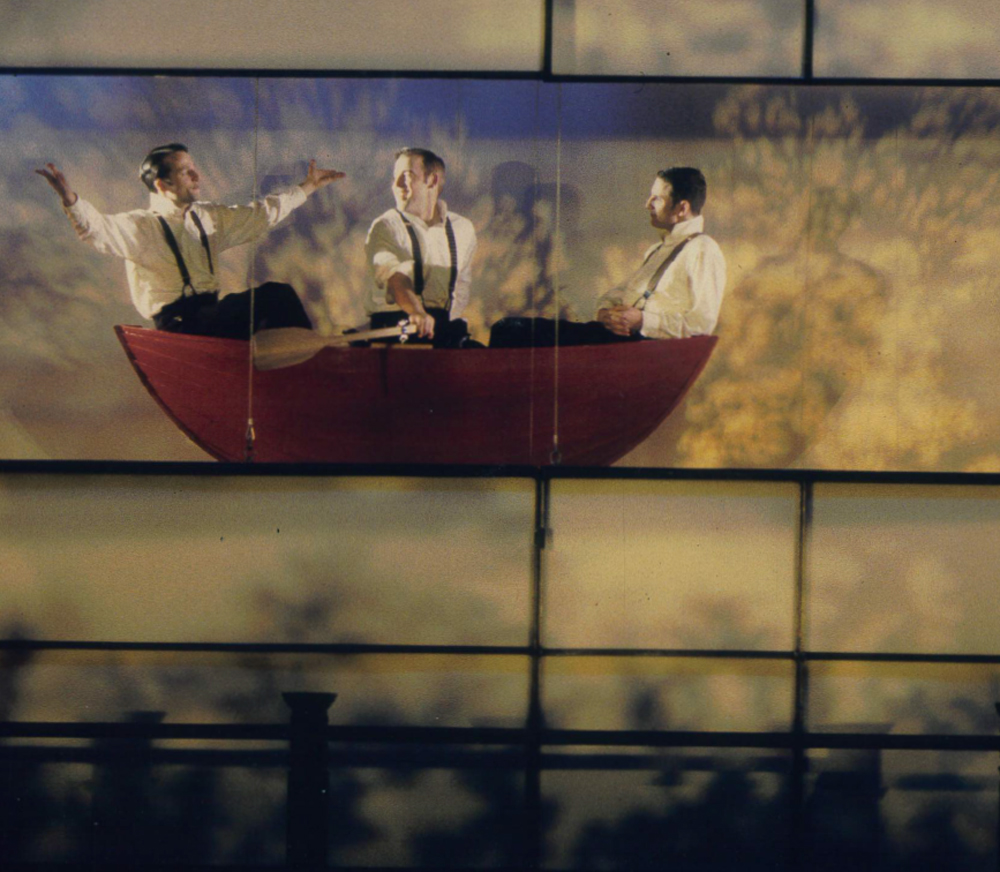
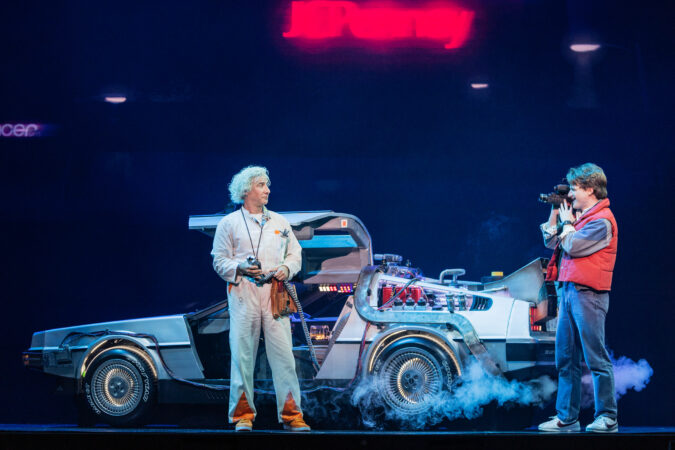
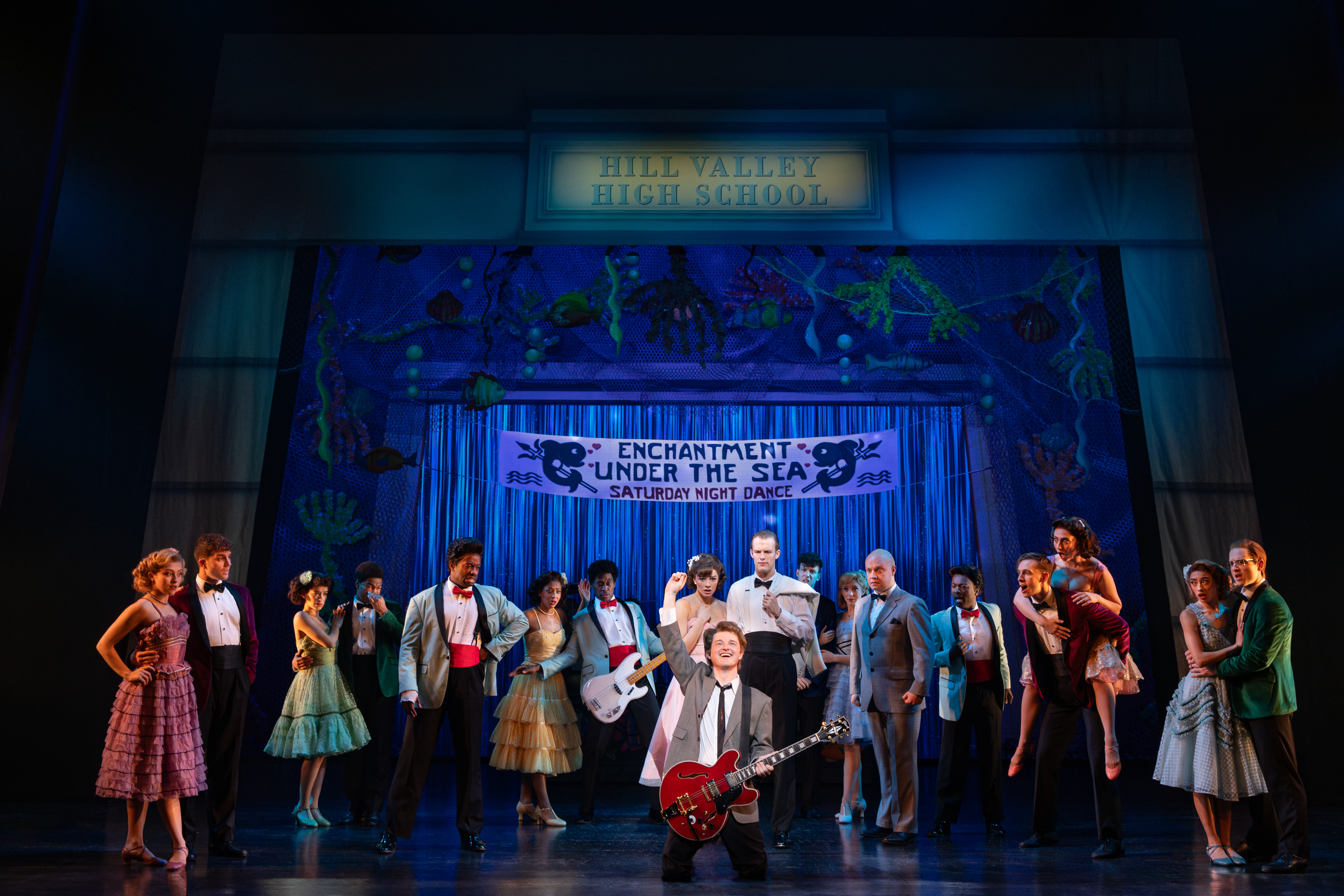
    At the risk of being a little corny, I had a blast seeing one of my favorite classic movies adapted into a musical — mainly because the much-hyped time-traveling DeLorean was genuinely as impressive as promised. I went in thinking that the car bit would be too gimmicky, but I was proven so wrong in the best way: The masterful production design featured illusions that (tiny spoiler) made the car fly in the air. I gasped! The show also delivered transportive scenery alternating between the 1980s and 1950s, amplified by captivating group choreography and great singing. There were certainly some questionable choices, like leaning into the whole Marty-tries-avoiding-incest plot and songs that try but fail to give depth to Marty’s family. But overall, it was a lot of fun.

    ‘The Goldberg Variations’ at Fringe Arts

    Every year, Philly’s Fringe Fest delivers some of the strangest and most shocking productions with dazzling results. This was the craziest production I saw onstage this year and I’m still obsessed. It started as a petty PowerPoint presentation as the star/creator Clayton Lee explained that all his ex-boyfriends look like wrestler Bill Goldberg. It shifted into an interactive experience as Lee interviewed someone in the audience, flirting with him and asking sexually explicit questions. Then it evolved again into a wrestling ring, where Lee invited Goldberg doppelgängers (who were incognito in the audience) to the stage for a smackdown, complete with BDSM contraptions and a lot of body oil. It was a wild show that had the audience in sidesplitting laughter one moment and stunned silence the next.

    ‘Snow Queen’ at Wilma Theater

    This year, the Wilma presented its first production for all ages in this adaptation of Hans Christian Andersen’s 1844 fable (from which Disney’s Frozen also draws inspiration). Seeing a weekday matinee was such a treat because the rows were filled with eager schoolchildren who responded to the actors with infectious enthusiasm. The sprawling fairy tale features a terrifying ice queen who turns hearts cold and kidnaps a young boy named Kai. His determined friend Gerda goes on a quest to save him after he has been brainwashed. Directed by Yury Urnov, the show spotlights delightful characters with an inventive and quirky production and costume design. The heartfelt, whimsical story about the power of good over evil was a visually dazzling experience, complete with musical talent and a wonderful cast.
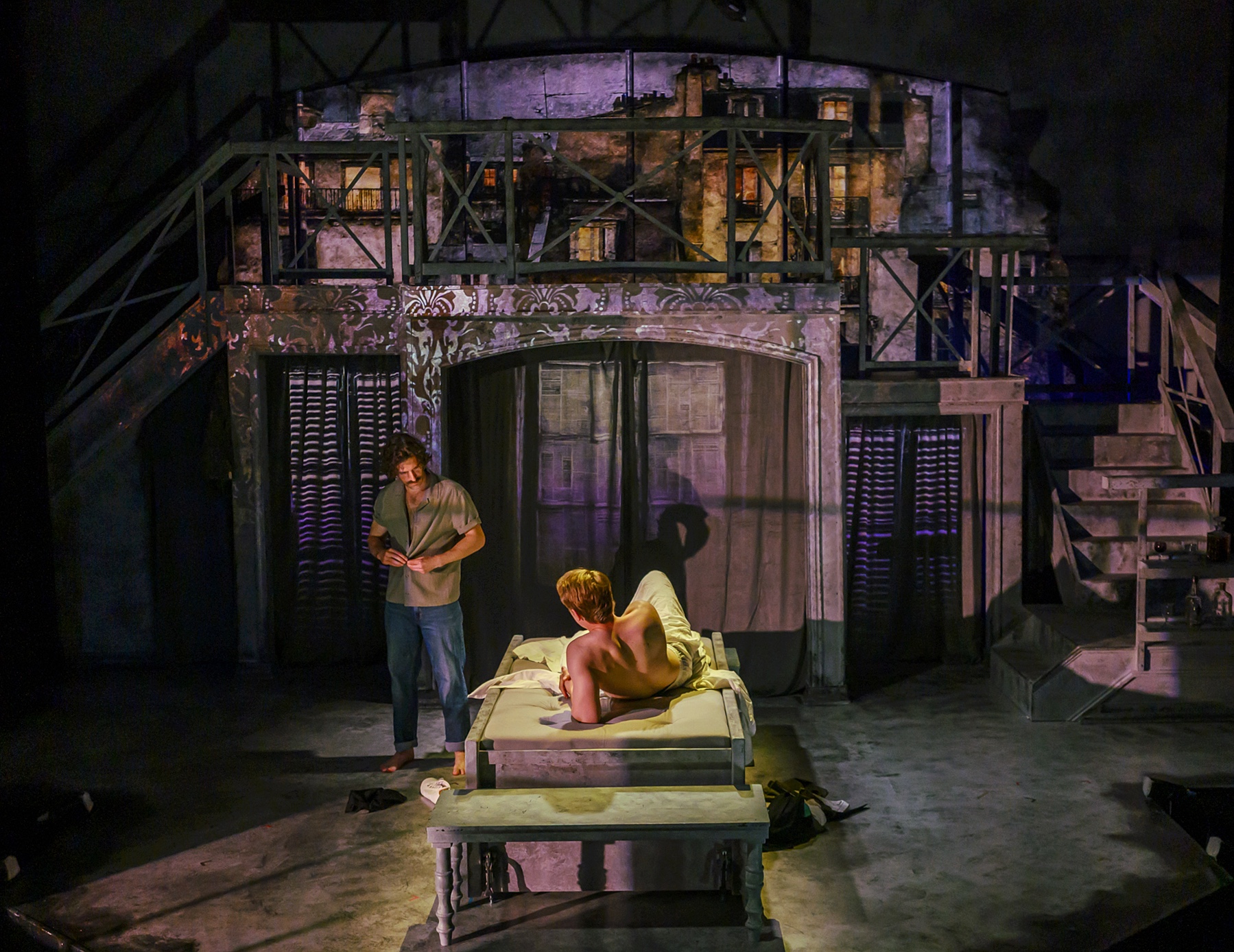
    Michael Aurelio and Ethan Check in Quintessence Theatre Group’s “Giovanni’s Room.”

    ‘Giovanni’s Room’ from Quintessence Theatre

    It may surprise people to learn that the first-ever authorized stage adaptation of James Baldwin’s classic 1956 novel Giovanni’s Room held its world premiere right here in Philadelphia. It’s certainly something to brag about: It took nearly 20 years, two rejections, and several rewrites, but actor/playwright Benjamin Sprunger and director/playwright Paul Oakley Stovall made it happen at Quintessence Theatre. The story centers on a closeted gay American who falls in love with a brash Italian bartender in Paris — and it’s no spoiler to say it ends in tragedy. The slim novel was one of Baldwin’s most popular and groundbreaking works, providing rich source material for a play. Onstage, it was a lyrical production with spellbinding light design and fascinating choreography; it was an excellent first run and I hope to see it progress in future productions, too.
  • Kennedy Center adds Trump’s name to building

    Kennedy Center adds Trump’s name to building

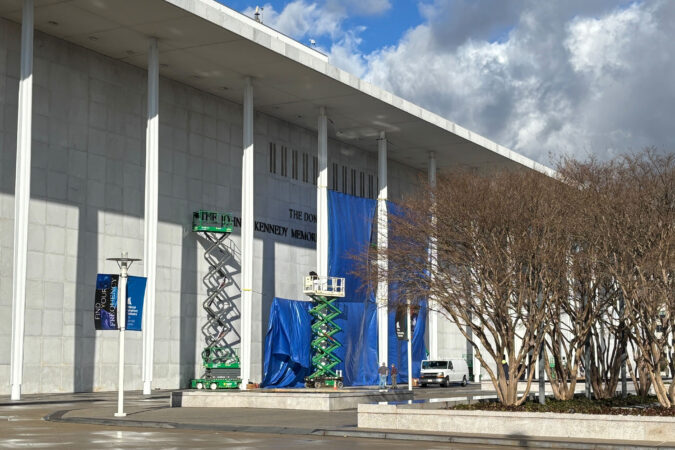
    The Kennedy Center began updating signage on the exterior of the building Friday morning, a day after its board voted to rename the institution “The Donald J. Trump and The John F. Kennedy Memorial Center for the Performing Arts.”

    A blue tarp was stretched across a portion of the building as a small team on scaffolding started the work. Loud drilling could be heard nearby. Inside the building, large letters spelling “Trump” could be seen on the floor of the entry hall, according to a photograph obtained by the Washington Post. Signage elsewhere around the exterior of the institution remained unchanged.

    Thursday’s vote by the board of trustees marked a dramatic change to a building established as a “living memorial” to a slain president. The announcement drew swift condemnation from Kennedy family members and Democratic leaders, who called it illegal and said only Congress could change the center’s name.

    For months, Trump had repeatedly joked about the name change, including at the Kennedy Center Honors earlier this month. The center has seen a year of upheaval since Trump overhauled the institution in February, sparking a wave of firings and resignations. Ticket sales have fallen sharply, according to an October analysis by The Post, and many artists have said they will no longer perform there. The new leadership has boasted of hefty fundraising tallies and has begun to ramp up bookings for Christian and right-wing events.

    “The Trump Kennedy Center shows a bipartisan commitment to the Arts,” Kennedy Center President Richard Grenell wrote Thursday on X. Officials did not cite an authority for the board’s ability to change the institution’s name.

    The current board consists of loyalists to Trump following a purge of trustees appointed by former President Joe Biden. They met Thursday in Palm Beach, Florida.

    This is not the only building to which Trump’s name has been added in recent weeks in Washington. Earlier this month, his administration renamed the building that houses the U.S. Institute of Peace downtown, emblazoning “Donald J. Trump” in several areas of the structure.

    “Boy, that is beautiful,” Trump said at the time, thanking Secretary of State Marco Rubio for putting his name on the building.

  • The many versions of ‘A Christmas Carol’ that you can watch in the Philadelphia region this season

    The many versions of ‘A Christmas Carol’ that you can watch in the Philadelphia region this season

    A story about ghosts is barely holiday season fare, but since Charles Dickens’ A Christmas Carol first published on Dec. 19, 1843, it has remained a holiday classic.

    The story of wealthy Ebenezer Scrooge being haunted by three ghosts (four if you’re counting Jacob Marley) in an effort to change his ways and save his soul, was so popular that the first printing sold out before Christmas Eve.

    The haunting narrative was almost immediately adapted for the stage, having its first production in 1844. Since then, there have been countless adaptations in just about every artistic medium. Every holiday season, theaters around the country take this wintry ghost story and add their own theatrical spin to it.

    The Philadelphia region is no different, with four productions currently underway. .

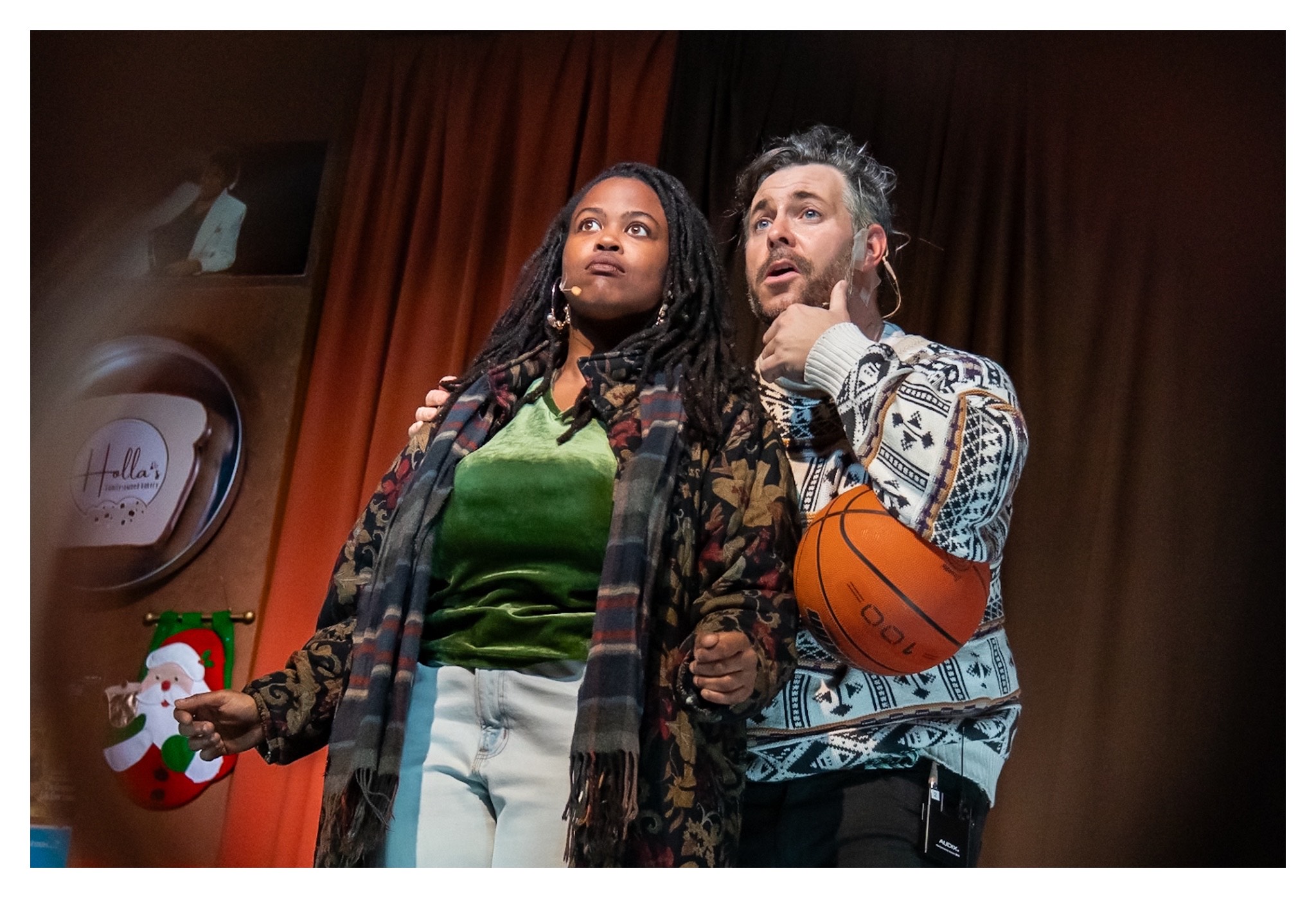
    Kouraj (left) and Righteous Jolly in “A Levittown Christmas Carol.”

    The Levittown version at New Hope Arts Center

    Dec. 18-20, 2 Stockton Ave., New Hope

    Most audiences have seen some version of this story before. While there are many direct adaptations of Dickens’ work, some take the plot and translate it into a different time and place. Such is the case with A Levittown Christmas Carol.

    This production at the New Hope Arts Center ditches the Victorian England setting in exchange for Levittown, with a healthy dose of ’80s and ’90s nostalgia thrown in for good measure.

    This adaptation, written by New Hope native Righteous Jolly, uses the story of Scrooge and spirits to explore more nuanced topics regarding the community’s history of racial segregation and the complexities of growing up among it.

    So what is it about the Dickens novella that still grabs audiences as it celebrates its 182nd anniversary?

    “Mercy, grace, forgiveness. The want to be more whole, and the subsequent excavation that sends a person to discover, what was doesn’t mean what will be, and what can be, may be even more joyous and wholesome than we could imagine,” said Jolly. $33-$39. newhopearts.org

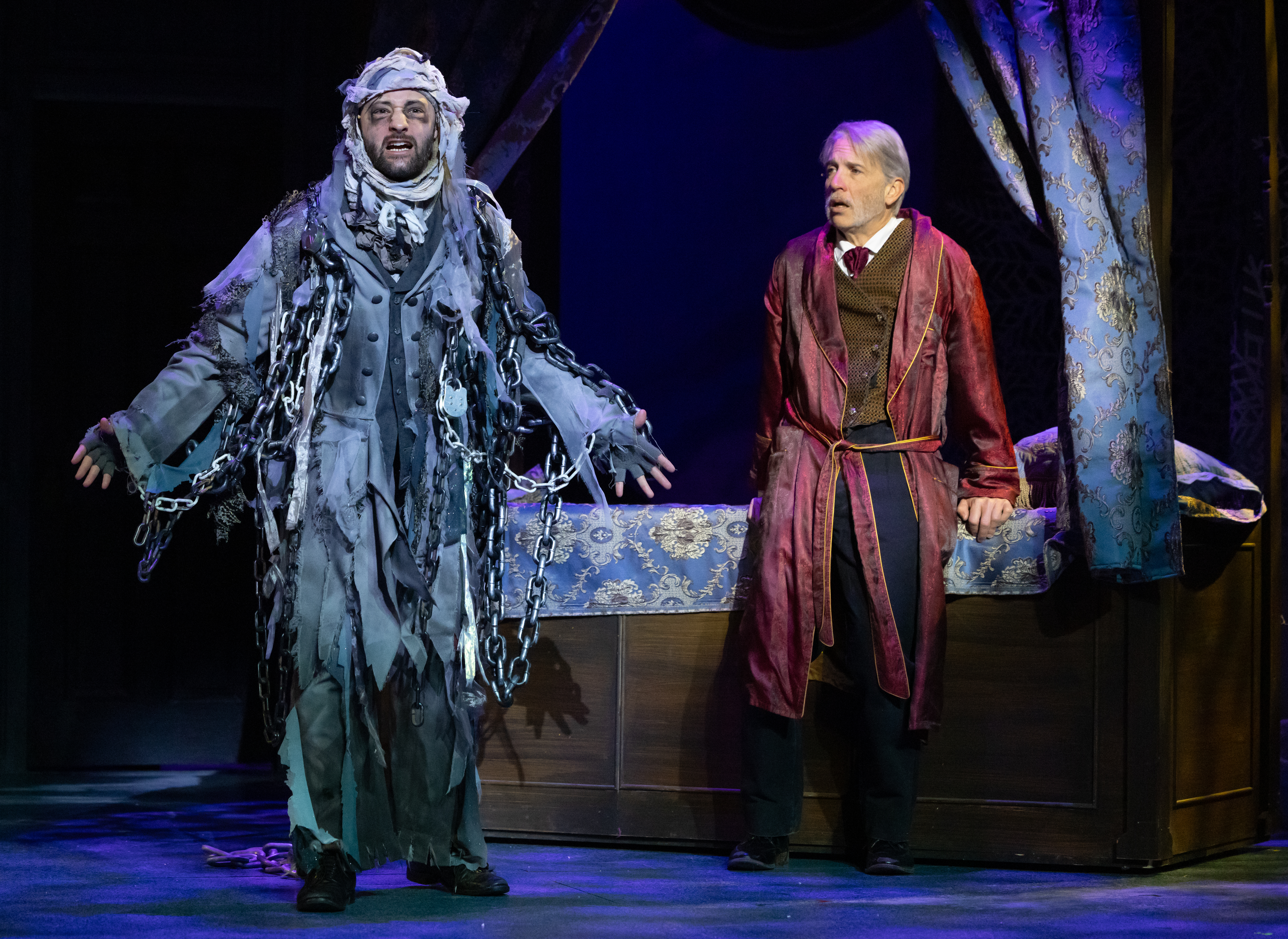
    William R. McHattie and Michael Doheny in Walnut Street Theatre’s “A Christmas Carol.”

    The kids’ version at Walnut Street Theatre

    Through Dec. 21, 825 Walnut St., Phila.

    For some local theaters, this show has become a seasonal tradition. America’s oldest theater, the Walnut Street, puts up an annual production as part of its WST for Kids Series. It’s been around since 2001, and while there are slight changes every year, the core intention of their production is to honor Dickens’ original text.

    “For many, it is their first experience with live theater,” says Jessica Doheny, Walnut’s general manager, “which is a wonderful gift for us to share.” $24-$29. walnutstreettheatre.org

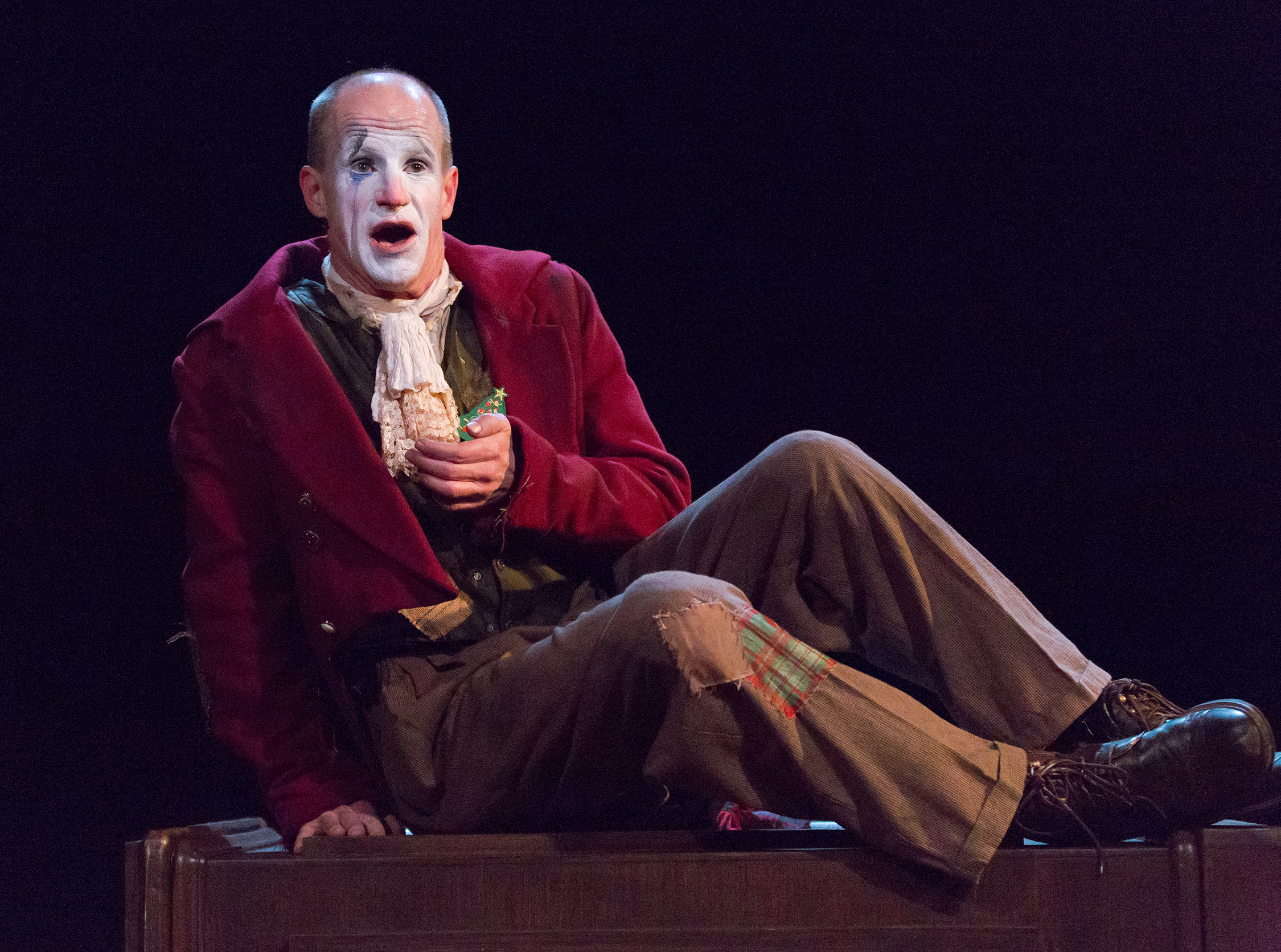
    Tony Lawton plays all the characters in the one-man version of “A Christmas Carol” at Lantern Theater Company.

    The one-man-plays-everyone version at Lantern Theater Company

    Through Dec. 28, 923 Ludlow St., Phila.

    The Lantern Theater’s version is slightly more alternative than the Walnut’s. Here, longtime Lantern Theater collaborator Anthony Lawton revives the show and performs all the characters in the story. Originally presented in this form in 2018, the production, now in its seventh year, has become a bit of a Philadelphia tradition. “When a great story is told effectively, we want to experience that story over and over again because it moves us,” says Stacy Dutton, executive director of Lantern Theater Company. $32-$40. lanterntheater.org

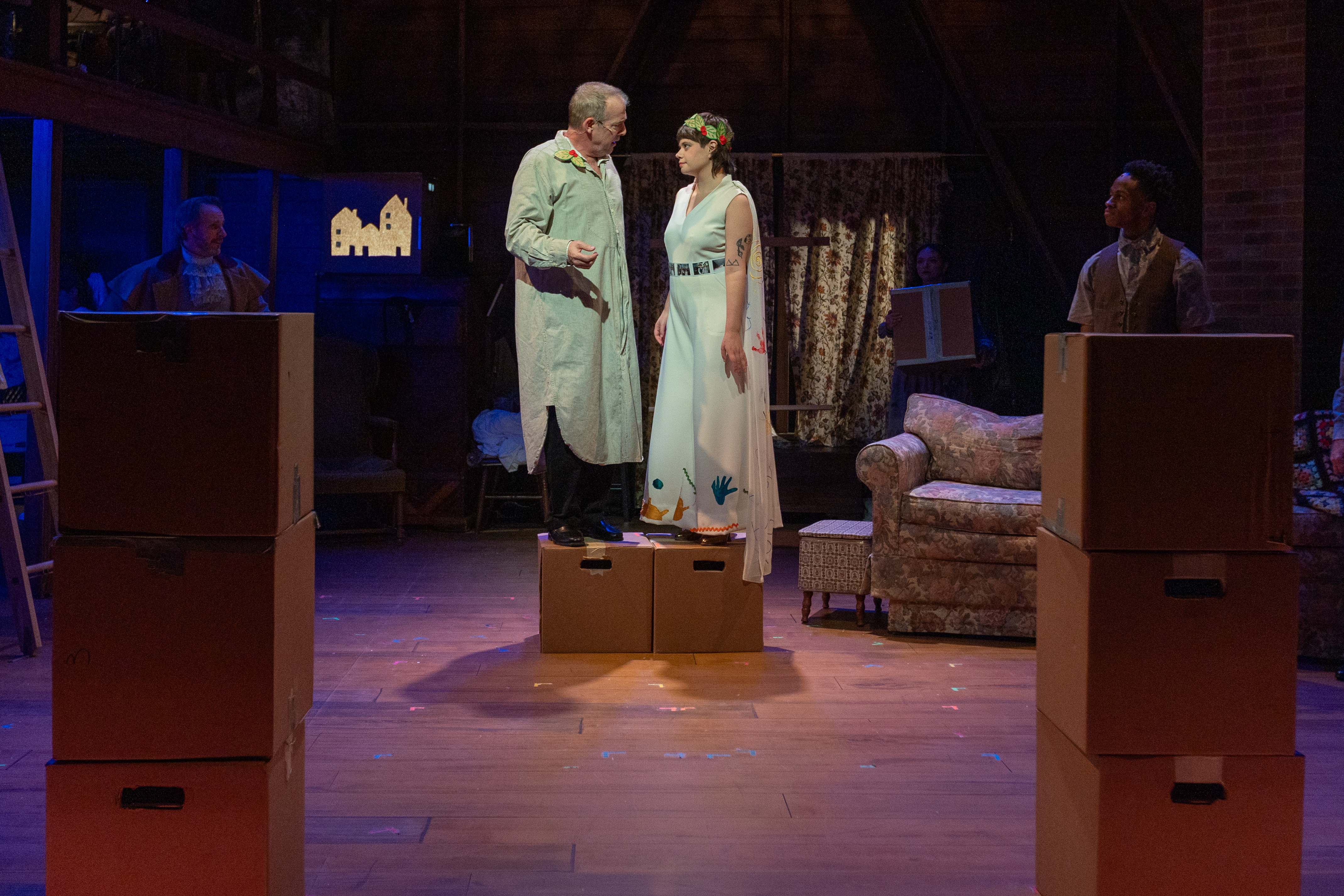
    Ian Merrill Peakes and Anna Faye Lieberman in People’s Light’s “A Christmas Carol” panto.

    The panto version at People’s Light

    Through Jan. 4, 39 Conestoga Rd, Malvern.

    Another theater looking to create an annual holiday tradition is People’s Light in Malvern.

    “Rituals are what make holidays so special. Nothing competes with being with loved ones and doing the same thing together each season,” said Zak Berkman, artistic director of People’s Light. “Our holiday musical pantos at People’s Light, and now this new version of A Christmas Carol, offer a similar opportunity for families and friends to enjoy something together year after year.”

    This production takes the original Dickens narrative and puts it through the lens of a child sitting in their attic, using things around them to create the world of the story and live it out anew. The production’s original music is inspired by 19th-century carols (with a folk spin) and aids in elevating the storytelling of this production. $64-$94. peopleslight.org

  • Philly Fringe Fest is the biggest it’s ever been. Now FringeArts will offer year-round programming in 2026.

    Philly Fringe Fest is the biggest it’s ever been. Now FringeArts will offer year-round programming in 2026.

    Philadelphia’s FringeArts will return to offering seasonal programming, in addition to its monthlong Fringe Festival, beginning with a Winter-Spring 2026 season, the organization announced this week.

    The legendary festival, known for experimental and boundary-pushing theater, previously offered year-round programming before the COVID-19 lockdown in 2020. In recent years, it has seen record-breaking audience growth, prompting producing director Nell Bang-Jensen to expand beyond the month of September.

    “I’m really proud to say [Fringe Festival 2025] was actually, numbers-wise, our most successful festival ever, which just feels like a light shining, in terms of arts organizations having a win right now,” said Bang-Jensen, who took the helm last year after serving as Theatre Horizon’s artistic director. “It’s an experience that can’t be replicated on a screen, and an experience that celebrates Philly, and I think people are really here for that.”

    The Philly Fringe is one of the largest festivals of its kind in the country. Based on the number of participating venues across the city, Bang-Jensen said, Philly Fringe ranks first ahead of other notable festivals in Rochester, N.Y., and Minneapolis.

    The 2025 Fringe Festival was the largest-ever produced in its 29-year history with 353 shows. More than 35,000 tickets were sold during the month of September, which was a record high, and saw a 17% increase in unique ticket buyers from last year, which “means it’s not just the same people buying more tickets,” said Bang-Jensen.

    She added that they have seen success in reaching younger audiences this year as well, with more than half of the audience composed of Millennials and Gen Z for the first time.

    For the Winter-Spring 2026 season, FringeArts will present four productions from local and international artists at its Old City venue, along with a monthly series of Scratch Nights that invite artists to present works in progress.

    Philadelphia artist Jenn Kidwell will stage her new work “we come to collect: a flirtation with capitalism” at FringeArts in January 2026.

    Jenn Kidwell, the Obie Award-winning cowriter behind The Underground Railroad Game, will stage the Philadelphia premiere of her new work, we come to collect: a flirtation with capitalism (Jan. 22-24), with ASL artist Brandon Kazen-Maddox. It’s an irreverent exploration of “the pigsty of American consumerism.”

    Frequent Fringe artist Lee Minora will bring back her solo show, Baby Everything (Feb. 26-28), for another run. The interactive performance follows a protagonist who doomscrolls through her anxieties about the state of the world. Minora “challenges us to see ourselves as others do, no matter how endearing or insufferable,” wrote Julie Zeglen in The Inquirer’s roundup of the best shows of Fringe Fest 2025.

    Japanese artist Hiroaki Umeda is globally renowned for combining choreography and dynamic digital staging. He’s presenting two shows on a U.S. tour as a double billing: Moving State 1 and the solo performance, assimilating (March 14-15).

    Lastly, FringeArts will stage Girl Dolls: An American Musical (May 8-17) from Philadelphia artists Jackie Soro and Pax Ressler, who’ve teamed up with the Bearded Ladies Cabaret for a production billed as “part tea party, part identity crisis.” They ask, “What does your favorite doll reveal about your childhood trauma?”

    In addition to year-round programming, FringeArts will launch an artist-in-residency program for fostering original works. The Albert M. Greenfield Residency at FringeArts — funded by the local foundation of the same name — will invite three individuals or artist groups to develop new theatrical productions. The inaugural 2026 recipients will be selected by a panel of Philadelphia creatives.

    Bang-Jensen said she’s grateful that Philly audiences have shown up for the “city of makers” every year and she hopes to continue expanding FringeArts’ reach.

    “As many arts organizations are actually feeling pressure in 2025 just based on the economic environment and the political environment to do work that’s a little more mainstream, we have this wide-open field to do more for people who like things off the beaten path,” said Bang-Jensen.

    Tickets for FringeArts’ Winter-Spring 2026 season go on sale to FringeArts members on Dec. 10 and the public on Dec. 12 at fringearts.com.

  • The Philadelphia theater shaped by late, legendary playwright Tom Stoppard

    The Philadelphia theater shaped by late, legendary playwright Tom Stoppard

    Theater communities across the globe have been mourning Tony Award-winning playwright Tom Stoppard, the beloved Czech writer who died last week at his home in Dorset, England, at 88.

    Stoppard’s acclaimed dramas graced countless stages over six decades, but he had a special place in his heart for Philadelphia’s Wilma Theater, where he formed deep, longstanding friendships with founders Blanka Zizka and her late husband, Jiri.

    The prolific playwright, known for irreverent, cerebral dramas with dense and rather dizzying rhetoric, was often compared to William Shakespeare and George Bernard Shaw. Some of his most popular works include Rosencrantz and Guildenstern Are Dead (a clever take on Hamlet), The Real Thing, The Coast of Utopia, and the screenplay for the 1998 Oscar-winning rom-com Shakespeare in Love.

    He made Tony Award history and broke his own records, winning best play five times between 1968 (Rosencrantz and Guildenstern Are Dead) and 2023 (Leopoldstadt).

    The latter beat out Pulitzer Prize-winning Fat Ham — also a clever take on Hamlet, in wildly different ways — from former Wilma co-artistic director James Ijames. (The Wilma coproduced the Broadway production that earned five Tony nominations.) A year later, the Wilma received the 2024 Regional Theatre Tony Award, becoming the first theater in Pennsylvania to earn the recognition.

    But beyond his international fame, Stoppard is an integral part of the Wilma’s history and, in turn, Philadelphia theater history.

    The Wilma Theater’s 1997 production of Tom Stoppard’s “Arcadia.”

    Blanka Zizka first met Stoppard in 1996, when they both participated in a panel discussion at the University of Pennsylvania. The dramatist was visiting the city for a three-day residency on Penn’s campus following a symposium dedicated to his play Arcadia.

    At the time, the Zizkas, political refugees also from the Czech Republic, were in the process of moving the Wilma from a small Sansom Street theater to its current larger venue on Broad Street. The first play of the season at the new location happened to be Arcadia, which they had chosen before meeting Stoppard. (The Wilma had produced his 1974 play Travesties as well.)

    “He was very impressed by the fact that Jiri and I were from Prague, and we came all the way to the United States, to Philadelphia, and that we were creating a new theater,” said Zizka, who now lives in New York’s Catskills region. “He’s from Czech Republic, originally. He left when he was 2 years old, and he doesn’t speak too much Czech, but he still had a very strong connection to the country. … So for him, [ours] was just a very impressive story.”

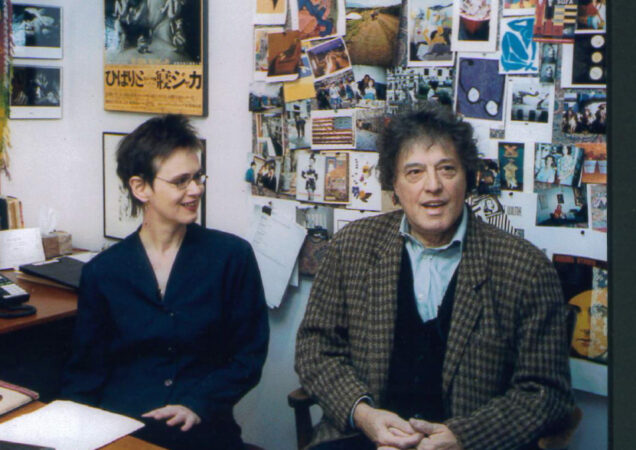
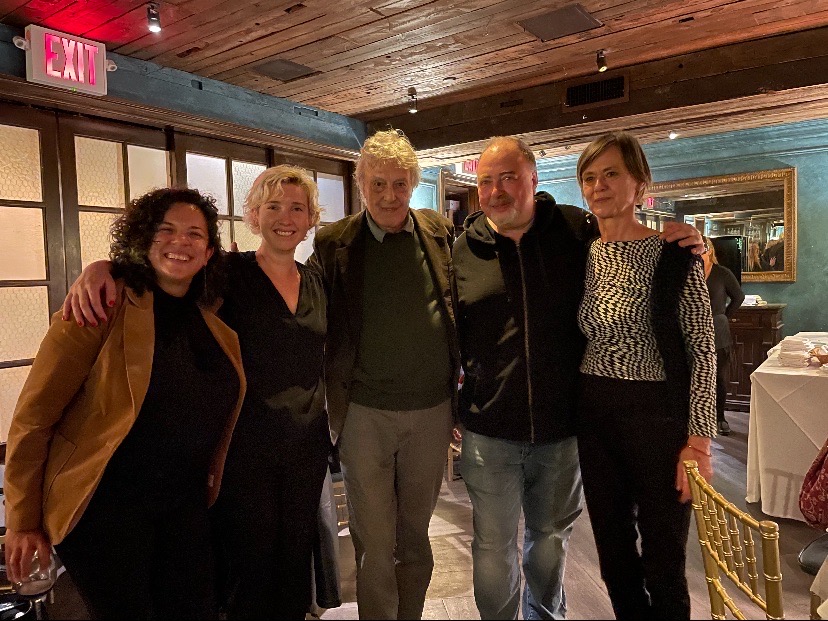
    From left: Wilma managing director Leigh Goldenberg, coartistic director Morgan Green, playwright Tom Stoppard, coaristic director Yury Urnov, and founder Blanka Zizka in 2022.

    Stoppard came to the Arcadia opening and became a frequent Wilma visitor over the years as the theater went on to produce 12 of his plays; he made his way to town for nearly every show and often attended rehearsals, too. He even helped with fundraising for the Wilma by visiting the homes of board members.

    Zizka has happy memories of Stoppard’s visits, as well as the times he invited her to join him in New York for tea parties. Whenever she and her son traveled to England, Stoppard let them stay at his apartment and set them up with tickets to whatever shows they wanted to see. He would send her books to read and ask about not only her theater work but her other passions, like painting.

    Stoppard was generous with his time, Zizka said, especially with younger theater artists and organizations like the Belarus Free Theater, which was forced to flee to England after facing political persecution for their work.

    His plays provided a thrilling challenge for Zizka as a director and for the Wilma actors. She spent months preparing for brainy Stoppard shows, which the playwright meticulously researched as his characters included historical figures like Oscar Wilde, Vladimir Lenin, James Joyce, and Mikhail Bakunin.

    “A lot of people consider him this intellectual playwright, but I think Tom is also full of emotions that are covered by those intellectual ideas. And for me, as a director, I didn’t have to look for the intellect … because it was there, but I had to always look for the world that is underneath the words,” she said.

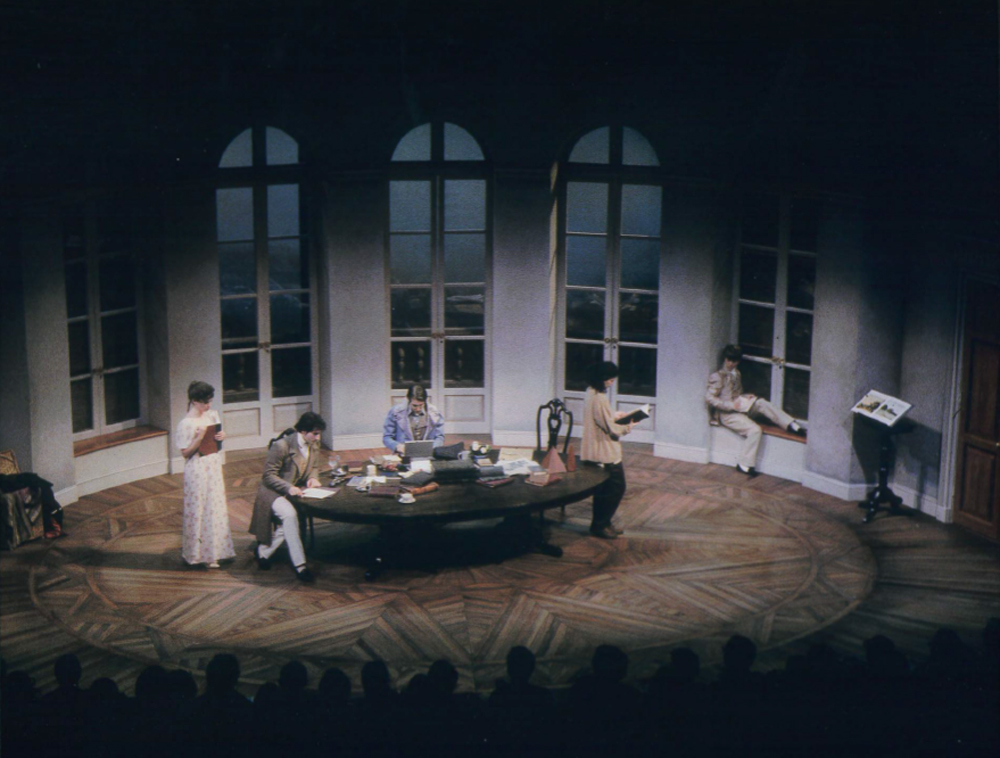
    The Wilma Theater’s 2000 production of Tom Stoppard’s “The Invention of Love.”

    That effort proved particularly difficult in the 2000 production of The Invention of Love, which centered on poet A.E. Housman. There’s a scene in which Housman meets a younger version of himself and the two engage in a lengthy debate over the placement of a comma — not typically the most entertaining of topics.

    “It was two or three pages of dialogue, and it was so intense. … I just could not sleep over it. I felt we were in our heads, and it was boring,” said Zizka.

    She had the actors try speaking in their own words to get the idea across but ultimately had a breakthrough when she asked them to perform in gibberish. The result was “an amazing, intense and exciting scene” in one of the most successful productions in Wilma history.

    Gibberish helped them crack Stoppard’s code again in 2016, when the Wilma staged the U.S. premiere of The Hard Problem, which Zizka also directed. It followed a psychology student at a neuroscience research center attempting to understand the root of human consciousness.

    Lindsay Smiling, now a co-artistic director at the theater, performed in the play and remembers meeting the famous dramatist in rehearsal, when they replaced Stoppard’s dialogue with nonsense words.

    “It was nerve-wracking to do that in front of this playwright who is a legend,” said Smiling. “His work is so much about the language and his plays are very talky. … He was like, ‘I don’t know what you all did, but that is the scene with none of my words.’ And he was thrilled.”

    As exciting as it was to discuss the work, Smiling marveled even more at Stoppard’s friendliness. After rehearsal, a group, including Zizka, went to Caribou Cafe for burgers and beer.

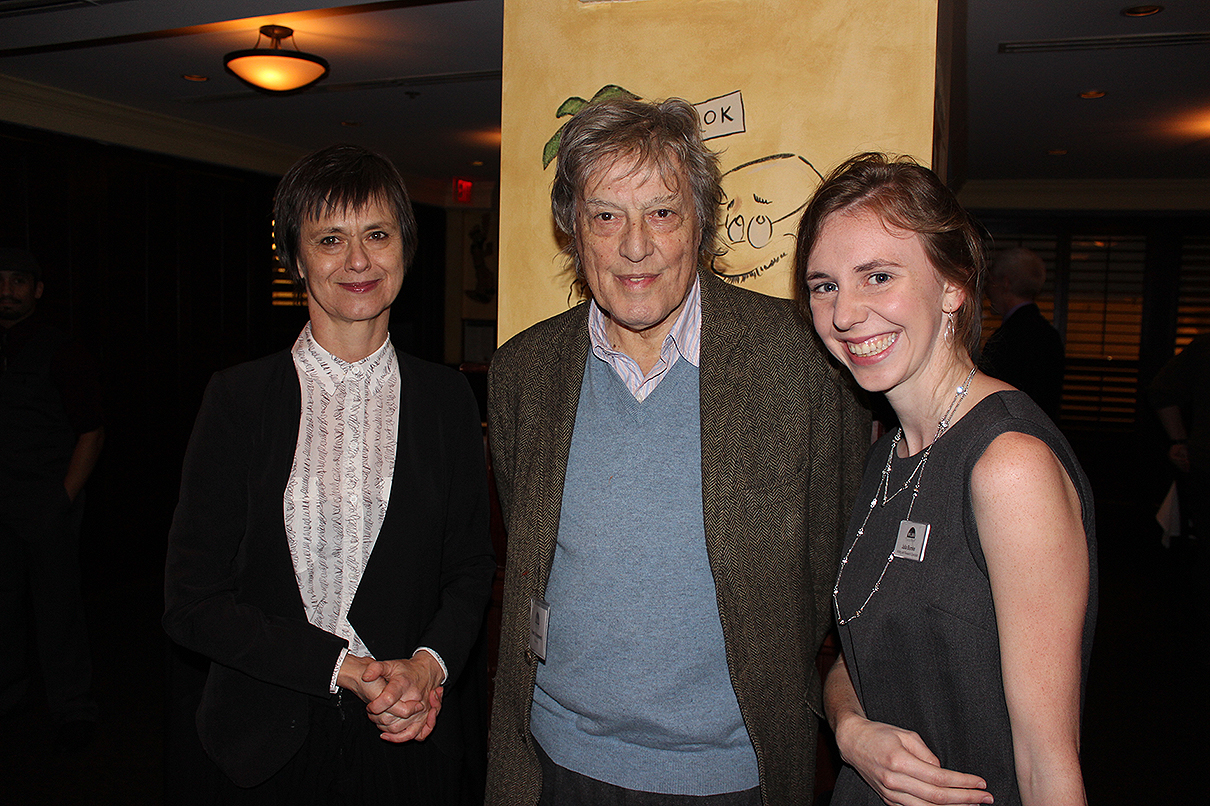
    Wilma cofounder Blanka Zizka, playwright Tom Stoppard, and former Wilma staffer Julia Bumke in 2015.

    “We sat outside on the sidewalk on Walnut Street and we talked about beer, we talked about history, we talked about Philadelphia,” said Smiling. “He was interested not just in theater makers and our lives … I remember him just coming back with all these conversations he’s had with random people on the street around Philadelphia.”

    Though Stoppard did not spend too much time in the city, his contributions were profoundly meaningful to Philadelphia artists — and of course his work will continue to be produced across the region. Earlier this year, the Pennsylvania Shakespeare Festival staged Rosencrantz and Guildenstern Are Dead alongside Hamlet.

    Of course, he’ll always be part of Wilma history.

    “He was very much a strong part of what the Wilma was,” said Zizka. “We have not done any other playwright in such a big measure as we did his work.”

    This article was updated with the correct release year for ‘Travesties.’

  • Nothing is ever a coincidence in ‘The Greatest Play in the History of the World’

    Nothing is ever a coincidence in ‘The Greatest Play in the History of the World’

    How random are moments in our lives that we define as “coincidence?” Perhaps, not so much.

    A basic premise of Ian Kershaw’s The Greatest Play in the History of the World is that fortunate moments present themselves under the guidance of time and space. And the potential for life-changing outcomes lies in our recognizing such opportunities and seizing them.

    A joint production of the Inis Nua and Tiny Dynamite theater companies, The Greatest Play is a warm and endearing tale of love lost and rediscovered. Directed by Kathryn MacMilllan, it makes parallel use of male-female relationships and science-fantasy motifs — equal dollops of James Thurber and Ray Bradbury.

    The story and all its characters are told entirely by one actor … and a litany of shoes. More on that later.

    Set in a quaint British neighborhood and, more grandly, the universe itself, the play begins with 31-year-old Tom awakening to a world frozen in time. But through his bedroom window he spots one person — staring back from her window — 26-year-old Sarah, who lives across the street. Tom, who’s writing The Greatest Play in the History of the World, is obsessed with words, and Sarah is a traveler enamored of numbers. Both have lost at love and feel their lives ending.

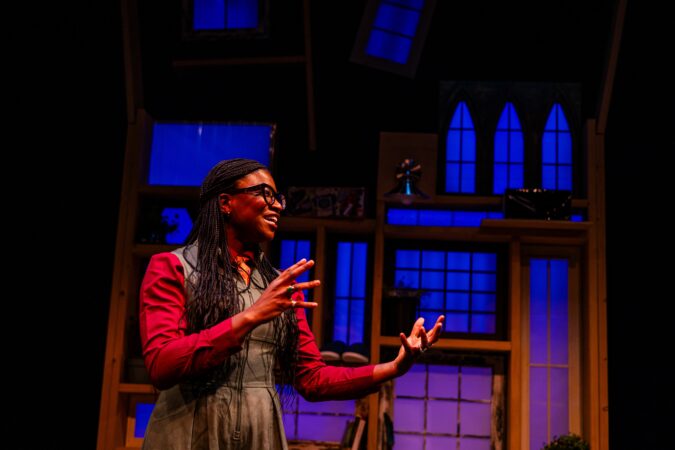
    Brett Ashley Robinson in Ian Kershaw’s “The Greatest Play in the History of the World.” A joint production of the Inis Nua and Tiny Dynamite theater companies, it is playing in Philadelphia through Dec. 14, 2025.

    We’re soon introduced to the Forshaws, their elderly neighbors — also named Tom and Sarah, also aged five years apart, and also feeling life has stopped. Mrs. Forshaw, in the last stages of life, recalls teaching her former students about Carl Sagan’s Golden Record, an audio-visual collection included in NASA’s 1977 Voyager launch, offering a taste of our world to aliens who might stumble upon it.

    The denouement of the play asks what we would choose as a personal remembrance in that vastness of space.

    Barrymore awardee Brett Ashley Robinson narrates the monologue, and projects an unmistakable charm, maintaining a brisk pace throughout the 80-minute evening, a challenge for any actor. Her empathy is unmistakable, sustained with a smile that virtually never leaves her face.

    Kershaw’s narrator leans exclusively into tale-telling, not role-playing. As such, our experience is that a novella is being read to us.

    As for the shoes, Kershaw uses them to represent each character, and Robinson uses them to build rapport through audience interaction, demonstrating admirable improvisational skills.

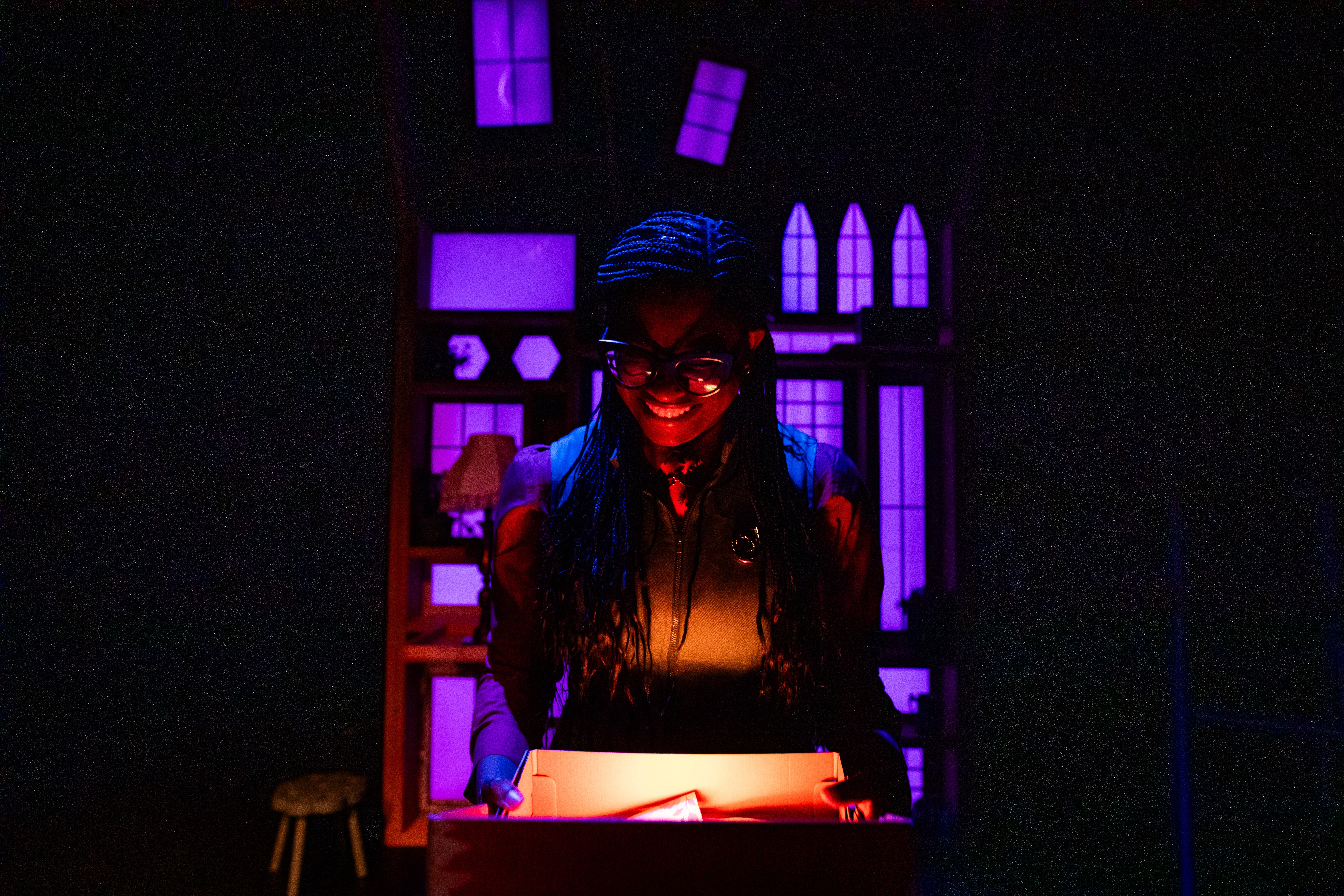
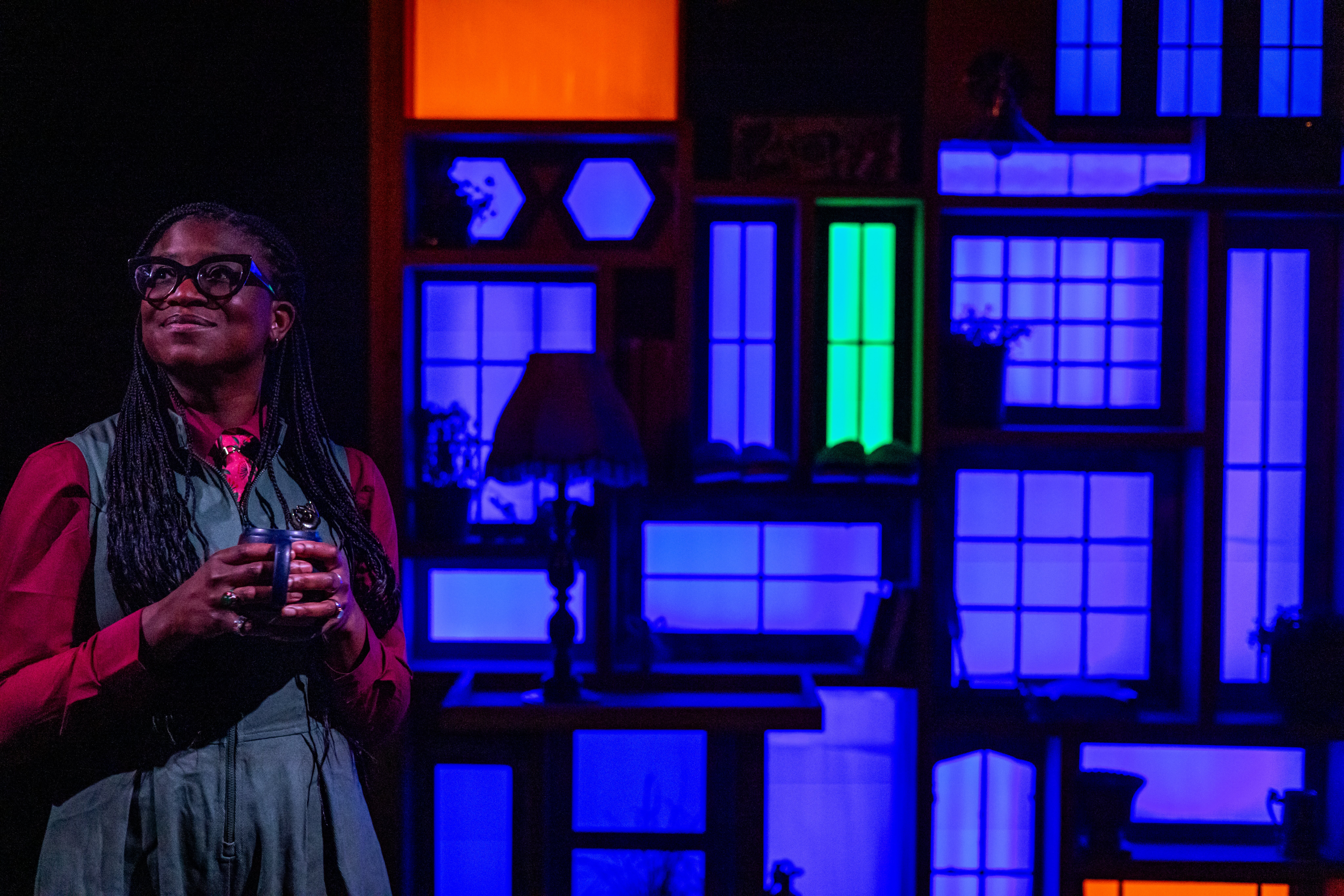
    Shannon Zura’s set/light design is inspired. A backdrop suggesting a cozy cottage gives way to an enchanting series of lighting effects. These create a sense of mystical science and the two-way power of windows. Adiah D. Hicks’ sound design includes voiceovers about the Voyager journey, interrupting Robinson’s narration with compelling contrast: the expanse of space versus the intimacy and love we require.

    Brett Ashley Robinson in Ian Kershaw’s “The Greatest Play in the History of the World.” A joint production of the Inis Nua and Tiny Dynamite theatre companies is playing in Philadelphia through Dec. 14, 2025

    Told with wry humor and eccentric details specific to both personalities and environment, the play moves toward an emotional conclusion. Can we capture those connections that may escape our awareness?

    The current challenging environment for the arts shows the wisdom of the Inis Nua/Tiny Dynamite partnership. The commitment to bring recent plays from the United Kingdom here provides an opportunity for Philly audiences to see the human experience through distant yet familiar cultures. As warm holiday entertainment, The Greatest Play is one with that mission.

    ‘The Greatest Play in the History of the World’

    (Community/Arts)

    A story love, loss, and reunion told through the eyes of an omnipresent narrator, spacecraft music, and shoes.

    ⌚️ Through Dec. 13, 📍 Louis Bluver Theatre at the Drake, 302 S. Hicks St. 🌐 tinydynamite.org

    Theater reviews are produced independently by The Inquirer without editorial input by their sponsor, Visit Philadelphia.

  • Yes, flying cars are great, but ‘Back to the Future’ could do with a little heart too

    Yes, flying cars are great, but ‘Back to the Future’ could do with a little heart too

    Audiences apparently are shelling out money for tickets to Back to the Future: the Musical, now at the Academy of Music, just for a glimpse of the time-traveling DeLorean. But the rush from those high-action sequences is not unlike the thrills of a Universal Studios theme park ride — short-lived and emotionally hollow.

    That is perhaps less a fault of the movie-to-musical pipeline, but more of the plot of Back to the Future. Marty McFly, high school boy of the 1980s, wants nothing more than to rise above his “loser” family and become a rock star. But when he accidentally transports himself back through time to the 1950s, he must help his parents fall in love to ensure his own survival.

    Oh yeah, and his mom has the hots for him now and his father is a peeping Tom.

    The First National Touring Company of “Back to the Future: The Musical.”

    While these morally gray and otherwise two-dimensional characters are a product of the original source material, now in the medium of musical theater, their story falls flat with audiences. Characters sing because they have to — it’s a musical — and audiences grin and bear it until the next action sequence.

    It is unfortunate, too, that even the dancers’ incredible execution of choreographer Chris Bailey’s lively interpretation of both ’80s and ’50s dance styles is not enough to save these long numbers. There is hardly a hummable tune in the bunch, and the plot rarely moves forward through a song.

    There are bright spots, though.

    Lucas Hallauer (Marty McFly) and Sophia Yacap (Jennifer Parker) in the First National Touring Company of “Back to the Future: The Musical.”

    Cartreze Tucker (Goldie Wilson/Marvin Berry) is a joy to watch sing and dance. Goldie is perhaps one of the only characters that gives audiences the musical theater warm and fuzzies as he dreams of becoming the mayor. Zan Berube (Lorraine) shines with her adept comedic timing and truly lovely voice. Overall, the cast, led by Lucas Hallauer (Marty McFly) and David Josefsberg (Doc Brown), does a wonderful job playing into the fan service element of the show. Audiences, clad in red puffer vests, are looking to hear their favorite lines and see their favorite moments and that, the show delivers.

    David Josefsberg (Doc Brown) in the First National Touring Company of “Back to the Future: The Musical.”

    Tim Hatley’s design is sleek and economical. The downstage scrim allows for inventive solutions to some of the more difficult action sequences. The DeLorean sequences in particular are aided by truly amazing work from video designer Finn Ross and illusion designer Chris Fisher. While at times those tricks could feel a bit smoke-and-mirrors with some conveniently timed blackouts, the work gives audiences a glimpse into the future of high-tech, commercial theater.

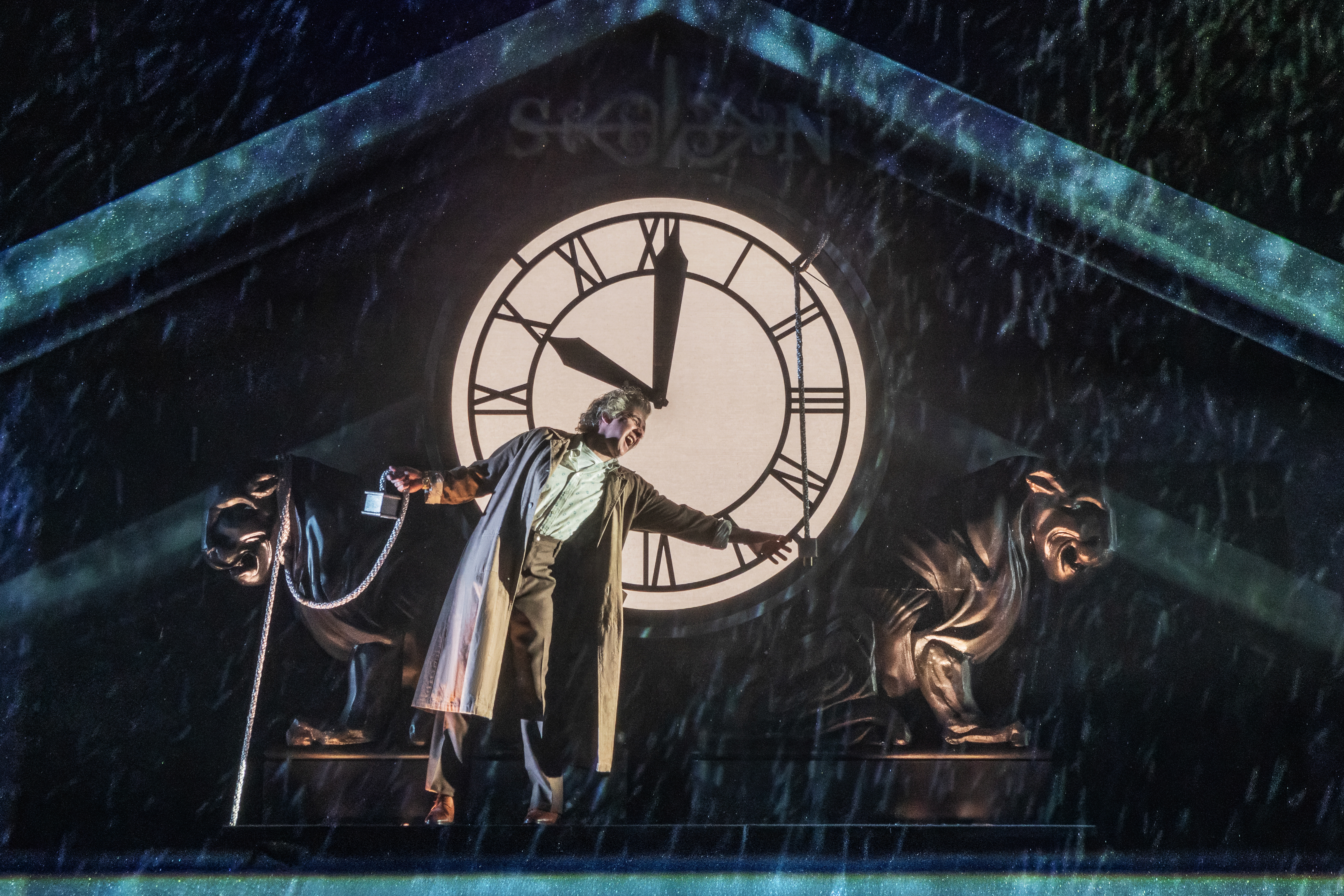
    That is perhaps why the lack of heart in the book and lyrics feels so disappointing. The show does its best work when it leans into the campy, almost-parodic nature of the adaptation, using savvy theatrical solves to some of the harder scenes to reinterpret, like Doc climbing the bell tower with the clever use of projections.

    Lucas Hallauer (Marty McFly) and the First National Touring Company of “Back to the Future: The Musical”

    It is when the production turns its attention back to the musical theater genre that it feels like a drag.

    It seemed even Hallauer could feel the dead air when he called out “Philly, how you feeling?” during his rendition of “The Power of Love,” and there was no reply. It takes a lot for a Philly audience not to respond to the simple mention of Philadelphia.

    But then, when the car flies, it’s pretty incredible.

    ‘Back to the Future: The Musical’

    (Community/Arts)

    In the latest big IP movie-to-musical pathway pipeline production, some truly amazing video and illusion work wow the audience. The cast does a wonderful job playing to the red puffer-vested fans.

    ⌚️ Through Nov. 30, 📍 240 S Broad St, Philadelphia 🌐ensembleartsphilly.org

    Theater reviews are produced independently by The Inquirer without editorial input by their sponsor, Visit Philadelphia.

  • James Ijames may be teaching at Columbia, but he never wants to stop making art in Philly

    James Ijames may be teaching at Columbia, but he never wants to stop making art in Philly

    Philly theater darling James Ijames, the Pulitzer Prize-winning playwright of Fat Ham, will return to local stages with a special spotlight next spring, with a slate of three plays running at three theaters.

    Recognizing this scheduling synergy, the venues are partnering to offer a three-ticket pass, called “The Citywide James Ijames Pass.”

    The first collaboration of its kind dedicated to a contemporary playwright, the pass covers the Philadelphia premiere of Good Bones at the Arden Theatre (Jan. 22 to March 8), The Most Spectacularly Lamentable Trial of Miz Martha Washington at the Wilma Theater (March 17 to April 5), and the world premiere of Ijames’ latest work, Wilderness Generation, at Philadelphia Theatre Company (April 10 to May 3).

    Ijames wrote all of these plays in South Philadelphia, which he considers his artistic home. This year, he left his teaching position at Villanova University to run the playwriting program at Columbia University. While that means he’s spending most of his time in New York now — though his husband, Joel Witter, still works for the Philly school district — Ijames says Philadelphia is “still very much a place where I want to continue to make art.”

    “I’ve lived in Philly more than I’ve lived anywhere in my life, so it is incredibly special to me,” said the Tony-nominated playwright, a founding member of the local playwriting collective Orbiter 3.

    After growing up in North Carolina and attending Morehouse College in Atlanta, Ijames got his MFA in acting at Temple University. He performed on stages all over the city, including at the National Constitution Center, People’s Light, and all three theaters featured in the pass.

    It was during the 2012 production of Angels in America at the Wilma where he wrote Miz Martha Washington, one of his earliest plays, in the dressing room. Ijames went on to serve as one of three co-artistic directors of the Wilma, which premiered the digital production of Fat Ham — his incisive and irreverent queer reimagining of Hamlet — that earned him the 2022 Pulitzer Prize.

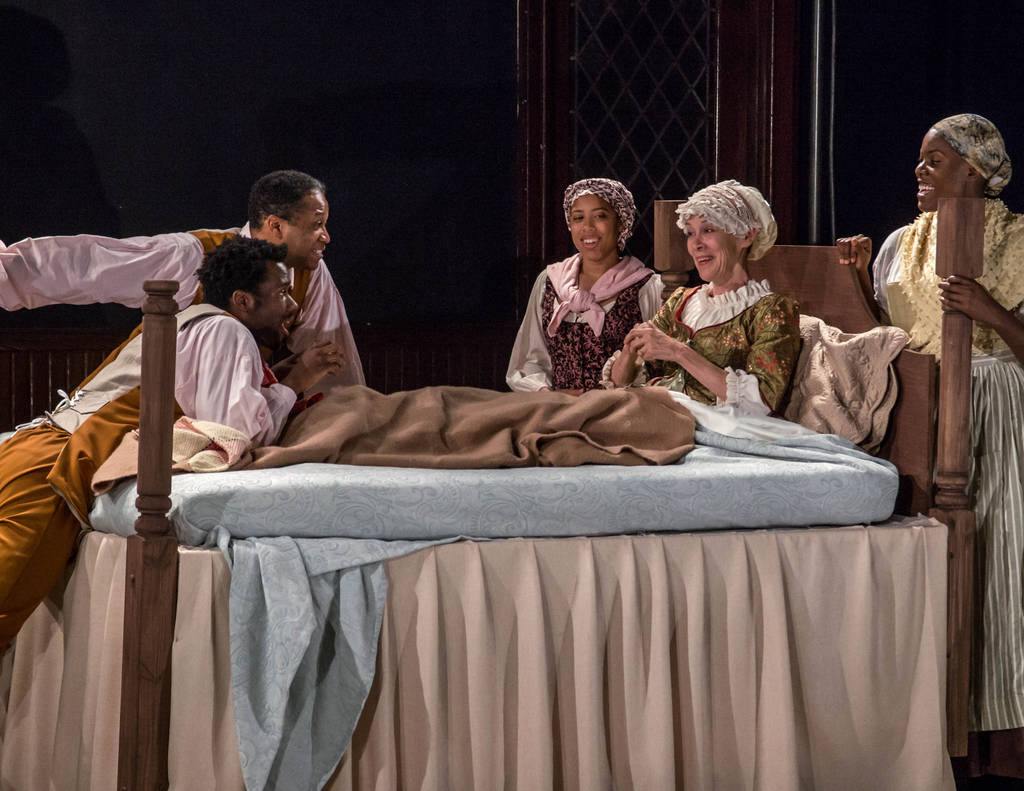
    Flashpoint Theatre Company’s Barrymore-nominated “The Most Spectacularly Lamentable Trial of Miz Martha Washington.” From left: Darryl Gene Daughtry Jr., Steven Wright, Taysha Canales, and Jaylene Clark Owens surround Nancy Boykin as Martha Washington.
    Photo by Ian Paul Guzzone.

    In the sharp satire Miz Martha Washington, the titular first lady is on her deathbed, surrounded by the people she and her husband enslaved. With freedom inching closer — George Washington’s will promised them liberty upon his widow’s death — the Black characters appear in various hallucinations, putting Martha and her family on trial.

    The play will come back to town amid Philadelphia’s celebrations for the 250th anniversary of the nation’s founding, apt timing for a sharp satire on the Founding Fathers’ legacy of slavery.

    “I think we were all kind of hoping that the world and the politics would be a little different when we first started thinking about it,” said Ijames. “But I always say, we have to look at the history directly in the face and, from that, try to imagine something different.”

    Good Bones is a more contemporary story about the development of a new stadium that stands to disrupt a city neighborhood (sound familiar?). The upper-class newcomer, haunted by those who were pushed out, gets into fiery debates over gentrification with her contractor.

    The Philly premiere will be directed by Ijames’ longtime friend and collaborator Akeem Davis, who starred in the Ijames-directed production of August Wilson’s King Hedley II at the Arden earlier this year.

    Arden Theatre producing artistic director Terry Nolen hopes audiences will come out to cheer on a “hometown hero.”

    “Philly audiences love Philly artists, and there is so much pride for James’ success,” Nolen said in a statement.

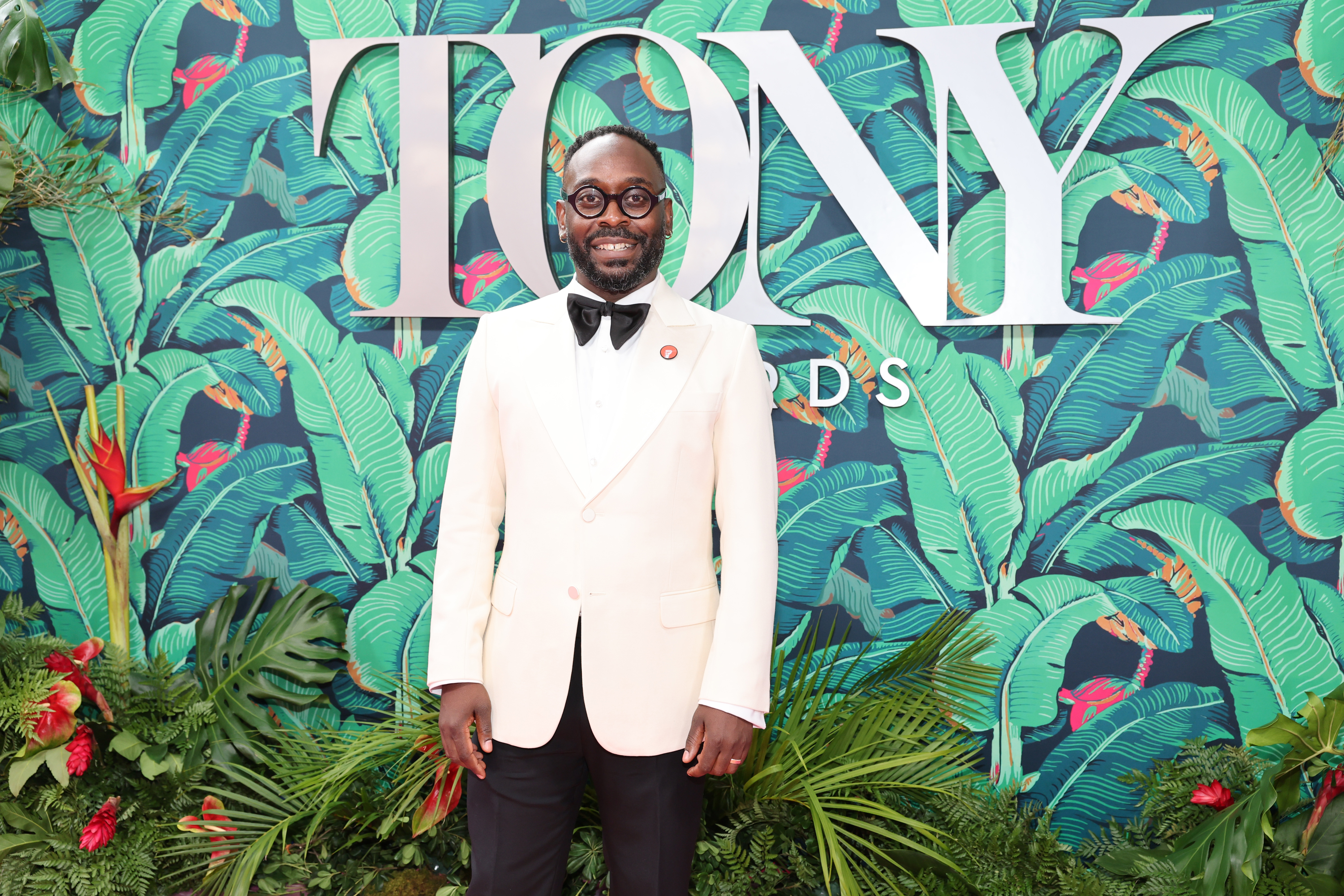
    Philly playwright James Ijames attends the 76th Annual Tony Awards at United Palace Theater on June 11, 2023, in New York City. His play “Fat Ham” had five nominations, including best play. (Photo by Cindy Ord /Getty Images for Tony Awards Productions)

    The playwright’s newest work, Wilderness Generation, examines the relationships between cousins as Ijames, who’s close to his own cousins, wanted to spotlight that kind of family dynamic. Five cousins reunite at their grandmother’s house in the South to help her downsize; while there, they unpack a painful family history and confront the damage of their relatives’ behavior as they try to forge a future together.

    Ijames wrote the work with Philadelphia Theatre Company co-artistic directors Taibi Magar and Tyler Dobrowsky in mind. Though Ijames has performed at PTC before, this world premiere marks the first time a play he wrote will grace its stage.

    “I am where I am because a lot of theaters in Philadelphia took a chance on me,” said Ijames. He hopes future collaborations can highlight more “really brilliant folks” writing new plays in Philly.

    “I hope a thing that happens as a result of this is a Jackie Goldfinger package one day, a Michael Hollinger package, an Erlina Ortiz package, [and] an AZ Espinoza package.”

    The three-play pass costs $130, about $43 per ticket, and includes preferred seating, flexible ticket changes, parking discounts, and member benefits at each theater, as well as exclusive swag — a yellow beanie, inspired by Ijames’ personal style. Passes are available online or at the TKTS booth at the Independence Visitor Center.

  • ‘Kimberly Akimbo’ reminds us it’s never too late to go on an adventure

    ‘Kimberly Akimbo’ reminds us it’s never too late to go on an adventure

    The 2023 Tony Award-winning musical Kimberly Akimbo has made its way to the Academy of Music, courtesy of Ensemble Arts Philly.

    The intimate show tells the story of a girl named Kimberly Levaco (Ann Morrison) who has a genetic disorder that causes her to age at a rate of four to five times that of a normal person. So at 16, she looks like a 60-plus-year-old woman.

    The show isn’t very plot driven, but more a character study of Kimberly, her family, and friends.

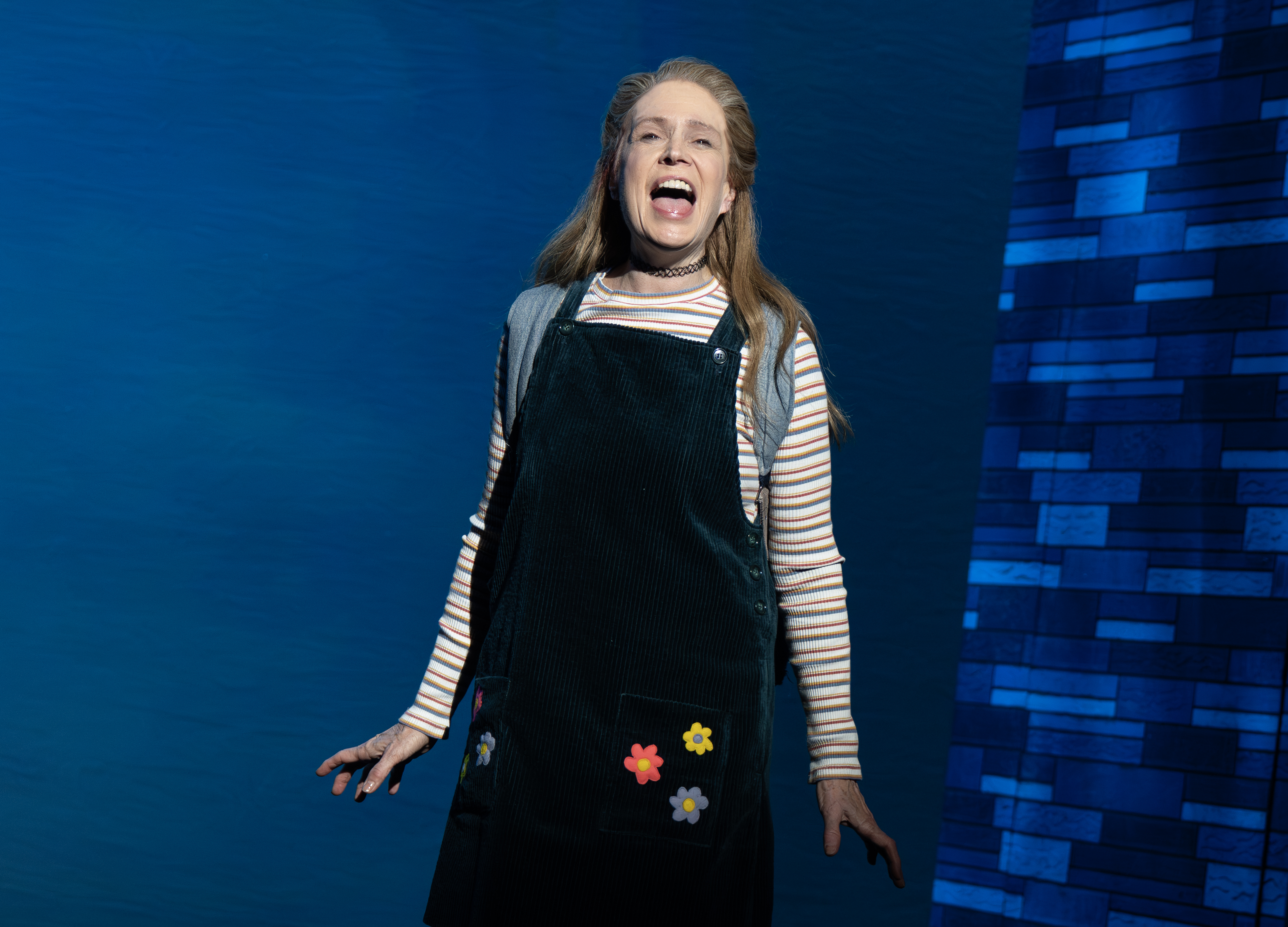
    Ann Morrison in the National Tour of “Kimbelry Akimbo”

    Kimberly lives with her parents, Pattie and Buddy (Laura Woyasz and Jim Hogan), and her Aunt Debra (a funny Emily Koch), who don’t always have Kimberly’s best interests in mind. The score is enjoyable in the moment but doesn’t provide the audience with tunes they leave the theater humming. It falls more in line with composer Jeanine Tesori’s other work, Fun Home, than something like Mamma Mia.

    However, the score and script work well together to get the audience to empathize and care about Kimberly.

    Leading the talented ensemble is Morrison who is able to embody the youthful hopes and dreams of Kimberly, while bringing an effective aged physicality to the role. Her voice, while mature, holds a youthful quality to it, making it feel like she is truly a young woman trapped in an older body.

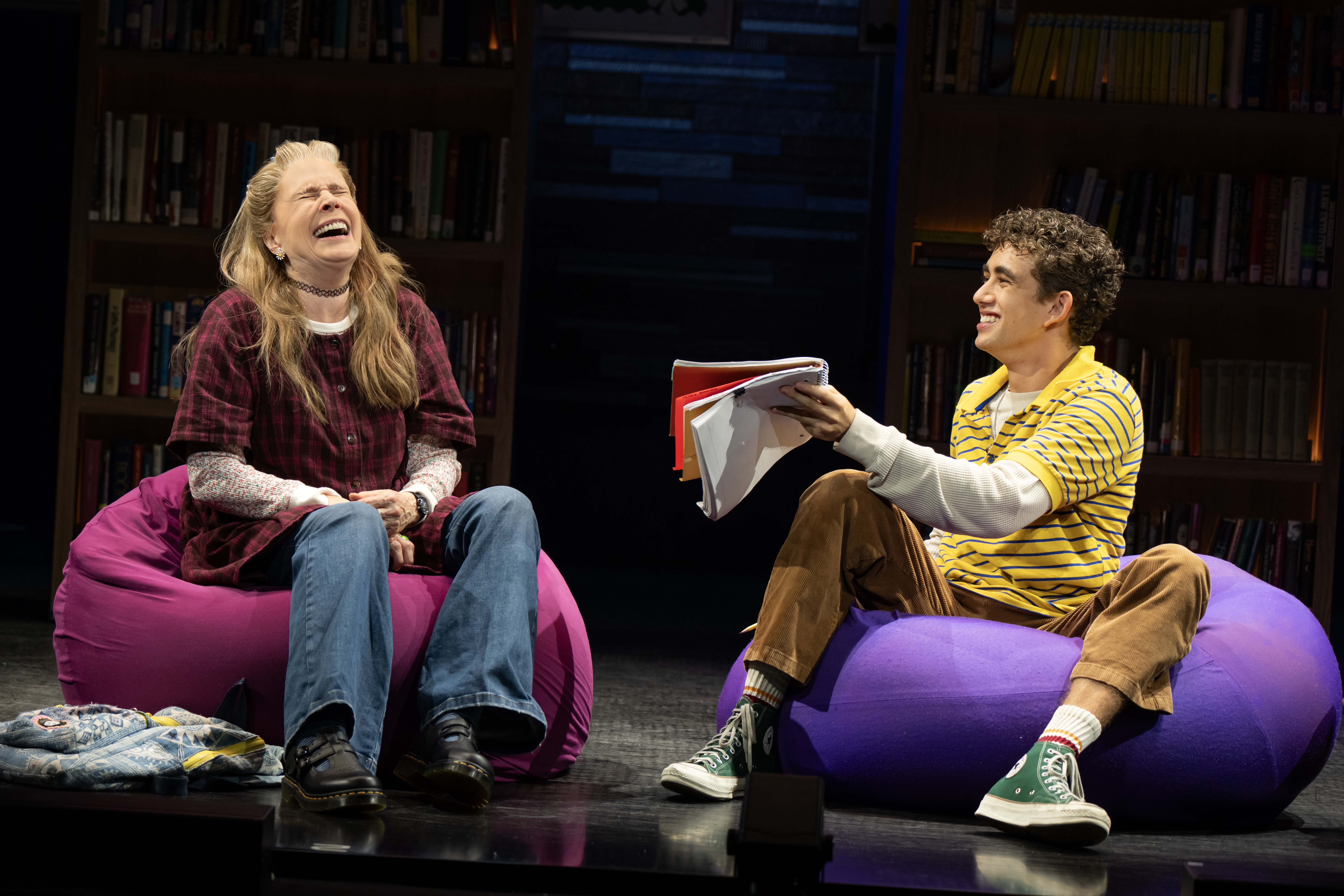
    Miguel Gil as Seth, Kimberly’s schoolmate-turned-friend-turned-partner-in-crime, is another standout. He brings an endearing nerdiness to the character that makes him a true scene-stealer.

    Ann Morrison and Miguel Gil in the National Tour of “Kimberly Akimbo.”

    While extremely affecting, the show remains a small-scale story; its intimacy often gets lost in the massive space of the Academy of Music. There are moments when the vastness of the stage almost swallows what should be a much more personable experience.

    In a similar vein, the performances often feel like they are struggling to fill the space. There are several moments where diction could be cleaner, as there is an occasional mumbled or muffled quality to line (and lyric) delivery.

    Kimberly Akimbo reminds the audience that life is short: You should live it to the fullest while you can. For such a conventional message, the show never feels saccharine. Instead, when the final song implores the audience to go on a great adventure “cause no one gets a second time around,” you are inspired to do just that.

    ‘Kimberly Akimbo’

    (Community/Arts)

    The Tony-winning story of a girl named Kimberly Levaco (Ann Morrison) who has a genetic disorder that causes her to age at a rate four to five times that of a normal person. With some great performances, the musical delivers a sweet message but never feels saccharine.

    ⌚️ Through Nov. 2, 📍 240 S Broad St, Phila. 🌐 ensembleartsphilly.org

    Theater reviews are produced independently by The Inquirer without editorial input by their sponsor, Visit Philadelphia.

  • In ‘Fire!!,’ Quintessence Theatre brings 1920s Harlem to Mount Airy

    In ‘Fire!!,’ Quintessence Theatre brings 1920s Harlem to Mount Airy

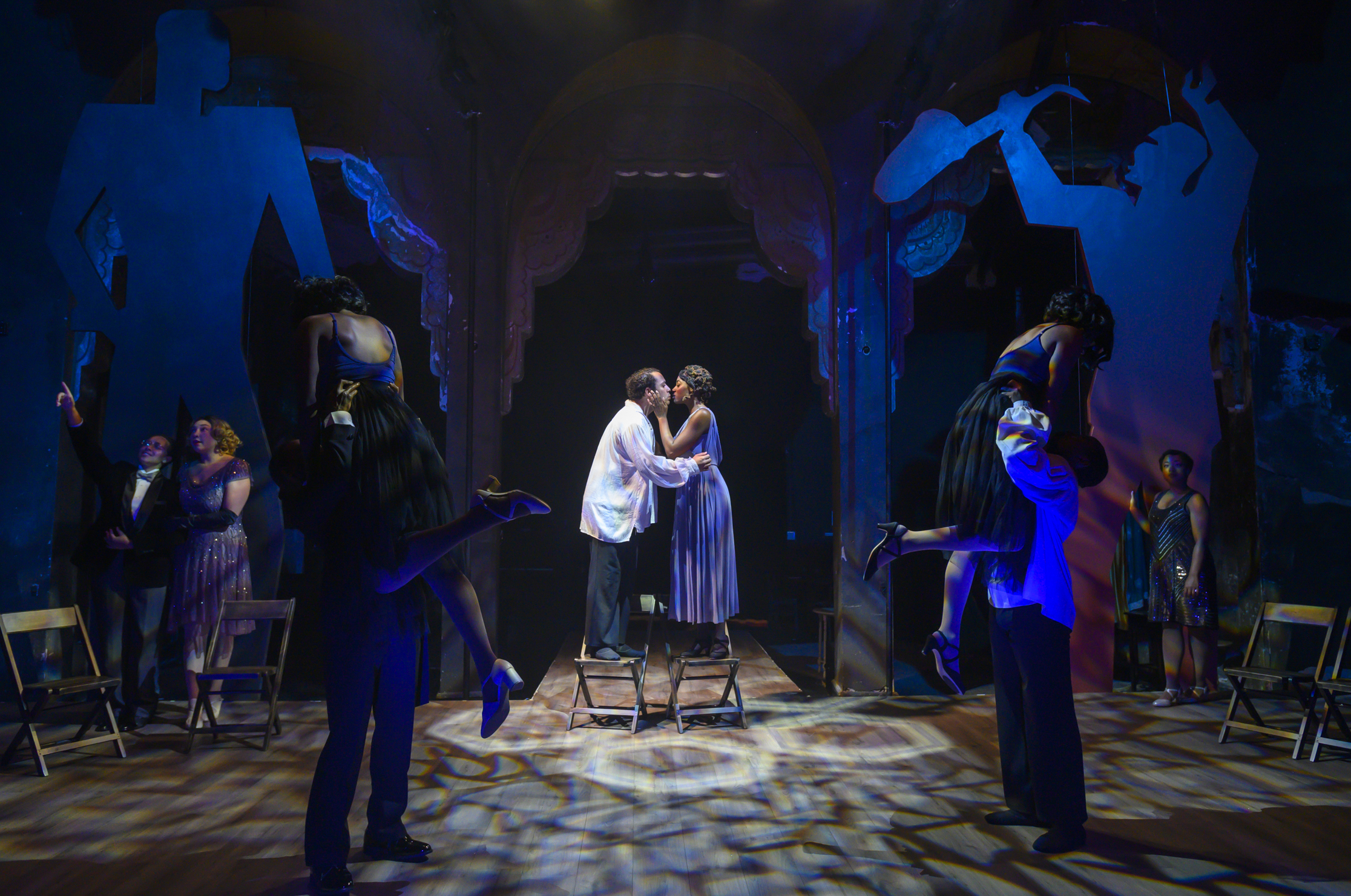
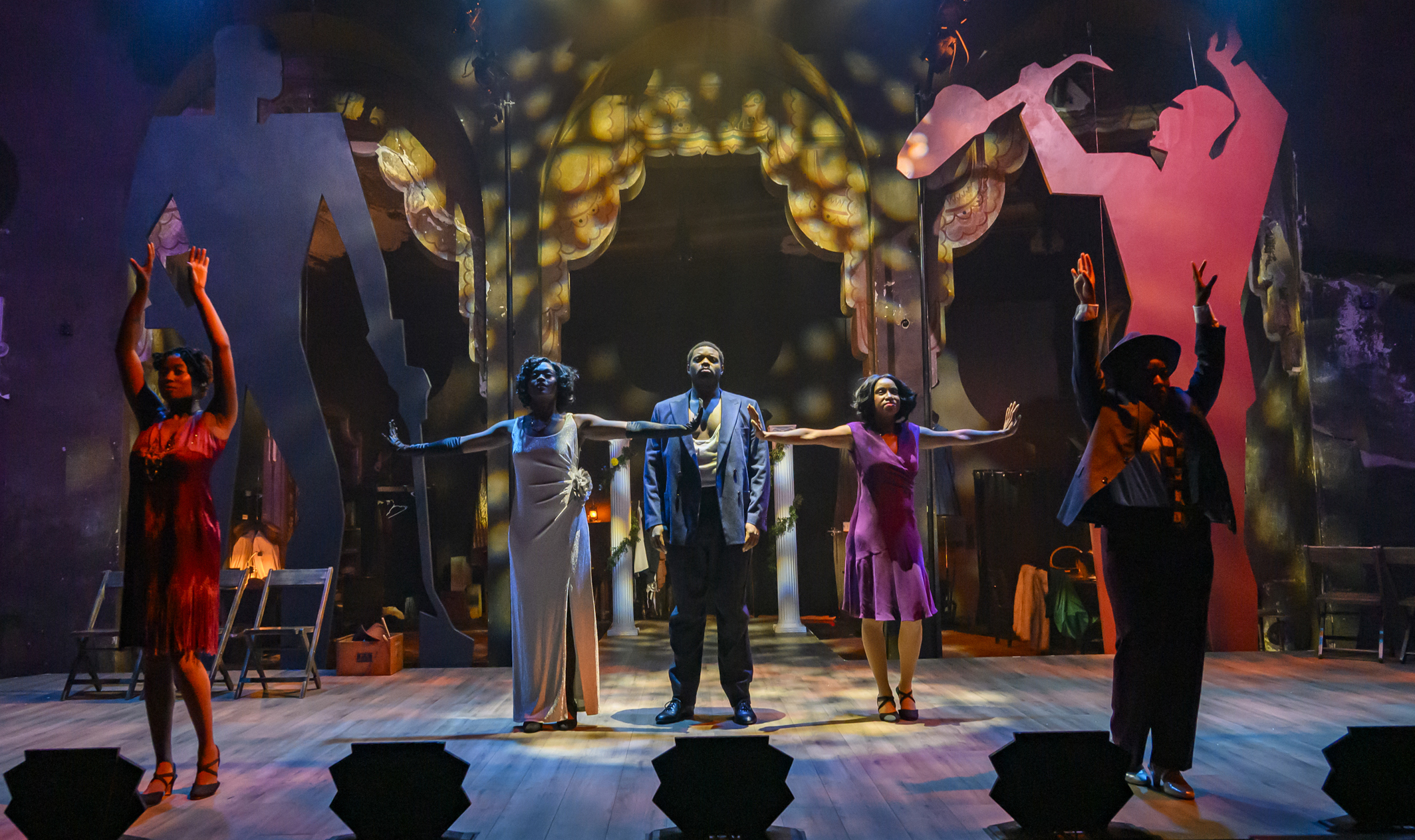
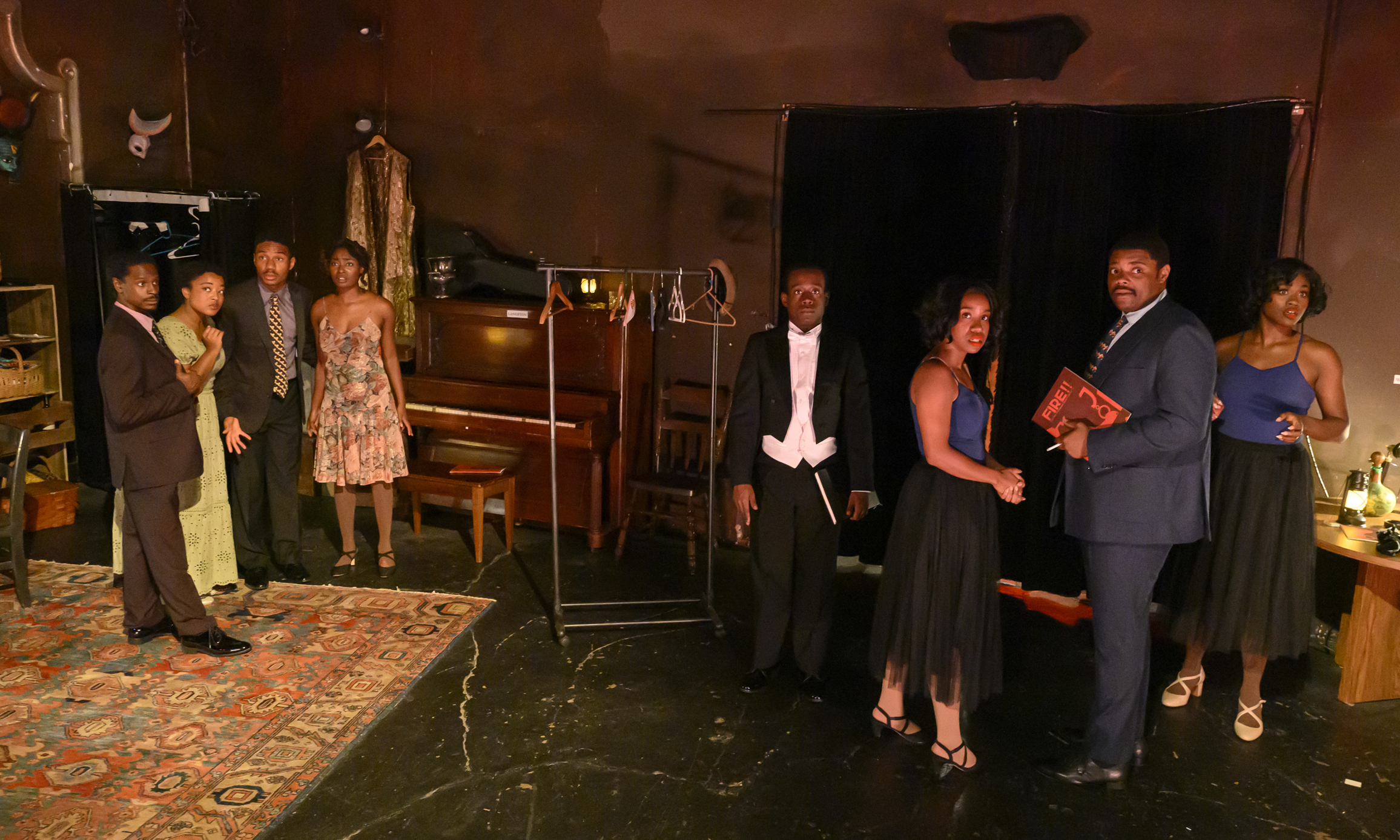
    After the success of its world premiere adaptation of James Baldwin’s Giovanni’s Room, Quintessence Theatre Company is back. In collaboration with the New Classics Collective, it’s now presenting the world premiere of Fire!! by Paul Oakley Stovall and Marilyn Campbell-Lowe.

    The play seeks to reimagine the 1927 quarterly publication Fire!!, the first all-Black magazine in the country, as a stage production. Throughout the show, audiences are treated to staged performances of plays, stories, and poems by some of the great writers of the Harlem Renaissance, including Zora Neale Hurston and Langston Hughes.

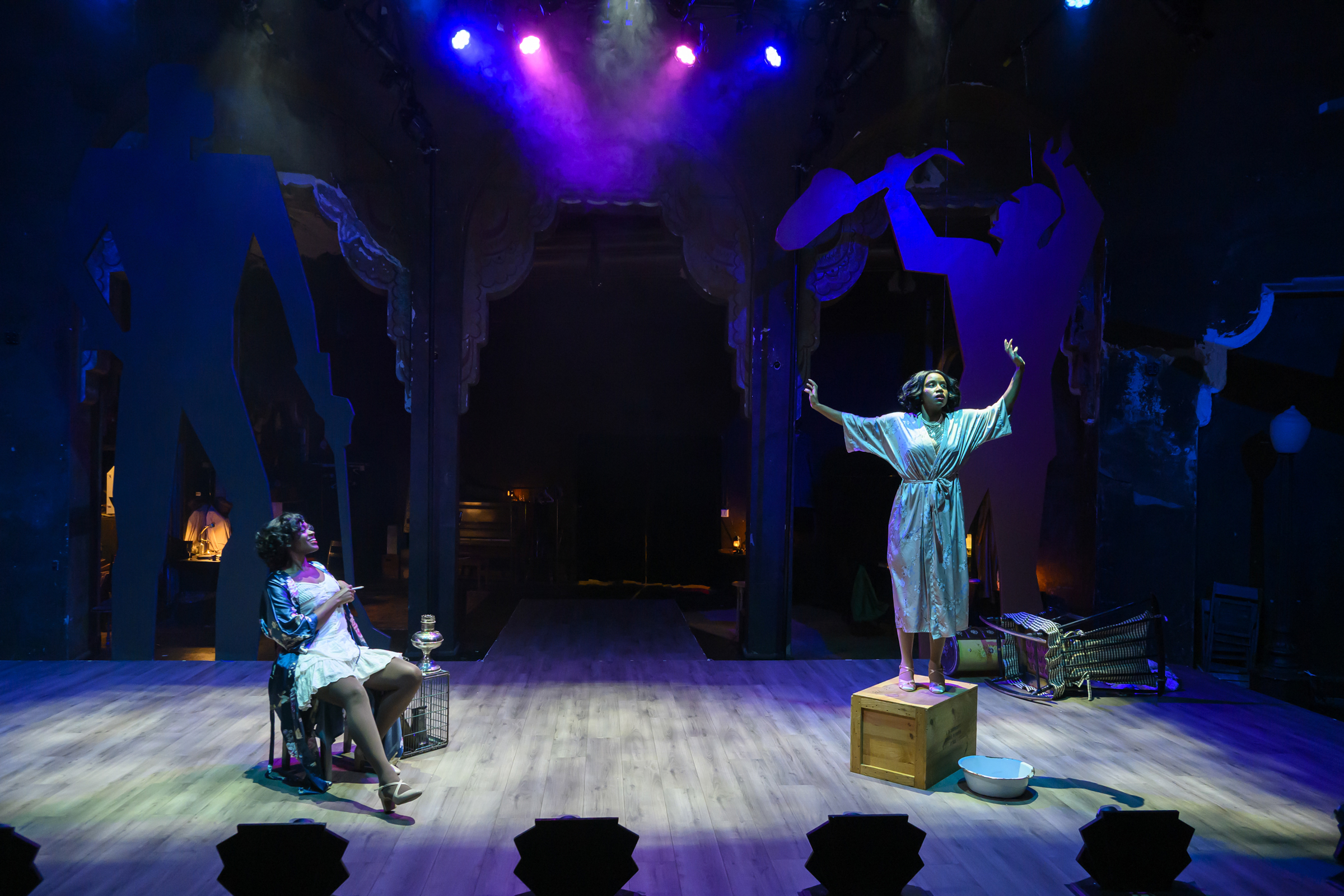
    Seeking to offer audiences a more immersive experience, director Raelle Myrick-Hodges begins the play in the historic Sedgwick Theater’s lobby, with performers in suits and flapper dresses. The 1928-built lobby throbs with life, making you believe you are in 1920s Harlem. Wallace Thurman (Kaisheem Fowler-Bryant), one of the editors of Fire!!, introduces himself and his fellow editors and explains that the night’s performances are part of a fundraiser to raise money for the magazine.

    From left: Taylor J. Mitchell (as Gwendolyn Bennett) and Alicia Thomas (as Zora Neale Hurston) in Quintessence Theatre’s “Fire!!”

    Zora Neale Hurston (Alicia Thomas) introduces herself soon after, but it’s hard to hear her over the rumbling of a wheeled platform stage being ushered into the lobby. This later serves as the train for the first scene of Hurston’s play Color Struck.

    While it is admirable for Quintessence to use the Sedgwick in new and different ways, the echoing sound quality of the lobby leaves things feeling under-produced.

    The audience eventually makes its way into the house. The theater’s arching pillars remain visible as a “backstage” space throughout the play — without the black curtains, this adds to the echo in the lobby.

    Charlie Bay (as Richard Bruce Nugent) and Imani Lee Williams (as Melva) in Quintessence Theatre’s “Fire!!”

    Inside, the play continues, flipping between staged presentations of pieces that were published in Fire!! and the imagined drama of the editors hoping to appeal to patrons and fund the publication.

    This invented drama is interesting but feels under-realized. For one thing, this is the actual conflict of the play, but all the action happens upstage of the “stage” and presents a myriad of sight line issues depending on where audiences are seated in relation to the pillars on stage. The audibility issues persist, making it difficult to hear actors, especially when they are fighting over any sound cues or underscoring.

    The conflict of the play boils up when Thurman voices hesitancy toward presenting his lover Richard Bruce Nugent’s novel, which features queer characters. This conflict, while seeming to be the crux of the entire play, easily resolves itself within the performance of Nugent’s story, and is barely addressed later.

    From left: Imani Lee Williams, Taylor J. Mitchell, Nichalas Parker (as Paul Watson), Alicia Thomas, and Ivana R. Thompson in Quintessence Theatre’s “Fire!!”

    The behind-the-scenes tension, which is the through line of the plot, feels almost forgotten by the time the house lights are back up.

    The staged presentations of works from Fire!! are, however, alive and well-executed.

    At a time of extreme political division, it is important to celebrate joy — especially Black joy. It is timely to witness Quintessence recall the Harlem Renaissance and its resistance with fondness.

    The stagings are ripe with music and dance. Xavier Townsend, who plays Aaron Douglas, in particular dazzles the audience with high kicks and spins, and Jordan Fidalgo’s Helene Johnson blows the audience away with her musical rendition of Johnson’s poem “A Southern Road.” The poems of Langston Hughes and Gwendolyn Bennett speak for themselves and are well orated by Nicholas Parker and Taylor J. Mitchell, respectively.

    From left: Xavier Townsend (as Aaron Douglas), Ivana R. Thompson (as Dorothy West), Tyler Bey (as Arthur Huff Fauset), Imani Lee Williams (as Georgia D. Johnston), Kaisheen Fowler-Bryant (as Wallace Thurman), Alicia Thomas (as Zora Neale Hurston), Nichalas Parker (as Langston Hughes), and Taylor J. Mitchell (as Gwendolyn Bennett) in Quintessence Theatre’s “Fire!!!”

    Quintessence and the New Classics Collective are, as usual, impeccable with their selection of source material. The selected works from Fire!! are dynamic and fascinating stories that investigate the issues of the 1920s and today.

    Audiences seeking to hear works of the Harlem Renaissance will be overjoyed by this production, if a bit confused by the subplot.

    ‘Fire!!’

    (Community/Arts)

    The story of the country’s first all-Black magazine, and the fight to keep it afloat, gets told in this 1920s Harlem Renaissance-set play. With Zora Neale Hurston and Langston Hughes making an appearance, Fire!! is a celebration of Black joy and resistance, and a delight to witness.

    ⌚️ Through Nov. 2, 📍 7137 Germantown Ave. (Mount Airy), 🌐quintessencetheatre.org

    Theater reviews are produced independently by The Inquirer without editorial input by their sponsor, Visit Philadelphia.

    The article has been updated with the correct name for the actor who plays Aaron Douglas.