Category: Comcast

  • Comcast owes $240 million to start-up for using its voice-remote tech, jury says

    Comcast owes $240 million to start-up for using its voice-remote tech, jury says

    Comcast owes a California company $240 million for infringing on its patent when rolling out a voice-activation feature on television remotes over a decade ago, a Philadelphia federal jury decided.

    Promptu Systems Corporation “pioneered” the technology that allows users to control their TVs through voice commands spoken into a remote control in the early 2000s, the company said in legal filings.

    After Comcast launched its voice remote in 2015, Promptu sued, accusing the telecommunication giant of utilizing patented technology. Comcast executives were aware of the patents, expressed interest in Promptu’s capabilities as early as 2001, and took steps to launch a remote in collaboration with Promptu, the 2016 lawsuit said.

    But Comcast ended up launching a voice-controlled remote on its own, which the suit says was based on technology that Promptu shared with Comcast in demonstrations.

    “Promptu technology was exploited without permission over a 10-year period,” said Jerry Ivey, an attorney at the law firm Finnegan who represented the company in the trial.

    Propmtu’s attorneys asked the jury to award $346 million, based on a calculation that the company was owed 30 cents per month for each Comcast cable customer over a 10-year period.

    At the conclusion of a six-day trial in the Eastern District of Pennsylvania, on Jan. 23, jurors found that Comcast infringed on two patents but that only one of them was valid. The jury deliberated for less than three hours and awarded $240 million.

    The verdict will have no impact on Comcast’s customers, a company spokesperson said.

    “We will continue to pursue our claim in court against Promptu to show that these expired patents are unenforceable and appeal this decision if necessary,” the spokesperson’s statement said.

    During the 10 years of litigation, Comcast attacked the validity of the patents. It is pursuing a separate claim arguing that the patent that led to the verdict is not enforceable.

    Promptu technology wasn’t ahead of its time, the attorney representing Comcast told the jurors, and the start-up did not succeed in becoming a big player in the TV remote market.

    “Investors from Promptu have come here to ask you to not only bail them out of their investment in Promptu but to give them an enormous windfall in profits that they didn’t earn in the marketplace and for technology that they didn’t invent,” said Douglas Lumish, a Weil Gotshal & Manges attorney representing Comcast, according to court transcripts.

    Around the same time that Comcast launched its voice remote, voice-controlled speakers like the Amazon Echo and Google Home were popping up in homes.

    By 2017, Comcast said it had voice-activated remotes in about 12 million homes — roughly half its subscribers at the time — and the company expected to process 4 billion voice commands that year. In a 2024 meeting with investors, Comcast said their remotes were processing about 50 million voice commands daily in five languages, allowing users to quickly access cable and streaming content.

    The company also developed a large-button voice remote with accessibility in mind. Both have been provided to their cable subscribers at no additional cost.
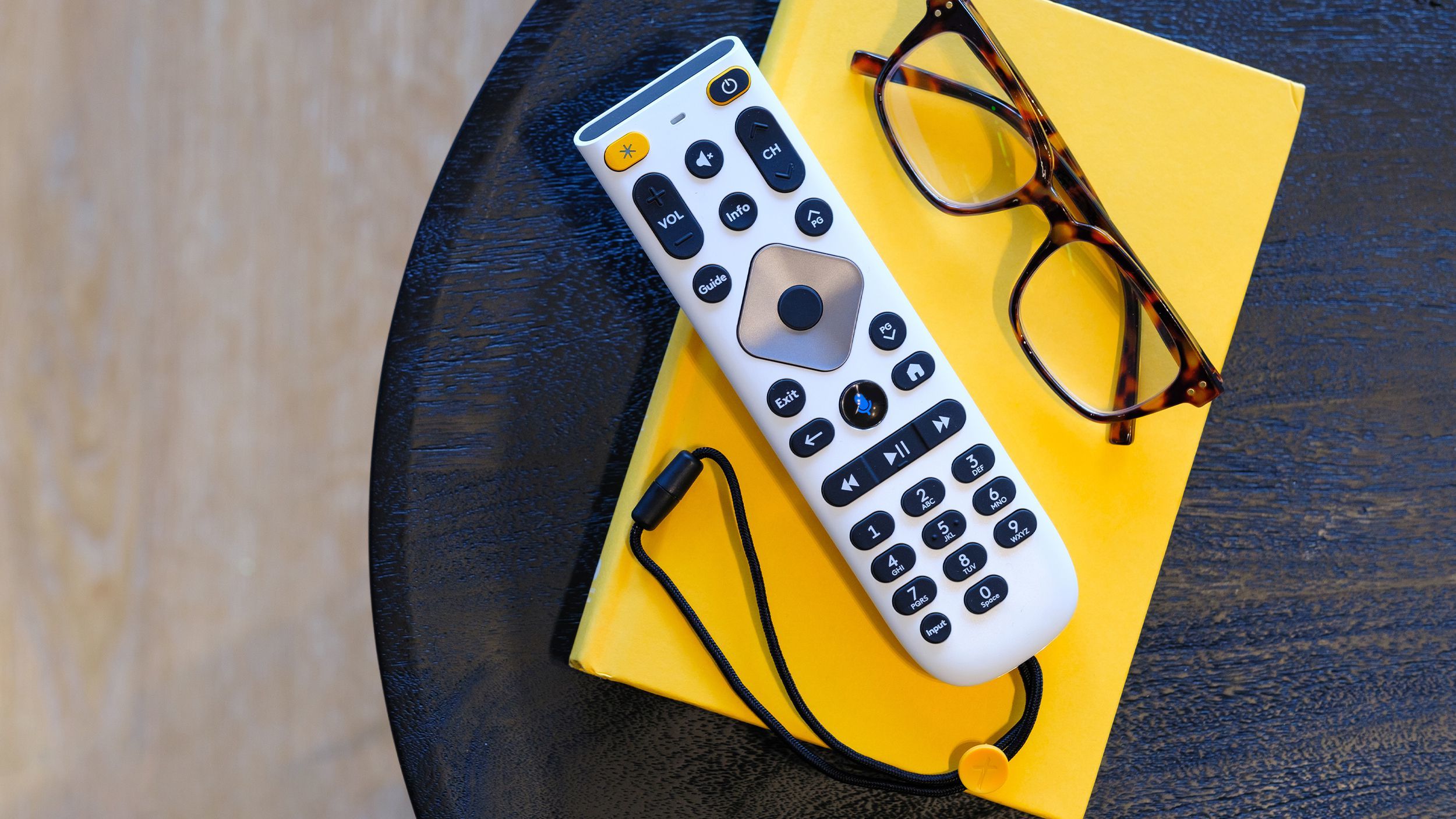
    Comcast’s large-button remote with added accessibility features, as released in 2022.

    Even if they don’t directly bring in revenue, these kinds of tech features can help a company keep customers. (In recent years, Comcast has been losing more cable customers than gaining, but it counts its Peacock streaming service among areas of growth.)

    On Thursday, Comcast reported its 2025 financial results, showing flat revenue from the year before. The company touted Peacock’s 22% increase in paid subscribers, the release of Wicked: For Good from its studios division, and growth in its mobile phone business.

    Its count of cable customers decreased — again — to 11.2 million.

    Also this month, Comcast agreed to a $117.5 million settlement to resolve 24 lawsuits surrounding a 2023 data breach. The settlement received initial approval from a judge, with a final approval hearing scheduled for July.

  • Comcast agrees to $117.5 million settlement to resolve data breach lawsuits

    Comcast agrees to $117.5 million settlement to resolve data breach lawsuits

    Comcast is one step closer to settling 24 class-action lawsuits over a 2023 data breach that potentially impacted over 30 million former and current customers.

    A $117.5 million settlement agreement received preliminary approval from a federal judge in the Eastern District of Pennsylvania last week.

    Impacted customers would be able to receive three years of financial monitoring and identity-theft-protection service and choose between reimbursement of expenses up to $10,000 or a $50 cash payment, if the current terms of the agreement gain final approval.

    Comcast did not oppose the request for preliminary approval of the agreement, but noted in court records that it does not agree with the facts as told by the representatives of the customers and denies all liability.

    Neither a representative for the Philadelphia-based telecommunication giant nor its attorneys responded to requests for comment.

    The settlement resolves 24 lawsuits, filed in federal courts nationally and consolidated under one judge in Philadelphia.

    The flurry of litigation centers on a data breach that took place between Oct. 16 and 19, 2023, when hackers gained access to Comcast’s internal system. The hack was possible because the company delayed implementing a patch to fix a vulnerability in the Citrix Systems cyber software that Comcast has relied on, court records say.

    Citrix warned customers of the problem and offered a solution in an Oct. 10 bulletin, court records say. The class attorneys accuse Comcast of having failed to heed the cyber-company’s advice, allowing hackers to take advantage of the vulnerability.

    The data breach made the usernames, passwords, names, contact information, privacy questions and answers, and last four digits of Social Security numbers for more than 30 million customers potentially available to hackers, according to court records.

    The settlement agreement was reached following a November negotiation session after multiple attempts at mediation.

    The $117.5 million would be used to compensate customers, administer the settlement process that includes notifying customers and processing claims, and pay attorneys’ fees. The class attorneys could pocket as much as one third of the total settlement amount, according to court filings, but the exact amount will be decided later.

    U.S. District Judge John Milton Young has set a final approval hearing for July. Once the settlement is approved, Comcast and Citrix will be released from all claims related to the data breach.

    Citrix’s attorneys did not respond to a request for comment.

  • After striking gold in Paris in 2024, can NBC do it again at the Winter Olympics in Milan?

    After striking gold in Paris in 2024, can NBC do it again at the Winter Olympics in Milan?

    NEW YORK — In the lead-up to the Summer Olympics in Paris two years ago, there was no small amount of fear that the Games were losing their luster.

    It probably didn’t help that there were three straight Olympics in Asia, which meant most of the action was overnight for U.S. television viewers. And the pandemic definitely didn’t help, because sports without crowds in the stands weren’t as fun to watch.

    But NBC went all-in on Paris anyway, and was rewarded with huge ratings. Yes, people did still care, and they showed up to prove it.

    Now the network faces the challenge of bringing that energy to next month’s Winter Olympics in Milan and Cortina d’Ampezzo, Italy. The winter edition has historically drawn lower audiences than the summer no matter the circumstances, but NBC once again is going all-in.

    The Winter Olympics start Feb. 6 in Milan and Cortina d’Ampezzo, Italy.

    “We know the Winter Olympics haven’t been fully attended in eight years,” NBC’s Olympics executive producer Molly Solomon said at a media preview event last week. “We can’t take anything for granted. The media landscape has completely changed since 2018. So what have we got to do? We’ve got to win back viewers, we’ve got to show them why they should watch.”

    As with two years ago, there will be a lot of coverage on the big broadcast network, starting with at least five live hours a day. Because of the six-hour time difference between Italy and the eastern United States, the traditional prime time show will be like it was in Paris, with a mix of highlights and features.

    There will also be a lot of broadcasts on the USA Network and CNBC cable channels, and every event will be live on NBC’s Peacock streaming platform.

    If it feels natural to say all that, veteran Olympics fans will remind you quickly of how different things used to be. For many years, NBC held back showing some big events live to save them for the big prime time show.

    South Jersey-raised figure skater Isabeau Levito will likely be the highest-profile name from the Philadelphia area competing at the Winter Olympics.

    Paris was the first time NBC really opened everything up. It isn’t a coincidence that those were the first Games after Rick Cordella was promoted to president of NBC Sports, and the first outside of Asia after Solomon was promoted to her job in 2019.

    “The Olympics in Paris proved the Olympics are back, and remain an unrivaled media property with the unique abilities to captivate the nation and generate audiences across all demographics for 17 days and nights,” Cordella said. “We expect Milan-Cortina to carry on that legacy.”

    Solomon said she “felt as though we handed the viewer the remote control, and we said, ‘Hey, we’re going to give you different ways to watch the Olympics.’ And we’re now going to take all those learnings and build on them for Milan-Cortina.”

    With dramatic backdrops like the Eiffel Tower, the 2024 Summer Olympics in Paris proved to be a hit with U.S. TV viewers.

    A big bet paid off

    For as much as fans welcomed NBC’s change in philosophy, there was no guarantee it would succeed. If the prime time show’s ratings had flopped, some critics might have said the old way was more profitable.

    Instead, the network shot out of the gate. An average of 34.5 million viewers watched the first three days of competition in what were seen as the two “prime” slots, live coverage from 2-5 p.m. Eastern time then the nighttime highlights show — including a massive 41.5 million on the first Sunday.

    The average over the whole Summer Games ended at 30.4 million, which NBC said was up 80% from 2021 in Tokyo.

    Solomon said that when Cordella called her after the first weekend with the early returns, “I burst into tears, because those numbers — I didn’t think it was possible. … We didn’t even dream that big.”

    NBC’s lead Olympics host Mike Tirico said he could tell from the studio that things were working.

    “We saw that there was a formula for the prime time show: that [showing an event] live and then showing it again, and there was enough differentiation in what we showed again, that it was connecting with viewers,” he said. “And then hearing back from people who were home: ‘Hey, this is so great, I’m enjoying watching it at night after we watch all the daytime events.’ Probably day four, I would say that Monday or Tuesday, was [when] I got feedback that it was working.”

    The 2028 Summer Olympics in Los Angeles will be different again, since they’ll be on home turf. Then the 2030 Winter Olympics will be back in Europe in the French Alps.

    Who knows what the media landscape will look like by then, given how quickly things change these days, but it’s hard to believe NBC will ever revert to its past.

    Mike Tirico does lots of things at NBC, from hosting the Olympics to calling NFL and NBA play-by-play.

    “Just as a sports fan, I would say not,” Tirico said. He emphasized he was speaking just for himself, not his bosses, but his opinion counts for something.

    “I think we’ve seen because of streaming, you can access anything you want at any time,” he continued. “There’s still the largest audience sitting there at the end at night, and you want to give them the biggest events [as highlights]. So holding them doesn’t make any sense in this day and age. And we had long talks about that before Paris, and I think we saw a formula that worked.”

    This year’s new additions

    There will be a few new toys for viewers to enjoy next month. Peacock will have extra camera angles available for figure skating — including some behind-the-scenes ones — and ice hockey.

    Solomon worked with the International Olympic Committee to get live drone cameras into coverage, to get microphones on some athletes, and to get into warmup areas to show how athletes get ready for their big moments.

    Skiing superstar Lindsey Vonn will be at her fifth Olympics, 24 years after her first.

    “We’ve really pushed everybody to go places, and take the viewer places they’ve never seen before,” she said. “Because in the winter, you’re covered with goggles and head gear. So we need to be at the place before they put this stuff on. We need to see faces. And the International Olympic Committee has been great about granting us that access.”

    The biggest new thing might be an expansion of the popular “Gold Zone” whip-around live highlights show. From 8 a.m. to around 4 p.m. each day, it will be televised not just on Peacock but on the recently relaunched NBCSN cable channel.

    That means more viewers will have access, but it also takes away an incentive to subscribe to Peacock if you don’t yet.

    “I think the NBA would say that would drive people to subscribe to Peacock, or Premier League [soccer], and now that’s available on NBCSN,” Cordella said. “And so our view of NBCSN is that we’re going to be agnostic to how people consume our content, as long as we’re getting adequately paid for it [by distributors]. We did a deal with YouTube [TV], we’ve done a deal with our parent company Comcast, and hopefully we’ll do a deal with others, but NBCSN is a big part of our strategy moving forward.”

    For the most part, everyone speaking at the media preview event stayed away from another addition to the landscape: the United States’ current hostilities with Venezuela and Greenland, the Russia-Ukraine war, and the turmoil within U.S. borders over ICE and many other subjects.

    But they did not stay away from the subject completely.

    “I’ve just been thinking a lot about this: In this increasingly divided and isolated world, there’s not many moments when we all come together anymore,” Solomon said. “Sports does bring us together, but I think the Olympics is really even more unique.”

    Comcast CEO Brian Roberts also alluded to wider affairs in his speech at the end of the event.

    “Bringing our country together when a lot of things are pulling us apart is just a fabulous opportunity,” he said.

  • Warner Bros. Discovery confirms it has received buyout interest and is considering its options

    Warner Bros. Discovery confirms it has received buyout interest and is considering its options

    NEW YORK — Warner Bros. Discovery — the home of HBO, CNN and DC Studios — has signaled that it may be open to selling all or parts of its business, just months after announcing plans to split into two companies.

    In an announcement Tuesday, the entertainment and media giant said it had initiated a review of “strategic alternatives” in light of “unsolicited interest” it had received from multiple parties, for both the entire company and Warner Bros. specifically.

    Warner Bros. Discovery did not specify where that interest was coming from, and a spokesperson said the company couldn’t share additional information when reached by The Associated Press. But its review arrives after growing reports of a potential bidding war — including from Skydance-owned Paramount, which closed its own $8 billion merger in early August.

    Citing anonymous sources familiar with the matter, The Wall Street Journal recently reported that Paramount approached Warner Bros. Discovery about a majority-cash offer in late September — but that Warner Chief Executive David Zaslav had rebuffed those first overtures. According to the outlet, Paramount Skydance CEO David Ellison later considered taking a more aggressive approach, such as going directly to shareholders.

    CNBC has also reported that Netflix and Comcast are among other interested parties, citing unnamed sources. Comcast declined to comment Tuesday. Paramount and Netflix did not immediately respond to the AP’s requests for statements.

    If a sale of all or part of Warner Bros. Discovery arrives, it would mark a considerable shift in the U.S. media landscape that is “already trending towards a concerning level of consolidation,” said Mike Proulx, a VP research director at Forrester.

    He pointed to the streaming space in particular — noting that, on one hand, a potential transaction could help scale the company’s streamers to better compete with other platforms. But on the other hand, consumers could see fewer choices controlled by just a handful of corporate giants.

    “When just a few conglomerates, like Skydance, increasingly control the lion’s share of some of the most popular platforms, it raises all sorts of questions around the future of content diversity and expression,” Proulx said over email Tuesday. “Bigger is better might be good for shareholders but will consumers ultimately benefit with better quality content, lower prices, and accessibility?”

    Still, he added, much of that will depend on if a sale happens and who ends up buying Warner Bros. Discovery.

    Back in June, Warner Bros. Discovery outlined plans to split its cable and streaming offerings — with HBO, HBO Max, as well as Warner Bros. Television, Warner Bros. Motion Picture Group, DC Studios, to become part of a new streaming and studios company; while networks like CNN, Discovery and TNT Sports and digital products such as the Discovery+ streaming service and Bleacher Report would make up a separate cable counterpart.

    Warner expected the split to be complete by mid-2026 — and said Tuesday that continuing to advance this separation was still among the options it’s considering.

    “We took the bold step of preparing to separate the Company into two distinct, leading media companies, Warner Bros. and Discovery Global, because we strongly believed this was the best path forward,” Zaslav said in a statement. Still, he added, “it’s no surprise that the significant value of our portfolio is receiving increased recognition by others in the market.”

    The company said that there’s no definite timeline for its review process — and noted that, beyond the separation that is already underway, “there can be no assurance” that a transaction will emerge.

    Shares of Warner Bros. Discovery, headquarted in New York, were up nearly 10% by Tuesday afternoon trading.

    Warner Bros. Discovery was created just three years ago when AT&T spun off WarnerMedia, which was merged with Discovery Communications in a $43 billion deal. An even bigger transaction could attract antitrust scrutiny — but like other recent mega-mergers and proposed transactions, could find success under the Trump administration.