Europe is tightening the net on Russian oil being shipped through its waters, squeezing Moscow’s ability to fund its war even as officials and business executives in Russia fear the window is narrowing to reach a peace deal before the economy deteriorates.
The European Union is considering imposing an outright maritime ban on services needed to ship Russian oil, such as insurance and transportation, as part of a new sanctions package marking four years of Russia’s war.
The ban would significantly ratchet up the sanctions imposed on Russian oil, replacing the current oil price cap system, and comes as 14 European nations — including Britain, France, and Germany — warned last week they could intercept the shadowy fleet of tankers Russia created to help it evade sanctions operating in breach of international maritime law.
Russian oil revenue plummeted by 50 percent in January compared with the same month the previous year after tough new sanctions imposed by the U.S. Treasury on Russian oil majors Rosneft and Lukoil in October. The penalties forced Moscow to accept ever-steeper discounts of more than $20 per barrel for its oil. Combined with India’s apparent agreement to halt Russian oil purchases in favor of increased imports from the United States and potentially Venezuela, the measures threaten to further strainthe resources Moscow needs to fuel its war machine, risking crisis as nonpayments grow across the economy.
Inspired by the seizure last month by U.S. forces of the Marinera tanker after a weeks-long pursuit despite a Russian submarine escort, the French navy briefly captured another suspected Russian shadow fleet tanker, the Grinch, which had been traveling from the Russian Arctic port of Murmansk across the Mediterranean carrying 730,000 barrels of oil under the flag of Comoros.
French President Emmanuel Macron said the vessel was subject to international sanctions and suspected of flying a false flag.
After Russia launched its full-scale invasion of Ukraine in February 2022, the Kremlin used intermediaries to buy up aging tankers and created what became known as the shadow fleet, to lessen its dependency on Western shipping services and reduce sanctions risks. Instead of being insured through Western companies, these tankers often receive insurance from Russia, backed by the country’s central bank, and sail under the flags of less stringent jurisdictions such as Sierra Leone and Cameroon, to conceal the origin of the oil.
If enforced, the proposed measures could impact nearly a half of Russia’s oil exports, or about 3.5 million barrels per day, which head through European waters via the Baltic and Black seas, with crude shipments mostly bound for refineries in India, China, and Turkey.
It’s not yet clear if the proposed EU maritime services ban, which requires a unanimous vote by member states, will be passed. But with the risk on the shadow vessels increasing from interceptions as well as attacks by Ukrainian drones, the costs are rising for shipments through Europe.
“Russian oil exports are highly sensitive to disruptions in shipping.It is an Achilles’ heel,” said Janis Kluge, an economist at Germany’s Institute for International and Security Affairs. “If I were in Russia’s shoes, I would be very worried about the developments both with regards to a stricter policy against the shadow fleet and the Ukrainian drone attacks against tankers. Because both create significant risks. It is critical for Russia to have these shipping lanes open for its oil, or it will really run into big trouble.”
A Russian academic close to senior Moscow diplomats said any European ban on maritime services for Russian oil and any further interceptions of shadow fleet tankers were “serious threats for Russia.”
“This is a threat not just for the economy, but also it’s a political question about whether Russia can allow such actions without losing its political reputation,” the academic said.
Even without the further risk to oil exports, Russian finance officials have been writing with increasing urgency to President Vladimir Putin to warn of a potential crisis by the summer, according to a person in contact with these officials and who spoke on the condition of anonymity because of the sensitivity of the subject.
The officials have warned falling revenue means the budget deficit is only set to grow without further tax hikes while pressure is mounting on the Russian banking system due to high interest rates and a corporate borrowing spree to fund the war.
One Moscow business executive said the crisis could hit in “three or four months” as signs appear that real inflation is spiraling far beyond the officially declared 6 percent despite interest rates being held at a high 16 percent. Signs of growing strain in the economy are the biggest numbers of closures of restaurants in Moscow since the pandemic and the forced layoffs of thousands of workers as costs grow, the executive said, also on the condition of anonymity.
But there is little sign that Putin is set to change his calculus and step back from the Kremlin’s maximalist war demands. Last week, Foreign Minister Sergei Lavrov dismissed the Western security guarantees Ukraine says it needs for any deal, calling instead for an end to the regime in Kyiv.
“We have no understanding about when the war will end,” the business executive added.
The growing economic pressures are nevertheless weighing on Moscow as it seeks to keep the Trump administration on its side during negotiations to end the war. “If Trump comes to the conclusion that Russia is sabotaging the negotiation process then it’s possible there could be new sanctions including on the energy sector, and this is a serious challenge for Russia,” the Russian academic said.
If anything, Russia is only growing more vulnerable to economic pressure, said Craig Kennedy, a former vice president at Bank of America Merrill Lynch now at Harvard University.
“Oil revenues are sliding, credit is overextended. And Moscow knows things are only likely to get worse in 2026,” he said.
Not all of Russia’s oil is under sanction, and Western companies can ship this oil as long as it is sold under the price cap first imposed by the European Union in December 2022. The EU had hesitated over imposing a full ban over fears it could cause a counterproductive oil price spike.
But when the U.S. sanctioned Russia’s two biggest oil majors, Rosneft and Lukoil, in October last year, it sharply increased the share of Russia’s total oil output under U.S. sanctions to 80 percent. Moscow became even more reliant on its shadow fleet to transport its oil through the Baltic and Black seas to refineries in India, Turkey, and China.
“The amount of unsanctioned oil now produced in Russia is a lot lower,” Kennedy said. “If shipping compliance gets tightened, it could put even more pressure on Russian export revenue.”
Ukraine has also been stepping up its own efforts to target the shadow fleet, further increasing the risks and costs of shipping Russian oil. Since late November its forces have attacked at least nine Russia-linked tankers, deploying naval and aerial drones, as well as mines.
European officials will likely still face a game of cat and mouse in targeting the illicit Russian oil. Already since the U.S. imposed sanctions on Rosneft and Lukoil, two mysterious new intermediary companies — Redwood Global Supply FZE LLC and Alghaf Marine DMCC — emerged out of nowhere to become major exporters of Russian oil, according to data from Kpler, a global commodities intelligence firm, compiled by the Kyiv School of Economics.
Redwood sold 757,000 barrels per day in December, and Alghaf sold 174,000 barrels per day after trading zero amounts of oil previously, according to the data. “What we observed is that volumes traded by these new companies skyrocketed,” said Borys Dodonov, head of the Center for Energy and Climate Studies at the Kyiv School of Economics.
European governments also argue that many of the Russian shadow fleet vessels flying flags of convenience from nations such as Cameroon and Sierra Leone are not compliant with international maritime safety standards, while those that sail under more than one flag during a voyage — as the Marinera did — can be treated as “stateless” under international maritime law allowing them to be boarded and searched.
Amid the crackdown, Russia could be forced to register more of its shadow fleet under Russian flags, making them easier targets for sanctions, analysts said, especially if they are de-registered by other flag states.
Any such move however could also increase the possibility of conflict over attempts to board Russian-flagged vessels with Moscow seeking to intimidate Europe out of taking any action. Russia’s Maritime Board, overseen by hawkish former Security Council chief Nikolai Patrushev, warned late last month that measures would be taken to protect Russian shipping interests against actions by “unfriendly states.”
“It’s a question of whether these actions will be taken by the Europeans by themselves without the participation of the U.S.,” the Russian academic said. “Then there could be some measures in response like protection by a military convoy.”
As we settle into the new year, the idea of “leftovers” might not be quite as appetizing as it was a few weeks ago, while we were relaxing with family and friends during the holidays. But 2026 greets us with a challenge that went unmet last year: securing Pennsylvania’s energy future in a way that benefits our economy, environment, and everyday lives.
Why is this a challenge? Because we are currently facing difficulties of our own making, or perhaps more accurately, the consequences of our own inaction. Like New Year’s resolutions, the solutions will take more than promises.
At the heart of the issue is the remarkable speed and intensity of data center development in Pennsylvania. According to the most recent report from the independent market monitor for the 13-state PJM regional electric grid, data centers have dramatically increased costs for Pennsylvania’s energy consumers by as much as $23 billion across the PJM footprint over the past three years.
Rising electric costs
In other words, the primary reason electric costs are going up, and what increasingly worries public officials about grid reliability, is existing and projected future energy demand from data centers. That demand shows no sign of slowing down.
To be fair, data centers provide vital construction and technology service jobs, can help build local tax bases, and are seen as essential to economic competitiveness and national security. But all this comes at a very real cost borne by citizens — including those who may benefit, and many who do not.
So, what does this mean for decision-makers?
First, we need to manage the frenzied rush to build data centers by enacting strong standards to protect communities and energy consumers. These measures include requiring data centers to directly pay for necessary grid connection and expansion costs to accommodate their demand, and securing additional, preferably clean, generation to meet their needs. This is essential to help ensure grid reliability, along with expanding other programs and policies to make our grid more efficient and electrons more abundant.
Between recent efforts by the state Public Utility Commission to manage large energy user demand and legislation introduced in the General Assembly to address consumer and community concerns, we’re seeing the beginnings of a solution to several of these challenges.
These are urgently needed and should be advanced as soon as possible. Pennsylvania is not alone in developing these safeguards, so putting reasonable protections in place won’t hinder our competitiveness and will ensure this important industry develops in a sound and sustainable manner.
Diversifying the grid
Pennsylvania also needs to do all it can to diversify our electric grid, make it more efficient, and incentivize new, cleaner energy generation. Legislation from Gov. Josh Shapiro’s Lightning Plan (House Bill 501 and Senate Bill 501) to expand our state’s Alternative Energy Portfolio Standards should be front and center, as it would bring new generation technologies like advanced nuclear, renewables, and geothermal to our state and help reduce long-term costs.
Legislation to modernize existing energy efficiency programs (House Bill 505 and Senate Bill 505) — which have proven to reduce energy demand and save consumers money — should also cross the finish line this year. So should policies that further encourage utilities to deploy advanced transmission technologies to bolster grid resilience.
Pennsylvania also needs to examine how we can better facilitate project development at the local level, where both a lack of capacity and intentional impediments have stymied the expansion of a clean energy supply. We can have strong protections in concert with fair and efficient review.
Protesters rally in Manassas, Va., in 2023 against a newly built data center for Amazon. New data centers are planed nationwide.
On top of the energy cost considerations, we also need to ensure data centers do not overtax water resources (which could cause similar cost inflation for public water users) or worsen our air quality. On this latter point, data centers should be required to maximize battery storage instead of using polluting backup generators.
This may sound like a large to-do list, but it’s one Pennsylvania can’t afford to ignore any longer.
2026 can be the year we move forward together and forge energy solutions that help our communities, economy, and environment. Let’s not lose another moment or any further opportunities to build an affordable, reliable, and prosperous clean energy future.
Tom Gilbert is president of the Pennsylvania Environmental Council.
CARACAS, Venezuela — Venezuela’s acting President Delcy Rodríguez on Thursday signed a law that will open the nation’s oil sector to privatization, reversing a tenet of the self-proclaimed socialist movement that has ruled the country for more than two decades.
Lawmakers in the country’s National Assembly approved the overhaul of the energy industry law earlier in the day, less than a month after the brazen seizure of then-President Nicolás Maduro in a U.S. military attack in Venezuela’s capital.
As the bill was being passed, the U.S. Treasury Department officially began to ease sanctions on Venezuelan oil that once crippled the industry, and expanded the ability of U.S. energy companies to operate in the South American nation, the first step in plans outlined by Secretary of State Marco Rubio the day before. The license authorization by the Treasury Department strictly prohibits entities from China, Russia, Iran, North Korea, or Cuba from the transactions.
The moves by both governments on Thursday are paving the way for yet another radical geopolitical and economic shift in Venezuela.
“We’re talking about the future. We are talking about the country that we are going to give to our children,” Rodríguez said.
The legislation promises to give private companies control over the production and sale of oil and allow for independent arbitration of disputes.
Rodríguez’s government expects the changes to serve as assurances for major U.S. oil companies that have so far hesitated about returning to the volatile country. Some of those companies lost investments when the ruling party enacted the existing law two decades ago to favor Venezuela’s state-run oil company, Petróleos de Venezuela SA, or PDVSA.
The revised law would modify extraction taxes, setting a royalty cap rate of 30% and allowing the executive branch to set percentages for every project based on capital investment needs, competitiveness and other factors.
It also removes the mandate for disputes to be settled only in Venezuelan courts, which are controlled by the ruling party. Foreign investors have long viewed the involvement of independent courts as crucial to guard against future expropriation.
Will change Venezuela’s economy
Ruling-party lawmaker Orlando Camacho, head of the assembly’s oil committee, said the reform “will change the country’s economy.”
Meanwhile, opposition lawmaker Antonio Ecarri urged the assembly to add transparency and accountability provisions to the law, including the creation of a website to make funding and other information public. He noted that the current lack of oversight has led to systemic corruption and argued that these provisions can also be considered judicial guarantees.
Those guarantees are among the key changes foreign investors are looking for as they weigh entering the Venezuelan market.
“Let the light shine on in the oil industry,” Ecarri said.
Some oil workers support overhaul
Oil workers dressed in red jumpsuits and hard hats celebrated the bill’s approval, waving a Venezuelan flag inside the legislative palace and then joining lawmakers in a demonstration with ruling-party supporters.
The law was last altered two decades ago as Maduro’s mentor and predecessor, the late Hugo Chávez, made heavy state control over the oil industry a pillar of his socialist-inspired revolution.
In the early years of his tenure, a massive windfall in petrodollars thanks to record-high global oil prices turned PDVSA into the main source of government revenue and the backbone of Venezuela’s economy.
Chávez’s 2006 changes to the hydrocarbons law required PDVSA to be the principal stakeholder in all major oil projects.
In tearing up the contracts that foreign companies signed in the 1990s, Chávez nationalized huge assets belonging to American and other Western firms that refused to comply, including ExxonMobil and ConocoPhillips. They are still waiting to receive billions of dollars in arbitration awards.
From those heady days of lavish state spending, PDVSA’s fortunes turned — along with the country’s — as oil prices dropped and government mismanagement eroded profits and hurt production, first under Chávez, then Maduro.
A high-profile bill to ban Philadelphia from incinerating its trash was put on hold Thursday after intense lobbying by residents, activists, and industry put its future in doubt.
The bill’s sponsor, Councilmember Jamie Gauthier, made a last-minute decision to pull the measure, which wouldprevent the city from shipping its trash to be burned for energy at the Reworld Delaware Valley Resource Recovery Facility in Chester.
“I made the difficult decision to hold the bill today because my colleagues have asked for more time with it,” Gauthier said, noting she had not given up on the bill.
Gauthier said the bill would prevent “dumping on cities that are more vulnerable than us.”
“This would never happen in a community that wasn’t populated mainly by Black people, and mainly by poor Black people,” she said of Chester. “The people that are lobbying otherwise — they know that they would never accept this where they live.”
The move to hold the bill came after hours of public testimony by people speaking for and against it.
However, almost all of those speaking against the bill either work for Reworld, the Chester waste-to-energy plant, or represent labor unions. Reworld employees could be seen lobbying Council members in the hallways.
Gauthier’s “Stop Trashing Our Air Act” would prohibit the city from contracting with companies that incinerate solid waste or recyclables. Gauthier said that 37% of the city’s trash is incinerated.
The bill, she has said, is designed to combat environmental injustice, contending incineration has been particularly harmful to the Chester area.
Chester Mayor Stefan Roots and local activists expressed support for the legislation on Thursday, citing health and environmental concerns.
“I’m asking you and begging you,” Roots said in asking Council to vote in favor of the bill. “We’re counting on all of you to support it.”
Chester resident Zulene Mayfield, left, Philadelphia Councilmember Jamie Gauthier, right, and Chester Mayor Stefan Roots meet to discuss Gauthier’s “Stop Trashing Our Air Act,” which would ban the city from incinerating waste, during a visit with lawmakers and staff in Chester, Pa., on Friday, Nov. 7, 2025.
Roots said the Reworld plant burns more trash than all of Delaware County produces.
Multiple Chester and Philly residents say the emissions from Reworld either caused or exacerbated asthma and other health conditions.
Andrea Robinson moved to Chester three years ago, she testified to Council. But she was unaware of the Reworld facility when she moved there.
“I walk out my door and smell the stinky odor. I’m embarrassed to invite family and friends over. There are dust and dirt all over the car and windows,” she said.
Fierce lobbying
Gauthier’s bill ran up against a fierce effort to prevent its passage.
Alex Piscitelli, facility manager at Reworld, testified that theplant operates under “the strict requirements of the Clean Air Act.”
He said claims that the facility causes human health issues “are simply not supported by the data” and emissions “operate well below federal limits.”
Multiple representatives of the company spoke, including workers who lived in Chester and Philadelphia.
Ramona Jones, who lives in Chester and works at Reworld, said the job allows her to be close to her children and family. She said the company has given her ”a livable wage, a higher wage.”
Matt Toomey, a business agent for the operating engineers union, told Council that “up to 120 family-sustaining jobs” were at stake, and noted the Reworld plant is heavily regulated and located in an already industrialized area.
Political reality
Aides for Mayor Cherelle L. Parker, whose administration opposes the legislation, also worked the room.
Council members hardly ever call for votes on doomed bills. But Gauthier initially appeared to be willing to roll the dice by calling the measure up for a vote despite its uncertain fate.
As the morning progressed, however, it became clear she did not have the nine votes needed for passage and almost certainly did not have the 12 votes that would be needed to overcome a likely veto by Parker.
Insisting on the vote would mean that Gauthier was putting colleagues in the uncomfortable position of choosing between environmental advocates and trade unions, two important constituencies in Democratic primaries.
But Gauthier pledged to push for the bill.
“I am committed to this,” she said. “At the City of Philadelphia, we have to be a model for brotherly love, sisterly affection.”
As the September evening inched along, the line of residents waiting their turn for the microphone held steady. Filing down the auditorium aisles at the Indiana University of Pennsylvania, they were armed with questions about a new gas plant slated for their community.
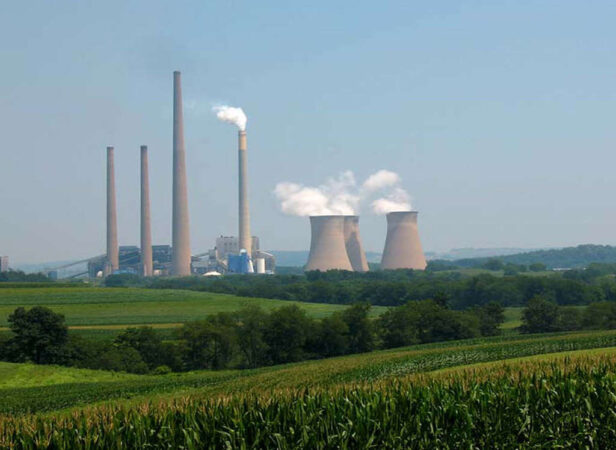
Sitting quietly in the audience was John Dudash. For decades he’s lived in Homer City, a southwestern Pennsylvania town that was once home to the largest coal-fired power plant in the state. The plant, which shares its name with the town, closed nearly three years ago after years of financial distress.
Dudash, 89, has lived in the shadow of its smokestacks — said to be the tallest in the country before they were demolished — for much of his life. At its peak, the Homer City power plant employed hundreds of people and could deploy about 2 gigawatts of energy, enough to power 2 million homes.
It was also a major source of air pollution, spewing sulfur dioxide and mercury, both of which pose serious health risks. Today, Dudash wonders if the pollution might have exacerbated the lung issues that claimed his wife’s life six years ago.
The proposed gas plant, expected to be up and running in 2027, will replace the old coal-fired power station, but with more than double the energy output — 4.5 gigawatts of energy. The new plant also will have the potential to emit 17.5 million tons of planet-heating greenhouse gasses per year, the equivalent of putting millions of cars on the road.
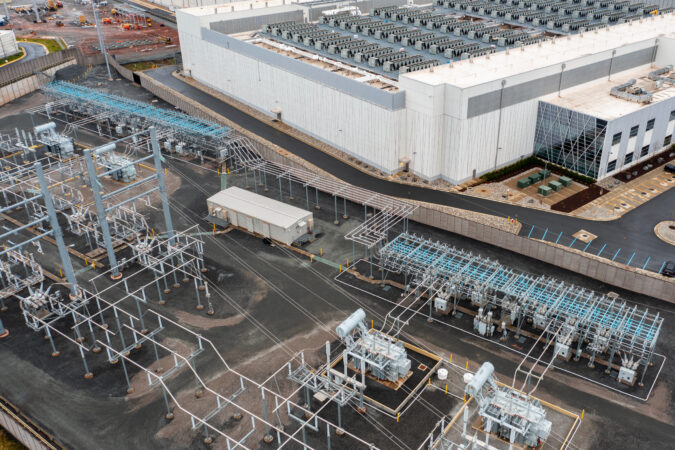
And it will serve a new purpose: Rather than primarily sending electrons to the regional grid to power homes or businesses, the new power plant will exist mainly to feed data centers planned on the site.
As the hearing wore on that September night, Dudash, a conservationist, did not stand to speak; instead, he sat quietly, taking mental notes. The next morning, he emailed two staffers at the Pennsylvania Department of Environmental Protection.
“First of all, the project will not be stopped,” he began, with resignation. He went on to offer a few caveats — among them, advice about air monitoring.
His letter reached the agency alongside more than 550 comments on a key air permit for the proposed plant, a testament to the project’s complexity. After the permit was approved Nov. 18, Dudash’s prediction began to look remarkably accurate — though the Homer City plant still has about a dozen additional permits awaiting approval before the project can be completed, including one that would impact several acres of wetlands and hundreds of feet of a local stream.
Though it is among many energy sites popping up to power the artificial-intelligence boom across Pennsylvania, the Homer City facility is unique for its size, its advertised economic potential — the owners have promised the project will generate more than 10,000 construction-related jobs — and for its likely environmental impact. It has earned the backing of President Donald Trump, who called it “the largest plant of its kind in the world,” a distinction its owners could not verify. There was a buzz in town in late October when Jared Kushner, Trump’s son-in-law, visited, though it was unclear what drew him to Homer City.
“I don’t really trust the people who are coming in to build and run the place,” Dudash said. “I do not agree with the artificial-intelligence portion of it.”
“They’re going to have to sacrifice the environment for these jobs,” he added. “In Appalachia, we’ve been doing that for years.”
The Homer City proposal
When the old plant sputtered to a close in 2023, it left the surrounding community — which was built on the local abundance of coal — in search of an economic lifeline. Now, the data center boom sweeping the country brings promise of such a rebirth for communities like Homer City — though this promise is one that some experts say may be less than billed. And, it comes with risks.
The new power plant will be much larger than its predecessor and is permitted to emit more than twice as much of some pollutants as its predecessor did. The data center, or centers, it powers would also consume a tremendous amount of water — perhaps more than its host townships can spare, some fear.
Homer City, Pa., once a vibrant thoroughfare during coal’s heyday, was completely empty of pedestrians on an afternoon in 2024.
Artificial intelligence requires vast amounts of electricity and has the potential to offer a lifeline to the fossil fuel industry. Though some in the community are sanguine about the promise of jobs, expertssay the reality for many living around data centers may fall short. Some are left wondering exactly who the new plant is for — them or some faraway tech companies.
The Homer City project is far from alone in its emergence: The nonprofit Fractracker has identified 39 planned data centers in the works across Pennsylvania. Tech companies like Microsoft and Amazon are moving in, alongside others intrigued by the state’s rich legacy of power production, deep natural gas reserves, and generous subsidies. In July, Republican U.S. Sen. Dave McCormick, from eastern Pennsylvania, held a conference in Pittsburgh during which companies announced more than $90 billion in data center investments and related energy infrastructure.
This tech boom largely has bipartisan support, including from Gov. Josh Shapiro, a Democrat who said at a June press conference that he is committed to “ensuring the future of AI runs right through Pennsylvania.” Legislators in Harrisburg, meanwhile, are introducing bills that would both spur the burgeoning industry and give it guardrails.
The extent to which the Homer City facility’s owners have lobbied for supportive legislation is not clear. The company’s lobbying registration with the Pennsylvania Department of State goes back only to January 2025. It has, however, spent at the local level. In November, for instance, the company gave a community nonprofit $25,000 for a holiday food drive. It also urged state utility regulators, who are drafting a policy on data centers, to issue one that does not saddle data centers with costs that might “push” them out of state.
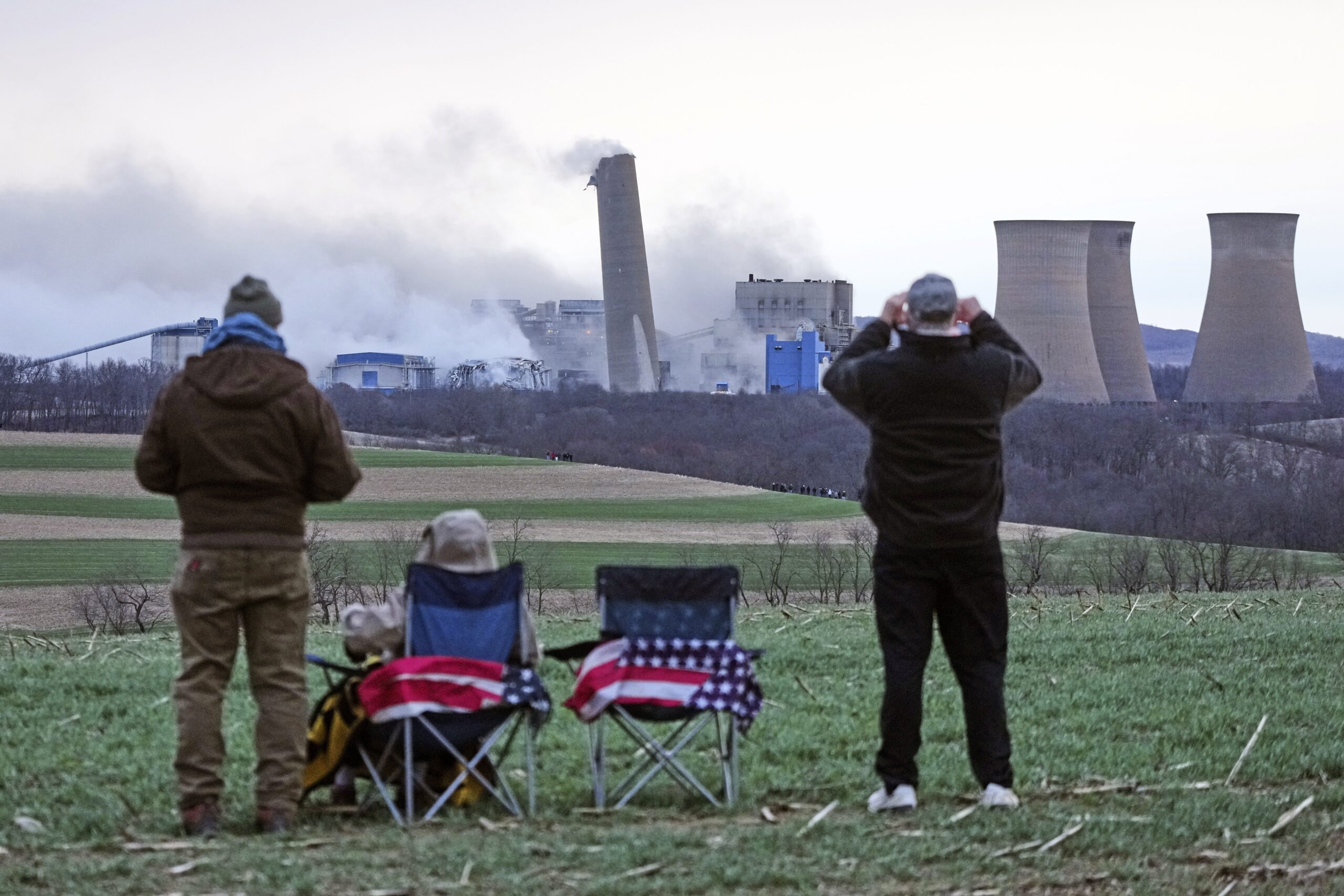
The Homer City proposal is the brainchild of the same private equity owners that closed the plant in 2023 — after years of financial difficulty and two bankruptcies. Two firms own close to 90% of the plant, with New York City-based Knighthead Capital Management holding the vast majority of that. It’s part of a wave of private equity investment in the data center industry. In March, the owners, operating under an LLC called Homer City Redevelopment, toppled the plant’s signature smokestacks. A few weeks later, they announced that the plant would reopen with a data center customer, or suite of customers, to be announced as soon as 2026.
Critics fear the new plant will require a lot more water than its predecessor. The supercomputers that data centers house whirr away around the clock, and need to be routinely cooled down. Some data center companies have introduced recycled water into their systems. Homer City Redevelopment has not said if their data center clients will be among them.
How to handle the water
In 2014, U.S. data centers used 21.2 billion liters of water, enough to fill nearly 9,000 Olympic-size swimming pools. That number tripled by 2023, with the vast majority of the water consumed by “hyperscale,” or large, facilities like Homer City. In states like Colorado, where water use has, for decades, been meticulously planned and negotiated, data centers are threatening to strain such finely tuned systems.
Dudash, the longtime Homer City resident, is concerned about a similar fate. “I’m not sure how they’re going to handle the water,” he told Capital & Main after the September hearing.
The power plant has, since 1968, been allotted an uncapped amount of water from Two Lick Reservoir, a 5 billion gallon, dammed-off portion of a creek that the plant’s former owners built explicitly for its use.
The power plant shares the water with a utility that serves two local communities — Indiana Borough and the broader White Township — as part of a 1988 drought management plan to prevent and respond to catastrophic weather conditions. The borough of Homer City gets its water from Yellow Creek, a tributary of Two Lick Creek, which serves the reservoir and picks up the slack in the event of a drought.
“Should the Two Lick Creek Reservoir be emptied, [the water utility] would not be able to provide sufficient water to protect public health and safety in their service area,” the drought management plan reads.
In 1985, the delicate system between Two Lick and Yellow Creek was strained when the then-Homer City plant drew so much water from the reservoir that it led to a drought. “Had a significant rainfall not occurred … the reservoir may have faced total depletion,” the drought management plan reads.
A report from the Pennsylvania Department of Environmental Protection shows that the water utility drawing from Two Lick has, in recent years, routinely used nearly half its allotted amount. But critics fear that allocation could be at risk once a data center opens and starts drawing water.
Robin Gorman, a spokesperson for Homer City Redevelopment, told Capital & Main that it plans to leave cooling and water-use decisions to its data center clients, making it unclear how much water will be needed to keep all the computers running, or where that water would come from.
Rob Nymick, Homer City’s former borough manager, who serves as manager of the Central Indiana County Water Authority, told Capital & Main that he is confident local municipalities can share water resources with the planned gas plant. But the data centers could be a different story.
“I do know that data centers do require a tremendous amount of water,” Nymick said. “That’s something we probably cannot provide.”
Nymick said that community officials are operating with “limited knowledge,” and that during the handful of meetings they have held with Homer City Redevelopment, “The only thing that they wanted to discuss is the actual power plant.”
Eric Barker, who grew up in Homer City, attended the September hearing with restrained optimism. “The power plant was a source of pride and is a source of pride for the community,” he said. “There’s not too many large employers in Indiana County,” he added.
But he found little comfort at the September hearing.
The Department of Environmental Protection “seemed woefully, woefully, comically underprepared,” Barker said, citing a response he received to a question about the types of pollutants that would increase under the new Homer City proposal, compared to what was emitted by the old plant. Barker was told the agency would look into it and get back to him.
“Some questions and concerns were raised at the public meeting regarding the plan approval about matters beyond the limited scope of the meeting,” said Pennsylvania Department of Environmental Protection spokesperson Tom Decker in a statement. “Interested parties are encouraged to look to the DEP’s extensive website, including its community page dedicated to the Homer City project, for resources addressing such questions and concerns.”
Despite the questions that followed, the department, on the whole, signaled satisfaction with the Homer City plant’s air permit application at the hearing. “What’s being proposed is what we consider state-of-the-art emission controls,” said Dave Balog, environmental engineering manager at the department’s northwest regional office.
Environmental nonprofits Citizens for Pennsylvania’s Future, Clean Air Council, the Sierra Club, and Earthjustice countered in a 44-page comment on a draft of the key air permit that the application does not incorporate the best tools for mitigating pollutants such as ammonia, which is known to cause respiratory issues and other health risks. The Department of Environmental Protection agreed with Homer City Redevelopment’s analyses of its best available technology, and the permit was granted.
‘We’re fighting for our survival’
As Homer City’s smokestacks imploded and fell to the ground last March, leaving only a gray cloud, Dudash wondered what particulates might be in the dusty mix. While there were rumors in town that asbestos might be among them, the Department of Environmental Protection told Capital & Main that the site was inspected for the substance before it was demolished and none was found.
Still, coal dust, fly ash, and silica particulates are all possible during such implosions, an agency representative said. In the months since, residents have complained of repeated blasts from the site rattling their houses. As of January, the blasts occurred daily.
But the particulates that drift from the old plant during the blasts may pale in comparison to the carbon dioxide emissions the new power plant is predicted to release. The key air permit the Department of Environmental Protection issued to the facility allows it to release up to 17.5 million tons of the heat-trapping gas per year — the equivalent of putting 3.6 million gas-powered vehicles on the road annually. In 2010, according to federal data, the plant emitted just over 11 million tons of greenhouse gasses. In 2023, when it was operating at a fraction of its capacity, it emitted 1.3 million.
In their comment to regulators, the nonprofit environmental groups said that the carbon dioxide emissions would be triple those of any polluting facility in the state, representing 6% of Pennsylvania’s total emissions. The new plant will also emit sulfur oxides and nitrogen oxides, two classes of respiratory irritants, but at rates lower than the old plant. The nonprofit Clean Air Council condemned regulators’ issuance of the air permit, calling it a “death sentence.” Along with PennFuture and the Sierra Club, the council appealed the permit in December.
The owners said the emissions from the new plant will result in a 35%-40% reduction in carbon dioxide compared to the old plant, but the calculation does not account for the new plant’s larger size. Instead, it is per-megawatt hour, meaning per unit of energy generated. Natural gas is less emissions-intensive than coal when burned, but because the Homer City plant will generate more than double the energy of its predecessor, its overall emissions profile is expected to be higher.
As the state grapples with extreme weather events such as flooding due to global warming, locking in carbon emissions is the wrong direction to go, the environmental nonprofits argue. On an annual basis, the plant will be permitted to emit hundreds of tons of respiratory irritants like particulate matter and nitrogen oxides, and dozens of tons of formaldehyde, a carcinogen. It will also emit health-harming compounds like toluene, xylene, and ethylbenzene.
Additional emissions are likely to come from the natural gas drilling that will be required to power the site.
In 2024, Nymick told Capital & Main that the borough was struggling to find a new economic engine. “We’re fighting for our survival,” he said at the time. Data center industry advocates contend that the data center gold rush will be a boon for communities like Homer City, where boarded-up storefronts line the main street.
“For every one job in a data center, six jobs are supported elsewhere in the economy,” said Dan Diorio, vice president of state policy for the Data Center Coalition, an industry trade group, at a hearing in the state Capitol in October.
The smokestacks of the former coal-fired Homer City Generating Station crumble in a planned demolition to make way for a new natural gas-fired power plant in Homer City, Pa., in early 2025.
Sean O’Leary, senior researcher at nonprofit think tank the Ohio River Valley Institute, said the reality isn’t that rosy. The average data center employs as few as 10 people and as many as 110, per his own calculations based in part on data from the Bureau of Labor Statistics. The computers inside them can generally run on their own with limited maintenance.
Even in a rural county like Indiana, O’Leary said, “One hundred is a rounding error. It just doesn’t matter. It doesn’t matter if they’re paid $200,000 a year. It’s not enough to make a significant change in the status of the local economy.”
In a recent report on the data center boom in natural gas economies in Appalachia, O’Leary said gas-powered data centers represent the combination of “three non-labor-intensive industries” — fracking, power plants, and data centers. “Stacking [them] on top of each other does not alter the underlying dynamic which ties them together.”
Ron Airhart, a former coal miner and executive assistant to the secretary-treasurer of the United Mine Workers of America, is more optimistic about the economic potential of the new Homer City facility.
Still, he concedes that it will never be what the old plant was. “Yes, building a gas-fired power plant is going to create a lot of construction jobs, there’s no doubt about that,” he said. “But once it’s done, how many actual employees are you going to have working there?”
He quickly added, “But, I’m glad they are doing something with the old power plant there.”
Gorman told Capital & Main that Homer City Redevelopment and its construction partner, Kiewit, are planning to hire from local unions and building trades. They foresee 10,000 construction jobs. They also anticipate the site will create 1,000 “direct and indirect” permanent jobs, including those hired at the facility itself and those brought aboard for supportive positions, such as suppliers.
“From start to finish, the Homer City Energy Campus will be developed in partnership with skilled local craftsmen and will bring quality, good-paying jobs back to the Homer City community,” Gorman said.
O’Leary said the jobs numbers such as those projected by the Data Center Coalition are inflated, similar to the employment projections made before the fracking boom in rural Appalachia. He said such projections are a detriment to communities, in part because taxpayers shoulder the cost of subsidies to attract the industry to the state, such as a sales and use tax exemption for data centers that Pennsylvania codified in 2021. Gov. Shapiro has estimated that the credit will expand to about $50 million per year for the next five years.
Local residents are also burdened with rising utility bills. The surging demand for electricity is straining the region’s power supplies, increasing what utilities pay for electricity. New power plants coming onto the grid must install transmission equipment, the costs of which they share with consumers. These economic factors, in sum, could outweigh the benefits of the new jobs the data center creates, O’Leary said.
Earlier this year, the grid operator for the region that encompasses Pennsylvania, PJM, saw electricity prices surge by roughly 1,000% from two years ago. Some of that cost is expected to be passed onto customers.
“We have a problem, and that problem is real, and it is exponential electricity load growth causing exponential price increases for consumers,” said Patrick Cicero, former consumer advocate for the state of Pennsylvania and now an attorney for the Pennsylvania Utility Law Project, at the October hearing in Harrisburg.
“In the context of Grandma vs. Google,” Cicero said, referring to older residents faced with high bills, “Grandma should win every day. That should be the policy statement of the Commonwealth of Pennsylvania.”
Federal and state lawmakers are still determining how and whether to regulate the additional costs that data centers pass onto consumers, including for fees associated with transmission throughout the grid. A bill that would create such a process while establishing renewable energy mandates for data centers is now being weighed by Pennsylvania representatives.
Dennis Wamsted, energy analyst at the Institute for Energy Economics and Financial Analysis, predicts such costs add complications for data centers, and has argued that their demand as a whole is overblown. Supply chain delays spurred by surging demand for turbines, including those that Homer City will be using, could also create additional costs and lag times, he said.
“If there is an AI bubble and it bursts,” he said, “you would have built all this capacity that wasn’t needed.”
Homer City’s owners said the plant is better positioned than others in the industry since it isn’t starting from scratch.
“Much of the critical infrastructure for the project is already in place from the legacy Homer City coal plant, including transmission lines connected to the PJM and NYISO power grids, substations, and water access,” Gorman, the spokesperson, said.
Communities on the front lines of these projects would be the first hurt by a project that fails to materialize.
But in Homer City, it’s clear that there’s an appetite for the promise of a new, job-producing industry, regardless of hurdles.
At the September hearing, many in the crowd wore neon shirts with union logos — a signal of the region’s fierce pride in its industrial past, and deep thirst for an economic boon. After an evening peppered with skepticism over the plant, Shawn Steffee, a business agent at the International Brotherhood of Boilermakers, stepped to the microphone.
“Everybody speaking about jobs,” he cried, “there will be jobs, and there will be local jobs.”
As he walked away, the room filled with applause — the loudest of the night.
DETROIT — President Donald Trump offered a full-throated defense of his sweeping tariffs on Tuesday, traveling to swing-state Michigan to push the case that he’s boosted domestic manufacturing in hopes of countering fears about a weakening job market and still-rising prices that have squeezed American pocketbooks.
Trump visited the factory floor of a Ford plant in Dearborn, where he viewed F-150s — the bestselling domestic vehicle in the U.S. — at various stages of production. That included seeing how gas and hybrid models were built, as well as the all-gas Raptor model, designed for off-road use.
The president chatted with assembly line workers as well as the automaker’s executive chairman, Bill Ford, a descendent of Henry Ford. “All U.S. automakers are doing great,” Trump said.
He later gave a speech to the Detroit Economic Club that was meant to be focused on his economic policies but veered heavily to other topics as well. Those included falsely claiming to have won Michigan three times (he lost the state in 2020 to Joe Biden) and recalling the snakes that felled workers during U.S. efforts to build the Panama Canal more than a century ago.
“The results are in, and the Trump economic boom has officially begun,” the president said at the MotorCity Casino. He argued that “one of the biggest reasons for this unbelievable success has been our historic use of tariffs.”
Trump insists tariffs haven’t increased costs
The president said that tariffs were “overwhelmingly” paid by “foreign nations and middlemen” — even as economists say steep import taxes are simply passed from overseas manufactures to U.S. consumers, helping exacerbate fears about the rising cost of living.
“It’s tariffs that are making money for Michigan and the entire country,” the president said, insisting that “every prediction the critics made about our tariff policy has failed to materialize.”
But voters remain worried about the state of the economy. Tuesday’s visit — his third trip to a swing state since last month to talk about his economic policies — followed a poor showing for Republicans in November’s off-year elections in Virginia, New Jersey, and elsewhere amid persistent concerns about kitchen table issues.
The White House pledged after Election Day that Trump would hit the road more frequently to talk directly to the public about what he is doing to ease their financial fears. The president tried to drive that home on Tuesday, but only amid lengthy asides.
“I go off teleprompter about 80% of the time, but isn’t it nice to have a president who can go off teleprompter?” he said, before mocking Biden, suggesting his predecessor gave short speeches and doing an impression that included a dramatic clearing of his throat.
Trump promised to unveil a new “health care affordability framework” later this week that he promised would lower the cost of care. He also pledged to soon offer more plans to help with affordability nationwide — even as he blamed Democrats for hyping up the issue.
“One of our top priorities of this mission is promoting greater affordability. Now, that’s a word used by the Democrats,” Trump said. “They’re the ones who caused the problem.”
Trump eased some auto tariffs
Despite cheering tariffs, Trump has actually backed off the import taxes when it comes to the automobile sector. The president originally announced 25% tariffs on automobiles and auto parts, only to later relax those, seeking to provide domestic automakers some relief from seeing their production costs rise.
Ford nonetheless announced in December that it was scrapping plans to make an electric F-150, despite pouring billions of dollars into broader electrification. That followed the Trump administration slashing targets to have half of all new vehicle sales be electric by 2030, eliminated EV tax credits and proposed weakening the emissions and gas mileage rules.
While touring the assembly line, Trump suggested that a major North American trade agreement he negotiated during his first term, the United States-Mexico-Canada trade pact, was irrelevant and no longer necessary for the United States — though he provided few details.
The pact, known as the USMCA, is up for review this year.
Trump largely sidesteps Powell probe
The president’s attempt to shift national attention to his efforts to spur the economy comes as his Department of Justice has launched a criminal investigation into Federal Reserve Chair Jerome Powell, a move that Powell says is a blatant endeavor to undermine the central bank’s independence in setting interest rates.
Critics of the move include former Fed chairs, economic officials and even some Republican lawmakers. During the Michigan visit, Trump lobbed his often-repeated criticisms of Powell but offered little mention of the investigation.
Some good economic news for Trump arrived, though, before he left Washington, with new data from December showing inflation declined a bit last month as prices for gas and used cars fell — a sign that cost pressures are slowly easing. Consumer prices rose 0.3% in December from the prior month, the Labor Department said, the same as in November.
“We have quickly achieved the exact opposite of stagflation, almost no inflation and super-high growth,” he said in his speech.
Other economic policy speeches
The Michigan stop follows speeches Trump gave last month in Pennsylvania — where his gripes about immigrants arriving to the U.S. from “filthy” countries got more attention than his pledges to fight inflation — and North Carolina, where he also insisted his tariffs have spurred the economy, despite residents noting the sting of higher prices.
Like in Michigan, Trump also used a casino as a backdrop to talk about the economy in Pennsylvania, giving his speech there at Mount Airy Casino Resort in Mount Pocono.
Trump carried Michigan in 2016 and 2024, after it swung Democratic and backed Biden in 2020. He marked his first 100 days in office with a rally-style April speech outside Detroit, where he focused more on past campaign grudges than his administration’s economic or policy plans.
Democrats seized on Trump’s latest visit to the state to recall his visit in October 2024, when Trump, then also addressing the Detroit Economic Club, said that Democrats’ retaining the White House would mean “our whole country will end up being like Detroit.”
“You’re going to have a mess on your hands,” Trump said during a campaign stop back then.
Michigan Democratic Party Curtis Hertel said in a statement that “Trump’s speech showed just how out-of-touch he is with reality, claiming that affordability is ‘fake’ as Michiganders have less money in their pocketbooks because of the Republicans’ price-hiking agenda.”
There’s a familiar ring to President Donald Trump’s plan to send U.S. energy giants to Venezuela to use the wealth generated from rekindling long-stalled oil production to stabilize that country and cement American energy dominance: Similar ambitions accompanied the U.S. invasion of Iraq in 2003.
The quick riches promised did not materialize there, as firms grappled with years of political turmoil and security threats, struggled to negotiate workable contract terms and confronted vexing infrastructure inadequacies. Venezuela may not be any easier, industry analysts warn.
“One of the clear lessons from Iraq — and it is not unique to Iraq — is that you need to have stability and be able to assess risk before you can start production,” said Kevin Book, managing director at ClearView Energy Partners, a research firm. Until then, he said, companies may not be enthusiastic about making the billions of dollars in investments required in Venezuela.
It’s unclear which firms Trump was referencing at a news conference Saturday morning, when he said: “We’re going to have our very large United States oil companies, the biggest anywhere in the world, go and spend billions of dollars to fix the badly broken infrastructure, the oil infrastructure.”
Chevron, which operates there now, declined to comment on plans.
ExxonMobil and ConocoPhillips exited the country and saw their assets seized after refusing to meet the terms of Venezuela’s government nearly two decades ago. ExxonMobil did not respond to requests for comment.
“It would be premature to speculate on any future business activities or investments,” ConocoPhillips spokesperson Dennis Nuss said in an email.
But the appeal is clear. Venezuela has one of the biggest oil reserves in the world, estimated at 300 billion barrels.
“Every major oil company in the world and some of the smaller ones will look closely at this because there are very few places on Earth where you could increase production so much,” said Francisco Monaldi, director of the Latin American Energy Program at Rice University. “But first you need political stability and clarity.”
He said restoring peak oil production there would cost up to $100 billion and take about a decade. And that is assuming there is enough political stability for companies to operate unencumbered during that entire period.
There are other obstacles. The oil in Venezuela is a heavy form of crude that is more difficult to process and carries a heavier carbon footprint than oil pumped elsewhere. Venezuela’s power grid is on the brink, creating an uncertain outlook for oil production, which requires massive amounts of energy. Also, Russian and Chinese firms partnered with Venezuela after U.S. companies left the nation, complicating the reestablishment of U.S. firms.
Returning to Venezuela has hardly been a central talking point of U.S. oil companies.
In this era of relatively low oil prices and uncertainty about how robust future demand will be amid an on-again, off-again global energy transition from fossil fuels, firms are anxious about reinvesting tens of billions of dollars more in pumping in Venezuela absent assurances that their investments would be secure for at least a decade, according to industry analysts.
Trump’s removal of Venezuela’s leader and plan to put the U.S. in charge of the country for now does not ensure that, despite his sweeping promises.
“We built Venezuela’s oil industry with American talent, drive, and skill, and the socialist regime stole it from us,” Trump said. “The oil companies are going to go in. They’re going to spend money there that we’re going to take back the oil that, frankly, we should have taken back a long time ago. A lot of money is coming out of the ground. We’re going to get reimbursed for all of that. We’re going to get reimbursed for everything that we spend.”
Today, the nation’s oil production is a fraction of what it could be and its infrastructure is badly frayed because of domestic turmoil, the departure of foreign oil companies, and related international sanctions. The nation is pumping a mere 1 million barrels of oil per day, less than 1% of global output. That is also less than a third of its peak production under the Hugo Chávez regime and a quarter of what experts say it is capable of generating.
That oil has largely been purchased by China.
The only American company operating in Venezuela is Chevron, with its production constrained by considerable Venezuelan government restrictions.
“Chevron remains focused on the safety and wellbeing of our employees, as well as the integrity of our assets,” said a statement from Bill Turenne, a company spokesman. “We continue to operate in full compliance with all relevant laws and regulations.”
While acknowledging that firms have reason to be reticent, Monaldi, of Rice University, pointed to forecasts showing Venezuelan oil could be crucial to meet rising global demand over the next decade.
But none of that can happen overnight.
“Oil companies do not operate in a vacuum and we are years from significant volume increase,” said Pedro Burelli, a critic of Venezuelan President Nicolás Maduro now living in the United States, and a former board member of the Venezuelan state oil company. “Regulations and contracts matter, as U.S. oil companies are publicly traded companies with shareholders who will demand rational investment decisions.”
Oil companies have even been reluctant to increase their rig counts here, despite Trump’s repeated calls for more drilling, amid demand uncertainty and dropping market prices. U.S. oil production soared during the Biden administration, but the pace of growth has slowed since Trump returned to office, with some forecasts predicting declines this year.
Book said oil companies will be looking to sign contracts that they are confident will be honored for the long term, and there is no government in Venezuela that right now can honor such a contract.
“Before you make all these big investments and start running operations, you also need a stable country with reliable electricity, functioning ports, and an available workforce,” he said. “A lot of factors go into pulling this off.”
Trump may have further complicated the outlook for U.S. oil firms returning to Venezuela by declaring that he does not believe the popular opposition leader there, María Corina Machado, commands the respect to run the country immediately following Maduro’s ouster.
Machado has been a vocal proponent of helping U.S. firms re-establish operations in Venezuela. One of her energy advisers, Evanan Romero, a former Venezuelan oil executive and government minister, stressed in an interview that if the oil firms wish to return, “we will welcome them.”
“They will make money, Venezuela will make money,” he said.
WASHINGTON — The Trump administration said Monday it is pausing leases for five large-scale offshore wind projects under construction in the East Coast due to unspecified national security risks identified by the Pentagon.
The pause is effective immediately and will give the Interior Department, which oversees offshore wind, time to work with the Defense Department and other agencies to assess the possible ways to mitigate any security risks posed by the projects, the administration said.
“The prime duty of the United States government is to protect the American people,” Interior Secretary Doug Burgum said in a statement. “Today’s action addresses emerging national security risks, including the rapid evolution of the relevant adversary technologies, and the vulnerabilities created by large-scale offshore wind projects with proximity near our east coast population centers.”
The administration said leases are paused for the Vineyard Wind project under construction in Massachusetts, Revolution Wind in Rhode Island and Connecticut, Coastal Virginia Offshore Wind, and two projects in New York: Sunrise Wind and Empire Wind.
The Interior Department said unclassified reports from the U.S. government have long found that the movement of massive turbine blades and the highly reflective towers create radar interference called “clutter.” The clutter caused by offshore wind projects obscures legitimate moving targets and generates false targets in the vicinity of wind projects, the Interior Department said.
The action comes two weeks after a federal judge struck down President Donald Trump’s executive order blocking wind energy projects, saying the effort to halt virtually all leasing of wind farms on federal lands and waters was “arbitrary and capricious” and violates U.S. law.
Judge Patti Saris of the U.S. District Court for the District of Massachusetts vacated Trump’s Jan. 20 executive order blocking wind energy projects and declared it unlawful.
Saris ruled in favor of a coalition of state attorneys general from 17 states and Washington, D.C., led by New York Attorney General Letitia James, that challenged Trump’s Day One order that paused leasing and permitting for wind energy projects.
There were some highs amid a lot of lows in a roller coaster year for clean energy as President Donald Trump worked to boost polluting fuels while blocking wind and solar, according to dozens of energy developers, experts, and politicians.
Surveyed by the Associated Press, many described 2025 as turbulent and challenging for clean energy, though there was progress as projects connected to the electric grid. They said clean energy must continue to grow to meet skyrocketing demand for electricity to power data centers and to lower Americans’ utility bills.
“There was a cooldown effect this year,” said Vargas, cofounder and CEO of Aspen Power. “Having said that, we are a resilient industry.”
Plug Power president Jose Luis Crespo said the developments — both policy recalibration and technological progress — will shape clean energy’s trajectory for years to come.
Energy policy whiplash in 2025
Much of clean energy’s fate in 2025 was driven by booster Joe Biden’s exit from the White House.
The year began with ample federal subsidies for clean energy technologies, a growing number of U.S.-based companies making parts and materials for projects, and a lot of demand from states and corporations, said Tom Harper, partner at global consultant Baringa.
It ends with subsidies stripped back, a weakened supply chain, higher costs from tariffs, and some customers questioning their commitment to clean energy, Harper said. He described the year as “paradigm shifting.”
Trump called wind and solar power “the scam of the century” and vowed not to approve new projects. The federal government canceled grants for hundreds of projects.
Many energy executives said this was the most consequential policy shift. The bill reshaped the economics of clean energy projects, drove a rush to start construction before incentives expire, and forced developers to reassess their strategies for acquiring parts and materials, Lennart Hinrichs said. He leads the expansion of TWAICE in the Americas, providing analytics software for battery energy storage systems.
Companies can’t make billion-dollar investments with so much policy uncertainty, said American Clean Power Association CEO Jason Grumet.
Consequently, greenhouse gas emissions will fall at a much lower rate than previously projected in the U.S., said Brian Murray, director of the Nicholas Institute for Energy, Environment, and Sustainability at Duke University.
Still, solar and battery storage are booming
Solar and storage accounted for 85% of the new power added to the grid in the first nine months of the Trump administration, according to Wood Mackenzie research.
That’s because the economics remain strong, demand is high, and the technologies can be deployed quickly, said Mike Hall, CEO of Anza Renewables.
Solar energy company Sol Systems said it had a record year as it brought its largest utility-scale project online and grew its business. The energy storage systems company CMBlu Energy said storage clearly stands out as a winner this year too, moving from optional to essential.
“Trump’s effort to manipulate government regulation to harm clean energy just isn’t enough to offset the natural advantages that clean energy has,” Democratic U.S. Sen. Sheldon Whitehouse said. “The direction is still all good.”
The Solar Energy Industries Association said that no matter the policies in Washington, solar and storage will grow as the backbone of the nation’s energy future.
Nuclear, geothermal had a good year, too
Democrats and Republicans have supported investing to keep nuclear reactors online, restart previously closed reactors, and deploy new, advanced reactor designs. Nuclear power is a carbon-free source of electricity, though not typically labeled as green energy like other renewables.
“Who had ‘restart Three Mile Island’ on their 2025 Bingo card?” questioned Baringa partner David Shepheard. The Pennsylvania plant was the site of the nation’s worst commercial nuclear power accident, in 1979. The Energy Department is loaning $1 billion to help finance a restart.
Everyone loves nuclear, said Darrin Kayser, executive vice president at Edelman. It helps that the technology for small, modular reactors is starting to come to fruition, Kayser added.
Benton Arnett, a senior director at the Nuclear Energy Institute, said that as the need for clean, reliable power intensifies, “we will look back on the actions being taken now as laying the foundation.”
The Trump administration also supports geothermal energy, and the tax bill largely preserved geothermal tax credits. The Geothermal Rising association said technologies continue to mature and produce, making 2025 a breakthrough year.
Offshore wind had a terrible year
Momentum for offshore wind in the United States came to a grinding halt just as the industry was starting to gain traction, said Joey Lange, a senior managing director at Trio, a global sustainability and energy advisory company.
That has decimated the projects, developers, and tech innovators, and no one in wind is raising or spending capital, said Eric Fischgrund, founder and CEO at FischTank PR. Still, Fischgrund said he remains optimistic because the world is transitioning to cleaner energy.
More clean energy needed in 2026
An energy strategy with a diverse mix of sources is the only way forward as demand grows from data centers and other sources, and as people demand affordable, reliable electricity, said former Democratic Sen. Mary Landrieu. Landrieu, now with Natural Allies for a Clean Energy Future, said promoting or punishing specific energy technologies on ideological grounds is unsustainable.
Experts expect solar and battery storage to continue growing in 2026 to add a lot of power to the grid quickly and cheaply. The market will continue to ensure that most new electricity is renewable, said Amanda Levin, policy analysis director at the Natural Resources Defense Council.
Hillary Bright, executive director of Turn Forward, thinks offshore wind will still play an important role too. It is both ready and needed to help address the demand for electricity in the new year, which will become increasingly clear “to all audiences,” she said. Turn Forward advocates for offshore wind.
That skyrocketing demand “is shaking up the political calculus that drove the administration’s early policy decisions around renewables,” she said.
BlueWave CEO Sean Finnerty thinks that states, feeling the pressure to deliver affordable, reliable electricity, will increasingly drive clean energy momentum in 2026 by streamlining permitting and the process of connecting to the grid, and by reducing costs for things like permits and fees.
Ed Gunn, Lunar Energy’s vice president for revenue, said the industry has weathered tough years before.
“The fundamentals are unchanged,” Gunn said, ”there is massive value in clean energy.”
Every day, millions of people across the U.S. turn to ChatGPT and other AI tools, searching for answers.
Some of their questions are mundane: What should they make for dinner with these four ingredients? What other movies was this actor in? Where could they go on a weekend getaway for under $1,000?
Others use AI in life-saving research and for society-changing innovations.
How these tools work — and at what cost — is at the heart of the ongoing debate over the rapid construction of data centers.
At some proposed sites in the Philadelphia region, neighbors are rallying in opposition, saying the community’s health, safety, and quality of life are at stake. Meanwhile, developers, elected officials, and other proponents tout economic benefits.
If you’re trying to make sense of all the buzz about AI data centers, here’s what three human reporters think you should know.
What is a data center?
A data center is a building or campus that handles cloud-storage and computing needs of Amazon, Google, Microsoft, Meta, and the like. People, hospitals, banks, businesses, and governments rely on the cloud to store and retrieve vast troves of records, videos, and pictures.
Generative artificial intelligence (AI) has exponentially increased demand for specialized data centers powerful enough to execute ever more complex requests in the form of text, code, images, audio, or video.
A single AI query consumes multiple times the power of an ordinary search engine query, resulting in the need for additional servers to handle the load when multiplied across millions of queries.
window.addEventListener(“message”,function(a){if(void 0!==a.data[“datawrapper-height”]){var e=document.querySelectorAll(“iframe”);for(var t in a.data[“datawrapper-height”])for(var r,i=0;r=e[i];i++)if(r.contentWindow===a.source){var d=a.data[“datawrapper-height”][t]+”px”;r.style.height=d}}});
Newer hyperscale data centers can reach 1 million square feet or larger. For comparison, the Cherry Hall Mall is 1.3 million square feet.
Where are data centers in Pennsylvania and New Jersey?
window.addEventListener(“message”,function(a){if(void 0!==a.data[“datawrapper-height”]){var e=document.querySelectorAll(“iframe”);for(var t in a.data[“datawrapper-height”])for(var r,i=0;r=e[i];i++)if(r.contentWindow===a.source){var d=a.data[“datawrapper-height”][t]+”px”;r.style.height=d}}});
Not all of these properties are AI data centers: Comcast’s facilities, for example, connect thousands of local customers to internet, cable, and phone services, and have been doing so for decades.
Where are new data centers being built in Pa. and N.J.?
In East Vincent Township, Chester County, a 1.3-million-square-foot data center is proposed at the former Pennhurst State School and Hospital, now a popular Halloween attraction.
Less than a mile from downtown Conshohocken, Main Line developer Brian O’Neill wants to build a 2-million-square-foot data center at a shuttered steel mill. Last week, O’Neill’s team was forced to withdraw the application due to legal issues. However, they can resubmit another proposal at any time.
Edmund J. Campbell, attorney for Main Line developer Brian O’Neill, speaks to the Plymouth Township zoning hearing board on Monday Nov. 17 before abruptly withdrawing his client’s application over legal issues.
Unlike residential redevelopment, data centers don’t increase demands on local schools or EMS services, data center proponents say. Nor do they bring in added traffic like fulfillment warehouses or other industrial uses.
Opponents of data centers worry about pollution, noise, power and water use, and the impact another data center could have on their electric bills. In some areas, they decry the loss of open space and express broader concerns about whether the AI boom is a bubble that could burst before all this data-center investment pays off.
How are data centers impacting my electric bill?
Generative AI tools like ChatGPT and DALL-E are major drivers behind the dramatic increase in energy demand. Every ChatGPT query, for example, is estimated to use five times more electricity than a simple web search.
An average query uses about the power that an oven would use in a little over one second or a high-efficiency light bulb would use in a couple of minutes, according to Sam Altman, CEO of OpenAI, the company behind ChatGPT.
In 2023, U.S. data centers consumed about 4.4% of total U.S. electricity, compared to 15% for all residential use. Data center demand is expected to rise, potentially consuming 6% to 12% of total U.S. electricity by 2028, according to a 2024 report by Lawrence Berkeley National Laboratory.
window.addEventListener(“message”,function(a){if(void 0!==a.data[“datawrapper-height”]){var e=document.querySelectorAll(“iframe”);for(var t in a.data[“datawrapper-height”])for(var r,i=0;r=e[i];i++)if(r.contentWindow===a.source){var d=a.data[“datawrapper-height”][t]+”px”;r.style.height=d}}});
When energy demand rises without a proportional increase in supply and capacity, experts say, consumers see higher bills. Although it’s possible prices would lower with increased demand as long as there is sufficient existing capacity in place, say some experts.
“There’s a variety of factors, but it isn’t really transparent when you look at your electricity bill,” said John Quigley, senior fellow at the University of Pennsylvania’s Kleinman Center for Energy Policy.
What are some environmental concerns regarding data centers?
Water: Data centers require significant amounts of water to cool servers and IT equipment. Some cooling systems are more efficient than others.
A Virginia legislative audit report said 11 data center buildings each used over 50 million gallons, including one building that used 243 million gallons in 2023. While some data centers use substantial amounts of water, most use similar or less than other large commercial and industrial water users, Virginia found.
Based on available data, most data centers use about 6.7 million gallons of water a year, about the same as an average large office building.
Land use: Some proposals would require substantial clearing for forested or unused land, as in a 1,000-acre proposal in Covington and Clifton Townships in the Poconos. Residents in East Vincent Township in Chester County have mobilized to save the rolling hills, farms, and rural character near the proposed Pennhurst site.
Air pollution: The electricity that powers data centers comes from a grid powered by plants that run on natural gas, a fossil fuel that emits pollutants such as nitrogen oxides, fine particulate matter, and a precursor to smog. The plants also release carbon dioxide, a greenhouse gas. Backup generators are often fired by diesel. Amazon and Microsoft have plans to tap nuclear power, which does not produce air pollutants, though it does produce toxic waste.
Noise: Data centers sometimes emit hums and vibrations produced by servers, whirring fans, HVAC systems, and other sources.
What kinds of jobs do data centers create?
Construction of a data center requires hundreds of temporary tradespeople, such as masons, electricians, plumbers, and HVAC technicians.
Once open, data centers typically need very few full-time employees. Even the largest usually employ fewer than 150 people, sometimes as few as 25. Permanent positions can include IT specialists, data analysts, electricians, maintenance workers, and security personnel. Sometimes certain employees can work remotely.
Developers of some data centers currently proposed in Pennsylvania estimate hiring between 30 and 70 permanent workers. Data center technician jobs at Amazon’s Salem Township facility come with starting salaries between $50,000 and $152,000 a year, according to job listings on Indeed.com.